FM 21-10 MCRP 4-11.1D FIELD HYGIENE AND SANITATION (June 2000) - page 1
FM 21-10*
HEADQUARTERS
MCRP 4-11.1D
DEPARTMENT OF THE ARMY
AND COMMANDANT, MARINE CORPS
Washington, DC, 21 June 2000
FIELD HYGIENE AND SANITATION
TABLE OF CONTENTS
Page
PREFACE
iii
CHAPTER 1. INTRODUCTION TO THE MEDICAL THREAT
Section
I. Message to the Unit Commander
1-1
Section
II. The Medical Threat and Principles of Preventive
Medicine Measures
1-3
CHAPTER 2. INDIVIDUAL PREVENTIVE MEDICINE MEASURES
Section
I. Heat Injuries
2-1
Section
II. Cold Injuries
2-6
*This publication supersedes FM 21-10, 22 November 1988.
i
FM 21-10/MCRP 4-11.1D
Page
Section III. Arthropods and Other Animals of Medical Importance
2-13
Section IV. Poisonous Plants and Toxic Fruits
2-21
Section V. Food-/Water-/Wasteborne Disease/Illness
2-22
Section VI. Personal Hygiene and Physical and Mental Fitness
2-30
Section VII. Noise
2-37
Section VIII. Toxic Industrial Chemicals/Materials
2-38
CHAPTER 3. LEADERS PREVENTIVE MEDICINE MEASURES
Section
I. Heat Injuries
3-1
Section
II. Cold Injuries
3-9
Section III. Arthropods and Other Animals of Medical Importance
3-17
Section IV. Poisonous Plants and Toxic Fruits
3-21
Section V. Food-/Water-/Wasteborne Disease/Illness
3-22
Section VI. Personal Hygiene and Physical and Mental Fitness
3-26
Section VII. Noise
3-31
Section VIII. Toxic Industrial Chemicals/Materials
3-33
CHAPTER 4. UNIT FIELD SANITATION TEAM
Field Sanitation Team Concept
4-1
Scope of Field Sanitation Team Operations
4-1
Field Sanitation Team Tasks
4-2
Selection of Personnel
4-4
Training
4-4
How to Make Your Field Sanitation Team the Best in the Command
4-5
ii
FM 21-10/MCRP 4-11.1D
Page
APPENDIXA. UNIT-LEVEL PREVENTIVE MEDICINE MEASURES TASKS
TASK 1. Control Biting Insects
A-1
TASK 2. Use the 1-Gallon or 2-Gallon Compressed Air Sprayer
A-10
TASK 3. Control Domestic Rodents
A-14
TASK 4. Prevent Injuries Due to Venomous Snakebite
A-16
TASK 5. Inspect Unit Food Service Operations
A-17
TASK 6. Inspect Water Containers
A-22
TASK 7. Check Unit Water Supply for Chlorine Residual
A-27
TASK 8. Chlorinate Water Supplies
A-29
TASK 9. Set Up, Construct, and Maintain Field Waste Disposal Devices
A-32
TASK 10. Construct and Maintain Field Handwashing and Shower Devices
A-46
GLOSSARY
Glossary-1
REFERENCES
References-1
INDEX
.............................................................................. Index-1
PREFACE
The purpose of this publication is to assist individual service members, unit commanders,
unit leaders, and field sanitation teams (FSTs) in preventing disease and nonbattle injury
(DNBI). The publication provides information on preventive medicine measures (PMM)
iii
FM 21-10/MCRP 4-11.1D
for the individual service member as well as essential information for the unit commander,
unit leaders, and the FST on applying unit-level PMM.
When a problem exists beyond unit capabilities, the brigade or division preventive medicine
(PVNTMED) section or corps PVNTMED detachments should be called upon to assist in
countering the threat.
The use of trade names or trademarks does not constitute endorsement by the Department
of Defense (DOD).
Unless this publication states otherwise, masculine nouns and pronouns do not refer
exclusively to men.
The proponent of this publication is the United States (US) Army Medical Department
Center and School. Submit changes for improving this publication on Department of
the Army (DA) Form 2028 and forward it directly to Commander, US Army Medical
Department Center and School, ATTN: MCCS-FCD-L, 1400 East Grayson Street,
Fort Sam Houston, Texas 78234-6175.
iv
FM 21-10/MCRP 4-11.1D
CHAPTER 1
INTRODUCTION TO THE MEDICAL THREAT
Section I. MESSAGE TO THE UNIT COMMANDER
DISEASE AND NONBATTLE INJURY
A DNBI casualty can be defined as a military person who is lost to an organization by
reason of disease or injury, and who is not a battle casualty. This definition includes
persons who are dying of disease or injury due to accidents directly related to the operation
or mission to which they were deployed. The acronym, DNBI, does not include service
members missing involuntarily because of enemy action or being interned by the enemy (as
a prisoner of war). The total number of DNBI casualties is evaluated to identify DNBI
rates per number of service members in an operation. The DNBI rates are critical in
evaluating the effectiveness of PVNTMED missions within the area of operations (AO) and
in determining the health of a force within an operation.
Historically, in every conflict the US has been involved in, only 20 percent of all hospital
admissions have been from combat injuries. The other 80 percent have been from DNBI.
Excluded from these figures are vast numbers of service members with decreased combat
effectiveness due to DNBI not serious enough for hospital admission.
1-1
FM 21-10/MCRP 4-11.1D
Preventive medicine measures are simple, common sense actions that any service member
can perform and every leader must know. The application of PMM can significantly
reduce time loss due to DNBI.
How Much Time Does Your Unit Spend Training Service Members on
Disease and Nonbattle Injury Prevention?
Combat Injury Prevention?
YOUR RESPONSIBILITY
You are responsible for all aspects of health and sanitation of your command. Only you
can make command decisions concerning the health of your unit in consideration of the
Mission.
Medical threat.
Condition of troops.
DO NOT LET THIS HAPPEN TO YOU
Togatabu Island, 1942: The 134th Artillery and the 404th Engineer Battalions were part of a
task force preparing to attack Guadalcanal. Fifty-five percent of the engineers and sixty-five
1-2
FM 21-10/MCRP 4-11.1D
percent of the artillerymen contracted a disease called filariasis transmitted by mosquitoes.
Both units had to be replaced (medically evacuated) without seeing any enemy action
because they were not combat ready. The use of insect repellents and insecticides and the
elimination of standing water would have prevented this.
Merrills Marauders: Disease was an important detractor to this famous unit. The medical
threat faced by the Marauders in the jungles of Burma was great. Everyone was sick, but
some had to stay and fight. Evacuation was limited to those with high fever and severe
illness. One entire platoon cut the seats from their pants because severe diarrhea had to be
relieved during gunfights. After a bold and successful attack on a major airfield, Merrills
Marauders were so decimated by disease that they were disbanded.
Section II. THE MEDICAL THREAT AND PRINCIPLES OF
PREVENTIVE MEDICINE MEASURES
The medical threat is
Heat.
Cold.
Arthropods and other animals.
1-3
FM 21-10/MCRP 4-11.1D
Food- and waterborne diseases.
Toxic industrial chemicals/materials.
Noise.
Nonbattle injury.
The unfit service member.
PRINCIPLES OF PREVENTIVE MEDICINE MEASURES
Service members perform individual techniques of PMM.
Chain of command plans for and enforces PMM.
Field sanitation teams train service members in PMM and advise the commander
and unit leaders on implementation of unit-level PMM.
Failure to Apply the Principles of PMM Can Result in Mission Failure.
1-4
FM 21-10/MCRP 4-11.1D
CHAPTER 2
INDIVIDUAL PREVENTIVE MEDICINE MEASURES
Section I. HEAT INJURIES
OVERVIEW
Heat injuries can occur anywhere, depending on physical activity (work rate) and clothing
worn. However, they occur most frequently during warm-weather training, exposure to
high climatic temperatures, high humidity, and bright sunlight. These conditions make it
difficult for the body to regulate its temperature. Hot weather
also increases daily water requirements, because body water is
lost as sweat. Dehydration leads to added heat stress, increased
susceptibility to heat injury, reduced work performance, and
degraded mission capability.
ACCLIMATIZATION
When the mission permits, all personnel should work and exercise in a
manner so that they gradually become acclimatized to the heat and
humidity in the AO. Significant heat acclimatization requires at least
2-1
FM 21-10/MCRP 4-11.1D
3 to 5 days and full acclimatization can take up to 2 weeks. Exercising in the heat and
humidity for 1 to 2 hours daily, gradually increasing the workload each day, can produce
acclimatization.
(Refer to Table 3-1 in Chapter 3.) When the mission does not permit time
for gradual increases in workload, then leaders and buddies must observe each other and
ensure that everyone drinks plenty of water during each work period. Individuals leaving
a cold or cool climate will require additional time to become acclimatized to a hot climate.
DRINK PLENTY OF WATER
Depending on the heat and activity level, you may need to drink from 1/2 to 11/4 quarts of
water per hour3 gallons/12 liters per day in hot, dry climates. Drinking water is a must
in order to prevent heat injury. If desired, individuals may add flavoring to the water to
enhance consumption. Field rations/meal(s), ready to eat (MRE) have flavoring for water in
each meal. It the flavoring is used, add it to water in your canteen cup. Do not add flavoring
to the water in your canteen; it increases the risk of contamination and illness. Never flavor
the bulk source water supply. (Flavoring the bulk source water supply will reduce the action
of water disinfectants.) See Table 3-1 for water intake requirements.
Drink extra water before starting any mission or hard work. Cool water (60° to
70° Fahrenheit [F]) is absorbed faster than cold water.
Drink small quantities of cool fluids frequently. Carbohydrate/electrolyte beverages
(sport drinks) may provide supplemental nutrients under conditions of extreme
calorie and water requirements; such as extremely vigorous activity. However,
they cannot replace and must not be used to meet all water requirements.
2-2
FM 21-10/MCRP 4-11.1D
Drink non-caffeinated fluids even if you are not thirsty.
(Caffeine increases
water requirements in all environments.)
Refill your canteens at every opportunity, using only treated water, if possible.
NOTE
The color and volume of the urine steam are good indicators of a service
members hydration status. If your urine stream is dark yellow and the
volume is small, or if you are constipated and experience hard stools, you
may not be drinking enough water. Maintain a urine stream that is clear
or light yellow. Thirst is not a good indicator of dehydration during
physical activity.
USE WORK/REST CYCLES
Work and rest as your leader directs.
(See Table 3-1.) A rest period helps prevent
dangerous increases in body temperatures by minimizing heat production.
Work and rest in the shade, if possible.
2-3
FM 21-10/MCRP 4-11.1D
EAT ALL MEALS TO REPLACE SALTS
Eating all meals in the field will usually provide the bodys requirements for
salts. Field rations/MRE meet the daily requirements for minerals and
electrolytes (sodium). DO NOT take extra salt in meals unless medically
indicated.
NOTE
DO NOT TAKE SALT TABLETS. One salt tablet
increases your water requirement by at least a pint. Salt
draws water from muscles to dilute your blood. Salt tablets
can cause vomiting.
RECOGNIZE THE RISK OF MISSION-ORIENTED PROTECTIVE
POSTURE/BODY ARMOR/ARMORED VEHICLES
Mission-oriented protective posture (MOPP)/body armor increases
your heat stress.
(See Table 3-1.) You must
Drink more water. DO NOT EXCEED 11/4 QUARTS PER HOUR.
Work and rest as your leader directs.
2-4
FM 21-10/MCRP 4-11.1D
You may be at a greater risk of heat injuries when in armored vehiclesyou may
need to drink more water.
MODIFY YOUR UNIFORM
When directed/authorized by your commander to reduce heat stress and to protect against
ultraviolet (UV) radiation, you should
Unblouse pants from boots.
Cover all skin exposed to sun; wear sunscreen and lip balm with a
sun protection factor of 15 or higher.
Protect the eyes from UV with UV-protective sunglasses,
especially wraparound sunglasses.
Seek shade when resting outdoors.
Keep clothing loose at the neck, wrists, and lower legs.
NOTE
When the threat from biting arthropods is high, keep your shirtsleeves
rolled down and pants bloused in boots.
2-5
FM 21-10/MCRP 4-11.1D
NOTE
See Graphic Training Aid (GTA) 8-5-50 and FM 21-11, for information
on heat injury prevention and first aid.
Section II. COLD INJURIES
OVERVIEW
Cold injuries are most likely to occur when an unprepared individual is exposed to winter
temperatures. They can even occur with the proper planning and equipment. The cold
weather and the type of operation in which the individual is involved impact on whether a
service member is likely to be injured and to what extent. The service members clothing,
physical condition, and mental makeup are also determining factors. Well-disciplined and
well-trained service members can be protected, even in the most adverse conditions.
Service members and their leaders must know the hazards of exposure to the cold. They
must know the importance of personal hygiene, exercise, care of the feet and hands, and
the use of protective clothing. Cold injuries may be divided into freezing and nonfreezing
types. A freezing type is frostbite. The nonfreezing types are chilblains, trench foot, and
immersion foot. (See FM 21-11.)
Frostbite can occur when the temperature is at or near freezing or colder. Frostbite
can also occur when the skin is exposed to winds of less than five miles per hour and
actual temperature readings of 30° F.
2-6
FM 21-10/MCRP 4-11.1D
Trench foot (and immersion foot) results from prolonged exposure to a wet, cold
condition, or the outright immersion of the feet in water with a temperature usually
below 50° F.
At the upper range of temperatures, exposure of 12 hours or more will cause injury.
Shorter duration at or near 32° F will cause the same injury.
A trench foot injury is usually associated with immobilization of the feet.
WEAR UNIFORM PROPERLY
Wear the clothing your commander and leaders direct.
Wear clothing in loose layers (top and bottom). Avoid tight
clothing, including tight underwear.
Keep clothing clean and dry. Remove or loosen excess
clothing when working or in heated areas to prevent sweating.
Wear headgear to prevent body heat loss. The body loses large
amounts of heat through the head.
Avoid spilling fuel or other liquids on clothing or skin. Evaporating liquids increase
heat loss and cool the skin. Also, liquid stains on clothing will reduce the clothings
protective effects.
2-7
FM 21-10/MCRP 4-11.1D
Change wet/damp clothes as soon as possible. Wet/damp clothing pulls heat
from body.
KEEP YOUR BODY WARM
Keep moving, if possible.
Exercise your big muscles (arms, shoulders, trunk, and legs) frequently to
keep warm.
If you must remain in a small area, exercise your toes, feet,
fingers, and hands.
Avoid the use of alcohol as it makes your body lose heat faster.
Avoid standing directly on cold, wet ground, when possible.
Avoid tobacco products. The use of tobacco products decreases blood flow to
your skin.
Eat all meals to maintain energy.
Drink plenty of water and/or warm nonalcoholic fluids. Dark yellow urine means
you are not drinking enough fluids! You can dehydrate in cold climates too!
Buddies should monitor each other for cold weather injury.
2-8
FM 21-10/MCRP 4-11.1D
PROTECT YOUR FEET
Bring several pairs of issue boot socks with you.
Keep socks clean and dry. Change wet or damp socks as
soon as possible. Socks can become wet from sweating.
Apply foot powder on feet and in boots when changing socks.
Wash your feet daily, if possible.
Avoid tight socks and boots (completely lace boots up as loosely as possible).
Wear overshoes to keep boots dry.
NOTE
A decrease in physical activity reduces the exposure time necessary to
produce injury. In all types of footgear, feet perspire more and are
generally less well ventilated than other parts of the body. Moisture
accumulates in socks, decreasing their insulating quality. The feet are
susceptible to cold injury and are less frequently observed than the
remainder of the body.
PROTECT YOUR HANDS
Wear gloves with inserts, or mittens with inserts.
2-9
FM 21-10/MCRP 4-11.1D
Warm hands under clothing if they become numb.
Avoid skin contact with snow, fuel, or bare metal.
Waterproof gloves by treating with waterproofing compounds,
such as snow seal.
PROTECT YOUR FACE AND EARS
Cover your face and ears with a scarf or other material, if available.
Wear your insulated cap with flaps down or wear a balaclava and secure under your chin.
Warm your face and ears by covering them with your hands. Do not rub face and ears.
Do not use face camouflage when windchill is -10° F or below; prevents detection
of cold weather injury (frostbite).
NOTE
Rubbing cold extremities can be potentially harmful. Frostbitten areas that
are rubbed can cause additional injury to the affected areas.
Wear sunscreen. Solar UV exposure is doubled when you are surrounded by snow.
Exercise facial muscles.
2-10
FM 21-10/MCRP 4-11.1D
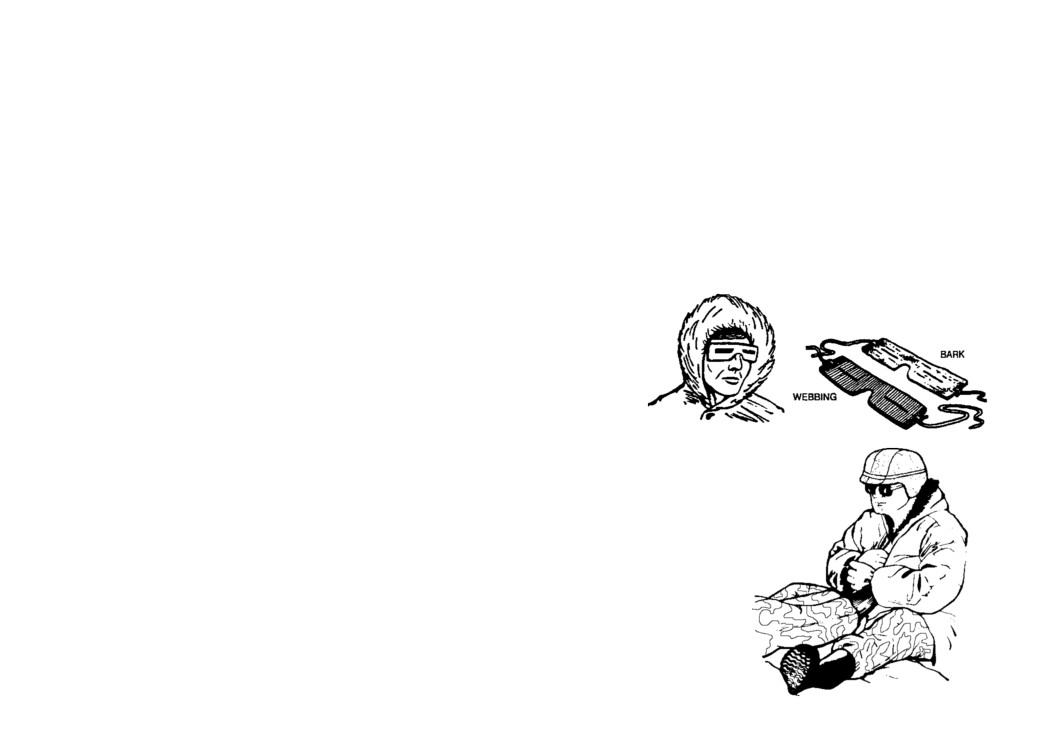
PROTECT YOUR EYES
Wear sunglasses (or goggles) (Sun, Wind, and Dust, National Stock Number [NSN]
8465-01-004-2893) to prevent snow blindness (gray lens insert for above system is
NSN 8465-01-004-2891).
Wear Spectacles, Protective, Laser-Ballistic, NSN 8465-01-416-4626, or Special
Protective Eyewear, Cylindrical System, NSN 8465-01-416-4626.
Improvised sunglasses
(slit goggles), if
actual sunglasses are not available, can be
made from the field rations/MRE cardboard
box or other opaque material.
PROTECT YOUR BUDDY
Watch for signs of frostbite on the service members
exposed skin. The affected skin will appear as pale/
gray/waxy areas (it may be hard to see these changes in
poor lighting or on service members with dark skin).
Ask the service member if his feet, hands, ears, or face
are numb and need rewarming.
2-11
FM 21-10/MCRP 4-11.1D
DO NOT allow the service member to sleep directly on the ground.
To prevent carbon monoxide poisoning
DO NOT let the service member sleep in or near the exhaust of a vehicle with
the engine running.
DO NOT let the service member sleep in an enclosed area where an open fire is
burning
NOTE
Service members may check circulation in the fingers and the toes by
pinching the nail beds and checking how fast the color returns in the beds
under the nails. The slower the return to a natural color, the more serious
the potential for frostbite on the fingers and the toes.
NOTE
See GTA 8-6-12 and FM 21-11 for information on cold injury first aid
procedures. During extended activities in a cold environment, warming
areas should be provided; for example, a service member performing
guard duty.
2-12
FM 21-10/MCRP 4-11.1D
Section III. ARTHROPODS AND OTHER ANIMALS
OF MEDICAL IMPORTANCE
OVERVIEW
Poor sanitation and improper waste disposal under wartime conditions greatly increase the
disease vector potential of such common pests as filth flies and rodents. Even in mobile
field situations these camp followers have historically amplified sanitation problems,
often resulting in epidemics of diarrheal diseases that have caused many casualties. This
threat is even greater in urban areas converted to temporary or semipermanent military
use. A dangerous temptation in field training or in deployment operations is to ignore the
field sanitation standards. Some people think, The rules dont apply here. Yielding to
that temptation can cost your health and the health of those around you. There is no excuse
for forgetting to bring protective equipment or failing to use it. Be sure to follow all safety
precautions on all labels of the pesticides that you use. They are there for a reasonto
protect your health.
USE THE DEPARTMENT OF DEFENSE INSECT/ARTHROPOD REPELLENTS
The concurrent use of a skin insect repellent (N, N-diethyl-M-toluamide [DEET], NSN
6840-01-284-3982) and a clothing insect repellent (permethrin [NSN 6840-01-278-1336 and
6840-01-345-0237]) is necessary to obtain maximum protection against insects/arthropods.
2-13
FM 21-10/MCRP 4-11.1D
APPLY N, N-DIETHYL-M-TOLUAMIDE
Apply DEET insect repellent to all exposed skin.
Follow label directions.
Apply a light, even coating to exposed skin, not under
clothing.
DO NOT apply to the eyes and lips, or to damaged skin.
One application may last 8 to 12 hours; if you receive bites, reapply a light uniform
coating of repellent.
Application of DEET can be safely used with camouflage face paint. Apply a thin
layer of DEET first, then apply face paint.
NOTE
Reapplication of DEET may be necessary (check container label) due to
heavy sweating, or after river-crossing operations, exposure to rain, or in
locations where arthropod density is very high.
2-14
FM 21-10/MCRP 4-11.1D
APPLY PERMETHRIN CLOTHING REPELLENTS TO FIELD UNIFORMS/
SLEEPING EQUIPMENT
Permethrin is the most effective clothing repellent available.
Treat military field uniforms, including Nomex®/Kevlar
uniforms, tent liners, ground cloths, and bed nets with
permethrin. This should be done before wearing in field
training or military operations. Follow label instructions
when applying to clothing.
Permethrin will remain in the material after repeated washings.
Treated uniforms can be safely worn in the rain or when crossing rivers or streams.
NOTE
Permethrin does not rinse out in cold water (or rain or streams).
DO NOT apply directly to skin, to underwear, or to cap.
DO NOT wear treated uniforms unless they are first thoroughly dried
after treating.
Apply permethrin outdoors or in well-ventilated areas only.
2-15
FM 21-10/MCRP 4-11.1D
Wear uniform as your commander directs.
Wear a loose fitting uniform, not tightly tailored, to prevent arthropods from biting
through the fabric; repair tears/holes.
When the arthropod threat is high
Blouse pants in boots and completely lace boots.
Tuck undershirt in at waist.
Wear sleeves down.
Button blouse/shirt at the neck and wrist.
Do not use aftershave lotion, cologne, or perfumed deodorants or soaps in the
field; they attract arthropods.
Wear headgear (cap, helmet, arthropod head net) when necessary to protect
your head.
KEEP YOUR BODY AND UNIFORM CLEAN
Bathe every day if possible, or at least once a week. Good personal hygiene
practices reduce infestation of insects such as body lice and mites.
2-16
FM 21-10/MCRP 4-11.1D
Wash your uniform frequently (a minimum of every 7 days)
to remove arthropods and their eggs which may be attached
to the uniform.
If the situation permits, use the
quartermaster laundry; otherwise, use a stream, lake, or
washbasin. Air-dry uniforms, especially underwear and
socks, if possible.
FOLLOW MEDICAL ADVICE
Take medications that help prevent diseases (such as anti-malaria pills) when directed
by your commander.
Use medications, such as cream/shampoo, when prescribed by medical personnel
for treatment of lice, chiggers, poison ivy, and so forth.
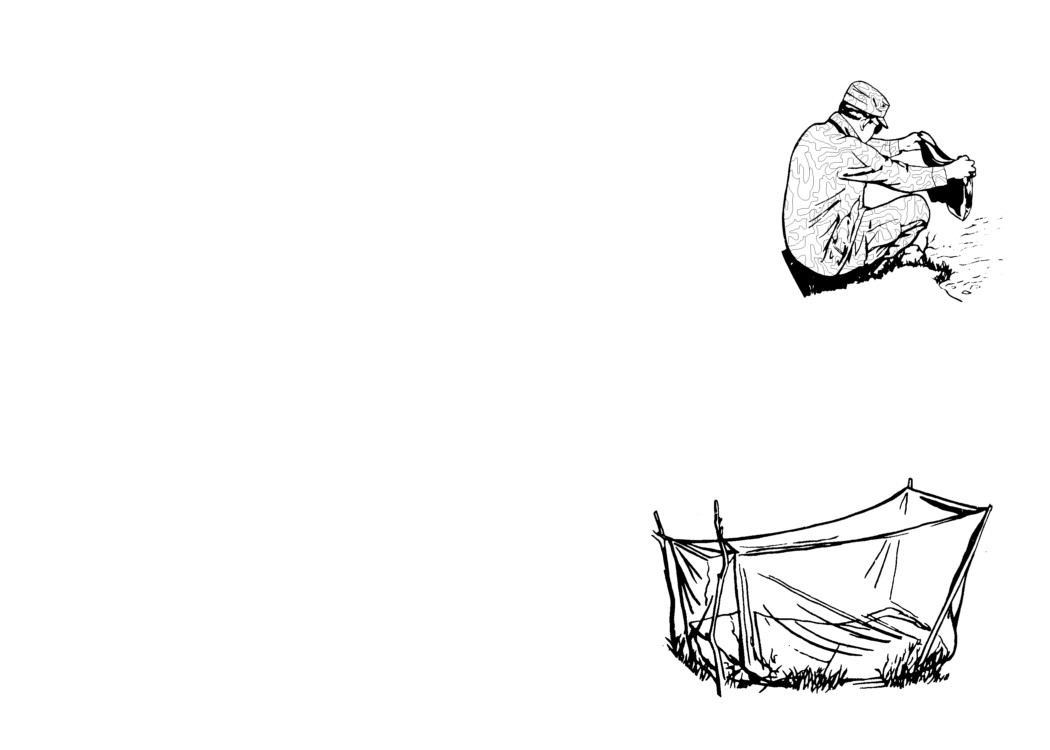
PROTECT YOURSELF AT NIGHT
Ensure your bed net is in good repair.
Use your bed net when sleeping.
Tuck net under sleeping pad or sleeping bag
so there are no openings.
2-17
FM 21-10/MCRP 4-11.1D
Follow the label directions and precautions when using DOD-approved insect spray
(for example, Insecticide, Aerosol d-PHENOTHRIN, 2%) if insects are present
inside the bed net (and inside closed tent). Allow vapors to disperse for 10 minutes
before entering the enclosure.
Treat bed net with permethrin for added protection.
Repair holes in your bed net. Generously apply DEET skin repellent to those areas
likely to touch the insect net during sleep (knees, hands, elbows, and feet) to prevent
bites through holes in the fabric.
PROTECT YOURSELF FROM OTHER MEDICALLY IMPORTANT ARTHROPODS
AND ANIMALS
Spiders, Scorpions, and Centipedes
Remove spiders from tents or buildings.
Shake out and inspect clothing, shoes, and bedding before use.
Eliminate collections of papers, unused boxes, scrap lumber, and metal.
Thoroughly clean beneath and behind large items; spiders and scorpions may be
resting in these areas.
2-18
FM 21-10/MCRP 4-11.1D
Check field latrines before use; run a small stick under the rim of the latrine hole to
dislodge any spiders or scorpions there. Spiders and scorpions may rest under toilet
seat or inside latrine box.
Wear gloves when handling paper, cloth, lumber, or other items that have been
stored for long periods.
Check around rocks and logs before resting against them.
Use a long-handled tool or stick to turn over debris before removing it.
Remove accumulations of boards, rocks, and other debris to eliminate the resting/
hiding areas of spiders and scorpions.
Wear leather gloves to remove rocks, lumber, and such from the ground.
NOTE
In many locations worldwide, centipedes are more of a problem than
scorpions, but the PMM are the same for both pests.
Snakes
Do not handle, play with, or disturb snakes or other wildlife.
2-19
FM 21-10/MCRP 4-11.1D
Avoid swimming in areas where snakes abound.
Keep hands off rock ledges where snakes may be hiding or sunning.
Look over the area before sitting down, especially if in deep grass or among
rocks.
If snakes are known to inhabit the area, sleep off the ground, if possible.
If military situation permits, avoid walking about an area during the period from
dusk to complete daylight, as many snakes are active during this period.
Avoid camping near piles of brush, rocks, or other debris.
Never step over large rocks or logs without first checking to see what is on the
other side.
Turn rocks and logs toward you when they have to be removed so you will be
shielded should snakes be beneath them.
Handle freshly killed snakes only with a long-handled tool or stick; snakes can
inflict fatal bites by reflex action after their death.
2-20
FM 21-10/MCRP 4-11.1D
NOTE
If bitten, try to kill the snake and bring its head with you to the medical
treatment facility. If you cannot bring the snakes head with you, get an
accurate description of the snake to assist medical personnel in treating
you. DO NOT panic!
DOMESTIC AND WILD ANIMALS OR BIRDS
Do not handle or approach so-called pets.
Exclude such animals from your work and living areas, unless cleared by
veterinary personnel.
Do not collect or support (feed or shelter) stray or domestic animals/birds in the
unit area, unless cleared by veterinary personnel.
Section IV. POISONOUS PLANTS AND TOXIC FRUITS
OVERVIEW
Many poisonous plants have thorns that can puncture the skin, introduce poison into the
skin, or cause infection.
(See FM 21-76.) Clothing can serve as a protective barrier for
2-21
FM 21-10/MCRP 4-11.1D
the skin. Clothing can also be a source of exposure if it is not properly cleaned after
contact with poisonous plants. Toxic fruits can also cause significant harm to service
members, ranging from minor wounds to rapidly fatal poisoning. The threat is magnified
for US military personnel who may be unfamiliar with native species and unaware of these
poisonous plants and toxic fruits.
Avoid contact with poisonous plants by properly wearing the uniform.
Avoid areas where poisonous plants grow.
Only eat plants or parts of plants that have been approved. If you do not know, DO
NOT eat it.
DO NOT put grasses or woody twigs or stems in your mouth; they may be poisonous.
Section V. FOOD-/WATER-/WASTEBORNE DISEASE/ILLNESS
OVERVIEW
Prior to deployment, the key to preventing illnesses and diseases from consumption of
food and water is following the strict guidelines and procedures established by
PVNTMED. During deployments, apply individual PMM. Infectious diarrhea results
from contamination of water and food by bacteria, viruses, and parasites. Water- and foodborne
2-22
FM 21-10/MCRP 4-11.1D
diarrheal diseases are of particular concern to the military because they can be spread to
large numbers of service members simultaneously with disastrous consequences for combat
readiness.
Parasites
(amoebas, Giardia, and tapeworms) consumed in water or
undercooked food, especially meat and fish, can cause prolonged illness. Diarrhea,
especially when vomiting or fever is present, can cause dehydration.
WATER
Fill your canteen with treated water at every chance. When treated
water is not available, you must disinfect the water in your canteen
using one of the following methods.
Preferred methodiodine tablets:
Fill your canteen with the cleanest water available.
Put two iodine tablets in the canteen of water. Double these
amounts in the 2-quart canteen.
Place cap on canteen. Shake canteen to dissolve tablets.
Wait 5 minutes. Loosen the cap and tip the canteen over
to allow leakage around the canteen threads. Tighten the
cap and wait an additional 25 minutes before drinking.
2-23
FM 21-10/MCRP 4-11.1D
Alternate methods
Chlorine Ampules:
Fill your canteen with the cleanest water available.
Mix one ampule of chlorine with one-half canteen cup of water; stir the mixture
with a clean device until contents are fully dissolved.
Pour one canteen capful of the above solution into your canteen of water.
Place the cap on your canteen and shake. Slightly loosen the cap and tip the canteen
over to allow leakage around threads. Tighten cap and wait 30 minutes before drinking.
If the nuclear, biological, and chemical (NBC) canteen cap is used, then use two
caps of the solution.
NOTE
By wearing gloves or wrapping the ampule in paper or cloth, you can
avoid cutting your hands when breaking open the glass ampule.
Emergency Water Treatment Kit (CHLOR-FLOC® Tablets):
Tear off the top of the plastic water treatment bag at the perforation (first time use).
2-24
FM 21-10/MCRP 4-11.1D
Fill the treatment bag one-half full with the cleanest water available; add 1 tablet.
Fold bag tightly three times and fold tabs in.
Hold bag firmly and shake until tablet dissolves. Swirl 10 seconds. Let the bag sit
for 4 minutes. Swirl again for 10 seconds.
Let bag sit for an additional 15 minutes.
Insert filter pouch in neck of canteen. Pour water from bag through the filter into
the canteen. Avoid pouring sediment into the filter.
Rinse the filter with treated water after use. Always filter through the same side of
the filter.
Rinse sediment from treatment bag. Save bag for water treatment only.
CAUTION
Do not drink from the treatment bag! The water is still contaminated
and must be filtered before drinking. Not filtering may cause
stomach and intestinal disorders.
2-25
FM 21-10/MCRP 4-11.1D
Household Bleach:
NOTE
Ensure bleach is unscented.
(To check for chlorine residual, see Tasks 7
and 8, Appendix A.)
Fill your canteen with the cleanest water possible.
Read the label on the bleach bottle to determine amount of available chlorine.
Liquid chlorine laundry bleach usually has about 5 to 6 percent available chlorine.
Based upon the strength of the household bleach, add the chlorine to the canteen as
directed in Table 2-1.
Table 2-1. Drops of Household Bleach to be Added to a One-Quart Canteen
AVAILABLE CHLORINE
CLEAR WATER
COLD OR CLOUDY WATER
1 PERCENT
10
20
46 PERCENT
2
4
710 PERCENT
1
2
2-26
FM 21-10/MCRP 4-11.1D
Place the cap on your canteen and shake. Slightly loosen the cap and tip the canteen
over to allow leakage around threads. Tighten the cap and wait 30 minutes before
drinking the water.
BOILING
When chlorine or iodine is not available, bring water to a rolling boil for 5 minutes.
In an emergency, boiling water for just 15 seconds will help. Boiled water must be
protected from recontamination.
CAUTION
If water is suspected of NBC contamination, do not attempt to treat.
Seek a quartermaster water supply.
FOOD
Do not buy foods, drinks, or ice from civilian vendors unless approved by veterinary
personnel or PVNTMED personnel.
2-27
FM 21-10/MCRP 4-11.1D
CAUTION
Obtain food from approved sources ONLY.
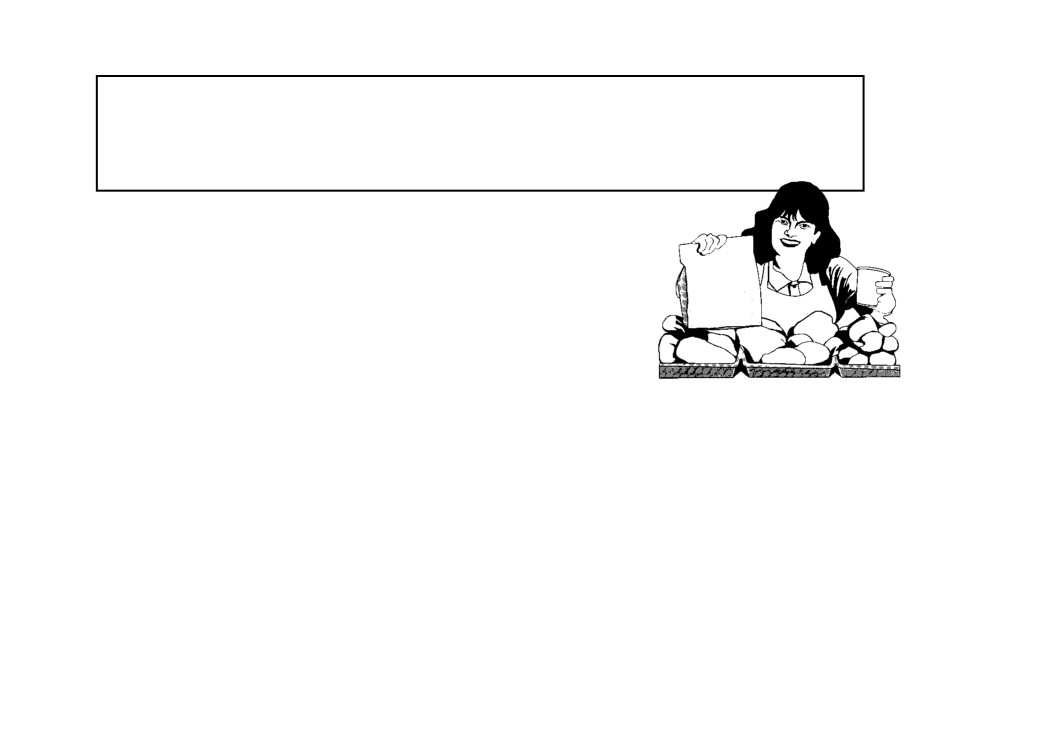
In emergency situations, choose low-risk foods such as
baked goods (breads) and thick-skinned fruits that you
can peel before eating. Eat only fruits and vegetables
that grow above the ground.
When eating in local establishments or from approved
vendors, only eat hot food entrees or raw foods that you
can wash and peel prior to eating.
Inspect all cans and food packets prior to use. Discard all cans with leaks or bulges.
Discard food packets with visible holes or obvious signs of deterioration.
Do not eat foods or drink beverages that have been prepared in galvanized containers
(zinc poisoning). Canned, bottled, or vacuum-packed products should draw in air
when opened (suction/hissing sound). If no sound is heard, or if there are any off-
odors, colors, or foaming (except for carbonated beverages), discard the product.
Do not taste.
Do not eat or drink local (unapproved) ice, snow cones, open drinks with ice, or
similar products; such food can cause foodborne illness/disease.
2-28
FM 21-10/MCRP 4-11.1D
WASH YOUR HANDS
Use soap and drinking (potable) water
After using the latrine.
Before touching eating utensils or food.
After eating.
After handling any item that can potentially transfer
germs.
Frequently during the work day to keep your hands
free of germs.
WASH YOUR MESS KIT/EATING UTENSILS
A sure way to get diarrhea is to use a dirty mess kit or eating utensils. Protect yourself by
washing your mess kit/eating utensils
In a mess kit laundry/sanitation center.
With treated water or disinfectant solution.
2-29
FM 21-10/MCRP 4-11.1D
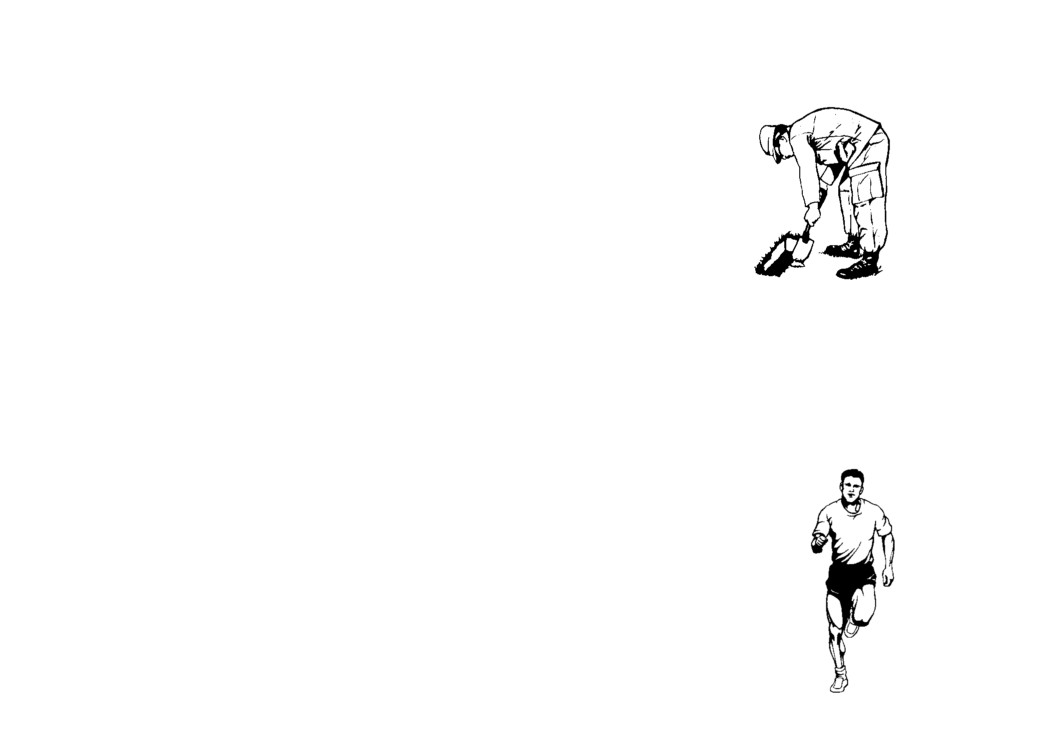
DISPOSE OF YOUR WASTE IN AN APPROVED MANNER
On a march, personal disposal bags should be used first, if available.
If not available, personal cat holes can be used only if your unit is on
the move! Always dispose of your waste immediately if your unit is on
the move to prevent flies from spreading germs from waste to your
food. Disposing of your waste also helps keep unwanted animals out
of your bivouac area. Chemical toilets or burnouts are to be used in
bivouac area.
(See Chapter 3, Section V.)
Section VI. PERSONAL HYGIENE AND
PHYSICAL AND MENTAL FITNESS
OVERVIEW
Physically fit, well-trained, and well-led service members can succeed under
the harshest circumstances.
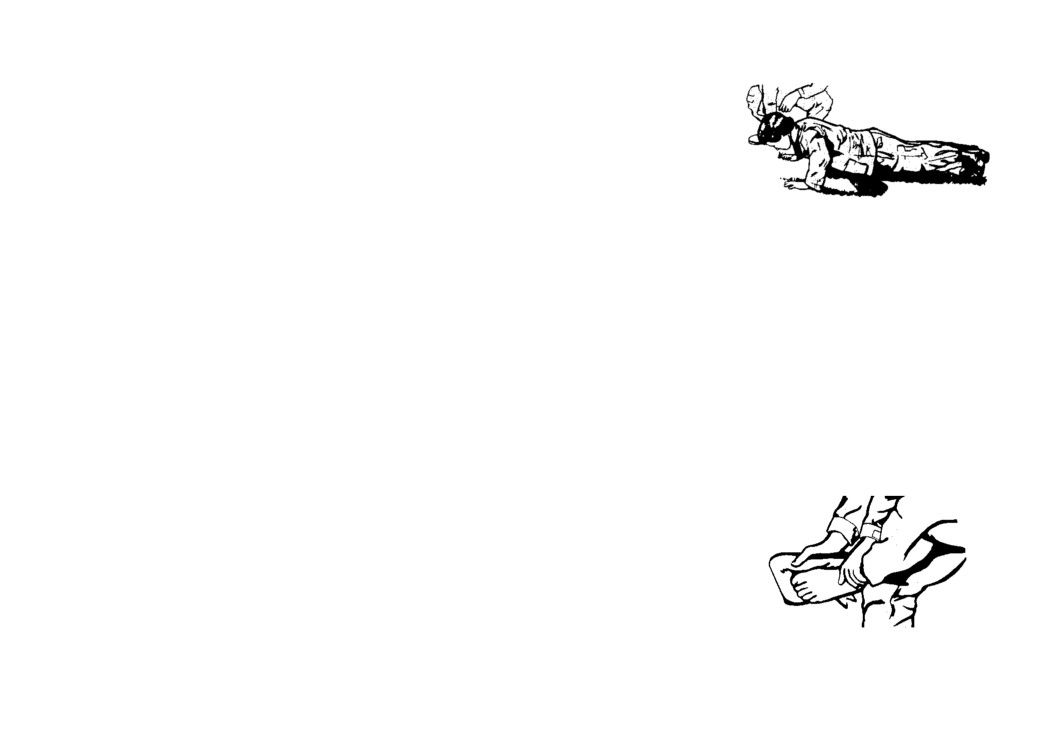
KEEP PHYSICALLY FIT
Physically fit service members are less likely to get sick or injured.
2-30
FM 21-10/MCRP 4-11.1D
Use caution when exercising in extremely hot or cold
weather; heat/cold injuries can occur. Actively
participating in physical fitness training assists you in
becoming acclimatized to the field environment.
NOTE
See FM 21-20 for more information on physical fitness training.
PREVENT SKIN INFECTIONS
Bathe frequently; if showers or baths are not available, use a washcloth daily to wash
Your genital area.
Your armpits.
Your feet.
Other areas where you sweat or that become wet, such as between thighs, (or for
females, under the breasts) and between buttocks.
2-31
///////////////////////////////////////