FM 4-02.1 ARMY MEDICAL LOGISTICS (December 2009) - page 3
Chapter 5
Table 5-1. Sample Class VIII
repair parts
request (continued)
Project Code (optional)
Priority Code
02-inability to perform
mission
05-mission impaired
12-routine
Remarks
(optional)
W as Item
Researched
(Yes or No)?
SECTION IV —
CONTINENTAL UNITED STATES-BASED
ORGANIZATIONS
5-38.
The CONUS-based organizations supporting the medical maintenance
mission in theater include the
MLMC
base, the national maintenance point (medical), and the USAMMA.
These organizations provide
the link from the strategic level to
the field or tactical level. They monitor the maintenance posture of the
theater
and anticipate medical maintenance requirements that
can be supported from the
national level.
These
organizations
ensure the tactical medical
units are able
to provide quality support
to the deployed
force.
These organizations provide support
and coordination in the
areas of logistics assistance
representatives, repair parts, contract maintenance, equipment fielding, manufacturer support, training,
depot
maintenance,
quality assurance, modification work
orders, tools
and TMDE, and program
management assistance. The USAMMA operates three medical maintenance operations divisions for
medical equipment.
The medical maintenance operations
divisions are
responsible for overhauling,
rebuilding, and refurbishing medical equipment on a national-level. This can
be accomplished through the
use of
maintenance
assets at the
facility, the MERs at the MLCs while in
the training/ready phase of
ARFORGEN, or by USAMMA establishing contracts with civilian industry (in that order).
5-12
FM 4-02.1
8 December 2009
Chapter 6
Optical Support
Optometry support from the MEDLOG perspective focuses primarily on optical
fabrication for the replacement of spectacles and frame repair. This support is a
critical aspect of preventive health care and key to ensuring readiness. The loss of
eyewear (spectacles or glasses, contact lenses, and gas mask and protective inserts)
can degrade performance and make a Soldier combat ineffective. The proper eye
care support allows the Soldier to quickly return to duty without visual impairment.
This chapter outlines optical support available in the theater.
SECTION I — THEATER OPTICAL SUPPORT
6-1. Optical support includes—
z
Fabrication of single-vision and multivision prescription lenses.
z
Fabrication of standard spectacles.
z
Fabrication of aviation spectacles.
z
Fabrication of protective mask inserts.
z
Fabrication of military combat eye protection inserts.
z
Provision of military standard spectacle frame repair.
z
Provision of contact lenses for Attack Helicopter-64 Apache pilots or military personnel on a
mission-required basis.
6-2. Optometry teams and optical fabrication laboratories are responsible for making only those
spectacles and protective vision devices that require corrective prescription lenses. Replacement spectacles
and protective mask inserts requiring standard single-vision lenses may be fabricated at optical support
units in theater, afloat, or in fixed facilities. In the event the optical fabrication laboratory cannot fabricate
a prescription, eyewear may be requested from the supporting CONUS or OCONUS full service optical
fabrication laboratory that has lens surfacing capability. Nonprescription lenses are a Class II item and are
the quartermaster’s responsibility.
6-3. Prior to deployment, commanders ensure that Soldiers have the following:
z
Two pairs of military spectacles (a civilian or frame of choice pair of spectacles may count
towards this requirement).
z
One pair of protective mask inserts or 6-month supply of contact lenses (mission required only).
z
One pair of military combat eye protection inserts.
z
One pair of land operations glasses or goggle inserts.
6-4. Optometrists provide essential support to the operational aviation community for the Aviation
Contact Lens Program. Contact lenses should not be used in theater unless medically or operationally
indicated for specific mission purposes.
6-5. Patients requiring optometric services initially report to their supporting BAS or medical company.
For those patients requiring only routine replacement of spectacles or inserts, necessary information is
obtained from the individual’s treatment record and forwarded to the supporting optical fabrication
activity. The required spectacles are fabricated and returned to the BAS or medical company for issue to
the individual.
8 December 2009
FM 4-02.1
6-1
Chapter 6
6-6. Brigade combat team medical companies request replacement of corrective eyewear for units in the
sustainment area. The BSMC submits replacement requests to the supporting optical fabrication activity
via the best communications available with delivery back to the requester. For those units operating at
EAB, requests for replacement spectacles or frame repair are submitted by the supporting MTF or area
support medical company.
6-7. Medical supply offices generally do not have organic optical support capability. However, they can
act as a relay for requests for optical support within their AOs.
OPTOMETRY DETACHMENT
6-8. The optometry detachment (TOE 08567GA00) provides optometry care and optical fabrication to the
BCT and EAB units on an area basis. They are assigned to the MEDCOM (DS) or MEDBDE with further
attachment to an MMB and may be further attached to a BCT.
6-9. The detachment is employed in support of full spectrum operations. Task organized elements of the
detachment are deployed, as necessary, in support of brigade-sized operations. The optometry detachment
consists of six personnel that can be divided into two teams. Each team has the capability to provide
optometry support limited to routine eye examinations, refractions, spectacle fabrication, frame assembly,
and repair services to brigade and EAB units in the AO. The basis of allocation for the optometry
detachment is 1 per 15,000 population supported in an AO.
6-10. The optometry detachment’s capabilities include—
z
Initial diagnosis and management of eye injuries.
z
Examination, diagnosis, and management of ocular-related disorders, injuries, diseases, and
visual dysfunctions.
z
Assembly, repair, and fabrication of single-vision spectacles.
6-11. Prescriptions and/or replacement requests that cannot be filled from on-hand stock or that exceed the
MMB capability are passed to the CONUS/OCONUS support base. Once filled, prescriptions are
delivered to the optical laboratory section of the supporting MLC.
MEDICAL LOGISTICS COMPANY OPTICAL SUPPORT SECTION
6-12. The optometry section of the MLC is responsible for providing single-vision/multivision fabrication
and repair of corrective eyewear for units on an area basis. Prescriptions and/or replacement requests
which cannot be filled from on-hand stock or which exceed the MMB capability are passed to the MLC via
the best communications available with delivery back to the requester.
6-13. The MLC provides limited single-vision/multivision optical fabrication to EAB. All prescriptions
requested from the MLC optical section that cannot be filled are passed to the CONUS or OCONUS full
service optical fabrication laboratory with delivery back to the requestor. See Chapter 2 for a full
description of the support provided by the MLC.
6-2
FM 4-02.1
8 December 2009
Optical Support
OTHER OPTICAL SUPPORT
6-14. Deployed units and Army clinics also use the Naval Ophthalmic Support and Training Activity to
assist in providing optical fabrication support.
SECTION II — OPTICAL EQUIPMENT SETS
6-15. Currently, there are three optical equipment sets (OESs) in the Army medical supply system. The
sets are—
z
Unit assemblage 324A OES, Field Combat (Line Item Number N23712). This OES is used to
complete optical examinations. It replaces UAs 1324 and 3324.
z
Unit assemblage 003A OES, Optical Fabrication Unit Portable Field (Line Item Number
N22073). This OES provides single-vision capability. It replaces UA 3003.
z
Unit assemblage 006A OES, Multivision Augmentation (Line Item Number P47705). This OES
provides multivision optical support to the BCT and EAB units. The set contains the materiel
required to provide for the casting of multivision and limited single-vision lenses. This set
augments the OES, Optical Fabrication Unit Portable Field
(Line Item Number N22073)
standardizing optical fabrication across all roles of care. The new UA 006A is the replacement
for UA 2006.
6-16. The OESs will be used by the Optical Laboratory Specialist (MOS 68H), assigned to the MLC.
Current BCT listings and hand receipt copies may be obtained from the USAMMA website at
8 December 2009
FM 4-02.1
6-3
Chapter 7
Blood Support
The Army’s blood support system is a part of the Armed Services Blood Program.
Upon mobilization, donor centers and CONUS MTFs increase their blood drawing
capabilities as directed by the Army Blood Program Officer. These facilities draw,
process, and prepare blood and blood components in accordance with Food and Drug
Administration guidelines and ARs for shipment to one of the Armed Services Whole
Blood Processing Laboratories. This chapter describes blood support during
contingency operations and the roles and responsibilities of organizations and
individuals involved in this process.
SECTION I — THEATER BLOOD SUPPORT
7-1. Theater blood support consists of CONUS-based resupply of blood components. In a developing
theater during the buildup period, immediate blood requirements may be provided by pre-positioned frozen
blood components. These stocks are designed to meet initial blood requirements until the logistical system
can deliver blood components to the theater.
7-2. Blood and blood components are more than just another commodity of supply. Blood is live tissue
and, as such, requires special handling. Air transportation is the primary mode of transportation used for
blood distribution. Blood support in an MCO is a dynamic and ever-evolving process, heavily influenced
by—
z
Stringent storage and handling requirements.
z
Inventory management constraints.
z
Limited potency periods.
z
Innovative technology.
7-3. To be successful, blood support must be a highly organized and coordinated effort on the part of—
z
Medical logistics personnel.
z
Operations/plans personnel.
z
Blood bank personnel.
z
Laboratory personnel.
z
Transportation personnel.
z
Primary medical care providers.
7-4. Blood is managed as fractional portions called components and is used in rather specific quantities
based on a patient’s injury and condition. The components likely to be present in a theater include packed
RBCs, fresh frozen plasma (FFP), apheresis platelets, and fresh whole blood (FWB) (only if collected in
theater). Blood services in a theater consist of a combination of missions. Of primary importance are the
following:
z
Receiving blood components from CONUS.
z
Storing, issuing, and distributing blood components to MTFs.
8 December 2009
FM 4-02.1
7-1
Chapter 7
z
Collecting and processing of blood on an emergency basis in the theater for FWB and apheresis
platelets. Emergency collection of FWB in theater is a procedure that should only be used as a
last resort when no fully tested blood products are available
(see JP
4-02 for additional
information).
z
Storing, processing, issuing, and distributing frozen blood components pre-positioned within
designated theaters.
7-5. Theater blood support is provided to US military and, as directed, multinational military and
indigenous civilian MTFs. The Army, US Navy, and USAF maintain individual blood programs to meet
normal peacetime requirements. During contingency operations, a single blood management program is
established under the combatant commander to provide blood support in theater. The program interfaces
with the CONUS blood banking system and receives blood components directly from established DOD
joint Service programs. The Joint Blood Program Office (JBPO)—
z
Serves as the single blood program manager in the theater.
z
Serves as the single interface with the Armed Services Blood Program Office in CONUS.
z
Coordinates, monitors, and ensures that component blood programs, blood product
requirements, and capabilities within the joint operations area are managed and maintained
according to Food and Drug Administration guidelines/requirements.
z
Forms, organizes, and operates the Area Joint Blood Program Offices (AJBPOs).
z
Briefs the combatant commander on the status of the blood supply, as required.
z
Prepares the concept of operations and the joint blood program portion of Annex Q to the GCC
plans and operations orders.
z
Advises the GCC surgeon regarding management, policies, and procedures for handling blood
and blood products.
z
Coordinates blood distribution for and between component Services within the GCC.
z
Monitors GCC blood status through the daily blood report.
z
Establishes procedures and publishes instructions for disposal or destruction of excess and
outdated blood.
z
Maintains liaison with the blood support detachments, EBTCs, and the AJBPO at any JTF
within the GCC area of responsibility.
z
Plans the handling, storage, and distribution of blood components within the GCC area of
responsibility.
z
Consolidates and forwards requirements for resupply of blood products to the Armed Services
Blood Program and the joint logistics staff section.
z
Assesses the need for the AJBPO.
z
Assists the GCC surgeon with the development and dissemination of theater blood management
policies, procedures, and guidance.
z
Compiles area blood reports and forwards as appropriate.
7-6.
As the GCC’s blood program office, the JBPO requests assistance from the Armed Services Blood
Program Office when requirements exceed theater resources. The Armed Services Blood Program Office
requests support from the Joint Services. Blood collected and processed by DOD blood donor centers in
CONUS is shipped to one of two Armed Services Whole Blood Processing Laboratories. The Armed
Services Whole Blood Processing Laboratory sends the blood to an EBTC located at major airfields in the
theater. Once received at the EBTC, blood components are under JBPO control.
7-7. The JBPO establishes AJBPOs to—
z
Implement theater blood program policies.
z
Coordinate blood component use and inventory protocol on a geographical basis.
z
Direct the movement of blood components from the EBTC to the blood support detachment.
For information on blood support in joint operations see JP 4-02.
7-2
FM 4-02.1
8 December 2009
Blood Support
7-8. The blood support detachment is the direct issue source for MTFs, medical units, and other users.
Blood support detachments support other Services’ MTFs and nonmilitary facilities as directed by the
JBPO/AJBPO. The blood support detachment commander may serve as the AJBPO. Combinations of
sources are required to satisfy the theater’s initial blood needs. Limited in-theater collections (blood
support detachment personnel and hospital-based collections), initial deployed supply, and pre-positioned
frozen blood inventories are all necessary to meet requirements during the first few days of a developing
theater. Full CONUS-based blood support capability is mature within ten days of notification. As the
theater matures, the primary source of blood components comes directly from the CONUS base. In-theater
collection and processing are required to provide platelet products and FWB for emergency conditions. In-
theater collections are not collected under the same rigorous screening and viral marker testing as CONUS-
based donor centers. Patients receiving blood products from in-theater collection must be followed up for
up to 1 year after transfusion for human immunodeficiency virus and Hepatitis B and C. Experience has
shown in-theater collection to be the only choice for massively transfused patients when platelets and/or
FFP are not available in sufficient quantities. Varying levels of blood support exists at Roles 2 and 3. No
blood or blood product support is provided at the Role 1 MTF/BAS. Brigade medical supply offices
generally do not have organic blood support capability. However, they can act as a relay for requests for
blood support within their AO to the supporting blood support detachment.
ROLE 2 BLOOD SUPPORT
7-9. The brigade surgeon determines blood requirements for the brigade. Blood inventory and supply are
functional responsibilities of the medical logistics officer in the support operations section of the brigade
support battalion and the AJBPO/JPBO. Only packed liquid RBCs are expected to be available to the
BCTs. The forward cell of the blood support detachment (collocated with the MLC) provides blood
products to the medical companies/troops in the BCT. Most of the demands for emergency resupply come
from the BSMCs.
BRIGADE SUPPORT MEDICAL COMPANY
7-10. The BSMC medical laboratory specialist (MOS 68K) informs the medical logistics officer in the
division surgeon section of the current availability of blood in the division. The laboratory has the
capability to conduct limited emergency FWB collections. The division surgeon section prioritizes the
movement of blood products, as required. Air assets should be considered along with ground assets for the
transportation of blood.
AREA SUPPORT MEDICAL COMPANY
7-11. The process for obtaining blood support in the ASMC mirrors that of the BSMC. The medical
laboratory specialist in the ASMC informs the operations staff officer (S-3) at the MMB of the current
availability of blood in the unit. The medical laboratory specialists of each area support treatment squad
are the technical advisors to the medical company commanders and treatment platoon leaders on all matters
pertaining to the blood program. The laboratory has the capability to conduct limited emergency FWB
collections. The S-3 prioritizes the movement of blood products, as required.
7-12. Each medical company will maintain an inventory of 50 units of Type O packed RBCs for wartime
operations. During other operations, the division surgeon will establish inventory levels. The blood
support detachment will maintain 30 to 50 units of Type O packed RBCs for each medical company
supported. Blood stockage levels will be adjusted as necessary to meet blood requirements. Refer to
paragraph 7-22 for additional information on the rhesus (Rh) factor of blood.
FORWARD SURGICAL TEAM
7-13. Blood support at the FST consists of Type O RBCs (liquid) in limited quantities as dictated by the
specific contingency and expected casualty rate. The FST has a 50-unit blood storage capability and
requires frequent blood resupply. Blood inventory management and resupply operations are coordinated
directly with the supporting medical company.
8 December 2009
FM 4-02.1
7-3
Chapter 7
ROLE 3 BLOOD SUPPORT
7-14. In the CSHs, blood support has evolved significantly with the fielding of the DEPMEDS blood
laboratory and the shelters, tactical expandable
(also known as the International Organization for
Standardization [ISO] shelters).
Note. The ISO shelters are the hard-walled shelters used in the DEPMEDS-equipped CSHs.
7-15. The transfusion capability at the CSH has improved with the implementation of greater storage
capacity, basic compatibility testing, multicomponent availability, and staffing with a laboratory officer and
noncommissioned officers with specific blood bank training. Inventories of up to 480 units of blood can
be stored in a DEPMEDS refrigerator.
7-16. The CSH blood inventory management and resupply operations are coordinated directly with the
supporting blood support detachment. Inventories are managed for Groups A, B, and O blood and both Rh
positive and negative blood types. A small inventory of FFP is available at the CSH. The CSH has the
capability to conduct limited emergency FWB and apheresis platelet collections, but does not have the
capability to perform infectious disease testing of the donor units (rapid screening methods for hepatitis,
human immunodeficiency virus, and syphilis testing may be available). The decision to transfuse blood
collected in a theater is governed by theater policy.
7-17. The relatively large quantity of blood maintained at the CSH requires the use of large-capacity,
blood bank-type refrigerators equipped with audible and visual temperature alarm systems. Freezers for
FFP storage are similarly monitored. See FM 4-02.70 for additional information on blood banking and
transfusion services.
STORAGE AND SHIPMENT OF BLOOD PRODUCTS
7-18. Units of packed RBCs are harvested from whole blood by centrifugation and removal of most of the
plasma. Red blood cells can be stored in either the liquid or frozen state. The primary differences are the
storage requirements, shelf life, and the additional processing required to freeze and thaw frozen cells.
Plasma removed during RBC processing is promptly frozen and termed FFP. Additionally, apheresis
platelets (cell fragments involved in forming a plug at the site of bleeding) can be harvested using an
automated apheresis collection device that harvests only the platelet product and returns the remaining
blood products back to the donor.
7-19. Blood storage requirements are extremely important and present a real challenge to field storage
facilities. The conditions required for storing various components have very little tolerance; entire
inventories of blood can be lost if conditions are not maintained correctly. Refer to Table 7-1 below for the
storage temperatures and shelf life of theater blood components.
7-20. Conditions for transporting blood components are essentially the same as for prolonged storage with
the exception of—
z
Packed red blood cells. When shipping packed RBCs, a temperature range of 1° Celsius (C) to
10°C is acceptable.
z
Fresh frozen plasma. Once thawed, FFP must be transfused within 24 hours. When shipping
FFP, it must be kept in a frozen state using dry ice or a system that can sustain a temperature not
greater than - 18°C.
z
Platelets. During shipment, platelets must remain as close to 20°C to 24°C as possible. The
maximum time that platelets can be stored without agitation is 24 hours.
7-4
FM 4-02.1
8 December 2009

Blood Support
Table 7-1. Storage requirements for theater blood component
Blood Component
Storage Temperature
Storage Shelf Life
Red Blood Cells (Liquid)
1°C to 6°C
35 or 42 Days
Red Blood Cells (Frozen)
Not greater than -65°C
10 Years
Fresh Frozen Plasma
Not greater than -18°C
12 Months
Platelets
20°C to 24°C
5 Days
Fresh Whole Blood
20°C to 24 °C
1 Day
7-21. Specially built containers and packaging methods are prescribed in TM 8-227-11. Fresh whole
blood should not be used after 24 hours post collection since the coagulation factor half-life would have
expired.
SECTION II — DELIVERY OF BLOOD
7-22. Blood will be shipped by air when circumstances permit. Unless otherwise specified, 15 percent of
the blood requested should be Rh negative. The blood distribution system plans for 15 percent of all blood
distributed in theater to be Rh negative. This is true for all the MTFs in theater. The medical companies
have very limited storage capacity, but they are also required to have approximately 15 percent of their
total blood products as Rh negative.
7-23. During shipment, blood will be continuously maintained at a temperature within the range of 1°C to
10°C. Blood still on hand 5 days before the expiration date will be kept properly refrigerated and returned
to the blood support detachment.
7-24. Shipment of blood from the sustainment area to the supported units is either coordinated by the
MMB’s operations section with the EAB movement control center or accomplished by backhaul on
medical vehicles (air and ground). Air ambulances from the general support aviation battalion can
accomplish emergency resupply.
SECTION III — BLOOD REPORTING SYSTEM
7-25. The blood reporting system has been standardized to enhance blood requirements projection, blood
requests, blood inventory reports, and to provide information on the overall blood element operations of all
Services, to include joint Services, in the theater. The Armed Services Blood Program Office developed
the contingency blood reports and use of the US Joint Message Text Format. The two standard joint
message text format reports used to report blood program operations are the—
z
Blood report. The standardized report used in the Armed Services Blood Program to report
blood inventories, request blood, and project requirements. See sample message blood report at
Figure 7-1.
z
Blood shipment report. A standardized report used in the Armed Services Blood Program to
report blood shipments. This report should be used by the MTF to notify the receiving facility
that blood has been shipped.
7-26. Medical companies will submit their blood requirements for the following day and the status of
blood on hand to the blood support detachment with information copies to the division and brigade
surgeons. Medical companies will consolidate and submit requirements according to timelines provided by
higher headquarters. For additional information on the blood reporting system, see JP 4-02 and TM 8-227-12.
8 December 2009
FM 4-02.1
7-5
Chapter 7
BLOOD REPORT
FM: CDR CHARLIE MED 34BSB
TO: BLOOD SUPPORT DETACHMENT OFFICE
INFO: DIVISION SURGEON
CLAS UNCLAS
OPER/VALIANT EAGLE
MSGID/BLDREP/CMED34FSB/1012221//
REF/A/CDRUSACOM/090300ZJAN92/-/TOTAL//
ASOFDTG/100001ZJAN92//
(Line 1)
REPUNIT/CMED34FSB/G/BZ44327432//
(Line 2)
BLDINVT/20JS//
(Line 3)
BLDREQ/30JSW//
(Line 4)
BLDEXP/2JS//
(Line 5)
BLDEST/30JS//
(Line 6)
RMKS/RECEIVED 30JS/TRANSFUSED 30JS/SHIPPED O/
(Line 7)
REFRIGERATOR NEEDS REPAIR//
DECLAS
(Line 8)
*Report Explanation:
(1)
Line 1, ASOFDTG: Day/time zone of the BLDREP.
(2)
Line 2, REPUNIT: Name, designator code, and activity brevity code of reporting unit.
(3)
Line 3, BLDINVT: Used to report the total number of each blood product on hand at the end of the
reporting period. Total the blood products at the end of the reporting period.
(4)
Line 4, BLDREQ: Used to report the total number of each blood product requested and time frame
needed.
(5)
Line 5, BLDEXP: Used to report the estimate of the number of each blood product which will expire within
the next seven days.
(6)
Line 6, BLDEST: Used to report the estimate of the total number of each blood product required for
resupply within the next 7 days.
(7)
Line 7, CLOSETEXT OR RMKS: Used to provide additional amplifying information if required.
(8)
Line 8, DECLAS: Mandatory if the message is classified.
LEGEND:
BLDEST
BLOOD ESTIMATE
FSB
FORWARD SUPPORT BATTALION
BLDEXP
BLOOD EXPIRATION
INFO
INFORMATION
BLDINVT
BLOOD INVENTORY
JAN
JANUARY
BLDREP
BLOOD REPORT
MED
MEDICAL
BLDREQ
BLOOD REQUIREMENT
MSGID
MESSAGE IDENTIFICATION
BSB
BRIGADE SUPPORT BATTALION
OPER
OPERATION
CDR
COMMANDER
REP
REPORTING
CLAS
CLASSIFICATION
REF
REFERENCE
CMED
CHARLIE MEDICAL
RMKS
REMARKS
DECLAS
DECLASSIFICATION
UNCLAS
UNCLASSIFIED
DTG
DATE/TIME GROUP
USACOM
UNITED STATES ARMY COMMAND
FM
FROM
Z
ZULU
Figure 7-1. Sample message blood report
7-6
FM 4-02.1
8 December 2009
Chapter 8
Health Facility Planning and Management
During MCOs, health facility planning and management in a developing theater
(during the buildup period) is extremely limited. However, during contingency
operations, opportunities to provide health facility assessments and technical
evaluations may present themselves. Many of these assessments involve interactions
with host-nation health ministers and medical facilities. As combat operations
transition and the theater medical footprint begins to stabilize, the need for deliberate
planning and management of health facilities increases. Planning and management of
expedient and/or deliberately planned infrastructure requires close coordination with
the component assistant chief of staff, information operations staff, LOGCAP
contractor, and contingency operating base command group, along with supporting
engineering brigade facility engineering teams and detachments. For the purposes of
this chapter, the planning and management of facilities is limited to buildings of
opportunity and construction of expeditionary structures and management of
infrastructure necessary to support sustainment of the deployed medical force. The
use of DEPMEDS as a type of facility is discussed in this chapter, but the
management of the system, general and special purpose tents, and field generators
will not be discussed.
SECTION I — EXPEDITIONARY HEALTH FACILITY MANAGEMENT
8-1. Managing the sustainment of health facility infrastructure is a complex task requiring interaction
between multiple engineering disciplines and trades (such as carpentry, masonry, electricians, plumbing,
and mechanical). Sustainment of health facilities is a complex process (at times), heavily influenced by
the—
z
Role of health care to be provided.
z
Length of sustainment period anticipated.
z
Statutory and regulatory restrictions on construction funding.
z
Operational footprint (mobile versus static) and availability of adequate evacuation assets.
z
Maturity level of operational theater and distance to MTFs outside of the theater.
z
Level of technology (medical equipment) deployed into theater.
z
Construction, sustainment, and engineering capabilities present in theater.
MISSION
8-2. Health facility management consists of planning, organizing, staffing, directing, and controlling all
facility functions. The US Army Health Facility Planning Agency is responsible to the Commander,
USAMEDCOM for the centralized management of the Army Health Facility Life-Cycle Management
Program. The US Army Health Facility Planning Agency’s mission is to plan, project, and execute
innovative facility capital investment solutions to enhance the delivery of health care and medical research
to support service members and the military Family across the continuum of military operations.
8-3. The provision of facility support requires organized and coordinated efforts between—
z
Medical logistics personnel.
z
Operations/plans personnel.
z
Clinical personnel.
8 December 2009
FM 4-02.1
8-1
Chapter 8
z
Engineering personnel.
z
Acquisition personnel.
z
Funding or resource management personnel.
8-4. The US Army Health Facility Planning Agency is based in CONUS and supports health facility
planning requirements in the theater. The agency provides the health facilities planning link from the
strategic to the tactical level and provides reach-back technical assistance to the forward deployed health
facility planners located in the MEDCOM (DS), MEDBDE, ASCC surgeon’s office, or joint force
surgeon’s office. This reach-back technical assistance includes—
z
Planning and design.
z
Clinical concept of operations development.
z
Space programming.
z
Equipment planning.
z
Medical systems planning.
z
Initial outfitting and transition planning.
z
Architectural and engineering planning.
z
Assist in preparation (provide input and review) of the Department of Defense (DD) Form 1391
(Military Construction Project Data).
z
Cost estimating.
z
Health information system (facility related) planning.
SECTION II — ROLES AND RESPONSIBILITIES
8-5. The theater-level mission is likely to remain highly fluid as the theater/AO develops and evolves.
This can be based on military mission requirements, US and international political developments, existing
and evolving health care infrastructure in the host or occupied country, and the variability of local threat
assessments. As such, the facility planning and management support required will remain fluid as the
theater/AO develops. The requirements at this level will include reach-back support, but often requires
assigned staff with specific health facility planner
(AOC 70K9I) training. This need is based on
theater/AO command-level requests for this specialized skill set, the ability for the health facility planner to
have full situational awareness, and the operational pace. The health facility planner will likely serve as
assigned staff in the joint/task force surgeon’s office. A primary function of this position is not only to
understand the medical operational needs and the associated health facility requirements, but also to
coordinate in a collaborative fashion with theater-level engineering sections, base sustainment operations,
reach-back agency support, contracting, subordinate command-level facility management personnel,
funding streams, and in some cases host-nation entities. Often this health facility planner is tasked to
provide direct health care facility advice to the command surgeon and provide support in command
briefings. Due to the breadth of knowledge required for the health facility planner, reach-back support is
required to sustain the health facility planner’s mission execution. It is important to determine up front the
abilities of the assigned health facility planner and structure the reach-back support in a symbiotic fashion.
The level of support and reach-back needs will change with each assigned health facility planner, based on
their varied skills and experience. The health facility planner relies heavily on a successful and
coordinated working relationship with the EAB engineering staff. The health facility planner provides
direct advice and input to the EAB engineering staff with regard to all health facility planning above the
brigade/BAS level to ensure appropriate alignment with the theater or AO medical concept of operations.
There is one health facility planner in the MEDCOM (DS) and one in the MEDBDE. During small scale
contingencies the MEDCOM (DS) and MEDBDE may not be deployed. In these cases, the JTF surgeon or
medical task force commander would request reach-back support or that a health facility planner be
assigned on staff.
8-2
FM 4-02.1
8 December 2009
Health Facility Planning and Management
BRIGADE SUPPORT MEDICAL COMPANY
8-6. The BSMC mission is likely to remain highly mobile and in many instances geographically dispersed
in order to support multiple brigade contingency operating locations and sites. The BSMC commander
coordinates for real estate through the S-3 of the brigade support battalion and requests facility engineering
support exceeding local engineering support capabilities through the brigade support battalion S-4 to the
supporting engineering unit/element. Work orders exceeding local engineering support capabilities should
be submitted under the supervision of the company first sergeant for day-to-day management.
AREA SUPPORT MEDICAL COMPANY
8-7. The process for obtaining facility engineering support in the ASMC mirrors that of the BSMC. The
ASMC commander informs the S-3 at the MMB of the need for real estate and further requests facility
engineering support exceeding local engineering support capabilities through the S-4 at the MMB. Work
orders exceeding local engineering support capabilities should be submitted under the supervision of the
company first sergeant for day-to-day management.
COMBAT SUPPORT HOSPITAL
8-8. In the CSH, facility management requirements expand exponentially as do the organic resources to
support those requirements. Continuous use and incorporation of initial entry and expeditionary
DEPMEDS equipment (including tactical expandable shelters and tents) into facility planning and
management solutions should be carefully monitored, particularly when the operations extend into multiple
months and years.
Note. The ISO shelters (hard-walled shelters) are used in the DEPMEDS-equipped CSH.
8-9. The facility management capability at the CSH consists of the utilities operation and maintenance
warrant officer (AOC 210A) who generally serves as the overall maintenance officer (nonmedical). This
individual provides technical expertise to operate, maintain, and repair the Army’s utility systems. Units
should plan for long-term sustainment of power generation equipment and may consider shifting this
requirement
(tactical or commercial generators) to LOGCAP or other contract support. Additional
capabilities available at the CSH include utilities equipment repairers, motor pool, and laundry and bath.
Other personnel may be further assigned or tasked to perform repairs or facility management functions.
MEDICAL BRIGADE
8-10. There is one health facility planner on the MEDBDE staff. The MEDBDE health facility planner is
responsible for—
z
Monitoring facility engineering support to subordinate medical units.
z
Assisting medical units in identifying and developing project requirements.
z
Establishing brigade facility management and construction policies in accordance with theater
policies.
z
Coordinating through the MEDCOM (DS) for reach-back technical support to CONUS-based
organizations.
z
Assisting the next higher headquarters (MEDCOM (DS), JTF, ASCC surgeon) in planning for
and managing health facility planning and construction requirements external to the MEDBDE.
z
Coordinating with the theater information operations staff for facility engineering support, base
master planning, and extended or long-term sustainability of MTFs and health care
infrastructure.
8 December 2009
FM 4-02.1
8-3
Chapter 8
MEDICAL COMMAND (DEPLOYMENT SUPPORT)
8-11. The MEDCOM (DS) has one health services materiel officer/health facility planner (AOC 70K9I) on
staff. The health facility planner in the MEDCOM (DS) serves as the principle advisor to the chief,
logistics for health care facility planning in the theater. The health facility planning responsibilities at this
level include—
z
Coordinating and integrating medical facility requirements into the Joint Engineering Planning
and Execution System.
z
Generating time-phased facility requirements based on the operational plan.
z
Providing facility feasibility assessments and recommendations on facilities of opportunity.
z
Providing medically specific infrastructure requirements to assist in mission analysis and course
of action development.
z
Providing real-time monitoring tracking plan/project execution.
z
Disposing of medical facilities upon completion of the contingency operation or transfer to local
national entities.
z
Integrating health care delivery across multiple branches of the DOD or multinational forces.
NONMEDICAL FACILITY ENGINEERING SUPPORT
8-12. Depending on the size of the JTF Army component and sustainment base, facility engineering
support at the installation (garrison), contingency operating base, location or site can vary widely. In
general, contingency operating bases will have an identified base commander who coordinates requests for
real estate, facilities, land use, or facility engineering support. Some level of engineering support is
available either directly or on an area support basis to assist the base mayor’s cell in managing facility
infrastructure. This support may include a facility engineering detachment or team that performs functions
similar to a department of public works in CONUS and OCONUS garrison environments. Additional
engineering units
(Army Engineer Brigade, Naval Construction Force [Seabees], Air Force Facility
Engineers/Red Horse Squadrons), LOGCAP construction services, and other contract engineering support
may also be available depending on the size of the contingency operating base and maturity of the theater.
8-13. Contracting support can vary greatly depending on the size and maturity of the theater. In larger
theaters, US Army Corps of Engineers region and district structures may be established or contracting and
management of military construction-sized and appropriated projects may be handled by established
OCONUS districts (such as the US Army Corps of Engineers Transatlantic Programs Center or Europe
District). Coordination and planning must take place to establish a solution that best supports the required
project time, quality, and cost constraints. Keeping the contracting authority and execution as close to the
theater (within theater where applicable) is recommended, provided the capacity and required technical
skill sets are available. Sequencing procurement and execution handoff of contractual authority may also
be a part of the planning process (such as request for proposal development and contracting outside the
theater, then moving contract authority within theater for design and/or construction execution).
8-14. Initial outfitting, also referred to as fixtures, furniture and equipment, and transitional type expenses
associated with larger medical facility projects are often funded differently in contingency operations than
typical medical military construction projects. These requirements must be considered and coordinated to
ensure an operational facility when completed. Other important considerations include communications
equipment requirements, which may include both unclassified and classified (secret and top secret) levels
of communications requirements that may be higher than most CONUS-based MTFs.
SECTION III — HEALTH FACILITY PLANNING CONSIDERATIONS DURING
CONTINGENCY OPERATIONS
8-15. The planning of health facilities in a contingency operation is similar to noncontingency
environments. However, there are some unique factors influencing the planning process which need to be
considered for each contingency facility. Field Manual 3-34.400 and JP 3-34 provide construction
standards and engineering planning guidance in contingency operations which are fundamental and
8-4
FM 4-02.1
8 December 2009
Health Facility Planning and Management
applicable to health care facility planning. This section focuses on health facility planning and execution in
a contingency operation above the BAS.
8-16. It is important to balance facility durability and maintainability
(quality), construction time
(schedule), and cost with mission and the evolutionary nature of contingency operations. It is unwise to
make significant facility investments in an austere theater or too early in the development of an operation.
This may hinder the medical commander’s ability to adapt the medical facilities to meet the needs of an
operation once the environment becomes more stable (logistically, militarily, and politically).
8-17. Facility requirements for contingency operations can vary widely based on the operational pace,
branch of Service manning the facility, evolving nature of the theater or AO, local infrastructure, threat
level, and local abilities to maintain a given facility type.
DESIGN CONSIDERATIONS
8-18. Military designers must be knowledgeable of local construction standards and materials commonly
used in a particular region. Designs must include the use of local materials or provide flexibility within the
design for use of substitute materials. Many designs may not be practical because of logistical
considerations. For example, although the Theater Construction Management System’s designs are
adjusted for various climates (desert, tropic, and arctic), they may be difficult to construct because required
construction materials are unavailable in the region. Suitable materials could be brought from the CONUS;
however, the level or length of the US commitment may not support this action. The engineers have
developed theater-specific design books that consider regional requirements and standards such as the
Redbook which is the theater construction standard for the European Command and the Sand Book which
is the US Central Command standard. These references provide very specific recommended minimum
planning factors for construction of facilities within those regions.
8-19. Designers must also be aware of contingency construction standards that apply to the theater. Joint
publication 3-34 provides joint contingency construction standards to be used as initial planning guidance
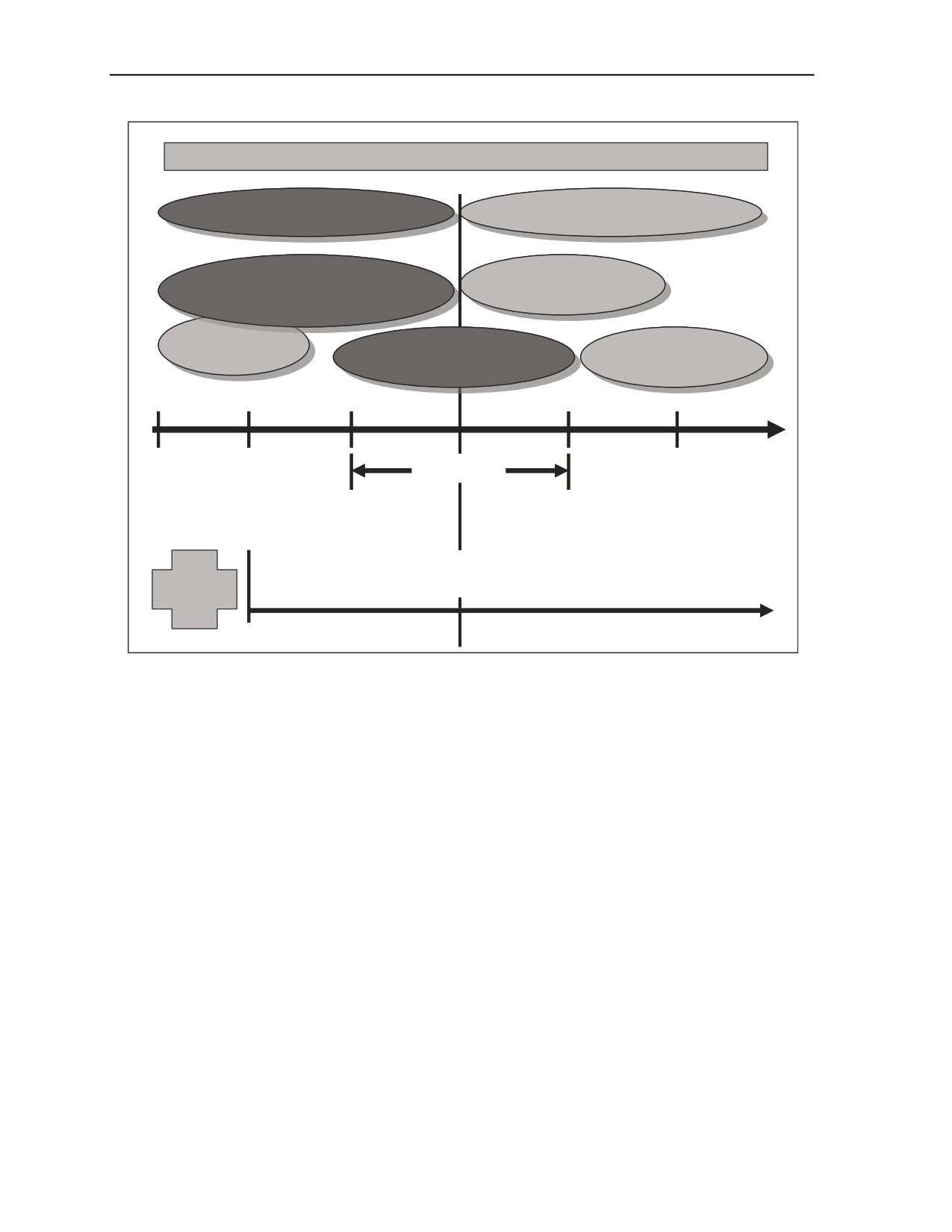
for engineers within the theater. Figure 8-1 illustrates the joint beddown/base development standards in
accordance with JP 3-34 and highlights the need for early master planning efforts to help facilitate the
transition to more permanent facilities as an operation develops.
8 December 2009
FM 4-02.1
8-5
Chapter 8
Maximized Use of Existing Facilities
Contingency
Enduring
y
g
Semi-Permanent
Initiall
t
Organii
c
c
Temporary
Permanentt
y
Initial
90 Days
6 Months
2 Years
5 Years
10 Years
Entry
Transition
•Camps mature out of contingency to enduring standards
•May occur anywhere in the 6 month to 5 year period
Demands early master planning
•
•Potential enduring bases and conditions for transition to be addressed in operations plans
•Master Planning for enduring bases to begin not later than 90 days into operation
Master
•May be performed “reach back’ or in a collaborative environment
Planning
Figure 8-1. Force beddown/base development
8-20. The joint construction standards for base camp development are based on the anticipated lifespan of
a facility and are broken down into two phases, the contingency phase and the enduring phase. Department
of Defense construction agents, such as the US Army Corps of Engineers, Naval Facilities Engineering
Command, or other DOD approved activities, are the principle organizations used to design, award, and
manage construction contracts in support of enduring facilities. The construction standards used during
those phases are as follows:
z
Contingency phase (zero to two years)—
Organic construction (a subset of initial standard construction) is set up on an expedient
basis with no external engineer support, using unit organic equipment and systems or host-
nation resources. Organic construction is intended for use up to 90 days, but may be used for up
to six months. Organic construction is typically provided for initial force presence and
maneuver activities until the arrival of engineer resources.
Initial standard construction is characterized by minimum or austere facilities that require
minimal engineer efforts and simplify material transport and availability. This standard is
intended for immediate use by units upon arrival in theater for up to six months. Typical to
transient mission activities, it may require system upgrades or replacement by more substantial
or durable facilities during the course of an operation.
Temporary standard construction is characterized by minimum facilities and effort with
material transportability or availability. It is intended to increase efficiency of operations for use
extending to twenty-four months, but may fulfill enduring phase standards and extend to five
years. It provides for sustained operations and may replace initial standard in some cases where
mission requirements dictate and require replacement during the course of extended operations.
8-6
FM 4-02.1
8 December 2009
Health Facility Planning and Management
Temporary standard construction can be used from the start of an operation if directed by the
combatant commander. It is typical to nontransient mission activities.
z
Enduring phase (over two years) are—
Semipermanent construction which is designed and constructed with finishes, materials, and
systems selected for moderate energy efficiency, maintenance, and life-cycle cost.
Semipermanent construction has a life expectancy of more than two, but less than ten years.
The types of structures used will depend on the duration. If directed by the combatant
commander, it may be used initially after carefully considering the political situation, cost,
quality of life, and other criteria.
Permanent construction is designed and constructed with finishes, materials, and systems
selected for high energy efficiency, and low maintenance and life-cycle costs. Permanent
standard construction has a life expectancy of more than ten years. Construction standards
should also consider the final disposition and use of facilities, and any long-term goals for these
facilities to support host-nation reconstruction. The combatant commander must specifically
approve permanent construction.
8-21. These timelines provide a standard framework and should be used when establishing initial
construction standards (may warrant deviations based on the situation). The Joint Facilities Utilization
Board should also be used to periodically revalidate construction standards. Ultimately, the combatant
commander determines the exact construction type based on location, materials available, and other factors.
The MEDCOM (DS) health facility planner, in coordination with theater engineering planners, must
recommend the most feasible solutions to each requirement. Construction standards are guidelines and the
health facility planner must consider a number of other factors during planning as well.
MEDICAL CONSIDERATIONS
8-22. Service standard designs should be considered for use in support of joint operations and are starting
points for Service component general engineer planners. The designs may be modified based on
operational, environmental, and unusual site conditions or unique customer requirements. Examples of
Service standard designs can be found in the Army’s Theater Construction Management System and the
Navy’s Advanced Base Functional Component System. Field Manual
3-34.400 outlines Army
contingency construction considerations and other general engineering planning guidance.
8-23. The longer the anticipated duration of the conflict, the greater the need to support medical treatment
through fixed facilities. While medical facilities always entail a considerable amount of environmental
considerations in either temporary or fixed facilities, the importance of these considerations will tend to
increase over time and should be considered and applied as early in the process as possible to minimize
their effects over time. These facilities must have the capacity and degree of sophistication to treat injuries
and other health problems sustained during the contingency. Design for a CBRN environment may also be
appropriate and must promote rapid, high-quality treatment within the theater to expedite the Soldiers’
return to duty.
8-24. As a theater or contingency matures the need to establish or improve physical plants and ensure an
environment of care that is more supportive of clinical and operational requirements increases. Facilities
should provide the right medical capability at the appropriate location. Continuous improvements in
quality and safety result in cleaner and more durable facilities with reliable power, water, lighting, climate
control, public address, and patient care systems. Units will naturally transition from expeditionary and
initial facilities (tent, extendable, modular, personnel tents) to temporary/semipermanent (preengineered or
site built) facilities. This will occur deliberately or spontaneously based on availability of buildings of
opportunity. The underlying driver is an inherent need to upgrade facilities to support ever increasing
equipment modernization, greater electrical loads, improved utilities reliability, greater safety of patients
and staff (such as electrical safety, Occupational Safety and Health Administration standards, life safety,
and other code requirements).
8-25. The level of medical support and type of clinics and hospitals will vary, but should be taken into
consideration when planning base camps. The specifics range from aid stations through clinics (dental and
medical) to CSHs. The actual requirements will directly relate to the mission, medical and dental support
8 December 2009
FM 4-02.1
8-7
Chapter 8
requirements, and the expectations of the command. The following considerations approach health facility
planning as a fluid and responsive asset to support a progressively developing theater.
INITIAL OR EXPEDITIONARY FACILITY SOLUTIONS
8-26. Expeditionary facility solutions include the medical platoon’s and company’s organic tentage as well
as tent, extendable, modular, personnel tents and expandable ISO containers that make up DEPMEDS.
These solutions are often focused on minimal site prep requirements
(typically stable foundations,
walkways, access roads, parking and minimalist utility infrastructure) which are quickly assembled on site.
8-27. Due to the unstable and fluid environment within the area of responsibility, expeditionary facility
projects should include as much independent utility support as possible. This may include potable water
storage containers, continuous electrical generator capacity for 100 percent of the facility loads, and
effluent collection tanks. Expeditionary facilities, like the Deployable Rapid Assembly Shelter or
DEPMEDS, generally are not hardened facilities. If necessary, nonhardened facilities are protected by
other measures (such as T-wall and overhead catchment systems) based on the threat. Mechanical systems
in expeditionary solutions are minimal in nature both in construction and maintainability on the ground.
Where specialized mechanical systems are needed to support the health care mission, it is generally more
oriented towards point of use approaches from room to room as opposed to buildingwide system solutions.
Expect these facilities to be replaced (in whole or in part) over the course of extended contingency
operations that remain fluid or unstable. In addition, these facilities do not typically have centralized fire
suppression systems; instead designs are geared toward maximizing egress and localized fire suppression
(A, B, and/or C type fire extinguishers).
8-28. The DEPMEDS facility solutions are organic to military medical units that use them across the
DOD. These facility solutions are mobile/deployable, modular in nature (thus scalable), able to be
relocated, existing
(no immediate procurement action required), coordinated, and outfitted with the
associated medical equipment. These facility solutions also have limitations in durability, survivability,
and are generally intended to operate on dual voltage/frequency systems (110 volt/220 volt and 50 hertz/60
hertz). However, commercial-off-the-shelf equipment procured to augment critical medical capabilities is
often limited to 110 volt/60 hertz. Supporting two parallel electrical systems can be more costly than other
types of expeditionary or even enduring solutions. In the absence of DEPMEDS hospitals, use of existing
MTFs should be considered or facilities that are easily adaptable for use as MTFs.
TEMPORARY FACILITIES
8-29. Temporary facility solutions range from Southeast Asia huts and prefabricated trailers on the lower
end to higher end preengineered modular buildings or steel frame construction purposely designed and
built for medical use. Each provides a higher level of protection from the environment beyond the various
types of organic tentage, including tent, extendable, modular, personnel tents in the DEPMEDS solution.
These solutions may incorporate elements of the DEPMEDS configuration such as radiology ISO
containers or trailers and are typically designed around a modular platform.
8-30. Facility solutions beyond DEPMEDS typically include more site and infrastructure development, a
level of contracting support, design, construction, and initial outfitting and transitional/standup costs.
These solutions may also require increasing levels of maintenance support beyond those skills and assets
inherent in military units. While solutions beyond DEPMEDS are scalable, the complexity of increasing
the scale of these solutions becomes more difficult as the utilities required become more complex and
decisions are made concerning construction materials to be used. Adaptability to changing mission
requirements also becomes more complicated with temporary construction types as the ability to
disassemble and transport the facility decreases significantly. These considerations must be taken into
account to ensure the users (medical), resource managers, and engineering support staffs appropriately
balance cost, schedule, and quality.
8-31. While the life-span and quality of each individual solution may vary, the general relationship to life-
span is valuable and relevant for quick alignment of mission with durability and quality expectations.
Often in a contingency environment the rapid evolution of operations supports trading shorter durability
for cost savings and allowing more frequent adaptation of facility solutions to changing mission
requirements.
8-8
FM 4-02.1
8 December 2009
Health Facility Planning and Management
8-32. It should be noted that certain aspects of temporary versus semipermanent standards for health care
facilities may overlap, making it desirable (for quality of care, patient and staff safety, environmental or
even economical concerns) to apply key characteristics of semipermanent standards but still be within the
parameters of temporary standards. Such items may include, but are not limited to: interior finishes; fire
suppression systems; piped medical gas systems (particularly oxygen); compressed air; and suction (mainly
for support of enduring base camps). This must be done deliberately and the benefits (quality of care and
patient and staff safety) should be the primary concern.
8-33. There may also be instances where organic equipment is retained and incorporated into temporary
solutions even though it would normally be classified as initial standard. One example would be the reuse
of DEPMEDS ISO shelters such as those used to support radiology requirements. The benefit of such use
is the ability to rapidly replace or relocate an item if necessary for maintenance or modernization. This is
particularly important if the equipment represents a large capital equipment expense or if local construction
methods do not provide adequate environment for key capabilities.
SEMIPERMANENT AND PERMANENT FACILITIES
8-34. During the life cycle of a base camp or forward operating site, authorized facilities may progress
from initial to semipermanent or may be immediately established at any level depending on operational
requirements. Development of semipermanent and permanent standard facilities would include Southeast
Asia huts, local site built construction, and prefabricated buildings according to their life expectancy.
8-35. Permanent facilities are designed and constructed with finishes, materials, and systems selected for
energy efficiency, low maintenance, and low life-cycle cost with a life expectancy greater than ten years.
Permanent facility solutions are traditional buildings and are recommended with a commitment by the US
government to maintain a defined presence indefinitely in a particular location. A permanent solution will
likely be chosen when the medical mission is determined to be stable and predictable in nature. Permanent
solutions are expected to meet the same design and construction requirements prescribed for permanent
CONUS health care facilities. Therefore, local building techniques, availability of materials, and
maintenance skills available are considered when permanent facilities are established. Due to the decreased
flexibility of permanent facilities, complexity of construction and maintenance, and significant increase in
costs, permanent facilities are often not recommended for contingency operations nor do they effectively
support the pace of the medical mission during most contingency operations. Figure 8-2 lists examples of
initial, temporary, and semipermanent health care facilities.
8 December 2009
FM 4-02.1
8-9

Chapter 8
TYPE OF
INITIAL
TEMPORARY
SEMI-PERMANENT
CONSTRUCTION
(EXPEDITIONARY)
Southeast Asia huts; metal
prefabricated buildings;
Site built construction; metal pre-
modular building systems or
fabricated buildings (2 to 10
buildings of opportunity;
years); Masonry and prefabricated
Deployable Medical
refrigerated containers;
buildings (10 or more years) or
System Medical Materiel
tactical generators: high and
buildings of opportunity;
Sets; unit tactical
low voltage distribution;
Nontactical or commercial power,
HOSPITAL
generators; organic
automatic transfer and
high or low voltage and automatic
environmental control
backup uninterruptible
transfer/backup uninterruptible
units; water points and
power source on critical
power source; pressurized potable
bladders; fuel bladders
systems; field expedient
water distribution systems; limited
med gas distribution;
piped med gas (oxygen, air,
potable water production
vacuum) distribution system (at
and pressurized water
enduring locations only).
distribution systems
Site built construction;
Unit tents; unit tactical
Backup generator with
relocateable structures; modular
CLINIC
generators
manual transfer switch
building systems or buildings of
opportunity.
Backup generator with
Same as clinic; backup generators
CLINIC (with
transfer switch; Southeast
Unit tents; unit tactical
with automatic transfer switch;
FORWARD
Asia huts; modular building
generators
limited piped gas if at enduring
SURGICAL)
systems; pre-engineered
location and workload merits.
buildings
Site built construction;
Southeast Asia huts;
Unit tents; unit tactical
relocateable structures; modular
AID STATION
modular building systems;
generators
building systems or buildings of
pre-engineered buildings
opportunity.
Site built construction,
Southeast Asia huts;
Unit tents; unit tactical
relocateable structures and
DENTAL CLINIC
modular building systems;
generators
modular building systems or
pre-engineered buildings
buildings of opportunity.
Site built construction;
Southeast Asia huts;
VETERINARY
Unit tents; unit tactical
relocateable structures; modular
modular building systems;
CLINIC
generators
building systems or buildings of
pre-engineered buildings
opportunity.
MEDICAL
Tents; organic
Backup generator; portable
Backup generator; portable
FORWARD
environmental control
refrigeration with freezer
refrigeration with freezer units for
DISTRIBUTION
units
units for medical
medical
WAREHOUSE
MEDICAL
Tents; organic
Backup generator; portable
Backup generator; portable
LOGISTICS
environmental control
refrigeration with freezer
refrigeration with freezer units for
WAREHOUSE
units
units for medical
medical
Figure 8-2. Examples of initial, temporary, and semipermanent health care facilities
8-10
FM 4-02.1
8 December 2009
Health Facility Planning and Management
HEALTH FACILITY PLANNING
8-36. The health facility planning process provides the framework in which MTF projects are developed
from planning and programming through design. The steps used in the development of general
engineering projects are defined in FM 3-34.400, JP 3-34, and theater specific standards. The medical
planning team, which consists of clinical, operational, logistics, and facilities staff with reach-back support
from US Army Health Facility Planning Agency, produces various products that can be submitted to
initiate the health facility planning process. The following is a list of those unique health care related
documents that can be submitted for further development, decision, and/or execution:
z
Clinical concept of operations.
z
Space program.
z
Equipment program (room by room).
z
Concept/functional design (ten percent).
z
Initial outfitting budget.
z
Medical specific room guide plates.
8-37. Once developed, these documents would be submitted to the theater engineering staff, construction
agent (US Army Corps of Engineers or Naval Facilities Engineering Command), clinical staff, contracting,
and medical logisticians.
8-38. The clinical concept of operations is a tool that health facility planners use to aid in investigation and
understanding of the key capabilities, scope of services, and interactions within an MTF. The concept of
operations is a foundational document that helps to direct the design development of a health facility
project and gives design consultants a conceptual view of the future facility and scope of services to be
provided in the new or remodeled space. The narrative is used to describe how an area operates and should
allow the reader to walk through the new area and see the operation in action. It should describe the
integration of each of the following functional elements, all in support of the services offered:
z
Mission.
z
Population served.
z
Scope of services.
z
Manpower.
z
Equipment.
z
Supply.
z
Traffic patterns.
z
Procedural policies.
z
Adjacencies.
8-39. In effect, the concept of operations helps to simplify the complexity that surrounds day-to-day
operations of a hospital organization. It also provides substance and unity in the planning between
multidisciplinary functional areas to avoid assumptions on the part of medical planners, clinicians,
engineers, or logisticians.
8-40. The program for design is a room by room, department by department listing of space requirements
for the entire facility. The program for design is tied directly to and derived from the concept of
operations. The program for design translates the clinical and operational capabilities, personnel, and other
functional requirements outlined in the concept of operations into space requirements for the architect to
develop a workable solution or design. The space program or program for design is based on DOD space
planning criteria. The DOD Space and Equipment Planning System is an automated space and equipment
planning tool for health care projects. The Space and Equipment Planning System uses a series of
mathematical and logical formulas to create a baseline space program based on answers to questions input
into the system. The Space and Equipment Planning System can also produce an equipment plan/cost
estimate for a health care project driven by space planning criteria and equipment guides.
8 December 2009
FM 4-02.1
8-11
Chapter 8
8-41. The review, refinement, and approval of the space program is an iterative process between the health
facility planner, clinical personnel, engineering staff, and reach back support from US Army Health
Facility Planning Agency. Primary criteria used to assess and refine the space plan include scope
(relevance and quantity) and cost
(within project funding constraints). Guide plates are detailed
architectural layouts that include equipment, furnishings, and utility placement. Guide plates are available
for many functional room layouts normally found in an MTF setting.
8-42. As previously mentioned, the health facility planning process is an iterative process. The process
above describes the practical application of documenting the operational concept and scope of services for
MTFs providing medical support during contingency operations. Due to the rapid changes that take place
in health care in general, (especially in a large, rapidly maturing theater of operations) a clear operational
concept and accurate scope of services is essential for hospital commanders and medical planners.
8-43. A highly structured, yet flexible collaborative approach to health facility requirements development
begins with the clinical concept of operations. The concept of operations has been used successfully time
and again to translate clinical capabilities into building systems and the facility space required to support
them. Initial, up-front investment of time in the requirements development process and subsequent reviews
and revisions result in a definitive description of the clinical and operational requirements. Those
requirements in turn become the authoritative source for space, building systems, equipment, functional
arrangements, and financial justification.
SYNCHRONIZING MISSION DEMANDS AND FACILITY CONSIDERATIONS
8-44. As a theater develops through contingency operations the facility posture at a given location will
likely mature over time. The general evolution of the health care facility will likely progress from initial to
temporary, semipermanent, and finally to a permanent solution. Additionally, situations within the theater
or at a given location may accelerate the progression from DEPMEDS to more enduring facility solutions
(such as buildings of opportunity suited for rapid and minimal conversion to support the medical mission
or increased operational area security requirements).
8-45. Balancing durability, construction time, and cost are all elements of every health facility project.
The pace of many contingency operations require rapid placement of medical support facilities to meet
immediate health care missions, which more enduring facility construction solutions would fail to meet in a
timely fashion. Until an operational area stabilizes, the facility requirements may be highly evolutionary.
Employing expensive or nonflexible health care facilities too early, may adversely affect the ability to
adapt or replace existing facilities to meet current medical missions. Complex building solutions may also
be impractical to implement or functionally sustain until the AO stabilizes and matures.
8-46. When planning a facility, it is critical to assess the timeframe in which a facility is needed to help
make informed command decisions about which type of facility is appropriate to meet mission
requirements and timelines. The construction time required for each facility type should include the time
needed for project definition and design. Generally, the more permanent and complex the facility solution
the longer the construction time needed until the solution is available for use.
8-47. Cost can vary greatly from facility solution to facility solution and is highly influenced by the
stability of the AO, availability of materials, skilled craftsmen, and complexity of the facility. In a
contingency operation, with local support not familiar with complex infrastructure systems, the only viable
solution for maintenance maybe contracting this support from sources outside the theater. A high threat
level can also complicate the process.
8-48. Other considerations include medical equipment selection and the ability to maintain it. Often
medical contingency operations require dual power and voltage support, which can increase the complexity
and expense of more enduring medical facilities. See Appendix D of this FM as well as FM 3-34.400 and
JP 3-34 for additional construction standard and facility planning considerations.
8-12
FM 4-02.1
8 December 2009
Appendix A
Patient Movement Items
Patient movement items are particular medical equipment and supplies required to
support the patient during evacuation. For the purposes of this appendix, PMIs are
the more expensive/low-density equipment requiring accountability. The less
expensive items such as litters, blankets, and litter straps will not be discussed as
PMIs. This appendix is consistent with the Army’s TAV and joint total asset visibility
initiatives. The TAMMIS and DMLSS applications will integrate the PMI automated
tracking system with the functional module of DHIMS/MC4.
SECTION I — PATIENT MOVEMENT ITEMS SYSTEM OVERVIEW
A-1. Department of Defense Instruction 6000.11 establishes procedures for the movement of patients,
medical attendants, approved patient movement items, specialized medical care team members, and
nonmedical attendants on DOD provided transportation. The function of the PMI system is to support in-
transit patients, exchange in-kind PMIs without degrading medical capabilities, and provide prompt
recycling of PMIs. The PMI system provides seamless ITV for the equipment management process from
initial movement to the patient’s final destination. The PMITS PlexusD AIS (part of the DHIMS/MC4
family of systems) is used to facilitate the management of PMIs. See Chapter 4 for additional information
on the PMITS PlexusD application.
RESPONSIBILITIES
A-2. The USTRANSCOM is the DOD’s single manager for patient movement (with the exception of
intratheater patient movement) and the program manager for the PMI system. The USTRANSCOM is
responsible for the establishment of policy and standardization of procedures and AISs in support of global
patient movement. The USAF is responsible for resourcing, maintaining, and recycling PMI to support
contingency operations for patient movement. The USAF is also responsible for the establishment of
theater PMI centers and cells. The USAF manages and receives Defense Health Program funds to support
DOD operational plan patient movement requirements and is responsible for life cycle management of
those equipment assets that reside in the PMI centers. The Services, through the Defense Medical
Standardization Board, identify and approve PMI equipment. Medical equipment designated for use as
PMIs must be tested and certified for use on the appropriate patient evacuation platform (for example,
fixed-/rotary-wing). A joint certification label is required to designate airworthiness certification for all
PMI equipment. The joint certification label must be affixed to each piece of aeromedical evacuation-
certified equipment.
A-3. Intratheater movement of PMIs is the responsibility of the combatant commander. As the theater
matures, a SIMLM may be established by the combatant commander. If established, the Services will
coordinate (as necessary) with the SIMLM to obtain support in the areas of requisitioning, storage,
maintenance, and distribution of PMIs. Forward distribution and exchange of PMIs will be a SIMLM or
Service responsibility. The plan for a PMI exchange system and the return of PMIs to the originating MTF
will be addressed in theater operations plans. See JP 4-02 for a complete description of the PMI system.
UNITED STATES ARMY
A-4. The PMI system, for Army medical units/elements begins with the request for evacuation from the
FST, BSMC/medical troop, or a higher role medical unit, depending on the force structure. Patient
movement items required to accompany the patient are identified on the evacuation request. The PMI
8 December 2009
FM 4-02.1
A-1
Appendix A
requirements are forwarded to the supporting MLC via DHIMS/MC4. The movement of the patient
activates two systems. The automated monitoring and tracking system follows the PMIs throughout the
evacuation process and maintains accountability of the items. The MEDLOG system moves PMIs from the
supporting MEDLOG element to the original/requesting unit. Return of PMIs to the MEDLOG system
comes from two sources—MTFs when no longer needed by the patient and from the aeromedical
evacuation system when PMIs stay with patients to the CONUS-sustaining base or other safe haven. The
supporting MLC is responsible for maintaining accountability, receiving, performing required
maintenance, and refurbishing and distributing the item back into the system. The supporting MLC is also
required to monitor the PMI demands placed on the system and to ensure that support packages are
available for movement forward during periods of high casualties.
A-5. It is the MTF’s responsibility to properly prepare the patient for evacuation. The attending
physicians must ensure that one to three days of supply (except in the combat zone) of medications and
rations accompany their patients.
A-6. Responsibility for oversight of PMIs within medical units operating Roles 2 and 3 MTFs rests with
the medical unit commanders. Elements of the MLC support Roles 2 through 3 and have the responsibility
for managing, maintaining, and accounting for PMIs. Accountability for PMIs is automated using the
PMITS Plexus D application and employs consolidated electronic records for maintenance and
accountability, as well as tagging and sensing monitors for visibility. As patients move through the
evacuation system, PMI accountability and replenishment information activates issue of replacement items
to treatment units to ensure that basic levels of PMIs are maintained. During periods of increased usage
where demand for items exceed normal replacement flow, PMI push-packages from the supporting MLC
will flow forward. Asset visibility systems monitor the flow of items from the unit and are designed to
trigger the flow of push-packages if unit on-hand levels reach a critical low point. The supporting MLC
provides maintenance and accountability for PMI assets within its supported area. This support includes
the responsibility for refurbishing and providing required maintenance procedures (calibration, repair,
quality control, and expendable replenishment) as PMIs return through the supply system. The supporting
MLC coordinates PMI support through the SIMLM, or if no SIMLM is designated, directly with the USAF
PMI centers to ensure a seamless flow of PMIs through the system. It is essential for the Army PMI
system to interface with the supporting USAF system. The plan for a PMI exchange system and the return
of PMIs to the originating unit will be addressed in the GCC’s operations plan.
SECTION II — EXECUTION
BRIGADE SUPPORT MEDICAL COMPANY/FORWARD SURGICAL
TEAM
A-7. The BSMC or FST is responsible for preparing a patient for evacuation. Certain PMIs may
accompany the patient in order to support, monitor, and sustain the patient during evacuation. During
initial entry into an austere theater, the PMI process may require a one-for-one replacement (to include
consumables) at the battle hand-off point from the FST to the CSH or to the USAF air evacuation system
or from the USAF back to the Army PMI system. The BSMC commander has overall responsibility for
maintaining TAV of the PMIs in his AO. The PMITS PlexusD application enables that visibility. A push-
package of PMIs (based on mission, enemy, terrain and weather, troops and support available-time
available and civil considerations) supports the initial PMI requirements of the BSMC/FST. The BSMC
commander issues PMIs to the FST as required.
COMBAT SUPPORT HOSPITAL
A-8. The CSH has the responsibility of receiving patients from lower roles of care and/or from within the
AO. Normally, the CSH personnel remove the PMI from the patient to conduct further treatment. The
PMI is normally removed by the EMT section. However, various treatment protocols could dictate that the
PMI accompany the patient to the operating room preparation area. Therefore, it is imperative that CSH
personnel maintain PMI TAV (via an equipment tracking system) within the hospital. The CSH has further
responsibility for collecting and consolidating the PMIs, as well as cleaning, and conducting operator
A-2
FM 4-02.1
8 December 2009
Patient Movement Items
PMCS on the equipment. Equipment considered fully mission capable is placed on a medical evacuation
platform and returned to the losing unit as directed by the PMI manager of the supporting MEDLOG
element. Patient movement items remaining at the CSH are moved to the supporting MLC by the logistical
element’s transportation assets, generally via backhaul from a Class VIII resupply delivery.
MEDICAL LOGISTICS COMPANY
A-9. The MLC provides direct support MEDLOG to the BCT and provides area MEDLOG support to
CSHs supporting that AO. The MLC has overall responsibility for the management of PMIs in support of
the BCT and CSHs, to include refitting of PMI expendable components; conducting PMCS; conducting
calibration checks and repairing the PMI as necessary; updating and maintaining TAV, meaning current
location and status; materiel demand; and processing PMIs for return shipment to the BSMC/FST location.
The MLC is responsible for coordinating/providing the transportation of the PMI to its location for
processing and to the BSMC/FST AO. The PMI is part of the ASL maintained by the MLC; therefore,
ownership of PMI is to the MLC. The MLC provides PMI management information to the MMB
operations section.
A-10. At EAB, the MLC is responsible for PMI direct support to units operating within its AO. The MLC
also coordinates PMI support through the SIMLM, or if no SIMLM is designated, directly with the USAF
PMI centers to ensure a seamless flow of PMIs through the MEDLOG supply system.
8 December 2009
FM 4-02.1
A-3
Appendix B
Legacy Medical Logistics Force Designs
The Army is undergoing major change to become a modular brigade-based Army
that is more responsive to the GCC’s needs, that better employs joint capabilities,
facilitates force packaging and rapid deployment, and fights as self-contained units in
noncontiguous operational environments. Though much progress has been made to
bring about this change, several legacy units remain in the inventory. This appendix
describes the various legacy MEDLOG units/elements remaining in the force that
were developed under Medical Force 2000 and Medical Reengineering Initiative
redesign programs. It is important for medical planners to be familiar with these
variations and recognize the mixture of forces found in theater as the Army
transforms National Guard, Reserve, and Regular Army units from the current to the
future force. This appendix, along with the organizations described in Chapter 2,
provide planners the information necessary to develop accurate MEDLOG support
plans based on the mixture of units in the force and the capabilities available. The
terminology used in describing the organizations and capabilities in this appendix is
based on the TOEs of these organizations. Some terminology is no longer current.
SECTION I — LEGACY MEDICAL LOGISTICS SUPPORT UNDER MEDICAL
FORCE 2000
B-1. The following Medical Force 2000 MEDLOG units remain in the Army’s inventory:
z
Medical battalion, logistics (forward).
Headquarters and headquarters detachment, medical battalion, logistics (forward).
Distribution company, medical battalion, logistics (forward).
Logistics support company, medical battalion, logistics (forward).
z
Medical battalion, logistics (rear).
Headquarters and headquarters detachment, medical battalion, logistics (rear).
Logistics support company, medical battalion, logistics (rear).
Distribution company, medical battalion, logistics (rear).
z
Medical logistics support detachment.
MEDICAL BATTALION, LOGISTICS (FORWARD)
B-2. The MEDLOG battalion (forward) provides Class VIII supplies, optical fabrication, medical
equipment maintenance support, and blood storage and distribution to divisional and nondivisional units
operating in the supported area at EAB. When deployed, this unit (Figure B-1) is the single point of
contact for MEDLOG support at EAB. It should be located near major lines of communications (sea or
air) to ease transportation requirements for incoming shipments and facilitate distribution of materiel. The
modular nature of this unit allows it to be incrementally introduced in the theater with the supported forces.
Forward support platoons of the distribution company should be deployed early to coordinate support and
prepare to receive Army reserve stocks and resupply from CONUS.
8 December 2009
FM 4-02.1
B-1
Appendix B
MEDICAL BATTALION,
LOGISTICS
(FORWARD)
HHD,
MEDICAL BATTALION,
LOGISTICS SUPPORT
DISTRIBUTION
LOGISTICS
COMPANY
COMPANY
(FORWARD)
(FORWARD)
(FORWARD)
Figure B-1. Medical battalion, logistics (forward)
(Table of Organization and Equipment 08485L000)
B-3. This battalion provides C2, staff planning, supervision of operations, and administration of assigned
or attached units engaged in providing Class VIII support, including blood management. In selected
scenarios, this unit is augmented to perform Class VIII management functions of the MLMC and may also
assume the role of SIMLM for the theater, if designated. The unit capabilities include the following:
z
Receives, classifies, issues, and provides storage for up to 44.37 short tons of Class VIII
supplies per day.
z
Provides field maintenance for medical equipment on an area basis.
z
Conducts optical single-vision lens fabrication support at EAB.
z
Conducts blood collection (on an emergency basis), limited testing, processing, storage and
distribution to EAB and division medical units to satisfy operational blood requirements.
HEADQUARTERS AND HEADQUARTERS DETACHMENT, MEDICAL BATTALION, LOGISTICS
(FORWARD)
B-4. The headquarters and headquarters detachment (HHD), MEDLOG battalion (forward) (Figure B-2)
is responsible for providing C2, staff planning, supervision of operations, administrative services, and
logistics support to assigned and attached units. This unit is employed with the logistics support company
to plan and direct the execution of the AHS mission in the corps. It should be located near major lines of
communications (sea or air) to ease transportation requirements for incoming shipments and facilitate
distribution of materiel. The HHD provides field maintenance for nonmedical equipment including
organic vehicles, power generation, and recovery operations support to assigned or attached units. The
unit also maintains equipment records, repair parts, and fuel distribution. It operates a consolidated
property book for assigned units and coordinates with the corps movement control center for routine
delivery of Class VIII supplies.
B-2
FM 4-02.1
8 December 2009
Legacy Medical Logistics Force Designs
HEADQUARTERS AND
HEADQUARTERS
DETACHMENT,
MEDICAL BATTALION,
LOGISTICS (FORWARD)
BATTALION
COMMAND
S-1
S-2/S-3
S-4
MAINTENANCE
DETACHMENT
SECTION
SECTION
SECTION
SECTION
SECTION
HEADQUARTERS
Figure B-2. Headquarters and headquarters detachment, medical battalion, logistics (forward)
(Table of Organization and Equipment 08486L000)
LOGISTICS SUPPORT COMPANY, MEDICAL BATTALION, LOGISTICS (FORWARD)
B-5. The logistics support company, MEDLOG battalion (forward) (Figure B-3), executes the planned
support of units operating at EAB in the areas of Class VIII supplies, optical fabrication, medical
equipment maintenance support and blood processing, storage, and distribution for units located in corps
and forward units. It provides food service support for the MEDLOG battalion (forward) and a base for
reconstitution of the battalion. The company has the capacity to receive, classify, issue, and provide
storage for up to 26.83 short tons of Class VIII supplies per day. It is also capable of providing optical
single-vision lens fabrication support to a maximum force of 118,401 Soldiers.
8 December 2009
FM 4-02.1
B-3
Appendix B
LOGISTICS SUPPORT
COMPANY,
MEDICALBATTALION,
LOGISTICS
(FORWARD)
STORAGE/
MEDICAL
BLOOD
MEDICAL
COMPANY
DISTRIBUTION
MAINTENANCE
OPTICAL
BANK
MATERIEL
HEADQUARTERS
PLATOON
SECTION
SECTION
PLATOON
SUPPORT SECTION
STORAGE/
BLOOD BANK
BLOOD
BLOOD
DISTRIBUTION
SHIPPING
RECEIVING
STORAGE
PLATOON
STORAGE
PROCESSING
PLATOON HQ
SECTION
SECTION
SECTION
HEADQUARTERS
SQUAD
SQUAD
Figure B-3. Logistics support company, medical battalion, logistics (forward)
(Table of Organization and Equipment 08487L000)
B-6.
The logistics support company is composed of the following elements:
z
Company headquarters provides C2 of the company. Company personnel supervise and
perform unit plans/operations and general supply functions. The company provides food service
for the HHD, MEDLOG battalion (forward) and other assigned or attached units. Command
and specific responsibilities and functions are outlined in FM 5-0.
z
Medical maintenance section is responsible for field maintenance services for all units within
their area of responsibility. It performs field maintenance for units in its area, which do not have
organic medical maintenance repairers, assigned or attached, or are not supported by medical
maintenance repairmen from other units.
z
Optical section provides single-vision lens fabrication to supported units operating at EAB.
z
Medical materiel support section coordinates all stock control functions. Also, maintains
accountability for all materiel received, stored, and issued within the medical logistics battalion.
z
Storage and distribution platoon headquarters ensures that stocks remain in an issuable condition
while in storage. This includes the planning prior to receipt of supplies, locating stocks in a way
that provides for first-in/first-out handling, using space efficiently and maintaining segregation
and disposition of stock. The platoon leader serves as the accountability officer.
z
Shipping section plans for and releases Class VIII supplies for shipment, coordination of
vehicles, staging shipments for pickup, and preparing movement documents.
z
Receiving section plans, coordinates, controls, and manages a variety of functional areas
pertaining to the processing of incoming shipments of Class VIII supply and equipment.
z
Storage section is responsible for the storage, preservation, issue, locating, and accounting of
medical supplies and equipment.
z
Blood bank platoon headquarters conducts and directs all phases of blood banking. It has the
capability to transport, re-ice, store, and issue 3,000 units each of liquid and frozen blood
products on a daily basis.
z
Blood storage squad is responsible for the storage, transport, and issue of blood products to
supported medical units.
z
Blood processing squad processes frozen RBCs.
DISTRIBUTION COMPANY, MEDICAL BATTALION, LOGISTICS (FORWARD)
B-7. The distribution company, MEDLOG battalion (forward) provides Class VIII supplies and medical
equipment maintenance support to divisional and nondivisional medical units operating in the supported
AO, including medical assets from other Services supporting at EAB. The company has the capacity to
receive, classify, issue, and provide storage for up to 17.54 short tons of Class VIII materiel per day.
B-4
FM 4-02.1
8 December 2009
Legacy Medical Logistics Force Designs
DISTRIBUTION
COMPANY,
MEDICAL BATTALION,
LOGISTICS
(FORWARD)
FORWARD
COMPANY
SUPPORT
HEADQUARTERS
PLATOON
FORWARD
LOCATOR AND
RECEIVING /
MEDICAL
SUPPORT
DOCUMENT
SHIPPING
STORAGE
MAINTENANCE
PLATOON HQ
CONTROL SECTION
SECTION
SECTION
SECTION
Figure B-4. Distribution company, medical battalion, logistics (forward)
(Table of Organization and Equipment 08488L000)
B-8. This unit employs a company headquarters and organic forward support platoons to provide Class
VIII support on an area basis. The company provides limited Class VIII supply support for high volume
consumables and facilitates the support of BMSOs and EAB forces deployed in the division area. The
distribution company is composed of the following elements:
z
Company headquarters provides C2, administration and logistical support required to conduct
unit operations.
z
Forward support platoon provides Class VIII logistics support through the use of document
control procedures that regulate the receiving, shipping, and storage functions. They also
provide field maintenance services.
z
Locator and document control section is responsible for control of documentation and/or
automated records supporting the receipt, storage, and issue of Class VIII supplies or equipment.
z
Receiving and shipping section is responsible for the use of receipt and shipping documents or
preparation of automated receipt and shipment records to promptly and accurately process
incoming and outgoing shipments. They also plan for releases to transportation, coordinate for
vehicles, stage shipments for pickup, and prepare movement documents.
z
Storage Section is responsible for ensuring that stocks remain in issuable condition while in
storage. This includes the planning prior to receipt of supplies, storing stocks in a way that
facilitates first-in/first-out handling, using space efficiently, and maintaining segregation and
disposition of stock as determined by the accountable officer.
z
Medical maintenance section performs field maintenance services to all supported units within
the company’s AO. The section also performs unit maintenance for medical units/elements
assigned/attached or not supported by medical maintenance repairers from other units.
MEDICAL BATTALION, LOGISTICS (REAR)
B-9. The MEDLOG battalion (rear) (Figure B-5) provides Class VIII supplies and equipment, optical
fabrication, medical equipment maintenance support and blood processing, storage, and distribution to
EAB units and the MEDLOG battalions (forward) for items not shipped directly to the requester. This unit
must also be prepared to function as the SIMLM for a joint theater in conjunction with the MLMC, if
designated. This battalion has the capacity to receive, classify, issue, and provide storage for up to 59.83
short tons of Class VIII materiel per day. The unit is also capable of providing optical single-vision and
multivision lens fabrication support to a maximum force of 397,847 personnel.
8 December 2009
FM 4-02.1
B-5
Appendix B
MEDICAL BATTALION,
LOGISTICS
(REAR)
HHD,
LOGISTICS SUPPORT
DISTRIBUTION
MEDICAL BATTALION,
COMPANY
COMPANY
LOGISTICS (REAR)
(REAR)
(REAR)
Figure B-5. Medical battalion, logistics (rear)
(Table of Organization and Equipment 08695L000)
HEADQUARTERS AND HEADQUARTERS DETACHMENT, MEDICAL BATTALION, LOGISTICS
(REAR)
B-10. The HHD, MEDLOG battalion (rear) (Figure B-6) is responsible for providing C2, administrative
services, and logistics support to assigned and attached units. This unit is located near transportation
networks, major logistical ports of entry, and major lines of communications (sea or air) in the sustainment
area. It is employed with the logistics support company to plan and direct the execution of the MEDLOG
mission in the sustainment area. The HHD provides field maintenance for nonmedical equipment and
recovery operations support to assigned or attached units. It operates a consolidated property book for
assigned units. It coordinates with the theater movement control center for routine delivery of Class VIII
supplies.
B-6
FM 4-02.1
8 December 2009
Legacy Medical Logistics Force Designs
HHD, MEDICAL
BATTALION,
LOGISTICS (REAR)
COMMAND
SECTION
S-1
DETACHMENT
SECTION
HEADQUARTERS
BATTALION
S-2/S-3
MAINTENANCE
SECTION
SECTION
QUALITY
S-4
ASSURANCE
SECTION
SECTION
Figure B-6. Headquarters and headquarters detachment, medical battalion, logistics (rear)
(Table of Organization and Equipment 08696L000)
B-11. The organizational structure and function of the HHD, MEDLOG battalion (rear) is similar to the
HHD of the MEDLOG battalion (forward). The primary differences are the placement of each unit in the
AO and the addition of a quality assurance section. This section implements and coordinates the battalion
quality assurance program to include the inspection and surveillance of the entire spectrum of medical
supplies and equipment in accordance with established directives and standards.
LOGISTICS SUPPORT COMPANY, MEDICAL BATTALION, LOGISTICS (REAR)
B-12. The logistics support company, MEDLOG battalion (rear) (Figure B-7) executes the planned support
of the theater in the areas of Class VIII supplies, optical fabrication, medical equipment maintenance
support, and blood processing, storage, and distribution. It supports medical units of other Services in the
company AO. The company receives, classifies, issues, and provides storage for up to 31.99 short tons per
day. It also is capable of providing optical single-vision and multivision lens fabrication support for a
maximum force of 397,847 Soldiers. It provides food service support for the MEDLOG battalion (rear).
This unit is dependent on the HHD MEDLOG battalion (rear) for field maintenance on nonmedical
equipment.
8 December 2009
FM 4-02.1
B-7
Appendix B
LOGISTICS SUPPORT
COMPANY,
MEDICAL BATTALION,
LOGISTICS (REAR)
STORAGE/
MEDICAL
BLOOD
MEDICAL
COMPANY
DISTRIBUTION
OPTICAL
MAINTENANCE
BANK
MATERIEL
HEADQUARTERS
PLATOON
SECTION
SECTION
PLATOON
SUPPORT SECTION
STORAGE/
BLOOD BANK
BLOOD
BLOOD
DISTRIBUTION
SHIPPING
RECEIVING
STORAGE
PLATOON
STORAGE
PROCESSING
PLATOON HQ
SECTION
SECTION
SECTION
HQ
SQUAD
SQUAD
MEDICAL
MEDICAL
MEDICAL
MAINTENANCE
MAINTENANCE
MAINTENANCE
PLATOON HQ
SECTION
SUPPORT SECTION
Figure B-7. Logistics support company, medical battalion, logistics (rear)
(Table of Organization and Equipment 08697L000)
B-13. The organizational structure and function of this company is similar to the logistics support company
in the MEDLOG battalion (forward) with the following additional elements:
z
Medical maintenance platoon headquarters provides field-level maintenance for all supported
units within the company AO that do not have organic medical maintenance equipment
personnel assigned or attached or are not supported by medical equipment repairers from other
units.
z
Medical maintenance section is responsible for sustainment maintenance services for all
supported units within the company AO. They perform unit maintenance for those units that do
not have organic biomedical equipment specialists assigned or attached and are not supported by
other units.
z
Medical maintenance support section is responsible for sustainment maintenance services for all
supported units within the company AO. They perform unit maintenance for those units that do
not have organic medical equipment repairers assigned or attached and are not supported by
other units. This section rebuilds end items, components, and complex modules for return to the
medical supply system and can deploy two CRTs as required.
DISTRIBUTION COMPANY, MEDICAL BATTALION, LOGISTICS (REAR)
B-14. The distribution company, MEDLOG battalion (rear) provides Class VIII supplies and medical
equipment maintenance support to EAB units and MEDLOG battalions (forward) for nonthroughput
requirements operating in the supported area. This unit is located near transportation networks and major
logistical ports of entry in the sustainment area. This unit employs a company headquarters and organic
area support platoons to provide Class VIII support on an area basis. This company provides limited Class
VIII supply support for high-volume consumables and facilitates the support of EAB units in the AO. The
organizational structure and function of this company is similar to the distribution company in the
MEDLOG battalion (forward) with the exception of the forward support platoon, which is replaced by the
area support platoon here (Figure B-8).
B-8
FM 4-02.1
8 December 2009
Legacy Medical Logistics Force Designs
DISTRIBUTION
COMPANY,
MEDICAL BATTALION,
LOGISTICS (REAR)
AREA
COMPANY
SUPPORT
HEADQUARTERS
PLATOON
AREA
LOCATOR AND
RECEIVING /
MEDICAL
SUPPORT
DOCUMENT
SHIPPING
STORAGE
MAINTENANCE
PLATOON HQ
CONTROL SECTION
SECTION
SECTION
SECTION
Figure B-8. Distribution company, medical battalion, logistics (rear)
(Table of Organization and Equipment 08698L000)
B-15. The basis of allocation for the distribution company is one per MEDLOG battalion (rear). The unit
is capable of the following:
z
Receives, classifies, issues, and provides storage for up to 27.86 short tons of Class VIII
supplies per day.
z
Builds and pre-positions resupply packages as required in support of EAB units or
contingencies.
z
Provides unit maintenance support for medical equipment to supplement additional units that are
not otherwise provided such support.
z
Conducts Class VIII resupply by using air and ground evacuation assets.
z
Builds modules for reconstitution of MEDLOG units.
z
Conducts emergency delivery of Class VIII supplies.
z
Deploys modular area support platoons to provide Class VIII support on an area basis.
MEDICAL LOGISTICS SUPPORT DETACHMENT
B-16. This detachment (Figure B-9) provides Class VIII supply support including optical fabrication and
medical equipment maintenance. This unit is attached to a MEDLOG battalion (forward) or a MEDLOG
battalion (rear). It tailors the capabilities of a MEDLOG battalion where work load or Army Special
Operations Forces require an increment of less than a battalion-sized unit. This unit may be deployed early
in an operation to coordinate support to a BMSO and prepare to receive pre-positioned stocks and resupply
from CONUS.
8 December 2009
FM 4-02.1
B-9

Appendix B
MEDICAL LOGISTICS
SUPPORT
DETACHMENT
LOCATOR AND
RECEIVING /
MEDICAL
OPTICAL
DETACHMENT
DOCUMENT
SHIPPING
STORAGE
MAINTENANCE
FABRICATION
HEADQUARTERS
CONTROL SECTION
SECTION
SECTION
SECTION
SECTION
Figure B-9. Medical logistics support detachment
(Table of Organization and Equipment 08903L000)
B-17. The detachment is composed of the following elements—
z
Detachment headquarters provides C2, administration and logistical support required to conduct
unit operations.
z
Locator and document control section is responsible for control of documentation and/or
automated records supporting the receipt, storage and issue of Class VIII supplies or equipment.
z
Receiving and shipping section prepares and processes receipt and shipping documents for
incoming and outgoing shipments. It is also responsible for the planning and coordination of
transportation for shipments of medical supplies and equipment.
z
Storage section ensures that stocks remain in an issuable condition while in storage. This
includes the planning prior to receipt of supplies, storing stocks in a way that provides for first-
in/first-out handling, using space efficiently, and maintaining segregation and disposition of
stock. The section leader is the accountable officer.
z
Medical maintenance section performs field or sustainment medical maintenance services to all
units within the unit's AO. It also performs field maintenance on organic equipment.
z
Optical section. This section provides lens fabrication to units operating in the supported area.
B-18. The basis of allocation for the MEDLOG support detachment is one per division, armored cavalry
regiment, or separate brigade not supported by a MEDLOG battalion; one per 25,000 joint Service
populations in the AO to include EAB; one per 50,000 joint Service populations; one per MEDLOG
battalion (forward) supporting three divisions. The company’s capabilities include—
z
Providing augmentation to the MEDLOG battalion for Class VIII supplies, optical single-vision
lens fabrication, and medical equipment maintenance.
z
Receiving, classifying, and issuing Class VIII supplies.
z
Providing field maintenance for medical equipment.
SECTION II — LEGACY MEDICAL LOGISTICS SUPPORT UNDER THE
MEDICAL REENGINEERING INITIATIVE
HEADQUARTERS AND HEADQUARTERS DETACHMENT,
MEDICAL BATTALION, LOGISTICS
B-19. The HHD, MEDLOG battalion (Figure B-10) is responsible for providing C2, staff planning, and
supervision of operations, training, and administration for a variable number of attached MLCs, logistics
support companies, and blood support detachments. The support provided by this unit covers the whole
spectrum of MEDLOG services including Class VIII materiel, optical lens fabrication and repair, medical
maintenance, blood and blood product collection, processing, storage, and distribution. One HHD,
MEDLOG battalion is employed per 3 to 6 subordinate units.
B-10
FM 4-02.1
8 December 2009