FM 4-02.1 ARMY MEDICAL LOGISTICS (December 2009) - page 1
*FM 4-02.1
Field Manual
Headquarters
Department of the Army
No. 4-02.1
Washington, DC, 8 December 2009
Army Medical Logistics
Contents
Page
PREFACE
vii
INTRODUCTION
ix
Chapter 1
OVERVIEW OF ARMY MEDICAL LOGISTICS
1-1
Section I — Sustainment
1-1
Army Health System Support
1-1
Logistics
1-1
Medical Logistics
1-2
Section II — Medical Logistics Support
1-2
Significance of the Medical Commodity
1-3
Section III — Transformation of Medical Logistics Processes
1-4
Defense Medical Logistics Standard Support
1-4
Executive Agent for Medical Materiel
1-4
Medical Logistics Management Center
1-6
Section IV — Medical Logistics Support for Army Force Generation
1-7
Army Force Generation
1-7
Medical Equipment Reset Program
1-7
Medical Left Behind Equipment Program
1-8
Section V — Synchronizing Medical Logistics for Army Health System
Support
1-8
Scope of Army Health System Support Operations
1-8
Force Projection Considerations
1-9
Agile Sustainment Force Structure
1-10
Medical Logistics in Full Spectrum Operations
1-10
Chapter 2
MEDICAL LOGISTICS ORGANIZATIONAL STRUCTURE
2-1
Section I — Theater Medical Logistics
2-1
Fundamentals of Theater Medical Logistics Support
2-1
Distribution Restriction: Approved for public release; distribution is unlimited.
*This publication supersedes FM 4-02.1 dated 28 September 2001.
8 December 2009
FM 4-02.1
i
Contents
Section II — Medical Logistics Support Organizations in the Current
Force
2-2
Medical Logistics Company
2-2
Blood Support Detachment
2-5
Medical Logistics Management Center
2-6
United States Army Medical Materiel Agency Medical Logistics Support
Team
2-9
United States Army Medical Materiel Agency Forward Logistics Support
Element
2-10
Chapter 3
MEDICAL LOGISTICS OPERATIONS
3-1
Section I — Levels of Sustainment
3-1
Strategic Level
3-2
Operational Level
3-2
Tactical Level
3-3
Section II — Integrated Medical Logistics Management
3-3
Section III — Medical Logistics Management in the Operational
Environment
3-4
United States Army Medical Materiel Agency Medical Logistics Support
Team
3-4
Medical Command (Deployment Support)
3-4
Medical Logistics Management Center Forward Support Team
3-5
Medical Brigade
3-5
Medical Battalion (Multifunctional)
3-6
Medical Logistics Company
3-7
Section IV — Class VIII Support During Initial Employment
3-7
Pure Palleting
3-8
Section V — Medical Logistics Support for Roles 1 and 2 Medical
Treatment Facility Operations
3-8
Class VIII Supply Operations for Roles 1 and 2 Medical Treatment Facilities ... 3-8
Section VI — Medical Logistics Support for Medical Units Operating
Role 3 Medical Treatment Facilities
3-10
Class VIII Supply Operations for Role 3 Medical Treatment Facilities
3-10
Section VII — Delivery of Class VIII
3-10
Section VIII — Retrograde Operations
3-11
Section IX — Class VIII Contingency Materiel
3-11
Army Pre-positioned Stock
3-12
The Surgeon General’s Contingency Stock
3-13
Section X — Host-Nation Support
3-14
Agreements
3-15
Logistics Civil Augmentation Program
3-15
Section XI — Civil Support Operations
3-15
Civil Support
3-15
Medical Logistics Support During Civil Support Operations
3-15
Chapter 4
MEDICAL LOGISTICS INFORMATION SYSTEMS AND
COMMUNICATIONS
4-1
Section I — Current Systems
4-1
ii
FM 4-02.1
8 December 2009
Contents
Defense Health Information Management System
4-1
Medical Communications for Combat Casualty Care
4-2
Theater Army Medical Management Information System
4-3
Defense Medical Logistics Standard Support
4-4
Theater Defense Blood Standard System
4-4
Joint Medical Asset Repository
4-5
Patient Movement Item Tracking System
4-5
Spectacle Request Transmission System
4-5
Section II — External Enablers
4-5
Single Army Logistics Enterprise
4-5
Automatic Identification Technology
4-6
Global Transportation Network
4-6
Battle Command Sustainment Support System
4-6
Section III — Common Operational Picture
4-7
Joint Logistics Common Operational Picture
4-7
Medical Logistics Common Operational Picture
4-8
Section IV — Emerging Medical Logistics Application
4-8
Theater Enterprise-Wide Logistics System
4-8
Section V — Medical Logistics Automated Information System
Operational Concept
4-8
Role 1 Medical Logistics
4-8
Role 2 Medical Logistics
4-9
Role 3 Medical Logistics
4-9
Chapter 5
MEDICAL EQUIPMENT MAINTENANCE
5-1
Section I — Role of Medical Equipment Maintenance
5-1
Army Medical Department Maintenance System
5-1
Section II — Levels of Medical Equipment Maintenance and
Responsibilities of Each Level
5-4
Field Maintenance
5-4
Sustainment Maintenance
5-5
Section III — Medical Equipment Maintenance Support
5-6
Medical Equipment Maintenance Support at Roles 1 and 2
5-6
Medical Equipment Maintenance Support at Role 3
5-8
Nonstandard Repair Parts
5-10
Section IV — Continental United States-Based Organizations
5-12
Chapter 6
OPTICAL SUPPORT
6-1
Section I — Theater Optical Support
6-1
Optometry Detachment
6-2
Medical Logistics Company Optical Support Section
6-2
Other Optical Support
6-3
Section II — Optical Equipment Sets
6-3
Chapter 7
BLOOD SUPPORT
7-1
Section I — Theater Blood Support
7-1
Role 2 Blood Support
7-3
Role 3 Blood Support
7-4
8 December 2009
FM 4-02.1
iii
Contents
Storage and Shipment of Blood Products
7-4
Section II — Delivery of Blood
7-5
Section III — Blood Reporting System
7-5
Chapter 8
HEALTH FACILITY PLANNING AND MANAGEMENT
8-1
Section I — Expeditionary Health Facility Management
8-1
Mission
8-1
Section II — Roles and Responsibilities
8-2
Brigade Support Medical Company
8-2
Area Support Medical Company
8-3
Combat Support Hospital
8-3
Medical Brigade
8-3
Medical Command (Deployment Support)
8-4
Nonmedical Facility Engineering Support
8-4
Section III — Health Facility Planning Considerations During
Contingency Operations
8-4
Design Considerations
8-5
Medical Considerations
8-7
Health Facility Planning
8-11
Appendix A
PATIENT MOVEMENT ITEMS
A-1
Appendix B
LEGACY MEDICAL LOGISTICS FORCE DESIGNS
B-1
Appendix C
AUTOMATIC IDENTIFICATION TECHNOLOGY
C-1
Appendix D
MEDICAL LOGISTICS PLANNING
D-1
Appendix E
MEDICAL LOGISTICIANS IN THE ARMY SERVICE COMPONENT COMMAND,
THEATER SUSTAINMENT COMMAND, SUSTAINMENT BRIGADE, AND
BRIGADE COMBAT TEAM
E-1
Appendix F
MEDICAL LOGISTICS CONSIDERATIONS IN A CHEMICAL,
BIOLOGICAL, RADIOLOGICAL, AND NUCLEAR ENVIRONMENT
F-1
GLOSSARY
Glossary-1
REFERENCES
References-1
INDEX
Index-1
iv
FM 4-02.1
8 December 2009
Contents
Figures
Figure 2-1. Class VIII materiel flow
2-2
Figure 2-2. Medical logistics company (Table of Organization and Equipment
08488A000)
2-3
Figure 2-3. Blood support detachment (Table of Organization and Equipment
08489A000)
2-5
Figure 2-4. Medical logistics management center (Table of Organization and
Equipment 08670G000)
2-7
Figure 3-1. Transformation to the modular force
3-1
Figure 5-1. Roles 1 and 2 medical maintenance support
5-7
Figure 7-1. Sample message blood report
7-6
Figure 8-1. Force beddown/base development
8-6
Figure 8-2. Examples of initial, temporary, and semipermanent health care facilities
8-10
Figure B-1. Medical battalion, logistics (forward) (Table of Organization and
Equipment 08485L000)
B-2
Figure B-2. Headquarters and headquarters detachment, medical battalion, logistics
(forward) (Table of Organization and Equipment 08486L000)
B-3
Figure B-3. Logistics support company, medical battalion, logistics (forward) (Table
of Organization and Equipment 08487L000)
B-4
Figure B-4. Distribution company, medical battalion, logistics (forward) (Table of
Organization and Equipment 08488L000)
B-5
Figure B-5. Medical battalion, logistics (rear) (Table of Organization and Equipment
08695L000)
B-6
Figure B-6. Headquarters and headquarters detachment, medical battalion, logistics
(rear) (Table of Organization and Equipment 08696L000)
B-7
Figure B-7. Logistics support company, medical battalion, logistics (rear) (Table of
Organization and Equipment 08697L000)
B-8
Figure B-8. Distribution company, medical battalion, logistics (rear) (Table of
Organization and Equipment 08698L000)
B-9
Figure B-9. Medical logistics support detachment (Table of Organization and
Equipment 08903L000)
B-10
Figure B-10. Headquarters and headquarters detachment, medical battalion,
logistics (Table of Organization and Equipment 08496A000)
B-11
Figure B-11. Logistics support company, medical battalion, logistics (Table of
Organization and Equipment 08497A000)
B-12
Figure C-1. Linear bar code example
C-2
Figure C-2. Two-dimensional bar code example
C-2
Figure C-3. Military shipping label using both two-dimensional and linear bar code
C-3
Figure D-1. Example of a medical logistics support plan
D-5
Figure D-2. Example of a joint medical logistics operations plan
D-9
Figure D-3. Example of an appendix for joint blood support
D-11
8 December 2009
FM 4-02.1
v
Contents
Tables
Table 5-1. Sample Class VIII repair parts request
5-11
Table 7-1. Storage requirements for theater blood component
7-5
Table D-1. Class VIII planning factors
D-13
Table D-2. Class VIII pounds per admission type
D-14
vi
FM 4-02.1
8 December 2009
Preface
This Field Manual (FM) addresses the role of medical logistics (MEDLOG) in the Army’s distribution-based
supply system. It covers MEDLOG operations from the support battalions at the tactical level to the medical
command (deployment support) (MEDCOM [DS]) and theater sustainment command (TSC) (where the critical
crossover occurs between strategic Army Health System [AHS] agencies and commands and the operational
units performing Army distribution in-theater).
The target audience for this manual is commanders, their staffs, medical planners, and MEDLOG officers and
personnel at all levels. This publication applies to the Active Army, Army National Guard (ARNG)/Army
National Guard of the United States (ARNGUS), and United States Army Reserve (USAR) unless otherwise
stated.
Due to changing terminology, the term level of care is replaced by role of care. The term role of care is the
North Atlantic Treaty Organization (NATO) and American, British, Canadian, Australian, and New Zealand
(ABCA) term used to describe successive levels of medical capabilities. The terms health service logistics and
combat health logistics are replaced by medical logistics.
This FM is in consonance with the tasks outlined in the Universal Joint Task List (refer to Chairman, Joint
Chiefs of Staff Manual 3500.04C) and the Army Universal Task List (see FM 7-15) that apply to MEDLOG
operations.
This publication implements or is in consonance with the following NATO International Standardization
Agreements (STANAGs) and ABCA standards:
NATO
ABCA
ABCA
STANAG STANDARDS PUBLICATION
TITLE
2060
248
Identification of Medical Material for Field Medical
Installations.
256
Coalition Health Interoperability Handbook.
815
Blood Supply in the Area of Operations.
2406
Land Forces Logistics Doctrine.
2827
Materials Handling in the Field.
2828
Military Pallets, Packages and Containers.
2931
Orders for the Camouflage of the Red Cross and the Red
Crescent on Land in Tactical Operations.
2939
Medical Requirements for Blood, Blood Donors and
Associated Equipment.
2961
Classes of Supply of NATO Land Forces.
The organizational structures presented in this manual are reflected in base tables of organization and
equipment (TOEs) in effect on the date of publication. However, staffing is subject to change to comply with
manpower requirements criteria outlined in Army Regulation (AR) 71-32 and can be modified if and when
those changes occur.
Unless otherwise stated, the use of masculine nouns and pronouns in this publication do not refer exclusively to
men.
8 December 2009
FM 4-02.1
vii
Preface
Use of trade or brand names in this manual is for illustrative purposes only and does not imply endorsement by
the United States (US) Army or the Department of Defense (DOD).
Comments and recommendations for improving this publication are welcome. When submitting comments
include the page, paragraph, and line numbers of the text where the change is recommended. The US
Army Medical Department Center and School (USAMEDDC&S) is the proponent for this publication.
Send comments and recommendations on Department of the Army Form 2028 (Recommended Changes to
Publications and Blank Forms) directly to the Commander, USAMEDDC&S, ATTN: MCCS-FCD-L, 1400
East Grayson Street, Fort Sam Houston, Texas 78234-5052 or e-mail to medicaldoctrine@amedd.army.mil.
viii
FM 4-02.1
8 December 2009
Introduction
The AHS is a component of the Military Health System (MHS) that is responsible for operational management
of the health service support (HSS) and force health protection (FHP) missions for training, predeployment,
deployment, and postdeployment operations.
The Army’s MEDLOG system (including blood management) is an integral part of the AHS in that it provides
intensive management of medical products and services that are used almost exclusively by the AHS and are
critical to its success. Also key to this success is the delivery of a MEDLOG capability that anticipates the
needs of the customer and is tailored to continuously provide end-to-end sustainment of the AHS mission
throughout full spectrum operations. Providing timely and effective AHS support is a team effort which
integrates the clinical and operational aspects of the mission. The provision of MEDLOG support requires
collaboration between the medical logisticians, clinicians, and other health care providers within the operational
environment and encompasses the following functions:
z
Medical materiel procurement and distribution (acquisition, receiving, shipping, storage, and stock
record/property accounting).
z
Medical equipment maintenance and repair.
z
Optical fabrication and repair.
z
Management of patient movement items.
z
Production of medical gases.
z
Blood storage and distribution.
z
Medical hazardous waste management.
z
Management of medical facilities and infrastructure.
z
Medical contracting support.
z
Total product life-cycle management of medical materiel and equipment.
This manual describes the capabilities of the MEDLOG system and its role in sustaining the AHS mission.
Medical logistics support for deployed forces is the primary focus of this manual. However, generating force
or national strategic-level MEDLOG support is also addressed to present a clear picture of the processes
involved and resources expended to guarantee a Class VIII support infrastructure. This Class VIII
infrastructure ensures the seamless delivery of health care from the point of injury through successive roles of
care to the continental US (CONUS) support base.
This publication opens with an overview of Army MEDLOG, followed by a description of each MEDLOG
unit, the capabilities available, and role of care where each element may be employed. This manual also covers
the information systems and enablers available to facilitate the flow of supplies and equipment throughout the
area of operations (AO), as well as the current force (Medical Force 2000, Medical Reengineering Initiative,
modular division, and brigade combat team [BCT] force designs) and emerging concepts scheduled to occur as
part of current and future force fielding events.
8 December 2009
FM 4-02.1
ix
This page intentionally left blank.
Chapter 1
Overview of Army Medical Logistics
The AHS is extremely intensive in its use of specialized materiel and support services
that are collectively managed within the field of medical logistics. Medical logistics
encompasses the planning and execution of all Class VIII supply support operations
to include medical materiel procurement and distribution, medical equipment
maintenance and repair, optical fabrication and repair, blood management support,
centralized management of patient movement items, medical contracting support,
medical hazardous waste management, distribution of medical gases, management of
medical facilities and infrastructure, and the total product life-cycle management of
medical materiel and equipment.
SECTION I — SUSTAINMENT
1-1. The sustainment warfighting function is one of six Army warfighting functions (movement and
maneuver, fire support, protection, sustainment, command and control, and intelligence) that produce
combat power. Field Manual 3-0 defines the sustainment warfighting function as the related tasks and
systems that provide support and services to ensure freedom of action, extend operational reach, and
prolong endurance. The endurance of military forces is primarily a function of their sustainment.
Sustainment is the provision of logistics, personnel services, and HSS necessary to maintain operations
until mission accomplishment.
ARMY HEALTH SYSTEM SUPPORT
1-2. The AHS is responsible for operational management of the HSS and FHP missions for training,
predeployment, deployment, and postdeployment operations. The AHS includes all mission support
services performed, provided, or arranged by the AMEDD to support HSS and FHP mission
requirements for the Army and as directed, for joint, intergovernmental agencies, coalition, and
multinational forces. With the institution of the warfighting functions, the casualty care (treatment
aspects), medical evacuation, and MEDLOG functions of HSS are included in the sustainment
warfighting function while the FHP
(casualty prevention aspects) are included in the protection
warfighting function. While MEDLOG is a part of sustainment under HSS, it also supports FHP. See
FM 4-02.17 for more information on FHP.
LOGISTICS
1-3. Logistics is the science of planning, preparing, executing, and assessing the movement and
maintenance of forces. Line logistics encompasses the following tasks:
z
Supply.
z
Field Services.
z
Maintenance.
z
Transportation.
z
General engineering support.
8 December 2009
FM 4-02.1
1-1
Chapter 1
MEDICAL LOGISTICS
1-4. Medical logistics is distinguished from line logistics in that its products and services are used
almost exclusively by the medical system and are critical to the success of the AHS mission. These
products and services are used to provide medical support and are subject to strict standards and
practices that govern the health care industry in the US. Medical logistics is focused on the specialized
requirements of a multifunctional MHS in order to reduce morbidity and mortality among Soldiers,
whereas line logistics is focused upon the sustainment of major end items and general troop support in
order to maximize combat power.
SECTION II — MEDICAL LOGISTICS SUPPORT
1-5. The office of the Deputy Chief of Staff Army (Logistics) is the proponent office for all Army
logistics policy. The Office of The Surgeon General (OTSG) has the responsibility for development
and management of MEDLOG business processes. The Defense Logistics Agency (DLA) is the
Executive Agent (EA) for Class VIII and is designated as the DOD single point of contact to establish
the strategic capabilities and systems integration necessary for effective and efficient Class VIII supply
chain support to the geographic combatant command (GCC). The Defense Medical Standardization
Board collaborates with the Service medical departments for joint standardization of medical materiel
within the DOD. The Assistant Chief of Staff for Logistics, US Army Medical Command
(USAMEDCOM), has primary staff responsibility for developing policies and procedures and providing
guidance in the area of medical materiel management.
1-6. The Surgeon General (TSG), as the Army’s medical combat developer and medical materiel
developer, is responsible for developing requirements and providing materiel acquisition and total
product life-cycle management for medical materiel and equipment. The combat developer function is
further delegated to the USAMEDDC&S, while the US Army Medical Research and Materiel
Command (USAMRMC) serves as the medical materiel developer and life-cycle management
command responsible for managing strategic Army programs to field, project, and sustain the Army
medical force. The US Army Medical Materiel Agency (USAMMA) and the US Army Medical
Materiel Development Activity, both subordinate units of the USAMRMC, are responsible for
executing the materiel development function within the command. The USAMMA executes the life-
cycle management function for Class VIII and serves as the materiel developer for commercial and
nondevelopmental items, while US Army Medical Materiel Development Agency serves as the materiel
developer for military unique items. The USAMMA is also responsible for the implementation and
management of medical materiel readiness programs in support of Armywide MEDLOG.
1-7. Medical logistics follows the policies of the AR 700-series with exceptions provided in AR 40-61.
The policies and procedures covered in AR 40-61 are unique to medical materiel and operations that are
subject to regulations and standards of the Food and Drug Administration, the Environmental Protection
Agency, the Drug Enforcement Agency, and the Joint Commission on Accreditation of Healthcare
Organizations. Class VIII supplies and equipment are also afforded protective status under the
provisions of the Geneva Conventions. Refer to FM 4-02 for a detailed discussion of the Geneva
Conventions.
1-8. Logistics support may be executed on a strategic, operational, or tactical level. These three levels
of logistics support correlate to the three levels of war (FM 3-0) and are dependent on DOD/Army
distribution management systems and platforms for the physical movement and handling of Class VIII
supplies.
z
Strategic logistics supports the attainment of broad goals and objectives established by the
President and Secretary of Defense in national security policies. It includes special activities
under the Department of the Army (DA) control and the national inventory control points;
national maintenance points; and depots, arsenals, data banks, plants, and factories associated
with the US Army Materiel Command (USAMC). Strategic functions are performed in CONUS
and at the GCC level.
1-2
FM 4-02.1
8 December 2009
Overview of Army Medical Logistics
z
Operational logistics supports the commander’s plan in either a mature or austere theater.
Operational logistics links strategic logistics to tactical logistics on the battlefield, ensuring
support and success at the tactical level. Operational support attempts to balance the strategic
planning requirements with the needs of tactical operations in joint, major, and other military
operations within an AO. Operational logistics are conducted by echelons above brigade (EAB)
organizations to support tactical logistics at the BCT level.
z
Tactical logistics supports the commander’s plan at the operational level. At this level, the
essential functions of supply, maintenance, transportation, technical assistance, human resources
support, AHS support, and field services are delivered to Soldiers to permit them to accomplish
their mission. During the tactical phase, the medical logistician primarily focuses on the
procurement, management, and accountability of medical materiel to support and sustain the
Soldier.
1-9. Medical logistics support is characterized by goals, policies, procedures, and organizational
structures and is directly related to overall AHS support. It interfaces as a facilitating-type subsystem
responsive first and foremost to patient care and secondly to the Army’s logistics system.
SIGNIFICANCE OF THE MEDICAL COMMODITY
1-10. The materiel system has long recognized that certain commodities possess peculiarities or
characteristics that make them sufficiently distinctive, requiring that they be managed by specially
trained personnel. Class III and Class V are typical examples, as is Class VIII. For this reason, on 20
July 1967 the Joint Chiefs of Staff directed that medical materiel be removed from Class III and Class
IV and designated as a separate class of supply (Class VIII).
1-11. Basic to any logistics plan are the principles of anticipated user needs and continued support.
These principles imply that the individual directing this support must have a thorough knowledge of the
system being supported, as well as an understanding of how and why the particular item being supplied
is used. Medical logistics cannot operate on the basis of historical data alone. Many external factors—
the judgment of the physician, environmental factors, and the peculiarities of the patient’s medical
condition—affect the demand for an item. The nonavailability of certain pieces of equipment or supply
items can cause an interruption in the support being provided.
1-12. Specific commodity peculiarities include—
z
Items subject to deterioration (short shelf life and dated items).
Subject to damage by freezing or high heat.
Subject to damage if not properly refrigerated or frozen for preservation.
z
Flammable and corrosive items.
z
Controlled medical items or controlled substances to include alcohol, narcotics, and precious
metals.
z
Radioactive materials.
z
Fragile items requiring special storage, handling, and packaging.
z
Medical gases.
1-13. Considerations governing inventory management of the medical commodity include, but are not
necessarily limited to, the fact that—
z
Request for and actual use of Class VIII is preceded by a professional decision.
z
Choice of substitution is extremely limited, professionally directed, and controlled and
monitored by technical specialists.
z
Nonstandard items are an integral and significant element of the logistical management effort.
z
Inherent to medical materiel management are the functions of medical equipment maintenance
and repair parts support, as well as optical fabrication and repair services.
z
Strict adherence to the provisions of the Geneva Conventions precludes the storage of medical
materiel with other commodities.
8 December 2009
FM 4-02.1
1-3
Chapter 1
1-14. In comparison with some commodities, it is not the significant number of medical items being
managed, but rather the criticality, specialization, and unique handling requirements of medical items
that differentiate the management effort. Medical tonnage is not a major consideration. The
significance of the medical commodity lies in the number of line items shipped and the criticality of
those items which will many times cube out before weighing out and its relegation to a lower level of
movement priority within a theater.
SECTION III — TRANSFORMATION OF MEDICAL LOGISTICS PROCESSES
1-15. Medical logistics has undergone significant changes since Operation Desert Storm (and during
Operation Enduring Freedom and Operation Iraqi Freedom) to improve the efficiency and effectiveness
of the medical supply chain and improve capabilities for transition to and sustainment of wartime
operations. These emerging concepts and initiatives have been undertaken jointly by the Services in
partnership with DLA and have resulted in fundamental changes in the overall framework with which
the DOD supports military medicine. These changes are distinguished by a shift to commercial industry
rather than government depots for national-level support, the adoption of industry best business
practices for information and distribution management, and the development of a DOD standard
automated information system (AIS) under the Defense Medical Logistics Standard Support (DMLSS)
program.
DEFENSE MEDICAL LOGISTICS STANDARD SUPPORT
1-16. The DMLSS AIS is a jointly developed application approved by the Joint Readiness Oversight
Council. This application was designed to provide the MHS with a single solution for joint MEDLOG
to meet both generating and operating force requirements. Planned product improvements to the
DMLSS application will incorporate a net-centric, Service-oriented architecture that provides an
enterprise view of all materiel inventories and equipment assets held by the MHS. It will be accessible
to operational units through a web-enabled browser-based portal and will link the medical supply chain
at the operational level directly to the commercial sources at the national level, with store and forward
capability to continue local performance of core processes when communications are interrupted. The
DMLSS AIS uses interfaces with MHS clinical information systems and maturing technologies such as
point-of-use to sense and initiate replenishment requirements based upon actual or anticipated medical
procedures or patient encounters. The application enables every medical treatment facility (MTF) in the
MHS to serve as a supply distribution node or source of local procurement in support of operational
MEDLOG units at home station. This provides access to clinical, as well as logistical expertise of the
AMEDD generating force in resolving materiel requirements. The DMLSS application centralizes
information processing for MEDLOG, minimizing layers of materiel management and reducing
complexity and workload of logistics processes at forward operational levels. The DMLSS application
will be supported in theater by the Army Medical Communications for Combat Casualty Care (MC4) as
the Army component of the Defense Health Information Management System (DHIMS) (formerly
referred to as the Theater Medical Information Program). The DMLSS application will be aligned and
interfaced with supporting enterprise systems of the DLA, as well as with supporting sustainment
enterprise solutions such as the Single Army Logistics Enterprise (SALE) and the Global Transportation
Network (GTN). See Chapter 4 for a complete description of the DMLSS application including the
Defense Medical Logistics Standard Support Customer Assistance Module (DCAM) implemented in
support of deployed medical units.
EXECUTIVE AGENT FOR MEDICAL MATERIEL
1-17. The transformation of theater-level MEDLOG will continue through the joint implementation of
DOD Directive (DODD) 5101.9 designating the DLA as the EA for medical materiel. As the EA, the
DLA is designated the DOD single point of contact to establish the strategic capabilities and systems
integration necessary for effective and efficient Class VIII supply chain support to the GCC. The EA
formalizes the roles and responsibility necessary to leverage the strategic acquisition framework
established by the DLA that enables the Services to obtain materiel support directly from industry
1-4
FM 4-02.1
8 December 2009
Overview of Army Medical Logistics
sources, rather than a national depot system. The EA will strengthen GCC and Service collaboration for
requirements planning and synchronize DLA and Army medical capabilities to improve end-to-end
supply chain management in support of joint HSS/FHP.
1-18. As part of this directive, Army MEDLOG units may be tasked to provide support to all Services
and designated multinational partners (in accordance with applicable contracts and agreements) under
the joint concept of single integrated medical logistics manager (SIMLM), as well as the emerging
concept of theater lead agent for medical materiel (TLAMM). The TLAMM is designated by the
combatant commander to provide the operational capability for medical supply chain management and
distribution from strategic to tactical levels. In a land-based theater, the Army will normally be
designated as the TLAMM, consistent with its traditional designation as SIMLM. Within the theater,
these capabilities are provided by modular and scalable operational medical units that are task-organized
under the control of the MEDCOM (DS).
1-19. The AMEDD will provide both operational and generating force capabilities necessary for
projection and sustainment of joint medical forces. Operational medical units will project the core
MEDLOG capabilities required to be part of the theater medical system. Generating force capabilities
will provide direct support to mobilization and deployment activities at Army installations and serve as
a source for materiel, as well as technical support to operational medical units. Medical logistics
support will be coordinated and executed by organizations within the USAMRMC to leverage the
strategic acquisition framework established by the EA, linking operational forces directly with national-
level industry partners. The USAMRMC will also synchronize MEDLOG support provided by US
Army Regional Medical Commands that execute direct support to mobilization and deployment
operations at Army installations.
1-20. The MEDLOG centers in Europe and Korea will provide direct support to theater joint medical
organizations and missions and serve as stable operational platforms to project all core MEDLOG
functions (materiel, medical equipment maintenance and repair, optical fabrication, and blood storage
and distribution) in full spectrum operations from peacetime to major combat operations (MCO). This
may include extending support to Army Service component commands (ASCC) in other supported
GCCs to enable the execution of SIMLM or TLAMM responsibilities. They may be augmented, as
required, by operational MEDLOG units in order to rapidly expand and scale capabilities. The
MEDLOG centers will be linked through the DOD standard medical enterprise information architecture
provided by DMLSS/MC4 to deployed operational medical units, national industry partners in the US,
and with theater sustainment organizations for coordination of intratheater and strategic transportation.
The MEDLOG centers and MTFs of the USAMEDCOM will operate within the Defense Working
Capital Fund of the EA, enabling movement of materiel without financial transaction until point of sale
to the customer.
ENABLING ARMY HEALTH SYSTEM SUPPORT
1-21. The Surgeon General provides operational forces with state-of-the-art clinical capabilities
necessary to achieve the standard of care expected by warfighting commanders and the American
people. The Defense Medical Standardization Board and Service Medical Departments will promote
commonality of techniques and materiel. Equipment and materiel allowances for deployable medical
units will provide core capabilities for operational medicine, but will be augmented through rapid
acquisition and fielding of technologies tailored to missions and requirements beyond organic medical
capabilities. Collaboration among the ASCC surgeon, the MEDCOM (DS), and subject matter experts
within the USAMEDCOM will rapidly assess and validate medical materiel solutions to ensure they are
appropriate for the mission and composition of the medical force.
1-22. The USAMEDCOM, through its USAMRMC, will directly support force projection by providing
the final equipping and provisioning of deploying medical units to ensure they arrive in theater fully
prepared to perform their mission. The USAMEDCOM activities supporting power projection
platforms will use acquisition tools such as prime vendor and contingency programs established by the
EA to rapidly fill materiel shortages of deploying units.
8 December 2009
FM 4-02.1
1-5
Chapter 1
MEDICAL FORCE SUSTAINMENT
1-23. The ASCC surgeon will develop the MEDLOG plan to meet joint HSS/FHP requirements that are
specific to the region and medical concept of operations of assigned medical missions across full
spectrum operations. The MEDCOM (DS) will execute and direct theater Class VIII support using
modular MEDLOG capabilities assigned to the theater force pool and task-organized as required to the
medical brigade (MEDBDE) assigned to the MEDCOM (DS) or attached to the ASCC. Medical
logistics capabilities will be scaled with other joint HSS/FHP capabilities across the complete mission
cycle, from the theater opening phase through expeditionary and follow-on operations. These
capabilities will be a critical component of primary and casualty care for US and multinational forces,
care for enemy prisoners of war and detained personnel, foreign humanitarian assistance, disaster relief,
and assistance to improve or rebuild host-nation medical infrastructure.
1-24. The theater joint HSS/FHP mission will be supported by an end-to-end supply chain strategy that
is integrated vertically from the national level to the medical elements in support of movement and
maneuver units. It will be based upon almost immediate visibility of unit requirements and the ability to
move and maintain medical materiel quickly enough to ensure uninterrupted capability for joint
HSS/FHP and casualty care. It must also be robust and flexible enough to succeed when
communications or distribution channels are interrupted. It will leverage information technology
provided by MC4 and joint distribution capability to minimize layers of storage and materiel
management in the theater, and will have the ability to reach directly to commercial sources.
1-25. Using DCAM, BCTs will have the ability to facilitate the delivery of Class VIII materiel and
medical equipment maintenance and repair through the supporting medical logistics company (MLC).
The medical equipment sets (MES) assigned to BCT medical units/elements are designed to sustain
Class VIII requirements within the BCT for three days. However, brigades will rely on an overall
theater supply chain that is sufficiently agile and responsive to allow them to remain mobile and focused
on tactical operations. Modular MEDLOG units from the theater medical force pool will provide the
capacity for theater storage necessary to meet joint HSS/FHP requirements within available strategic
and intratheater distribution capabilities. The units will also provide medical maintenance, optical
fabrication, and blood distribution on a direct support and area basis.
1-26. Theater-level commodity management will be accomplished by the Medical Logistics
Management Center (MLMC), providing the MEDCOM (DS) with visibility and control of all Class
VIII theater inventory and the ability to direct Class VIII supply chain and maintenance activities in
support of joint operations. Theater inventories under control of the MEDCOM (DS) will normally be
capitalized within the Defense Working Capital Fund of the EA. The integration of Class VIII materiel
with joint HSS/FHP operations will enable the MEDCOM (DS) to achieve unity of effort within the
overall theater medical system and enhance the potential for cross utilization of supplies for economy of
scale and mass casualty situations.
MEDICAL LOGISTICS MANAGEMENT CENTER
1-27. The MLMC is a modular organization developed under the Medical Reengineering Initiative that
is staffed with Regular Army and Reserve Component personnel. It operates in a split-based mode,
deploying one MLMC forward support team per theater while maintaining base operations in CONUS.
At home station, the MLMC base will be collocated with headquarters, USAMRMC, as well as the
MEDLOG agencies of the US Air Force (USAF) and US Navy, the Defense Medical Standardization
Board, and the Joint Medical Logistics Functional Development Center of the DMLSS program.
1-28. In the theater, the MEDCOM (DS) commander is the MEDLOG process owner, while the
MLMC forward support team is the supply chain manager responsible for executing and influencing
theater Class VIII policies and command intent. The MLMC provides the MEDCOM (DS) the
capability to manage and direct MEDLOG in support of joint HSS/FHP operations. It provides theater-
level management and visibility of all Class VIII materiel held by MEDLOG units in the theater
medical force pool and is the operational link to the TSC as well as USAMEDCOM organizations
1-6
FM 4-02.1
8 December 2009
Overview of Army Medical Logistics
providing national-level support. The MLMC may be augmented by personnel from other Services as
required to facilitate support to joint HSS/FHP operations.
1-29. The MLMC forward support team normally collocates with the distribution management center
(DMC) within the TSC/expeditionary sustainment command (ESC) and is subordinate to the MEDCOM
(DS) commander. The MLMC support team exercises technical directive authority for MEDLOG units
supporting theater-level operations. It has direct technical access to the MLMC base and is linked by
MC4 in an information architecture that achieves a single presentation of theater medical requirements
and assets. Through the MLMC base and MC4, the theater MLMC forward support team has seamless
access to industry, as well as inventory held or acquired by available MEDLOG centers.
SECTION IV — MEDICAL LOGISTICS SUPPORT FOR ARMY FORCE
GENERATION
1-30. The Medical Equipment Reset and Medical Left Behind Equipment (LBE) Programs are part of
the USAMEDCOM’s strategy to support Army force generation (ARFORGEN), which is an Army
process that applies to all components across the operating and generating force. The Army will
continue to adapt and improve the ARFORGEN process over time to generate ready forces that meet
operational requirements more effectively and efficiently.
ARMY FORCE GENERATION
1-31. Army force generation is a cyclic training and readiness process that synchronizes strategic
planning, prioritizing, and resourcing to generate trained and ready modular expeditionary forces
tailored to joint mission requirements. Army units will be focused against future missions as early as
possible in the ARFORGEN process and will go through the three force pools (Reset/Train, Ready, and
Available Pools). Each of these pools will be tailored to their future mission.
1-32. The result of this iterative process is a unit that is task organized, equipped, manned, and trained
to become an expeditionary force package. The Medical Equipment Reset and Medical LBE Programs
are both relatively new and were implemented in support of ARFORGEN. They are also still subject to
evolving DA Reset and LBE business rules, updates, and changes.
MEDICAL EQUIPMENT RESET PROGRAM
1-33. The Medical Equipment Reset Program is executed by the USAMRMC through its execution
agency USAMMA. Army equipment reset is divided into two main levels or categories: sustainment-
and field-level reset. The USAMMA maintains oversight of both sustainment and field-level Medical
Equipment Reset Programs. Sustainment-level repairs, replacements, and refurbishments are completed
as part of depot-level maintenance and are provided by USAMMA. Actions related to reset at the field
level are those actions, less refurbishment, that are completed at the unit and/or local installation level.
Field-level medical equipment reset consists of those actions, less refurbishment, that are to be executed
by the units in conjunction with the regional medical commands via their installation medical supply
activity.
1-34. The USAMMA is programmed to provide reset of sustainment-level medical line items
(nonexpendable sets and equipment) for all units (regardless of component). These nonexpendable sets
and equipment are selected based on their complexity and potential for recapitalization. The regional
medical command/installation medical supply activity provides reset of field-level medical line items.
The majority of the field-level medical line items are durable and expendable in nature and their
potential for recapitalization is low. The USAMMA will provide disposition instructions for those
maintenance significant items that the Army has designated for recapitalization (such as items that can
be repaired or refurbished and inserted into future builds for fielding). These items are either turned in
to the USAMMA Fielding Team during a reset fielding or are sent by units directly to a USAMEDCOM
medical maintenance depot. The USAMMA continues to expand reset maintenance and production
capabilities as funding and work-load capacity permit.
8 December 2009
FM 4-02.1
1-7
Chapter 1
1-35. It is critical that any units requesting reset support build and execute their reset plans in the Army
Reset Management Tool application managed by the Logistics Support Agency. According to current
reset policy and guidance, all units must build Army Reset Management Tool field- and sustainment-
level plans no later than return minus 120 days and execute those plans by return minus 90 days to be
eligible for reset support (field or sustainment). Executing a plan in Army Reset Management Tool by
return minus 90 gives support organizations adequate workload production and planning time to
successfully reset units within the DA goal of 180 days after redeployment. Units who fail to build and
execute their reset plans by return minus 90 are not guaranteed reset support in accordance with DA
established timelines and may not be properly synchronized with the ARFORGEN cycle.
MEDICAL LEFT BEHIND EQUIPMENT PROGRAM
1-36. The Army Sustainment Command, the execution command subordinate to USAMC, is tasked to
manage the maintenance, property accountability, and care of deployed unit equipment that is left
behind. The USAMMA, as the Class VIII Life Cycle Manager, assists the Army Sustainment
Command in executing the LBE Program for Class VIII. The LBE Program is being executed as part of
the ARFORGEN process to ensure that critical equipment items are maintained during long unit
deployments in order to ensure future capability and to create a National Equipment Pool for high
demand items.
1-37. The Medical LBE Program is primarily focused on deploying units that typically fall in on theater
provided equipment and leave a large amount of their medical equipment and sets at home station. The
US Army Forces Command notifies USAMMA by deployment minus 180 days of those units eligible
to receive support under the LBE program. Based on the complexity and density of equipment,
USAMMA may provide a medical materiel and maintenance team to assist the unit in conducting a 100
percent joint inventory and maintenance cycle of their medical materiel sets (MMSs) and stand-alone
equipment items. Once completed, the unit will laterally transfer all left behind sets and equipment to
an Army Sustainment Command property book officer prior to deployment.
1-38. The USAMMA will continue to work with the Army Sustainment Command and provide
guidance and technical expertise in order to assist in the management of medical equipment inducted
into the Medical LBE Program. The USAMMA may also assist with the reintegration of equipment
upon unit redeployment. Maximum use of organic and installation or local medical equipment repairers
(MERs) is highly encouraged and fully supports ARFORGEN training goals. For the latest information
and questions concerning the Medical LBE and Medical Equipment Reset (Sustainment) Programs,
refer to the USAMMA website at www.usamma.army.mil/.
SECTION V — SYNCHRONIZING MEDICAL LOGISTICS FOR ARMY HEALTH
SYSTEM SUPPORT
1-39. The provision of MEDLOG on the battlefield requires continuous synchronization within the
theater medical system and with supporting capabilities of the USAMEDCOM and the DOD EA.
Medical unit commanders interface with sustainment providers and coordinate across command and
Service lines to ensure unity of medical effort and continuity of care. The ASCC surgeon ensures
MEDLOG is fully integrated into joint HSS/FHP planning and contains appropriate MEDLOG units
and capabilities in the theater medical force pool.
SCOPE OF ARMY HEALTH SYSTEM SUPPORT OPERATIONS
1-40. In an MCO scenario, the MEDBDE early-entry task force supporting the BCT will include
modular MEDLOG elements scaled to the size and complexity of the medical task force and mission of
maneuver and sustainment brigades being supported. In this type of scenario, the MLMC forward
support team will collocate with the senior distribution manager to coordinate the movement of Class
VIII within the AO. Early-entry operations will also be supported by MLCs located at or near theater
ports of debarkation and under the control of the MEDCOM (DS). Early-entry joint HSS will include
the preparatory tasks that are critical for shaping medical support to the theater. These tasks involve
primary medical care for arriving forces so that organic medical supplies are not depleted during
1-8
FM 4-02.1
8 December 2009
Overview of Army Medical Logistics
reception, staging, onward movement, and integration
(RSOI); medical equipment density,
accountability, and maintenance; the hand-off of pre-positioned medical materiel and equipment; the
management of special medical materiel, such as medical chemical defense materiel (MCDM) and
vaccines; and handling of exception medical materiel under control of the ASCC surgeon or oversight
by TSG. Early-entry operations also include the management and distribution of medical equipment
necessary to replace patient movement items (PMI) that accompany patients during evacuation from the
theater (see Appendix A).
1-41. The MEDCOM (DS) will also establish and direct theater-level MEDLOG capabilities for
management, storage, and distribution of theater-level stocks of blood and medical materiel necessary to
execute the joint HSS/FHP plan. These capabilities will normally be organized out of modular elements
from a MLC, blood support detachment, and the forward support team of the MLMC. Theater
distribution operations will be established at a strategic aerial port of debarkation that may be located in
a safe haven that is within range of tactical aircraft to reach aerial ports of debarkation serving EAB
force elements. While MEDLOG functions will be under the control of the MEDCOM (DS), they will
be coordinated and synchronized with sustainment support provided by the TSC through the theater
distribution operations center and through the interface of MC4 with joint sustainment systems.
1-42. As the MCO enters the expeditionary phase, MEDLOG capabilities will be scaled as necessary to
ensure continuity of joint HSS/FHP and casualty care. The MEDBDE will include the MLCs necessary
to support its internal medical capabilities and provide direct support to BCTs and support brigades.
The MEDCOM (DS) will direct MEDLOG support from theater-level capabilities, to include support to
other Services and multinational partners. The joint command surgeon will monitor MEDLOG
performance, medical equipment operational readiness rates, establish policy, set priorities for
allocation of medical materiel, and assess requirements for additional capabilities arising from joint
HSS operations.
1-43. As the theater matures and the availability of distribution channels becomes increasingly reliable,
the joint command surgeon will be able to further tailor MEDLOG capabilities, reducing it where
possible to leverage distribution from the theater or strategic levels to a level of risk that can be tolerated
for joint HSS/FHP operations. This tailoring will be accomplished through ongoing coordination
among the ASCC/EAB command surgeons and the MEDCOM (DS). The theater will also adjust to
changing joint HSS/FHP requirements, which may include transition to humanitarian efforts or
rebuilding of medical infrastructure, requiring changes to formularies and supply reordering policies and
practices to encompass pediatric and geriatric patients or others within the supported population.
1-44. The MEDLOG system must be flexible and capable of adapting to unanticipated requirements so
that AHS support to Soldiers is never compromised. It is imperative that medical logisticians receive an
updated health threat and medical intelligence report regarding the specific operation. These reports
should be considered in planning Class VIII requirements. Refer to FM 4-02.17 for information on FHP
missions and the health threat and FMs 4-02, 8-55, and 34-130 for additional information concerning
intelligence preparation of the battlefield.
FORCE PROJECTION CONSIDERATIONS
1-45. Force projection is the demonstrated ability to quickly alert, mobilize, deploy, and operate
anywhere in the world. Current contingency operations dramatize the ability of medical units to
synchronize assets at all levels of war and respond rapidly to a force projection crisis.
1-46. The intent and purpose of force projection requires that sustainment commanders deploy only
those forces necessary to support the task force. Sustainment commanders and planners must tailor
units to meet the task force requirements. Only personnel, equipment, and supplies required to support
the mission should be deployed.
1-47. Force projection requires early critical analysis of the tactical commander’s intent and the threat
(to include the health threat). Analyses will be required at every level of logistics—strategic,
operational, and tactical—in full spectrum operations. The keys are anticipation of requirements and
the synchronization of AHS services to the tactical commander’s mission.
8 December 2009
FM 4-02.1
1-9
Chapter 1
1-48. The development of forward logistics bases, intermediate staging bases, and lodgments in a
theater may be required. The theater may have full port facilities (air and sea) or it may require over-
the-shore or austere airflow operations. Additionally, the MEDLOG planner must consider contract
support, host-nation support, international STANAGs, and other Services (if available) as a means to
augment and assist military capabilities. This is critical during the initial phases of an operation.
1-49. Besides supporting task force deployments and combat operations, the logistics and sustainment
planner must plan for and execute post-conflict support. Certain medical units should plan to be among
the first into an AO and the last to redeploy. This is primarily due to the need for AHS support and
Class VIII supplies before, during, and after operations. Force projection operations will challenge
MEDLOG leaders at all levels.
1-50. To anticipate requirements, the logistics planner must fully understand the commander’s intent.
He must also know the location of supported units, maintain total asset visibility (TAV) before and
throughout the operation, and maintain a common operational picture
(COP) of the AO.
Responsiveness is the keynote of the medical materiel management system. The needs of the patient
are paramount.
AGILE SUSTAINMENT FORCE STRUCTURE
1-51. By definition, an agile sustainment force structure is one that has a relatively small logistics
footprint, does not encumber the supported commander with large stockpiles of supplies or large
numbers of sustainment personnel, can communicate and keep pace with the maneuver forces, and be as
mobile and survivable as the unit it supports. In other words, an agile sustainment force lends itself to
an equally agile maneuver force.
MEDICAL LOGISTICS IN FULL SPECTRUM OPERATIONS
1-52. As the logistician’s mission of supporting the deployed force has not changed in spite of the
revolution in military affairs/revolution in military logistics, neither has the environment in which this
support is to be provided. The Army requires sustainment in offensive, defensive, stability, and civil
support operations.
1-53. In the past, the Army’s emphasis, in terms of both planning and structure, was on the MCO,
which is dominated by offensive and defensive actions. Now, Army doctrine equally weights tasks
dealing with stability or civil support with those related to offensive and defensive operations.
Throughout an engagement, offensive, defensive, stability, and civil support operations occur
simultaneously. All of these operations have their own set of difficulties, making the logistician’s
mission very challenging.
1-54. Offensive operations are combat operations conducted to defeat and destroy enemy forces and
seize terrain, resources, and population centers. They impose the commander’s will on the enemy. In
combat operations, the offense is the decisive element of full spectrum operations. Sustainment
planning must include the agility and flexibility to quickly react to a breakthrough, follow the exploiting
force, and continue to provide the required support. In-transit visibility (ITV)/TAV will be a major
contributing factor in the success of any mission. Momentum cannot be diminished because of
inadequate information, communications, and sustainment. Therefore, in the offense, sustainment must
stay mobile and move as close behind the maneuver force as is tactically possible. Supply Classes I
(potable water), III, V, and VIII will be the most critical supplies required.
1-55. Defensive operations are combat operations conducted to defeat an enemy attack, gain time,
economize forces, and develop conditions favorable for offensive or stability operations. They can
create conditions for a counteroffensive that allow Army forces to regain the initiative or create
conditions where stability operations can progress. Defensive operations counter enemy offensive
operations. They defeat attacks, destroying as many attackers as possible. Defensive operations
preserve control over land, resources, and populations, as well as retain terrain, guard populations, and
protect critical capabilities against enemy attack. They also gain time and economize forces to allow the
conduct of offensive operations elsewhere. Defensive operations not only defeat attacks, but also create
conditions necessary to regain the initiative and go on the offensive to execute stability operations.
1-10
FM 4-02.1
8 December 2009
Overview of Army Medical Logistics
1-56. In the defense, positioning of sustainment resources becomes critical. Being located in the wrong
place could impede friendly maneuver, or worse, could allow sustainment units to be overrun.
Generally, sustainment assets are located closer to the sustainment area in defensive operations.
However, this can vary depending on the type of defense. Area defense allows sustainment units to be
further away from combat. A mobile defense requires that sustainment be located forward to support a
possible quick transition to the offense, but not so much that maneuver is impeded.
1-57. Stability and civil support operations have evolved into a central element of operations equal in
importance to offensive and defensive operations. Civil support operations are defined as tactical-level
tasks, similar to stability tasks, but conducted in the US and its territories (see Chapter 3 for more
information).
1-58. Stability operations encompass various military missions, tasks, and activities executed outside
the US and its territories in coordination with other instruments of national power to—
z
Provide a secure environment.
z
Secure land areas.
z
Meet the critical needs of the populace.
z
Gain support for host-nation government.
z
Shape the environment for interagency and host-nation success.
1-59. Stability operations may occur before, during, and after offensive and defensive operations.
However, they also occur separately, usually at the lower end of the spectrum of conflict. Army forces
engaged in stability operations establish, safeguard, or restore basic civil services and act directly and in
support of governmental agencies. Stability operations involve both coercive and constructive military
actions and can help to establish political, legal, social, and economic institutions and support the
transition to legitimate local governance. The primary stability tasks include—
z
Civil security.
z
Civil control.
z
Restore essential services.
z
Support to governance.
z
Support to economic and infrastructure development.
1-60. Under conditions such as those found in the various types of stability operations, logisticians may
find themselves operating in small, task-organized units formed using the concepts of modularity and
split-based operations providing support far from traditional command channels. They may be required
to assist civilian agencies that lack the ability to sustain themselves. Tailoring such support in this ever-
changing environment is the key to sustainment success. Contractor and host-nation support assets will
be invaluable in the less combat-related roles, releasing uniformed personnel for high intensity, high-
risk requirements. Therefore, it is important that commanders remember to plan for and resource the
Class VIII supply requirements that support these types of operations. Refer to FMs 3-07, 3-0, and 8-42
for additional information.
1-61. With the emphasis in recent years on asymmetrical and unconventional warfare, Army Special
Operations Forces operations are also a major element of full spectrum operations. Army Special
Operations Forces possess unique capabilities to support US Special Operations Command’s missions
and functions as directed by Congress. The provision of AHS support for Army Special Operations
Forces is challenging. These forces are lightly equipped with few organic support assets and routinely
enter austere theaters before adequate support structure can be established. The Army Special
Operations Forces surgeon, at all levels of command, is responsible for planning, coordinating, and
synchronizing AHS support functions and missions including the coordination necessary to ensure that
medical support is available when requirements exceed the organic capabilities of deployed special
operations forces. The Army Special Operations Forces surgeon is also responsible for determining
medical requirements and providing oversight for the requisition, procurement, storage, maintenance,
distribution management, and documentation of medical supplies and equipment, as well as a host of
other AHS support tasks. See FM 4-02.43 for additional information.
8 December 2009
FM 4-02.1
1-11
This page intentionally left blank.
Chapter 2
Medical Logistics Organizational Structure
The organizational structure of the medical force is changing rapidly. The MEDLOG
support structure must also change to guarantee availability of the medical materiel
necessary to provide quality care in any operational environment. Revising doctrine
to reflect these changes is a vital step in the process. The period between the
development and approval of emerging operational concepts is a definite factor in
this process. Techniques and procedures must be provided to support all unit
configurations present in the medical force. The current medical force structure is
made up of units organized based on a combination of several different force designs
including Medical Force
2000, Medical Reengineering Initiative, and the latest
modular force design. It is important for medical planners to be familiar with these
variations and recognize the mixture of forces found in theater as the Army
transforms Regular Army and Reserve Component units from the current to the
modular force. Therefore, information provided in this manual addresses the
MEDLOG units as they appear in each of these configurations. In this chapter, the
fundamentals of theater MEDLOG are discussed, as well as the organizational
structure of MEDLOG units in the current force. The legacy MEDLOG units
configured in accordance with Medical Force 2000 and Medical Reengineering
Initiative are covered in Appendix B.
SECTION I — THEATER MEDICAL LOGISTICS
FUNDAMENTALS OF THEATER MEDICAL LOGISTICS SUPPORT
2-1. Theater MEDLOG operations require thorough planning and execution to ensure sustainment of
supported units. In theater, Army MEDLOG is planned and executed as part of the GCC and ASCC
medical support plan and must be structured and managed to be responsive to health care requirements as
part of an integrated jointly operating AHS.
2-2. Medical logistics units are organized to leverage distribution and information management in order
to minimize, to the extent possible, the number of layers of inventory storage and materiel management.
Combat casualty care in the most forward operating units relies on a total supply chain strategy that is
based on rapid and direct access to commercial inventories at the national level and the ability to transport
and distribute medical materiel quickly enough to respond to clinical requirements emerging from the
theater. Class VIII supply support activities
(SSAs) provide the capability to establish distribution
operations within a theater and tailor stockage to meet mission-specific requirements. The BCT support
battalions have the organic MEDLOG capabilities to manage distribution to far-forward medical elements
and carry operating stocks to support health care operations for limited periods (typically three days).
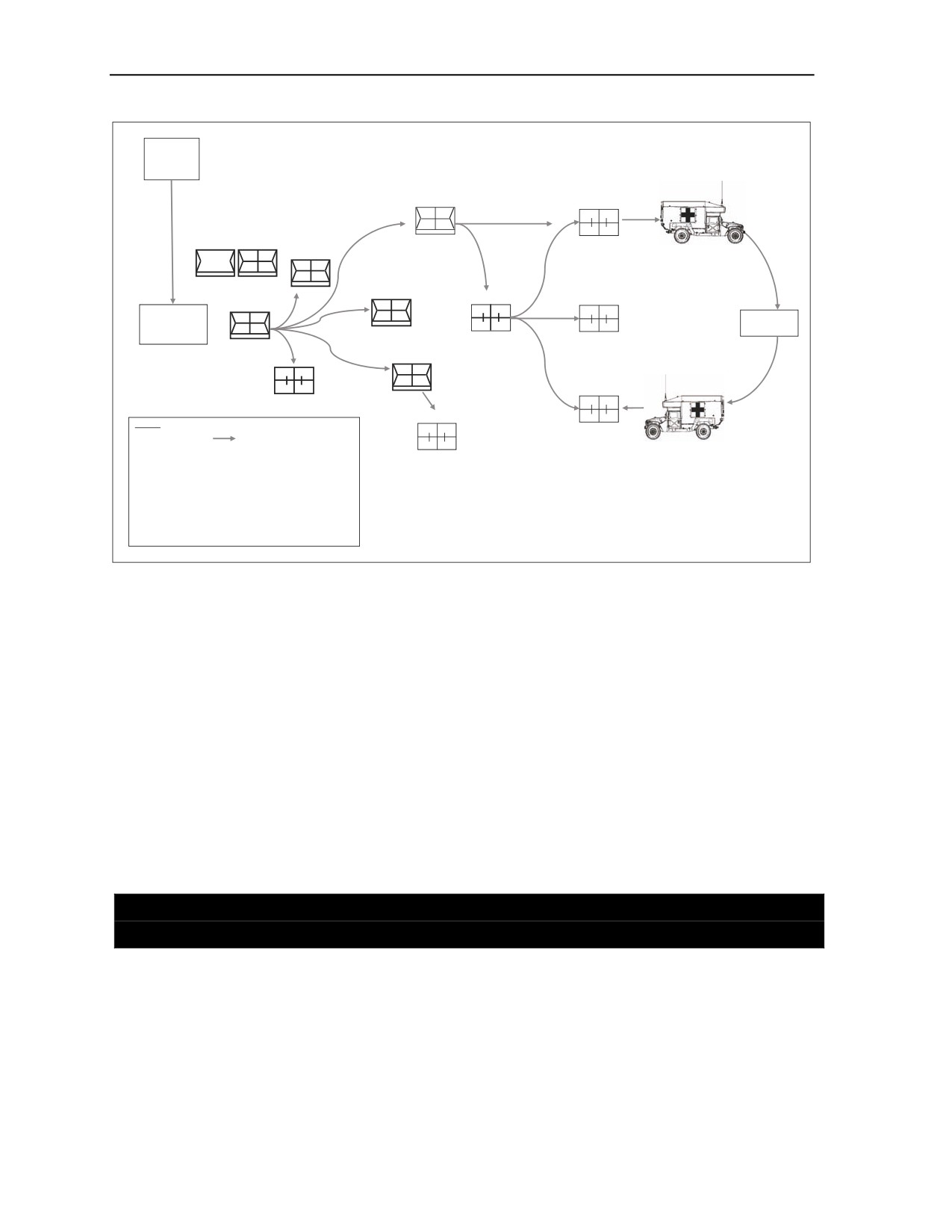
Figure 2-1 depicts the flow of Class VIII materiel in theater.
8 December 2009
FM 4-02.1
2-1
Chapter 2
STRATEGIC
SUPPORT
I
MLC
BAS
Ø
I
JDDOC
MLMC
USMC
Ø
MLC
I
I
APOD/SPOD
Combat Medic
CRT
BSMC
BAS
MLC
Ø
USAF
FDT
EMEDS
I I
LEGEND
BAS
Class VIII materiel flow
APOD: aerial port of debarkation
CSH
BAS: battalion aid station
BSMC: brigade support medical company
CRT: contact repair team
CSH: combat support hospital
JDDOC: joint deployment distribution operations center
FDT: forward distribution team
MLC: medical logistics company
MLMC: medical logistics management center
SPOD: sea port of debarkation
USAF EMEDS: US Air Force expeditionary medical support unit
USMC MLC: US Marine Corps medical logistics company
Figure 2-1. Class VIII materiel flow
2-3. The commander prioritizes the mix of forces based on the time-phased force and deployment data.
The time-phased force and deployment data must incorporate detailed MEDLOG planning to ensure that
the logistics infrastructure supports austere and mature theater requirements by synchronizing force
deployments with functional MEDLOG units and resources prior to operations. Active and continuous
command involvement in all stages of force projection, coupled with detailed reversed planning, combine
to ensure that the right forces with the right support are available and ready to conduct operations.
2-4. Medical logistics is anticipatory with select units capable of operating in a split-based mode.
Medical logistics is provided by a combination of the following organizations—
z
Medical logistics company.
z
Blood support detachment.
z
Optometry detachment (organizational structure and functions covered in Chapter 6).
z
Medical logistics management center.
z
United States Army Medical Materiel Agency Medical Logistics Support Team (MLST).
SECTION II — MEDICAL LOGISTICS SUPPORT ORGANIZATIONS IN THE
CURRENT FORCE
MEDICAL LOGISTICS COMPANY
MISSION
2-5. The MLC (TOE 08488A000) mission is to provide direct support for medical materiel, medical
equipment maintenance, optical lens fabrication and repair, and PMIs to BCTs and EAB medical units
operating within the AO. The MLC has no organic blood support capability. A cell from the blood
2-2
FM 4-02.1
8 December 2009
Medical Logistics Organizational Structure
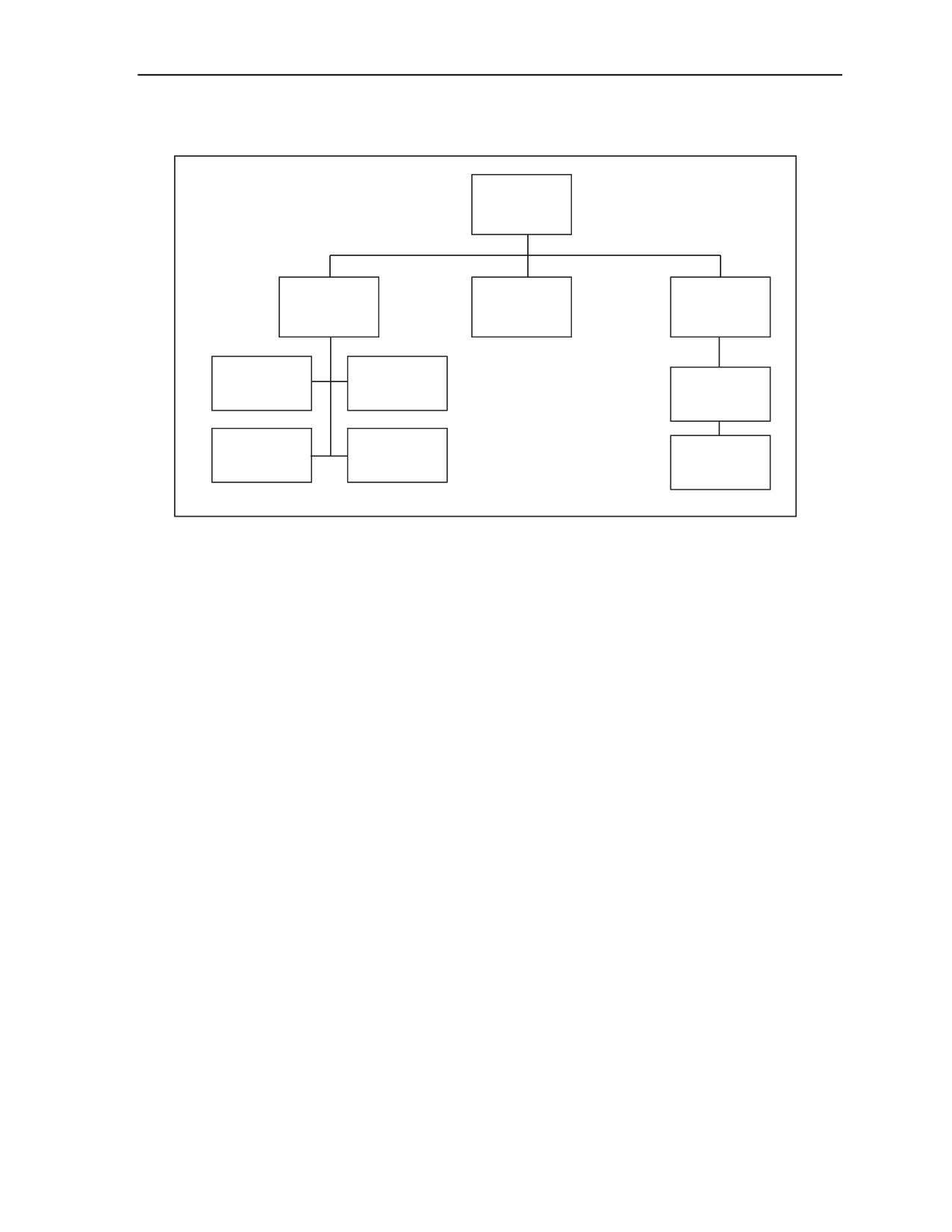
support detachment may be collocated with the company to provide blood support to supported medical
units. Figure 2-2 depicts the organizational structure of the MLC.
MEDICAL
LOGISTICS
COMPANY
LOGISTICS
MAINTENANCE
SUPPORT
COMPANY
PLATOON
PLATOON
HEADQUARTERS
HEADQUARTERS
HEADQUARTERS
RECEIVING/
OPTICAL
STORAGE
SUPPORT
MEDICAL
SECTION
SECTION
MAINTENANCE
SECTION
STOCK
SHIPPING
CONTROL
MAINTENANCE
SECTION
SECTION
SECTION
Figure 2-2. Medical logistics company (Table of Organization and Equipment 08488A000)
2-6. The MLC may be assigned to the medical battalion (multifunctional) (MMB) or senior medical
command and control (C2) element within the AO. The company has the capability for limited self-
sustainment during initial operations, meeting the requirement for early-entry into the AO or as part of a
task force organization.
BASIS OF ALLOCATION
2-7. The basis of allocation is one MLC per 11.1 short tons of Class VIII issued per day.
CAPABILITY
2-8. The MLC—
z
Provides Class VIII, single and multivision optical fabrication and repair, and medical
equipment maintenance support to a maximum force of 22,000 Soldiers.
z
Receives, classifies, and issues up to 11.1 short tons of Class VIII supply.
z
Provides storage for up to 51 short tons of Class VIII supplies.
z
Builds and positions Class VIII support packages, as required in support of BCTs and EAB
medical units or contingencies.
z
Provides field- and sustainment-level medical equipment maintenance for medical equipment
belonging to medical units operating within the AO and is capable of deploying three contact
repair teams (CRTs).
z
Provides reconstitution of MEDLOG units, sections, or teams.
z
Coordinates for emergency delivery of Class VIII supplies.
z
Provides one food service specialist to supplement the food service section of the unit to which
it is assigned or attached.
z
Provides internal unit maintenance.
z
Fulfills the SIMLM supply and requisition processing mission for all joint forces in the theater,
when so designated by the combatant commander.
8 December 2009
FM 4-02.1
2-3
Chapter 2
ORGANIZATIONAL STRUCTURE
Company Headquarters
2-9. This section provides C2 of the MLC. Personnel assigned within this section supervise and perform
unit plans and operations and general supply functions.
Logistics Support Platoon
2-10. The logistics support platoon headquarters provides C2 of the platoon. This platoon ensures that
stocks remain in an issuable condition while in storage. This includes the planning prior to receipt of
supplies, locating stocks that facilitates first-in/first-out handling using space efficiently, and maintaining
segregation and disposition of stock as determined by the accountable officer.
Receiving and Storage Section
2-11. This section processes receipt documents for incoming shipments. It is responsible for the storage,
preservation, location, and accountability for medical supplies and equipment. It is capable of deploying a
five person mobile forward distribution team for split-based operations.
Shipping Section
2-12. This section plans for and coordinates the release of materiel to transportation, stages shipments for
pick up, and prepares movement documents. This section is capable of deploying a five-person mobile
forward distribution team for split-based operations. This section must stay in close synchronization and
communication with the TSC/ESC DMC or the sustainment brigade support operations section in order to
use theater transportation assets to deliver supplies.
Stock Control Section
2-13. This section maintains accountability for all medical materiel and coordinates all stock control
functions. It also maintains accountability for all materiel received, stored, and issued in the MLC. This
section is capable of deploying a three-person mobile forward distribution team in support of split-based
operations.
Optical Support Section
2-14. The optical support section performs optical fabrication and repair of single and multivision
eyewear, as well as safety eyewear and sunglasses. This section is capable of filling unit requisitions for
routine replacement of eyewear or inserts when the necessary information is obtained from the Soldier’s
medical record. This section can support emergency replacement of eyewear or inserts through an
established emergency request system using transportation available to the MLC, brigade medical supply
office (BMSO), and other medical units within the MLC AO.
Maintenance Platoon
2-15. The maintenance platoon headquarters provides C2 for the platoon. The platoon performs field and
sustainment medical equipment maintenance services on an area basis. It also provides organizational
maintenance for all vehicles and power generation equipment organic to the company.
Medical Maintenance Section
2-16. This section performs sustainment maintenance services to all units within the company’s AO
including the ordering and storage of Class VIII repair parts. It also performs field maintenance for units
in its AO which do not have organic medical equipment maintenance personnel assigned or attached or are
not supported by medical equipment repairers from other units. This section can deploy three mobile
CRTs.
2-4
FM 4-02.1
8 December 2009
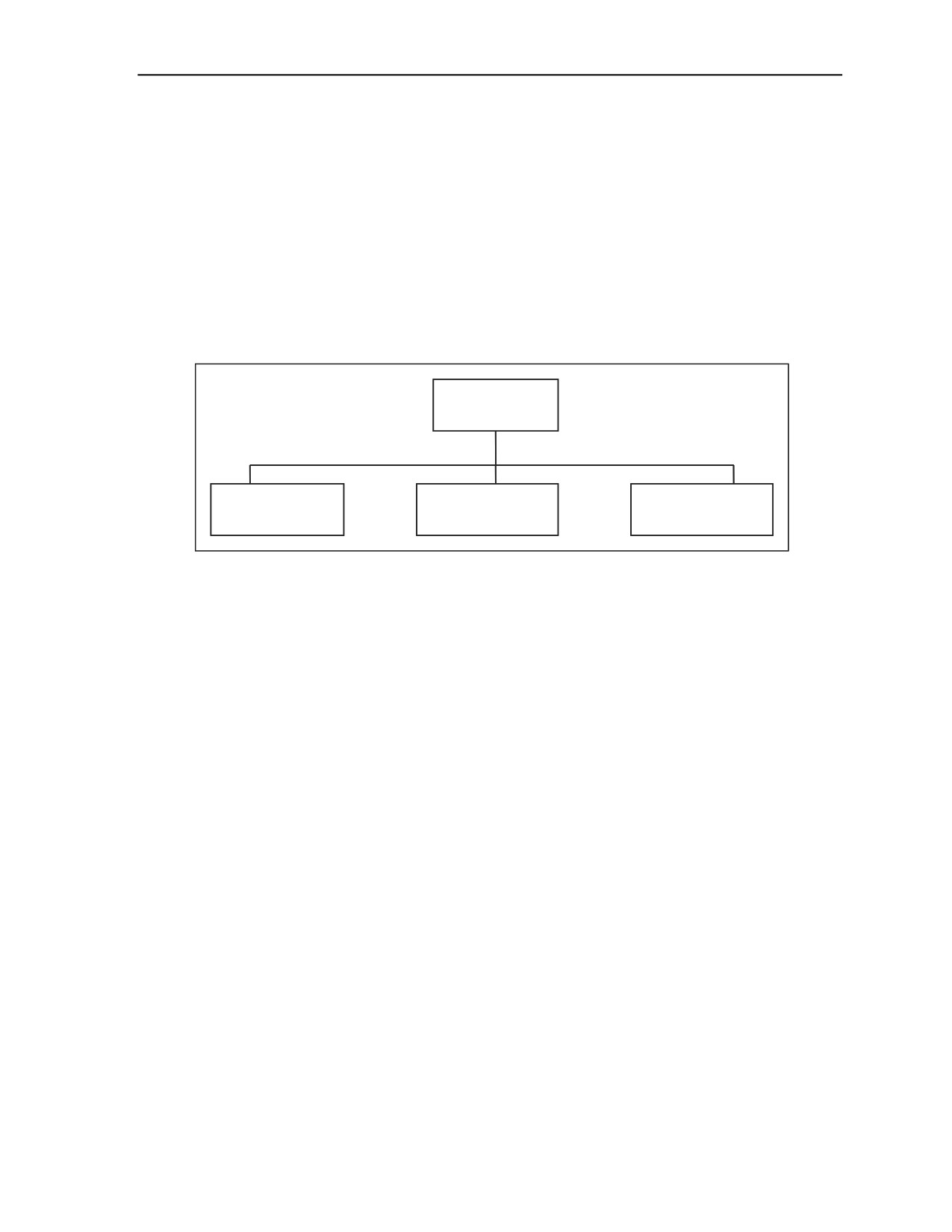
Medical Logistics Organizational Structure
Maintenance Section
2-17. This section is responsible for organizational maintenance including vehicle maintenance, equipment
records and repair parts, internal fueling operations, and power generation repair for organic company
assets.
BLOOD SUPPORT DETACHMENT
MISSION
2-18. The blood support detachment (TOE 08489A000) (Figure 2-3) provides collection, manufacturing,
storage, and distribution of blood and blood products to EAB medical units and to other operations. Refer
to Chapter 7 for additional information on blood support operations.
BLOOD
SUPPORT
DETACHMENT
COLLECTION AND
STORAGE AND
DETACHMENT
MANUFACTURING
DISTRIBUTION
HEADQUARTERS
SECTION
SECTION
Figure 2-3. Blood support detachment (Table of Organization and Equipment 08489A000)
2-19. The detachment may be attached or assigned to the MMB. In the event the unit deploys without the
MMB, the detachment will rely on the unit to which it is assigned for C2 and life support. The detachment
must coordinate with the major blood storage unit (if required), such as the USAF Expeditionary Blood
Transshipment Center (EBTC), for resupply purposes. The detachment provides flexibility to shift
personnel between collection and distribution missions, as required. The detachment is dependent upon
appropriate EAB elements for AHS support, medical equipment maintenance and repair, supplemental
transportation, financial management, human resources support, religious, and legal services, and technical
intelligence for captured medical materiel. The detachment also requires augmentation in a chemical,
biological, radiological, and nuclear
(CBRN) environment for decontamination and may require
supplemental signal assets for bandwidth communications. Additionally, the detachment requires support
from the USAF EBTCs for blood requirements from CONUS blood donor centers and the Armed Services
Whole Blood Processing Laboratory. See Chapter 7 for additional information on blood management.
BASIS OF ALLOCATION
2-20. The basis of allocation is one blood support detachment per 100,000 Soldiers in the theater and one
per 150,000 service members for joint operations.
CAPABILITY
2-21. This unit is capable of—
z
Providing blood and blood products to MTFs operating at EAB.
z
Ensuring the receipt, re-icing, and transshipment of packed red blood cells (RBCs) and blood
products from the USAF EBTC.
z
Providing refrigerated storage for 4,080 units of packed RBCs.
z
Distributing boxes of packed RBCs and other blood products to EAB MTFs through three blood
distribution teams (while not collecting and/or manufacturing blood).
8 December 2009
FM 4-02.1
2-5
Chapter 2
z
Deploying a forward distribution augmentation cell to MLCs, when required. These teams are
capable of performing emergency collections (when not collecting and/or manufacturing blood).
z
Collecting up to 432 units of whole blood every 24 hours and manufacturing 432 units of
packed RBCs every 24 hours after an initial 24 hour delay (while not distributing blood).
ORGANIZATIONAL STRUCTURE
Detachment Headquarters
2-22. The detachment headquarters provides C2 for the blood support detachment. Personnel assigned to
this section supervise and perform unit plans and operations, general supply, life support, and maintenance
functions.
Collection and Manufacturing Section
2-23. This section is responsible for the collection, manufacturing, and quality control over all blood
stocks at EAB.
Storage and Distribution Section
2-24. This section is responsible for inspecting incoming blood shipments and processing receipt
documents. It is also responsible for the storage, preservation, location, and accountability for blood and
blood products. It distributes blood and blood products to EAB medical units. The section may task
organize and send personnel forward to support MLCs when required.
MEDICAL LOGISTICS MANAGEMENT CENTER
MISSION
2-25. The MLMC’s (TOE 08670G000) mission is to provide centralized, theater-level commodity
management of Class VIII materiel in accordance with the ASCC surgeon’s policies. This organization
operates in a split-based mode, with a nondeployable base, two forward support teams (early entry), and
two forward support teams
(follow-on). The MLMC is capable of deploying these teams while
maintaining base operations in CONUS. One team deploys to support each theater. When deployed, the
MLMC forward support team is assigned to the MEDCOM (DS). The organizational structure for the
MLMC is shown in Figure 2-4.
2-6
FM 4-02.1
8 December 2009
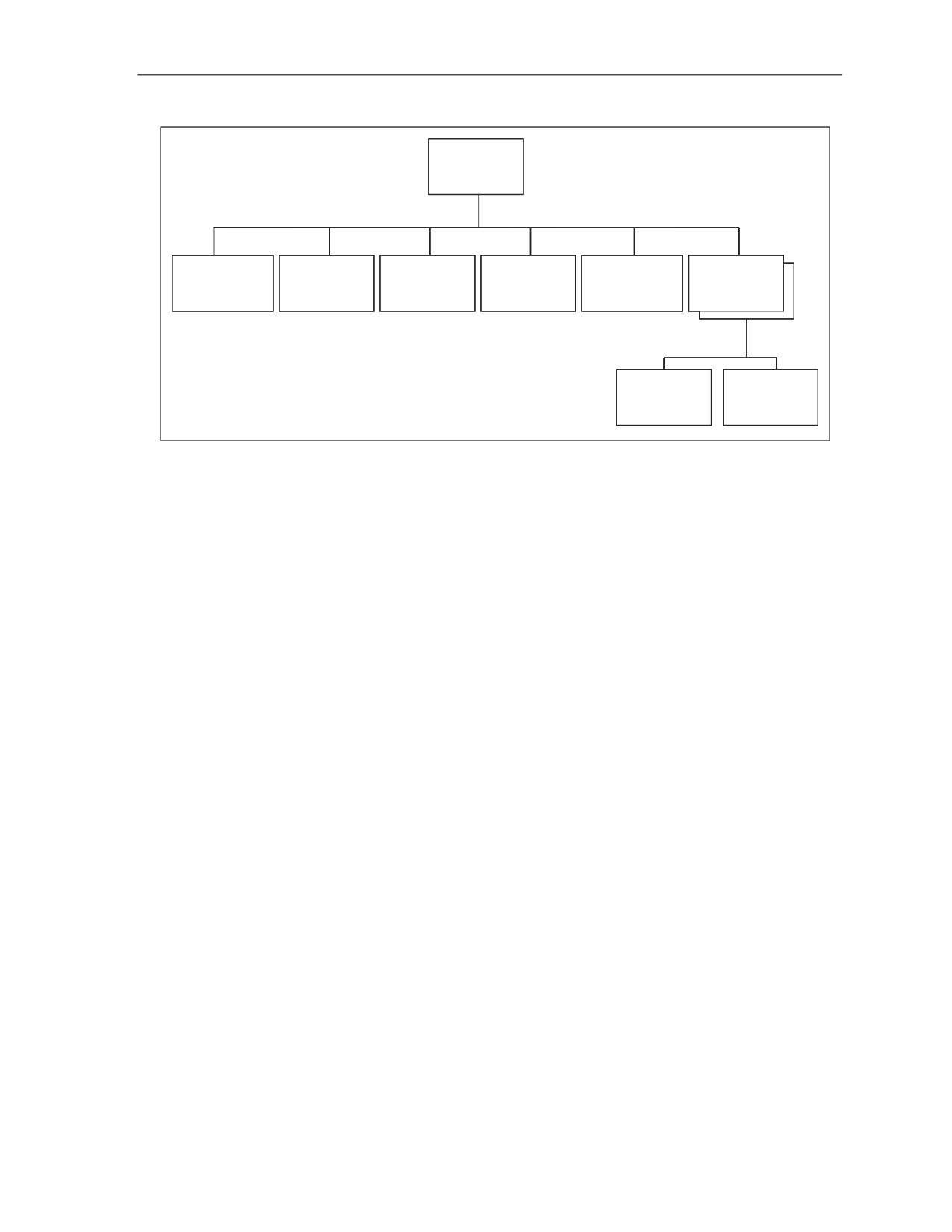
Medical Logistics Organizational Structure
MEDICAL
LOGISTICS
MANAGEMENT
CENTER
MEDICAL
MEDICAL
HEADQUARTERS
SUPPORT
MAINTENANCE
MATERIEL
DETACHMENT
SUPPORT
SECTION
DIVISION
MANAGEMENT
MANAGEMENT
HEADQUARTERS
TEAMS
DIVISION
DIVISION
FORWARD
FORWARD
TEAM
TEAM
(EARLY ENTRY)
(FOLLOW ON)
(X2)
(X2)
Figure 2-4. Medical logistics management center (Table of Organization and Equipment
08670G000)
2-26. The MLMC provides centralized, strategic-level management of critical Class VIII materiel, PMIs,
optical fabrication, contracting, and medical equipment maintenance support. When deployed, the MLMC
forward support team is assigned to the MEDCOM (DS) and collocates with the DMC of the TSC/ESC, as
well as the joint deployment distribution operations center, if established. The forward support team serves
as a link between national-level support and theater-level distribution and is dependent upon appropriate
elements of the ASCC for AHS support, food service support, transportation, laundry and bath, finance,
personnel and administrative services, religious, legal, communications, and unit-level maintenance
support. The MLMC operates the Theater Army Medical Management Information System (TAMMIS)
until it can be replaced.
BASIS OF ALLOCATION
2-27. Only one MLMC is required in the force. This unit contains a nondeploying base element and two
theater support teams. Each team supports a separate theater.
CAPABILITY
2-28. The MLMC is capable of—
z
Monitoring the operation of MEDLOG units in all AOs.
z
Monitoring receipt and processing of Class VIII requisitions from MEDLOG units of all
Services.
z
Reviewing and analyzing demands and computing theater requirements for Class VIII supplies,
medical equipment, and medical equipment maintenance.
z
Monitoring and evaluating workload, capabilities, and asset position of the supported MEDLOG
units of all Services and directs cross-leveling of workload or resources to achieve compatibility
and maximum efficiency.
z
Implementing plans, procedures, and programs for medical materiel management systems.
z
Conducting limited predeployment training of MEDLOG management information systems
(such as TAMMIS, MC4, and DCAM) for deploying medical units.
z
Preparing medical materiel management data and reports as required.
z
Providing medical contracting support.
8 December 2009
FM 4-02.1
2-7
Chapter 2
z
Performing the SIMLM information management and distribution coordination mission to joint
forces, as directed.
z
Serving as the management interface with CONUS Class VIII national inventory control points
and strategic partners.
z
Managing critical items and analysis of production capabilities.
z
Serving as liaison with the materiel distribution manager at EAB for distribution of Class VIII
supplies within the AO.
z
Deploying MLMC forward support teams into multiple AOs, as required.
ORGANIZATIONAL STRUCTURE
Headquarters Section
2-29. This section provides C2, planning, direction, and administrative support for the MLMC.
Support Division
2-30. This division coordinates staff functions pertaining to MEDLOG. It is responsible for the placement
and operation of the MLMC forward support teams and the execution of operational plans.
Materiel Management Division
2-31. The materiel management division is responsible for monitoring Class VIII materiel management in
CONUS and in multiple theaters, as well as the following:
z
Maintains daily visibility of medical materiel assets positioned in multiple theaters and the
availability of CONUS-based stocks.
z
Monitors requisitions for critical items and analyzes stockage objectives.
z
Performs special studies and analysis of logistical data and interfaces with the national inventory
control point. All theater requisitions for Class VIII materiel are routed through this division for
resupply/replenishment actions.
z
Establishes and monitors contracts for critical medical items and services and provides technical
guidance to medical contracting personnel within the AO.
Medical Maintenance Management Division
2-32. The medical maintenance management division is responsible for the theater medical equipment
maintenance program. It serves as the medical maintenance consultant to multiple ASCC surgeons.
Analysis of workload data, bench stock management, and maintenance programs are part of this division’s
activities. The division reviews maintenance status and performance reports and manages allocation of
maintenance personnel assets and Medical Standby Equipment Program (MEDSTEP) items. It also
provides assistance to units with maintenance backlogs through resource allocation and equipment
evacuation policies.
Forward Support Teams
2-33. The MLMC forward support teams provide centralized management of medical materiel, medical
maintenance, and coordination for the distribution of Class VIII materiel within the AO in support of force
projection operations. These teams also provide medical contracting support for the theater and transmit
automated management data back to the MLMC base via satellite communications. The teams are
dependent on elements of the TSC (when collocated with the DMC) for AHS support, food service
support, transportation, laundry and bath, finance, personnel and administrative services, legal, religious
support, communications, and unit maintenance.
2-34. The forward support teams will collocate with the senior distribution manager to coordinate the
movement of Class VIII within the AO. When designated, the MLMC, in conjunction with the MLC, will
serve as the SIMLM for joint operations. The MLMC is capable of split-based operations, deploying two
2-8
FM 4-02.1
8 December 2009
Medical Logistics Organizational Structure
forward teams consisting of sufficient personnel and equipment to support two different MCOs. Each
MLMC forward team consists of two distinct elements, one forward team (early entry) combines with one
forward team (follow-on) to make one complete team. Each element is capable of the following:
z
The two forward teams (early entry) are capable of deploying as an early entry element to
provide centralized management of medical materiel, medical maintenance, medical contracting
operations, and coordination of the distribution of Class VIII materiel within the AO. The
team’s logistics chief will serve as the team commander when deployed. The early entry team
can provide liaison officers (or noncommissioned officer) to each deployed MEDLOG unit of
all Services and to the ASCC surgeon's location as required. The team will provide the
information management and distribution coordination portion of the SIMLM mission, when the
Army is designated as the SIMLM by the combatant commander, for joint operations. When
deployed, the team will be subordinate to the MEDCOM (DS) and collocates with the DMC of
the TSC/ESC.
z
The two forward teams (follow-on) augment the early entry teams to provide additional
centralized theater-level inventory management of Class VIII materiel in accordance with the
ASCC surgeon’s policy. The forward teams (follow-on) are capable of deploying as a follow-
on element to provide additional centralized management of critical Class VIII materiel, PMIs,
medical maintenance, and optical fabrication support. These teams are not meant to deploy
independently of the forward teams (early entry).
Detachment Headquarters
2-35. The detachment headquarters provides C2 of the MLMC. The personnel of this section supervise
and perform unit and general supply functions, billeting, discipline, security, readiness, and training for the
MLMC. Maintenance personnel will supplement a collocated unit for daily work assignments in support
of the MLMC.
UNITED STATES ARMY MEDICAL MATERIEL AGENCY MEDICAL
LOGISTICS SUPPORT TEAM
MISSION
2-36. The MLST is a deployable table of distribution and allowances (TDA) organization comprised of up
to 48 MEDLOG personnel (military, DA civilians, and contractors) from USAMMA. The mission of the
MLST is to deploy to designated locations worldwide to deliver MEDLOG capabilities and solutions in
support of Army strategic and contingency programs. The MLST has the capability to support multiple
simultaneous Army Pre-positioned Stock (APS) fieldings anywhere in the world. The MLST supports the
RSOI issue of APS unit sets and sustainment stock pre-positioned around the world, pushed in from the
APS located ashore or afloat. This includes the introduction of additional Class VIII materiel not
previously pre-positioned.
2-37. Upon initial deployment, the MLST is normally under the operational control of the USAMC’s
Army field support brigade and coordinates medical unit fielding priorities with the senior medical C2
element in theater. Upon completion of the APS transfer or other assigned missions, the team redeploys to
CONUS. The MLST may be deployed back to the theater to support the redeployment of US forces and
medical materiel from the operational area to follow-on CONUS or outside the continental US (OCONUS)
locations.
2-38. At a minimum, the MLST requires security, materiel handling equipment, transportation, and Class I
support in order to conduct its mission. Additionally, the team will require personnel augmentation from
the gaining tactical unit or a MEDLOG unit to ensure rapid and accurate hand-off of APS equipment.
8 December 2009
FM 4-02.1
2-9
Chapter 2
CAPABILITY
2-39. The MLST is configured based on the equipment density of APS materiel being issued, but typically
the team is organized into hand-off teams for APS hospital (Role 3) and BCT (Roles 1 and 2) equipment.
The MLST’s capabilities include—
z
Initial fielding and hand-off of APS, TSG contingency stock or unit deployment packages
(UDPs), and TSG-directed modernization medical equipment (not sustainment).
z
Medical equipment maintenance, technical inspection, and repair (type/density dependent).
z
Initial APS Class VIII sustainment stock transfer to the designated theater SIMLM.
z
Class VIII technical and staff assistance to medical units within the operational area.
z
Medical materiel transfer and training of key unit personnel on inserted medical technology.
UNITED STATES ARMY MEDICAL MATERIEL AGENCY FORWARD
LOGISTICS SUPPORT ELEMENT
2-40. The need for a USAMMA forward logistics support element was recognized during Operation Iraqi
Freedom (OIF). The USAMMA forward logistics support element was established to serve as a liaison
with the ASCC, MEDCOM (DS), and the Army field support brigade. This element deploys from home
station to execute key liaison tasks, address MEDLOG support issues, and provide MEDLOG staff
assistance support to deployed units.
2-41. This element has the capability to reach back to USAMMA in CONUS through the Agency’s
emergency operations center to access MEDLOG and medical equipment maintenance systemwide
knowledge in support of deployed forces. The USAMMA forward logistics support element is also
capable of—
z
Executing liaison functions with the USAMC for the integration and synchronization of
USAMC-managed APS Class II and VII materiel for supported medical units.
z
Serving as a liaison to the GCC surgeon’s staff.
z
Serving as the USAMMA customer assistance representative for all units in theater.
z
Resolving Class VIII supply and medical equipment maintenance issues related to centralized
programs and medical materiel fieldings.
z
Providing integrated logistics support assistance to supported medical units.
z
Identifying and providing solutions for MEDLOG issues with theaterwide implications.
2-42. This additional support frees up the MLST commander and staff, allowing them to focus on the
transfer of APS materiel to supported medical units. Refer to Supply Bulletin (SB) 8-75-S7 for additional
information on the MLST and USAMMA forward logistics support element.
2-10
FM 4-02.1
8 December 2009

Chapter 3
Medical Logistics Operations
The function of providing supply distribution to the force consists of wide-ranging
actions. These actions are based on real-time information extending from the
requisition of a sustainment requirement at the tactical level or the user, receipt of
request for requirements at the strategic level, and ultimately, the actual delivery of
that materiel at the tactical level. Operational logistics links strategic logistics to
tactical logistics in the AO, ensuring support and success at the tactical level. To be
successfully implemented, these actions must be synchronized over thousands of
miles, using multiple communications systems, employing countless numbers and
types of distribution-related equipment, and thousands of individuals executing their
duties in support of MEDLOG distribution operations. Further, the rapid
deployment requirements of the current force and ultimately, the modular force
require that this global distribution system respond immediately and consistently to
the Soldier in a near-flawless manner. The bottom line for an effective supply
distribution system is that it must track and deliver the requested items at the
appropriate time and place and in the quantity necessary for operations to be
sustained.
SECTION I — LEVELS OF SUSTAINMENT
3-1. Critical to ensuring that sustainment distribution meets the Soldiers’ needs, is establishing a
functional theater distribution plan that enables a responsive Army supply chain from the tactical level to
the strategic sustaining base. This section covers general supply operations in greater detail at the strategic,
operational, and tactical levels of sustainment. Class VIII commodity management and distribution at each
of these levels are discussed in Chapter 1 of this manual and Sections II through XI below. Figure 3-1
below depicts the logistical changes taking place as the Army transforms to the modular force.
LOGISTICAL CHANGES
Army of Excellence
Modular Force
Supply based
Velocity based
distribution system
distribution system
Echeloned
Preconfigured support
distribution
packages
Separate supply
Supply support activity
support activities; sustainment
consolidation; no sustainment
area backup
area backup
Direct support stockage
No direct support
of rations (1 day of supply)
stockage of rations
Figure 3-1. Transformation to the modular force
8 December 2009
FM 4-02.1
3-1
Chapter 3
STRATEGIC LEVEL
3-2. At the strategic level, supply activity focuses on the determination of projected realistic, supportable
resource requirements; the acquisition, packaging, management, and positioning of supplies; and the
coordinated movement of materiel into the theater and staging areas. All sources or potential sources of
supply are considered to reduce the deployment requirements of deploying forces. Some of these sources
are host-nation support, APS, contracting, and joint and multinational forces.
3-3. Through a system of national inventory control points, the DLA, USAMC, US Transportation
Command (USTRANSCOM), USAMEDCOM, and others serve as the supply managers at the strategic
level. They work with individual GCCs through various Service component commands to plan for and
satisfy the supply needs of the theater. They are the link between the strategic- and operational-level bases
responsible for filling the distribution system with the supplies necessary to support the GCC.
3-4. Prior to hostilities and the deployment of forces, the most demanding task at the strategic level is
determining the initial support needed and where and how to pre-position the supplies to afford the most
flexibility to the supported GCCs. Also of great importance is the establishment and maintenance of the
US-industrial base, for it is here the Services satisfy the vast majority of their supply requirements.
3-5. The DLA has many DOD logistics-related functions, but the industrial base is its primary focus. It is
also the worldwide-integrated manager for subsistence, petroleum, and property disposal operations.
These disposal functions are managed by the Defense Reutilization Management Office.
3-6. The USAMC is the focal point for Army sustainment needs. As such, it has many roles but some of
the most important are: the Army’s maintenance manager, the DOD single manager for conventional
ammunition, the Army’s industrial base manager, the APS manager, and the Army’s Logistics Civil
Augmentation Program (LOGCAP) manager.
3-7. From the Army’s point of view, the USAMC’s role as the APS manager is very important. Since the
Army is expected to rapidly deploy in response to a conflict, processes have to be in place to support this
force until the industrial base can react and the lines of communications can be established. Army pre-
positioned stocks may be used to address these challenges. These stocks are established at the minimum
level needed to sustain and equip the deployed forces as outlined in the Defense Planning Guidance.
Release authority for MCOs generally lies with the Chairman, Joint Chiefs of Staff or the Chief of Staff of
the Army. For lesser-scale contingency operations, Headquarters, Department of the Army usually has
release authority.
3-8. Army pre-positioned stocks are determined by requirements detailed in the Automated Battlebook
System, for which the Forces Command is the proponent. Using the Army War Reserve Deployment
System, the USAMC continuously updates the Automated Battlebook System. There are four categories of
APS. Each is briefly described in Section IX of this chapter.
3-9. Though not a provider of supplies, the USTRANSCOM provides the management and means to move
supplies to the theater. It also plays a vital role in establishing and maintaining joint total asset visibility. It
provides common-user airlift, sealift, and terminal services to deploy and sustain US Forces on a global
basis. The USTRANSCOM, DLA/USAMC, and other agencies involved in sustaining the theater,
coordinate their activities to accomplish the overall mission of supporting the GCCs.
3-10. Automated identification technology must be totally implemented at the strategic level for
distribution management to function as designed. This technology provides real-time data as to the total,
by national stock number (NSN), status of equipment and supplies at depots, commercial vendors, the
current inventory-in-motion, and pre-positioned assets. Rapid force projection and flexible sustainment
simply could not be accomplished without this technology. Additional information about automated
identification technology is provided in Appendix C.
OPERATIONAL LEVEL
3-11. Supply distribution at the operational level involves the requisitioning or acquiring, receipt, storage,
protection, maintenance, distribution, and salvage of supplies. At the operational level, current force
3-2
FM 4-02.1
8 December 2009
///////////////////////////////////////