AIRDROP OF SUPPLIES AND EQUIPMENT: RIGGING COMMUNICATION CONTROL VEHICLES (August 1999) - page 4
FM 10-500-23/TO 13C7-14-461
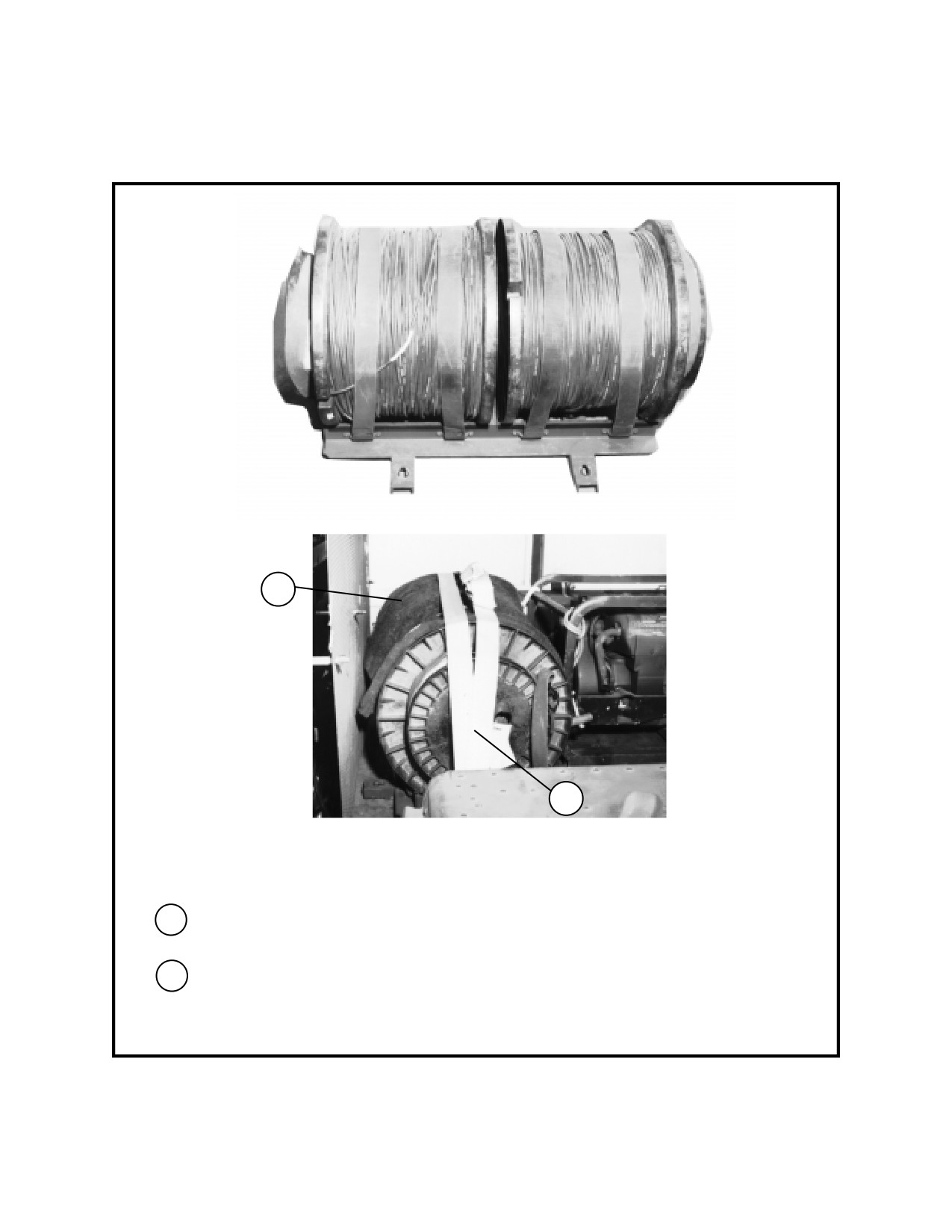
FIBER OPTIC CABLES
1
2
1
Wrap the fiber optic cables with a 28- by 36-inch piece of felt. Secure the felt with type III nylon
cord.
2
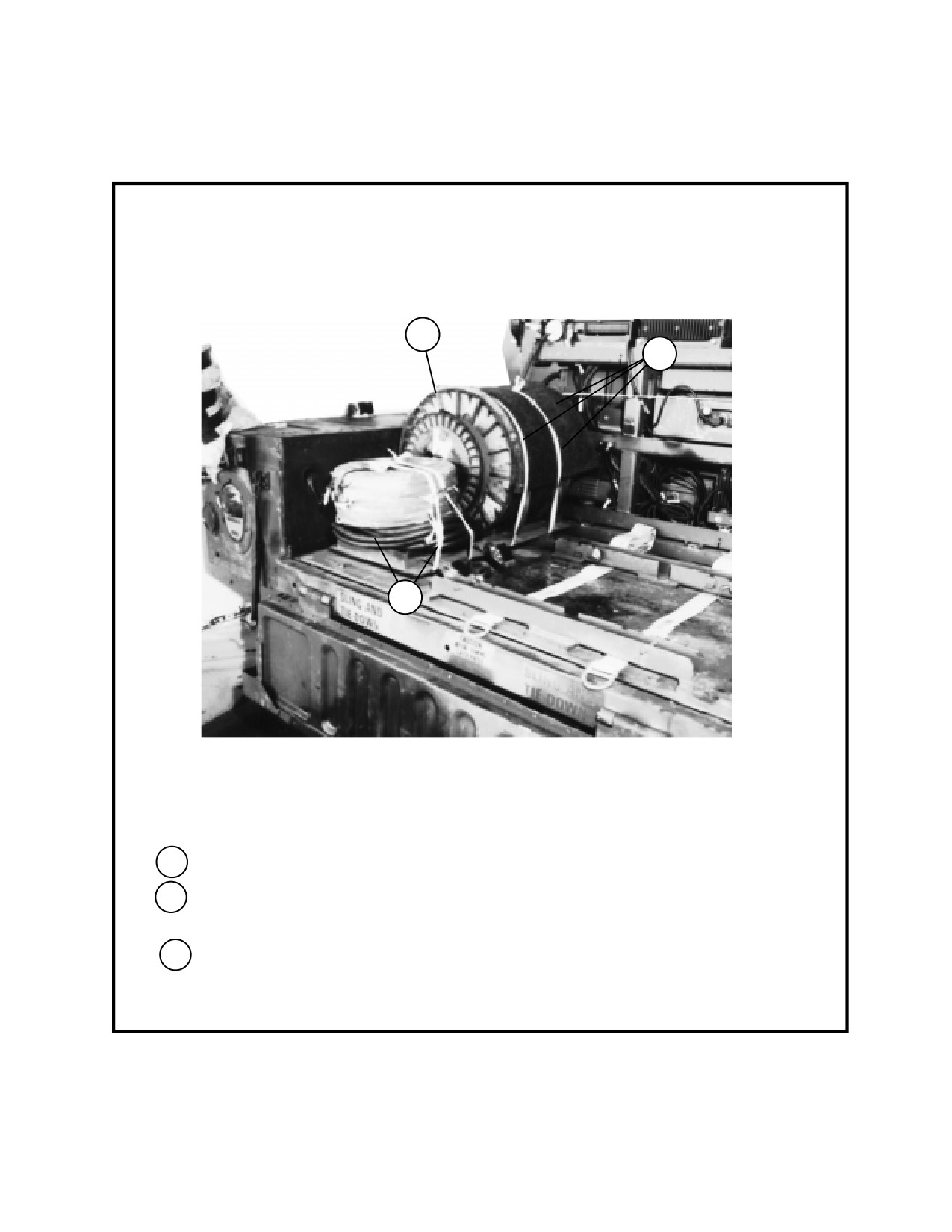
Position the optic cable reels in front of the generator. Run a 15-foot tiedown strap through the left
front D-ring of the cargo bed, over the top of the optic cable reels, through the right front D-ring,
and back over the top of the optic cable reels. Secure the ends together with a D-ring and a load
binder.
Figure 5-9. Optic cable reels secured
5-14
FM 10-500-23/TO 13C7-14-461
3
4
1
2
5
1
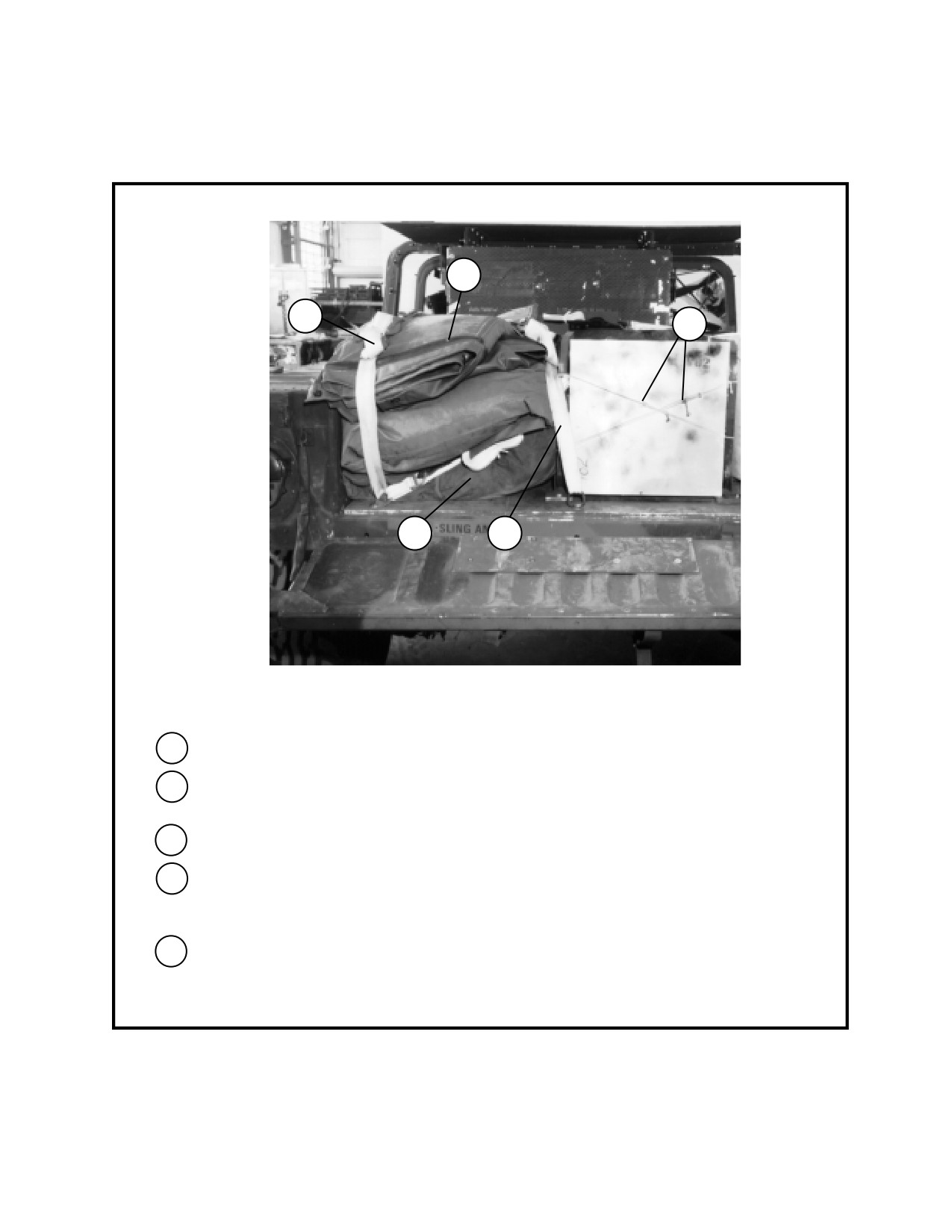
Secure the generator grounding plate to the rear of the generator frame with type III nylon cord.
2
Roll the camouflage net, shovel, and ax inside the tent. Place the tent on the left side of the
generator.
3
Set the canvas top on top of the equipment.
4
Run a 15-foot tiedown strap through the left front D-ring of the cargo bed, over the top of the
equipment, through the left rear D-ring, and back over the top of the equipment. Secure the ends
with a D-ring and a load binder.
5
Run a second tiedown strap through the left front D-ring of the cargo bed, over the top of the
equipment, through the center rear D-ring, and back over the top of the equipment. Secure the ends
with a D-ring and a load binder.
Figure 5-10. Accompanying load secured
5-15
FM 10-500-23/TO 13C7-14-461
9
7
8
6
6
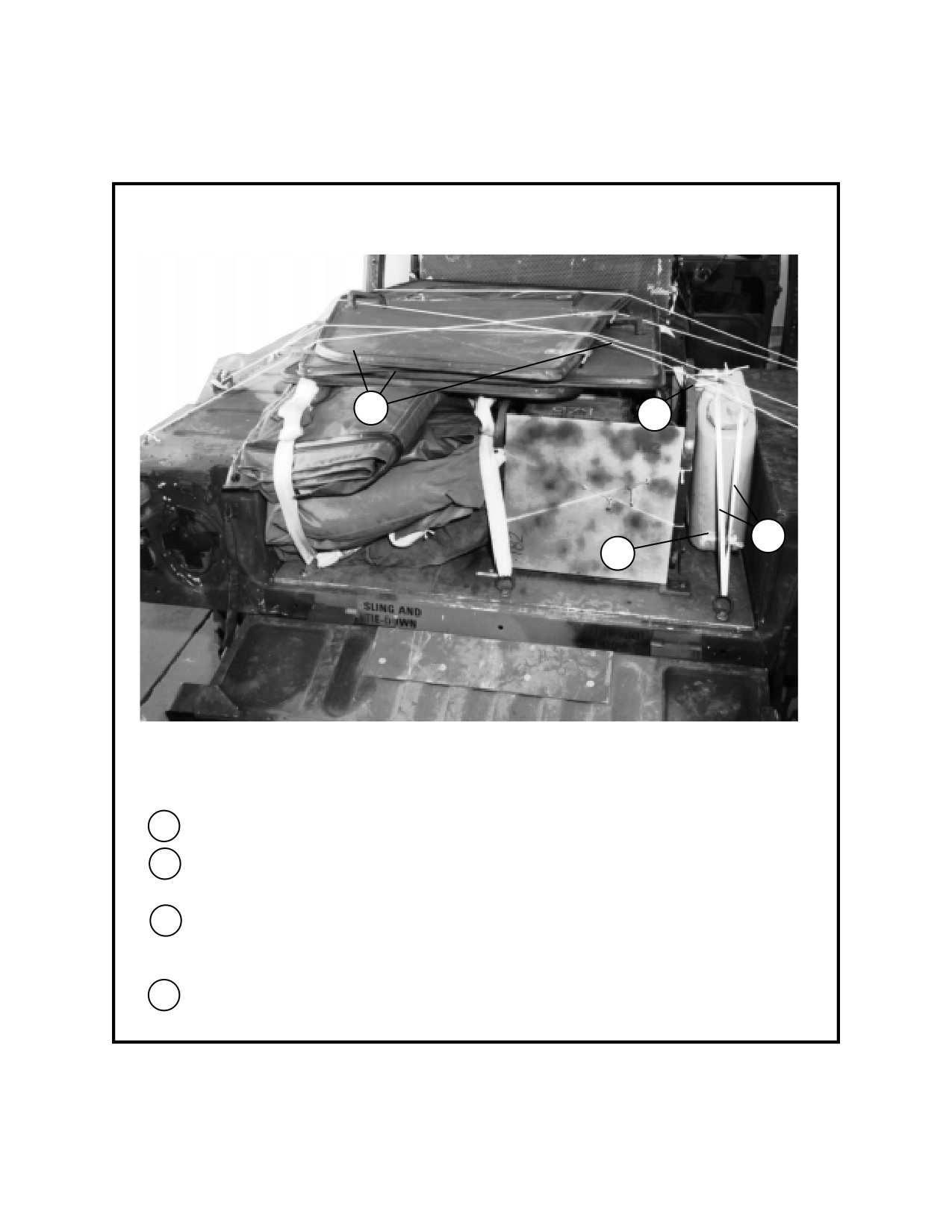
Place the water can on the right side of the generator.
7
Pass a length of 1/2-inch tubular nylon webbing through the carrying handle of the water can and
around the top right frame of the generator. Tie the ends of the webbing together.
8
Pass a length of 1/2-inch tubular nylon webbing through the right front D-ring of the cargo bed.
Take both ends of the webbing and interlace them through the carrying handle of the water can.
Take one end and pass it through the right rear D-ring. Tie the ends of the webbing together.
9
Place the doors on top of the generator and canvas top. Secure the doors of the vehicle with type
III nylon cord.
Figure 5-10. Accompanying load secured (continued)
5-16
FM 10-500-23/TO 13C7-14-461
12
15
13
11
10
10
14
10
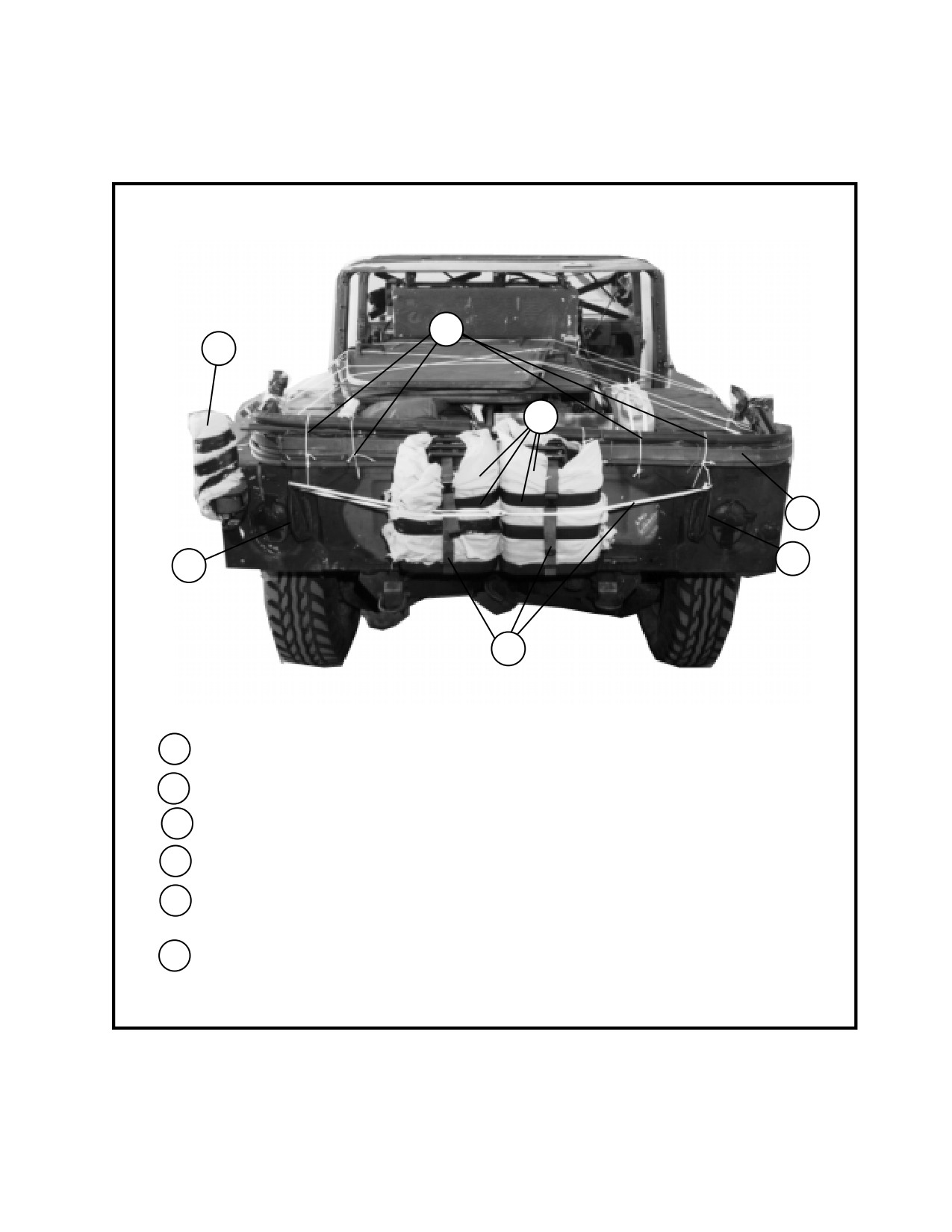
Close and secure the tailgate.
11
Lay the bows on top of the rear fenders and the tailgate.
12
Secure the bows with type III nylon cord.
13
Wrap the fuel cans with cellulose wadding. Tape the wadding in place.
14
Place the fuel cans in their racks. Secure them with the straps provided and a length of 1/2-inch
tubular nylon webbing.
15
Wrap the antenna mount with cellulose wadding. Tape the wadding in place.
Figure 5-10. Accompanying load secured (continued)
5-17
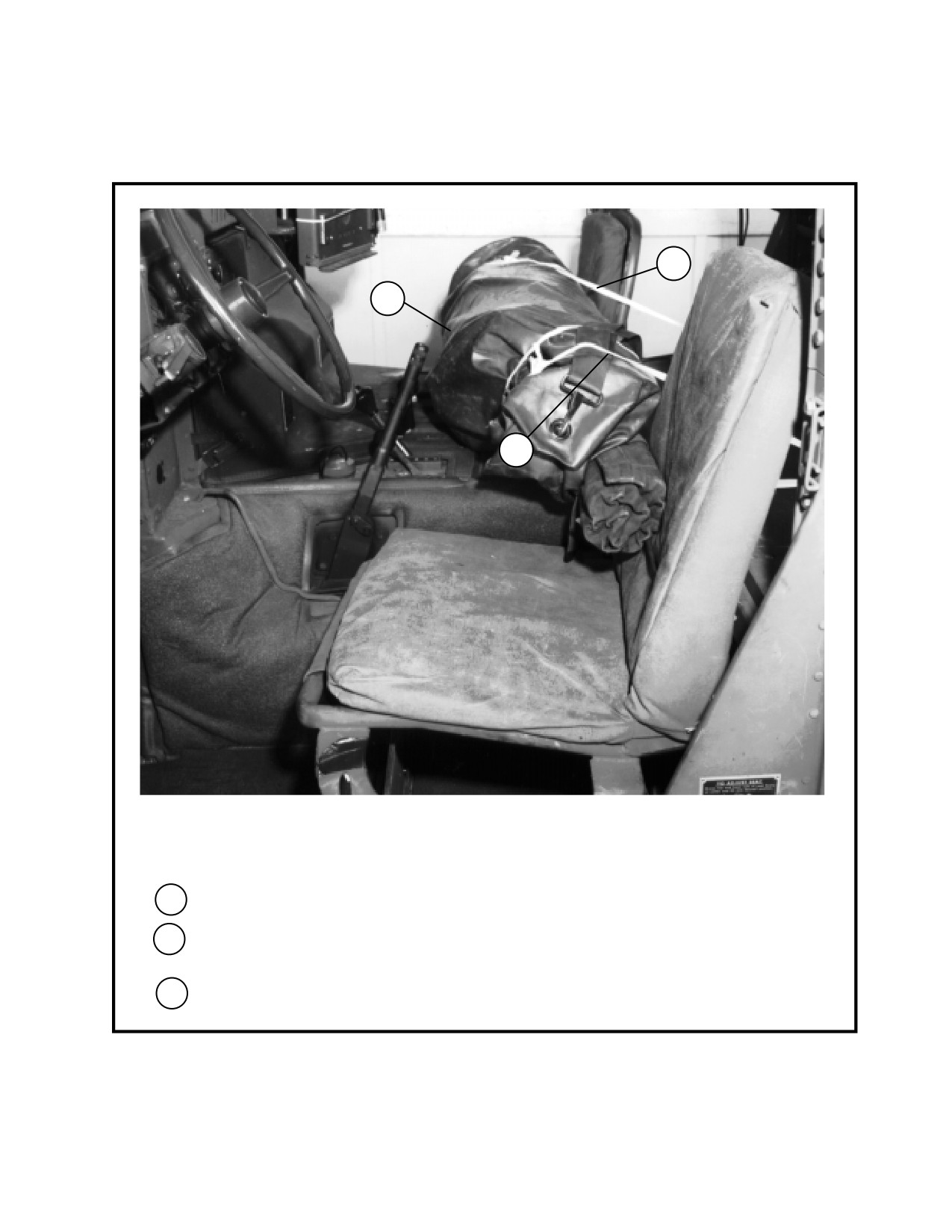
FM 10-500-23/TO 13C7-14-461
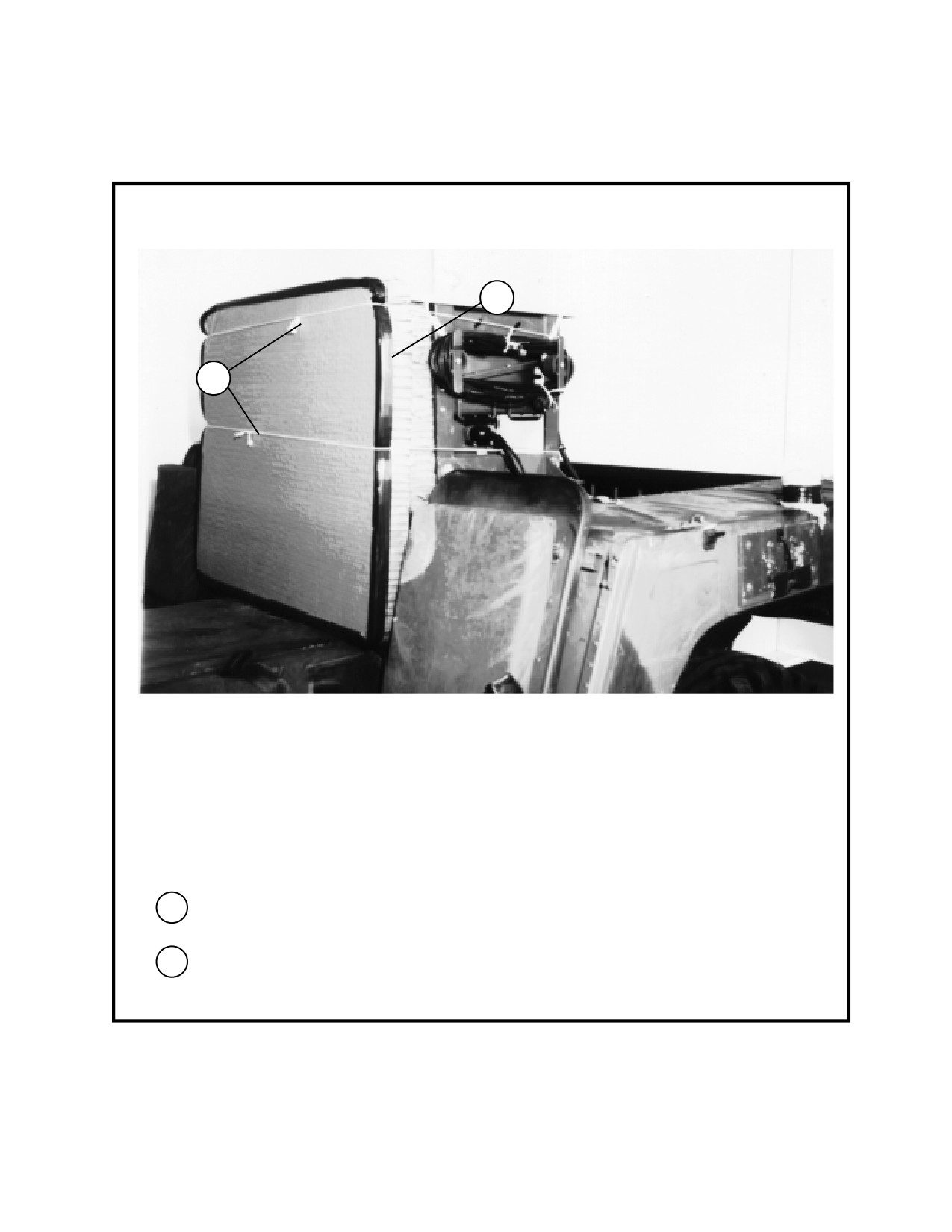
3
1
2
1
Cover the antennas and netting poles in their covers. Set them across the front seats.
2
Run a length of 1/2-inch tubular nylon webbing through the left front D-ring on the cargo bed floor
and around the netting poles and antennas. Tie the ends of the webbing together.
3
Repeat the procedures in step 2 above using the right front D-ring.
Figure 5-11. Antennas and netting poles secured
5-18
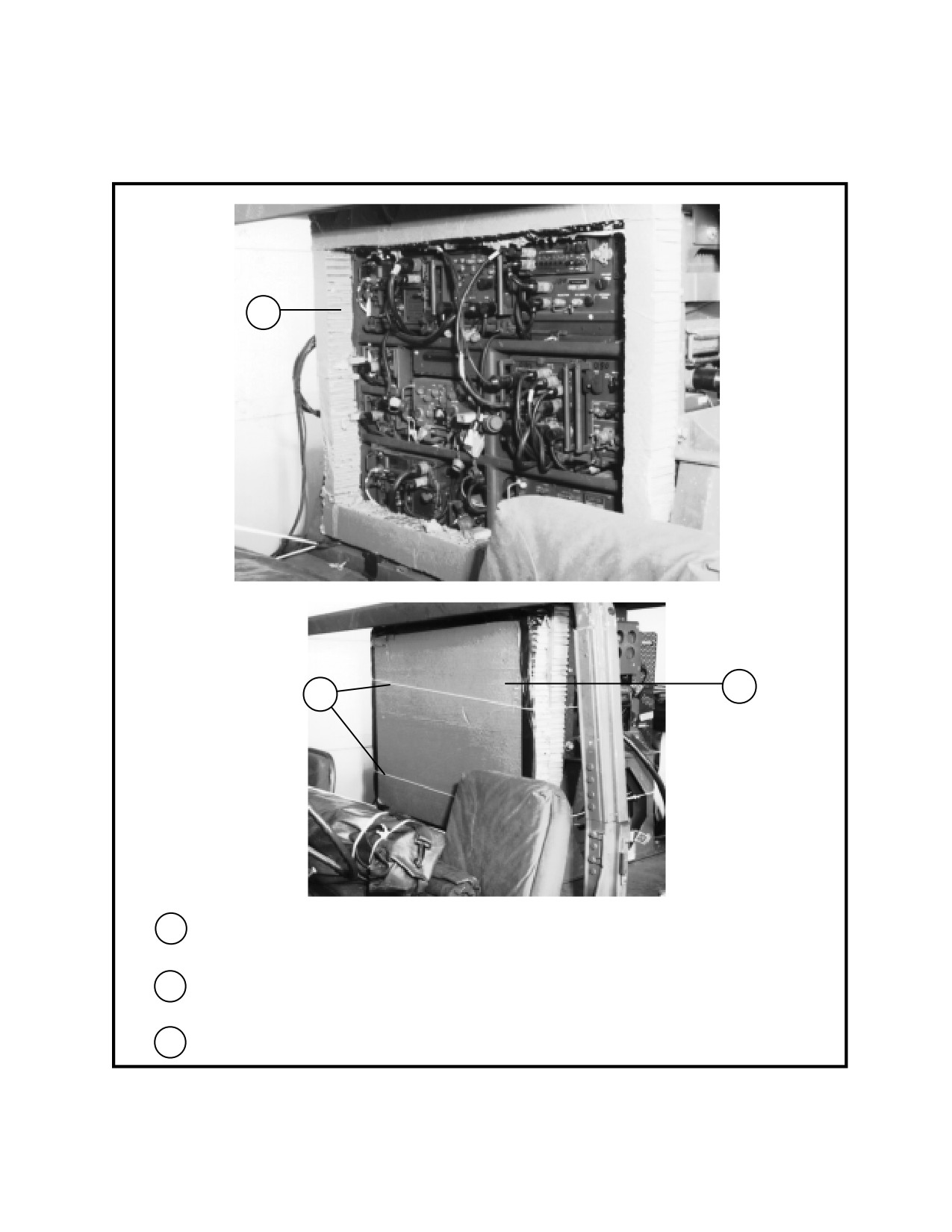
FM 10-500-23/TO 13C7-14-461
1
2
3
1
Make a 26- by 35-inch cutout in the center of a 33- by 40-inch piece of honeycomb. Place the
honeycomb in front of the GRC/206 radio pallet.
2
Place a 33- by 40-inch piece of honeycomb against the first piece of honeycomb. Tape the edges of
the second piece of honeycomb.
3
Secure the honeycomb pieces to the GRC/206 radio pallet with type III nylon cord.
Figure 5-12. Radio pallet secured
5-19
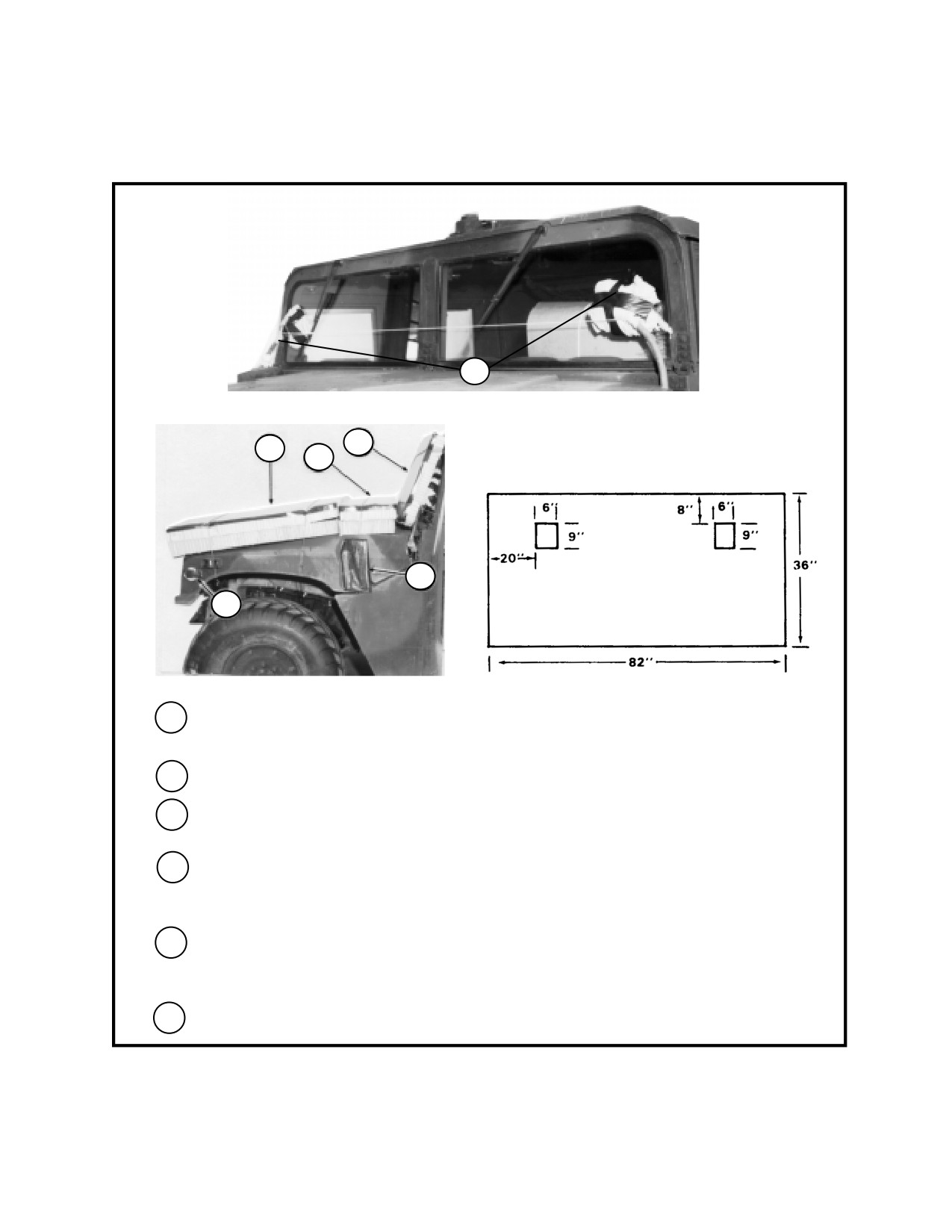
FM 10-500-23/TO 13C7-14-461
1
1
3
4
5
6
2
1
Pad the mirrors with cellulose wadding taped in place. Fold the mirrors inward, and tie them
together with type III nylon cord.
2
Tape all lights and reflectors.
3
Place a 21- by 83-inch piece of honeycomb over the outside of the windshield and mirrors. Tie the
honeycomb to the windshield with two lengths of type III nylon cord.
4
Place two 36- by 82-inch pieces of honeycomb on the hood with cutouts as shown. Tape the 36-
inch sides of the top piece. Tie the honeycomb in place with two lengths of type III nylon cord. Tie
one length to the coil springs and the other to the upper suspension arms.
5
Place two 12- by 82-inch pieces of honeycomb between the windshield and the pieces of honey-
comb positioned in step 4 above. Tape the top outside edges. Secure the honeycomb to the hood
latch brackets with type III nylon cord.
6
Tape the hood latches.
Figure 5-13. Front of truck prepared
5-20
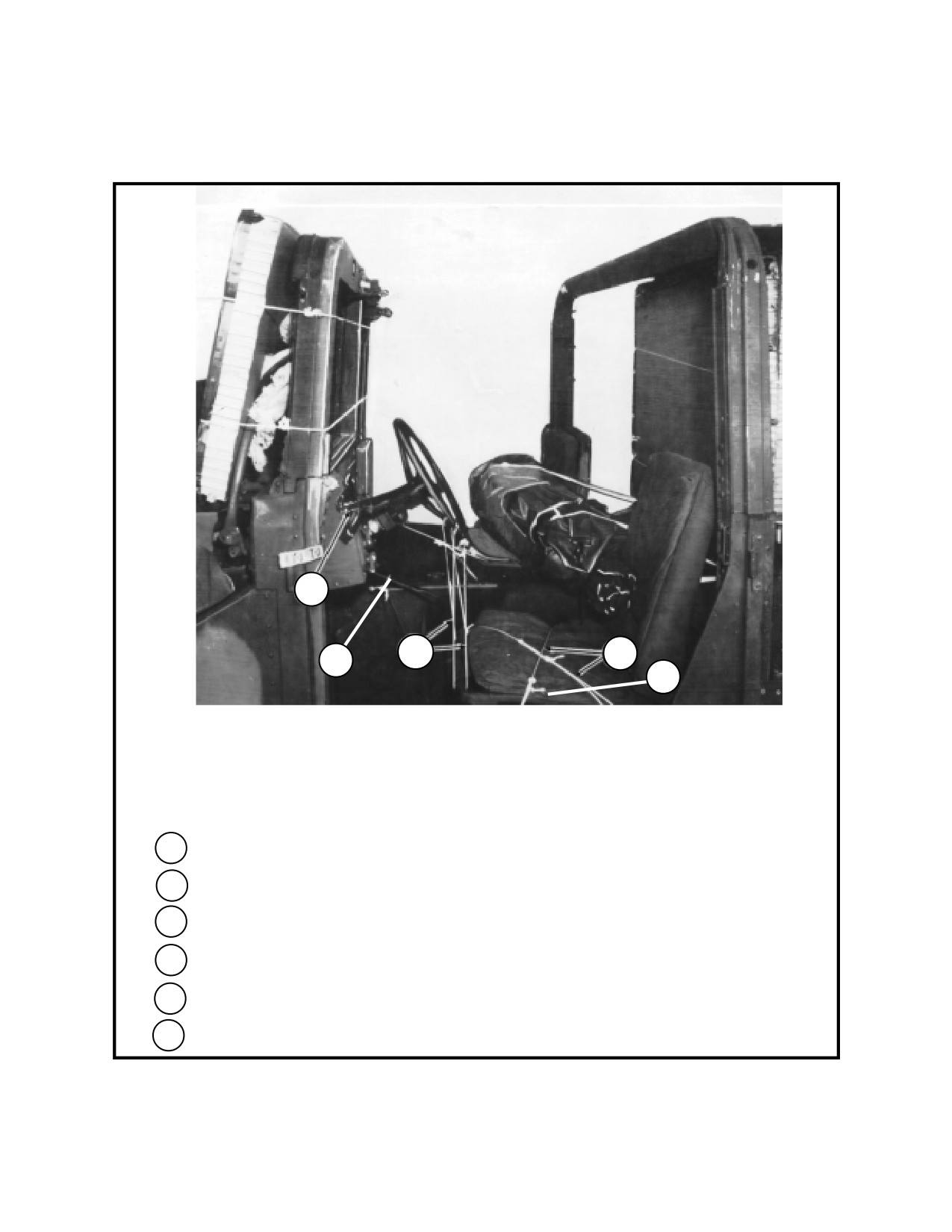
FM 10-500-23/TO 13C7-14-461
1
5
2
6
3
1
Tape the engine start and stop switch in the stop position.
2
Secure seats to the seat frame with type III nylon cord.
3
Secure seat cushions to the frame with type III nylon cord
4
Secure the fire extinguisher in place with type III nylon cord, if required (not shown).
5
Secure the steering wheel to the seat frame with type III nylon cord.
6
Tie the emergency brake handle in the off position with type III nylon cord.
Figure 5-14. Cab of truck prepared
5-21
FM 10-500-23/TO 13C7-14-461
8
8
7
8
8
7
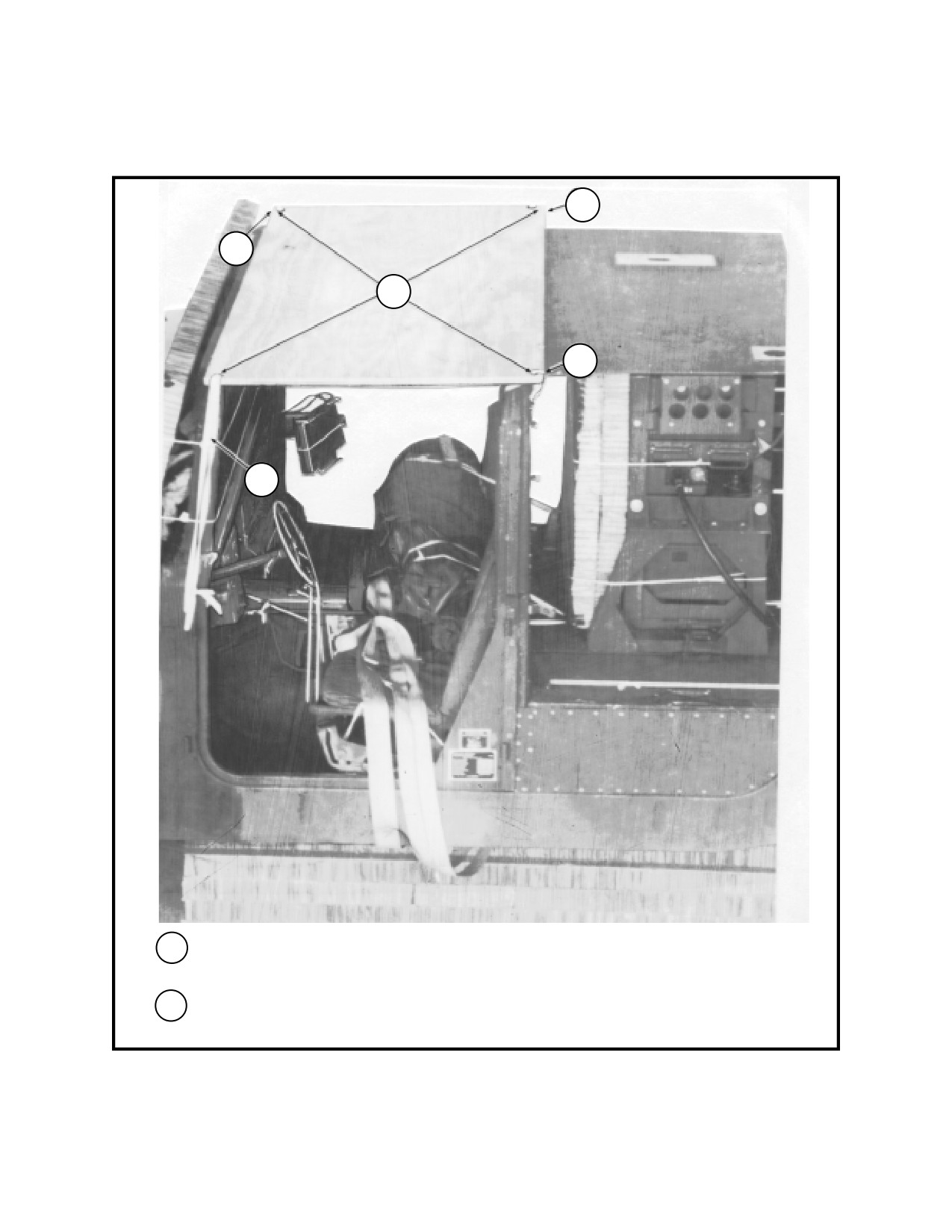
Make a 1/2-inch hole in each corner (2-inches from each edge) of a 3/4- by 36- by 82-inch piece of
plywood. Place the plywood over the top of the driver compartment.
8
Pass a length of 1/2-inch tubular nylon webbing through each of the holes of the plywood. Secure
each corner of the plywood to the top bow frame.
Figure 5-14. Cab of truck prepared (continued)
5-22
FM 10-500-23/TO 13C7-14-461
1
1
2
3
1
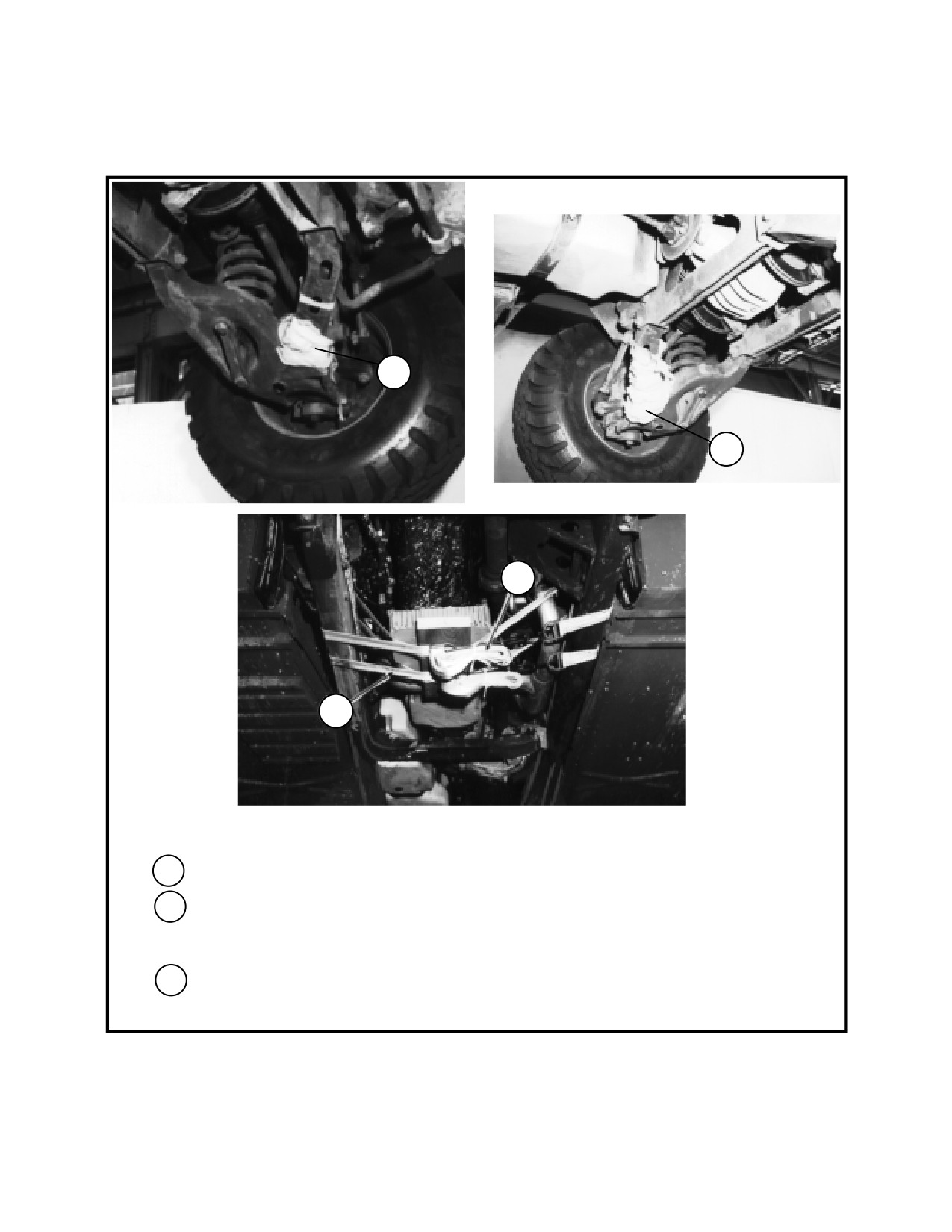
Pad the lower control arms on the front and rear of the truck with cellulose wadding taped in place.
2
Pass a 15-foot tiedown strap over the right frame rail, under the oil pan, and over the left frame rail.
Make sure the wires running along the frame rail are to the outside of the strap. Place a 12- by 12-
inch piece of honeycomb and a 2- by 6- by 16-inch piece of lumber between the strap and oil pan.
3
Fasten the strap with a D-ring and a loadbinder.
Figure 5-15. Underside of truck prepared
5-23
FM 10-500-23/TO 13C7-14-461
4
4
4
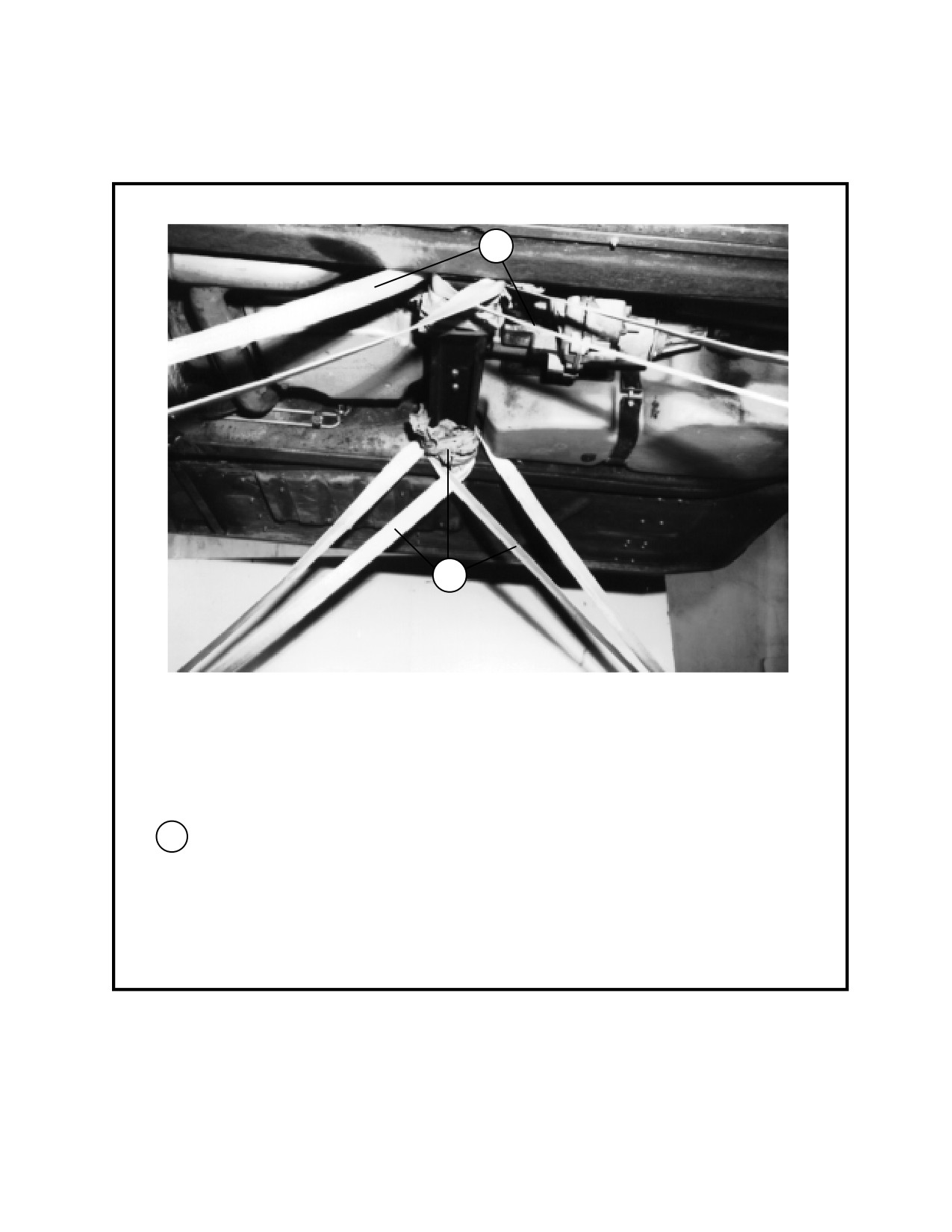
Pad each end of the cross member with cellulose wadding. Tape the wadding. Wrap two 15-foot
tiedown straps around the cross member on each end. Use these four straps to lash the truck to the
platform. Place the ends of the straps inside the truck until needed.
Figure 5-15. Underside of truck prepared (continued)
5-24
FM 10-500-23/TO 13C7-14-461
1
3
5
6
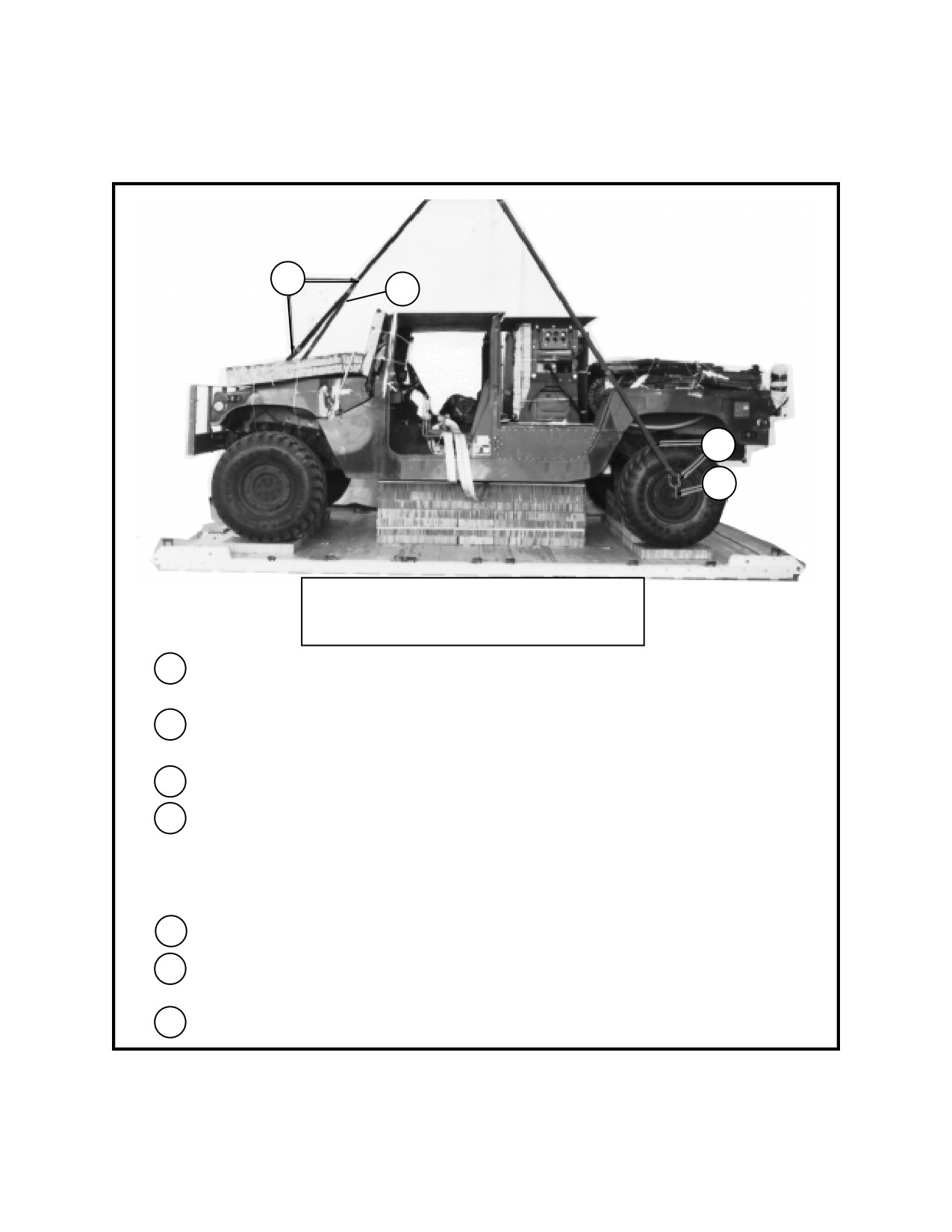
Note: The use of HDDS is optional but
recommended.
1
Pass a 3-foot (2-loop). type XXVI nylon webbing sling through one end of a 9-foot (2-loop), type
XXVI nylon sling.
2
Pass a medium clevis through both ends of the 3-foot sling, forming a donut. Bolt the clevis to the
right front lifting point on the hood. (Not shown).
3
Repeat steps 1 and 2 above for the left front lifting point.
4
Remove the front lifting shackles on the front bumper, and install them on the rear wheels of the
truck (Not shown).
NOTE: Make sure the shackles on the rear wheels are in a horizontal position when the truck is
being positioned on the platform.
5
Install a medium clevis on one end of a 12-foot (2-loop), type XXVI nylon webbing sling.
6
Pass another medium clevis through the lifting shackle on the right rear wheel of the truck. Attach
the clevis on the end of the 12-foot sling to the medium clevis on the right wheel lifting shackle.
7
Repeat steps 5 and 6 above for the left rear wheel shackle.
Figure 5-16. Lifting slings installed
5-25
FM 10-500-23/TO 13C7-14-461
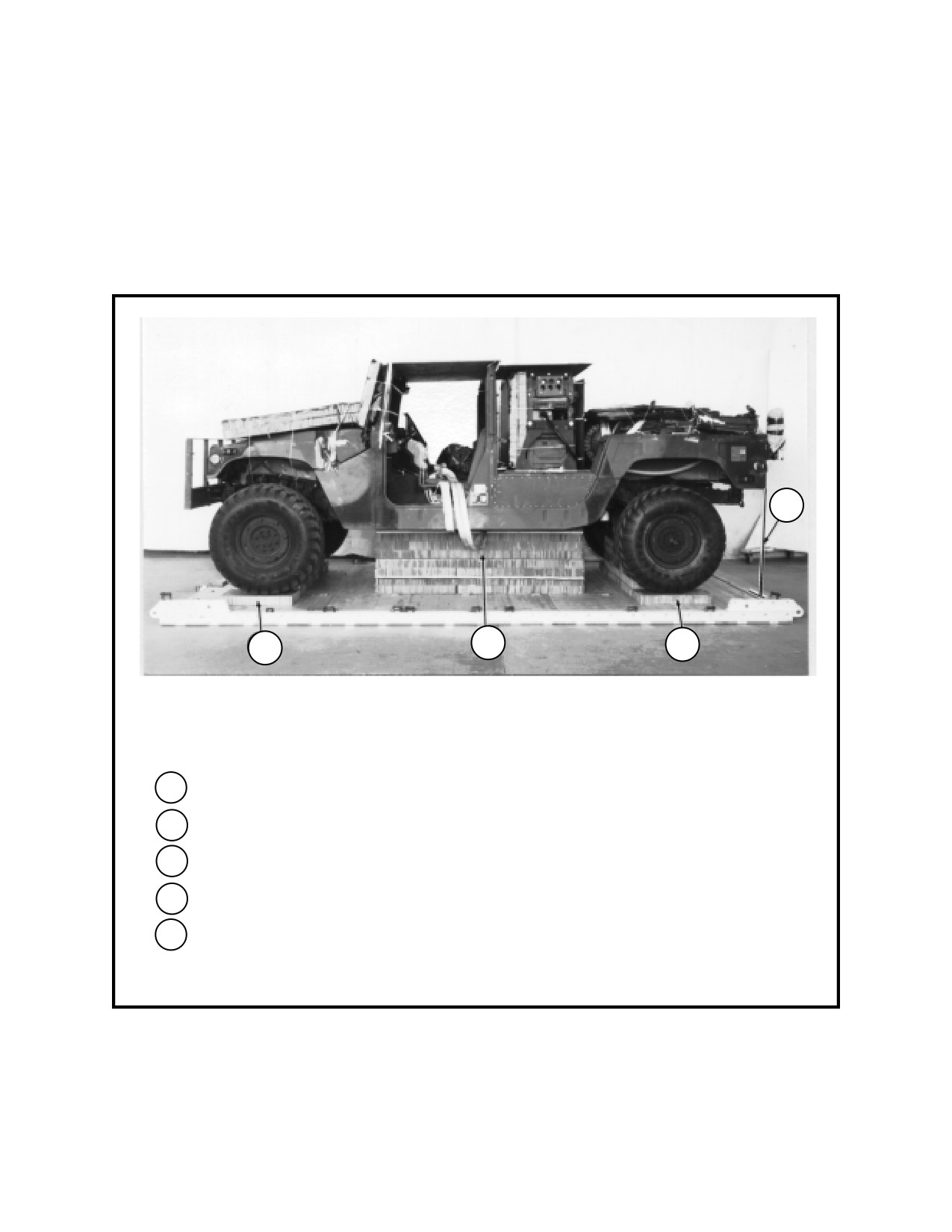
5-5. Positioning Truck
Position the truck on the platform as shown in
Figure 5-17.
1
3
2
2
1
Center the truck on the platform with the rear of the truck 4 inches from the front edge.
2
Make sure that the suspension cross members rest squarely on stacks 1 and 3.
3
Make sure that the frame rails rest squarely on stack 2.
4
Remove the lifting slings, and place the shackles back on the front bumper (not shown).
5
Put the transmission and 4-wheel drive lever in the neutral position (not shown).
Figure 5-17. Truck positioned
5-26
FM 10-500-23/TO 13C7-14-461
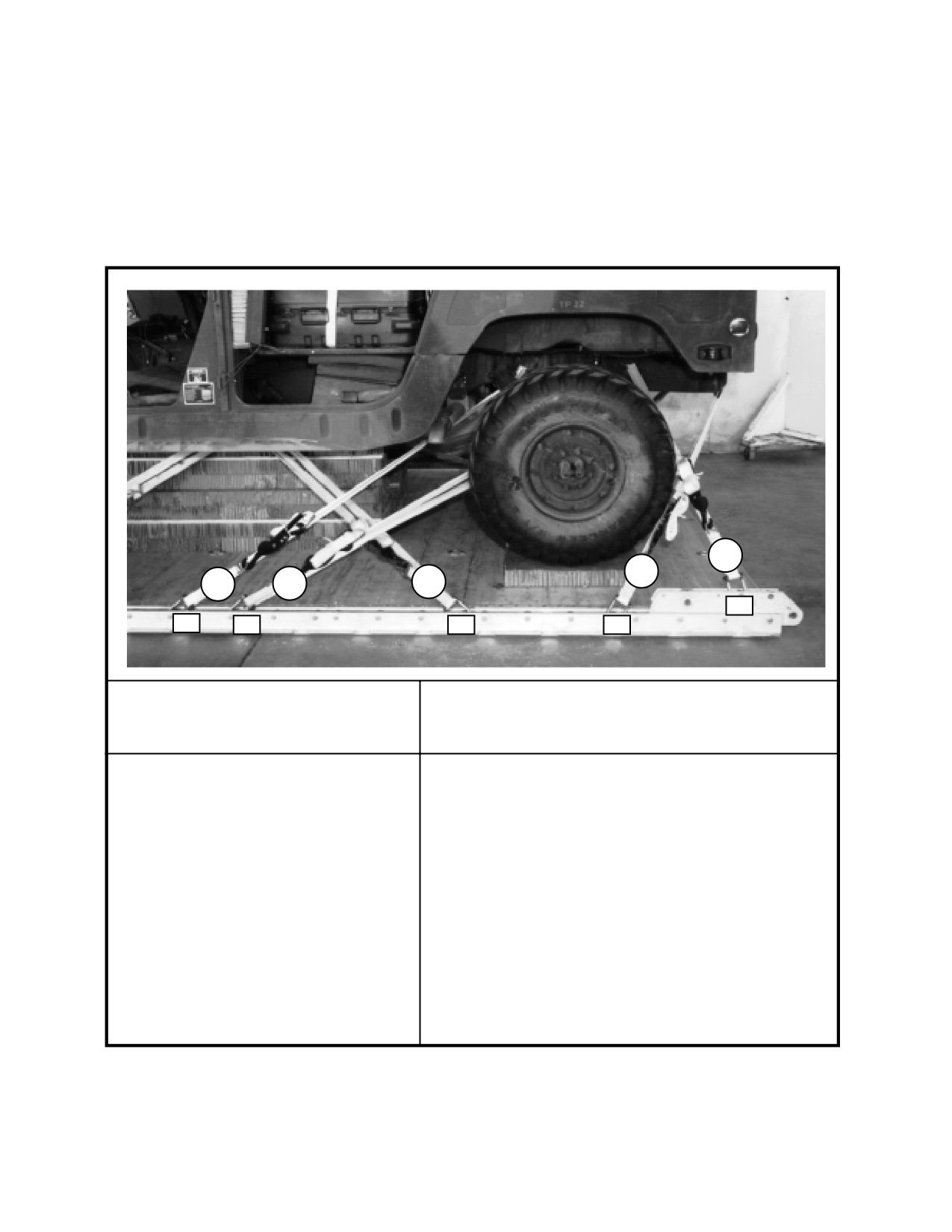
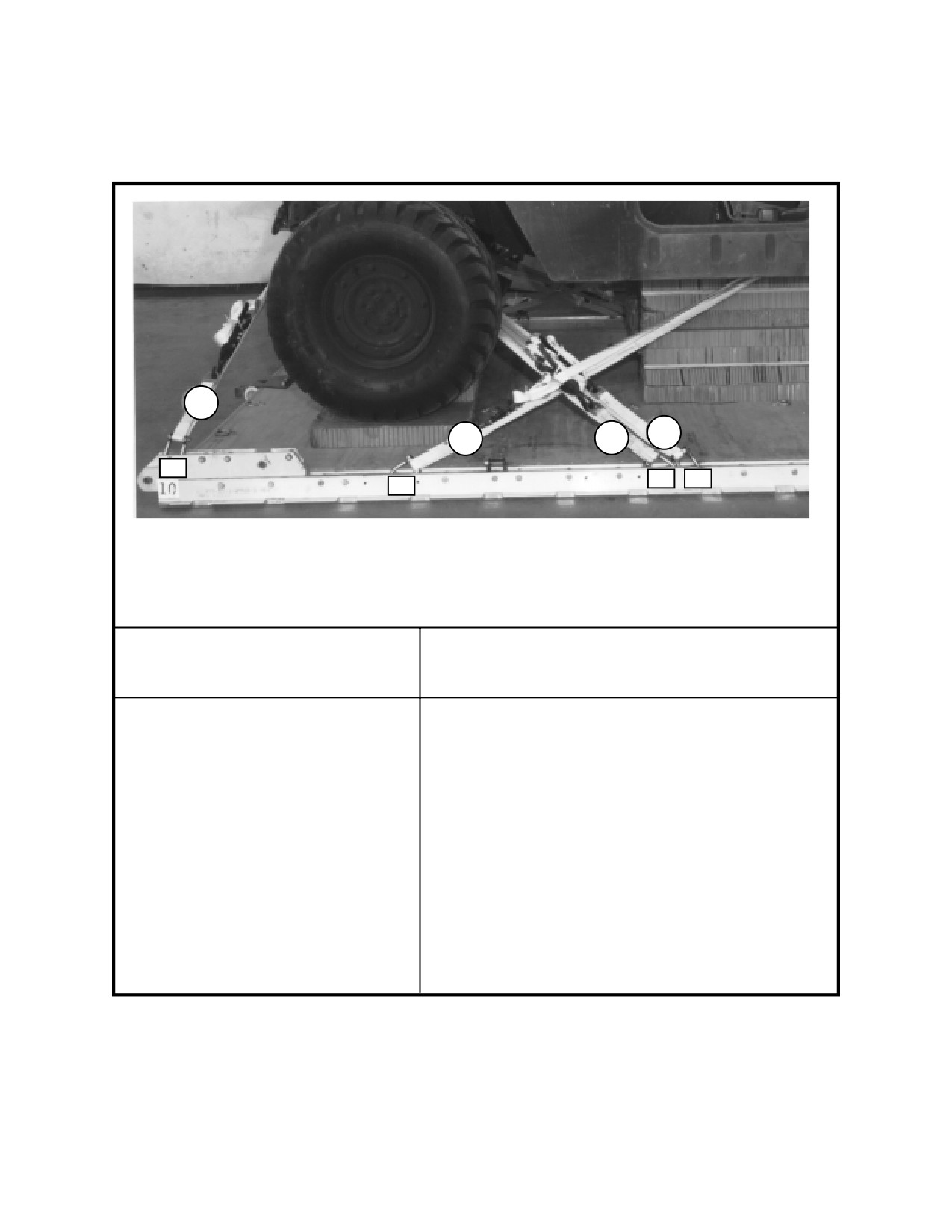
5-6. Lashing Truck
Lash the truck to the platform according to FM 10-500-2/
TO 13C7-1-5 and as shown in Figures 5-18 and 5-19.
1
3
9
7
5
1
5
4
3
2
Tiedown
Lashing
Clevis
Instructions
Number
Number
Pass lashing:
1
1
Through tiedown bracket behind left rear coil spring.
2
1A
Through tiedown bracket behind right rear coil spring.
3
2
Through left rear lifting shackle.
4
2A
Through right rear lifting shackle.
5
3
Around left end of the cross member.
6
3A
Around right end of the cross member.
7
4
Around left rear lower control arm.
8
4A
Around right rear lower control arm.
9
5
Through tiedown bracket in front of left rear coil spring.
10
5A
Through tiedown bracket in front of right rear coil spring.
Figure 5-18. Lashings 1 through 10 installed
5-27
FM 10-500-23/TO 13C7-14-461
17
11
15
13
10
7
6
9
Tiedown
Lashing
Clevis
Instructions
Number
Number
Pass lashing:
11
6
Through tiedown bracket behind left front coil spring.
12
6A
Through tiedown bracket behind right front coil spring.
13
7
Around left lower control arm.
14
7A
Around right lower control arm.
15
9
Around left end of the cross member.
16
9A
Around right end of the cross member.
17
10
Through tiedown bracket on end of left frame rail.
18
10A
Through tiedown bracket on end of right frame rail.
Figure 5-19. Lashings 11 through 18 installed
5-28
FM 10-500-23/TO 13C7-14-461
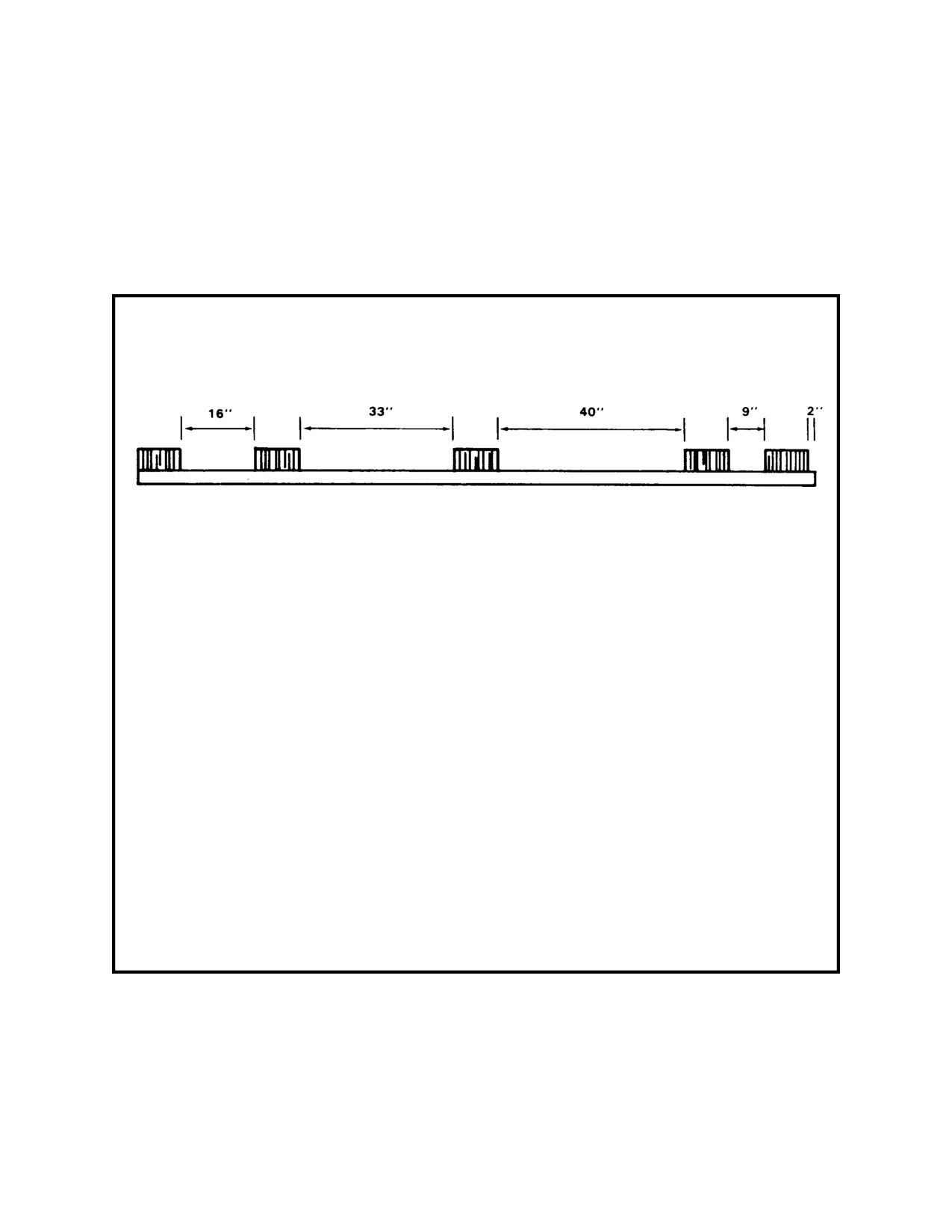
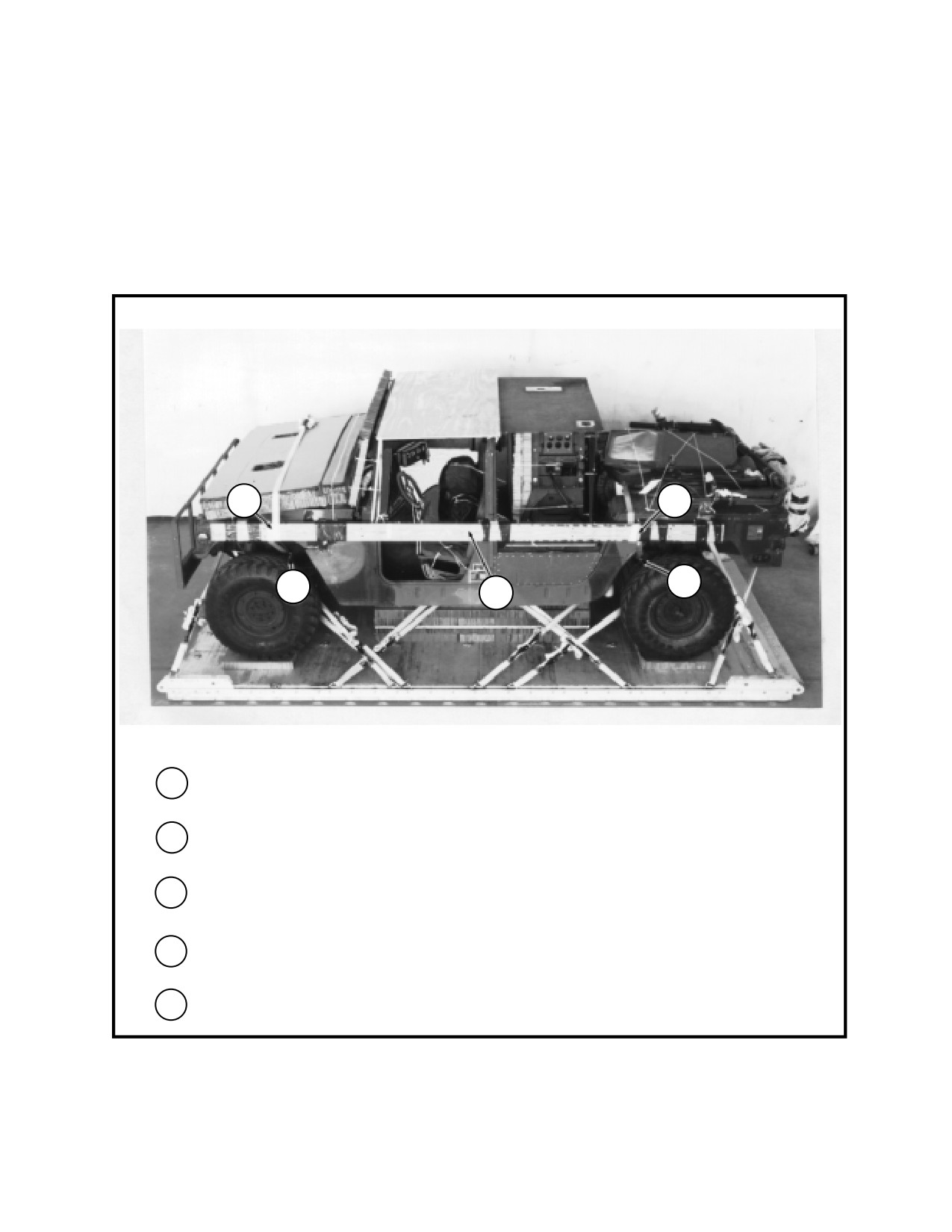
5-7. Building Body Side Boards
Build two body side boards as shown in Figure 5-20.
Step:
1.
Use one 2- by 6- by 150-inch piece of lumber and five 6- by 10-inch pieces of honeycomb.
2.
Glue or tape the first piece of honeycomb 2 inches from either end of the board.
3.
Glue or tape the second piece of honeycomb 9 inches behind the first piece of honeycomb.
4.
Glue or tape the third piece of honeycomb 40 inches behind the second piece of honeycomb.
5.
Glue or tape the fourth piece of honeycomb 33 inches behind the third piece of honeycomb.
6.
Glue or tape the fifth piece of honeycomb 16 inches behind the fourth piece of honeycomb.
7.
Use the procedures in steps 1 through 6 above to build the second body side board.
Figure 5-20. Body side boards built
5-29
FM 10-500-23/TO 13C7-14-461
5-8. Securing Body Side Boards
Secure the body side boards on the truck as shown
in Figure 5-21.
4
5
2
1
3
1
Pass a 15-foot tiedown strap around the upper control arm and through its own D-ring on the right
front and left front of the truck.
2
Pass a 15-foot tiedown strap around the upper control arm and through its own D-ring on the right
rear and left rear of the truck.
3
Hold both body side boards up against the truck with the first piece of honeycomb positioned at
the rear of the truck.
4
Run the 15-foot tiedown straps positioned in step 1 above around the boards on the right front
and left front of the truck. Secure the ends with D-rings and a load binder.
5
Repeat the procedures in step 4 above for the right rear and left rear of the truck.
Figure 5-21. Body side boards secured
5-30
FM 10-500-23/TO 13C7-14-461
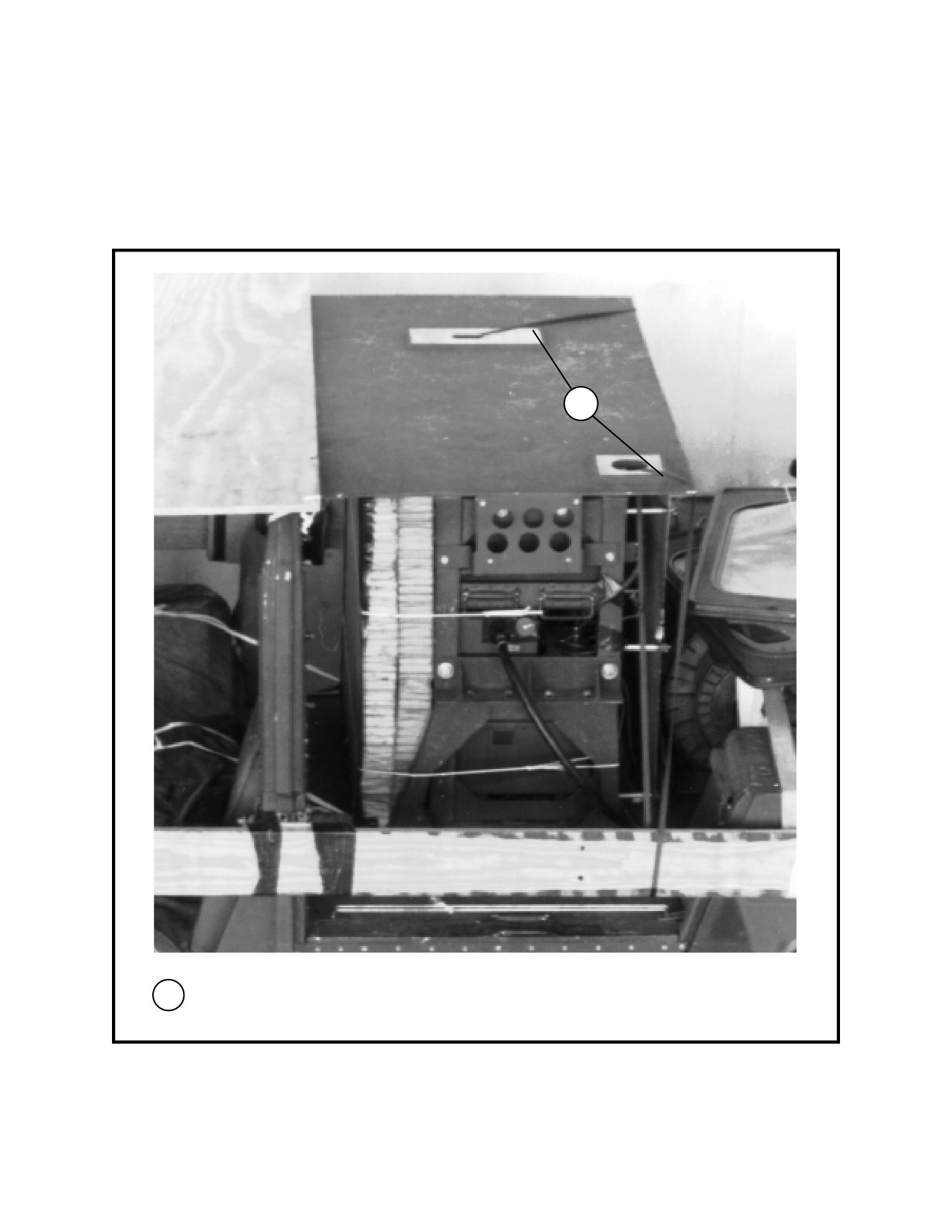
5-9. Securing Top Tow Plate
Secure the top tow plate as shown in Figure 5-22.
1
1
Pass a length of 1/2-inch tubular nylon webbing through each of the large holes on the top tow
plate. Secure the webbing to a convenient point on the load.
Figure 5-22. Tow plate secured
5-31
FM 10-500-23/TO 13C7-14-461
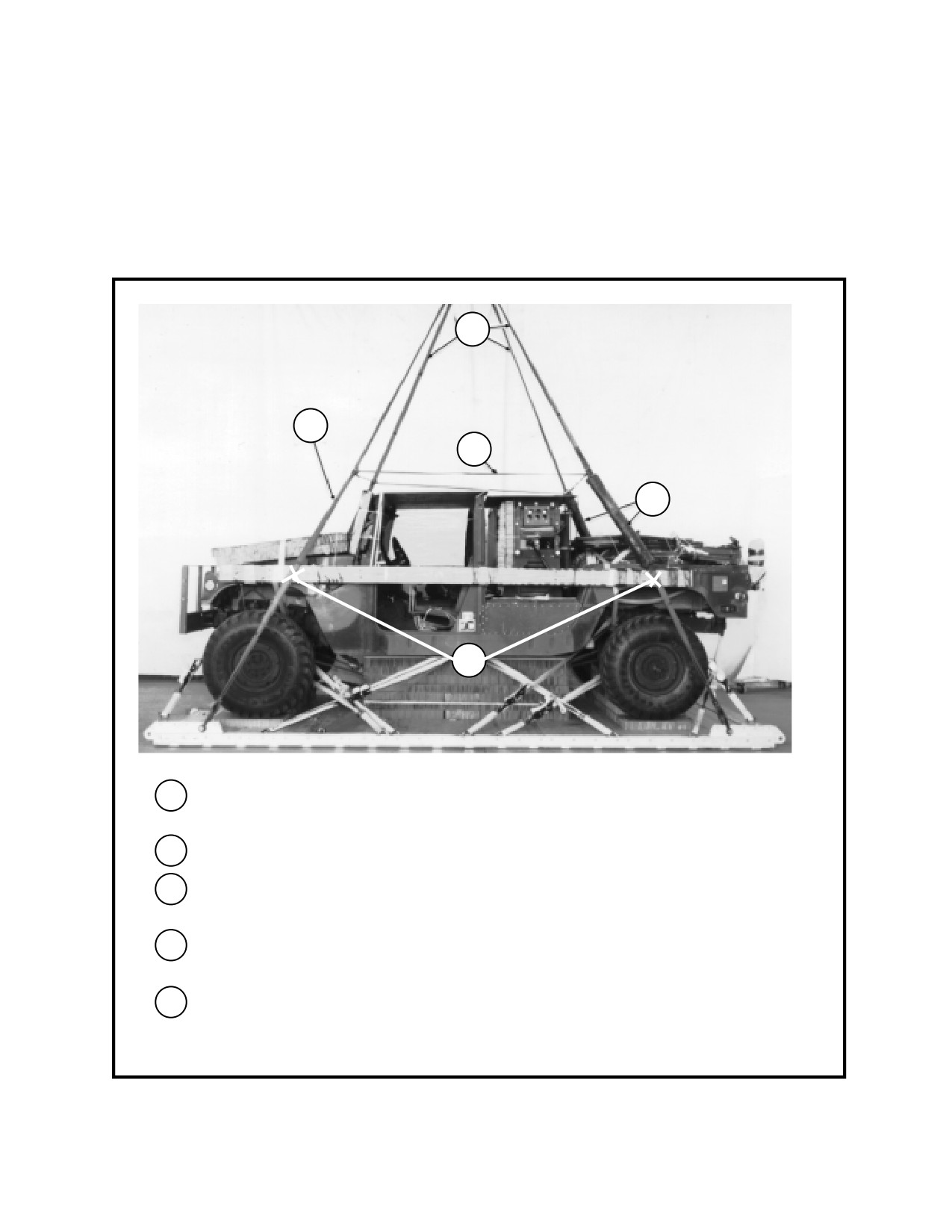
5-10. Installing Suspension Slings and Deadman Tie
Install the suspension slings and the deadman tie as
shown in Figure 5-23.
2
1
5
3
4
1
Attach a 16-foot (2-loop), type XXVI nylon webbing suspension sling to a large clevis. Attach the
clevis to one of the tandem links.
2
Repeat the procedure in step 1 above for the other three tandem links.
3
Position a 12- by 36-inch piece of felt on the front suspension slings 52 inches above the large
clevis. Secure the felt in place with type III nylon cord and tape.
4
Remove all slack from the suspension slings and safety the suspension slings to the side boards
using type III nylon cord.
5
Raise the four suspension slings above the load, and install a deadman's tie according to FM 10-
500-2/TO 13C7-1-5.
Figure 5-23. Suspension slings and deadman's tie installed
5-32
FM 10-500-23/TO 13C7-14-461
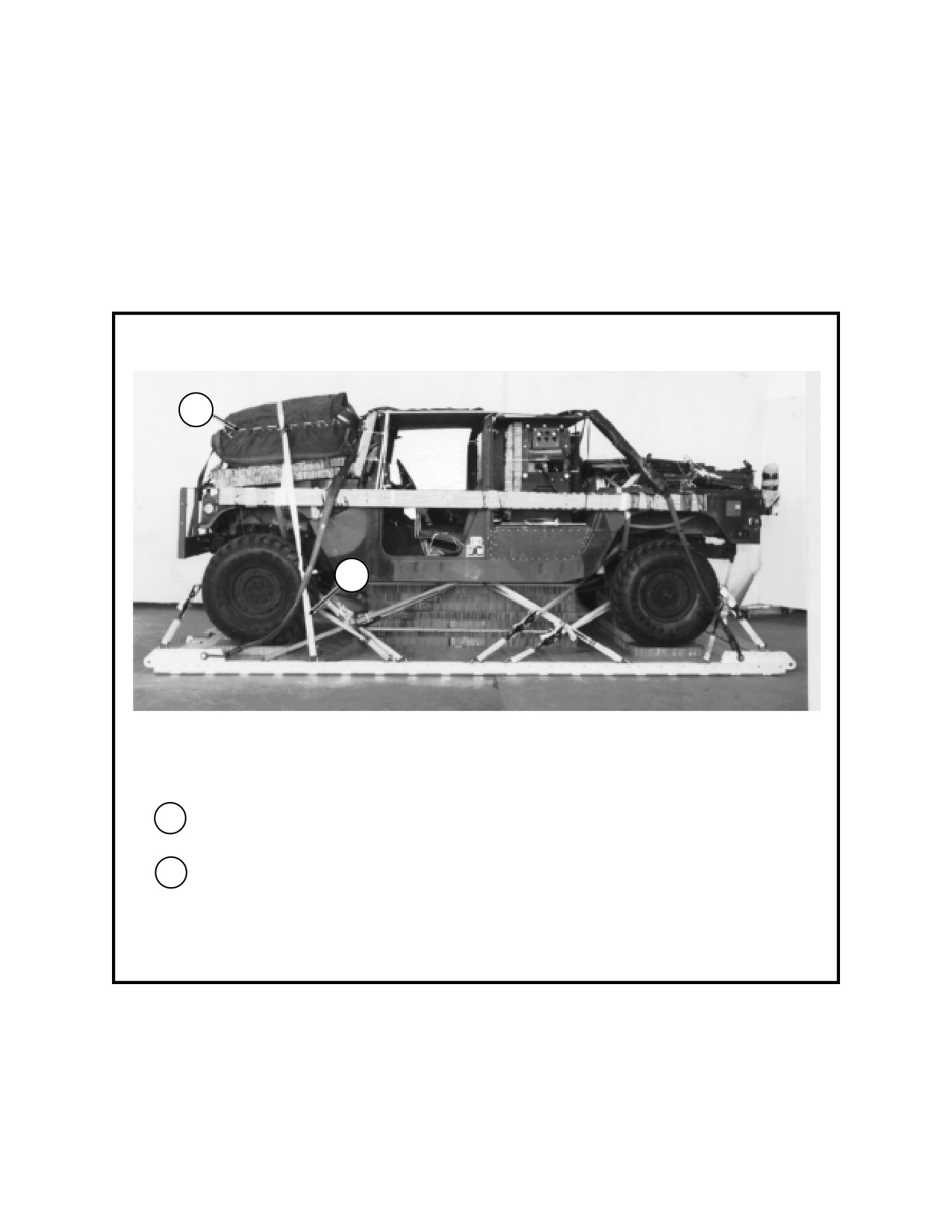
5-11. Stowing Cargo Parachutes
Use two G-11 cargo parachutes on this load.
Stow the cargo parachutes as shown in Figure 5-24.
1
2
1
Prepare two G-11 cargo parachutes and stow them on the honeycomb positioned on the hood of
the vehicle according to FM 10-500-2/TO 13C7-1-5.
2
Install a restraint strap according to FM 10-500-2/TO 13C7-1-5. Secure the restraint strap to
clevises 9 and 9A.
Figure 5-24. Cargo parachutes stowed
5-33
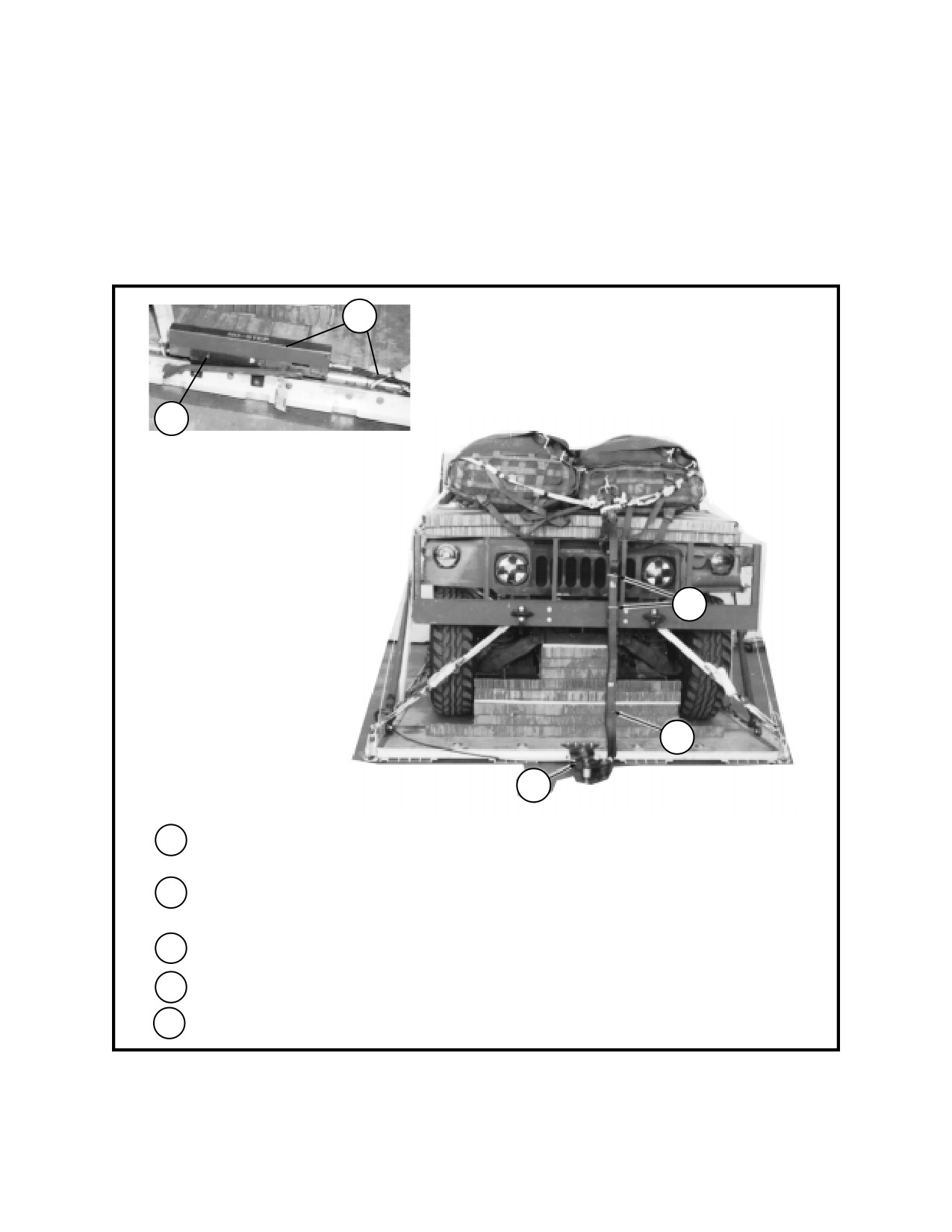
FM 10-500-23/TO 13C7-14-461
5-12. Installing Extraction System
Use the EFTC extraction system for this load. Install the components
of the EFTC according to FM 10-500-2/TO 13C7-1-5 and as shown in
Figure 5-25.
2
1
5
4
3
1
Install the EFTC inside and outside mounting brackets in the front mounting holes in the left
platform side rail.
2
Install the actuator and a 16-foot cable. Route the cable to the inside of the lashings and safety
it to one of the lashings with type I, 1/4-inch cotton webbing.
3
Install the latch assembly and attach the cable using the short extraction link.
4
Install a 16-foot (2-loop), type XXVI nylon webbing deployment line on the load.
5
S-fold the deployment line and tie the folds in two places with type I, 1/4-inch cotton webbing.
Figure 5-25. EFTC installed
5-34
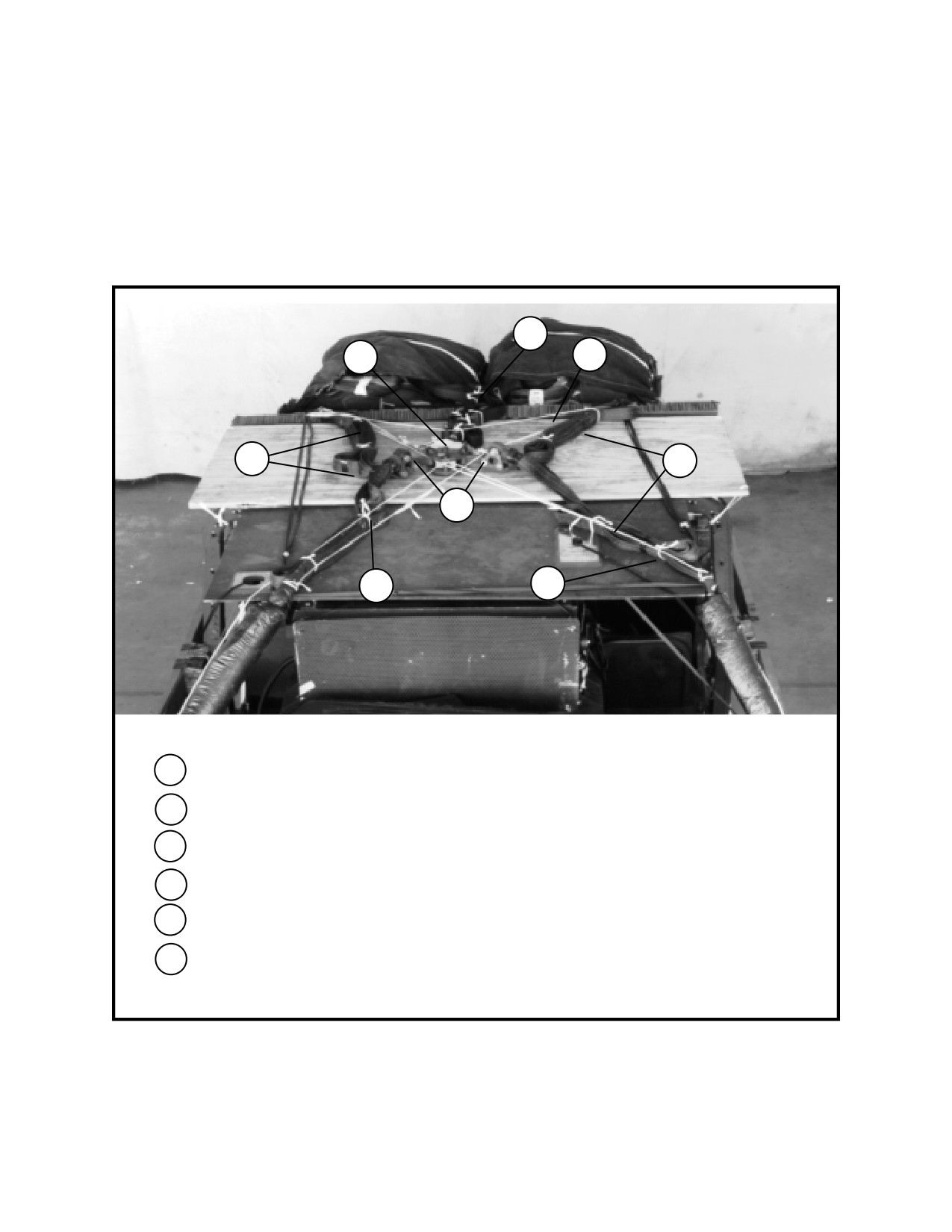
FM 10-500-23/TO 13C7-14-461
5-13. Installing Release System
Install and attach an M-1 cargo parachute release
according to FM 10-500-2/TO 13C7-1-5 and as
shown in Figure 5-26.
3
1
6
5
5
2
4
4
1
Place the M-1 release on the plywood over the driver's compartment.
2
Attach the suspension slings to the M-1 release system.
3
Attach the parachute riser extension to the M-1 release system.
4
Safety the suspension slings with type III nylon cord.
5
Fold the excess suspension slings and tie the folds in place with type I, 1/4-inch cotton webbing.
6
Center the M-1 cargo parachute release on top of the load. Secure the M-1 release with type III
nylon cord to clevises 1 and 1A and 10 and 10A (not shown).
Figure 5-26. M-1 cargo parachute release installed
5-35
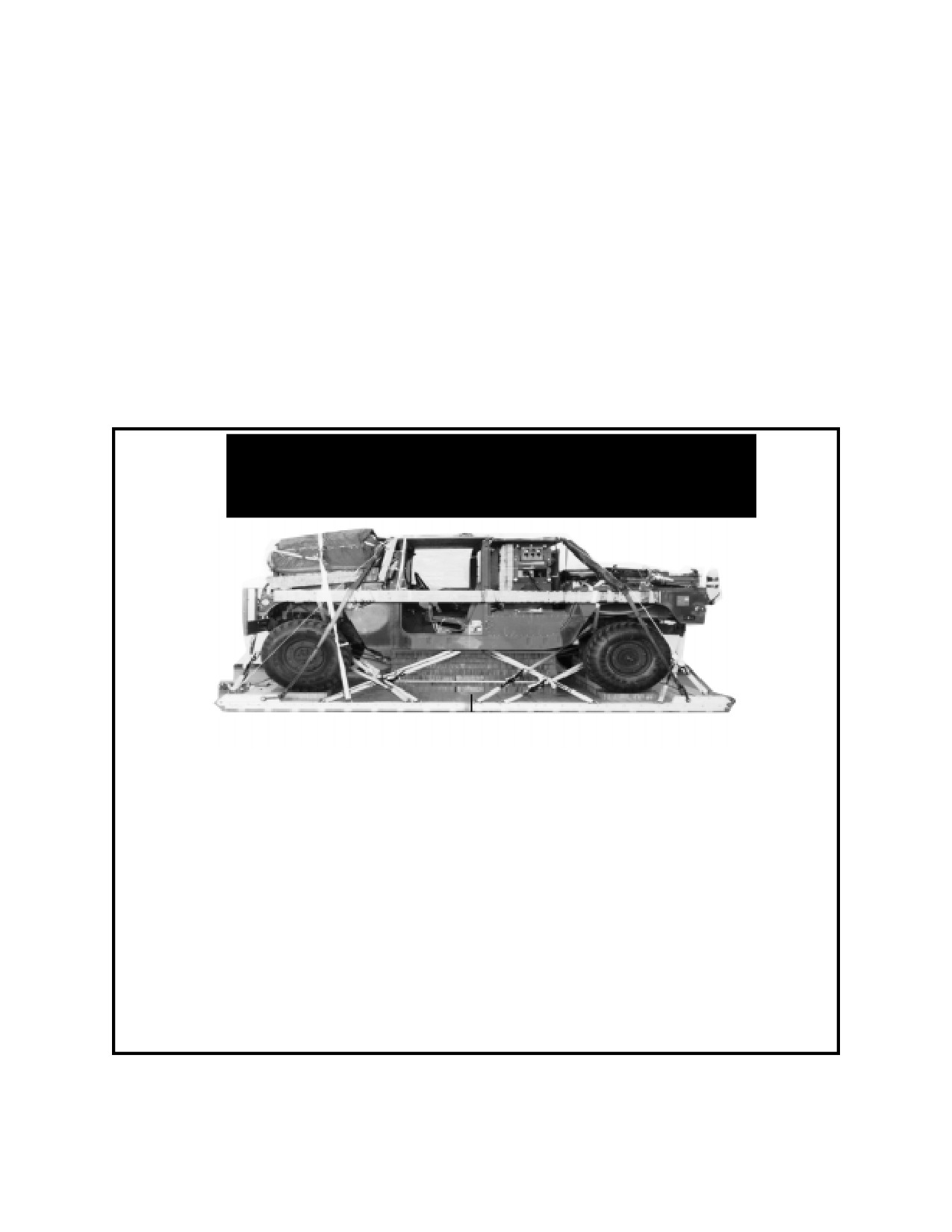
FM 10-500-23/TO 13C7-14-461
5-14. Placing Extraction Parachute
5-16. Marking Rigged Load
Select the extraction parachute and extraction line
Mark the rigged load according to FM 10-500-2/TO
needed using the extraction line requirements table in
13C7-1-5 and as shown in Figure 5-27. Complete
FM 10-500-2/TO 13C7-1-5. Place the extraction line on
Shipper's Declaration for Dangerous Goods and affix
the load for installation in the aircraft.
to load. If the load varies from the one shown, the
weight, height, CB, tip off curve, and parachute
5-15. Installing Provisions for Emergency Restraints
requirements must be recomputed.
Select and install the provisions for the emergency aft
5-17. Equipment Required
restraints according to the emergency aft restraint
requirements table in FM 10-500-2/TO 13C7-1-5.
Use the equipment listed in Table 5-1 to rig the load
shown in Figure 5-27.
CAUTION
Make the final rigger inspection required by FM 10-500-2/TO 13C7-1-5
before the load leaves the rigging site.
CB
RIGGED LOAD DATA
Weight
9,480 pounds
Max Weight
10,000 pounds
Height
85 inches
Width
108 inches
Length
214 inches
Overhang: Front
0
Rear
19 inches
Center of Balance (CB)
(from front edge of the platform)
101 inches
Extraction System
EFTC
Figure 5-27. M998 cargo/troop carrier rigged on a 16-foot platform for low velocity airdrop
5-36
FM 10-500-23/TO 13C7-14-461
Table 5-1. Equipment required for rigging the M998 (two seater) with GRC/206 Air Force pallet on a 16-foot type
V platform for low-velocity airdrop
National Stock
Item
Number
8040-00-273-8713
Adhesive, paste, 1-gal.
As required
1670-01-035-6054
Bridle (for line bag)
1
Clevis, suspension:
4030-00-090-5354
1-in (large)
6
4030-00-678-8562
3/4-in (medium)
6
8305-00-242-3593
Cloth, cotton duck, 60-in
As required
4020-00-240-2146
Cord, nylon, type III, 550-lb.
As required
1670-00-434-5787
Coupling, airdrop extraction force transfer cable, 20-ft
1
Cover:
1670-00-360-0328
Clevis, large
6
1670-00-360-0329
Link, type IV
3
8135-00-664-6958
Cushioning material, packaging, cellulose wadding
As required
8305-00-958-3685
Felt, 1/2-in thick
As required
1670-01-183-2678
Leaf, extraction line (line bag)
3
Line extraction:
1670-01-062-6313
60-ft (3-loop), type XXVI (C-130)
1
1670-01-107-7651
140-ft (3-loop), type XXVI (for C-141,C-5 or C-17)
1
1670-01-064-4452
60-ft (1-loop), type XXVI with towplate link (for C-17) Drogue Line
1
Link assembly:
1670-00-783-5988
Type IV
6
Two-point:
5306-00-435-8994
Bolt, 1-in diam, 4-in long
2
5310-00-232-5165
Nut, 1-in, hexagonal
2
1670-00-003-1953
Plate, side, 3 3/4-in
2
5365-00-007-3414
Spacer, large
2
5315-00-010-4659
Nail, steel wire, 8d
As required
1670-00-753-3928
Pad, energy-dissipating, (honeycomb),
3- by 36- by 96-in:
14 sheets
Parachute, cargo
1670-01-016-7841
G-11B
2
Parachute, cargo extraction
1670-01-063-3716
22-ft
1
Drogue (for C-17)
1670-01-063-3715
15-ft
1
Platform, airdrop, type V, 16-ft:
1
1670-01-162-2372
Clevis, assembly (type V)
(22)
1670-01-353-8424
Extraction bracket assembly
(1)
1670-01-353-8425
Bracket assembly, coupling
(1)
1670-01-162-2381
Tandem link assembly (Multipurpose link)
(4)
Lumber:
5510-00-220-6146
2- by 4- by:
As required
5510-00-220-6148
2- by 6- by:
As required
5530-00-128-4981
Plywood, 3/4-in:
4 sheets
5-37
FM 10-500-23/TO 13C7-14-461
Table 5-1. Equipment required for rigging the M998 (two seater) with GRC/206 Air Force pallet on a 16-foot type
V platform for low-velocity airdrop (continued)
National Stock
Item
Quantity
Number
1670-01-097-8816
Release, cargo parachute, M-1
1
Sling, cargo, airdrop:
For suspension:
1670-01-062-6302
20-ft (2-loop), type XXVI
4
For lifting:
1670-01-062-6301
3-ft (2-loop), type XXVI
2
1670-01-062-6303
12-ft (2-loop), type XXVI
2
1670-01-063-7761
16-ft (2-loop), type XXVI
2
For deployment:
1670-01-062-6304
9-ft (2-loop), type XXVI
1
For riser extension:
1670-01-062-6302
20-ft (2-loop), type XXVI
6
1670-00-040-8219
Strap, parachute release, multi-cut, comes with 3 knives
2
7501-00-266-5016
Tape, adhesive, 2-in
As required
1670-01-344-0825
Vehicle drive-off aid (HDDS)
1
1670-00-937-0271
Tiedown assembly, 15-ft
32
Webbing:
8305-00-268-2411
Cotton, 1/4-inch, type I
As required
8305-00-082-5752
Nylon, tubular 1/2-in
As required
8305-00-263-3591
Type VIII
As required
5-38
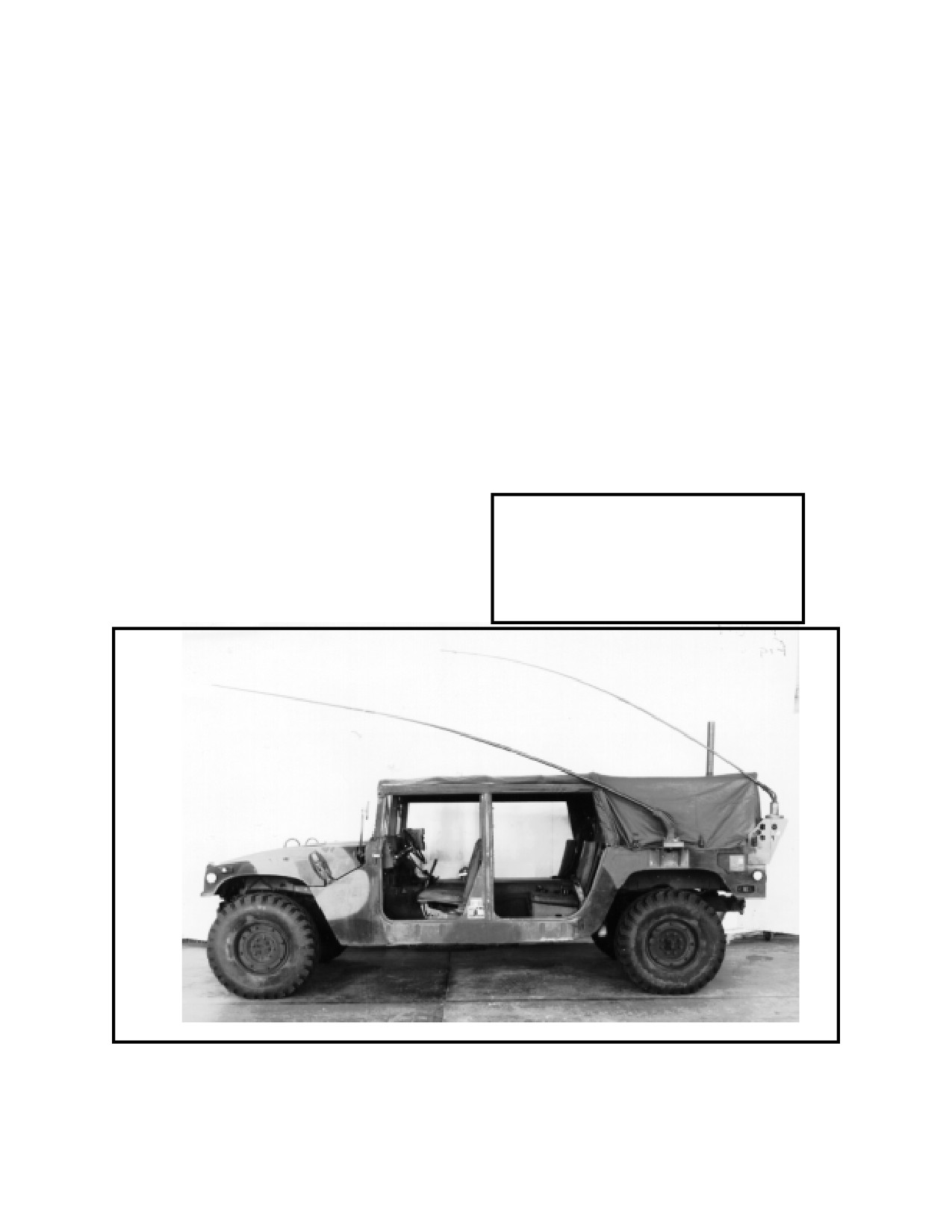
FM 10-500-23/TO 13C7-14-461
CHAPTER 6
RIGGING THE M998 CARGO/TROOP CARRIER (FOUR SEATER) WITH GRC/206 AIR
FORCE PALLET ON A 16-FOOT, TYPE V PLATFORM FOR LOW-VELOCITY AIRDROP
6-1. Description of Load
6-2. Preparing Platform
The M998 cargo/troop carrier (four seater) (Figure 6-1) is
Prepare a 16-foot, type V airdrop platform as shown in
180 inches long without a winch. The height is 97 inches,
Figure 5-2.
reducible to 72 inches. The width is 86 1/2 inches. The
truck weighs 5,660 pounds with radio equipment GRC/206
6-3. Preparing and Positioning Honeycomb Stacks
Air Force pallet. Other equipment included on the load is
one cable spool; two 5-gallon fuel cans; one 5-gallon wa-
Prepare the honeycomb stacks as shown in Figures 5-3
ter can; one roll of field wire, one set of slave cables, and
and 5-4. Position the stacks on the platform as shown in
one camouflage net with support poles. Also included with
Figure 5-5.
this load are one shovel, one ax, two sets of antennas, 2
NOTICE OF EXCEPTION
quarts of oil, 1 quart of transmission fluid, one funnel, and
The honeycomb stack configuration in this chapter is
one fuel nozzle. The truck weighs 6,070 pounds with 3/4
that of the original load and not the newer stack
full tank of fuel and equipment installed. The load requires
configuration as shown in chapter 4.This Air Force
two G-ll cargo parachutes.
load has never been tested and written using the newer
honeycomb stack configuration. Use this configuration
until a change is tested and published for this load.
Figure 6-1. M998 cargo/ troop carrier (four seater)
6-1
FM 10-500-23/TO 13C7-14-461
6-4. Preparing Truck
Prepare the truck as described below and as shown in
c. Tape all lights, reflectors, and gauges.
Figures 6-2 through 6-6 and C5, FM 10-517/TO13C7-1-
d. Tape the windshield.
111, paragraph 2-4.
e. Remove rear bows and the rear bow frame.
a. Make sure the fuel tank is not more than 3/4
f. Prepare the front of the truck as shown in
full.
Figure 5-13.
b. Remove the top and rear covers and all
g. Prepare the cab of the truck as shown in
doors.
Figure 5-14.
h. Prepare the underside of the truck as
shown in Figure 5-15.
NOTICE OF EXCEPTION
The up position of the windshield configuration in this
chapter is that of the original load and not the newer
down windshield configuration as shown in chapter 3.
This Air Force load has never been tested and written
using the newer windshield down configuration. Use
this configuration until a change is tested and pub-
lished for this load.
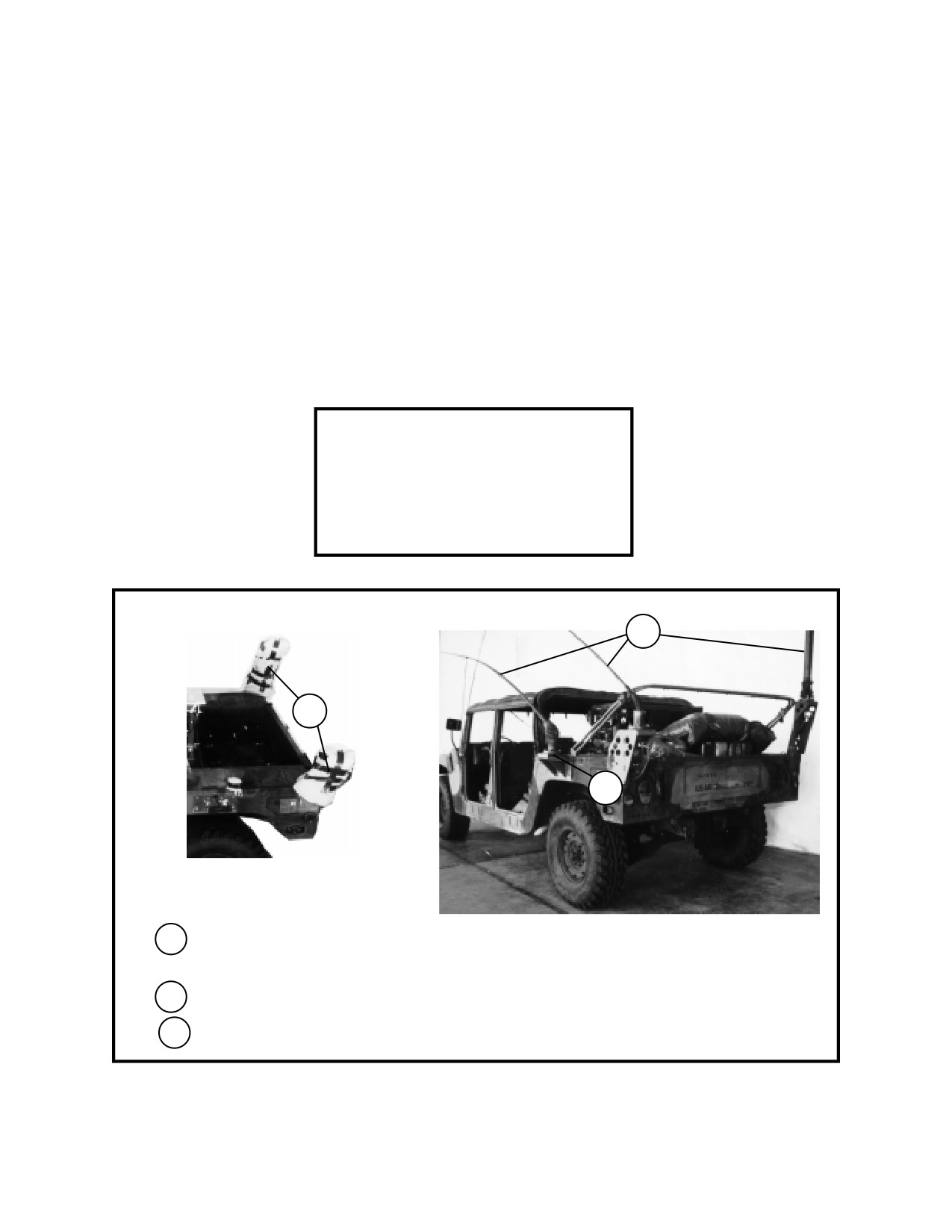
1
3
2
1
Remove the FM and dual VHF/UHF antennas or shark fins. Place the bolts back in their holes and
secure them with tape.
2
Remove the FM and dual VHF/UHF antenna mount and bracket on the left side of the truck.
3
Pad the antenna mount brackets with cellulose wadding, and tape the wadding in place.
Figure 6-2. Antennas removed
6-2
FM 10-500-23/TO 13C7-14-461
4
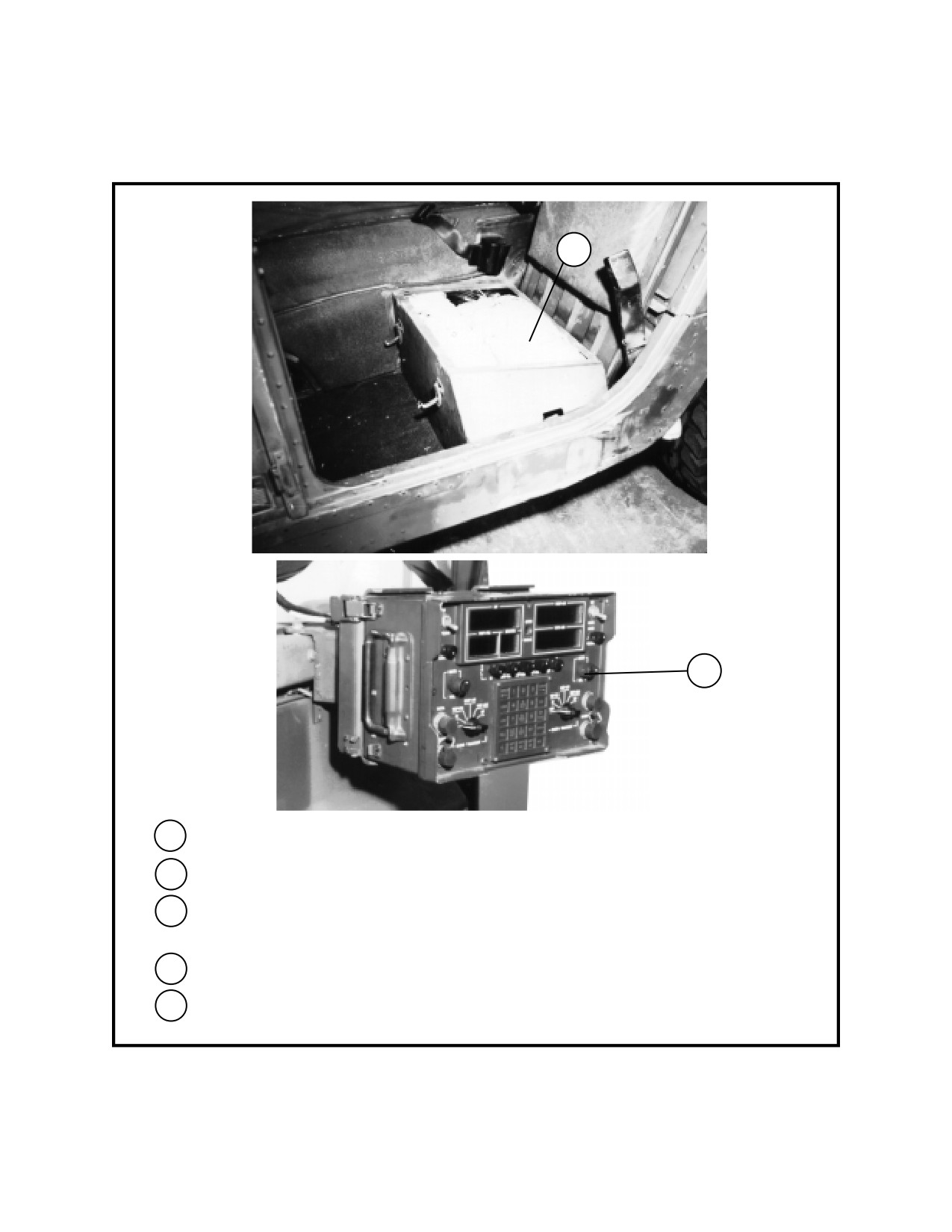
2
1
Remove the left rear seat cushion (not shown) to store the RSCs.
2
Remove the first RSC from the mounting bracket on the front dash.
3
Remove the second RSC from the right side of the GRC/206 Air Force communication system (not
shown).
4
Wrap both RSCs in cellulose wadding. Place the RSCs in the left rear seat.
5
Place the seat cushion in its original position (not shown) Safety it using type III nylon cord
(not shown).
Figure 6-3. RSCs secured
6-3
FM 10-500-23/TO 13C7-14-461
3
2
1
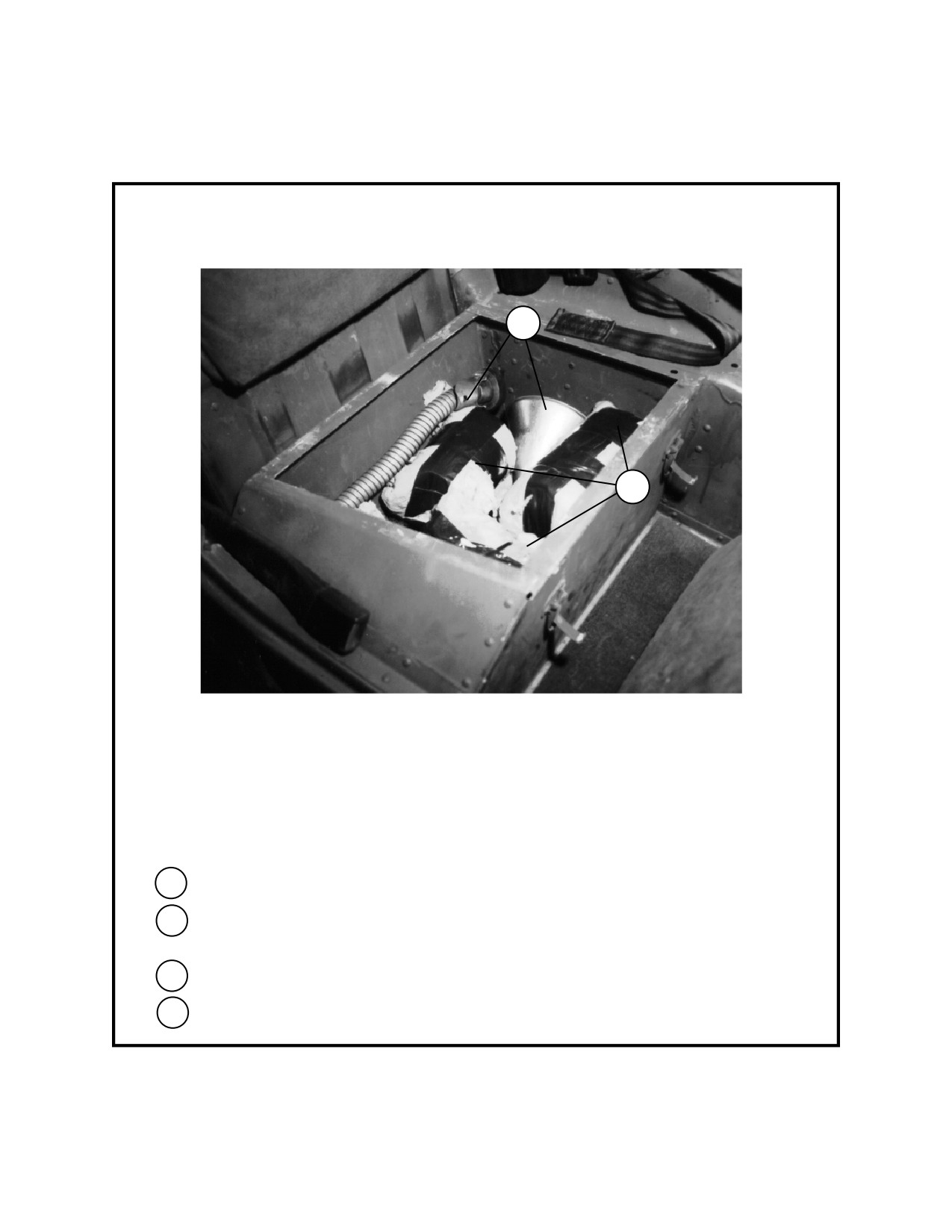
Remove the right rear seat cushion (not shown) to store items.
2
Wrap 2 quarts of oil and 1 quart of transmission fluid with cellulose wadding. Place them in the
right rear seat.
3
Place the funnel and fuel nozzle in the right rear seat.
4
Place the seat cushion in its original position (not shown).
Figure 6-4. Oil and transmission fluid secured
6-4
FM 10-500-23/TO 13C7-14-461
3
1
2
1
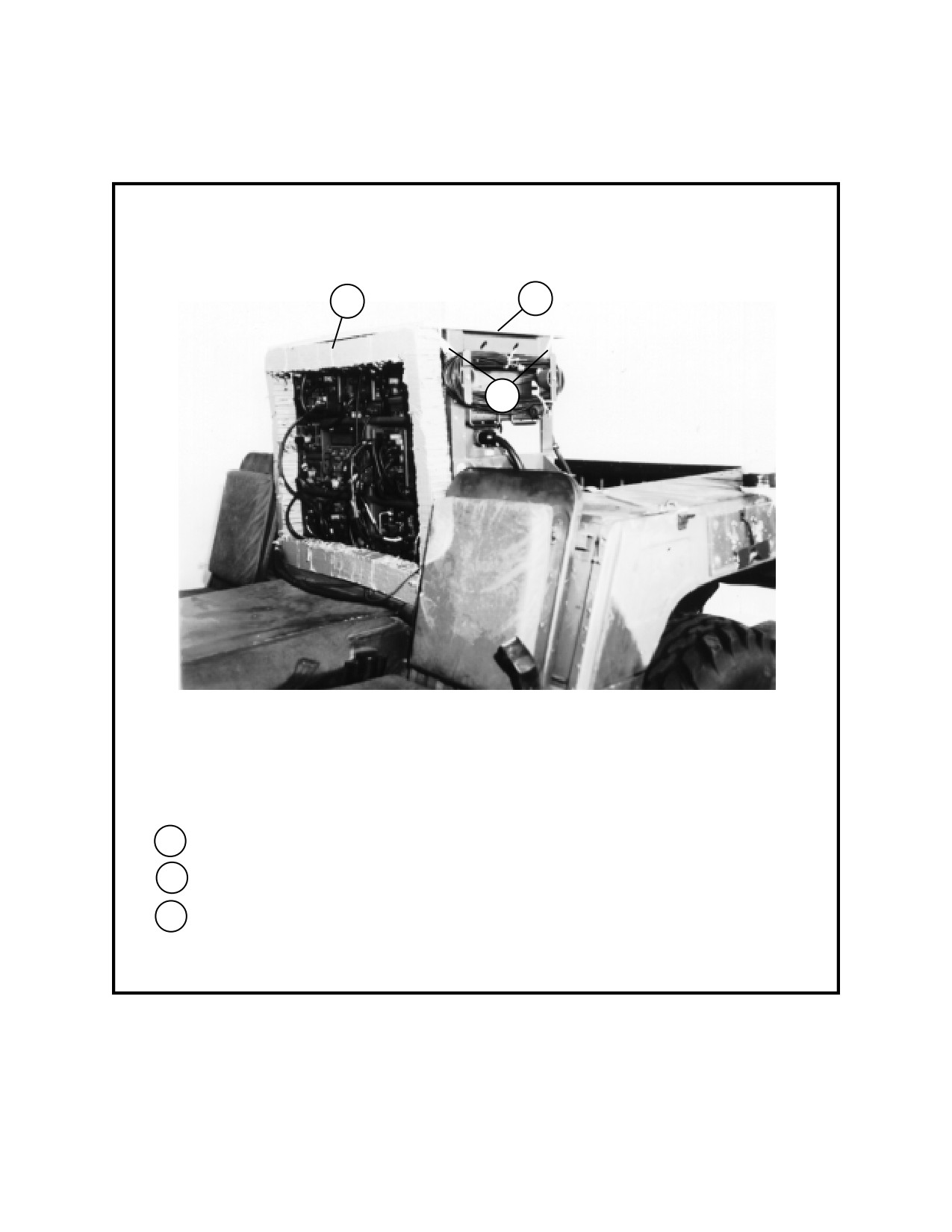
Place a 3/4- by 40- by 22-inch piece of plywood on top of the GRC/206 radio pallet.
2
Secure the plywood in place with a length of 1/2-inch tubular nylon webbing.
3
Make a 26- by 35-inch cutout in the center of a 33- by 40-inch piece of honeycomb. Place the
honeycomb in front of the GRC/206 radio pallet.
Figure 6-5. Radio pallet secured
6-5
FM 10-500-23/TO 13C7-14-461
4
5
4
Place a 33- by 40-inch piece of honeycomb against the first piece of honeycomb. Tape the edges of
the second piece of honeycomb.
5
Secure the honeycomb pieces to the GRC/206 radio pallet with type III nylon cord.
Figure 6-5. Radio pallet secured
(continued)
6-6
FM 10-500-23/TO 13C7-14-461
3
1
1
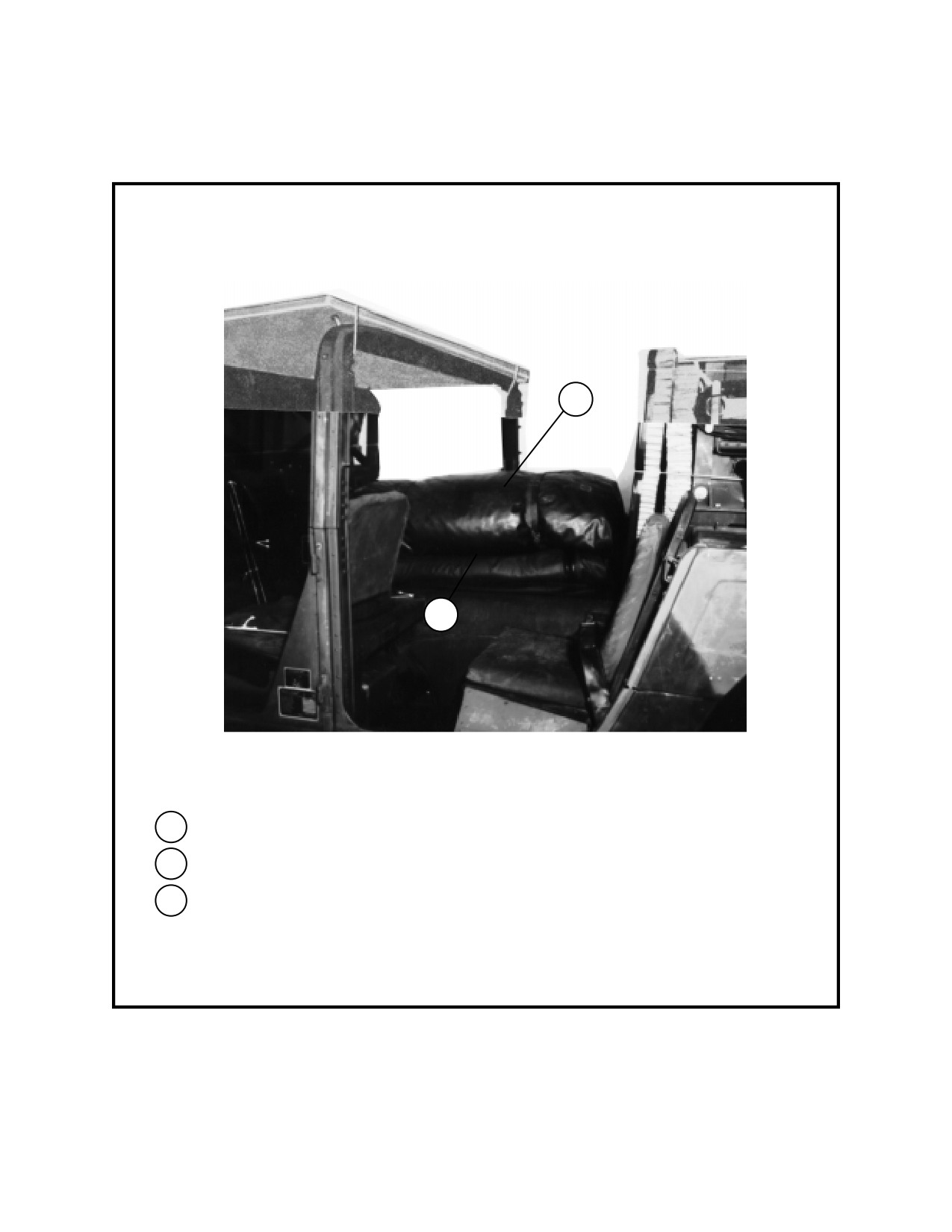
Fold and place the front and rear covers in the center of the passenger compartment of the vehicle.
2
Place the camouflage poles (not shown) to the right of the top covers.
3
Place an ax and shovel inside the camouflage net. Place the camouflage net on top of the covers.
NOTE: If the vehicle doors are to be dropped, stack the doors on top of the camouflage net.
Figure 6-6. Accompanying load secured
6-7
FM 10-500-23/TO 13C7-14-461
4
5
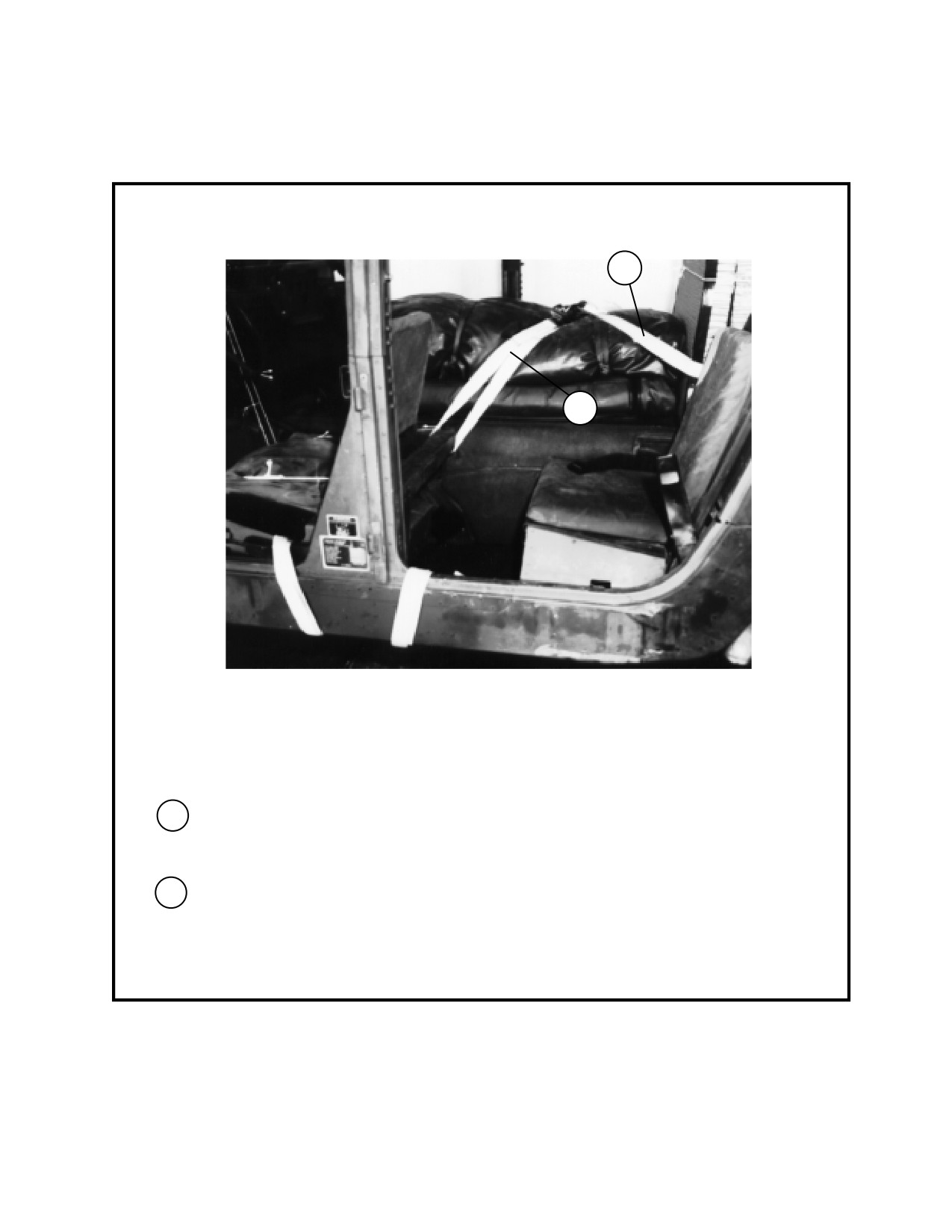
NOTE: If the vehicle doors are being dropped, make sure they are under the lashings securing the camou-
flage net and poles.
4
Pass a 15-foot lashing around the left front frame of the GRC/206 radio pallet, over the top of the
camouflage net and poles, and around the frame support behind the front passenger seat. Secure
the lashing on top of the camouflage net according to FM 10-500-2/TO 13C7-1-5.
5
Pass a 15-foot lashing around the right front frame of the GRC/206 radio pallet, over the top of the
camouflage net and poles, and around the frame support behind the driver's seat. Secure
the lashing on top of the camouflage net according to FM 10-500-2/TO 13C7-1-5.
Figure 6-6. Accompanying load secured (continued)
6-8
FM 10-500-23/TO 13C7-14-461
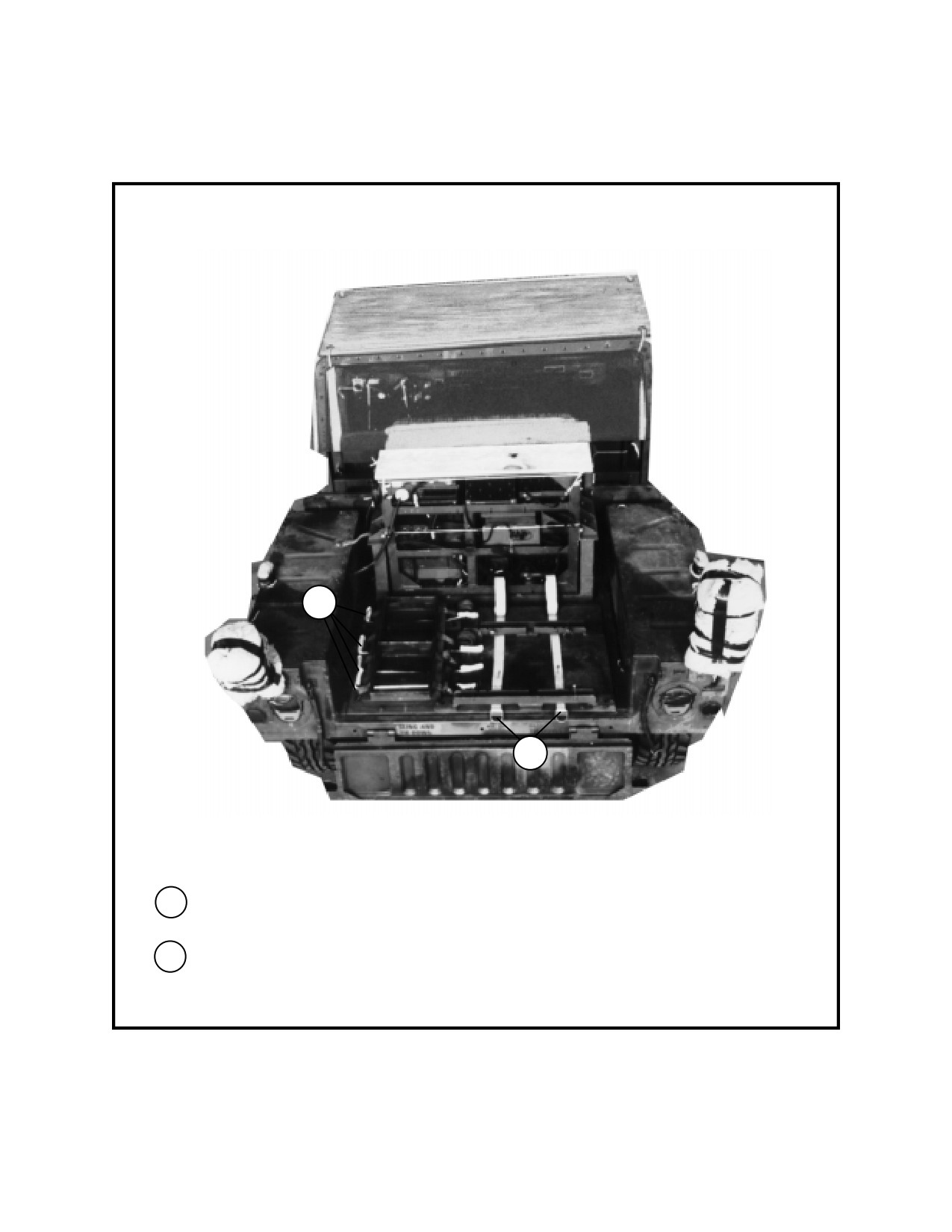
6
7
6
Place four lengths of 1/2-inch tubular nylon webbing under the fiber-optic cable bracket in the
cargo bed of the truck.
7
Place two 15-foot lashings from rear to front under the generator support bracket in the cargo bed
of the truck.
Figure 6-6. Accompanying load secured (continued)
6-9
FM 10-500-23/TO 13C7-14-461
8
9
10
8
Secure the fiber-optic cable to the fiber-optic cable bracket with its securing straps.
9
Place a 1/2- by 14- by 36-inch piece of felt on top of the fiber-optic cable. Safety the cable in place
with two prepositioned lengths of 1/2-inch tubular nylon webbing.
10
Position the slave cable on the fiber-optic cable bracket to the rear of the fiber-optic cable. Position
the roll of field wire on top of the slave cable. Secure them in place with two prepositioned lengths
of 1/2-inch tubular nylon webbing.
Figure 6-6. Accompanying load secured (continued)
6-10