AIRDROP OF SUPPLIES AND EQUIPMENT: RIGGING COMMUNICATION CONTROL VEHICLES (August 1999) - page 3
FM 10-500-23/TO 13C7-14-461
CAUTION
Make the final rigger inspection required by FM 10-500-2/TO 13C7-1-5
before the load leaves the rigging site.
CB
RIGGED LOAD DATA
Weight
12,100 pounds
Max Weight
12,500 pounds
Height
94 inches
Width
108 inches
Length
258 inches
Overhang: Front
None
Rear
0 inches
Center of Balance (CB)
(from front edge of the platform)
110 inches
Extraction System
EFTC
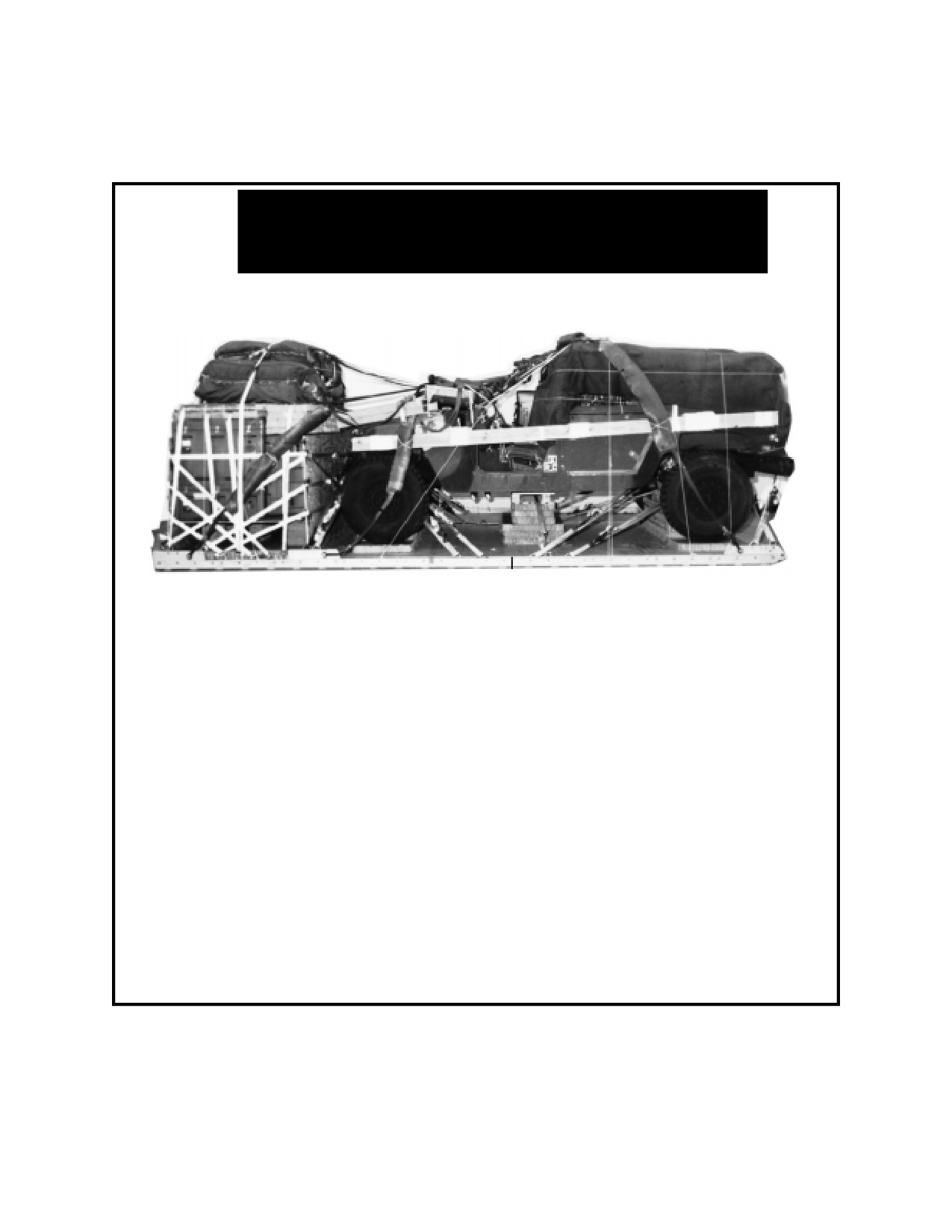
Figure 3-13. SICPS with the CHS-2 rigged on a 20-foot type V platform for low-velocity airdrop
3-32
FM 10-500-23/TO 13C7-14-461
Table 3-1. Equipment required for rigging the SICPS with the CHS-2 rigged on a 20-foot type V platform for low-
velocity airdrop
National Stock
Item
Number
8040-00-273-8713
Adhesive, paste, 1-gal.
As required
1670-01-035-6054
Bridle (for line bag)
1
Clevis, suspension:
4030-00-090-5354
1-in (large)
10
8305-00-242-3593
Cloth, cotton duck, 60-in
As required
4020-00-240-2146
Cord, nylon, type III, 550-lb.
As required
1670-00-434-5787
Coupling, airdrop extraction force transfer cable, 20-ft
1
Cover:
1670-00-360-0328
Clevis, large
4
1670-00-360-0329
Link, type IV
7
8135-00-664-6958
Cushioning material, packaging, cellulose wadding
As required
8305-00-958-3685
Felt, 1/2-in thick
As required
1670-01-183-2678
Leaf, extraction line (line bag)
3
Line extraction:
1670-01-062-6313
60-ft (3-loop), type XXVI (C-130)
1
1670-01-107-7651
140-ft (3-loop), type XXVI (for C-141,C-5 or C-17)
1
1670-01-064-4452
60-ft (1-loop), type XXVI with towplate link (for C-17) Drogue Line
1
Link assembly:
1670-00-783-5988
Type IV
6
Two-point:
5306-00-435-8994
Bolt, 1-in diam, 4-in long
2
5310-00-232-5165
Nut, 1-in, hexagonal
2
1670-00-003-1953
Plate, side, 3 3/4-in
2
5365-00-007-3414
Spacer, large
2
5315-00-010-4659
Nail, steel wire, 8d
As required
1670-00-753-3928
Pad, energy-dissipating, (honeycomb),
3- by 36- by 96-in:
27 sheets
Parachute, cargo
1670-01-016-7841
G-11B
3
Parachute, cargo extraction
1670-01-063-3716
22-ft
1
Drogue (for C-17)
1670-01-063-3715
15-ft
1
Platform, airdrop, type V, 20-ft:
1
1670-01-162-2372
Clevis, assembly (type V)
(30)
1670-01-353-8424
Extraction bracket assembly
(1)
1670-01-353-8425
Bracket assembly, coupling
(1)
1670-01-247-2389
Suspension link
(2)
1670-01-162-2381
Tandem link assembly (Multipurpose link)
(2)
Lumber:
5510-00-220-6146
2- by 4- by:
As required
5510-00-220-6274
4- by 4- by:
As required
5510-00-220-6148
2- by 6- by:
As required
5530-00-128-4981
Plywood, 3/4-in:
8 sheets
3-33
FM 10-500-23/TO 13C7-14-461
Table 3-1. Equipment required for rigging the SICPS with the CHS-2 rigged on a 20-foot type V platform for low-
velocity airdrop (continued)
National Stock
Item
Quantity
Number
1670-01-097-8816
Release, cargo parachute, M-1
1
Sling, cargo, airdrop:
For suspension:
5340-01-062-7761
16-ft (2-loop), type XXVI
2
1670-01-062-6301
3ft (2-loop), type XXVI
2
1670-01-062-6304
9-ft (2-loop), type XXVI
2
1670-01-063-7760
11-ft (2-loop), type XXVI
2
For lifting:
1670-01-062-6304
9-ft (2-loop), type XXVI
2
1670-01-062-6303
12-ft (2-loop), type XXVI
2
For deployment:
1670-01-062-6304
9-ft (2-loop), type XXVI
1
For riser extension:
1670-01-062-6302
20-ft (2-loop), type XXVI
6
1670-00-040-8219
Strap, parachute release, multi-cut, comes with 3 knives
2
7501-00-266-5016
Tape, adhesive, 2-in
As required
1670-01-344-0825
Vehicle drive-off aid (HDDS)
1
1670-00-937-0271
Tiedown assembly, 15-ft
42
Webbing:
8305-00-268-2411
Cotton, 1/4-inch, type I
As required
8305-00-082-5752
Nylon, tubular 1/2-in
As required
8305-00-263-3591
Type VIII
As required
3-34
FM 10-500-23/TO 13C7-14-461
CHAPTER 4
RIGGING THE COMMAND ASSAULT VEHICLE (CAV) ON A 20-FOOT, TYPE V
AIRDROP PLATFORM FOR LOW-VELOCITY AIRDROP
4-1. Description of Load
4-2. Preparing Platform
The M996 ambulance is rigged on a 20-foot, type V
Prepare a 20-foot, type V airdrop platform as shown in
airdrop platform for low-velocity airdrop. The load
Figure 4-1.
requires three G-11 cargo parachutes. The CAV is rigged
with communication equipment. The rigging of the CAV
NOTES:
will follow FM 10-500-66/TO 13C7-26-71 unless stated in
1. The nose bumper may or may not be installed.
this chapter.
2. Measurements given in this load are from the front
edge of the platform, NOT from the front edge of the
nose bumper.
3. You will need a copy of FM 10-517/TO 13C-1-111 and
FM 10-500-66/TO 13C7-25-71to rig this load.
4-1
FM 10-500-23/TO 13C7-14-461
CLEVISES 11A THROUGH 1A
REAR
FRONT
CLEVISES 11 THROUGH 1
Step:
1.
Inspect, or assemble and inspect, a 20-foot, type V airdrop platform as outlined in TM 10-1670-
268-20&P/TO 13C7-52-22.
2.
Install a tandem link to the front of each platform side rail using holes 1, 2, and 3.
3.
Install a clevis on bushings 1 and 3 on the front tandem links.
4.
Install a suspension link to each side rail using holes 33, 34, and 35.
6.
Install a clevis on bushing 2 on the aft suspension links.
7.
Starting at the front of each platform side rail, install clevises on the bushings bolted on holes 6,
11(double), 13, 14, 15, 17, and 27.
8.
Starting at the front of the platform, number the clevises 1 through 11 on the right side and 1A
through 11A on the left side.
9.
Label the tie-down rings according to FM 10-500-2/TO 13C7-1-5.
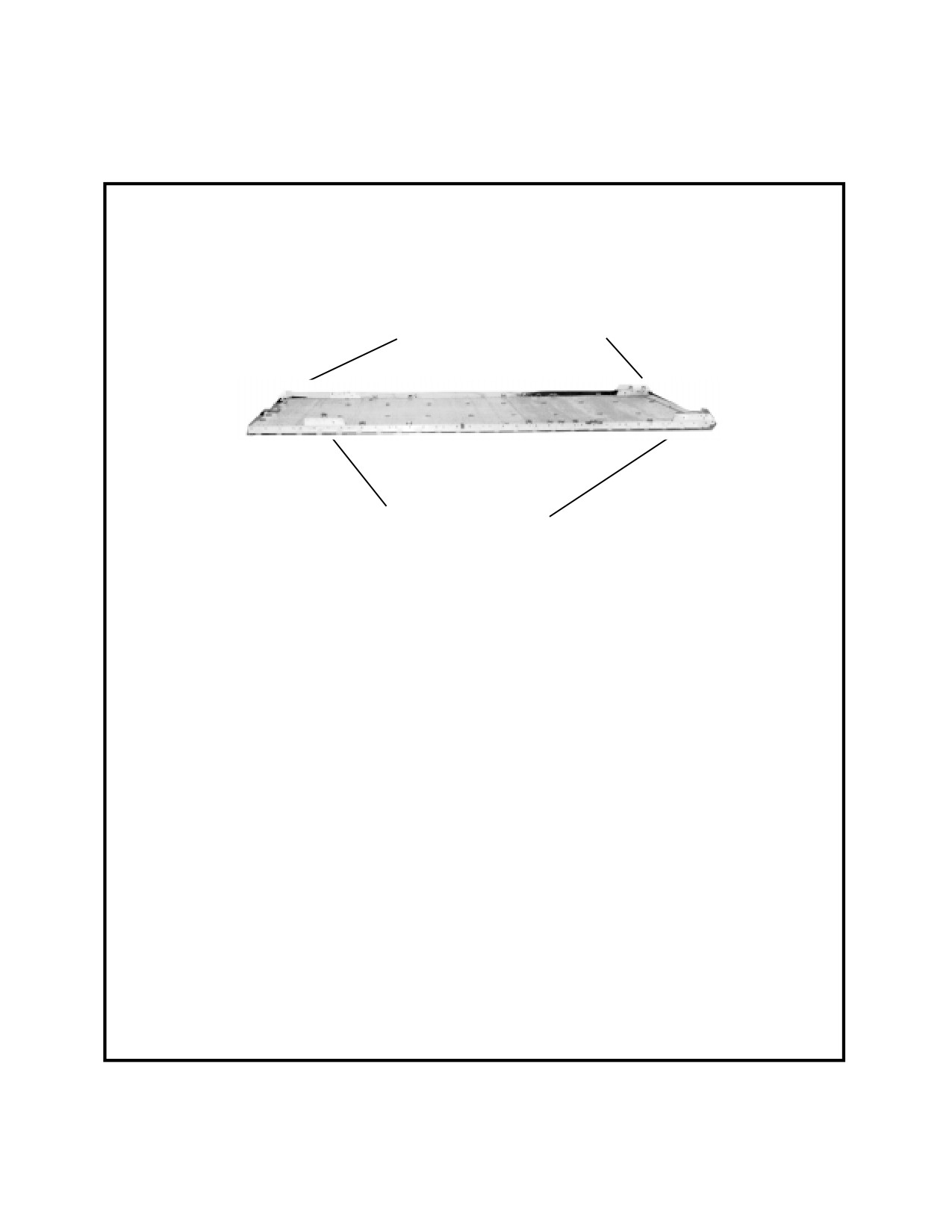
Figure 4-1. Platform prepared
4-2
FM 10-500-23/TO 13C7-14-461
4-3. Building and Positioning Honeycomb Stacks
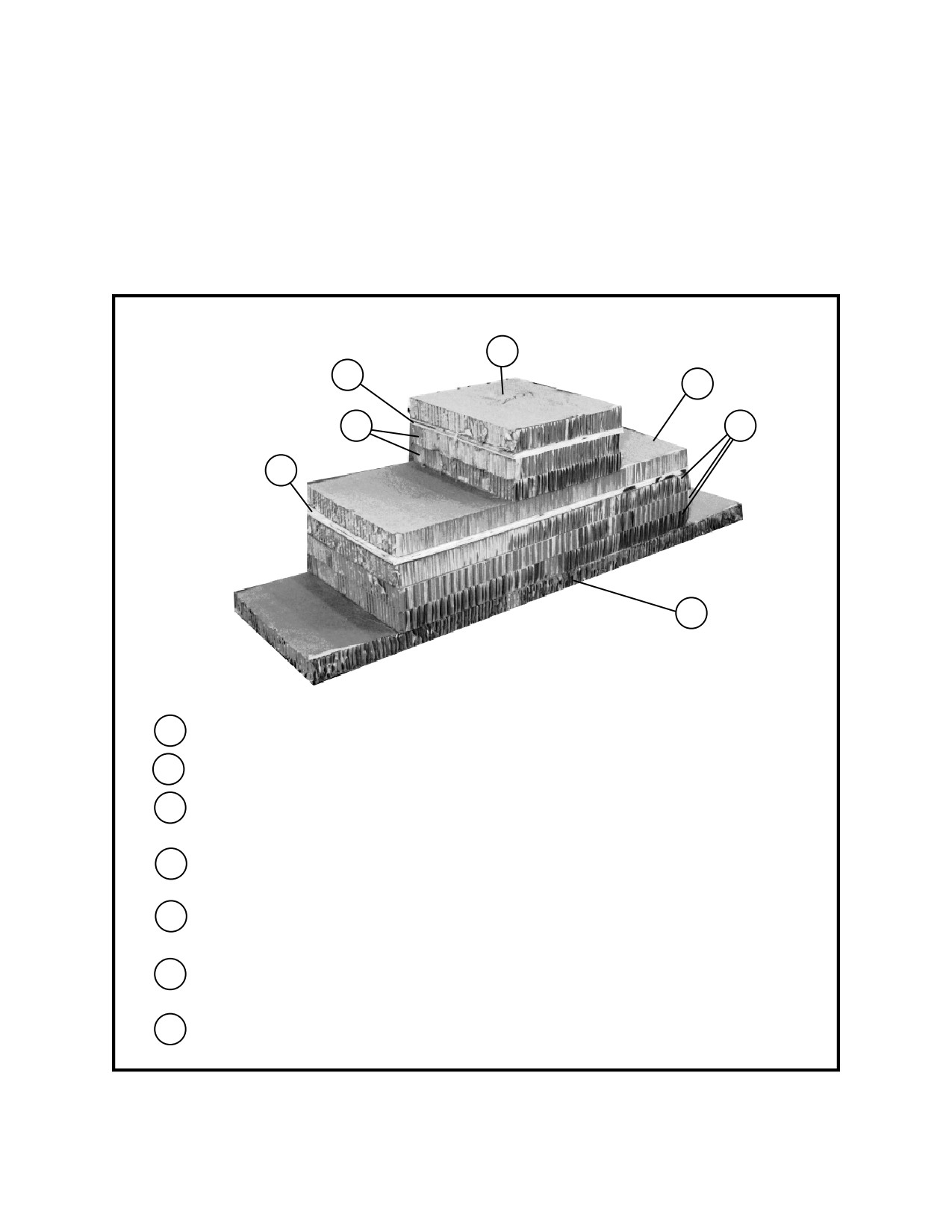
Build the honeycomb stacks as shown in Figures 4-2
and 4-3. Position the honeycomb stacks as shown
in Figure 4-4.
7
6
4
5
2
3
1
1
Use an 80- by 24-inch piece of honeycomb to form a base.
2
Center and glue three 54- by 24-inch pieces of honeycomb on the base.
3
Place and glue a 3/4- by 54- by 24-inch piece of plywood over the honeycomb placed
in step 2 above.
4
Place and glue one 54- by 24-inch piece of honeycomb on top of the plywood placed
in step 3 above.
5
Center and glue two 20- by 24-inch pieces of honeycomb on top of the honeycomb
placed in step 4 above.
6
Place and glue a 3/4- by 20- by 24-inch piece of plywood over the honeycomb placed
in step 5 above.
7
Place and glue one 20- by 24-inch piece of honeycomb on top of the plywood placed
in step 6 above.
Figure 4-2. Stacks 1 and 3 prepared
4-3
FM 10-500-23/TO 13C7-14-461
4
2
3
1
1
Glue three 43- by 26-inch pieces of honeycomb flush together to form a base.
2
Center and glue three 43- by 18-inch pieces of honeycomb flush on the base.
3
Nail a 43-inch piece of 4- by 4-inch lumber flush with each long side and 1 1/2 inches from
each edge of a 3/4- by 43- by 18-inch piece of plywood. Nail a second 3/4- by 43- by 18-inch
piece of plywood to the lumber and flush with the bottom piece of plywood. Glue the wood
section of the stack flush on the honeycomb placed in step 2 above.
4
Make the cutout as shown in a 43- by 18-inch piece of honeycomb. Glue the honeycomb
flush over the plywood.
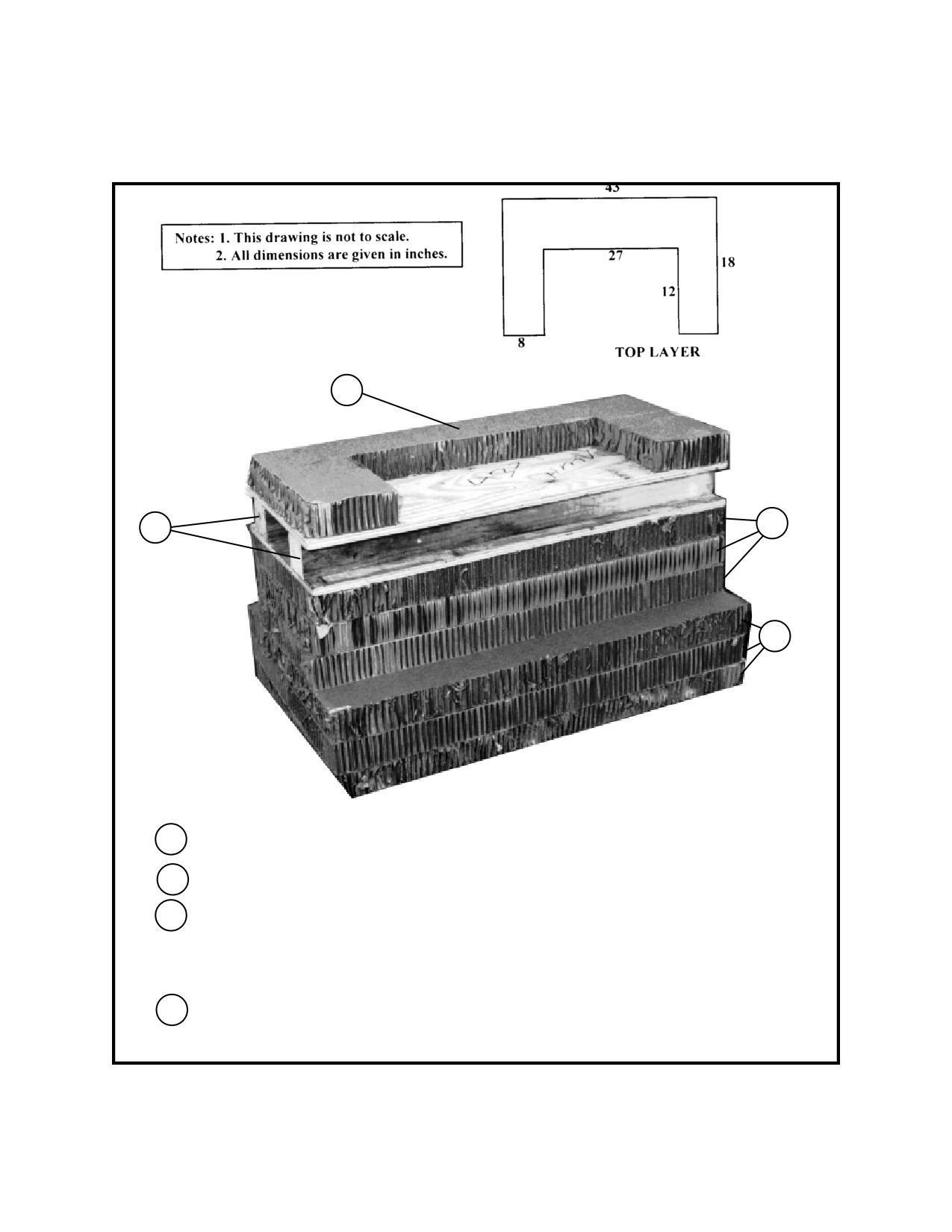
Figure 4-3. Stack 2 prepared
4-4
FM 10-500-23/TO 13C7-14-461
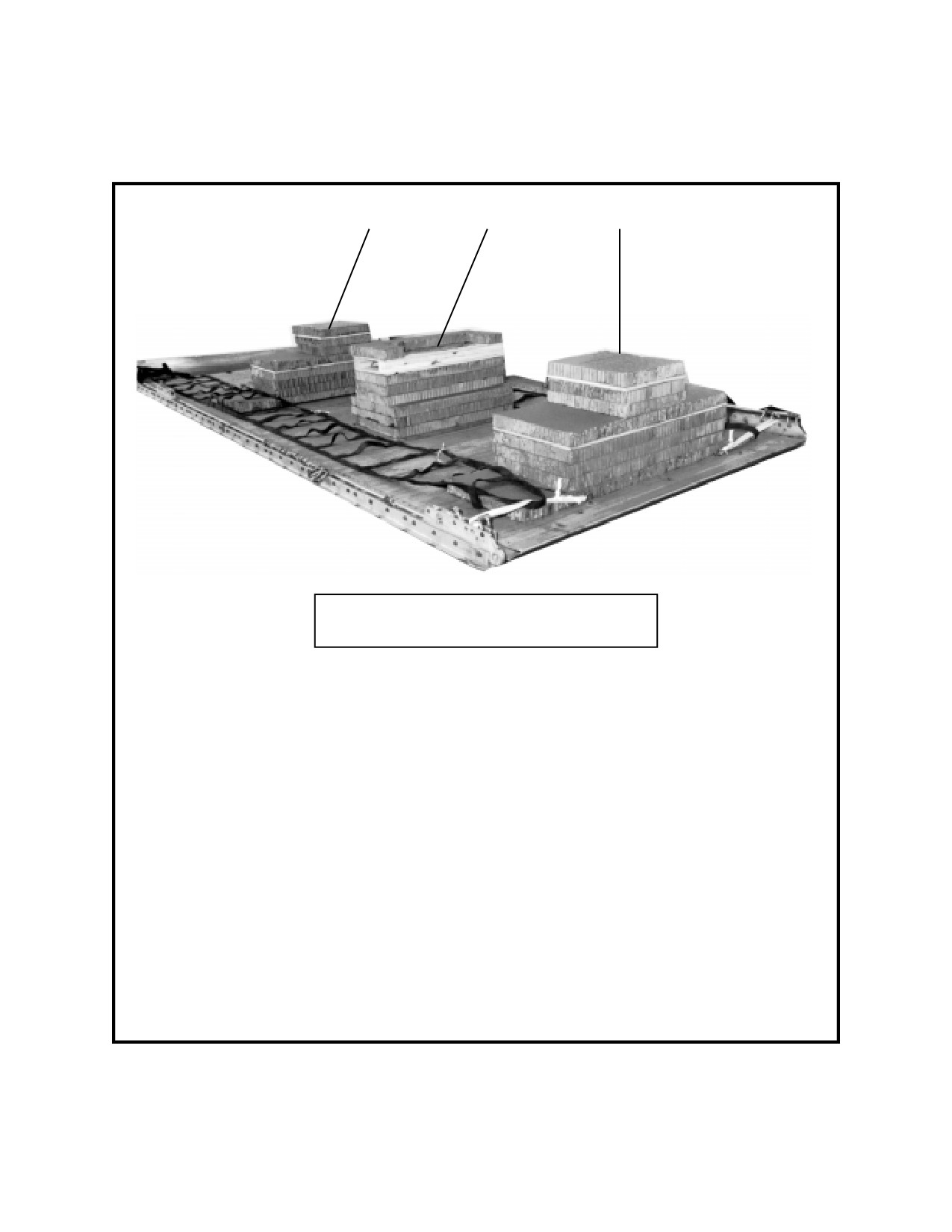
STACK 3
STACK 2
STACK 1
Note: The use of HDDS is optional.
Step:
1.
Pass a 45-inch length of type Vwebbing or 1-inch tubular nylon webbing through the tie-down ring
A-1, through a HDDS end loop, and through the second bushing on the right tandem link. Knot
the webbing according to FM 10-500-2/TO 13C7-1-5.
2.
Perform the same operation on the left side, using tie-down ring B1 and the second
bushing on the left tandem link.
3.
Position stack 1 centered and 6 inches from the front edge of the platform.
4.
Position stack 2 centered and 35 inches from stack 1.
5.
Position stack 3 centered and 45 inches from stack 2.
Note: Place the HDDS over stacks 1 and 3.
Figure 4-4. Drive-off aids installed and honeycomb stacks positioned
4-5
FM 10-500-23/TO 13C7-14-461
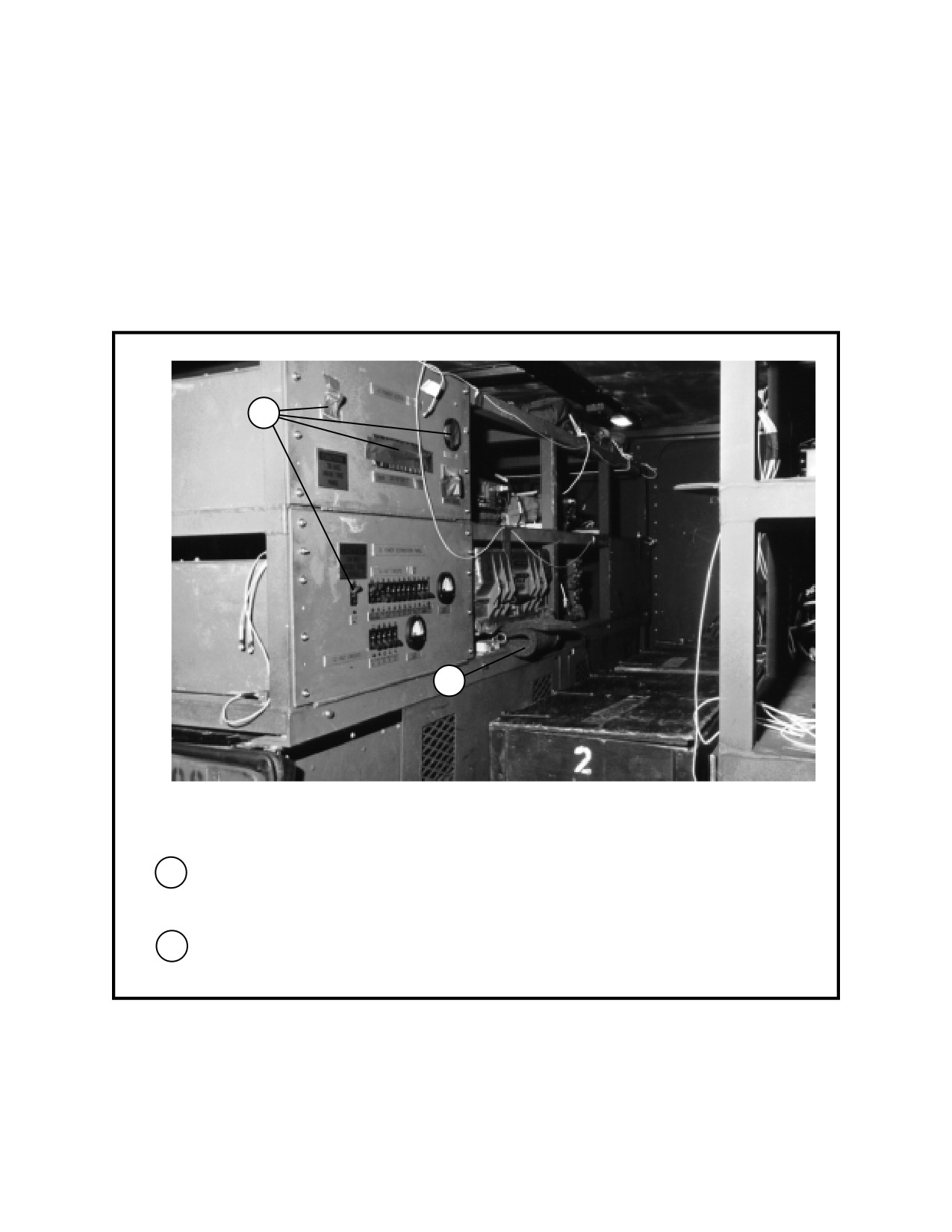
4-4. Preparing the CAV with the Communication
Equipment
The basic preparation of the CAV is outlined in C2, FM
10-500-66/TO 13C7-25-71 for the two litter ambulance. In
addition to the basic preparation, prepare the communi-
cation equipment as shown in Figure 4-5.
2
1
1
In the vehicle all communication equipment is bolted to the racks. There is a space under some of
the units which rest on rubber shock absorbers. In these spaces cut sufficient size pieces of felt
and place them under the communication unit filling the space.
2
Tape all AC and DC power switches and gauges.
Figure 4-5. CAV prepared with communication equipment
4-6
FM 10-500-23/TO 13C7-14-461
3
4
5
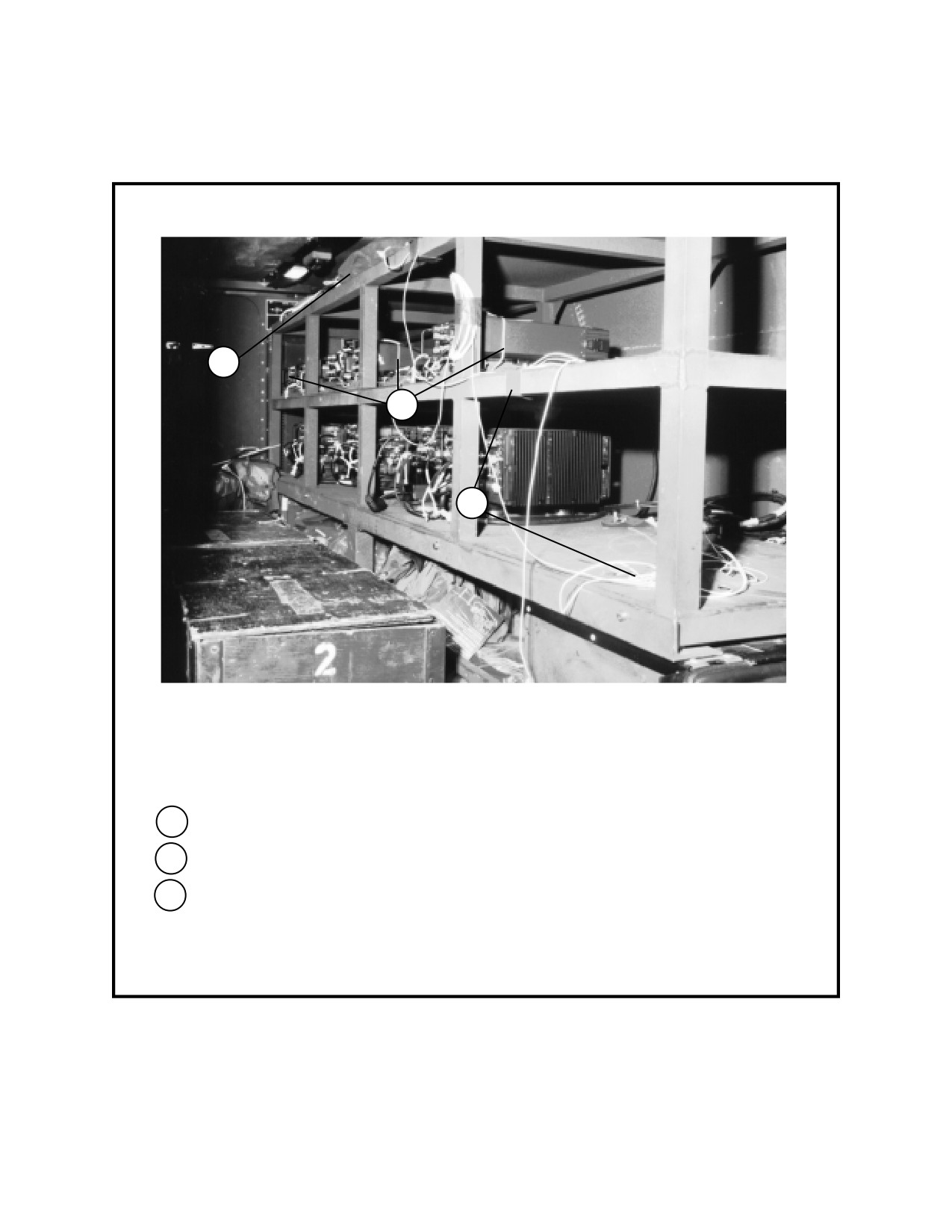
3
Place antennas on top of the rack and secure in place with tape.
4
Safety the communication units to the racks with lengths of type III nylon cord.
5
Tape any loose wires to the racks.
Figure 4-5. CAV prepared with communication equipment (continued)
4-7
FM 10-500-23/TO 13C7-14-461
6
7
8
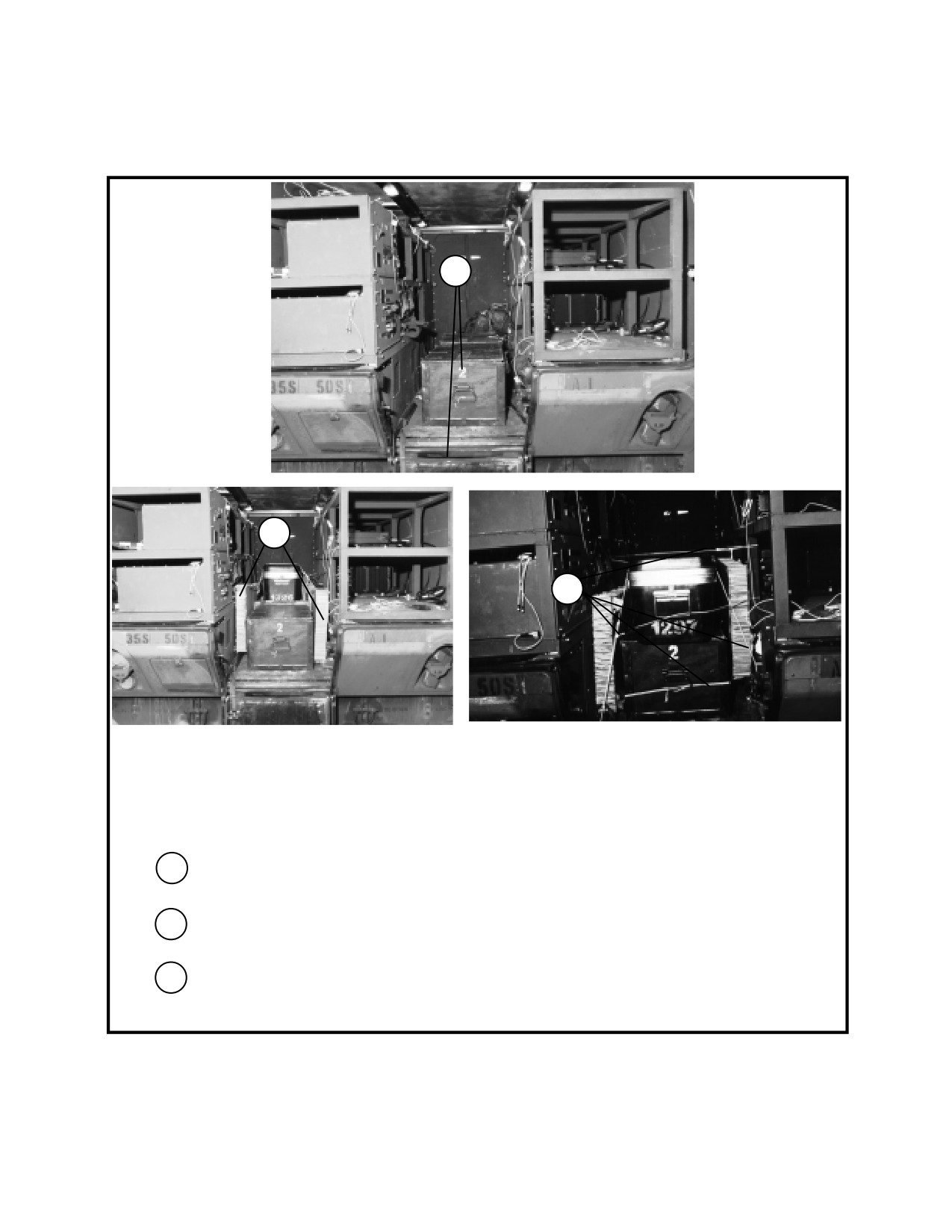
6
Tape or safety tie shut any equipment boxes and place them on the floor centered between the
racks.
7
Cut pieces of honeycomb in sufficient sizes and place them between the equipment boxes and the
racks.
8
Secure the boxes in place using type III nylon cord. Route the cord through any handles and over
the boxes. Secure the cord to deck rings and convenient points in the vehicle.
Figure 4-5. CAV prepared with communication equipment (continued)
4-8
FM 10-500-23/TO 13C7-14-461
9
10
11
9
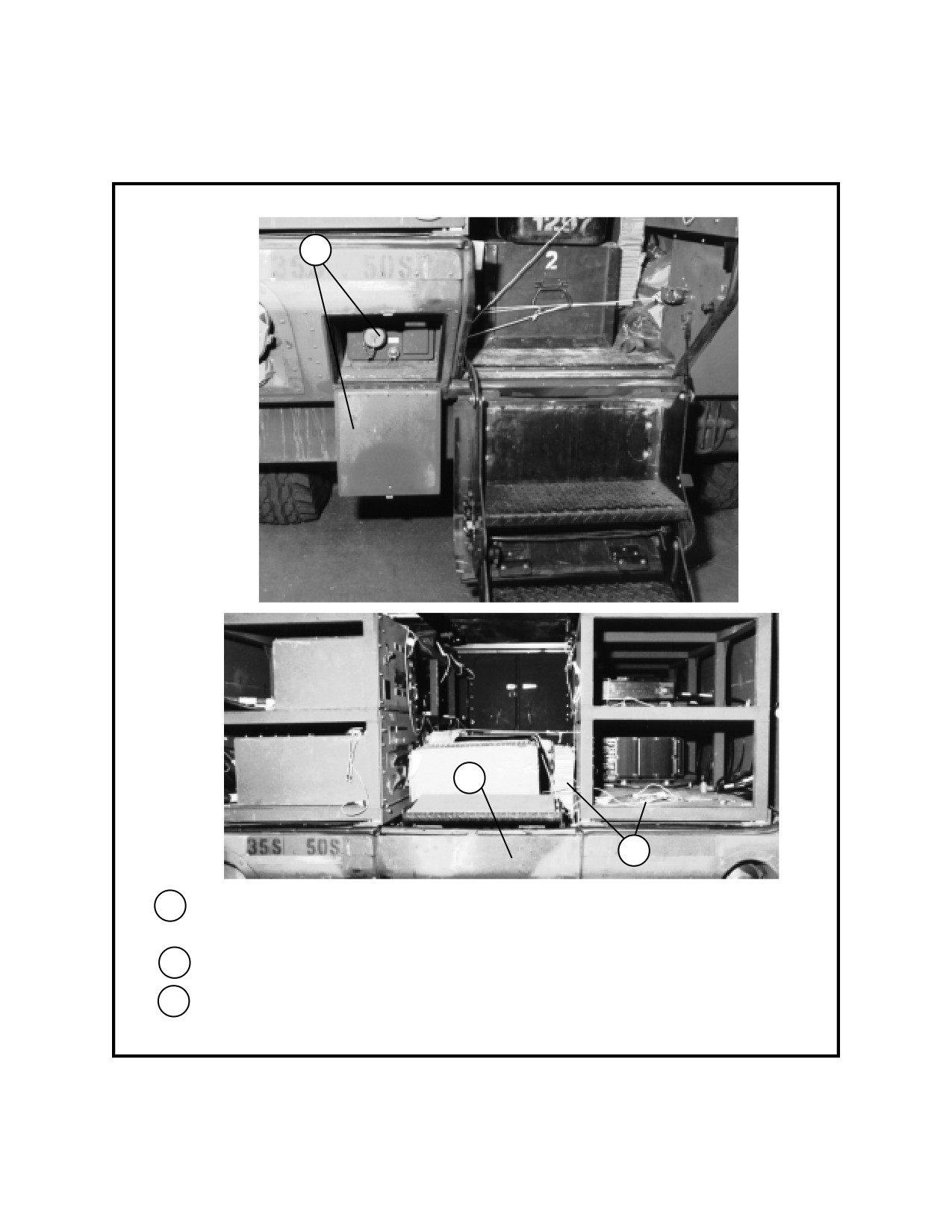
Open the AC power entry panel on the vehicle and make sure the cap is on the connection point.
Close the panel and tape the latch.
10
Raise the steps. Close the rear vehicle door and secure.
11
Open the antenna entry panel on the right side of the vehicle and cut a piece of honeycomb to fit
under the connection box. Fill the remaining space with layers of felt. Secure any loose cables
and tape. Close and tape the latches of the panel shut.
Figure 4-5. CAV prepared with communication equipment (continued)
4-9
FM 10-500-23/TO 13C7-14-461
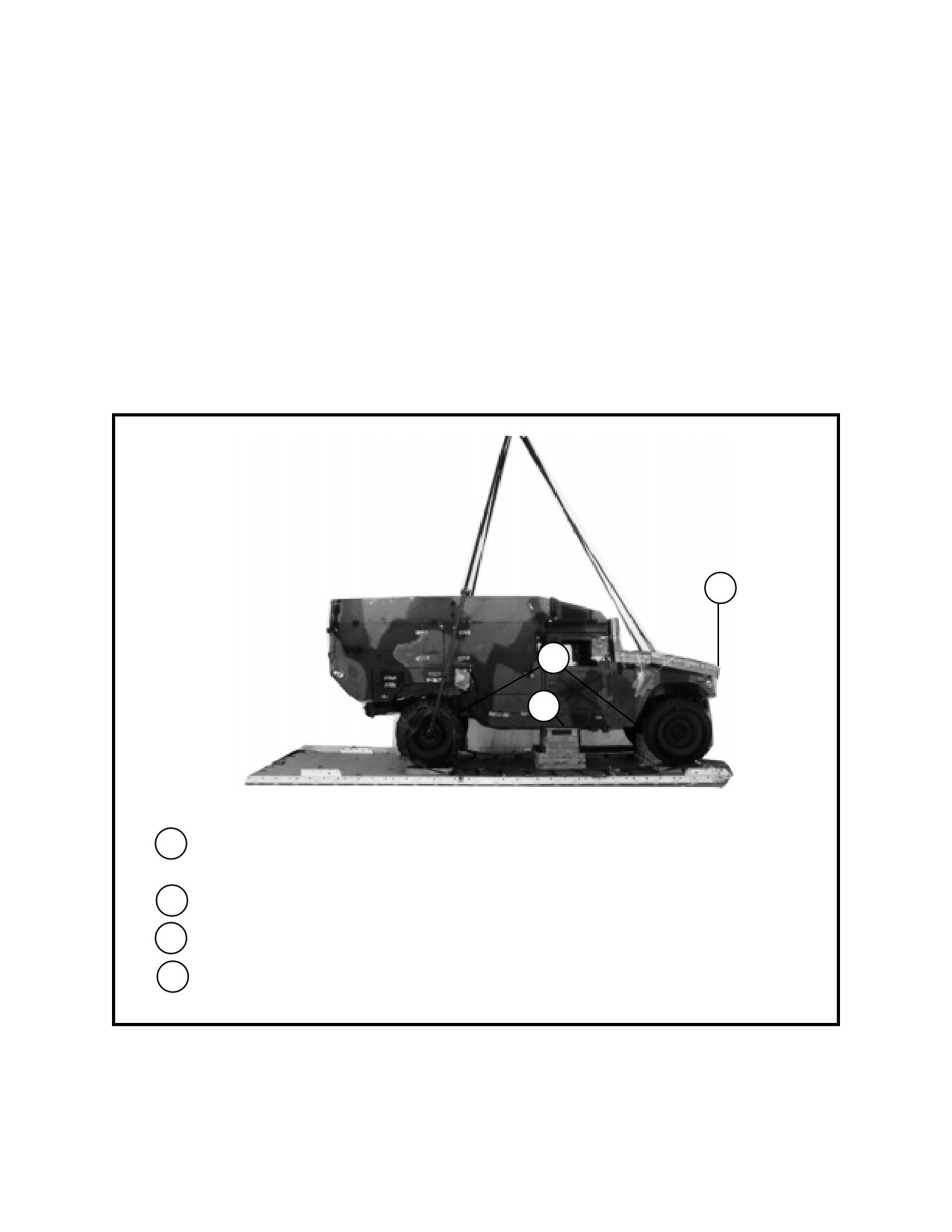
4-5. Lifting and Positioning CAV
Prepare the suspension sling spreader bar provided with
the ambulance as shown in C2, FM 10-500-66/TO 13C7-
25-71, Figure 2-15. Substitute an attitude control bar as a
suspension sling spreader only if the spreader bar is not
available. Install slings for lifting the ambulance and a
suspension sling spreader bar for the rear lifting slings
as shown in C2, FM 10-500-66/TO 13C7-25-71, Figure 2-
16. Position the ambulance on the honeycomb stacks as
shown in C2, FM 10-500-66/TO 13C7-25-71, Figure 2-17
and as shown below in Figure 4-6.
1
2
3
1
Center the ambulance on the platform with the front of the ambulance 2 inches from the front edge of
the platform.
2
Make sure that the suspension cross members rest squarely on stacks 1 and 3.
3
Make sure that the frame rails rest squarely on stack 2.
4
Remove the lifting slings and the spreader bar or ACB (not shown).
Figure 4-6. CAV positioned on platform
4-10
FM 10-500-23/TO 13C7-14-461
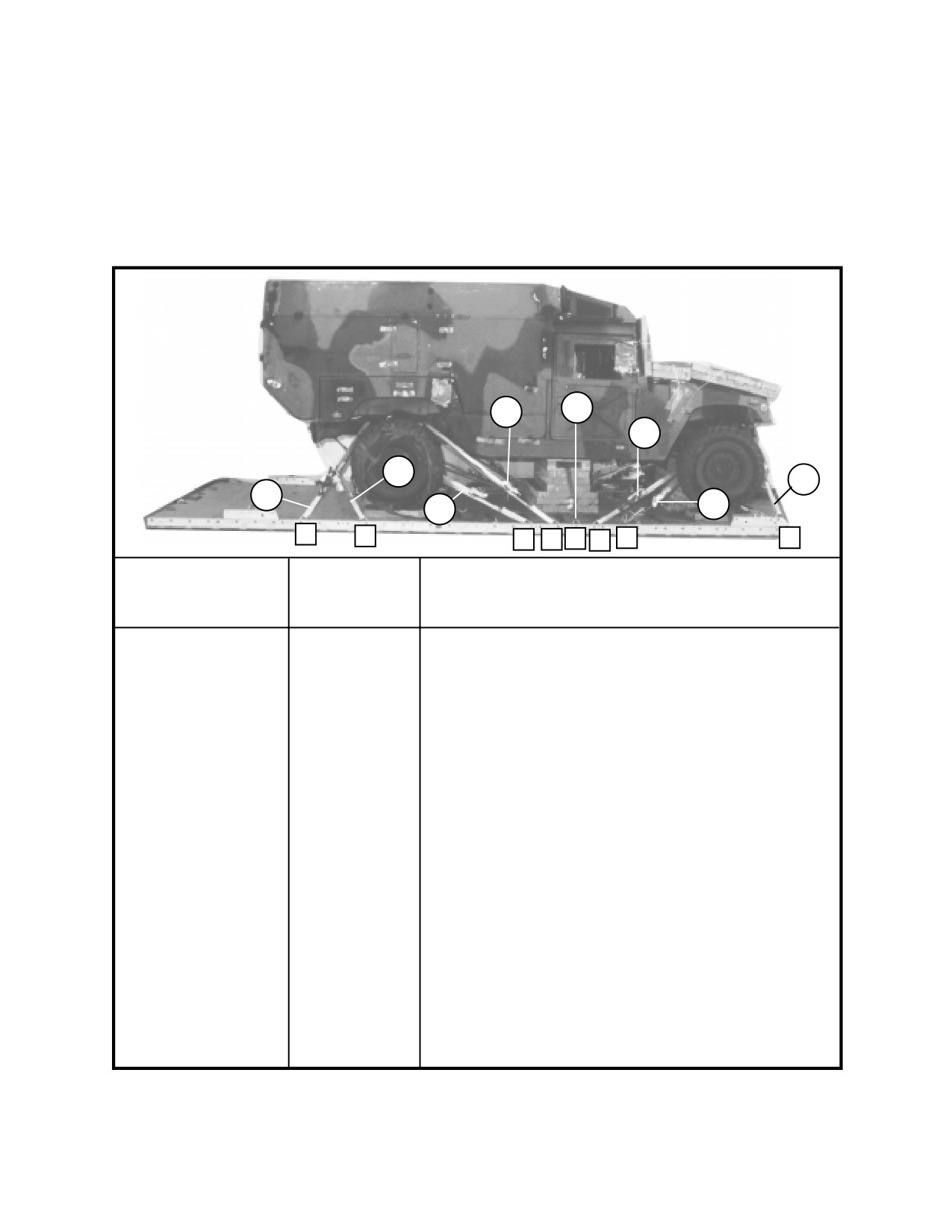
4-6. Lashing CAV to Platform
Lash the load to the platform as shown in Figure 4-7.
7
8
5
12
1
14
3
10
11
10
7
1
9
8
6
4
Tiedown
Lashing
Clevis
Instructions
Number
Number
Pass lashing:
1
1
Through tiedown bracket on end of right frame rail.
2
1A
Through tiedown bracket on end of left frame rail.
3
4
Around right lower control arm.
4
4A
Around left lower control arm.
5
6
Through tiedown bracket behind right front coil spring.
6
6A
Through tiedown bracket behind left front coil spring.
7
7 to7A
Through 7A and it's own D-ring. Run lashing between
4 x4's of stack 2 and secure to clevis 7.
8
8
Through tiedown bracket in front of right coil spring.
9
8A
Through tiedown bracket in front of left coil spring.
10
9
Around right lower control arm.
11
9A
Around left lower control arm.
12
10
Through right rear lifting shackle.
13
10A
Through left rear lifting shackle.
14
11
Through tiedown bracket behind right rear coil spring.
15
11A
Through tiedown bracket behind left rear coil spring.
Figure 4-7. CAV lashed to platform
4-11
FM 10-500-23/TO 13C7-14-461
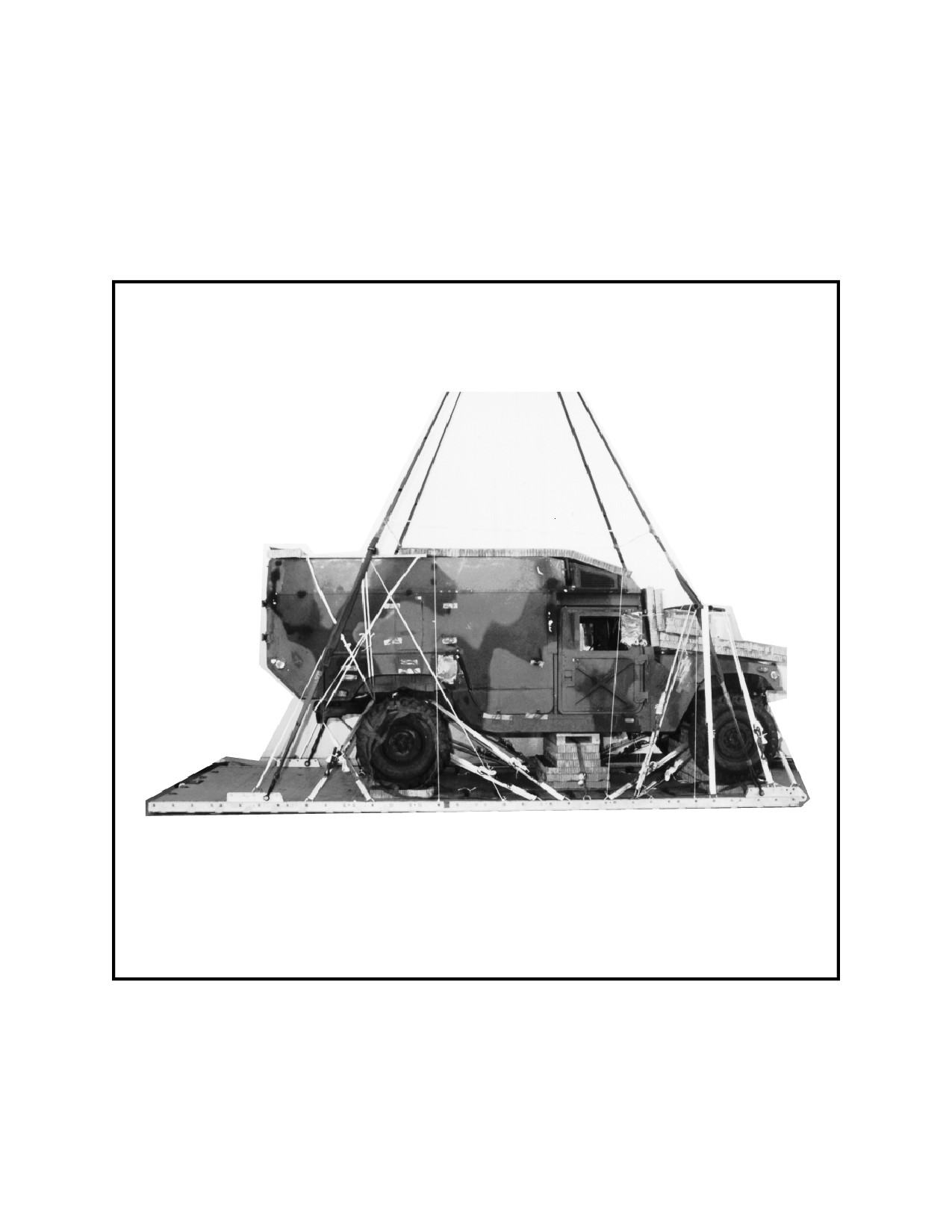
4-7. Installing Suspension System
Install the suspension system as shown in C2, FM 10-
500-66/TO 13C7-25-71, paragraph 2-8, and Figure 4-8 of
this manual.
Figure 4-8. CAV's suspension system installed
4-12
FM 10-500-23/TO 13C7-14-461
4-8. Stowing Cargo Parachutes and Installing
EFTC System
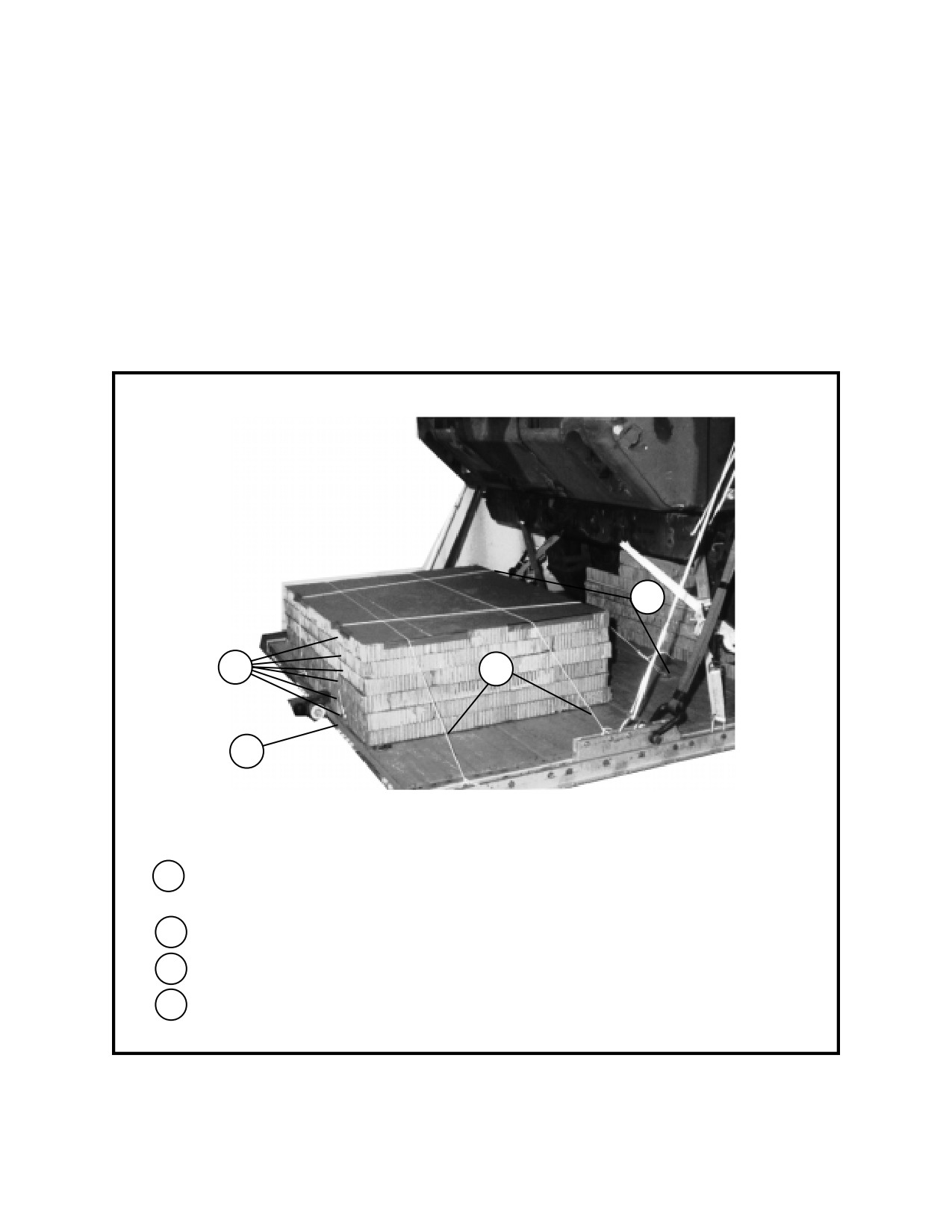
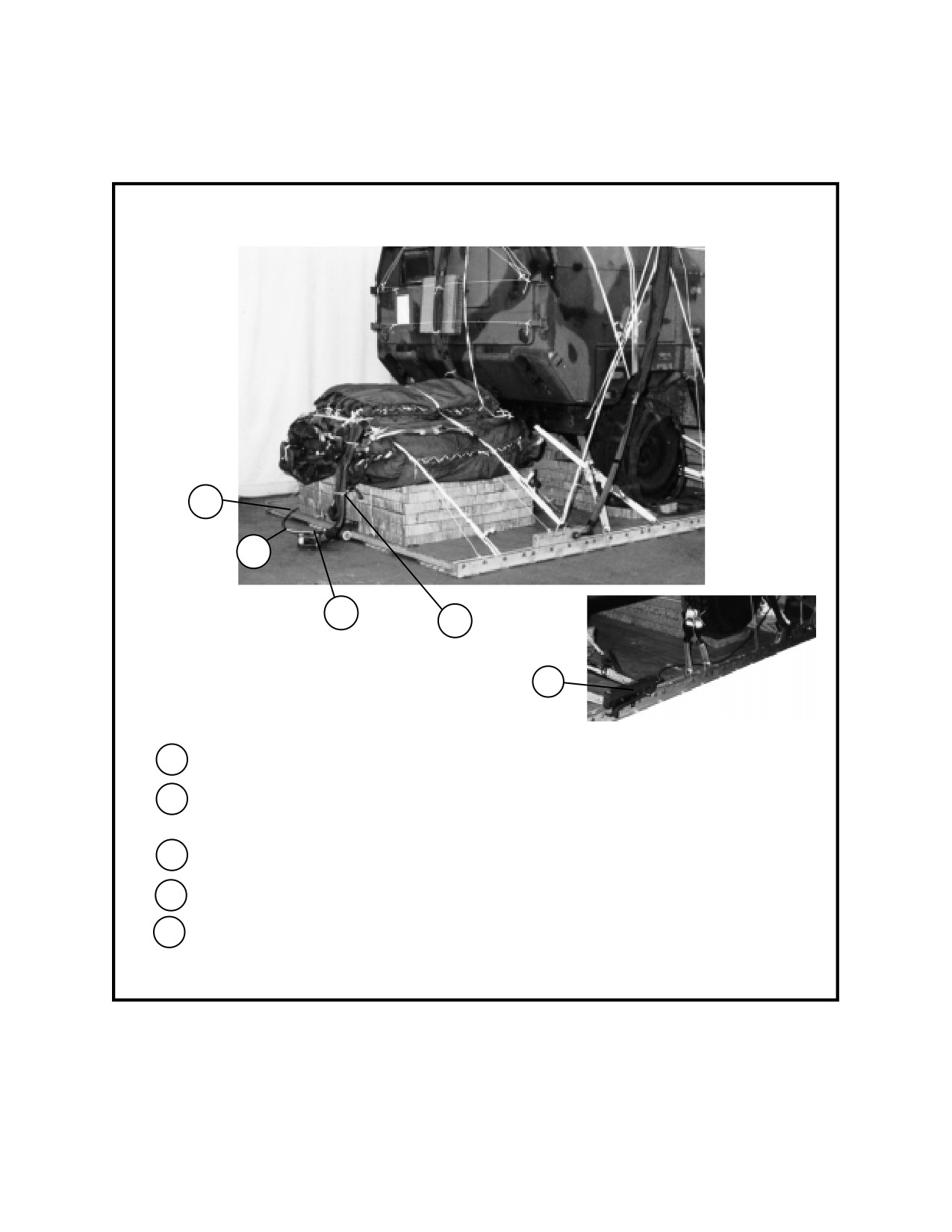
Prepare and install the parachute stowage
platform as shown in Figure 4-9. Stow three
G-11 cargo parachutes on the load according
to FM 10-500-2/TO 13C7-1-5 and as shown
in Figure 4-10. Install the EFTC system according
to FM 10-500-2 and as shown in Figure 4-10.
4
1
3
2
Note: Make a cutout for the extraction bracket on the bottom layer of honeycomb. This will allow bolt
inspection.
1
Alternate six pieces of honeycomb 60- by 36 inches and six pieces 60- by 12-inches to make a six-layer
stack 60 inches wide and 48 inches long. Glue the layers together.
2
Center the 60-inch edge flush with the rear edge of the platform.
3
Secure the stack to the platform with type III nylon cord tied to convenient clevises.
4
Secure the stack to tie-down rings.
Figure 4-9. CAV's parachute stowage platform prepared and installed
4-13
FM 10-500-23/TO 13C7-14-461
4
2
3
5
1
1
Install the actuator brackets to the rear holes in the left platform side rail.
2
Install the actuator and a 16-foot cable. Tie the cable to convenient points inside the lashings with
type I, 1/4-inch cotton webbing.
3
Install the latch assembly and attach the cable.
4
Tie the cable to the left rear tie-down ring with type I, 1/4-inch cotton webbing.
5
Install a 9-foot (2-loop), type XXVI nylon webbing sling as a deployment line.
Figure 4-10. CAV's parachutes and EFTC system installed
4-14
FM 10-500-23/TO 13C7-14-461
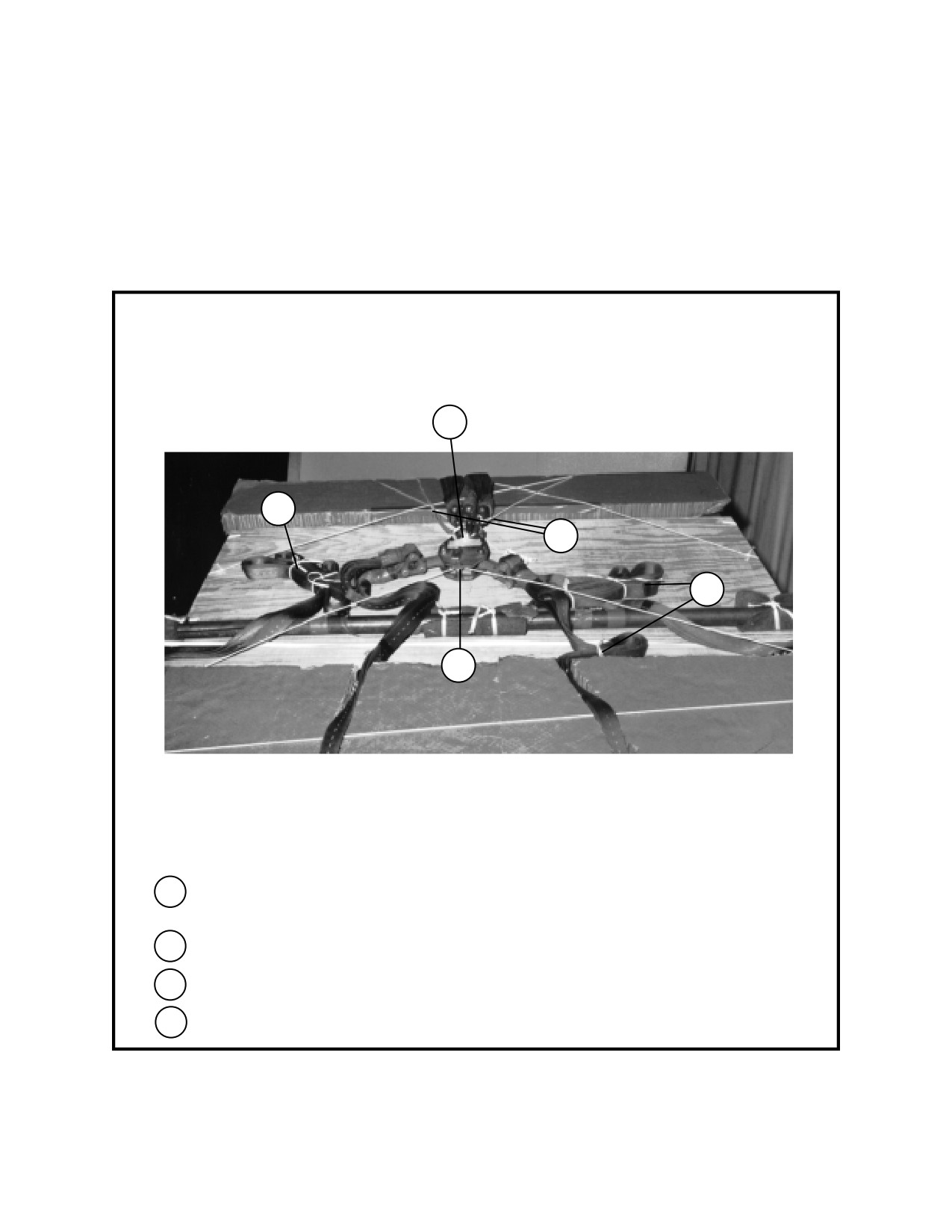
4-9. Installing Parachute Release
Install an M-1 cargo parachute release according to FM
10-500-2/TO 13C7-1-5 and as shown in Figure 4-11.
1
4
2
4
3
1
Center the release on the roof of the ambulance as shown. Connect the suspension slings and the
riser extensions according to FM 10-500-2/TO 13C7-1-5.
2
Safety tie the connector links to the door hinges with type III nylon cord.
3
Safety tie the bottom of the release to the platform rails with type III nylon cord.
4
S-fold and tie any slack in the suspension slings with type I, 1/4-inch cotton webbing.
Figure 4-11. M-1 release installed
4-15
FM 10-500-23/TO 13C7-14-461
4-10. Placing Extraction Parachute
4-12. Marking Rigged Load
Select the extraction parachute and extraction line
Mark the rigged load according to FM 10-500-2/TO
needed using the extraction line requirements table in
13C7-1-5 and as shown in Figure 4-12. Complete
FM 10-500-2/TO 13C7-1-5. Place the extraction line on
Shipper's Declaration for Dangerous Goods and affix to
the load for installation in the aircraft.
load. If the load varies from the one shown, the weight,
height, CB, tip off curve, and parachute requirements
4-11. Installing Provisions for Emergency Restraints
must be recomputed.
Select and install the provisions for the emergency aft
4-13. Equipment Required
restraints according to the emergency aft restraint
requirements table in FM 10-500-2/TO 13C7-1-5.
Use the equipment listed in Table 4-1 to rig the load
shown in Figure 4-12.
4-16
FM 10-500-23/TO 13C7-14-461
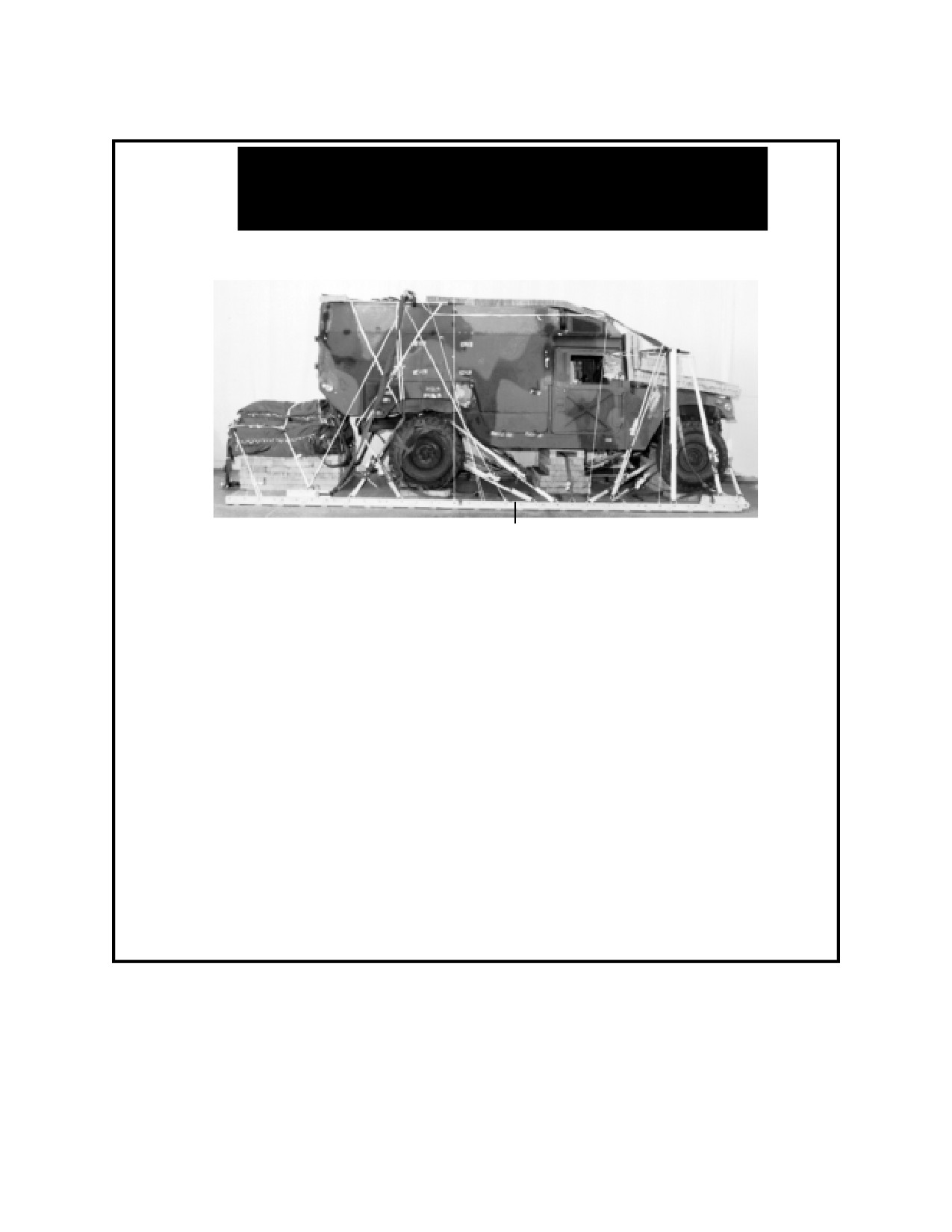
CAUTION
Make the final rigger inspection required by FM 10-500-2/TO 13C7-1-5
before the load leaves the rigging site.
CB
RIGGED LOAD DATA
Weight
11, 680 pounds
Max Weight
12,000 pounds
Height
100 inches
Width
108 inches
Length
258 inches
Overhang: Front
None
Rear
0 inches
Center of Balance (CB)
(from front edge of the platform)
110 inches
Extraction System
EFTC
Figure 4-12. CAV rigged on a 20-foot type V platform for low-velocity airdrop
4-17
FM 10-500-23/TO 13C7-14-461
Table 4-1. Equipment required for rigging the CAV rigged on a 20-foot, type V airdrop platform for low-velocity
airdrop
National Stock
Item
Number
8040-00-273-8713
Adhesive, paste, 1-gal.
As required
1670-01-035-6054
Bridle (for line bag)
1
Clevis, suspension:
4030-00-090-5354
1-in (large)
2
4030-00-678-8562
3/4-in (medium)
5
8305-00-242-3593
Cloth, cotton duck, 60-in
As required
4020-00-240-2146
Cord, nylon, type III, 550-lb.
As required
1670-00-434-5787
Coupling, airdrop extraction force transfer cable, 20-ft
1
Cover:
1670-00-360-0328
Clevis, large
3
1670-00-360-0329
Link, type IV
3
8135-00-664-6958
Cushioning material, packaging, cellulose wadding
As required
8305-00-958-3685
Felt, 1/2-in thick
As required
1670-01-183-2678
Leaf, extraction line (line bag)
3
Line extraction:
1670-01-062-6313
60-ft (3-loop), type XXVI (C-130)
1
1670-01-107-7651
140-ft (3-loop), type XXVI (for C-141,C-5 or C-17)
1
1670-01-064-4452
60-ft (1-loop), type XXVI with towplate link (for C-17) Drogue Line
1
Link assembly:
1670-00-783-5988
Type IV
6
Two-point:
5306-00-435-8994
Bolt, 1-in diam, 4-in long
2
5310-00-232-5165
Nut, 1-in, hexagonal
2
1670-00-003-1953
Plate, side, 3 3/4-in
2
5365-00-007-3414
Spacer, large
2
5315-00-010-4659
Nail, steel wire, 8d
As required
1670-00-753-3928
Pad, energy-dissipating, (honeycomb),
3- by 36- by 96-in:
20 sheets
Parachute, cargo
1670-01-016-7841
G-11B
3
Parachute, cargo extraction
1670-01-063-3716
22-ft
1
Drogue (for C-17)
1670-01-063-3715
15-ft
1
Platform, airdrop, type V, 20-ft:
1
1670-01-162-2372
Clevis, assembly (type V)
(30)
1670-01-353-8424
Extraction bracket assembly
(1)
1670-01-353-8425
Bracket assembly, coupling
(1)
1670-01-247-2389
Suspension link
(2)
1670-01-162-2381
Tandem link assembly (Multipurpose link)
(2)
Lumber:
5510-00-220-6146
2- by 4- by:
As required
5510-00-220-6148
2- by 6- by:
As required
5530-00-128-4981
Plywood, 3/4-in:
4 sheets
4-18
FM 10-500-23/TO 13C7-14-461
Table 4-1. Equipment required for rigging the CAV rigged on a 20-foot, type V airdrop platform for low-velocity
airdrop (continued)
National Stock
Item
Quantity
Number
1670-01-097-8816
Release, cargo parachute, M-1
1
Sling, cargo, airdrop:
For suspension:
1670-01-062-6302
20-ft (2-loop), type XXVI
4
For lifting:
1670-01-062-6301
3-ft (2-loop), type XXVI
2
1670-01-062-6303
12-ft (2-loop), type XXVI
2
1670-01-063-7761
16-ft (2-loop), type XXVI
2
For deployment:
1670-01-062-6304
9-ft (2-loop), type XXVI
1
For riser extension:
1670-01-062-6302
20-ft (2-loop), type XXVI
6
1670-00-040-8219
Strap, parachute release, multi-cut, comes with 3 knives
2
7501-00-266-5016
Tape, adhesive, 2-in
As required
1670-01-344-0825
Vehicle drive-off aid (HDDS)
1
1670-00-937-0271
Tiedown assembly, 15-ft
36
Webbing:
8305-00-268-2411
Cotton, 1/4-inch, type I
As required
8305-00-082-5752
Nylon, tubular 1/2-in
As required
8305-00-263-3591
Type VIII
As required
4-19
FM 10-500-23/TO 13C7-14-461
CHAPTER 5
RIGGING THE M998 CARGO/TROOP CARRIER (TWO SEATER) WITH GRC/206 AIR
FORCE PALLET ON A 16-FOOT, TYPE V PLATFORM FOR LOW-VELOCITY AIR-
DROP
5-1. Description of Load
5-2. Preparing Platform
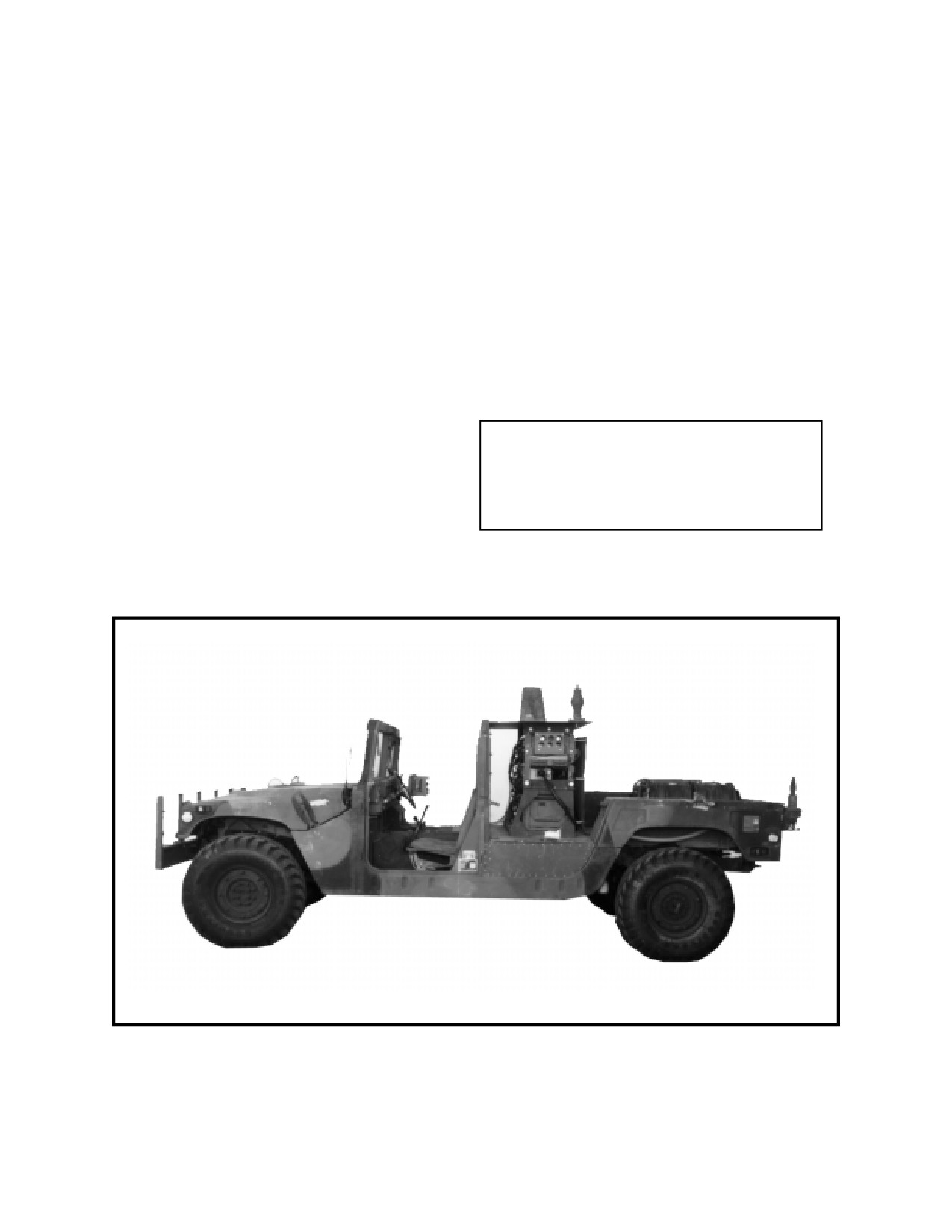
The M998 cargo/troop carrier (Figure 5-1) is 180 inches
Prepare a 16-foot, type V airdrop platform as shown in
long without a winch. The height is 83 1/2 inches,
Figure 5-2.
reducible to 71 1/2 inches. The width is 86 1/2 inches.
The truck weighs 5,990 pounds with radio equipment
NOTES:
GRC/206 Air Force pallet. Other equipment included on
1. The nose bumper may or may not be installed.
the load is the 1.5-kilowatt, 28-VDC generator set; two
2. Measurements given in this load are from the front
cable spools; two 5-gallon fuel cans; and one 5-gallon
edge of the platform, NOT from the front edge of the
water can. The truck weighs 6,990 pounds with tank 3/4
nose bumper.
full of fuel and equipment installed. The load requires
two G-ll cargo parachutes.
Figure 5-1. M998 cargo/ troop carrier
5-1
FM 10-500-23/TO 13C7-14-461
CLEVISES 10A THROUGH 1A
REAR
FRONT
CLEVISES 10 THROUGH 1
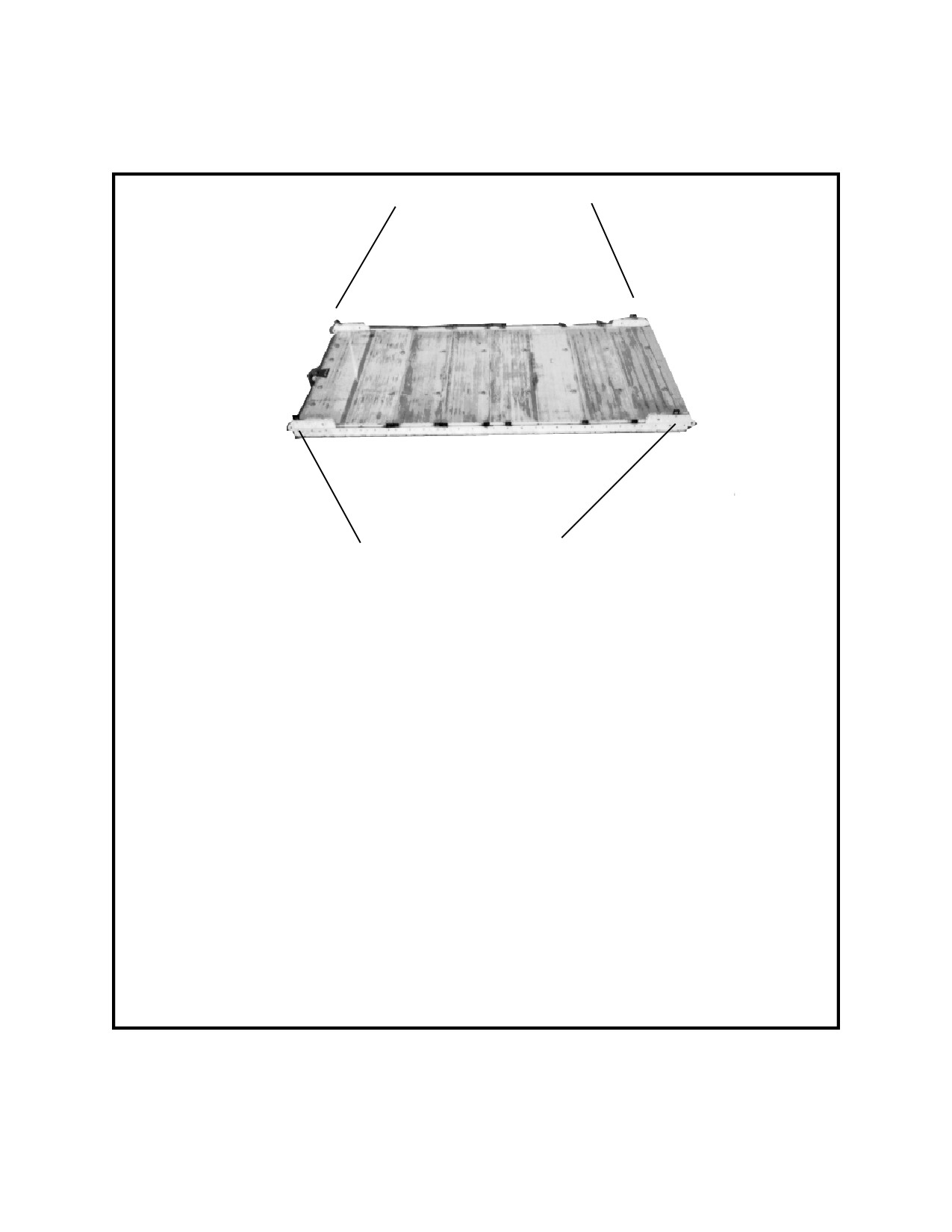
Step:
1.
Inspect, or assemble and inspect, a 16-foot, type V airdrop platform as outlined in TM 10-1670-
268-20&P/TO 13C7-52-22.
2.
Install a tandem link to the front of each platform side rail using holes 1, 2, and 3.
3.
Install a clevis on bushing 2 of each tandem link.
4.
Install a tandem link on the rear of each platform side rail using holes 30, 31, and 32.
5.
Install a clevis on bushing 4 of each rear tandem link.
8.
Starting at the front of each platform side rail, install clevises on the bushings bolted to holes 5,
9, 15, 17, 20, 21, 25, and 27.
9.
Starting at the front of the platform, number the clevises 1 through 10 on the right side, and 1A
through 10A on the left side.
10.
Label the tie-down rings according to FM 10-500-2/TO 13C7-1-5.
Figure 5-2. Platform prepared
5-2
FM 10-500-23/TO 13C7-14-461
NOTICE OF EXCEPTION
5-3. Building and Placing the Honeycomb Stacks
The honeycomb stack configuration in this chapter is
that of the original load and not the newer stack
configuration as shown in chapter 4.This Air Force
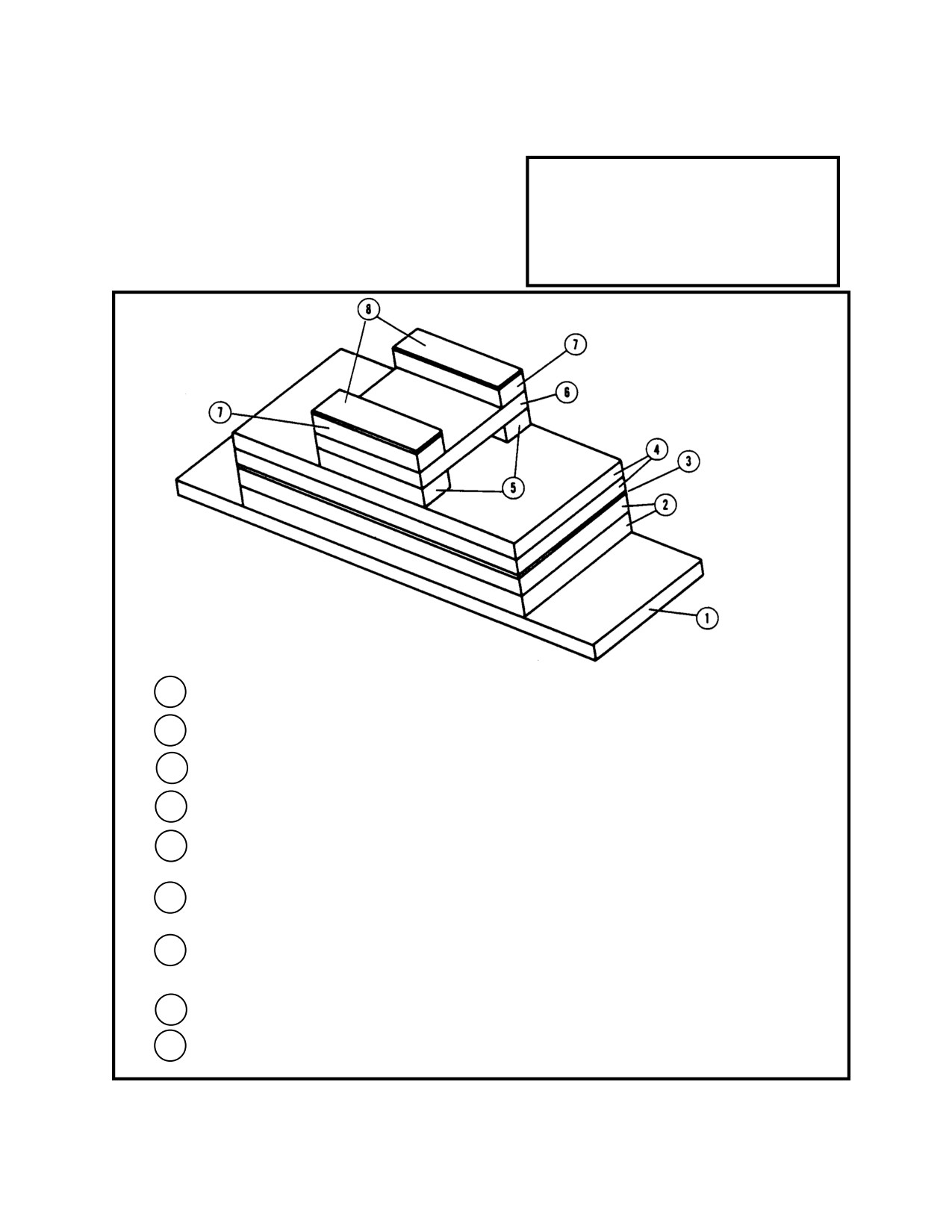
Build the honeycomb stacks as shown in Figures 5-3
load has never been tested and written using the newer
and 5-4. Place the stacks on the platform as shown in
honeycomb stack configuration. Use this configuration
Figure 5-5.
until a change is tested and published for this load.
1
Use an 80- by 24-inch piece of honeycomb to form a base.
2
Center three 54- by 24-inch pieces of honeycomb on the base.
3
Place a 3/4- by 54- by 24-inch piece of plywood over the honeycomb placed in step 2 above.
4
Place one 54- by 24-inch piece of honeycomb on top of the plywood placed in step 3 above.
5
Center one 20- by 6-inch piece of honeycomb even with the front edge. Center one 20- by 6-inch
piece of honeycomb even with the rear edge.
6
Place a 20- by 24-inch piece of honeycomb flush over the pieces of honeycomb placed in step 5 to
form a bridge.
7
Place one 20- by 6-inch piece of honeycomb flush with the front edge. Place one 20- by 6-inch piece
of honeycomb flush with the rear edge.
8
Place a 3/4- by 20- by 6-inch piece of plywood on top of each piece of honeycomb placed in step 7.
9
Repeat steps 1 through 8 for stack 3.
Figure 5-3. Stacks 1 and 3 prepared
5-3
FM 10-500-23/TO 13C7-14-461
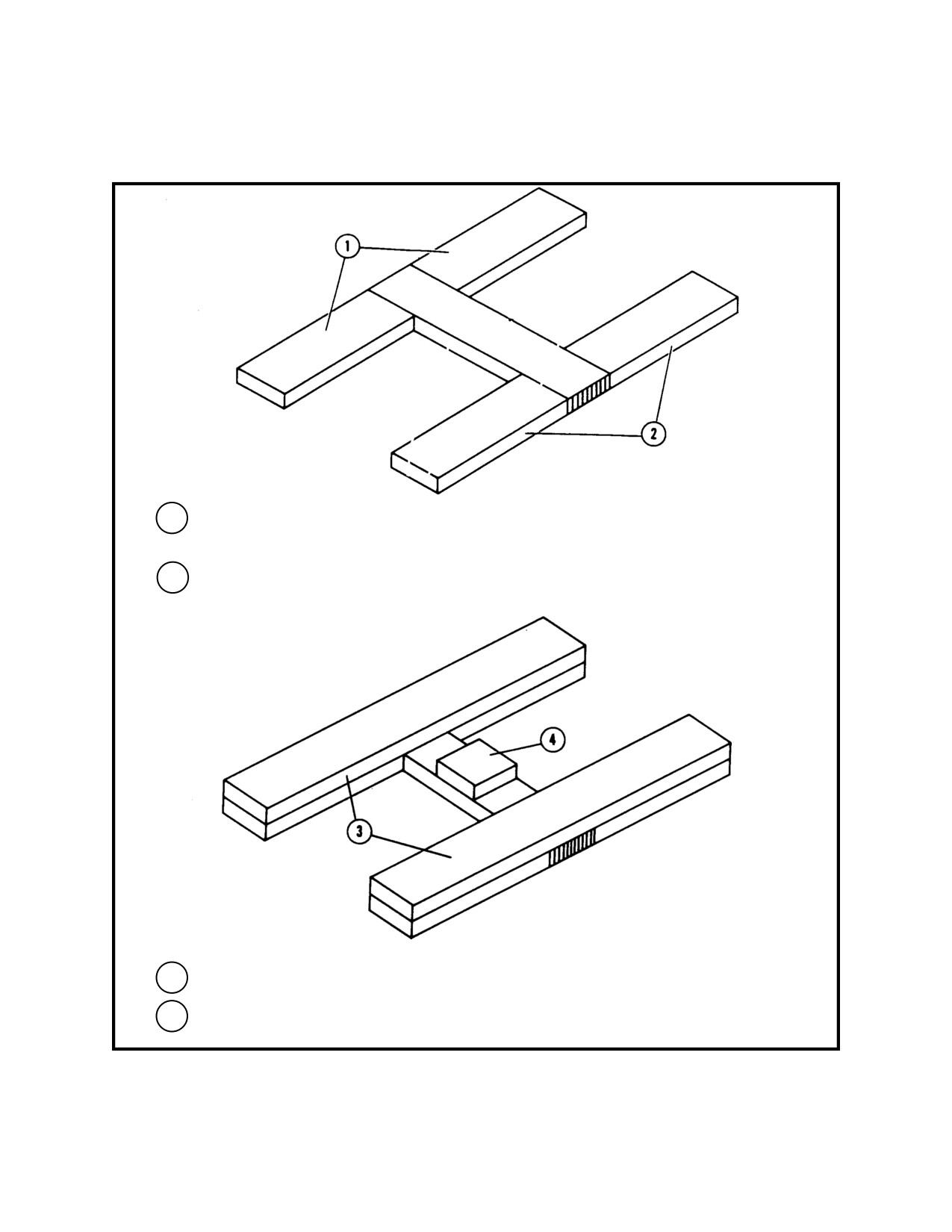
Note: These drawings are not drawn to scale.
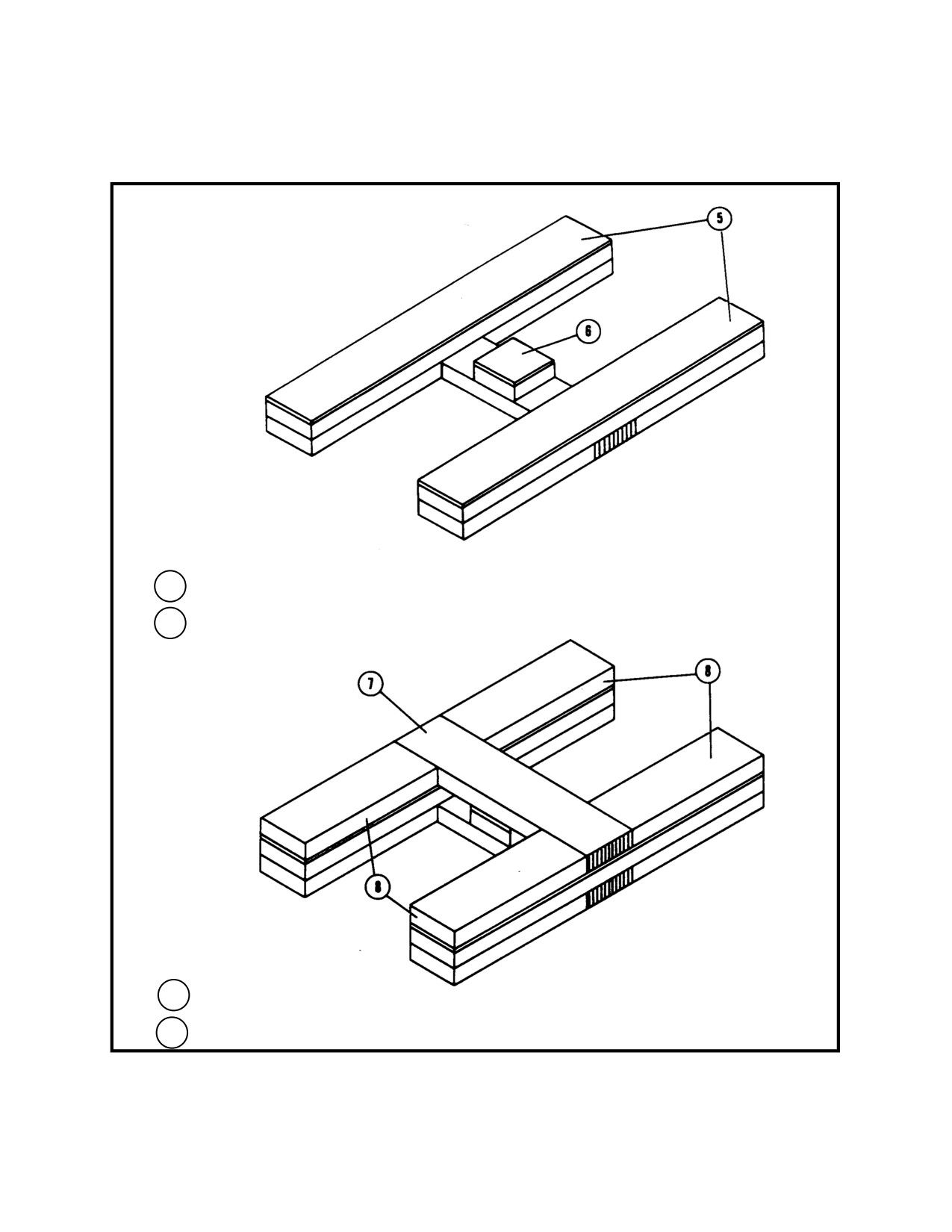
1
Place two 12- by 22-inch pieces of honeycomb perpendicular to a 42- by 10-inch piece of honey-
comb flush with one of its ends.
2
Place two 12- by 22-inch pieces of honeycomb perpendicular to the other end of the 42- by 10-inch
piece of honeycomb.
3
Place a 12- by 54-inch piece of honeycomb on each side of the base.
4
Center a 10- by 10-inch piece of honeycomb on the bridge placed in step 1.
Figure 5-4. Stack 2 prepared
5-4
FM 10-500-23/TO 13C7-14-461
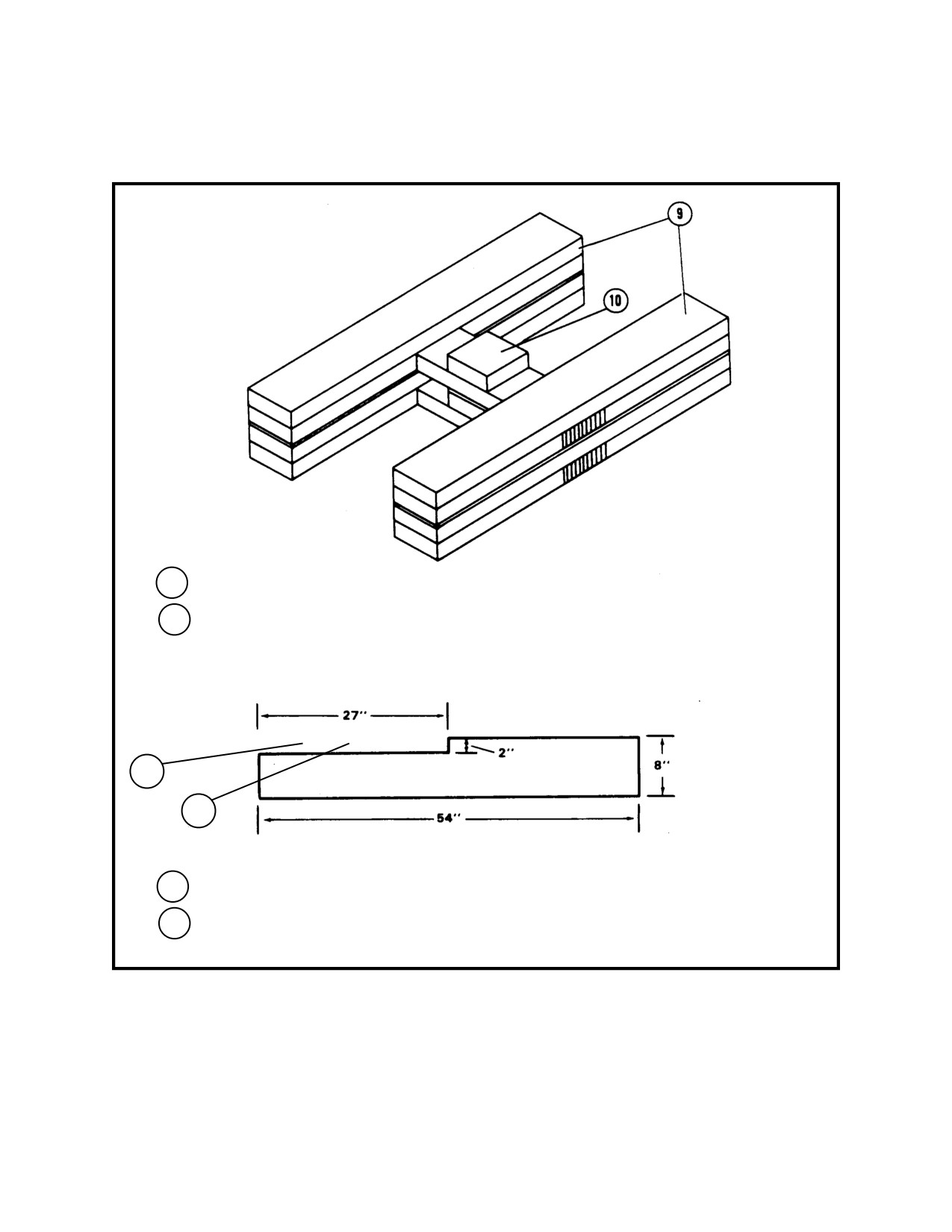
Note: These drawings are not drawn to scale.
5
Place a 3/4- by 12- by 54-inch piece of plywood flush over each side of the stack.
6
Place a 3/4- by 10- by 10-inch piece of plywood flush over the honeycomb placed in step 4.
7
Place a 42- by 10-inch piece of honeycomb flush over the bridge.
8
Place a 12- by 22-inch piece of honeycomb flush over each leg perpendicular to the bridge.
Figure 5-4. Stack 2 prepared (continued)
5-5
FM 10-500-23/TO 13C7-14-461
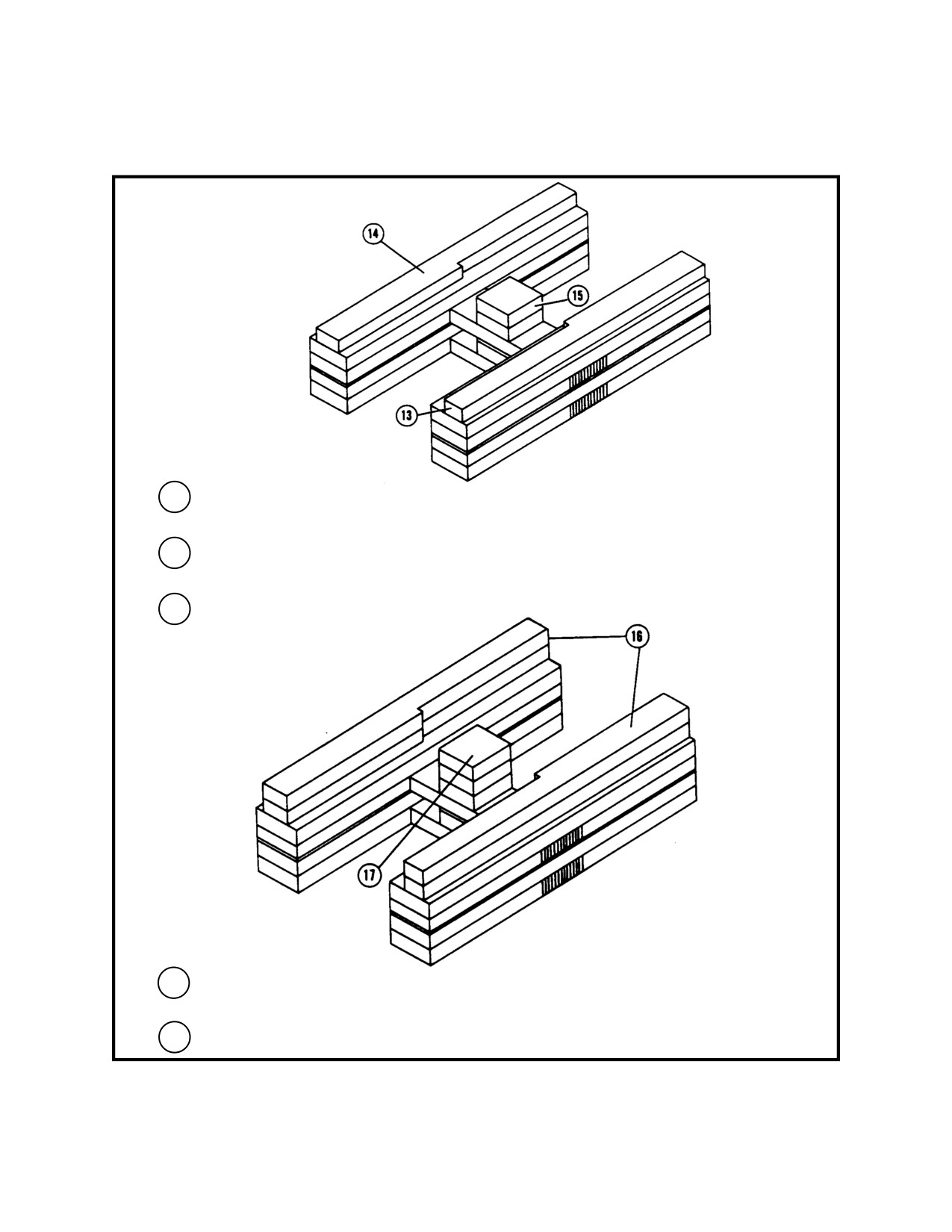
Note: These drawings are not drawn to scale.
9
Place a 12- by 54-inch piece of honeycomb flush over each side of the stack.
10
Center a 10- by 10-inch piece of honeycomb over the bridge.
11
12
11
Make cutouts as shown in six 8- by 54-inch pieces of honeycomb.
12
Make the same cutouts in two 3/4- by 8- by 54-inch pieces of plywood.
Figure 5-4. Stack 2 prepared (continued)
5-6
FM 10-500-23/TO 13C7-14-461
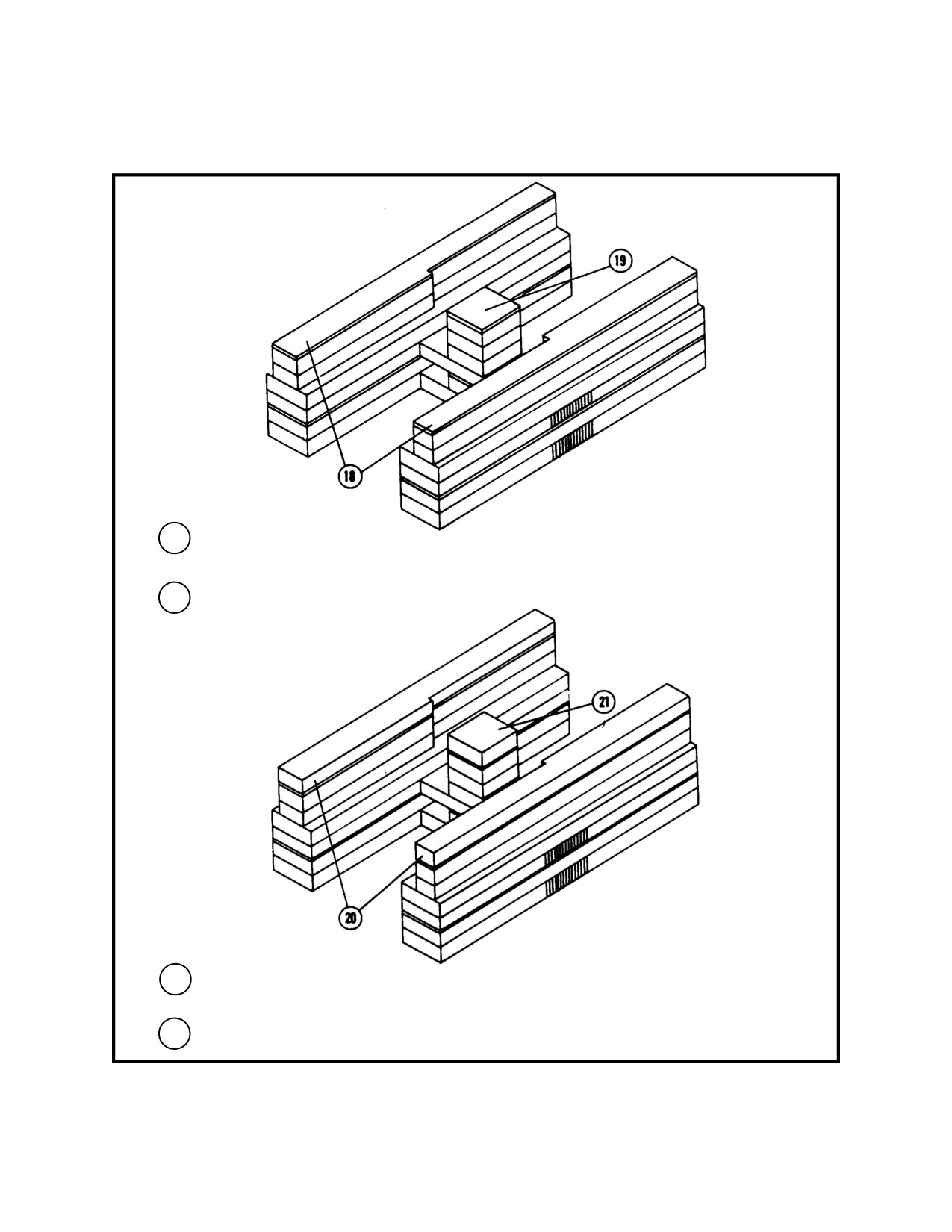
Note: These drawings are not drawn to scale.
13
Center one piece of honeycomb cut in step 11 over the right side of the stack so that the cutout is
to the rear as shown.
14
Center one piece of honeycomb cut in step 11 over the left side of the stack so that the cutout is to
the front as shown.
15
Center a 10- by 10-inch piece of honeycomb over the bridge.
16
Place a piece of the honeycomb cut in step 11 flush over each side of the stack so that the cutouts
are aligned.
17
Place a 10- by 10-inch piece of honeycomb flush over the bridge.
Figure 5-4. Stack 2 prepared (continued)
5-7
FM 10-500-23/TO 13C7-14-461
Note: These drawings are not drawn to scale.
18
Place a piece of plywood cut in step 12 flush over each side of the stack so that the cutouts are
aligned.
19
Place a 10- by 10-inch piece of plywood flush over the bridge.
20
Place a piece of honeycomb cut in step 11 flush over each side of the stack so that the cutouts are
aligned.
21
Center a 10- by 10-inch piece of honeycomb flush over the bridge.
Figure 5-4. Stack 2 prepared (continued)
5-8
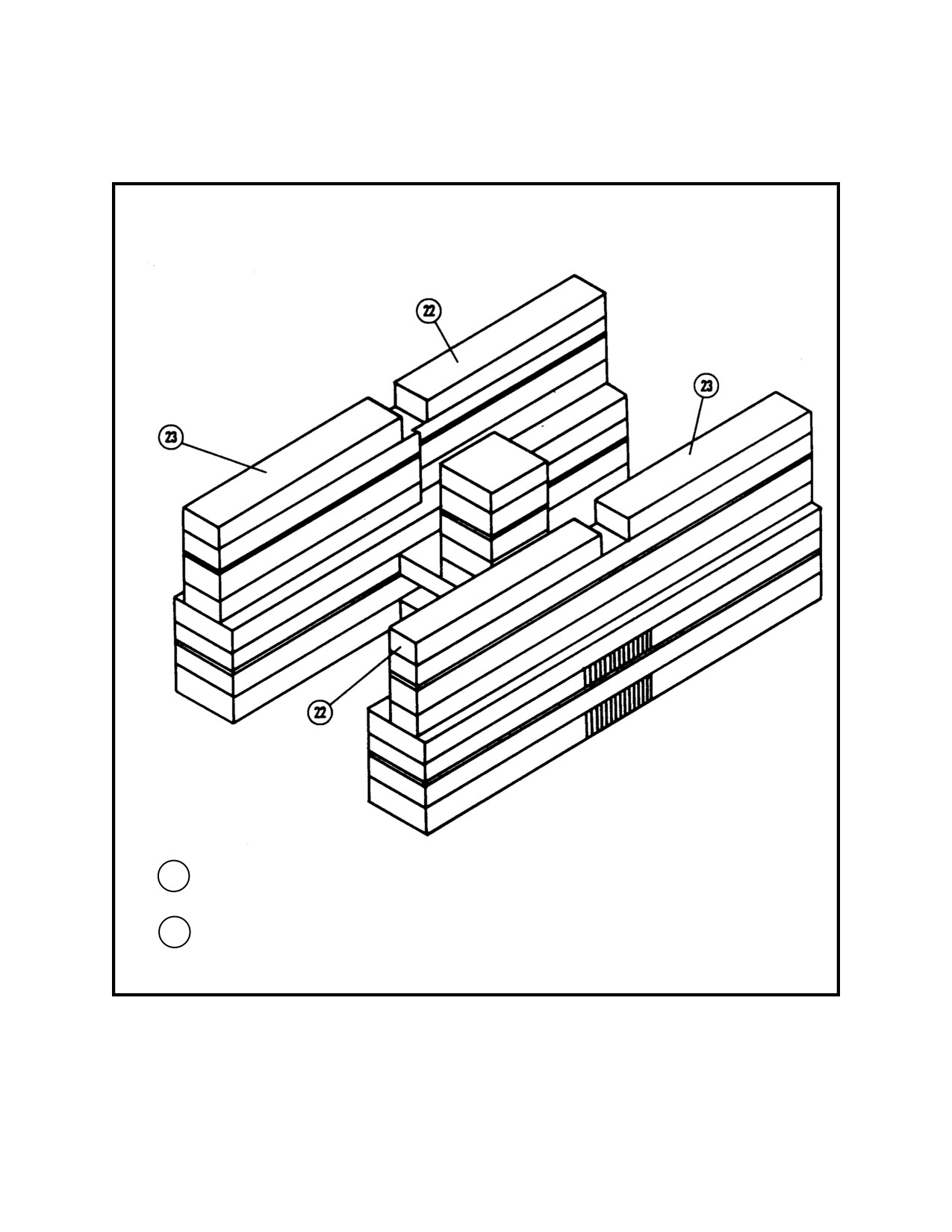
FM 10-500-23/TO 13C7-14-461
Note: These drawings are not drawn to scale.
22
Place a 6- by 24-inch piece of honeycomb flush with the left front edge of the stack. Place a 6- by
24-inch piece of honeycomb flush with the right rear edge of the stack.
23
Place an 8- by 24-inch piece of honeycomb flush with the right front edge of the stack. Place an 8-
by 24-inch piece of honeycomb flush with the left rear edge of the stack.
Figure 5-4. Stack 2 prepared (continued)
5-9
FM 10-500-23/TO 13C7-14-461
Note: These drawings are not drawn to scale.
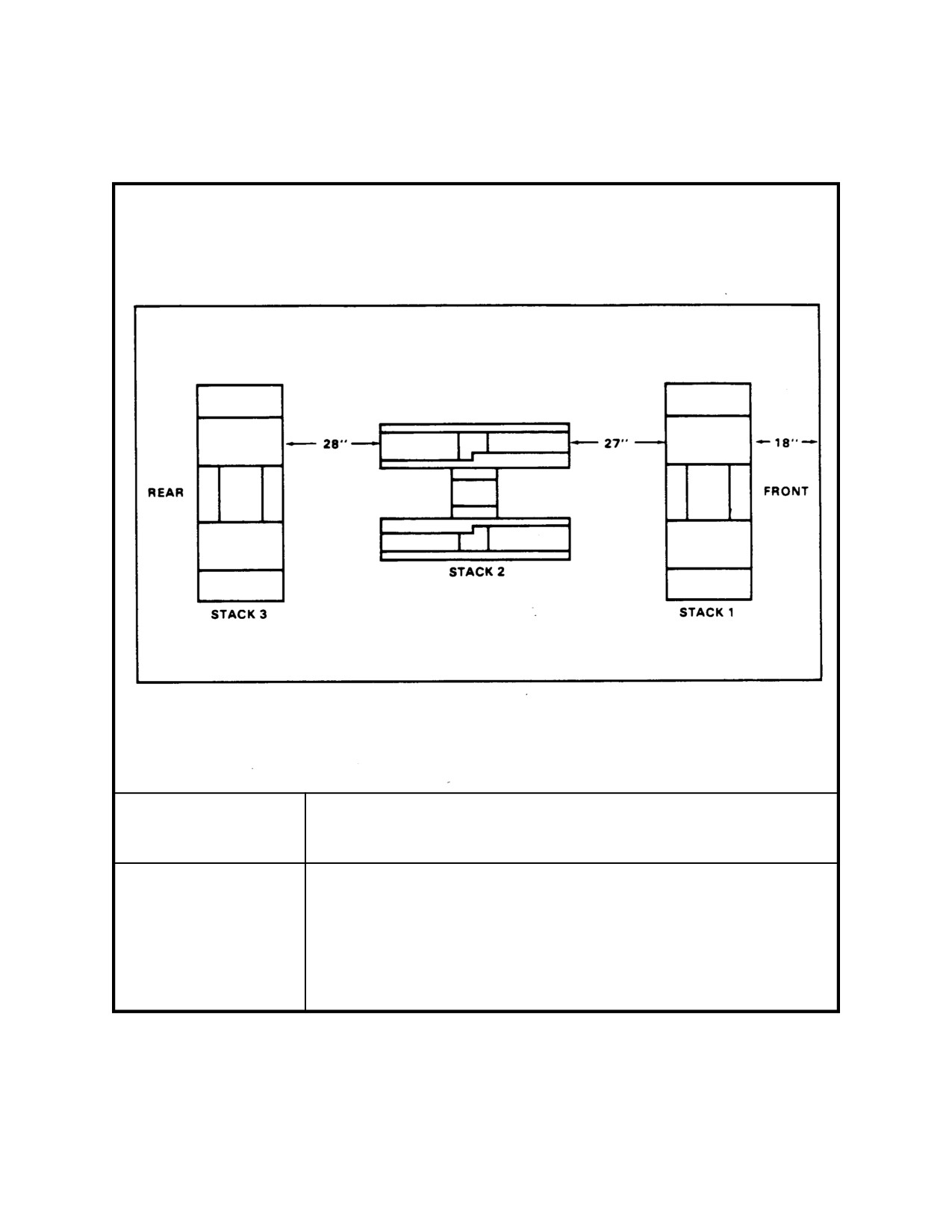
Stack
Number
Position of Stack on Platform
Place stack:
1
18 inches from the front edge of the platform and centered.
2
27 inches behind stack 1 and centered.
3
28 inches behind stack 2 and centered.
Figure 5-5. Honeycomb stacks positioned on platform
5-10
FM 10-500-23/TO 13C7-14-461
5-4. Preparing Truck and Installing Lifting Slings
Prepare the truck as described below and as shown in
c. Tape all lights, reflectors, and gauges.
Figures 5-6 through 5-15 and C5, FM 10-517/TO13C7-1-
d. Tape the windshield.
111, paragraph 2-4. Install the lifting slings as shown in
Figure 5-16 and according to C5, FM 10-517/
Note: This truck has a bumper grill protector
TO 13C7-1-111 paragraph 2-7.
that may not be on all Air Force M998s.
a. Make sure the fuel tank is not more than 3/4
full.
b. Remove the top cover and front doors.
NOTICE OF EXCEPTION
The up position of the windshield configuration in this
chapter is that of the original load and not the newer
down windshield configuration as shown in chapter 3.
This Air Force load has never been tested and written
using the newer windshield down configuration. Use
this configuration until a change is tested and pub-
lished for this load.
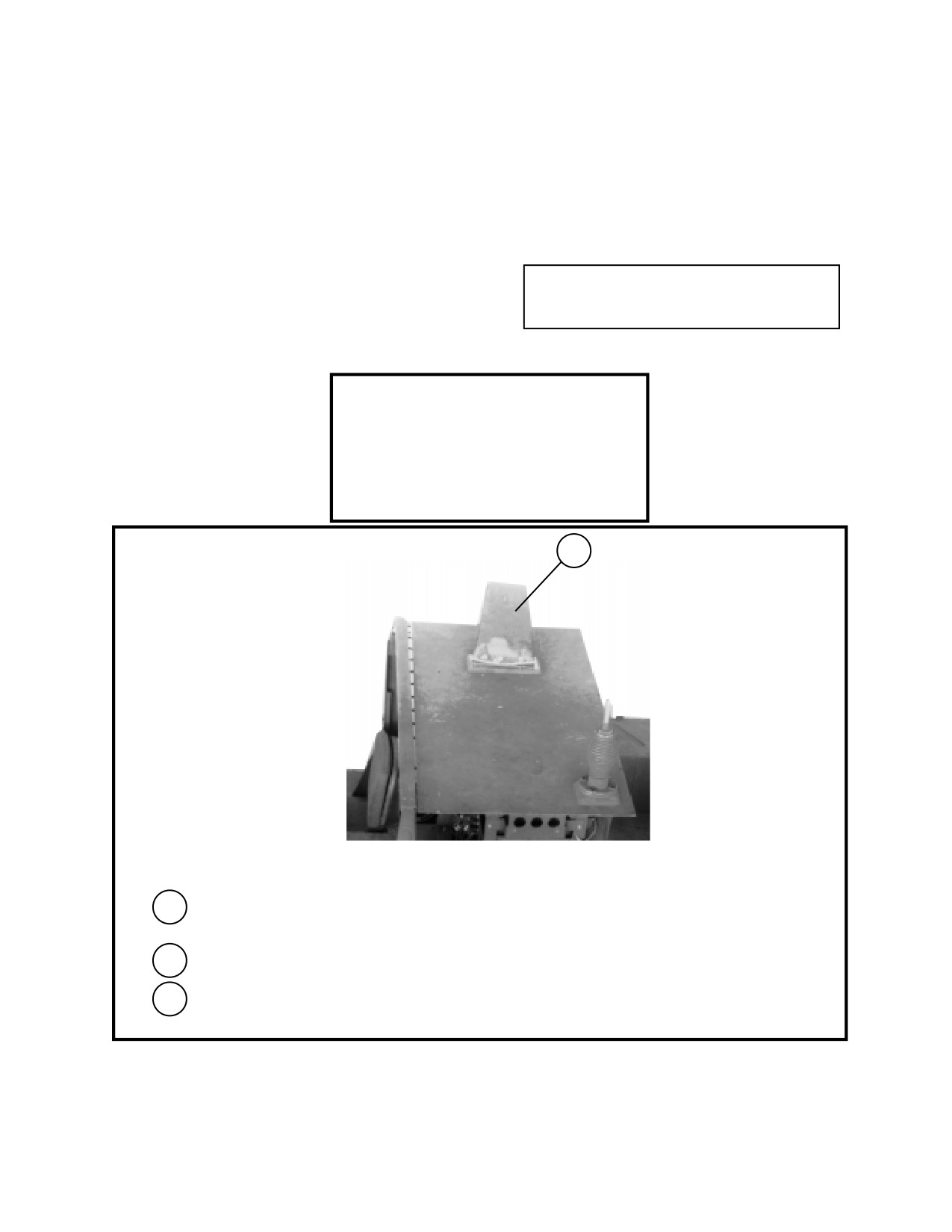
1
1
Remove the FM and dual VHF/UHF antennas or shark fins. Place the bolts back in their holes, and
secure them with tape.
2
Cover the cable ends with their cap or a piece of tape. (Not shown)
3
Remove the HF antenna mount. Place the bolts back in their holes, and secure them with tape. (Not
shown)
Figure 5-6. Antennas prepared
5-11
FM 10-500-23/TO 13C7-14-461
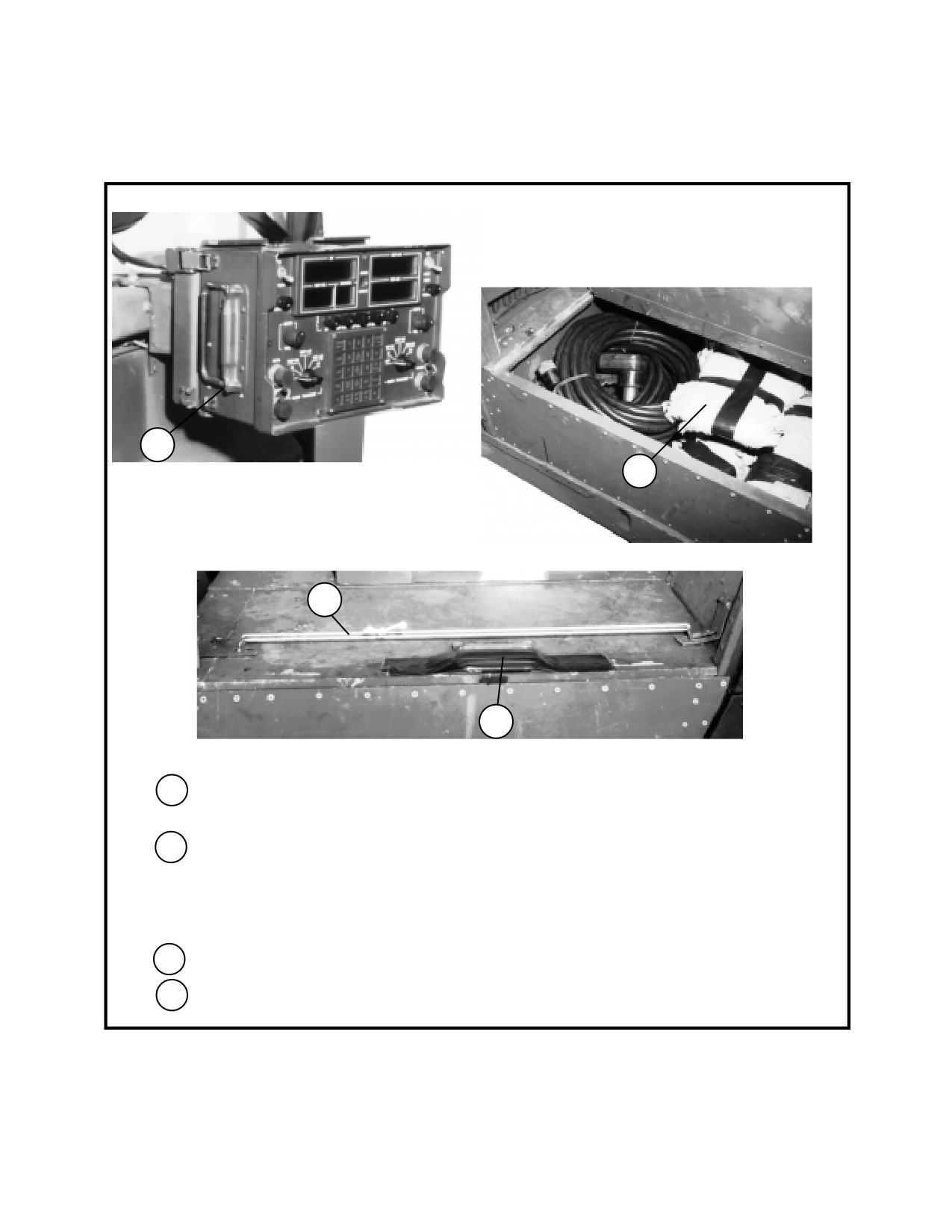
1
2
3
4
1
Remove the first RSC from the mounting bracket on the dash and the second RSC (not shown) from
the tool storage box.
2
Wrap both RSCs and antennas in cellulose wadding. Coil all cables, and secure them with type III
nylon cord or tape. Place the RSCs, antennas, and cables in the tool storage box. Also place the
antenna mounts, roll of wire, slave cable, generator power cable, and any classified equipment that
may be needed with the radios in the tool storage box. Fill empty areas with scrap pieces of
honeycomb.
3
Close the tool storage box door, and safety the latches together with type III nylon cord.
4
Tape the tool storage box handle down.
Figure 5-7. RSC secured
5-12
FM 10-500-23/TO 13C7-14-461
1
2
3
1
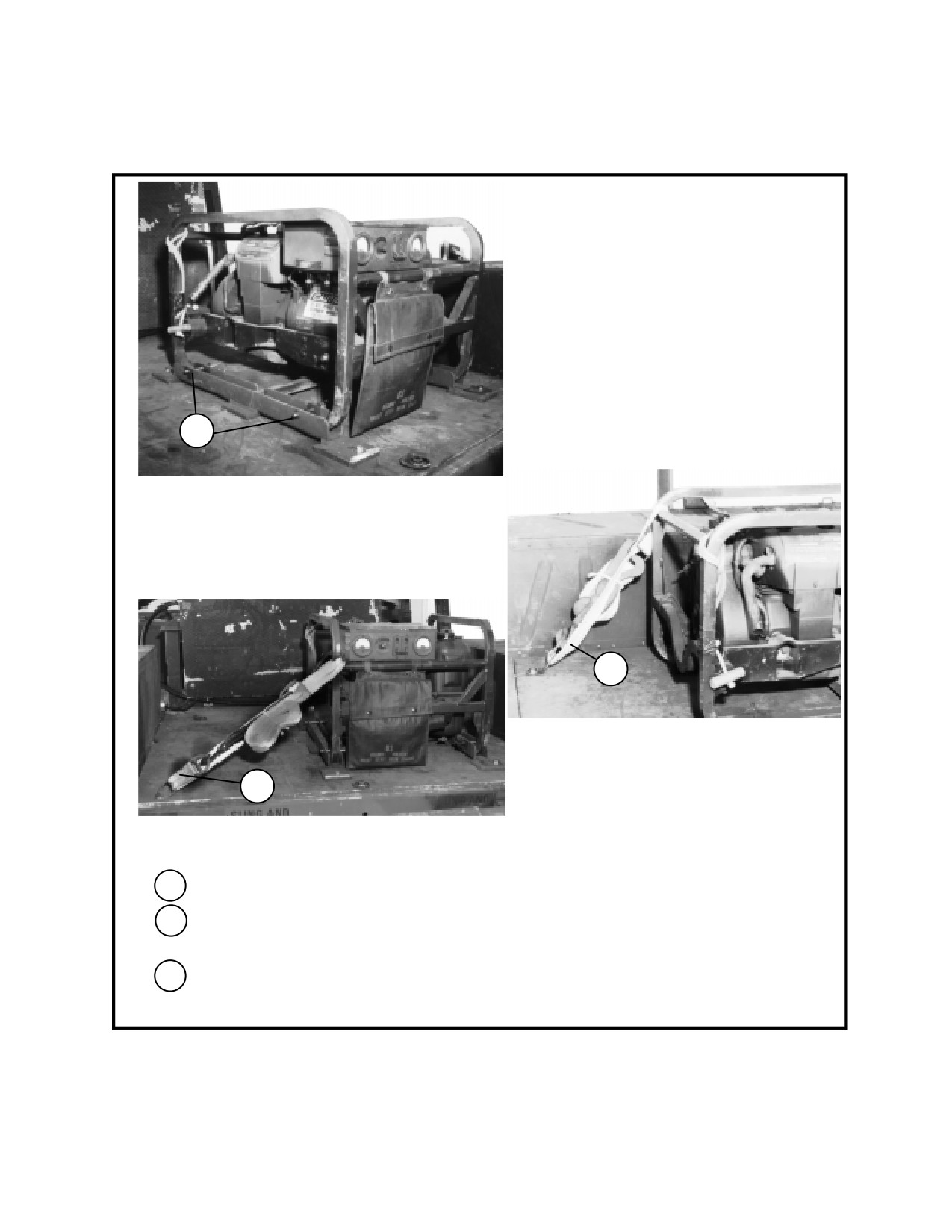
Place the generator in its rack, and install the safety pins.
2
Pass a 15-foot tiedown strap through the left rear D-ring of the cargo bed to the left rear side of the
generator frame. Secure the ends with a D-ring and a load binder.
3
Pass a 15-foot tiedown strap through the right front D-ring of the cargo bed to the right front side
of the generator frame. Secure the ends with a D-ring and a load binder.
Figure 5-8. Generator secured
5-13