AIRDROP OF SUPPLIES AND EQUIPMENT: RIGGING COMMUNICATION CONTROL VEHICLES (August 1999) - page 2
FM 10-500-23/TO 13C7-14-461
2-18. Placing Extraction Parachute
2-20. Marking Rigged Load
Select the extraction parachute and extraction line
Mark the rigged load according to FM 10-500-2/TO
needed using the extraction line requirements table in
13C7-1-5 and as shown in Figure 2-19. Complete
FM 10-500-2/TO 13C7-1-5. Place the extraction line on
Shipper's Declaration for Dangerous Goods and affix to
the load for installation in the aircraft.
load. If the load varies from the one shown, the weight,
height, CB, tip off curve, and parachute requirements
2-19. Installing Provisions for Emergency Restraints
must be recomputed.
Select and install the provisions for the emergency aft
2-21. Equipment Required
restraints according to the emergency aft restraint
requirements table in FM 10-500-2/TO 13C7-1-5.
Use the equipment listed in Table 2-1 to rig the load
shown in Figure 2-19.
2-29
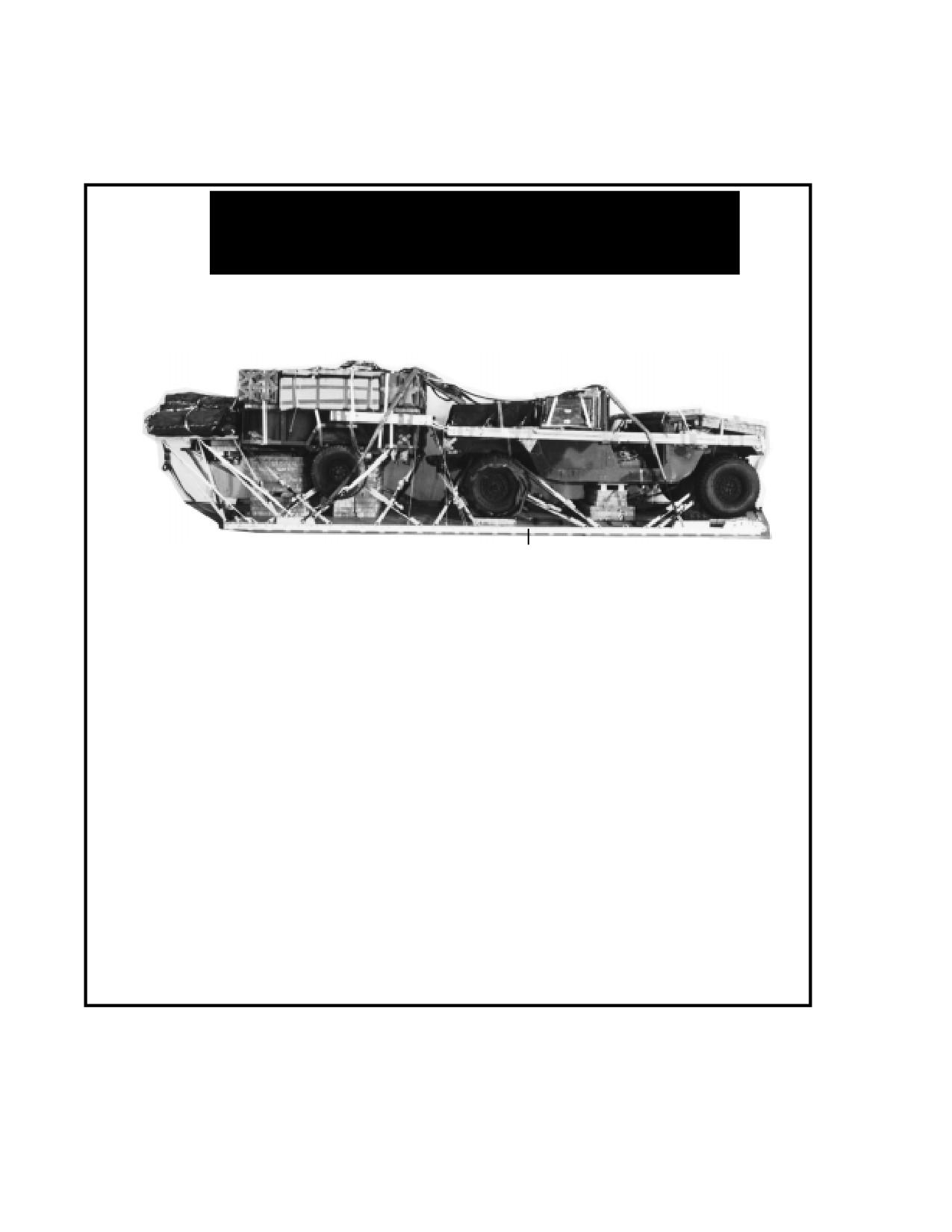
FM 10-500-23/TO 13C7-14-461
CAUTION
Make the final rigger inspection required by FM 10-500-2/TO 13C7-1-5
before the load leaves the rigging site.
CB
RIGGED LOAD DATA
Weight
13,289 pounds
Height
99 inches
Width
108 inches
Length
338 inches
Overhang: Front
5 inches
Rear
45 inches
Center of Balance (CB)
(from front edge of the platform)
140 inches
Extraction System
EFTC
Figure 2-19. MMLS in an M998 HMMWV and a 3/4-ton trailer rigged on a
24-foot type V platform for low-velocity airdrop
2-30
FM 10-500-23/TO 13C7-14-461
Table 2-1. Equipment required for rigging the MMLS in an M998 HMMWV and a 3/4-ton trailer rigged on a
24-foot, type V airdrop platform for low-velocity airdrop
National Stock
Item
Number
8040-00-273-8713
Adhesive, paste, 1-gal.
As required
1670-01-035-6054
Bridle (for line bag)
1
Clevis, suspension:
4030-00-090-5354
1-in (large)
7
4030-00-678-8562
3/4-in (medium)
6
8305-00-242-3593
Cloth, cotton duck, 60-in
As required
4020-00-240-2146
Cord, nylon, type III, 550-lb.
As required
1670-00-434-5787
Coupling, airdrop extraction force transfer cable, 20-ft
1
Cover:
1670-00-360-0328
Clevis, large
3
1670-00-360-0329
Link, type IV
3
8135-00-664-6958
Cushioning material, packaging, cellulose wadding
As required
8305-00-958-3685
Felt, 1/2-in thick
As required
1670-01-183-2678
Leaf, extraction line (line bag)
3
Line extraction:
1670-01-062-6313
60-ft (3-loop), type XXVI (C-130)
1
1670-01-107-7651
140-ft (3-loop), type XXVI (for C-141,C-5 or C-17)
1
1670-01-064-4452
60-ft (1-loop), type XXVI with towplate link (for C-17) Drogue Line
1
Link assembly:
1670-00-783-5988
Type IV
6
Two-point:
5306-00-435-8994
Bolt, 1-in diam, 4-in long
2
5310-00-232-5165
Nut, 1-in, hexagonal
2
1670-00-003-1953
Plate, side, 3 3/4-in
2
5365-00-007-3414
Spacer, large
2
5315-00-010-4659
Nail, steel wire, 8d
As required
1670-00-753-3928
Pad, energy-dissipating, (honeycomb),
3- by 36- by 96-in:
27 sheets
Parachute, cargo
1670-01-016-7841
G-11B
3
Parachute, cargo extraction
1670-01-063-3716
22-ft
1
Drogue (for C-17)
1670-01-063-3715
15-ft
1
Platform, airdrop, type V, 24-ft:
1
1670-01-162-2372
Clevis, assembly (type V)
(30)
1670-01-353-8424
Extraction bracket assembly
(1)
1670-01-353-8425
Bracket assembly, coupling
(1)
1670-01-247-2389
Suspension link
(2)
1670-01-162-2381
Tandem link assembly (Multipurpose link)
(2)
Lumber:
5510-00-220-6146
2- by 4- by:
As required
5510-00-220-6274
4- by 4- by:
As required
5510-00-220-6148
2- by 6- by:
As required
5530-00-128-4981
Plywood, 3/4-in:
4 sheets
2-31
FM 10-500-23/TO 13C7-14-461
Table 2-1. Equipment required for rigging the MMLS in an M998 HMMWV and a 3/4-ton trailer rigged on a
24-foot, type V airdrop platform for low-velocity airdrop (continued)
National Stock
Item
Quantity
Number
1670-01-097-8816
Release, cargo parachute, M-1
1
Sling, cargo, airdrop:
For suspension:
5340-01-062-7761
16-ft (2-loop), type XXVI
2
1670-01-062-6301
3ft (2-loop), type XXVI
2
1670-01-062-6304
9-ft (2-loop), type XXVI
2
1670-01-063-7760
11-ft (2-loop), type XXVI
2
For lifting:
1670-01-062-6304
9-ft (2-loop), type XXVI
2
1670-01-062-6303
12-ft (2-loop), type XXVI
2
For deployment:
1670-01-062-6304
9-ft (2-loop), type XXVI
1
For riser extension:
1670-01-062-6302
20-ft (2-loop), type XXVI
6
1670-00-040-8219
Strap, parachute release, multi-cut, comes with 3 knives
2
7501-00-266-5016
Tape, adhesive, 2-in
As required
1670-01-344-0825
Vehicle drive-off aid (HDDS)
1
1670-00-937-0271
Tiedown assembly, 15-ft
36
Webbing:
8305-00-268-2411
Cotton, 1/4-inch, type I
As required
8305-00-082-5752
Nylon, tubular 1/2-in
As required
8305-00-263-3591
Type VIII
As required
2-32
FM 10-500-23/TO 13C7-14-461
CHAPTER 3
RIGGING THE STANDARD INTERGRADED COMMAND POST SYSTEM (SICPS)
WITH THE COMMON HARDWARE/SOFTWARE 2ND GENERATION PACKAGE
(CHS-2) ON A 20-FOOT, TYPE V PLATFORM FOR LOW-VELOCITY AIRDROP
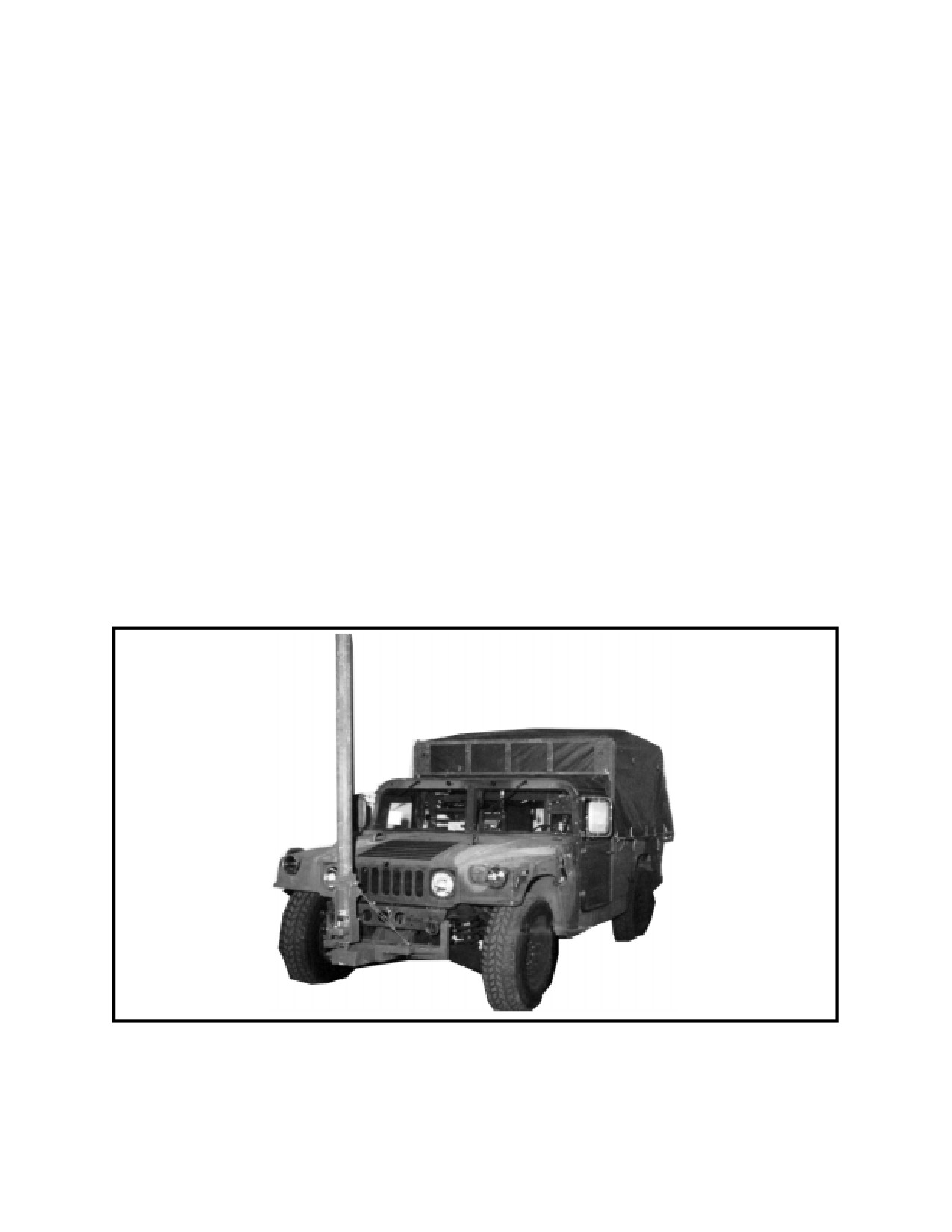
3-1. Description of Load
The Standard Intergraded Command Post System (SICPS)
load does not require the additional 300 pounds of ballast.
and the Common Hardware/Software 2nd Generation Pack-
The CHS-2 as a full package contains the following equip-
age (CHS-2) are rigged on a 20-foot, type V airdrop plat-
ment:
form with three G-11 cargo parachutes. The rigged weight
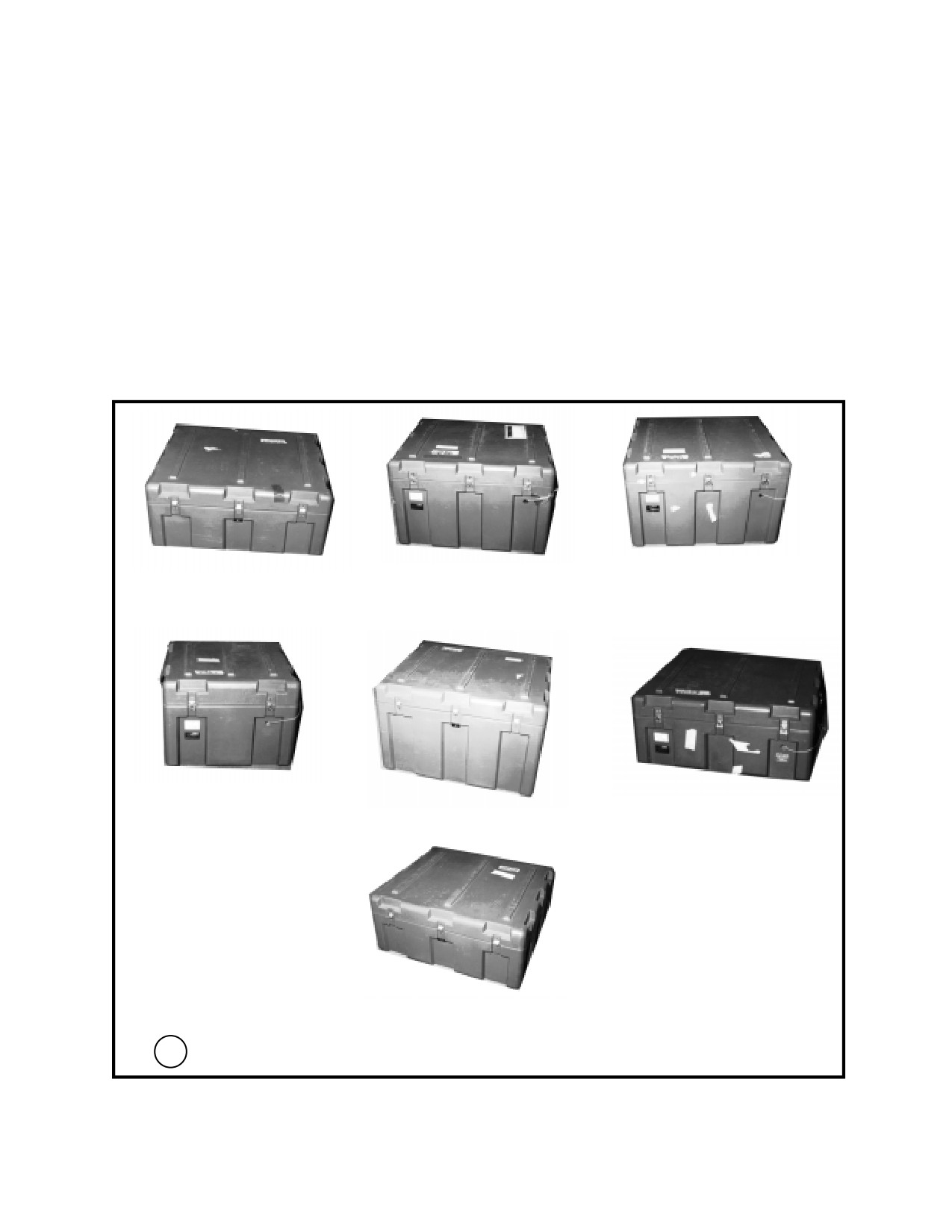
--1 each Laser Printer (LP) 155 pounds
of this load as shown is 12,100 pounds. The load (Figure 3-
--1 each Character Graphic Printer #1 (CGP) 60 pounds
1) has a full CHS-2 package. If all of the package is not
--2 each Color Monitor Display #1and #2 (CMD) 155
needed or available, the space can be filled with honey-
pounds each
comb where that item would have been positioned on the
--1 each High Capacity Unit (HCU) 98 pounds
platform. The SICPS uses the MK 2727/G Soft Top Instal-
--1 each Transportable Computer Unit (TCU) 98 pounds
lation Kit (STIK) with an AB 1386 antenna mast mounted
--2 each Uninterrupted Power Supply #1 and #2 (UPS) 155
on the front of the Cargo/Troop Carrier. The preparation of
pounds each
the STIK is outlined in C4, FM 10-517/TO 13C7-1-111. This
The weights include the storage cases. The center of bal-
ance of this load has been figured to compensate for any
items not rigged with this load so additional ballast is not
required.
Figure 3-1. The Standard Intergraded Command Post System (SICPS) and the
Common Hardware/Software 2nd Generation Package (CHS-2)
3-1
FM 10-500-23/TO 13C7-14-461
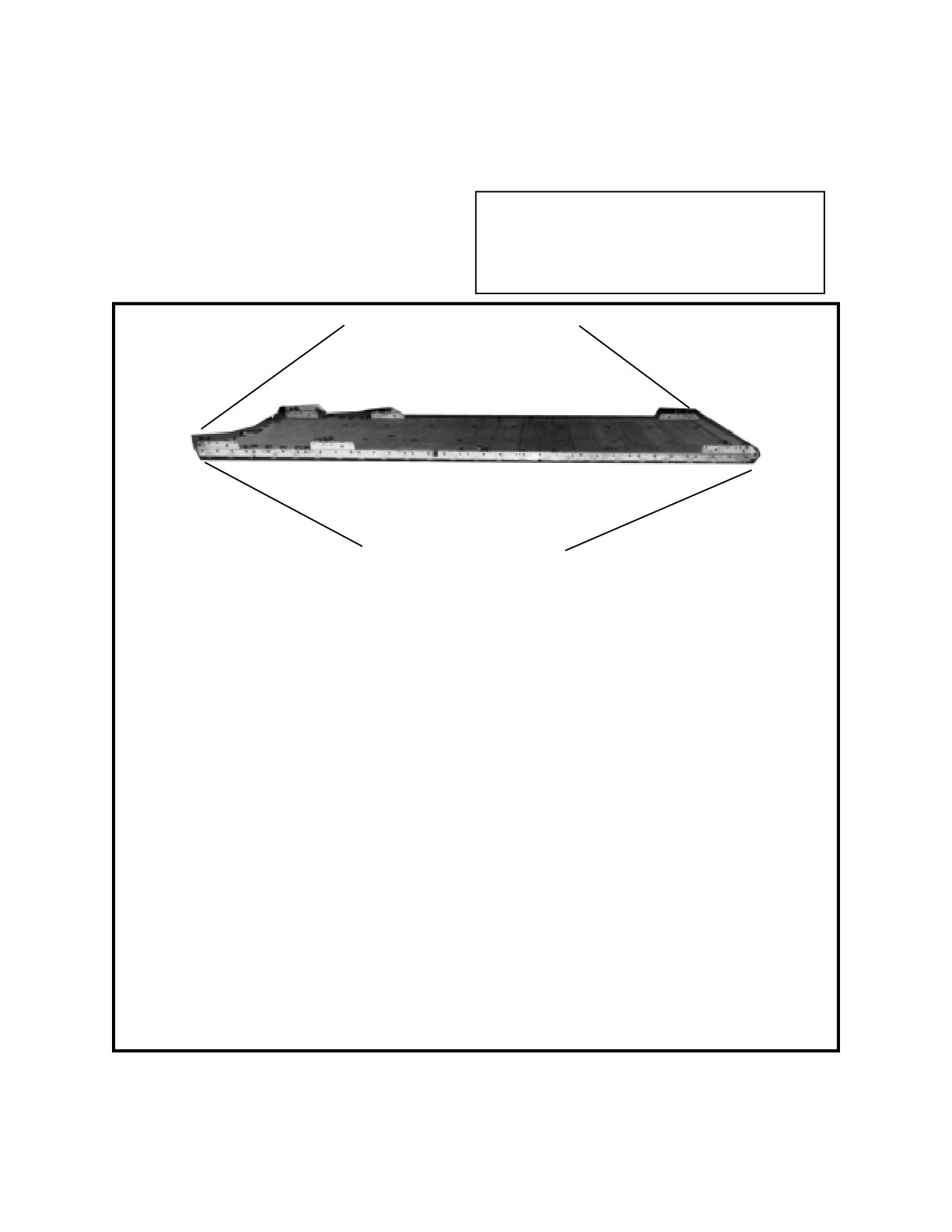
3-2. Preparing Platform
NOTES:
Prepare a 20-foot, type V airdrop platform as shown in
1. The nose bumper may or may not be installed.
Figure 3-2.
2. Measurements given in this load are from the front
edge of the platform, NOT from the front edge of the
nose bumper.
CLEVISES 19A THROUGH 1A
REAR
FRONT
CLEVISES 19 THROUGH 1
Step:
1.
Inspect, or assemble and inspect, a 20-foot, type V airdrop platform as outlined in TM 10-1670-
268-20&P/TO 13C7-52-22.
2.
Install suspension links to the right and left platform side rails using holes 29, 30, and 31.
3.
Install a tandem link to the rear of each platform side rails using holes 38, 39,
and 40.
4.
Install a tandem link to the front of each platform side rail using holes 1, 2, and 3.
5.
Install clevises on bushings 1and 3 of each forward tandem link.
6.
Install clevises on bushings 2 and 3 on the suspension links.
7.
Install clevises on bushings 1and 3, and two clevises on bushing 4 of each rear tandem link.
8.
Starting at the front of each platform side rail, install clevises on the bushings bolted to holes 14,
15, 16, 19, 21, 32, 33, 34, 35, 36, and 37.
9.
Starting at the front of the platform, number the clevises 1 through 19 on the right side, and 1A
through 19A on the left side.
10.
Label the tie-down rings according to FM 10-500-2/TO 13C7-1-5.
Figure 3-2. Platform prepared
3-2
FM 10-500-23/TO 13C7-14-461
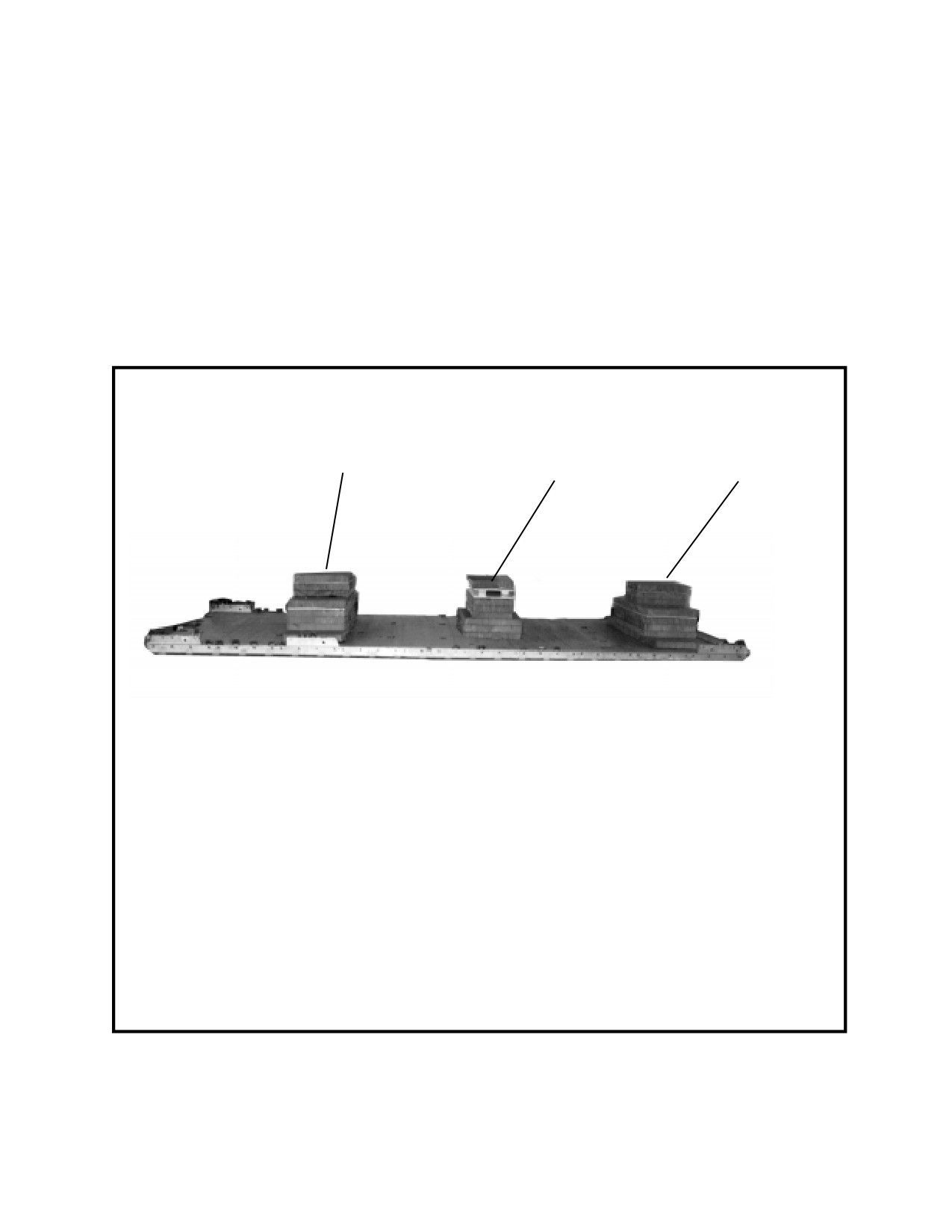
3-3. Building and Positioning the Honeycomb Stacks
for the SICPS
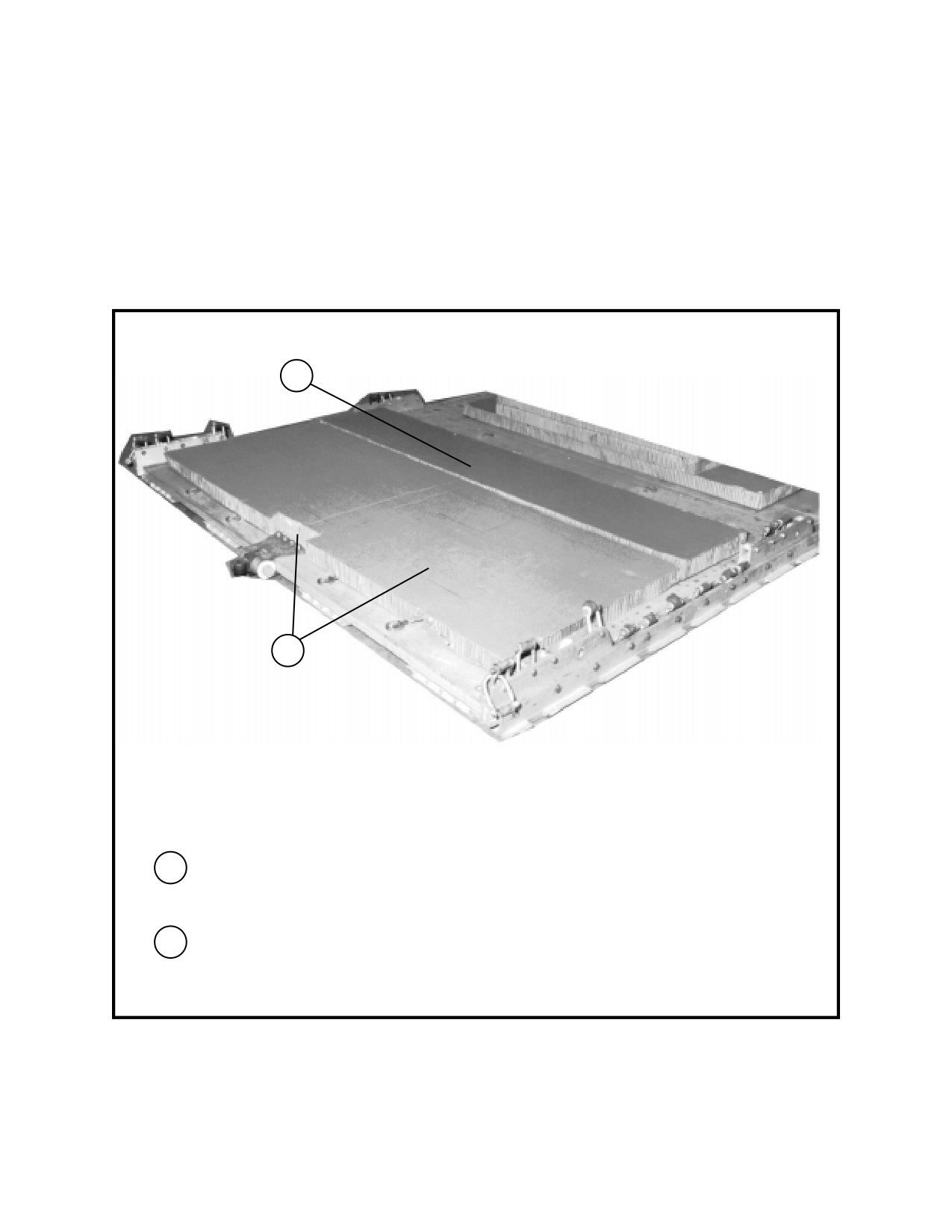
Build the honeycomb stacks for the SCIPS as shown in
Chapter 2, Figures 2-2 through 2-4 of this manual. Place
the honeycomb stacks for the SICPS as shown in Figure
3-3.
STACK 3
STACK 2
STACK 1
Step:
1.
Position stack 1 centered 17 inches from the front edge of the platform.
2.
Position stack 2 centered 45 inches from stack 1 with the cut out of the top piece of honeycomb
pointing towards the front of the vehicle and the rear of the platform. The crossmember of the
vehicle must set centered on top of the 43-inch width of the top piece of honeycomb and the left
and right sides of the frame must set on the sides of the top piece of honeycomb.
3.
Position stack 3 centered and 35 inches from stack 2.
Figure 3-3. Stacks 1, 2, and 3 for the SICPS placed
3-3
FM 10-500-23/TO 13C7-14-461
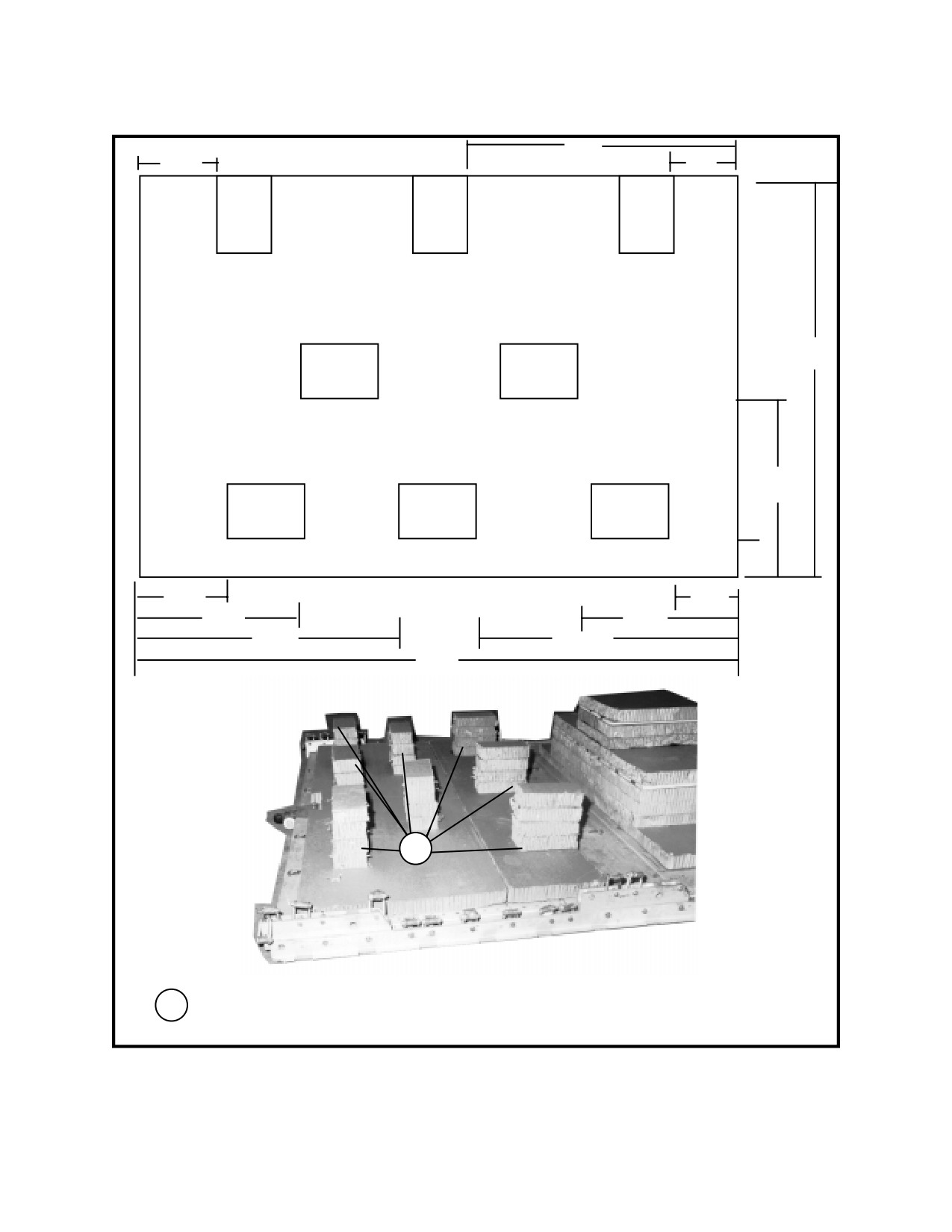
3-4. Building and Positioning the Honeycomb Stacks
for the CHS-2
Build and position the honeycomb stacks for the CHS-2
as shown in Figure 3-4.
2
1
1
Place a 96- by 36-inch piece of honeycomb centered even with the forward side of the four rear
deck rings. Make a cutout on the rear edge of the honeycomb to accommodate the extraction
bracket assembly.
2
Place a 96- by 18-inch piece of honeycomb centered next to the first piece to form a 96- by 54-inch
layer.
Figure 3-4. Honeycomb stacks for the CHS-2 built and positioned
3-4
FM 10-500-23/TO 13C7-14-461
45"
13"
13"
6"x 12"
6"x 12"
6"x 12"
54"
6"x 12"
6"x 12"
22"
6"x 12"
6"x 12"
6"x 12"
6"
REAR
13"
13"
27"
27"
42"
42"
96"
3
3
Cut 32 pieces of 12- by 6-inch honeycomb and form eight stacks with four pieces in each
stack. Position the stacks on the honeycomb as shown above.
Figure 3-4. Honeycomb stacks for the CHS-2 built and positioned (continued)
3-5
FM 10-500-23/TO 13C7-14-461
6
4
5
4
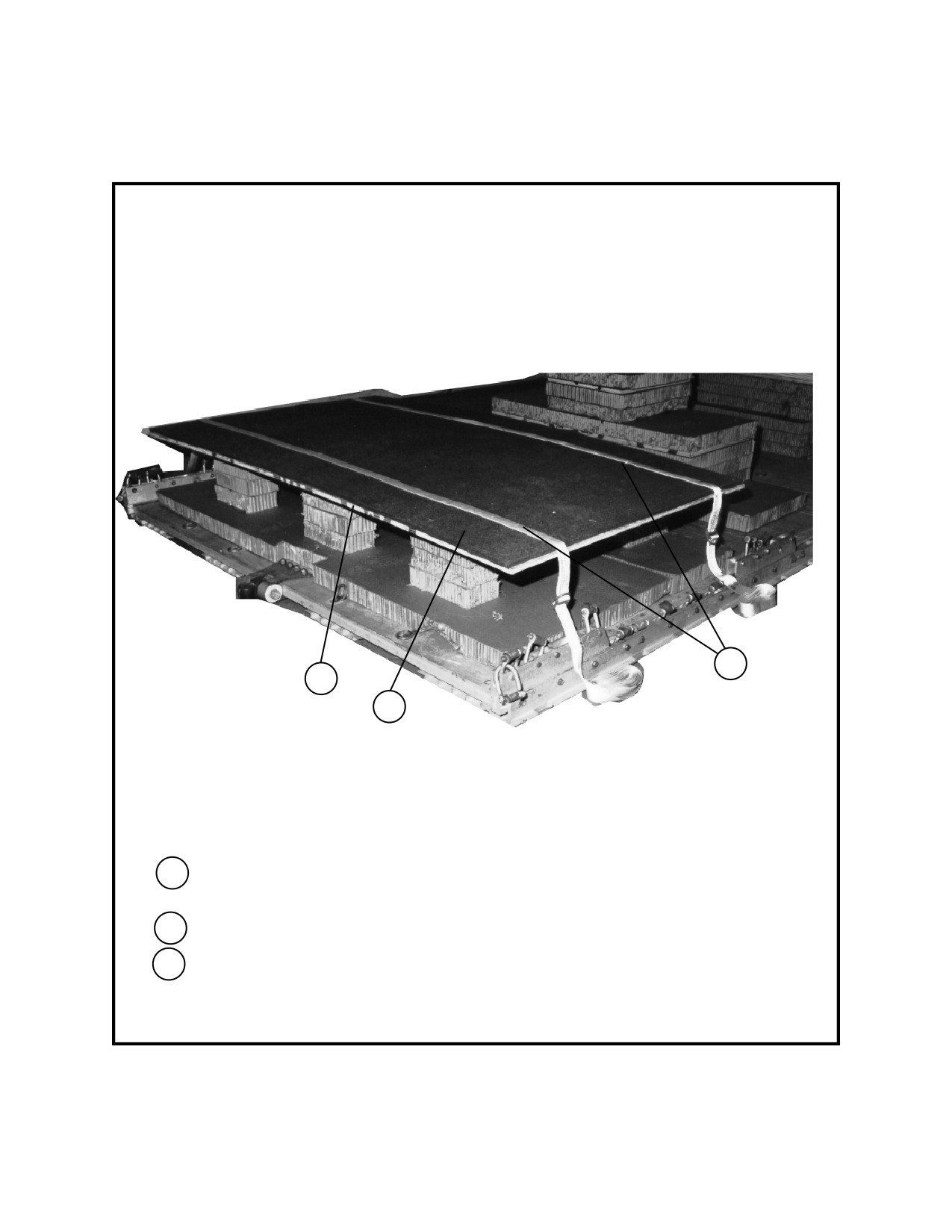
Place a spliced layer of 3/4- by 96- by 48-inch and a 3/4- by 96- by 6-inch plywood centered on top
of the honeycomb stacks.
5
Place a layer of 1/2- by 96- by 54-inch felt centered on top of the plywood.
6
Preposition two 30-foot lashings on top of the felt. Place one lashing 6 inches from the rear edge
of the plywood with the joined D-rings 6 inches off the right edge of the plywood. Place the
second lashing 6 inches from the forward edge of the plywood with the joined D-ring 6 inches
off the right edge of the plywood.
Figure 3-4. Honeycomb stacks for the CHS-2 built and positioned (continued)
3-6
FM 10-500-23/TO 13C7-14-461
3-5. Rigging the SICPS in the M1097 HMMWV
Use the following procedures to rig the components of
the SICPS which include the MK2727/G Soft Top
Installation Kit (STIK), the accompanying load and the
M1097 HMMWV. The procedures used to prepare the
HMMWV with the windshield down are outlined in FM
10-517/TO 13C7-1-111 . Follow the basic preparation for
the STIK with changes to accommodate the SCIPS
equipment and accompanying load. Rig the load as
shown in Figure 3-5.
CMD 2
TCU 1
CMD 1
CGP
HCU
LP
UPS
1
Remove the CHS-2 equipment and place in the appropriate impact box.
Figure 3-5. SICPS rigged in the M1097 HMMWV
3-7
FM 10-500-23/TO 13C7-14-461
2
3
4
2
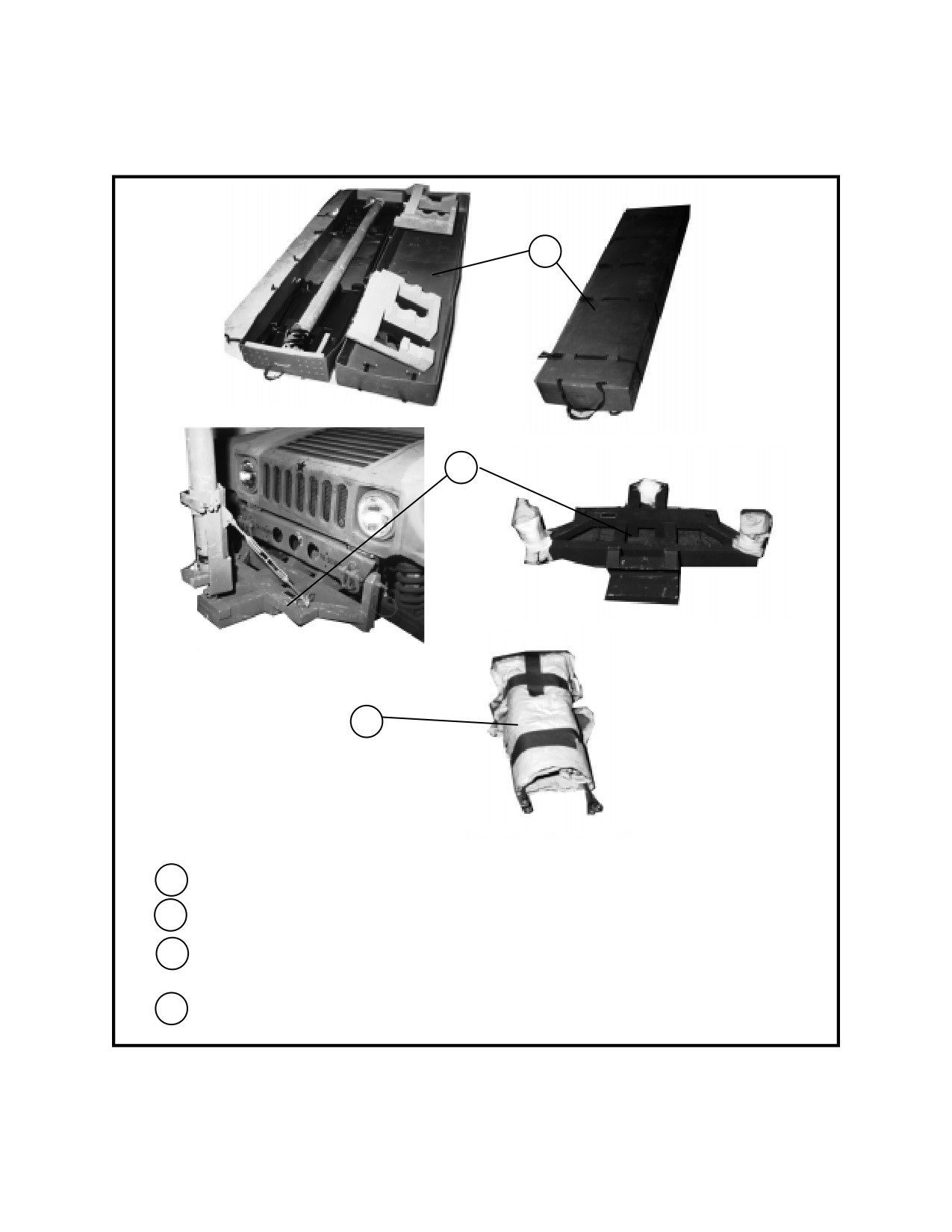
Remove the AB 1386 Antenna Mast and secure it in the storage container.
3
Remove the antenna mount from the HMMWV and pad the connector ends.
4
Remove mast adapter and replace securing pins on the HMMWV. Wrap the adapter in
cellulose.
5
Remove the foward antenna mounts and cross bracket. Remove the antenna mounts frrom the
cross bracket and reinstall the bolts into the cross bracket and truck sides. (Not shown)
Figure 3-5. SICPS rigged in the M1097 HMMWV (continued)
3-8
FM 10-500-23/TO 13C7-14-461
6
Remove the light set by disconnecting the power plug to the light set. Remove the velcro strapping
and then secure the velcro. Place the light set in the transit case. Leave the cable attached to the
light bow. Pad and tape the cable ends. (Not shown)
7
Loosen exterior canvas hooks and velcro on the canvas top. (Not shown)
8
Undo canvas fasteners from the cab area. (Not shown)
9
Remove the canvas top and white liner. Roll the canvas top with the white liner inside towards the
front of the truck and remove. (Not shown)
10
Remove the fire extinguisher and store it inside the roadside bin. Remove the fire extinguisher
mounting brackets and store them in the inside curbside storage bin. (Not shown)
11
Remove the cab cover, doors and bows. Store the cover in the exterior curbside storage bin. (Not
shown)
12
Remove the cables from the PCM and pad the cable ends. PCM. Leave the cables in place.
(Not shown)
13
Remove the PCM from the right side guard. Remove the bracket from the back of the PCM and
store it in the inside curbside storage bin. Tape thumbscrews to the PCM. Reinstall all the other
screws on the PCM and wrap it in cellulose. (Not shown)
14
Remove the cables from the WSDM. Pad the cable ends and leave the cables in place. (Not shown)
15
Remove the WSDM from the rack. Remove the holding bracket from the back of the WSDM. Wrap
the WSDM in cellulose and store it in the inside roadside storage bin. Wrap the holding bracket in
cellulose and store it in the inside roadside storage bin. (Not shown)
16
Remove the Communications Module (CM) from the storage box and wrap it in cellulose. Store
it in the inside roadside storage bin. (Not shown)
17
Remove the Z bracket antenna mounts and store them in the exterior roadside storage bin. (Not
shown)
18
Remove the front work station guard (grate). Reinstall the screws to the guard. (Not shown)
19
Remove the canvas support bracket. (Not shown)
20
Using four people remove the canvas bows and side guards. Number the bows and ties to aid in
reinstalling them. Remove the two center posts first. Remove the forward canvas post next. Finally,
using two people to hold the side guards, remove the rear posts. (Not shown)
21
Remove the tailgate gap cover. (Not shown)
22
Remove the ladder handle. (Not shown)
23
Remove the ladder. (Not shown)
Figure 3-5. SICPS rigged in the M1097 HMMWV (continued)
3-9
FM 10-500-23/TO 13C7-14-461
25
24
24
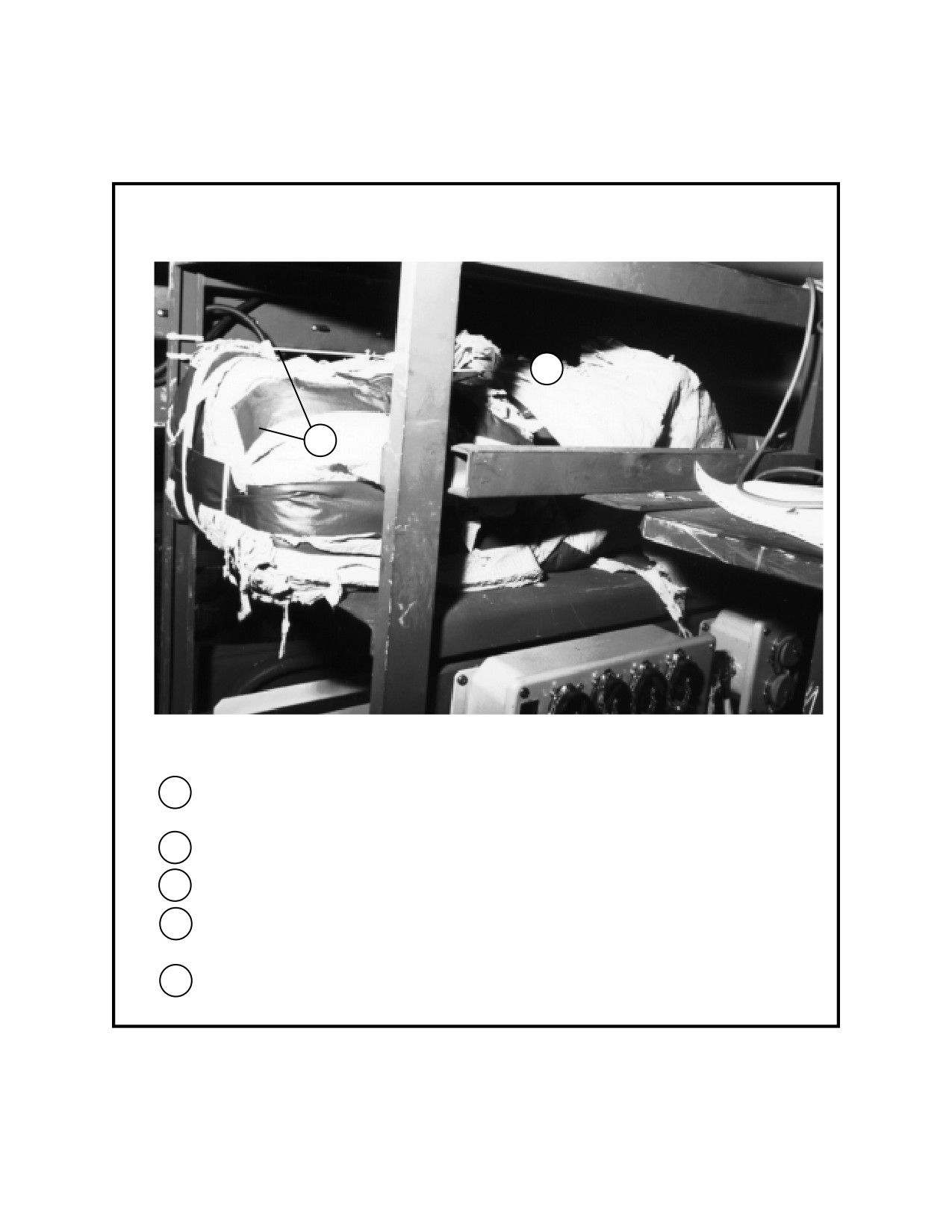
Wrap the fan and heater in cellulose and secure it in the curbside rack setup with type III nylon
cord.
25
Store any miscellaneous cables and the rear blackout cover in the inside curbside storage bin.
26
Store the tool box in the inside roadside storage bin. (Not shown)
27
Store the surface wire grounding kit, the 75-foot input power cable, the pigtail input power cable
and wrapped vehicle mirrors in the exterior roadside storage bin. (Not shown)
28
Store the exhaust hose, jack and the OVM equipment in the exterior roadside storage bin. (Not
shown)
Figure 3-5. SICPS rigged in the M1097 HMMWV (continued)
3-10
FM 10-500-23/TO 13C7-14-461
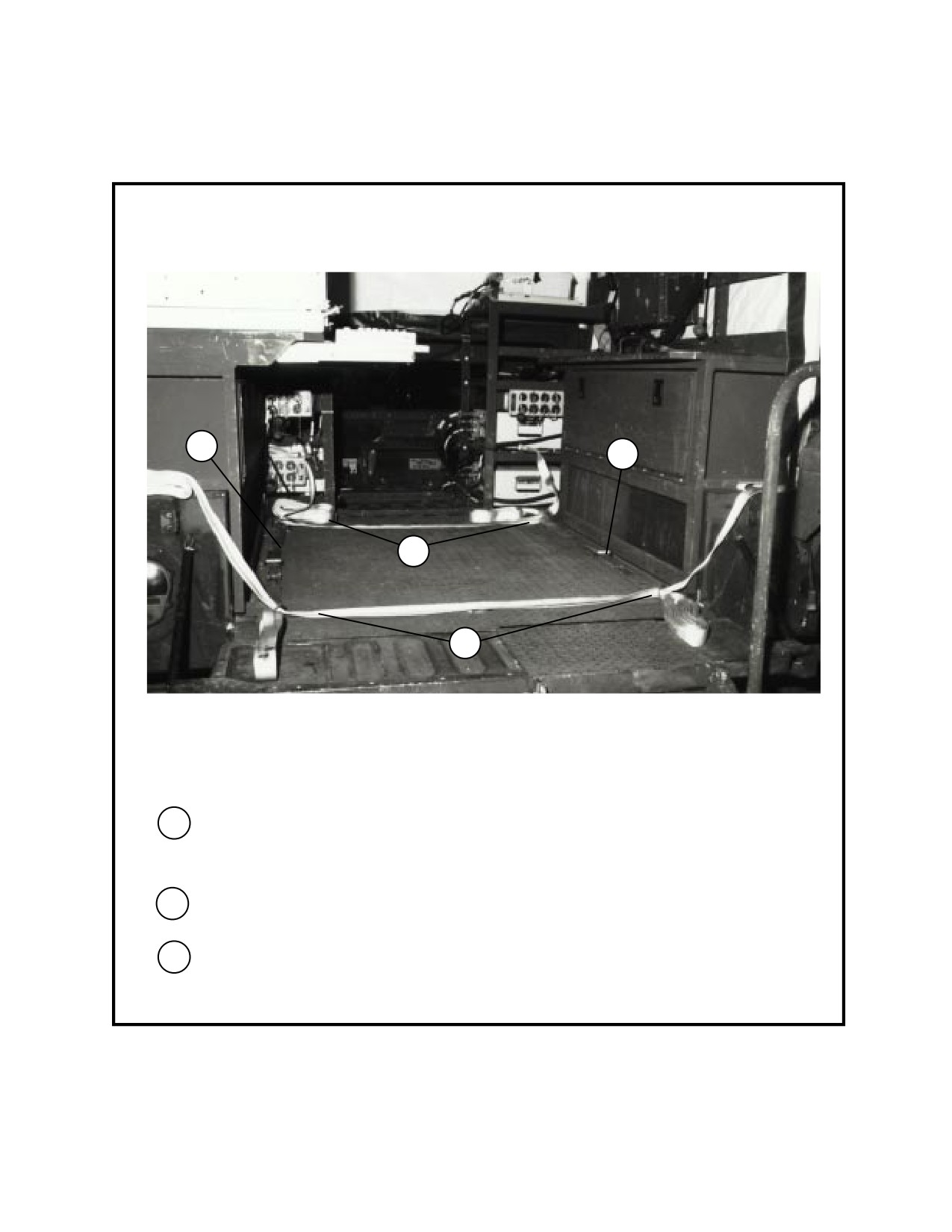
29
29
30
31
29
Preposition one 30-foot lashing through the left side tie-down rings centering the joined D-rings
between the tie-down rings. Preposition one 30-foot lashing through the right side tie-down rings
centering the joined D-rings between the tie-down rings.
30
Preposition a lashing running it through the front right and left tie-down rings evening the ends
and leaving an equal length of lashing at each ring.
31
Preposition a lashing running it through the rear right and left tie-down rings evening the ends and
leaving an equal length of lashing at each ring.
Figure 3-5. SICPS rigged in the M1097 HMMWV (continued)
3-11
FM 10-500-23/TO 13C7-14-461
33
34
32
34
32
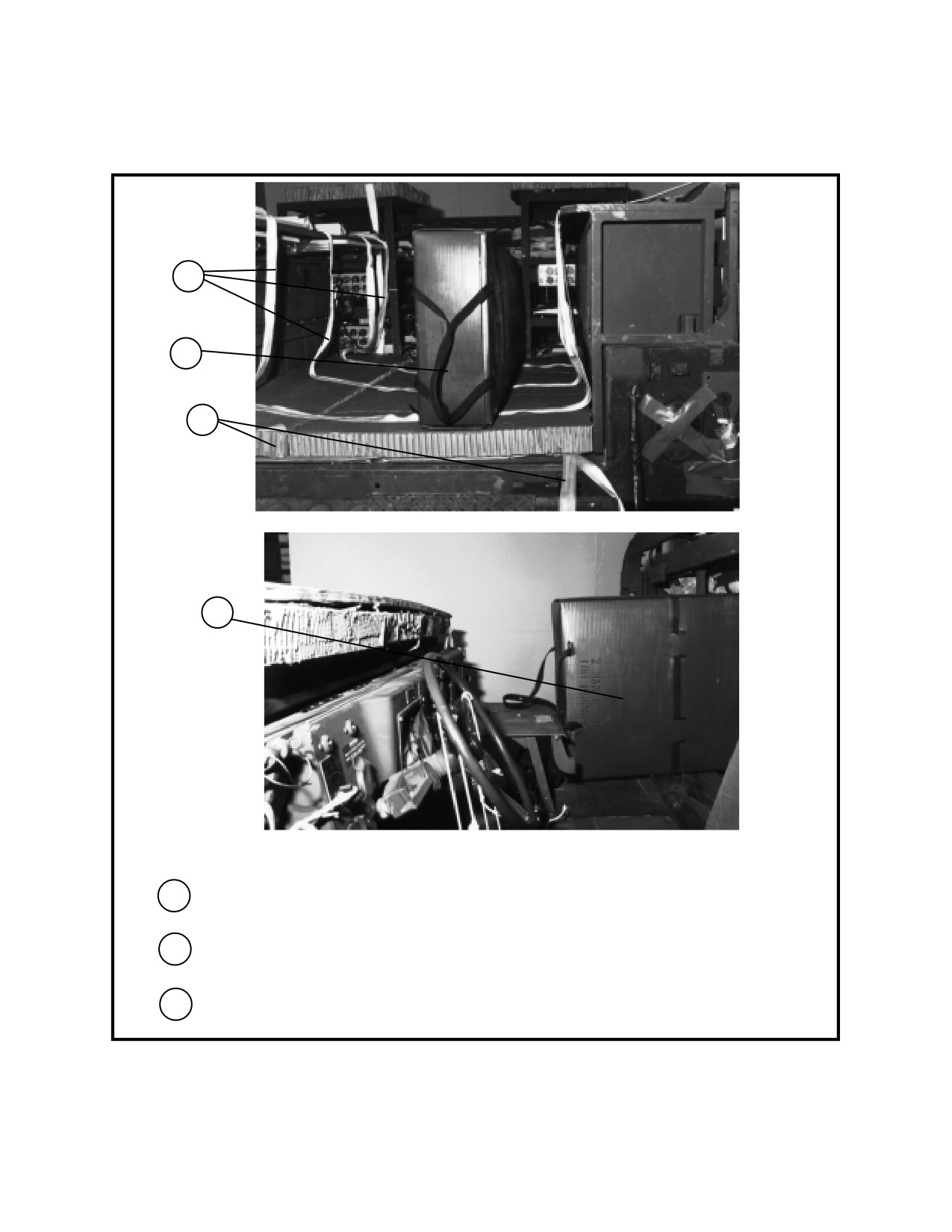
Cover the floor of the truck bed with one layer of honeycomb. Move the running ends of the
lashings out from under the honeycomb and place where they will be accessible later.
33
Preposition three lashings on top of the honeycomb spacing them apart with an equal length
running to both the right and left sides.
34
Place the antenna mast storage box in the truck flush with the right rack and the front radio stand.
Figure 3-5. SICPS rigged in the M1097 HMMWV (continued)
3-12
FM 10-500-23/TO 13C7-14-461
40
42
39
36
38
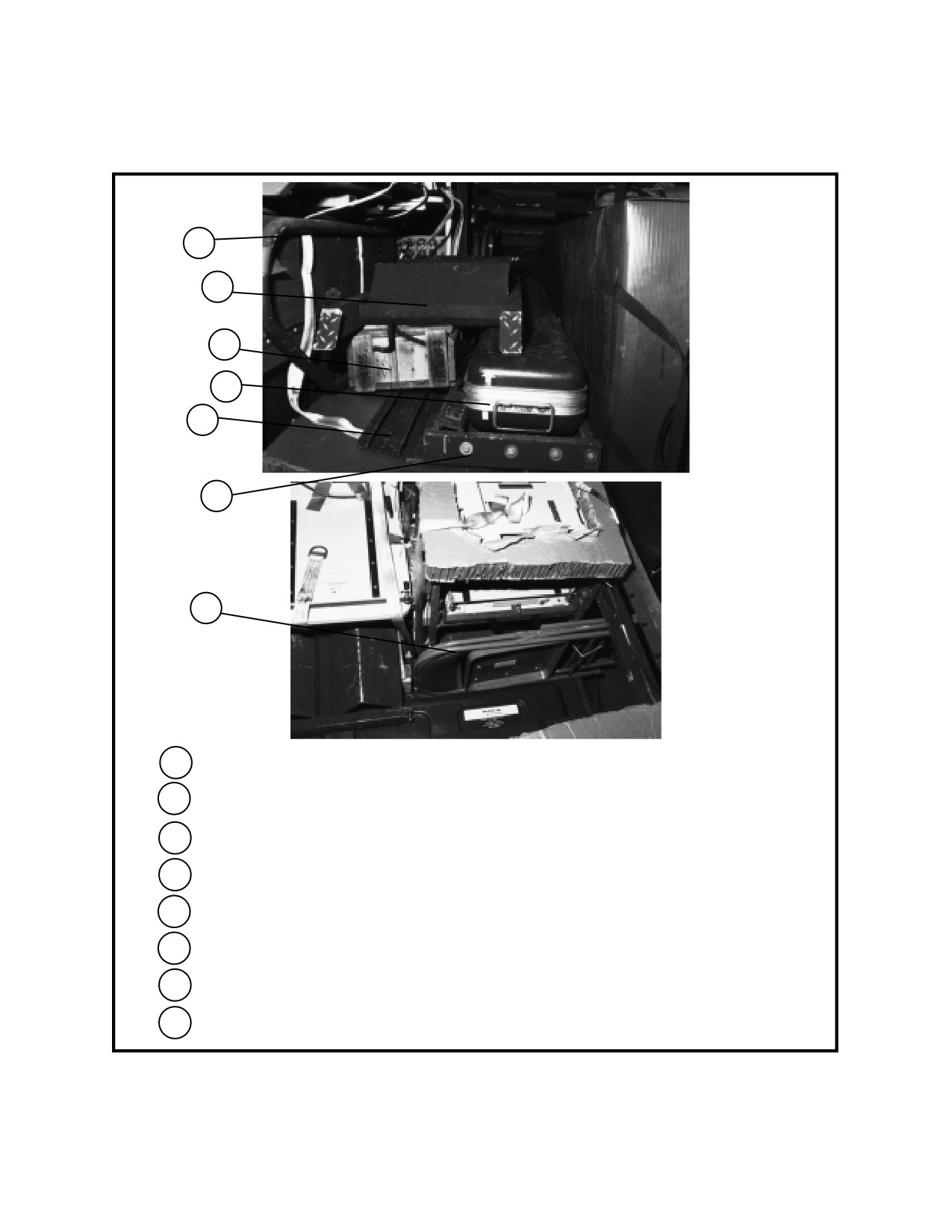
35
37
35
Place the forward antenna mount to the left side of the mast mount.
36
Place the PCM bracket on top of the antenna mount.
37
Place folding chairs next to the left side front rack.
38
Place the tailgate gap next to the antenna mount.
39
Place the overhead light storage box on top of the PCM mount.
40
Place the stair rail next to the left side work station.
41
Place miscellaneous parts box on top of the tailgate gap. (Not shown)
42
Place the stairs on top of the parts box on the light box.
Figure 3-5. SICPS rigged in the M1097 HMMWV (continued)
3-13
FM 10-500-23/TO 13C7-14-461
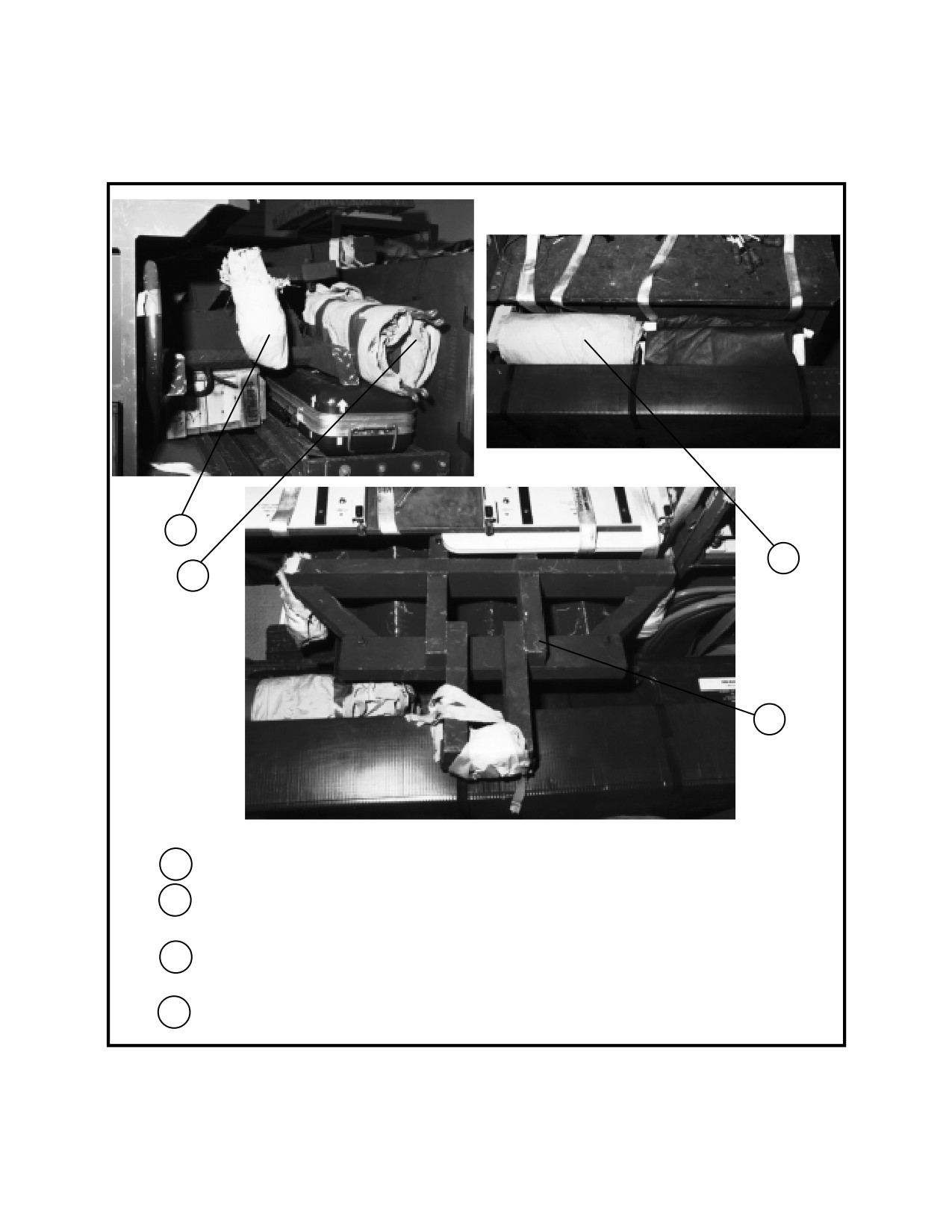
43
45
44
46
43
Place the wrapped mast adapter on top of the light box and next to the stairs.
44
Place wrapped PCM on the right side of the mast box to the front of the vehicle with the switches
toward the mast box.
45
Place the vehicle's canvas top and the white liner on the right side of the mast box flush with the
PCM.
46
Place the mast antenna mount on top of the stairs with the large side against the left work station
and one side flush with the left side rack.
Figure 3-5. SICPS rigged in the M1097 HMMWV (continued)
3-14
FM 10-500-23/TO 13C7-14-461
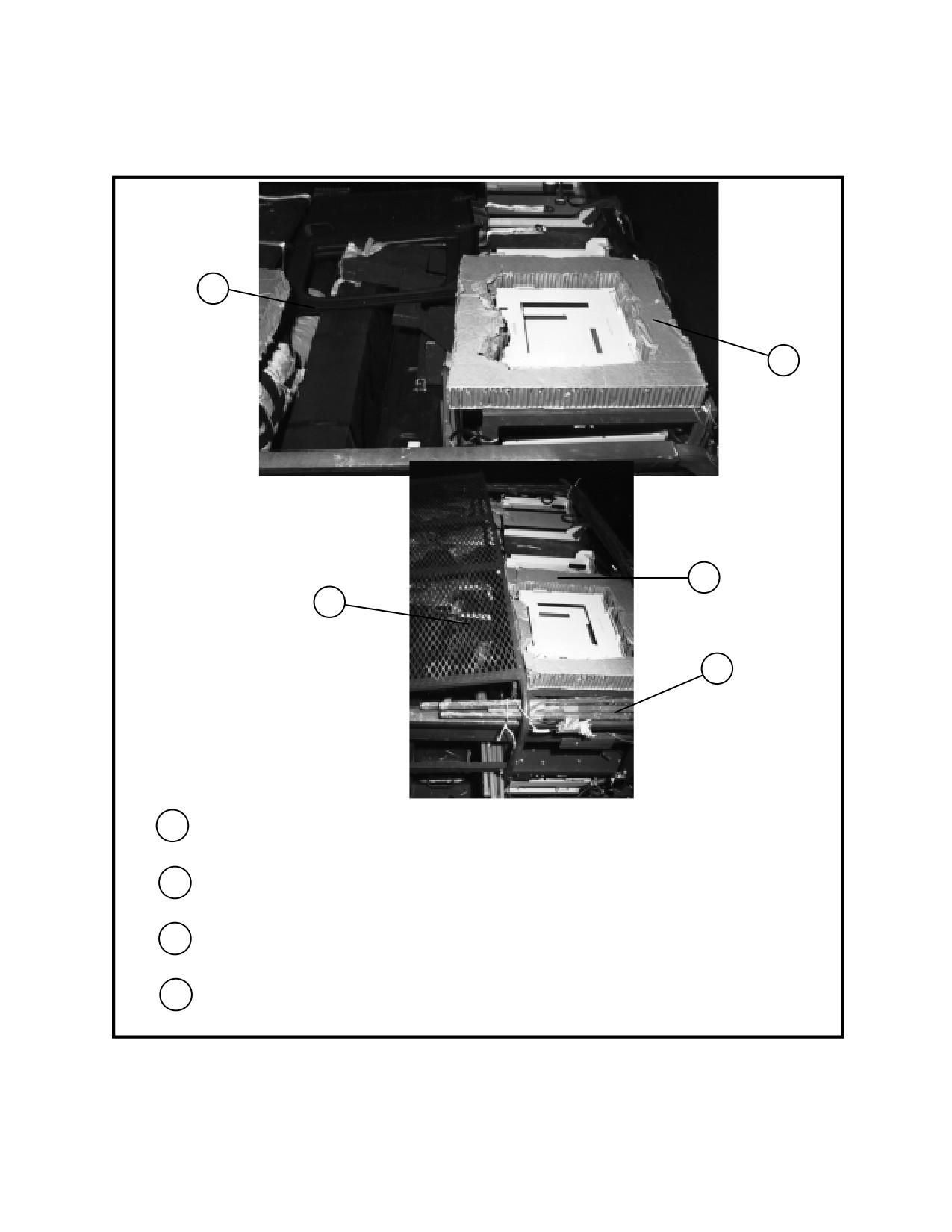
47
48
48
50
49
47
Place the vehicle's doors on top of the mast box and the mast mount with the bottom of the doors
even with the rear edge of the mast box.
48
Cut to fit two pieces of honeycomb to cover the top of each of the racks. Cut out the centers so the
honeycomb lays flat on top of the racks.
49
Place the canvas support bows along the top left edge of the workstation with the legs to the front
of the left rack. Secure it to the vehicle with type III nylon cord.
50
Place the workstation guard on top of the load with one side in front of the racks and between the
seats. Secure it to the vehicle with type III nylon cord.
Figure 3-5. SICPS rigged in the M1097 HMMWV (continued)
3-15
FM 10-500-23/TO 13C7-14-461
51
51
51
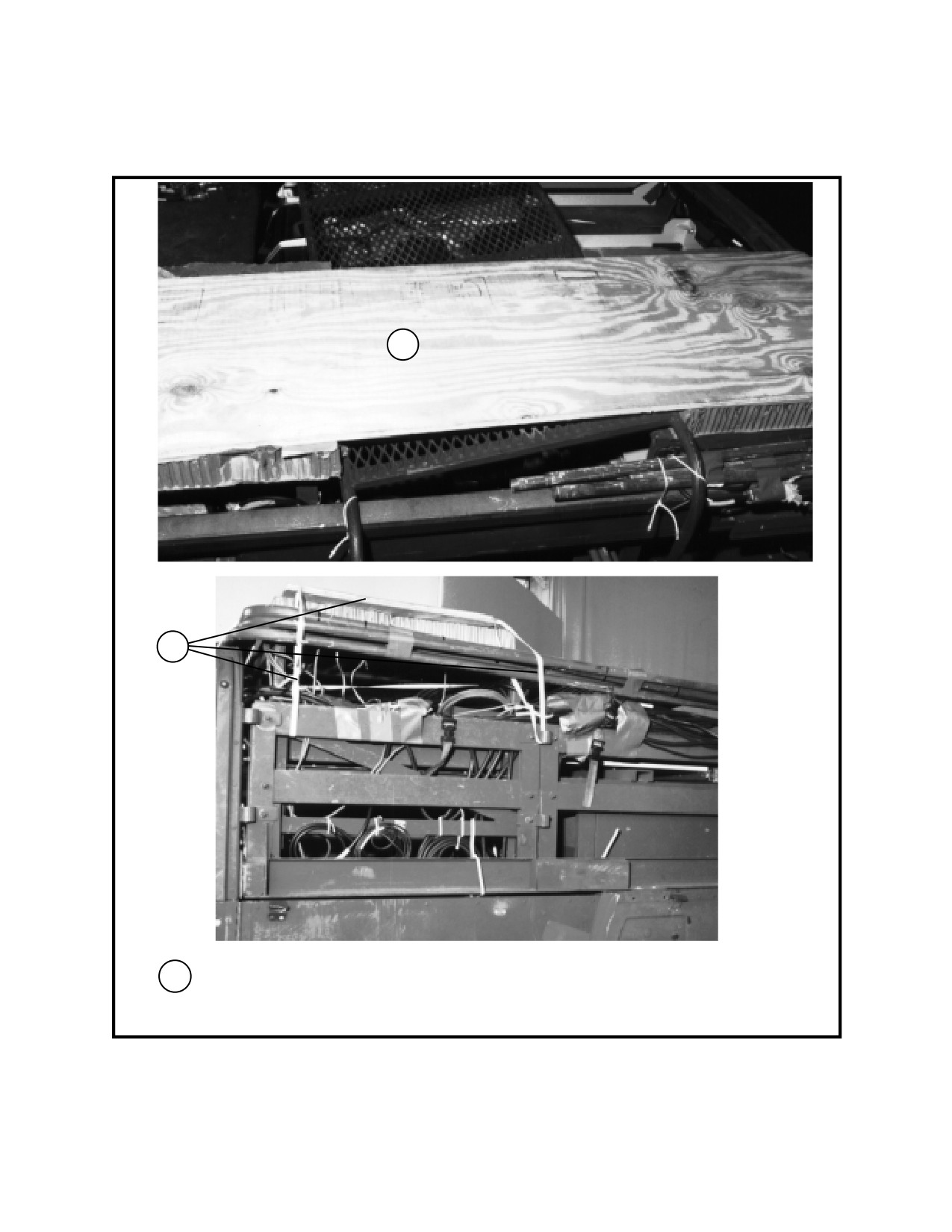
Cut a 3/4- by 80- by 24-inch piece of plywood. Round the corners and drill a 1-inch hole in each
corner, 1 inch from the edge and place it centered on top of the two pieces of honeycomb in step
48. Secure it to the load with type I 1/4-inch cotton webbing.
Figure 3-5. SICPS rigged in the M1097 HMMWV (continued)
3-16
FM 10-500-23/TO 13C7-14-461
52
55
52
53
54
56
52
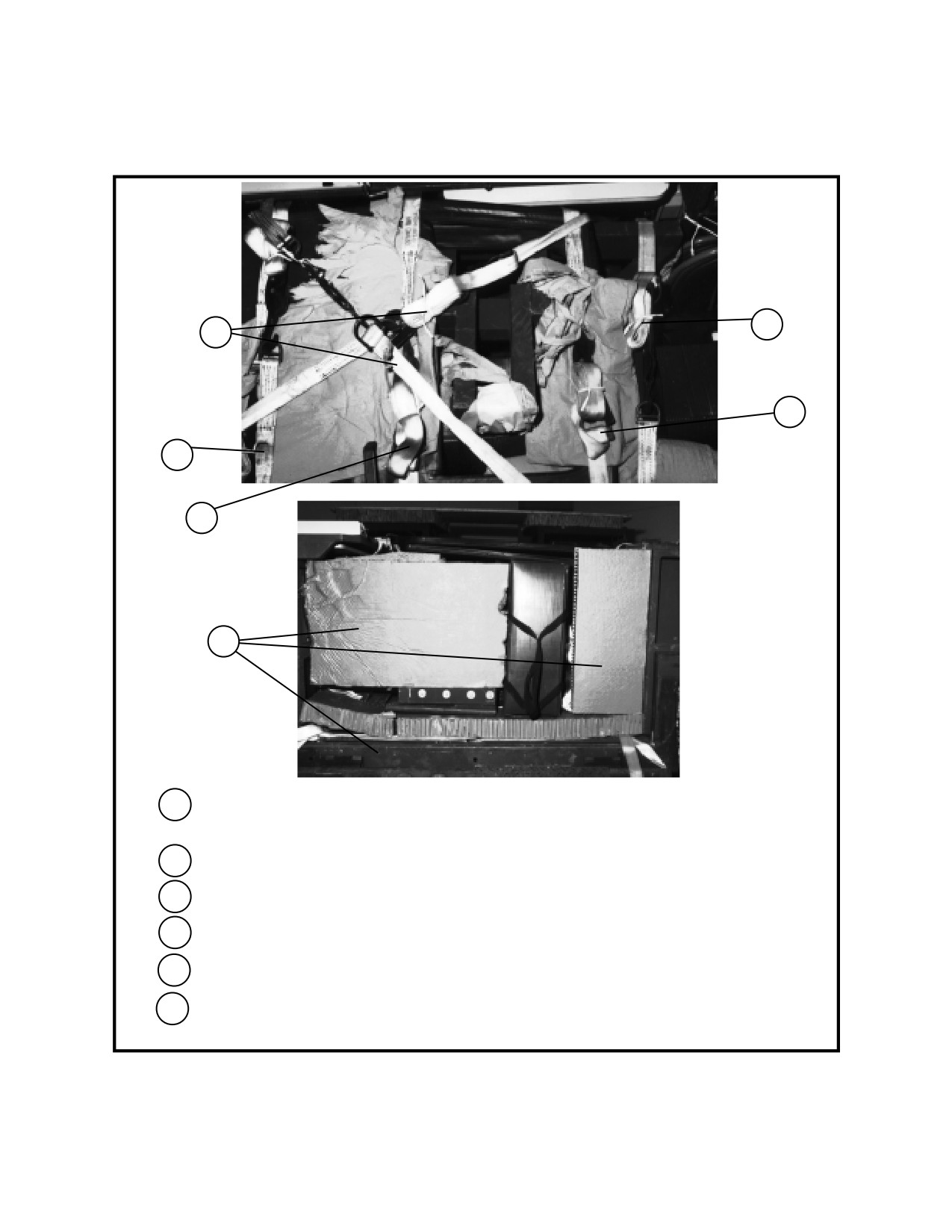
Fill the gaps in the top of the load with honeycomb and pad the top of the load with cellulose.
Secure the three prepositioned lashings from step 33 to their own ends.
53
Secure the lashing from step 30 to it's own ends.
54
Secure the lashing from step 31 to it's own ends.
55
Secure the lashings from step 29 crossing the ends to the opposite lashing.
56
Fill in the rear of the load with honeycomb and secure the tailgate.
57
Place a canvas load cover over the rear of the truck covering the accompanying load and secure it
in place with type III nylon cord. (Not shown)
Figure 3-5. SICPS rigged in the M1097 HMMWV (continued)
3-17
FM 10-500-23/TO 13C7-14-461
3-6. Positioning the CHS-2 Equipment on the Platform
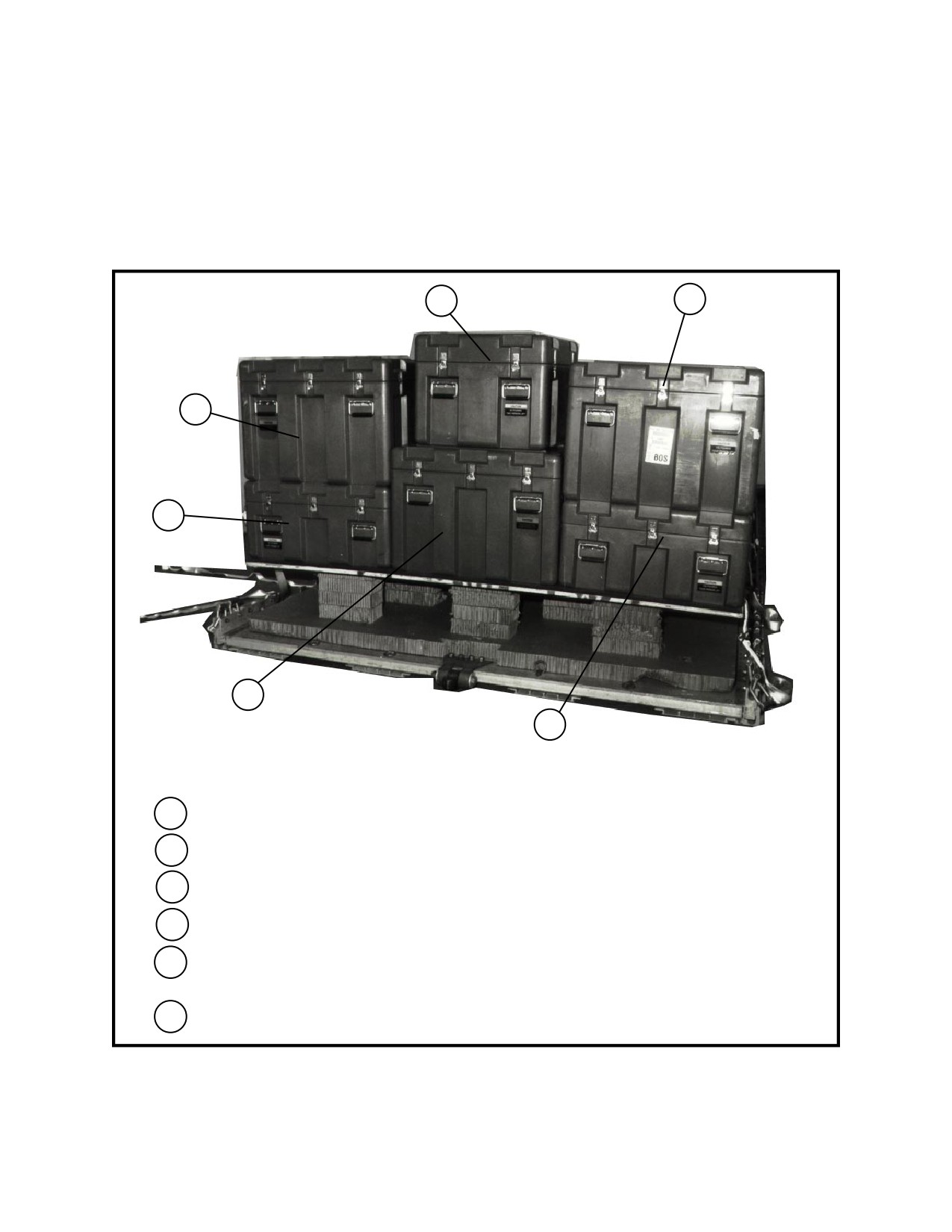
Position the CHS-2 equipment on the platform as shown
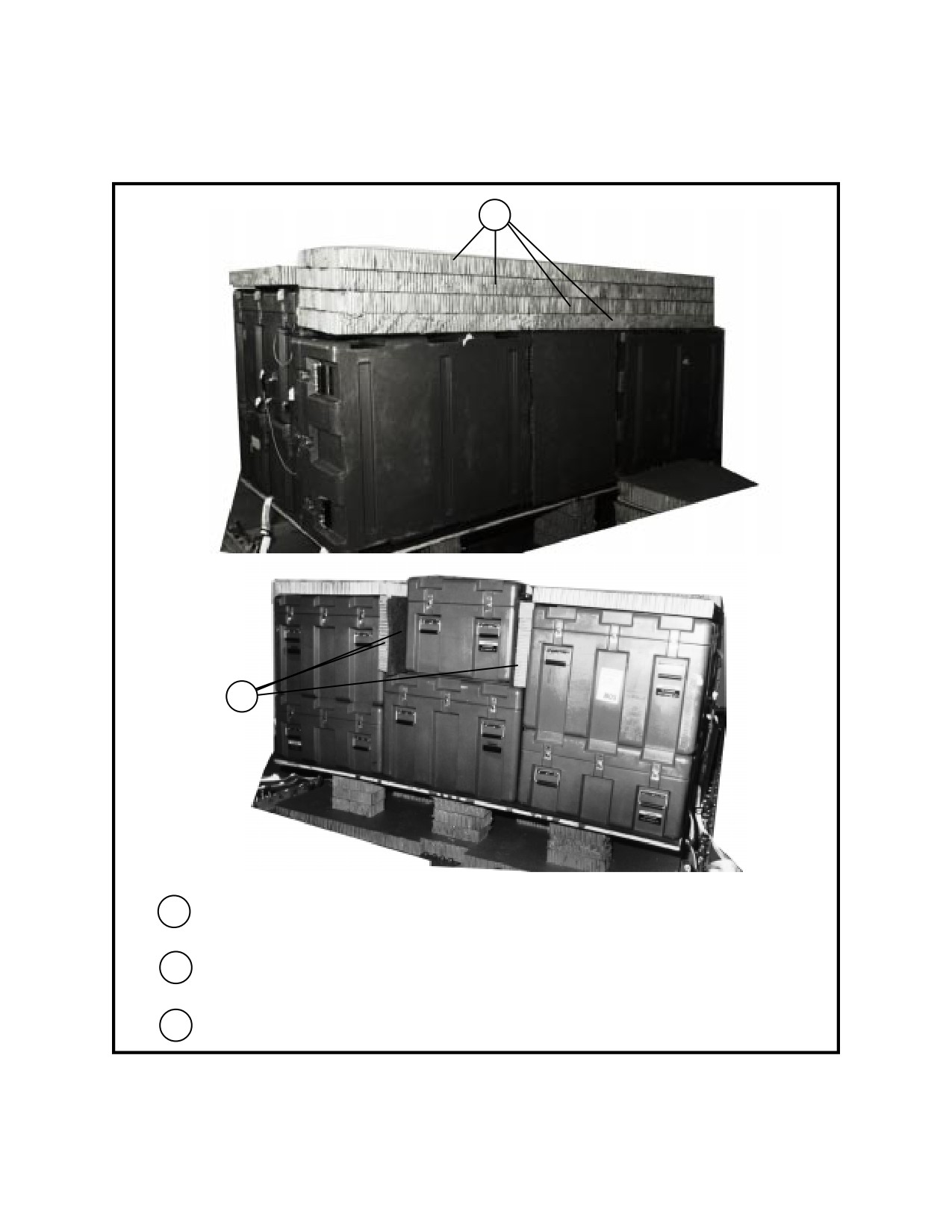
in Figure 3-6.
5
6
4
1
2
3
1
Position the UPS 2 even with the left rear corner of plywood.
2
Position the LP flush next to the UPS 2 on the right.
3
Position the UPS 1 flush next to the LP on the right.
4
Position the CMD 2 centered on top of the UPS 2 on the left rear corner.
5
Position the CGP on top of the LP flush with the rear edge and centered with the right and left
side of the LP.
6
Position the CMD 1 centered on top of the UPS 1 on the right rear corner of the plywood.
Figure 3-6. CHS-2 Equipment positioned on the platform
3-18
FM 10-500-23/TO 13C7-14-461
9
7
8
10
11
7
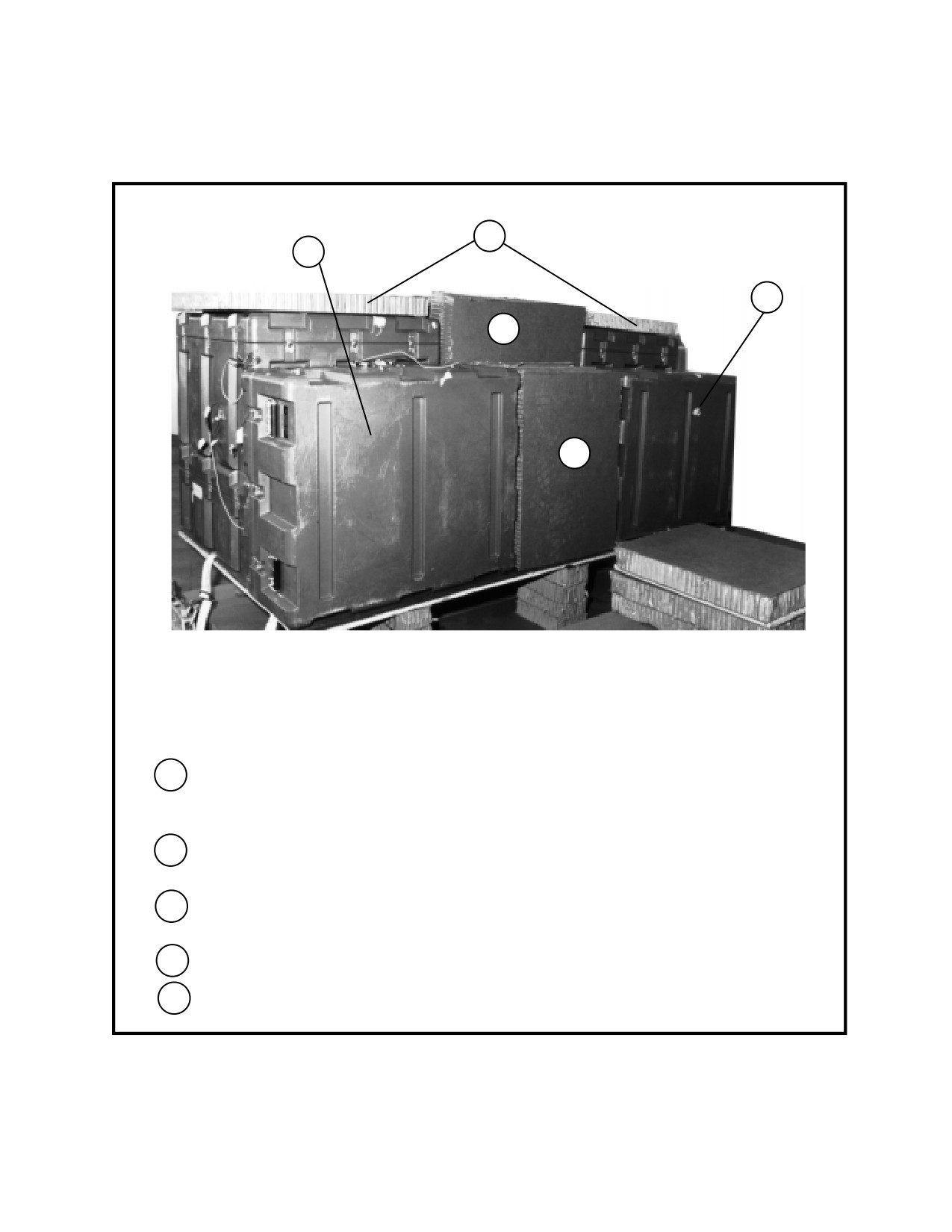
Position the HCU flush against the UPS 1 and the CMD 1 and even with the forward left corner
of the plywood on the edge with the handles out on the left and right sides with the hinge side
down.
8
Position the TCU flush against the UPS 2 and the CMD 1 and even with the forward left corner of
the plywood on the edge with the handles out on the left and right sides with the hinge side down.
9
Cut two 36- by 38-inch pieces of honeycomb and position one on top of the CMD 1 and one on top
of the CMD 2.
10
Cut three 27- by 20-inch pieces of honeycomb and position all three forward of the CGP.
11
Cut five 16- by 32-inch pieces of honeycomb and position all five between the TCU and the HCU.
Figure 3-6. CHS-2 Equipment positioned on the platform (continued)
3-19
FM 10-500-23/TO 13C7-14-461
12
13
12
Secure the forward preposition lashing over the TCU and the HCU. Cut four 16- by 96-inch pieces
of honeycomb and position them on top of the TCU and the HCU.
13
Cut two 16- by 36-inch pieces of honeycomb and two 16- by 36-inch pieces of felt. Position one
piece of felt and one piece of honeycomb on the right and left sides of the CGP.
14
Secure the rear prepositioned lashing over the honeycomb and load. (Not shown)
Figure 3-6. CHS-2 Equipment positioned on the platform (continued)
3-20
FM 10-500-23/TO 13C7-14-461
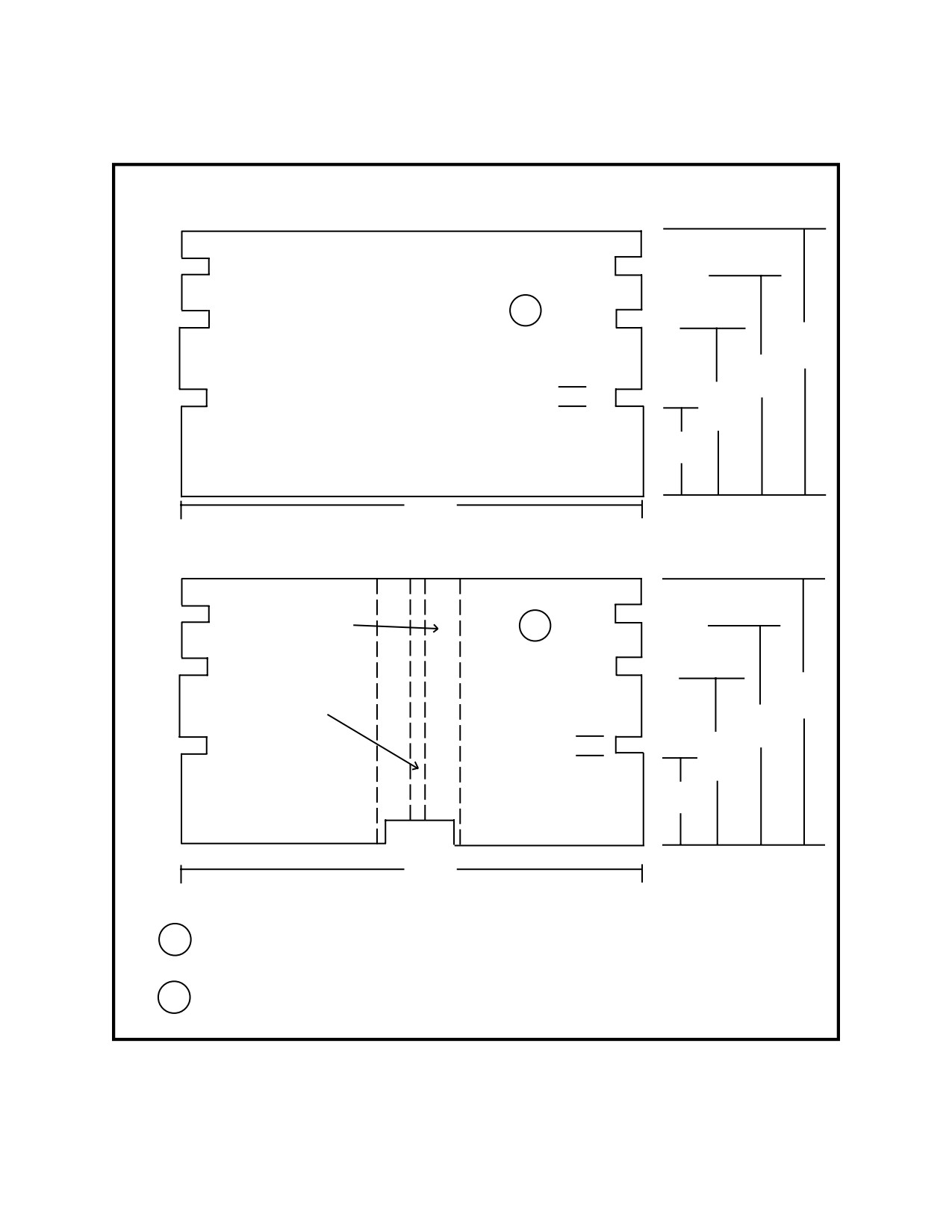
CHS-2 BUFFER
BOARDS
PLYWOOD
3/4-INCH
15
48"
FRONT
40"
3"
28"
16"
96"
CUT AND ADD 4" SPLICE HERE
REINFORCE BOTH SIDES WITH A 10" BOARD
10" BOARD
16
REAR
48"
4" SPLICE
40"
3"
28"
16"
CUTOUT
3"X 7"
100"
15
Build a forward buffer board as shown above and position it centered and flush with the front of
the load.
16
Build a rear buffer board as shown above and position it centered and flush with the rear of the
load.
Figure 3-6. CHS-2 Equipment positioned on the platform (continued)
3-21
FM 10-500-23/TO 13C7-14-461
3-7. Lashing the CHS-2 Equipment to the Platform
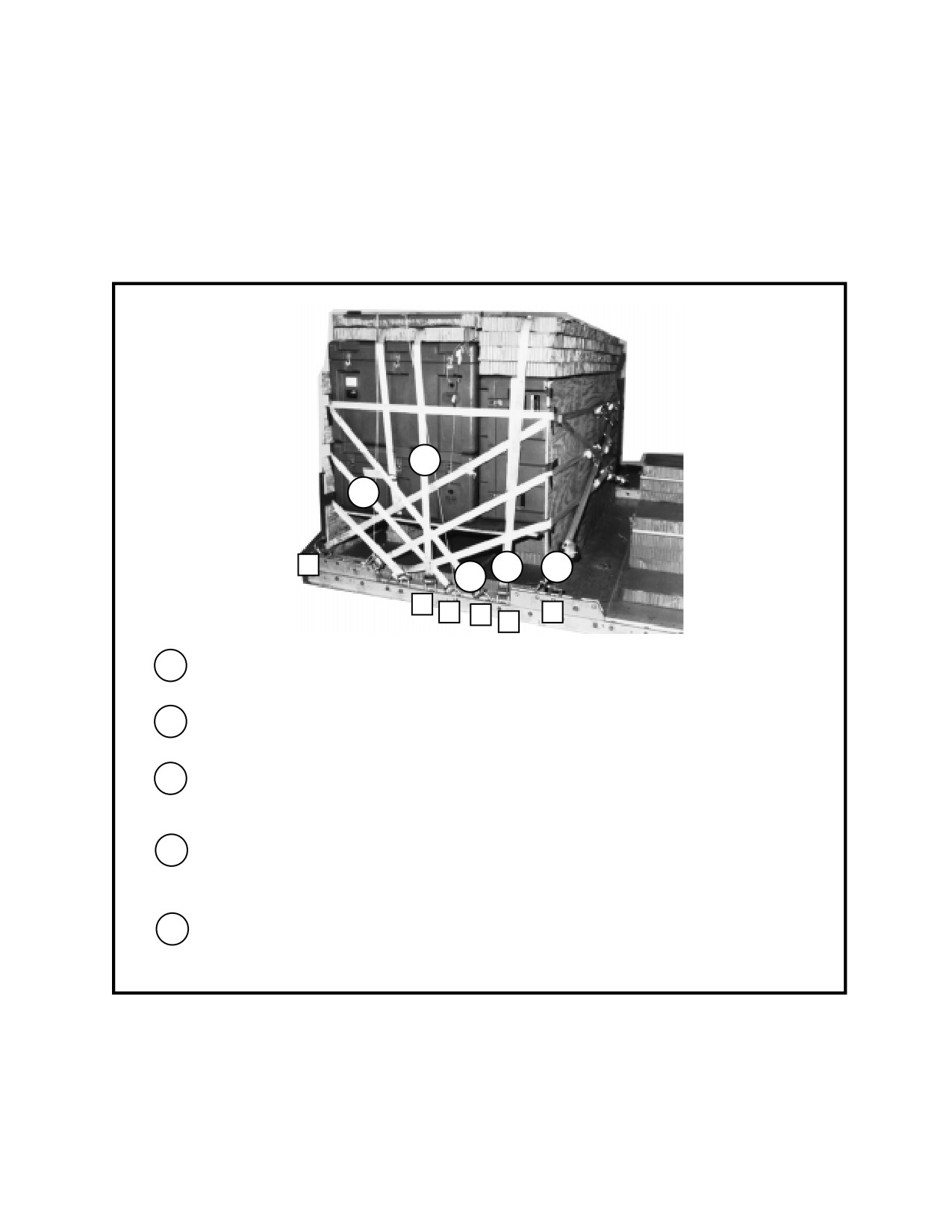
Lash the CHS-2 equipment to the platform as shown
in Figure 3-7.
5
4
19
2
1
3
13
12
11
9
10
1
Run a 30-foot lashing from clevis 9 through the top left side cutouts of the buffer boards to clevis
19.
2
Run a lashing through clevis 10 and it's own D-ring and over the load. Run another lashing through
clevis 10A and it's own D-ring. Secure the lashings together on the left side of the load.
3
Run a lashing through clevis 11 and it's own D-ring and through the top right rear cutout of the
buffer board. Run another lashing through clevis 11A and it's own D-ring and through the top left
rear cutout of the buffer board. Secure the lashings together on the rear of the load.
4
Run a lashing through clevis 12 and it's own D-ring and through the center right rear cutout of the
buffer board. Run another lashing through clevis 12A and it's own D-ring and through the center
left rear cutout of the buffer board. Secure the lashings together on the rear of the load.
5
Run a lashing through clevis 13 and it's own D-ring and over the load. Run another lashing through
clevis 13A and it's own D-ring and secure the lashings together on the left side of the load.
Figure 3-7. CHS-2 equipment lashed to the platform
3-22
FM 10-500-23/TO 13C7-14-461
11
10
8
19A
7
9
6
18
19
16
14
15
6
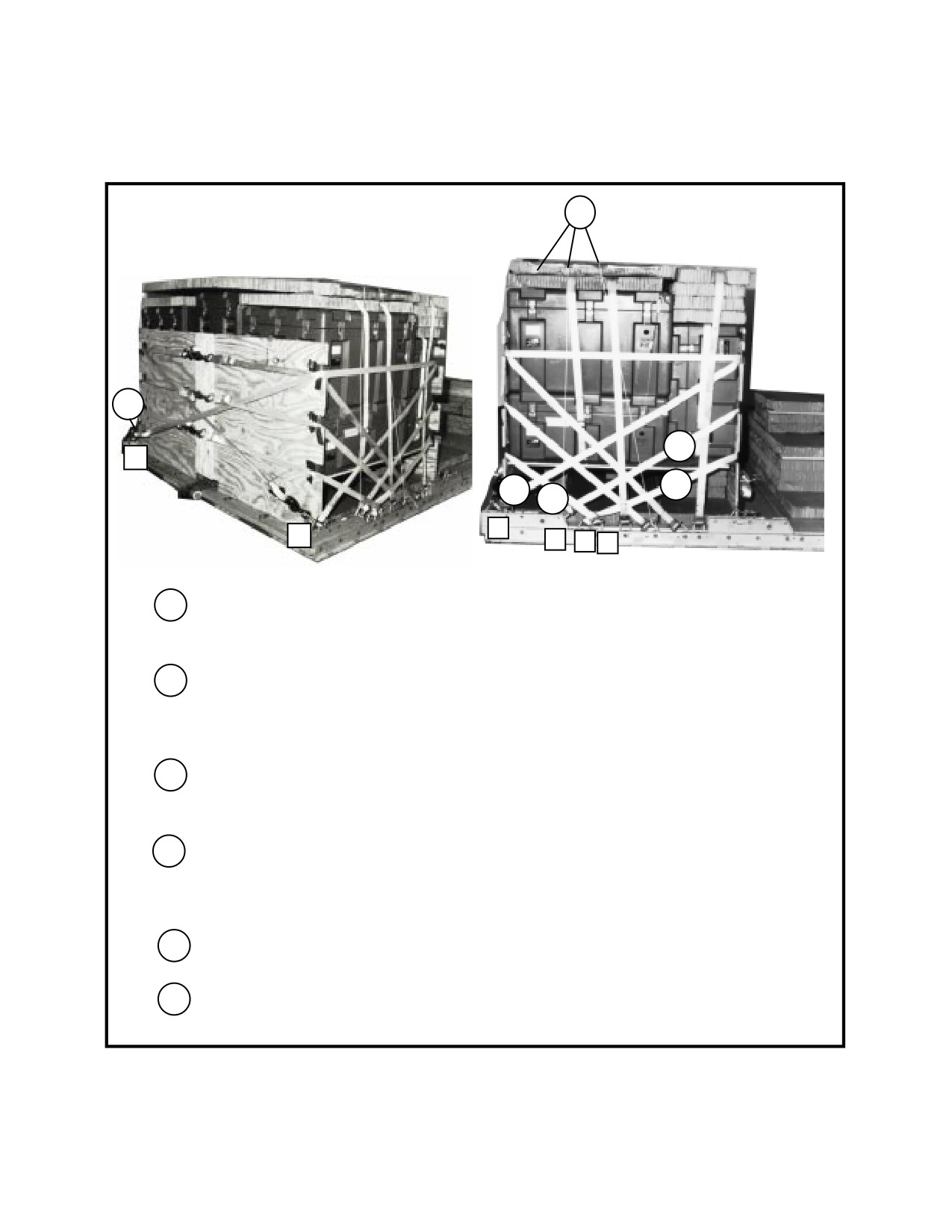
Run a lashing through clevis 14 and it's own D-ring and through the bottom right rear cutout of the
buffer board. Run another lashing through clevis 14A and it's own D-ring and through the bottom
left rear cutout of the buffer board. Secure the lashings together on the rear of the load.
7
Run a lashing through clevis 15 and it's own D-ring and through the bottom right front cutout of
the buffer board. Run another lashing through clevis 15A and it's own D-ring and through the
bottom left front cutout of the buffer board. Secure the lashings together on the front of the
load.
8
Run a lashing through clevis 16 and it's own D-ring and through the center right front cutout of the
buffer board. Run another lashing through clevis 16A and it's own D-ring and through the center
left front cutout of the buffer board. Secure the lashings together on the front of the load.
9
Run a lashing through clevis 18 and it's own D-ring and through the top right front cutout of
the buffer board. Run another lashing through clevis 18A and it's own D-ring and through the
top left front cutout of the buffer board and secure the lashings together on the front of the
load.
10
Run a 30-foot lashing from clevis 9A (Not shown) to the top left side cutout of the buffer board to
clevis 19A.
11
Position one piece of 36- by 96-inch honeycomb on top of the CHS-2 load even with the rear edge
and secure to the platform with type III nylon cord.
Figure 3-7. CHS-2 equipment lashed to the platform (continued)
3-23
FM 10-500-23/TO 13C7-14-461
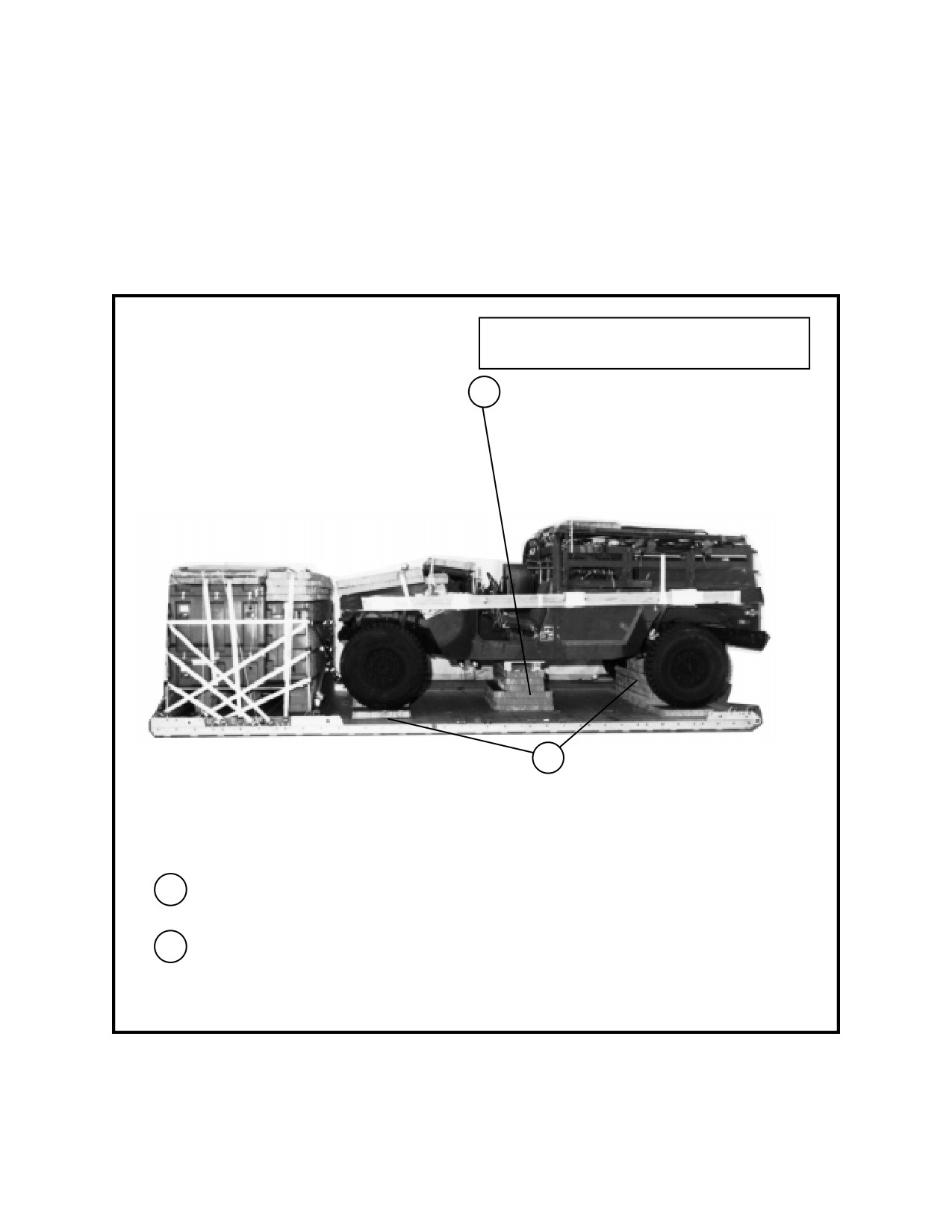
3-8. Positioning HMMWV on the Platform
Position the HMMWV on the platform as shown
in Figure 3-8.
Note: The use of HDDS is optional but
recommended.
2
1
1
Position the HMMWV on the platform so that the suspension crossmember of the HMMWV rests
squarely on stacks 1 and 3.
2
Position the crossmember of the HMMWV centered on top of the 43-inch wide top piece of
honeycomb on stack 2. The right and left sides of the frame must set on the sides of the top
piece of honeycomb.
Figure 3-8. HMMWV positioned on the platform
3-24
FM 10-500-23/TO 13C7-14-461
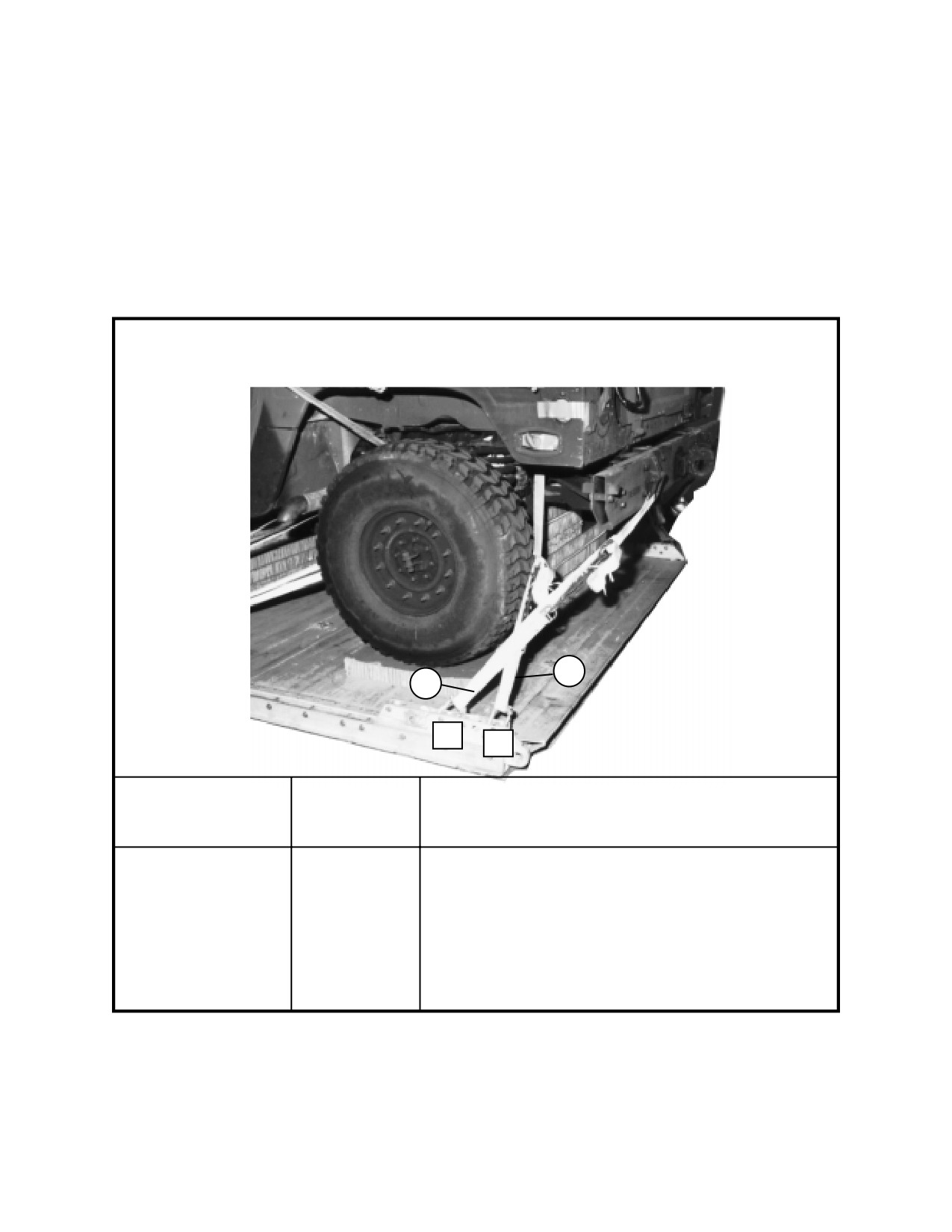
3-9. Lashing HMMWV to the Platform
Lash the HMMWV to the platform as shown in Figure 3-9.
1
3
2
1
Tiedown
Lashing
Clevis
Number
Instructions
Number
Pass lashing:
1
1
Through tie-down bracket behind left rear coil spring.
2
1A
Through tie-down bracket behind right rear coil spring.
3
2
Through left rear lifting shackle.
4
2A
Through right rear lifting shackle.
Figure 3-9. HMMWV lashed to the platform
3-25
FM 10-500-23/TO 13C7-14-461
7
8
12
5
10
5
4
3
7
6
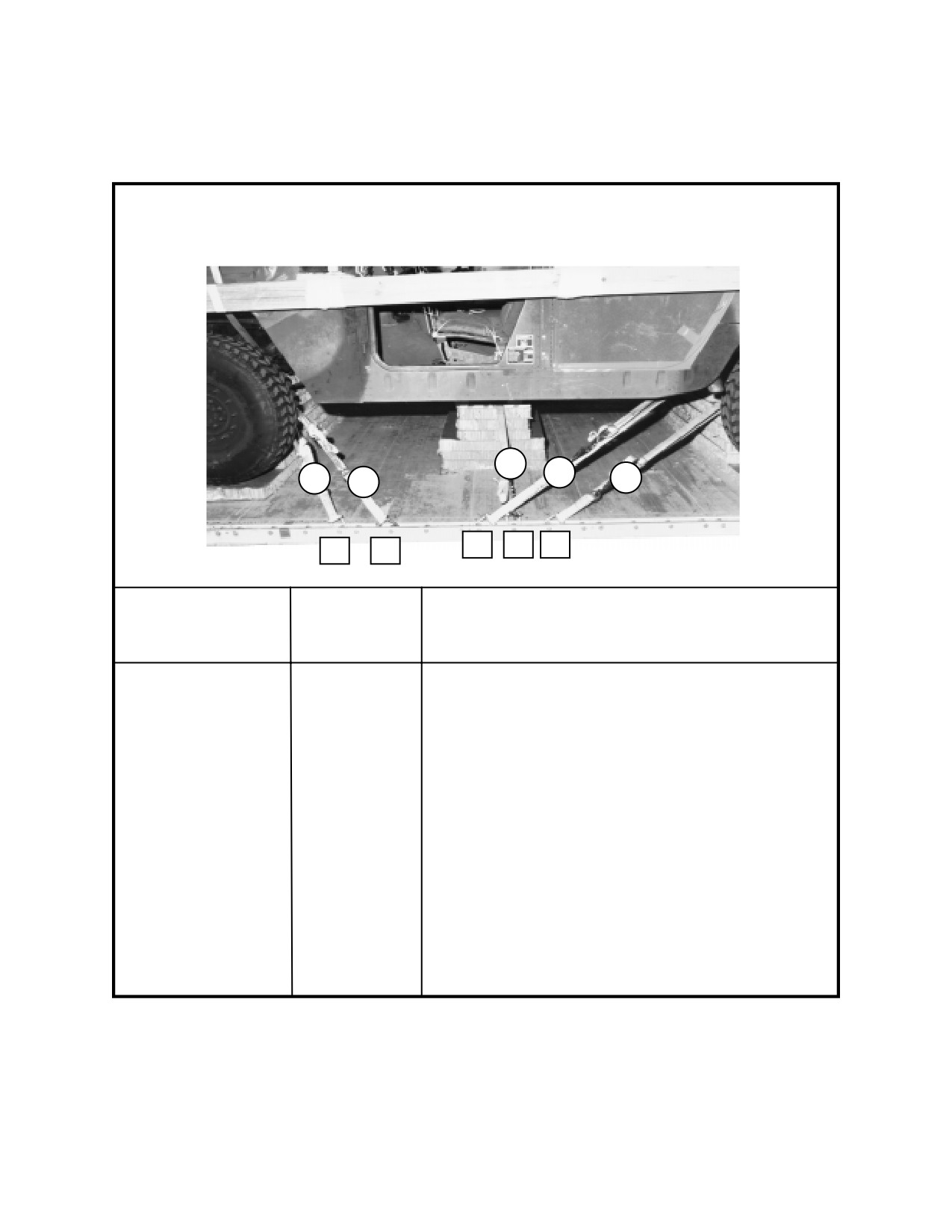
Tiedown
Lashing
Clevis
Number
Number
Instructions
Pass lashing:
5
3
Around left rear lower control arm.
6
3A
Around right rear lower control arm.
7
4 to 4A
Through clevis 4A and it's own D-ring. Run the lashing
between the 4x4's of stack 2 and secure it to clevis 4.
8
5
Through tie-down bracket in front of the left rear coil spring.
9
5A
Through tie-down bracket in front of the right rear coil spring.
10
6
Through tie-down bracket behind the left front coil spring.
11
6A
Through tie-down bracket behind right front coil spring.
12
7
Around left lower control arm.
13
7A
Around right lower control arm.
Figure 3-9. HMMWV lashed to the platform (continued)
3-26
FM 10-500-23/TO 13C7-14-461
8
14
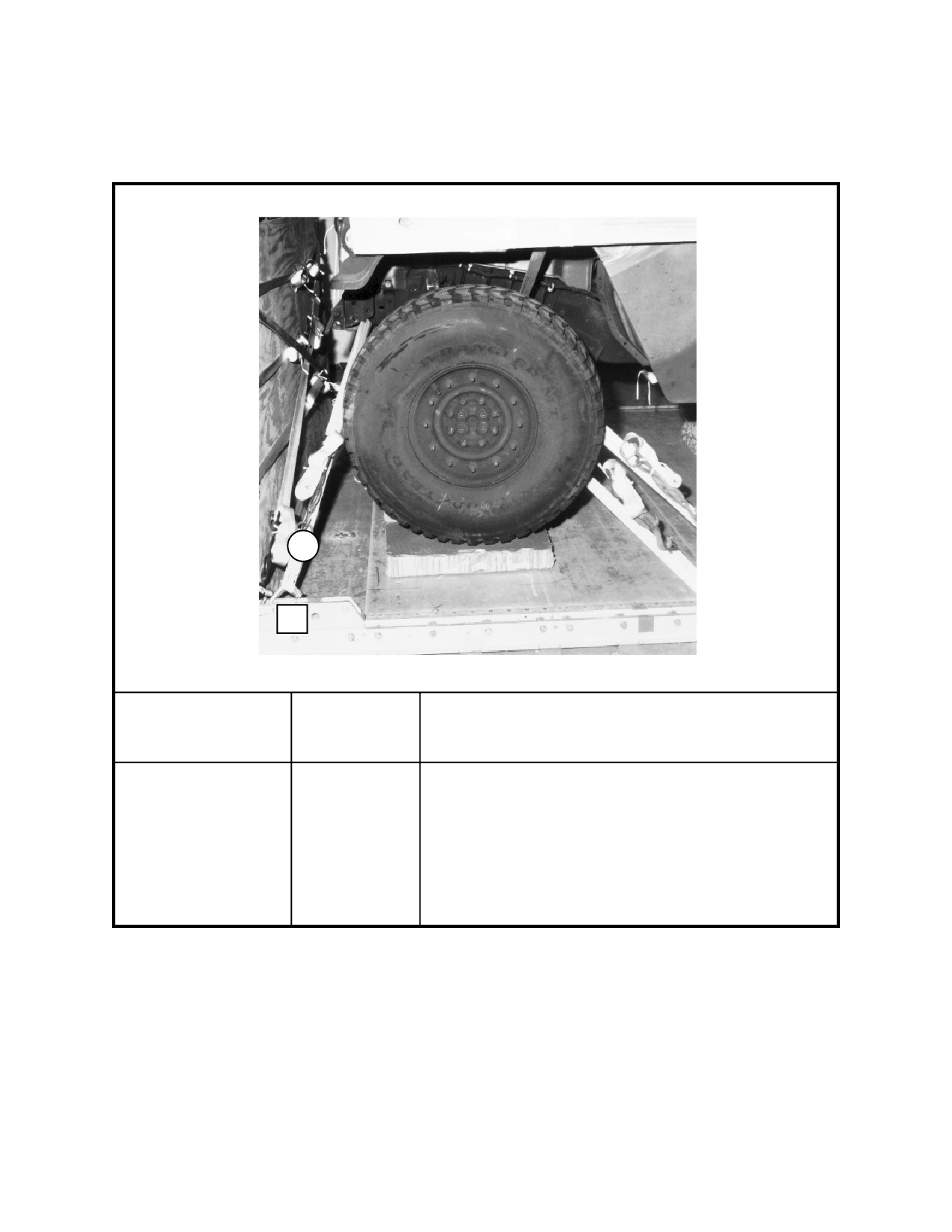
Tiedown
Lashing
Clevis
Instructions
Number
Number
Pass lashing:
14
8
Through tie-down bracket on the end of the left frame rail.
15
8A
Through tie-down bracket on the end of the right frame rail.
Figure 3-9. HMMWV lashed to the platform (continued)
3-27
FM 10-500-23/TO 13C7-14-461
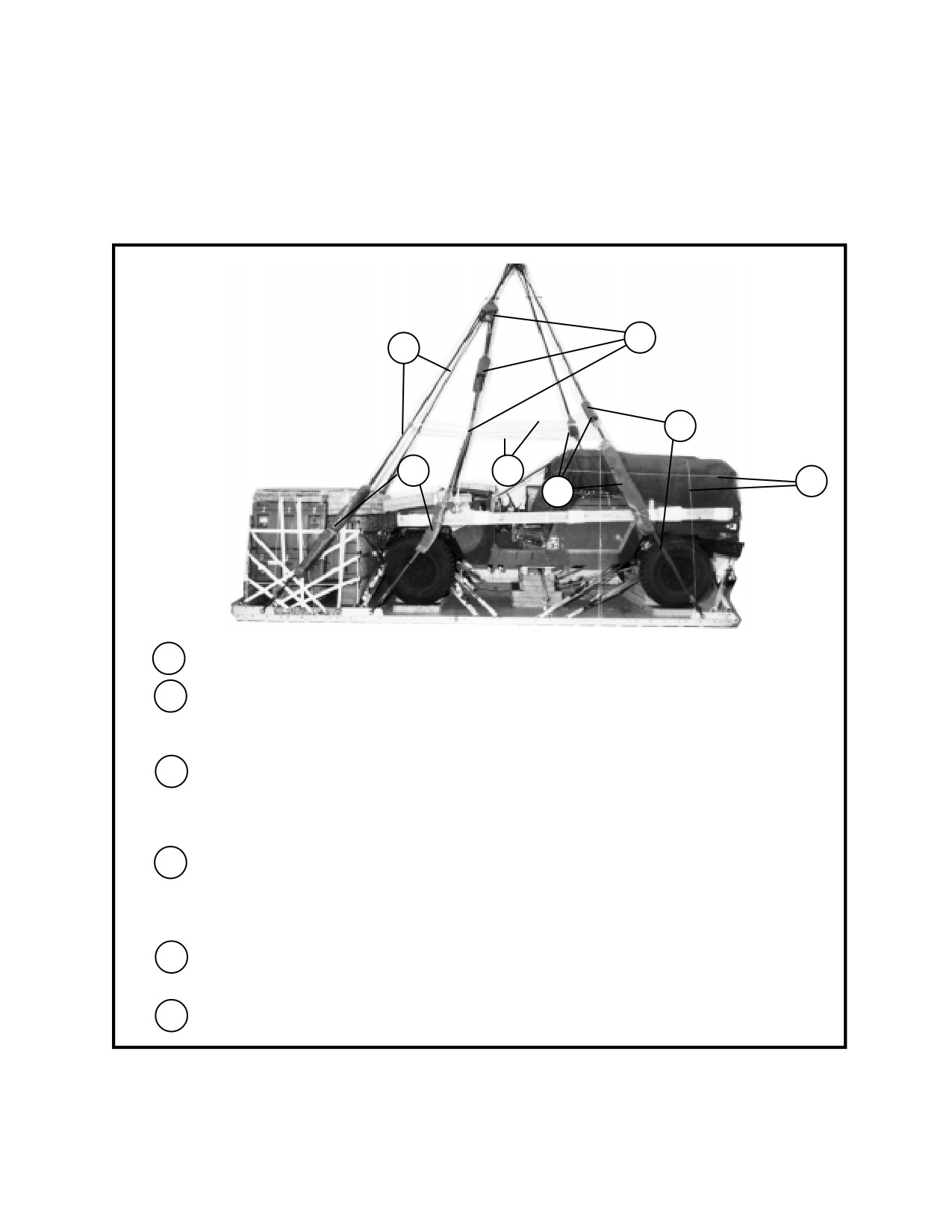
3-10. Installing Load Cover, Suspension Slings and Deadman Tie
Install the suspension slings and deadman tie as
shown in Figure 3-10.
3
4
2
5
6
1
5
1
Secure the cover on the SICPS load with type III nylon cord.
2
Attach a large clevis to one end of two 9-foot (2-loop), type XXVI nylon suspension slings. Attach
one sling and clevis to each front tandem link. Attach another 9-foot (2-loop), type XXVI nylon
suspension sling to each front sling with a 3 3/4-inch link.
3
Attach a large clevis to one end of two 11-foot (2-loop), type XXVI nylon suspension slings.
Attach one sling and clevis to each center suspension link. Attach another 3-foot (2-loop), type
XXVI nylon suspension sling to each center sling with a 5 1/2-inch link. Attach a 3-point link to the
end of the 3-foot sling.
4
Attach a large clevis to one end of two 16-foot (2-loop), type XXVI nylon suspension
slings. Attach one sling and clevis to each rear tandem link. Attach the running end of each rear
sling to the 3-point in step 3 and add a 3-foot (2-loop), type XXVI nylon suspension sling to the
top of both 3-point links in step 3.
5
Pad the slings as shown above where they come in contact with the load and side boards and
safety tie them to the load.
6
Raise the slings and install the deadman tie as shown above.
Figure 3-10. Load cover, suspension slings and deadman tie installed
3-28
FM 10-500-23/TO 13C7-14-461
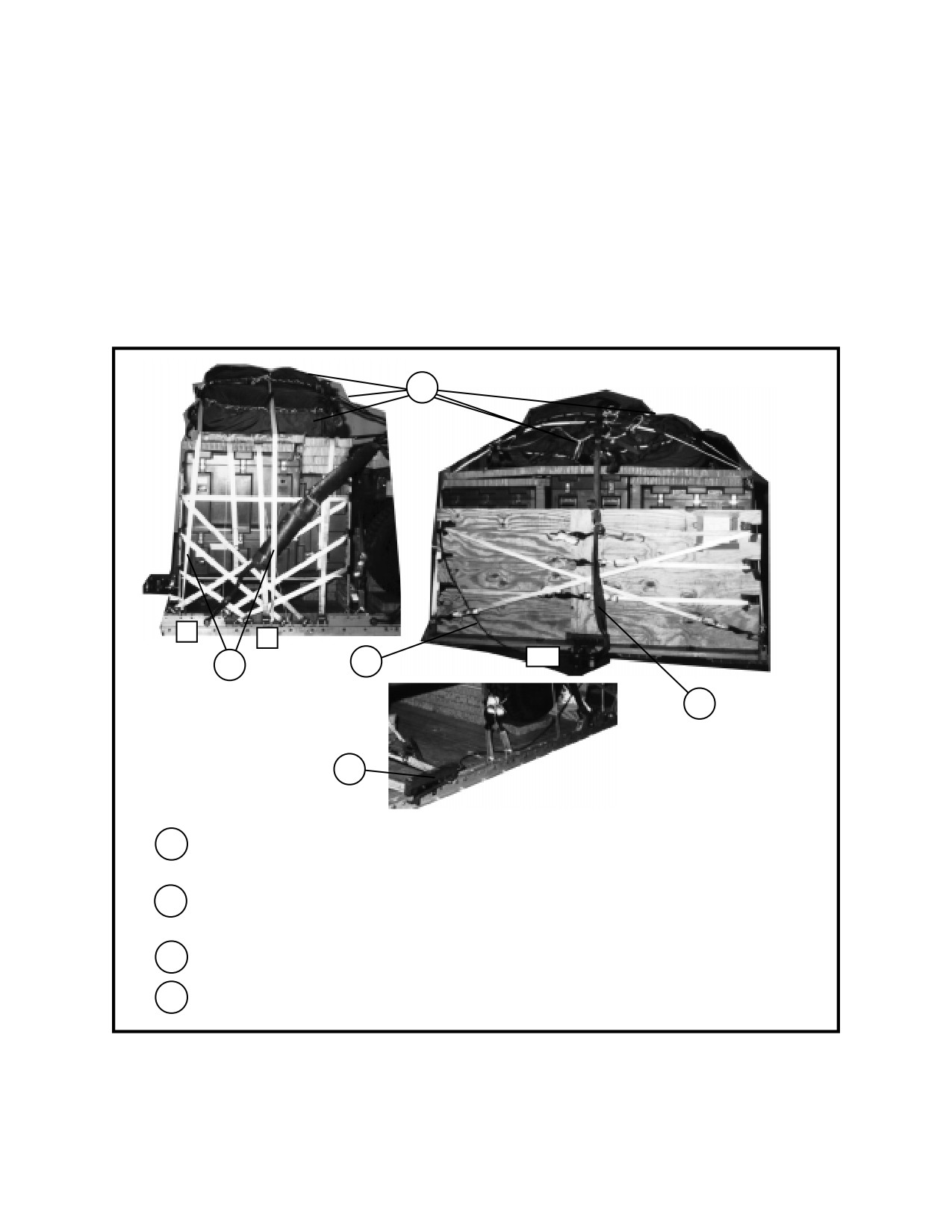
3-11. Preparing and Stowing Cargo Parachutes
and Installing Extraction System
Prepare, stow and restrain three G-11 cargo parachutes
on top of the honeycomb according to FM 10-500-2/TO
13C7-1-5. Restrain the parachutes as shown in Figure 3-
11. Install the EFTC according to FM 10-500-2/TO 13C7-
1-5 and as shown in Figure 3-11.
1
17
13
D10
1
4
3
2
1
Prepare, stow, and restrain three G-11 cargo parachutes on top of the honeycomb according to FM
10-500-2/TO 13C7-1-5. Restrain the parachutes using clevises 13, 13A, 17, and 17A.
2
Install the components of the EFTC according to FM 10-500-2/TO 13C7-1-5 using the rear
mounting holes for the EFTC bracket.
3
Attach a 9-foot (2-loop), type XXVI nylon sling to be used as a deployment line.
4
Use a 20-foot EFTC cable and route it as shown above. Safety the cable to tie-down ring D10 using
one turn of type I, 1/4-inch cotton webbing.
Figure 3-11. Cargo parachutes prepared and stowed and the EFTC system installed
3-29
FM 10-500-23/TO 13C7-14-461
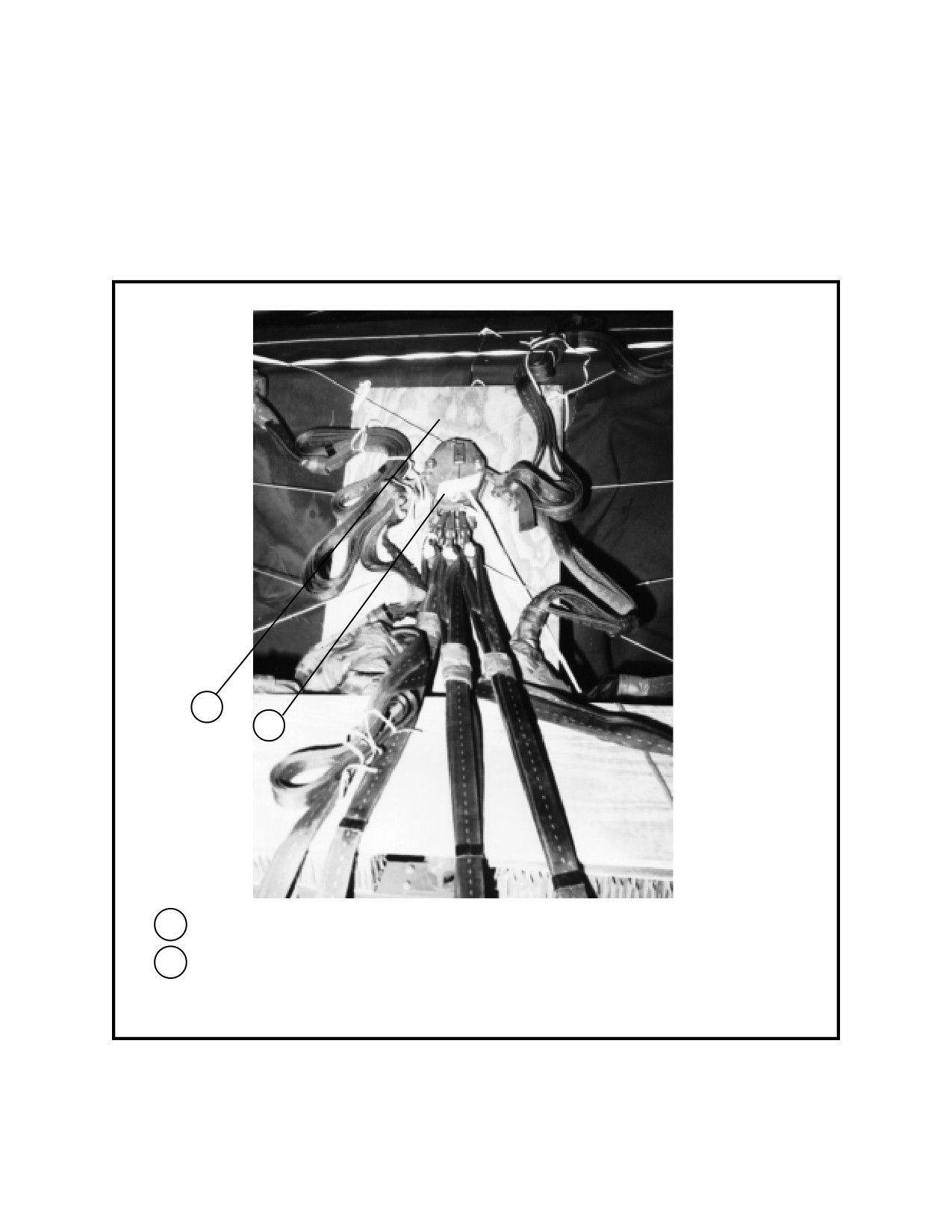
3-12. Installing Parachute Release
Prepare, attach, and safety an M-1 release according to
FM 10-500-2/TO 13C7-1-5 and as shown in Figure 3-12.
1
2
1
Place a 3/4- by 24- by 42-inch piece of plywood on top of the load cover.
2
Place the M-1 release on top of the plywood. Tie it to convenient points with type III
nylon cord. Connect the riser extensions and suspension slings according to FM 10-500-2/TO
13C7-1-5.
Figure 3-12. M-1 cargo parachute release installed
3-30
FM 10-500-23/TO 13C7-14-461
3-13. Placing Extraction Parachute
3-15. Marking Rigged Load
Select the extraction parachute and extraction line
Mark the rigged load according to FM 10-500-2/TO
needed using the extraction line requirements table in
13C7-1-5 and as shown in Figure 3-13. Complete
FM 10-500-2/TO 13C7-1-5. Place the extraction line on
Shipper's Declaration for Dangerous Goods and affix to
the load for installation in the aircraft.
load. If the load varies from the one shown, the weight,
height, CB, tip off curve, and parachute requirements
3-14. Installing Provisions for Emergency Restraints
must be recomputed.
Select and install the provisions for the emergency aft
3-16. Equipment Required
restraints according to the emergency aft restraint
requirements table in FM 10-500-2/TO 13C7-1-5.
Use the equipment listed in Table 3-1 to rig the load
shown in Figure 3-13.
3-31