AIRDROP OF SUPPLIES AND EQUIPMENT: RIGGING COMMUNICATION CONTROL VEHICLES (August 1999) - page 1
* FM 10-500-23/TO 13C7-14-461
FIELD MANUAL
HEADQUARTERS
No. 10-500-23
DEPARTMENT OF THE ARMY
TECHNICAL ORDER
DEPARTMENT OF THE AIR FORCE
No. 13C7-14-461
WASHINGTON, DC, 31 August 1999
AIRDROP OF SUPPLIES AND EQUIPMENT:
RIGGING COMMUNICATION CONTROL VEHICLES
TABLE OF CONTENTS
Paragraph
Page
PREFACE
iv
CHAPTER 1
Introduction
Description of Items
1-1
1-1
Special Considerations
1-2
1-1
CHAPTER 2
RIGGING THE MOBILE MICROWAVE LANDING SYSTEM (MMLS) IN AN M998 HMMWV
TRUCK AND AN M116A2 3/4-TON TRAILER ON A 24-FOOT, TYPE V PLATFORM FOR
LOW-VELOCITY AIRDROP
Description of Load
2-1
2-1
Preparing Platform
2-2
2-1
Building the Honeycomb Stacks
2-3
2-3
Installing HDDS and Positioning Honeycomb Stacks
2-4
2-8
Preparing HMMWV
2-5
2-9
Preparing the 3/4-ton M1162A Trailer
2-6
2-9
Prerparing the Truck Cargo Bed
2-7
2-10
Loading the Truck Cargo Bed
2-8
2-12
Preparing Trailer Cargo Bed
2-9
2-16
Placing Load in Trailer
2-10
2-17
Placing Truck and Trailer on Platform
2-11
2-20
Lashing Truck and Trailer to Platform
2-12
2-21
Installing Suspension Slings and Deadman Tie
2-13
2-24
Building Parachute Stowage Platform
2-14
2-25
Installing Parachute Stowage Platform, Preparing and Stowing Cargo
Parachutes
2-15
2-26
Installing Parachute Release
2-16
2-27
Installing Extraction System
2-17
2-28
Placing Extraction Parachute
2-18
2-29
Installing Provisions for Emergency Restraints
2-19
2-29
Marking Rigged Load
2-20
2-29
Equipment Required
2-21
2-29
DISTRIBUTION RESTRICTION: Approved for public release; distribution is unlimited.
* This manual supersedes FM 10-523/TO 13C7-14-461, 5 March 1982.
i
FM 10-500-23/TO 13C7-14-461
Paragraph
Page
CHAPTER 3
RIGGING THE STANDARD INTERGRADED COMMAND POST SYSTEM (SICPS) WITH
THE COMMON HARDWARE/SOFTWARE 2ND GENERATION PACKAGE (CHS-2) ON A
20-FOOT, TYPE V PLATFORM FOR LOW-VELOCITY AIRDROP
Description of Load
3-1
3-1
Preparing Platform
3-2
3-2
Building and Positioning Honeycomb Stacks for the SICPS
3-3
3-3
Building and Positioning Honeycomb Stacks for the CHS-2
3-4
3-4
Rigging the SICPS in the M1097 HMMWV
3-5
3-7
Positioning the CHS-2 Equipment on the Platform
3-6
3-18
Lashing the CHS-2 Equipment to the Platform
3-7
3-22
Positioning HMMWV on the Platform
3-8
3-24
Lashing HMMWV to the Platform
3-9
3-25
Installing Load Cover, Suspension Slings and Deadman Tie
3-10
3-28
Preparing and Stowing Cargo Parachutes and Installing Extraction System ... 3-11
3-29
Installing Parachute Release
3-12
3-30
Placing Extraction Parachute
3-13
3-31
Installing Provisions for Emergency Restraints
3-14
3-31
Marking Rigged Load
3-15
3-31
Equipment Required
3-16
3-31
CHAPTER 4
RIGGING THE COMMAND ASSAULT VEHICLE (CAV) ON A 20-FOOT, TYPE V AIRDROP
PLATFORM FOR LOW-VELOCITY AIRDROP
Description of Load
4-1
4-1
Preparing Platform
4-2
4-1
Building and Positioning Honeycomb Stacks
4-3
4-3
Preparing the CAV with the Communication Equipment
4-4
4-6
Lifting and Positioning CAV
4-5
4-10
Lashing CAV to Platform
4-6
4-11
Installing Suspension System
4-7
4-12
Stowing Cargo Parachutes and Installing EFTC System
4-8
4-13
Installing Parachute Release
4-9
4-15
Placing Extraction Parachute
4-10
4-16
Installing Provisions for Emergency Restraints
4-11
4-16
Marking Rigged Load
4-12
4-16
Equipment Required
4-13
4-16
CHAPTER 5
RIGGING THE M998 CARGO/TROOP CARRIER (TWO SEATER) WITH GRC/206 AIR
FORCE PALLET ON A 16-FOOT, TYPE V PLATFORM FOR LOW-VELOCITY AIRDROP
Description of Load
5-1
5-1
Preparing Platform
5-2
5-1
Building and Placing the Honeycomb Stacks
5-3
5-3
Preparing Truck and Installing Lifting Slings
5-4
5-11
ii
FM 10-500-23/TO 13C7-14-461
Paragraph
Page
Positioning Truck
5-5
5-26
Lashing Truck
5-6
5-27
Building Body Side Boards
5-7
5-29
Securing Body Side Boards
5-8
5-30
Securing Top Tow Plate
5-9
5-31
Installing Suspension Slings and Deadman Tie
5-10
5-32
Stowing Cargo Parachutes
5-11
5-33
Installing Extraction System
5-12
5-34
Installing Release Assembly
5-13
5-35
Placing Extraction Parachute
5-14
5-36
Installing Provisions for Emergency Restraints
5-15
5-36
Marking Rigged Load
5-16
5-36
Equipment Required
5-17
5-36
CHAPTER 6
RIGGING THE M998 CARGO/TROOP CARRIER (FOUR SEATER) WITH GRC/206 AIR
FORCE PALLET ON A 16-FOOT, TYPE V PLATFORM FOR LOW-VELOCITY
AIRDROP
Description of Load
6-1
6-1
Preparing Platform
6-2
6-1
Building and Positioning Honeycomb Stacks
6-3
6-1
Preparing Truck
6-4
6-2
Installing Lifting Slings
6-5
6-13
Positioning Truck
6-6
6-13
Lashing Truck
6-7
6-14
Building Body Side Boards
6-8
6-14
Securing Body Side Boards
6-9
6-15
Installing Suspension Slings and Deadman Tie
6-10
6-16
Stowing Cargo Parachutes
6-11
6-17
Installing Extraction System
6-12
6-17
Installing Release System
6-13
6-17
Placing Extraction Parachute
6-14
6-17
Installing Provisions for Emergency Restraints
6-15
6-17
Marking Rigged Load
6-16
6-17
Equipment Required
6-17
6-17
GLOSSARY
Glossary-1
REFERENCES
References-1
iii
FM 10-500-23/TO 13C7-14-461
PREFACE
SCOPE
This manual tells and shows how to prepare and rig the Mobile Microwave Landing System (MMLS) which is
packed in 11 hard-shell protective cases. The cases are rigged with four 3kw generators and four fuel cans in the beds of
an M998 HMMWV truck and an M116A2 3/4-ton trailer. The load is rigged on a 24-foot, type V platform with three G-11
cargo parachutes for low-velocity airdrop from a C-130, C-141, C-5, and C-17.
The Standard Intergraded Command Post System (SICPS) and the Common Hardware/Software 2nd Generation
Package (CHS-2) are rigged on a 20-foot, type V airdrop platform with three G-11 cargo parachutes for low-velocity
airdrop from a C-130, C-141, C-5, and C-17.
The M996 CAV is rigged on a 20-foot, type V airdrop platform for low-velocity airdrop from a C-130, C-141, C-
5, and C-17. The load requires three G-11 cargo parachutes. The CAV is rigged with communication equipment.
The M998 cargo/troop carrier (two seater) is rigged with a radio equipment GRC/206 Air Force pallet. Other
equipment included on the load is the 1.5-kilowatt, 28-VDC generator set, two cable spools, two 5-gallon fuel cans, and
one 5-gallon water can. The load requires two G-ll cargo parachutes and is rigged for low-velocity airdrop from a C-130,
C-141, C-5, and C-17.
The M998 cargo/troop carrier (four seater), is rigged with a radio equipment GRC/206 Air Force pallet. Other
equipment included on the load is one cable spool, two 5-gallon fuel cans, one 5-gallon water can, one roll of field wire,
one set of slave cables, and one camouflage net with support poles. Also included with this load are one shovel, one ax,
two sets of antennas, 2 quarts of oil, 1 quart of transmission fluid, one funnel, and one fuel nozzle. The truck weighs 6,020
pounds with 3/4 tank of fuel and equipment installed. The load requires two G-ll cargo parachutes and is rigged for low-
velocity airdrop from a C-130, C-141, C-5, and C-17.
USER INFORMATION
The proponent of this publication is HQ TRADOC. You are encouraged to report any errors or omissions and to
suggest ways to make this a better manual. Army personnel, send your comments on DA Form 2028 directly to:
Director
Aerial Delivery and Field Services Department
USA Quartermaster Center and School
1010 Shop Road
Fort Lee, Virginia 23801-1502
Air Force personnel, send your reports on AFTO Form 22 through:
Headquarters
Air Mobility Command (AMC/DOKT)
402 Scott Drive, Unit 3A1
Scott AFB, Illinois 62225-5302
iv
FM 10-500-23/TO 13C7-14-461
Air Force personnel in Special Operations Command, send your reports on AFTO Form 22 through:
HQ AFSOC/DOXT
100 Bartley St., Suite 2260
Hurlburt Field, Florida 32544-5273
to:
Director
Aerial Delivery and Field Services Department
USA Quartermaster Center and School
1010 Shop Road
Fort Lee, Virginia 23801-1502
Also send information copy of AFTO Form 22 to:
SA-ALC/TILDP
485 Quentin Roosevelt Road
Kelly AFB, Texas 78241-6421
Unless this publication states otherwise, masculine nouns and pronouns do not refer exclusively to men.
v
FM 10-500-23/TO 13C7-14-461
CHAPTER 1
INTRODUCTION
1-1. Description of Items
1-2. Special Considerations
The description for the items covered in this manual are
Special considerations for this manual are given below:
described below:
a. The loads covered in this manual may include
a. Mobile Microwave Landing System (MMLS).
hazardous materials as defined in AFJMAN 24-204/TM
The MMLS is packed in 11 hard-shell protective cases. It
38-250. If included, the hazardous materials must be pack-
is rigged in the bed of an M998 HMMWV truck and an
aged, marked, and labeled as required by AFJMAN 24-
M116A2 3/4-ton trailer.
204/TM-38-250.
b. Standard Intergrated Command Post System
b. A copy of this manual must be available to
(SICPS). The SICPS and the Common Hardware/Software
the joint airdrop inspectors during the before- and after-
2nd Generation Package (CHS-2) are rigged in an M1097
loading inspections.
HMMWV Cargo/Troop carrier.
c. You will need a copy of FM 10-517/TO 13C-1-
c. Command Assault Vehicle (CAV). The M996
111 and FM 10-500-66/TO 13C7-25-71to rig this load.
HMMWV is rigged with communication equipment bolted
to the racks.
d. M998 Cargo/Troop Carrier (Two Seater) With
GRC/206 Air Force Pallet. The M998 two seater is rigged
with radio equipment GRC/206 Air Force pallet.
e. M998 Cargo/Troop Carrier (Four Seater)
With GRC/206 Air Force Pallet. The M998 four seater is
rigged with radio equipment GRC/206 Air Force pallet.
1-1
FM 10-500-23/TO 13C7-14-461
CHAPTER 2
RIGGING THE MOBILE MICROWAVE LANDING SYSTEM (MMLS) IN AN M998
HMMWV TRUCK AND AN M116A2 3/4-TON TRAILER ON A 24-FOOT, TYPE V PLAT-
FORM FOR LOW-VELOCITY AIRDROP
2-1. Description of Load
2-2. Preparing Platform
The Mobile Microwave Landing System (MMLS) is
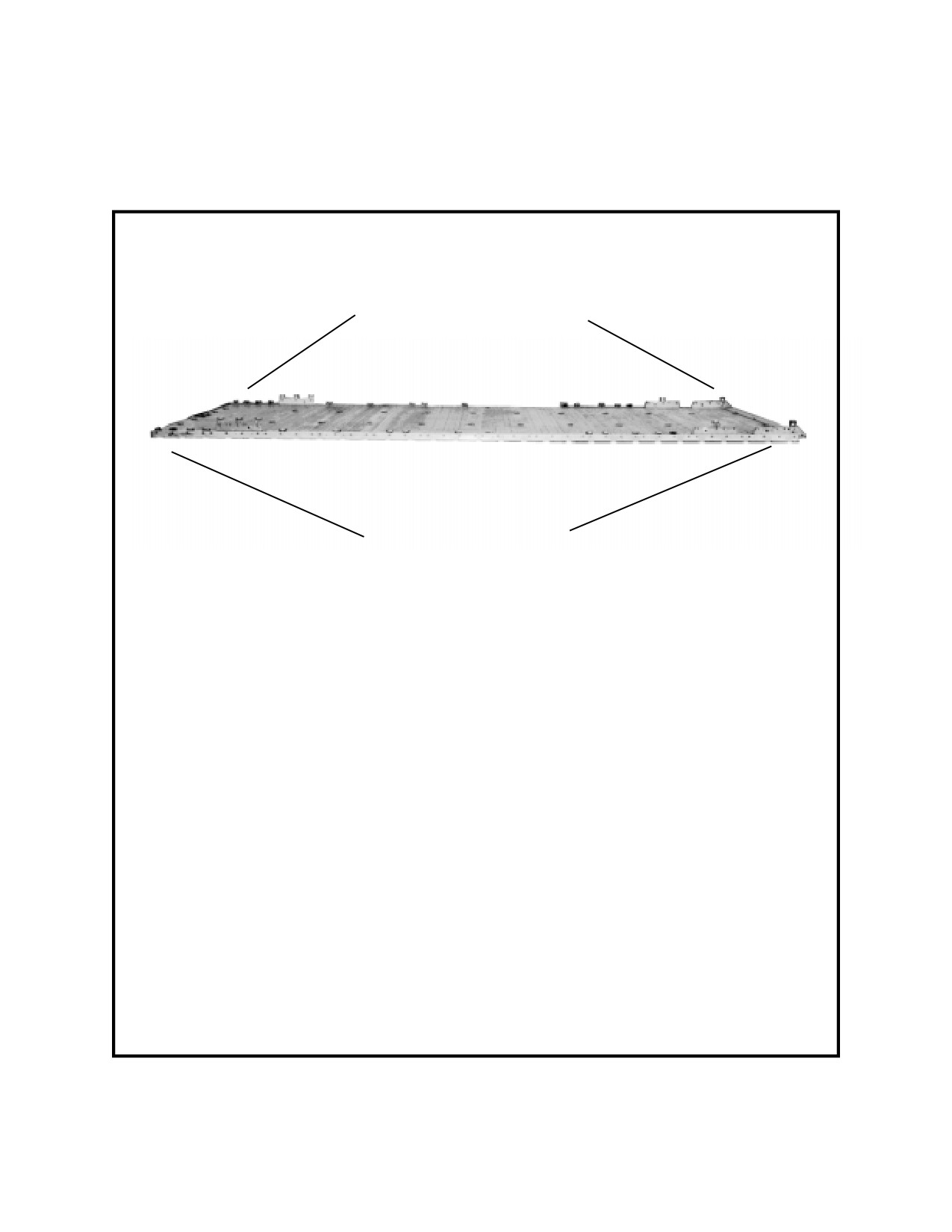
Prepare a 24-foot, type V airdrop platform as shown in
packed in 11 hard-shell protective cases. The cases are
Figure 2-1.
rigged with four 3kw generators and four fuel cans in the
beds of an M998 HMMWV truck and an M116A2 3/4-
NOTES:
ton trailer. The load is rigged on a 24-foot, type V
1. The nose bumper may or may not be installed.
platform with three G-11 cargo parachutes for low-
2. Measurements given in this load are from the front
velocity airdrop.
edge of the platform, NOT from the front edge of the
nose bumper.
2-1
FM 10-500-23/TO 13C7-14-461
CLEVISES 18A THROUGH 1A
REAR
FRONT
CLEVISES 18 THROUGH 1
Step:
1.
Inspect, or assemble and inspect, a 24-foot, type V airdrop platform as outlined in TM 10-1670-
268-20&P/TO 13C7-52-22.
2.
Install suspension links to the right and left platform side rails using holes 6, 7, and 8.
3.
Install a second set of suspension links to the right and left platform side rails using holes 41, 42,
and 43.
4.
Install a tandem link to the front of each platform side rail using holes 1, 2, and 3.
5.
Install a clevis on bushing 1 of each tandem link.
6.
Install a clevis on bushing 3 on the front suspension links.
7.
Install clevises on bushings 1, 2, and 4 of each rear suspension links.
8.
Starting at the front of each platform side rail, install clevises on the bushings bolted to holes 10,
11, 13, 15, 16, 26, 30, 31, 35, 39, 45, 46, 47, and 48.
9.
Starting at the front of the platform, number the clevises 1 through 18 on the right side, and 1A
through 18A on the left side.
10.
Label the tie-down rings according to FM 10-500-2/TO 13C7-1-5.
Figure 2-1. Platform prepared
2-2
FM 10-500-23/TO 13C7-14-461
2-3. Building the Honeycomb Stacks
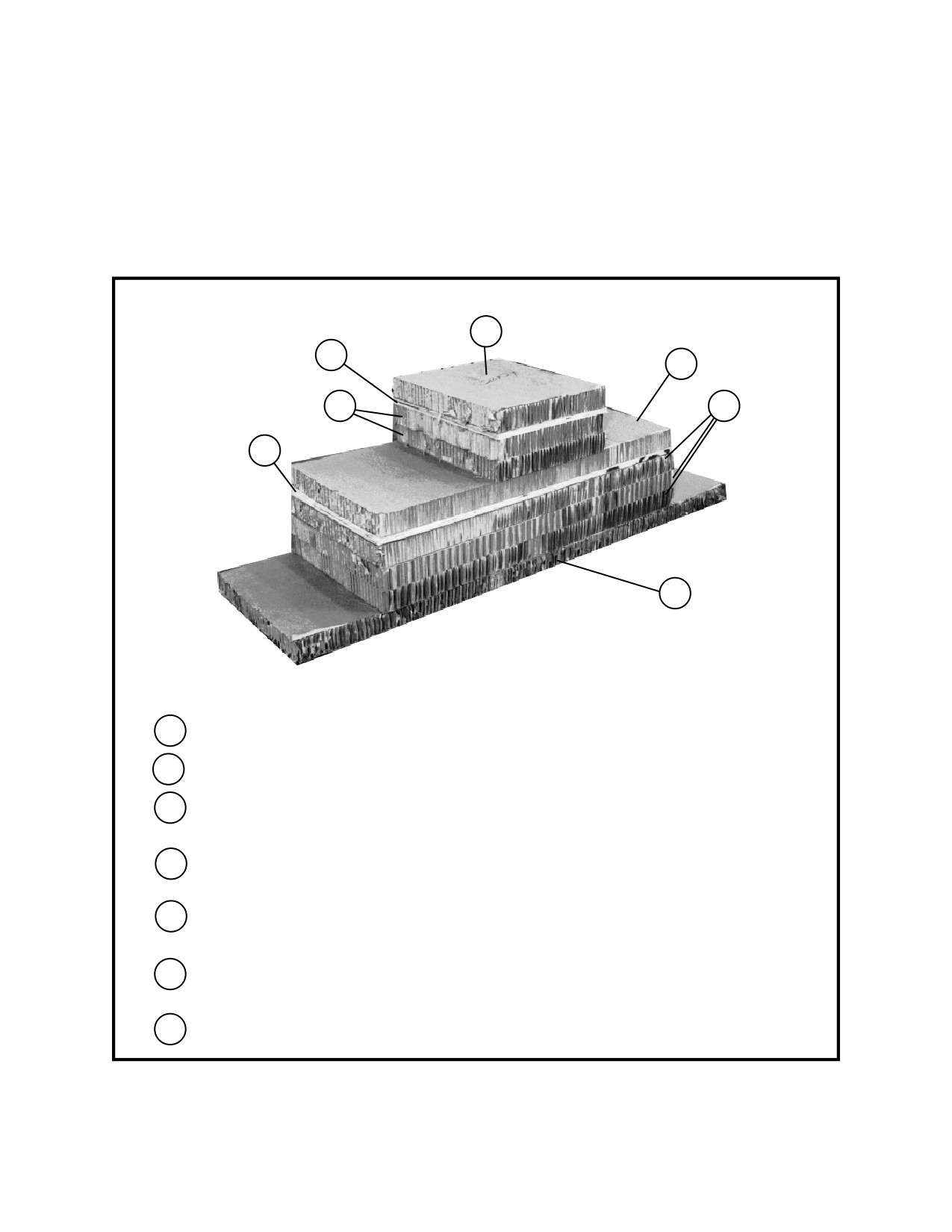
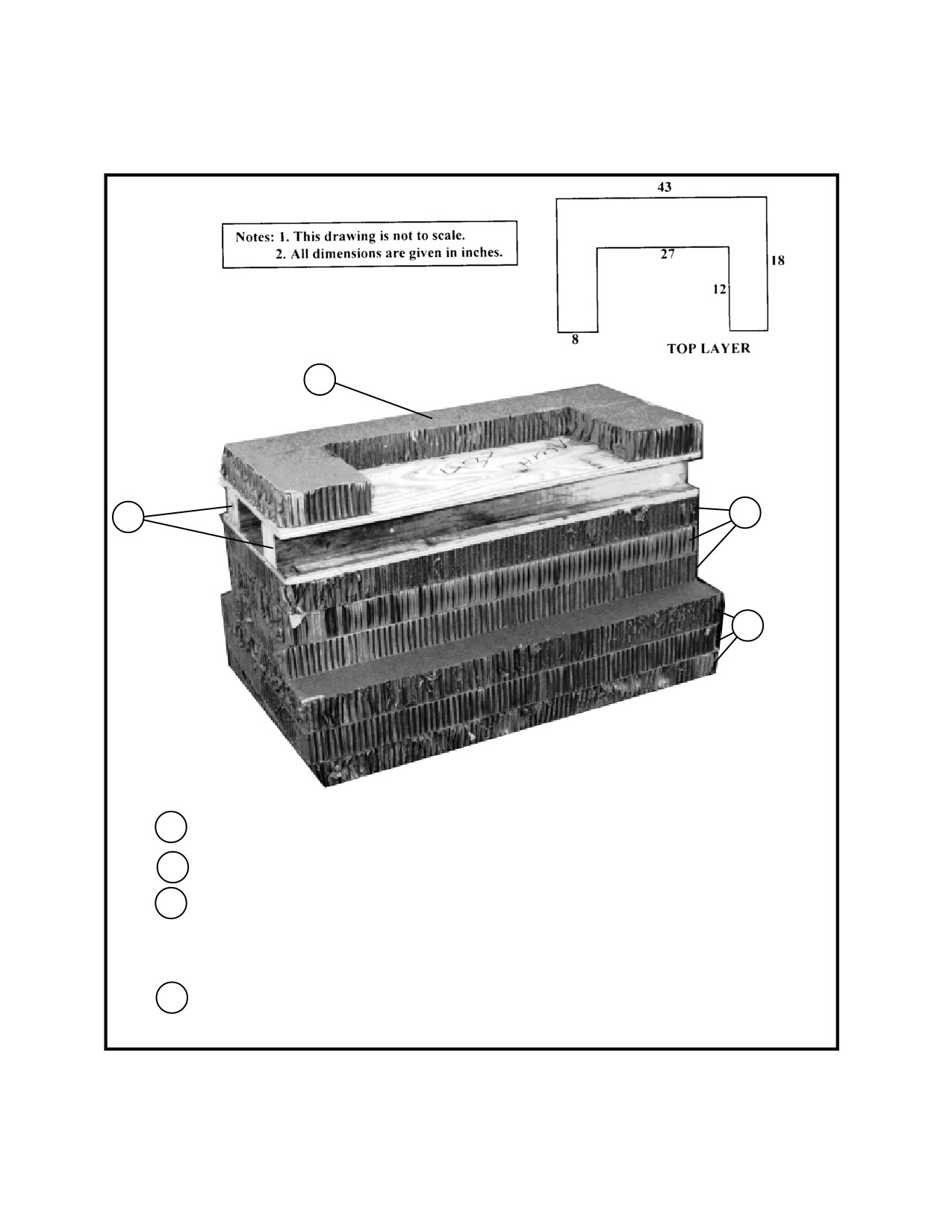
Build the honeycomb stacks as shown in Figures 2-2
through 2-6.
7
6
4
5
2
3
1
1
Use an 80- by 24-inch piece of honeycomb to form a base.
2
Center and glue three 54- by 24-inch pieces of honeycomb on the base.
3
Place and glue a 3/4- by 54- by 24-inch piece of plywood over the honeycomb placed
in step 2 above.
4
Place and glue one 54- by 24-inch piece of honeycomb on top of the plywood placed
in step 3 above.
5
Center and glue two 20- by 24-inch pieces of honeycomb on top of the honeycomb
placed in step 4 above.
6
Place and glue a 3/4- by 20- by 24-inch piece of plywood over the honeycomb placed
in step 5 above.
7
Place and glue one 20- by 24-inch piece of honeycomb on top of the plywood placed
in step 6 above.
Figure 2-2. Stacks 1 and 3 prepared
2-3
FM 10-500-23/TO 13C7-14-461
4
2
3
1
1
Glue three 43- by 26-inch pieces of honeycomb flush together to form a base.
2
Center and glue three 43- by 18-inch pieces of honeycomb flush on the base.
3
Nail a 43-inch piece of 4- by 4-inch lumber flush with each long side and 1 1/2 inches from
each edge of a 3/4- by 43- by 18-inch piece of plywood. Nail a second 3/4- by 43- by 18-inch
piece of plywood to the lumber and flush with the bottom piece of plywood. Glue the wood
section of the stack flush on the honeycomb placed in step 2 above.
4
Make the cutout as shown in a 43- by 18-inch piece of honeycomb. Glue the honeycomb
flush over the plywood.
Figure 2-3. Stack 2 prepared
2-4
FM 10-500-23/TO 13C7-14-461
1
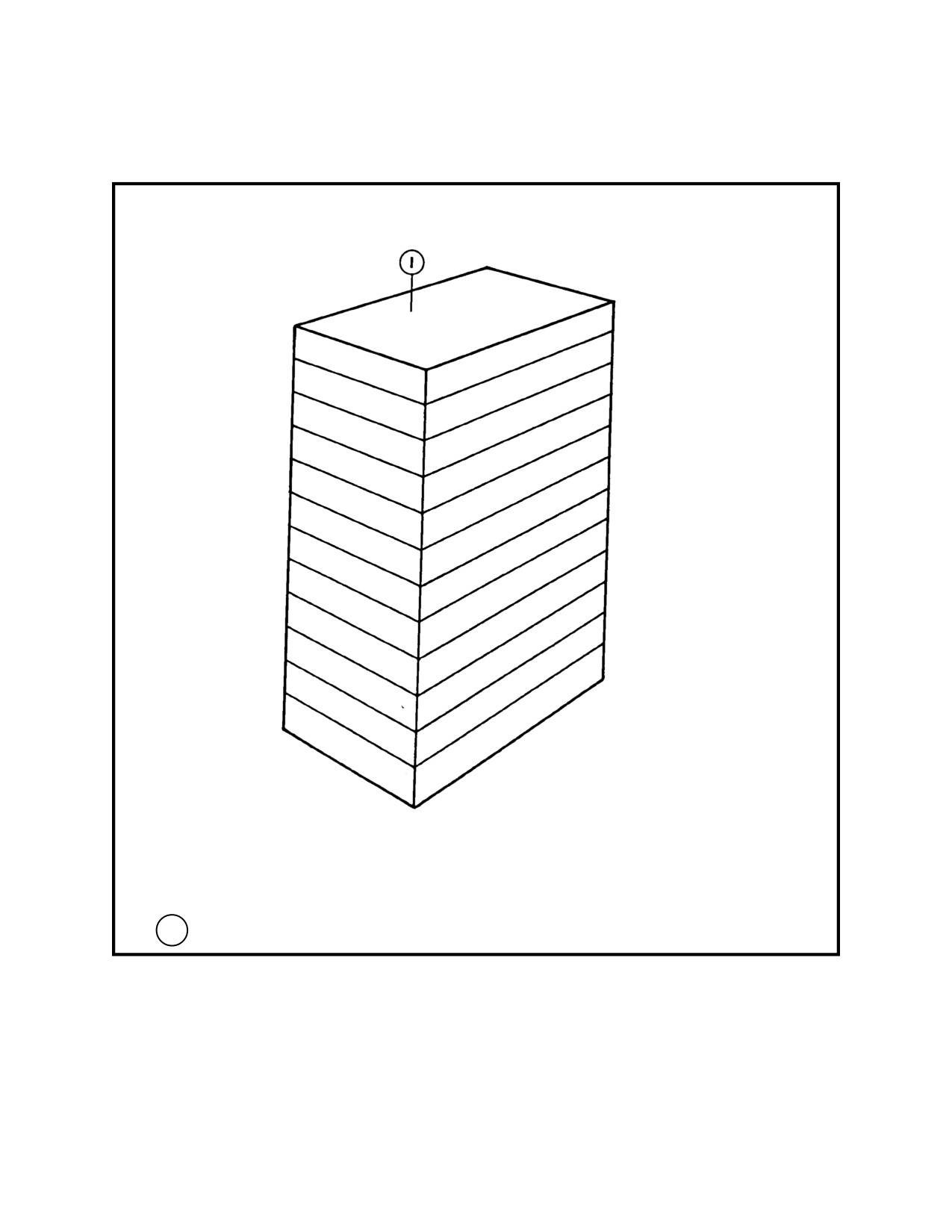
Glue twelve 36- by 12-inch pieces of honeycomb flush together.
Figure 2-4. Stack 4 prepared
2-5
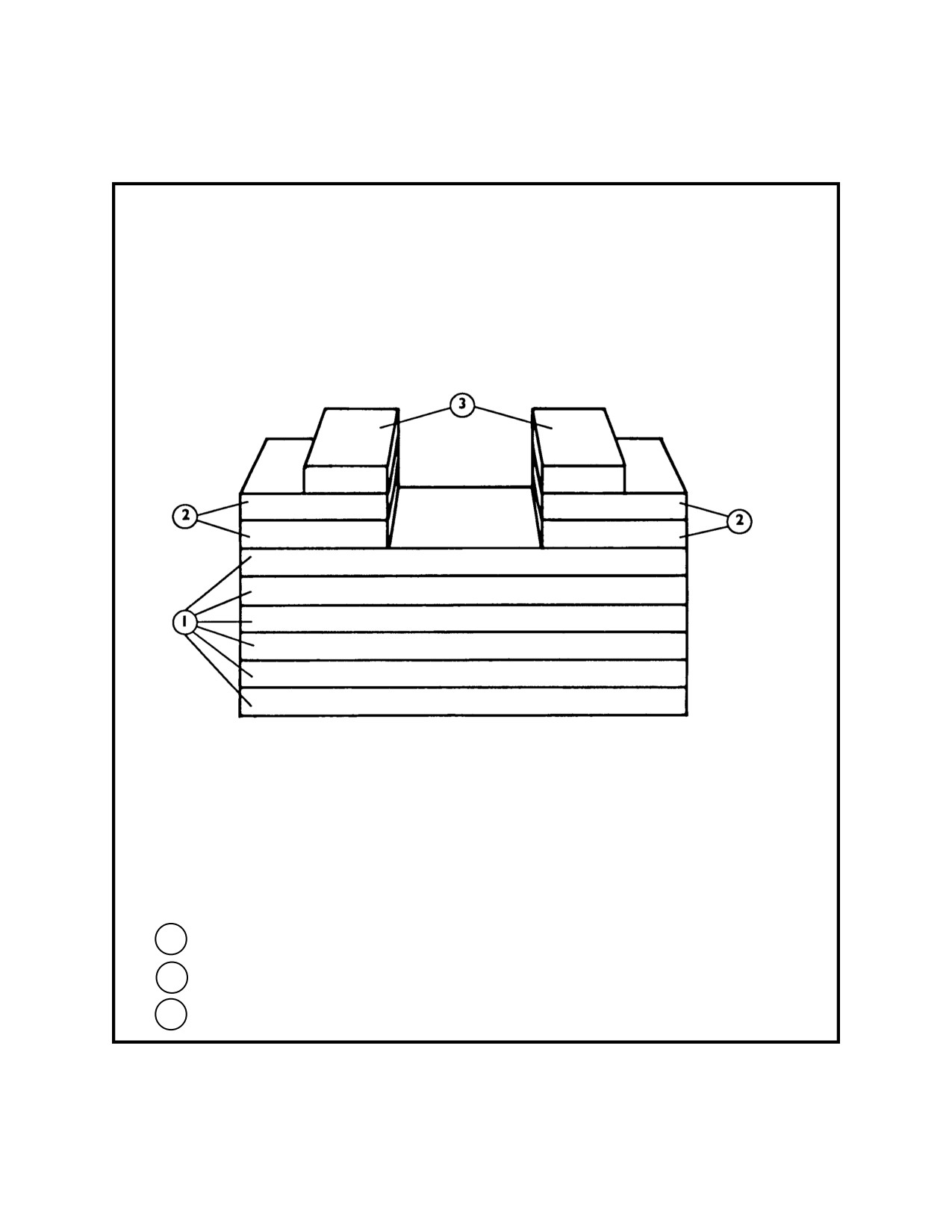
FM 10-500-23/TO 13C7-14-461
1
Glue six 36- by 12-inch pieces of honeycomb flush together to form the base.
2
Glue two pieces of 12- by 12-inch honeycomb on each side of the base.
3
Glue one 7- by 12-inch piece of honeycomb along the inside edge of each 12- by 12-inch stack.
Figure 2-5. Stack 5 prepared
2-6
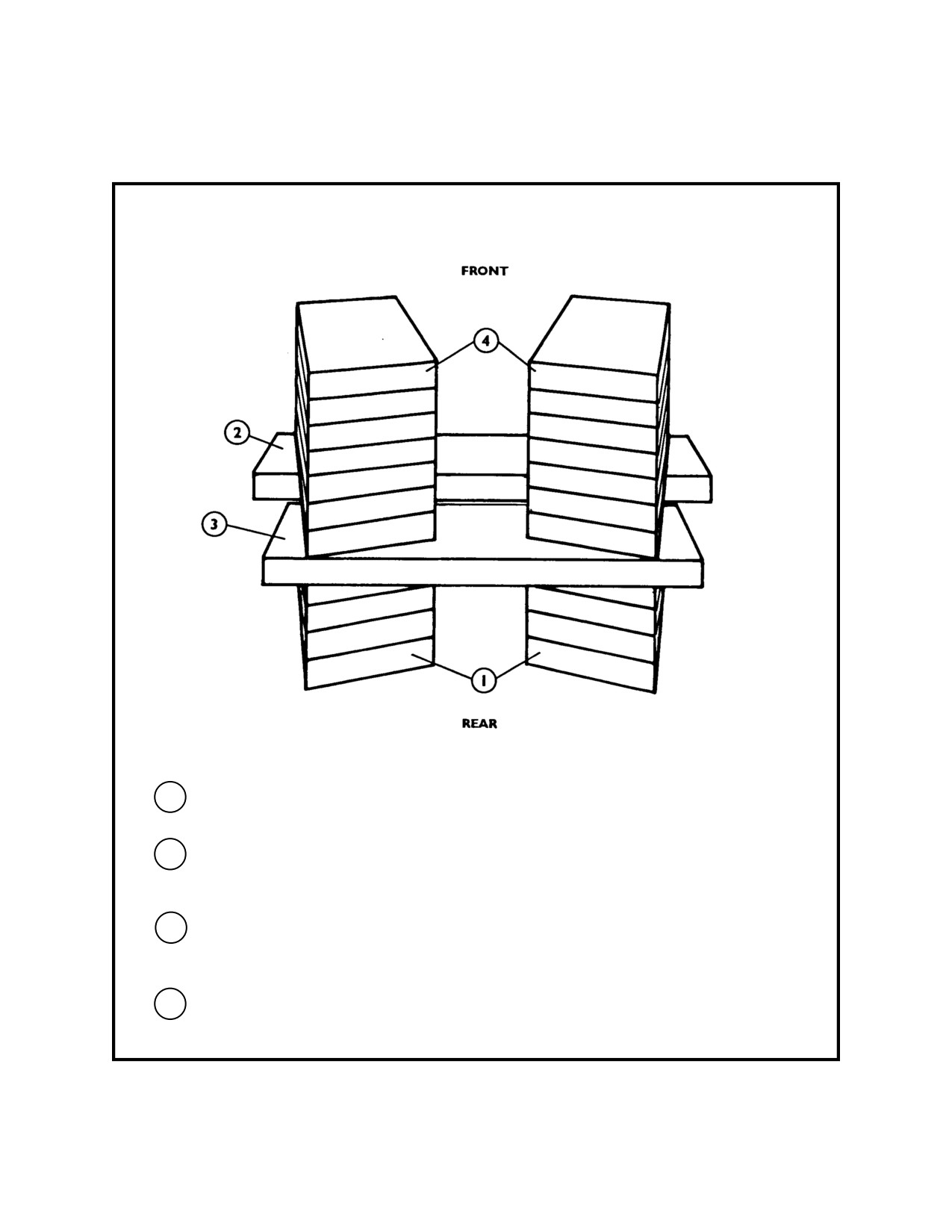
FM 10-500-23/TO 13C7-14-461
1
Use eight 12- by 32-inch pieces of honeycomb to form two base stacks of four layers each in a "V"
shape. Place the stacks 25 inches apart in the front and 11 inches apart in the rear.
2
Place one 48- by 12-inch piece of honeycomb over the front of the base stacks to form a bridge.
Position the honeycomb so that the front edge of the bridge is aligned with the front outside
corners of the base stacks.
3
Place one 36- by 12-inch piece of honeycomb over the rear of the base stacks to form a bridge.
Position the honeycomb so that the rear edge of the bridge is aligned with the rear outside corners
of the base stacks.
4
Use fourteen 12- by 32-inch pieces of honeycomb to form two stacks of seven layers each. Place
each stack on top of the bridge and align with each base stack.
Figure 2-6. Stack 6 prepared
2-7
FM 10-500-23/TO 13C7-14-461
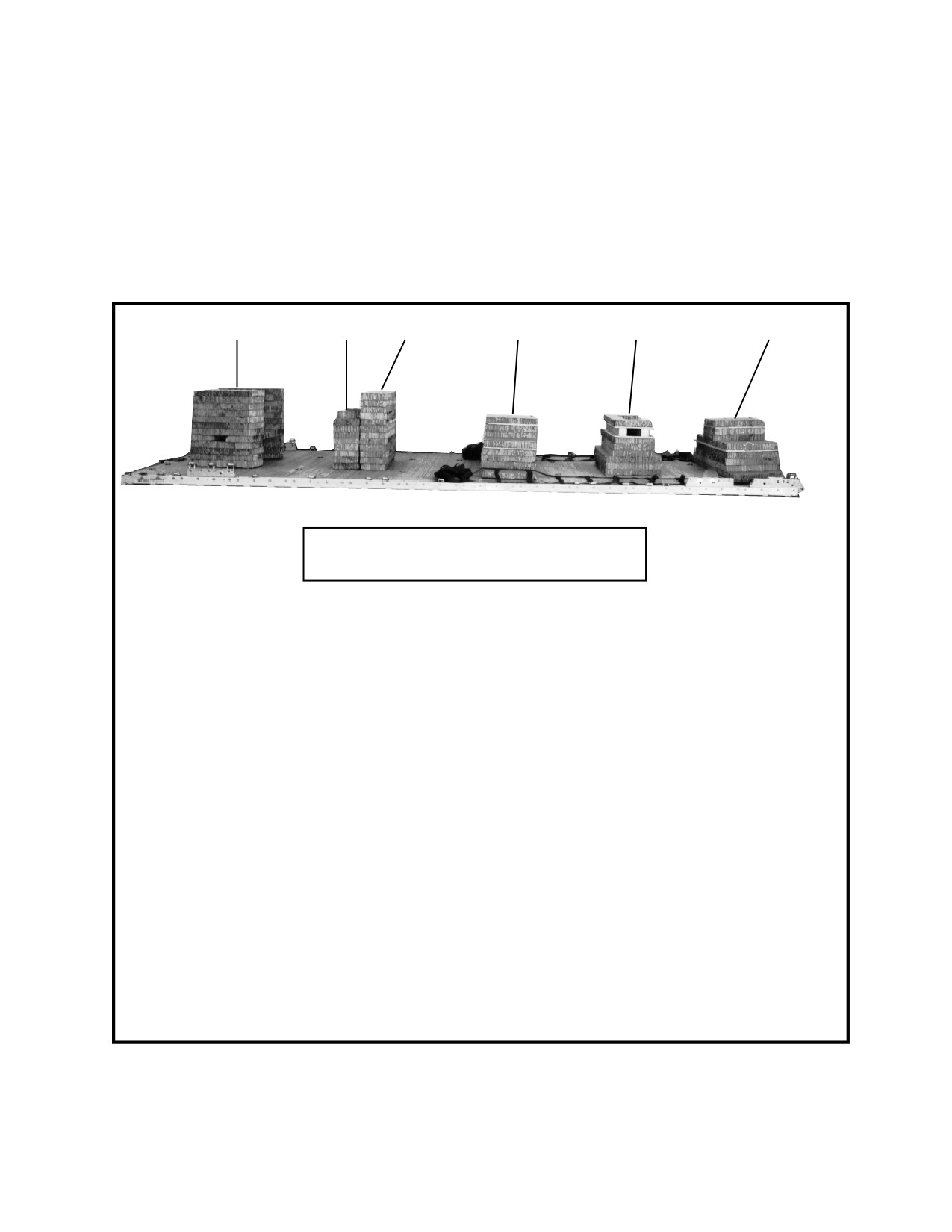
2-4. Installing HDDS and Positioning Honeycomb
Stacks
Install the HDDS and position the honeycomb stacks as
shown in FM 10-500-66/TO 13C7-25-71and in Figure 2-7 below.
STACK 6
STACK 5
STACK 3
STACK 2
STACK 1
STACK 4
Note: The use of HDDS is optional.
Step:
1.
Pass a 45-inch length of type V webbing or 1-inch tubular nylon webbing through tie-down ring
A-1 through a HDDS end loop, and through the second bushing on the right tandem link.
Knot the webbing according to FM 10-500-2/TO 13C7-1-5.
2.
Perform the same operation on the left side, using tie-down ring B1 and the second
bushing on the left tandem link.
3.
Position stack 1 centered and flush with the front edge of the platform.
4.
Position stack 2 centered and 35 inches from stack 1.
5.
Position stack 3 centered and 45 inches from stack 2.
Note: Place the HDDS over stack 3.
6.
Position stack 4 centered and 46 inches from stack 3.
7.
Position stack 5 centered and flush against the rear of stack 4.
8.
Position stack 6 centered and 33 inches to the rear of stack 5.
Figure 2-7. HDDS installed and honeycomb stacks positioned
2-8
FM 10-500-23/TO 13C7-14-461
2-5. Preparing HMMWV
2-6. Preparing the 3/4-ton M116A2 Trailer
Prepare the HMMWV truck according to FM 10-517/TO
Prepare the 3/4-ton M116A2 trailer according to FM 10-
13C7-1-111 with the following exception:
517/TO 13C7-1-111, Figure 8-8 with the following
exception:
Tie the mirrors and cab bows firmly to the seats. Tie the
cab doors against the seat backs.
Drill the 1/2-inch holes in the trailer sideboards 4
inches on center from the end.
2-9
FM 10-500-23/TO 13C7-14-461
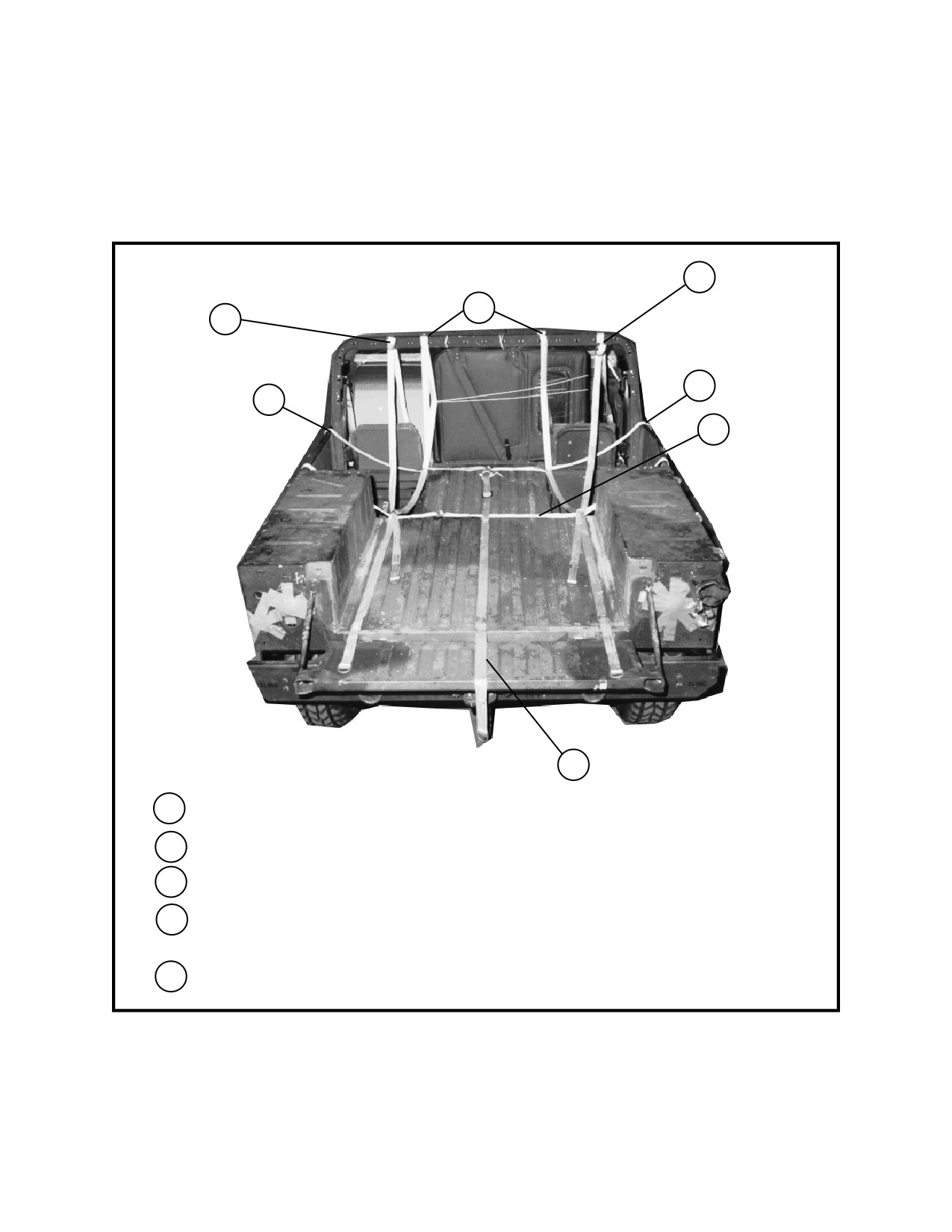
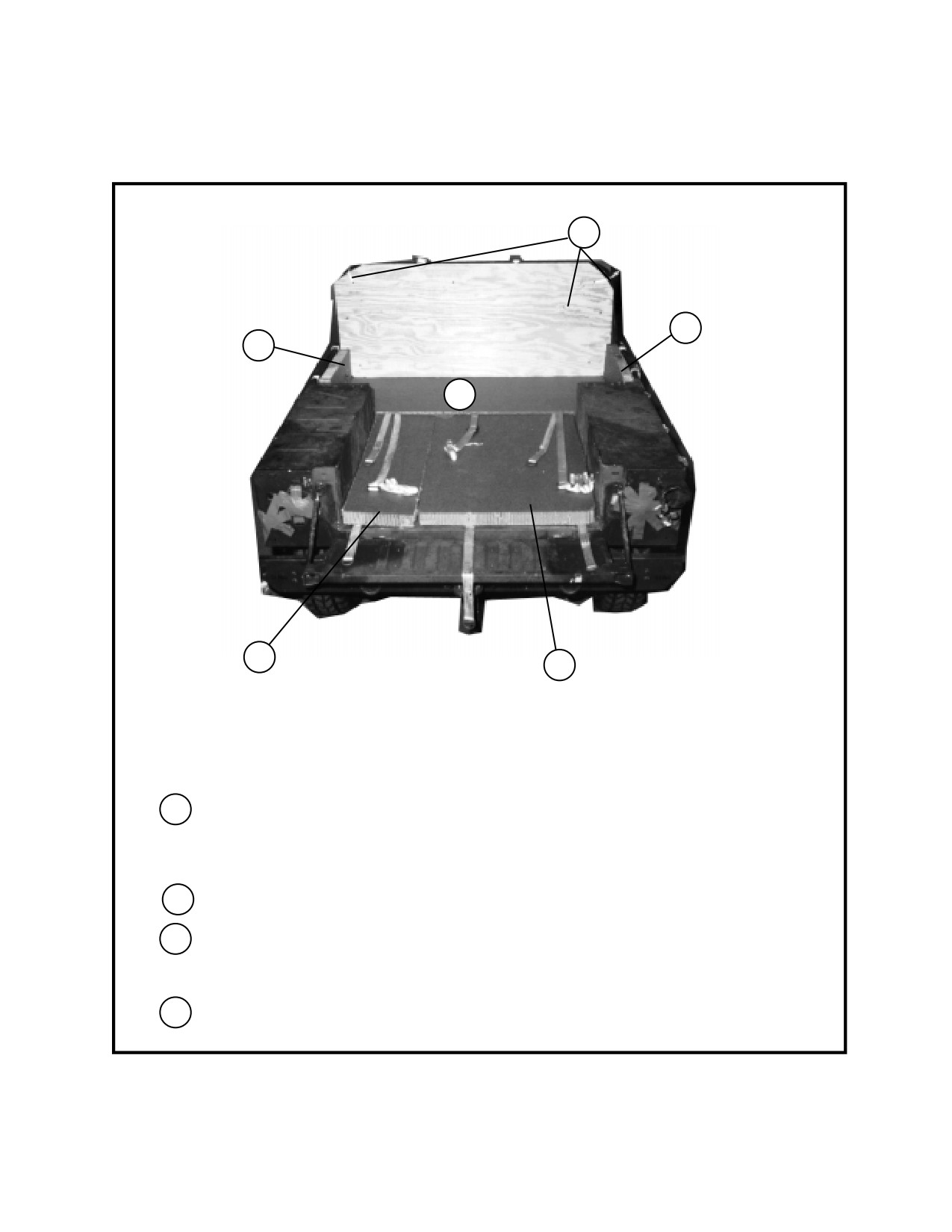
2-7. Preparing the Truck Cargo Bed
Prepare the truck cargo bed as shown in Figure 2-8.
4
5
4
1
1
2
3
1
Place a 30-foot lashing through the front tie-down rings from side to side.
2
Place a 30-foot lashing through the two outside center tie-down rings from side to side.
3
Place a 15-foot lashing through the two center tie-down rings. Place a D-ring to the free end.
4
Place two lashings, one on each side through the rear and center tie-down rings with their free
running ends towards the front of the truck.
5
Place two lashings, one on each side through the front and center tie-down rings with their free
running ends towards the front of the truck.
Figure 2-8. Truck cargo bed prepared
2-10
FM 10-500-23/TO 13C7-14-461
8
9
9
7
6
6
6
Cover the cargo bed to the rear center tie-down rings with a 36- by 52-inch and a 14- by 52-inch
piece of honeycomb.
Note: Be sure the 15-foot lashings placed earlier extend under the honeycomb and to the front and rear.
7
Cover the remainder of the cargo bed and lashings with an 81- by 31 1/2-inch piece of honeycomb.
8
Stand a 3/4- by 81- by 34-inch piece of plywood against the front of the cargo bed after beveling
the upper corners to conform to the curves of the B-pillar. Drill a 1/2-inch hole 5 inches in from
each upper corner. Secure with 1/2-inch tubular nylon.
9
Stand a 31 1/2-inch by 9-inch piece of honeycomb along the bed wall in front of the wheel well on
each side.
Figure 2-8. Truck cargo bed prepared (continued)
2-11
FM 10-500-23/TO 13C7-14-461
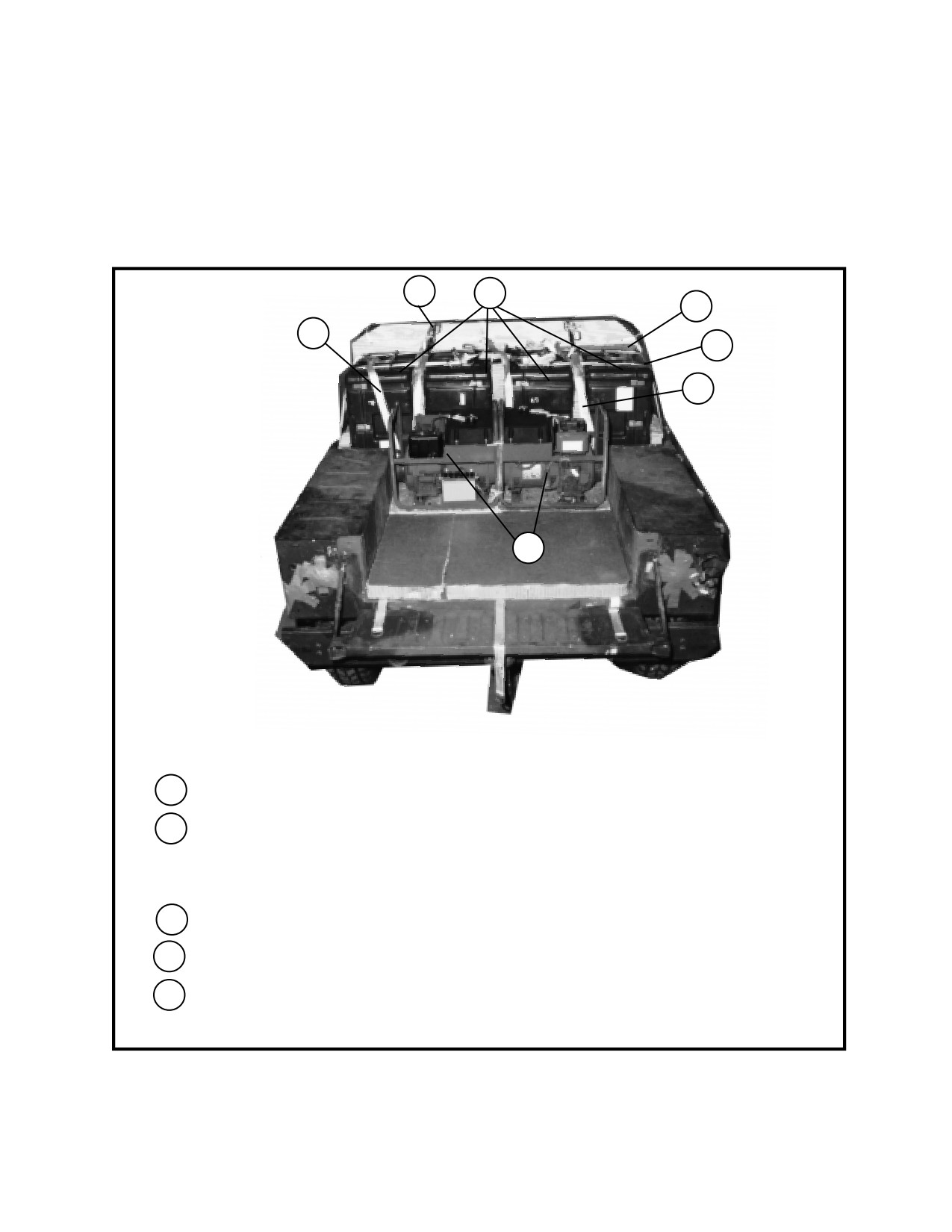
2-8. Loading the Truck Cargo Bed
Load the truck cargo bed as shown in Figure 2-9.
4
2
1
3
3
4
5
1
Place a 77- by 27 1/2-inch piece of honeycomb on edge in front of the cargo bed.
2
Place the four identically sized hard cases across the front of the cargo bed with three pieces of 26-
by 27 1/2-inch honeycomb in between.
Note: Place the cases as shown to ensure proper alignment of handles for lashing.
3
Fasten the 30-foot lashings over boxes, passing them through the box carrying handles.
4
Fasten the 15-foot lashings over the boxes and the plywood at the front of the load.
5
Place two generators, with fuel tanks facing, behind the cases. Pad between the cases and the
generators with honeycomb cut to fit. Tie the generator frames together at their corners with type
III nylon cord.
Figure 2-9. Truck cargo bed loaded
2-12
FM 10-500-23/TO 13C7-14-461
6
8
9
9
7
6
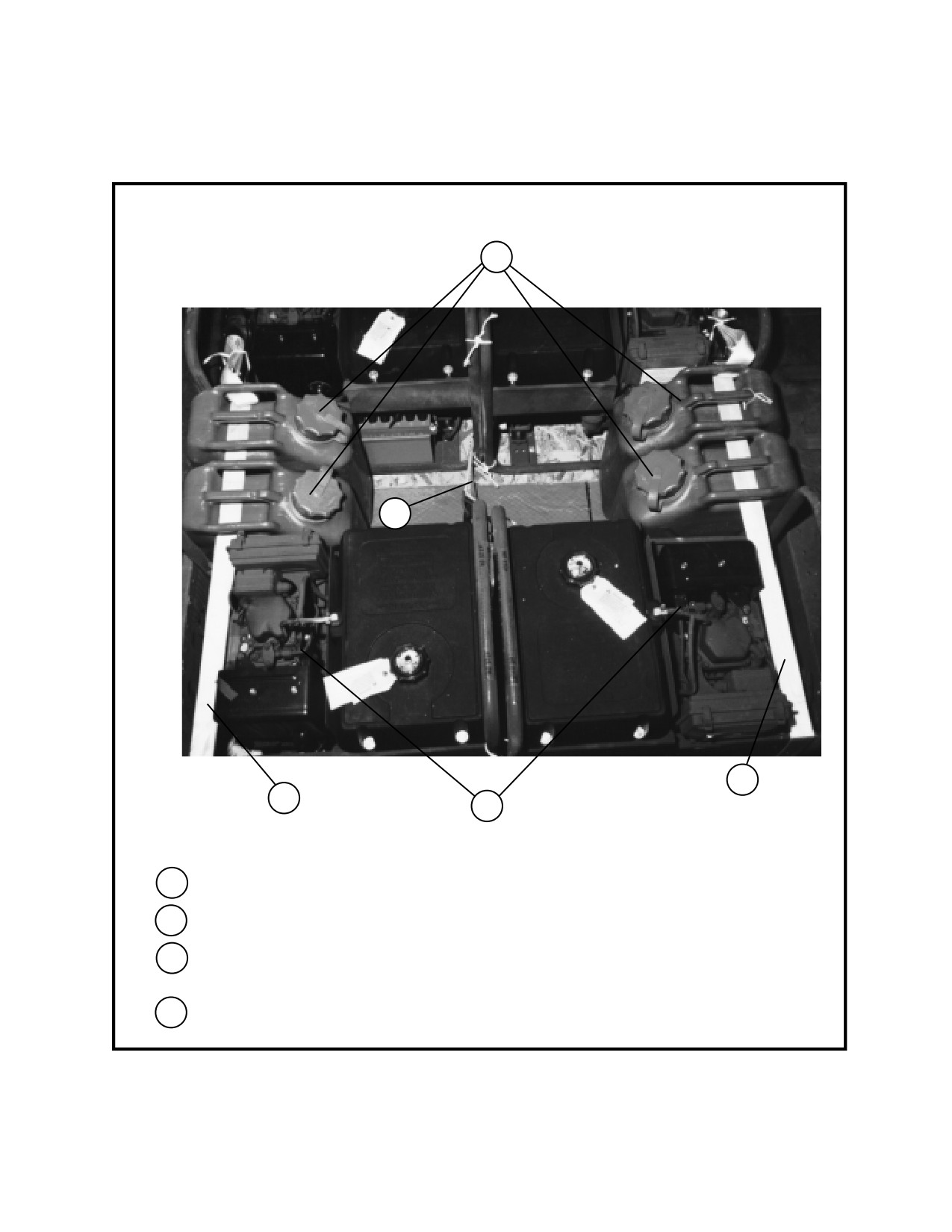
Place two fuel cans behind each generator, carrying handles to the outside.
7
Place two more generators behind the fuel cans, facing and tied together as in step 5.
8
Pass the center lashing through the generator frames at the bottom, alternating from one generator
to the other. Fasten the lashing with a load binder between the two sets of generators.
9
Pass the two remaining 15-foot lashings over generators and through the can handles. Fasten them
just ahead of the rear generators.
Figure 2-9. Truck cargo bed loaded (continued)
2-13
FM 10-500-23/TO 13C7-14-461
10
12
11
10
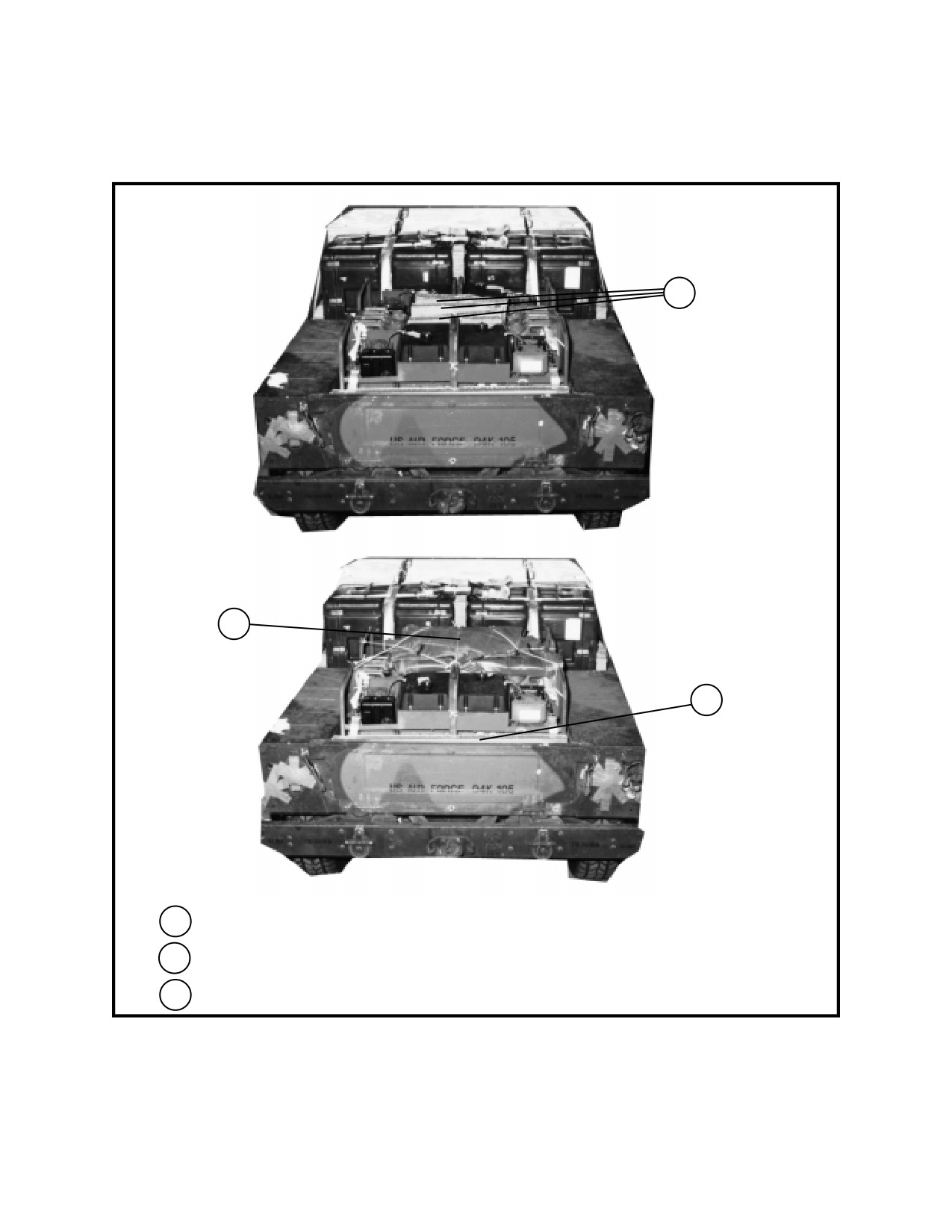
Place four 22- by 18-inch pieces of honeycomb between the sets of generators.
11
Place a 51- by 10 1/2-inch piece of honeycomb between the closed tailgate and the generators.
12
Tie the folded canopy cover to the tops of the generator frames with type III nylon cord.
Figure 2-9. Truck cargo bed loaded (continued)
2-14
FM 10-500-23/TO 13C7-14-461
53"
1"
3"
2"
48"
13
14
13
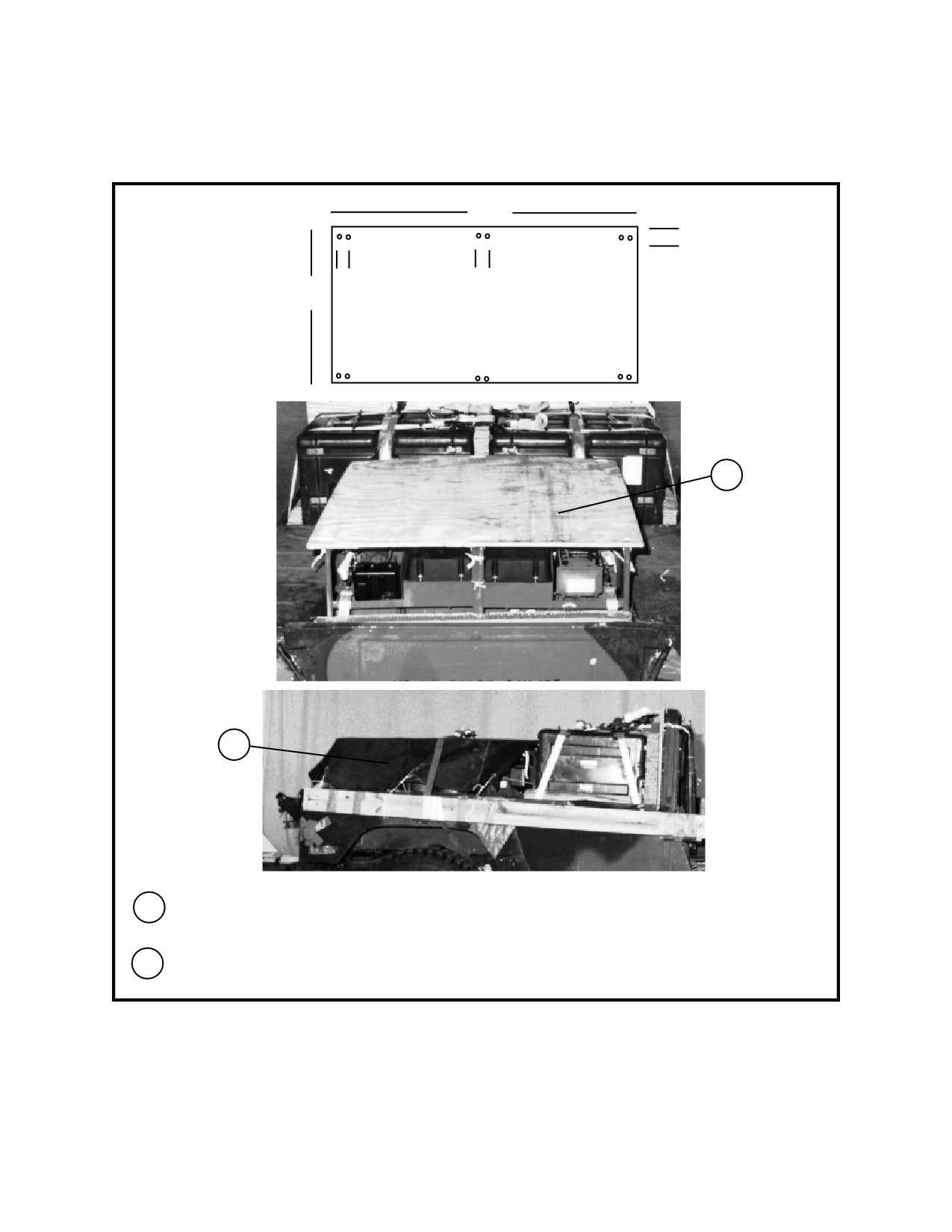
Tie a 3/4- by 48- by 53-inch piece of plywood, with holes drilled as shown above over the genera-
tors with 1/2-inch tubular nylon.
14
Tie a piece of cotton duck cloth, cut to fit over the plywood, to convenient points with type III
nylon cord.
Figure 2-9. Truck cargo bed loaded (continued)
2-15
FM 10-500-23/TO 13C7-14-461
2-9. Preparing Trailer Cargo Bed
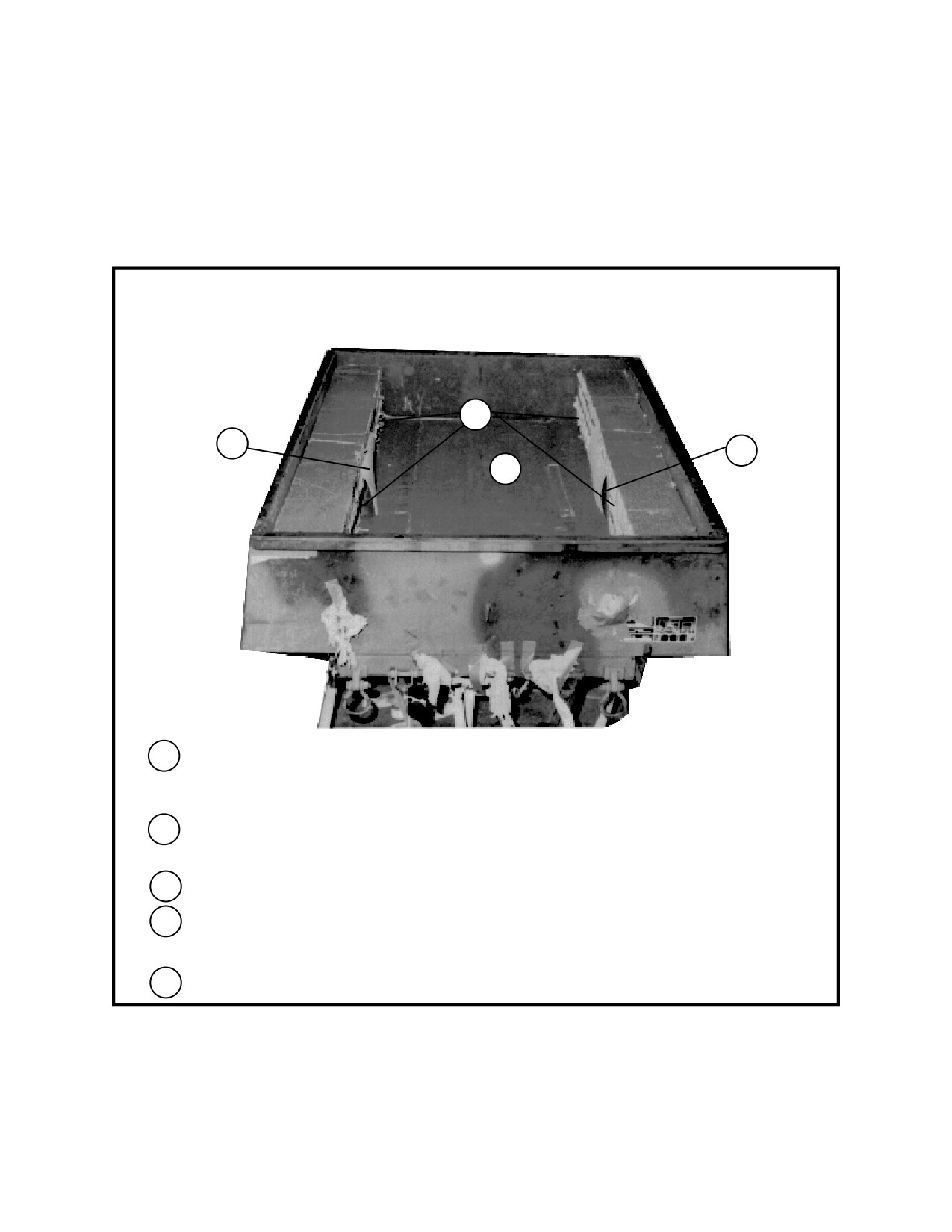
Prepare the trailer cargo bed as shown in Figure 2-10.
2
3
3
1
1
Cover the trailer cargo bed between the wheel wells with a layer of honeycomb.
Note: Piece sizes are not critical.
2
Completely fill the areas ahead of and behind the wheel wells with honeycomb, up to the top of
the well.
3
Fold a 14- by 24-inch piece of felt over each wheel well.
4
Cover the honeycomb and wheel well on each side with a piece of honeycomb 10- by 96-
inches.(Not shown)
5
Position two 30-foot lashings on the honeycomb, 6 inches from each wheel well. (Not shown)
Figure 2-10. Trailer cargo bed prepared
2-16
FM 10-500-23/TO 13C7-14-461
2-10. Placing Load in Trailer
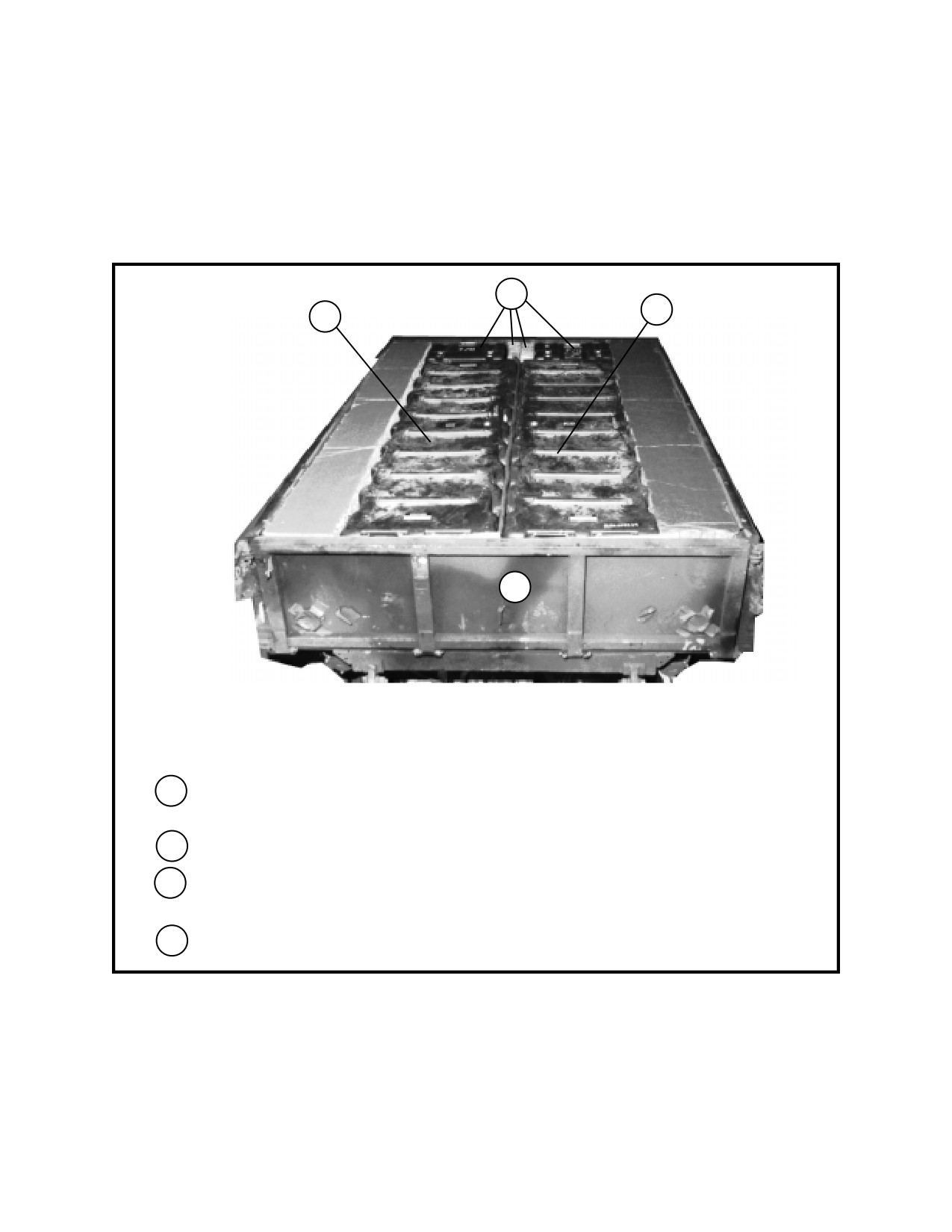
Place the load in the trailer as shown in Figure 2-11.
1
2
2
4
1
Place two CEU battery boxes in the front with two 13- by 15-inch pieces of honeycomb between
them. Pad between the boxes and the front trailer wall with felt.
2
Place the two 80- by 15-inch long cases in the remaining space. Pad between them with felt.
3
Fasten the lashings placed earlier over the long cases, passing them through the case handles.
(Not shown)
4
Close the tailgate and pad between the tailgate and cases with felt.
Figure 2-11. Load placed in trailer
2-17
FM 10-500-23/TO 13C7-14-461
7
6
7
5
5
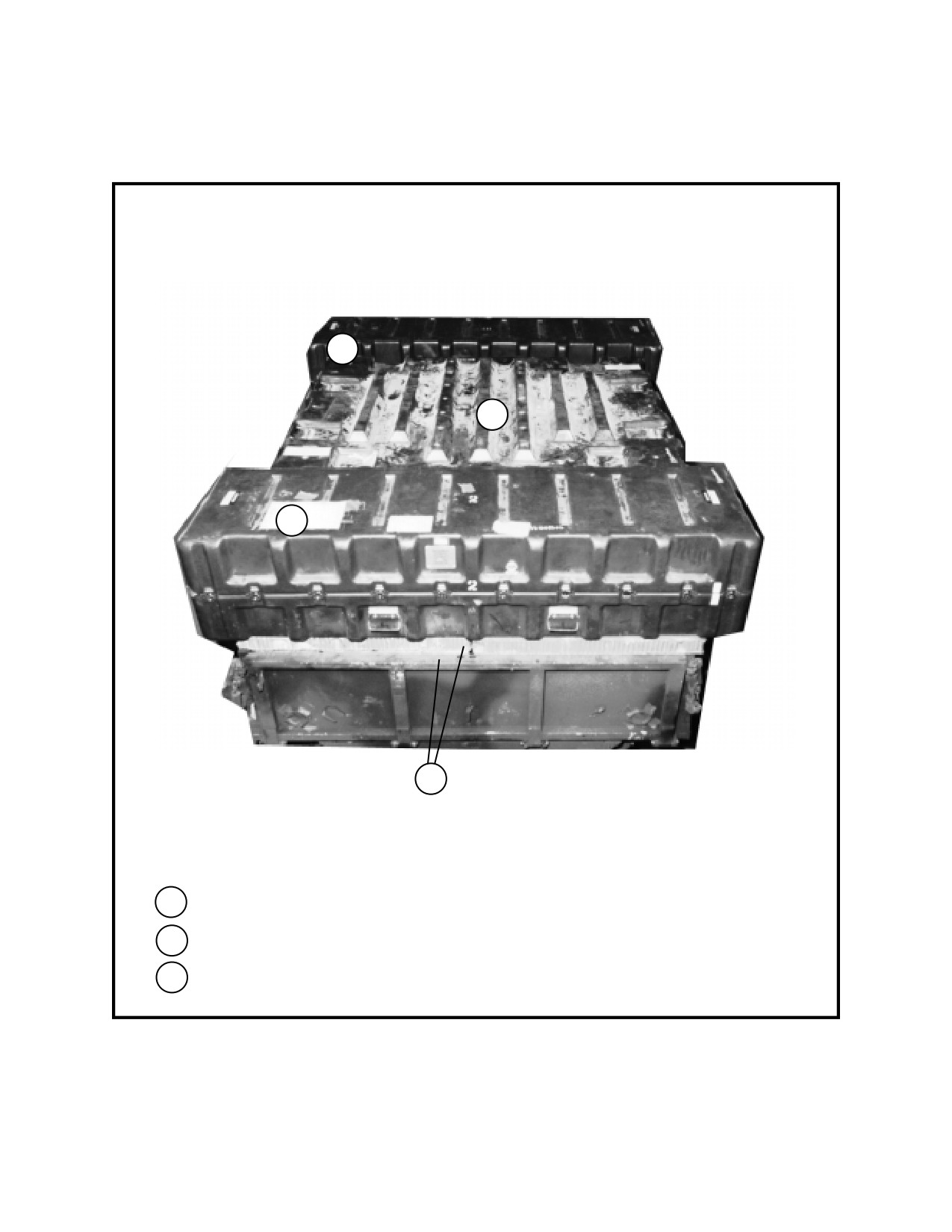
Cover the load in the trailer with two full sheets of honeycomb side by side.
6
Center the largest MMLS case on the trailer.
7
Place the two remaining long cases to the front and rear of the large case. Pad between them with
felt.
Figure 2-11. Load placed in trailer (continued)
2-18
FM 10-500-23/TO 13C7-14-461
10
13
14
8
12
11
12
11
8
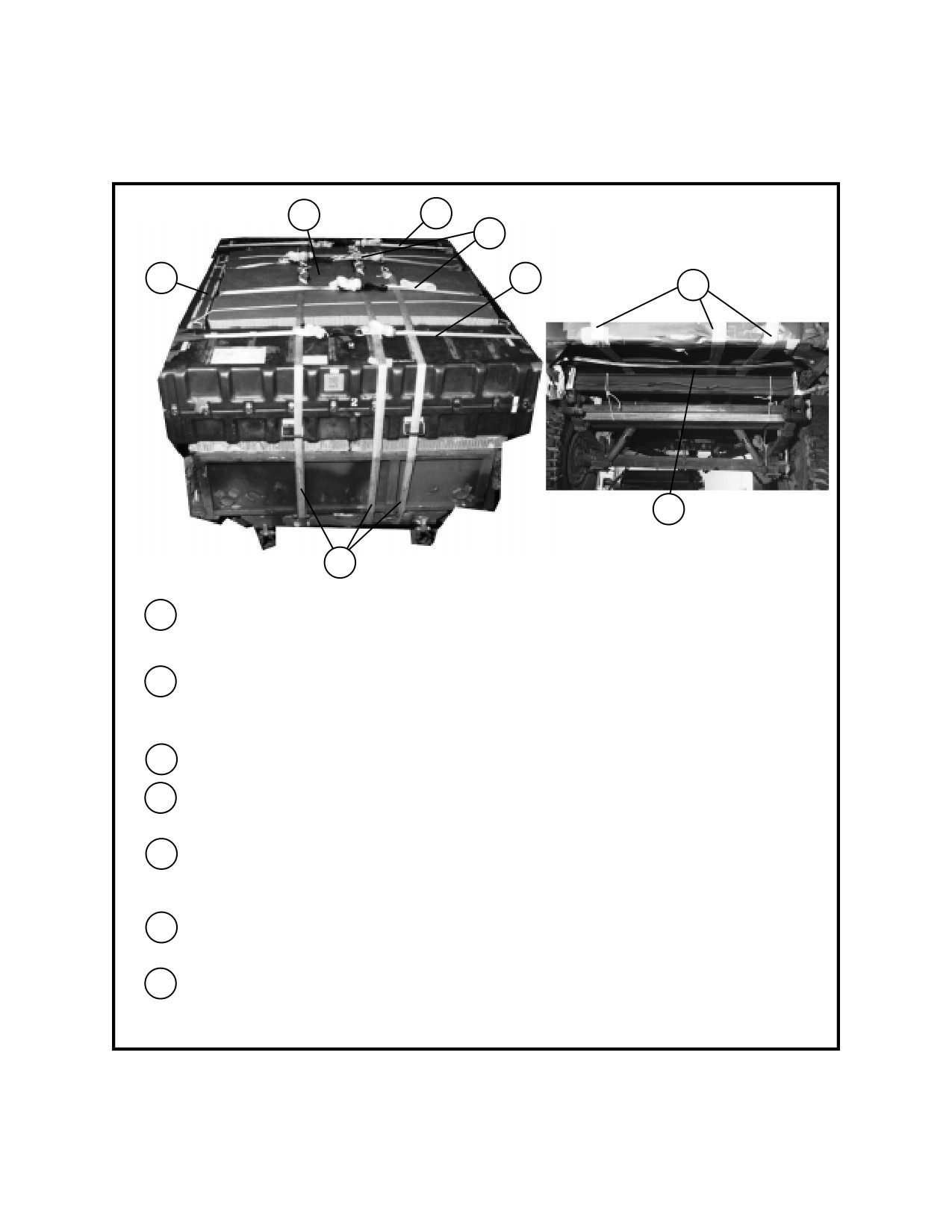
Cover two 15- by 53-inch pieces of honeycomb on one side with felt taped in place. Tie them to the
large case above the trailer sides with type III nylon cord. Tape all exposed case carrying handles.
9
Tie 55-inch pieces of 2- by 6-inch lumber to the trailer as side boards. Drill one pair of 1/2-inch holes
4 inches from the front ends. Support the side boards against the trailer with three pieces of 6-
by 8-inch honeycomb. (Not shown)
10
Cover the middle case with a piece of honeycomb to fit.
11
Pass three lashings lengthwise under the trailer and up through the box carrying handles. Pad all
sharp contact points with cellulose wadding. Fasten the lashings on top of the load.
12
Pass a 30-foot lashing around the trailer frame and the side boards and through its own D-ring, 6
to 8 inches from the front of the bed on each side. Fasten the lashings together on top of the
load.
13
Attach a 15-foot lashing in the same way 12 inches from the rear edge of the bed on each side.
Fasten the lashings together on top of the load.
14
Pass two 30-foot lashings under the trailer bed and frame within the fender well avoiding the hand
brake cables. Pass them around the side boards and fasten them on top of the load.
Figure 2-11. Load placed in trailer (continued)
2-19
FM 10-500-23/TO 13C7-14-461
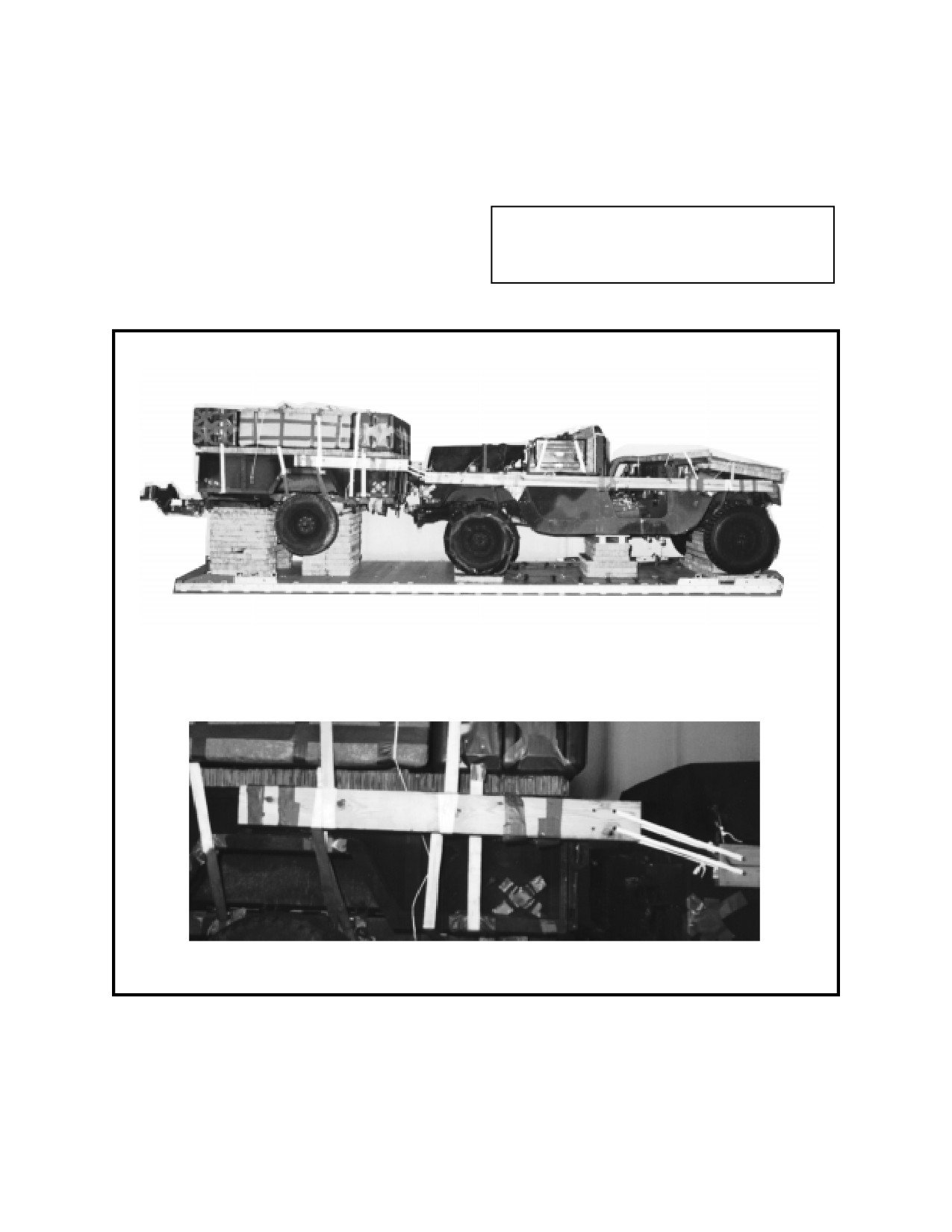
2-11. Placing Truck and Trailer on Platform
Place the truck and trailer on the platform as shown in steps
Note: The use of HDDS is optional but
1 through 6, Figure 8-10, FM 10-517. Tie the trailer stand up
recommended.
with 1/2-inch tubular nylon. Tie the boards together with
1/2-inch tubular nylon as shown in Figure 2-12.
Figure 2-12.Truck and trailer placed on platform
2-20
FM 10-500-23/TO 13C7-14-461
2-12. Lashing Truck and Trailer to Platform
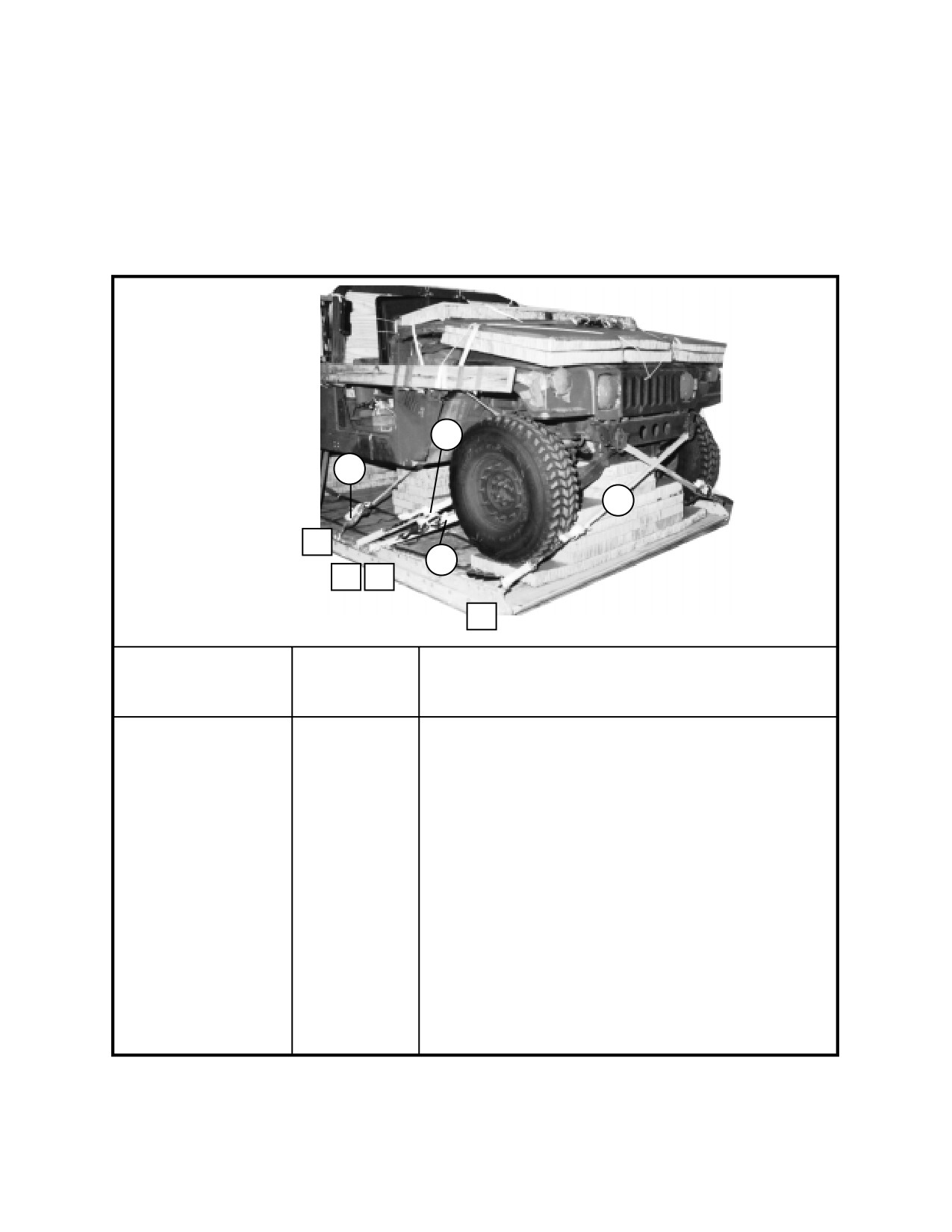
Lash the truck and trailer to the platform as shown in Figure 2-13.
5
7
1
4
3
3
2
1
Tiedown
Lashing
Clevis
Number
Instructions
Number
Pass lashing:
1
1
Through left tie-down on front bumper.
2
1A
Through right tie-down on front bumper.
3
2
Around right front lower control arm.
4
2A
Around left front lower control arm.
5
3
Through tie-down provision in front of right coil spring.
6
3A
Through tie-down provision in front of left coil spring.
7
4
Invert clevis and hook load binder to clevis.
8
4A
Pass lashing through clevis and through its own D-ring.
Attach a D-ring to the free end, bring the lashing through the
hole in stack 2 and fasten it to the load binder on the right
side.
Figure 2-13. Truck and trailer lashed to platform
2-21
FM 10-500-23/TO 13C7-14-461
9
15
13
19
17
11
10
9
8
7
6
5
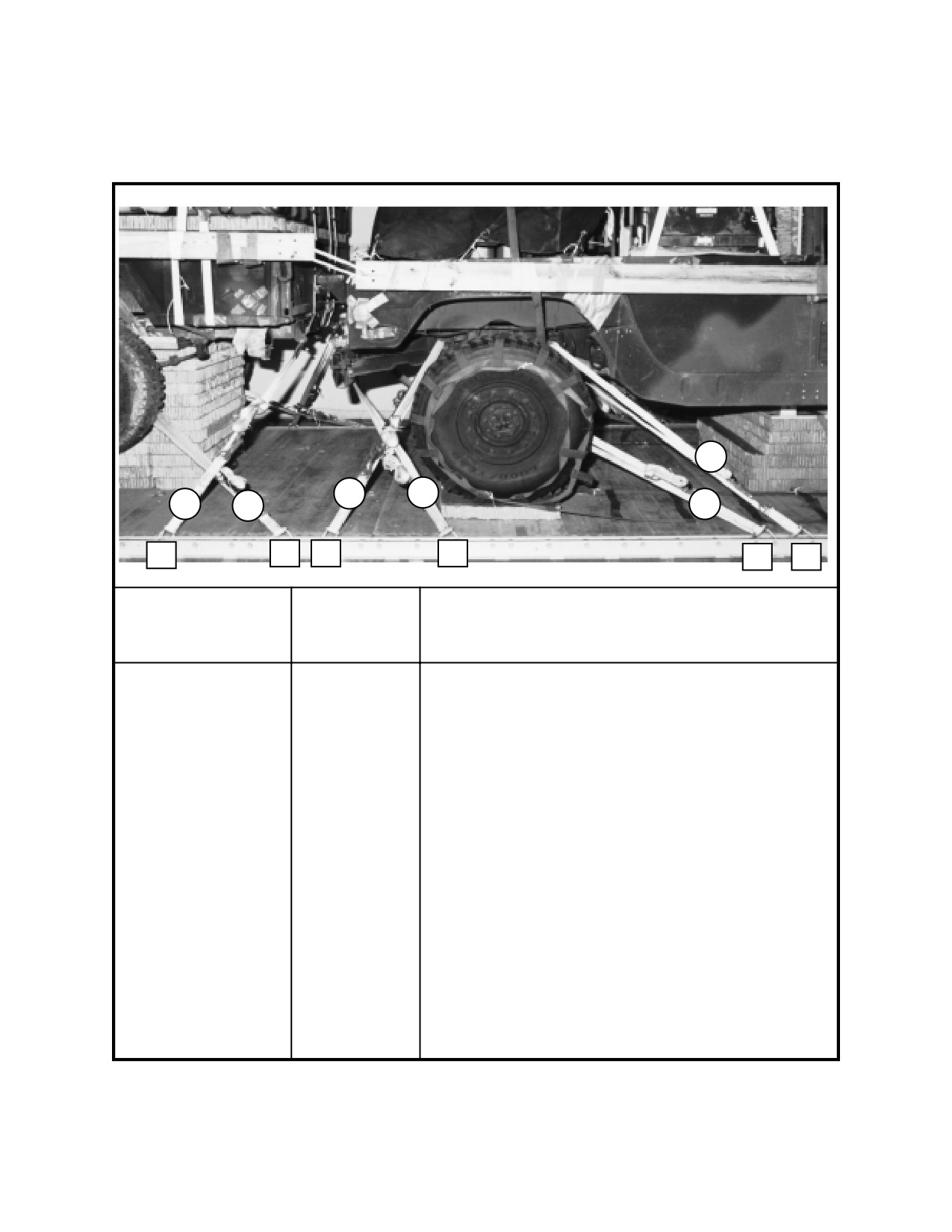
Tiedown
Lashing
Clevis
Number
Number
Instructions
Pass lashing:
9
5
Through tie-down provision in front of right rear coil spring.
10
5A
Through tie-down provision in front of left rear coil spring.
11
6
Around right rear lower control arm.
12
6A
Around left rear lower control arm.
13
7
Through right tie-down on rear bumper.
14
7A
Through left tie-down on rear bumper.
15
8
Through tie-down provision behind right rear coil spring.
16
8A
Through tie-down provision behind left coil spring.
17
9
Around the trailer axle.
18
9A
Around the trailer axle.
19
10
Through left tie-down provision on rear of trailer.
20
10A
Through right tie-down provision on rear of trailer.
Figure 2-13. Truck and trailer lashed to platform (continued)
2-22
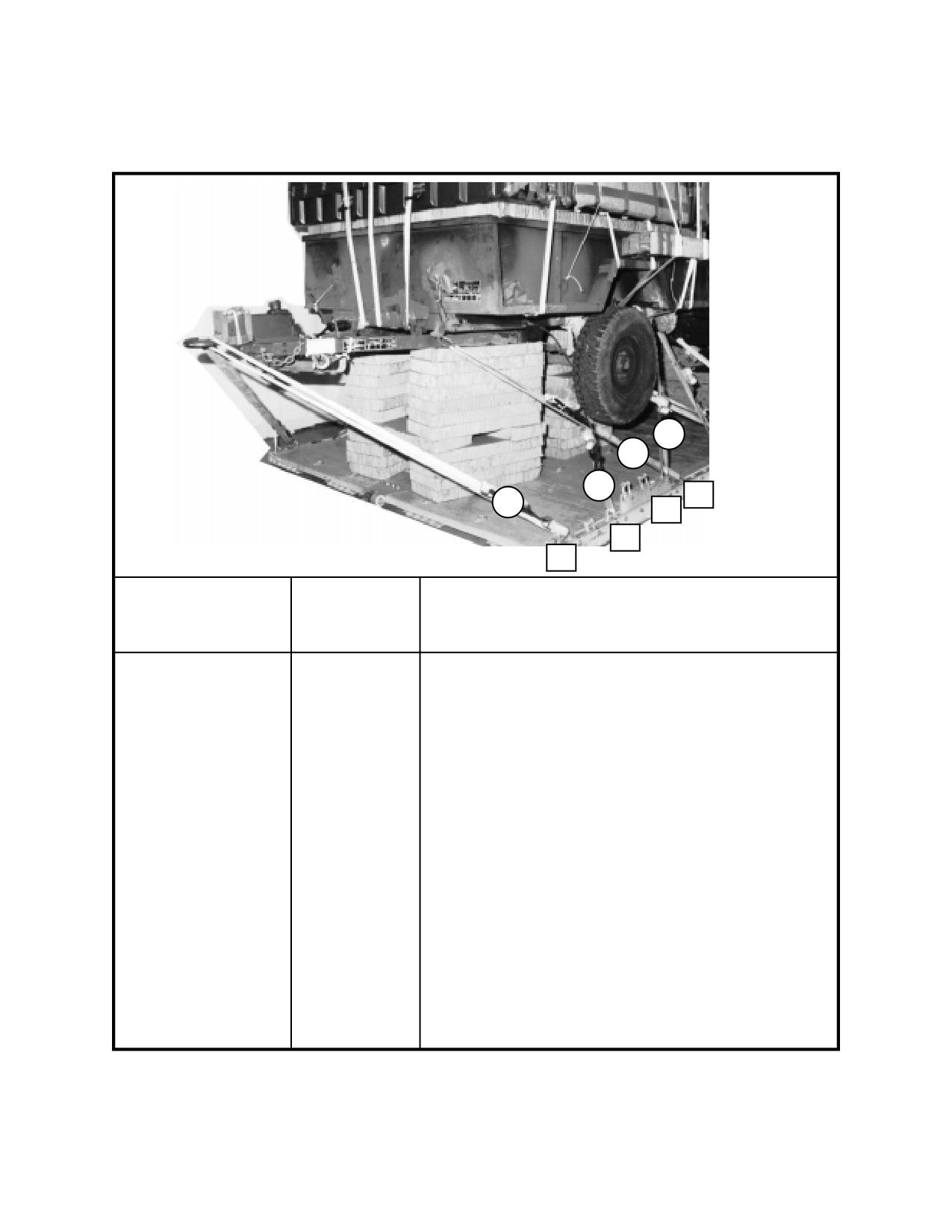
FM 10-500-23/TO 13C7-14-461
23
21
25
11
27
12
15
17
Tiedown
Lashing
Clevis
Number
Number
Instructions
Pass lashing:
21
11
Through left tie-down provision on front of trailer.
22
11A
Through right tie-down provision on front of trailer.
23
12
Around trailer frame behind leaf spring.
24
12A
Around trailer frame behind leaf spring.
25
15
Around the trailer axle.
26
15A
Around the trailer axle.
27
17
Through lunette.
28
17A
Through lunette.
Figure 2-13. Truck and trailer lashed to platform (continued)
2-23
FM 10-500-23/TO 13C7-14-461
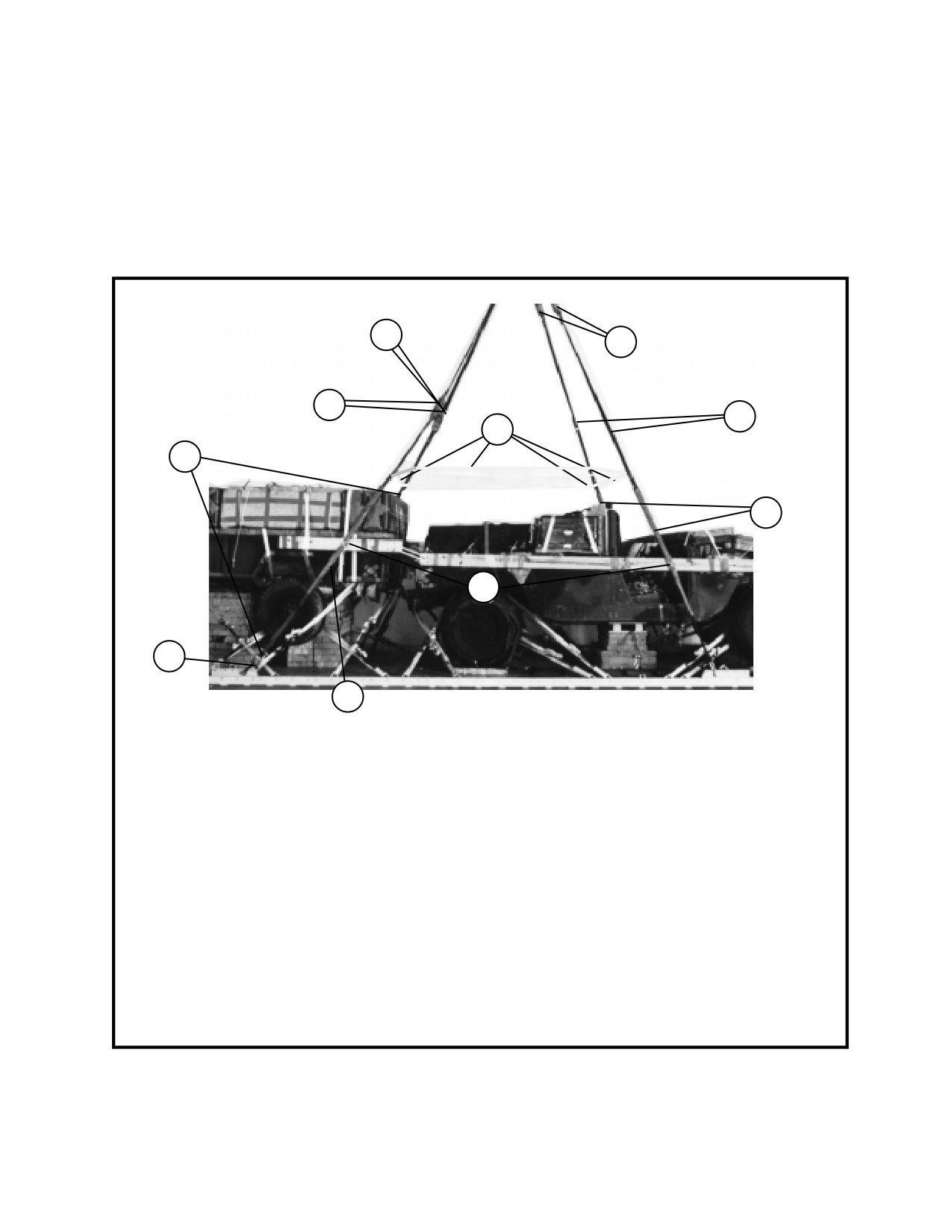
2-13. Installing Suspension Slings and Deadman Tie
Install the suspension slings and deadman tie as
shown in Figure 2-14.
6
2
5
1
9
4
7
10
3
8
Step:
1.
Attach a 16-foot (2-loop), type XXVI nylon sling to each front suspension link with a
large clevis.
2.
Attach a 3-foot (2-loop), type XXVI nylon sling to each 16-foot sling with a 3 3/4-inch two-point
link.
3.
Attach a large clevis to each rear suspension link.
4.
Attach an 11-foot (2-loop), type XXVI nylon sling to each of these large clevises with an additional
large clevis.
5.
Attach a 9-foot (2-loop), type XXVI nylon sling to each 11-foot sling with a 5 1/2-inch two-point
link.
6.
Pad the two-point links with cellulose wadding and tape.
7.
Wrap the front suspension slings 21 inches from the clevis with a 6- by 48-inch piece of felt and
tape.
8.
Wrap the rear suspension slings 33 inches from the clevis with felt as in step 7.
9.
Install the deadman tie according to FM 10-500-2/TO 13C7-1-5.
10.
Tie the suspension slings to the truck and trailer side boards with type III nylon cord.
Figure 2-14. Suspension slings and deadman tie installed
2-24
FM 10-500-23/TO 13C7-14-461
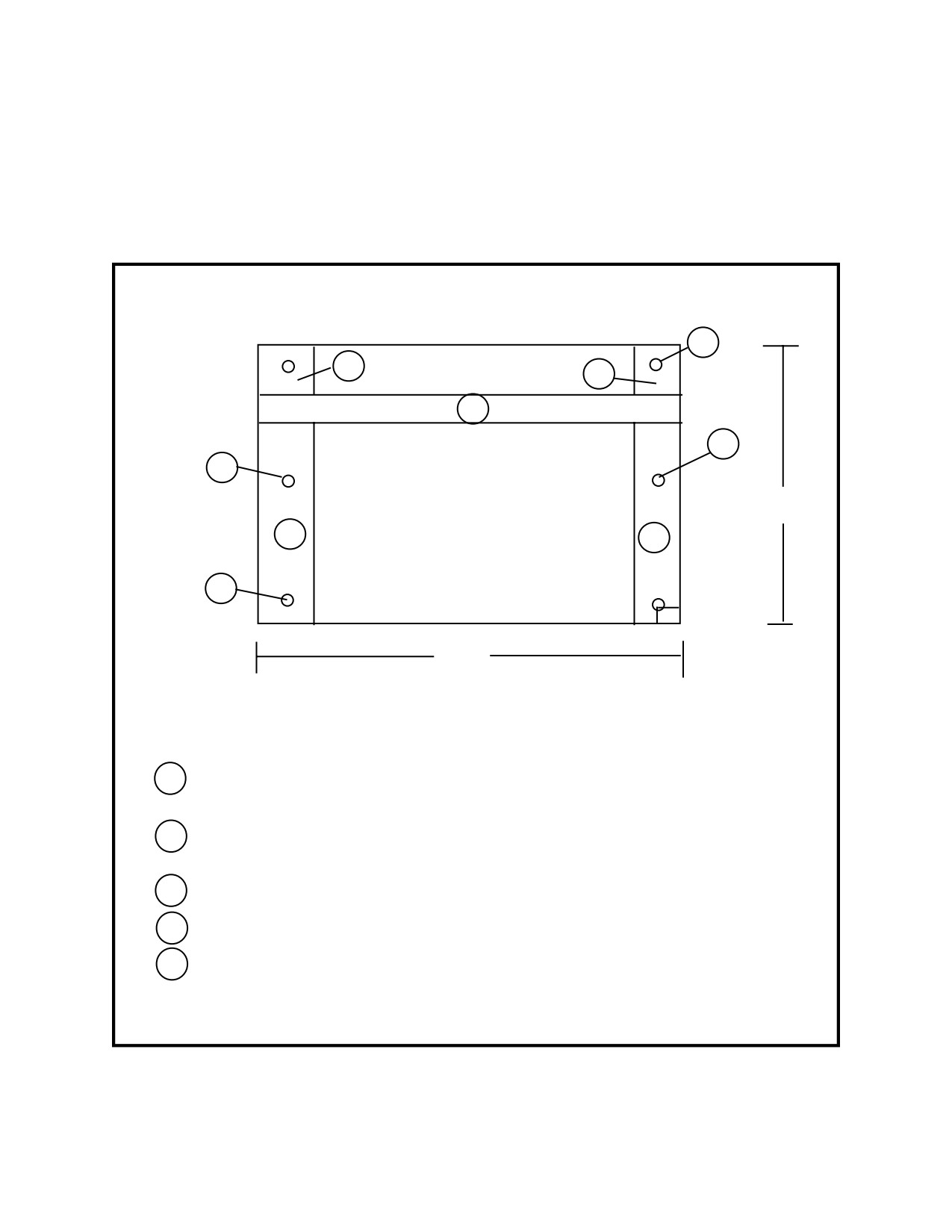
2-14. Building Parachute Stowage Platform
Build a parachute stowage platform as shown in Figure 2-15.
4
3
3
2
5
5
48"
1
1
4
3"
3"
60"
1
Nail a 2- by 6- by 28-inch piece of lumber to each side of a 3/4-by 48- by 60-inch piece of plywood
flush with the front end with 8d nails.
2
Nail a 4- by 4- by 60-inch piece of lumber across the plywood flush to the rear of the 2- by 6-inch
lumber.
3
Nail a 2- by 6- by 16 1/2-inch piece of lumber flush along each edge of the plywood.
4
Drill a 2-inch hole 3 inches from each corner of the platform and centered in the lumber.
5
Center a 2-inch hole between the corner holes on each side of the platform.
Figure 2-15. Parachute stowage platform built
2-25
FM 10-500-23/TO 13C7-14-461
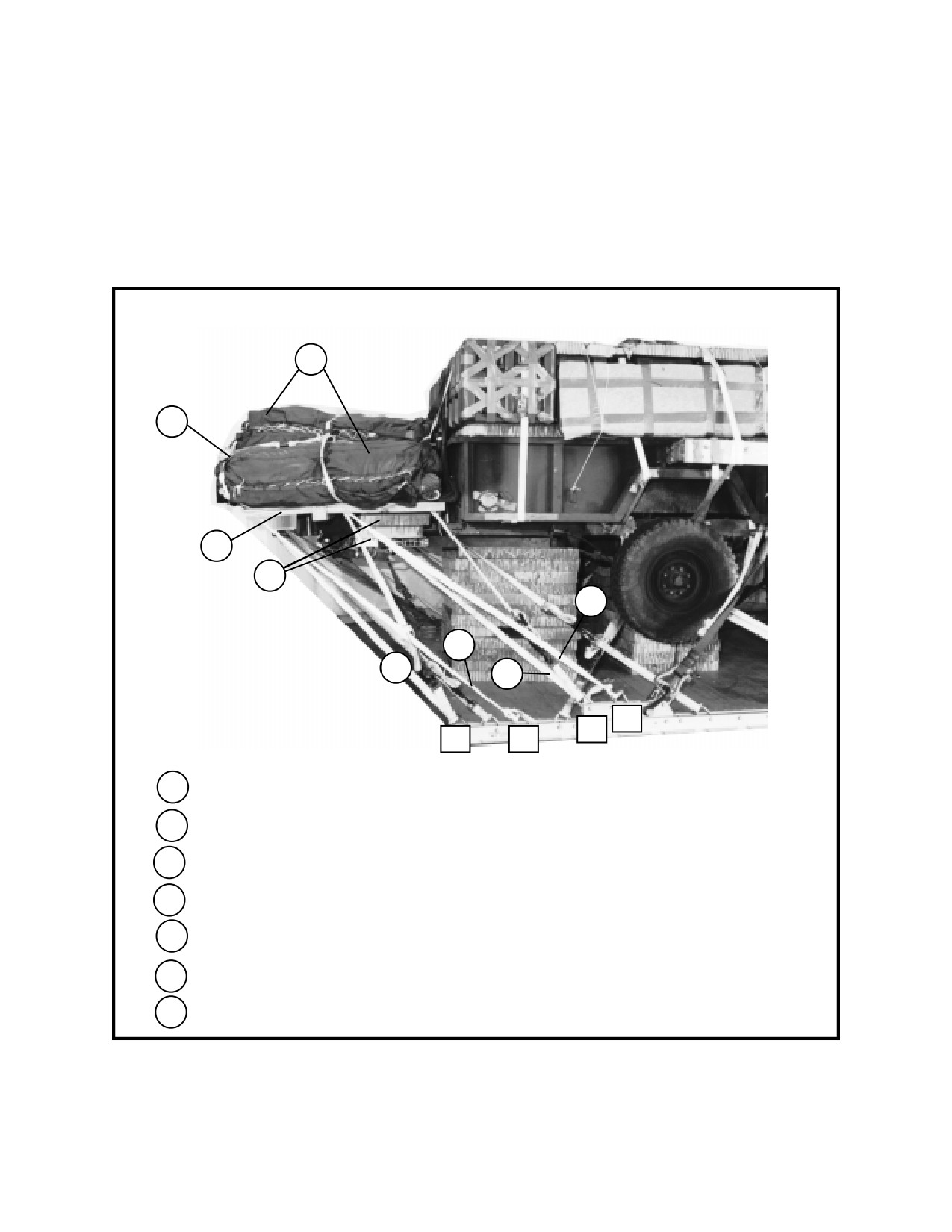
2-15. Installing Parachute Stowage Platform, Preparing and
Stowing Cargo Parachutes
Install the parachute stowage platform on top of the support stacks.
Prepare and stow the cargo parachutes as shown in Figure 2-16.
5
7
2
1
6
6
3
4
13
14
18
16
1
Place three 18- by 36-inch pieces of honeycomb on the trailer drawbar for support.
2
Place the platform over the drawbar and honeycomb with the shorter portion to the rear.
3
Lash the two rear and center holes to clevises 18 and 18A.
4
Lash the two front and center holes to clevises 14 and 14A.
5
Install and restrain three G-11 parachutes according to FM 10-500-2/TO 13C7-1-5.
6
Tie the restraint straps to clevises 13 and 13A, and to 16 and 16A.
7
Install the parachute release strap according to FM 10-500-2/TO 13C7-1-5.
Figure 2-16.Parachute stowage platform installed and cargo parachutes prepared and stowed
2-26
FM 10-500-23/TO 13C7-14-461
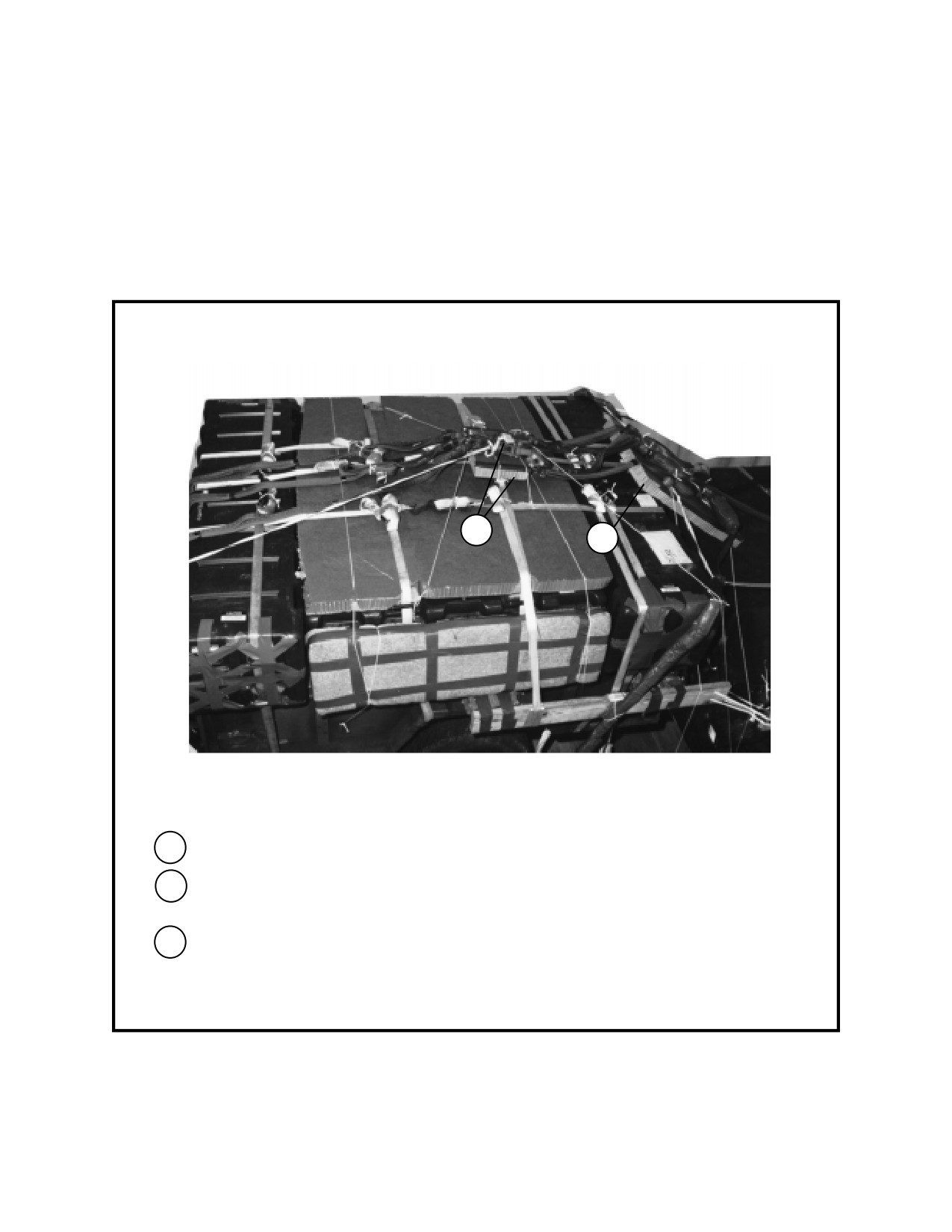
2-16. Installing Parachute Release
Prepare, attach, and safety an M-1 release according to
FM 10-500-2/TO 13C7-1-5 and as shown in Figure 2-17.
3
2
1
Safety the front suspension slings to the truck B-pillar (roll bar). (Not shown)
2
Center a 26- by 36-inch piece of honeycomb between the truck and the trailer and tie it to
convenient points with type III nylon cord. Rest the 2-point links on the honeycomb.
3
Place the M-1 release on an 18- by 12-inch of honeycomb. Tie it to convenient points with type III
nylon cord. Connect the riser extensions and suspension slings according to FM 10-500-2/TO
13C7-1-5.
Figure 2-17. M-1 cargo parachute release installed
2-27
FM 10-500-23/TO 13C7-14-461
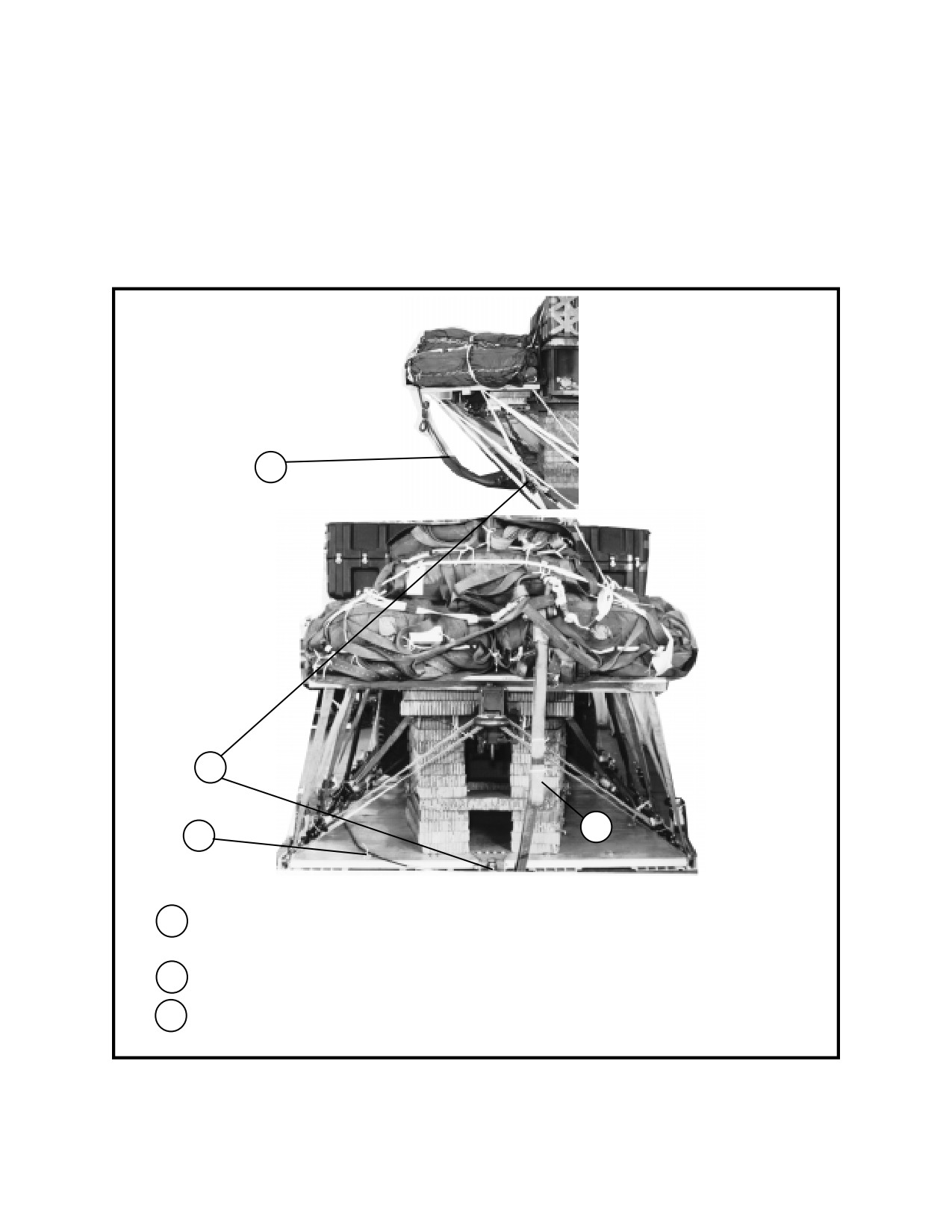
2-17. Installing Extraction System
Install the EFTC as shown in Figure 2-18.
2
1
2
3
1
Install the components of the EFTC according to FM 10-500-2/TO 13C7-1-5. Use the rear
mounting holes for the EFTC bracket.
2
Attach a 9-foot (2-loop), type XXVI nylon sling to be used as a deployment line.
3
Use a 20-foot EFTC cable and safety the cable to tiedown ring D8 using one turn of type I, 1/4-
inch cotton webbing.
Figure 2-18. Extraction system installed
2-28
///////////////////////////////////////