ICAC2 MULTISERVICE PROCEDURES FOR INTEGRATED COMBAT AIRSPACE COMMAND AND CONTROL (June 2000) - page 3
(b) Centralized Control and Decentralized Execution. Centralized control and
decentralized execution of aerospace forces helps make those forces responsive, serves to
ensure that forces are properly used and integrated, and fosters initiative at the action
level. While centralized control guides actions to support a broad plan of action,
decentralized execution provides the flexibility for subordinate commanders to use
ingenuity and initiative in attacking targets.
(2) Simplicity. Airspace control techniques should be simple for easy communication
and understanding. Complex guidance and procedures leads to misinterpretations and
possible confusion among users.
3.
Missions and Functions
The following range of Air Force missions require airspace and airspace control:
a. Counterair. Counterair operations attain and maintain a desired degree of air
superiority by the added destruction or neutralization of enemy forces.
b. Counterspace. Counterspace operations are carried out to achieve space control
objectives by gaining and maintaining control of activities conducted in or through the
space environment.
c. Counterland. Counterland operations are conducted to attain and maintain a
desired degree of superiority over surface operations by the destroying and neutralizing
enemy surface forces. It includes both interdiction and close air support (CAS).
d. Countersea. Countersea functions are an extension of Air Force functions into a
maritime environment. Identified specialized collateral functions are sea surveillance, anti-
ship warfare, protection of sea lines of communications through antisubmarine and anti-air
warfare, aerial minelaying, and air refueling in support of naval campaigns. Many of these
collateral functions translate to primary functions of aerospace forces such as interdiction,
counterair, and strategic attack.
e. Strategic Attack. Strategic attack operations are based on the COMAFFOR’s
assessment of the overall threat, the mission, forces available, and other considerations of
the operational situation. These operations are conducted at a time and place of the
friendly force’s choosing. Strategic attack operations will attack offensive or defensive,
strategic or center-of-gravity targets, primarily on the surface.
f. C2. C2 is the exercise of authority and direction by the commander over assigned
and attached forces to accomplish the mission. Specifically, C2 includes the battlespace
management process of planning, directing, coordinating, and controlling forces and
operations. C2 involves the integration of the systems of procedures, organizational
structures, personnel, equipment, facilities, information, and communications designed to
enable a commander to exercise C2 across the range of military operations.
g. Airlift. Airlift operations involve transportation of personnel and materiel into the
theater as well as within the theater.
C-2
h. Air Refueling. Air refueling operations are for in-flight refueling of fighter, bomber,
and airlift aircraft.
i. Special Operations. Special operations are for conducting unconventional warfare,
direct action, special reconnaissance, counter-terrorism, foreign internal defense,
psychological operations, and counterproliferation, normally organized into units capable of
independent as well as supporting operations.
j. Intelligence, Surveillance, Reconnaissance (ISR). ISR operations use sensors or
visual observation to obtain information on enemy movements, threats, and capabilities to
provide commanders with battlespace awareness.
k. Combat Search and Rescue (CSAR). CSAR operations are conducted to recover
distressed personnel during wartime or military operations other than war (MOOTW).
l. Theater Air Control System. The TACS is the Air Force’s executor of the ACP/ACO.
4.
Organization, Facilities and Personnel
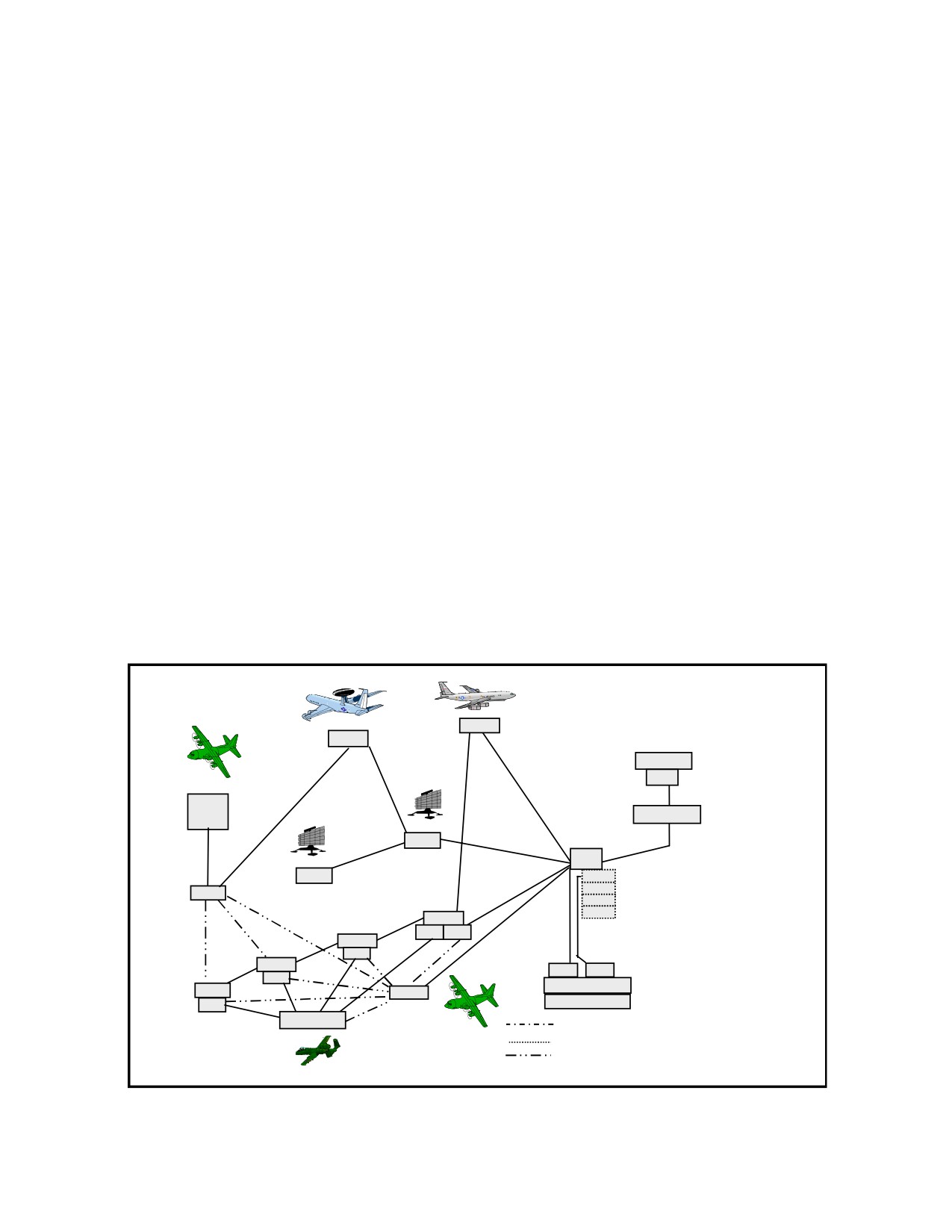
a. Background. The TACS is a hierarchy of organizations and C2 systems that plan,
direct, and control theater air operations and coordinate air operations with other Services
and allied forces. Organization of the TACS is derived from the basic qualities of aerospace
power— flexibility, range and speed. The following elements of the TACS coordinate,
integrate, and regulate airspace activities within the Air Force. See Figure C-1.
JSTARS
AWACS
JFC
JOC
SOF
CAS
AFFOR/JFACC
AIRLIFT
CRC
AOC
CRE
BCD
STT
MARLO
NALE
XXX
SOLE
CORPS
XX
TACP
ASOC
DIV
X
TACP
BDE
WOC
GLO
II
TACP
AIRBASES
BN
ABCCC
TACP
DATCALS
TAC(A) / FAC(A)
Coordination links for strategic and theater airlift.
Normal liaison if AFFOR is designated JFACC.
Comm links serves as backup request channel
Figure C-1. Theater Air Control System
C-3
b. Joint Air Operations Center (JAOC). The JAOC is the joint air operations C2 center
that plans, directs, and executes joint air operations in support of the JFC’s operation or
campaign plan. Depending on the theater and contingency and whether the mission
involves war or MOOTW, the composition, organization, and functions of the JAOC may
need to be tailored. However, the basic framework still applies. Though the use of the word
combat is used in the title of some of the divisions and branches, the activities in supporting
joint air operations may span the range of military operations. These activities may just as
well involve planning to accomplish non-combat objectives in a MOOTW scenario. The focal
point for airspace control issues within the JAOC is the airspace management and control
team, which includes personnel from the combat plans division and the combat operations
division. A brief description of divisions and branches within the JAOC follows.
(1) Strategy Division. This division develops, refines, disseminates and assesses the
progress of the JFACC’s aerospace strategy, concentrating on long-range planning of
aerospace operations for theater activities. The strategy division normally comprises two
teams—strategy plans and operational assessment. This division is located in the JAOC
and reports to the director in order to maintain continuity with JAOC processes. The
division maintains a relationship with the COMAFFOR and the JFACC.
(2) Combat Plans Division (CPD). The CPD is responsible for the near-term
aerospace operations planning function of the JAOC. This division develops detailed plans
for the application of aerospace resources based on JFACC-approved guidance received from
the strategy division. CPD is comprised of two teams—the master air attack planning
(MAAP) team and the ATO/ACO production team.
(3) Combat Operations Division (COD). The COD is responsible for monitoring and
executing “current joint air operations.” Actions and decisions that apply to the current air
tasking order (ATO) period are executed through the COD. The COD normally assumes
responsibility for the joint ATO as soon as it is released. This division executes the ATO.
(4) Air Mobility Division (AMD). The AMD plans, tasks, coordinates, and executes air
mobility missions. Located in the JAOC, it is under the supervision of the director of
mobility forces. It does not have a direct role in airspace control, but provides expertise to
integrate the air mobility mission into the airspace control system. It provides information
for the development of airlift corridors and aerial refueling tracks that are incorporated into
the ACP and ACO. Additionally, the AMD plays a key reachback role by disseminating the
ACP and ACO information to inter-theater mobility assets.
c. Component Liaisons. Each component commander and HN involved in the operation
normally provides liaison representation to the JAOC to articulate their requirements for
airspace and to provide expertise in the development and execution of the ACP and ACO.
Normally, the BCD represents the Army, while the navy and amphibious liaison element
(NALE) articulates Navy and Marine interests, unless a separate Marine liaison officer
(MARLO) is designated. The special operations component commander is represented by
the special operations liaison element (SOLE).
d. Ground TACS (GTACS) Elements.
C-4
(1) Control and Reporting Center (CRC). The CRC is directly subordinate to the
JAOC and is the senior TACS radar element responsible for decentralized execution of air
defense and airspace control. The CRC provides battle management, weapons control,
surveillance, identification, and link management. The CRC provides positive and
procedural airspace control. The CRC is assigned a geographic sector by the JAOC, within
which it manages all defensive air, offensive air and airspace management activities. The
CRC is responsible for recommending changes in air defense (AD) warning conditions based
on the air situation.
(2) Control and Reporting Element (CRE). The CRE is a mobile radar unit
subordinate to the CRC. It is normally forward deployed of the CRC and is used to extend
surveillance radar coverage. The CRE may be capable of assuming limited CRC airspace
control functions. The CRE provides positive and procedural airspace control.
(3) Air Support Operations Center (ASOC). The ASOC is an element of the TACS
directly subordinate to the JAOC, but normally located with an Army corps. The ASOC is
responsible for integration of aerospace operations that support the Army commander. The
ASOC responds to requests for air support and is also capable of coordinating time-critical
targeting within its area. The ASOC plays a major role in airspace control in the corps AO
through execution of joint airspace control measures, such as high density airspace control
zones (HIDACZs) and minimum risk routes. It deconflicts airspace usage with the corps
fire support element, G-3 Air, and A2C2 element.
(4) Tactical Air Control Parties (TACPs). TACPs are the principal Air Force liaison
element aligned with Army maneuver units from battalion through corps, and consists of
air liaison officers, terminal attack controllers, radio maintenance personnel, supply
personnel, fleet management personnel, and information management personnel. TACPs
are the extensions of the TACS and remain under the OPCON of the COMAFFOR through
the ASOC. They coordinate directly with Army airspace and fire support agencies to
deconflict air operations in the ground sector and may employ both formal and informal fire
support coordinating measures to prevent fratricide or synchronize air operations with
surface fire support. TACPs provide procedural airspace control.
(5) Wing Operations Center (WOC). The WOC is subordinate to the JAOC and
functions as the operations center for units assigned/attached to the wing for operations.
The WOC is responsible for decentralized execution of the ATO.
(6) Deployable Air Traffic Control and Landing System (DATCALS). DATCALS units
at bare base operations within the AOR develop launch and recovery routes, base defense
zones, and precision approach control services for the WOC. DATCALS integrates
operations with GTACS/ADA units to resolve airspace conflicts and identify intrusions.
e. Airborne Elements of the TACS (AETACS).
(1) Airborne Battlefield Command and Control Center (ABCCC). The primary role of
ABCCC is to provide C2 of strike resources that support the land component commander.
The ABCCC provides procedural (non-radar) airspace control. It can also function in a
limited role as a backup ASOC.
C-5
(2) Airborne Warning and Control System (AWACS). AWACS is an airborne early
warning and C2 battle management aircraft that provides a high degree of flexibility and
survivability in the combat zone. During the initial phase of operations, AWACS can
provide airspace control and battle management functions for the JAOC. AWACS is
normally subordinate to the CRC, greatly extends the TACS surveillance radar coverage,
and provides early combat identification of nonfriendly tracks. AWACS provides positive
and procedural airspace control.
(3) Joint Surveillance Target Attack Radar System (JSTARS). JSTARS is an Air
Force-Army battle management C2 system subordinate to the JAOC. The system provides
Army and Air Force command, control, communications, computers, and intelligence (C4I)
nodes with information to support the attack of ground targets. It does this by supplying
moving target indicator data and synthetic aperture radar data and by exchanging other
mission-related information between JSTARS aircraft, other TACS elements, and Army
common ground stations. The system is designed to provide near real-time, wide-area
surveillance and targeting information on moving and stationary ground targets to support
the land component commander’s requirements. However, the JFC determines the most
effective use of JSTARS based on the situation and concept of operations. JSTARS is also
used to identify opportunities for rapid interdiction and to retarget enemy ground forces in
support of the JFACC’s theater-wide interdiction responsibility. JSTARS is also capable of
supporting air operations, to include CAS, offensive counterair, and other missions spanning
the range of military operations, thus enabling the JAOC to establish ACMs in response to
the ground threat.
f. Other Elements of the Air Control System.
(1) Forward Air Controller (Airborne) (FAC [A]). The FAC(A) is an airborne extension
of the ASOC/TACP and has the authority to direct aircraft delivering ordnance on a specific
target. The FAC(A) provides additional flexibility in the battlespace by enabling rapid
coordination and execution of air operations. It also enhances the TACS’ situational
awareness by disseminating information on the flow of aircraft on target. The FAC (A)
provides procedural airspace control.
(2) Special Tactics Teams (STTs). STTs are the principal Air Force special operations
C2 elements assigned to SOF units. They are also part of theater SOF and are normally
under operational control of the joint special operations component commander. Tactical
control of STTs to support theater mobility operations may be delegated to the JFACC.
STTs establish visual and procedural terminal area airspace control (attack, C2, and air
traffic services) at remote assault (drop/landing) zones and austere or expeditionary
airfields. They sustain these operations until relieved by other elements.
g. Responsibilities. The TACS can be tailored to support Air Force doctrine of
centralized control-decentralized execution from the smallest MOOTW to full-scale combat
operations during war. The Air Force will provide the COMAFFOR with the resources
necessary to function as the ACA and AADC during small-scale contingency operations that
do not require a JFACC, and as the JFACC/AADC/ACA during large-scale operations.
Regardless of the scale of operations, the TACS will:
C-6
(1) Develop and coordinate the ACP/ACO/ATO.
(2) Coordinate and integrate airspace user requirements within the AOR/JOA.
(3) Maintain a coherent tactical picture.
(4) Maintain close liaison and coordination between airspace control, air traffic
control, and area air defense elements.
(5) Reduce the risk of fratricide and balance those risks with the requirements for an
effective air defense.
h. Procedures. Common airspace control procedures within the joint force AOA/JOA
enhance the effectiveness of air operations. These procedures need to allow maximum
flexibility through an effective mix of identification and control measures. The control
structure needs to permit close coordination among land, maritime, special operations
forces, and air operations and allow rapid concentration of combat power in a specific
portion of airspace in minimum time.
i. Reliable and Interoperable C4I. The airspace control system in the combat zone
must have a reliable, jam-resistant, and secure C4 network. Coordinated and detailed
planning is required to ensure that communications systems and procedures are
interoperable and compatible among all airspace managers and users. These procedures
should be—
(1) Survivable, sustainable and redundant.
(2) Capable of supporting day, night, and all-weather operations.
j. Execution. The elements of the TACS along with other components’ forces use the
ACO to execute the airspace control function. Changes to the ACO are published on an as-
needed basis.
(1) Airspace Deconfliction Procedures. Airspace deconfliction is accomplished by the
airspace management and control team. The CPD airspace management planners resolve
conflicts during the planning cycle, whereas the COD airspace control cell handles real-time
conflicts. Deconfliction is achieved by time, altitude, space, and withdrawal of the request
by one of the airspace users, or acceptance of the risk.
(2) Integration with AD. To minimize the risk of friendly AD weapons engaging
friendly aircraft, the Air Force C2 organization is structured to accommodate air defense
operations coincident with airspace control. Air defense functions of weapons control,
surveillance, and identification are inherent in the TACS, from the centralized facility at the
JAOC, down through the execution capability at the CRC, it’s subordinate units, and
AWACS.
C-7
(3) Integration of AD and Airspace Control in the JAOC. Airspace control and AD
functions are integrated in both the combat planning and combat operations cells. In the
CPD, the ground and airborne C2 planning staff officers and other Service liaison officers
integrate AD considerations such as minimum risk routes, identification friend or foe/
selective identification feature modes and codes, fighter altitudes missile engagement zones,
fighter engagement zone, and joint engagement zone areas for airspace control in
publishing the ATO, ACO, and ACP. In the COD, the senior operations duty officer is
responsible for the execution of airspace control unless a senior air defense duty officer
(SADO) is appointed. In such a case, the SADO is responsible for the air defense portion of
air operations. This organizational arrangement and a further description of the specific
duties of the positions in the AOC are found in AFTTP 3-1, Vol. 26.
5.
Communications and Information Management
The communications network has improved significantly, enhancing the reliability,
security, and timeliness of information flow in the theater of operations. These
enhancements (voice and data) have enabled AETACS to operate directly under the JAOC,
with AWACS operating in lieu of the CRC, and ABCCC functioning as an alternate ASOC
(in a limited capacity), providing commanders with a variety of employment options.
a. Voice Communications. Voice is the primary mode of communications between
airspace C2 elements and airspace users. Principal transmission means include VHF, UHF,
HF, and secure communications.
b. Tactical Digital Information Links (TADILs). TADILs are standardized
communication links, approved by the Joint Chiefs of Staff. They are suitable for
transmission of digital information. All Services use these links primarily for C2 of the AD
network. Since the nodes for AD are also the nodes for airspace control in the JAOC, these
rapid data transmission means can support airspace control as an ancillary function. Links
that may be used to facilitate executing airspace control are TADIL-A/Link-11; TADIL-B/
Link-11B; TADIL-C/Link-4; TADIL-J/Link-16. The joint tactical information distribution
system (JTIDS) includes interim JTIDS message specifications and Army tactical data link.
c. Theater Battle Management Core System (TBMCS). TBMCS is the primary C2 tool
for theater integration of air assets. TBMCS is used to organize intelligence, build and
disseminate the ATO/ACO, monitor and control ATO/ACO execution, track progress of the
air war, and to control all air activity under the JFACC. TBMCS incorporates the former
contingency theater automated planning system, wing C2 system, and combat intelligence
system functionality. It is interoperable with the Global Command and Control System.
C-8
Appendix D
UNITED STATES MARINE CORPS OPERATIONS
1.
Background
National military strategy, based on deterrence and forward defense, places a premium
on rapid deployability of forces; forces organized to deploy in support of national interests
wherever they are threatened. As the scope of US security interests continues to grow and
the possibility of worldwide regional conflict increases, while permanent US military
presence decreases worldwide, the demand for a force capable of projecting power increases.
Military strategy, with new emphasis on deterrence through expeditionary power projection,
relies heavily on maritime forces able to respond to a wide variety of conflicts. The Marine
Corps, through the Marine air-ground task force (MAGTF), is designed to provide that
capability. The flexible and strategically transportable forces operate across the spectrum of
conflict with minimum notice. This appendix describes how the MAGTF commander
employs his aviation combat element, (which includes aircraft and the Marine Air
Command and Control System [MACCS]) to achieve that capability.
2.
Doctrine
The Marine Corps employs its forces as a MAGTF. Marine Corps forces (MARFOR)
are the residual for all forces that constitute a MAGTF. The three basic MAGTFs that are
deployment options are the Marine expeditionary force (MEF), Marine expeditionary unit
(MEU), and special purpose Marine air-ground task force (SPMAGTF). The composition
and size of the MAGTF may vary, but the organizational structure is always a single
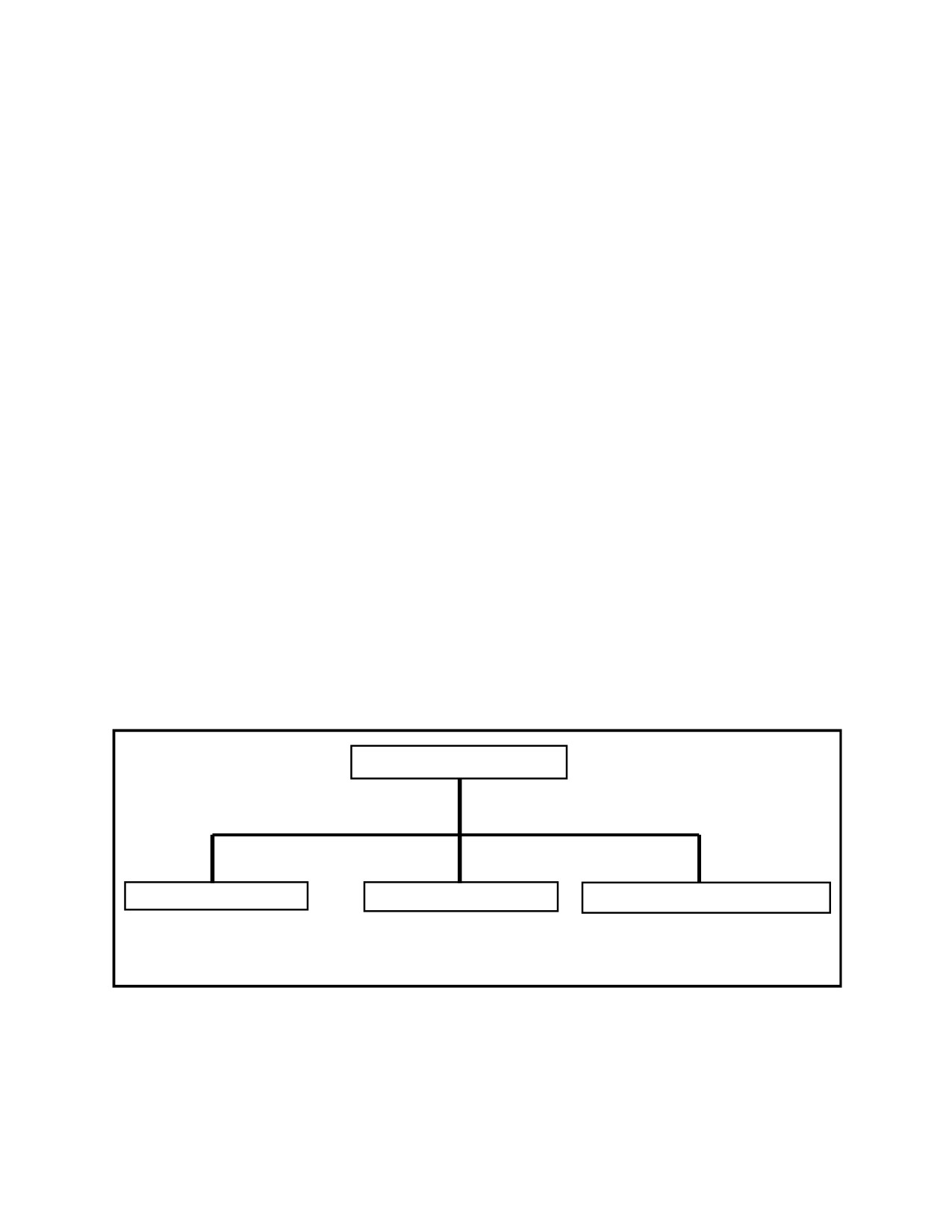
command element (CE), a ground combat element (GCE), an aviation combat element
(ACE), and a combat service support element (CSSE). See Figure D-1.
MAGTF Command Element
Ground Combat Element
Aviation Combat Element
Combat Service Support Element
Ground combat and combat
Air combat and combat support
Combat service support units as
support units as required
units as required commensurate
required commensurate with task
commensurate with task
with task
Figure D-1. Organization of Marine Air-Ground Task Force
These task-organized combined arms forces are rapidly deployable by amphibious
assault ships, strategic airlift, and Military Sealift Command ships. The MEF is the
residual for all combat forces within each MARFOR. MAGTFs are trained and equipped to
conduct amphibious, land, and air operations. Regardless of the operation, the methods of
D-1
centralized command and decentralized control are retained and remain essential to
successful integration of combat arms (aviation, artillery, naval surface fire support) in the
MAGTF.
3.
Missions and Functions
a. Background. The combined arms concept of the MAGTF provides the MAGTF
commander with aviation support that is responsive to his needs. Marine aviation is
organized to provide the MAGTF with six doctrinal functions: offensive air support (OAS),
assault support, air reconnaissance, electronic warfare, antiair warfare (AAW), and control
of aircraft and missiles.
b. OAS. OAS includes those air operations conducted against enemy installations,
facilities, and personnel to directly assist the attainment of MAGTF objectives by destroying
enemy resources or isolating enemy military forces. OAS includes deep air support (DAS)
and close air support (CAS).
(1) DAS. DAS is air action against enemy targets at such distances from friendly
forces that detailed integration of each mission with fire and maneuver of friendly forces is
not required. DAS missions are flown on either side of the fires support coordination line.
(2) CAS. CAS is air action against hostile targets that are in proximity to friendly
forces and require detailed integration of each air mission with the fire and movement of
those forces.
c. Assault Support. Assault support is the use of aircraft to provide tactical mobility
and logistics support for the MAGTF, movement of high-priority cargo and personnel within
the immediate AOR/JOA, refueling of aircraft in flight, and the evacuation of personnel and
cargo.
d. Air Reconnaissance. Air reconnaissance is the acquisition of intelligence information
by employing visual observation and/or sensors in air vehicles.
e. Electronic Warfare. Electronic warfare is any military action involving the use of
electromagnetic and directed energy to control the electromagnetic spectrum or to attack
the enemy. The three major subdivisions within electronic warfare are electronic attack,
electronic protection, and electronic warfare support.
f. AAW. AAW is action required to destroy or reduce to an acceptable level the enemy
air and missile threat. AAW includes such measures as the use of interceptors, bombers,
antiaircraft guns, surface-to-air weapons, and electronic countermeasures and the
destruction of the air or missile threat both before and after it is launched. Other measures
taken to minimize the effects of hostile air action are cover, concealment, dispersion,
deception (including electronic), and mobility.
g. Control of Aircraft and Missiles.
D-2
(1) Background. Control of aircraft and missiles is the coordinated employment of
facilities, equipment, communications, procedures, and personnel that allows the ACE
commander to plan, supervise, direct and control the efforts of the ACE to support the
accomplishment of the MAGTF’s mission.
(2) Combined Arms Philosophy. The control of aircraft and missiles function allows
Marine aviation to provide the MAGTF commander with a wide variety of aviation-tailored
solutions, maintaining an ethos of combined arms operations. Combined arms is the full
integration of arms in such a way that in order to counteract one, the enemy must make
itself vulnerable to another. This combined arms philosophy gives the MAGTF commander
the potential to present the enemy with a dilemma by placing it in a no-win situation. Air,
sea, and land weapons are fire support resources that play a significant role in the practice
of combined arms.
(3) Maneuver Warfare. The combined-arms philosophy is a basic tenet of the
maneuver warfare concept. Marine aviation integrated into combined arms or as a separate
maneuver element is a vital ingredient in maneuver warfare; whether on land or from the
sea. It focuses on decisive concentration of forces, speed, surprise, boldness, and
exploitation. The aviation component of the MAGTF that is task-organized into an ACE
increases the firepower and mobility of the MAGTF and provides a tool for the MAGTF
commander to use in expeditionary power projection.
4.
Organization, Facilities, and Personnel
a. MAGTF Commander. The MAGTF commander is responsible for all MAGTF
operations but delegates authority for planning and conducting aviation operations to the
ACE commander. Aviation operations of the MAGTF are conducted under a system of
centralized command and decentralized control. The MAGTF commander exercises air C2
through the ACE commander.
b. Marine Air Command and Control System (MACCS). The MACCS provides the ACE
with an inherent capability to conduct airspace integration and the real-time C2 of aviation
assets with other supporting arms/airspace users, including surface-to-air weapons, UAVs,
or remotely piloted aircraft operating concurrently within a defined airspace. This aspect of
Marine aviation is unique. The air C2 system responsible for planning, supervision,
direction and execution of aviation and aviation-related matters is an integral component of
the ACE—manned, trained, and equipped to operated as an integrated system. As such, the
ACE commander has complete authority over all facets of the warfighting capability of
aviation and, since it integrates all aviation activity into a single, coordinated system, is
flexible and responsive to the dynamic needs of the MAGTF.
c. MACCS Personnel and Equipment. The personnel and equipment required to
establish the MACCS are organic to the ACE (the commanding general of each of the four
Marine aircraft wings) and are contained within subordinate units of the four Marine Air
Control Groups (MACG).
(1) MACG. The MACG is commanded by a colonel and provides the headquarters
element. There are three active and one reserve MACG.
D-3
(2) Marine Tactical Air Control Squadron (MTACS). The MTACS is commanded by a
lieutenant colonel and provides the tactical air command center (TACC) and its associated
aviation planning systems.
(3) Marine Air Support Squadron (MASS). The MASS is commanded by a lieutenant
colonel and provides the direct air support center (DASC).
(4) Marine Air Control Squadron (MACS). The MACS is commanded by a lieutenant
colonel and provides the tactical air operations center, early warning and control center,
Marine air traffic control detachments, and personnel and equipment for the sector antiair
warfare coordinator.
(5) Low-Altitude Air Defense (LAAD) Battalion. The LAAD battalion is commanded
by a lieutenant colonel and provides Stinger and Avenger surface-to-air missile systems.
(6) Marine Wing Communications Squadron (MWCS). The MWCS is commanded by
a lieutenant colonel and provides radio, multichannel, tactical telephone subscriber service,
and tactical data network communications support internal to the ACE in support of the
MACCS.
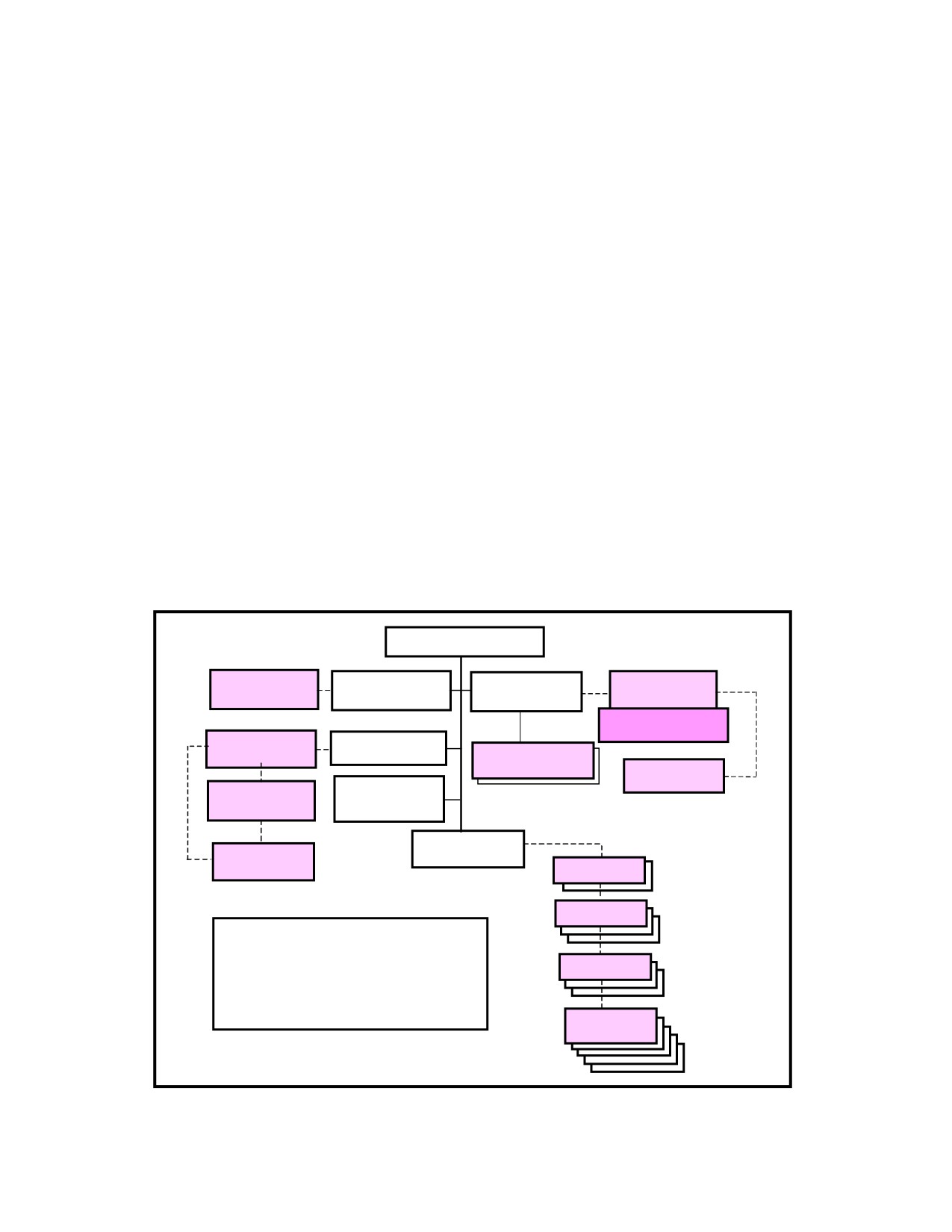
Figure D-2 shows the relationship between the MACG headquarters element and the
organizational combat capabilities derived from within the MACG that comprise the
MACCS.
Marine Air Control Group
Tactical Air
Tactical Air
Marine Tactical Air
Marine Air Control
Command Center
Command Squadron
Operation Center
Squadron
*Sector Antiair
Warfare Coordinator
Direct Air
Marine Air Support
Support Center
Squadron
Marine Air Traffic
Control Detachment
Early Warning/
Control Site
Marine Wing
Direct Air Support
Communications
Center (Airborne)
Squadron
Low-Altitude Air
Terminal
Defense Battalion
Controllers
Firing Battery
Firing Platoon
LEGEND
*SAAWC normally collocates with the TAOC.
Firing Section
______MACG administrative organization
- - - - - MACG agency/element derived from
administrative organization
Firing Team/
Unit
Figure D-2. MACCS and MACG Relationship
D-4
d. MACCS Configurations. Since the MACCS is task-organized by the ACE to support
the overall MAGTF mission, specific MACCS configurations will depend on the scope and
duration of the current ACE mission. A MEF has the capability to perform all six functions
of Marine aviation, integrated by an extensive shore-based MACCS. Embarked MEU
aviation capability is inherently not as extensive. C2 requirements to support mission
objectives are largely provided by the Navy tactical air control system augmented by the
task-organized MACG Detachment that is embedded within the MEU.
e. MACCS Agencies. Regardless of the tasking, specific MACCS agencies, or
detachments that support the airspace control function, include the TACC, DASC, tactical
air operations center (TAOC) (to include ATC requirements), airborne coordinators and
controllers, and ground-based terminal air controllers.
(1) TACC. The TACC is the senior MACCS agency and the senior aviation command,
control and communications (C3) agency within the MAGTF. It is the service equivalent to
the Air Force air operations center. Additionally, it is sometimes referred to as Marine
TACC to avoid confusion with its Navy counterpart, the Navy tactical air control center.
(a) Organization. The Marine TACC is the only MACCS agency that exercises
command. It serves as the operational command post of the ACE commander as well as the
combat operations center for the battle staff. The TACC is the physical facility from which
the ACE commander and the battle staff plan, supervise, coordinate, and execute all current
and future MAGTF air operations as well as orchestrating the daily combat operations of
the entire ACE. The TACC comprises four functional components: future plans, future
operations, current operations, and air combat intelligence. Aviation/airspace planners
within airspace planning cells within both future operations and current operations conduct
airspace planning, integration, and coordination. The TACC requires liaison and Service
augments for coordination of joint and combined operations both within future operations
and current operations.
(b) Tasks. The TACC integrates these aviation planning and execution functions
with the MAGTF command element through direct linkage with the MAGTF combat
operations center. As the senior MACCS agency and the senior aviation C3 agency within
the MAGTF, the TACC can integrate, coordinate, and direct joint and combined air
operations. Due to the inherent scalability of the TACC, especially in joint/combined
operations, personnel from the ACE, the MACG, and the MTACS are required to install,
operate, and maintain the TACC. Tasks performed within the TACC include:
• Maintaining complete information on the friendly situation, including the air
situation (numerous TADIL capabilities) and ground combat information essential to the
air effort. The TACC maintains status displays on the availability of organic and
subordinate unit equipment (to include aircraft) critical to ACE operations (extensive
CTAPS/TBMCS host and remote capabilities).
• Maintaining necessary air and ground information on the enemy.
• Managing all aircraft and surface-to-air weapons in the AO/AOA to ensure a
balanced use of assets. This task includes coordinating employment of AD systems with the
sector air defense warfare coordinator (SAAWC) in the TAOC. It includes diverting aircraft
D-5
from scheduled missions to meet other priorities, to include aircrew briefs for diverted
aircraft; establishing alert conditions for ground alert aircraft; and directing and
coordinating aircraft missions in support of the MAGTF and other support forces.
• Serving as the operational point of contact between the MACCS and external
air control agencies. In carrying out this task, the TACC is responsible for disseminating
tactical information to appropriate air control agencies external to the MACCS.
• Providing appropriate AD warning conditions to all major elements of the
MAGTF.
• Providing emission control (EMCON) conditions in the AO/AOA and
supervising execution of designated electronic warfare operations.
• Coordinating the operations of subordinate agencies to ensure economy and
unity of effort in the execution of the MAGTF air plan. This includes generating required
ATOs, ACPs, ADPs, ACOs, SPINS, USMTF formatted messages, and other amplifying
documents that assist in disseminating tactical information to subordinate or adjacent
agencies.
• Prescribing the succession of C2 responsibilities within the MACCS and
compensating for any serious degradation within the component agency.
• Providing a means for exchange of information between the battle staff and
the ACE HQ for efficient execution and planning of ACE operations.
(2) The MWCS. The MWCS provides communications support to the TACC that is
beyond the capability of the MTACS to organically provide. In cases where ground mobile
forces satellite communications are required, the communications battalion within the MEF
can augment the ACE with personnel and equipment to furnish any required connectivity.
The ACE maintains no organic satellite communications capability. Based on the scope and
aviation mission tasking, communications support can be furnished by the following
methods:
(a) Unit provided (VHF, UHF, HF, TADILs).
(b) ACE provided (HF, LAN/WAN, Multi-Channel, TRI-TAC, Tactical Switchboard/
Phone Subscriber Service).
(c) MEF provided (SATCOM).
(d) JTF J-6 for theater delineated requirements.
(3) TAOC. The TAOC is an air control agency of the MACCS. It is responsible for
airspace control and management and cueing for theater ballistic missile defense. Using its
organic radars, it provides real-time surveillance of assigned airspace concurrently with
navigational assistance, direction, and positive control for friendly aircraft operating within
the MAGTF AO or AOA. It performs real-time direction and control of antiair warfare
operations involving aircraft and surface-to-air weapons.
D-6
(a) Tasks. By collecting and displaying information from its own sensors and
external sources (other Marine sensors, Services, and nations), the TAOC controls its
portion of the MAGTF-assigned airspace and directs and controls the fires of assigned AD
assets. Tasks performed by the TAOC include:
• Providing airspace control, management, and surveillance of the airspace.
• Providing navigational assistance to friendly aircraft.
• Detecting, identifying, and classifying all aircraft within the sector of
responsibility.
• Detecting, identifying, and controlling the intercept of hostile aircraft and
missiles.
• Recommending employment of assigned weapons and surveillance means to
the ACE commander and the battle staff.
• Recommending to the ACE commander and the battle staff, and ultimately
to the AADC, the establishment of AD sectors, subsectors, and weapons engagement zones
(WEZs) for itself and subordinate agencies and units.
• Deploying sensors and communications systems to provide surveillance in
support of the ACP and ADP.
• Displaying and disseminating appropriate air/ground information to
designated adjacent, higher, and subordinate agencies such as the AOC, CRC, CRE, AWACS,
Patriot information coordination central, AEGIS, Navy TACC, DASC, Marine air traffic
control detachment (MATCD), and any additional TAOCs.
• Selecting and assigning appropriate weapons to engage and destroy enemy
air threat.
• Controlling the fires of subordinate air defense elements.
• Functioning as an alternate TACC when directed for limited or designated
periods.
• Interfacing with adjacent and higher air defense agencies.
• Managing AD resources.
• Coordinating and executing EMCON conditions in the assigned sector.
• Deploying early warning and control sites to supplement or enhance TAOC
radar coverage (depending on the tactical situation).
(b) TACC Support. Additionally, due to its location on the battlefield and robust
surveillance and communications capabilities, the TAOC may be called upon to enhance the
D-7
ability of the TACC to prosecute the MAGTF’s deep fight. In this regard, the TAOC
provides radar and/or radio connectivity to interdiction platforms operating well beyond the
fire support coordination line.
(4) Marine Air Traffic Control Detachment.
(a) Organization. As a detachment organic to the MACS, the MATCD is the
primary terminal air control organization within the MACCS. The MATCD is organized
and equipped to satisfy air traffic control (ATC) requirements for virtually any type of
forward operating base (FOB). Typically, MATCD elements support FOBs ranging in size
from an air site to a main air base. An air site is used to pre-position fully loaded and
armed aircraft to reduce response times for preplanned and immediate missions. A main
air base is capable of handling theater lift assets.
(b) Tasks. Elements of the MATCD provide friendly aircraft with continuous, all-
weather, radar approach, departure, and en route ATC services within the assigned
controlled airspace. MATCD elements are integrated into the MAGTFs integrated air
defense system (IADS) whenever possible. The MATCD—
• Provides radar and nonradar approaches, departures, and en route ATC
services within assigned terminal control areas (TCAs). A TCA is airspace of defined
dimensions within which ATC services are provided.
• Provides precision and nonprecision aids to navigation.
• Provides Automatic Carrier Landing System Mode I, Mode II, and Mode III
approach services for FOB all-weather landings.
• Displays and disseminates appropriate air and ground information to
designated adjacent and higher agencies (TADIL-B-capable). Examples include the TACC,
TAOC, DASC, and aircraft.
• Serves as the operational point of contact between the MACCS and national/
international civil ATC agencies.
• Establishes the base defense zone as an integral component of the MAGTF IADS.
(5) DASC.
(a) Organization. The DASC has no sensors and is the procedural air control
agency of the MACCS that directs and coordinates air operations directly supporting ground
forces. Due to its collocation with the senior ground combat element (GCE) fire support
coordination center (FSCC), it functions in a relatively decentralized mode of operation;
however, the TACC directly supervises it. Its service equivalents are the Air Force air support
operations center (ASOC) and the Navy supporting arms coordination center. The DASC
processes and coordinates requests for immediate air support and procedurally controls
aircraft in support of ground operations within the MAGTF AO or AOA. It coordinates air
missions requiring integration with ground forces, including CAS (fixed- and rotary-wing),
assault support, UAV, and other designated air reconnaissance missions.
D-8
(b) Tasks. The DASC provides the means to process immediate air support
requests (joint tactical airstrike request and assault support requests), coordinates air
employment with other supporting arms, and manages terminal control assets supporting
ground combat and CSSE. DASC tasks include
• Receiving the ATO from the TACC and coordinating preplanned CAS with
the requesting ground unit.
• Receiving, processing, and coordinating requests for immediate CAS.
• Adjusting preplanned schedules and diverting airborne assets as necessary
(when the ACE commander delegates such authority and in coordination with the senior
FSCC).
• Coordinating the execution of CAS missions with other supporting arms
through the appropriate FSCC and, as required, with the appropriate MACCS or external
air control agencies (ASOC, SACC afloat).
• Receiving and disseminating pertinent tactical information reported by
aircraft performing CAS missions.
• Providing aircraft and other air control agencies with advisory information
to assist in the safe conduct of flight.
• Monitoring, recording, and displaying information on CAS missions.
• Maintaining friendly and enemy ground situation displays as necessary to
coordinate CAS operations.
• Providing information to other MACCS agencies concerning friendly and
enemy situations.
• Referring unresolved conflicts in supporting arms to the senior fire support
coordinator.
(6) Air Support Element (ASE). Smaller MAGTFs may not require all of the
capabilities offered by the DASC, but they may still need assistance in the control of
airborne assets for a limited time in a limited area. An ASE may assist in filling this air
control need. An ASE typically functions as a landward extension of the Navy’s TACC and
the Navy’s helicopter direction center. It provides direction for air support assets working
in direct support of the GCE and usually works directly with the battalion tactical air
control party (TACP).
(7) Direct Air Support Center (Airborne)(DASC[A]). Another possible configuration
of the DASC is a DASC (A). With limited communications assets, the DASC (A) is operated
from the rear of an airborne C-130 and performs the same functions as its counterpart on
the ground.
D-9
(8) Airborne Coordinators and Controllers. In the execution of air operations,
particularly CAS, situations arise in which the control of aircraft through a ground-based
agency is degraded or not possible. Under such conditions, airborne coordinators and
controllers may be employed to extend the coverage of ground-based agencies. These
airborne assets, not necessarily organic to the MACG but considered part of the MACCS,
include the TAC(A), ASC(A), FAC(A), and DASC (A).
(9) Ground-Based Terminal Air Controllers. Ground-based terminal air control
agencies, consisting of the previously mentioned applicable MACCS agencies, also include
TACPs and helicopter support teams (HSTs), to include landing zone control teams
(LZCTs).
(a) TACP. TACPs are organic to divisions, infantry regiments, infantry battalions,
and certain separate battalions of a Marine division. The TACP sets up and maintains
facilities for liaison and communications between its parent unit and air control agencies.
The TACP advises the ground unit commander on employment of supporting aircraft and
requests and controls CAS aircraft. All TACPs include forward air controllers with
applicable communications equipment.
(b) HSTs. HSTs are task-organized and equipped to establish and operate
helicopter pickup and landing zones. HSTs are composed of personnel and equipment from
the helicopterborne force and the supporting aviation unit, with augmentation from other
units as required. The helicopter control elements of the HSTs are called LZCTs.
f. MACCS Responsibilities. The MACCS provides the C3 architecture required to plan,
disseminate, and prosecute air operations within the MAGTF AO or AOA. The MAGTF
commander may be assigned control of the airspace that coincides with its AO or AOA if an
applicable MACCS has been task-organized commensurate with the mission(s) of the ACE
and has the ability to conduct such control. The MACCS provides C3 to facilitate the
execution of the six functions of Marine aviation. Effective execution of these functions
requires close inter-agency coordination, combined with decentralized control. Through the
employment of the MACCS, airspace control is inherent in the conduct of each of these six
functions.
g. Procedures. The ACE, through the MACCS, commands and controls air assets
supporting the MAGTF. The MACCS is critical since it melds the aviation requirements of
the ground commander with the aviation firepower provided by the ACE. This integration
of all aviation activity into a single, coordinated system to support a single ground
commander is unique within the Department of Defense.
(1) AD Sector. The MAGTF normally assigns an AD sector that coincides or
encompasses the MAGTF AO or AOA. The MAGTF commander delegates this
responsibility for AD to the ACE commander, due to his inherent capability to provide air
defense as part of the six functions of Marine aviation. The air defense sector is
characterized by a vital area, surveillance area, and a destruction area, with the destruction
area subdivided into various WEZs that are further classified as either fighter engagement
zones(FEZs), missile engagement zones(MEZs), or base defense zones (BDZs). Though the
ACE maintains assets to establish each type of WEZ, the configuration is situation-
dependent and varies based on the mission, friendly AD capabilities, and the enemy threat.
D-10
(2) Positive and Procedural Control. The air defense plan is only as effective as the
system’s ability to correctly identify aircraft in accordance with the rules of engagement
without restricting friendly aviation activities or the air defender’s ability to engage hostile
aircraft. The MACCS relies on both positive and procedural air control means to ensure the
continued use of the airspace for MAGTF operations, while retaining the ability to
simultaneously engage the threat as required. All friendly aircraft or AAW weapon systems
operating in the MAGTF’s AO or AOA are under control of a MACCS agency. Each
controlling agency, using either positive or procedural control, maintains an updated status
of aviation assets under its control thereby contributing to the overall situational awareness
within the MACCS. However, the mission, flight profile, or number of friendly aircraft may
make positive communications or radar tracks with all friendly aircraft difficult to
maintain. Therefore, procedural means must be considered and implemented to support
both the airspace control function and the integrated air defense system.
(3) Return-to-Force (RTF) Procedures. RTF procedures must consider the capabilities
and limitations of the aircraft as well as the location of defended assets. ACE planners
establish procedures that allow friendly aircraft, regardless of the controlling agency’s
ability to maintain positive communications or radar tracks and its ability to safely operate
in, out, and through the MAGTF’s airspace. Planning friendly air operations for the
MAGTF, while still protecting it from air attack, is a difficult task. Factors to consider are
altitude restrictions, airspeed restrictions, maneuverability, IFF capability, navigation
equipment, communications capability, self-protection capability, and mission requirements.
Having an organic MACCS as an integral component of the MAGTF greatly reduces
numerous airspace seams and friction areas associated with aviation operations.
(4) Control Procedures. Planners must thoroughly examine control procedures,
especially for safe passage of friendly aircraft through restricted areas. The use of these
control procedures should maximize the safety of the defended area while minimizing the
possibility of fratricide. Examples of ingress and egress control procedures include use of—
(a) Ingress and egress corridors and routes for both helicopters and fixed-wing
aircraft. Examples of these corridors and routes include low-level transit routes and
minimum risk routes.
(b) Contact points.
(c) Visual identification.
(d) Electronic identification.
(e) Lame duck procedures (when aircraft cannot comply with established
procedures).
(f) Coordinating altitudes.
The MACCS uses standard USMTF templates, such as OPTASKLINK, TACOPDAT
instructions, as well as applicable OPORDs, ACPs, ADPs, and so forth, in developing and
promulgating the specifics of C2.
D-11
(5) Integration with AD. The organization of the MACCS specifically with regard to
the TAOC enables the integration of AD with airspace control. The AAW plan, executed by
the SAAWC collocated at the TAOC, incorporates numerous ACMs for the mutual benefit of
the airspace user and the AD network. With this network in place, the MAGTF commander,
through his ACE commander and supporting MACCS, plans, coordinates, controls, and
directs air defense and airspace control concurrently with other warfighting endeavors.
5.
Communications and Information Flow
No airspace control plan can be successful without addressing the requirement for
reliable and redundant communications. The ACE has at its disposal communication assets
that provide connectivity for the MACCS to plan and execute aviation operations.
Examples of this connectivity are: secure UHF, VHF (AM and FM), and HF single channel
radios; multiplex radios; components of the TRI-TAC family of equipment; tactical data
networks in the form of LAN/WAN; and other defense information infrastructure-common
operating environment compliant information networks. Through the use of these assets,
the ACE is provided with voice, data-link, and tactical data network access. Even with
access to these various communications systems, availability of rapid and reliable
communications and the effective exchange of information over these networks are
paramount to success. The MWCS is structured to assist in operational planning for ACE
communication requirements and in the identification of communication shortfalls that
arise in supporting MAGTF aviation operations. MWCS does not maintain the capability to
provide ground mobile force SATCOM connectivity for the ACE. Any requirements in
excess of the ACE’s organic ability are requested from the communications battalion of the
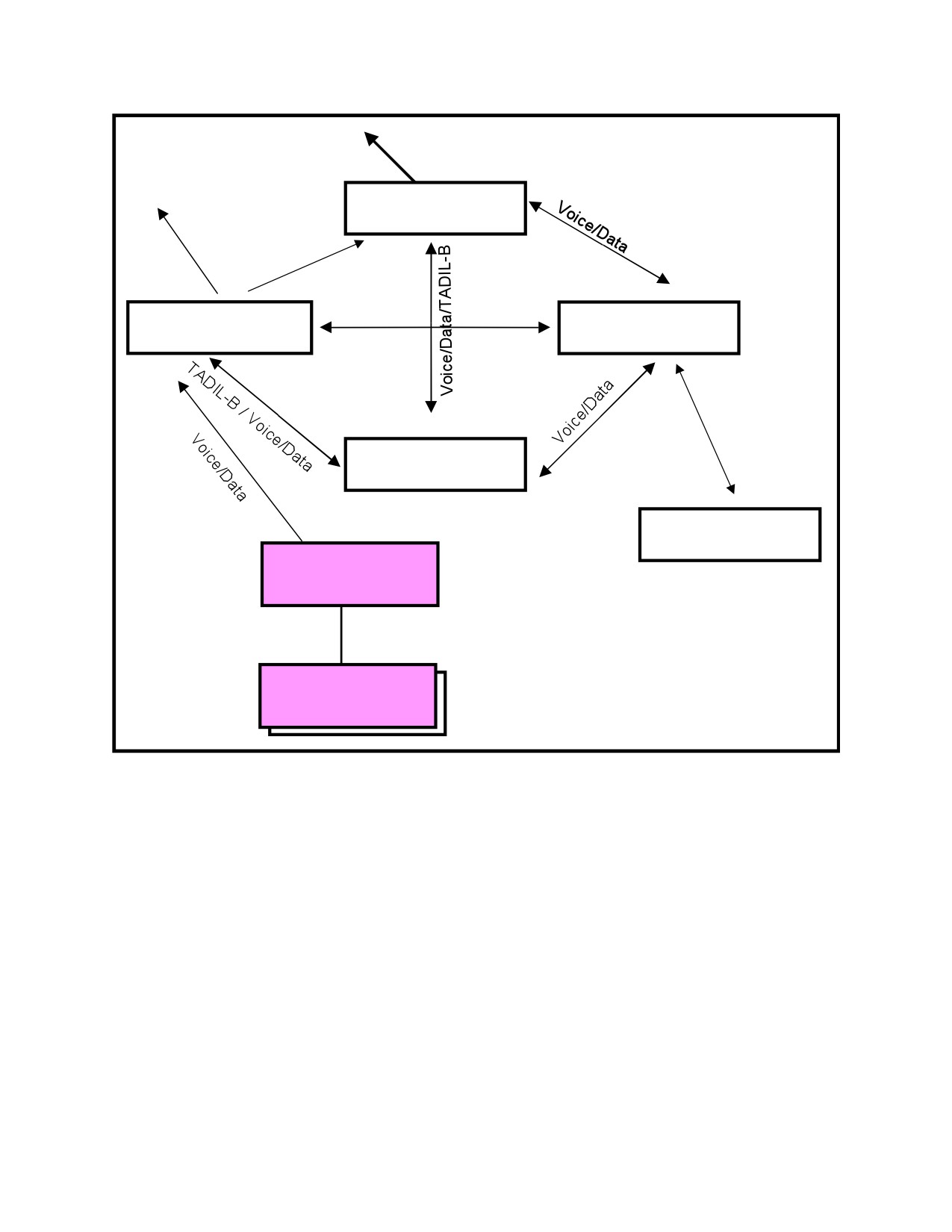
MEF or from the JFC J-6. A nominal communications network linking major elements of
the MACCS is shown in Figure D-3. The rapid tactical data exchange relies heavily on
TADIL-A, -B, -C, -J, and ground-based data link for airspace control and air defense
operations. Although simply demonstrated in the figure, the voice and tactical data
networks may be extensive, depending on the complexity and size of the mission. Refer to
MCWP 3-25.9, Marine Air Command and Control System Communications Handbook, for
specific voice communications net use and definitions.
D-12
Voice/Data
TADILs
Tactical Air Command
Center (TACC)
Voice/Data
TADILS
Tactical Air Operations
Voice/Data
Direct Air Support
Center (TAOC)
Center (DASC)
Voice
Marine Air Traffic
Control Detachments
TACPs/FAC/FAC(A)
DASC(A)
LAAD Battalion
Voice/Data
LAAD Battery
NOTE: MACCs will be TADIL-J capable
Figure D-3. MACCS Communications Network
D-13
Appendix E
SPECIAL OPERATIONS FORCES OPERATIONS
1.
Background
The integration of special operations into ICAC2 and the TAGS is a cohesive process
that includes specially equipped aircraft, uniquely trained ground forces, increased
operational security measures, and extensive liaison among components.
2.
Doctrine
Special operations forces (SOF) provide the JFC with unique capabilities to conduct
operations across the close, deep, and rear battle areas. Because SOF normally operate in
the deep battlespace and share a common environment with the joint air forces, SOF must
coordinate closely and integrate using the same ICAC2 infrastructure, TTP, and processes
used by all JFC forces. As special operations are inherently joint, SOF must conduct
comprehensive and fully integrated coordination and liaison efforts to fully leverage special
operations capabilities and avoid fratricide
3.
Missions and Functions
a. Organization.
(1) Army Special Operations Forces (ARSOF). ARSOF consist of special forces,
ranger, special operations aviation (SOA), psychological operations (PSYOP), and civil
affairs. SOA rotary-wing assets include A/MH-6 (CAS/airlift), MH-60 (CAS/airlift), and MH-
47 (airlift) aircraft.
(2) Naval Special Operations Forces (NAVSOF). NAVSOF consist of sea-air-land
(SEAL) teams, SEAL delivery vehicle teams, special boat units, and patrol coastal ships.
(3) Air Force Special Operations Forces (AFSOF). AFSOF consist of fixed- and
rotary-wing assets, special tactics teams (STTs), PSYOP, and foreign internal defense units.
AFSOF fixed-wing assets include AC-130H/U Spectre Gunships (CAS/interdiction/
reconnaissance), EC-130H Commando Solo (PSYOP/electronic warfare), MC-130E/H
Combat Talon (airlift/tanker), and MC-130P Combat Shadow (tanker/combat search and
rescue) aircraft. Rotary-wing assets consist of the MH-53J Pave Low (airlift) helicopter.
The AFSOF mission is augmented by KC-135, C-5, and C-141 aircraft and specially trained
aircrews from Air Mobility Command. These forces provide an air refueling and/or heavy
airlift capability not available from core AFSOF assets.
b. Planning. Based on guidance from the JFC, the joint forces special operations
component commander (JFSOCC) allocates forces against strategic or operational tasks and
in support of other component commanders. Special operations must coordinate and
integrate with conventional operations to enhance mission accomplishment and prevent
fratricide. Comprehensive coordination and integration of special operations through
interface with the TAGS are essential. During war, SOF will normally require support from
E-1
conventional air assets and may provide support to conventional air operations. Support
from conventional assets may include extra refueling during deployments or long-range
missions, suppression of enemy air defenses (SEAD), diversion of enemy forces, increased
airlift capability, or ensuring air and ground defenses for security of landing zones or
forward arming and refueling points. Electronic warfare or SEAD, along with CAS, may be
required for special operations infiltration or exfiltration missions. CAS is normally
preplanned for operations in the deep battle area. Detailed planning is required to have
strike aircraft accompany a SOF infiltration, to conduct preplanned CAS missions, or to be
on call during actions at an objective area. Missions of this type are carefully coordinated
during the deploying SOF unit’s mission planning procedures. SOF normally operate on
extended planning time lines, normally 96 hours before execution, which should be fully
considered during coordination.
c. Airspace Control Measures (ACMs). Due to their unique and specialized nature,
SOF missions often require special types of ACMs, or modifications to standard ACM types.
Common SOF ACMs include AC-130 gunship orbits, “spider routes” for helicopter
infiltration/exfiltration, low-level helicopter aerial refueling tracks (which frequently
require fixed-wing tanker aircraft to descend below the coordinating altitude), and no-fire/
restricted-fire areas that shift location over time in order to cover the movement of SOF
teams on the ground.
4.
Communications
a. C2. The theater special operations commander (SOC) normally exercises operational
control of all assigned SOF in theater. When the geographic combatant commander
designates a JFC, the theater SOC may be designated as the JFSOCC. The JFSOCC
controls assigned SOF as well as any conventional assets provided by the JFC in support of
specific missions. Tactical control of SOF air assets is normally exercised by the Air Force
special operations component (AFSOC) commander, the Army special operations aviation
commander, or the joint special operations air component commander (JSOACC), when
designated. The JFSOCC normally designates the SOF component commander with the
preponderance of aviation assets and the means to control those assets as the JSOACC.
Principal functions which support coordination of airspace in the SOF command system are
the special operations liaison element (SOLE), the special operations command and control
element (SOCCE), and the STT.
b. Liaisons. Liaisons at the joint special operations task force (JSOTF)/joint special
operations air component operations center (JSOAC), represent each SOF airframe/mission.
They submit their airspace requirements to the JSOTF/JSOAC combat airspace planners.
These requirements are deconflicted with other SOF missions, then passed on through the
SOLE to the JAOC’s combat airspace cell for deconfliction with conventional forces. When
considering SOF airspace requests, JAOC airspace planners must be mindful of the
unusual and often innovative nature of SOF missions and accommodate them to the
maximum extent possible. In addition, while most SOF missions generally take longer to
plan, they are frequently subject to short-notice changes as the operational situation
develops.
E-2
(1) SOLE. The function of the SOLE is to coordinate, deconflict, and integrate SOF
air and surface activities with the JFACC. Because the JFSOCC and the JFACC share a
common environment, the deep battlefield, SOF aviation and surface assets must be
integrated into joint air planning and operations.
(2) SOCCE. The SOCCE is normally employed when SOF conduct operations in
support of a conventional force, such as an Army Corps or a MAGTF. It is collocated with
the command post of the supported commander. The SOCCE normally remains under the
operational control of the JFSOCC. The SOCCE must ensure airspace requirements are
coordinated through the supporting the Army airspace command and control cell and
followed through the SOLE.
(3) STTs. Special operations combat controllers assigned to STTs and are trained
and certified to perform the terminal control and guidance functions to integrate lethal and
non-lethal airpower in the conventional and special operations AO. STTs are capable of
conducting visual flight rules/limited instrument flight rules ATC, C2, and special
operations terminal attack controller CAS functions. STT liaison elements in the tanker
airlift control element and the SOLE assist in coordinating and deconflicting airspace
requirements for STTs.
E-3
Appendix F
PROCEDURAL AIRSPACE CONTROL MEASURES
1.
Background
This appendix provides a description, considerations, and uses of Services’ measures for
controlling airspace. The following airspace control measures aid in defining airspace
control requests, orders, and plans.
2.
Procedural Airspace Control Measures
a. Air Corridor.
(1) Description. An air corridor is a restricted air route of travel specified for use by
friendly (primarily Army) aircraft and established to prevent friendly forces from firing on
friendly aircraft.
(2) Uses. Air corridor procedures are used to route aviation combat elements between
such areas as forward arming and refueling points, holding areas, and battle positions.
Altitudes of an air corridor do not exceed the coordinating altitude, if established.
(3) Point of Contact (POC). If a coordinating altitude has been established, an air
corridor is implemented by the using authority. If a coordinating altitude has not been
established, an air corridor is established by the ACA at the request of the appropriate
ground commander.
b. Air Defense (AD) Action Area.
(1) Description. An AD action area and the airspace above it is an area within which
friendly aircraft or surface-to-air weapons are normally given preference to conduct AD
operations except under specific conditions.
(2) Uses. An air defense action area is an engagement area used for preference of a
specific weapon system over another without excluding the other from use under certain
operational conditions. From an airspace control perspective, an air defense action area
provides airspace users with the location of AD areas for mission planning purposes.
(3) POC. Area air defense commander (AADC).
c. Air Defense Area.
(1) Description. An air defense area is a specifically defined airspace for which air
defense must be planned and provided.
(2) Uses. An air defense area defines, in an area of operations, the area to be defended.
(3) Considerations. An air defense area is a planning or division-of-responsibility aid;
it is not used as an ACM.
F-1
(4) POC. AADC.
d. Air Defense Identification Zone (ADIZ).
(1) Description. An ADIZ is airspace of defined dimensions within which the ready
identification, location, and control of airborne vehicles are required.
(2) Uses. Associated with nations or AOs, the ADIZ is normally the transition
between procedural control areas (outside) and the positive control areas (inside). Typically,
ADIZ is used for sovereign national boundaries, or in the case of AOs, for identification into
the rear areas.
(3) Considerations. See flight information publications/International Civil Aviation
Organization (ICAO) for theater-specific ADIZ and associated procedures and limitations.
(4) POC. AADC.
e. Air Defense Operations Area.
(1) Description. An air defense operations area and the airspace above it is an area
within which AD procedures are specified. It may include designation of one or more of the
following:
(a) AD action area.
(b) AD area.
(c) ADIZ.
(d) Firepower umbrella.
(2) Uses. AD operations areas minimize mutual interference between AD and other
operations. These areas are not used for airspace control but aid planning and division of
responsibilities. From an airspace control perspective, these areas provide airspace users
with the location of AD operations for mission planning purposes.
(3) Considerations. See individual descriptions for AD action area, air defense area,
air defense identification zone, and firepower umbrella in this appendix.
(4) POC. See individual descriptions for AD action area, air defense area, ADIZ, and
firepower umbrella in this appendix.
f. Airspace Control Area.
(1) Description. An airspace control area is airspace that is laterally defined by the
boundaries of an AO. The airspace control area may be divided into airspace control sectors.
(2) Uses. Airspace control areas are a means of planning or dividing responsibility.
F-2
(3) Considerations. Geographically defined, an airspace control area may include
political boundaries.
(4) POC. Airspace control authority (ACA).
g. Airspace Control Sector.
(1) Description. An airspace control sector is a subelement of the airspace control
area established to facilitate the control of the overall area. Airspace control sector
boundaries normally coincide with air defense organization subdivision boundaries.
(2) Uses. An airspace control sector provides airspace control of an area by a
component or other airspace control-capable entity best able to provide control in that
geographic area.
(3) Considerations. An airspace control sector interface with the airspace control
system needs to be developed.
(4) POC. Airspace control sectors are designated by the ACA in consideration of joint
force component, host-nation, and multinational airspace control capabilities and
requirements.
h. Airspace Coordination Area.
(1) Description. An airspace coordination area is a three-dimensional block of
airspace of defined dimensions and used as a restrictive fire support coordinating
measure(FSCM).
(2) Uses. An airspace coordination area is used primarily in CAS situations for high-
volume fire. Friendly aircraft are reasonably free from friendly surface fires, with artillery,
helicopters, and fixed-winged aircraft given specific lateral or vertical airspace within which
to operate.
(3) Considerations. Timely implementation of the area is dependent on the ground
situation. Burden of deconfliction rests with the ground commander.
(4) POC. The ACA establishes an airspace coordination area at the request of the
appropriate ground commander.
i. Amphibious Defense Zone.
(1) Description. An amphibious defense zone is the area encompassing the AOA and
additional adjoining airspace as needed for the accompanying naval force for the purpose of
air defense.
(2) Uses. An amphibious defense zone provides an antiair warfare area for protection
of the amphibious task force.
F-3
(3) Considerations. If an amphibious defense zone overlaps other land-based air
defense areas, appropriate coordination for division of responsibilities and boundaries must
be conducted.
(4) POC. Commander, amphibious task force (CATF).
j. Amphibious Objective Area (AOA).
(1) Description. An AOA is a geographic area, delineated in the initiating directive
for purposes of C2, within which is located the objective(s) to be secured by the amphibious
task force. This area must be of sufficient size to ensure accomplishment of the amphibious
task force’s mission and provide sufficient area for conducting necessary sea, air, and land
operations. The airspace associated with this area is included in the AOA. When dissolved,
airspace control passes to the ACA.
(2) Uses. With respect to airspace control, an AOA allows the CATF freedom of air
operations within the AOA.
(3) Considerations. Coordination with nonorganic aircraft for entry, exit, and
deconfliction operations within the AOA with operations just outside the AOA normally
requires continuous, active involvement of the affected commanders and staffs.
(4) POC. CATF.
k. Base Defense Zone (BDZ).
(1) Description. BDZ is an air defense zone established around an air base and
limited to the engagement envelope of short-range air defense (SHORAD) weapon systems
defending that base. BDZs establish specific entry, exit, and IFF procedures.
(2) Uses. From an airspace control perspective, a BDZ provides airspace users with
the location of the engagement zone for the air defense systems defending a base for
mission planning purposes.
(3) Considerations. See short-range air defense zone (SHORADEZ) in this appendix.
(4) POC. AADC.
l. Coordinating Altitude.
(1) Description. A coordinating altitude is a procedural method to separate fixed- and
rotary-wing aircraft by determining an altitude below which fixed-wing aircraft normally
will not fly and above which rotary-wing aircraft normally will not fly. It may include a
buffer zone for small altitude deviations and extend from the forward edge of the
communications zone to the forward line of own troops (FLOT). The coordinating altitude
does not restrict either fixed- or rotary-wing aircraft when operating against or in the
immediate vicinity of enemy ground forces. Fixed- or rotary-wing aircraft planning
extended penetration of this altitude will notify the appropriate airspace control facility.
However, approval acknowledgment is not required prior to fixed-wing aircraft operating
F-4
below the coordinating altitude or rotary-wing aircraft operating above the coordinating
altitude.
(2) Uses. Coordinating altitude allows procedural separation of aircraft types.
(3) Considerations. See-and-avoid procedures are used during visual meteorological
conditions.
(4) POC. The coordinating altitude is normally specified in the ACP, which is
approved by the JFC.
m. Falcon Radials.
(1) Description. Falcon radials are the planned magnetic bearings along which
aircraft depart or return to aircraft-capable ships.
(2) Uses. Falcon radials provide tracking, control, and assistance to friendly aircraft
within the antiair warfare surveillance area of the battle group.
(3) POC. Air defense commander (ADC).
n. Fighter Engagement Zone (FEZ).
(1) Description. FEZs are normally established in those areas where no effective
surface-to-air capability is deployed. These operations usually take place in airspace above
and beyond the engagement ranges of surface-based (land and sea), short-range air defense
systems, and are an alternative type of engagement operation if the detailed control aspects
of joint engagement operations cannot be met. FEZ is an air defense control measure.
(2) Uses. From an AD perspective, a FEZ is normally used when fighter aircraft have
the clear operational advantage over surface-based systems. These advantages could
include range, density of fire, rules of engagement (ROE), or coordination requirements.
From an airspace control perspective, a FEZ provides airspace users with the location of the
engagement zone for fighter aircraft for mission planning purposes.
(3) Considerations. Coordination and flexibility within the combat airspace control
system may be a limiting factor with a FEZ. Under FEZ operations, surface-to-air missile
systems will not be allowed to fire weapons unless targets are positively identified as
hostile and assigned by higher authority, or unless they are firing in self-defense.
(4) POC. AADC.
o. Firepower Umbrella.
(1) Description. Firepower umbrella is an area of specified dimensions defining the
boundaries of the airspace over a naval force at sea within which the fire of a ship’s
antiaircraft weapons can endanger aircraft, and within which special procedures have been
established for the identification and operation of friendly aircraft.
F-5
(2) POC. ADC.
p. High-Altitude Missile Engagement Zone (HIMEZ).
(1) Description. Normally applied to long-range surface-to-air missiles, a HIMEZ will
limit the volume of airspace within which these weapons may conduct engagements without
specific direction of the AADC. HIMEZ is an air defense control measure.
(2) Uses. From an AD perspective, a HIMEZ is normally used when a high-altitude
missile system has a clear operational advantage over using aircraft. These advantages
could include range, C2, ROE, or response time. From an airspace control perspective, a
HIMEZ provides airspace users with location of the engagement zone of a high-altitude
missile system for mission planning purposes.
(3) Considerations. Design of the HIMEZ is contingent on specific weapon system
capabilities.
(4) POC. AADC.
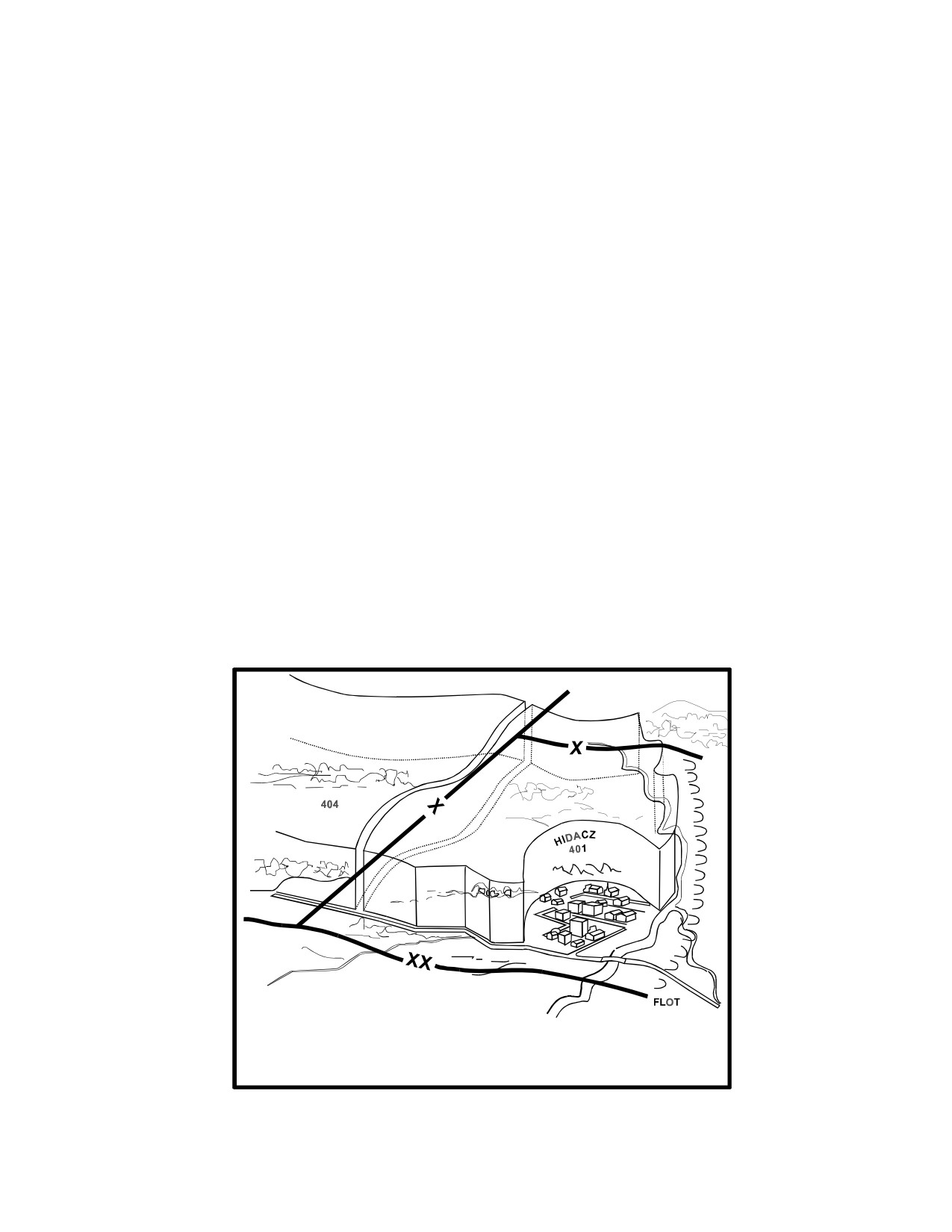
q. High-Density Airspace Control Zone (HIDACZ).
(1) Description. HIDACZ is an area in which there is a concentrated employment of
numerous and varied weapons or airspace users. A high-density airspace control zone has
defined dimensions that usually coincide with geographical features or navigational aids.
Access to and air defense weapons status within a high-density airspace control zone is
normally approved by the appropriate commander. See Figure F-1.
-Nominated by ground commander
-Prepared HIDACZs in ACP
-Other HIDACZs require ACA approval
-Location based on threat, friendly operations, MRRs
-Requestor must have capability to control aircraft and
air defense weapons within the zone
Figure F-1. High-Density Airspace Control Zone
F-6
(2) Uses. HIDACZ allows ground/Marine air-ground task force commanders to
restrict a volume of airspace from users not involved with ongoing operations. It restricts
use of the airspace because of the large volume and density of fires supporting the ground
operations within the described geographic area.
(3) Considerations. The volume of air traffic demands careful coordination to limit
the potential conflict among aircraft needed for mission essential operations within the
HIDACZ and other airspace users. When establishing a HIDACZ, consider the following:
(a) Minimum risk routes (MRR) into and out of the HIDACZ and to the target area.
(b) Air traffic advisory as required. Procedures and systems also must be
considered for air traffic control service during instrument meteorological conditions.
(4) Procedures for expeditious movement of aircraft into and out of the HIDACZ.
(a) Coordination of fire support, as well as air defense weapons control orders or
status within and in the vicinity of the HIDACZ.
(b) Location of enemy forces inside of and within close proximity to the HIDACZ.
(5) POC. The ground commander nominates the HIDACZ, and the ACA approves it.
r. Joint Engagement Zone (JEZ).
(1) Description. A JEZ is airspace of specified dimensions within which multiple AD
weapon systems (surface-to-air missiles and fighters) of one or more Service components
are simultaneously employed and operated.
(2) Uses. From an airspace control perspective, JEZ provides airspace users with
location of the joint engagement zone for mission-planning purposes.
(3) Considerations. JEZs are highly dependent on correct differentiation between
friendly, neutral, and enemy aircraft. Procedures for effectively using a JEZ are under
development.
(4) POC. AADC.
s. Low-Altitude Missile Engagement Zone (LOMEZ).
(1) Description. A LOMEZ is a volume of airspace established to control
engagements of low- to medium-altitude surface-to-air missiles. Subject to weapon system
capabilities, the LOMEZ normally extends beyond the forward edge of the battle area.
(2) Uses. From an airspace control perspective, LOMEZ provides airspace users with
location of the engagement zone of low-altitude missile systems for mission planning purposes.
(3) Considerations. The design of the LOMEZ is contingent on specific weapon
system capabilities.
F-7
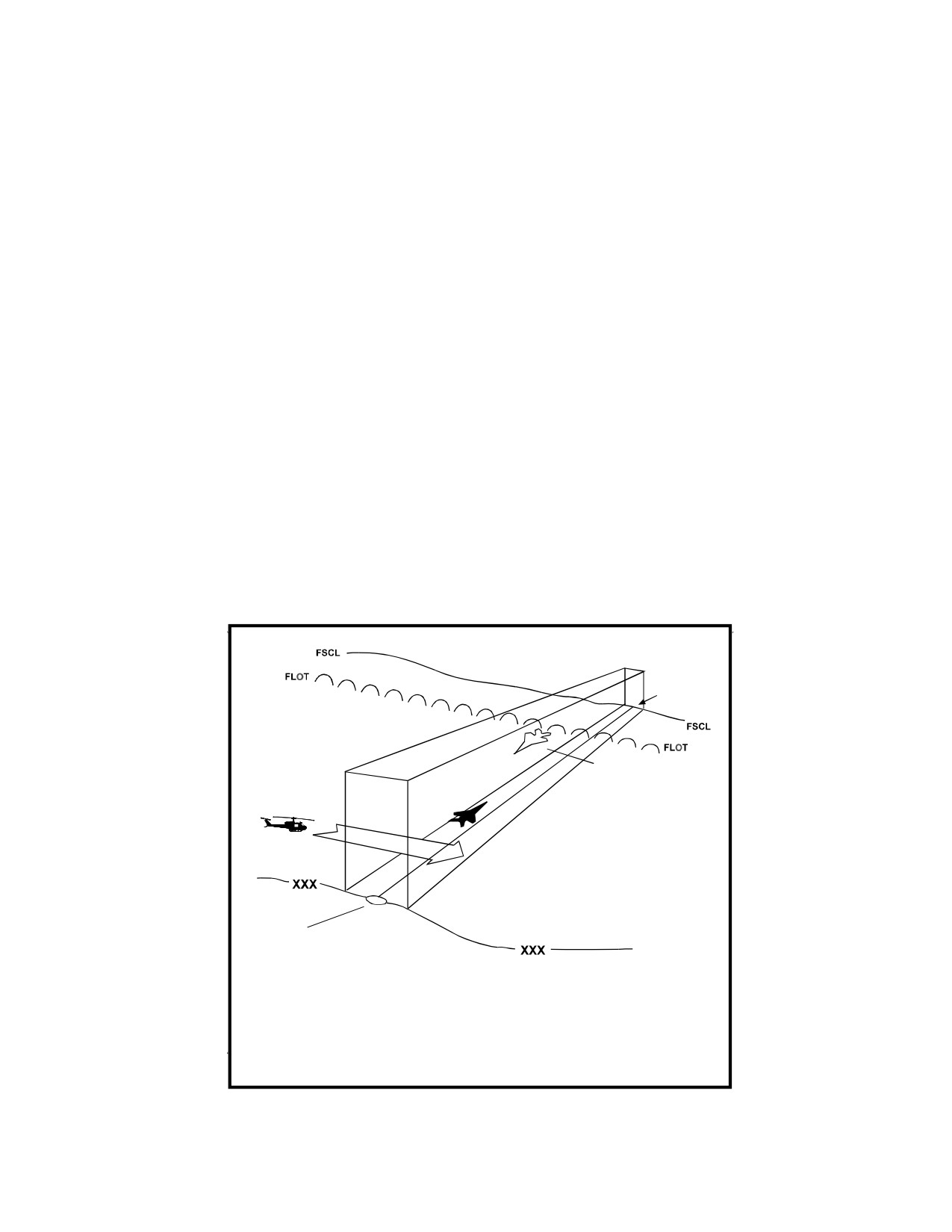
(4) POC. AADC.
t. Low-Level Transit Route (LLTR).
(1) Description. A LLTR is a temporary bidirectional corridor of defined dimensions
that facilitates the low-level passage of friendly aircraft through friendly air defenses and
controlled or restricted airspace. LLTR currently is used only within the North Atlantic
Treaty Organization (NATO). See Figure F-2.
(2) Uses. LLTR is normally used by high performance aircraft. LLTR is an airspace
control measure in NATO.
(3) Considerations. LLTR is a procedural method. See NATO Regional Airspace
Control Plans (MIKE-Plans).
(4) POC. ACA.
u. MRR.
(1) Description. An MRR is a temporary corridor of defined dimensions
recommended for use by high-speed, fixed-wing aircraft that presents the minimum known
hazards to low-flying aircraft transiting the combat zone. MRRs are established
considering the threat, friendly operations, known restrictions, known fire support locations,
and terrain. See Figure F-2.
Air control
point
Helicopters transit
Home-base-bound aircraft
through or below
above 500 feet AGI.
coordinating level.
See and avoid.
WCS: "Weapons Tight" in
corridor.
Target-bound aircraft
below 500 feet AGI.
A ir control points used at points
where the flight route changes
direction and connects with other
routes/corridors.
-Recommended by ground component commander
-Approved by the ACA
-Dimensions may vary
-May extend below the coordinating altitude and to
-
the forward boundary
-Location based on threat, friendly operations, other
restrictions, fire support locations, and terrain
Figure F-2. Minimum Risk Routes/Low-Level Transit Routes
F-8
(2) Uses. MRR is an ACM used primarily by cross-FLOT operations. CAS aircraft do
not usually use MRRs in the vicinity of the target area.
(3) Considerations. MRRs are established based on known threats.
(4) POC. ACA.
v. Positive Identification Radar Advisory Zone (PIRAZ).
(1) Description. A PIRAZ is a designated area within which Navy ships (usually
equipped with naval tactical data systems) separate friendly from hostile aircraft.
(2) Uses. PIRAZ provides tracking, control, and assistance to friendly aircraft within
the antiair warfare surveillance area of the battle group.
(3) POC. ADC.
w. Restricted Operations Area (ROA).
(1) Description. An ROA is airspace of defined dimensions created in response to
specific operational situations or requirements within which the operation of one or more
airspace users is restricted. Also known as a restricted operations zone (ROZ).
(2) Uses. An ROA is an airspace control measure used to separate and identify areas.
For example, artillery, mortar, naval gunfire support, UAV operating areas, aerial refueling,
concentrated interdiction areas, areas of search and rescue (SAR), SOF operating areas, and
areas in which the AADC has declared “weapons free.” Commonly used for drop zones,
landing zones, assault landing zones, SAR areas, UAV launch and recovery sites, UAV
mission areas, and special electronics mission aircraft.
(3) Considerations. ROA can adversely affect air defense operations; therefore, air
defense missions generally have priority over ROAs.
(4) POC. ACA.
x. Return To Force (RTF).
(1) Description. RTFs are planned route profiles for use by friendly aircraft
returning to an aircraft-capable ship.
(2) Uses. RTF provides a means for easily identifying friendly aircraft.
(3) POC. ADC.
y. SHORADEZ.
(1) Description. Areas of SHORAD deployment may fall within a LOMEZ or HIMEZ.
It is possible that some areas may be solely defended by SHORAD assets. A SHORADEZ
can be established to define the airspace within which these assets will operate. Because
F-9
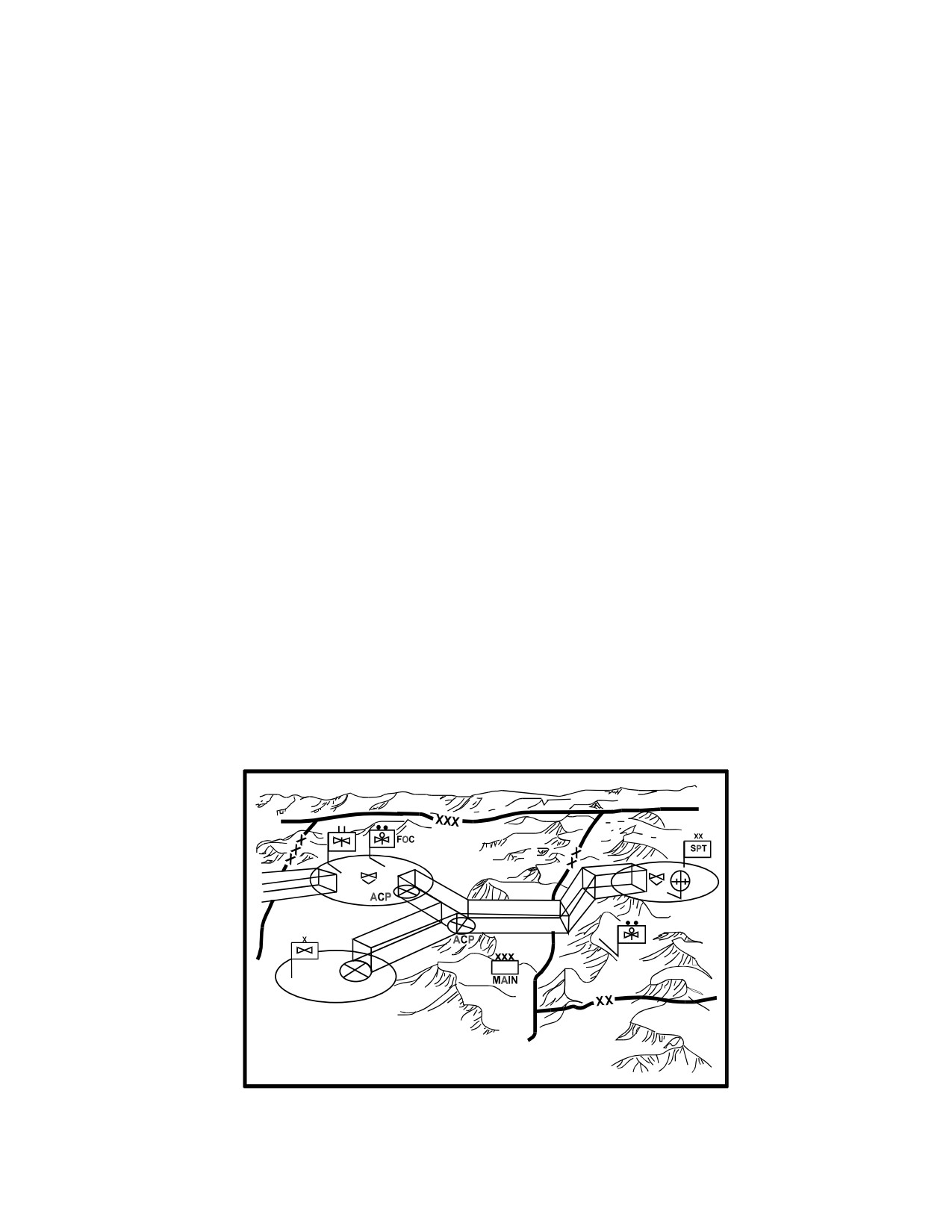
centralized control over the SHORAD weapons may not be possible, these areas must be
clearly defined and disseminated so friendly aircraft can avoid them.
(2) Uses. SHORADEZ is normally established for the local air defense of high-value
assets. From an airspace control perspective, SHORADEZ provides airspace users with the
location of the engagement zone of short-range air defense systems for mission planning
purposes.
(3) Considerations. Centralized control of SHORADEZ may not be possible.
(4) POC. AADC.
z. Special Use Airspace.
(1) Description. Special use airspace defines airspace for a specific purpose. It may
also designate airspace in which no flight activity is authorized. General subdivisions
(regions, sectors, and AOAs) are not special use airspace.
(2) Uses. Special use airspace is typically applied to BDZs and cap/orbit areas.
(3) Considerations. Special use airspace typically is a peacetime term contained in
FAAH 7610.4, Special Military Operations, to include military operating areas, air traffic
control assigned airspace, and other airspace.
(4) POC. ACA.
aa. Standard Use Army Aircraft Flight Route (SAAFR).
(1) Description. SAAFR are routes established below the coordinating altitude to
facilitate the movement of Army aviation assets. SAAFRs are normally located in the corps
through brigade rear areas of operation. See Figure F-3.
NOTE: Positioning considerations are similar
to those for MRRs and LLTRs
Figure F-3. Standard Use Army Aircraft Flight Routes
F-10
(2) Uses. SAAFR is an airspace control measure used by Army assets for
administrative and logistic purposes.
(3) POC. If altitudes are at or below the coordinating altitude, SAAFR is
implemented by the using authority. If a coordinating altitude has not been established, an
air corridor is established by the ACA at the request of the appropriate ground commander.
See FM 100-10 for additional information.
bb. Weapons Engagement Zone (WEZ).
(1) Description. In AD, WEZ is airspace of defined dimensions within which the
responsibility for engagement normally rests with a particular weapon system. These
include FEZ, HIMEZ, LOMEZ, SHORADEZ, and JEZ.
(2) Uses. WEZ defines air defense areas by weapon system. From an airspace control
perspective, WEZ provides airspace users with location of the air defense engagement for
mission planning purposes.
(3) Considerations. Design of the WEZ is dependent on specific weapon system
capabilities.
(4) POC. AADC.
cc. Weapons Free Zone.
(1) Description. A weapons free zone is an AD zone established for the protection of
key assets or facilities, other than air bases, where weapons systems may be fired at any
target not positively recognized as friendly.
(2) Uses. A weapons free zone is an air defense control measure normally used for
high-value asset defense and in areas with limited command and control authority. From
an airspace control perspective, this zone provides airspace users with location of a weapons
free area for mission planning purposes.
(3) POC. AADC declares weapons free with the ACA establishing the zone.
3.
Integrating FSCMs and ACMs
FSCMs and ACMs are not complementary and in some cases may cause conflicts
between airspace users and fire delivery systems. Army (Army airspace command and
control elements, fire support elements, and tactical air control parties [TACPs]), Marine
Corps (fire support coordination centers, TACPs, and direct air support center) and the joint
airspace operations center should work together to ensure the appropriate ACMs are
planned, requested, and approved to support the planned establishment of FSCMs. Since
FSCMs may be established at numerous levels and ACMs are normally established at a
single level, the agencies at all levels must be aware of the impact of FSCMs and ACMs on
future ground and air operations. Three examples are described below.
F-11
a. Free Fire Area (FFA). If the surface commander wants to bypass an enemy force in
strong fortifications, he may desire the establishment of a FFA to expedite fires. However,
this action may also increase the amount of uncoordinated fires through the airspace in the
vicinity of the FFA. The establishment of the ROZ in the airspace over the FFA may assist
in airspace deconfliction.
b. No Fire Area (NFA). If the surface commander wishes to protect a vital industrial
complex or religious site, he may designate the area a NFA. Fires would then be prohibited
into the area. The establishment of a NFA does not increase danger to aircraft. The
establishment of an ACM restricting aircraft from flying over the site ensures no damage
will occur due to misidentification of a target or intentional provocation (fires from near the
area) will result in air delivered weapons release.
c. High Density Airspace Control Zone. If a component will conduct extensive air
operations within an area, a HIDACZ may be established. Depending on the nature of the
operation, establishing a formal airspace control area may be advisable.
F-12