ICAC2 MULTISERVICE PROCEDURES FOR INTEGRATED COMBAT AIRSPACE COMMAND AND CONTROL (June 2000) - page 2
(8) Tactical Air Traffic Control (TATC). The TATC is responsible for the safe and
expeditious handling of aircraft during flight operations within ARG-assigned airspace.
TATC functions mirror those of the CVBG strike control.
(9) Tactical Air Direction (TAD) Controller. The TAD controller controls all aircraft
assigned to CAS holding stacks, assigns missions and targets of immediate missions via 9-
line briefs, and records and disseminates BDA. The TAD maintains communications with
the FAC and forward air controller (airborne) (FAC[A]).
(10) SACC. SACC exercises overall coordination of supporting arms planning and
execution. Supporting arms include surface, land, and air-launched weapons of all types
employed to support ground units. The SACC integrates fire plans of the supporting arms
in support of naval operations and the landing force scheme of maneuver. The SACC also
receives fire support requests and assigns fire missions to CAS, naval gunfire, or artillery.
(11) Air Operations Control Center (AOCC)/HDC. The AOCC/HDC is the LHA/LHD
operations department/division equivalent to the CVBG air operations division. This center
is responsible for safe and efficient aircraft arrival and departure. A Marine Corps aviator
with recent at-sea experience normally heads the AOCC/HDC.
(12) PHIBRON Air Officer. This officer sets up the TACS and is responsible for all
operations in the TACC. TACC functions include:
(a) Making effective use of all aircraft assigned. In an amphibious operation, the
TACC accomplishes the functions of the air resource element coordinator (AREC).
(b) Ensuring defense of ships and troops of the ATF against enemy air, submarine,
and surface attacks within the assigned airspace through integrated planning of all air
operations. Note: The CATF operates under the composite warfare concept and therefore
divides protection of his forces into these three categories. Each subordinate warfare
commander operates from a combat information center (CIC)—the responsible agency
within a ship for collection, display, evaluation, and dissemination of tactical information.
However, unlike the composite warfare commander (CWC) in a blue-water operation, the
AD function is incorporated in the TACC. AD functions include:
• Providing CAS and other air support as requested.
• Consolidating tactical air support requirements.
• Monitoring and coordinating all helicopter operations.
• Exercising coordination and control of all air traffic in the assigned airspace.
(13) CLF. The CLF, in conjunction with the CATF, establishes general airspace
procedures. The CLF establishes the MACCS, and, when firmly established ashore, accepts
the transfer and control of air operations from the CATF.
(14) MACCS. The MACCS functions and responsibilities are described in
Appendix D.
III-14

(15) ARG Air Planning Matrix. Table III-1 presents the major units contained in the
ARG and their functions pertinent to air planning.
Planning
Operations
PHIBRON
•
Develops OPORDs, etc.
•
Coordinates surface assault
Operations
•
Creates SOE/Greensheet
•
Supports NSFS requirements
•
Long range planning
•
Surface fire coordinator
PHIBRON Air
•
Functions as amphib ACA
•
Coordinates TACC/SACC
Officer
•
Coordinates outside air supp
•
MEU air support requirements
requirements
•
Coordinates emergent air
•
Publishes amphib ATO/ air plan
requirements
•
Directs the TACC
•
ARG Air Defense Commander
TACC
•
Implements air support plans
•
Controls aircraft in amphib
•
Creates airspace management plan
airspace
•
Coordinates air support missions
•
Updates mission briefs
•
Conducts nine line briefs
•
Receives BDA reports
•
Directs air defense as AD
sector control
•
Coordinates air assault
•
Assigns aircraft to FAC
SACC
•
Identifies fire support requirements
•
Processes fire support requests
•
Identifies fire support coordination
•
Coordinates all emergent fires
measures
with TACC
AOCC/HDC
•
PublishesLHA/LHD air plan
•
Controls all arriving and
•
Identifies ordnance/troop load plan
departing aircraft
requirements
•
Controls IFR approaches to
LHA/LHD
Table III-1. ARG Planning and Operations
(16) Marine Expeditionary Unit (MEU) Special Operations Capable (SOC) (MEU
[SOC]) Key Planners and Coordinators. The MEU (SOC) is the forward-deployed,
immediate response, sea-based Marine component of the fleet commander’s amphibious and
power-projection forces. A MEU (SOC) is task-organized, trained, and equipped to conduct a
wide variety of conventional and specialized operations. It is not large enough to be used
for deliberate amphibious assault. The MEU typically consists of four integrated elements:
(a) Command Element (CE). The CE provides a single headquarters for command
and coordination of ground, air, and combat support forces ashore.
(b) Ground Combat Element (GCE). The GCE is an infantry battalion reinforced
by light armored reconnaissance, tanks, artillery, assault amphibious vehicles, combat
rubber raiding craft, and combat engineer units that form a battalion landing team. The
GCE commander is the battalion landing team commander. This is the main ground
combatant force within the MEU.
III-15
(c) Aviation Combat Element (ACE). The ACE is a single composite reinforced
squadron. The ACE is task-organized to provide aviation support for the MEU (SOC)
mission, adding flexibility, firepower and mobility. C2 of organic MEU (SOC) aviation assets
is governed by Joint Publication 0-2, Unified Action Armed Forces, which states in part: “The
MEU (SOC) commander will retain operational control of organic air assets.” The MEU
(SOC) is typically composed of 12 CH-46s, 3 CH-53s, 3 UH-1s, 4 AH-1s, 6 AV-8s, 2
continental United States (CONUS) based KC-130s, a Detachment Marine Wing Support
Squadron (MWSS) and a Detachment Marine Air Control Group (MACG).
(d) Combat Service Support Element (CSSE). The CSSE provides logistics and
communications support.
(17) MEU Commander/CLF. The MEU commander, a Marine colonel, is responsible
for determining the requirements for ship-to-shore movement, including: availability of
landing force helicopters, organic landing craft, and amphibious vehicles; preparing landing
force OPLANs; and overall execution of all missions.
(18) MEU Air Officer. This officer plans and consolidates MEU support and training
requirements for air planning and inclusion into the daily air plan or ARG ATO input.
(19) FAC. The aviator member of the TACP who, as a FAC or FAC(A), terminally
controls CAS aircraft.
(20) DASC. See Appendix D for a description of the DASC.
(21) MEU (SOC) Air Planning Matrix. Table III-2 depicts the major planners from
the MEU (SOC) and their responsibilities.
d. Role of TACC. TACC is the center for all planning and execution of amphibious air
support missions, including the coordination of sea- and shore-based air units supporting
the amphibious operation. The TACC and all LHA and LHD class ships have contingency
theater automated planning system (CTAPS) terminals installed. Note: The Theater Battle
Management Core System (TBMCS) is the follow-on system for CTAPS.
(1) Planning. During the planning phase of an amphibious operation, TACC
personnel perform the following functions:
(a) Work closely with the MEU air officer to ensure that missions are fully
coordinated between Navy and Marine air elements.
(b) Establish or recommend ACMs to support amphibious missions.
(c) Design helicopter lanes to and from the landing zones with the Marine air
mission commander, transport flight lead, and escort flight lead.
(d) Determine and implement optimal FSCMs, CAS holding points, etc. with the
Marine FSE.
III-16

Planning
Operations
MEU(SOC)
• Reviews taskings
• Identifies support
Commander
• Identifies forces
requirements
Command
• Establishes tactical goals
• Coordinates outsides
Element
• Initiates R2P2
requirements
MEU Air Officer
• Identifies air support
• Coordinates emergent air
requirements to TACC
support requirements
• Identifies mission
requirements with LHA/LHD
ACE Commander
• Establishes air tactics
• Mission execution
• Oversees training and
readiness of composite
squadron
GCE Air Officer
• Collects identified targets
• Coordinates direction of fires
• Creates fire support plan
• Establishes priority of fires
FAC
• Identifies potential targets
• Controls and directs
application or airpower in
support of GCE
Table III-2. MEU(SOC) Air Planning and Operations
(e) Ensure airspace assignments support the scheme of maneuver in sea echelons
for amphibious ships and balance competing requirements for airspace.
(f) Initiate AIRSUPREQ for carrier (CV) and land-based aviation assets.
(g) Communicate with CVBG strike operations and carrier air wing commander
(CAG) operations on planning details submitted by the CATF/CLF.
(h) Coordinate AD procedures for ARG assets with the AD commander.
(i) Provide daily amphibious air plan and ATO inputs to CVBG strike operations
as directed by the tactical situation and the JFACC’s C2 architecture. This information is
provided to strike operations for inclusion in an ATO input to the JFACC. Publish daily
ATO when ARG/MEU conduct autonomous operations.
(j) Ensure the ACP and ACOs meet operational requirements.
(2) Execution. The TACC oversees all ARG airspace assigned by the ACA under the
ACP. The TACC acts as the controlling agency for any ACMs encompassing the littoral
operations because of the close coordination required by Marine ground forces. The TACC
controls the ARG/MEU aircraft for all or part of their mission. Aircraft operating within the
ARG/MEU-assigned airspace check in with the TACC prior to assignment to a mission
controller. Aircraft transiting ARG/MEU airspace require positive control to ensure
deconfliction, fratricide avoidance, and general safety of flight. The TACC accomplishes the
following:
(a) Remains linked with other air control units as designated in the ACP.
(b) Maintains a complete air picture of the combat zone with SACC.
III-17
(c) Attempts to maintain air coordination communications links with the CVBG.
(d) Works with the SACC to optimize and deconflict all CAS, NSFS and artillery
missions.
Note: Because the TACC is so closely involved with the SACC during execution of all
amphibious fires, it is uniquely positioned to provide situational awareness to any aircraft
flying in support of or near the amphibious operation. It is essential for airborne early
warning (and other air control units) to remain in contact with TACC, call sign “ICEPACK,”
when controlling aircraft in, or immediately adjacent to, an amphibious operation.
e. Air Support Planning Timelines.
(1) Introduction. As a global force-in-readiness, the MEU (SOC) is organized, trained
and equipped as a self-sustaining general purpose expeditionary force capable of conducting
a wide spectrum of conventional and selected maritime special operations. The unique
immediate response utility of the MEU (SOC) requires that it be capable of commencing
mission execution within 6 hours of receipt of a warning or alert order. Commencement of
mission execution is signified by the launch of forces by air and/or surface means. This may
range from the insertion of reconnaissance and surveillance assets to the launch of an
assault force.
(2) The Rapid Response Planning Process (R2P2). The R2P2 provides the geographic
combatant commander with a forward-deployed, rapid crisis response capability. The R2P2
works very well for ARG/MEU “stand-alone” missions. For missions requiring outside air
support, however, it can be difficult to request, coordinate, and brief with all the external
agencies (JFACC, strike operations, strike lead, etc.), and remain within the six-hour time
limit. This has caused considerable confusion and generated planning difficulties during
exercises involving amphibious operations.
(3) Procedures. Navy-Marine Corps procedures include formal and informal
techniques that facilitate the passing of C2 from afloat (CATF) to ashore (CLF). These
procedures ensure an uninterrupted C2 structure throughout combat operations. The
organization, policies, and procedures used reflect basic Navy and Marine Corps doctrine—
centralized command, coordination, and supervision at the highest level and decentralized
control to the lowest level. Centralized command authority provides the timely shift of air
operations and economizes the use of aviation assets, while decentralized control minimizes
response times and provides greater access to the assets. The Navy and Marine Corps air
control systems are functionally parallel in order to provide continuity in air control from
afloat to ashore and shift command authority with ease as the operation progresses.
(4) Positive Versus Procedural Control. Air operations in an amphibious operation
are intense and time-critical. As a result, emphasis is placed on positive control of air
traffic, commensurate with the communications and identification means available.
(a) Transfer of Air Control from Afloat to Ashore.
• Situation. During amphibious operations control passes through several key
commanders as operations progress. Prior to arrival of the ATF, an advance force may
III-18
prepare the objective for assault. The commander of this force usually has a TADC to
command and control the air operations. The advance force commander is under the
command of CATF and is delegated operational command authority over those forces
specifically assigned.
• ATF Arrival. When the ATF arrives in the AOA, the advance force is
dissolved and air direction, coordination, and control shifts from the TADC to the Navy
TACC. Once the assault begins, TACPs under the Navy TACC accompany the landing force
as it moves ashore. Once functional afloat TADCs have been established, the TADC controls
the TACPs, giving the CLF early access to the air control system.
• Progression of the Operation. As the amphibious operation progresses, the
CLF incrementally increases the air C2 systems (MACCS) ashore and accepts responsibility
for various functions from the CATF. As soon as the tactical situation ashore permits, the
CLF establishes an air support element /DASC ashore, again operating under the TADC for
air support operations.
• Establishing the TADC and the tactical air operations center (TAOC). A
TADC and a TAOC are established ashore, giving the CLF the capability to control and
direct both offensive air and AD operations. Initially the Navy TACC will define a sector
over which the Marine TADC has control of OAS and AD operations.
• LF. As the LF progresses inland and more units are landed, the landing
force increases its organic capability to control and execute air operations. When the CLF
and CATF agree, the responsibility for control of all air operations is passed ashore to the
CLF. The Marine TADC becomes the Marine TACC, and the Navy TACC either phases out
completely or is redesignated as the Navy TADC. Transfer of airspace control responsibility
normally occurs simultaneously with the transfer of AD responsibility. See Figure III-6.
Upon termination of the amphibious operation, as defined in the initiating directive, the
assigned airspace is disestablished and airspace control is returned to the ACA or as stated
in the initiating directive.
f. Integration with AD. Gaining air superiority during an amphibious operation is of
utmost importance. The CATF employs both Navy and Marine Corps assets to execute the
antiair warfare function. Since the CATF has limited AD capability, a battle group
operating in support of the ATF normally provides additional AD support, including air
interceptors, surface-to-air missiles and airborne early warning aircraft. Positive and
procedural control is used not only to manage the airspace, but also to provide an effective
air defense umbrella without encumbering the air operations in support of the assault.
g. ARG/CVBG Integration. ARG/CVBG integration involves understanding the
functions and organizational responsibilities of the aircraft carrier with the battle group
and with the TACRON detachment onboard the ARG flagship while employing air power in
support of expeditionary warfare.
h. Reconciling R2P2, Cyclic Flight Operations, and the ATO Cycle. The operational
requirements inherent in quick reaction Marine and amphibious operations are achievable
in the ARG/CVBG integrated environment. Using the R2P2 process as a baseline,
III-19
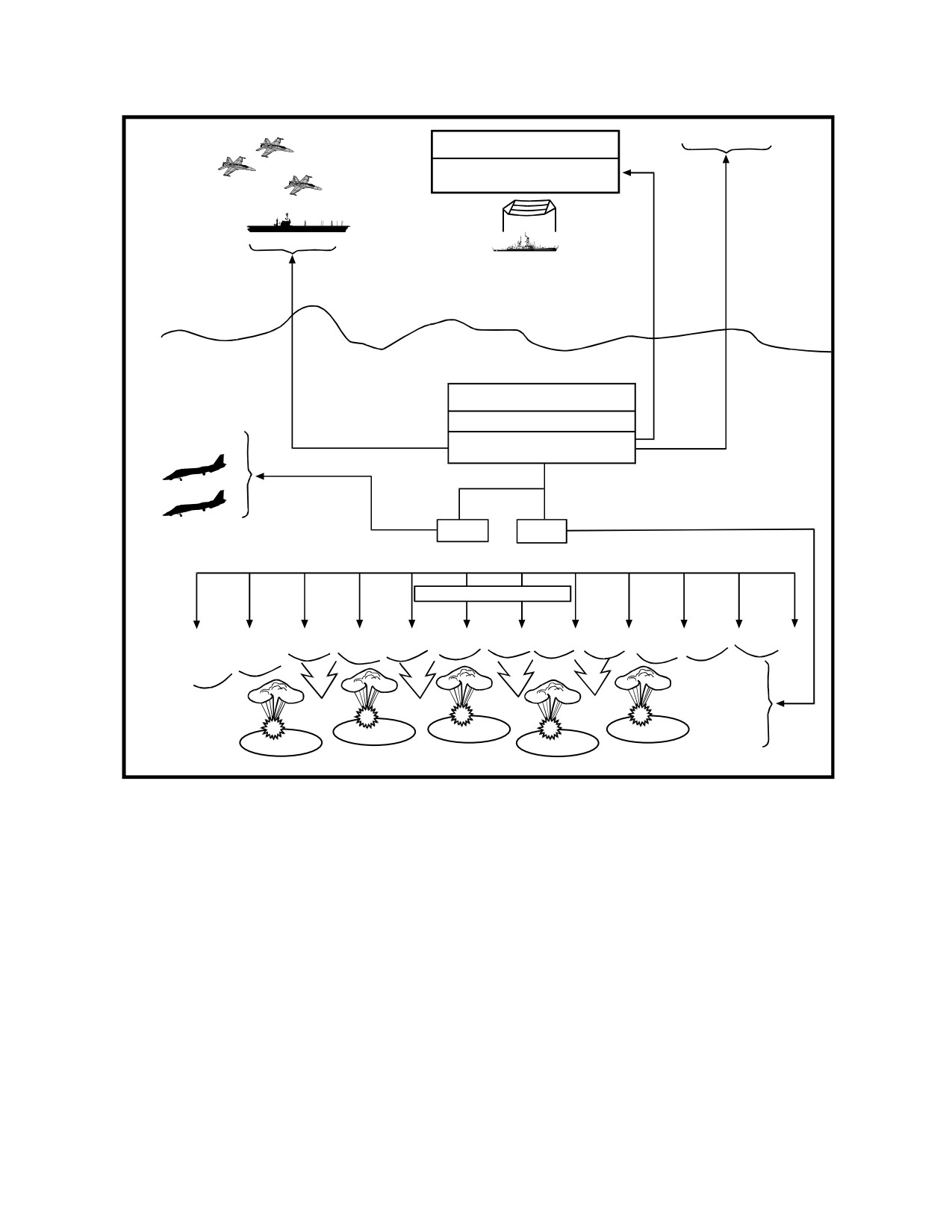
Other Aircraft
Naval Force Commander
Tactical Air Direction Center
Carrier Aircraft
LCC
xxxx
Landing Force Commander
Tactical Air Commander
Sector AAW
Aircraft
Tactical Air Command Center
TAOC
DASC
Tactical Air Control Parties
OBJ
OBJ
OBJ
OBJ
OBJ
Support
Aircraft
Figure III-6. Air Operations Tactical Air Control Ashore
requirements of carrier strike operations and the ATO cycle may require minor modification
to ensure that ARG sorties are properly planned, scheduled, coordinated, and deconflicted.
Information exchanged between ARG air planners (TACRON and ACE) and the carrier air
planners (strike operations and air operations) requires modification to make the system
more responsive.
To achieve successful results, the air planning staffs of the CATF, CLF, and CVBG
should develop a timeline for the details of air planning and airspace control to be shared by
each. Staffing levels normally will not permit full time Marine Corps liaison officers on the
CV and CV wing liaison officers on the LHD/LHA. However, this has proven invaluable
during training and exercises to identify coordination means to be used for each deploying
ARG and CVBG.
(1) Carrier Air Wing Capabilities Available for MEU (SOC) Support. See Appendix B.
III-20
(2) LHA/LHD CV Connectivity. Multiple real-time links, both voice and data, between
the air operations sections of the amphibious flagship and the CV are the keys to success.
i. Termination. Termination of an amphibious operations is predicated on
accomplishing the ATF mission in accordance with the specific conditions contained in the
initiating directive. The firm establishment of the LF ashore is usually specified as one of
these conditions. When the mission is to establish a LF ashore, the following conditions
must be met:
(1) The beachhead is secure.
(2) Sufficient tactical/supporting forces are established ashore to ensure the
continuous landing of the requisite troops and materiel for support operations.
(3) Command, communication, and supporting arms coordination facilities are
established ashore.
(4) CLF is ready to assume full responsibility for subsequent operations.
When the CATF and the CLF are satisfied the above conditions are met, the CATF
reports these facts to the commander designated in the initiating directive. This authority
then terminates the amphibious operation, dissolves the ATF, and provides additional
instructions as required, to include command arrangements and disposition of forces.
6.
Tomahawk Land Attack Missile Operations (TLAM)
a. C2 Relationships. A joint force operation requires TLAM integration into the unified
commander’s C2 architecture. Figure III-7 illustrates the normal integration for TLAM
campaign C2.
b. Staff Elements and Coordination Functions. The following paragraphs explain a
series of staff elements and coordination functions to ensure the successful completion of a
TLAM operation, from the identification of the initial target list to the actual missile
launch.
(1) Naval Component Commander (NCC). The NCC is the principal naval advisor to
the JFC and is responsible for all naval activity in a joint force operation. During TLAM
contingency operations, the NCC acts as the direct conduit from the) National Command
Authorities (NCA)/unified commander through the TLAM Strike Coordinator (TSC) and
launch area coordinator (LAC) to the TLAM launch platform. The NCC provides liaison
officers to the JFACC and other coordination agencies to synchronize naval contributions to
the JTF mission. The unified commander normally appoints the NCC to act as the
Tomahawk executive agent (TEA) responsible for all aspects of theater Tomahawk
operations. The battle group commander is responsible for tasking in-theater afloat
planning system (APS) detachments. This tasking is coordinated with the cruise missile
support activity via the NCC.
(2) TEA. The TEA has overarching responsibility for Tomahawk logistics, strike
planning, mission data distribution, and all supporting functions. The TEA may delegate
III-21
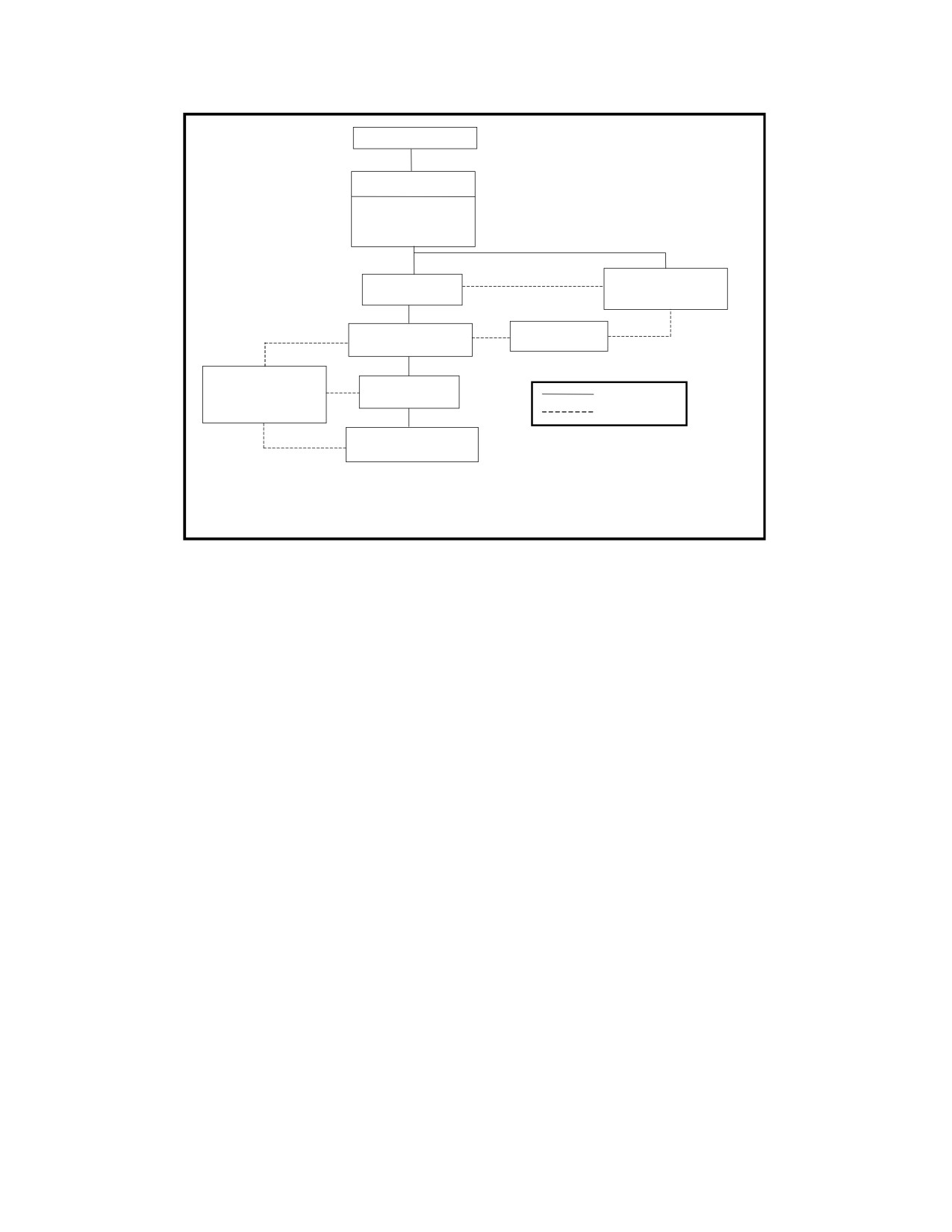
Unified Commander
Joint Force Commander
Joint Targeting
Coordination Board
(JTCB)
Joint Force Air
Naval Component
Component Commander
Commander (NCC)
(JFACC)
Tomahawk Liaison
TLAM Strike Coordinator
Officer (TLO)
(TSC)
Submarine Operating
Launch Area
Authority (SUBOPAUTH)
COMMAND
Coordinator (LAC)
if SSN TLAM Launcher
tasked
COORDINATION
Launch Platform
(Surface Ship/Submarine)
Note 1: NCC normally retains TEA and TTBDM
Note 2: The SWTC is normally the same entity as the CAG
Note 3: The TSC is normally the numbered fleet commander
Note 4: In contingency operations, the JTSG, JTCB, and JFACC may not be immediately established
Figure III-7. Tomahawk Campaign Command and Control
all, some, or none of the duties and authority for these functions, including the duties of
managing the master mission library (MML) of Tomahawk missions, Tomahawk command
information (TCI), and asset management data to a Tomahawk tactical data base manager
(TTDBM). In normal practice, the NCC retains these duties. The TTDBM is not a separate
commander or coordinator; it is a duty assigned for continuity to an agent who is always in
the theater. It is possible that the TEA could appoint one or more subordinates as TSCs,
responsible for Tomahawk operations in different parts of the same theater of operations.
(3) CVBG Commander. The CVBG commander ensures effective execution of naval
missions including TLAM missions tasked by higher authority. The NCC could designate
the CVBG commander to perform the duties of the TSC. Subordinate warfare commanders
support the TSC in executing TLAM strike duties. The APS detachment reports directly to
the CVBG commander, unless the CVBG commander delegates authority for the APS to a
subordinate commander. The CVBG commander is responsible for prioritizing mission
planning requests (MPRs) tasked to attached APS detachments. The CVBG commander
has approval authority for APS missions planned in response to MPRs. For APS missions
planned in response to NCC or CINC tasking, the CVBG commander reviews and forwards
the missions for approval by the tasking commander prior to distribution.
(4) TSC. The TSC is the designated agent (appointed by the NCC/TEA) responsible
for all TLAM strike planning, coordination, and reporting in a strike or series of strikes.
The actual designation and location of the TSC is determined on a case-by-case basis, based
on the following factors:
(a) Specific scenario requirements.
III-22
(b) Commands involved and their relative levels of expertise in Tomahawk strike
planning.
(c) Degree of TLAM involvement in the operation.
(d) Availability of, and access to, required communications and TLAM planning
support system.
(e) Proximity and access to JFACC TLAM strike planners.
Note: There may be multiple TSCs in the same theater. For example, Commander,
Sixth Fleet, could assign the responsibilities of the TSC to a subordinate unit , if operating
as a separate JTF in the Gulf of Sidra, while retaining the responsibilities of the TSC for a
task group operating in the Adriatic Sea.
Depending on the frequency and complexity of TLAM operations, face-to-face
meetings with TSC, JFACC, and strike warfare commander (STWC) may be required. At a
minimum, the TSC must be located at a site with a mission distribution system (MDS) node.
Robust, viable communications must be available between the TSC and the NCC, JFACC,
warfare commanders, LACs, and firing units. In a joint force operation, TSC liaisons are
placed with the JFACC, NCC, battle group (BG) and ATF commanders, subordinate warfare
commanders, and appropriate ground force commanders to ensure that the TLAMs are
effectively integrated into daily operations. In a contingency operation, the TSC carries out
the strike guidance provided in the unified commander’s alert and execute orders. A major
concern in this effort is deconfliction of missile fly-out routes. For TLAM missions in
support of an AOA or whose launch position, flight route, or target area is located within the
AOA, the TSC must obtain BG commander concurrence before executing the missions. The
LAC, as the TSC’s single point of contact (POC) for TLAM matters, usually conducts
necessary liaison with the CATF.
(5) Tomahawk Liaison Officer (TLO). The TLO integrates TLAM planning and
operations with the JFACC. The TLO is trained and provided by the theater NCC and/or
TSC. The TLO interacts with both combat plans and combat operations in a manner
similar to other component liaison elements. The TLO is the central liaison POC for all
aspects of TLAM employment at the JFACC and works for the NCC. Integration begins
during the earliest strategic planning and continues through master air attack plan
(MAAP) development, ATO production, and strike execution. Integration concludes with
battle damage assessment analysis and restrikes. TLOs support TLAM operations,
including strike and mission planning, database management, and familiarity with NCC
organization and procedures. In addition to manning, the NCC provides TLAM-unique
support requirements such as MDS, electronic Tomahawk planning package (ETPP),
computer, and TCI net.
(6) LAC. The LAC is the TSC’s principal agent, responsible for leading the execution
of TLAM strike operations. Candidates for LAC should have access to ETPP or MDS, and
sufficient communications capability with the TSC and all Tomahawk platforms. The LAC
coordinates on-scene requirements and has the authority to control launch platform
maneuvers and stationing in TLAM launch areas. If large distances, e.g., Eastern
Mediterranean, Red Sea, and Arabian Gulf, separate launch areas, a LAC may be assigned
III-23
to each geographic area to ensure effective execution of TLAM launch operations. After
determining which command(s) is best situated to direct execution of the strike plan, the
TSC makes the assignment.
Note: Submarines should only serve as LACs for strikes restricted to submarine-only
launches. Submarines do not have the communications and surveillance capabilities
available on a flagship or a surface Tomahawk ship and may not hold all of the TCI required
for coordination.
The LAC should know support (submarine) operations coordinating authority (SOCA),
submarine operating authority (SUBOPAUTH) procedures, and concerns. The LAC should
promptly contact the SOCA for guidance and assistance in contacting and directing
submarines to their launch areas. For TLAM operations in an AOA, the LAC should provide
the CATF specific TLAM mission information. This information should include TLAM AOA
entry points, flight corridors and altitudes, waypoints within the AOA, first preplanned
waypoint coordinates and outbound heading, target locations (if within the AOA), and
timeframes in which missiles will be in the AOA. In the LAC intentions message, firing
units should be advised of the composition of the AOA, including dimensions and altitudes,
forces assigned to support the amphibious objectives, and deconfliction actions necessary in
the area. This information should be provided to the LAC from the CATF. When possible,
the LAC should station firing units to minimize TLAM flights through the AOA. If TLAM
targets are located within the AOA, the LAC and the CATF inform the TSC of any
deconfliction issues. The TSC and LAC must deconflict overwater routes prior to first
preplanned waypoint for surface and subsurface units. The TSC and LAC must provide
notice to ships in applicable Tomahawk maneuver areas.
(7) STWC. The STWC is responsible to the BG commander for executing strikes
tasked by higher authority. In joint operations emphasis shifts from responsibility for
developing Navy-executed strike operations to coordinating joint strike operations prepared
by the JFACC. The STWC liaises with the TSC to facilitate coordination, deconfliction, and
execution of TLAM and tactical air strikes. Table III-3 depicts Tomahawk C2
responsibilities.
c. Launch Sequence Plan/INDIGO/Firing Report Messages. A launch sequence plan
assigns targets, numbers of missiles and time on target so firing units can execute the
launch. INDIGO messages authorize/direct firing units to launch their missiles. Firing
reports indicate the number of missiles each firing unit successfully launched.
Note: For Tomahawk, the ATO is authority for the release and employment of TLAM
by the TSC, but the firing units must still receive the launch sequence plan and INDIGO
messages, which direct them to launch.
d. Missile and Mission Management. Staff planners use TCI in preparing for
Tomahawk strike operations. TCI includes missile and mission data furnished by mission
planning sites through MDS tapes, ETPP disks, and hard copy messages. TCI provides the
C2 information required to employ the TLAM missions written on the data transport
devices (DTDs) held by firing units. MDUs can update TCI and DTDs from MDS nodes,
which electronically relay new information to firing units and staffs. The TEA using the
III-24

Title
Function(s)
Command
JTSG
•
Strategic target list
Unified CINC staff element
•
Apportionment guidance
JTCB
•
JITPL
JFC staff element
•
ROE compliance
•
Apportionment guidance
JFACC
•
ATO
Air component commander
•
ACO
TEA
•
Designate TSC
NCC
•
Promulgate CONOPS
•
Designate TTDBM
•
Implement Forward Pass procedures through
TTDBM
TSC
•
TLAM campaign with JFACC
NCC or BF/BG commander
•
LSP
•
Mission planning requests
•
INDIGO
•
TLAM strike cell oversight
•
Advance deconfliction
TLO
•
Liaison between NCC and JFACC for TLAM
NCC or BF/BG commander
employment issues
LAC
•
Launch coordination/preparation/execution
-BF/BG commander
oversight
-Destroyer squadron commander
•
Overwater airspace deconfliction of the
-Launch platform commander
immediate area
•
Consolidated reports
Table III-3. Tomahawk Command and Control Responsibilities
mission verification index, which is a listing of missions, may promulgate theater
requirements for TCI and mission data and TCI required for support of theater strike plans.
e. Communications. TCI data is required for staff planning, strike planning, and firing
unit engagements planning. Voice circuits designated for use as TLAM strike coordination
nets accomplish tactical coordination. These nets need not be dedicated to TLAM strike
planners, but must be readily accessible to the TSC, LAC, and firing units. Hard copy
record message traffic is employed to issue the TSC’s launch sequence plan, warning orders,
INDIGO mission orders, and post-firing reports. Tomahawk in-flight position reporting
system missiles use UHF fleet satellite communications channels to relay position and
status information to firing units.
III-25
Appendix A
ARMY OPERATIONS
1.
Background
The Army develops its airspace C2 based on doctrine and selected TTP outlined in Joint
Publication 3-52, Doctrine for Joint Airspace Control in the Combat Zone. This appendix
details the Army’s infrastructure supporting its airspace needs, including doctrine, missions
and functions, theater air-ground system (TAGS) interfaces, air traffic services (ATS), and
communications within the Army air-ground system (AAGS).
2.
Doctrine
The Army’s basic operations doctrine exploits the use of all weapons, arms, and services
fighting in the same battlespace. The ability to maneuver allows the Army to place the
enemy at a disadvantage through the flexible application of combat power. The airspace
medium provides an important dimension to maneuver by supporting firepower, protection,
intelligence, and air operations.
The use of airspace to enhance maneuver requires coordination to enable all airspace
users—Army, other Services, and allied forces—to operate with minimum constraints, yet
protect friendly forces. In order to accomplish this, the Army uses the AAGS, which is
designed to accomplish the functional activity of Army airspace command and control
(A2C2) within the C2 framework at each echelon of command. The A2C2 elements at the
various echelons are responsible for promoting the effective and safe, yet flexible, use of
airspace within the Army’s area of interest. Airspace integration performed at the lowest
possible level ensures that requirements for the use of airspace are coordinated to prevent
fratricide and promote flexibility.
3.
Missions and Functions
The ground commander must coordinate combat, combat support (CS), and combat
service support (CSS) forces simultaneously. Accordingly, he must have the freedom to use
and protect the airspace over these forces. He must have the maximum flexibility to use
organic and supporting assets within that airspace under limitations imposed by the JFC.
The AAGS ensures coordination and integration of maneuver, aviation, field artillery (FA),
air defense artillery (ADA), military intelligence (MI), and other operations.
a. Maneuver.
(1) Background. Air maneuver, mounted maneuver, and dismounted maneuver
operations present considerable challenges to TAGS as a whole. Maneuver units have
organic and/or supporting indirect fire capabilities that require battlespace deconfliction.
The controlling headquarters, whether air, mounted, or dismounted, must coordinate and
implement the airspace requirements with higher headquarters. The maneuver force
headquarters normally integrates the efforts of the combined arms team, to include the
synchronization of all their supporting units’ airspace needs.
A-1
(2) Special Considerations. The inclusion of A2C2 considerations in the military
decision making process ensures the proactive incorporation of appropriate ACMs and their
coordination with other airspace users or at least address the risk where conflicts may still
exist. For example, the ground maneuver commander is best capable of selecting a
minimum risk route through his AO as he considers the aspects of friendly force maneuver
and fires, enemy, and terrain. Circumstances such as aviation attack elements and ground
forces conducting missions simultaneously against the enemy require substantial
deconfliction of the airspace. These missions can cover large amounts of terrain and involve
both ground and ACMs. Special considerations involving airspace include danger ricochet
zones, weapons effects, and fires over friendly forces.
b. Aviation Operations.
(1) Background. Army aviation units are part of the forces organic to the
Commander, Army Forces (COMARFOR). They execute the ground combat portion of the
joint force mission. Army aircraft are not normally included in the JFC’s apportionment of
tactical air resources to accomplish the air combat functions.
(2) Mission. Army aviation is a highly mobile, lethal, versatile force that supports the
ground scheme of maneuver in both offensive and defensive operations with the same
continuous planning/execution cycle as the ground maneuver commanders they support. As
a fully integrated member of the combined arms team, Army aviation units conduct combat,
CS and CSS operations. Army aviation units provide the ground commander with an
unprecedented capability to apply combat power at the decisive place and time. Aviation
units execute attack, air assault, reconnaissance, intelligence, logistics, and C2 operations.
They are assigned to aviation brigades at echelons above corps (EAC), corps, divisions, and
armored cavalry regiments.
(3) Control Measures. Flight modes employed by aviation units depend on the mission,
threat, terrain, and relative location on the battlefield. Army aviation units maneuver over
the battlefield, operating in the terrain flight environment, using control measures that are
similar in nature to ground maneuver forces. Typical graphic control measures used are:
objectives, sectors, zones, air axes or air corridors, phase lines, boundaries, battle positions,
assembly areas, forward arming and refueling points, attack positions, and other graphic
control measures as indicated in unit standard operating procedures or Army doctrine.
Aviation units require maximum tactical flexibility and normally employ procedural control
measures instead of positive control. The advent of positive reporting systems on air
platforms (or near real time positions from sensor fusion feeds) to airspace/command
authorities provide greater positive control capabilities. These capabilities should only be
exercised as necessary to enhance combat operations or an added force protection measure.
In the rear operations area (brigade rear boundary to corps rear boundary), air traffic
normally uses procedural control along standard army aircraft flight routes (SAAFR) behind
the forward line of own troops, and between division support areas, major base locations,
airfields, and C2 sites. Because the threat is diminished, efficiencies are gained through flight
path predictability. CS and CSS mission type aircraft normally use SAAFRs that are easy to
A-2
navigate and that avoid restricted areas and other hazards. Combat mission aircraft will
normally use air axes, air corridors, maneuver graphics, and FSCMs to facilitate their
movement and fires within the battlespace.
(4) Medical Evacuation (MEDEVAC). A unique CSS role involves MEDEVAC. Air
ambulance units are positioned on the battlefield based on mission, enemy, terrain, troops,
and time, with the primary consideration being responsive. This rapid response to a
casualty evacuation request requires the aeromedical unit to provide liaison or a
communications link to the appropriate level command post (CP) A2C2 element. Real-time
coordination is required to provide the necessary interface to complete time-sensitive
airspace requests permitting transversal of the entire battlefield. The liaison additionally
must provide the communications means necessary to coordinate with the aircraft
conducting the mission, since airspace clearance may become a function of airspace
avoidance as the MEDEVAC aircraft avoids tactical air, FA, and other hazards.
(5) Freedom of Movement. Aviation units maneuver in the ground regime and in the
third dimension of the ground commander’s battlespace. This underscores the requirement
for army aviation, specifically rotary wing aircraft, to have maximum freedom of movement
to support the ground scheme of maneuver while considering terrain, weather, and the
threat. Combat mission aircraft normally use air axes, air corridors, and maneuver control
measures to facilitate their movement around the battlefield.
c. FA Operations.
(1) Background. FA uses airspace to deliver indirect fires to support maneuver forces
and the Army component commander and JFC concept of operations across the entire area
of the battlefield. These indirect fires can traverse the airspace from extremely low to very
high altitudes and are essential to successful mission accomplishment and force protection.
In many situations, the only fire support that maneuver forces may have in addition to their
organic direct-fire weapons are the indirect fires provided by mortars and field artillery.
These fires cannot be unduly restrained or delayed, as this delay may result in decreased
responsiveness, which can jeopardize mission success and contribute to increased friendly
casualties.
(2) Fires. FA strives to increase its responsiveness. This emphasis on responsiveness
does not constitute a disregard or indifference for other airspace users. Personnel in the
fire support elements (FSEs) from company through corps are the principal means for
deconflicting fire support with other airspace users. All planned artillery fires are
coordinated with other airspace users. Planned indirect fires present the most effective
form of airspace deconfliction. However, not all targets can be identified and fires
deconflicted in advance. Fires of an unplanned, immediate nature will occur in response to
the actions of the maneuver forces and the reaction of the enemy.
(3) Control Measures. FA relies primarily on procedural methods of control to
coordinate the use of airspace. Real-time ACMs and FSCMs are of primary importance.
The FSE coordinates planned fires and acts as the focal point for airspace requests to
support fires of an immediate nature. This involvement continues to the deep operations
A-3
coordination cell where airspace requests are forwarded through the corps A2C2 cell and
BCD for inclusion in the ACO/ATO, or as immediate airspace requests for the BCD in the
JAOC. The deconfliction of long range missiles; i.e., ATACMS and Multiple Launch Rocket
System, is of key importance.
d. ADA Operations.
(1) Background. The ADA mission is to protect the force and selected geopolitical
assets from aerial attack, missile attack, and surveillance. ADA contributes to this mission
by providing the capabilities for sustained operations as part of a joint, multinational or
interagency team. ADA supports multinational and joint operations by providing theater
missile defense and active air defense and by supporting attack operations.
(2) Mission. ADA operates at the strategic, operational, and tactical levels of
operations. At the strategic level, ADA objectives are to protect forces or geopolitical and
military assets of strategic significance. Air defense (AD) units at every echelon of
command can accept strategic missions. At the operational level, the ADA objective is to
protect the force and selected assets in accordance with the JFC’s and the joint force land
component commander’s (JFLCC’s) theater priorities. At the tactical level, the objective of
ADA is to protect corps and divisional forces as they plan and execute combat operations.
ADA forces provide air defense to corps and divisions in order to allow maneuver units the
freedom to maneuver. ADA units located throughout the combat zone defend maneuver
forces, airfields, logistics elements, and other critical assets, using both positive and
procedural means of fire control.
(3) Army Air and Missile Defense Command (AAMDC). The commander of the
AAMDC in the theater normally serves as the JFLCC’s theater Army air defense
coordinator (TAADCOORD). As the TAADCOORD, he provides liaison to the land
component commander (LCC), the BCD, the area air defense commander (AADC) and to the
headquarters of other services or multinational forces. At the theater level, the AAMDC
also may serve as the DAADC.
(4) Control Measures. Integration of airspace control is imperative to ensure safe,
unencumbered passage of friendly aircraft while denying access to enemy aircraft, UAV, and
missiles. ADA units require automated transfer of airspace information such as the ACO/
ATO in the conduct of their mission. ADA units at all echelons provide near-real-time
situational understanding of the three-dimensional battlespace using organic and
integrated sensors.
e. MI Operations. MI airborne platforms, consisting of helicopters, airplanes, and UAV,
conduct intelligence collection, target-acquisition, and electronic warfare missions over the
entire battlespace. These platforms use low-altitude airspace normally preplanned and
coordinated through the LCC. Some platforms also conduct their missions in upper-altitude
airspace procedurally obtained from the ACA. Missions are planned for inclusion in the
ATO/ACO. However, because of their flexible, highly responsive nature, assets may be
tasked for immediate missions that are not in the ATO/ACO. In addition to providing an
interface for airspace planning, the AAGS must provide a real-time conduit to acquire
airspace for immediate missions.
A-4
f. Other Operations.
(1) Airborne Operations. Airborne units are subject to many of the same
considerations of A2C2 as other maneuver and aviation units, and special operations forces
(SOF). These units require special planning considerations to operate in all three
dimensions of the battlespace. While in the air movement phase of the operation, airborne
forces require airspace control measures to provide entry and exit routes for aircraft
delivering forces to their predetermined locations. Airborne operations normally require
restricted operations zones (ROZs) and/or a high-density airspace control zone (HIDACZ) to
deconflict airspace from all other aircraft not directly involved in the airborne operation.
The ground phase of the operation requires substantial deconfliction of battlespace. These
forces, once employed, are often in areas beyond the normal concentration of forces and in
close proximity to free fire areas (FFAs), other supporting fires, and/or the effects of those
fires. These operations are normally joint, requiring the complete integration of all of the
service-specific elements of the TAGS.
(2) Nuclear, Biological, Chemical Operations. These operations, whether threat-
induced or planned, require airspace coordination to preserve the air assets operating in the
vicinity; e.g., chemical munitions may produce a moving ROZ.
4.
Army Air Ground System
a. Background. The AAGS supports airspace coordination. A2C2 elements are
responsible for managing effective and safe, yet flexible, use of airspace within the Army’s
area of interest.
b. Mission. The AAGS complements and supports joint, multinational, and interagency
requirements throughout the entire range of military operations. The AAGS works within
the TAGS to enhance the COMARFOR’s ability to effectively coordinate and synchronize
rapid massing of combat power in response to changing threats. The AAGS is designed to
work closely with the United States Air Force’s Theater Air Control System (TACS). The Air
Force TACS and the AAGS is the process used to coordinate and execute air support
requests and exchange operational information and intelligence between the two services.
TACS/AAGS is designed to enhance the effectiveness of supporting forces and supported
forces’ ability to accomplish the JFC’s objectives. The AAGS provides the Army the
framework for the synchronization, coordination, integration, regulation, deconfliction, and
identification, of airspace use and users for the LCC and subordinate maneuver
commanders.
c. COMARFOR Support. The AAGS allows the COMARFOR the flexibility to manage
his airspace during the course of conflict and operations other than war. The COMARFOR
must have the freedom to use and protect the battlespace of the forces. The COMARFOR is
delegated the authority to control employment of organic aircraft, air defense and surface-
to-surface fires on an immediate-response basis in the airspace over those land forces and
the controlled AO. This delegation of authority normally comes from the JFC through his
appointed ACA. The A2C2 elements, supporting these maneuver commanders, coordinate
both positive and procedural control measures to manage and integrate airspace
A-5
requirements by facilitating close and continuous coordination of Army airspace users with
other supporting airspace users. When conflicts arise, the JFC is the resolving authority.
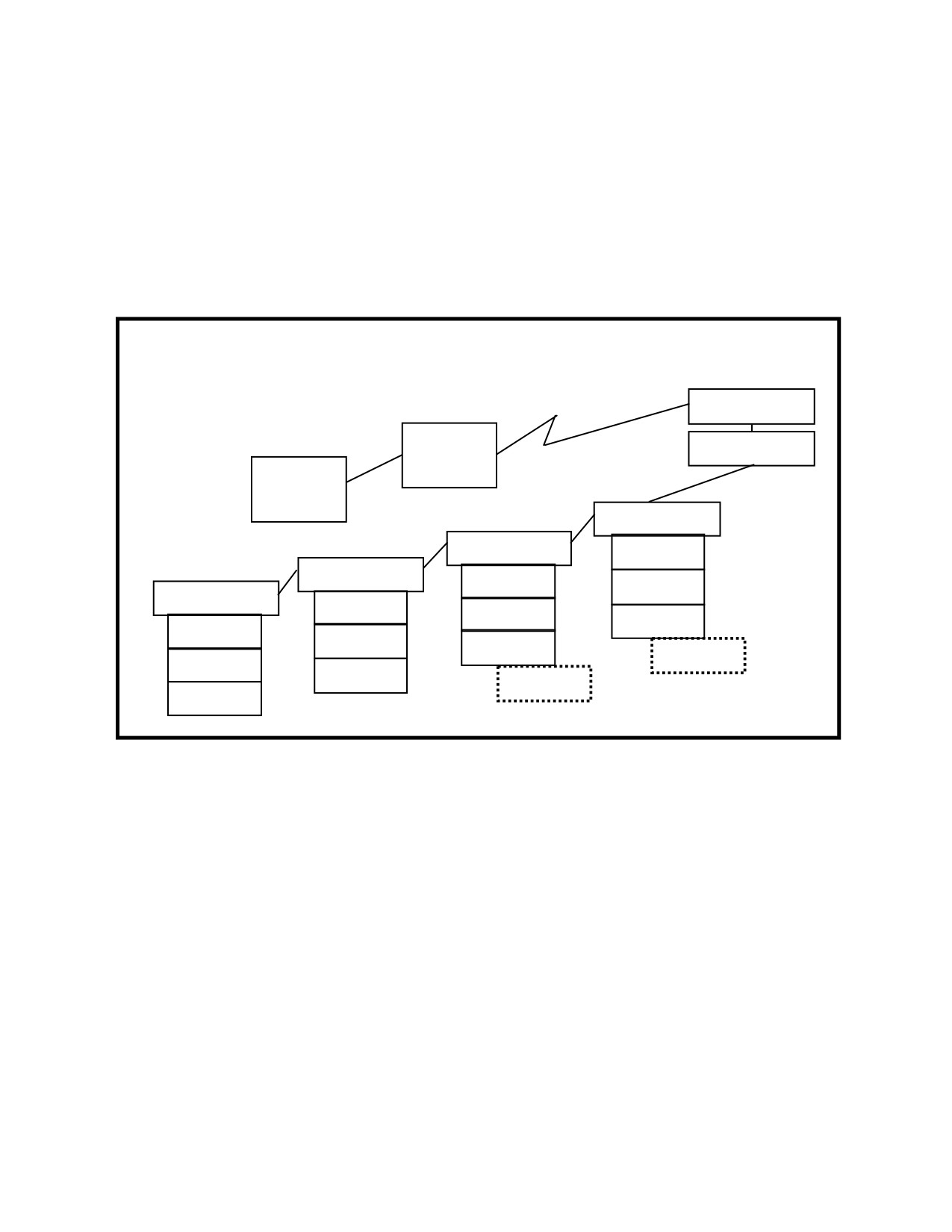
d. C2 Structure. Figure A-1 superimposes the AAGS on the existing Army C2
structure, from Army to battalion level. Each echelon of command has CPs where staff
integration and communications capabilities allow the commander to exercise C2 over his
subordinate units. The AAGS is designed to accomplish the functional activity of Army
A2C2 within the C2 framework at each echelon of command. Since airspace control affects
all operations, it is a command function.
ARFOR
ADA
NO. ARMY
BDE
ADA
BN
CORPS
DIV
CP
BDE
CP
FSE
BN
CP
FSE
A2C2
CP
FSE
A2C2
AIC
FSE
A2C2
AIC
A2C2
Figure A-1. Army Air Ground System
5.
A2C2 Organization, Facilities, and Personnel
a. A2C2. A2C2 consists of identifying, coordinating, integrating, and regulating Army
airspace needs. Through coordination, the A2C2 element maximizes joint force effectiveness
by ensuring simultaneous airspace use is synchronized in time, space, and purpose to
produce maximum combat power at decisive points. A2C2 element must be responsive and
capable of close and continuous coordination among all airspace users. A2C2 integrates and
synchronizes those functional operations that require airspace.
b. A2C2 Organization. The A2C2 organization is an arrangement of staff elements of
each command echelon, from maneuver battalion through theater Army or LCC if the
senior Army maneuver commander is so designated. Dedicated A2C2 elements are found at
division level and higher. They include ADA, army aviation, FA, ATS, ALO, primary staff,
and others as necessary; i.e., chemical, engineer, MI, aeromedical, signal, G4/S4, SOF, and
other Service liaisons, etc. However, below division level, all A2C2 tasks are performed
within brigade and battalion CPs by operations personnel and are usually augmented by
A-6
elements that support the maneuver commander; e.g., fire support, ALO, ADA, S2, chemical,
Army aviation, etc. Each main CP establishes an A2C2 element, normally next to or
collocated with the FSE. The A2C2 element is a G3/S3 operations responsibility but is
normally supervised by the G3/S3 Air. Under this supervision, ATS personnel perform the
integration function within the A2C2 element for division and above echelons. Absolutely
essential to successful integration is the active participation of the other airspace users.
(1) Corps A2C2. The Corps A2C2 organization supports future operational planning,
and conducts current operations. The A2C2 element at the main CP, collocated with the
FSE, is the focal point for all airspace control activities related to corps rear area
operations, deep operations, and planning for future operations.
(a) Responsibilities. Members of the A2C2 element are assigned staff
responsibilities to accomplish two separate tasks. First, they perform their primary staff
functions; second, they assist in the A2C2 process by synchronizing their parent unit’s
airspace requirements with the airspace users of the combined arms team and other
Services.
(b) Tactical CP. A2C2 representatives at the tactical CP primarily accomplish
airspace control activities supporting the execution of close operations, with the main CP
A2C2 element providing support. Close coordination is maintained between the tactical CP
and the main CP to ensure that airspace requirements generated by changes to the tactical
situation are met in a timely, effective manner.
(c) Tactical CP Manning. The corps A2C2 element representatives at the tactical
CP should consist of, as a minimum, a fire support officer (FSO), an aviation officer, an air
defense element, and an ALO. The FSO or aviation officer may serve as the TAC A2C2
element chief to coordinate airspace and air support requests through the main CP A2C2
element G3 Air.
(d) Rear CP. The rear CP normally does not have an A2C2 element because of
personnel and equipment constraints. The A2C2 element at the main CP handles rear CP
requirements.
(2) Division A2C2. The organization of A2C2 elements within the tactical and main
CPs at division is similar to that at corps. However, the division’s primary focus is on the
conduct of battles and engagements in the forward portion of the combat zone. Therefore,
airspace coordination is focused primarily on the synchronization of all airspace users in
the combined arms team and supporting services involved in the close battle. The
difference in geographical orientation (forward versus rear) results in minor differences in
the airspace control procedures employed and the degree of coordination required. No
formal A2C2 element is established in the division tactical CP.
(3) Brigade and Battalion A2C2. No special staff element exists at brigade and
battalion level to perform the A2C2 function. Consequently, existing staff personnel,
supporting liaison fire support representatives, and the ALOs/TACPs perform the A2C2
function. Habitually, Army airspace management over these echelons remains with the
higher division headquarters; yet C2 for such remains with the maneuver command (via
organic communications).
A-7
c. Functions. Current Army doctrine states that Corps through brigade may establish
three CPs-tactical, main, and rear. The functions of each vary; however, generic functions
are usually accomplished at each CP in accordance with FMs 100-5 and 101-5.
(1) EAC. A2C2 elements at this level provide the interface required for multiservice
or joint operations. In a multicorps environment, each corps normally provides liaison to
the EAC/LCC headquarters. Coordination between the LCC and JFACC takes place
between the Army BCD and the JAOC (Air Force AOC or theater equivalent for the Navy
[tactical air control center] and/or Marine Corps [tactical air command center]). A detailed
explanation of each component’s senior control element may be found in other appendixes of
this manual.
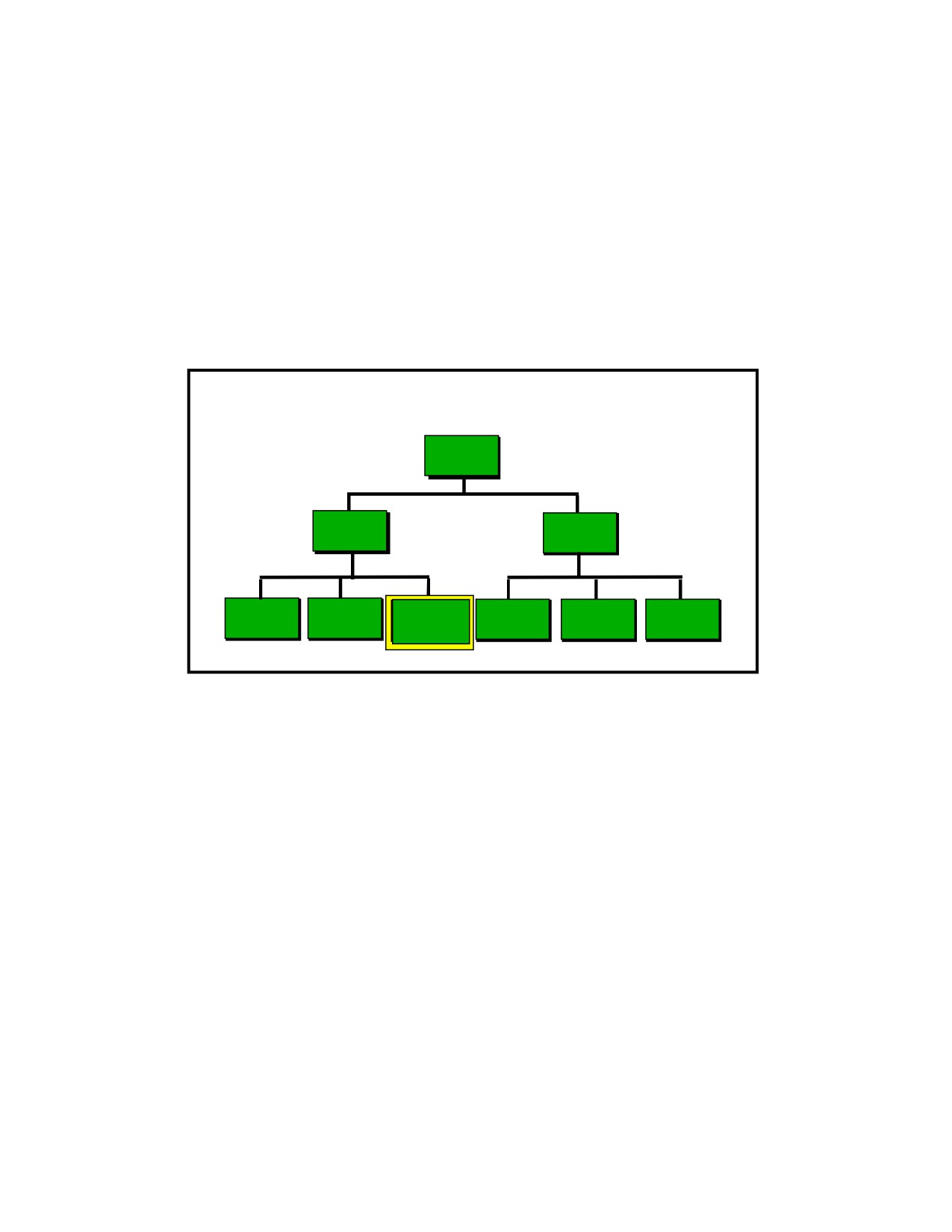
BCD ORGANIZATION
BCD
OPNS
PLANS
DIV
DIV
OPNS
INTEL
AIRSPACE
PLANS
INTEL
AIRLIFT
MGT/
SECT
SECT
ADA SECT
SECT
SECT
SECT
Figure A-2. Battlefield Coordination Detachment Organization
(2) BCD. See Figure A-2. The BCD is the Army’s senior liaison element provided by
the COMARFOR to integrate ground force requirements. It provides land force air support
requirements for inclusion in the theater air operations plan. It monitors and interprets
the land battle for the AOC/TACC and is the coordination conduit between Army and other
services. The BCD is integrated with the senior centralized control element for the JFACC.
The BCD expedites the exchange of information through face-to-face contact. The BCD is
organized with six functional elements: operations, plans, intelligence, air defense, A2C2,
and airlift. Coordination with supporting air wings is accomplished by ground and air
reconnaissance liaison officers under the BCD’s direction. The air defense and airspace
management section coordinates Army air defense and airspace activities with the plans
and operations sections within the AOC/TACC. It exchanges information with the air
defense liaison officer at the CRC/TAOC, land component headquarters and ADA CP, or
AAMDC. Specific BCD A2C2 duties include:
(a) Coordinating Army (planned, immediate, emergency) airspace requirements
with the ACA.
(b) Coordinating other Services’ airspace use requirements over land forces with
the Army.
A-8
(c) Integrating Army airspace user activities, i.e., RISTA, deep attacks and
ATACMS launches.
(d) Advising the AOC/TACC on Army operations that affect joint use of airspace.
(e) Representing ground force interests in the development of ACMs.
(f) Receiving and staffing Army ACM requests for ACA approval.
(g) Providing current and future A2C2 situation to the AOC.
(h) Maintaining status of current/proposed airfields/en route structure/landing
zones (LZs)/pick up zones (PZs)/drop zones (DZs).
d. Responsibilities. The A2C2 cells/elements provide the integration function that
enables airspace users to effectively and efficiently operate within joint and combined
airspace environments. These elements form a vertical and horizontal channel through
which airspace control requirements, plans, orders, and information are coordinated,
disseminated, and synchronized with the tactical plan. ATS personnel, within the A2C2
elements; provide unique expertise in the development of procedures and plans. See Figure
A-3.
Primary A2C2 Tasks
• Develop and coordinate airspace control SOPs, plans, and A2C2 annexes to the base order.
• Identify, consolidate, coordinate, and integrate airspace user requirements within the AOA.
• Coordinate and integrate airspace use within the AOA with other Services and adjacent units.
• Identify and resolve airspace user conflicts.
• Staff and forward requests for special use airspace to the next level for approval.
• Maintain A2C2 information displays, overlays, and maps with ACM, FSCM, and known
hazards.
• Receive and disseminate ACMs and directives from higher headquarters, then integrate and
implement ACA-approved ACMs affecting the maneuver commander's AOR.
• Incorporate ACMs in the scheme of maneuver during the planning phases by making A2C2
part of the commander's course of action decision criteria.
• Seek commander's guidance on A2C2 priorities by mission type or battlefield operating
system or geographic area of operations or time/phases of the operation.
• Monitor planned airspace user operations and correlate situations affecting airspace use for
immediate, unscheduled events such as MEDEVAC missions or ATACMS launches.
• Maintain ADA and artillery firing locations.
• Monitor subordinate unit plans for aircraft in/out procedures at FARPs, RRPs, FAAs, Route
SPs, and RPs.
• Disseminate changes to the air defense weapons control system.
• Monitor early warning control measures to deconflict friendly airspace user operations.
• Monitor status of supporting airfields, navigational aids, and air traffic services facilities.
• Monitor air support requests for organic helicopters and assign mission control numbers.
NOTE: Normally the G3/S3 Air is designated the approving authority for and submits preplanned
aur support requests (DD Form 1972).
Figure A-3. Primary A2C2 Tasks
A-9
e. Procedures. Effective and efficient use of airspace serves as a combat multiplier that
gives the commander a decisive edge over the enemy. Airspace control procedures define
the methods for accomplishing the airspace control function, ensuring unity, and
standardizing the airspace control effort. These procedures must be sufficiently flexible and
responsive to accommodate rapid changes to planned and ongoing operations. A higher
density of friendly weapon systems with overlapping flight profiles and operating envelopes
will characterize airspace in future conflicts. The goal is to maximize combat effectiveness
while minimizing friendly losses to friendly fires. Planners must consider airspace
requirements early in the planning process. Reacting to changes in the tactical situation
during the conduct of battle requires similar actions. However, the difference is the amount
of time available to establish resolution and coordinate and disseminate the revised
information. Airspace control maximizes force effectiveness without inhibiting either the
ground effort or the airspace users supporting it. Use of standard operating procedures
(SOPs), graphics, ACMs, FSCMs, and air defense rules of engagement define the Army
methodology for airspace control.
f. Planning. The A2C2 staff has to be involved in the periodic review of the contingency
ACP. Early in the deployment planning phase, they must review supporting plans, overlays,
graphics, and sketches that depict and illustrate maneuver, fires, air defense,
reconnaissance and surveillance, electronic warfare, and sustainment operations.
(1) Conflict Resolution. Potential airspace conflicts are identified and established
procedures are followed to resolve the conflict or reduce the risk. The potential conflict is
further evaluated by looking at lateral, altitude, and time separation. If the involved
airspace users have sufficient separation, then a conflict does not exist. If a conflict exists,
the A2C2 element must asses the risk and select one or more of the following options:
(a) Establish procedural control methods in accordance with SOPs.
(b) Coordinate the time sequence or relocate the airspace user.
(c) Request and establish the appropriate ACM and controlling authority.
(d) Eliminate an airspace user or restrict one’s operation in accordance with
commander’s priorities.
(2) Synchronization. To ensure efficient use of airspace and reduce the risk of
fratricide, the G3/S3 Air should hold a daily A2C2 synchronization meeting as part of the
unit battle rhythm. One technique to accomplish this is to have an airspace coordination
meeting in conjunction with the targeting meeting to plan, integrate, and actively deconflict
airspace in support of the ground scheme of maneuver.
(3) Unit Representation. Unit representatives, such as the ADA, aviation, ALO,
FSCOORD, ATS, maneuver S3 Airs, engineer, G4/theater air liaison officer, and any other
airspace user, should brief their operations and desired airspace requirements in order to
identify, prioritize, coordinate and integrate airspace use and users. The A2C2 element at
the lowest level should resolve airspace conflicts. Conflicts that cannot be resolved at a
particular A2C2 echelon are forwarded through operational channels to the A2C2 of the
A-10
next higher echelon. Conflicts involving only Army forces are normally resolved at division
or corps level. Conflicts involving other forces are forwarded through the ARFOR, to the
BCD and resolved at the ACA level.
g. Establishing ACMs. Establishing one of the jointly approved ACMs requires ACA
approval. The only exceptions are SAAFRs, if established, below the coordinating altitude
(CA). If the CA has not been established, an air corridor is established by the ACA at the
request of the appropriate ground commander. ACMs that support Army operations are
requested through the A2C2 elements to the BCD who integrates required ACMs with the
JAOC/TACC.
Airspace request formats outline the necessary information, including location, lateral
and vertical limits, the controlling authority, and time frame during which the measure is
enforced. The A2C2 element at each command echelon reviews requests to ensure the
information is complete and the requested ACM best supports the concept of operations.
Each element determines whether the ACM affects other airspace users in the area. The
ACM is normally submitted using an ACMREQ on a standard USMTF. Once the ACM is
approved by the ACA, it is disseminated to all appropriate elements using the standard
USMTF ACO.
h. ATS. All ATS assets perform subfunctions of A2C2 including A2C2 liaison, area
coverage by airspace information centers (AICs), or terminal/forward services at airfield/
landing sites. ATS focuses on synchronizing Army airspace use and coordinating with Army
combined arms, joint services, and host agencies. ATS may develop a user-friendly
document, an air procedure guide (APG, formerly aviator’s procedure guide) to condense
airspace information and provide recurring, Army-unique, airspace usage information. ATS
has highly flexible teams that are deployable and versatile enough to support initial entry
contingency (including natural disasters) and combat operations. ATS assets, which
function across the continuum of military operations, are capable of providing
augmentation to A2C2 elements, terminal services, airspace information services, and
forward-area support services.
(1) A2C2 Cell Augmentation. Airspace management doctrine requires that A2C2
liaison elements be tasked to support at all echelons from division to EAC. ATS groups,
battalions, and companies provide the ATS A2C2 liaison teams to the A2C2 elements at
each echelon. They provide expertise on A2C2, airspace information, and ATS integration/
support capabilities. The liaison teams assist A2C2 cells to provide synchronization,
regulation, identification, and deconfliction of all airspace users. These teams must be
robust enough to afford 24-hour services yet mobile enough to move rapidly as combat
operations develop.
(2) AICs. AICs provide en route services to all airspace users. The AICs act as
extensions of the A2C2 elements of the division through theater by providing a real-time
interface for changes in the airspace environment and by coordinating and deconflicting
real-time airspace requirements. Although located at different echelons, all AICs perform
essentially the same function and have the same tactical equipment. If the AIC is
inoperative or moving, the ATS commander designates another AIC to serve as the main
AIC. The redesignated AIC operates and employs the same as the original AIC. This link
A-11
ensures continuity in the flow of information required for air defense and air traffic
management operations. The AICs provide updates that include the following: hostile
aircraft intrusion warnings; on-call, demand-activated navigation aids (NAVAIDS);
maintaining locations of rapid refueling points (RRPs)/forward arming and refueling points
(FARPs); terminal facilities and NAVAIDS; dissemination of terminal airfield status; flight
following and navigational assistance; aircraft sequencing on designated flight routes;
dissemination of current and forecasted aviation weather information; search and rescue
assistance to aircraft performing combat search and rescue operations; collection,
processing, displaying, and dissemination of critical A2C2 information; and providing a
backup C2 link for operational commanders.
(a) Theater Airspace Information Center (TAIC). The TAIC is collocated with or
electronically linked to the control and reporting center (CRC) to provide an interface
between civil and wartime transition airspace. It is also the primary interface with the
joint and multinational airspace management system concerning the coordination of flights
conducted rear of the corps boundary.
(b) Corps Airspace Information Center (CAIC). The CAIC is the primary ATS
facility that provides A2C2 services, airspace information services and coordination of Army,
joint and multinational air traffic operating in the corps rear operations areas.
(c) Division Airspace Information Center (DAIC). The DAIC provides A2C2
information and is employed in the division AO. The DAIC supports the CAIC with its
coordination activities. The DAIC can also provide real-time air picture situational updates
as required. The DAIC relays current and forecasted weather information and is the
primary coordination link between the brigade A2C2 and division A2C2 cells.
(3) Terminal Services. Terminal services are those functions performed by ATS
personnel that facilitate movement, take off, and landing, to include sequencing, of aircraft
(rotary, fixed wing, UAV). They range from—full-service, (Federal Aviation Administration/
International Civil Aviation Organization-approved radar, tower, NAVAIDS, crash-rescue
coordination), fully-instrumented, lighted airfields or airports where ATS take over or
augment existing facilities—to temporary, austere landing strips/areas with minimal
terminal services support (air-to-ground communications, traffic advisories, tactical lighting,
limited navigational aids/radar).
(a) Tower Teams. Tower teams are normally employed at main operating bases
where high-density air traffic exists. This team provides tower services similar to those
conducted in a fixed-base environment. Tower teams control air traffic that is transitioning,
landing, or departing main operating bases or tactical landing sites. The tower team is the
primary ATS organization for regulating and integrating ATS terminal services at the main
operating base. It also establishes the nonprecision approach capability for the terminal
area of operations. All aircraft movements at the airfield or tactical landing site that the
aviation operations section or appropriate A2C2 element initiates should be coordinated
with the tower team.
A-12
(b) Ground-Controlled Approach Team. The ground-controlled approach team
normally employs with the tower team at main operating bases. This team provides a near
all-weather, precision, and nonprecision approach and recovery capability. It also provides
surveillance vectoring and precision/nonprecision approach guidance to arriving and
departing aircraft operating in the terminal area.
(4) Forward-Area Support Services. Tactical aviation control teams (TACTs) are
employed as initial entry forces at auxiliary areas, and remote and austere locations using
airborne, air assault, or ground insertion. TACTs can provide aviation units with on-the-
spot control and advisory capabilities in any environment. The TACT provides terminal
and airspace information services at any location where air assets require coordinated
movement of aircraft.
TACTs can be organized in several configurations from manpack (pathfinder mode) to
vehicular; to provide low probability of intercept and secure data/voice communications
packages. TACTs are task-organized to support specific missions in forward areas. The
primary focus is to provide support to aviation. The goal is to ensure coordinated aviation
operations at austere landing areas or congested flight locations; e.g., communications to a
division commander at a HIDACZ. The secure high frequency (HF) radio, a long-range
communications capability, makes the TACT ideal for providing terminal area services at
remote, austere landing areas. TACT operations can provide portable, lightweight
NAVAIDS for passage points and landing site designation and integration. The mobility of
the TACT allows the commander flexibility during all stages of force projection. The TACT
can perform short-term independent operations and operate under night vision goggle
conditions.
6.
Communications
The A2C2 elements do not have dedicated voice and data communications nets until the
fielding of the upgraded AIC and its subsequent collocation with the A2C2 cell. The cells rely
on existing operational communications systems from each functional airspace user; e.g.,
maneuver, air defense, fire support, ATS, intelligence/electronic warfare, CSS, and the remote
AIC for the respective echelon. A2C2 elements are required to communicate by SOP
horizontally and vertically through voice communications links and automated systems. The
communication means for ATS systems includes landline mobile subscriber equipment access
and all combat net radios (secure and nonsecure) to include ultrahigh frequency-amplitude
modulation (UHF-AM) radios for the joint air team and very high frequency-amplitude
modulation (VHF-AM) radios for civil aircraft. Upgraded AICs digitize all the radios and
upgrade to demand assigned, multiple-access satellite communications and aviation HF radio
compatibility. Upgraded AICs also have full mobile area common user system access and
Army Data Distribution System access and the automation processing to assist the A2C2/AIC
mission. Combat net radios (FM and UHF) and mobile subscriber equipment are the primary
means for A2C2 elements to maintain contact with their parent organizations.
Communications between the A2C2 elements and airspace users is primarily through Army
ATS/ATC elements (AICs/terminal facilities/TACTs) or operational retransmission facilities.
These communications suites provide dedicated and redundant C2 communications links
between operational commanders and air missions in progress.
A-13
Appendix B
NAVY OPERATIONS
1.
Background
This appendix gives an overview of naval air operations in the composite warfare
command environment. The United States Navy has several important characteristics:
worldwide deployability, variable response capability, and forward presence. These
characteristics give US naval forces several advantages over other military forces. The
Navy can respond worldwide, demonstrating a show of force at one end of the conflict
spectrum or responding in kind to a nuclear attack at the other end of the spectrum. It can
flex military force anywhere within the spectrum, accomplishing its actions with a
minimum of reliance on overseas bases or foreign government approval. The size, visibility,
duration, and/or location of naval forces can be adjusted to demonstrate the level of interest
or intent while retaining the capability to respond accordingly. Naval aircraft, surface-to-air
missiles, and cruise missiles are essential elements of this force, and their incorporation
into overall naval operations is a prerequisite to success.
2.
Doctrine
US naval forces are employed to support two basic, interrelated functions relating to
airspace control: sea control and power projection.
a. Sea Control. Sea control means control of the surface, subsurface, and airspace of
specific sea areas of naval operations. Naval forces achieve control by destroying enemy
forces or deterring enemy actions and by ensuring the necessary operating areas and sea
lines of communication (SLOCs) remain open.
b. Power Projection. Power projection involves supporting land or air operations. It
includes offensive naval operations such as amphibious assault, employment of carrier-
based aircraft and sea-launched cruise missiles to attack targets ashore, and employment of
naval surface fire support (NSFS) to suppress or neutralize targets.
3.
Missions and Functions
a. Background. The Navy conducts naval warfare in three distinct dimensions: on the
surface, subsurface, and in the air. The goal is battlespace dominance in all three
dimensions. Because of the Navy’s unique role in three-dimensional battlespace, it has
developed fundamental naval warfare tasks to counter the enemy’s capabilities and
ultimately gain advantage over enemy forces.
b. Surface Warfare. Surface warfare involves employment of weapons against
adversary ships to achieve sea control and maintain SLOCs. It can be considered analogous
to battlefield interdiction over water.
c. Subsurface Warfare. Subsurface warfare, more commonly referred to as undersea
warfare, employs weapon systems against adversary submarines. Undersea warfare is a
mission unique to naval forces.
B-1
d. Air Warfare. Air warfare employs weapon systems to project power and defend fleet
units against adversary aircraft and missiles. Air warfare is analogous to battlefield
interdiction but also encompasses defensive/offensive counter air actions.
e. Warfare Areas. The six warfare areas in which naval air elements play a prominent
role are discussed below. Each requires coordination and integration among airspace users.
(1) Undersea Warfare (USW). USW is the locating, tracking, and engaging of enemy
submarines and often employs airborne assets to locate and destroy those platforms. USW
may require airspace deconfliction measures to employ fixed and rotary wing air assets,
especially in littoral operations.
(2) Surface Warfare (SUW). SUW employs airborne and surface assets to locate and
destroy surface platforms. As with USW, execution of this task requires airspace
deconfliction, particularly in the near-land environment.
(3) Strike Warfare (STW). STW consists of strike aircraft, TLAM, and NSFS
operations to destroy or neutralize enemy targets ashore. STW includes attack against
strategic and tactical targets such as manufacturing facilities and operating bases from
which the enemy is capable of conducting or supporting air, surface, or subsurface
operations against friendly forces. Integration of TLAM and strike air attacks requires
close coordination between the JFACC and the TLAM strike coordinator (TSC) to ensure
airspace deconfliction.
(4) Command and Control Warfare (C2W). C2W is the integrated use of operations
security, military deception, psychological operations, electronic warfare, and physical
destruction, mutually supported by intelligence, to deny information to the adversary or to
influence, degrade, or destroy the adversary’s C2 capabilities, while protecting friendly C2
capabilities against such actions. C2W is an application of information operations in
military operations. It is both offensive and defensive. C2W in naval operations employs
naval, joint, and national assets to attack an adversary’s ability to C2 forces while
simultaneously protecting friendly C2. Naval C2W involves the direction and control of
aircraft, TLAM, NSFS, and SOF for targeting (directing units and localization); counter
targeting; reconnaissance and surveillance, counter-surveillance, C2-attack and C2-protect.
(a) C2-Attack. C2-attack prevents effective C2 of adversary forces by denying
information to the adversary and by influencing, degrading, or destroying the adversary’s
C2 system.
(b) C2-Protect. C2-protect maintains effective C2 of one’s own forces by turning to
friendly advantage or negating adversary efforts to deny information to, influence, degrade,
or destroy the friendly C2 system.
(5) Amphibious Warfare. Amphibious warfare operations involve both naval and
landing forces launching from the sea against a hostile or potentially hostile shore.
(6) Air Defense (AD). AD is the protection of all friendly forces in the assigned AO
against hostile air platforms and weapons; i.e., theater ballistic missiles, aircraft, and cruise
missiles. Specific missions and objectives are as follows:
B-2
(a) Establish and maintain air superiority and assign operating areas of AD units.
(b) Maintain air defense surveillance consistent with sensor capabilities, tactical
threat/situation, and geography.
(c) Detect and identify all air contacts penetrating the area of interest.
(d) Successfully engage all designated hostile air contacts posing a threat to the
BG.
(e) Conduct joint/multinational AD operations in all emission control conditions
and integrate airspace deconfliction/coordination procedures with US/allied forces.
4.
Organization, Facilities, and Personnel
a. Background. This section describes how the Navy is organized to execute its
operational tasks and to control airspace users supporting these tasks. The unique nature
of maritime operations shapes the organization of US naval forces and affects how these
forces fit into the overall unified military command structure. Vast distances, wide
dispersion of forces with associated C2 challenges, and the complexities of conducting
warfare in a three-dimensional battlespace characterize maritime operations.
b. Chain of Command. The operational chain of command flows from the unified or
specified commander, through the fleet commander-in-chief, to the numbered fleet
commanders. Below the numbered fleet level, commands are organized by operational
tasks (task force, task group, and task unit) to conduct the naval warfare tasks mentioned
above. These commands are the basic operating units of naval warfare.
(1) Officer in Tactical Command (OTC). Under the composite warfare commander
(CWC) concept, the OTC, who is the senior naval commander, has overall C2 of assigned
forces. He is responsible for accomplishing the mission, allocating assigned forces, and
providing for safety of the force. He employs the CWC concept to aggressively wage combat
operations against air, surface, and subsurface threats, while carrying out the primary
mission of his force. Depending on the mission and size of the force, the OTC may act as the
CWC himself or assign more than one CWC. The CWC may delegate authority for each
naval warfare task to a subordinate warfare commander, who in turn directs the actions of
assigned naval forces in the execution of that warfare task.
(2) CWC Concept.
(a) Command Structure. Figure B-1 shows the CWC command structure. Under
the CWC, there are five subordinate warfare commanders responsible for directing actions
in each of the naval warfare tasks.
• Undersea Warfare Commander (USWC).
• Surface Warfare Commander (SUWC).
• Strike Warfare Commander (STWC).
B-3
• Command and Control Warfare Commander (C2WC).
• Air Defense Commander (ADC).
OTC/CWC
Overall C2
AREC
Aircraft Management
STWC
ADC
C2WC
SUWC
USWC
(TACON)
(TACON)
(TACON)
(TACON)
(TACON)
SCC (if assigned)
TACON = Tactical Control
Figure B-1. Navy Composite Warfare Structure
(b) Doctrine. CWC doctrine requires individual warfare commanders to recognize
and effectively counter rapidly developing threats, especially in a multi-threat environment,
with respect to their assigned warfare task.
(c) Command Authority Delegation. A wide range of options is available to the
CWC in delegating command authority to the subordinate warfare commanders. These
options range from full delegation of authority to no delegation at all, depending on the
threat and tactical situation. Regardless of the authority delegated, the CWC always
retains the option to control by negation. Control by negation is a C2 philosophy in which a
subordinate commander has the freedom of action to direct and execute those operations
necessary to accomplish assigned and implied missions unless the superior commander
overrides specific actions and operations.
(3) Subordinate Warfare Commanders.
(a) USWC. The USWC is usually a destroyer squadron (DESRON) commander.
His responsibility is protection of the BG from undersea threats. He is normally collocated
with the CWC onboard the aircraft carrier (CV) but may also be located on a smaller USW-
capable platform. The CV provides the best USW tactical picture, C2 equipment, and
information processing systems.
(b) SUWC. The SUWC may also be a DESRON commander and the commanding
officer of the CV. His responsibility is to protect the BG from surface threats. He is
normally located on an SUW-capable platform, but because of its connectivity, he may be
located on the CV. In low surface/subsurface threat environments, the responsibilities of
the USWC and the SUWC are often combined into a single sea combat commander (SCC).
B-4
(c) STWC. The STWC directs offensive power projection operations against land-
based targets. The STWC, normally the carrier air wing commander (CAG) located on an
aircraft carrier, coordinates strike and support aircraft, NSFS, and TLAMs, in support of
contingency operations or a theater campaign.
(d) C2WC. The C2WC directs the management and exploitation of the
electromagnetic and acoustic spectra. The CWC normally retains the duties of the C2WC,
and a member of the CVBG staff, typically an O-6, performs them. The C2WC develops the
C2W strategy for the force, controls the electronic combat aircraft and shipboard systems
involved in the destruction or neutralization of electromagnetic targets, and coordinates
force, theater, and national surveillance assets to enhance friendly battle space
management.
(e) ADC. The ADC directs air defense operations. The ADC, usually located on an
AEGIS cruiser/destroyer, coordinates fighter aircraft, airborne early warning aircraft, and
air defense missiles to protect the BG from air and/or missile attack. In a joint
environment, the ADC may be assigned the role of RADC or SADC coordinating with
airborne early warning assets to provide a single integrated air picture to the AADC. This
allows the ADC to position supporting naval units assigned to maintain track integrity,
identify friendly aircraft, and positively identify all aircraft operating in the defended area
before they enter the vital area. The ADC also has authority to assign capable naval forces
to perform duties as an air control unit (ACU). In this role, ACUs assist friendly aircraft in
the AD area, providing vectors and updated information to en route and mission-complete
aircraft. AEGIS cruisers, destroyers, and airborne early warning aircraft are typically
assigned duties as an ACU. Smaller ships such as guided missile frigates also have a
limited capability to serve as an ACU. The ADC’s overall responsibilities include:
• Plan the protection of the force against the air threat. This includes
assessing enemy capabilities, defining requirements to counter the anticipated threat, and
determining optimal tactics for assets assigned to the AD mission.
• Execute tactical control of assigned assets.
• Maintain AD battle watch.
• Collect and disseminate tactical information and intelligence pertinent to
AD operations.
• Coordinate AD plans and actions with the CWC and other warfare
commanders and coordinators.
• Assist in coordinating and promulgating rules of engagement, air
coordination areas, special zones, and return-to-force (RTF) procedures.
• Assist in establishing, publishing, and implementing ACMs.
B-5
(4) Supporting Coordinators. Supporting coordinators assist warfare commanders in
accomplishing their warfare tasks by completing specific functions. Supporting
coordinators differ from the subordinate warfare commanders in one very important aspect.
When authorized by the CWC, the subordinate warfare commanders have tactical control of
resources assigned and may autonomously initiate action. Supporting coordinators execute
policy but do not initiate autonomous actions. There are several supporting coordinators.
Those that affect airspace coordination and control include the Air Resources Element
Coordinator (AREC), Helicopter Employment Coordinator (HEC), TSC, and Launch Area
Coordinator (LAC). The TLAM section in Chapter IV discusses the TSC and LAC functions.
(a) Air Resources Element Coordinator (AREC). The AREC is a resource
manager, coordinator, and air advisor to the OTC/CWC. The commanding officer of the ship
embarking the OTC/CWC is normally designated the AREC. The AREC
• Manages and coordinates the distribution of aircraft carrier assets.
• Publishes and distributes the air plan, which reflects the allocation of forces.
• Apprises the CWC and other warfare commanders and coordinators of
carrier air operations.
• Ensures all aircraft (both attached and assigned) are properly briefed.
Supporting aircraft receive pertinent information on the overhead message, operational
tasking message, and the AD intentions message, ATO/SPINs/ACP.
Note: The term attached aircraft refers to those aircraft launched and recovered from the
battle group unit, such as the CV(N), large deck amphibious ship, or helicopter-capable
surface combatant. Assigned aircraft refers to air assets that warfare commanders have
tactical control of for specific missions, such as naval maritime patrol aircraft. Supporting
air assets originate from units or bases external to the battle group, such as USAF or allied
aircraft supporting a NCC.
(b) HEC. When two or more ships other than the carrier are equipped with
helicopters, a central scheduling authority to control flight operations from these ships may
be useful. In a multi-threat environment the assets controlled by this coordinator may be in
demand by both the USWC and SUWC. HEC responsibilities are generally assigned by the
OTC/CWC to the USWC, SUWC, or the SCC.
c. Carrier Air Wing Capabilities Available for MEU (SOC) Support. Carrier-based
aviation is optimized to meet the CVBG mission by focusing on power projection, control of
the environment and information gathering. The following aircraft carrier capabilities are
available to assist the ARG/MEU (SOC) in accomplishing its assigned mission.
(1) Offensive Air Support/Power Projection. The following capabilities may be
required to support the ground commander.
(a) Strike warfare.
B-6
(b) Deep air support.
(c) Close air support.
(d) Suppression of enemy air defenses.
(e) Electronic attack.
(f) Offense counter air.
(2) Defensive/Environmental Control. The following capabilities are available to
create and maintain a combat environment where the CATF/CLF can focus resources on
mission accomplishment.
(a) Air defense/defensive counter air.
(b) Surface warfare.
(c) Undersea warfare.
(3) Information Gathering/Airborne Early Warning/Air Control. The following
missions enhance the battlespace awareness for the CATF/CLF.
(a) Airborne early warning.
(b) Electronic warfare.
(c) Reconnaissance.
(d) Electronic intelligence.
(4) Support Missions. These missions are force multipliers for the CATF/CLF.
(a) Combat search and rescue.
(b) Air-to-air refueling.
d. BG Air Assets (Non carrier air wing). Air-capable ships within a standard CVBG
carry attached helicopter assets with capabilities to provide ARG support. Combat logistics
force ships carry CH-46 helicopters for re-supply missions, which are not usually tasked
with requirements beyond the CVBG. Light Airborne Multipurpose System (LAMPS)
capable ships carry one or two SH-60B helicopters which have a significant low-altitude
airborne early warning, radio relay, forward-looking infrared, Penguin and Hellfire
capability. LAMPS helicopters working in conjunction with AH-1W Cobras make a powerful
counter to small-boat attacks. Additionally, LAMPS helicopters can provide very capable
flight-following for SOC missions.
B-7
e. AD Integration. Since naval air assets are limited to the attached air capabilities of
the BG, the ACMs are instituted not so much to deconflict air traffic, but to support
identification requirements established by the ADC to support fleet air defense. By its very
nature, AD is totally integrated with the ACP; ACMs are totally integrated and supportive
of the AD effort.
f. Deconfliction and Fratricide Prevention. In naval operations, airspace deconfliction
and fratricide prevention are normally accomplished by positive or procedural means for
aircraft departing or entering fleet-defended airspace.
(1) Positive and Procedural Control. Positive means (electronic control) is
accomplished by vectoring aircraft with verbal communications or the data link. Procedural
means cover a wider variety of options. For example, aircraft departing or reentering fleet-
defended airspace use defined routing called return-to-force (RTF) corridors. These
corridors specify the profile to be used by aircraft in terms of altitude, speed, tactical air
navigation radials, and IFF replies. Aircraft may be required to execute entry into the fleet-
defended airspace via a geographically defined entry point, then into a defended corridor as
a further aid for deconfliction/identification.
(2) RTF Corridors. Aircraft maneuvers designed to break closure to the battle group
are predefined for execution by aircraft as set points for defense assets. RTF corridors,
entry and egress points, and break-closure maneuvers (if used) change daily or periodically
during each day, depending upon the movements of the naval force or the intensity of
operations within the airspace concerned. These RTF corridors resemble minimum risk
routes. Missions that typically employ these profiles include overland strike operations,
long-range fighter support, offensive or defensive counter air missions, and joint supporting
missions such as those involving AWACS and Air Force tankers or land-based maritime
patrol aircraft. RTF routing procedures range from simple to complex and can be activated
singly or in multiples. These procedures enhance flexibility in operations and ease entry of
non-naval and/or battle-damaged aircraft into fleet airspace.
(3) Fleet-Defended Airspace. Aircraft conducting operations solely within the fleet-
defended airspace typically operate autonomously in preassigned and coordinated areas or
under control of a designated control agency for immediate missions. The assigned control
agency acts as a deconfliction agent for the aircraft under its control. Operations of this
type include missions such as undersea warfare search and attack; surface warfare search,
surveillance, coordination and attack; and other sea control and interdiction missions.
g. Naval Force Integration. Each major air-warfare-capable combatant vessel is
equipped with a tactical data system (TDS) that consolidates the input of all shipboard
sensors (radar, IFF, sonar, electronic signal intercept, etc.) and displays this information to
decision-makers for action. Shipboard weapons control functions are highly integrated within
the TDS to provide a rapid engagement capability. Each TDS is capable of Link-11 and/or
Link-16 (tactical digital information link [TADIL] TADIL-A/J) exchange within the naval
force and with all service TADIL-A capable platforms and sites. For ease of illustration, each
shipboard TDS installation combines the functions of the CRC (USAF), TACC/TAOC (USMC),
as well as fire direction/ADA interfaces with Patriot battery control. Moreover, Link-4A and/
or Link-16 (TADIL-C/J) interface with TDS-equipped ships and aircraft completes the
integration of all airborne and surface weapons within the naval component.
B-8
5.
Communications
a. Background. Under the CWC concept, and when a specific mission has been
assigned, the CWC normally promulgates general duties, functional assignments, and
command guidance using a general operation message referred to as an OPGEN. OPTASKs
detail the duties, responsibilities, and procedures for accomplishing each warfare area.
Subordinate warfare commanders, in turn, use OPTASKs to deal with specific instructions
for their warfare areas. The ADC uses the OPTASK air defense plan to assign duties and
responsibilities in his area. The air defense plan provides operations guidance, detailed
policies, and procedures.
b. Communications Nets. During the planning and operational phases, subordinate
warfare commanders apprise the CWC of the situation, using a secure voice command net.
The ADC exercises C2 via the air warfare coordination and reporting net, as depicted in
Figure B-2.
FFDL
FAD
FFDL
LINK
4A/16
LINK
4A/16
Intersector C&R
LINK 11/16
LAAWC
LINK 11
AD C&R
LINK 11
LINK 11/16
LINK 11/16
AD C&R
ATF/TACC
FADC
LINK 11
AD C&R
ADZC/SADC
AD Intersector C&R
LINK 11/16
CVBG
Figure B-2. Navy Integrated Airspace C2
c. Emission Control (EMCON). The C2WC establishes the specific EMCON policy in
OPTASK C2W. When and where EMCON is initiated depends on the threat, air activity,
training requirements in peacetime, and so forth. EMCON is defined by stages. The C2WC
may use Navy standard (ALPHA, BRAVO, etc.), may tailor it to accommodate systems
unique to the battle group. Aircraft procedures are predetermined and promulgated in
order to effect safe launch and recovery during EMCON conditions.
B-9
Appendix C
AIR FORCE OPERATIONS
1.
Background
The Air Force airspace C2 system is a reflection of the aerospace power principle of
centralized control and decentralized execution. The Air Force Theater Air Control System
(TACS) provides the commander, Air Force Forces (COMAFFOR) with the means to achieve
this cornerstone C2 principle. Advances in communications and data link capabilities give
commanders the ability to tailor the configuration of the TACS to meet the dynamics of an
operation. While sometimes configured differently in various theaters of operations, basic
C2 and airspace management functions performed by the TACS are the same. The TACS is
the COMAFFOR’s executor for the ACP and ACO.
2.
Doctrine
The primary objective of airspace control in a combat zone is to maximize the
effectiveness of combat operations while imposing minimum restrictions on the capabilities
of any Service or functional component. Ideally, a safe, efficient, and flexible airspace
control system is established within the AOR/JOA prior to the onset of air operations. The
airspace of the combat zone is a crucial dimension of the battlespace and is used by all
components of the joint/multinational force to conduct assigned missions. Basic principles
of airspace control in the combat zone are described below.
(1) Unity of Effort. Unity of effort is achieved primarily through C2 and centralized
planning by an ACA. The ACA should coordinate with joint force components and HN
liaisons prior to air operations. The ACA must integrate information flow throughout the
system to provide necessary information for airspace control throughout the AOR/JOA.
(a) Unity of Command. Unity of command is imperative in employing aerospace
forces effectively. Unity of command is the interlocking web of responsibility that is a
foundation for trust, coordination, and the teamwork necessary for unified military action.
Vesting appropriate authority and responsibility in a single air commander provides for the
effective exercise of leadership and power of decision over assigned forces to achieve a
common objective. The JFACC, as the central authority for the air effort, develops
strategies and plans, determines priorities, allocates resources, and controls assigned
aerospace forces to achieve that objective. Having one commander with responsibility and
authority to coordinate and integrate air defense and airspace control greatly enhances the
effort to gain and maintain control of the aerospace environment. Assigning the roles of
ACA and AADC to the JFACC further unifies efforts across the spectrum of airspace use.
Through central authority, the JFACC gives unity and coherency to the defensive effort and
to controlling the aerospace environment. The planned and coordinated use of airspace
gives flexibility to the self-defense of surface forces and helps prevent inadvertent attacks
on friendly forces. Coordinated air defense and airspace control also aids the execution of
offensive attacks against an enemy’s warfighting potential.
C-1