FM 4-02.1 COMBAT HEALTH LOGISTICS (September 2001) - page 3
FM 4-02.1
Subscriber terminals.
Wire subscriber access.
Mobile subscriber access.
System control.
Combat health logistics organizations participate in the first four of the functional areas.
(1) Area coverage. The MSE system provides common-user support to a geographic area,
as opposed to dedicated support to a specific unit or customer. The hubs of the system are called nodes and
are under control of the corps/EAC signal officer.
(2) Subscriber terminal (fixed). The MSE telephone, mobile radiotelephone, FAX, and data
terminal, as part of the area common-user system, are user-owned and operated. The using unit is
responsible for running wire to the designated junction boxes. These boxes tie the units MSE telephones
into the extension switches that access the system. The subscriber terminals used by the unit are digital,
four-wire voice, as well as data ports (of TA-1042 digital nonsecure voice terminals) for interfacing the AN/
UXC-7 FAX, the Tactical Army Combat Service Support Computer System, the Army Tactical Command
and Control System with common hardware and software, and the unit-level computer.
(3) Wire subscriber access. Wire subscriber access points provide the entry points (interface)
between fixed subscriber terminal equipment owned and operated by users and the tri-service tactical
communications (at EAC) and MSE (at corps and division) area system operated by the supporting signal
unit. The companys switchboard may tie into the area system. See FM 11-43 for definitive information
pertaining to an MSE area communications system. The commander will designate the companys wire net
system based on the mission.
(4) Mobile subscriber access. The MSE terminal is the mobile subscriber radiotelephone
terminal (MSRT). It consists of an ultra high-frequency radio and a digital secure voice terminal. It
interfaces with the MSE system through a radio access unit, usually located at a signal node center. The
primary use of the MSRT is to provide mobile subscriber access to the MSE area network. The MSRTs
also operate in the command post to allow access to staff and functional personnel.
d. Combat Net Radio System. The CNR equipment includes the improved high frequency radios
(IHFRs), automatic link establishment voice/data high frequency radios, the Enhanced Position Location
Reporting System (EPLRS), near-term digital radios, and SINCGARS. The primary use of the CNR
system is the voice and data transmission of C2 data. The AM radios come equipped with servers and will
automatically tune to the most advantageous frequency; these radios operate mid- to long-range, beyond
line-of-sight (LOS). The SINCGARS series FM radios are designed for simple and quick operation using a
16-element keypad for push-button tuning. They are capable of short-range operations within LOS. The
EPLRS and near-term digital FM radios are especially designed for data communications and provide short-
range LOS coverage.
8-2
FM 4-02.1
e.
Radio Nets. Combat health logistics organizations and their staff depend on both AM and FM
radios and area communications systems for mission accomplishment. The allocated radios consist of AN/
VRCs 88A, 90A, and 92A and the AN/GRCs 106, 193, and 213 (the AN/GRC-246 [V1, V2] may be used
in place of these other AM radios). These radios allow the commander(s) to operate in the battalion
command net, his companys command net, the supporting higher command net, and the supported
operations net.
f.
Signals Security. As part of the overall security program, CHS logistics units must practice
signals security. The unit operations officer is responsible for signals security and communications security.
Some considerations include
Using terrain features, such as hills, vegetation, and buildings, to mask transmissions.
Maintaining radio-listening silence; using the radio only when absolutely necessary.
Distributing codes on a need-to-know basis.
Using only authorized call signs and brevity codes.
Using authentication and encryption codes specified in the current signal operating
instructions.
Keeping transmissions short (less than 20 seconds, if possible).
Reporting all communications security discrepancies to appropriate authorities.
8-3
FM 4-02.1
CHAPTER 9
MEDICAL LOGISTICS INFORMATION SYSTEMS
9-1.
General
a. This chapter describes the current Army-unique systems, the planned replacement tri-service
systems, and the TAMMIS (see Table 9-1).
b. The TAMMIS, which is the current information management system used by the MEDLOG
organizations at division, corps, and EAC. The replacement for the logistics portion of TAMMIS will be a
joint system known as the TMIP. The logistics modules of TMIP are DMLSS created applications. The
medical maintenance portion of TAMMIS will be replaced by GCSS-A maintenance for all TOE units at
some time in the future.
c.
The TAMMIS supports selected Echelon IIV (division, corps, and EAC) units. For Echelon
II, TAMMIS is limited to the DMSO section in the DSMC. The TAMMIS use in Echelon III is limited to
the ASMB, CSH, and the MEDLOG battalions. The three logistics modules of TAMMIS are medical
assemblage management (MEDASM), medical maintenance (MEDMNT), and MEDSUP (discussed in
paragraph 9-3 through 9-5).
d. Over the next few years, advancements in technology will replace TAMMIS MEDLOG
modules with logistics modules of the TMIP. The TMIP will integrate tri-service clinical and logistics
applications in a common user environment (hardware and software). The logistics modules will be created
by the DMLSS Program Office. Those modules are
(1) Assembly managementstand-alone. Assembly managementstand-alone (AMSA)
automates the management of medical set components, small storage Class VIII management, small storage
blood management, PMIs tracking, and spectacle/insert optical requisitioning. The system is designed to
operate at BAS, FSMC, DSMC, selected corps, and EAC levels.
(2) Customer area inventory management. Customer area inventory management automates
the management of customer stockage levels in our Echelon V activities. The system is envisioned to
support customer areas within our deployable and fixed hospitals in the corps and EAC levels.
(3) Stockroom and readiness inventory management. Stockroom and readiness inventory
management (SRIM) is the TAMMIS MEDSUP replacement that will automate the comprehensive inventory
and supply management of medical materiel. The system is designed to operate within the MEDLOG units,
and both the deployable and the fixed hospitals in the corps and EAC levels.
(4) Equipment and technology management. Equipment and technology management (ETM)
is the Army Medical Department Property Accounting System (AMEDDPAS) replacement that will automate
the comprehensive property and medical maintenance functions within the fixed hospitals.
e.
Additionally, TMIP will integrate clinical systems that are of logistics interest. Those
applications are
(1) Defense Blood Support System. Defense Blood Support System (DBSS) automates the
blood bank operations and is currently fielded to MEDLOG units and both the deployable and the fixed
9-1
FM 4-02.1
hospitals with a blood bank/donor center support mission. This application will be modernized and
integrated on the TMIP server to FSMC, DSMC, and MEDLOG units, and deployable hospitals in the
corps and EAC levels.
(2) Spectacle Request Transmission System-II. Spectacle Request Transmission System-II
(SRTS-II) automates the patient record portion of the optical prescription and order transmission process to
MEDLOG units and optical fabrication laboratories in the corps and EAC levels.
f.
Lastly, there are Standard Army Management Information Systems (STAMIS) that will exist
in selected medical units. Those applications are
(1) Global Combat Support System-Army (Maintenance). The Global Combat Support
System-Army (Maintenance) GCSS-A (MNT) is the replacement for the Unit Level Logistics System
(ULLS) Ground (ULLS-G). The ULLS-G will be the system used to manage and track all medical
maintenance specific equipment in all TOE units to include FSMC, DSMC, ASMBs, CSHs, and dental
companies. Maintenance will be used in all medical units authorized a company- or battalion-level motor
maintenance operation in the division, corps, and EAC levels.
(2) Global Combat Support System-Army (Supply and Property). The Global Combat Support
System-Army (Supply and Property) (GCSS-A [SPR]) is the replacement for the ULLS S4 and Standard
Property Book System-Redesigned (SPBS-R) systems, that will be used in all medical units, battalion and
higher, to maintain all TOE property and requisition most nonmedical supplies.
Table 9-1. Software Applications
FUNCTION
CURRENT SYSTEMS
REPLACEMENT SYSTEMS
ALL TOE MEDICAL MAINTENANCE
MANUAL/MEDMNT
GCSS-A (MNT)
ALL TDA MEDICAL MAINTENANCE
AMEDDPAS
DMLSS (ETM)
AM/SUPPLY ECHELON I, II
MANUAL
TMIP (AMSA)
AM ECHELON III
MEDASM
TMIP (SRIM)
SUPPLY ECHELON II
MEDSUP
TMIP (AMSA)
SUPPLY ECHELON III
MEDSUP
TMIP (SRIM)
SUPPLY TDA
MEDSUP
DMLSS/SRIM
BLOOD ECHELON II
MANUAL
TMIP (AMSA) (DBSS)
BLOOD ECHELON III
DBSS
TMIP (DBSS)
OPTICAL ECHELON I, II
MANUAL
TMIP (AMSA) OR TMIP (SRTS-II)
OPTICAL ECHELON III
SRTS
TMIP (AMSA) OR TMIP (SRTS-II)
VEHICLE MAINTENANCE
ULLS-G
GCSS-A (MNT)
NONMEDICAL SUPPLY
ULLS-S4 AND SPBS-R
GCSS-A (SPR)
ALL TOE PROPERTY
ULLS-S4
GCSS-A (SPR)
PROPERTY TDA
AMEDDPAS
DMLSS (ETM)
9-2
FM 4-02.1
9-2.
Theater Army Medical Management Information System
a. The TAMMIS supports the current information management requirements of field medical
units in peacetime and wartime. It is not present in divisional units except for the DMSO section of the
DSMC. The TAMMIS is an automated, on-line, interactive microcomputer system designed to assist
commanders and staff by providing timely, accurate, and relevant medical information in the following areas:
Medical assemblage management.
Medical maintenance.
Medical supply.
b. Controlled accessibility is a TAMMIS feature included both to simplify the system and to
increase security. During system setup, the local manager establishes each users accessibility to the system
through system setup files; the user may review only the portion of the system that pertains to his job
responsibilities. The local manager can also adjust his units system to accommodate local requirements and
the operating environment.
c.
The TAMMIS has flexible communication capabilities and can relay information between
units in various ways. The preferred medium is via modem; however, direct communication between
computers through a LAN or an MSE system may be utilized. When direct electronic communications links
are not available, users may pass information by courier via floppy diskette, tape, or hard copy.
9-3.
Medical Assemblage Management
a. The TAMMIS-MEDASM automates the management of medical assemblages for facility
commanders. The system provides the commander with the capability to track overages, shortages, quality
control information, and locations for each assemblage, as well as the readiness status of the individual
assemblages. This module is used primarily in corps- and EAC-level deployable hospitals.
b. The TAMMIS-MEDASM provides the user with automated capabilities in the following areas:
(1) Assemblage management processes. The system provides a grouping of individual
processes that are used for item, allowance, and quality control management. Collectively, these individual
processes allow accurate predictions of hospital readiness based on asset availability.
(2) Request, receipt, and due-in management. The system includes separate processes that
expedite ordering of shortage items, recording receipts, and managing aged orders for required items.
(3) System setup procedures. This system includes a group of processes that define the
operating environment to the medical assemblages. These procedures describe the parent department/
section, its supported assemblages, sources of supply support, and ordering processes.
9-3
FM 4-02.1
(4) User designed reports. This process allows the user to create, modify, delete, and print
reports of the users own design. The TAMMIS-MEDASM will also provide the user with the capability to
prepare reports listing subhand receipt durable items and nonexpendable pieces of equipment within
assemblages.
9-4.
The Medical Maintenance System
a. The TAMMIS-MEDMNT supports the scheduled maintenance and repair of medical equipment
essential for treating patients. The system is designed to operate at the DMSO within the US Army
divisions, at the MEDLOG battalions, and at TOE hospitals within the corps and EAC. The system is used
at each of these locations to manage equipment maintenance and repair for equipment owned by the
supporting and supported units. The TAMMIS-MEDMNT will operate on commercial-off-the-shelf (COTS)
automation equipment.
b. The TAMMIS-MEDMNT provides the user with automated capabilities in the following areas:
(1) Work order processing. Work order processing allows the scheduling, assigning,
tracking, and reporting of medical equipment maintenance work orders. It also allows the user to identify
and track the status of equipment directly supported by local medical maintenance personnel.
(2) Supply management. Supply management allows the unit to maintain information on
stockage of items required to support the medical maintenance mission. It also allows the maintenance unit
to interface with the supply system through the ULLS to requisition nonmedical repair parts.
(3) Periodic processing and reporting. This action generates a monthly performance report
that provides scheduled and unscheduled maintenance service information to be used by local management
or higher commands. A C2 report provides the commander with up-to-the-minute status of all
readiness-significant items of medical equipment. It also provides a Materiel Condition Status Report (DA
Form 2406) which passes unit readiness information through the command.
(4) Maintenance system setup procedures. These procedures define the local environment
used to control system processing by identifying supporting activities and supported customers and by
processing default data.
(5) User designed reports. This process allows the user to create, modify, delete, and print
reports of their own design.
9-5.
The Medical Supply System
a. The TAMMIS-MEDSUP automates the comprehensive management and requisitioning of the
medical materiel required to support medical units. It is designed to operate at the DMSO within US Army
divisions; at the MEDLOG battalions; and at TOE hospitals within the corps and EAC. The TAMMIS-
MEDSUP will operate on COTS automation systems. The TAMMIS-MEDSUP interfaces with the CSSCS
9-4
FM 4-02.1
and the STAMIS, specifically the Department of the Army Movement Management System-Redesigned
(DAMMS-R), CSSCS, Standard Army Retail Supply System (SARSS), and SPBS-R.
b. The TAMMIS-MEDSUP provides the user with automated capabilities in the following areas:
(1) Customer processing. Customer processing enables the user to
Enter routine and emergency customer requests for medical materiel.
Enter, approve, reject, or receive customer turn-ins.
Maintain a customer request file where requests can be reviewed, modified, or
canceled, and supply status can be provided to the customer.
Build and maintain an automated customer reorder list.
Produce various customer supply and financial reports.
Prepare files for customers.
Load and process files from customers.
(2) Supply requisitioning, receiving, and due ins. This allows the user to
Generate, review, and enter replenishment requisitions.
Review, modify, or cancel due-in records.
Generate follow-up requests and print the due-in items report.
Enter, process, review, and reverse receipts.
Prepare files for the supplier.
Load and process files from the supplier.
(3) Local stock maintenance, quality control, and reporting. This
(a) Enables the user to
Maintain local stock records and levels by adding or changing stock record
files and processing stock number changes.
Review the item request history for stockage of an item.
9-5
FM 4-02.1
Recompute the requisitioning objective or reorder point (ROP) for stocked items.
Review contingency versus active stocks.
(b)
Allows the user to
Maintain a stock location file.
Produce location reports.
Conduct more efficient physical inventories.
Perform inventory adjustments.
Produce inventory reports.
(c)
Allows the user to perform quality controls and destruction actions by
Processing quality control alert messages.
Scheduling quality control surveillance inspections.
Entering quality control data for materiel received.
Entering or updating destruction records.
Adjusting the stock record file for destruction.
Printing quality control and destruction reports.
(d)
Enables the user to
Obtain information for current stock status and process catalog changes.
Perform monthly summary purge and create the Standard Financial System file.
Perform periodic and special purpose reporting, such as C2 and numerous
supply management reports.
Perform excess stock management and reporting.
(4) Query by the national stock number, due in or due out, or transaction history. A query
allows the user to
9-6
FM 4-02.1
View current stock status, due in or out transaction history, and demand history on
the screen.
Modify or cancel customer requests.
Review, modify, or cancel due-in records.
(5) Setting up and maintaining system procedures. This enables the user at initial system
setup or during normal system operation to
Build or update the supported customer file.
Build or update the supporting activity file.
Build or update the environmental data file by entering and updating local
destruction date, financial description data, requisitioning objective or ROP calculation data, and processing
default and control data.
Update month and cut-off dates.
Update reporting, printing, and display options.
Perform file archiving.
Build an updated cost file.
Update the elements of expense file.
(6) Reviewing exceptions referred to manager. This allows the user to review and process
exception records from the due-in exception file, customer demand exception file, receipt exception file,
and replenishment exception file.
(7) User designed reports. These reports allow the user to create, modify, delete, and print
user-designed temporary reports.
9-6.
Theater Medical Information Program
a. The TMIP will be the clinical and MEDLOG system to support the Armys Force XXI
requirements. The hardware, training, and system deployment of the TMIP within the Army will be
completed by the MC4 program office. The TMIP lays the foundation for CHS of Force XXI and the
Army, 2010 and beyond. The MRI units were designed to use the enhanced communications and digital
enablers that will be available on the Force XXI battlefield. As the Army moves to the future and as long as
soldiers are involved, the following CHS ten basic functional areas must still be accomplished:
Patient evacuation and medical regulating.
9-7
FM 4-02.1
Hospitalization.
Combat health logistics/blood management.
Dental services.
Veterinary services.
Preventive medicine services.
Combat stress control services.
Area medical support.
Medical laboratory services.
Command, control, communications, computers, and intelligence.
b. The TMIP will be achieved by the integration of emerging information management
technologies with existing and emerging digital communications technologies. This new medical information
management system will start with the individual soldier and continue throughout the health care continuum.
The best way to visualize the TMIP capability is as a piece of the Army digital computer network where all
ten CHS functional areas (or business systems) have been digitized and this CHS information is freely
shared with everyone in the Army network with a need to know. In fact, not only will the TMIP provide
Army commanders with CHS information, but it will also provide commanders with a seamless transition to
the joint CHS environment. The TMIP is the software program that will deliver CHS-specific software for
MC4 hardware fielding within the Army, along with standardizing software business practices DOD wide.
c.
The TMIP will be a worldwide, automated CHS system, which provides commanders, health
care providers, and medical support providers, at all echelons, with integrated medical information. The
system will provide digital enablers to link, both vertically and horizontally, all ten CHS functional areas.
The TMIP will receive, store, process, transmit, and report medical C2, medical surveillance, medical
treatment, medical situational understanding, and MEDLOG data across all echelons of care. This will be
achieved through the integration of a network of medical information systems linked through the Army data
communications structure. The TMIP will be developed incrementally through rapid prototyping and the
spiral development process, which will expand the system from limited functional capabilities to fully
integrated objective capabilities.
d. The TMIP will consist of three basic componentssoftware, hardware, and telecom-
munications systems.
(1) Software systems.
(a) The TMIP will provide government off-the-shelf/COTS software to support joint
TO. The software provides an integrated medical information system that will support all echelons of care
9-8
FM 4-02.1
in a TO with links to the sustaining base. Medical capabilities provided to support commanders in the
theater will address medical C2 (including medical capability assessment/sustainability analysis and medical
intelligence); MEDLOG (including blood product management); casualty evacuation; and health care
delivery.
(b) The MC4 implementation of the TMIP software will support Army-unique
requirements and any software needed to interface with Army and DOD information systems. Figure 9-1
illustrates the systems effecting logistical support.
(2) Hardware systems. The hardware systems will consist of automation equipment
supporting the above software capabilities. Examples include, but are not limited to, computers, printers,
networking devices, and the personal information carrier.
(3) Telecommunications systems. The TMIP will rely on current and proposed Army
solutions for tactical, operational, and strategic communications systems to transmit and receive digitized
medical information throughout the theater and back to the sustaining base. The TMIP will include the
hardware or software required to interface with current and emerging technologies supporting manual,
wired, and wireless data transmission. At end-state, Army TMIP users will exchange data electronically via
the Warfighter Information Network architecture. In the interim, until the WIN architecture is fully fielded
and can support the requirement, the MC4 program will provide, to selected medical units (for example,
Medical Detachment, Telemedicine or C4I units), a solution (such as commercial satellite and/or high
frequency radio) to transmit digital medical data.
9-7.
Theater Medical Information Program Operational Concept
a. Echelon I Medical Logistics. The present MEDLOG system at Echelon I is a totally manual
system. Under TMIP, the trauma specialist will utilize FBCB2 to request medical supplies from the BAS.
This request will be a built-in report on the FBCB2 system. At the BAS, requests for medical resupply will
be made utilizing the TMIP logistics module. This automation will not only speed the resupply process, but
will also allow the combat commander to maintain visibility of his units MEDLOG status, either through
FBCB2 or through TMIPs link to CSSCS through GCSS-A.
b. Echelon II Medical Logistics.
(1) At the Echelon II medical units (FSMCs and DSMCs), the TMIP will provide the same
augmentations to MEDLOG that will be seen at Echelon I. Additionally, the TMIP will provide limited
blood management and optical requisitioning.
(2) The MMMB at the Division Materiel Management Center is the Class VIII commodity
manager. It uses many of the same automated tools as the other commodity managers, assists and coordinates
Class VIII resupply through the battlefield distribution system. The TMIP will automate linkage of Class
VIII supply to the transportation system. The management of the complex medical sets along with
the quality control of Class VIII material is also automated, improving efficiency over the current manual system.
The joint software design supports the Army support to other Services mission of Army MEDLOG units.
9-9
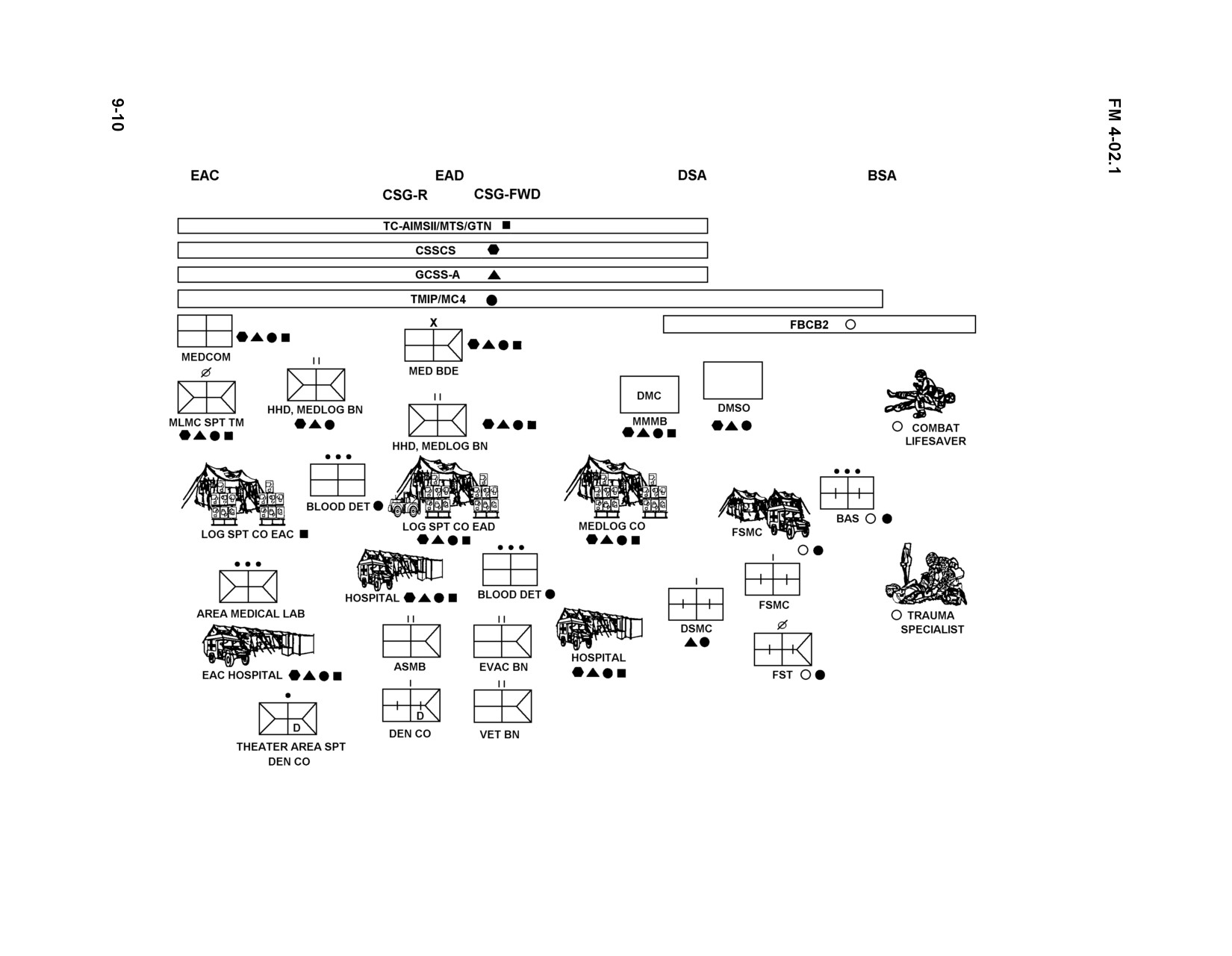
Figure 9-1. Systems effecting logistics support.
FM 4-02.1
c.
Echelons III, IV, and V Medical Logistics. These echelons contain hospitals and all of the
specialized medical units required to support the theater and the CONUS sustaining base. The TMIP will
link all of these medical functions. The TMIP will equip corps treatment and evacuation teams with
personally carried and mobile computers for the collection and forwarding of medical information to the
forward division or ASMC. Likewise, CSC teams, veterinary teams, dental teams, and preventive medicine
teams operating in the brigade rear area will be equipped with personally carried and/or mobile computers.
These TMIP-provided devices will be loaded with the appropriate software functionality. A seamless Class
VIII (including blood) automated system links the theater to the CONUS sustaining base.
d. Command and Control. At all echelons, the TMIP will automatically provide information,
such as MEDLOG status, evacuation status, current unit fitness for combat, and hazard exposure
information, to the commanders situational understanding system. This information will be provided to the
commander from the TMIP functional digital systems through GCSS-A to CSSCS. Commanders, for the
first time, will have a complete picture of the battlefield, which will allow them to accurately influence
current operations while synchronizing CHS with other activities.
9-11
FM 4-02.1
APPENDIX A
LAW OF WAR OBLIGATIONS FOR MEDICAL PERSONNEL
A-1. Law of War
a. Sources.
(1) Sources for the law of war obligations of the US are treaties ratified by the US. As such,
they are part of the supreme law of the land. The US is obligated to adhere to these treaty obligations even
when an opponent does not. It is the policy of the DOD and the US Army to conduct its military operations
in a manner consistent with these treaty obligations.
(2) In the area of CHS, the law of war source is the Geneva Conventions for the Protection
of War Victims of 12 August 1949. Questions regarding implementation and interpretation of these treaties
should be directed to the command judge advocate, or to the Office of the Judge Advocate General of the Army.
b. Geneva Conventions. The four 1949 Geneva Conventions are as follows:
(1) Geneva Convention for the Amelioration of the Condition of the Wounded and Sick in
the Armed Forces (GWS). This convention provides for the protection of Armed Forces personnel who are
wounded and sick on the battlefield. It requires States Parties to a conflict to take all possible measures to
search for and collect the military wounded and sick; to protect them against pillage and ill treatment; to
ensure their adequate care; and to search for the military dead. It also provides for the protection of
AMEDD personnel. The GWS is the primary source for the obligations set forth in this appendix.
(2) Geneva Convention for the Amelioration of the Condition of Wounded, Sick, and
Shipwrecked Members of the Armed Forces at Sea (GWS [Sea]). This treaty extends the guarantees of the
GWS for wounded, sick, or shipwrecked military personnel at sea. Once those personnel are placed on
land, the GWS provisions apply.
(3) Geneva Convention Relative to the Treatment of Prisoners of War (GPW). This treaty
provides protection for military personnel who fall into enemy hands. Captured military wounded and sick
remain prisoners of war during their recovery from their wounds or sickness, and for the duration of their
captivity.
(4) Geneva Convention Relative to the Protection of Civilian Internees in Time of War
(GC). The Convention provides for the protection of civilians who are in the hands of enemy military
forces, or who are in enemy-occupied territory. It also sets forth standards for their medical care.
A-2. Medical Implications of Geneva Conventions
a. Provisions for Collection of Wounded and Sick. Provisions must be made for the collection
and treatment of military wounded and sick personnel, whether friend or foe. Only urgent medical reasons
may determine priority in the order of treatment to be administered. This means that military wounded or
sick enemy personnel may require treatment before military wounded US or allied personnel. The principle
of triage is consistent with this obligation. For military wounded or sick enemy personnel, a dual
A-1
FM 4-02.1
responsibility existscustodial and medical. The custodial activity of guarding military wounded or sick
enemy prisoners of war (EPW) should be carried out by assets other than AMEDD personnel. The echelon
commander will designate nonmedical units to act as guards when EPW are in medical channels.
b. Accountability and Custody of Enemy Prisoners of War. Enemy prisoners of war or retained
personnel (RP) evacuated through medical channels must be identified and their accountability established
prior to evacuation per appropriate TSOP. Sick, injured, and wounded EPW or RP may be evacuated
through normal medical channels, but segregated from US and allied personnel. They may also be
evacuated through dedicated or task-organized evacuation assets, particularly in rear areas where they are
likely to be moved in a group.
c.
Responsibility for and Handling of Prisoners of War. The US Army is responsible for the care
and treatment of EPW and RP that Army units capture and for EPW/RP captured by other US Services or
allies upon their transfer to Army custody. Below brigade level, EPW/RP are handled by combat troops
who bring them to the forward or brigade collecting points. Subject to the tactical situation and available
resources, EPW/RP wounded, injured, or sick will be evacuated from the combat zone (CZ) as soon as
possible. Only those injured, sick, or wounded EPW/RP who would run a greater health risk by being
immediately evacuated may be temporarily kept in the CZ. When intelligence sources indicate that large
numbers of EPW/RP may result from an operation, medical units may require reinforcement to support the
additional EPW/RP patient workload. In this case, the care of wounded, injured, and sick EPW/RP
becomes a joint matter between the ground combat commander and the medical commander. Procedures
for estimating the medical workload involved in the treatment and care of EPW/RP is described in FM 8-55.
For a more detailed discussion on the administration, handling, treatment, and identification of EPW/RP,
see AR 190-8 and FM 19-4.
d. Identification and Protection of Medical Personnel.
(1) Personnel exclusively engaged in the performance of medical duties in connection with
the wounded, injured, or sick in medical units or establishments may wear, affixed to the left arm, a water-
resistant brassard/armband bearing the distinctive emblem (a red cross on a white background) prescribed
by GWS and GWS (Sea). The wearing of brassards/armbands will be at the discretion of the tactical
commander in far forward areas.
(2) Medical personnel (as identified in paragraph [1]) are to carry a special identity card,
Department of Defense (DD) Form 1934 (Geneva Conventions Identity Card for Medical and Religious
Personnel Who Serve in or Accompany the Armed Forces), issued to all persons qualifying as protected
medical personnel. This special identification card will be carried in addition to their regular identification card.
(3) Enemy military personnel meeting the definition of medical personnel contained in
paragraph (1) who are captured are considered RP and not EPW. They will receive the benefits and
protection afforded them by the GWS and GPW. They may be required to treat injured, wounded, or sick
EPW/RP. United States medical personnel or medical units that are captured may be required to do
likewise, continuing to provide medical support for injured or sick US or allied prisoners of war/RP while
in captivity. In such a situation, this probably would be a primary source of treatment for US prisoners of
war and RP, although enemy wounded could be treated also.
A-2
FM 4-02.1
(4) Personnel protected as medical personnel under the GWS must be exclusively engaged in
medical duties or administration of medical units. This includes all military personnel permanently assigned
to a medical unit and exclusively engaged in its mission, including cooks, mechanics, drivers, or
administration personnel. Performance of any activity inconsistent with this mission removes the protection,
and the DD Form 1934 must be withdrawn. For example, if an ambulance driver is tasked with driving an
unmarked tactical vehicle forward with ammunition prior to evacuating casualties, he would not be exclusively
engaged in medical duties and would not be entitled to continued classification as medical personnel.
e.
Self-Defense.
(1) Medical personnel may carry small arms for personal defense of themselves and defense
of their patients. This does not mean that they may resist capture or otherwise fire on the advancing enemy.
It means that, if civilians or enemy military personnel are attacking and ignoring the marked medical status
of medical personnel, medical transportation or the medical unit, the medical personnel may provide
self-protection. If an enemy force merely seeks to assume control of a military medical facility or a vehicle
for the purposes of inspection and without firing on it, the facility or vehicle may not resist.
(2) Medical personnel are entitled to carry defensive small arms only. By Army policy,
these are defined as service rifles (M16) and pistols (M9 or M11).
(3) An overall defense plan may not require medical units to take offensive or defensive
action against enemy troops at any time. If a medical force is part of a defensive area containing nonmedical
units, medical personnel may not be responsible for manning part of the overall perimeter. If located in
isolation, the medical unit may provide its own local and internal security if other support is not available.
However, a medical unit may not be defended from capture or inspection by enemy forces by military
police or other soldiers acting as pickets.
(4) If medical personnel fire on enemy troops or otherwise abuse their protected status by
engaging in acts harmful to the enemy, they may be attacked. It is also possible that such an action could
result in an allegation of violation of the law of war by the capturing force. For example, if an enemy force
was advancing on a marked medical facility and medical personnel within the facility then took advantage of their
protected status to fire at the enemy, the enemy forces would be entitled to return fire and medical personnel
subsequently captured may be charged with a violation of the law of war. Under the law of war, this action
would constitute an act of perfidy. It would be akin to firing on enemy soldiers while bearing a flag of truce.
This paragraph implements STANAG 2931.
f.
Marking of Medical Units/Facilities and Transportation.
(1) Medical units and facilities.
(a) The distinctive emblem (red cross on a white background) provided in the GWS
and GWS (Sea) for medical units, facilities, and transportation shall be displayed only over such medical
A-3
FM 4-02.1
units and facilities (except veterinary) as are entitled to be respected under the Conventions, subject to the
authorization of the tactical commander of a brigade-sized or larger unit. The marking of facilities and the
use of camouflage are incompatible and should not be undertaken concurrently. The camouflage of medical
units is regulated by ARs and also, in the European theater, by NATO STANAG 2931. It is not envisioned
that fixed, large medical facilities will be camouflaged. The medical commander must be aware of who has
the authority to order camouflage and its duration. The camouflage of medical facilities is one of the more
difficult issues to reconcile with operational necessities. The problem has been present in past wars but now
is more critical due to the ability of intelligence assets to see deep into the rear AO. If the failure to
camouflage endangers or compromises the tactical mission, the camouflage of medical facilities may be
ordered by a NATO commander of at least brigade level or equivalent. Such an order is to be temporary
and local in nature and is rescinded as soon as circumstances permit.
(b) The camouflage of a medical unit does not deprive it of its protected status.
However, an enemy force is not required to forego an attack on a camouflaged facility unless it recognizes it
as a medical facility. The use of defensive arms by medical personnel at a camouflaged site attacked by
ground maneuver forces is not authorized unless the actions of the attacking forces clearly are illegal rather
than the result of mistaken identity. Medical personnel should attempt to make the attackers aware of their
status rather than fighting back.
(c) If medical facilities are used to commit acts harmful to the enemy, the protection of
those facilities may be withdrawn if the acts are not stopped after warning. This might be the case where a
facility is used as an observation post or if combat information was reported or relayed through the facility.
(2) Medical transportation.
(a) Standard air and ground ambulances should be marked with the distinctive emblem
when performing medical missions. Medical transportation may not bear the distinctive emblem if and so
long as it is used for nonmedical missions. Fighting vehicles, such as a tank, are not entitled to bear the
distinctive emblem even when used for battlefield evacuation. However, aviators and drivers with status as
medical personnel may not perform nonmedical tasks without risk of loss of their medical personnel status.
As such, the policy that benefits the mission to the greatest degree is to use air and ground medical
transportation exclusively for medical tasks.
(b) Crew-served weapons may not be mounted on ambulances or air ambulances, even
if mounting brackets are present.
(c) Vehicles other than fighting vehicles (such as tanks) may be used in a dual role,
moving wounded to the rear while bearing removable distinctive emblems. However, the distinctive
emblems must be removed before nonmedical tasks are attempted. Care must be taken so that the protection
provided by the distinctive emblem is not abused.
(d) The protection provided medical aircraft bearing the distinctive emblem extends
only to areas in which it is entitled to operate due to the absence of enemy forces or, if enemy forces are
present, with the consent of enemy forces. If the latter, medical aircraft may operate only at such times and
on such routes for which there is agreement, and medical aircraft must land to be searched if summoned to
A-4
FM 4-02.1
do so by enemy forces. Failure to respond to a summons to land may entitle the enemy to attack the
aircraft. Medical aircraft may be used for combat search and rescue (CSAR) missions if all vestiges of its
medical aircraft status, such as the distinctive emblem, are removed for the duration of the CSAR mission.
In such cases, it would not be operating as a medical aircraft but as a military aircraft. The legal prohibition
is not on the use of an aircraft normally dedicated to medical missions, but on use of its status as a medical
aircraft during any CSAR mission. If used for CSAR missions, military aircraft are not entitled to
protection from enemy attack.
g. CiviliansWounded and Sick. Civilians who are injured, wounded, or become sick as a result
of military operations may be collected and provided initial medical treatment in accordance with theater
policies. If treated, treatment will be on the basis of medical priority only. If treated, they shall be
transferred to appropriate civil authorities as soon as possible. The echelon commander and medical unit
commanders jointly exercise responsibilities for custody and treatment of sick, injured, or wounded civilian
personnel. Enemy civilians detained by US forces are entitled to military medical care during their
detention. Treatment will be on the basis of medical priority only.
h. Captured Medical Supplies and Equipment. Because medical supplies and equipment captured
from the enemy are considered neutral and protected, they are not to be intentionally destroyed. If these
items are considered unfit for use, or if they are not needed for US and allied forces, noncombatants, or
EPW patients, they may be abandoned for enemy use. Since captured medical personnel are familiar with
their medical supplies and equipment, the captured items are especially valuable in the treatment of EPW.
Use of these captured items for EPW and the indigenous population helps to conserve other medical supplies
and equipment. When the capture of US medical supplies and equipment by enemy forces is imminent, these
items are not to be purposely destroyed. Every attempt must be made to evacuate them. Those items that
cannot be evacuated should be abandoned; however, such abandonment is a command decision.
A-3. Compliance with the Geneva Conventions
a. As the US is a signatory to the Geneva Conventions, all medical personnel should thoroughly
understand the provisions that apply to CHS activities. Violation of these Conventions can result in the loss
of the protection afforded by them. Medical personnel should inform the tactical commander of the
consequences of violating the provisions of these Conventions.
b. Outright violations of the Geneva Conventions result when
Medical personnel are used to man or help man the perimeter of nonmedical facilities,
such as unit trains, logistics areas, or base clusters.
Medical personnel are used to man any offensive-type weapons or weapons systems.
Medical personnel are ordered to engage enemy forces in other than self-defense, or in
the defense of patients and MTFs.
Crew-served weapons are mounted on a medical vehicle.
A-5
FM 4-02.1
Mines or booby traps are placed in and around medical units and facilities.
Hand grenades, light antitank weapons, grenade launchers, or any weapons other than
rifles and pistols are issued to a medical unit or its personnel.
The site of a medical unit is used as an observation post, a fuel dump, or an ammunition
storage site.
c.
Possible consequences of violations described in b above are
Loss of protected status for the medical unit and personnel.
Medical facilities attacked and destroyed by the enemy.
Medical personnel being considered prisoners of war rather than retained persons when
captured.
Combat health support capabilities are decremented.
d. Other examples of violations of the Geneva Conventions include
Making medical treatment decisions for the wounded and sick on any basis other than
medical priority, urgency, or severity of wounds.
Allowing the interrogation of enemy wounded or sick even though medically
contraindicated.
Allowing anyone to kill, torture, mistreat, or in anyway harm a wounded or sick enemy
soldier.
Marking nonmedical unit facilities and vehicles with the distinctive emblem or making
any other unlawful use of this emblem.
Using medical vehicles marked with distinctive Geneva emblem for transporting
nonmedical troops, equipment, and supplies.
Using a medical vehicle as a tactical operations center.
e.
Possible consequences of violations described in d above are
Criminal prosecution for war crimes.
Reprisals taken against wounded individuals in the hands of the enemy.
Medical facilities attacked and destroyed by the enemy.
Medical personnel being considered prisoners of war rather than retained persons when
captured.
A-6
FM 4-02.1
APPENDIX B
CLASS VIII LOGISTICS SUPPORT
B-1. Class VIII Strategic Operations
The strategic logistics system for Class VIII supplies is operated within CONUS by the USAMMA and the
DSCP. The USAMMA, MLMC, and DSCP jointly coordinate Class VIII support of the theater. Initial
support consists of preplanned medical supply packages in support of deploying medial units. As the theater
matures, as capability is established, and as mission dictates, CHL will transition from a push system to a
pull system with units submitting line item requests for resupply. The USAMMA also controls the
management and release of APS to the theater.
B-2. Customer Assistance
a. Customer assistance may be requested from the USAMMA at the following address:
Commander
US Army Medical Materiel Agency
Fort Detrick
Frederick, MD
21701-5001
b. Customer assistance in specific areas may be addressed to the appropriate office. Office titles
and symbols and their Defense Switched Network (DSN) and/or commercial (Com) numbers are provided
for your information.
Commander
MCMR-MMZ-A
DSN 343-7461 or Com 301-619-7461
Chief of Staff
MCMR-MMZ-B
DSN 343-7461 or Com 301-619-7461
Maintenance Engineering and Operations Directorate
Maintenance Engineering and Operations Directorate
1423 Sultan Drive, Suite 100
Fort Detrick, MD
21702-5001
FAX: DSN 343-7187
Director
MCMR-MMM
DSN 343-4407 or Com 301-619-4382
B-1
FM 4-02.1
AMEDD National Maintenance Point
MCMR-MMM-P
DSN 343-4382 or Com 301-619-4382
Maintenance Operations
MCMR-MMM-D
DSN 343-4365 or Com 301-619-4365
Maintenance Publications
MCMR-MMM-M
DSN 343-4366 or Com 301-619-4366
Depot-Level Maintenance Services
Repair, Calibrations, and Refurbishment Services
MEDSTEP Issue/Loans (End-Items)
Repairable Exchange (Modules/Printed Circuit Boards, and so forth)
On-Site Support Services
Diagnostic Imaging Acceptance Inspections
X-ray Tube Repair/Rebuild Services
Audiometric Equipment Repair and Calibration
Oxygen Regulator Exchange Program
Medical Chest Refurbishment Program
Dental/Surgical Handpiece Rebuild Services
Defense Distribution Region WestTracy, CA
DSN 462-9556 or Com 209-832-9562
Tobyhanna Army Depot
DSN 795-7744 or Com 717-894-7744
Defense Distribution Depot Ogden
DSN 352-6774 or Com 801-399-6774
Operations and Support Directorate
Director
MCMR-MMO
DSN 343-4308 or Com 301-619-4308
Technical Operations Division
MCMR-MMO-T
DSN 343-4121
B-2
FM 4-02.1
TAMMIS Tape Distribution
DSN 343-4319
Acquisition Advice Codes (W and J Reports)
DSN 343-4321
Method of Destruction Codes
DSN 343-4322
Medical Support Enhancement Program
DSN 343-4314
Medical Cataloging (Data Management)
DSN 343-4311
DA Supply Bulletins (8-75 Series)
DSN 343-4307/4313
DA Supply Catalogs (6545)
DSN 343-4318/4313
USAMMA Newsletter
DSN 343-4313
Quality Control Messages
DSN 343-4121/2045/4305
Chemical Defense Materiel
DSN 343-4300
Safe Medical Devices Act
DSN 343-4121
Unit Assemblages Floppy Disk, Listings, and Hand Receipts
DSN 343-4318/4315
Medical Catalog CD-ROM
DSN 343-4308
Industrial Base Maintenance Contract
DSN 343-4121/2045/4305
Pharmaceutical Consultant
DSN 343-4121
B-3
FM 4-02.1
Medical Services Information Logistics System Project
DSN 343-4306
Materiel Acquisition Directorate
Director
MCMR-MMT
DSN 343-4329 or Com 301-619-4329
TDA Acquisition, Medical Care Support
Equipment,
Capital
Equipment
Expense
Program and Shared Procurement
DSN 343-7403
Technology Support Division
MCMR-MMT-S
DSN 343-4473
Equipment Acquisition Division
MCMR-MMT-E
DSN 343-4363
Applied Medical (Laboratory/Dental)
DSN 343-4357
Assemblages (Laboratory/Dental)
DSN 343-4357
TMDE
DSN 343-4357
Biologicals
DSN 343-4357/4361
Pharmaceuticals
DSN 343-4357/4361/4362
DEPMEDS
DSN 343-4359
Applied Medical (Anesthesia/Optical/Veterinary/X-Ray/General Medical/Preventive
Medicine/Chemical Defense Sterilizers)
DSN 343-4361
B-4
FM 4-02.1
Assemblages (Anesthesia/Optical/Veterinary/X-Ray/General Medical/Preventive Medicine/
Chemical Defense/Sterilizers/Field Teams (Non-DEPMEDS)
DSN 343-4361
Applied Medical (Training Devices/Chemical Defense/General Medical/Evacuation/
Blood/Non-DEPMEDS Refrigeration/Resuscitation/Special Forces/Optical)
DSN 343-4362
Assemblages (Chemical Defense/General Medical/Evacuation/Blood/Non-DEPMEDS
Refrigeration/Resuscitation/Special Forces/Optical/Modular Medical)
DSN 343-4362
Strategic Capabilities and Materiel Directorate
Director
MCMR-MMS
DSN 343-4405 or Com 301-619-4405
Unit Deployment Package
MCMR-MMS-P
DSN 343-4461
Deployment
MCMR-MMS-P
DSN 343-4408
Requisitioning MCDM and Acquisition Advice Code Army (AACA) Regulated Vaccines
MCMR-MMS-M
DSN 343-4421
Reserve Component Hospital Decrement
MCMR-MMS-M
DSN 343-4421
Inventory Management Inquiries APS
MCMR-MMS-M
DSN 343-7451
MF2K
MCMR-MMR
DSN 343-4310
Logistics Assistance Program
DSN 343-7577
B-5
FM 4-02.1
DEPMEDS Fielding/Displacement
DSN 343-7577
Materiel Fielding Teams
DSN 343-7577
Materiel Transfer Teams
DSN 343-7577
Command Regulated Items AACA
DSN 343-7161
DEPMEDS Requisition Process
MCMR-MMR-A
DSN 343-7161
Excess Medical Materiel Reported to USAMMA
MCMR-MMR-C
DSN 343-4336
Assembly Management Inquiries
MCMR-MMR-A
DSN 343-7161
Materiel Obligation Validation
MCMR-MMR-A
DSN 343-7161
Requisitioning (RIC-B69), Due In/Due Out
MCMR-MMR-A
DSN 343-7161
Sets, Kits and Outfits Requisitions
MCMR-MMR-A
DSN 343-7161
B-3. Other Customer Assistance
I Corps Surgeons Office, Fort Lewis, WA
Building 2006B, ATTN: AFZH-MD
Fort Lewis, WA 98433
Phone: DSN 357-3100 or Com 253-967-3100
B-6
FM 4-02.1
III Corps Surgeons Office, Fort Hood, TX
HHC, III Corps Surgeons Office, ATTN: AFZF-MD
Fort Hood, TX 76544
Phone: DSN 737-1721 or Com 254-287-1721
XVIII Airborne Corps Surgeons Office, Fort Bragg, NC
28307
Phone: DSN 236-5772/5704 or Com 910-396-5774/5074
CENTCOM, MacDill Air Force Base, FL
Headquarters, U.S. Central Command, ATTN: CCSG
7115 South Boundary Boulevard
MacDill AFB, FL 33621-5101
Phone: DSN 968-6397 or Com 813-828-2129
EUCOM
HQ, USEUCOM/ECMD, Unit 30400, Box 1000, APO AE 09218
Phone: DSN 430-6410 or Com 011-49-711-680-5392
FORSCOM, Fort McPherson, GA
U.S. Forces Command, 1777 Hardee Ave, S.W., ATTN: AFLG-FMMC-E,
Fort McPherson, GA 30330
Phone: DSN 367-6313 or Com 404-464-6313
PACOM, Camp H.M. Smith, HI
U.S. Pacific Command, USCINCPC/J07, P.O. Box 64045
Camp H.M. Smith, HI 96861-4045
Phone: DSN 477-1026 or Com 808-477-1026
SOCOM, MacDill Air Force Base, FL
U.S. Special Operations Command, 7701 Tampa Point Boulevard
MacDill Air Force Base, FL
33621-5323
Phone: DSN 968-2719 or Com 813-828-2719
SOUTHCOM, Miami, FL
Headquarters, USSOUTHCOM/SCSG, 3511 NW 91st Avenue,
Miami, FL 33172
Phone: DSN 567-1328 or Com 305-437-1328
B-7
FM 4-02.1
APPENDIX C
MATERIEL IDENTIFICATION
C-1. Classes of Supply (United States)
Class
Description
I
Subsistence, to include potable water.
II
Clothing, individual equipment, tentage, tool sets and tool kits, hand tools, and
administrative and housekeeping supplies and equipment. Includes items of equipment
(other than principal items) prescribed in authorization/allowance tables, and items of
supply (not including repair parts).
III
Petroleum, oils, and lubricants (POL). Petroleum fuels; lubricants, hydraulic and insulating
oils, preservatives, liquid and compressed gases, chemical products, coolants, deicing and
antifreeze compounds, together with components and additives of such products, and coal.
IV
Construction. Construction materials including installed equipment and all fortification/
barrier materials.
V
Ammunition. All types (including chemical, radiological, and special weapons), bombs,
explosives, land mines, fuses, detonators, pyrotechnics, missiles, rockets, propellants, and
other associated items.
VI
Personal demand items (Health and Comfort Packages).
VII
Major end items (tanks, vehicles, or aircraft) which are ready for their intended use.
VIII
Medical materiel including medical-peculiar repair parts and equipment. The following
subclasses apply to Class VIII:
1
Controlled substances.
2
Tax-free alcohol.
3
Precious metals.
4
Nonexpendable medical items.
5
Expendable medical items.
6
All drugs and related items of Federal Supply Classification 6505 not otherwise
restricted.
79
Commander-designated controlled items.
0
USAMMA-controlled sensitive items.
IX
Repair parts and components, to include kits, assemblies and subassemblies and repairable
and nonrepairable items required for maintenance support of all equipment.
X
Materiel to support nonmilitary programs such as agricultural and economic development
materials not included in Classes I through IX.
C-1
FM 4-02.1
This paragraph implements NATO STANAG 2961.
C-2. Comparative Table
Note the differences between the NATO and US classes of supply.
NATO CLASS
US CLASS
DESCRIPTION
DESCRIPTION
OF SUPPLY
OF SUPPLY
I
Those items which are consumed
I
Subsistence, to include potable
by personnel or animals at an
water.
approximate uniform rate
irrespective of local change in
VI
Personal demand items
combat or terrain conditions.
(nonmilitary sales items).
Examples: rations and forages.
II
Supplies for which allowances
II
Clothing, individual equipment,
are established by TOEs.
tentage, tool sets and tool
Examples: clothing, weapons,
kits, hand tools, administrative
mechanics tools, spare parts,
and housekeeping supplies.
vehicles and equipment.
Includes items of equipment, other
than principal items, prescribed in
authorization/allowance tables and
items of supply (not including repair
parts).
VII
Major end items: A final
combination of end products that is
ready for its intended use; principal
items such as launchers, tanks,
mobile machine shops, vehicles.
VIII
Medical materiel including
medical-peculiar repair parts.
IX
Repair parts and components to
include kits, assemblies and
subassemblies, and repairable and
nonrepairable items required for
maintenance support of all
equipment.
C-2
FM 4-02.1
III
Fuels and lubricants for all
III
POL: Petroleum fuels: lubricants,
purposes, except for operating
hydraulic and insulating oils,
aircraft or for use in weapons
preservatives, liquid and compressed
such as flamethrowers. Examples:
gases, chemical products, coolants,
petroleum products, such as
deicing and antifreeze compounds,
gasoline, kerosene, diesel oil,
together with component additives
fuel oil, lubricating oil and
of such products and coal.
greases, and solid fuels, such as
coal, coke, and wood. For USAF
(III A): aviation fuels and
lubricants.
IV
Supplies for which initial issue
IV
Construction: Construction
allowances are not prescribed by
materials, to include installed
approved issue tables. Normally
equipment and all fortification/
such supplies include fortification
barrier materials.
and construction materials, as
well as additional quantities of items
X
Material to support nonmilitary
identical to those authorized for
programs, such as agriculture
initial issue (Class II) such as
and economic development if
additional vehicles.
not included in Classes V to IX.
V
Ammunition, explosives, and
V
Ammunition: Ammunition of
chemical agents of all types.
all types (including chemical,
radiological, and special weapons),
bombs, explosives, land mines,
fuses, detonators, pyrotechnics,
missiles, rockets, propellants, and
other associated items.
C-3. Federal Supply Classifications (Medical)
6505
Drugs, Biologicals, and Official Reagents
6508
Medicated Cosmetics and Toiletries
6510
Surgical Dressing Materials
6515
Medical and Surgical Instruments, Equipment, and Supplies
6520
Dental Instruments, Equipment, and Supplies
6525
X-ray Equipment and Supplies: Medical, Dental, and Veterinary
6530
Hospital Furniture, Equipment, Utensils, and Supplies
6532
Hospital Surgical Clothing and Related Special Purpose Items
6540
Opticians Instruments, Equipment, and Supplies
6545
Medical Sets, Kits, and Outfits
6550
In Vitro Diagnostic Substances, Reagents, Test Kits and Sets
6600
Instruments and Laboratory Equipment
C-3

FM 4-02.1
APPENDIX D
STRATEGIC MOVEMENT DATA
Table D-1 provides strategic movement data for the TOE MEDLOG organizations. The automated air
loading planning system was used to develop the strategic movement requirements. The data was computed
based on requirements and not authorizations. Commanders and medical planners should use the modified
TOE to compute the units specific movement data based on unit loads tailored for the mission. Commanders
should ensure that selected staff members attend a unit movement course to enhance strategic deployment.
For information on the Unit Movement Officer Deployment Planning Course, contact the Commandant, US
Army Transportation School, ATTN: ATSP-TDD-SD, Fort Eustis, Virginia 23604-5001. The telephone
number is DSN 927-1575, commercial 804-878-1575.
Table D-1. Strategic/Surface Deployment Data
TRANSPORT MODES
AIR
SURFACE
PASSENGER
PURE FLEET TOTAL
SHIP BY % SQ FT
RAIL
(AIR)
(STD
B747
UNIT
SRC
WEIGHT
CUBIC
SQ
C130
C141
C17
C5
RORO
LMSR
89'
PAX
(400
(LBS)
FT
FT
CAR)
SEAT)
MEDLOG CO*
08488A000
130,396
26,250
3,680
5.22
2.83
1.45
0.86
0.021
0.012
6
77
0.1925
MEDLOG CO**
08488A000
698,320
87,613
9,751
27.93
15.18
7.76
4.62
0.055
0.033
21
77
0.1925
BLOOD SPT DET*
08489A000
165,271
18,902
3,360
6.61
3.59
1.84
1.09
0.019
0.011
4
30
0.075
BLOOD SPT DET**
08489A000
340,129
40,459
5,732
13.61
7.39
3.78
2.25
0.033
0.019
10
30
0.075
MEDLOG BN*
08496A000
76,101
8,464
1,120
3.04
1.65
0.85
0.5
0.006
0.004
2
59
0.1475
MEDLOG BN**
08496A000
255,703
28,485
3,496
10.23
5.56
2.84
1.69
0.02
0.012
6
59
0.1475
LOG SPT CO*
08497A000
184,917
32,645
4,480
7.4
4.02
2.05
1.22
0.025
0.015
7
116
0.29
LOG SPT CO**
08497A000
692,821
86,445
9,860
27.71
15.06
7.7
4.59
0.056
0.033
21
116
0.29
MEDLOG MGT CTR*
08699A000
57,527
7,601
960
2.3
1.25
0.64
0.38
0.005
0.003
2
64
0.16
MEDLOG MGT CTR**
08699A000
142,348
17,530
2,198
5.69
3.09
1.58
0.94
0.012
0.007
4
64
0.16
NOTE: The percentage figures in the RORO, LMSR, and B747 columns are the SRC space requirements of the ship capacity.
LEGEND:
LMSR Large Medium-Speed Roll-On/Roll-Off
(MRI-OBJ) without vehicles and equipment
PAX
Passenger
**
(MRI-OBJ) with vehicles and equipment
RORO
Roll-On/Roll-Off
SRC
Standard Requirement Code
STD
Standard
D-1
FM 4-02.1
APPENDIX E
COMBAT HEALTH SUPPORT LOGISTICS MANAGEMENT
IN JOINT OPERATIONS
E-1. Logistics Functions, Support Responsibilities, and Requirements
Logistics functions should be performed in as routine a manner as possible in war and stability operations
and support operations. Logistics support responsibilities between CINCs for the various C2 relationships
can be found in Joint Publication 4-02.1. Logistics support requirements involve the broad areas of CHS,
supply maintenance, transportation, general engineering, and other services. Services consist of various
functions and tasks provided by service troops and the logistical community that are essential to the
technical management and support of a force. Unless otherwise directed by the National Command
Authorities, the implementation and execution of logistics functions remains the responsibility of the Services
and the Service component commander.
E-2. Responsibilities
a. Authority and Control.
(1) Under conditions short of crisis or war, combatant CINCs are authorized to exercise
directive authority over logistics operations within their area of responsibility. This authority is designed to
ensure effective execution of approved operation plans, provide efficiency and economy in operations, and
prevent or eliminate unnecessary duplication of facilities and overlapping of functions of component
commands. The CINCs directive authority over logistics operations does not release the Services from
their responsibility to man, equip, train, and sustain their Service components.
(2) Under wartime or operations other than war, or when critical situations mandate diversion
from the normal logistics process, this authority is expanded to authorize combatant CINCs to use all
necessary facilities and logistics resources for the accomplishment of their missions.
b. Single-Service Logistics Support. Each Service is responsible for the logistics support of its
own forces except when logistics support is otherwise provided for by agreements with national agencies,
allies, or coalition partners, or by assignments to joint operations.
c.
Transfer of Functions and Facilities Among Services. The combatant CINC has the authority
to issue and implement directives to transfer logistics functions between or among the Service components
within the area of responsibility under wartime or operations other than war. This authorization of directive
authority is not intended to abrogate Service responsibility for logistics support. Transfer of function
coordination will be accomplished through the Service component commands or directly to the headquarters
of the appropriate Service. The implementation of such a directed transfer, including administrative and
procedural aspects, is the responsibility of the Service component commanders involved. The combatant
CINC retains the responsibility for overseeing and resolving issues.
E-3. Single-Integrated Medical Logistics Manager
a. Combat health support logistics is normally a Service responsibility. However, in joint
operations, a SIMLM system may be designated to provide central logistical support to all participating
E-1
FM 4-02.1
Services in the combatant CINCs area of responsibility. As the dominant user, the US Army has been
formally tasked by DOD to perform the peacetime SIMLM mission in the European (through the
USAMMA [Europe]) and Korean (through the 16th MEDLOG Battalion) theaters. Under wartime or
crisis conditions, the US Army, in all probability, will be the dominant Class VIII user and must plan for
the SIMLM mission.
b. The SIMLM system encompasses the provision of medical supplies, medical equipment
maintenance and repair, blood management, and optical fabrication to all joint forces within the TO, except
Navy gray haul ships. Combat health support logistics can be provided to Navy hospital ships for common,
demand-supported medical supplies in the later stages of theater development. The activation of the
SIMLM mission is dependent upon the Time-Phased Force Deployment List supporting the contingency.
Refer to Chapters 3 through 7 for a discussion on CHL organizations and their theater support roles.
E-4. Planning
a. The combatant CINC is responsible for effective coordination of supply support among the
Service components within his area of responsibility. When practical to improve economy of effort,
common item support may be assigned to a Service component command, normally the dominant user. The
combatant CINC is also responsible for the allocation of critical logistics resources within the command.
He ensures that statements of the requirements of the assigned forces are prepared and submitted in
accordance with existing directives of the Secretary of Defense, the Secretaries of the Military Departments,
and the Chiefs of the Services.
b. As a member of the CINCs staff, the command surgeon has primary responsibility for
planning CHS. Planning must be concurrent and in agreement with the contingency operational plans.
Field Manuals 8-55 and 8-42 provide an example of those things to be considered when developing the plan.
The CHS logisticians must plan to perform the SIMLM functions. Also, CHS logisticians must anticipate
that future military operations will be joint operations and conducted from CONUS.
E-2
FM 4-02.1
APPENDIX F
PATIENT MOVEMENT ITEMS
F-1. General
This appendix describes PMIs in support of the evacuation process from Echelons II through IV. For the
purposes of this appendix, the PMI is the more expensive/low density equipment requiring accountability.
The less expensive items such as litters, blankets, and litter straps will not be considered as PMIs. This
appendix is consistent with the Armys total asset visibility and JTAV initiatives. The TAMMIS and/or
DMLSS will integrate the PMI automated tracking system with the functional module of TMIP/MC4.
F-2. Mission
The mission of the PMI system is to support in-transit medical capability, to exchange in-kind PMIs without
degrading medical capabilities, and to provide prompt recycling of PMIs. The PMI system will provide
seamless ITV for an equipment management process from initial entry to the patients final destination. A
tracking system will be used ultimately to facilitate the management of PMIs.
F-3. Explanation of System
a. Medical equipment and supplies required to support the patient during patient evacuation are
referred to as PMIs. The handling and return of PMIs to the originating medical unit requires a reliable
supporting logistics infrastructure to ensure that PMIs are available and serviceable. The intent of the PMI
system is to provide a seamless system, which includes a standardized, certified PMI equipment list. Patient
movement items used to monitor or sustain a patient would normally stay with the patient throughout the
patient evacuation system. In addition, the PMI system will provide the ability to track the location of all
PMI equipment. The goal is to prevent depletion of forward units PMIs through a one-for-one exchange of
equipment at the time of patient transfer.
b. It is recognized that there may be exceptions to the standardized equipment list by individual
Services based on mission-specific requirements. Substitution would be permitted after individual Services
submit justification to and receive approval of the Joint Readiness Clinical Advisory Board (JRCAB).
Justification should be based on the unique mission requirements of that Service. If approved, only the
requesting Service will be allowed to use the approved substitution equipment. That equipment would not
follow the patient back through the patient evacuation system. At the time of patient transfer, the approved
substitution equipment will be exchanged for standard PMI equipment. The plan for a PMI exchange
system and the ultimate return of PMIs to the originating theater should be addressed in the operation plans
and/or unit standard operating procedures.
c.
When a patient requires evacuation, it is the originating MTFs responsibility to provide the
PMIs required to support the patient during evacuation. The Services will include and maintain initial
quantities of JRCAB-standardized PMIs in the appropriate medical assemblages. They should not assume
or plan for shortfalls of PMI being satisfied by other Services. The Services, through the JRCAB, will
identify and approve PMI equipment. Patient movement items must be certified for use on the appropriate
patient evacuation platform (for example, fixed/rotary wing). To reduce medical equipment shortfalls
F-1
FM 4-02.1
experienced within the theater, the theater commander/joint force commander must ensure procedures are
established to resupply and refurbish PMIs.
F-4. Responsibilities
a. Commander-in-Chief. Intratheater movement of PMIs is the responsibility of the theater
CINC. As a theater matures, a SIMLM may be established. If a SIMLM is established, Services will
coordinate, as necessary, with the SIMLM to obtain support in the areas of requisitioning, storage,
maintenance, and battlefield distribution of PMIs. Forward battlefield distribution and exchange of PMIs
will be a SIMLM or Service responsibility. The plan for a PMI exchange system and the return of PMIs to
the originating MTF will be addressed in theater operation plans.
b. United States Air Force.
(1) Establishment of USAF PMI centers is the responsibility of the USAF to support
worldwide aeromedical evacuation (AE) requirements. Patient movement item centers will be located at
ports of embarkation and/or ports of debarkation to match AE support plans. United States Air Force PMI
centers are responsible for the overall management, ITV, and tracking of AE PMIs. In the event of surge
and sustained requirements, Service liaison personnel may be assigned.
(2) The USAF PMI centers incorporate and support PMI cells. The USAF PMI cells are a
flexible subset of the PMI center, capable of establishing a forward PMI equipment exchange location. The
USAF PMI cells will support PMI exchange as far forward as theater AE patient movement is approved to
operate. The USAF PMI cells will be deployed to forward operating locations to support one or more
forward medical elements by pushing PMIs to those locations. These PMI centers and cells will require
base operating support supplied by local operational support elements.
c.
United States Army.
(1) The PMI system begins with the request for evacuation from the FST, FSMC, or a
higher echelon medical unit, depending on the force structure. Patient movement items required to
accompany the patient will be identified on the evacuation request. Patient movement item requirements
will be forwarded to the MEDLOG company and the MEDLOG support company of the MEDLOG
battalion via TMIP/MC4. The movement of the patient will activate two systems. The automated monitoring
and tracking system will follow the PMIs throughout the evacuation process and maintain accountability of
the items. The MEDLOG system will move PMIs from the supporting MEDLOG element to the original/
requesting unit. Return of PMIs to the MEDLOG system will come from two sourcesMTFs when no
longer needed by the patient and from the USAF AE system when PMIs stay with patients to CONUS or
sustaining base. The MEDLOG support company will be responsible for maintaining accountability,
receiving, performing required maintenance, and refurbishing and distributing back into the system. The
MEDLOG support company will be required to monitor the PMI demands placed on the system and ensure
that push packages are available for movement forward during periods of high casualties.
F-2
FM 4-02.1
(2) It is the MTFs responsibility to properly prepare the patient for evacuation. A litter
patient should be prepared with two blankets and two litter straps. The attending physicians must ensure
that 1- to 3-days supply (except in the CZ) of medications and rations accompany their patients.
(3) Oversight of PMIs within echelons of care (II through IV) rests with the medical unit
commanders. Elements of the MEDLOG battalion support Echelons II through IV and have the
responsibility for managing, maintaining, and accounting for PMIs. Accountability for PMIs will be
automated and employ consolidated electronic records for maintenance and accountability, as well as
tagging and sensing monitors for visibility. As patients move through the evacuation system, PMI
accountability and replenishment information will activate issue of replacement items to treatment units
ensuring them of a basic level of PMIs. During periods of increased usage where demand for items exceeds
normal replacement flow, PMI push packages from the supporting MEDLOG element will flow forward.
Asset visibility systems will monitor the flow of items from the unit and will be designed to trigger the flow
of push packages if unit on-hand levels reach a critical low point. The MEDLOG support company will
provide support maintenance and accountability for PMI assets within its support area. This support includes
the responsibility for refurbishing and providing required maintenance procedures (calibration, repair,
quality control, and expendable replenishment) as PMIs return through the logistic supply system. The
MEDLOG support company will coordinate PMI support through the SIMLM, or if no SIMLM is
designated, directly to the USAF PMI centers to ensure a seamless flow of PMIs through the logistics
supply system. It will be essential for the Army PMI system to interface with the supporting USAF system.
The plan for a PMI exchange system and the return of PMIs to the originating unit will be addressed in the
CINCs operation plan.
F-5. Execution
a. Forward Surgical Team/Forward Support Medical Company.
(1) The FST or FSMC has the responsibility of preparing a patient for evacuation. In order
to support, monitor, and sustain the patient during the evacuation, certain PMIs may accompany the patient.
The FSMC commander has overall responsibility for maintaining total asset visibility of the PMIs in his
AO. An equipment tracking system enables the total asset visibility. A push package of PMIs (based on
mission, enemy, troops, terrain, time available, and civilian considerations) will support the initial PMI
requirements of the FST/FSMC. The FSMC commander will issue PMIs to the FST as required.
(2) At the FSMC/FST, the following actions are required to maintain accountability and
tracking:
The FSMC will scan all PMI equipment bar codes and enter as On Hand.
The FSMC, when issuing PMIs to the FST, will scan the PMI equipment bar code
and enter status as Out to the FST. The FST will scan equipment bar code and enter status as On
Hand. These steps should be conducted when issuing/receiving PMIs.
F-3