FM 4-20.158 AIRDROP OF SUPPLIES AND EQUIPMENT: RIGGING WATER PURIFICATION UNITS (MAY 2005) - page 3
FM 4-20.158/TO 13C7-7-61
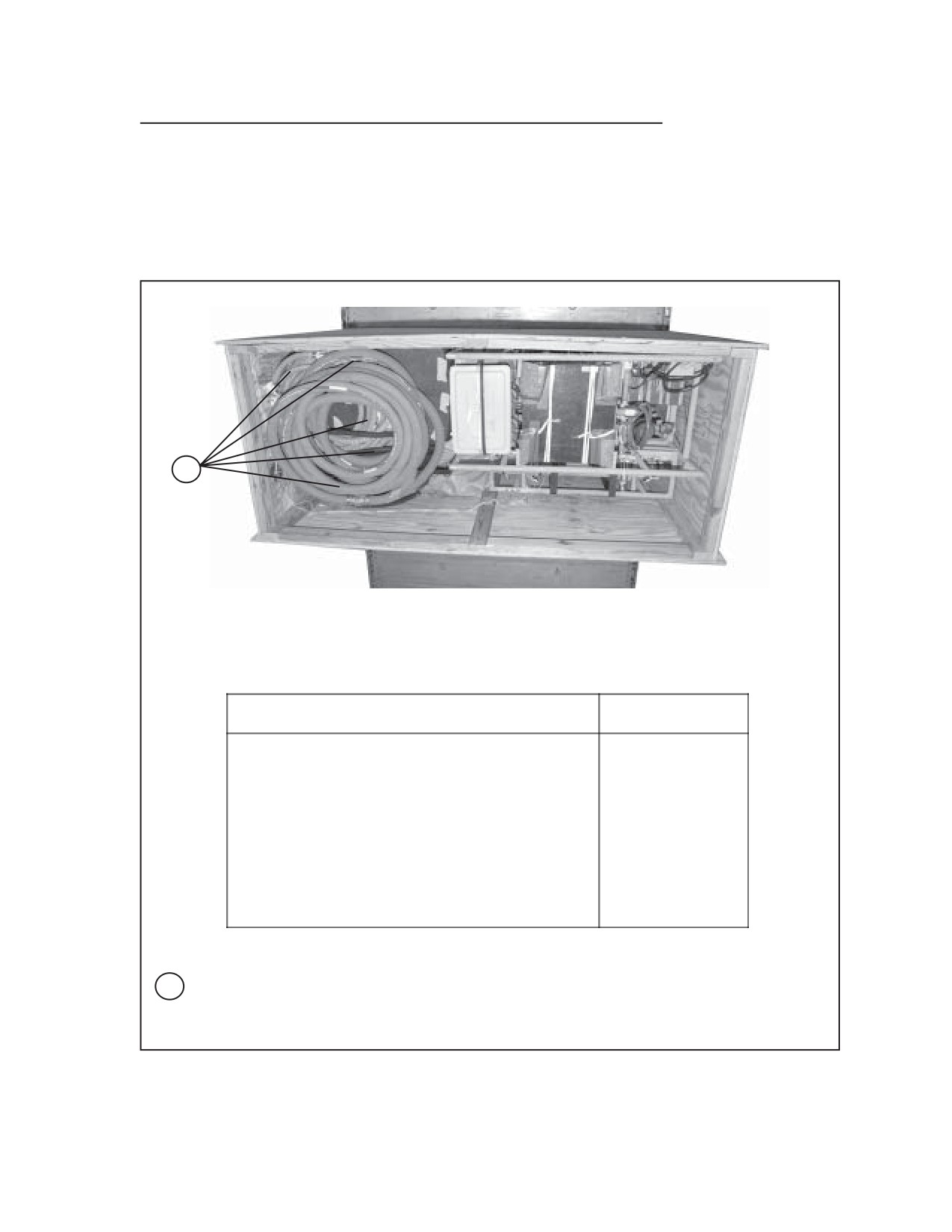
f. STOWING HIGH PRESSURE HOSE, BACKWASH HOSES,
REJECT HOSES, TUBE RAW WATER HOSES AND PRODUCT
WATER HOSES. Stow the high pressure hose, backwash hoses, reject
hoses, raw water hoses and product hoses in the container as shown in
Figure 2-13.
1
Note: The components listed below are stored on top of the cold weather kits and two fabric
tanks. The combined weight of the hoses is 238 pounds.
Item Description
Quantity
High-pressure hose (orange code)
1
Backwash hose (yellow code)
2
Reject hose (red code)
2
Tube, raw water hose
2
Product water hose
3
1
Position the high pressure hose (orange code) (1 each), backwash hose (yellow code)
(2 each), reject hose (red code) (2 each), tube, raw water hose (2 each), and product hose
(3 each) on top of the cold weather kits and two fabric tanks.
Figure 2-13. High Pressure Hose, Backwash Hoses, Reject Hoses, Tube Raw Water Hoses and
Product Water Hoses Stowed
2-19
11 May 2005
FM 4-20.158/TO 13C7-7-61
CLOSING AND SECURING EQUIPMENT BOX 1
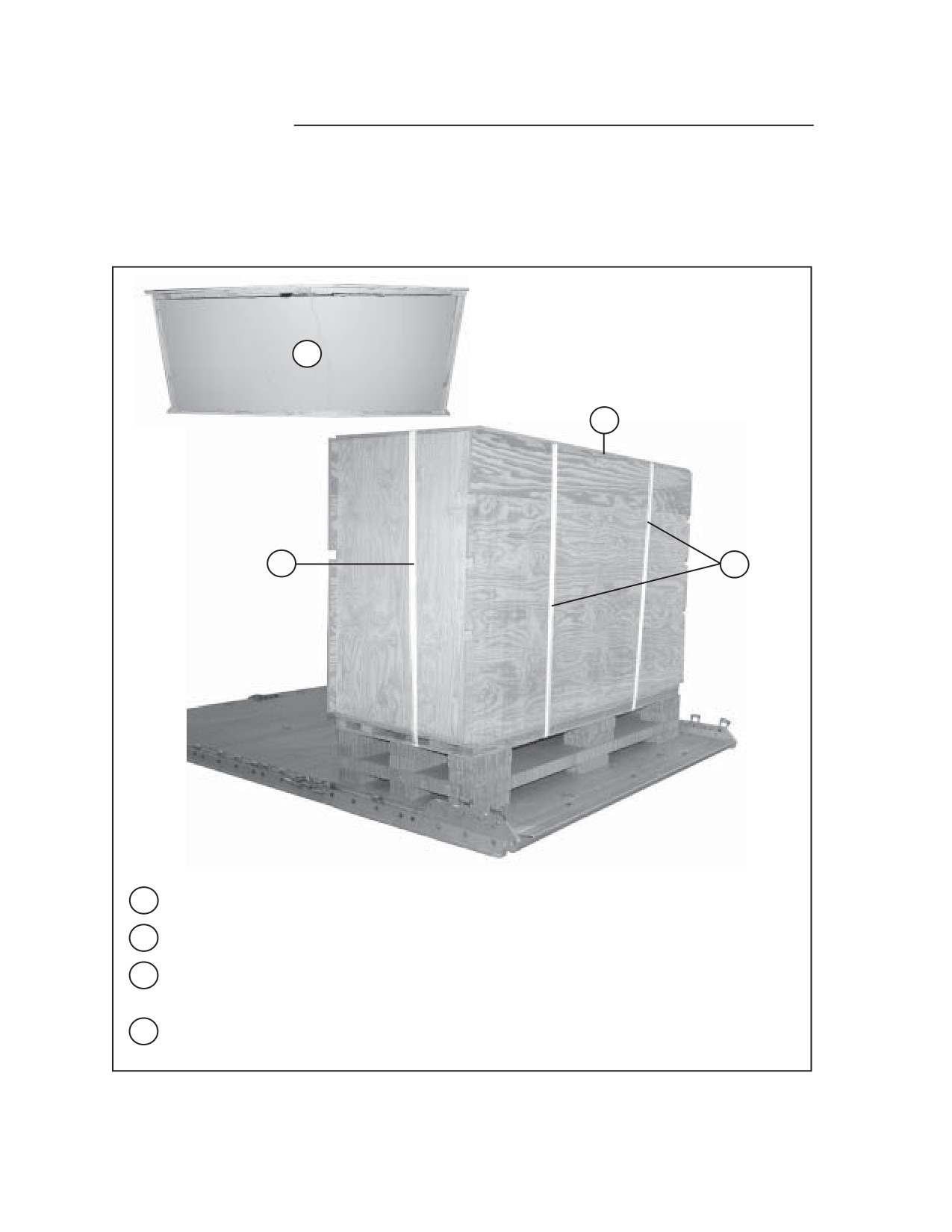
2-6. Close and secure equipment box 1 as shown in Figure 2-14.
Notes:
1. Use 8d nails.
2. Ensure the lashings placed in steps
3 and 4 are routed under the strongback
1
and between the spaces of honeycomb
stack 1.
2
3
4
FRONT
1
Fill the remaining space of the container with honeycomb and place a full sheet on top.
2
Nail the plywood top (built in Figure 2-6, step 3) to the container using 8d nails.
3
Form one 30-foot lashing and route it around the container widthwise and centered.
Secure it on top of the container using two D-rings and a load binder.
4
Form two 30-foot lashings and route them around the box lengthwise. Secure each
lashing on top of the container using two D-rings and a load binder.
Figure 2-14. Equipment Box 1 Closed and Secured
2-20
11 May 2005
FM 4-20.158/TO 13C7-7-61
LEFT
5
6
5A
REAR
5
RIGHT
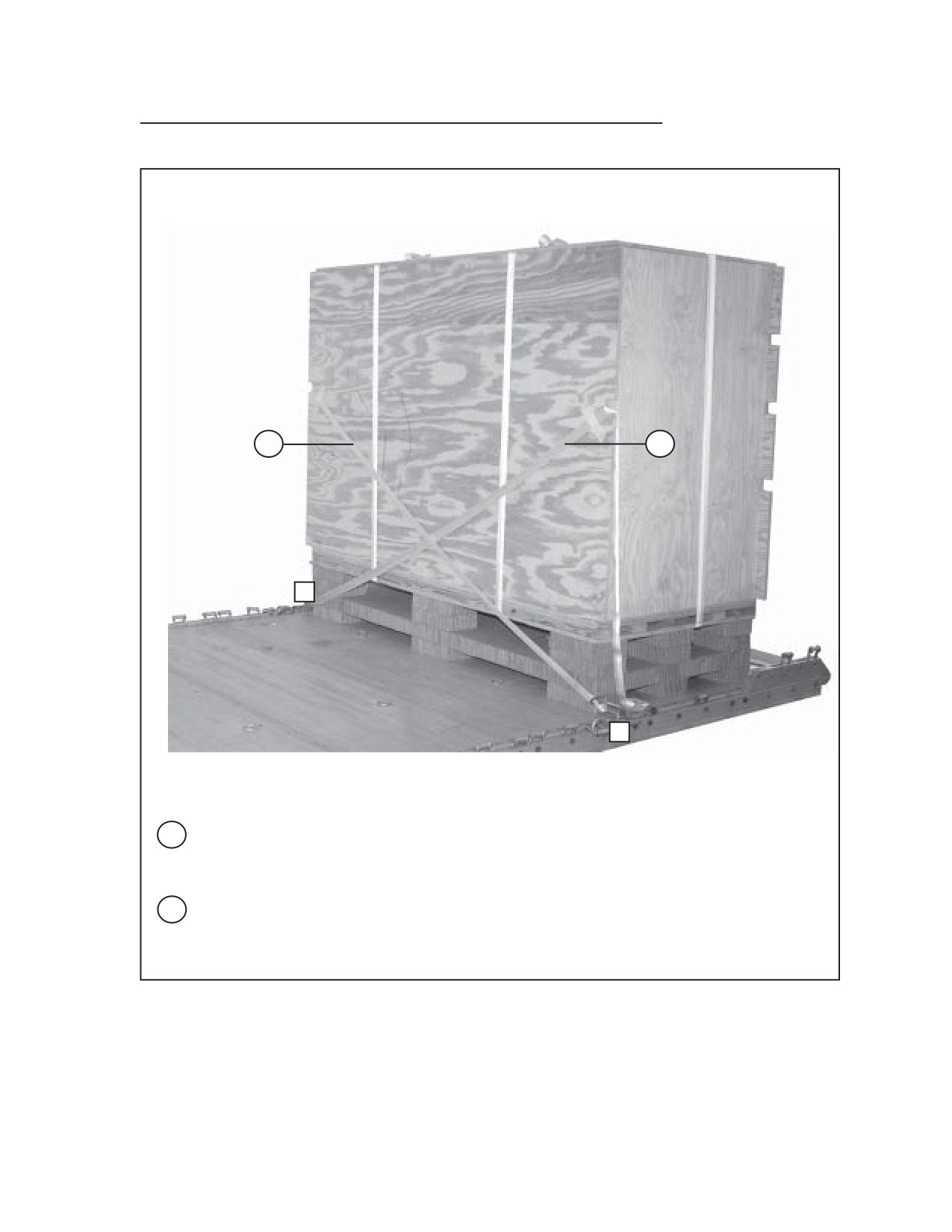
Note: Pad and tape all cutouts prior to routing lashings.
5
Pass a 15-foot lashing through clevis 5 and through its own D-ring. Route the lashing
across the rear of equipment box 1 and through the left cutout. Temporarily tape in
place using 2-inch masking tape.
6
Pass a 15-foot lashing through clevis 5A and through its own D-ring. Route the lashing
across the rear of equipment box 1 and through the right cutout. Temporarily tape in
place using 2-inch masking tape.
Figure 2-14. Equipment Box 1 Closed and Secured (Continued)
2-21
11 May 2005
FM 4-20.158/TO 13C7-7-61
PREPARING AND PLACING HONEYCOMB STACK 2
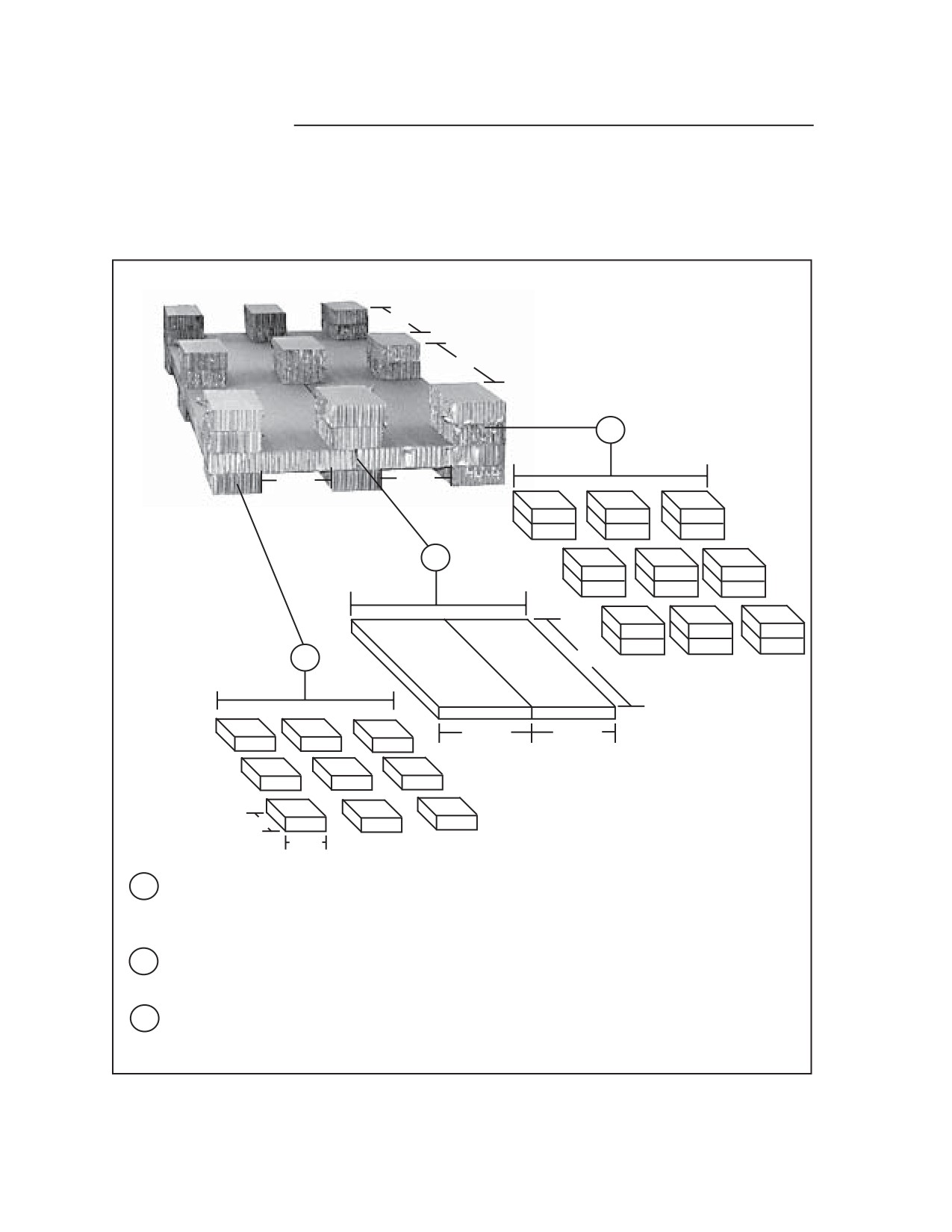
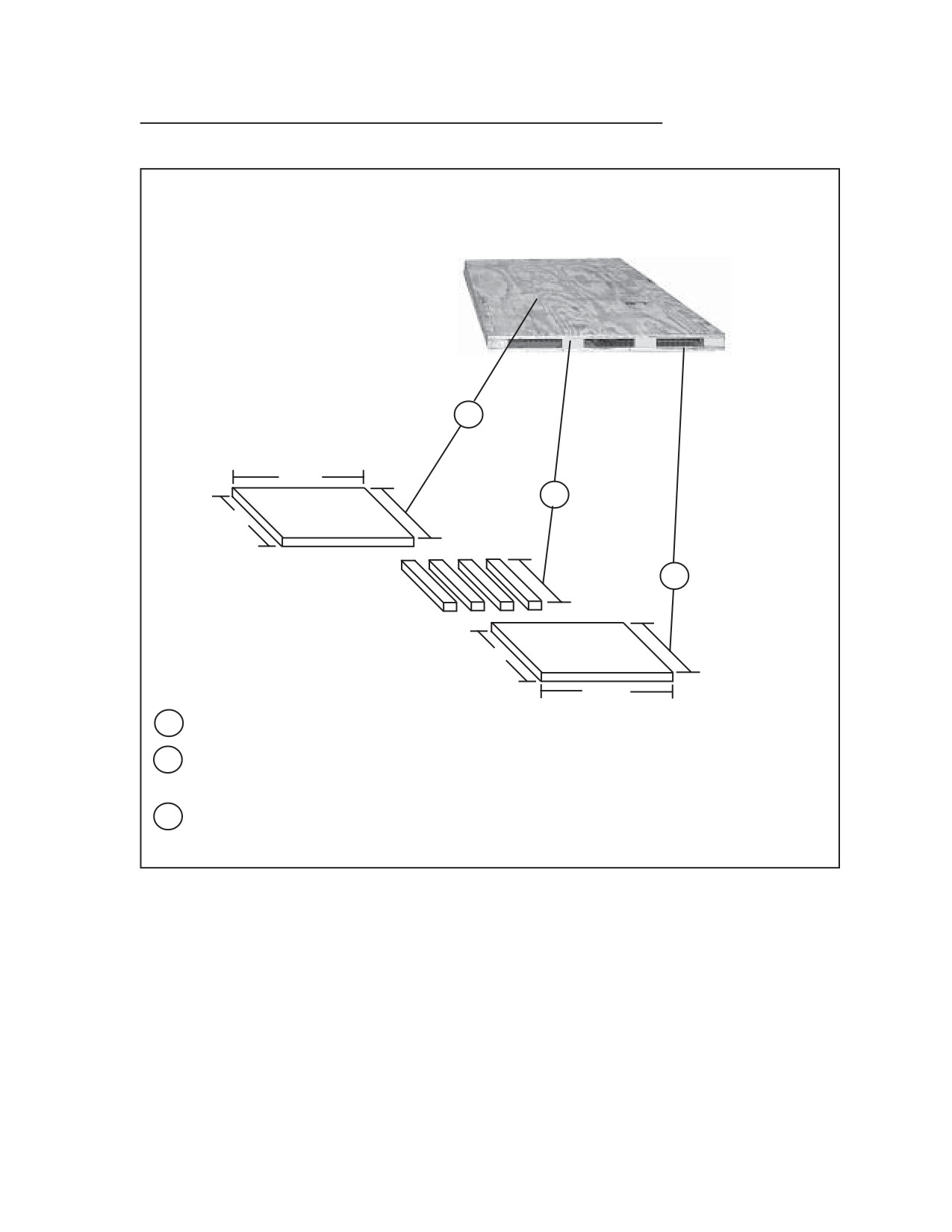
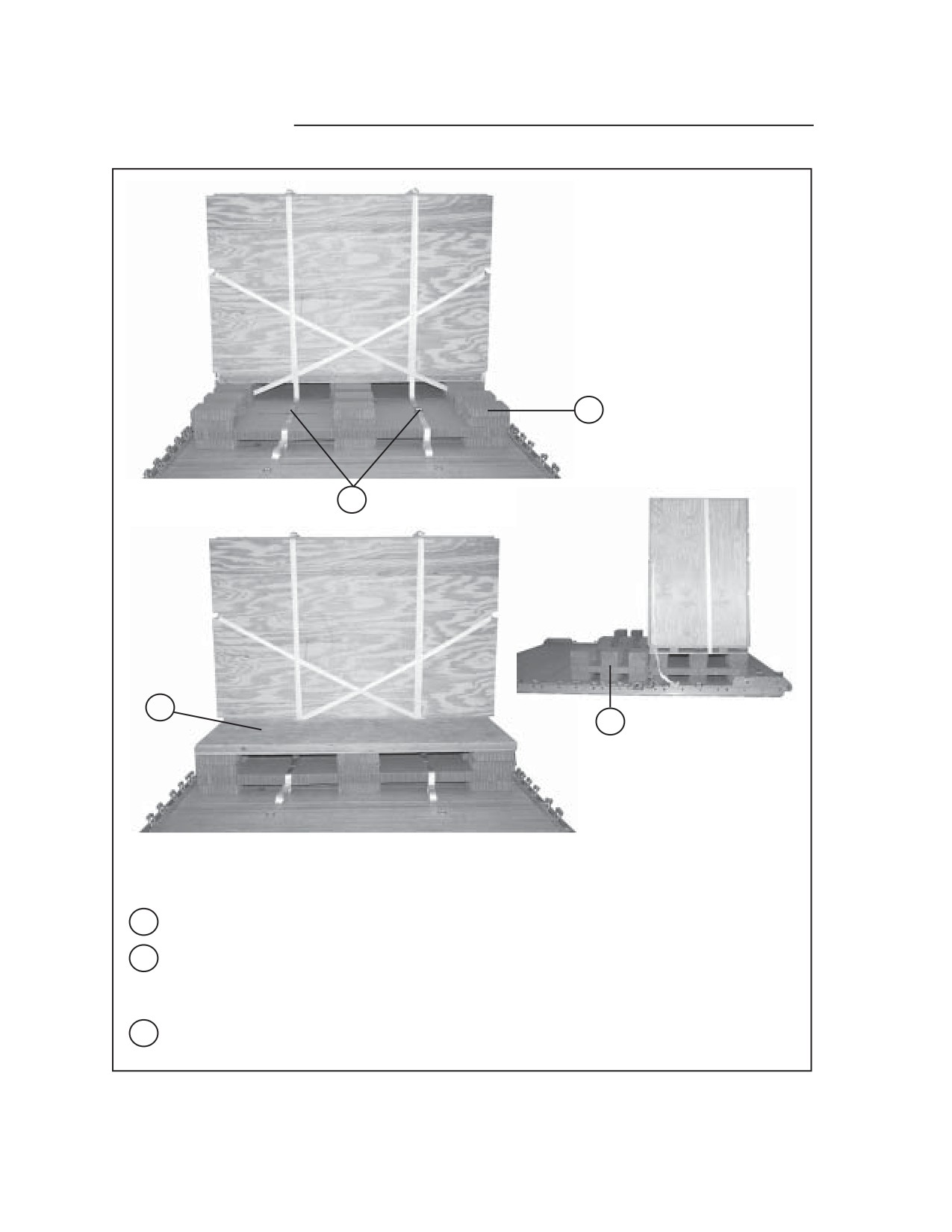
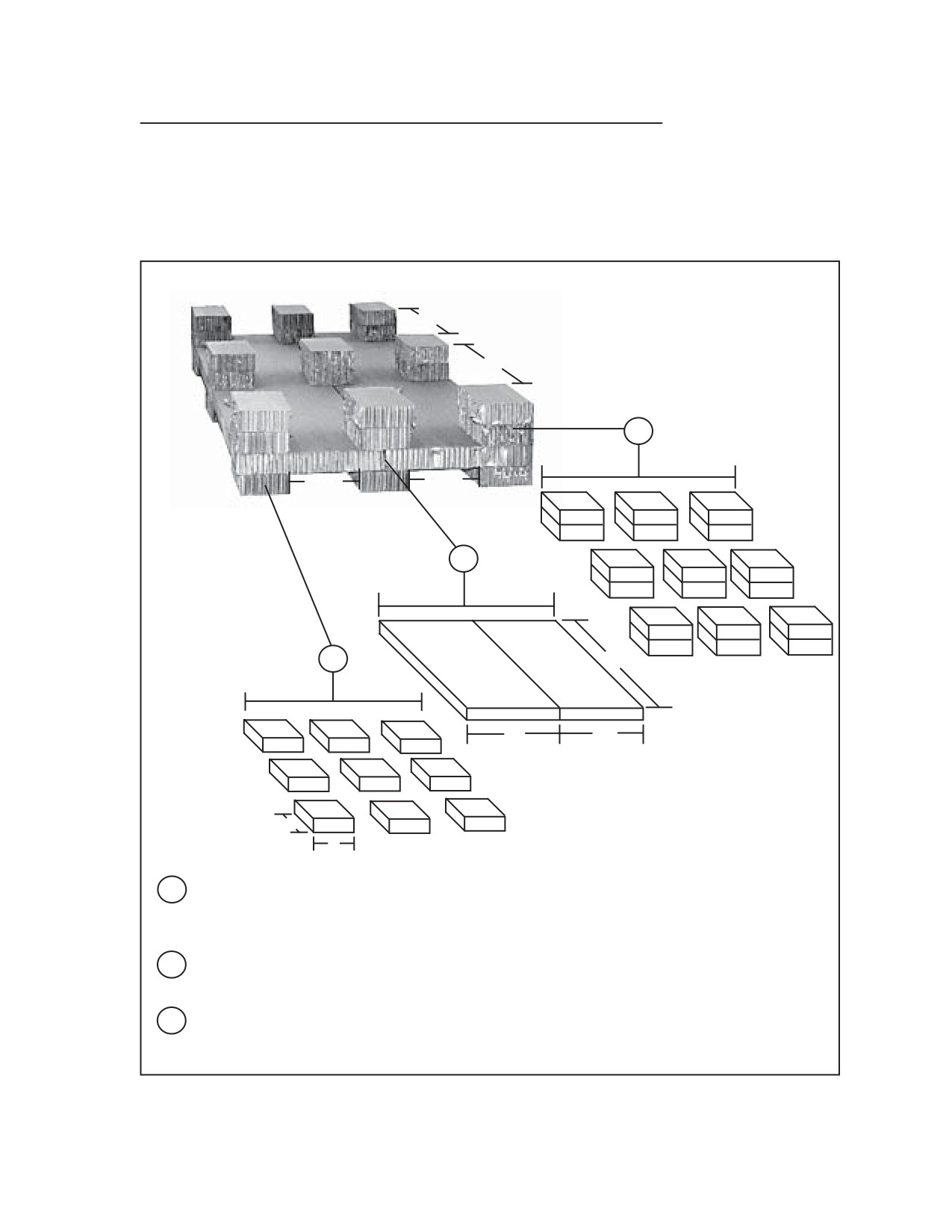
2-7. Prepare honeycomb stack 2 as shown in Figure 2-15. Position stack 2 as
shown in Figure 2-16.
Notes:
1. This drawing is not to scale.
2. All dimensions are in inches.
28
28
REAR
FRONT
3
4 1/2
4 1/2
2
1
92
15 3/4
15 3/4
12
7 1/2
1
Cut nine pieces of 7 1/2- by 12-inch honeycomb. Place the honeycomb to form three rows
of three. Leave 4 1/2 inches between the pieces from front to rear and 28 inches between
pieces from right to left.
2
Cut two pieces of 15 3/4- by 92-inch honeycomb. Place the pieces side by side to form a
31 1/2- by 92-inch piece. Glue the pieces to the honeycomb placed in step 1.
3
Cut and glue eighteen pieces of 7 1/2- by 12-inch honeycomb to form nine two layer
stacks. Position and glue the honeycomb on top of the 31 1/2- by 92-inch piece of honey-
comb as described in step 1.
Figure 2-15. Honeycomb Stack 2 Prepared
2-22
11 May 2005
FM 4-20.158/TO 13C7-7-61
Notes:
1. This drawing is not to scale.
2. All dimensions are in inches.
3. Use 8d nails.
6
31 1/2
5
TOP
92
4
BOTTOM
92
31 1/2
4
Cut a 31 1/2- by 92- by 3/4-inch piece of plywood to form the base for the strongback.
5
Position and nail four 2- by 4- by 92-inch pieces of lumber evenly spaced on top of the
plywood in step 4.
6
Cut a 31 1/2- by 92- by 3/4-inch piece of plywood and place on top of the 2- by 4-inch
lumber placed in step 5. Nail flush in place with 8d nails.
Figure 2-15. Honeycomb Stack 2 Prepared (Continued)
2-23
11 May 2005
FM 4-20.158/TO 13C7-7-61
LEFT
RIGHT
1
2
3
1
REAR
1
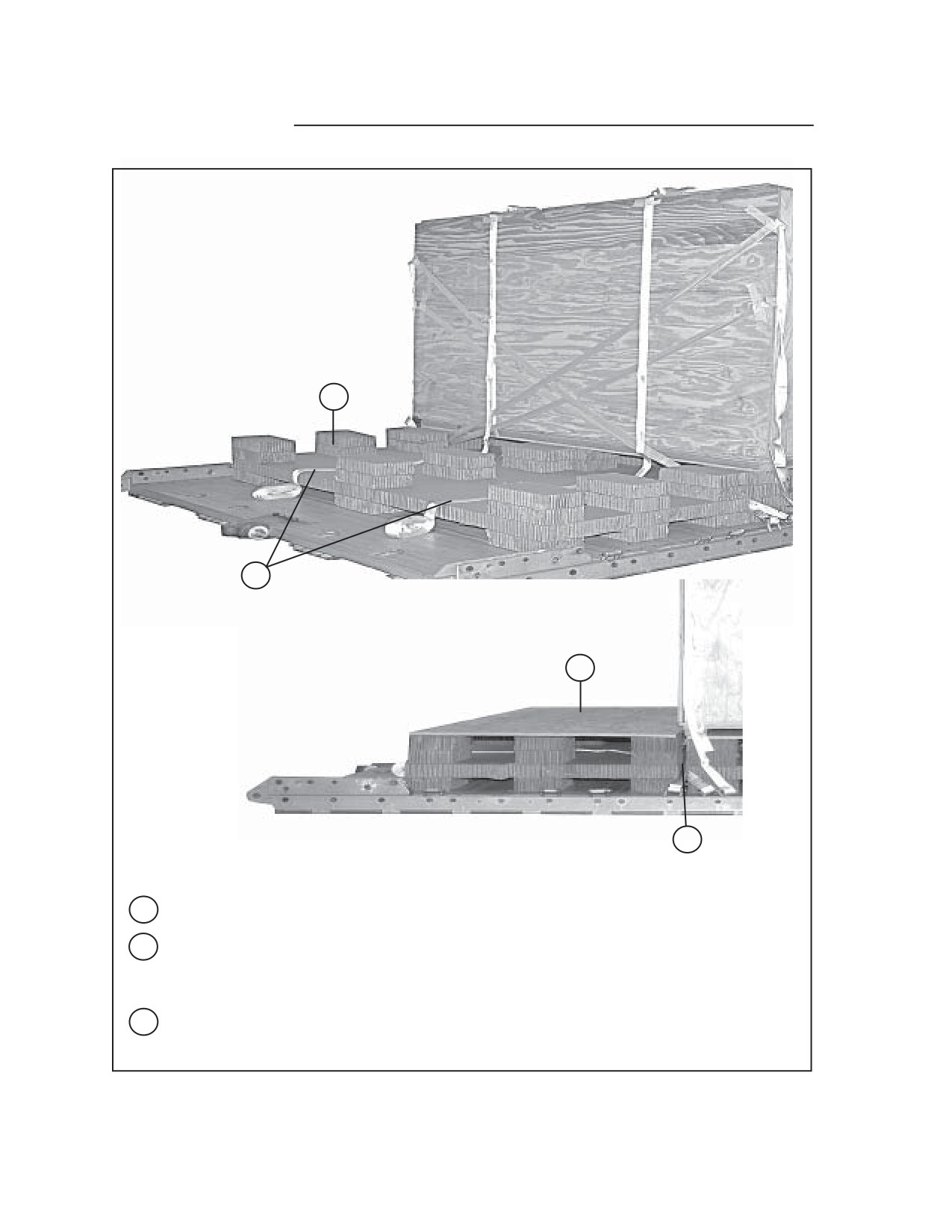
Position and center honeycomb stack 2 one-inch from the rear of honeycomb stack 1.
2
Form two 30-foot lashings. Position and center a lashing lengthwise between the spaces
of honeycomb stack 2 on the right and left. Ensure the sewn D-rings are positioned in
the center of the stack.
3
Position and glue the strongback (built in Figure 2-15, steps 4, 5, and 6) flush on top of
the honeycomb stack 2.
Figure 2-16. Honeycomb Stack 2 Positioned
2-24
11 May 2005
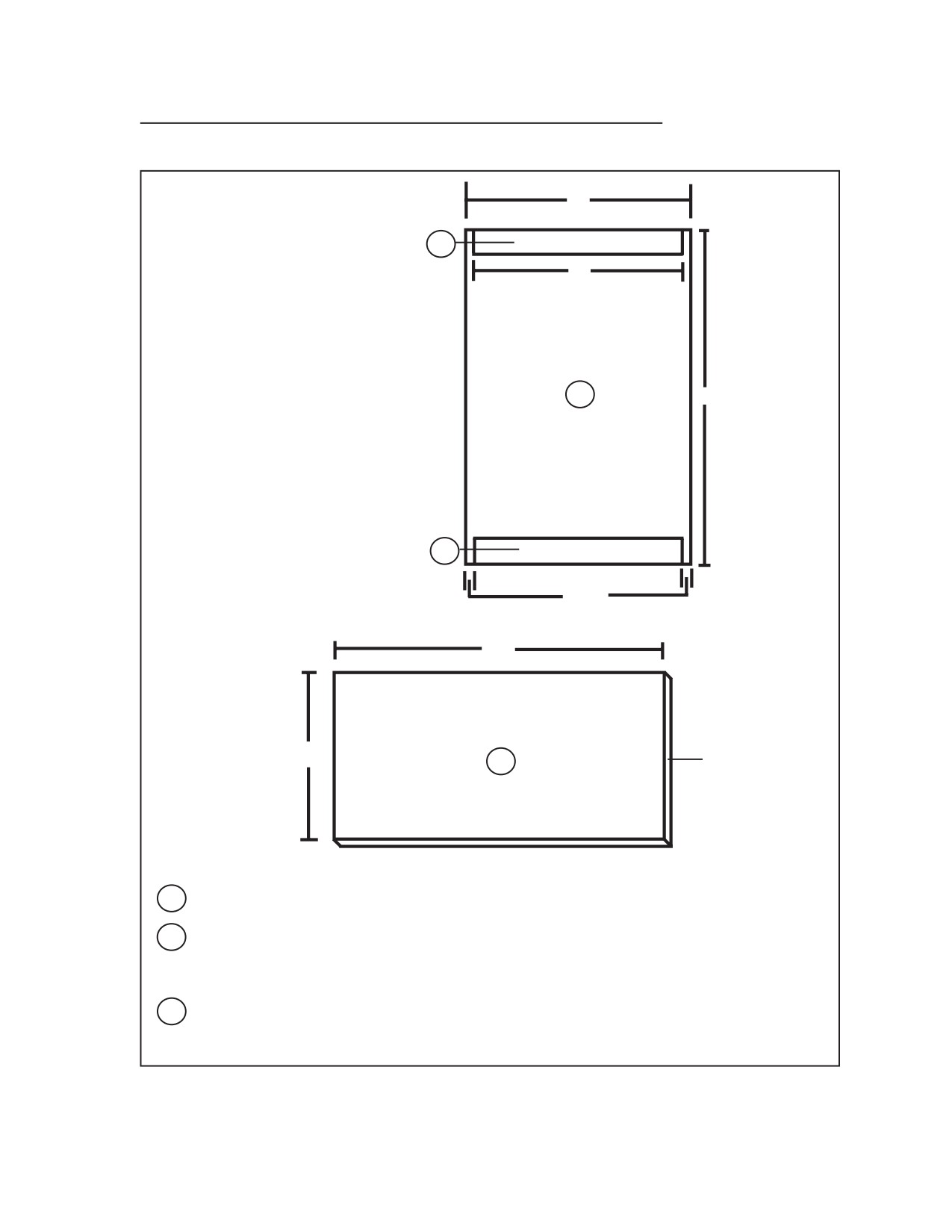
FM 4-20.158/TO 13C7-7-61
CONSTRUCTING AND POSITIONING EQUIPMENT BOX 2
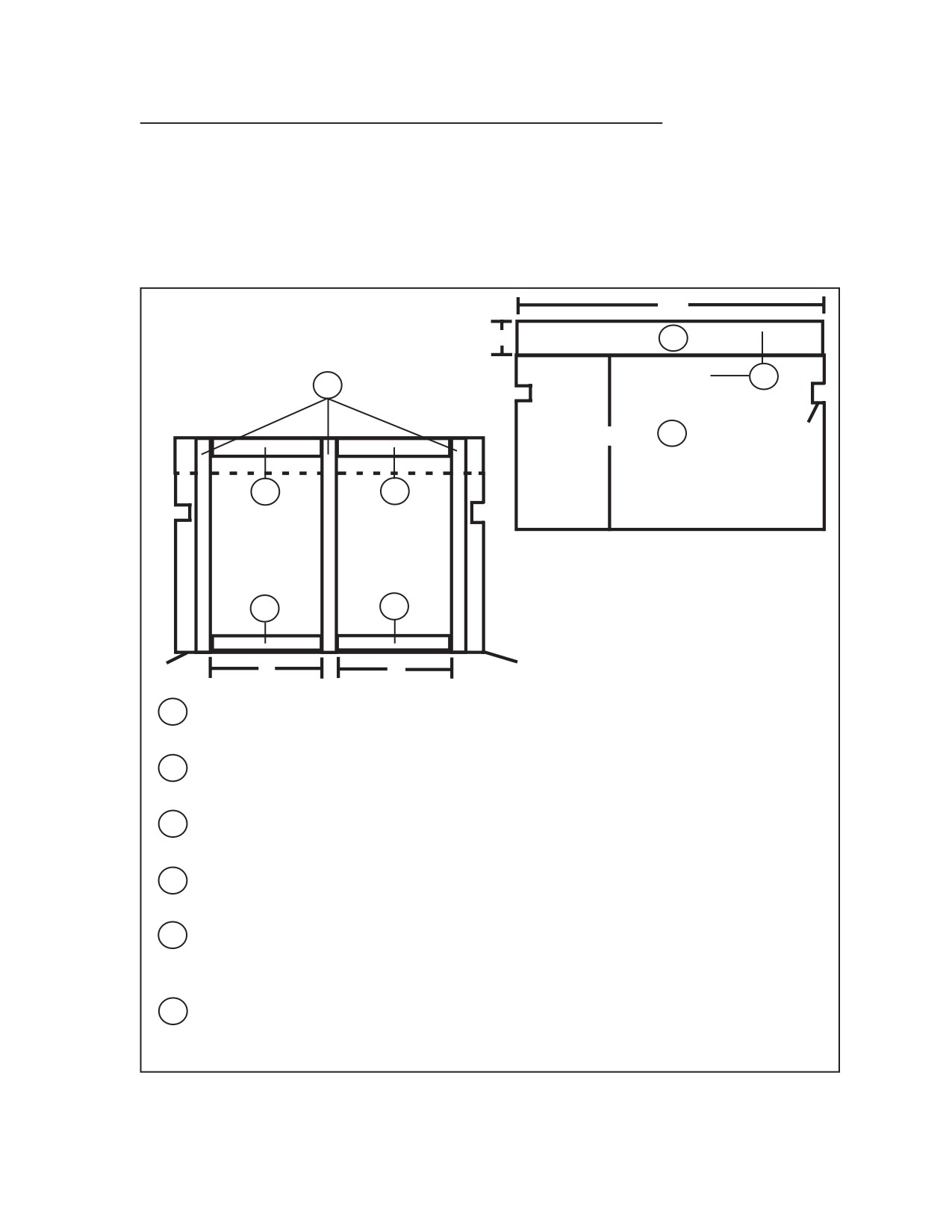
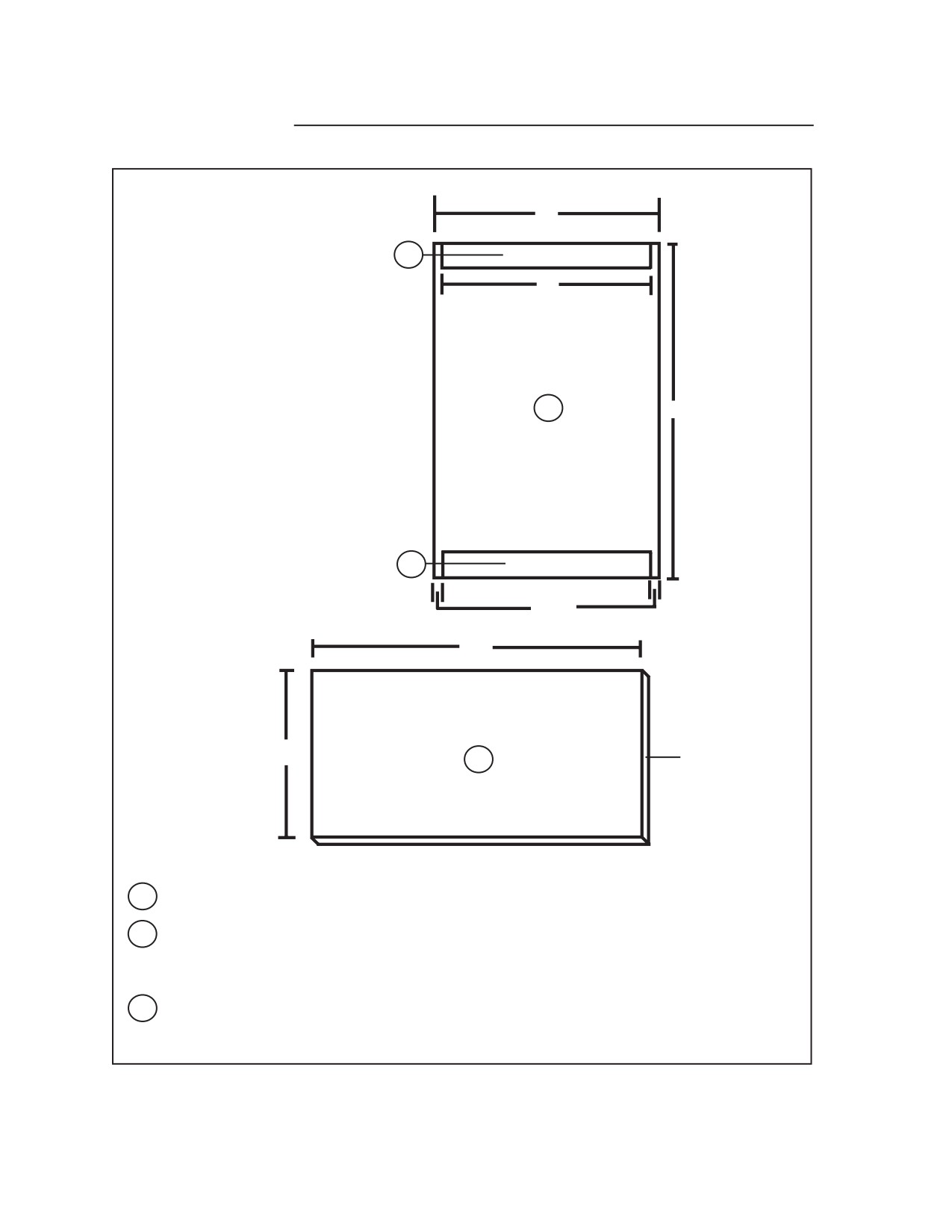
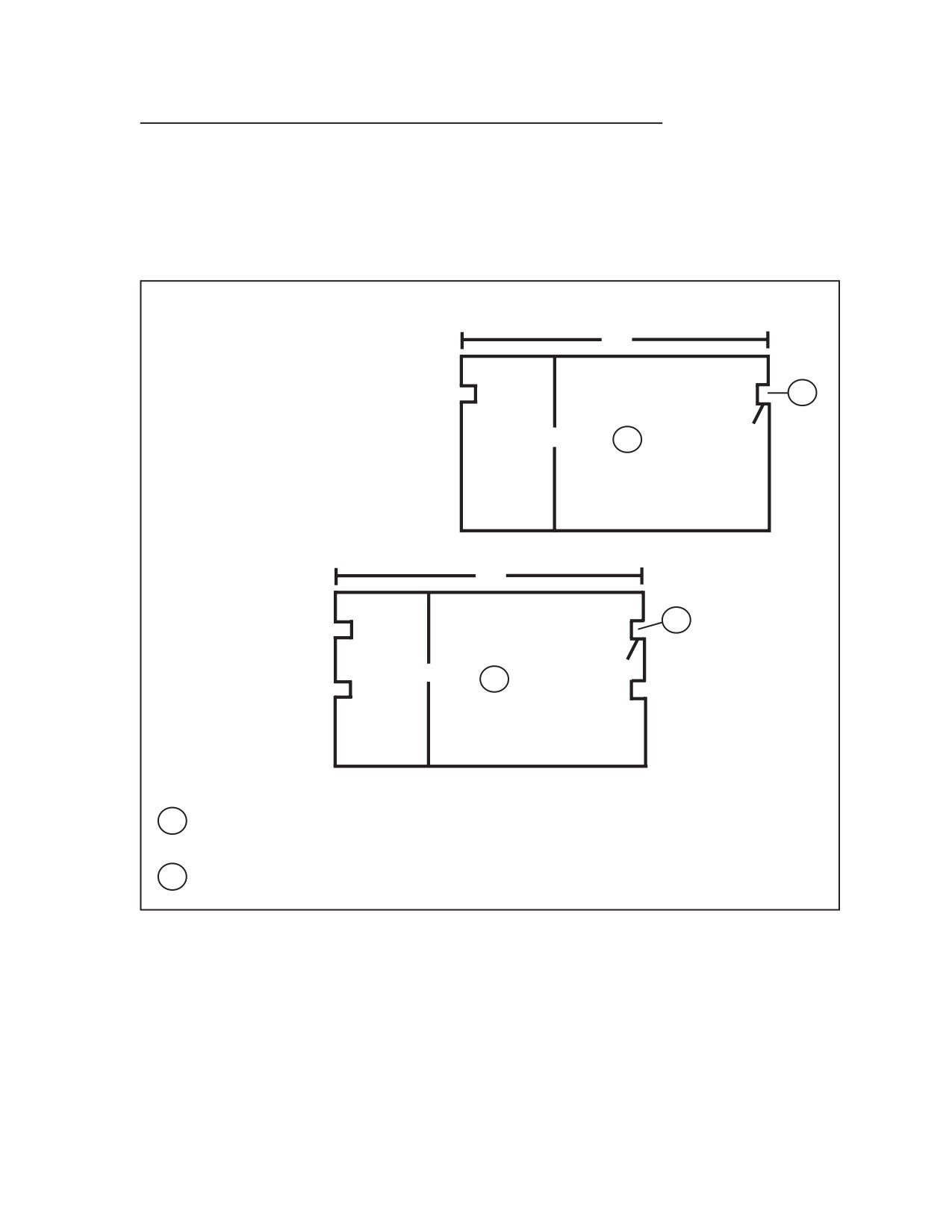
2-8. Construct the individual components of equipment box 2 as shown in Figures
2-17 and 2-18. Assemble and position equipment box 2 as shown in Figure 2-19.
Notes:
96
1. This drawing is not to scale.
2. All dimensions are in inches.
12
1
3. Use 8d nails.
12
4
5
2
2
2
48
34
6
6
6
6
2
3/4
40
40
2 3/4
1
Cut two 3/4- by 12- by 96-inch pieces of plywood. Face the finished side of the plywood
up.
2
Cut two 3/4- by 48- by 96-inch pieces of plywood. Face the finished side of the plywood
up.
3
Make 2- by 2-inch cutouts as shown in the plywood previously cut in step 2.
4
Lay the plywood previously cut in steps 1, 2 and 3 flush lengthwise to form two 60- by
96-inch pieces. Face the finished sides of the plywood up.
5
Cut six 2- by 4- by 60-inch pieces of lumber. Nail four of the pieces 2 3/4 inches from the
edge of the plywood positioned in step 4. Nail the remaining two pieces centered between
the previously nailed pieces. Ensure there are 40 inches between pieces.
6
Cut eight 2- by 4- by 40-inch pieces of lumber. Nail the pieces flush between the pieces
positioned in step 5. Ensure the lumber is aligned along the top and bottom exterior
edges of the plywood.
Figure 2-17. Equipment Box 2 Front and Rear Constructed
2-25
11 May 2005
FM 4-20.158/TO 13C7-7-61
Notes:
1. This drawing is not to scale.
31
2. All dimensions are in inches.
3. Use 8d nails.
2
28
1
60
2
1 1/2
92
32 1/2
3
3/4
1
Cut two 3/4- by 31- by 60-inch pieces of plywood to make the sides of the equipment box.
2
Nail a 2- by 4- by 28-inch piece of lumber along the top and bottom edges of each of the
two side pieces with 8d nails as shown. Allow the plywood to extend past the lumber 1
1/2 inches on each side.
3
Cut two 3/4- by 32 1/2- by 92-inch pieces of plywood to make the top and bottom of
equipment box 2.
Figure 2-18. Equipment Box 2 Sides,Top and Bottom Constructed
2-26
11 May 2005
FM 4-20.158/TO 13C7-7-61
FRONT
Notes:
1
1. This drawing is not to scale.
2. Use 8d nails.
LEFT
RIGHT
6
3
1
34
4
2
REAR
6
5
Note: The side boards are transparent for clarity during construction.
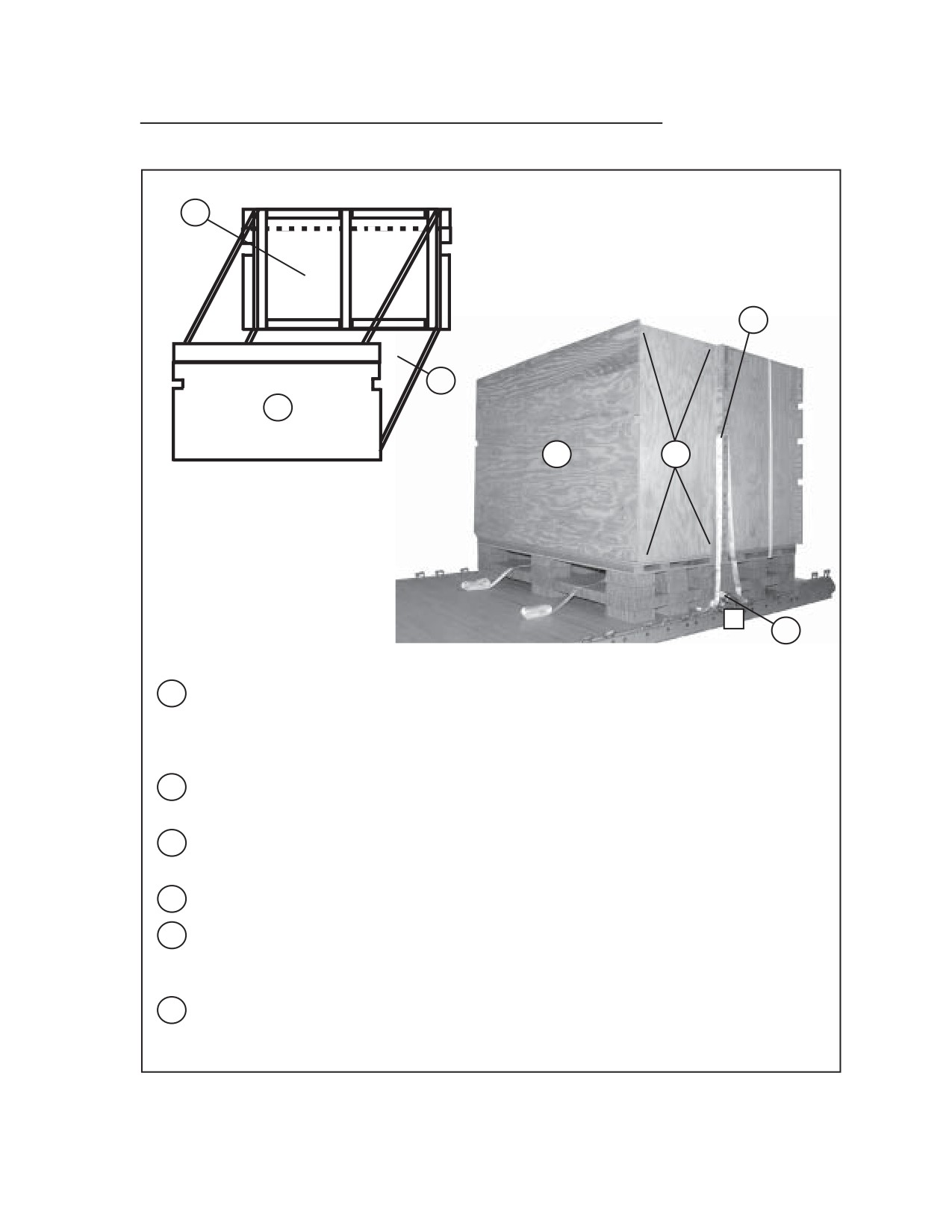
1
Assemble the box by fitting the front and rear flush against the sides with the left and
right of each side flush against the inside vertical lumber uprights and plywood. When
positioning the ends ensure the 34-inch cutout is positioned as shown in the figure
above.
2
Nail the pieces positioned in step 1 together with 8d nails through the sides of the box
and into the vertical lumber pieces in the front and rear of the box.
3
Position and center the plywood for the bottom of the box on the horizontal lumber
supports and nail in place with 8d nails.
4
Position and center equipment box 2 on top of honeycomb stack 2 as shown.
5
Pass a 15-foot lashing through clevis 6 and through its own D-ring. Pass the lashing
across the front of equipment box 2 and through the left front cutout. Temporarily tape
the lashing in place using masking tape.
6
Pass a 15-foot lashing through clevis 6A and through its own D-ring. Pass the lashing
across the front of equipment box 2 and through the right front cutout. Temporarily
tape the lashing in place using masking tape.
Figure 2-19. Equipment Box 2 Partially Assembled and Positioned for Loading
2-27
11 May 2005
FM 4-20.158/TO 13C7-7-61
PREPARING AND STOWING THE EQUIPMENT FOR EQUIPMENT
BOX 2
2-9. Prepare the components for equipment box 2 and stow them in the container
as described below.
a. PREPARING CONTROL MODULE, ULTRA-FILTRATION
MODULE, AND HIGH-PRESSURE PUMP MODULE. Prepare the
control module, ultra-filtration module, and high-pressure pump module
as shown in Figure 2-20 and stow them in the container as shown in
Figure 2-21.
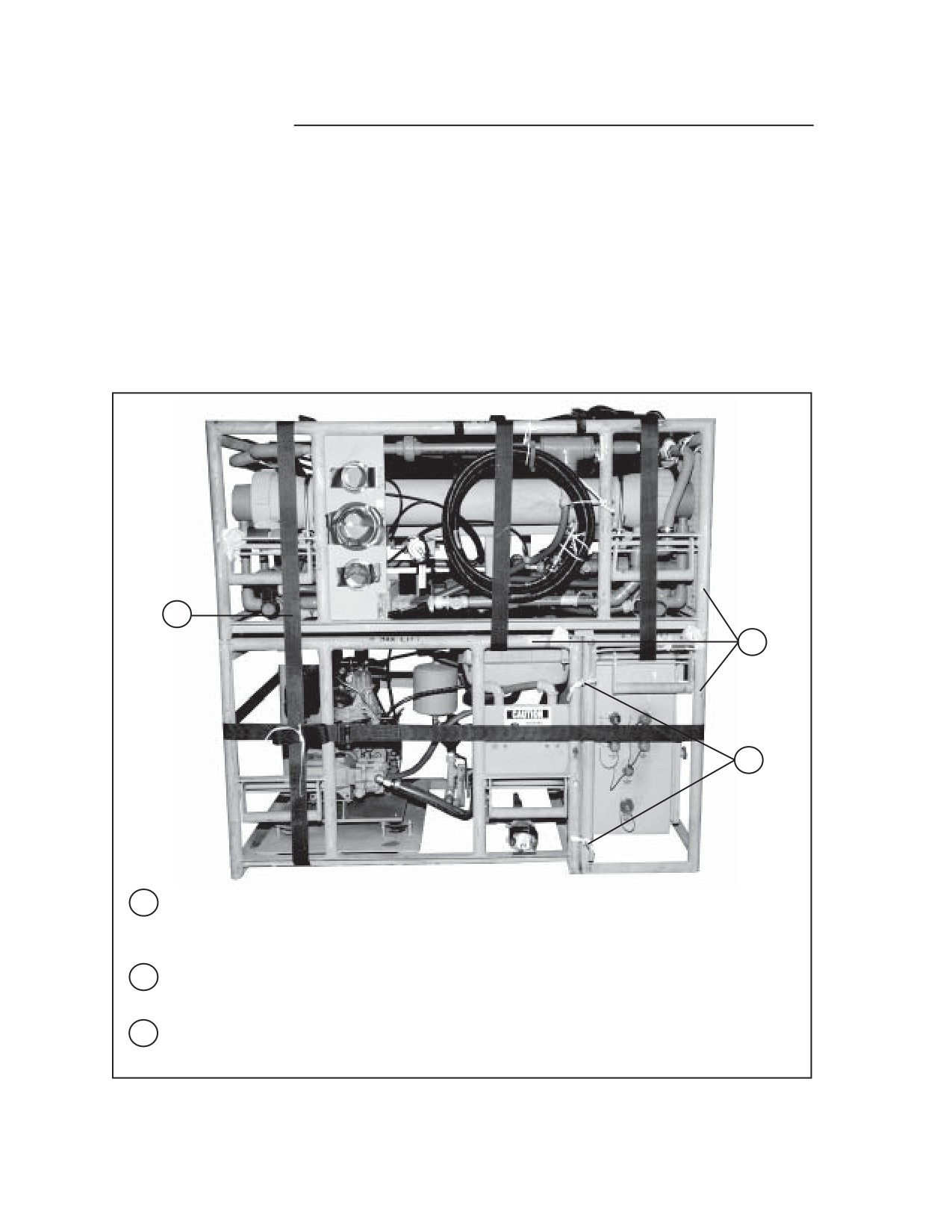
3
1
2
1
Position the control module, ultra-filtration module, and high-pressure pump module as
shown above. The control module and high-pressure pump module are on the bottom
with the ultra-filtration module on the top.
2
Secure the frames of the control module and high-pressure pump module together using
1/2-inch tubular nylon webbing.
3
Route an A-7A strap vertically around the high-pressure pump module and ultra-
filtration module and secure on top.
Figure 2-20. Control Module, Ultra-filtration Module, and High-pressure Pump Module Prepared
2-28
11 May 2005
FM 4-20.158/TO 13C7-7-61
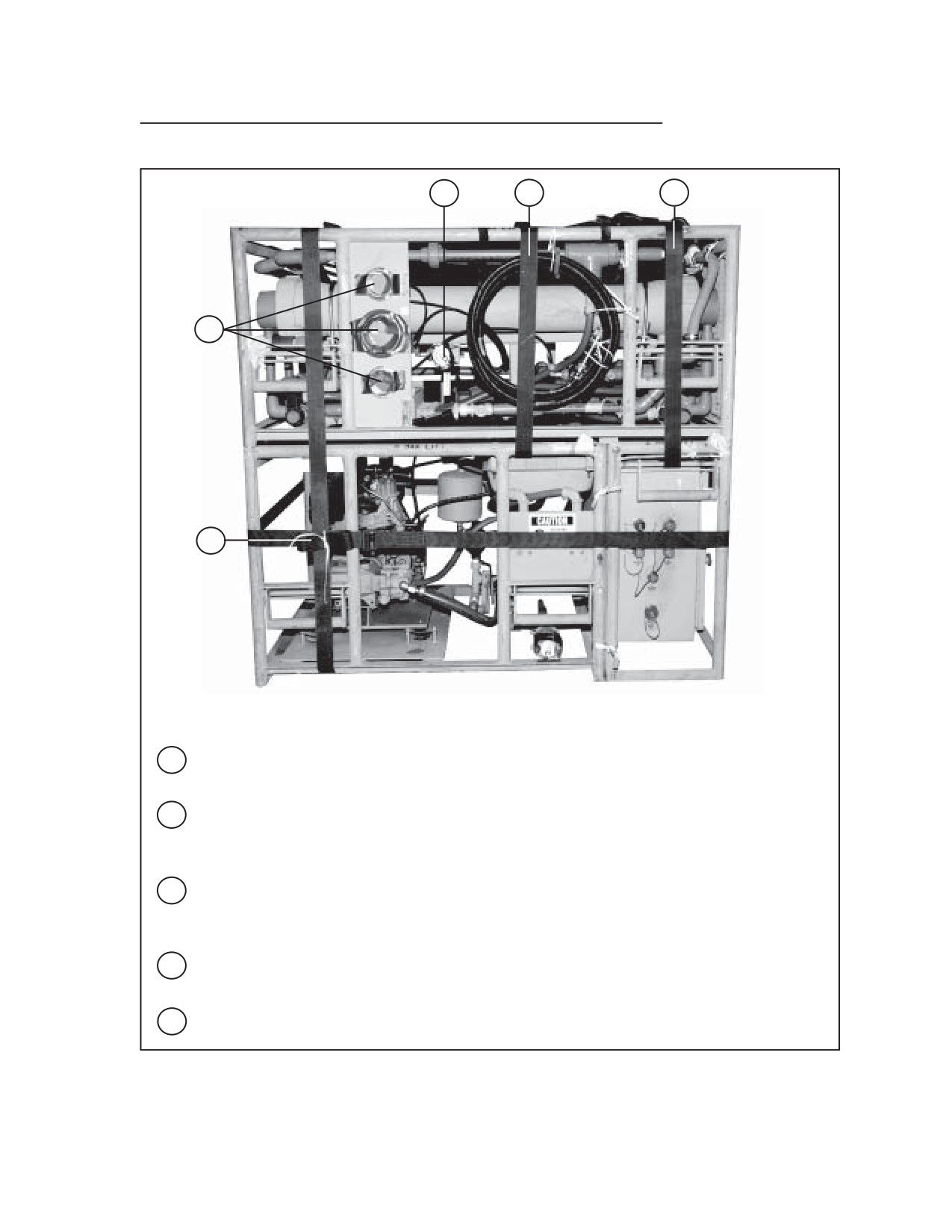
8
6
5
7
4
4
Route an A-7A strap horizontally around the control module and high-pressure pump
module and secure on the side.
5
Route an A-7A strap under the top bar of the control module frame and vertically
around the top of the ultra-filtration module. Secure it on top of the ultra-filtration
module.
6
Route an A-7A strap between the frame and fuel tank of the high-pressure pump
module, and vertically around the ultra-filtration module. Secure it on top of the ultra-
filtration module.
7
Tape the back wash pressure gauge, differential gauge, and the feed pressure gauge on
the ultra-filtration module.
8
Tape the back wash-in valve and feed-in valve on the ultra-filtration module.
Figure 2-20. Control Module, Ultra-filtration Module, and High-pressure Pump Module Prepared
(Continued)
2-29
11 May 2005
FM 4-20.158/TO 13C7-7-61
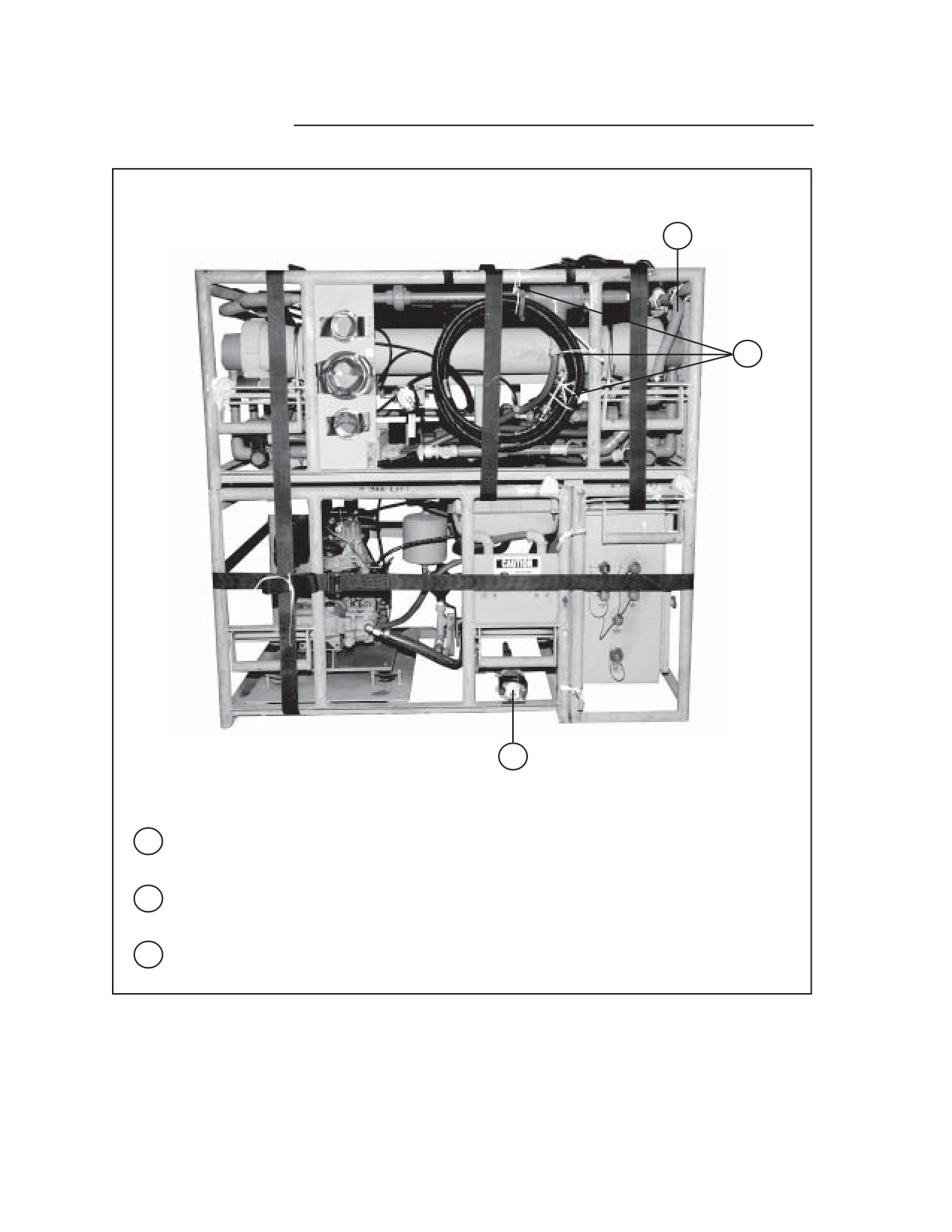
10
9
11
9
Secure the hose from the junction box of the ultra-filtration module using type III nylon
cord.
10
Secure the hose by the protection grill on the ultra-filtration module using type III
nylon cord.
11
Tape the feed water-in valve of the high-pressure pump module with 2-inch adhesive
tape.
Figure 2-20. Control Module, Ultra-filtration Module, and High-pressure Pump Module Prepared
(Continued)
2-30
11 May 2005
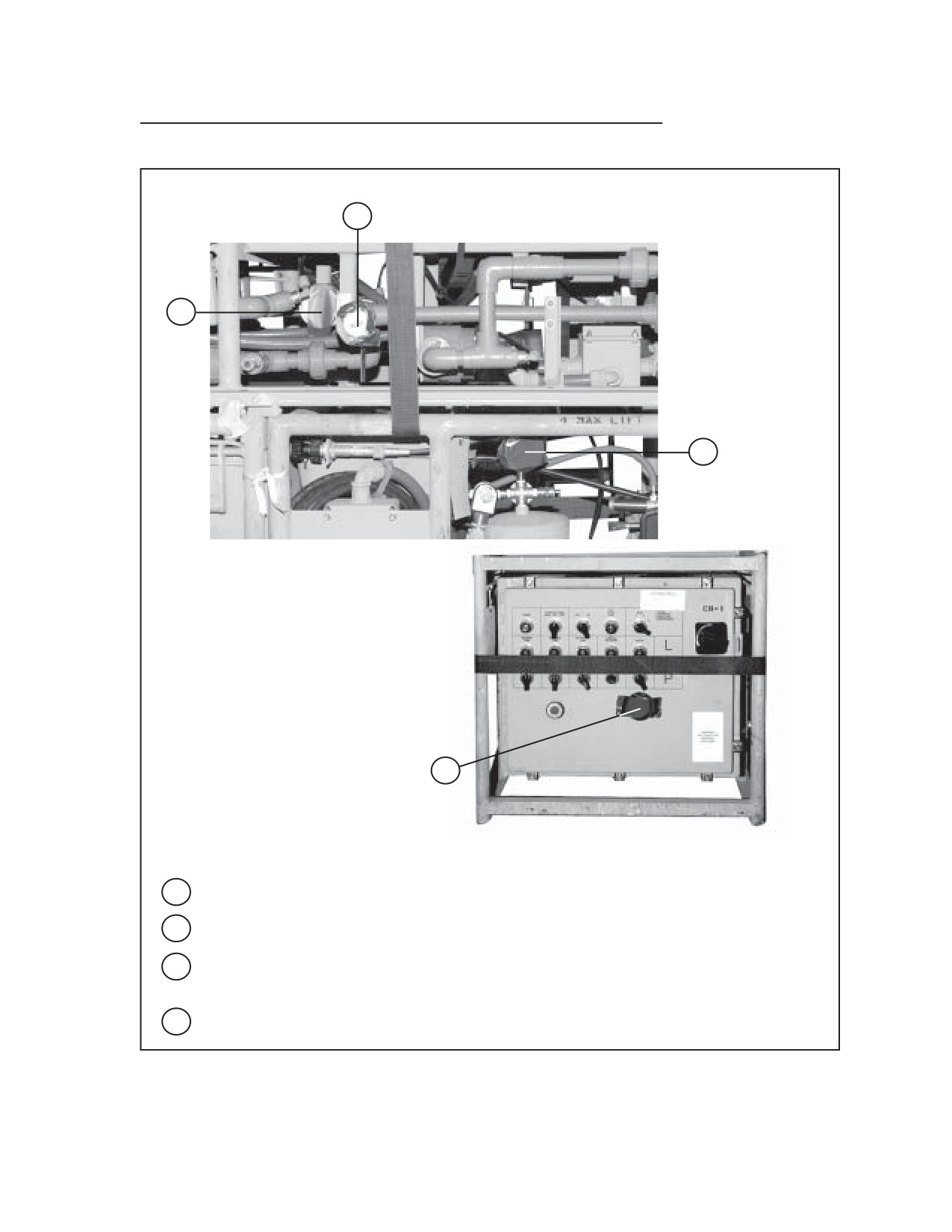
FM 4-20.158/TO 13C7-7-61
13
12
14
15
12
Tape the thermometer on the ultra-filtration module using 2-inch adhesive tape.
13
Tape the reject out valve of the ultra-filtration module using 2-inch adhesive tape.
14
Tape the diesel engine shut-off device air tank gauge on the high-pressure pump module
using 2-inch adhesive tape.
15
Tape the hour meter of the control module using 2-inch adhesive tape.
Figure 2-20. Control Module, Ultra-filtration Module, and High-pressure Pump Module Prepared
(Continued)
2-31
11 May 2005
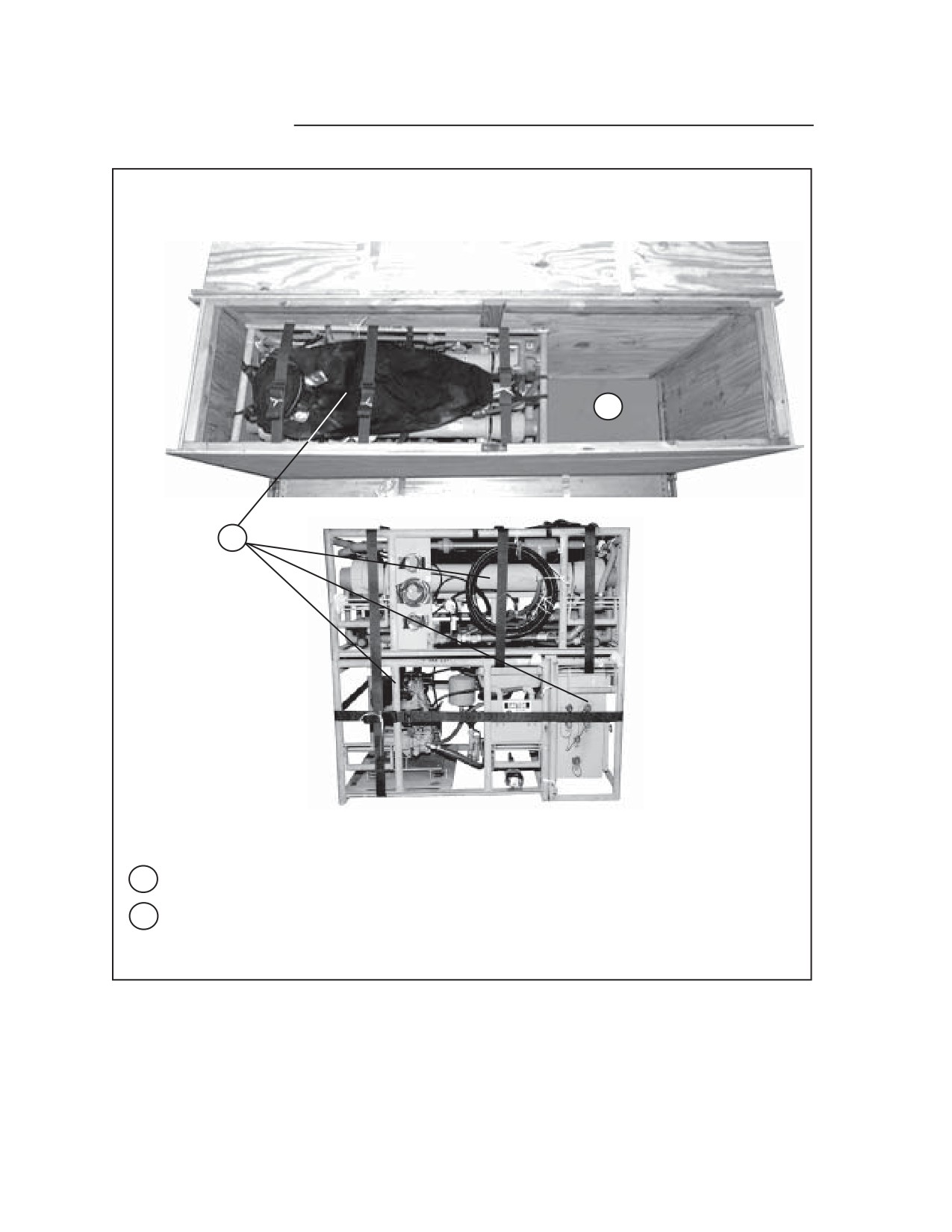
FM 4-20.158/TO 13C7-7-61
Note: The protection grill of the ultra-filtration module will face the left side of box.
FRONT
LEFT
1
2
1
Cut and place a 28- by 87-inch piece of honeycomb in the bottom of equipment box 2.
2
Position the control module, ultra-filtration module and the high-pressure pump module
to the left front corner of equipment box 2.
Figure 2-21. Control Module, Ultra-filtration Module, and High-pressure Pump Module Stowed
2-32
11 May 2005
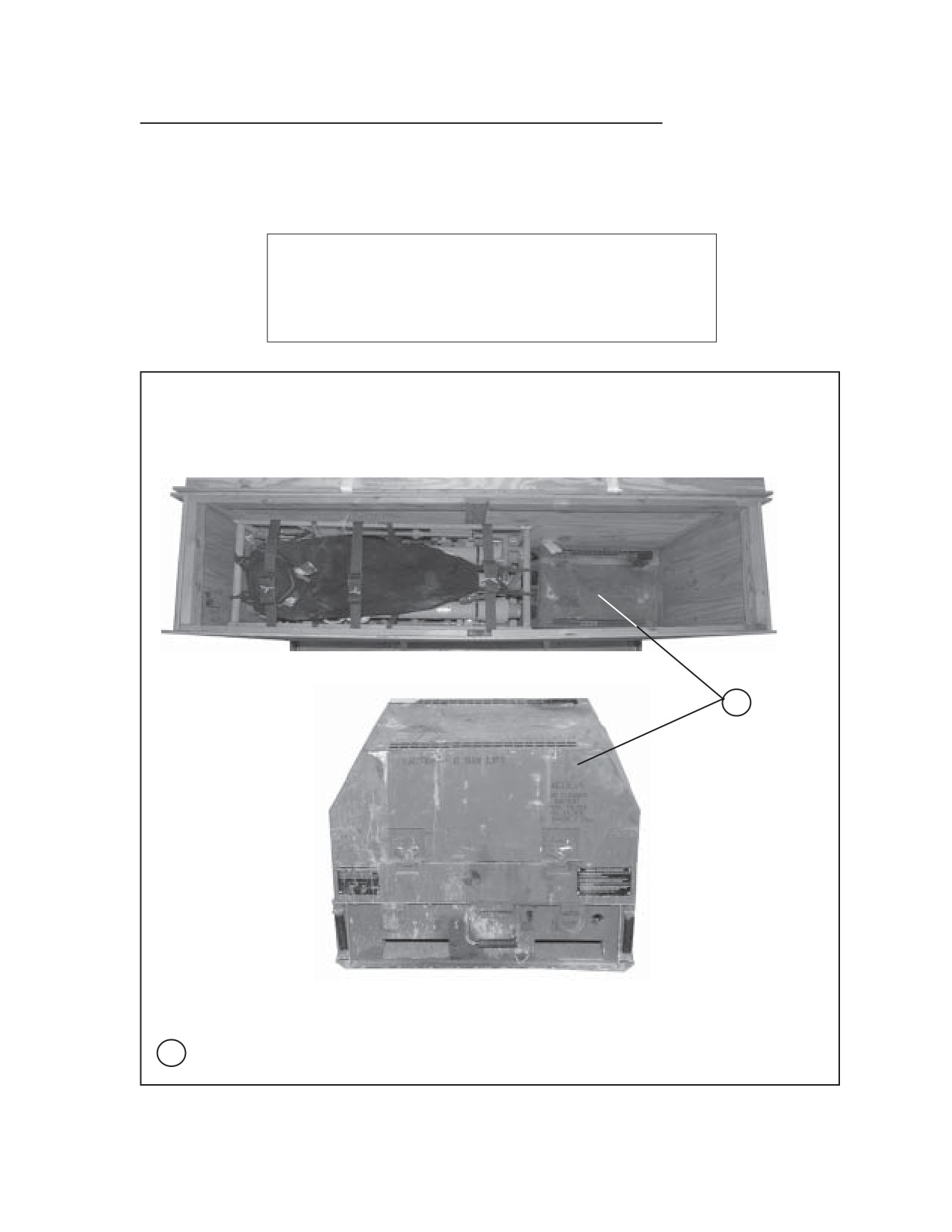
FM 4-20.158/TO 13C7-7-61
b. STOWING 3KW GENERATOR. Make sure the 3kw generator is no
more than 75% full. Stow the 3kw generator in the equipment box as
shown in Figure 2-22.
CAUTION
A full tank does not allow for expansion, and is a danger to
aircraft and air crew. Ensure the 3kw generator complies with
AFMAN 24-204(I)/TM 38-250.
Note: Ensure the controls of the 3kw generator face towards the center of the box.
FRONT
RIGHT
1
1
Position the 3kw generator at the right front corner inside equipment box 2.
Figure 2-22. 3KW Generator Stowed
2-33
11 May 2005
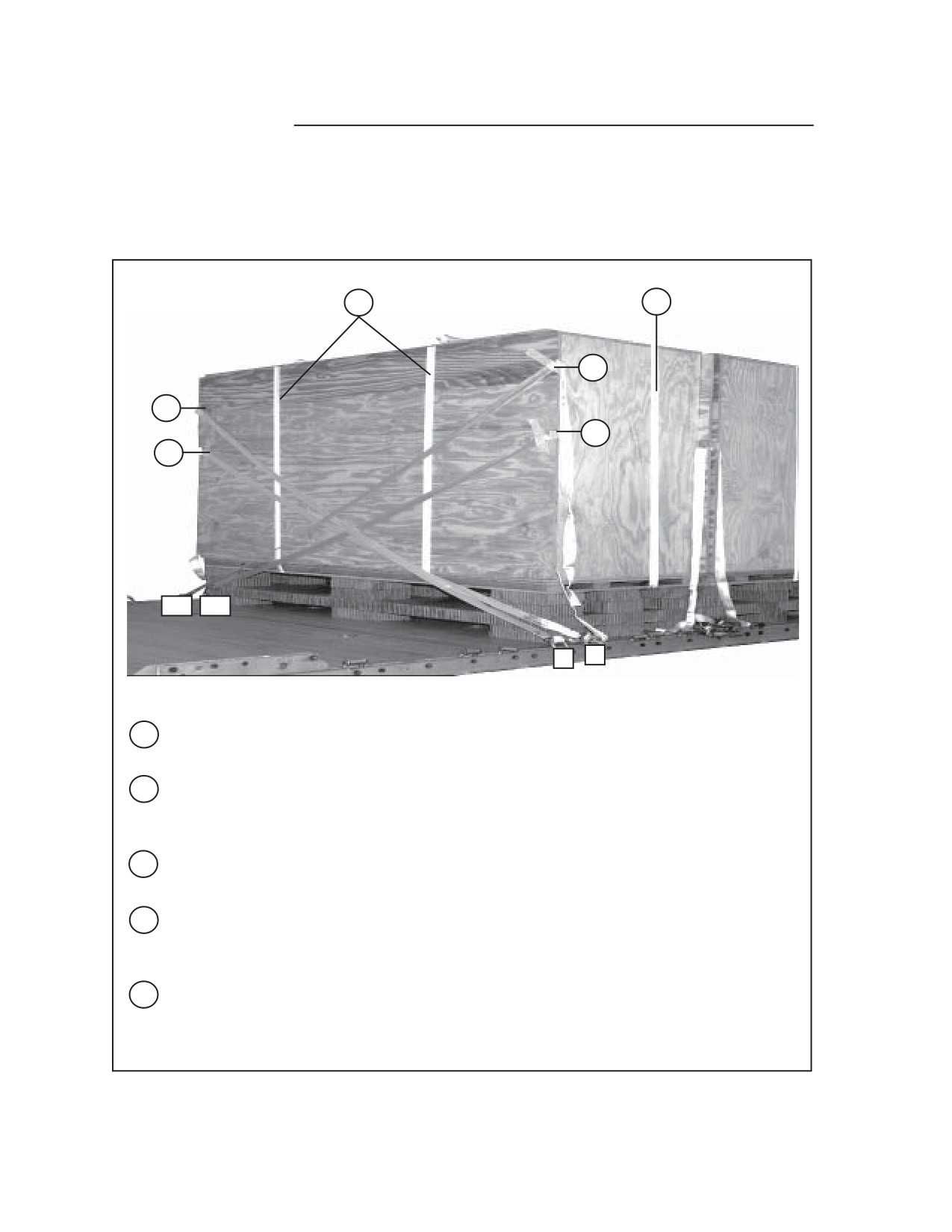
FM 4-20.158/TO 13C7-7-61
CLOSING AND SECURING EQUIPMENT BOX 2
2-10. Close and secure equipment box 2 as shown in Figure 2-23.
Note: Use 8d nails.
3
2
5
5
4
4
13A
12A
13
12
Note: Pad and tape all cutouts prior to routing lashings.
1
Fill the remaining space with honeycomb to the top of the box. Place the plywood lid on
top of equipment box 2 and nail together using 8d nails (not shown).
2
Form a 30-foot lashing and route it around equipment box 2 widthwise. Secure the
lashing on top using two D-rings and a load binder. Ensure the lashing is routed under
the strongback.
3
Route the two pre-positioned 30-foot lashings around equipment box 2 lengthwise.
Secure each lashing on top using two D-rings and a load binder.
4
Pass a 15-foot lashing through clevis 12 and through its own D-ring. Route the lashing
across the rear of equipment box 2 and through the left bottom cutout. Temporarily tape
in place using 2-inch masking tape. Repeat for clevis 12A to the right bottom cutout.
5
Pass a 15-foot lashing through clevis 13 and through its own D-ring. Route the lashing
across the rear of equipment box 2 and through the left top cutout. Temporarily tape in
place using 2-inch masking tape. Repeat for clevis 13A to the right top cutout.
Figure 2-23. Equipment Box 2 Closed and Secured
2-34
11 May 2005
FM 4-20.158/TO 13C7-7-61
PREPARING AND POSITIONING HONEYCOMB STACK 3
2-11. Prepare honeycomb stack 3 as shown in Figure 2-24. Position honeycomb
stack 3 as shown in Figure 2-25.
Notes:
1. This drawing is not to scale.
2. All dimensions are in inches.
28
28
REAR
FRONT
3
9 1/2
9 1/2
2
1
92
20
20
12
7
1
Cut nine pieces of 7- by 12-inch honeycomb. Place the honeycomb to form three rows of
three. Leave 9 1/2 inches between the pieces from front to rear and 28 inches between
pieces from right to left.
2
Cut two pieces of 20- by 92-inch honeycomb. Place the pieces side by side to form a 40-
by 92-inch piece of honeycomb. Glue the pieces to the honeycomb placed in step 1.
3
Cut and glue eighteen pieces of 7- by 12-inch honeycomb to form nine two layer stacks.
Position and glue the honeycomb on top of the 40- by 92-inch piece of honeycomb as
described in step 1.
Figure 2-24. Honeycomb Stack 3 Prepared
2-35
11 May 2005
FM 4-20.158/TO 13C7-7-61
1
2
3
1
1
Position and center honeycomb stack 3 one-inch from the rear of honeycomb stack 2.
2
Form two 30-foot lashings. Position and center a lashing lengthwise between each space
of honeycomb stack 3 on the right and left. Ensure the sewn D-rings are positioned in
the center of the stack.
3
Cut and position a 40- by 92- by 3/4-inch piece of plywood on top of honeycomb stack 3.
Figure 2-25. Honeycomb Stack 3 Positioned
2-36
11 May 2005
FM 4-20.158/TO 13C7-7-61
CONSTRUCTING AND POSITIONING EQUIPMENT BOX 3
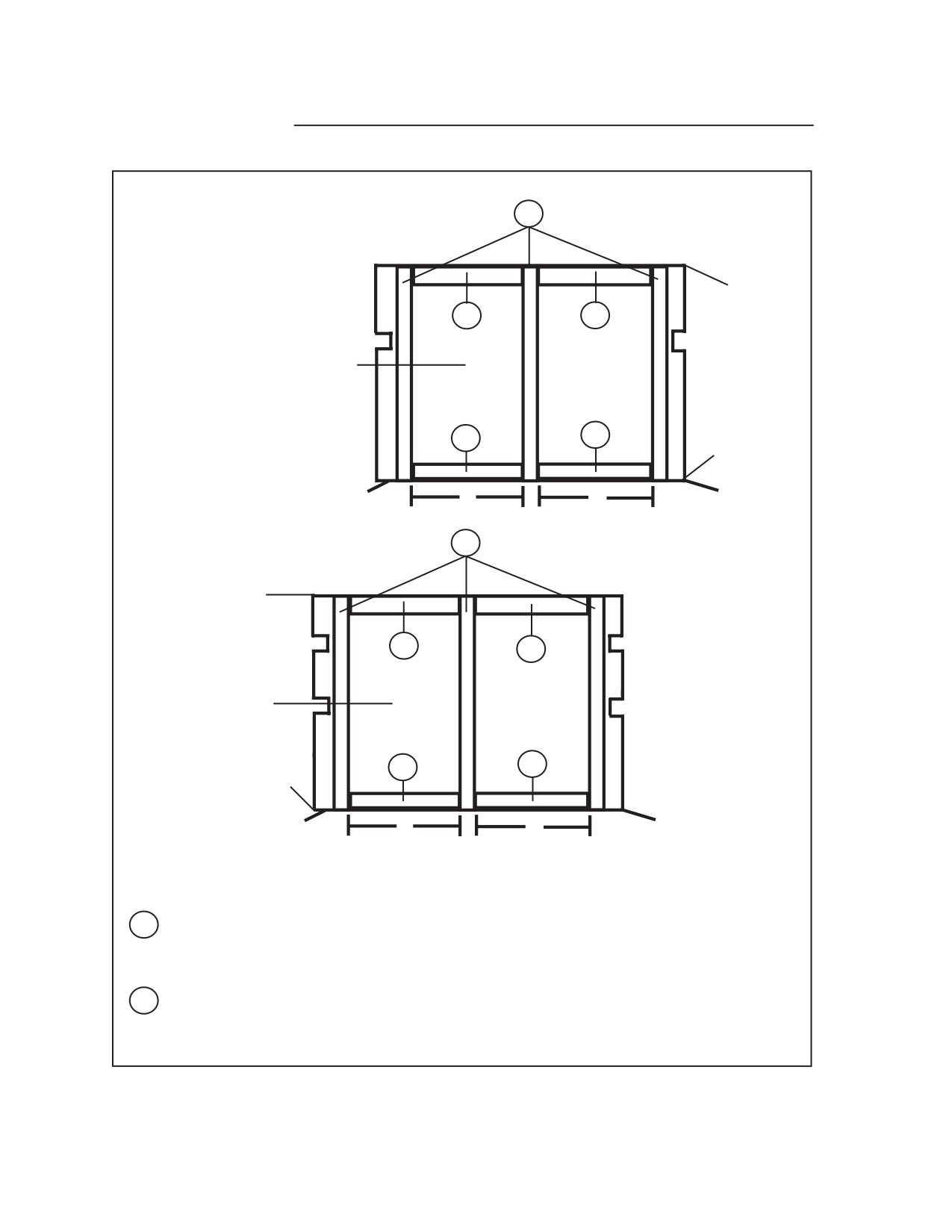
2-12. Construct the individual components of equipment box 3 as shown in Figures
2-26 and 2-27. Assemble and position equipment box 3 as shown in Figure 2-28.
Notes:
1. This drawing is not to scale.
96
2. All dimensions are in inches.
12
2
2
2
48
1
34
FRONT
96
12
2
2
12
2
48
1
20
REAR
1
Cut two 3/4- by 48- by 96-inch pieces of plywood. Face the finished side of the plywood
up.
2
Make 2- by 2-inch cutouts as shown in the plywood previously cut in step 1.
Figure 2-26. Equipment Box 3 Front and Rear Constructed
2-37
11 May 2005
FM 4-20.158/TO 13C7-7-61
Notes:
1. This drawing is not to scale.
3
2. All dimensions are in inches.
3. Use 8d nails.
TOP
4
4
FRONT
4
4
BOTTOM
2
3/4
40
40
2 3/4
3
TOP
4
4
REAR
4
4
BOTTOM
40
40
2 3/4
2 3/4
3
Cut six 2- by 4- by 48-inch pieces of lumber. Nail four of the pieces 2 3/4 inches from the
edge of the plywood cut in step 1. Nail one of the remaining two pieces centered between
the previously nailed pieces. Ensure there are 40 inches between pieces.
4
Cut eight 2- by 4- by 40-inch pieces of lumber. Nail the pieces flush between the pieces
positioned in step 3. Ensure the lumber is aligned along the top and bottom exterior
edges of the plywood.
Figure 2-26. Equipment Box 3 Front and Rear Constructed (Continued)
2-38
11 May 2005
FM 4-20.158/TO 13C7-7-61
Notes:
41
1. This drawing is not to scale.
2. All dimensions are in inches.
3. Use 8d nails.
2
38
1
48
2
1 1/2
92
42 1/2
3
3/4
1
Cut two 3/4- by 41- by 48-inch pieces of plywood to make the sides of the equipment box.
2
Nail a 2- by 4- by 38-inch piece of lumber along the top and bottom edges of each of the
two side pieces with 8d nails as shown. Allow the plywood to extend past the lumber 1
1/2 inches on each side.
3
Cut two 3/4- by 42 1/2- by 92-inch pieces of lumber to make the top and bottom of the
equipment box.
Figure 2-27. Equipment Box 3 Sides,Top and Bottom Constructed
2-39
11 May 2005
FM 4-20.158/TO 13C7-7-61
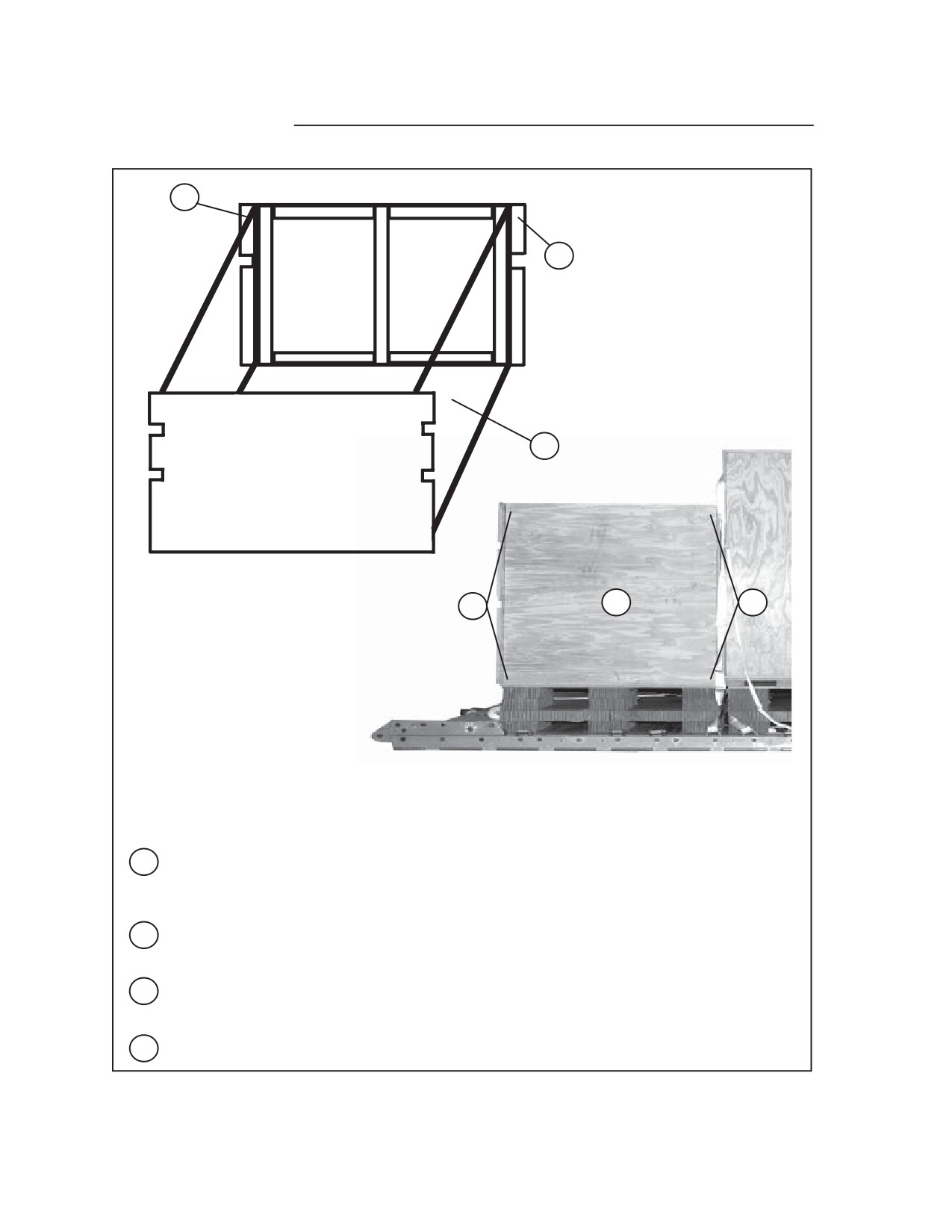
Notes:
FRONT
1
1. This drawing is not to scale.
2. Use 8d nails.
1
LEFT
RIGHT
34
3
20
REAR
2
4
2
Note: The side boards are transparent for clarity during construction.
1
Assemble the box. When positioning the ends ensure that the 34-inch cutout is posi-
tioned at the front bottom and the 20-inch cutout is positioned at the rear bottom
portion of the box.
2
Nail the pieces positioned in step 1 together with 8d nails through the sides of the box
and into the vertical lumber pieces in the front and rear of the box.
3
Position and center the plywood for the bottom of the box on the horizontal lumber
supports and nail in place with 8d nails.
4
Position and center equipment box 3 on top of honeycomb stack 3 as shown.
Figure 2-28. Equipment Box 3 Partially Assembled and Positioned for Loading
2-40
11 May 2005
FM 4-20.158/TO 13C7-7-61
PREPARING AND STOWING THE EQUIPMENT FOR EQUIPMENT
BOX 3
2-13. Prepare the components for equipment box 3 and stow them in the container
as described below.
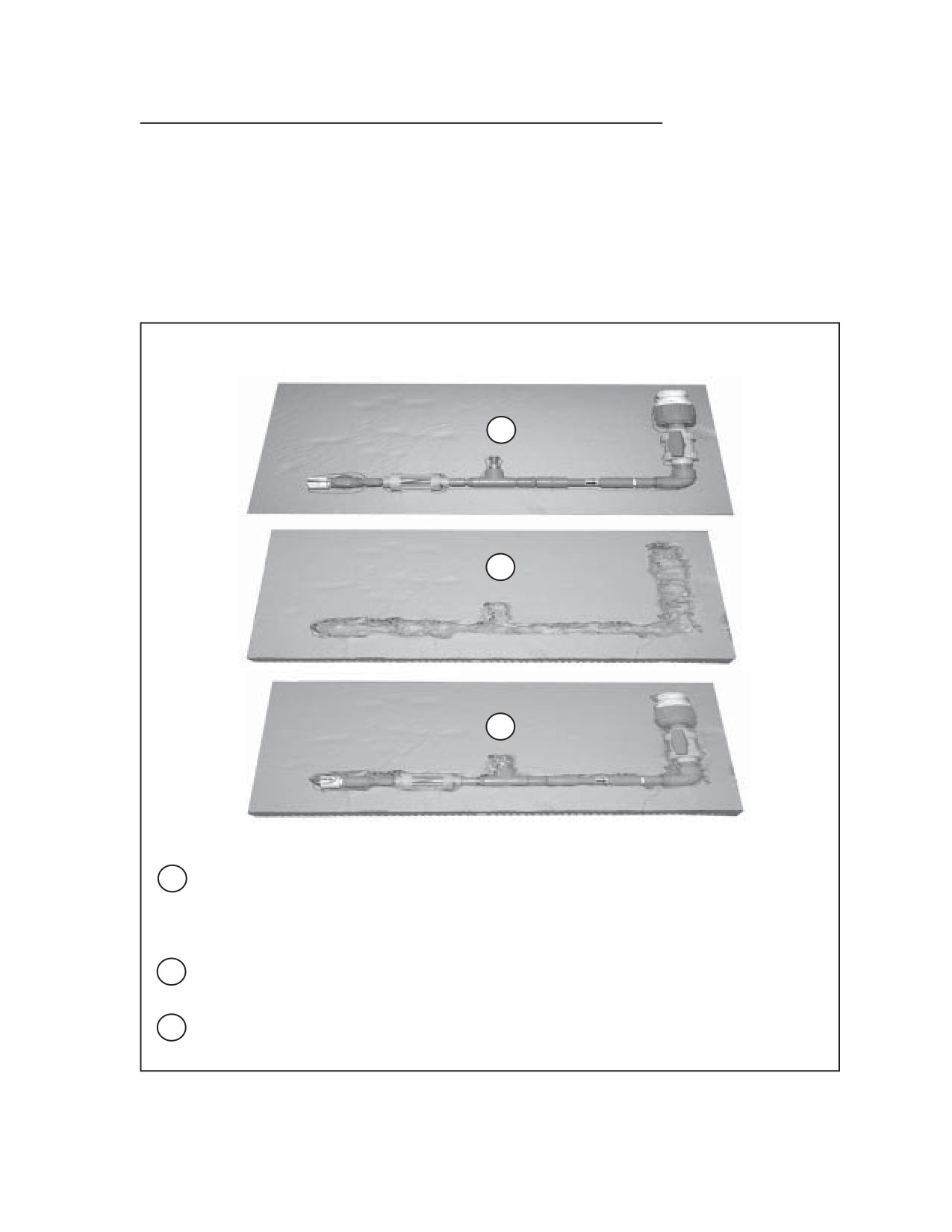
a. PREPARING SECURE PUMP SKID COVER (CONTAMINATION
AVOIDANCE). Prepare the secure pump skid cover as shown in Figure
2-29.
Note: Ensure that the secure pump skid cover is removed from the components of end
items (COEI) box.
1
2
3
1
Cut two 37- by 23-inch pieces of honeycomb. Using one piece, place the secure pump
skid cover (contamination avoidance) on top of the piece of honeycomb. Trace around
secure pump skid cover (contamination avoidance) with a marker. Mark the second
piece of honeycomb in the same manner.
2
Remove the secure pump skid cover (contamination avoidance) from the piece of honey-
comb and crush the area that was marked with a hammer on both pieces.
3
Place the secure pump skid cover (contamination avoidance) inside the crushed area of
the honeycomb.
Figure 2-29. Secure Pump Skid Cover Prepared
2-41
11 May 2005
FM 4-20.158/TO 13C7-7-61
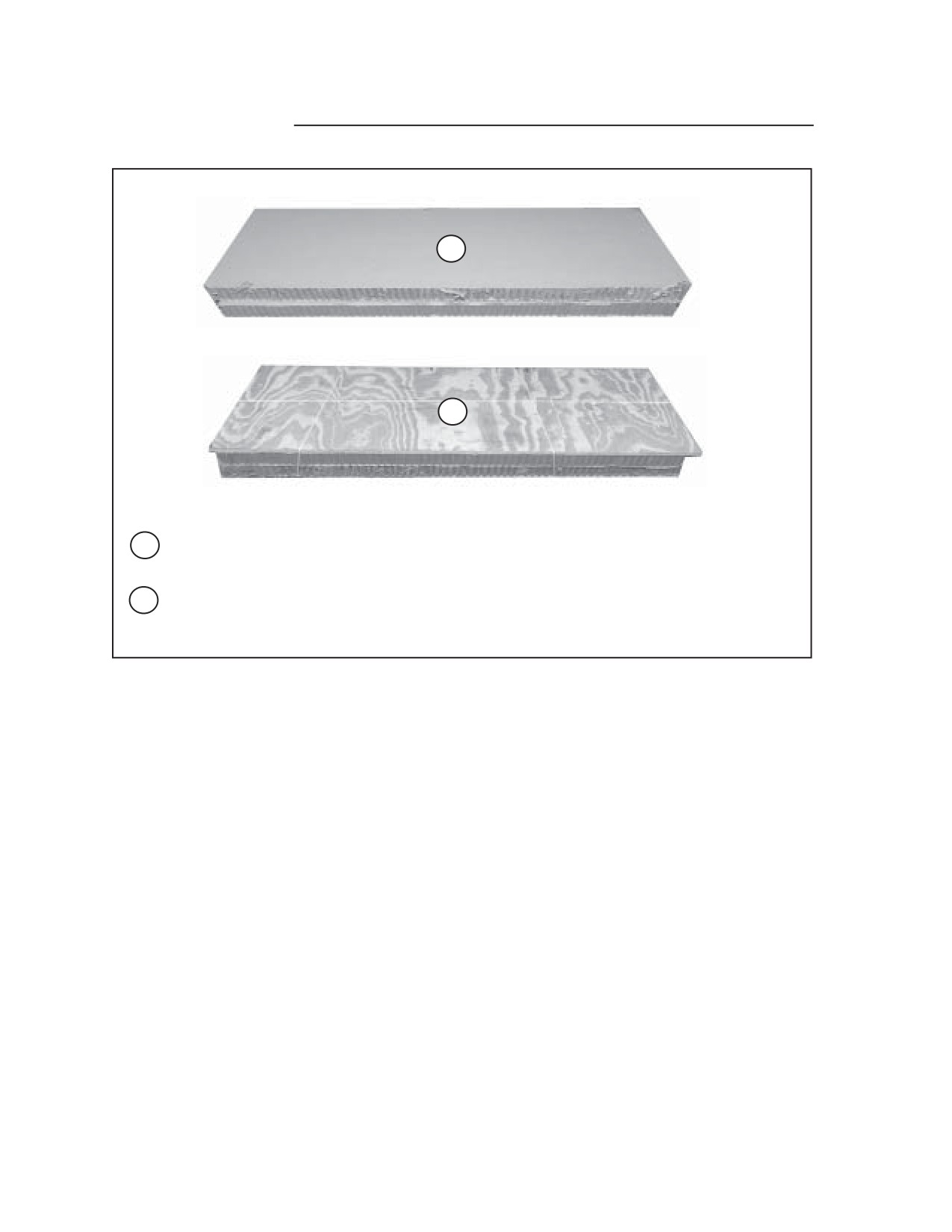
4
5
4
Place the second piece of 37- by 23-inch honeycomb on top of the piece with the secure
pump skid cover (contamination avoidance) inside it.
5
Cut two 3/4- by- 37- by- 23-inch pieces of plywood. Place one piece under and one piece
over the honeycomb housing the secure pump skid cover (contamination avoidance).
Secure the pieces together with three lengths of type III nylon cord.
Figure 2-29. Secure Pump Skid Cover Prepared (Continued)
2-42
11 May 2005
FM 4-20.158/TO 13C7-7-61
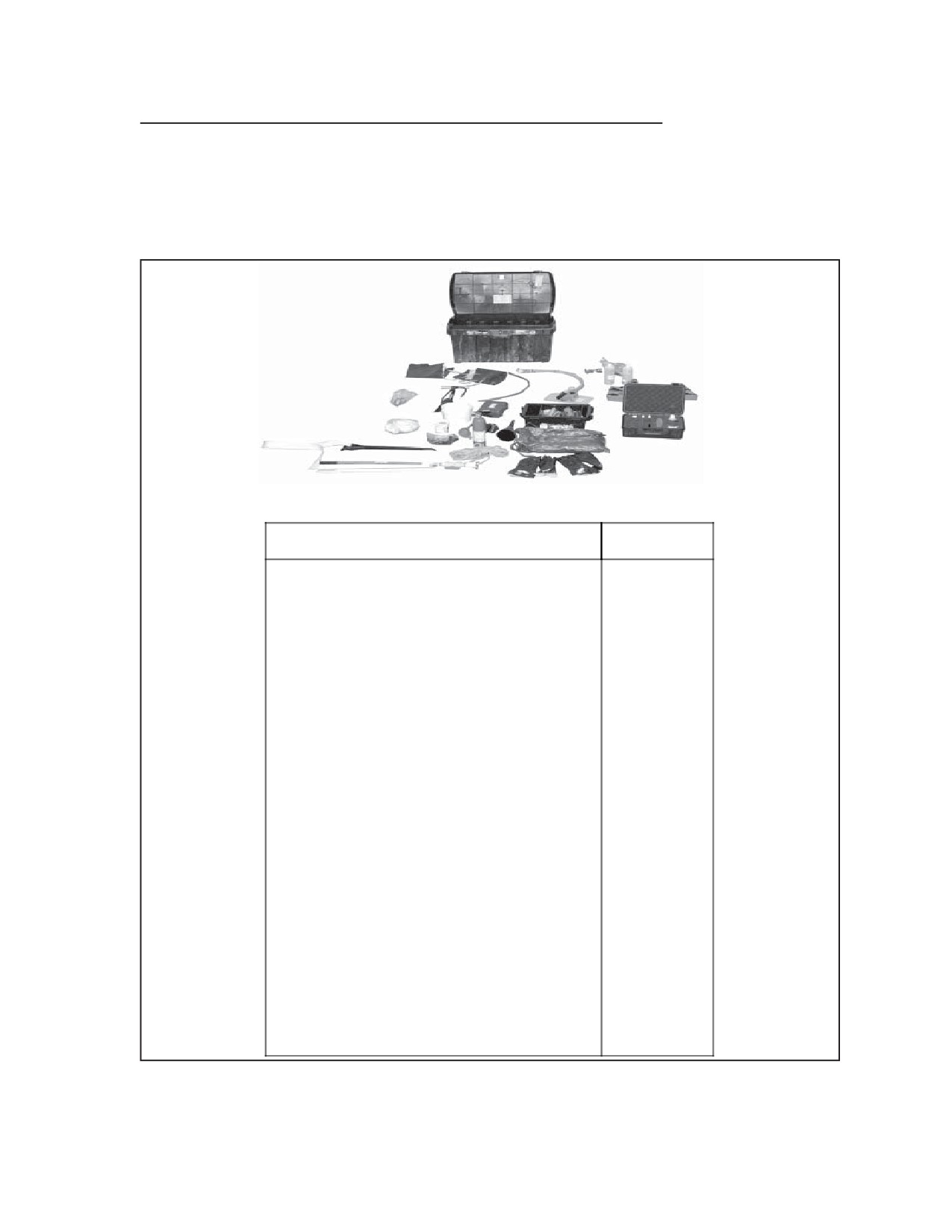
b. PREPARING BASIC ISSUE ITEMS (BII) BOX, COMPONENTS OF
END ITEMS (COEI) BOX AND COMPONENTS OF END ITEMS
(COEI) CABLE BOX. Prepare the basic issue items box, components of
end items box and components of end items cable box, and stow in the
container as shown in Figure 2-30.
Note: The components listed below are stored inside the basic issue items box. The total
weight of the box is 100 pounds.
Quantity
Item Description
Instrument case
1
Fire extinguisher
1
Apron
2
Gloves
2
Pipe repair system
1
Sand bags
20
Small funnel
1
Large funnel
1
Goggles
2
Dust masks
25
Rope
50-feet
Flotation device
1
Retaining rings
7
Chlorine photometer
1
Utility pail, 5-quart
1
Hearing protection
1
Tool kit
1
Ultra-filtration cleaning outlet
1
Stirring paddle
1
Cleaning adapter
1
Flushing adapter
1
Textile hose, 3/8-inch
1
End cap removal tool
1
Pipe wrench, adjustable strap
1
Over-pack kit box
1
Fabric-tank repair kit
1
Figure 2-30. Basic Issue Items Box, Components of End Items Box and Components of End
Items Cable Box Prepared and Stowed
2-43
11 May 2005
FM 4-20.158/TO 13C7-7-61
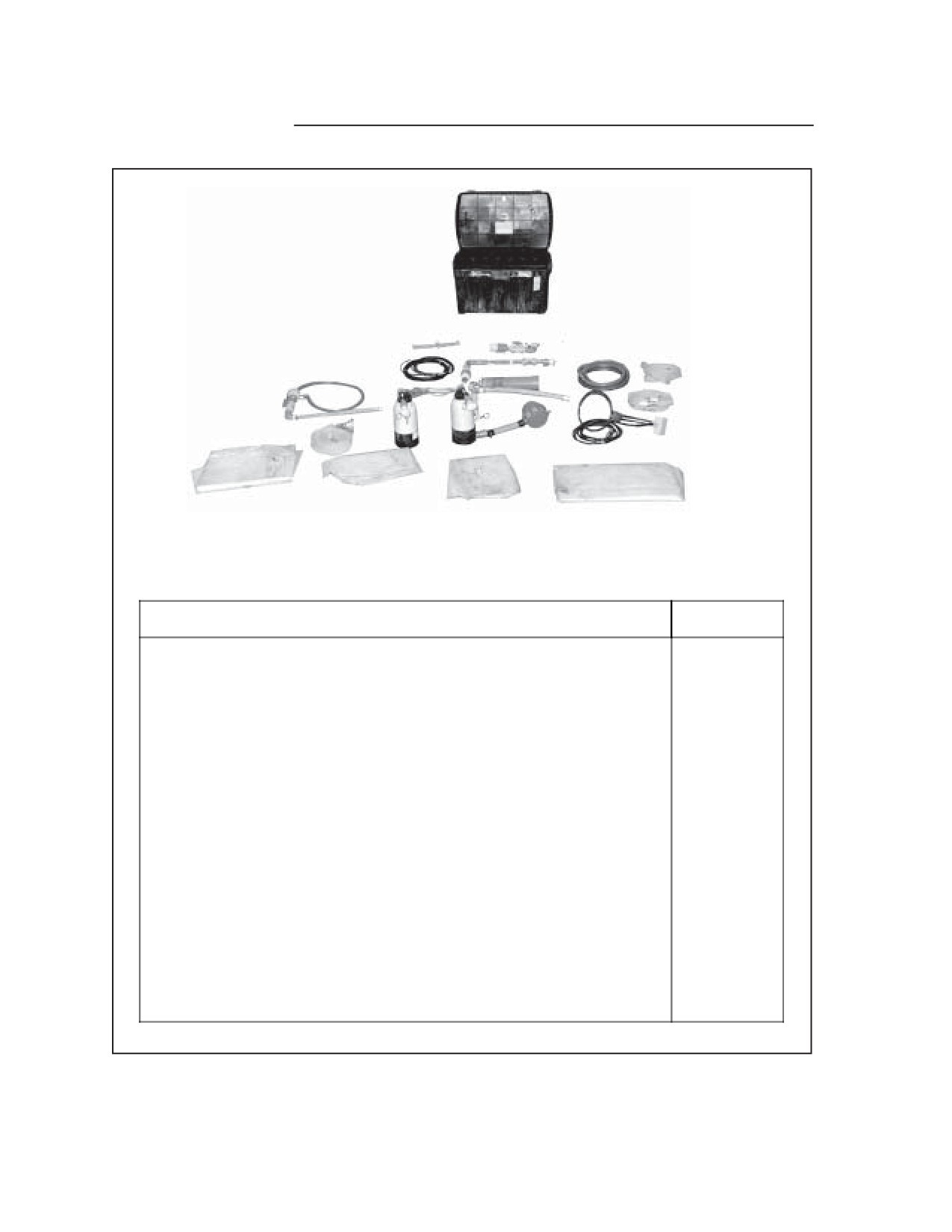
Note: The components listed below are stored inside the components of end items box. The
total weight of the box is 119 pounds.
Item Description
Quantity
Floating Strainer, raw water
1
Ultra-filtration module cover, contamination avoidance
1
High-pressure module cover, contamination avoidance
1
Control module, reverse osmosis module, chemical injection/cleaning
module cover, contamination avoidance
1
Spool piece, settling tank inlet
1
Spool piece, settling tank outlet
1
Spool piece, product tank inlet
1
Spool piece, product tank outlet
1
Feed strainer, settling tank
1
NBC cartridge assembly
1
Immersion heater assembly
1
Distribution nozzle
1
Hose assembly, 1-inch by 25-feet
1
Hose assembly, 1-inch by 25-feet
3
Hose, high-pressure with union
1
Tubing assembly, anti-scalant
1
Tubing assembly, coagulant
1
Over-pack kit box
1
Pump priming
1
Figure 2-30. Basic Issue Items Box, Components of End Items Box and Components of End
Items Cable Box Prepared and Stowed (Continued)
2-44
11 May 2005
FM 4-20.158/TO 13C7-7-61
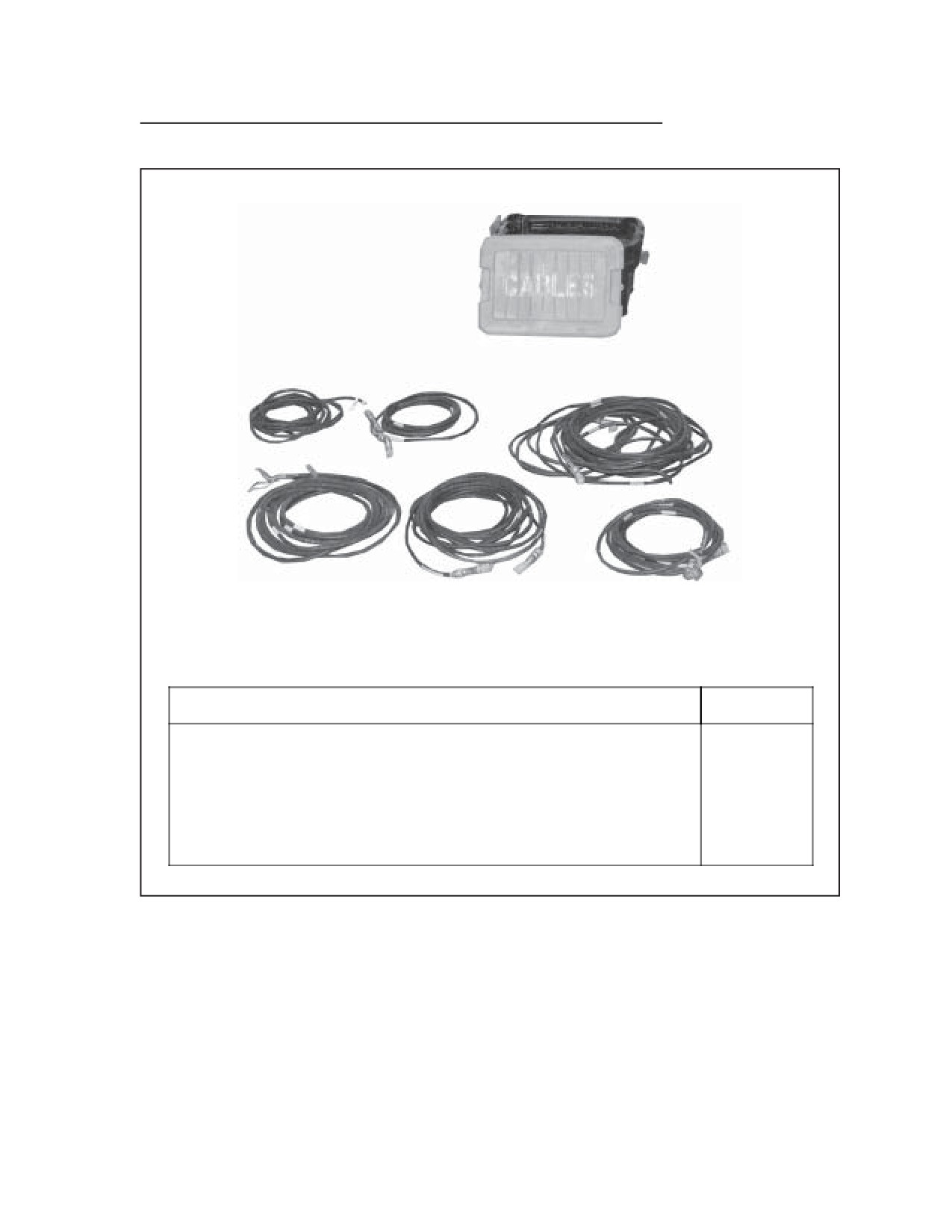
Note: The components listed below are stored inside the components of end items cable
box. The total weight of the box is 79 pounds.
Item Description
Quantity
Cable 1, 40-feet, generator to control module
1
Cable 2, 100-feet, raw water service pump to control module
1
Cable 3, 50-feet, booster service pump to control module
1
Cable 4, 20-feet, backwash service pump to control module
1
Cable 5, 30-feet, distribution service pump to control module
1
Cable 11, 40-feet, ground cable, control module to grounding rod
1
Storage container
1
Figure 2-30. Basic Issue Items Box, Components of End Items Box and Components of End
Items Cable Box Prepared and Stowed (Continued)
2-45
11 May 2005
FM 4-20.158/TO 13C7-7-61
LEFT
RIGHT
2
3
1
1
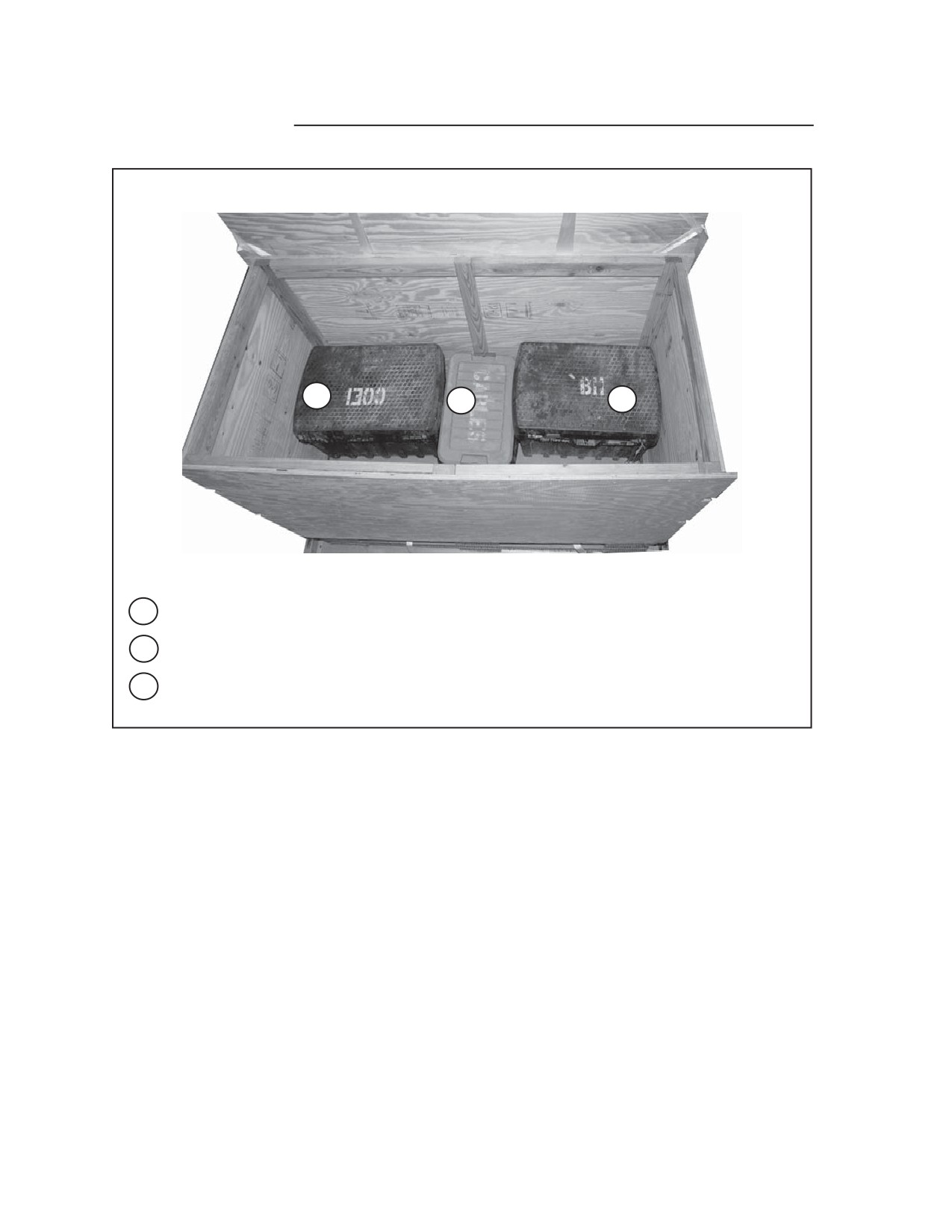
Position the basic issue items box on the front right side of equipment box 3.
2
Position the components of end items box on the front left side of equipment box 3.
3
Position the cable box between the two boxes positioned in steps 1 and 2 of equipment
box 3.
Figure 2-30. Basic Issue Items Box, Components of End Items Box and Components of End
Items Cable Box Prepared and Stowed (Continued)
2-46
11 May 2005
FM 4-20.158/TO 13C7-7-61
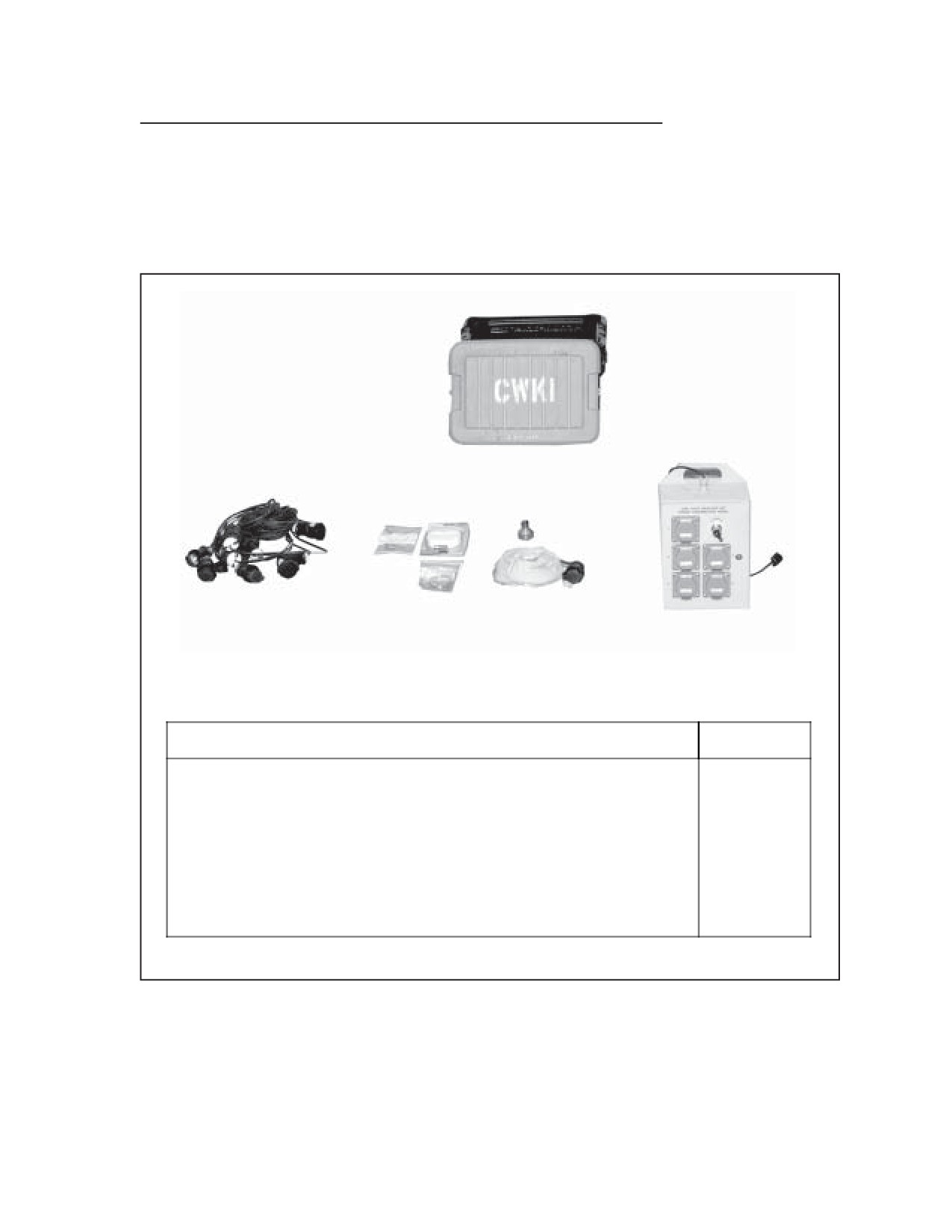
c. PREPARING COLD WEATHER KIT 1 (CWK1) BOX AND LOADING
TRUCK. Prepare the cold weather kit 1 box and loading truck, and stow
in the container as shown in Figure 2-31.
Note: The components listed below are stored inside the cold weather kit 1 box. The total
weight of the box is 56 pounds.
Quantity
Item Description
Power distribution panel
1
Cable assembly, extension, 15 feet
5
Service pump thermal blanket
1
Exhaust hose, 6 feet
1
Carbon monoxide detector
1
Exhaust adapter
1
Hose clamp, 2 to 3 inches
1
Hose clamp, 1.25 inches
1
Storage container
1
Figure 2-31. CWK1 Box and Loading Truck Prepared and Stowed
2-47
11 May 2005
FM 4-20.158/TO 13C7-7-61
LEFT
RIGHT
1
2
RIGHT
3
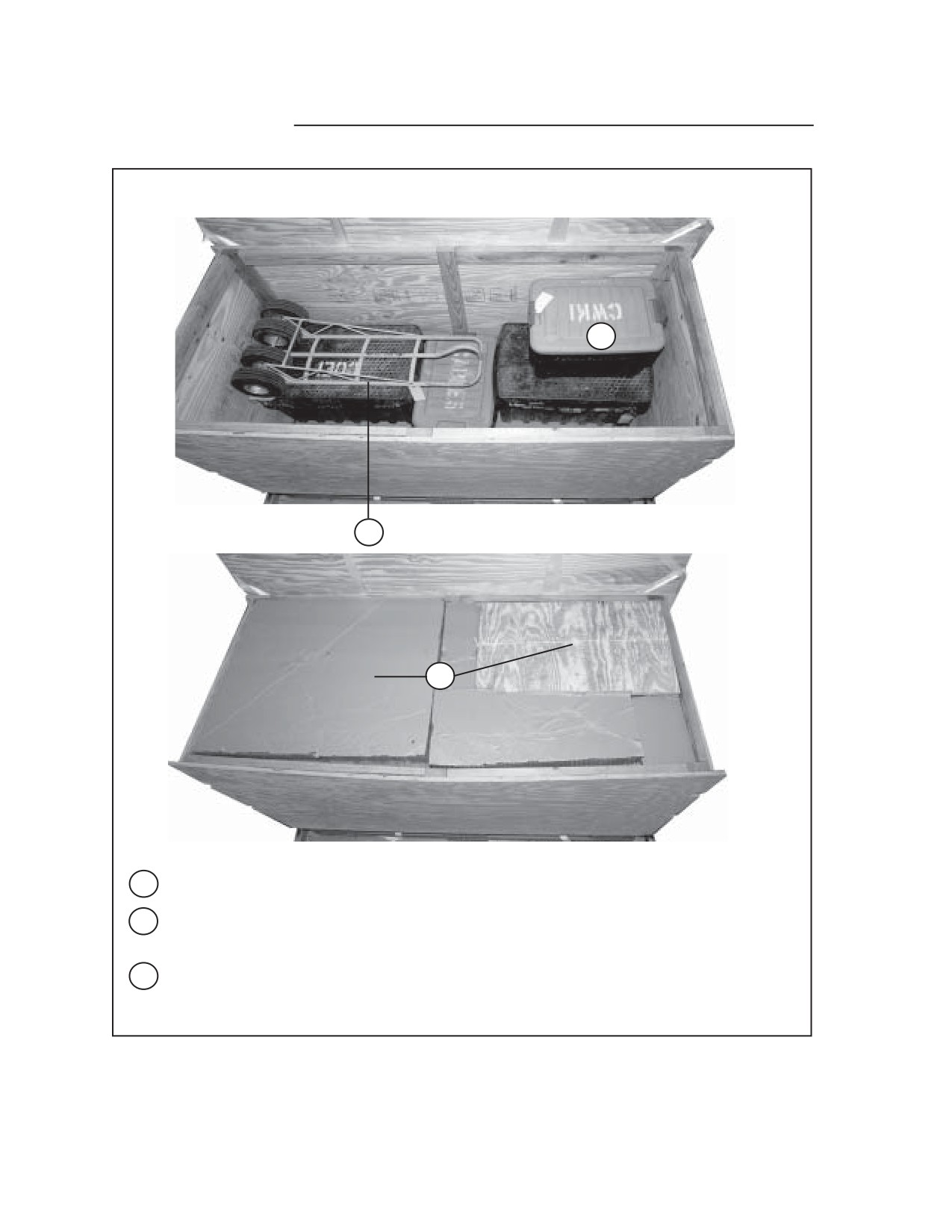
1
Place the cold weather kit 1 (CWK1) box on top of the basic issue items (BII) box.
2
Place the loading truck on top of the components of end items (COEI) box with the
wheels facing the left side of equipment box 3.
3
Fill the remaining empty spaces with honeycomb leaving enough space to place the
prepared secure pump skid cover (contamination avoidance) (Figure 2-29, steps 1
through 5) in the front right top corner of equipment box 3.
Figure 2-31. CWK1 Box and Loading Truck Prepared and Stowed (Continued)
2-48
11 May 2005
FM 4-20.158/TO 13C7-7-61
CLOSING AND SECURING EQUIPMENT BOX 3
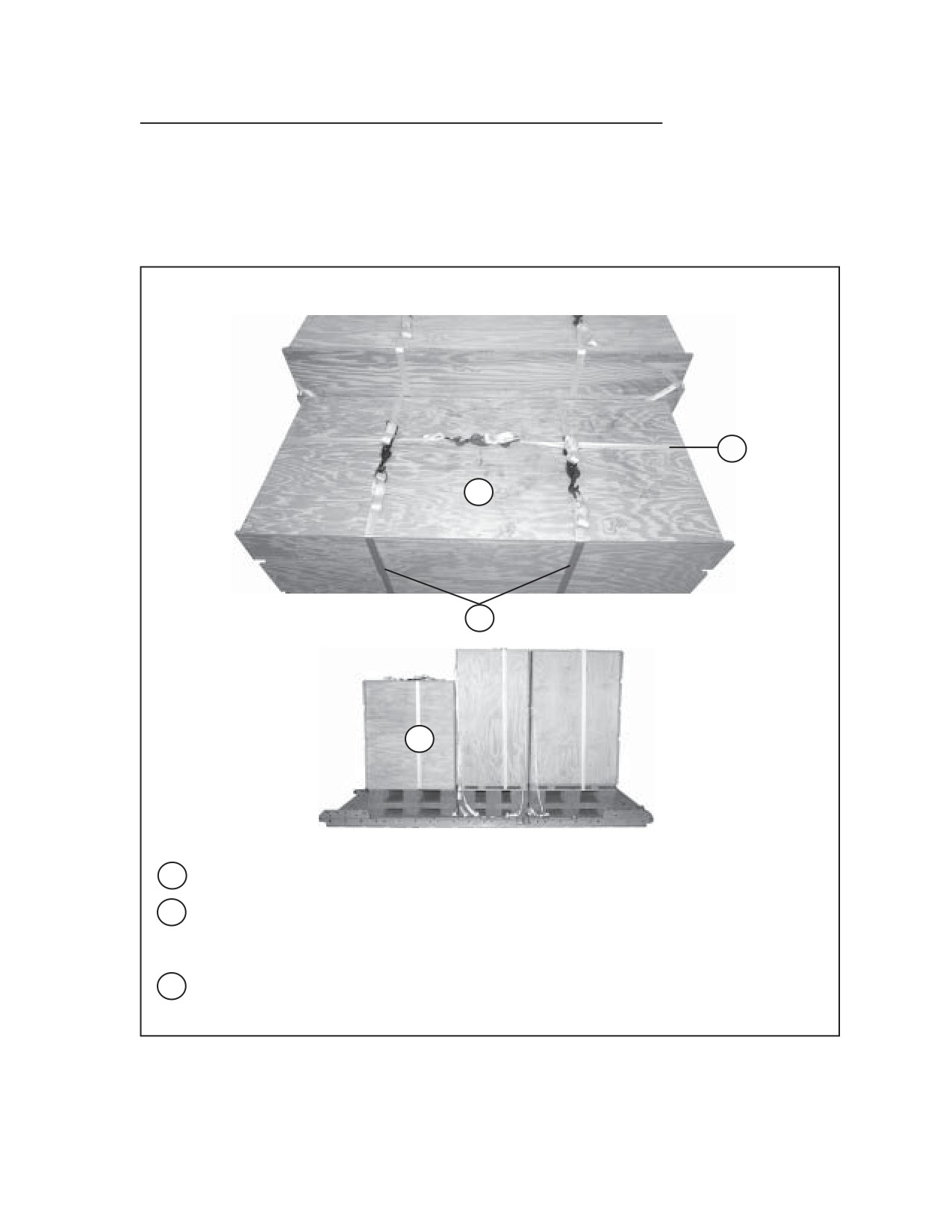
2-14. Close and secure equipment box 3 as shown in Figure 2-32.
Note: Use 8d nails.
2
1
3
2
1
Place the plywood lid on top of equipment box 3 and nail in place using 8d nails.
2
Form a 30-foot lashing. Route the 30-foot lashing around equipment box 3 widthwise.
Secure the lashing on top using two D-rings and a load binder. Ensure the lashing is
routed under the strongback.
3
Route the two pre-positioned 30-foot lashings around equipment box 3 lengthwise.
Secure each lashing on top using two D-rings and a load binder.
Figure 2-32. Equipment Box 3 Closed and Secured
2-49
11 May 2005
FM 4-20.158/TO 13C7-7-61
INSTALLING LASHINGS
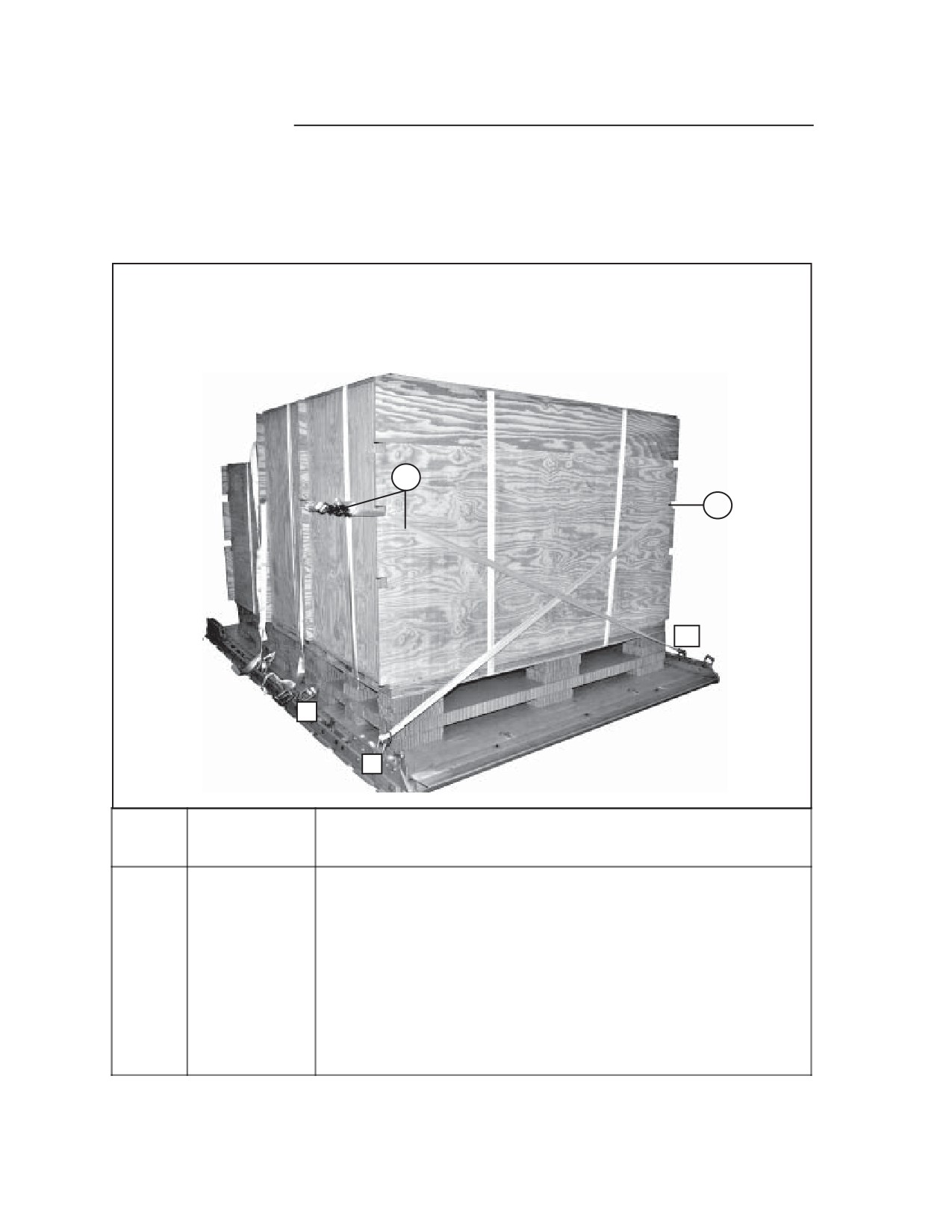
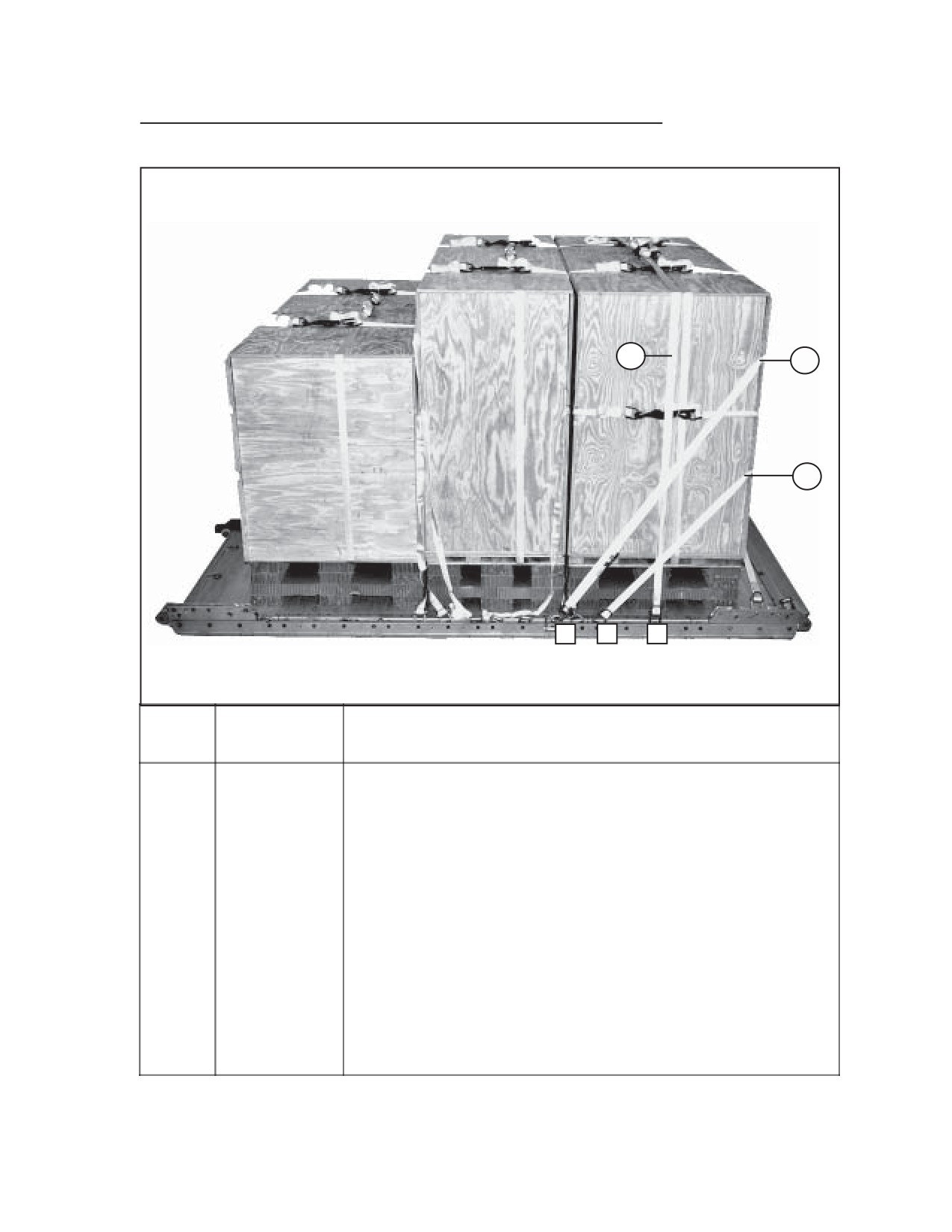
2-15. Lash the load to the platform according to FM 4-20.102/NAVSEA SS400-
AB- MMO-010/TO 13C7-1-5, and as shown in Figure 2-33.
Notes:
1. This load requires lashings over 30 feet in length. Lashings must be positioned through
clevises before sections are joined together.
2. Pad and tape all cutouts prior to routing lashings.
2
1
2A
5
2
Lashing
Tiedown Clevis
Instructions
Number
Number
1
2 and 5
Route a 15-foot lashing through clevis 2 and through its own D-ring.
Route the lashing across the front of equipment box 1 to the left
middle cutout. Secure the lashing to the pre-routed lashing from clevis
5 centered on the left side of equipment box 1 with two D-rings and
load binder.
2
2A and 5A
Route a 15-foot lashing through clevis 2A and through its own D-ring.
Route the lashing across the front of equipment box 1 to the right
middle cutout. Secure the lashing to the pre-routed lashing from clevis
5A centered on the right side of equipment box 1 with two D-rings
and load binder.
Figure 2-33. Lashings Installed
2-50
11 May 2005
FM 4-20.158/TO 13C7-7-61
3
5
4
7
4
3
Lashing
Tiedown Clevis
Instructions
Number
Number
3
3 and 3A
Route a 15-foot lashing through clevis 3 and through its own D-ring.
Route it to the top of equipment box 1. Route a 15-foot lashing
through clevis 3A and through its own D-ring. Route it to the top of
equipment box 1. Secure the lashing with the lashing from clevis 3 on
top of equipment box 1 with two D-rings and a load binder.
4
4 and 4A
Route a 15-foot lashing through clevis 4 and through its own D-ring.
Route the lashing to the front right bottom cutout of equipment box 1.
Route a 15-foot lashing through clevis 4A and through its own D-ring.
Route the lashing to the front left bottom cutout of equipment box 1.
Secure the lashing with the lashing from clevis 4 centered on the front
of equipment box 1 with two D-rings and a load binder.
5
7 and 7A
Form a 45-foot lashing. Route a free end through clevis 7 and the
other free end through clevis 7A. Route the lashing through the front
top cutouts of equipment box 1. Secure the lashing centered on the
front of equipment box 1 with two D-rings and a load binder.
Figure 2-33. Lashings Installed (Continued)
2-51
11 May 2005
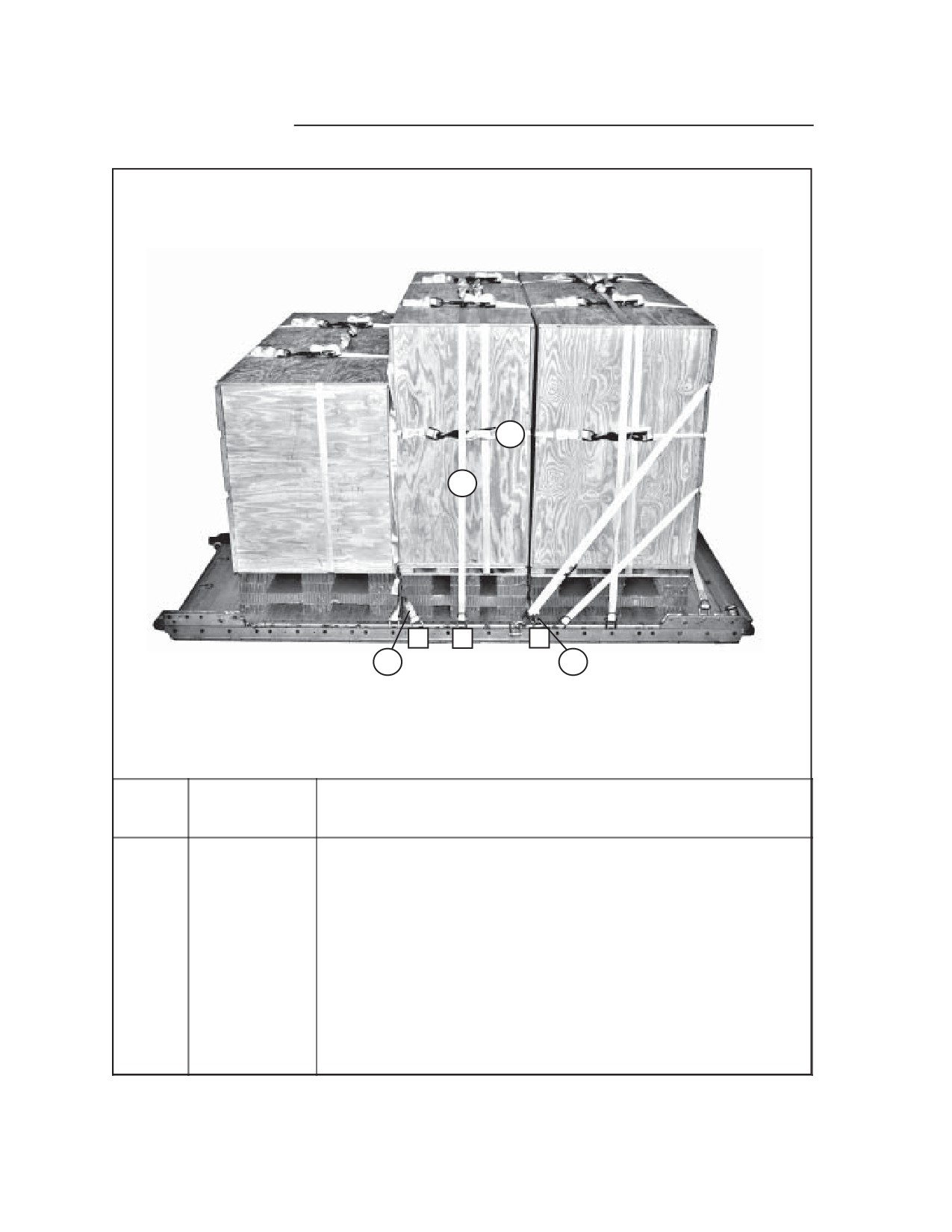
FM 4-20.158/TO 13C7-7-61
7
8
12
10
6
6
6
Lashing
Tiedown Clevis
Instructions
Number
Number
6
6 and 12
Using the 15-foot lashing on clevis 6, secure the lashing to the pre-
routed lashing from clevis 12, centered on the left side of equipment
box 2 with two D-rings and load binder.
7
6A and 12A
Using the 15-foot lashing on clevis 6A, secure the lashing to the pre-
routed lashing from clevis 12A, centered on the right side of
equipment box 2 with two D-rings and load binder.
8
10 and 10A
Route a 15-foot lashing through clevis 10 and through its own D-ring.
Route it to the top of equipment box 2. Route a 15-foot lashing
through clevis 10A and through its own D-ring. Route it to the top of
equipment box 2. Secure the lashing with the lashing from clevis 10
on top of equipment box 2 with two D-rings and a load binder.
Figure 2-33. Lashings Installed (Continued)
2-52
11 May 2005
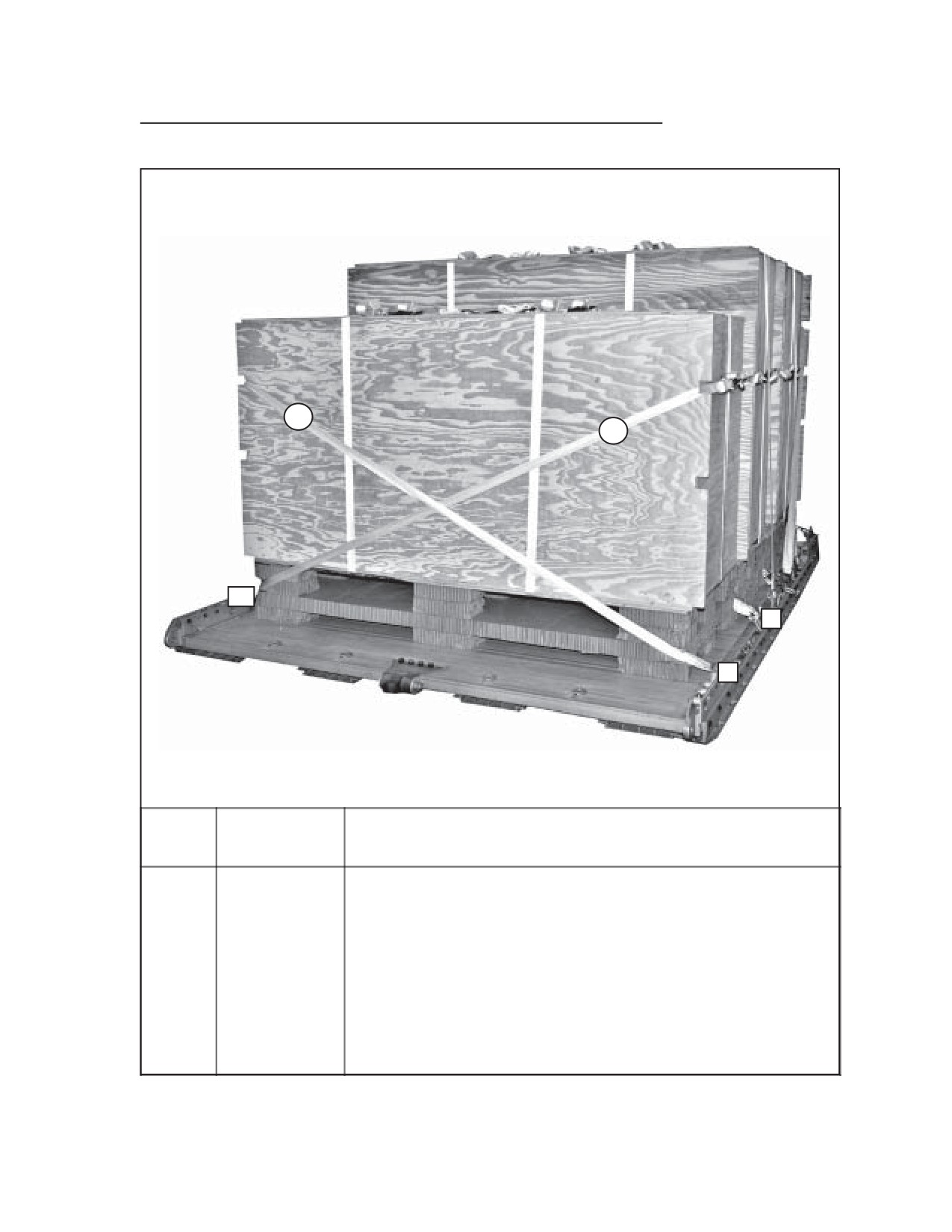
FM 4-20.158/TO 13C7-7-61
9
10
16A
13
16
Lashing
Tiedown Clevis
Instructions
Number
Number
9
13 and 16
Route a 15-foot lashing through clevis 16 and through its own D-ring.
Route the lashing across the rear of equipment box 3 to the rear left
top cutout. Secure the lashing to the pre-routed lashing from clevis
13, centered on the left side of equipment box 3 with two D-rings and
load binder.
10
13A and 16A
Route a 15-foot lashing through clevis 16A and through its own D-
ring. Route the lashing across the rear of equipment box 3 to the rear
right top cutout. Secure the lashing to the pre-routed lashing from
clevis 13A, centered on the right side of equipment box 3 with two D-
rings and load binder.
Figure 2-33. Lashings Installed (Continued)
2-53
11 May 2005