FM 4-20.158 AIRDROP OF SUPPLIES AND EQUIPMENT: RIGGING WATER PURIFICATION UNITS (MAY 2005) - page 1
*FM 4-20.158 (FM 10-558)
TO 13C7-7-61
Field Manual
HEADQUARTERS
NO 4-20.158
DEPARTMENTS OF THE ARMY
Technical Order
AND THE AIR FORCE
NO 13C7-7-61
Washington, DC, 11 May 2005
Airdrop of Supplies and Equipment:
Rigging Water Purification Units
TABLE OF CONTENTS
Page
Preface
iii
Introduction
Description of Items
v
Special Considerations
v
Chapter 1
Rigging 600-Gallons Per Hour (GPH) Reverse Osmosis Water Purification
Unit (ROWPU) on a 20-Foot, Type V Platform for Low-Velocity Airdrop
Description of Load
1-1
Preparing Platform
1-1
Preparing and Positioning Honeycomb Stacks
1-3
Preparing Reverse Osmosis Water Purification Unit (ROWPU)
1-11
Lifting and Positioning Load
1-26
Installing Lashings
1-29
Constructing End Boards and Stowing and Lashing Tires
1-32
Preparing, Constructing and Positioning Parachute Stowage Platform
1-35
Installing Load Cover, Suspension Slings and Safety Tie
1-38
Preparing and Stowing Cargo Parachutes
1-39
Installing the Release System
1-40
Installing the Extraction System
1-41
Placing Extraction Parachute
1-42
Installing Provisions for Emergency Restraints
1-42
Marking Rigged Load
1-42
Equipment Required
1-42
Chapter 2
Rigging Lightweight Water Purifier (LWP) on a 12-Foot, Type V Platform for
Low-Velocity Airdrop
Description of Load
2-1
_____________________________________________________________________________
DISTRIBUTION RESTRICTION: Approved for public release; distribution is unlimited.
*This publication supersedes FM 10-558, 4 May 1987.
i
FM 4-20.158/TO 13C7-7-61
Preparing Platform
2-1
Preparing and Placing Honeycomb Stack 1
2-3
Constructing and Positioning Equipment Box 1
2-6
Preparing and Stowing the Equipment for Equipment Box 1
2-10
Closing and Securing Equipment Box 1
2-20
Preparing and Placing Honeycomb Stack 2
2-22
Constructing and Positioning Equipment Box 2
2-25
Preparing and Stowing the Equipment for Equipment Box 2
2-28
Closing and Securing Equipment Box 2
2-34
Preparing and Positioning Honeycomb Stack 3
2-35
Constructing and Positioning Equipment Box 3
2-37
Preparing and Stowing the Equipment for Equipment Box 3
2-41
Closing and Securing Equipment Box 3
2-49
Installing Lashings
2-50
Positioning the Attitude Control Bar (ACB) and Installing Suspension Slings and
Safety Tie
2-55
Building and Positioning Parachute Stowage Platform
2-57
Preparing and Stowing Cargo Parachutes
2-58
Installing the Release System
2-59
Installing the Extraction System
2-60
Placing Extraction Parachute
2-61
Installing Provisions for Emergency Restraints
2-61
Marking Rigged Load
2-61
Equipment Required
2-61
Appendix
Appendix-1
Glossary
Glossary-1
Bibliography
Bibliography-1
ii
11 May 2005
FM 4-20.158/TO 13C7-7-61
Preface
SCOPE
This manual provides the latest approved doctrine for rigging the following water purification units.
It is written for use by all parachute riggers.
a. 600-gallons per hour (GPH) ROWPU on a 20-foot platform.
b. Lightweight water purifier (LWP) on a 12-foot platform.
NOTICE OF EXCEPTION
When an item of airdrop equipment is replaced or a rigging procedure is changed, it will be impossible
to change all manuals in the field at one time. Therefore, FM 4-20.102/NAVSEA SS400-AB-MMO-
010/TO 13C7-1-5 will be changed when necessary and will take precedence over the procedures in
an individual rigging manual. There may be times, however, when the procedures in an individual
rigging manual must be followed even though they are different from those in FM 4-20.102/NAVSEA
SS400-AB-MMO-010/TO 13C7-1-5. When this occurs, a notice of exception will be printed at the
beginning of each paragraph where the exception is authorized. The notice of exception will look
like the following:
NOTICE OF EXCEPTION
The procedures in this paragraph are different from those
in FM 4-20.102/NAVSEA SS400-AB-MMO-010/TO13C7-
1-5. An exception to FM 4-20.102/NAVSEA SS400-AB-
MMO-010/TO 13C7-1-5 is granted. The procedures in this
paragraph must be followed.
REFERENCE INFORMATION
To avoid repeating certain information and procedures, it is often necessary to reference other FMs
and TMs. For example, this manual often references FM 4-20.102/NAVSEA SS400-AB-MMO-010/
TO 13C7-1-5. This may seem to be contradictory in that this manual, FM 4-20.158/TO 13C7-7-61,
deals with rigging water purification loads and FM 4-20.102/NAVSEA SS400-AB-MMO-010/TO
13C7-1-5 deals with rigging platform loads. However, FM 4-20.102/NAVSEA SS400-AB-MMO-010/
TO 13C7-1-5 also provides general information and general procedures. Where procedures are the
same or only minor differences exist it is permissible to state that the procedure is done according
to or by adapting the procedures in FM 4-20.102/NAVSEA SS400-AB-MMO-010/TO 13C7-1-5.
iii
11 May 2005
FM 4-20.158/TO 13C7-7-61
USER INFORMATION
The proponent of this publication is HQ TRADOC. You are encouraged to report any errors or
omissions and to suggest ways of making this a better manual.
Army personnel, send your comments on DA Form 2028 directly to:
Director
Aerial Delivery and Field Services Department
USA Quartermaster Center and School
710 Adams Avenue
Fort Lee, Virginia 23801-1502
Air Force personnel, send your reports on AFTO Form 22 through your respective command
Weapons and Tactics to:
Headquarters
Air Mobility Command (AMC/A39T)
402 Scott Drive, Unit 3AI
Scott AFB, Illinois 62225-5302
Air Force personnel in Special Operations Command, send your reports on AFTO Form 22.
HQ AMC/A39T will consolidate and forward changes to:
Director
Aerial Delivery and Field Services Department
USA Quartermaster Center and School
710 Adams Avenue
Fort Lee, Virginia 23801-1502
Also send an information copy of AFTO Form 22 to:
WR-ALC/LEET
295 Byron Street
Robins AFB, Georgia 31098-1611
iv
11 May 2005
FM 4-20.158/TO 13C7-7-61
Introduction
DESCRIPTION OF ITEMS
The description of the items rigged in this manual is given below.
a. 600-Gallons Per Hour (GPH) Reverse Osmosis Water Purification
Unit (ROWPU): The ROWPU consists of a water purification unit and a 30-
kilowatt generator mounted on a 5-ton, four wheel, cargo trailer. The ROWPU
with supporting equipment weighs 21,780 pounds rigged. It is 230 inches long
and 96 inches wide. Its height is 97 inches (reducible to 91 inches).
b. Lightweight Water Purifier (LWP): The lightweight water purifier
consists of a loading truck, ultra-filtration module, control module, high-pres-
sure pump module, chemical injection cleaning module, reverse osmosis element
module, pump module, 3-kilowatt (KW) generator, loading ramps, 1,000 gallon
collapsible fabric tank (raw water and product), hose (raw water, back-wash,
high-pressure and reject), pump skid cover, components of end items (COEI)
box, basic issue items (BII) box, cold weather kit (CWK) 1 box, cold weather kit
(CWK) 2 box, CWK 3 box and the components of end items (COEI) cable box.
The total weight of the LWP is approximately 6,140 pounds.
SPECIAL CONSIDERATIONS
Special considerations for this manual are given below.
a. The 600-GPH ROWPU is technically approved for airdrop from the C-130
and C-17 aircraft.
b. The overall rigged height of the 600-GPH ROWPU will not exceed 101 inches
for a distance of not more than 40 inches aft of the CB. All high points should be
verified each time this load is placed on the aircraft.
c. A copy of this manual must be available to the joint airdrop inspectors during
the before- and after- loading inspections.
d. Check fuel levels to ensure that they do not exceed the the fuel level of the
specific rigging chapter.
e. Package, mark, and label hazardous material according to AFMAN 24-204(I)/
TM 38-250.
v
11 May 2005
FM 4-20.158/TO 13C7-7-61
CHAPTER 1
RIGGING 600-GALLONS PER HOUR (GPH) REVERSE
OSMOSIS WATER PURIFICATION UNIT (ROWPU) ON A
20-FOOT, TYPE V PLATFORM FOR LOW-VELOCITY
AIRDROP
DESCRIPTION OF LOAD
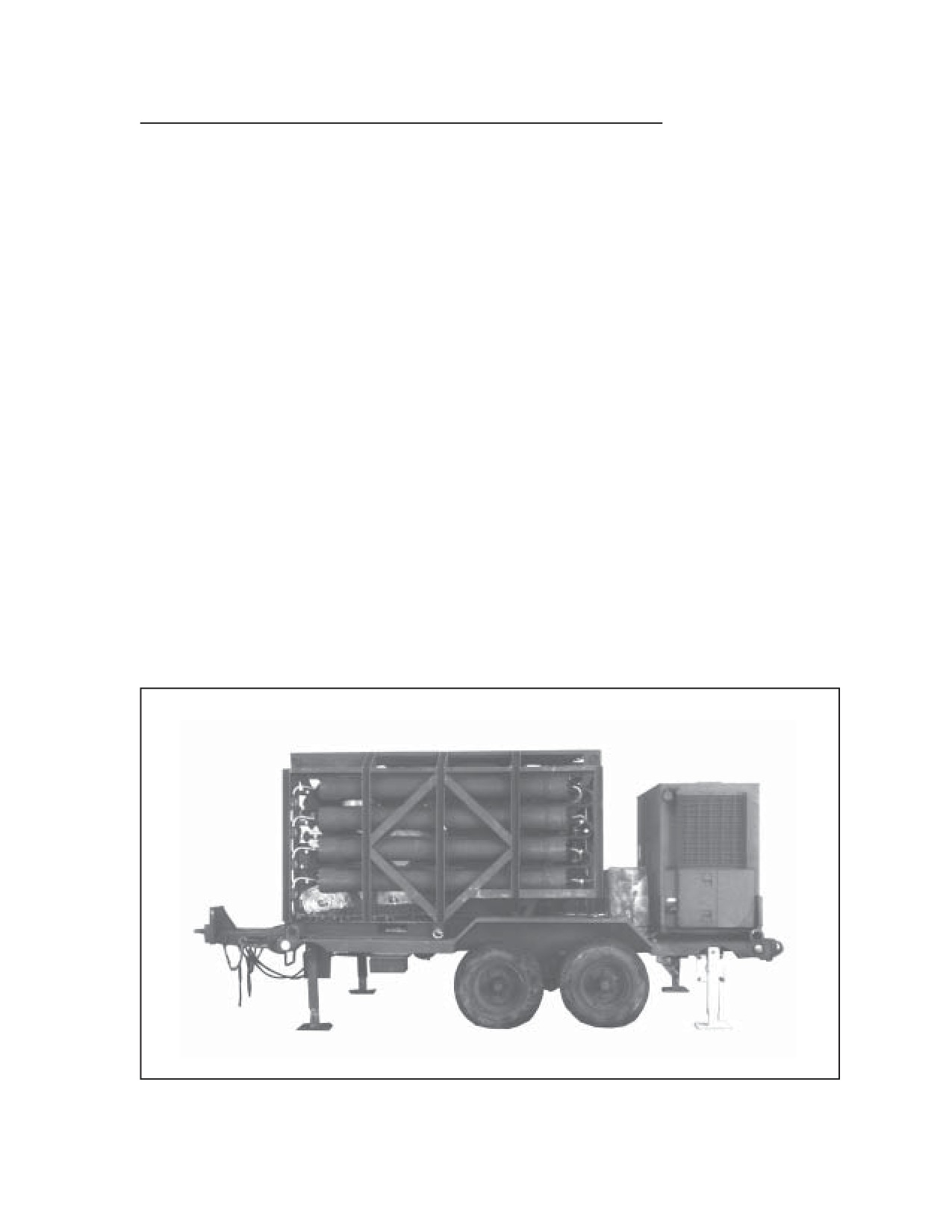
1-1. The 600-gallons per hour ROWPU (Figure 1-1) is rigged on a 20-foot, type V
platform. The 600-gallons per hour ROWPU consists of the equipment shown in
Figure 1-1. The total rigged weight of the load is 21,780 pounds. The load is 101
inches high, 108 inches wide, 275 inches long, and the center of balance is 130
inches from the front edge of the platform. Refer to FM 4-20.102/NAVSEA SS400-
AB-MMO-010/TO 13C7-1-5 for the weight limitations and for the number of
parachutes to be used.
PREPARING PLATFORM
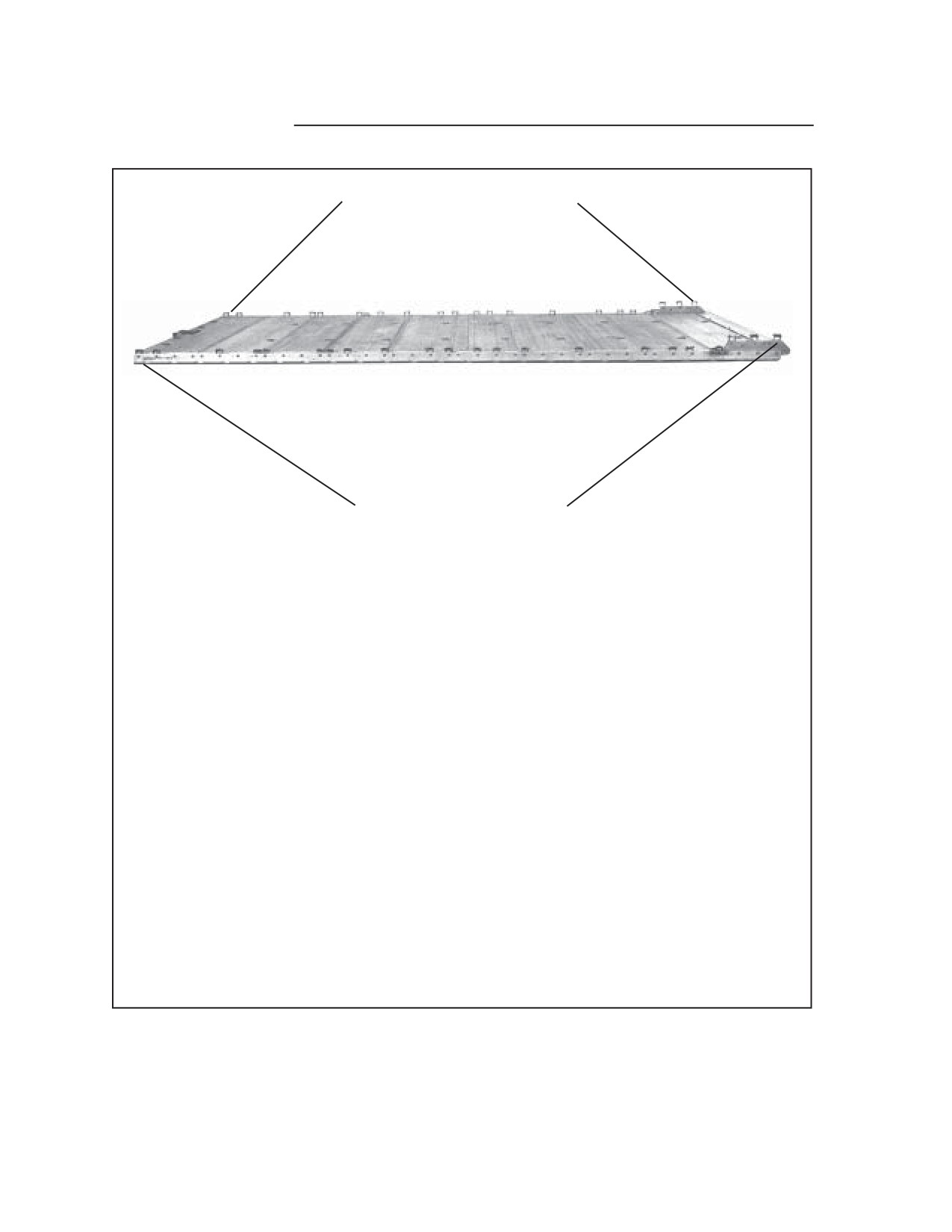
1-2. Prepare a 20-foot, type V platform as shown in Figure 1-2.
Figure 1-1. 600-Gallons Per Hour (GPH) Reverse Osmosis Water Purification Unit (ROWPU)
1-1
11 May 2005
FM 4-20.158/TO 13C7-7-61
CLEVISES 23A THROUGH 1A
LEFT
REAR
FRONT
RIGHT
CLEVISES 23 THROUGH 1
Step:
1.
Inspect, or assemble and inspect, a 20-foot, type V platform as outlined in
TM 10-1670-268-20&P/TO 13C7-52-22.
2.
Inspect and install a tandem link to the front of each platform side rail
using holes 1,2, and 3.
3.
Install clevises on bushings 1, 3, and 4 of each front tandem link.
5.
Starting at the front of each platform side rail, install clevises on the
bushings bolted on holes 4 (tripled), 6, 7, 9, 13, 16, 18, 19, 21, 22, 25, 27, 28,
29, 32, 33, 35, 39, and 40.
6.
Starting at the front of each platform side rail, number the clevises 1
through 23 on the right side and 1A through 23A on the left side.
7.
Label the tiedown rings according to FM 4-20.102/NAVSEA SS400-AB-
MMO-010/TO 13C7-1-5.
Notes:
1. The nose bumper must be installed.
2. Measurements given in this section are from the front edge of the platform not from the
front edge of the nose bumper.
Figure 1-2. Platform Prepared
1-2
11 May 2005
FM 4-20.158/TO 13C7-7-61
PREPARING AND POSITIONING HONEYCOMB STACKS
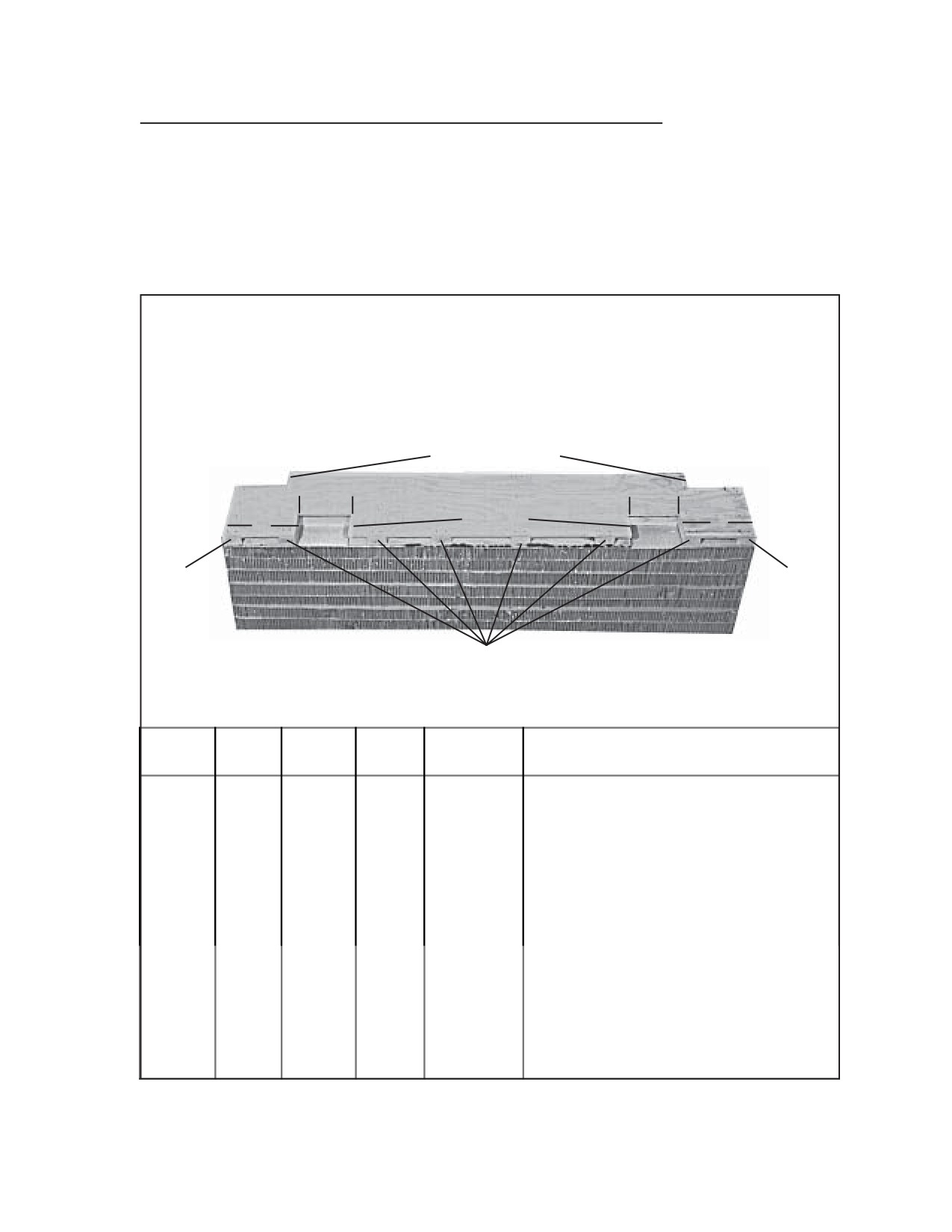
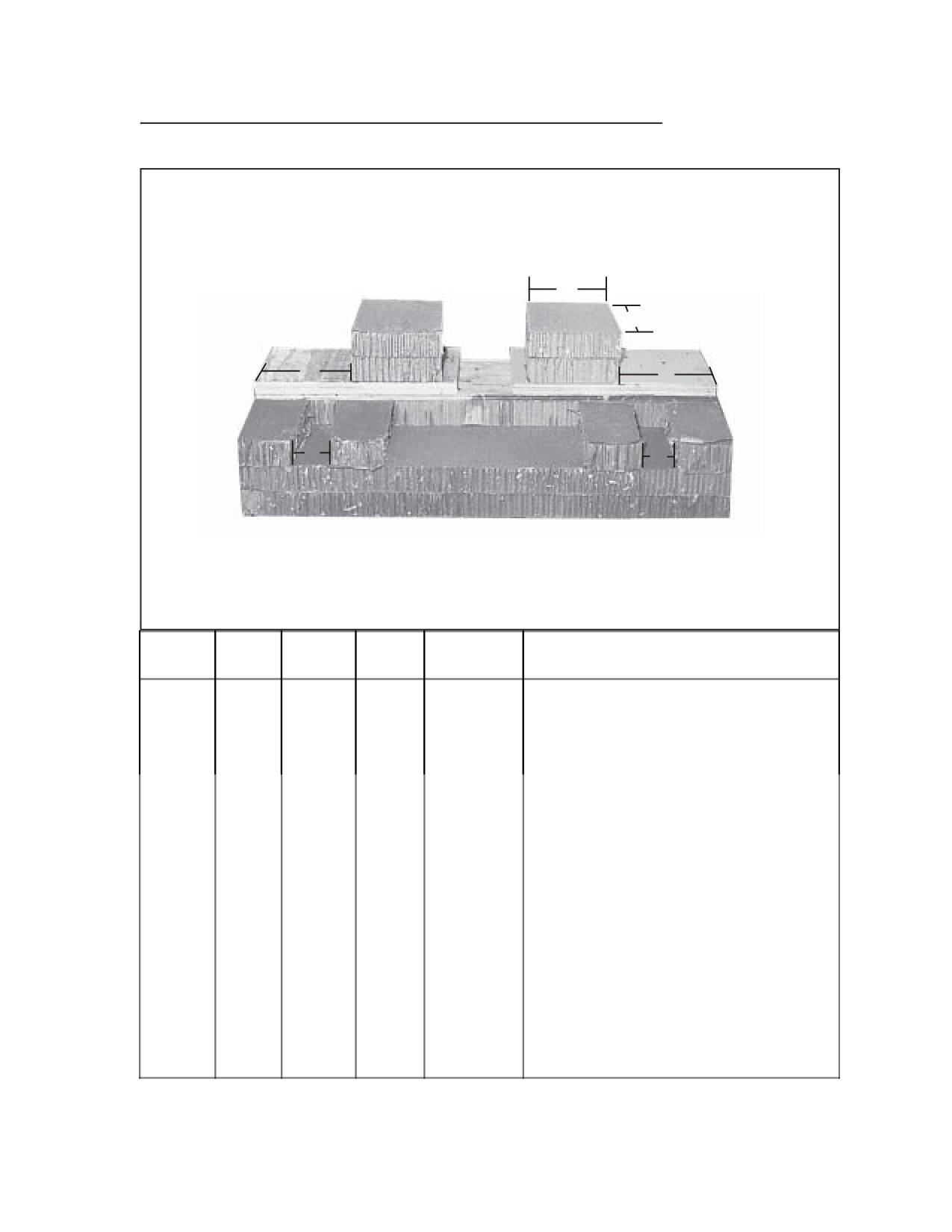
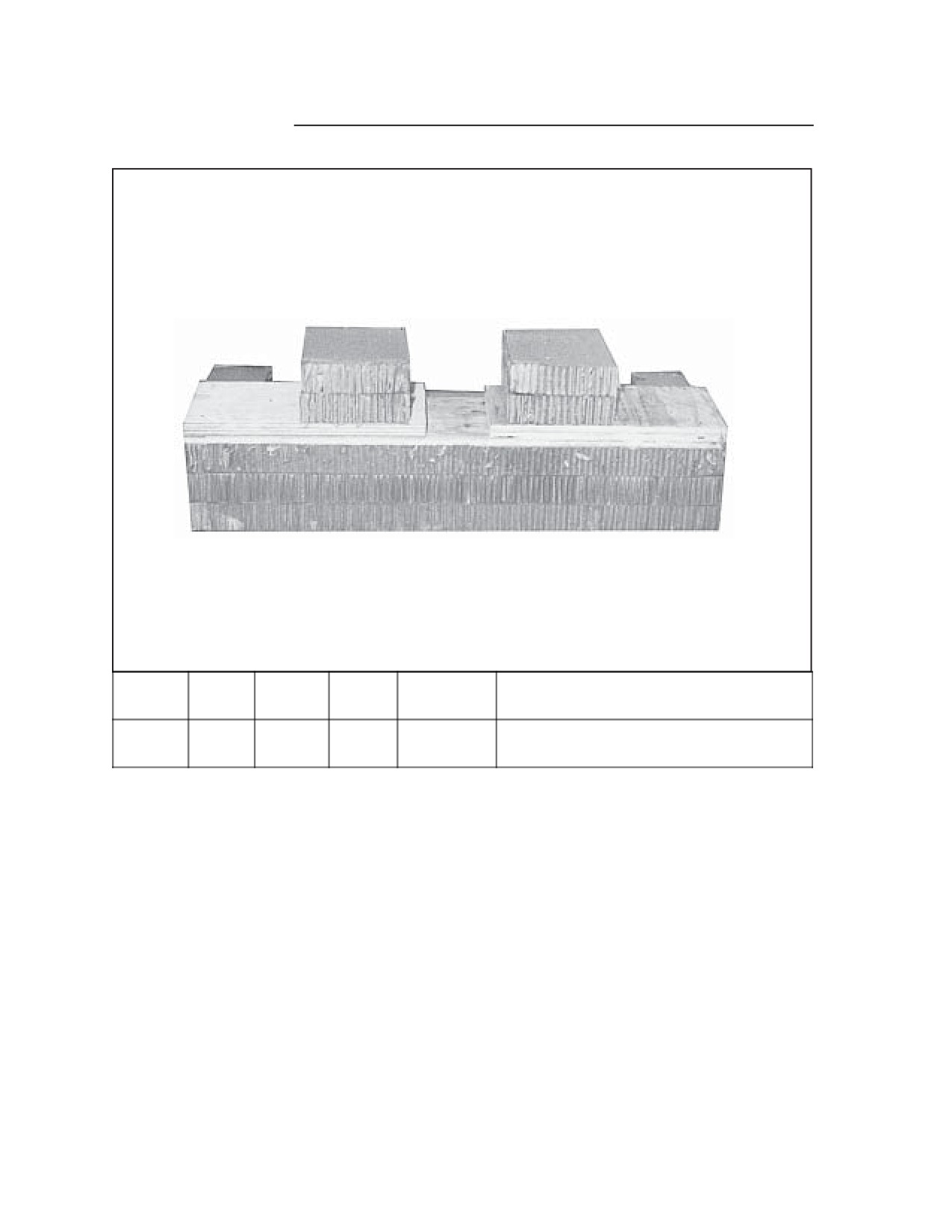
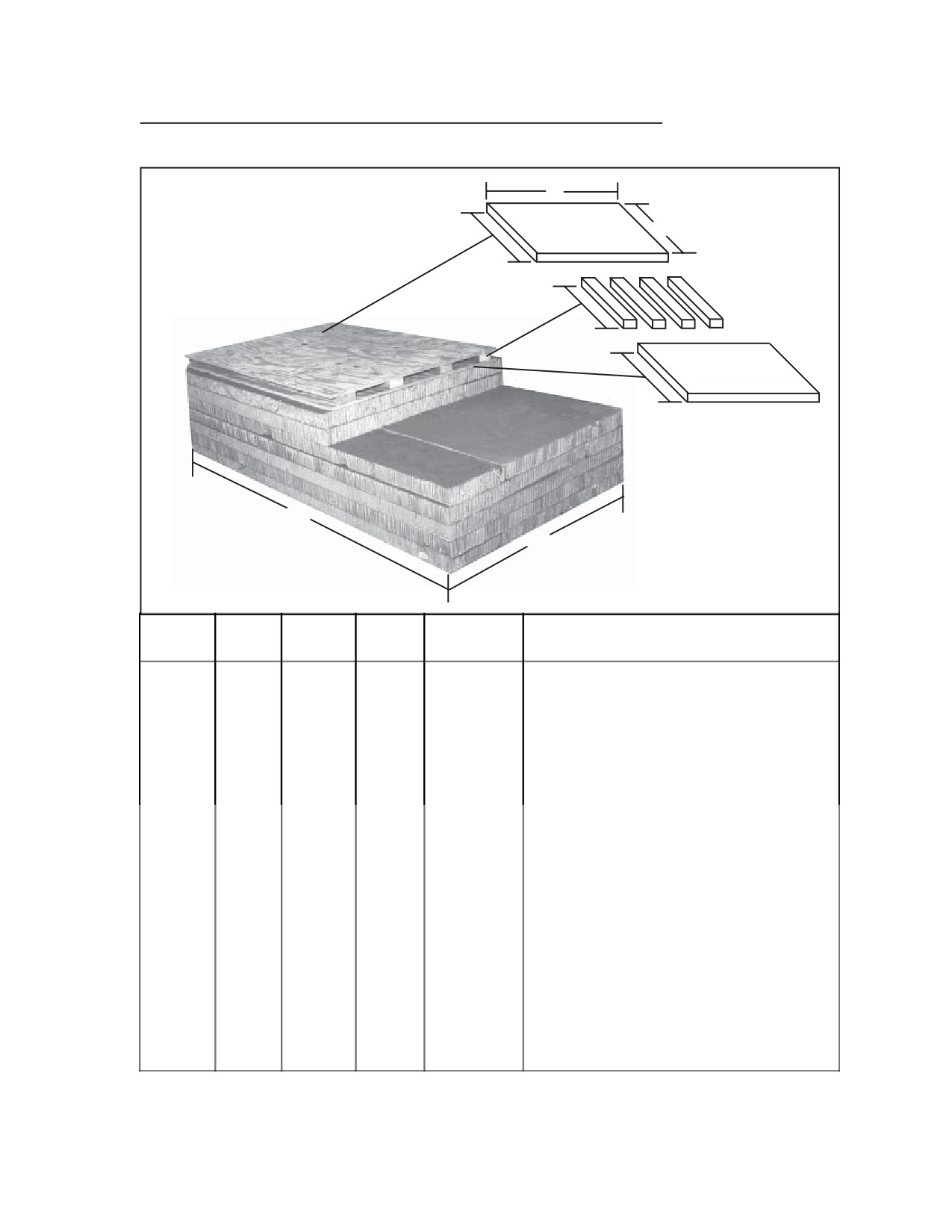
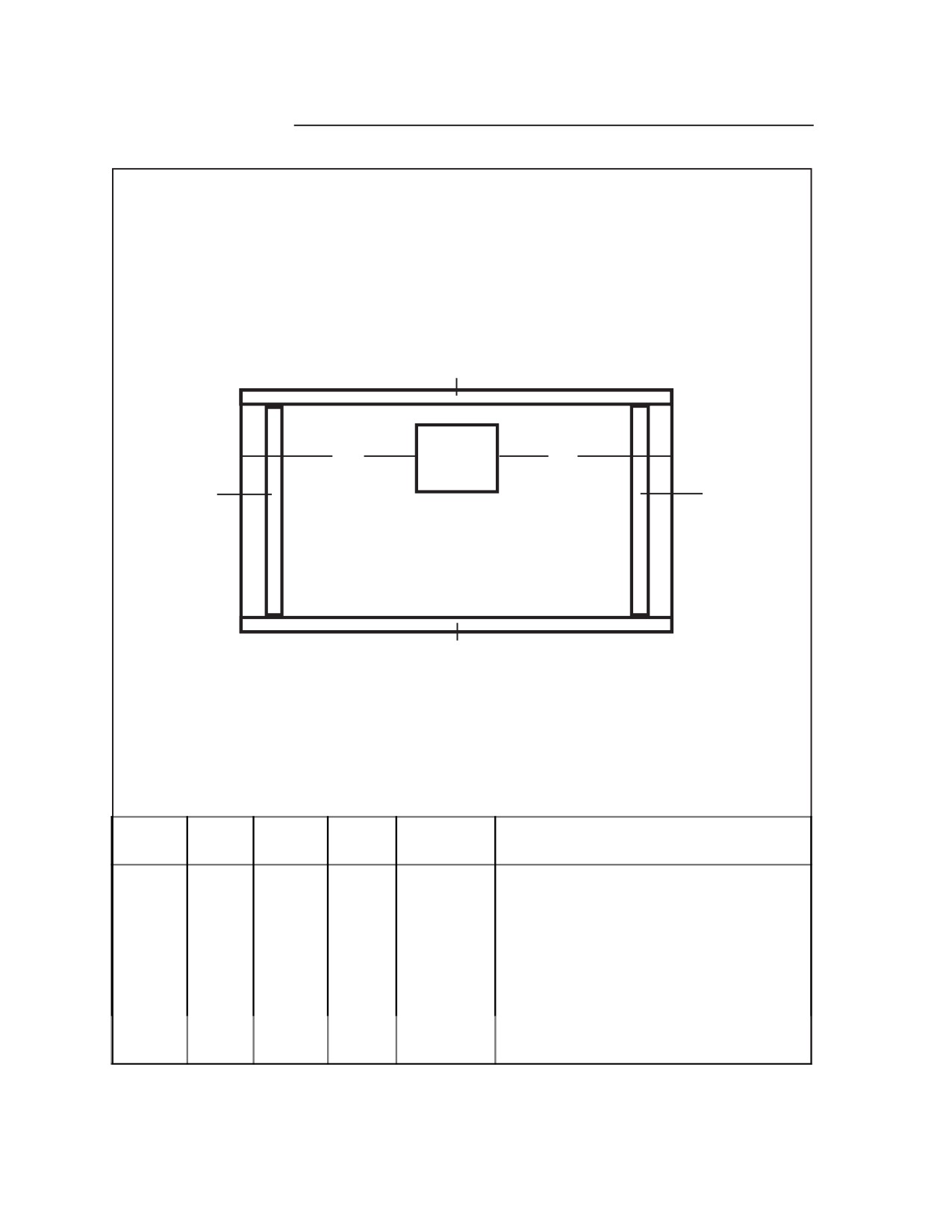
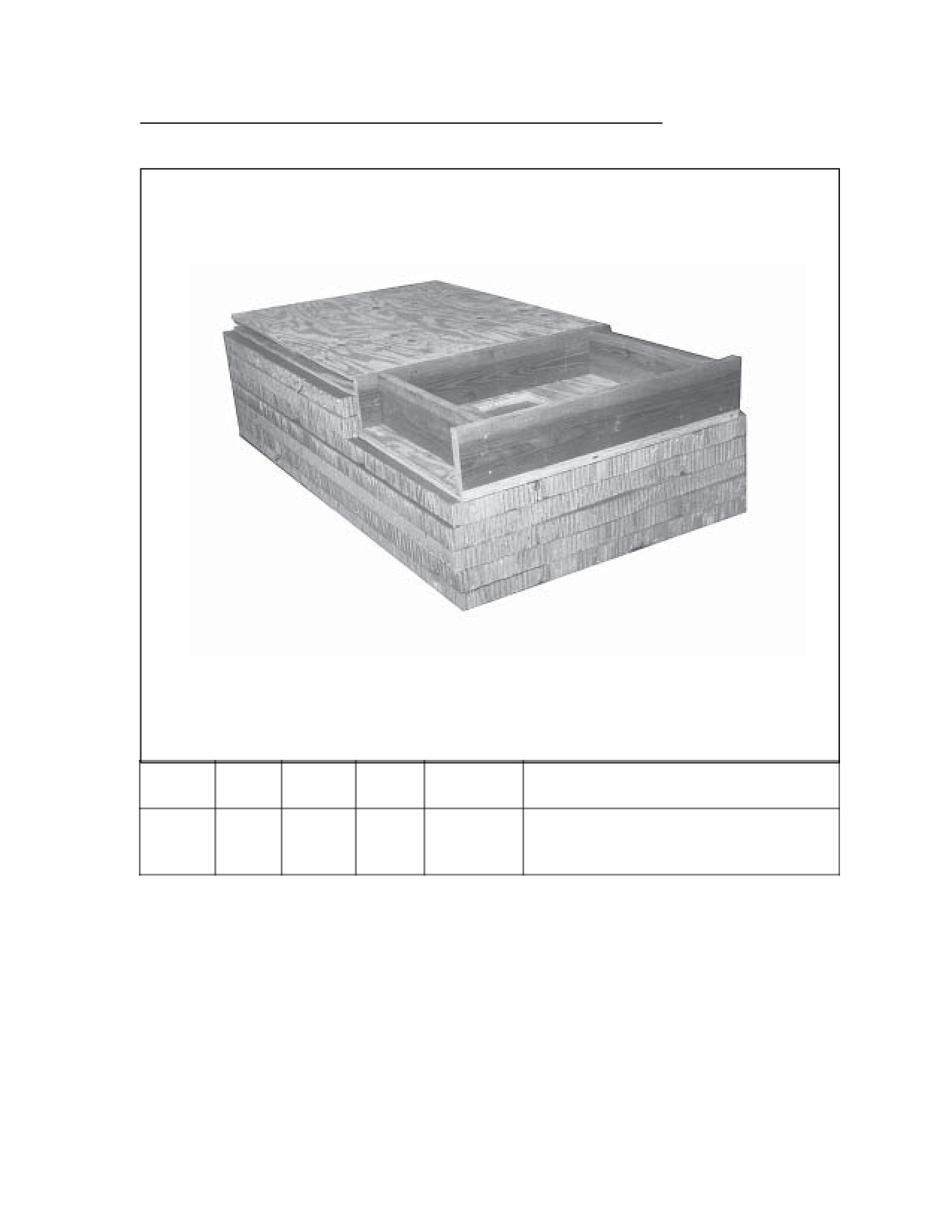
1-3. Prepare five honeycomb stacks according to FM 4-20.102/NAVSEA SS400-
AB-MMO-010/TO 13C7-1-5 and as shown in Figures 1-3 through 1-8. Position the
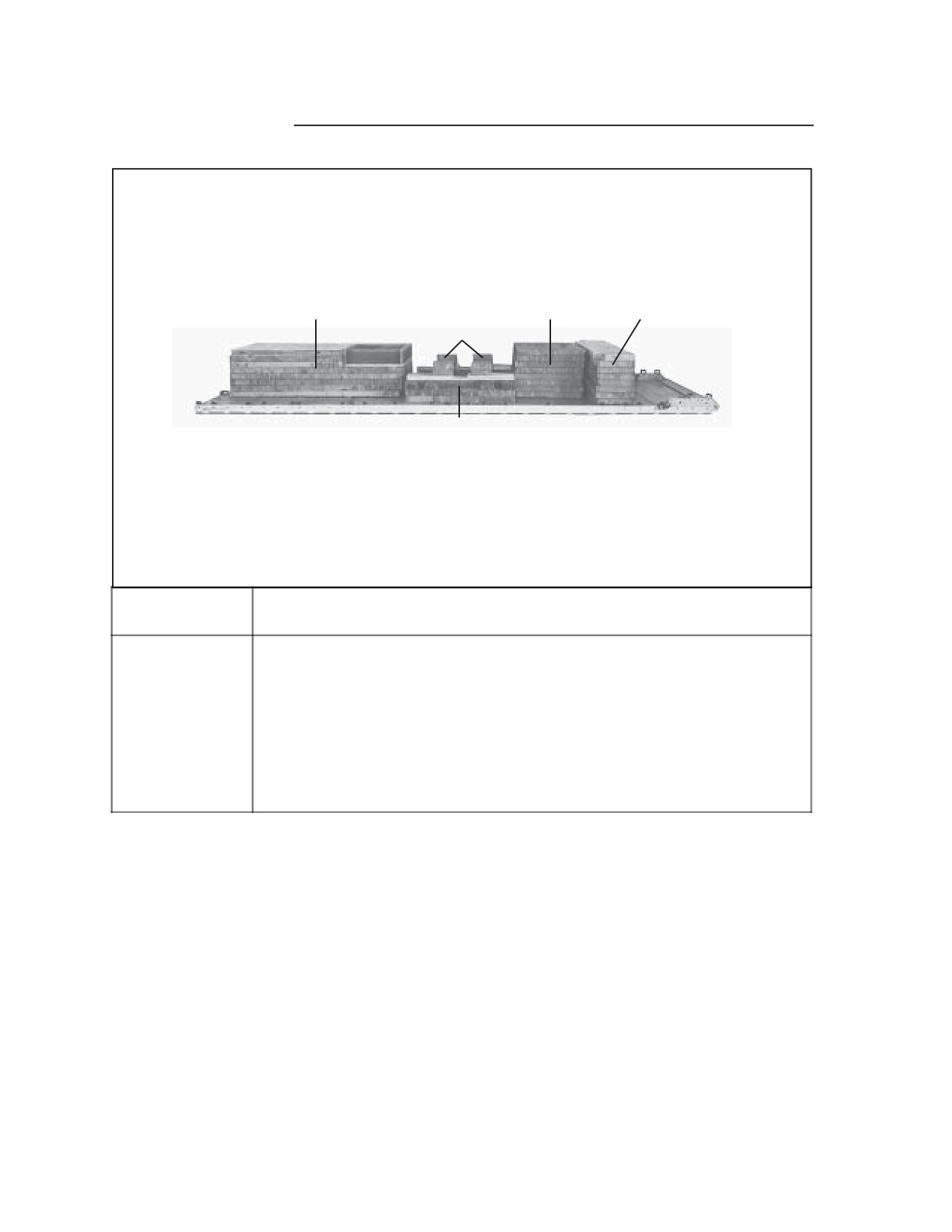
honeycomb stacks on the platform as shown in Figure 1-9.
Notes:
1. All dimensions are in inches.
2. Use 8d nails.
REAR
4 X 10 CUTOUTS
9
1/2
9 1/2
9 1/2 X 6
13
13
4 X 14
4 X 14
LUMBER
LUMBER
4 X 18 LUMBER
FRONT
Stack
Width
Length
Pieces
Material
Instructions
Number
(inches)
(inches)
1
7
18
96
Honeycomb
Use honeycomb as the base layers.
2
18
96
Plywood
Place 3/4-inch plywood on top of the
honeycomb base. Cut a 4- by 10-inch
cutout in the rear corners of both pieces of
plywood. Cut a 9 1/2- by 6-inch cutout 13
inches from each end on the front sides of
both pieces of plywood (clearance for trailer
lights).
2
4
14
Lumber
Nail lumber to each 14-inch edge of
plywood (between the sheets of plywood).
6
4
18
Lumber
Nail two pieces of lumber flush to each 6-
inch edge of plywood. Space the remaining
lumber evenly between the two sheets of
plywood, nail it to the plywood.
Figure 1-3. Honeycomb Stack 1 Prepared
1-3
11 May 2005
FM 4-20.158/TO 13C7-7-61
Note: All dimensions are in inches.
10
16
LEFT
REAR
Stack
Width
Length
Pieces
Material
Instructions
Number
(inches)
(inches)
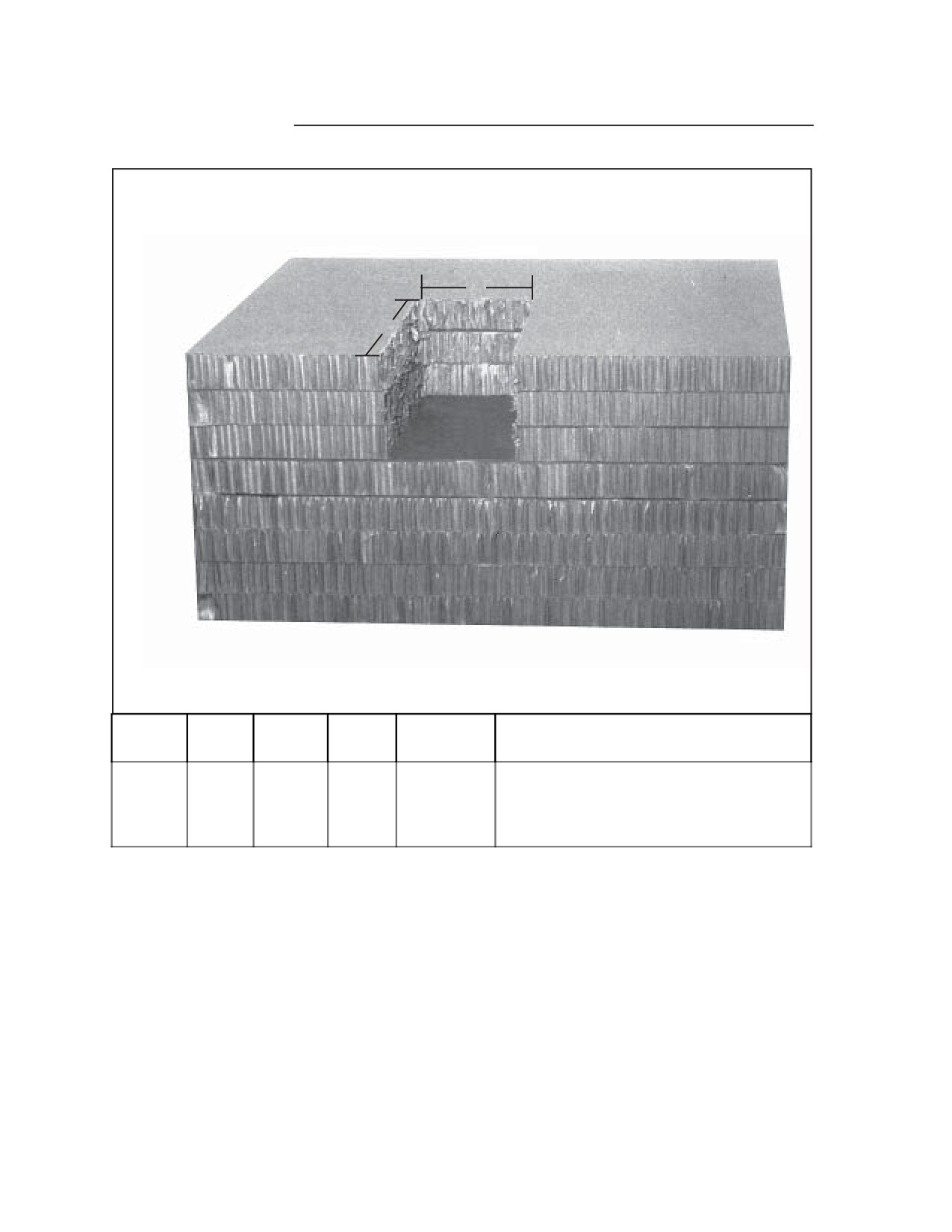
2
8
34
48
Honeycomb
Use honeycomb as base layers. Cut a 10-
by 16-inch cutout on the rear edges of the
top three layers, starting 16 inches from the
left side.
Figure 1-4. Honeycomb Stack 2 Prepared
1-4
11 May 2005
FM 4-20.158/TO 13C7-7-61
Note: All dimensions are in inches.
10
12
11
11
REAR
FRONT
4
4
Stack
Width
Length
Pieces
Material
Instructions
Number
(inches)
(inches)
3
2
24
52
Honeycomb
Use honeycomb as the base layers on the
right side of the platform.
1
12
52
Honeycomb
Place a piece on top of the base on the
inside edge.
1
12
52
Plywood
Place 3/4-inch plywood on top of the 12- by
52-inch honeycomb.
4
12
23
Plywood
Place two pieces of 3/4-inch plywood flush
with the front edge and two pieces flush
with the rear edge of the 12- by 52-inch
piece of plywood.
4
10
12
Honeycomb
Place two pieces 11 inches from the front
edge and two pieces 11 inches from the
rear edge of the plywood.
4
6
12
Honeycomb
Place pieces on top of the base layers.
Place one piece on the rear outside corner,
one piece 4 inches from the rear piece, one
piece on the front outside corner, and one
piece 4 inches from the front piece.
Figure 1-5. Honeycomb Stack 3 Prepared
1-5
11 May 2005
FM 4-20.158/TO 13C7-7-61
REAR
FRONT
Stack
Width
Length
Pieces
Material
Instructions
Number
(inches)
(inches)
4
Same as stack 3 but placed on the left side
of the platform.
Figure 1-6. Honeycomb Stack 4 Prepared
1-6
11 May 2005
FM 4-20.158/TO 13C7-7-61
Notes:
44
1. This drawing is not to scale.
2. All dimensions are in inches.
TOP
58
3. Use 8d nails.
REAR
BOTTOM
88
48
FRONT
Stack
Width
Length
Pieces
Material
Instructions
Number
(inches)
(inches)
5
5
36
88
Honeycomb
Use honeycomb as the base layers.
5
12
88
Honeycomb
Use honeycomb as the base layers. Place
pieces next to the 36- by 88-inch pieces
and stagger.
2
36
58
Honeycomb
Place the pieces on the top at the rear
edges of the base layers.
2
12
58
Honeycomb
Place the pieces next to the 36- by 58-inch
pieces of honeycomb and stagger.
1
44
58
Plywood
Place 3/4-inch plywood on top of the 48- by
58-inch honeycomb and center.
4
2
58
Lumber
Place one piece of 2-inch lumber 2 inches
from the right edge and one piece 2 inches
from the left edge of the plywood. Place the
other two pieces of lumber 8 inches from
the pieces on the edge.
1
44
58
Plywood
Place 3/4-inch plywood on top of the
lumber. Nail the plywood and lumber
together.
Figure 1-7. Honeycomb Stack 5 Prepared
1-7
11 May 2005
FM 4-20.158/TO 13C7-7-61
Notes:
1. This drawing is not to scale.
2. All dimensions are in inches.
3. Use 8d nails.
4. Lumber is stood on edge.
REAR
2 X 8 X 48 LUMBER
3 INCHES FROM EDGE OF PLYWOOD
8 X 8
20
20
CUTOUT
2 X 8 X 27
2 X 8 X 27
LUMBER
LUMBER
PLYWOOD
30 X 48
2 X 8 X 48 LUMBER
FRONT
Stack
Width
Length
Pieces
Material
Instructions
Number
(inches)
(inches)
5
2
30
48
Plywood
Use two pieces of 3/4-inch plywood as the
base for the box. Cut an 8- by 8-inch cutout
in both pieces of plywood 3 inches from the
48-inch rear edge and centered between
the 30-inch edges.
2
8
48
Lumber
Nail the lumber on each 48-inch edge of the
plywood.
2
8
27
Lumber
Nail the lumber 3 inches from each 30-inch
edge of the plywood.
Figure 1-8. Box for Honeycomb Stack 5 Prepared
1-8
11 May 2005
FM 4-20.158/TO 13C7-7-61
FRONT
Stack
Width
Length
Pieces
Material
Instructions
Number
(inches)
(inches)
5
Place the completed box from Figure 1-8 on
top of the 48- by 88-inch honeycomb at the
front of honeycomb stack 5.
Figure 1-8. Box for Honeycomb Stack 5 Prepared (Continued)
1-9
11 May 2005
FM 4-20.158/TO 13C7-7-61
LEFT
STACK 5
STACK 2
STACK 1
STACK 4
REAR
FRONT
STACK 3
RIGHT
Stack
Position on Platform
Number
Place stack:
1
Centered and 35 inches from the front edge of the platform.
2
Centered and flush against stack 1.
3
Flush against stack 2 and 22 inches from the right side rail.
4
Flush against stack 2 and 22 inches from the left side rail.
5
Centered and 4 inches from the rear of stacks 3 and 4.
Figure 1-9. Honeycomb Stacks Positioned on Platform
1-10
11 May 2005
FM 4-20.158/TO 13C7-7-61
PREPARING REVERSE OSMOSIS WATER PURIFICATION UNIT
(ROWPU)
1-4. Prepare the ROWPU as described below. Secure all lashings and safety them
according to FM 4-20.102/NAVSEA SS400-AB-MMO-010/TO 13C7-1-5.
a. Pad the top corners of the ROWPU frame and the top corners of the
generator using cellulose wadding and 2-inch adhesive tape (not shown).
b. Pad and tape the trailer lights using cellulose wadding and 2-inch adhesive
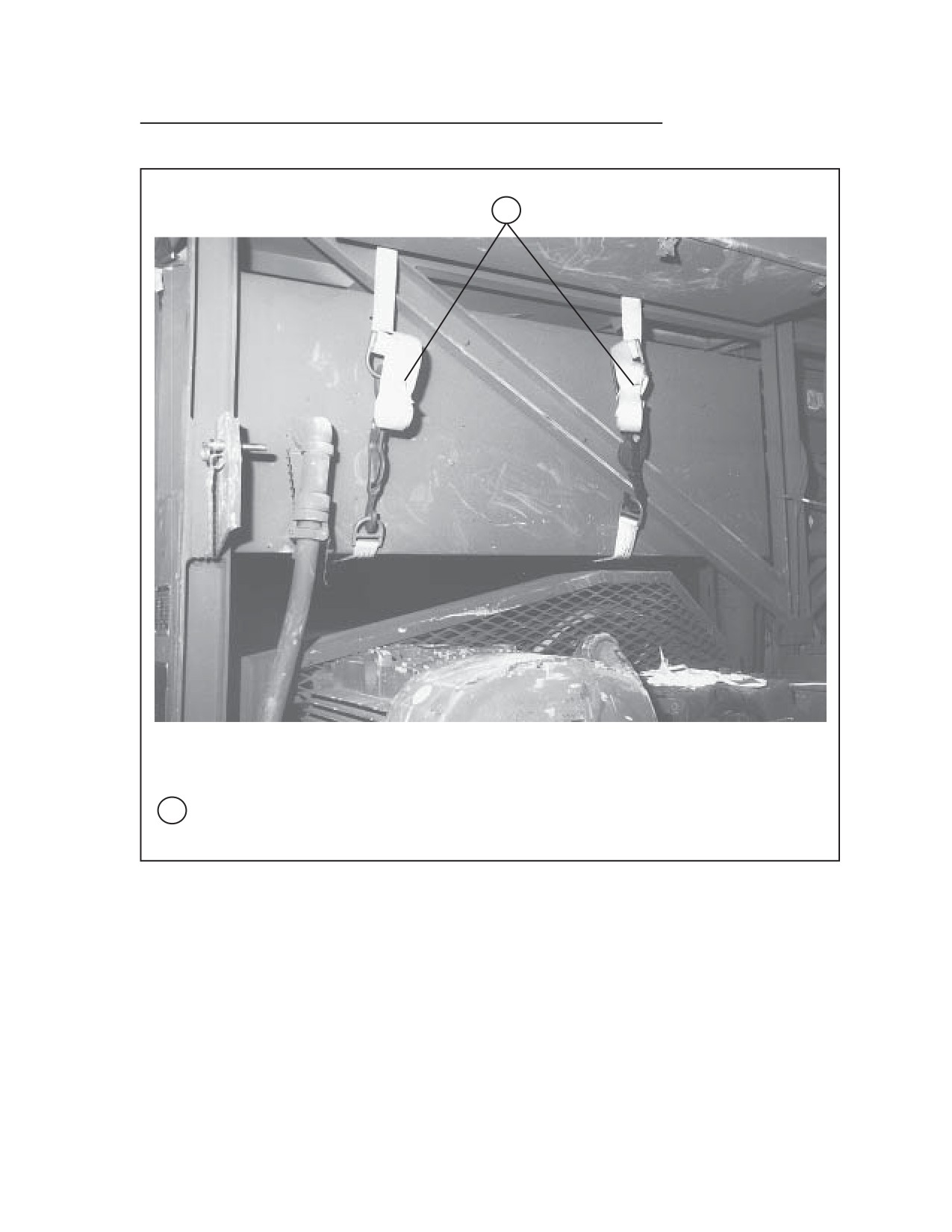
tape (not shown).
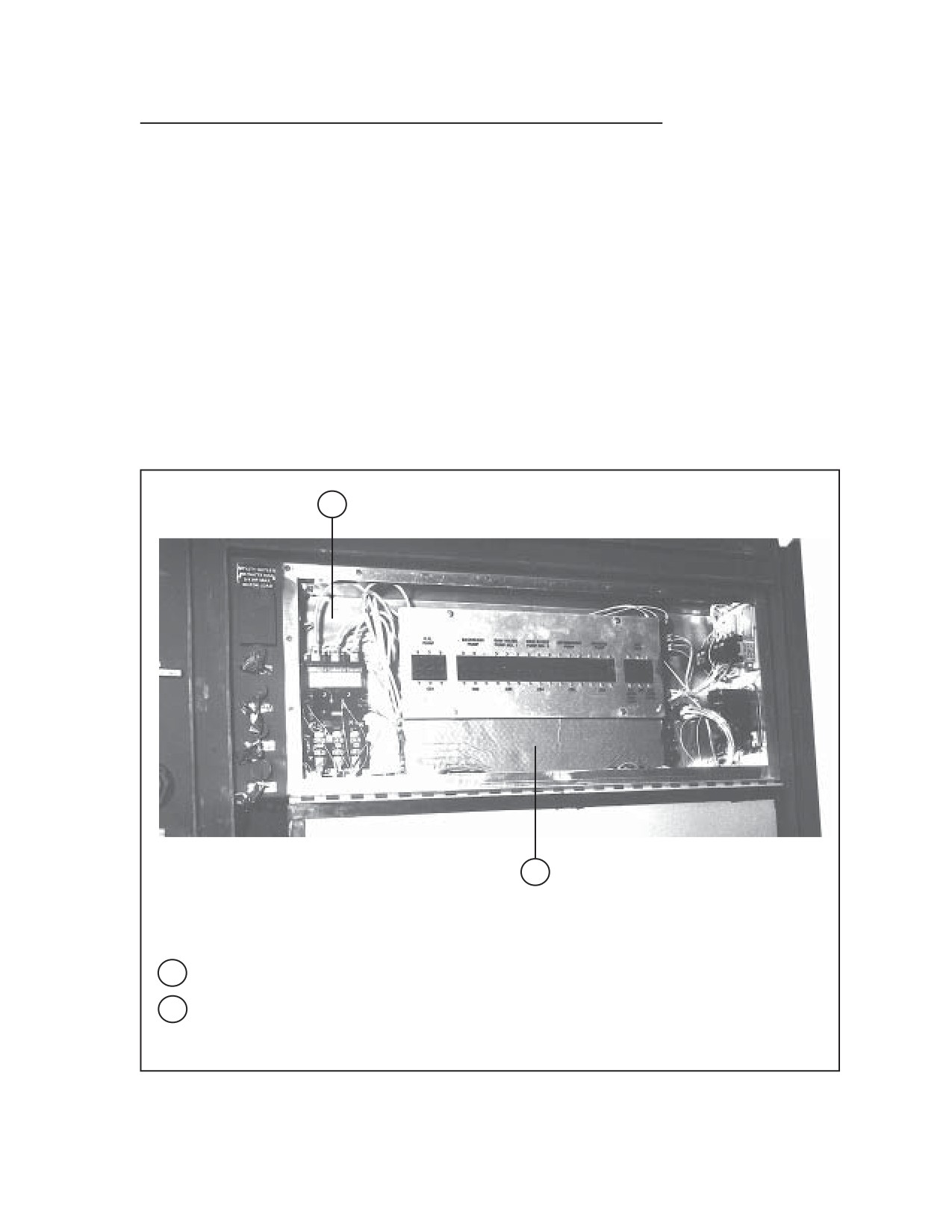
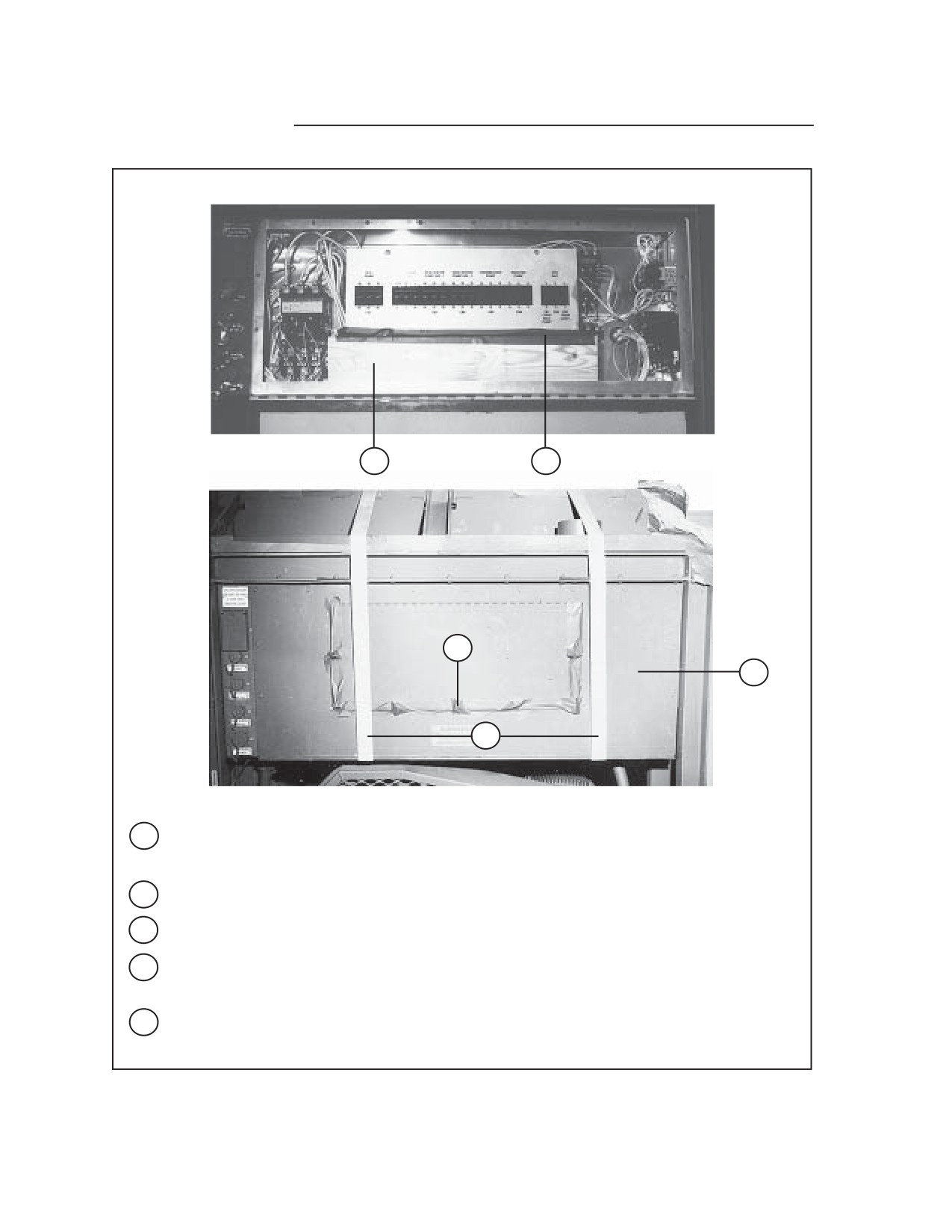
c. Prepare and lash the control box assembly as shown in Figure 1-10, and
secure the lashings as shown in Figure 1-11.
1
2
1
Open the control box assembly cover.
2
Position a 6- by 26-inch piece of honeycomb between the bottom of the circuit breaker
plate and the bottom of the control box.
Figure 1-10. Control Box Assembly Prepared
1-11
11 May 2005
FM 4-20.158/TO 13C7-7-61
3
4
6
5
7
3
Place a 2- by 6- by 26-inch piece of lumber between the honeycomb and the edge of the
control panel.
4
Tape the lumber in place using 2-inch adhesive tape.
5
Close the control box assembly cover and secure it with the screws provided.
6
Close the circuit breaker plate cover. Secure it with the twist locks provided, and tape
the twist locks using 2-inch adhesive tape.
7
Use two 15-foot lashings to secure the control box assembly to the top frame. Pass the
lashings around the front panel and over the frame.
Figure 1-10. Control Box Assembly Prepared (Continued)
1-12
11 May 2005
FM 4-20.158/TO 13C7-7-61
1
1
Secure each lashing on the inside of the ROWPU using two D-rings and a loadbinder.
Figure 1-11. Lashings Secured on Control Box
1-13
11 May 2005
FM 4-20.158/TO 13C7-7-61
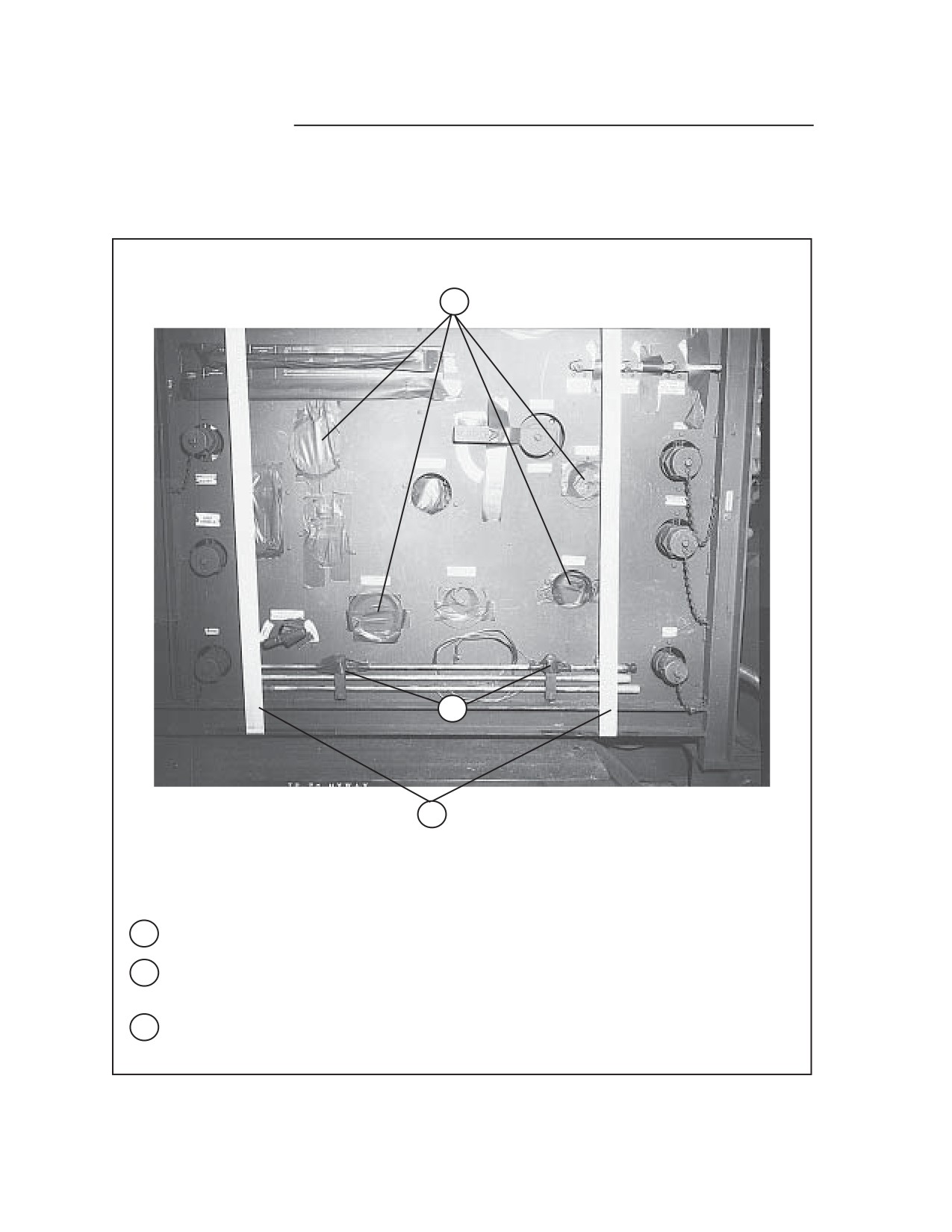
d. Prepare and secure the control panel as shown in Figure 1-12.
1
2
3
1
Tape all lights, switches and gauges on the control panel with 2-inch adhesive tape.
2
Secure the ground rods in the carrying racks on the bottom of the control panel and tape
the latches in place using 2-inch adhesive tape.
3
Use two 15-foot lashings to secure the operational control panel to the top of the frame.
Secure each lashing on the inside of the ROWPU using two D-rings and a loadbinder.
Figure 1-12. Control Panel Prepared and Secured
1-14
11 May 2005
FM 4-20.158/TO 13C7-7-61
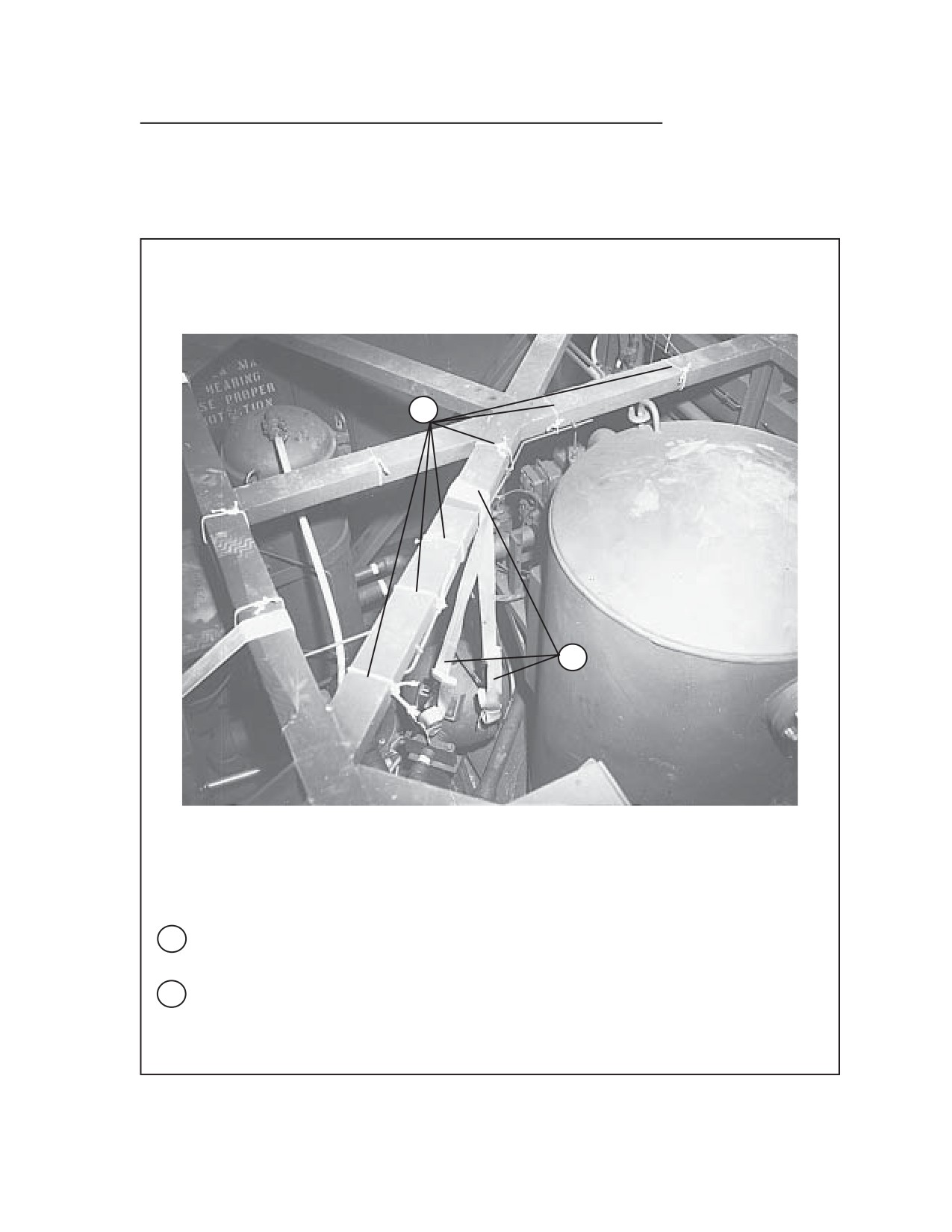
e. Secure the pulse dampener as shown in Figure 1-13.
2
1
1
Route two 15-foot lashings around the pulse dampener and the top of the ROWPU
frame. Secure each lashing with two D-rings and a loadbinder.
2
Secure the 3/8-inch vent lines to the top of the ROWPU frame using type III nylon cord.
Note: When securing the 3/8-inch vent lines ensure that six ties are made around the top of
the ROWPU frame.
Figure 1-13. Pulse Dampener Prepared and Secured
1-15
11 May 2005
FM 4-20.158/TO 13C7-7-61
f. Secure the intervehicular cables and chains to the trailer using type III
nylon cord (not shown).
g. Fold the pump tiedown straps and tape them to the floor of the ROWPU
(not shown).
h. Stow the jacks and the jack handles on their support brackets, and secure
them using type III nylon cord (not shown).
i. Make sure the generator's fuel tank is at least 1/2 but no more than 3/4
full. Ensure hazardous materials are packaged, marked, and labeled as
required by AFMAN(I) 24-204/TM 38-250 (not shown).
j.
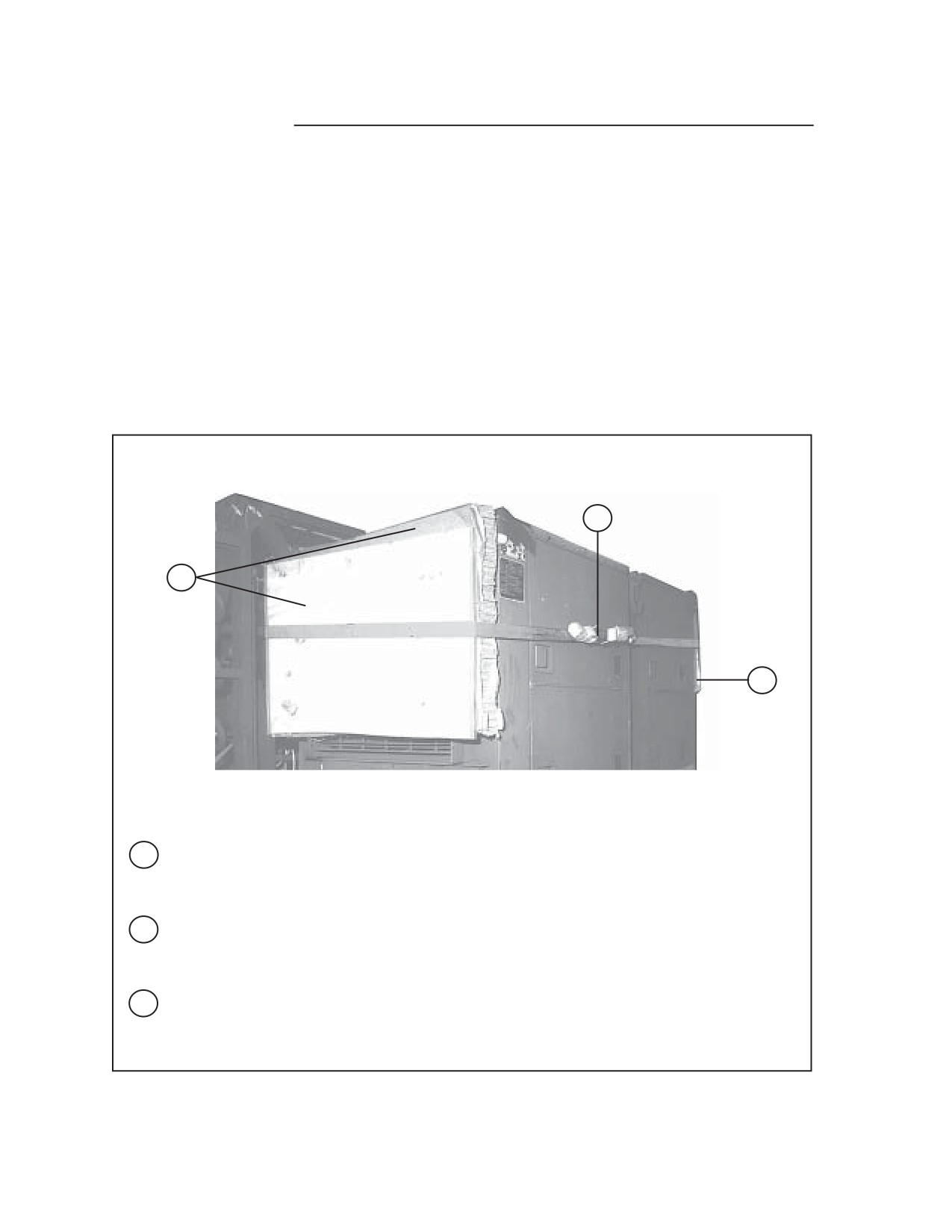
Prepare the generator as shown in Figure 1-14.
3
1
2
1
Glue a 3/4- by 19- by 34-inch piece of plywood to a 19- by 34-inch piece of honeycomb.
Position the plywood and honeycomb with the honeycomb against one end of the
generator at the top.
2
Repeat step 1 for the other end of the generator.
Note: Tape the edges of the plywood where the lashing is routed over the edge.
3
Form a 30-foot lashing according to FM 4-20.102/NAVSEA SS400-AB-MMO-010/TO
13C7-1-5 and route it around the end protectors and generator. Secure the lashing in
the front using two D-rings and a loadbinder.
Figure 1-14. Generator Prepared
1-16
11 May 2005
FM 4-20.158/TO 13C7-7-61
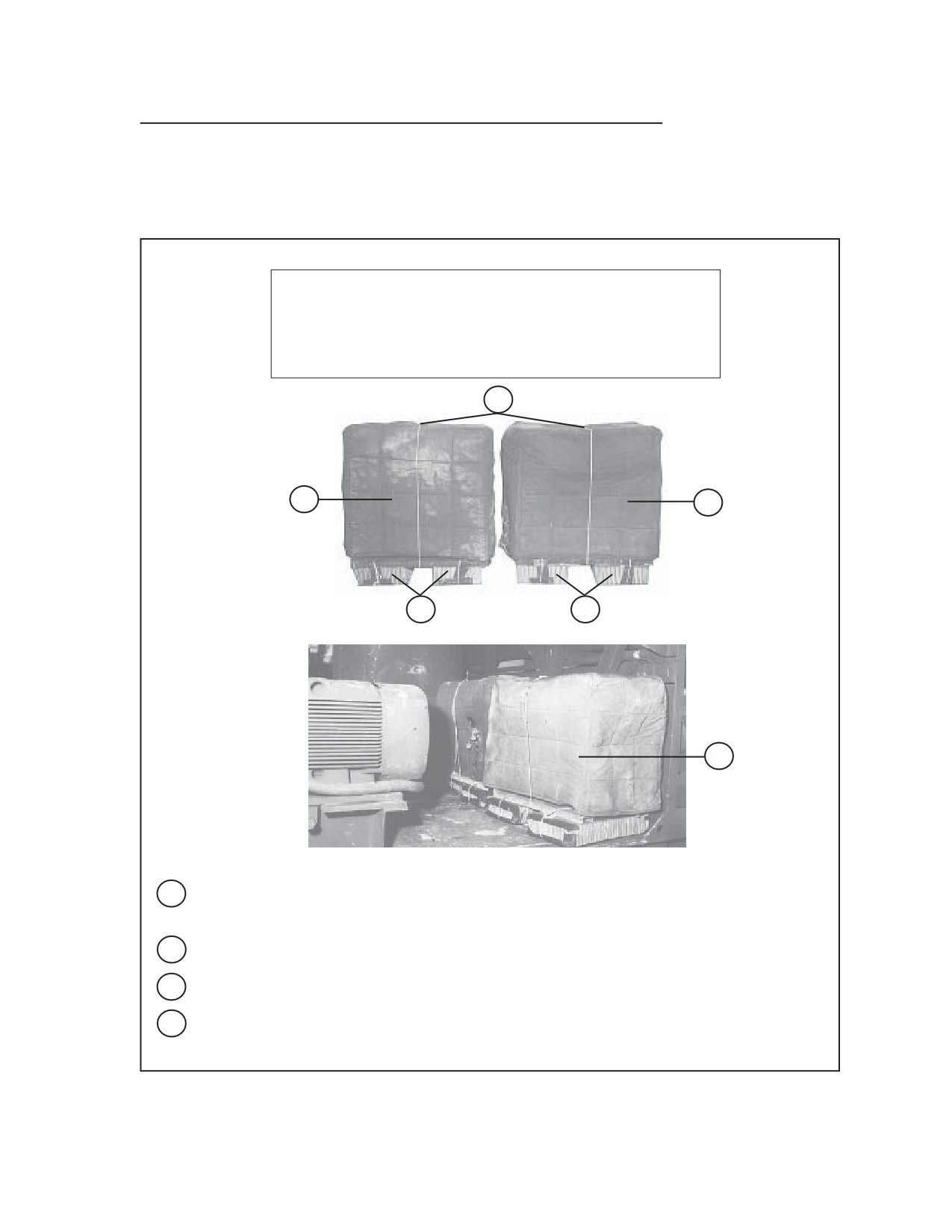
k. Prepare and stow the raw water pumps on the ROWPU as shown in
Figure 1-15.
CAUTION
When stowing and securing the supporting equipment, do not
step on the ROWPU pump oil drain valve, the drain hoses, or
the oil gauge located between the ROWPU pump and the
electric motor.
3
2
2
1
1
4
1
Secure two pieces of 8- by 13-inch honeycomb to the bottom frame of each of the two raw
water pumps using type III nylon cord.
2
Cover the pumps with their covers.
3
Secure the covers using type III nylon cord.
4
Stow the raw water pumps inside the ROWPU along the right side as viewed from the
rear of the load.
Figure 1-15. Raw Water Pumps Prepared and Stowed
1-17
11 May 2005
FM 4-20.158/TO 13C7-7-61
l.
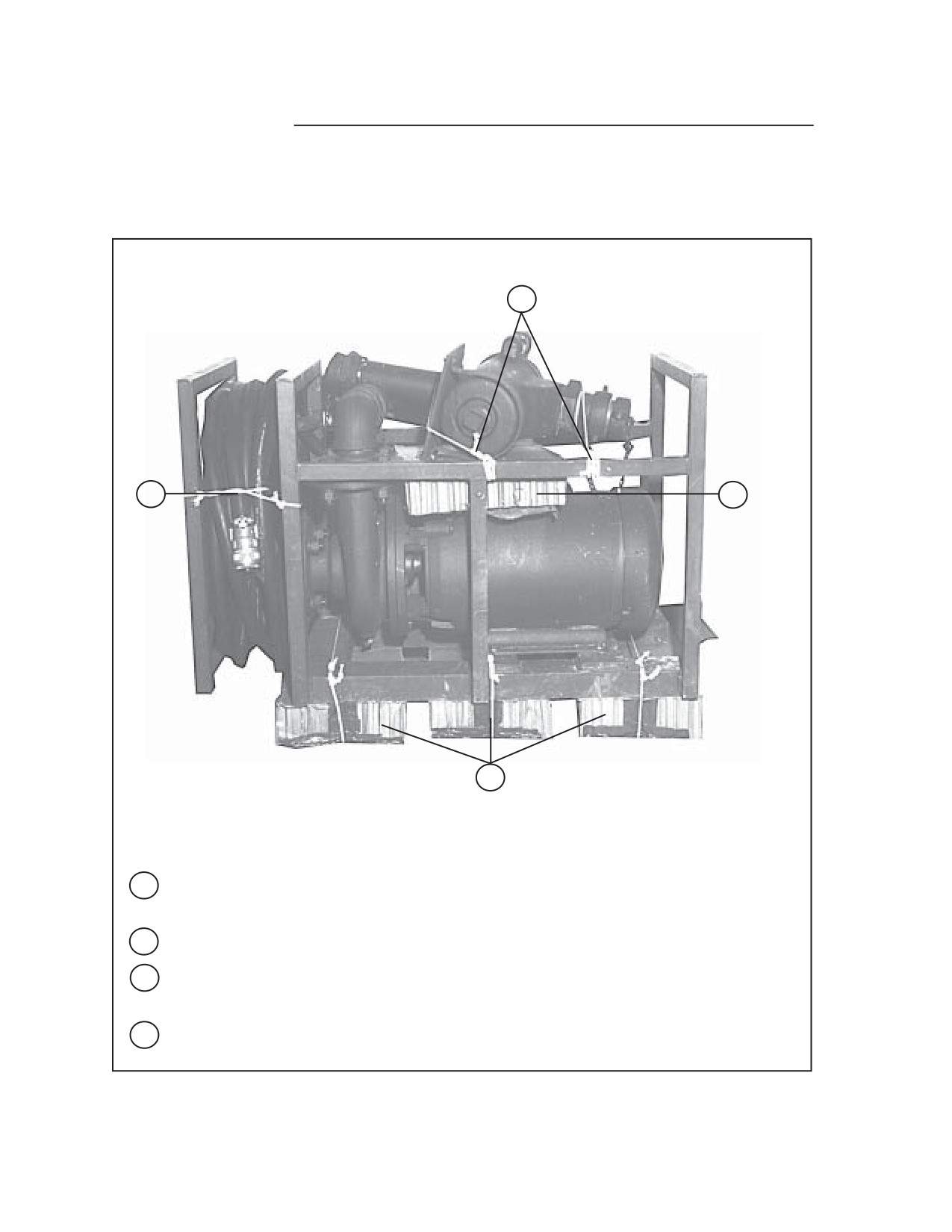
Prepare and stow the backwash pumps on the ROWPU as shown in Figure
1-16.
3
4
2
1
1
Secure three 8- by 16-inch pieces of honeycomb to the bottom frame of the backwash
pump using type III nylon cord.
2
Place one 10- by 13-inch piece of honeycomb on top of the motor of the backwash pump.
3
Position the pump strainer on the previously positioned honeycomb, and secure it to the
top frame of the pump using type III nylon cord.
4
Secure the end of the hose to the frame to prevent the hose from unraveling.
Figure 1-16. Backwash Pump Prepared, Stowed and Secured
1-18
11 May 2005
FM 4-20.158/TO 13C7-7-61
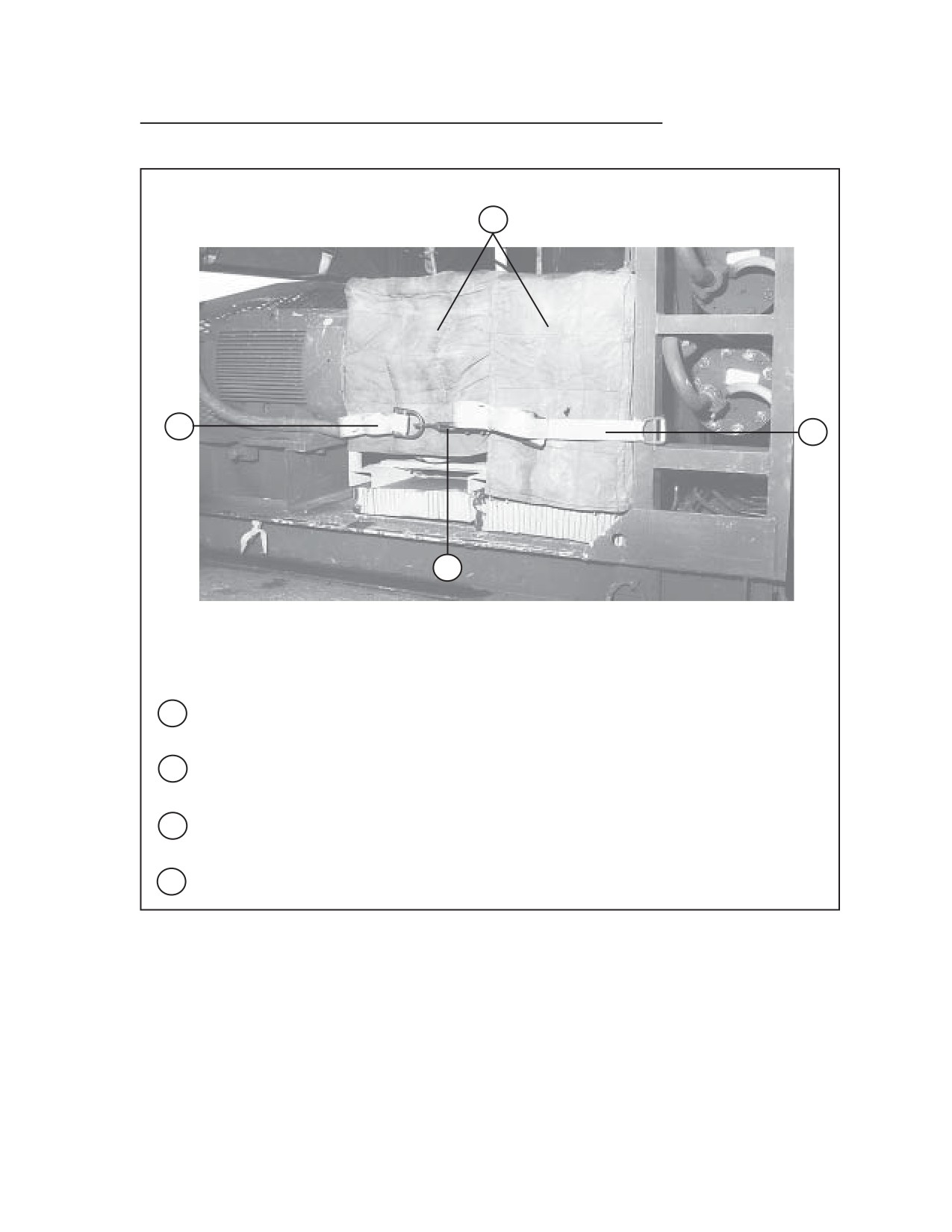
5
7
6
8
5
Place the cover on the backwash pump and secure it using type III nylon cord. Set the
pump inside the ROWPU between the raw water pumps and the ROWPU motor.
6
Pass one 15-foot lashing to the inside vertical brace of the ROWPU, around the frame
and through its own D-ring.
7
Pass another 15-foot lashing to the third vertical brace of the ROWPU in the same
manner as step 6.
8
Pass the straps around the three pumps and secure with two D-rings and a loadbinder.
Figure 1-16. Backwash Pump Prepared, Stowed and Secured (Continued)
1-19
11 May 2005
FM 4-20.158/TO 13C7-7-61
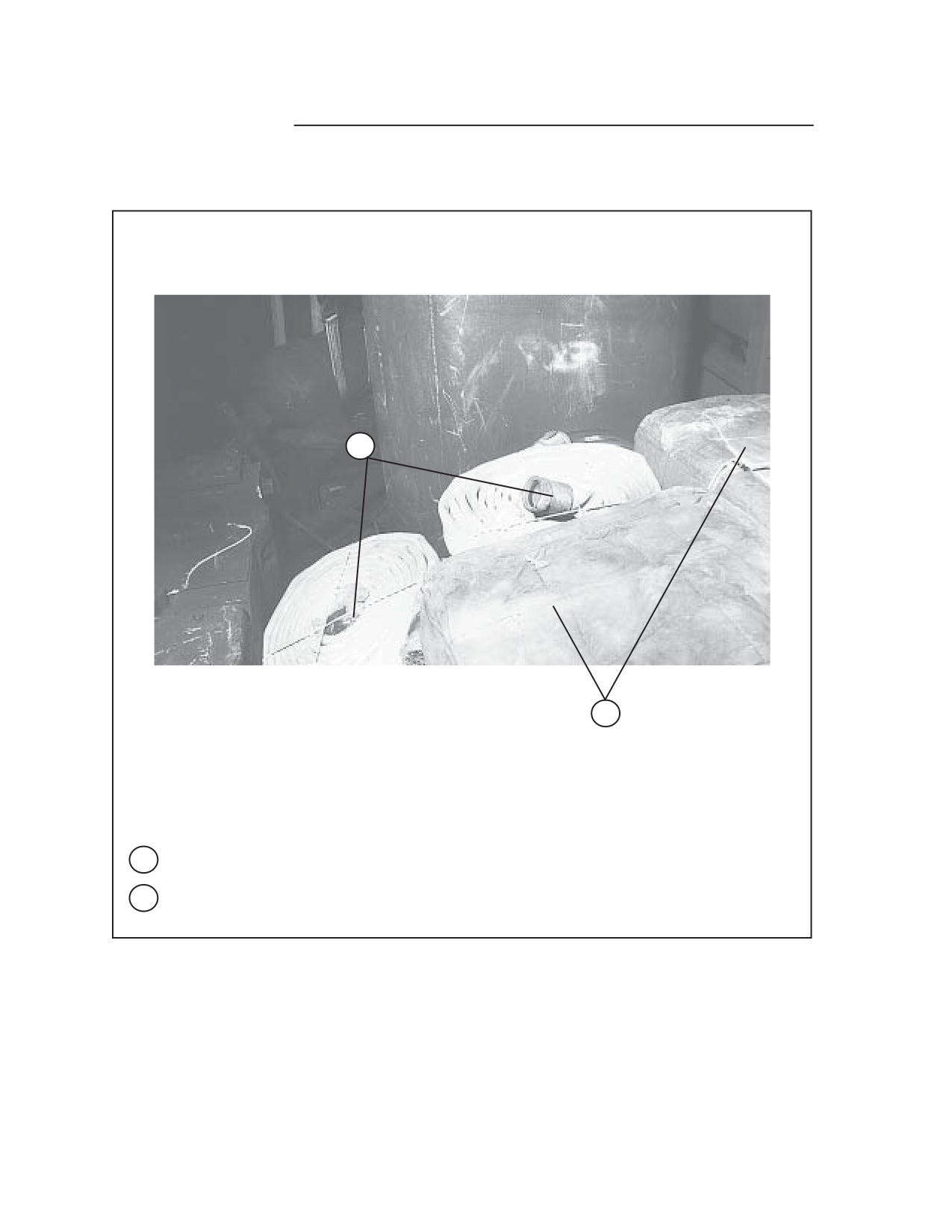
m. Prepare and stow the canvas hoses as shown in Figure 1-17.
1
2
1
Roll up each canvas hose section and tie it using type III nylon cord.
2
Stow the canvas hoses behind the pumps.
Figure 1-17. Canvas Hose Prepared and Stowed
1-20
11 May 2005
FM 4-20.158/TO 13C7-7-61
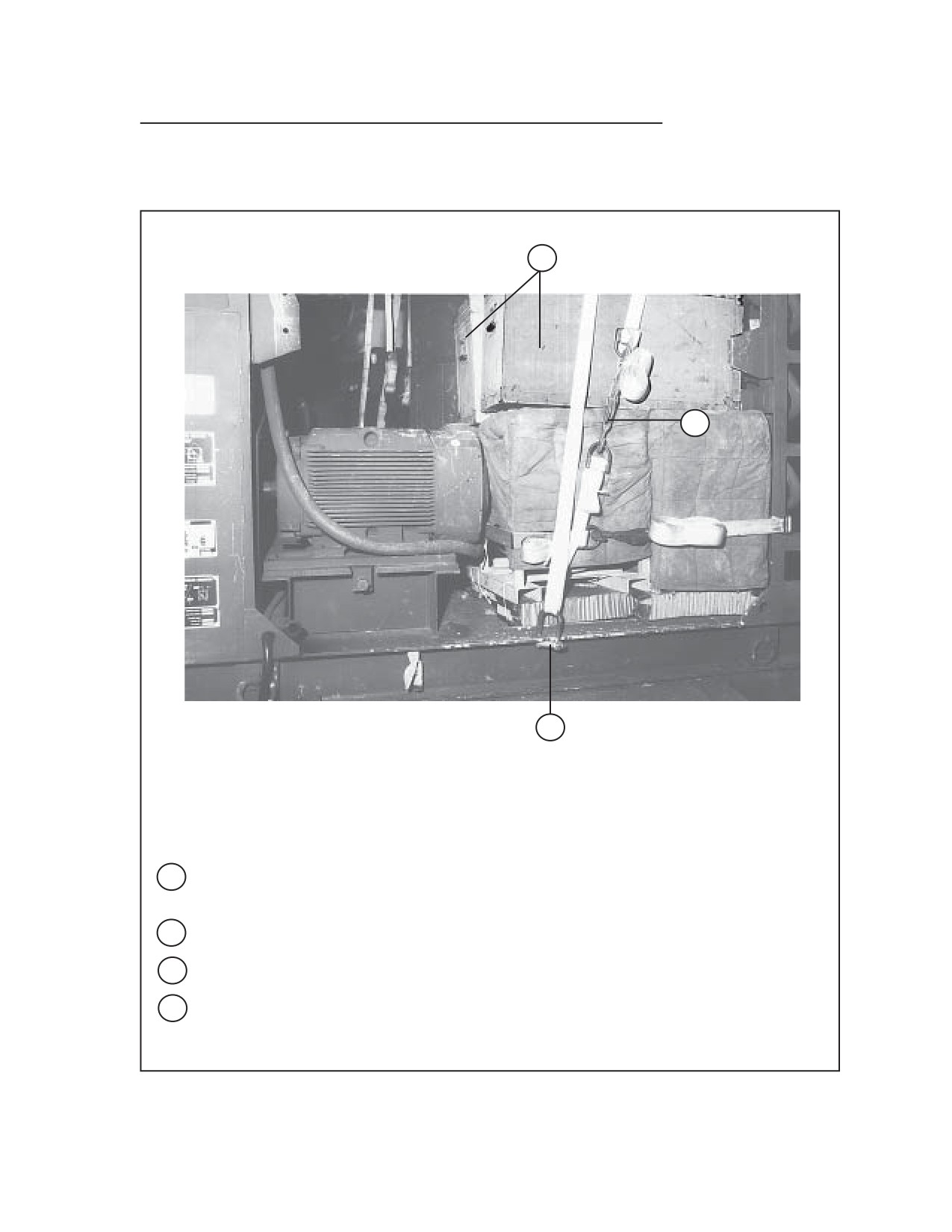
n. Prepare, stow and secure the two storage chests as shown in Figure 1-18.
2
4
3
1
Pad the contents inside the two storage chests using cellulose wadding. Secure the
chest closed using type III nylon cord (not shown).
2
Stow the two storage chests on top of the three pumps.
3
Attach a tiedown clevis to the center tiedown hole on the floor of the ROWPU.
4
Prepare and route a 30-foot lashing around the third inside vertical brace of the
ROWPU. Pass the free end of the lashing over the chests and through the tiedown
clevis. Secure the lashing using two D-rings and a loadbinder.
Figure 1-18. Storage Chests Prepared, Stowed and Secured
1-21
11 May 2005
FM 4-20.158/TO 13C7-7-61
o. Place the wooden staves of the water tank beside the ROWPU pump and
motor. Secure the staves to the floor using type III nylon cord (not shown).
p. Set the sledgehammer next to the third inside vertical brace. Secure it to
the brace using type III nylon cord (not shown).
q. Set the paddle and float behind the inside storage chest and secure them
together using type III nylon cord (not shown).
r. Stack the five gallon plastic water containers behind the ROWPU pump
and tie them to a convenient point using type III nylon cord (not shown).
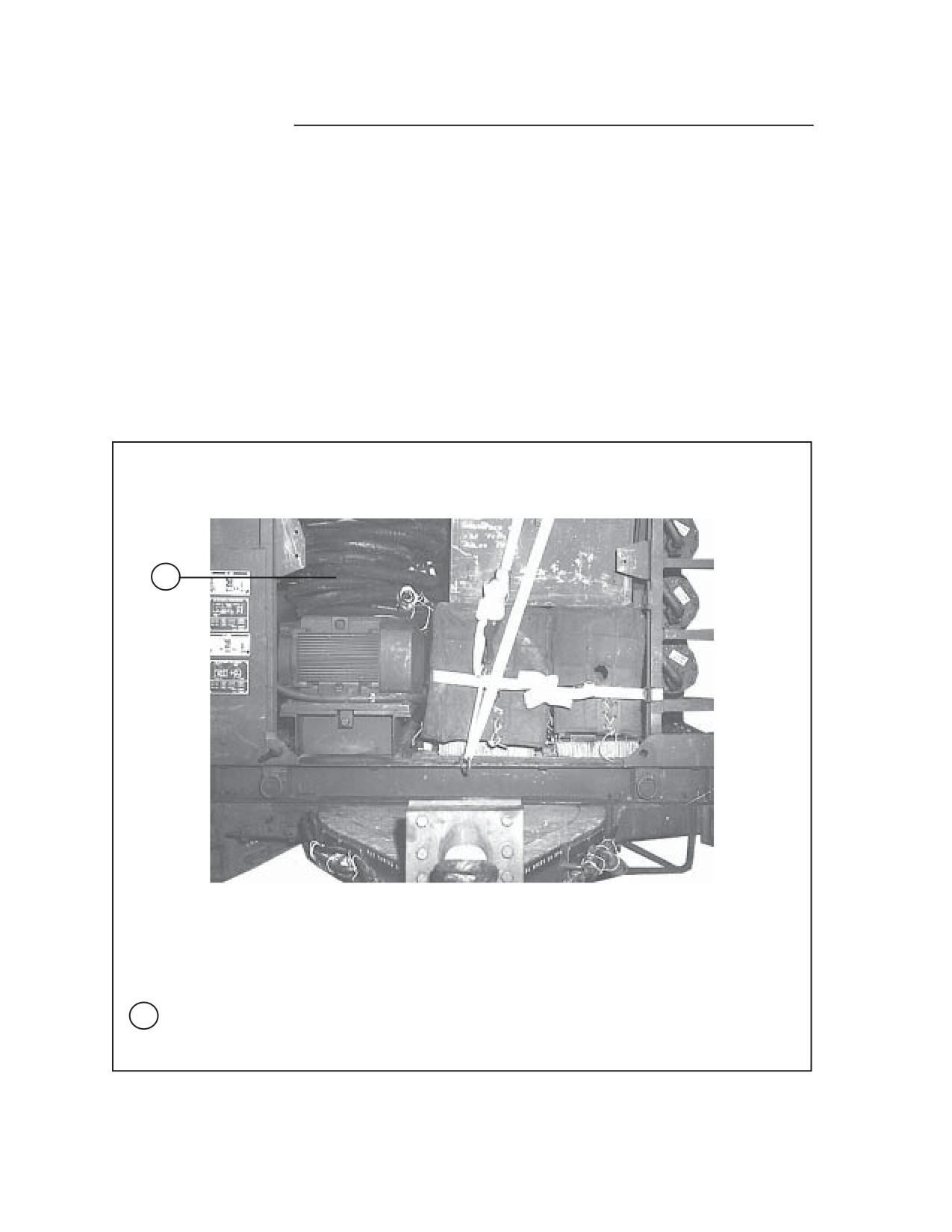
s. Prepare and stow the rubber hoses as shown in Figure 1-19.
1
1
Roll up each 10-foot section of rubber hose and secure it using type III nylon cord.
Stow the rubber hoses on top of the ROWPU pump.
Figure 1-19. Rubber Hoses Prepared and Stowed
1-22
11 May 2005
FM 4-20.158/TO 13C7-7-61
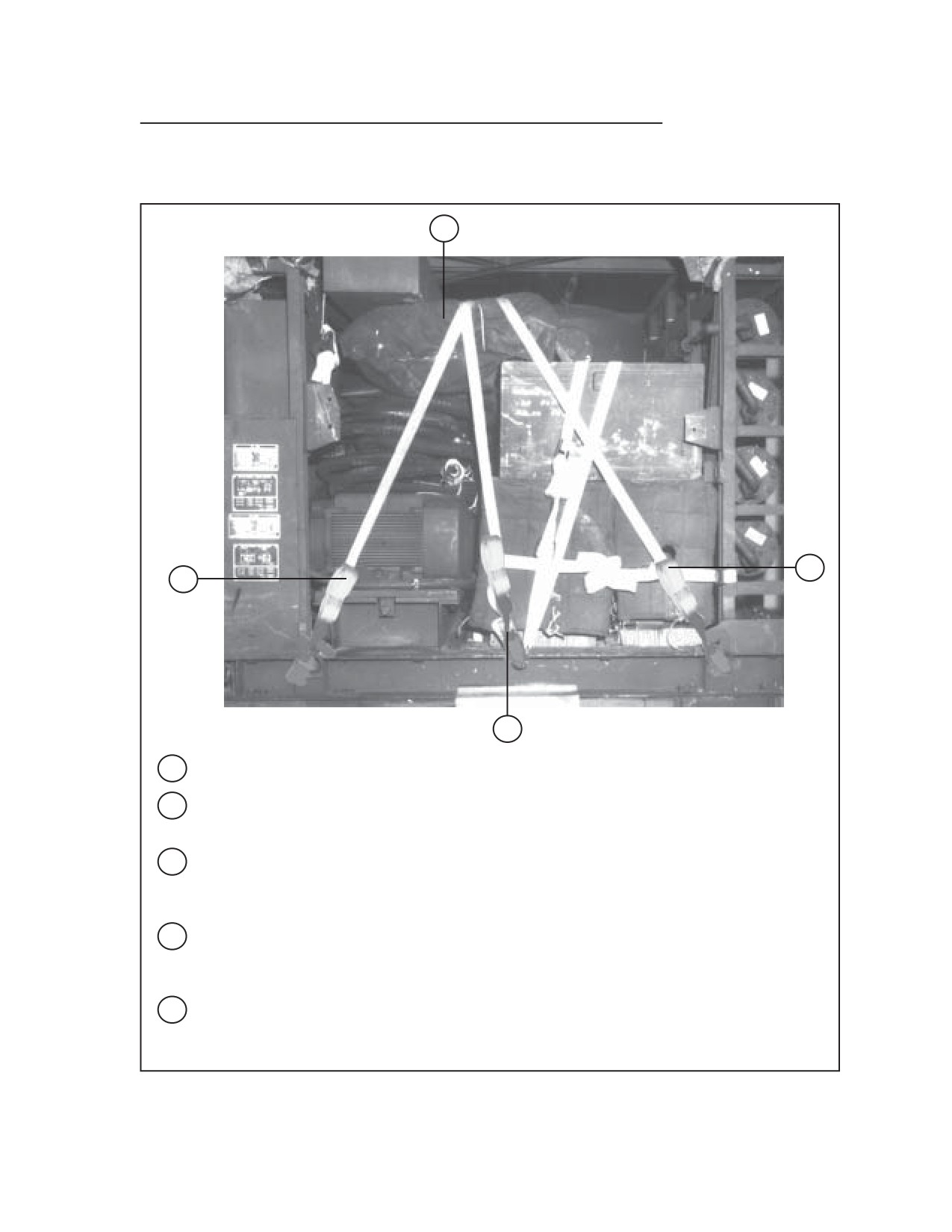
t. Prepare, stow and secure the water tanks as shown in Figure 1-20.
2
3
5
4
1
Fold each water tank and tie it using type III nylon cord (not shown).
2
Cover the water tanks with canvas and secure the canvas using type III nylon cord.
Stow the water tanks and the ROWPU cover on top of the rubber hoses.
3
Route a 15-foot lashing around the tiedown provision and back through itself on the
third vertical brace on the right side. Pass the lashing over the tanks and secure it to
the left bottom corner tiedown provision using a single D-ring and loadbinder.
4
Route a 15-foot lashing around the center rear tiedown provision and back through
itself. Pass the lashing over the tanks and to the center floor tiedown provision and
secure it using a single D-ring and loadbinder.
5
Route a 15-foot lashing around the tiedown provision and back through itself on the
third inside vertical brace on the left side. Pass the lashing over the tanks and secure it
to the right bottom corner tiedown provision using a single D-ring and loadbinder.
Figure 1-20. Water Tanks Prepared, Stowed and Secured
1-23
11 May 2005
FM 4-20.158/TO 13C7-7-61
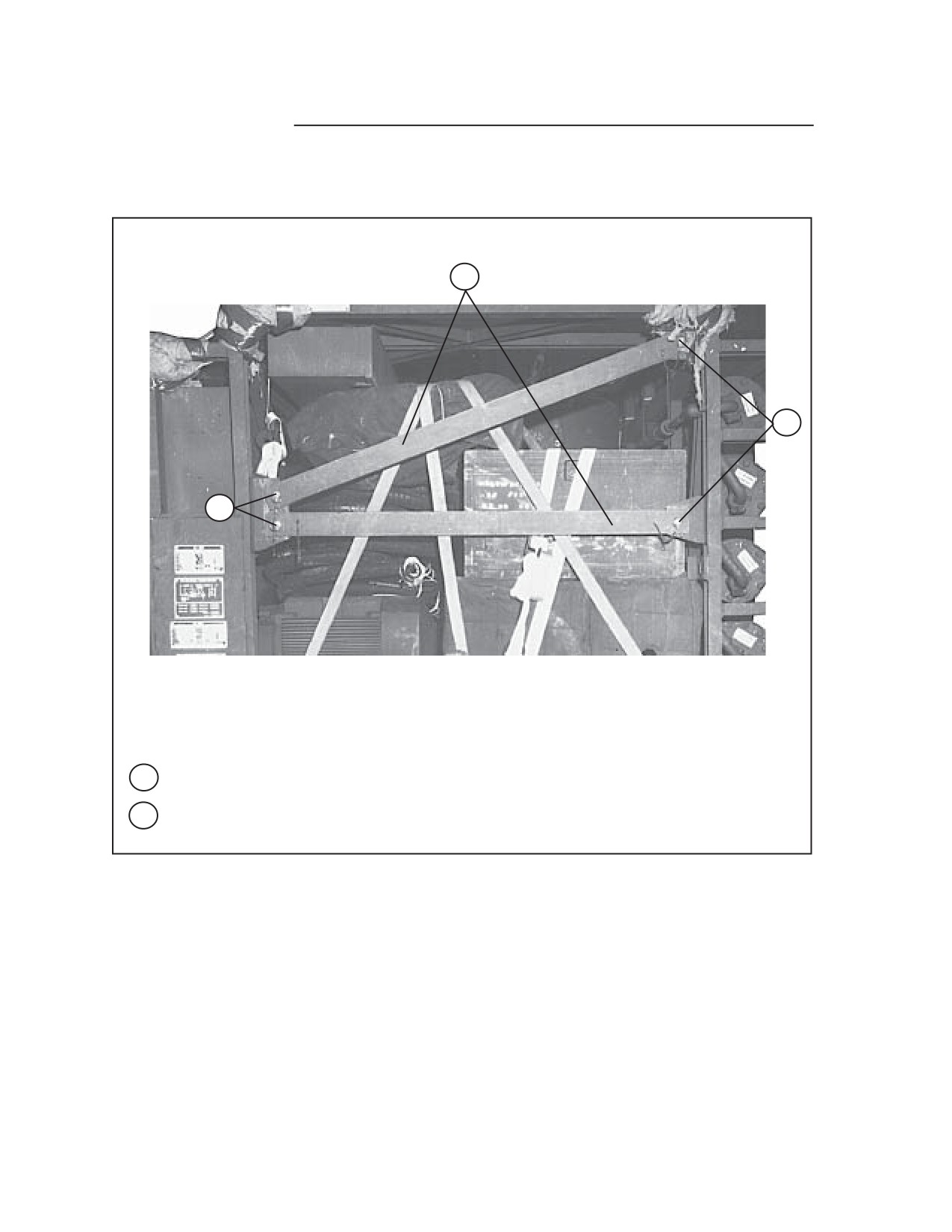
u. Install and secure cross braces as shown in Figure 1-21.
1
2
2
1
Install the cross braces on the ROWPU frame.
2
Secure the cross braces using the locking pins provided.
Figure 1-21. Cross Braces Installed and Secured
1-24
11 May 2005
FM 4-20.158/TO 13C7-7-61
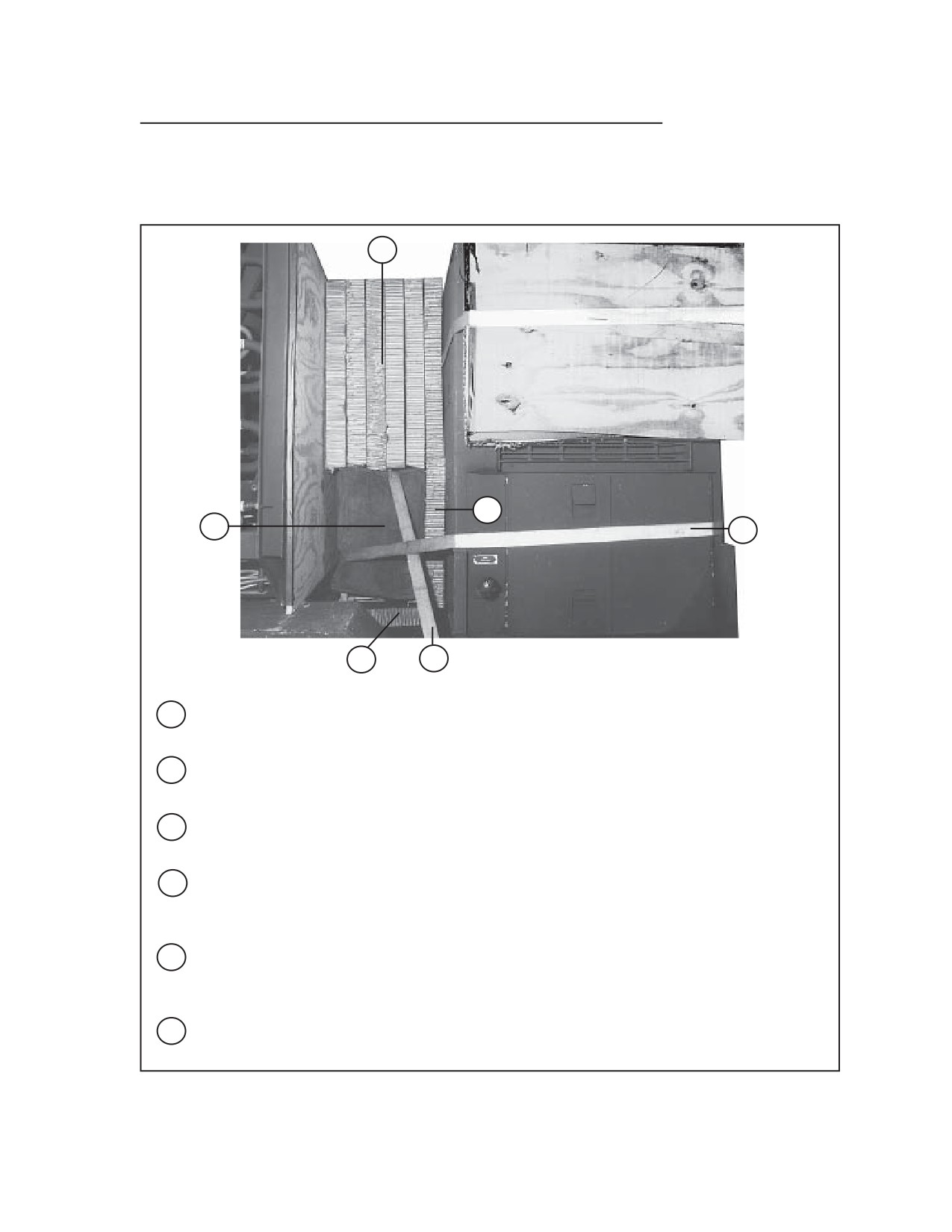
v. Prepare, stow and secure the distribution pump as shown in Figure 1-22.
6
3
2
4
3
5
1
Secure two pieces of 8- by 13-inch honeycomb to the bottom frame of the distribution
pump using type III nylon cord (not shown).
2
Cover the pump and stow in the bed of the trailer between the water purification unit
and the generator.
3
Cut two pieces of 23- by 24-inch honeycomb. Lift the pump and place one piece under
the pump. Place the other piece between the pump and generator.
4
Form one 30-foot lashing according to FM 4-20.102/NAVSEA SS400-AB-MMO-010/TO
13C7-1-5 and pass it around the distribution pump and generator. Secure the lashing in
the rear of the generator using two D-rings and a loadbinder.
5
Form one 30-foot lashing according to FM 4-20.102/NAVSEA SS400-AB-MMO-010/TO
13C7-1-5 and route it over the distribution pump and under the trailer. Secure the
lashing using two D-rings and a loadbinder.
6
Cut six pieces of 36- by 48-inch honeycomb and place them on top of the distribution
pump.
Figure 1-22. Distribution Pump Stowed and Secured
1-25
11 May 2005
FM 4-20.158/TO 13C7-7-61
LIFTING AND POSITIONING LOAD
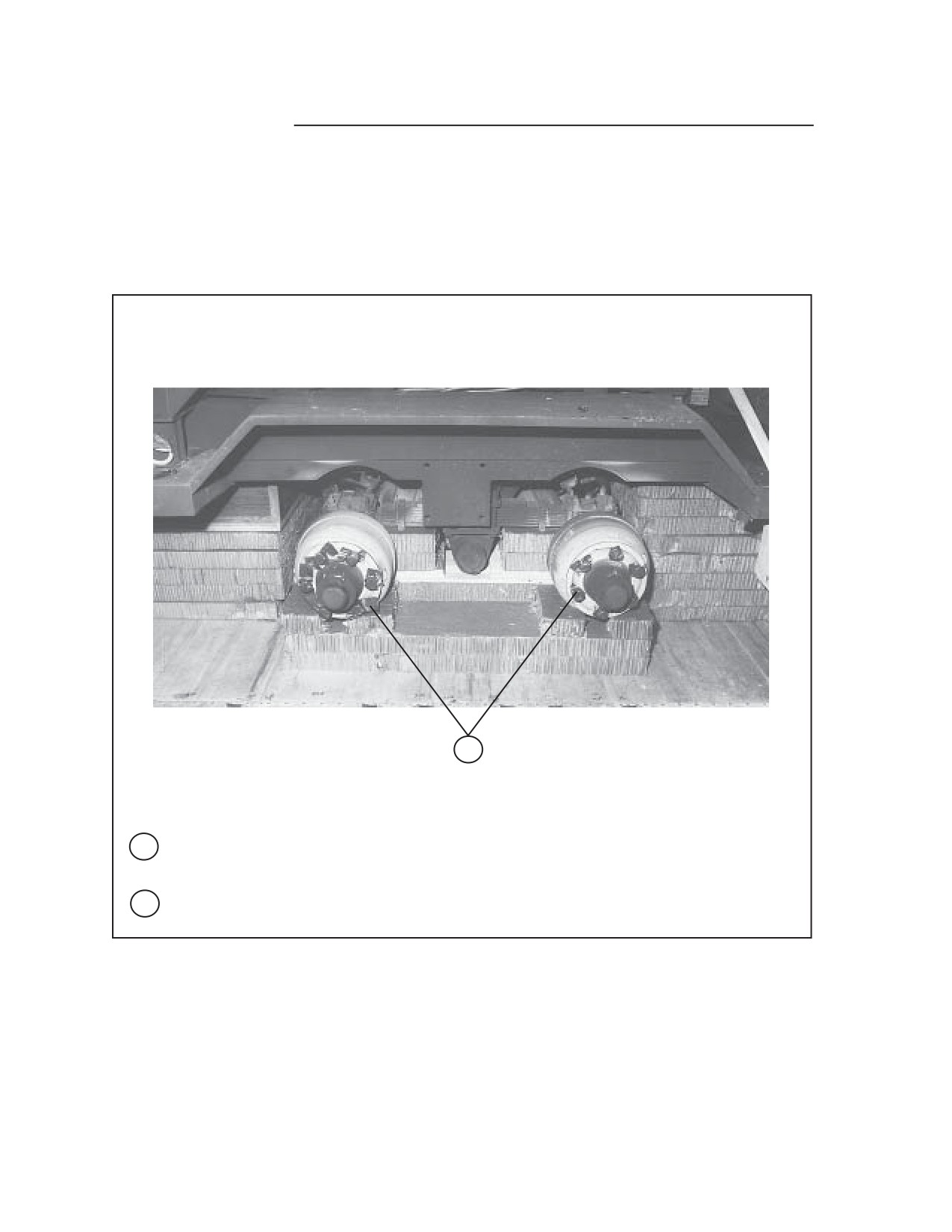
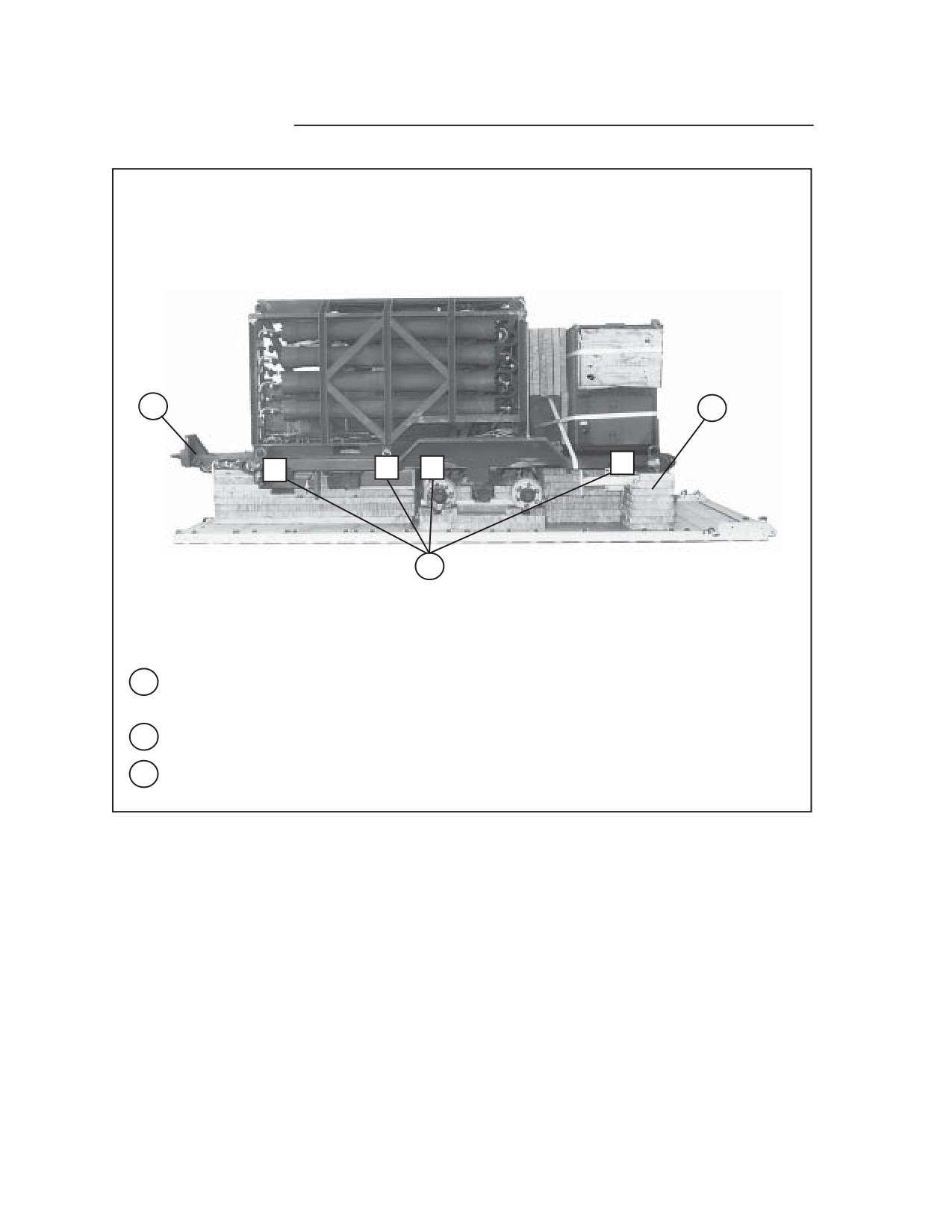
1-5. Use available slings to lift the ROWPU. After lifting the ROWPU, prepare it
for positioning as shown in Figure 1-23. Position the ROWPU as shown in Figure
1-24.
2
1
Remove the four wheels and the spare from the ROWPU. They will be stowed on the
platform after the lashings are installed (not shown).
2
Place the lug nuts back on the lugs and tape them in place using 2-inch adhesive tape.
Figure 1-23. ROWPU Prepared for Positioning
1-26
11 May 2005
FM 4-20.158/TO 13C7-7-61
CAUTION
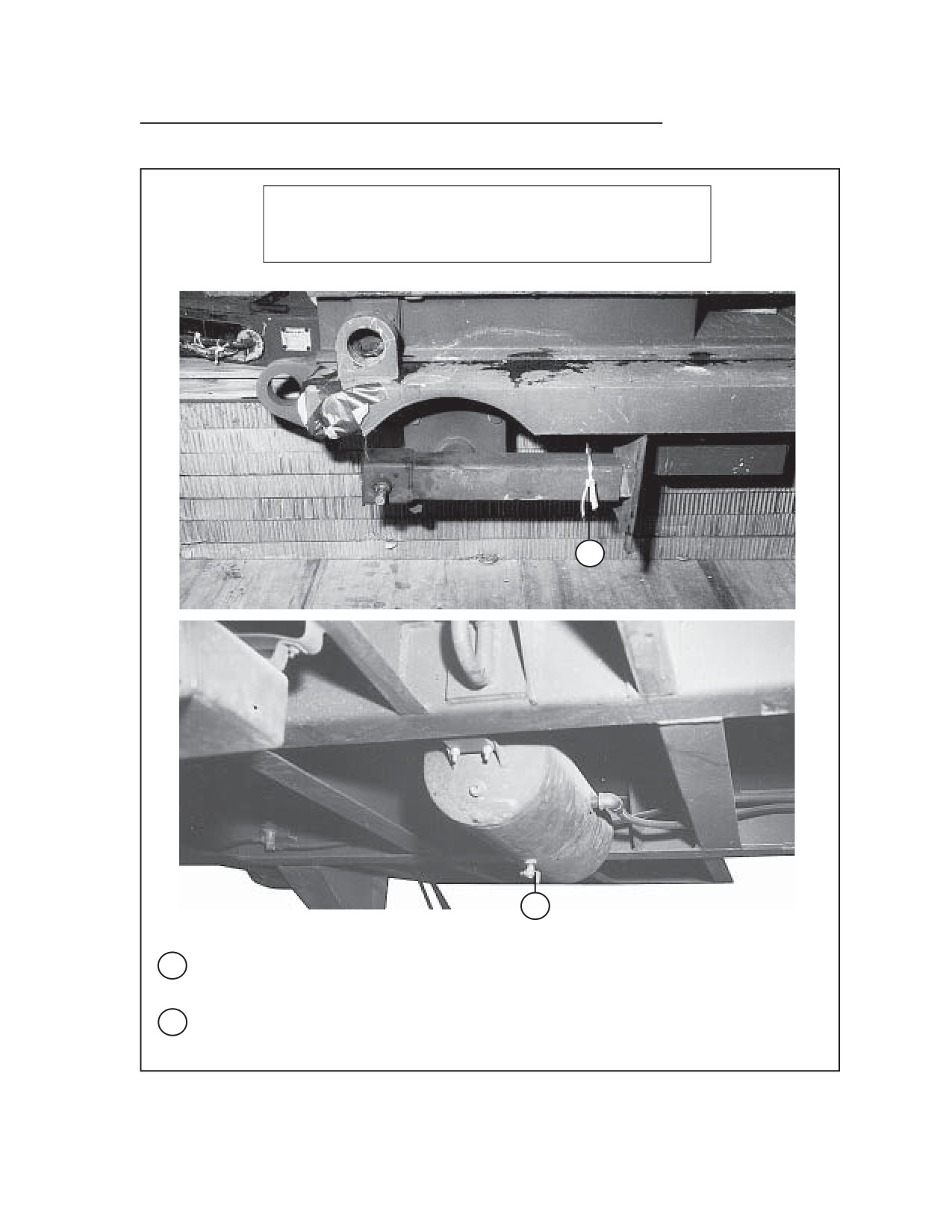
Ensure that the air tank release valve fits in the 8-inch by 8-inch
hole in the plywood of honeycomb stack 5.
3
4
3
Raise the leveling jacks into the travel position and secure them with 1/2-inch tubular
nylon webbing.
4
Position the air tank release valve over the 8- by 8-inch hole in the plywood of honey-
comb stack 5.
Figure 1-23. ROWPU Prepared for Positioning (Continued)
1-27
11 May 2005
FM 4-20.158/TO 13C7-7-61
2
1
1
2
3
4
REAR
FRONT
3
1
Set the ROWPU on the honeycomb stacks with the rear of the trailer 3 1/2 inches from
the front edge of honeycomb stack 1.
2
Allow the drawbar to overhang the rear edge of the platform by 35 inches.
3
Tiedown provisions 1, 2, 3 and 4 are built into the trailor along its length under the
frame.
Figure 1-24. ROWPU Positioned on Platform
1-28
11 May 2005
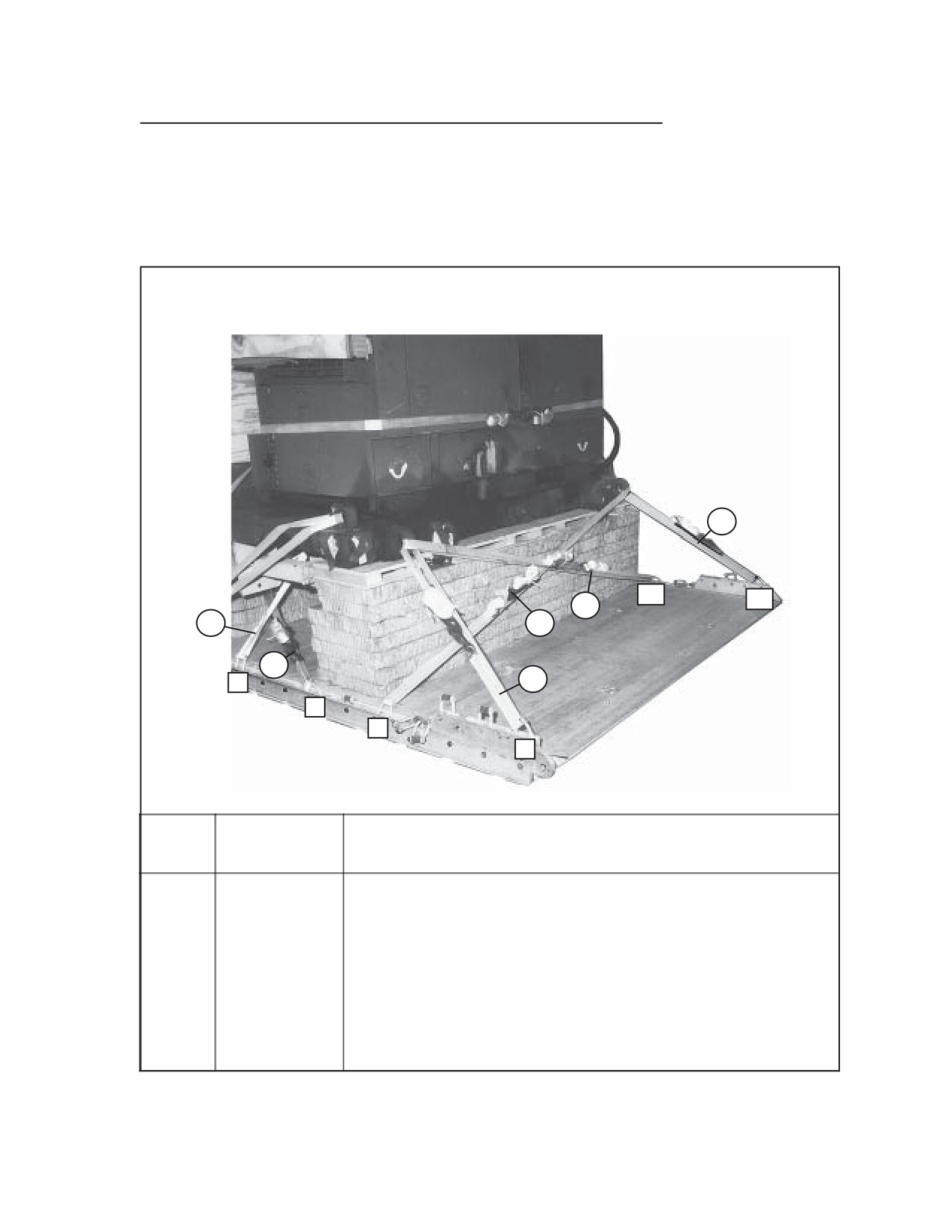
FM 4-20.158/TO 13C7-7-61
INSTALLING LASHINGS
1-6. Lash the ROWPU to the platform according to FM 4-20.102/NAVSEA SS400-
AB-MMO-010/TO 13C7-1-5 and as shown in Figures 1-25 through 1-27.
Note: When routing lashings ensure all suspension and lifting points are padded and
taped.
2
6A
1A
4
7
3
5
1
9
8
6
1
Lashing
Tiedown Clevis
Instructions
Number
Number
Pass lashing through:
1
1
Left rear tiedown eye of the ROWPU.
2
1A
Right rear tiedown eye of the ROWPU.
3
6
Right rear tiedown eye of the ROWPU.
4
6A
Left rear tiedown eye of the ROWPU.
5
8
Around rear axle.
6
8A
Around rear axle.
7
9
Tiedown provision number 4 right side.
8
9A
Tiedown provision number 4 left side.
Figure 1-25. Lashings 1 through 8 Installed
1-29
11 May 2005
///////////////////////////////////////