FMI 6-02.45, C1 Signal Support to Theater Operations (May 2008) - page 6
 

  Главная      Manuals     FMI 6-02.45, C1 Signal Support to Theater Operations (May 2008)


Search            copyright infringement  


Content      ..     4      5      6      7     ..


FMI 6-02.45, C1 Signal Support to Theater Operations (May 2008) - page 6


Appendix A  

A-6 

FMI 6-02.45 

5 July 2007 

A-20.


Following initial deployments, the commander’s focus changes to building rapidly his Warfighting 

capabilities and combat power (see Figure A-4). The proper sequencing of forces contributes significantly 
to the stabilization of the situation and allows for rapid buildup of capabilities. This enables the JFC to 
conduct decisive operations as early as possible. Further deployment will likely continue throughout the 
entry phase, until the conclusion of the operation. It is essential to retain the initiative throughout this 
phase. Additionally, the commander will begin shaping the operational environment by employing 
precision systems, air power, SOF, and other combat power to unbalance threat forces and the regime’s 
center of gravity.  

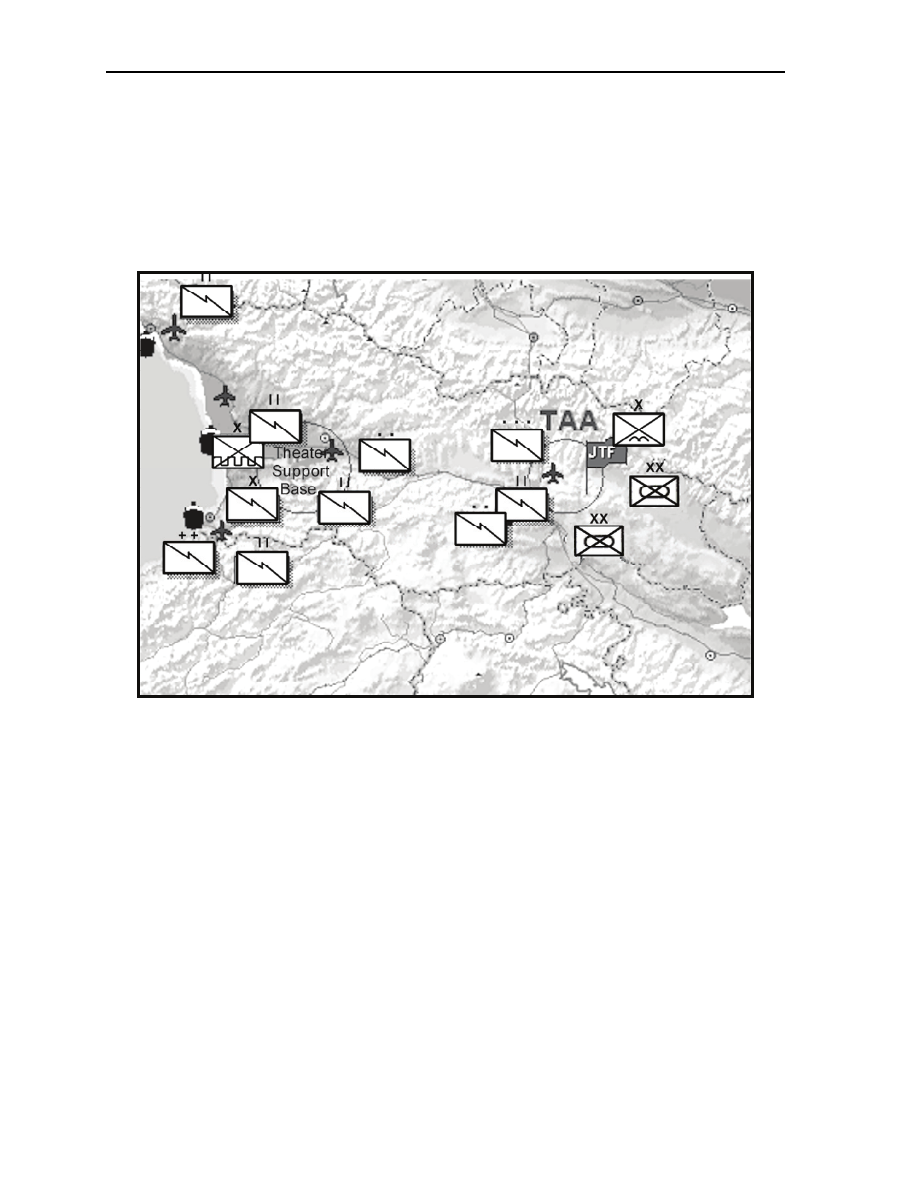
Figure A-4. Shaping RSOI and force projection to build combat power in the JOA 

A-21.


Signal elements continue TPFDD and installing and expanding theater networks in ports, airfields, 

and TAA. ESB elements provide cable and wire, SATCOM, TROPO systems, multichannel LOS systems, 
and additional voice and data switching to augment contingency packages. In some cases, the contingency 
package will be left in place or missions shifted to provide support to the ASCC/JTF once on the ground. 
Signal elements provide tactical network nodes and theater gateways to support tactical connection to GIG 
services (see Figure A-5): 

z


ESBs OPCON to 41st MEB for joint C2 network requirements for the SPOD and sustainment 
area security mission. 

z


The ESB supports the SPOD, APOD, and TAA. 

z


Contingency package OPCON to support JTF forward, BCT liaison teams, and JSOTF support 
area. 

z


The TTSB deploys to provide C2 to ESB units. Signal command deploys early en route to 
provide tactical teleport and J-6 staff augmentation (as required) and to control technical 
functions of theater LWN. 

z


The signal command deploys elements necessary to maintain NETOPS capability and 
continuous NETOPS situational awareness, and C2 of assigned or OPCON signal elements. The 
deployed signal command will monitor and track network outages, serious incident reports, 
recurring reports, requests from higher HQ, and all deployment statuses. As needed, the signal 

Notional Deployment Scenario for Signal Support 

5 July 2007 

FMI 6-02.45 

A-7 

command will also provide LNOs to interface between the Army level Watch Team/Crisis 
Action Team, the GCC, TNCC, and the DISA Regional NOSC. The deployed signal command 
will serve as the central focal point of the signal command battle staff and will also maintain 
status of deployed personnel and equipment movements, as well as track theater LWN force 
protection condition and information operations condition postures. 

Figure A-5. Employment phase – tactical integration, establishing theater hubs, teleports, and 

gateways 

A-22.


The size and composition of the deployed signal command will be based primarily on METT-TC. 

Most importantly the signal command will meet the needs of the ASCC and signal command commander’s 
perception of providing the most flexible and responsive center of gravity for supporting the LWN in the 
theater of operations. As more signal elements deploy to the theater, it is possible to see the entire signal 
command deploy to the JOA. 

DECISIVE OPERATIONS (INTERMEDIATE OBJECTIVE) 

A-23.


Significant actions taken for intermediate objectives are— 

z


A division conducts offensive operations to destroy hostile forces in the Northern sector. 

z


Two BCTs conduct offensive operations to secure the Southern sector and establish the forward 
operations base. 

z


Coalition forces screen the Northern boundary and secure the Northern international border. 

A-24.


Commanders will always look for an opportunity to conduct decisive operations (see Figure A-6) in 

order to achieve the desired end state as rapidly as possible. In many situations, the Army conducts 
deployment, entry, decisive operations, and transition to future operations nearly simultaneously. Army 
Forces will continue to interact closely with elements of the other services, US governmental agencies, and 
frequently with forces from allied nations. 

Appendix A  

A-8 

FMI 6-02.45 

5 July 2007 

Figure A-6. Offensive operations to seize key terrain, secure lines of communication, and 

affect enemy center of gravity 

A-25.


During decisive combat operations, signal elements continue to support the JTF HQ and all theater 

elements in the joint AO. Contingency packages are employed to provide coalition forces and LNO teams 
with network services (see Figure A-7). As the ASCC “force pool” deploys forward to support 
corps/division and BCT operations, signal elements are OPCON to corps/division tactical network 
formations in order to support those increased LWN requirements. Tactical hubs are emplaced well 
forward to support combat unit LWN services and offload transport requirements from strategic networks. 
The ESB is OPCON to two corps or divisions to support attached and OPCON ASCC sustainment 
elements in a direct support mission to two corps or divisions during combat operations. The ESB 
continues to support the SPOD, APOD, Theater Support Base, TAA, and JTF HQ. Planning for transition 
to contractor support begins in order to free tactical signal assets as quickly as possible for follow-on or 
future missions. 

Notional Deployment Scenario for Signal Support 

5 July 2007 

FMI 6-02.45 

A-9 

Figure A-7. Sustainment phase – extending GIG services to tactical organizations and 

echelons, LNOs, joint and coalition, broaden network access, NETOPS 

DECISIVE OPERATIONS (FINAL OBJECTIVES) 

A-26.


Significant actions taken for final objectives are— 

z


A division conducts offensive operations to destroy hostile forces and seize the capital region 
(threat center of gravity). 

z


Two BCTs secure the forward operations base. 

z


Coalition forces screen the Northern boundary, secure the Northern international border, and 
deny the area to hostile forces. 

z


2nd MEB conducts amphibious operations to seize key economic regions, block Southern egress 
routes, and secure the area for joint logistics over-the-shore (JLOTS). 

z


Theater sustainment command establishes the Regional Support Group at the forward operating 
base. 

A-27.


Decisive combat operations continue with signal elements supporting the SPOD, APOD, TAA, JTF 

HQ, and coalition liaisons. The TIN Company installs wiring and networking equipment to support JTF 
HQ, upgrades TAA networks, and installs the network infrastructure at the Forward Theater Support Base. 
The ESB is operationally controlled to support ASCC elements in direct support for the main effort of the 
corps. The ESB supports 2nd MEB operations and JLOTS. The TIN and ESB support the forward 
operating base and theater sustainment command. The TIN begins the process of coordinating 
commercialization of TAA (see Figure A-8). 

Appendix A  

A-10 

FMI 6-02.45 

5 July 2007 

Figure A-8. Attack to seize capital and key facilities in Southern region, restore friendly 

government 

STABILITY OPERATIONS 

A-28.


This phase of force projection operations focuses on the activities that occur following the cessation 

of the open conflict. The emphasis is to restore order, minimize confusion following the operation, 
reestablish national infrastructure, and prepare forces for redeployment. In these situations, decision 
makers balance political, economic, and information elements of power with military means to ensure that 
the host nation is able to sustain the strategic objectives accomplished during decisive operations. 

A-29.


The cessation of the open conflict may be permanent or interrupted by the resumption of hostilities. 

Therefore, units must rapidly consolidate, reconstitute, train, and otherwise prepare to remain in theater 
should the fighting resume. During this time, security remains a paramount concern to prevent isolated 
enemy individuals or forces from bringing harm to the force. Particular emphasis should be placed on 
signal units, who themselves may be isolated and may be prime targets for attack. 

A-30.


Signal elements IOM-D theater networks to support JTF, JLOTS, 2nd MEB, and coalition forces in 

stability operations. Large scale commercialization begins throughout the JOA as combat forces begin 
redeployment. Theater network evolves from stability operations to incorporate commercialization 
interface with the host nation and coalition to provide robust and capable networks to support the 
nongovernmental organization, the state department and other governmental agencies, and the United 
Nations and emerging government requirements. Large network enclaves support redeployment of US 
forces to return to CONUS or another theater (see Figure A-9).  

Notional Deployment Scenario for Signal Support 

5 July 2007 

FMI 6-02.45 

A-11 

Figure A-9. Redeployment phase – stability operations and restoring friendly government, 

commercialization and restoration 


Appendix B 

Theater LandWarNet Equipment Overview 

This appendix discusses some of the signal equipment used by theater signal 
elements to extend the LWN and joint capability to theater operations. This appendix 
is in no way complete and should be used only as a brief overview. With the advent 
of WIN-T newer and improved systems will become available for fielding. 

SECTION I - SATELLITE COMMUNICATIONS TERMINALS 

B-1.  The use of space as a strategic communication layer presents joint forces with several enhanced 
information-based capabilities on the battlefield. SATCOM allows widely separated users to communicate 
with each other directly from numerous sites that are far beyond the range of terrestrial LOS transport 
systems. The Army uses SATCOM primarily for voice and data, but it is rapidly developing in other 
application areas to include imagery, VTC, and global broadcast. Mobility and flexibility on the battlefield 
and broadcast capability to deployed units throughout an entire theater of operations are unique satellite 
capabilities that cannot be equaled by terrestrial methods. SATCOM is the fulcrum of joint 
communications. 

SATCOM TERMINALS AN/TSC-85B(V)2, AN/TSC-85B(V)1, AND

AN/TSC-85C(V)1 

B-2.  The AN/TSC-85 terminals (see Figure B-1) contain equipment to receive, transmit, and process low, 
medium, and high capacity multiplexed voice, data, and teletypewriter signals. Using encryption devices, 
they will process secure and non-secure traffic. The terminals are intended for either point-to-point or 
multipoint operations in tactical communications systems. They can transmit one and receive up to four 
high data rate carriers. The AN/TSC-85(V)2 requires an external multiplex shelter to terminate the circuits. 
The terminals include modulation and demodulation equipment and a specialized pulse code modulation 
(PCM) signal processor. The terminals have external connections for an intercommunication set, field 
telephones, and chemical, biological, and radiological (CBR) alarm. 

5 July 2007 

FMI 6-02.45 

B-1 

Appendix B 

Figure B-1. AN/TSC-85B(V)2 

SATCOM TERMINALS AN/TSC-93B(V)2 AND AN/TSC-93C(V)1 

B-3.  The AN/TSC-93 terminals contain equipment to receive, transmit, and process medium and high 
capacity multiplexed voice, data, and teletypewriter circuits. Using encryption equipment, they will process 
secure and non-secure traffic. The terminals are intended for point-to-point operation in tactical 
communications systems. They can simultaneously transmit and receive a single high data rate carrier. The 
terminals include modulation and demodulation equipment and a specialized PCM signal processor. Digital 
interfaces are set up using external connections for a communications set, field telephones, and CBR alarm. 
These terminals are used as a communications link via satellite with the AN/TSC-85 or another AN/TSC-
93. Figure B-2 shows an AN/TSC-93B with an 8-foot antenna.  

B-2 

FMI 6-02.45 

5 July 2007 

Theater LandWarNet Equipment Overview 

Figure B-2. AN/TSC-93B 

SATCOM TERMINAL AN/TSC-143 TRI-BAND 

B-4.  The AN/TSC-143 (see Figure B-3) is cutting edge military-commercial SATCOM consisting of non-
developmental items, COTS, and government furnished equipment. It is configured on a heavy high 
mobility multipurpose wheeled vehicle (HMMWV) (M1097) and is C-130 roll on and off capable. The 
AN/TSC-143 operates in the SHF C, X, and Ku bands, and is capable of operation in hub-spoke, mesh, or 
point-to-point configurations. It is interoperable with AN/TSC-85B/93B systems and DSCS gateway 
terminals at the RF level through the modems and at the multiplex level through the tactical satellite signal 
processor (TSSP) and integrated digital network exchange. It is capable of entering commercial gateways 
using C and Ku bands. The AN/TSC-143 is deployable worldwide and operates with any of the following 
satellites: DSCS, NATO, International Telecommunications Satellite Organization (INTELSAT), European 
Telecommunication Satellite Organization, Pan American Satellite Organization, Skynet 4, Spanish 
communications satellites HISPASAT, and domestic satellites (Spacenet and GSTAR). The AN/TSC-143 
stores the corresponding uplink and downlink bands and data rate parameters for these satellites within its 
database. The AN/TSC-143 allows accurate satellite tracking by incorporating a beacon receiver that is 
compatible with all commercial and defense payload beacon signals. The terminal meets the certification 
requirements of the DSCS and INTELSAT, allowing operation with other users on the satellites and with 
other standard earth terminals. The AN/TSC-143 has commercial telephone access through its switch for 
positive terminal control in commercial satellite applications and a STU III for control in DSCS 
applications.  

5 July 2007 

FMI 6-02.45 

B-3 

Appendix B 

Figure B-3. AN/TSC-143 

SATCOM AN/TSC-156 PHOENIX 

B-5.  The AN/TSC-156 terminal (see Figure B-4), also known as the Phoenix, is a transportable multi-
channel TACSAT communications terminal operating in the SHF band. Its mission is to provide flexible, 
mobile, high capacity, extended-range communications connectivity using military and commercial 
satellite space segments. The Phoenix may interface with other strategic networks via STEPs or strategic 
assets. The Block 2 Phoenix will be designated the AN/TSC-156A and adds the capability of using a fourth 
band known as Ka-band, which will be available on the Wideband Gapfiller Satellite. Ka-band will allow 
higher throughput so the Phoenix Block 2 terminal has added components to provide more throughput. The 
addition of the fourth band adds redundant Ka-band high power amplifiers, quad band converters, and the 
use of a sub-reflector and new feed assembly. The two additional Ka-band high power amplifiers will be 
permanently mounted on the sides of the antenna backbone. The sub-reflector and feed assembly will be 
mounted when using Ka-band and will be stored on the terminal when not in use. The AN/TSC-156 is 
slated to replace the current AN/TSC-85/93 at corps and above. 

B-4 

FMI 6-02.45 

5 July 2007 

Theater LandWarNet Equipment Overview 

Figure B-4. AN/TSC-156 Phoenix 

FLYAWAY TRI-BAND SATELLITE TERMINAL AN/USC-60A 

B-6.  The AN/USC-60A flyaway tri-band satellite terminal (see Figure B-5) is a COTS tri-band terminal. 
It is small, lightweight, and highly transportable, employing a tripod mounted 2.4-meter antenna system. 
Operating in a modular architecture, the AN/USC-60A terminals easily accommodate expansions such as a 
digital video, digital voice/fax transmission, secure communications, and network control. Flyaway tri-
band satellite terminal is easy to set up and is integrated, contained, and transported in rugged transit cases 
that are commercial airline checkable for ease of deployment. The terminal is also transportable on pallets 
by military aircraft. Terminal set-up and satellite acquisition is accomplished in less than 60 minutes. 
Flyaway tri-band satellite terminal is an affordable and proven SATCOM facility, certified for DSCS II/III 
and INTELSAT operation. Flyaway tri-band satellite terminal also operates over— 

z

NATO IV. 

z

European Telecommunication Satellite Organization. 

z

Pan American Satellite Organization. 

z

Domestic Satellite Organization. 

5 July 2007 

FMI 6-02.45 

B-5 

Appendix B 

Figure B-5. AN/USC-60A 

SECTION II - LOS AND BLOS COMMUNICATIONS – UHF AND SHF RADIO 
SYSTEMS 

AN/TRC-173 AND AN/TRC-173A UHF RADIO TERMINAL SETS 

B-7.  The AN/TRC-173 (see Figure B-6) and AN/TRC-173A operate as digital multichannel LOS radio 
systems or cable terminals and can terminate up to two links comprising 7 to 32 channels each at 32 
kilobits per second (kbps) per channel or 7 to 64 channels each at 16 kbps per channel. The AN/TRC-173 
series of LOS systems are the backbone of tactical TRI-TAC inter-nodal communications and links to 
smaller extension nodes. 

B-6 

FMI 6-02.45 

5 July 2007 

Theater LandWarNet Equipment Overview 

Figure B-6. AN/TRC-173 

AN/TRC-173B UHF RADIO TERMINAL SET 

B-8.  The AN/TRC-173B radio terminal set (see Figure B-7) provides radio termination and multiplexing 
for extension links of 8 to 36 channels at 32 kbps per channel or 7 to 32 channels. The maximum traffic 
channels provided are 64 at 16 kbps per channel. The AN/TRC-173B provides direct interface with any 
mixture of four-wire analog and digital subscriber terminals through remote multiplex equipment and 
interfaces directly with a unit level circuit switch, if required. The AN/TRC-173B employs a smaller 
shelter than earlier models. Utilizing two M1097 HMMWVs rather than one 5-ton truck for tactical 
transport allows this high mobility digital group multiplex assemblage (HMDA) aircraft roll-on roll-off 
capability for delivery where needed.  

5 July 2007 

FMI 6-02.45 

B-7 

Appendix B 

Figure B-7. AN/TRC-173B 

AN/TRC-174 AND AN/TRC-174A RADIO REPEATER SETS 

B-9.  The AN/TRC-174 and AN/TRC-174A operate as radio repeaters or split radio terminals and can 
terminate up to three 18l/36 digital multichannel LOS systems. They will deploy in hybrid (analog/digital) 
integrated tactical communications system nodes and extension systems during the transitional period. In 
split terminal operations, they connect to the communication nodal control element by CX-11230 or a 
short-range wideband radio. The AN/TRC-174 replaces the AN/TRC-110 and AN/TRC-152.  

AN/TRC-174B RADIO REPEATER SET 

B-10. The AN/TRC-174B radio repeater set (see Figure B-8) is used in extension links, up to 48 kilometers 
(30 miles), to provide users that are in the vicinity of the node, entry into the area communications systems. 
It is used as a split terminal at major areas and extension nodes to provide radio termination of up to three 
8- to 36- multichannel systems at 32 kbps per channel. It is also used as a radio repeater to extend the range 
of extension links. The AN/TRC-174 employs a smaller shelter than earlier models. Utilizing two M1097 
HMMWVs rather than one 5-ton truck for tactical transport allows this HMDA aircraft roll-on roll-off 
capability for delivery where needed.  

B-8 

FMI 6-02.45 

5 July 2007 

Theater LandWarNet Equipment Overview 

Figure B-8. AN/TRC-174B 

AN/TRC-138A SHF RADIO REPEATER SET 

B-11. The AN/TRC-138A is a tactical communications assemblage with multiple system deployment. It 
provides a 576-channel short-range wideband radio “downhill” radio link to a nodal AN/TRC-175 radio 
terminal, or serves as a repeater to further extend LOS (40 kilometers or 25 miles) microwave links (24- to 
144-channel) between two external AN/TRC-138 sets. It also provides the capability as a radio/cable 
terminal to terminate up to 72 to 144 low speed channel systems (40 kilometers or 25 miles). The 
AN/TRC-138A can terminate three PCM/digital group multiplexer systems and is compatible with TRI-
TAC systems. 

AN/TRC-138C SHF RADIO REPEATER SET 

B-12. The AN/TRC-138C radio repeater provides a 32 to 144-channel internodal microwave link, up to 40 
kilometers (25 miles). It is capable of communicating with adjacent nodes via radio or fiber optic cable 
links and can provide communications between the bottom of the hill and the top of hill for up to 8 
kilometers (5 miles). It is used as a radio/cable terminal to terminate up to three systems or as a radio 
repeater to extend the range of internodal multichannel links. The AN/TRC-138C is used in both PCM (12 
to 96 channels) and digital group multiplexer (36 to 144 channels) multichannel systems to satisfy 
operational requirements. The AN/TRC-138C employs a smaller shelter than earlier models. Utilizing two 
M1097 HMMWVs rather than one 5-ton truck for tactical transport allows this HMDA aircraft roll-on roll-
off capability for delivery into the area where needed. 

TROPO SATELLITE SUPPORT RADIO AN/GRC-239 (SHF) 

B-13. The Tropospheric Scatter-Satellite Support Radio (TSSR) AN/GRC-239 (see Figure B-9) is a self-
contained, lightweight (45 pounds) field tunable, full-duplex, LOS microwave radio system that can be 
quickly set up to interconnect TRI-TAC equipment and GMF satellite terminals. It is ideal for extending 
communications from a main site, hub, or headquarters to an isolated or remote service component; for 

5 July 2007 

FMI 6-02.45 

B-9 

Appendix B 

remoting high-powered radiators such as TROPO radios (TRC-170), satellite ground terminals; for linking 
larger TRI-TAC shelters, such as the AN/TTC 39 switches, to large communication nodes or command 
centers; or as a substitute for cable links employing modems or fiber optic systems. The AN/GRC-239 is 
intended for rapid deployment and is characterized by short set up and teardown times, and reliable 
operation under adverse environmental conditions. It is comprised of two electronic units including the RF 
assembly and the base band assembly. The RF assembly can be mounted on a lightweight 50' mast that is 
an integral part of the system, with either 1' or 2' diameter high gain antennas. The AN/GRC-239 can carry 
digital traffic with a 3 Vp-p conditioned diphase waveform as described in the TRI-TAC initial capabilities 
document.  Bandwidth ranges from 0.072 to 4.608 Mbps or 6.144 Mbps pseudo non-return-to-zero (NRZ) 
signal when operating with the AN/TAC-1 fiber optic system, or when employed with the DR-MUX up to 
four commercial T1 (1.544 Mbps) signals. The TSSR supports interchangeable analog or digital order 
wire. 

Figure B-9. AN/GRC-239 

SECTION III - TROPO SYSTEMS 

B-14. TROPO transmission systems use high-powered amplifiers to bounce radio signals off the 
troposphere providing over-the-horizon or BLOS communications links. While other forms of tactical field 
communications are limited to a 30- to 50-mile operational radius due to the horizon, TROPO enables a 
unit to broadcast a microwave signal up to 150 miles. Although TROPO is not as versatile as SATCOM, 
TROPO is a proven technology that has the potential to support selected links and reduce the demand for 
scarce satellite bandwidth. Despite being cumbersome and long to assemble and employ, TROPO offers 
“big pipe” advantages for communications with excellent range and bandwidth without having to rely on 
scarce or costly SATCOM resources. The two types of Army TROPO systems are the V2 Heavy and V3 
Light. The V2 Heavy assemblages and microwave dishes are large and best suited for theater level 
employment with user nodes or enclaves which are not expected to move frequently. V3 Light systems are 
more mobile and faster to set up and are typically employed at the division and brigade levels. 

AN/TRC-170(V) RADIO TERMINAL SET 

B-15. The AN/TRC-170(V) provides tactical multichannel digital TROPO or LOS systems for transmitting 
analog and digital traffic. It can terminate one system and deploy at hybrid modes for inter-nodal and 

B-10 

FMI 6-02.45 

5 July 2007 


Content      ..     4      5      6      7     ..