Fire and Rescue Manual Volume 2. Fire Service Operations Incident Command (3rd Edition 2008) - part 4
Demonstration of competence against EFSM 2.1
garage. The workshop contains an acetylene cylin
Example scenario:
der and there is an environmental hazard posed by
the workshop asbestos roof. The Tactical Level IC
Four pumping appliances are in attendance at a
has been mobilised to the incident.
fire in a vehicle repair workshop. The initial IC has
implemented a tactical plan taking into account
the information obtained from the occupier of the
Performance Criteria
Example characteristics of an Incident Commander’s
performance which would meet the required standard
Obtain sufficient information from
The Tactical Level Incident Commander ensured that comprehensive
all available sources on incident
additional information was obtained from Fire Control and through
progress, risks, deployment,
observation and consultation with the initial Incident
resource availability and existing
Commander. This includes:
incident management
Who are the Incident Commander and crew? Are they
familiar with the locality and aware of any risks present? How
experienced are the Incident Commander & crew? Have there
been any previous incidents at this location? What possible
causes are there for this incident - accidental through generic
risks such as welding etc or deliberate through business
competitors, disgruntled customer/employee? Could this be
a crime scene? Are there any concerns over contamination
from fire water run off? Will the incident cause severe traffic
congestion? What time of day is it? Will customers be arriving to
collect their cars?
A comprehensive review of the tactical plan was undertaken
taking into account all likely influencing factors. These include:
Are safe systems of work employed? Are there sufficient
numbers of suitable people available to perform the work?
Are relief arrangements adequate? Are suitable rehydration
and hygiene arrangements available? Has the use of specialist
resources been considered fully?
Resources in attendance and the effectiveness of their deployment
were evaluated. This includes the number and skills of people
already at the incident and who may be required.
The existing Incident Command structure was thoroughly
reviewed to ensure its effectiveness. The spans of control
were evaluated to ensure the Incident Commander was not
being overloaded with channels of direct communication. The
use of sectorisation and functional roles was evaluated and
implemented to delegate tasks efficiently.
Confirm that current action
The Tactical Level Incident Commander carried out a
complies with relevant legislation
comprehensive review of the tactics and ensured that the actions
and protocols
took into account the requirements of the FRSA 2004, Health &
Safety at Work Act, environmental, Civil Contingencies Act and
other relevant legislation.
The Incident Commander demonstrated a thorough awareness
and practical application of existing relevant risk information,
procedures, 7.2 (d) information and GRAs and ensured these
were implemented within the tactical plan.
Incident Command
93

Performance Criteria
Example characteristics of an Incident Commander’s
performance which would meet the required standard
Determine the current
The current and potential involvement of other Category 1 & 2
involvement of other agencies,
responders as defined in Parts 1 & 3 of Schedule 1 to the Civil
their current activities and key
Contingencies Act 2004. These include Police, Ambulance
contacts
Service, Local Authority, Health Services, Utilities, Environment
Agency, Environmental Health, Health Protection Agency,
Highways Agency, etc. and any other relevant persons such as
the premises occupier or owner was evaluated in full, taking into
account wider implications of the incident such as: interruption
to utility services, environmental pollution resulting from the
incident, potential effect upon health in the area, preservation of
evidence, disruption to transport infrastructure.
Demonstration of competence against EFSM 1
Example scenario: the collapse of a large public
building in a city centre following an explosion.
Performance Criteria
Example characteristics of an Incident Commander’s
performance which would meet the required standard
1.1g anticipate the likely demand
The strategic commander would arrange for ridership and
on resources and the implication
appliance availability data for the next 48 hours to be made
overall service delivery
available immediately. Forecast rolling 20 pump, 10 officer
peak requirement during the next 24 hours. Gather heads of
department to analyse other known priority events in the next
2 working days and report back on their findings.
1.2f provide accurate and timely
The strategic commander had a press conference arranged
information to the media and
in liaison with other agencies involved and the known media
utilise media resources to inform
contacts. Had a statement prepared in agreement with other
and protect the community
agencies to inform and advise the community of the nature of the
incident and possible short medium and long term effects.
1.2k conduct comprehensive
The strategic commander initiated a conference briefing with the
and timely briefings with relevant
Chief Constable, Authority CEO, Authority party leaders and the
people
Environment Agency Officer to outline the projected timeline of
the incident to enable them to interface their interests, priorities
and resources.
94
Fire Service Manual
Appendices
Incident Command
Appendices
Appendix 1 - Analytical Risk Assessment Process
96
Appendix 2 - Incident Command System
100
Appendix 3 - The Psychology of Command
107
Appendix 4 - Decision Making Model
119
Appendix 5 - Response Arrangements in Wales
132
Appendix 6 - Response Arrangements in Scotland
135
Appendix 7 - Response Arrangements in
Northern Ireland
138
Glossary of Terms
141
References and Bibliography
144
Further Reading
146
Acknowledgements
147
Incident Command
95
APPENDIX 1
Analytical Risk Assessment Process
A1.1
Introduction
●● An assessment of existing control measures
with additional control measures introduced
as appropriate
Having carried out a Dynamic Risk Assessment
●● Confirmation that the dynamic risk
and established a Tactical Mode, the Incident
assessment and tactical mode was/is correct
Commander must consider a more detailed
●● Informs ongoing DRA process
approach, this process is known in the FRS as the
“Analytical Risk Assessment”.
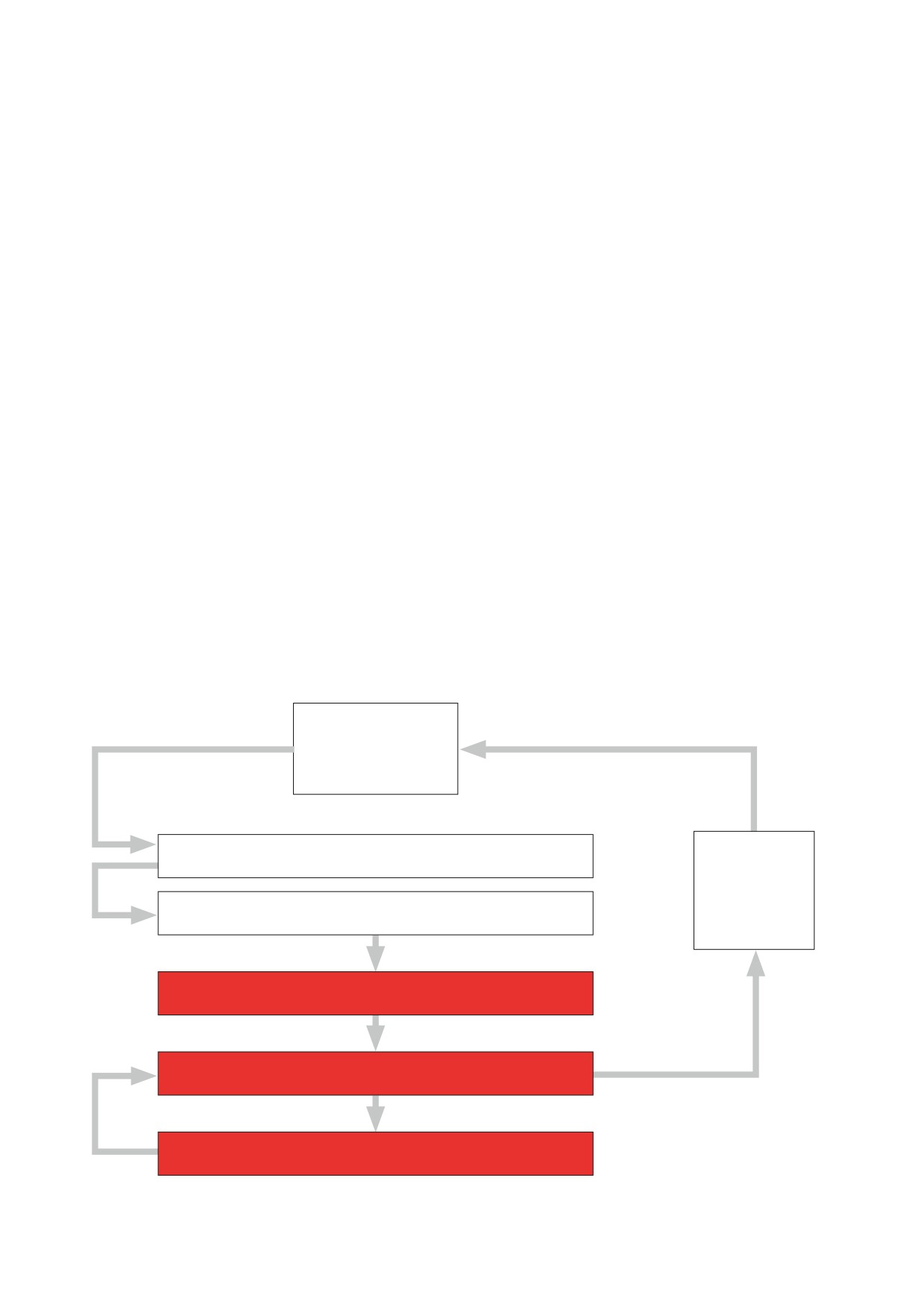
The Risk Management Model in figure A1 below
is a tool that can be used on the incident ground to
Due to the continually changing environment
assist with the ARA process. It can also be used
at an incident, for ‘best practice’ the IC should
to feed relevant information from the incident
ensure that as soon as resources permit an ARA
ground, via the incident debrief, back into the risk
is performed and documented. This must be kept
assessment process at the systematic level, thereby
constantly under review and updated at 20 minute
confirming or amending the organisations ‘Generic
intervals or when ever the risk to crews changes.
Risk Assessment’ or the ‘Standard Operational
Procedures’.
A1.2 Analytical Risk
Assessment Process
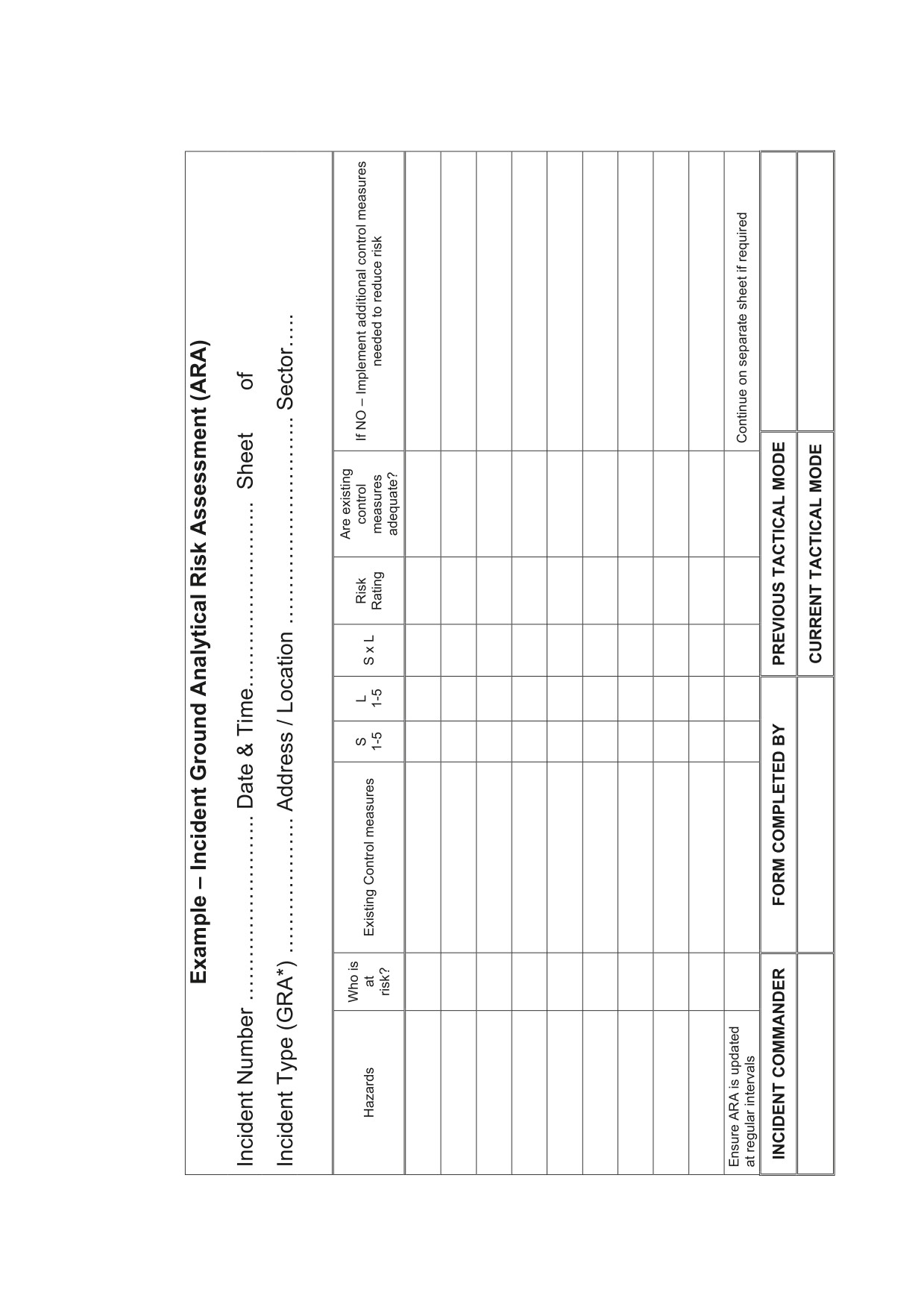
Figure A2 is an example of an ARA form used at
The Analytical Risk Assessment’ includes the
the Fire Service College. It is used in conjunction
following elements:
with the Generic Risk Assessments (GRA) found
in “A Guide to Operational Risk Assessment”
●● A formalised assessment of the hazards, who
folder (Fire Service Guide Volume 3)
or what is at risk from those hazards, the
likelihood and severity of risk
Organisation
Strategic
Systematic
Generic Risk Assessment
Incident
Debrief
Standard Operating Procedures
Dynamic Risk Assessment
Tactical Mode
Figure A1:
Analytical Risk Assessment
Risk Management Model
96
Fire Service Manual
APPENDIX 1
Incident Command
97
APPENDIX 1
Analytical Risk Assessment Process
98
Fire Service Manual
APPENDIX 1
A1.2.1 The Analytical Process
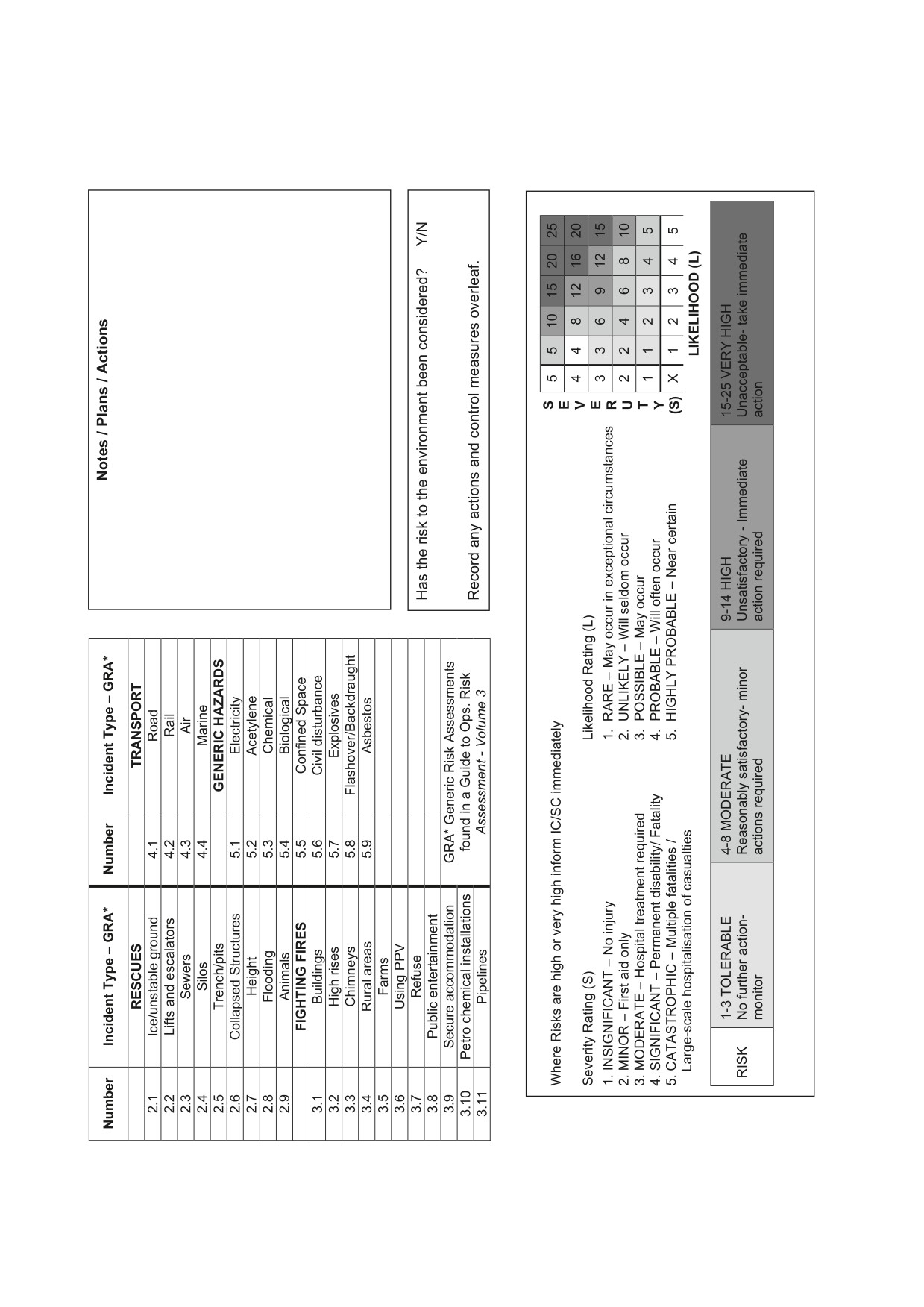
Any relevant notes or plans should be included on
the rear of the form prior to it being signed by the
1.
Complete the information surrounding the
Incident or Sector Commander taking responsibility
incident or sector and identify the appropriate
for operations in the relevant area of operations.
GRA number if applicable (see reverse of form
for index). Identify the significant hazards,
Additional consideration should be given to
those that may be at risk and the existing
environmental issues as soon as reasonably
control measures.
practicable,(the requirement to address this on the
2.
Using the five-point grid to decide the
rear of the form should act as a prompt to IC or
SEVERITY and the LIKELIHOOD associated
Sector Commander).
to each hazard. Multiply the severity and
likelihood scores together and enter the total
The completed forms should be collated by
to calculate the risk rating: e.g. tolerable,
Command Support for debriefing and audit
moderate, high, very high.
purposes.
3.
Enter the total and the risk rating in the
appropriate columns and decide if the existing
control measures are adequate.
4.
Where this is not the case, list additional
controls measures that are necessary to make
the management of the risk tolerable.
Incident Command
99
APPENDIX 2
Incident Command System
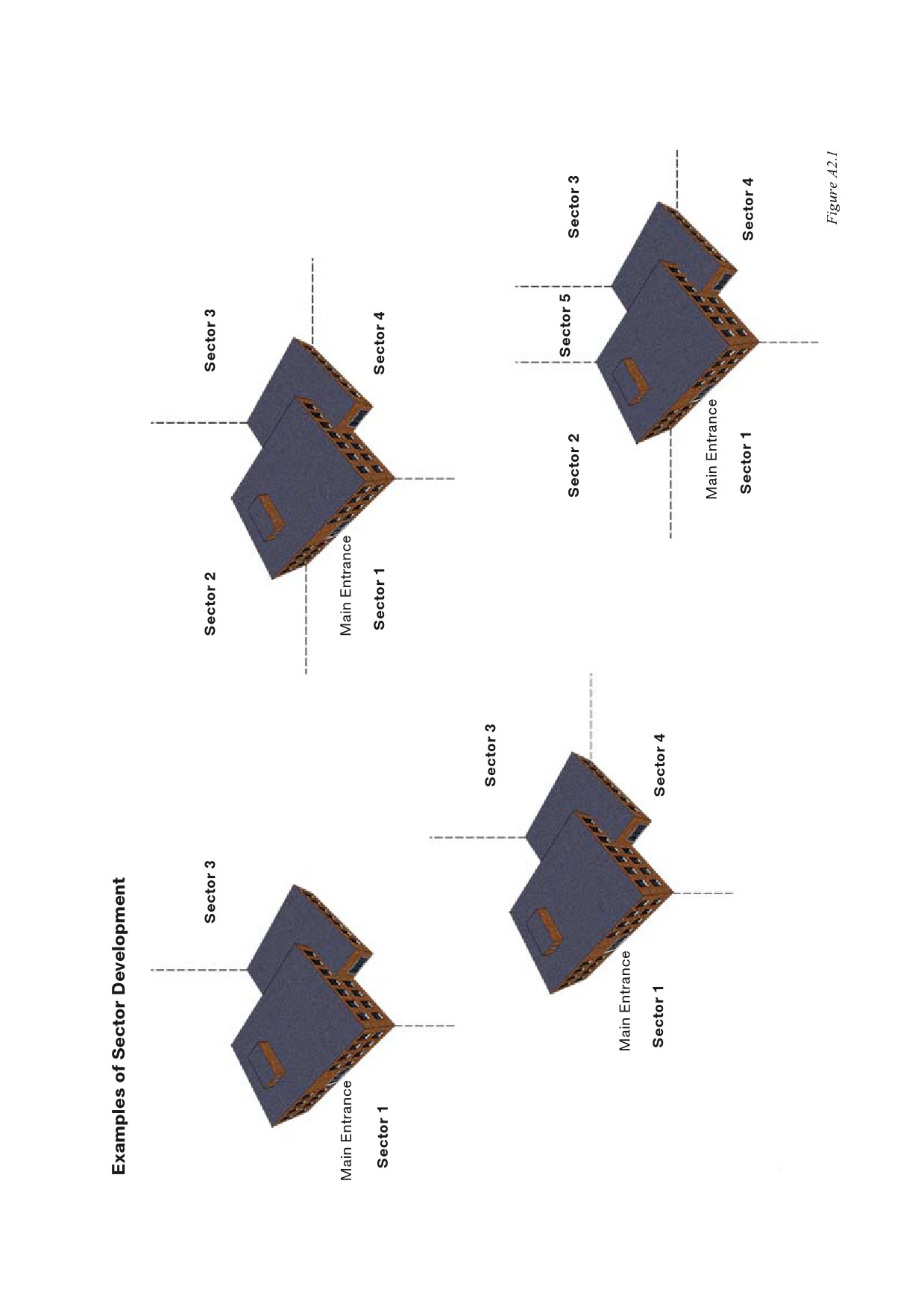
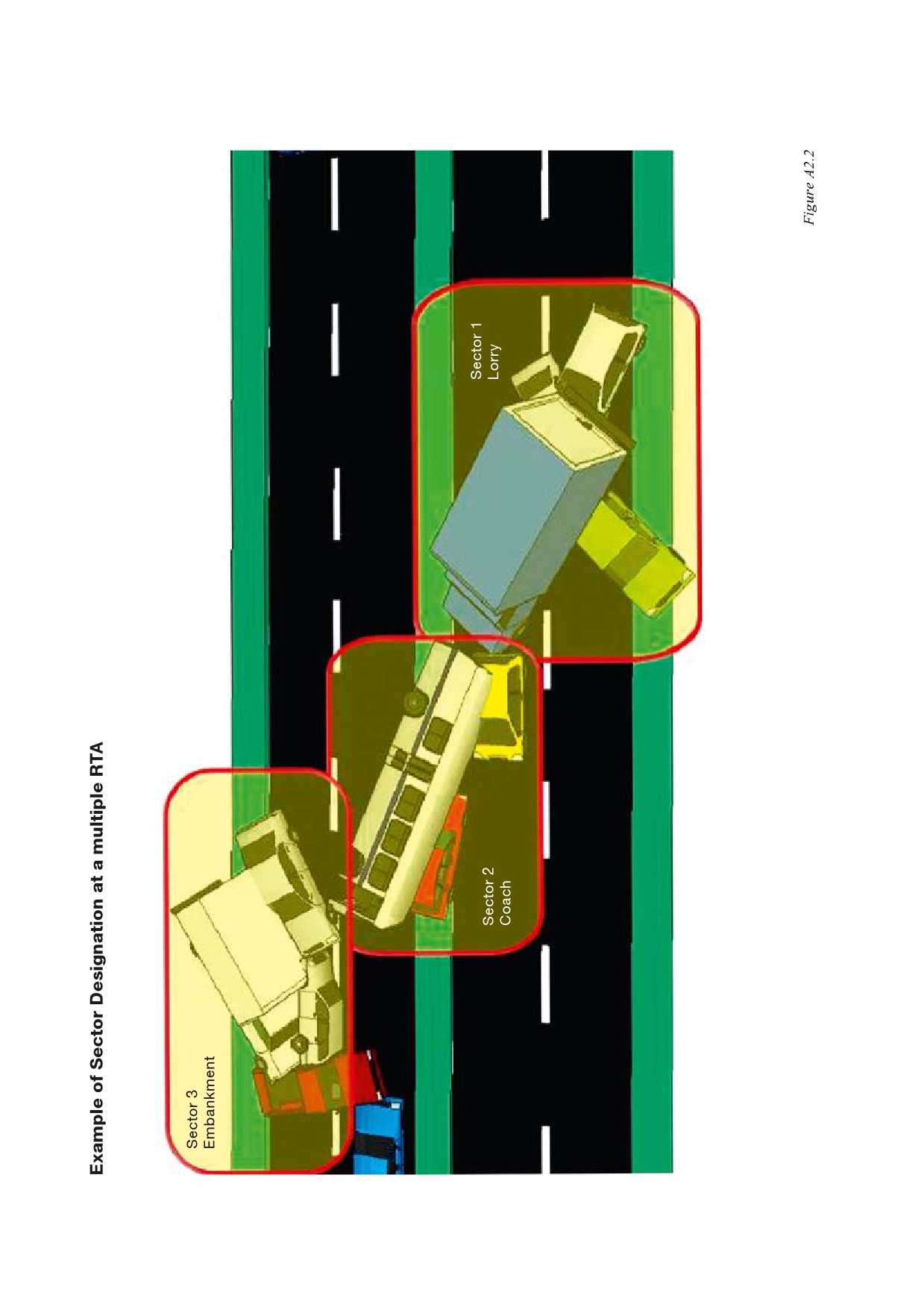
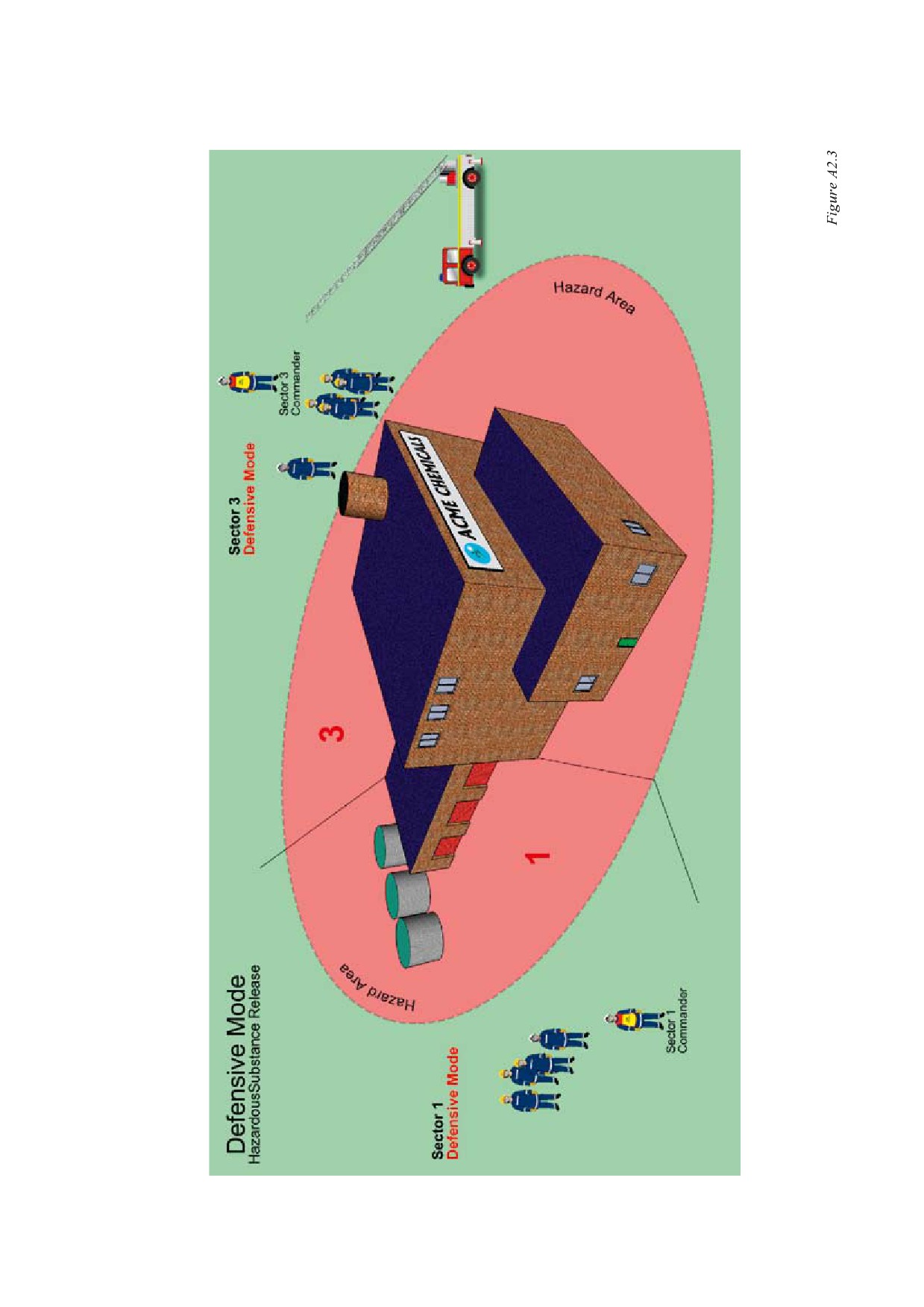
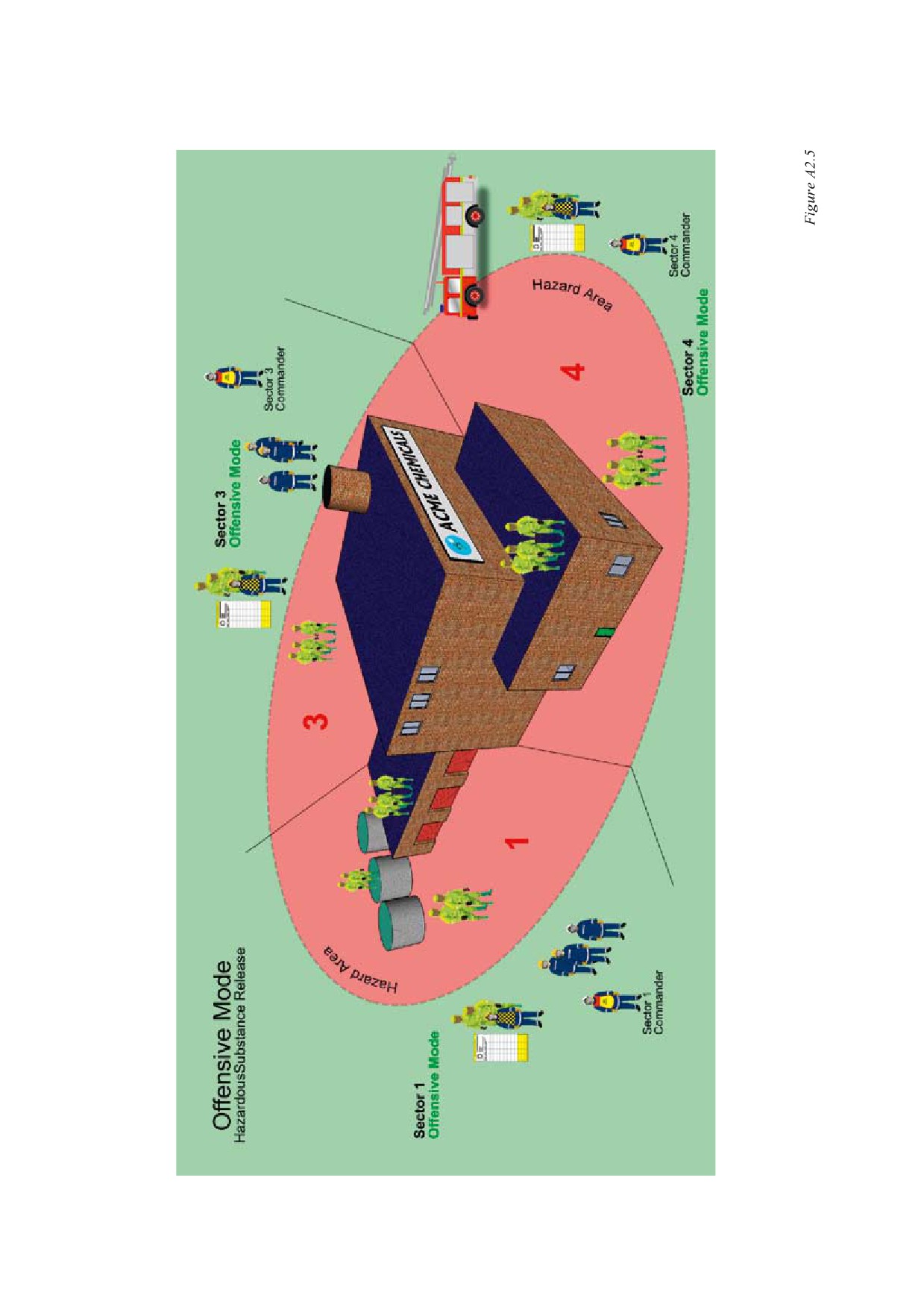
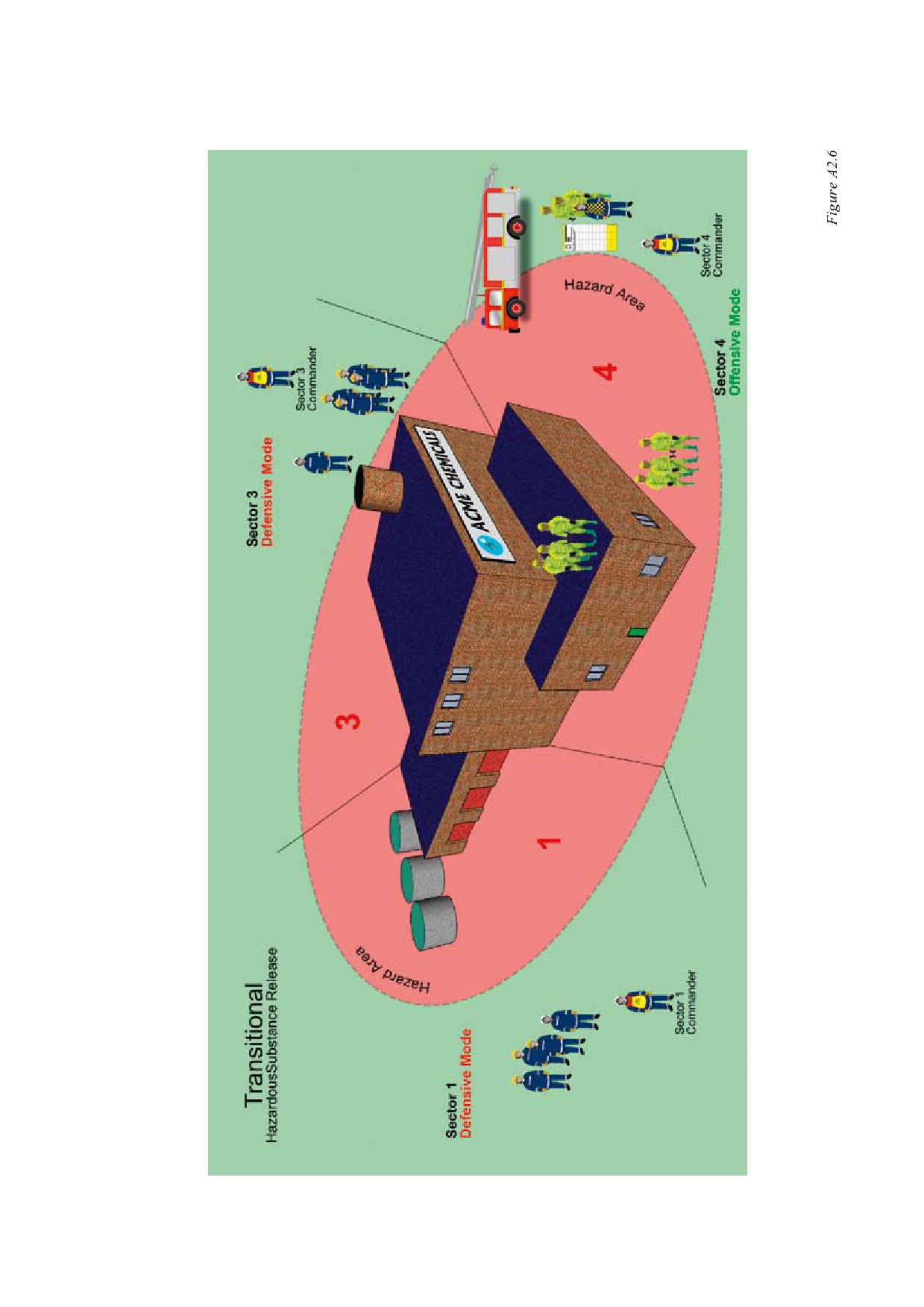
Further Examples of
Figure A2.4
Example of Tactical Mode, Hazardous substance
Application of Sectorisation
release, Offensive Mode
Figure A2.1
Examples of Sector Development
Figure A2.5
Example of Tactical Mode, Hazardous substance
Figure A2.2
release, Transitional
Example of Sector Designation at a multiple RTC
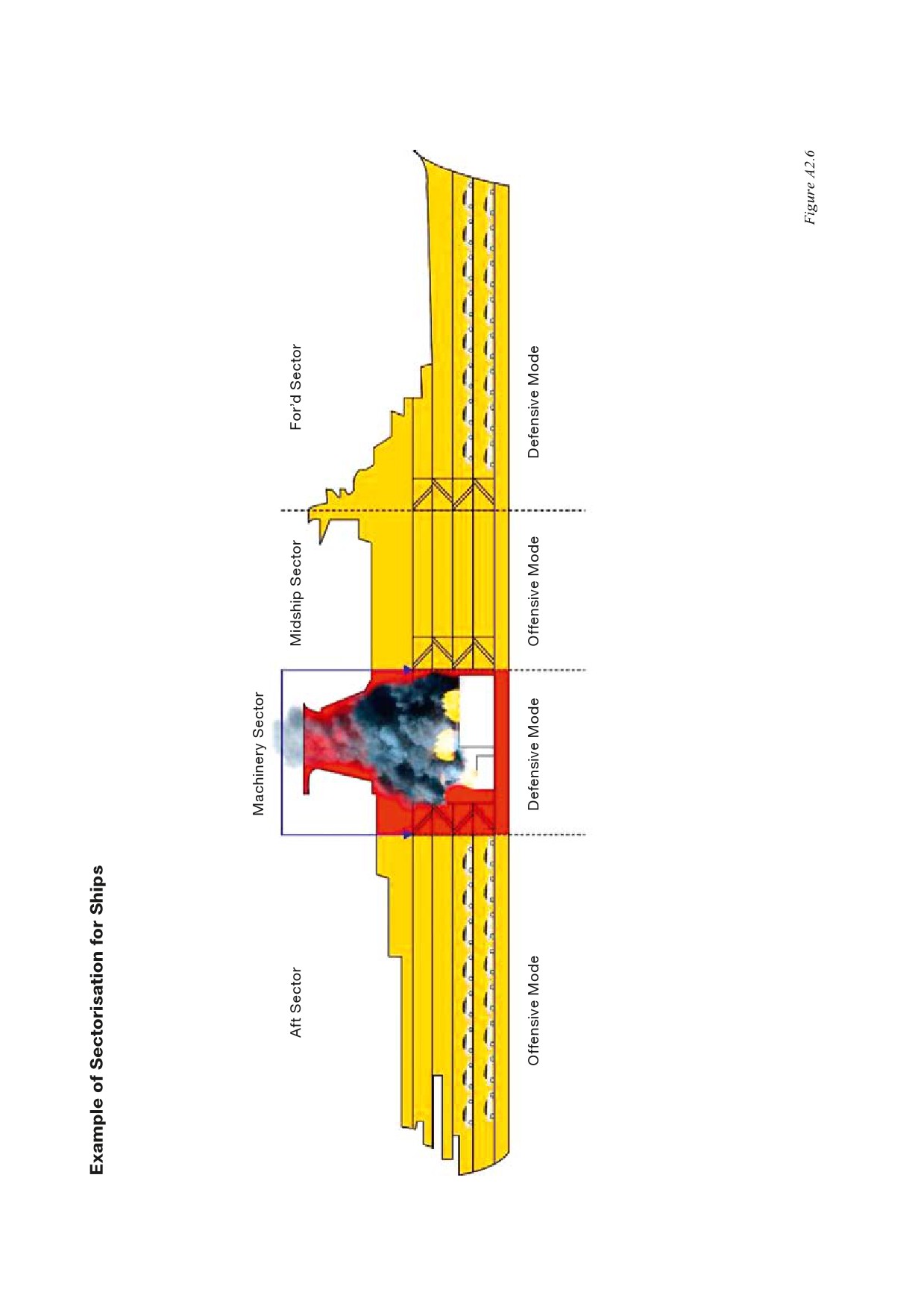
Figure A2.6
Figure A2.3
Example of Sectorisation for Ships.
Example of Tactical Mode, Hazardous substance
release, Defensive Mode
100
Fire Service Manual
APPENDIX 2
Incident Command
101
APPENDIX 2
Incident Command System
102
Fire Service Manual
APPENDIX 2
Incident Command
103
APPENDIX 2
Incident Command System
104
Fire Service Manual
APPENDIX 2
Incident Command
105
APPENDIX 2
Incident Command System
106
Fire Service Manual
APPENDIX 3
The Psychology of Command (courtesy of Professor Rhona Flin)
The psychology of command is beginning to
1.
Identify the problem.
emerge as a distinct research topic for psychologists
2.
Generate a set of options for solving the
interested in selection, training, competence
problem/choice alternatives.
assessment, decision making, stress management,
3.
Evaluate these options concurrently using one
leadership and team working. The following
of a number of strategies, such as weighting
overview of recent research into decision making,
and comparing the relevant features of the
stress and leadership is based on Flin (1996) which
options.
gives a more detailed examination of these issues.
4.
Choose and implement the preferred option.
A3.1
Decision Making
In theory, this type of approach should allow you to
make the ‘best’ decision, provided that you have the
The decision making skill of the Incident
mental energy, unlimited time and all the relevant
Commander is one of the essential components
information to carry out the decision analysis.
of effective command and control in emergency
This is typically the method of decision-making
response. Despite the importance of high speed
in which managers are trained. But we know from
decision making in the fire service and a number
our everyday experience that when we are in a
of other occupations, it has only been very
familiar situation, we take many decisions almost
recently that research psychologists have begun to
automatically on the basis of our experience. We
investigate leaders’ decision making in demanding,
do not consciously generate and evaluate options;
time-pressured situations.
we simply know the right thing to do. This may be
called intuition or ‘gut feel’ but, in fact, to achieve
The traditional decision-making literature from
these judgements some very sophisticated mental
management, statistics and economics is very
activity is taking place. So we can compare these
extensive but it offers little of relevance to the
two basic types of decision-making, the slower but
Incident Commander, as it tends to be derived
more analytic comparison and the faster, intuitive
from studies of specified problems (often artificial
judgement. Which style do commanders use when
in nature), inexperienced decision makers and low
deciding what to do at the scene of an incident?
stake payoffs. Moreover, it is rarely concerned with
ambiguous, dynamic situations, life threatening
A3.2
Naturalistic Decision
odds or high time pressure, all important features
Making (NDM)
of a fire or rescue environment.
In the last ten years there has been a growing
If we turn to the standard psychological literature
interest by applied psychologists into naturalistic
on decision-making it tells us almost nothing of
decision making (NDM) which takes place in
emergency decision making, as so much of it is
complex real world settings (Klein et al, 1993;
based on undergraduates performing trivial tasks
Zsambok & Klein, 1997; Flin et al, 1997). These
in laboratories. Similarly, the management research
researchers typically study experts’ decision
is concerned with individuals making strategic
making in dynamic environments such as flight
decisions when they have several hours or days
decks, military operations, fire-grounds, hospital
to think about the options, carefully evaluating
trauma centres/intensive care units and high hazard
each one in turn against their business objectives
industries, for example nuclear plant control rooms.
using decision analysis methods. These provide a
This NDM research has enormous significance for
range of explanatory frameworks, which may have
the understanding of how commanders and their
value for managers’ decision making where they
teams make decisions at the scene of an incident as
are encouraged to emulate an analytical style of
it offers descriptions of what expert commanders
decision making. At its simplest form this usually
actually do when taking operational decisions in
incorporates the following stages:
emergencies.
Incident Command
107
APPENDIX 3
The Psychology of Command
Ten factors characterise decision making in
be lifesaving. He was interested in operational
naturalistic settings:
environments where experienced decision makers
had to determine a course of action under conditions
1.
Ill defined goals and ill structured tasks.
of high stakes, time pressures, dynamic settings,
2.
Uncertainty, ambiguity and missing data.
uncertainty, ambiguous information and multiple
3.
Shifting and competing goals.
players.
4.
Dynamic and continually changing
conditions.
Klein’s research began with a study of urban fire-
5.
Action feedback loops (real-time reactions to
ground commanders who had to make decisions
changed conditions).
such as whether to initiate search and rescue,
6.
Time stress.
whether to begin an offensive attack or concentrate
7.
High Stakes.
on defensive precautions and how to deploy their
8.
Multiple players (team factors).
resources (Klein et al, 1986) They found that the
9.
Organisational goals and norms.
fireground commanders’ accounts of their decision
10. Experienced decision makers
making did not fit in to any conventional decision-
tree framework.
In typical NDM environments information comes
from many sources, is often incomplete, can be
“The fire ground commanders argued that they were
ambiguous, and is prone to rapid change. In an
not ‘making choices’, ‘considering alternatives’ or
emergency, the Incident Commander and her or his
‘assessing probabilities’. They saw themselves as
team are working in a high stress, high risk, time
acting and reacting on the basis of prior experience;
pressured setting and the lives of those affected
they were generating, monitoring and modifying
by the emergency, (including their own fire rescue
plans to meet the needs of the situations. Rarely
personnel) may be dependent on their decisions.
did the fire ground commanders contrast even two
options. We could see no way in which the concept
How then do they decide the correct courses of
of optimal choice might be applied. Moreover it
action? In the view of the NDM researchers,
appeared that a search for an optimal choice could
traditional, normative models of decision making
stall the fire ground commanders long enough
which focus on the process of option generation
to lose control of the operation altogether. The
and simultaneous evaluation to choose a course of
fire ground commanders were more interested in
action do not frequently apply in NDM settings.
finding actions that were workable, timely and
There are a number of slightly different theoretical
cost-effective.” (Klein et al, 1993, p139).
approaches within the NDM fraternity to studying
decision making but they all share an interest in
During post-incident interviews, they found that
dynamic high pressure domains where experts
the commanders could describe other possible
are aiming for satisfactory rather than optimal
courses of action but they maintained that during
decisions due to time and risk constraints.
the incident they had not spent any time deliberating
about the advantages or disadvantages of these
A3.3
Recognition-Primed
different options.
Decision Making (RPD)
It appeared that these Incident Commanders had
Dr Gary Klein of Klein Associates, Ohio, conducts
concentrated on assessing and classifying the
research into decision making by attempting to ‘get
situation in front of them. Once they recognised
inside the head’ of decision makers operating in
that they were dealing with a particular type of
many different domains. Klein’s approach stemmed
event, they usually also knew the typical response
from his dissatisfaction with the applicability of
to tackle it. They would then quickly evaluate the
traditional models of decision making to real life
feasibility of that course of action, imagining how
situations, particularly when the decisions could
108
Fire Service Manual
APPENDIX 3
they would implement it, to check whether anything
(an ‘action replay’ in reverse) and if it is deemed
important might go wrong. If they envisaged any
problematical then an attempt will be made to
problems, then the plan might be modified but only
modify or adapt it before it is rejected. At that point
if they rejected it, would they consider another
the commander would re-examine the situation to
strategy.
generate a second course of action.
Klein Associates have also studied other decision
Key features of the RPD model are as follows:
makers faced with similar demand characteristics
(e.g. tank platoon captains, naval warfare
●● Focus on situation assessment
commanders, intensive care nurses) and found
●● Aim is to satisfy not optimise
the same pattern of results. On the basis of these
●● For experienced decision makers, first option
findings they developed a template of this strategy
is usually workable
called the Recognition-Primed Decision Model.
●● Serial generation and evaluation of options
This describes how experienced decision makers
(action plans)
can rapidly decide on the appropriate course of
●● Check action plan will work using mental
action in a high-pressure situation.
simulation
●● Focus on elaborating and improving
The model has evolved into three basic formats
action plan
(see Figure A 3/1).
●● Decision maker is primed to act
In the simplest version, shown as Level 1, the
To the decision maker, the NDM type strategies
decision maker recognises the type of situation,
(such as RPD) feel like an intuitive response rather
knows the appropriate response and implements it.
than an analytic comparison or rational choice of
alternative options. As ‘intuition’ is defined as,
If the situation is more complex and/or the decision
“the power of the mind by which it immediately
maker cannot so easily classify the type of problem
perceives the truth of things without reasoning
faced, then as in Level 2, there may be a more
or analysis” then this may be an acceptable label
pronounced diagnosis (situation assessment) phase.
for RPD which is rapid situation assessment to
This can involve a simple feature match where the
achieve pattern recognition and associated recall
decision maker thinks of several interpretations of
of a matched action plan from memory.
the situation and uses key features to determine
which interpretation provides the best match with
At present this appears to be one of the best models
the available cues. Alternatively, the decision maker
available to apply to the emergency situation whether
may have to combine these features to construct a
the environment is civilian or military; onshore or
plausible explanation for the situation; this is called
offshore; aviation, industrial, or medical. In the
story building, an idea that was derived from legal
USA, the RPD model is being widely adopted,
research into juror decision-making. Where the
it is being used at the National Fire Academy as
appropriate response is unambiguously associated
well as in a number of military, medical, aviation
with the situation assessment it is implemented as
and industrial settings (see Klein, 1998). The RPD
indicated in the Level 1 model.
model and associated research techniques have
begun to generate a degree of interest in the UK,
In cases where the decision maker is less sure of
most notably by the Defence Research Agency and
the option, then the RPD model, Level 3 version
the Fire Service.
indicates that before an action is implemented there
is a brief mental evaluation to check whether there
are likely to be any problems. This is called mental
simulation or pre-playing the course of action
Incident Command
109
Level 1- Simple Match
Level 2 - Diagnose the Situation
Level 3 - Evaluate Course of Action
Experience the Situation in a
Experience the Situation in a
Experience the Situation in a
Changing Context
Changing Context
Changing Context
Diagnose
Perceived as
Perceived as typical
typical
Perceived as typical
no
[Prototype or Analog]
[Feature Matching]
[Prototype or
[Prototype or Analog]
[Story Matching]
Analog]
Interference
yes
Clarify
Recognition has four byproducts
Recognition has four byproducts
Recognition has four byproducts
Expectancies
Relevant Cues
Expectancies
Relevant Cues
Expectancies
Relevant Cues
Anomaly
Plausible Goals
Typical Action
Plausible Goals
Typical Action
Plausible Goals
Action 1 ...n
Evaluate Action (n)
[Mental Stimulation]
modify
Will it work?
yes, but
yes
Implement Course of Action
Implement Course of Action
Implement Course of Action
Figure A 3/1: The Recognition Primed Decision Model Klein, 1996
APPENDIX 3
A3.4 Command roles and
If we consider the Orasanu model, the key
skill is matching the correct decision style to
decision style
the demands or allowances of the situation. For
Obviously the RPD approach is not appropriate for
example, not using the fast intuitive RPD style
all types of operational decisions and other NDM
when there is time to evaluate options. Furthermore
researchers have been developing taxonomies of
senior fire officers in strategic command roles
the different types of decisions other emergency
may require special training to discourage them
commanders, such as pilots, make in different
from using the fast RPD approach when a slower,
situations (see Figure A3/2). The NASA Crew
analytical method would be more appropriate
Factors researchers (Orasanu, 1995) have found that
(Fredholm, 1997).
two key factors of the initial situation assessment
are judgements of time and risk and that these
There are significant differences in the balance
may determine the appropriate decision strategy
of cognitive skills required of commanders,
to use. The issue of dynamic risk analysis is a
depending on their role (rather than rank) in a
significant component of situation assessment on
given operation, ascending from operational or
the fireground as discussed in Chapter 3 (see also
task level, to tactical command, and to strategic
Fire Engineers Journal, May, 1998).
command (Home Office, 1997). From studies of
CUES
What’s the problem?
How much time is available?
How risky (present and future)?
TIME LIMIT
Time Available
RISK HIGH
Risk Variable
Problem
Understood
Problem
Problem NOT
OR NOT
Understood
Understood
Understood
Multiple
Rule
Multiple
No Options
Options
Available
Tasks To Do
Available
Available
Choose
Schedule
Create
Gather more
Apply Rule
Option
Tasks
Solution
Information
Incident Command
111
APPENDIX 3
The Psychology of Command
commanders’ decision strategies (see Flin, 1996;
and structured by ‘feed-forward control’ through a
Flin et al, 1997; Zsambok & Klein, 1997) these
stored rule. Stored rules are of the type if (state) then
roles are briefly outlined below in terms of the
(diagnosis) or if (state) then (remedial action).
decision skills required.
The tactical decision maker is likely to be on scene,
The figure below shows the decision process
with a remit to maintain a good mental model of
model for fixed wing pilots. (Orasanu 1995B)
the evolving plan and unfolding events. Situation
Reprinted with permission of the Human Factors
assessment is expected to be a more significant
and Ergonomics Society
component of tactical decision-making than
spending time choosing appropriate responses.
Strategic Command
However the tactical commander may have to
‘create’ time to engage in reflective thinking and
This involves the overall policy of command
when necessary to use more analytic decision
and control, deciding the longer term priorities
strategies to evaluate alternative courses of action.
for tactical commanders and planning for
contingencies depending on the enemy’s response.
Kerstholt (1997, p189) found from an interview
The task also contains a strong analytical element,
study with battalion commanders of peace-keeping
as co-ordination of multiple sources of information
operations, that, “decisions were mostly made
and resources demands an awareness that cannot
analytically in the planning phase and intuitively
be based on procedures alone.
during the execution of the mission. By analytic
procedure we meant that several options were
The decision making style assumed to be adopted
explicitly weighed against each other, whereas
for strategic decision making is creative or
an intuitive decision meant that the commander
analytical, since the situations encountered will
immediately ‘knew’ which decision to take.”
feature a number of novel elements or developments
the strategic commander has not previously
Operational Command
encountered.
This involves front line or sector commanders who
Neither time pressure nor high immediate risk
have to implement orders from the tactical level.
should be influencing command at this level, where
They are operating in real time and have to react
the aim, if possible, is to devise an optimal solution
rapidly to situational demands. Decision making
for the situation, taking into account the wider and
at this level is assumed to contain rule-based
longer term implications. The strategic commander
and intuitive elements. It is assumed that under
is usually remote from the incident and will be
time pressure and at high risk, they primarily
supported throughout by a team of lower ranking
make decisions based on pattern recognition (e.g.
officers.
RPD) of the situations encountered. Ongoing
situation awareness must remain very high as their
Tactical Command
performance depends on rapid identification of the
situation and fast access to stored patterns of pre-
This refers to the planning and co-ordination of the
programmed responses.
actions determined at the strategic level.
Only when time permits will they be able to engage
Due to the higher time pressure at this level,
in analytic decision making and option comparison.
decision-making is based to a much greater extent
Striving to find optimal solutions runs the risk of
on condition action matching, or rule-based
‘stalling’ their decision making, therefore their
reasoning. This style is characterised by controlled
main objective is to find a satisfactory, workable
actions derived from procedures stored in memory.
course of action.
Control of behaviour at this level is goal oriented
112
Fire Service Manual
APPENDIX 3
A3.5 Styles of Command
far greater cognitive processing. Thus, they take a
longer time to accomplish, and for most individuals
Decision Making
can only be used in situations of relative calm and
From the above description of decision making
minimal distraction.
techniques associated with particular command
roles, there appear to be four main styles of decision
In fast moving, high-risk situations these styles are
making used by commanders: creative, analytical,
difficult if not impossible to use, and in order to
procedural and intuitive.
maintain command and control, officers have to
rely on procedural or intuitive styles which will
The most sophisticated (and resource intensive) is
produce a satisfactory, if not an optimal decision.
creative problem solving which requires a diagnosis
of an unfamiliar situation and the creation of a novel
Procedural methods involve the identification of
course of action. This is the most demanding of the
the problem faced and the retrieval from memory
four techniques, requires significant expertise and
of the rule or taught method for dealing with
as Kerstholt (1997) found, is more likely to be used
this particular situation. Such decision methods
in a planning phase rather than during an actual
(e.g. drills, routines and standard procedures) are
operation.
frequently practised in training.
Analytical decision making also requires a full
With experience, officers may also use the fastest
situation assessment, rigorous information search
style of decision making, intuitive or recognition-
and then recall, critical comparison and assessment
primed decision making described above. In this
of alternative courses of action. Again with proper
case there may not be a written rule or procedure
preparation, some of these option choices may
but the commander rapidly recognises the type of
already have been evaluated during exercises
situation and immediately recalls an appropriate
or planning meetings. These are the two most
course of action, on the basis of prior experience.
powerful decision techniques as they operate on
large information sets but consequently they require
Decision Style
Cognitive Processes
Creative Problem Solving
Diagnosis of unfamiliar situation requiring extensive
information search and analysis.
Development/synthesis of new courses of action.
Knowledge-based reasoning.
Analytical Option Comparison
Retrieval and comparison of several courses of action.
High working memory load.
Knowledge-based reasoning.
Procedural/
Situation identification.
Standard Operating Procedures
Retrieval (and rehearsal) of rules for course of action
Explicit rule-based reasoning. If x then y.
Intuitive/
Rapid situation recognition based on
Recognition-primed decisions (RPD)
pattern matching from long-term memory.
Implicit rule based or skill-based. ‘Gut feel’
Table 1: Command decision styles
Incident Command
113
APPENDIX 3
The Psychology of Command
The evidence suggests that commanders use all
be discussed with the team and/or the trainer. This
four decision styles to a greater or lesser degree
assists officers to learn the critical cues for given
depending on the event characteristics and resulting
types of situations and to store methods of dealing
task demands. For more senior commanders,
with new situations.
distanced from the front line, the task characteristics
change in terms of time frame, scale, scope and
In essence the basis of good command training must
complexity, necessitating greater use of analytical
be a proper understanding of the decision making
and creative skills (Fredholm, 1997).
processes utilised by effective commanders.
Studies of military and aviation commanders have
Psychologists can offer a range of research
shown that the following factors are of particular
techniques to begin to explore in a more scientific
significance in determining decision style:
fashion the skills of incident command (e.g. Burke,
1997; Flin et al, 1997). For instance, one of the
●● available time
most salient features of a fireground commander's
●● level of risk
decision task is the speed of fire development.
●● situation complexity/familiarity,(or none at all)
Brehmer (1993) is particularly interested in this
●● availability of information
type of dynamic decision task, which he believes
has four important characteristics: a series of
The training implications of applying this new
decisions which are interdependent, a problem
decision research to fire and rescue operations is
which changes autonomously, and as a result of the
first to determine the types of situations where
decision maker's actions, and a real time scenario.
experienced fire commanders use the intuitive
RPD type of decision making. In these situations
He gives the following example, “Consider the
the critical focus will be on situation assessment.
decision problems facing a fire chief faced with
So the next stage is to discover the cues these
the task of extinguishing forest fires. He receives
experts use when quickly sizing up an incident and
information about fires from a spotter plane and
the responses they would choose to apply once they
on the basis of this information, he then sends out
have assessed the situation.
commands to his firefighting units. These units
then report back to him about their activities and
Less experienced commanders need to be trained
locations as well as about the fire and the fire
to recognise the key features or cues of different
chief uses this information (and whatever other
scenarios using simulated incidents with detailed
information he may be able to get, e.g., from a
feedback on their decision making. They need to
personal visit to the fire and the fire fighting units)
develop a store of incident memories (from real
to issue new commands until the fire has been
events, simulator training, case studies, expert
extinguished.” (p1).
accounts) which they can use to drive their search
for the critical classifying information at a new
Brehmer and his colleagues have developed a
incident.
computer programme (FIRE) based on a forest
fire scenario which incorporates the four elements
The US Marines who favour the RPD model have
of dynamic decision making described above.
developed a very useful volume of 15 decision
The decision maker takes the role of the fire chief
exercises in Mastering Tactics: A Tactical Decision
and using the grid map of the area shown on the
Games Workbook (Schmitt, 1994, see Klein, 1998).
computer screen, she or he has to make a series
These are a series of tactical decision scenarios
of decisions about the deployment of fire fighting
where a description of a problem is presented
resources with the goal of extinguishing the fire
and officers are required to quickly work out and
and protecting a control base.
explain a solution to the problem which can then
114
Fire Service Manual
APPENDIX 3
The commander's actions are subject to feedback
Weiseath (1987) discussing the enhanced cognitive
delays, that is time delay in actions being
demands for leaders under stress describes reduced
implemented or in the commander receiving status
concentration, narrowing of perception, fixation,
update information. Brehmer's studies have shown
inability to perceive simultaneous problems,
that decision makers frequently do not take such
distraction, difficulty in prioritising and distorted
feedback delays into account, for example sending
time perception.
out too few firefighting units because they do not
anticipate that the fire will have spread by the time
Brehmer (1993) argues that three ‘pathologies of
they receive the status report.
decision making’ can occur, he calls these
He argues that the decision maker needs to have a
I.
thematic vagabonding when the decision
good 'mental model' of the task in order to control a
maker shifts from goal to goal
dynamic event, such as a forest fire, and his research
II. encystment the decision maker focuses on
has enabled him to identify several problems
only one goal that appears feasible, and as in
of model formation: dealing with complexity,
(i) fails to consider all relevant goals; and
balancing competing goals, feedback delays and
III. a refusal to make any decisions.
taking into account possible side effects of actions.
Brehmer (1993) uses control theory to encapsulate
Not all researchers agree that the decision making
the dynamic decision process, “the decision maker
of experienced Incident Commanders will be
must have clear goals, he must be able to ascertain
degraded by exposure to acute stressors. Klein
the state of the system that he seeks to control, he
(1998) points out that these effects are most typical
must be able to change the system, and he must
when analytical decision strategies are used,. In
have a model of the system.,” (p 10).
contrast, the recognition-primed type of decision
strategy employed by experts under pressure may
actually be reasonably stress-proof.
A3.6 Causes of Stress for
Commanders
A3.7 Leadership
In fireground operations, stress may also have
an impact on commanders’ decision making and
Leadership ability is generally deemed to be a key
techniques for managing this need to be considered
attribute of an Incident Commander and to some
(see Flin 1996 for further details).
extent may be regarded as an umbrella term for the
required competencies which have to be trained.
The effects of stress on commanders’ thinking and
However, finding a precise specification of the
decision making ability are of particular interest.
required behaviours or the style of leadership is
Charlton (1992) who was responsible for the
rather less frequently articulated.
selection of future submarine commanders referred
to the ‘flight, fight or freeze’ response manifested
Leadership within a military context embodies the
as problems in decision making, ‘tunnel vision’,
concepts of command, control, organisation and
misdirected aggression, withdrawal, and the
duty. There has been extensive military research
‘butterfly syndrome’ “where the individual flits
into leadership much of which unfortunately never
from one aspect of the problem to another, without
sees the light of day outside the defence research
method solution or priority” (p54). He also mentions
community.
self delusion where the student commander denies
the existence or magnitude of a problem, regression
to more basic skills, and inability to prioritise.
Incident Command
115
APPENDIX 3
The Psychology of Command
The dominant model of leadership for training in
are unlikely to work. The contingency theories
the British armed services, the emergency services
emphasised that leadership style cannot be
and in lower level management is Adair’s (1988)
considered in isolation. Thus, what is effective
Action Centred Leadership with its simple three
leadership behaviour is likely to be dependent on
circles model.
the leader’s personality and skills, the situation and
the competence and motivation of the group being
Adair developed his ideas from his experiences
led. Thus the most effective leader needs to:
with the British Army, and he maintained that the
effective leader must focus on the needs of the
I.
be able to diagnose the situation (the task/
individual, the task and the team. This functional
problem, the mood, competence, motivation
model has not changed significantly since its initial
of the team),
exposition thirty years ago and continues to be
II. have a range of styles available (e.g. delegative,
taught in a wide range of management courses.
consultative, coaching, facilitating, directive),
While the three circles diagram and the associated
III. match her or his style to the situation (for
advice to leaders is intuitively appealing, there
example Hersey and Blanchard’s (1988) model
has been little empirical work to test whether it
of situational leadership).
can actually function as an explanatory theory
of leadership in routine managerial duties or
In an emergency which has high time pressure
emergency command situations.
and risk, then it is unlikely that a consultative
leadership style would be totally appropriate and
The managerial research literature on leadership
while the Incident Commander needs to solicit
is a progression from a long standing focus on
advice from available experts and to listen to the
leadership characteristics, to research in the 1960s
sector commanders, the appropriate style is likely
on leader behaviours (e.g. autocratic vs democratic;
to be closer to directive than democratic.
team vs task), to an awareness that “one size fits
all” recommendations of the best leadership style
Adair’s
Leadership
Model
Task
Needs
Group
Needs
Individual
Needs
116
Fire Service Manual
APPENDIX 3
The need for a perceptible change in leadership
studied this particular type of human factors
style is very obvious when observing simulated
training have argued that it has clear applications
emergency exercises when the time pressure and
for the fire service (Bonney, 1995, Wynne, 1994).
task demands are increased. Moreover, this sends a
very important message to the rest of the team that
References to Appendix Three
the situation is serious and that they will also have
Brunacini, A. (1991) Command safety: A wake-up
to ‘change gear’ and sharpen their performance.
call. National Fire Protection Association Journal,
January, 74-76.
Within the business world, the current fashions
in leadership style are the delegative, consultative
Burke, E.
(1997) Competence in command:
styles, couched in the language of empowerment
Research and development in the London Fire
and transformational leadership. These approaches
Brigade. In R. Flin, E. Salas, M. Strub & L. Martin
have not been developed with the Incident
(Eds) Decision Making under Stress. Aldershot:
Commander in mind and while it was argued above
Ashgate.
that a consultative style may be inappropriate,
particularly in the opening stages of an incident, this
Driskell, J. & Salas, E. (1996) (Eds) Stress and
does not mean that there should be no delegation to
Human Performance. Mahwah, NJ: LEA.
more junior commanders.
Flin, R.
(1995a) Incident command: Decision
In a larger incident considerable authority has to
making and team work. Journal of the Fire Service
be devolved to sector commanders who will be
College, 1, 7-15.
required to take critical decisions and who will not
always have time or opportunity to seek the opinion
Flin, R. (1995b) Crew Resource Management
of the Incident Commander. These individuals
for teams in the offshore oil industry. Journal of
need to have the expertise and the confidence to
European Industrial Training, 19,9, 23-27.
make decisions as the need arises.
Flin, R. (1996) Sitting in the Hot Seat. Leaders
The essential point is that the commander should
and Teams for Critical Incident Management.
be comfortable with the style required and that
Chichester: Wiley.
the front-line commanders should have a clear
understanding of their delegated authority and the
Flin, R., Salas, E., Strub, M. & Martin, L. (1997)
Incident Commander’s plan of action.
(Eds) Decision Making under Stress: Emerging
Themes and Applications. Aldershot: Ashgate.
Finally, the Incident Commander does not, and
should not work alone. The need for effective
Fredholm, L. (1997) Decision making patterns in
team performance on the incident ground remains
major fire-fighting and rescue operations. In R.
paramount. Recent advances in team training,
Flin, E. Salas, M. Strub & L. Martin (Eds) Decision
known as Crew Resource Management (CRM)
Making under Stress. Aldershot: Ashgate.
have been developed by the aviation industry and
are now used in medicine and the energy industry.
Home Office (1997) Dealing with Disaster. Third
The focus is on non-technical skills relevant to
edition. London: TSO
incident command, such as leadership, situation
awareness, decision making, team climate and
Klein, G. (1998) Sources of Power How People
communication (see Flin, 1995b; Salas et al, in
Make Decisions. Cambridge, Mass: MIT Press.
press for further details). Fire officers who have
Incident Command
117
APPENDIX 3
The Psychology of Command
Klein, G. (1997) The Recognition-Primed Decision
Orasanu, J. & Fischer, U. (1997) Finding decisions
(RPD) model: Looking back, looking forward. In
in naturalistic environments: The view from
C. Zsambok & G. Klein (Eds) Naturalistic Decision
the cockpit. In C. Zsambok & G. Klein (Eds)
Making. Mahwah, NJ: Lawrence Erlbaum.
Naturalistic Decision Making. Mahwah, NJ: LEA.
Klein, G., Calderwood, R., & Clinton-Cirocco, A.
Salas, B., Bowers, C. & Edens, B. (in press) (eds.)
(1986) Rapid decision making on the fireground.
Applying Resource Management in Organisations.
In Proceedings of the Human Factors Society 30th
New Jersey. LEA.
Annual Meeting. San Diego: HFS.
Schmitt, J. (1994) Mastering Tactics. Tactical
Klein, G., Orasanu, J., Calderwood, R. & Zsambok,
Decision Game Workbook. Quantico, Virginia. US
C. (1993). (Eds.) Decision Making in Action. New
Marine Corps Association.
York: Ablex.
Zsambok, C. & Klein, G. (1997) (Eds) Naturalistic
Murray, B. (1994) More guidance needed for senior
Decision Making. Mahwah, NJ: LEA.
commanders on the fireground. Fire, 87, June,
21-22.
118
Fire Service Manual
APPENDIX 4
Decision Making Model (courtesy of London Fire Brigade)
1.
Introduction
Application of the Decision Making
Model for Personal Development
1.1
This note introduces the Decision Making
1.4
This system clearly identifies best practice
Model as a tool for Dynamic Risk Assessment
in decision making for all personnel developing
(DRA). The model provides a framework for
these skills. Formalising a best practice approach
decision making for any task or event, every
to Decision Making facilitates consistent feedback
individual requires the skills to apply its principles
to individuals on their performance and identifies
in order to control the risks associated with an
both positive and negative aspects of their actions.
activity. The Decision Making Model is therefore
Some of the benefits of this are listed below:
applicable to all Personnel at all levels.
To the individual:
1.2
This guidance discusses the various stages
●● Encourages individuals to use their initiative
of the Decision Making Model and explains how
and take personal responsibility.
the process achieves DRA.
●● Facilitates consistent assessment of
management skills.
1.3
The cyclical nature of the model means that
●● Brings together and reinforces training and
it is particularly suitable for changing and dynamic
actual experience.
environments. The model is a simple flow diagram
●● Provides a structure for developing and
which guides users through the decision making
controlling safe systems of work.
process in an organised way. This process reduces the
potential for information to be missed and requires
To the Service:
objectives to be set and implemented. A key element
●● Identifies areas for further in-depth analysis
in this process is the consideration of safety and
and review.
the development of safe systems of work.
●● Supports the training of officers in the
management process.
DECIDING
ACTING
EVALUATING
Information
Information on
about the Task
Progress
or Event
COMMUNICATING
Information
GATHERING
about
AND
OBJECTIVES
PLAN
OUTCOME
Resources
THINKING
CONTROLLING
Information
about Risk
and Benefit
The Decision Making Model
Incident Command
119
APPENDIX 4
Decision Making Model
●●
Improves the knowledge and skills of any
2.
The Decision Making Model
personnel who may undertake the role of
2.1
The Decision Making Model is formed
manager at any level.
around two main activities, Deciding and Acting.
Each stage identified in the model falls into one of
1.5
Use of the Decision Making Model will
these activities.
confirm best practice and identify training needs
when applied to a dynamic situation. The feedback
Deciding
process will also identify when policy, procedures
●● Gathering and thinking about all available
or equipment need to be introduced or improved.
information.
●● Identifying appropriate objectives.
1.6
The following are examples of when the
●● Defining a plan.
decision making model could benefit personnel
●● Considering the results of evaluations.
other than those attending operational incidents.
The list is not exhaustive:
Acting
●● Communicating the objectives and plan to all
●● Accidents, accident investigation and post
those at the incident.
accident action.
●● Controlling the activity.
●● Performance or conduct issues.
●● Evaluating the outcome of the plan.
●● Compliments or complaints procedures.
●● Welfare issues.
2.2
The functions within the two main
activities of the Decision Making Model are
explained as follows.
DECIDING
ACTING
EVALUATING
Information
Information on
about the Task
Progress
or Event
COMMUNICATING
Information
GATHERING
about
AND
OBJECTIVES
PLAN
OUTCOME
Resources
THINKING
CONTROLLING
Information
about Risk
and Benefit
Gathering and Thinking
APPENDIX 4
Gathering and Thinking
Evaluation of the situation, task and persons
2.3
It is often not possible to gather all of
at risk.
the information about a task or event before it is
necessary to take action.
4.
Information about
the task or event
2.4
In seeking to achieve safe systems of work
4.1
The first stage in the process involves
it is vital that sufficient information is gathered
gathering relevant information, whilst making the
upon which a reasoned decision can be made.
best use of the time available. It must be recognised
that information gathering is the key to effective
2.5
In order to achieve safe systems, a key
decision making.
factor will be the nature of the task or event and
the time pressures that are associated with it.
4.2
The following are some examples of
information about the Task/Event that the person
3.
Information Gathering
or persons following the process should be
3.1
During the initial stages of any decision
considering.
making process it is necessary to gather relevant
information. There are four sources of information
●● What is the environment?
that should be considered:
●● What is happening?
●● Is the situation static of developing.
●● Information of the Task/Event.
●● What was it that led up to the event?
●● Information on Resources.
●● Who is involved?
●● Information on Risks and Benefits.
●● Are there any immediate risks to anyone?
●● Information on Progress.
This list is not exhaustive and other information
3.2
This links with Step 1 of the Dynamic Risk
available may prove vital to the decision making
Assessment:
process.
DECIDING
ACTING
EVALUATING
Information
Information on
about the Task
Progress
or Event
COMMUNICATING
Information
GATHERING
about
AND
OBJECTIVES
PLAN
OUTCOME
Resources
THINKING
CONTROLLING
Information
about Risk
and Benefit
Information about the Task or Event
Incident Command
121
APPENDIX 4
Decision Making Model
DECIDING
ACTING
EVALUATING
Information
Information on
about the Task
Progress
or Event
COMMUNICATING
Information
GATHERING
about
AND
OBJECTIVES
PLAN
OUTCOME
Resources
THINKING
CONTROLLING
Information
about Risk
and Benefit
Information about Resources
5.
Information about
available resources
5.1
What is available to assist in the resolution
of the task or event? This may include:
●● People
●● Equipment.
●● Agreed policies and procedures.
●● Information sources.
●● Other agencies and knowledge or training.
The list may be extensive depending on the
complexity of the situation.
122
Fire Service Manual