Australian Fire Engineering Guidelines (2021) - part 7
 

  Index      Manuals     Australian Fire Engineering Guidelines (2021)


Search            copyright infringement  


Content      ..     5      6      7      8     ..


Australian Fire Engineering Guidelines (2021) - part 7


Australian Fire Engineering Guidelines 

abcb.gov.au 

Page 90 

An analysis needs to be undertaken for each design fire specified by the PBDB and 

quantified using SS-A. 

Where the PBDB decision is that an analysis that includes consideration of 

probabilities of various events and scenarios occurring should be undertaken the flow 

chart can assist the FE in identifying those factors to be taken into account during the 

probability analysis. 

The flow chart provides guidance but does not necessarily cover all the factors which 

may be relevant to a particular fire engineering analysis. 

A.2.1.2 Control of smoke development and spread 

The control of smoke development and spread may be used to improve fire safety as 

an alternative (or in addition) to these measures provided by other sub-systems and 

those discussed in Section A.2.4. 

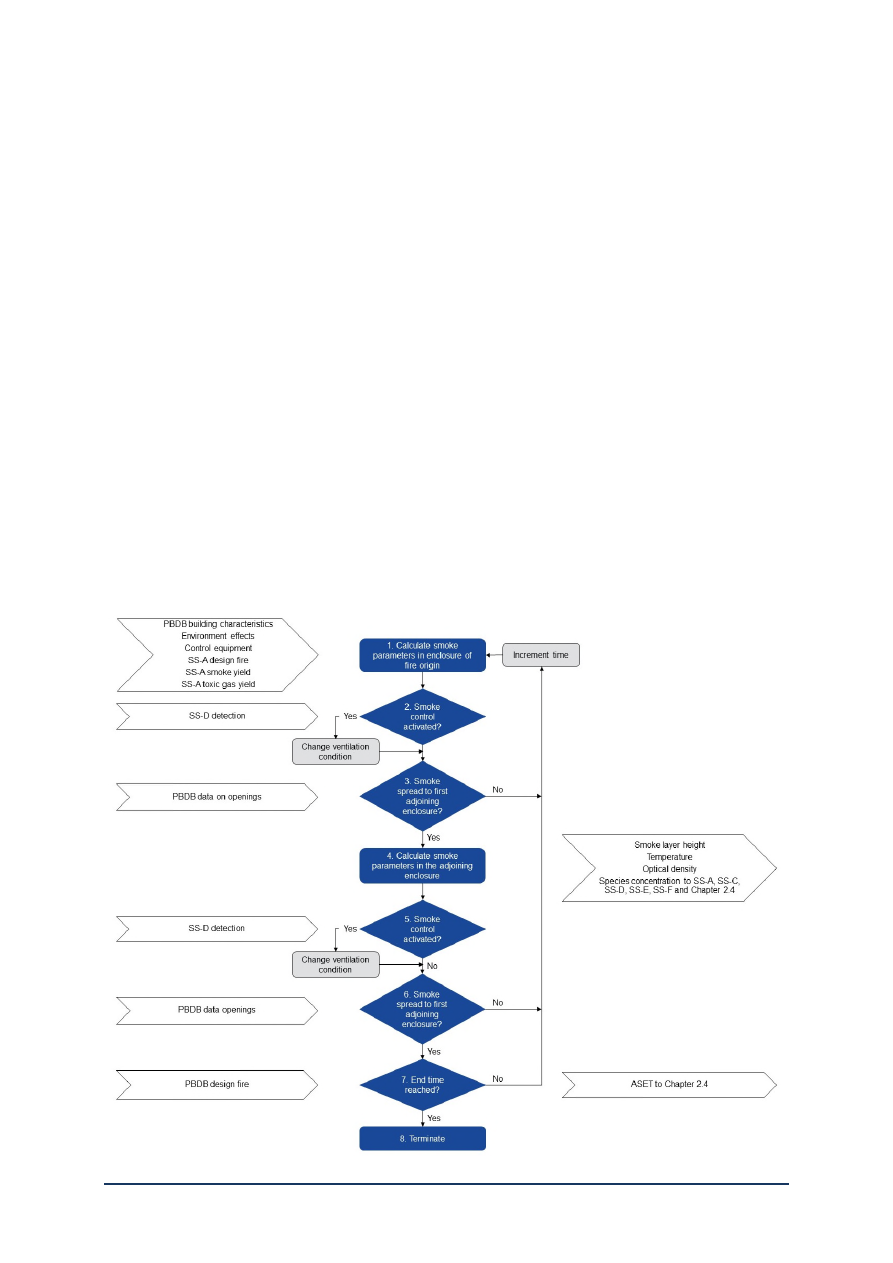
Figure A.2.1 Flow chart for smoke development and spread analysis 


Australian Fire Engineering Guidelines 

abcb.gov.au 

Page 91 

A.2.2 Outputs – SS-B 

Depending on the analysis tools used, the following parameters are generally 

available as outputs from SS-B. 

Smoke layer interface height 

This parameter may be used to: 


evaluate the effect of smoke on occupant behaviour in SS-E, 


evaluate the effect of smoke on fire services activities in SS-F, and 


form the basis for one of the acceptance criteria for the analysis, as determined 
in Section 2.2.9 and used in 2.4 (Collating results and evaluating and drawing 
conclusions). It may be coupled with smoke temperature, smoke optical density, 
and species concentration to determine ASET. 

Smoke temperature 

This parameter may be used to: 


establish the expected times of heat detector and sprinkler activation (SS-D) 


evaluate the effect of smoke on occupant behaviour in SS-E 


evaluate the effect of smoke on fire services activities in SS-F 


form the basis for one of the acceptance criteria for the analysis, as determined 
in Section 2.2.9 and used in 2.4 (Collating and evaluating results and drawing 
conclusions) and may be coupled with smoke layer height, smoke optical 
density and species concentration to determine ASET 


evaluate buoyancy effects on smoke spread and the 'stack effect' (SS-B) 


establish the time of failure of smoke management equipment components, e.g. 
exhaust fan motor (SS-B) 


determine the likelihood of fire spread to unignited fuel items (SS-A) and spread 
through barriers (SS-C). 

Smoke optical density 

This parameter may be used to: 


establish the expected times of activation of smoke detectors and consequent 
commencement of operation of smoke management equipment in SS-D 


evaluate the effect of smoke on occupant behaviour in SS-E 


evaluate the effect of smoke on fire service activities in SS-F 

Australian Fire Engineering Guidelines 

abcb.gov.au 

Page 92 


form the basis for one of the acceptance criteria for the analysis, as determined 
in Section 2.2.9 and used in 2.4 (Collating results and evaluating and drawing 
conclusions) and may be coupled with smoke layer interface height, smoke 
temperature and species concentration to determine ASET. 

Species concentration 

This parameter may be used to: 


evaluate the effect of smoke on occupant behaviour in SS-E 


evaluate the effect of smoke on fire services activities in SS-F 


form the basis for one of the acceptance criteria for the analysis, as determined 
in Section 2.2.9 and used in 2.4 (Collating results and evaluating and drawing 
conclusions) and may be coupled with smoke layer interface height, smoke 
temperature and smoke optical density to determine ASET. 

Where the acceptance criteria are related to life safety, toxic species, such as carbon 

monoxide, carbon dioxide and hydrogen cyanide (and low oxygen concentration) are 

often considered. Where property protection is of concern, corrosive species (such 

as hydrogen chloride) and smoke particles are often considered. 

ASET 

This parameter is used in a timeline analysis. When compared (see 2.4) with RSET, 

obtained from SS-E, provides a criterion for acceptability (see Section 2.2.9) of that 

design. 

ASET may be determined using the outputs above, on the basis of the acceptance 

criteria (see Section 2.2.9).


A.2.3 Inputs – SS-B 

The required input parameters to SS-B are determined by the analysis methods used. 

They may include the parameters described below. 

Building characteristics 

The following parameters are usually relevant and should be available from the 

PBDB: 


geometry of enclosures 

Australian Fire Engineering Guidelines 

abcb.gov.au 

Page 93 


position and size of openings such as doors, windows and roof vents 


changes in ventilation condition (e.g. due to windows breaking or smoke 
dampers closing) 


thermal properties and flammability of internal linings 


leakage rates through doors and barriers. 

Heat release rate profile 

Heat release rate versus time is obtained from SS-A. 

Smoke yield 

The yield of smoke from the source of the fire is obtained from SS-A. (How the 

smoke entrains air in a smoke plume will normally be considered within SS- B) 

Toxic gas yield 

The yield of toxic species, for example carbon monoxide, is obtained from SS-A. 

Characteristics of smoke management equipment 

When smoke management equipment is involved, its characteristics should, as far as 

possible, be specified in the PBDB. The following characteristics are likely to be 

relevant: 


flow rates of exhaust fan and make-up air 


delay in the activation of fans from detection time 


delay in opening of natural ventilation from detection time 


delay in changing the configuration of flow-control devices, such as doors, 
dampers and retractable screens 


locations and sizes of inlet vents 


locations and sizes of exhaust vents 


leakage rates through elements of construction 


conditions under which the system is assumed to fail 


reliability and efficacy of the system (this is of particular relevance to a 
probabilistic analysis or to sensitivity studies). 

Time of smoke detection 

This input is obtained from SS-D. Coupled with the delay in activation of the smoke 

management equipment, it gives the time at which smoke management commences. 

Australian Fire Engineering Guidelines 

abcb.gov.au 

Page 94 

Environmental effects 

The PBDB should establish which environmental effects are to be considered in the 

analysis. The following effects may be relevant to SS-B: 


velocities and prevailing direction of wind where this may cause adverse 
pressures at vent and inlet locations 


temperature of internal and external air 


internal air movements caused by the smoke management equipment that 
might affect smoke flow and the performance of smoke detectors. 

A.2.4 Analysis – SS-B 

SS-B is generally used in one of two situations. 


When the characteristics of any smoke management equipment are known. The 
aim of the calculations is to predict for each fire scenario how smoke will spread 
over time and to determine ASET. In some cases there will be no installed 
smoke management equipment to affect the development and spread of smoke. 


When a building geometry is set and the required ASET has been established, 
the aim of the analysis is to calculate the appropriate characteristics for smoke 
management equipment. 

A.2.4.1 Analysing smoke production and spread 

Whether smoke management equipment is installed or not, the typical process of 

analysis is presented in Figure A.2.1. 

The analysis of smoke spread is normally carried out using an iterative process in 

which at each time increment, the parameters of the fire and the smoke generation 

are changed appropriately to match the assumed development of the fire. When the 

conditions reach the activation point for any smoke management equipment, the 

effect of that management equipment is taken into account in the analysis. 

Step 1 

Calculate how much smoke (including entrained air) is expected to be generated, 

and how thick the smoke layer in the upper part of the enclosure of fire origin, is 

expected to be. At the same time, the expected smoke layer temperature, optical 

density and the concentrations of various toxic species may be calculated. 

Australian Fire Engineering Guidelines 

abcb.gov.au 

Page 95 

Step 2 

Where smoke management equipment has been installed, data from SS-D will 

indicate at which time increment smoke detection occurs. When this happens, the 

time to activation of the equipment is calculated taking into account any characteristic 

delay time of the equipment (fan, damper, vent, etc.). When the smoke management 

equipment has been activated, calculation of the changed ventilation conditions 

should be carried out. 

It should be noted that, in some cases, mechanical smoke management may not 

have been provided and passive smoke management has been used. 

Step 3 

The next step is to determine whether smoke spreads from the enclosure of fire 

origin into the first adjoining enclosure. This normally occurs when the smoke layer in 

the enclosure of fire origin has descended below the level of an opening to the 

adjoining enclosure in question. 

Step 4 

If smoke spreads into the first adjoining enclosure, calculate the smoke parameters 

for that enclosure. 

Step 5 

This step is the same as Step 2 for the two enclosures considered, if activation of the 

smoke management equipment has not occurred for smoke development in the first 

enclosure or where activation in the second enclosure is independent of the first 

enclosure. 

Step 6 

This step is the same as Step 3 and examines the possibility of smoke spread to the 

next adjoining enclosure. 

Step 7 

Determine whether the end time has been reached. This is when: 

Australian Fire Engineering Guidelines 

abcb.gov.au 

Page 96 


smoke has ceased to spread and all the smoke management equipment has 
been activated 


all the adjoining enclosures have been examined 


the stage of the design fire (agreed to in the PBDB process) has been reached 


in the engineering judgement of the fire engineer, sufficient analysis has been 
carried out to justify the trial design under consideration. 

If the end time has been reached and if required by the analysis strategy, calculate 

the ASET based upon the criteria for ASET set in Section 2.2.9. 

If the end time has not been reached, the next iteration is undertaken and the 

analysis continues until the end time has been reached. 

Step 8 

The analysis of SS-B is terminated. 

A.2.4.2 Analysing control of smoke development and spread 

There are a number of ways to control the development and spread of smoke as 

discussed below: 


Controlling the materials comprising the fuel load – so that only those materials 
that have a low smoke potential or are difficult to ignite and burn slowly if ignited 
are used (see SS-A). This would form part of a fire prevention strategy. 


Designing smoke management equipment to limit the development and spread 
of smoke to a predetermined level. This uses the same basic elements of 
Figure A.2.1 as the analysis process described in Section A.2.4.1. It enables the 
quantification of those characteristics of the smoke management equipment 
(see Section A.2.3) that enable the attainment of the relevant acceptance 
criteria for the analysis (as determined in the PBDB process) used in 2.4 
(Collating the results and drawing conclusions). 

Although the design fires from SS-A should be used, the process may be simplified 

to (conservatively) use the maximum HRR from the design fires for these 

calculations. The simplified approach may not be valid for fires in large, single 

compartment buildings.


Australian Fire Engineering Guidelines 

abcb.gov.au 

Page 97 

A.2.5 Construction, commissioning, management, use and 

maintenance – SS-B 

Smoke management equipment often comprises a complex assembly of many 

interactive components and requires close attention in order to be reliable.  

Incorporating smoke management equipment into systems which occupants use 

daily for comfort (e.g. air conditioning) may improve the probability of the successful 

operation of smoke management equipment. 

In order to achieve the required performance of the equipment (assumed or 

calculated during the analysis), attention needs to be paid to construction, 

commissioning, management, use and maintenance as assumed or required by the 

fire engineering evaluation (as articulated in the Report – see 2.5). It may be possible 

to ensure that the required maintenance is done through the essential safety 

provisions that may apply in some jurisdictions. 

Particular attention should be paid to the commissioning procedures and the 

performance required. Normal commissioning procedures should be followed (e.g. 

measurement of airflows and pressure gradients) but these need to be supplemented 

for a fire-engineered design. 

Testing with heated artificial smoke (hot smoke tests) is sometimes carried out as 

part of the commissioning process to evaluate the correct operation of smoke 

management equipment. 


Australian Fire Engineering Guidelines 

abcb.gov.au 

Page 98 


Fire spread, impact and control – SS-C 

SS-C is used to analyse the spread of fire beyond an enclosure, the impact a fire 

might have on the structure and how the spread and impact might be controlled. 

For the purposes of the AFEG: 


spread beyond a fire enclosure is deemed to have occurred when any material 
outside that enclosure ignites and another fire is initiated. Therefore, flames 
projecting from openings do not constitute spread unless they ignite another 
material (existing or potential) outside the enclosure. 


an enclosure is typically a single volume and may take many forms such as a 
room, corridor, shaft, atrium, warehouse or stadium arena. 

Fire spread from the enclosure takes place through openings that initially exist or are 

created by the impact of fire. Fire severity and the ability of the barriers forming the 

enclosure to withstand the fire determine whether openings are created by the impact 

of the fire. Openings that allow the spread of fire both horizontally and vertically, 

internally and externally to the building should be considered. 

The impact of the fire is also considered when the time to failure of structural 

components is being assessed with respect to occupant evacuation, protection of 

adjoining property, or fire service intervention. 

This appendix provides guidance on how to: 


determine whether and at what rate fire may spread to an adjoining enclosure 
or to an adjacent building 


quantify how fire spread and its impact can be controlled. 

This appendix discusses the relationships between this sub-system and others. 

Although this appendix provides guidance on the analysis of SS-C in the general 

analysis context (discussed in 2.3), each project needs to be considered individually 

and the analysis varied accordingly. 

Australian Fire Engineering Guidelines 

abcb.gov.au 

Page 99 

A.3.1 Procedure – SS-C 

A.3.1.1 Fire spread and impact 

Figure A.3.1 illustrates how fire spread between enclosures and its impact on the 

enclosures can be analysed. Discussion of the figure can be found in the following 

sections: 


Section A.3.2 Outputs 


Section A.3.3 Inputs 


Section A.3.4 Analysis. 

An analysis needs to be undertaken for each design fire specified by the PBDB. 

Where the PBDB decision is that an analysis should be undertaken that includes 

consideration of probabilities of various events and scenarios occurring, the flow 

chart can assist the FE in identifying those factors to be taken into account during the 

probability analysis. 

The flow chart provides guidance but does not necessarily cover all the factors which 

may be relevant to a particular fire engineering analysis. 

A.3.1.2 Control of fire spread and impact 

The control of fire spread and its impact may be used to improve fire safety as an 

alternative (or in addition) to those measures provided by other sub-systems. This is 

discussed in Section A.3.4. 

Australian Fire Engineering Guidelines 

abcb.gov.au 

Page 100 

Figure A.3.1 Flow chart for fire spread and impact analysis 


A.3.2 Outputs – SS-C 

Depending on the analysis tools used, the following parameters are generally 

available as outputs from SS-C. 

Time of fire spread to the next enclosure 

This parameter not only provides information about time to fire spread but may also 

be used: 


in SS-A to indicate when the design fire for the next enclosure is initiated 


in SS-E to assess evacuation of occupants 


in SS-F to assess fire fighting activities 


to form the basis for one of the acceptance criteria for the analysis, as 
determined in Section 2.2.9 and used in 2.4 (Collating and evaluating results 
and drawing conclusions) and may also be used to determine ASET. 

Australian Fire Engineering Guidelines 

abcb.gov.au 

Page 101 

Time of loss of integrity of a barrier 

This parameter not only provides information about time to fire spread (see above), 

but may also be used: 


in SS-A to assess changes in ventilation 


in SS-E to assess evacuation of occupants 


in SS-F to assess fire fighting activities 


to form the basis for one of the acceptance criteria for the analysis, as 
determined in Section 2.2.9 and used in 2.4 (Collating and evaluating results 
and drawing conclusions) and may also be used to determine ASET. 

Time of loss of stability of a barrier 

This parameter not only provides information about time to fire spread (see above), 

but may also be used: 


in SS-A to assess changes in ventilation, 


in SS-E to assess evacuation of occupants, 


in SS-F to assess fire fighting activities, and 


to form the basis for one of the acceptance criteria for the analysis, as 
determined in Section 2.2.9 and used in 2.4 (Collating and evaluating results 
and drawing conclusions) and may also be used to determine ASET. 

Time of failure of a structural element 

This parameter not only provides information about structural adequacy but may also 

be used: 


in SS-E to assess evacuation of occupants, 


in SS-F to assess fire fighting activities, and 


to form the basis for one of the acceptance criteria for the analysis, as 
determined in Section 2.2.9 and used in 2.4 (Collating and evaluating results 
and drawing conclusions) and may also be used to determine ASET. 

ASET 

This parameter is used in a timeline analysis. When compared (see 2.4) with RSET, 

obtained from SS-E, provides a criterion for acceptability (see Section 2.2.9) of that 

design. 

Australian Fire Engineering Guidelines 

abcb.gov.au 

Page 102 

ASET may be determined using the above outputs on the basis of the acceptance 

criteria (see Section 2.2.9)


A.3.3 Inputs – SS-C 

The required input parameters to SS-C are determined by the analysis methods 

being used and may include: 


Characteristic fire profile.

 The fire profile is obtained from SS-A and may be 

expressed in terms of HRR or heat flux or temperature as a function of time. 


Time of flashover.

 This parameter is obtained from SS-A and may be used 

(see Section A.4.4.1), in certain circumstances, as the time for fire to spread to 
an adjacent enclosure. 


Smoke temperature.

 This parameter is obtained from SS-B and may be used 

to determine ignition of combustibles in an adjacent enclosure. 


Building characteristics.

 The following parameters are usually relevant and 

should be available from the PBDB: 


geometry of enclosures 


number, location, size and dimensions of openings 


physical properties of barriers and structural elements 


location and ignition characteristics of combustibles (especially in adjacent 
enclosures) 


proximity and ignition characteristics of adjacent building facades or of 
potential building development. 


Wind effects. 

Wind velocity and direction may influence the extent of fire 

projection from windows and heat losses from the enclosure. The effect of wind 
is likely to be more significant when there are openings on both the windward 
and leeward sides of the building. 

Depending upon the burning characteristics of the building and its contents, the 

potential distribution of flying brands and embers may also be a necessary 

consideration if fire spread to adjoining property is to be limited. This may have 

design implications in areas prone to bushfires. 

A.3.4 Analysis – SS-C 

SS-C is generally used in one of two situations: 

Australian Fire Engineering Guidelines 

abcb.gov.au 

Page 103 


When the characteristics of any building are known and the aim of the 
calculations is to predict for each fire scenario how fire will spread and impact 
on the building over time (see Section A.4.4.1) and, in some cases, to 
determine an ASET (see 2.4)


When the degree of fire spread and impact and required ASET have been 
established, the aim of the analysis is to determine the appropriate 
characteristics for the building with respect to control of fire spread and impact 
(see Section A.5.4.2)

A.3.4.1 Analysing fire spread and impact 

Fire spread beyond a fire enclosure takes place through openings in the boundaries 

of the fire enclosure (either existing or created by the impact of the fire). The 

evaluation may need to consider: 


existing openings such as open doors and windows 


openings resulting from breakage of glazed openings or doors opened by 
occupants evacuating the building 


openings due to non-existent fire stopping, failure of inadequately fire-stopped 
penetrations or damage to elements such as service pipes or cable trays 


openings resulting from loss of integrity of the barrier (e.g. walls, floors and 
closures in the closed position) due to cracks, fissures or structural collapse. 

Certain building features will provide ready avenues of spread if directly connected to 

the enclosure or if the separation between the feature and enclosure is breached. 

Features that facilitate flame spread in this way may include: 


vertical shafts such as stairways, elevator shafts, large service ducts and 
architectural voids 


concealed spaces such as ceiling voids, spaces within hollow construction and 
spaces under floors and behind exterior cladding on the inside of building 
facades. 

These features are treated as enclosures for the purpose of analysing fire spread 

and impact. The features of interest and the potential routes of spread should be 

defined during the PBDB. For a given fire location, there may be more than one 

potential route for fire to spread – and this may require several sets of analyses to be 

carried out. Combinations of openings, which may be either opened or closed, may 

also be investigated to determine the worst likely conditions for fire spread. 

Australian Fire Engineering Guidelines 

abcb.gov.au 

Page 104 

As indicated at the beginning of this appendix, spread beyond a fire enclosure is 

deemed to have occurred when material outside that enclosure ignites. For the 

purposes of analysis, a number of simplifying assumptions may be made: 


Spread through an opening in an enclosure occurs when flashover has taken 
place. This assumption may also be applied to closed windows if the glazing is 
of ordinary window glass but not toughened or wired. The rationale for this 
assumption is that the heat release of a fire in the pre-flashover stage is limited 
and not likely to cause spread through openings. However, such possibilities 
(including glass breakage) may be required for some analyses. 


Barrier failure equates with ignition of combustibles in the adjacent enclosure 
and fire spread. 


Non fire-rated barriers may be considered to remain intact until flashover in the 
enclosure. The rationale for this assumption is that the impact on barriers is low 
during the pre-flashover stages and barrier failure will commonly occur after 
flashover. Direct flame contact on the barrier may negate this assumption. 

Step 1 

Determine the fire severity in the enclosure of origin. This is generally achieved using 

input from SS-A on the design fire. The characteristic fire profile, expressed as HRR 

as a function of time, can be used to give fire severity in terms of: 


heat flux versus time 


temperature versus time 


time equivalence. 

The fire severity can also be determined independently of SS-A using information 

from the PBDB on the combustibles in the enclosure and the enclosure 

characteristics and methodologies devised for this purpose. 

Step 2 

Determine the possibility and time for fire spread by way of the existing openings in 

the enclosure of fire origin. The spread to an adjacent enclosure, building or property 

boundary may occur by means of: 


burning embers and other debris 


radiation 


direct flame contact. 

Australian Fire Engineering Guidelines 

abcb.gov.au 

Page 105 

As discussed above, the 'adjacent enclosure' includes vertical shafts and concealed 

spaces as well as rooms on the floor of fire origin and floors above that of fire origin. 

In the latter case, the fire may spread by way of flames projecting through windows. 

For adjacent buildings, fire spread may occur through the glass of fixed or closed 

windows by radiation, without glass breakage occurring. 

In the case of fixed or closed windows, the time of glass breakage may be 

determined, based on the fire severity, and this event used to determine fire spread 

as well as to modify the ventilation for the design fire in SS-A. Alternatively, as noted 

above, the time to flashover from SS-A may be used as the time to glass breakage 

(as with the time for fire spread through all openings). 

For closed doors, the time of opening may be obtained from the analysis of occupant 

evacuation in SS-E. 

Step 3 

Determine the possibility and time of spread due to conduction through the 

boundaries ('barriers') of the enclosure of fire origin. Barrier failure due to conduction 

of sufficient heat through the barrier to meet failure criteria can occur without loss of 

integrity and stability of the barrier. Whether ignition of combustibles occurs in the 

next enclosure depends on their ignitability and disposition (obtained from PBDB) 

but, as discussed above, barrier failure alone may be taken as the criterion for flame 

spread into the adjacent enclosure. 

Step 4 

Determine the possibility and time of spread due to loss of integrity of the boundaries 

(barriers) as discussed in of the enclosure of the fire origin. Barrier failure due to loss 

of integrity involves the formation of cracks and fissures and the failure of 

firestopping. The ignition of combustibles in the adjacent enclosure may be due to 

radiation from hot gases and flames, depending on the nature and disposition of the 

combustibles. Information on the combustibles may be obtained from the PBDB and 

smoke temperatures from SS-B. However, as discussed above, barrier failure alone 

may be taken as a criterion for flame spread into the adjacent enclosure. 


Content      ..     5      6      7      8     ..