Australian Fire Engineering Guidelines (2021) - part 5
 

  Index      Manuals     Australian Fire Engineering Guidelines (2021)


Search            copyright infringement  


Content      ..     3      4      5      6     ..


Australian Fire Engineering Guidelines (2021) - part 5


Australian Fire Engineering Guidelines 

abcb.gov.au 

Page 58 

the FE to plan the analysis for the particular project, based on the decisions taken 

during the preparation of the PBDB as discussed in 2.2. 

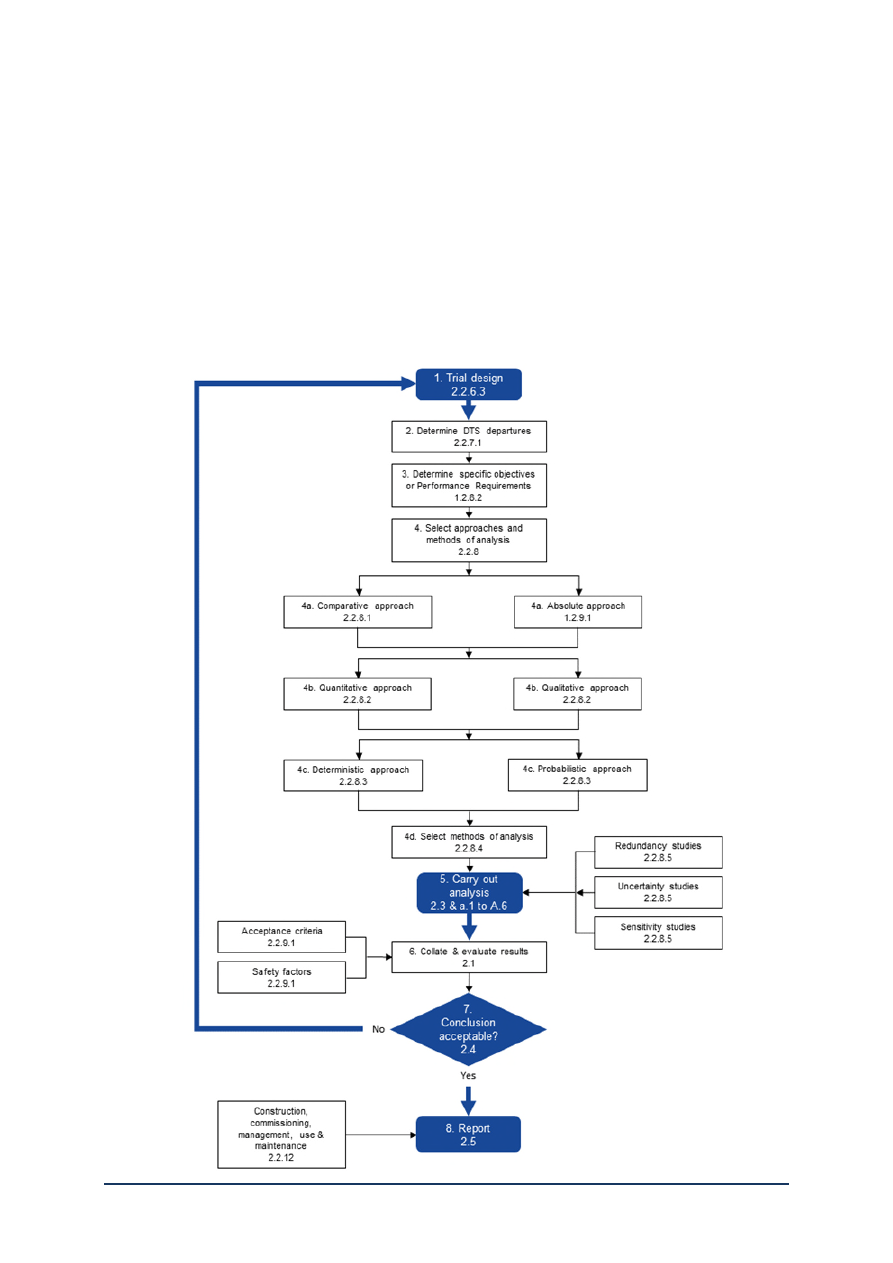
Figure 2.3.1 shows the factors which will influence the analysis strategy, and which 

will have been agreed upon in the PBDB process. The figure also shows that the 

analysis process is iterative when one or more trial designs are shown to be 

unacceptable – that is, they do not meet the acceptance criteria set for the analysis. 

Figure 2.3.1 Analysis of trial designs 


Australian Fire Engineering Guidelines 

abcb.gov.au 

Page 59 

In the following paragraphs, each step in Figure 2.3.1 is discussed with reference to 

the PBDB and later chapters of the AFEG. 

Step 1 

The trial design is analysed, recognising the agreements reached in the PBDB 

process. Where more than one trial design has been identified, each may be 

analysed, or only the preferred design analysed, provided it meets the acceptance 

criteria set for the analysis. 

Step 2 

The DTS departures of the trial design need to be established in order to identify the 

issues to be addressed.  

Step 3 

The Performance Requirements are determined from the DTS departures identified 

in Step 2. 

Step 4 

The approaches and methods of analysis to be used are selected using the following 

sub-steps: 


Step 4a


 select comparative or absolute approach 


Step 4b


 select qualitative and/or quantitative approach 


Step 4c


 select deterministic or probabilistic approach 


Step 4d


 select analysis methods. 

Step 5 

The steps above, together with data from the PBDB, provide the basis for carrying 

out the analysis (using the sub-systems identified in Section 2.3.1)

Step 6  

Although the sub-systems may be used in the order presented in the AFEG, the 

analysis process often requires the order to be changed. This is because data from 

later sub-systems may be required for the analysis of a preceding sub-system. 

Australian Fire Engineering Guidelines 

abcb.gov.au 

Page 60 

Other factors from the PBDB which need to be taken into account during the analysis 

are the sensitivity studies (including consideration of redundancies) and uncertainty 

studies that were determined to be necessary. 

After the analysis has been carried out, the results need to be collated and 

evaluated. This step is discussed in 2.4 and requires consideration of the acceptance 

criteria and factors of safety for the analysis. In some cases, further sensitivity 

studies (including consideration of redundancies) and uncertainty studies may also 

need to be carried out. 

Step 7 

If the conclusion is that the results of the analysis do not meet the acceptance criteria 

with the required factors of safety and redundancy, the trial design is discarded or 

modified and the analysis of another trial design is required as discussed in 2.4.


Steps 7 and 8 

Alternatively, if the conclusion (Step 7) is that the results indicate the trial design is 

acceptable, the results should be reported (Step 8) as discussed in 2.5

. 


Australian Fire Engineering Guidelines 

abcb.gov.au 

Page 61 

2.4


Collating and evaluating the results and drawing conclusions 

When one or more trial designs have been analysed, it is necessary for the FE to 

collate and evaluate the results, and to draw conclusions. 

This chapter provides guidance on these processes, but each project needs to be 

considered individually and the processes varied accordingly. The steps for the 

process are shown in Figure 2.4.1. 

Figure 2.4.1 Flow chart for collating and evaluating the results and drawing conclusions 


Australian Fire Engineering Guidelines 

abcb.gov.au 

Page 62 

Figure 2.4.1 illustrates: 


collating and evaluating the results (Section 2.4.1) 


drawing conclusions (Section 2.4.2)

These processes generally involve the use of engineering judgement in collating and 

evaluating the results and drawing conclusions.  

This use of engineering judgement emphasises the need for evaluations to be 

conducted by a FE with the necessary knowledge and experience. 

2.4.1 Collating and evaluating the results 

Step 1a 

The results obtained from the analysis (according to 2.3) should be collated for 

evaluation. Not all sub-systems will necessarily have been involved, but the outputs 

of all relevant sub-systems need to be assembled for evaluation. 

The evaluation needs to take into account: 


the acceptance criteria for the analysis set according to Section 2.2.9.1 


the safety factors set according to Section 2.2.9.2 – which are to be applied in 
determining whether the results meet the acceptance criteria 


whether the agreed redundancy (see Section 2.2.8) has been demonstrated by 
the redundancy studies (see Section 2.2.8.5) 


the results of the uncertainty studies carried out according to Section 2.2.8.5 


the results of the sensitivity studies carried out according to Section 2.2.8.5. 

Step 1b 

The FE should apply engineering judgement to the collated and evaluated results in 

order to determine if further evaluation (e.g. further sensitivity studies) or adjustments 

to the results are required – in the light of the FEs knowledge and experience. Such 

engineering judgement should be adequately justified, and the logic used explicitly 

stated in the report (2.5)

Australian Fire Engineering Guidelines 

abcb.gov.au 

Page 63 

Step 1c 

When the FE is satisfied that the results have been properly evaluated and no further 

manipulation is required, the final results are tabulated. 

2.4.2 Drawing conclusions 

Step 2a 

The conclusions of the evaluation need to be drawn based upon the final results and 

taking into account the Performance Requirements for the evaluation as determined 

during the PBDB process (see Section 2.2.7.2). These outcomes may require further 

consultation with other professionals. 

Step 2b 

The FE should apply engineering judgement to the conclusions in order to assess 

their soundness and appropriateness to the evaluation taking into account: 


the PBDB deliberations; 


the assumptions used in the evaluation; and 


any limitations or requirements associated with the conclusions. 

Again, the justification for and the logic used in applying engineering judgement 

should be fully reported (2.5)

Step 2c 

If the final conclusions indicate that the trial design is acceptable, the FER can be 

completed. But if this is not the case, it may be appropriate to analyse another trial 

design. Additional trial designs may have been identified during the PBDB process. If 

this is not the case, further consultations and modification of the PBDB is necessary. 

Where more than one trial design has been assessed and found acceptable, a 

choice may have to be made. This choice could be made on grounds such as cost, 

ease of construction, and aesthetics. 


Australian Fire Engineering Guidelines 

abcb.gov.au 

Page 64 

2.5


Completing the FER 

When the fire engineering analyses and evaluations have been carried out and 

conclusions reached, the FER can be completed. The FER is a major and significant 

output of the fire safety evaluation and should be a self-explanatory document. 

The information contained in the final report forms the basis for construction, 

commissioning, management, use, maintenance, audits, alteration/extension, or 

change of use of the building. 

2.5.1 Report format 

There are many possible formats for a report, but the framework should follow the fire 

engineering process described in Section 2.1.1. In the case of electronic reports, the 

format should inhibit subsequent alteration. 

The following headings provide a possible format: 


Executive Summary 


Introduction 


PBDB 


Analysis 


Collating and Evaluating the Results (with annotated drawings) 


Conclusions 


References 


Appendices. 

Australian Fire Engineering Guidelines 

abcb.gov.au 

Page 65 

3 Methodologies 

3.1


Preparing a PBDB 

This chapter describes a selection of methodologies that may be used in preparing a 

PBDB. This does not preclude the use of other methodologies that might be chosen 

by the FE. The methodologies described do not cover all aspects of preparing a 

PBDB. 

3.1.1 Acceptance criteria for analysis 

As indicated in 2.2, there are a number of acceptance criteria that may be used for 

the analysis. Typical acceptance criteria parameters are set out in the example box in 

Section 2.2.9. 

3.1.2 Fire scenarios 

3.1.2.1 Identification and definition of fire scenarios 

Each fire scenario represents a unique occurrence of events, and is the result of a 

particular set of circumstances associated with the fire safety system. Accordingly, a 

fire scenario represents a particular combination of outcomes or events related to: 


types of fires that are generated upon ignition 


the development of the fire 


external environmental conditions. 

Identification and definition of significant fire scenarios in the PBDB enables them to 

be described in a manner suitable for the analysis. 

The types of fires that may be generated upon ignition may be categorised as: 


smouldering fires 


flaming (non-flashover fires) 


flashover fires. 

Fire development may be influenced by: 

Australian Fire Engineering Guidelines 

abcb.gov.au 

Page 66 


size and type of ignition source 


distribution and type of fuel 


fire load density 


location of the fire (with respect to walls and ceilings) 


ventilation conditions 


stack effect 


building construction and materials 


air-handling equipment characteristics. 

External environmental conditions may be influenced by: 


the season (e.g. summer or winter) 


wind speed and direction 

A fire scenario can be defined by specifying a particular combination of outcomes or 

events for each of the fire safety sub-systems. This requires the systematic 

combination of feasible outcomes or events for each of the six sub-systems. 

Some of the different outcomes or events that may be considered are listed below by 

sub-system. 

Fire initiation, development and control (SS-A): 


smouldering, non-flashover or flashover fires. 

Smoke development, spread and control (SS-B): 


smoke management – operation or non-operation 


if operative – successful or not 


doors or dampers – open or closed 


door or damper smoke seals – fitted or not 


leakage through barriers – controlled or not. 

Fire spread, impact and control (SS-C): 


doors open or closed 


barriers – successful or not 


external spread via openings – yes or no. 

Australian Fire Engineering Guidelines 

abcb.gov.au 

Page 67 

Fire detection, warning and suppression (SS-D): 


detector activation – successful or not 


sprinkler – operation or non-operation 


if operative – successful or not. 

Occupant evacuation and control (SS-E): 


awake or asleep 


response to cues – successful or not (implications also for time of occurrence) 


if not initially successful, subsequent response to other cues – successful or not 


different times for evacuations. 

Fire service intervention (SS-F): 


rescue – successful or not 


extinguishment – successful or not 


different times for arrival and set up. 

A simple representation of the possible events associated with a fire safety system 

(including both sprinklers and barriers) for the case of a potential flashover fire, is 

shown in Figure 3.1.1. From these events, it is possible to characterise three fire 

scenarios: Fire Scenarios I, II and III. These scenarios are briefly described below. 


Fire Scenario I. 

 Control of fire growth in the enclosure of fire origin, because of 

successful operation of the sprinklers. 


Fire Scenario II.

 Control of fire growth to the enclosure of fire origin, because of 

the success of the barriers in preventing the spread of fire when the sprinklers 
have failed to control the growth of the fire. 


Fire Scenario III.

 Spread of fire to the adjoining enclosures, because of the 

failure of the sprinklers to control the growth of the fire, and the failure of the 
barriers to control the spread of fire to adjoining enclosures. 

Once the events associated with each fire scenario have been defined, for a 

quantified analysis, it is possible to quantify the occurrence of the fire scenario by 

defining the times of occurrence of key events along a timeline. 

Further information on the systematic development of fire scenarios, based on the 

use of event trees, is presented in Section 3.2.2. 

Australian Fire Engineering Guidelines 

abcb.gov.au 

Page 68 

Figure 3.1.1 Event tree representation of the possible events associated with a fire safety 

system including sprinklers and barriers 


3.1.2.2 Development of event trees for scenario identification 

When undertaking a probabilistic analysis, the use of event trees is recommended to 

assist in the systematic identification and definition of multiple scenarios. Event trees 

provide a simple method to represent the full range of fire scenarios that can occur. 

In a probabilistic analysis, a probability is calculated for each scenario – based on 

individual event probabilities. Where event probabilities are not available, fault trees 

may be used to calculate and assign probabilities to specific events. Fault tree 

analysis permits the hazardous incident (top event) frequency to be estimated from a 

logic model of the failure mechanisms of a system. A number of publications describe 

methods for constructing fault trees. 

A path in an event tree is represented by a particular continuous combination of 

branches (that is, events) and starts with the initiating event and finishes with a final 

event. There are many paths in an event tree. A fire scenario is defined by a 

particular path in the event tree. 

An outline of some of the fire scenarios that can develop in an enclosure is shown in 

Figure 3.1.2. These scenarios are based on the event tree approach. 

Australian Fire Engineering Guidelines 

abcb.gov.au 

Page 69 

Figure 3.1.2 Fire scenarios using an event tree approach 


When developing fire scenarios, it is also appropriate to develop scenarios for 

occupant detection using an event tree approach. The occupant detection scenarios 

are based on the following assumptions. 


Occupant Detection I. 

Occupants are assumed to be able to detect the 

presence of fire by visual, olfactory and other sensory means. 


Occupant Detection II

. Occupants are assumed to be able to detect the 

presence of fire by an alarm triggered by some form of smoke or thermal 
detector. 


Occupant Detection III.

 Occupants are assumed to be able to detect the 

presence of fire by new visual, olfactory and other sensory responses, response 
to an alarm (not previously responded to), or response to warnings issued by 
others. 

Figure 3.1.3 shows the four assumed occupant detection responses, together with 

the associated timeline for such responses. 

It should be noted that the above conditions are the result of some gross 

assumptions; other assumptions could be readily justified. 

Australian Fire Engineering Guidelines 

abcb.gov.au 

Page 70 

Figure 3.1.3 Occupant responses based on an event tree formulation plus associated timeline 


Each of the above four occupant detection response scenarios, as shown in Figure 

3.1.3, should be combined separately with each of the fire scenarios identified in 

Figure 3.1.2.  


Australian Fire Engineering Guidelines 

abcb.gov.au 

Page 71 

3.2


Analysis 

This chapter describes a selection of methodologies that may be used to undertake 

analysis. This does not preclude the use of other methodologies chosen by the FE. 

The methodologies do not cover all aspects of an analysis. 

3.2.1 Deterministic approaches 

The deterministic approach to a problem involves the definition of a scenario and the 

use of analytical methods – which, if applied repeatedly, would lead to identical 

outcomes. Zone and some field model programs and common evacuation modelling 

programs may fall into this category. The methodologies presented in the subsequent 

chapters of this part of the AFEG are generally deterministic. 

The deterministic approach is the primary analytical approach to many fire 

engineering problems. However, probabilistic concepts are often involved in the 

interpretation and application of the analytical results of this approach. The 

deterministic approach is sometimes combined with the probabilistic approach in 

assessing fire engineering designs. 

3.2.2 Probabilistic approaches 

There are a number of methodologies by which the probabilities of fire safety 

systems functioning, or occupant response occurring as designed, can be 

incorporated into an analysis to establish risk levels associated with the fire safety 

system design. 

The probabilistic approach provides a means by which an overall level of risk based 

on critical parameters may be established. Typically, these risks relate to life safety 

or property loss. Other issues could be introduced as the principal parameters if 

desired. 

This section outlines one approach that may be adopted to introduce probabilistic 

outcomes into an evaluation. 

This method of evaluation is appropriate where an alternative fire safety system trial 

design is composed of essentially different elements to those in the DTS design (as 

Australian Fire Engineering Guidelines 

abcb.gov.au 

Page 72 

specified in the regulations) and where the cost-effective combination of such 

elements is not immediately obvious. 

This method of evaluation involves the consideration of multiple quantitative fire 

scenarios that are defined with the aid of event tree analysis. The quantitative results 

are then weighted with the probabilities associated with the fire scenarios and 

combined to obtain the risk parameters. 

First, develop event trees for the fire scenarios and occupant detection response as 

described in Section 3.1.2.2. 

Associated with each scenario, it is possible to define two consequences for the 

occupants – occupant safety or occupant number of deaths: 


Occupant safety. 

When no occupants are exposed to the occurrence of 

untenable conditions for the particular enclosure under investigation. 


Occupant number of deaths.

 The number of occupants remaining in the 

enclosure under investigation at the time of occurrence of untenable conditions. 

To estimate the expected number of fatalities for each scenario (required for the life-

risk analysis), two parameters must be obtained for each scenario considered: 


probability of occurrence of the fire scenario 


number of people exposed to untenable conditions. 

These two parameters are combined to give the expected number of deaths, 

ENDj

which may be estimated from: 

𝐸𝑁𝐷𝑗

=

𝑃𝑗


×  

𝑁𝑗


Where: 

P

j


is the probability of occurrence for the events of the specified fire scenario 

developing following ignition 

N

j


is the number of deaths and is represented by the number of occupants 

exposed to untenable conditions. 

There will generally be more than one way in which a fire at a specified location may 

develop and pose a threat to the occupants. The risk associated with a particular fire 

is, therefore, the sum of the risks over all fire scenarios and all potentially threatened 

enclosures – rooms or spaces – within a building (target locations). 

Australian Fire Engineering Guidelines 

abcb.gov.au 

Page 73 

The overall risk to life safety associated with a particular building design can be 

estimated from the sum of the risks associated with each fire scenario considered in 

the analysis: 

𝐸𝑁𝐷 = ∑ 𝐸𝑁𝐷𝑗 =

𝑗

∑ 𝑃𝑗𝑁𝑗

𝑗


The ERL safety parameter is defined below: 

𝐸𝑅𝐿 =

𝐸𝑥𝑝𝑒𝑐𝑡𝑒𝑑 𝑛𝑢𝑚𝑏𝑒𝑟 𝑜𝑓 𝑑𝑒𝑎𝑡ℎ𝑠 𝑑𝑢𝑟𝑖𝑛𝑔 𝑡ℎ𝑒 𝑑𝑒𝑠𝑖𝑔𝑛 𝑙𝑖𝑓𝑒 𝑜𝑓 𝑏𝑢𝑖𝑙𝑑𝑖𝑛𝑔

𝐵𝑢𝑖𝑙𝑑𝑙𝑖𝑛𝑔 𝑝𝑜𝑝𝑢𝑙𝑎𝑡𝑖𝑜𝑛 × 𝐷𝑒𝑠𝑖𝑔𝑛 𝑙𝑖𝑓𝑒 𝑜𝑓 𝑏𝑢𝑖𝑙𝑑𝑖𝑛𝑔


which can be expressed in the following equation: 

𝐸𝑅𝐿 =  

𝐸𝐿𝐿𝐵

𝑂𝑃 × 𝑡

𝐷


Where: 

ELLB

  is the expected number of deaths over design life of building 

OP


is the number of occupants defined to be in the building at the 

commencement of a fire 

t

D


is the design building life (years). 

To produce an exhaustive measure of the risk to life, it would be necessary to 

consider every possible fire scenario within the building. However, the computational 

effort required increases with the number of scenarios. The simplification of the 

problem by the PBDB team (see 2.2) is therefore an essential precursor to carrying 

out a comprehensive probabilistic risk assessment. The design life of a building is not 

always known and the fire safety team should make an assumption in such cases. 

The same methodologies can be employed to develop other outcomes such as the 

Fire Cost Expectation (FCE). 

Using the procedures presented in this section, it is also possible to estimate the 

extent of damage that may result from a fire. This information may then be used to 

estimate potential monetary losses and enable a cost benefit study to be carried out 

to establish the value of installing additional fire protection measures. In this case, 

monetary losses are used as the measure of potential consequences. 


Content      ..     3      4      5      6     ..