CHEMICAL, BIOLOGICAL, RADIOLOGICAL, AND NUCLEAR DEFENSE (CBRND) FUNCTIONAL NEEDS ANALYSIS. FINAL REPORT (2005) - page 26
For Official Use Only
CBRN Functional Needs Analysis/Functional Solution Analysis
Chapter 16. Operational Sustain Tasks
16.2 Task OPSUST 2: Assess component command contamination reports for
operational degradation implications and restoration operation requirements
16.2.1
Functional Area Analysis
16.2.1.1
Definition
To receive and assess component command contamination reports for operational degradation
implications and restoration operation requirements. The JTF commander identifies the specific
degradation of critical units and whether or not operations need to be modified.
16.2.1.2
Derivation
UJTL (OP 7.3, OP 5.2, OP 5.1.4).
16.2.1.2.1
Supported Task: STSUST 2
16.2.1.2.2
Lateral Task: OPSHA 10
16.2.1.2.3
Supporting Task: TASUST 25
16.2.1.3
Condition
Perform this task under conditions of:
Physical
1. Persistent CBRN/TIM effects. (C1.3.3.1-3)
Military
1. Stressful mission. (C2.1)
2. Partial preexisting arrangements. (C2.1.1.2)
3. Negligible personnel experience. (C2.2.4.5)
4. Moderate rear-area security. (C2.7.1)
5. Fully developed state of conflict. (C2.10.1)
Civil. N/A
16.2.2
Functional Needs Analysis
16.2.2.1
Capability and Deficiency Assessment Summary
Table 16.2-1 discusses the only capability that currently exists to perform the task to the
designated standards. No other capability is projected that will accomplish this task.
10
For Official Use Only
For Official Use Only
CBRN Functional Needs Analysis/Functional Solution Analysis
Chapter 16. Operational Sustain Tasks
Current Capability and Deficiency
The current assessment is “yellow.” Any JTF HQ has a team of operational planners and
information command and control specialists. This team of experts forms the backbone of the
JTF command structure. This team can accomplish the task, but there are several factors that
complicate their ability to do so.
Projected Near/Mid-Term Capability and Deficiency
No other capabilities are currently projected for the near/mid term. Limited capability
improvements are forecast for the near/mid term except for DOTMLPF, which should improve
in all deficient areas as a result of initiatives that use data resulting from focused
experimentation.
Projected Far-Term Capability and Deficiency
DOTMLPF should improve in all deficient areas as a result of initiatives that use data resulting
from focused experimentation. JTTPs, training and exercises, and education will all improve
leading to a far-term assessment of “green.”
11
For Official Use Only
For Official Use Only
CBRN Functional Needs Analysis/Functional Solution Analysis
Chapter 16. Operational Sustain Tasks
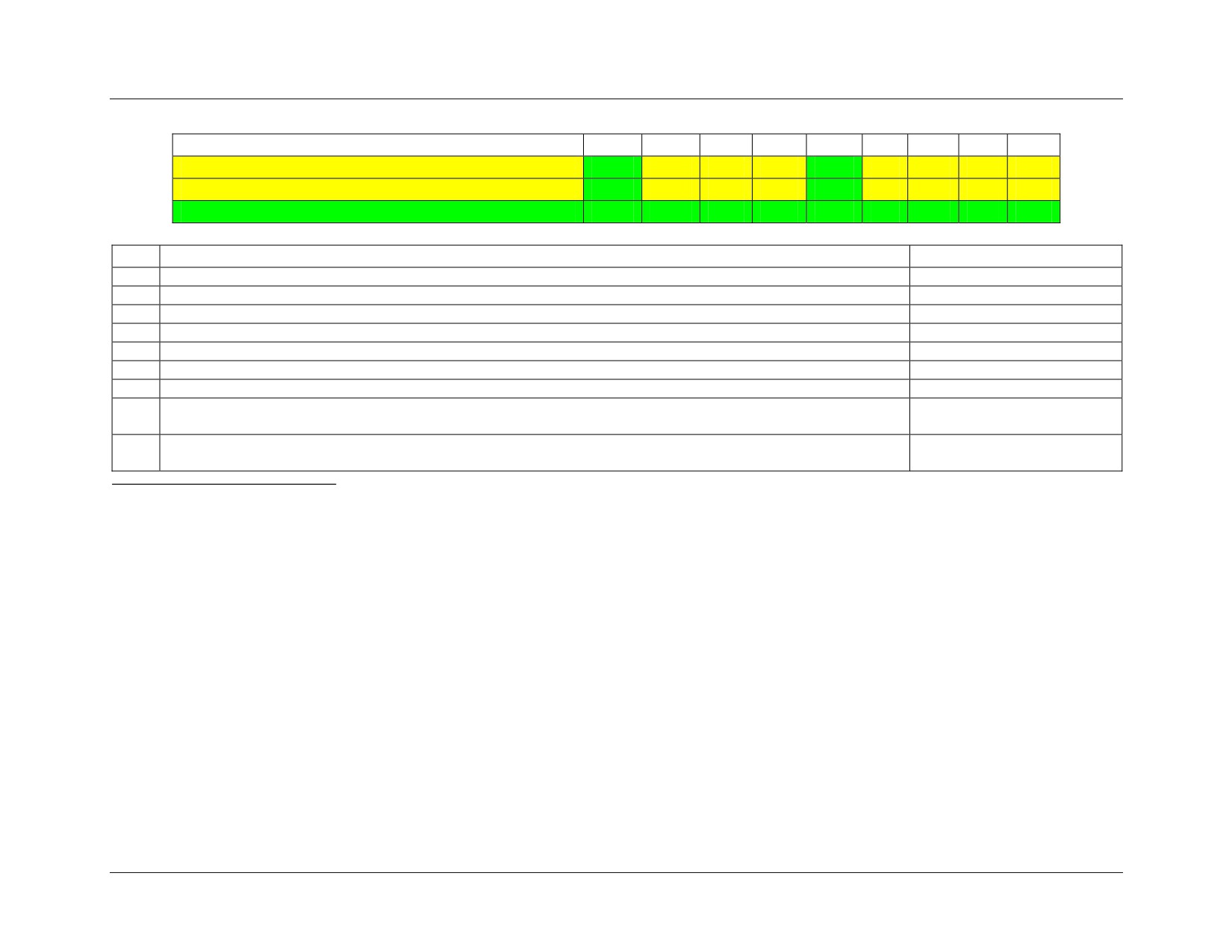
Table 16.2-1. OPSUST 2: Capability and Deficiency Assessment
Capability: Standing Joint Force Headquarters
M1
M2
M3
M4
M5
M6
M7
M8
M9
Current Overall Capability1
G2
Y3
Y4
Y5
G6
Y7
Y8
Y9
Y10
Near/Mid-Term Overall Capability11
G
Y
Y
Y
G
Y
Y
Y
Y
Far-Term Overall Capability12
G
G13
G14
G15
G
G16
G17
G18
G19
FAA Measure
Scale
M1
Contamination reports are received within 1 hour.
G - Yes, Y - Limited, R - No
M2
Unit operational degradation is assessed within 1 hour after contamination reports are received.
G - Yes, Y - Limited, R - No
M3
Restoration operation requirements are estimated within 1 hour after unit operational degradation is assessed.
G - Yes, Y - Limited, R - No
M4
Data transmitted/disseminated follow standard format.
G - Yes, Y - Limited, R - No
M5
Information is passed within established time criteria.
G - Yes, Y - Limited, R - No
M6
Unit operational degradation assessment is accurate.
G - Yes, Y - Limited, R - No
M7
Restoration operation requirements estimate is accurate.
G - Yes, Y - Limited, R - No
M8
Procedures and checklists are developed to facilitate the ability to assess component command contamination reports
G - Yes, Y - Limited, R - No
for operation degradation implications and restoration operation requirements.
M9
Joint exercises/experimentation provide feedback on the efficacy of assessment of component command
G - Yes, Y - Limited, R - No
contamination reports for operational degradation implications and restoration operation requirements.
1 DOTMLPF should improve in all deficient areas as a result of initiatives that use data resulting from focused experimentation.
2 Any SJFHQ staff can receive contamination reports manually within an hour, but an automated system would ensure that reports are received even if the reporting unit is having
severe degradation or communication problems.
3 Limited. Any SJFHQ staff can conduct an operational degradation assessment, but there are no TTPs or available familiarization training that specifically address making
operational degradation assessments and no automated tools to assist the process.
4 Limited. Any SJFHQ staff can estimate restoration requirements, but there are no TTPs or available familiarization training that specifically addresses considerations and how to
estimate requirements.
5 Limited. Any SJFHQ staff can transmit/disseminate information according to a standard format that they develop, but there are no specific formats for operational degradation
assessment requirements.
6 Any SJFHQ staff can pass information in a timely manner, but an automated system would ensure that reports are received even if the reporting unit is having severe degradation
or communication problems.
7 Limited. Any SJFHQ staff can conduct an accurate unit degradation assessment, but TTPs to ensure that assessments are accurate are limited to basic, nonspecific data that must
be researched. More detailed specific information and checklists useful for time-sensitive situations are not available. Without automation, accuracy may not be as dependable and
might be subject to human errors.
8 Limited. Any SJFHQ staff can estimate restoration operation requirements, but TTPs to ensure that estimates are accurate are limited to basic, nonspecific data that must be
researched. More detailed specific information and checklists useful for time-sensitive situations are not available. Without automation, accuracy may not be as dependable and
might be subject to human errors.
9 Limited. Any SJFHQ staff can develop procedures and checklists, but there are no TTPs that specifically address operational degradation implications.
10 Limited. Any joint exercise/ experiment can provide feedback, but few if any have been conducted that specifically address restoration operational degradation implications.
Therefore, lessons learned that would facilitate development of TTP are not available.
11 DOTMLPF should improve in all deficient areas as a result of initiatives that use data resulting from focused experimentation.
12
For Official Use Only
For Official Use Only
CBRN Functional Needs Analysis/Functional Solution Analysis
Chapter 16. Operational Sustain Tasks
12 Continued DOTMLPF enhancements will result from exercise and wargame lessons learned.
13 JTTPs and familiarization training that specifically address making operational degradation assessments will be developed.
14 JTTPs and familiarization training that specifically address considerations and how to estimate requirements will be developed.
15 Specific formats for operational degradation assessment requirements will be developed.
16 JTTPs to ensure that assessments are accurate will be collected and developed. More detailed specific information and checklists useful for time-sensitive situations will be
developed. When automated tools have been developed, accuracy will be dependable and not be subject to human errors.
17 JTTPs to ensure that estimates are accurate will be collected or developed. More detailed specific information and checklists useful for time-sensitive situations will be
developed. When automated tools have been developed, accuracy will be dependable and not be subject to human errors.
18 JTTPs that specifically address operational degradation implications will be developed.
19 Experiments and exercises focused on theater restoration operations will be conducted. Lessons learned from RESTOPS ACTD will be integrated into future exercises and
experimentation that looks at issues other than fixed sites.
13
For Official Use Only
For Official Use Only
CBRN Functional Needs Analysis/Functional Solution Analysis
Chapter 16. Operational Sustain Tasks
16.2.3
Functional Solution Analysis
16.2.3.1
DOTLPF Assessment Summary
This section addresses the deficiencies and suggests potential non-materiel solutions. If there are
no non-materiel solutions, or they are only partial solutions, the remaining non-materiel need is
then stated. Materiel needs are assessed in the IMA section.
1.
Deficiency: Restoration exercises have been limited.
Non-Materiel Solutions: Doctrine: Develop TTPs on how to develop exercises/experiments
for a JTF on assessing component command contamination reports for operational
degradation implications and restoration requirements. Training: Develop exercises/
experiments for a JTF on assessing component command contamination reports for
operational degradation implications and restoration requirements. Incorporate lessons
learned from RESTOPS ACTD into future exercises.
2.
Deficiency: No TTPs have been developed.
Non-Materiel Solutions: Doctrine: Develop TTPs on how to assess component command
contamination reports for operational degradation implications and restoration requirements.
3.
Deficiency: There is no leader training/education for JTF restoration of operations.
Non-Materiel Solutions: Training: Develop training for staffs on assessing component
command contamination reports for operational degradation implications and restoration
requirements. Leadership: Develop leader training for staffs on assessing component
command contamination reports for operational degradation implications and restoration
requirements.
4.
Deficiency: There are no automated tools to assist the process.
Non-Materiel Solutions: Organization: Prototype SJTF CBRN centers must be provided
with adequate CBRN center staffing to ensure that manual coordination of operational
implications of restoration operations with J3 can be performed. Service component CBRN
centers must be assessed to see if they can adequately perform the function of providing
manual restoration requirement reports to the JTF CBRN center. CBRN staffing/training is
not standard across the Services.
5.
Deficiency: No familiarization training has been developed.
Non-Materiel Solutions: Training: Develop familiarization training to assist staffs in this
process.
16.2.3.2
IMA Assessment Summary
Table 16.2-2 shows possible materiel approaches that address the remaining materiel
requirements of the DOTMLPF assessment.
14
For Official Use Only
For Official Use Only
CBRN Functional Needs Analysis/Functional Solution Analysis
Chapter 16. Operational Sustain Tasks
Table 16.2-2. OPSUST 2: IMA Assessment
Idea for Materiel
Capability Gap
Description
Approach
No automated tools
Automated system
An automated system that provides location
to assist the process
(global positioning system) and unit restoration
of assessing
requirements through component command unit
component command
communication systems into the NBC Battle
contamination reports
Management System and from there into
for operational
JWARN and GCCS. The system is automatic
degradation
and provides component command restoration
implications and
requirements in accordance with established
restoration operation
formats. An automated system to ensure that
requirements.
reports are received even if the reporting unit is
having severe degradation or communication
problems.
15
For Official Use Only
For Official Use Only
CBRN Functional Needs Analysis/Functional Solution Analysis
Chapter 16. Operational Sustain Tasks
16.3 Task OPSUST 3: Conduct operational risk assessment of units, equipment, facilities,
activities, or terrain that are contaminated for restoration prioritization and timing
16.3.1
Functional Area Analysis
16.3.1.1
Definition
To assess units, equipment, facilities, activities, or terrain that are contaminated to determine
restoration prioritization and whether or not the timing of such operations must be modified to fit
the operational situation. The JTF commander makes this assessment in the context of his
operational priorities. Decisions are designed to preserve operations tempo (OPTEMPO).
16.3.1.2
Derivation
UJTL (OP 7.3, OP 5.1.5, OP 5.2, OP 6.5.3).
16.3.1.2.1
Supported Task: STSUST 3
16.3.1.2.2
Lateral Task: OPSHA 12
16.3.1.2.3
Supporting Task: TASUST 25
16.3.1.3
Condition
Perform this task under conditions of:
Physical
1. Persistent CBRN/TIM effects. (C1.3.3.1-3)
Military
1. Stressful mission. (C2.1)
2. No mission preparation. (C2.1.3)
3. Negligible personnel experience. (C2.2.4.5)
4. Moderate rear-area security. (C2.7.1)
5. Fully developed state of conflict. (C2.10.1)
Civil
1. Limited foreign government support. (C3.1.2.3)
16
For Official Use Only
For Official Use Only
CBRN Functional Needs Analysis/Functional Solution Analysis
Chapter 16. Operational Sustain Tasks
16.3.2
Functional Needs Analysis
16.3.2.1
Capability and Deficiency Assessment Summary
Table 16.3-1 discusses the only capability that currently exists to perform the task to the
designated standards. No other capability is projected that will accomplish this task.
Current Capability and Deficiency
The current assessment is “yellow.” Any JTF HQ has a team of operational planners and
information command and control specialists. This team of experts forms the backbone of the
JTF command structure. The standing joint force headquarters (SJFHQ) is not designed as a
SJTF, but rather as a standing element that focuses on a combatant commander’s operational
trouble spots. There are several limitations that cause problems for this task.
Projected Near/Mid-Term Capability and Deficiency
No other capabilities are currently projected for the near/mid term. Limited capability
improvements are forecast for the near/mid term except for DOTMLPF, which should improve
in all deficient areas as a result of initiatives that use data resulting from focused
experimentation.
Projected Far-Term Capability and Deficiency
DOTMLPF should improve in all deficient areas as a result of initiatives that use data resulting
from focused experimentation. JTTPs, training and exercises, and education will all improve
leading to a far-term assessment of “green.”
17
For Official Use Only
For Official Use Only
CBRN Functional Needs Analysis/Functional Solution Analysis
Chapter 16. Operational Sustain Tasks
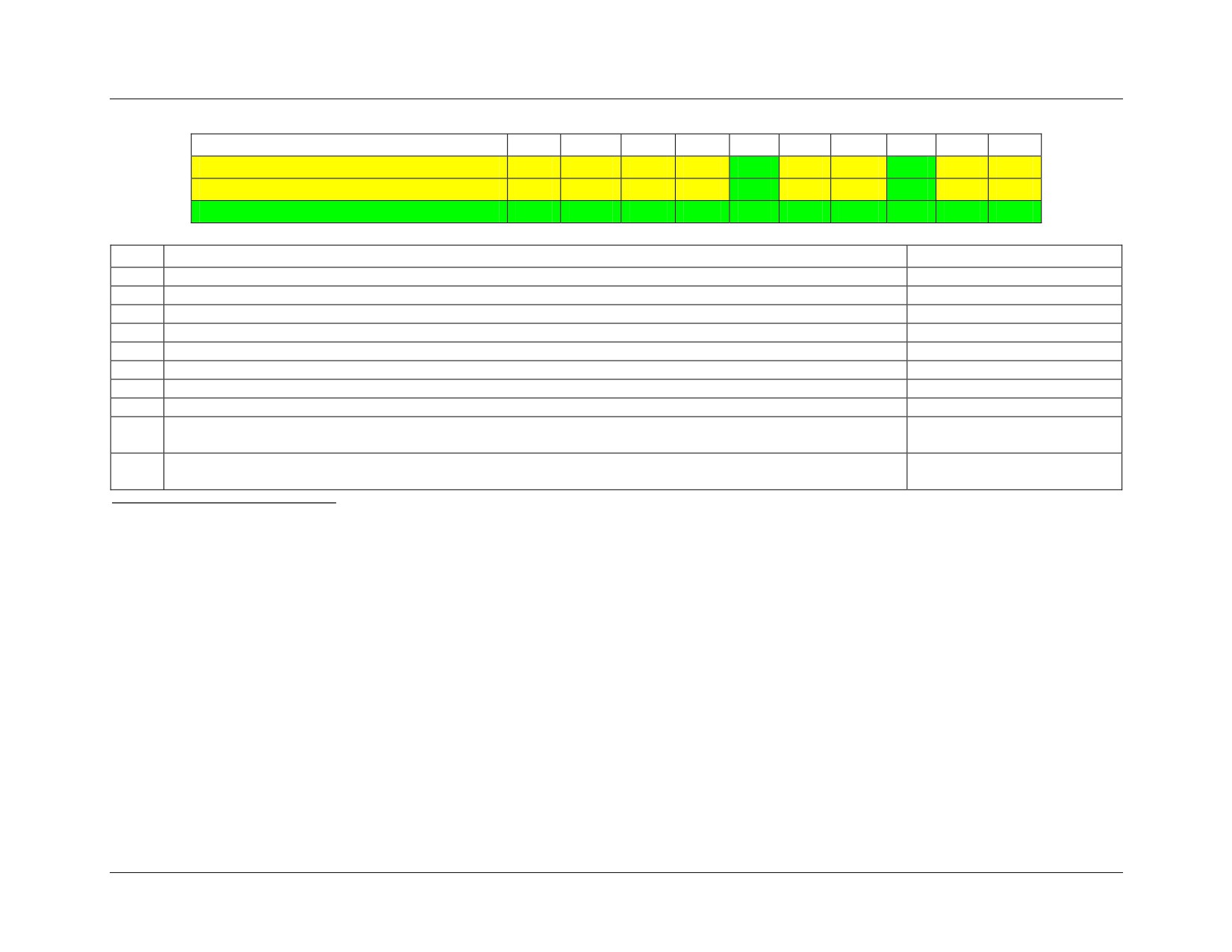
Table 16.3-1. OPSUST 3: Capability and Deficiency Assessment
Capability: SJFHQ
M1
M2
M3
M4
M5
M6
M7
M8
M9
M10
Current Overall Capability1
Y2
Y3
Y4
Y5
G6
Y7
Y8
G9
Y10
Y11
Near/Mid-Term Overall Capability12
Y
Y
Y
Y
G
Y
Y
G
Y
Y
Far-Term Overall Capability
G13
G
G
G
G
G
G
G
G
G
FAA Measure
Scale
M1
Contamination reports are received within 30 minutes of contamination.
G - Yes, Y - Limited, R - No
M2
Unit operational risk assessment is completed within 30 minutes after contamination reports are received.
G - Yes, Y - Limited, R - No
M3
Restoration operation priorities are determined within 30 minutes after operational risk assessments are completed.
G - Yes, Y - Limited, R - No
M4
Data transmitted/disseminated follow standard format.
G - Yes, Y - Limited, R - No
M5
Information is passed within established time criteria.
G - Yes, Y - Limited, R - No
M6
Unit operational risk assessment is accurate.
G - Yes, Y - Limited, R - No
M7
Restoration operation priority determination is accurate.
G - Yes, Y - Limited, R - No
M8
Restoration operation priority determination is modified after substantive operational changes are assessed.
G - Yes, Y - Limited, R - No
M9
Procedures and checklists are developed to facilitate the ability to conduct operational risk assessment of units,
G - Yes, Y - Limited, R - No
equipment, facilities, activities, or terrain that are contaminated for restoration prioritization and timing.
M10
Joint exercises/experimentation provide feedback on the efficacy of operational risk assessment of critical units,
G - Yes, Y - Limited, R - No
equipment, facilities, activities, or terrain that are contaminated for restoration prioritization and timing.
1 No doctrine has been developed. The linkage of restoration operations and operational risk assessment is not integrated into leader education. This task is not a standard part of
training.
2 Any SJFHQ staff can receive contamination reports, but the current capability is manual, slowing down the process. It is unlikely that assessments can be received manually
within 30 minutes.
3 Limited. Any SJFHQ staff can conduct an operational risk assessment, but there are no TTPs or formal familiarization training that specifically addresses operational risk
assessment for restoration prioritization and timing. With a manual system it is unlikely that the assessment can be made in 30 minutes.
4 Limited. Any SJFHQ staff can determine operation priorities, but there are no TTPs or formal familiarization training that specifically addresses restoration prioritization of units,
equipment, facilities, activities, or terrain that are contaminated. With a manual system it is unlikely that the priorities can be determined within 30 minutes, particularly if there are
a large number of units.
5 Limited. Any SJFHQ staff can develop and transmit/disseminate information according to a standard format, but there is no current format that specifically addresses operational
risk assessment of units, equipment, facilities, activities, or terrain that are contaminated.
6 Any SJFHQ staff can pass information in a timely manner once it is developed.
7 Limited. Any OP-level staff can perform an accurate operational risk assessment, but TTPs to ensure that assessments are accurate are limited to basic, nonspecific data that must
be researched. More detailed specific information and checklists useful for time-sensitive situations are not available. With manual processes, accuracy may not be as dependable
and might be subject to human errors.
8 Limited. Any OP-level staff can perform an accurate assessment, but TTPs to ensure that priority determinations are accurate are limited to basic, nonspecific data that must be
researched. More detailed specific information and checklists useful for time-sensitive situations are not available. With manual processes, accuracy may not be as dependable and
might be subject to human errors.
9 Any SJFHQ can make modifications. Manual procedures will slow down the process.
18
For Official Use Only
For Official Use Only
CBRN Functional Needs Analysis/Functional Solution Analysis
Chapter 16. Operational Sustain Tasks
10 Limited. Any SJFHQ staff can develop procedures and checklists, but there are no TTPs and familiarization training that specifically address operational risk assessment of
units, equipment, facilities, activities, or terrain that are contaminated for restoration prioritization and timing.
11 Limited. Any joint exercise/experiment can provide feedback, but few if any have been conducted that specifically address operational risk assessment of units, equipment,
facilities, activities, or terrain that are contaminated for restoration prioritization and timing.
12 DOTMLPF should improve in all deficient areas as a result of initiatives that use data resulting from focused experimentation.
13 DOTMLPF should improve in all deficient areas as a result of initiatives that use data resulting from focused experimentation and other JRO initiatives. All standards previously
assessed as limited should improve to “green” in the far term with all deficiencies eradicated.
19
For Official Use Only
For Official Use Only
CBRN Functional Needs Analysis/Functional Solution Analysis
Chapter 16. Operational Sustain Tasks
16.3.3
Functional Solution Analysis
16.3.3.1
DOTLPF Assessment Summary
This section addresses the deficiencies and suggests potential non-materiel solutions. If there are
no non-materiel solutions, or they are only partial solutions, the remaining non-materiel need is
then stated. Materiel needs are assessed in the IMA section.
1.
Deficiency: Restoration exercises/experiments have been limited.
Non-Materiel Solutions: Doctrine: Develop an exercise/experiment for a JTF on how to
conduct operational risk assessment of units, equipment, facilities, activities, or terrain that
are contaminated for restoration prioritization and timing. Incorporate lessons learned from
RESTOPS ACTD into future exercises.
2.
Deficiency: No TTPs have been developed.
Non-Materiel Solutions: Doctrine: Develop TTPs on how to conduct operational risk
assessment of units, equipment, facilities, activities, or terrain that are contaminated for
restoration prioritization and timing of JTF operations.
3.
Deficiency: There is no leader training/education for JTF restoration of operations.
Non-Materiel Solutions: Training: Develop training for JTF staffs on how to conduct
operational risk assessment of units, equipment, facilities, activities, or terrain that are
contaminated for restoration prioritization and timing. Leadership: Develop leader training
for JTF staffs on how to conduct operational risk assessment of units, equipment, facilities,
activities, or terrain that are contaminated for restoration prioritization and timing.
4.
Deficiency: No doctrine has been developed.
Non-Materiel Solutions: Doctrine: Develop more specific doctrine on the linkage of
restoration operations and operational risk assessment.
5.
Deficiency: System is manual.
Non-Materiel Solutions: Doctrine: Manual methods for determining the consolidated impact
of degradation of separate unit/activity on JTF critical operations are developed for inclusion in
pertinent joint publications. Methods for determining prioritization of restoration operations to
facilitate JTF OPTEMPO are developed for inclusion in pertinent joint publications.
6.
Deficiency: The linkage of restoration operations and operational risk assessment is not
integrated into leader education.
Non-Materiel Solutions: Leadership: Link into Officer Professional Military Education
(OPME)/JPME.
7.
Deficiency: Current capability is not automated.
Non-Materiel Solutions: None.
8.
Deficiency: This task is not a standard part of training.
Non-Materiel Solutions: Training: Integrate into appropriate exercises.
20
For Official Use Only
For Official Use Only
CBRN Functional Needs Analysis/Functional Solution Analysis
Chapter 16. Operational Sustain Tasks
16.3.3.2
IMA Assessment Summary
Table 16.3-2 shows possible materiel approaches that address the remaining materiel
requirements of the DOTMLPF assessment.
Table 16.3-2. OPSUST 3: IMA Assessment
Capability Gap
Idea for Materiel
Description
Approach
System to conduct operational
Automated system
Current system is manual. An
risk assessment of units,
automated system that determines the
equipment, facilities, activities,
consolidated impact of degradation of
or terrain that are contaminated
separate unit/activity on JTF critical
for restoration prioritization
operations should be developed.
and timing is manual.
Current capability to conduct
Automated system
Link the process to automated systems
operational risk assessment of
so that routine data can be used by
units, equipment, facilities,
automated tools (that must be
activities, or terrain that are
developed). This will improve speed
contaminated for restoration
of assessment. Human out of the loop
prioritization and timing is not
will improve accuracy if data are
automated.
reliable.
21
For Official Use Only
For Official Use Only
CBRN Functional Needs Analysis/Functional Solution Analysis
Chapter 16. Operational Sustain Tasks
16.4 Task OPSUST 4: Assess the operational impact of required restoration activities
16.4.1
Functional Area Analysis
16.4.1.1
Definition
To make an assessment that determines how the required restoration activities of key units,
facilities, or equipment will impact current or projected operational objectives. Some
contaminated units or facilities must undergo restoration operations within a short time period or
risk becoming completely combat ineffective.
16.4.1.2
Derivation
UJTL (OP 7.3, OP 5.2, OP 1.3.1).
16.4.1.2.1
Supported Task: STSUST 13
16.4.1.2.2
Lateral Task: OPSHA 12
16.4.1.2.3
Supporting Task: TASUST 25
16.4.1.3
Condition
Perform this task under conditions of:
Physical
1. Persistent CBRN/TIM effects. (C1.3.3.1-3)
Military
1. Stressful mission. (C2.1)
2. No mission preparation. (C2.1.3)
3. Negligible personnel experience. (C2.2.4.5)
4. Moderate rear-area security. (C2.7.1)
5. Fully developed state of conflict. (C2.10.1)
Civil
1. Limited foreign government support. (C3.1.2.3)
16.4.2
Functional Needs Analysis
16.4.2.1
Capability and Deficiency Assessment Summary
Table 16.4-1 discusses the only capability that currently exists to perform the task to the
designated standards. No other capability is projected that will accomplish this task.
22
For Official Use Only
For Official Use Only
CBRN Functional Needs Analysis/Functional Solution Analysis
Chapter 16. Operational Sustain Tasks
Current Capability and Deficiency
The current assessment is “yellow.” Any OP-level staff has a team of operational planners and
command and control specialists, and most have CBRN subject matter experts. This team of
experts has the skill to assess the impact of restoration activities on operational objectives, but
there are some deficiencies that negatively impact on their accuracy and the speed they will be
able to operate.
Projected Near/Mid-Term Capability and Deficiency
No other capabilities are currently projected for the near/mid term. Limited capability
improvements are forecast for the near/mid term except for DOTMLPF, which should improve
in all deficient areas as a result of initiatives that use data resulting from focused
experimentation.
Projected Far-Term Capability and Deficiency
DOTMLPF should improve in all deficient areas as a result of initiatives that use data resulting
from focused experimentation. JTTPs, training and exercises, and education will all improve
leading to a far-term assessment of “green.”
23
For Official Use Only
For Official Use Only
CBRN Functional Needs Analysis/Functional Solution Analysis
Chapter 16. Operational Sustain Tasks
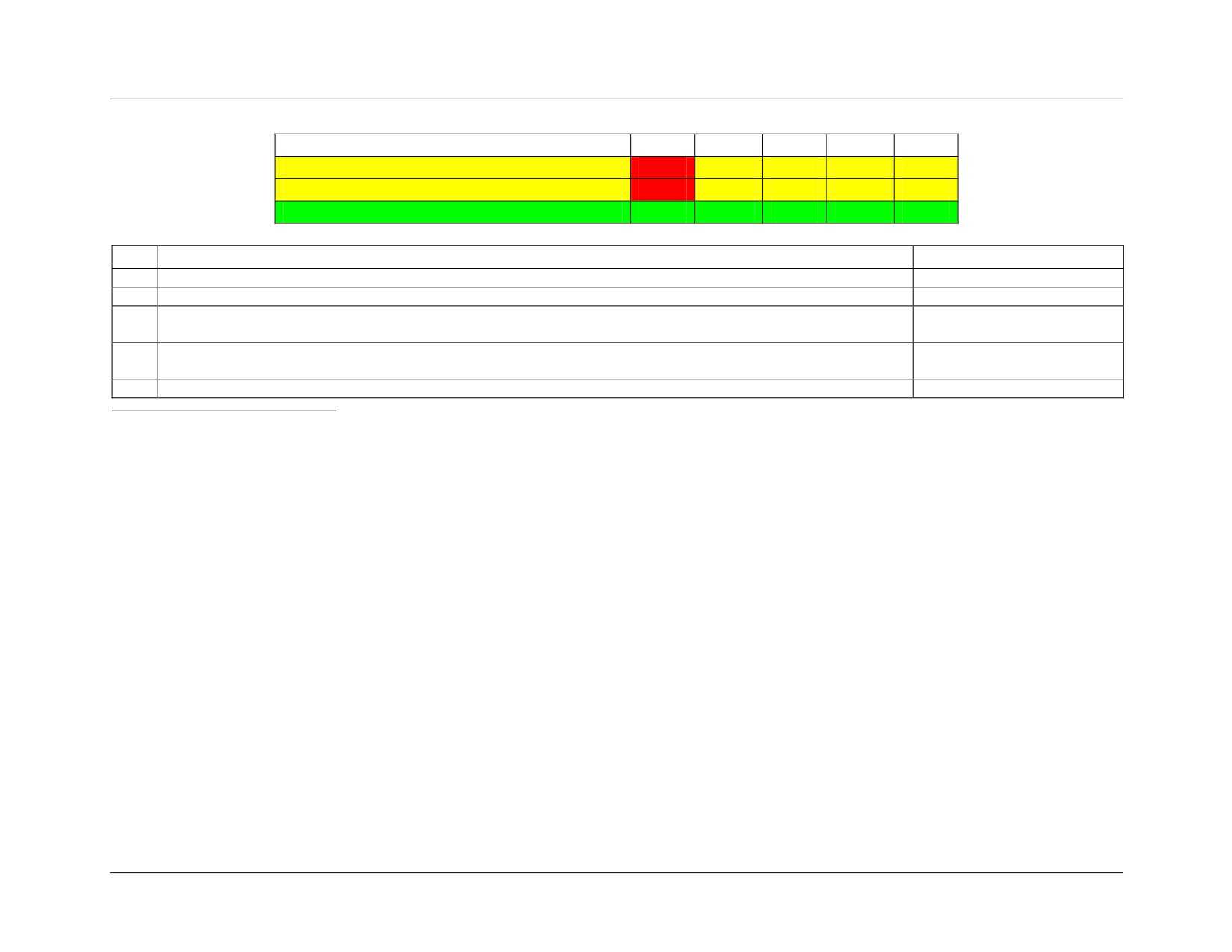
Table 16.4-1. OPSUST 4: Capability and Deficiency Assessment
Capability: Operational-Level Unit Staff
M1
M2
M3
M4
M5
Current Overall Capability1
R2
Y3
Y4
Y5
Y6
Near/Mid-Term Overall Capability7
R
Y
Y
Y
Y
Far-Term Overall Capability8
G9
G10
G11
G12
G13
FAA Measure
Scale
M1
Determination of restoration operation impact on operational objectives can be made within 1 hour.
G - Yes, Y - Limited, R - No
M2
Assessments of impact of restoration operations are accurate.
G - Yes, Y - Limited, R - No
M3
Procedures and checklists are developed to facilitate the ability to assess the impact of required restoration activities
G - Yes, Y - Limited, R - No
on operational objectives.
M4
Joint exercises/experimentation provide lessons learned on procedures for determining restoration operation impact on
G - Yes, Y - Limited, R - No
operational objectives.
M5
Decontamination procedures are logistically supportable.
G - Yes, Y - Limited, R - No
1 No doctrine has been developed. The linkage of restoration operations and operational risk assessment is not integrated into leader education. This task is not a standard part of
training.
2 For restoration operation issues the current capability is manual, slowing down the process. It is unlikely that assessments can be made manually within 1 hour.
3 Limited. Any OP-level staff can perform an accurate assessment, but TTPs to ensure that assessments are accurate are limited to basic, nonspecific data that must be researched.
More detailed specific information and checklists useful for time-sensitive situations are not available. With manual processes, accuracy may not be as dependable and might be
subject to human errors.
4 Limited. Any OP-level staff can develop procedures and checklists, but there are no TTPs that specifically address the impact of restoration activities on operational objectives.
5 Limited. Few if any restoration exercises or experiments focused on operational impacts on units, equipment, facilities, activities, or terrain that are contaminated and require
restoration operations have been conducted. A RESTOP ACTD (ongoing) has been conducted with results to be published (TBP) that may or may not provide insight into CBRND
operational impact assessment.
6 Limited. Depending on the extent of contamination and the decontamination means selected, the procedures may or may not be logistically supportable.
7 DOTMLPF should improve in all deficient areas as a result of initiatives that use data resulting from focused experimentation.
8 Continued DOTMLPF enhancements will result from exercise and wargame lessons learned.
9 The process will be linked to automated systems so that routine data can be used by automated tools. An automated tool will determine the impact of contaminated units or
facilities that must undergo restoration operations on JTF operations. System will have integrated analysis tools to predict and reprioritize restoration requirements based on
interaction with JTF J3 operational priorities. This will improve speed of assessment. Human out of the loop will improve accuracy if data is reliable.
10 JTTPs to ensure that estimates are accurate will be collected or developed. More detailed specific information and checklists useful for time-sensitive situations will be
developed. When automated tools have been developed, accuracy will be dependable and not be subject to human errors.
11 JTTPs that specifically address the impact of restoration activities on operational objectives will be developed.
12 Experiments and exercises focused on theater restoration operations will be conducted. Lessons learned from RESTOPS ACTD will be integrated into future exercises and
experimentation that looks at issues other than fixed sites.
13 Development and acquisition of more efficient and less materiel-intensive decontamination systems will improve the logistical supportability in the far term.
24
For Official Use Only
For Official Use Only
CBRN Functional Needs Analysis/Functional Solution Analysis
Chapter 16. Operational Sustain Tasks
16.4.3
Functional Solution Analysis
16.4.3.1
DOTLPF Assessment Summary
This section addresses the deficiencies and suggests potential non-materiel solutions. If there are
no non-materiel solutions, or they are only partial solutions, the remaining non-materiel need is
then stated. Materiel needs are assessed in the IMA section.
1.
Deficiency: Current capability is not automated.
Non-Materiel Solutions: None.
2.
Deficiency: No doctrine or TTPs have been developed.
Non-Materiel Solutions: Doctrine: Develop TTPs on how to assess the operational impact
of restoration activities on operational-level operations.
3.
Deficiency: Restoration exercises and experiments have been limited.
Non-Materiel Solutions: Doctrine: Develop exercises/ experiments for OP-level staffs on
how to assess the operational impact of restoration activities. Incorporate lessons learned
from RESTOPS ACTD into future exercises.
4.
Deficiency: There is no leader training/education for JTF restoration of operations.
Non-Materiel Solutions: Training: Develop training for OP-level staffs on how to assess the
operational impact of restoration activities. Leadership: Develop leader training on how to
assess the operational impact of restoration activities.
5.
Deficiency: Few exercises/experiments have been conducted at the OP level of war to
determine whether decontamination operations are logistically supportable under a wide
variety of conditions.
Non-Materiel Solutions: Training: Conduct specific OP-level exercises/experiments to
determine whether decontamination operations are logistically supportable under a wide
variety of conditions.
16.4.3.2
IMA Assessment Summary
Table 16.4-2 shows possible materiel approaches that address the remaining materiel
requirements of the DOTMLPF assessment.
25
For Official Use Only
For Official Use Only
CBRN Functional Needs Analysis/Functional Solution Analysis
Chapter 16. Operational Sustain Tasks
Table 16.4-2. OPSUST 4: IMA Assessment
Idea for Materiel
Capability Gap
Description
Approach
Lack of
Automated system
Link the process to automated systems so that
automated means
routine data can be used by automated tools. An
to assess the
automated tool will determine the impact of
operational
contaminated units or facilities that must undergo
impact of required
restoration operations on JTF operations. System
restoration
has integrated analysis tools to predict and
activities.
reprioritize restoration requirements based on
interaction with JTF J3 operational priorities. This
will improve speed of assessment. Human out of
the loop will improve accuracy if data is reliable.
26
For Official Use Only
For Official Use Only
CBRN Functional Needs Analysis/Functional Solution Analysis
Chapter 16. Operational Sustain Tasks
16.5 Task OPSUST 5: Provide operational guidance to forces with contaminated units
16.5.1
Functional Area Analysis
16.5.1.1
Definition
To provide specific, tailored operational guidance to forces that have some or all of their units
contaminated. The JTF commander may determine that some critical units or facilities must
continue essential operations for a specified period of time despite contamination, prior to
conducting restoration operations. To provide adequate guidance, a complete picture of the
projected degradation to the unit/facility over time must be available to the JTF commander.
16.5.1.2
Derivation
UJTL (OP 7.3, OP 5.3.2).
16.5.1.2.1
Supported Task: STSUST 7
16.5.1.2.2
Lateral Task: OPSHA 6
16.5.1.2.3
Supporting Task: TASUST 26
16.5.1.3
Condition
Perform this task under conditions of:
Physical
1. Persistent CBRN/TIM effects. (C1.3.3.1-3)
Military
1. Stressful mission. (C2.1)
2. No mission preparation. (C2.1.3)
3. Negligible personnel experience. (C2.2.4.5)
4. Moderate rear-area security. (C2.7.1)
5. Fully developed state of conflict. (C2.10.1)
Civil. N/A
16.5.2
Functional Needs Analysis
16.5.2.1
Capability and Deficiency Assessment Summary
Table 16.5-1 discusses the only capability that currently exists to perform the task to the
designated standards. No other capability is projected that will accomplish this task.
27
For Official Use Only
For Official Use Only
CBRN Functional Needs Analysis/Functional Solution Analysis
Chapter 16. Operational Sustain Tasks
Current Capability and Deficiency
The current assessment is “yellow.” Any JTF HQ has a team of operational planners and
information command and control specialists. This team of experts forms the backbone of the
JTF command structure. They can perform the task, but several factors will degrade their
performance.
Projected Near/Mid-Term Capability and Deficiency
No other capabilities are currently projected for the near/mid term. Limited capability
improvements are forecast for the near/mid term except for DOTMLPF, which should improve
in all deficient areas as a result of initiatives that use data resulting from focused
experimentation.
Projected Far-Term Capability and Deficiency
DOTMLPF should improve in all deficient areas as a result of initiatives that use data resulting
from focused experimentation. JTTPs, training and exercises, and education will all improve
leading to a far-term assessment of “green.”
28
For Official Use Only
For Official Use Only
CBRN Functional Needs Analysis/Functional Solution Analysis
Chapter 16. Operational Sustain Tasks
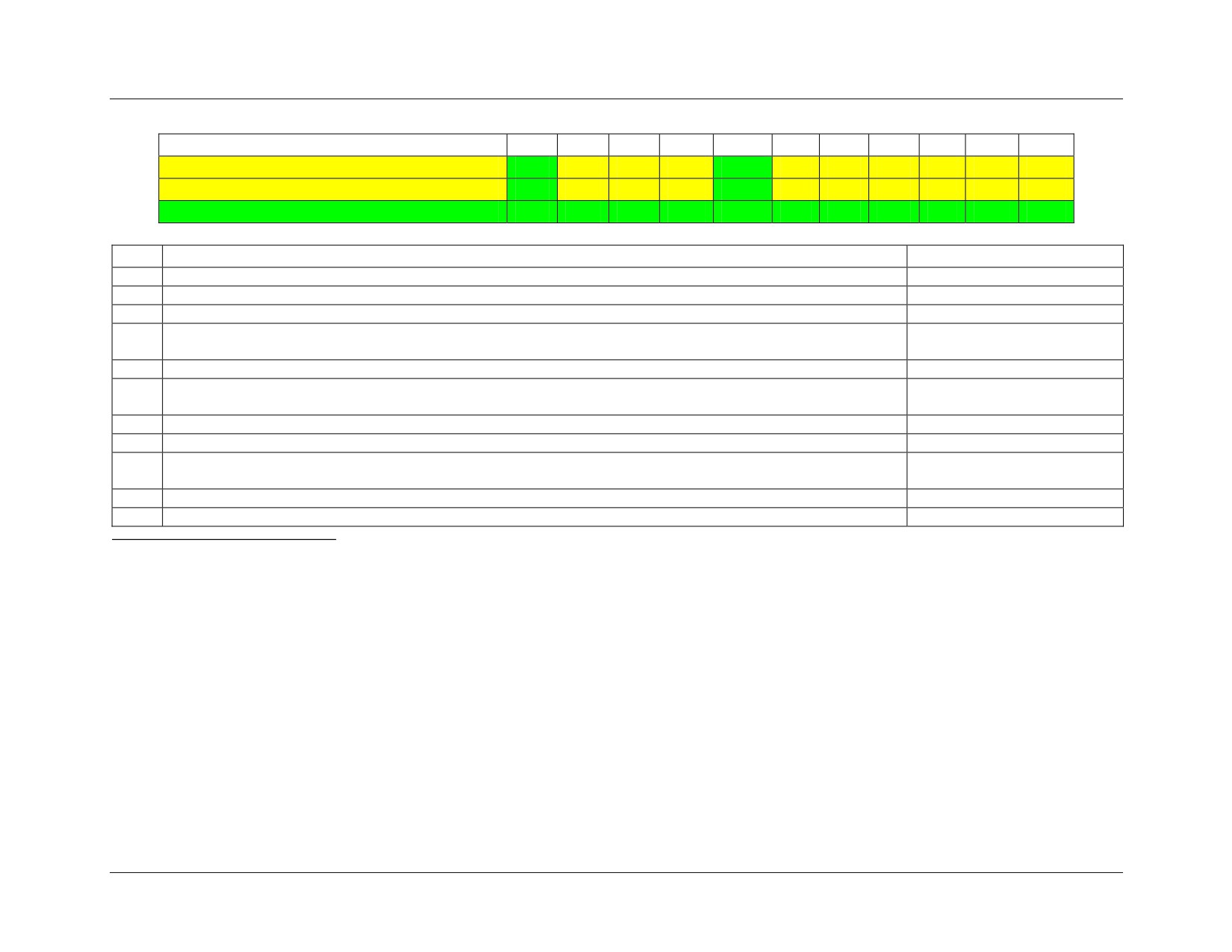
Table 16.5-1. OPSUST 5: Capability and Deficiency Assessment
Capability: Operational-Level Unit Staff
M1
M2
M3
M4
M5
M6
M7
M8
M9
M10
M11
Current Overall Capability1
G2
Y3
Y4
Y5
G6
Y7
Y8
Y9
Y10
Y11
Y12
Near/Mid-Term Overall Capability13
G
Y
Y
Y
G
Y
Y
Y
Y
Y
Y
Far-Term Overall Capability14
G
G15
G
G
G
G
G
G
G16
G17
G
FAA Measure
Scale
M1
Updated joint force situation is used.
G - Yes, Y - Limited, R - No
M2
Procedures and checklists exist to help access current situation and formulate revised plans of action.
G - Yes, Y - Limited, R - No
M3
Procedures and checklists exist to help the commander to formulate crisis assessment.
G - Yes, Y - Limited, R - No
M4
Procedures and checklists exist to help adjust original plan for alternate operations (after recognizing planning
G - Yes, Y - Limited, R - No
assumptions invalid).
M5
Commander’s situation reports (SITREPs) follow standard format.
G - Yes, Y - Limited, R - No
M6
Courses of action (COAs) are evaluated to find which are suitable, feasible, acceptable, and complete after assessing
G - Yes, Y - Limited, R - No
capabilities of contaminated units.
M7
Milestone criteria for plan development are available and followed.
G - Yes, Y - Limited, R - No
M8
New executable operational plans and orders adequately address contamination of units.
G - Yes, Y - Limited, R - No
M9
Joint exercises/experimentation provide lessons learned on procedures for providing operational guidance to forces
G - Yes, Y - Limited, R - No
with contaminated units.
M10
Decontamination procedures are logistically supportable.
G - Yes, Y - Limited, R - No
M11
Report/advise contaminated units of commander’s guidance within 1 hour.
G - Yes, Y - Limited, R - No
1 No doctrine has been developed. The linkage of restoration operations and providing operational guidance is not integrated into leader education. This task is not a standard part
of training.
2 Yes. Once restoration operations are required, nothing prevents a staff from updating the joint force situation.
3 Limited. Any staff can develop procedures and checklists, but there are no TTPs that specifically address providing operational guidance to forces with contaminated units.
4 Limited. Any staff can develop procedures and checklists, but there are no TTPs that help the commander to formulate a crisis assessment.
5 Limited. Any staff can develop procedures and checklists, but there are no TTPs that specifically address how to adjust original plans for alternate operations (after recognizing
planning assumptions are invalid) for forces with contaminated units.
6 Yes. Once restoration operations are required, nothing prevents a staff from using existing standard formats.
7 Limited. Any staff can evaluate COAs, but there are no TTPs that specifically address evaluating the COAs after assessing capabilities of contaminated units.
8 Limited. Any staff can develop milestone criteria for plan development, but there are no TTPs that specifically address milestone criteria for plan development for forces with
contaminated units.
9 Limited. Any staff can develop generic operational plans, but there are no TTPs that specifically address developing operational plans and orders addressing issues facing
contaminated units.
10 Limited. Any joint exercise/ experiment can provide feedback, but few if any have been conducted that specifically address assessing the operational impact of restoration
activities.
11 Limited. Under specific certain circumstances, any decontamination procedure may or may not be logistically supportable at the operational level. Few exercises/experiments
have been conducted at the OP level of war to determine whether decontamination operations are logistically supportable under a wide variety of conditions.
29
For Official Use Only
For Official Use Only
CBRN Functional Needs Analysis/Functional Solution Analysis
Chapter 16. Operational Sustain Tasks
12 Any staff can report/advise contaminated units of the commander’s guidance, but the current capability is manual, slowing down the process. It is unlikely that assessments can
be made manually within 1 hour.
13 DOTMLPF should improve in all deficient areas as a result of initiatives that use data resulting from focused experimentation.
14 Continued DOTMLPF enhancements will result from exercise and wargame lessons learned.
15 TTP will be developed for all pertinent standards by the far term.
16 Experiments and exercises focused on theater restoration operations will be conducted. Lessons learned from RESTOPS ACTD will be integrated into future exercises and
experimentation that looks at issues other than fixed sites.
17 Experiments and exercises focused on theater restoration operations will be conducted. Lessons learned from RESTOPS ACTD will be integrated into future exercises and
experimentation that looks at issues other than fixed sites.
30
For Official Use Only
For Official Use Only
CBRN Functional Needs Analysis/Functional Solution Analysis
Chapter 16. Operational Sustain Tasks
16.5.3
Functional Solution Analysis
16.5.3.1
DOTLPF Assessment Summary
This section addresses the deficiencies and suggests potential non-materiel solutions. If there are
no non-materiel solutions, or they are only partial solutions, the remaining non-materiel need is
then stated. Materiel needs are assessed in the IMA section.
1.
Deficiency: The current capability is manual and not automated, slowing down the process.
Non-Materiel Solutions: None.
2.
Deficiency: Restoration exercises/experimentation have been limited.
Non-Materiel Solutions: Doctrine: Develop an exercise/experiment for a JTF on how to
provide operational guidance to forces with contaminated units. Incorporate lessons learned
from RESTOPS ACTD into future exercises.
3.
Deficiency: No TTPs/doctrine have been developed.
Non-Materiel Solutions: Doctrine: Develop TTPs and doctrine on all aspects of developing
and providing operational guidance to forces with contaminated units of JTF operations.
4.
Deficiency: Few exercises/experiments have been conducted at the OP level of war to
determine whether decontamination operations are logistically supportable under a wide
variety of conditions.
Non-Materiel Solutions: Training: Develop exercises/experiments to be conducted at the
OP level of war to determine whether decontamination operations are logistically supportable
under a wide variety of conditions. Review and assess RESTOPS ACTD for pertinent data
when published.
5.
Deficiency: There is no leader training/education for JTF restoration of operations.
Non-Materiel Solutions: Training: Develop training for OP-level staffs on operational
guidance to forces with contaminated units. Leadership: Develop leader training for OP-level
staffs and commanders on all aspects of developing and providing operational guidance to
forces with contaminated units.
16.5.3.2
IMA Assessment Summary
Table 16.5-2 shows possible materiel approaches that address the remaining materiel
requirements of the DOTMLPF assessment.
31
For Official Use Only
For Official Use Only
CBRN Functional Needs Analysis/Functional Solution Analysis
Chapter 16. Operational Sustain Tasks
Table 16.5-2. OPSUST 5: IMA Assessment
Idea for Materiel
Capability Gap
Description
Approach
The current
Automated systems
Develop automation tools and automatic
capability is manual
processes for assisting commanders and staffs in
and not automated,
providing operational guidance to forces with
slowing down the
contaminated units. System should be automatic
process of providing
and provide component command degradation
operational guidance
information in accordance with established
to forces with
formats. System should have integrated analysis
contaminated units.
tools to predict degradation impact to critical
JTF operations based on interaction with JTF J3
operational priorities. Information on
degradation must be automatically provided to
J3 systems so that decisions can be made on
operational priorities or required changes. This
could be used in conjunction with a sensor
system on individual vehicles and systems,
integrated with an automated system that
immediately provides a real-time assessment of
operational degradation.
32
For Official Use Only
For Official Use Only
CBRN Functional Needs Analysis/Functional Solution Analysis
Chapter 16. Operational Sustain Tasks
16.6 Task OPSUST 6: Provide mobile assessment teams to assess and determine
disposition of contaminated units, equipment, facilities, or activities
16.6.1
Functional Area Analysis
16.6.1.1
Definition
To establish and deploy mobile assessment teams, staffed with experts in both CBRND and
operational considerations, who can make a complete assessment of contaminated units,
equipment, facilities, or activities and determine their disposition. When critical units or facilities
become contaminated, there will be much confusion and likely an inability of the unit to provide
an objective assessment of its status or requirements. The JTF commander may provide mobile
assessment teams to assess and determine residual capability of and recommend disposition of
contaminated units, equipment, facilities, or activities. The team will provide its assessments and
recommendations to the JTF commander.
16.6.1.2
Derivation
UJTL (OP 7.3, OP 4.4.4, OP 5.2, OP 5.3.2, OP 4.7.8).
16.6.1.2.1
Supported Task: STSUST 7
16.6.1.2.2
Lateral Task: N/A
16.6.1.2.3
Supporting Task: TASUST 24
16.6.1.3
Condition
Perform this task under conditions of:
Physical
1. Persistent CBRN/TIM effects. (C1.3.3.1-3)
Military
1. Stressful mission. (C2.1)
2. No mission preparation. (C2.1.3)
3. Negligible personnel experience. (C2.2.4.5)
4. Moderate rear-area security. (C2.7.1)
5. Limited host-nation support. (C2.8.5)
6. Fully developed state of conflict. (C2.10.1)
Civil
1. Limited foreign government support. (C3.1.2.3)
33
For Official Use Only
For Official Use Only
CBRN Functional Needs Analysis/Functional Solution Analysis
Chapter 16. Operational Sustain Tasks
16.6.2
Functional Needs Analysis
16.6.2.1
Capability and Deficiency Assessment Summary
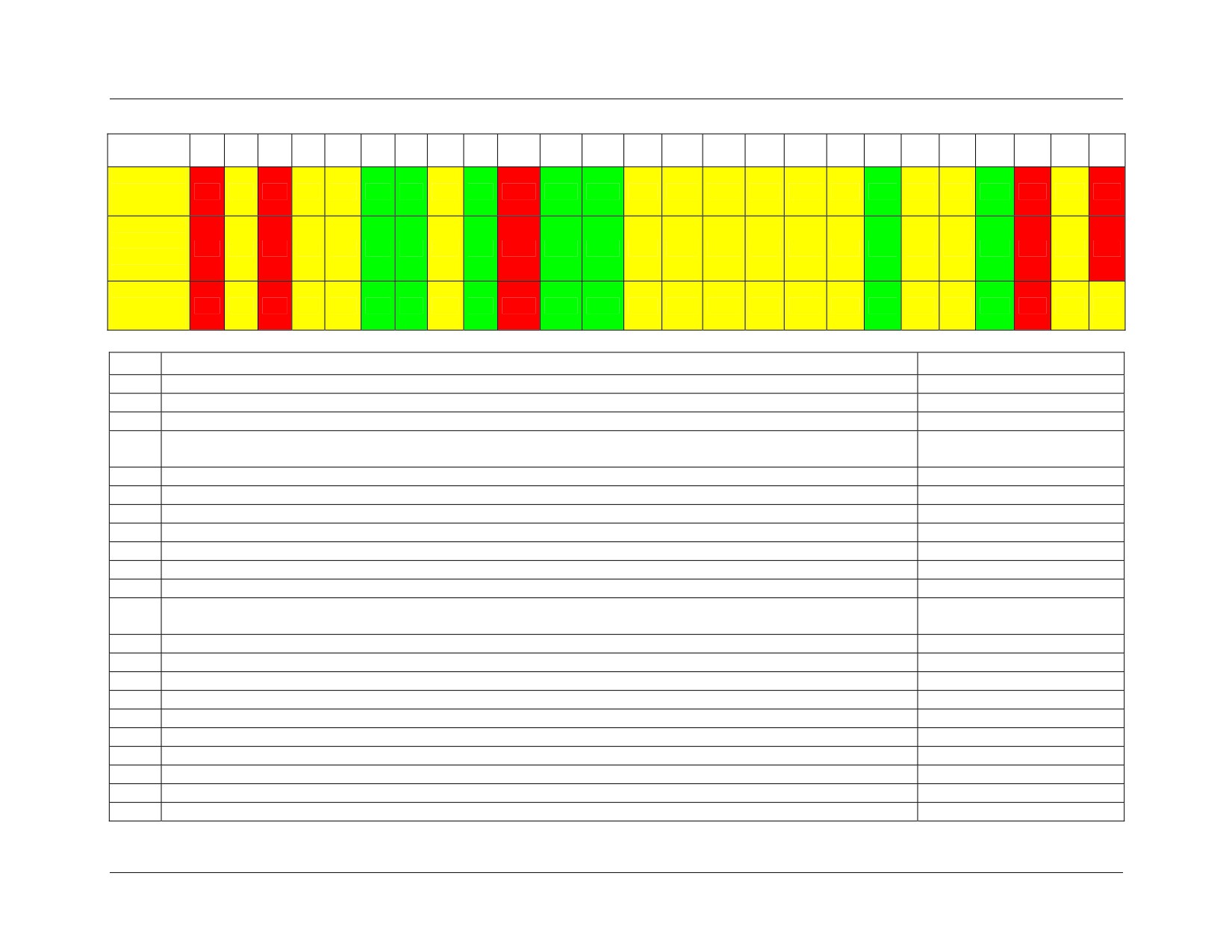
Table 16.6-1 discusses the only capability that currently exists to perform the task to the
designated standards. No other capability is projected that will accomplish this task.
Current Capability and Deficiency
The current assessment is “yellow.” Any JTF HQ has a team of operational planners and
information command and control specialists. This team of experts forms the backbone of the
JTF command structure. A CBRN mobile assessment team could be assembled on an ad hoc
basis at any time from in-house JTF resources. Prototype SJTF staffs must be assessed to
determine their ability to provide mobile assessment teams. This capability has never been
attempted or tested. There is no doctrine that covers this capability. This capability could also be
developed in any new CBRND units that are currently being stood up.
Projected Near/Mid-Term Capability and Deficiency
No other capabilities are currently projected for the near/mid term. No capability improvements
are forecast for the near/mid term.
Projected Far-Term Capability and Deficiency
No other capabilities are currently projected for the far-term. Limited capability improvements
are forecast for the near/mid term. DOTMLPF could be developed (including checklists) to
improve many deficient areas as a result of initiatives that use data resulting from focused
experimentation if a decision is made to resource teams.
34
For Official Use Only
For Official Use Only
CBRN Functional Needs Analysis/Functional Solution Analysis
Chapter 16. Operational Sustain Tasks
Table 16.6-1. OPSUST 6: Capability and Deficiency Assessment
Capability:
M1
M2
M3
M4
M5
M6
M7
M8
M9
M10
M11
M12
M13
M14
M15
M16
M17
M18
M19
M20
M21
M22
M23
M24
M25
SJFHQ
Current
Overall
R2
Y3
R4
Y5
Y6
G7
G8
Y9
G10
R11
G12
G13
Y14
Y15
Y16
Y17
Y18
Y19
G20
Y21
Y22
G23
R24
Y25
R26
Capability1
Near/Mid-
Term
R
Y
R
Y
Y
G
G
Y
G
R
G
G
Y
Y
Y
Y
Y
Y
G
Y
Y
G
R
Y
R
Overall
Capability
Far-Term
Overall
R
Y
R
Y
Y
G
G
Y
G
R
G
G
Y
Y
Y
Y
Y
Y
G
Y
Y
G
R
Y
Y28
Capability27
FAA Measure
Scale
M1
Mobile assessment team arrives within 1 hour after incident.
G - Yes, Y - Limited, R - No
M2
Coordination process is activated with host nation.
G - Yes, Y - Limited, R - No
M3
Mobile assessment team properly trained, staffed, and equipped.
G - Yes, Y - Limited, R - No
M4
Liaison is established with country team and other U.S. government agencies, nongovernmental organizations
G - Yes, Y - Limited, R - No
(NGOs), international organizations and coalition forces.
M5
Affected joint force commander is provided with technical expertise relating to CBRN/TIM hazards.
G - Yes, Y - Limited, R - No
M6
Appropriate U.S. resources and capabilities are factored into operational plans and actions.
G - Yes, Y - Limited, R - No
M7
Appropriate coalition resources and capabilities are factored into plans and actions.
G - Yes, Y - Limited, R - No
M8
Affected joint force/facility is provided with guidance on how and when to commence decontamination operations.
G - Yes, Y - Limited, R - No
M9
Coordination is made for additional support assets to go to the incident area if required.
G - Yes, Y - Limited, R - No
M10
A plan is in place for mobile assessment team operations.
G - Yes, Y - Limited, R - No
M11
If required, the Defense Threat Reduction Agency (DTRA) Consequence Management Advisory Team is requested.
G - Yes, Y - Limited, R - No
M12
Determination is made of the population at risk and a CBRN/TIM casualty estimate is provided for the commander's
G - Yes, Y - Limited, R - No
intelligence estimate.
M13
CBRN/TIM casualty management is adequate.
G - Yes, Y - Limited, R - No
M14
CBRN/TIM casualties are assessed.
G - Yes, Y - Limited, R - No
M15
CBRN/TIM casualties are treated.
G - Yes, Y - Limited, R - No
M16
CBRN/TIM casualties are decontaminated.
G - Yes, Y - Limited, R - No
M17
Procedures are in place for movement/quarantine of CBRN/TIM casualties.
G - Yes, Y - Limited, R - No
M18
Procedures are set up for tracking and follow-up procedures of contaminated personnel.
G - Yes, Y - Limited, R - No
M19
Coordination is made with mortuary affairs on handling, decontaminating, and transporting human remains.
G - Yes, Y - Limited, R - No
M20
Operational forces are trained to operate in a CBRN/TIM environment.
G - Yes, Y - Limited, R - No
M21
Operational forces are equipped to operate in a CBRN/TIM environment.
G - Yes, Y - Limited, R - No
M22
Facilities unavailable due to CBRN/TIM attack are reported.
G - Yes, Y - Limited, R - No
35
For Official Use Only
For Official Use Only
CBRN Functional Needs Analysis/Functional Solution Analysis
Chapter 16. Operational Sustain Tasks
M23
Theater medical threats are identified and countermeasures developed.
G - Yes, Y - Limited, R - No
M24
Mobile assessment team recommends establishment of JTF for restoration operations if required.
G - Yes, Y - Limited, R - No
M25
Procedures and checklists are developed to facilitate the ability to provide mobile assessment teams to assess and
G - Yes, Y - Limited, R - No
determine disposition of contaminated units, equipment, facilities, or activities.
1 No DOTMLPF is in place at this time.
2 Assessment teams are not designated, staffed, trained or equipped at this time. Until that happens, there is no way they will be able to respond to the incident site within 1 hour.
3 Nothing precludes activating a coordination process of this type, but first, the process must be developed and refined through exercises.
4 There are no mobile assessment teams at this time.
5 Nothing precludes activating a liaison process of this type, but it has never been done in the context of assessing a CBRN incident.
6 Nothing precludes this action. A call-back mechanism is available now from DTRA for technical expertise relating to CBRN/TIM, but in an emergency of this type, the expertise
needs to be available to the affected joint force commander at the incident site.
7 Yes. Nothing precludes factoring U.S. resources and capabilities into operational plans and actions.
8 Yes. Nothing precludes factoring coalition resources and capabilities into operational plans and actions.
9 Nothing precludes providing this guidance, but no TTPs exist at this time. See OPSUST 5.
10 Yes. Nothing precludes making coordination for additional support assets to go to the incident area if required.
11 No. There are no mobile assessment teams at this time.
12 Yes. Nothing precludes requesting the DTRA Consequence Management Advisory Team.
13 Yes. Nothing precludes making this determination or providing casualty estimates.
14 If casualty treatment units can be brought to the site quickly, and there is enough capability available to meet the demand it will be deemed adequate. This task needs to
exercised at both the operational and tactical levels because response time and adequacy has not been determined for all possible scenarios. See tactical casualty management tasks.
15 Nothing precludes triaging of CBRN casualties once adequate CBRND capable medical forces are on hand. This task needs to exercise at both the operational and tactical levels
because response time and adequacy has not been determined for all possible scenarios.
16 Nothing precludes treatment of CBRN casualties once adequate CBRND capable medical forces are on hand. This task needs to exercise at both the operational and tactical
levels because response time and adequacy has not been determined for all possible scenarios.
17 Nothing precludes decontamination of CBRN casualties once adequate CBRND capable medical forces are on hand. This task needs to exercise at both the operational and
tactical levels because response time and adequacy has not been determined for all possible scenarios.
18 Procedures for movement/quarantine of CBRN casualties are available, but this task needs to exercise at both the operational and tactical levels because response time and
adequacy of procedures has not been determined for all possible scenarios.
19 Procedures are available for tracking and follow-up procedures of contaminated personnel, but they need to be exercised in a stressful situation to determine their efficacy and to
identify capability gaps.
20 Nothing precludes making coordination with mortuary affairs on handling, decontaminating, and transporting human remains.
21 Operational forces are trained to “survive” in a CBRN environment. There are so few exercises with realistic CBRN scenarios that it is impossible to determine whether forces
could “operate” in a CBRN environment. It is also important to know whether they would be able to accomplish assigned missions in a CBRN environment.
22 Operational forces are equipped to “survive” in a CBRN environment. There are so few exercises with realistic CBRN scenarios that it is impossible to determine whether forces are
truly equipped to “operate” in a CBRN environment. It is also important to know whether they are adequately equipped to accomplish assigned missions in a CBRN environment.
23 Nothing precludes reporting facilities unavailable due to CBRN attack.
24 The mobile assessment team should be equipped with the means to detect, sample, and identify CBRN/TIM related medical threats. Development of medical threat
countermeasures is beyond the scope of this task and must be referred appropriately.
25 The mobile assessment team should be equipped with the means to detect, sample, and identify CBRN/TIM related medical threats. Development of medical threat
countermeasures is beyond the scope of this task and must be referred appropriately.
26 No. There are no mobile assessment teams at this time.
27 Experimentation results may cause the creation of DOTLMLPF that can be used if a decision is made to resource teams.
28 Experimentation results may cause the creation of checklists that can be used if a decision is made to resource teams.
36
For Official Use Only
For Official Use Only
CBRN Functional Needs Analysis/Functional Solution Analysis
Chapter 16. Operational Sustain Tasks
16.6.3
Functional Solution Analysis
16.6.3.1
DOTLPF Assessment Summary
This section addresses the deficiencies and suggests potential non-materiel solutions. If there are
no non-materiel solutions, or they are only partial solutions, the remaining non-materiel need is
then stated. Materiel needs are assessed in the IMA section.
1.
Deficiency: Assessment teams are not designated, staffed, trained, or equipped at this time.
Non-Materiel Solutions: Doctrine: Development must begin on concepts and doctrine to
guide mobile assessment teams to help component commanders assess and determine
residual capability of and recommend disposition of contaminated units, equipment,
facilities, or activities. Organization: Prototype SJFHQ staffs must be assessed to determine
their ability to provide mobile assessment teams. Prototype SJFHQ CBRN centers must be
provided with adequate CBRN center staffing to ensure that support can be provided for
mobile assessment teams. Training: As concepts and doctrine are developed, they must be
tested and refined through experimentation and ultimately in full-scale exercises. Leadership:
JPME must include leader-learning areas for restoration operation considerations at the OP
level. Personnel: Personnel evaluating and mentoring CBRN elements of JTF exercises must
possess adequate joint and CBRN credentials. Facilities: As plans are made for the
establishment of the JNTC, TTPs for testing a JTF HQ’s ability to field and deploy mobile
assessment teams to help component commanders assess and determine residual capability of
and recommend disposition of contaminated units, equipment, facilities, or activities must be
integrated into training center infrastructure plans.
2.
Deficiency: Until teams are designated, staffed, trained, and equipped they will be unable to
respond to the incident site within 1 hour.
Non-Materiel Solutions: None.
3.
Deficiency: The coordination process with host nations must be developed and refined
through exercises.
Non-Materiel Solutions: Doctrine: Develop TTPs and doctrine on all aspects of
coordinating with host nations during large-scale CBRN incidents. Training: Develop
exercises/experiments to be conducted on all aspects of coordinating with host nations during
large-scale CBRN incidents.
4.
Deficiency: Establishing liaison with country team and other U.S. government agencies,
NGOs, international organizations, and coalition forces has never been done by a mobile
assessment team.
Non-Materiel Solutions: Doctrine: Develop TTPs and doctrine on all aspects of establishing
liaison with country team and other U.S. government agencies, NGOs, international
organizations, and coalition forces.
5.
Deficiency: CBRN technical expertise must be part of the team and available to the affected
joint force commander.
37
For Official Use Only
For Official Use Only
CBRN Functional Needs Analysis/Functional Solution Analysis
Chapter 16. Operational Sustain Tasks
Non-Materiel Solutions: Personnel: Analyze CBRND staffing in all organizations in light
of the capabilities required of them in this task. Recommend staffing/organizational changes,
enhancements, or alternative fixes as required.
6. Deficiency: Operational- and tactical-level exercises have not provided adequate
information.
Non-Materiel Solutions: Leadership: This task needs to exercise at both the operational and
tactical levels because response time and adequacy of casualty management, triage,
treatment, decontamination, movement/quarantine, tracking and follow-up has not been
adequately determined for all possible scenarios. Operational forces must be assessed to see
not only whether they are trained and equipped not only to “survive” in a CBRN
environment, but also whether they can accomplish typical assigned missions.
7. Deficiency: No DOTMLPF is in place at this time.
Non-Materiel Solutions: Doctrine: All pertinent DOTMLPF needs to be developed in
accordance with the process outlined in Footnote 1. JPME must include leader-learning areas
for restoration operations considerations at the OP level.
16.3.2
IMA Assessment Summary
Table 16.6-2 shows possible materiel approaches that address the remaining materiel
requirements of the DOTMLPF assessment.
Table 16.6-2. OPSUST 6: IMA Assessment
Idea for
Capability Gap
Materiel
Description
Approach
Until teams are
Mobile
A required materiel solution will be a command and
designated, staffed,
command
control platform to quickly transport the team to the
trained and
and control
incident site. It will provide them with all the tools
equipped, they will
platform
required to make the assessment, provide them with total
be unable to
protection from any CBRN hazard, and allow for quick
respond to the
and complete decontamination of the command and
incident site within
control platform after the assessment is complete. The
1 hour.
tools onboard can be linked to sensors on the
contaminated units, equipment, facilities providing
automatic data feeds en route.
38
For Official Use Only
For Official Use Only
CBRN Functional Needs Analysis/Functional Solution Analysis
Chapter 16. Operational Sustain Tasks
16.7 Task OPSUST 7: Provide restoration operation country assistance teams to support
TEPs
16.7.1
Functional Area Analysis
16.7.1.1
Definition
To provide restoration operation country assistance teams to support the Theater Engagement
Plan (TEP) that has been provided by the combatant commander. Many nations that would
normally support U.S. initiatives may feel threatened by hostile neighbors or nations that possess
CBRN/TIM weapons. TEPs for restoration operation considerations are executed by special
teams and units that demonstrate restoration operation capability or provide restoration operation
training to selected countries.
16.7.1.2
Derivation
UJTL (OP 7.3, OP 4.7.1, ST 8.1.2), CJCSM 3113.01a.
16.7.1.2.1
Supported Tasks: STSUST 7, STSUST 8
16.7.1.2.2
Lateral Task: OPSHA 9
16.7.1.2.3
Supporting Task: TASUST 25
16.7.1.3
Condition
Perform this task under conditions of:
Physical. N/A
Military
1. No preexisting arrangements. (C 2.1.1.2)
2. Limited personnel expertise. (C2.2.4.5)
Civil
1. Mixed support for political policies. (C3.1)
2. Limited foreign government support. (C3.1.2.3.)
16.7.2
Functional Needs Analysis
16.7.2.1
Capability and Deficiency Assessment Summary
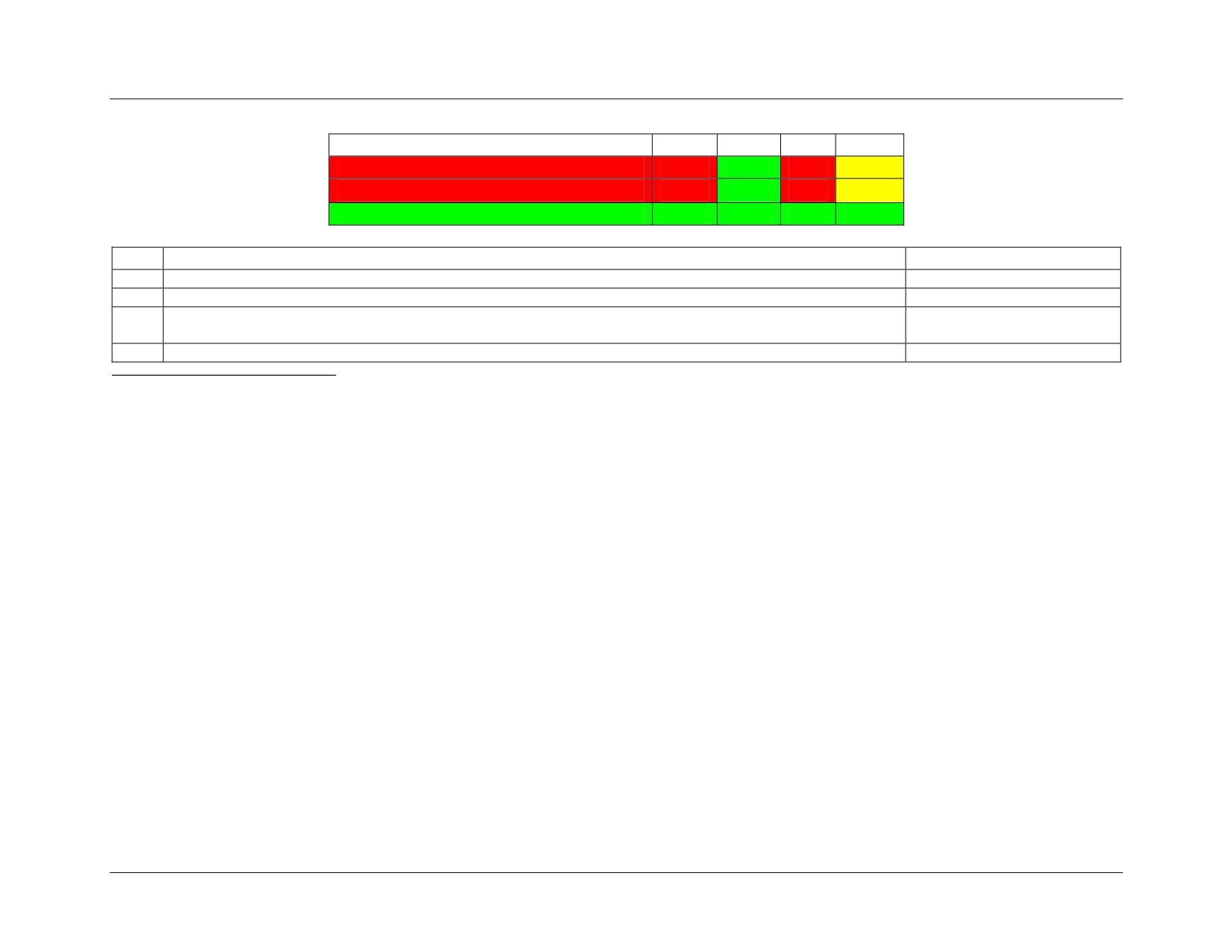
Table 16.7-1 discusses the only capability that currently exists to perform the task to the
designated standards. No other capability is projected that will accomplish this task.
39
For Official Use Only
For Official Use Only
CBRN Functional Needs Analysis/Functional Solution Analysis
Chapter 16. Operational Sustain Tasks
Current Capability and Deficiency
The current assessment is “red.” Any JTF HQ has a team of operational planners and information
command and control specialists. This team of experts has the skill to provide restoration
operation country assistance teams to support the TEP, but there are some deficiencies that
negatively impact on their ability to do so.
Projected Near/Mid-Term Capability and Deficiency
No other capabilities are currently projected for the near/mid term. Limited capability
improvements are forecast for the near/mid term except for DOTMLPF, which should improve
in all deficient areas as a result of initiatives that use data resulting from focused
experimentation. The overall projected capability will remain “red” in the near/mid term.
Projected Far-Term Capability and Deficiency
No other capabilities are currently projected for the far-term. DOTMLPF should improve in all
deficient areas as a result of initiatives that use data resulting from focused experimentation.
Steps can be taken to establish and equip country assistance teams. JTTPs, training and
exercises, and education will all improve leading to a far-term assessment of “green.”
40
For Official Use Only
For Official Use Only
CBRN Functional Needs Analysis/Functional Solution Analysis
Chapter 16. Operational Sustain Tasks
Table 16.7-1. OPSUST 7: Capability and Deficiency Assessment
Capability: SJFHQ
M1
M2
M3
M4
Current Overall Capability1
R2
G3
R4
Y5
Near/Mid-Term Overall Capability6
R
G
R
Y
Far-Term Overall Capability7
G8
G
G9
G10
FAA Measure
Scale
M1
Restoration operation country assistance teams are properly trained and equipped.
G - Yes, Y - Limited, R - No
M2
Valid requests for restoration operation assistance are met.
G - Yes, Y - Limited, R - No
M3
Procedures and checklists are developed to facilitate the ability to provide restoration operation country assistance
G - Yes, Y - Limited, R - No
teams to support the TEP.
M4
Joint exercises provide feedback on restoration operation country assistance teams.
G - Yes, Y - Limited, R - No
1 No specific doctrine has been developed. The linkage of restoration operations restoration operation country assistance teams is not integrated into leader education. This task is
not a standard part of training.
2 No. While any SJFHQ staff can train and equip a country assistance team, none have ever been established. There has been no training or equipment developed that specifically
addresses the training and equipment requirements for a restoration operation country assistance team.
3 Yes. Any SJFHQ staff can process and honor requests for a country assistance team. There is currently no experience base, however.
4 No. Any SJFHQ staff can develop procedures and checklist for a country assistance team, but there are no TTPs that addresses a restoration operation country assistance team
support to theater engagement planning.
5 Limited. Few if any restoration exercises or experiments focused on restoration operation country assistance teams have been conducted.
6 DOTMLPF should improve in all deficient areas as a result of initiatives that use data resulting from focused experimentation.
7 Continued DOTMLPF enhancements will result from exercise and wargame lessons learned.
8 Steps will be taken to establish and equip country assistance teams.
9 JTTPs that addresses a restoration operation country assistance team support to TEP will be developed.
10 Experiments and exercises focused on theater restoration operations will be conducted. Lessons learned from RESTOPS ACTD will be integrated into future exercises and
experimentation that looks at issues other than fixed sites.
41
For Official Use Only
For Official Use Only
CBRN Functional Needs Analysis/Functional Solution Analysis
Chapter 16. Operational Sustain Tasks
16.7.3
Functional Solution Analysis
16.7.3.1
DOTLPF Assessment Summary
This section addresses the deficiencies and suggests potential non-materiel solutions. If there are
no non-materiel solutions, or they are only partial solutions, the remaining non-materiel need is
then stated. Materiel needs are assessed in the IMA section.
1.
Deficiency: Restoration operation country assistance teams requirements are not defined.
Non-Materiel Solutions: Doctrine: CJCS has not developed an operational concept for
restoration operations country assistance teams and specific guidance (technical or
procedural) on how to approach this task has not been provided. Develop TTPs,
organizational structure, training, leadership education, and equipment for restoration
operation country assistance teams to support TEPs.
2.
Deficiency: Prototype country assistance teams are not organized.
Non-Materiel Solutions: Organization: Develop organizational tables of distribution and
allowances (TDAs) for restoration operation country assistance teams to support TEPs.
3.
Deficiency: Training is inadequate for country assistance teams.
Non-Materiel Solutions: Training: Develop training for restoration operation country
assistance teams to support TEPs.
4.
Deficiency: Leader education inadequate.
Non-Materiel Solutions: Leadership: Develop JPME classes for restoration operation
country assistance teams to support TEPs.
5.
Deficiency: Restoration exercises have been limited.
Non-Materiel Solutions: Doctrine: Develop and refine restoration of operations exercises
for a JTF. Incorporate lessons learned from RESTOPS ACTD into future exercises.
16.7.3.2
IMA Assessment Summary
N/A
42
For Official Use Only
For Official Use Only
CBRN Functional Needs Analysis/Functional Solution Analysis
Chapter 16. Operational Sustain Tasks
16.8 Task OPSUST 8: Support SOF restoration operation requirements
16.8.1
Functional Area Analysis
16.8.1.1
Definition
To support special operations force (SOF) restoration operation requirements following the
planning guidance provided by the combatant commander and utilizing JTF resources. The
contamination of SOF may require extraordinary resources over long distances and to austere
locations.
16.8.1.2
Derivation
UJTL (OP 7.3, OP 3.2.5.3, OP 5.4.5).
16.8.1.2.1
Supported Task: STSUST 9
16.8.1.2.2
Lateral Task: OPSHA 3
16.8.1.2.3
Supporting Tasks: TASUST 1, TASUST 2, TASUST 3, TASUST 4, TASUST
5, TASUST 6, TASUST 7, TASUST 8, TASUST 9, TASUST 10, TASUST 11,
TASUST 12, TASUST 13, TASUST 16, TASUST 17, TASUST 20, TASUST 21,
TASUST 23, TASUST 24, TASUST 25, TASUST 26, TASUST 27, TASUST 28,
TASUST 29, TASUST 30
16.8.1.3
Condition
Perform this task under conditions of:
Physical
1. Persistent CBRN/TIM effects. (C1.3.3.1-3)
Military
1. Stressful mission. (C2.1)
2. Partially completed mission preparation. (C2.1.3)
3. Weak forces assigned. (C2.2.1)
4. Negligible personnel experience. (C2.2.4.5)
5. Poor joint staff integration. (C2.3.1.1)
6. Limited lift assets. (C2.5.2)
7. Moderate rear-area security. (C2.7.1)
8. No host-nation support. (C2.8.5)
9. Conventional and terrorist threat form. (C2.9.2)
10. Fully developed state of conflict. (C2.10.1)
43
For Official Use Only
For Official Use Only
CBRN Functional Needs Analysis/Functional Solution Analysis
Chapter 16. Operational Sustain Tasks
Civil
1. Limited foreign government support. (C3.1.2.3)
16.8.2
Functional Needs Analysis
16.8.2.1
Capability and Deficiency Assessment Summary
Table 16.8-1 discusses the only capability that currently exists to perform the task to the
designated standards. No other capability is projected that will accomplish this task.
Current Capability and Deficiency
The current assessment is “yellow.” Any OP-level staff has a team of operational planners and
command and control specialists, and most have CBRN subject matter experts. This team of
experts has the skill to support SOF restoration operation requirements, but there are some
deficiencies that negatively impact on the efficiency with which they will be able to operate.
Projected Near/Mid-Term Capability and Deficiency
No other capabilities are currently projected for the near/mid term. Limited capability
improvements are forecast for the near/mid term except for DOTMLPF, which should improve
in all deficient areas as a result of initiatives that use data resulting from focused
experimentation.
Projected Far-Term Capability and Deficiency
DOTMLPF should improve in all deficient areas as a result of initiatives that use data resulting
from focused experimentation. Experiments and exercises focused on theater restoration
operations will be conducted that specifically address SOF restoration operation support
provided by JTF. Although JTTPs, training and exercises, and education will all improve the far-
term assessment will remain “yellow.”
44
For Official Use Only
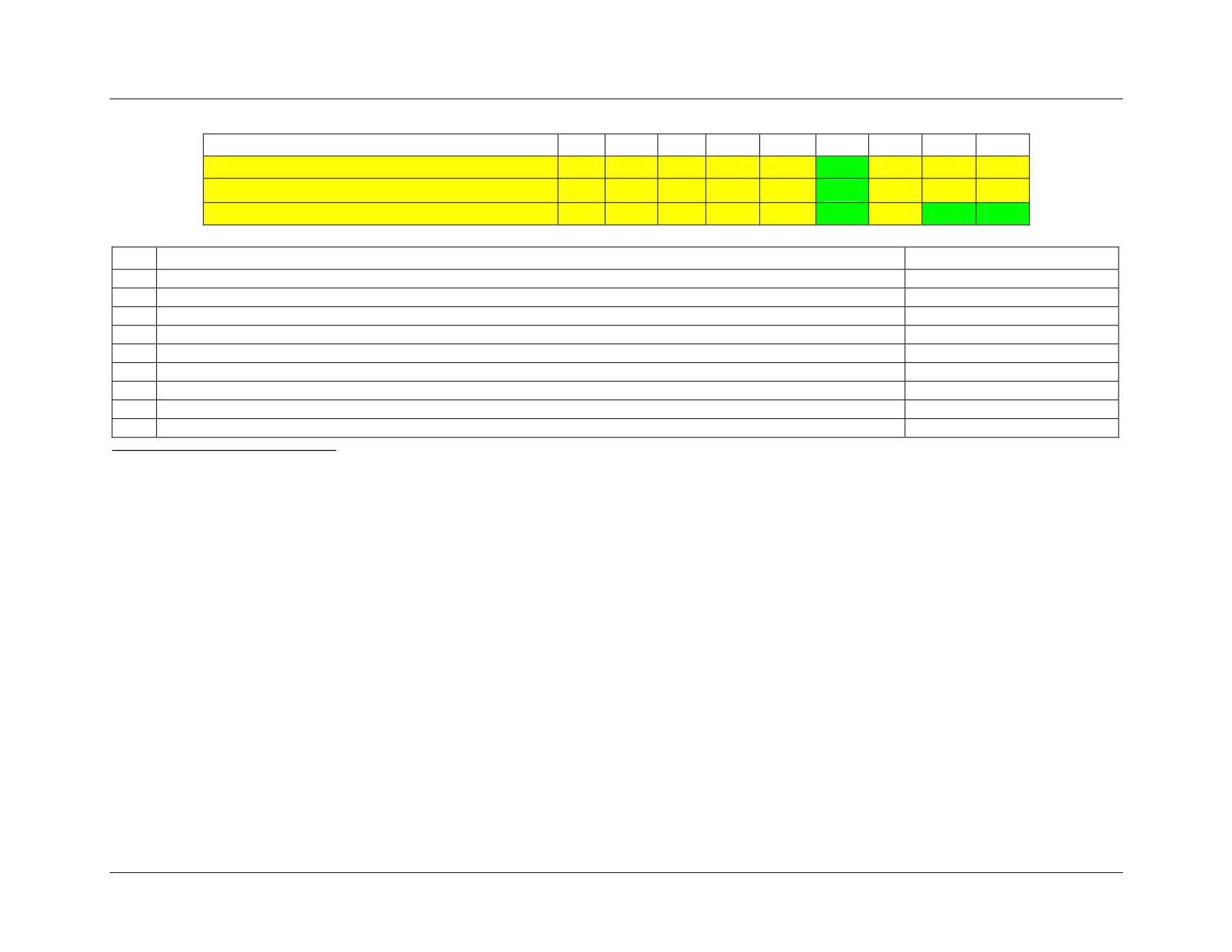
For Official Use Only
CBRN Functional Needs Analysis/Functional Solution Analysis
Chapter 16. Operational Sustain Tasks
Table 16.8-1. OPSUST 8: Capability and Deficiency Assessment
Capability: Operational-Level Unit Staff
M1
M2
M3
M4
M5
M6
M7
M8
M9
Current Overall Capability1
Y2
Y3
Y4
Y5
Y6
G7
Y8
Y9
Y10
Near/Mid-Term Overall Capability11
Y
Y
Y
Y
Y
G
Y
Y
Y
Far-Term Overall Capability12
Y
Y
Y
Y
Y
G
Y
G13
G14
FAA Measure
Scale
M1
Procedures are in place to facilitate response to SOF requests for assistance.
G - Yes, Y - Limited, R - No
M2
Procedures and checklists exist to help develop executable operational plans and orders.
G - Yes. Y - Limited. R - No.
M3
Support provided is adequate.
G - Yes, Y - Limited, R - No
M4
Decontamination and support forces have SOF restoration operation experience.
G - Yes, Y - Limited, R - No
M5
COAs are available and selected in advance of execution.
G - Yes, Y - Limited, R - No
M6
COAs are coordinated between JTF and SOF prior to execution.
G - Yes, Y - Limited, R - No
M7
Procedures and checklists exist to help issue commander’s estimate.
G - Yes, Y - Limited, R - No
M8
Joint exercises/experimentation provide lessons learned on SOF restoration operation support provided by JTF.
G - Yes, Y - Limited, R - No
M9
Decontamination procedures are logistically supportable.
G - Yes, Y - Limited, R - No
1 This task is not a standard part of training.
2 Limited. Any OP-level unit staff can respond to SOF request for assistance, but there are no TTPs or formalized familiarization training that addresses the unique aspects of joint
forces supporting SOF restoration operation requirements.
3 Limited. Any OP-level unit staff can develop procedures and checklists for operational plans and orders, but there are no TTPs that address development of the unique
requirements of SOF restoration operational plans and orders.
4 Limited. Any OP-level unit staff can provide support, but there is no real way of knowing how effective this support will be without comprehensive training events.
5 Limited. No staff will have an experience base without comprehensive training with SOF.
6 Limited. Any OP-level unit staff can develop/select COAs in advance of execution of the mission. There are no TTPs that address development and selection of COAs while
supporting a SOF restoration operation.
7 Any OP-level unit staff can coordinate COAs between HQs.
8 Limited. Any OP-level staff can develop an accurate estimate, but TTPs to ensure that estimates are accurate are limited to basic, nonspecific data that must be researched. More
detailed specific information and checklists useful for time-sensitive situations are not available. With manual processes, accuracy may not be as dependable and might be subject
to human errors.
9 Limited. Any joint exercise/ experiment can provide feedback, but few if any have been conducted that specifically address SOF restoration operation support provided by JTF.
10 Limited. Depending on the extent of contamination and the decontamination means selected, the procedures may or may not be logistically supportable.
11 DOTMLPF should improve in all deficient areas, including inclusion in training, as a result of initiatives that use data resulting from focused experimentation.
12 Continued DOTMLPF enhancements will result from exercise and wargame lessons learned.
13 Experiments and exercises focused on theater restoration operations will be conducted that specifically address SOF restoration operation support provided by JTF.
14 Development and acquisition of more efficient and less materiel-intensive decontamination systems will improve the logistical supportability in the far term.
45
For Official Use Only
For Official Use Only
CBRN Functional Needs Analysis/Functional Solution Analysis
Chapter 16. Operational Sustain Tasks
16.8.3
Functional Solution Analysis
16.8.3.1
DOTLPF Assessment Summary
This section addresses the deficiencies and suggests potential non-materiel solutions. If there are
no non-materiel solutions, or they are only partial solutions, the remaining non-materiel need is
then stated. Materiel needs are assessed in the IMA section.
1. Deficiency: There are no TTPs for SOF restoration operation requirements.
Non-Materiel Solutions: Doctrine: Develop TTPs for SOF restoration of operations
requirements.
2. Deficiency: Planning exercises for restoration with SOF have been limited.
Non-Materiel Solutions: Doctrine: Develop and refine restoration of operations exercises
for SOF. Incorporate lessons learned from RESTOPS ACTD into future exercises.
3. Deficiency: There is no leader training/education for JTF restoration of operations.
Non-Materiel Solutions: Training: Develop training for staffs on SOF restoration of
operations requirements. Leadership: Develop leader training for staffs on SOF restoration of
operations requirements.
4. Deficiency: Automated means to support SOF restoration operation requirements is lacking.
Non-Materiel Solutions: None.
16.8.3.2
IMA Assessment Summary
Table 16.8-2 shows possible materiel approaches that address the remaining materiel
requirements of the DOTMLPF assessment.
Table 16.8-2. OPSUST 8: IMA Assessment
Idea for Materiel
Capability Gap
Description
Approach
Lack of an automated
Automated systems
Link the process to automated systems so that
means to support SOF
routine data can be used by automated tools
restoration operation
(that must be developed). This will improve
requirements.
speed and accuracy of planning. Human out of
the loop will improve accuracy if data are
reliable.
46
For Official Use Only
For Official Use Only
CBRN Functional Needs Analysis/Functional Solution Analysis
Chapter 16. Operational Sustain Tasks
16.9 Task OPSUST 9: Provide JTF command and control of restoration operations
16.9.1
Functional Area Analysis
16.9.1.1
Definition
To provide the command, control, communications, and planning capabilities required for
restoration operations that only a JTF HQ can provide. After a JTF HQ is established at the
direction of the combatant commander, it will provide command and control of extensive or
complex restoration operations. This could be a standing JTF HQ that can move from theater to
theater or a JTF HQ established by a specific combatant command. The JTF HQ will provide all
elements of command and control of restoration operations.
16.9.1.2
Derivation
UJTL (OP 7.3, OP 4.4, OP 5.4, OP 5.5.6).
16.9.1.2.1
Supported Task: STSUST 10
16.9.1.2.2
Lateral Task: OPSHA 8
16.9.1.2.3
Supporting Tasks: TASUST 24, TASUST 25
16.9.1.3
Condition
Perform this task under conditions of:
Physical
1. Persistent CBRN/TIM effects. (C1.3.3.1-3)
Military
1. Stressful mission. (C2.1)
2. Partially completed mission preparation. (C2.1.3)
3. Weak forces assigned. (C2.2.1)
4. Negligible personnel experience. (C2.2.4.5)
5. Poor joint staff integration. (C2.3.1.1)
6. Moderate rear-area security. (C2.7.1)
7. Moderate host-nation support. (C2.8.5)
8. Conventional and terrorist threat form. (C2.9.2)
9. Fully developed state of conflict. (C2.10.1)
Civil
1. Limited foreign government support. (C3.1.2.3)
47
For Official Use Only
For Official Use Only
CBRN Functional Needs Analysis/Functional Solution Analysis
Chapter 16. Operational Sustain Tasks
16.9.2
Functional Needs Analysis
16.9.2.1
Capability and Deficiency Assessment Summary
Table 16.9-1 discusses the only capability that currently exists to perform the task to the
designated standards. No other capability is projected that will accomplish this task.
Current Capability and Deficiency
The current assessment is “yellow.” Any JTF HQ staff has a team of operational planners and
command and control specialists, and most have CBRN subject matter experts. This team of
experts has the skill to provide JTF command and control of restoration operations, but there are
some deficiencies that negatively impact on their ability to do so.
Projected Near/Mid-Term Capability and Deficiency
No other capabilities are currently projected for the near/mid term. Limited capability
improvements are forecast for the near/mid term except for DOTMLPF, which should improve
in all deficient areas as a result of initiatives that use data resulting from focused
experimentation.
Projected Far-Term Capability and Deficiency
DOTMLPF should improve in all deficient areas as a result of initiatives that use data resulting
from focused experimentation. JTTPs that specifically address the change in manning allocation
as required by a restoration operation mission will be developed. Joint exercises and experiments
will be conducted that will provide feedback on how a JTF commands and controls a restoration
operation. JTTPs, training and exercises, and education will all improve leading to a far-term
assessment of “green.”
48
For Official Use Only
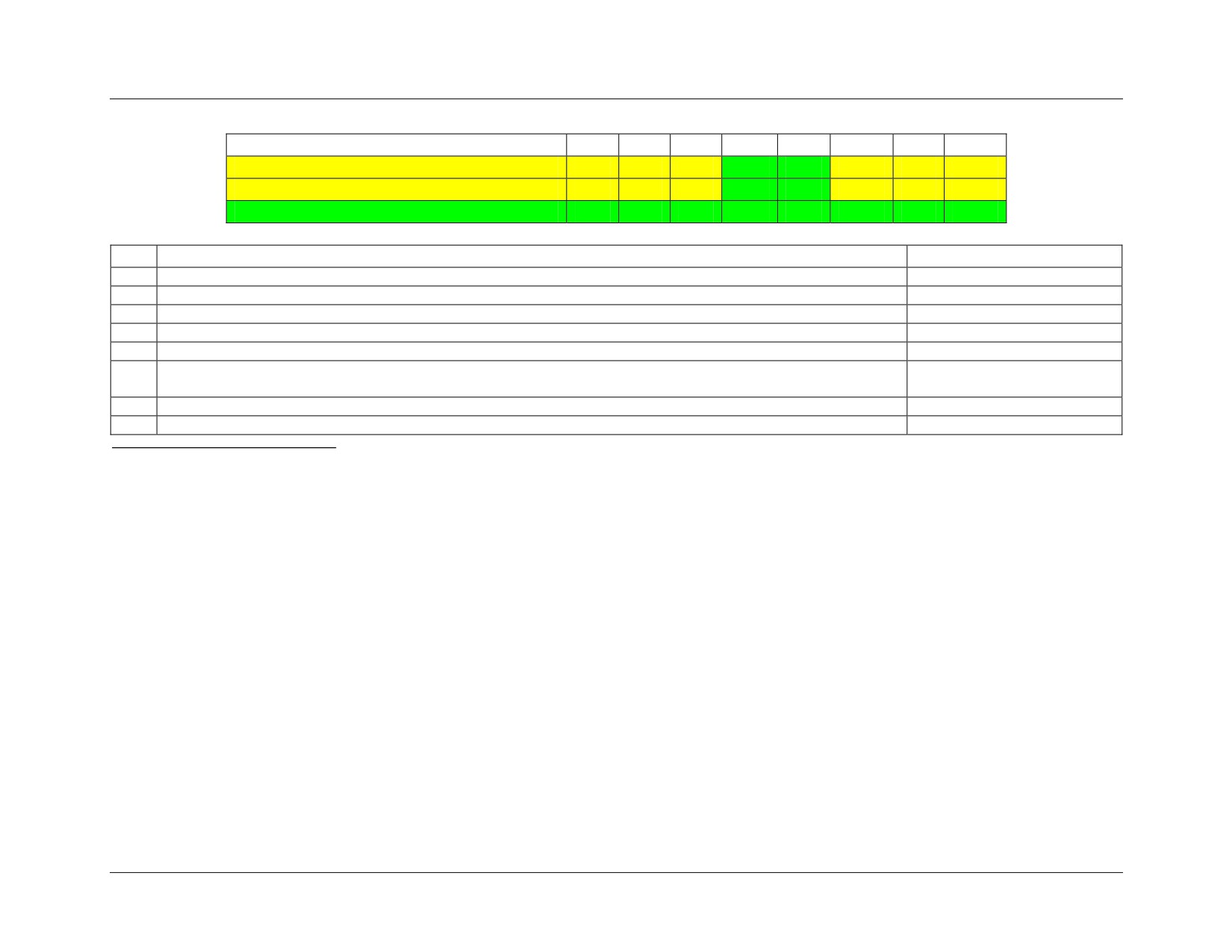
For Official Use Only
CBRN Functional Needs Analysis/Functional Solution Analysis
Chapter 16. Operational Sustain Tasks
Table 16.9-1. OPSUST 9: Capability and Deficiency Assessment
Capability: SJFHQ
M1
M2
M3
M4
M5
M6
M7
M8
Current Overall Capability1
Y2
Y3
Y4
G5
G6
Y7
Y8
Y9
Near/Mid-Term Overall Capability10
Y
Y
Y
G
G
Y
Y
Y
Far-Term Overall Capability11
G12
G13
G14
G
G
G15
G16
G17
FAA Measure
Scale
M1
Procedures and checklists exist to help facilitate the stand-up of a JTF for restoration operations.
G - Yes, Y - Limited, R - No
M2
Procedures exist for dissolving of the JTF (following achievement of end state).
G - Yes, Y - Limited, R - No
M3
Joint restoration operation site areas or select fixed sites are defined.
G - Yes, Y - Limited, R - No
M4
Directive or mission is provided.
G - Yes, Y - Limited, R - No
M5
Directive contains desired effect and scope of action required.
G - Yes, Y - Limited, R - No
M6
Procedures and checklists exist to help facilitate the change in manning allocation of initial HQ required by
G - Yes, Y - Limited, R - No
restoration operation mission.
M7
Joint exercises/experimentation provide lessons learned on restoration operation execution provided by JTF.
G - Yes, Y - Limited, R - No
M8
Decontamination procedures are logistically supportable.
G - Yes, Y - Limited, R - No
1 There is no concept/doctrine on how to stand up a JTF for the conduct of restoration operations. Command and control of large-scale restoration operations is not integrated into
leader education.
2 Limited. Any SJFHQ staff can develop these kinds of procedures and checklists, but there are currently no TTPs that specifically address standing up a JTF for restoration
operations.
3 Limited. Any SJFHQ staff can develop these kinds of procedures, but there are currently no TTPs that specifically address dissolving a JTF for restoration operations following
achievement of end state.
4 Limited. Any SJFHQ staff can select and define operation site areas or fixed sites, but there are no TTPs that specifically address selecting and defining joint restoration sites.
5 Nothing precludes a higher HQ from providing a directive or mission.
6 Nothing precludes a higher HQ from providing a directive or mission that contains desired effect and scope of action required.
7 Limited. Any SJFHQ staff can develop procedures and checklists, but there are currently no TTPs that specifically address the change in manning allocation as required by a
restoration operation mission.
8 No joint exercise or experiment has ever been conducted that would provide feedback on how a JTF commands and controls a restoration operation.
9 Limited. Depending on the extent of contamination and the decontamination means selected, the procedures may or may not be logistically supportable.
10 DOTMLPF should improve in all deficient areas as a result of initiatives that use data resulting from focused experimentation.
11 Continued DOTMLPF enhancements will result from exercise and wargame lessons learned.
12 JTTPs that specifically address standing up a JTF for restoration operations will be developed.
13 JTTPs that specifically address dissolving a JTF for restoration operations following achievement of end state will be developed.
14 JTTPs that specifically address selecting and defining joint restoration sites will be developed.
15 JTTPs that specifically address the change in manning allocation as required by a restoration operation mission will be developed.
16 Joint exercises and experiments will be conducted that will provide feedback on how a JTF commands and controls a restoration operation.
17 Development and acquisition of more efficient and less materiel-intensive decontamination systems will improve the logistical supportability in the far term.
49
For Official Use Only
For Official Use Only
CBRN Functional Needs Analysis/Functional Solution Analysis
Chapter 16. Operational Sustain Tasks
16.9.3
Functional Solution Analysis
16.9.3.1
DOTLPF Assessment Summary
This section addresses the deficiencies and suggests potential non-materiel solutions. If there are
no non-materiel solutions, or they are only partial solutions, the remaining non-materiel need is
then stated. Materiel needs are assessed in the IMA section.
1. Deficiency: No concept/doctrine/TTPs exist for JTF conduct of restoration operations.
Non-Materiel Solutions: Doctrine: Develop concepts/doctrine/TTPs for JTF command and
control of restoration operations to include standing up/dissolving a JTF for restoration
operations, selecting and defining joint restoration operation sites, and establishing the
manning allocation of initial HQ required by restoration operation mission.
2. Deficiency: No JTF restoration exercises/experimentation.
Non-Materiel Solutions: Training: Develop a JTF command and control of restoration
operations exercise/experiment. Include in CBRND experimentation campaign plan
schedule.
3. Deficiency: There is no leader training/education for JTF restoration of operations.
Non-Materiel Solutions: Training: Develop training for staffs that are likely to be part of
JTF’s providing command and control of restoration operations. Nominate as candidate for
FY 2009/2010 UNIFIED ENDEAVOR within CBRND experimentation campaign plan.
Leadership: Develop leader education for staffs on command and control of restoration
operations.
16.9.3.2
IMA Assessment Summary
N/A
50
For Official Use Only
For Official Use Only
CBRN Functional Needs Analysis/Functional Solution Analysis
Chapter 16. Operational Sustain Tasks
16.10 Task OPSUST 10: Provide JTF command and control of decontamination of
strategically significant areas/terrain or facilities
16.10.1
Functional Area Analysis
16.10.1.1
Definition
To provide the command, control, communications, and planning capabilities required for
decontamination of strategically significant areas/terrain or facilities that only a JTF HQ can
provide. A JTF HQ may be established by a combatant commander to provide command and
control of extensive or complex decontamination operations involving strategically significant
areas/terrain or facilities. The decontamination of an area or facility will require a resource-
intensive restoration operation.
16.10.1.2
Derivation
UJTL (OP 7.3, OP 1.3.1, OP 5.4, OP 5.5).
16.10.1.2.1
Supported Tasks: STSUST 11, STSUST 12
16.10.1.2.2
Lateral Task: OPSHA 5
16.10.1.2.3
Supporting Tasks: TASUST 24, TASUST 25
16.10.1.3
Condition
Perform this task under conditions of:
Physical
1. Persistent CBRN/TIM effects. (C1.3.3.1-3)
Military
1. Stressful mission. (C2.1)
2. Partially completed mission preparation. (C2.1.3)
3. Weak forces assigned. (C2.2.1)
4. Negligible personnel experience. (C2.2.4.5)
5. Poor joint staff integration. (C2.3.1.1)
6. Moderate rear-area security. (C2.7.1)
7. Moderate host-nation support. (C2.8.5)
8. Conventional and terrorist threat form. (C2.9.2)
9. Fully developed state of conflict. (C2.10.1)
Civil
1. Limited foreign government support. (C3.1.2.3)
51
For Official Use Only
For Official Use Only
CBRN Functional Needs Analysis/Functional Solution Analysis
Chapter 16. Operational Sustain Tasks
16.10.2
Functional Needs Analysis
16.10.2.1
Capability and Deficiency Assessment Summary
Table 16.10-1 discusses the only capability that currently exists to perform the task to the
designated standards. No other capability is projected that will accomplish this task.
Current Capability and Deficiency
The current assessment is “yellow.” Any JTF HQ staff has a team of operational planners and
command and control specialists, and most have CBRN subject matter experts. This team of
experts has the skill to provide JTF command of restoration of strategically significant
areas/terrain or facilities, but there are some deficiencies that negatively impact on their ability to
do so.
Projected Near/Mid-Term Capability and Deficiency
No other capabilities are currently projected for the near/mid term. Limited capability
improvements are forecast for the near/mid term except for DOTMLPF, which should improve
in all deficient areas as a result of initiatives that use data resulting from focused
experimentation.
Projected Far-Term Capability and Deficiency
DOTMLPF should improve in all deficient areas as a result of initiatives that use data resulting
from focused experimentation. Joint exercises and experiments will be conducted to provide
feedback on how a JTF commands extensive or complex decontamination of significant
areas/terrain or facilities. JTTPs, training and exercises, and education will all improve leading to
a far-term assessment of “green.”
52
For Official Use Only
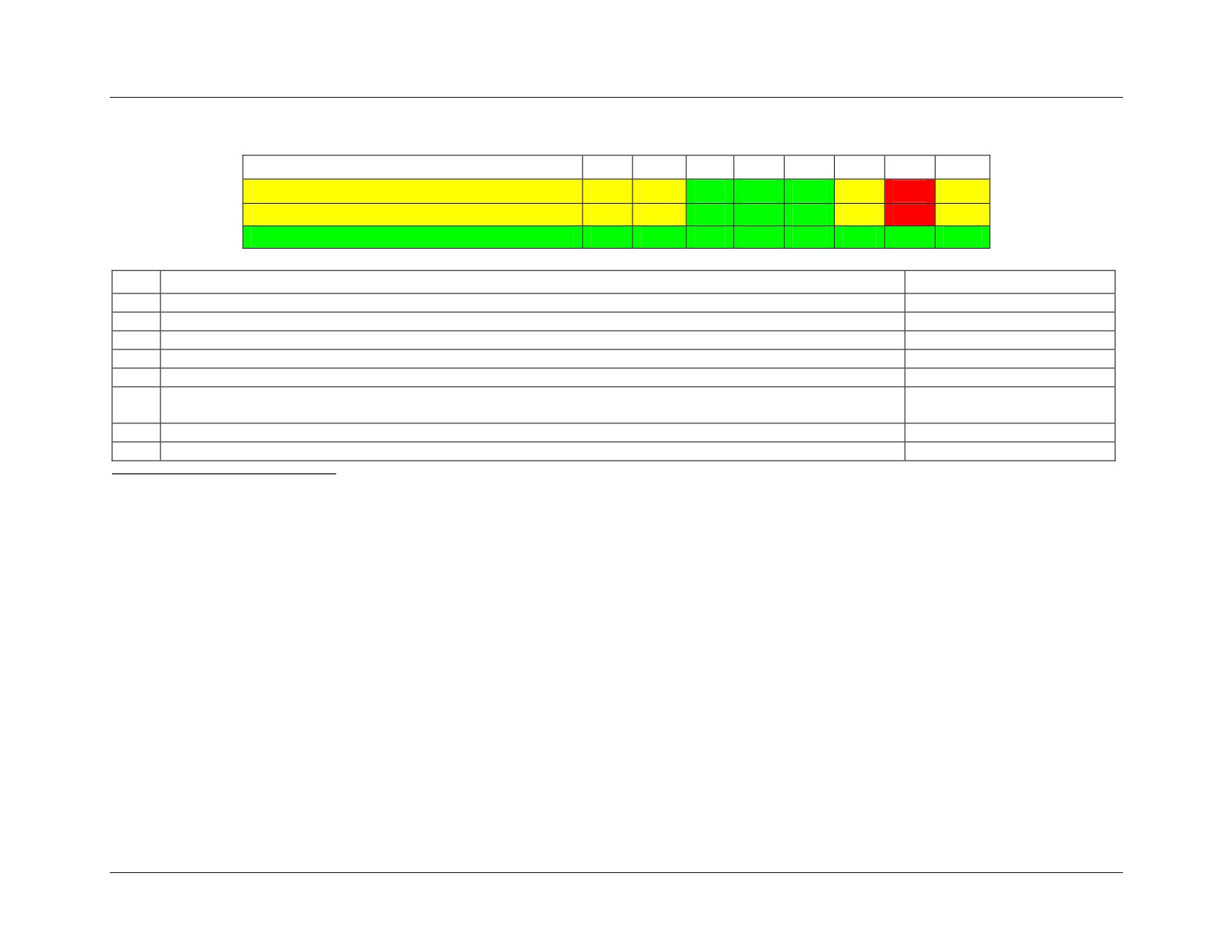
For Official Use Only
CBRN Functional Needs Analysis/Functional Solution Analysis
Chapter 16. Operational Sustain Tasks
Table 16.10-1. OPSUST 10: Capability and Deficiency Assessment
Capability: SJFHQ
M1
M2
M3
M4
M5
M6
M7
M8
Current Overall Capability1
Y2
Y3
G4
G5
G6
Y7
R8
Y9
Near/Mid-Term Overall Capability10
Y
Y
G
G
G
Y
R
Y
Far-Term Overall Capability11
G12
G
G
G
G
G
G13
G14
FAA Measure
Scale
M1
Procedures and checklists exist to help facilitate the stand up of a JTF for terrain/facilities decontamination mission.
G - Yes, Y - Limited, R - No
M2
Procedures exist for dissolving of the JTF (following achievement of end state).
G - Yes, Y - Limited, R - No
M3
Areas/terrain/facilities to be decontaminated are defined.
G - Yes, Y - Limited, R - No
M4
Directive or mission is provided.
G - Yes, Y - Limited, R - No
M5
Directive contains desired effect and scope of action required.
G - Yes, Y - Limited, R - No
M6
Procedures and checklists exist to help facilitate the change in manning allocation of initial HQ required by
G - Yes, Y - Limited, R - No
terrain/facilities decontamination mission.
M7
Joint exercises provide lessons learned on terrain/facilities decontamination mission provided by JTF.
G - Yes, Y - Limited, R - No
M8
Decontamination procedures are logistically supportable.
G - Yes. Y - Limited. R - No.
1 There is no concept/doctrine on how to stand up a JTF for the conduct of extensive or complex decontamination of significant areas/terrain or facilities. Command and control of
large-scale decontamination operations is not integrated into leader education.
2 Limited. While there are generic procedures to stand up a JTF, there are no TTPs that specifically address standing up of a JTF for an extensive or complex terrain/facilities
decontamination mission.
3 Limited. Any SJFHQ staff can dissolve a JTF following achievement of end state, but a JTF specifically for extensive or complex decontamination operations involving
significant areas/terrain or facilities has never been stood up and thus never been dissolved.
4 Nothing precludes a higher HQ from defining areas/terrain/facilities to undergo decontamination.
5 Nothing precludes a higher HQ from providing a directive or mission.
6 Nothing precludes a higher HQ from providing a directive or mission that contains desired effect and scope of action required.
7 Limited. Any SJFHQ staff can develop procedures and checklists, but there are no TTPs and limited training that specifically addresses the change in manning allocation as
required by extensive or complex decontamination of significant areas/terrain or facilities.
8 No joint exercise or experiment has ever been conducted that would provide feedback on how a JTF commands extensive or complex decontamination of significant areas/terrain
or facilities.
9 Limited. Depending on the extent of contamination and the decontamination means selected, the procedures may or may not be logistically supportable.
10 DOTMLPF should improve in all deficient areas as a result of initiatives that use data resulting from focused experimentation.
11 Continued DOTMLPF enhancements will result from exercise and wargame lessons learned.
12 In the far term, JTTPs will improve for all areas.
13 Joint exercises and experiments will be conducted to provide feedback on how a JTF commands extensive or complex decontamination of significant areas/terrain or facilities.
14 Development and acquisition of more efficient and less materiel-intensive decontamination systems will improve the logistical supportability in the far term.
53
For Official Use Only
For Official Use Only
CBRN Functional Needs Analysis/Functional Solution Analysis
Chapter 16. Operational Sustain Tasks
16.10.3
Functional Solution Analysis
16.10.3.1
DOTLPF Assessment Summary
This section addresses the deficiencies and suggests potential non-materiel solutions. If there are
no non-materiel solutions, or they are only partial solutions, the remaining non-materiel need is
then stated. Materiel needs are assessed in the IMA section.
1. Deficiency: Concepts/doctrine/TTPs do not exist for extensive or complex terrain/facilities
decontamination missions.
Non-Materiel Solutions: Doctrine: Develop concepts/doctrine/TTPs for JTF command and
control of decontamination operations for extensive or complex terrain/facilities
decontamination missions, to include standing up/dissolving the JTF, selecting and defining
joint decontamination operation sites, and establishing the manning allocation of initial HQ
required by decontamination operation mission.
2. Deficiency: There have been no JTF complex terrain/facilities decontamination missions
exercises/experimentation.
Non-Materiel Solutions: Training: Develop a JTF command and control of decontamination
operations exercise/experiment. Include in CBRND experimentation campaign plan
schedule.
3. Deficiency: There is no leader training/education for standing up of a JTF for an extensive or
complex terrain/facilities decontamination mission.
Non-Materiel Solutions: Training: Develop training for staffs that are likely to be part of
JTF’s providing command and control of extensive or complex terrain/facilities
decontamination mission. Nominate as candidate for FY 2009/2010 UNIFIED ENDEAVOR
within CBRND experimentation campaign plan. Leadership: Develop leader education for
staffs.
16.10.3.2
IMA Assessment Summary
N/A
54
For Official Use Only
For Official Use Only
CBRN Functional Needs Analysis/Functional Solution Analysis
Chapter 16. Operational Sustain Tasks
16.11 Task OPSUST 11: Integrate restoration operations with strategic deployment,
sustainment, and redeployment, including NEO and AE operations
16.11.1
Functional Area Analysis
16.11.1.1
Definition
To integrate and deconflict restoration operations with strategic mobility activities required to
deploy/redeploy forces and sustain the warfighter. Due to the dubiety of current decontamination
capabilities and the absence of internationally accepted decontamination standards, contaminated
lift assets may be removed from the strategic lift flow. Therefore, to the maximum extent
possible, uncontaminated lift assets will not be used at contaminated ports of embarkation/ports
of debarkation (POEs/PODs). Contamination avoidance by lift assets requires the designation of
alternate POEs/PODs, identification of transload sites for transload of cargo and passengers from
uncontaminated to contaminated lift platforms for movement into contaminated PODs, thorough
decontamination of lift platforms, and redeploying forces to internationally recognized
decontamination standards (once obtained). Aeromedical evacuation (AE) planning should
include TTPs to enable the movement of contagious/contaminated patients.
16.11.1.2
Derivation
UJTL (OP1.1, OP1.1.3, OP1.6, OP4, OP4.6.3, OP7.3, OP7.4, Air Mobility Operations In a
Chemical and Biological Environment).
16.11.1.2.1
Supported Task: STSUST 4
16.11.1.2.2
Lateral Task: OPSHA 8
16.11.1.2.3
Supporting Tasks: TASUST 1, TASUST 2, TASUST 3, TASUST 4, TASUST
5, TASUST 6, TASUST 7, TASUST 8, TASUST 9, TASUST 10, TASUST 11,
TASUST 12, TASUST 13, TASUST 14, TASUST 15, TASUST 16, TASUST 17,
TASUST 18, TASUST 19, TASUST 20, TASUST 21, TASUST 22, TASUST 23,
TASUST 24, TASUST 25, TASUST 26, TASUST 27, TASUST 28, TASUST 29,
TASUST 30
16.11.1.3
Condition
Perform this task under conditions of:
Physical
1. Persistent CBRN/TIM effects. (C1.3.3.1-3)
Military
1. Stressful mission. (C2.1)
2. No mission preparation (C2.1.3)
55
For Official Use Only
For Official Use Only
CBRN Functional Needs Analysis/Functional Solution Analysis
Chapter 16. Operational Sustain Tasks
3. Weak forces assigned. (C2.2.1)
4. Negligible personnel experience. (C2.2.4.5)
5. Limited lift assets. (C2.5.2)
6. High rear-area security. (C2.7.1)
7. Limited host-nation support. (C2.8.5)
8. Conventional and terrorist threat form. (C2.9.2)
9. Fully developed state of conflict. (C2.10.1)
Civil
1. Cooperative nation
a. Limited foreign government support. (C3.1.2.3.)
2. Uncooperative nation
a. Negative foreign government support. (C3.1.2.3.)
Common Civil Conditions
1. Moderate restraints on action. (C3.1.3.4)
16.11.2
Functional Needs Analysis
16.11.2.1
Capability and Deficiency Assessment Summary
Table 16.11-1 discusses the only capability that currently exists to perform the task to the
designated standards. No other capability is projected that will accomplish this task.
Current Capability and Deficiency
The current assessment is “yellow.” Any JTF HQ staff has a team of operational planners and
command and control specialists, and most have CBRN subject matter experts. This team of
experts has the skill to integrate restoration operations with strategic deployment, sustainment,
and redeployment (including noncombatant evacuation operations [NEO] and AE) operations,
but there are some deficiencies that negatively impact on their ability to do so.
Projected Near/Mid-Term Capability and Deficiency
No other capabilities are currently projected for the near/mid term. Limited capability
improvements are forecast for the near/mid term except for DOTMLPF, which should improve
in all deficient areas as a result of initiatives that use data resulting from focused
experimentation.
Projected Far-Term Capability and Deficiency
DOTMLPF should improve in all deficient areas as a result of initiatives that use data resulting
from focused experimentation. Joint exercises/ experiments will be conducted that can provide
56
For Official Use Only
For Official Use Only
CBRN Functional Needs Analysis/Functional Solution Analysis
Chapter 16. Operational Sustain Tasks
feedback on procedures to integrate restoration operations with strategic deployment,
sustainment, and redeployment (including NEO and AE) operations. Lessons learned from
RESTOPS ACTD will be integrated into future exercises and experimentation that look at issues
other than fixed sites. JTTPs, training and exercises, and education will all improve leading to a
far-term assessment of “green.”
57
For Official Use Only
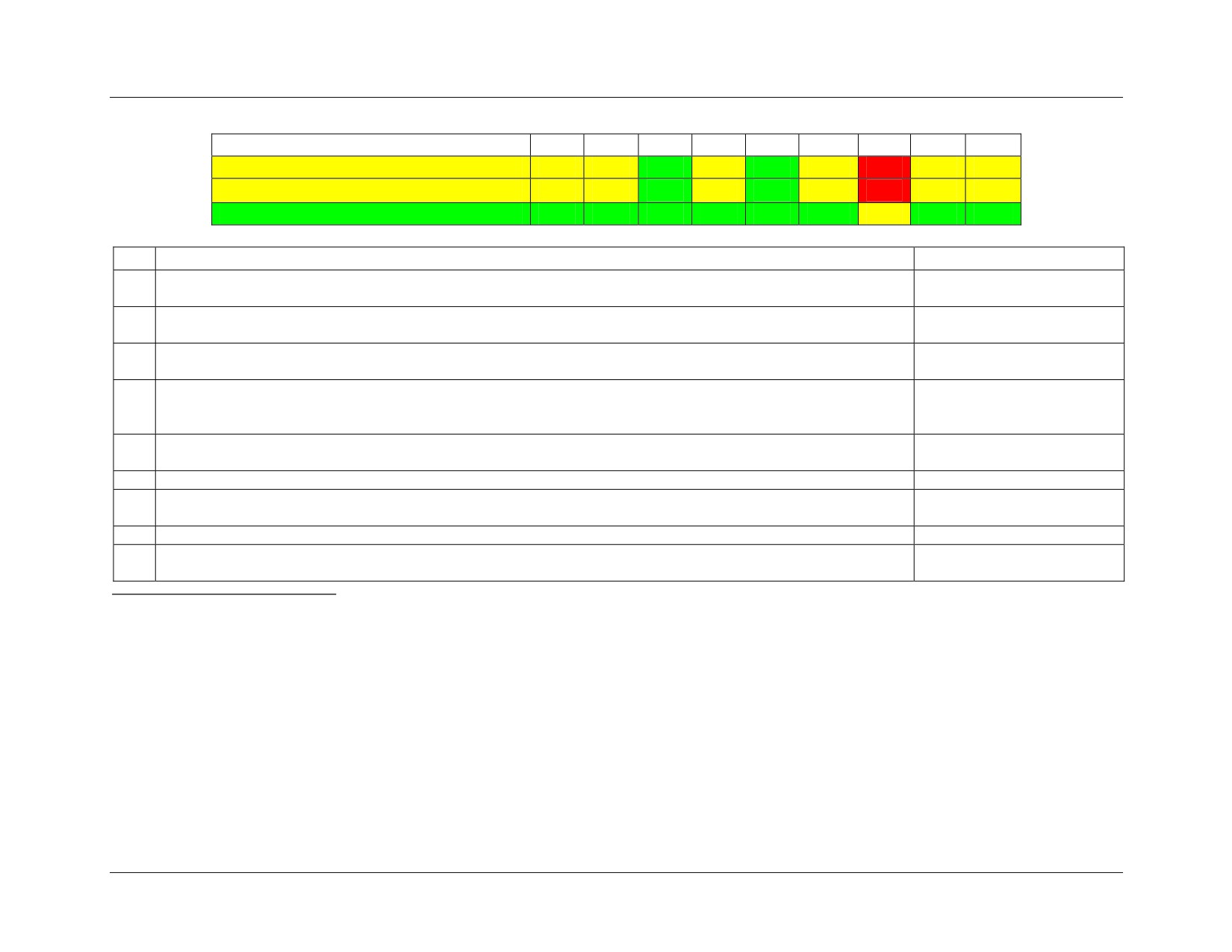
For Official Use Only
CBRN Functional Needs Analysis/Functional Solution Analysis
Chapter 16. Operational Sustain Tasks
Table 16.11-1. OPSUST 11: Capability and Deficiency Assessment
Capability: SJFHQ
M1
M2
M3
M4
M5
M6
M7
M8
M9
Current Overall Capability1
Y2
Y3
G4
Y5
G6
Y7
R8
Y9
Y10
Near/Mid-Term Overall Capability11
Y
Y
G
Y
G
Y
R
Y
Y
Far-Term Overall Capability12
G13
G
G
G
G
G
Y
G
G14
FAA Measure
Scale
M1
CBRN/TIM status in the Joint Operations Area (JOA) impacts strategic deployment, sustainment, and/or
G - Yes, Y - Limited, R - No
redeployment.
M2
Alternate and/or diversion POEs/PODs (possibly including unimproved/improvised landing strips) are established to
G - Yes, Y - Limited, R - No
avoid contaminated areas during deployment, sustainment, and redeployment operations.
M3
Joint Logistics over the Shore (JLOTS) is planned to avoid contaminated seaports of embarkation/debarkation
G - Yes, Y - Limited, R - No
(SPOEs/SPODs).
M4
Uncontaminated lift platforms are limited to operations in uncontaminated ports and cargo/passenger transload site
G - Yes, Y - Limited, R - No
have been identified for transload of deploying forces and sustainment cargo from uncontaminated to contaminated lift
assets for movement into contaminated PODs.
M5
JOA Reception, Staging, Onward Movement, and Integration (RSOI) is planned to avoid CBRN/TIM contaminated
G - Yes, Y - Limited, R - No
areas.
M6
All cargo is decontaminated to internationally accepted standards (when available) prior to redeployment.
G - Yes, Y - Limited, R - No
M7
Direction is provided to conduct patient evacuation including procedures for the movement of
G - Yes, Y - Limited, R - No
contagious/contaminated casualties.
M8
Direction for the protection and/or decontamination of evacuees is provided in NEO plans.
G - Yes, Y - Limited, R - No
M9
Joint exercises/experimentation are conducted to integrate restoration operations with strategic deployment,
G - Yes, Y - Limited, R - No
sustainment, and redeployment (including NEO and AE) operations.
1 No concepts or doctrine relating to this issue have been developed. Leader education does not address this issue.
2 Limited. Any SJFHQ staff can determine how CBRN status in the JOA impacts strategic deployment, sustainment, and/or redeployment, but there are no TTPs that specifically
address issues affecting how to do this.
3 Limited. Any SJFHQ staff can establish alternate PODs/POEs, but there are no TTPs that specifically address establishing PODs/POEs to avoid contaminated areas during
deployment, sustainment, and redeployment operations.
4 Nothing precludes JLOTS planning in response to any sort of contamination and it is anticipated as a requirement for any sort of SPOE/SPOD disruption.
5 Limited. Any SJFHQ staff can develop, identify, and monitor the operations of a transload site. However, there are no TTPs that specifically address moving sustainment cargo
from uncontaminated to contaminated lift assets for movement into contaminated PODs. Any such procedures are currently manual making the process slow, labor-intensive, and
subject to human error.
6 Nothing precludes planning of this type. Contamination reports must be immediately available to execute plans.
7 Any SJFHQ can coordinate with the Department of Defense Explosive Safety Board (DDESB) to review and approve plans for the lease, transfer or disposal of DoD real
property when contamination exists or is suspected to exist. There are no internationally accepted standards for decontamination completeness.
8 Limited. Any SJFHQ staff can coordinate patient evacuation, but there is little in the way of TTP that specifically address the movement of contagious/contaminated casualties.
58
For Official Use Only
For Official Use Only
CBRN Functional Needs Analysis/Functional Solution Analysis
Chapter 16. Operational Sustain Tasks
9 Limited. Any SJFHQ staff can develop NEO plans, but there is little in the way of TTPs that specifically address the protection and/or decontamination of evacuees for
incorporation into NEO plans.
10 Few joint exercises/ experiments have been conducted that can provide feedback on procedures to integrate restoration operations with strategic deployment, sustainment, and
redeployment (including NEO and AE) operations. RESTOPS ACTD must be examined when published to determine whether any information is relevant.
11 DOTMLPF should improve in all deficient areas as a result of initiatives that use data resulting from focused experimentation.
12 Continued DOTMLPF enhancements will result from exercise and wargame lessons learned.
13 In the far term, DOTMLPF improvements across the spectrum will provide a capability of “green”.
14 Joint exercises/ experiments will be conducted that can provide feedback on procedures to integrate restoration operations with strategic deployment, sustainment, and
redeployment (including NEO and AE) operations. Lessons learned from RESTOPS ACTD will be integrated into future exercises and experimentation that looks at issues other
than fixed sites.
59
For Official Use Only
For Official Use Only
CBRN Functional Needs Analysis/Functional Solution Analysis
Chapter 16. Operational Sustain Tasks
16.11.3
Functional Solution Analysis
16.11.3.1
DOTLPF Assessment Summary
This section addresses the deficiencies and suggests potential non-materiel solutions. If there are
no non-materiel solutions, or they are only partial solutions, the remaining non-materiel need is
then stated. Materiel needs are assessed in the IMA section.
1.
Deficiency: There are no internationally accepted standards for decontamination
completeness.
Non-Materiel Solutions: Doctrine: Develop and negotiate universally accepted standards
for decontamination completeness. These standards must be in place prior to need.
2.
Deficiency: No TTPs that specifically address the movement of contagious/contaminated
casualties.
Non-Materiel Solutions: Doctrine: Develop TTPs that specifically address the movement of
contagious/contaminated casualties.
3.
Deficiency: No TTPs that specifically address the protection and/or decontamination of
evacuees for incorporation into NEO plans.
Non-Materiel Solutions: Doctrine: Develop TTPs that specifically address the protection
and/or decontamination of evacuees for incorporation into NEO plans.
4.
Deficiency: Few joint exercises/ experiments have been conducted that can provide feedback
on procedures to integrate restoration operations with strategic deployment, sustainment, and
redeployment (including NEO and AE) operations.
Non-Materiel Solutions: Training: Develop exercises/ experiments that can provide
feedback on procedures to integrate restoration operations with strategic deployment,
sustainment, and redeployment (including NEO and AE) operations.
5.
Deficiency: RESTOPS ACTD results are not yet published.
Non-Materiel Solutions: Training: RESTOPS ACTD must be examined when published to
determine whether any information is relevant.
6.
Deficiency: No concepts or doctrine exist.
Non-Materiel Solutions: Doctrine: Develop concepts and doctrine that provide information
on how to approach this issue.
7.
Deficiency: No leader education exists.
Non-Materiel Solutions: Leadership: Develop leader education to assist commanders and
staffs who must deal with these issues.
16.11.3.2
IMA Assessment Summary
N/A
60
For Official Use Only
For Official Use Only
CBRN Functional Needs Analysis/Functional Solution Analysis
Chapter 16. Operational Sustain Tasks
16.12 Task OPSUST 12: Coordinate decontamination procedures for processing
contaminated remains in the JOA
16.12.1
Functional Area Analysis
16.12.1.1
Definition
To plan, execute, and control decontamination procedures for processing contaminated remains
in the Joint Operations Area (JOA). In the event that large numbers of casualties need
decontamination before they can be processed or transported, operational coordination of
administrative, facility, terrain, personnel, and equipment requirements will be necessary.
Separate procedures may need to be established commensurate with type of contamination
(chemical, biological, or radiological).
16.12.1.2
Derivation
UJTL (OP 7.3, OP 4.4.1.2, OP 5.4.5).
16.12.1.2.1
Supported Task: STSUST 1
16.12.1.2.2
Lateral Task: OPSHA 8
16.12.1.2.3
Supporting Task: TASUST 4
16.12.1.3
Condition
Perform this task under conditions of:
Physical
1. Persistent CBRN/TIM effects. (C1.3.3.1-3)
Military
1. Stressful mission. (C2.1)
2. Partially completed mission preparation. (C2.1.3)
3. Weak forces assigned. (C2.2.1)
4. Negligible personnel experience. (C2.2.4.5)
5. Poor joint staff integration. (C2.3.1.1)
6. Moderate rear-area security. (C2.7.1)
7. Moderate host-nation support. (C2.8.5)
8. Conventional and terrorist threat form. (C2.9.2)
9. Fully developed state of conflict. (C2.10.1)
Civil
1. Limited foreign government support. (C3.1.2.3)
61
For Official Use Only
For Official Use Only
CBRN Functional Needs Analysis/Functional Solution Analysis
Chapter 16. Operational Sustain Tasks
16.12.2
Functional Needs Analysis
16.12.2.1
Capability and Deficiency Assessment Summary
Table 16.12-1 discusses the only capability that currently exists to perform the task to the
designated standards. No other capability is projected that will accomplish this task.
Current Capability and Deficiency
The current assessment is “yellow.” The Joint Mortuary Affairs Office (JMAO) is responsible
for integrating Mortuary Affairs (MA) support throughout the JOA including operations in a
CBRN environment. This team of experts has the skill to coordinate decontamination procedures
for processing contaminated remains in the JOA, but there are some deficiencies that negatively
impact on their ability to do so.
Projected Near/Mid-Term Capability and Deficiency
No other capabilities are currently projected for the near/mid term. No capability improvements
are forecast for the near/mid term.
Projected Far-Term Capability and Deficiency
DOTMLPF should improve in all deficient areas as a result of initiatives that use data resulting
from focused experimentation. JTTPs, training and exercises, and education will all improve
leading to a far-term assessment of “green.”
62
For Official Use Only
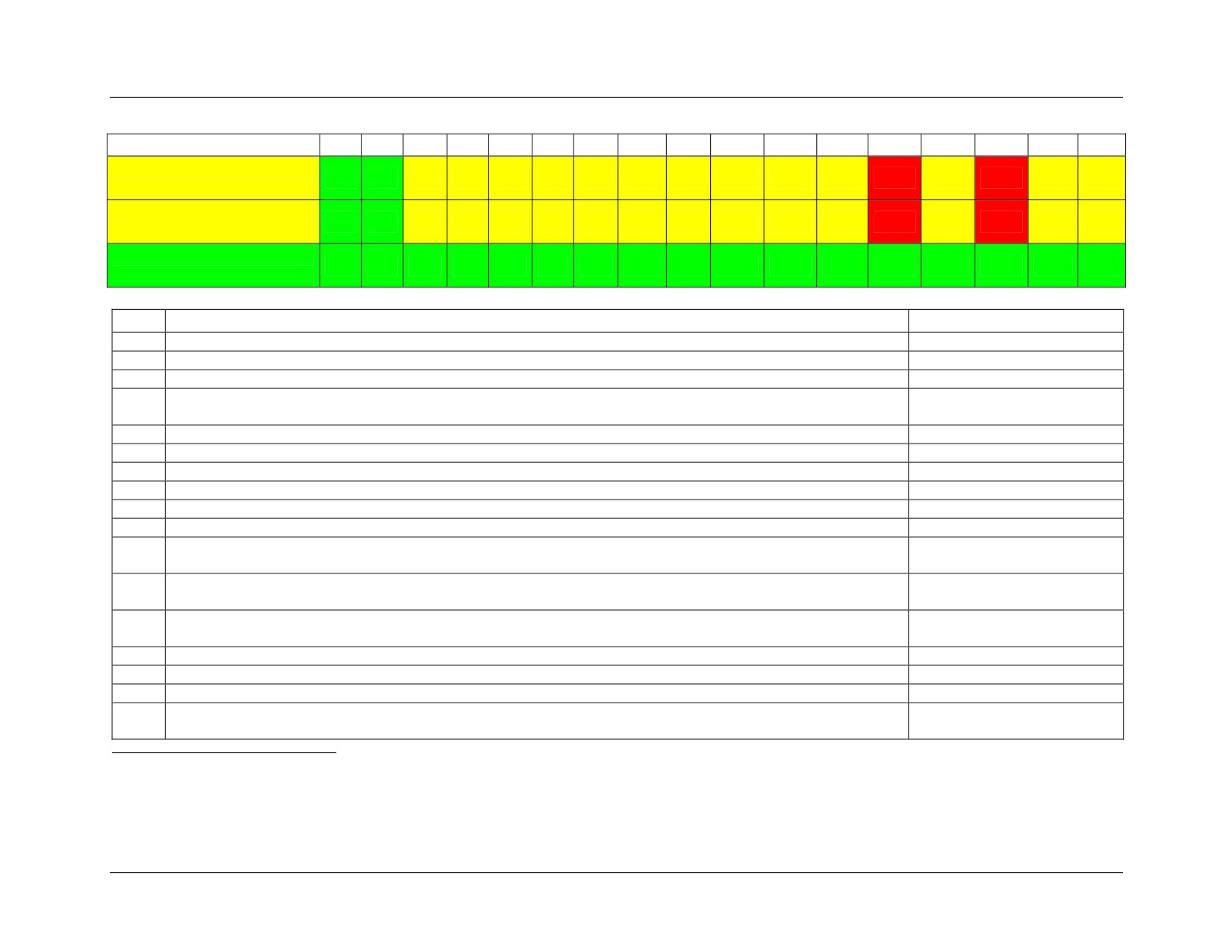
For Official Use Only
CBRN Functional Needs Analysis/Functional Solution Analysis
Chapter 16. Operational Sustain Tasks
Table 16.12-1. OPSUST 12: Capability and Deficiency Assessment
Capability: JTF HQ
M1
M2
M3
M4
M5
M6
M7
M8
M9
M10
M11
M12
M13
M14
M15
M16
M17
Current Overall
G2
G3
Y4
Y5
Y6
Y7
Y8
Y9
Y10
Y11
Y12
Y13
R14
Y15
R16
Y17
Y18
Capability1
Near/Mid-Term Overall
G
G
Y
Y
Y
Y
Y
Y
Y
Y
Y
Y
R
Y
R
Y
Y
Capability
Far-Term Overall
G19
G
G
G
G
G
G
G
G
G
G
G
G
G20
G
G
G
Capability
FAA Measure
Scale
M1
Records of contaminated deceased/missing personnel in JOA are accurately maintained.
G - Yes, Y - Limited, R - No
M2
Records of contaminated personal effects in JOA are accurately maintained.
G - Yes, Y - Limited, R - No
M3
Personal effects of contaminated deceased/missing in JOA are accurately processed.
G - Yes, Y - Limited, R - No
M4
Decision on mortuary affairs policy for contaminated remains is made in a timely fashion resulting in no delay in
G - Yes, Y - Limited, R - No
the disposition of remains.
M5
Operations include establishment of mortuary affairs decontamination collection points in theater.
G - Yes, Y - Limited, R - No
M6
Contaminated remains are correctly identified.
G - Yes, Y - Limited, R - No
M7
Contaminated remains are re-identified after disposition.
G - Yes, Y - Limited, R - No
M8
Temporary interment facilities for contaminated remains are established.
G - Yes, Y - Limited, R - No
M9
Mortuary Affairs Decontamination Collection Point (MADCP) tasks are included in planning.
G - Yes, Y - Limited, R - No
M10
Contaminated remains are recovered at the end of CBRN/TIM attacks.
G - Yes, Y - Limited, R - No
M11
Remains are recovered from temporary interment sites in the JOA and disposition determined (after end of
G - Yes, Y - Limited, R - No
operations in theater).
M12
Procedures and checklists exist to facilitate the ability to coordinate decontamination procedures for processing
G - Yes, Y - Limited, R - No
contaminated remains in the joint operational area.
M13
Procedures exist to facilitate personnel to search for, recover, identify, care for, and evacuate or inter deceased
G - Yes, Y - Limited, R - No
personnel (without MADCP units).
M14
Decontamination procedures are logistically supportable.
G - Yes, Y - Limited, R - No
M15
Procedures and checklists exist to facilitate the ability to process contaminated remains in the JOA for air shipment.
G - Yes, Y - Limited, R - No
M16
Disposition policies are in effect for handling of remains in a timely fashion.
G - Yes, Y - Limited, R - No
M17
Joint exercises and experimentation provide lessons learned on coordinating decontamination procedures for
G - Yes, Y - Limited, R - No
processing contaminated remains in the JOA.
1 Limited. MA doctrine, training, personnel, organizations, and facilities exist. However, they are limited in their ability to process mass fatalities following a CBRN attack.
2 Nothing precludes a JMAO/unit staff from accurately maintaining records of contaminated deceased/missing personnel in JOA.
3 Nothing precludes a JMAO/unit staff from accurately maintaining records of contaminated personal effects in JOA.
4 Limited. Any JMAO/unit staff can coordinate the accurate processing of personal effects of contaminated deceased/missing in JOA, but no TTPs exist to aid the process.
63
For Official Use Only
For Official Use Only
CBRN Functional Needs Analysis/Functional Solution Analysis
Chapter 16. Operational Sustain Tasks
5 Limited. Any JMAO/unit staff can coordinate making decisions in a timely fashion on the disposition of contaminated remains resulting in no delay in the disposition of remains,
but no TTPs exist to help the decision-making process.
6 Limited. Nothing prevents the JMAO from coordinating the establishment of MADCP operations in theater whenever the threat of CBRN warfare exists, but leader education and
joint exercises do not adequately incorporate MADCP operations.
7 Limited. Nothing prevents JMAO/unit staff from coordinating with a MADCP to ensure correctly identifying contaminated remains, but no TTPs exist to aid the process.
8 Limited. Nothing prevents a prevents JMAO/unit staff from coordinating with a MADCP to ensure reidentifying contaminated remains after disposition but no TTPs exist to aid
the process.
9 Limited. Any JMAO/unit staff can coordinate to establish temporary interment facilities, but no TTPs exist to facilitate the process and to help operational staffs integrate this
process into their planning.
10 Limited. Any JMAO/unit staff can include MADCP tasks in planning, but leader education and joint exercises do not adequately incorporate MADCP operations.
11 Limited. Nothing prevents JMAO/unit staff from coordinating with a MADCP to ensure contaminated remains are being recovered at the end of CBRN attacks, but leader
education and joint exercises do not adequately incorporate MADCP operations. Also, no TTPs exist to facilitate the process and to help operational staffs integrate this process
into their planning.
12 Limited. Any JMAO staff can coordinate to plan, execute, and control recovering of remains from temporary internment sites in the JOA, but few TTPs exist to guide the
process.
13 Limited. Any JMAO staff can develop procedures and checklists, but few TTPs exist to guide the process.
14 No TTPs exist to facilitate this process by non-MADCP units.
15 Limited. Depending on the extent of contamination and the decontamination means selected, the procedures may or may not be logistically supportable.
16 No TTP exists to facilitate this process.
17 Limited. MA policies exist. However, they are limited in their applicability to contaminated remains.
18 Limited. Any joint exercise/experiment that includes MA tasks can provide lessons learned, but few if any joint exercises have been conducted that specifically address
MADCP/coordinating decontamination procedures for processing contaminated remains in the JOA.
19 In the far term, DOTMLPF enhancements across the board, made possible by focused experimentation and lessons learned from exercises will improve all measures to a “green”
rating.
20 Development and acquisition of more efficient and less materiel-intensive decontamination systems will improve the logistical supportability in the far term.
64
For Official Use Only
For Official Use Only
CBRN Functional Needs Analysis/Functional Solution Analysis
Chapter 16. Operational Sustain Tasks
16.12.3
Functional Solution Analysis
16.12.3.1
DOTLPF Assessment Summary
This section addresses the deficiencies and suggests potential non-materiel solutions. If there are
no non-materiel solutions, or they are only partial solutions, the remaining non-materiel need is
then stated. Materiel needs are assessed in the IMA section.
1. Deficiency: A joint MA Staff Officers Course does not exist.
Non-Materiel Solutions: Doctrine: Develop a joint MA Staff Officers Course and include
CBRN considerations.
2. Deficiency: JMAO/MADCP-specific training/education is not incorporated throughout the
JPME system.
Non-Materiel Solutions: Leadership: Incorporate JMAO/MADCP-specific training
throughout the JPME system.
3. Deficiency: Joint exercises/experiments do not specifically address the JMAO coordinating
decontamination procedures for processing contaminated remains in the JOA.
Non-Materiel Solutions: Training: Develop joint training exercises and experiments
specifically addressing JMAO/MADCP and coordinating decontamination procedures for
processing contaminated remains in the JOA.
4. Deficiency: Few or no TTPs exist to facilitate the coordination of decontamination
procedures for processing contaminated remains in the JOA.
Non-Materiel Solutions: Doctrine: Develop broad TTPs to facilitate the coordination of
decontamination procedures for processing contaminated remains in the JOA.
16.12.3.2
IMA Assessment Summary
N/A
65
For Official Use Only
For Official Use Only
CBRN Functional Needs Analysis/Functional Solution Analysis
Chapter 16. Operational Sustain Tasks
16.13 Task OPSUST 13: Coordinate salvage of materials that require decontamination
16.13.1
Functional Area Analysis
16.13.1.1
Definition
To plan, execute, and control the salvage of those critical materials that are determined to require
decontamination. In the event that large amounts/numbers of critical material or equipment
require both decontamination and salvage, prior to retrograde to the continental United States or
movement to another theater, operational coordination of salvage in conjunction with
decontamination will be required.
16.13.1.2
Derivation
UJTL (OP 7.3, OP 4.5.4).
16.13.1.2.1
Supported Task: STSUST 6
16.13.1.2.2
Lateral Task: OPSHA 8
16.13.1.2.3
Supporting Task: TASUST 27
16.13.1.3
Condition
Perform this task under conditions of:
Physical
1. Persistent CBRN/TIM effects. (C1.3.3.1-3)
Military
1. Stressful mission. (C2.1)
2. Partially completed mission preparation. (C2.1.3)
3. Weak forces assigned. (C2.2.1)
4. Negligible personnel experience. (C2.2.4.5)
5. Poor joint staff integration. (C2.3.1.1)
6. High rear-area security. (C2.7.1)
7. Moderate host-nation support. (C2.8.5)
8. Conventional and terrorist threat form. (C2.9.2)
9. Fully developed state of conflict. (C2.10.1)
Civil
1. Limited foreign government support. (C3.1.2.3)
66
For Official Use Only
For Official Use Only
CBRN Functional Needs Analysis/Functional Solution Analysis
Chapter 16. Operational Sustain Tasks
16.13.2
Functional Needs Analysis
16.13.2.1
Capability and Deficiency Assessment Summary
Table 16.13-1 discusses the only capability that currently exists to perform the task to the
designated standards. No other capability is projected that will accomplish this task.
Current Capability and Deficiency
The current assessment is “yellow”. Any JTF HQ staff has a team of operational planners and
logistics and salvage specialists, and most have CBRN subject matter experts. This team of
experts has the skill to coordinate salvage of critical materials that require decontamination, but
there are some deficiencies that negatively impact on their ability to do so.
Projected Near/Mid-Term Capability and Deficiency
No other capabilities are currently projected for the near/mid term. No capability improvements
are forecast for the near/mid term.
Projected Far-Term Capability and Deficiency
DOTMLPF should improve in all deficient areas as a result of initiatives that use data resulting
from focused experimentation. JTTPs, training and exercises, and education will all improve
leading to a far-term assessment of “green.”
67
For Official Use Only
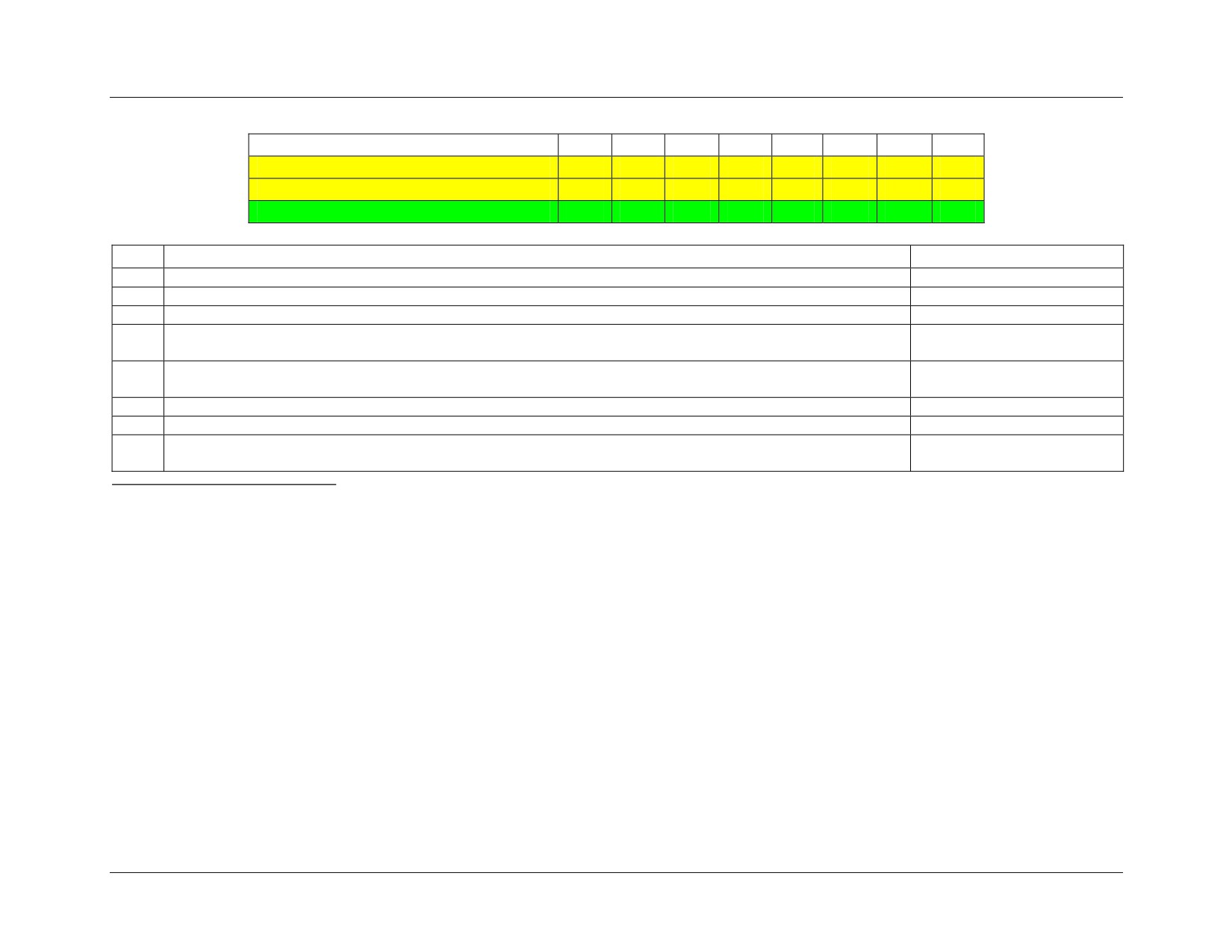
For Official Use Only
CBRN Functional Needs Analysis/Functional Solution Analysis
Chapter 16. Operational Sustain Tasks
Table 16.13-1. OPSUST 13: Capability and Deficiency Assessment
SJFHQ
M1
M2
M3
M4
M5
M6
M7
M8
Current Overall Capability1
Y2
Y3
Y4
Y5
Y6
Y7
Y8
Y9
Near/Mid-Term Overall Capability
Y
Y
Y
Y
Y
Y
Y
Y
Far-Term Overall Capability
G10
G
G
G
G
G
G
G
FAA Measure
Scale
M1
Procedures and checklists exist to facilitate the ability to recover and decontaminate critical items.
G - Yes, Y - Limited, R - No
M2
Procedures and exist for hazardous material that cannot be processed in accordance with appropriate regulations.
G - Yes, Y - Limited, R - No
M3
Procedures and checklists exist to facilitate the ability to dispose of hazardous material appropriately.
G - Yes, Y - Limited, R - No
M4
Procedures and checklists exist to facilitate the ability to transport contaminated materials to rear areas or designated
G - Yes, Y - Limited, R - No
sites.
M5
Procedures and checklists exist to facilitate the ability to coordinate salvage of materials that require
G - Yes, Y - Limited, R - No
decontamination.
M6
Procedures exist to properly dispose of contaminated material.
G - Yes, Y - Limited, R - No
M7
Decontamination procedures are logistically supportable.
G - Yes, Y - Limited, R - No
M8
Joint exercises/experimentation provide feedback on how a JTF would coordinate salvage of materials that require
G - Yes, Y - Limited, R - No
decontamination
1 Limited. There is DOTMLPF in place that addresses salvage, but there are no TTPs and limited training that specifically addresses coordinating the salvage of materials that
require decontamination.
2 Limited. Any SJFHQ staff can develop procedures and checklists, but there are no TTPs that addresses the recovery and decontamination of critical items.
3 Limited. Although there are regulations that address the processing of hazardous materials and any staff can develop TTPs to facilitate complying with regulation, there are no
TTPs that link formerly CBRN contaminated materials and address the process by which they become hazardous material defined in accordance with appropriate regulations.
4 Limited. Any SJFHQ staff can develop procedures and checklists, but there are no TTPs that address the ability to dispose of hazardous material appropriately.
5 Limited. Any SJFHQ staff can develop procedures and checklist, but there are no TTPs that address the ability to transport contaminated materials to rear areas or designated
sites.
6 Limited. Any SJFHQ staff can develop procedures and checklists, but there are no TTPs that addresses the ability to coordinate salvage of materials that require decontamination.
7 Limited. Any SJFHQ staff can develop procedures and checklists, but there are no TTPs that specifically address facilitating the ability to properly dispose of contaminated
material.
8 Limited. Current through the mid term, decontamination procedures will remain logistically difficult to support. Improvements will be seen in the far term with the fielding of
more logistically supportable decontamination alternatives.
9 Limited. Few if any exercises/experiments have been conducted that specifically addresses coordinating the salvage of materials that require decontamination.
10 In the far term, DOTMLPF enhancements across the board, made possible by focused experimentation and lessons learned from exercises will improve all measures to a “green”
rating.
68
For Official Use Only
For Official Use Only
CBRN Functional Needs Analysis/Functional Solution Analysis
Chapter 16. Operational Sustain Tasks
16.13.3
Functional Solution Analysis
16.13.3.1
DOTLPF Assessment Summary
This section addresses the deficiencies and suggests potential non-materiel solutions. If there are
no non-materiel solutions, or they are only partial solutions, the remaining non-materiel need is
then stated. Materiel needs are assessed in the IMA section.
1. Deficiency: No TTPs addresses the coordination of salvage materials that require
decontamination.
Non-Materiel Solutions: Doctrine: Develop TTPs on the coordination of salvage materials
that require decontamination.
2. Deficiency: Salvage exercises and experiments that include decontamination issues have
been limited.
Non-Materiel Solutions: Training: Develop exercises/experiments on the coordination of
salvage materials that require decontamination. Incorporate lessons learned from RESTOPS
ACTD into future exercises.
3. Deficiency: There is no leader training/education for salvage operations in a CBRN
environment.
Non-Materiel Solutions: Training: Develop training for staffs on the coordination of
salvage materials that require decontamination. Leadership: Develop leader education for
staffs on the coordination of salvage materials that require decontamination.
16.13.3.2
IMA Assessment Summary
N/A
69
For Official Use Only
For Official Use Only
CBRN Functional Needs Analysis/Functional Solution Analysis
Chapter 16. Operational Sustain Tasks
16.14 Task OPSUST 14: Conduct CBRN elimination operations
16.14.1
Functional Area Analysis
16.14.1.1
Definition
To execute theater CBRN elimination operations. A joint force commander may be directed by
the combatant commander to conduct military operations for the explicit purpose of eliminating
the CBRN weapons or capabilities held by an adversary. Specifically, U.S. military operations
across the range of military operations also may entail a requirement to eliminate, or support the
elimination of, CBRN weapons or capabilities. CBRN elimination is the systematic removal of a
capability within a nation or organization to develop, deploy, or employ CBRN weapons. The
degree or extent of elimination is a strategic objective, defined by a strategic end state, and
ranges from complete removal of all capability (including research, production, and training
regarding any form of CBRN weapon) to the focused removal of specific capabilities. This task
encompasses three primary subtasks: Executing Exploitation (locating, characterizing, and
securing CBRN materiel, weapons, equipment, personnel, and infrastructure, and developing
appropriate forensic evidence); Executing Disposition (destroying, dismantling, rendering safe,
removing, transferring, or otherwise verifiably disposing of CBRN materiel, weapons,
equipment, and infrastructure); and Executing Monitoring and Redirection (monitoring,
inspecting, and redirecting/converting the CBRN infrastructure).
16.14.1.2
Derivation
Combatant Commander’s Planning Guide for WMD Elimination Operations (Draft), TM 60A-1-
111 (S) - CBRNE EOD Operations.
16.14.1.2.1
Supported Task: STSUST 14
16.14.1.2.2
Lateral Task: OPSHA 1
16.14.1.2.3
Supporting Tasks: TASUST 28, TASUST 29, TASUST 30
16.14.1.3
Condition
Perform this task under conditions of:
Physical
1. Chemical, biological, radiological or nuclear threat form. (C1.3.3.1-3)
Military
1. Cooperative nation
a. Partial preexisting arrangements. (C2.1.1.2)
b. Limited military commitments from other nations. (C2.1.1.7)
c. Limited host-nation support. (C2.8.5)
70
For Official Use Only
For Official Use Only
CBRN Functional Needs Analysis/Functional Solution Analysis
Chapter 16. Operational Sustain Tasks
2. Uncooperative nation
a. No preexisting arrangements. (C2.1.1.2)
b. Negligible military commitments from other nations. (C2.1.1.7)
c. No host-nation support. (C2.8.5)
Common Military Conditions
1. Limited personnel expertise. (C2.2.4.5)
Civil
1. Cooperative nation
a. Limited foreign government support. (C3.1.2.3.)
2. Uncooperative nation
a. Negative foreign government support. (C3.1.2.3.)
Common Civil Conditions
1. Moderate restraints on action. (C3.1.3.4)
This task is analyzed in the WMD Interdiction and Elimination JCIDS Analysis.
71
For Official Use Only
For Official Use Only
CBRND Functional Needs Analysis/Functional Solution Analysis
Chapter 17. Tactical Sustain Tasks
CHAPTER 17. TACTICAL SUSTAIN TASKS
For Official Use Only
For Official Use Only
CBRND Functional Needs Analysis/Functional Solution Analysis
Chapter 17. Tactical Sustain Tasks
Table of Contents
List of Acronyms
iii
17.0
Tactical Sustain
1
17.1
Task TASUST
1: Decontaminate personnel
17
17.2
Task TASUST
2: Decontaminate casualties and potentially exposed personnel
27
17.3
Task TASUST
3: Decontaminate wounds
38
17.4
Task TASUST
4: Decontaminate remains
46
17.5
Task TASUST
5: Diagnose chemical effects on personnel and MWAs
57
17.6
Task TASUST
6: Diagnose biological effects on personnel and MWAs
64
17.7
Task TASUST
7: Diagnose radiological effects on personnel and MWAs
71
17.8
Task TASUST
8: Treat chemical effects on personnel and MWAs
77
17.9
Task TASUST
9: Treat biological effects on personnel and MWAs
86
17.10
Task TASUST
10: Treat radiological effects on personnel and MWAs
93
17.11
Task TASUST
11: Decontaminate individual and crew-served weapons
98
17.12
Task TASUST
12: Decontaminate vehicles, weapons, and nonsensitive equipment
108
17.13
Task TASUST
13: Decontaminate sensitive equipment
119
17.14
Task TASUST
14: Decontaminate ship exteriors
128
17.15
Task TASUST
15: Decontaminate ship interiors
138
17.16
Task TASUST
16: Decontaminate assault craft
148
17.17
Task TASUST
17: Decontaminate aircraft
157
17.18
Task TASUST
18: Decontaminate fixed-facility exteriors
168
17.19
Task TASUST
19: Decontaminate fixed-facility interiors
177
17.20
Task TASUST
20: Decontaminate open areas
187
17.21
Task TASUST
21: Decontaminate cargo and supplies, including POL,
ammunition, and packaged food
195
17.22
Task TASUST 22: Conduct transload operations
204
17.23
Task TASUST 23: Produce potable water in a contaminated environment
208
17.24
Task TASUST 24: Conduct tactical risk assessment of units, equipment, facilities,
activities, or terrain that are contaminated for restoration prioritization and timing
213
17.25
Task TASUST 25: Assess the impact of restoration activities on tactical
objectives
219
17.26
Task TASUST 26: Provide tactical guidance to forces with contaminated units
224
17.27
Task TASUST 27: Conduct salvage operations to recover critical materiel
230
i
For Official Use Only
For Official Use Only
CBRND Functional Needs Analysis/Functional Solution Analysis
Chapter 17. Tactical Sustain Tasks
17.28 Task TASUST 28: Conduct exploitation operations
236
17.29 Task TASUST 29: Conduct disposition or destruction operations
238
17.30 Task TASUST 30: Conduct monitoring and redirection operations
240
ii
For Official Use Only
For Official Use Only
CBRND Functional Needs Analysis/Functional Solution Analysis
Chapter 17. Tactical Sustain Tasks
17.0 Tactical Sustain
17.0.1
Introduction
At the Tactical (TA) level of war, battles and engagements are planned and executed to
accomplish military objectives assigned to tactical units or task forces. Activities at this level
focus on the ordered arrangement and maneuver of combat elements in relation to each other and
to the enemy to achieve combat objectives. Thirty Tactical Sustain (SUST) tasks were identified
in the chemical, biological, radiological, and nuclear (CBRN) Functional Area Analysis (FAA).
An additional task was added associated with isolation operations, which is a recently added
component of elimination operations. However, the detailed analysis of the elimination tasks has
been deferred to the Joint Requirements Office for Chemical, Biological, Radiological, and
Nuclear Defense (JRO-CBRND)-sponsored FAA/Functional Needs Analysis (FNA) of the
weapons of mass destruction (WMD) elimination and interdiction functional areas.
This chapter, detailing the Tactical Sustain (TASUST) area, restates relevant information from
the CBRN Defense (CBRND) FAA, including a description of each of the 30 TASUST tasks,
derivation of the task, an indication of other linked tasks, and the pertinent conditions. The FNA
section addresses the capability and deficiency analysis and a brief description of potential near-
term changes. Once all the capabilities are considered, the assessment concludes with a separate,
overarching look at the entire capability spectrum to identify remaining gaps and/or synergies.
The Functional Solutions Analysis (FSA) section addresses possible solutions for the
deficiencies identified in the FNA section. These are categorized into materiel or non-materiel.
The non-materiel solutions are addressed first and reflect one or more of the six areas of
DOTLPF: doctrine, organization, training, leadership, personnel, and facilities. If there is no non-
materiel solution to the deficiencies, then materiel solutions are considered. These encompass
broad approaches that are not system-specific. These potential materiel approaches are addressed
and evaluated in the Ideas for Materiel Solutions (IMA) section. The IMAs provide a possible
near- or far-term resolution to identified deficiencies within the individual capabilities.
Most of the TASUST tasks involve the process of decontamination of such things as equipment,
vehicles, weapons, facilities, open areas, and personnel. According to current doctrine, the
possible spectrum of decontaminants is quite broad, including standard, nonstandard, and natural
materials. This effort limits consideration of decontaminants within the capability assessment to
those items that are readily available to units and personnel. Typically, these encompass
primarily standard and natural decontaminants.
Tasks associated with personnel, such as decontaminating casualties or diagnosing and treating
CBRN effects, also include military working animals (MWAs), specifically military working
dogs (MWDs). Several animal species are used as MWAs; however, MWDs are the predominant
species and are most likely to be deployed with military personnel.
The remaining tasks address CBRND medical diagnostics and medical therapeutics, as well as
relevant CBRND joint tactical and Service component tactical tasks.
1
For Official Use Only
For Official Use Only
CBRND Functional Needs Analysis/Functional Solution Analysis
Chapter 17. Tactical Sustain Tasks
17.0.2
FNA Summary
Table 17.0-1 below summarizes the overall current and projected capability to perform the
TASUST tasks identified in the CBRND FAA. The overall capability to conduct these tasks in
the current time frame is assessed as “yellow.” There are key deficiencies in the U.S. Department
of Defense’s (DoD’s) ability to decontaminate sensitive equipment, aircraft, fixed facilities and
open areas, along with deficiencies in producing potable water in a contaminated environment
(on an individual basis). It is projected that the overall status will remain “yellow” in the
near/mid term in spite of the fielding of item-specific, initial decontamination capabilities
resulting from targeted developmental programs and technology demonstrations. This status is
primarily due to ongoing logistical challenges in the decontamination of open areas and remains,
as well as shortfalls in the low-level verification of decontamination efficacy for chemical and
biological agents.
More specific decontamination capability gaps revealed by the analysis include efficacy, the
ability to decontaminate a wider range of agents/hazards, thorough decontamination processing
rates, materiel compatibility, and logistics challenges presented when conducting
decontamination operations. Future decontamination processes should achieve efficacy levels
that will allow unprotected post-decontamination exposures for long periods with minimal
hazards, preferably meeting both civilian and military standards, although specific policy
guidance is lacking on acceptable levels for residual contamination levels. Capabilities are
needed to decontaminate all potential residual hazards in the battlespace that may require
multiple processes, systems, and/or decontaminants to achieve. Future processes and systems
should lessen the time required to carry out decontamination to provide warfighters more rapid
relief from Mission-Oriented Protective Posture (MOPP). Decontamination processes, systems,
and decontaminants must be compatible with a wide range of materiel and facilities to avoid
degrading readiness and capabilities due to damage from decontamination processes.
Technology thrusts are needed to lessen logistical burdens and cut manpower requirements
associated with decontamination for both current and existing developmental programs.
To determine current decontamination capabilities, the following standard decontaminants,
systems and other capabilities to perform decontamination at the immediate, operational and
thorough levels were evaluated (identified as “I” for immediate, “O” for operational, and “T” for
thorough below each measure in the capability/deficiency assessment tables that follow):
M291 Skin Decontamination Kit (SDK). The M291 has six packets of applicator pads filled with
decontamination powder. The powder absorbs and neutralizes liquid chemical agents on skin
and personal nonsensitive equipment.
M100 Sorbent Decontamination System (SDS). The M100 consists of two 0.7-pound bags of
powdered reactive sorbent and two mitts. It is used on small areas that must be touched and
crew-served weapons.
M295 Individual Equipment Decontamination Kit. One M295 pouch contains four wipe-down
mitts used on masks/hoods, gloves, helmet, and weapons using the same powder as the M100
SDS.
2
For Official Use Only
For Official Use Only
CBRND Functional Needs Analysis/Functional Solution Analysis
Chapter 17. Tactical Sustain Tasks
M17-series Lightweight Decontamination System (LDS). A relatively small engine-powered
pump and water-heating unit with two wand assemblies and 1580-3000 gallon collapsible
water tanks. Lightweight Decontamination Systems are primarily used for operational and
thorough decontamination of vehicles and equipment. They may also be used for personnel
showers.
M12A1 Power-Driven Decontamination Apparatus (PDDA). The M12A1 is a large engine-
powered pump and water-heating unit with two spray wand assemblies and a metal 500-
gallon tank capable of mixing decontaminants and water in the tank. It is an aging system
used for larger-scale decontamination missions to include terrain decontamination. Only the
Army currently utilizes the M12A1.
Super Tropical Bleach (STB). A standard military decontaminant utilized in powder form or
diluted with water as slurry.
High-Test Hypochlorite (HTH). A standard military decontaminant utilized in water-diluted
solution mixtures.
Various other existing capabilities that are used to support decontamination processes were also
evaluated. Many standard soaps and detergents are readily available and commonly used to
remove but not neutralize contamination. Soaps and detergents are the primary decontaminants
used to remove radioactive fallout or other particles. Many common disinfectants are effective
against non-spore-forming biological agents. Decontamination sites utilize most of the existing
decontamination systems in accordance with doctrine and tactics, techniques, and procedures
(TTPs) to methodically carry out various decontamination processes. Naval ships possess
countermeasures washdown systems (CMWDs) used to prewet exterior shipboard surfaces when
it is suspected the ship may become contaminated and to assist with post-event decontamination
efforts. Firemains and steam sources available on ships can also assist with decontamination.
Physical removal of contamination may also be specified, particularly for ships undergoing
maintenance and in some terrain decontamination scenarios.
To determine near-/mid-/far-term decontamination capabilities, current ongoing developmental
decontamination programs were assessed assuming that these programs would meet all specified
key performance parameters. The following developmental programs to perform
decontamination at the immediate, operational and thorough levels were evaluated (identified as
“I,” “O,” and “T” below each measure in the capability/deficiency assessment tables):
• Joint Service Personnel/Skin Decontamination System (JSPDS). JSPDS will replace the
M291 Skin Decontaminating Kit. All four Services are participating in this program.
Increment I will provide operational capabilities equal to, and efficacy capabilities greater
than, the M291 Skin Decontaminating Kit. Increment II capabilities will address
percutaneous hazards for which existing systems (i.e., M291 Skin Decontaminating Kit) are
not effective and add system capabilities to include decontamination of personnel with open
wounds, thorough whole-body decontamination, radiological decontamination, and handling
of contaminated personnel remains.
3
For Official Use Only
For Official Use Only
CBRND Functional Needs Analysis/Functional Solution Analysis
Chapter 17. Tactical Sustain Tasks
•
Joint Service Transportable Decontamination Systems (JSTDS). JSTDS will develop two
decontamination systems, small-scale and large scale. The small-scale system (JSTDS-SS)
will replace all existing M17-series Lightweight Decontamination Systems in Service
inventories. All four Services are participating in this program. The large-scale system
(JSTDS-LS) will replace the M12A1 system used by the Army and will also be employed by
the Air Force. Both small- and large-scale decontamination systems will be developed using
an incremental approach. Increment I will provide improved capabilities over current systems
to decontaminate tactical and nontactical vehicles, ship exterior surfaces, crew-served
weapons, aircraft, and aircraft support equipment, building/facility exteriors, and terrain.
Increment II will focus on improving overarching decontamination processes, efficacy, and
system capabilities for operational and thorough decontamination of equipment, aircraft, and
nonsensitive building/facility interior spaces.
•
Joint Portable Decontamination System (JPDS). JPDS will replace capabilities formerly
provided by the M11 and M13 Decontamination Apparatuses using Decontamination
Solution #2 (DS-2). All Services stopped using DS-2 during FY2004 due to storage and
health hazards. All Services except the Marine Corps are participating in this program.
Increment I will provide initial or improved capabilities to decontaminate a broad range of
equipment (e.g., ships, tactical vehicles, and crew-served weapons). In addition, JPDS may
be used for immediate decontamination of individual equipment. JPDS will be used with
existing approved soaps to perform decontamination operations on aircraft and aircraft
support equipment. Increment II will focus on improving decontamination processes,
efficacy, and system capabilities to include thorough decontamination of select aircraft and
nonsensitive building/facility interior spaces.
•
Joint Service Sensitive Equipment Decontamination (JSSED). JSSED will provide a new
capability. All four Services are participating in this program. Increment I will provide initial
or improved capabilities to decontaminate sensitive equipment. Increment I improvements
will standardize sensitive equipment decontamination processes, lessen potential to damage
or degrade sensitive equipment, and provide greater assurance that decontaminated items can
be safely handled and employed after being decontaminated. Increment II will focus on
further improving decontamination efficacy and range of agents that can be decontaminated,
lessen time required for decontamination cycles, eliminate equipment degradation, and
provide initial capabilities for JSSED to decontaminate large sensitive equipment items.
•
Joint Platform Interior Decontamination (JPID). JPID will provide a new capability. All
Services except the Marine Corps are participating in this program. Increment I will provide
initial or improved capabilities to decontaminate vehicles, ships, fixed-site facilities, aircraft,
and mobile maintenance facility interiors. Increment I improvements will lessen the potential
to damage or degrade sensitive equipment and provide greater assurance that decontaminated
interior spaces can be safely occupied after being decontaminated. Increment II will focus on
further improving decontamination efficacy and the range of agents that can be
decontaminated, lessen time required for decontamination processes, allow for the
decontamination of aircraft cargo spaces and cargo while in flight, and eliminate equipment
degradation.
4
For Official Use Only
For Official Use Only
CBRND Functional Needs Analysis/Functional Solution Analysis
Chapter 17. Tactical Sustain Tasks
There are also key deficiencies in CBRN diagnosis and treatment of personnel and MWDs. First,
in regards to chemical exposure diagnostics, there are no definite clinical tests to confirm
mustard agent or phosgene exposure. This lack is important since signs and symptoms of
mustard and phosgene exposure can be delayed and may not be immediately recognizable to
medical and veterinary staff. Signs and symptoms of early stages of biological agent infection
are frequently nonspecific; consequently, there is a lack of capability to identify illnesses during
prodromal stages. In some cases, clinical diagnosis can presumptively identify infected personnel
and MWDs during presymptomatic and prodromal stages; however, this task usually requires
reliable sampling capabilities, which currently do not exist. Signs and symptoms of radiation
exposure can easily be confused for those caused by other conditions. For example, many acute
radiation syndrome prodromal symptoms can also be caused by psychological stress. For this
reason, clinical diagnosis is critical to diagnosing exposed personnel and MWDs. However, there
is no clinical test that can rapidly identify personnel and MWDs that either were exposed to
radiation or have internalized radioactive contamination.
In terms of treatment capabilities, there is a lack of Food and Drug Administration (FDA)-
approved chemical exposure countermeasures that can be self- or buddy-administered
(Self/Buddy Aid is basically limited to autoinjectors for nerve agent exposure). Furthermore,
many, if not most, of these countermeasures have major contraindications. In addition, there is a
lack of effective antivirals and antitoxins for personnel and MWDs infected by viruses and toxins
of interest, respectively. For example, there are no effective antivirals for Ebola/Marburg viruses,
the equine encephalitis viruses, and smallpox; and there are no effective antitoxins for ricin,
SEB, and T-2 mycotoxins. Radiological exposure countermeasures are primarily limited to
therapeutics and symptomatic care. Though there are chelating, blocking, diluting, and
mobilizing agents, many of these must be administered promptly after internalization or they lose
their effectiveness. Also, many can have toxic effects on the body.
The capability assessment provided by this FNA is provided as a tool to show where capability
gaps exist. All capability gaps will continue to be prioritized by the Joint Priority List (JPL) in
accordance with Paragraph 3.2.1.5 of the Implementation Plan for the Management of the
Chemical and Biological Defense Program. The FNA/FSA is not used to specifically support the
planning, programming and budgeting for the Chemical and Biological Defense Program but is
used to support the Joint Capabilities Integration and Development System (JCIDS) process.
Table 17.0-1. Tactical Sustain Summary FNA Findings
Capabilities
Task
CBRN Tactical Sustain Task Title
Near/Mid-
Far-
Number
Current
Term
Term
TASUST 1
Decontaminate personnel.
•
•
•
TASUST 2
Decontaminate casualties.
•
•
•
TASUST 3
Decontaminate wounds.
•
•
•
TASUST 4
Decontaminate remains.
•
•
•
5
For Official Use Only