CHEMICAL, BIOLOGICAL, RADIOLOGICAL, AND NUCLEAR DEFENSE (CBRND) FUNCTIONAL NEEDS ANALYSIS. FINAL REPORT (2005) - page 25
For Official Use Only
CBRND Functional Needs Analysis/Functional Solution Analysis
Chapter 15. Strategic Theater Sustain Tasks
Current Capability and Deficiency
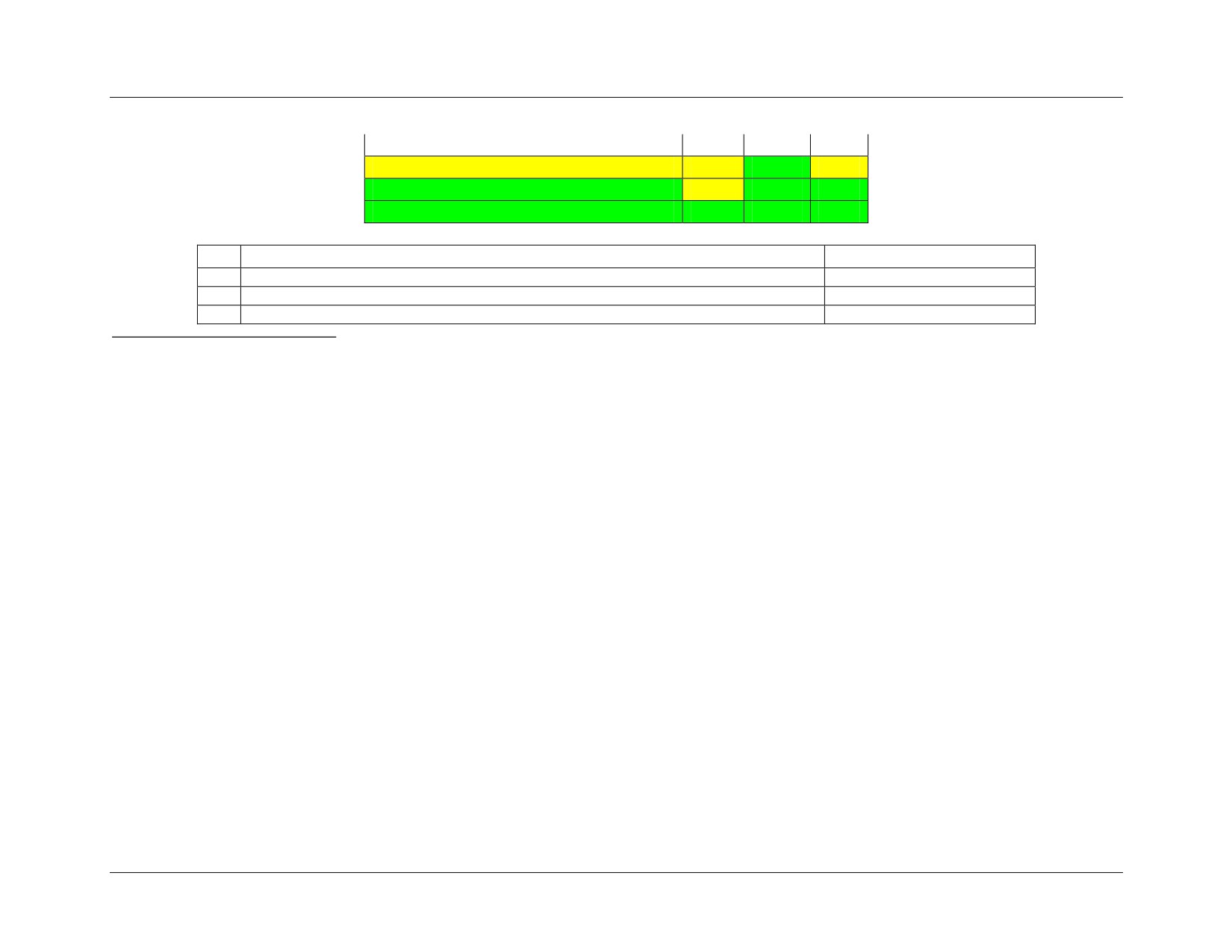
The current assessment is “yellow.” The combatant commander coordinates policies and
guidelines with the theater commanders to govern theater restoration operations. Nothing
precludes the COCOM staff from establishing policies and guidelines for joint restoration
operations,, but there is very little in the way of existing doctrine or TTPs to help guide them.
There are no definitive guidelines and policies for joint/multinational theater-/operational-level
operations. Conflicting terminology has the potential to produce operational friction. A
restoration exercise focused on theater restoration operations has not been conducted. A
Restoration Operations (RESTOP) Advanced Concept Technology Demonstration (ACTD) has
been conducted in U.S. Forces, Korea (USFK) with results to be published (TBP).
Doctrine/TTPs have not been developed for operational level and above. Leader education does
not address this issue. CBRND staffs and staffing at all levels is inadequate.
Projected Near/Mid-Term Capability and Deficiency
No other capability is currently projected for the near/mid term. In the mid term, improvements
will be made or initiated. Experiments and exercises focused on theater restoration operations
will be conducted. Lessons learned from RESTOPS ACTD will be integrated into future
exercises and experimentation that looks at issues other than fixed sites. Definitive guidelines
and policies will be developed for joint/multinational theater-level operations. Conflicting
terminology having the potential to produce operational friction will be standardized. The overall
capability will improve to “green” in the near/mid term.
Projected Far-Term Capability and Deficiency
No other capability is currently projected for the far-term future. DOTMLPF should improve in
all deficient areas as a result of initiatives that use data resulting from focused experimentation.
JTTPs, training and exercises, and education will all improve leading to a far-term assessment of
“green.”
6
For Official Use Only
For Official Use Only
CBRND Functional Needs Analysis/Functional Solution Analysis
Chapter 15. Strategic Theater Sustain Tasks
Table 15.1-1. STSUST 1: Capability and Deficiency Assessment
Capability: COCOM HQ
M1
M2
M3
Current Overall Capability1
Y2
G3
Y4
Near/Mid-Term Overall Capability5
Y
G
G6
Far-Term Overall Capability7
G8
G
G
FAA Measure
Scale
M1
Policy and guidelines for theater restoration operations are established.
G - Yes, Y - Limited, R - No
M2
Existing policy and guidelines are updated regularly.
G - Yes, Y - Limited, R - No
M3
Theater exercises/experimentation provide feedback on efficacy of policy and guidelines.
G - Yes, Y - Limited, R - No
1 No doctrine or TTPs have been developed that is useful for operational-level and above restoration operation consideration. Leader education does not address this issue. CBRND
staffs and staffing at all levels is inadequate.
2 Policies and guidelines for theater restoration operations are limited, but nothing precludes a COCOM staff from developing policies and guidelines. There are NATO, multi-
Service, and individual Service tactical policies and guidelines, but no definitive guidelines and policies for joint/multinational theater-level operations. Conflicting terminology
has the potential to produce operational friction.
3 Policies and guidelines are updated regularly.
4 Limited. A restoration exercise focused on theater restoration operations has not been conducted. A RESTOP ACTD (ongoing) has been conducted with results TBP.
5 DOTMLPF should improve in all deficient areas as a result of initiatives that use data resulting from focused experimentation.
6Experiments and exercises focused on theater restoration operations will be conducted. Lessons learned from RESTOPS ACTD will be integrated into future exercises and
experimentation that looks at issues other than fixed sites.
7 Continued DOTMLPF enhancements will result from exercise and wargame lessons learned.
8 Definitive guidelines and policies will be developed for joint/multinational theater-level operations. Conflicting terminology having the potential to produce operational friction
will be standardized.
7
For Official Use Only
For Official Use Only
CBRND Functional Needs Analysis/Functional Solution Analysis
Chapter 15. Strategic Theater Sustain Tasks
15.1.3
Functional Solution Analysis
15.1.3.1
DOTLPF Assessment Summary
This section addresses the deficiencies and suggests potential non-materiel solutions. If there are
no non-materiel solutions, or they are only partial solutions, the remaining non-materiel need is
then stated. Materiel needs are assessed in the IMA section.
1.
Deficiency: Policies and guidelines for joint/multinational theater/operational-level
restoration operations are limited.
Non-Materiel Solutions: Doctrine: Establish policies and guidelines for joint/multinational
theater/operational-level restoration operations. Include guidance on support to SOF and
support required for foreign consequence management.
2.
Deficiency: Conflicting terminology has the potential to produce operational friction.
Non-Materiel Solutions: Doctrine: Deconflict terminology in joint, Service, and
multinational doctrine and TTPs.
3.
Deficiency: A restoration exercise focused on theater restoration operations has not been
conducted.
Non-Materiel Solutions: Training: Develop COCOM staff exercises to define and refine
restoration operation policies and guidelines. Incorporate lessons learned from RESTOPS
ACTD into future exercises. Facilities: Incorporate infrastructure required to conduct
COCOM-level restoration exercises into the Joint National Training Center (JNTC).
4.
Deficiency: A RESTOP ACTD (ongoing) has been conducted in USFK with results TBP.
Non-Materiel Solutions: Training: Incorporate lessons learned from RESTOPS ACTD into
future exercises and experimentation that looks at issues other than fixed sites.
5.
Deficiency: Doctrine/TTPs have not been developed for operational level and above.
Non-Materiel Solutions: Doctrine: Establish JPME leader education on this task.
6.
Deficiency: CBRND staff functions and organization vary greatly between commands,
which can be detrimental to planning, coordination, and operations.
Non-Materiel Solutions: Organization: Analyze CBRND staffing in all organizations in
light of the capabilities required of them in this task. Recommend staffing/organizational
changes, enhancements, or alternative fixes as required.
7.
Deficiency: Leader education does not address this issue.
Non-Materiel Solutions: Leadership: Develop Joint Professional Military Education
(JPME) training on restoration operations roles and responsibilities. CJCSI 1800.01a, JPME,
must include leader-learning areas for restoration operations considerations at the ST level.
15.1.3.2
IMA Assessment Summary
N/A
8
For Official Use Only
For Official Use Only
CBRND Functional Needs Analysis/Functional Solution Analysis
Chapter 15. Strategic Theater Sustain Tasks
15.2
Task STSUST 2: Establish theater restoration operation priorities
15.2.1
Functional Area Analysis
15.2.1.1
Definition
To establish theater restoration operation priorities to ensure that strategically significant forces
and facilities are available when required. The combatant commander establishes these priorities
and provides them to theater commanders to govern the establishment of joint restoration
operation priorities. Critical data elements include agent toxicity and persistency as well as the
duration of a hazard on a variety of surfaces under differing weather conditions. As operational
requirements change, priorities are adjusted as required.
15.2.1.2
Derivation
UJTL (ST 9.4, ST 4.2.3, ST 5.4.1).
15.2.1.2.1
Supported Task: SNSUST 3
15.2.1.2.2
Lateral Tasks: STSHA 6, STSUST 14
15.2.1.2.3
Supporting Task: OPSUST 2
15.2.1.3
Condition
Perform this task under conditions of:
Physical. N/A
Military
1. Partial preexisting arrangements. (C2.1.1.2)
2. Limited personnel expertise. (C2.2.4.5)
3. Poor joint staff integration. (C2.3.1.1)
Civil. N/A
15.2.2
Functional Needs Analysis
15.2.2.1
Capability and Deficiency Assessment Summary
Table 15.2-1 discusses the only capability that currently exists to perform the task to the
designated standard. There is only one capability that exists, and no other capability is projected
that will accomplish this task.
9
For Official Use Only
For Official Use Only
CBRND Functional Needs Analysis/Functional Solution Analysis
Chapter 15. Strategic Theater Sustain Tasks
Current Capability and Deficiency
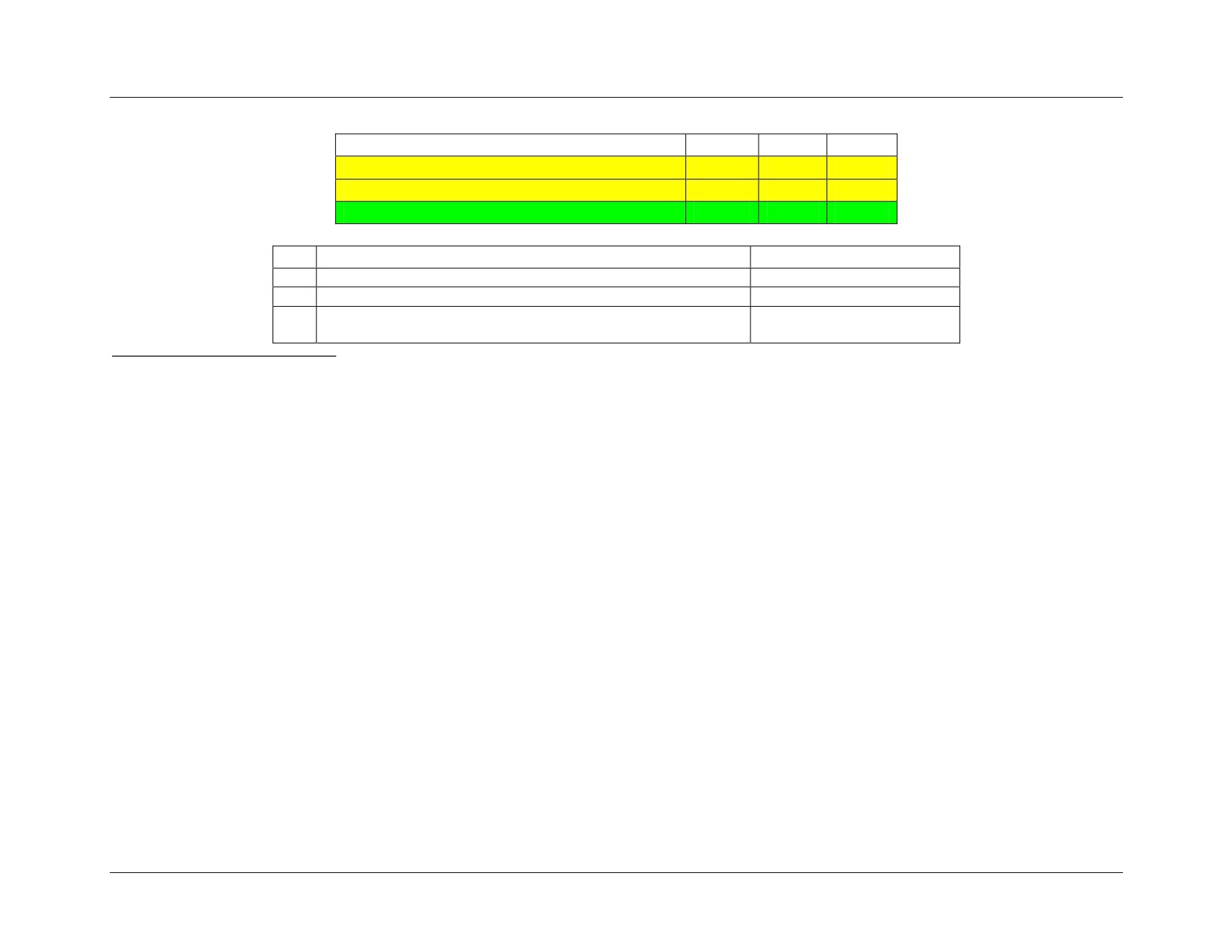
The current assessment is “yellow.” The combatant commander coordinates theater restoration
operation priorities and provides them to theater commanders to govern the establishment of
joint restoration operation priorities. Nothing precludes the COCOM staff from establishing
restoration priorities based on the current situation, but there is very little in the way of existing
doctrine or TTPs to help guide them. All assessments must be done manually, increasing the
time required to establish priorities when the CBRN situation changes. Changes must be made
manually, and staff familiarity with CBRND issues is limited. A restoration exercise focused on
theater restoration operations has not been conducted. A RESTOP ACTD has been conducted
with results TBP.
Projected Near/Mid-Term Capability and Deficiency
No other capability is currently projected for the near/mid term. Little capability improvement is
forecast for the near/mid term with the exception that DOTMLPF should improve in some areas
as a result of initiatives that use data resulting from focused experimentation.
Projected Far-Term Capability and Deficiency
No other capability is currently projected for the far-term future. DOTMLPF should improve in
all deficient areas as a result of initiatives that use data resulting from focused experimentation.
JTTPs, training and exercises, and education will all improve leading to a far-term assessment of
“green.”
10
For Official Use Only
For Official Use Only
CBRND Functional Needs Analysis/Functional Solution Analysis
Chapter 15. Strategic Theater Sustain Tasks
Table 15.2-1. STSUST 2: Capability and Deficiency Assessment
Capability: COCOM HQ
M1
M2
M3
Current Overall Capability1
Y2
Y3
Y4
Near/Mid-Term Overall Capability5
Y
Y
Y
Far-Term Overall Capability6
G7
G8
G9
FAA Measure
Scale
M1
Theater restoration operation priorities are established.
G - Yes, Y - Limited, R - No
M2
Priorities are modified after operational requirements change.
G - Yes, Y - Limited, R - No
M3
Theater exercises/experimentation provide feedback on the
G - Yes, Y - Limited, R - No
establishment of theater restoration operation priorities.
1 No doctrine/TTPs have been developed. Leader education does not address this issue.
2 Nothing precludes the COCOM staff from establishing restoration priorities based on the current situation, but no pertinent joint publications provide guidance to assist planners
who need to advise the combatant commander on the coordination of theater restoration operation priorities. All assessments must be done manually, increasing the time required
to establish priorities when the CBRN situation changes.
3 Nothing precludes changing priorities after operational requirements change, but the changes must be made manually, and staff familiarity with CBRND issues is limited.
4 Limited, a restoration exercise focused on theater restoration operations has not been conducted. A RESTOP ACTD (ongoing) has been conducted with results TBP.
5 DOTMLPF should improve in all deficient areas as a result of initiatives that use data resulting from focused experimentation.
6 Continued DOTMLPF enhancements will result from exercise and wargame lessons learned.
7 Joint publications will provide guidance to assist planners who need to advise the combatant commander on the coordination of theater restoration operation priorities. All
assessments will no longer be done manually decreasing the time required to establish priorities when the CBRN situation changes.
8 Changes will no longer be made manually, and staff familiarity with CBRND issues will increase due to education designed for JPME.
9 Experiments and exercises focused on theater restoration operations will be conducted. Lessons learned from RESTOPS ACTD will be integrated into future exercises and
experimentation that looks at issues other than fixed sites.
11
For Official Use Only
For Official Use Only
CBRND Functional Needs Analysis/Functional Solution Analysis
Chapter 15. Strategic Theater Sustain Tasks
15.2.3
Functional Solution Analysis
15.2.3.1
DOTLPF Assessment Summary
This section addresses the deficiencies and suggests potential non-materiel solutions. If there are
no non-materiel solutions, or they are only partial solutions, the remaining non-materiel need is
then stated. Materiel needs are assessed in the IMA section.
1. Deficiency: All assessments must be done manually, increasing the time required to establish
priorities when the CBRN situation changes.
Non-Materiel Solutions: Training (partial): Develop COCOM staff exercises to define and
refine restoration priorities and guidelines.
2. Deficiency: A restoration exercise focused on theater restoration operations has not been
conducted.
Non-Materiel Solutions: Training: Develop COCOM staff exercises to define and refine
restoration operation policies and guidelines. Incorporate lessons learned from RESTOPS
ACTD into future exercises.
3. Deficiency: Doctrine/TTPs have not been developed for operational level and above.
Non-Materiel Solutions: Doctrine: Develop TTPs to provide assistance to staffs that must
coordinate theater restoration operation priorities.
4. Deficiency: Leader education does not address this issue.
Non-Materiel Solutions: Leadership: Establish JPME leader education on this task.
15.2.3.2
IMA Assessment Summary
Table 15.2-2 shows possible material approaches that address the remaining materiel
requirements of the DOTMLPF assessment.
Table 15.2-2. STSUST 2: IMA Assessment
Idea for Materiel
Capability Gap
Description
Approach
All assessments must be done
Automated tools
Develop automated systems and
manually, increasing the time
tools to facilitate the establishment
required to establish priorities
of theater restoration operation
when the CBRN situation changes.
priorities.
12
For Official Use Only
For Official Use Only
CBRND Functional Needs Analysis/Functional Solution Analysis
Chapter 15. Strategic Theater Sustain Tasks
15.3
Task STSUST 3: Establish theater restoration operation responsibilities
15.3.1
Functional Area Analysis
15.3.1.1
Definition
To establish theater restoration operation responsibilities to facilitate the smooth coordination of
decontamination efforts. The combatant commander establishes and maintains these
responsibilities and provides them to theater commanders to govern the control of joint
restoration operations.
15.3.1.2
Derivation
UJTL (ST 9.4, ST 4.2.3, ST 5.4.1).
15.3.1.2.1
Supported Task: SNSUST 4
15.3.1.2.2
Lateral Tasks: STSHA 6, STSUST 14
15.3.1.2.3
Supporting Task: OPSUST 3
15.3.1.3
Condition
Perform this task under conditions of:
Physical. N/A
Military
1. Partial preexisting arrangements. (C2.1.1.2)
2. Limited personnel expertise. (C2.2.4.5)
3. Poor joint staff integration. (C2.3.1.1)
Civil. N/A
15.3.2
Functional Needs Analysis
15.3.2.1
Capability and Deficiency Assessment Summary
Table 15.3-1 discusses the only capability that currently exists to perform the task to the
designated standard. There is only one capability that exists, and no other capability is projected
that will accomplish this task.
Current Capability and Deficiency
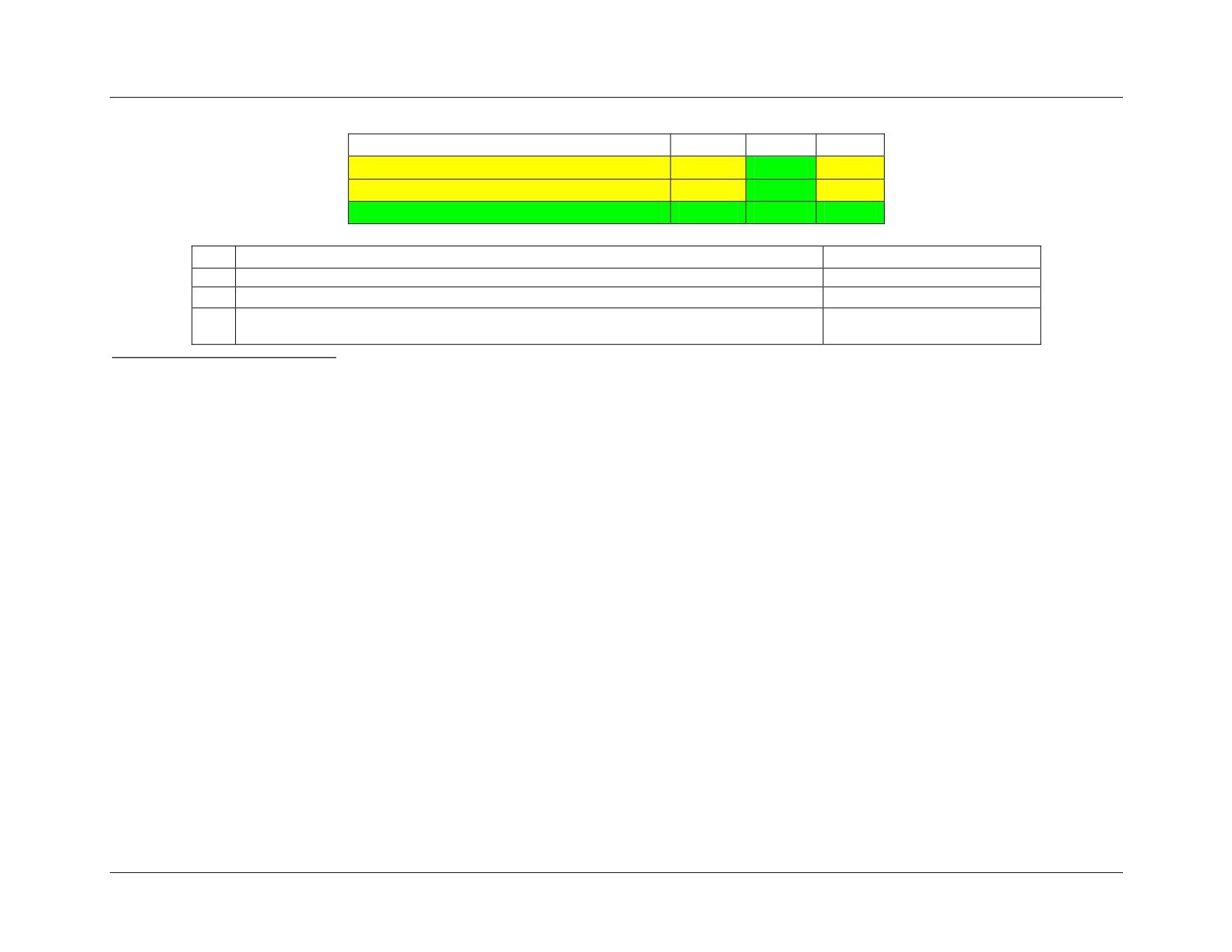
The current assessment is “yellow.” The combatant commander coordinates theater restoration
operation responsibilities and provides them to theater commanders to govern the control of joint
13
For Official Use Only
For Official Use Only
CBRND Functional Needs Analysis/Functional Solution Analysis
Chapter 15. Strategic Theater Sustain Tasks
restoration operations. Nothing precludes the COCOM staff from establishing restoration
responsibilities based on the current situation, but there is very little in the way of existing
doctrine or TTPs to help guide them. No pertinent joint publications provide guidance to assist
the planners. Leader education does not address this issue.
Projected Near/Mid-Term Capability and Deficiency
No other capability is currently projected for the near/mid term. Little capability improvement is
forecast for the near/mid term with the exception that DOTMLPF should improve in some areas
as a result of initiatives that use data resulting from focused experimentation.
Projected Far-Term Capability and Deficiency
No other capability is currently projected for the far-term future. DOTMLPF should improve in
all deficient areas as a result of initiatives that use data resulting from focused experimentation.
JTTPs, training and exercises, and education will all improve leading to a far-term assessment of
“green.”
14
For Official Use Only
For Official Use Only
CBRND Functional Needs Analysis/Functional Solution Analysis
Chapter 15. Strategic Theater Sustain Tasks
Table 15.3-1. STSUST 3: Capability and Deficiency Assessment
Capability: COCOM HQ
M1
M2
M3
Current Overall Capability1
Y2
G3
Y4
Near/Mid-Term Overall Capability5
Y
G
Y
Far-Term Overall Capability6
G7
G
G8
FAA Measure
Scale
M1
Theater restoration operation responsibilities are established.
G - Yes, Y - Limited, R - No
M2
Responsibilities are modified after substantive changes are recommended and approved.
G - Yes, Y - Limited, R - No
M3
Theater exercises/experimentation provide feedback on the establishment of theater
G - Yes, Y - Limited, R - No
restoration operation responsibilities.
1 No doctrine/TTPs have been developed. Leader education does not address this issue.
2 Nothing precludes the COCOM staff from coordinating theater restoration operation responsibilities and providing them to theater commanders to facilitate planning and govern
the control of joint restoration operations, but no pertinent joint publications provide guidance to assist the planners.
3 Nothing precludes changing priorities after substantive changes are recommended and approved.
4 Limited. A restoration exercise focused on the establishment of theater restoration operation responsibilities has not been conducted. A RESTOP ACTD (ongoing) has been
conducted with results TBP.
5 DOTMLPF should improve in all deficient areas as a result of initiatives that use data resulting from focused experimentation.
6 Continued DOTMLPF enhancements will result from exercise and wargame lessons learned.
7 Joint publications will be enhanced to provide guidance to assist the planners.
8 Experiments and exercises focused on theater restoration operations will be conducted. Lessons learned from RESTOPS ACTD will be integrated into future exercises and
experimentation that looks at issues other than fixed sites.
15
For Official Use Only
For Official Use Only
CBRND Functional Needs Analysis/Functional Solution Analysis
Chapter 15. Strategic Theater Sustain Tasks
15.3.3
Functional Solution Analysis
15.3.3.1
DOTLPF Assessment Summary
This section addresses the deficiencies and suggests potential non-materiel solutions. If there are
no non-materiel solutions, or they are only partial solutions, the remaining non-materiel need is
then stated. Materiel needs are assessed in the IMA section.
1. Deficiency: No pertinent joint publications or TTPs provide guidance to assist the planners.
Non-Materiel Solutions: Doctrine: Develop pertinent joint publications provide guidance to
assist planners who need to advise the combatant commander on the coordination of theater
restoration operation responsibilities.
2. Deficiency: A restoration exercise focused on the establishment of theater restoration
operation responsibilities has not been conducted.
Non-Materiel Solutions: Training: Develop COCOM staff exercises to define and refine
restoration operation responsibilities. Incorporate lessons learned from RESTOPS ACTD
into future exercises.
3. Deficiency: RESTOP ACTD results have not been published.
Non-Materiel Solutions: Training: Incorporate lessons learned from RESTOPS ACTD into
future doctrine and staff exercises.
4. Deficiency: Leader education does not address this issue.
Non-Materiel Solutions: Leadership: Establish JPME leader education on this task.
15.3.3.2
IMA Assessment Summary
N/A
16
For Official Use Only
For Official Use Only
CBRND Functional Needs Analysis/Functional Solution Analysis
Chapter 15. Strategic Theater Sustain Tasks
15.4
Task STSUST 4: Establish theater restoration operations guidance for strategic
deployment, sustainment, and redeployment, including NEO and AE operations
15.4.1
Functional Area Analysis
15.4.1.1
Definition
To ensure the integration of strategic deployment, sustainment, and redeployment with ongoing
or planned restoration operations. Key considerations include contamination avoidance by lift
assets, designation of alternate ports of embarkation/debarkation (POEs/PODs), identification of
transload sites for transload of cargo and passengers from uncontaminated to contaminated lift
platforms for movement into contaminated PODs, thorough decontamination of lift platforms,
and redeploying forces to internationally recognized decontamination standards. Aeromedical
evacuation (AE) planning should include TTPs to enable the movement of contagious/
contaminated patients.
15.4.1.2
Derivation
UJTL (ST 1.1.2, ST4, ST4.2.2.2, ST8.4.3, ST9.4), Air Mobility Operations in a Chemical and
Biological Environment.
15.4.1.2.1
Supported Tasks: SNSUST 1, SNSUST 2, SNSUST 5, SNSUST 7
15.4.1.2.2
Lateral Tasks: STSHA 6, STSUST 14
15.4.1.2.3
Supporting Task: OPSUST 11
15.4.1.3
Condition
Perform this task under conditions of:
Physical
1. Persistent CBRN effects. (C1.3.3.1-3)
Military
1. Stressful mission. (C2.1)
2. No mission preparation (C2.1.3)
3. Weak forces assigned. (C2.2.1)
4. Negligible personnel experience. (C2.2.4.5)
5. Limited lift assets available. (C2.5.2)
6. High rear-area security. (C2.7.1)
7. Limited host-nation support. (C2.8.5)
8. Conventional and terrorist threat form. (C2.9.2)
9. Fully developed state of conflict. (C2.10.1)
17
For Official Use Only
For Official Use Only
CBRND Functional Needs Analysis/Functional Solution Analysis
Chapter 15. Strategic Theater Sustain Tasks
Civil
Limited foreign government support. (C3.1.2.3)
15.4.2
Functional Needs Analysis
15.4.2.1
Capability and Deficiency Assessment Summary
Table 15.4-1 discusses the only capability that currently exists to perform the task to the
designated standard. There is only one capability that exists, and no other capability is projected
that will accomplish this task.
Current Capability and Deficiency
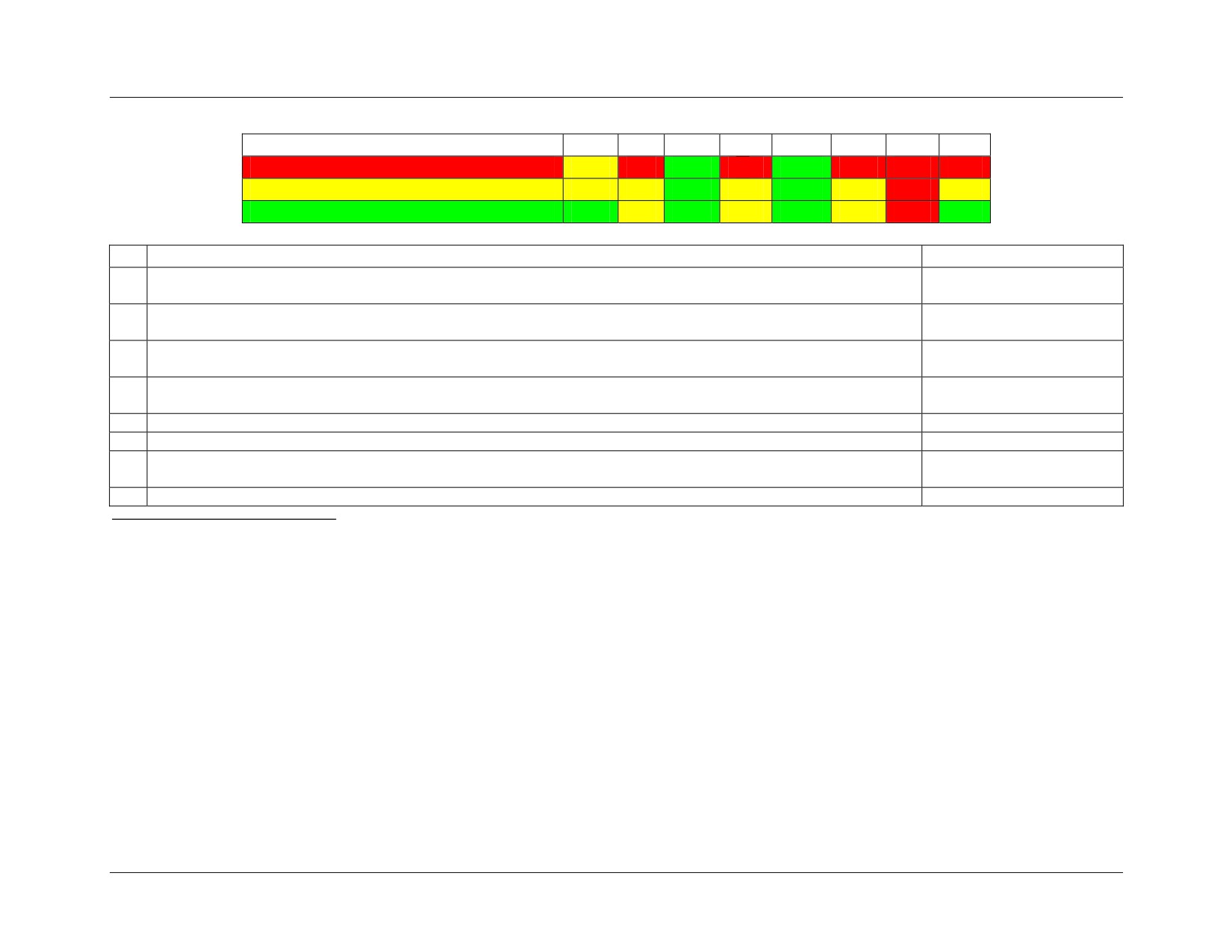
The current assessment is “red.” Any COCOM HQ has the basic ability to establish theater
restoration operations guidance for strategic deployment, sustainment, and redeployment
(including noncombatant evacuation operations [NEO] and AE) operations. There are some
deficiencies that negatively impact on the speed and efficiency with which they will be able do
this, and some international standards that must be established to preclude intertheater movement
problems.
Projected Near/Mid-Term Capability and Deficiency
No other capability is currently projected for the near/mid term. Improvements in JTTPs are
forecast in the near/mid term, which should improve the overall capability to “yellow.”
Projected Far-Term Capability and Deficiency
No other capability is currently projected for the far-term future. DOTMLPF should improve in
all deficient areas as a result of initiatives that use data resulting from focused experimentation.
JTTPs, training and exercises, and education will continue to improve leading to a far-term
assessment of “green.” A problem anticipated to extend into the far term is that there is no
universally accepted standard for movement of contaminated cargo and/or the evacuation of
contagious or contaminated casualties/remains.
18
For Official Use Only
For Official Use Only
CBRND Functional Needs Analysis/Functional Solution Analysis
Chapter 15. Strategic Theater Sustain Tasks
Table 15.4-1. STSUST 4: Capabilities and Deficiency Assessment
Capability: COCOM HQ
M1
M2
M3
M4
M5
M6
M7
M8
Current Overall Capability1
Y2
R3
G4
R5
G6
R7
R8
R9
Near/Mid-Term Overall Capability10
Y
Y
G
Y
G
Y
R
Y
Far-Term Overall Capability11
G12
Y13
G
Y14
G
Y15
R
G16
FAA Measure
Scale
M1
Theater CBRN/toxic industrial material (TIM) status impacts on strategic deployment, sustainment, and/or redeployment
G - Yes, Y - Limited, R - No
are projected.
M2
Alternate and/or diversion en route bases and PODs/POEs have been designated to avoid contaminated areas during
G - Yes, Y - Limited, R - No
deployment, sustainment, and redeployment operations.
M3
Joint Logistics over The Shore (JLOTS) is planned to avoid contaminated Seaport of Embarkation/Debarkation
G - Yes, Y - Limited, R - No
(SPOE/SPOD).
M4
Cargo/passenger transload site identified for transload of deploying forces and sustainment cargo from uncontaminated to
G - Yes, Y - Limited, R - No
contaminated lift assets for movement into contaminated PODs.
M5
CBRN/TIM situation has been considered in theater reception, staging, onward movement, and integration plans.
G - Yes, Y - Limited, R - No
M6
All cargo is decontaminated to internationally accepted standards (when available) prior to redeployment.
G - Yes, Y - Limited, R - No
M7
Overflight and landing restrictions will permit the movement of contaminated cargo and/or the evacuation of contagious
G - Yes, Y - Limited, R - No
or contaminated casualties/remains.
M8
NEO plans include actions in the event of CBRN/TIM attack.
G - Yes, Y - Limited, R - No
1 No concepts or doctrine relating to this issue have been developed. Joint leader education does not address this issue.
2 Limited. Any COCOM staff can determine how CBRN status in the theater impacts strategic deployment, sustainment, and/or redeployment, but there are no TTPs that
specifically address issues affecting how to do this.
3 Limited. Any COCOM staff can establish alternate PODs/POEs, but there are no TTPs that specifically address establishing PODs/POEs to avoid contaminated areas during
deployment, sustainment, and redeployment operations.
4 Nothing precludes JLOTS planning in response to any sort of contamination and it is anticipated as a requirement for any sort of SPOE/SPOD disruption.
5 Limited. Any COCOM staff can develop, identify and monitor the operations of a transload site. However, no TTPs specifically address moving sustainment cargo from
uncontaminated to contaminated lift assets for movement into contaminated PODs. Any such procedures are currently manual, making the process slow, labor-intensive, and
subject to human error.
6 Nothing precludes planning of this type. Contamination reports must be immediately available to execute plans.
7 Any COCOM HQ can coordinate with the Department of Defense Explosive Safety Board to review and approve plans for the lease, transfer or disposal of DoD real property
when contamination exists or is suspected to exist. There are no internationally accepted standards for decontamination completeness.
8 There is no universally accepted standard for movement of contaminated cargo and/or the evacuation of contagious or contaminated casualties/remains.
9 While some NEO plans do address CBRN issues to one degree or another, standards established by the joint staff do not exist.
10 DOTMLPF should improve in all deficient areas as a result of initiatives that use data resulting from focused experimentation.
11 Continued DOTMLPF enhancements will result from exercise and wargame lessons learned.
12 JTTP will be developed to determine how CBRN status in the theater impacts strategic deployment, sustainment, and/or redeployment.
13 JTTP will be developed that specifically addresses establishing PODs/POEs to avoid contaminated areas during deployment, sustainment, and redeployment operations.
14 JTTP will be developed that specifically addresses moving sustainment cargo from uncontaminated to contaminated lift assets for movement into contaminated PODs.
19
For Official Use Only
For Official Use Only
CBRND Functional Needs Analysis/Functional Solution Analysis
Chapter 15. Strategic Theater Sustain Tasks
15 Internationally accepted standards for decontamination completeness will be established.
16 Standards will be established by the joint staff to address NEO CBRND issues.
20
For Official Use Only
For Official Use Only
CBRND Functional Needs Analysis/Functional Solution Analysis
Chapter 15. Strategic Theater Sustain Tasks
15.4.3
Functional Solution Analysis
15.4.3.1
DOTLPF Assessment Summary
This section addresses the deficiencies and suggests potential non-materiel solutions. If there are
no non-materiel solutions, or they are only partial solutions, the remaining non-materiel need is
then stated. Materiel needs are assessed in the IMA section.
1.
Deficiency: No TTPs exist to assist in projecting theater CBRN status impacts on strategic
deployment, sustainment, and/or redeployment.
Non-Materiel Solutions: Doctrine: Develop TTPs to assist in projecting theater CBRN
status impacts on strategic deployment, sustainment, and/or redeployment.
2.
Deficiency: There are no TTPs that specifically address establishing PODs/POEs to avoid
contaminated areas during deployment, sustainment, and redeployment operations.
Non-Materiel Solutions: Doctrine: Develop TTPs that specifically address establishing
PODs/POEs to avoid contaminated areas during deployment, sustainment, and redeployment
operations.
3.
Deficiency: There are no TTPs that specifically address moving sustainment cargo from
uncontaminated to contaminated lift assets for movement into contaminated PODs.
Non-Materiel Solutions: Doctrine: Develop TTPs that specifically address moving
sustainment cargo from uncontaminated to contaminated lift assets for movement into
contaminated PODs.
4.
Deficiency: Procedures that specifically address moving sustainment cargo from
uncontaminated to contaminated lift assets for movement into contaminated PODs are
currently manual making the process slow, labor intensive, and subject to human error.
Non-Materiel Solutions: None.
5.
Deficiency: There are no internationally accepted standards for decontamination
completeness.
Non-Materiel Solutions: Doctrine: Develop internationally accepted standards for
decontamination completeness.
6.
Deficiency: There is no universally accepted standard for movement of contaminated cargo
and/or the evacuation of contagious or contaminated casualties/remains
Non-Materiel Solutions: Doctrine: Develop universally accepted standard for movement of
contaminated cargo and/or the evacuation of contagious or contaminated casualties/remains.
7.
Deficiency: Standards established by the joint staff that provide CBRN NEO guidance to all
COCOMs do not exist.
Non-Materiel Solutions: Doctrine: Develop standards established by the joint staff that
provide CBRN NEO guidance to all COCOMs.
8.
Deficiency: No concepts or doctrine relating to this issue have been developed.
21
For Official Use Only
For Official Use Only
CBRND Functional Needs Analysis/Functional Solution Analysis
Chapter 15. Strategic Theater Sustain Tasks
Non-Materiel Solutions: Doctrine: Develop concepts and doctrine relating to this issue.
9. Deficiency: Joint leader education does not address this issue.
Non-Materiel Solutions: Leadership: Develop joint leader education relating to this issue.
22
For Official Use Only
For Official Use Only
CBRND Functional Needs Analysis/Functional Solution Analysis
Chapter 15. Strategic Theater Sustain Tasks
15.4.3.2
IMA Assessment Summary
Table 15.4-2 shows possible material approaches that address the remaining materiel
requirements of the DOTMLPF assessment.
Table 15.4-2. STSUST 4: IMA Assessment
Idea for Materiel
Capability Gap
Description
Approach
Procedures that specifically address
Automation Tool
Develop automated tools and
moving sustainment cargo from
integrate procedures into
uncontaminated to contaminated lift
automated systems that
assets for movement into
specifically address moving
contaminated PODs are currently
sustainment cargo from
manual, making the process slow,
uncontaminated to contaminated
labor-intensive, and subject to human
lift assets for movement into
error.
contaminated PODs.
23
For Official Use Only
For Official Use Only
CBRND Functional Needs Analysis/Functional Solution Analysis
Chapter 15. Strategic Theater Sustain Tasks
15.5
Task STSUST 5: Incorporate units to support restoration operations in the TPFDL
15.5.1
Functional Area Analysis
15.5.1.1
Definition
To incorporate units to support restoration operations in the Time-Phased Force and Deployment
List (TPFDL) to ensure that the right restoration operation capabilities are available when
required. The combatant commander is responsible for this incorporation and must be well-
versed in both friendly restoration operation capabilities and limitations as well as changes in the
CBRN/TIM threat.
15.5.1.2
Derivation
UJTL (ST 9.4, ST 7.1.2, ST 7.1.3), QDR 2001.
15.5.1.2.1
Supported Tasks: SNSUST 9, SNSUST 10
15.5.1.2.2
Lateral Tasks: STSHA 6, STSUST 14
15.5.1.2.3
Supporting Task: N/A
15.5.1.3
Condition
Perform this task under conditions of:
Physical. N/A
Military
1. Multiple competing apportionments. (C2.2.2)
2. Limited personnel experience. (C2.2.4.5)
3. Limited host-nation support. (C2.8.5)
Civil
1. Limited foreign government support. (C3.1.2.3)
15.5.2
Functional Needs Analysis
15.5.2.1
Capability and Deficiency Assessment Summary
Table 15.5-1 discusses the only capability that currently exists to perform the task to the
designated standard. There is only one capability that exists, and no other capability is projected
that will accomplish this task.
24
For Official Use Only
For Official Use Only
CBRND Functional Needs Analysis/Functional Solution Analysis
Chapter 15. Strategic Theater Sustain Tasks
Current Capability and Deficiency
The current assessment is “green.” The Combatant Commander incorporates units to support
restoration operations in the TPFDL. This task requires that the Combatant Commander be well-
versed in friendly decontamination, medical, logistical, assessment, and engineering capabilities
and limitations. Nothing precludes the COCOM staff from accomplishing this task, but there is
very little in the way of existing doctrine or TTPs to help guide them.
Projected Near/Mid-Term Capability and Deficiency
No other capability is currently projected for the near/mid term. JTTPs, training and exercises,
and education will all improve retaining a mid-term assessment of “green.”
Projected Far-Term Capability and Deficiency
No other capability is currently projected for the far-term future. DOTMLPF should continue to
improve in all deficient areas as a result of initiatives that use data resulting from focused
experimentation. JTTPs, training and exercises, and education will all improve leading to a far-
term assessment of “green.”
25
For Official Use Only
For Official Use Only
CBRND Functional Needs Analysis/Functional Solution Analysis
Chapter 15. Strategic Theater Sustain Tasks
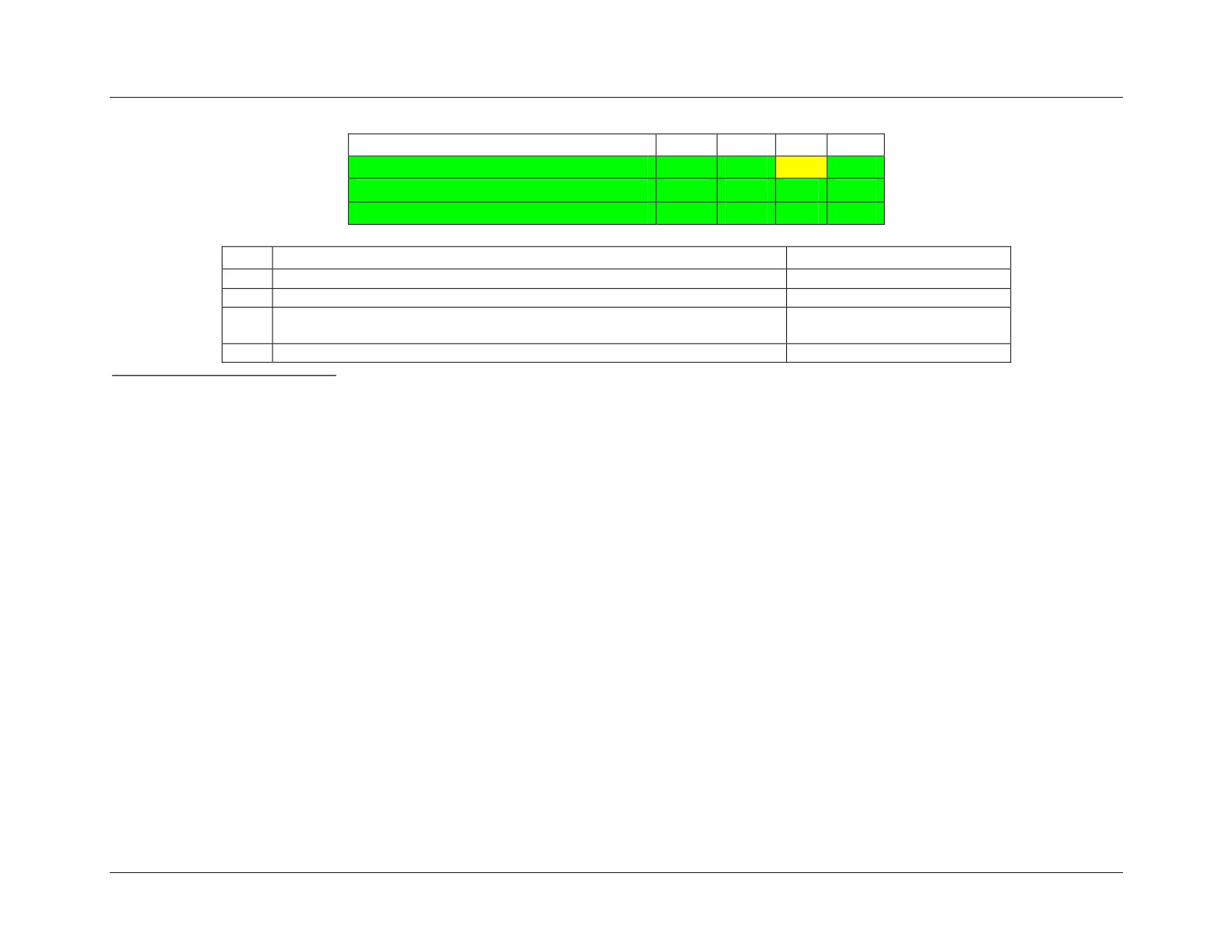
Table 15.5-1. STSUST 5: Capability and Deficiency Assessment
Capability: COCOM HQ
M1
M2
M3
M4
Current Overall Capability1
G2
G3
Y4
G5
Near/Mid-Term Overall Capability6
G
G
G7
G
Far-Term Overall Capability8
G
G
G
G
FAA Measure
Scale
M1
Units to support restoration operations are incorporated in the TPFDL.
G - Yes, Y - Limited, R - No
M2
TPFDL is modified after substantive changes are recommended and approved.
G - Yes, Y - Limited, R - No
M3
Theater exercises/experimentation provide feedback on the incorporation of
G - Yes, Y - Limited, R - No
units to support restoration operations in the TPFDL.
M4
TPFDL changes are made as required by CBRN/TIM threat assessment.
G - Yes, Y - Limited, R - No
1 JP 3-11 and other pertinent publications do not provide definitive guidance or methods by which units can be selected for deployment into theaters where contamination threats
are possible. Joint leader education does not address this issue.
2QDR 2001 calls for sufficient mobility, including airlift, sealift, prepositioning, basing infrastructure, alternative points of debarkation, and new logistical concepts of operations,
to conduct expeditionary operations in distant theaters against adversaries armed with CBRN and other means to deny access to U.S. forces. The capability to establish forward
presence of decontamination units and facilities in theater and to incorporate units to support restoration operations in the TPFDL exists now.
3 Yes. There are no organic constraints.
4 Limited, a restoration exercise focused on the incorporation of units to support restoration operations in the TPFDL has not been conducted. A RESTOP ACTD (ongoing) has
been conducted with results TBP.
5 Yes. There are no organic constraints.
6 DOTMLPF should improve in all deficient areas as a result of initiatives that use data resulting from focused experimentation.
7 Experiments and exercises focused on theater restoration operations will be conducted. Lessons learned from RESTOPS ACTD will be integrated into future exercises and
experimentation that looks at issues other than fixed sites.
8 Continued DOTMLPF enhancements will result from exercise and wargame lessons learned.
26
For Official Use Only
For Official Use Only
CBRND Functional Needs Analysis/Functional Solution Analysis
Chapter 15. Strategic Theater Sustain Tasks
15.5.3
Functional Solution Analysis
15.5.3.1
DOTLPF Assessment Summary
This section addresses the deficiencies and suggests potential non-materiel solutions. If there are
no non-materiel solutions, or they are only partial solutions, the remaining non-materiel need is
then stated. Materiel needs are assessed in the IMA section.
1. Deficiency: A restoration exercise focused on the incorporation of units to support
restoration operations in the TPFDL has not been conducted.
Non-Materiel Solutions: Training: Develop COCOM staff exercises focusing on the
incorporation of units to support restoration operations in the TPFDL.
2. Deficiency: RESTOP ACTD results have not been published.
Non-Materiel Solutions: Doctrine: Incorporate lessons learned from RESTOPS ACTD into
future doctrine and staff exercises.
3. Deficiency: JP 3-11 and other pertinent publications do not provide definitive guidance or
methods by which units can be selected for deployment into theaters where contamination
threats are possible.
Non-Materiel Solutions: Doctrine: Develop doctrine/TTPs providing definitive guidance or
methods by which units can be selected for deployment into theaters where contamination
threats are possible.
4. Deficiency: Joint leader education does not address this issue.
Non-Materiel Solutions: Leadership: Develop JPME training on this task.
15.5.3.2
IMA Assessment Summary
N/A
27
For Official Use Only
For Official Use Only
CBRND Functional Needs Analysis/Functional Solution Analysis
Chapter 15. Strategic Theater Sustain Tasks
15.6
Task STSUST 6: Designate joint restoration operation site areas
15.6.1
Functional Area Analysis
15.6.1.1
Definition
To designate joint restoration operation site areas to facilitate subordinate unit decontamination
planning. The combatant commander, in conjunction with host-nation or coalition partners, is
responsible for these designations. In addition to operational considerations, host-nation
environmental impacts and hazards must be considered, as well as impacts on friendly civilian
populations.
15.6.1.2
Derivation
UJTL (ST 9.4, ST 4.2.3, ST 6.2.6.2).
15.6.1.2.1
Supported Task: SNSUST 10
15.6.1.2.2
Lateral Tasks: STSHA 6, STSUST 14
15.6.1.2.3
Supporting Task: OPSUST 13
15.6.1.3
Condition
Perform this task under conditions of:
Physical. N/A
Military
1. Partial preexisting arrangements. (C 2.1.1.2)
2. Limited personnel experience. (C2.2.4.5)
3. Limited lift assets available. (C2.5.2)
4. Poor joint staff integration. (C2.3.1.1)
5. Moderate host-nation support. (C2.8.5)
Civil
1. Mixed support for political policies. (C3.1)
2. Diplomatic foreign government support. (C3.1.2.3)
28
For Official Use Only
For Official Use Only
CBRND Functional Needs Analysis/Functional Solution Analysis
Chapter 15. Strategic Theater Sustain Tasks
15.6.2
Functional Needs Analysis.
15.6.2.1
Capability and Deficiency Assessment Summary
Table 15.6-1 discusses the only capability that currently exists to perform the task to the
designated standard. There is only one capability that exists, and no other capability is projected
that will accomplish this task.
Current Capability and Deficiency
The current assessment is “yellow.” In conjunction with host-nation or coalition partners, the
combatant commander designates areas for fixed joint restoration operations. Nothing precludes
the COCOM staff from accomplishing this task, but there is very little in the way of existing
doctrine or TTPs to help guide them. A restoration exercise focused on determining efficacy of
designated joint restoration operation site areas has not been conducted.
Projected Near/Mid-Term Capability and Deficiency
No other capability is currently projected for the near/mid term. No capability improvement is
forecast for the near/mid term.
Projected Far-Term Capability and Deficiency
No other capability is currently projected for the far-term future. DOTMLPF should improve in
all deficient areas as a result of initiatives that use data resulting from focused experimentation.
JTTPs, training and exercises, and education will all improve leading to a far-term assessment of
“green.”
29
For Official Use Only
For Official Use Only
CBRND Functional Needs Analysis/Functional Solution Analysis
Chapter 15. Strategic Theater Sustain Tasks
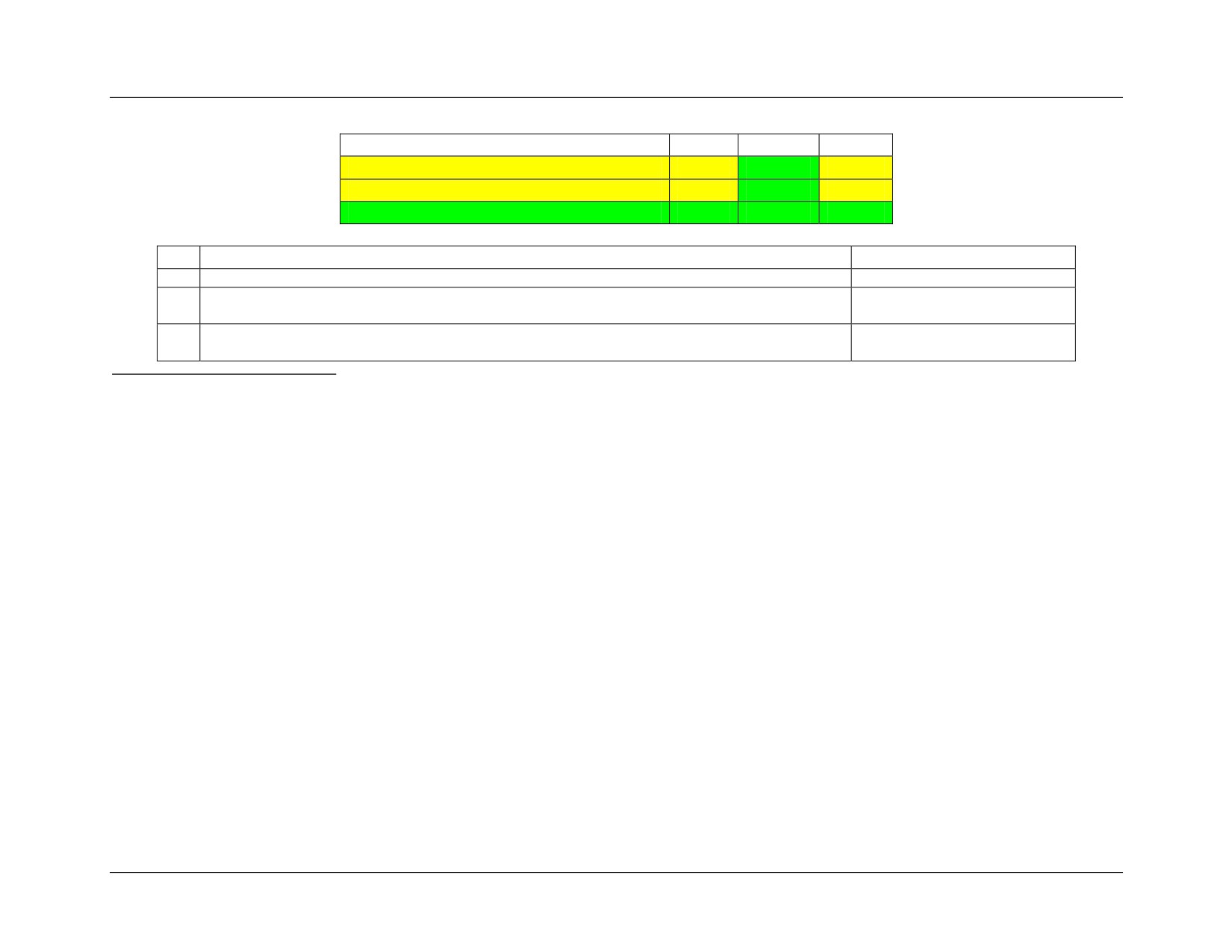
Table 15.6-1. STSUST 6: Capability and Deficiency Assessment
Capability: COCOM HQ
M1
M2
M3
Current Overall Capability1
Y2
G3
Y4
Near/Mid-Term Overall Capability5
Y
G
Y
Far-Term Overall Capability6
G7
G
G8
FAA Measure
Scale
M1
Designated joint restoration operation site areas are established with nominated individual countries.
G - Yes, Y - Limited, R - No
M2
Designated joint restoration operation site areas are modified after substantive changes are
G - Yes, Y - Limited, R - No
recommended and approved.
M3
International exercises/experimentation provide feedback on efficacy of designated joint restoration
G - Yes, Y - Limited, R - No
operation site areas.
1 No doctrine/TTPs have been developed. Leader education does not address this issue.
2 Nothing precludes designating a joint RESTOPS area, but no guidance exists on selection criteria, so there is no way to know whether selection is appropriate or will meet
operational requirements.
3 Any staff can accomplish this task.
4 Limited, a restoration exercise focused on efficacy of designated joint restoration operation site areas has not been conducted. A RESTOP ACTD (ongoing) has been conducted
with results TBP.
5 Doctrine/JTTPs will be developed. Leader education will be designed to address this issue.
6 Continued DOTMLPF enhancements will result from exercise and wargame lessons learned.
7 Doctrine/JTTPs will be developed. Leader education will be designed to address this issue.
8 Experiments and exercises focused on theater restoration operations will be conducted. Lessons learned from RESTOPS ACTD will be integrated into future exercises and
experimentation that looks at issues other than fixed sites.
30
For Official Use Only
For Official Use Only
CBRND Functional Needs Analysis/Functional Solution Analysis
Chapter 15. Strategic Theater Sustain Tasks
15.6.3
Functional Solution Analysis
15.6.3.1
DOTLPF Assessment Summary
This section addresses the deficiencies and suggests potential non-materiel solutions. If there are
no non-materiel solutions, or they are only partial solutions, the remaining non-materiel need is
then stated. Materiel needs are assessed in the IMA section.
1.
Deficiency: No guidance exists on selection criteria, so there is no way to know whether
selection is appropriate or will meet operational requirements.
Non-Materiel Solutions: Doctrine: Develop doctrine/TTPs providing definitive guidance or
methods by which the efficacy of designated joint restoration operation site areas can be
determined and the process improved. An Army Maneuver Support Center or Department of
Navy action will be appropriate to address the doctrinal development of these technical
procedures. Country studies will need to be done for engineering, water conservation issues,
etc. Bilateral agreements with listed restrictions and requirements for hosting countries will
need to be reached.
2.
Deficiency: A restoration exercise focused on determining the efficacy of designated joint
restoration operation site areas has not been conducted.
Non-Materiel Solutions: Training: Develop COCOM staff exercises focusing on
designating joint restoration operation site areas.
3.
Deficiency: RESTOP ACTD results have not been published.
Non-Materiel Solutions: Doctrine: Incorporate lessons learned from RESTOPS ACTD into
future doctrine and staff exercises.
4.
Deficiency: No leader education for restoration operations.
Non-Materiel Solutions: Leadership: Develop JPME leader training on designating joint
restoration operation areas.
15.6.3.2
IMA Assessment Summary
N/A
31
For Official Use Only
For Official Use Only
CBRND Functional Needs Analysis/Functional Solution Analysis
Chapter 15. Strategic Theater Sustain Tasks
15.7
Task STSUST 7: Coordinate multinational restoration operations
15.7.1
Functional Area Analysis
15.7.1.1
Definition
To plan for the mutual restoration operation interoperability and cooperation between U.S. and
multinational units and facilities. The combatant commander provides for the coordination of
multinational restoration operations using U.S. capabilities to restore multinational units/
facilities, multinational capabilities to restore U.S. units/facilities, or a combination of both.
15.7.1.2
Derivation
UJTL (ST 9.4, ST 8.2.10, ST 8.3.2), AJP 3-8.
15.7.1.2.1
Supported Task: SNSUST 1
15.7.1.2.2
Lateral Tasks: STSHA 8, STSUST 14
15.7.1.2.3
Supporting Tasks: OPSUST 5, OPSUST 6, OPSUST 7
15.7.1.3
Condition
Perform this task under conditions of:
Physical. N/A
Military
1. Partial preexisting arrangements. (C2.1.1.2)
2. Limited personnel experience. (C2.2.4.5)
3. Poor joint staff integration. (C2.3.1.1)
4. Moderate host-nation support. (C2.8.5)
Civil
1. Moderate host-nation support. (C2.8.5)
2. Mixed support for political policies. (C3.1)
3. Diplomatic foreign government support. (C3.1.2.3)
15.7.2
Functional Needs Analysis
15.7.2.1
Capability and Deficiency Assessment Summary
Table 15.7-1 discusses the only capability that currently exists to perform the task to the
designated standard. There is only one capability that exists, and no other capability is projected
that will accomplish this task.
32
For Official Use Only
For Official Use Only
CBRND Functional Needs Analysis/Functional Solution Analysis
Chapter 15. Strategic Theater Sustain Tasks
Current Capability and Deficiency
The current assessment is “yellow.” The combatant commander provides for the coordination of
multinational restoration operations using U.S. capabilities to restore multinational units/
facilities, using multinational capabilities to restore U.S. units/facilities, or a combination of
both. Nothing precludes the COCOM staff from accomplishing this task, but there is very little in
the way of existing doctrine or TTPs to help guide them. Plans for mutual restoration operation
interoperability and cooperation between U.S. and multinational units are virtually nonexistent at
the ST level. A restoration exercise focused on efficacy of plans for mutual restoration operation
interoperability and cooperation between U.S. and multinational units and facilities has not been
conducted. Little or no training is conducted to expose weaknesses in coordination of
multinational restoration operations. Most of the considerations in AJP 3-8 are focused at the
tactical level. JP 3-11 also presents information primarily at the tactical level with some
operational considerations included. No document focuses on issues of concern for the
combatant commander. Joint leader education does not address this issue.
Projected Near/Mid-Term Capability and Deficiency
No other capability is currently projected for the near/mid term. No capability improvement is
forecast for the near/mid term.
Projected Far-Term Capability and Deficiency
No other capability is currently projected for the far-term future. DOTMLPF should improve in
all deficient areas as a result of initiatives that use data resulting from focused experimentation.
Experiments and exercises focused on theater restoration operations will be conducted. Lessons
learned from RESTOPS ACTD will be integrated into future exercises and experimentation that
looks at issues other than fixed sites. JTTPs, training and exercises, and education will all
improve leading to a far-term assessment of “green.”
33
For Official Use Only
For Official Use Only
CBRND Functional Needs Analysis/Functional Solution Analysis
Chapter 15. Strategic Theater Sustain Tasks
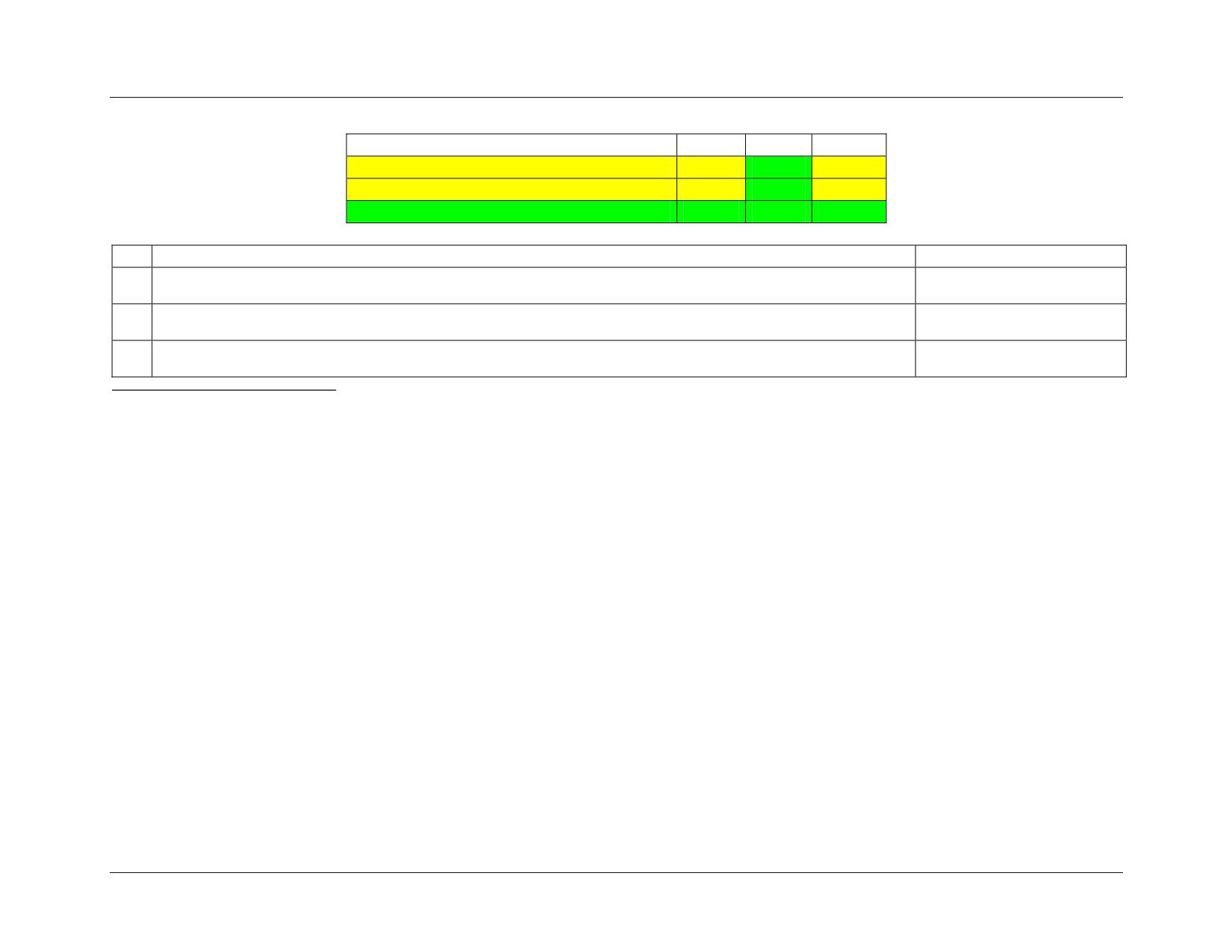
Table 15.7-1. STSUST 7: Capability and Deficiency Assessment
Capability: COCOM HQ
M1
M2
M3
Current Overall Capability1
Y2
G3
Y4
Near/Mid-Term Overall Capability5
Y
G
Y
Far-Term Overall Capability6
G7
G
G8
FAA Measure
Scale
M1
Plans for mutual restoration operation interoperability and cooperation between U.S. and multinational units and
G - Yes, Y - Limited, R - No
facilities are established with nominated individual countries.
M2
Plans for mutual restoration operation interoperability and cooperation between U.S. and multinational units and
G - Yes, Y - Limited, R - No
facilities are modified after substantive changes are recommended and approved.
M3
International exercises/experimentation provide feedback on efficacy of plans for mutual restoration operation
G - Yes, Y - Limited, R - No
interoperability and cooperation between U.S. and multinational units and facilities.
1 Most of the considerations in AJP 3-8 are focused at the tactical level. JP 3-11 also presents information primarily at the tactical level with some operational considerations
included. No document focuses on issues of concern for the combatant commander. Joint leader education does not address this issue.
2 The capability to coordinate multinational restoration operations exists now. Actual plans for mutual restoration operation interoperability and cooperation between U.S. and
multinational units and facilities are limited. Plans for mutual restoration operation interoperability and cooperation between U.S. and multinational units and facilities are mature
at the tactical level but virtually nonexistent at the ST level.
3 Yes. There are no organic constraints once the initial plans exist.
4 Limited, a restoration exercise focused on efficacy of plans for mutual restoration operation interoperability and cooperation between U.S. and multinational units and facilities
has not been conducted. Little or no training is conducted to expose weaknesses in coordination of multinational restoration operations.
A RESTOP ACTD (ongoing) has been conducted with results TBP.
5 DOTMLPF should improve in all deficient areas as a result of initiatives that use data resulting from focused experimentation.
6 Continued DOTMLPF enhancements will result from exercise and wargame lessons learned.
7 Plans for mutual restoration operation interoperability and cooperation between U.S. and multinational units and facilities will be refined or developed as a result of focused
international experiments and exercises.
8 Experiments and exercises focused on theater restoration operations will be conducted. Lessons learned from RESTOPS ACTD will be integrated into future exercises and
experimentation that looks at issues other than fixed sites.
34
For Official Use Only
For Official Use Only
CBRND Functional Needs Analysis/Functional Solution Analysis
Chapter 15. Strategic Theater Sustain Tasks
15.7.3
Functional Solution Analysis
15.7.3.1
DOTLPF Assessment Summary
This section addresses the deficiencies and suggests potential non-materiel solutions. If there are
no non-materiel solutions, or they are only partial solutions, the remaining non-materiel need is
then stated. Materiel needs are assessed in the IMA section.
1.
Deficiency: Plans for mutual restoration operation interoperability and cooperation between
U.S. and multinational units are virtually nonexistent at the ST level.
Non-Materiel Solutions: Doctrine: Develop plans for mutual restoration operation
interoperability and cooperation between U.S. and multinational units at the ST level.
2.
Deficiency: A restoration exercise focused on efficacy of plans for mutual restoration
operation interoperability and cooperation between U.S. and multinational units and facilities
has not been conducted.
Non-Materiel Solutions: Training: Develop COCOM staff exercises focusing on mutual
restoration operation interoperability and cooperation between U.S. and multinational units at
the ST level. National-level, COCOM, and JTF exercises must include the coordination of
multinational restoration operations in order to test, find, and document potential weaknesses.
CBRN incidents and events need to be included at all levels of command to integrate CBRN
defense into multinational training. Multinational formations, North Atlantic Treaty
Organization integrated military command structure components, and potential coalition
partners need to be included. The appropriate training and exercise will be essential to
integrate non-U.S. forces into the CBRN defense capability of the joint force.
3.
Deficiency: RESTOP ACTD results have not been published.
Non-Materiel Solutions: Doctrine: Incorporate lessons learned from RESTOPS ACTD into
future doctrine and staff exercises.
4.
Deficiency: Joint leader education does not address this issue.
Non-Materiel Solutions: Leadership: JPME must include leader-learning areas for
restoration operations considerations at the ST level.
5.
Deficiency: Doctrine does not exist above the tactical level.
Non-Materiel Solutions: Doctrine: AJP 3-8 and JP 3-11 both need to be updated to include
multinational restoration operation coordination guidance for the ST level.
15.7.3.2
IMA Assessment Summary
N/A
35
For Official Use Only
For Official Use Only
CBRND Functional Needs Analysis/Functional Solution Analysis
Chapter 15. Strategic Theater Sustain Tasks
15.8
Task STSUST 8: Develop TEPs for restoration operation considerations and
activities for assigned theater or designated countries
15.8.1
Functional Area Analysis
15.8.1.1
Definition
To develop Theater Engagement Plans (TEPs) that will allow cooperation and the building of
trust through a combination of restoration operation exercises, training, equipment exchange, and
other cooperative efforts. Many nations that would normally support U.S. initiatives may feel
threatened by hostile neighbors or nations that possess CBRN/TIM weapons. To ensure
cooperation and interoperability, the combatant commander develops TEPs for restoration
operation considerations and activities for assigned theater or designated countries. TEPs that
include restoration operation considerations and activities for assigned theater or designated
countries can help to mitigate reluctance to support the United States. If countries are provided
with the means to restore themselves after CBRN/TIM attacks or if they are assured of U.S.
assistance, they will feel less threatened. In conjunction with interagency partners, CJCS
coordinates “Global Family of Engagement Plan” policy and guidelines to combatant
commanders for restoration operation considerations.
15.8.1.2
Derivation
UJTL (ST 9.4, ST 8.2.1, ST 8.1.2), CJCSM 3113.01a.
15.8.1.2.1
Supported Task: SNSUST 11
15.8.1.2.2
Lateral Task: STSHA 9
15.8.1.2.3
Supporting Task: OPSUST 7
15.8.1.3
Condition
Perform this task under conditions of:
Physical. N/A
Military
1. No preexisting arrangements. (C2.1.1.2)
2. Limited personnel expertise. (C2.2.4.5)
Civil
1. Moderate host-nation support. (C2.8.5)
2. Mixed support for political policies. (C3.1)
3. Limited foreign government support. (C3.1.2.3.)
36
For Official Use Only
For Official Use Only
CBRND Functional Needs Analysis/Functional Solution Analysis
Chapter 15. Strategic Theater Sustain Tasks
15.8.2
Functional Needs Analysis
15.8.2.1
Capability and Deficiency Assessment Summary
Table 15.8-1 discusses the only capability that currently exists to perform the task to the
designated standard. There is only one capability that exists, and no other capability is projected
that will accomplish this task.
Current Capability and Deficiency
The current assessment is “yellow.” The Combatant Command develops TEPs for restoration
operation considerations and activities for assigned theater or designated countries. Nothing
precludes the COCOM staff from establishing these TEPs now, but there is very little in the way
of existing doctrine or TTPs to help guide them. A TEP is primarily a strategic planning
document intended to link COCOM-planned regional engagement activities with national
strategic objectives. The TEP is based on defense planning guidance. COCOM planned and
supported operations and activities produce multiple benefits in readiness, modernization, and
engagement. However, peacetime military engagement activities must be prioritized to ensure
efforts are focused on those that are of greatest importance, without sacrificing warfighting
capability. Because WMDs represent the most significant threat to global security, they are ideal
candidates for TEPs. TEPs identify the synchronization of these activities on a regional basis and
illustrate the efficiencies gained from regional COCOM engagement activities that support
national strategic objectives.
Projected Near/Mid-Term Capability and Deficiency
No other capability is currently projected for the near/mid term. No capability improvement is
forecast for the near/mid term.
Projected Far-Term Capability and Deficiency
No other capability is currently projected for the far-term future. DOTMLPF should improve in
all deficient areas as a result of initiatives that use data resulting from focused experimentation.
JTTPs, training and exercises, and education will all improve leading to a far-term assessment of
“green.”
37
For Official Use Only
For Official Use Only
CBRND Functional Needs Analysis/Functional Solution Analysis
Chapter 15. Strategic Theater Sustain Tasks
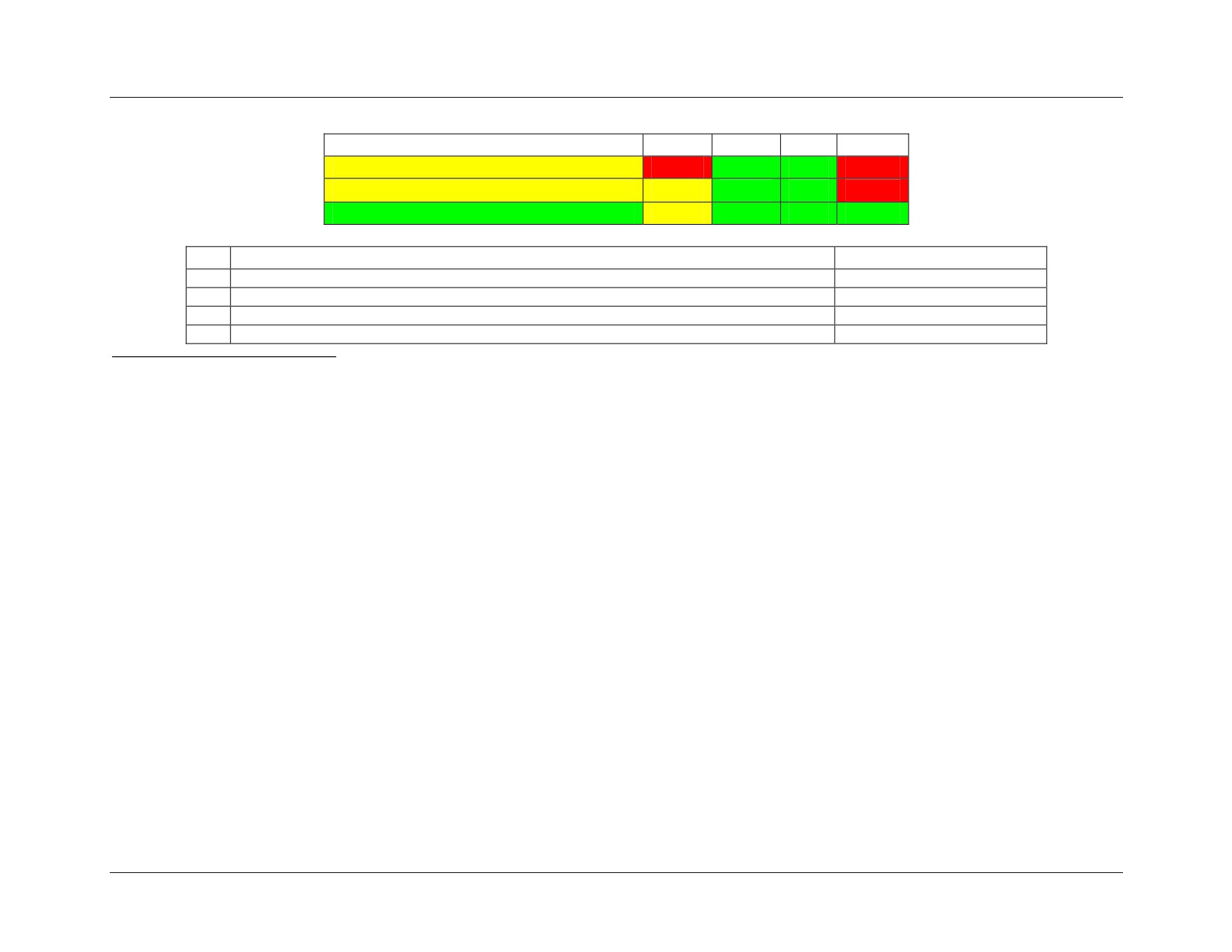
Table 15.8-1. STSUST 8: Capability and Deficiency Assessment
Capability: COCOM HQ
M1
M2
M3
M4
Current Overall Capability1
R2
G3
G4
R5
Near/Mid-Term Overall Capability
Y
G
G
R
Far-Term Overall Capability6
Y7
G
G
G8
FAA Measure
Scale
M1
Restoration operation TEPs are established for designated countries.
G - Yes, Y - Limited, R - No
M2
TEPs are modified after substantive changes are recommended and approved.
G - Yes, Y - Limited, R - No
M3
TEPs meet guidelines of CJCSM 3113.01A.
G - Yes, Y - Limited, R - No
M4
Joint exercises/experimentation provide feedback on efficacy of TEPs for specific countries.
G - Yes, Y - Limited, R - No
1 No doctrine has been developed. Leader education does not address this issue.
2 Nothing precludes a COCOM staff from initiating TEP for restoration operations, but no guidance has been provided, and no doctrine exists specifically addressing restoration
operation integration into TEPs.
3 Nothing precludes meeting this standard once restoration operation TEPs are established.
4 Nothing precludes restoration operation TEPs from meeting the guidelines of CJCSM 3113.01a. CBRND issues are perfect for TEPs.
5 No Restoration Operation exercises/experimentation have been conducted to provide feedback on efficacy of TEPs for specific countries.
6 Continued DOTMLPF enhancements will result from exercise and wargame lessons learned.
7 Guidance will be provided and doctrine will be developed specifically addressing restoration operation integration into TEPs.
7 Restoration Operation exercises/experimentation will be conducted to provide feedback on efficacy of TEPs for specific countries.
38
For Official Use Only
For Official Use Only
CBRND Functional Needs Analysis/Functional Solution Analysis
Chapter 15. Strategic Theater Sustain Tasks
15.8.3
Functional Solution Analysis
15.8.3.1
DOTLPF Assessment Summary
This section addresses the deficiencies and suggests potential non-materiel solutions. If there are
no non-materiel solutions, or they are only partial solutions, the remaining non-materiel need is
then stated. Materiel needs are assessed in the IMA section.
1. Deficiency: No guidance has been provided and no doctrine/TTPs exist specifically
addressing restoration operation integration into TEPs.
Non-Materiel Solutions: Doctrine: Establish policies, TTPs, and guidelines that include
practical ways to enhance theater restoration operations integration into TEPs.
2. Deficiency: No Restoration Operation exercises/experimentation have been conducted to
provide feedback on efficacy of TEPs for specific countries.
Non-Materiel Solutions: Training: Develop exercises to include restoration operations with
TEP countries to determine efficacy of policy once established.
3. Deficiency: Leader education does not address this issue.
Non-Materiel Solutions: Leadership: At the urging of the Joint Forces Staff College
(JFSC), and as part of a JRO-CBRND joint education initiative, a team began to investigate
ways to develop CBRN defense initiatives as part of theater engagement planning. The
subject matter experts at the JFSC felt that in the current global environment, CBRND was
an ideal platform for military engagement, enhancing a common global defense capability
against weapons of mass destruction. The team plans to present these Joint Capabilities
Integration and Development System (JCIDS) tasks to the JFSC as a foundation for the
development of TEP education materials when they are finalized.
15.8.3.2
IMA Assessment Summary
N/A
39
For Official Use Only
For Official Use Only
CBRND Functional Needs Analysis/Functional Solution Analysis
Chapter 15. Strategic Theater Sustain Tasks
15.9
Task STSUST 9: Coordinate SOF restoration operations requirements
15.9.1
Functional Area Analysis
15.9.1.1
Definition
To provide specialized planning and coordination of key decontamination and support assets
required to support SOF operational requirements. Because of the level of coordination required,
the combatant commander coordinates SOF restoration operation requirements. SOF operations
are often done clandestinely or in austere areas. Restoration operations for SOF will be complex
and require extraordinary planning and support.
15.9.1.2
Derivation
UJTL (ST 9.4, ST 1.3.4, ST 1.3.7).
15.9.1.2.1
Supported Tasks: SNSUST 9, SNSUST 10, SNSUST 12
15.9.1.2.2
Lateral Task: N/A
15.9.1.2.3
Supporting Task: OPSUST 8
15.9.1.3
Condition
Perform this task under conditions of:
Physical
1. Persistent CBRN/TIM effects. (C1.3.3.1-3)
Military
1. Stressful mission. (C2.1)
2. Partially completed mission preparation. (C2.1.3)
3. Weak forces assigned. (C2.2.1)
4. Negligible personnel experience. (C2.2.4.5)
5. Poor joint staff integration. (C2.3.1.1)
6. Limited lift assets. (C2.5.2)
7. High rear-area security. (C2.7.1)
8. No host-nation support. (C2.8.5)
9. Conventional and terrorist threat form. (C2.9.2)
10. Fully developed state of conflict. (C2.10.1)
Civil
1. Limited foreign government support. (C3.1.2.3)
40
For Official Use Only
For Official Use Only
CBRND Functional Needs Analysis/Functional Solution Analysis
Chapter 15. Strategic Theater Sustain Tasks
15.9.2
Functional Needs Analysis
15.9.2.1
Capability and Deficiency Assessment Summary
Table 15.9-1 discusses the capability that currently exists to perform the task to the designated
standard. There is only one capability that exists, and no other capability is projected that will
accomplish this task.
Current Capability and Deficiency
The current assessment is “red.” Any COCOM staff has a team of operational planners and
command and control specialists, and most have CBRN subject matter experts. This team of
experts has the skill to support SOF restoration operation requirements, but there are some
deficiencies that negatively impact on the efficiency with which they will be able to operate.
Projected Near/Mid-Term Capability and Deficiency
Some improvements in JTTP capability is currently projected for the near/mid term. The overall
near/mid term capability is forecast to be “yellow.”
Projected Far-Term Capability and Deficiency
No other capability is currently projected for the far-term future. DOTMLPF should improve in
all deficient areas as a result of initiatives that use data resulting from focused experimentation.
JTTPs, training and exercises, and education will continue to improve leading to a far-term
assessment of “yellow.”
41
For Official Use Only
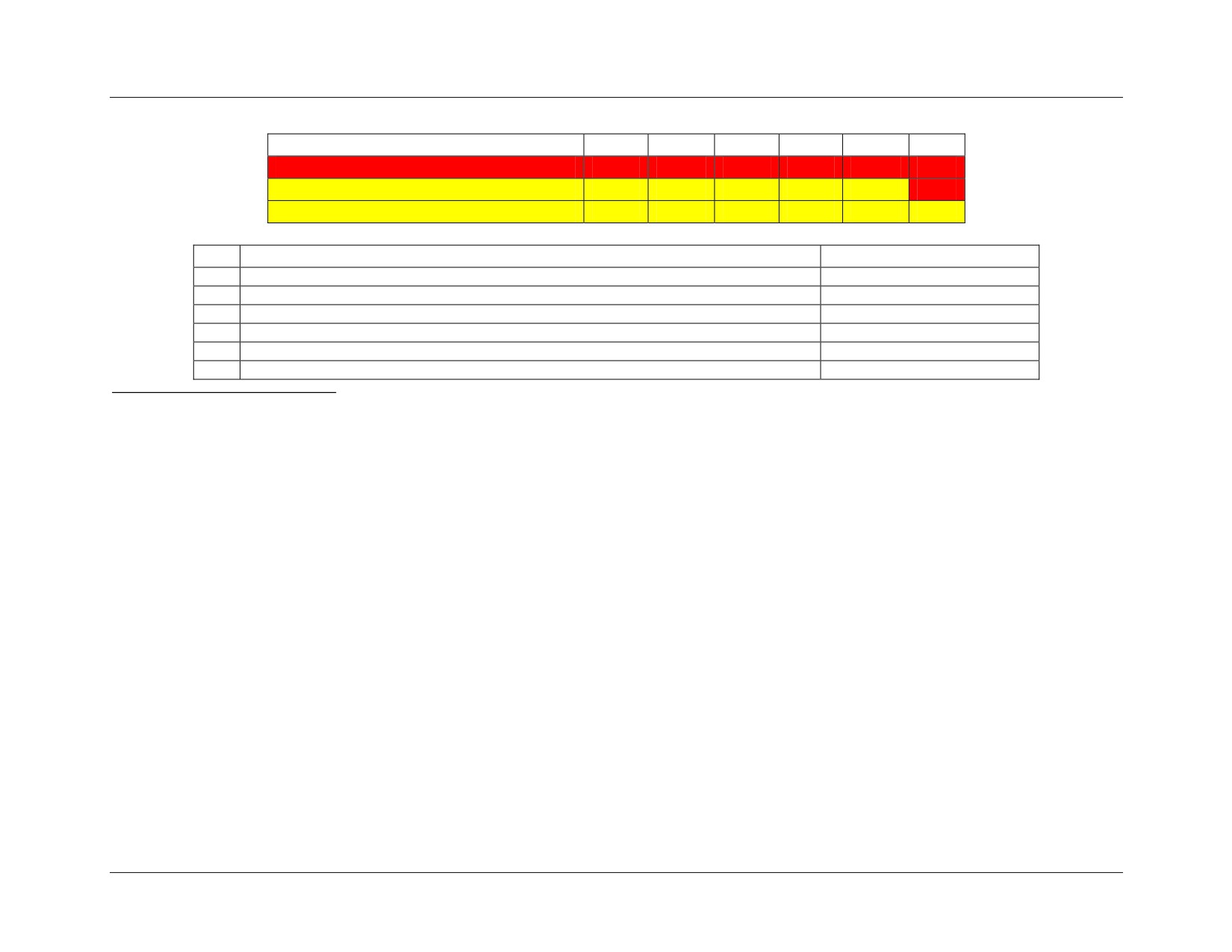
For Official Use Only
CBRND Functional Needs Analysis/Functional Solution Analysis
Chapter 15. Strategic Theater Sustain Tasks
Table 15.9-1. STSUST 9: Capability and Deficiency Assessment
Capability: COCOM HQ
M1
M2
M3
M4
M5
M6
Current Overall Capability1
R2
R3
R4
R5
R6
R7
Near/Mid-Term Overall Capability8
Y
Y
Y
Y
Y
R
Far-Term Overall Capability9
Y10
Y11
Y12
Y13
Y14
Y15
FAA Measure
Scale
M1
Procedures are in place to facilitate response to SOF requests for assistance.
G - Yes, Y - Limited, R - No
M2
Procedures and checklists exist to help complete planning.
G - Yes, Y - Limited, R - No
M3
Decontamination support provided is adequate to meet mission requirements.
G - Yes, Y - Limited, R - No
M4
Decontamination and support forces have SOF restoration operation experience.
G - Yes, Y - Limited, R - No
M5
Decontamination lift requirements are met adequately to support mission requirements.
G - Yes. Y - Limited. R - No
M6
Joint exercises provide lessons learned on SOF restoration operation support.
G - Yes, Y - Limited, R - No
1 No doctrine has been developed. Leader education does not address this issue.
2 Limited. Any COCOM-level unit staff can respond to SOF request for assistance, but there are no specific procedures, TTPs, or formalized familiarization training that addresses
the unique aspects of joint forces supporting SOF restoration operation requirements.
3 Limited. Any ST-level HQ staff can develop procedures and checklists for operational plans and orders, but there are no TTPs that address development of the unique
requirements of SOF restoration operational plans and orders.
4 Limited. Any ST-level HQ staff can provide support, but there is no real way of knowing how effective this support will be without comprehensive training events.
5 Limited. No staff will have an experience base without comprehensive training with SOF.
6 Limited. Lift requirements cannot be determined without comprehensive training with SOF.
7 No joint exercises/experimentation have provided lessons learned on SOF restoration operation support.
8 DOTMLPF should improve in all deficient areas as a result of initiatives that use data resulting from focused experimentation.
9 Continued DOTMLPF enhancements will result from exercise and wargame lessons learned.
10 JTTPs and formalized familiarization training that addresses the unique aspects of joint forces supporting SOF restoration operation requirements will be developed.
11 JTTPs will be formulated that address development of the unique requirements of SOF restoration operational plans and orders.
12 Comprehensive training events will provide an assessment mechanism.
13 Comprehensive training with SOF will allow staffs to develop an SOF support experience base.
14 Comprehensive training with SOF will be conducted to determine lift requirements and special needs.
15 Joint exercises/experimentation will provide lessons learned on SOF restoration operation support.
42
For Official Use Only
For Official Use Only
CBRND Functional Needs Analysis/Functional Solution Analysis
Chapter 15. Strategic Theater Sustain Tasks
15.9.3
Functional Solution Analysis
15.9.3.1
DOTLPF Assessment Summary
This section addresses the deficiencies and suggests potential non-materiel solutions. If there are
no non-materiel solutions, or they are only partial solutions, the remaining non-materiel need is
then stated. Materiel needs are assessed in the IMA section.
1. Deficiency: There are no specific procedures, doctrine, or TTPs that address the unique
aspects of joint forces supporting SOF restoration operation requirements.
Non-Materiel Solutions: Doctrine: Develop procedures, doctrine, or TTPs that address the
unique aspects of joint forces supporting SOF restoration operation requirements.
2. Deficiency: There is no specific formalized familiarization training that addresses the unique
aspects of joint forces supporting SOF restoration operation requirements.
Non-Materiel Solutions: Training: Develop planning staff familiarization training that
addresses the unique aspects of joint forces supporting SOF restoration operation
requirements.
3. Deficiency: No joint exercises or experimentation have provided lessons learned on SOF
restoration operation support.
Non-Materiel Solutions: Training: Conduct specific ST-level exercises/experiments to
determine SOF restoration operation support lessons learned under a wide variety of
conditions.
4. Deficiency: Leader education does not address this issue.
Non-Materiel Solutions: Leadership: JPME must include leader-learning areas for SOF
restoration operations considerations at the ST level.
15.9.3.2
IMA Assessment Summary
N/A
43
For Official Use Only
For Official Use Only
CBRND Functional Needs Analysis/Functional Solution Analysis
Chapter 15. Strategic Theater Sustain Tasks
15.10 Task STSUST 10: Provide JTF HQ for command and control of restoration
operations
15.10.1
Functional Area Analysis
15.10.1.1
Definition
To establish and deploy a JTF for the specific purpose of maintaining command, control, and
execution of extensive restoration operations. The combatant commander may determine that the
extent or complexity of required restoration operations is such that he needs to establish a JTF to
control and coordinate the restoration operations.
15.10.1.2
Derivation
UJTL (ST 9.4, ST 5.1, ST 5.4.3).
15.10.1.2.1
Supported Tasks: SNSUST 6, SNSUST 10
15.10.1.2.2
Lateral Task: N/A
15.10.1.2.3
Supporting Task: OPSUST 9
15.10.1.3
Condition
Perform this task under conditions of:
Physical
1. Persistent CBR/TIM effects. (Chemical or biological or radiological contamination
affecting forces strategically deployed or affecting terrain, facilities, equipment, or
manpower required to facilitate their mission.) (C1.3.3.1-3)
Military
1. Stressful mission. (C2.1)
2. Partially completed mission preparation. (C2.1.3)
3. Weak forces assigned. (C2.2.1)
4. Negligible personnel experience. (C2.2.4.5)
5. Poor joint staff integration. (C2.3.1.1)
6. High rear-area security. (C2.7.1)
7. Moderate host-nation support. (C2.8.5)
8. Conventional and terrorist threat form. (C2.9.2)
9. Fully developed state of conflict. (C2.10.1)
Civil
1. Limited foreign government support. (C3.1.2.3)
44
For Official Use Only
For Official Use Only
CBRND Functional Needs Analysis/Functional Solution Analysis
Chapter 15. Strategic Theater Sustain Tasks
15.10.2
Functional Needs Analysis
15.10.2.1
Capability and Deficiency Assessment Summary
Table 15.10-1 discusses the only capability that currently exists to perform the task to the
designated standard. There is only one capability that exists, and no other capability is projected
that will accomplish this task.
Current Capability and Deficiency
The current assessment is “yellow.” This task has never been attempted by a theater COCOM,
and no training or experience base exists. Any combatant command has the ability to stand up a
JTF using a corps/division-equivalent HQ to form a JTF HQ. There are many deficiencies that
negatively impact on the speed and efficiency with which they will be able to stand up a JTF HQ
with the express purpose of providing command and control of restoration operations.
Projected Near/Mid-Term Capability and Deficiency
No other capability is currently projected for the near/mid term. No capability improvement is
forecast for the near/mid term.
Projected Far-Term Capability and Deficiency
No other capability is currently projected for the far-term future. DOTMLPF should improve in
all deficient areas as a result of initiatives that use data resulting from focused experimentation.
In particular, a UNIFIED ENDEAVOR exercise is projected to enable this task in FY2011.
JTTPs, training and exercises, and education will all improve leading to a far-term assessment of
“green.”
45
For Official Use Only
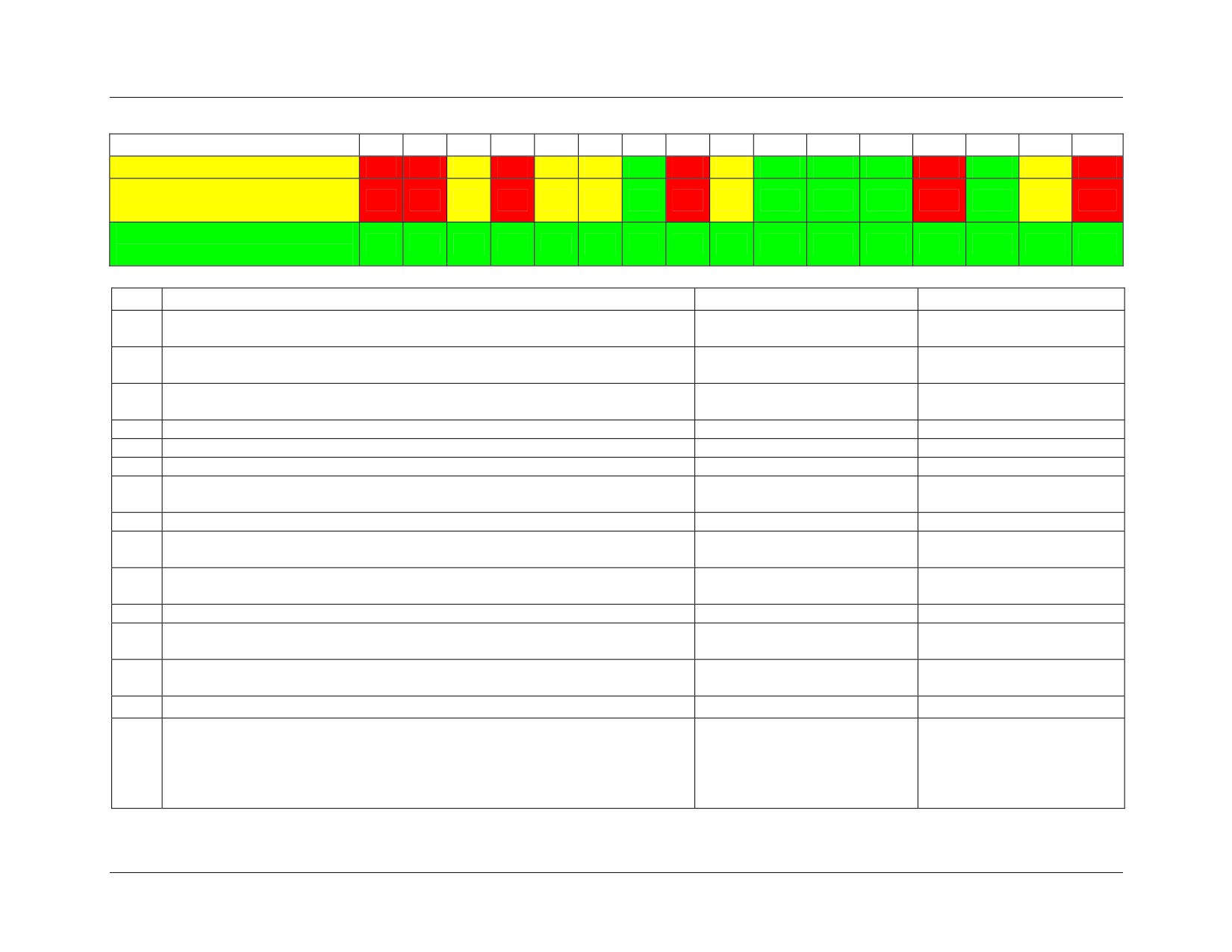
For Official Use Only
CBRND Functional Needs Analysis/Functional Solution Analysis
Chapter 15. Strategic Theater Sustain Tasks
Table 15.10-1. STSUST 10: Capabilities and Deficiency Assessment
Capability: COCOM HQ
M1
M2
M3
M4
M5
M6
M7
M8
M9
M10
M11
M12
M13
M14
M15
M16
Current Overall Capability1
R2
R3
Y
R4
Y5
Y6
G7
R8
Y9
G10
G11
G12
R13
G14
Y
R15
Near/Mid-Term Overall
R
R
Y
R
Y
Y
G
R
Y
G
G
G
R
G
Y
R
Capability16
Far-Term Overall
G18
G19
G
G20
G21
G22
G
G23
G24
G
G
G
G25
G
G
G26
Capability17
FAA Measure
Elaboration
Scale
M1
Plans have been developed that establish a JTF for the specific purpose of
G - Yes, Y - Limited, R - No
maintaining command and control of extensive restoration operations.
M2
Procedures and checklists exist to help modify plans during crisis action planning
G - Yes, Y - Limited, R - No
(CAP).
M3
Adequate planning time, during CAP, is made available by combatant commander
Restoration operations require
G - Yes, Y - Limited, R - No
to components for planning.
significant planning efforts.
M4
Appointed joint force commander has requisite training and experience.
G - Yes, Y - Limited, R - No
M5
Joint restoration operations area is defined.
G - Yes, Y - Limited, R - No
M6
Joint force headquarters element is deployed and established in theater.
G - Yes, Y - Limited, R - No
M7
Initial communication is established with host-nation and U.S. Department of State
G - Yes, Y - Limited, R - No
representatives (after combatant commander establishes joint force HQ).
M8
Joint force staff has requisite training and experience.
G - Yes, Y - Limited, R - No
M9
Taskings to initial augmentees for newly formed JTF are determined and prepared
G - Yes, Y - Limited, R - No
in advance.
M10
Friendly forces orders/taskings are not significantly delayed because of unclear
G - Yes, Y - Limited, R - No
command relationships with HQ.
M11
All designated staff positions are filled.
G - Yes, Y - Limited, R - No
M12
All DoD components and involved foreign governments are adequately
G - Yes, Y - Limited, R - No
represented on designated joint force staff.
M13
Joint force staff augmentees have previously trained as members of a restoration
G - Yes, Y - Limited, R - No
operation JTF.
M14
Nations with allocated or apportioned forces are represented on JTF staff.
G - Yes, Y - Limited, R - No
M15
Necessary augmentees are identified in joint force SOPs by rank and duty position.
Personnel with proper skill sets
G - Yes, Y - Limited, R - No
are critical to validate completion
of restoration operations and
make critical recommendations
for reopening of facilities.
46
For Official Use Only
For Official Use Only
CBRND Functional Needs Analysis/Functional Solution Analysis
Chapter 15. Strategic Theater Sustain Tasks
M16
Joint exercises/experimentation provide feedback on efficacy of providing a JTF
G - Yes, Y - Limited, R - No
for restoration operations.
1 No doctrine has been developed.
2 No plans have been developed.
3 No procedures or checklists currently exist to aid plan modification.
4 No leader training/education for JTF RESTOPS exists, nor is there any experience base.
5 Nothing precludes designating a joint RESTOPS area, but no guidance exists.
6 Nothing precludes this action, and COCOMs do exercise establishing a JTF HQ. However, it has never been done for RESTOPS, and no guidance exists.
7 Yes. There are no organic common constraints.
8 No staff training/education for JTF RESTOPS exists, nor is there any experience base.
9 Nothing precludes this action, and COCOMs do exercise establishing taskings. However, it has never been done for RESTOPS, and no guidance exists.
10 Yes. There are no organic command relationship constraints.
11 Yes. There are no organic staffing constraints.
12 Yes. There are no organic representation constraints.
13 No. There is no experience base.
14 Yes. There are no organic representation constraints.
15 No. A RESTOPS JTF exercise/experiment has never been conducted.
16 DOTMLPF should improve in all deficient areas as a result of initiatives that use data resulting from focused experimentation.
17 Continued DOTMLPF enhancements will result from exercise and wargame lessons learned.
18Plans will be developed that establish a JTF for the specific purpose of maintaining command and control of extensive restoration operations. Current planning by the U.S.
Northern Command for homeland security purposes can be used as a guide for joint combat operations.
19 Procedures and checklists will be developed to aid plan modification.
20 Leader training/education for will be specifically developed for JTF RESTOPS. Educated leaders will train resulting in an experience base.
21 Guidance will be developed for designating a joint RESTOPS area.
22 A UNIFIED ENDEAVOR exercise will specifically be used to exercise this task.
23 Staff training/education for JTF RESTOPS will be developed and employed, resulting in enhanced staff expertise and experience.
24 A UNIFIED ENDEAVOR exercise will specifically be used to exercise this task.
25 As more training is done in this area, an experience base will be established.
26 A UNIFIED ENDEAVOR exercise will specifically be used to exercise this task.
47
For Official Use Only
For Official Use Only
CBRND Functional Needs Analysis/Functional Solution Analysis
Chapter 15. Strategic Theater Sustain Tasks
15.10.3
Functional Solution Analysis
15.10.3.1
DOTLPF Assessment Summary
This section addresses the deficiencies and suggests potential non-materiel solutions. If there are
no non-materiel solutions, or they are only partial solutions, the remaining non-materiel need is
then stated. Materiel needs are assessed in the IMA section.
1.
Deficiency: No plans have been developed that establish a JTF for the specific purpose of
maintaining command and control of extensive restoration operations.
Non-Materiel Solutions: Doctrine: Develop plans to establish a JTF for the specific purpose
of maintaining command and control of extensive restoration operations.
2.
Deficiency: No procedures and checklists exist to help modify plans during CAP.
Non-Materiel Solutions: Doctrine: Develop TTPs to aid CAP.
3.
Deficiency: No leader training/education for JTF RESTOPS exists, nor is there any
experience base.
Non-Materiel Solutions: Training: Develop leader training (command post exercise) to
exercise potential commanders and staffs in RESTOPS JTF operations. Leadership: Develop
designated leaders (leader education/exercises) who are nominated to potentially command a
RESTOPS JTF.
4.
Deficiency: No guidance exists for establishing a joint RESTOPS area.
Non-Materiel Solutions: Doctrine: Develop doctrine for deploying a RESTOPS JTF to a
theater.
5.
Deficiency: A RESTOPS JTF has never been deployed and established in theater, and no
guidance exists.
Non-Materiel Solutions: Doctrine: Develop doctrine for RESTOPS JTF deployment.
Training: Develop training for RESTOPS JTF deployment.
6.
Deficiency: No staff training/education for JTF RESTOPS exists, nor is there any experience
base.
Non-Materiel Solutions: Training: Develop training for RESTOPS JTF staffs. Leadership:
Develop leader education for RESTOPS JTF staffs.
7.
Deficiency: No guidance exists for determining and preparing taskings to initial augmentees.
Non-Materiel Solutions: Doctrine: Develop TTPs for determining and preparing taskings to
initial RESTOPS JTF augmentees.
8.
Deficiency: No joint force staff augmentees have previously trained as members of a
restoration operation JTF.
Non-Materiel Solutions: Training: Develop training for joint force RESTOPS JTF staff
augmentees. Personnel: Designate personnel to be assigned as joint force RESTOPS JTF
staff augmentees.
48
For Official Use Only
For Official Use Only
CBRND Functional Needs Analysis/Functional Solution Analysis
Chapter 15. Strategic Theater Sustain Tasks
9. Deficiency: No SOPs exists for a RESTOPS JTF.
Non-Materiel Solutions: Doctrine: Develop RESTOPS JTF SOPs.
10. Deficiency: Joint exercises/experimentation do not provide feedback on efficacy of
providing a JTF for restoration operations.
Non-Materiel Solutions: Training: Develop exercises to develop lessons learned about
RESTOPS JTF. Nominate establishing RESTOPS JTF to be part of JRO-CBRND
experimentation campaign (UNIFIED ENDEAVOR FY2010). Conduct experiments on
emerging RESTOPS JTF concepts.
11. Deficiency: No doctrine has been developed.
Non-Materiel Solutions: Doctrine: Develop doctrine for conduct of RESTOPS JTF
operations.
15.10.3.2
IMA Assessment Summary
N/A
49
For Official Use Only
For Official Use Only
CBRND Functional Needs Analysis/Functional Solution Analysis
Chapter 15. Strategic Theater Sustain Tasks
15.11 Task STSUST 11: Coordinate the decontamination of strategically significant
areas/terrain
15.11.1
Functional Area Analysis
15.11.1.1
Definition
To develop plans and coordinate mission execution of the decontamination of areas or terrain
that are considered of such strategic significance that they must undergo decontamination.
Although weathering is the preferred decontamination technique for areas/terrain, if a
determination is made that there is no alternative because of the strategic significance of the
area/terrain, the complexity of the decontamination and the large amount of resources required
will require COCOM coordination. An area of strategic significance would probably constitute a
large area or very important transportation nodes and would necessarily involve host nations in
the process.
15.11.1.2
Derivation
UJTL (ST 9.4, ST 6.2.2).
15.11.1.2.1
Supported Task: SNSUST 10
15.11.1.2.2
Lateral Tasks: STSHA 8, STSUST 14
15.11.1.2.3
Supporting Task: OPSUST 10
15.11.1.3
Condition
Perform this task under conditions of:
Physical
1. Persistent CBRN/TIM effects. (C1.3.3.1-3)
Military
1. Stressful mission. (C2.1)
2. Partially completed mission preparation. (C2.1.3)
3. Weak forces assigned. (C2.2.1)
4. Negligible personnel experience. (C2.2.4.5)
5. Poor joint staff integration. (C2.3.1.1)
6. High rear-area security. (C2.7.1)
7. Moderate host-nation support. (C2.8.5)
8. Conventional and terrorist threat form. (C2.9.2)
9. Fully developed state of conflict. (C2.10.1)
50
For Official Use Only
For Official Use Only
CBRND Functional Needs Analysis/Functional Solution Analysis
Chapter 15. Strategic Theater Sustain Tasks
Civil
1. Limited foreign government support. (C3.1.2.3)
15.11.2
Functional Needs Analysis
15.11.2.1
Capability and Deficiency Assessment Summary
Table 15.11-1 discusses the capability that currently exists to perform the task to the designated
standard. There is only one capability that exists, and no other capability is projected that will
accomplish this task.
Current Capability and Deficiency
The current assessment is “yellow.” Any COCOM staff has a team of operational planners and
command and control specialists and most have CBRN subject matter experts. This team of
experts has the skill to coordinate the decontamination of significant areas/terrain, but there are
some deficiencies that negatively impact on the efficiency with which they will be able to
operate.
Projected Near/Mid-Term Capability and Deficiency
No other capability is currently projected for the near/mid term. No capability improvement is
forecast for the near/mid term.
Projected Far-Term Capability and Deficiency
No other capability is currently projected for the far-term future. DOTMLPF should improve in
all deficient areas as a result of initiatives that use data resulting from focused experimentation.
JTTPs, training and exercises, and education will all improve leading to a far-term assessment of
“green.”
51
For Official Use Only
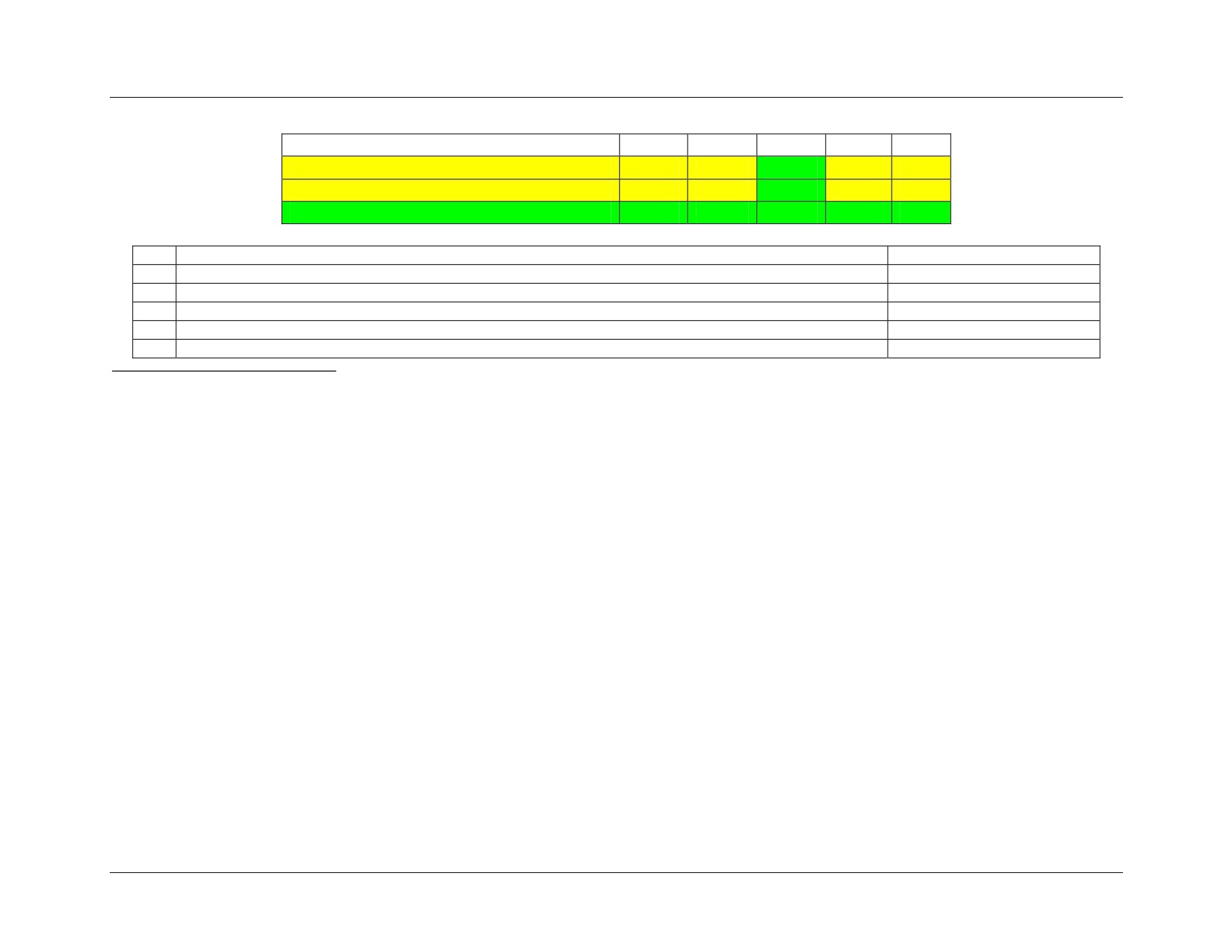
For Official Use Only
CBRND Functional Needs Analysis/Functional Solution Analysis
Chapter 15. Strategic Theater Sustain Tasks
Table 15.11-1. STSUST 11: Capability and Deficiency Assessment
Capability: COCOM HQ
M1
M2
M3
M4
M5
Current Overall Capability1
Y2
Y3
G4
Y5
Y6
Near/Mid-Term Overall Capability7
Y
Y
G
Y
Y
Far-Term Overall Capability8
G9
G10
G
G11
G12
FAA Measure
Scale
M1
Plans have been developed for the decontamination of strategically significant areas/terrain.
G - Yes, Y - Limited, R - No
M2
Procedures and checklists exist to help modify plans during CAP.
G - Yes, Y - Limited, R - No
M3
Adequate planning time, during CAP, is made available by combatant commander to components for planning.
G - Yes, Y - Limited, R - No
M4
Decontamination capabilities meet mission requirements.
G - Yes, Y - Limited, R - No
M5
Joint exercises/experimentation provide feedback on efficacy of providing a JTF for restoration operations.
G - Yes, Y - Limited, R - No
1 No doctrine has been developed. Leader education does not address this issue.
2 Limited. Any COCOM-level unit staff can develop plans to coordinate the decontamination of significant areas/terrain, to include standing up a joint task force HQ to provide
command and control if required, but there are no specific procedures, TTPs, or formalized familiarization training that addresses the unique aspects of large-scale decontamination
of significant areas/terrain at the ST level.
3 Limited. Any ST-level HQ staff can develop procedures and checklists for modifying operational plans and orders during CAP, but there are no TTPs that are designed to help
address CAP for decontamination of significant areas/terrain.
4 Yes. There are no organic time constraints.
5 Limited. Any ST-level HQ staff can provide support, but there is no real way of knowing how effective this support will be without comprehensive training events.
6 Limited, a restoration exercise focused on efficacy of providing a JTF for decontamination of significant areas/terrain has not been conducted. A RESTOP ACTD (ongoing) has
been conducted with results TBP.
7 DOTMLPF should improve in all deficient areas as a result of initiatives that use data resulting from focused experimentation.
8 Continued DOTMLPF enhancements will result from exercise and wargame lessons learned.
9 Procedures, TTPs, and formalized familiarization training that address the unique aspects of large-scale decontamination of significant areas/terrain at the ST level will be
developed.
10 JTTPs that are designed to help address CAP for decontamination of significant areas/terrain will be developed.
11 A UNIFIED ENDEAVOR exercise will specifically be used to exercise this task.
12 Experiments and exercises focused on theater restoration operations will be conducted. Lessons learned from RESTOPS ACTD will be integrated into future exercises and
experimentation that looks at issues other than fixed sites.
52
For Official Use Only
For Official Use Only
CBRND Functional Needs Analysis/Functional Solution Analysis
Chapter 15. Strategic Theater Sustain Tasks
15.11.3
Functional Solution Analysis
15.11.3.1
DOTLPF Assessment Summary
This section addresses the deficiencies and suggests potential non-materiel solutions. If there are
no non-materiel solutions, or they are only partial solutions, the remaining non-materiel need is
then stated. Materiel needs are assessed in the IMA section.
1.
Deficiency: There are no specific procedures, TTPs or formalized familiarization training
that addresses the unique aspects of large-scale decontamination of significant areas/terrain at
the ST level.
Non-Materiel Solutions: Doctrine: Establish specific procedures or TTPs that addresses the
unique aspects of large-scale decontamination of significant areas/terrain at the ST level.
Training: Develop formalized staff familiarization training that addresses the unique aspects
of large-scale decontamination of significant areas/terrain at the ST level.
2.
Deficiency: There are no TTPs that are designed to help address CAP for decontamination of
strategically significant areas/terrain.
Non-Materiel Solutions: Doctrine: Develop TTPs that are designed to help address CAP for
decontamination of strategically significant areas/terrain.
3.
Deficiency: A restoration exercise/experimentation focused on efficacy of providing a JTF
for decontamination of strategically significant areas/terrain has not been conducted.
Non-Materiel Solutions: Training: A special UNIFIED ENDEAVOR JTF exercise should
be scheduled to test a combatant command’s ability to establish a JTF to provide command
and control of extensive or complex restoration operations. It should include scenarios
involving strategically significant areas/terrain or facilities. Lessons learned can be captured
and used to develop doctrine and TTPs. Incorporate lessons learned from RESTOPS ACTD
into future exercises.
4.
Deficiency: No doctrine has been developed.
Non-Materiel Solutions: Doctrine: Develop doctrine for ST-level decontamination of
significant areas/terrain.
5.
Deficiency: Leader education does not address this issue.
Non-Materiel Solutions: Leadership: Develop leader education for ST-level
decontamination of significant areas/terrain.
15.11.3.2
IMA Assessment Summary
N/A
53
For Official Use Only
For Official Use Only
CBRND Functional Needs Analysis/Functional Solution Analysis
Chapter 15. Strategic Theater Sustain Tasks
15.12 Task STSUST 12: Coordinate the decontamination of strategically significant
facilities or fixed sites
15.12.1
Functional Area Analysis
15.12.1.1
Definition
To develop plans and coordinate mission execution of the decontamination of strategically
significant facilities. Although weathering is the preferred decontamination technique for
facilities, if a determination is made to actively decontaminate the facility, the complexity of the
decontamination and the large amount of resources involved will require combatant command
coordination.
15.12.1.2
Derivation
UJTL (ST 9.4, ST 6.2.2).
15.12.1.2.1
Supported Task: SNSUST 10
15.12.1.2.2
Lateral Tasks: STSHA 8, STSUST 14
15.12.1.2.3
Supporting Task: OPSUST 10
15.12.1.3
Condition
Perform this task under conditions of:
Physical
1. Persistent CBRN/TIM effects. (C1.3.3.1-3)
Military
1. Stressful mission. (C2.1)
2. Partially completed mission preparation. (C2.1.3)
3. Weak forces assigned. (C2.2.1)
4. Negligible personnel experience. (C2.2.4.5)
5. Poor joint staff integration. (C2.3.1.1)
6. High rear-area security. (C2.7.1)
7. Moderate host-nation support. (C2.8.5)
8. Conventional and terrorist threat form. (C2.9.2)
9. Fully developed state of conflict. (C2.10.1)
Civil
1. Limited foreign government support. (C3.1.2.3)
54
For Official Use Only
For Official Use Only
CBRND Functional Needs Analysis/Functional Solution Analysis
Chapter 15. Strategic Theater Sustain Tasks
15.12.2
Functional Needs Analysis
15.12.2.1
Capability and Deficiency Assessment Summary
Table 15.12-1 discusses the capability that currently exists to perform the task to the designated
standard. There is only one capability that exists, and no other capability is projected that will
accomplish this task.
Current Capability and Deficiency
The current assessment is “yellow.” Any COCOM staff has a team of operational planners and
command and control specialists and most have CBRN subject matter experts. This team of
experts has the skill to coordinate the decontamination of significant facilities or fixed sites, but
there are some deficiencies that negatively impact on the efficiency with which they will be able
to operate.
Projected Near/Mid-Term Capability and Deficiency
No other capability is currently projected for the near/mid term. No capability improvement is
forecast for the near/mid term.
Projected Far-Term Capability and Deficiency
No other capability is currently projected for the far-term future. DOTMLPF should improve in
all deficient areas as a result of initiatives that use data resulting from focused experimentation.
JTTPs, training and exercises, and education will all improve leading to a far-term assessment of
“green.”
55
For Official Use Only
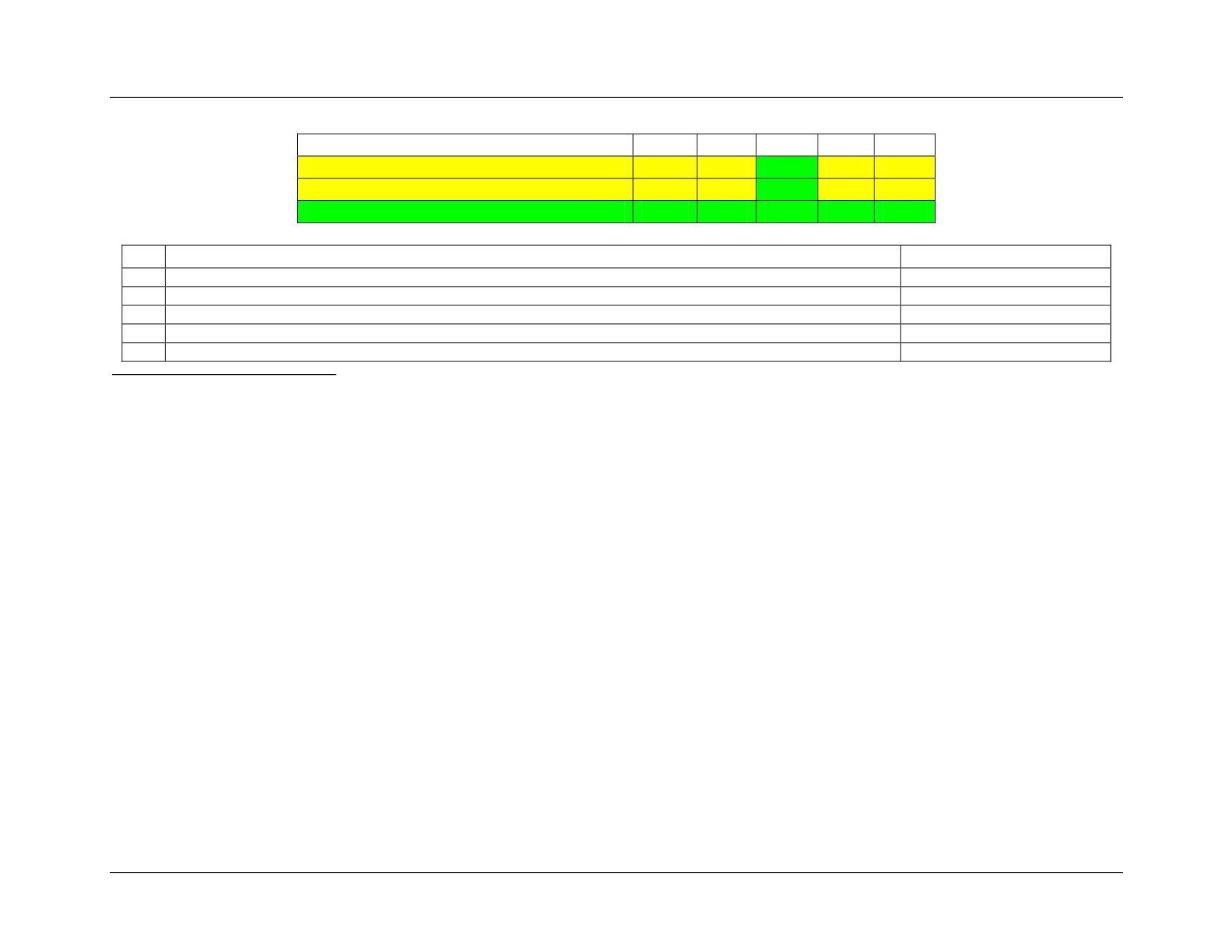
For Official Use Only
CBRND Functional Needs Analysis/Functional Solution Analysis
Chapter 15. Strategic Theater Sustain Tasks
Table 15.12-1. STSUST 12: Capability and Deficiency Assessment
Capability: COCOM HQ
M1
M2
M3
M4
M5
Current Overall Capability1
Y2
Y3
G4
Y5
Y6
Near/Mid-Term Overall Capability7
Y
Y
G
Y
Y
Far-Term Overall Capability8
G9
G10
G
G11
G12
FAA Measure
Scale
M1
Plans have been developed for the decontamination of strategically significant facilities.
G - Yes. Y- Limited. R - No.
M2
Procedures and checklists exist to help modify plans during CAP.
G - Yes, Y - Limited, R - No
M3
Adequate planning time, during CAP, is made available by the combatant commander to components for planning.
G - Yes, Y - Limited, R - No
M4
Decontamination meets mission requirements.
G - Yes, Y - Limited, R - No
M5
Joint exercises/experimentation provide feedback on efficacy of providing a JTF for restoration operations.
G - Yes, Y - Limited, R - No
1 No doctrine has been developed. Leader education does not address this issue.
2 Limited. Any COCOM-level unit staff can develop plans to coordinate the decontamination of significant facilities or fixed sites, to include standing up a joint task force HQ to
provide command and control if required, but there are no specific procedures, TTPs, or formalized familiarization training that addresses the unique aspects of large-scale
decontamination of significant facilities or fixed sites at the ST level.
3 Limited. Any ST-level HQ staff can develop procedures and checklists for modifying operational plans and orders during CAP, but there are no TTPs that are designed to help
address CAP for decontamination of strategically significant facilities or fixed sites.
4 Yes. There are no organic time constraints.
5 Limited. Any ST-level HQ staff can provide support, but there is no real way of knowing how effective this support will be without comprehensive training events.
6 Limited, a restoration exercise focused on efficacy of providing a JTF for decontamination of significant facilities or fixed sites has not been conducted. A RESTOP ACTD
(ongoing) has been conducted with results TBP.
7 DOTMLPF should improve in all deficient areas as a result of initiatives that use data resulting from focused experimentation.
8 Continued DOTMLPF enhancements will result from exercise and wargame lessons learned.
9 JTTPs and formalized familiarization training that addresses the unique aspects of large-scale decontamination of significant facilities or fixed sites at the ST level will be
developed.
10 JTTPs that are designed to help address CAP for decontamination of strategically significant facilities or fixed sites will be developed.
11 A UNIFIED ENDEAVOR exercise will specifically be used to exercise this task.
12 Experiments and exercises focused on theater restoration operations will be conducted. Lessons learned from RESTOPS ACTD will be integrated into future exercises and
experimentation that looks at issues other than fixed sites.
56
For Official Use Only
For Official Use Only
CBRND Functional Needs Analysis/Functional Solution Analysis
Chapter 15. Strategic Theater Sustain Tasks
15.12.3
Functional Solution Analysis
15.12.3.1
DOTLPF Assessment Summary
This section addresses the deficiencies and suggests potential non-materiel solutions. If there are
no non-materiel solutions, or they are only partial solutions, the remaining non-materiel need is
then stated. Materiel needs are assessed in the IMA section.
1.
Deficiency: There are no specific procedures, TTPs, or formalized familiarization training
that addresses the unique aspects of large-scale decontamination of significant facilities or
fixed sites at the ST level.
Non-Materiel Solutions: Doctrine: Establish specific procedures or TTPs that addresses the
unique aspects of large-scale decontamination of significant facilities or fixed sites at the ST
level. Training: Develop formalized staff familiarization training that addresses the unique
aspects of large-scale decontamination of significant facilities or fixed sites at the ST level.
2.
Deficiency: There are no TTPs that are designed to help address CAP for decontamination of
strategically significant facilities or fixed sites.
Non-Materiel Solutions: Doctrine: Develop TTPs that are designed to help address CAP for
decontamination of significant facilities or fixed sites.
3.
Deficiency: There is no way of knowing how effective decontamination of significant
facilities or fixed sites will be without comprehensive training events.
Non-Materiel Solutions: Training: Develop comprehensive training events to determine
how effective decontamination of strategically significant facilities or fixed sites will be with
current command and control techniques and equipment. Personnel: Personnel evaluating
and mentoring CBRN elements of national-level, COCOM, and JTF exercises must possess
adequate joint and CBRN credentials.
4.
Deficiency: No doctrine has been developed.
Non-Materiel Solutions: Doctrine: Develop doctrine for ST-level decontamination of
significant facilities or fixed sites.
5.
Deficiency: Leader education does not address this issue.
Non-Materiel Solutions: Leadership: Develop leader education for ST-level
decontamination of significant facilities or fixed sites.
15.12.3.2
IMA Assessment Summary
N/A
57
For Official Use Only
For Official Use Only
CBRND Functional Needs Analysis/Functional Solution Analysis
Chapter 15. Strategic Theater Sustain Tasks
15.13 Task STSUST 13: Determine the impact of restoration operations on theater
residual capability
15.13.1
Functional Area Analysis
15.13.1.1
Definition
To initiate and direct the process of gathering required information about the impact of ongoing
or anticipated restoration operations on theater residual capability and providing an assessment.
The combatant commander must determine to what extent theater residual capability will be
affected by ongoing or projected restoration operations. The length of time that key units or
weapons systems or key facilities will be unavailable or capabilities will be degraded prior to or
during decontamination operations will be of vital importance in a CBRN/TIM environment.
15.13.1.2
Derivation
UJTL (ST 9.4, ST 4.2.3, ST 4.2.6).
15.13.1.2.1
Supported Task: SNSUST 8
15.13.1.2.2
Lateral Task: N/A
15.13.1.2.3
Supporting Task: OPSUST 4
15.13.1.3
Condition
Perform this task under conditions of:
Physical
1. Persistent CBRN/TIM effects. (C1.3.3.1-3)
Military
1. Stressful mission. (C2.1)
2. No mission preparation. (C2.1.3)
3. Negligible personnel experience. (C2.2.4.5)
4. High rear-area security. (C2.7.1)
5. Fully developed state of conflict. (C2.10.1)
Civil
1. Limited foreign government support. (C3.1.2.3)
58
For Official Use Only
For Official Use Only
CBRND Functional Needs Analysis/Functional Solution Analysis
Chapter 15. Strategic Theater Sustain Tasks
15.13.2
Functional Needs Analysis
15.13.2.1
Capability and Deficiency Assessment Summary
Table 15.13-1 discusses the only capability that currently exists to perform the task to the
designated standard. There is only one capability that exists, and no other capability is projected
that will accomplish this task.
Current Capability and Deficiency
The current assessment is “yellow.” Any COCOM HQ has the basic ability to determine the
impact of restoration operations on theater residual capability, but there are several obstacles that
will prevent meeting the required timeline and hinder the process. Although the COCOM staff is
skilled and experienced, they would have little skill or experience with CBRND issues
concerning restoration operations. For restoration operation issues their current capability is
manual, slowing down the process.
The COCOM Headquarters was assessed in light of current limited staff use of JWARN and the
anticipated fielding initial operational capability (IOC) of the Joint Effects Model (JEM) Block I
in FY2006 and the IOC of the Joint Operational Effects Federation (JOEF) Block I, Increment I
in FY2008. JOEF will provide a significant CBRN adaptive planning capability for restoration
operations. JEM will provide a single, validated capability to predict and track CBRN and TIM
events and effects. JOEF will provide an operational requirements modeling and simulation
system which accurately predicts CBRN effects on personnel, equipment, and operations and
permit restoration operation planning. Since JEM/JOEF IOC will not be met until FY2006 and
FY 2008, respectively, the time standard for Measure 1 was assessed as “red.” There are no
TTPs that have been developed based on lessons learned from exercises or experimentation.
Concepts, doctrine, and TTPs focusing restoration operation impact on theater residual capability
are limited. CBRND staffs and staffing at all levels are not robustly manned making it difficult to
apply CBRND subject matter expertise when required. CBRND staffs are not adequately
trained/experienced on strategic theater CBRND issues. JPME does not currently address this
issue.
Projected Near/Mid-Term Capability and Deficiency
The COCOM will benefit from JEM and JOEF Block I, which will be IOC for the near/mid
term. The time standard for near-/mid-term Measure 1 will be assessed as “green” if the IOC is
met. DOTLPF changes will also improve, but the overall situation will remain “yellow” in the
near/mid term.
Projected Far-Term Capability and Deficiency
No other capability is currently projected for the far-term future. DOTMLPF should improve in
all deficient areas as a result of initiatives that use data resulting from focused experimentation.
JTTPs, training and exercises, and education will all improve leading to a far-term assessment of
“green.”
59
For Official Use Only
For Official Use Only
CBRND Functional Needs Analysis/Functional Solution Analysis
Chapter 15. Strategic Theater Sustain Tasks
Table 15.13-1. STSUST 13: Capability and Deficiency Assessment
Capability: COCOM HQ
M1
M2
M3
Current Overall Capability1
R2
Y3
Y4
Near/Mid-Term Overall Capability5
Y6
Y
Y
Far-Term Overall Capability7
G
G8
G9
FAA Measure
Scale
M1
Determination of restoration operation impact on theater residual capability can be made within 2 hours.
G - Yes, Y - Limited, R - No
M2
Procedures and checklists are developed to facilitate determination.
G - Yes, Y - Limited, R - No
M3
National/joint exercises provide lessons learned on procedures for determining restoration operation
G - Yes, Y - Limited, R - No
impact on theater residual capability.
1 Concepts, doctrine, and TTPs focusing restoration operation impact on theater residual capability are limited. CBRND staffs and staffing at all levels are not robustly manned,
making it difficult to apply CBRND subject matter expertise when required. CBRND staffs are not adequately trained/experienced on strategic theater CBRND issues. JPME does
not currently address this issue.
2 The COCOM staff would ultimately have the means to make a determination of the impact of ongoing or projected restoration operations on theater residual capability. Although
the COCOM staff is skilled and experienced, they would have little skill or experience with CBRND issues concerning restoration operations. For restoration operation issues their
current capability is manual, slowing down the process.
3 Any ST-level HQ staff can develop procedures and checklists to facilitate determination of restoration operation impact on theater residual capability, but there are no TTPs that
have been developed based on lessons learned from exercises or experimentation.
4 No exercise focused on restoration operation impact on theater residual capability has been conducted. A RESTOP ACTD (ongoing) has been conducted with results TBP, but it
is unlikely to provide data on theater residual capability determinations.
5 DOTMLPF should improve in all deficient areas as a result of initiatives that use data resulting from focused experimentation.
6 Through improved leader education and exercises, the COCOM staff will gain skill and experience with CBRND issues concerning restoration operations. The COCOM will
benefit from JEM and JOEF Block I, which will be IOC for the near/mid term and allow automation of restoration operation planning and assessments. The two-hour time frame
will be assessed as “green” if the IOC is met.
7 DOTMLPF improvements will continue as a result of new lessons learned from experiments and exercises.
8 JTTP will be developed based on lessons learned from exercises or experimentation.
9 Experiments and exercises focused on theater restoration operations will be conducted. Lessons learned from RESTOPS ACTD will be integrated into future exercises and
experimentation that looks at issues other than fixed sites.
60
For Official Use Only
For Official Use Only
CBRND Functional Needs Analysis/Functional Solution Analysis
Chapter 15. Strategic Theater Sustain Tasks
15.13.3
Functional Solution Analysis
15.13.3.1
DOTLPF Assessment Summary
This section addresses the deficiencies and suggests potential non-materiel solutions. If there are
no non-materiel solutions, or they are only partial solutions, the remaining non-materiel need is
then stated. Materiel needs are assessed in the IMA section.
1.
Deficiency: The COCOM staff has little skill or experience with CBRND issues concerning
restoration operations.
Non-Materiel Solutions: Doctrine: Establish TTPs to assist the COCOM staff determine the
restoration operation impact on theater residual capability. Organization: Analyze CBRND
staffing in all organizations in light of the capabilities required of them in this task.
Recommend staffing/organizational changes, enhancements, or alternative fixes as required.
Training: Establish training to assist the COCOM staff determine the restoration operation
impact on theater residual capability. Personnel: Provide at least one operator per watch with
extensive experience in CBRND issues including restoration operation impacts. Preferably,
this operator will be a CBRND subject matter expert if the size and organization of the
CBRND staff allows.
2.
Deficiency: No TTPs have been developed based on lessons learned from exercises or
experimentation.
Non-Materiel Solutions: Doctrine: Develop TTPs based on lessons learned from exercises
or experimentation. Integrate COCOM staff into JRO experimentation campaign plan for
FY2009/10 UNIFIED ENDEAVOR and all work-ups. Include this task for concept
experimentation.
3.
Deficiency: A restoration exercise focused on procedures for determining restoration
operation impact on theater residual capability has not been conducted.
Non-Materiel Solutions: Training: Develop exercises that include this task.
4.
Deficiency: A RESTOP ACTD (ongoing) has been conducted with results TBP, but it is
unlikely to provide data on theater residual capability determinations.
Non-Materiel Solutions: Training: Incorporate lessons learned from RESTOPS ACTD into
future doctrine and staff exercises.
5.
Deficiency: Concepts and doctrine focusing restoration operation impact on theater residual
capability are limited.
Non-Materiel Solutions: Doctrine: Develop concepts and doctrine focusing on restoration
operation impact on theater residual capability.
6.
Deficiency: CBRND staffs and staffing at all levels are not robustly manned, making it
difficult to apply CBRND subject matter expertise when required.
Non-Materiel Solutions: Organization: Analyze CBRND staffing in all organizations in
light of the capabilities required of them in this task. Recommend staffing/organizational
changes, enhancements, or alternative fixes as required.
61
For Official Use Only
For Official Use Only
CBRND Functional Needs Analysis/Functional Solution Analysis
Chapter 15. Strategic Theater Sustain Tasks
7. Deficiency: CBRND staffs are not adequately trained/experienced on ST CBRND issues.
Non-Materiel Solutions: Leadership: Develop leader training requirements and curriculum
on restoration operations designed specifically for CBRND subject matter experts.
8. Deficiency: JPME does not currently address this issue.
Non-Materiel Solutions: Leadership: Develop JPME leader training requirements and
curriculum on restoration operations.
15.13.3.2
IMA Assessment Summary
N/A
62
For Official Use Only
For Official Use Only
CBRND Functional Needs Analysis/Functional Solution Analysis
Chapter 15. Strategic Theater Sustain Tasks
15.14 Task STSUST 14: Plan CBRN elimination operations
15.14.1
Functional Area Analysis
15.14.1.1
Definition
To plan and execute theater CBRN elimination operations. A combatant commander may
conduct military operations for the explicit purpose of eliminating the CBRN weapons or
capabilities held by an adversary. Specifically, U.S. military operations across the range of
military operations also may entail a requirement to eliminate, or support the elimination of,
CBRN weapons or capabilities. CBRN elimination is the systematic removal of a capability
within a nation or organization to develop, deploy, or employ CBRN weapons. The degree or
extent of elimination is a strategic objective, defined by a strategic end state, and ranges from
complete removal of all capability (including research, production, and training for any form of
CBRN weapon) to the focused removal of specific capabilities. This task encompasses three
primary subtasks: Planning Exploitation (locating, characterizing, and securing CBRN materiel,
weapons, equipment, personnel, and infrastructure, and developing appropriate forensic
evidence); Planning Disposition (destroying, dismantling, rendering safe, removing, transferring,
or otherwise verifiably disposing of CBRN materiel, weapons, equipment, and infrastructure);
and Planning Monitoring and Redirection (monitoring, inspecting, and redirecting/converting
the CBRN infrastructure).
15.14.1.2
Derivation
Combatant Commander’s Planning Guide for WMD Elimination Operations (Draft).
15.14.1.2.1
Supported Task: SNSUST 10
15.14.1.2.2
Lateral Tasks: STSHA 6, STSHA 8, STSUST 1, STSUST 2, STSUST 3,
STSUST 4, STSUST 5, STSUST 6, STSUST 7, STSUST 11, STSUST 12
15.14.1.2.3
Supporting Task: OPSUST 14
15.14.1.3
Condition
Perform this task under conditions of:
Physical
1. Chemical, biological, radiological or nuclear threat form. (C1.3.3.1-3)
Military
1. Cooperative nation.
a. Partial preexisting arrangements. (C2.1.1.2)
b. Limited military commitments from other nations. (C2.1.1.7)
c. Limited host-nation support. (C2.8.5)
63
For Official Use Only
For Official Use Only
CBRND Functional Needs Analysis/Functional Solution Analysis
Chapter 15. Strategic Theater Sustain Tasks
2. Uncooperative nation
a. No preexisting arrangements. (C2.1.1.2)
b. Negligible military commitments from other nations. (C2.1.1.7)
c. No host nation support. (C2.8.5)
Common Military Conditions
1. Limited personnel expertise. (C2.2.4.5)
Civil
1. Cooperative nation.
a. Limited foreign government support. (C3.1.2.3)
2. Uncooperative nation
a. Negative foreign government support. (C3.1.2.3)
Common Civil Conditions
1. Moderate restraints on action. (C3.1.3.4)
This task is analyzed in the WMD Interdiction and Elimination JCIDS Analysis.
64
For Official Use Only
For Official Use Only
CBRN Functional Needs Analysis/Functional Solution Analysis
Chapter 16. Operational Sustain Tasks
CHAPTER 16. OPERATIONAL SUSTAIN TASKS
For Official Use Only
For Official Use Only
CBRN Functional Needs Analysis/Functional Solution Analysis
Chapter 16. Operational Sustain Tasks
Table of Contents
List of Acronyms
ii
16.0
Operational Sustain
1
16.1
Task OPSUST 1: Establish component commander reporting procedures for
restoration requirements
5
16.2
Task OPSUST 2: Assess component command contamination reports for
operational degradation implications and restoration operation requirements
10
16.3
Task OPSUST 3: Conduct operational risk assessment of units, equipment,
facilities, activities, or terrain that are contaminated for restoration prioritization
and timing
16
16.4
Task OPSUST 4: Assess the operational impact of required restoration activities
22
16.5
Task OPSUST 5: Provide operational guidance to forces with contaminated units
27
16.6
Task OPSUST 6: Provide mobile assessment teams to assess and determine
disposition of contaminated units, equipment, facilities, or activities
33
16.7
Task OPSUST 7: Provide restoration operation country assistance teams to
support TEPs
39
16.8
Task OPSUST 8: Support SOF restoration operation requirements
43
16.9
Task OPSUST 9: Provide JTF command and control of restoration operations
47
16.10
Task OPSUST 10: Provide JTF command and control of decontamination of
strategically significant areas/terrain or facilities
51
16.11
Task OPSUST 11: Integrate restoration operations with strategic deployment,
sustainment, and redeployment, including NEO and AE operations
55
16.12
Task OPSUST 12: Coordinate decontamination procedures for processing
contaminated remains in the JOA
61
16.13
Task OPSUST 13: Coordinate salvage of materials that require decontamination
66
16.14
Task OPSUST 14: Conduct CBRN elimination operations
70
i
For Official Use Only
For Official Use Only
CBRN Functional Needs Analysis/Functional Solution Analysis
Chapter 16. Operational Sustain Tasks
16.0 Operational Sustain
16.0.1
Introduction
The operational (OP) level of war is where campaigns and major operations are planned,
conducted, and sustained to accomplish strategic objectives within theaters or areas of
operations. Activities at this level link tactics and strategy by establishing operational objectives
needed to accomplish the strategic objectives, sequencing events to achieve the operational
objectives, initiating actions, and applying resources to bring about and sustain these events.
These activities imply a broader dimension of time or space than do tactics; they ensure the
logistic and administrative support of tactical forces and provide the means by which tactical
successes are exploited to achieve strategic objectives. Fourteen OP Sustain (SUST) tasks were
identified in the chemical, biological, radiological, and nuclear (CBRN) Functional Area
Analysis (FAA), including a task for elimination operations. However, the detailed analysis of
the elimination tasks has been deferred to the Joint Requirements Office for Chemical,
Biological, Radiological, and Nuclear Defense (JRO-CBRND)-sponsored FAA/Functional
Needs Analysis (FNA) of the weapons of mass destruction (WMD) elimination and interdiction
functional areas.
This chapter, detailing the OPSUST area, restates relevant information from the CBRN Defense
(CBRND) FAA, including a description of each of the 14 OPSUST tasks, derivation of the task,
an indication of other linked tasks, and the pertinent conditions. The FNA section addresses the
capability and deficiency analysis and a brief description of potential near-term changes. Once
all the capabilities are considered, the assessment concludes with a separate, overarching look at
the entire capability spectrum to identify remaining gaps and/or synergies. The Functional
Solutions Analysis (FSA) section addresses possible solutions for the deficiencies identified in
the FNA section. These are categorized into materiel or non-materiel. The non-materiel solutions
are addressed first and reflect one or more of the six areas of DOTLPF: doctrine, organization,
training, leadership, personnel, and facilities. If there is no non-materiel solution to the
deficiencies, then materiel solutions are considered. These encompass broad approaches that are
not system-specific. These potential materiel approaches are addressed and in the Ideas for
Materiel Approaches (IMA) section. The IMAs provide a possible near- or far-term resolution to
identified deficiencies within the individual capabilities.
16.0.2
FNA Summary
Table 16.0-1 summarizes the overall current and projected capability to perform the OPSUST
tasks identified in the CBRND FAA. The overall capability to conduct these tasks in the current
time frame is assessed as “yellow.” Any operational-level HQ has a team of operational planners
and information command and control specialists, and most have CBRN subject matter experts.
This team of experts has the skill to establish component commander reporting procedures for
restoration requirements, but there are some deficiencies that negatively impact on
standardization and experience levels. A CBRN mobile assessment team could be used to assess
units that are contaminated and assembled on an ad hoc basis at any time from in-house Joint
Task Force (JTF) resources. Prototype Standing JTF (SJTF) staffs must be assessed to determine
their ability to provide mobile assessment teams. This capability has never been attempted or
1
For Official Use Only
For Official Use Only
CBRN Functional Needs Analysis/Functional Solution Analysis
Chapter 16. Operational Sustain Tasks
tested. There is no doctrine that covers this capability. This capability could also be developed in
any new CBRND units that are currently being stood up. Until teams are designated, staffed,
trained and equipped they will be unable to respond to the incident site within 1 hour. While the
staff has the ability to provide JTF command and control of restoration operations, they have
nothing to guide their efforts without the development of specific doctrine and tactics,
techniques, and procedures (TTPs). This doctrine and TTPs cannot be developed without lessons
learned from exercises (none of which have ever been conducted) or experimentation. Until
international standards for decontamination (How clean is “clean”?) are established, intertheater
movement of decontaminated equipment will be problematic. Although significant
improvements are anticipated in the mid term, the projected capability will remain “yellow.”
Table 16.0-1. Operational Sustain Summary FNA Findings
Capability
Task
CBRN Operational Sustain Task Title
Number
Near/
Current
Far
Mid
Establish component commander reporting
OPSUST 1
procedures for restoration requirements.
•
•
•
Assess component command contamination
OPSUST 2
reports for operational degradation implications
•
•
•
and restoration operation requirements.
Conduct operational risk assessment of units,
equipment, facilities, activities, or terrain that
OPSUST 3
are contaminated for restoration prioritization
•
•
•
and timing.
Assess the operational impact of required
OPSUST 4
restoration activities.
•
•
•
Provide operational guidance to forces with
OPSUST 5
contaminated units.
•
•
•
Provide mobile assessment teams to assess and
OPSUST 6
determine disposition of contaminated units,
•
•
•
equipment, facilities, or activities.
Provide restoration operation country assistance
OPSUST 7
teams to support TEPs.
•
•
•
OPSUST 8
Support SOF restoration operation requirements.
•
•
•
Provide JTF command and control of restoration
OPSUST 9
operations.
•
•
•
Provide JTF command and control of
OPSUST 10
decontamination of strategically significant
•
•
•
areas/terrain or facilities.
2
For Official Use Only
For Official Use Only
CBRN Functional Needs Analysis/Functional Solution Analysis
Chapter 16. Operational Sustain Tasks
Integrate restoration operations with strategic
OPSUST 11
deployment, sustainment, and redeployment,
•
•
•
including NEO and AE operations.
Coordinate decontamination procedures for
OPSUST 12.
processing contaminated remains in the JOA.
•
•
•
Coordinate salvage of materials that require
OPSUST 13
decontamination.
•
•
•
OPSUST 14
Conduct CBRN elimination operations.
NA
NA
NA
OVERALL
•
•
•
16.0.3
FSA Summary
The paragraphs below summarize the assessment of all potential doctrine, organization, training,
materiel, leadership and education, personnel, and facilities (DOTMLPF) (non-materiel and
materiel) solutions for the capability gaps identified in the FNA section.
16.0.3.1
DOTLPF
The DOTLPF solutions identified in this chapter are associated primarily with a lack of
established procedures and TTPs to guide performance of the tasks. TTPs must be developed,
based on lessons learned in exercises and experiments, for the staff to use and to standardize
processes, formats and data elements. Other solutions include the development of leader
education programs, training, and doctrine. There are numerous deficiencies associated with the
JTF staff’s ability to provide mobile assessment teams to assess and determine disposition of
contaminated units, equipment, facilities, or activities. Concepts must be developed that will
guide use of mobile assessment teams to assess and determine disposition of contaminated units,
equipment, facilities, or activities and experimentation conducted to refine the concepts. Refined
concepts must be tested in full-scale exercises and lessons learned applied to the writing of and
revisions of both doctrine and TTPs. Other solutions include the development of leader education
programs.
16.0.3.2
IMA
An automated system must be developed to provide these capabilities, as well as location (global
positioning system) and unit/activity restoration operation status through component command
unit communication systems into the Nuclear, Biological, and Chemical (NBC) Battlespace
awareness system. The system must be automatic and provide component command restoration
requirements in accordance with established formats. An automated system to ensure that reports
are received even if the reporting unit is having severe degradation or communication problems
must be developed. The current capability to conduct operational risk assessment of units,
equipment, facilities, activities, or terrain that are contaminated for restoration prioritization and
timing is not automated. The process must be linked to automated systems so that routine data
can be used by automated tools (that must be developed). This will improve speed of assessment.
3
For Official Use Only
For Official Use Only
CBRN Functional Needs Analysis/Functional Solution Analysis
Chapter 16. Operational Sustain Tasks
Human out of the loop will improve accuracy if data are reliable. The current capability to assess
the operational impact of required restoration activities is manual. An automated tool will
determine the impact of contaminated units or facilities that must undergo restoration operations
on JTF operations. The system must have integrated analysis tools to predict and reprioritize
restoration requirements based on interaction with JTF J3 operational priorities. This will
improve speed of assessment. The current capability of providing operational guidance to forces
with contaminated units is manual and not automated, slowing down the process. Automated
tools and automatic processes must be developed for assisting commanders and staffs in
providing operational guidance to forces with contaminated units. The system should be
automatic and provide component command degradation information in accordance with
established formats. The system should have integrated analysis tools to predict degradation
impact to critical JTF operations based on interaction with JTF J3 operational priorities.
Information on degradation must be automatically provided to J3 systems so that decisions can
be made on operational priorities or required changes. This could be used in conjunction with a
sensor system on individual vehicles and systems, integrated with an automated system that
immediately provides a real-time assessment of operational degradation. A required materiel
solution for the provision of mobile assessment teams will be a command and control platform to
quickly transport the team to the incident site. It will provide them with all the tools required to
make the assessment, provide them with total protection from any CBRN hazard and allow for
quick and complete decontamination of the command and control platform after the assessment
is complete. The tools onboard can be linked to sensors on the contaminated units, equipment,
facilities providing automatic data feeds en route.
4
For Official Use Only
For Official Use Only
CBRN Functional Needs Analysis/Functional Solution Analysis
Chapter 16. Operational Sustain Tasks
16.1 Task OPSUST 1: Establish component commander reporting procedures for
restoration requirements
16.1.1
Functional Area Analysis
16.1.1.1
Definition
To establish and maintain procedures to be followed by component commanders that will be
used to report their joint restoration operation requirements. The JTF commander establishes
component commander reporting procedures for restoration requirements in order to provide for
standardization and improved efficiency.
16.1.1.2
Derivation
UJTL (OP 7.3, OP 5.3.2, ST 7.2.1).
16.1.1.2.1
Supported Task: STSUST 1
16.1.1.2.2
Lateral Task: OPSHA 10
16.1.1.2.3
Supporting Task: TASUST 24
16.1.1.3
Condition
Perform this task under conditions of:
Physical. N/A
Military
1. Partial preexisting arrangements. (C2.1.1.2)
2. Limited personnel expertise. (C2.2.4.5)
3. Poor joint staff integration. (C2.3.1.1)
Civil. N/A
16.1.2
Functional Needs Analysis
16.1.2.1
Capability and Deficiency Assessment Summary
Table 16.1-1 discusses the only capability that currently exists to perform the task to the
designated standards. No other capability is projected that will accomplish this task.
Current Capability and Deficiency
The current assessment is “yellow.” Any JTF HQ has a team of operational planners and
information command and control specialists, and most have CBRN subject matter experts. This
5
For Official Use Only
For Official Use Only
CBRN Functional Needs Analysis/Functional Solution Analysis
Chapter 16. Operational Sustain Tasks
team of experts has the skill to establish component commander reporting procedures for
restoration requirements, but there are some deficiencies that negatively impact on
standardization and experience levels.
Projected Near/Mid-Term Capability and Deficiency
DOTLPF should improve in the near/mid term. No other capabilities are currently projected for
the near/mid term. No capability improvements are forecast for the near/mid term.
Projected Far-Term Capability and Deficiency
DOTMLPF should improve in all deficient areas as a result of initiatives that use data resulting
from focused experimentation. JTTPs, training and exercises, and education will all improve
leading to a far-term assessment of “green.”
6
For Official Use Only
For Official Use Only
CBRN Functional Needs Analysis/Functional Solution Analysis
Chapter 16. Operational Sustain Tasks
Table 16.1-1. OPSUST 1: Capability and Deficiency Assessment
Capability: Joint Task Force Headquarters (JTF-HQ)
M1
M2
M3
M4
Current Overall Capability1
Y2
Y3
Y4
Y5
Near/Mid-Term Overall Capability6
Y
Y
Y
Y
Far-Term Overall Capability7
G8
G9
G10
G11
FAA Measure
Scale
M1
Theater policy and guidelines for theater restoration operations are established.
G - Yes, Y - Limited, R - No
M2
Component commander reporting procedures for restoration requirements are established.
G - Yes, Y - Limited, R - No
M3
Component commander reporting procedures for restoration requirements are modified
G - Yes, Y - Limited, R - No
after substantive changes are recommended and approved.
M4
Joint exercises/experimentation provide feedback of component commander reporting
G - Yes, Y - Limited, R - No
procedures for restoration requirements.
1 There is no leader training/education for JTF restoration operations.
2 Limited. The existence of theater policy and guidelines for restoration operations varies by theater.
3 Limited. Any JTF-HQ can develop reporting procedures, but there are no TTPs that specifically address reporting procedures for restoration requirements. Any procedures would
be manual.
4 Limited. A JTF-HQ does not have TTPs that specifically addresses reporting procedures for restoration operations to guide them in modifying procedures after substantive
changes are recommended and approved.
5 Limited. Any joint exercise/experiment can provide feedback, but few if any have been conducted that include reporting procedures for restoration requirements.
6 DOTMLPF should improve in all deficient areas as a result of initiatives that use data resulting from focused experimentation.
7 Continued DOTMLPF enhancements will result from exercise and wargame lessons learned.
8 As the results of Restoration Operations (RESTOPS) Advanced Concept Technology Demonstration (ACTD) are understood and incorporated at all theaters, the appropriate
policy and guidelines will be developed.
9 Joint TTPs (JTTPs) that specifically address reporting procedures for restoration requirements will be developed.
10 JTTPs that specifically address reporting procedures for restoration operations to guide them in modifying procedures after substantive changes are recommended and approved
will be developed.
11 A UNIFIED ENDEAVOR exercise will specifically be used to exercise this task.
7
For Official Use Only
For Official Use Only
CBRN Functional Needs Analysis/Functional Solution Analysis
Chapter 16. Operational Sustain Tasks
16.1.3
Functional Solution Analysis
16.1.3.1
DOTLPF Assessment Summary
This section addresses the deficiencies and suggests potential non-materiel solutions. If there are
no non-materiel solutions, or they are only partial solutions, the remaining non-materiel need is
then stated. Materiel needs are assessed in the IMA section.
1.
Deficiency: Limited reporting procedures exist. Any procedures would be manual.
Non-Materiel Solutions: Doctrine: Refine TTPs on reporting procedures for restoration
requirements. Begin to develop formats for restoration operation requirements and include
them in pertinent joint publications. Developed joint format parameters will be included in
pertinent Service publications. Organization: Prototype SJTF CBRN centers must be
provided with adequate CBRN center staffing to ensure that manual collection of component
command restoration requirements can be performed. Service component CBRN centers
must be assessed to see if they can adequately perform the function of providing manual
restoration requirement reports to the JTF CBRN center. CBRN staffing/training is not
standard across the Services. Refine exercises to develop lessons learned about reporting
procedures for restoration requirements of a JTF. Incorporate lessons learned from
Restoration Operations (RESTOPS) Advanced Concept Technology Demonstration (ACTD)
into future exercises. Personnel: Provide adequately trained personnel (either specially
trained subject matter experts [SMEs] or unit personnel who receive extra training) for all
units that must report/receive restoration requirements. Staffing of proposed joint “opposing
force” must include personnel who possess adequate joint and CBRN credentials. Personnel
evaluating and mentoring CBRN elements of JTF exercises must possess adequate joint and
CBRN credentials.
2.
Deficiency: Limited restoration exercises.
Non-Materiel Solutions: Doctrine: Develop TTPs for developing exercises for restoration
requirements. Training: Develop training for staffs on reporting procedures for restoration
requirements.
3.
Deficiency: No TTPs have been developed.
Non-Materiel Solutions: Doctrine: Develop TTPs for reporting procedures for restoration
requirements.
4.
Deficiency: There is no leader training/education for JTF restoration operations.
Non-Materiel Solutions: Training: Develop training for staffs on reporting procedures for
restoration requirements. Leadership: Develop leader training for staffs on reporting
procedures for restoration requirements. Joint Professional Military Education (JPME) must
include leader-learning areas for restoration operations considerations at the OP level.
16.1.3.2
IMA Assessment Summary
Table 16.1-2 shows possible materiel approaches that address the remaining materiel
requirements of the DOTMLPF assessment.
8
For Official Use Only
For Official Use Only
CBRN Functional Needs Analysis/Functional Solution Analysis
Chapter 16. Operational Sustain Tasks
Table 16.1-2. OPSUST 1: IMA Assessment
Idea for Materiel
Capability Gap
Description
Approach
Limited reporting
Automated system
An automated system that provides location
procedures. Any
(global positioning system) and unit restoration
procedures would
requirements through component command unit
be manual.
communication systems into the NBC Battle
Management System and from there into Joint
Warning and Reporting Network (JWARN) and
Global Command and Control System (GCCS).
System is automatic and provides component
command restoration requirements in accordance
with established formats.
9
For Official Use Only