CHEMICAL, BIOLOGICAL, RADIOLOGICAL, AND NUCLEAR DEFENSE (CBRND) FUNCTIONAL NEEDS ANALYSIS. FINAL REPORT (2005) - page 22
For Official Use Only
CBRND Functional Needs Analysis/Functional Solution Analysis
Chapter 13 Tactical Shield Tasks
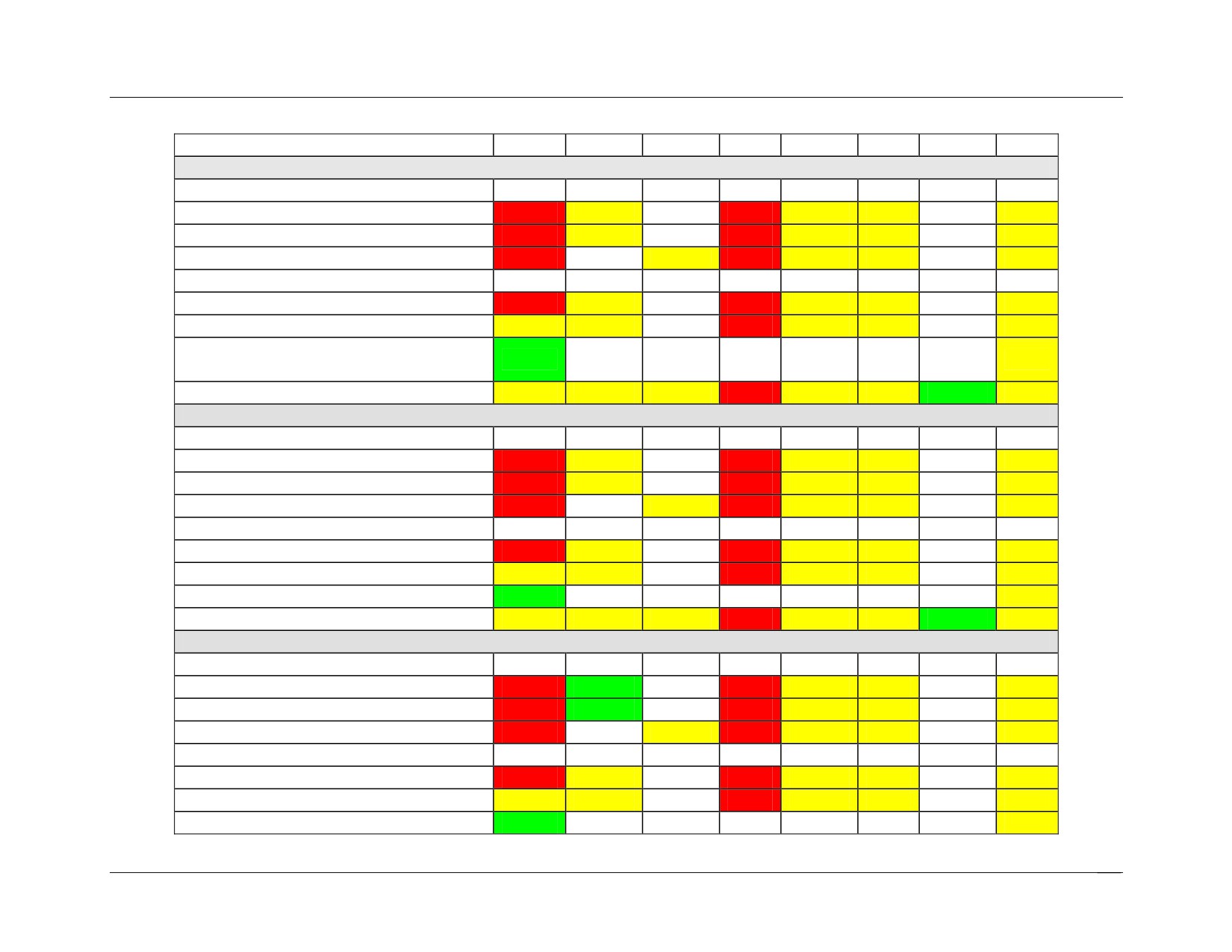
Table 13.8-1. TASHLD 8: Capability and Deficiency Assessment
System/Measure
M1
M2
M3
M4
M5
M6
M7
M8
Current
Individual Protection
3
5
6
3
5
5
N/A
6
Respiratory/Ocular Protection
31
52
N/A
33
54
54
N/A
65
Percutaneous Protection
36
57
N/A
33
54
54
N/A
65
Medical Protection
38
N/A
69
33
510
510
N/A
65
Collective Protection
3.5
5
N/A
2.5
5
5
N/A
6
Mobile COLPRO
311
512
N/A
23
54
54
N/A
65
Fixed-Site COLPRO
413
514
N/A
33
54
54
N/A
65
Mission-Oriented Protective Posture
815
N/A
N/A
N/A
N/A
N/A
N/A
65
(MOPP) Methodology
Unit Staff
616
617
618
219
520
621
822
65
Near/Mid
Individual Protection
3
6
6
3
5
5
N/A
6
Respiratory/Ocular Protection
31,23
62,24
N/A
33
54
54
N/A
65
Percutaneous Protection
36,25
67,26
N/A
33
54
54
N/A
65
Medical Protection
38,27
N/A
69
33
510
510
N/A
65
Collective Protection
4.5
5
N/A
2.5
5
5
N/A
6
11,28
Mobile COLPRO
3
512,29
N/A
23
54
54
N/A
65
Fixed-Site COLPRO
613,30
514,31
N/A
33
54
54
N/A
65
MOPP
815
N/A
N/A
N/A
N/A
N/A
N/A
65
Unit Staff
616
617
618
219
520
621
822
65
Far
Individual Protection
3
8
6
3
5
5
N/A
6
Respiratory/Ocular Protection
3
1,23,32
82,24
N/A
33
54
54
N/A
65
Percutaneous Protection
36,25,33
87,26
N/A
33
54
54
N/A
65
Medical Protection
38,27,34
N/A
69
33
510
510
N/A
65
Collective Protection
5
5
N/A
2.5
5
5
N/A
6
11,28,35
Mobile COLPRO
3
512,29
N/A
23
54
54
N/A
65
Fixed-Site COLPRO
713,30,36
514,31
N/A
33
54
54
N/A
65
MOPP
815
N/A
N/A
N/A
N/A
N/A
N/A
65
For Official Use Only
157
For Official Use Only
CBRND Functional Needs Analysis/Functional Solution Analysis
Chapter 13 Tactical Shield Tasks
System/Measure
M1
M2
M3
M4
M5
M6
M7
M8
Unit Staff
616
617
618
219
520
621
822
65
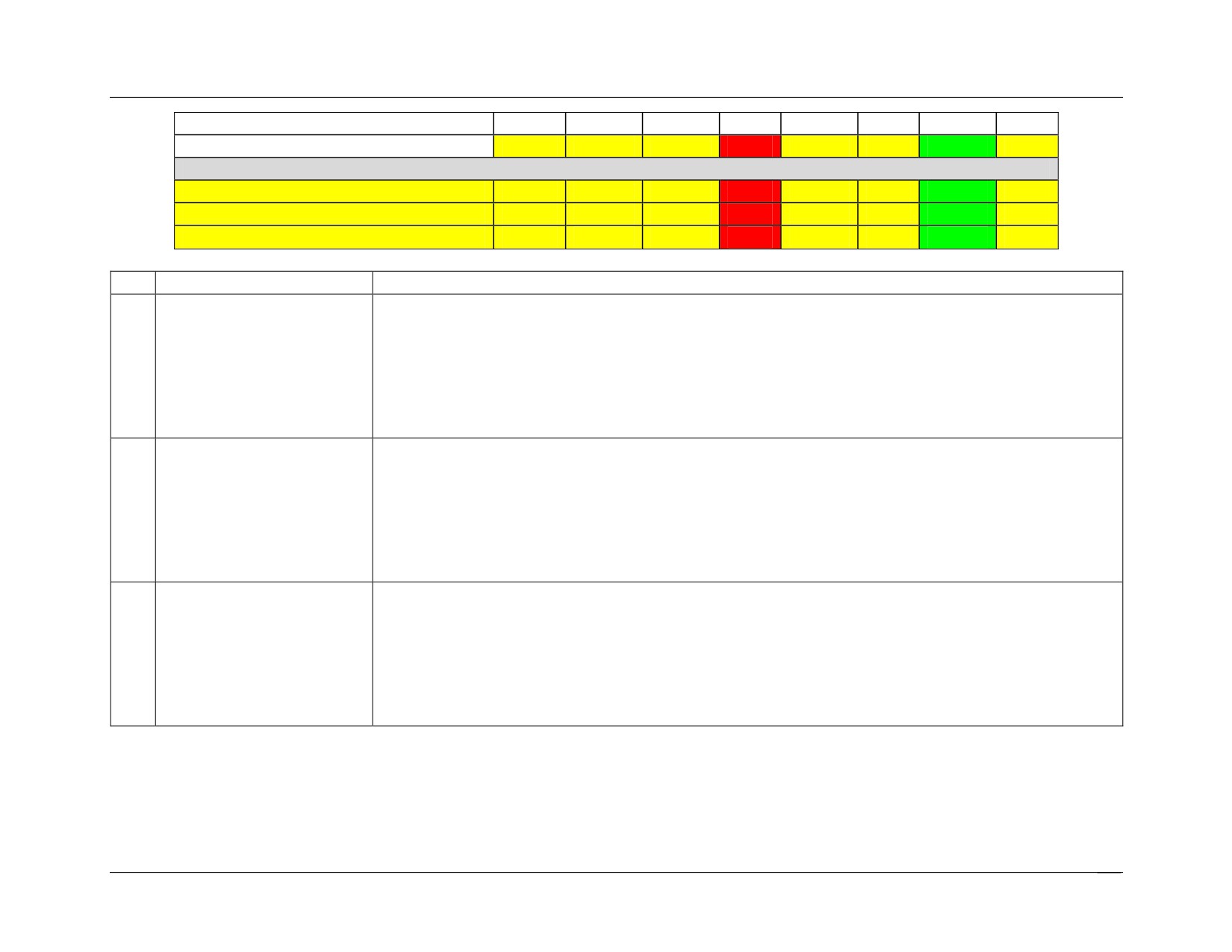
Overall
Current Overall Capability
5
5
6
3
5
5
8
6
Near/Mid-Term Overall Capability
5
6
6
3
5
5
8
6
Far-Term Overall Capability
6
6
6
3
5
5
8
6
FAA Measure
Scale
M1
Forces are equipped to operate
8-10: Forces are adequately equipped and possess ready access to CBRND resources to conduct sustained operations
in a CBRN/TIM environment.
in a CBRN/TIM environment.
4-7: Forces are adequately equipped and possess ready access to CBRND resources to conduct operations in a
CBRN/TIM environment.
1-3: Uniformed forces are equipped and possess access to CBRND resources to conduct operations in a CBRN/TIM
environment.
0: Forces are not equipped and possess access to CBRND resources to conduct operations in a CBRN/TIM
environment.
M2
Nonmedical CBRN/TIM
8-10: CBRND systems, components, and consumables are available and in place in plan identified quantities and
consumables and expendables
types to support sustained operations within a CBRN/TIM environment.
are on hand.
4-7: CBRND systems, components, and consumables are available and in place supporting operations but reflect
adjusted plan quantities and types for limitations and constraints in availability. Adjustments to operations are made
without serious impact.
1-3: Limitations and constraints upon available CBRND system, component, and consumable quantities and types
require changes to operations with potentially serious impact.
0: CBRND systems, components, and consumables availability and allocation do not support operations.
M3
Medical CBRN/TIM
8-10: CBRND systems, components, and consumables are available and in place in plan identified quantities and
consumables and expendables
types to support sustained operations within a CBRN/TIM environment.
are on hand.
4-7: CBRND systems, components, and consumables are available and in place supporting operations but reflect
adjusted plan quantities and types for limitations and constraints in availability. Adjustments to operations are made
without serious impact.
1-3: Limitations and constraints upon available CBRND system, component, and consumable quantities and types
require changes to operations with potentially serious impact.
0: CBRND systems, components, and consumables availability and allocation do not support operations.
For Official Use Only
158
For Official Use Only
CBRND Functional Needs Analysis/Functional Solution Analysis
Chapter 13 Tactical Shield Tasks
M4
Operations are sustainable over
8-10: Forces (including military, eligible civilians, and MWAs) are adequately equipped and possess ready access to
multiple CBRN/TIM attacks
sufficient CBRND resources to support sustained operations through multiple CBRN/TIM attacks across the
based upon organic, on-hand,
spectrum of operations and without unplanned and unforecasted resupply.
and issued CBRN/TIM
4-7: Forces (including military and eligible civilians) are equipped and possess ready access to sufficient CBRND to
protective assets, consumables,
support sustained operations through multiple CBRN/TIM attacks involving major operations with planned and
and expendables.
forecasted resupply.
1-3: Forces are inadequately equipped and/or possess limited access to CBRND resources to sustain operations
through multiple CBRN/TIM attacks and/or are reliant upon resupply.
0: Forces are not equipped and resupplied with CBRND resources for operations with multiple CBRN/TIM attacks.
M5
CBRND asset replenishment
8-10: CBRND resources are stockpiled and prepositioned within or near the AO in plan identified quantities and
effectively maintains
types to support sustained operations against multiple CBRN/TIM attacks upon the force. Continuing replenishment
OPTEMPO and force
of unit operating stocks, and AO stockpiles and prepositioned stocks maintains plan established and operations
survivability.
related adjusted stock levels.
4-7: CBRND resources are stockpiled and prepositioned within or near the AO in plan identified required quantities
and types to support sustained operations in a CBRN/TIM environment. Periodic replenishment of unit operating
stocks, and AO stockpiles and prepositioned stocks maintains plan established stock levels.
1-3: CBRND resources are stockpiled at depots outside the OA, prepositioned within or near the AO, and stocked
within units in plan identified quantities and types to support sustained operations within a CBRN/TIM environment.
Replenishment of operating unit and AO operating stocks from prepositioned and depot stocks are performed as
outlined in the appropriate plan.
0: CBRND stockpiles and prepositioned stocks of CBRND resources and replenishment of operating stocks are
inadequate to support sustained operations in a CBRN/TIM environment.
M6
Positioning of consumables
8-10: Forces are issued identified CBRND assets and possess immediate access to replacement CBRND
effectively supports forces.
consumables. Replenishment is continuing and supports immediate availability.
4-7: Forces are issued identified CBRND assets and possess ready access to replacement CBRND consumables.
Periodic replenishment maintains availability at a sufficient level to support operations
1-3: Forces are issued identified CBRND assets and possess reasonable access to replacement CBRND
consumables. Programmed replenishment maintains minimal operational stocks.
0: Forces do not possess needed access to initial and replacement CBRND consumables. Programmed replenishment
is inadequate to support operations in a CBRN/TIM environment.
M7
Integrated staff effort (medical,
8-10: Fully integrated staff functions collaboratively develop effective and detailed operational plans establishing
logistics, NBC) to prepare plan.
integrated CBRND support requirements for CBRN/TIM defense operations.
4-7: Staff functions collaborate in the development of operational plans addressing CBRND support requirements
for CBRN/TIM defense operations.
1-3: Force staff functions predominantly operate autonomously of each other and coordinate the development of
operational plans involving CBRND support requirements and CBRN/TIM defense operations.
0: Force staff functions do not coordinate development of operational plans entailing inclusion of CBRND support
requirements for CBRN/TIM defense operations.
For Official Use Only
159
For Official Use Only
CBRND Functional Needs Analysis/Functional Solution Analysis
Chapter 13 Tactical Shield Tasks
M8
There is effective DOTMLPF
8-10: DOTLPF exists and is adequate for this task. Task can be effectively performed with little or no direct impact
in place to conduct task.
upon operations.
4-7: Most critical aspects of DOTLPF for this task are addressed. Task can be performed with limitations requiring
work-arounds.
1-3: DOTLPF is inadequate for accomplishment of this task.
0: DOTLPF does not exist for this task.
1 CBRND IPE is currently Service-specific. Respiratory/ocular protection is diverse across the Services and performed functions. USAF combat aircrews conduction operations
within a CBRN environment are equipped with the MBU-19/P Chemical-Biological AERP that includes protective hood, MBU-12/P mask, C-2 filter canister, an intercom for
ground communications, and a blower assembly. The AERP provides protection whether or not supplemental oxygen is present. USN and USMC aviators use the A/P22P-14(V)
Respirator Assembly that is a self-contained protective system deployed for rotary-wing (Version 1 for USN) and fixed-wing (Versions 2-4 for USN and USMC) aircrews. The
system incorporates a CB filter, dual air/oxygen supply, and a crossover manifold with dual protective capabilities for flight and ground protection. The A/P 22P-14(V) 1 is not
compatible with aircraft with oxygen delivery systems and supports helicopter crew use. Version 2 is used for the EA-6B and F-18A, Version 3 for AV-8B and F-18C/D, and
Version 4 is applied for C-130 aircrews. The M17 series mask is obsolescent and is relegated to NEO support in selected HTAs. The mask is designed for the military standard
profile (ground) and does not adequately protect all potential nonmilitary populace members, for which is retained. The M40/M42 CB Protective Mask is in service with the U.S.
Army. The mask uses the C-2 canister for filtration of CBRN contaminants. The M42 integrates with combat vehicle filtration protection system and has a dynamic microphone
with cable for connection to vehicle communications systems. The system is a stand-alone system that accompanies the user. The M45 Aircrew Aviator Mask replaced the U.S.
Army M43 Type II and M49 Mask Systems. The system uses a low-profile canister compatible hose assembly for both hose and face-mounted configurations. The mask system
incorporates selectable filtration for support both during aircraft systems activation and using the connectable filter pack. The mask also is applied to personnel who cannot be
fitted with the standard M40A1, M42A2, or MCU-2A/P masks. The M48 CB Apache Aviator Mask protects AH-64 Apache helicopter aviators and flight support personnel. The
blower assembly uses the C-2 filter canister to provide filtered, breathable air. The M-48 replaced the M43 Type 1 mask. The MCU-2A/P is the mainstay USAF and USN mask
employed by personnel not equipped with aircrew masks and by aircrew when not performing flight operations. The MCU-2A/P is also used by aircrew during flight operations
who are not equipped with aircrew masks. COTS equipment meeting OSHA requirements (and NFPA for firefighters) is applied by selected civilian personnel performing specific
functions such as firefighting, EMS, hazardous materials, etc. Limited quantities of COTS may be available within HTAs for known NEO requirements for the protection of
populace members unable to wear the M17 series or standard warfighter respiratory/ocular protective devices. MWAs are not afforded respiratory/ocular protection.
2 Respiratory/ocular CBRND protection asset expendables and consumables include filters, batteries, exhaust and inlet valves, disposable aviator materials, and other assets
designed for replacement or disposal. These are identified in the applicable technical manuals and directives and are a consideration in the planning, acquisition, positioning, and
allocation of logistics resources supporting operations. The diversity of respiratory/ocular assets between the services does place an increased logistical burden upon planners and
the logistics systems to accommodate unique requirements for specific systems. Limited standardization does exist, such as the C-2 filter canister, but not all expendable and
consumable components are standard across the services. Doctrine, policy, procedures, and TTPs include the planning, identification, positioning, and allocation by the command
staff of these assets to ensure their availability to the force.
3 Doctrine, policy, and procedures to not adequately address sustained operations over multiple CBRN/TIM attacks. Current assets are limited in their ability to address these types
of operations and will require increased quantities, service, replacement, and issue, placing serious demands upon logistics systems for support. Degradation to operational
performance is a significant concern in these circumstances.
4 Doctrine, policy, and procedures are adequate for planning, movement, management, and positioning of materiel (including CBRND materiel) in support of operations. CBRND
materiel for an operation addresses the identified CBRN/TIM threat. The allocation and dissemination of CBRND materiel is managed by the staff based upon plans, operational
requirements, anticipated or experienced threat, and available resources. Expeditionary operations are a particular concern. Availability of spares and resupply will be limited
during the period until the theater matures (usually the first 30-90 days). Maneuvering highly mobile forces operating in austere environments, behind adversary lines, and
possessing reduced logistical footprints are similarly constrained. The individual combat load also places limitations upon weight and type of equipment and consumables.
Protective equipment may be reduced or eliminated despite threat level. Sustained operations within a CBRN/TIM environment are not adequately addressed in DOTLPF and,
subsequently, in planning.
5 DOTLPF is adequate for the planning, movement, management, positioning, and reallocation of CBRND materiel in support of operations. However, DOTLPF is inadequate for
sustained operations within a CBRN/TIM environment and for expeditionary and highly mobile force operations with reduced logistical footprints. DOTLPF is also inadequate or
nonexistent addressing CBRND of eligible civilians and MWAs.
For Official Use Only
160
For Official Use Only
CBRND Functional Needs Analysis/Functional Solution Analysis
Chapter 13 Tactical Shield Tasks
6 Service-specific CBRND percutaneous protection is currently applied for the protection of the force. The BDO, used by the USAF and U.S. Army, is a two-piece garment
providing protection for a 24-hour period against chemical agent vapors, liquids, and droplets; biological agents and toxins and contact with radioactive particles. The BDO’s
protective abilities are lost if the suit is torn, ripped, splashed with POL, or is saturated with water and is designed for a one-time use and is worn by ground and most flight
personnel (non-high-performance aircraft). The USMC uses the Saratoga COLPRO suit similar in design to the BDO, but launderable for personnel hygiene. The CPOG is a
legacy two-piece garment for protection against CBRN agents. The CPOG is in use with the USN. The CPU is designed to provide an additional layer of protection for the
warfighter and is worn under standard IPE. The USAF CWU-66/P (and 77/P) is a one-piece flightsuit providing protection for a 24-hour period against standard CBRN agents and
is designed for compatibility with aircrew lift support equipment. The USN, USAF, and USMC use the disposable aircrew protective cape to protect aircrew between sheltering
and the combat aircraft. The cape drapes over the wearer and is removed during entry into the aircraft to prevent transfer of contamination into the aircraft interior. The BVO/GVO
overboots are applied over the wearer’s standard footwear to protect against contact with CBRND. The USN uses the CPFC, commonly called the “fishtail” for its design, to
protect the wearer’s footwear. The CPFC, considered obsolete, does provide a measure of antislip protection shipboard. The disposable aircrew boot cover is worn by USAF, USN,
and USMC aviators over aircrew footwear while en route and mounting combat aircraft. The covers are removed during aircraft entry and are designed to prevent contamination
transfer into the aircraft. Hand protection is provided by the CPG in 7-, 14-, and 25-mil thicknesses to meet warfighter hand protection and dexterity needs. Disposable aircrew
hand protection is applied by the USAF, USMC, and USN for aviators over their gloves (and may be worn between glove layers for additional protection) during movement
between shelter and aircraft. When used as an overglove, the gloves are removed during aircraft mounting during aircraft entry to preclude the potential for transfer of
contamination into the aircraft interior. Medical Services practitioners performing treatment The CPHS is designed to prevent contact of the warfighter’s helmet with liquid
contamination which may be absorbed, impact helmet integrity, and/or constitute a potential secondary hazard to the wearer. SCALP provides a disposable, lightweight,
impermeable layer of protection for personnel against gross liquid contamination and is worn over the warfighter’s protective ensemble. SCALP is commonly applied to protect
armor and EOD personnel who may be required to leave sheltering to perform duties and functions. SCALP is also applied by units performing decontamination operations where
personnel may become soaked by decontaminants and Medical Services personnel with potential for prolonged contact with body fluids. Standard wet-weather gear (e.g., poncho,
rain parka, rain suit, etc.) is also applied as a barrier against saturation of the warfighter’s protective ensemble by contact with liquids such as rain, sea spray, etc. The M-2 apron is
applied by personnel performing decontamination aprons and is worn over the ensemble. The apron is full length and sleeve to maximize coverage, although the back is open.
COTS assets meeting OSHA requirements (and NFPA for firefighters) is applied by selected civilian personnel performing specific functions such as firefighting, EMS, hazardous
materials, etc. Medical barrier impermeable barrier protective assets may also be applied by Medical Services practitioners potentially at risk for contact with fluids.
7 The Service-specific ensembles, footwear, hand covers, and other percutaneous protective assets are designed for disposal following exposure to CBRN/TIM agents. However,
selected assets are designed to be decontaminated and reused rather than disposal. These include the M-2 protective apron and BVO/GVO footwear covers.
Expendable/consumable CBRND percutaneous protective assets are a consideration in the planning, acquisition, positioning, and allocation of logistics resources supporting
operations. The diversity of percutaneous assets between the services places an increased logistical burden upon planners and the logistics systems to accommodate unique service
requirements. Limited standardization does exist, such as footwear covers, aviator disposable coverings, ensembles (the BDO is used by the U.S. Army and USAF), but not all
expendable and consumable assets are standard across the services. Doctrine, policy, procedures, and TTPs include the planning, identification, positioning, and allocation by the
command staff of these assets to ensure their availability to the force.
8 Forces are not protected against all identified threat CBRN/TIM capabilities. Medical prophylaxis does not exist for all threat CBRN/TIM agents. Current prophylaxis and
supporting doctrine, policy, and procedures do not address presymptomatic medical CBRND protective countermeasures by other than U.S. forces, excluding MWAs and eligible
civilians. Prophylaxis against most high-threat TIMs are not currently available due to the relatively recent consideration of these agents as a potential threat. Additionally, the
efficacy of existing prophylaxis, particularly vaccines, widely varies. Military personnel are administered and/or issued CBRND medical countermeasures for operations with
threat. Vaccines for selected biological agents, topicals, and preexposure and/or post-exposure/presymptomatic medications are applied to mitigate or preclude the effects of
specific CBRN/TIM agents. Currently, preexposure prophylaxis is available for nerve agents ( G and V series), and vesicants (H, HD, HN, L, CX), topical only. SERPACWA is
the preexposure countermeasure for vesicants and one nerve agent. TSP is approved by the FDA as a supplement for SERPACWA. Post-exposure prophylaxis is available for
pulmonary (CG) agent, but is not FDA approved. Radioprotective steroids and neutraceuticals may be effective as pre- and post-exposure prophylactics. 5-androstenediol is an
IND preexposure treatment for radiological exposure. Iodide/potassium iodide is FDA approved for application against Iodine 131, 132, 134, and 135. Post-exposure radiological
exposure prophylaxis consists of neutraceuticals, plant isoflavone genistein, and alpha tocopherol (Vitamin E) but are not approved by the FDA for prophylaxis against radiation.
FDA-approved preexposure medical countermeasures are available for anthrax, cholera, HFRS (Haantan), Rift Valley fever, yellow fever, HFRS (Haantan), and smallpox. IND
status vaccines are currently available for Q-fever, tularemia (although use has been placed on hold by the FDA), Botulinum, Junin hemorrhagic fever, and VEE/WEE/EEE.
Antiviral/bacterial medications may be administered and/or issued to provide a level of protection against biological agents.
For Official Use Only
161
For Official Use Only
CBRND Functional Needs Analysis/Functional Solution Analysis
Chapter 13 Tactical Shield Tasks
9 Medical CBRND materiel, including consumables and expendables, are administered, issued, and prepositioned for identified CBRN/TIM threats. The types, quantities,
movement, administration, issuance, and positioning of medical CBRND materiel is addressed by the command and support staffs during the planning and support for operations
and is addressed in doctrine, policy, and procedures. Expeditionary and highly mobile force operations are particular concerns. Availability of spares and resupply will be limited
for expeditionary forces during the period until the theater matures (usually the first 30-90 days). Highly mobile forces maneuvering and operating in austere environments, behind
adversary lines, and possessing reduced logistical footprints are similarly constrained. The individual combat load also places limitations upon weight and type of equipment and
consumables. Protective materiel may be reduced or eliminated despite threat level. Medical CBRND materiel for MWAs is virtually nonexistent. The application of
presymptomatic medical CBRND materiel to eligible civilians is not addressed in current doctrine, policy, and procedures. Sustained operations within a CBRN/TIM environment
are not adequately addressed in DOTLPF and, subsequently, in planning.
10 Medical CBRND materiel, including consumables and expendables, are administered, issued, and prepositioned for identified CBRN/TIM threats. The types, quantities,
movement, administration, issuance, and positioning of medical CBRND materiel is addressed by Medical Services, JTF, and unit staffs during the planning and support of
operations and is addressed in doctrine, policy and procedures. Expeditionary and highly mobile force operations are particular concerns. Availability of spares and resupply will
be limited for expeditionary forces during the period until the theater matures (usually the first 30-90 days). Highly mobile forces maneuvering and operating in austere
environments, behind adversary lines, and possessing reduced logistical footprints are similarly constrained. The individual combat load also places limitations upon weight and
type of equipment and consumables. Protective materiel may be reduced or eliminated despite threat level. Medical CBRND materiel for MWAs is virtually nonexistent. The
application of presymptomatic medical CBRND materiel to eligible civilians is not addressed in current DOTLPF. Sustained operations within a CBRN/TIM environment are not
adequately addressed in DOTLPF and, subsequently, in planning.
11 Inadequate quantities of mobile COLPRO systems exist to support highly mobile and expeditionary operations with reduced footprint. Further, there is insufficient quantities of
COLPRO to protect all critical activities and functions within the force. Prioritization is required of the available resources. Current mobile COLPRO systems are predominantly
integrated into selected combat vehicles/vessels. Selected U.S. Naval combat vessels may be equipped with full COLPRO (CITADEL). However, these systems are generally
restricted to critical operations areas of the ships. The critical areas are contiguous in that they share common bulkheads and movement between areas is not prevented. CCAs are
operated in areas located between the covered areas and the remainder of the ship. These areas are designated. The remainder of the interior of the vessel uses the Circle William
concept. Circle William requires prior warning of the presence of a CBRN/TIM in the path of the ship or knowledge of an impending attack to be fully effective. This concept
requires the shutdown of the ventilation system and sealing of hatches, bulkheads, and other such openings to seal the interior of the vessel from intrusion by a CBRN/TIM.
However, the majority of these actions are performed manually and are initiated upon detection of the potential CBRN/TIM agent. There are concerns about the potential for large
amounts of a CBRN/TIM agent to be drawn in by the high-velocity ventilation systems and dispersed throughout the interior of the ship during the period between agent encounter
and completion of Circle William. There are concerns about the ability of the vessel to remain in Circle William until it is determined the vessel is no longer exposed to a
CBRN/TIM. U.S. Naval combat vessels with full COLPRO of their critical functions currently include the DDG-51 class of destroyers, selected LSDs (vessel hulls 44 through 52),
LHDs (vessel hulls 1 through 6), LHAs (vessel hulls 1 through 5), and four of the AOE-6 (vessel hulls 6 through 8 and 10) class ships. Submarines are considered fully protected
so long as they remain sealed and do not take in air. The LHD and LHA Amphibious Assault Ships are undergoing a COLPRO Backfit of SCPE for their critical functions. Other
areas of these ships will use the Circle William Concept. Carriers, frigates, cruisers, DD-963 class destroyers, and other vessels not discussed earlier in note, do not currently afford
their critical functions full COLPRO. Naval hospital ships, U.S. Naval auxiliaries, and USCG vessels are not equipped with COLPRO. Areas critical to the safe operation of the
ship may not be protected against CBRN/TIMs. Ability of these vessels to successfully incorporate a concept similar to Circle William is a concern. There are also concerns about
the ability of these vessels to prevent infiltration of CBRN/TIM into their interior. Infiltration of vapors can cause a build up of concentrations within the vessel that could exceed
the levels surrounding the ship. USCG vessels are under the control and direction of DoD during a declared war. The USCG, however, is under the auspices of the Department of
Homeland Security during peacetime. USCG vessels are often attached to U.S. operations overseas for port security, coastal patrol, and similar functions. USCG personnel are also
dispatched with military forces deploying overseas for peacekeeping and other operations. USCG vessels and personnel served in Vietnam, Haiti, Granada, and other force
deployments. The ability of USCG resources to effectively integrate into DoD operations involving potential CBRN/TIM events is a concern. Mobile COLPRO are armored or
soft-skinned vehicle-supported and -based systems. They include both ground and air platforms. The operation of the COLPRO may not be supported while the vehicle is in
motion. They may or may not include CBRN/TIM filtration systems. Mobile COLPRO run the full range of protective capabilities from passive to fully protective COLPRO. The
majority of vehicles qualify as passive COLPRO, provided the exchange of air between the interior and the exterior is limited. Mobile COLPRO systems generally do not provide
protection for large numbers of personnel. Currently, the M1A1 Abrams MBT and the M93A1 FOX NBC Reconnaissance System Block I provide full COLPRO for their crews.
The CBPS is a general use fully protective COLPRO system mounted on an ECV HMMWV. The CBPS may be used for C4 operations, as aid stations, or for other needs. A
variety of Environmental Sheltering with Reduced CB Hazard (ESRCBH) CPS exist in a small percentage aircraft and other vehicles. The majority of these provide clean filtered
For Official Use Only
162
For Official Use Only
CBRND Functional Needs Analysis/Functional Solution Analysis
Chapter 13 Tactical Shield Tasks
air through piping or hose systems. In both the ESRCBH CPS and passively protective COLPRO systems, the occupants must wear a minimum of respiratory/ocular protection.
Combat crewed vehicles are not generally equipped with CBRN/TIM filtration systems. These vehicles are not able to provide clean filtered air to crew and passengers and thereby
extend the operational capabilities of the force. Support vehicles are similar to combat vehicles in that they do not routinely have CBRN/TIM filtration systems. Operators and
passengers must, as with the combat vehicles, depend upon their IPE for clean air and protection. Unlike the combat-crewed vehicles, support vehicles generally are more open for
infiltration by CBRN/TIM agents. Most airframes are also not equipped with CBRN/TIM filtration systems. They are either open exchange (normally lower altitude airframes) or
provide the ability to switch to bottled air (usually jet aircraft). The concern is the aircrew are dependent upon the filtration systems of their IPE to provide clean filtered air. This
reduces the extended operational time of the aircrew to that of their IPE. A concern is the inability to conduct mobile combat operations and to move large numbers of troops
throughout a CBRN/TIM hazard area without the need to maintain them in IPE. Degradation of performance is a factor after a period of time wearing IPE.
12 Mobile COLPRO expendables and consumables include filters, fuel, batteries, and other assets designed for replacement or disposal. These are identified in the applicable
technical manuals and directives and are a consideration in the planning, acquisition, positioning, and allocation of logistics resources supporting operations. The diversity of
COLPRO assets between the services does place an increased logistical burden upon planners and the logistics systems to accommodate unique requirements for specific systems.
Limited standardization does exist, such as certain filters, but not all expendable and consumable components are standard across the services and systems. Doctrine, policy,
procedures, and TTPs include the planning, identification, positioning, and allocation by the command staff of these assets to ensure their availability to the force.
13 There are insufficient quantities of COLPRO to protect all critical activities and functions within the force. Prioritization is required of the available resources. The USMC
MGPTS with CB Protective Liner System provides a positive-pressure, filtered-air, toxic-free shelter for protection against CBRN agents. However, there are insufficient
quantities to protect all critical activities and functions from CBRN/TIM effects. The CP-DEPMEDS provides a clean, toxic-free, environmentally controlled, patient treatment
area and the components are designed to integrate as field hospitals. They are packaged as a set for deployment to threat areas for hospital operations. The entire composite hospital
consists of expandable tentage, passageways, environmental control units, and ISO shelters. The CP-DEPMEDS exist in very limited quantities. Although it could be applied to
provide COLPRO to the task identified groups, its designed and primary function is that of medical care. A similar COLPRO is the USAF’s CP-EMEDS, which is an air-
transportable medical facility deployable in various configurations from a single shelter to a 25-bed patient hospital. The CP-EMEDS is in a very limited number and, like the CP-
DEPMEDS, is designed for its primary function of the provision of medical care. The USAF CP-SSS is a small-scale CPS applied for the conduct of C2 operations, maintenance
of critical equipment, force beddown, and the provision of R2 for sortie generators and key leadership. This shelter is in limited supply and unlikely sufficient quantities would be
available to support a group of any size, especially during operations against an adversary. The M20/M20A1 SCPE is a lightweight, modular system involving a liner designed for
inflation within a room or building. The M20A1 serves to bridge the gap between the M20 SCPE and CBPS. Quantities are limited and are not likely to be available in any large
quantity during operations against an adversary. Current COLPRO systems are not available in the quantities and types necessary to support the protection of eligible civilians and
detainees. Current plans generally do not address the application of COLPRO to non-force personnel and do not allocate the limited COLPRO resources to this activity. Fixed-site
COLPRO within the United States and its territories is predominantly designed for nuclear fallout and does not address other CBRN/TIM hazards and threats arising after
September 11, 2001. Selected critical key facilities are equipped with CBRN COLPRO, but are not available to other than designated personnel and specific functions and
activities. Fixed-site CBRN COLPRO is installed in facilities housing selected activities and functions within HTAs. However, these are not present for all critical activities and
functions. However, the Guardian Program is reviewing FP protective measures at U.S. installations and facilities and will address COLPRO for critical activities/functions. The
Guardian Program, however, is not likely to address field COLPRO operations.
14 Site COLPRO expendables and consumables include filters, fuel, batteries, and other assets designed for replacement or disposal. These are identified in the applicable technical
manuals and directives and are a consideration in the planning, acquisition, positioning, and allocation of logistics resources supporting operations. The diversity of COLPRO
assets between the services does place an increased logistical burden upon planners and the logistics systems to accommodate unique requirements for specific systems. Limited
standardization does exist, such as certain filters, but not all expendable and consumable components are standard across the services and systems. Additionally complicating
logistical support are legacy systems installed into MILCON facilities within HTAs and selected CONUS locations, as well as older vessels. These systems will vary based upon
when the system was installed, facility/vessel design, and other factors largely associated with the age of the system. Doctrine, policy, procedures, and TTPs include the planning,
identification, positioning, and allocation by the command staff of these supporting expendable and consumable assets to ensure their availability to the force for COLPRO
operations.
15 Plans incorporate MOPP levels and methodologies are adjustable to meet local operations and threat needs as determined by the commander. MOPP levels and methodologies
define protective requirements and readiness for various level of threat and include the activation and operation of COLPRO as well as the wear and readiness of IPE by the force.
MOPP levels and methodologies seek to protect the force through an integrated DOTLPF, COLPRO, and IPE scaled approach.
For Official Use Only
163
For Official Use Only
CBRND Functional Needs Analysis/Functional Solution Analysis
Chapter 13 Tactical Shield Tasks
16 The command staff reviews identified forces and the potential threat for planned operations. Specified forces, time permitting, train and prepare for operations involving the
potential threat. Equipping the tasked force is an integral part of planning and preparation. The command staff tracks force readiness for planned operations. Readiness issues are
addressed by the staff. The combination of established force organic assets, material acquisitions, prepositioned material, and movement of identified CBRND resources from
assigned stockpiles and reallocation activities are pursued by the command staff to prepare and support deploying forces as outlined by the appropriate plan. Expeditionary
operations are a particular concern as most CBRND systems and associated logistics are not designed for a highly mobile force, with a reduced logistical footprint, and for the
initial period of operations until the theater matures (usually the first 30-90 days). Deploying units may not possess full CBRND resources and capabilities during the initial stages
of deployment and until after arrival within the AO. The individual combat load places limitations upon weight and type of equipment and consumables. Protective equipment may
be reduced or eliminated despite threat level. Additionally, deploying eligible civilians and MWAs (particularly MWDs) are not equipped and trained to survive a CBRN/TIM
environment. The command staff does not possess clear guidance for planning and providing CBRN/TIM protection training and CBRND protection resources to deploying
eligible civilians and MWAs. Sustained operations within a CBRN/TIM environment are not adequately addressed in DOTLPF and, subsequently, in planning.
17 Doctrine, policy, and procedures are adequate for planning, movement, management, and positioning of materiel (including CBRND materiel) in support of operations. CBRND
materiel for an operation addresses the identified CBRN/TIM threat. The allocation of CBRND materiel is managed by the command staff. Expeditionary operations are a
particular concern. Availability of spares and resupply will be limited during the period until the theater matures (usually the first 30-90 days). Maneuvering highly mobile forces
operating in austere environments, behind adversary lines, and possessing reduced logistical footprints are similarly constrained. The individual combat load also places limitations
upon weight and type of equipment and consumables. Protective equipment may be reduced or eliminated despite threat level. Sustained operations within a CBRN/TIM
environment are not adequately addressed in DOTLPF and, subsequently, in planning.
18 Medical CBRND materiel, including consumables and expendables, are administered, issued, and prepositioned for identified CBRN/TIM threats. The types, quantities,
movement, administration, issuance, and positioning of medical CBRND materiel is addressed by the JTF staff and supporting staffs during the planning and support for operations
and is addressed in doctrine, policy, and procedures. Expeditionary and highly mobile forces are particular concerns. Availability of spares and resupply will be limited for
expeditionary forces during the period until the theater matures (usually the first 30-90 days). Highly mobile forces maneuvering and operating in austere environments, behind
adversary lines, and possessing reduced logistical footprints are similarly constrained. The individual combat load also places limitations upon weight and type of equipment and
consumables. Protective materiel may be reduced or eliminated despite threat level. Medical CBRND materiel for MWAs is virtually nonexistent. The application of
presymptomatic medical CBRND materiel to eligible civilians is not addressed in current doctrine, policy, and procedures. Sustained operations within a CBRN/TIM environment
are not adequately addressed in DOTLPF and, subsequently, in planning.
19 The command staff plans for operations using JTF plans for the potential threat. Equipping the force is an integral part of planning and preparation. The combination of
established force organic assets, material acquisitions, prepositioned material, and movement of identified CBRND resources from unit designated stockpiles and reallocation
activities are pursued by the command staff with the JTF staff to prepare and support the force as outlined by the appropriate plan. However, sustained operations within a
CBRN/TIM environment are not adequately addressed in DOTLPF and, subsequently, in planning.
20 Available CBRND systems are not prepositioned in sufficient quantities to support concurrent military operations. Timing for replenishment of systems is dependent upon
operational consumption, available replenishment stocks within the AO and in the line of communications, manufacturing capabilities, system age, and funding availability.
Production for replenishment by industry may require a period to expand or establish manufacturing capabilities which could exceed the necessary replenishment timeline. This
concern is particularly applicable when components or systems are dependent upon non-U.S. manufacturing capabilities. Expeditionary operations are a particular concern.
Availability of spares and resupply will be limited during the period until the theater matures (usually the first 30-90 days). Maneuvering highly mobile forces operating in austere
environments, behind adversary lines, and possessing reduced logistical footprints are similarly constrained. The command staff coordinates operational replenishment
requirements with the JTF staff and reallocates available resources to meet critical operational needs, as necessary. Sustained operations within a CBRN/TIM environment are not
adequately addressed in DOTLPF and, subsequently, in planning.
21 Plans, guidance, threats, taskings, and operational requirements are assessed by the command staff to determine operational requirements, including CBRND. However, dual
taskings can occur on specific resources necessitating changes in resource taskings for operations. Unsatisfied requirements are reviewed for potential adjustments within available
resources and/or identification and action for resolution. Limitations upon resource availability may necessitate adjustments to the planned mix and quantities. These adjustments
may impact optimal CBRND protection with implications for operational planning and support. Identification of unsatisfied requirements are coordinated with the JTF staff for
review and resolution assistance by the command staff.
22 Doctrine, policy, and procedures for operational planning and operations management require the involvement and integration of all core and supporting functions and activities.
Support requirements for CBRND are addressed in planning when there exists a CBRN/TIM threat. The command staff collects, processes, interprets, and acts upon information
For Official Use Only
164
For Official Use Only
CBRND Functional Needs Analysis/Functional Solution Analysis
Chapter 13 Tactical Shield Tasks
obtained from all applicable resources. This requires a fully integrated staff effort for accurate and timely decision-making. However, sustained operations within a CBRN/TIM
environment are not adequately addressed in DOTLPF and, subsequently, in planning.
23 Legacy systems will remain in the inventory throughout the mid term. These systems will be gradually replaced by new joint systems of respiratory/ocular protection as they are
fielded. The JSAM replaces the Service-specific systems. When incorporated with anti-G protection of high-performance aircraft aviators, the JSAM will provide simultaneous
CBRN and anti-G protection. The JSAM is compatible with existing and programmed CBRN IPE, provides flame and thermal protection, and reduces the heat stress associated
with existing systems of ocular/respiratory protection. Further, the JSAM may be donned and doffed during flight. The JSGPM also replaces current Service-specific
ocular/respiratory protection. The system provides respiratory and ocular protection from CBRN agents and selected TIMs. The field-of-vision is improved and encumbrances
associated with legacy systems are reduced. The JSGPM incorporates state of the art technology and is designed to integrate with future warfighter CBRND IPE and function
equipment/assets. The JCESM is a COTS one-time use, one-size-fits-all, respiratory/ocular protective system affording 2 hours of protection and is lightweight and disposable. The
system is designed to provide low-level CBRN vapor, aerosol, and particulate protection to the wearer for egressing the contaminated environment. The JCESM is projected for
use when standard respiratory/ocular protection is not practical. The JCESM is not programmed for general dissemination. The Guardian Program is projected to review, assess,
and implement protection for critical members of the installation/facility populace during the mid term. This will predominantly be COTS-based assets for respiratory/ocular
protection. However, the Guardian Program is not expected to address eligible civilian protection within the AO for other than existing U.S. military installations and facilities.
MWA respiratory/ocular protection is not programmed or forecasted.
24 Fielding of standard joint Service CBRND respiratory/ocular protection will reduce logistical impacts and enable reallocation of related consumables/expendables between
elements of the force within the AO. Standardization reduces the logistics impact and simplifies planning and support of operations. However, replacement of existing Service-
specific systems will be performed over time and into the far term. Continued support of Service-specific systems will be required until removed from operational stocks.
25 Legacy systems will remain in the inventory throughout the mid term. These systems will be gradually replaced by new joint systems of percutaneous protection as they are
fielded. The JSLIST NBC Protective Garment is a two-piece, risk-taking, overgarment with integrated hood affording protection against CBRN agents and selected TIMs. The
garment reduces the physiological and psychological encumbrances associated with legacy systems. The JSLIST is under evaluation by NIOSH for application to OSHA
protection requirements. The JPACE replaces the Service-specific systems. The JPACE provides aircrew members with equivalent protection to the JSLIST ensemble. The JPACE
is designed to not interfere with emergency ejection from a combat aircraft and continues to provide CBRN percutaneous protection following ejection and during escape and
evasion operations. The ensemble is both flame-retardant and self-extinguishing to permit emergency egress from a burning aircraft. Further, the ensemble provides CBRN
protection when subject to rotor, propeller, and jet wash. Joint Service glove upgrades are provided under the Joint Block 1 and 2 Glove Upgrade Program (JB1/2GU) in the near
and mid term. The JB1GU responds to an urgent need by designated elements of the force for increased tactility/durability supporting mission requirements. The JB1GU is
expected to meet most of the requirements within the JSLIST ORD and is viewed as an evolutionary approach in the development of the JB2GU. Versions under consideration
include a protective inner glove worn under existing warfighter gloves, a replacement glove for existing hand wear, or a combination of glove shell and liner affording CBRN
protection of the legacy gloves they are projected to replace. The JFIRE addresses protection of military firefighters within a CBRN/TIM environment conducting firefighting
operations involving structural and crash/firefighting/rescue. The JFIRE incorporates the JSLIST into firefighter bunker gear. The MULO is projected to replace legacy footwear
covers. The ability of the MULO to provide adequate antislip protection for USN personnel asea is under review. The Guardian Program is projected to review, assess, and
implement protection for critical members of the installation/facility populace during the mid term. This will predominantly be COTS-based assets for percutaneous protection.
However, the Guardian Program is not expected to address eligible civilian protection within the AO for other than existing U.S. military installations and facilities. MWA
percutaneous protection is not programmed or forecasted.
26 Fielding of standard joint Service CBRND percutaneous protection will reduce logistical impacts and enable reallocation of related consumables/expendables between elements
of the force within the AO. Standardization reduces the logistics impact and simplifies planning and support of operations. However, replacement of existing Service-specific
systems will be performed over time and into the far term. Continued support of Service-specific systems will be required until removed from operational stocks.
27 Cell Culture Derived Vaccinia is projected for production during the near-term. Clostridium Botulinum Toxin Medical Defense System is projected for availability during the
mid term for Serotypes A, B, C, E, and F. The SERPACWA Active TSP is also projected for production during the late mid term.
28 Fielding of the P3I upgraded CBPS for heavy/airborne use is projected for the mid term, as are two variants of the JSLNBCRS, and the M93A1 Fox NBCRS Block II.
29 Integration of standardized COLPRO systems into the design and backfit of mobile systems for CBRND operations will gradually replace legacy systems and their associated
logistics support requirements. Further, the cross-service (primarily USAF, USMC, and U.S. Army) fielding of the CBPS provides a basis for further standardization of common
mobile COLPRO system requirements between the services.
For Official Use Only
165
For Official Use Only
CBRND Functional Needs Analysis/Functional Solution Analysis
Chapter 13 Tactical Shield Tasks
30 JTCOPS Block I is projected for initial fielding during the mid term. The projected initial capabilities fielding of JECP is within the mid term and will include adaptive insertable
COLPRO systems (including liner) for existing buildings/rooms and stand-alone COLPRO for small groups of personnel. JECP may provide the capability to provide COLPRO
for critical activities and functions; however, JECP acquisition quantities have not as yet been determined.
31 Integration of standardized COLPRO systems into the design and backfit of site systems for CBRND operations will gradually replace legacy systems and their associated
logistics support requirements. Further, the cross-service fielding of JECP and JTCOPS provides a basis for further standardization of common site COLPRO system requirements
between the services.
32 The next-generation series of aviator and nonaviator masks is in R&D. The capabilities and fielding of these masks are not as yet determined.
33 The next-generation series of aviator and nonaviator percutaneous protective assets are in R&D. The capabilities and fielding of these assets are not as yet determined.
34 Active TSPs are projected for replacement of SERPACWA TSP and SERPACWA Active TSP in the far term. The Chemical Agent Prophylaxis and Cyanide Pretreatment are
also projected for the far term. The Multivalent VEE Vaccine is projected to begin production in FY2013. The Next-Generation Anthrax Vaccine, Tularemia Vaccine, and Plague
Vaccine are projected for production beginning in FY2010. Serotypes A and B are addressed in the Recombinant Bivalent Botulinum Vaccine projected for production in FY2012.
A number of R&D efforts are under way for the development of preexposure and post-exposure prophylaxes. Potentially, these efforts may produce viable prophylaxes within the
mid and far term resulting in fielded material. However, possible resulting prophylaxes cannot be predicted at this time.
35 The projected Future Tactical Lift Option is under evaluation for the potential addition of COLPRO in the design and production specifications. A decision on the inclusion of
COLPRO in the LHA(R) is expected in the mid term.
36 JTCOPS Block II is projected for the far term. Continued fielding of JECP.
For Official Use Only
166
For Official Use Only
CBRND Functional Needs Analysis/Functional Solution Analysis
Chapter 13 Tactical Shield Tasks
13.8.3
Functional Solutions Analysis
13.8.3.1
DOTLPF Assessment Summary
This section addresses the deficiencies and suggests potential non-materiel solutions. If there are
no non-materiel solutions, or they are only partial solutions, the remaining non-materiel need is
then stated. Materiel needs are assessed in the IMA section.
1.
Deficiency: CBRND protective equipment and measures do not protect against all
CBRN/TIM agents.
Partial Non-Materiel Solutions: Doctrine: Ensure doctrine effectively describes the
limitations of CBRND protective equipment to enable users to choose appropriate equipment
for the threat encountered. Leadership: Enforce compliance with established standards (see
Doctrine) for prophylactic CBRND protection.
2.
Deficiency: Medical prophylaxis does not exist for all threat CBRN/TIM and TIM agents.
Partial Non-Materiel Solutions: Doctrine: Establish in doctrine, policy, and procedures the
application of standards for prophylactic CBRND protection against all threat agents.
Training: Train, exercise, and evaluate personnel (military and eligible civilians) on the use
of prophylactic CBRND protection against threat agents. Leadership: Enforce compliance
with established standards (see Doctrine) for prophylactic CBRND protection. Implement
and ensure training is adequate and conduct exercises and evaluations to ensure readiness.
3.
Deficiency: Encumbrances associated with ocular/respiratory and percutaneous protection
degrade performance and limit the conduct of certain tasks.
Partial Non-Materiel Solutions: Doctrine: Enforce existing doctrine addressing prolonged
wear of IPE. Organization: Develop organizational structures, resources, staffing, and
capabilities to support personnel exchange and R2 to preclude degradation of tasks and to
promote the well-being of the force. Training: Ensure training, exercises, and evaluations
effectively promote acclimation and endurance of wear of IPE. Leadership: Ensure
awareness of degradation effects.
4.
Deficiency: Current doctrine, the UJTL, and operational planning do not adequately address
sustained operations within a CBRN/TIM environment.
Non-Materiel Solutions: Doctrine: Include in doctrine, policy, procedures, and UJTL
sustained operations within a CBRN/TIM environment. Training: Train, exercise, and
evaluate the force for sustained operations within a CBRN/TIM environment. Leadership:
Recognize criticality of readiness of the force for potential sustained operations within a
CBRN/TIM environment, training providing the skills to manage the force in these
circumstances, and willingness and ability to implement necessary changes and activities to
prepare and appropriately apply the force.
5. Deficiency: Expeditionary operations are a particular concern as most CBRND systems and
associated logistics are not designed for a highly mobile force, with a reduced logistical
footprint, and for the initial period of operations until the theater matures (usually the first
30-90 days).
For Official Use Only
167
For Official Use Only
CBRND Functional Needs Analysis/Functional Solution Analysis
Chapter 13 Tactical Shield Tasks
Non-Materiel Solutions: Doctrine: Complete the JCIDS process and central
correlation/comparison of national and strategic plans to identify CBRND resources
necessary and available to support expeditionary operations during the first 30-90 days
following commencement of hostilities and with a reduced logistical footprint. Organization:
Develop organizational structures, resources, staffing, and capabilities to conduct
expeditionary operations while possessing reduced logistical footprint and during the first
30-90 days of operations following commencement of hostilities. Training: Train, exercise,
and evaluate expeditionary capabilities of the force in a CBRN/TIM threat with reduced
logistical footprint during the initial 30-90 days of operations using CBRND resources
supporting expeditionary operations. Leadership: Recognize differences and challenges
associated with expeditionary operations during the first 30-90 days following
commencement of hostilities and with a reduced logistical footprint, training providing skills
and knowledge to manage operations in these circumstances, and ability and willingness to
implement necessary changes and activities to prepare for and conduct expeditionary
operations with a CBRN/TIM threat. Facilities: Develop supporting infrastructure for
expeditionary operations during the first 30-90 days following commencement of hostilities
and with a reduced logistical footprint.
6.
Deficiency: Not all critical facilities and activities are equipped with COLPRO.
Non-Materiel Solutions: Doctrine: Enforce existing doctrine and policy.
7.
Deficiency: Current mobile COLPRO is inadequate to support operations by highly mobile
forces.
Non-Materiel Solutions: Doctrine: Complete analysis and central correlation/comparison of
national and strategic plans to identify quantities and types of mobile COLPRO (and
supporting consumables) necessary and available to support highly mobile forces for
envisioned plans and taskings. Organization: Develop organizational structures, resources,
staffing, and capabilities to conduct CBRND, including mobile COLPRO, of highly mobile
forces. Training: Train, exercise, and evaluate CBRND, including mobile COLPRO,
capabilities of the force in a CBRN/TIM threat during highly mobile force operations.
Leadership: Recognize differences and challenges associated with CBRND operations by
highly mobile forces, training providing skills and knowledge to manage operations in these
circumstances, and ability and willingness to implement necessary changes and activities to
prepare for and conduct expeditionary operations with a CBRN/TIM threat. Facilities:
Develop supporting infrastructure for CBRND of highly mobile forces.
8.
Deficiency: Maneuvering forces are inadequately equipped with COLPRO capabilities.
Non-Materiel Solutions: Doctrine: Complete the JCIDS process and central correlation/
comparison of national and strategic plans to identify CBRND resources necessary and
available to support maneuver operations, particularly expeditionary operations during the
first 30-90 days following commencement of hostilities, with a reduced logistical footprint.
Organization: Develop organizational structures, resources, staffing, and capabilities to
conduct maneuver operations, particularly expeditionary operations during the first 30-90
days of operations following commencement of hostilities, while possessing reduced
logistical footprint. Training: Train, exercise, and evaluate maneuver capabilities
(particularly expeditionary capabilities) of the force in a CBRN/TIM threat with reduced
For Official Use Only
168
For Official Use Only
CBRND Functional Needs Analysis/Functional Solution Analysis
Chapter 13 Tactical Shield Tasks
logistical footprint during the initial 30-90 days of operations using organic, prepositioned,
and planned CBRND resources supporting operations. Leadership: Recognize differences
and challenges associated with maneuver operations, particularly expeditionary operations
during the first 30-90 days following commencement of hostilities, with a reduced logistical
footprint; training providing skills and knowledge to manage operations in these
circumstances; and ability and willingness to implement necessary changes and activities to
prepare for and conduct expeditionary operations with a CBRN/TIM threat. Facilities:
Develop supporting infrastructure for expeditionary operations during the first 30-90 days
following commencement of hostilities and with a reduced logistical footprint.
9. Deficiency: Inadequate COLPRO to support expeditionary and highly mobile forces.
Partial Non-Materiel Solutions: Doctrine: Develop and disseminate appropriate doctrine,
policy, and procedures for the application of common materials for COLPRO and for
COLPRO kits and components. Organization: Develop organizational structures, resources,
staffing, and capabilities to enable effective application of available COLPRO and
implementation of expedient COLPRO capabilities. Training: Establish initial and recurring
training of all members of the force on the conduct of expedient COLPRO. Exercises and
evaluations incorporate criteria challenging this capability. Leadership: Recognize potential
for expedient COLPRO to improve force capabilities and survivability. Facilities: Develop
supporting infrastructure enabling expedient COLPRO and the effective application of
available COLPRO.
10. Deficiency: Quantities and availability of mobile COLPRO is inadequate.
Non-Materiel Solutions: Doctrine: Complete analysis and central correlation/comparison of
national and strategic plans to identify quantities and types of mobile COLPRO (and
supporting consumables) necessary and available to support highly mobile forces for
envisioned plans and taskings. Organization: Develop organizational structures, resources,
staffing, and capabilities to conduct CBRND, including mobile COLPRO, of highly mobile
forces. Training: Train, exercise, and evaluate CBRND, including mobile COLPRO,
capabilities of the force in a CBRN/TIM threat during highly mobile force operations.
Leadership: Recognize differences and challenges associated with CBRND operations by
highly mobile forces, training providing skills and knowledge to manage operations in these
circumstances, and ability and willingness to implement necessary changes and activities to
prepare for and conduct expeditionary operations with a CBRN/TIM threat. Facilities:
Develop supporting infrastructure for CBRND of highly mobile forces.
11. Deficiency: Most naval vessels (including supply and transport vessels, carriers, and others)
do not possess COLPRO.
Partial Non-Materiel Solutions: Doctrine: Incorporate into doctrine, policy, and procedures
the provision of COLPRO for at-risk vessels (civilian contract and military). Organization:
Develop organizational structures, resources, staffing, and capabilities to support COLPRO
operations on vessels supporting operations and at-risk. Training: Train, exercise, and
evaluate crews for vessel COLPRO operations for CBRND. Leadership: Recognize
differences and challenges associated with CBRND operations by at-risk vessels (both
military and contract civilian) supporting operations. Facilities: Develop supporting
infrastructure (e.g., logistics, maintenance, power systems, etc.) for vessel COLPRO.
For Official Use Only
169
For Official Use Only
CBRND Functional Needs Analysis/Functional Solution Analysis
Chapter 13 Tactical Shield Tasks
12. Deficiency: USCG assets supporting operations are not adequately equipped with CBRND
assets and resources.
Partial Non-Materiel Solutions: Doctrine: Establish with doctrine, policy, and procedures
responsibilities for equipping, training, and supporting USCG assets supporting force
operations during periods of other than declared war. Organization: Develop organizational
structures, agreements, resources, and staffing to support and ensure survivability of
supporting USCG resources. Training: Train, exercise, and evaluate USCG CBRND
capabilities as integral component of force. Leadership: Recognize differences and
challenges associated with CBRND operations by USCG assets and personnel, training
providing skills and knowledge to managed operations involving these assets, and the ability
and willingness to implement necessary changes and activities to prepare for and conduct
operations with a CBRN/TIM threat. Facilities: Develop supporting infrastructure for
CBRND of the force, including allocated USCG assets and personnel.
13. Deficiency: Airlift assets (both tactical and strategic) are not equipped with COLPRO.
Partial Non-Materiel Solutions: Doctrine: Incorporate into doctrine, policy, and procedures
the provision of COLPRO to aircrew and passengers in appropriate airframes (military and
civilian). Training: Train, exercise, and evaluate aircrews and supporting entities for airframe
COLPRO operations for CBRND. Leadership: Recognize criticality of protecting aircrew
and passengers of appropriate tactical and strategic airframes from the effects of CBRN/TIM
agents. Facilities: Develop supporting infrastructure (e.g., logistics, aircraft maintenance,
etc.) for airframe COLPRO.
14. Deficiency: DOTLPF for Protective Posture Protocols is inadequate or nonexistent
addressing CBRND of eligible civilians.
Non-Materiel Solutions: Doctrine: Promulgate doctrine, policy, and procedures addressing
eligible civilian personnel for CBRND. Organization: Identify organization services and
activities necessary to support survivability of eligible civilian personnel within a
CBRN/TIM environment. Training: Establish CBRND training, exercise, and evaluation
criteria and programs for eligible civilians; and conduct CBRND training, exercises, and
evaluations. Leadership: Implement and manage CBRND training, equipping, and protection
of eligible civilian personnel.
15. Deficiency: DOTLPF for Protective Posture Protocols is inadequate or nonexistent
addressing CBRND of MWAs.
Non-Materiel Solutions: Doctrine: Promulgate doctrine, policy, and procedures addressing
MWDs for CBRND. Organization: Identify organization services and activities necessary to
support survivability of MWDs within a CBRN/TIM environment. Training: Establish
CBRND training, exercise, and evaluation criteria and programs for MWDs and conduct
CBRND training, exercises, and evaluations. Leadership: Implement and manage CBRND
training, equipping, and protection of MWDs.
16. Deficiency: Deploying eligible civilians are not equipped and trained to survive a
CBRN/TIM environment.
For Official Use Only
170
For Official Use Only
CBRND Functional Needs Analysis/Functional Solution Analysis
Chapter 13 Tactical Shield Tasks
Partial Non-Materiel Solutions: Doctrine: Establish doctrine, policy, and procedures
CBRND protection of eligible civilians and training for CBRN/TIM environment survival.
Organization: Ensure organizational consideration for maintenance and support of eligible
civilians CBRND protective equipment, measures, and activities. Training: Establish
institutional and unit training of eligible civilians for CBRND measures and activities.
Integrate into CBRND exercises and evaluations. Leadership: Ensure awareness and
planning for CBRND measures and requirements for eligible civilians survivability.
Facilities: Develop supporting infrastructure for eligible civilians CBRND (e.g., logistics,
medical, communications, training, etc.).
17. Deficiency: Deploying MWAs (particularly MWDs) are not equipped and trained to survive
a CBRN/TIM environment.
Partial Non-Materiel Solutions: Doctrine: Establish doctrine, policy, and procedures
CBRND protection of MWAs, particularly MWDs, and training for CBRN/TIM environment
survival. Organization: Ensure organizational consideration for maintenance and support of
MWA CBRND protective equipment, measures, and activities. Training: Establish
institutional and unit training of MWA handlers, and MWA for CBRND measures and
activities. Integrate into CBRND exercises and evaluations. Leadership: Ensure awareness
and planning for CBRND measures and requirements for MWA survivability. Facilities:
Develop supporting infrastructure for MWA CBRND (e.g., logistics, medical, veterinary
surveillance, communications, training, etc.).
18. Deficiency: The command staff does not possess clear guidance for planning and providing
CBRN/TIM protection training and CBRND protection resources to deploying eligible
civilians.
Non-Materiel Solutions: Doctrine: Promulgate doctrine, policy, and procedures addressing
civilian personnel and operations for CBRND. Organization: Identify organizational services
and activities supporting the mission performed by civilian personnel and operations.
Training: Establish CBRND training, exercise, and evaluation criteria and programs eligible
civilians; and conduct CBRND training, exercises, and evaluations. Leadership: Implement
and manage CBRND training, equipping, and protection eligible civilians. Personnel: Ensure
that eligible civilians supporting the mission/military operations are qualified in CBRND and
capable of performing their responsibilities in a CBRN/TIM environment. Facilities:
Develop supporting infrastructure for eligible civilian CBRND (e.g., logistics, medical,
training, communications, etc.).
19. Deficiency: The command staff does not possess clear guidance for planning and providing
CBRN/TIM protection training and CBRND protection resources to deploying MWAs.
Non-Materiel Solutions: Doctrine: Promulgate doctrine, policy, and procedures addressing
MWA, particularly MWD, survivability and mission and operations for CBRND.
Organization: Identify organizational services and activities supporting MWA survivability
and CBRN/TIM environment operations. Training: Establish CBRND training, exercise, and
evaluation criteria and programs for MWDs and conduct CBRND training, exercises, and
evaluations. Leadership: Implement and manage CBRND training, equipping, and protection
of MWAs. Facilities: Develop supporting infrastructure for MWD CBRND (e.g., logistics,
medical, veterinary surveillance, training, communications, etc.).
For Official Use Only
171
For Official Use Only
CBRND Functional Needs Analysis/Functional Solution Analysis
Chapter 13 Tactical Shield Tasks
20. Deficiency: Current prophylaxes and supporting DOTLPF do not address presymptomatic
medical CBRND protective countermeasures for eligible civilians and non-U.S. forces.
Non-Materiel Solutions: Doctrine: Establish in doctrine, policy, and TTPs guidance and
instructions for the application of presymptomatic medical CBRND protective
countermeasures for eligible civilians and non-U.S. forces. Organization: Ensure resources,
taskings, and staff are in place or available to plan, disseminate/administer, and monitor
presymptomatic medical CBRND protective countermeasures for eligible civilians and non-
U.S. forces. Training: Train, potential eligible civilians on presymptomatic medical CBRND
protective countermeasures. Leadership: Recognize criticality of protection of eligible
civilians within a CBRN/TIM environment, training providing the skills to manage the force
in these circumstances, and willingness and ability to implement necessary changes and
activities to prepare and appropriately apply force resources. Facilities: Develop supporting
infrastructure to support presymptomatic medical CBRND protective countermeasures of
eligible civilians.
21. Deficiency: Current prophylaxes and supporting DOTLPF do not address presymptomatic
medical CBRND protective countermeasures for MWAs.
Non-Materiel Solutions: Doctrine: Establish in doctrine, policy, and TTPs guidance and
instructions for the application of presymptomatic/veterinary medical CBRND protective
countermeasures for eligible civilians, non-U.S. forces, and MWA. Organization: Ensure
resources, taskings, and staff are in place or available to plan, disseminate/administer, and
monitor presymptomatic medical CBRND protective countermeasures for eligible civilians,
non-U.S. forces, and MWA. Training: Train, non-MWA handlers on presymptomatic
medical CBRND protective countermeasures. Leadership: Recognize criticality of protection
of MWAs within a CBRN/TIM environment, training providing the skills to manage the
force in these circumstances, and willingness and ability to implement necessary changes and
activities to prepare and appropriately apply force resources. Facilities: Develop supporting
infrastructure to support presymptomatic medical CBRND protective countermeasures of
MWAs.
22. Deficiency: Efficacy of existing prophylaxes varies widely.
Non-Materiel Solutions: Doctrine: Establish overarching single common standard for
prophylaxes efficacy.
23. Deficiency: Not all prophylaxes are FDA approved.
Non-Materiel Solutions: Doctrine: Require FDA approval of all prophylaxes, including
medications potentially applied as prophylaxes. The latter requires specific approval as
prophylactic treatment.
24. Deficiency: Forces have, and may in the future, require medical prophylaxis
administration/issue upon arrival in the AOR.
Non-Materiel Solutions: Doctrine: Emphasize in doctrine, policies, and procedures for
preparation of the force for CBRND protection during and throughout deployment,
redeployment, relocation, and en route phases of movement. Organization: Ensure resources,
taskings, and staff are in place or available to perform CBRND operations within a
For Official Use Only
172
For Official Use Only
CBRND Functional Needs Analysis/Functional Solution Analysis
Chapter 13 Tactical Shield Tasks
CBRN/TIM environment by deploying, redeploying, relocating, and en route forces.
Training: Train, exercise, and evaluate the force for CBRND operations within a CBRN/TIM
environment while deploying, redeploying, relocating, and en route. Leadership: Recognize
criticality of readiness of the force for potential CBRND operations within a CBRN/TIM
environment while deploying, redeploying, relocation, and en route; training providing the
skills to manage the force in these circumstances; and willingness and ability to implement
necessary changes and activities to prepare and appropriately protect the force. Facilities:
Develop supporting infrastructure for CBRND operations of the force while preparing,
deploying, redeploying, relocating, and en route.
25. Deficiency: CBRND equipment is often not issued and available to deploying forces until
after arrival in the AO.
Non-Materiel Solutions: Doctrine: Emphasize in doctrine, policies, and procedures for
preparation of the force for CBRND protection throughout deployment, redeployment,
relocation, and en route phases of movement. Organization: Ensure resources, taskings, and
staff are in place or available to perform CBRND operations within a CBRN/TIM
environment by deploying, relocating, and en route forces. Training: Train, exercise, and
evaluate the force for CBRND operations within a CBRN/TIM environment while deploying,
redeploying, relocating, and en route. Leadership: Recognize criticality of readiness of the
force for potential CBRND operations within a CBRN/TIM environment while deploying,
relocating, and en route. Facilities: Develop supporting infrastructure for CBRND operations
of the force while deploying, redeploying, relocating, and en route.
26. Deficiency: The individual combat load places limitations upon weight and type of
equipment and consumables. Protective equipment may be reduced or eliminated despite
threat level.
Non-Materiel Solutions: Doctrine: Emphasize in doctrine, policies, and procedures for
preparation of the force for CBRND protection throughout deployment, redeployment,
relocation, and en route phases of movement. Leadership: Recognize impact upon mission
success and force survivability for reduction of CBRND measures not consistent with threat.
27. Deficiency: Available CBRND systems are not stockpiled and prepositioned in sufficient
quantities to support concurrent military operations.
Non-Materiel Solutions: Doctrine: Institute in doctrine, policy, and procedures the central
correlation of national and strategic theater plans and taskings to identify CBRN/TIM support
requirements for two or more concurrent operations with threat with comparison to existing
and programmed quantities and types of CBRND systems and resources, to include
replenishment. Leadership: Implement development of plans and taskings consistent with
stockpile and prepositioning support capabilities. Facilities: Develop supporting
infrastructure for CBRND stockpile and prepositioning supporting plans and taskings.
Stockpile and preposition as necessary to support determined requirements.
13.8.3.2
IMA Assessment Summary
Table 13.8-2 is a list of ideas for material approaches and a corresponding description of each
idea. Approaches focus on procurement of existing systems, and development of field-expedient
For Official Use Only
173
For Official Use Only
CBRND Functional Needs Analysis/Functional Solution Analysis
Chapter 13 Tactical Shield Tasks
and modular systems. Vaccines and antidote programs need to be tied to current need projected
threats; sufficient quantities need to be procured. Table 13.8-3 identifies which of the material
approaches might address specific materiel deficiencies identified in the DOTMLPF assessment.
For Official Use Only
174
For Official Use Only
CBRND Functional Needs Analysis/Functional Solution Analysis
Chapter 13 Tactical Shield Tasks
Table 13.8-2. TASHLD 8: Materiel Approaches
Idea for Materiel Approach
Description
Assess CBRND material
Test and assess all CBRND material for protective abilities against future threat agents, including
TIM.
Chemical air generation
Integrated compounds within warfighter’s IPE applying chemical reaction to generate oxygen
without reliance upon external sources.
Chemical treatment
Develop solution for treatment of existing MOPP suit and other warfighter clothing fabric that
neutralizes or block the effect of CBRN/TIM agents, including future agents.
Combinatorial prophylaxes
Develop prophylaxes affording protection or minimizing the impact from a broad range of
CBRN/TIM agents.
Develop COLPRO kits
Develop COLPRO kits containing all necessary supplies to construct field-expedient COLPRO that
is easily stored and maintained in ready condition, easily and safely erected, operated, maintained,
and striked within a CBRN/TIM environment by IPE-encumbered personnel using minimal
resources and supports COLPRO requirements.
Develop and establish generic
Develop, preposition, and maintain reserve stocks of generic CBRND kits for a standard unit.
unit CBRND kits
Components are adjusted as necessary for specific operations involving threat.
Develop/adapt MWA transport
Develop or adapt MWA transport systems to provide COLPRO protection from CBRN/TIM agents.
system with pressure/filtration
Disposable COLPRO
Develop one-time-use COLPRO that is rapidly erected with little instruction, training, and effort
and affords term protection for critical activities and functions, maintenance and repair activities,
prelocated consumables, as well as personnel associated with this task.
Equipment and supplies
Investigate and develop standardized CBRN/TIM protective packaging and containment systems
protective packaging and
(includes sprays, boxes, envelopes, drapes, etc.) for the protection of equipment and supplies from
containment systems
contact with CBRN/TIM agents
Field-expedient COLPRO kits
Develop field-expedient COLPRO kits designed to adapt existing structures, tentage, etc., for the
expansion of COLPRO field capabilities and mission support and the provision of collective
protection to the force, critical functions and activities, maintenance and repair activities and
functions, resources, etc.
Field-expedient COLPRO
Identify commonly available materials (duct tape, plastic sheeting, wooden crate, plywood, tarps,
materials
coverings, wraps, caulk, sealant gels/sprays, etc.) for application in the construction of expedient
COLPRO needed to construct field-expedient COLPRO when COLPRO availability is limited or
not advantageous.
For Official Use Only
175
For Official Use Only
CBRND Functional Needs Analysis/Functional Solution Analysis
Chapter 13 Tactical Shield Tasks
Future prophylaxes
Some preexposure prophylaxes for biological agents require several administrations, immunity
attainment is time-consuming, or the period of coverage does not address the full operational
period. Future prophylaxes should provide immunity against all known threat CBRN and high-risk
TIM agents, as well as potential future threat agents, and be FDA approved. CBRND medical
countermeasures are needed providing a sustained level of protection over an extended period of
time (minimally the operational period), do not require multiple administrations, are easily
disseminated and administered, support a minimum level of protection, protect against a broad
range of agents, cover the range of preexposure to post-exposure/presymptomatic application needs,
and are applicable to the protected population (including eligible civilians).
Improved IPE garments and
Develop new generation of IPE garments and accessories (e.g., boots/boot covers, gloves, hoods,
accessories
etc.) using modern materials permitting greater range of motion, longer wear without performance
degradation, increased durability, integrated into warfighter personal equipment, and protects
against all threat CBRN and high-risk TIM agents.
Integrate CBRN/TIM
Develop materials integrating CBRN/TIM protective capabilities and design standard functional
protective features into
garments using these materials for protection of the force.
functional garments
Modular COLPRO
Develop modular COLPRO that can be erected in various configurations to protect various groups
of people separately by their designation (EPW, civilian, etc.); accommodates small to large
numbers of people; protects all critical activities and functions, MWAs, prelocated consumables,
and maintenance/repair activities; and addresses the commander’s intent.
Prepositioned/reserve CBRN
Establish and maintain sufficient stocks of prepositioned and reserve CBRND medical resources
medical resources
identified in plans and required to support multiple operations with threat and ensure availability for
expeditious movement to the and within the AO in the event of a CBRN event.
Regenerative filtration
CBRN regenerative filters able to flush retained agent, neutralize agent, or by other inherent means
affords extended period of protection.
Topical
Develop topical barrier that is easily applied (i.e., spray), acts as a contact hazard barrier, and
affords protection from CBRN/TIM.
For Official Use Only
176
For Official Use Only
CBRND Functional Needs Analysis/Functional Solution Analysis
Chapter 13 Tactical Shield Tasks
Table 13.8-3. TASHLD 8: IMA Assessment
Ideas for Material
Approaches
(IMA)
Identified Gaps
CBRND protective equipment and measures do not protect
X
X
X
X
X
X
against all CBRN/TIM agents.
Medical prophylaxis does not exist for all threat
X
CBRN/TIM and TIM agents.
Encumbrances associated with ocular/respiratory and
percutaneous protection degrade performance and limit the
X
X
X
X
X
X
X
conduct of certain tasks.
Inadequate COLPRO to support expeditionary and highly
X
X
X
X
X
X
X
mobile forces.
Most naval vessels (including supply and transport vessels,
X
X
X
carriers, and others) do not possess COLPRO.
USCG assets supporting operations are not adequately
X
X
X
X
equipped with CBRND assets and resources.
Airlift assets (both tactical and strategic) are not equipped
X
X
X
X
X
X
with COLPRO.
Deploying eligible civilians are not equipped and trained
X
X
X
X
X
X
X
X
X
to survive a CBRN/TIM environment.
Deploying MWAs are not equipped and trained to survive
X
X
X
X
X
X
X
X
X
a CBRN/TIM environment
For Official Use Only
177
For Official Use Only
CBRND Functional Needs Analysis/Functional Solution Analysis
Chapter 13 Tactical Shield Tasks
Table 13.8-3. TASHLD 8: IMA Assessment (continued)
Ideas for Material
Approaches
(IMA)
Identified Gaps
CBRND protective equipment and measures do not protect against all
X
X
X
CBRN/TIM agents.
Medical prophylaxis does not exist for all threat CBRN/TIM and TIM
X
X
X
agents.
Encumbrances associated with ocular/respiratory and percutaneous
X
X
X
X
X
X
protection degrade performance and limit the conduct of certain tasks.
Inadequate COLPRO to support expeditionary and highly mobile forces.
X
X
X
X
X
Most naval vessels (including supply and transport vessels, carriers, and
X
X
X
X
X
others) do not possess COLPRO.
USCG assets supporting operations are not adequately equipped with
X
X
X
X
X
CBRND assets and resources.
Airlift assets (both tactical and strategic) are not equipped with COLPRO.
X
X
X
X
X
Deploying eligible civilians are not equipped and trained to survive a
X
X
X
X
X
X
X
X
CBRN/TIM environment.
Deploying MWAs are not equipped and trained to survive a CBRN/TIM
X
X
X
X
X
X
X
X
environment.
For Official Use Only
178
For Official Use Only
CBRND Functional Needs Analysis/Functional Solution Analysis
Chapter 13 Tactical Shield Tasks
13.9
Task TASHLD 9: Perform protective measures to prevent or mitigate CBRN/TIM
contamination of equipment and supplies
13.9.1
Functional Area Analysis
13.9.1.1
Definition
CBRN/TIM protection can be provided to equipment and supplies by using packaging,
coverings, and coatings/materials. Packaging is use of containers to preclude infiltration of
agents into protected assets. Includes boxes, bags, cans, enclosed trailers, plastic bottles, shipping
containers, etc. Coverings are specifically designed to place over critical assets to protect them
from contamination. CBRN/TIM protective features may be added to standard environmental
protective qualities. Includes plastic wraps, tarps, and similar covering. Coatings/material
encompasses application of protective features to, or incorporation in equipment design to resist
penetration/retention of CBRN/TIM agents. Includes films, paints, sprays, etc.
13.9.1.2
Derivation
Joint Enabling Concept for CBRN Operations, Protection Joint Functional Concept, UJTL (TA
7, TA 7.1).
13.9.1.2.1
Supported Tasks: OPSHLD 7, OPSHLD 10, OPSHLD 12
13.9.1.2.2
Lateral Task: TASHA 15
13.9.1.2.3
Supporting Task: N/A
13.9.1.3
Condition
Perform this task under conditions of:
Physical
1. Undeveloped to highly developed land. (C1.1.1)
2. Riverine to open sea. (C1.2)
3. Natural and induced air. (C1.3)
4. Immediate to delayed danger, and potential long-term health hazard of atmospheric
weapons effects. (C1.3.3)
Military
1. Partially completed mission preparation. (C2.1.3)
2. Negligible personnel experience. (C2.2.4.5)
3. Limited staff expertise. (C2.3.1.3)
4. Abundent deployed supplies. (C2.8.2)
5. Limited CONUS resupply. (C2.8.3)
6. Extensive prepositioned materiel. (C2.8.4)
For Official Use Only
179
For Official Use Only
CBRND Functional Needs Analysis/Functional Solution Analysis
Chapter 13 Tactical Shield Tasks
7. No host-nation support. (C2.8.5)
8. Negligible to limited commercial procurement. (C2.8.6)
Civil. N/A
13.9.2
Functional Needs Analysis
13.9.2.1
Capability and Deficiency Assessment Summary
This task deals with the protection of equipment and supplies against CBRN/TIM using
packaging, coverings, and coatings/material. Packaging includes the use of boxes, bags, cans,
enclosed trailers, plastic bottles, and shipping containers. Covering includes the use of plastic
wraps, tarps, and similar coverings. Coatings/material includes the use of films, paints, and
sprays. Table 13.9-1 shows the assessment of these capabilities. The overall capabilities for
current, near/mid, and far term are rated “red.” Existing programs are inadequate or nonexistent
for this task, and none are currently projected into the near/mid and far terms.
Current Capability and Deficiency
Current capabilities are limited for the protection of equipment and supplies from CBRN/TIM
contamination. Existing DOTLPF addresses protection through the application of policies,
standards, and criteria providing for the housing of materiel within structures, multiple layers of
plastic wrapping for in-transit materiel, two protective coatings (volatile and nonvolatile
chemical agent-resistant coating [CARC]), and limited specific purpose packagings. Open stored
materiel is not adequately addressed. Open stored and operationally ready materiel and
equipment (e.g., ground support equipment for aircraft, munitions, large equipment asset
shipments, etc.) are present in all force operations. Current practices are predominantly the
application of coverings such as tarps, tents, buildings, etc., when available. CARC is applied to
combat vehicles for easing of decontamination. Not all supplies and equipment are inherently
protected or packaged to protect against CBRN/TIM contamination. Certain materials used in the
packaging or construction of equipment and supplies may absorb CBRN/TIM agents in vapor
form and are not generally known to the force. DOTLPF is limited or nonexistent for the
application of commonly available materials for CBRN/TIM protection of assets, capabilities
and procedures for handling exposed/contaminated equipment/supplies other than
decontamination, protection of open stored material, and training to preclude contamination of
assets. There is an absence of doctrine, policy, and procedures establishing protective pack,
containerization, packaging, coverings, and coatings for equipment and supplies that conceivably
may encounter contamination within a CBRN/TIM environment and address protection of all
classes of supply within a CBRN/TIM environment. Further, there is a finite and limited ability
to perform containment of contaminated material for storage, handling, and movement.
Projected Near/Mid-Term Capability and Deficiency
No change is projected for this task.
For Official Use Only
180
For Official Use Only
CBRND Functional Needs Analysis/Functional Solution Analysis
Chapter 13 Tactical Shield Tasks
Projected Far-Term Capability and Deficiency
No change is projected for this task.
13.9.2.2
Resource Systems
Individual Protection—Percutaneous Protection—COTS: Commercially available systems of
protection, manufactured and tested meeting OSHA standards for the United States or equivalent
organization in other nations.
Protective Posture Methodology: Stepped level of CBRND protective measures. Standardized
levels permit the rapid increase or decrease of unit protective posture level.
Unit Staff: The application of DOTLPF for all phases of operations with threat from preplanning
to post-force return to home stations. Includes all aspects of C2 and supporting staff
activities/functions (e.g., logistics, intelligence, etc.) enabling mission and task accomplishment.
For Official Use Only
181
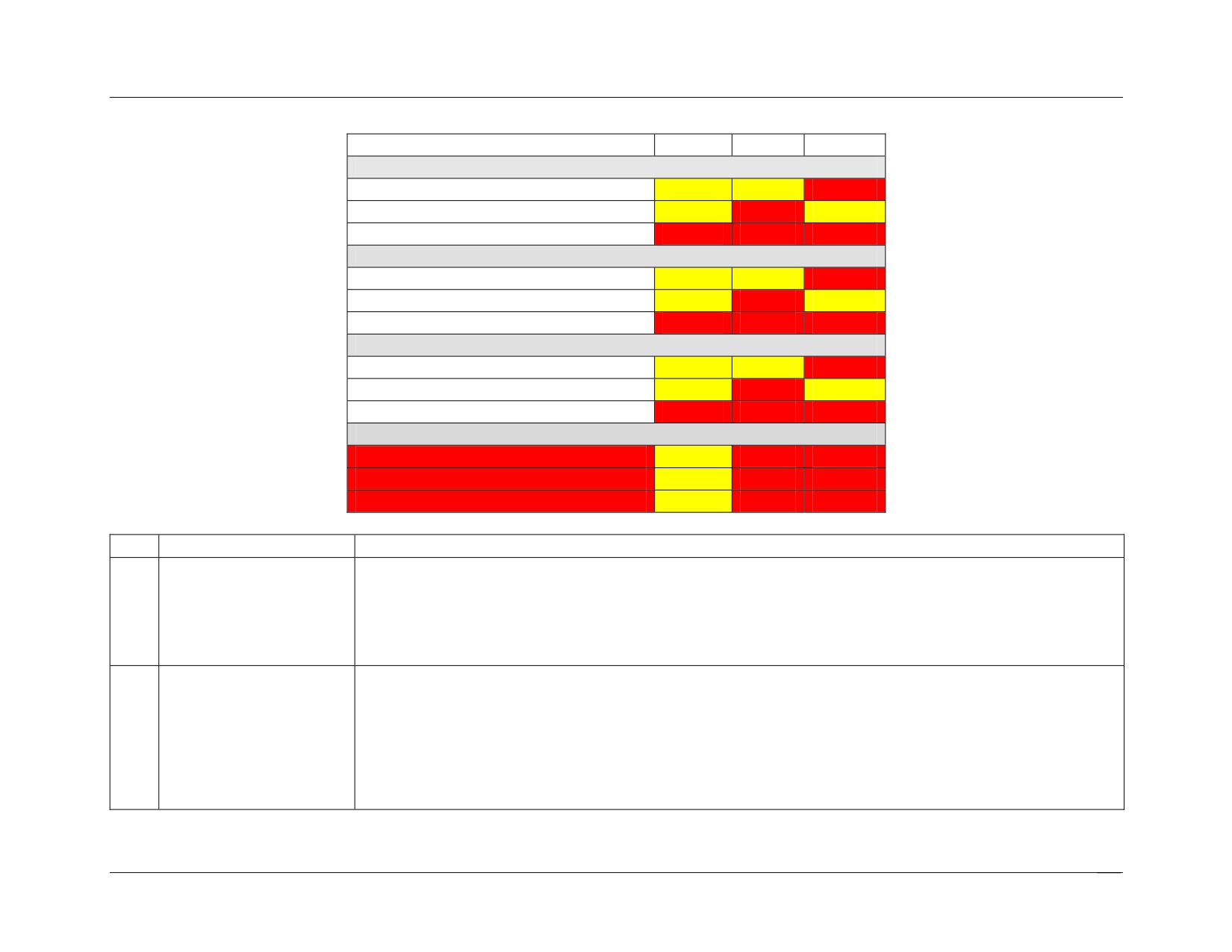
For Official Use Only
CBRND Functional Needs Analysis/Functional Solution Analysis
Chapter 13 Tactical Shield Tasks
Table 13.9-1. TASHLD 9: Capability and Deficiency Assessment
System/Measure
M1
M2
M3
Current
Individual Protection
41
42
33
Protective Posture Methodology
44
25
46
Unit Staff
37
37
37
Near/Mid
Individual Protection
41
42
33
Protective Posture Methodology
44
25
46
Unit Staff
37
37
37
Far
Individual Protection
41
42
33
Protective Posture Methodology
44
25
46
Unit Staff
37
37
37
Overall
Current Overall Capability
4
3
3
Near/Mid-Term Overall Capability
4
3
3
Far-Term Overall Capability
4
3
3
FAA Measure
Scale
M1
Plans include protective
8-10: All critical assets possess inherent protection or unit plans and procedures detail protection activities against
measures for materiel assets.
contamination and exposure to CBRN/TIM agents.
4-7: Unit plans and procedures address the protection of critical assets from contamination by CBRN/TIM agents.
1-3: Unit plans and procedures address the protection of selected critical assets against splash contamination by
CBRN/TIM agents.
0: Unit plans do not address the protection of critical assets against CBRN/TIM contamination.
M2
Critical assets are protected
8-10: All critical assets possess inherent protection or unit personnel and activities are fully trained and equipped to
from CBRN/TIM
perform protection activities against contamination and exposure to CBRN/TIM agents.
contamination.
4-7: Unit personnel are trained and possess adequate materiel for the protection of critical assets from contamination by
CBRN/TIM agents.
1-3: Unit personnel are trained and possess materiel for the protection of selected critical assets against splash
contamination by CBRN/TIM agents.
0: Unit training and materiel resources do not address the protection of critical assets against CBRN/TIM
contamination.
For Official Use Only
182
For Official Use Only
CBRND Functional Needs Analysis/Functional Solution Analysis
Chapter 13 Tactical Shield Tasks
M3
There is effective
8-10: DOTLPF exists and is adequate for this task. Task can be effectively performed with little or no direct impact
DOTMLPF in place to
upon operations.
conduct task.
4-7: Most critical aspects of DOTLPF for this task are addressed. Task can be performed with limitations requiring
work-arounds.
1-3: DOTLPF is inadequate for accomplishment of this task.
0: DOTLPF does not exist for this task.
1 Not all supplies and equipment are inherently protected or packaged to protect against CBRN/TIM contamination. Specific assets may include CBRN/TIM protection through
deliberate requirements for acquisition or the nature of the enclosing packaging. CBRN/TIM protective coverings are limited in coverage and quantities. CBRN/TIM protective
coatings are limited to two variants of CARC. CBRN/TIM protective packaging are limited or not identified. Doctrine, policy, and procedures for application of commonly
available materials for CBRN/TIM protection are limited or nonexistent.
2 Equipment and supplies protection is generally seen as placement under coverings (e.g., buildings, tents, tarps, etc.). Unit-level training for protection of equipment and supplies
is generally a short briefing on covering, and not adequate to preclude unnecessary loss of assets.
3 There is inadequate DOTLPF to protect equipment and supplies from CBRN/TIM contamination.
4 Unit plans and procedures integrate protective posture levels and methodologies for the protection of the force. Included in these documents is generally guidance addressing the
protection of equipment and supplies at different levels of protective posture. This guidance is disseminated to subordinate units by the command staff for implementation and
application as a means of reducing decontamination requirements and/or potential asset loss.
5 Personnel are briefed on equipment and supplies protective activities as part of their protective posture training for operations.
6 Doctrine, policy, and procedures for the development and adjustment of protective posture levels and methodologies do include instructions for addressing protection of
equipment and supplies.
7 Unit plans and procedures address the protection of equipment and supplies from CBRN/TIM contamination through the application of coverings (e.g., buildings, tents, tarps,
etc.). However, certain materials used in the construction or packaging of equipment and supplies may absorb a CBRN or TIM agent in vapor form. Assets affected in this manner
are not generally known to the force and command staff. Doctrine, policy, and procedures do not identify commonly available materials providing CBRN/TIM protection which
might be applied to provide barrier and containment protection of equipment and supplies, particularly assets in transit or stored in the open.
For Official Use Only
183
For Official Use Only
CBRND Functional Needs Analysis/Functional Solution Analysis
Chapter 13 Tactical Shield Tasks
13.9.3
Functional Solution Analysis
13.9.3.1
DOTLPF Assessment Summary
This section addresses the deficiencies and suggests potential non-materiel solutions. If there are
no non-materiel solutions, or they are only partial solutions, the remaining non-materiel need is
then stated. Materiel needs are assessed in the IMA section.
1.
Deficiency: Not all supplies and equipment are inherently protected or packaged to protect
against CBRN/TIM contamination.
Partial Non-Materiel Solution: Doctrine: Integrate protective measures, assets, and
activities for CBRND of all classes of supplies into doctrine, policy, and procedures.
Leadership: Implement, manage, and enforce the application of CBRND protective
measures, assets, and activities for all classes of supplies. Also, awareness of need for
materiel protection.
2.
Deficiency: CBRN/TIM protective coverings are limited in coverage and quantities.
Partial Non-Materiel Solution: Doctrine: Establish in doctrine and policy requirement for
application of coverings providing CBRN/TIM protection to equipment and supplies and
implement through TTPs knowledge and application of these resources. Training: Institute in
initial, recurring, and unit training effective application of CBRN/TIM protective coverings.
3. Deficiency: CBRN/TIM protective coatings are limited to two variants of CARC.
Partial Non-Materiel Solution: Doctrine: Establish in doctrine and policy requirement for
full range of CBRN/TIM protective coatings for assets and resources with application to
operations with threat. Organization: Organizational structures to effectively apply and
maintain CBRN/TIM protective coatings. Training: Implement institutional, recurring, and
unit training for the effective application and maintenance of CBRN/TIM protective coatings.
Leadership: Awareness protectant coatings support OPTEMPO by reducing decontamination
and/or replacement requirements. Facilities: Necessary infrastructure enabling force use of
CBRN/TIM protectant coatings.
4.
Deficiency: CBRN/TIM protective packagings are limited or not identified for other than
specialized functions.
Partial Non-Materiel Solution: Doctrine: Include the application of CBRN/TIM
containment packaging/systems designed to prevent contamination of equipment and
supplies. Organization: Identify organizational resources and support requirements for the
application of CBRN/TIM protective containment packaging/systems. Training: Train,
exercise, and evaluate the application of CBRN/TIM protective containment
packaging/systems. Leadership: Implement and manage training, equipping, protective
measures, and exercising for the application of CBRN/TIM protective containment
packaging/systems.
5.
Deficiency: The predominant means of protection of supporting assets is generally limited to
decontamination of the asset following secondary exposure/contamination.
For Official Use Only
184
For Official Use Only
CBRND Functional Needs Analysis/Functional Solution Analysis
Chapter 13 Tactical Shield Tasks
Partial Non-Materiel Solution: Doctrine: Include the application of CBRN/TIM protective
containment packaging/systems and other alternative methods to preclude exposure/
contamination of resources in doctrine, policy, and procedures.
Training: Train, exercise, and evaluate the application of CBRN/TIM protective containment
packaging/systems and other alternatives precluding exposure/contamination. Leadership:
Implement and manage training, equipping, protective measures, and exercising for the
application of CBRN/TIM containment packaging/systems and other alternatives to prevent
exposure/contamination.
6.
Deficiency: Doctrine, policy, procedures for application of commonly available materials for
CBRN/TIM protection are limited or nonexistent.
Non-Materiel Solution: Doctrine: Include the application of commonly available materials
with CBRN/TIM protective capabilities into doctrine, policy, and procedures. Training:
Include the application of commonly available materials with CBRN/TIM protective
capabilities in institutional and unit level training, exercises, and evaluations.
7.
Deficiency: Unit-level training for protection of equipment and supplies is generally limited
to a short briefing on covering, and not adequate to preclude unnecessary loss of assets.
Non-Materiel Solution: Training: Establish standards and train, exercise, and evaluate the
force for protection of equipment and supplies. Leadership: Enforce compliance with
established standards for CBRN/TIM protective measures and activities for all classes of
materiel.
8.
Deficiency: There is inadequate or limited DOTMLPF to protect equipment and supplies
from CBRN/TIM contamination.
Non-Materiel Solution: Doctrine: Promulgate doctrine, policy, and procedures addressing
protection of material and supplies from CBRN/TIM contamination and the operational
application of contaminated resources. Organization: Identify organization services and
activities necessary to provide CBRND protection of equipment and supplies. Training:
Establish CBRND training, exercise, and evaluation criteria and programs for protection of
all classes of supply and conduct CBRND training, exercises, and evaluations. Leadership:
Implement and manage CBRND training, equipping, protective measures, and exercising.
9.
Deficiency: Doctrine addressing the protection of open stored material is limited.
Non-Materiel Solution: Doctrine: Establish and enforce doctrine, policies, procedures, and
standards for CBRND protection of open stored materiel.
10. Deficiency: Certain materials used in the construction or packaging of equipment and
supplies may absorb CBRN/TIM agent in vapor form. Affected assets are not generally
known to the force and command staff.
Non-Materiel Solution: Doctrine: Restrict through doctrine and policy the application of
known CBRN/TIM absorbent materials for warfighter equipment and supplies to applications
with no other reasonable alternative and require, in such instances, information regarding
decontamination/weathering and safe handling if contaminated. Include in TTPs
identification of these materials, the assets/components they are part, and doctrine/policy
required information on decontamination/weathering and safe handling when contaminated.
For Official Use Only
185
For Official Use Only
CBRND Functional Needs Analysis/Functional Solution Analysis
Chapter 13 Tactical Shield Tasks
Organization: Identify organization services and activities necessary to effectively manage
absorbent materials. Training: Include doctrine/policy required information in training of the
force. Leadership: Awareness any number of assets or components used by the force may
contain CBRN/TIM absorbent materials which may constitute a post-event hazard to the
force.
13.9.3.2
IMA Assessment Summary
Table 13.9-2 is a list of ideas for material approaches and a corresponding description of each
idea. Approaches focus on procurement of existing systems, and development of field-expedient
systems. Table 13.9-3 identifies which of the material approaches might address specific materiel
deficiencies identified in the DOTMLPF assessment.
For Official Use Only
186
For Official Use Only
CBRND Functional Needs Analysis/Functional Solution Analysis
Chapter 13 Tactical Shield Tasks
Table 13.9-4. TASHLD 9: Materiel Approaches
Idea for Materiel
Description
Approach
Assess CBRND material
Test and assess all CBRND material for protective abilities
against future threat agents, including TIM.
Develop and establish
Develop, preposition, and maintain reserve stocks of generic
generic unit CBRND kits
CBRND kits for a standard unit. Components are adjusted as
necessary for specific operations involving threat.
Equipment and supplies
Investigate and develop standardized CBRN/TIM protective
protective packaging and
packaging and containment systems (includes sprays, boxes,
containment systems
envelopes, drapes, etc.) for the protection of equipment and
supplies from contact with CBRN/TIM agents
Topical
Develop topical barrier that is easily applied (i.e., spray), acts as a
contact hazard barrier, and affords protection from CBRN/TIM.
For Official Use Only
187
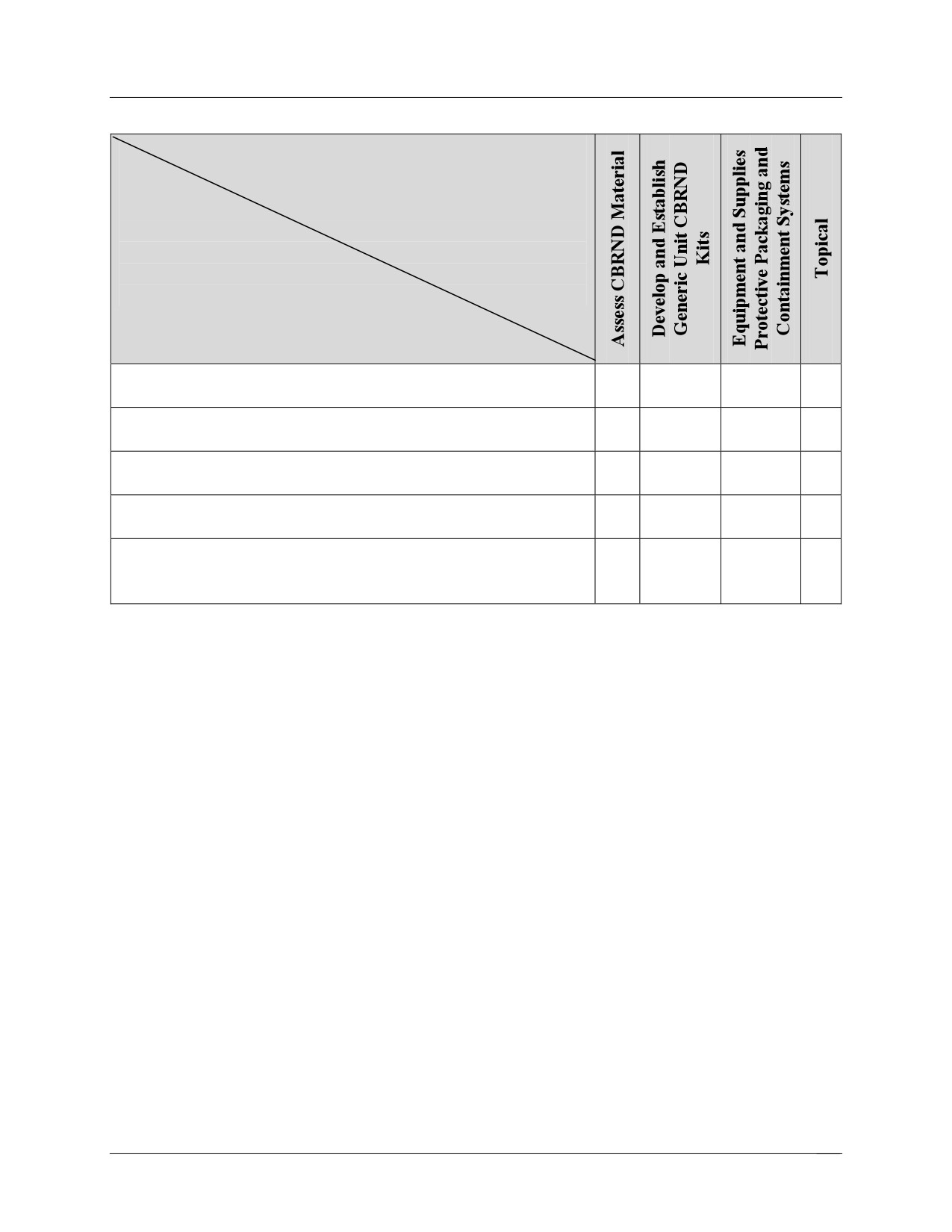
For Official Use Only
CBRND Functional Needs Analysis/Functional Solution Analysis
Chapter 13 Tactical Shield Tasks
Table 13.9-5. TASHLD 9: IMA Assessment
Ideas for Material
Approaches
(IMA)
Identified Gaps
Not all supplies and equipment are inherently protected or
X
X
X
packaged to protect against CBRN/TIM contamination.
CBRN/TIM protective coverings are limited in coverage and
X
X
X
quantities.
CBRN/TIM protective coatings are limited to two variants of
X
X
X
CARC.
CBRN/TIM protective packagings are limited or not
X
X
X
X
identified for other than specialized functions
The predominant means of protection of supporting assets is
generally limited to decontamination of the asset following
X
X
X
X
secondary exposure/contamination.
For Official Use Only
188
For Official Use Only
CBRND Functional Needs Analysis/Functional Solution Analysis
Chapter 13 Tactical Shield Tasks
13.10 Task TASHLD 10: Employ expedient and improvised CBRN/TIM protective
resources and measures
13.10.1 Functional Area Analysis
13.10.1.1
Definition
Includes the application of processes, methods, adaptive resources, available and individual
ingenuity to create and provide COLPRO when COLPRO is not available. Includes the use of
adaptation kits to enable structures (e.g. cave, room, building, bunker, underground chamber,
vehicle, airframe, vessel, etc) to provide COLPRO. Also includes the use of plywood, dirt, tape,
spray sealants, metal sheeting, etc. to create protection for personnel, supplies, and equipment.
13.10.1.2
Derivation
Joint Enabling Concept for CBRN Operations, Protection Joint Functional Concept, UJTL (TA
7, TA 7.1).
13.10.1.2.1
Supported Task: OPSHLD 11
13.10.1.2.2
Lateral Task: TASHA 15
13.10.1.2.3
Supporting Task: N/A
13.10.1.3
Condition
Perform this task under conditions of:
Physical
1. Undeveloped to highly developed land. (C1.1.1)
2. Riverine to open sea. (C1.2)
3. Natural and induced air. (C1.3)
4. Immediate to delayed danger, and potential long-term health hazard of atmospheric
weapons effects. (C1.3.3)
Military
1. Partially completed mission preparation. (C2.1.3)
2. Marginal forces. (C2.2)
3. Marginal to adequate forces allocated. (C2.2.3)
4. Negligible personnel experience. (C2.2.4.5)
5. Limited deployed supplies. (C2.8.2)
6. Limited CONUS resupply. (C2.8.3)
7. No prepositioned materiel. (C2.8.4)
8. No host-nation support. (C2.8.5)
9. Negligible to limited commercial procurement. (C2.8.6)
For Official Use Only
189
For Official Use Only
CBRND Functional Needs Analysis/Functional Solution Analysis
Chapter 13 Tactical Shield Tasks
Civil. N/A
13.10.2 Functional Needs Analysis
13.10.2.1
Capability and Deficiency Assessment Summary
This section assesses current and projected capabilities to perform the task. The overall
capabilities for current, near/mid, and far term are rated “red.” Although improvements between
the periods occur for specific capabilities and are reflected in the associated identified values, the
improved capabilities are not sufficient to change the overall assessed color ratings for this task.
Current Capability and Deficiency
This task recognizes limitations in existing COLPRO systems as well as circumstances not
supportable by existing and projected COLPRO. These circumstances may include situations in
which current systems would adversely impact operations (e.g., supporting logistics footprints,
time to establish, etc.). Current site COLPRO generally requires extensive site preparation and
resources to erect, operate, and strike but cannot be erected/striked in a CBRN/TIM environment.
Mobile COLPRO is a diversity of systems ranging from forced clean air systems to full
COLPRO. However, their application is limited. In general, current COLPRO is limited in
quantity and does not adequately support expeditionary and highly mobile maneuver operations,
particularly those in an austere environment with reduced logistical footprints. Most mobile
platforms (including land, sea, and air) are not equipped with COLPRO. This circumstance
requires prioritization of available assets and the application of IPE for CBRND. However,
although prioritization is applied for critical activities and functions, not all such requirements
can be satisfied with current COLPRO. The application of expedient COLPRO measures and
systems would provide flexibility to the force to meet differing requirements and needs.
Expedient COLPRO measures and systems are not addressed in DOTLPF. ECP kits, procedures,
and training do not currently exist. Doctrine, policy, procedures, and TTPs do not identify
commonly available materials (e.g., wraps, tarps, gels, caulks, plywood, etc.) for application in
the construction of ECP by field forces. Training is not provided in the conduct of establishing
and constructing ECP against the effects of CBRN/TIM agents. The potential ability does exist
for ECP to address COLPRO needs not otherwise considered (e.g., USCG, hospital ships,
merchant vessels, initial forced entry support, detainee housing, etc.). However, current
DOTLPF is constrained to fielded COLPRO systems. The Services currently field a variety of
CBRND assets providing COLPRO protection. This diversity of assets complicates the logistical
support of operations with threat for joint operations. The assets protect against known chemical
and biological warfare agents and particulate radiologicals. Protection is afforded to a select
number of TIMs.
Projected Near/Mid-Term Capability and Deficiency
JECP is projected to initially field during the mid term with three COLPRO systems primarily
addressing expeditionary operations. The P3I upgraded CBPS, JTCOPS, CP-DEPMEDS,
fielding of the JSLNBCRS variants, and backfit of LHA/LHD vessels are projected to include
For Official Use Only
190
For Official Use Only
CBRND Functional Needs Analysis/Functional Solution Analysis
Chapter 13 Tactical Shield Tasks
COLPRO in the mid term. These systems, depending upon the quantity fielded, may provide
additional COLPRO to address critical needs. Otherwise, changes from current capabilities and
deficiencies are not projected.
Projected Far-Term Capability and Deficiency
The potential for COLPRO in the Future Tactical Lift Option builds upon the mid-term
COLPRO capabilities. Additional changes in capabilities from the mid term are not projected.
13.10.2.2
Resource Systems
COLPRO
1.
Mobile COLPRO
CBPS: M1113 HMMWV-mounted COLPRO system consisting of a hardshell filtration,
power, and transport and expandable softshell tentage with contamination control
area/entry. The COLPRO unit is designated the Lightweight Multipurpose shelter (LMS).
Crewed Combat Vehicles (Ground): Two types of COLPRO. First supplies filter air using
forced clean air supply system. Requires wear of IPE and connection to crew mask. This
is the type of system in the M1A1 Abrams MBT. Second system is incorporates full
COLPRO and permits reduction of IPE during operation. JSLNBCLR is an example of
the second type of system.
Airframe Air Supply System: Provides clean air from compressed air storage system either
until aircraft is outside of contamination and airframe interior is flushed of vapor
contaminants or throughout flight operations.
CITADEL: System of protection installed with USN vessels to afford protection to selected
connected spaces including C4ISR, medical, and R2.
2.
Fixed-Site COLPRO
MGPTS: USMC Medium General Purpose Tent System (MGPTS) with CB Protective Liner
System designed for support of USMC operational C4ISR and R2.
CP-DEPMEDS: Component-based system of tentage, connective corridors, ISO containers,
etc., with COLPRO liners for configuration into field hospitals and includes supporting
power and utility systems, lighting, engine control units, and filtration systems. Large
system requiring extensive use of resources to prepare location, erect/strike, operate, and
maintain.
JTCOPS: Similar to CP-DEPMEDS, but for critical functions and activities of the force
(e.g., staff operations, aircrew housing and briefing, etc.).
CP-EMEDS: USAF air-transportable system similar to CP-DEPMEDS on a smaller scale
and configurable from one medical shelter to a 25-bed field hospital.
CP-SSS: USAF small-scale COLPRO transportable system designed to support C2
functions.
JECP: Projected program of COLPRO designed for application in highly mobile operations,
expeditionary operations, forced-entry operations, and/or to supplement larger-scale
For Official Use Only
191
For Official Use Only
CBRND Functional Needs Analysis/Functional Solution Analysis
Chapter 13 Tactical Shield Tasks
COLPRO systems in support of operations. Consists of building/room and tentage insert
kits and small-unit stand-alone COLPRO kits.
M20/M20A1 SCPE: Lightweight and modular COLPRO system consisting of an inflatable
liner for insert into rooms or buildings.
Building integrated COLPRO systems: COLPRO systems designed and installed into
buildings as integral systems, usually facility construction. Post-construction installation
is based upon building design and COLPRO requirements. Varies between buildings
based upon applied technology, date of construction/installation, system engineering,
facility function, etc. Most existing facility COLPRO was established during Cold War
period.
MOPP Methodology: Stepped level of CBRND protective measures. Standardized levels permit
the rapid increase or decrease of unit MOPP level.
Unit Staff: The application of DOTLPF for all phases of operations with threat from preplanning
to post-force return to home stations. Includes all aspects of C2 and supporting staff
activities/functions (e.g., logistics, intelligence, etc.) enabling mission and task accomplishment.
For Official Use Only
192
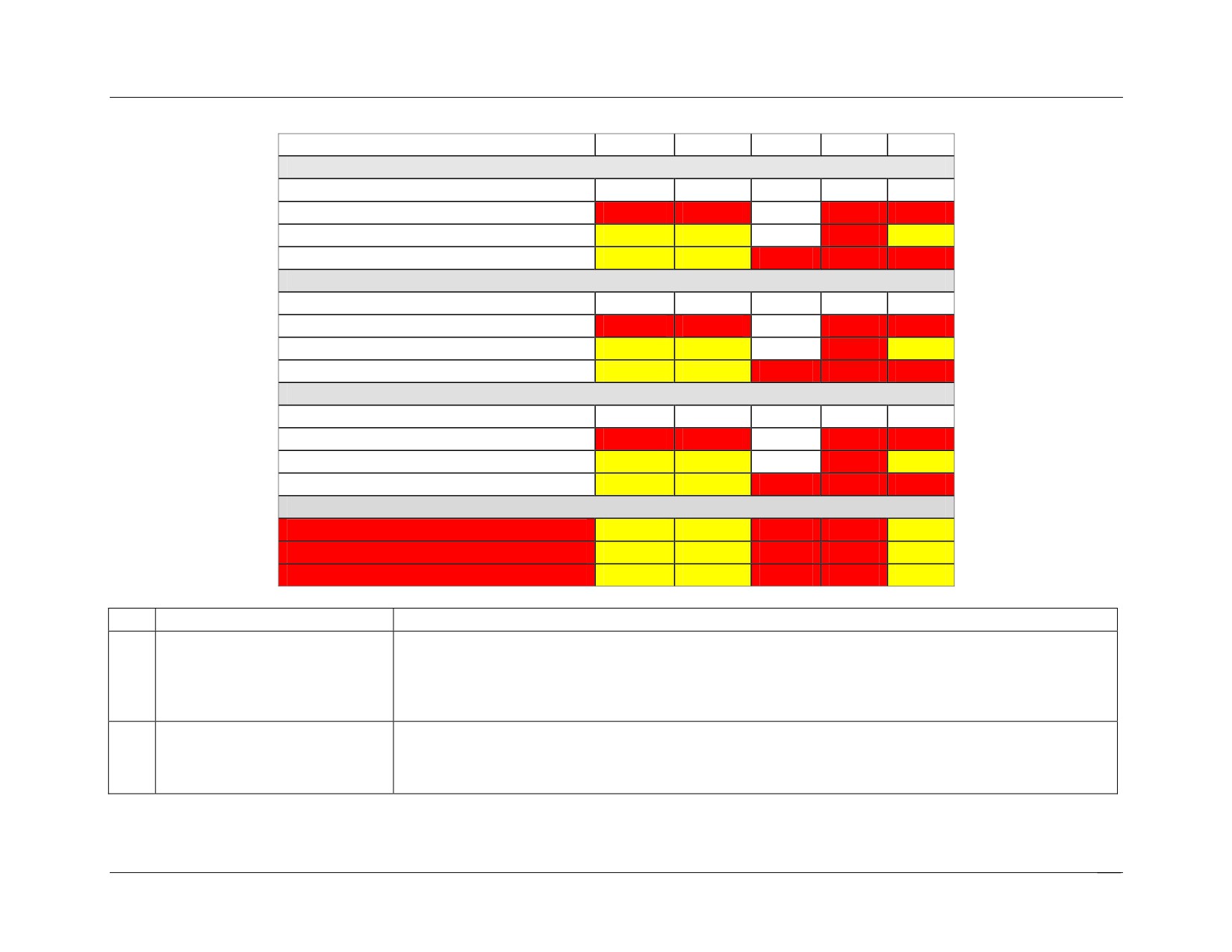
For Official Use Only
CBRND Functional Needs Analysis/Functional Solution Analysis
Chapter 13 Tactical Shield Tasks
Table 13.10-1. TASHLD 10: Capability and Deficiency Assessment
System/Measure
M1
M2
M3
M4
M5
Current
Collective Protection
4
4
N/A
0
4
Mobile COLPRO
31
31
N/A
02
33
Fixed-Site COLPRO
54
54
N/A
02
55
Unit Staff
66
66
07
02
38
Near/Mid
Collective Protection
4.5
4
N/A
0
4
Mobile COLPRO
31,9
31,9,
N/A
02
33
Fixed-Site COLPRO
64,10
64,10
N/A
02
55
Unit Staff
66
66
07
02
38
Far
Collective Protection
4
4
N/A
0
4
Mobile COLPRO
31,9, 11
31,9,
N/A
02
33
Fixed-Site COLPRO
64,10, 12
64,10
N/A
02
55
Unit Staff
66
66
07
02
38
Overall
Current Overall Capability
5
5
0
0
4
Near/Mid-Term Overall Capability
5
5
0
0
4
Far-Term Overall Capability
5
5
0
0
4
FAA Measure
Scale
M1
Force possesses access to
8-10: Force is adequately equipped with or have sufficient access to COLPRO for all functions and activities.
COLPRO including ECP
3-7: Force is equipped with or have sufficient access to COLPRO for the performance of critical functions and
sheltering.
activities.
1-3: Force is equipped with or have access to COLPRO for selected functions and activities.
0: Force is inadequately equipped and possesses insufficient access to COLPRO for support of operations.
M2
Critical mission activities are
8-10: All critical facilities and activities are equipped with operational COLPRO.
accommodated by COLPRO
4-7: Selected critical facilities and activities possess are equipped or possess access to operational COLPRO.
sheltering including ECP
1-3: Selected key critical facilities and activities are equipped or possess access to COLPRO.
sheltering.
0: Critical facilities and activities are not equipped or possess access to COLPRO.
For Official Use Only
193
For Official Use Only
CBRND Functional Needs Analysis/Functional Solution Analysis
Chapter 13 Tactical Shield Tasks
M3
ECP sheltering is considered in
8-10: ECP is an integral consideration and resource for all CBRND planning and operations.
planning.
4-7: ECP is considered and resourced for selected operations with threat.
1-3: Planning of selected operations with threat considers expedient COLPRO for specific activities.
0: ECP is not considered and resourced for operations with threat.
M4
Adequate ECP materials are
8-10: The full range of expedient COLPRO kits and materials are readily available for application by the force.
readily available.
4-7: ECP kits and materials are generally available for force application.
1-3: ECP kits and materials are available for selected force applications.
0: ECP kits and materials do not exist.
M5
There is effective DOTMLPF in
8-10: DOTLPF exists and is adequate for this task. Task can be effectively performed with little or no direct
place to conduct task.
impact upon operations.
4-7: Most critical aspects of DOTLPF for this task are addressed. Task can be performed with limitations
requiring work-arounds.
1-3: DOTLPF is inadequate for accomplishment of this task.
0: DOTLPF does not exist for this task.
1 Inadequate quantities of mobile COLPRO systems exist to support highly mobile and expeditionary operations with reduced footprint. Further, there is insufficient quantities of
COLPRO to protect all critical activities and functions within the force. Prioritization is required of the available resources. Current mobile COLPRO systems are predominantly
integrated into selected combat vehicles/vessels. Selected U.S. Naval combat vessels may be equipped with full COLPRO (CITADEL). However, these systems are generally
restricted to critical operations areas of the ships. The critical areas are contiguous in that they share common bulkheads and movement between areas is not prevented. CCAs are
operated in areas located between the covered areas and the remainder of the ship. These areas are designated. The remainder of the interior of the vessel uses the Circle William
concept. Circle William requires prior warning of the presence of a CBRN/TIM in the path of the ship or knowledge of an impending attack to be fully effective. This concept
requires the shutdown of the ventilation system and sealing of hatches, bulkheads, and other such openings to seal the interior of the vessel from intrusion by a CBRN/TIM.
However, the majority of these actions are performed manually and are initiated upon detection of the potential CBRN/TIM agent. There are concerns about the potential for large
amounts of a CBRN/TIM agent to be drawn in by the high-velocity ventilation systems and dispersed throughout the interior of the ship during the period between agent encounter
and completion of Circle William. There are concerns about the ability of the vessel to remain in Circle William until it is determined the vessel is no longer exposed to a
CBRN/TIM. U.S. Naval combat vessels with full COLPRO of their critical functions currently include the DDG-51 class of destroyers, selected LSDs (vessel hulls 44 through 52),
LHDs (vessel hulls 1 through 6), LHAs (vessel hulls 1 through 5), and four of the AOE-6 (vessel hulls 6 through 8 and 10) class ships. Submarines are considered fully protected
so long as they remain sealed and do not take in air. The LHD and LHA Amphibious Assault Ships are undergoing a COLPRO Backfit of SCPE for their critical functions. Other
areas of these ships will use the Circle William Concept. Carriers, frigates, cruisers, DD-963 class destroyers, and other vessels not discussed earlier in note, do not currently afford
their critical functions full COLPRO. Naval hospital ships, U.S. Naval auxiliaries, and USCG vessels are not equipped with COLPRO. Areas critical to the safe operation of the
ship may not be protected against CBRN/TIMs. Ability of these vessels to successfully incorporate a concept similar to Circle William is a concern. There are also concerns about
the ability of these vessels to prevent infiltration of CBRN/TIM into their interior. Infiltration of vapors can cause a build up of concentrations within the vessel that could exceed
the levels surrounding the ship. USCG vessels are under the control and direction of DoD during a declared war. The USCG, however, is under the auspices of the Department of
Homeland Security during peacetime. USCG vessels are often attached to U.S. operations overseas for port security, coastal patrol, and similar functions. USCG personnel are also
dispatched with military forces deploying overseas for peacekeeping and other operations. USCG vessels and personnel served in Vietnam, Haiti, Granada, and other force
deployments. The ability of USCG resources to effectively integrate into DoD operations involving potential CBRN/TIM events is a concern. Mobile COLPRO are armored or
soft-skinned vehicle-supported and -based systems. They include both ground and air platforms. The operation of the COLPRO may not be supported while the vehicle is in
motion. They may or may not include CBRN/TIM filtration systems. Mobile COLPRO run the full range of protective capabilities from passive to fully protective COLPRO. The
majority of vehicles qualify as passive COLPRO, provided the exchange of air between the interior and the exterior is limited. Mobile COLPRO systems generally do not provide
protection for large numbers of personnel. Currently, the M1A1 Abrams MBT and the M93A1 FOX NBC Reconnaissance System Block I provide full COLPRO for their crews.
The CBPS is a general use fully protective COLPRO system mounted on an ECV HMMWV. The CBPS may be used for C4 operations, as aid stations, or for other needs. A
variety of ESRCBH CPSs exist in a small percentage aircraft and other vehicles. The majority of these provide clean filtered air through piping or hose systems. In both the
ESRCBH CPS and passively protective COLPRO systems, the occupants must wear a minimum of respiratory/ocular protection. Combat-crewed vehicles are not generally
For Official Use Only
194
For Official Use Only
CBRND Functional Needs Analysis/Functional Solution Analysis
Chapter 13 Tactical Shield Tasks
equipped with CBRN/TIM filtration systems. These vehicles are not able to provide clean filtered air to crew and passengers and thereby extend the operational capabilities of the
force. Support vehicles are similar to combat vehicles in that they do not routinely have CBRN/TIM filtration systems. Operators and passengers must, as with the combat vehicles,
depend upon their IPE for clean air and protection. Unlike the combat-crewed vehicles, support vehicles generally are more open for infiltration by CBRN/TIM agents. Most
airframes are also not equipped with CBRN/TIM filtration systems. They are either open exchange (normally lower altitude airframes) or provide the ability to switch to bottled air
(usually jet aircraft). The concern is the aircrew are dependent upon the filtration systems of their IPE to provide clean filtered air. This situation reduces the extended operational
time of the aircrew to that of their IPE. A concern is the inability to conduct mobile combat operations and to move large numbers of troops throughout a CBRN/TIM hazard area
without the need to maintain them in IPE. Degradation of performance is a factor after a period of time wearing IPE. Expedient COLPRO for mobile assets does not exist.
2 ECP kits, procedures, and training do not currently exist. Doctrine, policy, procedures, and TTPs do not identify commonly available materials (e.g., wraps, tarps, gels, caulks,
plywood, etc.) for application in the construction of ECP by field forces. Training is not provided in the conduct of establishing and constructing ECP against the effects of
CBRN/TIM agents.
3 Inadequate quantities of mobile COLPRO systems exist to support highly mobile and expeditionary operations with reduced footprint. Further, there are insufficient quantities of
COLPRO to protect all critical activities and functions within the force. Prioritization is required of the available resources. Expedient COLPRO systems and measures, as well as
training, do not currently exist and are not addressed in current doctrine, policy, and TTPs.
4 There are insufficient quantities of COLPRO to protect all critical activities and functions within the force. Prioritization is required of the available resources. The USMC
MGPTS with CB Protective Liner System provides a positive-pressure, filtered-air, toxic-free shelter for protection against CBRN agents. However, there are insufficient
quantities to protect all critical activities and functions from CBRN/TIM effects. The CP-DEPMEDS provides a clean, toxic-free, environmentally controlled, patient treatment
area and the components are designed to integrate as field hospitals. They are packaged as a set for deployment to threat areas for hospital operations. The entire composite hospital
consists of expandable tentage, passageways, environmental control units, and ISO shelters. The CP-DEPMEDS exist in very limited quantities. Although it could be applied to
provide COLPRO to the task identified groups, its designed and primary function is that of medical care. A similar COLPRO is the USAF’s CP-EMEDS, which is an air-
transportable medical facility deployable in various configurations from a single shelter to a 25-bed patient hospital. The CP-EMEDS is in a very limited number and, like the CP-
DEPMEDS, is designed for its primary function of the provision of medical care. The USAF CP-SSS is a small-scale CPS applied for the conduct of C2 operations, maintenance
of critical equipment, force beddown, and the provision of R2 for sortie generators and key leadership. This shelter is in limited supply and unlikely sufficient quantities would be
available to support a group of any size, especially during operations against an adversary. The M20/M20A1 SCPE is a lightweight, modular system involving a liner designed for
inflation within a room or building. The M20A1 serves to bridge the gap between the M20 SCPE and CBPS. Quantities are limited and are not likely to be available in any large
quantity during operations against an adversary. Current COLPRO systems are not available in the quantities and types necessary to support the protection of eligible civilians and
detainees. Current plans generally do not address the application of COLPRO to nonforce personnel and do not allocate the limited COLPRO resources to this activity. Fixed-site
COLPRO within the United States and its territories is predominantly designed for nuclear fallout and does not address other CBRN/TIM hazards and threats arising after
September 11, 2001. Selected critical key facilities are equipped with CBRN COLPRO, but are not available to other than designated personnel and specific functions and
activities. Fixed-site CBRN COLPRO is installed in facilities housing selected activities and functions within HTAs. However, these are not present for all critical activities and
functions. However, the Guardian Program is reviewing FP protective measures at U.S. installations and facilities and will address COLPRO for critical activities/functions. The
Guardian Program, however, is not likely to address field COLPRO operations. Expedient systems and measures for COLPRO are limited or nonexistent.
5 There are insufficient quantities of COLPRO to protect all critical activities and functions within the force. Prioritization is required of the available resources. Expedient
COLPRO systems and measures, as well as training, do not currently exist and are not addressed in current doctrine, policy, and TTPs.
6Doctrine, policy, procedures, and TTPs combined with staff experience, training, and knowledge provide the basis for prioritization of allocation of limited COLPRO resources.
Not all critical activities and functions can currently be allocated COLPRO. Requirements must be balanced with operational needs, available resources, and alternative protective
capabilities. The staff functions formulate the allocation collaboratively and make recommendations to the commander for decisioning. The determinations are identified in plans
and disseminated to the force. Adjustments are made when necessary during operations or upon changes in available resources. Expedient COLPRO systems and measures are not
addressed in doctrine, policy, and TTPs and are not included in consideration by planners and the force.
7 Expedient COLPRO systems and measures are not considered in planning as they are not addressed in existing doctrine, policy, and TTPs.
8 Current doctrine, policy, and TTPs are reliant upon existing COLPRO systems. Expedient COLPRO systems and measures are not addressed and are, therefore, not considered
when planning for operations with threat.
9 Fielding of the P3I upgraded CBPS for heavy/airborne use is projected for the mid term, as are two variants of the JSLNBCRS, and the M93A1 Fox NBCRS Block II.
For Official Use Only
195
For Official Use Only
CBRND Functional Needs Analysis/Functional Solution Analysis
Chapter 13 Tactical Shield Tasks
10 JTCOPS Block I is projected for initial fielding during the mid term. The projected initial capabilities fielding of JECP is within the mid term and will include adaptive insertable
COLPRO systems (including liner) for existing buildings/rooms and stand-alone COLPRO for small groups of personnel. JECP may provide the capability to provide COLPRO
for critical activities and functions; however, JECP acquisition quantities have not as yet been determined.
11 The projected Future Tactical Lift Option is under evaluation for the potential addition of COLPRO in the design and production specifications. A decision on the inclusion of
COLPRO in the LHA(R) is expected in the mid term.
12 JTCOPS Block II is projected for the far term. Continued fielding of JECP.
For Official Use Only
196
For Official Use Only
CBRND Functional Needs Analysis/Functional Solution Analysis
Chapter 13 Tactical Shield Tasks
13.10.3
Functional Solution Analysis
13.10.3.1
DOTLPF Assessment Summary
This section addresses the deficiencies and suggests potential non-materiel solutions. If there are
no non-materiel solutions, or they are only partial solutions, the remaining non-materiel need is
then stated. Materiel needs are assessed in the IMA section.
1.
Deficiency: Current doctrine, the UJTL, and operational planning do not adequately address
sustained operations within a CBRN/TIM environment.
Non-Materiel Solutions: Doctrine: Include in doctrine, policy, procedures, and UJTL
sustained operations within a CBRN/TIM environment. Training: Train, exercise, and
evaluate the force for sustained operations within a CBRN/TIM environment. Leadership:
Recognize criticality of readiness of the force for potential sustained operations within a
CBRN/TIM environment, training providing the skills to manage the force in these
circumstances, and willingness and ability to implement necessary changes and activities to
prepare and appropriately apply the force.
2.
Deficiency: Expeditionary operations are a particular concern as most CBRND systems and
associated logistics are not designed for a highly mobile force, with a reduced logistical
footprint, and for the initial period of operations until the theater matures (usually the first
30-90 days).
Non-Materiel Solutions: Doctrine: Complete the JCIDS process and central correlation/
comparison of national and strategic plans to identify CBRND resources necessary and
available to support expeditionary operations during the first 30-90 days following
commencement of hostilities and with a reduced logistical footprint. Organization: Develop
organizational structures, resources, staffing, and capabilities to conduct expeditionary
operations while possessing reduced logistical footprint and during the first 30-90 days of
operations following commencement of hostilities. Training: Train, exercise, and evaluate
expeditionary capabilities of the force in a CBRN/TIM threat with reduced logistical
footprint during the initial 30-90 days of operations using CBRND resources supporting
expeditionary operations. Leadership: Recognize differences and challenges associated with
expeditionary operations during the first 30-90 days following commencement of hostilities
and with a reduced logistical footprint, training providing skills and knowledge to manage
operations in these circumstances, and ability and willingness to implement necessary
changes and activities to prepare for and conduct expeditionary operations with a
CBRN/TIM threat. Facilities: Develop supporting infrastructure for expeditionary operations
during the first 30-90 days following commencement of hostilities and with a reduced
logistical footprint.
3.
Deficiency: Inadequate COLPRO to support expeditionary and highly mobile forces.
Partial Non-Materiel Solutions: Doctrine: Develop and disseminate appropriate doctrine,
policy, and procedures for the application of common materials for COLPRO and for
COLPRO kits and components. Organization: Develop organizational structures, resources,
staffing, and capabilities to enable effective application of available COLPRO and
implementation of expedient COLPRO capabilities. Training: Establish initial and recurring
For Official Use Only
197
For Official Use Only
CBRND Functional Needs Analysis/Functional Solution Analysis
Chapter 13 Tactical Shield Tasks
training of all members of the force on the conduct of expedient COLPRO. Exercises and
evaluations incorporate criteria challenging this capability. Leadership: Recognize potential
for expedient COLPRO to improve force capabilities and survivability. Facilities: Develop
supporting infrastructure enabling expedient COLPRO and the effective application of
available COLPRO.
4.
Deficiency: Quantities and availability of mobile COLPRO is inadequate.
Non-Materiel Solutions: Doctrine: Complete analysis and central correlation/comparison of
national and strategic plans to identify quantities and types of mobile COLPRO (and
supporting consumables) necessary and available to support highly mobile forces for
envisioned plans and taskings. Organization: Develop organizational structures, resources,
staffing, and capabilities to conduct CBRND, including mobile COLPRO, of highly mobile
forces. Training: Train, exercise, and evaluate CBRND, including mobile COLPRO,
capabilities of the force in a CBRN/TIM threat during highly mobile force operations.
Leadership: Recognize differences and challenges associated with CBRND operations by
highly mobile forces, training providing skills and knowledge to manage operations in these
circumstances, and ability and willingness to implement necessary changes and activities to
prepare for and conduct expeditionary operations with a CBRN/TIM threat. Facilities:
Develop supporting infrastructure for CBRND of highly mobile forces.
5.
Deficiency: Not all critical facilities and activities are equipped with COLPRO.
Non-Materiel Solutions: Doctrine: Enforce existing doctrine and policy.
6.
Deficiency: Most naval vessels (including supply and transport vessels, carriers, and others)
do not possess COLPRO.
Partial Non-Materiel Solutions: Doctrine: Incorporate into doctrine, policy, and procedures
the provision of COLPRO for at-risk vessels (civilian contract and military). Organization:
Develop organizational structures, resources, staffing, and capabilities to support COLPRO
operations on vessels supporting operations and at-risk. Training: Train, exercise, and
evaluate crews for vessel COLPRO operations for CBRND. Leadership: Recognize
differences and challenges associated with CBRND operations by at-risk vessels (both
military and contract civilian) supporting operations. Facilities: Develop supporting
infrastructure (e.g., logistics, maintenance, power systems, etc.) for vessel COLPRO.
7.
Deficiency: USCG assets supporting operations are not adequately equipped with CBRND
assets and resources.
Partial Non-Materiel Solutions: Doctrine: Establish with doctrine, policy, and procedures
responsibilities for equipping, training, and supporting USCG assets supporting force
operations during periods of other than declared war. Organization: Develop organizational
structures, agreements, resources, and staffing to support and ensure survivability of
supporting USCG resources. Training: Train, exercise, and evaluate USCG CBRND
capabilities as integral component of force. Leadership: Recognize differences and
challenges associated with CBRND operations by USCG assets and personnel; training
providing skills and knowledge to managed operations involving these assets; and the ability
and willingness to implement necessary changes and activities to prepare for and conduct
For Official Use Only
198
For Official Use Only
CBRND Functional Needs Analysis/Functional Solution Analysis
Chapter 13 Tactical Shield Tasks
operations with a CBRN/TIM threat. Facilities: Develop supporting infrastructure for
CBRND of the force, including allocated USCG assets and personnel.
8. Deficiency: Airlift assets (both tactical and strategic) are not equipped with COLPRO.
Partial Non-Materiel Solutions: Doctrine: Incorporate into doctrine, policy, and procedures
the provision of COLPRO to aircrew and passengers in appropriate airframes (military and
civilian). Training: Train, exercise, and evaluate aircrews and supporting entities for airframe
COLPRO operations for CBRND. Leadership: Recognize criticality of protecting aircrew
and passengers of appropriate tactical and strategic airframes from the effects of CBRN/TIM
agents. Facilities: Develop supporting infrastructure (e.g., logistics, aircraft maintenance,
etc.) for airframe COLPRO.
9.
Deficiency: Current mobile COLPRO is inadequate to support operations by highly mobile
forces.
Non-Materiel Solutions: Doctrine: Complete analysis and central correlation/comparison of
national and strategic plans to identify quantities and types of mobile COLPRO (and
supporting consumables) necessary and available to support highly mobile forces for
envisioned plans and taskings. Organization: Develop organizational structures, resources,
staffing, and capabilities to conduct CBRND, including mobile COLPRO, of highly mobile
forces. Training: Train, exercise, and evaluate CBRND, including mobile COLPRO,
capabilities of the force in a CBRN/TIM threat during highly mobile force operations.
Leadership: Recognize differences and challenges associated with CBRND operations by
highly mobile forces, training providing skills and knowledge to manage operations in these
circumstances, and ability and willingness to implement necessary changes and activities to
prepare for and conduct expeditionary operations with a CBRN/TIM threat. Facilities:
Develop supporting infrastructure for CBRND of highly mobile forces.
10. Deficiency: Maneuvering forces are inadequately equipped with COLPRO capabilities.
Non-Materiel Solutions: Doctrine: Complete the JCIDS process and central correlation/
comparison of national and strategic plans to identify CBRND resources necessary and
available to support maneuver operations, particularly expeditionary operations during the
first 30-90 days following commencement of hostilities, with a reduced logistical footprint.
Organization: Develop organizational structures, resources, staffing, and capabilities to
conduct maneuver operations, particularly expeditionary operations during the first 30-90
days of operations following commencement of hostilities, while possessing reduced
logistical footprint. Training: Train, exercise, and evaluate maneuver capabilities
(particularly expeditionary capabilities) of the force in a CBRN/TIM threat with reduced
logistical footprint during the initial 30-90 days of operations using organic, prepositioned,
and planned CBRND resources supporting operations. Leadership: Recognize differences
and challenges associated with maneuver operations, particularly expeditionary operations
during the first 30-90 days following commencement of hostilities, with a reduced logistical
footprint; training providing skills and knowledge to manage operations in these
circumstances; and ability and willingness to implement necessary changes and activities to
prepare for and conduct expeditionary operations with a CBRN/TIM threat. Facilities:
Develop supporting infrastructure for expeditionary operations during the first 30-90 days
following commencement of hostilities and with a reduced logistical footprint.
For Official Use Only
199
For Official Use Only
CBRND Functional Needs Analysis/Functional Solution Analysis
Chapter 13 Tactical Shield Tasks
11. Deficiency: ECP kits, procedures, and training do not currently exist.
Partial Non-Materiel Solutions: Doctrine: Establish in doctrine, policy, procedures, and
TTPs the use and application of ECP for CBRND. Organization: Organizational structures
supporting the application of ECP for CBRND. Training: Develop institutional and unit-level
training on the application of ECP to support operations and provide for CBRND of the
force. Leadership: Ensure awareness and knowledge of versatility and application of ECP for
operations within a CBRN/TIM environment. Facilities: Develop infrastructure to support
ECP (e.g., logistics, training, etc.).
13.10.3.1
IMA Assessment Summary
Table 13.10-2 is a list of ideas for material approaches and a corresponding description of each
idea. Approaches focus on procurement of existing systems, and development of field-expedient
systems. Table 13.10-3 identifies which of the material approaches might address specific
materiel deficiencies identified in the DOTMLPF assessment.
For Official Use Only
200
For Official Use Only
CBRND Functional Needs Analysis/Functional Solution Analysis
Chapter 13 Tactical Shield Tasks
Table 13.10-4. TASHLD 10: Materiel Approaches
Idea for Materiel Approach
Description
Develop COLPRO kits.
Develop COLPRO kits containing all necessary supplies to construct field-expedient COLPRO
that is easily stored and maintained in ready condition, easily and safely erected, operated,
maintained, and striked within a CBRN/TIM environment by IPE-encumbered personnel using
minimal resources and supports COLPRO requirements.
Develop and establish generic
Develop, preposition, and maintain reserve stocks of generic CBRND kits for a standard unit.
unit CBRND kits.
Components are adjusted as necessary for specific operations involving threat.
Equipment and supplies
Investigate and develop standardized CBRN/TIM protective packaging and containment systems
protective packaging and
(includes sprays, boxes, envelopes, drapes, etc.) for the protection of equipment and supplies from
containment systems.
contact with CBRN/TIM agents
Field-expedient COLPRO kits.
Develop field-expedient COLPRO kits designed to adapt existing structures, tentage, etc., for the
expansion of COLPRO field capabilities and mission support and the provision of collective
protection to the force, critical functions and activities, maintenance and repair activities and
functions, resources, etc.
Field-expedient COLPRO
Identify commonly available materials (duct tape, plastic sheeting, wooden crate, plywood, tarps,
materials.
coverings, wraps, caulk, sealant gels/sprays, etc.) for application in the construction of expedient
COLPRO needed to construct field-expedient COLPRO when COLPRO availability is limited or
not advantageous.
Topical.
Develop topical barrier that is easily applied (i.e., spray), acts as a contact hazard barrier, and
affords protection from CBRN/TIM.
For Official Use Only
201
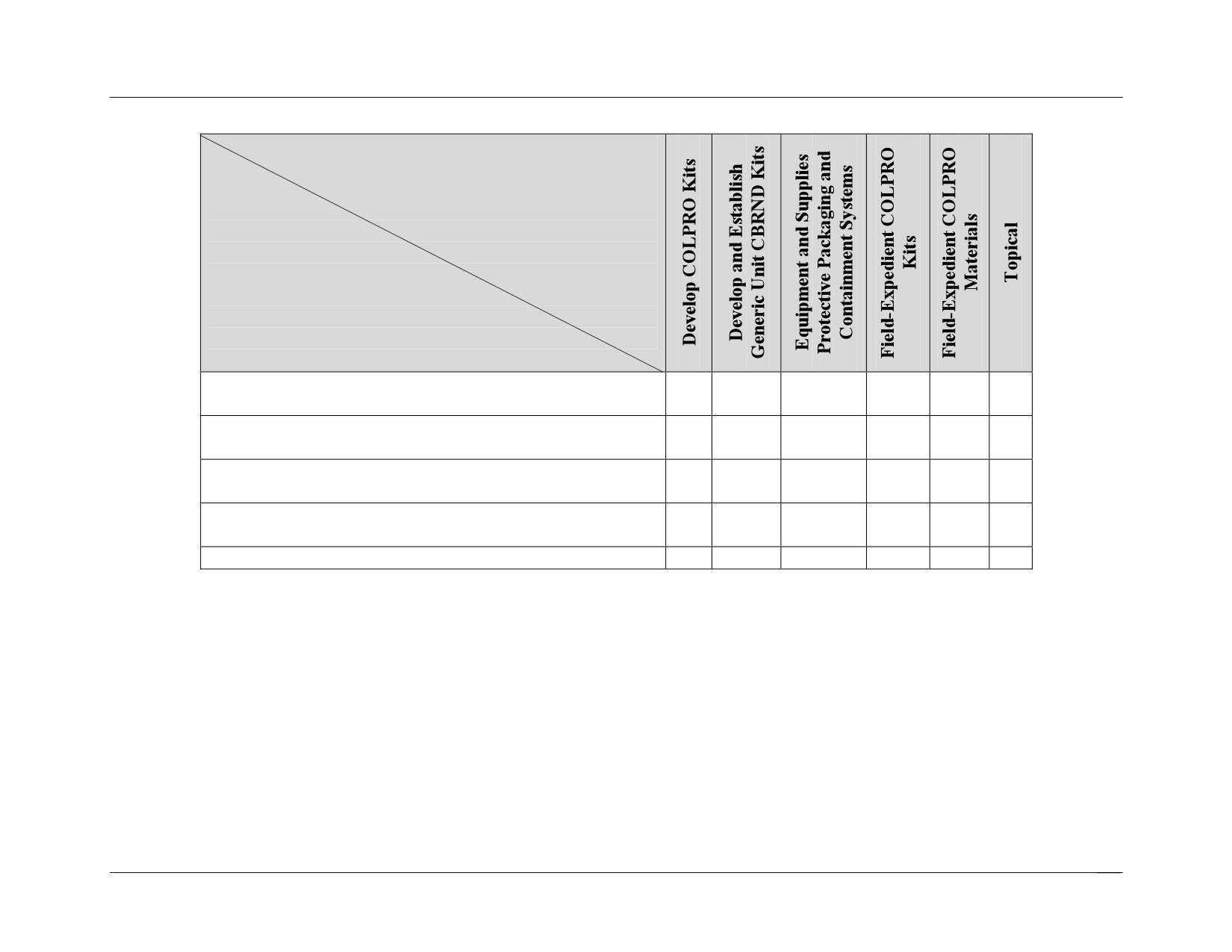
For Official Use Only
CBRND Functional Needs Analysis/Functional Solution Analysis
Chapter 13 Tactical Shield Tasks
Table 13.10-5. TASHLD 10: IMA Assessment
Ideas for Material
Approaches
(IMA)
Identified Gaps
Inadequate COLPRO to support expeditionary and highly
X
X
X
X
X
mobile forces.
Most naval vessels (including supply and transport vessels,
X
X
X
X
carriers, and others) do not possess COLPRO.
USCG assets supporting operations are not adequately
X
X
X
X
X
equipped with CBRND assets and resources.
Airlift assets (both tactical and strategic) are not equipped
X
X
X
with COLPRO.
ECP kits, procedures, and training do not currently exist.
X
X
X
X
X
For Official Use Only
202
For Official Use Only
CBRND Functional Needs Analysis/Functional Solution Analysis
Chapter 13 Tactical Shield Tasks
13.11 Task TASHLD 11: Protect decontaminating personnel from decontaminants,
contamination, and off-gassing
13.11.1 Functional Area Analysis
13.11.1.1
Definition
Includes standard (e.g., super tropical bleach) and nonstandard decontaminants (e.g., solvents
and disinfectant chlorine). The large quantities of water and other decontaminants required for
decontamination of facilities, equipment and supplies produce runoff containing both
contaminants and decontaminants. Most decontaminants have negative effects on personnel skin
and respiratory systems. This task includes protective measures to protect individuals charged
with decontamination as well as those who come in contact with the decontaminants.
13.11.1.2
Derivation
Joint Enabling Concept for CBRN Operations, An Operational Concept for Biological Defense,
Protection Joint Functional Concept, UJTL (TA 7, TA 7.1).
13.11.1.2.1
Supported Task: N/A
13.11.1.2.2
Lateral Task: TASHA 15
13.11.1.2.3
Supporting Task: N/A
13.11.1.3
Condition
Perform this task under conditions of:
Physical
1. Undeveloped to highly developed land. (C1.1.1)
2. Riverine to open sea. (C1.2)
3. Natural and induced Air. (C1.3)
4. Immediate to delayed danger, and potential long-term health hazard of atmospheric
weapons effects. (C1.3.3)
Military
1. Partially completed mission preparation. (C2.1.3)
2. Marginal forces. (C2.2)
3. Marginal to adequate forces allocated. (C2.2.3)
4. Negligible personnel experience. (C2.2.4.5)
5. Limited staff expertise. (C2.3.1.3)
6. Limited deployed supplies. (C2.8.2)
7. No prepositioned materiel. (C2.8.4)
For Official Use Only
203
For Official Use Only
CBRND Functional Needs Analysis/Functional Solution Analysis
Chapter 13 Tactical Shield Tasks
Civil. N/A
13.11.2 Functional Needs Analysis
13.11.2.1
Capability and Deficiency Assessment Summary
Table 13.11-1 discusses current and projected capabilities to accomplish this task. The overall
capabilities for current, near/mid, and far term are rated “yellow.” Although improvements
between the periods occur for specific capabilities and are reflected in the associated identified
values, the improved capabilities are not sufficient to change the overall assessed color ratings
for this task.
Current Capability and Deficiency
The current capabilities include both materiel and non-materiel capabilities. The Services
currently field a variety of CBRND assets providing respiratory/ocular and percutaneous
protection. This diversity of assets complicates the logistical support of operations with threat for
joint operations. Existing Service-specific IPE is limited in the period and scope of protection
afforded the warfighter. Respiratory/ocular and percutaneous CBRND assets protect against
known chemical and biological warfare agents and particulate radiologicals. Protection is
afforded to a select number of TIMs. Physiological and psychological encumbrances increase
with prolonged wear. Regular exercising and wear to acclimate and adjust the wearer to enable
performance of assigned functions and activities is necessary and performed to reduce the impact
of encumbrances and subsequent degradation of performance. Splash protection is afforded
through the use of CBRND assets designed for this purpose or the application of wet-weather
gear (including severe-weather gear). Splash protection is worn with respiratory/ocular and
percutaneous CBRND assets. COTS protective assets are applied for selected eligible civilians
such as hazardous materials, firefighters, EMS, etc. Detailed doctrine, policy, processes, and
TTPs exist for the performance of this task and are effective for the protection of military
personnel and selected eligible civilians (whose duties and responsibilities include
decontamination operations) designated to conduct decontamination operations. Doctrine, policy,
processes, and TTPs are also adequate and effective for personnel required to perform
decontamination of assigned equipment and resources. However, other eligible civilians,
particularly non-U.S. personnel, with potential decontamination operations responsibilities and
requirements are not adequately addressed. Military decontamination unit/team personnel and
selected eligible civilians (e.g., hazardous materials, firefighters, etc.) are trained using doctrine
and Material Safety Data Sheet (MSDS) information on standard decontaminants to include their
hazardous effects, associated protective measures, and, if necessary, Self-Aid/Buddy-Aid
actions. This training is performed upon initial designation and is performed on a recurring basis.
CBRND exercises and evaluations include decontamination operations and may include
circumstances for implementation of Self-Aid/Buddy-Aid measures and actions.
Projected Near/Mid-Term Capability and Deficiency
Future configurations focus on reducing psychological and physiological stresses associated with
the wearing of IPE, as well as striving for commonality of form factor among all services to
For Official Use Only
204
For Official Use Only
CBRND Functional Needs Analysis/Functional Solution Analysis
Chapter 13 Tactical Shield Tasks
reducing the logistics burden, development cost, and improved availability. The JSLIST and
JSGPM are projected to be initially fielded during the mid term. The JSLIST is under review for
NIOSH certification for compliance with OSHA protective standards. The certification will
permit application of the garment for AT/FP installation activities within CONUS and selected
OCONUS. The possibility exists for potential application by requiring eligible civilians. Legacy
Service-specific IPE will remain in the inventory throughout the mid term and into the far term
during the transition to the joint IPE systems. Otherwise, changes from current capabilities and
deficiencies are not projected.
Projected Far-Term Capability and Deficiency
Future configurations focus upon reducing psychological and physiological stresses associated
with the wearing of IPE, as well as striving for commonality of form factor among all Services.
The standardization of CBRND respiratory/ocular and percutaneous protection which will reduce
the logistics burden and development cost and subsequently improve availability. Legacy
Service-specific IPE will continue to be replaced by the joint systems of CBRND protective
equipment until fielding is complete to all Service units, including Guard and Reserve, early in
the far term. Next-generation IPE assets are in R&D and are expected to be fielded sometime in
the far term. However, specifics of design, characteristics, and protective capabilities are not as
yet determined for these systems. Additional changes in capabilities from the mid term are not
projected.
13.3.2.2
Resource Systems
Individual Protection
1. Respiratory/Ocular Protection:
COTS: Commercially available systems of protection, manufactured and tested meeting
OSHA standards for the United States or equivalent organization in other nations.
M40/M42 CB Protective Mask: U.S. Army mask system designed for military standard
profile and uses standard C-2 canister. M42 integrates with combat vehicle clean air
supply system and has a connectable dynamic microphone for combat vehicle intercom
system.
M45 Aircrew Aviator Mask: Replaces M42 and M49 systems for U.S. Army. Available with
a canister-compatible hose assembly and a valve cassette that enables use of supplied air
(from aircraft, SCBA or PAPR). The M45 is used by military personnel who cannot fit
the M40A1, M42A2, or MCU-2/P masks.
MCU-2A/P: Mainstay USAF and USN system for nonaviator personnel and aircrew
personnel not performing flight operations, except for aircrew personnel not issued
aviator systems and noncombat platforms/airframes without clean air supply systems.
Applies C-2 filter for filter air.
Joint Service General Purpose Mask (JSGPM): Initial fielding projected in the mid term
replacing Service-specific standard respiratory/ocular protective systems. Provides
respiratory/ocular protection from CBRN agents and selected TIMs. Improves field-of-
vision and encumbrances associated with existing Service systems.
For Official Use Only
205
For Official Use Only
CBRND Functional Needs Analysis/Functional Solution Analysis
Chapter 13 Tactical Shield Tasks
Joint Service Chemical Environment Survival Mask (JCESM): COTS one-time use, one-
size-fits-all, respiratory/ocular protective system affording two hours of protection in
low-level CBRN vapor, aerosol, and particulate environments. Selected force element
application only.
2.
Percutaneous Protection:
COTS: Commercially available systems of protection, manufactured and tested meeting
OSHA standards for the United States or equivalent organization in other nations.
Battle Dress Overgarment (BDO): U.S. Army/USAF two-piece camouflage-patterned
garment (top and trousers) providing 24-hour protection against CBRN agents in vapor,
liquid, droplet, and particulate forms.
Saratoga: USMC two-piece camouflage-patterned garment (top and trousers) providing 24-
hour protection against CBRN agents in vapor, liquid, droplet, and particulate forms.
Launderable for hygiene.
CPOG: Legacy two-piece green garment currently in use with USN providing limited-term
protection against CBRN agents in vapor, liquid, droplet, and particulate forms.
Chemical Protective Undergarment (CPU): Worn under standard IPE as additional layer of
protection against contact with CBRN agents.
BVO/GVO: Vinyl overboots (VO) worn over wearer’s standard footwear and protects
against contact with CBRN agents. Available in black (BVO) and green (GVO).
Chemical Protective Footwear Cover (CPFC): Legacy system of CBRN protective footwear
cover in use by USN. Requires wearer to pull protective sole tabs up and wrap/tie laces
around cover to secure over footwear.
Chemical Protective Glove (CPG): Standard CBRN protective glove. Available in 7-, 14-,
and 25-mil thicknesses addressing functional requirements for durability, dexterity, and
tactile sensitivity.
Chemical Protective Helmet System (CPHS): CBRN protective camouflage-patterned
helmet cover to protect helmet from contact with CBRN contaminants.
SCALP: Disposable, lightweight, impermeable overgarment designed for wear over IPE for
additional protection in grossly contaminated environments. Applied by personnel
required to leave protective sheltering in these environments to perform mission-critical
tasks. Also applied by decontamination units/teams and medical personnel performing
decontamination or potentially at risk for prolonged contact with liquids.
Wet-Weather Gear: Includes Severe-Weather Gear (USN). Provides barrier against contact
with liquids potentially damaging to protective abilities of IPE.
M-2 Apron: Butyl rubber-coated sleeved apron worn over IPE and applied by
decontamination units/teams and other designated personnel performing decontamination
or potentially at risk for contact with liquids. Provides barrier against contact with liquids
potentially damaging to protective abilities of IPE. Can be decontaminated.
Joint Service Lightweight Integrated Suit Technology (JSLIST): Two-piece (jacket and
trousers) CBRN risk-taking protective garment with integrated hood. Affords protection
against selected TIM agents. Reduces physiological and psychological encumbrances
associated with existing Service-specific systems it replaces with initial fielding in the
mid term. Under review for NIOSH certification for OSHA protection standards.
For Official Use Only
206
For Official Use Only
CBRND Functional Needs Analysis/Functional Solution Analysis
Chapter 13 Tactical Shield Tasks
Joint Block I/II Glove Upgrade (JB1/2GU): Projected fielding in near mid term replacing
CPG for designated force elements requiring increased tactility/durability for mission
performance. Various configurations under consideration.
Joint Firefighter Integrated Response Ensemble (JFIRE): Incorporates JSLIST into
firefighter bunker gear, permitting firefighters to conduct firefighting operations within a
CBRN/TIM environment.
Multi-purpose Overboot (MULO): Projected initial fielding in mid term and replacing
legacy CBRN footwear covers.
MOPP Methodology: Stepped level of CBRND protective measures. Standardized levels permit
the rapid increase or decrease of unit MOPP level.
Unit Staff: The application of DOTLPF for all phases of operations with threat from preplanning
to post-force return to home stations. Includes all aspects of C2 and supporting staff
activities/functions (e.g., logistics, intelligence, etc.) enabling mission and task accomplishment.
For Official Use Only
207
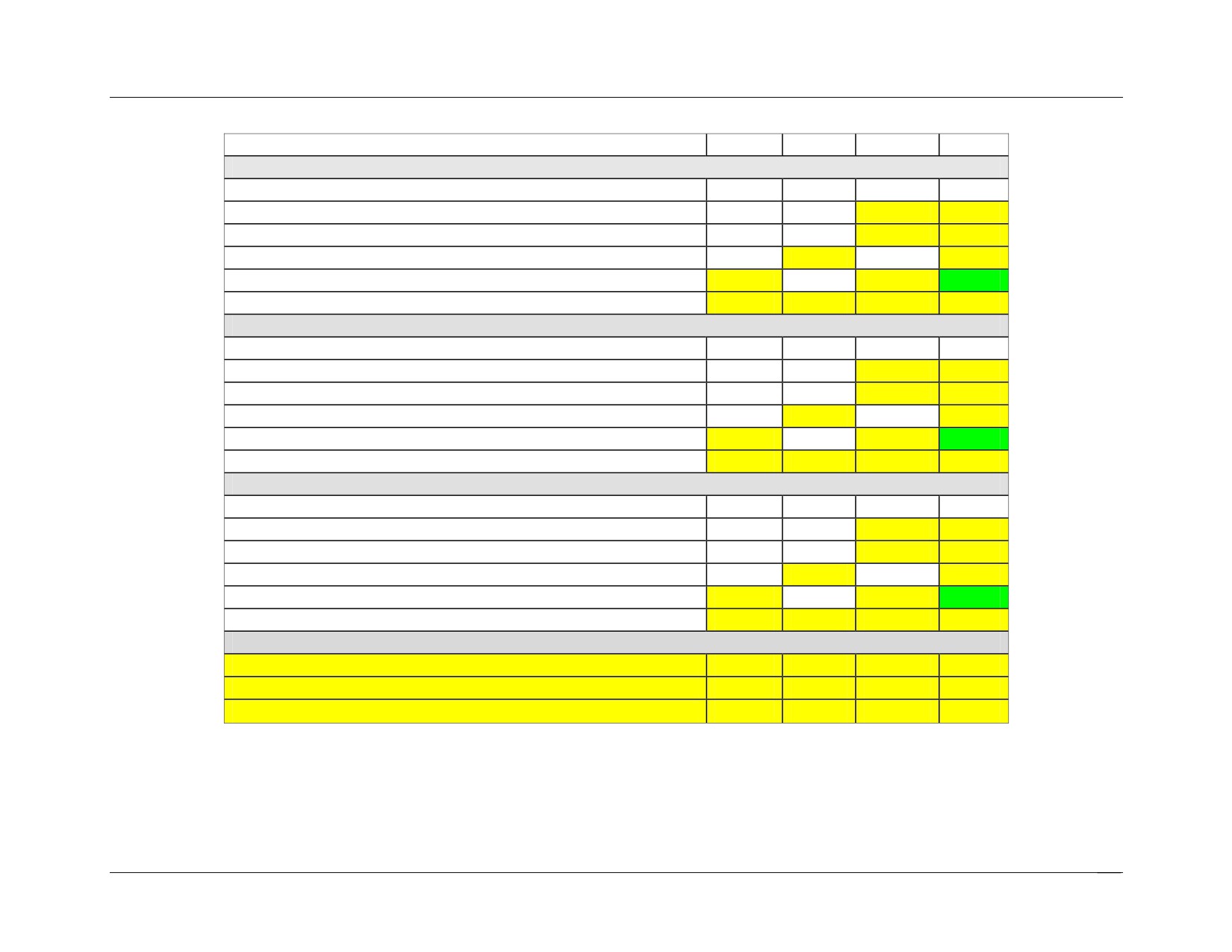
For Official Use Only
CBRND Functional Needs Analysis/Functional Solution Analysis
Chapter 13 Tactical Shield Tasks
Table 13.11-1. TASHLD 11: Capability and Deficiency Assessment
System/Measure
M1
M2
M3
M4
Current
Individual Protection
N/A
5
5
7
Respiratory/Ocular Protection
N/A
N/A
5 1
72
Percutaneous Protection
N/A
N/A
53
72
Medical Protection
N/A
54
N/A
72
Mission-Oriented Protective Posture (MOPP) Methodology
75
N/A
76
87
Unit Staff
48
69
710
72
Near/Mid
Individual Protection
N/A
5
6
7
Respiratory/Ocular Protection
N/A
N/A
61,11
72
Percutaneous Protection
N/A
N/A
63, 12
72
Medical Protection
N/A
54
N/A
72
MOPP
75
N/A
76
87
Unit Staff
48
69
710
72
Far
Individual Protection
N/A
5
7
7
1,11, 13
Respiratory/Ocular Protection
N/A
N/A
7
72
Percutaneous Protection
N/A
N/A
73,12, 14
72
Medical Protection
N/A
54
N/A
72
MOPP
75
N/A
76
87
Unit Staff
48
69
710
72
Overall
Current Overall Capability
6
6
6
7
Near/Mid-Term Overall Capability
6
6
7
7
Far-Term Overall Capability
6
6
7
7
For Official Use Only
208
For Official Use Only
CBRND Functional Needs Analysis/Functional Solution Analysis
Chapter 13 Tactical Shield Tasks
FAA Measure
Scale
M1
Force is trained on
8-10: Force possesses and is trained using doctrine and MSDS information on hazardous effects and protective measures
hazardous effects of
associated with decontaminants.
decontaminants
4-8: Force possesses and is trained using doctrine and MSDS information on hazardous effects and protective measures
associated with standard decontaminants.
1-3: Selected force elements possess and are trained using doctrine and MSDS information on hazardous effects and protective
measures associated with standard decontaminants.
0: Force does not possess and are not trained using doctrine and MSDS information on hazardous effects and protective
measures associated with decontaminants.
M2
Self-Aid and Buddy-
8-10: Self-Aid and Buddy-Aid procedures provide specific instructions and processes for the identification of, and immediate
Aid procedures
field treatment for, exposure to hazardous decontaminants. All force members receive initial and recurring Self-Aid and
include treatment for
Buddy-Aid training encompassing these procedures and are challenged in regularly scheduled exercises and evaluations.
exposure to
4-7: Self-Aid and Buddy-Aid procedures provide general instructions and processes for the identification of, and immediate
decontaminants.
field treatment for, exposure to hazardous decontaminants. All force members receive initial and recurring Self-Aid and
Buddy-Aid training including these procedures and are periodically exercised and evaluated.
1-3: Self-Aid and Buddy-Aid procedures provide limited guidance for the identification and field treatment of exposure to
hazardous decontaminants. Force members receive initial and recurring Self-Aid and Buddy-Aid training including discussion
of this guidance.
0: Self-Aid and Buddy-Aid procedures and training do not address the identification and field treatment of exposure to
hazardous decontaminants.
M3
Decontamination
8-10: Decontamination unit and team personnel are equipped with adequate splash and CBRN/TIM IPE protection.
unit/team personnel
4-7: Decontamination unit and team personnel are equipped with CBRN/TIM IPE protection and limited splash protection.
are equipped with IPE
1-3: Decontamination unit and team personnel are equipped with CBRN/TIM IPE protection and selected members are
to include splash
equipped with splash protection.
protective coverings.
0: Decontamination unit and team personnel are not equipped with CBRN/TIM IPE and splash protection.
M4
There is effective
8-10: DOTLPF exists and is adequate for this task. Task can be effectively performed with little or no direct impact upon
DOTMLPF in place to
operations.
conduct task.
4-7: Most critical aspects of DOTLPF for this task are addressed. Task can be performed with limitations requiring work-
arounds.
1-3: DOTLPF is inadequate for accomplishment of this task.
0: DOTLPF does not exist for this task.
1 Personnel designated to perform decontamination operations are trained on the proper wear of protective respiratory/ocular protection as outlined in doctrine, policy, procedures,
and TTPs. Expelled air from an exposed/contaminated casualty equipped with standard ocular/respiratory protection is not filtered and may present a potential secondary hazard or
contamination source for handling and transporting personnel and resources. The application of standard warfighter IPE to exposed/contaminated casualties provides containment
of the potential contamination within the IPE, a requirement that may not be achievable for certain types of casualties. Respiratory/ocular protection is diverse across the Services
and performed functions. The M40/M42 CB Protective Mask is in service with the U.S. Army. The mask uses the C-2 canister for filtration of CBRN contaminants. The M45
Aircrew Aviator Mask replaced the U.S. Army M43 Type II and M49 Mask Systems. The system uses a low-profile canister compatible hose assembly for both hose and face-
mounted configurations. The mask system incorporates selectable filtration for support both during aircraft systems activation and using the connectable filter pack. The mask also
is applied to personnel who cannot be fitted with the standard M40A1, M42A2, or MCU-2A/P masks. The MCU-2A/P is the mainstay USAF and USN mask employed by
For Official Use Only
209
For Official Use Only
CBRND Functional Needs Analysis/Functional Solution Analysis
Chapter 13 Tactical Shield Tasks
personnel not equipped with aircrew masks and by aircrew when not performing flight operations. The MCU-2A/P is also used by aircrew during flight operations who are not
equipped with aircrew masks. COTS equipment meeting OSHA requirements (and NFPA for firefighters) is applied by selected civilian personnel performing specific functions
such as firefighting, EMS, hazardous materials, etc. Eligible civilians are inadequately addressed in DOTLPF.
2 Detailed doctrine, policy, processes, and TTPs exist for the performance of this task and are effective for the protection of military personnel and selected eligible civilians
(whose duties and responsibilities include decontamination operations) designated to conduct decontamination operations. Doctrine, policy, processes, and TTPs are also adequate
and effective for personnel required to perform decontamination of assigned equipment and resources. However, other eligible civilians, particularly non-U.S. personnel, with
potential decontamination operations responsibilities and requirements are not adequately addressed.
3 Personnel designated to perform decontamination operations are trained on the proper wear of percutaneous protective protection as outlined in doctrine, policy, procedures, and
TTPs. Military personnel performing decontamination operations are required to wear CBRND percutaneous protection against the potential for secondary
exposure/contamination. Doctrine, policy, procedures, and TTPs do not adequately address the protection of nonmilitary personnel performing decontamination operations in the
AO. However, OSHA and CDC requirements may apply and should be addressed as applicable. Non-U.S. personnel subject to these functions are not addressed. Service-specific
CBRND percutaneous protection is currently applied for the protection of the force. The BDO, used by the USAF and U.S. Army, is a two-piece garment providing protection for
a 24-hour period against chemical agent vapors, liquids, and droplets; biological agents and toxins and contact with radioactive particles. The BDO’s protective abilities are lost if
the suit is torn, ripped, splashed with POL, or is saturated with water and is designed for a one-time use and is worn by ground and most flight personnel (non-high-performance
aircraft). The USMC uses the Saratoga COLPRO suit similar in design to the BDO, but launderable for personnel hygiene. The CPOG is a legacy two-piece garment for protection
against CBRN agents. The CPOG is in use with the USN. The USAF CWU-66/P (and 77/P) is a one-piece flightsuit providing protection for a 24-hour period against standard
CBRN agents and is designed for compatibility with aircrew lift support equipment. The BVO/GVO overboots are applied over the wearer’s standard footwear to protect against
contact with CBRND. The USN uses the CPFC, commonly called the “fishtail” for its design, to protect the wearer’s footwear. The CPFC, considered obsolete, does provide a
measure of antislip protection shipboard. Decontamination units/teams apply the CB Protective Boot (similar to firefighter boots) for decontamination operations. Hand protection
is provided by the CPG in 7-, 14-, and 25-mil thicknesses to meet warfighter hand protection and dexterity needs. SCALP provides a disposable, lightweight, impermeable layer of
protection for personnel against gross liquid contamination and is worn over the warfighter’s protective ensemble. SCALP is applied by units performing decontamination
operations where personnel may become soaked by decontaminants and Medical Services personnel with potential for prolonged contact with body fluids. Standard wet-weather
gear (e.g., poncho, rain parka, rain suit, etc.) is also applied as a barrier against saturation of the warfighter’s protective ensemble by contact with liquids such as rain, sea spray,
etc. The M-2 apron is applied by personnel performing decontamination aprons and is worn over the ensemble. The apron is full length and sleeve to maximize coverage, although
the back is open. COTS assets meeting OSHA requirements (and NFPA for firefighters) is applied by selected civilian personnel performing specific functions such as firefighting,
EMS, hazardous materials, etc.
4 Military decontamination unit/team personnel and selected eligible civilians (e.g., hazardous materials, firefighters, etc.) are trained using doctrine and MSDS information on
standard decontaminants to include their hazardous effects, associated protective measures, and, if necessary, Self-Aid/Buddy-Aid actions. This training is performed upon initial
designation and is performed on a recurring basis. CBRND exercises and evaluations include decontamination operations and may include circumstances for implementation of
Self-Aid/Buddy-Aid measures and actions.
5 Plans incorporate MOPP levels and methodologies are adjustable to meet local operations and threat needs. MOPP levels and methodologies apply to military personnel and are
generally considered to apply to equipped nonmilitary personnel (although doctrine, policy, procedures, and TTPs do not address application to these personnel). The MOPP
methodologies in planning and operations include CBRND actions, activities, and requirements to mitigate or prevent the effects of CBRN/TIM agents.
6 MOPP instructions for personnel performing decontamination operations include appropriate adjustments to include provisions addressing splash protective equipment worn by
military personnel over CBRND individual protective equipment to preclude saturation and potential secondary exposure/contamination.
7 Unit plans, SOPs, and guidance incorporate MOPP levels and methodologies under existing doctrine, policy, and TTPs. Adjustments for local threat and requirements, such as
decontamination operations, are addressed and disseminated.
8 Unit SOPs, processes, and guidelines address the performance of decontamination of contaminated resources. Military decontamination units/team personnel and selected eligible
civilians (e.g., hazardous materials, firefighters, etc.) designated to perform decontamination operations are trained based upon doctrine and MSDS data for standard
decontaminants to include their hazardous effects and associated protective measures. Other military force members are provided training for the conduct of field decontamination
of their equipment and assigned resources.
For Official Use Only
210
For Official Use Only
CBRND Functional Needs Analysis/Functional Solution Analysis
Chapter 13 Tactical Shield Tasks
9 Unit SOPs, processes, and guidelines include treatment instructions for exposure to decontaminants in Self-Aid/Buddy-Aid for personnel designated to perform decontamination
operations. Initial and recurring training is performed and tracked of training. Unit exercises and evaluations are conducted to maintain expertise and readiness to perform
decontamination operations.
10 Unit command staff plan, allocate, position, and provide individual protective equipment assets to protect the force. These actions include the identification, acquisition,
readiness, and application of assets required to protect Decontamination Unit/Team personnel, including splash protection. Doctrine, however, does not adequately address the
provision of protective assets to nonmilitary personnel, particularly non-U.S. personnel, with decontamination operations responsibilities and tasks.
11 Legacy systems will remain in the inventory throughout the mid term. These systems will be gradually replaced by new joint systems of respiratory/ocular protection as they are
fielded. The JSGPM also replaces current Service-specific ocular/respiratory protection. The system provides respiratory and ocular protection from CBRN agents and selected
TIMs. The field-of-vision is improved and encumbrances associated with legacy systems are reduced. The JSGPM incorporates state of the art technology and is designed to
integrate with future warfighter CBRND IPE and function equipment/assets. The Guardian Program is projected to review, assess, and implement protection for critical members
of the installation/facility populace during the mid term. This will predominantly be COTS-based assets for respiratory/ocular protection. However, the Guardian Program is not
expected to address eligible civilian protection within the AO for other than existing U.S. military installations and facilities.
12 Legacy systems will remain in the inventory throughout the mid term. These systems will be gradually replaced by new joint systems of percutaneous protection as they are
fielded. The JSLIST NBC Protective Garment is a two-piece, risk-taking, overgarment with integrated hood affording protection against CBRN agents and selected TIMs. The
garment reduces the physiological and psychological encumbrances associated with legacy systems. The JSLIST is under evaluation by NIOSH for application to OSHA
protection requirements. Joint Service glove upgrades are provided under the Joint Block 1 and 2 Glove Upgrade Program (JB1/2GU) in the near and mid term. The JB1GU
responds to an urgent need by designated elements of the force for increased tactility/durability supporting mission requirements. The JFIRE addresses protection of military
firefighters within a CBRN/TIM environment conducting firefighting operations involving structural and crash/firefighting/rescue. The JFIRE incorporates the JSLIST into
firefighter bunker gear. The JB1GU is expected to meet most of the requirements within the JSLIST ORD and is viewed as an evolutionary approach in the development of the
JB2GU. Versions under consideration include a protective inner glove worn under existing warfighter gloves, a replacement glove for existing hand wear, or a combination of
glove shell and liner affording CBRN protection of the legacy gloves they are projected to replace. The MULO is projected to replace legacy footwear covers. The ability of the
MULO to provide adequate antislip protection for USN personnel asea is under review. The Guardian Program is projected to review, assess, and implement protection for critical
members of the installation/ facility populace during the mid term. This will predominantly be COTS-based assets for percutaneous protection. However, the Guardian Program is
not expected to address eligible civilian protection within the AO for other than existing U.S. military installations and facilities.
13 The next-generation series of nonaviator masks is in R&D. The capabilities and fielding of these masks are not as yet determined.
14 The next-generation series of nonaviator percutaneous protective assets is in R&D. The capabilities and fielding of these assets are not as yet determined.
For Official Use Only
211
For Official Use Only
CBRND Functional Needs Analysis/Functional Solution Analysis
Chapter 13 Tactical Shield Tasks
13.11.3
Functional Solution Analysis
13.11.3.1
DOTLPF Assessment Summary
1. Deficiency: The command staff do not possess clear guidance for planning and providing
CBRN/TIM protection training and CBRND protection resources to eligible civilians,
detainees, evacuees, and other non-U.S. military identified groups.
Non-Materiel Solutions: Doctrine: Promulgate doctrine, policy, and procedures addressing
civilian personnel, detainees, non-U.S. personnel, and other groups and operations for
CBRND. Organization: Identify organizational services and activities supporting the mission
performed by civilian personnel and operations. Address organizational issues (e.g., who
provides the equipment, support forces to train and equip, etc.) related to the provision of
CBRN/TIM protection to eligible civilians, detainees, evacuees, and other identified groups.
Training: Establish CBRND training, exercise, and evaluation criteria and programs for
eligible civilians, detainees, and other designated personnel. Conduct CBRN/TIM training,
exercises, and evaluations including these groups, where appropriate Leadership: Implement
and manage CBRND training, equipping, and protection of eligible civilians, detainees, and
other designated personnel. Personnel: Ensure that eligible civilians supporting the
mission/military operations are qualified in CBRND and capable of performing their
responsibilities in a CBRN/TIM environment. Facilities: Develop supporting infrastructure
for eligible civilian, detainees, and other designated group CBRND (e.g., logistics, medical,
training, communications, security, etc.).
13.11.3.2
IMA Assessment Summary
Not required. No materiel deficiencies identified.
For Official Use Only
212
For Official Use Only
CBRND Functional Needs Analysis/Functional Solution Analysis
Chapter 13 Tactical Shield Tasks
13.12 Task TASHLD 12: Implement large-scale medical CBRN operations
13.12.1 Functional Area Analysis
13.12.1.1
Definition
Establish and implement the efficient and consistent application of medical care and measures
preparing and protecting the force against the debilitating effects of CBRN/TIM hazards (threat
or actual). Includes the identification, movement, application, and management of resources to
perform immunizations of the force and eligible civilians. Also includes the isolation of infected
or contaminated personnel and/or MWA until risk is resolved, the restriction of movement to,
and the conduct of quarantine to prevent the spread of infectious disease, and the evacuation of
casualties to medical facilities. Addresses the full range of necessary resources required to attend
to and resolve the circumstances.
13.12.1.2
Derivation
Joint Enabling Concept for CBRN Operations, An Operational Concept for Biological Defense,
Protection Joint Functional Concept, UJTL (TA 7, TA 7.1).
13.12.1.2.1
Supported Task: OPSHLD 13
13.12.1.2.2
Lateral Tasks: TASHA 15, TASHA 24
13.12.1.2.3
Supporting Task: N/A
13.12.1.3
Condition
Perform this task under conditions of:
Physical
1. Undeveloped to highly developed land. (C1.1.1)
2. Riverine to open sea. (C1.2)
3. Natural and induced air. (C1.3)
4. Immediate to delayed danger, and potential long-term health hazard of atmospheric
weapons effects. (C1.3.3)
Military
1. Partially completed mission preparation. (C2.1.3)
2. Marginal forces. (C2.2)
3. Marginal to adequate forces allocated. (C2.2.3)
4. Poor personnel nutrition and health. (C2.2.4.1)
5. Good personnel physical conditioning. (C2.2.4.3)
6. Poor mission-essential government-service civilian physical conditioning. (C2.2.4.3 -
NEW)
For Official Use Only
213
For Official Use Only
CBRND Functional Needs Analysis/Functional Solution Analysis
Chapter 13 Tactical Shield Tasks
7. Poor mission-essential contract-service civilian physical conditioning. (C2.2.4.3 - NEW)
8. Negligible personnel experience. (C2.2.4.5)
9. Some interoperability. (C2.2.6)
10. Partial multinational integration. (C2.3.1.2)
11. Limited staff expertise. (C2.3.1.3)
12. Limited deployed supplies. (C2.8.2)
13. Limited CONUS resupply. (C2.8.3)
14. No prepositioned materiel. (C2.8.4)
15. No host-nation support. (C2.8.5)
16. Negligible to limited commercial procuremen.t (C2.8.6)
Civil
1. Negative foreign government support. (C3.1.2.3)
2. Aggressively opposed foreign public opinion. (C3.1.2.4)
3. Uncertain international organization support. (C3.1.2.5)
4. Poor civil health. (C3.3.1.4)
5. High health risk. (C3.3.1.5)
6. Moderate to servere refugee impact. (C3.3.2)
13.12.2 Functional Needs Analysis
13.12.2.1
Capability and Deficiency Assessment Summary
Table 13.12-1 discusses current and projected capabilities to accomplish this task. The task
requires the application of the full range of Shield CBRND activities and resources for successful
accomplishment. The overall capabilities for current, near/mid, and far term are rated “yellow.”
Although improvements between the periods occur for specific capabilities and are reflected in
the associated identified values, the improved capabilities are not sufficient to change the overall
assessed color ratings for this task.
Current Capability and Deficiency
Limited capabilities currently exist for large-scale medical operations, particularly circumstances
involving unanticipated threats/hazards within the AOR once military operations have
commenced. Preplanning for large-scale medical operations is performed when the need is
anticipated upon evaluation of adversary threat capabilities. However, preplanning for the
conduct of these operations within the AOR for unanticipated threats/hazards is generally not
performed until there is a determination of need. The ability to adequately respond to
circumstances improves as operations are established, resources are applied, and supporting
structures are in place. However, the initial period of operations is expected to be a reflection of
attempts to ascertain the scope of the situation, identify resources, and coordinate necessary
actions. Resources within the AOR are initially applied, in these circumstances, until additional
resources are allocated and in place. Close coordination and cooperation between operational and
medical services units/elements are essential to the rapid and accurate response and support of
necessary large-scale medical operations. DOTLPF for the protection of U.S. military personnel
For Official Use Only
214
For Official Use Only
CBRND Functional Needs Analysis/Functional Solution Analysis
Chapter 13 Tactical Shield Tasks
is adequate when involving contaminated casualties. However, DOTLPF is inadequate to address
large numbers of eligible civilians, particularly non-U.S. personnel such as indigenous
populations, third-party nationals, detainees, and others. Additionally, DOTLPF does not
adequately address the protection of casualties unable to wear CBRND protection and the
application of negative-pressure COLPRO for the transport and mass sheltering of
infectious/contaminated casualties. DOTLPF is inadequate to address force actions associated
with medical quarantine and/or enforcement of medical isolation involving large numbers of
non-U.S. personnel (e.g., indigenous civilians, third-party nations, etc.). The distinction between
medical infectious disease control equipment and measures by medical care providers and MOPP
application to supporting force members is not identified in MOPP DOTLPF. Training for large-
scale medical operations involving CBRN/TIM agents is inadequate. AMEDD institutional
training for the treatment of contaminated/infectious casualties is not mandatory for medical
practitioners identified for deployment or assignment where there exists a CBRN/TIM threat.
The ability of the command staff to ensure medical capabilities for CBRND is limited by routine
medical operations and requirements prior to deployment. Generally, until completion of
decontamination, casualty care is performed by medical corpsmen and not medical practitioners.
Mass medical operations may not be possible until the theater matures or additional resources are
allocated to force. Additionally, deploying eligible civilians and MWAs (particularly MWDs) are
not equipped and trained to survive a CBRN/TIM environment. The force staff does not possess
clear guidance for planning and providing CBRN/TIM protection training and CBRND
protection resources to deploying eligible civilians and MWA. Current doctrine and policy do
not adequately address sustained operations within a CBRN/TIM environment. The Services
currently field a variety of CBRND assets providing respiratory/ocular, percutaneous, and
collective protection. This diversity of assets complicates the logistical support of operations
with threat for joint operations. The assets protect against known chemical and biological
warfare agents and particulate radiologicals. Protection is afforded to a select number of TIMs.
Existing Service-specific IPE is limited on the period and scope of protection afforded the
warfighter. Physiological and psychological encumbrances increase with prolonged wear. This
tendency requires regular exercising and wear to acclimate and adjust the wearer to enable
performance of assigned functions and activities. Current site COLPRO generally requires
extensive site preparation and resources to erect, operate, and strike but cannot be erected/striked
in a CBRN/TIM environment. Mobile COLPRO runs a diversity from forced clean air systems to
full COLPRO, but are limited on their application. In general, current COLPRO is limited in
quantity and does not adequately support expeditionary and highly mobile maneuver operations,
particularly those in an austere environment with reduced logistical footprints. Many mobile
platforms (including land, sea, and air) are not equipped with COLPRO. This circumstance
requires the application of IPE to offset the situation. Medical prophylaxes do exist for the
protection of the warfighter against a limited number of biological and chemical agents.
However, few are FDA approved. A number possess IND authorization for application.
Medications are considered for their potential prophylactic value, but are not always approved
for this purpose by the FDA. Not all threat CBRN agents are addressed by CBRND medical
countermeasures. Efficacy, time to achieve a level of protection, and the number of
administrations vary between prophylaxes. COTS protective assets are applied for selected
eligible civilians such as hazardous materials, firefighters, EMS, etc. However, eligible civilians
and MWAs are not adequately addressed by DOTLPF for CBRND. Clear DOTLPF addressing
the provisioning and training of eligible civilians with CBRND is inadequate. MWAs are not
For Official Use Only
215
For Official Use Only
CBRND Functional Needs Analysis/Functional Solution Analysis
Chapter 13 Tactical Shield Tasks
afforded protection against the effects of CBRN/TIM agents, including COLPRO. MOPP
DOTLPF is adequate for military personnel and operations. The establishment of adjustable
MOPP levels, reflective of local operations and threat, are well defined, as are continuing
evaluation for change/adjustments. However, operations increasingly involve U.S. and non-U.S.
civilians. MOPP DOTLPF does not adequately address their presence and inclusion into MOPP
methodologies and levels, particularly when these personnel may (or may not) be equipped with
nonstandard IPE.
Projected Near/Mid-Term Capability and Deficiency
Future configurations focus on reducing psychological and physiological stresses associated with
the wearing of IPE, as well as striving for commonality of form factor among all services to
reduce the logistics burden, development cost and improve availability. The JPACE, JSLIST,
JSAM, and JSGPM are projected to be fielded during the mid term. Legacy Service-specific IPE
will remain in the inventory throughout the mid term and into the far term during the fielding of
the joint systems of IPE. Ongoing R&D into medical prophylaxes will provide additional
prophylactic measures but still fail to address all threat CBRN agents. JECP is projected to
initially field during the mid term with three COLPRO systems primarily addressing
expeditionary operations. These systems, depending upon the quantity fielded, may provide
additional COLPRO to address critical needs.
Projected Far-Term Capability and Deficiency
Future configurations focus on reducing psychological and physiological stresses associated with
the wearing of IPE, as well as striving for commonality of form factor among all services which
will reduce the logistics burden, development cost and improve availability. Legacy Service-
specific IPE will continue to be replaced by the joint systems of IPE until complete fielding to all
Service units, including Guard and Reserve, early in the far term. Next-generation IPE assets are
in R&D and are expected to be fielded sometime in the far term. However, specifics of design,
characteristics, and protective capabilities are not as yet determined for these systems. Continued
R&D into potential medical prophylaxes may result in additional protective measures for the
force. However, specifics are unknown at this time.
13.12.2.2
Resource Systems
Individual Protection
1. Respiratory/Ocular Protection:
COTS: Commercially available systems of protection, manufactured and tested meeting
OSHA standards for the United States or equivalent organization in other nations.
M17 Series Masks w/M13 Series Filters: Obsolescent warfighter system of protection.
Retained in selected HTAs for NEO application. Designed for adults.
MBU-19/P Chemical-Biological Aircrew Eye/Respiratory Protection (AERP): USAF
combat aircrew protection. Includes protective hood, MBU-12/P mask, C-2 canister,
intercom for ground communications, and blower assembly.
For Official Use Only
216
For Official Use Only
CBRND Functional Needs Analysis/Functional Solution Analysis
Chapter 13 Tactical Shield Tasks
A/P22P-14(V) Respirator Assembly: USN/USMC system for rotary-wing (Version 1 for
USN) and fixed-wing (Versions 2-4 for USN/USMC) aircrews. Includes CB filter, dual
air/oxygen supply, and crossover manifold for dual protective capabilities in air or on
ground. Version 1 is not compatible with aircraft oxygen supply systems; Version 2
applied to EA-6B and F18A airframes; Version 3 to AV-8B and F-18C/D aircraft; and
Version 4 is used for C-130 airframes.
M40/M42 CB Protective Mask: U.S. Army mask system designed for military standard
profile and uses standard C-2 canister. M42 integrates with combat vehicle clean air
supply system and has a connectable dynamic microphone for combat vehicle intercom
system.
M45 Aircrew Aviator Mask: Replaces M42 and M49 systems for U.S. Army. Available with
a canister-compatible hose assembly and a valve cassette that enables use of supplied air
(from aircraft, SCBA or PAPR). The M45 is used by military personnel who cannot fit
the M40A1, M42A2, or MCU-2/P masks.
M48 CB Apache Aviator Mask: Used by Apache aviator and flight support personnel.
Replaced M43 Type 1 mask system and uses blower assembly with C-2 filter canister.
MCU-2A/P: Mainstay USAF and USN system for nonaviator personnel and aircrew
personnel not performing flight operations, except for aircrew personnel not issued
aviator systems and noncombat platforms/airframes without clean air supply systems.
Applies C-2 filter for filter air.
Joint Service Aviator Mask (JSAM): Initial fielding projected in the mid term replacing
Service-specific aviator respiratory/ocular protective systems. Provides CBRN protection
under high-G conditions, compatible with existing and projected aviator CBRN IPE,
flame and thermal protective, reduces stress associated with existing aviator IPE, and
may be donned/doffed during flight.
Joint Service General Purpose Mask (JSGPM): Initial fielding projected in the mid term
replacing Service-specific standard respiratory/ocular protective systems. Provides
respiratory/ocular protection from CBRN agents and selected TIMs. Improves field-of-
vision and encumbrances associated with existing Service systems.
Joint Service Chemical Environment Survival Mask (JCESM): COTS one-time use, one-
size-fits-all, respiratory/ocular protective system affording two hours of protection in
low-level CBRN vapor, aerosol, and particulate environments. Selected force element
application only.
2.
Percutaneous Protection:
COTS: Commercially available systems of protection, manufactured and tested meeting
OSHA standards for the United States or equivalent organization in other nations.
Battle Dress Overgarment (BDO): U.S. Army/USAF two-piece camouflage-patterned
garment (top and trousers) providing 24-hour protection against CBRN agents in vapor,
liquid, droplet, and particulate forms.
Saratoga: USMC two-piece camouflage-patterned garment (top and trousers) providing 24-
hour protection against CBRN agents in vapor, liquid, droplet, and particulate forms.
Launderable for hygiene.
CPOG: Legacy two-piece green garment currently in use with USN providing limited-term
protection against CBRN agents in vapor, liquid, droplet, and particulate forms.
For Official Use Only
217
For Official Use Only
CBRND Functional Needs Analysis/Functional Solution Analysis
Chapter 13 Tactical Shield Tasks
Chemical Protective Undergarment (CPU): Worn under standard IPE as additional layer of
protection against contact with CBRN agents.
CWU-66/P: One-piece USAF green flightsuit providing 24-hour protection against CBRN
agents in vapor, liquid, droplet, and particulate forms. Available in tan as CWU-77/P
flightsuit.
Disposal Aircrew Protective Cape: Transparent disposable cape covering head and shoulders
of aviator during periods between aircraft mounting/dismounting and shelter.
BVO/GVO: Vinyl overboots (VO) worn over wearer’s standard footwear and protects
against contact with CBRN agents. Available in black (BVO) and green (GVO).
Chemical Protective Footwear Cover (CPFC): Legacy system of CBRN protective footwear
cover in use by USN. Requires wearer to pull protective sole tabs up and wrap/tie laces
around cover to secure over footwear.
Disposable Aircrew Footwear Cover: Transparent disposable footwear covers worn over
aviator footwear to protect aviator during periods between aircraft mounting/dismounting
and shelter.
Chemical Protective Glove (CPG): Standard CBRN protective glove. Available in 7-, 14-,
and 25-mil thicknesses addressing functional requirements for durability, dexterity, and
tactile sensitivity.
Disposable Aircrew Hand Protection: Transparent disposable hand coverings applied by
USAF, USN, and USMC over aviator gloves during periods between aircraft
mounting/dismounting and shelter. Also applied as between aviator inner and outer
gloves enabling essential functional requirements for dexterity and tactile sensitivity.
Chemical Protective Helmet System (CPHS): CBRN protective camouflage-patterned
helmet cover to protect helmet from contact with CBRN contaminants.
SCALP: Disposable, lightweight, impermeable overgarment designed for wear over IPE for
additional protection in grossly contaminated environments. Applied by personnel
required to leave protective sheltering in these environments to perform mission-critical
tasks. Also applied by decontamination units/teams and medical personnel performing
decontamination or potentially at risk for prolonged contact with liquids.
Wet-Weather Gear: Includes Severe-Weather Gear (USN). Provides barrier against contact
with liquids potentially damaging to protective abilities of IPE.
M-2 Apron: Butyl rubber-coated sleeved apron worn over IPE and applied by
decontamination units/teams and other designated personnel performing decontamination
or potentially at risk for contact with liquids. Provides barrier against contact with liquids
potentially damaging to protective abilities of IPE. Decontaminable.
Medical Barrier Assets: Standard barrier assets applied by Medical Services personnel
against contact with biohazards. May provide a degree of additional barrier protection
against CBRN hazards when applied with IPE.
Patient Protective Wrap (PPW): Enclosed casualty bag made of CBRN protective materials.
Incorporates small flexible transparent window positioned over casualties face for
viewing by medical practitioners. Uses cardboard stays to maintain separation of bag
from casualty’s face. Does not permit head-to-toe viewing of casualty. Supports limited
medical assistance. Requires the wear of standard warfighter respiratory/ocular
protection. Two wraps currently in stock. Legacy system provides protection up to 3
hours and newer system up to 6 hours.
For Official Use Only
218
For Official Use Only
CBRND Functional Needs Analysis/Functional Solution Analysis
Chapter 13 Tactical Shield Tasks
Joint Service Lightweight Integrated Suit Technology (JSLIST): Two-piece (jacket and
trousers) CBRN risk-taking protective garment with integrated hood. Affords protection
against selected TIM agents. Reduces physiological and psychological encumbrances
associated with existing Service-specific systems it replaces with initial fielding in the
mid term. Under review for NIOSH certification for OSHA protection standards.
Joint Protective Aircrew Ensemble (JPACE): CBRN protective aviator flightsuit projected
for initial fielding in the mid term and replacing Service-specific CBRN protective
flightsuits. Provides JSLIST equivalent protection and provides protection when subject
to rotor, propeller, and jetwash. Flame-retardant and self-extinguishing properties.
Supports escape and evasion requirements.
Joint Block I/II Glove Upgrade (JB1/2GU): Projected fielding in near mid term replacing
CPG for designated force elements requiring increased tactility/durability for mission
performance. Various configurations under consideration.
Joint Firefighter Integrated Response Ensemble (JFIRE): Incorporates JSLIST into
firefighter bunker gear, permitting firefighters to conduct firefighting operations within a
CBRN/TIM environment.
Multi-purpose Overboot (MULO): Projected initial fielding in mid term and replacing
legacy CBRN footwear covers.
3.
Medical Protection:
Vaccines: Immunizations providing a level of acquired immunity against the effects of
CBRN agents.
Topicals: Protective barrier products applied to the skin to enhance protection of wear
against contact with CBRN/TIM agents. Includes both inert and reactive materials.
Medications: Medical materials taken to mitigate or prevent the effects of exposure to
CBRN/TIM agents. Includes medications taken routinely or upon exposure (but prior to
symptom display) to build resistance/immunity or to mitigate/resolve medical impacts of
CBRN/TIM agent exposure/contamination.
COLPRO
1. Mobile COLPRO
CBPS: M1113 HMMWV-mounted COLPRO system consisting of a hardshell filtration,
power, and transport and expandable softshell tentage with contamination control
area/entry. The COLPRO unit is designated the Lightweight Multipurpose shelter (LMS).
Crewed Combat Vehicles (Ground): Two types of COLPRO. First supplies filter air using
forced clean air supply system. Requires wear of IPE and connection to crew mask. This
is the type of system in the M1A1 Abrams MBT. Second system is incorporates full
COLPRO and permits reduction of IPE during operation. JSLNBCLR is an example of
the second type of system.
Airframe Air Supply System: Provides clean air from compressed air storage system until
aircraft is outside of contamination and airframe interior is flushed of vapor contaminants
or throughout flight operations.
For Official Use Only
219
For Official Use Only
CBRND Functional Needs Analysis/Functional Solution Analysis
Chapter 13 Tactical Shield Tasks
CITADEL: System of protection installed with USN vessels to afford protection to selected
connected spaces including C4ISR, medical, and R2.
2.
Fixed-Site COLPRO
MGPTS: USMC Medium General Purpose Tent System (MGPTS) with CB Protective Liner
System designed for support of USMC operational C4ISR and R2.
CP-DEPMEDS: Component-based system of tentage, connective corridors, ISO containers,
etc., with COLPRO liners for configuration into field hospitals and includes supporting
power and utility systems, lighting, engine control units, and filtration systems. Large
system requiring extensive use of resources to prepare location, erect/strike, operate, and
maintain.
JTCOPS: Similar to CP-DEPMEDS, but for critical functions and activities of the force
(e.g., staff operations, aircrew housing and briefing, etc.).
CP-EMEDS: USAF air-transportable system similar to CP-DEPMEDS on a smaller scale
and configurable from one medical shelter to a 25-bed field hospital.
CP-SSS: USAF small-scale COLPRO transportable system designed to support C2
functions.
JECP: Projected program of COLPRO designed for application in highly mobile operations,
expeditionary operations, forced-entry operations, and/or to supplement larger-scale
COLPRO systems in support of operations. Consists of building/room and tentage insert
kits and small-unit stand-alone COLPRO kits.
M20/M20A1 SCPE: Lightweight and modular COLPRO system consisting of an inflatable
liner for insert into rooms or buildings.
Building integrated COLPRO systems: COLPRO systems designed and installed into
buildings as integral systems, usually facility construction. Post-construction installation
is based upon building design and COLPRO requirements. Varies between buildings
based upon applied technology, date of construction/installation, system engineering,
facility function, etc. Most existing facility COLPRO was established during Cold War
period.
MOPP Methodology: Stepped level of CBRND protective measures. Standardized levels permit
the rapid increase or decrease of unit MOPP level.
Unit Staff: The application of DOTLPF for all phases of operations with threat from preplanning
to post-force return to home stations. Includes all aspects of C2 and supporting staff activities/
functions (e.g., logistics, intelligence, etc.) enabling mission and task accomplishment.
For Official Use Only
220
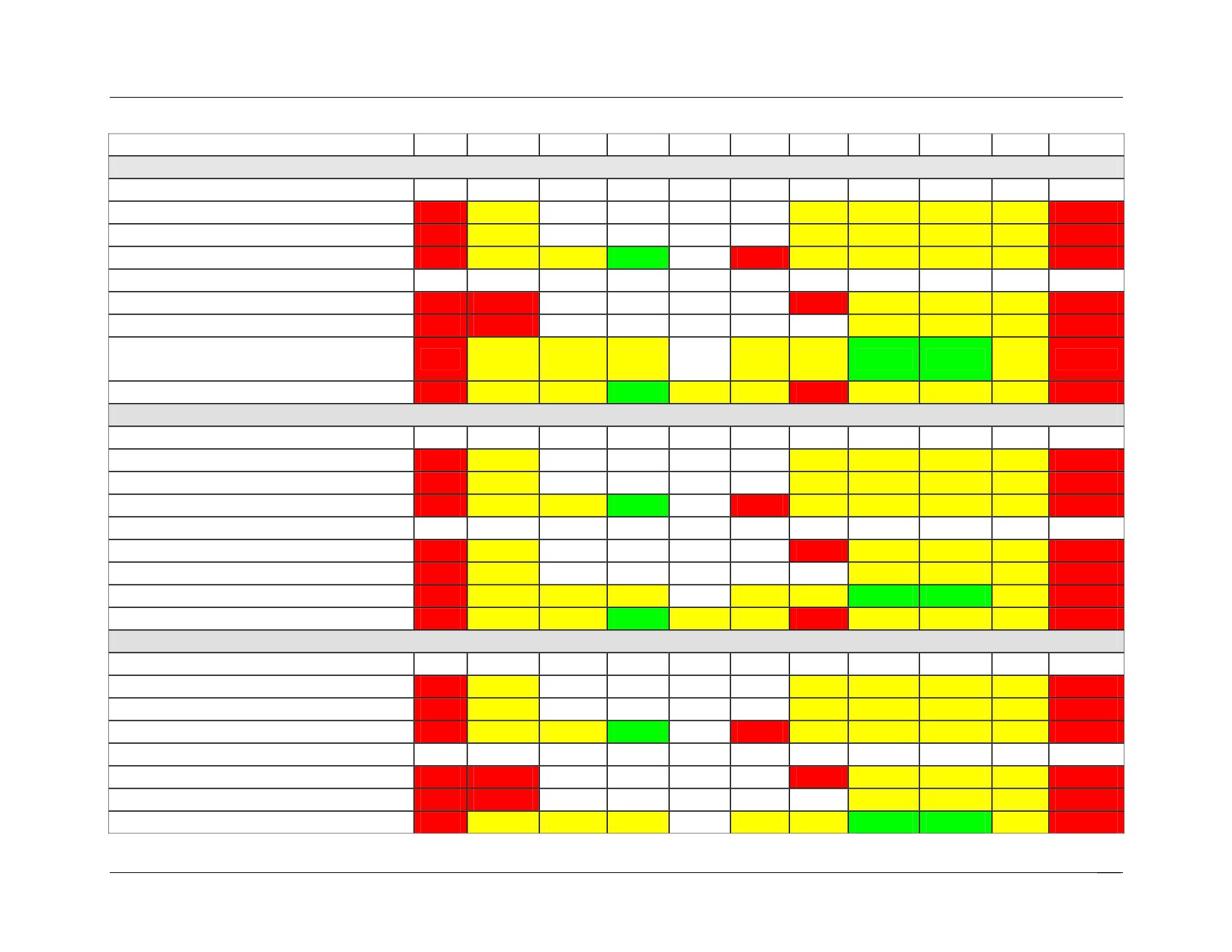
For Official Use Only
CBRND Functional Needs Analysis/Functional Solution Analysis
Chapter 13 Tactical Shield Tasks
Table 13.12-1. TASHLD 12: Capability and Deficiency Assessment
System/Measure
M1
M2
M3
M4
M5
M6
M7
M8
M9
M10
M11
Current
Individual Protection
2
5.7
4
8
N/A
3
6
6.7
5.5
5
3
Respiratory/Ocular Protection
21
62
N/A
N/A
N/A
N/A
53
72
53
54
35
Percutaneous Protection
21
66
N/A
N/A
N/A
N/A
57
76
57
54
35
Medical Protection
21
58
48
89
N/A
310
710
610
610
54
35
Collective Protection
3
3
N/A
N/A
N/A
N/A
2
5.5
5.5
5
2
Mobile COLPRO
311
312
N/A
N/A
N/A
N/A
213
512
512
54
214
Fixed-Site COLPRO
311
315
N/A
N/A
N/A
N/A
N/A
615
615
54
2 15
Mission-Oriented Protective Posture
316
617
418
718
N/A
418
519
817
817
617
320
(MOPP) Methodology
Unit Staff
321
422
423
824
525
426
327
728
629
530
330
Near/Mid
Individual Protection
2
5.7
4
8
N/A
3
6
6.7
5.5
5
3
Respiratory/Ocular Protection
21
62,31
N/A
N/A
N/A
N/A
53
7 2,31
5 3
54
35
Percutaneous Protection
21
66,32
N/A
N/A
N/A
N/A
57
76,32
5 7
54
35
Medical Protection
21
58,33
48,33
89
N/A
310
710
610
610
54
35
Collective Protection
3
3
N/A
N/A
N/A
N/A
2
5.5
5.5
5
2
12,34
12,34
Mobile COLPRO
311
3
N/A
N/A
N/A
N/A
213
512,34
5
54
214
Fixed-Site COLPRO
311
315,35
N/A
N/A
N/A
N/A
N/A
615
615
54
215
MOPP
316
617
418
718
N/A
418
519
817
817
617
320
Unit Staff
321
422
423
824
525
426
327
728
629
530
330
Far
Individual Protection
2
5.7
4
8
N/A
3
6
6.7
5.5
5
3
2,31,36
2,31,36
Respiratory/Ocular Protection
21
6
N/A
N/A
N/A
N/A
53
7
53
54
35
Percutaneous Protection
21
66,32,37
N/A
N/A
N/A
N/A
57
76,32,37
57
54
35
8,33,38
Medical Protection
21
58,33,38
4
89
N/A
310
710
610
610
54
35
Collective Protection
3
3
N/A
N/A
N/A
N/A
2
5.5
5.5
5
2
12,34,39
12,34,39
12,34,39
Mobile COLPRO
311
3
N/A
N/A
N/A
N/A
213
5
5
54
214
15,35,40
Fixed-Site COLPRO
311
315,35,40
N/A
N/A
N/A
N/A
N/A
615,35,40
615,35,40
54
2
MOPP
316
617
418
718
N/A
418
519
817
817
617
320
For Official Use Only
221
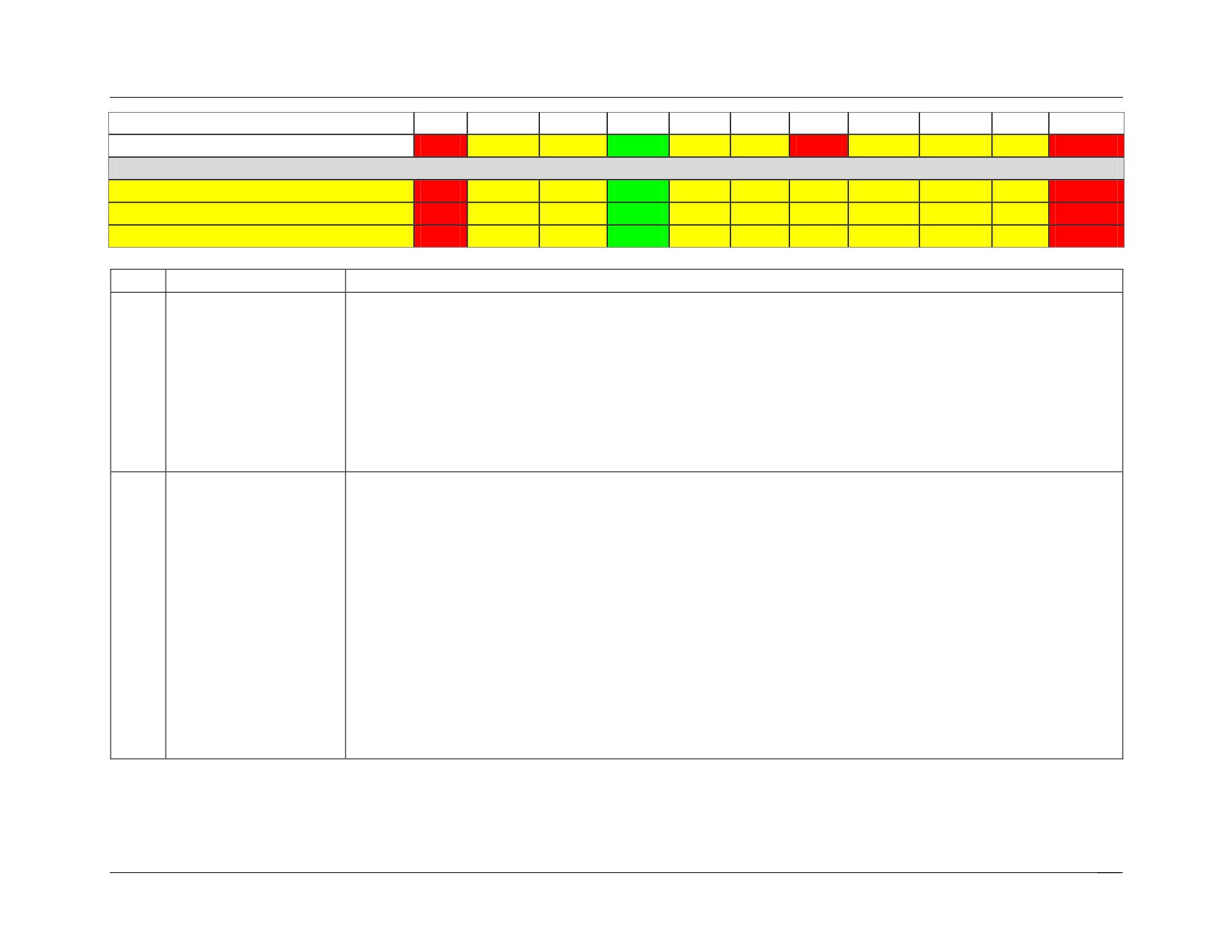
For Official Use Only
CBRND Functional Needs Analysis/Functional Solution Analysis
Chapter 13 Tactical Shield Tasks
System/Measure
M1
M2
M3
M4
M5
M6
M7
M8
M9
M10
M11
Unit Staff
321
422
423
824
525
426
327
728
629
530
330
Overall
Current Overall Capability
3
5
4
8
5
4
4
7
6
5
3
Near/Mid-Term Overall Capability
3
5
4
8
5
4
4
7
6
5
3
Far-Term Overall Capability
3
5
4
8
5
4
4
7
6
5
3
FAA Measure
Scale
M1
Plans address large-scale
8-10: Detailed plans exist and are coordinated between operational and medical services staffs for large-scale
medical operations
CBRN/TIM medical operations within the AO involving the forces and non-U.S. personnel (e.g., indigenous civilians,
resulting from
third-party nationals, etc.).
CBRN/TIM
4-7: Plans exist and are coordinated between operational and medical services staffs for Medical Services support of
exposure/contamination.
operations within the AO involving CBRN/TIM threat and address large-scale medical operations involving the force and
non-U.S. personnel (e.g., indigenous civilians, third-party nationals, etc.).
1-3: Plans exist and are coordinated between operational and medical services staffs for Medical Services support of
operations within the AO involving CBRN/TIM threat and address large-scale medical operations involving the force.
0: Operational and Medical Services staff coordinated plans do not exist for the AO addressing large-scale medical
operations involving CBRN/TIM threats.
M2
Tactical medical facilities
8-10: All tactical medical facilities are equipped and exercised for the reception, decontamination, treatment, and
are able to treat and
protection of contaminated/infectious casualties. All assigned medical practitioners and medical support personnel
isolate contaminated/
(including EMS, medical aides, etc.) are formally trained, receive recurring training, and are equipped with CBRND
infectious casualties.
protective assets/materials, for the evaluation/care and protection of contaminated/infectious casualties safely and
effectively. Medical provider medical treatment is provided, when needed, throughout the medical process.
4-7: Tactical medical facilities are equipped and exercised for the reception, decontamination, treatment, and protection
of contaminated/infectious casualties. Formal training and CBRND protective assets/materials are available for the
evaluation/care and protection of contaminated/infectious casualties. Medical support personnel are trained on the
evaluation, decontamination, care, and protection of contaminated/infectious casualties.
1-3: Tactical medical facilities are equipped for the reception, decontamination, limited treatment, and COLPRO
protection of contaminated/infectious casualties. Medical personnel are equipped with CBRND protective
assets/materials to conduct the evaluation/care and COLPRO protection of contaminated/infectious casualties. General
medical training of medical practitioners and medical support staff is the basis for the performance of evaluation,
decontamination, and treatment of contaminated/infectious casualties.
0: Tactical medical facilities are not adequately equipped to conduct reception, decontamination, treatment, and
protection of contaminated/infectious casualties.
For Official Use Only
222
For Official Use Only
CBRND Functional Needs Analysis/Functional Solution Analysis
Chapter 13 Tactical Shield Tasks
M3
Forces are immunized
8-10: Medical CBRND countermeasures and preventative medical measures exist and are employed for all threat agents
against threat agents.
and encompass all eligible at-risk populations.
4-7: Medical CBRND countermeasures and preventative medical measures exist and are employed for the protection of
U.S. military and eligible civilians supporting the mission for threat agents.
1-3: Medical CBRND countermeasures and preventative medical measures exist and are employed for the protection of
U.S. military personnel for threat agents.
0: Medical CBRND countermeasures and preventative medical measures are not employed for threat agents.
M4
Forces completed
8-10: All eligible at-risk force populations are medically prepared for operations with threat.
deployment medical
4-7: U.S. military and eligible civilians supporting the mission are medically prepared for operations with threat.
preparation.
1-3: U.S. military personnel are medically prepared for operations with threat.
0: Forces are not medically prepared for operations with threat.
M5
In-place system is
8-10: Tactical Medical Information Systems (MISs) incorporate automated tracking of the status, issuance, and
operational for tracking
administration of vaccines, pretreatments, antidotes, and medical treatment for all force personnel (U.S. military, MWAs,
status of personnel and
and eligible civilians). Systems are integrated and interoperable with higher-echelon MISs.
MWA immunizations,
4-7: Tactical MISs and/or manual processes provide for the tracking of the status, issuance, and administration of
pre-treatments, antidotes,
vaccines, pretreatments, antidotes, and medical treatment for U.S. military and eligible civilians.
and medical treatment.
1-3: Predominantly manual processes are applied for the tracking of the status, issuance, and administration of vaccines,
pretreatments, antidotes, and medical treatment for U.S. military personnel.
0: Processes and systems do not exist to track the status, issuance, and administration of vaccines, pretreatments,
antidotes, and medical treatment to the force.
M6
Disease and CBRN/TIM
8-10: Medical CBRND countermeasures exist for all threat CBRN and high-risk TIM agents and encompass all eligible
countermeasures are
at-risk populations.
issued.
4-7: Medical CBRND countermeasures exist for selected high-threat CBRN and high-risk TIM agents for U.S. military
and eligible civilian members.
1-3: Medical CBRND countermeasures are inadequate for high-threat CBRN and/or high-risk TIM agents and/or
application by U.S. military and/or eligible civilian members.
0: Medical CBRND countermeasures do not exist for high-threat CBRN and/or high-risk TIM agents and/or application
by U.S. military and/or eligible civilian members.
M7
Contaminated/infectious
8-10: In-place doctrine, protective assets, and training provide for the safe handling and transport of exposed, infectious,
personnel and MWAs are
or contaminated personnel/MWAs without potential for secondary exposure, infection, or contamination of personnel,
safely transported
activities, transport assets, and resources performing the handling and transport.
4-7: Doctrine and training address the safe handling and transport of exposed, infectious, or contaminated
personnel/MWAs and protective assets are applied to prevent secondary exposure, infection, or contamination of
personnel and assets performing the handling and transport.
1-3: Doctrine generally addresses the safe handling and transport of exposed or contaminated casualties and protective
assets are applied to prevent secondary exposure or contamination of personnel performing the handling and transport.
0: Doctrine and assets do not exist to safely handle and transport exposed, infectious, or contaminated personnel/MWAs.
For Official Use Only
223
For Official Use Only
CBRND Functional Needs Analysis/Functional Solution Analysis
Chapter 13 Tactical Shield Tasks
M8
Large-scale quarantine
8-10: Plan identified coordination and required directions are accomplished, policies, and processes appropriately
sheltering and treatment
implemented, resources are in place, and operations are established and maintained for large-scale quarantine sheltering
operations are established
and treatment as outlined in established coordinated medical plans for the AO.
in accordance with
4-7: Plan identified coordination and directives are accomplished, policies, and processes are adjusted to reflect available
medical plans
and in-place resources, and operations are established for large-scale quarantine sheltering and treatment using prior
established and coordinated medical plans for the AO as guidance.
1-3: Coordination and directives are accomplished, policies, and processes are developed, available resources are
applied, and limited operations are established for initial large-scale quarantine sheltering and treatment based upon
general guidance in medical plans for the AO.
0: Large-scale medical operations are not established in accordance with medical plans or medical plans for the AO do
not exist for quarantine sheltering and treatment operations.
M9
Large-scale quarantine
8-10: Detailed plans exist and are coordinated between operational and medical services staffs for large-scale
sheltering and treatment
CBRN/TIM medical operations within the AO involving the forces and non-U.S. personnel (e.g., indigenous civilians,
operations possess
third-party nationals, etc.). Planned operations are developed to address reasonable expectations of needs and are scalable
sufficient capability to
to support unanticipated demands.
meet needs.
4-7: Plans exist and are coordinated between operational and medical services staffs for Medical Services support of
operations within the AO involving CBRN/TIM threat and address large-scale medical operations involving the force and
non-U.S. personnel (e.g., indigenous civilians, third-party nationals, etc.). Planned operations are developed to address
reasonable expectations of needs and are scalable to support unanticipated demands.
1-3: Plans exist and are coordinated between operational and medical services staffs for Medical Services support of
operations within the AO involving CBRN/TIM threat and address large-scale medical operations involving the force.
Planned operations are developed to address expectations of needs and are scalable to support unanticipated demands.
0: Operational and Medical Services staff coordinated plans do not exist for the AO addressing large-scale medical
operations involving CBRN/TIM threats.
M10
Required resources are
8-10: Plans, taskings, and resources exist and are available for the effective implementation and support of large-scale
available to perform mass
CBRN/TIM medical operations within the AO involving forces and non-U.S. personnel (e.g., indigenous civilians, third-
medical operations.
party nationals, etc.).
4-7: Plans exist and identify taskings and resources for the implementation and support of large-scale medical operations
within the AO.
1-3: Plans exist and generally identify taskings and resources for the implementation and/or support of large-scale
medical operations within the AO.
0: Plans do not exist identifying taskings and resources for the implementation and support of large-scale medical
operations within the AO.
M11
There is effective
8-10: DOTLPF exists and is adequate for this task. Task can be effectively performed with little or no direct impact upon
DOTMLPF in place to
operations.
conduct task.
4-7: Most critical aspects of DOTLPF for this task are addressed. Task can be performed with limitations requiring work-
arounds.
1-3: DOTLPF is inadequate for accomplishment of this task.
0: DOTLPF does not exist for this task.
For Official Use Only
224
For Official Use Only
CBRND Functional Needs Analysis/Functional Solution Analysis
Chapter 13 Tactical Shield Tasks
1 Plans for operations with threat incorporate MOPP levels and methodologies are adjustable to meet local operations and threat needs. MOPP levels and methodologies apply to
military personnel and are generally considered to apply to equipped nonmilitary personnel (although doctrine, policy, procedures, and TTPs do not address application to these
personnel). The MOPP methodologies in planning and operations include CBRND individual protective equipment and measures to mitigate or prevent the effects of CBRN/TIM
agents upon critical functions, activities, and operations. However, preplanning for the conduct of large-scale medical operations within the AO for unanticipated threats/hazards is
generally not performed. Planning and operations addressing events of this nature occur upon determination of need.
2 Medical personnel are trained on the proper wear of protective respiratory/ocular protection as outlined in doctrine, policy, procedures, and TTPs. Expelled air from an
exposed/contaminated casualty equipped with standard ocular/respiratory protection is not filtered and may present a potential secondary hazard or contamination source for
handling and transporting personnel and resources. The application of standard warfighter IPE to exposed/contaminated casualties provides containment of the potential
contamination within the IPE, a requirement that may not be achievable for certain types of casualties. Respiratory/ocular protection is diverse across the Services and performed
functions. The M40/M42 CB Protective Mask is in service with the U.S. Army. The mask uses the C-2 canister for filtration of CBRN contaminants. The M45 Aircrew Aviator
Mask replaced the U.S. Army M43 Type II and M49 Mask Systems. The system uses a low-profile canister compatible hose assembly for both hose and face-mounted
configurations. The mask system incorporates selectable filtration for support both during aircraft systems activation and using the connectable filter pack. The mask also is applied
to personnel who cannot be fitted with the standard M40A1, M42A2, or MCU-2A/P masks. The MCU-2A/P is the mainstay USAF and USN mask employed by personnel not
equipped with aircrew masks and by aircrew when not performing flight operations. The MCU-2A/P is also used by aircrew during flight operations who are not equipped with
aircrew masks. COTS equipment meeting OSHA requirements (and NFPA for firefighters) is applied by selected civilian personnel performing specific functions such as
firefighting, EMS, hazardous materials, etc. Limited quantities of COTS may be available within HTAs for known NEO requirements for the protection of populace members
unable to wear the M17 series or standard warfighter respiratory/ocular protective devices. MWAs are not afforded respiratory/ocular protection. Eligible civilians are inadequately
addressed in DOTLPF.
3 Doctrine, policy, procedures, and TTPs exist for the movement of infectious/contaminated casualties to medical treatment. Military personnel performing handling and transport
are required to wear CBRND ocular/respiratory protection against the potential for secondary exposure/contamination. Casualties able to wear standard IPE are not placed into
PPWs. Doctrine requires the individual’s unit of assignment provide individual protective assets when the individual is received. However, the ability of any unit to pull and
transfer equipment with each casualty, especially during operations, is generally not considered. Medical units, however, are not equipped with additional protective material for
existing patients and replacement assets for casualties. Noninfectious/uncontaminated casualties unable to wear standard IPE are placed into PPWs to protect against
exposure/contamination when moving through a hazard/contaminated area. Contaminated casualties must be able to wear standard IPE to protect against secondary contamination
by transporting and handling personnel, a requirement that may not be achievable for certain types of casualties. Standard warfighter respiratory/ocular protection is worn by the
casualty and requires the ability to provide a seal and obtain a draw against filter resistance. Further, military personnel handling and transporting casualties in PPWs, whether
infectious/contaminated or not, are required to wear CBRND IPE. Doctrine, policy, procedures, and TTPs do not adequately address the protection of nonmilitary personnel
performing handling and transport activities potentially involving infectious/contaminated personnel. However, OSHA and CDC requirements may apply and should be addressed
as applicable. Non-U.S. personnel subject to these functions are not addressed.
4 Doctrine, policy, and procedures are adequate for planning, movement, management, and positioning of materiel (including CBRND materiel) in support of operations. CBRND
materiel for an operation addresses the identified threat. The allocation and dissemination of CBRND materiel is managed by the staff based upon plans, operational requirements,
anticipated or experienced threat, available resources, and the maturity of the theater. However, preplanning for the allocation, positioning, and tasking of resources for the conduct
of large-scale medical operations within the AO for unanticipated threats/hazards is generally not performed. Planning and operations addressing events of this nature occur upon
determination of need and are coordinated with the JTF and Medical Services staffs.
5 DOTLPF does not adequately address the provision of individual protection of non-U.S. military personnel supporting or are otherwise addressed by this task. Additionally,
DOTLPF does not adequately address the protection of casualties unable to wear respiratory/ocular CBRND protection. Expelled air from an exposed/contaminated casualty
equipped with standard ocular/respiratory protection is not filtered and may present a potential secondary hazard or contamination source for handling and transporting personnel
and resources. The application of PPW to exposed/contaminated casualties provides containment of the potential contamination within the wrap.
6 Medical personnel are trained on the proper wear of percutaneous protective protection as outlined in doctrine, policy, procedures, and TTPs. Doctrine, policy, procedures, and
TTPs exist for the handling of contaminated casualties for medical treatment. Military personnel performing handling and transport are required to wear CBRND percutaneous
protection against the potential for secondary exposure/contamination. Casualties able to wear standard IPE are not placed into PPWs. Uncontaminated/noninfectious casualties
unable to wear standard IPE are placed into PPWs to protect against exposure/contamination when moving through a contaminated area. Contaminated casualties must be able to
wear standard IPE to protect against secondary contamination by transporting and handling personnel, a requirement that may not be achievable for certain types of casualties.
For Official Use Only
225
For Official Use Only
CBRND Functional Needs Analysis/Functional Solution Analysis
Chapter 13 Tactical Shield Tasks
Further, military personnel handling and transporting casualties in PPWs, whether infectious/ contaminated or not, are required to wear CBRND IPE. Doctrine, policy, procedures,
and TTPs do not adequately address the protection of nonmilitary personnel performing handling and transport activities potentially involving infectious/contaminated personnel.
However, OSHA and CDC requirements may apply and should be addressed as applicable. Non-U.S. personnel subject to these functions are not addressed. Service-specific
CBRND percutaneous protection is currently applied for the protection of the force. The BDO, used by the USAF and U.S. Army, is a two-piece garment providing protection for
a 24-hour period against chemical agent vapors, liquids, and droplets; biological agents and toxins and contact with radioactive particles. The BDO’s protective abilities are lost if
the suit is torn, ripped, splashed with POL, or is saturated with water and is designed for a one-time use and is worn by ground and most flight personnel (non-high-performance
aircraft). The USMC uses the Saratoga COLPRO suit similar in design to the BDO, but launderable for personnel hygiene. The CPOG is a legacy two-piece garment for protection
against CBRN agents. The CPOG is in use with the USN. The USAF CWU-66/P (and 77/P) is a one-piece flightsuit providing protection for a 24-hour period against standard
CBRN agents and is designed for compatibility with aircrew lift support equipment. The BVO/GVO overboots are applied over the wearer’s standard footwear to protect against
contact with CBRND. The USN uses the CPFC, commonly called the “fishtail” for its design, to protect the wearer’s footwear. The CPFC, considered obsolete, does provide a
measure of antislip protection shipboard. Hand protection is provided by the CPG in 7-, 14-, and 25-mil thicknesses to meet warfighter hand protection and dexterity needs.
SCALP provides a disposable, lightweight, impermeable layer of protection for personnel against gross liquid contamination and is worn over the warfighter’s protective
ensemble. SCALP is applied by units performing decontamination operations where personnel may become soaked by decontaminants and Medical Services personnel with
potential for prolonged contact with body fluids. Standard wet-weather gear (e.g., poncho, rain parka, rain suit, etc.) is also applied as a barrier against saturation of the
warfighter’s protective ensemble by contact with liquids such as rain, sea spray, etc. The M-2 apron is applied by personnel performing decontamination aprons and is worn over
the ensemble. The apron is full length and sleeve to maximize coverage, although the back is open. COTS assets meeting OSHA requirements (and NFPA for firefighters) is
applied by selected civilian personnel performing specific functions such as firefighting, EMS, hazardous materials, etc. Medical barrier impermeable barrier protective assets may
also be applied by Medical Services practitioners potentially at risk for contact with fluids. Protective measures and application of medical protective resources are applied by
medical practitioners and supporting staff during treatment and quarantine/isolation operations. These measures and resources generally follow standard medical requirements and
guidance for infectious disease control medical practices and are not applicable to MOPP and CBRND. Standard warfighter individual protection may continue to be applied by
medical unit personnel during treatment and management of isolated/quarantined personnel but is the decision of the conducting medical services unit commander. Nonmedical
personnel supporting these operations (e.g., security, transport, administration, etc.), are considered subject to MOPP methodologies and level requirements. The distinction is not
adequately addressed in existing DOTLPF between protection for medical care and supporting activities.
7 Doctrine, policy, procedures, and TTPs require the application of percutaneous protection by handling and transporting personnel against the potential for secondary
exposure/contamination. Standard warfighter percutaneous protection is worn by military personnel performing these functions. Doctrine, policy, procedures, and TTPs do not
adequately address the protection of nonmilitary personnel performing handling and transport activities potentially involving infectious/contaminated personnel. However, OSHA
and CDC requirements may apply and should be addressed, as applicable. Non-U.S. personnel subject to these functions are not addressed. Infectious and contaminated casualties
(human and MWA) unable to wear percutaneous protection are not adequately addressed in doctrine, policy and standards. Protective equipment is not available for these
casualties. The PPW may not be medically advisable for all casualties. Standard warfighter respiratory/ocular protection is worn by the casualty and requires the ability to provide
a seal and obtain a draw against filter resistance. Further, the PPW is limited in the number of hours of afforded protection, depending upon date of manufacture. PPWs in stock
prior to 2004 have a maximum protection time period of 3 hours. PPWs obtained for stockage in 2004 and subsequently provide protection up to 6 hours. This period is considered
adequate for most initial casualty movements within the AO. Casualties able to wear standard percutaneous protection assets are required to apply the equipment outside of CPSs.
However, medical units are not provided stocks of this equipment for use by patients. Medical policy is the patent’s unit is responsible for providing the material to the medical
unit for use by the patient. Operationally involved units may be delayed, at best, in providing the assets.
8 Forces are not protected against all identified threat CBRN/TIM capabilities. Medical prophylaxis does not exist for all threat CBRN/TIM agents. Current prophylaxis and
supporting doctrine, policy, and procedures do not address presymptomatic medical CBRND protective countermeasures by other than U.S. forces, excluding MWAs and eligible
civilians. Prophylaxis against most high-threat TIMs are not currently available due to the relatively recent consideration of these agents as a potential threat. Additionally, the
efficacy of existing prophylaxis, particularly vaccines, widely varies. Military personnel are administered and/or issued CBRND medical countermeasures for operations with
threat. Vaccines for selected biological agents, topicals, and preexposure and/or post-exposure/presymptomatic medications are applied to mitigate or preclude the effects of
specific CBRN/TIM agents. Currently, preexposure prophylaxis is available for nerve agents ( G and V series), and vesicants (H, HD, HN, L, CX), topical only. SERPACWA is
the preexposure countermeasure for vesicants and one nerve agent. TSP is approved by the FDA as a supplement for SERPACWA. Post-exposure prophylaxis is available for
pulmonary (CG) agent, but is not FDA approved. Radioprotective steroids and neutraceuticals may be effective as pre- and post-exposure prophylactics. 5-androstenediol is an
IND preexposure treatment for radiological exposure. Iodide/potassium iodide is FDA approved for application against Iodine 131, 132, 134, and 135. Post-exposure radiological
For Official Use Only
226