CHEMICAL, BIOLOGICAL, RADIOLOGICAL, AND NUCLEAR DEFENSE (CBRND) FUNCTIONAL NEEDS ANALYSIS. FINAL REPORT (2005) - page 18
For Official Use Only
CBRN Functional Needs Analysis/Functional Solution Analysis
Chapter 12. Operational Shield Tasks
trained personnel are in place or available to support the handling, transport, protective
measures, medical reception and triage, and treatment of contaminated casualties by all
activities and functions conducting these functions including nonmedical activities and
functions. Training: Train, exercise, and evaluate the handling, transport, protective
measures, medical reception and triage, and treatment of contaminated casualties by all
activities and functions conducting these functions including nonmedical activities and
functions, including the prevention of secondary exposure/contamination. Leadership:
Implement and manage training, equipping, protective measures, and exercising for the safe
handling, transport, medical reception and triage, and treatment of contaminated casualties by
all activities and functions conducting these functions including nonmedical activities and
functions.
19. Deficiency: Large-scale medical activities and actions are not adequately addressed in
DOTMLPF; especially those involving large numbers of non-U.S. personnel (e.g.,
indigenous civilians, third-party nationals, etc.).
Non-Materiel Solutions: Doctrine: Include in doctrine, policy, procedures, and UJTL
COCOM and Medical Services activities associated with the planning, coordination,
implementation, operation, and termination of large-scale medical operations involving non-
U.S. personnel (e.g., indigenous civilians, third-party civilians, third-party nationals,
displaced persons, detained persons, etc.). Organization: Ensure resources, taskings, and staff
are in place or available for operations addressing COCOM and Medical Services actions
associated with the planning, coordination, implementation, operation, support, and
termination of large-scale medical operations involving non-U.S. personnel (e.g., indigenous
civilians, third-party civilians, third-party nationals, displaced persons, detained persons,
etc.). Training: Train, exercise, and evaluate the force for COCOM and Medical Services
actions associated with the planning, coordination, implementation, operation, support, and
termination of large-scale medical operations involving non-U.S. personnel (e.g., indigenous
civilians, third-party civilians, third-party nationals, displaced persons, detained persons,
etc.). Leadership: Recognize criticality of readiness of the force for potential operations
(medical and nonmedical) within a CBRN/TIM environment, training providing the skills to
manage the force in these circumstances, and willingness and ability to implement necessary
changes and activities to prepare the force and appropriately support large-scale medical
operations involving non-U.S. personnel (e.g., indigenous civilians, third-party civilians,
third-party nationals, displaced persons, detained persons, etc.). Personnel: Ensure that
eligible civilian personnel and operations supporting the mission/military operations (medical
and nonmedical) are qualified in CBRND and capable of performing their responsibilities in
a CBRN/TIM environment. Facilities: Develop supporting infrastructure for operations
associated with large-scale medical operations involving non-U.S. personnel (e.g.,
indigenous civilians, third-party civilians, third-party nationals, displaced persons, detained
persons, etc.).
20. Deficiency: MWAs are not equipped, trained, and prepared for survival in a CBRN/TIM
environment.
Non-Materiel Solutions: Doctrine: Establish doctrine, policy, and procedures CBRND
protection of MWDs and training for CBRN/TIM environment survival. Organization:
Ensure organizational consideration for maintenance and support of MWD CBRND
35
For Official Use Only
For Official Use Only
CBRN Functional Needs Analysis/Functional Solution Analysis
Chapter 12. Operational Shield Tasks
protective equipment, measures, and activities. Training: Provide institutional and unit
training of handlers and MWDs for CBRND measures and activities. Leadership: Ensure
awareness and planning for CBRND measures and requirements for MWD survivability.
Facilities: Develop supporting infrastructure for MWD CBRND (e.g., logistics, veterinary
surveillance, etc.).
21. Deficiency: Existing DOTMLPF is inadequate, or nonexistent, for eligible civilians.
Non-Materiel Solutions: Doctrine: Develop doctrine, policy, and procedures addressing
eligible civilian personnel for CBRND. Organization: Identify organization services and
activities necessary to support survivability of eligible civilian personnel within a
CBRN/TIM environment. Training: Establish CBRND training, exercise, and evaluation
criteria and programs for eligible civilians and conduct CBRND training, exercises, and
evaluations. Leadership: Implement and manage CBRND training, equipping, and protection
of eligible civilian personnel.
22. Deficiency: Existing DOTMLPF is inadequate, or nonexistent, for MWAs.
Non-Materiel Solutions: Doctrine: Develop doctrine, policy, and procedures addressing
MWAs, particularly MWDs, for CBRND. Organization: Identify organization services and
activities necessary to support survivability of MWAs within a CBRN/TIM environment.
Training: Establish CBRND training, exercise, and evaluation criteria and programs for
MWAs and conduct CBRND training, exercises, and evaluations. Leadership: Implement
and manage CBRND training, equipping, and protection of MWAs.
12.3.3.2
IMA Assessment Summary
N/A
36
For Official Use Only
For Official Use Only
CBRN Functional Needs Analysis/Functional Solution Analysis
Chapter 12. Operational Shield Tasks
12.4 Task OPSHLD 4: Ensure that IPE for forces (including patients) and MWAs are
ready to minimize casualties and to ensure survivability and effective performance
12.4.1
Functional Area Analysis
12.4.1.1
Definition
To ensure that IPE provides individual protection from CBRN/TIM hazards by the proper use of
masking devices (respiration and oculary) and wear of protective gear and clothing
(percutaneous). The gear must ensure survivability by prohibiting agents from entering the body
while allowing individuals to perform mission tasks while wearing it. While some performance
degradation is inherent because of the physical properties of the protective gear, the goal is to
reduce the physical and mental stresses of its wear without substantially degrading mission
performance. IPE must be correctly fitted to the individual. These provisions also apply to
MWAs.
12.4.1.2
Derivation
Joint Enabling Concept for CBRN/TIM Operations, An Operational Concept for Biological
Defense, Protection Joint Functional Concept, UJTL (OP 5.3, OP 5.3.9, OP 5.4, OP 5.4.6, OP
5.5.9, OP 7, OP 7.2, OP 7.3, OP 7.4).
12.4.1.2.1
Supported Task: N/A
12.4.1.2.2
Lateral Task: OPSHA 4
12.4.1.2.3
Supporting Task: N/A
12.4.1.3
Condition
Perform this task under conditions of:
Physical
1. Undeveloped to highly developed land. (C1.1)
2. Riverine to open sea. (C1.2)
3. Natural and induced air. (C1.3)
4. Immediate to delayed danger, and potential long-term health hazard of atmospheric
weapons effects. (C1.3.3)
Military
1. Partially completed mission preparation. (C2.1.3)
2. Marginal to strong forces assigned. (C2.2.1)
3. Good personnel physical conditioning. (C2.2.4.3)
4. Poor mission-essential government-service civilian physical conditioning. (C2.2.4.3 -
NEW)
37
For Official Use Only
For Official Use Only
CBRN Functional Needs Analysis/Functional Solution Analysis
Chapter 12. Operational Shield Tasks
5. Poor mission-essential contract-service civilian physical conditioning. (C2.2.4.3 - NEW)
6. Negligible personnel experience. (C2.2.4.5)
7. Limited deployed supplies. (C2.8.2)
8. Limited prepositioned materiel. (C2.8.4)
9. Limited host nation support. (C2.8.5)
10. Limited commercial procurement. (C2.8.6)
Civil
1. TIMs present in the civilian sector. (C3.3.7.5)
12.4.2
Functional Needs Analysis
12.4.2.1
Capability and Deficiency Assessment Summary
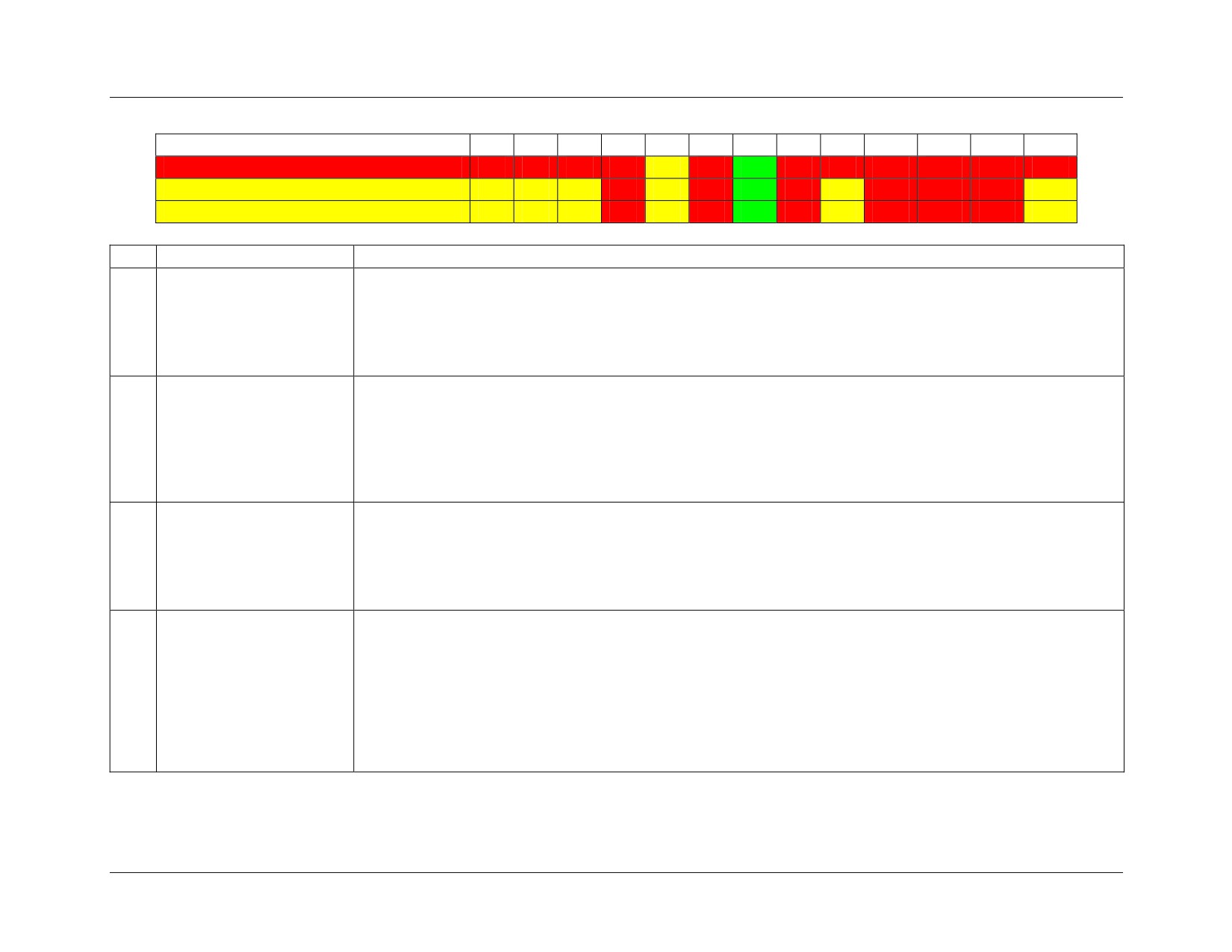
Table 12.4-1 discusses the only capability that exists to perform the task to the designated
standard. The JTF HQ Staff conducts planning and preparation of forces deploying to and/or
within the JOA for CBRND protection. Adequate doctrine, policy, and procedures exist for the
planning and management of resources affording individual protection of the force. Included in
the deficiencies is the ability of the force to perform sustained operations within a CBRN/TIM
environment and CBRND of eligible civilians and MWAs.
Current Capability and Deficiency
Adequate doctrine, policies, and procedures exist to guide the JTF staff in planning, allocation,
equipping, and preparing the force with CBRND IPE. Training, exercises, and evaluations serve
to build individual capability to perform tasks while encumbered by IPE. Specialized IPE and
supporting DOTMLPF exists for CBRND of uncontaminated casualties unable to wear standard
IPE. Deficiencies include the potential for deploying units not to be equipped for CBRND until
after arrival in the JOA; eligible civilians and MWAs are not equipped and trained to survive a
CBRN/TIM environment; CBRND systems do not adequately support expeditionary and highly
mobile forces; replenishment of CBRND systems may be impacted by non-U.S. manufacturer
sources; IPE encumbrances do degrade performance; CBRND is inadequate for TIMs; the
designs of specialized IPE (e.g., explosive ordnance disposal [EOD] IPE, firefighter bunker gear,
etc.) do not incorporate CBRND qualities and features; the provision of medical treatment to
casualties within a CBRN/TIM environment can be performed only within COLPRO; and
DOTMLPF is inadequate for sustained operations within a CBRN/TIM environment and for
CBRND of eligible civilians and MWDs. The overall current capability is “red.”
Projected Near/Mid-Term Capability and Deficiency
The fieling of improved joint IPE (Joint Service Lightweight Integrated Suit Technology
[JSLIST], Joint Service Aircrew Mask [JSAM], Joint Service General Purpose Mask [JSGPM],
and Joint Protective Aircrew Ensemble [JPACE]) provides improved protection for the force.
The IPE will provide protection against limited TIMs in addition to the known CBRN warfare
agents. National Institute for Occupational Safety and Health review for compliance with
38
For Official Use Only
For Official Use Only
CBRN Functional Needs Analysis/Functional Solution Analysis
Chapter 12. Operational Shield Tasks
Occupational Safety and Health Administration standards was requested to support joint and
DoD requirements. Joint Firefighter’s Integrated Response Ensemble (JFIRE), the application of
JSLIST capabilities to firefighter bunker gear, provides firefighters with increased CBRND
capabilities within a CBRN/TIM environment. Initial operational capability (IOC) fielding of
JFIRE is programmed during the mid term. Otherwise, no change from current capabilities is
projected.
Projected Far-Term Capability and Deficiency
No projected change for this task.
39
For Official Use Only
For Official Use Only
CBRN Functional Needs Analysis/Functional Solution Analysis
Chapter 12. Operational Shield Tasks
Table 12.4-1. OPSHLD 4: Capability and Deficiency Assessment
Capability: JTF HQ Staff
M1
M2
M3
M4
M5
M6
M7
M8
M9
M10
M11
M12
M13
Current Overall Capability1
R2
R3
R4
R5
Y6
R7
G8
R9
R10
R11
R12
R13
R14
Near/Mid-Term Overall Capability
Y
Y
Y
R
Y
R
G
R
Y
R
R
R
Y
Far-Term Overall Capability
Y
Y
Y
R
Y
R
G
R
Y
R
R
R
Y
FAA Measure
Scale
M1
Deploying forces possess
G: Plan-identified forces (military, eligible civilians, and MWDs) are equipped with CBRND IPE during predeployment
CBRN/TIM IPE prior to
and deployment prior to departure to the JOA for survivability and operational readiness throughout deployment into the
deployment to the JOA.
JOA.
Y: Plan-identified military forces are equipped with CBRND IPE prior to or immediately upon arrival in the JOA for
survivability and operational readiness throughout deployment into the JOA.
R: Plans are inadequate or nonexistent to equip forces with CBRND IPE prior to conducting operations within the JOA.
M2
Required individual
G: All deploying forces (including military, eligible civilians, and MWAs) are trained and possess adequate and readily
protective assets are
available and operational CBRND protective equipment and measures for survivability and operational readiness
available for deploying
throughout deployment into the JOA.
forces.
Y: Deploying uniformed forces are trained and possess adequate and readily available and operational CBRND
protective equipment and measures for survivability and operational readiness throughout deployment into the JOA
R: Training, possession, and/or availability of adequate and operational CBRND protective equipment and/or measures
for deploying forces are inadequate or nonexistent.
M3
Theater forces are issued
G: All JTF forces (including military, eligible civilians, and MWAs) are trained and possess adequate and readily
individual protective assets
available and operational CBRND protective equipment and measures.
to operate in a CBRN/TIM
Y: JTF uniformed forces are trained and possess adequate and readily available and operational CBRND protective
environment.
equipment and measures.
R: Training, possession, and/or availability of adequate and operational CBRND protective equipment and/or measures
for JTF forces are inadequate or nonexistent.
M4
Requirements are on hand,
G: JTF forces (including military, eligible civilians, and MWAs) are adequately equipped and possess ready access to
enabling theater forces to
sufficient CBRND resources to support sustained operations through multiple CBRN/TIM attacks across the spectrum
sustain operations over
of operations and without unplanned and unforecasted resupply.
multiple CBRN/TIM attacks
Y: JTF forces (including military and eligible civilians) are equipped and possess ready access to sufficient CBRND to
based upon organic, on-
support sustained operations through multiple CBRN/TIM attacks involving major operations with planned and
hand, and issued
forecasted resupply.
CBRN/TIM protective
R: JTF forces are inadequately equipped and/or possess limited access to CBRND resoruces to sustain operations
assets, consumables, and
through multiple CBRN/TIM attacks and/or are reliant upon resupply.
expendables.
40
For Official Use Only
For Official Use Only
CBRN Functional Needs Analysis/Functional Solution Analysis
Chapter 12. Operational Shield Tasks
M5
Forces achieve CBRN/TIM
G: Plan-identified forces (military, eligible civilians, and MWDs) are equipped with CBRND IPE and measures prior to
individual protective
arrival in the JOA for survivability and operational readiness throughout deployment into and upon immediate arrival in
capability immediately after
the JOA.
initial arrival in the JOA.
Y: Plan-identified military forces are equipped with CBRND IPE and measures prior to or immediately upon arrival in
the JOA for survivability and operational readiness throughout deployment into and/or upon arrival in the JOA.
R: Plans are inadequate or nonexistent to equip forces with CBRND IPE and/or measures immediately upon arrival in
the JOA.
M6
CBRND asset replenishment
G: CBRND resources are stockpiled and prepositioned in plan-identified required quantities and types to support
effectively maintains
sustained operations against multiple CBRN/TIM attacks upon the JTF. Replenishment of stockpiles and prepositioned
OPTEMPO and force
stocks maintains plan established and operations-related adjusted stock levels.
survivability.
Y: CBRND resources are stockpiled and prepositioned in plan-identified required quantities and types to support
sustained operations in a CBRN/TIM environment. Replenishment of stockpiles and prepositioned stocks maintains plan
established stock levels.
R: Stockpiles and/or prepositioned stocks of CBRND resources and/or replenishment of stock levels is inadequate to
support sustained operations in a CBRN/TIM environment.
M7
Forces are trained in the
G: Training, exercising, and evaluation of tasked forces addresses the use, care, and limitations of CBRND IPE.
effective use of IPE.
Y: Training, exercising, and evaluation of deploying forces addresses the use, care, and limitations of CBRND IPE.
R: Training, exercising, and/or evaluation of the force on the use, care, and/or limitations of CBRND IPE is inadequate
or nonexistent.
M8
MWAs are equipped with
G: All JTF MWA forces are fully equipped, trained, and prepared for survival using CBRND IPE while performing
IPE.
operations involving CBRN/TIM threat
Y: Selected JTF MWA forces are fully equipped, trained, and prepared to apply CBRND IPE for survival during
operations involving CBRN/TIM threat.
R: JTF MWA forces are inadequately equipped, trained, and/or prepared to apply CBRND IPE for survival during
operations involving CBRN/TIM threat.
M9
Forces are fully capable
G: JTF forces capabilities are not degraded by the wear of CBRND IPE for sustained operations in a CBRN/TIM
while wearing IPE.
environment.
Y: JTF forces capabilities are not significantly degraded by the wear of CBRND IPE in a CBRN/TIM environment.
R: JTF force capabilities while wearing CBRND IPE is significantly degraded and/or operations are adversely impacted.
M10
Specialized IPE is available
G: Specialized casualty IPE is readily available for casualties unable to wear standard IPE and provides safe and full
for casualties unable to wear
visibility, support, and access to the casualty by Medical Services personnel, equipment, and materiel.
standard IPE.
Y: Specialized casualty IPE is readily available for selected casualties unable to wear standard IPE and provides safe
support and access to the casualty by Medical Services personnel, equipment, and materiel.
R: Specialized casualty IPE is nonexistent or inadequate for the protection of casualties unable to wear standard IPE
and/or does not or is inadequate for the safe support and access of Medical Services personnel, equipment, and materiel.
41
For Official Use Only
For Official Use Only
CBRN Functional Needs Analysis/Functional Solution Analysis
Chapter 12. Operational Shield Tasks
M11
Specialized TIM IPE (e.g.,
G: TIM protective assets are readily available or TIM protective capabilities are built into standard IPE for protection of
hazardous materiels-specific
the force against all high-risk TIM agents.
respirators, overgarments,
Y: TIM protective assets are readily available or TIM protective capabilities are built into standard IPE for protection of
gloves, and boots) is
the force against select high-risk TIM agents.
available for specialized
R: TIM protective assets or TIM protective capabilities of standard IPE are inadequate or nonexistent.
protective needs.
M11
Specialized EOD IPE (e.g.,
G: Specialized EOD IPE incorporates into design and materials operational protection against all CBRN and high-risk
bomb suits compatible with
TIM agents.
CBRN/TIM IPE) is
Y: Specialized EOD IPE incorporates into design and materials operational protection against CBRN warfare agents and
available for EOD
selected high-risk TIM agents.
personnel.
R: Specialized EOD IPE is inadequate or protection against CBRN and/or TIM agents is not incorporated into design
and materials.
M13
Specialized medical IPE is
G: Medical practitioners and personnel are equipped with specialized CBRN/TIM protective equipment for the handling
available for medical care
and treatment of exposed and contaminated CBRN/TIM casualties.
providers.
Y: Medical practitioners and pesonnel are equipped with CBRN/TIM protective equipment and supplemented using
standard protective medical assets.
R: Equipping of medical practitioners and personnel for the handling and treatment of exposed and contaminated
CBRN/TIM casualties is inadequate or nonexistent.
1 Adequate DOTMLPF exists to address planning and support of the force. However, DOTMLPF is inadequate for nonexistent addressing CBRND of eligible civilians and
MWAs. DOTMLPF for CBRND is inadequate for sustained operations within a CBRN/TIM environment and for expeditionary operations with reduced logistical footprint.
2 The JTF staff plans for operations using the COCOM-identified forces for the potential threat. Equipping the tasked force is an integral part of planning and preparation. The
combination of established force organic assets, material acquisitions, prepositioned material, available host-nation/coalition contributions, and movement of identified CBRND
resources from stockpiles and reallocation activities are pursued by the JTF staff with the COCOM staff to prepare and support deploying forces as outlined by the appropriate
plan. Deploying units may not possess full CBRND resources and capabilities during the initial stages of deployment and until after arrival within the JOA. Additionally,
deploying eligible civilians and MWAs (particularly MWDs) are not equipped and trained to survive a CBRN/TIM environment. JTF staff does not possess clear guidance for
planning and providing CBRN/TIM protection training and CBRND protection resources to deploying eligible civilians and MWAs.
3 The JTF staff plans for operations using the COCOM-identified forces for the potential threat. Equipping the tasked force is an integral part of planning and preparation. The
combination of established force organic assets, material acquisitions, prepositioned material, available host-nation/coalition contributions, and movement of identified CBRND
resources from stockpiles and reallocation activities are pursued by the JTF staff with the COCOM staff to prepare and support deploying forces as outlined by the appropriate
plan.Deploying units may not possess full CBRND resources and capabilities during the initial stages of deployment and until after arrival within the JOA. Additionally, deploying
eligible civilians and MWAs (particularly MWDs) are not equipped and trained to survive a CBRN/TIM environment. JTF staff does not possess clear guidance for planning and
providing CBRN/TIM protection training and CBRND protection resources to deploying eligible civilians and MWAs.
4 The JTF staff plans for operations using the COCOM-identified forces for the potential threat. Equipping the tasked force is an integral part of planning and preparation. The
combination of established force organic assets, material acquisitions, prepositioned material, available host-nation/coalition contributions, and movement of identified CBRND
resources from stockpiles and reallocation activities are pursued by the JTF staff with the COCOM staff to prepare and support deploying forces as outlined by the appropriate
plan. Deploying units may not possess full CBRND resources and capabilities during the initial stages of deployment and until after arrival within the JOA. Additionally,
deploying eligible civilians and MWAs (particularly MWDs) are not equipped and trained to survive a CBRN/TIM environment. JTF staff does not possess clear guidance for
planning and providing CBRN/TIM protection training and CBRND protection resources to deploying eligible civilians and MWAs.
42
For Official Use Only
For Official Use Only
CBRN Functional Needs Analysis/Functional Solution Analysis
Chapter 12. Operational Shield Tasks
5 The JTF staff plans for operations using the COCOM-identified forces for the potential threat. Equipping the tasked force is an integral part of planning and preparation. The
combination of established force organic assets, material acquisitions, prepositioned material, available host-nation/coalition contributions, and movement of identified CBRND
resources from stockpiles and reallocation activities are pursued by the JTF staff with the COCOM staff to prepare and support deploying forces as outlined by the appropriate
plan. Systems are reallocated, when necessary, from prepositioned and dispersed stocks of units deploying or operating within an JOA. Expeditionary operations are a particular
concern. Existing COLPRO systems are not generally designed for a highly mobile force, with a reduced logistical footprint, and the initial period of operations until the theater
matures (usually the first 30-90 days). Deploying units may not possess full CBRND resources and capabilities during the initial stages of deployment and until after arrival within
the JOA. Additionally, deploying eligible civilians and MWAs (particularly MWDs) are not equipped and trained to survive a CBRN/TIM environment. JTF staff does not possess
clear guidance for planning and providing CBRN/TIM protection training and CBRND protection resources to deploying eligible civilians and MWAs. Current doctrine and policy
does not adequately address sustained operations within a CBRN/TIM environment.
6 The JTF staff plans for operations using the COCOM-identified forces for the potential threat. Equipping the tasked force is an integral part of planning and preparation. The
combination of established force organic assets, material acquisitions, prepositioned material, available host-nation/coalition contributions, and movement of identified CBRND
resources from stockpiles and reallocation activities are pursued by the JTF staff with the COCOM staff to prepare and support deploying forces as outlined by the appropriate
plan. Deploying units may not possess full CBRND resources and capabilities during the initial stages of deployment and until after arrival within the JOA. Additionally,
deploying eligible civilians and MWAs (particularly MWDs) are not equipped and trained to survive a CBRN/TIM environment. JTF staff does not possess clear guidance for
planning and providing CBRN/TIM protection training and CBRND protection resources to deploying eligible civilians and MWAs.
7 Available CBRND systems are not prepositioned in sufficient quantities to support concurrent military operations. Timing for replenishment of systems is dependent upon
manufacturing capabilities, system age, and funding availability. Production for replenishment by industry may require a period to expand or establish manufacturing capabilities
which could exceed the necessary replenishment timeline. This is particularly applicable when components or systems are dependent upon non-U.S. manufacturing capabilities.
8 Doctrine, policy, and procedures exist for the training, exercising, and evaluation of forces for the application of IPE against CBRN/TIM agents.
9 MWAs are not equipped, trained, and prepared for survival in a CBRN/TIM environment.
10 Doctrine, policy, procedures, training, exercises, and evaluations serve to build the capability of individuals to perform tasks while wearing IPE. However, the encumbrances
associated with IPE do degrade performance and limit the conduct of certain tasks (especially those associated with the repair and maintenance of delicate and intricate assets).
Doctrine, policy, and procedures are inadequate for sustained operations within a CBRN/TIM environment, especially forces conducting expeditionary operations in austere
environments and possessing reduced logistical footprints.
11 Specialized IPE is available for uncontaminated casualties unable to wear standard IPE. The preference is to use COLPRO to protect these casualties against the effects of
CBRN/TIM agents. DOTMLPF exists for the application of specialized IPE for uncontaminated casualties.
12 Doctrine, policy, and procedures for specialized TIM IPE are generally limited to specialized operations and functions such as hazardous materials teams. TIM protective assets
are not commonly available and provided to the general force. TIM is not adequately addressed by current doctrine, policy, and procedures. Current and near-term standard IPE
provides varying degrees of protection from selected TIMs with no protection against a number of TICs.
13 The design and application of EOD IPE does not consider compatibility with CBRND IPE, nor incorporate CBRND features.
14 Medical Services doctrine, policy, and procedures are inadequate for the provision of medical care by medical providers in a CBRN/TIM environment. Casualties are
decontaminated before treatment is rendered by medical providers. Medical assessment and emergency stabilization is provided during the triage and decontamination process. The
standard IPE is supplemented using standard medical protective assets (e.g., surgical gloves, drapes, etc.) to reduce the potential for cross-contamination and contact with body
fluids.
43
For Official Use Only
For Official Use Only
CBRN Functional Needs Analysis/Functional Solution Analysis
Chapter 12. Operational Shield Tasks
12.4.3
Functional Solution Analysis
12.4.3.1
DOTLPF Assessment Summary
This section addresses the deficiencies and suggests potential non-materiel solutions. If there are
no non-materiel solutions, or they are only partial solutions, the remaining non-materiel need is
then stated. Materiel needs are assessed in the IMA section.
1.
Deficiency: Deploying units may not possess full CBRND resources and capabilities during
the initial stages of deployment and until after arrival within the JOA.
Non-Materiel Solutions: Doctrine: Emphasize in doctrine, policies, and procedures for
preparation of the force for CBRND protection during throughout deployment,
redeployment, relocation, and en route phases of movement. Organization: Ensure resources,
taskings, and staff are in place or available to perform CBRND operations within a
CBRN/TIM environment by deploying, redeploying, relocating, and en route forces.
Training: Train, exercise, and evaluate the force for CBRND operations within a CBRN/TIM
environment while deploying, redeploying, relocating, and en route. Leadership: Recognize
criticality of readiness of the force for potential CBRND operations within a CBRN/TIM
environment while deploying, redeploying, relocation, and en route; training providing the
skills to manage the force in these circumstances; and willingness and ability to implement
necessary changes and activities to prepare and appropriately protect the force. Facilities:
Develop supporting infrastructure for CBRND operations of the force while preparing,
deploying, redeploying, relocating, and en route.
2.
Deficiency: Deploying eligible civilians are not equipped and trained to survive a
CBRN/TIM environment.
Non-Materiel Solutions: Doctrine: Establish doctrine, policy, and procedures CBRND
protection of eligible civilians and training for CBRN/TIM environment survival.
Organization: Ensure organizational consideration for maintenance and support of eligible
civilians CBRND protective equipment, measures, and activities. Training: Provide
institutional and unit training of eligible civilians for CBRND measures and activities.
Integrate into CBRND exercises and evaluations. Leadership: Ensure awareness and
planning for CBRND measures and requirements for eligible civilians. Facilities: Develop
supporting infrastructure for eligible civilians CBRND (e.g., logistics, medical, veterinary
surveillance, communications, training, etc.).
3.
Deficiency: Deploying MWAs (particularly MWDs) are not equipped and trained to survive
a CBRN/TIM environment.
Non-Materiel Solutions: Doctrine: Establish doctrine, policy, and procedures CBRND
protection of MWAs, particularly MWDs, and training for CBRN/TIM environment survival.
Organization: Ensure organizational consideration for maintenance and support of MWAs,
particularly MWDs,CBRND protective equipment, measures, and activities. Training:
Provide institutional and unit training of MWA handlers and MWAs for CBRND measures
and activities. Integrate into CBRND exercises and evaluations. Leadership: Ensure
awareness and planning for CBRND measures and requirements for MWA survivability.
44
For Official Use Only
For Official Use Only
CBRN Functional Needs Analysis/Functional Solution Analysis
Chapter 12. Operational Shield Tasks
Facilities: Develop supporting infrastructure for MWA CBRND (e.g., logistics, medical,
veterinary surveillance, communications, training, etc.).
4.
Deficiency: JTF staff does not possess clear guidance for planning and providing
CBRN/TIM protection training and CBRND protection resources to deploying eligible
civilians.
Non-Materiel Solutions: Doctrine: Develop doctrine, policy, and procedures addressing
civilian personnel and operations for CBRND. Organization: Identify organizational services
and activities supporting the mission performed by civilian personnel and operations.
Training: Establish CBRND training, exercise, and evaluation criteria and programs for
eligible civilians and conduct CBRND training, exercises, and evaluations. Leadership:
Implement and manage CBRND training, equipping, and protection of eligible civilians.
Personnel: Ensure that eligible civilians supporting the mission/military operations are
qualified in CBRND and capable of performing their responsibilities in a CBRN/TIM
environment. Facilities: Develop supporting infrastructure for eligible civilian CBRND (e.g.,
logistics, medical, veterinary surveillance, training, communications, etc.).
5.
Deficiency: JTF staff does not possess clear guidance for planning and providing
CBRN/TIM protection training and CBRND protection resources to deploying MWAs.
Non-Materiel Solutions: Doctrine: Develop doctrine, policy, and procedures addressing
MWAs, particularly MWDs, and operations for CBRND. Organization: Identify
organizational services and activities supporting CBRN/TIM survivability of MWAs and
mission operations. Training: Establish CBRND training, exercise, and evaluation criteria
and programs for MWAs and conduct CBRND training, exercises, and evaluations.
Leadership: Implement and manage CBRND training, equipping, and protection of MWAs.
Facilities: Develop supporting infrastructure for MWD CBRND (e.g., logistics, medical,
veterinary surveillance, training, communications, etc.).
6.
Deficiency: Existing COLPRO systems are not generally designed for a highly mobile force,
with a reduced logistical footprint, and the initial period of operations until the theater
matures (usually the first 30-90 days).
Non-Materiel Solutions: Doctrine: Complete the JCIDS process and central
correlation/comparison of national and strategic plans to identify CBRND resources
necessary and available to support expeditionary operations during the first 30-90 days
following commencement of hostilities and with a reduced logistical footprint. Organization:
Develop organizational structures, resources, staffing, and capabilities to conduct
expeditionary operations while possessing reduced logistical footprint and during the first
30-90 days of operations following commencement of hostilities. Training: Train, exercise,
and evaluate expeditionary capabilities of the force in a CBRN/TIM threat with reduced
logistical footprint during the initial 30-90 days of operations using CBRND resources
supporting expeditionary operations. Leadership: Recognize differences and challenges
associated with expeditionary operations during the first 30-90 days following
commencement of hostilities and with a reduced logistical footprint; training providing skills
and knowledge to manage operations in these circumstances, and ability and willingness to
implement necessary changes and activities to prepare for and conduct expeditionary
operations with a CBRN/TIM threat. Facilities: Develop supporting infrastructure for
45
For Official Use Only
For Official Use Only
CBRN Functional Needs Analysis/Functional Solution Analysis
Chapter 12. Operational Shield Tasks
expeditionary operations during the first 30-90 days following commencement of hostilities
and with a reduced logistical footprint.
7.
Deficiency: Current doctrine and policy does not adequately address sustained operations
within a CBRN/TIM environment.
Non-Materiel Solutions: Doctrine: Include in doctrine, policy, procedures, and UJTL
sustained operations within a CBRN/TIM environment. Organization: Ensure resources,
taskings, and staff are in place or available to plan and perform sustained operations within a
CBRN/TIM environment Training: Train, exercise, and evaluate the force for sustained
operations within a CBRN/TIM environment. Leadership: Recognize criticality of readiness
of the force for potential sustained operations within a CBRN/TIM environment, training
providing the skills to manage the force in these circumstances, and willingness and ability to
implement necessary changes and activities to prepare and appropriately apply the force.
8.
Deficiency: Production for replenishment by industry may require a period to expand or
establish manufacturing capabilities which could exceed the necessary replenishment
timeline. This statement is particularly applicable when components or systems are
dependent upon non-U.S. manufacturing capabilities.
Non-Materiel Solutions: Doctrine: Incorporate into doctrine, policy, and procedures the
identification of critical CBRND components and systems; to include the identification of
alternatives (e.g., other sources of supply, stockpiling, manufacturing incentives, etc.).
Leadership: Ensure awareness of vulnerabilities associated with procurement of non-U.S-
manufactured critical CBRND components and planning for vulnerability mitigation.
9.
Deficiency: MWAs are not equipped, trained, and prepared for survival in a CBRN/TIM
environment.
Non-Materiel Solutions: Doctrine: Establish doctrine, policy, and procedures CBRND
protection of MWAs, particularly MWDs, and training for CBRN/TIM environment survival.
Organization: Ensure organizational consideration for maintenance and support of MWA
CBRND protective equipment, measures, and activities. Training: Provide institutional and
unit training of handlers and MWAs for CBRND measures and activities. Leadership: Ensure
awareness and planning for CBRND measures and requirements for MWA survivability.
Facilities: Develop supporting infrastructure for MWA CBRND (e.g., logistics, veterinary
surveillance, etc.).
10. Deficiency: The encumbrances associated with IPE do degrade performance and limit the
conduct of certain tasks (especially those associated with the repair and maintenance of
delicate and intricate assets).
Non-Materiel Solutions: Doctrine: Consider implications of IP encumbrances upon task
performance within a CBRN/TIM environment for training and task development.
Organization: Consider limitations of IP encumbered personnel within a CBRN/TIM
environment for task structuring. Training: Include task performance within a CBRN/TIM
environment during formal and unit training and as an essential requirement element.
Leadership: Leadership training and awareness of limitations and restrictions associated with
task performance within a CBRN/TIM environment. Personnel: Ensure personnel are both
46
For Official Use Only
For Official Use Only
CBRN Functional Needs Analysis/Functional Solution Analysis
Chapter 12. Operational Shield Tasks
psychologically and physiologically matched with specialty for task completion requirements
within a CBRN/TIM environment.
11. Deficiency: TIM protective assets are not commonly available and provided to the general
force.
Non-Materiel Solutions: Doctrine: Establish in doc trine, policy, procedures, and TTPs
CBRND protection of the force against threat TIM agents. Organization: Address
organizational issues associated with CBRND for TIM threats. Training: Train, exercise, and
evaluate the force for CBRND operations within threat CBRN/TIM and TIM environments.
Leadership: Recognize criticality of readiness and survivability of the force for potential
CBRND operations within threat CBRN/TIM and TIM environments; training providing the
skills to manage the force in these circumstances; and willingness and ability to implement
necessary changes and activities to prepare and appropriately protect the force. Personnel:
Require eligible civilians supporting the mission to meet minimum standards for safe use of
CBRND resources.
12. Deficiency: TIM is not adequately addressed by current doctrine, policy, and procedures.
Non-Materiel Solutions: Doctrine: Establish in doc trine, policy, procedures, and TTPs
CBRND protection of the force against threat TIM agents.
13. Deficiency: Current and near-term standard IPE provides varying degrees of protection from
selected TIMs with no protection against a number of TICs.
Non-Materiel Solutions: Doctrine: Establish in doctrine, policy, and procedures standards,
criteria, and metrics for CBRND materiel for protection of the force against threat TIM
agents. Leadership: Enforce compliance with established readiness criteria for CBRND
protective materiel.
14. Deficiency: The design and application of EOD IPE does not consider compatibility with
CBRND IPE, nor incorporate CBRND features.
Non-Materiel Solutions: Doctrine: Establish in doctrine, policy, and procedures standards,
criteria, and metrics for the inclusion of CBRND protective qualities and features into
specialized protective garments and equipment (e.g., EOD IPE, firefighter bunker gear, etc.).
Leadership: Enforce compliance with established readiness criteria for inclusion of CBRND
protective qualities and features in specialized garments and equipment.
15. Deficiency: Medical Services doctrine, policy, and procedures and inadequate for the
provision of medical care by medical providers in a CBRN/TIM environment.
Non-Materiel Solutions: Doctrine: Develop doctrine, policy, and procedures addressing the
provision of medical care by medical providers within a CBRN/TIM environment (both with
and without CPSs). Organization: Identify organization services and activities necessary to
support the provision of medical care by medical providers within a CBRN/TIM environment
(both with and without CPSs). Training: Establish CBRND training, exercise, and evaluation
criteria and programs for medical care by medical providers within a CBRN/TIM
environment (both with and without CPSs); and conduct CBRND training, exercises, and
evaluations. Leadership: Implement and manage CBRND training, equipping, and protection
47
For Official Use Only
For Official Use Only
CBRN Functional Needs Analysis/Functional Solution Analysis
Chapter 12. Operational Shield Tasks
of medical providers and supporting medical staff. Personnel: Require eligible civilians
supporting the mission to meet minimum standards for safe use of CBRND resources.
16. Deficiency: DOTMLPF is inadequate for nonexistent addressing CBRND of eligible
civilians.
Non-Materiel Solutions: Doctrine: Develop doctrine, policy, and procedures addressing
eligible civilian personnel for CBRND. Organization: Identify organization services and
activities necessary to support survivability of eligible civilian personnel within a
CBRN/TIM environment. Training: Establish CBRND training, exercise, and evaluation
criteria and programs for MWDs and eligible civilians and conduct CBRND training,
exercises, and evaluations. Leadership: Implement and manage CBRND training, equipping,
and protection of eligible civilian personnel and MWDs.
17. Deficiency: DOTMLPF is inadequate for nonexistent addressing CBRND of MWAs.
Non-Materiel Solutions: Doctrine: Develop doctrine, policy, and procedures addressing
MWAs, particularly MWDs, for CBRND. Organization: Identify organization services and
activities necessary to support survivability of MWAs within a CBRN/TIM environment.
Training: Establish CBRND training, exercise, and evaluation criteria and programs for
MWAs and conduct CBRND training, exercises, and evaluations. Leadership: Implement
and manage CBRND training, equipping, and protection of MWAs.
12.4.3.2
IMA Assessment Summary
N/A
48
For Official Use Only
For Official Use Only
CBRN Functional Needs Analysis/Functional Solution Analysis
Chapter 12. Operational Shield Tasks
12.5 Task OPSHLD 5: Ensure adequate protective measures and resources are available
to coalition partners and other designated non-U.S. forces
12.5.1
Functional Area Analysis
12.5.1.1
Definition
To ensure that CBRN/TIM protective measures and resources are available to coalition/non-U.S.
forces. The availability of CBRN/TIM protective measures and resources is both a joint and
coalition/non-U.S. force concern. This task includes IPE, COLPRO, CBRND equipment and
supplies, protection of equipment and supplies, and medical resources. The joint forces must
integrate coalition/non-U.S. forces to maximize capability and minimize vulnerability. U.S.
forces may be required to provide protective assets (especially IPE, detection and warning
devices, medical support, and decontaminants) to coalition/non-U.S. partners, depending on local
threats and/or actual adversary use of CBRN/TIM weapons. Joint forces NBC personnel should
offer to review coalition/non-U.S. force CBRN/TIM protection plans and assist as necessary.
U.S. forces may be required to train coalition/non-U.S. forces in CBRND.
12.5.1.2
Derivation
Joint Enabling Concept for CBRN/TIM Operations, Protection Joint Functional Concept, UJTL
(OP 1.3.1, OP 2.2, OP 2.2.1, OP 2.4.1.1, OP 2.4.1.2, OP 2.4.2.1, OP 5, OP 5.1.1, OP 5.2, OP
5.2.1, OP 5.2.2, OP 5.3, OP 5.3.2, OP 5.3.4, OP 5.3.5, OP 5.3.6, OP 5.3.7, OP 5.3.8, OP 5.3.9,
OP 5.4, OP 5.4.2, OP 5.4.4, OP 5.4.5, OP 5.5, OP 5.5.1, OP 5.5.2, OP 5.5.7, OP 5.5.8, OP 5.7,
OP 5.7.3, OP 5.7.4, OP 5.7.5, OP 5.7.6, OP 6.2.1, OP 7, OP 7.1, OP 7.2, OP 7.3, OP 7.4).
12.5.1.2.1
Supported Task: STSHLD 8
12.5.1.2.2
Lateral Task: OPSHA 4
12.5.1.2.3
Supporting Task: N/A
12.5.1.3
Condition
Perform this task under conditions of:
Physical
1. Undeveloped to highly developed land. (C1.1)
2. Riverine to open sea. (C1.2)
3. Natural and induced air. (C1.3)
4. Immediate to delayed danger, and potential long-term health hazard of atmospheric
weapons effects. (C1.3.3)
Military
1. Partially completed mission preparation. (C2.1.3)
49
For Official Use Only
For Official Use Only
CBRN Functional Needs Analysis/Functional Solution Analysis
Chapter 12. Operational Shield Tasks
2. Marginal to strong forces assigned. (C2.2.1)
3. Negligible personnel experience. (C2.2.4.5)
4. Some interoperability. (C2.2.6)
5. Partial Joint Staff integration. (C2.3.1.1)
6. Partial multinational integration. (C2.3.1.2)
7. Limited staff expertise. (C2.3.1.3)
8. Limited deployed supplies. (C2.8.2)
9. Sufficient CONUS resupply. (C2.8.3)
10. Limited prepositioned materiel. (C2.8.4)
11. Limited host nation support. (C2.8.5)
12. Limited commercial procurement. (C2.8.6)
Civil
1. Correct interdepartmental/interagency relationships. (C3.1.1.3)
2. Limited foreign government support. (C3.1.2.3)
3. Moderately opposed foreign public opinion. (C3.1.2.4)
4. TIMs present in the civilian sector. (C3.3.7.5)
12.5.2
Functional Needs Analysis
12.5.2.1
Capability and Deficiency Assessment Summary
Table 12.5-1 discusses the only capability that exists to perform the task to the designated
standard. Adequate doctrine, policy, and procedures exist for ensuring the adequacy of protective
measures and resources of coalition partners and other designed non-U.S. forces. Structures for
mutual support can be applied in cases where necessary to complement capabilities and
minimize weaknesses within the Joint Task Force. Included in the deficiencies is the ability of
the force to maintain OPTEMPO within a sustained CBRN/TIM environment.
Current Capability and Deficiency
JTF HQ staffs conduct planning and coordination with coalition partners to determine resources,
requirements, and taskings best accomplishing mission and CBRND preparedness of partner
forces. They track readiness of forces and equipment for operations. They also adjust plans and
resources as necessary to meet changing operational needs and conditions. Adequate doctrine,
policy, and procedures exist to guide commanders and staffs with coalition and non-U.S. force
participation in joint operations. Planning, tracking, and monitoring is performed in coordination
with partner staffs under a negotiated plan outlining requirements, taskings, training, reporting,
information sharing, standards, and operational certifications for participation. Although the
provision of CBRND equipment to national forces ultimately resides with their nations, mutual
support among partners is planned to complement capabilities and to minimize weaknesses.
ACSAs between partners enables acquisition and cross-servicing support between the partners.
IAs provide for a wide range of support including sheltering, medical care, and other support
activities. The JTF Commander, JTF staff, and combined staff monitor, track, and assess the
readiness of the Joint Coalition Force and addresses issues and concerns as they arise.
50
For Official Use Only
For Official Use Only
CBRN Functional Needs Analysis/Functional Solution Analysis
Chapter 12. Operational Shield Tasks
Deficiencies include the limited availability of COLPRO systems in each of the COLPRO
categories, and the protection of eligible civilians and MWDs.
Projected Near/Mid-Term Capability and Deficiency
No projected change for this task.
Projected Far-Term Capability and Deficiency
No projected change for this task.
51
For Official Use Only

For Official Use Only
CBRN Functional Needs Analysis/Functional Solution Analysis
Chapter 12. Operational Shield Tasks
Table 12.5-1. OPSHLD 5: Capability and Deficiency Assessment
Capability: JTF HQ Staff
M1
M2
M3
M4
M5
Current Overall Capability1
G2
G3
G4
G5
R6
Near/Mid-Term Overall Capability
G
G
G
G
R
Far-Term Overall Capability
G
G
G
G
R
FAA Measure
Scale
M1
Coalition/non-U.S. forces
G: Planning and coordination is conducted to address partner forces readiness and preparations for operations with
are protected by medical
CBRN/TIM threat and includes all CBRND protective measures.
prophylaxes.
Y: Partner forces CBRND capabilities are considered when planning operations with CBRN/TIM threat.
R: Partner force CBRND capabilities are not considered or is inadequately considered when planning operations with
CBRN/TIM threat.
M2
Coalition/non-U.S. forces
G: Planning and coordination is conducted to address partner forces equipping or access to COLPRO.
are equipped with or
Y: Partner force equipping or access to COLPRO is considered when planning operations with threat.
possess access to
R: Partner force equipping or access to COLPRO is not considered or is inadequately considered when planning operations
CBRN/TIM COLPRO.
with threat.
M3
Coalition/non-U.S. forces
G: Processes and means exist to monitor, track, and assess coalition/non-U.S. forces training, readiness, and preparations
are trained to operate in
status against COCOM and JTF requirements.
CBRN/TIM hazards.
Y: Processes exist to identify coalition/non-U.S. forces training meeting COCOM and JTF requirements.
R: Process and/or means are inadequate or nonexistent to identify coalition/non-U.S. forces training meeting COCOM
and/or JTF requirements.
M4
Coalition/non-U.S. forces
G: Processes and means exist to monitor, track, and assess coalition/non-U.S. forces equipping, readiness, and preparations
are equipped with
status against COCOM and JTF requirements.
CBRN/TIM IPE.
Y: Processes exist to identify coalition/non-U.S. forces equipping meeting COCOM and JTF requirements.
R: Process and/or means are inadequate or nonexistent to identify coalition/non-U.S. forces equipping meeting COCOM
and/or JTF requirements.
M5
Coalition/non-U.S. forces
G: Processes and means exist to monitor, track, and assess coalition/non-U.S. forces equipping, readiness, and preparations
can perform sustained
status for sustained CBRN/TIM operations against COCOM and JTF requirements.
CBRN/TIM operations.
Y: Processes exist to identify coalition/non-U.S. forces equipping meeting sustained CBRN/TIM operations COCOM and
JTF requirements.
R: Process and/or means are inadequate or nonexistent to identify coalition/non-U.S. forces equipping for sustained
CBRN/TIM operations meeting COCOM and/or JTF requirements.
1 DOTMLPF is adequate for the coordination and integration of coalition forces. Adequate DOTMLPF exists to address and support these forces. However, DOTMLPF is
inadequate or nonexistent addressing CBRND of eligible civilians and MWAs. DOTMLPF does not adequately address sustained operations within a CBRN/TIM environment.
52
For Official Use Only
For Official Use Only
CBRN Functional Needs Analysis/Functional Solution Analysis
Chapter 12. Operational Shield Tasks
2 National policies of the coalition/non-U.S. forces regarding medical prophylaxis is a factor the JTF Commander and supporting staff must consider during planning and operations.
Religious considerations may also impact the use of medical prophylaxis. The JTF staff, in coordination with coalition/non-U.S. forces partner staff, develop and address requirements
and commitments by each partner. Specific tasks, based upon the guidance and restrictions identified by the COCOM, are assigned to elements of the coalition force most capable of
completing the task. Although the provision of CBRND resources to national forces ultimately resides with their nations, mutual support among partners is planned to complement
partners’ capabilities and to minimize weaknesses. ACSAs between partners enable acquisition and cross-servicing support between the partners. The IA provides for a wide range of
support exchange, including sheltering, medical care, and other support activities. Indigenous forces supporting operations may not be equipped or have access to medical prophylaxis.
The JTF staff, in coordination with partners, determines the need for medical prophylaxis based upon the threat. A determination is made on the provision of medical prophylaxis to
these forces.
3 The JTF staff, in coordination with the COCOM and coalition partner staffs, develops a comprehensive plan for successful achievement of the desired end states. Force
requirements and commitments are obtained from each coalition participant and identified to the JTF by the COCOM. Minimum capability standards for participation and a
certification process covering areas of concern (e.g., training level competence, logistics capabilities, deployment, sustainment, and redeployment readiness, etc.) are established
and applied by all participants. Specific tasks are assigned to elements of the coalition force most capable of completing the task. Although the provision of CBRND equipment to
national forces ultimately resides with their nations, mutual logistics support among coalition partners is planned to complement partners’ capabilities and to minimize weaknesses.
For example, U.S. Marine Corps forces were equipped with lightweight CBRN/TIM IPE by the United Kingdon during Operation Desert Storm. The U.S. installed COLPRO
capabilities in Saudi critical command and control facilities for the same operation. The JTF Commander, JTF staff, and the combined staff monitor, tracks, and assess the
readiness of the joint coalition force.
4 The JTF staff, in coordination with the COCOM and coalition partner staffs, develops a comprehensive plan for successful achievement of the desired end states. Force
requirements and commitments are obtained from each coalition participant and identified to the JTF by the COCOM. Minimum capability standards for participation and a
certification process covering areas of concern (e.g., training level competence, logistics capabilities, deployment, sustainment, and redeployment readiness, etc.) are established
and applied by all participants. Specific tasks are assigned to elements of the coalition force most capable of completing the task. Minimum capability standards for participation
and a certification process covering areas of concern (e.g., training level competence, logistics capabilities, deployment, sustainment, and redeployment readiness, etc.) are
established and applied by all participants. The COCOM and the combined staff monitor, track, and assess the readiness of the joint coalition force. Indigenous forces supporting
operations may not be equipped and prepared for CBRND operations. The COCOM staff, in coordination with partners, determines the need for CBRND capabilities of these
forces based upon the threat. A determination is made on the provision of CBRND capabilities and training to these forces.
5 The JTF staff, in coordination with the COCOM and coalition partner staffs, develops a comprehensive plan for successful achievement of the desired end states. Force
requirements and commitments are obtained from each coalition participant and identified to the JTF by the COCOM. Minimum capability standards for participation and a
certification process covering areas of concern (e.g., training level competence, logistics capabilities, deployment, sustainment, and redeployment readiness, etc.) are established
and applied by all participants. Although the provision of CBRND resources to national forces ultimately resides with their nations, mutual support among partners is planned to
complement partners’ capabilities and to minimize weaknesses. ACSAs between partners enable acquisition and cross-servicing support between the partners. The IA provides for
a wide range of support exchange, including sheltering, medical care, and other support activities. Indigenous forces supporting operations may not be equipped or have access to
CBRND IPE. The JTF staff, in coordination with COCOM and partners, determines the need for IPE based upon the threat. A determination is made on the provision of IPE to
these forces.
6 Sustained operations in a CBRN/TIM environment are not adequately addressed in DOTMLPF. Coalition partner DOTMLPF may or may not support operations in these
conditions for sustained performance but is not addressed in existing U.S. DOTMLPF for planning consideration.
53
For Official Use Only
For Official Use Only
CBRN Functional Needs Analysis/Functional Solution Analysis
Chapter 12. Operational Shield Tasks
12.5.3
Functional Solution Analysis
12.5.3.1
DOTLPF Assessment Summary
This section addresses the deficiencies and suggests potential non-materiel solutions. If there are
no non-materiel solutions, or they are only partial solutions, the remaining non-materiel need is
then stated. Materiel needs are assessed in the IMA section.
1.
Deficiency: Coalition partner DOTMLPF may or may not support sustained operations in a
CBRN/TIM environment, but is not addressed in existing U.S. DOTMLPF for planning
consideration.
Non-Materiel Solutions: Doctrine: Include in doctrine, policy, and procedures sustained
operations within a CBRN/TIM environment. Organization: Ensure resources, taskings, and
staff are in place or available to perform sustained operations within a CBRN/TIM
environment. Training: Train, exercise, and evaluate the force for sustained operations within
a CBRN/TIM environment. Leadership: Recognize criticality of readiness of the force for
potential sustained operations within a CBRN/TIM environment, training providing the skills
to manage the force in these circumstances, and willingness and ability to implement
necessary changes and activities to prepare and appropriately apply the force.
2.
Deficiency: DOTMLPF is inadequate or nonexistent addressing CBRND of eligible
civilians.
Non-Materiel Solutions: Doctrine: Develop doctrine, policy, and procedures addressing
eligible civilian personnel for CBRND. Organization: Identify organization services and
activities necessary to support survivability of eligible civilian personnel within a
CBRN/TIM environment. Training: Establish CBRND training, exercise, and evaluation
criteria and programs for eligible civilians and conduct CBRND training, exercises, and
evaluations. Leadership: Implement and manage CBRND training, equipping, and protection
of eligible civilian personnel.
3.
Deficiency: DOTMLPF is inadequate or nonexistent addressing CBRND of MWAs.
Non-Materiel Solutions: Doctrine: Develop doctrine, policy, and procedures addressing
MWAs, particularly MWDs, for CBRND. Organization: Identify organization services and
activities necessary to support survivability of MWAs within a CBRN/TIM environment.
Training: Establish CBRND training, exercise, and evaluation criteria and programs for
MWAs and conduct CBRND training, exercises, and evaluations. Leadership: Implement
and manage CBRND training, equipping, and protection of MWAs.
4.
Deficiency: DOTMLPF does not adequately address sustained operations within a
CBRN/TIM environment.
Non-Materiel Solutions: Doctrine: Include in doctrine, policy, procedures, and UJTL
sustained operations within a CBRN/TIM environment.Organization: Ensure resources,
taskings, and staff are in place or available to plan and perform sustained operations within a
CBRN/TIM environment. Training: Train, exercise, and evaluate the force for sustained
operations within a CBRN/TIM environment. Leadership: Recognize criticality of readiness
of the force for potential sustained operations within a CBRN/TIM environment, training
54
For Official Use Only
For Official Use Only
CBRN Functional Needs Analysis/Functional Solution Analysis
Chapter 12. Operational Shield Tasks
providing the skills to manage the force in these circumstances, and willingness and ability to
implement necessary changes and activities to prepare and appropriately apply the force.
12.5.3.2
IMA Assessment Summary
N/A
55
For Official Use Only
For Official Use Only
CBRN Functional Needs Analysis/Functional Solution Analysis
Chapter 12. Operational Shield Tasks
12.6 Task OPSHLD 6: Ensure adequate individual protection for eligible civilians
12.6.1
Functional Area Analysis
12.6.1.1
Definition
To afford protection against CBRN/TIM agents for survival for eligible civilians (including
evacuees, host-nation personnel, contractors, displaced persons, detainees, and other designated
nonmilitary personnel as defined and designated by strategic and national authorities). Protection
may be afforded singly or in combination by IPE, COLPRO, and medical prophylaxes. The
afforded protection is commensurate with the mission and performed task and may require
protection to the same level as military counterparts.
12.6.1.2
Derivation
Joint Enabling Concept for CBRN/TIM Operations, An Operational Concept for Biological
Defense, Protection Joint Functional Concept, UJTL (OP 1.3.1, OP 2.4.1.1, OP 5.2, OP 5.2.1,
OP 5.2.2, OP 5.3, OP 5.3.1, OP 5.3.2, OP 5.4.4, OP 5.4.5, OP 5.3.9, OP 5.4.2, OP 5.5.7, OP
5.5.8, OP 5.7, OP 5.7.4, OP 5.7.5, OP 5.7.6, OP 7, OP 7.1, OP 7.3, OP 7.4).
12.6.1.2.1
Supported Task: STSHLD 4
12.6.1.2.2
Lateral Task: OPSHA 4
12.6.1.2.3
Supporting Task: TASHLD 5
12.6.1.3
Condition
Perform this task under conditions of:
Physical
1. Undeveloped to highly developed land. (C1.1)
2. Riverine to open sea. (C1.2)
3. Natural and induced air. (C1.3)
4. Immediate to delayed danger, and potential long-term health hazard of atmospheric
weapons effects. (C1.3.3)
Military
1. Partially completed mission preparation. (C2.1.3)
2. Marginal to strong forces assigned. (C2.2.1)
3. Fair (civilian) personnel nutrition and health. (C2.2.4.1)
4. Good personnel physical conditioning. (C2.2.4.3)
5. Poor mission-essential government-service civilian physical conditioning. (C2.2.4.3 -
NEW)
6. Poor mission-essential contract-service civilian physical conditioning. (C2.2.4.3 - NEW)
56
For Official Use Only
For Official Use Only
CBRN Functional Needs Analysis/Functional Solution Analysis
Chapter 12. Operational Shield Tasks
7. Negligible personnel experience. (C2.2.4.5)
8. Limited deployed supplies. (C2.8.2)
9. Limited prepositioned materiel. (C2.8.4)
10. Limited host nation support. (C2.8.5)
11. Limited commercial procurement. (C2.8.6)
Civil
1. Limited foreign government support. (C3.1.2.3)
2. Aggressively opposed foreign public opinion. (C3.1.2.4)
3. Uncertain international organization support. (C3.1.2.5)
4. Poor civil health. (C3.3.1.4)
5. TIMs present in the civilian sector. (C3.3.7.5)
12.6.2
Functional Needs Analysis
12.6.2.1
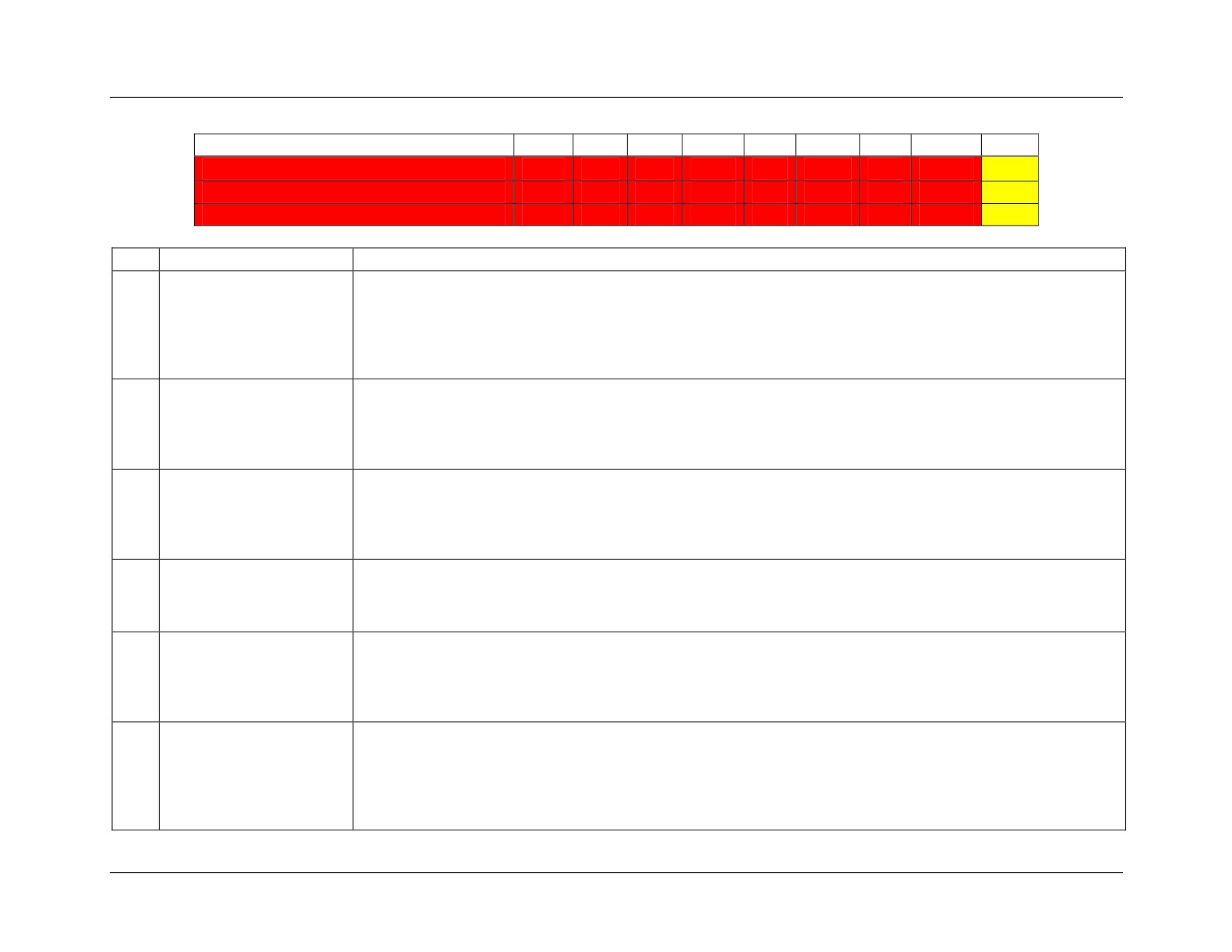
Capability and Deficiency Assessment Summary
Table 12.6-1 discusses the only capability that currently exists to perform the task to the
designated standard. Procedures exist for the selected provisioning of specific eligible civilians
with protective equipment. Current noncombatant evacuation operations (NEO) plans include the
provisioning of non-mission support civilians (primarily military dependents at HTA fixed-site
locations) with minimal protective equipment generally drawn from mission stocks or obtained
commercially off-the-shelf (COTS). Some government civilians are provided and equipped with
IPE as part of their primary function (e.g., hazardous materials, fire response, readiness flight
(Air Force), and selected others. Deficiencies include inadequate doctrine, policy, procedures,
standards, equipment, prophylaxes, training, exercising, and evaluation for CBRND for eligible
civilians.
Current Capability and Deficiency
JTF HQ taffs plan, stock, equip, and train eligible civilians as necessary and appropriate for
survival within a CBRN/TIM environment, including the full range of CBRN/TIM defense,
including prophylaxis and IPE. The only identified individual capabilities are the existing NEO
procedures addressing primarily military dependents at HTA fixed-site locations that provide for
the provisioning of minimal protective equipment drawn from mission stocks or obtained COTS
and the limited number of eligible civilians provided and equipped with IPE as part of their
primary function. Deficiencies include the lack of a clear definition of eligible civilians;
inadequate doctrine, policy, and procedures addressing CBRND of eligible civilians; the lack of
IPE and medical prophylaxes addressing the variations within the population (e.g., babies, young
children, disabled, tall, short, thin, obese, pregnant, etc.); and the absence of training, exercising,
and evaluation of these personnel. The overall current assessment is “red.”
Projected Near/Mid-Term Capability and Deficiency
No change is projected for this task.
57
For Official Use Only
For Official Use Only
CBRN Functional Needs Analysis/Functional Solution Analysis
Chapter 12. Operational Shield Tasks
Projected Far-Term Capability and Deficiency
No change is projected for this task.
58
For Official Use Only
For Official Use Only
CBRN Functional Needs Analysis/Functional Solution Analysis
Chapter 12. Operational Shield Tasks
Table 12.6-1. OPSHLD 6: Capability and Deficiency Assessment
Capability: JTF HQ Staff
M1
M2
M3
M4
M5
M6
M7
M8
M9
Current Overall Capability1
R2
R3
R4
R5
R6
R7
R8
R9
Y10
Near/Mid-Term Overall Capability
R
R
R
R
R
R
R
R
Y
Far-Term Overall Capability
R
R
R
R
R
R
R
R
Y
FAA Measure
Scale
M1
Policy and plans address
G: Policies define and provide clear and specific guidance for planning and the provision of CBRND protective
CBRN/TIM protection of
measures, equipment, and training to eligible civilians.
eligible civilians.
Y: Polices provide general guidance and information for planning and the provision of CBRND protective measures,
equipment, and training to eligible civilians.
R: Clear definition and guidance for planning and provision of CBRND protective measures, equipment, and training to
eligible civilians is inadequate or nonexistent.
M2
Eligible civilians supporting
G: All eligible civilians are trained, equipped, and possess ready access to CBRND protective measures and equipment.
military operations are
Y: All mission support eligible civilians and at-risk eligible civilians are trained, equipped, and possess ready access to
equipped with IPE.
CBRND protective measures and equipment.
R: The training, equipping, and ready access to CBRND protective measures and equipment is limited to a select group,
is nonexistent, or is inadequate to support operations.
M3
Eligible civilians not
G: All eligible civilians are trained, equipped, and possess ready access to CBRND protective measures and equipment.
supporting the mission are
Y: All mission support eligible civilians and at-risk eligible civilians are trained, equipped, and possess ready access to
issued IPE.
CBRND protective measures and equipment.
R: The training, equipping, and ready access to CBRND protective measures and equipment is limited to a select group,
is nonexistent, or is inadequate to support operations.
M4
Eligible civilians are
G: Medical prophylaxis is issued and administered to all eligible civilians.
protected by medical
Y: All mission support eligible civilians and at-risk eligible civilians are issued and administered medical prophylaxis.
prophylaxes.
R: Issuance and/or administration of prophylaxis is limited to a select group, is nonexistent, or is inadequate to support
operations.
M5
Eligible civilians are trained
G: All eligible civilians are trained to survive and, if appropriate, operate within a CBRN/TIM environment.
to operate in a CBRN/TIM
Y: All mission support eligible civilians and at-risk eligible civilians are trained to survive and, if appropriate, operate
environment.
within a CBRN/TIM environment.
R: Eligible civilian training to survive and, if appropriate, operate within a CBRN/TIM environment is limited to a select
group, nonexistent, or inadequate to support operations.
M6
Eligible civilian workforce
G: All eligible civilians supporting operations are equipped with military force-level protection minimally equivalent to
requiring military force-
protection afforded military personnel performing the same function.
level protection is
Y: All eligible civilians performing mission critical functions which cannot or are not performed by uniformed personnel
equivalently equipped.
are provided military force-level protective equipment and measures.
R: Protection of eligible civilians enabling the performance of functions necessary to operations is inadequate or
nonexistent.
59
For Official Use Only
For Official Use Only
CBRN Functional Needs Analysis/Functional Solution Analysis
Chapter 12. Operational Shield Tasks
M7
Eligible civilian work force
G: All eligible civilians supporting operations are equipped with military force-level protection minimally equivalent to
requiring military force-
protection afforded military personnel performing the same function.
level protection is
Y: All eligible civilians performing mission critical functions which cannot or are not performed by uniformed personnel
appropriately immunized.
are provided military force-level protective equipment and measures.
R: Protection of eligible civilians enabling the performance of functions necessary to operations is inadequate or
nonexistent.
M8
Protective equipment for
G: Evacuee protective equipment is stocked, prepositioned, and readily available to cover the range of body types,
eligible civilians covers
genders, ages, and disabilities.
both genders and the range
Y: Evacuee protective equipment and measures are stocked and readily available for a target population.
of body types, ages, and
R: Evacuee protective equipment and measures are inadequate or nonexistent.
disabilities of the
population to be protected.
M9
Required evacuee IPE (e.g.,
G: Evacuee protective equipment is stocked, prepositioned, and readily available to cover the range of body types,
overgarment, gloves, boots,
genders, ages, and disabilities.
and masks) is available.
Y: Evacuee protective equipment and measures are stocked and readily available for a target population.
R: Evacuee protective equipment and measures are inadequate or nonexistent.
1 DOTMLPF is inadequate or nonexistent for protection of eligible civilians within a CBRN/TIM environment.
2 Policies and plans do not adequately address the protection of eligible civilians from CBRN/TIM. The definition of “eligible civilians” is not clear. JTF staff does not possess
clear guidance for planning and providing CBRN/TIM protection of eligible civilians.
3 Some government civilians are equivalently equipped as part of their primary function (e.g., hazardous materials, fire response, readiness flight [Air Force], and selected others).
However, most civilians performing essential activities supporting operations are not equipped to survive a CBRN/TIM environment and accomplish their tasks. This statement is
particularly true of contractors. JTF staff does not possess clear guidance for planning and providing CBRN/TIM protection of eligible civilians.
4 Protective equipment for non-mission support civilians is not generally stocked for the full range of body types, ages, and physical capabilities inherent within a potential
population. JTF staff does not possess clear guidance for planning and providing CBRN/TIM protection of eligible civilians. Protective equipment drawn from mission stocks or
obtained in advance COTS is considered in NEO plans for selected areas.
5 Prophylaxis of eligible civilians is not addressed. The issuance of CBRN/TIM prophylaxis to eligible civilians requires review due to questions regarding applicability to the
range of body types, ages, and physical/medical factors inherent within a potential population, as well as possible long-term health issues and legal implications. Some government
civilians may be issued medical prophylactic countermeasures as part of their primary function (e.g., hazardous materials, readiness flight [Air Force]), and selected others).
However, civilians (e.g., general government employees, contractors, dependents, etc.) are not issued prophylaxis. JTF staff does not possess clear guidance for planning and
providing CBRN/TIM protection of eligible civilians.
6 Eligible civilians are not generally trained to operate in CBRN/TIM hazards. Some government civilians are trained as part of their primary function (e.g., hazardous materials,
fire response, readiness flight [Air Force], and selected others). However, civilians (e.g., general government employees, contractors, dependents, etc.) generally do not receive
training to survive a CBRN/TIM environment. JTF staff does not possess clear guidance for planning and providing CBRN/TIM protection of eligible civilians.
7 Some government civilians are equivalently equipped as part of their primary function (e.g., hazardous materials, fire response, readiness flight [Air Force], and selected others).
However, most civilians performing essential activities supporting operations are not equivalently equipped to their military counterparts. This statement is particularly true of
contractors. JTF staff does not possess clear guidance for planning and providing CBRN/TIM protection of eligible civilians.
8 Prophylaxis (CBRN/TIM vaccination) of eligible civilians is not addressed. The administration of CBRN/TIM prophylaxis to eligible civilians requires review due to questions
regarding applicability to the range of body types, ages, and physical/medical factors inherent within a potential population, as well as possible long-term health issues and legal
implications. Selected medical prophylaxis may be administered based upon medical judgment. JTF staff does not possess clear guidance for planning and providing CBRN/TIM
protection of eligible civilians.
60
For Official Use Only
For Official Use Only
CBRN Functional Needs Analysis/Functional Solution Analysis
Chapter 12. Operational Shield Tasks
9 Protective equipment for non-mission support civilians is not generally stocked for the full range of body types, ages, and physical capabilities inherent within a potential
population. JTF staff does not possess clear guidance for planning and providing CBRN/TIM protection of eligible civilians. Protective equipment drawn from mission stocks or
obtained in advance COTS is considered in NEO plans for selected areas.
10 NEO plans for selected areas include the provisioning of non-mission support civilians with minimal protective equipment; generally drawn from mission stocks or obtained in
advance COTS. However, protective equipment for non-mission support civilians is not generally stocked for the full range of body types, ages, and physical capabilities inherent
within a potential population. Short-notice NEO evacuation operations for other than existing areas prepared in advance for NEO activities, are likely to necessitate the use of
military force assets which may provide inadequate protection for segments of the potential population (e.g., babies, young children, disabled, etc.). JTF staff does not possess clear
guidance for planning and providing CBRN/TIM protection of eligible civilians.
61
For Official Use Only
For Official Use Only
CBRN Functional Needs Analysis/Functional Solution Analysis
Chapter 12. Operational Shield Tasks
12.6.3
Functional Solution Analysis
12.6.3.1
DOTLPF Assessment Summary
This section addresses the deficiencies and suggests potential non-materiel solutions. If there are
no non-materiel solutions, or they are only partial solutions, the remaining non-materiel need is
then stated. Materiel needs are assessed in the IMA section.
1.
Deficiency: Policies and plans do not adequately address the protection of eligible civilians
from CBRN/TIM.
Non-Materiel Solutions: Doctrine: Develop doctrine, policy, and procedures addressing
civilian personnel and operations for CBRND. Organization: Identify organizational services
and activities supporting the mission performed by civilian personnel and operations.
Training: Establish CBRND training, exercise, and evaluation criteria and programs for
civilian personnel and operations supporting the mission; and conduct CBRND training,
exercises, and evaluations. Leadership: Implement and manage CBRND training, equipping,
and protection of civilian personnel and operations supporting the mission. Personnel:
Civilian personnel and operations supporting the mission/military operations are qualified in
CBRND and capable of performing their responsibilities in a CBRN/TIM environment.
2.
Deficiency: The definition of “eligible civilians” is not clear.
Non-Materiel Solutions: Doctrine: Define eligible civilians supporting the mission/military
operations for CBRND and establish their inclusion in the force within doctrine, policy,
procedures, and TTPs. Organization: Identify organizational services dependent upon
civilians for mission/military operations success. Training: Establish CBRND training,
exercise, and evaluation criteria and programs for eligible civilians supporting the
mission/military operations and conduct CBRND training, exercises, and evaluations.
Leadership: Implement and manage CBRND training, equipping, and protection of eligible
civilians supporting the mission/military operations. Personnel: Personnel meeting the
definition of eligible civilians supporting the mission/military operations are qualified in
CBRND and capable of performing their responsibilities in a CBRN/TIM environment.
3.
Deficiency: JTF staff does not possess clear guidance for planning and providing
CBRN/TIM protection of eligible civilians.
Non-Materiel Solutions: Doctrine: Develop doctrine, policy, and procedures addressing
civilian personnel and operations for CBRND. Organization: Identify organizational services
and activities supporting the mission performed by civilian personnel and operations.
Training: Establish CBRND training, exercise, and evaluation criteria and programs for
civilian personnel and operations supporting the mission; and conduct CBRND training,
exercises, and evaluations. Leadership: Implement and manage CBRND training, equipping,
and protection of civilian personnel and operations supporting the mission. Personnel:
Civilian personnel and operations supporting the mission/military operations are qualified in
CBRND and capable of performing their responsibilities in a CBRN/TIM environment.
4.
Deficiency: Most civilians are not equipped or have access to IPE for survival within a
CBRN/TIM environment. This statement is particularly true of contractors.
62
For Official Use Only
For Official Use Only
CBRN Functional Needs Analysis/Functional Solution Analysis
Chapter 12. Operational Shield Tasks
Non-Materiel Solutions: Doctrine: Establish in doctrine, policy, and procedures the
provisioning of civilians addressing the variation within a potential population. Institute in
doctrine, policy, and procedures the central correlation of national and strategic plans and
taskings to identify eligible civilian CBRND support requirements for two or more
concurrent operations with threat with comparison to existing and programmed quantities
and types of CBRND systems and resources, to include replenishment and prepositioning of
CBRND assets for civilians. Training: Establish CBRND training, exercise, and evaluation
criteria and programs for eligible civilians and conduct CBRND training, exercises, and
evaluations, as appropriate. Leadership: Implement planning and management of CBRND
training, equipping, stockpiling, prepositioning, and protection of eligible civilians.
Facilities: Develop supporting infrastructure for the acquisition, stockpiling, prepositioning,
maintenance, and movement of eligible civilian CBRND resources.
5.
Deficiency: Prophylaxis of eligible civilians is not addressed.
Non-Materiel Solutions: Doctrine: Develop doctrine, policy, and procedures addressing
eligible civilians during CBRND operations and the provision of CBRND protection,
including prophylaxis. Training: Establish CBRND training, exercise, and evaluation criteria
and programs for eligible civilians and conduct CBRND training, exercises, and evaluations.
Leadership: Implement and manage CBRND training, equipping, and protection of eligible
civilians.
6.
Deficiency: The issuance of CBRN/TIM prophylaxis to eligible civilians requires review due
to questions regarding applicability to the range of body types, ages, and physical/medical
factors inherent within a potential population, as well as possible long-term health issues and
legal implications.
Non-Materiel Solutions: Doctrine: Establish in doctrine, policy, and procedures the
application of standards and measures for protection of eligible civilians addressing the
variation within the potential protected population. Leadership: Establish CBRND training,
exercise, and evaluation criteria and programs for eligible civilians and conduct CBRN/TIM
training, exercises, and evaluations.
7.
Deficiency: Eligible civilians are not generally trained to operate in CBRN/TIM hazards.
Non-Materiel Solutions: Doctrine: Establish CBRND training, exercise, and evaluation
standards and criteria for eligible civilians Training: Establish CBRND training, exercise,
and evaluation criteria and programs for eligible civilians and conduct CBRN/TIM training,
exercises, and evaluations, where appropriate. Leadership: Implement and manage CBRND
training, equipping, and protection of eligible civilians. Personnel: Establish CBRND
training, exercise, and evaluation standards and criteria for eligible civilians.
8.
Deficiency: Most civilians performing essential activities supporting operations are not
equivalently equipped to their military counterparts. This statement is particularly true of
contractors.
Non-Materiel Solutions: Doctrine: Establish in doctrine, policy, and procedures the
application of standards for protection of eligible civilians supporting the mission/military
operations addressing the variation within the potential protected working population.
Leadership: Establish CBRND training, exercise, and evaluation criteria and programs for
63
For Official Use Only
For Official Use Only
CBRN Functional Needs Analysis/Functional Solution Analysis
Chapter 12. Operational Shield Tasks
eligible civilians supporting the mission/military operations and conduct CBRN/TIM
training, exercises, and evaluations.
9. Deficiency: Protective equipment for non-mission support civilians is not generally stocked
for the full range of body types, ages, and physical capabilities inherent within a potential
population.
Non-Materiel Solutions: Doctrine: Establish in doctrine, policy, and procedures the
application of standards for protection of eligible civilians not supporting the mission/
military operations addressing the variation within a potential protected population.
Leadership: Establish CBRND training, exercise, and evaluation criteria and programs for
eligible civilians not support the mission/military operations and conduct CBRN/TIM
training, exercises, and evaluations, where appropriate.
10. Deficiency: Short-notice NEO evacuation operations for other than existing areas prepared in
advance for NEO activities are likely to necessitate the use of military force assets which
may provide inadequate protection for segments of the potential population (e.g., babies,
young children, disabled, etc.).
Non-Materiel Solutions: Doctrine: Establish in doctrine, policy, and procedures the
application of standards for protection of eligible civilians not supporting the mission/
military operations addressing the variation within a potential protected population.
Leadership: Establish CBRND training, exercise, and evaluation criteria and programs for
eligible civilians not support the mission/military operations and conduct CBRN/TIM
training, exercises, and evaluations, where appropriate.
11. Deficiency: DOTMLPF is inadequate or nonexistent for protection of eligible civilians
within a CBRN/TIM environment.
Non-Materiel Solutions: Doctrine: Develop doctrine, policy, and procedures addressing
eligible civilian personnel and operations for CBRND. Organization: Identify organization
services and activities necessary to support survivability of eligible civilian personnel within
a CBRN/TIM environment. Training: Establish CBRND training, exercise, and evaluation
criteria and programs for civilian personnel and operations ; and conduct CBRND training,
exercises, and evaluations. Leadership: Implement and manage CBRND training, equipping,
and protection of eligible civilian personnel.
12.6.3.2
IMA Assessment Summary
N/A
64
For Official Use Only
For Official Use Only
CBRN Functional Needs Analysis/Functional Solution Analysis
Chapter 12. Operational Shield Tasks
12.7 Task OPSHLD 7: Provide COLPRO for all critical activities/functions, rest, and
relief
12.7.1
Functional Area Analysis
12.7.1.1
Definition
To provide COLPRO by CPSs, which provide protection against CBRN/TIM hazards in
particulate, liquid, or vapor forms. JP 1-02 defines COLPRO as “protection provided to a group
of individuals in a nuclear, biological, and chemical environment which permits relaxation of
individual nuclear, biological, and chemical protection.” COLPRO provides a contamination-free
environment where critical activities (e.g., command and control, communication, and
maintenance of low-density assets) can be performed and provides Mission-Oriented Protective
Posture (MOPP) relief for individuals, units, and MWAs. A CPS is a complete and integrated
system of protection. The components are designed to function in concert to successfully protect
the occupants. COLPRO may be incorporated in or an additive component to a fixed facility,
transportable shelter, mobile mounted shelter, vehicle, aircraft, ship, or an expedient shelter.
Prior to an actual attack, CPSs may be activated and the following tasks performed:
• CPSs are assessed and prepared for use. The commander may place a CPS into operation or
on standby for an anticipated attack.
• Facilities, vehicles, vessels, and aircraft are prepared wherever possible against infiltration of
a CBRN/TIM agent.
• Expedient shelters are established in facilities, vehicles, vessels, aircraft, etc., for protection
of resources. Expedient shelters also may be constructed using available materials.
12.7.1.2
Derivation
Joint Enabling Concept for CBRN/TIM Operations, An Operational Concept for Biological
Defense, Protection Joint Functional Concept, UJTL (OP 1.3.1, OP 5, OP 5.3, OP 5.3.9, OP
5.4.2, OP 5.5, OP 5.5.8, OP 5.5.9, OP 6.2.1, OP 7, OP 7.3, OP 7.4).
12.7.1.2.1
Supported Task: STSHLD 9
12.7.1.2.2
Lateral Task: OPSHA 4
12.7.1.2.3
Supporting Tasks: TASHLD 6, TASHLD 7, TASHLD 9
12.7.1.3
Condition
Perform this task under conditions of:
Physical
1. Undeveloped to highly developed land. (C1.1)
2. Riverine to open sea. (C1.2)
3. Natural and induced air. (C1.3)
65
For Official Use Only
For Official Use Only
CBRN Functional Needs Analysis/Functional Solution Analysis
Chapter 12. Operational Shield Tasks
4. Immediate to delayed danger, and potential long-term health hazard of atmospheric
weapons effects. (C1.3.3)
Military
1. Partially completed mission preparation. (C2.1.3)
2. Marginal to strong forces assigned. (C2.2.1)
3. Negligible personnel experience. (C2.2.4.5)
4. Partial interoperability. (C2.2.6)
5. Partial Joint Staff integration. (C2.3.1.1)
6. Limited staff expertise. (C2.3.1.3)
7. Mobile facility survivability. (C2.7.6)
8. Limited deployed supplies. (C2.8.2)
9. Limited prepositioned materiel. (C2.8.4)
10. Limited host nation support. (C2.8.5)
11. Limited commercial procurement. (C2.8.6)
Civil
1. TIMs present in the civilian sector. (C3.3.7.5)
12.7.2
Functional Needs Analysis
12.7.2.1
Capability and Deficiency Assessment Summary
Table 12.7-1 discusses the only capability that exists to perform the task to the designated
standard. Doctrine, policy, and procedures exist to provide CBRND COLPRO for critical
activities, functions, and to enable rest and relief of the force. Deficiencies include limitations in
types, quantities, and application of existing COLPRO; and the establishment and operation of
COLPRO within a CBRN/TIM environment by IPE-encumbered personnel.
Current Capability and Deficiency
JTF HQ staffs conduct planning, coordination, and allocation of COLPRO resources and
taskings for protection and support of critical and operational activities and functions within a
CBRN/TIM environment. They prioritize requirements for allocation of available resources
based upon assessments of the threat, risk, and vulnerabilities of tasked forces; criticality of
associated activities and functions; mission requirements; and the appropriateness,
encumbrances, and limitations associated with alternative measures. They also direct and
manage COLPRO allocation and preparedness for CBRND. Radiological (fallout) COLPRO
does exist at outside the Continental United States (OCONUS) fixed sites. The combination of
individual protection, contamination avoidance, and available COLPRO provides critical
activities and functions with a level of capability. Allocation of limited COLPRO resources is
made based upon the threat, mission, criticality of performed activity, and availability of
COLPRO for the function. Planning and prioritization of COLPRO resources is performed
during operational planning. Fixed-site operations within a mature theater may possess sufficient
66
For Official Use Only
For Official Use Only
CBRN Functional Needs Analysis/Functional Solution Analysis
Chapter 12. Operational Shield Tasks
COLPRO to provide access to personnel within a 24-hour period. The current concept for
CBRN/TIM environment operations is contamination avoidance or withdrawal. Mobile
COLPRO does exist in selected tactical combat mobile assets (air, ground, and sea) and support
vehicles. Mature theater transportable CPSs are available in limited quantities and inclusion of
Service-specific systems provides additional COLPRO capabilities to the force. Transportable
CPS as an expansion of existing fixed-site capabilities is planned, as appropriate and necessary.
Deficiencies include inadequate quantities and types of COLPRO, lack of COLPRO in
tactical/strategic airframes (particularly airlift) and supporting vessels (e.g., hospital ships, cargo
vessels, etc.); critical facility COLPRO; COLPRO systems (designs, quantities, and types)
supporting highly mobile and expeditionary forces; and the lack of doctrine, policy, and
procedures for the implementation and application of expedient COLPRO and the erection,
maintenance, operation, and striking of COLPRO within a CBRN/TIM environment. The overall
current capability is assessed as “red.”
Projected Near/Mid-Term Capability and Deficiency
No change is projected for this task.
Projected Far-Term Capability and Deficiency
No change is projected for this task.
67
For Official Use Only
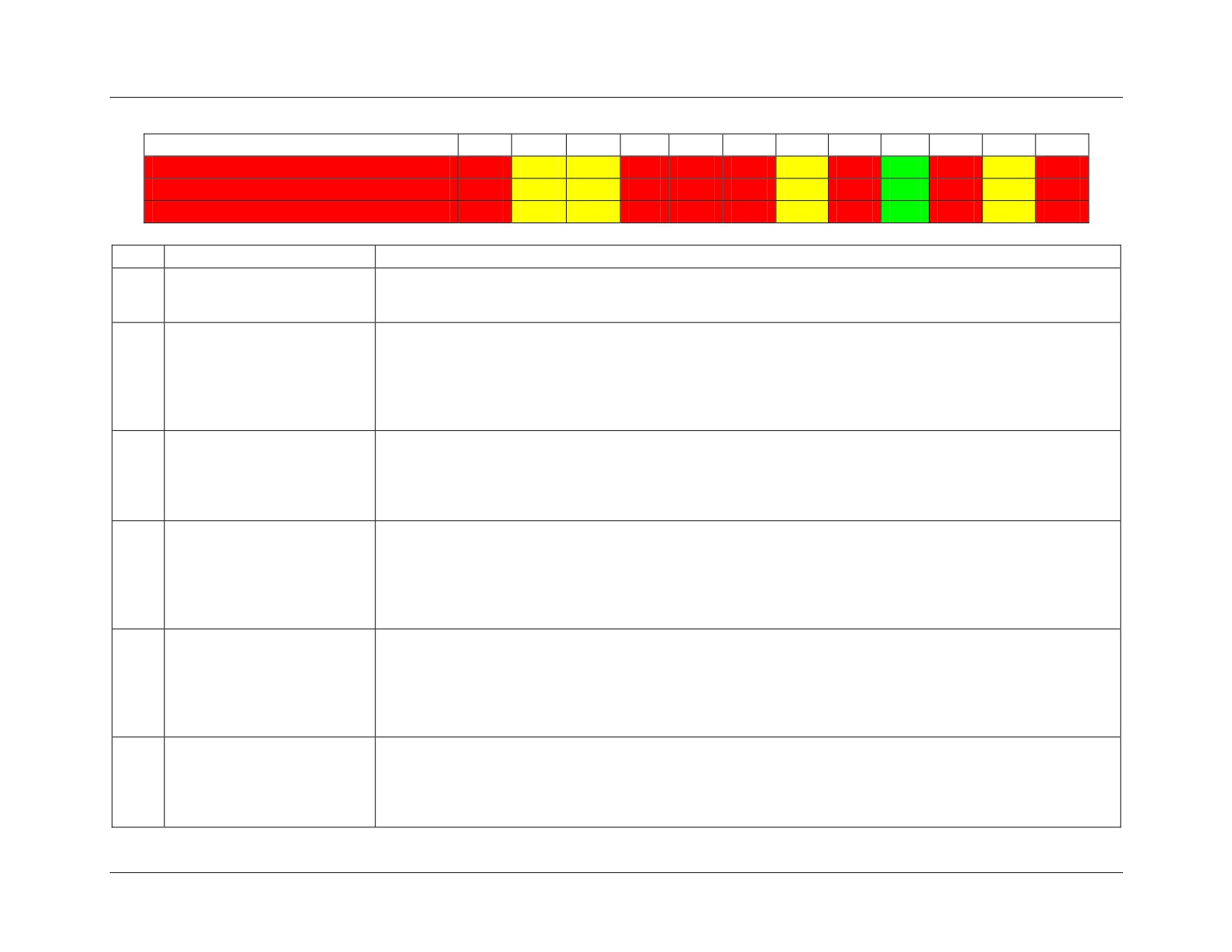
For Official Use Only
CBRN Functional Needs Analysis/Functional Solution Analysis
Chapter 12. Operational Shield Tasks
Table 12.7-1. OPSHLD 7: Capability and Deficiency Assessment
Capability: JTF HQ Staff
M1
M2
M3
M4
M5
M6
M7
M8
M9
M10
M11
M12
Current Overall Capability1
R2
Y3
Y4
R5
R6
R7
Y8
R9
G10
R11
Y12
R13
Near/Mid-Term Overall Capability
R
Y
Y
R
R
R
Y
R
G
R
Y
R
Far-Term Overall Capability
R
Y
Y
R
R
R
Y
R
G
R
Y
R
FAA Measure
Scale
M1
Critical activities and
G: All critical facilities and activities are equipped with operational COLPRO.
functions are collectively
Y: All identified critical facilities and activities possess or are programmed to be equipped with COLPRO.
protected.
R: COLPRO is inadequate or nonexistent to support operations.
M2
Operational activities and
G: All operational activities and functions are protected and are not degraded and/or unavailable as a result of
functions are not
CBRN/TIM attacks.
degraded/unavailable due to
Y: All operational activities and functions are afforded protection and are not seriously degraded and/or unavailable
CBRN/TIM attacks.
as a result of CBRN/TIM attacks.
R: Protection of operational activities and/or functions is inadequate or nonexistent and may result in serious
degradation or nonavailability resulting from CBRN/TIM attacks.
M3
Operational capability is
G: Sufficient and adequate COLPRO is available and operational to sustain operational capabilibities in a
achievable with COLPRO.
CBRN/TIM environment.
Y: Adequate operational capabilities for selected functions and activities are achievable with available and
operational COLPRO.
R: Operational capabilities are not achievable with available and operational COLPRO.
M4
CPSs are erectable and
G: COLPRO is rapidly and safely erectable/striked, placed in operation, and maintained within a CBRN/TIM
maintainable in contaminated
environment by personnel encumbered by IPE and with minimal resources.
environment by personnel
Y: COLPRO is safely erectable/striked, placed in operation, and maintained within a CBRN/TIM environment by
encumbered by IPE.
IPE-encumbered pesonnel.
R: COLPRO that is safely erectable/striked, placed in operation, and maintained within a CBRN/TIM environment
by IPE-encumbered pesonnel is nonexistent and does not exist in adequate quantities to support operations.
M5
Forces are trained to apply and
G: Forces are trained and routinely exercised and evaluated on the effective application of expedient COLPRO
use expedient COLPRO.
measures and equipment.
Y: Forces are trained and exercised and evaluated on the application of expedient COLPRO measures and
equipment upon predeployment notification for operations with threat.
R: Training, exercising, and evaluation of forces on the application of expedient COLPRO measures and equipment
is inadequate or nonexistent.
M6
Required expedient collective
G: The full range of expedient COLPRO kits and materials are readily available for application by forces in the
protective kits and materials
field.
(e.g., adaptation kits, plywood,
Y: Expedient COLPRO kits and materials are generally available for force application in selected field
sprays, gel packs, tape, etc.)
environments.
are readily available.
R: Expedient COLPRO kits are inadequate, unavailable, or nonexistent.
68
For Official Use Only
For Official Use Only
CBRN Functional Needs Analysis/Functional Solution Analysis
Chapter 12. Operational Shield Tasks
M7
COLPRO is available for in-
G: COLPRO is available in required quantities and types to support the full range of envisioned and planned
place forces.
operations.
Y: COLPRO is available in sufficient types and quantities to support major operations.
R: COLPRO is inadequate or nonexistent to support operations.
M8
COLPRO is available for
G: COLPRO is available in required quantities and types to support the full range of envisioned and planned
deploying forces.
operations.
Y: COLPRO is available in sufficient types and quantities to support major operations.
R: COLPRO is inadequate or nonexistent to support operations.
M9
COLPRO is prepared (i.e.,
G: Manning, equipping, supplying, and other functional considerations for the preparation, operation, maintenance,
supplied, equipped, and
and application of COLPRO are addressed in JTF and tasked unit plans.
crewed) for operation.
Y: The preparation, operation, maintenance, and application of COLPRO are generally addressed in JTF and tasked
unit plans.
R: JTF and tasked unit plans inadequately, or do not, address the preparation and/or application of COLPRO for
operations.
M10
Required mobile CPSs are
G: Operational mobile CPS is available in required quantities and types to support the full range of envisioned and
available.
planned operations.
Y: Operational mobile CPS is available in sufficient types and quantities to support major operations
R: Operational mobile CPS is inadequate or nonexistent to support operations.
M11
Required transportable CPSs
G: Operational transportable CPS is available in required quantities and types to support the full range of envisioned
are available.
and planned operations.
Y: Operational transportable CPS is available in sufficient types and quantities to support major operations.
R: Operational transportable CPS is inadequate or nonexistent to support operations.
M12
Required CPSs for fixed
G: All fixed facilities and activities are equipped with operational COLPRO.
facilities are installed and
Y: All critical fixed facilities and activities are equipped with operational COLPRO.
available.
R: COLPRO within fixed facilities and activities is inadequate or nonexistent to support operations.
1 DOTMLPF is inadequate to support sustained operations within a CBRN/TIM environment, particularly expeditionary operations, during the first 30-60 days. Current
DOTMLPF does not adequately address the establishment and operation of expedient COLPRO activities and measures.
2 Not all critical facilities and activities are equipped with COLPRO. COLPRO within some OCONUS locations does exist for radiological (fallout). However, COLPRO for other
than radiological is almost nonexistent, including critical facilities, outside HTA OCONUS. Expeditionary operations are a particular concern. Existing COLPRO systems are not
generally designed for a highly mobile force, with a reduced logistical footprint, and the initial period of operations until the theater matures (usually the first 30-90 days). The
combination of individual protection, contamination avoidance, and available COLPRO provides critical activities and functions with a level of capability. However, the
encumbrances and limitations associated with these measures are considerations in the planning and conduct of operations to assure mission success.
3 The limited availability of COLPRO systems requires careful planning and prioritization of resources. The JTF staff allocate COLPRO resources based upon the threat, risk, and
vulnerability assessments. Operational activities and functions are prioritized based upon mission, criticality, assessments, and available resources. The combination of individual
protection, contamination avoidance, and available COLPRO provides operational activities and functions with a level of capability. However, the encumbrances and limitations
associated with these measures are considerations in the planning and conduct of operations to assure mission success.
4 Not all critical facilities and activities are equipped with COLPRO. The limited availability of COLPRO systems requires careful planning and prioritization of resources. The
JTF staff allocate COLPRO resources based upon the threat, risk, and vulnerability assessments. Operational activities and functions are prioritized based upon mission, criticality,
assessments, and available resources. The combination of individual protection, contamination avoidance, and available COLPRO provides operational activities and functions
with a level of capability.
69
For Official Use Only
For Official Use Only
CBRN Functional Needs Analysis/Functional Solution Analysis
Chapter 12. Operational Shield Tasks
5 The encumbrances and limitations associated with IPE are considerations in the planning and conduct of operations to ensure mission success. How ever, current DOTMLPF
does not adequately address the erection, maintenance, operations, and striking of CPS within a CBRN/TIM environment.
6 ECP kits, procedures, and training do not currently exist.
7 ECP kits, procedures, and training do not currently exist. Identification, development and/or acquisition of assets for Joint Expeditionary Collective Protection (JECP) include
ECP assets for adaptation of tentage and structures to support expeditionary operations. The JECP effort is currently proceeding through the JCIDS process.
8 COLPRO within some OCONUS locations does exist for radiological (fallout). However, COLPRO for other than radiological is almost nonexistent, including critical facilities,
outside HTA OCONUS. The limited availability of COLPRO systems requires careful planning and prioritization of resources. The JTF staff allocates COLPRO resources based
upon the threat, risk, and vulnerability assessments. Operational activities and functions are prioritized based upon mission, criticality, assessments, and available resources. The
combination of individual protection, contamination avoidance, and available COLPRO provides operational activities and functions with a level of capability. However, the
encumbrances and limitations associated with these measures are considerations in the planning and conduct of operations to assure mission success.
9 COLPRO within some OCONUS locations does exist for radiological (fallout). However, COLPRO for other than radiological is almost nonexistent, including critical facilities,
outside HTA OCONUS. Maneuvering forces are inadequately equipped with COLPRO capabilities. Insufficient COLPRO is available to support rest and resupply activities for all
personnel within a 24-hour period necessary to support sustained operations within a contaminated environment. This statement is particularly true of forward-operating light
forces. Fixed-site operations within a mature theater may possess sufficient COLPRO to provide access to personnel within a 24-hour period. Current doctrine, policies, plans, and
TTPs do not adequately address sustained operations within a CBRN/TIM environment. Current concept is contamination avoidance or withdrawal.
10 The JTF staff allocates COLPRO resources based upon the threat, risk, and vulnerability assessments. Planning for CBRND includes allocation of supporting services, materiel,
and consumables. Manning, operation, and maintenance of the COLPRO resource is the responsibility of the allocated unit. JTF planning includes preparation of the force for
CBRND. COLPRO is integral to CBRND and included in the plan.
11 Quantities and availability of mobile COLPRO is inadequate. Mobile COLPRO exists in selected tactical combat and support vehicles. The quantities and types of these vehicles
are limited and dedicated to specific missions. Current mobile COLPRO is inadequate to support operations by highly mobile forces. Airframe COLPRO is limited to tactical
combat airframes. Airlift (both tactical and strategic) are not equipped with COLPRO. Sea-based COLPRO (the CITADEL System) is available in specific classes of naval warfare
vessels (e.g., LHA, destroyer, etc.). Most naval vessels (including supply and transport vessels, carriers, and others) do not possess COLPRO.
12 Mature theater CPS is available in limited quantities. These include JTCOPS, CP-DEPMEDS, TEMPER systems, and Service-designed systems. Integration of Service-specific
systems into joint plans provides additional COLPRO capabilities. These, however, are not generally integrated in JTF plans. Current CPSs are inadequate to support expeditionary
operations, particularly in austere environments by highly mobile forces and possessing reduced logistical footprint.
13 COLPRO within some OCONUS locations does exist for radiological (fallout). However, COLPRO for other than radiological is almost nonexistent, including critical facilities,
outside HTA OCONUS. COLPRO within HTA is installed and available for selected critical facilities and operations. The JTF staff allocates resources based upon the threat, risk,
and vulnerability assessments. Expansion of existing COLPRO capabilities is planned, as appropriate and necessary, using transportable COLPRO systems.
70
For Official Use Only
For Official Use Only
CBRN Functional Needs Analysis/Functional Solution Analysis
Chapter 12. Operational Shield Tasks
12.7.3
Functional Solution Analysis
12.7.3.1
DOTLPF Assessment Summary
This section addresses the deficiencies and suggests potential non-materiel solutions. If there are
no non-materiel solutions, or they are only partial solutions, the remaining non-materiel need is
then stated. Materiel needs are assessed in the IMA section.
1.
Deficiency: Not all critical facilities and activities are equipped with COLPRO.
Non-Materiel Solutions: Doctrine: Enforce existing doctrine and policy.
2.
Deficiency: CPSs for other than radiological are almost nonexistent, including critical
facilities, outside HTA OCONUS.
Non-Materiel Solutions: Doctrine: Enforce existing doctrine and policy.
3.
Deficiency: Current DOTMLPF does not adequately address the erection, maintenance,
operations, and striking of CPSs within a CBRN/TIM environment.
Non-Materiel Solutions: Doctrine: Establish in doctrine, policy, procedures, and TTPs the
erection, maintenance, operation, and striking of CPSs within a CBRN/TIM environment for
CBRND. Organization: Develop organizational structures supporting the erection,
maintenance, operation, and striking of CPSs within a CBRN/TIM environment for CBRND.
Training: Institutional and unit-level training on the erection, maintenance, operation, and
striking of CPSs within a CBRN/TIM environment to support operations and provide for
CBRND of the force. Leadership: Ensure awareness and knowledge of establishing CPSs
within a CBRN/TIM environment for operations within a CBRN/TIM environment.
Facilities: Develop infrastructure to support erection, maintenance, operation, and striking of
CPS within a CBRN/TIM environment (e.g., logistics, training, etc.).
4.
Deficiency: Expedient COLPRO (ECP) kits, procedures, and training do not currently exist.
Non-Materiel Solutions: Doctrine: Establish in doctrine, policy, procedures, and TTPs the
use and application of ECP for CBRND. Organization: Develop organizational structures
supporting the application of ECP for CBRND. Training: Institutional and unit-level training
on the application of ECP to support operations and provide for CBRND of the force.
Leadership: Ensure awareness and knowledge of versatility and application of ECP for
operations within a CBRN/TIM environment. Facilities: Develop infrastructure to support
ECP (e.g., logistics, training, etc.).
5.
Deficiency: Maneuvering forces are inadequately equipped with COLPRO capabilities.
Non-Materiel Solutions: Doctrine: Complete the JCIDS process and central correlation/
comparison of national and strategic plans to identify CBRND resources necessary and
available to support maneuver operations, particularly expeditionary operations during the
first 30-90 days following commencement of hostilities, with a reduced logistical footprint.
Organization: Develop organizational structures, resources, staffing, and capabilities to
conduct maneuver operations, particularly expeditionary operations during the first 30-90
days of operations following commencement of hostilities, while possessing reduced
logistical footprint. Training: Train, exercise, and evaluate maneuver capabilities
71
For Official Use Only
For Official Use Only
CBRN Functional Needs Analysis/Functional Solution Analysis
Chapter 12. Operational Shield Tasks
(particularly expeditionary capabilities) of the force in a CBRN/TIM threat with reduced
logistical footprint during the initial 30-90 days of operations using organic, prepositioned,
and planned CBRND resources supporting operations. Leadership: Recognize differences
and challenges associated with maneuver operations, particularly expeditionary operations
during the first 30-90 days following commencement of hostilities, with a reduced logistical
footprint; training providing skills and knowledge to manage operations in these
circumstances, and ability and willingness to implement necessary changes and activities to
prepare for and conduct expeditionary operations with a CBRN/TIM threat. Facilities:
Develop supporting infrastructure for expeditionary operations during the first 30-90 days
following commencement of hostilities and with a reduced logistical footprint.
6.
Deficiency: Insufficient COLPRO is available to support rest and resupply activities for all
personnel within a 24-hour period necessary to support sustained operations within a
contaminated environment. This statement is particularly true of forward-operating light
forces.
Non-Materiel Solutions: Doctrine: Enforce existing doctrine and policies.
7.
Deficiency: Quantities and availability of mobile COLPRO is inadequate.
Non-Materiel Solutions: Doctrine: Completion of analysis and central correlation/
comparison of national and strategic plans to identify quantities and types of mobile
COLPRO (and supporting consumables) necessary and available to support highly mobile
forces for envisioned plans and taskings. Organization: Develop organizational structures,
resources, staffing, and capabilities to conduct CBRND, including mobile COLPRO, of
highly mobile forces. Training: Train, exercise, and evaluate CBRND, including mobile
COLPRO, capabilities of the force in a CBRN/TIM threat during highly mobile force
operations. Leadership: Recognize differences and challenges associated with CBRND
operations by highly mobile forces, training providing skills and knowledge to manage
operations in these circumstancesl, and ability and willingness to implement necessary
changes and activities to prepare for and conduct expeditionary operations with a
CBRN/TIM threat. Facilities: Develop supporting infrastructure for CBRND of highly
mobile forces.
8.
Deficiency: Current mobile COLPRO is inadequate to support operations by highly mobile
forces.
Non-Materiel Solutions: Doctrine: Completion of analysis and central correlation/
comparison of national and strategic plans to identify quantities and types of mobile
COLPRO (and supporting consumables) necessary and available to support highly mobile
forces for envisioned plans and taskings. Organization: Develop organizational structures,
resources, staffing, and capabilities to conduct CBRND, including mobile COLPRO, of
highly mobile forces. Training: Train, exercise, and evaluate CBRND, including mobile
COLPRO, capabilities of the force in a CBRN/TIM threat during highly mobile force
operations. Leadership: Recognize differences and challenges associated with CBRND
operations by highly mobile forces; training providing skills and knowledge to manage
operations in these circumstances, and ability and willingness to implement necessary
changes and activities to prepare for and conduct expeditionary operations with a
72
For Official Use Only
For Official Use Only
CBRN Functional Needs Analysis/Functional Solution Analysis
Chapter 12. Operational Shield Tasks
CBRN/TIM threat. Facilities: Develop supporting infrastructure for CBRND of highly
mobile forces
9. Deficiency: Airlift (both tactical and strategic) are not equipped with COLPRO.
Non-Materiel Solutions: Doctrine: Incorporate into doctrine, policy, and procedures the
provision of COLPRO to aircrew and passengers in appropriate airframes (military and
civilian). Training: Train, exercise, and evaluate aircrews and supporting entities for airframe
COLPRO operations for CBRND. Leadership: Recognize criticality of protecting aircrew
and passengers of appropriate tactical and strategic airframes from the effects of CBRN/TIM
agents. Facilities: Develop supporting infrastructure (e.g., logistics, aircraft maintenance,
etc.) for airframe COLPRO.
10. Deficiency: Most naval vessels (including supply and transport vessels, carriers, and others)
do not possess COLPRO.
Non-Materiel Solutions: Doctrine: Incorporate into doctrine, policy, and procedures the
provision of COLPRO for at-risk vessels (civilian contract and military). Organization:
Develop organizational structures, resources, staffing, and capabilities to support COLPRO
operations on vessels supporting operations and at-risk. Training: Train, exercise, and
evaluate crews for vessel COLPRO operations for CBRND. Leadership: Recognize
differences and challenges associated with CBRND operations by at-risk vessels (both
military and contract civilian) supporting operations. Facilities: Develop supporting
infrastructure (e.g., logistics, maintenance, power systems, etc.) for vessel COLPRO.
11. Deficiency: Service-specific systems are not generally integrated in JTF plans.
Non-Materiel Solutions: Doctrine: Emphasize in doctrine, policy, and procedures the
central correlation of national and strategic theater plans and taskings to identify CBRN/TIM
support requirements for two or more concurrent operations with threat with comparison to
existing and programmed quantities and types of CBRND systems and resources, joint and
Service-specific, to include replenishment. Leadership: Implement development of plans and
taskings consistent joint and Service-specific CBRND support capabilities.
12. Deficiency: Current CPS is inadequate to support expeditionary operations, particularly in
austere environments by highly mobile forces and possessing reduced logistical footprint.
Non-Materiel Solutions: Doctrine: Incorporate into doctrine, policy, and procedures
standards for expeditionary forces possessing reduced logistical footprint during the first 30-
90 days of operations following commencement of hostilities. Organization: Develop
organizational structures, resources, staffing, and capabilities to conduct expeditionary
operations while possessing reduced logistical footprint and during the first 30-90 days of
operations following commencement of hostilities. Training: Train, exercise, and evaluate
expeditionary capabilities of the force in a CBRN/TIM threat with reduced logistical
footprint during the initial 30-90 days of operation using CBRND resources supporting
expeditionary operations. Leadership: Recognize differences and challenges associated with
expeditionary operations during the first 30-90 days following commencement of hostilities
and with a reduced logistical footprint, training providing skills and knowledge to manage
operations in these circumstances, and ability and willingness to implement necessary
changes and activities to prepare for and conduct expeditionary operations with a
73
For Official Use Only
For Official Use Only
CBRN Functional Needs Analysis/Functional Solution Analysis
Chapter 12. Operational Shield Tasks
CBRN/TIM threat. Facilities: Develop supporting infrastructure for expeditionary operations
during the first 30-90 days following commencement of hostilities and with a reduced
logistical footprint.
13. Deficiency: DOTMLPF is inadequate to support sustained operations within a CBRN/TIM
environment, particularly expeditionary operations, during the first 30-60 days.
Non-Materiel Solutions: Doctrine: Include in doctrine, policy, and procedures sustained
operations (medical and nonmedical) within a CBRN/TIM environment. Organization:
Ensure resources, taskings, and staff are in place or available to perform sustained operations
(medical and nonmedical) within a CBRN/TIM environment. Training: Train, exercise, and
evaluate the force (military and eligible civilians) for sustained operations (medical and
nonmedical) within a CBRN/TIM environment. Leadership: Recognize criticality of
readiness of the force for potential sustained operations (medical and nonmedical) within a
CBRN/TIM environment, training providing the skills to manage the force in these
circumstances, and willingness and ability to implement necessary changes and activities to
prepare and appropriately apply the force.
14. Deficiency: Current DOTMLPF does not adequately address the establishment and operation
of expedient COLPRO activities and measures.
Non-Materiel Solutions: Doctrine: Establish in doctrine, policy, procedures, and TTPs the
use and application of ECP for CBRND. Organization: Develop organizational structures
supporting the application of ECP for CBRND. Training: Develop institutional and unit-level
training on the application of ECP to support operations and provide for CBRND of the
force. Leadership: Ensure awareness and knowledge of versatility and application of ECP for
operations within a CBRN/TIM environment. Facilities: Develop infrastructure to support
ECP (e.g., logistics, training, etc.)
12.7.3.2
IMA Assessment Summary
N/A
74
For Official Use Only
For Official Use Only
CBRN Functional Needs Analysis/Functional Solution Analysis
Chapter 12. Operational Shield Tasks
12.8 Task OPSHLD 8: Supply protective measure consumables, expendables, and
replacements
12.8.1
Functional Area Analysis
12.8.1.1
Definition
To ensure the supply of CBRND stocks in both medical and nonmedical categories. Items are
transported and positioned in anticipation of need. Especially critical are consumables such as
filters and extra sets of protective overgarments. NBC staff personnel work closely with
logisticians and medical service personnel to ensure required stocks are on hand or readily
available. Refer to individual Service documents for specifics.
12.8.1.2
Derivation
Joint Enabling Concept for CBRN/TIM Operations, Protection Joint Functional Concept, UJTL
(OP 5.3.9, OP 5.4.2, OP 5.4.5, OP 5.5.9, OP 6.2.1, OP 7, OP 7.2, OP 7.3, OP 7.4).
12.8.1.2.1
Supported Task: STSHLD 2
12.8.1.2.2
Lateral Task: OPSHA 4
12.8.1.2.3
Supporting Task: TASHLD 8
12.8.1.3
Condition
Perform this task under conditions of:
Physical
1. Undeveloped to highly developed land. (C1.1)
2. Riverine to open sea. (C1.2)
3. Natural and induced air. (C1.3)
4. Immediate to delayed danger, and potential long-term health hazard of atmospheric
weapons effects. (C1.3.3)
Military
1. Partially completed mission preparation. (C2.1.3)
2. Marginal to strong forces assigned. (C2.2.1)
3. Negligible personnel experience. (C2.2.4.5)
4. Some interoperability. (C2.2.6)
5. Partial Joint Staff integration. (C2.3.1.1)
6. Limited staff expertise. (C2.3.1.3)
7. Limited deployed supplies. (C2.8.2)
8. Limited CONUS resupply. (C2.8.3)
9. No prepositioned materiel. (C2.8.4)
75
For Official Use Only
For Official Use Only
CBRN Functional Needs Analysis/Functional Solution Analysis
Chapter 12. Operational Shield Tasks
10. No host nation support. (C2.8.5)
11. Limited commercial procurement. (C2.8.6)
Civil
1. TIMs present in the civilian sector. (C3.3.7.5)
12.8.2
Functional Needs Analysis
12.8.2.1
Capability and Deficiency Assessment Summary
Table 12.8-1 discusses the only capability that exists to perform the task to the designated
standard. Doctrine, policy, and procedures address operational planning integrating all tasked
functions, activities, and staff agencies. This task includes the planning, movement,
management, and positioning of CBRND materiel, including consumables, necessary to support
operations. Deficiencies include the lack of CBRND systems in sufficient quantities and types to
support envisioned and published plans, inadequate DOTMLPF addressing sustained operations
within a CBRN/TIM environment, and CBRND of highly mobile and/or expeditionary forces
with reduced logistical footprints.
Current Capability and Deficiency
JTF HQ staffs identify CBRND resource requirements and availability and conduct
prepositioning, allocation, movement, distribution, reallocation, and management of resources to
protect the force against the effects of CBRN/TIM agents for planned and current operations.
This task includes integration of provided coalition partner and host-nation CBRND resources
into CBRND plans and operations.General logistics DOTMLPF exists addressing the planning,
movement, management and positioning of materiel for support of operations. Reallocation of
resources and integration of coalition partner and/or host-nation contributions are addressed in
existing DOTMLPF. Deficiencies include inadequate quantities and types of COLPRO,
insufficient DOTMLPF for sustained operations within a CBRN/TIM environment, individual
combat loads restricting available weight and space for CBRND materiel, and the absence of
CBRND for MWDs. Expeditionary and highly mobile force operations, both with reduced and
limited logistical support, are not adequately addressed in DOTMLPF, and the design of most
CBRND systems and associated logistics do not adequately support these types of operations.
Deploying eligible civilians and MWAs (particularly MWDs) are not equipped and trained to
survive a CBRN/TIM environment; nor does the JTF staff possess clear guidance for planning
and providing CBRND of these personnel and JTF elements. The overall current capability is
assessed as “red.”
Projected Near/Mid-Term Capability and Deficiency
The IOC fielding of Joint Operational Effects Federation (JOEF) and Joint Effects Model (JEM)
in the mid term provides increased capabilities for planning and resource determination.
Otherwise, no changes from current capabiltiies are identified.
76
For Official Use Only
For Official Use Only
CBRN Functional Needs Analysis/Functional Solution Analysis
Chapter 12. Operational Shield Tasks
Projected Far-Term Capability and Deficiency
No change projected for this task.
77
For Official Use Only
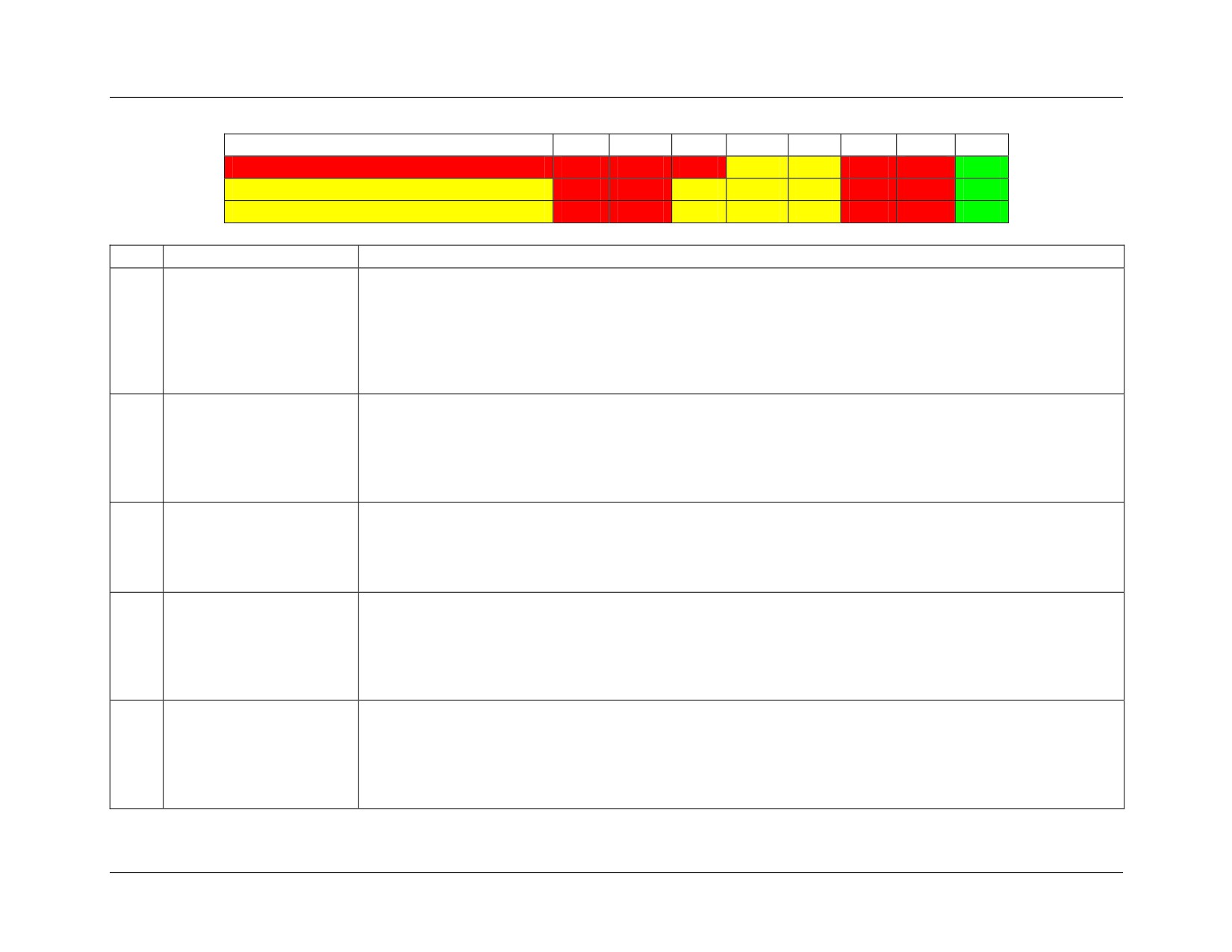
For Official Use Only
CBRN Functional Needs Analysis/Functional Solution Analysis
Chapter 12. Operational Shield Tasks
Table 12.8-1. OPSHLD 8: Capability and Deficiency Assessment
Capability: JTF HQ Staff
M1
M2
M3
M4
M5
M6
M7
M8
Current Overall Capability1
R2
R3
R4
Y5
Y6
R7
R8
G9
Near/Mid-Term Overall Capability
R
R
Y
Y
Y
R
R
G
Far-Term Overall Capability
R
R
Y
Y
Y
R
R
G
FAA Measure
Scale
M1
Operational plans establish
G: Joint operational plans establish detailed integrated JTF support requirements to support sustained operations
integrated support
through multiple CBRN/TIM attacks across the spectrum of operations and without unplanned and unforecasted
requirements (NBC,
support requirements.
medical, logistics, etc.) for
Y: Joint operational plans establish adequate integrated JTF support requirements to support sustained operations
sustained CBRND
through multiple CBRN/TIM attacks involving major operations with planned and forecasted support requirements.
operations.
R: Joint operational plans inadequately establish integrated JTF support requirements to sustain operations through
multiple CBRN/TIM attacks.
M2
Adequate resources are
G: CBRND systems and materiel are available in plan-identified required quantities and types to support multiple
available to implement and
concurrent operations with threat.
sustain the required
Y: CBRND systems and materiel are available in sufficient quantities and types to support concurrent operations with
protective measures.
threat. Adjustments to plan requirements are made to adjust to limitations in quantities and types of CBRND systems.
R: CBRND systems and/or materiel are not available in sufficient quantities and types to support concurrent operations
with threat.
M3
Forces are equipped to
G: Forces are adequately equipped and possess ready access to CBRND resources to conduct sustained operations in a
operate in a CBRN/TIM
CBRN/TIM environment.
environment.
Y: Forces are equipped and possess access to CBRND resources to conduct operations in a CBRN/TIM environment.
R: Forces are inadequately equipped or possess inadequate access to CBRND resources to operate in a CBRN/TIM
environment.
M4
Medical CBRND
G: CBRND systems, components, and consumables are available in plan-identified quantities and types to support
consumables and
sustained operations within a CBRN/TIM environment.
expendables are on hand.
Y: CBRND systems, components, and consumables are identified in plans and are adjusted to limitations in quantities
and types to support operations involving CBRN/TIM threat.
R: CBRND systems, components, and consumables are inadequate or insufficient to support medical operations
involving CBRN/TIM threat.
M5
Nonmedical CBRND
G: CBRND systems, components, and consumables are available in plan-identified quantities and types to support
consumables and
sustained operations within a CBRN/TIM environment.
expendables are on hand.
Y: CBRND systems, components, and consumables are identified in plans and are adjusted to limitations in quantities
and types to support operations involving CBRN/TIM threat.
R: CBRND systems, components, and consumables are inadequate or insufficient to support medical operations
involving CBRN/TIM threat.
78
For Official Use Only
For Official Use Only
CBRN Functional Needs Analysis/Functional Solution Analysis
Chapter 12. Operational Shield Tasks
M6
Operations are sustainable
G: JTF forces (including military, eligible civilians, and MWAs) are adequately equipped and possess ready access to
over multiple CBRN/TIM
sufficient CBRND resources to support sustained operations through multiple CBRN/TIM attacks across the spectrum
attacks based upon organic,
of operations and without unplanned and unforecasted resupply.
on-hand, and issued
Y: JTF forces (including military and eligible civilians) are equipped and possess ready access to sufficient CBRND to
CBRN/TIM protective
support sustained operations through multiple CBRN/TIM attacks involving major operations with planned and
assets, consumables, and
forecasted resupply.
expendables.
R: JTF forces are inadequately equipped and/or possess limited access to CBRND resoruces to sustain operations
through multiple CBRN/TIM attacks and/or are reliant upon resupply.
M7
Support spares of equipment
G: CBRND systems, components, and consumables are available in plan-identified quantities and types to support
and supplies are available to
sustained operations within a CBRN/TIM environment.
sustain protective measures.
Y: CBRND systems, components, and consumables are identified in plans and are adjusted to limitations in quantities
and types to support sustained operations involving CBRN/TIM threat.
R: CBRND systems, components, and consumables are inadequate or insufficient to support medical operations
involving CBRN/TIM threat.
M8
Staff efforts (NBC, medical,
G: JTF staff functions act cohesively and as a highly integrated advisory and expert body to the JTF Commander for
logistics) are integrated to
the accurate and timely situational analysis, course of action (COA) development, and decisioning for JTF response,
prepare plan.
actions, and activities to a CBRN/TIM event.
Y: JTF staff functions act as an integrated advisory body to the JTF Commander for situational analysis, COA
development, and decisioning for JTF response, actions, and activities resulting from a CBRN/TIM event.
R: JTF staff functions inadequately integrate with each other or predominantly operate autonomously of each other in
support of the JTF Commander for CBRN/TIM event managemnt and/or decisioning.
1 DOTMLPF is adequate for the planning, movement, management, and positioning of CBRND materiel in support of operations. However, DOTMLPF is inadequate for sustained
operations within a CBRN/TIM environment and for expeditionary and highly mobile force operations with reduced logistical footprints. DOTMLPF is also inadequate or
nonexistent addressing CBRND of eligible civilians and MWAs.
2 Doctrine, policy, and procedures for operational planning require the involvement and integration of all core and supporting functions and activities. Support requirements for
CBRND are addressed in planning when there exists a CBRN/TIM threat. However, sustained operations within a CBRN/TIM environment are not adequately addressed in
DOTMLPF and, subsequently, in planning.
3 The allocation, placement and reallocation of protective assets is a function of the planning and operational control of the JTF Commander, JTF staff, and combined staff. ACSAs
between coalition partners and/or host-nation enables acquisition and cross-servicing support between the partners. IAs provide for a wide range of support exchange including
consumables, sheltering, medical care, and other support activities. However, sustained operations within a CBRN/TIM environment are not adequately addressed in DOTMLPF
and, subsequently, in planning. Quantities, types, and availability of CPSs are limited. Current CPSs are inadequate to support expeditionary operations, particularly in austere
environments by highly mobile forces and possessing reduced logistical footprints. The individual combat load places limitations upon weight and type of equipment and
consumables. Protective equipment may be reduced or eliminated despite threat level.
4 The JTF staff reviews identified forces and the potential threat for planned operations. Specified forces, time permitting, train and prepare for operations involving the potential
threat. Equipping the tasked force is an integral part of planning and preparation. The JTF staff tracks force readiness for planned operations. Readiness issues are addressed by the
staff. The combination of established force organic assets, material acquisitions, prepositioned material, available host-nation/coalition contributions, and movement of identified
CBRND resources from stockpiles and reallocation activities are pursued by the JTF staff to prepare and support deploying forces as outlined by the appropriate plan.
Expeditionary operations are a particular concern as most CBRND systems and associated logistics are not designed for a highly mobile force, with a reduced logistical footprint,
and for the initial period of operations until the theater matures (usually the first 30-90 days). Deploying units may not possess full CBRND resources and capabilities during the
initial stages of deployment and until after arrival within the JOA. The individual combat load places limitations upon weight and type of equipment and consumables. Protective
equipment may be reduced or eliminated despite threat level. Additionally, deploying eligible civilians and MWAs (particularly MWDs) are not equipped and trained to survive a
79
For Official Use Only
For Official Use Only
CBRN Functional Needs Analysis/Functional Solution Analysis
Chapter 12. Operational Shield Tasks
CBRN/TIM environment. The JTF staff does not possess clear guidance for planning and providing CBRN/TIM protection training and CBRND protection resources to deploying
eligible civilians and MWAs. Sustained operations within a CBRN/TIM environment are not adequately addressed in DOTMLPF and, subsequently, in planning.
5 Medical CBRND materiel, including consumables and expendables, are administered, issued, and prepositioned for identified CBRN/TIM threats. The types, quantities,
movement, administration, issuance, and positioning of medical CBRND materiel is addressed by the JTF staff and supporting staffs during the planning and support for operations
and is addressed in doctrine, policy, and procedures. Expeditionary and highly mobile force operations are particular concerns. Availability of spares and resupply will be limited
for expeditionary forces during the period until the theater matures (usually the first 30-90 days). Highly mobile forces maneuvering and operating in austere environments, behind
adversary lines, and possessing reduced logistical footprints are similarly constrained. The individual combat load also places limitations upon weight and type of equipment and
consumables. Protective materiel may be reduced or eliminated despite threat level. Medical CBRND materiel for MWAs is virtually nonexistent. The application of
presymptomatic medical CBRND materiel to eligible civilians is not addressed in current doctrine, policy, and procedures. Sustained operations within a CBRN/TIM environment
are not adequately addressed in DOTMLPF and, subsequently, in planning.
6 Doctrine, policy, and procedures are adequate for planning, movement, management, and positioning of materiel (including CBRND materiel) in support of operations. CBRND
materiel for an operation addresses the identified CBRN/TIM threat. The allocation of CBRND materiel is managed by the JTF staff. Expeditionary operations are a particular
concern. Availability of spares and resupply will be limited during the period until the theater matures (usually the first 30-90 days). Maneuvering highly mobile forces operating in
austere environments, behind adversary lines, and possessing reduced logistical footprints are similarly constrained. The individual combat load also places limitations upon weight
and type of equipment and consumables. Protective equipment may be reduced or eliminated despite threat level. Sustained operations within a CBRN/TIM environment are not
adequately addressed in DOTMLPF and, subsequently, in planning.
7 The JTF staff plans for operations using the COCOM-identified forces for the potential threat. Equipping the tasked force is an integral part of planning and preparation. The
combination of established force organic assets, material acquisitions, prepositioned material, available host-nation/coalition contributions, and movement of identified CBRND
resources from stockpiles and reallocation activities are pursued by the JTF staff with the COCOM staff to prepare and support deploying forces as outlined by the appropriate plan.
Systems are reallocated, when necessary, from prepositioned and dispersed stocks of units deploying or operating within an JOA. Expeditionary operations are a particular concern.
Existing COLPRO systems are not generally designed for a highly mobile force, with a reduced logistical footprint, and the initial period of operations until the theater matures
(usually the first 30-90 days). Deploying units may not possess full CBRND resources and capabilities during the initial stages of deployment and until after arrival within the
JOA. Additionally, deploying eligible civilians and MWAs (particularly MWDs) are not equipped and trained to survive a CBRN/TIM environment. JTF staff does not possess
clear guidance for planning and providing CBRN/TIM protection training and CBRND protection resources to deploying eligible civilians and MWAs. Current doctrine and policy
does not adequately address sustained operations within a CBRN/TIM environment. The individual combat load places limitations upon weight and type of equipment and
consumables. Protective equipment may be reduced or eliminated despite threat level.
8 Doctrine, policy, and procedures are adequate for planning, movement, management, and positioning of materiel (including CBRND materiel) in support of operations. CBRND
materiel for an operation addresses the identified CBRN/TIM threat. The allocation of CBRND materiel is managed by the JTF staff. The individual combat load places limitations
upon weight and type of equipment and consumables. Expeditionary operations are a particular concern. Existing COLPRO systems are not generally designed for a highly mobile
force, with a reduced logistical footprint, and the initial period of operations until the theater matures (usually the first 30-90 days). Availability of spares and resupply will be
limited during this period. Protective equipment may be reduced or eliminated despite threat level. Sustained operations within a CBRN/TIM environment are not adequately
addressed in DOTMLPF and, subsequently, in planning.
9 Doctrine, policy, and procedures for operational planning and operations management require the involvement and integration of all core and supporting functions and activities.
Support requirements for CBRND are addressed in planning when there exists a CBRN/TIM threat. The JTF staff collects, processes, interprets, and acts upon information obtained
from all applicable resources. This requires a fully integrated staff effort for accurate and timely decision-making. However, sustained operations within a CBRN/TIM environment
are not adequately addressed in DOTMLPF and, subsequently, in planning.
80
For Official Use Only
For Official Use Only
CBRN Functional Needs Analysis/Functional Solution Analysis
Chapter 12. Operational Shield Tasks
12.8.3
Functional Solution Analysis
12.8.3.1
DOTLPF Assessment Summary
This section addresses the deficiencies and suggests potential non-materiel solutions. If there are
no non-materiel solutions, or they are only partial solutions, the remaining non-materiel need is
then stated. Materiel needs are assessed in the IMA section.
1.
Deficiency: Sustained operations within a CBRN/TIM environment are not adequately
addressed in DOTMLPF and, subsequently, in planning.
Non-Materiel Solutions: Doctrine: Include in doctrine, policy, and procedures sustained
operations within a CBRN/TIM environment. Organization: Ensure resources, taskings, and
staff are in place or available to perform sustained operations within a CBRN/TIM
environment. Training: Train, exercise, and evaluate the force for sustained operations within
a CBRN/TIM environment. Leadership: Recognize criticality of readiness of the force for
potential sustained operations within a CBRN/TIM environment, training providing the skills
to manage the force in these circumstances, and willingness and ability to implement
necessary changes and activities to prepare and appropriately apply the force.
2.
Deficiency: Quantities, types, and availability of CPS are limited.
Non-Materiel Solutions: Doctrine: Institute in doctrine, policy, and procedures the central
correlation of operational plans and taskings to identify CBRND support requirements for
two or more concurrent operations with CBRN/TIM threat with comparison to existing and
programmed quantities and types of CBRND systems and resources. Leadership: Implement
development of plans and taskings consistent with available CBRND capabilities as
determined by central correlation and comparison of strategic tactical plans and taskings.
3.
Deficiency: The individual combat load places limitations upon weight and type of
equipment and consumables. Protective equipment may be reduced or eliminated despite
threat level.
Non-Materiel Solutions: Leadership: Implement development of plans and taskings
consistent with stockpile and prepositioning support capabilities.
4.
Deficiency: A particular concern is most CBRND systems and associated logistics are not
designed for expeditionary operations and/or a highly mobile force, with a reduced logistical
footprint, and for the initial period of operations until the theater matures (usually the first
30-90 days).
Non-Materiel Solutions: Doctrine: Complete the JCIDS process and central correlation/
comparison of operations plans to identify CBRND resources necessary and available to
support expeditionary operations during the first 30-90 days following commencement of
hostilities and with a reduced logistical footprint. Organization: Develop organizational
structures, resources, staffing, and capabilities to conduct expeditionary operations while
possessing reduced logistical footprint and during the first 30-90 days of operations
following commencement of hostilities. Training: Train, exercise, and evaluate expeditionary
capabilities of the force in a CBRN/TIM threat with reduced logistical footprint during the
initial 30-90 days of operations using CBRND resources supporting expeditionary
operations. Leadership: Recognize differences and challenges associated with expeditionary
81
For Official Use Only
For Official Use Only
CBRN Functional Needs Analysis/Functional Solution Analysis
Chapter 12. Operational Shield Tasks
operations during the first 30-90 days following commencement of hostilities and with a
reduced logistical footprint, training providing skills and knowledge to manage operations in
these circumstances, and ability and willingness to implement necessary changes and
activities to prepare for and conduct expeditionary operations with a CBRN/TIM threat.
Facilities: Develop supporting infrastructure for expeditionary operations during the first 30-
90 days following commencement of hostilities and with a reduced logistical footprint.
5.
Deficiency: Deploying units may not possess full CBRND resources and capabilities during
the initial stages of deployment and until after arrival within the JOA.
Non-Materiel Solutions: Doctrine: Emphasize in doctrine, policies, and procedures for
preparation of the force for CBRND protection during throughout deployment,
redeployment, relocation, and en route phases of movement. Organization: Ensure resources,
taskings, and staff are in place or available to perform CBRND operations within a
CBRN/TIM environment by deploying, redeploying, relocating, and en route forces.
Training: Train, exercise, and evaluate the force for CBRND operations within a CBRN/TIM
environment while deploying, redeploying, relocating, and en route. Leadership: Recognize
criticality of readiness of the force for potential CBRND operations within a CBRN/TIM
environment while deploying, redeploying, relocation, and en route; training providing the
skills to manage the force in these circumstances; and willingness and ability to implement
necessary changes and activities to prepare and appropriately protect the force. Facilities:
Develop supporting infrastructure for CBRND operations of the force while preparing,
deploying, redeploying, relocating, and en route.
6.
Deficiency: Deploying eligible civilians are not equipped and trained to survive a
CBRN/TIM environment.
Non-Materiel Solutions: Doctrine: Establish doctrine, policy, and procedures CBRND
protection of eligible civilians and training for CBRN/TIM environment survival.
Organization: Ensure organizational consideration for maintenance and support of eligible
civilians CBRND protective equipment, measures, and activities. Training: Provide
institutional and unit training of eligible civilians for CBRND measures and activities.
Integrate into CBRND exercises and evaluations. Leadership: Ensure awareness and
planning for CBRND measures and requirements for eligible civilians. Facilities: Develop
supporting infrastructure for eligible civilians CBRND (e.g., logistics, medical, veterinary
surveillance, communications, training, etc.).
7.
Deficiency: Deploying MWAs (particularly MWDs) are not equipped and trained to survive
a CBRN/TIM environment.
Non-Materiel Solutions: Doctrine: Establish doctrine, policy, and procedures CBRND
protection of MWAs, particularly MWDs, and training for CBRN/TIM environment survival.
Organization: Ensure organizational consideration for maintenance and support of MWA
CBRND protective equipment, measures, and activities. Training: Provide institutional and
unit training of MWA handlers and MWAs for CBRND measures and activities. Integrate
into CBRND exercises and evaluations. Leadership: Ensure awareness and planning for
CBRND measures and requirements for MWD survivability. Facilities: Develop supporting
infrastructure for MWD CBRND (e.g., logistics, medical, veterinary surveillance,
communications, training, etc.).
82
For Official Use Only
For Official Use Only
CBRN Functional Needs Analysis/Functional Solution Analysis
Chapter 12. Operational Shield Tasks
8.
Deficiency: The JTF staff does not possess clear guidance for planning and providing
CBRN/TIM protection training and CBRND protection resources to deploying eligible
civilians.
Non-Materiel Solutions: Doctrine: Develop doctrine, policy, and procedures addressing
civilian personnel and operations for CBRND. Organization: Identify organizational services
and activities supporting the mission performed by civilian personnel and operations.
Training: Establish CBRND training, exercise, and evaluation criteria and programs for
eligible civilians and conduct CBRND training, exercises, and evaluations. Leadership:
Implement and manage CBRND training, equipping, and protection of eligible civilians.
Personnel: Ensure that eligible civilians supporting the mission/military operations are
qualified in CBRND and capable of performing their responsibilities in a CBRN/TIM
environment. Facilities: Develop supporting infrastructure for eligible civilian CBRND (e.g.,
logistics, medical, training, communications, etc.).
9.
Deficiency: The JTF staff does not possess clear guidance for planning and providing
CBRN/TIM protection training and CBRND protection resources to deploying MWAs.
Non-Materiel Solutions: Doctrine: Develop doctrine, policy, and procedures addressing
MWAs, particularly MWDs, and operations for CBRND. Organization: Identify
organizational services and activities supporting survivability of MWAs and MWA mission
operations. Training: Establish CBRND training, exercise, and evaluation criteria and
programs for MWAs and conduct CBRND training, exercises, and evaluations. Leadership:
Implement and manage CBRND training, equipping, and protection of MWAs. Facilities:
Develop supporting infrastructure for MWA CBRND (e.g., logistics, medical, veterinary
surveillance, training, communications, etc.).
10. Deficiency: Availability of spares and resupply will be limited for highly mobile forces
maneuvering and operating in austere environments, behind adversary lines, and possessing
reduced logistical footprints.
Non-Materiel Solutions: Doctrine: Complete the JCIDS process and central correlation/
comparison of national and strategic plans to identify CBRND resources necessary and
available to support maneuvering highly mobile force operations with a reduced logistical
footprint. Organization: Develop organizational structures, resources, staffing, and
capabilities to conduct maneuvering highly mobile force operations while possessing reduced
logistical footprint. Training: Train, exercise, and evaluate expeditionary capabilities of the
force in a CBRN/TIM threat with reduced logistical footprint using CBRND resources
supporting maneuvering highly mobile force operations. Leadership: Recognize differences
and challenges associated with maneuvering highly mobile force operations with a reduced
logistical footprint, training providing skills and knowledge to manage operations in these
circumstances, and ability and willingness to implement necessary changes and activities to
prepare for and conduct maneuvering highly mobile force operations with a CBRN/TIM
threat. Facilities: Develop supporting infrastructure for maneuvering highly mobile force
operations with a reduced logistical footprint and with a CBRN/TIM threat.
83
For Official Use Only
For Official Use Only
CBRN Functional Needs Analysis/Functional Solution Analysis
Chapter 12. Operational Shield Tasks
11. Deficiency: Medical CBRND materiel for MWAs is virtually nonexistent.
Non-Materiel Solutions: Doctrine: Establish doctrine, policy, and procedures CBRND
protection of MWAs, particularly MWDs, and training for CBRN/TIM environment survival.
Organization: Ensure organizational consideration for maintenance and support of MWA
CBRND protective equipment, measures, and activities. Training: Provide institutional and
unit training of handlers and MWAs for CBRND measures and activities. Leadership: Ensure
awareness and planning for CBRND measures and requirements for MWA survivability.
Facilities: Develop supporting infrastructure for MWA CBRND (e.g., logistics, veterinary
surveillance, etc.).
12. Deficiency: The application of presymptomatic medical CBRND materiel to eligible
civilians is not addressed in current doctrine, policy, and procedures.
Non-Materiel Solutions: Doctrine: Develop doctrine, policy, and procedures addressing
eligible civilians during CBRND operations and the provision of CBRND protection,
including prophylaxis. Training: Establish CBRND training, exercise, and evaluation criteria
and programs for eligible civilians and conduct CBRND training, exercises, and evaluations.
Leadership: Implement and manage CBRND training, equipping, and protection of eligible
civilians.
13. Deficiency: DOTMLPF is inadequate for expeditionary and highly mobile force operations
with reduced logistical footprints.
Non-Materiel Solutions: Doctrine: Incorporate into doctrine, policy, and procedures
CBRND standards for expeditionary and highly mobile forces possessing reduced logistical
footprint. Organization: Develop organizational structures, resources, staffing, and
capabilities to conduct expeditionary and highly mobile force operations while possessing
reduced logistical footprint. Training: Train, exercise, and evaluate expeditionary capabilities
of the force in a CBRN/TIM threat with reduced logistical footprint during the initial 30-90
days of operation using CBRND resources supporting expeditionary operations. Leadership:
Recognize differences and challenges associated with expeditionary and highly mobile force
operations with a reduced logistical footprint; training providing skills and knowledge to
manage operations in these circumstances, and ability and willingness to implement
necessary changes and activities to prepare for and conduct expeditionary and highly mobile
force operations with a CBRN/TIM threat. Facilities: Develop supporting infrastructure for
expeditionary and highly mobile force operations with a reduced logistical footprint.
14. Deficiency: DOTMLPF is inadequate or nonexistent addressing CBRND of eligible
civilians.
Non-Materiel Solutions: Doctrine: Develop doctrine, policy, and procedures addressing
eligible civilian personnel for CBRND. Organization: Identify organization services and
activities necessary to support survivability of eligible civilian personnel within a
CBRN/TIM environment. Training: Establish CBRND training, exercise, and evaluation
criteria and programs for eligible civilians and conduct CBRND training, exercises, and
evaluations. Leadership: Implement and manage CBRND training, equipping, and protection
of eligible civilian personnel.
84
For Official Use Only
For Official Use Only
CBRN Functional Needs Analysis/Functional Solution Analysis
Chapter 12. Operational Shield Tasks
15. Deficiency: DOTMLPF is inadequate or nonexistent addressing CBRND of MWAs.
Non-Materiel Solutions: Doctrine: Develop doctrine, policy, and procedures addressing
MWAs, particularly MWDs, for CBRND. Organization: Identify organization services and
activities necessary to support survivability of MWAs within a CBRN/TIM environment.
Training: Establish CBRND training, exercise, and evaluation criteria and programs for
MWAs and conduct CBRND training, exercises, and evaluations. Leadership: Implement
and manage CBRND training, equipping, and protection of MWAs.
12.8.3.2
IMA Assessment Summary
N/A
85
For Official Use Only
For Official Use Only
CBRN Functional Needs Analysis/Functional Solution Analysis
Chapter 12. Operational Shield Tasks
12.9 Task OPSHLD 9: Ensure safety of water/food supplies to protect forces
12.9.1
Functional Area Analysis
12.9.1.1
Definition
To ensure that food and water vulnerability assessments identify potential contamination points
and critical monitoring points/sites and outline protective measures. This area requires support
and cooperation from medical personnel, logistics, environmental personnel, and the CBRND
staff.
12.9.1.2
Derivation
Joint Enabling Concept for CBRN Operations, Protection Joint Functional Concept, UJTL (OP
1.3.1, OP 2.2.1, OP 2.2.3, OP 2.4.1.1, OP 2.4.2.1, OP 5.2, OP 5.2.1, OP 5.2.2, OP 5.3.9, OP
5.4.2, OP 5.5.9, OP 6.2.10, OP 7, OP 7.3, OP 7.4)
12.9.1.2.1
Supported Task: N/A
12.9.1.2.2
Lateral Task: N/A
12.9.1.2.3
Supporting Task: N/A
12.9.1.3
Condition
Perform this task under conditions of:
Physical
1. Undeveloped to highly developed land. (C1.1)
2. Riverine to open sea. (C1.2)
3. Natural and induced air. (C1.3)
4. Immediate to delayed danger, and potential long-term health hazard of atmospheric
weapons effects. (C1.3.3)
Military
1. Partially completed mission preparation. (C2.1.3)
2. Normal personnel experience. (C2.2.4.5)
3. Negligible staff expertise. (C2.3.1.3)
4. Limited deployed supplies. (C2.8.2)
5. Sufficient CONUS resupply. (C2.8.3)
6. Limited prepositioned materiel. (C2.8.4)
7. Limited host nation support. (C2.8.5)
8. Limited commercial procurement. (C2.8.6)
86
For Official Use Only
For Official Use Only
CBRN Functional Needs Analysis/Functional Solution Analysis
Chapter 12. Operational Shield Tasks
Civil
1. Poor civil health. (C3.3.1.4)
2. High health risk. (C3.3.1.5)
3. Low economic self-sufficiency. (C3.3.4.1).
4. TIMs present in the civilian sector. (C3.3.7.5)
12.9.2
Functional Needs Analysis
12.9.2.1
Capability and Deficiency Assessment Summary
Table 12.9-1 discusses the only capability that currently exists to perform the task to the
designated standard. Doctrine, policy, procedures, and training exist for the conduct of this task.
Veterinary, Bio-Environmental, and Public Health personnel are trained and perform medical
intelligence analysis to assess the threat and conduct health vulnerability and risk analysis
throughout the operations from preparation through post-operations to ensure the health and
well-being of the force. Water and food stock safety and protection from contaminants is a
function performed by elements of the Medical Services. Sources are selected and evaluated.
Sampling is performed to ensure consistency of supplied edibles and potable water in the field.
CBRN/TIM protection of stocks is outlined in existing doctrine, policy, and procedures. Force
units are provided guidance and assistance in protecting issued stocks and for the restoration/
replacement of contaminated food and potable water.
Current Capability and Deficiency
JTF Medical Services staffs identify CBRN/TIM threats to health of the forc, perform and
disseminate health vulnerability and risk assessments, and ensure the safety of food and water.
This task includes evaluation and determination of safety of sources, protection of food and
water stocks, medical surveillance for indications of CBRN/TIM contamination of food and
water, and the restoration or replacement of contaminated food and water stocks. Existing
doctrine, policies, and procedures address the conduct of health threat analysis, vulnerability and
risk analysis, medical surveillance, the protection of food and potable water stocks, and the
restoration or replacement of contaminated of food and potable water stocks. No deficiencies
were noted. The oveall current assessment is “green.”
Projected Near/Mid-Term Capability and Deficiency
No change projected for this task.
Projected Far-Term Capability and Deficiency
No change projected for this task.
87
For Official Use Only

For Official Use Only
CBRN Functional Needs Analysis/Functional Solution Analysis
Chapter 12. Operational Shield Tasks
Table 12.9-1. OPSHLD 9: Capability and Deficiency Assessment
Capability/Measure
M1
M2
M3
M4
M5
M6
M7
Current Overall Capability1
G2
Y3
G4
G5
G6
G7
G8
Near/Mid-Term Overall Capability
G
G
G
G
G
G
G
Far-Term Overall Capability
G
G
G
G
G
G
G
FAA Measure
Scale
M1
Required food, water, and
G: Doctrine, policy, procedures, and TTPs exist and provide clear guidance and requirements for the performance and
vector CBRN/TIM
reporting of food, water, and vector CBRN/TIM risk and vulnerability assessments.
vulnerability assessments
Y: Doctrine, policy, procedures, and TTPs exist and provide general guidance and requirements for the performance and
are completed and reported.
reporting of food, water, and vector CBRN/TIM risk and vulnerability assessments.
R: Doctrine, policy, procedures, and TTPs are nonexistent or inadequate to provide guidance and/or requirements for the
performance and/or reporting of food, water, and/or vector CBRN/TIM risk and/or vulnerability assessments.
M2
Timely CBRN/TIM health
G: Doctrine, policy, procedures, and TTPs exist and provide clear guidance and requirements for the timely formulation
risk assessment estimates
and dissemination of CBRN/TIM health risk assessments to requiring entities.
are provided.
Y: Doctrine, policy, procedures, and TTPs exist and provide general guidance and requirements for the formulation and
dissemination of CBRN/TIM health risk assessments to requiring entities.
R: Doctrine, policy, procedures, and TTPs are nonexistent or inadequate to provide guidance and/or requirements for the
formulation and/or dissemination of CBRN/TIM health risk assessments to requiring entities.
M3
Veterinary/Bio-
G: Veterinary/Bio-Environmental/Public Health personnel receive formal and recurring training on the conduct of food
Environmental/Public
and water risk and vulnerability assessments and addresses CBRN/TIM threats.
Health personnel are trained
Y: Veterinary/Bio-Environmental/Public Health personnel receive training on the conduct of food and water risk and
in food and water
vulnerability assessments and is adequate to address CBRN/TIM threats.
vulnerability assessments
R: Training of Veterinary/Bio-Environmental/Public Health personnel is inadequate or nonexistent for the conduct of
for CBRN/TIM
food and/or water risk and/or vulnerability assessments and/or is inadequate to assess CBRN/TIM threats.
environment.
M4
Uncontaminated food and
G: Doctrine, policy, procedures, and TTPs exist and provide clear guidance and requirements for the approval of sources
potable water supplies are
and sourcing of potable water and food supplies; testing of suspected contaminated supplies, and the replacement of
available in sufficient
contaminated or unsafe food and water supplies.
quantities.
Y: Doctrine, policy, procedures, and TTPs exist and provide general guidance and requirements for the sourcing of
potable water and food supplies and replacement of suspected or confirmed contaminated or unsafe supplies.
R: Doctrine, policy, procedures, and TTPs are nonexistent or inadequate to provide guidance and/or requirements for
sourcing of food and/or water supplies, and/or the replacement of suspected or confirmed contaminated or unsafe
supplies.
88
For Official Use Only
For Official Use Only
CBRN Functional Needs Analysis/Functional Solution Analysis
Chapter 12. Operational Shield Tasks
M5
Units possess plans and
G: Doctrine, policies, procedures, and TTPs exist and provide clear guidance and requirements for the protection of food
procedures to protect food
and water supplies from contamination, inspection and testing of suspected food and water supplies, and actions to
and water supplies from
ensure the continued safe provisioning of the force.
CBRN/TIM contamination
Y: Doctrine, policies, procedures, and TTPs exist and provide general guidance and requirements for the protection of
and restore safe food and
food and water supplies from contamination, and actions to enable the safe provisioning/reprovisioning of the force.
water supplies following an
R: Doctrine, policies, procedures, and TTPs are nonexistent or inadequate for the protection of food and/or water
attack/incident.
supplies from contamination, and/or actions supporting the safe reprovisioning of the force.
M6
Required materials and
G: Doctrine, policies, procedures, and TTPs exist and provide clear guidance and requirements for the protection of food
equipment are available to
and water supplies from contamination, inspection and testing of suspected food and water supplies, and actions to
implement protective and
ensure the continued safe provisioning of the force.
restoration measures for
Y: Doctrine, policies, procedures, and TTPs exist and provide general guidance and requirements for the protection of
food and water supplies.
food and water supplies from contamination, and actions to enable the safe provisioning/reprovisioning of the force.
R: Doctrine, policies, procedures, and TTPs are nonexistent or inadequate for the protection of food and/or water
supplies from contamination, and/or actions supporting the safe reprovisioning of the force.
M7
Forces are trained in
G: Doctrine, policies, procedures, and TTPs exist and provide clear guidance and requirements for the protection of food
procedures to protect and
and water supplies from contamination, inspection and testing of suspected food and water supplies, and actions to
restore food and water
ensure the continued safe provisioning of the force.
supplies.
Y: Doctrine, policies, procedures, and TTPs exist and provide general guidance and requirements for the protection of
food and water supplies from contamination, and actions to enable the safe provisioning/reprovisioning of the force.
R: Doctrine, policies, procedures, and TTPs are nonexistent or inadequate for the protection of food and/or water
supplies from contamination, and/or actions supporting the safe reprovisioning of the force.
1 Adequate doctrine, policy, and procedures exist to conduct this task.
2 Adequate doctrine, policy, and procedures exist for performing and reporting food, water, and vector CBRN/TIM vulnerability assessments.
3 Adequate doctrine, policy, and procedures exist for the formulation and dissemination of health risk assessments.
4 Veterinary/Bio-Environmental/Public Health personnel are trained in the conduct of food and water vulnerability assessments to include CBRN/TIM threats.
5 Approved sourcing for potable water and food supplies are used to supply the force. Replacement of contaminated food and water supplies is addressed in existing doctrine,
policy, and procedures. The availability and time to perform replacement is a function of the type of unit, location, and logistical requirements.
6 Adequate doctrine, policy, and procedures exist for the protection of food and water supplies from contamination and the restoration or replacement of these supplies following a
CBRN/TIM attack/incident. Encapsulated field meals (e.g., meals ready to eat [MREs], etc.) and appropriately sealed containers of potable water are decontaminated and used
pending restoration/replacement of contaminated edibles and potable water.
7 Protection of food and water supplies are dependent upon containering, location, type of contamination, and a number of other factors. Adequate doctrine, policy, and procedures
exist for the protection of these supplies from contamination when possible.
8 Adequate doctrine, policy, and procedures exist addressing measures and requirements for the appropriate protection and restoration of food and water supplies. Encapsulated
field meals (e.g., MREs, etc.) and appropriately sealed containers of potable water are decontaminated and used pending restoration/replacement of contaminated edibles and
potable water.
89
For Official Use Only
For Official Use Only
CBRN Functional Needs Analysis/Functional Solution Analysis
Chapter 12. Operational Shield Tasks
12.9.3
Functional Solution Analysis
12.9.3.1
DOTLPF Assessment Summary
No deficiencies were noted for this task.
12.9.3.2
IMA Assessment Summary
N/A
90
For Official Use Only
For Official Use Only
CBRN Functional Needs Analysis/Functional Solution Analysis
Chapter 12. Operational Shield Tasks
12.10 Task OPSHLD 10: Protect equipment and supplies through coatings, coverings, and
packaging to reduce contamination of contents and to contain contamination
12.10.1
Functional Area Analysis
12.10.1.1
Definition
To protect equipment and supplies against CBRN/TIM agents through the use of protective
coatings such as conformal coatings for electronics, chemical agent-resistant paints for
equipment, and chemical-resistant packaging for supplies. Most equipment and supplies will not
be permanently protected; therefore, staging and field units will be required to employ
battlespace methods to prevent contamination. Coating materials (e.g., sprays, dips), coverings
(e.g., tarps, overhead cover), and packaging (e.g., boxes, bags, cans, plastic bottles) can be used
to protect mission-essential items and/or prevent/reduce contamination. Unit plans and
procedures should include provisions for protecting equipment and supplies from contamination.
Equipment and supplies should be placed in a structure or moved from the threatened or
contaminated area if possible. Exposed equipment and supplies are covered and protected upon
notification of an attack. Contaminated equipment and supplies are identified and marked for
decontamination.
Containment of contamination and movement and/or storage of contaminated material and
samples are directed as necessary. Containment assets provide and support the ability to perform
safe storage, movement, and handling of contaminated materiel. Coatings and packaging
designed to preclude exfiltration of contained contaminants prevent subsequent secondary
exposure of personnel and equipment.
12.10.1.2
Derivation
Joint Enabling Concept for CBRN/TIM Operations, Protection Joint Functional Concept, UJTL
(OP 5.3, OP 5.3.9, OP 5.4, OP 5.4.6, OP 5.5.9, OP 7, OP 7.2, OP 7.3, OP 7.4).
12.10.1.2.1
Supported Task: N/A
12.10.1.2.2
Lateral Task: OPSHA 4
12.10.1.2.3
Supporting Task: TASHLD 9
12.10.1.3
Condition
Perform this task under conditions of:
Physical
1. Undeveloped to highly developed land. (C1.1)
2. Riverine to open sea. (C1.2)
3. Natural and induced air. (C1.3)
91
For Official Use Only
For Official Use Only
CBRN Functional Needs Analysis/Functional Solution Analysis
Chapter 12. Operational Shield Tasks
4. Immediate to delayed danger, and potential long-term health hazard of atmospheric
weapons effects. (C1.3.3)
Military
1. Partially completed mission preparation. (C2.1.3)
2. Marginal to strong forces assigned. (C2.2.1)
3. Normal personnel experience. (C2.2.4.5)
4. Negligible staff expertise. (C2.3.1.3)
5. Limited deployed supplies. (C2.8.2)
6. Sufficient CONUS resupply. (C2.8.3)
7. Limited prepositioned materiel. (C2.8.4)
8. Limited host nation support. (C2.8.5)
9. Limited commercial procurement. (C2.8.6)
Civil. N/A
12.10.2
Functional Needs Analysis
12.10.2.1
Capability and Deficiency Assessment Summary
Table 12.10-1 discusses the only capability that exists to perform the task to the designated
standard. Protection policies, standards, and criteria exist for CBRND protection of equipment
and supplies but are generally limited to the housing of materiel in structures, two protective
coatings designed for combat vehicles, the application of layers of plastic wrap for cargo in
transit, and limited specific-purpose packagings. Deficiencies include inadequate or nonexistent
interoperable standards, criteria, and procedures for the protection of all classes of supply.
Current Capability and Deficiency
JTF HQ staffs identify CBRND requirements for protection of supplies and equipment and
develop plans and procedures to protect these resources from CBRN/TIM contamination. They
also identify materiel and actions to afford resource protection and identify requirements,
materiel, resources, and taskings to accomplish the containment of contaminated resources for
storage, handling, and movement. The only identified capabilities are policies, standards, and
criteria addressing the housing of materiel in structures, two protective coatings (volatile and
nonvolatile chemical agent-resistant coating [CARC]), the application of layers of plastic wrap
for in-transit cargo, and limited specific-purpose packagings. Deficiencies include knowledge of
the protective capabilities of commonly available materials, capabilities and procedures for
handling exposed/contaminated equipment/supplies other than decontamination, protection of
open stored materiel, and training to preclude contamination of assets. There is an absence of
doctrine, policy, and procedures establishing protective pack, containerization, packaging,
coverings, and coatings for equipment and supplies that conceivably may encounter
contamination within a CBRN/TIM environment and address protection of all classes of supply
within a CBRN/TIM environment. Further, there is a finite and limited ability to perform
92
For Official Use Only
For Official Use Only
CBRN Functional Needs Analysis/Functional Solution Analysis
Chapter 12. Operational Shield Tasks
containment of contaminated material for storage, handling, and movement. The overall current
assessment is “red.”
Projected Near/Mid-Term Capability and Deficiency
No change projected for this task.
Projected Far-Term Capability and Deficiency
No change projected for this task.
93
For Official Use Only
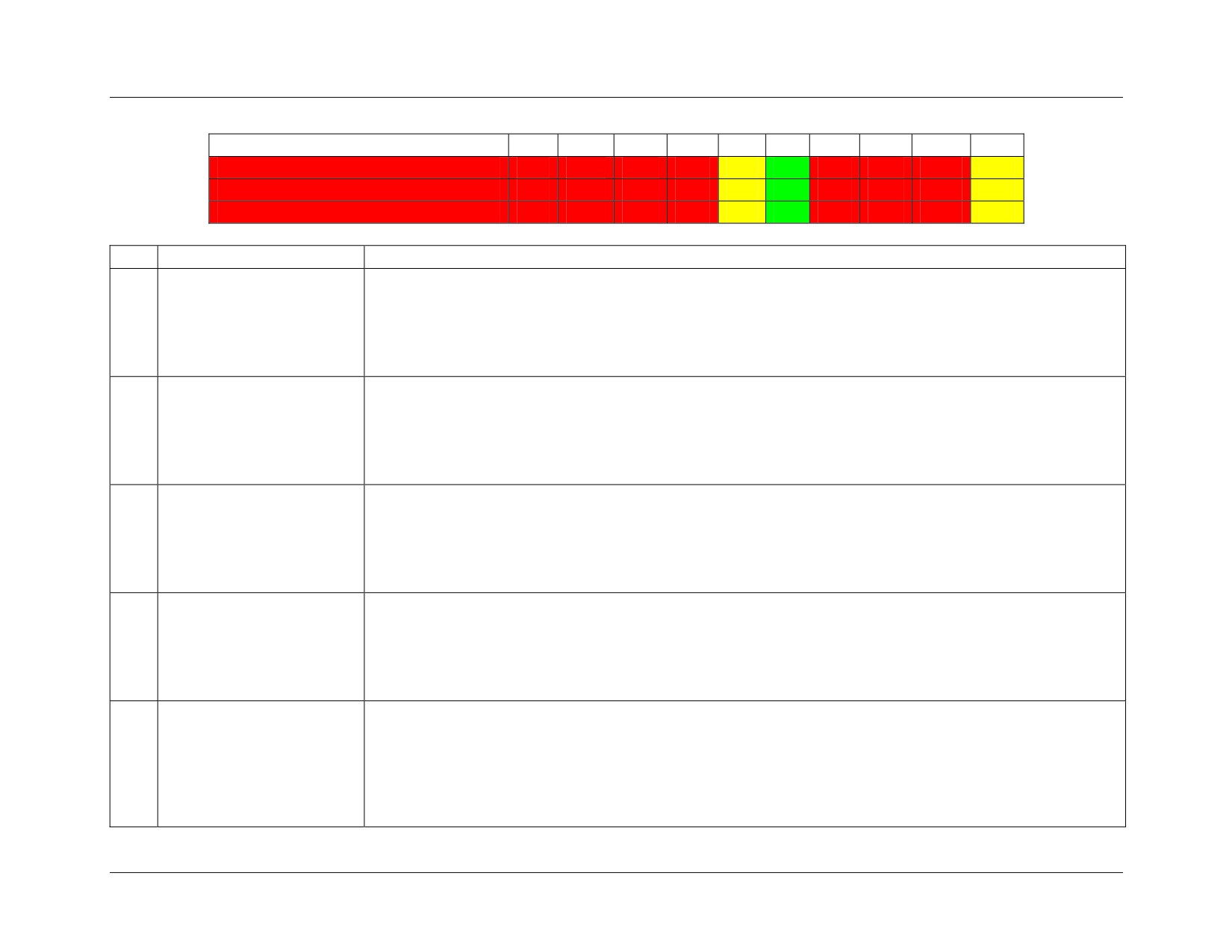
For Official Use Only
CBRN Functional Needs Analysis/Functional Solution Analysis
Chapter 12. Operational Shield Tasks
Table 12.10-1. OPSHLD 10.: Capability and Deficiency Assessment
Capability/Measure
M1
M2
M3
M4
M5
M6
M7
M8
M9
M10
Current Overall Capability1
R2
R3
R4
R3
Y5
G6
R7
R3
R8
Y9
Near/Mid-Term Overall Capability
R
R
R
R
Y
G
R
R
R
Y
Far-Term Overall Capability
R
R
R
R
Y
G
R
R
R
Y
FAA Measure
Scale
M1
Equipment and supplies are
G: All supplies and equipment possess inherent protection or are protected against contamination and/or the effects of
inherently protected against
CBRN/TIM agents.
CBRN/TIM contamination.
Y: Doctrine, policy, procedures, and TTPs adequately address the application of commonly available materials for the
protection of all classes of supplies and equipment from contamination and/or the effects of CBRN/TIM agents.
R: Doctrine, policy, procedures, and TTPS are inadequate or nonexistent for the protection of all classes of supplies
and equipment from contamination and/or the effects of CBRN/TIM agents.
M2
Equipment and supplies can
G: All supplies and equipment possess inherent protection or are protected upon warning against contamination and/or
be protected against all forms
the effects of CBRN/TIM agents
of contamination upon
Y: Doctrine, policy, procedures, and TTPs adequately address the application of commonly available materials for the
warning of a CBRN/TIM
protection of all classes of supplies and equipment from contamination and/or the effects of CBRN/TIM agents.
attack.
R: Doctrine, policy, procedures, and TTPS are inadequate or nonexistent for the protection of all classes of supplies
and equipment from contamination and/or the effects of CBRN/TIM agents.
M3
Units possess plans and
G: Unit plans and procedures address the protection of all supplies and equipment against contamination and/or the
procedures for protecting
effects of CBRN/TIM agents.
supplies and equipment
Y: Doctrine, policy, procedures, and TTPs adequately address the application of commonly available materials for the
against CBRN/TIM
protection of all classes of supplies and equipment from contamination and/or the effects of CBRN/TIM agents.
contamination.
R: Doctrine, policy, procedures, and TTPS are inadequate or nonexistent for the protection of all classes of supplies
and equipment from contamination and/or the effects of CBRN/TIM agents.
M4
Materials and facilities are
G: All supplies and equipment possess inherent protection or are protected upon warning against contamination and/or
available to implement supply
the effects of CBRN/TIM agents.
and equipment protective
Y: Doctrine, policy, procedures, and TTPs adequately address the application of commonly available materials for the
measures.
protection of all classes of supplies and equipment from contamination and/or the effects of CBRN/TIM agents.
R: Doctrine, policy, procedures, and TTPS are inadequate or nonexistent for the protection of all classes of supplies
and equipment from contamination and/or the effects of CBRN/TIM agents.
M5
Units are trained to protect
G: Unit training addresses the protection of all supplies and equipment against contamination and/or the effects of
equipment and supplies
CBRN/TIM agents.
against CBRN/TIM
Y: Doctrine, policy, procedures, TTPs, and unit training adequately address the application of commonly available
contamination.
materials for the protection of all classes of supplies and equipment from contamination and/or the effects of
CBRN/TIM agents.
R: Doctrine, policy, procedures, TTPS, and unit training are inadequate or nonexistent for the protection of all classes
of supplies and equipment from contamination and/or the effects of CBRN/TIM agents.
94
For Official Use Only
For Official Use Only
CBRN Functional Needs Analysis/Functional Solution Analysis
Chapter 12. Operational Shield Tasks
M6
Units are trained to identify,
G: Doctrine, policy, procedures, TTPs, and unit training addresses the field identification, marking, and segreation of
mark, and segregate
CBRN/TIM contaminated and/or exposed equipment and supplies.
CBRN/TIM contaminated
Y: Doctrine, policy, procedures, TTPs, and unit training adequately address the field identification, marking, and
equipment and supplies.
segreation of selected CBRN/TIM contaminated and/or exposed equipment and supplies.
R: Doctrine, policy, procedures, TTPS, and unit training are inadequate or nonexistent for the field identification,
marking, and segreation of CBRN/TIM contaminated and/or exposed equipment and supplies.
M7
Equipment and supplies are
G: All supplies and equipment possess inherent protection or are protected upon warning against contamination and/or
protected from CBRN/TIM
the effects of CBRN/TIM agents.
contamination.
Y: Doctrine, policy, procedures, and TTPs adequately address the application of commonly available materials for the
protection of all classes of supplies and equipment from contamination and/or the effects of CBRN/TIM agents.
R: Doctrine, policy, procedures, and TTPS are inadequate or nonexistent for the protection of all classes of supplies
and equipment from contamination and/or the effects of CBRN/TIM agents.
M8
Appropriate CBRN/TIM
G: Adequate types and quantitites of CBRN/TIM contaminated material containment resources are readily available to
contaminated materiel
the force for the containment of requiring CBRN/TIM contaminated and/or exposed equipment and supplies.
containment resources are
Y: CBRN/TIM contaminated material containment resources are readily available to the force and doctrine, policies,
available.
procedures, and TTPs exist for the containment of selected CBRN/TIM contaminated and/or exposed equipment and
supplies.
R: Doctrine, policy, procedures, TTPS, and CBRN/TIM contaminated material containment resoruces are inadequate
or nonexistent for application by the force to CBRN/TIM contaminated and/or exposed equipment and supplies.
M9
Units process plans and
G: Plans and procedures address the conduct of containment activities and application of readily available CBRN/TIM
procedures to apply
contaminated material containment resources to all classes of supplies and equipment contaminated and/or exposed to
CBRN/TIM contaminated
CBRN/TIM agents for their safe handling, storage, and transport.
materiel containment
Y: Plans and procedures address the conduct of containment activities and application of commonly available
resources.
containment resources to selected classes of supplies and equipment contaminated and/or exposed to CBRN/TIM
agents for their safe handling, storage, and transport.
R: Doctrine, policy, procedures, and TTPS are inadequate or nonexistent for the conduct of containment activities
and/or application of containment resources to contaminated supplies and/or equipment for their safe handling, storage,
and/or transport.
M10
Resources are protected
G: Doctrine, policy, procedures, and TTPs address the safe identification, handling, storage, and transport of contained
against secondary
CBRN/TIM contaminated/exposed material and measures for the prevention of secondary exposure/contamination of
contamination/exposure by
resources.
contained CBRN/TIM
Y: Doctrine, policy, procedures, and TTPs provide limited guidance and requirements for the safe identification,
contaminated material.
handling, storage, and transport of contained CBRN/TIM contaminated/exposed material and measures for the
prevention of secondary exposure/contamination of resources.
R: Doctrine, policy, procedures, and TTPS are inadequate or nonexistent for the safe identification, handling, storage,
and/or transport of contained CBRN/TIM contaminated/exposed material and/or measures for the prevention of
secondary exposure/contamination of resources.
1 There is inadequate DOTMLPF to protect equipment and supplies from CBRN/TIM contamination.
95
For Official Use Only
For Official Use Only
CBRN Functional Needs Analysis/Functional Solution Analysis
Chapter 12. Operational Shield Tasks
2 Not all supplies and equipment are inherently protected or packaged to protect against CBRN/TIM contamination. Specific assets may include CBRN/TIM protection through
deliberate requirements for acquisition or the nature of the enclosing packaging. Doctrine, policy, procedures for application of commonly available materials for CBRN/TIM
protection are limited or nonexistent.
3 Protection of equipment and supplies is generally viewed as placement under coverings (e.g., buildings, tents, tarps, etc.) Open stored material is not adequately addressed.
CBRN/TIM protective coverings are limited in coverage and quantities. CBRN/TIM protective coatings are limited to two. CBRN/TIM protective packagings are limited or not
identified. Doctrine, policy, procedures for application of commonly available materials for CBRN/TIM protection are limited or nonexistent.
4 Unit-level protection of equipment and supplies is generally viewed as placement under coverings (e.g., buildings, tents, tarps, etc.) Open stored material is not adequately
addressed. CBRN/TIM protective coverings are limited in coverage and quantities. CBRN/TIM protective coatings are limited to two. CBRN/TIM protective packagings are
limited or not identified. Doctrine, policy, procedures for application of commonly available materials for CBRN/TIM protection are limited or nonexistent.
5 Equipment and supplies protection is generally seen as placement under coverings (e.g., buildings, tents, tarps, etc.). Unit-level training for protection of equipment and supplies
is generally a short briefing on covering, and not adequate to preclude unnecessary loss of assets.
6 Doctrine, policy, and procedures exist for the identification, marking, and segregation of contaminated material.
7 Protection of equipment and supplies is generally viewed as placement under coverings (e.g., buildings, tents, tarps, etc.) . Potential quantities may exceed available coverings.
Open stored material is not adequately addressed. CBRN/TIM protective coverings are limited in coverage and quantities. CBRN/TIM protective coatings are limited to two.
CBRN/TIM protective packagings are limited or not identified. Doctrine, policy, procedures for application of commonly available materials for CBRN/TIM protection are limited
or nonexistent.
8 Segregation of contaminated material until decontamination or remediation disposal action is currently performed by the force. Protective packing, containers, and packaging for
hazardous or contaminated material is generally available to those whose primary function includes the preparation and storage of this material. CBRN/TIM protective packagings
are limited or not identified for other than specialized functions. Doctrine, policy, procedures for application of commonly available materials for CBRN/TIM protection are
limited or nonexistent.
9 Segregation of contaminated material until decontamination or remediation disposal action is currently performed by the force. Doctrine, policy, and procedures exist for the
identification, marking, and segregation of contaminated material. Existing standards and procedures provide adequate protection of personnel against secondary
exposure/contamination. Standards and procedures require the application of protective equipment and measures if the potential exists for contamination/exposure. Protective
packing, containers, and packaging for hazardous or contaminated material is generally available to those whose primary function includes the preparation and storage of this
material. CBRN/TIM protective packagings are limited or not identified for other than specialized functions. Doctrine, policy, procedures for application of commonly available
materials for CBRN/TIM protection are limited or nonexistent. Protection of support equipment is inadequate. Movement of CBRN/TIM contaminated material is generally
limited initially to tactical transport. The availability of air transport (tactical rotary and intratheater fixed-wing) may be restricted due to concerns about asset contamination.
Intertheater (strategic) fixed-wing air transport will likely be severely restricted unless/until TRANSCOM has implemented transload operations to the theater and even then may
remain very limited. The predominant means of protecting transportation assets is by decontaminating the cargo prior to loading and wrapping or containing the cargo to eliminate
(if possible) or limit the contact hazard and the impact of off-gassing while on board the transporter.
96
For Official Use Only
For Official Use Only
CBRN Functional Needs Analysis/Functional Solution Analysis
Chapter 12. Operational Shield Tasks
12.10.3
Functional Solution Analysis
12.10.3.1
DOTLPF Assessment Summary
This section addresses the deficiencies and suggests potential non-materiel solutions. If there are
no non-materiel solutions, or they are only partial solutions, the remaining non-materiel need is
then stated. Materiel needs are assessed in the IMA section.
1.
Deficiency: Inherent protection or packaging to protect supplies and equipment against
CBRN/TIM contaminations is limited.
Non-Materiel Solutions: Doctrine: Integrate protective measures, assets, and activities for
CBRND of all classes of supplies into doctrine, policy, and procedures. Leadership:
Implement, manage, and enforce the application of CBRND protective measures, assets, and
activities for all classes of supplies. Also, awareness of need for materiel protection is
critical.
2.
Deficiency: Doctrine, policy, procedures for application of commonly available materials for
CBRN/TIM protection are limited or nonexistent.
Non-Materiel Solutions: Doctrine: Include the application of commonly available materials
with CBRN/TIM protective capabilities into doctrine, policy, and procedures. Training:
Include the application of commonly available materials with CBRN/TIM protective
capabilities in institutional and unit-level training, exercises, and evaluations.
3.
Deficiency: Doctrine addressing protection of open stored materiel is limited.
Non-Materiel Solutions: Doctrine: Establish and enforce doctrine, policies, procedures, and
standards for CBRND protection of open stored materiel.
4.
Deficiency: CBRN/TIM protective coatings are limited to two.
Non-Materiel Solutions: Doctrine: Develop research, development, test, evaluation and
acquisition (RDTE&A) plan for protection of equipment and supplies against CBRN/TIM
contamination.
5.
Deficiency: CBRN/TIM protective coverings are limited in coverage and quantities.
Non-Materiel Solutions: Doctrine: Develop RDTE&A plan for protection of equipment and
supplies against CBRN/TIM contamination.
6.
Deficiency: Potential quantities of supplies and equipment may exceed available coverings.
Non-Materiel Solutions: Doctrine: Establish and enforce doctrine, policies, procedures, and
standards for CBRND protection of open stored materiel.
7.
Deficiency:Unit-level training for protection of equipment and supplies is generally a short
briefing on coverings, and is limited or inadequate to preclude unnecessary loss of assets.
Non-Materiel Solutions: Training: Train, exercise, and evaluate the force against the
standards (see Footnotes 1, 2, and 5 above) for protection of materiel, identification of
contaminated materiel, and the handling of CBRN/TIM contaminated resources. Leadership:
97
For Official Use Only
For Official Use Only
CBRN Functional Needs Analysis/Functional Solution Analysis
Chapter 12. Operational Shield Tasks
Enforce compliance with established standards (see Footnote 6 above) for CBRN/TIM
protective measures and activities for all classes of materiel.
8.
Deficiency: CBRN/TIM protective packagings are limited or not identified for other than
specialized functions.
Non-Materiel Solutions: Doctrine: Include the application of CBRN/TIM containment
packaging/systems designed to contain contamination and prevent secondary
exposure/contamination during handling, storage, and transport. Training: Identify
organizational resources and support requirements for the application of CBRN/TIM
containment packaging/systems. Organization: Train, exercise, and evaluate the application
of CBRN/TIM containment packaging/systems. Leadership: Implement and manage training,
equipping, protective measures, and exercising for the safe application of CBRN/TIM
containment packaging/systems.
9.
Deficiency: Protection of support equipment is inadequate or limited.
Non-Materiel Solutions: Doctrine: Include the application of CBRN/TIM containment
packaging/systems and other alternative methods to preclude secondary
exposure/contamination in doctrine, policy, and procedures. Training: Train, exercise, and
evaluate the application of CBRN/TIM containment packaging/systems and other
alternatives precluding secondary exposure/contamination. Leadership: Implement and
manage training, equipping, protective measures, and exercising for the safe application of
CBRN/TIM containment packaging/systems and other alternatives to contain contamination
and preclude secondary exposure/contamination.
10. Deficiency: Movement of CBRN/TIM contaminated material is generally limited initially to
tactical transport. The availability of air transport (tactical rotary and intratheater fixed-wing)
may be restricted due to concerns about asset contamination. Intertheater (strategic) fixed-
wing air transport will likely be severely restricted unless/until Transporation Command has
implemented transload operations to the theater and even then may remain very limited.
Non-Materiel Solutions: Doctrine: Include the application of CBRN/TIM containment
packaging/systems and other alternative methods to preclude secondary
exposure/contamination in doctrine, policy, and procedures. Training: Train, exercise, and
evaluate the application of CBRN/TIM containment packaging/systems and other
alternatives precluding secondary exposure/contamination. Leadership: Implement and
manage training, equipping, protective measures, and exercising for the safe application of
CBRN/TIM containment packaging/systems and other alternatives to contain contamination
and preclude secondary exposure/contamination.
11. Deficiency: The predominant means of protection of supporting assets is generally limited to
decontamination of the assets following secondary exposure/contamination.
Non-Materiel Solutions: Doctrine: Include the application of CBRN/TIM containment
packaging/systems and other alternative methods to preclude secondary
exposure/contamination of resources in doctrine, policy, and procedures. Training: Train,
exercise, and evaluate the application of CBRN/TIM containment packaging/systems and
other alternatives precluding secondary exposure/contamination. Leadership: Implement and
manage training, equipping, protective measures, and exercising for the safe application of
98
For Official Use Only
For Official Use Only
CBRN Functional Needs Analysis/Functional Solution Analysis
Chapter 12. Operational Shield Tasks
CBRN/TIM containment packaging/systems and other alternatives to contain contamination
and preclude secondary exposure/contamination.
12. Deficiency: CBRN/TIM protective packagings are limited or not identified for other than
specialized functions.
Non-Materiel Solutions: Doctrine: Integrate protective measures, assets, and activities for
CBRND of all classes of supplies into doctrine, policy, and procedures. Leadership:
Implement, manage, and enforce the application of CBRND protective measures, assets, and
activities for all classes of supplies. Also, includes awareness of need for materiel protection.
13. Deficiency: There is inadequate or limited DOTMLPF to protect equipment and supplies
from CBRN/TIM contamination.
Non-Materiel Solutions: Doctrine: Develop doctrine, policy, and procedures addressing
protection of materiel and supplies from CBRN/TIM contamination and the operational
application of contaminated resources. Organization: Establish CBRND training, exercise,
and evaluation criteria and programs for protection of all classes of supply; and conduct
CBRND training, exercises, and evaluations. Training: Identify organization services and
activities necessary to provide CBRND protection of equipment and supplies. Leadership:
Implement and manage CBRND training, equipping, protective measures, and exercising.
12.10.3.2
IMA Assessment Summary
N/A
99
For Official Use Only
For Official Use Only
CBRN Functional Needs Analysis/Functional Solution Analysis
Chapter 12. Operational Shield Tasks
12.11 Task OPSHLD 11: Provide protective measures for forced-entry forces operating in
antiaccess and area-denial CBRN/TIM environments
12.11.1
Functional Area Analysis
12.11.1.1
Definition
To provide CBRN/TIM protection for forced-entry operations consisting of airborne, air assault,
and amphibious operations. All Services will be involved. Forces may be deployed by
fixed-/rotary-/tilt-wing aircraft or by amphibious assault vehicles and landing craft. CBRN/TIM
protection must be provided throughout the entire operation: surveillance/reconnaissance
throughout the actual assault and then resupply and refit. From the adversary’s position,
contaminating landing/drop zones and beach landing areas with CBRN/TIM agents or weapons
is a combat multiplier. Forces must be provided total FP during these operations, with CBRND
readiness being an integral part. Protection includes
• CBRN/TIM sensors and detectors and warning and predictive systems,
• IPE,
• COLPRO equipment (when available and required), and
• medical protection and treatments.
The mix and types of protective resources balance operational requirements with optimal
CBRN/TIM protection. The mix seeks to minimize hazards, physical encumbrances,
performance limitations, and adverse impacts on force mission capabilities. Commanders must
establish MOPP levels. Forces must be protected and trained to counter antiaccess and area-
denial efforts by the adversary, including rapid mitigation of TIM releases.
12.11.1.4
Derivation
Joint Enabling Concept for CBRN/TIM Operations, An Operational Concept for Biological
Defense, Protection Joint Functional Concept, UJTL (OP 1.3.1, OP 2.2.1, OP 2.2.3, OP 2.4.1.1,
OP 2.4.1.2, OP 2.4.2.1, OP 5, OP 5.2.2, OP 5.4, OP 5.4.4, OP 6.2.1, OP 7, OP 7.1, OP 7.2, OP
7.3).
12.11.1.2.1
Supported Task: N/A
12.11.1.2.2
Lateral Task: N/A
12.11.1.2.3
Supporting Task: TASHLD 10
12.11.1.3
Condition
Perform this task under conditions of:
Physical
1. Undeveloped to highly developed land. (C1.1)
100
For Official Use Only
For Official Use Only
CBRN Functional Needs Analysis/Functional Solution Analysis
Chapter 12. Operational Shield Tasks
2. Riverine to open sea. (C1.2)
3. Natural and induced air. (C1.3)
4. Immediate to delayed danger, and potential long-term health hazard of atmospheric
weapons effects. (C1.3.3)
Military
1. Partially completed mission preparation. (C2.1.3)
2. Weak to marginal forces assigned. (C2.2.1)
3. Negligible personnel experience. (C2.2.4.5)
4. Some interoperability. (C2.2.6)
5. Partial Joint Staff integration. (C2.3.1.1)
6. Limited staff expertise. (C2.3.1.3)
7. Limited deployed supplies. (C2.8.2)
8. No prepositioned materiel. (C2.8.4)
9. No host nation support. (C2.8.5)
Civil
1. Negative foreign government support. (C3.1.2.3)
2. Aggressively opposed foreign public opinion. (C3.1.2.4)
3. Negligible to few language translators. (C3.2.1.2)
4. TIMs present in the civilian sector. (C3.3.7.5)
12.11.2
Functional Needs Analysis
12.11.2.1
Capability and Deficiency Assessment Summary
Table 12.11-1 discusses the only capability that exists to perform the task to the designated
standard. Doctrine, policy, and procedures address operational planning, training, equipping, and
assessment of the force. Protective Posture Protocols are addressed during the planning and
retain flexibility for adjustment by the subordinate commanders. Deficiencies include the lack of
CBRND systems designed for and supporting forced-entry forces, particularly in area-denial
CBRN/TIM environments.
Current Capability and Deficiency
JTF HQ staffs conduct planning, coordination, and allocation of CBRND resources and taskings
for protection and support of forced-entry force operations, activities, and functions within a
CBRN/TIM environment resulting from adversary antiaccess and area-denial activities. They
prioritize requirements for allocation of available resources based upon assessments of the threat,
risk, and vulnerabilities of tasked forces; criticality of associated activities and functions, mission
requirements; and the appropriateness, encumbrances, and limitations associated with alternative
measures. They also direct and manage CBRND resource allocation and preparedness for
conduct of CBRND supporting mission accomplishment and force survival. Doctrine, policy,
and procedures provide for the development of Protective Posture Protocols, their inclusion in
101
For Official Use Only
For Official Use Only
CBRN Functional Needs Analysis/Functional Solution Analysis
Chapter 12. Operational Shield Tasks
JTF plans, and subsequent implementation for the protection of the force. The allocation,
placement, and reallocation of protective CBRND assets are also addressed by the JTF
Commander and staff. The JTF staff reviews the identified forces and the potential threat to
allocate CBRND assets appropriately to support operations. Equipping the tasked forces is an
integral part of the JTF planning and preparation. Deficiencies include inadequate quantities and
types of COLPRO, insufficient DOTMLPF for sustained operations within a CBRN/TIM
environment for forces with reduced logistical footprint, individual combat loads restricting
available weight and space for CBRND materiel, the absence of CBRND for MWDs, and the
potential for forced-entry forces to be exposed to CBRN/TIM agents without warning,
particularly during insertion by air or sea. The overall current capability is “yellow.”
Projected Near/Mid-Term Capability and Deficiency
No change projected for this task.
Projected Far-Term Capability and Deficiency
No change projected for this task.
102
For Official Use Only
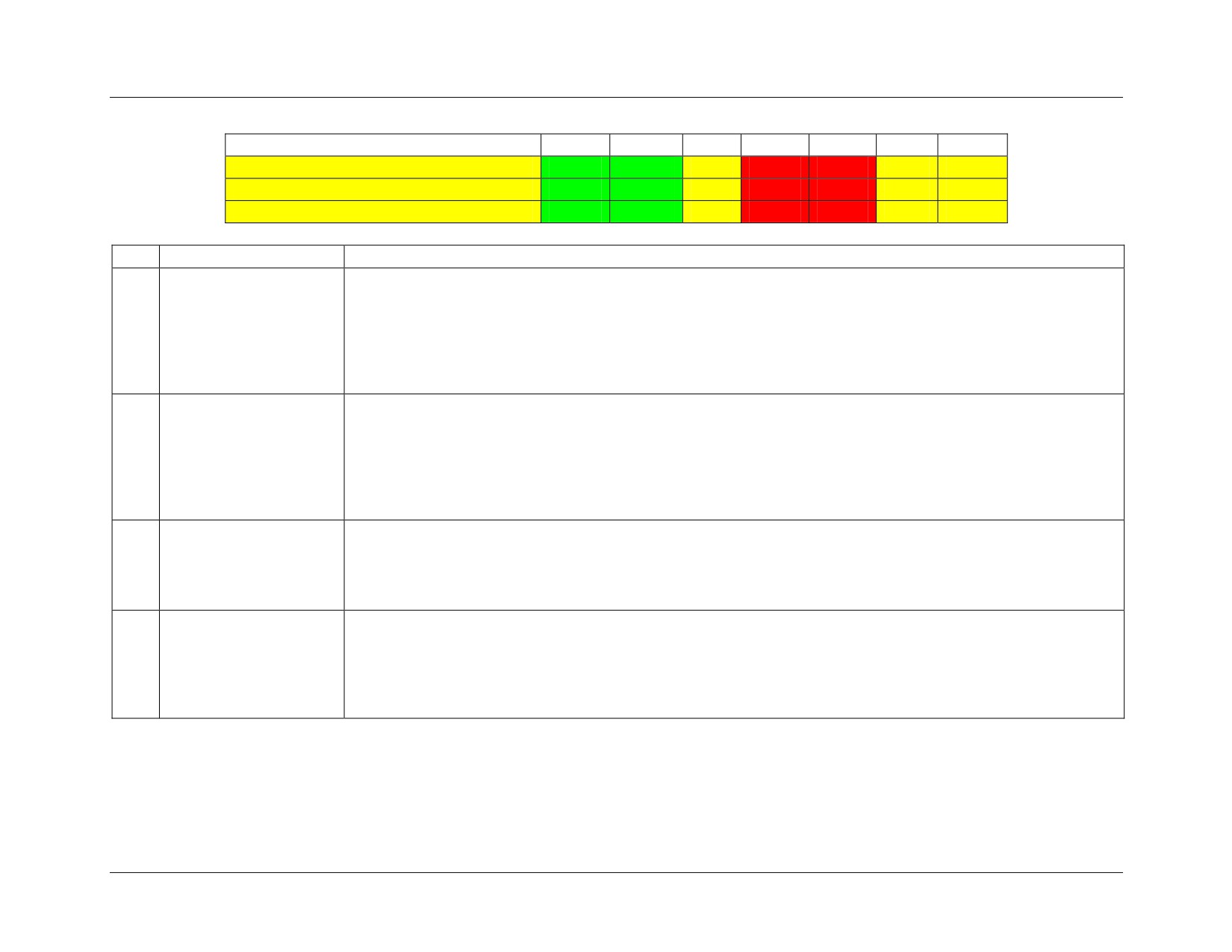
For Official Use Only
CBRN Functional Needs Analysis/Functional Solution Analysis
Chapter 12. Operational Shield Tasks
Table 12.11-1. OPSHLD 11: Capability and Deficiency Assessment
Capability: JTF HQ Staff
M1
M2
M3
M4
M5
M6
M7
Current Overall Capability1
G2
G3
Y4
R5
R6
Y7
Y8
Near/Mid-Term Overall Capability
G
G
Y
R
R
Y
Y
Far-Term Overall Capability
G
G
Y
R
R
Y
Y
FAA Measure
Scale
M1
Operational plans
G: Threat-based, specific, flexible Protective Posture Protocols (including measures and procedures) are incorporated into
establish CBRN/TIM
plans and disseminated to all units in the force. All personnel are trained and ready to perform the associated protective
protective measures and
actions.
operating procedures.
Y: General Protective Posture Protocols are incorporated into plans and disseminated to force units. Unit personnel are
trained and ready to peform protective actions.
R: Protective Posture Protocols are inadequate, not widely disseminated, and/or force personnel are not trained and/or
ready to perform protective actions.
M2
Protective measures
G: Threat-based, specific, flexible Protective Posture Protocols (including measures and procedures) are incorporated into
account for specific
plans and disseminated to all units in the force. All personnel are trained and ready to perform the associated protective
potential threats.
actions.
Y: General Protective Posture Protocols are incorporated into plans and disseminated to force units. Unit personnel are
trained and ready to peform protective actions.
R: Protective Posture Protocols are inadequate, not widely disseminated, and/or force personnel are not trained and/or
ready to perform protective actions.
M3
Adequate resources are
G: CBRND systems and resources are available in plan-identified quantities and types to implement identified protective
available to implement the
actions.
required protective
Y: CBRND systems and resources are available in sufficient quantities and types to support protective measures.
measures.
Adjustments are made to adjust to limitations in quantities and types of specific CBRND systems.
R: CBRND systems and/or resources are inadequate or not available to implement protective measures.
M4
Forces trained and
G: Forces are fully trained, exercised, evaluated, and equipped to conduct sustained operations witin a CBRN/TIM
equipped to operate in a
environment under expeditionary/forced-entry conditions.
CBRN/TIM environment
Y: Forces are trained, exercised, evaluated, and equipped to conduct operations within a CBRN/TIM environment under
under expeditionary/
expeditionary/forced-entry conditions.
forced-entry conditions.
R: Training, exercising, evaluation, and/or equipping of forces to conduct operations within a CBRN/TIM environment
under expeditionary and/or forced-entry conditions is inadequate or nonexistent.
103
For Official Use Only
For Official Use Only
CBRN Functional Needs Analysis/Functional Solution Analysis
Chapter 12. Operational Shield Tasks
M5
Operations in CBRN/TIM
G: JTF expeditionary/forced-entry forces (including military, eligible civilians, and MWAs) are adequately equipped and
environment can be
possess ready access to sufficient CBRND resources to support sustained operations through multiple CBRN/TIM attacks
sustained based upon
across the spectrum of operations and without unplanned and unforecasted resupply.
organic and issued CBRN/
Y: JTF expeditionary/forced-entry forces (including military and eligible civilians) are equipped and possess ready access
TIM protective assets.
to sufficient CBRND to support sustained operations through multiple CBRN/TIM attacks involving major operations
with planned and forecasted resupply.
R: JTF expeditionary/forced-entry forces are inadequately equipped and/or possess limited access to CBRND resoruces to
sustain operations through multiple CBRN/TIM attacks and/or are reliant upon resupply.
M6
COLPRO is established
G: Operational CPSs are available in required quantities and types to support the full range of envisioned and planned
and operational for forces.
operations.
Y: Operational CPSs are available in sufficient types and quantities to support major operations.
R: Operational CPSs are inadequate or nonexistent to support operations.
M7
Forces are trained to
G: Doctrine, policy, procedures, TTPs, and training adequately address the rapid mitigation of CBRN/TIM releases
rapidly mitigate CBRN/
affecting the force. Detection and warning of a release are sufficient to permit attainment of appropriate Protective
TIM releases in or near
Posture Protocol.
areas that could adversely
Y: Doctrine, policy, procedures, TTPs, and training address the mitigation of CBRN/TIM releases affecting the force.
affect forced-entry
Protective Posture Protocol is performed upon detection and warning.
operations.
R: Doctrine, policy, procedures, TTPs, and/or training for mitigation of CBRN/TIM releases and/or detection and/or
warning of a release is inadequate or nonexistent.
1 DOTMLPF exists for the planning, movement, and positioning of CBRND materiel in support of operations. However, DOTMLPF is inadequate for sustained operations within
a CBRN/TIM environment and for expeditionary and forced-entry operations with reduced logistical footprints. DOTMLPF is also inadequate or nonexistent addressing CBRND
of MWAs.
2 The JTF staff planning incorporates Protective Posture Protocols developed and disseminated by the COCOM. The protocols are adjusted based upon the potential threat and the
JTF staff’s assessment of force vulnerabilities, risks, mission, and the CBRN/TIM threat. Flexibility for JTF elements to further adjust the protocols for their conditions, functions,
missions, and local threats are incorporated into the plan. However, the DOTMLPF for Protective Posture Protocols is inadequate or nonexistent addressing CBRND of MWAs.
3 The JTF staff planning incorporates Protective Posture Protocols developed and disseminated by the COCOM. The protocols are adjusted based upon the potential threat and the
JTF staff’s assessment of force vulnerabilities, risks, mission and the CBRN/TIM threat. Flexibility for JTF elements to further adjust the protocols for their conditions, functions,
missions, and local threats are incorporated into the plan. However, the DOTMLPF for Protective Posture Protocols is inadequate or nonexistent addressing CBRND of MWAs.
4 The allocation, placement and reallocation of protective assets is a function of the planning and operational control of the JTF Commander and JTF staff. Quantities, types, and
availability of CPSs are limited. Current CPSs are inadequate to support expeditionary and forced-entry operations, particularly in austere environments by highly mobile forces
and possessing reduced logistical footprints. The individual combat load places limitations upon weight and type of equipment and consumables. Protective equipment may be
reduced or eliminated despite threat level.
5 The JTF staff reviews identified forces and the potential threat for planned operations. Specified forces, time permitting, train and prepare for operations involving the potential
threat. Equipping the tasked force is an integral part of planning and preparation. The JTF staff tracks force readiness for planned operations. Readiness issues are addressed by the
staff. The combination of established force organic assets, material acquisitions, prepositioned material, available host-nation/coalition contributions, and movement of identified
CBRND resources from stockpiles and reallocation activities are pursued by the JTF staff to prepare and support deploying forces as outlined by the appropriate plan.
Expeditionary and forced-entry operations are a particular concern as most CBRND systems and associated logistics are not designed for a highly mobile force, with a reduced
logistical footprint, and for the initial period of operations until the theater matures (usually the first 30-90 days). Deploying units may not possess full CBRND resources and
capabilities during the initial stages of deployment and until after arrival within the AOR. Additionally, deploying MWAs (particularly MWDs) are not equipped and trained to
survive a CBRN/TIM environment. The JTF staff does not possess clear guidance for planning and providing CBRN/TIM protection training and CBRND protection resources to
deploying MWAs.
104
For Official Use Only