CHEMICAL, BIOLOGICAL, RADIOLOGICAL, AND NUCLEAR DEFENSE (CBRND) FUNCTIONAL NEEDS ANALYSIS. FINAL REPORT (2005) - page 16
For Official Use Only
CBRND Functional Needs Analysis/Functional Solution Analysis
Chapter 11. Strategic Theater Shield Tasks
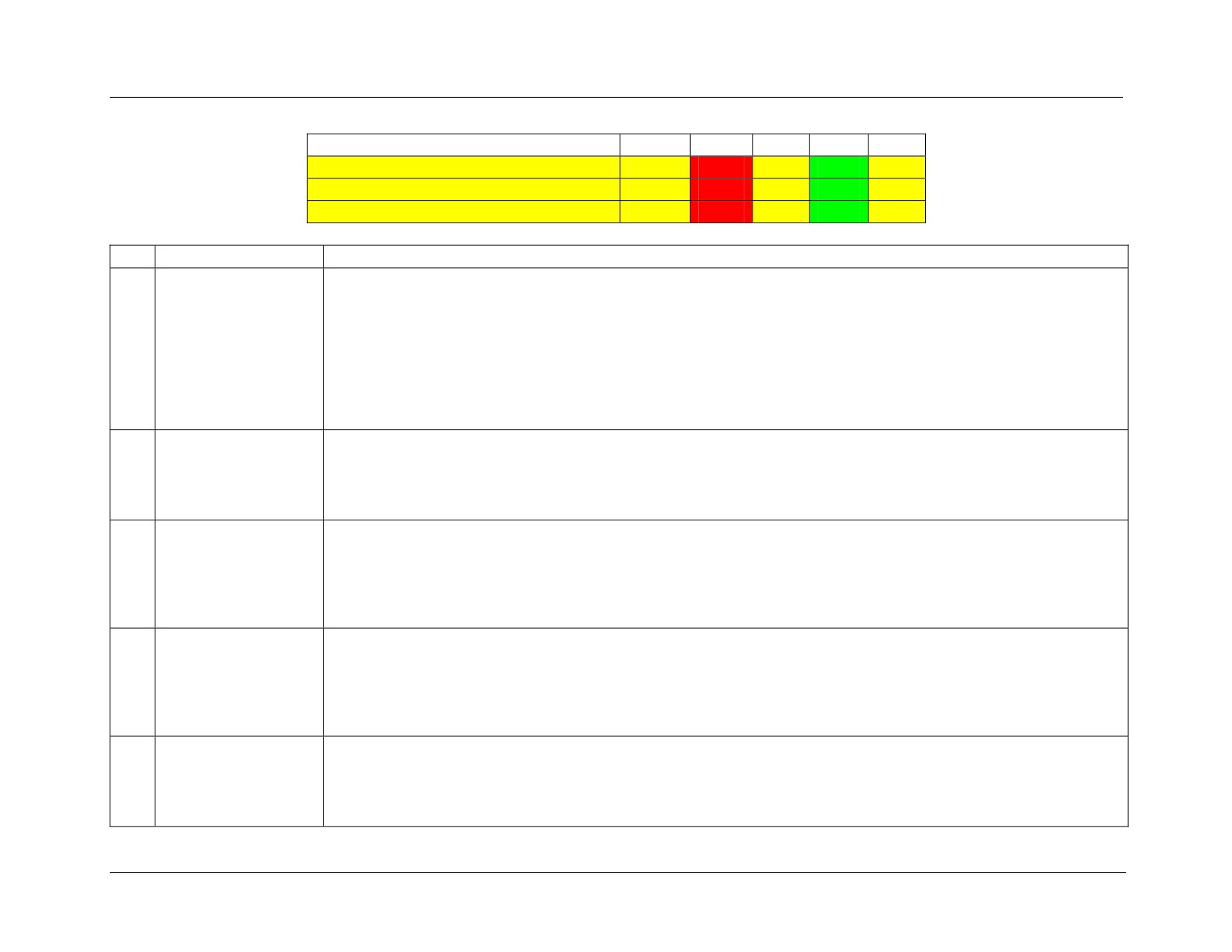
Table 11.1-1. STSHLD 1 Capability and Deficiency Assessment
Capability: COCOM Staff
M1
M2
M3
M4
M5
Current Overall Capability1
Y2
R3
Y4
G5
Y6
Near/Mid-Term Overall Capability
Y
R
Y
G
Y
Far-Term Overall Capability
Y
R
Y
G
Y
FAA Measure
Scale
M1
Guidance, intent, plans,
G: National and strategic guidance, intent, plans, and taskings are assessed to determine supporting CBRND systems
and taskings are
capabilities and means and encompass quantities and types necessary to support multiple concurrent Strategic Theater
assessed for required
military operations with threat.
CBRN/TIM protection
Y: National and strategic guidance, intent, plans, and taskings are assessed to determine supporting CBRND systems
requirements.
capabilities and means encompassing quantities and types necessary to support Strategic Theater military operations with
threat.
R: The assessment of national and strategic guidance, intent, plans, and/or taskings is inadequate or nonexistent to determine
supporting CBRND systems capabilities and/or means encompassing quantities and/or types necessary to support Strategic
Theater military operations with threat.
M2
Required protective
G: CBRND systems are available in plan-identified required quantities and types to support multiple concurrent Strategic
systems are available.
Theater military operations with threat.
Y: CBRND systems are available in sufficient quantities and types to support concurrent Strategic Theater operations with
threat. Adjustments to plan requirements are made to adjust to limitations in quantities and types of CBRND systems.
R: CBRND systems are not available in sufficient quantities and types to support concurrent theater operations with threat.
M3
Forces are equipped to
G: Strategic Theater forces are adequately equipped and possess ready access to CBRND resources to support Strategic
conduct theater
Theater operations with threat.
operations.
Y: Strategic Theater forces are equipped and possess access to CBRND resources upon notification to support Strategic
Theater operations with threat.
R: Strategic Theater forces are inadequately equipped or possess inadequate access to CBRND resources to support Strategic
Theater operations with threat.
M4
Forces are trained and
G: Strategic Theater forces are trained and exercised routinely for the attainment and assessment of the skills, knowledge, and
prepared to conduct
abilities to support Strategic Theater operations with threat.
theater operations.
Y: Selected Strategic Theater forces are trained and exercised routinely for the attainment and assessment of the skills,
knowledge, and abilities to support theater operations with threat. Remaining strategic forces are trained and exercised upon
notification to prepare for Strategic Theater operations with threat.
R: Training and exercising of strategic forces for Strategic Theater operations with threat is inadequate or nonexistent.
M5
Protection capability
G: Plans, guidance, threats, and taskings are assessed to determine CBRND capability requirements for support of multiple
requirements are
concurrent Strategic Theater operations with threat.
determined.
Y: Plans, guidance, threats, and taskings are assessed to determine CBRND capability requirements for support of Strategic
Theater operations with threat.
R: The process for determination and assessment of CBRND protection capability requirements is inadequate or nonexistent.
6
For Official Use Only
For Official Use Only
CBRND Functional Needs Analysis/Functional Solution Analysis
Chapter 11. Strategic Theater Shield Tasks
1 Adequate DOTMLPF exists to assess requirements, identify and allocate resources, and equipping the force. DOTMLPF is not adequate for determination of the actual CBRND
requirements for concurrent operations as defined in current national and Strategic Theater policy. DOTMLPF is also inadequate for this task to support sustained operations
within a CBRN/TIM environment, particularly expeditionary operations during the first 30-60 days.
2 Plans, guidance, threats, and taskings are assessed by the COCOM staff to determine operational requirements, including CBRND. However, dual taskings can occur on specific
resources necessitating changes in taskings for concurrent operations. Limitations upon resource availability may necessitate adjustments to the planned mix and quantities. These
adjustments may impact optimal CBRND protection with implications for operational planning and support.
3 Available CBRND systems are not available in sufficient quantities to support concurrent military operations. CBRND systems required to support operations are identified by
specific plans. However, the requirements of these plans are not always correlated with other plans. Comparison is essential to relate plan identified CBRND requirements against
existing and programmed quantities and types. Comparison must consider support requirements of two or more concurrent operations with CBRN/TIM threat. Expeditionary
operations are a particular concern. Existing COLPRO systems are not generally designed for a highly mobile force, with a reduced logistical footprint, and the initial period of
operations until the theater matures (usually the first 30-90 days).
4 Strategic Theater forces are adequately equipped or resources are accessible to support Strategic Theater operations. However, expeditionary and concurrent operations remain a
concern.
5 Strategic Theater forces are trained and prepared to support Strategic Theater operations.
6 Plans, guidance, threats, and taskings are assessed by the COCOM staff to determine operational CBRND capability requirements. However, dual taskings can occur on specific
resource capabilities necessitating changes in taskings for concurrent and operations. Identification of capabilities supporting sustained operations within a CBRN/TIM
environment and expeditionary operations during the first 30-60 days are a concern.
7
For Official Use Only
For Official Use Only
CBRND Functional Needs Analysis/Functional Solution Analysis
Chapter 11. Strategic Theater Shield Tasks
11.1.3
Functional Solution Analysis
11.1.3.1
DOTLPF Assessment Summary
This section addresses the deficiencies and suggests potential non-materiel solutions. If there are
no non-materiel solutions, or they are only partial solutions, the remaining non-materiel need is
then stated. Materiel needs are assessed in the Ideas for Materiel Approaches (IMA) section.
1.
Deficiency: Dual taskings can occur on specific resources necessitating changes in taskings
for concurrent operations. Limitations upon resource availability may necessitate adjustments
to the planned mix and quantities, potentially impacting optimal CBRND protection with
implications for operational planning and support.
Non-Materiel Solutions: Doctrine: Institute in doctrine, policy, and procedures the central
correlation of Strategic Theater plans and taskings to identify CBRND support requirements
for two or more concurrent operations with CBRN/TIM threat with comparison to existing
and programmed quantities and types of CBRND systems and resources. Leadership:
Implement development of plans and taskings consistent with available CBRND capabilities
as determined by central correlation and comparison of Strategic Theater plans and taskings.
2.
Deficiency: Available CBRND systems are not available in sufficient quantities to support
concurrent military operations.
Non-Materiel Solutions: Doctrine: Institute in doctrine, policy, and procedures the central
correlation of Strategic Theater plans and taskings to identify CBRND support requirements
for two or more concurrent operations with CBRN/TIM threat with comparison to existing
and programmed quantities and types of CBRND systems and resources. Leadership:
Implement development of plans and taskings consistent with available CBRND capabilities
as determined by central correlation and comparison of Strategic Theater plans and taskings.
3.
Deficiency: The CBRN/TIM system requirements identified by specific plans are not
centrally correlated with other plans. Comparison is essential to identify CBRN/TIM systems
and supporting levels of consumables required for the anticipated duration of operations and
to consider support requirements of two or more concurrent operations with CBRN/TIM
threat.
Non-Materiel Solutions: Doctrine: Institute in doctrine, policy, and procedures the central
correlation of national and Strategic Theater plans and taskings to identify CBRN/TIM
support requirements for two or more concurrent operations with threat with comparison to
existing and programmed quantities and types of CBRND systems and resources, including
replenishment. Leadership: Implement development of plans and taskings consistent with
available CBRND capabilities as determined by central correlation and comparison of
national and strategic plans and taskings.
4.
Deficiency: Expeditionary and concurrent operations forces may be insufficiently equipped
to conduct theater operations.
Non-Materiel Solutions: Doctrine: Complete the Joint Capabilities Integration and
Development System (JCIDS) process and central correlation/comparison of national and
strategic plans to identify CBRND resources necessary and available to support
8
For Official Use Only
For Official Use Only
CBRND Functional Needs Analysis/Functional Solution Analysis
Chapter 11. Strategic Theater Shield Tasks
expeditionary operations during the first 30-90 days following commencement of hostilities
and with a reduced logistical footprint. Organization: Organization structures, resources,
staffing, and capabilities to conduct expeditionary operations while possessing reduced
logistical footprint and during the first 30-90 days of operations following commencement of
hostilities. Training: Train, exercise, and evaluate expeditionary capabilities of the force in a
CBRN/TIM threat with reduced logistical footprint during the initial 30-90 days of operation
using CBRND resources supporting expeditionary operations. Leadership: Recognize
differences and challenges associated with expeditionary operations during the first 30-90
days following commencement of hostilities and with a reduced logistical footprint; training
providing skills and knowledge to manage operations in these circumstances; and ability and
willingness to implement necessary changes and activities to prepare for and conduct
expeditionary operations with a CBRN/TIM threat. Facilities: Develop supporting
infrastructure for expeditionary operations during the first 30-90 days following
commencement of hostilities and with a reduced logistical footprint.
5.
Deficiency: Expansion of DOTMLPF for determination of actual CBRND requirements for
concurrent operations as defined in current national and Strategic Theater policy.
Non-Materiel Solutions: Doctrine: Institute in doctrine, policy, and procedures the central
correlation of Strategic Theater plans and taskings to identify CBRND support requirements
for two or more concurrent operations with CBRN/TIM threat with comparison to existing
and programmed quantities and types of CBRND systems and resources. Leadership:
Implement development of plans and taskings consistent with available CBRND capabilities
as determined by central correlation and comparison of Strategic Theater plans and taskings.
6.
Deficiency: Expansion of DOTMLPF to support sustained operations within a CBRN/TIM
environment, particularly expeditionary operations during the first 30-60 days.
Non-Materiel Solutions: Doctrine: Include in doctrine, policy, and procedures sustained
operations within a CBRN/TIM environment. Organization: Ensure resources, taskings, and
staff are in place or available to perform sustained operations within a CBRN/TIM
environment. Training: Train, exercise, and evaluate the force for sustained operations within
a CBRN/TIM environment. Leadership: Recognize criticality of readiness of the force for
potential sustained operations within a CBRN/TIM environment, training providing the skills
to manage the force in these circumstances, and willingness and ability to implement
necessary changes and activities to prepare and appropriately apply the force. Facilities:
Develop supporting infrastructure for expeditionary operations during the first 30-90 days
following commencement of hostilities and with a reduced logistical footprint.
11.1.3.2
IMA Assessment Summary
N/A
9
For Official Use Only
For Official Use Only
CBRND Functional Needs Analysis/Functional Solution Analysis
Chapter 11. Strategic Theater Shield Tasks
11.2 Task STSHLD 2: Provide for the allocation, sustainment, and positioning of
CBRN/TIM protection supplies, equipment, and systems
11.2.1
Functional Area Analysis
11.2.1.1
Definition
To ensure adequate, efficient, and timely availability of CBRN/TIM protection resources to the
force. This task includes the identification, stockpiling, prepositioning, movement, distribution,
and management of resources to optimize protection of the force against the effects of
CBRN/TIM agents. Encompasses the planning, programming, and oversight of acquisition
activities to obtain CBRN/TIM protection equipment, supplies, and systems to meet force
requirements against identified threats. Since units are vulnerable during initial period of arrival
in theater, CBRN/TIM protective assets must be on the ground early during deployment. The
CBRN/TIM threat in the area of responsibility (AOR) will drive timing and quantity of
protective assets required. Each Service possesses CBRND assets contributing to the overall
CBRN/TIM protection capability. Forward-positioned forces and prepositioning of equipment
will help overcome initial vulnerabilities. Protective assets include collective protection shelters
(CPSs), stockpile of protection supplies, protection of general equipment and supplies, and
medical resources. Nuclear, biological, and chemical (NBC) staff officers coordinate with
logisticians and operational planners to ensure CBRN/TIM protective assets are strategically
placed near the area where they will likely be needed. Supports assistance to nations provided
under military assistance and the family of engagement plans to eliminate WMD vulnerabilities.
11.2.1.2
Derivation
Joint Enabling Concept for CBRN/TIM Operations, Protection Joint Functional Concept, UJTL
(ST 1.1.2, ST 2.4.1.1, ST 6, ST 6.2, St 7.1.1, ST 9, ST 9.3, ST 9.4).
11.2.1.2.1
Supported Task: SNSHLD 12
11.2.1.2.2
Lateral Task: STSHA 3
11.2.1.2.3
Supporting Task: OPSHLD 8
11.2.1.3
Condition
Perform this task under conditions of:
Physical
1. Immediate to delayed danger, and potential long-term health hazard of atmospheric
weapons effects. (C1.3.3)
Military
1. Partially completed mission preparation. (C2.1.3)
10
For Official Use Only
For Official Use Only
CBRND Functional Needs Analysis/Functional Solution Analysis
Chapter 11. Strategic Theater Shield Tasks
2. Partial interoperability. (C2.2.6)
3. Partial joint staff integration. (C2.3.1.1)
4. Partial multinational integration. (C2.3.1.2)
5. Limited deployed supplies. (C2.8.2)
6. Sufficient CONUS resupply. (C2.8.3)
7. Slow pipeline responsiveness. (C2.8.3.1)
8. Limited prepositioned materiel. (C2.8.4)
9. Limited host-nation support. (C2.8.5)
10. Extensive commercial procurement. (C2.8.6)
Civil
1. Correct interdepartmental/interagency relationships. (C3.1.1.3)
11.2.2
Functional Needs Analysis
11.2.2.1
Capability and Deficiency Assessment Summary
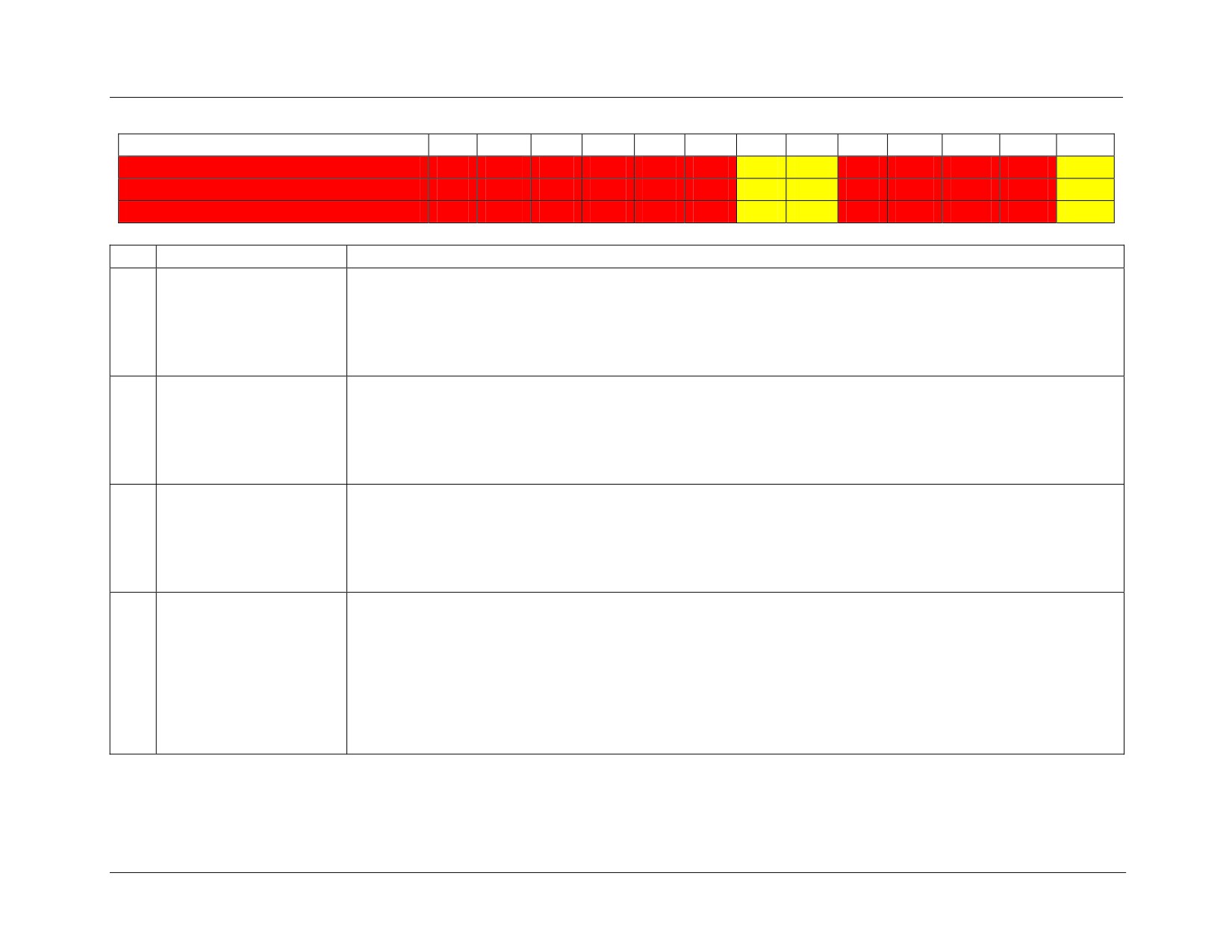
Table 11.2-1 discusses the only capability that exists to perform the task to the designated
standard.
Current Capability and Deficiency
General logistics DOTLPF exists addressing the allocation, sustainment, prepositioning, and
stockpiling of materiel. Deficiencies include inadequate quantities and types of COLPRO to
support envisioned and published Strategic Theater concurrent operations; CBRND of
deploying/redeploying/relocating/en route forces (as well as personnel at CONUS and selected
non-high-threat area [HTA] sites outside the Continental United States[OCONUS]); lack of
COLPRO in tactical/strategic airframes (particularly airlift) and supporting vessels (e.g., hospital
ships, cargo vessels, etc.); availability of stockpiles and prepositioned CBRND stocks; and
critical facility COLPRO and COLPRO systems (designs, quantities, and types) supporting
highly mobile and expeditionary forces with reduced logistical footprint and the initial period of
operations until maturity of the theater, usually the first 30-90 days from commencement of
hostilities. The overall current assessment is “red.”
Projected Near/Mid-Term Capability and Deficiency
No change is projected for this task.
Projected Far-Term Capability and Deficiency
No change is projected for this task.
11
For Official Use Only
For Official Use Only
CBRND Functional Needs Analysis/Functional Solution Analysis
Chapter 11. Strategic Theater Shield Tasks
Table 11.2-1. STSHLD 2: Capability and Deficiency Assessment
Capability: COCOM HQ
M1
M2
M3
M4
M5
M6
M7
M8
M9
M10
M11
M12
M13
Current Overall Capability1
R2
R3
R3
R4
R5
R6
Y7
Y8
R9
R10
R11
R12
Y13
Near/Mid-Term Overall Capability
R
R
R
R
R
R
Y
Y
R
R
R
R
Y
Far-Term Overall Capability
R
R
R
R
R
R
Y
Y
R
R
R
R
Y
FAA Measure
Scale
M1
Forces are equipped with or
G: Forces are adequately equipped with or have sufficient access to COLPRO to provide all personnel with rest and
possess access to COLPRO
recuperation (R&R) access more than once every 24 hours
within a 24-hour period.
Y: Forces are adequately equipped with or have sufficient access to COLPRO to provide all personnel with R&R access
once every 24 hours.
R: Forces inadequately equipment and/or possess insufficient access to COLPRO provide all personnel with R&R access
at least once every 24 hours
M2
Forces are equipped with
G: Strategic Theater forces are adequately equipped and possess ready access to CBRND resources to support national
individual CBRN/TIM
and Strategic Theater operations within a CBRN/TIM environment.
protective equipment.
Y: Strategic Theater forces are equipped and possess access to CBRND resources upon notification to support national
and Strategic Theater operations with threat and conduct sustained operations within a CBRN/TIM environment.
R: Strategic Theater forces are inadequately equipped and/or possess inadequate access to CBRND resources to support
national and Strategic Theater operations within a CBRN/TIM environment.
M3
Protection assets are
G: Strategic Theater forces are adequately equipped and possess ready access to CBRND resources to support national
readily available to joint
and Strategic Theater operations within a CBRN/TIM environment.
force elements.
Y: Strategic Theater forces are equipped and possess access to CBRND resources upon notification to support national
and Strategic Theater operations with threat and conduct sustained operations within a CBRN/TIM environment.
R: Strategic Theater forces are inadequately equipped and/or possess inadequate access to CBRND resources to support
national and Strategic Theater operations within a CBRN/TIM environment.
M4
Planned initial period of
G: CBRND systems are prepositioned in plan-identified required quantities and types to support initial periods of
operations is supportable
operations (30-90 days) against multiple CBRN/TIM attacks in staggered major conflicts with concurrent smaller-scale
by prepositioned CBRND
contingency operations.
assets.
Y: CBRND systems are prepositioned or available to support initial periods of operations (30-90 days) against multiple
CBRN/TIM attacks in staggered major conflicts with concurrent smaller-scale contingency operations. Adjustments to
plan requirements are made to adjust to limitations in quantities and types of CBRND systems.
R: CBRND systems are not prepositioned and/or available in sufficient quantities and types to support initial periods of
operations (30-90 days) against multiple CBRN/TIM attacks in staggered major conflicts with concurrent smaller-scale
contingency operations.
12
For Official Use Only
For Official Use Only
CBRND Functional Needs Analysis/Functional Solution Analysis
Chapter 11. Strategic Theater Shield Tasks
M5
Planned operations are
G: CBRND systems are stockpiled in plan-identified required quantities and types to support sustained operations against
supportable by current
multiple CBRN/TIM attacks in staggered major conflicts with concurrent smaller-scale contingency operations.
stockpiles of CBRND
Y: CBRND systems are stockpiled or available to support sustained operations against multiple CBRN/TIM attacks in
assets.
staggered major conflicts with concurrent smaller-scale contingency operations. Adjustments to plan requirements are
made to adjust to limitations in quantities and types of CBRND systems.
R: CBRND systems are not stockpiled and/or available in sufficient quantities and types to support sustained operations
against multiple CBRN/TIM attacks in staggered major conflicts with concurrent smaller-scale contingency operations.
M6
Critical facilities and
G: All identified critical facilities and activities are equipped with operational COLPRO.
activities are equipped with
Y: All identified critical facilities and activities possess or are programmed to be equipped with COLPRO.
COLPRO.
R: COLPRO is inadequate or nonexistent to support operations.
M7
Required CBRND
G: CBRND systems are stockpiled and prepositioned in plan-identified required quantities and types to support sustained
consumables are available.
operations against multiple CBRN/TIM attacks in staggered major conflicts with concurrent smaller-scale contingency
operations.
Y: CBRND systems are stockpiled and prepositioned or available to support sustained operations against multiple
CBRN/TIM attacks in staggered major conflicts with concurrent smaller-scale contingency operations. Adjustments to
plan requirements are made to adjust to limitations in quantities and types of CBRND systems.
R: CBRND systems are not stockpiled and/or prepositioned and/or available in sufficient quantities and types to support
sustained operations against multiple CBRN/TIM attacks in staggered major conflicts with concurrent smaller-scale
contingency operations.
M8
Required transportable
G: Operational transportable CPSs are available in required quantities and types to support the full range of envisioned
CPSs are available and
and planned operations.
operational.
Y: Operational transportable CPSs are available in sufficient types and quantities to support major operations.
R: Operational transportable CPSs are inadequate or nonexistent to support operations.
M9
Required mobile CPSs are
G: Operational mobile CPSs are available in required quantities and types to support the full range of envisioned and
available and operational.
planned operations.
Y: Operational mobile CPSs are available in sufficient types and quantities to support major operations.
R: Operational mobile CPSs are inadequate or nonexistent to support operations.
M10
Required generic unit
G: Generic unit CBRND kits are defined, prepositioned, stockpiled, and available in plan-identified required quantities to
CBRND kits are available
support a basic range of sustained operations against multiple CBRN/TIM attacks in staggered major conflicts with
and ready.
concurrent smaller-scale contingency operations
Y: Generic unit CBRND kits are defined, prepositioned, stockpiled, or available to support sustained operations against
multiple CBRN/TIM attacks in staggered major conflicts with concurrent smaller-scale contingency operations.
Adjustments to plan requirements are made to adjust to limitations in quantities of available generic unit CBRND kits.
R: Generic unit CBRND kits are not defined, prepositioned, stockpiled, and/or available in sufficient quantities to support
sustained operations against multiple CBRN/TIM attacks in staggered major conflicts with concurrent smaller-scale
contingency operations.
13
For Official Use Only
For Official Use Only
CBRND Functional Needs Analysis/Functional Solution Analysis
Chapter 11. Strategic Theater Shield Tasks
M11
Required non-mission
G: Non-mission support civilian CBRND is adequately stockpiled and prepositioned to support national and Strategic
support civilian CBRND
Theater operations with a CBRN/TIM threat.
equipment and supplies are
Y: Non-mission support civilian CBRND is generally stockpiled and deployed to support national and Strategic Theater
stockpiled and
operations with threat.
prepositioned.
R: Stockpiles and/or prepositioned CBRND equipment for non-mission support civilians are inadequate or nonexistent
and unable to support national and Strategic Theater operations with a CBRN/TIM threat.
M12
Required prepositioned
G: Prepositioned CBRND assets are identified and available in plan identified required types and quantities to support a
CBRND assets are at
basic range of sustained operations against multiple CBRN/TIM attacks in staggered major conflicts with concurrent
designated locations.
smaller-scale contingency operations.
Y: Prepositioned CBRND assets are available in adequate types and quantities to support sustained operations against
multiple CBRN/TIM attacks in staggered major conflicts with concurrent smaller-scale contingency operations.
Adjustments to plan requirements are made to adjust to limitations in quantities of available generic unit CBRND kits.
R: Prepositioned CBRND assets are inadequate or nonexistent to support sustained operations against multiple
CBRN/TIM attacks in staggered major conflicts with concurrent smaller-scale contingency operations.
M13
Documented assessment
G: National and Strategic Theater guidance, intent, plans, and taskings are assessed to determine and document
identifies unsatisfied
supporting CBRND systems capabilities and means and encompass quantities and types necessary to support multiple
required CBRND
concurrent Strategic Theater military operations with threat.
requirements addressing
Y: National and strategic guidance, intent, plans, and taskings are assessed to determine and document supporting
threat.
CBRND systems capabilities and means encompassing quantities and types necessary to support Strategic Theater
military operations with threat.
R: The assessment of national and strategic guidance, intent, plans, and/or taskings is inadequate or nonexistent to
determine and/or document supporting CBRND systems capabilities and/or means encompassing quantities and/or types
necessary to support Strategic Theater military operations with threat.
1 General logistics DOTMLPF exists addressing the allocation, prepositioning, and stockpiling of materiel. The application and implementation of this DOTMLPF is inadequate.
Further, the general logistics DOTMLPF requires review and adjustment to support the force during and following transformation.
2 Maneuvering forces are inadequately equipped with COLPRO capabilities. Insufficient COLPRO is available to support rest and resupply activities for all personnel within a 24-
hour period necessary to support sustained operations within a contaminated environment. This statement is particularly true of forward-operating light forces. Fixed-site
operations within a mature theater may possess sufficient COLPRO to provide access to personnel within a 24-hour period. Current doctrine, policies, plans, and TTPs do not
adequately address sustained operations within a CBRN/TIM environment. Current concept is contamination avoidance or withdrawal.
3 Forces are equipped or possess access to individual CBRN/TIM protective equipment when stationed in HTAs. Personnel assigned to CONUS and selection OCONUS locations
do not possess or have ready access to individual protective equipment. CBRND equipment is often not issued and available to deploying forces until after arrival in the area of
operations (AO). Protection while deploying en route to the AO is often not considered. The individual combat load places limitations upon weight and type of equipment and
consumables. Protective equipment may be reduced or eliminated despite threat level.
4 Available CBRND systems are not prepositioned in sufficient quantities and types to support operations. Many CBRND systems (e.g., transportable and mobile CPSs, individual
protective equipment [IPE], prophylaxis, etc.) are in limited quantities and not prepositioned until preparations for implementation of operations. Availability of certain systems
may be impacted by concurrent operations in other AOs. Expeditionary operations requiring rapid movement of highly mobile forces with limited notice into an austere
environment at the extremes of the lines of communication are a concern.
5 Available CBRND systems are not nationally stockpiled in sufficient quantities to support the envisioned and published national military concurrent operations. Limited
stockpiling at existing fixed sites within HTA does exist but is generally associated with the provisioning of the forces at those sites. Reallocation from stocks dispersed to
installations and units for deploying joint force elements is accomplished by the COCOM staff when necessary and possible.
6 Not all critical facilities and activities are equipped with COLPRO.
14
For Official Use Only
For Official Use Only
CBRND Functional Needs Analysis/Functional Solution Analysis
Chapter 11. Strategic Theater Shield Tasks
7 CBRND systems required to support operations are identified by specific plans. However, the requirements of these plans are not centrally correlated with other plans.
Comparison is essential to identify CBRN/TIM systems and supporting levels of consumables required for the anticipated duration of operations. Comparison must also consider
support requirements of two or more concurrent operations with CBRN/TIM threat. Expeditionary operations are a particular concern. CBRND systems are not generally designed
for a highly mobile force, with a reduced logistical footprint, and for the initial period of operations until the theater matures (usually the first 30-90 days).
8 Mature theater CPSs are available in limited quantities. These include Joint Transportable Collective Protection System (JTCOPS), Chemically Protected Deployable Medical
System (CP-DEPMEDS), Tent, Expandable, Modular, Personnel (TEMPER) systems, and Service-designed systems. Integration of Service-specific systems into joint plans
provides additional COLPRO capabilities. These, however, are identified in the Service component plans. They are not generally integrated in COCOM joint plans. Current CPSs
are inadequate to support expeditionary operations, particularly in austere environments by highly mobile forces and possessing reduced logistical footprint.
9 Quantities and availability of mobile COLPRO are inadequate. Mobile COLPRO exists in selected tactical combat and support vehicles. The quantities and types of these
vehicles are limited and are dedicated to specific missions. Current mobile COLPRO is inadequate to support operations by highly mobile forces. Airframe COLPRO is limited to
tactical combat airframes. Airlift (both tactical and strategic) are not equipped with COLPRO. Sea-based COLPRO (the CITADEL System) is available in specific classes of naval
warfare vessels (e.g., amphibious assault ship [LHA], destroyer, etc.). Most naval vessels (including supply and transport vessels, carriers, and others) do not possess COLPRO.
10 Generic unit CBRND kits are not defined in current doctrine. Limited CBRND asset assemblies do exist and are prepositioned at selected sites. However, these assemblies are
generally unit-specific.
11 Non-mission support civilian CBRND equipment is not stockpiled and prepositioned.
12 Available CBRND systems are not prepositioned in sufficient quantities to support the envisioned and published national military concurrent operations. Timing for
replenishment of systems is dependent upon manufacturing capabilities, system age, and funding availability. Production for replenishment by industry may require a period to
expand or establish manufacturing capabilities which could exceed the necessary replenishment timeline. This concern is particularly applicable when components or systems are
dependent upon non-U.S. manufacturing capabilities.
13 Plans, guidance, threats, and taskings are assessed by the COCOM staff to determine operational requirements, including CBRND. However, dual taskings can occur on specific
resources necessitating changes in taskings for concurrent operations. Unsatisfied requirements are reviewed for potential adjustments within available resources and/or
identification and action for resolution. Limitations upon resource availability may necessitate adjustments to the planned mix and quantities. These adjustments may impact
optimal CBRND protection with implications for operational planning and support. Identification of unsatisfied requirements are forwarded to Service and/or joint review and
resolution assistance.
15
For Official Use Only
For Official Use Only
CBRND Functional Needs Analysis/Functional Solution Analysis
Chapter 11. Strategic Theater Shield Tasks
11.2.3
Functional Solution Analysis
11.2.3.1
DOTLPF Assessment Summary
This section addresses the deficiencies and suggests potential non-materiel solutions. If there are
no non-materiel solutions, or they are only partial solutions, the remaining non-materiel need is
then stated. Materiel needs are assessed in the IMA section.
1.
Deficiency: Maneuvering forces are inadequately equipped with COLPRO capabilities.
Non-Materiel Solutions: Doctrine: Complete the JCIDS process and central correlation/
comparison of national and strategic plans to identify CBRND resources necessary and
available to support maneuver operations, particularly expeditionary operations during the
first 30-90 days following commencement of hostilities, with a reduced logistical footprint.
Organization: Develop organizational structures, resources, staffing, and capabilities to
conduct maneuver operations, particularly expeditionary operations during the first 30-90
days of operations following commencement of hostilities, while possessing reduced
logistical footprint. Training: Train, exercise, and evaluate maneuver capabilities
(particularly expeditionary capabilities) of the force in a CBRN/TIM threat with logistical
footprint during the initial 30-90 days of operations using organic, prepositioned, and
planned CBRND resource supporting operations. Leadership: Recognize differences and
challenges associated with maneuver operations, particularly expeditionary operations during
the first 30-90 days following commencement of hostilities, with a reduced logistical
footprint; training providing skills and knowledge to manage operations in these
circumstances; and ability and willingness to implement necessary changes and activities to
prepare for and conduct expeditionary operations with a CBRN/TIM threat. Facilities:
Develop supporting infrastructure for expeditionary operations during the first 30-90 days
following commencement of hostilities and with a reduced logistical footprint.
2.
Deficiency: Insufficient COLPRO is available to support rest and resupply activities for all
personnel within a 24-hour period necessary to support sustained operations within a
contaminated environment. This is particularly true of forward-operating light forces.
Non-Materiel Solutions: Doctrine: Enforce existing doctrine and policies.
3.
Deficiency: Current doctrine, policies, plans, and TTPs do not adequately address sustained
operations within a CBRN/TIM environment.
Non-Materiel Solutions: Doctrine: Include in doctrine, policy, and procedures sustained
operations within a CBRN/TIM environment. Organization: Ensure resources, taskings, and
staff are in place or available to perform sustained operations within a CBRN/TIM
environment. Organization: Ensure resources, taskings, and staff are in place or available to
perform sustained operations within a CBRN/TIM environment. Training: Train, exercise,
and evaluate the force for sustained operations within a CBRN/TIM environment.
Leadership: Recognize criticality of readiness of the force for potential sustained operations
within a CBRN/TIM environment, training providing the skills to manage the force in these
circumstances, and willingness and ability to implement necessary changes and activities to
prepare and appropriately apply the force.
16
For Official Use Only
For Official Use Only
CBRND Functional Needs Analysis/Functional Solution Analysis
Chapter 11. Strategic Theater Shield Tasks
4.
Deficiency: Personnel assigned to CONUS and selected OCONUS locations do not possess
or have ready access to individual protective equipment.
Non-Materiel Solutions: Doctrine: Institute in doctrine, policy, and procedures CBRND of
personnel (military and civilian) located in U.S. Department of Defense (DoD) installations,
sites, and facilities to include equipping, training, exercising, and evaluations for CBRN/TIM
survival. Organization: Ensure resources, taskings, and staff are in place or available to
support and conduct CBRND. Training: Train, exercise, and evaluate the force for
survivability within a CBRN/TIM environment. Leadership: Implement development of
plans and taskings consistent with stockpile support capabilities.
5.
Deficiency: CBRND equipment is not available to deploying forces after arrival in the AO.
Non-Materiel Solutions: Doctrine: Emphasize in doctrine, policies, and procedures for
preparation of the force for CBRND protection through deployment, redeployment,
relocation, and en route phases of movement. Organization: Ensure resources, taskings, and
staff are in place or available to perform CBRND operations within a CBRN/TIM
environment by deploying, redeploying, relocating, and en route forces. Training: Train,
exercise, and evaluate the force for CBRND operations within a CBRN/TIM environment
while deploying, redeploying, relocating, and en route. Leadership: Recognize criticality of
readiness of the force for potential CBRND operations within a CBRN/TIM environment
while deploying, redeploying, relocating, and en route. Facilities: Develop supporting
infrastructure for CBRND operations of the force while preparing, deploying, redeploying,
relocating, and en route.
6.
Deficiency: Protection while deploying en route to the AO is often not considered.
Non-Materiel Solutions: Doctrine: Enforce existing doctrine and policies. Organization:
Ensure resources, taskings, and staff are in place or available to perform CBRND operations
within a CBRN/TIM environment by en route forces. Training: Train, exercise, and evaluate
the force for CBRND operations within a CBRN/TIM environment while en route.
Leadership: Recognize criticality of readiness of the force for potential sustained operations
within a CBRN/TIM environment, training providing the skills to manage the force in these
circumstances, and willingness and ability to implement necessary changes and activities to
prepare and appropriately protect the force. Facilities: Develop supporting infrastructure for
CBRND operations of the force while en route.
7.
Deficiency: The individual combat load places limitations upon weight and type of
equipment and consumables. Protective equipment may be reduced or eliminated despite
threat level.
Non-Materiel Solutions: Leadership: Recognize impact upon mission success and force
survivability for reduction of CBRND measures not consistent with threat.
8.
Deficiency: Available CBRND systems are not stockpiled and prepositioned in sufficient
quantities to support concurrent military operations.
Non-Materiel Solutions: Doctrine: Institute in doctrine, policy, and procedures the central
correlation of national and Strategic Theater plans and taskings to identify CBRN/TIM
support requirements for two or more concurrent operations with threat with comparison to
existing and programmed quantities and types of CBRND systems and resources, including
17
For Official Use Only
For Official Use Only
CBRND Functional Needs Analysis/Functional Solution Analysis
Chapter 11. Strategic Theater Shield Tasks
replenishment. Leadership: Implement development of plans and taskings consistent with
stockpile and prepositioning support capabilities. Facilities: Develop supporting
infrastructure for CBRND stockpile and prepositioning supporting plans and taskings.
Stockpile and preposition as necessary to support determined requirements.
9. Deficiency: Not all critical facilities and activities are equipped with COLPRO.
Non-Materiel Solutions: Doctrine: Enforce existing doctrine and policies.
10. Deficiency: The CBRN/TIM system requirements identified by specific plans are not
centrally correlated with other plans. Comparison is essential to identify CBRN/TIM systems
and supporting levels of consumables required for the anticipated duration of operations and
to consider support requirements of two or more concurrent operations with CBRN/TIM
threat.
Non-Materiel Solutions: Doctrine: Institute in doctrine, policy, and procedures the central
correlation of national and Strategic Theater plans and taskings to identify CBRN/TIM
support requirements for two or more concurrent operations with threat with comparison to
existing and programmed quantities and types of CBRND systems and resources, including
replenishment. Leadership: Implement development of plans and taskings consistent with
available CBRND capabilities as determined by central correlation and comparison of
national and strategic plans and taskings.
11. Deficiency: Service-specific systems are not generally integrated in COCOM joint plans.
Non-Materiel Solutions: Doctrine: Emphasis in doctrine, policy, and procedures the central
correlation of national and Strategic Theater plans and taskings to identify CBRN/TIM
support requirements for two or more concurrent operations with threat with comparison to
existing and programmed quantities and types of CBRND systems and resources, joint and
Service-specific, including replenishment. Leadership: Implement development of plans and
taskings consistent with joint and Service-specific CBRND support capabilities.
12. Deficiency: Expeditionary operations are a particular concern. CBRND systems are not
generally designed for a highly mobile force in an austere environment at the extremes of the
lines of communication, with a reduced logistical footprint, and for the initial period of
operations until the theater matures (usually the first 30-90 days).
Non-Materiel Solutions: Doctrine: Complete the JCIDS process and central correlation/
comparison of national and strategic plans to identify CBRND resources necessary and
available to support expeditionary operations during the first 30-90 days following
commencement of hostilities and with a reduced logistical footprint. Organization: Develop
organizational structures, resources, staffing, and capabilities to conduct expeditionary
operations while possessing reduced logistical footprint and during the first 30-90 days of
operations following commencement of hostilities. Training: Train, exercise, and evaluate
expeditionary capabilities of the force in a CBRN/TIM threat with a reduced logistical
footprint during the initial 30-90 days of operations using CBRND resources supporting
expeditionary operations. Leadership: Recognize differences and challenges associated with
expeditionary operations during the first 30-90 days following commencement of hostilities
and with a reduced logistical footprint; training providing skills and knowledge to manage
operations in these circumstances; and ability and willingness to implement necessary
18
For Official Use Only
For Official Use Only
CBRND Functional Needs Analysis/Functional Solution Analysis
Chapter 11. Strategic Theater Shield Tasks
changes and activities to prepare for and conduct expeditionary operations with a
CBRN/TIM threat. Facilities: Develop supporting infrastructure for CBRND of highly
mobile forces.
13. Deficiency: Current mobile COLPRO is inadequate in quantities, types, and availability to
support operations by highly mobile forces.
Non-Materiel Solutions: Doctrine: Completion of analysis and central correlation/
comparison of national and strategic plans to identify quantities and types of mobile
COLPRO (and supporting consumables) necessary and available to support highly mobile
forces for envisioned plans and taskings. Organization: Develop organizational structures,
resources, staffing, and capabilities to conduct CBRND, including mobile COLPRO, of
highly mobile forces. Training: Train, exercise, and evaluate CBRND, including mobile
COLPRO, capabilities of the force in a CBRN/TIM threat during highly mobile force
operations. Leadership: Recognize differences and challenges associated with CBRND
operations by highly mobile forces; training providing skills and knowledge to manage
operations in these circumstances; and ability and willingness to implement necessary
changes and activities to prepare for and conduct expeditionary operations with a
CBRN/TIM threat. Facilities: Develop supporting infrastructure for CBRND of highly
mobile forces.
14. Deficiency: Airlift assets (both intratheater and intertheater) are not equipped with COLPRO.
Non-Materiel Solutions: Doctrine: Incorporate into doctrine, policy, and procedures the
provision of COLPRO to aircrew and passengers in appropriate airframes (military and
civilian). Training: Train, exercise, and evaluate aircrews and supporting entities for airframe
COLPRO operations for CBRND. Leadership: Recognize criticality of protecting aircrew
and passengers of appropriate intratheater and intertheater airframes from the effects of
CBRN/TIM agents. Facilities: Develop supporting infrastructure (e.g., logistics, aircraft
maintenance, etc.) for airframe COLPRO. NOTE: Non-materiel solutions will not address the
absence of COLPRO for air mobility airframes.
15. Deficiency: Most naval vessels (including supply and transport vessels, carriers, and others)
do not possess COLPRO.
Non-Materiel Solutions: Doctrine: Incorporate into doctrine, policy, and procedures the
provision of COLPRO for at-risk vessels (civilian contract and military). Organization:
Develop organizational structures, resources, staffing, and capabilities to support COLPRO
operations on vessels supporting operations and at risk. Training: Train, exercise, and
evaluate crews for vessel COLPRO operations for CBRND. Leadership: Recognize
differences and challenges associated with CBRND operations by at-risk vessels (both
military and contract civilian) supporting operations. Facilities: supporting infrastructure
(e.g., logistics, maintenance, power systems, etc.) for vessel COLPRO.
16. Deficiency: Generic unit CBRND kits are not defined in current doctrine.
Non-Materiel Solutions: Doctrine: Incorporate generic and unit-specific CBRND kits into
doctrine, policy, and procedures. Unit-specific CBRND kits should tailor generic kits.
Facilities: Develop supporting infrastructure for the acquisition, stockpiling, prepositioning,
maintenance, and movement of generic CBRND unit kits.
19
For Official Use Only
For Official Use Only
CBRND Functional Needs Analysis/Functional Solution Analysis
Chapter 11. Strategic Theater Shield Tasks
17. Deficiency: Non-mission support civilian CBRND equipment is not stockpiled and
prepositioned.
Non-Materiel Solutions: Doctrine: Establish in doctrine, policy, and procedures the
provisioning of civilians addressing the variation within a potential population. Institute in
doctrine, policy, and procedures the central correlation of national and strategic plans and
taskings to identify eligible civilian CBRND support requirements for two or more
concurrent operations with CBRN/TIM threat with comparison to existing and programmed
quantities and types of CBRND systems and resources, including replenishment and
prepositioning of CBRND assets for civilians. Training: Establish CBRND training, exercise,
and evaluation criteria and programs for eligible civilians and conduct CBRND training,
exercises, and evaluations, as appropriate. Leadership: Implement planning and management
of CBRND training, equipping, stockpiling, prepositioning, and protection of eligible
civilians. Facilities: Develop supporting infrastructure for the acquisition, stockpiling,
prepositioning, maintenance, and movement of eligible civilians CBRND resources.
18. Deficiency: General logistics DOTLPF address the allocation, prepositioning, and
stockpiling of materiel is inadequate.
Non-Materiel Solutions: Doctrine: General logistics DOTLPF requires review, adjustment,
and aggressive implementation to support the force during and following transformation.
11.2.3.2
IMA Assessment Summary
N/A
20
For Official Use Only
For Official Use Only
CBRND Functional Needs Analysis/Functional Solution Analysis
Chapter 11. Strategic Theater Shield Tasks
11.3 Task STSHLD 3: Coordinate medical prophylaxis to reduce impact of CBRN/TIM
11.3.1
Functional Area Analysis
11.3.1.1
Definition
To coordinate the issuance/administration of medical prophylaxes against the debilitating effects
of CBRN/TIM agents to the force, MWAs, and eligible civilians. This task includes emphasis
upon medical prophylaxes (including pre- and post-exposure) against the effects of CBRN/TIM
agents as a continuing requirement. Currently, personnel and MWAs can be immunized against
effects of some biological threat agents prior to exposure. Other pre- and post-exposure
prophylactic measures exist for a number of chemical, biological, and radiological agents.
Medical prophylaxes do not generally guarantee immunity but prevent or reduce the number and
severity of casualties when exposed to particular agents. These preventive measures also
decrease the impact upon operations resulting from exposure to CBRN/TIM agents.
11.3.1.2
Derivation
Joint Enabling Concept for CBRN/TIM Operations, An Operational Concept for Biological
Defense, Protection Joint Functional Concept, UJTL (ST 2.4.1.1, ST 5.4.1, ST 6, ST 9.4).
11.3.1.2.1
Supported Task: SNSHLD 12
11.3.1.2.2
Lateral Task: STSHA 7
11.3.1.2.3
Supporting Task: N/A
11.3.1.3
Condition
Perform this task under conditions of:
Physical
1. Immediate to delayed danger, and potential long-term health hazard of atmospheric
weapons effects. (C1.3.3)
Military
1. Partially completed mission preparation. ( 2.1.3)
2. Marginal to strong forces assigned. (C2.2.1)
3. Fair personnel nutrition and health. (C2.2.4.1)
4. Good personnel physical conditioning. (C2.2.4.3)
5. Poor mission-essential government-service civilian physical conditioning. (C2.2.4.3 -
NEW2)
2 The current UJTL condition description applies only to military personnel. The description should be expanded to include
essential government service civilians.
21
For Official Use Only
For Official Use Only
CBRND Functional Needs Analysis/Functional Solution Analysis
Chapter 11. Strategic Theater Shield Tasks
6. Poor mission-essential contract-service civilian physical conditioning. (C2.2.4.3 -
NEW3)
7. Negligible personnel experience. (C2.2.4.5)
8. Limited deployed supplies. (C2.8.2)
9. Limited prepositioned materiel. (C2.8.4)
Civil
1. Fair civil health. (C3.3.1.4)
2. High health risk. (C3.3.1.5)
11.3.2
Functional Needs Analysis
11.3.2.1
Capability and Deficiency Assessment Summary
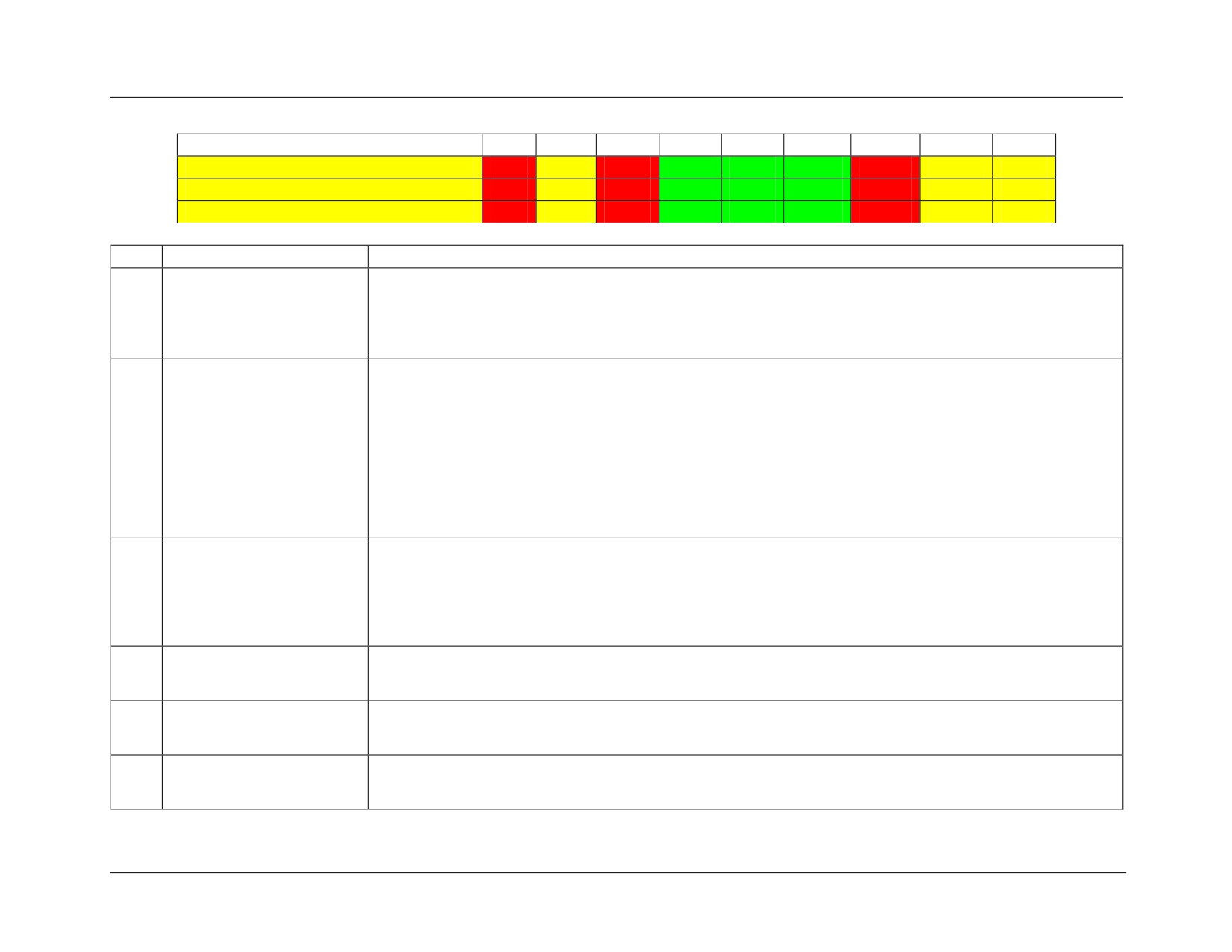
Table 11.3-1 discusses the only capability that exists to perform the task to the designated
standard.
Current Capability and Deficiency
The only identified individual capability is the coordination of issuance and administration of
medical prophylaxis to the military force against the debilitating effects of CBRN/TIM agents.
Doctrine, policy, and procedures exist for the coordination of issuance and administration of
medical prophylaxis to the military force against the debilitating effects of CBRN/TIM agents.
Deficiencies include the lack of medical prophylaxes for all threat CBRN/TIM agents,
predeployment medical screenings do not consider prior presymptomatic low-dose CBRN/TIM
exposures and associated potential long-term effects as relates to CBRN/TIM threats, the wide
variance in efficacy of existing prophylaxes, lack of prophylaxes for MWDs, the inadequate
provision of medical prophylaxes to eligible civilians, and the inadequacy of existing doctrine,
policy, and procedures for MWAs and eligible civilians. The overall current capability is
“yellow.”
Projected Near/Mid-Term Capability and Deficiency
No change is projected for this task.
Projected Far-Term Capability and Deficiency
No change is projected for this task.
3 The current UJTL condition description applies only to military personnel. The description should be expanded to include
essential contractor service personnel.
22
For Official Use Only
For Official Use Only
CBRND Functional Needs Analysis/Functional Solution Analysis
Chapter 11. Strategic Theater Shield Tasks
Table 11.3-1. STSHLD 3: Capability and Deficiency Assessment
Capability: COCOM Staff
M1
M2
M3
M4
M5
M6
M7
M8
M9
Current Overall Capability1
R2
Y3
R4
G5
G6
G7
R8
Y9
Y10
Near/Mid-Term Overall Capability
R
Y
R
G
G
G
R
Y
Y
Far-Term Overall Capability
R
Y
R
G
G
G
R
Y
Y
FAA Measure
Scale
M1
Forces are protected by
G: Medical CBRND countermeasures exist for all threat CBRN and high-risk TIM agents and encompass all eligible
medical prophylaxes.
at-risk populations.
Y: Medical CBRND countermeasures exist for selected high-threat CBRN and high-risk TIM agents for U.S. military
and eligible civilian members.
R: Medical CBRND countermeasures are inadequate or do not exist for high-threat CBRN and high-risk TIM agents.
M2
All theater medical facilities
G: All theater medical facilities are equipped and exercised for the reception, decontamination, and treatment of
are able to treat contaminated/
contaminated/exposed casualties. All assigned medical practitioners and medical support personnel (including
exposed casualties.
emergency medical services [EMS], medical aides, etc.) are formally trained, and receive recurring training, for the
evaluation and care of contaminated/exposed casualties. Medical provider based medical treatment is provided, when
needed, throughout the process from reception to post-decontamination.
Y: Theater medical facilities are equipped and exercised for the reception, decontamination, and treatment of
contaminated/exposed casualties. Formal training is available to for the evaluation and treatment of contaminated/
exposed casualties. Medical support personnel (including EMS, medical aides, etc.) are trained, on the evaluation,
decontamination, and care of contaminated/exposed casualties.
R: The ability of theater medical facilities to treat contaminated/exposed casualties is inadequate or nonexistent.
M3
Forces are protected against
G: Strategic Theater forces are equipped, prepared, and possess ready access to CBRND measures and assets against
all identified threat
all known CBRN/TIM threat capabilities.
CBRN/TIM capabilities.
Y: Strategic Theater forces are equipped, prepared, and possess ready access to CBRND measures and assets against
known CBRN/TIM threat capabilities upon notification to support Strategic Theater operations with threat.
R: Strategic Theater forces are inadequately equipped, prepared, and/or possess inadequate access to CBRND
resources to support Strategic Theater operations with CBRN/TIM threat.
M4
Force completed deployment
G: Strategic Theater forces are medically trained and prepared for operations with threat.
medical training and
Y: Selected Strategic Theater forces are generally medically trained and prepared for operations with threat.
preparation.
R: Strategic Theater forces medical training and preparedness for operations with threat is inadequate or nonexistent.
M5
Force completed
G: Strategic Theater forces are predeployed screened for operations with threat.
predeployment screening.
Y: Selected Strategic Theater forces generally are predeployment screened for operations with threat.
R: Strategic Theater forces predeployment screening for operations with threat is inadequate or nonexistent.
M6
Force completed post-
G: Strategic Theater forces are post-deployed screened for operations with threat.
deployment screening.
Y: Selected Strategic Theater forces generally are post-deployed screened for operations with threat.
R: Strategic Theater forces post-deployment screening from operations with threat is inadequate or nonexistent.
23
For Official Use Only
For Official Use Only
CBRND Functional Needs Analysis/Functional Solution Analysis
Chapter 11. Strategic Theater Shield Tasks
M7
All MWAs are prepared for
G: Strategic Theater MWA forces are fully equipped, trained, and prepared for survival while performing operations
operations in CBRN/TIM
involving CBRN/TIM threat.
environment.
Y: Selected Strategic Theater MWA forces are fully equipped, trained, and prepared for survival while performing
operations involving CBRN/TIM threat.
R: Strategic Theater MWA forces are inadequately equipped, trained, and/or prepared for survival while performing
operations involving CBRN/TIM threat.
M8
Medical prophylaxes are
G: Medical prophylaxis is available for issue and administration to all at-risk populations; including military
available for
members, eligible civilians, and MWAs.
issue/administration.
Y: Medical prophylaxis is available for issue and administration to military personnel.
R: Availability of medical prophylaxis is inadequate or nonexistent for issue and administration.
M9
Medical prophylaxes are
G: Medical prophylaxis is issued and administered to all at-risk populations; including military members, eligible
issued/administered.
civilians, and MWAs.
Y: Medical prophylaxis is issued and administered to military personnel.
R: Medical prophylaxis issuance and/or administration is inadequate or nonexistent.
1 DOTMLPF is effective for the military force. However, existing DOTMLPF is inadequate, or nonexistent, for MWA and eligible civilians.
2 Medical prophylaxis does not exist for all threat CBRN/TIM and TIM agents. Current prophylaxis and supporting doctrine, policy, and procedures to not address presymptomatic
medical CBRN/TIM protective countermeasures by other than U.S. forces, excluding MWA and eligible civilians. Prophylaxis against most high-threat TIMs are not currently
available due to the relatively recent consideration of these agents as a potential threat. Additionally, the efficacy of existing prophylaxis, particularly vaccines, widely varies.
3 Existing medical facilities within an HTA exercise the reception of contaminated/exposed casualties. Training for the treatment of contaminated/exposed casualties is available
through the Army Medical Department but is not mandatory for medical practitioners identified for deployment or assignment where there exists a CBRN/TIM threat. The ability
of the COCOM staff to ensure medical capabilities for CBRND is limited by routine medical operations and requirements. Periodic exercises are performed with medical activities,
but on a limited basis, to provide training opportunities and to assess capabilities. Treatment of casualties is currently performed following completion of casualty decontamination.
Generally, casualty care until completion of decontamination is performed by medical corpsmen, not medical practitioners.
4 Forces are not protected against all identified threat CBRN/TIM capabilities. Medical prophylaxis does not exist for all threat CBRN/TIM and TIM agents.
5 The COCOM staff tracks units identified to support plans for their readiness to deploy. However, the routine rotation and movement of personnel to and from units, the
administration period of some vaccines for acquired immunity, and other taskings impact medical readiness. Completion of deployment medical training and preparation is
contingent upon timing of notice to deployment, availability of medical personnel to perform training and preparation, and the availability of sufficient medical prophylaxis to meet
preparation requirements. Short-notice operations and reallocated taskings also impact medical predeployment readiness for the threat. Forces have, and may in the future, require
medical training and preparation upon arrival in the AOR. The COCOM staff plans generally include provisions for medical preparation of the force including both predeployment
and AOR arrival.
6 COCOM plans include the medical review of personnel identified against deployment taskings. Screenings of deployable personnel are periodically performed for potential
limitations. Often, these are associated with annual medical physicals. However, predeployment medical screenings do not consider prior presymptomatic low-dose CBRN/TIM
exposures, associated potential cumulative long-term effects, and the potential threat. The routine rotation and movement of personnel to and from units. Timing of notice of
deployment and the availability of medical personnel impact the conduct of predeployment screenings. Short-notice operations and reallocated taskings may also impact the
conduct of predeployment medical screenings. The COCOM staff plans attempt to provide for early (prior to deployment notice) and continued medical screening of tasked forces.
Plans also include provisions for the conduct of predeployment screenings by medical personnel upon notification of deployment. However, annual physicals, when used to meet
deployment screening requirements, may be conducted several months before a deployment. Often, a record review is conducted of the period following the physical for
indications of issues precluding deployment.
7 COCOM staff planning includes medical review and screening prior to returning units to their originating location or before release. These reviews and screening activities are
frequently performed at the returning unit’s location. Units are medically held until completion of medical review and screening before release.
8 MWAs are not equipped, trained, and prepared for survival in a CBRN/TIM environment.
24
For Official Use Only
For Official Use Only
CBRND Functional Needs Analysis/Functional Solution Analysis
Chapter 11. Strategic Theater Shield Tasks
9 Medical prophylaxes are developed for the military force. Prophylaxis for MWAs is virtually nonexistent. Prophylaxis for eligible civilians is not addressed. Availability of
prophylaxis is questionable for issue and administration to eligible civilians. The issue and administration of prophylaxis to eligible civilians requires review due to questions
regarding applicability to the range of body types, ages, and physical/medical factors inherent within a potential population, as well as possible long-term health issues and legal
implications. The availability of medical prophylaxis to military force members is dependent upon identification of the threat, preplanning for a threat, positioning of stocks for
issue and administration, timing of notification to administer/issue prophylaxis, availability of medical personnel to perform administration (if required), and the available quantity
of sufficient medical prophylaxis to meet requirements. Short-notice operations and reallocated taskings impact the administration and issue of prophylaxis for the threat. Forces
have, and may in the future, require medical prophylaxis administration/issue upon arrival in the AOR. However, the administration of many vaccines require multiple
administrations over a period of time for acquired immunity. The COCOM staff plans generally include provisions for medical preparation of the force.
10 Medical prophylaxis is issued/administered for identified CBRN/TIM threats to the military force. The administration and issuance of prophylaxis is addressed by the COCOM
staff during the planning and support for operations. Prophylaxis for MWA is virtually nonexistent. Prophylaxis for eligible civilians is not adequately addressed in current
doctrine, policy, and procedures.
25
For Official Use Only
For Official Use Only
CBRND Functional Needs Analysis/Functional Solution Analysis
Chapter 11. Strategic Theater Shield Tasks
11.3.3
Functional Solution Analysis
11.3.3.1
DOTLPF Assessment Summary
This section addresses the deficiencies and suggests potential non-materiel solutions. If there are
no non-materiel solutions, or they are only partial solutions, the remaining non-materiel need is
then stated. Materiel needs are assessed in the IMA section.
1.
Deficiency: Current prophylaxis and supporting doctrine, policy, and procedures do not
address presymptomatic medical CBRN/TIM protective countermeasures by other than U.S.
forces, excluding eligible civilians.
Non-Materiel Solutions: Doctrine: Develop doctrine, policy, and procedures addressing
eligible civilians during CBRND operations and the provision of CBRND protection,
including prophylaxis. Training: Establish CBRND training, exercise, and evaluation criteria
and programs for eligible civilians and conduct CBRND training, exercises, and evaluations.
Leadership: Implement and manage CBRND training, equipping, and protection of eligible
civilians.
2.
Deficiency: Current prophylaxis and supporting doctrine, policy, and procedures do not
address presymptomatic medical CBRN/TIM protective countermeasures by other than U.S.
forces, excluding MWAs.
Non-Materiel Solutions: Doctrine: Develop doctrine, policy, and procedures addressing
MWAs during CBRND operations and the provision of CBRND protection, including
prophylaxis. Training: Establish CBRND training, exercise, and evaluation criteria and
programs for MWAs and conduct CBRND training, exercises, and evaluations. Leadership:
Implement and manage CBRND training, equipping, and protection of MWDs.
3.
Deficiency: Prophylaxis administration programs widely vary.
Non-Materiel Solutions: Doctrine: Establish in doctrine, policy, and procedures the
application of baseline standards for prophylactic CBRND protection against all threat
agents. Leadership: Enforce compliance with established standards (see Doctrine) for
prophylactic CBRND protection.
4.
Deficiency: The ability of the COCOM staff to ensure medical capabilities for CBRND is
limited by routine medical operations and requirements.
Non-Materiel Solutions: Doctrine: Develop doctrine, policy, and procedures requiring
comprehensive participation and integration of all potentially affected personnel and
activities in CBRND exercises. Organization: Ensure that all affected entities are aware of
and participate in comprehensive exercises. Training: All personnel (military and
nonmilitary) are trained in appropriate CBRND protective measures. Leadership: Recognize
importance of Medical Services and balance with criticality for readiness to rapidly and
accurately perform CBRND and conduct medical operations associated with CBRN/TIM
environments and hazards. Recognition of the value of comprehensive exercises to enhance
readiness, survival, and promote interaction between activities.
5.
Deficiency: Forces are not protected against all identified threat CBRN/TIM capabilities.
26
For Official Use Only
For Official Use Only
CBRND Functional Needs Analysis/Functional Solution Analysis
Chapter 11. Strategic Theater Shield Tasks
Non-Materiel Solutions: Doctrine: Establish in doctrine, policy, and procedures the
application of standards for prophylactic CBRND protection against all threat agents.
Leadership: Enforce compliance with established standards (see Footnote 17 above) for
prophylactic CBRND protection.
6.
Deficiency: Forces have, and may in the future, require medical training and preparation
upon arrival in the AOR.
Non-Materiel Solutions: Doctrine: Emphasize in doctrine, policies, and procedures for
preparation of the force for CBRND protection during throughout deployment,
redeployment, relocation, and en route phases of movement. Organization: Ensure resources,
taskings, and staff are in place or available to perform CBRND operations within a
CBRN/TIM environment by deploying, redeploying, relocating, and en route forces.
Training: Train, exercise, and evaluate the force for CBRND operations within a CBRN/TIM
environment while deploying, redeploying, relocating, and en route. Leadership: Recognize
criticality of readiness of the force for potential CBRND operations within a CBRN/TIM
environment while deploying, redeploying, relocation, and en route; training providing the
skills to manage the force in these circumstances; and willingness and ability to implement
necessary changes and activities to prepare and appropriately protect the force. Facilities:
Develop supporting infrastructure for CBRND operations of the force while preparing,
deploying, redeploying, relocating, and en route.
7.
Deficiency: Predeployment medical screenings do not consider prior presymptomatic low-
dose CBRN/TIM exposures, associated potential cumulative long-term effects, and the
potential threat.
Non-Materiel Solutions: Doctrine: Establish in doctrine, policy, and procedures the
application of low-dose exposure limits and cumulative long-term low-dose exposures in
predeployment medical screenings. Leadership: Enforce compliance with established
doctrine, policy, and procedures (see Footnote 10 above) for low-dose exposure limits and
cumulative long-term low-dose exposures in predeployment medical screenings.
8.
Deficiency: MWAs are not equipped, trained, and prepared for survival in a CBRN/TIM
environment.
Non-Materiel Solutions: Doctrine: Establish doctrine, policy, and procedures CBRND
protection of MWAs (particularly MWDs) and training for CBRN/TIM environment
survival. Organization: Organizational consideration for maintenance and support of MWA
(particularly MWD) CBRND protective equipment, measures, and activities. Training:
Develop institutional and unit training of handlers and MWAs (particularly MWDs) for
CBRND measures and activities. Leadership: Ensure awareness and planning for CBRND
measures and requirements for MWD survivability. Facilities: Develop supporting
infrastructure for MWA (particularly MWD) CBRND (e.g., logistics, veterinary surveillance,
etc.).
9.
Deficiency: Prophylaxis for MWAs is virtually nonexistent.
Non-Materiel Solutions: Doctrine: Establish doctrine, policy, and procedures CBRND
protection of MWAs (particularly MWDs) and training for CBRN/TIM environment
survival. Organization: Organizational consideration for maintenance and support of MWA
27
For Official Use Only
For Official Use Only
CBRND Functional Needs Analysis/Functional Solution Analysis
Chapter 11. Strategic Theater Shield Tasks
(particularly MWD) CBRND protective equipment, measures, and activities. Training:
Develop institutional and unit training of handlers and MWAs (particularly MWDs) for
CBRND measures and activities. Leadership: Ensure awareness and planning for CBRND
measures and requirements for MWA (particularly MWD) survivability. Facilities: Develop
supporting infrastructure for MWA (particularly MWD) CBRND (e.g., logistics, veterinary
surveillance, etc.).
10. Deficiency: Prophylaxis for eligible civilians is not addressed.
Non-Materiel Solutions: Doctrine: Establish in doctrine, policy, and procedures
requirement to address the administration, provision, and application of medical CBRN/TIM
protective countermeasures by other than U.S. forces (e.g., civilians, non-U.S. forces, etc.).
Organization: Address organizational issues (e.g., who provides the equipment, support
forces to train and equip, etc.) related to the provision of CBRN/TIM protection to eligible
civilians, and non-U.S. forces. Training: Include eligible civilians in CBRND training,
exercises, and evaluations. Identify training requirements and responsibilities for non-U.S.
forces. Leadership: Ensure leadership awareness of criticality of resources and increased
dependence of military operations upon civilians. Personnel: Requirements eligible civilians
supporting the mission meet minimum standards for safe use of CBRND resources.
11. Deficiency: Availability of prophylaxis is questionable for issue and administration to
eligible civilians.
Non-Materiel Solutions: Doctrine: Establish in doctrine, policy, and procedures the
application of CBRND standards and prophylaxis for protection of eligible civilians
addressing the variation within a potential protected population. Training: Establish CBRND
training, exercise, and evaluation criteria and programs for eligible civilians and conduct
CBRN/TIM training, exercises, and evaluations, where appropriate. Leadership: Implement
and manage CBRND training, equipping, and protection of eligible civilians.
12. Deficiency: The issue and administration of prophylaxis to eligible civilians requires review
due to questions regarding applicability to the range of body types, ages, and physical/
medical factors inherent within a potential population, as well as possible long-term health
issues and legal implications.
Non-Materiel Solutions: Doctrine: Establish in doctrine, policy, and procedures the
application of CBRND standards and prophylaxis for protection of eligible civilians
addressing the variation within a potential protected population. Training: Establish CBRND
training, exercise, and evaluation criteria and programs for eligible civilians and conduct
CBRN/TIM training, exercises, and evaluations, where appropriate. Leadership: Implement
and manage CBRND training, equipping, and protection of eligible civilians.
13. Deficiency: The administration of vaccines frequently requires multiple administrations over
a period of time for acquired immunity.
Non-Materiel Solutions: Doctrine: Include in doctrine, policy, and procedures requirement
for CBRN/TIM protective prophylaxis protecting the force through the deployment cycle.
Organization: Establish organizational incentives to address CBRN/TIM protective
prophylaxis providing protection of the force throughout the deployment cycle. Leadership:
Ensure standards, criteria, and metrics for CBRN/TIM medical prophylaxis R&D are concise
28
For Official Use Only
For Official Use Only
CBRND Functional Needs Analysis/Functional Solution Analysis
Chapter 11. Strategic Theater Shield Tasks
and adequately protect the force throughout the deployment cycle with a minimum of
administrations, preferably one.
11.3.3.2
IMA Assessment Summary
N/A
29
For Official Use Only
For Official Use Only
CBRND Functional Needs Analysis/Functional Solution Analysis
Chapter 11. Strategic Theater Shield Tasks
11.4 Task STSHLD 4: Ensure adequate individual protection for eligible civilians
11.4.1
Functional Area Analysis
11.4.1.1
Definition
To ensure that civilians (including evacuees, host-nation personnel, contractors, and other
designated nonmilitary personnel) possess individual protection for survival. IPE must provide
optimal individual protection from CBRN/TIM by the proper use of masking devices (respiration
and ocular) and wear of protective gear and clothing (percutaneous). The equipment must ensure
survivability by prohibiting agents from entering the body while allowing individuals to perform
their tasks (which is dependent upon the type of activity performed by the individual) while
wearing it. While some performance degradation and physical encumbrances are inherent
because of the physical properties of the protective gear, the goal is to reduce the physical and
mental stresses of its wear without substantially degrading required mission performance.
Planners must include medical prophylaxes for eligible civilians. The afforded protection is
commensurate with the mission and performed task and may require protection to the same level
as military counterparts. Supports assistance to nations provided under military assistance and
the family of engagement plans to eliminate WMD vulnerabilities.
11.4.1.2
Derivation
Joint Enabling Concept for CBRN/TIM Operations, An Operational Concept for Biological
Defense, Protection Joint Functional Concept, UJTL (ST 4.2.4, ST 5.4.3, ST 6.2, ST 7, ST 9.4).
11.4.1.2.1
Supported Task: SNSHLD 12
11.4.1.2.2
Lateral Task: STSHA 4
11.4.1.2.3
Supporting Task: OPSHLD 6
11.4.1.3
Condition
Perform this task under conditions of:
Physical
1. Immediate to delayed danger, and potential long-term health hazard of atmospheric
weapons effects. (C1.3.3)
Military
1. Partially completed mission preparation. (C2.1.3)
2. Marginal to strong forces assigned. (C2.2.1)
3. Fair personnel nutrition and health. (C2.2.4.1)
4. Good personnel physical conditioning. (C2.2.4.3)
30
For Official Use Only
For Official Use Only
CBRND Functional Needs Analysis/Functional Solution Analysis
Chapter 11. Strategic Theater Shield Tasks
5. Poor mission-essential government-service civilian physical conditioning. (C2.2.4.3 -
NEW)
6. Poor mission-essential contract-service civilian physical conditioning. (C2.2.4.3 - NEW)
7. Negligible personnel experience. (C2.2.4.5)
8. Partial interoperability. (C2.2.6)
9. Limited prepositioned materiel. (C2.8.4)
Civil
1. Limited foreign government support. (C3.1.2.3)
2. Moderately opposed foreign public opinion. (C3.1.2.4)
3. Fair civil health. (C 3.3.1.4)
11.4.2
Functional Needs Analysis
11.4.2.1
Capability and Deficiency Assessment Summary
Current Capability and Deficiency
The only identified individual capabilities are the existing Noncombatant Evacuation Operations
(NEO) procedures addressing primarily military dependents at HTA fixed-site locations that
provide for the provisioning of minimal protective equipment drawn from mission stocks or
obtained commercially off-the-shelf (COTS, and the limited number of eligible civilians
provided and equipped with IPE as part of their primary function. Some government civilians are
provided and equipped with IPE as part of their primary function (e.g., hazardous materials, fire
response, readiness flight [Air Force]), and selected others. Deficiencies include the lack of a
clear definition of eligible civilians; inadequate doctrine, policy, and procedures addressing
CBRND of eligible civilians; the lack of IPE and medical prophylaxes addressing the variations
within the population (e.g., babies, young children, disabled, tall, short, thin, obese, pregnant,
etc.); and the absence of training, exercising, and evaluation of these personnel. The overall
current capability is “red.”
Projected Near/Mid-Term Capability and Deficiency
No change is projected for this task.
Projected Far-Term Capability and Deficiency
No change is projected for this task.
31
For Official Use Only
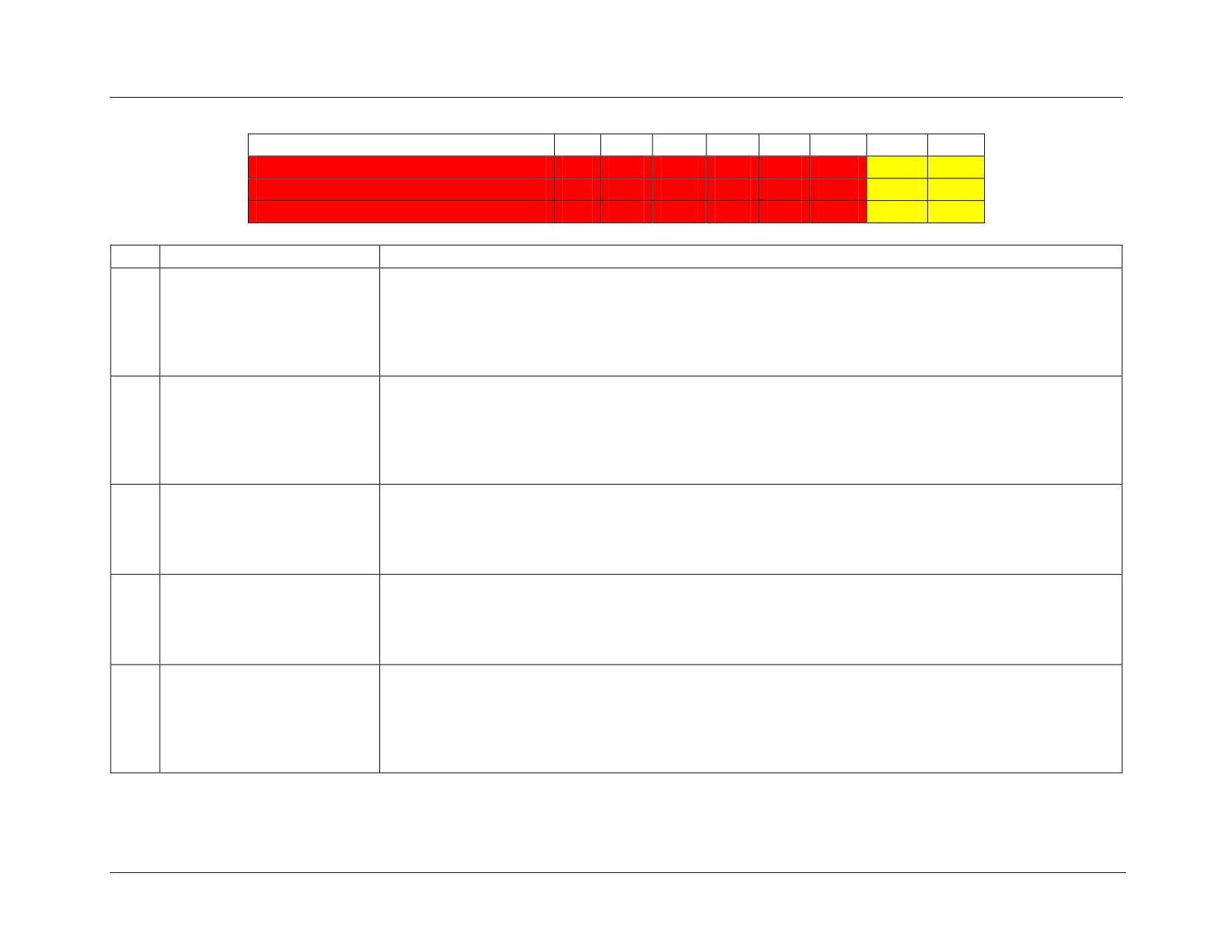
For Official Use Only
CBRND Functional Needs Analysis/Functional Solution Analysis
Chapter 11. Strategic Theater Shield Tasks
Table 11.4-1. STSHLD 4: Capability and Deficiency Assessment
Capability: COCOM Staff
M1
M2
M3
M4
M5
M6
M7
M8
Current Overall Capability1
R2
R3
R4
R5
R6
R7
Y8
Y9
Near/Mid-Term Overall Capability
R
R
R
R
R
R
Y
Y
Far-Term Overall Capability
R
R
R
R
R
R
Y
Y
FAA Measure
Scale
M1
Policy and plans address
G: Policies define and provide clear and specific guidance for planning and the provision of CBRND protective
CBRN/TIM protection of
measures, equipment, and training to eligible civilians.
eligible civilians.
Y: Polices provide general guidance and information for planning and the provision of CBRND protective
measures, equipment, and training to eligible civilians.
R: Clear definition and guidance for planning and provision of CBRND protective measures, equipment, and
training to eligible civilians is inadequate or nonexistent.
M2
Individual protection equipment
G: All eligible civilians are trained, equipped, and possess ready access to CBRND protective measures and
available for eligible civilians.
equipment.
Y: All mission support-eligible civilians and at-risk eligible civilians are trained, equipped, and possess ready
access to CBRND protective measures and equipment.
R: The training, equipping, and ready access to CBRND protective measures and equipment is limited to a select
group, is nonexistent, or is inadequate to support operations.
M3
All eligible civilians are issued
G: Medical prophylaxis is issued and administered to all eligible civilians.
medical prophylactic
Y: All mission support-eligible civilians and at-risk eligible civilians are issued and administered medical
countermeasures.
prophylaxis.
R: Issuance and/or administration of prophylaxis is limited to a select group, is nonexistent, or is inadequate to
support operations.
M4
All eligible civilians are trained
G: All eligible civilians are trained to survive and, if appropriate, operate within a CBRN/TIM environment.
to operate in a CBRN/TIM
Y: All mission support-eligible civilians and at-risk eligible civilians are trained to survive and, if appropriate,
environment.
operate within a CBRN/TIM environment.
R: Eligible civilian training to survive and, if appropriate, operate within a CBRN/TIM environment is limited to a
select group, nonexistent, or inadequate to support operations.
M5
All members of the civilian
G: All eligible civilians supporting operations are equipped with military force-level protection minimally
workforce requiring military
equivalent to protection afforded military personnel performing the same function.
force-level protection are
Y: All eligible civilians performing mission critical functions which cannot or are not performed by uniformed
equivalently equipped.
personnel are provided military force-level protective equipment and measures.
R: Protection of eligible civilians enabling the performance of functions necessary to operations is inadequate or
nonexistent.
32
For Official Use Only
For Official Use Only
CBRND Functional Needs Analysis/Functional Solution Analysis
Chapter 11. Strategic Theater Shield Tasks
M6
All members of the civilian
G: All eligible civilians supporting operations are equipped with military force-level protection minimally
workforce requiring military
equivalent to protection afforded military personnel performing the same function.
force-level protection are
Y: All eligible civilians performing mission critical functions which cannot or are not performed by uniformed
appropriately immunized.
personnel are provided military force-level protective equipment and measures.
R: Protection of eligible civilians enabling the performance of functions necessary to operations is inadequate or
nonexistent.
M7
Evacuee protective equipment
G: Evacuee protective equipment is stocked, prepositioned, and readily available to cover the range of body types,
covers both genders and range
genders, ages, and disabilities.
of body types, ages, and
Y: Evacuee protective equipment and measures are stocked and readily available for a target population.
disabilities.
R: Evacuee protective equipment and measures are inadequate or nonexistent.
M8
Adequate evacuee IPE (e.g.,
G: Evacuee protective equipment is stocked, prepositioned, and readily available to cover the range of body types,
overgarment, gloves, boots, and
genders, ages, and disabilities.
masks) is available.
Y: Evacuee protective equipment and measures are stocked and readily available for a target population.
R: Evacuee protective equipment and measures are inadequate or nonexistent.
1 DOTMLPF is inadequate or nonexistent for protection of eligible civilians within a CBRN/TIM environment.
2 Policies and plans do not adequately address the protection of eligible civilians from CBRN/TIM. The definition of “eligible civilians” is not clear. COCOM staff does not
possess clear guidance for planning and providing CBRN/TIM protection of eligible civilians.
3 Some government civilians are provided and equipped with IPE as part of their primary function (e.g., hazardous materials, fire response, readiness flight [Air Force], and
selected others). However, most civilians are not equipped or have access to IPE for survival within a CBRN/TIM environment. This statement is particularly true of contractors.
COCOM staff does not possess clear guidance for planning and providing CBRN/TIM protection of eligible civilians.
4 Prophylaxis of eligible civilians is not addressed. The issuance of CBRN/TIM prophylaxis to eligible civilians requires review due to questions regarding applicability to the
range of body types, ages, and physical/medical factors inherent within a potential population, as well as possible long-term health issues and legal implications. Some government
civilians may be issued medical prophylactic countermeasures as part of their primary function (e.g., hazardous materials, readiness flight [Air Force], and selected others).
However, civilians (e.g., general government employees, contractors, dependents, etc.) are not issued prophylaxis. COCOM staff does not possess clear guidance for planning and
providing CBRN/TIM protection of eligible civilians.
5 Eligible civilians are not generally trained to operate in CBRN/TIM hazards. Some government civilians are trained as part of their primary function (e.g., hazardous materials,
fire response, readiness flight [Air Force], and selected others). However, civilians (e.g., general government employees, contractors, dependents, etc.) do not receive training to
survive a CBRN/TIM environment. COCOM staff does not possess clear guidance for planning and providing CBRN/TIM protection of eligible civilians.
6 Some government civilians are equivalently equipped as part of their primary function (e.g., hazardous materials, fire response, readiness flight [Air Force], and selected others).
However, most civilians performing essential activities supporting operations are not equivalently equipped to their military counterparts. This statement is particularly true of
contractors. COCOM staff does not possess clear guidance for planning and providing CBRN/TIM protection of eligible civilians.
7 Prophylaxis (CBRN/TIM vaccination) of eligible civilians is not addressed. The administration of CBRN/TIM prophylaxis to eligible civilians requires review due to questions
regarding applicability to the range of body types, ages, and physical/medical factors inherent within a potential population, as well as possible long-term health issues and legal
implications. Selected medical prophylaxis may be administered based upon medical judgment. COCOM staff does not possess clear guidance for planning and providing
CBRN/TIM protection of eligible civilians.
8 NEO plans for selected areas include the provisioning of non-mission support civilians with minimal protective equipment; generally drawn from mission stocks or obtained in
advance through COTS. However, protective equipment for non-mission support civilians is not generally stocked for the full range of body types, ages, and physical capabilities
inherent within a potential population. COCOM staff does not possess clear guidance for planning and providing CBRN/TIM protection of eligible civilians.
9 NEO plans for selected areas include the provisioning of non-mission support civilians with minimal protective equipment; generally drawn from mission stocks or obtained in
advance through COTS. Short-notice NEO evacuation operations for other than existing areas prepared in advance for NEO activities, are likely to necessitate the use of military
force assets which may provide inadequate protection for segments of the potential population (e.g., babies, young children, disabled, etc.). COCOM staff does not possess clear
guidance for planning and providing CBRN/TIM protection of eligible civilians.
33
For Official Use Only
For Official Use Only
CBRND Functional Needs Analysis/Functional Solution Analysis
Chapter 11. Strategic Theater Shield Tasks
11.4.3
Functional Solution Analysis
11.4.3.1
DOTLPF Assessment Summary
This section addresses the deficiencies and suggests potential non-materiel solutions. If there are
no non-materiel solutions, or they are only partial solutions, the remaining non-materiel need is
then stated. Materiel needs are assessed in the IMA section.
1.
Deficiency: Policies and plans do not adequately address the protection of eligible civilians
from CBRN/TIM.
Non-Materiel Solutions: Doctrine: Develop doctrine, policy, and procedures addressing
civilian personnel and operations for CBRND. Organization: Identify organizational services
and activities supporting the mission performed by civilian personnel and operations.
Training: Establish CBRND training, exercise, and evaluation criteria and programs for
civilian personnel and operations supporting the mission; and conduct CBRND training,
exercises, and evaluations. Leadership: Implement and manage CBRND training, equipping,
and protection of civilian personnel and operations supporting the mission. Personnel:
Ensure civilian personnel and operations supporting the mission/military operations are
qualified in CBRND and capable of performing their responsibilities in a CBRN/TIM
environment.
2.
Deficiency: The definition of “eligible civilians” is not clear.
Non-Materiel Solutions: Doctrine: Define eligible civilians supporting the mission/military
operations for CBRND and establish their inclusion in the force within doctrine, policy,
procedures, and TTPs. Organization: Identify organizational services dependent upon
civilians for mission/military operations success. Training: Establish CBRND training,
exercise, and evaluation criteria and programs for eligible civilians supporting the
mission/military operations and conduct CBRND training, exercises, and evaluations.
Leadership: Implement and manage CBRND training, equipping, and protection of eligible
civilians supporting the mission/military operations. Personnel: Ensure that personnel
meeting the definition of eligible civilians supporting the mission/military operations are
qualified in CBRND and capable of performing their responsibilities in a CBRN/TIM
environment.
3.
Deficiency: COCOM staff does not possess clear guidance for planning and providing
CBRN/TIM protection of eligible civilians.
Non-Materiel Solutions: Doctrine: Develop doctrine, policy, and procedures addressing
civilian personnel and operations for CBRND. Organization: Identify organizational services
and activities supporting the mission performed by civilian personnel and operations.
Training: Establish CBRND training, exercise, and evaluation criteria and programs for
civilian personnel and operations supporting the mission; and conduct CBRND training,
exercises, and evaluations. Leadership: Implement and manage CBRND training, equipping,
and protection of civilian personnel and operations supporting the mission. Personnel:
Ensure that civilian personnel and operations supporting the mission/military operations are
qualified in CBRND and capable of performing their responsibilities in a CBRN/TIM
environment.
34
For Official Use Only
For Official Use Only
CBRND Functional Needs Analysis/Functional Solution Analysis
Chapter 11. Strategic Theater Shield Tasks
4.
Deficiency: Most civilians are not equipped or have access to IPE for survival within a
CBRN/TIM environment. This statement is particularly true of contractors.
Non-Materiel Solutions: Doctrine: Establish in doctrine, policy, and procedures the
provisioning of civilians addressing the variation within a potential population. Institute in
doctrine, policy, and procedures the central correlation of national and strategic plans and
taskings to identify eligible civilian CBRND support requirements for two or more
concurrent operations with threat with comparison to existing and programmed quantities
and types of CBRND systems and resources, including replenishment and prepositioning of
CBRND assets for civilians. Training: Establish CBRND training, exercise, and evaluation
criteria and programs for eligible civilians and conduct CBRND training, exercises, and
evaluations, as appropriate. Leadership: Implement planning and management of CBRND
training, equipping, stockpiling, prepositioning, and protection of eligible civilians.
Facilities: Develop supporting infrastructure for the acquisition, stockpiling, prepositioning,
maintenance, and movement of eligible civilian CBRND resources.
5.
Deficiency: Prophylaxis of eligible civilians is not addressed.
Non-Materiel Solutions: Doctrine: Develop doctrine, policy, and procedures addressing
eligible civilians during CBRND operations and the provision of CBRND protection,
including prophylaxis. Training: Establish CBRND training, exercise, and evaluation criteria
and programs for eligible civilians and conduct CBRND training, exercises, and evaluations.
Leadership: Implement and manage CBRND training, equipping, and protection of eligible
civilians.
6.
Deficiency: The issuance of CBRN/TIM prophylaxis to eligible civilians requires review due
to questions regarding applicability to the range of body types, ages, and physical/medical
factors inherent within a potential population, as well as possible long-term health issues and
legal implications.
Non-Materiel Solutions: Doctrine: Establish in doctrine, policy, and procedures the
application of standards and measures for protection of eligible civilians addressing the
variation within the potential protected population. Leadership: Establish CBRND training,
exercise, and evaluation criteria and programs for eligible civilians and conduct CBRN/TIM
training, exercises, and evaluations.
7.
Deficiency: Eligible civilians are not generally trained to operate in CBRN/TIM hazards.
Non-Materiel Solutions: Doctrine: Establish CBRND training, exercise, and evaluation
standards and criteria for eligible civilians. Organization: Training: Establish CBRND
training, exercise, and evaluation criteria and programs for eligible civilians and conduct
CBRN/TIM training, exercises, and evaluations, where appropriate. Leadership: Implement
and manage CBRND training, equipping, and protection of eligible civilians. Personnel:
Establish CBRND training, exercise, and evaluation standards and criteria for eligible
civilians.
8.
Deficiency: Most civilians performing essential activities supporting operations are not
equivalently equipped to their military counterparts. This statement is particularly true of
contractors.
35
For Official Use Only
For Official Use Only
CBRND Functional Needs Analysis/Functional Solution Analysis
Chapter 11. Strategic Theater Shield Tasks
Non-Materiel Solutions: Doctrine: Establish in doctrine, policy, and procedures the
application of standards for protection of eligible civilians supporting the mission/military
operations addressing the variation within the potential protected working population.
Training: Establish CBRND training, exercise, and evaluation criteria and programs for
eligible civilians supporting the mission/military operations and conduct CBRN/TIM
training, exercises, and evaluations.
9. Deficiency: Protective equipment for non-mission support civilians is not generally stocked
for the full range of body types, ages, and physical capabilities inherent within a potential
population.
Non-Materiel Solutions: Doctrine: Establish in doctrine, policy, and procedures the
application of standards for protection of eligible civilians not supporting the
mission/military operations addressing the variation within a potential protected population.
Training: Establish CBRND training, exercise, and evaluation criteria and programs for
eligible civilians not support the mission/military operations and conduct CBRN/TIM
training, exercises, and evaluations, where appropriate.
10. Deficiency: Short-notice NEO evacuation operations for other than existing areas prepared in
advance for NEO activities, are likely to necessitate the use of military force assets which
may provide inadequate protection for segments of the potential population (e.g., babies,
young children, disabled, etc.).
Non-Materiel Solutions: Doctrine: Establish in doctrine, policy, and procedures the
application of standards for protection of eligible civilians not supporting the
mission/military operations addressing the variation within a potential protected population.
Training: Establish CBRND training, exercise, and evaluation criteria and programs for
eligible civilians not support the mission/military operations and conduct CBRN/TIM
training, exercises, and evaluations, where appropriate.
11. Deficiency: DOTMLPF is inadequate or nonexistent for protection of eligible civilians
within a CBRN/TIM environment.
Non-Materiel Solutions: Doctrine: Develop doctrine, policy, and procedures addressing
eligible civilian personnel and operations for CBRND. Organization: Identify organization
services and activities necessary to support survivability of eligible civilian personnel within
a CBRN/TIM environment. Training: Establish CBRND training, exercise, and evaluation
criteria and programs for civilian personnel and operations; and conduct CBRND training,
exercises, and evaluations. Leadership: Implement and manage CBRND training, equipping,
and protection of eligible civilian personnel.
11.4.3.2
IMA Assessment Summary
N/A
36
For Official Use Only
For Official Use Only
CBRND Functional Needs Analysis/Functional Solution Analysis
Chapter 11. Strategic Theater Shield Tasks
11.5 Task STSHLD 5: Establish appropriate CBRN/TIM protective measures and
resources for deploying/redeploying joint forces at assembly, staging, and
embarkation, debarkation, and en route locations
11.5.1
Functional Area Analysis
11.5.1.1
Definition
To begin protection of forces at CONUS bases and extend it to overseas locations. Includes
training bases, depots, staging areas, headquarters, medical facilities, command and control
facilities, force projection bases, traffic routes, and transload bases. Forces being deployed,
redeployed, or rotated must be protected from CBRN/TIM threats. Cooperative security and
CBRN/TIM response arrangements are required with local authorities, en route host nations, and
in-theater governments and agencies. CBRND is an integrated part of total force protection.
CBRN/TIM situational awareness is vital to the protection of personnel and critical resources.
Protective measures (e.g., medical prophylaxes, CBRND hardening of facilities, COLPRO, and
covering of supplies) can minimize the effects of CBRN/TIM weapon attacks.
11.5.1.2
Derivation
Joint Enabling Concept for CBRN/TIM Operations, An Operational Concept for Biological
Defense, Protection Joint Functional Concept, UJTL (ST 1.1.2, ST 5.2, ST 5.3.3, ST 5.4.1, ST 6,
ST 6.2, ST 6.2.1, ST 7.1.1, ST 9.3, ST 9, ST 9.4).
11.5.1.2.1
Supported Task: SNSHLD 10
11.5.1.2.2
Lateral Task: STSHA 6
11.5.1.2.3
Supporting Task: N/A
11.5.1.3
Condition
Perform this task under conditions of:
Physical
1. Undeveloped to highly developed land. (C1.1)
2. Riverine to open sea. (C1.2)
3. Natural and induced air. (C1.3)
4. Immediate to delayed danger, and potential long-term health hazard of atmospheric
weapons effects. (C1.3.3)
Military
1. Partially completed mission preparation. (C2.1.3)
2. Marginal to strong forces assigned. (C2.2.1)
3. Negligible personnel experience. (C2.2.4.5)
37
For Official Use Only
For Official Use Only
CBRND Functional Needs Analysis/Functional Solution Analysis
Chapter 11. Strategic Theater Shield Tasks
4. Moderate to severe personnel fatigue. (C2.2.4.6)
5. Partial interoperability. (C2.2.6)
6. Limited prepositioned materiel. (C2.8.4)
7. Limited host-nation support. (C2.8.5)
8. Extensive commercial procurement. (C2.8.6)
Civil
1. Limited foreign government support. (C3.1.2.3)
11.5.2
Functional Needs Analysis
11.5.2.1
Capability and Deficiency Assessment Summary
Table 11.5-1 discusses the only capability that exists to perform the task to the designated
standard. Doctrine, policy, and procedures exist for the planning, logistics support, equipping,
training, and movement of U.S. forces. Deficiencies include the protection of deploying/
redeploying forces at assembly, staging, embarkation, debarkation, and en route locations.
Included in the deficiencies are the organic capabilities of CONUS and non-HTA OCONUS for
CBRND of moving and resident forces.
Current Capability and Deficiency
Planning for the movement of forces to perform operations involving a CBRN/TIM threat
includes the training, equipping, and preparation of the involved forces. Cooperative security and
CBRND response arrangements with host and en route nations are established for en route forces
when there is a threat and host nation support is appropriate. Planning for force movement
generally seeks to use locations substantially operated by U.S. forces in other nations and where
cooperative security agreements are in existence. DOTLPF is adequate for the protection of these
forces at HTA OCONUS locations. Deficiencies include the lack of adequate CBRND COLPRO
at CONUS and most non-HTA OCONUS locations. Radiological sheltering does exist at these
locations but does not provide protection from chemical or biological warfare, toxic industrial
chemicals (TICs), and toxic industrial biological (TIB) material. Garrison forces at these
locations are generally not equipped and have access to CBRND measures and equipment.
Deploying forces are often not issued sufficient IPE and medical countermeasures to perform
CBRND during deployment and redeployment. Eligible civilians are not adequately addressed
for CBRND and protection of MWDs is virtually nonexistent.
Projected Near/Mid-Term Capability and Deficiency
The fielding of improved joint IPE (Joint Service Lightweight Integrated Suit Technology
[JSLIST], Joint Service Aircrew Mask [JSAM], Joint Service General Purpose Mask [JSGPM],
and Joint Protective Aircrew Ensemble [JPACE]) provides improved protection for the force.
The IPE will provide protection against limited TIMs in addition to the known CBRN warfare
agents. National Institute for Occupational Safety and Health review for compliance with
Occupational Safety and Health Administration standards was requested to support joint and
38
For Official Use Only
For Official Use Only
CBRND Functional Needs Analysis/Functional Solution Analysis
Chapter 11. Strategic Theater Shield Tasks
DoD requirements. The initial operational capability fielding of the Joint Operational Effects
Federation and Joint Effects Model in the mid term provides increased capabilities for planning
and resource determination. Otherwise, no changes from current capabilities are identified.
Projected Far-Term Capability and Deficiency
No change is projected for this task.
11.5.2.2
Capability Description
COCOM Staff: Planning, prepositioning, and positioning of resources, equipping, and training
of forces and the establishment of cooperative arrangements (with local authorities, en route host
nations, and in-theater governments and agencies, as appropriate and necessary) for CBRN/TIM
protection of deploying forces throughout movement from originating locations (to in-theatre
deployment reception destinations.
39
For Official Use Only
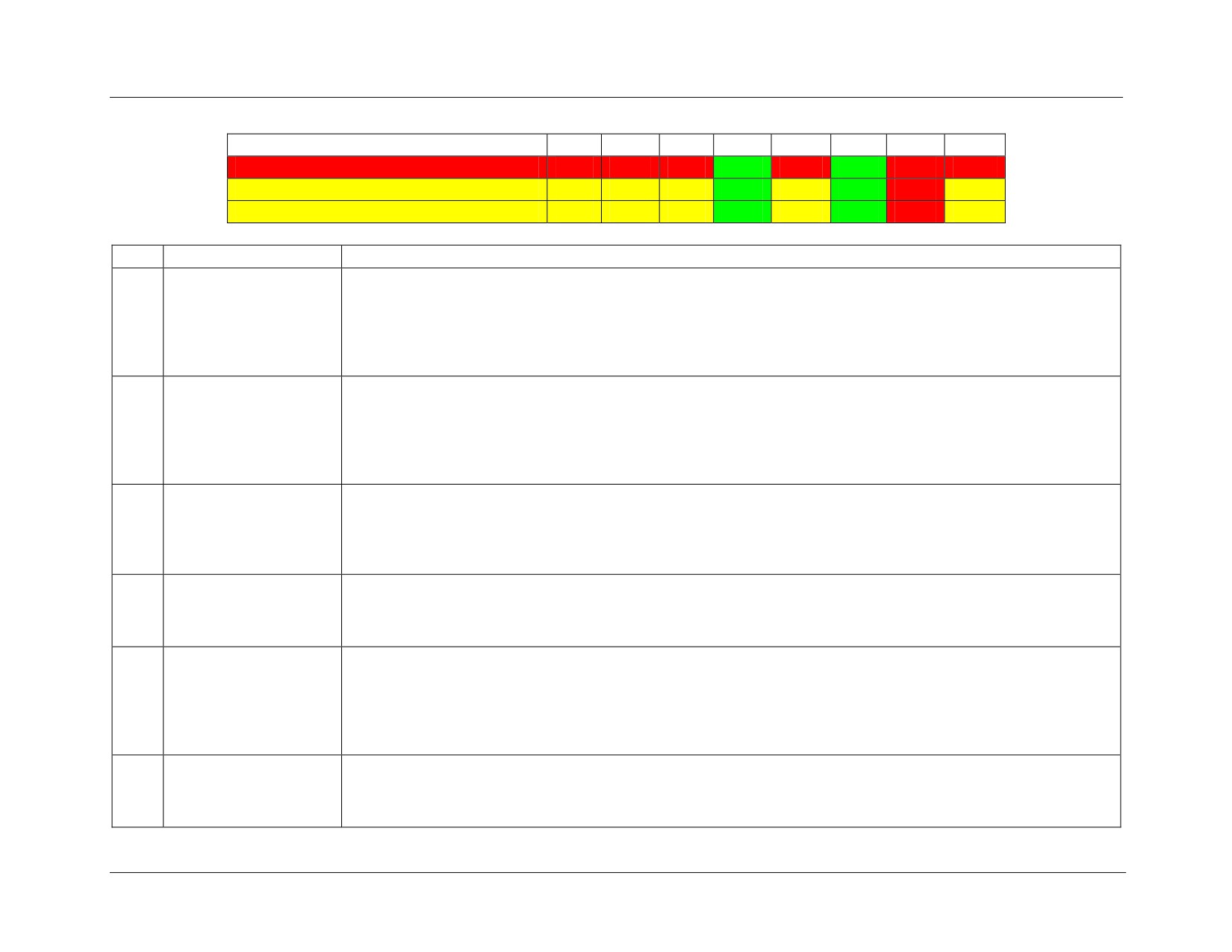
For Official Use Only
CBRND Functional Needs Analysis/Functional Solution Analysis
Chapter 11. Strategic Theater Shield Tasks
Table 11.5-1. STSHLD 5: Capability and Deficiency Assessment
COCOM Staff
M1
M2
M3
M4
M5
M6
M7
M8
Current Overall Capability1
R2
R3
R4
G5
R6
G7
R8
R3
Near/Mid-Term Overall Capability
Y
Y
Y
G
Y
G
R
Y
Far-Term Overall Capability
Y
Y
Y
G
Y
G
R
Y
FAA Measure
Scale
M1
Forces are trained to
G: All Strategic Theater forces (military, eligible civilians, and MWA) are trained and prepared to perform their functions
operate in a CBRN/TIM
and conduct operations within a CBRN/TIM environment.
environment.
Y: Military personnel and eligible civilians supporting the mission are fully trained and prepared to perform their
functions and conduct operations within a CBRN/TIM environment.
R: Training and preparedness of Strategic Theater forces (including military, eligible civilians, and/or MWA) to perform
functions and conduct operations within a CBRN/TIM environment is inadequate or nonexistent.
M2
Forces are equipped to
G: All Strategic Theater forces (military, eligible civilians, and MWA) are adequately equipped to perform their functions
operate in a CBRN/TIM
and conduct operations within a CBRN/TIM environment.
environment.
Y: Military personnel and eligible civilians supporting the mission are adequately equipped to perform their functions and
conduct operations within a CBRN/TIM environment.
R: Equipping of Strategic Theater forces (including military, eligible civilians, and/or MWA) to perform functions and
conduct operations within a CBRN/TIM environment is inadequate or nonexistent.
M3
Base/facility force
G: Antiterrorism/force protection (AT/FP) plans address and provide for the ready protection of the base/facility populace
protection plan includes
against exposure to and the effects of CBRN/TIM agents.
CBRN/TIM protection.
Y: AT/FP plans address and provide for the ready protection of the at-risk base/facility populace against exposure to and
the effects of CBRN/TIM agents.
R: AT/FP plans addressing and providing protection against CBRN/TIM agents are inadequate or nonexistent.
M4
CBRN/TIM response
G: CBRN/TIM response agreements are established when there is a threat, the agreement is appropriate, and host nation
agreement exists with en
capabilities exist.
route/in-theater host
Y: CBRN/TIM response agreements are established with friendly nations and where Status of Forces agreements exist.
nation.
R: CBRN/TIM response agreements are nonexistent or do not support deploying forces.
M5
Required base/facility
G: All base/facility emergency response forces are trained and possess adequate CBRND protective equipment and
CBRN/TIM emergency
measures for response to a CBRN/TIM incident without drawing upon warfighting assets.
response protective
Y: All base/facility emergency response forces are trained and possess adequate CBRND protective equipment and
equipment is on hand.
measures for response to a CBRN/TIM incident.
R: Base/facility emergency response force training and/or CBRND protective equipment and measures are inadequate or
nonexistent for response to a CBRN/TIM incident.
M6
Cooperative security
G: Cooperative security agreements are established when there is a threat, the agreement is appropriate, and host nation
agreement exists with en
capabilities exist.
route/in-theater host
Y: Cooperative security agreements are established with friendly nations and where Status of Forces agreements exist.
nation.
R: Cooperative security agreements are nonexistent or do not support deploying forces.
40
For Official Use Only
For Official Use Only
CBRND Functional Needs Analysis/Functional Solution Analysis
Chapter 11. Strategic Theater Shield Tasks
M7
Adequate COLPRO is
G: Sufficient and adequate COLPRO is available and operational to provide sufficient CBRN/TIM protected spaces for
available to support
base/facility populace plus deploying forces.
deploying and
Y: Sufficient and adequate COLPRO is available and operational to provide sufficient CBRN/TIM protected spaces for
base/facility forces.
essential base/facility operations plus deploying forces.
R: COLPRO is inadequate, insufficient, nonexistent, and/or non-operational and unable to support CBRN/TIM protection
of base/facility populace and/or deploying forces.
M8
Adequate individual
G: All forces (including military, eligible civilians, and MWAs) are trained and possess adequate and readily available
protection is available to
and operational CBRND protective equipment and measures. Base/facility forces supporting deploying forces are trained
support deploying and
and possess adequate CBRND protective equipment and measures for response to a CBRN/TIM incident without drawing
base/facility forces.
upon warfighting assets.
Y: All forces (including military, eligible civilians, and MWAs) are trained and possess adequate and readily available
and operational CBRND protective equipment and measures. Base/facility forces supporting deploying forces are trained
and possess adequate CBRND protective equipment and measures for response to a CBRN/TIM incident.
R: Deployable force (includes military, eligible civilians, and MWAs) training and/or CBRND protective equipment and
measures are inadequate or nonexistent for response to a CBRN/TIM incident; and/or base/facility emergency response
force training and/or CBRND protective equipment and measures are inadequate or nonexistent for response to a
CBRN/TIM incident.
1 DOTMLPF is currently inadequate to address CONUS and non-HTA OCONUS CBRND. DOTMLPF is adequate to address CBRND of forces located at HTA OCONUS
locations. En route protection of deploying forces OCONUS is a function of perceived threat, existing capabilities, host nation willingness, and available resources.
2 Planning for deploying forces includes training for operations within threat CBRN/TIM environments. Nondeploying military forces within CONUS possess varying levels of
training based upon prior training at overseas locations and initial Service training (“boot camp”). OCONUS fixed-site military personnel within an HTA are trained to survive a
CBRN/TIM environment. Eligible civilians are not generally trained to operate in CBRN/TIM hazards. Some government civilians are trained as part of their primary function
(e.g., hazardous materials, fire response, readiness flight [Air Force], and selected others.). However, civilians (e.g., general government employees, contractors, dependents, etc.)
do not receive training to survive a CBRN/TIM environment. This statement is particularly true of CONUS locations. MWA elements of the military force (deploying and
nondeploying) are not trained to survive a CBRN/TIM environment. COCOM staff does not possess clear guidance for planning and providing CBRN/TIM protection training to
eligible civilians and MWAs. The Guardian Program, working with the COCOMs and installations, is addressing installation/facility CBRN/TIM event capabilities.
3 Planning for deploying forces includes equipping for operations within threat CBRN/TIM environments. However, deployable force equipment is generally stored and not readily
available to personnel within CONUS (and non-HTA OCONUS sites). Selected units, for example Service police elements, may elect to retain certain items and amounts of
CBRND assets for duty support from warfighting stocks. Most CONUS (and non-HTA OCONUS) garrison forces are not equipped or possess ready access to protective equipment
for CBRN/TIM survival. The exceptions may include hazardous materials, fire response, and other at-risk primary duty personnel. OCONUS fixed-site personnel within an HTA
are equipped to survive a CBRN/TIM environment. Eligible civilians are not generally equipped to operate in CBRN/TIM hazards. Some government civilians are equipped as part
of their primary function (e.g., hazardous materials, fire response, readiness flight [Air Force], and selected others.). However, civilians (e.g., general government employees,
contractors, dependents, etc.) are not equipped to survive a CBRN/TIM environment. This statement is particularly true of CONUS locations. MWA elements of the military force
(deploying and nondeploying) are not equipped to survive a CBRN/TIM environment. COCOM staff does not possess clear guidance for equipping eligible civilians and MWA for
CBRN/TIM survival. The Guardian Program, working with the COCOMs and the sites, is addressing installation/facility CBRN/TIM event capabilities.
4 HTA OCONUS fixed-site force protection plans address CBRN/TIM protection for military forces. The fixed-site AT/FP plan includes a CBRN/TIM annex. Capabilities for
CBRN/TIM protection varying according to location and threat. CONUS and non-HTA OCONUS garrison forces are not generally equipped or possess ready access to protective
equipment for CBRN/TIM survival. Deployable force equipment is generally stored and not readily available to forces at these sites. Military forces at OCONUS sites within an
HTA are equipped and possess ready access to CBRND equipment. COLPRO within CONUS and some OCONUS locations does exist for radiological (fallout). However,
COLPRO for other than radiological is almost nonexistent, including critical facilities, outside HTA OCONUS, particularly CONUS sites. The Guardian Program, working with
the COCOMs and installations, is addressing installation/facility CBRN/TIM event capabilities.
41
For Official Use Only
For Official Use Only
CBRND Functional Needs Analysis/Functional Solution Analysis
Chapter 11. Strategic Theater Shield Tasks
5 Response agreements are requested by COCOM staffs and established when there is a threat and host-nation response is appropriate. COCOM staffs plan primarily for movement
of forces through en route locations substantially operated by U.S. forces (e.g., U.S. bases located in other nations).
6 Selected CONUS and non-HTA OCONUS units, for example Service police elements, may elect to retain certain items and amounts of CBRND assets for duty support from
warfighting stocks. Garrison emergency response forces (e.g., hazardous materials and fire response) possess variable levels of protection against CBRN/TIM agents. However,
other emergency response forces are not equipped for CBRN/TIM response. These include DoD and contract police/security forces, EMS, and other first responders. Installation
CBRN/TIM response is also currently limited to the initial response. These issues are currently being addressed by the Guardian Program. HTA OCONUS fixed sites are equipped
to perform emergency response to a CBRN/TIM event. In both cases, eligible civilians are not generally equipped to operate in CBRN/TIM hazards. Some government civilians are
equipped as part of their primary function (e.g., hazardous materials, fire response, readiness flight [Air Force], and selected others.). However, civilians (e.g., general government
employees, contractors, dependents, etc.) are not equipped to survive a CBRN/TIM environment. This statement is particularly true of CONUS locations. MWA elements of the
military force are not equipped to survive a CBRN/TIM environment. COCOM staff does not possess clear guidance for equipping eligible civilians and MWAs for CBRN/TIM
survival. The Guardian Program, working with the COCOMs and installations, is addressing installation/facility CBRN/TIM event capabilities.
7 Cooperative security agreements are requested by COCOM staffs and established when there is a threat and host nation security is appropriate. COCOM staffs plan primarily for
movement of forces through en route locations substantially operated by U.S. forces (e.g., U.S. bases located in other nations) and where cooperative security agreements are in
existence.
8 COLPRO within CONUS and some OCONUS locations does exist for radiological (fallout). However, COLPRO for other than radiological is almost nonexistent, including
critical facilities, outside HTA OCONUS, particularly CONUS sites.
42
For Official Use Only
For Official Use Only
CBRND Functional Needs Analysis/Functional Solution Analysis
Chapter 11. Strategic Theater Shield Tasks
11.5.3
Functional Solution Analysis
11.5.3.1
DOTLPF Assessment Summary
This section addresses the deficiencies and suggests potential non-materiel solutions. If there are
no non-materiel solutions, or they are only partial solutions, the remaining non-materiel need is
then stated. Materiel needs are assessed in the IMA section.
1.
Deficiency: Non-deploying military forces within CONUS possess varying levels of training
based upon prior training at overseas locations and initial Service training (“boot camp”).
Non-Materiel Solutions: Doctrine: Institute in doctrine, policy, and procedures CBRND of
personnel (military and civilian) located in DoD installations, sites, and facilities to include
equipping, training, exercising, and evaluations for CBRN/TIM survival. Organization:
Ensure resources, taskings, and staff are in place or available to support and conduct CBRND
training. Training: Train, exercise, and evaluate the force for survivability within a
CBRN/TIM environment. Leadership: Implement equipping, training, exercise, and
evaluation of CBRND of personnel (military and civilians) for readiness to conduct CBRND.
2.
Deficiency: Eligible civilians (e.g., general government employees, contractors, dependents,
etc.) are not generally trained to operate and/or survive in CBRN/TIM hazards, particularly at
CONUS locations.
Non-Materiel Solutions: Doctrine: Develop doctrine, policy, and procedures addressing
eligible civilian personnel and operations for CBRND. Organization: Identify organizational
services and activities supporting the mission performed by civilian personnel and
operations. Training: Establish CBRND training, exercise, and evaluation criteria and
programs for eligible civilian personnel and operations supporting the mission and conduct
CBRND training, exercises, and evaluations. Leadership: Implement and manage CBRND
training, equipping, and protection of eligible civilian personnel and operations supporting
the mission. Personnel: Ensure eligible civilian personnel and operations supporting the
mission/military operations are qualified in CBRND and capable of performing their
responsibilities in a CBRN/TIM environment. Facilities: Develop supporting infrastructure
for the acquisition, stockpiling, prepositioning, maintenance, and movement of eligible
civilian CBRND resources.
3.
Deficiency: MWA, particularly MWD, elements of the military force (deploying and
nondeploying) are not trained to survive a CBRN/TIM environment.
Non-Materiel Solutions: Doctrine: Establish doctrine, policy, and procedures CBRND
protection of MWAs, with emphasis upon MWDs, and training for CBRN/TIM environment
survival. Organization: Organizational consideration for maintenance and support of MWD
CBRND protective equipment, measures, and activities. Training: Develop institutional and
unit training of handlers and MWAs for CBRND measures and activities. Leadership: Ensure
awareness and planning for CBRND measures and requirements for MWA survivability.
Facilities: Develop supporting infrastructure for MWA CBRND (e.g., logistics, veterinary
surveillance, etc.).
43
For Official Use Only
For Official Use Only
CBRND Functional Needs Analysis/Functional Solution Analysis
Chapter 11. Strategic Theater Shield Tasks
4.
Deficiency: COCOM staff does not possess clear guidance for planning and providing
CBRN/TIM protection training to eligible civilians.
Non-Materiel Solutions: Doctrine: Develop doctrine, policy, and procedures addressing
eligible civilian personnel and operations for CBRND. Organization: Identify organizational
services and activities performed by, and required to support, eligible civilian personnel and
operations for CBRND. Training: Establish CBRND training, exercise, and evaluation
criteria and programs for eligible civilian personnel and operations; and conduct CBRND
training, exercises, and evaluations. Leadership: Implement and manage CBRND training,
equipping, and protection of eligible civilian personnel and operations supporting the
mission. Personnel: Ensure eligible civilian personnel and operations supporting the mission/
military operations are qualified in CBRND and capable of performing their responsibilities
in a CBRN/TIM environment. Facilities: Develop supporting infrastructure for the
acquisition, stockpiling, prepositioning, maintenance, and movement of eligible civilian
CBRND resources.
5.
Deficiency: COCOM staff does not possess clear guidance for planning and providing
CBRN/TIM protection training to MWAs.
Non-Materiel Solutions: Doctrine: Develop doctrine, policy, and procedures addressing
MWAs and operations for CBRND. Organization: Identify organizational services and
activities performed by, and required to support, MWAs and operations for CBRND.
Training: Establish CBRND training, exercise, and evaluation criteria and programs for
MWAs and operations and conduct CBRND training, exercises, and evaluations. Leadership:
Implement and manage CBRND training, equipping, and protection of MWDs and
operations supporting the mission. Personnel: Ensure that eligible civilian personnel and
operations supporting the mission/military operations are qualified in CBRND and capable of
performing their responsibilities in a CBRN/TIM environment. Facilities: Develop
supporting infrastructure for the acquisition, stockpiling, prepositioning, maintenance, and
movement of MWA CBRND resources.
6.
Deficiency: Deployable force equipment is generally stored and not readily available to
personnel within CONUS (and non-HTA OCONUS sites).
Non-Materiel Solutions: Doctrine: Institute in doctrine, policy, and procedures CBRND of
personnel (military and civilian) located in DoD installations, sites, and facilities to include
equipping, training, exercising, and evaluations for CBRN/TIM survival. Identified
equipment should not be assets identified for deployment. Organization: Ensure resources,
taskings, and staff are in place or available to support and conduct CBRND. Identified
physical resources should not be those identified for deployment. Training: Train, exercise,
and evaluate the force for survivability within a CBRN/TIM environment, both for home
location as well as for deployable operations. Leadership: Implement development of plans
and taskings consistent with stockpile support capabilities for nondeployable requirements.
7.
Deficiency: Most CONUS (and non-HTA OCONUS) garrison forces are not equipped or
possess ready access to protective equipment for CBRN/TIM survival.
Non-Materiel Solutions: Doctrine: Institute in doctrine, policy, and procedures CBRND of
personnel (military and civilian) located in DoD installations, sites, and facilities to include
equipping, training, exercising, and evaluations for CBRN/TIM survival. Organization:
44
For Official Use Only
For Official Use Only
CBRND Functional Needs Analysis/Functional Solution Analysis
Chapter 11. Strategic Theater Shield Tasks
Ensure resources, taskings, and staff are in place or available to support and conduct
CBRND. Training: Train, exercise, and evaluate the force for survivability within a
CBRN/TIM environment. Leadership: Implement development of plans and taskings
consistent with stockpile support capabilities.
8.
Deficiency: COLPRO for other than radiological is almost nonexistent, including critical
facilities, outside HTA OCONUS, particularly CONUS sites.
Non-Materiel Solutions: Doctrine: Enforce existing doctrine and policy.
9.
Deficiency: All emergency response forces are not equipped for CBRN/TIM response. These
include DoD and contract police/security forces, EMS, and other first responders.
Non-Materiel Solutions: Doctrine: Establish in doctrine, policy, and procedures the minimal
psychological and physiological requirements for equipping, training, exercising, and
evaluation for CBRND emergency response of all elements of first response or at-risk as
primary responders to an AT/FP event, whether military or as an eligible civilian.
Organization: Establish organization resources and staffing to support CBRND emergency
response. Training: Institute training, exercising, and evaluation to prepare and maintain
readiness to conduct an emergency response with a CBRN/TIM threat and to enable survival
if an event is subsequent to response determined to involve a CBRN/TIM agent. Leadership:
Implement and manage measures and activities to obtain and maintain response and survival
capabilities for CBRN/TIM threats. Personnel: Ensure that eligible civilian personnel
performing these functions meet psychological and physiological requirements for
performing CBRND measures and accomplishing their tasks within a CBRN/TIM
environment. Facilities: Develop supporting infrastructure (e.g., logistics, training, medical,
etc.) for responder CBRND.
10. Deficiency: Installation CBRN/TIM response is currently limited to the initial response.
Non-Materiel Solutions: Doctrine: Establish in doctrine, policy, and procedures the minimal
psychological and physiological requirements, equipping, training, exercising, and evaluation
for CBRND emergency response of all elements of first response or at-risk as primary
responders to an AT/FP event, whether military or as an eligible civilian. Organization:
Establish organization resources and staffing to support CBRND emergency response.
Training: Institute training, exercising, and evaluation to prepare and maintain readiness to
conduct an emergency response with a CBRN/TIM threat and to enable survival if an event
is subsequent to response determined to involve a CBRN/TIM agent. Leadership: Implement
and manage measures and activities to obtain and maintain response and survival capabilities
for CBRN/TIM threats. Personnel: Ensure that eligible civilian personnel performing these
functions meet psychological and physiological requirements for performing CBRND
measures and accomplishing their tasks within a CBRN/TIM environment. Facilities:
Develop supporting infrastructure (e.g., logistics, training, medical, etc.) for responder
CBRND.
11. Deficiency: DOTMLPF is currently inadequate to address CONUS and non-HTA OCONUS
CBRND.
Non-Materiel Solutions: Doctrine: Establish in doctrine, policy, and procedures the
equipping, training, exercising, and evaluation for CBRND all personnel (military and
45
For Official Use Only
For Official Use Only
CBRND Functional Needs Analysis/Functional Solution Analysis
Chapter 11. Strategic Theater Shield Tasks
eligible civilians) and activities in CONUS and non-HTA OCONUS locations. Organization:
Establish organization resources and staffing to support CBRND. Training: Institute training,
exercising, and evaluation to prepare and maintain readiness for CBRND at CONUS and
non-HTA OCONUS locations. Leadership: Implement and manage measures and activities
to obtain and maintain CBRND capabilities at CONUS and non-HTA OCONUS locations.
Personnel: Ensure that eligible civilian personnel supporting the mission/military operations
meet psychological and physiological requirements for performing CBRND measures and
accomplishing their tasks within a CBRN/TIM environment. Facilities: Develop supporting
infrastructure (e.g., logistics, training, medical, etc.) for CBRND.
11.5.3.2
IMA Assessment Summary
N/A
46
For Official Use Only
For Official Use Only
CBRND Functional Needs Analysis/Functional Solution Analysis
Chapter 11. Strategic Theater Shield Tasks
11.6 Task STSHLD 6: Establish Protective Posture Protocols to ensure protection level is
consistent with the threat and minimizes risk while limiting the impact on mission
execution
11.6.1
Functional Area Analysis
11.6.1.1
Definition
To establish general guidance for protective posture at theater level based on the friendly and
enemy situation, mission, terrain and weather, state of CBRND training, availability of protective
equipment and supplies, and medical considerations. This guidance considers all possible threat
capabilities and establishes plans and procedures to react to the adversary’s use of any type of
CBRN/TIM weapon/agent combination and/or material releases resulting from accidents or
combat actions. The protocol is flexible and tailorable at lower levels of command to
accommodate current intelligence/enemy action and status/mission of friendly forces. Threat,
vulnerability, and risk assessments are essential inputs to determining the appropriate protective
posture. The goal is to establish and maintain the lowest possible protective postures (to reduce
performance degradation and minimize physical encumbrances) while minimizing the risk of
exposure or contamination. NBC staff officers provide the commander and other staff officers
with information concerning protective posture effects on mission performance.
11.6.1.2
Derivation
Joint Enabling Concept for CBRN/TIM Operations, An Operational Concept for Biological
Defense, Protection Joint Functional Concept, UJTL (ST 2.4.1.1, ST 2.4.1.2, ST 5.3.3, ST 5.4.1,
ST 6, ST 6.1.6, ST 6.2, ST 6.2.1, ST 9.4).
11.6.1.2.1
Supported Task: SNSHLD 10
11.6.1.2.2
Lateral Task: STSHA 6
11.6.1.2.3
Supporting Task: OPSHLD 1
11.6.1.3
Condition
Perform this task under conditions of:
Physical
1. Immediate to delayed danger, and potential long-term health hazard of atmospheric
weapons effects. (C1.3.3)
Military
1. Partially completed mission preparation. (C2.1.3)
2. Adequate forces allocated. (C2.2.3)
3. Normal personnel experience. (C2.2.4.5)
47
For Official Use Only
For Official Use Only
CBRND Functional Needs Analysis/Functional Solution Analysis
Chapter 11. Strategic Theater Shield Tasks
4. Partial interoperability. (C2.2.6)
5. Negligible staff expertise (C2.3.1.3)
6. Limited deployed supplies. (C2.8.2)
7. Limited prepositioned materiel. (C2.8.4)
Civil. N/A
11.6.2
Functional Needs Analysis
11.6.2.1
Capability and Deficiency Assessment Summary
Table 11.6-1 discusses the only capability that exists to perform the task to the designated
standard. Adequate doctrine, policy, and procedures exist for the planning and implementation of
Protective Posture Protocols. They are developed, disseminated, and monitored based upon the
potential threat and the assessment of force vulnerabilities and risks to subordinate command
levels. Included is the provisioning of the force with appropriate CBRND capabilities. Included
in the deficiencies is the ability of the force to maintain operations tempo within a sustained
CBRN/TIM environment.
Current Capability and Deficiency
Adequate doctrine, policy, and procedures exist to guide commanders and staffs on these flexible
levels of protection. The provisioning of the forces with adequate CBRND capabilities is
determined based upon the identified threat used to develop the Protective Posture Protocols.
Forces are generally equipped with IPE when stationed in HTAs, and IPE positioning and force
equipage are included during planning. Existing fixed sites and mature theaters possess limited
amounts of CPS to conduct CBRND. The COCOM and staff adjust the plans, reallocate, and
obtain additional COLPRO systems as necessary to meet operational requirements. The
combination of established force organic assets, materiel acquisitions, prepositioned materiel,
available host-nation/coalition contributions, and the movement of identified CBRND resources
from stockpiles and reallocation activities are all pursued to prepare and support the deploying
forces. The Joint Mission Essential Task Lists (JMETLs), based upon the Universal Joint Task
List (UJTL), are developed to identify essential tasks to be performed by to attain the mission.
Training of the force against the identified threat is performed, and the implementation of the
protocols is monitored. Deficiencies include the availability of COLPRO systems and the
significant logistics required to move and support the existing systems; the limited quantities of
CPSs available for use at originating and en route locations to protect deploying, redeploying,
and en route forces from potential CBRN/TIM threats; the inadequacy of current CPSs to support
forced entry and expeditionary operations, and lack of IPE at CONUS and non-HTA OCONUS
locations to protect garrisoned personnel (military and civilian). MWDs are not afforded
CBRND protective equipment, measures, and are not adequately addressed in DOTLPF for
CBRND operations. Plan requirements, further, are not centrally correlated with other plans to
determine CBRND support requirements of two or more concurrent operations and sustained
operations within a CBRN/TIM environment is not addressed in DOTLPF.
48
For Official Use Only
For Official Use Only
CBRND Functional Needs Analysis/Functional Solution Analysis
Chapter 11. Strategic Theater Shield Tasks
Projected Near/Mid-Term Capability and Deficiency
No change is projected for this task.
Projected Far-Term Capability and Deficiency
No change is projected for this task.
49
For Official Use Only
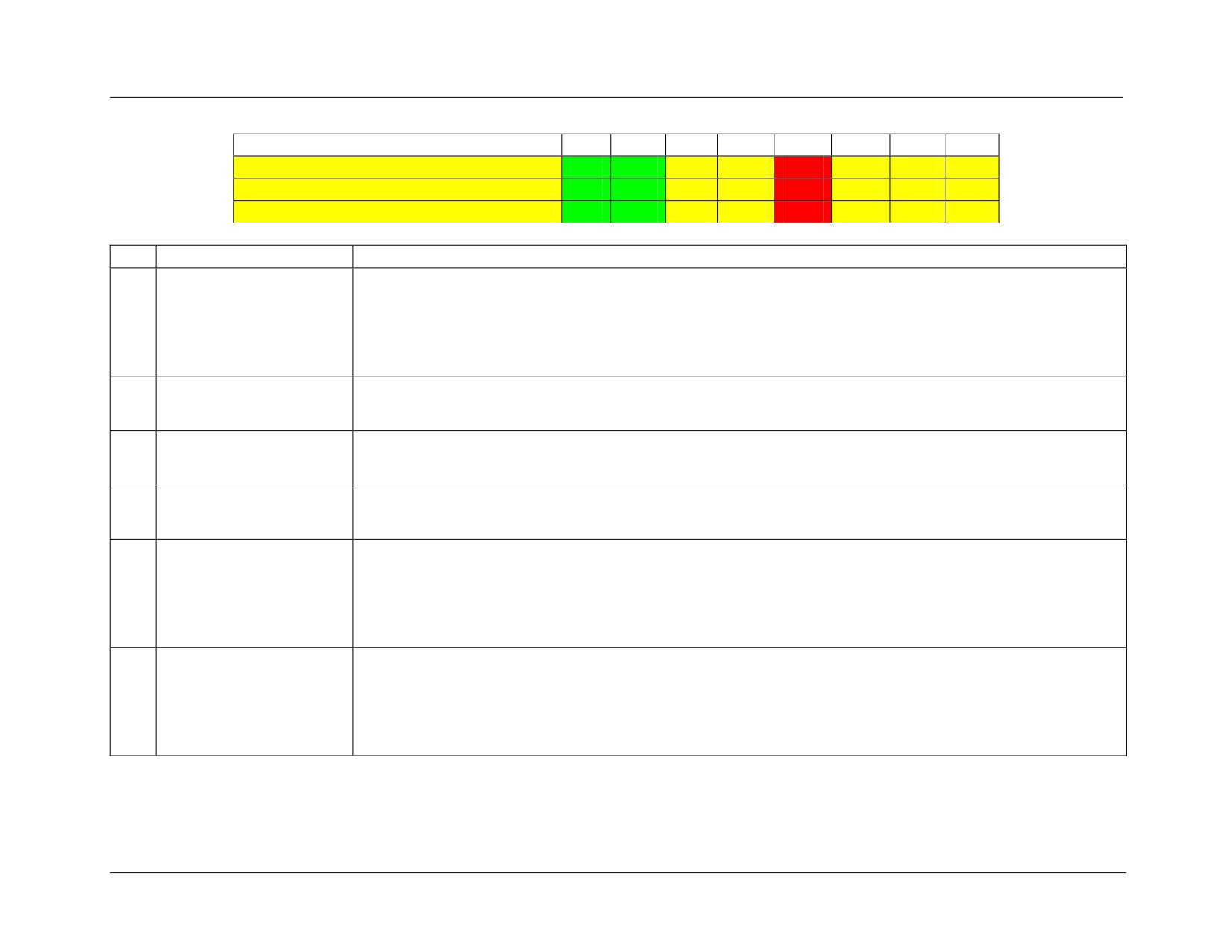
For Official Use Only
CBRND Functional Needs Analysis/Functional Solution Analysis
Chapter 11. Strategic Theater Shield Tasks
Table 11.6-1. STSHLD 6: Capability and Deficiency Assessment
Capability: COCOM Staff
M1
M2
M3
M4
M5
M6
M7
M8
Current Overall Capability1
G2
G3
Y4
Y5
R6
Y7
Y8
Y9
Near/Mid-Term Overall Capability
G
G
Y
Y
R
Y
Y
Y
Far-Term Overall Capability
G
G
Y
Y
R
Y
Y
Y
FAA Measure
Scale
M1
Protective Posture Protocols
G: Specific, flexible Protective Posture Protocols are incorporated into plans and disseminated to all units in the force.
are established and
All personnel are trained and ready to perform the associated protective actions.
disseminated.
Y: General Protective Posture Protocols are incorporated into plans and disseminated to force units. Unit personnel are
trained and ready to perform protective actions.
R: Protective Posture Protocols are inadequate, not widely disseminated, and/or force personnel are not trained and/or
ready to perform protective actions.
M2
Protective posture protocols
G: In-place Protective Posture Protocols are rapidly and effectively implemented by all affected force units.
have been implemented.
Y: In-place Protective Posture Protocols are implemented by all affected force units.
R: Implementation of Protective Posture Protocols is inadequate or nonexistent.
M3
CPSs are available for in-
G: COLPRO is available in required quantities and types to support the full range of envisioned and planned operations.
place forces.
Y: COLPRO is available in sufficient types and quantities to support major operations.
R: COLPRO is inadequate or nonexistent to support operations.
M4
CPSs are available for
G: COLPRO is available in required quantities and types to support the full range of envisioned and planned operations.
deploying forces.
Y: COLPRO is available in sufficient types and quantities to support major operations.
R: COLPRO is inadequate or nonexistent to support operations.
M5
IPE is issued to in-place
G: All Strategic Theater forces (military, eligible civilians, and MWAs) are adequately equipped to perform their
forces.
functions and conduct operations within a CBRN/TIM environment.
Y: Military personnel and eligible civilians supporting the mission are adequately equipped to perform their functions
and conduct operations within a CBRN/TIM environment.
R: Equipping of Strategic Theater forces (including military, eligible civilians, and/or MWAs) to perform functions and
conduct operations within a CBRN/TIM environment is inadequate or nonexistent.
M6
Forces are trained, manned,
G: All Strategic Theater forces (military, eligible civilians, and MWAs) are adequately equipped to perform their
and equipped to operate in a
functions and conduct operations within a CBRN/TIM environment.
CBRN/TIM environment.
Y: Military personnel and eligible civilians supporting the mission are adequately equipped to perform their functions
and conduct operations within a CBRN/TIM environment.
R: Equipping of Strategic Theater forces (including military, eligible civilians, and/or MWAs) to perform functions and
conduct operations within a CBRN/TIM environment is inadequate or nonexistent.
50
For Official Use Only
For Official Use Only
CBRND Functional Needs Analysis/Functional Solution Analysis
Chapter 11. Strategic Theater Shield Tasks
M7
All units that perform Joint
G: All units performing JMETs are fully prepared and ready to successfully conduct their tasks within a CBRN/TIM
Mission Essential Tasks
environment.
(JMETs) are fully prepared
Y: Units performing JMETs are generally prepared and ready to successfully conduct their tasks within a CBRN/TIM
to successfully perform the
environment.
tasks in a CBRN/TIM
R: Units performing JMETS are inadequately prepared and/or ready to successfully conduct their tasks within a
environment.
CBRN/TIM environment.
M8
Deploying forces meet
G: All Strategic Theater forces (military, eligible civilians, and MWA) meet CBRN/TIM protection requirements to
CBRN/TIM protection
perform their functions and conduct operations within a CBRN/TIM environment.
requirements.
Y: Military personnel and eligible civilians supporting the mission meet CBRN/TIM protection requirements to perform
their functions and conduct operations within a CBRN/TIM environment.
R: Strategic Theater forces (including military, eligible civilians, and/or MWA) meeting CBRN/TIM protection
requirements to perform functions and conduct operations within a CBRN/TIM environment are inadequate or
nonexistent.
1 Adequate DOTMLPF exists to address planning and support of the force. However, DOTMLPF is inadequate or nonexistent addressing CBRND of eligible civilians and MWAs.
2 COCOM staff develop and disseminate Protective Posture Protocols based upon the potential threat and their assessments of force vulnerabilities and risks. U.S. forces may be
required to operate after radiological attacks or in areas contaminated from fallout caused by attacks not directed at U.S. forces. In these cases, the current Radiation Exposure
Status categories do not provide commanders sufficient guidance to manage risk to their forces. They do not address low-level radiation and are based on the assumption that the
United States is directly engaged in a nuclear conflict. Dissemination of the Protective Posture Protocols is through the subordinate command levels.
3 COCOM staff monitors overall implementation of Protective Posture Protocols to ensure force readiness for the CBRN/TIM threat. Subordinate levels of command monitor the
implementation for their subordinate units.
4 Not all critical facilities and activities are equipped with COLPRO. Existing fixed sites and mature theaters possess limited amounts of CPS for CBRND. JTCOPS, CP-
DEPMEDS, TEMPER systems, and Service-designed systems provide CPS for mature theaters and may supplement CPS at existing fixed sites. COCOM staff planning includes
CBRND for identified threats and identifies type, quantity, and allocation to meet mission requirements. However, these systems are in limited numbers and require significant
logistics to move and establish. Concurrent operations with CBRN/TIM threat may further restrict the availability of COLPRO systems to meet plan and operational requirements.
The COCOM staff adjusts plans, reallocates, and obtains COLPRO systems as necessary to meet operational requirements.
5 Limited quantities of existing CPSs at originating and en route locations limits the ability to provide COLPRO to deploying forces. Positioning of transportable shelters (e.g.,
JTCOPS, TEMPER systems, and Service-designed systems) at these locations is dependent upon threat, operational need, ongoing operations, movement and establishment
requirements, and availability of the systems. CPSs for the AO to support deploying forces is dependent upon a number of factors. These include concurrent operations, availability
of CPSs of the required types, mission requirements, stage of operations (initial or mature), and threat. These factors are addressed both during the planning and execution phase by
the COCOM staff. The COCOM staff adjusts plans, reallocates, and obtains COLPRO systems as necessary to meet operational requirements. Availability of CPSs within the AO
is likely to increase as the AO matures and the threat is validated. Additionally, the longer the preparatory period between plan notice of execution and before commencement of
hostilities, the more likely CPSs will be available and established in support of operations. However, CPSs are inadequate to support expeditionary and forced-entry operations.
This statement is particularly true for austere environments, locations deep within adversary territory, and highly mobile forces possessing reduced logistical footprints.
6 The COCOM staff plans for the provisioning of forces with appropriate CBRND capabilities based upon the identified threat. IPE positioning and force equipage are included in
the plan. Forces are generally equipped or possess access to CBRND IPE when stationed in HTAs. Personnel assigned to CONUS and selected OCONUS locations do not possess
or have ready access to IPE. Forces within a mature theater forces and at established support centers within the AO, where a CBRN/TIM threat exists, are equipped or possess
access to CBRN/TIM IPE. However, fixed-site operations frequently include civilians directly supporting force activities. Although some government civilians are provided and
equipped with IPE as part of their primary function (e.g., hazardous materials, fire response, readiness flight [Air Force] and selected others, most civilians are not equipped or
have access to IPE enabling survival within a CBRN/TIM environment. This statement is particularly true of contractors. Further, MWAs (particularly MWDs) elements of the
force do not possess CBRND protection. The COCOM staff does not possess clear guidance for planning and providing CBRND protection of eligible civilians and MWAs.
51
For Official Use Only
For Official Use Only
CBRND Functional Needs Analysis/Functional Solution Analysis
Chapter 11. Strategic Theater Shield Tasks
7 The COCOM staff identifies forces and the potential threat for planned operations. Time permitting, specified forces train and prepare for operations involving the potential
threat. Equipping the task force is an integral part of planning and preparation. The COCOM staff tracks force readiness for planned operations. Readiness issues are addressed by
the staff. The combination of established force organic assets, materiel acquisitions, prepositioned materiel, available host-nation/coalition contributions, and movement of
identified CBRND resources from stockpiles and reallocation activities are pursued by the COCOM staff to prepare and support deploying forces as outlined by the appropriate
plan. However, plan requirements are not centrally correlated with other plans for consideration of CBRND support requirements of two or more concurrent operations with
CBRN/TIM threat. Expeditionary operations are a particular concern as most CBRND systems and associated logistics are not designed for a highly mobile force, with a reduced
logistical footprint, and for the initial period of operations until the theater matures (usually the first 30-90 days). Deploying units may not possess full CBRND resources and
capabilities during the initial stages of deployment and until after arrival within the AOR. Additionally, deploying eligible civilians and MWAs (particularly MWDs) are not
equipped and trained to survive a CBRN/TIM environment. COCOM staff does not possess clear guidance for planning and providing CBRN/TIM protection training and CBRND
protection resources to deploying eligible civilians and MWAs.
8 The COCOM staff develops JMETLs, based upon the UJTL, essential to the accomplishment of the planned mission(s). The JMETLs provide the ability to develop joint training
requirements, planning and executing joint tainting, and assessing joint proficiency. Plan identified forces are trained and assessed against the JMETLs for readiness to perform the
tasks successfully. Assessment is performed through a variety of means including inspections, exercises, and reporting. However, current doctrine the UJTL and operational
planning do not adequately address sustained operations within a CBRN/TIM environment. JMETL development generally does not specify these circumstances as an execution
condition. Exercises and training do not emphasize task performance and operations in these conditions.
9 The combination of established force organic assets, materiel acquisitions, prepositioned materiel, available host-nation/coalition contributions, and movement of identified
CBRND resources from stockpiles and reallocation activities are pursued by the COCOM staff to prepare and support deploying forces as outlined by the appropriate plan.
However, plan requirements are not centrally correlated with other plans for consideration of CBRND support requirements of two or more concurrent operations with CBRN/TIM
threat. Expeditionary operations are a particular concern as most CBRND systems and associated logistics do not support a highly mobile force, with a reduced logistical footprint,
and sustained activity during the initial period of operations (the period until the theater matures, usually the first 30-90 days). Deploying units may not achieve full CBRND
readiness and capabilities during the initial stages of deployment and until after arrival within the AOR. Additionally, deploying eligible civilians and MWAs (particularly MWDs)
are not generally prepared to survive a CBRN/TIM environment. COCOM staff does not possess clear guidance for CBRN/TIM protection readiness of deploying eligible civilians
and MWAs.
52
For Official Use Only
For Official Use Only
CBRND Functional Needs Analysis/Functional Solution Analysis
Chapter 11. Strategic Theater Shield Tasks
11.6.3
Functional Solution Analysis
11.6.3.1
DOTLPF Assessment Summary
This section addresses the deficiencies and suggests potential non-materiel solutions. If there are
no non-materiel solutions, or they are only partial solutions, the remaining non-materiel need is
then stated. Materiel needs are assessed in the IMA section.
1.
Deficiency: There is a lack of doctrine for risk management of forces operating in
radiological contaminated environments. Current guidance is based on cold-war assumptions
and does not reflect modern threats and mission priorities.
Non-Materiel Solutions: Doctrine: Develop doctrine, policies, and procedures that address
appropriate operationally oriented command dose levels for low-level radiation exposure
based on mission priority across the range of military operations. Training: Train leaders and
personnel on operationally oriented low-level radiation exposure control standards and
procedures
2.
Deficiency: Not all critical facilities and activities are equipped with COLPRO.
Non-Materiel Solutions: Doctrine: Enforce existing doctrine and policy.
3.
Deficiency: COLPRO systems are in limited numbers and require significant logistics to
move and establish. Concurrent operations with CBRN/TIM threat may further restrict the
availability of COLPRO systems to meet plan and operational requirements.
Non-Materiel Solutions: Doctrine: Institute in doctrine, policy, and procedures the central
correlation of Strategic Theater plans and taskings to identify CBRND support requirements
for two or more concurrent operations with CBRN/TIM threat with comparison to existing
and programmed quantities and types of CBRND systems and resources. Leadership:
Implement development of plans and taskings consistent with available CBRND capabilities
as determined by central correlation and comparison of Strategic Theater plans and taskings.
4.
Deficiency: Limited quantities of existing CPSs at originating and en route locations limit
the ability to provide COLPRO to deploying forces.
Non-Materiel Solutions: Doctrine: Enforce planning for CBRND of deploying,
redeploying, and en route forces. Institute in doctrine, policy, and procedures the central
correlation of Strategic Theater plans and taskings to identify CBRND support requirements
for two or more concurrent operations with CBRN/TIM threat with comparison to existing
and programmed quantities and types of CBRND systems and resources, ability and
willingness of en route and host nations to provide CBRND of moving forces, and the
availability and feasibility of support by existing OCONUS U.S. military installations.
Organization: Organization structures, resources, staffing, and capabilities to provide
CBRND of deploying, redeploying, relocation, and en route forces as well as organic forces.
Training: Train, exercise, and evaluate capabilities of locations providing support to
deploying, redeploying, relocating, and en route forces to conduct and provide CBRND.
Leadership: Recognize challenges associated with CBRND support of deploying,
redeploying, relocating, and en route forces as well as organic forces. Plan for the provision
of CBRND and conduct comprehensive exercises and evaluations to ensure readiness of the
53
For Official Use Only
For Official Use Only
CBRND Functional Needs Analysis/Functional Solution Analysis
Chapter 11. Strategic Theater Shield Tasks
organic force to perform CBRND and protect transient forces. Facilities: Develop supporting
infrastructure to protect transient forces from the effects of CBRN/TIM agents.
5.
Deficiency: CPSs are inadequate to support expeditionary and forced entry operations. This
statement is particularly true for austere environments, locations deep within adversary
territory, and highly mobile forces possessing reduced logistical footprints.
Non-Materiel Solutions: Doctrine: Incorporate into doctrine, policy, and procedures
standards for expeditionary forces possessing reduced logistical footprint during the first 30-
90 days of operations following commencement of hostilities. Organization: Develop
organizational structures, resources, staffing, and capabilities to conduct expeditionary
operations while possessing reduced logistical footprint and during the first 30-90 days of
operations following commencement of hostilities. Training: Train, exercise, and evaluate
expeditionary capabilities of the force in a CBRN/TIM threat with reduced logistical
footprint during the initial 30-90 days of operation using CBRND resources supporting
expeditionary operations. Leadership: Recognize differences and challenges associated with
expeditionary operations during the first 30-90 days following commencement of hostilities
and with a reduced logistical footprint; training providing skills and knowledge to manage
operations in these circumstances; and ability and willingness to implement necessary
changes and activities to prepare for and conduct expeditionary operations with a
CBRN/TIM threat. Facilities: Develop supporting infrastructure for expeditionary operations
during the first 30-90 days following commencement of hostilities and with a reduced
logistical footprint
6.
Deficiency: Personnel assigned to CONUS and selected OCONUS locations do not possess
or have ready access to IPE.
Non-Materiel Solutions: Doctrine: Institute in doctrine, policy, and procedures CBRND of
personnel (military and civilian) located in DoD installations, sites, and facilities to include
equipping, training, exercising, and evaluations for CBRN/TIM survival. Organization:
Ensure resources, taskings, and staff are in place or available to support and conduct
CBRND. Training: Train, exercise, and evaluate the force for survivability within a
CBRN/TIM environment. Leadership: Implement development of plans and taskings
consistent with stockpile support capabilities.
7.
Deficiency: Fixed site operations frequently include civilians directly supporting force
activities. Although some government civilians are provided and equipped with IPE as part
of their primary function (e.g., hazardous materials, fire response, readiness flight [Air Force]
and selected others), most civilians are not equipped or have access to IPE enabling survival
within a CBRN/TIM environment. This statement is particularly true of contractors.
Non-Materiel Solutions: Doctrine: Establish in doctrine, policy, and procedures the
application of standards for protection of eligible civilians supporting the mission/military
operations addressing the variation within the potential protected working population.
Leadership: Establish CBRND training, exercise, and evaluation criteria and programs for
eligible civilians supporting the mission/military operations and conduct CBRN/TIM
training, exercises, and evaluations.
54
For Official Use Only
For Official Use Only
CBRND Functional Needs Analysis/Functional Solution Analysis
Chapter 11. Strategic Theater Shield Tasks
8.
Deficiency: MWA (particularly MWD) elements of the force do not possess CBRND
protection.
Non-Materiel Solutions: Doctrine: Establish doctrine, policy, and procedures CBRND
protection of MWAs, particularly MWDs, and training for CBRN/TIM environment survival.
Organization: Ensure organizational consideration for maintenance and support of MWA
CBRND protective equipment, measures, and activities. Training: Develop institutional and
unit training of handlers and MWAs for CBRND measures and activities. Leadership: Ensure
awareness and planning for CBRND measures and requirements for MWA survivability.
Facilities: Develop supporting infrastructure for MWA CBRND (e.g., logistics, veterinary
surveillance, etc.).
9.
Deficiency: The COCOM staff does not possess clear guidance for planning and providing
CBRND protection of eligible civilians.
Non-Materiel Solutions: Doctrine: Develop doctrine, policy, and procedures addressing
civilian personnel and operations for CBRND. Organization: Identify organizational services
and activities supporting the mission performed by civilian personnel and operations.
Training: Establish CBRND training, exercise, and evaluation criteria and programs for
eligible civilians; and conduct CBRND training, exercises, and evaluations. Leadership:
Implement and manage CBRND training, equipping, and protection of eligible civilians.
Personnel: Ensure that eligible civilians supporting the mission/military operations are
qualified in CBRND and capable of performing their responsibilities in a CBRN/TIM
environment. Facilities: Develop supporting infrastructure for eligible civilian CBRND (e.g.,
logistics, medical, veterinary surveillance, training, communications, etc.).
10. Deficiency: The COCOM staff does not possess clear guidance for planning and providing
CBRND protection of MWAs.
Non-Materiel Solutions: Doctrine: Develop doctrine, policy, and procedures addressing
MWA, particularly MWD, operations for CBRND. Organization: Identify organizational
services and activities supporting the mission performed by MWA operations. Training:
Establish CBRND training, exercise, and evaluation criteria and programs for MWAs and
conduct CBRND training, exercises, and evaluations. Leadership: Implement and manage
CBRND training, equipping, and protection of MWAs. Facilities: Develop supporting
infrastructure for MWA CBRND (e.g., logistics, medical, veterinary surveillance, training,
communications, etc.).
11. Deficiency: Plan requirements are not centrally correlated with other plans for consideration
of CBRND support requirements of two or more concurrent operations with CBRN/TIM
threat.
Non-Materiel Solutions: Doctrine: Institute in doctrine, policy, and procedures the central
correlation of national and Strategic Theater plans and taskings to identify CBRN/TIM
support requirements for two or more concurrent operations with threat with comparison to
existing and programmed quantities and types of CBRND systems and resources, including
replenishment. Leadership: Implement development of plans and taskings consistent with
available CBRND capabilities as determined by central correlation and comparison of
national and strategic plans and taskings.
55
For Official Use Only
For Official Use Only
CBRND Functional Needs Analysis/Functional Solution Analysis
Chapter 11. Strategic Theater Shield Tasks
12. Deficiency: Expeditionary operations are a particular concern as most CBRND systems and
associated logistics are not designed for a highly mobile force, with a reduced logistical
footprint, and for the initial period of operations until the theater matures (usually the first
30-90 days).
Non-Materiel Solutions: Doctrine: Complete the JCIDS process and central correlation/
comparison of national and strategic plans to identify CBRND resources necessary and
available to support expeditionary operations during the first 30-90 days following
commencement of hostilities and with a reduced logistical footprint. Organization: Develop
organizational structures, resources, staffing, and capabilities to conduct expeditionary
operations while possessing reduced logistical footprint and during the first 30-90 days of
operations following commencement of hostilities. Training: Train, exercise, and evaluate
expeditionary capabilities of the force in a CBRN/TIM threat with reduced logistical
footprint during the initial 30-90 days of operations using CBRND resources supporting
expeditionary operations. Leadership: Recognize differences and challenges associated with
expeditionary operations during the first 30-90 days following commencement of hostilities
and with a reduced logistical footprint; training providing skills and knowledge to manage
operations in these circumstances; and ability and willingness to implement necessary
changes and activities to prepare for and conduct expeditionary operations with a
CBRN/TIM threat. Facilities: Develop supporting infrastructure for expeditionary operations
during the first 30-90 days following commencement of hostilities and with a reduced
logistical footprint.
13. Deficiency: Deploying units may not possess full CBRND resources and capabilities during
the initial stages of deployment and until after arrival within the AOR.
Non-Materiel Solutions: Doctrine: Emphasize in doctrine, policies, and procedures for
preparation of the force for CBRND protection during and throughout deployment,
redeployment, relocation, and en route phases of movement. Organization: Ensure resources,
taskings, and staff are in place or available to perform CBRND operations within a
CBRN/TIM environment by deploying, redeploying, relocating, and en route forces.
Training: Train, exercise, and evaluate the force for CBRND operations within a CBRN/TIM
environment while deploying, redeploying, relocating, and en route. Leadership: Recognize
criticality of readiness of the force for potential CBRND operations within a CBRN/TIM
environment while deploying, redeploying, relocation, and en route; training providing the
skills to manage the force in these circumstances; and willingness and ability to implement
necessary changes and activities to prepare and appropriately protect the force. Facilities:
Develop supporting infrastructure for CBRND operations of the force while preparing,
deploying, redeploying, relocating, and en route
14. Deficiency: Deploying eligible civilians are not equipped and trained to survive a
CBRN/TIM environment.
Non-Materiel Solutions: Doctrine: Establish doctrine, policy, and procedures CBRND
protection of eligible civilians and training for CBRN/TIM environment survival.
Organization: Organizational consideration for maintenance and support of eligible civilians
CBRND protective equipment, measures, and activities. Training: Develop institutional and
unit training of eligible civilians for CBRND measures and activities. Integrate into CBRND
exercises and evaluations. Leadership: Ensure awareness and planning for CBRND measures
56
For Official Use Only
For Official Use Only
CBRND Functional Needs Analysis/Functional Solution Analysis
Chapter 11. Strategic Theater Shield Tasks
and requirements for eligible civilians survivability. Facilities: Develop supporting
infrastructure for eligible civilians CBRND (e.g., logistics, medical, veterinary surveillance,
communications, training, etc.).
15. Deficiency: Deploying MWAs (particularly MWDs) are not equipped and trained to survive
a CBRN/TIM environment.
Non-Materiel Solutions: Doctrine: Establish doctrine, policy, and procedures CBRND
protection of MWAs, particularly MWDs and training for CBRN/TIM environment survival.
Organization: Ensure organizational consideration for maintenance and support of MWA
CBRND protective equipment, measures, and activities. Training: Develop institutional and
unit training of MWA handlers and MWAs for CBRND measures and activities. Integration
into CBRND exercises and evaluations. Leadership: Ensure awareness and planning for
CBRND measures and requirements for MWA survivability. Facilities: Develop supporting
infrastructure for MWA CBRND (e.g., logistics, medical, veterinary surveillance,
communications, training, etc.).
16. Deficiency: Current doctrine, the UJTL, and operational planning do not adequately address
sustained operations within a CBRN/TIM environment.
Non-Materiel Solutions: Doctrine: Include in doctrine, policy, procedures, and UJTL
sustained operations within a CBRN/TIM environment. Organization: Ensure resources,
taskings, and staff are in place or available to plan and perform sustained operations within a
CBRN/TIM environment. Training: Train, exercise, and evaluate the force for sustained
operations within a CBRN/TIM environment. Leadership: Recognize criticality of readiness
of the force for potential sustained operations within a CBRN/TIM environment, training
providing the skills to manage the force in these circumstances, and willingness and ability to
implement necessary changes and activities to prepare and appropriately apply the force.
17. Deficiency: JMETL development generally does not specify sustained operations in a
CBRN/TIM environment as an execution condition.
Non-Materiel Solutions: Doctrine: Include in doctrine, policy, procedures, and UJTL
sustained operations within a CBRN/TIM environment. Organization: Ensure resources,
taskings, and staff are in place or available to plan and perform sustained operations within a
CBRN/TIM environment. Training: Train, exercise, and evaluate the force for sustained
operations within a CBRN/TIM environment. Leadership: Recognize criticality of readiness
of the force for potential sustained operations within a CBRN/TIM environment, training
providing the skills to manage the force in these circumstances, and willingness and ability to
implement necessary changes and activities to prepare and appropriately apply the force.
18. Deficiency: Exercises and training do not emphasize sustained task performance and
operations in a CBRN/TIM environment.
Non-Materiel Solutions: Doctrine: Include in doctrine, policy, and procedures sustained
operations within a CBRN/TIM environment. Organization: Ensure resources, taskings, and
staff are in place or available to plan and perform sustained operations within a CBRN/TIM
environment. Training: Train, exercise, and evaluate the force for sustained operations within
a CBRN/TIM environment. Leadership: Recognize criticality of readiness of the force for
potential sustained operations within a CBRN/TIM environment, training providing the skills
57
For Official Use Only
For Official Use Only
CBRND Functional Needs Analysis/Functional Solution Analysis
Chapter 11. Strategic Theater Shield Tasks
to manage the force in these circumstances, and willingness and ability to implement
necessary changes and activities to prepare and appropriately apply the force.
19. Deficiency: DOTMLPF is inadequate or nonexistent addressing CBRND of eligible
civilians.
Non-Materiel Solutions: Doctrine: Develop doctrine, policy, and procedures addressing
eligible civilian personnel for CBRND. Organization: Identify organization services and
activities necessary to support survivability of eligible civilian personnel within a
CBRN/TIM environment. Training: Establish CBRND training, exercise, and evaluation
criteria and programs for eligible civilians; and conduct CBRND training, exercises, and
evaluations. Leadership: Implement and manage CBRND training, equipping, and protection
of eligible civilian personnel.
20. Deficiency: DOTMLPF is inadequate or nonexistent addressing CBRND MWAs.
Non-Materiel Solutions: Doctrine: Develop doctrine, policy, and procedures addressing
MWA, particularly MWDs for CBRND. Organization: Identify organization services and
activities necessary to support survivability of MWAs within a CBRN/TIM environment.
Training: Establish CBRND training, exercise, and evaluation criteria and programs for
MWA; and conduct CBRND training, exercises, and evaluations. Leadership: Implement and
manage CBRND training, equipping, and protection of MWAs.
11.6.3.2
IMA Assessment Summary
N/A
58
For Official Use Only
For Official Use Only
CBRND Functional Needs Analysis/Functional Solution Analysis
Chapter 11. Strategic Theater Shield Tasks
11.7 Task STSHLD 7: Integrate coalition/non-U.S. and joint force CBRN/TIM protective
measures and assets
11.7.1
Functional Area Analysis
11.7.1.1
Definition
To integrate CBRN/TIM protection for joint force elements to ensure survivability and the
sustained conduct of operations despite the CBRN/TIM threat. The availability of CBRN/TIM
protective and medical assets is both a joint and coalition/non-U.S. force concern. The
base/facility FP plan must consider all tenant units and the base/facility general populace to
maximize capability and minimize vulnerability. Operational units must determine the level of
CBRND training and protective equipment status of sister and coalition/non-U.S. forces.
Planners and NBC staff officers must have knowledge of and track the status of protective assets
of coalition/non-U.S. partners and each U.S. component and major unit. Assets may require
redistribution depending on local threats and/or actual adversary use of CBRN/TIM. Plans for
sustained operations in a hazardous environment must be prepared, reviewed, and coordinated.
Supports assistance to nations provided under military assistance and the family of engagement
plans to eliminate WMD vulnerabilities.
11.7.1.2
Derivation
Joint Enabling Concept for CBRN/TIM Operations, Protection Joint Functional Concept, UJTL
(ST 2.4.1.1, ST 2.4.1.2, ST 4.2.4, ST 5.1.3, ST 5.1.4, ST 5.2, ST 5.4.1, ST 5.4.3, ST 6, ST 6.2, ST
6.2.1, ST 6.2.2, 8.1.2, ST 8.1.3, ST 8.1.4, ST 8.2, ST 8.3.2, ST 9.3, ST 9.4, ST 9.5, ST 9.6).
11.7.1.2.1
Supported Task: N/A
11.7.1.2.2
Lateral Task: STSHA 11
11.7.1.2.3
Supporting Task: OPSHLD 2
11.7.1.3
Condition
Perform this task under conditions of:
Physical
1. Immediate to delayed danger, and potential long-term health hazard of atmospheric
weapons effects. (C1.3.3)
Military
1. Partially completed mission preparation. (C2.1.3)
2. Marginal to strong forces assigned. (C2.2.1)
3. Negligible personnel experience. (C2.2.4.5)
4. Partial interoperability. (C2.2.6)
59
For Official Use Only
For Official Use Only
CBRND Functional Needs Analysis/Functional Solution Analysis
Chapter 11. Strategic Theater Shield Tasks
5. Partial joint staff integration. (C2.3.1.1)
6. Moderate staff expertise. (C2.3.1.3)
7. Limited deployed supplies. (C2.8.2)
8. Sufficient CONUS resupply. (C2.8.3)
9. Limited prepositioned materiel. (C2.8.4)
10. Limited host-nation support. (C2.8.5)
Civil
1. Limited foreign government support (C3.1.2.3)
2. Technical language translation. (C3.2.1.1)
3. Few language translators. (C3.2.1.2)
11.7.2
Functional Needs Analysis
11.7.2.1
Capability and Deficiency Assessment Summary
Table 11.7-1 discusses the only capability that exists to perform the task to the designated
standard. Adequate doctrine, policy, and procedures exist for the planning and implementation of
integration of coalition and non-U.S. force CBRND measures and assets. Coordination with
participant coalition and non-U.S. force staffs provides common frameworks for information,
asset, and capability sharing for successful operation outcome. Discussions and negotiations
between partners determine the capabilities of each partner within the full spectrum of support.
Force requirements and commitments are obtained from each participant and minimum
capability standards and a certification process covering the areas of concern is established.
Specific tasks are assigned to the elements of the overall force most capable of completing the
task. Included in the deficiencies is the ability of the force to maintain operations tempo within a
sustained CBRN/TIM environment and to integrate Service-specific logistical information into a
single overall logistics picture.
Current Capability and Deficiency
Adequate doctrine, policy, and procedures exist to guide commanders and staffs with coalition
and non-U.S. force participation in joint operations. Planning, tracking, and monitoring is
performed in coordination with partner staffs under a negotiated plan outlining requirements,
taskings, training, reporting, information sharing, standards, and operational certifications for
participation. Although the provision of CBRND equipment to national forces ultimately resides
with their nations, mutual support among partners is planned to complement capabilities and to
minimize weaknesses. Acquisition Cross-Service Agreements (ACSA) between partners enable
acquisition and cross-servicing support between the partners. The more specific agreement, the
Implementing Arrangement (IA), provides for a wide range of support including sheltering,
medical care, and other support activities. The COCOM and combined staff monitor, track, and
assess the readiness of the Joint Coalition Force and addresses issues and concerns as they arise.
Deficiencies include the limited availability of COLPRO systems in each of the COLPRO
categories, the inadequacy of COLPRO systems located within CONUS and non-HTA
60
For Official Use Only
For Official Use Only
CBRND Functional Needs Analysis/Functional Solution Analysis
Chapter 11. Strategic Theater Shield Tasks
OCONUS as well as for highly mobile/expeditionary forces, visibility of CBRND resources, and
the protection of eligible civilians and MWDs.
Projected Near/Mid-Term Capability and Deficiency
No change is projected for this task.
Projected Far-Term Capability and Deficiency
No change is projected for this task.
61
For Official Use Only
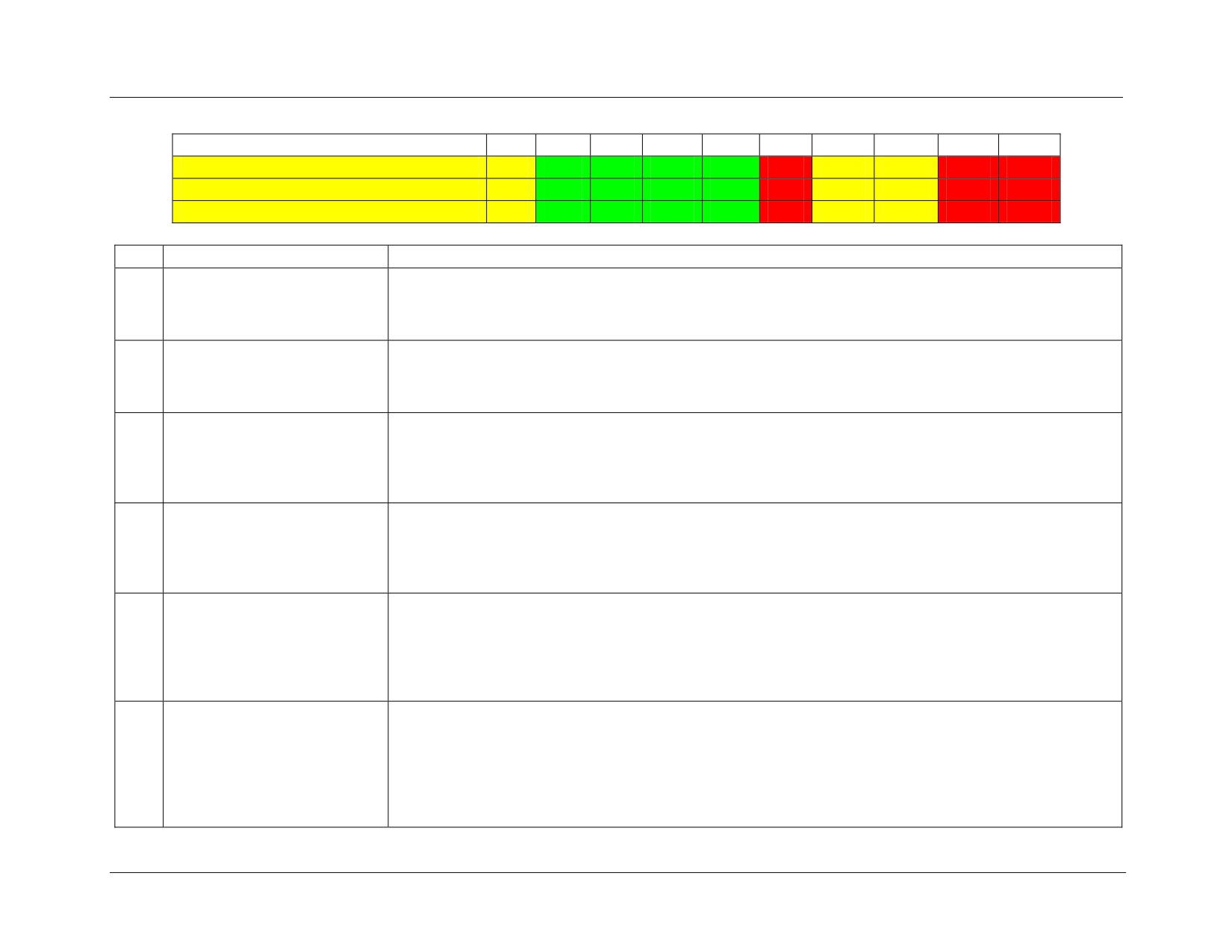
For Official Use Only
CBRND Functional Needs Analysis/Functional Solution Analysis
Chapter 11. Strategic Theater Shield Tasks
Table 11.7-1. STSHLD 7: Capability and Deficiency Assessment
Capability: COCOM HQ
M1
M2
M3
M4
M5
M6
M7
M8
M9
M10
Current Overall Capability1
Y2
G3
G3
G3
G4
R5
Y6
Y7
R8
R9
Near/Mid-Term Overall Capability
Y
G
G
G
G
R
Y
Y
R
R
Far-Term Overall Capability
Y
G
G
G
G
R
Y
Y
R
R
FAA Measure
Scale
M1
Joint forces are equipped with or
G: COLPRO is available in required quantities and types to support the full range of envisioned and planned
possess access to COLPRO.
operations.
Y: COLPRO is available in sufficient types and quantities to support major operations.
R: COLPRO is inadequate or nonexistent to support operations.
M2
Coalition/non-U.S. forces are
G: Planning and coordination is conducted to address partner forces equipping or access to COLPRO.
equipped with or possess access
Y: Partner force equipping or access to COLPRO is considered when planning operations with threat.
to COLPRO.
R: Partner force equipping or access to COLPRO is not considered or is inadequately considered when planning
operations with threat.
M3
Joint forces meet combatant
G: Processes and means exist to monitor, track, and assess joint forces readiness and preparations status against
commander CBRN/TIM
COCOM requirements.
protection requirements
Y: Processes exist to identify joint forces readiness meeting COCOM requirements.
(training, equipping, and
R: Processes and/or means are inadequate or nonexistent to identify joint forces readiness and/or preparations
manning).
meeting COCOM requirements.
M4
Coalition/non-U.S. forces meet
G: Processes and means exist to monitor, track, and assess coalition/non-U.S. forces readiness and preparations
combatant commander
status against COCOM requirements.
CBRN/TIM protection
Y: Processes exist to identify coalition/non-U.S. forces readiness meeting COCOM requirements.
requirements (training,
R: Processes and/or means are inadequate or nonexistent to identify coalition/non-U.S. forces readiness and/or
equipping, and manning).
preparations meeting COCOM requirements.
M5
Joint and coalition/non-U.S.
G: CBRN/TIM protection consumables are interoperable between coalition/non-U.S. forces and joint forces or
force CBRN/TIM protection
adequate stocks of noninteroperable consumables are determined and available to support operations with threat.
consumables are interoperable.
Y: CBRN/TIM protection consumables are interoperable between coalition/non-U.S. forces and joint forces or
stocks of noninteroperable consumables are available to support operations with threat.
R: CBRN/TIM protection consumables are noninteroperable between coalition/non-U.S. forces and joint forces
and/or stocks of noninteroperable consumables are inadequate or nonexistent to support operations with threat.
M6
Sustained operational planning
G: The planned and operational control of allocation, placement, and, when necessary, redistribution of
includes allocation and
CBRN/TIM protection assets of coalition and joint forces is performed and coordinated throughout operations to
placement (and redistribution if
sustain and support forces.
necessary) of joint and coalition
Y: Allocation and placement of CBRN/TIM protection assets of coalition and joint forces is performed and
force CBRN/TIM protection
coordinated prior to commencement of operations.
assets.
R: The planned and operational control of the allocation, placement, and/or redistribution of joint and coalition
force CBRN/TIM protection assets is inadequate or nonexistent.
62
For Official Use Only
For Official Use Only
CBRND Functional Needs Analysis/Functional Solution Analysis
Chapter 11. Strategic Theater Shield Tasks
M7
Theaterwide system to identify
G: Integrated and interoperable logistics systems provide theaterwide identification, tracking, status, and visibility
and track CBRN/TIM protective
of joint, coalition, and non-U.S. forces CBRN/TIM protective equipment to the COCOM.
equipment for joint and
Y: Processes and means exist to provide the COCOM with information about joint, coalition, and non-U.S. forces
coalition/non-U.S. forces in
CBRN/TIM protective equipment.
place.
R: Process and means are inadequate or nonexistent to provide the COCOM with information about joint,
coalition, and non-U.S. forces CBRN/TIM protective equipment.
M8
Theaterwide system to track
G: Integrated and interoperable systems provide theaterwide identification, tracking, status, and visibility of joint,
CBRN/TIM protective training
coalition, and non-U.S. forces CBRN/TIM protective training to the COCOM.
of joint, and coalition/non-U.S.
Y: Processes and means exist to provide the COCOM with information about joint, coalition, and non-U.S. forces
forces in place.
CBRN/TIM protective training status.
R: Process and means are inadequate or nonexistent to provide the COCOM with information about joint,
coalition, and non-U.S. forces CBRN/TIM protective training status.
M9
FP plan for bases/facilities
G: AT/FP plans address and provide for the ready protection of the base/facility general populace against exposure
includes CBRN/TIM protection
to and the effects of CBRN/TIM agents.
for base/facility general
Y: AT/FP plans address and provide for the ready protection of the at-risk base/facility general populace against
populace.
exposure to and the effects of CBRN/TIM agents.
R: AT/FP plans addressing and providing general populace protection against CBRN/TIM agents are inadequate
or nonexistent.
M10
FP plan for bases/facilities
G: AT/FP plans address and provide for the ready protection of tenant and transiting units/forces against exposure
includes CBRN/TIM protection
to and the effects of CBRN/TIM agents.
for tenant and transiting
Y: AT/FP plans address and provide for the ready protection of the at-risk tenant and transiting units/forces
units/forces.
against exposure to and the effects of CBRN/TIM agents.
R: AT/FP plans addressing and providing tenant and transiting units/forces protection against CBRN/TIM agents
are inadequate or nonexistent.
1 DOTMLPF is adequate for the coordination and integration of coalition forces. Adequate DOTMLPF exists to address and support these forces. However, DOTMLPF is
inadequate or nonexistent addressing CBRND of eligible civilians and MWAs. DOTMLPF does not adequately address sustained operations within a CBRN/TIM environment.
2 Limited quantities of COLPRO are available for operations. Not all critical facilities and activities are equipped with COLPRO. Transportable CPSs (e.g., JTCOPS, CP-
DEPMEDS, TEMPER systems, and Service-designed systems) provide CPS for mature theaters or within the AO if there exists adequate time between notification of plan
activation and the commencement of hostilities. However, these systems are in limited numbers, require significant logistics to move and establish, and concurrent operations with
CBRN/TIM threat may further limit their availability. Mobile CPSs (ground) are also limited in quantities and types. Coalition partner and host-nation (when applicable) CPSs may
offset these limitations. The COCOM staff, in coordination with coalition partner staff, develop the campaign plan and address requirements and commitments by each coalition
participant. Discussions and negotiations between the COCOM staff and partners determine the capabilities of each partner within the full spectrum of support. Commitments are
obtained from each participant. Specific tasks are assigned to elements of the coalition force most capable of completing the task. Although the provision of CBRND equipment to
national forces ultimately resides with their nations, mutual support among coalition partners is planned to complement partners’ capabilities and to minimize weaknesses. ACSAs
between coalition partners enable acquisition and cross-servicing support between the partners. The IA, a more specific arrangement, provides for a wide range of support exchange
including sheltering, medical care, and other support activities.
3 In coordination with coalition partner staff, the COCOM staff develops a comprehensive campaign plan for successful achievement of the desired end states. Discussions and
negotiations between partners determine the capabilities of each partner within the full spectrum of support. Force requirements and commitments are obtained from each coalition
participant. Minimum capability standards for participation and a certification process covering areas of concern (e.g., training level competence, logistics capabilities, deployment,
sustainment, and redeployment readiness, etc.) are established and applied by all participants. Specific tasks are assigned to elements of the coalition force most capable of
63
For Official Use Only
For Official Use Only
CBRND Functional Needs Analysis/Functional Solution Analysis
Chapter 11. Strategic Theater Shield Tasks
completing the task. Although the provision of CBRND equipment to national forces ultimately resides with their nations, mutual logistics support among coalition partners is
planned to complement partners’ capabilities and to minimize weaknesses. For example, U.S. Marine Corps forces were equipped with lightweight CBRN/TIM IPE by the U.K.
during Operation Desert Storm. The United States installed COLPRO capabilities in Saudi critical command and control facilities for the same operation. The COCOM and the
combined staff monitors, tracks, and assesses the readiness of the joint coalition force. COLPRO availability and readiness is addressed throughout the process for CBRND.
4 In coordination with coalition partner staff, the COCOM staff determines logistical efficiencies among the partners during the planning process. Standardization and
interoperability between the participating nations is assessed and adjustments are made as necessary to plans. Support consumable levels are determined and incorporated into the
plans. Commitments are obtained from each coalition participant. Minimum capability standards for participation and a certification process covering areas of concern (including
logistics capabilities) are established and applied by all participants. ACSAs between coalition partners enable acquisition and cross-servicing support between the partners. The IA,
a more specific arrangement, provides for sheltering, medical care, consumables, and other support activities. Standardization of consumables for interoperability, although sought
and existing with selected countries (e.g., North Atlantic Treaty Organization [NATO] participants), may not be possible with all coalition partners and U.S. forces. Interoperability
between two or more partners may alleviate the increased logistics of nonstandardized consumables. Issues associated with nonstandardized consumables are addressed when
necessary and appropriate during planning.
5 The allocation, placement, and reallocation of protective assets is a function of the planning and operational control of the COCOM, COCOM staff, and combined staff. ACSAs
between coalition partners enable acquisition and cross-servicing support between the partners. The IA, a more specific arrangement, provides for a wide range of support exchange
including consumables, sheltering, medical care, and other support activities. However, sustained operations within a CBRN/TIM environment are not adequately addressed in
DOTMLPF and, subsequently, in planning.
6 Service logistics systems provide some visibility of the location of CBRN/TIM protective equipment (real and warehoused property). These systems also include a standardized
condition indicator. However, these indicators are assigned upon receipt of property and are generally unchanged unless there is an assigned limitation code specifying automatic
condition code downgrade timing or Lot Number identifier. Issued property from logistics warehouse systems, other than real property, are not identified in the wholesale logistics
system. The accuracy of logistics systems are dependent upon the quality of inventory controls and logistics management. Service-specific supply systems do not exchange
information at the theater and local level. The Defense Logistics Agency does possess a degree of ability to view and track assets across the services. The COCOM staff does not
possess this capability and must request the information from the component Services. The allocation, operation, manning, management, and resupply of non-U.S. force CBRND
assets are generally the responsibility of the owning nation. The tracking of these assets are internal to those forces and nations. Integration of U.S. and non-U.S. logistics systems is
not currently required. Tracking of non-U.S. equipment supplied for U.S. force application is largely performed manually and not integrated with existing component Service
systems.
7 CBRN/TIM protective training is tracked and recorded by individual force units. A theaterwide system to track CBRN/TIM protective training does not exist. Readiness
monitoring is performed by the COCOM staff. However, CBRN/TIM is part of a composite readiness rating. CBRN/TIM protective training of non-U.S. forces is generally the
responsibility of the owning nation. The training of these forces is tracked internally to those forces and nations. The integration of training tracking systems between the U.S. and
non-U.S. systems is not currently required.
8 AT/FP plans include a CBRN/TIM annex. The annex must address the notification and protective measures for the base/facility general populace. However, CBRND protective
equipment is not issued or available to the base/facility general populace at CONUS and non-HTA OCONUS locations. The Guardian Program is addressing these issues. FP plans
for bases and facilities within HTA do address CBRN/TIM protection. However, the common assumption is nonessential civilians will be evacuated prior to commencement of
hostilities or the hazard area will be limited; therefore, nonessential civilians are not generally addressed for protection in other than in generic terms or NEO planning. Operations
frequently include civilians directly supporting force activities. Although some government civilians are provided and equipped with IPE as part of their primary function (e.g.,
hazardous materials, fire response, readiness flight [Air Force] and selected others, most civilians are not equipped or have access to IPE enabling survival within a CBRN/TIM
environment. This statement is particularly true of contractors. Further, MWAs (particularly MWDs) elements of the force do not possess CBRND protection. The COCOM staff
does not possess clear guidance for planning and providing CBRND protection of eligible civilians and MWA.
9 AT/FP plans generally do not include protection for transiting units/forces. Tenant organizations are included in garrison/base protection plans and planning. Operations
frequently include civilians directly supporting force activities and other eligible civilians (not supporting the mission). Although some government civilians are provided and
equipped with IPE as part of their primary function (e.g., hazardous materials, fire response, readiness flight [Air Force] and selected others, most civilians are not equipped or have
access to IPE enabling survival within a CBRN/TIM environment. This statement is particularly true of contractors. Further, MWAs (particularly MWDs) elements of the force do
not possess CBRND protection. The COCOM staff does not possess clear guidance for planning and providing CBRND protection of eligible civilians and MWAs.
64
For Official Use Only
For Official Use Only
CBRND Functional Needs Analysis/Functional Solution Analysis
Chapter 11. Strategic Theater Shield Tasks
11.7.3
Functional Solution Analysis
11.7.3.1
DOTLPF Assessment Summary
This section addresses the deficiencies and suggests potential non-materiel solutions. If there are
no non-materiel solutions, or they are only partial solutions, the remaining non-materiel need is
then stated. Materiel needs are assessed in the IMA section.
1.
Deficiency: Not all critical facilities and activities are equipped with COLPRO.
Non-Materiel Solutions: Doctrine: Enforce existing doctrine and policy.
2.
Deficiency: Mobile CPSs (ground) are limited in quantity and type.
Non-Materiel Solutions: Doctrine: Complete analysis and central correlation/comparison of
national and strategic plans to identify quantities and types of mobile COLPRO (and
supporting consumables) necessary and available to support highly mobile forces for
envisioned plans and taskings. Organization: Develop organizational structures, resources,
staffing, and capabilities to conduct CBRND, including mobile COLPRO, of highly mobile
forces. Training: Train, exercise, and evaluate CBRND, including mobile COLPRO,
capabilities of the force in a CBRN/TIM threat during highly mobile force operations.
Leadership: Recognize differences and challenges associated with CBRND operations by
highly mobile forces; training providing skills and knowledge to manage operations in these
circumstances; and ability and willingness to implement necessary changes and activities to
prepare for and conduct expeditionary operations with a CBRN/TIM threat. Facilities:
Develop supporting infrastructure for CBRND of highly mobile forces.
3.
Deficiency: Transportable COLPRO systems are in limited numbers and require significant
logistics to move and establish.
Non-Materiel Solutions: Doctrine: Institute in doctrine, policy, and procedures the central
correlation of Strategic Theater plans and taskings to identify CBRND support requirements
for two or more concurrent operations with CBRN/TIM threat with comparison to existing
and programmed quantities and types of CBRND systems and resources. Leadership:
Implement development of plans and taskings consistent with available CBRND capabilities
as determined by central correlation and comparison of Strategic Theater plans and taskings.
4.
Deficiency: Concurrent operations with CBRN/TIM threat may limit CPS availability.
Non-Materiel Solutions: Doctrine: Institute in doctrine, policy, and procedures the central
correlation of Strategic Theater plans and taskings to identify CBRND support requirements
for two or more concurrent operations with CBRN/TIM threat with comparison to existing
and programmed quantities and types of CBRND systems and resources. Leadership:
Implement development of plans and taskings consistent with available CBRND capabilities
as determined by central correlation and comparison of Strategic Theater plans and taskings.
5.
Deficiency: Sustained operations within a CBRN/TIM environment are not adequately
addressed in DOTMLPF and, subsequently, in planning.
Non-Materiel Solutions: Doctrine: Include in doctrine, policy, and procedures sustained
operations within a CBRN/TIM environment. Organization: Ensure resources, taskings, and
65
For Official Use Only
For Official Use Only
CBRND Functional Needs Analysis/Functional Solution Analysis
Chapter 11. Strategic Theater Shield Tasks
staff are in place or available to perform sustained operations within a CBRN/TIM
environment. Training: Train, exercise, and evaluate the force for sustained operations within
a CBRN/TIM environment. Leadership: Recognize criticality of readiness of the force for
potential sustained operations within a CBRN/TIM environment, training providing the skills
to manage the force in these circumstances, and willingness and ability to implement
necessary changes and activities to prepare and appropriately apply the force.
6.
Deficiency: Issued property from logistics warehouse systems, other than real property, is
not identified in the wholesale logistics system.
Non-Materiel Solutions: Organization: Develop structures for logistics systems integration
and information sharing to support decisioning and asset visibility. Facilities: Develop
logistics infrastructure (national to unit) supporting flow of information.
7.
Deficiency: Service-specific supply systems do not exchange information at the theater and
local level.
Non-Materiel Solutions: Organization: Develop structures for logistics systems integration
and information sharing to support decisioning and asset visibility. Facilities: Develop
logistics infrastructure (national to unit) supporting flow of information.
8.
Deficiency: The COCOM staff does not possess the ability to view and track CBRND assets
across the services .and must request the information from the component Services.
Non-Materiel Solutions: Organization: Develop structures for logistics systems integration
and information sharing to support decisioning and asset visibility. Facilities: Develop
logistics infrastructure (national to unit) supporting flow of information.
9.
Deficiency: Tracking of non-U.S. equipment supplied for U.S. force application is largely
performed manually and not integrated with existing component Service systems.
Non-Materiel Solutions: Organization: Develop structures for logistics systems integration
and information sharing to support decisioning and asset visibility, including assets provided
by other nations to support U.S. forces. Facilities: Develop logistics infrastructure (national
to unit) supporting flow of information, including information on assets provided by other
nations to support U.S. forces.
10. Deficiency: A theaterwide system to track CBRN/TIM protective training does not exist.
Non-Materiel Solutions: Organization: Develop structures for Service-specific training
tracking systems integration and information sharing to support decisioning and asset
visibility. Facilities: Develop automated systems infrastructure supporting the compilation
and flow of information of all force elements.
11. Deficiency: CBRND protective equipment is not issued or available to the base/facility
general populace at CONUS and non-HTA OCONUS locations.
Non-Materiel Solutions: Doctrine: Institute in doctrine, policy, and procedures CBRND of
personnel (military and civilian) located in DoD installations, sites, and facilities to include
equipping, training, exercising, and evaluations for CBRN/TIM survival. Organization:
Ensure resources, taskings, and staff are in place or available to support and conduct
CBRND. Training: Train, exercise, and evaluate the force for survivability within a
66
For Official Use Only
For Official Use Only
CBRND Functional Needs Analysis/Functional Solution Analysis
Chapter 11. Strategic Theater Shield Tasks
CBRN/TIM environment. Leadership: Implement development of plans and taskings
consistent with stockpile support capabilities.
12. Deficiency: The common assumption for HTA fixed sites is that nonessential civilians will
be evacuated prior to commencement of hostilities or the hazard area will be limited;
therefore, nonessential civilians are not generally addressed for protection in other than in
generic terms or NEO planning.
Non-Materiel Solutions: Doctrine: Develop doctrine, policy, and procedures addressing
eligible civilian personnel for CBRND. Organization: Identify organizational services and
activities supporting eligible civilians. Training: Establish CBRND training, exercise, and
evaluation criteria and programs for eligible civilian personnel and conduct CBRND training,
exercises, and evaluations. Leadership: Implement and manage CBRND training, equipping,
and protection of eligible civilian personnel. Facilities: Develop supporting infrastructure for
the acquisition, stockpiling, prepositioning, maintenance, and movement of eligible civilian
CBRND resources.
13. Deficiency: Although some government civilians are provided and equipped with IPE as part
of their primary function (e.g., hazardous materials, fire response, readiness flight [Air Force]
and selected others), most civilians are not equipped or have access to IPE enabling survival
within a CBRN/TIM environment. This statement is particularly true of contractors.
Non-Materiel Solutions: Doctrine: Establish in doctrine, policy, and procedures the
application of standards for protection of eligible civilians supporting the mission/military
operations addressing the variation within the potential protected working population.
Leadership: Establish CBRND training, exercise, and evaluation criteria and programs for
eligible civilians supporting the mission/military operations and conduct CBRN/TIM
training, exercises, and evaluations.
14. Deficiency: MWA, particularly MWD, elements of the force do not possess CBRND
protection.
Non-Materiel Solutions: Doctrine: Establish doctrine, policy, and procedures CBRND
protection of MWAs and training for CBRN/TIM environment survival. Organization:
Organizational consideration for maintenance and support of MWA CBRND protective
equipment, measures, and activities. Training: Develop institutional and unit training of
handlers and MWAs for CBRND measures and activities. Leadership: Ensure awareness and
planning for CBRND measures and requirements for MWA survivability. Facilities: Develop
supporting infrastructure for MWA CBRND (e.g., logistics, veterinary surveillance, etc.).
15. Deficiency: The COCOM staff does not possess clear guidance for planning and providing
CBRND protection of eligible civilians.
Non-Materiel Solutions: Doctrine: Develop doctrine, policy, and procedures addressing
civilian personnel and operations for CBRND. Organization: Identify organizational services
and activities supporting the mission performed by civilian personnel and operations.
Training: Establish CBRND training, exercise, and evaluation criteria and programs for
eligible civilians and conduct CBRND training, exercises, and evaluations Leadership:
Implement and manage CBRND training, equipping, and protection of eligible civilians.
Personnel: Ensure that eligible civilians supporting the mission/military operations are
67
For Official Use Only
For Official Use Only
CBRND Functional Needs Analysis/Functional Solution Analysis
Chapter 11. Strategic Theater Shield Tasks
qualified in CBRND and capable of performing their responsibilities in a CBRN/TIM
environment. Facilities: Develop supporting infrastructure for eligible civilian CBRND (e.g.,
logistics, medical, veterinary surveillance, training, communications, etc.).
16. Deficiency: The COCOM staff does not possess clear guidance for planning and providing
CBRND protection of MWAs.
Non-Materiel Solutions: Doctrine: Develop doctrine, policy, and procedures addressing
MWA, particularly MWD, operations for CBRND. Organization: Identify organizational
services and activities supporting the mission performed by MWA operations. Training:
Establish CBRND training, exercise, and evaluation criteria and programs for MWDs and
conduct CBRND training, exercises, and evaluations Leadership: Implement and manage
CBRND training, equipping, and protection of MWAs. Facilities: Develop supporting
infrastructure for MWD CBRND (e.g., logistics, medical, veterinary surveillance, training,
communications, etc.).
17. Deficiency: AT/FP plans generally do not include protection for transiting units/forces.
Non-Materiel Solutions: Doctrine: Enforce planning for CBRND support of deploying,
redeploying, and en route forces by supporting installations. Organization: Develop
organization structures, resources, staffing, and capabilities to provide CBRND support of
deploying, redeploying, relocation, and en route forces as well as organic forces. Training:
Train, exercise, and evaluate capabilities of locations providing support to deploying,
redeploying, relocating, and en route forces to conduct and provide CBRND. Leadership:
Recognize challenges associated with CBRND support of deploying, redeploying, relocating,
and en route forces as well as organic forces. Plan for the provision of CBRND and conduct
comprehensive exercises and evaluations to ensure readiness of the organic force to perform
CBRND and protect transient forces. Facilities: Develop supporting infrastructure to protect
transient forces from the effects of CBRN/TIM agents.
18. Deficiency: DOTMLPF is inadequate or nonexistent addressing CBRND of eligible
civilians.
Non-Materiel Solutions: Doctrine: Develop doctrine, policy, and procedures addressing
eligible civilian personnel for CBRND. Organization: Identify organization services and
activities necessary to support survivability of eligible civilian personnel within a
CBRN/TIM environment. Training: Establish CBRND training, exercise, and evaluation
criteria and programs for eligible civilians and conduct CBRND training, exercises, and
evaluations. Leadership: Implement and manage CBRND training, equipping, and protection
of eligible civilian personnel.
19. Deficiency: DOTMLPF is inadequate or nonexistent addressing CBRND of MWAs.
Non-Materiel Solutions: Doctrine: Develop doctrine, policy, and procedures addressing
MWDs for CBRND. Organization: Identify organization services and activities necessary to
support survivability of MWDs within a CBRN/TIM environment. Training: Establish
CBRND training, exercise, and evaluation criteria and programs for MWDs and conduct
CBRND training, exercises, and evaluations. Leadership: Implement and manage CBRND
training, equipping, and protection of MWDs.
68
For Official Use Only
For Official Use Only
CBRND Functional Needs Analysis/Functional Solution Analysis
Chapter 11. Strategic Theater Shield Tasks
20. Deficiency: DOTMLPF does not adequately address sustained operations within a
CBRN/TIM environment.
Non-Materiel Solutions: Doctrine: Include in doctrine, policy, procedures, and UJTL
sustained operations within a CBRN/TIM environment. Organization: Ensure resources,
taskings, and staff are in place or available to plan and perform sustained operations within a
CBRN/TIM environment. Training: Train, exercise, and evaluate the force for sustained
operations within a CBRN/TIM environment. Leadership: Recognize criticality of readiness
of the force for potential sustained operations within a CBRN/TIM environment, training
providing the skills to manage the force in these circumstances, and willingness and ability to
implement necessary changes and activities to prepare and appropriately apply the force.
11.7.3.2
IMA Assessment Summary
N/A
69
For Official Use Only
For Official Use Only
CBRND Functional Needs Analysis/Functional Solution Analysis
Chapter 11. Strategic Theater Shield Tasks
11.8 Task STSHLD 8: Ensure adequate protective measures and resources are available
to coalition partners and other designated non-U.S. forces
11.8.1
Functional Area Analysis
11.8.1.1
Definition
To ensure that CBRN/TIM protective measures and resources are available to coalition/non-U.S.
forces. The availability of CBRN/TIM protective measures and resources is both a joint and
coalition/non-U.S. force concern. This task includes IPE, COLPRO, CBRND equipment and
supplies, protection of equipment and supplies, and medical CBRN/TIM countermeasure
resources. The base/facility FP plan must integrate coalition forces to maximize capability and
minimize vulnerability. Operational units must determine and track the level of NBC training
and equipment status of their fellow coalition/non-U.S. forces. Planners and NBC staff officers
must establish and track the status of protective assets of coalition/non-U.S. partners. U.S. forces
may be required to provide protective assets (especially IPE, detection and warning devices,
medical support, and decontaminants) to coalition/non-U.S. partners, depending on local threats
and/or actual adversary use of CBRN/TIM. Joint forces NBC staff officers should offer to review
coalition/non-U.S. force CBRN/TIM protection plans and assist as necessary. U.S. forces may be
required to train coalition/non-U.S. forces in CBRND. Supports assistance to nations provided
under military assistance and the family of engagement plans to eliminate WMD vulnerabilities.
11.8.1.2
Derivation
Joint Enabling Concept for CBRN/TIM Operations, Protection Joint Functional Concept, UJTL
(ST 2.4.1.1, ST 2.4.1.1, ST 4.2.4, ST 5.4.1, ST 5.4.3, ST 6, ST 6.2, ST 6.2.1, ST 8.1.4, ST 8.2, ST
8.3.2, ST 9.3, ST 9.4).
11.8.1.2.1
Supported Task: SNSHLD 12
11.8.1.2.2
Lateral Task: STSHA 4
11.8.1.2.3
Supporting Task: OPSHLD 5
11.8.1.3
Condition
Perform this task under conditions of:
Physical
1. Undeveloped to highly developed land. (C1.1)
2. Riverine to open sea. (C 1.2)
3. Natural and induced air. (C 1.3)
4. Immediate to delayed danger, and potential long-term health hazard of atmospheric
weapons effects. (C1.3.3)
70
For Official Use Only
For Official Use Only
CBRND Functional Needs Analysis/Functional Solution Analysis
Chapter 11. Strategic Theater Shield Tasks
Military
1. Partially completed mission preparation. (C2.1.3)
2. Marginal to strong forces assigned. (C2.2.1)
3. Partial joint staff integration. (C2.3.1.1)
4. Moderate staff expertise. (C2.3.1.3)
5. Fair personnel nutrition and health. (C2.2.4.1)
6. Partial interoperability. (C2.2.6)
7. Limited deployed supplies. (C2.8.2)
8. Sufficient CONUS resupply. (C2.8.3)
9. Limited prepositioned materiel. (C2.8.4)
10. Limited host-nation support. (C2.8.5)
11. Extensive commercial procurement. (C2.8.6)
Civil
1. Correct interdepartmental/interagency relationships. (C3.1.1.3)
2. Limited foreign government support. (C3.1.2.3)
3. Moderately opposed foreign public opinion. (C3.1.2.4)
11.8.2
Functional Needs Analysis
11.8.2.1
Capability and Deficiency Assessment Summary
Table 11.8-1 discusses the only capability that exists to perform the task to the designated
standard. Adequate doctrine, policy, and procedures exist for ensuring the adequacy of protective
measures and resources of coalition partners and other designed non-U.S. forces. Structures for
mutual support can be applied in cases where necessary to complement capabilities and
minimize weaknesses within the Joint Coalition Force. No deficiencies were noted within this
task.
Current Capability and Deficiency
Adequate doctrine, policy, and procedures exist to guide commanders and staffs with coalition
and non-U.S. force participation in joint operations. Planning, tracking, and monitoring is
performed in coordination with partner staffs under a negotiated plan outlining requirements,
taskings, training, reporting, information sharing, standards, and operational certifications for
participation. Although the provision of CBRND equipment to national forces ultimately resides
with their nations, mutual support among partners is planned to complement capabilities and to
minimize weaknesses. ACSAs between partners enables acquisition and cross-servicing support
between the partners. The more specific IA provides for a wide range of support including
sheltering, medical care, and other support activities. The COCOM and combined staff monitors,
tracks, and assesses the readiness of the Joint Coalition Force and addresses issues and concerns
as they arise. No deficiencies were noted within this task.
71
For Official Use Only
For Official Use Only
CBRND Functional Needs Analysis/Functional Solution Analysis
Chapter 11. Strategic Theater Shield Tasks
Projected Near/Mid-Term Capability and Deficiency
No change is projected for this task.
Projected Far-Term Capability and Deficiency
No change is projected for this task.
72
For Official Use Only
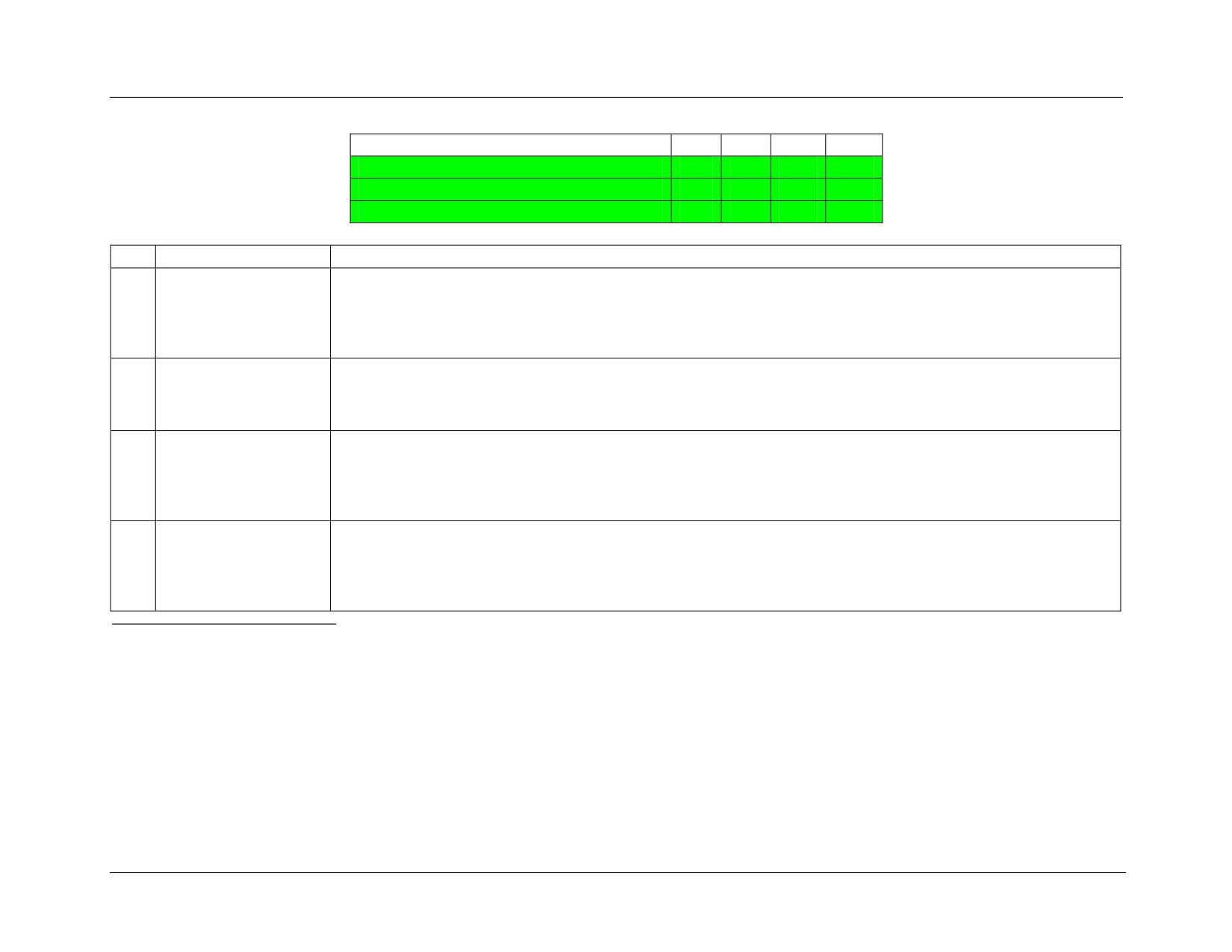
For Official Use Only
CBRND Functional Needs Analysis/Functional Solution Analysis
Chapter 11. Strategic Theater Shield Tasks
Table 11.8-1. STSHLD 8: Capability and Deficiency Assessment
Capability: COCOM HQ
M1
M2
M3
M4
Current Overall Capability1
G2
G3
G4
G5
Near/Mid-Term Overall Capability
G
G
G
G
Far-Term Overall Capability
G
G
G
G
FAA Measure
Scale
M1
Coalition/non-U.S.
G: Planning and coordination is conducted to address partner forces readiness and preparations for operations with
forces are protected by
CBRN/TIM threat and includes all CBRND protective measures.
medical prophylaxes.
Y: Partner forces CBRND capabilities are considered when planning operations with CBRN/TIM threat.
R: Partner force CBRND capabilities are not considered or is inadequately considered when planning operations with
CBRN/TIM threat.
M2
Coalition/non-U.S.
G: Planning and coordination is conducted to address partner forces equipping or access to COLPRO.
forces are equipped with
Y: Partner force equipping or access to COLPRO is considered when planning operations with threat.
or possess access to
R: Partner force equipping or access to COLPRO is not considered or is inadequately considered when planning operations
CBRN/TIM COLPRO.
with threat.
M3
Coalition/non-U.S.
G: Processes and means exist to monitor, track, and assess coalition/non-U.S. forces training, readiness, and preparations
forces are trained to
status against COCOM requirements.
operate in CBRN/TIM
Y: Processes exist to identify coalition/non-U.S. forces training meeting COCOM requirements.
hazards.
R: Process and/or means are inadequate or nonexistent to identify coalition/non-U.S. forces training meeting COCOM
requirements.
M4
Coalition/non-U.S.
G: Processes and means exist to monitor, track, and assess coalition/non-U.S. forces equipping, readiness, and preparations
forces are equipped with
status against COCOM requirements.
CBRN/TIM IPE.
Y: Processes exist to identify coalition/non-U.S. forces equipping meeting COCOM requirements.
R: Process and/or means are inadequate or nonexistent to identify coalition/non-U.S. forces equipping meeting COCOM
requirements.
1 There is adequate DOTMLPF in place to conduct this task.
2 National policies of the coalition/non-U.S. forces regarding medical prophylaxis is a factor the COCOM and supporting staff must consider during planning and operations.
Religious considerations may also impact the use of medical prophylaxis. In coordination with coalition/non-U.S. forces partner staff, the COCOM staff develop and address
requirements and commitments by each partner. Discussions and negotiations between the COCOM staff and partners determine the capabilities of each partner within the full
spectrum of support. Although the provision of CBRND resources to national forces ultimately resides with their nations, mutual support among partners is planned to complement
partners’ capabilities and to minimize weaknesses. ACSAs between partners enable acquisition and cross-servicing support between the partners. The IA, a more specific
arrangement, provides for a wide range of support exchange, including sheltering, medical care, and other support activities. Indigenous forces supporting operations may not be
equipped or have access to medical prophylaxis.
3 In coordination with coalition/non-U.S. forces partner staff, the COCOM staff develop and address requirements and commitments by each partner. Discussions and negotiations
between the COCOM staff and partners determine the capabilities of each partner within the full spectrum of support. Specific tasks are assigned to elements of the coalition force
most capable of completing the task. Although the provision of CBRND resources to national forces ultimately resides with their nations, mutual support among partners is
planned to complement partners’ capabilities and to minimize weaknesses. ACSAs between partners enable acquisition and cross-servicing support between the partners. The IA, a
73
For Official Use Only
For Official Use Only
CBRND Functional Needs Analysis/Functional Solution Analysis
Chapter 11. Strategic Theater Shield Tasks
more specific arrangement, provides for a wide range of support exchange, including sheltering, medical care, and other support activities. Indigenous forces supporting operations
may not be equipped or have access to CBRND COLPRO.
4 In coordination with coalition/non-U.S. forces partner staff, the COCOM staff develop a comprehensive plan for successful achievement of the desired end states. Discussions
and negotiations between partners determine the capabilities of each partner within the full spectrum of support. Force requirements and commitments are obtained from each
participant. Minimum capability standards for participation and a certification process covering areas of concern (e.g., training level competence, logistics capabilities, deployment,
sustainment, and redeployment readiness, etc.) are established and applied by all participants. The COCOM and the combined staff monitor, track, and assess the readiness of the
joint coalition force. Indigenous forces supporting operations may not be equipped and prepared for CBRND operations. The COCOM staff, in coordination with partners,
determines the need for CBRND capabilities of these forces based upon the threat. A determination is made on the provision CBRND training to theses forces.
5 In coordination with coalition/non-U.S. forces partner staff, the COCOM staff develop and address requirements and commitments by each partner. Discussions and negotiations
between the COCOM staff and partners determine the capabilities of each partner within the full spectrum of support. Although the provision of CBRND resources to national
forces ultimately resides with their nations, mutual support among partners is planned to complement partners’ capabilities and to minimize weaknesses. ACSAs between partners
enable acquisition and cross-servicing support between the partners. The IA, a more specific arrangement, provides for a wide range of support exchange, including sheltering,
medical care, and other support activities. Indigenous forces supporting operations may not be equipped or have access to CBRND IPE. The COCOM staff, in coordination with
partners, determine the need for IPE based upon the threat.
74
For Official Use Only