CHEMICAL, BIOLOGICAL, RADIOLOGICAL, AND NUCLEAR DEFENSE (CBRND) FUNCTIONAL NEEDS ANALYSIS. FINAL REPORT (2005) - page 17
For Official Use Only
CBRND Functional Needs Analysis/Functional Solution Analysis
Chapter 11. Strategic Theater Shield Tasks
11.8.3
Functional Solution Analysis
11.8.3.1
DOTLPF Assessment Summary
No deficiencies were noted within this task.
11.8.3.2
IMA Assessment Summary
N/A
75
For Official Use Only
For Official Use Only
CBRND Functional Needs Analysis/Functional Solution Analysis
Chapter 11. Strategic Theater Shield Tasks
11.9 Task STSHLD 9: Provide COLPRO for critical activities/functions, rest, and relief
11.9.1
Functional Area Analysis
11.9.1.1
Definition
To provide COLPRO by CPSs, which provide protection against CBRN/TIM hazards in
particulate, liquid, or vapor forms. JP 1-02 defines COLPRO as “protection provided to a group
of individuals in a nuclear, biological, and chemical environment which permits relaxation of
individual nuclear, biological, and chemical protection.” COLPRO provides a contamination-free
environment where critical activities (e.g., command and control, communication, and medical
activities and maintenance of low-density assets) can be performed and provides mission-
oriented protective posture relief for individuals, units, and MWAs.
A collective protection system (CPS) is a complete and integrated system of protection. The
components are designed to function in concert to successfully protect the occupants. COLPRO
may be incorporated in or an additive component to a fixed facility, transportable shelter, mobile
mounted shelter, vehicle, aircraft, ship, or an expedient shelter. Prior to an actual attack, a CPS
may be activated and the following tasks performed:
• CPS are assessed and prepared for use. The commander may place a CPS into operation or
on standby for an anticipated attack.
• Facilities, vehicles, vessels, and aircraft are prepared wherever possible against infiltration of
a CBRN/TIM agent.
• Expedient shelters are established in facilities, vehicles, vessels, aircraft, etc., for protection
of resources. Expedient shelters also may be constructed using available materials.
11.9.1.2
Derivation
Joint Enabling Concept for CBRN/TIM Operations, An Operational Concept for Biological
Defense, Protection Joint Functional Concept, UJTL (ST 5, ST 5.1, ST 5.1.2, ST 6, ST 6.2.1, ST
9.3, ST 9.4).
11.9.1.2.1
Supported Task: N/A
11.9.1.2.2
Lateral Tasks: STSHA 3, STSHA 4
11.9.1.2.3
Supporting Task: OPSHLD 7
11.9.1.3
Condition
Perform this task under conditions of:
Physical
1. Undeveloped to highly developed land. (C1.1)
2. Riverine to open sea. (C1.2)
76
For Official Use Only
For Official Use Only
CBRND Functional Needs Analysis/Functional Solution Analysis
Chapter 11. Strategic Theater Shield Tasks
3. Natural and induced air. (C1.3)
4. Immediate to delayed danger, and potential long-term health hazard of atmospheric
weapons effects. (C1.3.3)
Military
1. Partially completed mission preparation. (C2.1.3)
2. Marginal to strong forces assigned. (C2.2.1)
3. Partial interoperability. (C2.2.6)
4. Moderate staff expertise. (C2.3.1.3)
Civil. N/A
11.9.2
Functional Needs Analysis
11.9.2.1
Capability and Deficiency Assessment Summary
Table 11.9-1 discusses the only capability that exists to perform the task to the designated
standard. Doctrine, policy, and procedures exist to provide CBRND COLPRO for critical
activities, functions, and to enable rest and relief of the force. Deficiencies include limitations in
types, quantities, and application of existing COLPRO.
Current Capability and Deficiency
Radiological (fallout) COLPRO does exist in CONUS and OCONUS. The combination of
individual protection, contamination avoidance, and available COLPRO provides critical
activities and functions with a level of capability. Allocation of limited COLPRO resources is
made based upon the threat, mission, criticality of performed activity, and availability of
COLPRO for the function. Planning and prioritization of COLPRO resources is performed
during operational planning. Fixed-site operations within a mature theater may possess sufficient
COLPRO to provide access to personnel within a 24-hour period. The current concept for
CBRN/TIM environment operations is contamination avoidance or withdrawal. Mobile
COLPRO does exist in selected tactical combat mobile assets (air, ground, and sea) and support
vehicles. Mature theater-transportable CPSs are available in limited quantities and inclusion of
Service-specific systems provides additional COLPRO capabilities to the force. Fixed-site
critical facilities within HTA are prioritized and equipped for COLPRO based upon mission,
criticality, assessments, and available funding. Transportable CPSs as an expansion of existing
fixed-site capabilities are planned as appropriate and necessary. Deficiencies include inadequate
quantities and types of COLPRO; lack of COLPRO in tactical/strategic airframes (particularly
airlift) and supporting vessels (e.g., hospital ships, cargo vessels, etc.); critical facility COLPRO;
COLPRO systems (designs, quantities, and types) supporting highly mobile and expeditionary
forces; and the lack of doctrine, policy, and procedures for the implementation and application of
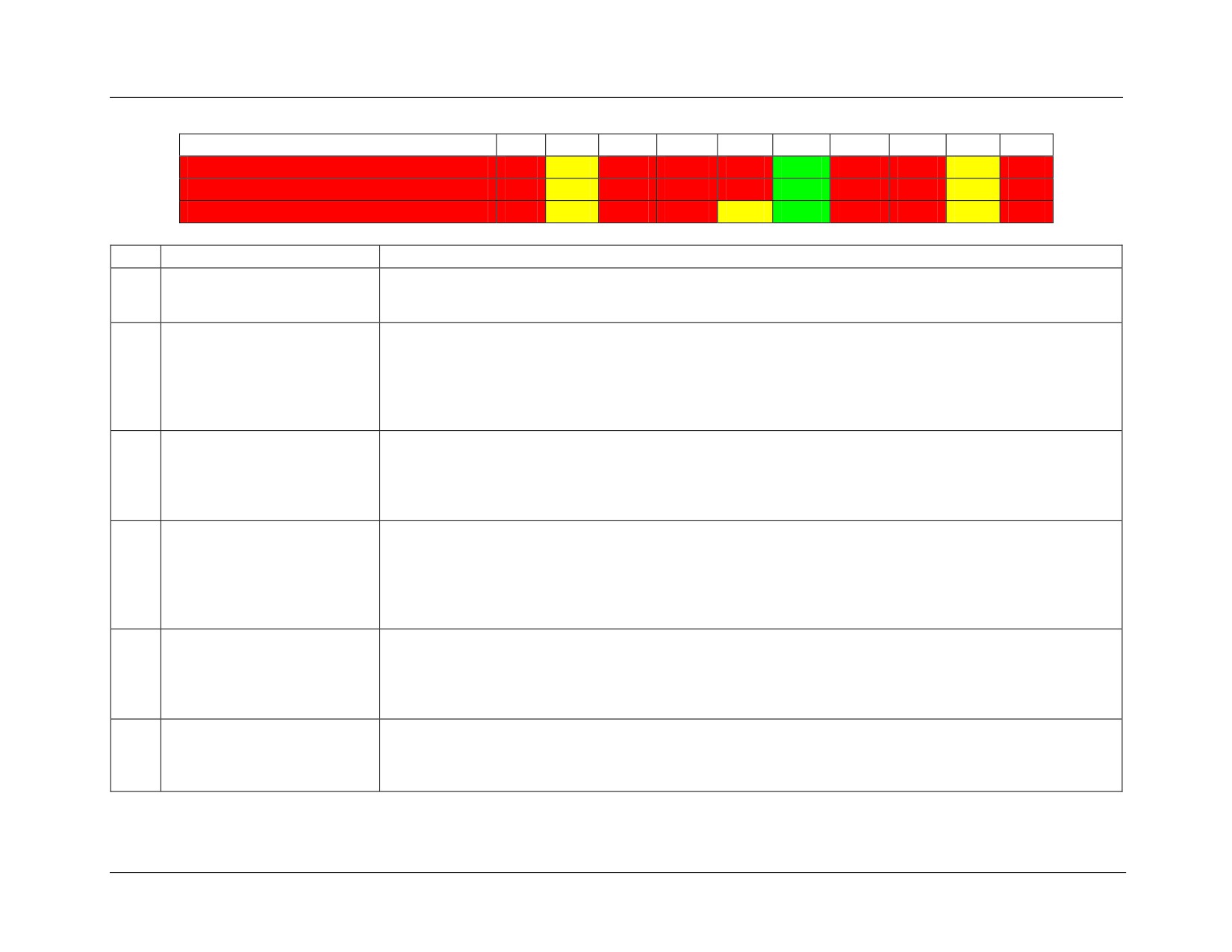
expedient COLPRO. The overall current assessment is “red.”
77
For Official Use Only
For Official Use Only
CBRND Functional Needs Analysis/Functional Solution Analysis
Chapter 11. Strategic Theater Shield Tasks
Projected Near/Mid-Term Capability and Deficiency
No change is projected for this task.
Projected Far-Term Capability and Deficiency
No change is projected for this task.
78
For Official Use Only
For Official Use Only
CBRND Functional Needs Analysis/Functional Solution Analysis
Chapter 11. Strategic Theater Shield Tasks
Table 11.9-1. STSHLD 9: Capability and Deficiency Assessment
Capability: COCOM HQ
M1
M2
M3
M4
M5
M6
M7
M8
M9
M10
Current Overall Capability1
R2
Y3
R4
R5
R6
G7
R8
R9
Y10
R11
Near/Mid-Term Overall Capability
R
Y
R
R
R
G
R
R
Y
R
Far-Term Overall Capability
R
Y
R
R
Y
G
R
R
Y
R
FAA Measure
Scale
M1
All critical activities and
G: All critical facilities and activities are equipped with operational COLPRO.
functions are collectively
Y: All identified critical facilities and activities possess or are programmed to be equipped with COLPRO.
protected.
R: COLPRO is inadequate or nonexistent to support operations.
M2
Operational activities and
G: All operational activities and functions are protected and are not degraded and/or unavailable as a result of
functions are not degraded/
CBRN/TIM attacks.
unavailable due to CBRN/TIM
Y: All operational activities and functions are afforded protection and are not seriously degraded and/or unavailable
attacks.
as a result of CBRN/TIM attacks.
R: Protection of operational activities and/or functions is inadequate or nonexistent and may result in serious
degradation or nonavailability resulting from CBRN/TIM attacks.
M3
Sustained operational capability
G: Sufficient and adequate COLPRO is available and operational to sustain operational capabilities in a
is achievable with COLPRO.
CBRN/TIM environment.
Y: Sustainable operational capabilities for selected functions and activities are achievable with available and
operational COLPRO.
R: Sustainable operational capabilities are not sustainable with available and operational COLPRO.
M4
Forces are trained to apply and
G: Forces are trained and routinely exercised and evaluated on the effective application of expedient COLPRO
use expedient COLPRO.
measures and equipment.
Y: Forces are trained and exercised and evaluated on the application of expedient COLPRO measures and
equipment upon predeployment notification for operations with threat.
R: Training, exercising, and evaluation of forces on the application of expedient COLPRO measures and equipment
is inadequate or nonexistent.
M5
Required expedient collective
G: The full range of expedient COLPRO kits and materials are readily available for application by forces in the
protective kits and materials
field.
(e.g., adaptation kits, plywood,
Y: Expedient COLPRO kits and materials are generally available for force application in selected field
sprays, gel packs, tape, etc.) are
environments.
readily available.
R: Expedient COLPRO kits are inadequate, unavailable, or nonexistent.
M6
Adequate CPSs are available
G: COLPRO is available in required quantities and types to support the full range of envisioned and planned
for in-place forces.
operations.
Y: COLPRO is available in sufficient types and quantities to support major operations.
R: COLPRO is inadequate or nonexistent to support operations.
79
For Official Use Only
For Official Use Only
CBRND Functional Needs Analysis/Functional Solution Analysis
Chapter 11. Strategic Theater Shield Tasks
M7
Adequate CPSs are available
G: COLPRO is available in required quantities and types to support the full range of envisioned and planned
for deploying forces.
operations.
Y: COLPRO is available in sufficient types and quantities to support major operations.
R: COLPRO is inadequate or nonexistent to support operations.
M8
Required mobile CPSs are
G: Operational mobile CPSs are available in required quantities and types to support the full range of envisioned
available.
and planned operations.
Y: Operational mobile CPSs are available in sufficient types and quantities to support major operations.
R: Operational mobile CPSs are inadequate or nonexistent to support operations.
M9
Required transportable CPSs
G: Operational transportable CPSs are available in required quantities and types to support the full range of
are available.
envisioned and planned operations.
Y: Operational transportable CPSs are available in sufficient types and quantities to support major operations.
R: Operational transportable CPSs are inadequate or nonexistent to support operations.
M10
Required CPSs for fixed
G: All fixed facilities and activities are equipped with operational COLPRO.
facilities are installed and
Y: All critical fixed facilities and activities are equipped with operational COLPRO.
available.
R: COLPRO within fixed facilities and activities is inadequate or nonexistent to support operations.
1 DOTMLPF is inadequate to support sustained operations within a CBRN/TIM environment, particularly expeditionary operations, during the first 30-60 days. Current
DOTMLPF does not adequately address the establishment and operation of expedient COLPRO activities and measures.
2 Not all critical facilities and activities are equipped with COLPRO. COLPRO within CONUS and some OCONUS locations does exist for radiological (fallout). However,
COLPRO for other than radiological is almost nonexistent, including critical facilities, outside HTA OCONUS, particularly CONUS sites. Expeditionary operations are a
particular concern. Existing COLPRO systems are not generally designed for a highly mobile force, with a reduced logistical footprint, and the initial period of operations until the
theater matures (usually the first 30-90 days). The combination of individual protection, contamination avoidance, and available COLPRO provides critical activities and functions
with a level of capability. However, the encumbrances and limitations associated with these measures are considerations in the planning and conduct of operations to ensure
mission success.
3 The limited availability of COLPRO systems requires careful planning and prioritization of resources. The COCOM staff and the components establish and allocate COLPRO
resources based upon the threat, risk, and vulnerability assessments. Operational activities and functions are prioritized based upon mission, criticality, assessments, and available
resources. The combination of individual protection, contamination avoidance, and available COLPRO provides operational activities and functions with a level of capability.
However, the encumbrances and limitations associated with these measures are considerations in the planning and conduct of operations to ensure mission success.
4 Current doctrine, policies, plans, and TTPs do not adequately address sustained operations within a CBRN/TIM environment. The establishment and operation of existing
COLPRO for sustained CBRN/TIM environment operations will require DOTMLPF and significant logistical support. Expeditionary operations are a particular concern. Existing
COLPRO systems are not generally designed for a highly mobile force, with a reduced logistical footprint, and the initial period of operations until the theater matures (usually the
first 30-90 days). The combination of individual protection, contamination avoidance, and available COLPRO provides a level of capability. However, the encumbrances and
limitations associated with these measures are considerations in the planning and conduct of operations to ensure mission success.
5 Expedient COLPRO kits, procedures, and training do not currently exist.
6 Expedient COLPRO kits, procedures, and training do not currently exist. Identification, development and/or acquisition of assets for Joint Expeditionary Collective Protection
(JECP) include ECP assets for adaptation of tentage and structures to support expeditionary operations. The JECP effort is currently proceeding through the JCIDS process.
7 The limited availability of COLPRO systems requires careful planning and prioritization of resources. The COCOM staff and the components establish and allocate COLPRO
resources based upon the threat, risk, and vulnerability assessments. Operational activities and functions are prioritized based upon mission, criticality, assessments, and available
resources. The combination of individual protection, contamination avoidance, and available COLPRO provides operational activities and functions with a level of capability.
However, the encumbrances and limitations associated with these measures are considerations in the planning and conduct of operations to ensure mission success.
8 Maneuvering forces are inadequately equipped with COLPRO capabilities. Insufficient COLPRO is available to support rest and resupply activities for all personnel within a 24-
hour period necessary to support sustained operations within a contaminated environment. This statement is particularly true of forward-operating light forces. COLPRO within
80
For Official Use Only
For Official Use Only
CBRND Functional Needs Analysis/Functional Solution Analysis
Chapter 11. Strategic Theater Shield Tasks
CONUS and some OCONUS locations does exist for radiological (fallout). However, COLPRO for other than radiological is almost nonexistent, including critical facilities,
outside HTA OCONUS, particularly CONUS sites. Fixed-site operations within a mature theater may possess sufficient COLPRO to provide access to personnel within a 24-hour
period. Current doctrine, policies, plans, and TTPs do not adequately address sustained operations within a CBRN/TIM environment. Current concept is contamination avoidance
or withdrawal.
9 Quantities and availability of mobile COLPRO is inadequate. Mobile COLPRO exists in selected tactical combat and support vehicles. The quantities and types of these vehicles
are limited and dedicated to specific missions. Current mobile COLPRO is inadequate to support operations by highly mobile forces. Airframe COLPRO is limited to tactical
combat airframes. Airlift (both tactical and strategic) are not equipped with COLPRO. Sea-based COLPRO (the CITADEL System) is available in specific classes of naval warfare
vessels (e.g., amphibious assault ship [LHA], destroyer, etc.). Most naval vessels (including supply and transport vessels, carriers, and others) do not possess COLPRO.
10 Mature theater CPSs are available in limited quantities. These include JTCOPS, CP-DEPMEDS, TEMPER systems, and Service-designed systems. Integration of Service-
specific systems into joint plans provides additional COLPRO capabilities. These, however, are identified in the Service component plans. They are not generally integrated in
COCOM joint plans. Current CPSs are inadequate to support expeditionary operations, particularly in austere environments by highly mobile forces and possessing reduced
logistical footprint.
11 COLPRO within CONUS and some OCONUS locations does exist for radiological (fallout). However, COLPRO for other than radiological is almost nonexistent, including
critical facilities, outside HTA OCONUS, particularly CONUS sites. COLPRO within HTA is installed and available for selected critical facilities and operations. The COCOM
staff and the components establish and allocate funding and resources based upon the threat, risk, and vulnerability assessments. Fixed facilities (e.g., permanent structures, etc.)
within the HTA are prioritized for COLPRO based upon mission, criticality, assessments, and available funding. Expansion of COLPRO capabilities is planned, as appropriate and
necessary, using transportable COLPRO systems.
81
For Official Use Only
For Official Use Only
CBRND Functional Needs Analysis/Functional Solution Analysis
Chapter 11. Strategic Theater Shield Tasks
11.9.3
Functional Solution Analysis
11.9.3.1
DOTLPF Assessment Summary
This section addresses the deficiencies and suggests potential non-materiel solutions. If there are
no non-materiel solutions, or they are only partial solutions, the remaining non-materiel need is
then stated. Materiel needs are assessed in the IMA section.
1.
Deficiency: Not all critical facilities and activities are equipped with COLPRO.
Non-Materiel Solutions: Doctrine: Enforce existing doctrine and policy.
2.
Deficiency: COLPRO for other than radiological is almost nonexistent, including critical
facilities, outside HTA OCONUS, particularly CONUS sites.
Non-Materiel Solutions: Doctrine: Enforce existing doctrine and policy.
3.
Deficiency: Expeditionary operations are a particular concern. Existing COLPRO systems
are not generally designed for a highly mobile force, with a reduced logistical footprint, and
the initial period of operations until the theater matures (usually the first 30-90 days).
Non-Materiel Solutions: Doctrine: Complete the JCIDS process and central correlation/
comparison of national and strategic plans to identify CBRND resources necessary and
available to support expeditionary operations during the first 30-90 days following
commencement of hostilities and with a reduced logistical footprint. Organization: Develop
organizational structures, resources, staffing, and capabilities to conduct expeditionary
operations while possessing reduced logistical footprint and during the first 30-90 days of
operations following commencement of hostilities. Training: Train, exercise, and evaluate
expeditionary capabilities of the force in a CBRN/TIM threat with reduced logistical
footprint during the initial 30-90 days of operations using CBRND resources supporting
expeditionary operations. Leadership: Recognize differences and challenges associated with
expeditionary operations during the first 30-90 days following commencement of hostilities
and with a reduced logistical footprint; training providing skills and knowledge to manage
operations in these circumstances; and ability and willingness to implement necessary
changes and activities to prepare for and conduct expeditionary operations with a
CBRN/TIM threat. Facilities: Develop supporting infrastructure for expeditionary operations
during the first 30-90 days following commencement of hostilities and with a reduced
logistical footprint.
4.
Deficiency: Expedient COLPRO (ECP) kits, procedures, and training do not currently exist.
Non-Materiel Solutions: Doctrine: Establish in doctrine, policy, procedures, and TTPs the
use and application of ECP for CBRND. Organization: Organizational structures supporting
the application of ECP for CBRND. Training: Institutional and unit level training on the
application of ECP to support operations and provide for CBRND of the force. Leadership:
Awareness and knowledge of versatility and application of ECP for operations within a
CBRN/TIM environment. Facilities: Infrastructure to support ECP (e.g., logistics, training,
etc.).
5.
Deficiency: Maneuvering forces are inadequately equipped with COLPRO capabilities.
82
For Official Use Only
For Official Use Only
CBRND Functional Needs Analysis/Functional Solution Analysis
Chapter 11. Strategic Theater Shield Tasks
Non-Materiel Solutions: Doctrine: Complete the JCIDS process and central correlation/
comparison of national and strategic plans to identify CBRND resources necessary and
available to support maneuver operations, particularly expeditionary operations during the
first 30-90 days following commencement of hostilities, with a reduced logistical footprint.
Organization: Develop organizational structures, resources, staffing, and capabilities to
conduct maneuver operations, particularly expeditionary operations during the first 30-90
days of operations following commencement of hostilities, while possessing reduced
logistical footprint. Training: Train, exercise, and evaluate maneuver capabilities
(particularly expeditionary capabilities) of the force in a CBRN/TIM threat with reduced
logistical footprint during the initial 30-90 days of operations using organic, prepositioned,
and planned CBRND resources supporting operations. Leadership: Recognize differences
and challenges associated with maneuver operations, particularly expeditionary operations
during the first 30-90 days following commencement of hostilities, with a reduced logistical
footprint; training providing skills and knowledge to manage operations in these
circumstances; and ability and willingness to implement necessary changes and activities to
prepare for and conduct expeditionary operations with a CBRN/TIM threat. Facilities:
Develop supporting infrastructure for expeditionary operations during the first 30-90 days
following commencement of hostilities and with a reduced logistical footprint.
6.
Deficiency: Insufficient COLPRO is available to support rest and resupply activities for all
personnel within a 24-hour period necessary to support sustained operations within a
contaminated environment. This statement is particularly true of forward-operating light
forces.
Non-Materiel Solutions: Doctrine: Enforce existing doctrine and policies.
7.
Deficiency: Current doctrine, policies, plans, and TTPs do not adequately address sustained
operations within a CBRN/TIM environment.
Non-Materiel Solutions: Doctrine: Include in doctrine, policy, and procedures sustained
operations within a CBRN/TIM environment. Organization: Ensure resources, taskings, and
staff are in place or available to perform sustained operations within a CBRN/TIM
environment. Training: Train, exercise, and evaluate the force for sustained operations within
a CBRN/TIM environment. Leadership: Recognize criticality of readiness of the force for
potential sustained operations within a CBRN/TIM environment, training providing the skills
to manage the force in these circumstances, and willingness and ability to implement
necessary changes and activities to prepare and appropriately apply the force.
8.
Deficiency: Current mobile COLPRO is inadequate in quantities, types , and availability to
support operations by highly mobile forces.
Non-Materiel Solutions: Doctrine: Completion of analysis and central correlation/
comparison of national and strategic plans to identify quantities and types of mobile
COLPRO (and supporting consumables) necessary and available to support highly mobile
forces for envisioned plans and taskings. Organization: Develop organizational structures,
resources, staffing, and capabilities to conduct CBRND, including mobile COLPRO, of
highly mobile forces. Training: Train, exercise, and evaluate CBRND, including mobile
COLPRO, capabilities of the force in a CBRN/TIM threat during highly mobile force
operations. Leadership: Recognize differences and challenges associated with CBRND
83
For Official Use Only
For Official Use Only
CBRND Functional Needs Analysis/Functional Solution Analysis
Chapter 11. Strategic Theater Shield Tasks
operations by highly mobile forces; training providing skills and knowledge to manage
operations in these circumstances; and ability and willingness to implement necessary
changes and activities to prepare for and conduct expeditionary operations with a
CBRN/TIM threat. Facilities: Develop supporting infrastructure for CBRND of highly
mobile forces.
9. Deficiency: Airlift (both tactical and strategic) are not equipped with COLPRO.
Non-Materiel Solutions: Doctrine: Incorporate into doctrine, policy, and procedures the
provision of COLPRO to aircrew and passengers in appropriate airframes (military and
civilian). Training: Train, exercise, and evaluate aircrews and supporting entities for airframe
COLPRO operations for CBRND. Leadership: Recognize criticality of protecting aircrew
and passengers of appropriate tactical and strategic airframes from the effects of CBRN/TIM
agents. Facilities: Develop supporting infrastructure (e.g., logistics, aircraft maintenance,
etc.) for airframe COLPRO.
10. Deficiency: Most naval vessels (including supply and transport vessels, carriers, and others)
do not possess COLPRO.
Non-Materiel Solutions: Doctrine: Incorporate into doctrine, policy, and procedures the
provision of COLPRO for at-risk vessels (civilian contract and military). Organization:
Develop organizational structures, resources, staffing, and capabilities to support COLPRO
operations on vessels supporting operations and at risk. Training: Train, exercise, and
evaluate crews for vessel COLPRO operations for CBRND. Leadership: Recognize
differences and challenges associated with CBRND operations by at-risk vessels (both
military and contract civilian) supporting operations. Facilities: Develop supporting
infrastructure (e.g., logistics, maintenance, power systems, etc.) for vessel COLPRO.
11. Deficiency: Service-specific COLPRO capabilities are not generally integrated in COCOM
joint plans.
Non-Materiel Solutions: Doctrine: Emphasize in doctrine, policy, and procedures the
central correlation of national and Strategic Theater plans and taskings to identify
CBRN/TIM support requirements for two or more concurrent operations with threat with
comparison to existing and programmed quantities and types of CBRND systems and
resources, joint and Service-specific, including replenishment. Leadership: Implement
development of plans and taskings consistent joint and Service-specific CBRND support
capabilities.
12. Deficiency: Current CPSs are inadequate to support expeditionary operations, particularly in
austere environments by highly mobile forces and possessing reduced logistical footprint.
Non-Materiel Solutions: Doctrine: Incorporate into doctrine, policy, and procedures
standards for expeditionary forces possessing reduced logistical footprint during the first 30-
90 days of operations following commencement of hostilities. Organization: Develop
organizational structures, resources, staffing, and capabilities to conduct expeditionary
operations while possessing reduced logistical footprint and during the first 30-90 days of
operations following commencement of hostilities. Training: Train, exercise, and evaluate
expeditionary capabilities of the force in a CBRN/TIM threat with reduced logistical
footprint during the initial 30-90 days of operation using CBRND resources supporting
84
For Official Use Only
For Official Use Only
CBRND Functional Needs Analysis/Functional Solution Analysis
Chapter 11. Strategic Theater Shield Tasks
expeditionary operations. Leadership: Recognize differences and challenges associated with
expeditionary operations during the first 30-90 days following commencement of hostilities
and with a reduced logistical footprint, training providing skills and knowledge to manage
operations in these circumstances, and ability and willingness to implement necessary
changes and activities to prepare for and conduct expeditionary operations with a
CBRN/TIM threat. Facilities: Develop supporting infrastructure for expeditionary operations
during the first 30-90 days following commencement of hostilities and with a reduced
logistical footprint.
13. Deficiency: Current DOTMLPF does not adequately address the establishment and operation
of expedient COLPRO activities and measures.
Non-Materiel Solutions: Doctrine: Establish in doctrine, policy, procedures, and TTPs the
use and application of ECP for CBRND. Organization: Organizational structures supporting
the application of ECP for CBRND. Training: Institutional and unit level training on the
application of ECP to support operations and provide for CBRND of the force. Leadership:
Awareness and knowledge of versatility and application of ECP for operations within a
CBRN/TIM environment. Facilities: Infrastructure to support ECP (e.g., logistics, training,
etc.).
11.9.3.2
IMA Assessment Summary
N/A
85
For Official Use Only
For Official Use Only
CBRND Functional Needs Analysis/Functional Solution Analysis
Chapter 11. Strategic Theater Shield Tasks
11.10 Task STSHLD 10: Employ protective measures to minimize the effects of adversary
use of CBRN weapons and TIM exposure
11.10.1
Functional Area Analysis
11.10.1.1
Definition
To protect resources (with an emphasis on people) from the effects of CBRN/TIM weapons/
exposure and permit friendly forces to continue operations with minimum performance
degradation. Staffs normally direct general protective actions, which delineate broad policy and
guidance. Commanders must balance protection against the need to perform the mission and
maintain personnel in a fit-to-fight status. The results of not performing protective tasks
adequately are degradation of mission or task performance as well as casualties/fatalities from
CBRN/TIM exposure or contamination.
11.10.1.2
Derivation
Joint Enabling Concept for CBRN/TIM Operations, An Operational Concept for Biological
Defense, Protection Joint Functional Concept, UJTL (ST 2.4.1, ST 2.4.1.1, ST 2.4.1.2, St 5.3.1.1,
ST 5.3.1.2, ST 5.3.1.3, ST 5.3.1.4, ST 5.4.1, ST 6, ST 6.1.6, ST 6.2, ST 6.2.1, ST 6.2.2, ST 9, ST
9.3, ST 9.4, ST 9.5).
11.10.1.2.1
Supported Task: N/A
11.10.1.2.2
Lateral Task: N/A
11.10.1.2.3
Supporting Task: OPSHLD 12
11.10.1.3
Condition
Perform this task under conditions of:
Physical
1. Immediate to delayed danger, and potential long-term health hazard of atmospheric
weapons effects. (C1.3.3)
Military
1. Partially completed mission preparation. (C2.1.3)
2. Marginal to strong forces assigned. (C2.2.1)
3. Adequate forces allocated. (C2.2.3)
4. Negligible personnel experience. (C2.2.4.5)
5. Partial interoperability. (C2.2.6)
6. Partial joint staff integration. (C2.3.1.1)
7. Moderate staff expertise. (C2.3.1.3)
8. Limited deployed supplies. (C2.8.2)
86
For Official Use Only
For Official Use Only
CBRND Functional Needs Analysis/Functional Solution Analysis
Chapter 11. Strategic Theater Shield Tasks
9. Limited prepositioned materiel. (C2.8.4)
10. Limited host-nation support. (C2.8.5)
Civil. N/A
11.10.2
Functional Needs Analysis
11.10.2.1
Capability and Deficiency Assessment Summary
Table 11.10-1 discusses the only capability that exists to perform the task to the designated
standard. Doctrine, policy, and procedures exist for the implementation, adjustment, and
direction of planned CBRND measures for the protection of deploying military forces against the
effects of adversary employment of CBRN/TIM. Deficiencies include the lack of medical
prophylaxis against all threat CBRN/TIM agents, eligible civilian and MWA readiness for
CBRND, and sustained operations within a CBRN/TIM environment.
Current Capability and Deficiency
Predeployment planning and preparation includes the vaccination of the force to an adequate
level of acquired immunity against threat CBRN/TIM agents. Other prophylaxis (e.g.,
presymptomatic medications, protective creams, etc.) are applied alone or in concert upon
direction as appropriate and based upon established plans and guidance. JMETLs are developed
based upon the UJTL and identify essential tasks for mission accomplishment. Plan-identified
forces are trained and assessed against the JMETLs for readiness to perform the tasks. The
combination of established force organic assets, materiel acquisitions, prepositioned materiel,
available host-nation/coalition contributions, and movement of identified CBRND resources
from stockpiles and relocation activities are performed as outlined in the plan and adjusted as
necessary. Planning and plan execution seeks to balance mission requirements with CBRND
protection of the force. DOTLPF is adequate for planning, training, equipping, and deploying
military forces. Deficiencies the lack of medical prophylaxis against all threat CBRN/TIM agents
and the efficacy of existing prophylaxis (particularly vaccines) widely varies. Current
prophylaxis and supporting CBRND doctrine, policy, and procedures fail to adequately address
the application of prophylactic protection by eligible civilians and MWDs. Further, eligible
civilians and MWDs are not adequately equipped, trained, and prepared to survive a CBRN/TIM
environment. Current doctrine, policy, UJTL, procedures, and TTPs fail to address sustained
operations within a CBRN/TIM environment and exercises/evaluations fail to emphasize and
assess task performance (including JMETLs) in these conditions. The overall current capability
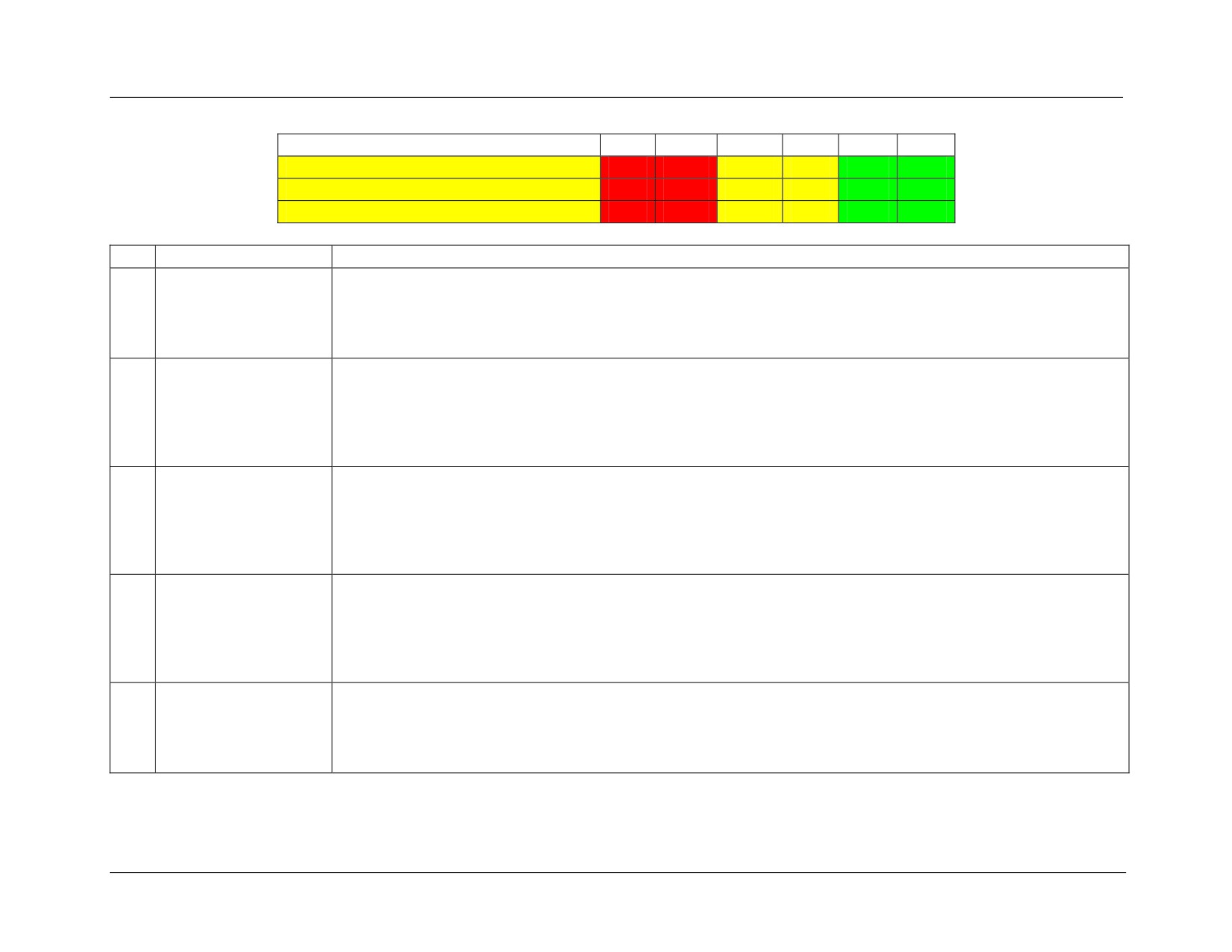
is assessed as “yellow.”
Projected Near/Mid-Term Capability and Deficiency
No change is projected for this task.
Projected Far-Term Capability and Deficiency
No change is projected for this task.
87
For Official Use Only
For Official Use Only
CBRND Functional Needs Analysis/Functional Solution Analysis
Chapter 11. Strategic Theater Shield Tasks
Table 11.10-1. STSHLD 10: Capability and Deficiency Assessment
Capability: COCOM HQ
M1
M2
M3
M4
M5
M6
Current Overall Capability1
R2
R3
Y4
Y5
G6
G7
Near/Mid-Term Overall Capability
R
R
Y
Y
G
G
Far-Term Overall Capability
R
R
Y
Y
G
G
FAA Measure
Scale
M1
Forces are protected by
G: Medical CBRND countermeasures exist for all threat CBRN and high-risk TIM agents and encompass all eligible at-risk
medical prophylaxes.
populations.
Y: Medical CBRND countermeasures exist for selected high-threat CBRN and high-risk TIM agents for U.S. military and
eligible civilian members.
R: Medical CBRND countermeasures are inadequate or do not exist for high-threat CBRN and high-risk TIM agents.
M2
Forces are trained and
G: All Strategic Theater forces (military, eligible civilians, and MWAs) are adequately trained and equipped to perform their
equipped to operate in a
functions and conduct operations within a CBRN/TIM environment.
CBRN/TIM
Y: Military personnel and eligible civilians supporting the mission are adequately trained and equipped to perform their
environment.
functions and conduct operations within a CBRN/TIM environment.
R: Equipping and/or training of Strategic Theater forces (including military, eligible civilians, and/or MWAs) to perform
functions and conduct operations within a CBRN/Tim environment is inadequate or nonexistent.
M3
All units that perform
G: All units performing JMETLs are fully prepared and ready to successfully conduct their tasks within a CBRN/TIM
JMETs are fully prepared
environment.
to successfully perform
Y: Units performing JMETLs are generally prepared and ready to successfully conduct their tasks within a CBRN/TIM
the tasks in a
environment.
CBRN/TIM
R: Units performing JMETLs are inadequately prepared and/or ready to successfully conduct their tasks within a
environment.
CBRN/TIM environment.
M4
Deploying forces meet
G: All Strategic Theater forces (military, eligible civilians, and MWA) meet CBRN/TIM protection requirements to perform
CBRN/TIM protection
their functions and conduct operations within a CBRN/TIM environment.
standards.
Y: Military personnel and eligible civilians supporting the mission meet CBRN/TIM protection requirements to perform
their functions and conduct operations within a CBRN/TIM environment.
R: Strategic Theater forces (including military, eligible civilians, and/or MWA) meeting CBRN/TIM protection
requirements to perform functions and conduct operations within a CBRN/TIM environment are inadequate or nonexistent.
M5
Warfighting capability is
G: Warfighting capabilities are protected and are not degraded and/or unavailable as a result of CBRN/TIM attacks.
not degraded as a result
Y: Warfighting activities and functions are afforded protection and are not seriously degraded and/or unavailable as a result
of enemy CBRN/TIM
of CBRN/TIM attacks.
attacks.
R: Protection of warfighting capabilities is inadequate or nonexistent and may result in serious degradation or non-
availability resulting from CBRN/TIM attacks.
88
For Official Use Only
For Official Use Only
CBRND Functional Needs Analysis/Functional Solution Analysis
Chapter 11. Strategic Theater Shield Tasks
M6
Adequate resources are
G: CBRND systems and resources are available in plan identified quantities and types to implement identified protective
available to implement
measures.
the required protective
Y: CBRND systems and resources are available in sufficient quantities and types to support protective measures.
measures.
Adjustments are made to adjust to limitations in quantities and types of specific CBRND systems.
R: CBRND systems and/or resources are inadequate or not available to implement protective measures.
1 DOTMLPF is adequate for planning, training, equipping, and deploying forces. However, DOTMLPF is inadequate to support sustained operations within a CBRN/TIM
environment, particularly expeditionary operations, during the first 30-60 days. Current DOTMLPF does not fully address the unique aspects of CBRND and the impact upon
operations within a CBRN/TIM environment. Current DOTMLPF is inadequate for preparing, training, and equipping deploying eligible civilians and MWAs.
2 Medical prophylaxis does not exist for all threat CBRN/TIM and TIM agents. Current prophylaxis and supporting doctrine, policy, and procedures do not address
presymptomatic medical CBRN/TIM protective countermeasures by other than U.S. forces, excluding MWAs and eligible civilians. Prophylaxis against most high-threat TIMs is
not currently available due to the relatively recent consideration of these agents as potential threats. Additionally, the efficacy of existing prophylaxis, particularly vaccines, widely
varies. FP using medical prophylaxis is dependent upon identification of the threat, preplanning for a threat, positioning of stocks for issue and administration, timing of
notification to administer/issue prophylaxis, availability of medical personnel to perform administration (if required), ongoing operational requirements, and the available quantity
of sufficient medical prophylaxis to meet requirements. Vaccination to acquired immunity by force personnel prior to entry into the theater or completion of an adequate level of
acquired immunity prior to adversary CBRN/TIM agent employment is a function of the preplanning and deployment operations. However, many agents require the application of,
if not in concert with vaccination, of other prophylaxis. These include immunity assistive and barrier medical materials (e.g., medications, lotions, etc.). The COCOM staff directs
the implementation of these measures when and as appropriate based upon established plans and guidance.
3 Planning for deploying forces includes training for operations within threat CBRN/TIM environments. Nondeploying military forces within CONUS possess varying levels of
training based upon prior training at overseas locations and initial Service training (“boot camp”). OCONUS fixed-site military personnel within an HTA are trained to survive a
CBRN/TIM environment. Eligible civilians are not generally trained to operate in CBRN/TIM hazards. Some government civilians are trained as part of their primary function
(e.g., hazardous materials, fire response, readiness flight [Air Force], and selected others.). However, civilians (e.g., general government employees, contractors, dependents, etc.)
do not receive training to survive a CBRN/TIM environment. This statement is particularly true of CONUS locations. MWA elements of the military force (deploying and
nondeploying) are not trained to survive a CBRN/TIM environment. COCOM staff does not possess clear guidance for planning and providing CBRN/TIM protection training to
eligible civilians and MWA. The Guardian Program, working with the COCOMs and installations, is addressing installation/facility event capabilities. The COCOM staff
preplanning for operations also includes continuing training of personnel within the theater prior to hostilities.
4 The COCOM staff developed JMETLs are based upon the UJTLs and the essential tasks for accomplishment of the planned mission(s). Plan-identified forces are trained and
assessed against the JMETLs for their readiness to perform the tasks successfully. However, current doctrine, the UJTL, and operational planning guidance do not adequately
address sustained operations within a CBRN/TIM environment. JMETL development generally does not specify these circumstances as an execution condition. Exercises and
training do not emphasize task performance and operations in these conditions. However, the JMETLs can usually be accomplished successfully with adjustments for the
environment and allowances for the limitations and encumbrances associated with CBRN/TIM protective equipment.
5 The combination of established force organic assets, material acquisitions, prepositioned material, available host-nation/coalition contributions, and movement of identified
CBRND resources from stockpiles and reallocation activities pursued by the COCOM staff during the period prior to and through deployment of forces are as outlined by the
appropriate plan and adjusted as necessary to reflect actual available resources against requirements. Elements of deploying forces may not achieve full CBRND readiness and
capabilities during the initial stages of deployment and until after arrival within the AOR. Adjustments to tasked units reflecting other ongoing commitments and the length of the
preparatory period between plan notice of execution and before commencement of hostilities may affect element readiness for CBRN/TIM environment operations. Additionally,
deploying eligible civilians and MWAs (particularly MWDs) are not generally prepared to survive a CBRN/TIM environment.
6 The COCOM staff planning and plan execution seeks to balance mission requirements with protection of the force against CBRN/TIM threat(s). Planning considers the impact of
operations within CBRN/TIM environments and provide for adjustments to ensure successful retention of warfighting capabilities. Operations within a CBRN/TIM environment
will degrade individual and unit capabilities. The combination of training, readiness, and flexibility to adjust and maintain operational capabilities provides the basis for
maintenance of mission capability. However, current DOTMLPF and operational planning do not adequately address sustained operations within a CBRN/TIM environment.
89
For Official Use Only
For Official Use Only
CBRND Functional Needs Analysis/Functional Solution Analysis
Chapter 11. Strategic Theater Shield Tasks
7 The combination of established force organic assets, material acquisitions, prepositioned material, available host-nation/coalition contributions, and movement of identified
CBRND resources from stockpiles and reallocation activities pursued by the COCOM staff during the period prior to and through deployment of forces are as outlined by the
appropriate plan and adjusted as necessary to reflect actual available resources against requirements. Elements of deploying forces may not be issued their full CBRND capabilities
during the initial stages of deployment and until after arrival within the AOR. The COCOM staff also provides guidance and direction on the implementation of planned protective
measures. However, deploying eligible civilians and MWAs (particularly MWDs) are not generally equipped and prepared to survive a CBRN/TIM environment.
90
For Official Use Only
For Official Use Only
CBRND Functional Needs Analysis/Functional Solution Analysis
Chapter 11. Strategic Theater Shield Tasks
11.10.3
Functional Solution Analysis
11.10.3.1
DOTLPF Assessment Summary
This section addresses the deficiencies and suggests potential non-materiel solutions. If there are
no non-materiel solutions, or they are only partial solutions, the remaining non-materiel need is
then stated. Materiel needs are assessed in the IMA section.
1.
Deficiency: Current prophylaxis and supporting doctrine, policy, and procedures do not
address presymptomatic medical CBRN/TIM protective countermeasures by other than U.S.
forces, excluding eligible civilians.
Non-Materiel Solutions: Doctrine: Develop doctrine, policy, and procedures addressing
eligible civilians during CBRND operations and the provision of CBRND protection,
including prophylaxis. Training: Establish CBRND training, exercise, and evaluation criteria
and programs for eligible civilians and conduct CBRND training, exercises, and evaluations.
Leadership: Implement and manage CBRND training, equipping, and protection of eligible
civilians.
2.
Deficiency: Current prophylaxis and supporting doctrine, policy, and procedures do not
address presymptomatic medical CBRN/TIM protective countermeasures by other than U.S.
forces, excluding MWAs.
Non-Materiel Solutions: Doctrine: Develop doctrine, policy, and procedures addressing
MWAs, particularly MWDs, during CBRND operations and the provision of CBRND
protection, including prophylaxis. Training: Establish CBRND training, exercise, and
evaluation criteria and programs for MWAs and conduct CBRND training, exercises, and
evaluations. Leadership: Implement and manage CBRND training, equipping, and protection
of MWAs.
3.
Deficiency: Prophylaxis against most high-threat TIMs are not currently available.
Non-Materiel Solutions: Doctrine: Establish in doctrine, policy, and procedures the
application of metrics for standards and criteria for protection against all high-threat TIM
agents. Training: Train, exercise, and evaluate personnel (military and eligible civilians) on
the use of prophylactic CBRND protection against threat agents. Leadership: Enforce
compliance with established metrics (see Footnote 7 above) for standards and criteria.
Implement and ensure training is adequate and conduct exercises and evaluations to ensure
readiness.
4.
Deficiency: Eligible civilians (e.g., general government employees, contractors, dependents,
etc.) are not generally trained to operate in CBRN/TIM hazards, particularly at CONUS
locations.
Non-Materiel Solutions: Doctrine: Develop doctrine, policy, and procedures addressing
eligible civilian personnel and operations for CBRND. Organization: Identify organizational
services and activities supporting the mission performed by civilian personnel and
operations. Training: Establish CBRND training, exercise, and evaluation criteria and
programs for eligible civilian personnel and operations supporting the mission; and conduct
CBRND training, exercises, and evaluations. Leadership: Implement and manage CBRND
91
For Official Use Only
For Official Use Only
CBRND Functional Needs Analysis/Functional Solution Analysis
Chapter 11. Strategic Theater Shield Tasks
training, equipping, and protection of eligible civilian personnel and operations supporting
the mission. Personnel: Ensure eligible civilian personnel and operations supporting the
mission/military operations are qualified in CBRND and capable of performing their
responsibilities in a CBRN/TIM environment. Facilities: Develop supporting infrastructure
for the acquisition, stockpiling, prepositioning, maintenance, and movement of eligible
civilian CBRND resources.
5.
Deficiency: MWAs, with emphasis on MWD elements of the military force (deploying and
nondeploying), are not trained to survive a CBRN/TIM environment.
Non-Materiel Solutions: Doctrine: Establish doctrine, policy, and procedures CBRND
protection of MWAs, particularly MWDs, and training for CBRN/TIM environment survival.
Organization: Organizational consideration for maintenance and support of MWA CBRND
protective equipment, measures, and activities. Training: Develop institutional and unit
training of handlers and MWAs for CBRND measures and activities. Leadership: Ensure
awareness and planning for CBRND measures and requirements for MWD survivability.
Facilities: Develop supporting infrastructure for MWAs CBRND (e.g., logistics, veterinary
surveillance, etc.).
6.
Deficiency: COCOM staff does not possess clear guidance for planning and providing
CBRN/TIM protection training to eligible civilians.
Non-Materiel Solutions: Doctrine: Develop doctrine, policy, and procedures addressing
eligible civilian personnel and operations for CBRND. Organization: Identify organizational
services and activities performed by, and required to support, eligible civilian personnel and
operations for CBRND. Training: Establish CBRND training, exercise, and evaluation
criteria and programs for eligible civilian personnel and operations; and conduct CBRND
training, exercises, and evaluations. Leadership: Implement and manage CBRND training,
equipping, and protection of eligible civilian personnel and operations supporting the
mission. Personnel: Ensure eligible civilian personnel and operations supporting the
mission/military operations are qualified in CBRND and capable of performing their
responsibilities in a CBRN/TIM environment. Facilities: Develop supporting infrastructure
for the acquisition, stockpiling, prepositioning, maintenance, and movement of eligible
civilian CBRND resources.
7.
Deficiency: COCOM staff does not possess clear guidance for planning and providing
CBRN/TIM protection training to MWAs.
Non-Materiel Solutions: Doctrine: Develop doctrine, policy, and procedures addressing
MWAs, particularly MWDs and operations for CBRND. Organization: Identify
organizational services and activities performed by, and required to support, MWAs and
operations for CBRND. Training: Establish CBRND training, exercise, and evaluation
criteria and programs for MWAs and operations; and conduct CBRND training, exercises,
and evaluations. Leadership: Implement and manage CBRND training, equipping, and
protection of MWAs and operations supporting the mission. Facilities: Develop supporting
infrastructure for the acquisition, stockpiling, prepositioning, maintenance, and movement of
MWA CBRND resources.
92
For Official Use Only
For Official Use Only
CBRND Functional Needs Analysis/Functional Solution Analysis
Chapter 11. Strategic Theater Shield Tasks
8. Deficiency: Current doctrine, the UJTL, and operational planning guidance do not
adequately address JMETLS for sustained operations within a CBRN/TIM environment.
Non-Materiel Solutions: Doctrine: Include in doctrine, policy, procedures, and UJTL
sustained operations within a CBRN/TIM environment. Organization: Ensure resources,
taskings, and staff are in place or available to plan and perform sustained operations within a
CBRN/TIM environment. Training: Train, exercise, and evaluate the force for sustained
operations within a CBRN/TIM environment. Leadership: Recognize criticality of readiness
of the force for potential sustained operations within a CBRN/TIM environment, training
providing the skills to manage the force in these circumstances, and willingness and ability to
implement necessary changes and activities to prepare and appropriately apply the force.
9. Deficiency: JMETL development generally does not specify sustained operations within a
CBRN/TIM environment as an execution condition.
Non-Materiel Solutions: Doctrine: Include in doctrine, policy, procedures, and UJTL
sustained operations within a CBRN/TIM environment. Organization: Ensure resources,
taskings, and staff are in place or available to plan and perform sustained operations within a
CBRN/TIM environment. Training: Train, exercise, and evaluate the force for sustained
operations within a CBRN/TIM environment. Leadership: Recognize criticality of readiness
of the force for potential sustained operations within a CBRN/TIM environment, training
providing the skills to manage the force in these circumstances, and willingness and ability to
implement necessary changes and activities to prepare and appropriately apply the force.
10. Deficiency: Exercises and training do not emphasize JMETL task performance and sustained
operations in a CBRN/TIM environment.
Non-Materiel Solutions: Doctrine: Include in doctrine, policy, UJTL, and procedures
sustained operations within a CBRN/TIM environment. Organization: Ensure resources,
taskings, and staff are in place or available to plan and perform sustained operations within a
CBRN/TIM environment. Training: Train, exercise, and evaluate the force for sustained
operations within a CBRN/TIM environment. Leadership: Recognize criticality of readiness
of the force for potential sustained operations within a CBRN/TIM environment, training
providing the skills to manage the force in these circumstances, and willingness and ability to
implement necessary changes and activities to prepare and appropriately apply the force.
11. Deficiency: Deploying eligible civilians are not generally equipped and prepared to survive a
CBRN/TIM environment.
Non-Materiel Solutions: Doctrine: Establish doctrine, policy, and procedures CBRND
protection of eligible civilians and training for CBRN/TIM environment survival.
Organization: Organizational consideration for maintenance and support of eligible civilians
CBRND protective equipment, measures, and activities. Training: Develop institutional and
unit training of eligible civilians for CBRND measures and activities. Integration into
CBRND exercises and evaluations is critical. Leadership: Ensure awareness and planning for
CBRND measures and requirements for eligible civilians survivability. Personnel: Ensure
eligible civilian personnel and operations supporting the mission/military operations are
qualified in CBRND and capable of performing their responsibilities in a CBRN/TIM
environment. Facilities: Develop supporting infrastructure for eligible civilians CBRND
(e.g., logistics, medical, communications, training, etc.).
93
For Official Use Only
For Official Use Only
CBRND Functional Needs Analysis/Functional Solution Analysis
Chapter 11. Strategic Theater Shield Tasks
12. Deficiency: Deploying MWAs (particularly MWDs) are not generally equipped and prepared
to survive a CBRN/TIM environment.
Non-Materiel Solutions: Doctrine: Establish doctrine, policy, and procedures CBRND
protection of MWA, particularly MWDs and training for CBRN/TIM environment survival.
Organization: Organizational consideration for maintenance and support of MWA CBRND
protective equipment, measures, and activities. Training: Develop institutional and unit
training of MWA handlers, and MWAs for CBRND measures and activities. Integration into
CBRND exercises and evaluations is critical. Leadership: Ensure awareness and planning for
CBRND measures and requirements for MWA survivability. Facilities: Develop supporting
infrastructure for MWA CBRND (e.g., logistics, medical, veterinary surveillance,
communications, training, etc.).
13. Deficiency: DOTMLPF is inadequate to support sustained operations within a CBRN/TIM
environment, particularly expeditionary operations, during the first 30-60 days.
Non-Materiel Solutions: Doctrine: Include in doctrine, policy, and procedures sustained
operations within a CBRN/TIM environment. Organization: Ensure resources, taskings, and
staff are in place or available to perform sustained operations within a CBRN/TIM
environment. Training: Train, exercise, and evaluate the force (military and eligible civilians)
for sustained operations within a CBRN/TIM environment. Leadership: Recognize criticality
of readiness of the force for potential sustained operations within a CBRN/TIM environment,
training providing the skills to manage the force in these circumstances, and willingness and
ability to implement necessary changes and activities to prepare and appropriately apply the
force. Personnel: Ensure eligible civilian personnel and operations supporting the
mission/military operations are qualified in CBRND and capable of performing their
responsibilities in a CBRN/TIM environment.
14. Deficiency: Current DOTMLPF does not fully address the unique aspects of CBRND and
the impact upon operations within a CBRN/TIM environment.
Non-Materiel Solutions: Doctrine: Include in doctrine, policy, procedures, and UJTL
sustained operations within a CBRN/TIM environment. Organization: Ensure resources,
taskings, and staff are in place or available to plan and perform sustained operations within a
CBRN/TIM environment. Training: Train, exercise, and evaluate the force for sustained
operations within a CBRN/TIM environment. Leadership: Recognize criticality of readiness
of the force for potential sustained operations within a CBRN/TIM environment, training
providing the skills to manage the force in these circumstances, and willingness and ability to
implement necessary changes and activities to prepare and appropriately apply the force.
Personnel: Ensure eligible civilian personnel and operations supporting the mission/military
operations are qualified in CBRND and capable of performing their responsibilities in a
CBRN/TIM environment.
15. Deficiency: Current DOTMLPF is inadequate for preparing, training, and equipping
deploying eligible civilians.
Non-Materiel Solutions: Doctrine: Develop doctrine, policy, and procedures addressing
eligible civilian personnel for CBRND. Organization: Identify organization services and
activities necessary to support survivability of eligible civilian personnel within a
94
For Official Use Only
For Official Use Only
CBRND Functional Needs Analysis/Functional Solution Analysis
Chapter 11. Strategic Theater Shield Tasks
CBRN/TIM environment. Training: Establish CBRND training, exercise, and evaluation
criteria and programs for eligible civilians and conduct CBRND training, exercises, and
evaluations. Leadership: Implement and manage CBRND training, equipping, and protection
of eligible civilian personnel. Personnel: Ensure eligible civilian personnel and operations
supporting the mission/military operations are qualified in CBRND and capable of
performing their responsibilities in a CBRN/TIM environment. Facilities: Develop
supporting infrastructure for eligible civilians CBRND (e.g., logistics, medical,
communications, training, etc.).
16. Deficiency: Current DOTMLPF is inadequate for preparing, training, and equipping
deploying MWAs.
Non-Materiel Solutions: Doctrine: Develop doctrine, policy, and procedures addressing
MWAs, particularly MWDs, for CBRND. Organization: Identify organization services and
activities necessary to support survivability of MWAs within a CBRN/TIM environment.
Training: Establish CBRND training, exercise, and evaluation criteria and programs for
MWAs and conduct CBRND training, exercises, and evaluations. Leadership: Implement
and manage CBRND training, equipping, and protection of MWAs. Facilities: Develop
supporting infrastructure for MWA CBRND (e.g., logistics, medical, communications,
training, etc.).
11.10.3.2
IMA Assessment Summary
N/A
95
For Official Use Only
For Official Use Only
CBRND Functional Needs Analysis/Functional Solution Analysis
Chapter 11. Strategic Theater Shield Tasks
11.11 Task STSHLD 11: Ensure adequate CBRN/TIM protective equipment and supplies
to support medical operations
11.11.1
Functional Area Analysis
11.11.1.1
Definition
To position medical and support resources (equipment, supplies, and personnel) to ensure the
efficient and consistent application of medical care and measures preparing and protecting the
force against the debilitating effects of CBRN/TIM hazards (threat or actual). This task includes
the identification, movement, application, and management of CBRND and medical resources.
These resources perform immunizations of the force and eligible civilians, isolate infected or
contaminated personnel and/or MWAs until risk is resolved, and conduct quarantine to prevent
the spread of infectious disease. The task addresses the full range of necessary resources required
to attend to and resolve the circumstances.
11.11.1.2
Derivation
Joint Enabling Concept for CBRN/TIM Operations, An Operational Concept for Biological
Defense, Protection Joint Functional Concept, UJTL (ST 1.1.2, ST 2.4.1.1, ST 4.2.2, ST 5.1.1, ST
5.1.3, ST 5.2.1, ST 5.3.3, ST 5.4.1, ST 6, ST 7.1.1, ST 9.4).
11.11.1.2.1
Supported Task: SNSHLD 12
11.11.1.2.2
Lateral Task: STSHA 4
11.11.1.2.3
Supporting Task: N/A
11.11.1.3
Condition
Perform this task under conditions of:
Physical
1. Undeveloped to highly developed land. (C1.1)
2. Riverine to open sea. (C1.2)
3. Natural and induced air. (C1.3)
4. Immediate to delayed danger, and potential long-term health hazard of atmospheric
weapons effects. (C1.3.3)
Military
1. Partially completed mission preparation. (C2.1.3)
2. Marginal to strong forces assigned. (C2.2.1)
3. Fair personnel nutrition and health. (C2.2.4.1)
4. Good personnel physical conditioning (C2.2.4.3)
96
For Official Use Only
For Official Use Only
CBRND Functional Needs Analysis/Functional Solution Analysis
Chapter 11. Strategic Theater Shield Tasks
5. Poor mission-essential government-service civilian physical conditioning. (C2.2.4.3 -
NEW)
6. Poor mission-essential contract-service civilian physical conditioning. (C2.2.4.3 - NEW)
7. Negligible personnel experience. (C2.2.4.5)
8. Partial interoperability. (C2.2.6)
9. Partial joint staff integration. (C2.3.1.1)
10. Limited deployed supplies. (C2.8.2)
11. Sufficient CONUS resupply. (C2.8.3)
12. Limited prepositioned materiel. (C2.8.4)
13. Limited host-nation support. (C2.8.5)
14. Extensive commercial procurement. (C2.8.6)
Civil
1. Fair civil health. (C3.3.1.4)
2. High health risk. (C3.3.1.5)
11.11.2
Functional Needs Analysis
11.11.2.1
Capability and Deficiency Assessment Summary
Table 11.11-1 discusses the two capabilities existing to perform the task to the designated
standard. The COCOM and staff identify the required capabilities, conduct planning and
coordination to identify CBRND resources, requirements, and taskings for CBRND. This task
includes the integration of medical operations and support requirements for CBRND as well as
the direction for development of supporting medical plans and procedures. Doctrine, policy, and
procedures exist for the planning, equipping, and deployment of forces and coordination of
Medical Services support for CBRND operations. Deficiencies include inadequacies in DOTLPF
addressing eligible civilians and MWDs for CBRND, and sustained operations within a
CBRN/TIM environment. The second capability is within Medical Services and the Medical
Services staffs. They coordinate with the COCOM and COCOM staff to address medical aspects
and support requirements for COCOM planning and operations. The Medical Services staff(s)
prepare medical plans to support COCOM plans and include CBRND considerations and
requirements in the plans. The staff further identifies required capabilities and conducts planning
and coordination to identify medical and support resources to ensure medical care and measures
to prepare and protect the force, including the identification, movement, application, and
management of medical service and medical CBRND resources. Adequate DOTLPF exists for
planning, equipping, and deploying of forces, and for coordination of Medical Services support.
Deficiencies include inadequacies in DOTLPF for preparing and equipping deploying eligible
civilians and MWD; sustained operations in CBRN/TIM environments; and addressing large-
scale medical operations, especially quarantine operations potentially involving non-U.S.
personnel.
97
For Official Use Only
For Official Use Only
CBRND Functional Needs Analysis/Functional Solution Analysis
Chapter 11. Strategic Theater Shield Tasks
Current Capability and Deficiency
The COCOM and Medical Services staff planning includes predeployment medical screening
and the stockpiling, allocation, and distribution of medical prophylaxis. COCOM plans generally
address medical measures in generic terms and refer to implementing or topic medical plans. The
Medical Services staff planning addresses the specifics to perform medical activities and
procedures in support of the COCOM plans. Specific implementation for the application of
prophylactic immunizations is addressed in the Medical Services plans supporting COCOM
plans. Planning for large-scale medical operations are coordinated by the Medical Services Staffs
with the COCOM staff for COCOM planning support and appropriate resourcing. COCOM
plans address medical activities by referring to appropriate medical plans, policies, and
procedures. The Medical Services Staff plans and associated policies address medical activities
and procedures. The invocation of quarantine and enforcement of medical isolation are Medical
Services decisions, coordinated with the COCOM and COCOM staff, supported by the COCOM,
and are a consideration for medical planning for operations with a CBRN/TIM threat. The
prevention of the need for stringent mass medical activity includes predeployment screening, the
provision of medical prophylaxis, and medical surveillance. Coordination between the COCOM
and Medical Services staffs provides for an integrated and rapid response to an event. Should
large-scale medical operations be required (e.g., mass immunizations, quarantine, etc.), both
staffs respond applying their resources as appropriate. Deficiencies include inadequate DOTLPF
to address large-scale medical CBRN/TIM operations; particularly sustained operations within a
CBRN/TIM environment. FP using medical prophylaxis is dependent upon identification of the
threat, preplanning for a threat, positioning of stocks for issue and administration, timing of
notification to administer/issue prophylaxis, availability of medical personnel to perform
administration (if required), ongoing operational requirements, and the available quantity of
sufficient medical prophylaxis to meet requirements. Vaccination to achieve acquired immunity
by force personnel prior to entry into the theater or completion of an adequate level of acquired
immunity prior to adversary CBRN/TIM agent employment is a function of the preplanning and
deployment operations. However, many agents require the application of, if not in concert with
vaccination, of other prophylaxis. These include immunity assistive and barrier medical
materials (e.g., medications, lotions, etc.). The COCOM staff directs the implementation of these
measures when and as appropriate based upon established plans and guidance. The Medical
Services Staff administers and issues these measures upon direction of the COCOM and as based
upon established Medical Services plans and guidance. COCOM and Medical Services actions
associated with large-scale medical operations (especially those involving non-U.S. personnel
such as indigenous civilians, third-party nations, and others) is not adequately discussed and
outlined in DOTLPF. Medical prophylaxis does not exist for all threat CBRN/TIM agents.
Efficacy of the medical prophylaxis that does exist widely varies. Their application to eligible
civilians and MWAs is inadequately addressed in existing DOTLPF. DOTLPF is also inadequate
for large-scale medical quarantine and/or enforcement of medical isolation by both Medical
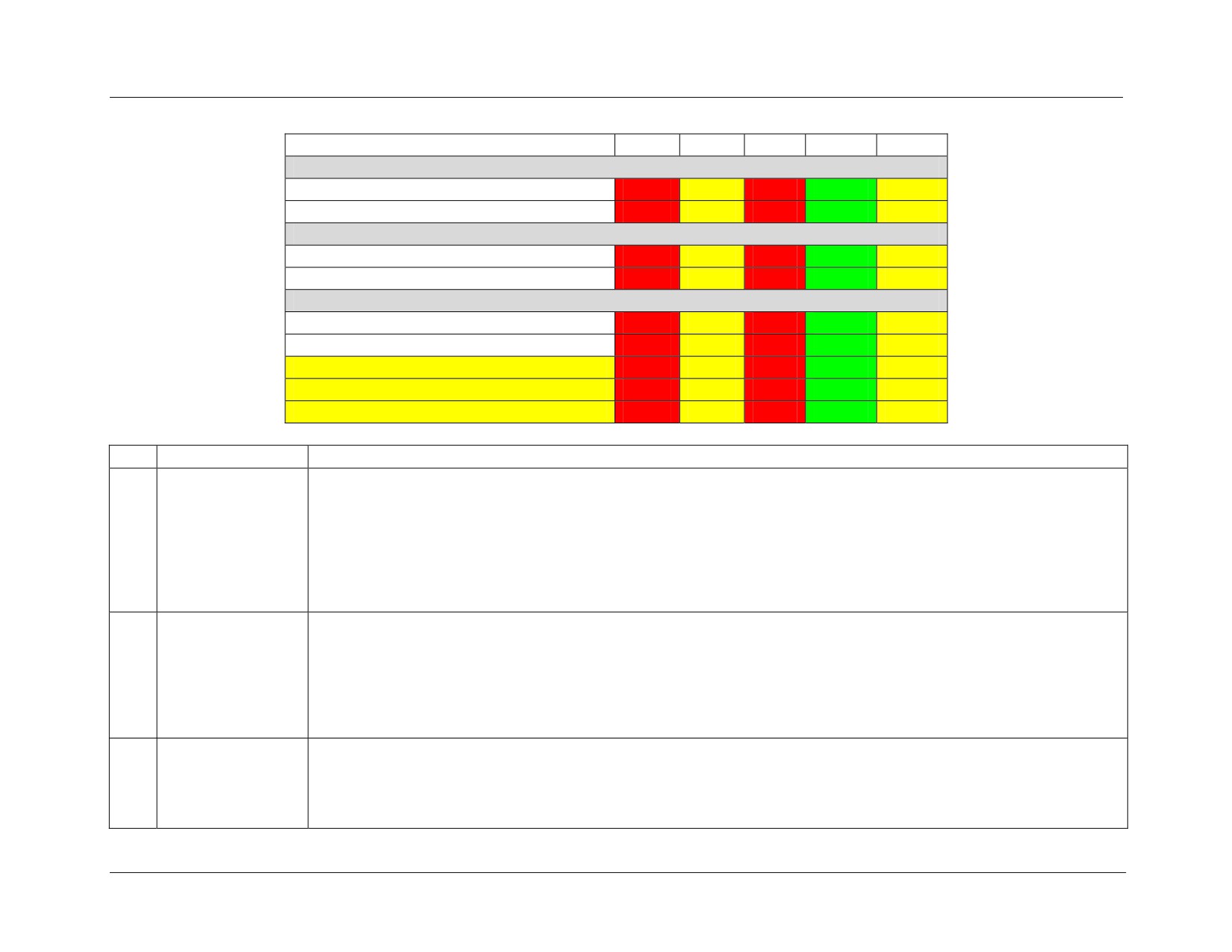
Services and the COCOM. The overall current capability is “yellow.”
Projected Near/Mid-Term Capability and Deficiency
No change is projected for this task.
98
For Official Use Only
For Official Use Only
CBRND Functional Needs Analysis/Functional Solution Analysis
Chapter 11. Strategic Theater Shield Tasks
Projected Far-Term Capability and Deficiency
No change is projected for this task.
99
For Official Use Only
For Official Use Only
CBRND Functional Needs Analysis/Functional Solution Analysis
Chapter 11. Strategic Theater Shield Tasks
Table 11.11-1. STSHLD 11: Capability and Deficiency Assessment
Capabilities/Measures
M1
M2
M3
M4
M5
Current
COCOM Staff
R1
Y2
R3
G4
Y5
Medical Services Staff
R6
Y7
R8
G9
Y10
Near/Mid
COCOM Staff
R
Y
R
G
Y
Medical Services Staff
R
Y
R
G
Y
Far
COCOM Staff
R
Y
R
G
Y
Medical Services Staff
R
Y
R
G
Y
Current Overall Capability11
R12
Y13
R14
G15
Y16
Near/Mid-Term Overall Capability
R
Y
R
G
Y
Far-Term Overall Capability
R
Y
R
G
Y
FAA Measure
Scale
M1
Plans exist for large-
G: Detailed plans exist and are coordinated between COCOM and Medical Services staffs for large-scale CBRN/TIM medical
scale medical
operations involving the forces and non-U.S. personnel (e.g., indigenous civilians, third-party nationals, etc.).
operations
Y: Plans exist and are coordinated between COCOM and Medical Services staffs for Medical Services support of operations
addressing
involving CBRN/TIM threat and address large-scale medical operations the forces and non-U.S. personnel (e.g., indigenous
CBRN/TIM.
civilians, third-party nationals, etc.).
R: Plans addressing large-scale medical operations are inadequate, nonexistent, not coordinated between the COCOM and
Medical Services staffs, and/or do not address the forces and/or non-U.S. personnel (e.g., indigenous civilians, third-party
nations, etc.).
M2
Theater policy
G: Detailed policies and plans exist and are coordinated between COCOM and Medical Services staffs specifying the conditions
addresses the
and appropriate authorities and actions/activities to invoke quarantine and/or enforce medical isolation for large-scale
conditions and
CBRN/TIM medical operations involving forces and non-U.S. personnel (e.g., indigenous civilians, third-party nationals, etc.)
authorities required
Y: Policies and plans exist and are coordinated between COCOM and Medical Services staffs for large-scale Medical Services
to invoke quarantine
operations involving quarantine and/or enforcement of medical isolation..
and/or enforce
R: Plans and policies addressing large-scale medical quarantine and/or medical isolation are inadequate, nonexistent, and/or are
medical isolation.
not coordinated between the COCOM and Medical Services staffs.
M3
Forces are protected
G: Medical CBRND countermeasures exist for all threat CBRN and high-risk TIM agents and encompass all eligible at-risk
by medical
populations.
prophylaxes.
Y: Medical CBRND countermeasures exist for selected high-threat CBRN and high-risk TIM agents for U.S. military and
eligible civilian members.
R: Medical CBRND countermeasures are inadequate or do not exist for high-threat CBRN and high-risk TIM agents.
100
For Official Use Only
For Official Use Only
CBRND Functional Needs Analysis/Functional Solution Analysis
Chapter 11. Strategic Theater Shield Tasks
M4
Force has completed
G: Strategic Theater forces are medically prepared for operations with threat.
deployment medical
Y: Selected Strategic Theater forces generally are generally medically prepared for operations with threat.
preparation.
R: Strategic Theater forces medical preparedness for operations with threat is inadequate or nonexistent.
M5
All required
G: CBRND systems, components, and consumables are available in plan identified quantities and types to support sustained
protective supplies
large-scale medical operations involving the forces and non-U.S. personnel (e.g., indigenous civilians, third-party nationals, etc.)
and equipment are
within a CBRN/TIM environment.
available.
Y: CBRND systems, components, and consumables are identified in plans and are adjusted to limitations in quantities and types
to support medical operations involving CBRN/TIM threat.
R: CBRND systems, components, and consumables are inadequate or insufficient to support medical operations involving
CBRN/TIM threat.
1 COCOM staff plans includes predeployment medical screening and the stockpiling, allocation, and distribution of medical prophylaxis. Specific implementation for the
application of prophylactic immunizations is address in medical support plans. Planning for large-scale medical operations are coordinated by the Medical Services staffs with the
COCOM staff for COCOM support and appropriate resourcing. However, DOTMLPF is inadequate to address large-scale medical CBRN/TIM operations, particularly sustained
operations within a CBRN/TIM environment and/or COCOM actions associated with large-scale medical operations involving non-U.S. personnel (e.g., indigenous civilians,
third-party nationals, etc.).
2 COCOM plans address medical activities by referring to appropriate medical plans, policies, and procedures. The invocation of quarantine and enforcement of medical isolation
are within the purview of medical authorities. The COCOM staff provides support as defined in the coordinated and appropriate medical plans. However, DOTMLPF is inadequate
to address COCOM actions associated with medical quarantine and/or enforcement of medical isolation involving large numbers of non-U.S. personnel (e.g., indigenous civilians,
third-party nationals, etc.).
3 Medical prophylaxis does not exist for all threat CBRN/TIM and TIM agents. Current prophylaxis and supporting doctrine, policy, and procedures do not address
presymptomatic medical CBRN/TIM protective countermeasures by other than U.S. forces, excluding MWA and eligible civilians. Prophylaxis against most high-threat TIMs are
not currently available due to the relatively recent consideration of these agents as potential threats. Additionally, the efficacy of existing prophylaxis, particularly vaccines, widely
varies. FP using medical prophylaxis is dependent upon identification of the threat, preplanning for a threat, positioning of stocks for issue and administration, timing of
notification to administer/issue prophylaxis, availability of medical personnel to perform administration (if required), ongoing operational requirements, and the available quantity
of sufficient medical prophylaxis to meet requirements. Vaccination to achieve acquired immunity by force personnel prior to entry into the theater or completion of an adequate
level of acquired immunity prior to adversary CBRN/TIM agent employment is a function of the preplanning and deployment operations. However, many agents require the
application of, if not in concert with vaccination, of other prophylaxis. These include immunity assistive and barrier medical materials (e.g., medications, lotions, etc.). The
COCOM staff directs the implementation of these measures when and as appropriate based upon established plans and guidance. However, the application of medical prophylaxis
is not adequately addressed for eligible civilians and MWA within the force.
4 The COCOM staff tracks the deployment status of tasked units throughout the deployment process. However, the routine rotation and movement of personnel to and from units,
the administration period of some vaccines for acquired immunity, and other considerations impact completion of medical preparation for deployment. Completion of deployment
medical preparation is contingent upon timing of notice to deployment, availability of medical personnel to perform force preparation, and the availability of sufficient medical
prophylaxis to meet preparation requirements. Short-notice operations and reallocated taskings also impact medical preparations prior to deployment into theater. Forces have, and
may in the future, require medical preparation upon arrival in the AOR. The COCOM staff plans generally include provisions for medical preparation of the force including both
predeployment and AOR arrival. Supporting Medical Services plans, coordinated with the COCOM staff, discuss Medical Services activities to attain force preparedness for
operations.
5 The COCOM staff plans include the identification of CBRND supplies and equipment for operations with a CBRN/TIM threat. Equipping the tasked force is an integral part of
planning and preparation. The combination of established force organic assets, materiel acquisitions, prepositioned materiel, available host-nation/coalition contributions, and
movement of identified CBRND resources from stockpiles and reallocation activities are pursued by the Joint Task Force staff with the COCOM staff to prepare and support
deploying forces as outlined by the appropriate plan. Systems are reallocated, when necessary, from prepositioned and dispersed stocks of units deploying or operating within a
Joint Operations Area (JOA). Elements of deploying forces may not be issued their full CBRND capabilities during the initial stages of deployment and until after arrival within
the AOR. Expeditionary operations are a particular concern. Mass medical operations may not be possible until the theater matures or additional resources are allocated to the
101
For Official Use Only
For Official Use Only
CBRND Functional Needs Analysis/Functional Solution Analysis
Chapter 11. Strategic Theater Shield Tasks
AOR. Additionally, deploying eligible civilians and MWAs (particularly MWDs) are not equipped and trained to survive a CBRN/TIM environment. The COCOM staff does not
possess clear guidance for planning and providing CBRN/TIM protection training and CBRND protection resources to deploying eligible civilians and MWAs. Current doctrine
and policy does not adequately address sustained operations within a CBRN/TIM environment. Large-scale medical activities and actions are not adequately addressed in
DOTMLPF; especially those involving large numbers of non-U.S. personnel (e.g., indigenous civilians, third-party nationals, etc.).
6 COCOM plan support planning by Medical Services staff includes predeployment medical screening and the stockpiling, allocation, and administration/ distribution of medical
prophylaxis. Specific implementation for the application of prophylactic immunizations is addressed in the Medical Services plans. Planning for large-scale medical operations are
coordinated by the Medical Services staffs with the COCOM staff for COCOM planning support and appropriate resourcing. However, DOTMLPF is inadequate to address large-
scale medical CBRN/TIM operations, particularly sustained operations within a CBRN/TIM environment and/or Medical Services actions associated with large-scale medical
operations involving non-U.S. personnel (e.g., indigenous civilians, third-party nationals, etc.).
7 The Medical Services staff plans and associated policies address medical activities and procedures. The invocation of quarantine and enforcement of medical isolation are within
the purview of medical authorities and are a consideration for medical planning for operations with a CBRN/TIM threat. The Medical Services staff coordinates with the COCOM
staff for Medical Services support requirements and associated taskings and their inclusion in COCOM staff planning. However, DOTMLPF is inadequate to address Medical
Services actions associated with medical quarantine and/or enforcement of medical isolation involving large numbers of non-U.S. personnel (e.g., indigenous civilians, third-party
nationals, etc.).
8 Medical prophylaxis does not exist for all threat CBRN/TIM and TIM agents. Current prophylaxis and supporting doctrine, policy, and procedures do not address
presymptomatic medical CBRN/TIM protective countermeasures by other than U.S. forces, excluding MWA and eligible civilians. Prophylaxis against most high-threat TIMs are
not currently available due to the relatively recent consideration of these agents as potential threats. Additionally, the efficacy of existing prophylaxis, particularly vaccines, widely
varies. FP using medical prophylaxis is dependent upon identification of the threat, preplanning for a threat, positioning of stocks for issue and administration, timing of
notification to administer/issue prophylaxis, availability of medical personnel to perform administration (if required), ongoing operational requirements, and the available quantity
of sufficient medical prophylaxis to meet requirements. Vaccination to achieve acquired immunity by force personnel prior to entry into the theater or completion of an adequate
level of acquired immunity prior to adversary CBRN/TIM agent employment is a function of the preplanning and deployment operations. However, many agents require the
application of, if not in concert with vaccination, of other prophylaxis. These include immunity assistive medical materials (e.g., medications, etc.). The Medical Services staff
administers and issues these measures upon direction of the COCOM and as based upon established Medical Services plans and guidance. However, the application of medical
prophylaxis is not adequately addressed for eligible civilians and MWA within the force.
9 The Medical Services staff tracks the medical deployment status of tasked units throughout the deployment process. However, the routine rotation and movement of personnel to
and from units, the administration period of some vaccines for acquired immunity, and other considerations impact completion of medical preparation for deployment. Completion
of deployment medical preparation is contingent upon timing of notice to deployment, availability of medical personnel to perform force preparation, and the availability of
sufficient medical prophylaxis to meet preparation requirements. Short-notice operations and reallocated taskings also impact medical preparations prior to deployment into
theater. Forces have, and may in the future, require medical preparation upon arrival in the AOR. The Medical Services staff plans include provisions for medical preparation of
the force including both predeployment and AOR arrival. The Supporting Medical Services plans, coordinated with the COCOM staff, task Medical Services and outline medical
activities to attain force preparedness for operations.
10 The COCOM and Medical Services staffs conduct coordinated planning for operations including the identification of CBRND supplies and equipment for operations with a
CBRN/TIM threat. Equipping the tasked Medical Services units are an integral part of planning and preparation. The combination of established force organic assets, material
acquisitions, prepositioned material, available host-nation/coalition contributions, and movement of identified CBRND resources from stockpiles and reallocation activities are
pursued by the Medical Services staff with the COCOM staff to prepare and support deploying forces as outlined by the appropriate plan. Medical resources and systems are
reallocated, when necessary and in coordination with the COCOM staff, from prepositioned and dispersed stocks of Medical Services units deploying or operating within the JOA.
Expeditionary operations are a particular concern. Mass medical operations may not be possible until the theater matures or additional resources are allocated to the AOR.
Additionally, deploying eligible civilians and MWAs (particularly MWDs) are not equipped and trained to survive a CBRN/TIM environment. The COCOM Medical Services
staff does not possess clear guidance for planning and providing CBRN/TIM protection training and CBRND protection resources to deploying eligible civilians and MWA.
Current doctrine and policy does not adequately address sustained operations within a CBRN/TIM environment. Large-scale medical activities and actions are not adequately
addressed in DOTMLPF; especially those involving large numbers of non-U.S. personnel (e.g., indigenous civilians, third-party nationals, etc.).
11 DOTLPF is adequate for planning, equipping, deployment of forces, and coordination of Medical Services support. DOTLPF is inadequate to support sustained operations
(medical and nonmedical) within a CBRN/TIM environment, particularly expeditionary operations, during the first 30-60 days. Current DOTLPF does not fully address the unique
102
For Official Use Only
For Official Use Only
CBRND Functional Needs Analysis/Functional Solution Analysis
Chapter 11. Strategic Theater Shield Tasks
aspects of CBRND and the impact upon operations within a CBRN/TIM environment. Current DOTLPF is inadequate for preparing and equipping deploying eligible civilians and
MWA. DOTLPF is also inadequate to address large-scale medical CBRN/TIM operations, particularly sustained operations within a CBRN/TIM environment and/or COCOM and
Medical Services actions associated with large-scale medical operations involving non-U.S. personnel (e.g., indigenous civilians, third-party nationals, etc.). DOTLPF is, further,
inadequate for medical quarantine and/or enforcement of medical isolation involving large numbers of non-U.S. personnel (e.g., indigenous civilians, third-party nations, etc.)
12 COCOM and Medical Services staff plans includes predeployment medical screening and the stockpiling, allocation, and distribution of medical prophylaxis. Specific
implementation for the application of prophylactic immunizations is addressed in the Medical Services plans supporting COCOM plans. Planning for large-scale medical
operations are coordinated by the Medical Services staffs with the COCOM staff for COCOM planning support and appropriate resourcing. DOTLPF is inadequate to address
large-scale medical CBRN/TIM operations, particularly sustained operations within a CBRN/TIM environment and/or COCOM and Medical Services actions associated with
large-scale medical operations involving non-U.S. personnel (e.g., indigenous civilians, third-party nationals, etc.).
13 COCOM plans address medical activities by referring to appropriate medical plans, policies, and procedures. The Medical Services staff plans and associated policies address
medical activities and procedures. The invocation of quarantine and enforcement of medical isolation are within the purview of medical authorities and are a consideration for
medical planning for operations with a CBRN/TIM threat. The Medical Services staff coordinates with the COCOM staff for Medical Services support requirements and associated
taskings and their inclusion in COCOM staff planning. DOTLPF is inadequate to address COCOM and Medical Services actions associated with medical quarantine and/or
enforcement of medical isolation involving large numbers of non-U.S. personnel (e.g., indigenous civilians, third-party nationals, etc.).
14 FP using medical prophylaxis is dependent upon identification of the threat, preplanning for a threat, positioning of stocks for issue and administration, timing of notification to
administer/issue prophylaxis, availability of medical personnel to perform administration (if required), ongoing operational requirements, and the available quantity of sufficient
medical prophylaxis to meet requirements. Vaccination to achieve acquired immunity by force personnel prior to entry into the theater or completion of an adequate level of
acquired immunity prior to adversary CBRN/TIM agent employment is a function of the preplanning and deployment operations. However, many agents require the application of,
if not in concert with vaccination, of other prophylaxis. These include immunity assistive and barrier medical materials (e.g., medications, lotions, etc.). The COCOM staff directs
the implementation of these measures when and as appropriate based upon established plans and guidance. The Medical Services staff administers and issues these measures upon
direction of the COCOM and as based upon established Medical Services plans and guidance. Medical prophylaxis does not exist for all threat CBRN/TIM and TIM agents.
Current prophylaxis and supporting doctrine, policy, and procedures do not address presymptomatic medical CBRN/TIM protective countermeasures by other than U.S. forces,
excluding MWAs and eligible civilians. Prophylaxis against most high-threat TIMs are not currently available due to the relatively recent consideration of these agents as potential
threats. Additionally, the efficacy of existing prophylaxis, particularly vaccines, widely varies. The application of medical prophylaxis is not adequately addressed for eligible
civilians and MWAs within the force.
15 The COCOM staff tracks the deployment status of tasked units throughout the deployment process. The Medical Services staff also tracks the medical deployment status of
tasked units throughout the deployment process. However, the routine rotation and movement of personnel to and from units, the administration period of some vaccines for
acquired immunity, and other considerations impact completion of medical preparation for deployment. Completion of deployment medical preparation is contingent upon timing
of notice to deployment, availability of medical personnel to perform force preparation, and the availability of sufficient medical prophylaxis to meet preparation requirements.
Short-notice operations and reallocated taskings also impact medical preparations prior to deployment into theater. Forces have, and may in the future, require medical preparation
upon arrival in the AOR. The COCOM and Medical Service staff plans include provisions for medical preparation of the force including both predeployment and AOR arrival.
Supporting Medical Services plans, coordinated with the COCOM staff, task Medical Services and outline medical activities to attain force preparedness for operations.
16 The COCOM and Medical Services staffs conduct coordinated planning for operations including the identification of CBRND supplies and equipment for operations with a
CBRN/TIM threat. Equipping the tasked Medical Services units are an integral part of planning and preparation. The combination of established force organic assets, material
acquisitions, prepositioned material, available host-nation/coalition contributions, and movement of identified CBRND resources from stockpiles and reallocation activities are
pursued by the Medical Services staff with the COCOM staff to prepare and support deploying forces as outlined by the appropriate plan. Medical resources and systems are
reallocated, when necessary and in coordination with the COCOM staff, from prepositioned and dispersed stocks of Medical Services units deploying or operating within the JOA.
Expeditionary operations are a particular concern. Mass medical operations may not be possible until the theater matures or additional resources are allocated to the AOR.
Deploying eligible civilians and MWAs (particularly MWDs) are not equipped and trained to survive a CBRN/TIM environment. The COCOM Medical Services staff does not
possess clear guidance for planning and providing CBRN/TIM protection training and CBRND protection resources to deploying eligible civilians and MWA. Current doctrine and
policy does not adequately address sustained operations within a CBRN/TIM environment. Large-scale medical activities and actions are not adequately addressed in DOTLPF;
especially those involving large numbers of non-U.S. personnel (e.g., indigenous civilians, third-party nationals, etc.).
103
For Official Use Only
For Official Use Only
CBRND Functional Needs Analysis/Functional Solution Analysis
Chapter 11. Strategic Theater Shield Tasks
11.11.3
Functional Solution Analysis
11.11.3.1
DOTLPF Assessment Summary
This section addresses the deficiencies and suggests potential non-materiel solutions. If there are
no non-materiel solutions, or they are only partial solutions, the remaining non-materiel need is
then stated. Materiel needs are assessed in the IMA section.
1.
Deficiency: DOTMLPF is inadequate to address large-scale medical CBRN/TIM operations,
particularly sustained operations within a CBRN/TIM environment and/or COCOM and
Medical Services actions associated with large-scale medical operations involving non-U.S.
personnel (e.g., indigenous civilians, third-party nationals, etc.).
Non-Materiel Solutions: Doctrine: Include in doctrine, policy, procedures, and UJTL
sustained operations (medical and nonmedical) within a CBRN/TIM environment. Include
COCOM and Medical Services activities associated with the planning, coordination,
implementation, operation, and termination of large-scale medical operations involving non-
U.S. personnel (e.g., indigenous civilians, third-party civilians, third-party nationals,
displaced persons, detained persons, etc.). Organization: Ensure resources, taskings, and staff
are in place or available to plan and perform sustained operations (medical and nonmedical)
within a CBRN/TIM environment and/or operations addressing COCOM and Medical
Services actions associated with the planning, coordination, implementation, operation,
support, and termination of large-scale medical operations involving non-U.S. personnel
(e.g., indigenous civilians, third-party civilians, third-party nationals, displaced persons,
detained persons, etc.). Training: Train, exercise, and evaluate the force for sustained
operations (medical and nonmedical) within a CBRN/TIM environment and/or operations
addressing COCOM and Medical Services actions associated with the planning,
coordination, implementation, operation, support, and termination of large-scale medical
operations involving non-U.S. personnel (e.g., indigenous civilians, third-party civilians,
third-party nationals, displaced persons, detained persons, etc.). Leadership: Recognize
criticality of readiness of the force for potential sustained operations (medical and
nonmedical) within a CBRN/TIM environment, training providing the skills to manage the
force in these circumstances, and willingness and ability to implement necessary changes and
activities to prepare the force and appropriately support large-scale medical operations
involving non-U.S. personnel (e.g., indigenous civilians, third-party civilians, third-party
nationals, displaced persons, detained persons, etc.). Personnel: Ensure eligible civilian
personnel and operations supporting the mission/military operations (medical and
nonmedical) are qualified in CBRND and capable of performing their responsibilities in a
CBRN/TIM environment. Facilities: Develop supporting infrastructure for sustained
operations within a CBRN/TIM environment and operations associated with large-scale
medical operations involving non-U.S. personnel (e.g., indigenous civilians, third-party
civilians, third-party nationals, displaced persons, detained persons, etc.).
2.
Deficiency: DOTMLPF is inadequate to address COCOM and Medical Services actions
associated with medical quarantine and/or enforcement of medical isolation involving large
numbers of non-U.S. personnel (e.g., indigenous civilians, third-party nationals, etc.).
104
For Official Use Only
For Official Use Only
CBRND Functional Needs Analysis/Functional Solution Analysis
Chapter 11. Strategic Theater Shield Tasks
Non-Materiel Solutions: Doctrine: Include in doctrine, policy, procedures, and UJTL
COCOM and Medical Services activities associated with the planning, coordination,
implementation, operation, and termination of large-scale medical operations involving non-
U.S. personnel (e.g., indigenous civilians, third-party civilians, third-party nationals,
displaced persons, detained persons, etc.). Organization: Ensure resources, taskings, and staff
are in place or available for operations addressing COCOM and Medical Services actions
associated with the planning, coordination, implementation, operation, support, and
termination of large-scale medical operations involving non-U.S. personnel (e.g., indigenous
civilians, third-party civilians, third-party nationals, displaced persons, detained persons,
etc.). Training: Train, exercise, and evaluate the force for COCOM and Medical Services
actions associated with the planning, coordination, implementation, operation, support, and
termination of large-scale medical operations involving non-U.S. personnel (e.g., indigenous
civilians, third-party civilians, third-party nationals, displaced persons, detained persons,
etc.). Leadership: Recognize criticality of readiness of the force for potential operations
(medical and nonmedical) within a CBRN/TIM environment, training providing the skills to
manage the force in these circumstances, and willingness and ability to implement necessary
changes and activities to prepare the force and appropriately support large-scale medical
operations involving non-U.S. personnel (e.g., indigenous civilians, third-party civilians,
third-party nationals, displaced persons, detained persons, etc.). Personnel: Ensure eligible
civilian personnel and operations supporting the mission/military operations (medical and
nonmedical) are qualified in CBRND and capable of performing their responsibilities in a
CBRN/TIM environment. Facilities: Develop supporting infrastructure for operations
associated with large-scale medical operations involving non-U.S. personnel (e.g.,
indigenous civilians, third-party civilians, third-party nationals, displaced persons, detained
persons, etc.)
3.
Deficiency: Medical prophylaxis does not exist for all threat CBRN/TIM and TIM agents.
Non-Materiel Solutions: Doctrine: Establish in doctrine, policy, and procedures the
application of standards for prophylactic CBRND protection against all threat agents.
Training: Train, exercise, and evaluate personnel (military and eligible civilians) on the use
of prophylactic CBRND protection against threat agents. Leadership: Enforce compliance
with established standards (see Footnote 1 above) for prophylactic CBRND protection.
Implement and ensure training is adequate and conduct exercises and evaluations to ensure
readiness.
4.
Deficiency: Current prophylaxis and supporting doctrine, policy, and procedures do not
address presymptomatic medical CBRN/TIM protective countermeasures by other than U.S.
forces, excluding eligible civilians.
Non-Materiel Solutions: Doctrine: Develop doctrine, policy, and procedures addressing
eligible civilians during CBRND operations and the provision of CBRND protection,
including prophylaxis. Training: Establish CBRND training, exercise, and evaluation criteria
and programs for eligible civilians and conduct CBRND training, exercises, and evaluations.
Leadership: Implement and manage CBRND training, equipping, and protection of eligible
civilians.
105
For Official Use Only
For Official Use Only
CBRND Functional Needs Analysis/Functional Solution Analysis
Chapter 11. Strategic Theater Shield Tasks
5.
Deficiency: Current prophylaxis and supporting doctrine, policy, and procedures do not
address presymptomatic medical CBRN/TIM protective countermeasures by other than U.S.
forces, excluding MWAs.
Non-Materiel Solutions: Doctrine: Develop doctrine, policy, and procedures addressing
MWAs during CBRND operations and the provision of CBRND protection, including
prophylaxis. Training: Establish CBRND training, exercise, and evaluation criteria and
programs for MWAs and conduct CBRND training, exercises, and evaluations. Leadership:
Implement and manage CBRND training, equipping, and protection of MWDs.
6.
Deficiency: Prophylaxis against most high-threat TIMs are not currently available.
Non-Materiel Solutions: Doctrine: Establish in doctrine, policy, and procedures the
application of metrics for standards and criteria for protection against all high-threat TIM
agents. Training: Train, exercise, and evaluate personnel (military and eligible civilians) on
the use of prophylactic CBRND protection against threat agents. Leadership: Enforce
compliance with established metrics (see Footnote 7 above) for standards and criteria.
Implement and ensure training is adequate and conduct exercises and evaluations to ensure
readiness.
7.
Deficiency: The efficacy of existing prophylaxis, particularly vaccines, widely varies.
Non-Materiel Solutions: Doctrine: Establish in doctrine, policy, and procedures the
application of baseline standards for prophylactic CBRND protection against all threat
agents. Leadership: Enforce compliance with established standards (see Footnote 5 above)
for prophylactic CBRND protection.
8.
Deficiency: The application of medical prophylaxis is not adequately addressed for eligible
civilians within the force.
Non-Materiel Solutions: Doctrine: Establish in doctrine, policy, and procedures
requirement to address the administration, provision, and application of medical CBRN/TIM
protective countermeasures by eligible civilians. Organization: Address organizational issues
(e.g., who provides the equipment, support forces to train and equip, etc.) related to the
provision of CBRN/TIM protection to eligible civilians. Training: Include eligible civilians
in CBRND training, exercises, and evaluations. Identify training requirements and
responsibilities for non-U.S. forces. Leadership: Ensure leadership awareness of criticality of
increased dependence of military operations upon civilians. Personnel: Require eligible
civilians supporting the mission to meet minimum standards for safe use of CBRND
resources. Facilities: Develop supporting infrastructure for eligible civilian CBRND (e.g.,
logistics, Medical Services, veterinary surveillance, etc.).
9.
Deficiency: The application of medical prophylaxis is not adequately addressed for MWAs
within the force.
Non-Materiel Solutions: Doctrine: Establish in doctrine, policy, and procedures
requirement to address the administration, provision, and application of medical CBRN/TIM
protective countermeasures by MWAs, particularly MWDs. Organization: Address
organizational issues (e.g., who provides the equipment, support forces to train and equip,
etc.) related to the provision of CBRN/TIM protection to MWAs, particularly MWDs.
Training: Include MWAs in CBRND training, exercises, and evaluations. Leadership:
106
For Official Use Only
For Official Use Only
CBRND Functional Needs Analysis/Functional Solution Analysis
Chapter 11. Strategic Theater Shield Tasks
Ensure leadership awareness of criticality of MWA, particularly MWD resources. Facilities:
Develop supporting infrastructure for MWA, particularly MWD CBRND (e.g., logistics,
Medical Services, veterinary surveillance, etc.).
10. Deficiency: Expeditionary operations are a particular concern. Mass medical operations may
not be possible until the theater matures or additional resources are allocated to the AOR.
Non-Materiel Solutions: Doctrine: Complete the JCIDS process and central correlation/
comparison of operations plans to identify CBRND resources necessary and available to
support expeditionary medical operations during the first 30-90 days following
commencement of hostilities and with a reduced logistical footprint. Organization: Develop
organizational structures, resources, staffing, and capabilities to conduct expeditionary
medical operations while possessing reduced logistical footprint and during the first 30-90
days of operations following commencement of hostilities. Training: Train, exercise, and
evaluate expeditionary capabilities of the force in a CBRN/TIM threat with reduced logistical
footprint during the initial 30-90 days of operations using CBRND resources supporting
expeditionary medical operations. Leadership: Recognize differences and challenges
associated with expeditionary medical operations during the first 30-90 days following
commencement of hostilities and with a reduced logistical footprint, training providing skills
and knowledge to manage operations in these circumstances, and ability and willingness to
implement necessary changes and activities to prepare for and conduct expeditionary medical
operations with a CBRN/TIM threat. Facilities: Develop supporting infrastructure for
expeditionary medical operations during the first 30-90 days following commencement of
hostilities and with a reduced logistical footprint.
11. Deficiency: Deploying eligible civilians are not equipped and trained to survive a
CBRN/TIM environment.
Non-Materiel Solutions: Doctrine: Establish doctrine, policy, and procedures CBRND
protection of eligible civilians and training for CBRN/TIM environment survival.
Organization: Ensure organizational consideration for maintenance and support of eligible
civilians CBRND protective equipment, measures, and activities. Training: Develop
institutional and unit training of eligible civilians for CBRND measures and activities.
Integration into CBRND exercises and evaluations. Leadership: Ensure awareness and
planning for CBRND measures and requirements for eligible civilians survivability.
Facilities: Develop supporting infrastructure for eligible civilians CBRND (e.g., logistics,
medical, veterinary surveillance, communications, training, etc.).
12. Deficiency: Deploying MWAs (particularly MWDs) are not equipped and trained to survive
a CBRN/TIM environment.
Non-Materiel Solutions: Doctrine: Establish doctrine, policy, and procedures CBRND
protection of MWAs, particularly MWDs and training for CBRN/TIM environment survival.
Organization: Organizational consideration for maintenance and support of MWA CBRND
protective equipment, measures, and activities. Training: Develop institutional and unit
training of MWA handlers and MWAs for CBRND measures and activities. Integrate into
CBRND exercises and evaluations. Leadership: Ensure awareness and planning for CBRND
measures and requirements for MWA survivability. Facilities: Develop supporting
107
For Official Use Only
For Official Use Only
CBRND Functional Needs Analysis/Functional Solution Analysis
Chapter 11. Strategic Theater Shield Tasks
infrastructure for MWA CBRND (e.g., logistics, medical, veterinary surveillance,
communications, training, etc.).
13. Deficiency: DOTMLPF is inadequate to support sustained operations (medical and
nonmedical) within a CBRN/TIM environment, particularly expeditionary operations, during
the first 30-60 days.
Non-Materiel Solutions: Doctrine: Include in doctrine, policy, and procedures sustained
operations (medical and nonmedical) within a CBRN/TIM environment. Organization:
Ensure resources, taskings, and staff are in place or available to perform sustained operations
(medical and nonmedical) within a CBRN/TIM environment. Training: Train, exercise, and
evaluate the force (military and eligible civilians) for sustained operations (medical and
nonmedical) within a CBRN/TIM environment. Leadership: Recognize criticality of
readiness of the force for potential sustained operations (medical and nonmedical) within a
CBRN/TIM environment, training providing the skills to manage the force in these
circumstances, and willingness and ability to implement necessary changes and activities to
prepare and appropriately apply the force.
14. Deficiency: Current DOTMLPF does not fully address the unique aspects of CBRND and
the impact upon operations within a CBRN/TIM environment.
Non-Materiel Solutions: Doctrine: Include in doctrine, policy, procedures, and UJTL
sustained operations (medical and nonmedical) within a CBRN/TIM environment.
Organization: Ensure resources, taskings, and staff are in place or available to plan and
perform sustained operations within a CBRN/TIM environment. Training: Train, exercise,
and evaluate the force for sustained operations (medical and nonmedical) within a
CBRN/TIM environment. Leadership: Recognize criticality of readiness of the force for
potential sustained operations (medical and nonmedical) within a CBRN/TIM environment,
training providing the skills to manage the force in these circumstances, and willingness and
ability to implement necessary changes and activities to prepare and appropriately apply the
force. Personnel: Ensure eligible civilian personnel and operations supporting the
mission/military operations (medical and nonmedical) are qualified in CBRND and capable
of performing their responsibilities in a CBRN/TIM environment.
11.11.3.2
IMA Assessment Summary
N/A
108
For Official Use Only
For Official Use Only
CBRN Functional Needs Analysis/Functional Solution Analysis
Chapter 12. Operational Shield Tasks
CHAPTER 12. OPERATIONAL SHIELD TASKS
For Official Use Only
For Official Use Only
CBRN Functional Needs Analysis/Functional Solution Analysis
Chapter 12. Operational Shield Tasks
Table of Contents
List of Acronyms
ii
12.0
Operational Shield
1
12.1
Task OPSHLD 1: Adjust Protective Posture Protocols to ensure protection level is
consistent with the threat and minimizes risk while limiting the impact on mission
execution
5
12.2
Task OPSHLD 2: Integrate coalition/non-U.S. and joint force CBRN/TIM
protective measures and assets
14
12.3
Task OPSHLD 3: Establish local medical prophylactic approach to reduce impact
of CBRN/TIM
22
12.4
Task OPSHLD 4: Ensure that IPE for forces (including patients) and MWAs are
ready to minimize casualties and to ensure survivability and effective
performance
37
12.5
Task OPSHLD 5: Ensure adequate protective measures and resources are
available to coalition partners and other designated non-U.S. forces
49
12.6
Task OPSHLD 6: Ensure adequate individual protection for eligible civilians
56
12.7
Task OPSHLD 7: Provide COLPRO for all critical activities/functions, rest, and
relief
65
12.8
Task OPSHLD 8: Supply protective measure consumables, expendables, and
replacements
75
12.9
Task OPSHLD 9: Ensure safety of water/food supplies to protect forces
86
12.10
Task OPSHLD 10: Protect equipment and supplies through coatings, coverings,
and packaging to reduce contamination of contents and to contain contamination
91
12.11
Task OPSHLD 11: Provide protective measures for forced-entry forces operating
in antiaccess and area-denial CBRN/TIM environments
100
12.12
Task OPSHLD 12: Employ protective measures to minimize effects of adversary
use of CBRN weapons and TIM exposure
110
12.13
Task OPSHLD 13: Establish large-scale medical CBRND operations
124
12.14
Task OPSHLD 14: Establish mortuary process to handle contaminated remains
149
i
For Official Use Only
For Official Use Only
CBRN Functional Needs Analysis/Functional Solution Analysis
Chapter 12. Operational Shield Tasks
12.0 Operational Shield
12.0.1
Introduction
This chapter focuses upon the operational (OP) level of war at the Joint Task Force (JTF) level
of task development and implementation. The OP level of war is where campaigns and major
operations are planned, organized, executed, conducted, and sustained to accomplish the defined
strategic objectives within theaters or areas of operations (AOs). Plans and activities at the OP
level link tactics and strategy through defining and establishing operational objectives essential
for the successful accomplishment of the strategic objectives, sequencing events achieving the
operational objectives, initiating actions and activities, and applying resources to generate and
sustain these events. OP activities involve a broader and more “macro” concept of time or space
than is inherent to tactics. These activities include the adequate support and provisioning of
forces and means to exploit tactical successes to achieve strategic objectives. It includes the
integration of coalition and partner force capabilities to enhance JTF capacity to successfully
achieve operational and strategic goals.1
This chapter restates relevant information from the chemical, biological, radiological, and
nuclear defense (CBRND) Functional Area Analysis (FAA) including a description of each of
the 11 OP Shield (SHLD) tasks, derivation of the task, an indication of other linked tasks, and
the pertinent conditions. The Functional Needs Analysis (FNA) section addresses the capability
and deficiency analysis and a brief description of potential near-term changes. Once all the
capabilities are considered, the assessment concludes with a separate, overarching look at the
entire capability spectrum to identify remaining gaps and/or synergies. The Functional Solutions
Analysis (FSA) section addresses possible solutions for the deficiences identified in the FNA
section. OPSHLD solutions are non-materiel and are reflected in one or more of the six areas of
DOTLPF: doctrine, organization, training, leadership, personnel, and facilities. Annotations
under Materiel are non-materiel in nature, but do not align in one of the six non-materiel aspects
of DOTLPF. These annotations include research, analysis, and other actions to address and
establish solutions for the deficiencies.
Most of the OPSHLD tasks involve doctrine, policies, and procedures providing parameters for
planning, decisioning, and actions or activities to accomplish the tasks. These range from the
positioning and sustainment of CBRND materiel and resources, through protection of forces
throughout the deployment cycle and the integration of coalition CBRND resources, to mass
medical and contaminated/exposed casualty and remains operations.
Tasks associated with forces includes constituent elements of the transforming force such as
civilians, military working animals (MWAs), coalition/alliance forces, and third-party nationals.
Increasing reliance upon nonmilitary personnel (such as government employees and contractors)
as operational enablers dictated their inclusion as force members.
1 Appendix A to Enclosure B, para. 3b, CJCMS 3500.04C, Universal Joint Task List, July 2002, CJCS.
1
For Official Use Only
For Official Use Only
CBRN Functional Needs Analysis/Functional Solution Analysis
Chapter 12. Operational Shield Tasks
12.0.2
FNA Summary
Table 12.0-1 summarizes the overall current and proejcted capability to perform the OPSHLD
tasks identified in the CBRND FAA. The overall capability to conduct these tasks in the current
time frame is assessed as “yellow.” There are key deficiencies in combatant command
(COCOM) ability to protect populations other than military members as well as support
concurrent CBRND operations, especially those associated with sustained and expeditionary
operations within a CBRN/TIM environment. It is projected that the overall status will remain
“yellow” in the near/mid term with limited improvements in specific measures within specific
tasks.
Table 12.0-1. Operational Shield Summary FNA Findings
CBRN
Capability
Operational
CBRN Operational Shield Task Title
Shield Task
Near/
Current
Far
Number
Mid
Adjust Protective Posture Protocols to ensure
protection level is consistent with the threat and
OPSHLD 1
minimizes risk while limiting the impact on
•
•
•
mission execution
Integrate coalition/non-U.S. and joint force
OPSHLD 2
CBRN/TIM protective measures and assets
•
•
•
Establish local medical prophylactic approach to
OPSHLD 3
reduce impact of CBRN/TIM
•
•
•
Ensure that IPE for forces (including patients) and
OPSHLD 4
MWAs are ready to minimize casualties and to
•
•
•
ensure survivability and effective performance
Ensure adequate protective measures and resources
OPSHLD 5
are available to coalition partners and other
•
•
•
designated non-U.S. forces
Ensure adequate individual protection for eligible
OPSHLD 6
civilians
•
•
•
Provide COLPRO for all critical
OPSHLD 7
activities/functions, rest, and relief
•
•
•
2
For Official Use Only
For Official Use Only
CBRN Functional Needs Analysis/Functional Solution Analysis
Chapter 12. Operational Shield Tasks
Supply protective measure consumables,
OPSHLD 8
expendables, and replacements
•
•
•
Ensure safety of water/food supplies to protect
OPSHLD 9
forces
•
•
•
Protect equipment and supplies through coatings,
OPSHLD 10
coverings, and packaging to reduce contamination
•
•
•
of contents and to contain contamination
Provide protective measures for forced-entry forces
OPSHLD 11
operating in antiaccess and area-denial CBRN/TIM
•
•
•
environments
Employ protective measures to minimize effects of
OPSHLD 12
adversary use of CBRN weapons and TIM
•
•
•
exposure
OPSHLD 13
Establish large-scale medical CBRND operations
•
•
•
Establish mortuary process to handle contaminated
OPSHLD 14
remains
•
•
•
OVERALL
•
•
•
12.0.3
FSA Summary
The paragraphs below summarize the assessment of all potential doctrine, organization, training,
materiel, leadership and education, personnel, and facilities (DOTMLPF) solutions for the
capability gaps identified in the FNA section. The summaries also address the non-materiel
solutions annotated under Materiel as discussed earlier. OPSHLD addresses non-materiel actions
and activities. Therefore, materiel solutions are not applicable to this level of war.
12.0.3.1
DOTLPF
The non-materiel DOTLPF solutions identified in this chapter are associated primarily with the
the level of protection afforded by CBRND systems and measures and the readiness of force
populations for CBRND activities and actions. Non-materiel solutions are identified. These
solutions include such actions as the establishment of doctrine addressing the needs of the force,
its constituent populations, and mass medical operations potentially involving non-U.S. military
personnel; applicable training programs, infrastructures, and organizational structures supporting
3
For Official Use Only
For Official Use Only
CBRN Functional Needs Analysis/Functional Solution Analysis
Chapter 12. Operational Shield Tasks
CBRND operations within sustained CBRN/TIM environments for the transformed force;
leadership CBRND awareness and decisioning enablers; and criteria for civilian personnel
performing mission-related activities within a CBRN/TIM environment. Also identified are
analyses, assessments, evaluations, and programs to assist the clarification and resolution of
identified deficiencies.
12.0.3.2
IMA
All identified OPSHLD solutions are non-materiel approaches. Materiel solutions are not
applicable to this Shield level of war.
4
For Official Use Only
For Official Use Only
CBRN Functional Needs Analysis/Functional Solution Analysis
Chapter 12. Operational Shield Tasks
12.1 Task OPSHLD 1: Adjust Protective Posture Protocols to ensure protection level is
consistent with the threat and minimizes risk while limiting the impact on mission
execution
12.1.1
Functional Area Analysis
12.1.1.1
Definition
To ensure that general guidance for protective posture is established at theater level and adjusted
to
• operational friendly and enemy situation;
• mission;
• terrain and weather;
• state of chemical, biological, radiological, and nuclear (CBRN)/toxic industrial material
(TIM) defense trainin;
• availability of protective equipment and supplies; and
• medical considerations.
The protocol is flexible and tailorable at lower levels of command to accommodate current
intelligence/enemy action and status/mission of friendly forces. Threat, vulnerability, and risk
assessments are essential inputs to determining the appropriate protective posture. The goal is to
establish and maintain the lowest possible protective postures (to reduce performance
degradation and minimize physical encumbrances) while minimizing the risk of exposure or
contamination. Nuclear, biological, and chemical (NBC) personnel provide the commander and
other staff officers with information concerning protective posture effects on mission
performance.
12.1.1.2
Derivation
Joint Enabling Concept for CBRN/TIM Operation, An Operational Concept for Biological
Defense, Protection Joint Functional Concept, UJTL (OP 2.2, OP 2.2.1, OP 2.4.1.1, OP 2.4.1.2,
OP 5.1.1, OP 5.2, OP 5.2.1, OP 5.3, OP 5.3.1, OP 5.3.4, OP 5.3.5, OP 5.3.6, OP 5.3.7, OP
5.3.9, OP 5.4, OP 5.4.2, OP 5.4.4, OP 7.2, OP 7.3).
12.1.1.2.1
Supported Task: STSHLD 6
12.1.1.2.2
Lateral Task: OPSHA 6
12.1.1.2.3
Supporting Task: N/A
5
For Official Use Only
For Official Use Only
CBRN Functional Needs Analysis/Functional Solution Analysis
Chapter 12. Operational Shield Tasks
12.1.1.3
Condition
Perform this task under conditions of:
Physical
1. Tropical, temperate, arctic, and arid climate. (C1.3.1)
2. Cold to hot air temperature. (C1.3.1.3.1)
3. Immediate to delayed danger, and potential long-term health hazard of atmospheric
weapons effects. (C1.3.3)
Military
1. Partially completed mission preparation. ( 2.1.3)
2. Adequate forces allocated. (C2.2.3)
3. Limited personnel experience. (C2.2.4.5)
4. Partial interoperability. (C2.2.6)
5. Limited staff expertise. (C2.3.1.3)
6. Limited deployed supplies. (C2.8.2)
7. Limited prepositioned materiel. (C2.8.4)
Civil
1. TIMs present in the civilian sector. (C3.3.7.5)
12.1.2
Functional Needs Analysis
12.1.2.1
Capability and Deficiency Assessment Summary
Table 12.1-1 discusses the only capability that exists to perform the task to the designated
standard. Adequate doctrine, policy, and procedures exist for the planning and implementation of
Protective Posture Protocols. They are developed, disseminated, and monitored based upon the
potential threat and the assessment of force vulnerabilities and risks to subordinate command
levels. Included is the provisioning of the force with appropriate CBRND capabilities. Included
in the deficiencies is the ability of the force to maintain operations tempo (OPTEMPO) within a
sustained CBRN/TIM environment.
Current Capability and Deficiency
JTF HQ staffs assess threat capabilities, risk, and vulnerabilities. They also establish plans and
procedures to react to adversary’s use of any type of CBRN/TIM weapon/agent combination
and/or material releases resulting from accidents or combat actions. Developed plans and
procedures minimize protective postures while maximizing CBRND protection. They integrate
into protocols flexibility for tailoring and adaptation by subordinate commanders to their specific
circumstances based upon expert advice. They also monitor implementation of protective
postures. Adequate doctrine, policy, and procedures exist to guide commanders and staffs on
6
For Official Use Only
For Official Use Only
CBRN Functional Needs Analysis/Functional Solution Analysis
Chapter 12. Operational Shield Tasks
these flexible levels of protection. The provisioning of the forces with adequate CBRND
capabilities is determined based upon the identified threat used to develop the Protective Posture
Protocols. The JTF staff adjusts the plans, reallocates, and obtains additional COLPRO systems
as necessary to meet operational requirements. The combination of established force organic
assets, materiel acquisitions, prepositioned materiel, available host-nation/coalition
contributions, and the movement of identified CBRND resources from stockpiles and
reallocation activities are all pursued to prepare and support the deploying forces. The COCOM-
developed Joint Mission Essential Task Lists (JMETLs), based upon the Universal Joint Task
List (UJTL), are adjusted by the JTF staff to reflect the essential tasks to be performed for
mission attainment. Training of the force against the identified threat is performed and the
implementation of the protocols is monitored. Deficiencies include the inadequacy, or absence,
of DOTMLPF addressing CBRND and the application of the Protective Posture Protocols to
eligible civilians and MWAs and deploying units may not possess full CBRND resources and
capabilities until after arrival in the area of responsibility (AOR). The overall current capability
is assessed as “yellow.”
Projected Near/Mid-Term Capability and Deficiency
No change is projected for this task.
Projected Far-Term Capability and Deficiency
No change is projected for this task.
7
For Official Use Only
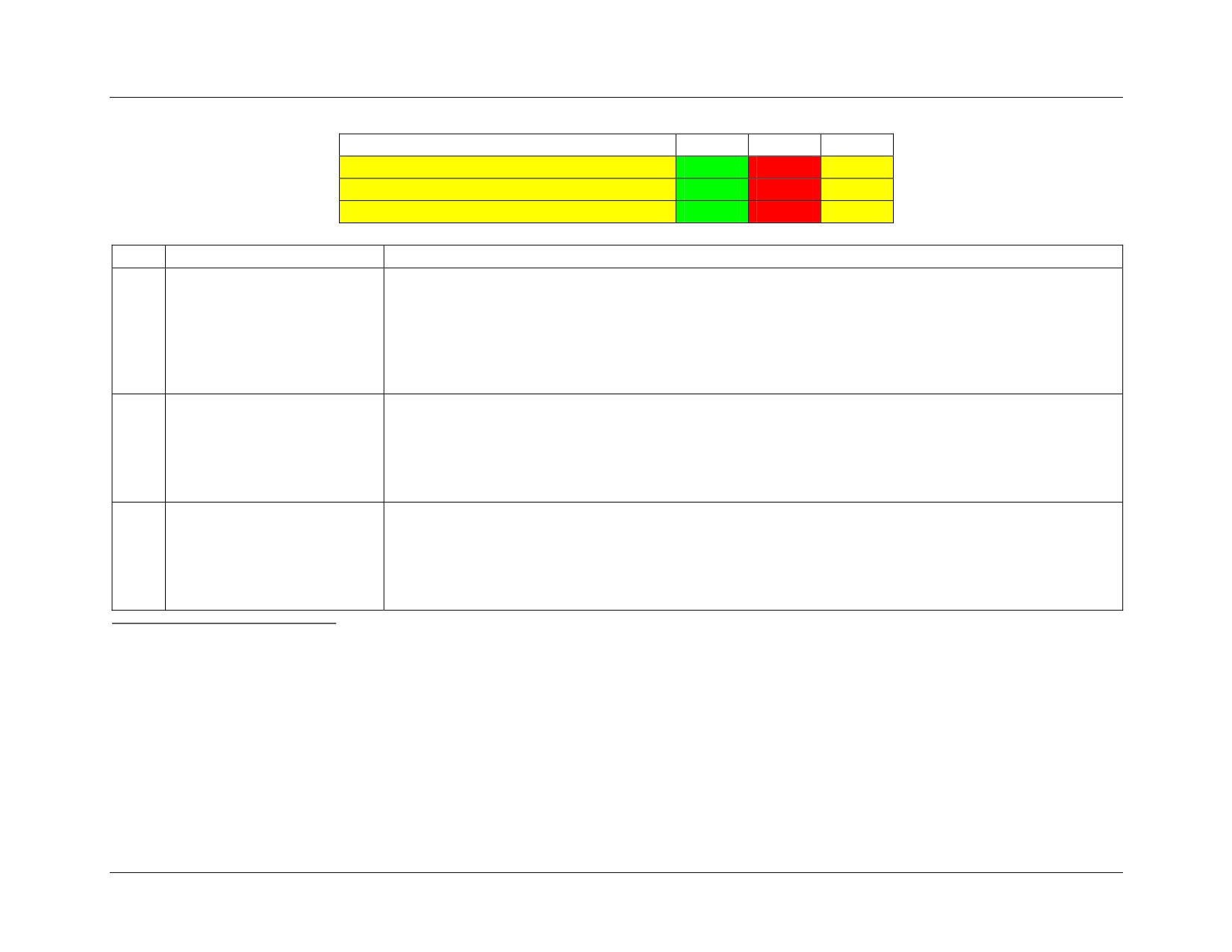
For Official Use Only
CBRN Functional Needs Analysis/Functional Solution Analysis
Chapter 12. Operational Shield Tasks
Table 12.1-1. OPSHLD 1: Capability and Deficiency Assessment
Capability: JTF HQ Staff
M1
M2
M3
Current Overall Capability1
G2
R3
Y4
Near/Mid-Term Overall Capability
G
R
Y
Far-Term Overall Capability
G
R
Y
FAA Measure
Scale
M1
Protective Posture Protocols are
G: Specific, flexible, Protective Posture Protocols are incorporated into plans and disseminated to all elements in
adjusted to address mission,
the force. The protocols are adjustable to address local requirements and needs such as mission, functions,
functions, conditions, and
conditions, and threat. All personnel are trained and ready to perform the associated protective actions.
threat.
Y: General Protective Posture Protocols are incorporated into plans and disseminated to force units. Unit personnel
are trained and ready to perform protective actions.
R: Protective Posture Protocols are inadequate, not widely disseminated, and/or force personnel are not trained
and/or ready to perform protective actions.
M2
Forces are trained, manned, and
G: All joint force elements (military, eligible civilians, and MWAs) are adequately trained, equipped, and manned
equipped to perform sustained
to perform their functions and conduct sustained operations within a CBRN/TIM environment.
operations in a CBRN/TIM
Y: Military personnel and eligible civilians supporting the mission are adequately trained, equipped, and manned to
environment.
perform their functions and conduct sustained operations within a CBRN/TIM environment.
R: Training, equipping, and/or manning of joint forces (including military, eligible civilians, and/or MWAs) to
perform functions and conduct sustained operations within a CBRN/TIM environment is inadequate or nonexistent.
M3
All units that perform Joint
G: All units peforming JMETs are fully prepared and ready to successfully conduct their tasks within a CBRN/TIM
Mission Essential Tasks
environment.
(JMETs) are fully prepared to
Y: Units performing JMETs are generally prepared and ready to successfully conduct their tasks within a
successfully perform the tasks
CBRN/TIM environment.
in a CBRN/TIM environment.
R: Units performing JMETs are inadequately prepared and/or ready to successfully conduct their tasks within a
CBRN/TIM environment.
1 Adequate DOTMLPF exists to address the application and adjustment of Protective Posture Protocols for the force. However, DOTMLPF is inadequate or nonexistent addressing
CBRND of eligible civilians and MWAs.
2 The JTF staff planning incorporates Protective Posture Protocols developed and disseminated by the COCOM. The protocols are adjusted based upon the potential threat and the
JTF staff’s assessment of force vulnerabilities, risks, mission and the CBRN/TIM threat. Flexibility for JTF elements to further adjust the protocols for their conditions, functions,
missions, and local threats are incorporated into the plan. However, the DOTMLPF for Protective Posture Protocols is inadequate or nonexistent addressing CBRND of eligible
civilians and MWAs.
3 The JTF staff reviews identified forces and the potential threat for planned operations. Specified forces, time permitting, train and prepare for operations involving the potential
threat. Equipping the tasked force is an integral part of planning and preparation. The JTF staff tracks force readiness for planned operations. Readiness issues are addressed by the
staff. The combination of established force organic assets, material acquisitions, prepositioned material, available host-nation/coalition contributions, and movement of identified
CBRND resources from stockpiles and reallocation activities are pursued by the JTF staff to prepare and support deploying forces as outlined by the appropriate plan.
Expeditionary operations are a particular concern as most CBRND systems and associated logistics are not designed for a highly mobile force, with a reduced logistical footprint,
and for the initial period of operations until the theater matures (usually the first 30-90 days). Deploying units may not possess full CBRND resources and capabilities during the
8
For Official Use Only
For Official Use Only
CBRN Functional Needs Analysis/Functional Solution Analysis
Chapter 12. Operational Shield Tasks
initial stages of deployment and until after arrival within the AOR. Additionally, deploying eligible civilians and MWAs (particularly MWDs) are not equipped and trained to
survive a CBRN/TIM environment. The JTF staff does not possess clear guidance for planning and providing CBRN/TIM protection training and CBRND protection resources to
deploying eligible civilians and MWAs.
4 The JTF staff adjusts the COCOM-developed JMETLs to reflect the tasks essential to the accomplishment of the planned mission(s). The JMETLs provide the ability to develop
joint training requirements, planning and executing joint training, and assessing joint proficiency. Plan-identified forces are trained and assessed against the JMETLs for readiness
to perform the tasks successfully. Assessment is performed through a variety of means including inspections, exercises, and reporting. However, current doctrine the UJTL, and
operational planning do not adequately address sustained operations within a CBRN/TIM environment. JMETL development generally does not specify these circumstances as an
execution condition. Exercises and training do not emphasize task performance and operations in these conditions.
9
For Official Use Only
For Official Use Only
CBRN Functional Needs Analysis/Functional Solution Analysis
Chapter 12. Operational Shield Tasks
12.1.3
Functional Solution Analysis
12.1.3.1
DOTLPF Assessment Summary
This section addresses the deficiencies and suggests potential non-materiel solutions. If there are
no non-materiel solutions, or they are only partial solutions, the remaining non-materiel need is
then stated. Materiel needs are assessed in the Ideas for Materiel Approaches (IMA) section.
1.
Deficiency: DOTMLPF for Protective Posture Protocols is inadequate or nonexistent
addressing CBRND of eligible civilians.
Non-Materiel Solutions: Doctrine: Develop doctrine, policy, and procedures addressing
eligible civilian personnel for CBRND. Organization: Identify organization services and
activities necessary to support survivability of eligible civilian personnel within a
CBRN/TIM environment. Training: Establish CBRND training, exercise, and evaluation
criteria and programs for eligible civilians and conduct CBRND training, exercises, and
evaluations. Leadership: Implement and manage CBRND training, equipping, and protection
of eligible civilian personnel.
2.
Deficiency: DOTMLPF for Protective Posture Protocols is inadequate or nonexistent
addressing CBRND of MWAs.
Non-Materiel Solutions: Doctrine: Develop doctrine, policy, and procedures addressing
MWAs, particularly military working dogs (MWDs), for CBRND. Organization: Identify
organization services and activities necessary to support survivability of MWAs within a
CBRN/TIM environment. Training: Establish CBRND training, exercise, and evaluation
criteria and programs for MWAs and conduct CBRND training, exercises, and evaluations.
Leadership: Implement and manage CBRND training, equipping, and protection of MWAs.
3.
Deficiency: There is a lack of doctrine for risk management of forces operating in
radiologically contaminated environments. Current guidance is based on cold-war
assumptions and does not reflect modern threats and mission priorities.
Non-Materiel Solutions: Doctrine: Develop doctrine, policies, and procedures that address
appropriate operationally oriented command dose levels for low-level radiation exposure
based on mission priority across the range of military operations. Training: Train leaders and
personnel on operationally oriented low-level radiation exposure control standards and
procedures
4.
Deficiency: There is a lack of doctrine and data supporting risk management of forces
exposed to low-level chemical contamination.
Non-Materiel Solutions: Doctrine: Develop doctrine, policies, and procedures that address
appropriate operationally oriented exposure limits and how to keep personnel from exceeding
those limits using available detection and monitoring equipment and techniques. Training:
Train leaders and personnel on operationally oriented low-level chemical exposure control
standards and procedures.
5.
Deficiency: Expeditionary operations are a particular concern as most CBRND systems and
associated logistics are not designed for a highly mobile force, with a reduced logistical
10
For Official Use Only
For Official Use Only
CBRN Functional Needs Analysis/Functional Solution Analysis
Chapter 12. Operational Shield Tasks
footprint, and for the initial period of operations until the theater matures (usually the first
30-90 days).
Non-Materiel Solutions: Doctrine: Complete the Joint Capabilities Integration and
Development System (JCIDS) process and central correlation/comparison of national and
strategic plans to identify CBRND resources necessary and available to support
expeditionary operations during the first 30-90 days following commencement of hostilities
and with a reduced logistical footprint. Organization: Develop organizational structures,
resources, staffing, and capabilities to conduct expeditionary operations while possessing
reduced logistical footprint and during the first 30-90 days of operations following
commencement of hostilities. Training: Train, exercise, and evaluate expeditionary
capabilities of the force in a CBRN/TIM threat with reduced logistical footprint during the
initial 30-90 days of operations using CBRND resources supporting expeditionary
operations. Leadership: Recognize differences and challenges associated with expeditionary
operations during the first 30-90 days following commencement of hostilities and with a
reduced logistical footprint, training providing skills and knowledge to manage operations in
these circumstances, and ability and willingness to implement necessary changes and
activities to prepare for and conduct expeditionary operations with a CBRN/TIM threat.
Facilities: Develop supporting infrastructure for expeditionary operations during the first 30-
90 days following commencement of hostilities and with a reduced logistical footprint.
6.
Deficiency: Deploying units may not possess full CBRND resources and capabilities during
the initial stages of deployment and until after arrival within the AOR.
Non-Materiel Solutions: Doctrine: Emphasize in doctrine, policies, and procedures for
preparation of the force for CBRND protection during throughout deployment,
redeployment, relocation, and en route phases of movement. Organization: Ensure resources,
taskings, and staff are in place or available to perform CBRND operations within a
CBRN/TIM environment by deploying, redeploying, relocating, and en route forces.
Training: Train, exercise, and evaluate the force for CBRND operations within a CBRN/TIM
environment while deploying, redeploying, relocating, and en route. Leadership: Recognize
criticality of readiness of the force for potential CBRND operations within a CBRN/TIM
environment while deploying, redeploying, relocation, and en route; training providing the
skills to manage the force in these circumstances; and willingness and ability to implement
necessary changes and activities to prepare and appropriately protect the force. Facilities:
Develop supporting infrastructure for CBRND operations of the force while preparing,
deploying, redeploying, relocating, and en route
7.
Deficiency: Deploying eligible civilians are not equipped and trained to survive a
CBRN/TIM environment.
Non-Materiel Solutions: Doctrine: Establish doctrine, policy, and procedures CBRND
protection of eligible civilians and training for CBRN/TIM environment survival.
Organization: Ensure organizational consideration for maintenance and support of eligible
civilians CBRND protective equipment, measures, and activities. Training: Provide
institutional and unit training of eligible civilians for CBRND measures and activities.
Integrate into CBRND exercises and evaluations. Leadership: Ensure awareness and
planning for CBRND measures and requirements for eligible civilians. Facilities: Develop
11
For Official Use Only
For Official Use Only
CBRN Functional Needs Analysis/Functional Solution Analysis
Chapter 12. Operational Shield Tasks
supporting infrastructure for eligible civilians CBRND (e.g., logistics, medical,
communications, training, etc.).
8.
Deficiency: Deploying MWAs (particularly MWDs) are not equipped and trained to survive
a CBRN/TIM environment.
Non-Materiel Solutions: Doctrine: Establish doctrine, policy, and procedures CBRND
protection of MWAs, particularly MWDs, and training for CBRN/TIM environment survival
Organization: Ensure organizational consideration for maintenance and support of MWA
CBRND protective equipment, measures, and activities. Training: Provide institutional and
unit training of MWA handlers and MWAs for CBRND measures and activities. Integrate
into CBRND exercises and evaluations. Leadership: Ensure awareness and planning for
CBRND measures and requirements for MWA survivability. Facilities: Develop supporting
infrastructure for MWA CBRND (e.g., logistics, medical, veterinary surveillance,
communications, training, etc.).
9.
Deficiency: The JTF staff does not possess clear guidance for planning and providing
CBRN/TIM protection training and CBRND protection resources to deploying eligible
civilians.
Non-Materiel Solutions: Doctrine: Develop doctrine, policy, and procedures addressing
civilian personnel and operations for CBRND. Organization: Identify organizational services
and activities supporting the mission performed by civilian personnel and operations.
Training: Establish CBRND training, exercise, and evaluation criteria and programs for
eligible civilians and conduct CBRND training, exercises, and evaluations. Leadership:
Implement and manage CBRND training, equipping, and protection of MWAs and eligible
civilians. Personnel: Ensure that eligible civilians supporting the mission/military operations
are qualified in CBRND and capable of performing their responsibilities in a CBRN/TIM
environment. Facilities: Develop supporting infrastructure for eligible civilian CBRND (e.g.,
logistics, medical, training, communications, etc.).
10. Deficiency: The JTF staff does not possess clear guidance for planning and providing
CBRN/TIM protection training and CBRND protection resources to deploying MWAs.
Non-Materiel Solutions: Doctrine: Develop doctrine, policy, and procedures addressing
MWAs, particularly MWDs, and operations for CBRND. Organization: Identify
organizational services and activities supporting CBRN/TIM survival of MWAs and MWA
mission operations. Training: Establish CBRND training, exercise, and evaluation criteria
and programs for MWAs and conduct CBRND training, exercises, and evaluations.
Leadership: Implement and manage CBRND training, equipping, and protection of MWAs.
Facilities: Develop supporting infrastructure for MWD CBRND (e.g., logistics, medical,
veterinary surveillance, training, communications, etc.).
11. Deficiency: Current doctrine, the UJTL, and operational planning do not adequately address
sustained operations within a CBRN/TIM environment.
Non-Materiel Solutions: Doctrine: Include in doctrine, policy, procedures, and UJTL
sustained operations within a CBRN/TIM environment. Training: Train, exercise, and
evaluate the force for sustained operations within a CBRN/TIM environment. Leadership:
Recognize criticality of readiness of the force for potential sustained operations within a
12
For Official Use Only
For Official Use Only
CBRN Functional Needs Analysis/Functional Solution Analysis
Chapter 12. Operational Shield Tasks
CBRN/TIM environment, training providing the skills to manage the force in these
circumstances, and willingness and ability to implement necessary changes and activities to
prepare and appropriately apply the force
12. Deficiency: JMETL development generally does not specify these circumstances as an
execution condition.
Non-Materiel Solutions: Doctrine: Include in doctrine, policy, procedures, and UJTL
sustained operations within a CBRN/TIM environment. Organization: Ensure resources,
taskings, and staff are in place or available to plan and perform sustained operations within a
CBRN/TIM environment. Training: Train, exercise, and evaluate the force for sustained
operations within a CBRN/TIM environment. Leadership: Recognize criticality of readiness
of the force for potential sustained operations within a CBRN/TIM environment, training
providing the skills to manage the force in these circumstances, and willingness and ability to
implement necessary changes and activities to prepare and appropriately apply the force.
13. Deficiency: Exercises and training do not emphasize task performance and operations in a
CBRN/TIM environment.
Non-Materiel Solutions: Doctrine: Include in doctrine, policy, and procedures sustained
operations within a CBRN/TIM environment. Organization: Ensure resources, taskings, and
staff are in place or available to plan and perform sustained operations within a CBRN/TIM
environment. Training: Train, exercise, and evaluate the force for sustained operations within
a CBRN/TIM environment. Leadership: Recognize criticality of readiness of the force for
potential sustained operations within a CBRN/TIM environment, training providing the skills
to manage the force in these circumstances, and willingness and ability to implement
necessary changes and activities to prepare and appropriately apply the force.
12.1.3.2
IMA Assessment Summary
N/A
13
For Official Use Only
For Official Use Only
CBRN Functional Needs Analysis/Functional Solution Analysis
Chapter 12. Operational Shield Tasks
12.2 Task OPSHLD 2: Integrate coalition/non-U.S. and joint force CBRN/TIM
protective measures and assets
12.2.1
Functional Area Analysis
12.2.1.1
Definition
To integrate CBRN/TIM protection for joint force elements to ensure survivability and the
sustained conduct of operations despite the CBRN/TIM threat. The availability of CBRN/TIM
protective and medical assets is a joint and coalition/non-U.S. force concern. Operational units
must determine the level of CBRND training and protective equipment status of sister and
coalition/non-U.S. forces. Joint and coalition/non-U.S. force requirements and assets must be
assessed to ensure all forces are adequately protected and survivability is promoted. Joint and
coalition/non-U.S. force assets may require redistribution depending on local threats and/or
actual adversary use of CBRN/TIM. Redistribution and integration may require mixes of forces
and assets between joint and coalition/non-U.S. force elements to enhance survivability and
operational success. Plans for sustained operations in a hazardous environment must be prepared,
reviewed, and coordinated.
12.2.1.2
Derivation
Joint Enabling Concept for CBRN/TIM Operations, Protection Joint Functional Concept, UJTL
(OP 1.3.1, OP 2.2, OP 2.2.1, OP 2.4.1.1, OP 2.4.1.2, OP 2.4.2.1, OP 5, OP 5.1.1, OP 5.2, OP
5.2.1, OP 5.2.2, OP 5.3, OP 5.3.2, OP 5.3.4, OP 5.3.5, OP 5.3.6, OP 5.3.7, OP 5.3.8, OP 5.3.9,
OP 5.4, OP 5.4.2, OP 5.4.4, OP 5.4.5, OP 5.5, OP 5.5.1, OP 5.5.2, OP 5.5.7, OP 5.5.8, OP 5.7,
OP 5.7.3, OP 5.7.4, OP 5.7.5, OP 5.7.6, OP 6.2.1, OP 7, OP 7.1, OP 7.2, OP 7.3, OP 7.4).
12.2.1.2.1
Supported Task: STSHLD 7
12.2.1.2.2
Lateral Task: OPSHA 8
12.2.1.2.3
Supporting Task: N/A
12.2.1.3
Condition
Perform this task under conditions of:
Physical
1. Undeveloped to highly developed land. (C1.1)
2. Riverine to open sea. (C1.2)
3. Natural and induced air. (C1.3)
4. Immediate to delayed danger, and potential long-term health hazard of atmospheric
weapons effects. (C1.3.3)
14
For Official Use Only
For Official Use Only
CBRN Functional Needs Analysis/Functional Solution Analysis
Chapter 12. Operational Shield Tasks
Military
1. Partially completed mission preparation. (C2.1.3)
2. Marginal to strong forces assigned. (C2.2.1)
3. Negligible personnel experience. (C2.2.4.5)
4. Some interoperability. (C2.2.6)
5. Partial Joint Staff integration. (C2.3.1.1)
6. Partial multinational integration. (C2.3.1.2)
7. Limited staff expertise. (C2.3.1.3)
8. Mobile facility survivability. (C2.7.6)
9. Limited deployed supplies. (C2.8.2)
10. Sufficient continental United States (CONUS) resupply. (C2.8.3)
11. Limited prepositioned materiel. (C2.8.4)
12. Limited host nation support. (C2.8.5)
13. Limited commercial procurement. (C2.8.6)
Civil
1. Technical language translation. (C3.2.1.1)
2. Few language translators. (C3.2.1.2)
12.2.2
Functional Needs Analysis
12.2.2.1
Capability and Deficiency Assessment Summary
Table 12.2-1 discusses the only capability that exists to perform the task to the designated
standard. Adequate doctrine, policy, and procedures exist for the planning and implementation of
integration of coalition and non-U.S. force CBRND measures and assets. Coordination with
participant coalition and non-U.S. force staffs provides common frameworks for information,
asset, and capability sharing for successful operation outcome. Each participant in the force must
meet minimum capability standards and a certification process covering the areas of concern is
applied. Specific tasks are assigned to the elements of the overall force most capable of
completing the task. Included in the deficiencies is the ability of the force to maintain
OPTEMPO within a sustained CBRN/TIM environment.
Current Capability and Deficiency
JTF HQ staffs conduct planning and coordination with coalition partners to determine resources,
requirements, and taskings best accomplishing mission tasking. They track readiness of forces
and equipment for operations. They also adjust plans and resources as necessary to meet
changing operational needs and conditions.Adequate doctrine, policy, and procedures exist to
guide commanders and staffs with coalition and non-U.S. force participation in joint operations.
Planning, tracking, and monitoring is performed in coordination with partner staffs under a
negotiated plan outlining requirements, taskings, training, reporting, information sharing,
standards, and operational certifications for participation. Although the provision of CBRND
equipment to national forces ultimately resides with their nations, mutual support among partners
15
For Official Use Only
For Official Use Only
CBRN Functional Needs Analysis/Functional Solution Analysis
Chapter 12. Operational Shield Tasks
is planned to complement capabilities and to minimize weaknesses. Acquisition Cross-Service
Agreements (ACSAs) between partners enables acquisition and cross-servicing support between
the partners. The more specific agreement, the Implementing Arrangement (IA), provides for a
wide range of support including sheltering, medical care, and other support activities. The JTF
Commander, JTF staff, and combined staff monitors, tracks, and assesses the readiness of the
Joint Coalition Force and addresses issues and concerns as they arise. Deficiencies include the
limited availability of COLPRO systems in each of the COLPRO categories, and the protection
of eligible civilians and MWDs.
Projected Near/Mid-Term Capability and Deficiency
No change projected for this task.
Projected Far-Term Capability and Deficiency
No change projected for this task.
16
For Official Use Only
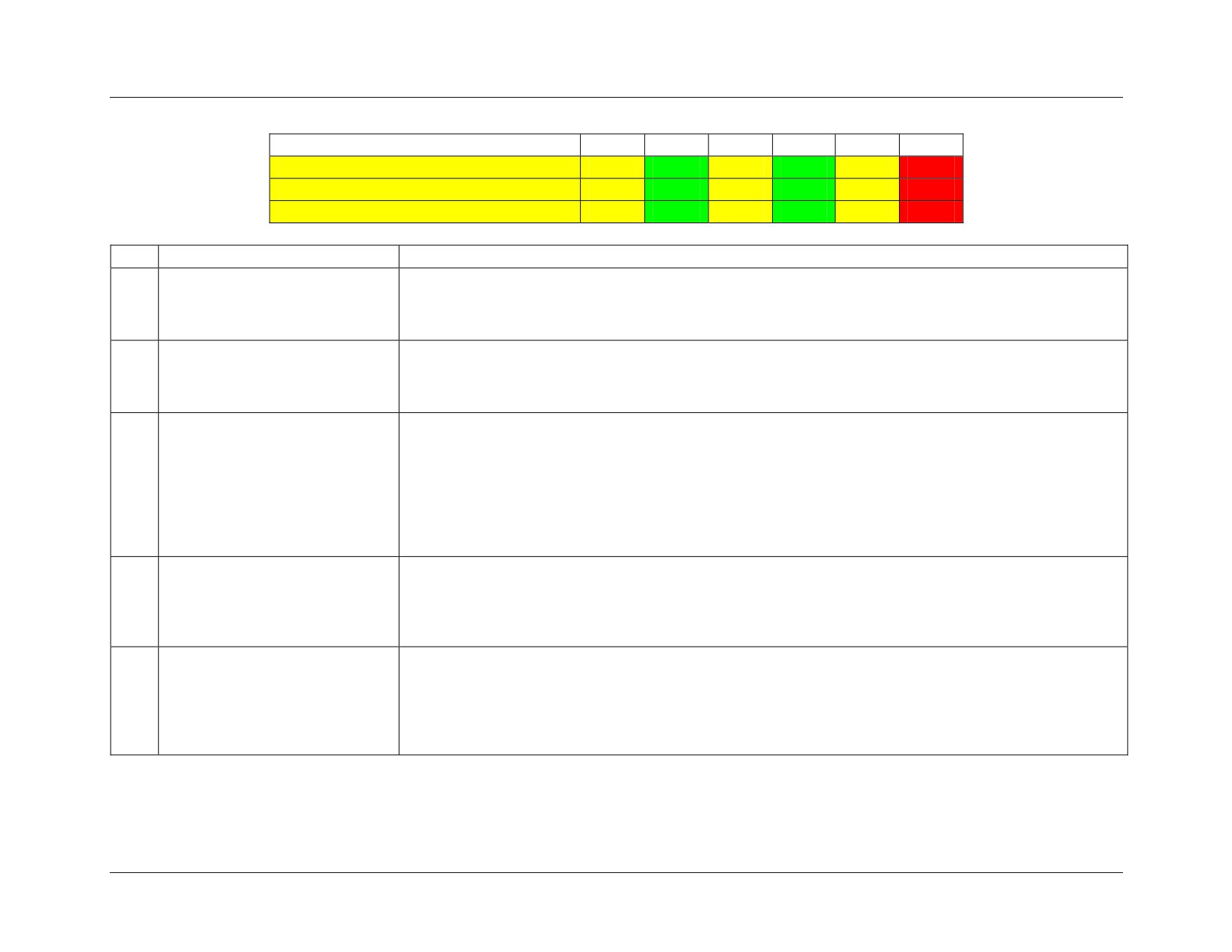
For Official Use Only
CBRN Functional Needs Analysis/Functional Solution Analysis
Chapter 12. Operational Shield Tasks
Table 12.2-1. OPSHLD 2: Capability and Deficiency Assessment
Capability: JTF HQ Staff
M1
M2
M3
M4
M5
M6
Current Overall Capability1
Y2
G3
Y4
G5
Y6
R7
Near/Mid-Term Overall Capability
Y
G
Y
G
Y
R
Far-Term Overall Capability
Y
G
Y
G
Y
R
FAA Measure
Scale
M1
Joint forces are equipped with or
G: COLPRO is available in required quantities and types to support the full range of envisioned and planned
possess access to COLPRO.
operations.
Y: COLPRO is available in sufficient types and quantities to support major operations.
R: COLPRO is inadequate or nonexistent to support operations.
M2
Coalition/non-U.S. forces are
G: Planning and coordination is conducted to address partner forces equipping or access to COLPRO.
equipped with or possess access to
Y: Partner force equipping or access to COLPRO is considered when planning operations with threat.
COLPRO.
R: Partner force equipping or access to COLPRO is not considered or is inadequately considered when planning
operations with threat.
M3
Joint forces meet combatant
G: All joint force elements (military, eligible civilians, and MWAs) meet CBRN/TIM protection requirements
commander CBRN/TIM protection
(training, equipping, and manning) to perform their functions and conduct operations within a CBRN/TIM
requirements (training, equipping,
environment.
and manning).
Y: Military personnel and eligible civilians supporting the mission meet CBRN/TIM protection requirements to
perform their functions and conduct operations within a CBRN/TIM environment.
R: Joint forces (including military, eligible civilians, and/or MWAs) meeting CBRN/TIM protection
requirements to perform functions and conduct operations within a CBRN/TIM environment are inadequate or
nonexistent.
M4
Coalition/non-U.S. forces meet
G: Processes and means exist to monitor, track, and assess joint forces readiness and preparations status against
combatant commander CBRN/TIM
COCOM requirements.
protection requirements (training,
Y: Processes exist to identify joint forces readiness meeting COCOM requirements.
equipping, and manning).
R: Processes and/or means are inadequate or nonexistent to identify joint forces readiness and/or preparations
meeting COCOM requirements.
M5
Joint and coalition/non-U.S. force
G: CBRN/TIM protection consumables are interoperable between coalition/non-U.S. forces and joint forces or
CBRN/TIM protection
adequate stocks of noninteroperable consumables are determined and available to support operations with threat.
consumables are interoperable.
Y: CBRN/TIM protection consumables are interoperable between coalition/non-U.S. forces and joint forces or
stocks of noninteroperable consumables are available to support operations with threat.
R: CBRN/TIM protection consumables are noninteroperable between coalition/non-U.S. forces and joint forces
and/or stocks of noninteroperable consumables are inadequate or nonexistent to support operations with threat.
17
For Official Use Only
For Official Use Only
CBRN Functional Needs Analysis/Functional Solution Analysis
Chapter 12. Operational Shield Tasks
M6
Sustained operational planning
G: The planned and operational control of allocation, placement, and, when necessary, redistribution of
includes allocation and placement
CBRN/TIM protection assets of coalition/non-U.S. and joint forces is performed and coordinated throughout
(and redistribution if necessary) of
operations to sustain and support forces.
joint and coalition/non-U.S. force
Y: Allocation and placement of CBRN/TIM protection assets of coalition/non-U.S. and joint forces is performed
CBRN/TIM protection assets.
and coordinated prior to commencement of operations.
R: The planned and operational control of the allocation, placement, and/or redistribution of joint and coalition
force CBRN/TIM protection assets is inadequate or nonexistent.
1 DOTMLPF is adequate for the coordination and integration of coalition forces. Adequate DOTMLPF exists to address and support these forces. However, DOTMLPF is
inadequate or nonexistent addressing CBRND of eligible civilians and MWAs. DOTMLPF does not adequately address sustained operations within a CBRN/TIM environment.
2 Limited quantities of COLPRO are available for operations. Not all critical facilities and activities are equipped with COLPRO. Transportable collective protection systems
(CPSs) (e.g., Joint Transportable Collective Protection System [JTCOPS], Chemically Protected Deployable Medical System [CP-DEPMEDS], Tent, Expandable, Modular,
Personnel [TEMPER] systems, and Service designed systems) provide CPSs for mature theaters or within the AO if there exists adequate time between notification of plan
activation and the commencement of hostilities. However, these systems are in limited numbers and require significant logistics to move and establish, and concurrent operations
with CBRN/TIM threat may further limit their availability. Mobile CPSs (ground) are also limited in quantities and types. Coalition partner and host-nation (when applicable)
CPSs may offset these limitations. In coordination with COCOM and coalition partner staffs, JTF staff develops plans and addresses requirements and commitments by each
coalition participant in the JTF. Based upon the guidance and restrictions identified by the COCOM, specific tasks are assigned to elements of the coalition force most capable of
completing the task. Although the provision of CBRND equipment to national forces ultimately resides with their nations, mutual support among coalition partners is planned to
complement partners’ capabilities and to minimize weaknesses. ACSAs between coalition partners enable acquisition and cross-servicing support between the partners. The IA, a
more specific arrangement, provides for a wide range of support exchange including sheltering, medical care, and other support activities.
3 In coordination with the COCOM and coalition partner staffs, JTF staff develops a comprehensive plan for successful achievement of the desired end states. Force requirements
and commitments are obtained from each coalition participant and identified to the JTF by the COCOM. Minimum capability standards for participation and a certification process
covering areas of concern (e.g., training level competence, logistics capabilities, deployment, sustainment, and redeployment readiness, etc.) are established and applied by all
participants. Specific tasks are assigned to elements of the coalition force most capable of completing the task. Although the provision of CBRND equipment to national forces
ultimately resides with their nations, mutual logistics support among coalition partners is planned to complement partners’ capabilities and to minimize weaknesses. For example,
U.S. Marine Corps forces were equipped with lightweight CBRN/TIM individual protective equipment (IPE) by the United Kigndon during Operation Desert Storm. The
United States installed COLPRO capabilities in Saudi critical command and control facilities for the same operation. The JTF Commander, JTF staff, and the combined staff
monitor, track, and assess the readiness of the joint coalition force.
4 In coordination with the COCOM and coalition partner staffs, JTF staff develops a comprehensive plan for successful achievement of the desired end states. Force requirements
and commitments are obtained from each coalition participant and identified to the JTF by the COCOM. Minimum capability standards for participation and a certification process
covering areas of concern (e.g., training level competence, logistics capabilities, deployment, sustainment, and redeployment readiness, etc.) are established and applied by all
participants. The JTF Commander, JTF staff, and the combined staff monitor, track, and assess the readiness of the joint coalition force.
5 In coordination with the COCOM and coalition partner staffs, JTF staff develops a comprehensive plan for successful achievement of the desired end states. Force requirements
and commitments are obtained from each coalition participant and identified to the JTF by the COCOM. Minimum capability standards for participation and a certification process
covering areas of concern (e.g., training level competence, logistics capabilities, deployment, sustainment, and redeployment readiness, etc.) are established and applied by all
participants. The JTF Commander, JTF staff, and the combined staff monitor, track, and assess the readiness of the joint coalition force.
6 In coordination with the COCOM and coalition partner staffs, JTF staff identifies and applies logistical efficiencies among the partners during the planning process.
Standardization and interoperability between the participating nations is assessed and adjustments are made as necessary to plans. Support consumable levels are determined and
incorporated into the plans. Minimum capability standards for participation and a certification process covering areas of concern (including logistics capabilities) are established
and applied by all participants. ACSAs between coalition partners enable acquisition and cross-servicing support between the partners. The IA, a more specific arrangement,
provides for sheltering, medical care, consumables, and other support activities. Standardized consumables may not be possible with all coalition partners and U.S. forces. Issues
associated with nonstandardized consumables are addressed when necessary and appropriate during planning.
18
For Official Use Only
For Official Use Only
CBRN Functional Needs Analysis/Functional Solution Analysis
Chapter 12. Operational Shield Tasks
7 The allocation, placement, and reallocation of protective assets is a function of the planning and operational control of the JTF Commander, JTF staff, and combined staff.
ACSAs between coalition partners enable acquisition and cross-servicing support between the partners. The IA, a more specific arrangement, provides for a wide range of support
exchange including consumables, sheltering, medical care, and other support activities. However, sustained operations within a CBRN/TIM environment are not adequately
addressed in DOTMLPF and, subsequently, in planning.
19
For Official Use Only
For Official Use Only
CBRN Functional Needs Analysis/Functional Solution Analysis
Chapter 12. Operational Shield Tasks
12.2.3
Functional Solution Analysis
12.2.3.1
DOTLPF Assessment Summary
This section addresses the deficiencies and suggests potential non-materiel solutions. If there are
no non-materiel solutions, or they are only partial solutions, the remaining non-materiel need is
then stated. Materiel needs are assessed in the IMA section.
1.
Deficiency: Not all critical facilities and activities are equipped with COLPRO.
Non-Materiel Solutions: Doctrine: Enforce existing doctrine and policy.
2.
Deficiency: Mobile COLPRO (ground) is limited in quantities and types.
Non-Materiel Solutions: Doctrine: Completion of analysis and central correlation/
comparison of national and strategic plans to identify quantities and types of mobile
COLPRO (and supporting consumables) necessary and available to support highly mobile
forces for envisioned plans and taskings. Organization: Develop organizational structures,
resources, staffing, and capabilities to conduct CBRND, including mobile COLPRO, of
highly mobile forces. Training: Train, exercise, and evaluate CBRND, including mobile
COLPRO, capabilities of the force in a CBRN/TIM threat during highly mobile force
operations. Leadership: Recognize differences and challenges associated with CBRND
operations by highly mobile forces, training providing skills and knowledge to manage
operations in these circumstances, and ability and willingness to implement necessary
changes and activities to prepare for and conduct expeditionary operations with a
CBRN/TIM threat. Facilities: Develop supporting infrastructure for CBRND of highly
mobile forces.
3.
Deficiency: Transportable COLPRO systems are in limited numbers and require significant
logistics to move and establish.
Non-Materiel Solutions: Doctrine: Institute in doctrine, policy, and procedures the central
correlation of strategic theater plans and taskings to identify CBRND support requirements
for two or more concurrent operations with CBRN/TIM threat with comparison to existing
and programmed quantities and types of CBRND systems and resources. Leadership:
Implement development of plans and taskings consistent with available CBRND capabilities
as determined by central correlation and comparison of strategic tactical plans and taskings.
4.
Deficiency: Concurrent operations with CBRN/TIM threat may limit COLPRO availability.
Non-Materiel Solutions: Doctrine: Institute in doctrine, policy, and procedures the central
correlation of strategic theater plans and taskings to identify CBRND support requirements
for two or more concurrent operations with CBRN/TIM threat with comparison to existing
and programmed quantities and types of CBRND systems and resources. Leadership:
Implement development of plans and taskings consistent with available CBRND capabilities
as determined by central correlation and comparison of strategic tactical plans and taskings.
5.
Deficiency: Sustained operations within a CBRN/TIM environment are not adequately
addressed in DOTMLPF and, subsequently, in planning.
Non-Materiel Solutions: Doctrine: Include in doctrine, policy, and procedures sustained
operations within a CBRN/TIM environment. Organization: Ensure resources, taskings, and
20
For Official Use Only
For Official Use Only
CBRN Functional Needs Analysis/Functional Solution Analysis
Chapter 12. Operational Shield Tasks
staff are in place or available to perform sustained operations within a CBRN/TIM
environment. Training: Train, exercise, and evaluate the force for sustained operations within
a CBRN/TIM environment. Leadership: Recognize criticality of readiness of the force for
potential sustained operations within a CBRN/TIM environment, training providing the skills
to manage the force in these circumstances, and willingness and ability to implement
necessary changes and activities to prepare and appropriately apply the force.
6.
Deficiency: DOTMLPF is inadequate or nonexistent addressing CBRND of eligible civilians
and MWAs.
Non-Materiel Solutions: Doctrine: Develop doctrine, policy, and procedures addressing
eligible civilian personnel and MWDs for CBRND. Organization: Identify organization
services and activities necessary to support survivability of MWDs and eligible civilian
personnel within a CBRN/TIM environment. Training: Establish CBRND training, exercise,
and evaluation criteria and programs for MWDs and eligible civilians and conduct CBRND
training, exercises, and evaluations. Leadership: Implement and manage CBRND training,
equipping, and protection of eligible civilian personnel and MWDs.
7.
Deficiency: DOTMLPF does not adequately address sustained operations within a
CBRN/TIM environment.
Non-Materiel Solutions: Doctrine: Include in doctrine, policy, procedures, and UJTL
sustained operations within a CBRN/TIM environment. Organization: Ensure resources,
taskings, and staff are in place or available to plan and perform sustained operations within a
CBRN/TIM environment. Training: Train, exercise, and evaluate the force for sustained
operations within a CBRN/TIM environment. Leadership: Recognize criticality of readiness
of the force for potential sustained operations within a CBRN/TIM environment, training
providing the skills to manage the force in these circumstances, and willingness and ability to
implement necessary changes and activities to prepare and appropriately apply the force.
12.2.3.2
IMA Assessment Summary
N/A
21
For Official Use Only
For Official Use Only
CBRN Functional Needs Analysis/Functional Solution Analysis
Chapter 12. Operational Shield Tasks
12.3 Task OPSHLD 3: Establish local medical prophylactic approach to reduce impact of
CBRN/TIM
12.3.1
Functional Area Analysis
12.3.1.1
Definition
To assess potential operational impacts of CBRN/TIM agents based on the threat information.
Identify medical and veterinary services resources, and develop employment plans to minimize
the effects of CBRN/TIM attacks.
Prophylaxes exist for a number of chemical, biological, and radiological agents. Prophylaxes
may be administered prior to actual exposure or following exposure but prior to presentation of
signs and symptoms. Prophylaxes can eliminate or reduce the agent effects from exposures
and/or increase the effectiveness of post-exposure treatments. The use of prophylaxes, if
indicated, is determined and the required resources allocated. Integration and information
resource sharing between the commander’s NBC cell staff and supporting medical services are
essential to force effectiveness and survivability as relating to a CBRN/TIM attack or release
other than attack (ROTA).
Medical and veterinary personnel review the prophylactic status of force members, MWAs, and
eligible civilians to ensure currency. Installations and units will have varied levels of diagnosis
and treatment options available to treat CBRN/TIM casualties. Items such as surfactant topicals
and oral prophylaxes should be issued to force members, MWA handlers, and eligible civilians
to carry instead of bulk packaged and shipped. Issuance ensures the availability of protection
immediately rather than when the bulk-packed items are broken out and disseminated.
Adequate medical plans, availability of trained medical and veterinary personnel, quantity and
range of treatments and other medical supplies, and well-equipped facilities are key.
12.3.1.2
Derivation
Joint Enabling Concept for CBRN/TIM Operations, An Operational Concept for Biological
Defense, Protection Joint Functional Concept, UJTL (OP 2.4.1.1, OP 2.4.1.2, OP 5.1.1, OP
5.3.2, OP 5.3.9, OP 5.4, OP 5.4.2, OP 6.2.10, OP 7, OP 7.1, OP 7.3, OP 7.4).
12.3.1.2.1
Supported Task: N/A
12.3.1.2.2
Lateral Task: OPSHA 7
12.3.1.2.3
Supporting Task: N/A
22
For Official Use Only
For Official Use Only
CBRN Functional Needs Analysis/Functional Solution Analysis
Chapter 12. Operational Shield Tasks
12.3.1.3
Condition
Perform this task under conditions of:
Physical
1. Undeveloped to highly developed land. (C1.1)
2. Riverine to open sea. (C1.2)
3. Immediate to delayed danger, and potential long-term health hazard of atmospheric
weapons effects. (C1.3.3)
Military
1. Partially completed mission preparation. (C2.1.3)
2. Marginal to strong forces assigned. (C2.2.1)
3. Negligible personnel experience. (C2.2.4.5)
4. Limited staff expertise. (C2.3.1.3)
5. Limited deployed supplies. (C2.8.2)
6. Limited prepositioned materiel. (C2.8.4)
Civil
1. Poor civil health. (C3.3.1.4)
2. High health risk. (C3.3.1.5)
3. TIMs present in the civilian sector. (C3.3.7.5)
12.3.2
Functional Needs Analysis
12.3.2.1
Capability and Deficiency Assessment Summary
Table 12.3-1 discusses the two capabilities that exist to perform the task to the designated
standard. The JTF HQ staff coordinates the issuance and administration of medical prophylaxis
for CBRND of the force. Doctrine, policy, and procedures exist for the coordination of issuance
and administration of medical prophylaxis to the military force against the debilitating effects of
CBRN/TIM agents. Deficiencies include the lack of prophylaxis against all threat CBRN/TIM
agents, the absence of medical prophylaxes for MWAs and the inadequate provision of medical
prophylaxes to eligible civilians. The JTF Medical Services staff coordinates and manages the
issuance and administration of CBRND medical prophylaxis to the force. The deficiencies are
shared with the JTF HQ staff.
Current Capability and Deficiency
The identified individual capabilities are the coordination and management of issuance and
administration of medical prophylaxis to the military force against the debilitating effects of
CBRN/TIM agents. Doctrine, policy, and procedures require all command levels perform
CBRN/TIM threat and risk assessment for their units and operations. Coordination with coalition
23
For Official Use Only
For Official Use Only
CBRN Functional Needs Analysis/Functional Solution Analysis
Chapter 12. Operational Shield Tasks
and non-U.S. forces minimizes weaknesses in capabilities while maximizing the strengths that
exist, including medical. Existing or negotiated agreements facilitate the exchange of services
and materiel. Predeployment screening is planned and performed of forces allocated and tasked
under the JTF. Preplanning for CBRND includes the positioning of stocks, based upon the
identified threat, for issue and administration, availability of sufficient medical personnel to
perform required administrations, and the availability of sufficient medical prophylaxis to meet
the anticipated need. Adverse reactions to prophylactic materials are annotated in the
individual’s medical records for future screening and follow-up activities. Minimization of the
potential for adverse reaction to prophylaxis is included in the research and development (R&D)
specifications for the material. Medical facilities regularly conduct exercises including the
reception and treatment of contaminated/exposed casualties. All Services have mandated CBRN
basic training, but it is not fully implemented at this time. Medical Services planning includes
medical surveillance and medical activities to support the JTF, including CBRND-related
activities and actions. Deficiencies include the lack of medical prophylaxes for all threat
CBRN/TIM agents; predeployment medical screenings do not consider prior presymptomatic
low-dose CBRND exposures and associated potential long-term effects as relates to CBRN/TIM
threats; the wide variance in efficacy of existing prophylaxes; lack of prophylaxes for MWDs;
the absence of a requirement for mandatory in-depth institutional medical CBRN/TIM casualty
handling and treatment training for all deployable medical practitioners; and the inadequacy of
existing doctrine, policy, and procedures for MWAs and eligible civilians.
Projected Near/Mid-Term Capability and Deficiency
No change projected for this task.
Projected Far-Term Capability and Deficiency
No change projected for this task.
24
For Official Use Only
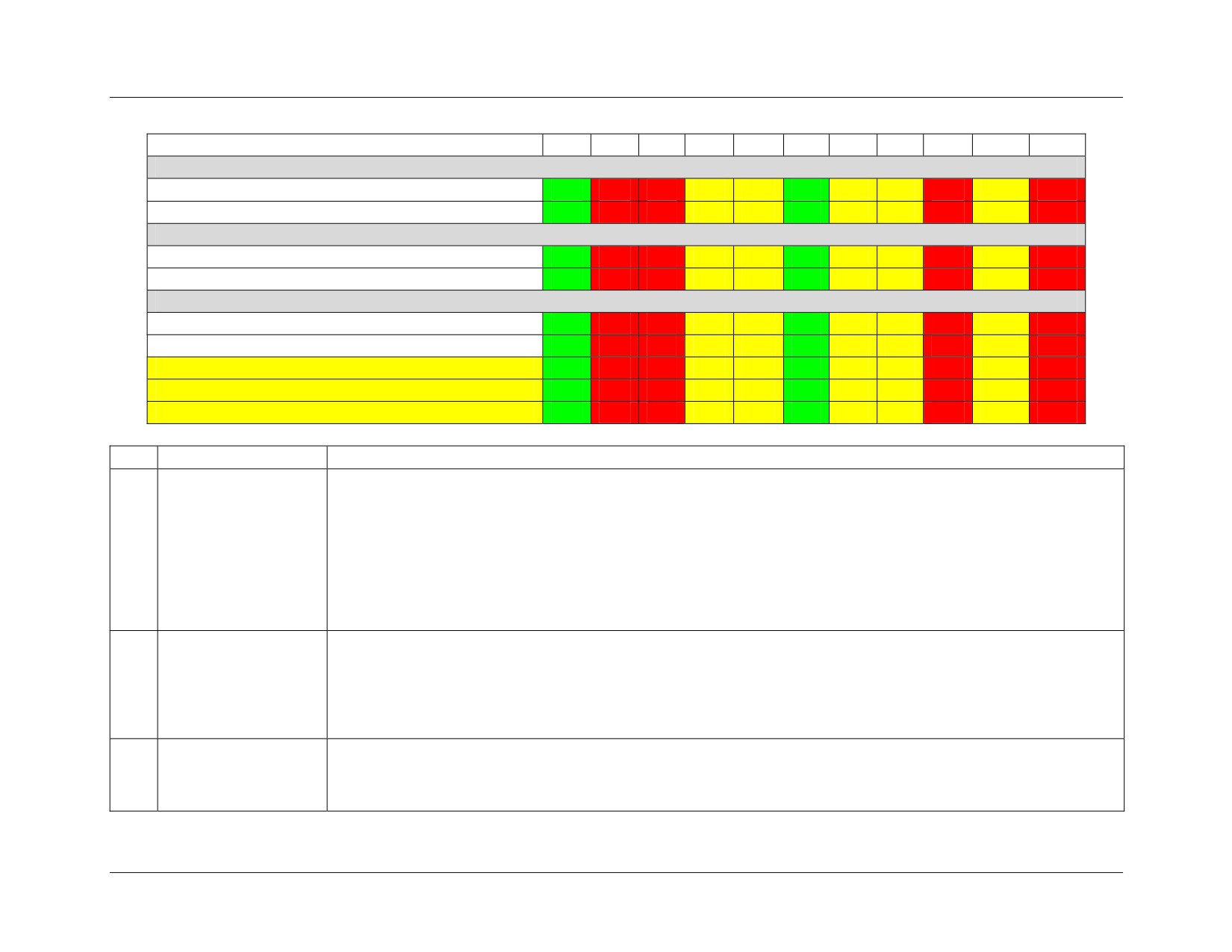
For Official Use Only
CBRN Functional Needs Analysis/Functional Solution Analysis
Chapter 12. Operational Shield Tasks
Table 12.3-1. OPSHLD 3: Capability and Deficiency Assessment
Capability/Measure
M1
M2
M3
M4
M5
M6
M7
M8
M9
M10
M11
Current
JTF HQ Staff
G1
R2
R3
Y4
Y5
G6
Y7
Y8
R9
Y10
R11
JTF Medical Services (Medical Services (Staff)
G12
R13
R14
Y15
Y16
G17
Y18
Y19
R20
Y21
R22
Near/Mid
JTF HQ Staff
G
R
R
Y
Y
G
Y
Y
R
Y
R
JTF Medical Services (Medical Services (Staff)
G
R
R
Y
Y
G
Y
Y
R
Y
R
Far
JTF HQ Staff
G
R
R
Y
Y
G
Y
Y
R
Y
R
JTF Medical Services (Medical Services (Staff)
G
R
R
Y
Y
G
Y
Y
R
Y
R
Current Overall Capability
G
R
R
Y
Y
G
Y
Y
R
Y
R
Near/Mid-Term Overall Capability
G
R
R
Y
Y
G
Y
Y
R
Y
R
Far-Term Overall Capability
G
R
R
Y
Y
G
Y
Y
R
Y
R
FAA Measure
Scale
M1
All units have prepared
G: Doctrine, policy, procedures, and TTPs require all command levels perform threat and risk assessments for their units
medical threat and risk
and operations. Detailed guidance, processes, and requirements address the determination and evaluation of CBRN/TIM,
assessment reports.
medical, and operational threats to the force and operations.
Y: Doctrine, policy, procedures, and TTPs require all command levels perform threat and risk assessments for their units and
operations. General guidance and processes include consideration of CBRN/TIM, medical, and operational threats to the
force and operations.
R: Doctrine, policy, procedures, and TTPs are inadequate or nonexistent requiring the performance of threat and risk
assessments by all command levels for their units and operations and/or inclusion of CBRN/TIM, medical, and/or
operational threats to the force and/or operations is inadequately addressed or nonexistent.
M2
In-theater forces are
G: Medical CBRND countermeasures, encompassing all eligible at-risk populations, exist and are available for all threat
protected by medical
CBRN and high-risk TIM agents.
prophylaxes.
Y: Medical CBRND countermeasures for U.S. military and eligible civilian members exist and are available for selected
high-threat CBRN and high-risk TIM agents.
R: Medical CBRND countermeasures are inadequate, do not exist, and/or are not available for high-threat CBRN and high-
risk TIM agents.
M3
Deploying forces are
G: Deploying forces are medically prepared for all operations with CBRN/TIM threat.
protected by medical
Y: Deploying forces are medically prepared for operations with threat involving all CBRN warfare agents and High Threat
prophylaxes.
TIMs.
R: Deploying forces medical preparedness for operations with CBRN/TIM threat is inadequate or nonexistent.
25
For Official Use Only
For Official Use Only
CBRN Functional Needs Analysis/Functional Solution Analysis
Chapter 12. Operational Shield Tasks
M4
Required medical
G: Medical prophylaxis is available for issue and administration to all at-risk populations, including military members,
prophylaxes are
eligible civilians, and MWAs.
available for
Y: Medical prophylaxis is available for issue and administration to military personnel.
issue/administration.
R: Availability of medical prophylaxis is inadequate or nonexistent for issue and administration.
M5
Required medical
G: Medical prophylaxis is issued and administered to all at-risk populations, including military members, eligible civilians,
prophylaxis are
and MWAs.
issued/administered.
Y: Medical prophylaxis is issued and administered to military personnel.
R: Medical prophylaxis issuance and/or administration is inadequate or nonexistent.
M6
Force is screened for
G: Forces are predeployed screened for potential potential of adverse reaction to medical prophylaxis for operations with
potential adverse
threat.
reaction to medical
Y: Selected forces generally are predeployment screened for potental of adverse reactions to medical prophylaxis for
prophylaxes.
operations with threat.
R: Forces predeployment screening for potential of adverse reactions to medical prophylaxis for operations with threat is
inadequate or nonexistent.
M7
Force members do not
G: Forces administered medical prophylaxis do not exhibit adverse reactions from the prophylaxis.
exhibit adverse
Y: Adverse reactions to administered medical prophylaxis are present, but are within the maximum percentage of the
reactions to medical
targeted population for adverse reactions and do not seriously impact.
prophylaxes.
R: Adverse reactions to administered medical prophylaxis exceeds the maximum percentage of the targeted population for
adverse reactions and/or seriously impacts operations.
M8
Joint Operations Area
G: All JOA medical facilities are equipped and exercised for the reception, decontamination, and treatment of
(JOA) medical facilities
contaminated/exposed casualties. All assigned medical practitioners and medical support personnel (including emergency
are able to treat
medical services [EMS], medical aides, etc.) are formally trained, and receive recurring training, for the evaluation and care
contaminated/exposed
of contaminated/exposed casualties. Medical provider based medical treatment is provided, when needed, throughout the
casualties.
process from reception to post-decontamination.
Y: JOA medical facilities are equipped and exercised for the reception, decontamination, and treatment of
contaminated/exposed casualties. Formal training is available to for the evaluation and treatment of contaminated/exposed
casualties. Medical support personnel (including EMS, medical aides, etc.) are trained, on the evaluation, decontamination,
and care of contaminated/exposed casualties.
R: The ability of JOA medical facilities to treat contaminated/exposed casualties is inadequate or nonexistent.
M9
Identified threat
G: Effective medical prophylaxis is available for all CBRN warfare agents and high-risk TIM agents for the protection of the
CBRN/TIM capabilities
force.
are defended against.
Y: Medical prophylaxis is available for all CBRN warfare agents and selected high-risk TIM agents for the protection of the
force.
R: Medical prophylaxis in nonexistent or inadequate for protection of the force against all CBRN warfare and selected high-
risk TIM agents.
26
For Official Use Only
For Official Use Only
CBRN Functional Needs Analysis/Functional Solution Analysis
Chapter 12. Operational Shield Tasks
M10
Preventive medicine
G: Detailed plans and policies exist and are coordinated between JTF and Medical Services staffs for the effective
policy and
application of preventative medicine activities and countermeasures addressing the health and well-being of the entire force
countermeasures are
and includes large-scale medical activities addressing both the force and non-U.S. personnel (e.g., indigenous civilians,
established for
third-party nationals, etc.).
identified medical
Y: Plans exist and are coordinated between JTF and Medical Services staffs for preventative medicine activities and
threats in the JOA (after
countermeasures for support of operations and the general health and well-being of the force.
deployment).
R: Preventative medicine activities and/or countermeasures plans and/or policies are inadequate or nonexistent for support of
operations and/or the general health and well-being of the force.
M11
MWAs are prepared for
G: JOA MWA forces are fully equipped, trained, and prepared for survival while performing operations involving
operation in
CBRN/TIM threat.
CBRN/TIM
Y: Selected JOA MWA forces are fully equipped, trained, and prepared for survival while performing operations involving
environment.
CBRN/TIM threat.
R: JOA MWA forces are inadequately equipped, trained, and/or prepared for survival while performing operations involving
CBRN/TIM threat.
1 Existing doctrine, policy, and procedures require all command levels perform threat and risk assessments for their units and operations. The threat assessment includes
CBRN/TIM, TIM, medical, and operational threats and their associated risks for the force.
2 Forces are not protected against all identified threat CBRN/TIM capabilities. Medical prophylaxis does not exist for all threat CBRN/TIM and TIM agents. Current prophylaxis
and supporting doctrine, policy, and procedures to not address presymptomatic medical CBRND protective countermeasures by other than U.S. forces, excluding MWAs and
eligible civilians. Prophylaxis against most high-threat TIMs are not currently available due to the relatively recent consideration of these agents as a potential threat. Additionally,
the efficacy of existing prophylaxis, particularly vaccines, widely varies. National policies of the coalition/non-U.S. forces regarding medical prophylaxis is a factor the JTF
Commander and supporting staff must consider during planning and operations. Religious considerations may also impact the use of medical prophylaxis. The JTF staff, in
coordination with coalition/non-U.S. forces partner staff, develop and address requirements and commitments by each partner. Although the provision of CBRND resources to
national forces ultimately resides with their nations, mutual support among partners is planned to complement partners’ capabilities and to minimize weaknesses. ACSAs between
partners enables acquisition and cross-servicing support between the partners. The IA provides for a wide range of support exchange, including sheltering, medical care, and other
support activities. Indigenous forces supporting operations may not be equipped or have access to medical prophylaxis. The JTF staff, in coordination with partners, determines the
need for medical prophylaxis based upon the threat. A determination is made on the provision of medical prophylaxis to these forces.
3 Forces are not protected against all identified threat CBRN/TIM capabilities. Medical prophylaxis does not exist for all threat CBRN/TIM and TIM agents. Current prophylaxis
and supporting doctrine, policy, and procedures to not address presymptomatic medical CBRND protective countermeasures by other than U.S. forces, excluding MWAs and
eligible civilians. Prophylaxis against most high-threat TIMs are not currently available due to the relatively recent consideration of these agents as a potential threat. Additionally,
the efficacy of existing prophylaxis, particularly vaccines, widely varies. The availability of medical prophylaxis to military force members is dependent upon identification of the
threat, preplanning for a threat, positioning of stocks for issue and administration, timing of notification to administer/issue prophylaxis, availability of medical personnel to
perform administration (if required), and the available quantity of sufficient medical prophylaxis to meet requirements. Short-notice operations and reallocated taskings impact the
administration and issue of prophylaxis for the threat. Forces have, and may in the future, require medical prophylaxis administration/issue upon arrival in the AOR. However, the
administration of many vaccines requires multiple administrations over a period of time for acquired immunity. The JTF staff plans generally include provisions for medical
preparation of the force.
27
For Official Use Only
For Official Use Only
CBRN Functional Needs Analysis/Functional Solution Analysis
Chapter 12. Operational Shield Tasks
4 Medical prophylaxes are developed for the military force. Prophylaxis for MWAs is virtually nonexistent. Prophylaxis for eligible civilians is not addressed. Availability of
prophylaxis is questionable for issue and administration to eligible civilians. The issue and administration of prophylaxis to eligible civilians requires review due to questions
regarding applicability to the range of body types, ages, and physical/medical factors inherent within a potential population, as well as possible long-term health issues and legal
implications. The availability of medical prophylaxis to military force members is dependent upon identification of the threat, preplanning for a threat, positioning of stocks for
issue and administration, timing of notification to administer/issue prophylaxis, availability of medical personnel to perform administration (if required), and the available quantity
of sufficient medical prophylaxis to meet requirements. Short-notice operations and reallocated taskings impact the administration and issue of prophylaxis for the threat. Forces
have, and may in the future, require medical prophylaxis administration/issue upon arrival in the AOR. However, the administration of many vaccines requires multiple
administrations over a period of time for acquired immunity. The JTF staff plans generally include provisions for medical preparation of the force.
5 Medical prophylaxis is issued/administered for identified CBRN/TIM threats to the military force. The administration and issuance of prophylaxis is addressed by the JTF staff
during the planning and support for operations. Prophylaxis for MWAs is virtually nonexistent. Prophylaxis for eligible civilians is not adequately addressed in current doctrine,
policy, and procedures.
6 JTF plans include the medical review of personnel identified against deployment taskings. Screenings of deployable personnel are periodically performed for potential
limitations. Often, these are associated with annual medical physicals. However, predeployment medical screenings do not consider prior presymptomatic low-dose CBRND
exposures, associated potential cumulative long-term effects, and the potential threat. The routine rotation and movement of personnel to and from units. Timing of notice of
deployment and the availability of medical personnel impact the conduct of predeployment screenings. Short-notice operations and reallocated taskings may also impact the
conduct of predeployment medical screenings. The JTF staff plans attempt to provide for early (prior to deployment notice) and continued medical screening of tasked forces.
Plans also include provisions for the conduct of predeployment screenings by medical personnel upon notification of deployment. However, annual physicals, when used to meet
deployment screening requirements, may be conducted several months before a deployment. Often, a record review is conducted of the period following the physical for
indications of issues precluding deployment.
7 Medical prophylaxes seek to protect the largest percentage of the force possible. Allergic or adverse reactions to a prophylaxis are annotated into an individual’s medical record
upon evaluation and treatment. However, reactions may not occur until after a number of administrations or applications are made in an individual’s lifetime. Minimization of
adverse reactions is part of the R&D process, and a very small percentage without major reaction is considered acceptable.
8 Existing medical facilities within a high-threat area (HTA) exercise the reception of contaminated/exposed casualties. All Services have mandated CBRN basic training, but it is
not fully implemented at this time The ability of the JTF staff to ensure medical capabilities for CBRND is limited by routine medical operations and requirements. Periodic
exercises are performed with medical activities, but on a limited basis, to provide training opportunities and to assess capabilities. Treatment of casualties is currently performed
following completion of casualty decontamination. Generally, casualty care until completion of decontamination is performed by medical corpsmen, not medical practitioners.
9 Forces are not protected against all identified threat CBRN/TIM capabilities. Medical prophylaxis does not exist for all threat CBRN/TIM and TIM agents. Current prophylaxis
and supporting doctrine, policy, and procedures do not address presymptomatic medical CBRND protective countermeasures by other than U.S. forces, excluding MWAs and
eligible civilians. Prophylaxis against most high-threat TIMs are not currently available due to the relatively recent consideration of these agents as a potential threat. Additionally,
the efficacy of existing prophylaxis, particularly vaccines, widely varies. National policies of the coalition/non-U.S. forces regarding medical prophylaxis is a factor the JTF
Commander and supporting staff must consider during planning and operations. Religious considerations may also impact the use of medical prophylaxis. The JTF staff, in
coordination with coalition/non-U.S. forces partner staff, develop and address requirements and commitments by each partner. Although the provision of CBRND resources to
national forces ultimately resides with their nations, mutual support among partners is planned to complement partners’ capabilities and to minimize weaknesses. ACSAs between
partners enable acquisition and cross-servicing support between the partners. The IA provides for a wide range of support exchange, including sheltering, medical care, and other
support activities. Indigenous forces supporting operations may not be equipped or have access to medical prophylaxis. The JTF staff, in coordination with partners, determines the
need for medical prophylaxis based upon the threat. A determination is made on the provision of medical prophylaxis to these forces.
10 The Medical Services staff plans and associated policies address medical activities and procedures, including Preventative Medicine. Medical surveillance and the
implementation of medical countermeasures are within the purview of medical authorities and are a consideration for medical planning for operations with a CBRN/TIM threat.
The Medical Services staff coordinates with the JTF staff for Preventive Medicine support requirements, associated taskings, and their inclusion in JTF staff planning. Large-scale
medical activities and actions are not adequately addressed in DOTMLPF; especially those involving large numbers of non-U.S. personnel (e.g., indigenous civilians, third-party
nationals, etc.).
11 MWAs are not equipped, trained, and prepared for survival in a CBRN/TIM environment.
28
For Official Use Only
For Official Use Only
CBRN Functional Needs Analysis/Functional Solution Analysis
Chapter 12. Operational Shield Tasks
12 Existing doctrine, policy, and procedures require all command levels perform threat and risk assessments for their units and operations. The threat assessment includes
CBRN/TIM, TIM, medical, and operational threats and their associated risks for the force. Medical information and associated threats for the operating area is provided to the JTF
staffs.
13 Forces are not protected against all identified threat CBRN/TIM capabilities. Medical prophylaxis does not exist for all threat CBRN/TIM and TIM agents. Current prophylaxis
and supporting doctrine, policy, and procedures to not address presymptomatic medical CBRND protective countermeasures by other than U.S. forces, excluding MWAs and
eligible civilians. Prophylaxis against most high-threat TIMs are not currently available due to the relatively recent consideration of these agents as a potential threat. Additionally,
the efficacy of existing prophylaxis, particularly vaccines, widely varies. National policies of the coalition/non-U.S. forces regarding medical prophylaxis is a factor the JTF
Commander, Medical Services, and supporting staff must consider during planning and operations. Religious considerations may also impact the use of medical prophylaxis. The
JTF Medical Services staff, in coordination with the JTF staff and coalition/non-U.S. forces partner staff, develop and address requirements and commitments by each partner.
Although the provision of CBRND resources to national forces ultimately resides with their nations, mutual support among partners is planned to complement partners’ capabilities
and to minimize weaknesses. ACSAs between partners enables acquisition and cross-servicing support between the partners. The IA provides for a wide range of support
exchange, including medical care. Indigenous forces supporting operations may not be equipped or have access to medical prophylaxis. The JTF Medical Services staff, in
coordination with the JTF staff and partners, determines the need for medical prophylaxis based upon the threat. A recommendation is made to the JTF Commander on the
provision of medical prophylaxis to these forces.
14 Forces are not protected against all identified threat CBRN/TIM capabilities. Medical prophylaxis does not exist for all threat CBRN/TIM and TIM agents. Current prophylaxis
and supporting doctrine, policy, and procedures to not address presymptomatic medical CBRND protective countermeasures by other than U.S. forces, excluding MWAs and
eligible civilians. Prophylaxis against most high-threat TIMs are not currently available due to the relatively recent consideration of these agents as a potential threat. Additionally,
the efficacy of existing prophylaxis, particularly vaccines, widely varies. The availability of medical prophylaxis to military force members is dependent upon identification of the
threat, preplanning for a threat, positioning of stocks for issue and administration, timing of notification to administer/issue prophylaxis, availability of medical personnel to
perform administration (if required), and the available quantity of sufficient medical prophylaxis to meet requirements. Short-notice operations and reallocated taskings impact the
administration and issue of prophylaxis for the threat. Forces have, and may in the future, require medical prophylaxis administration/issue upon arrival in the AOR. However, the
administration of many vaccines requires multiple administrations over a period of time for acquired immunity. The JTF Medical Services staff plans detail provisions for medical
preparation of the force.
15 Medical prophylaxes are developed for the military force. Prophylaxis for MWAs is virtually nonexistent. Prophylaxis for eligible civilians is not addressed. Availability of
prophylaxis is questionable for issue and administration to eligible civilians. The issue and administration of prophylaxis to eligible civilians requires review due to questions
regarding applicability to the range of body types, ages, and physical/medical factors inherent within a potential population, as well as possible long-term health issues and legal
implications. The availability of medical prophylaxis to military force members is dependent upon identification of the threat, preplanning for a threat, positioning of stocks for
issue and administration, timing of notification to administer/issue prophylaxis, availability of medical personnel to perform administration (if required), and the available quantity
of sufficient medical prophylaxis to meet requirements. Short-notice operations and reallocated taskings impact the administration and issue of prophylaxis for the threat. Forces
have, and may in the future, require medical prophylaxis administration/issue upon arrival in the AOR. However, the administration of many vaccines requires multiple
administrations over a period of time for acquired immunity. The JTF Medical Services staff plans detail provisions for medical preparation of the force.
16 Medical prophylaxis is issued/administered for identified CBRN/TIM threats to the military force. The administration and issuance of prophylaxis is addressed by the JTF
Medical Services staff during the planning and support for operations. Prophylaxis for MWAs is virtually nonexistent. Prophylaxis for eligible civilians is not adequately addressed
in current doctrine, policy, and procedures.
17 JTF supporting Medical Services plans include the medical review of personnel identified against deployment taskings. Screenings of deployable personnel are periodically
performed for potential limitations. Often, these are associated with annual medical physicals. However, predeployment medical screenings do not consider prior presymptomatic
low-dose CBRND exposures, associated potential cumulative long-term effects, and the potential threat. The routine rotation and movement of personnel to and from units. Timing
of notice of deployment and the availability of medical personnel impact the conduct of predeployment screenings. Short-notice operations and reallocated taskings may also
impact the conduct of predeployment medical screenings. The JTF Medical Services staff plans attempt to provide for early (prior to deployment notice) and continued medical
screening of tasked forces. Plans also include provisions for the conduct of predeployment screenings by medical personnel upon notification of deployment. However, annual
physicals, when used to meet deployment screening requirements, may be conducted several months before a deployment. Often, a record review is conducted of the period
following the physical for indications of issues precluding deployment.
29
For Official Use Only
For Official Use Only
CBRN Functional Needs Analysis/Functional Solution Analysis
Chapter 12. Operational Shield Tasks
18 Medical prophylaxes seek to protect the largest percentage of the force possible. Allergic or adverse reactions to a prophylaxis are annotated into an individual’s medical record
upon evaluation and treatment. However, reactions may not occur until after a number of administrations or applications are made in an individual’s lifetime. Minimizations of
adverse reactions are part of the R&D process and a very small percentage without major reaction is considered acceptable.
19 Existing medical facilities within an HTA exercise the reception of contaminated/exposed casualties. Training for the treatment of contaminated/exposed casualties is available
through Army Medical Department (AMEDD),but is not mandatory for medical practitioners identified for deployment or assignment where there exists a CBRN/TIM threat. The
ability of the JTF Medical Services staff to ensure medical capabilities for CBRND is limited by routine medical operations and requirements. Periodic exercises are performed by
medical activities, but on a limited basis, to provide training opportunities and to assess capabilities. Treatment of casualties is currently performed following completion of
casualty decontamination. Generally, casualty care until completion of decontamination is performed by medical corpsmen, not medical practitioners.
20 Forces are not protected against all identified threat CBRN/TIM capabilities. Medical prophylaxis does not exist for all threat CBRN/TIM and TIM agents. Current prophylaxis
and supporting doctrine, policy, and procedures to not address presymptomatic medical CBRND protective countermeasures by other than U.S. forces, excluding MWAs and
eligible civilians. Prophylaxis against most high-threat TIMs are not currently available due to the relatively recent consideration of these agents as a potential threat. Additionally,
the efficacy of existing prophylaxis, particularly vaccines, widely varies. National policies of the coalition/non-U.S. forces regarding medical prophylaxis is a factor the JTF
Commander, Medical Services, and supporting staff must consider during planning and operations. Religious considerations may also impact the use of medical prophylaxis. The
JTF Medical Services staff, in coordination with the JTF and coalition/non-U.S. forces partner staff, develop and address requirements and commitments by each partner. Although
the provision of CBRND resources to national forces ultimately resides with their nations, mutual support among partners is planned to complement partners’ capabilities and to
minimize weaknesses. ACSAs between partners enable acquisition and cross-servicing support between the partners. The IA provides for a wide range of support exchange,
including medical care. Indigenous forces supporting operations may not be equipped or have access to medical prophylaxis. The JTF Medical Services staff, in coordination with
the JTF staff and partners, determines the need for medical prophylaxis based upon the threat. A recommendation is made to the JTF Commander on the provision of medical
prophylaxis to these forces.
21 The Medical Services staff plans and associated policies address medical activities and procedures, including Preventative Medicine. Medical surveillance and the
implementation of medical countermeasures are within the purview of medical authorities and are a consideration for medical planning for operations with a CBRN/TIM threat.
The Medical Services staff coordinates with the JTF staff for Preventive Medicine support requirements, associated taskings, and their inclusion in JTF staff planning. Large-scale
medical activities and actions are not adequately addressed in DOTMLPF; especially those involving large numbers of non-U.S. personnel (e.g., indigenous civilians, third-party
nationals, etc.).
22 MWAs are not equipped, trained, and prepared for survival in a CBRN/TIM environment.
30
For Official Use Only
For Official Use Only
CBRN Functional Needs Analysis/Functional Solution Analysis
Chapter 12. Operational Shield Tasks
12.3.3
Functional Solution Analysis
12.3.3.1
DOTLPF Assessment Summary
This section addresses the deficiencies and suggests potential non-materiel solutions. If there are
no non-materiel solutions, or they are only partial solutions, the remaining non-materiel need is
then stated. Materiel needs are assessed in the IMA section.
1.
Deficiency: Forces are not protected against all identified threat CBRN/TIM capabilities.
Non-Materiel Solutions: Doctrine: Establish in doctrine, policy, and procedures the
application of standards for prophylactic CBRND protection against all threat agents.
Leadership: Enforce compliance with established standards (see Footnote 17 above) for
prophylactic CBRND protection.
2.
Deficiency: Medical prophylaxis does not exist for all threat CBRN/TIM and TIM agents.
Non-Materiel Solutions: Doctrine: Establish in doctrine, policy, and procedures the
application of standards for prophylactic CBRND protection against all threat agents.
Training: Train, exercise, and evaluate personnel (military and eligible civilians) on the use
of prophylactic CBRND protection against threat agents. Leadership: Enforce compliance
with established standards (see Footnote 1 above) for prophylactic CBRND protection.
Implement and ensure training is adequate and conduct exercises and evaluations to ensure
readiness.
3.
Deficiency: Current prophylaxis and supporting doctrine, policy, and procedures to not
address presymptomatic medical CBRND protective countermeasures by other than U.S.
forces, excluding eligible civilians.
Non-Materiel Solutions: Doctrine: Develop doctrine, policy, and procedures addressing
eligible civilians during CBRND operations and the provision of CBRND protection,
including prophylaxis. Training: Establish CBRND training, exercise, and evaluation criteria
and programs for eligible civilians and conduct CBRND training, exercises, and evaluations.
Leadership: Implement and manage CBRND training, equipping, and protection of eligible
civilians.
4.
Deficiency: Current prophylaxis and supporting doctrine, policy, and procedures to not
address presymptomatic medical CBRND protective countermeasures by other than U.S.
forces, excluding MWAs.
Non-Materiel Solutions: Doctrine: Develop doctrine, policy, and procedures addressing
MWAs during CBRND operations and the provision of CBRND protection, including
prophylaxis. Training: Establish CBRND training, exercise, and evaluation criteria and
programs for MWAs and conduct CBRND training, exercises, and evaluations. Leadership:
Implement and manage CBRND training, equipping, and protection of MWAs.
5.
Deficiency: Prophylaxis against most high-threat TIMs are not currently available due to the
relatively recent consideration of these agents as a potential threat.
Non-Materiel Solutions: Doctrine: Establish in doctrine, policy, and procedures the
application of standards and criteria for protection against all high-threat TIM agents.
Training: Train, exercise, and evaluate personnel (military and eligible civilians) on the use
31
For Official Use Only
For Official Use Only
CBRN Functional Needs Analysis/Functional Solution Analysis
Chapter 12. Operational Shield Tasks
of prophylactic CBRND protection against threat agents. Leadership: Enforce compliance
with established readiness criteria. Implement and ensure training is adequate and conduct
exercises and evaluations to ensure readiness.
6.
Deficiency: The efficacy of existing prophylaxis, particularly vaccines, widely varies.
Non-Materiel Solutions: Doctrine: Establish in doctrine, policy, and procedures the
application of baseline standards for prophylactic CBRND protection against all threat
agents. Leadership: Enforce compliance with established standards (see Footnote 5 above)
for prophylactic CBRND protection.
7.
Deficiency: Short-notice operations and reallocated taskings impact the administration and
issue of prophylaxis for the threat.
Non-Materiel Solutions: Doctrine: Establish in doctrine, policy, and procedures the
application of baseline standards for prophylactic CBRND protection against all threat
agents. Leadership: Enforce compliance with established standards (see Footnote 5 above)
for prophylactic CBRND protection.
8.
Deficiency: Forces have, and may in the future, require medical prophylaxis
administration/issue upon arrival in the AOR.
Non-Materiel Solutions: Doctrine: Emphasize in doctrine, policies, and procedures for
preparation of the force for CBRND protection during throughout deployment,
redeployment, relocation, and en route phases of movement. Organization: Ensure resources,
taskings, and staff are in place or available to perform CBRND operations within a
CBRN/TIM environment by deploying, redeploying, relocating, and en route forces.
Training: Train, exercise, and evaluate the force for CBRND operations within a CBRN/TIM
environment while deploying, redeploying, relocating, and en route. Leadership: Recognize
criticality of readiness of the force for potential CBRND operations within a CBRN/TIM
environment while deploying, redeploying, relocation, and en route; training providing the
skills to manage the force in these circumstances; and willingness and ability to implement
necessary changes and activities to prepare and appropriately protect the force. Facilities:
Develop supporting infrastructure for CBRND operations of the force while preparing,
deploying, redeploying, relocating, and en route.
9.
Deficiency: The administration of many vaccines requires multiple administrations over a
period of time for acquired immunity.
Non-Materiel Solutions: Doctrine: Include in doctrine, policy, and procedures requirement
for CBRN/TIM protective prophylaxis protecting the force through the deployment cycle.
Organization: Establish organizational incentives to address CBRN/TIM protective
prophylaxis providing protection of the force throughout the deployment cycle. Leadership:
Ensure standards, criteria, and metrics for CBRN/TIM medical prophylaxis R&D are concise
and adequately protect the force throughout the deployment cycle with a minimum of
administrations, preferably one.
10. Deficiency: Prophylaxis for MWAs is virtually nonexistent.
Non-Materiel Solutions: Doctrine: Establish doctrine, policy, and procedures CBRND
protection of MWAs, particularly MWDs, and training for CBRN/TIM environment survival.
32
For Official Use Only
For Official Use Only
CBRN Functional Needs Analysis/Functional Solution Analysis
Chapter 12. Operational Shield Tasks
Organization: Ensure organizational consideration for maintenance and support of MWA
CBRND protective equipment, measures, and activities. Training: Provide institutional and
unit training of handlers and MWAs for CBRND measures and activities. Leadership: Ensure
awareness and planning for CBRND measures and requirements for MWA survivability.
Facilities: Develop supporting infrastructure for MWA CBRND (e.g., logistics, veterinary
surveillance, etc.).
11. Deficiency: Prophylaxis for eligible civilians is not addressed.
Non-Materiel Solutions: Doctrine: Establish in doctrine, policy, and procedures
requirement to address the administration, provision, and application of medical CBRND
protective countermeasures by other than U.S. forces (e.g., civilians, non-U.S. forces, etc.).
Organization: Address organizational issues (e.g., who provides the equipment, support
forces to train and equip, etc.) related to the provision of CBRN/TIM protection to eligible
civilians, and non-U.S. forces. Training: Include eligible civilians in CBRND training,
exercises, and evaluations. Identify training requirements and responsibilities for non-U.S.
forces. Leadership: Ensure leadership awareness of criticality of increased dependence of
military operations upon civilians. Personnel: Require eligible civilians supporting the
mission to meet minimum standards for safe use of CBRND resources.
12. Deficiency: Availability of prophylaxis is questionable for issue and administration to
eligible civilians.
Non-Materiel Solutions: Doctrine: Establish in doctrine, policy, and procedures the
application of CBRND standards and prophylaxis for protection of eligible civilians
addressing the variation within a potential protected population. Training: Establish CBRND
training, exercise, and evaluation criteria and programs for eligible civilians and conduct
CBRN/TIM training, exercises, and evaluations, where appropriate. Leadership: Implement
and manage CBRND training, equipping, and protection of eligible civilians.
13. Deficiency: The issue and administration of prophylaxis to eligible civilians requires review
due to questions regarding applicability to the range of body types, ages, and physical/
medical factors inherent within a potential population, as well as possible long-term health
issues and legal implications.
Non-Materiel Solutions: Doctrine: Establish in doctrine, policy, and procedures the
application of standards and measures for protection of eligible civilians addressing the
variation within the potential protected population. Leadership: Establish CBRND training,
exercise, and evaluation criteria and programs for eligible civilians and conduct CBRN/TIM
training, exercises, and evaluations.
14. Deficiency: Prophylaxis for eligible civilians is not adequately addressed in current doctrine,
policy, and procedures.
Non-Materiel Solutions: Doctrine: Establish in doctrine, policy, and procedures
requirement to address the administration, provision, and application of medical CBRND
protective countermeasures by other than U.S. forces (e.g., civilians, non-U.S. forces, etc.).
Organization: Address organizational issues (e.g., who provides the equipment, support
forces to train and equip, etc.) related to the provision of CBRN/TIM protection to eligible
civilians, and non-U.S. forces. Training: Include eligible civilians in CBRND training,
33
For Official Use Only
For Official Use Only
CBRN Functional Needs Analysis/Functional Solution Analysis
Chapter 12. Operational Shield Tasks
exercises, and evaluations. Identify training requirements and responsibilities for non-U.S.
forces. Leadership: Ensure leadership awareness of criticality of increased dependence of
military operations upon civilians. Personnel: Require eligible civilians supporting the
mission to meet minimum standards for safe use of CBRND resources.
15. Deficiency: Predeployment medical screenings do not consider prior presymptomatic low-
dose CBRND exposures, associated potential cumulative long-term effects, and the potential
threat.
Non-Materiel Solutions: Doctrine: Establish in doctrine, policy, and procedures the
application of low-dose exposure limits and cumulative long-term low-dose exposures in
predeployment medical screenings. Leadership: Enforce compliance with established
doctrine, policy, and procedures (see Footnote 10 above) for low-dose exposure limits and
cumulative long-term low-dose exposures in predeployment medical screenings.
16. Deficiency: Reactions to a prophylaxis may not occur until after a number of administrations
or applications are made in an individual’s lifetime.
Non-Materiel Solutions: Doctrine: Establish in doctrine, policy, and procedures the
application of CBRND standards and prophylaxis for protection addressing adverse reactions
to a prophylaxis (including long-term) within a potential protected population.
17. Deficiency: The ability of the JTF and Medical Services staff to ensure medical capabilities
for CBRND is limited by routine medical operations and requirements.
Non-Materiel Solutions: Doctrine: Incorporate the safe handling, transport, protective
measures, medical reception and triage, and treatment of contaminated casualties/MWAs into
doctrine, policy and procedures and requires specific exercising and evaluation for these
operations and activities that includes all activities and functions conducting these functions
including nonmedical activities and functions. Organization: Ensure resources, taskings, and
trained personnel are in place or available to support the handling, transport, protective
measures, medical reception and triage, and treatment of contaminated casualties/MWAs by
all activities and functions conducting these functions including nonmedical activities and
functions. Training: Train, exercise, and evaluate the handling, transport, protective
measures, medical reception and triage, and treatment of contaminated casualties/MWAs by
all activities and functions conducting these functions including nonmedical activities and
functions, including the prevention of secondary exposure/contamination. Leadership:
Implement and manage training, equipping, protective measures, and exercising for the safe
handling, transport, medical reception and triage, and treatment of contaminated
casualties/MWAs by all activities and functions conducting these functions including
nonmedical activities and functions.
18. Deficiency: Generally, casualty care until completion of decontamination is performed by
medical corpsmen, not medical practitioners.
Non-Materiel Solutions: Doctrine: Incorporate the safe handling, transport, protective
measures, medical reception and triage, and treatment of contaminated casualties into
doctrine, policy and procedures and requires specific exercising and evaluation for these
operations and activities that includes all activities and functions conducting these functions
including nonmedical activities and functions. Organization: Ensure resources, taskings, and
34
For Official Use Only