CHEMICAL, BIOLOGICAL, RADIOLOGICAL, AND NUCLEAR DEFENSE (CBRND) FUNCTIONAL NEEDS ANALYSIS. FINAL REPORT (2005) - page 13
For Official Use Only
CBRND Functional Needs Analysis/Functional Solution Analysis
Chapter 9. Tactical Shape Tasks
9.28
Task TASHA 28: Ensure CBRND information and data
9.28.1
Functional Area Analysis
9.28.1.1
Definition
Ensures adherence to the appropriate information security procedures and protocols. The ability
to gain and maintain information superiority enables speed of command and self-
synchronization. This task provides the warfighter the ability to make risk-based decisions in a
timely manner. Ensure that an appropriate level of information confidentiality, integrity,
authentication, nonrepudiation, and availability is maintained. Deny the enemy comparable
advantages and exploit weaknesses. Information must be in accordance with protocols. Ensures
quality, timeliness, and utility of information processes.
9.28.1.2
Derivation
UJTL (TA 5, TA 5.2.1, TA 7, TA 7.1), Protection Joint Functional Concept, Military
Transformation: A Strategic Approach, Transformation Planning Guidance, An Operational
Concept for Biological Defense, DoDI 8500.2.
9.28.1.2.1
Supported Task: OPSHA 5
9.28.1.2.2
Lateral Task: N/A
9.28.1.2.3
Supporting Task: N/A
9.28.1.3
Condition
Perform this task under conditions of:
Physical. N/A
Military
1. Limited modern military systems. (C2.2.5)
2. High information volume. (C2.3.1.9)
3. Intelligence dissemination and receipt partially exists. (C2.4.7)
Civil. N/A
9.28.2
Functional Needs Analysis
9.28.2.1
Capability and Deficiency Assessment Summary
Table 9.28-1 discusses individual capabilities to perform this task to the designated standards.
The capabilities include the current manual method (ATP-45) of preparing incident assessments
and the mid- to far-term fielding of JWARN, JEM and JOEF to meet the identified standards.
220
For Official Use Only
For Official Use Only
CBRND Functional Needs Analysis/Functional Solution Analysis
Chapter 9. Tactical Shape Tasks
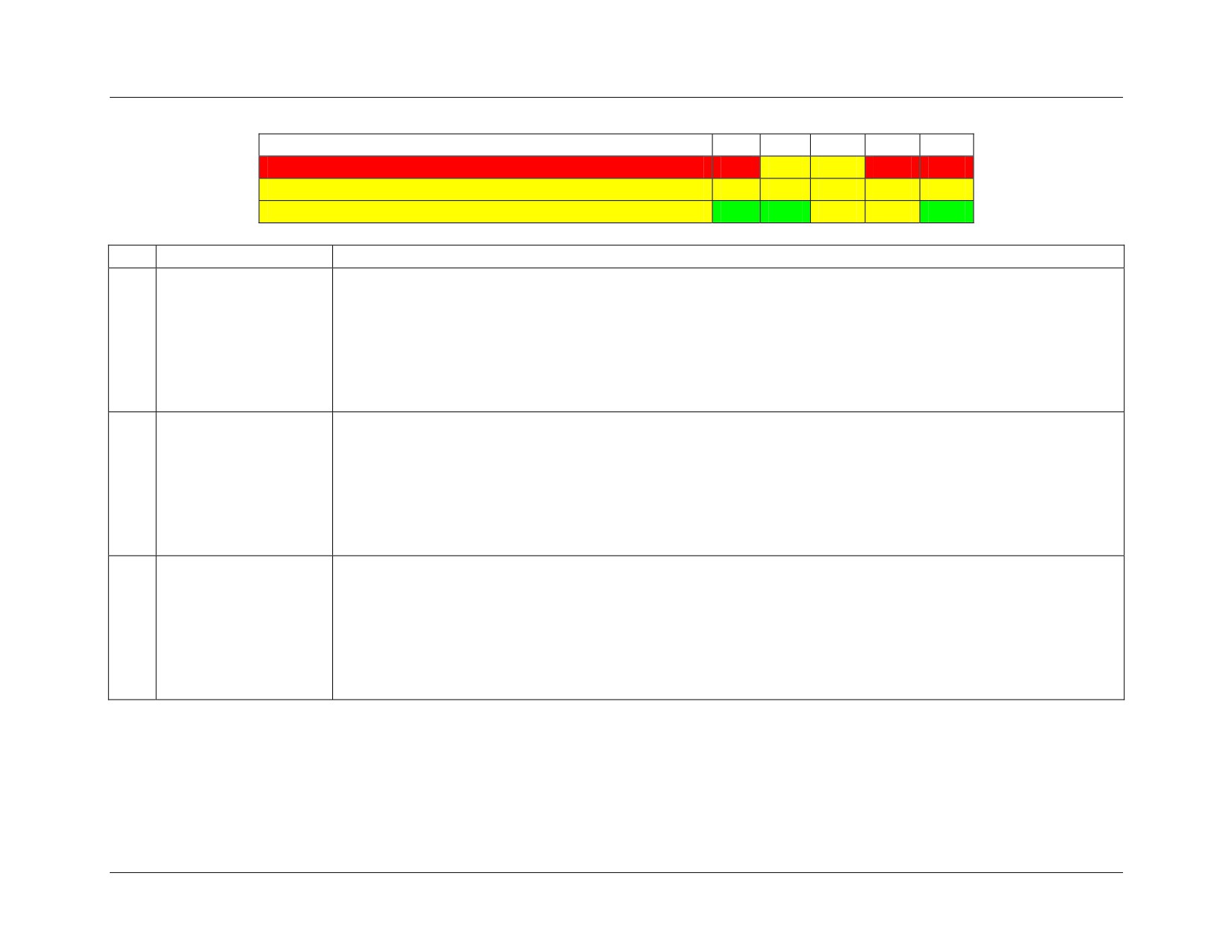
The overall capability currently is rated “red.” Improvements in the near/mid term raise the
assessment to “yellow” and continue into the far term. Although improvements between the
near/mid-term and far-term periods occur for specific capabilities and are reflected in the
associated identified values, the improved capabilities are not sufficient to further change the
overall assessed color rating for this task in the far term.
Current Capability and Deficiency
The accuracy and assurance of disseminated CBRND information are dependent on the
individual ability of the person performing the analysis and assessment. Current deficiencies
include absence of automated tools, (which impacts accuracy of produced information); lack of
access to communication and data processing tools; and challengeable information assurance.
Projected Near/Mid-Term Capability and Deficiency
The fielding of the programmed JWARN, JOEF, and JEM systems significantly improves
assurance of information. JWARN, JOEF, and JEM are projected for initial fielding in the mid
term. The systems are designed to comply with Information Assurance Defense In-Depth
Standards and to be certified and accredited under the DoD Information Technology Security
Certification and Accreditation Process (DITSCAP) process. However, improvements to
supporting DOTLPF are necessary to effectively implement and apply the new systems, as well
as other evolving technologies. The mechanism for information assurance requires improvement
to maintain pace with these new technologies and systems. Increased information processing and
transfer capabilities place a high demand upon available bandwidth and will exceed current
allocations. Increased bandwidth is needed to accommodate this demand. Increased processing
and transmission/reception speeds may help mitigate the demand. However, interoperability and
integration is a DoD-specific goal and is not mandatory upon other involved agencies. New DoD
systems are expected to be in compliance with DISA standards and net-centric capable, as
appropriate during the current and near term for interoperability and net-centric operations.
Substantial upgrades to legacy systems are required to include DISA standards and net-centric
capabilities. Further, the mix of legacy and compliant systems will continue to require the
attentiveness and awareness of staffs to ensure effective collection, integration, and
dissemination of information until the legacy systems are either replaced or modified for
compliance. However, the current deficiencies remain and the potential opportunities afforded by
the DoD initiative and enhanced automation capabilities are not fully realized for CBRND.
Interoperability and integration will be a gradual process.
Projected Far-Term Capability and Deficiency
The fielding of JWARN, JOEF, and JEM is expected to be completed in the early far term. All
legacy systems are projected to either be replaced by, or be in compliance with, Information
Assurance Defense in Depth Standards (IADDS)/DISA standards and fully support net-centric
operations in the far term. Otherwise, no change is projected for this task.
221
For Official Use Only
For Official Use Only
CBRND Functional Needs Analysis/Functional Solution Analysis
Chapter 9. Tactical Shape Tasks
Table 9.28-3. TASHA 28: Capability and Deficiency Assessment
Capability: CBRND Information and Data Assurance
M1
M2
M3
M4
M5
Current Overall Capability
21
52
53
34
25
Near/Mid-Term Overall Capability
4
6
6
5
5
Far-Term Overall Capability
8
8
7
6
8
FAA Measure
Scale
M1
Information assurance is
8-10: All CBRN information processes and systems strictly adhere to IADDS including certification and accreditation of
in accordance with
automated processes and systems in accordance with DoD and CJCS guidance.
current doctrine.
4-7: Automated CBRN information and standards generally conform to IADDS. Critical automated CBRN systems and
processes possess certification and accreditation outlined in DoD and CJCS guidelines.
1-3: CBRN information processes and systems generally do not adhere to IADDS or are not certified or accredited as
specified in DoD and CJCS guidance.
0: CBRN information processes and systems do not adhere to IADDS and are not certified and accredited as specified in
DoD and CJCS guidance.
M2
Information assurance
8-10: Information assurance processes and controls preclude the dissemination and application of erroneous,
controls are challenge
unsubstantiated, and/or tampered information. No impact.
free.
4-7: Information assurance processes and controls generally preclude the dissemination and application of erroneous,
unsubstantiated, and/or tampered information. However, impact is minor and does not adversely impact mission success.
1-3: Information assurance process and controls are inadequate to preclude dissemination and application of erroneous,
unsubstantiated, and/or tampered information and possess the potential to seriously impact mission success.
0: Information assurance process and controls do not exist to preclude dissemination and application of erroneous,
unsubstantiated, and/or tampered information and possess the potential to prevent mission success.
M3
Disseminated
8-10: CBRN information is correlated and processed with other source information and, as a composite, is disseminated in
information is accurate.
near-real time to requiring users. The disseminated data are accurate, current, and updated as new information is received
and processed.
4-7: CBRN information is predominantly manually correlated and processed with other source information and, as a
composite, disseminated to requiring users. The disseminated data are accurate as of the last update.
1-3: Disseminated CBRN information is contains inaccuracies, not adequately integrated with other source data, or is based
upon incomplete/unverified data.
0: Disseminated CBRN information is inaccurate, not integrated with other source data, or is based upon erroneous data.
222
For Official Use Only
For Official Use Only
CBRND Functional Needs Analysis/Functional Solution Analysis
Chapter 9. Tactical Shape Tasks
M4
Processed information
8-10: Means exist and are employed for the near-real-time dissemination of processed CBRND information to all need-to-
reaches requiring units/
know centers and activities.
action personnel in a
4-7: Limited means exist and are employed for the dissemination of CBRND information to all need-to-know centers and
timely manner.
activities prior to potential serious affect by agent(s) upon unit operational capabilities.
1-3: Means employment and/or timeliness is inadequate for the dissemination of CBRND information to requiring need-to-
know centers to preclude serious impact upon unit and/or activity operational capabilities.
0: Means do not exist or employment and/or timeliness is unable to support the dissemination of CBRND information to
requiring need-to-know centers to preclude loss of unit and/or activity operational capabilities with significant potential for
non-success of mission/operations.
M5
There is effective
8-10: DOTLPF exists and is adequate for this task. Task can be effectively performed with little or no direct impact upon
DOTLPF in place to
operations
conduct task.
4-7: Most critical aspects of DOTLPF for this task are addressed. Task can be performed with limitations requiring work-
arounds.
1-3: DOTLPF is inadequate for accomplishment of this task.
0: DOTLPF does not exist for this task.
1 Current CBRN information processes and systems are not in compliance with IADDS including certification and accreditation in accordance with DITSCAP. JWARN, JOEF,
and JEM, projected to be initially fielded during the mid term, are to comply with IADDS and DITSCAP. JWARN, JOEF, and JEM are expected to complete fielding in the early
far term. The standards incorporate and provide for information assurance. However, these systems will be resident on existing C4ISR systems. These systems are expected to
comply with these requirements during the mid term. Net-centric operations, DISA, and IADDS data standards address interoperability, information assurance, and the interchange
of information among DoD systems and elements. DoD systems are expected to be increasingly in compliance with the IADDS and DISA standards and net-centric capable, as
appropriate, during the mid term. New DoD systems are currently required to be in compliance with IADDS/DISA standards and net-centric capable when fielded. All remaining
legacy systems are projected to either be replaced by, or be fully compliant with, IADDS/DISA standards and net-centric capable in the far term.
2 Information assurity measures for CBRN information and data are a mix of manual and automated measures (predominantly manual). The potential for the application and/or
dissemination of erroneous, unsubstantiated, and/or tampered information exists. The impact is dependent upon the information and operations. Generally, however, flawed
information is rapidly identified and rectified. JWARN, JOEF, and JEM, projected to be initially fielded during the mid term, are to comply with IADDS and DITSCAP. JWARN,
JOEF, and JEM are expected to complete fielding in the early far term. The standards incorporate and provide for information assurance. However, these systems will be resident
on existing C4ISR systems. These systems are expected to comply with these requirements during the mid term. Net-centric operations, DISA, and IADDS data standards address
interoperability, information assurance, and the interchange of information among DoD systems and elements. DoD systems are expected to be increasingly in compliance with the
IADDS and DISA standards and net-centric capable, as appropriate, during the mid term. New DoD systems are currently required to be in compliance with IADDS/DISA
standards and net-centric capable when fielded. All remaining legacy systems are projected to either be replaced by, or be fully compliant with, IADDS/DISA standards and net-
centric capable in the far term. Oversight and review will continue to be necessary until standards and controls are adequate across all involved systems.
3 CBRN/TIM incident, agent characterization, and CBRND information and data correlation, validation, processing, and dissemination are predominantly manual and time- and
labor-intensive. Reporting is performed using the ATP-45 process and formats. Accuracy of disseminated data and information is contingent upon availability of information and
the training, experience, and knowledge of the performing individuals. Updates are disseminated as additional information is received, validated, and processed. The projected
mid-term initial fielding of JWARN, JOEF, and JEM will improve the process and reduce the potential for dissemination of flawed information and data. JWARN, JOEF, and JEM
are expected to complete fielding in the early far term.
4 Limited means exist for the rapid and timely dissemination of CBRN data and information to requiring units and/or action personnel. Existing ATP-45 processes and reports
generally flow upward within a unit’s command structure. The higher echelon then disseminates the information downward in the structure to other units and upward to the next
higher echelon of command of a Service. The echelon commanding or supporting differing Service elements initiates the cross notification and downward dissemination of the
data. Notification of adjacent units is often delayed, especially if the adjacent units are not of the same immediate command structure. The projected mid-term initial deployment of
JWARN provides for warning and reporting of CBRN information and data to all requiring units and applies the NATO standard ATP-45 reporting formats. JWARN is expected
to be fully fielded in the early far term. Net-centric operations and DISA data standards address interoperability, information assurance, and the interchange of information among
223
For Official Use Only
For Official Use Only
CBRND Functional Needs Analysis/Functional Solution Analysis
Chapter 9. Tactical Shape Tasks
DoD systems and elements. DoD systems are expected to be increasingly in compliance with the DISA standards and net-centric capable, as appropriate, during the mid term. New
DoD systems are currently required to be in compliance with DISA standards and net-centric capable when fielded. All remaining legacy systems are projected to either be
replaced by, or be fully compliant with, DISA standards and net-centric capable in the far term. However, not all potential partners and participating agencies will be interoperable
and integrated with the C4ISR system or trained to rapid interpret ATP-45 data and information.
5 Current DOTLPF address the performance of this task. Work-arounds enabling the cross-notification between adjacent units of hazards are often established locally by the units.
However, DOTLPF remains inadequate for the rapid and timely lateral notification of units within a hazard area. DOTLPF must ensure readiness to fully implement and apply
JWARN, JOEF, and JEM when these systems are fielded. DOTLPF must evolve as systems, tactics, and situations change for survival and successful mission accomplishment.
224
For Official Use Only
For Official Use Only
CBRND Functional Needs Analysis/Functional Solution Analysis
Chapter 9. Tactical Shape Tasks
9.28.3
Functional Solution Analysis
9.28.3.1
DOTLPF Assessment Summary
This section addresses the deficiencies and suggests potential non-materiel solutions. If there are
no non-materiel solutions or they are only partial solutions, the remaining non-materiel need is
then stated. Materiel needs are assessed in the IMA section.
1. Deficiency: Absence of automated tools impacts accuracy.
Partial Non-Material Solutions: Doctrine: Expand and enhance doctrine, policies,
procedures, and TTPs provide in-depth guidance and requirements supporting the collection,
movement, application, and dissemination of information, using automated tools where
appropriate, that is accurate and timely. Include requirement for CBRN/TIM and CBRND
data and information be posted and maintained on the COP. Training: Emphasize formal and
recurring training and exercise and evaluation criteria that support the vertical and lateral
movement of CBRN/TIM and CBRND data and information and the application of
automated tools to increase accuracy and timeliness.
2. Deficiency: Lack of or limited access to communication and data processing tools.
Partial Non-Material Solutions: Doctrine: Emphasize and enable within doctrine, policies,
procedures, and TTPs the essential nature of CBRN information exchange and promoting the
allocation of necessary resources essential for IDN and automated CBRND tools
effectiveness. Training: Implement attainment and maintenance of task skills through formal
and recurring training and challenging exercises and evaluations stressing the effective
allocation of necessary resources and conduct of CBRN/TIM information exchange,
processing, and dissemination that is accurate and timely. Leadership: Emphasize criticality
of effective and timely processing of CBRN/TIM and CBRND data and information upon
force survival and successful mission accomplishment. Ensure necessary resources are
allocated and applied to support this task.
9.28.3.2
IMA Assessment Summary
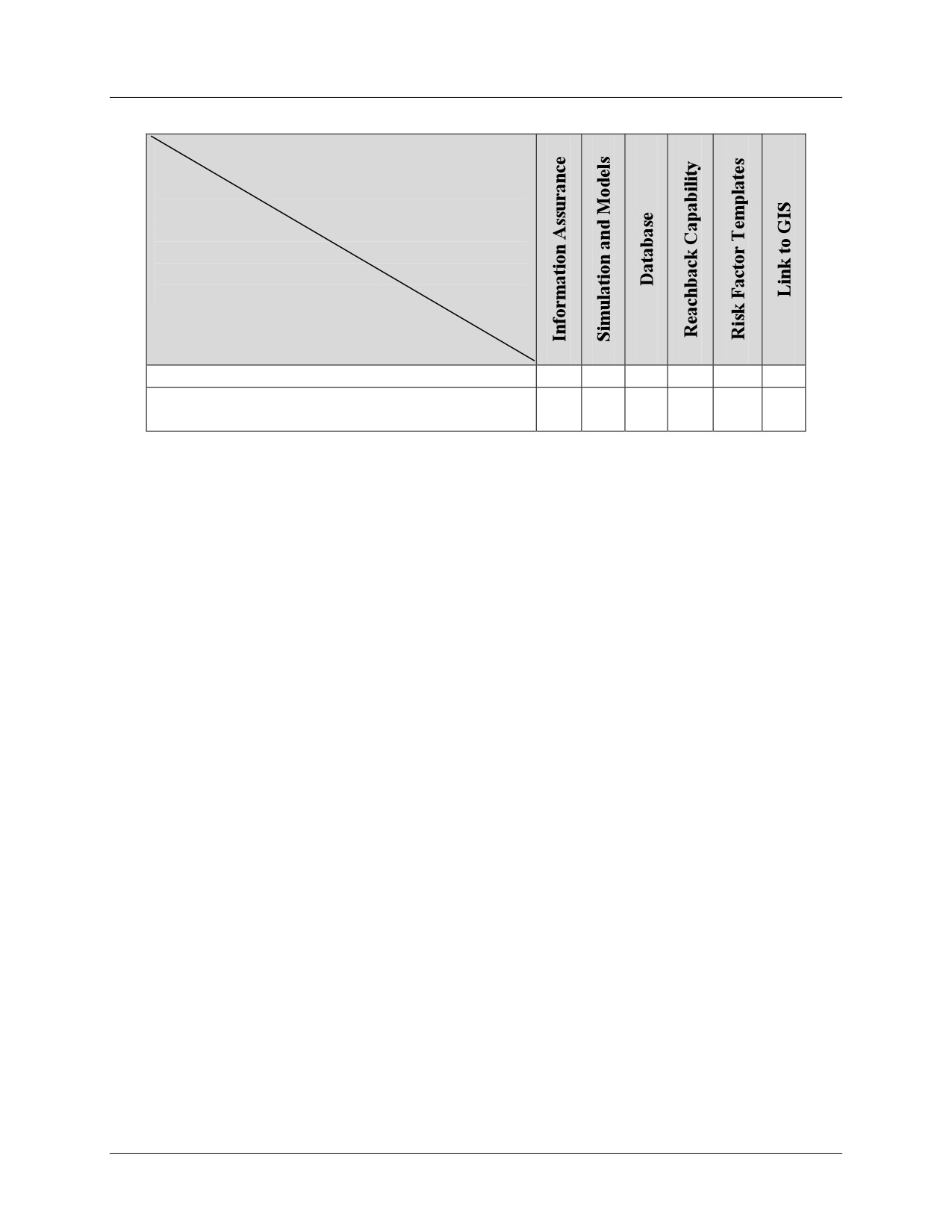
Table 9.28-4 is a list of ideas for material approaches and a corresponding description of each
idea. Approaches to this task center around an automated system to obtain, process, and
disseminate CBRND/TIM information while maintaining the integrity and validity of that
information. Table 9.28-5 identifies which of the material approaches might address specific
materiel deficiencies identified in the DOTMLPF assessment.
225
For Official Use Only
For Official Use Only
CBRND Functional Needs Analysis/Functional Solution Analysis
Chapter 9. Tactical Shape Tasks
Table 9.28-4. TASHA 28: Materiel Approaches
Idea for Materiel Approach
Description
Information assurance
Develop a CBRND system that processes and transmits
information in accordance with IADDS, including certification
and accreditation in accordance with DoD and CJCS guidance.
Simulations and models
Develop a system that will enable operational commanders to
efficiently execute “what if” scenarios and facilitate the
evaluation of COAs.
Database
Develop a system enabling operational commanders to
efficiently execute “what if” scenarios and facilitate the
evaluation of plausible adversary and friendly COAs, CBRN
employment, and TIM ROTA.
Reachback capability
Develop a system providing the ability to rapidly and securely
reach back and contact CBRN experts and obtain CBRND
plans, procedures, information, and lessons learned.
Risk factor templates
Develop a system merging CBRN, intelligence, and
operational data and plans into standardized automated formats
for application to effectively and rapidly accomplish
CBRN/TIM functions and activities.
Link to GIS
Develop a system resident in standard C4ISR systems with
interface with GIS to provide input to the COP.
226
For Official Use Only
For Official Use Only
CBRND Functional Needs Analysis/Functional Solution Analysis
Chapter 9. Tactical Shape Tasks
Table 9.28-5. TASHA 28: IMA Assessment
Ideas for Material
Approaches
(IMA)
Identified Gaps
Absence of automated tools impacts accuracy.
X
X
X
X
X
X
Lack of or limited access to communication and
X
X
data processing tools.
227
For Official Use Only
For Official Use Only
CBRND Functional Needs Analysis/Functional Solution Analysis
Chapter 9. Tactical Shape Tasks
9.29
Task TASHA 29: Coordinate the allocation and access to C4ISR assets to support
battlespace CBRND operating requirements
9.29.1
Functional Area Analysis
9.29.1.1
Definition
Ensures access to or availability of the appropriate C4ISR and CBRND information systems
throughout the theater to include small units on independent operations. Sufficient C4ISR assets
are required for effective performance of CBRND tasks by units and staff cells. Stand-alone
processing capability enhances performance in austere, expeditionary, and widely dispersed
force positions. Network access to higher-capacity C4ISR systems and information technology
enhances performance.
9.29.1.2
Derivation
UJTL (TA 5, TA 5.2.1, TA 7, TA 7.1), Protection Joint Functional Concept, Military
Transformation: A Strategic Approach, Transformation Planning Guidance, An Operational
Concept for Biological Defense.
9.29.1.2.1
Supported Task: OPSHA 5
9.29.1.2.2
Lateral Task: N/A
9.29.1.2.3
Supporting Task: N/A
9.29.1.3
Condition
Perform this task under conditions of:
Physical. N/A
Military
1. Limited modern military systems. (C2.2.5)
2. Intermittent communications connectivity. (C2.3.1.6)
Civil
1. Fair information management. (C3.3.7.4)
9.29.2
Functional Needs Analysis
9.29.2.1
Capability and Deficiency Assessment Summary
Table 9.29-1 discusses individual capabilities to perform this task to the designated standards.
The capabilities include the current manual method of preparing incident assessments and the
228
For Official Use Only
For Official Use Only
CBRND Functional Needs Analysis/Functional Solution Analysis
Chapter 9. Tactical Shape Tasks
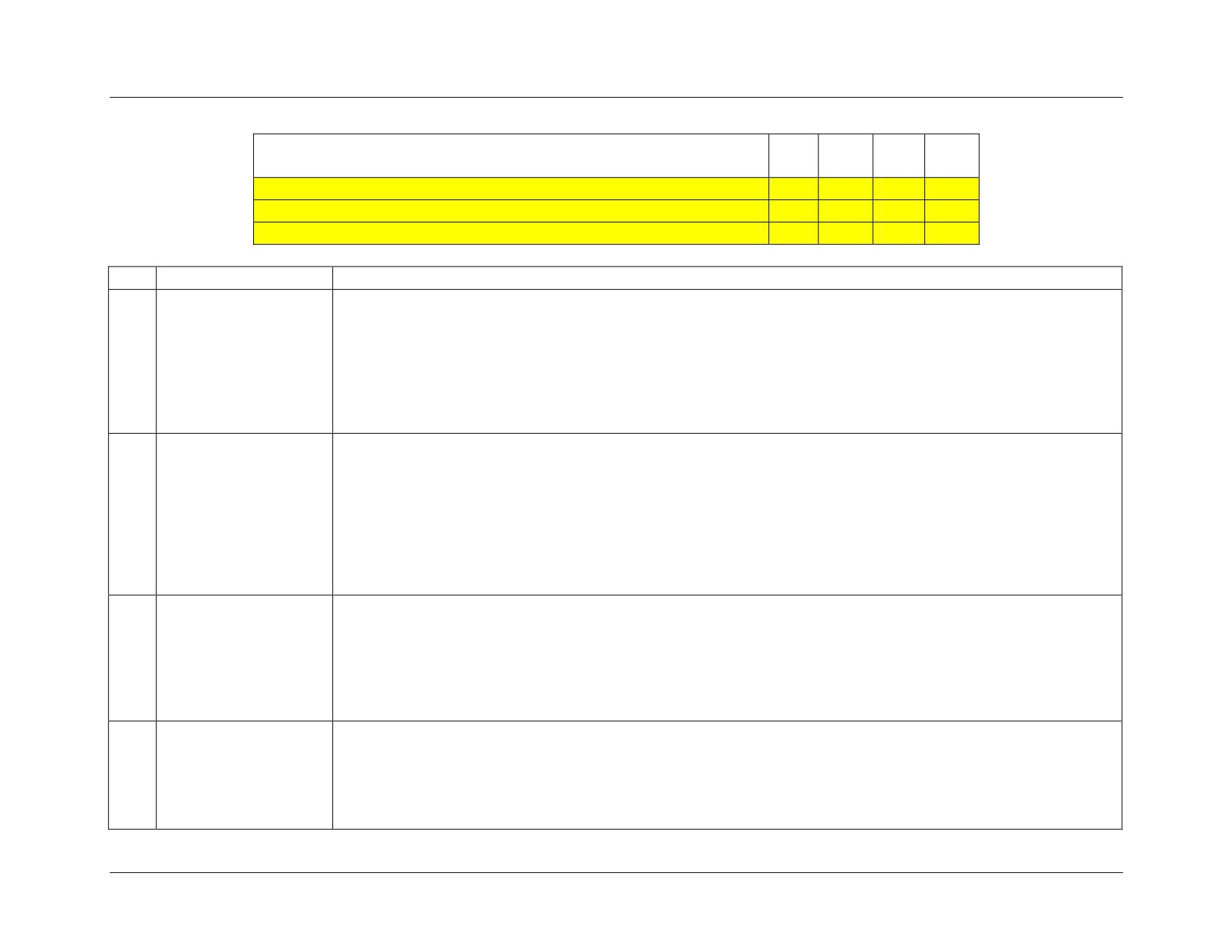
mid- to far-term fielding of JWARN, JEM and JOEF to meet the identified standards. The
overall capability for current, near/mid, and far term are assessed “yellow.”
Current Capability and Deficiency
NBC staff must share access to C4ISR terminals with other staff functions. This limits their
ability to keep the COP updated with accurate CBRN situational awareness and their ability to
stay informed of other units’ status. Current deficiencies include the need for CBRND units and
staffs to be properly equipped and have sufficient access to C4ISR assets to accomplish their
missions.
Projected Near/Mid-Term Capability and Deficiency
The programmed JWARN, JOEF, and JEM systems will provide the CBRN staff with current
information and visibility in the COP. JWARN, JOEF, and JEM are projected for initial fielding
in the mid term. The importance of and reliance upon increasingly networked systems means
additional connective nodes will be required for information access.
Projected Far-Term Capability and Deficiency
Completion of fielding of JWARN, JOEF, and JEM is expected in the early far term. Additional
connective nodes will be required to support the increasingly networked systems and to support
operational requirements.
229
For Official Use Only
For Official Use Only
CBRND Functional Needs Analysis/Functional Solution Analysis
Chapter 9. Tactical Shape Tasks
Table 9.29-1. TASHA 29: Capability and Deficiency Assessment
Capability: C4ISR Asset Allocation and Access Coordination
M1
M2
M3
M4
Supporting Battlespace CBRND Operating Requirements
Current Overall Capability
41
42
53
54
Near/Mid-Term Overall Capability
5
5
6
5
Far-Term Overall Capability
7
5
7
5
FAA Measure
Scale
M1
CBRN Information is
8-10: Interoperable and integrated automated systems, processes, and tools collect, compile, correlate, and process
processed using existing
CBRN/TIM information from systems and resources on the GIG for decisioning, information/action dissemination,
C4ISR assets.
warning and reporting, and situational awareness. Information is continuously processed, updated, and posted on the COP.
4-7: Manual processes are predominantly applied for the collection, compilation, correlation, and processing of
CBRN/TIM information. The process may be restricted as C4ISR systems access by CBRN personnel is shared with other
staff personnel and there may exist conflicting operational demands.
1-3: CBRN information processing is inadequate to support operations.
0: CBRN information processing is nonexistent for support of operations.
M2
CBRND units and staff
8-10: CBRND units and staff cells possess dedicated information technology resources and tools with unrestricted (as
cells can access C4ISR
applicable) access to C4ISR systems for the accomplishment and performance of their duties and responsibilities. These are
assets.
used to support operational and training requirements.
4-7: CBRND units and staff cell personnel are able to access C4ISR systems using shared information technology
resources and tools for operational requirements and training.
1-3: CBRND units and staff cell personnel possess inadequate access to C4ISR systems to support operations and training
requirements.
0: CBRND units and staff cell personnel do not possess access to C4ISR systems to support operations and training
requirements.
M3
CBRN information
8-10: Local CBRN systems possess sufficient resident capability and alternative connectivities to maintain data collection,
processing available
correlation, validation, processing, and dissemination of CBRN/TIM information to support ongoing OPTEMPO in the
when network is no
event network connectivity is interrupted for any length of time.
longer available.
4-7: Manual CBRN processes with limited automated tools and capabilities provide CBRN information processing support
of operations should network connectivity be temporarily interrupted.
1-3: CBRN information processing is inadequate for effective support of operations if network connectivity is interrupted.
0: CBRN information processing cannot support operations, and/or nonexistent if network connectivity is interrupted.
M4
There is effective
8-10: DOTLPF exists and is adequate for this task. Task can be effectively performed with little or no direct impact upon
DOTLPF in place to
operations.
conduct task.
4-7: Most critical aspects of DOTLPF for this task are addressed. Task can be performed with limitations requiring work-
arounds.
1-3: DOTLPF is inadequate for accomplishment of this task.
0: DOTLPF does not exist for this task.
230
For Official Use Only
For Official Use Only
CBRND Functional Needs Analysis/Functional Solution Analysis
Chapter 9. Tactical Shape Tasks
1 Current processes are predominantly manual with limited automation. Process is labor- and time-consuming and dependent upon the training, experience, and availability of
performing personnel as well as the quality of the collected information. The current capability is achieved using doctrine. CBRN staff cell and unit personnel possess access to
shared information technology resources and tools. CBRN personnel do not possess dedicated information technologies to perform training and operational requirements.
Available resources are shared with other requiring activities and functions. The communication of CBRN information is performed using existing and available C4ISR resources
but is not otherwise processed by these assets. The programmed mid-term initial fielding of JWARN, JOEF, and JEM, although CBRND-supporting technologies, will likely reside
upon resident C4ISR hardware and not dedicated CBRND hardware resources. JWARN, JOEF, and JEM are expected to complete fielding in the early far term. These systems
provide CBRN information processing capabilities.
2 CBRN staff cell personnel and unit personnel possess access to shared information technology resources and tools. CBRN personnel do not possess dedicated information
technology to perform training and operational requirements. Available resources are shared with other requiring activities and functions. The programmed mid-term initial
fielding of JWARN, JOEF, and JEM, although sited upon resident C4ISR hardware, are expected to reduce the time required for CBRN staff cell personnel to perform their tasks
and responsibilities. JWARN, JOEF, and JEM are expected to complete fielding in the early far term.
3 Current processes are predominantly manual with limited automated tools and capabilities. Capability currently exists to perform CBRN information processing without access to
automated network resources. The project mid-term initial fielding of JWARN, JOEF, and JEM and increasing reliance upon networked automated systems requires possession of
resident capabilities and alternative connectivities within local CBRN systems to maintain support of operations through a period of interruption. JWARN, JOEF, and JEM are
expected to complete fielding in the early far term. JWARN, JOEF, and JEM do possess the capability to work off-network with manual interface and support when the
circumstances require.
4 Current DOTLPF supports the manual processing of CBRN information and data. However, the projected fielding of JWARN, JOEF, and JEM in the mid term and the increasing
application and dependence upon networked automated systems dictates the investigation and determination of alternative connectivities and processes to accomplish this task
during periods of network interruption. DOTLPF must address short-term and long-term interruptions of primary connectivity due to natural, system-based, or adversary-imposed
situations. DOTLPF must evolve as systems, tactics, and situations change and to promote and maintain net-centric operations.
231
For Official Use Only
For Official Use Only
CBRND Functional Needs Analysis/Functional Solution Analysis
Chapter 9. Tactical Shape Tasks
9.29.3
Functional Solution Analysis
9.29.3.1
DOTLPF Assessment Summary
This section addresses the deficiencies and suggests potential non-materiel solutions. If there are
no non-materiel solutions or they are only partial solutions, the remaining non-materiel need is
then stated. Materiel needs are assessed in the IMA section.
1. Deficiency: Lack of dedicated C4ISR assets for CBRND units and staffs.
Partial Non-Material Solutions: Doctrine: Adjust doctrine to establish either CBRN staff
priority access to C4ISR terminals during CBRN threat/incident situations or dedicated
CBRN staff C4ISR access and terminals. Organization: Structure operations center to afford
and support CBRN staff priority access to C4ISR systems. Training: Include doctrinal
adjustments in staff training. Leadership: Provide specific leadership development training
and exercises to reinforce the essential nature of CBRND information.
9.29.3.2
IMA Assessment Summary
Table 9.29-4 is a list of ideas for material approaches and a corresponding description of each
idea. The need for additional C4ISR assets is identified in this analysis along with the material
approach of developing an automated CBRND system that will reside on current and future
C4ISR systems.
232
For Official Use Only
For Official Use Only
CBRND Functional Needs Analysis/Functional Solution Analysis
Chapter 9. Tactical Shape Tasks
Table 9.29-4. TASHA 29: Materiel Approaches
Identified
Idea for Materiel
Description
Deficiency
Approach
Lack of
CBRN staff cell
Procure and field dedicate C4ISR equipment to CBRN
dedicated C4ISR
C4ISR equipment
staff cells enabling connectivity with the COP and the
assets for
performance of their responsibilities and tasks.
CBRND units
Enhanced C4ISR
Expand existing and programmed C4ISR systems
and staffs
systems
capabilities to support increasing demands upon
resources.
233
For Official Use Only
For Official Use Only
CBRND Functional Needs Analysis/Functional Solution Analysis
Chapter 9. Tactical Shape Tasks
9.30
Task TASHA 30: Initiate CBRN/TIM event history archiving
9.30.1
Functional Area Analysis
9.30.1.1
Definition
Encompasses the collecting, compiling, and archiving of CBRN/TIM event data, information,
and related decision and response actions. Includes such things as event time history, response
actions, hazard prediction and effects modeling, along with the dynamic and deliberate staff
actions and management tools utilization. IDN nodes archive sensor and characterization data.
The archived data are used in studies and analyses to assess what occurred and contribute to
improving future responses. Includes information assurance considerations.
9.30.1.2
Derivation
UJTL (TA 5.2.1, TA 7, TA 7.1), Protection Joint Functional Concept, Military Transformation: A
Strategic Approach.
9.30.1.2.1
Supported Task: OPSHA 5
9.30.1.2.2
Lateral Task: N/A
9.30.1.2.3
Supporting Task: N/A
9.30.1.3
Condition
Perform this task under conditions of:
Physical. N/A
Military
1. Limited modern military systems. (C2.2.5)
2. Low military systems reliability. (C2.2.5.3)
3. Restricted information exchange. (C2.3.1.8)
4. High information volume. (C2.3.1.9)
5. Intelligence dissemination and receipt partially exists. (C2.4.7)
Civil. N/A
9.30.2
Functional Needs Analysis
9.30.2.1
Capability and Deficiency Assessment Summary
Table 9.30-1 discusses individual capabilities to perform this task to the designated standards.
The capabilities include the current manual method of preparing incident assessments and the
mid- to far-term fielding of JWARN, JEM and JOEF to meet the identified standards. The
234
For Official Use Only
For Official Use Only
CBRND Functional Needs Analysis/Functional Solution Analysis
Chapter 9. Tactical Shape Tasks
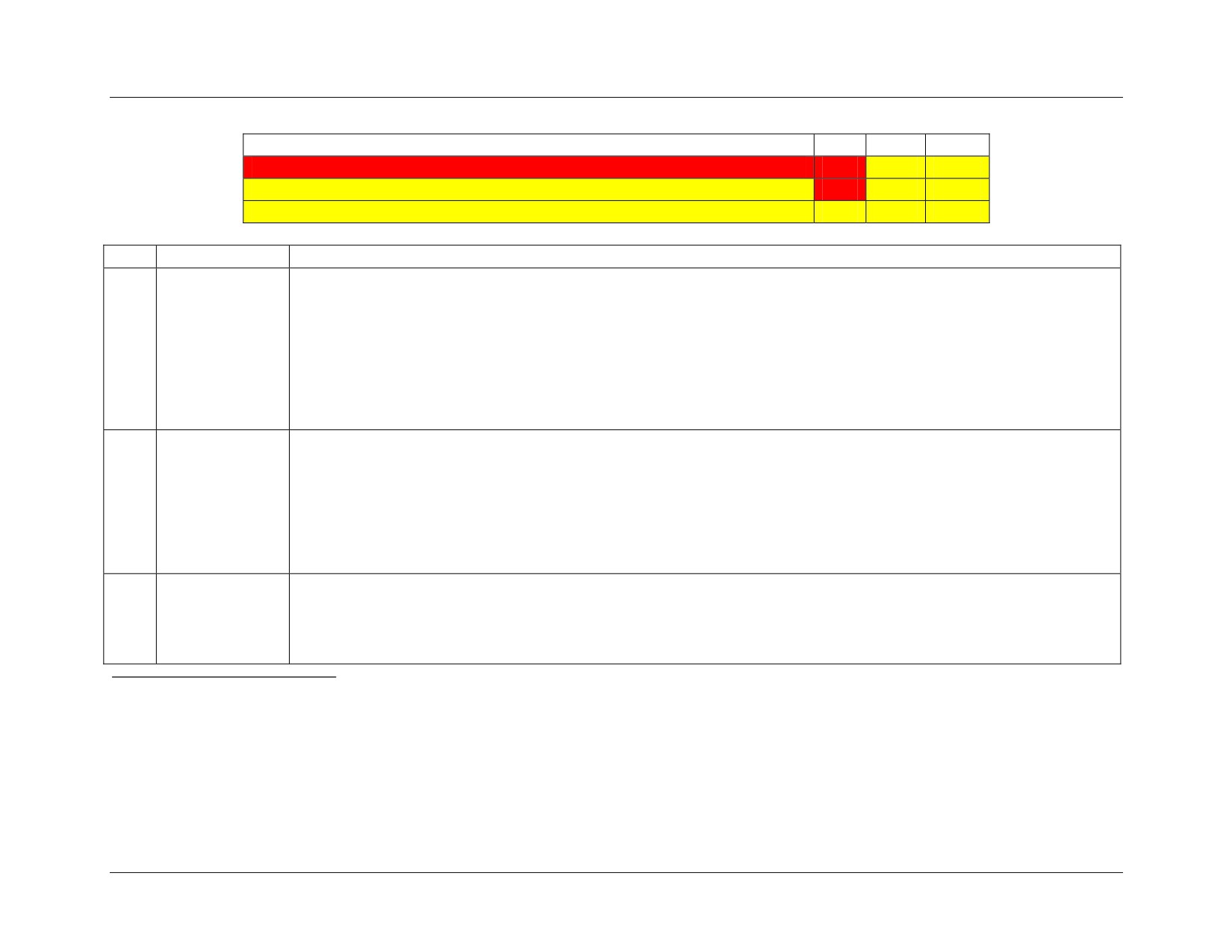
current overall capability is rated “red,” and the near/mid and far-term overall capabilities are
rated “yellow.”
Current Capability and Deficiency
Current capability is extremely limited. Event histories are compiled from operations center logs
as current IDN systems are restricted to real-time information transmission and do not possess
internal archiving.
Projected Near/Mid-Term Capability and Deficiency
When fielded, JWARN, as an integral part of the IDN, will be capable of storing, modifying,
retrieving, displaying, archiving and transferring data including location of attacks and sources of
attack. JWARN is projected for initial fielding in the mid term. New DoD systems are expected
to be in compliance with DISA standards and net-centric capable, as appropriate during the
current and near term for interoperability and net-centric operations. Substantial upgrades to
legacy systems are required to include DISA standards and net-centric capabilities. Further, the
mix of legacy and compliant systems will continue to require the attentiveness and awareness of
staffs to ensure effective collection, integration, and dissemination of information until the
legacy systems are either replaced or modified for compliance. However, the current deficiencies
remain and the potential opportunities afforded by the DoD initiative and enhanced automation
capabilities are not fully realized for CBRND. Interoperability and integration will be a gradual
process.
Projected Far-Term Capability and Deficiency
Fielding of JWARN is expected to be completed in the early far term. All legacy systems are
projected to either be replaced by, or in compliance with, DISA standards and full support net-
centric operations in the far term. Sensors and IDN capabilities are in development with stated
fielding sometime in the far term. This is dependent upon the progression of sensor technologies
necessary for an IDN. Otherwise, no change is projected for this task.
235
For Official Use Only
For Official Use Only
CBRND Functional Needs Analysis/Functional Solution Analysis
Chapter 9. Tactical Shape Tasks
Table 9.30-1. TASHA 30: Capability and Deficiency Assessment
Capability: CBRN/TIM Event History Archival
M1
M2
M3
Current Overall Capability
01
42
43
Near/Mid-Term Overall Capability
2
5
4
Far-Term Overall Capability
5
5
4
FAA Measure
Scale
M1
IDN able to
8-10: IDN nodes and sensors possess resident automated data-retention capabilities for sensor-reading information and data, as
archive and make
well as node activities such as adjustments, corrections, etc. Each node registers, records, and disseminates information on lower-
available sensor
level node and sensor readings and node activities. Node-retained data are accessible and supports extended periods of operation.
track data over
4-7: IDN system possesses resident automated data-retention capabilities for subordinate nodes and sensors. Node-retained data
time.
are accessible and entries are cleared on a routine basis.
1-3: IDN system possesses inadequate resident automated data-retention capabilities for subordinate nodes and sensors. Nodes do
not possess data-retention capabilities.
0: IDN does not possess resident automated data-retention capabilities, data are not accessible, and/or data memory retention is
inadequate.
M2
Operations
8-10: Integrated and interoperable systems collect and compile event information from all systems within operations centers. Data
centers compile
entries are identified to source, date/time, performing activity, etc., and retained in time sequence blocks. Information is accessible
event histories.
by time and/or system. The automated event history permits manual notations and entries and provides a detailed and in-depth
history of an event.
4-7: Manual event histories are compiled following an event, or as time permits, through the use of logs, documentation, system
information, and other sources. The compiled event history provides a detailed history of an event.
1-3: Event histories are inadequate.
0: Event histories are nonexistent.
M3
There is effective
8-10: DOTLPF exists and is adequate for this task. Task can be effectively performed with little or no direct impact upon
DOTLPF in place
operations.
to conduct task.
4-7: Most critical aspects of DOTLPF for this task are addressed. Task can be performed with limitations requiring work-arounds.
1-3: DOTLPF is inadequate for accomplishment of this task.
0: DOTLPF does not exist for this task.
1 Fielded IDN systems for CBRN/TIM do not currently exist. Systems are in development and fielding is expected in the far term but are contingent upon sensor technology
progression. JWARN, to be initially fielded to operational units in the mid term and into the early far term, includes IDN data repository capabilities.
2 Current event histories are compiled generally after-the-fact based upon manual logs, documentation, extracted system information, interviews, and other sources of information.
The compilation is manual and time- and labor-intensive. The event histories do provide a detailed chronological history of an event and are usually divided into functional
segments with an overall summary. The projected mid-term fielding of JWARN provides an additional source of information. However, an overall system that collects from the
various systems within the center to compile a comprehensive event history does not exist and is not programmed. The lack of interoperability and integration of existing systems
impede the potential for a collection and compilation program for event histories. New DoD systems are required to meet DISA standards and be net-centric capable. Legacy
systems, however, are not required to be in meet these standards and requirements until they are replaced or undergo substantial upgrades. However, all DoD systems are to meet
236
For Official Use Only
For Official Use Only
CBRND Functional Needs Analysis/Functional Solution Analysis
Chapter 9. Tactical Shape Tasks
the standards and requirements in the far term. The mix of legacy and compliant systems will continue to require staff intervention for the compilation of event histories until the
legacy systems are either replaced or modified for compliance.
3 Current DOTLPF does address the compilation and performance of event histories and their application as lessons learned for adjustments to existing DOTLPF and the
application of material. However, the process is predominantly manual and is time- and labor-intensive. Information and the exact chronology of events are often lost since much
of the data and information is not documented and the performance of this task is performed after-the-fact, sometimes at some length following the event. DOTLPF must evolve as
systems, tactics, and situations change and to promote and draw-upon the inherent capabilities of net-centric operations.
237
For Official Use Only
For Official Use Only
CBRND Functional Needs Analysis/Functional Solution Analysis
Chapter 9. Tactical Shape Tasks
9.30.3
Functional Solution Analysis
9.30.3.1
DOTLPF Assessment Summary
This section addresses the deficiencies and suggests potential non-materiel solutions. If there are
no non-materiel solutions or they are only partial solutions, the remaining non-materiel need is
then stated. Materiel needs are assessed in the IMA section.
1. Deficiency: Absence of automatic means to record and compile event histories.
Partial Non-Material Solutions: Doctrine: Expand doctrine, policies, procedures, and TTPs
to address automated collection, compilation, and processing of ongoing information for
event histories. Training: Incorporate automated event history training into formal and
recurring training of operations center staff personnel.
9.30.3.2
IMA Assessment Summary
Table 9.30-4 is a list of ideas for material approaches and a corresponding description of each
idea. The approaches to this task include an automatic system to obtain and process sensor data
and archive CBRN/TIM event histories; the key is the automation of the process.
238
For Official Use Only
For Official Use Only
CBRND Functional Needs Analysis/Functional Solution Analysis
Chapter 9. Tactical Shape Tasks
Table 9.30-4. TASHA 30: Materiel Approaches
Identified
Idea for Materiel
Description
Deficiency
Approach
Absence of
IDN interface for
Ensure developmental CBRN sensors include the
automatic
sensors
ability to interface with an IDN. Develop adaptors to
means to
interface existing CBRN sensors to the IDN. Develop
record and
history logging capability for IDN sensors.
compile event
Collect, exchange,
Develop a system that will collect and analyze CBRN
histories
and disseminate
sensor inputs, generate, edit, and disseminate NBC
information
reports, including downwind-hazard plots and
overlays, and verify receipt of reports and plots.
Event history
Develop a system accepting manual and automatic
archival
CBRN/TIM event data input then modifies, retrieves,
displays, archives, and transfers data (e.g., intelligence,
location of attack, source and sensor information) to
repositories.
239
For Official Use Only
For Official Use Only
CBRND Functional Needs Analysis/Functional Solution Analysis
Chapter 9. Tactical Shape Tasks
9.31
Task TASHA 31: Provide CBRN lessons learned and attack/release information
9.31.1
Functional Area Analysis
9.31.1.1
Definition
The deliberate collecting and compiling of lessons learned support post-event operational
assessments and studies. Includes the archiving of relevant information regarding analytical
efforts and training improvements. Immediate lessons learned access by the joint force supports
immediate post-event assessments and continued operational evaluations to enhance current and
future operations preparations and planning. Also supports revisions to TTPs, operational plans,
and training plans. Includes information assurance considerations.
9.31.1.2
Derivation
UJTL (TA 7, TA 7.1), Military Transformation: A Strategic Approach, Transformation Planning
Guidance, Protection Joint Functional Concept.
9.31.1.2.1
Supported Task: OPSHA 5
9.31.1.2.2
Lateral Task: TASENS 17
9.31.1.2.3
Supporting Task: N/A
9.31.1.3
Condition
Perform this task under conditions of:
Physical. N/A
Military
1. Limited modern military systems. (C2.2.5)
2. Restricted information exchange. (C2.3.1.8)
3. High information data. (C2.3.1.9)
4. Intelligence dissemination and receipt partially exists. (C2.4.7)
Civil. N/A
9.31.2
Functional Needs Analysis
9.31.2.1
Capability and Deficiency Assessment Summary
Table 9.31-1 discusses individual capabilities to perform this task to the designated standards.
The capabilities include preparing lessons learned and attack/release information and the mid- to
far-term fielding of JWARN, JEM and JOEF to meet the identified standards. The overall
capability for current, near/mid, and far term are assessed “yellow.”
240
For Official Use Only
For Official Use Only
CBRND Functional Needs Analysis/Functional Solution Analysis
Chapter 9. Tactical Shape Tasks
Current Capability and Deficiency
The services have their own CBRND information repositories. The center for Army lessons
learned includes information gleaned from CBRN events as well as other lessons. Deficiencies
include lack of emphasis on collecting and preserving CBRN data; insufficient repository access;
absence of automated archiving capability; and lack of Joint access to information.
Projected Near/Mid-Term Capability and Deficiency
The JWARN capability for archiving event history provides a basis for common CBRND event
history archiving. JWARN will be initially fielded to operational units in the mid term. New
DoD systems are expected to be in compliance with DISA standards and net-centric capable, as
appropriate during the current and near term for interoperability and net-centric operations.
Substantial upgrades to legacy systems are required to include DISA standards and net-centric
capabilities. Further, the mix of legacy and compliant systems will continue to require the
attentiveness and awareness of staffs to ensure effective collection, integration, and
dissemination of information until the legacy systems are either replaced or modified for
compliance. However, the current deficiencies remain and the potential opportunities afforded by
the DoD initiative and enhanced automation capabilities are not fully realized for CBRND.
Interoperability and integration will be a gradual process.
Projected Far-Term Capability and Deficiency
Fielding of JWARN is expected to be completed in the early far term. All legacy systems are
projected to either be replaced by, or in compliance with, DISA standards and full support net-
centric operations in the far term. Sensors and IDN capabilities are in development with stated
fielding sometime in the far term. This achievement is dependent upon the progression of sensor
technologies necessary for an IDN. Otherwise, no change is projected for this task.
241
For Official Use Only
For Official Use Only
CBRND Functional Needs Analysis/Functional Solution Analysis
Chapter 9. Tactical Shape Tasks
Table 9.31-1. TASHA 31: Capability and Deficiency Assessment
Capability: CBRN Lessons Learned
M1
M2
M3
M4
M5
M6
M7
and Attack/Release Information
Current Overall Capability
51
52
53
54
53
55
56
Near/Mid-Term Overall Capability
5
5
5
5
5
5
5
Far-Term Overall Capability
6
6
5
6
5
5
5
FAA Measure
Scale
M1
All units submit
8-10: Integrated and interoperable systems collect and compile event information from all systems within operations centers.
assessments and
The automated event history permits manual notations and entries and provides a detailed and in-depth history of an event.
lessons learned.
Assessments of the events are performed and lessons learned are identified and entered. The event history, assessment, and
lessons learned are submitted to a central center for review, archival, and recommendations for change to DOTMLPF.
4-7: Manual event histories are compiled following an event, or as time permits, through the use of logs, documentation,
system information, and other sources. The compiled event history provides a detailed history of an event. Assessments of the
events are performed and lessons learned are identified. The event history, assessment, and lessons learned are submitted for
review, archival, and recommendations for change to DOTMLPF.
1-3: Event histories, assessments, and/or lessons learned are inadequate, not submitted by a number of units, not centralized
and archived, or are inadequately reviewed and applied to recommendations for DOTMLPF changes.
0: Event histories, assessments, and/or lessons learned are nonexistent, not submitted, not centralized, not archived, and not
applied to recommendations for DOTMLPF changes.
M2
Affected units can
8-10: Integrated and interoperable systems collect and compile event information from all systems within operations centers.
record and compile
The automated event history permits manual notations and entries and provides a detailed and in-depth history of an event.
lessons learned.
Assessments of the events are performed and lessons learned are identified and entered. The event history, assessment, and
lessons learned are submitted to a central center for review, archival, and recommendations for change to DOTMLPF.
4-7: Manual event histories are compiled following an event, or as time permits, through the use of logs, documentation,
system information, and other sources. The compiled event history provides a detailed history of an event. Assessments of the
events are performed and lessons learned are identified. The event history, assessment, and lessons learned are submitted for
review, archival, and recommendations for change to DOTMLPF.
1-3: Event histories, assessments, and/or lessons learned are inadequate, not submitted by a number of units, not centralized
and archived, or are inadequately reviewed and applied to recommendations for DOTMLPF changes.
0: Event histories, assessments, and/or lessons learned are nonexistent, not submitted, not centralized, not archived, and not
applied to recommendations for DOTMLPF changes.
242
For Official Use Only
For Official Use Only
CBRND Functional Needs Analysis/Functional Solution Analysis
Chapter 9. Tactical Shape Tasks
M3
Information
8-10: Central common repository maintains secure, interoperable, and integrated automated systems hosting databases and
repository is
data sets possessing CBRN/TIM and/or CBRND information and data. This includes event histories, assessments, lessons
available to all users.
learned, plans, policies, technical data, and other necessary information. Internal and external links enable movement by users
to relevant information. The systems and information structures comply with DISA, IADDS, and DITSCAP requirements.
Authorized users are able to access the repository easily and without regard to their location or mode of connection.
4-7: Repositories exist and maintain a mix of electronic and hard-copy CBRN/TIM and/or CBRND information and data.
Authorized users may possess limited access to electronic information. Hard copies must be requested.
1-3: Repositories are not designated, do not as a group fully cover CBRN/TIM and CBRND requirements, do not possess
adequate connectivity, do not comply with DISA/IADDS and/or DITSCAP requirements, and/or do not possess adequate data
and information to support operations and/or requirements.
0: Repositories do not exist for CBRN/TIM and CBRND.
M4
An archiving process
8-10: Integrated and interoperable systems collect and compile event information from all systems within operations centers.
exists to record event
Data entries are identified to source, date/time, performing activity, etc., and retained in time sequence blocks. Information is
history.
accessible by time and/or system. The automated event history permits manual notations and entries and provides a detailed
and in-depth history of an event.
4-7: Manual event histories are compiled following an event, or as time permits, through the use of logs, documentation,
system information, and other sources. The compiled event history provides a detailed history of an event.
1-3: Event histories are inadequate.
0: Event histories are nonexistent.
M5
Routine access is
8-10: Central common repository maintains secure, interoperable, and integrated automated systems hosting databases and
available to
data sets possessing CBRN/TIM and/or CBRND information and data, including event histories, assessments, lessons learned,
CBRN/TIM lessons
plans, policies, technical data, and other necessary information. Internal and external links enable movement by users to
learned information.
relevant information. The systems and information structures comply with DISA, IADDS, and DITSCAP requirements.
Authorized users are able to access the repository easily and without regard to their location or mode of connection.
4-7: Repositories exist and maintain a mix of electronic and hard-copy CBRN/TIM and/or CBRND information and data.
Authorized users may possess limited access to designated electronic information. Hard copies must be requested.
1-3: Repositories are not designated, do not as a group fully cover CBRN/TIM and CBRND requirements, do not possess
adequate connectivity, do not comply with DISA/IADDS and/or DITSCAP requirements, and/or do not possess adequate data
and information to support operations and/or requirements.
0: Repositories do not exist for CBRN/TIM and CBRND.
M6
Provides ability to
8-10: Central common repository center automated systems track action items to include action item identifying information,
track action items,
suspensing information, action command and point of contact, status, and resolution information. Detailed progress reports
including responsible
are electronically entered by the point of contact directly to the action item record. Center staff possess the ability to query
command, point of
system on status of action items individually or collectively.
contact, and
4-7: Repository centers apply both manual and automated systems to track action items and the responsible action agency
resolution.
actions. Determinations are provided by hard copy to the center by the point of contact.
1-3: Repository centers do not possess adequate capability or any capability to track action items from initiation to
completion.
0: Repository centers do not exist.
243
For Official Use Only
For Official Use Only
CBRND Functional Needs Analysis/Functional Solution Analysis
Chapter 9. Tactical Shape Tasks
M7
There is effective
8-10: DOTLPF exists and is adequate for this task. Task can be effectively performed with little or no direct impact upon
DOTLPF in place to
operations.
conduct task.
4-7: Most critical aspects of DOTLPF for this task are addressed. Task can be performed with limitations requiring work-
arounds.
1-3: DOTLPF is inadequate for accomplishment of this task.
0: DOTLPF does not exist for this task.
1 DOTLPF exists for the conduct of event histories, assessments, and lessons learned. These are generally manually performed after the fact by the unit and are time- and labor-
intensive. Each Service maintains repositories and centers for lessons learned (for example, the U.S. Army’s Center for Army Lessons Learned). The repositories/centers are tasked
to review submitted reports for concepts, shortfalls, and other potentials for DOTMLPF changes and to make recommendations for review and action. While the services attempt to
collect all lessons learned information, inevitably some units will not submit the data, so enforcement is needed. A joint repository and center for lessons learned does not exist.
2 Current event histories, assessments, and lessons learned are generally performed after the fact based upon manual logs, documentation, extracted system information, interviews,
and other sources of information. The process is manual and time- and labor-intensive. Doctrine provides guidelines for the performance of this process. However, an overall
system that collects from the various systems within the center to compile a comprehensive log of events does not exist and is not automated. The lack of interoperability and
integration of existing systems impede the potential for a collection and compilation program for event histories, lessons learned, and assessments. New DoD systems are required
to meet DISA standards and be net-centric capable. Legacy systems, however, are not required to be in meet these standards and requirements until they are replaced or undergo
substantial upgrades. However, all DoD systems are to meet the standards and requirements in the far term. The mix of legacy and compliant systems will continue to require staff
intervention for the collection and preparation of assessments, lessons learned, and histories until the legacy systems are either replaced or modified for compliance.
3 Each Service maintains repositories and centers for lessons learned (for example, the U.S. Army’s Center for Army Lessons Learned). A single common joint repository and
center for lessons learned does not exist. Access to the repositories is established by the individual Service and restrictions exist for access and data set content review and retrieval.
Some repositories and centers require the user to submit requests for the information to be reviewed and do not permit direct access. Much of the information is in hard copy and
must be requested. Many of the repositories are not known to potential users.
4 Current event histories are compiled generally after the fact based upon manual logs, documentation, extracted system information, interviews, and other sources of information.
The compilation is manual and time- and labor-intensive. The event histories do provide a detailed chronological history of an event and are usually divided into functional
segments with an overall summary. The projected mid-term initial fielding of JWARN provides an additional source of information. JWARN is expected to complete fielding in
the early far term. However, an overall system that collects from the various systems within the center to compile a comprehensive event history does not exist and is not
automated. The lack of interoperability and integration of existing systems impede the potential for a collection and compilation program for event histories, lessons learned, and
assessments. New DoD systems are required to meet DISA standards and be net-centric capable. Legacy systems, however, are not required to be in meet these standards and
requirements until they are replaced or undergo substantial upgrades. However, all DoD systems are to meet the standards and requirements in the far term. The mix of legacy and
compliant systems will continue to require staff intervention for the collection and preparation of assessments, lessons learned, and histories until the legacy systems are either
replaced or modified for compliance.
5 Service repository and lesson learned centers apply automated and manual tracking systems for disseminated action items. These systems generally are administrative suspense
control in nature, and entries are usually removed upon completion. Status reporting and final determinations are submitted by the action office in hard copy.
6 Current DOTLPF does address the compilation and performance of event histories and their assessment and application as lessons learned for adjustments to existing DOTLPF
and the application of material. However, the process is predominantly manual and is time- and labor-intensive. Information and the exact chronology of events are often lost since
much of the data and information is not document and the performance of this task is performed after the fact, sometimes at some length following the event. Often, lessons learned
from prior actions and activities are not researched and compared to recent events. Further, the Service-based lessons learned centers do not interrelate and correlate information on
a routine basis. The joint community and the transformation of forces for joint Concept of Operations require a centralized center with oversight and connectivity to Service
lessons-learned centers and systems. DOTLPF must evolve as systems, tactics, and situations change and to promote and draw upon the inherent capabilities of net-centric
operations and joint interoperability and operations.
244
For Official Use Only
For Official Use Only
CBRND Functional Needs Analysis/Functional Solution Analysis
Chapter 9. Tactical Shape Tasks
9.31.3
Functional Solution Analysis
9.31.3.1
DOTLPF Assessment Summary
This section addresses the deficiencies and suggests potential non-materiel solutions. If there are
no non-materiel solutions or they are only partial solutions, the remaining non-materiel need is
then stated. Materiel needs are assessed in the IMA section.
1.
Deficiency: Lack of emphasis upon importance of collecting and preserving data and
information about CBRN events.
Non-Material Solutions: Doctrine: Highlight the importance of collecting and preserving
data and info about CBRN event. Training: Modify training to amplify the need to collect
and preserve data and info on CBRN events. Leadership: Modify training programs to
amplify the need to collect and preserve data and info on CBRN events.
2.
Deficiency: Insufficient repository access.
Partial Non-Material Solutions: Doctrine: Establish standardized joint doctrine, policy, and
procedures for establishing, maintaining, and operating repositories to include access
procedures and processes. Organization: Establish organizational structures, processes, and
procedures to support repositories and accessibility. Training: Include repository
identification and accessing processes to all appropriate personnel. Leadership: Maintain
emphasis upon availability and application of repository information for planning, training,
and operations. Facilities: Establish supporting infrastructure enabling repository operations
and accessibility.
3.
Deficiency: Lack of central joint repository.
Partial Non-Material Solutions: Doctrine: Establish standardized joint doctrine, policy, and
procedures for establishing, maintaining, and operating central joint repository to include
access procedures and processes. Organization: Establish organizational structures,
processes, and procedures to support repository and accessibility. Training: Include
repository identification and accessing processes to all appropriate personnel. Leadership:
Maintain emphasis upon availability and application of repository information for planning,
training, and operations. Facilities: Establish supporting infrastructure enabling repository
operations and accessibility.
4.
Deficiency: Inadequate means to timely record and compile lessons learned.
Partial Non-Material Solutions: Doctrine: Establish standardized joint doctrine, policy, and
procedures for the automated collection and compilation of information for development of
lessons learned. Training: Conduct advanced training of staff on the automated collection
and compilation of information; and the preparation of lessons learned and event histories.
Leadership: Maintain emphasis upon availability and application of lessons learned
information for planning, training, and operations.
245
For Official Use Only
For Official Use Only
CBRND Functional Needs Analysis/Functional Solution Analysis
Chapter 9. Tactical Shape Tasks
9.31-3.2
IMA Assessment Summary
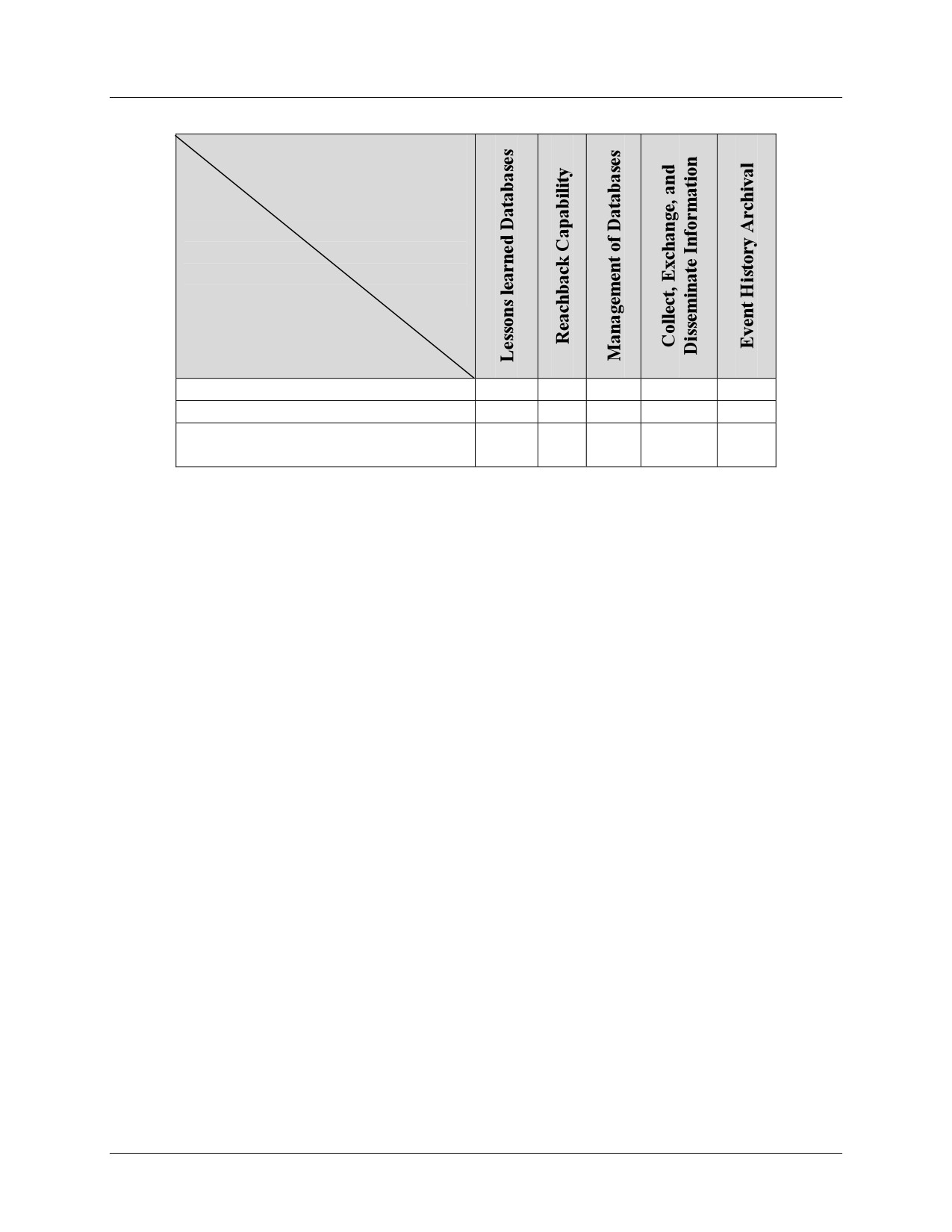
Table 9.31-4 is a list of ideas for material approaches and a corresponding description of each
idea. Once CBRN/TIM event histories are automatically archived in lessons learned databases,
the approaches to accomplish this task will also include the ability to reach back into those
databases and extract pertinent information do aid in future CBRND missions. Table 9.31-5
identifies which of the material approaches might address specific materiel deficiencies
identified in the DOTMLPF assessment.
246
For Official Use Only
For Official Use Only
CBRND Functional Needs Analysis/Functional Solution Analysis
Chapter 9. Tactical Shape Tasks
Table 9.31-4. TASHA 31: Materiel Approaches
Idea for Materiel Approach
Description
Lessons learned databases
Develop/consolidate databases for operational and training
lessons learned.
Reachback capability
Develop a system providing the ability to rapidly and
securely reach back and contact CBRN experts and obtain
CBRND plans, procedures, information, and lessons learned.
Management of Databases
Develop a system to link and manage the accuracy,
adequacy, and availability of CBRND information databases.
Includes access management, content control, and the
conduct of data set management. Also includes process to
identify database actions such as consolidation of similar
databases, establishment of new databases, archiving of
obsolete databases, etc.
Collect, exchange, and
Develop a system that collects and analyzes CBRN
disseminate information
information and sensor input; generates, edits, and
disseminates NBC reports, including downwind-hazard plots
and overlays; and verify receipt of reports and plots.
Transmission of data uses existing communication nets.
Event history archival
Develop a system accepting manual and automatic
CBRN/TIM event data input then modifies, retrieves,
displays, archives, and transfers data (e.g., intelligence,
location of attack, source and sensor information) to
repositories.
247
For Official Use Only
For Official Use Only
CBRND Functional Needs Analysis/Functional Solution Analysis
Chapter 9. Tactical Shape Tasks
Table 9.31-5. TASHA 31: IMA Assessment
Ideas for Material
Approaches
(IMA)
Identified Gaps
Insufficient repository access.
X
X
X
X
X
Lack of central Joint repository.
X
X
X
X
X
Inadequate means to timely record
X
X
X
X
X
and compile lessons learned.
248
For Official Use Only
For Official Use Only
CBRND Functional Needs Analysis/Functional Solution Analysis
Chapter 9. Tactical Shape Tasks
9.32
Task TASHA 32: Prepare for the WMD elimination mission
9.32.1
Functional Area Analysis
9.32.1.1
Definition
Accomplishes activities that prepare applicable forces to dispose of WMD resources by removal,
destruction, and disabling; to preserve material available for dual use; and to secure sites and
material for forensic and scientific investigation. Reference the charter of the Executive Agent
for WMD Elimination mission (TBD).
9.32.1.2
Derivation
UJTL (TA 5, TA 6, TA 7, TA 7.1), Military Transformation: A Strategic Approach,
Transformation Planning Guidance, Protection Joint Functional Concept, Combatant
Commander’s Planning Guide for WMD Elimination Operations.
9.32.1.2.1
Supported Task: OPSHA 6
9.32.1.2.2
Lateral Task: N/A
9.32.1.2.3
Supporting Task: N/A
9.32.1.3
Condition
Perform this task under conditions of:
Physical. N/A
Military
1. Limited personnel experience. (C2.2.4.5)
2. Partial joint staff integration. (C2.3.1.1)
3. Limited staff expertise. (C2.3.1.3)
4. Difficult theater intelligence access. (C2.4.4)
Civil
1. Limited domestic political support. (C3.1.1)
2. Limited foreign government support. (C 3.1.2.3)
3. Limited industrialization. (C3.3.5.1)
9.32.1.4
Functional Needs Analysis
This task is assessed in the WMD Interdiction and Elimination JCIDS Analysis.
249
For Official Use Only
For Official Use Only
CBRND Functional Needs Analysis/Functional Solution Analysis
Chapter 10. Strategic National Shield Tasks
CHAPTER 10. STRATEGIC NATIONAL SHIELD
TASKS
For Official Use Only
For Official Use Only
CBRND Functional Needs Analysis/Functional Solution Analysis
Chapter 10. Strategic National Shield Tasks
Table of Contents
List of Acronyms
ii
10.0
Strategic National Shield
1
10.1
Task SNSHLD 1: Establish interoperability and protection standards and criteria
for protective equipment and supplies
4
10.2
Task SNSHLD 2: Establish protection policy, standards, and criteria for medical
CBRN/TIM protective countermeasures
14
10.3
Task SNSHLD 3: Establish standards, criteria, and procedures for training,
equipping, and protecting force members and eligible civilians supporting the
mission from threat CBRN/TIM agents
27
10.4
Task SNSHLD 4: Establish standards, criteria, and procedures for training,
equipping, and protecting eligible civilians not supporting the mission from threat
CBRN/TIM agents
36
10.5
Task SNSHLD 5: Establish standards, criteria, and procedures for training,
equipping, and protecting MWAs from threat CBRN/TIM agents
46
10.6
Task SNSHLD 6: Establish standards, criteria, and procedures for training,
equipping, and protecting all classes of supplies from contamination by threat
CBRN/TIM agents
53
10.7
Task SNSHLD 7: Establish standards, criteria, and procedures for hazardous or
contaminated materials and samples marking, packing, storage, handling, and
transportation
62
10.8
Task SNSHLD 8: Establish standards, criteria, and procedures for safe handling
and safely transporting CBRN/TIM-exposed or -contaminated casualties and
MWAs
74
10.9
Task SNSHLD 9: Establish standards, criteria, and procedures for safe handling
and transport of CBRN/TIM-exposed or -contaminated human and MWA remains
89
10.10
Task SNSHLD 10: Determine CBRN/TIM protection requirements and means
supporting CBRND national and strategic guidance, intent, plans, and taskings
104
10.11
Task SNSHLD 11: Manage the provisioning of the force with CBRN/TIM
protection systems, equipment and supplies addressing identified threats
111
10.12
Task SNSHLD 12: Allocate protection resources for CBRND
120
i
For Official Use Only
For Official Use Only
CBRND Functional Needs Analysis/Functional Solution Analysis
Chapter 10. Strategic National Shield Tasks
10.0 Strategic National Shield
10.0.1
Introduction
Strategic level of war is divided into two sublevels: strategic national (SN) and strategic theater
(ST). This chapter focuses upon the SN level of war at the national (U.S. Department of Defense
[DoD]/Service/interagency) level of task development and implementation. At this level,
national authorities, often in cooperation with other nations, establish national or multinational
(alliance or coalition) security objectives and guidance and develop and apply national resources
to accomplish these objectives. Decisions and activities at the SN level establish national and
multinational military objectives, specify the sequencing of activities and actions, develop global
plans and means to attain these objectives, delineate limits and assess risks for the application of
military and other tools of national power, and provide military forces and other capabilities as
outlined in strategic plans.1
This chapter, detailing the Strategic National Shield (SHLD) area, estates relevant information
from the chemical, biological, radiological, and nuclear defense (CBRND) Functional Area
Analysis (FAA), including a description of each of the 12 SNSHLD tasks, derivation of the task,
an indication of other linked tasks, and the pertinent conditions. The Functional Needs Analysis
(FNA) section addresses the capability and deficiency analysis and a brief description of
potential near-term changes. Once all the capabilities are considered, the assessment concludes
with a separate, overarching look at the entire capability spectrum to identify remaining gaps
and/or synergies. The Functional Solutions Analysis (FSA) section addresses possible solutions
for the deficiences identified in the FNA section. Solutions for SNSHLD are non-materiel and
are reflected in one or more of the six areas of DOTLPF: doctrine, organization, training,
leadership, personnel, and facilities. Annotations under “Materiel” are non-materiel in nature but
do not align in one of the six non-materiel aspects of DOTLPF. These annotations include
research, analysis, and other actions to address and establish solutions for the deficiencies.
Most of the SNSHLD tasks involve doctrine, policies, and procedures providing parameters for
planning, decisioning, and actions or activities to accomplish the tasks. These range from the
establishment of foundational standards, criteria, and metrics for Shield systems and measures to
equipping and training of forces (national and multinational) for sustained CBRND operations
encompassing both chemical, biological, radiological, and nuclear (CBRN) and toxic industrial
material (TIM) agents.
Tasks associated with forces includes constituent elements of the transforming force, such as
civilians, military working animals (MWAs), coalition/alliance forces, and third-party nationals.
Increasing reliance upon nonmilitary personnel (such as government employees and contractors)
as operational enablers dictated their inclusion as force members.
10.0.2
FNA Summary
The below table summaries the overall current and proejcted capability to perform the SNSHLD
tasks identified in the CBRND FAA. The overall capability to conduct these tasks in the current
1 Appendix A to Enclosure B, para. 3a, CJCMS 3500.04C, Universal Joint Task List, July 2002, CJCS.
1
For Official Use Only
For Official Use Only
CBRND Functional Needs Analysis/Functional Solution Analysis
Chapter 10. Strategic National Shield Tasks
time frame is assessed as “red.” There are key deficiencies in DoD’s ability to protect
populations other than military members as well as support concurrent CBRND operations,
especially those associated with sustained and expeditionary operations within a CBRN/TIM
environment. It is projected that the overall status will improve to “Yellow” in the near/mid term
with some improvements in specific measures within specific tasks.
Table 10.0-1. Strategic National Shield Summary FNA Findings
CBRN
Capability
Strategic
CBRN Strategic National Shield Task
National
Title
Near/
Shield Task
Current
Far
Mid
Number
Establish interoperability and protection
SNSHLD 1
standards and criteria for protective
•
•
•
equipment and supplies
Establish protection policies, standards,
SNSHLD 2
and criteria for medical CBRN/TIM
•
•
•
protective countermeasures
Establish standards, criteria, and
procedures for training, equipping, and
SNSHLD 3
protecting force members and eligible
•
•
•
civilians supporting the mission from
threat CBRN/TIM agents
Establish standards, criteria, and
procedures for training, equipping, and
SNSHLD 4
protecting eligible civilians not
•
•
•
supporting the mission from threat
CBRN/TIM agents
Establish standards, criteria, and
procedures for training, equipping, and
SNSHLD 5
protecting MWAs from threat
•
•
•
CBRN/TIM agents
Establish standards, criteria, and
procedurs for training, equipping, and
SNSHLD 6
protecting all classes of supplies from
•
•
•
contamination by threat CBRN/TIM
agents
Establish standards, criteria, and
procedures for hazardous or
SNSHLD 7
contaminated materials and samples
•
•
•
marking, packing, storage, handling, and
transportation
Establish standards, criteria, and
procedures for safe handling and safely
SNSHLD 8
transporting CBRN/TIM-exposed or -
•
•
•
contaminated casualties and MWAs
2
For Official Use Only
For Official Use Only
CBRND Functional Needs Analysis/Functional Solution Analysis
Chapter 10. Strategic National Shield Tasks
Establish standards, criteria, and
procedures for safe handling and
SNSHLD 9
transport of CBRN/TIM-exposed or -
•
•
•
contaminated human and MWA remains
Determine CBRN/TIM protection
requirements and means supporting
SNSHLD 10
CBRND national and strategic guidance,
•
•
•
intent, plans, and taskings
Manage the provisioning of the force
with CBRN/TIM protection systems,
SNSHLD 11
equipment and supplies addressing
•
•
•
identified threats
Allocate protection resources for
SNSHLD 12
CBRND
•
•
•
OVERALL
•
•
•
10.0.3
FSA Summary
The paragraphs below summarize the assessment of all potential DOTLPF solutions for the
capability gaps identified in the FNA section. The summaries also address the non-materiel
solutions annotated under “Materiel” as discussed earlier. SNSHLD addresses non-materiel
actions and activities. Therefore, materiel solutions are not applicable to this level of war.
10.0.3.1
DOTLPF
The DOTLPF solutions identified in this chapter are associated primarily with the the level of
protection afforded by CBRND systems and measures and the readiness of force populations for
CBRND activities and actions. Non-materiel solutions are identified. These solutions include
such actions as the establishment of baseline CBRND standards, criteria, and metrics adequately
addressing the needs of the force and its constituent populations; doctrine encompassing those
populations; applicable training programs, infrastructures and organizational structures
supporting CBRND operations within sustained CBRN/TIM environments for the transformed
force; leadership CBRND awareness and decisioning enablers; and criteria for civilian personnel
performing mission-related activities within a CBRN/TIM environment.
10.0.3.2
IMA
All solutions identified for the Strategic National level of war within Shield are non-materiel
approaches. Since materiel solutions are not applicable to this Shield level of war, assessments of
Ideas for Materiel Solutions (IMAs) are not applicable.
3
For Official Use Only
For Official Use Only
CBRND Functional Needs Analysis/Functional Solution Analysis
Chapter 10. Strategic National Shield Tasks
10.1
Task SNSHLD 1: Establish interoperability and protection standards and criteria
for protective equipment and supplies
10.1.1
Functional Area Analysis
10.1.1.1
Defintion
To reduce the impact of CBRN/TIM releases on U.S., allied, friendly, or nonaligned military
forces and eligible civilians, MWAs, and equipment, supplies, and facilities. This task includes
interoperability,2 protection standards, and baseline requirements for protective equipment and
supplies required for survival and operations within a CBRN/TIM environment. The criteria
establish requisite metrics. The standards specify characteristics for protective equipment and
supplies required for survival and operations within a CBRN/TIM environment. The standards
establish and define “clean,” “safe,” and “dirty” hazard levels for the application and
performance of protective equipment and supplies. The supporting criteria stipulate baseline
requirements for CBRN/TIM protective equipment and supplies. The criteria establish requisite
metrics that optimize protection, function/task accomplishment, and mission capabilities for
operations within CBRN/TIM environments while minimizing hazards, encumbrances,
limitations, and adverse impacts.
NOTE: Interoperability, as defined in JP 0-2, includes “the development and fielding process
that provides materiel that is fully compatible to systems of all Services.” North Atlantic Treaty
Organization (NATO) and other alliance standards are negotiated separately and assimilated into
the requirements and acquisition process as necessary.
10.1.1.2
Derivation
Joint Enabling Concept for CBRN Operations, An Operational Concept for Biological Defense,
Protection Joint Functional Concept, UJTL (SN 3.4.4, SN 4.3.4, SN 5.1.1, SN 6.1, SN 7.5, SN 9,
SN 9.1.3, SN 9.2.1).
10.1.1.2.1
Supported Task: N/A
10.1.1.2.2
Lateral Task: SNSHA 3
10.1.1.2.3
Supporting Task: N/A
10.1.1.3
Condition
Perform this task under conditions of:
2 Interoperability includes “the development and fielding process that provides material that is fully compatible to systems of all
Services.” (JP 02, Unified Action Armed Forces) NATO and other alliance standards are negotiated separately and assimilated
into the requirements and acquisition process as necessary.
4
For Official Use Only
For Official Use Only
CBRND Functional Needs Analysis/Functional Solution Analysis
Chapter 10. Strategic National Shield Tasks
Physical
1. Immediate to delayed danger, and potential long-term health hazard of atmospheric
weapons effects. (C1.3.3)
Military
1. Partial joint staff integration. (C2.3.1.1)
2. Partial multinational integration. (C2.3.1.2)
3. Some interoperability. (C2.2.6)
Civil
1. Correct interdepartmental/interagency relationships. (C3.1.1.3)
10.1.2
Functional Needs Analysis
10.1.2.1
Capability and Deficiency Assessment Summary
Table 10.1-1 discusses the only capability that currently exists to perform the task to the
designated standard. The Chairman of the Joint Chiefs of Staff (CJCS)/joint staff promulgates
and establishes joint Service baseline standards, criteria, and metrics for the development and
fielding of CBRND protective equipment and supplies.
Current Capability and Deficiency
Interoperability and protection standards, measures, and criteria for CBRND protective
equipment and supplies exist for specific assets and are established during the development,
acquisition, and fielding process. Doctrine, policy, procedures, and tactics, techniques, and
procedures (TTPs) are currently available for employment of CBRND protective equipment and
measures; however, task performance within a contaminated environment by individual
protective equipment (IPE)-encumbered personnel is not generally addressed. Deficiencies
include the lack of a single set of overarching CBRND standards, measures, criteria, and metrics
for CBRND assets. The overall current assessment is “yellow.”
Projected Near/Mid-Term Capability and Deficiency
No change projected for this task.
Projected Far-Term Capability and Deficiency
No change projected for this task.
5
For Official Use Only
For Official Use Only
CBRND Functional Needs Analysis/Functional Solution Analysis
Chapter 10. Strategic National Shield Tasks
Table 10.1-1. SNSHLD 1: Capability and Deficiency Assessment
Capability:
CJCS/
M1
M2
M3
M4
M5
M6
M7
M8
M9
M10
M11
M12
M13
M14
M15
M16
M17
M18
M19
M20
M21
M22
M23
M24
M25
M26
M27
M28
Joint Staff
Current
Overall
R2
R3
R4
R5
R6
Y7
Y7
Y7
Y7
Y8
Y9
Y10
Y11
Y12
Y13
Y12
Y13
Y13
Y13
Y12
Y12
Y13
Y13
Y13
Y13
Y13
Y13
Y13
Capability1
Near/Mid-
Term
R
R
R
R
R
Y
Y
Y
Y
Y
Y
Y
Y
Y
Y
Y
Y
Y
Y
Y
Y
Y
Y
Y
Y
Y
Y
Y
Overall
Capability
Far-Term
Overall
R
R
R
R
R
Y
Y
Y
Y
Y
Y
Y
Y
Y
Y
Y
Y
Y
Y
Y
Y
Y
Y
Y
Y
Y
Y
Y
Capability
FAA Measure
Scale
M1
“Clean” hazard levels are specifically
G: An overarching single set of specific measures defining “Clean” hazard levels exist for application to
defined in terms of route of entry,
all systems, equipment, and assets that address the full range of protected resources.
exposed area, exposure rate and duration,
Y: Specific “Clean” hazard levels and measures are defined for specific systems, equipment, and assets.
material concentration and physical state,
R: “Clean” hazard levels are not defined.
accumulated dose, and impact on life,
health, and the environment.
M2
“Safe” hazard levels are specifically
G: An overarching single set of specific measures defining “Safe” hazard levels exist for application to all
defined in terms of route of entry,
systems, equipment, and assets that address the full range of protected resources.
exposed area, exposure rate and duration,
Y: Specific “Safe” hazard levels and measures are defined for specific systems, equipment, and assets.
material concentration and physical state,
R: “Safe” hazard levels are not defined.
accumulated dose, and impact on life,
health, and the environment.
M3
“Dirty” hazard levels are specifically
G: An overarching single set of specific measures defining “Dirty” hazard levels exist for application to
defined in terms of route of entry,
all systems, equipment, and assets that address the full range of protected resources.
exposed area, exposure rate and duration,
Y: Specific “Dirty” hazard levels and measures are defined for specific systems, equipment, and assets.
material concentration and physical state,
R: “Dirty” hazard levels are not defined.
accumulated dose, and impact on life,
health, and the environment.
M4
Criteria for employing CBRN/TIM
G: Doctrine, policy, procedures, and TTPs adequately address the employment of protective equipment
protective equipment and measures have
and measures across the full range of protected resources and eligible personnel, including non-U.S.
been adequately described to include
Y: Doctrine, policy, procedures, and TTPs adequately address the employment of protective equipment
timing and level of protection required.
and measures for U.S. forces.
R: Doctrine, policy, procedures, and TTPs do not or inadequately address the employment of protective
equipment and measures for U.S. forces.
6
For Official Use Only
For Official Use Only
CBRND Functional Needs Analysis/Functional Solution Analysis
Chapter 10. Strategic National Shield Tasks
M5
Measures identify the quantity of
G: Specific measures identify the quantity of CBRN/TIM material released into the environment requiring
CBRN/TIM material released into the
the implementation of protective measures and are applied.
environment that requires donning IPE,
Y: General measures or alternative processes exist address the detection of CBRN material in the
activation of collective protection system
environment and the employment of protective measures.
(CPS), or initiating other protective
R: Measures and processes do not exist or are inadequate for the detection of CBRN material in the
measures.
environment and the employment of protective measures.
M6
Measures identify the quantity of
G: An overarching single set of specific measures for CBRN agent testing, by agent, exist for application
CBRN/TIM material against which
to all systems, equipment, and assets that address the full range of protected resources.
protective equipment must be tested for
Y: Specific CBRN measures are defined for specific systems, equipment, and assets.
each agent.
R: CBRN measures are not defined.
M7
Measures specify the minimum period of
G: An overarching single set of specific measures for CBRN agent testing exist for application to all
time required for test quantities of
systems, equipment, and assets that address the full range of protected resources.
CBRN/TIM material to permeate the
Y: Specific CBRN measures are defined for specific systems, equipment, and assets.
protective material.
R: CBRN measures are not defined.
M8
Metrics specify the minimum period of
G: An overarching single set of specific metrics for CBRN agent testing exist for application to all
time required for test quantities of
systems, equipment, and assets that address the full range of protected resources.
CBRN/TIM material to penetrate the
Y: Specific CBRN metrics are defined for specific systems, equipment, and assets.
protective material.
R: CBRN metrics are not defined.
M9
Metrics specify the minimum period of
G: An overarching single set of specific metrics for CBRN agent testing exist for application to all
time required for test quantities of
systems, equipment, and assets that address the full range of protected resources.
CBRN/TIM material to saturate the
Y: Specific CBRN metrics are defined for specific systems, equipment, and assets.
protective material.
R: CBRN metrics are not defined.
M10
Metrics specify the maximum period of
G: Specific metrics identify the maximum period of time for donning or activation of protective
time required to don or activate
equipment or the implementation of protective measures and are applied.
protective equipment or initiate other
Y: General metrics or alternative processes exist address the detection of CBRN material in the
protective measures.
environment and the employment of protective equipment and measures.
R: Metrics and processes do not exist or are inadequate for the detection of CBRN material in the
environment and the employment of protective equipment and measures.
M11
Standards adequately address sustained
G: Doctrine, policy, procedures, and TTPs incorporate standards that adequately address sustained
survival and operational requirements
survival and operational requirements within a CBRN/TIM environment across the full range of protected
within a CBRN/TIM environment.
resources and eligible personnel, including non-U.S.
Y: Doctrine, policy, procedures, and TTPs incorporate standards that address survival and operational
requirements within a CBRN/TIM environment for U.S. forces.
R: Doctrine, policy, procedures, and TTPs do not incorporate standards for, or inadequately address,
sustained survival and operational requirements within a CBRN/TIM environment for U.S. forces.
7
For Official Use Only
For Official Use Only
CBRND Functional Needs Analysis/Functional Solution Analysis
Chapter 10. Strategic National Shield Tasks
M12
Standards and criteria support
G: An overarching single set of specific standards and criteria supporting CBRND interoperability exist
interoperability.
and are applied to all systems, equipment, and assets across the Services addressing the full range of
protected resources and personnel, including non-U.S.
Y: Specific CBRN interoperability standards and criteria are defined for specific U.S. systems, equipment,
assets, and forces.
R: CBRN interoperability standards and criteria are not defined for U.S. systems, equipment, assets, and
forces.
M13
Standards identify the period of time for
G: An overarching single set of specific standards for CBRN agent testing exist for application to all
test quantities of CBRN/TIM material to
systems, equipment, and assets that address the full range of protected resources.
penetrate and defeat filtration.
Y: Specific CBRN standards are defined for specific systems, equipment, and assets.
R: CBRN standards are not defined.
M14
Criteria and metrics optimize sustained
G: An overarching single set of specific criteria and metrics for optimization of sustained task and
task and function performance within a
function performance within a contaminated environment and in high-stress circumstances exist for
contaminated environment and in high-
application to all systems, equipment, and assets that address the full range of protected resources and
stress circumstances.
personnel, including non-U.S.
Y: Specific CBRN criteria and metrics for task and function performance within a contaminated
environment and in high-stress circumstances are defined for specific U.S. systems, equipment, assets,
and forces.
R: CBRN metrics are not defined for sustained task and function performance within a contaminated
environment and in high-stress circumstances.
M15
Criteria and metrics minimize
G: An overarching single set of specific criteria and metrics addressing the minimization of
encumbrances, hazards, limitations, and
encumbrances, hazards, limitations, and restrictions of CBRN/TIM protective equipment and supplies
restrictions of CBRN/TIM protective
exist and are applied.
equipment and supplies.
Y: Specific criteria and metrics addressing the reductions of encumbrances, hazards, limitations, and
restrictions of CBRN/TIM protective equipment and supplies are defined for specific systems, equipment,
and assets.
R: Criteria and metrics addressing the minimization of encumbrances, hazards, limitations, and
restrictions of CBRN/TIM protective equipment and supplies are not defined.
M16
Criteria and metrics optimize safety and
G: An overarching single set of specific criteria and metrics addressing the optimization of the safety and
well-being of forces operating within a
well-being of forces (including eligible civilians and non-U.S. forces) operating within a CBRN/TIM
contaminated environment.
environment exist and are applied.
Y: Specific criteria and metrics addressing the safety and well-being of U.S. forces operating within a
CBRN/TIM environment are defined for specific systems, equipment, and assets.
R: Criteria and metrics addressing the optimization of the safety and well-being of U.S. forces within a
CBRN/TIM environment are not defined.
8
For Official Use Only
For Official Use Only
CBRND Functional Needs Analysis/Functional Solution Analysis
Chapter 10. Strategic National Shield Tasks
M17
Criteria and metrics minimize logistic
G: An overarching single set of specific criteria and metrics addressing the minimization of logistical
support costs and user Total Ownership
support costs and Total Ownership Cost exist and are applied.
Cost.
Y: Specific criteria and metrics addressing reductions in logistical support costs and Total Ownership
Cost are defined for specific systems, equipment, and assets.
R: Criteria and metrics addressing the minimization of logistical support costs and Total Ownership Cost
are not defined.
M18
Criteria and metrics maximize
G: An overarching single set of specific criteria and metrics addressing the maximization of compatibility
compatibility and integration with
and integration of CBRND assets with individual combat equipment and systems exist and are applied.
individual combat equipment and
Y: Specific criteria and metrics addressing compatibility and/or integration of CBRND assets with
systems.
individual combat equipment and systems are defined for specific systems, equipment, and assets.
R: Criteria and metrics addressing the maximization of compatibility and integration of CBRND assets
with individual combat equipment and systems are not defined.
M19
Criteria and metrics maximize
G: An overarching single set of specific criteria and metrics addressing the maximization of compatibility
compatibility and integration with
and integration of CBRND assets with combat equipment and support systems exist and are applied.
combat weapons and support systems.
Y: Specific criteria and metrics addressing compatibility and/or integration of CBRND assets with combat
equipment and support systems are defined for specific systems, equipment, and assets.
R: Criteria and metrics addressing the maximization of compatibility and integration of CBRND assets
with combat equipment and support systems are not defined.
M20
Criteria and metrics optimize worldwide
G: An overarching single set of specific criteria and metrics addressing the optimization of worldwide
application in the expected combat and
application of CBRND assets in the expected combat and climatic conditions by forces (including eligible
climatic conditions.
civilians and non-U.S. forces) exist and are applied.
Y: Specific criteria and metrics addressing application of CBRND assets in the expected combat and
climatic conditions by U.S. forces are defined for specific systems, equipment, and assets.
R: Criteria and metrics addressing the optimization of the worldwide application of CBRND assets in the
expected combat and climatic conditions by U.S. forces are not defined.
M21
Criteria and metrics minimize training
G: An overarching single set of specific criteria and metrics addressing the minimization of CBRND
and maintenance resources.
training and maintenance resources by forces (including eligible civilians and non-U.S. forces) exist and
are applied.
Y: Specific criteria and metrics addressing the reduced levels of required CBRND training and
maintenance resources by U.S. forces are defined for specific systems, equipment, and assets.
R: Criteria and metrics addressing the minimization of CBRND training and maintenance resources by
U.S. forces are not defined.
M22
Criteria and metrics optimize shelf life in
G: An overarching single set of specific criteria and metrics addressing the optimization of CBRND asset
prolonged storage under any climatic
shelf life in prolonged storage under any climatic condition exist and are applied.
condition.
Y: Specific criteria and metrics addressing CBRND asset shelf life in prolonged storage under any
climatic condition are defined for specific systems, equipment, and assets.
R: Criteria and metrics addressing the optimization of CBRND asset shelf life in prolonged storage under
any climatic condition are not defined.
9
For Official Use Only
For Official Use Only
CBRND Functional Needs Analysis/Functional Solution Analysis
Chapter 10. Strategic National Shield Tasks
M23
Criteria and metrics minimize impact
G: An overarching single set of specific criteria and metrics addressing the minimization of CBRND asset
upon warfighter load.
impact upon the warfighter load exist and are applied.
Y: Specific criteria and metrics addressing CBRND asset impact upon the warfighter load are defined for
specific systems, equipment, and assets.
R: Criteria and metrics addressing the minimization of CBRND asset impact upon the warfighter are not
defined.
M24
Criteria and metrics minimize transport
G: An overarching single set of specific criteria and metrics addressing the minimization of CBRND asset
requirements.
transport requirements exist and are applied.
Y: Specific criteria and metrics addressing CBRND asset transport requirements are defined for specific
systems, equipment, and assets.
R: Criteria and metrics addressing the minimization of CBRND asset transport requirements are not
defined.
M25
Criteria and metrics optimize serviceable
G: An overarching single set of specific criteria and metrics addressing the optimization of CBRND asset
life of protective equipment and supplies.
service life exist and are applied.
Y: Specific criteria and metrics addressing CBRND asset service life are defined for specific systems,
equipment, and assets.
R: Criteria and metrics addressing the optimization of CBRND asset service life are not defined.
M26
Criteria and metrics optimize
G: An overarching single set of specific criteria and metrics addressing the optimizing the
decontaminability of protective
decontaminability of CBRND assets exist and are applied.
equipment and supplies.
Y: Specific criteria and metrics addressing CBRND asset decontaminability are defined for specific
systems, equipment, and assets.
R: Criteria and metrics addressing the optimization of CBRND asset decontaminability are not defined.
M27
Criteria and metrics minimize storage
G: An overarching single set of specific criteria and metrics addressing the minimizing CBRND asset
footprint, packaging size, and weight.
storage footprint, packaging, size, and weight exist and are applied.
Y: Specific criteria and metrics addressing minimizing CBRND asset storage footprint, packaging, size,
and weight are defined for specific systems, equipment, and assets.
R: Criteria and metrics addressing minimizing CBRND asset storage footprint, packaging, size, and
weight are not defined.
M28
Criteria and metrics minimize infrared
G: DOTLPF provides common guidance across all Services, ensures the safety and well-being of forces
(IR)/electronic emissions.
(including eligible civilians and non-U.S. members), and enables sustained operations within a
CBRN/TIM environment.
Y: DOTLPF is common across all Services, ensures the safety and well-being of U.S. forces (including
eligible civilians), and supports sustained operations within a CBRN/TIM environment.
R: DOTLPF is not common across services, inadequate, or nonexistent for the safety and well-being of
U.S. forces (including eligible civilians and non-U.S. members) and does not enable or is inadequate for
sustained operations within a CBRN/TIM environment.
1 DOTLPF for task performance within a CBRN/TIM hazard environment is inadequate and insufficient. DOTLPF generally does not discuss task performance within a
contaminated environment by personnel encumbered with IPE. DOTLPF considering MWAss, civilians, and non-U.S. forces (forces not part of a treaty organization such as
NATO) is inadequate.
10
For Official Use Only
For Official Use Only
CBRND Functional Needs Analysis/Functional Solution Analysis
Chapter 10. Strategic National Shield Tasks
2 “Clean” hazard levels currently are not specifically defined.
3 “Safe” hazard levels are currently not specifically defined.
4 “Dirty” hazard levels are currently not specifically defined.
5 Sufficient doctrine, policy, procedures, and TTPs are currently available for the employment of protective equipment and measures by U.S. forces. However, criteria applicable to
MWAs, civilians, and non-U.S. forces are not promulgated.
6 Quantities of CBRN/TIM material within the environment for implementation of protective measures are not identified. However, detection of the presence of CBRN/TIM within
the environment by sensors (manual and/or automated) is linked to the implementation of associated protective measures. MWAs, civilians, and non-U.S. forces are not adequately
addressed.
7 Measures are established for specific systems, equipment, and assets, when determined applicable, during the acquisition and development process, including protective material
incorporated into the end item. Additionally, no single set of measures exists as an overarching basis for testing. Measures considering MWAs, civilians, and non-U.S. forces are
not adequately addressed.
8 Metrics maybe established for specific systems, equipment, and assets, when determined applicable, during the acquisition and development process. Doctrine, policies,
procedures, and TTPs identify time periods for the donning of protective equipment and the initiation of other protective measures. However, detection of the presence of
CBRN/TIM within the environment by sensors (manual and/or automated) is linked to the implementation of associated protective measures. Metrics considering MWAs,
civilians, and non-U.S. forces are not adequately addressed.
9 Sufficient doctrine, policy, procedures, and TTPs are currently available for the employment of protective equipment and measures. Standards considering MWAs, civilians, and
non-U.S. forces are not adequately addressed.
10 Standards and criteria are established for specific systems, equipment, and assets (when determined applicable) during the acquisition and development process. However,
interoperability may not be a factor in some Service specific programs. Standards considering MWAs, civilians, and non-U.S. forces (forces not part of a treaty organization such
as NATO) are not adequately addressed.
11 Standards are established during the acquisition and development process. No single set of standards exist as an overarching basis.
12 Criteria and metrics are established for specific systems, equipment, and assets, when determined applicable, during the acquisition and development process. No single set of
criteria and metrics exists as an overarching basis. Criteria and metrics considering MWAs, civilians, and non-U.S. forces (forces not part of a treaty organization such as NATO)
are not adequately addressed.
13 Criteria and metrics are established for specific systems, equipment, and assets, when determined applicable, during the acquisition and development process. No single set of
criteria and metrics exists as an overarching basis.
11
For Official Use Only
For Official Use Only
CBRND Functional Needs Analysis/Functional Solution Analysis
Chapter 10. Strategic National Shield Tasks
10.1.3
Functional Solution Analysis
10.1.3.1
DOTLPF Assessment Summary
This section addresses the deficiencies associated with interoperability and protection standards,
measures, criteria, and metrics for CBRND protective equipment and supplies. The deficiencies
can be addressed with non-materiel solutions. If there are no non-materiel solutions, or they are
only partial solutions, the remaining non-materiel need is then stated. Materiel needs are assessed
in the IMA section. Non-materiel solutions include research, development, and engineering
(RD&E) to define “Clean,” “Safe,” and “Dirty” and their associated hazard levels for
CBRN/TIM, as well as determining minimal CBRN/TIM quantities in the environment for
implementation of CBRND protection. This foundational information provides the basis for
development of overarching standards, measures, criteria, and metrics for the development,
acquisition, fielding and employment of CBRND protective equipment and supplies. The derived
joint standards, measures, criteria, and metrics should address other protected populations such
as MWAs, eligible civilians, and non-U.S. forces and be integrated into doctrine, policy,
procedures, TTPs, and training. These non-materiel requirements should also establish minimal
qualifications for eligible civilians supporting the mission to ensure their safe application of
CBRND protective measures and materiel for survival.
1.
Deficiency: “Clean” hazard levels currently are not specifically defined.
Non-Materiel Solutions: Doctrine: Define “Clean” and identify threshold hazard levels for
CBRN/TIM agents within the environment and include in doctrine, policy, procedures, and
TTPs.
2.
Deficiency: “Safe” hazard levels are currently not specifically defined.
Non-Materiel Solutions: Doctrine: Define “Safe” and identify threshold hazard levels for
CBRN/TIM agents within the environment and include in doctrine, policy, procedures, and
TTPs.
3.
Deficiency: “Dirty” hazard levels are currently not specifically defined.
Non-Materiel Solutions: Doctrine: Define “Dirty” and identify threshold hazard levels for
CBRN/TIM agents within the environment and include in doctrine, policy, procedures, and
TTPs.
4.
Deficiency: Quantities of CBRN/TIM material within the environment for implementation of
protective measures are not identified.
Non-Materiel Solutions: Doctrine: Identify and link ranges of quantities of CBRN/TIM
material to Mission-Oriented Protective Posture (MOPP) levels and protective measures and
include in doctrine, policy, procedures, and TTPs.
5.
Deficiency: MWAs, civilians, and non-U.S. forces (forces not part of a treaty organization
such as NATO) are not adequately addressed.
Non-Materiel Solutions: Doctrine: Address application of MOPP levels and protective
measures for MWAs, civilians, and non-U.S. forces and include in doctrine, policy,
procedures, and TTPs.
12
For Official Use Only
For Official Use Only
CBRND Functional Needs Analysis/Functional Solution Analysis
Chapter 10. Strategic National Shield Tasks
6.
Deficiency: No single set of measures, standards, metrics, and criteria exists as an
overarching basis CBRND.
Non-Materiel Solutions: Doctrine: Promulgate, establish, and enforce the application of an
overarching CBRND set of measures, standards, and metrics for CBRND equipment and
supplies.
7.
Deficiency: Interoperability may not be a factor in some Service-specific programs.
Non-Materiel Solutions: Doctrine: Enforce DoD mandate for single CBRND program and
interoperability. Leadership: Leadership of Service Components support and enforce DoD
mandate.
8.
Deficiency: DOTLPF generally does not discuss task performance within a contaminated
environment by personnel encumbered with IP.
Non-Materiel Solutions: Doctrine: Consider implications of IP encumbrances upon task
performance within a CBRN/TIM environment for training and task development.
Organization: Consider limitations of IP encumbered personnel within a CBRN/TIM
environment for task structuring. Training: Include task performance within a CBRN/TIM
environment during formal and unit training and as an essential requirement element.
Leadership: Leadership training and awareness of limitations and restrictions associated with
task performance within a CBRN/TIM environment. Personnel: Ensure personnel are both
psychologically and physiologically matched with specialty for task completion requirements
within a CBRN/TIM environment.
9.
Deficiency: DOTLPF considering MWAs, civilians, and non-U.S. forces (forces not part of a
treaty organization such as NATO) is inadequate.
Non-Materiel Solutions: Doctrine: Address the provision of CBRN/TIM protection to
MWAs, eligible civilians, and non-U.S. forces in doctrine, policy, procedures, and TTPs.
Organization: Address organizational issues (e.g., who provides the equipment, support
forces to train and equip, etc.) related to the provision of CBRN/TIM protection to MWAs,
eligible civilians, and non-U.S. forces. Training: Include MWAs and eligible civilians in
CBRND training, exercises, and evaluations. Identify training requirements and
responsibilities for non-U.S. forces. Leadership: Leadership awareness of criticality of MWD
resources and increased dependence of military operations upon civilians. Personnel:
Require eligible civilians supporting the mission meet minimum standards for safe use of
CBRND resources.
10.1.3.1.2
IMA Assessment Summary
N/A
13
For Official Use Only
For Official Use Only
CBRND Functional Needs Analysis/Functional Solution Analysis
Chapter 10. Strategic National Shield Tasks
10.2
Task SNSHLD 2: Establish protection policy, standards, and criteria for medical
CBRN/TIM protective countermeasures
10.2.1
Functional Area Analysis
10.2.1.1
Defintion
To reduce the impact of CBRN/TIM releases on U.S., allied, friendly, or nonaligned military
forces and eligible civilians and MWAs. Policy provides guidance on the management,
eligibility, and administration of medical CBRN/TIM protective countermeasures. The standards
specify medical CBRN/TIM protective countermeasures for acquired immunity or preventive
mitigation of the effects of CBRN/TIM hazards. These countermeasures may include vaccines,
pretreatments, prophylaxes, surfactant, or other medical pre- and postexposure (presymptomatic)
measures for entity survival. The supporting criteria stipulate baseline requirements for the
standard. Depending upon the standard, the criteria may address efficacy, level of afforded
protection, duration of effectiveness, maximum number of administrations to achieve specified
protection level, method(s) of administration, potential for adverse reactions and long-term
effects, and ability to tailor to performed function. The criteria establish requisite metrics that
optimize protection for operations within CBRN/TIM environments while minimizing hazards,
limitations, and adverse impacts.
10.2.1.2
Derivation
Joint Enabling Concept for CBRN Operations, An Operational Concept for Biological Defense,
Protection Joint Functional Concept, UJTL (SN 3.4.4, SN 4.3.4, SN 5.1.1, SN 6.1, SN 7.5, SN 9,
SN 9.1.3, SN 9.2.1).
10.2.1.2.1
Supported Task: N/A
10.2.1.2.2
Lateral Task: SNSHA 3
10.2.1.2.3
Supporting Task: N/A
10.2.1.3
Condition
Perform this task under conditions of:
Physical
1. Immediate to delayed danger, and potential long-term health hazard of atmospheric
weapons effects. (C1.3.3)
Military
1. Partial joint staff integration. (C2.3.1.1)
2. Partial multinational integration. (C2.3.1.2)
14
For Official Use Only
For Official Use Only
CBRND Functional Needs Analysis/Functional Solution Analysis
Chapter 10. Strategic National Shield Tasks
Civil
1. Correct interdepartmental/interagency relationships. (C3.1.1.3)
10.2.2
Functional Needs Analysis
10.2.2.1
Capability and Deficiency Assessment Summary
Table 10.2-1 discusses the only capability that exists to perform the task to the designated
standard. CJCS/joint staff promulgates and establishes joint Service baseline standards, criteria,
and metrics for CBRN/TIM medical protective countermeasures.
Current Capability and Deficiency
Protection policies, standards, measures, criteria, and metrics exist for specific medical CBRND
countermeasures and their application by the force. Standards, measures, criteria, and metrics,
however, are established during the research and development process for each specific medical
CBRND countermeasure. Deficiencies include the lack of a single set of overarching medical
CBRND countermeasure standards, measures, criteria, and metrics for CBRND assets. The
overall current assessment is “red.”
Projected Near/Mid-Term Capability and Deficiency
No change projected for this task.
Projected Far-Term Capability and Deficiency
No change projected for this task.
15
For Official Use Only
For Official Use Only
CBRND Functional Needs Analysis/Functional Solution Analysis
Chapter 10. Strategic National Shield Tasks
Table 10.2-1. SNSHLD 2: Capability and Deficiency Assessment
Capability:
CJCS—
M1
M2
M3
M4
M5
M6
M7
M8
M9
M10
M11
M12
M13
M14
M15
M16
M17
M18
M19
M20
M21
M22
M23
M24
M25
M26
Medical
Current
Overall
Y2
R3
Y4
R5
R6
R7
R8
R9
R10
R11
R12
R13
R14
R15
R16
R16
R16
R16
R16
R17
R18
R18
Y19
R16
R16
Y16
Capability1
Near/Mid-
Term Overall
Y
R
Y
R
R
R
R
R
R
R
R
R
R
R
R
R
R
R
R
R
R
R
Y
R
R
Y
Capability
Far-Term
Overall
Y
R
Y
R
R
R
R
R
R
R
R
R
R
R
R
R
R
R
R
R
R
R
Y
R
R
Y
Capability
FAA Measure
Scale
M1
Policies outline the
G: Doctrine, policies, standards, and TTPs provide specific guidance and requirements for the management,
management, eligibility, and
eligibility, and administration of medical protective countermeasures for all eligible populations, including U.S.
administration of medical
military members, MWAs, eligible civilians, and non-U.S. force personnel.
CBRN/TIM protective
Y: Doctrine, policies, standards, and TTPs adequately address the management, eligibility, and administration of
countermeasures.
medical protective countermeasures by U.S. military members.
R: Doctrine, policies, standards, and TTPs are inadequate or nonexistent for the management, eligibility, and
administration of medical protective countermeasures by U.S. forces.
M2
Standards and supporting
G: An overarching single set of specific standards and criteria address CBRN/TIM protective countermeasures for
criteria address medical
all threat biological agents, address all force members (including MWAs, eligible civilians, and non-U.S. force
CBRN/TIM protective
members), meet Food and Drug Administration (FDA) criteria for approval, and are applied.
countermeasures for all threat
Y: Standards and supporting criteria are established for specific high-threat biological agents, meet FDA criteria for
biological agents.
approval, and address all U.S. force members, including eligible civilians and MWAs.
R: Standards and supporting criteria are nonexistent or established for specific biological agent countermeasures
based upon known achievable, do not address all threat biological agents, meet FDA criteria for investigational new
drug (IND) approval only and address U.S. military members only.
M3
Standards and supporting
G: An overarching single set of specific standards and criteria address CBRN/TIM protective countermeasures for
criteria address medical
radiological exposure, address all force members (including MWAs, eligible civilians, and non-U.S. force members),
CBRN/TIM protective
meet FDA criteria for approval, and are applied.
countermeasures against the
Y: Specific standards and criteria addressing CBRN/TIM protective countermeasures for the radiological exposure
effects of radiological
are defined for specific medical countermeasures, meet FDA criteria for approval, and address all U.S. force
exposures.
members, including eligible civilians and MWAs.
R: Standards and supporting criteria are nonexistent or established for specific CBRN/TIM protective
countermeasures for radiological exposure, are based upon known achievable, do not address preexposure and
presymptomatic exposures, meet FDA criteria for IND approval only, and address U.S. military members only.
16
For Official Use Only
For Official Use Only
CBRND Functional Needs Analysis/Functional Solution Analysis
Chapter 10. Strategic National Shield Tasks
M4
Standards and supporting
G: An overarching single set of specific standards and criteria address CBRN/TIM protective countermeasures for
criteria address medical
all threat chemical agents, address all force members (including MWAs, eligible civilians, and non-U.S. force
CBRN/TIM protective
members), meet FDA criteria for approval, and are applied.
countermeasures for all threat
Y: Standards and supporting criteria are established for specific high-threat chemical agents, meet FDA criteria for
chemical warfare agents.
approval, and address all U.S. force members, including eligible civilians and MWAs.
R: Standards and supporting criteria are nonexistent or established for specific chemical agent countermeasures
based upon known achievable, do not address all threat chemical agents, meet FDA criteria for IND approval only,
and address U.S. military members only.
M5
Standards and supporting
G: An overarching single set of specific standards and criteria address CBRN/TIM protective countermeasures for
criteria address medical
all threat TIC agents, address all force members (including MWAs, eligible civilians, and non-U.S. force members),
CBRN/TIM protective
meet FDA criteria for approval, and are applied.
countermeasures for all high-
Y: Standards and supporting criteria are established for specific high-threat TIC agents, meet FDA criteria for
threat toxic industrial chemical
approval, and address all U.S. force members, including eligible civilians and MWAs.
(TIC) agents.
R: Standards and supporting criteria are nonexistent or established for specific TIC agent countermeasures based
upon known achievable, do not address all threat TIC agents, meet FDA criteria for IND approval only, and address
U.S. military members only.
M6
Standards and supporting
G: An overarching single set of specific standards and criteria address CBRN/TIM protective countermeasures for
criteria address medical
all high-threat TIB agents, address all force members (including MWAs, eligible civilians, and non-U.S. force
CBRN/TIM protective
members), meet FDA criteria for approval, and are applied.
countermeasures for all high-
Y: Standards and supporting criteria are established for specific high-threat TIB agents, meet FDA criteria for
threat toxic industrial
approval, and address all U.S. force members, including eligible civilians and MWAs.
biological (TIB) agents.
R: Standards and supporting criteria are nonexistent or established for specific TIB agent countermeasures based
upon known achievable, do not address all high-threat TIB agents, meet FDA criteria for IND approval only, and
address U.S. military members only.
M7
Standards and supporting
G: An overarching single set of specific standards and criteria address CBRN/TIM protective countermeasures for
criteria for medical CBRN/TIM
all prominent endemic diseases for threat areas, address all force members (including MWAs, eligible civilians, and
protective countermeasures
non-U.S. force members), meet FDA criteria for approval, and are applied.
consider prominent endemic
Y: Standards and supporting criteria for CBRN/TIM protective countermeasures are established for prominent
diseases for threat areas.
endemic diseases for specific threat areas, meet FDA criteria for approval, and address all U.S. force members,
including eligible civilians and MWAs.
R: CBRN/TIM protective countermeasure standards and supporting criteria are nonexistent or established for
specific prominent endemic diseases within a select threat area, do not address all prominent endemic disease agents,
meet FDA criteria for IND approval only, and address U.S. military members only.
17
For Official Use Only
For Official Use Only
CBRND Functional Needs Analysis/Functional Solution Analysis
Chapter 10. Strategic National Shield Tasks
M8
Standards and supporting
G: Medical CBRN countermeasures and standards address all eligible populations groups (including military
criteria address differing
personnel, eligible civilians, MWAs, and non-U.S. force members), meet FDA criteria for approval, and are applied.
population groups (e.g.,
Y: Medical CBRN countermeasure standards and criteria address U.S. military personnel, MWD, and eligible
military forces, eligible
civilians directly supporting the mission; and meet FDA criteria for approval.
civilians supporting the
R: Medical CBRN countermeasure standards and criteria address U.S. military members only, and meet FDA
mission, eligible civilians not
criteria for IND approval only.
supporting the mission, and
MWAs).
M9
Standards and supporting
G: An overarching single set of standards and criteria define and address presymptomatic low-dose exposures and
criteria define and address
cumulative long-term effects for all threat biological agents, address all eligible population members (including U.S.
presymptomatic low-dose
military, MWAs, eligible civilians, and non-U.S. force members), meet FDA criteria for approval, and are applied.
exposures and cumulative long-
Y: Medical CBRN countermeasure standards and criteria address and define presymptomatic low-dose exposures
term effects.
and cumulative long-term effects for specific CBRN agents, meet FDA criteria for approval, and address all U.S.
force members, including eligible civilians and MWAs.
R: Medical CBRN countermeasure standards and criteria do not or inadequately address and define presymptomatic
low-dose exposures and cumulative long-term effects, meet FDA criteria for IND approval only, and address U.S.
military members only.
M10
Metrics specify the required
G: An overarching single set of metrics establish minimal level of efficacy of CBRN/TIM protective
efficacy of medical
countermeasures for all threat biological agents, address all eligible population members (including U.S. military,
CBRN/TIM protective
MWAs, eligible civilians, and non-U.S. force members), meet FDA criteria for approval, and are applied.
countermeasures for biological
Y: Medical CBRND countermeasure minimal efficacy metrics are established for specific high-threat biological
agents by identified population
agents, meet FDA criteria for approval, and address all U.S. force members, including eligible civilians and MWAs.
groups.
R: Efficacy metrics are nonexistent or established for specific biological agent countermeasures based upon known
achievable, do not address all threat biological agents, meet FDA criteria for IND approval only, and address U.S.
military members only.
M11
Metrics specify the required
G: An overarching single set of metrics establish minimal level of efficacy of CBRN/TIM protective
efficacy of medical
countermeasures for radiological exposures, meet FDA criteria for approval, address all eligible population members
CBRN/TIM protective
(including U.S. military, MWAs, eligible civilians, and non-U.S. force members), and are applied.
countermeasures against effects
Y: Medical CBRND countermeasure minimal efficacy metrics are established for specific radiological exposures,
of radiological exposures by
meet FDA criteria for approval, and address all U.S. force members, including eligible civilians and MWAs.
identified population groups.
R: Efficacy metrics are nonexistent or established for specific radiological countermeasures based upon known
achievable, do not address all threat biological agents, meet FDA criteria for IND approval only, and address U.S.
military members only.
18
For Official Use Only
For Official Use Only
CBRND Functional Needs Analysis/Functional Solution Analysis
Chapter 10. Strategic National Shield Tasks
M12
Metrics specify the required
G: An overarching single set of metrics establish minimal level of efficacy of CBRN/TIM protective
efficacy of medical
countermeasures for chemical agents, address all eligible population members (including U.S. military, MWAs,
CBRN/TIM protective
eligible civilians, and non-U.S. force members), meet FDA criteria for approval, and are applied.
countermeasures against
Y: Medical CBRND countermeasure minimal efficacy metrics are established for specific chemical agents, meet
chemical warfare agents by
FDA criteria for approval, and address all U.S. force members, including eligible civilians and MWAs.
identified population groups.
R: Efficacy metrics are nonexistent or established for specific chemical agent countermeasures based upon known
achievable, do not address all threat chemical agents, meet FDA criteria for IND approval only, and address U.S.
military members only.
M13
Metrics specify the required
G: An overarching single set of metrics establish minimal level of efficacy of CBRN/TIM protective
efficacy of medical
countermeasures for all high-threat TIC agents, address all eligible population members (including U.S. military,
CBRN/TIM protective
MWAs, eligible civilians, and non-U.S. force members), meet FDA criteria for approval, and are applied.
countermeasures against high-
Y: Medical CBRND countermeasure minimal efficacy metrics are established for specific high-threat TIC agents,
threat TIC agents by identified
meet FDA criteria for approval, and address all U.S. force members, including eligible civilians and MWAs.
population groups.
R: Efficacy metrics are nonexistent or established for specific TIC agent countermeasures based upon known
achievable, do not address all threat TIC agents, meet FDA criteria for IND approval only, and address U.S. military
members only.
M14
Metrics specify the required
G: An overarching single set of metrics establish minimal level of efficacy of CBRN/TIM protective
efficacy of medical
countermeasures for all high-threat TIB agents, address all eligible population members (including U.S. military,
CBRN/TIM protective
MWAs, eligible civilians, and non-U.S. force members), meet FDA criteria for approval, and are applied.
countermeasures against high-
Y: Medical CBRND countermeasure minimal efficacy metrics are established for specific high-threat TIB agents,
threat toxic industrial
meet FDA criteria for approval, and address all U.S. force members, including eligible civilians and MWAs.
biological agents by identified
R: Efficacy metrics are nonexistent or established for specific TIB agent countermeasures based upon known
population groups.
achievable, do not address all threat TIB agents, meet FDA criteria for IND approval only, and address U.S. military
members only.
M15
Metrics establish the period of
G: An overarching single set of metrics establish the maximum period of time for the attainment of the required
time for attainment of required
level of afforded prophylactic protection by CBRN/TIM protective countermeasures, address all eligible population
level of afforded prophylactic
members (including U.S. military, MWAs, eligible civilians, and non-U.S. force members), meet FDA criteria for
protection.
approval, and are applied.
Y: Medical CBRND countermeasure metrics for attainment of a required level of afforded prophylactic protection
are established for specific agents, meet FDA criteria for approval, and address all U.S. force members, including
eligible civilians and MWAs.
R: Prophylactic protection-level attainment metrics are nonexistent or established for specific threat agent
countermeasures based upon known achievable, do not address all threat agents, meet FDA criteria for IND approval
only, and address U.S. military members only.
19
For Official Use Only
For Official Use Only
CBRND Functional Needs Analysis/Functional Solution Analysis
Chapter 10. Strategic National Shield Tasks
M16
Metrics specify the maximum
G: An overarching single set of metrics establish the maximum number of applications to attain the required level of
number of applications
afforded protection by CBRN/TIM protective countermeasures, address all eligible population members (including
required to attain required level
U.S. military, MWAs, eligible civilians, and non-U.S. force members), meet FDA criteria for approval, and are
of afforded protection.
applied.
Y: Medical CBRND countermeasure metrics for the number of applications to attain a required level of afforded
protection are established for specific agents, meet FDA criteria for approval, and address all U.S. force members,
including eligible civilians and MWAs.
R: Protection-level attainment metrics for the maximum number of required applications are nonexistent or
established for specific threat agent countermeasures based upon known achievable, do not address all threat agents,
meet FDA criteria for IND approval only, and address U.S. military members only.
M17
Metrics specify the required
G: An overarching single set of metrics establish the required level of afforded protection by CBRN/TIM protective
level of afforded protection.
countermeasures, address all eligible population members (including U.S. military, MWAs, eligible civilians, and
non-U.S. force members), meet FDA criteria for approval, and are applied.
Y: Medical CBRND countermeasure metrics for the required level of afforded protection are established for specific
agents, meet FDA criteria for approval, and address all U.S. force members, including eligible civilians and MWAs.
R: Protection-level metric requirements are nonexistent or established for specific threat agent countermeasures
based upon known achievable, do not address all threat agents, meet FDA criteria for IND approval only, and
address U.S. military members only.
M18
Metrics specify the maximum
G: An overarching single set of metrics establish the maximum percentage of each eligible population experiencing
percentage of population
adverse reactions to CBRN/TIM protective countermeasures, address all eligible populations (including U.S.
experiencing adverse reactions.
military, MWAs, eligible civilians, and non-U.S. force members), meet FDA criteria for approval, and are applied.
Y: Medical CBRND countermeasure metrics for the maximum percentage of the target population experiencing
adverse reactions are established for specific agents, meet FDA criteria for approval, and address all U.S. force
members, including eligible civilians and MWAs.
R: Adverse reaction percentage metric requirements for targeted populations are nonexistent or established for
specific threat agent countermeasures based upon known achievable, do not address all threat agents, meet FDA
criteria for IND approval only, and address U.S. military population only.
M19
Metrics specify the maximum
G: An overarching single set of metrics establish the maximum percentage of each eligible population experiencing
percentage of population
long-term effects from CBRN/TIM protective countermeasures, address all eligible populations (including U.S.
experiencing long-term effects.
military, MWAs, eligible civilians, and non-U.S. force members), meet FDA criteria for approval, and are applied.
Y: Medical CBRND countermeasure metrics for the maximum percentage of the target population experiencing
long-term effects are established for specific agents, meet FDA criteria for approval, and address all U.S. force
members, including eligible civilians and MWAs.
R: Long-term effects percentage metric requirements for targeted populations are nonexistent or established for
specific threat agent countermeasures based upon known achievable, do not address all threat agents, meet FDA
criteria for IND approval only, and address U.S. military population only.
20
For Official Use Only
For Official Use Only
CBRND Functional Needs Analysis/Functional Solution Analysis
Chapter 10. Strategic National Shield Tasks
M20
Metrics specify
G: An overarching single set of medical CBRND metrics specify presymptomatic low-dose exposure levels, by
presymptomatic low-dose
CBRN/TIM agent, for each eligible population, address all eligible populations (including U.S. military, MWAs,
exposure levels by CBRN/TIM
eligible civilians, and non-U.S. force members), meet FDA criteria for approval, and are applied.
agent.
Y: Medical CBRND metrics identify presymptomatic low-dose exposure levels for specific agents, meet FDA
criteria for approval, and address all U.S. force members, including eligible civilians and MWAs.
R: Presymptomatic low-dose exposure level metric requirements for targeted populations are nonexistent or
established for specific threat agent countermeasures based upon readily measured and observed, do not address all
threat agents, meet FDA criteria for IND approval only, and address U.S. military population only.
M21
Metrics specify maximum
G: An overarching single set of medical CBRND metrics specify the maximum allowable presymptomatic
allowable presymptomatic
cumulative low-dose exposure levels, by CBRN/TIM agent, for each eligible population for a realistic operational
cumulative low-dose exposure
period (operational period covers the time period beginning with predeployment and ending following return to
limit for operational period by
home location), address all eligible populations (including U.S. military, MWAs, eligible civilians, and non-U.S.
CBRN/TIM agent.
force members), meet FDA criteria for approval, and are applied.
Y: Medical CBRND metrics identify the maximum allowable presymptomatic cumulative low-dose exposure levels
for specific agents over a defined operational period, meet FDA criteria for approval, and address all U.S. force
members, including eligible civilians and MWAs.
R: Maximum allowable presymptomatic cumulative low-dose exposure level metric requirements for targeted
populations over a selected operational period are nonexistent, are suggested, or are established for specific threat
agent countermeasures based upon readily measured and observed, do not address all threat agents, meet FDA
criteria for IND approval only, and address U.S. military population only.
M22
Metrics specify maximum
G: An overarching single set of medical CBRND metrics specify the maximum allowable lifetime presymptomatic
allowable lifetime
cumulative low-dose exposure levels, by CBRN/TIM agent for each eligible population, address all eligible
presymptomatic cumulative
populations (including U.S. military, MWAs, eligible civilians, and non-U.S. force members), meet FDA criteria for
exposure limit by CBRN/TIM
approval, and are applied.
agent.
Y: Medical CBRND metrics identify the maximum allowable presymptomatic lifetime cumulative low-dose
exposure levels for specific agents, meet FDA criteria for approval, and address all U.S. force members, including
eligible civilians and MWAs.
R: Maximum allowable presymptomatic cumulative lifetime low-dose exposure level metric requirements for
targeted populations are nonexistent, are suggested, or are established for specific threat agent countermeasures
based upon readily measured and observed, do not address all threat agents, meet FDA criteria for IND approval
only, and address U.S. military population only.
M23
Metrics specify administration
G: An overarching single set of metrics establish the administration methods for CBRN/TIM protective
method for countermeasure
countermeasures, address all eligible population members (including U.S. military, MWAs, eligible civilians, and
(e.g., oral, injection, epidermal
non-U.S. force members), meet FDA criteria for approval, and are applied.
application, nasal, respiratory,
Y: Medical CBRND countermeasure administration method metrics are established for specific agents, meet FDA
etc.).
criteria for approval, and address U.S. force members, including eligible civilians and MWAs.
R: Medical CBRND countermeasure administration method metrics are nonexistent, do not address all threat agents,
and are not approved by the FDA for administration to other than U.S. forces.
21
For Official Use Only
For Official Use Only
CBRND Functional Needs Analysis/Functional Solution Analysis
Chapter 10. Strategic National Shield Tasks
M24
Metrics specify the duration of
G: An overarching single set of medical CBRND metrics specify the duration of effectiveness upon attainment of
effectiveness once required
the required level of afforded prophylactic protection, address all eligible populations (including U.S. military,
level of afforded prophylactic
MWAs, eligible civilians, and non-U.S. force members), meet FDA criteria for approval, and are applied.
protection is attained.
Y: Medical CBRND metrics specify the duration of effectiveness upon attainment of the required level of afforded
prophylactic protection for specific agents, meet FDA criteria for approval, and address all U.S. force members,
including eligible civilians and MWAs.
R: Duration of effectiveness upon attainment of required level of afforded prophylactic protection metric
requirements for targeted populations are nonexistent or established for specific threat agent countermeasures based
upon known achievable, do not address all threat agents, meet FDA criteria for IND approval only, and address U.S.
military population only.
M 25
Metrics specify the minimum
G: An overarching single set of medical CBRND metrics specify the minimum period for readministration to
period for readministration to
maintain the required level of afforded prophylactic protection - once attained, address all eligible populations
retain required level of afforded
(including U.S. military, MWAs, eligible civilians, and non-U.S. force members), meet FDA criteria for approval,
protection once attained (e.g.,
and are applied.
annually, weekly, daily, etc.).
Y: Medical CBRND metrics specify the period of readministration for protection maintenance upon attainment of
the required level of afforded prophylactic protection for specific agents, meet FDA criteria for approval, and
address all U.S. force members, including eligible civilians and MWAs.
R: Metric requirements for readministration frequency for maintenance of the required level of afforded prophylactic
protection for targeted populations are nonexistent or established for specific threat agent countermeasures based
upon known achievable, do not address all threat agents, meet FDA criteria for IND approval only, and address U.S.
military population only.
M26
Metrics specify the limitations
G: Medical CBRN countermeasures metrics specify limitations for administration within all eligible populations
upon administration (e.g.,
groups (including military personnel, eligible civilians, MWAs, and non-U.S. force members) to include limitations
gender, age, medical condition,
for gender, age, medical condition, allergies, and other potentially limiting factors.
etc.).
Y: Medical CBRN countermeasure metrics address limitations upon administration to U.S. military personnel.
R: Metric requirements addressing limitations upon administration are nonexistent or established for specific threat
agent countermeasures based upon known achievable, do not address all threat agents, meet FDA criteria for IND
approval only, and address U.S. military population only.
1 DOTLPF currently exists to support the issuance and administration of medical CBRN/TIM protective countermeasures by the force. However, DOTLPF does not adequately
impose concise standards, supporting criteria, and metrics for the RD&E of medical CBRN/TIM protective countermeasures adequately protecting the force throughout the
deployment cycle. DOTLPF does not address presymptomatic medical CBRN/TIM protective countermeasures by other than U.S. forces (includes MWAs, civilians, non-U.S.
forces, etc.).
2 Doctrine, policies, standards, and TTPs adequately address the management, eligibility, and administration of medical CBRN/TIM protective countermeasures by the force.
Policies do not address the administration of medical CBRN/TIM protective countermeasures by or to other than U.S. forces (includes MWAs, civilians, non-U.S. forces, etc.).
3 Standards and supporting criteria are established for specific biological agent countermeasures during the research and development process. However, the standards and criteria
are often dependent upon the known achievable rather than a required level of protection. Standards and supporting criteria do not address all threat biological agents. Nor do
standards and supporting criteria consider presymptomatic medical CBRN/TIM countermeasures by other than U.S. forces (includes MWAs, civilians, non-U.S. forces, etc.).
4 Standards and supporting criteria are established during the research and development process for a specific countermeasure. However, current standards and supporting criteria
do not address presymptomatic medical CBRN/TIM protective countermeasures by other than U.S. forces (includes MWAs, civilians, non-U.S. forces, etc.).
22
For Official Use Only
For Official Use Only
CBRND Functional Needs Analysis/Functional Solution Analysis
Chapter 10. Strategic National Shield Tasks
5 Standards and supporting criteria are established during the research and development process. Medical CBRN/TIM countermeasures standards and supporting criteria do not
exist for all threat chemical warfare agents. Further, standards and supporting criteria do not address presymptomatic medical CBRN/TIM protective countermeasures by other
than U.S. forces (includes MWAs, civilians, non-U.S. forces, etc.).
6 Medical CBRN/TIM countermeasures standards and supporting criteria do not exist for all high-threat TIC agents. TICs are a relatively recent consideration as a potential threat.
Therefore, TICs are not currently addressed for presymptomatic medical CBRN/TIM protective countermeasures for the force. Further, standards and supporting criteria do not
address presymptomatic medical CBRN/TIM protective countermeasures by other than U.S. forces (includes MWAs, civilians, non-U.S. forces, etc.).
7 Medical CBRN/TIM countermeasures standards and supporting criteria do not exist for all high-threat TIB agents. TIB is a relatively recent consideration as a potential threat.
Therefore, TIBs are not currently addressed for presymptomatic medical CBRN/TIM protective countermeasures for the force. Further, standards and supporting criteria do not
address presymptomatic medical CBRN/TIM protective countermeasures by other than U.S. forces (includes MWAs, civilians, non-U.S. forces, etc.).
8 Medical CBRN/TIM countermeasures standards and supporting criteria do not consider prominent endemic diseases for threat areas. Endemic disease prevention is considered a
non-CBRN/TIM task. Standards and supporting criteria do not address presymptomatic medical CBRN/TIM protective countermeasures by other than U.S. forces (includes
MWAs, civilians, non-U.S. forces, etc.).
9 Medical CBRN/TIM countermeasures standards and criteria are designed for the force. Differing populations beyond the force profile are not considered. These absent
populations include other than U.S. forces (includes MWAs, civilians, non-U.S. forces, etc.).
10 Standards and supporting criteria do not define and address presymptomatic low-dose exposures and cumulative long-term effects.
11 Metrics are established for specific biological agent countermeasures during the research and development process. However, the metrics are often dependent upon the known
achievable rather than a required level of protection. Metrics do not address all threat biological agents. Nor do metrics consider presymptomatic medical CBRN/TIM
countermeasures by other than U.S. forces (includes MWAs, civilians, non-U.S. forces, etc.).
12 Metrics are established during the research and development process for a specific countermeasure. However, current metrics do not address presymptomatic medical
CBRN/TIM protective countermeasures by other than U.S. forces (includes MWAs, civilians, non-U.S. forces, etc.).
13 Metrics are established during the research and development process for a specific countermeasure. Medical CBRN/TIM countermeasures metrics do not exist for all threat
chemical warfare agents. Further, metrics do not address presymptomatic medical CBRN/TIM protective countermeasures by other than U.S. forces (includes MWAs, civilians,
non-U.S. forces, etc.).
14 Medical CBRN/TIM countermeasures metrics do not exist for all high-threat TIC agents. TICs are a relatively recent consideration as a potential threat. Therefore, TICs are not
currently addressed for presymptomatic medical CBRN/TIM protective countermeasures for the force. Further, metrics do not address presymptomatic medical CBRN/TIM
protective countermeasures by other than U.S. forces (includes MWAs, civilians, non-U.S. forces, etc.).
15 Medical CBRN/TIM countermeasures standards and supporting criteria do not exist for all high-threat TIB agents. TIB is a relatively recent consideration as a potential threat.
Therefore, TIBs are not currently addressed for presymptomatic medical CBRN/TIM protective countermeasures for the force. Further, standards and supporting criteria do not
address presymptomatic medical CBRN/TIM protective countermeasures by other than U.S. forces (includes MWAs, civilians, non-U.S. forces, etc.).
16 Metrics are established during the research and development process for a specific countermeasure. However, the metrics are often dependent upon the known achievable rather
than a required level of protection. The metrics must meet FDA criteria for approval. The metrics do not address presymptomatic medical CBRN/TIM protective countermeasures
by other than U.S. forces (includes MWAs, civilians, non-U.S. forces, etc.).
17 Metrics do not define and address presymptomatic low-dose exposures and cumulative long-term effects. Metrics are established during the research and development process
for a specific countermeasure. However, the metrics are often dependent upon the known achievable rather than a required level of protection. Additionally, the application of a
countermeasure is dependent upon detection and characterization of the agent for selection of the applicable countermeasure. The metrics do not address presymptomatic medical
CBRN/TIM protective countermeasures by other than U.S. forces (includes MWAs, civilians, non-U.S. forces, etc.).
18 Metrics do not define and address presymptomatic low-dose exposures and cumulative long-term effects.
19 Metrics are established during the research and development process for a specific countermeasure. The metrics do not address presymptomatic medical CBRN/TIM protective
countermeasures by other than U.S. forces (includes MWAs, civilians, non-U.S. forces, etc.). which may be different due to age and physical conditioning.
23
For Official Use Only
For Official Use Only
CBRND Functional Needs Analysis/Functional Solution Analysis
Chapter 10. Strategic National Shield Tasks
10.2.3
Functional Solution Analysis
10.2.3.1
DOTLPF Assessment Summary
The deficiencies can be addressed with non-materiel solutions. Non-materiel solutions include
development of an overarching set of standards, measures, criteria, and metrics for medical
CBRND countermeasures against all threat CBRN/TIM agents. This overarching set should
address other protected populations such as MWAs, eligible civilians, and non-U.S. forces and
account for presymptomatic low-dose CBRN/TIM exposures and their potential cumulative
long-term effects. Further, the determined set of standards, measures, criteria, and metrics must
be based upon the true protection requirements of their targeted populations and not the known
or believed achievable. Integration of these joint medical CBRND countermeasure standards,
measures, criteria, and metrics into doctrine, policy, procedures, and TTPs provides the basis for
development, acquisition, fielding, and employment of medical CBRND countermeasures.
1.
Deficiency: Standards and supporting criteria do not address all threat biological agents
Non-Materiel Solutions: Doctrine: Establish in doctrine, policy, and procedures the
application standards and criteria for protection against all threat biological agents.
Leadership: Enforce compliance with established standards and criteria (see “Doctrine”).
2.
Deficiency: Medical CBRN/TIM countermeasures standards and supporting criteria do not
exist for all threat chemical warfare agents.
Non-Materiel Solutions: Doctrine: Establish in doctrine, policy, and procedures the
application standards and criteria for protection against all threat chemical warfare agents.
Leadership: Enforce compliance with established metrics (see “Doctrine”) for standards and
criteria.
3.
Deficiency: Medical CBRN/TIM countermeasures metrics do not exist for all high-threat
TIC agents.
Non-Materiel Solutions: Doctrine: Establish in doctrine, policy, and procedures the
application standards and criteria of metrics for standards and criteria for protection against
all high-threat TIC agents. Leadership: Enforce compliance with established standards and
criteria (see “Doctrine”).
4.
Deficiency: TICs are not currently addressed for presymptomatic medical CBRN/TIM
protective countermeasures for the force.
Non-Materiel Solutions: Doctrine: Address presymptomatic medical CBRN/TIM protective
countermeasures against TIB agents in doctrine, policy, and procedures.
5.
Deficiency: Medical CBRN/TIM countermeasures standards and supporting criteria do not
exist for all high-threat TIB agents.
Non-Materiel Solutions: Doctrine: Establish in doctrine, policy, and procedures the
application of standards and criteria for all high-threat TIB agents. Leadership: Enforce
compliance with established metrics (see “Doctrine”) for standards and criteria.
24
For Official Use Only
For Official Use Only
CBRND Functional Needs Analysis/Functional Solution Analysis
Chapter 10. Strategic National Shield Tasks
6.
Deficiency: The application of a countermeasure is dependent upon detection and
characterization of the agent for selection of the applicable countermeasure.
Non-Materiel Solutions: Doctrine: Development of doctrine and processes for the
development of multivalent countermeasures, including protection for other than U.S. force
members (e.g., eligible civilians, non-U.S. forces, MWAs, etc.).
7.
Deficiency: Metrics do not define and address presymptomatic low-dose exposures and
cumulative long-term effects.
Non-Materiel Solutions: Doctrine: Establish in doctrine, policy, and procedures the
application of metrics for low-dose exposure limits and cumulative long-term low-dose
exposures. Leadership: Enforce compliance with established metrics (see “Doctrine”) for
standards and criteria.
8.
Deficiency: Standards, supporting criteria, and metrics are often dependent upon the known
achievable rather than a required level of protection.
Non-Materiel Solutions: Doctrine: Establish in doctrine, policy, and procedures emphasis
upon required levels of CBRN/TIM protection for development of standards, criteria, and
metrics. Leadership: Enforce doctrine.
9.
Deficiency: Standards, supporting criteria, and metrics do not address administration of
medical CBRN/TIM protective countermeasures to other than U.S. forces (includes MWAs,
civilians, non-U.S. forces, etc.).
Non-Materiel Solutions: Doctrine: Establish in doctrine, policy, and procedures
requirement to address the administration of medical CBRN/TIM protective countermeasures
by other than U.S. forces (e.g., civilians, non-U.S. forces, MWAs, etc.). Leadership: Ensure
standards, criteria, and metrics address the administration of medical CBRN/TIM protective
countermeasures by other than U.S. forces (e.g., civilians, non-U.S. forces, MWAs, etc.).
10. Deficiency: DOTLPF does not adequately impose concise standards, supporting criteria, and
metrics for the RD&E of medical CBRN/TIM protective countermeasures adequately
protecting the force throughout the deployment cycle.
Non-Materiel Solutions: Doctrine: Include in doctrine, policy, and procedures requirement
for CBRN/TIM protective standards, criteria, and metric protecting the force through the
deployment cycle. Organization: Establish organizational incentives to address CBRN/TIM
protective standards, criteria, and metrics providing protection of the force throughout the
deployment cycle. Leadership: Ensure standards, criteria, and metrics for CBRN/TIM
medical prophylaxis RD&E are concise and adequately protect the force throughout the
deployment cycle.
11. Deficiency: DOTLPF does not address presymptomatic medical CBRN/TIM protective
countermeasures by other than U.S. forces (includes MWAs, civilians, non-U.S. forces, etc.).
Non-Materiel Solutions: Doctrine: Establish in doctrine, policy, and procedures
requirement to address the administration, provision, and application of medical CBRN/TIM
protective countermeasures by other than U.S. forces (e.g., civilians, non-U.S. forces,
MWAs, etc.). Organization: Address organizational issues (e.g., who provides the
equipment, support forces to train and equip, etc.) related to the provision of CBRN/TIM
25
For Official Use Only
For Official Use Only
CBRND Functional Needs Analysis/Functional Solution Analysis
Chapter 10. Strategic National Shield Tasks
protection to MWAs, eligible civilians, and non-U.S. forces. Training: Include MWAs and
eligible civilians in CBRND training, exercises, and evaluations. Identify training
requirements and responsibilities for non-U.S. forces. Leadership: Leadership awareness of
criticality of MWD resources and increased dependence of military operations upon civilians.
Personnel: Requirement eligible civilians supporting the mission meet minimum standards
for safe use of CBRND resources.
10.2.3.2
IMA Assessment Summary
N/A
26
For Official Use Only
For Official Use Only
CBRND Functional Needs Analysis/Functional Solution Analysis
Chapter 10. Strategic National Shield Tasks
10.3
Task SNSHLD 3: Establish standards, criteria, and procedures for training,
equipping, and protecting force members and eligible civilians supporting the
mission from threat CBRN/TIM agents
10.3.1
Functional Area Analysis
10.3.1.1
Defintion
To reduce the impact of CBRN/TIM releases or collateral release other than attack (ROTA) on
U.S., allied, friendly, or nonaligned military forces and eligible civilians supporting the mission
and military operations. Supports assistance to nations provided under military assistance and the
family of engagement plans to eliminate weapons of mass destruction (WMD) vulnerabilities.
Specifies common and interoperable standards addressing protection activities and resources.
These include preparing forces (military and supporting eligible civilians) to survive and operate
in threat CBRN/TIM environments and provision of clear and understandable procedures. The
standards establish and define “eligible civilians supporting the mission,” and specify that these
civilians shall possess equivalent protection afforded their military counterparts performing
similar functions. The standards and procedures address thew following:
• Training (formal and unit level) of personnel to survive and perform sustained operations
within a CBRN/TIM environment.
• Equipping of units, personnel, and identified civilians for sustained operations within a toxic
environment.
• Outlining protective equipment, medical measures, and other programs supporting
survivability.
• Development of Shield professional resources.
• Specifying the conduct and evaluation of assessment exercises focused upon CBRN/TIM
operations readiness.
10.3.1.2
Derivation
Joint Enabling Concept for CBRN Operations, An Operational Concept for Biological Defense,
Protection Joint Functional Concept, UJTL (SN 3.4.4, SN 4.3.4, SN 5.1.1, SN 6.1, SN 7.5, SN 9,
SN 9.1.3, SN 9.2.1).
10.3.1.2.1
Supported Task: N/A
10.3.1.2.2
Lateral Task: SNSHA 3
10.3.1.2.3
Supporting Task: N/A
10.3.1.3
Condition
Perform this task under conditions of:
27
For Official Use Only
For Official Use Only
CBRND Functional Needs Analysis/Functional Solution Analysis
Chapter 10. Strategic National Shield Tasks
Physical
1. Immediate to delayed danger, and potential long-term health hazard of atmospheric
weapons effects. (C1.3.3)
Military
1. Partially completed mission preparation. (C2.1.3)
2. Marginal to strong forces assigned. (C2.2.1)
3. Some interoperability. (C2.2.6)
4. Partial joint staff integration. (C2.3.1.1)
5. Partial multinational integration. (C2.3.1.2)
Civil
1. Correct interdepartmental/interagency relationships. (C3.1.1.3)
10.3.2
Functional Needs Analysis
10.3.2.1
Capability and Deficiency Assessment Summary
Table 10.3-1 discusses the only capability that currently exists to perform the task to the
designated standard. CJCS/joint staff Medical promulgates and establishes joint Service baseline
and comprehensive program, maximizing protection afforded by medical CBRN/TIM protective
countermeasures, both short and long term, and does not adversely affect health and well-being.
Current Capability and Deficiency
Standards, criteria, and procedures are adequate for establishing and defining the military force,
training of the military force for implementation of CBRND protective measures, and the
provision of CBRN/TIM-protective IPE to the military force. Deficiencies include inadequate
standards, criteria, and procedures to support sustained operations within a CBRN/TIM
environment. Overall current assessment is “red.”
Projected Near/Mid-Term Capability and Deficiency
No change projected for this task.
Projected Far-Term Capability and Deficiency
No change projected for this task.
28
For Official Use Only
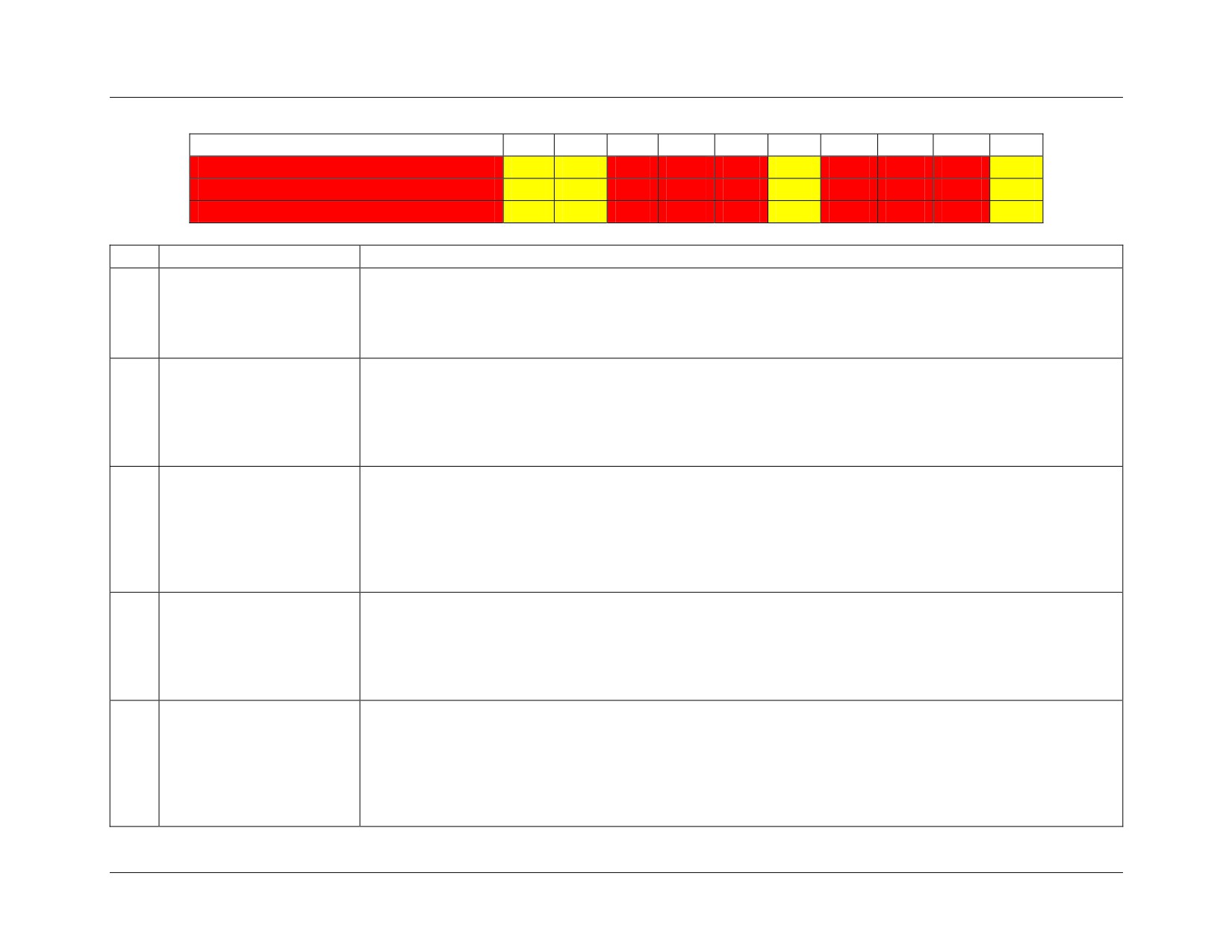
For Official Use Only
CBRND Functional Needs Analysis/Functional Solution Analysis
Chapter 10. Strategic National Shield Tasks
Table 10.3-1. SNSHLD 3: Capability and Deficiency Assessment
Capability: CJCS—Medical
M1
M2
M3
M4
M5
M6
M7
M8
M9
M10
Current Overall Capability1
Y2
Y3
R4
R5
R4
Y6
R7
R8
R9
Y10
Near/Mid-Term Overall Capability
Y
Y
R
R
R
Y
R
R
R
Y
Far-Term Overall Capability
Y
Y
R
R
R
Y
R
R
R
Y
FAA Measure
Scale
M1
Standards establish and
G: Standards establish and define, clearly and concisely, the force, including the defining and inclusion of eligible
define the force to include
civilians supporting the mission/military operations.
eligible civilians supporting
Y: Standards are adequate for defining and establishing the military force, but does not adequately define eligible
the mission and military
civilians supporting the mission/military operations and include them as a member of the force.
operations.
R: Standards do not or inadequately define the military force.
M2
Standards address
G: Standards exist for Shield resources and provide for the continuing development of Shield professional resources
development of Shield
within the joint and Service communities.
professional resources.
Y: Standards exist for Shield resources but do not adequately provide for the development of Shield professional
resources within the joint and Service communities.
R: Standards do not exist for Shield resources and do not provide or are inadequate for the development of Shield
professional resources within the joint and Service communities.
M3
Standards address training
G: Standards address the training and evaluation of all at-risk members (military members, eligible civilians, MWD,
personnel to operate in
and non-U.S. force members) for the attainment and assessment of the skills, knowledge, and abilities to operate within
CBRN/TIM hazards.
CBRN/TIM hazards, including sustained operations.
Y: Standards are adequate for U.S. forces (military members, eligible civilians supporting the mission/operations, and
MWD) to operate in CBRN/TIM hazards.
R: Standards are inadequate or do not address the training of all at-risk members and sustained operations within a
CBRN/TIM environment.
M4
Standards address equipping
G: Standards provide clear and detailed guidance and requirements addressing the equipage of units and at-risk
units and personnel for
members for survival and sustained operations within a toxic and persistent CBRN/TIM environment.
survival and sustained
Y: Standards are adequate and address the equipage of U.S. military units and personnel (including MWAs) for
operations within a
sustained operations within a CBRN/TIM environment.
CBRN/TIM environment.
R: Standards are inadequate or do not address the equipage of units and at-risk members to survive and operate within
a sustained CBRN/TIM environment.
M5
Force personnel are trained
G: Standards address the training and evaluation of all at-risk members (military members, eligible civilians, MWD,
to operate in CBRN/TIM
and non-U.S. force members) for the attainment and assessment of the skills, knowledge, and abilities to operate within
hazards.
CBRN/TIM hazards, including sustained operations.
Y: Standards are adequate for U.S. forces (military members, eligible civilians supporting the mission/operations, and
MWD) to operate in CBRN/TIM hazards.
R: Standards are inadequate or do not address the training of all at-risk members and sustained operations within a
CBRN/TIM environment.
29
For Official Use Only
For Official Use Only
CBRND Functional Needs Analysis/Functional Solution Analysis
Chapter 10. Strategic National Shield Tasks
M6
Medical prophylaxis
G: Medical CBRND countermeasure standards exist for all threat CBRN agents and encompass all eligible at-risk
standards are established for
populations.
personnel that might operate
Y: Medical CBRND countermeasure standards exist for selected high-threat CBRN agents for U.S. military members.
in a CBRN/TIM
R: Medical CBRND countermeasure standards are not established.
environment.
M7
Protective equipment is
G: CBRND protective equipment is available for all at-risk force members, including nonmilitary members, and IPE is
available for force personnel.
issued prior to entry into the Area of Responsibility (AOR).
Y: CBRND protective equipment is available and IPE is issued to deploying military and MWAs prior to arrival within the
AOR.
R: CBRND protective equipment is not available for all force members (including eligible nonmilitary personnel and
MWAs) prior to arrival within the AOR.
M8
All base/facility/units
G: Annual CBRND exercises fully involve all personnel and activities, address sustained operations within a toxic
conduct annual CBRND
CBRN/TIM environment, and involve all personnel and activities as integral participants.
exercises.
Y: Annual CBRND exercises fully involve direct mission personnel (military and eligible civilians directly supporting
the mission) and MWAs, and address sustained operations within a toxic CBRN/TIM environment.
R: Annual CBRND exercises are not conducted or do not address sustained operations within a CBRN/TIM
environment, and do not fully integrate eligible at-risk civilians as participants.
M9
CBRND exercises fully
G: CBRND exercises fully integrate all eligible civilians supporting the mission as exercise participants and are
integrate civilians supporting
evaluated for their ability to perform their tasks in a toxic CBRN/TIM environment.
the mission.
Y: CBRND exercises integrate more than 50% of civilians supporting the mission as exercise participants and evaluate
their ability to perform their tasks in a toxic CBRN/TIM environment.
R: CBRND exercises integrate less than 50% of civilians supporting the mission as exercise participants and/or does
not adequately evaluate their ability to perform their tasks in a toxic CBRN/TIM environment.
M10
DoD-level exercise
G: Distinct DoD and joint exercise plans and evaluation requirements exist for sustained operations within a toxic
evaluation criteria, including
CBRN/TIM environment. Service specific exercises and evaluations are developed based upon the DoD and joint plans
timing, type, content, and
and evaluation requirements.
scoring.
Y: DoD and joint exercise plans and evaluation requirements exist and include CBRN/TIM operations as components.
Operations within a toxic CBRN/TIM environment are addressed in Service exercises and evaluations.
R: DoD, joint, and Service-specific exercise plans and evaluation requirements are inadequate, do not exist, or do not
address CBRN/TIM operations.
1 DOTLPF exists for military forces. However, civilian personnel and operations supporting the mission are not adequately addressed. Sustained operations within a CBRN/TIM
hazard is not adequately addressed in current DOTLPF.
2 Standards are adequate for defining and establish the military force. However, the definition of eligible civilians supporting the mission/military operations and their inclusion as
a member of the force is inadequate.
3 Standards are inadequate for the development of Shield professional resources within the joint community and Services.
4 Standards are adequate for training personnel to prepare for the implementation of protective measures upon notification of a CBRN/TIM hazard. However, training and
evaluation for sustained operations within a CBRN/TIM hazard is inadequate. MWAs and nonmilitary personnel are not trained and considered for CBRN/TIM operations.
5 Standards are inadequate for equipping units and personnel to survive and sustain operations within a CBRN/TIM environment. MWAs and nonmilitary personnel are not trained
and considered for CBRN/TIM operations.
30
For Official Use Only
For Official Use Only
CBRND Functional Needs Analysis/Functional Solution Analysis
Chapter 10. Strategic National Shield Tasks
6 Medical prophylaxis standards exist for a number of CBRN agents. The availability of medical countermeasures is dependent upon knowledge of the threat and logistical
limitations. Medical prophylaxis standards are absent for many threat agents. Additionally, standards are threat agent specific and vary between prophylaxes. MWAs and
nonmilitary personnel are not considered for CBRN/TIM prophylaxis.
7 Adequate protective equipment is available for deploying force personnel. However, this equipment may not be issued to force members until arrival in the AOR. Additionally,
no protective equipment is available for MWAs. Protective equipment for nonmilitary personnel is an issue.
8 Base, facilities, and units are required to conduct CBRND exercises. However, these exercises do not fully involve all personnel and activities. Nor do they address sustained
operations within a contaminated environment. Nonmilitary personnel, although potentially at risk, are not integrated as participants.
9 Nonmilitary personnel, although potentially at risk, are not integrated as participants in CBRND exercises.
10 Joint exercise plans include evaluation criteria, timing, type, content, and scoring. However, these are not the foundation for development of Service-specific exercise and
evaluations. Additionally, there is a need for distinct CBRN/TIM-specific exercise/evaluations focusing upon sustained operations.
31
For Official Use Only
For Official Use Only
CBRND Functional Needs Analysis/Functional Solution Analysis
Chapter 10. Strategic National Shield Tasks
10.3.3
Functional Solution Analysis
10.3.3.1
DOTLPF Assessment Summary
This section addresses the deficiencies associated with standards, criteria, and procedures for
training, equipping, and protecting the force from threat CBRN/TIM agents. The deficiencies can
be addressed by non-materiel solutions. If there are no non-materiel solutions, or they are only
partial solutions, the remaining non-materiel need is then stated. Materiel needs are assessed in
the IMA section. Non-materiel solutions include defining and integrating eligible civilians
supporting the mission/military operations into CBRND standards, criteria, doctrine, policy, and
procedures for training, equipping, and protection. Similar integration of MWAs, particularly
MWD, is identified as a deficiency. A full solution set supporting sustained operations within a
CBRN/TIM environment includes the establishment in doctrine, policy, and procedures of
sustained operations standards and the supporting training, equipping, exercising, and evaluation
to prepare and enable the force. Analysis to determine standards for development of Shield
professional resources and to equip forces for sustained operations within a CBRN/TIM
environment; and RD&E for standards for prophylactic protection against threat agents for
targeted populations are specified in the DOTLPF Assessment Summary.
1.
Deficiency: The definition of eligible civilians supporting the mission/military operations
and their inclusion as a member of the force is inadequate.
Non-Materiel Solutions: Doctrine: Define eligible civilians supporting the mission/military
operations for CBRND and establish their inclusion in the force within doctrine, policy,
procedures, and TTPs. Organization: Identify organizational services dependent upon
civilians for mission/military operations success. Training: Establish CBRND training,
exercise, and evaluation criteria and programs for eligible civilians supporting the
mission/military operations and conduct CBRND training, exercised, and evaluations.
Leadership: Implement and manage CBRND training, equipping, and protection of eligible
civilians supporting the mission/military operations. Personnel: Personnel meeting the
definition of eligible civilians supporting the mission/military operations are qualified in
CBRND and capable of performing their responsibilities in a CBRN/TIM environment.
2.
Deficiency: Standards are inadequate for the development of Shield professional resources
within the joint community and Services.
Non-Materiel Solutions: Doctrine: Doctrine, policies, and procedures for the development
of Shield professional resources. Organization: Organizational structure facilitating and
supporting development and application of Shield professional resources. Training: Establish
training structure for the career development of Shield professional resources. Leadership:
Ensure recognition of value of resource and provide management for development and
application of Shield professional resource. Personnel: Personnel possessing the intellectual
and physiological aptitudes to acquire, maintain, and apply the requisite knowledge, skills,
abilities, and competencies of a career Shield professional resource. Facilities: Develop
infrastructure and support for the development and support of Shield professional resources.
3.
Deficiency: Standards are inadequate for equipping units and personnel to survive and
sustain operations within a CBRN/TIM environment.
32
For Official Use Only
For Official Use Only
CBRND Functional Needs Analysis/Functional Solution Analysis
Chapter 10. Strategic National Shield Tasks
Non-Materiel Solutions: Doctrine: Establish in doctrine, policy, and procedures the
standards for sustained operations within a CBRN/TIM environment. Training: Train,
exercise, and evaluate the force against the standards for sustained operations within a
CBRN/TIM environment. Leadership: Recognize criticality of readiness of the force for
potential sustained operations within a CBRN/TIM environment, training providing skills to
manage forces in these circumstances, and willingness to implement necessary changes and
activities to prepare the force.
4.
Deficiency: Training and evaluation for sustained operations within a CBRN/TIM hazard is
inadequate.
Non-Materiel Solutions: Training: Train, exercise, and evaluate the force for sustained
operations within a CBRN/TIM environment Leadership: Recognize criticality of readiness
of the force for potential sustained operations within a CBRN/TIM environment, training
providing skills to manage forces in these circumstances, and willingness to implement and
pursue necessary changes and activities to prepare the force
5.
Deficiency: The availability of medical countermeasures is dependent upon knowledge of
the threat and logistical limitations.
Non-Materiel Solutions: Doctrine: Develop doctrine and processes for development of
multivalent countermeasures, including protection for other than U.S. force members (e.g.,
eligible civilians, non-U.S. forces, MWAs, etc.).
6.
Deficiency: There is a lack of doctrine for risk management of forces operating in
radiologically contaminated environments. Current guidance is based on cold-war
assumptions and does not reflect modern threats and mission priorities.
Non-Materiel Solutions: Doctrine: Develop doctrine, policies, and procedures that address
appropriate operationally oriented command dose levels for low-level radiation exposure
based on mission priority across the range of military operations. Training: Train leaders and
personnel on operationally oriented low-level radiation exposure control standards and
procedures
7.
Deficiency: There is a lack of doctrine and data supporting risk management of forces
exposed to low-level chemical contamination.
Non-Materiel Solutions: Doctrine: Develop doctrine, policies, and procedures that address
appropriate operationally oriented exposure limits and how to keep personnel from exceeding
those limits using available detection and monitoring equipment and techniques. Training:
Train leaders and personnel on operationally oriented low-level chemical exposure control
standards and procedures.
8.
Deficiency: Standards are threat agent specific and vary between prophylaxes.
Non-Materiel Solutions: Doctrine: Establish in doctrine, policy, and procedures the
application of baseline standards for prophylactic CBRND protection against all threat
agents. Leadership: Enforce compliance with established standards (see Footnote 20 above)
for prophylactic CBRND protection.
33
For Official Use Only
For Official Use Only
CBRND Functional Needs Analysis/Functional Solution Analysis
Chapter 10. Strategic National Shield Tasks
9. Deficiency: MWAs and nonmilitary personnel are not considered for CBRN/TIM
prophylaxis and CBRN/TIM operations.
Non-Materiel Solutions: Doctrine: Doctrine, policy, and procedures addressing MWAs and
nonmilitary personnel during CBRND operations and the provision of CBRND protection,
including prophylaxis. Training: Establish CBRND training, exercise, and evaluation criteria
and programs for MWAs and nonmilitary personnel and conduct CBRND training,
exercised, and evaluations. Leadership: Implement and manage CBRND training, equipping,
and protection of MWD and nonmilitary personnel.
10. Deficiency: Base-, facility-, unit-level exercises do not fully involve all personnel and
activities.
Non-Materiel Solutions: Doctrine: Doctrine, policy, and procedures requiring
comprehensive participation and integration of all potentially affected personnel and
activities in CBRND exercises. Organization: All affected entities are aware of and
participate in comprehensive exercises. Training: All personnel (military and nonmilitary), as
well as MWAs, are trained in CBRND and in the accomplishment of related tasks, as
appropriate. Leadership: Recognition of the value of comprehensive exercises to enhance
readiness, survival, and promote interaction between activities.
11. Deficiency: Base-, facility-, unit-level exercises do not address sustained operations within a
contaminated environment.
Non-Materiel Solutions: Doctrine: Incorporate sustained operations within a CBRN/TIM
environment into doctrine, policy, and procedures. Organization: Ensure resources, taskings,
and staff are in place or available to perform sustained operations within a CBRN/TIM
environment. Training: Train, exercise, and evaluate the force for sustained operations within
a CBRN/TIM environment. Leadership: Recognize criticality of readiness of the force for
potential sustained operations within a CBRN/TIM environment, training providing skills to
manage forces in these circumstances, and willingness to implement necessary changes and
activities to prepare the force.
12. Deficiency: Nonmilitary personnel, although potentially at risk, are not integrated as
participants in CBRND exercises.
Non-Materiel Solutions: Doctrine: Address CBRND of nonmilitary personnel in doctrine,
policy, and procedures; and include CBRND preparatory activities such as training and
exercises. Organization: Identify organizational services performed by nonmilitary
personnel. Training: Establish CBRND training, exercise, and evaluation criteria and
programs for nonmilitary personnel and conduct CBRND training, exercised, and
evaluations. Leadership: Implement and manage CBRND training, equipping, and protection
of nonmilitary personnel.
13. Deficiency: Joint exercise plans are not the foundation for development of Service-specific
exercise and evaluations.
Non-Materiel Solutions: Doctrine: Reinforce existing doctrine and policy for development
of Service-specific exercises and evaluations based upon joint exercise plans. Leadership:
Ensure joint exercise plans are used in the development of Service-specific exercises and
evaluations.
34
For Official Use Only
For Official Use Only
CBRND Functional Needs Analysis/Functional Solution Analysis
Chapter 10. Strategic National Shield Tasks
14. Deficiency: There is a need for distinct CBRN/TIM-specific exercise/evaluations focusing
upon sustained operations.
Non-Materiel Solutions: Doctrine: Incorporate sustained operations within a CBRN/TIM
environment into doctrine, policy, and procedures and require specific exercising and
evaluations for these operations. Training: Train, exercise, and evaluate the force for
sustained operations within a CBRN/TIM environment. Leadership: Recognize criticality of
readiness of the force for potential sustained operations within a CBRN/TIM environment,
training providing skills to manage forces in these circumstances, and willingness to
implement necessary changes and activities to prepare the force.
15. Deficiency: Civilian personnel and operations supporting the mission are not adequately
addressed.
Non-Materiel Solutions: Doctrine: Doctrine, policy, and procedures addressing civilian
personnel and operations for CBRND. Organization: Identify organizational services and
activities supporting the mission performed by civilian personnel and operations. Training:
Establish CBRND training, exercise, and evaluation criteria and programs for civilian
personnel and operations supporting the mission; and conduct CBRND training, exercised,
and evaluations. Leadership: Implement and manage CBRND training, equipping, and
protection of civilian personnel and operations supporting the mission. Personnel: Civilian
personnel and operations supporting the mission/military operations are qualified in CBRND
and capable of performing their responsibilities in a CBRN/TIM environment.
16. Deficiency: Sustained operations within a CBRN/TIM hazard is not adequately addressed in
current DOTLPF.
Non-Materiel Solutions: Doctrine: Address sustained operations within a CBRN/TIM
environment into doctrine, policy, and procedures. Organization: Ensure resources, taskings,
and staff are in place or available to perform sustained operations within a CBRN/TIM
environment. Training: Train, exercise, and evaluate the force for sustained operations within
a CBRN/TIM environment. Leadership: Recognize criticality of readiness of the force for
potential sustained operations within a CBRN/TIM environment, training providing skills to
manage forces in these circumstances, and willingness to implement necessary changes and
activities to prepare the force.
10.3.3.2
IMA Assessment Summary
N/A
35
For Official Use Only
For Official Use Only
CBRND Functional Needs Analysis/Functional Solution Analysis
Chapter 10. Strategic National Shield Tasks
10.4
Task SNSHLD 4: Establish standards, criteria, and procedures for training,
equipping, and protecting eligible civilians not supporting the mission from threat
CBRN/TIM agents
10.4.1
Functional Area Analysis
10.4.1.1
Defintion
To reduce the impact of CBRN/TIM releases or collateral ROTA on U.S.and allied-, friendly-, or
nonaligned-nation eligible civilians. Supports assistance to nations provided under military
assistance and the family of engagement plans to eliminate WMD vulnerabilities. These eligible
civilians may include
• detained civilians and evacuees,
• military dependents,
• indigenous or third-nation national labor pool, and
• other defined and identified civilians not addressed by SNSHLD 3.
Specifies common and interoperable standards addressing protection activities and resources.
These include preparing non-mission support civilians (where possible) to survive in threat
CBRN/TIM environments and providing clear and understandable procedures. The standards
establish and define “civilians not supporting the mission” and specify the minimal level of
protection enabling survival. The standards and procedures recognize the wide variance in body
types, ages, and physical capabilities of the identified civilian populace. The standards and
procedures address
• training of civilians to survive within a CBRN/TIM environment;
• equipping of identified civilians for survival operations within a toxic environment;
• outlining protective equipment, medical measures, and other programs supporting
survivability; and
• specifying the conduct and evaluation of assessment exercises focused upon CBRN/TIM
operations readiness that include these civilians where possible.
10.4.1.2
Derivation
Joint Enabling Concept for CBRN/TIM Operations, An Operational Concept for Biological
Defense, Protection Joint Functional Concept, UJTL (SN 3.4.4, SN 4.3.4, SN 5.1.1, SN 6.1, SN
7.5, SN 9, SN 9.1.3, SN 9.2.1).
10.4.1.2.1
Supported Task: N/A
10.4.1.2.2
Lateral Task: SNSHA 3
10.4.1.2.3
Supporting Task: N/A
36
For Official Use Only
For Official Use Only
CBRND Functional Needs Analysis/Functional Solution Analysis
Chapter 10. Strategic National Shield Tasks
10.4.1.3
Condition
Perform this task under conditions of:
Physical
1. Immediate to delayed danger, and potential long-term health hazard of atmospheric
weapons effects. (C1.3.3)
Military
1. Partially completed mission preparation. (C2.1.3)
2. Marginal to strong forces assigned. (C2.2.1)
3. Some interoperability. (C2.2.6)
4. Partial joint staff integration. (C2.3.1.1)
5. Partial multinational integration. (C2.3.1.2)
Civil
1. Correct interdepartmental/interagency relationships. (C3.1.1.3)
10.4.2
Functional Needs Analysis
10.4.2.1
Capability and Deficiency Assessment Summary
Table 10.4-1 discusses the only capability that currently exists to perform the task to the
designated standard. CJCS/joint staff promulgates, defines, and establishes a comprehensive
program of CBRN/TIM defense for eligible non-mission support civilians including
prophylaxis, training, equipment, processes, exercising and evaluation, and DOTLPF.
Current Capability and Deficiency
Procedures exist in Noncombatant Evacuation Operations plans for the selected provisioning of
non-mission support civilians (primarily military dependents at high-threat area (HTA) fixed-site
locations) with minimal protective equipment that is generally drawn from mission stocks or
obtained via commercial off-the-shelf (COTS) sources. The Guardian Program is reviewing and
assessing selected COTS assets for installation populace. The primary focus is currently upon
first responders and is expected to expand to other personnel. Deficiencies include inadequate
standards, criteria, and procedures for CBRND of non-mission support civilians. The overall
current assessment is “red.”
Projected Near/Mid-Term Capability and Deficiency
The determination and procurement of selected COTS protective material will continue under the
Guardian Program. However, types and quantities are under review and consideration. No other
change is projected for this task.
37
For Official Use Only
For Official Use Only
CBRND Functional Needs Analysis/Functional Solution Analysis
Chapter 10. Strategic National Shield Tasks
Projected Far-Term Capability and Deficiency
No change is projected for this task.
38
For Official Use Only