CHEMICAL, BIOLOGICAL, RADIOLOGICAL, AND NUCLEAR DEFENSE (CBRND) FUNCTIONAL NEEDS ANALYSIS. FINAL REPORT (2005) - page 10
For Official Use Only
CBRND Functional Needs Analysis/Functional Solution Analysis
Chapter 9. Tactical Shape Tasks
Civil
1. Limited foreign government support. (C3.1.2.3)
2. Significant TIM present in the civilian sector. (C3.3.7.5)
9.1.2
Functional Needs Analysis
9.1.2.1
Capability and Deficiency Assessment Summary
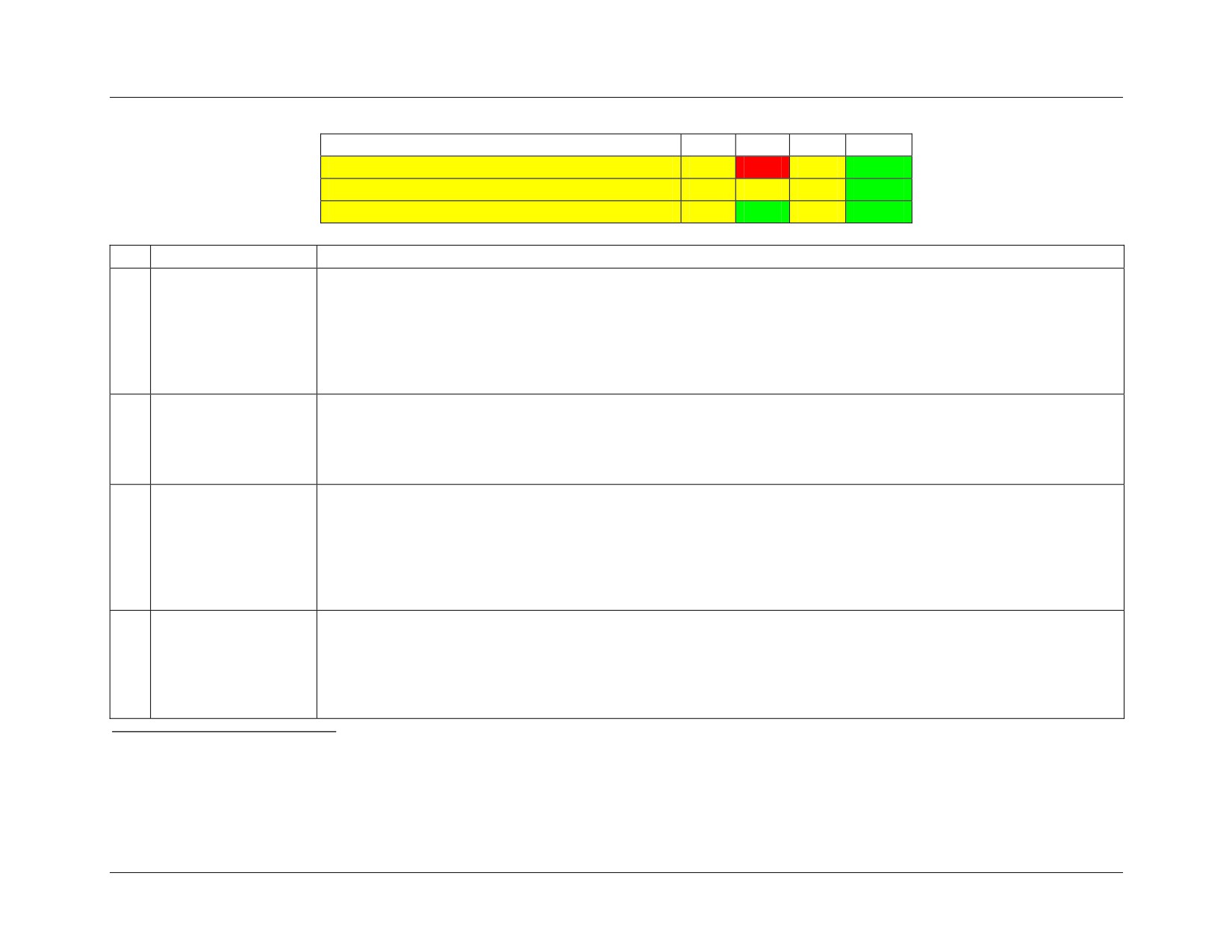
Table 9.1-1 discusses individual capabilities to perform this task to the designated standards. The
current capability, “collection of information, items, and observation of activities among
indigenous population,” applies two components to perform this task. These are reports and
observations of regular/routine military activities such as convoys and patrols and weapons of
mass destruction (WMD) evidence collection activities performed by specialized units. The
overall capability for current, near/mid, and far term are assessed “yellow.”
Current Capability and Deficiency
CBRN/TIM threat intelligence is available to meet some of the needs of tactical commanders as
part of standard intelligence information processing. Credibility of human sources is always
difficult to assertain. Deficiencies include absense of ability to penetrate indigenous populations
and the adversary, need for adaptable doctrine (procedures and processes), and perishability of
training.
Projected Near/Mid-Term Capability and Deficiency
No change is currently projected for this task.
Projected Far-Term Capability and Deficiency
No change is currently projected for this task.
10
For Official Use Only
For Official Use Only
CBRND Functional Needs Analysis/Functional Solution Analysis
Chapter 9. Tactical Shape Tasks
Table 9.1-1. TASHA 1: Capability and Deficiency Assessment
Capability: Local Intelligence Operations
M1
M2
M3
M4
Current Overall Capability
61
32
63
84
Near/Mid-Term Overall Capability
6
5
6
8
Far-Term Overall Capability
6
8
6
8
FAA Measure
Scale
M1
There is sufficient
8-10: Confidence in accuracy and timeliness of local intelligence is high. Intelligence is collected and correlated from
confidence in the
multiple sources, and source automated information systems are interoperable.
accuracy of local
4-7: Limited confidence in accuracy and timeliness of local intelligence. Predominantly manual processes collect and
intelligence collected.
correlate local intelligence from sources and may be restricted in the number of sources assessed.
1-3: Low confidence in accuracy and timeliness of local intelligence. Predominantly manual processes collect and correlate
local intelligence from internal sources and are restricted in the number of sources assessed.
0: No confidence in accuracy and timeliness of the collected and processed local intelligence.
M2
Mechanism exists to
8-10: Highly integrated dedicated system provides accurate, timely, and current CBRN/TIM threat intelligence.
process CBRN/TIM
4-7: Dedicated systems are in place to process CBRN/TIM threat intelligence against tactical commander priority intelligence
threat intelligence
requirements (PIRs).
rapidly to meet needs
1-3: In-place dedicated systems are inadequate to process CBRN/TIM threat intelligence against tactical commander PIRs.
of tactical commanders.
0: Dedicated CBRN/TIM threat intelligence mechanisms do not exist for processing threat intelligence.
M3
There is sufficient
8-10: All force personnel are trained to identify CBRN/TIM threat indicators. Specialized collection functions are established
training to identify
in standard operational units for WMD investigation and evidentiary processes.
indicators.
4-7: Selected specialized personnel and functions are trained to identify CBRN/TIM threat indicators. Limited training is
provided to the general force. Temporary specialized collection functions are established as determined necessary for specific
functions.
1-3: Selected specialized personnel are trained to identify CBRN/TIM threat indicators and perform all collection functions.
0: CBRN/TIM threat indicator training is nonexistent.
M4
There is effective
8-10: DOTLPF exists and is adequate for this task. Task can be effectively performed with little or no direct impact upon
DOTLPF in place to
operations.
conduct task.
4-7: Most critical aspects of DOTLPF for this task are addressed. Task can be performed with limitations requiring work-
arounds.
1-3: DOTLPF is inadequate for accomplishment of this task.
0: DOTLPF does not exist for this task.
1 Processes exist for the collection, correlation, verification, and exploitation of CBRN intelligence from diverse sources, including national means, interagencies, patrols, convoys,
drones, international and national NGOs, local authorities, and populace. These processes are largely manual and require both experience and training for effective application.
Manual skills are perishable and require continuing training and skills growth. Information source systems are either not interoperable/accessible or possess limited
interoperability/accessibility. There exist insufficient adaptable procedures and processes to support the nontraditional battlefield. Confidence in collected information is a function
of ability to penetrate adversaries and indigenous populations, source reliability, and the correlation and verification of collected information with other sources.
11
For Official Use Only
For Official Use Only
CBRND Functional Needs Analysis/Functional Solution Analysis
Chapter 9. Tactical Shape Tasks
2 Doctrine and C4ISR systems are in place for the processing of CBRN intelligence. Process is predominantly manual, time-consuming, and labor-intensive. Information sources
are either not interoperable or possess limited interoperability. CBRN intelligence and indicators must compete for resources and processing. Availability of information may be
delayed due to lack of dedicated C4ISR capabilities for CBRN information collection, processing, and interpretation.
3 Limited training is provided to intelligence specialists for the processing and interpretation of CBRN indicators. Similarly, limited training is provided to CBRN specialists for
the processing and interpretation of CBRN intelligence indicators. However, the general force is not adequately trained on the observation, identification, and reporting of CBRN
intelligence and potential indicators. Specialized units are formed for specific WMD evidence search operations but are generally dissolved upon completion of the specific
mission. These highly mission-specific units are composed of personnel selected from pertinent specialties. Specialty personnel may also be attached to selected units for specific
missions. However, a standard operational unit does not exist that is trained and dedicated for this purpose. Consistent training and refresher training is not performed of the force
during general training in preparation and conduct of operations.
4 Effective doctrine, policies, and TTPs exist for the manual performance of this task with limited automated support. Consistent training and refresher training is not performed of
the force during general training in preparation and conduct of operations.
12
For Official Use Only
For Official Use Only
CBRND Functional Needs Analysis/Functional Solution Analysis
Chapter 9. Tactical Shape Tasks
9.1.3
Functional Solution Analysis
9.1.3.1
DOTLPF Assessment Summary
This section addresses the deficiencies and suggests potential non-materiel solutions. If there are
no non-materiel solutions or they are only partial solutions, the remaining non-materiel need is
then stated. Materiel needs are assessed in the IMA section.
1.
Deficiency: Lack of adaptable procedures and processes.
Non-Materiel Solutions: Doctrine: Develop and refine adaptable procedures and processes.
Training: Ensure adequate training programs for observation and collection skills.
Leadership: Leaders need to ensure adherence to procedures and processes. Personnel:
Develop penetration procedures and doctrine.
2.
Deficiency: Absence of ability to obtain reliable CBRN/toxic industrial chemical (TIC)/TIM
data from local population.
Non-Materiel Solutions: Doctrine: Ensure adequate personnel are assigned to tasks.
Organization: Provide liaison with civil affairs units and ensure collaboration between NBC,
intelligence, and civil affairs units. Training: Ensure training of penetration and interaction
skills. Leadership: Leaders need to be trained to address the associated issues. Personnel:
Ensure availability of personnel with the ability to work with indigenous populations or to
penetrate them.
3.
Deficiency: Lack of ability to penetrate the adversaries.
Non-Materiel Solutions: Doctrine: Refine procedures and practices for interagency
coordination and collaboration. Organization: Ensure coordination collaboration with
involved agencies; joint, interagency, multinational. Training: Ensure training of penetration
skills, investigative skills. Leadership: Leaders need to be trained to address the associated
issues. Personnel: Ensure the availability of personnel with the ability to investigate and/or
penetrate the adversaries.
4.
Deficiency: Need to ensure continued vigilance of procedures and processes.
Non-Materiel Solutions: Doctrine: Need to ensure doctrine is available for identifying
indicators and the information processing of those indicators. Training: Ensure training is
conducted to ensure indicator awareness and the processing of associated information.
Leadership: Leaders need to maintain vigilance and ensure training is conducted.
5.
Deficiency: Lack of thorough training for troops conducting routine military activities
around or among indigenous population.
Non-Materiel Solutions: Training: Ensure general training of troops to operate effectively
and intelligently among the indigenous populations with adversarial elements. Leadership:
Ensure adequate training of the troops.
9.1.3.2
IMA Assessment Summary
N/A
13
For Official Use Only
For Official Use Only
CBRND Functional Needs Analysis/Functional Solution Analysis
Chapter 9. Tactical Shape Tasks
9.2
Task TASHA 2: Process local or immediate CBRN/TIM threat intelligence
information and data
9.2.1
Functional Area Analysis
9.2.1.1
Definition
Includes compiling, correlating, and processing intelligence information and data gathered in the
local battlespace and from the indigenous population regarding processed CBRN/TIM threat
intelligence, including information and data from joint and coalition forces in the local or
immediate battlespace and indigenous sources on adversary CBRN intent, objectives, availability
of weapons, actual capacity to employ weapons, expected tactics, potential targets, development
efforts, and willingness or historic propensity to employ CBRN weapons. Threat assessments,
planning, and preparations are supported through this task.
9.2.1.2
Derivation
UJTL (TA 2.4.1, TA 5, TA 5.2.1, TA 7), Protection Joint Functional Concept.
9.2.1.2.1
Supported Task: OPSHA 1
9.2.1.2.2
Lateral Task: N/A
9.2.1.2.3
Supporting Task: N/A
9.2.1.3
Condition
Perform this task under conditions of:
Physical. N/A
Military
1. Partial preexisting arrangements. (C2.1.1.2)
2. Abundant modern military systems. (C2.2.5)
3. High interoperability. (C2.2.6)
4. Partial joint staff integration. (C2.3.1.1)
5. Restricted information exchange. (C2.3.1.8)
6. High information volume. (C2.3.1.9)
7. Marginal intelligence database. (C2.4.2)
8. Moderate certitude of data. (C2.4.6)
9. Intelligence dissemination and receipt fully exists. (C2.4.7)
Civil
Limited foreign government support. (C3.1.2.3)
14
For Official Use Only
For Official Use Only
CBRND Functional Needs Analysis/Functional Solution Analysis
Chapter 9. Tactical Shape Tasks
9.2.2
Functional Needs Analysis
9.2.2.1
Capability and Deficiency Assessment Summary
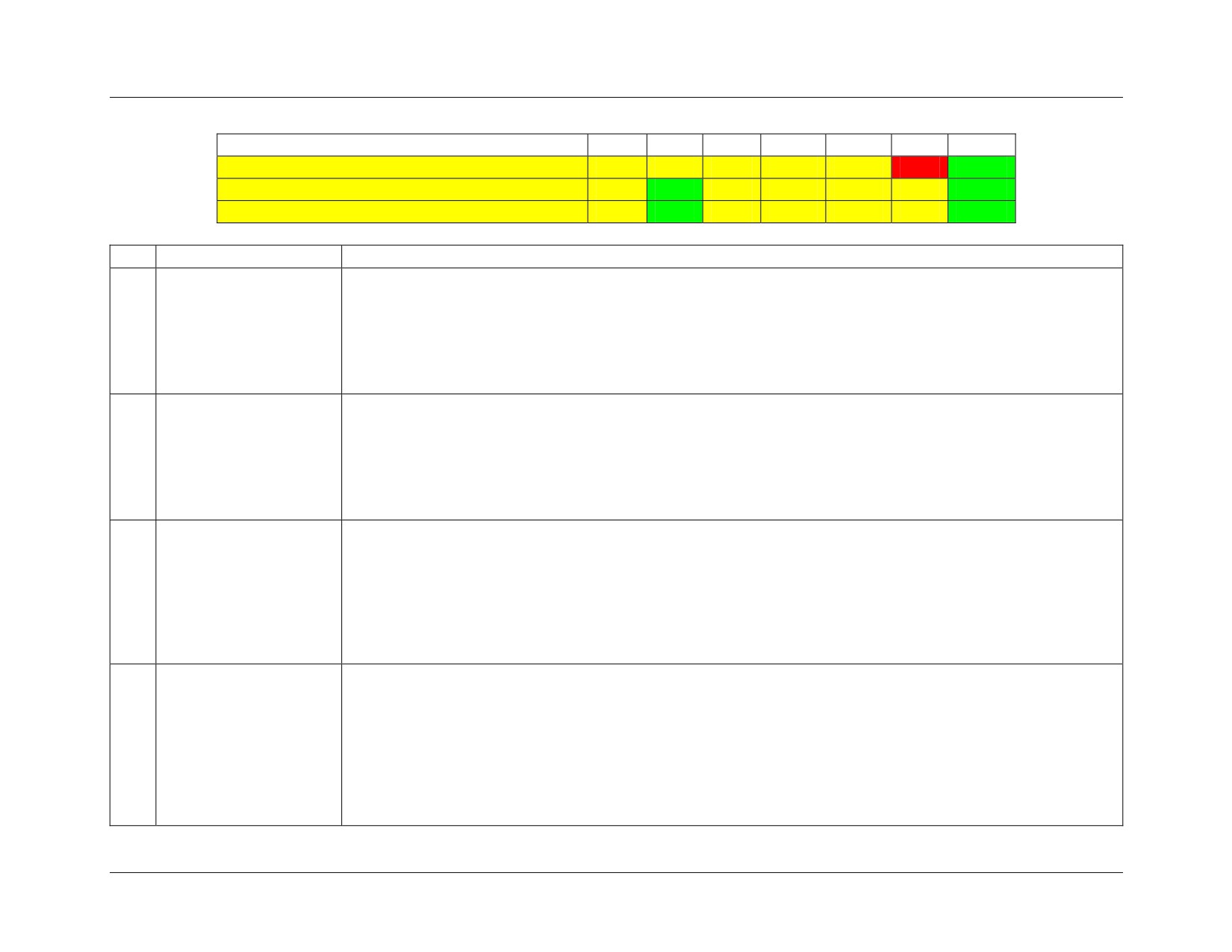
Table 9.2-1 discusses individual capabilities to perform this task to the designated standards. The
current capability, “Processing of Local Intelligence,” applies to the range of activities for the
compiling, correlation, and processing of local intelligence within the local battlespace.
Intelligence obtained from national means, patrols, convoys, drones, international and national
NGOs, local authorities and populace, and other sources is integrated to identify the CBRN/TIM
threat, adversary CBRN intent and objectives, WMD availability, potential targets, adversary
developmental efforts, and adversary willingness to employ WMD. The task supports threat
assessment and force planning/preparation. The overall capability for current, near/mid, and far
term are assessed “yellow.”
Current Capability and Deficiency
CBRN/TIM threat intelligence is available to meet some of the needs of tactical commanders as
part of standard intelligence information processing. The capability is improving as a result of
improvements resulting from current conflicts. Interoperabilty within and among services
continues to improve. Deficiencies include absense of ability to process real-time, actionable
information and pass to the “shooter;” need for adaptable doctrine (procedures and processes);
and perishability of training/skills. Overall capability is marginal.
Projected Near/Mid-Term Capability and Deficiency
No change is currently projected for this task.
Projected Far-Term Capability and Deficiency
No change is currently projected for this task.
15
For Official Use Only
For Official Use Only
CBRND Functional Needs Analysis/Functional Solution Analysis
Chapter 9. Tactical Shape Tasks
Table 9.2-1. TASHA 2: Capability and Deficiency Assessment
Capability: Processing of Local Intelligence
M1
M2
M3
M4
M5
M6
M7
Current Overall Capability
61
52
53
54
61
25
86
Near/Mid-Term Overall Capability
6
8
5
5
7
4
8
Far-Term Overall Capability
6
9
5
5
7
6
8
FAA Measure
Scale
M1
There is confidence in the
8-10: Confidence in accuracy and timeliness of CBRN/TIM threat intelligence is high. Intelligence is actionable/of high value.
collected CBRN/TIM
Intelligence is collected and correlated from multiple sources and source automated information systems are interoperable.
threat intelligence.
4-7: Limited confidence in accuracy and timeliness of CBRN/TIM threat intelligence. Predominantly manual processes
collect and correlate intelligence from sources and may be restricted in the number of sources assessed.
1-3: Low confidence in accuracy and timeliness of local threat intelligence. Predominantly manual processes collect and
correlate local intelligence from internal sources and are restricted in the number of sources assessed.
0: No confidence in accuracy and timeliness of the collected and processed CBRN/TIM threat intelligence.
M2
Multiple sources are
8-10: Automated systems integrate and deconflict information from multiple sources accurately and rapidly require little
integrated and
or no manpower.
deconflicted.
4-7: Multiple sources are integrated and deconflicted using manual means, are limited to available trained resources, and
are inadequate to rapidly correlate information from a large number of multiple sources.
1-3: Limited number of sources are integrated and deconflicted using manual means, are limited to available trained
resources, and are inadequate to rapidly correlate information from multiple sources.
0: No capability to integrate and deconflict multiple sources.
M3
Sufficient processes are
8-10: Automated systems compile and correlate CBRN/TIM threat intelligence from multiple sources accurately and
used to compile and
rapidly require little or no manpower.
correlate CBRN/TIM
4-7: CBRN/TIM threat intelligence is compiled and correlated predominantly using manual means, is limited to available
threat intelligence.
trained resources, and is inadequate to rapidly compile and correlate CBRN/TIM threat intelligence from a large number
of multiple sources.
1-3: CBRN/TIM threat intelligence is complied and correlated predominantly using manual means, is limited to available
trained resources, and is inadequate to rapidly compile and correlate CBRN/TIM threat intelligence from multiple sources.
0: No capability to compile and correlate CBRN/TIM threat intelligence from multiple sources.
M4
All known CBRN/TIM
8-10: The commander’s PIRs and other known CBRN/TIM intelligence/indicators from all sources are accurately and
intelligence collection
rapidly assessed and presented on a continuing and current basis by automated systems.
requirements are met
4-7: CBRN/TIM intelligence collection requirements identified by the commander’s identified PIRs for known
CBRN/TIM are met using predominantly manual and time-intensive means, are limited to available trained resources, and
may not assess intelligence available from a large number of multiple sources.
1-3: CBRN/TIM intelligence collection requirements identified by the commander’s identified PIRs for known
CBRN/TIM are met using predominantly manual and time-intensive means, are limited to available trained resources, and
may not assess intelligence available from multiple sources.
0: CBRN/TIM intelligence collection requirements are not met.
16
For Official Use Only
For Official Use Only
CBRND Functional Needs Analysis/Functional Solution Analysis
Chapter 9. Tactical Shape Tasks
M5
Previously unknown and
8-10: Previously unknown and opportunistic intelligence is collected and correlated from multiple sources by automated
opportunistic intelligence
systems, including local observations and reports, and source information systems are interoperable.
is integrated into the
4-7: Predominantly manual processes collect and correlate previously unknown and opportunistic intelligence from
processing.
sources, including local observations and reports, and may be restricted in the number of sources assessed.
1-3: Predominantly manual processes collect and correlate previously unknown and/or opportunistic intelligence from
internal sources and are restricted in the number of sources assessed.
0: Local observations and reports are not included in the CBRN/TIM threat intelligence process.
M6
Sufficient numbers of
8-10: CBRN/TIM threat intelligence analysts are trained, experienced, and available in adequate quantities to conduct
experienced analysts are
CBRN/TIM threat intelligence collection, compilation, correlation, and assessment from multiple and diverse sources in a
available for CBRN/TIM
timely and accurate manner or to perform oversight and evaluation of in place CBRN/TIM threat intelligence processing
threat intelligence
automated systems performing all these functions for all operational and routine requirements.
processing.
4-7: Limited numbers of CBRN/TIM threat intelligence analysts are trained, experienced, and available to conduct
CBRN/TIM threat intelligence processing from a significant number of sources for operational requirements.
1-3: Limited numbers of CBRN/TIM threat intelligence analysts are trained, experienced, and available to conduct
CBRN/TIM threat intelligence processing from a number of sources for operational requirements.
0: CBRN/TIM threat intelligence analysts are not trained, experienced or are in numbers insufficient to process
intelligence available from a large number of sources and meet operational requirements for the processing of CBRN/TIM
threat intelligence.
M7
There is effective
8-10: DOTLPF exists and is adequate for this task. Task can be effectively performed with little or no direct impact upon
DOTLPF in place to
operations.
conduct task.
4-7: Most critical aspects of DOTLPF for this task are addressed. Task can be performed with limitations requiring work-
arounds.
1-3: DOTLPF is inadequate for accomplishment of this task.
0: DOTLPF does not exist for this task.
1-Processes exist for the collection, correlation, verification, and exploitation of CBRN intelligence from diverse sources, including national means, patrols, convoys, drones,
international and national NGOs, local authorities, and populace. These processes are largely manual and require both experience and training for effective application. Manual
skills are perishable and require continuing training and skills growth. Information source systems are either not interoperable or possess limited interoperability. There exist
insufficient adaptable procedures and processes to support the nontraditional battlefield. Confidence in collected information is a function of ability to penetrate adversaries and
indigenous populations; source reliability; and the correlation and verification of collected information with other sources.
2 -Integration and deconfliction of information is predominantly conducted using manual processes and is time- and labor-intensive. Information is correlated based upon the value
of the information and credibility and reliability of sourcing and is dependent upon the availability and number/types of sources. Manual processes currently dictate limits upon the
level of information actually correlated and sources applied. Manual skills are perishable and require continuing training and skill growth.
3 - Compilation and correlation of CBRN/TIM threat intelligence is predominantly conducted using manual processes and is time- and labor-intensive. Information is compiled and
correlated based upon the value of the information and credibility and reliability of sourcing and is dependent upon the availability and number/types of sources. Manual processes
currently dictate limits upon the level of information actually processed and sources applied. Manual skills are perishable and require continuing training and skill growth. There is
limited ability to perform combat risk assessment and for automated threat report generation and dissemination.
4 -Processes exist for the identification and attainment of CBRN/TIM intelligence identified in the commander’s PIRs. These processes are largely manual and time-consuming and
require both experience and training for their effectiveness. The manual processes, time constraints, and limited number of assessment processing personnel places a ceiling upon
the CBRN/TIM intelligence collection requirements which can be rapidly satisfied. Manual skills are perishable and require continuing training and skill growth.
5 -Sufficient numbers of trained and experienced analysts are available for CBRN/TIM threat intelligence processing. Experience obtained from ongoing operations will wane over
time. Manual skills are perishable and require continuing training and skill growth. Numbers of trained and experienced analysts are inadequate to meet most operational
17
For Official Use Only
For Official Use Only
CBRND Functional Needs Analysis/Functional Solution Analysis
Chapter 9. Tactical Shape Tasks
requirements and for the processing of CBRN/TIM threat intelligence from a large number of sources. Consistent training and refresher training is not performed of the force
during general training in preparation and conduct of operations.
6 -Current DOTLPF adequately addresses the collection and processing of CBRN/TIM threat intelligence using predominantly manual means. Limited ability to perform combat
risk assessment. However, lessons learned during operations in the Balkans and the Middle East are applied by units assigned to these locations. Personnel from the individual
Service battle laboratories do visit field units to identify and collect unit developed techniques and adaptations for subsequent review. Consistent training and refresher training is
not performed of the force during general training in preparation and conduct of operations.
18
For Official Use Only
For Official Use Only
CBRND Functional Needs Analysis/Functional Solution Analysis
Chapter 9. Tactical Shape Tasks
9.2.3
Functional Solution Analysis
9.2.3.1
DOTLPF Assessment Summary
This section addresses the deficiencies and suggests potential non-materiel solutions. If there are
no non-materiel solutions or they are only partial solutions, the remaining non-materiel need is
then stated. Materiel needs are assessed in the IMA section.
1.
Deficiency: Lack of adaptable procedures and processes. Absence of ability to penetrate
indigenous populations. Limited interoperability.
Non-Materiel Solutions: Doctrine: Develop penetration procedures and doctrine.
Organization: Ensure liaison with civil affairs units. Develop collaboration and systems
interoperability between NBC, medical, intelligence, and civil affairs units. Training: Ensure
training of penetration and interaction skills. Leadership: Train leaders to address the
associated issues. Personnel: Ensure availability of personnel with the ability to work with
indigenous populations or to penetrate them.
2.
Deficiency: Lack of ability to penetrate the adversaries.
Non-Materiel Solutions: Doctrine: Refine procedures and practices for interagency
coordination and collaboration. Organization: Ensure coordination collaboration with
involved agencies; joint, interagency, multinational. Training: Ensure training of penetration
skills, investigative skills. Leadership: Train leaders to address the associated issues.
Personnel: Ensure the availability of personnel with the ability to investigate and/or penetrate
the adversaries.
3.
Deficiency: Perishable skills require retraining and growth in skills. Limited ability to
automate threat report generation and dissemination. Limited ability for combat risk
assessment.
Non-Materiel Solutions: Training: Ensure training programs for basic and refresher skill
development. Personnel: Ensure availability of personnel with skills and experience.
4.
Deficiency: Inadequate intelligence information processing and collection activities.
Partial Non-Materiel Solutions: Doctrine: Ensure doctrine is available for the processing of
intelligence information on the CBRN Threat. Organization: Ensure adequate units are
available to conduct collection activities.
5.
Deficiency: Consistent training and refresher training required in general training during
preparation of operations and during the conduct of operations.
Non-Materiel Solutions: Training: Ensure training is completed. Leadership: Ensure
attentiveness to training.
9.2.3.2
IMA Assessment Summary
Table 9.2-4 is an idea for material approach and a corresponding description of the idea
addressing the deficiency for field automated capabilities to process intelligence information.
19
For Official Use Only
For Official Use Only
CBRND Functional Needs Analysis/Functional Solution Analysis
Chapter 9. Tactical Shape Tasks
Table 9.2-4. TASHA 2: Materiel Approaches
Idea for Materiel
Identified Deficiency
Description
Approach
Inadequate intelligence
Automated field CBRN
Develop automated system for field
information processing
intelligence system
application for the collection,
and collection activities
compilation, and correlation of CBRN
intelligence data.
20
For Official Use Only
For Official Use Only
CBRND Functional Needs Analysis/Functional Solution Analysis
Chapter 9. Tactical Shape Tasks
9.3
Task TASHA 3: Disseminate CBRN threat intelligence for local or immediate
battlespace use
9.3.1
Functional Area Analysis
9.3.1.1
Definition
Provide processed local or immediate battlespace CBRN threat intelligence for development of
threat assessments and for a clear understanding of the current and predicted CBRN situation.
For elimination operations and operations in a high CBRN threat environment, the information
disseminated results in immediate action. Timely dissemination ensures effective warning and
tasking.
9.3.1.2
Derivation
UJTL TA 2.4.1, TA 5, TA 5.2.1, TA 7, Protection Joint Functional Concept, Military
Transformation: A Strategic Approach, Transformation Planning Guidance.
9.3.1.2.1
Supported Task: OPSHA 1
9.3.1.2.2
Lateral Task: N/A
9.3.1.2.3
Supporting Task: N/A
9.3.1.3
Condition
Perform this task under conditions of:
Physical. N/A
Military
1. Abundant modern military systems. (C2.2.5)
2. Marginal intelligence database. (C2.4.2)
3. Intelligence dissemination and receipt partially exists. (C2.4.7)
Civil. N/A
9.3.2
Functional Needs Analysis
9.3.2.1
Capability and Deficiency Assessment Summary
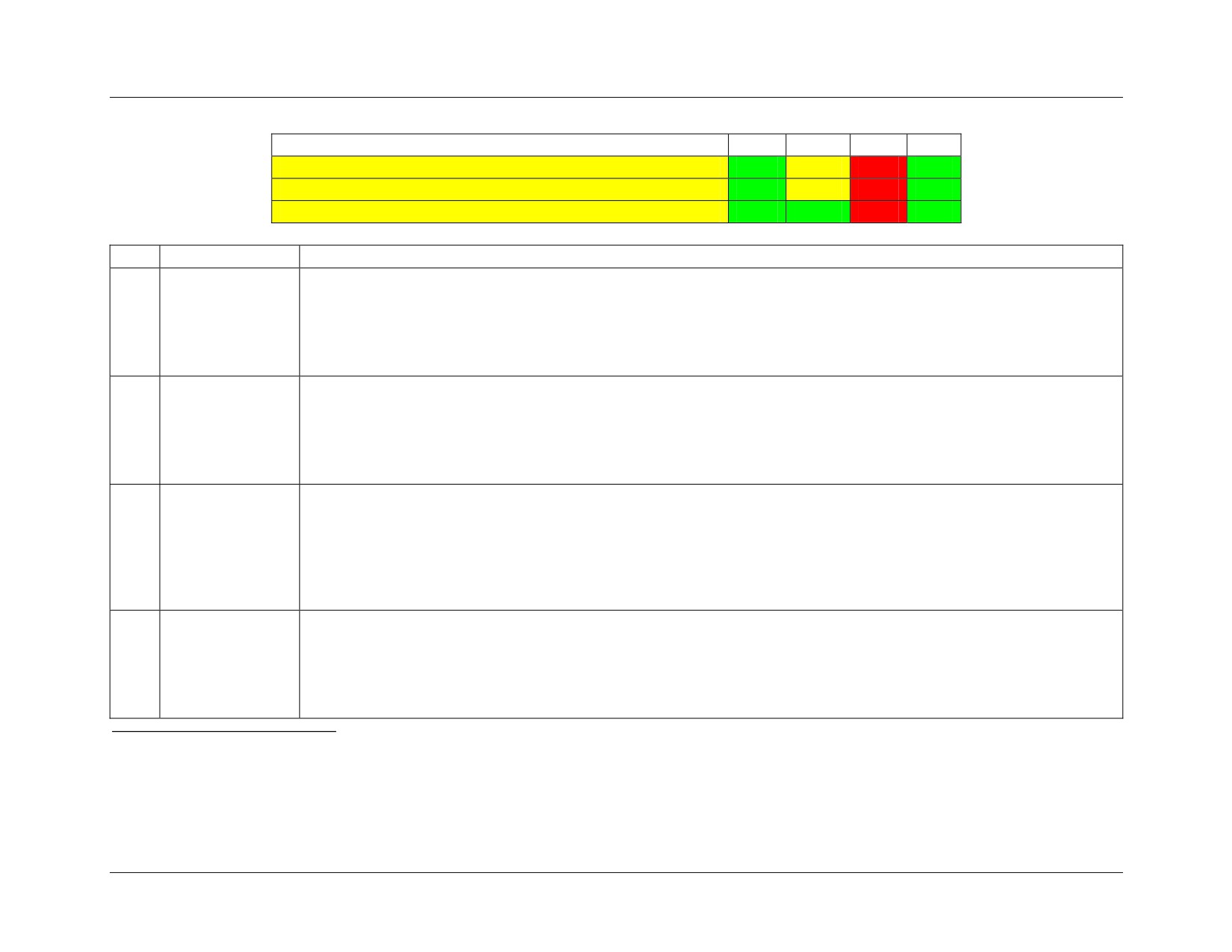
Table 9.3-1 discusses individual capabilities to perform this task to the designated standards. The
current capability, “CBRN Threat Intelligence Dissemination,” addresses the timely
dissemination of processed CBRN threat intelligence to ensure effective warning and
implementation of associated activities. The overall capability for current, near/mid, and far term
are rated “yellow.” Although improvements between the periods occur for specific capabilities
21
For Official Use Only
For Official Use Only
CBRND Functional Needs Analysis/Functional Solution Analysis
Chapter 9. Tactical Shape Tasks
and are reflected in the associated identified values, the improved capabilities are not sufficient
to change the overall assessed color ratings for this task.
Current Capability and Deficiency
Current DOTLPF adequately addresses the dissemination of CBRN/TIM threat intelligence
using existing tactical communications systems and requires manual determination and action for
accomplishment. Plans and procedures are developed during preparation for the dissemination of
CBRN threat intelligence indictors to requiring centers. Commander guidance and operational
situations dictate dissemination parameters. Existing and projected DoD information systems and
infrastructure will allow for the discovery and dissemination of intelligence information. Manual
ATP-45 format messages are created when automated warning systems are unavailable.
However, existing communications systems are not fully interoperable and are dependent upon
the systems available to elements of the Joint Task Force (JTF). Implementation and cross-
element, particularly between Service components and with coalition partners, is dependent upon
the attentiveness and awareness of the intelligence and operations centers in the mixed
communications network. CBRND exercises do not specifically challenge and evaluate the
dissemination of CBRN/TIM intelligence to requiring need-to-know centers. The dissemination
of information is generally viewed as an inherent component of other criteria and is, therefore, a
subsumed function/activity.
Projected Near/Mid-Term Capability and Deficiency
Joint Warning and Reporting Network (JWARN) (Increment 1, initial operational capability
[IOC]) is projected for initial fielding in the mid term to operational units. DOTLPF must
continue to evolve as systems, tactics, and situations change. Developmental “born joint” DoD
information systems will be compliant with the four elements of the Net Ready Key Performance
Parameter (NR-KPP) ensuring interoperability, information assurance, integration to the
appropriate community of interest as well as the Global Information Grid (GIG) architecture.
Substantial upgrades to legacy systems are required to include Defense Information Systems
Agency (DISA) standards and net-centric capabilities. Interoperability with coalition partners,
especially non-NATO partners, may be a continuing issue requiring maintenance of attentiveness
and awareness by the responsible centers. Further, the mix of legacy and compliant systems will
continue to require the attentiveness and awareness of intelligence and operations center staffs to
ensure effective dissemination of identified CBRN intelligence to requiring need-to-know
centers until the legacy systems are either replaced or modified for compliance. CBRND exercise
criteria and standards remain an area of concern. Interoperability barriers that limit collaboration
between the DoD and other government organizations and coalition partners must be addressed
through formalized agreements and standard operating procedures (SOPs).
Projected Far-Term Capability and Deficiency
Joint developmental information systems programs are scheduled to field prior to the far term.
All systems are to be in compliance with the joint staff-mandated NR-KPP and will fully support
DoD interoperability across the Services.
22
For Official Use Only
For Official Use Only
CBRND Functional Needs Analysis/Functional Solution Analysis
Chapter 9. Tactical Shape Tasks
Table 9.3-1. TASHA 3: Capability and Deficiency Assessment
Capability: CBRN Threat Intelligence Dissemination
M1
M2
M3
M4
Current Overall Capability
81
62
33
84
Near/Mid-Term Overall Capability
8
7
3
8
Far-Term Overall Capability
8
8
3
8
FAA Measure
Scale
M1
Means exist and
8-10: Means exist and are employed for the dissemination of CBRN threat intelligence to all need-to-know centers.
are employed to
4-7: Limited means exist and is employed for the dissemination of CBRN threat intelligence to most need-to-know centers.
disseminate
1-3: Existing means and employment are inadequate for the dissemination of CBRN threat intelligence to requiring need-to-
CBRN/TIM
know centers.
intelligence to all
0: Means do not exist for the dissemination of CBRN threat intelligence to requiring need-to-know centers.
concerned.
M2
Indicator-based
8-10: Plans, procedures, and means exist for the dissemination of indicator-based warnings to all need-to-know centers.
warnings are
4-7: Plans, procedures, and means are limited for the rapid dissemination of indicator-based warnings to most need-to-know
rapidly
centers.
disseminated.
1-3: Plans, procedures, and means are limited for the dissemination of indicator-based warnings to most need-to-know centers
0: Plans, procedures, and/or means do not exist for the dissemination of indicator-based warnings to requiring need-to-know
centers.
M3
Dissemination of
8-10: The rapid and accurate dissemination of CBRN/TIM intelligence to requiring need-to-know centers is a specific and
CBRN/TIM
integral CBRN exercise challenge criteria.
intelligence
4-7: Dissemination of CBRN/TIM intelligence to requiring need-to-know centers is identified in CBRN exercise challenge
challenged during
criteria but is not specifically evaluated.
exercises.
1-3: The dissemination of CBRN/TIM intelligence to requiring need-to-know centers is an inherent component of selected
CBRN exercise challenge criteria but is not separately evaluated
0: The dissemination of CBRN/TIM intelligence to requiring need-to-know centers is not evaluated.
M4
There is effective
8-10: DOTLPF exists and is adequate for this task. Task can be effectively performed with little or no direct impact upon
DOTLPF in place
operations.
to conduct task.
4-7: Most critical aspects of DOTLPF for this task are addressed. Task can be performed with limitations requiring work-
arounds.
1-3: DOTLPF is inadequate for accomplishment of this task.
0: DOTLPF does not exist for this task.
1 Existing DoD communication infrastructure systems and JWARN, where available, are used to disseminate CBRN intelligence and warnings. Manual ATP-45 format messages
are created when automated warning systems are unavailable. However, existing communications systems are not fully interoperable and are dependent upon systems available to
elements of the JTF. Attentiveness is required to ensure the effectiveness of the intelligence and operations centers in this mixed communications environment. Net-centric
operations and mandatory DISA standards address interoperability and the interchange of information among elements. DoD systems are expected to be increasingly in compliance
with the DISA standards and net-centric capable, as appropriate, during the mid term. New DoD systems are currently required to be in compliance with DISA standards and net-
centric capable when fielded. Remaining legacy systems are projected to either be replaced by, or be fully compliant with, DISA standards and net-centric capable in the far term.
23
For Official Use Only
For Official Use Only
CBRND Functional Needs Analysis/Functional Solution Analysis
Chapter 9. Tactical Shape Tasks
2 Plans and procedures are developed during preparation for the dissemination of CBRN threat intelligence indictors to requiring centers. Implementation and cross-element,
particularly between Service components and with coalition partners, is dependent upon the attentiveness and awareness of the intelligence and operations centers in the mixed
communications network. Commander guidance and operational situations will dictate dissemination parameters. Interoperable and net-centric automated systems will enhance the
interchange of information between elements. DoD systems are expected to be increasingly in compliance with the DISA standards and net-centric capable, as appropriate, during
the mid term. New DoD systems are currently required to be in compliance with DISA standards and net-centric capable when fielded. All remaining legacy systems are projected
to either be replaced by, or be fully compliant with, DISA standards and net-centric capable in the far term. Interoperability with coalition partners, especially non-NATO partners,
may be a continuing issue requiring maintenance of attentiveness and awareness by the responsible centers.
3 CBRND exercises do not specifically challenge and evaluate the dissemination of CBRN/TIM intelligence to requiring need-to-know centers. The dissemination of information is
generally viewed as an inherent component of other criteria and is, therefore, a subsumed function/activity. CBRN/TIM intelligence development and dissemination is not
generally exercised and evaluated. Time constraints, lack of process familiarity by evaluators, and other factors usually remove intelligence operations challenges for CBRN
exercises and evaluations and replace with scripted and prepackaged intelligence inputs provided directly by the evaluators.
4 Current DOTLPF adequately addresses the dissemination of CBRN/TIM threat intelligence using existing tactical communications systems and requires manual determination
and action for accomplishment. DOTLPF will need to continue to evolve as systems, tactics, and situations change.
24
For Official Use Only
For Official Use Only
CBRND Functional Needs Analysis/Functional Solution Analysis
Chapter 9. Tactical Shape Tasks
9.3.3
Functional Solution Analysis
9.3.3.1
DOTLPF Assessment Summary
This section addresses the deficiencies and suggests potential non-materiel solutions. If there are
no non-materiel solutions or they are only partial solutions, the remaining non-materiel need is
then stated. Materiel needs are assessed in the IMA section.
1.
Deficiency: Attentiveness required ensuring effectiveness of the intelligence and
operation centers.
Non-Materiel Solutions: Doctrine: Intelligence and operations centers procedures are
required to promote attentiveness and awareness for the effectiveness of CBRN/TIM
intelligence dissemination to all requiring need-to-know centers. Training: Training is
required ensuring proficiency of intelligence and operations center personnel in the
identification of requiring need-to-know centers and the dissemination of CBRN/TIM
intelligence. Leadership: Leaders must ensure training attain and maintain capabilities
and performance levels ensuring the effective dissemination of CBRN/TIM intelligence
to all requiring need-to-know centers.
2.
Deficiency: Limited automation ability. Attentiveness required ensuring capability for
rapid dissemination.
Non-Materiel Solutions: Doctrine: Intelligence and operations centers procedures are
required to promote attentiveness and awareness for the effectiveness of CBRN/TIM
intelligence dissemination to all requiring need-to-know centers. Training: Training is
required ensuring proficiency of intelligence and operations center personnel in the
identification of requiring need-to-know centers and the dissemination of CBRN/TIM
intelligence.
3.
Deficiency: Training exercises do not adequately challenge CBRN intelligence
transmission.
Non-Materiel Solutions: Doctrine: CBRN exercise criteria specifically challenge and
establish evaluation standards for the dissemination of CBRN intelligence. Training:
Training exercises must include scenarios challenging CBRN intelligence dissemination.
9.3.3.2
IMA Assessment Summary
N/A
25
For Official Use Only
For Official Use Only
CBRND Functional Needs Analysis/Functional Solution Analysis
Chapter 9. Tactical Shape Tasks
9.4
Task TASHA 4: Conduct immediate or local battlespace threat assessment
9.4.1
Functional Area Analysis
9.4.1.1
Definition
Based on local or mission-relevant threat information, plausible adversary intent and objectives
are formulated for CBRN agents or TIM use. The threat specific to the mission, maneuver, or
site is assessed, including TIM ROTA potential. The assessment includes adversary targeting,
potential CBRN weapon configurations, employment schemes, objectives and intent. The
development of a shared common picture of the immediate threat affords the commander the
ability to maximize assessment visibility for the timely and effective preparations against any
potential adversary’s CBRN threat actions.
9.4.1.2
Derivation
UJTL (TA 2.4, TA 5, TA 5.2.1, TA 7, TA 7.1), Military Transformation: A Strategic Approach,
Protection Joint Functional Concept.
9.4.1.2.1
Supported Tasks: OPSHA 1, OPSHA 2
9.4.1.2.2
Lateral Task: N/A
9.4.1.2.3
Supporting Task: N/A
9.4.1.3
Condition
Perform this task under conditions of:
Physical. N/A
Military
1. High interoperability. (C2.2.6)
2. Marginal intelligence database. (C2.4.2)
3. Growing theater intelligence organization. (C2.4.3)
4. Intelligence dissemination and receipt fully exists. (C2.4.7)
Civil
1. Significant TIMs present in the civilian sector. (C3.3.7.5)
26
For Official Use Only
For Official Use Only
CBRND Functional Needs Analysis/Functional Solution Analysis
Chapter 9. Tactical Shape Tasks
9.4.2
Functional Needs Analysis
9.4.2.1
Capability and Deficiency Assessment Summary
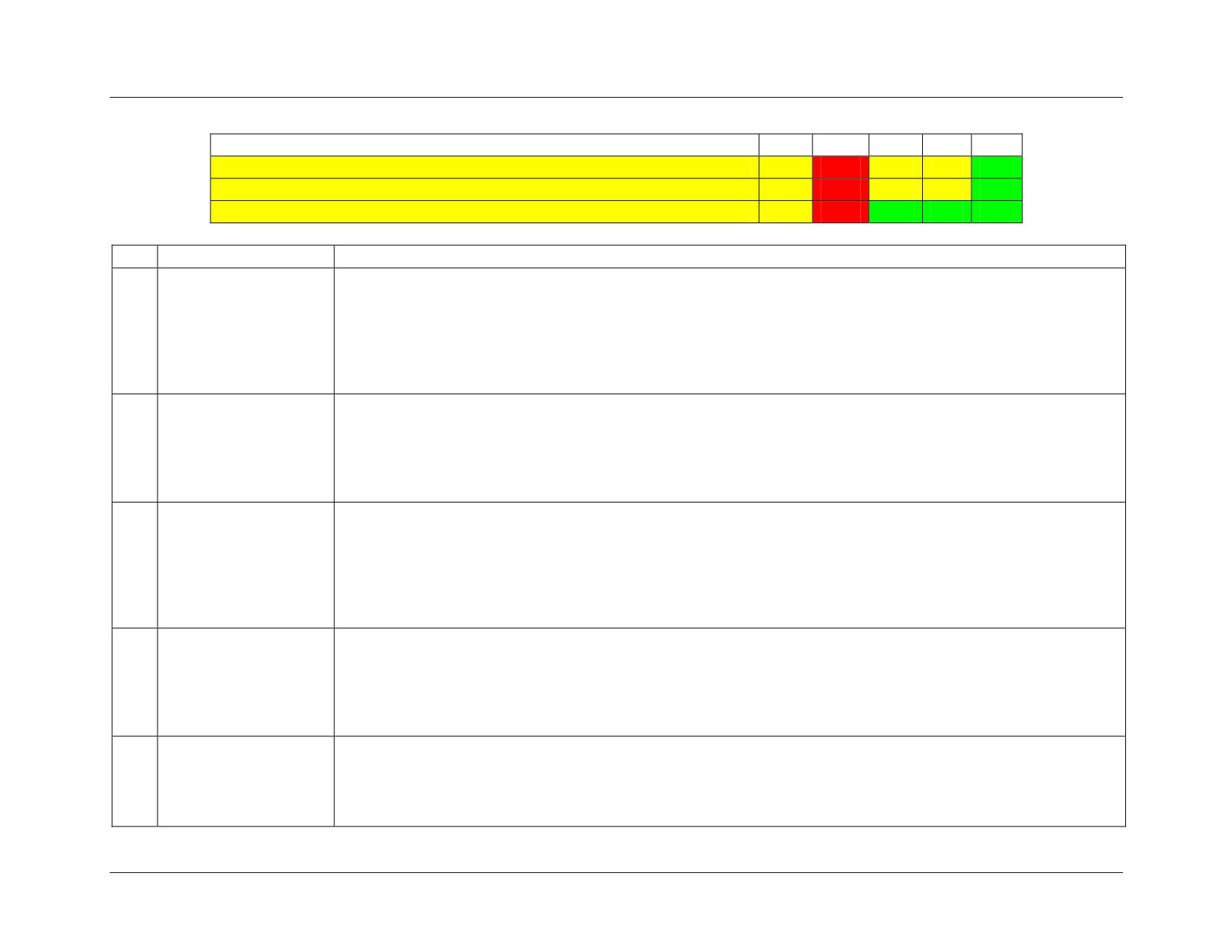
Table 9.4-1 discusses individual capabilities to perform this task to the designated standards.
Capability is currently manual processes for local threat assessments. The overall capability for
current, near/mid, and far term are rated “yellow.” Although improvements between the periods
occur for specific capabilities and are reflected in the associated identified values, the improved
capabilities are not sufficient to change the overall assessed color ratings for this task.
Current Capability and Deficiency
Current processes are predominantly manual with limited automation. Process is labor- and time-
consuming and dependent upon the training, experience, and availability of performing
personnel as well as the quality of the assessed data. The current capability is achieved using
doctrine and locally devised checklists. The process is slow and prone to human error. Data may
not always be available for newly defined threats. Although limited simulation tools are
available, these are not generally in use by operating forces. Existing DoD communication
infrastructure systems and JWARN, where available, are used to disseminate CBRN intelligence
and warnings. Manual ATP-45 format messages are created when automated warning systems
are unavailable. However, existing communications systems are not fully interoperable and are
dependent upon systems available to elements of the JTF. Attentiveness is required to ensure the
effectiveness of the intelligence and operations centers in this mixed communications
environment. Limited training is provided to intelligence, operations, and CBRN cell specialists
for the processing and conduct of CBRN threat assessment. Consistent formal and refresher
training on immediate or local battlefield CBRN threat assessment is not regularly and routinely
performed. Limited routine training is provided and often is not focused until preparation for
operations.
Projected Near/Mid-Term Capability and Deficiency
The mid-term fielding of JWARN (Increment 1 - IOC), the Joint Operational Effects Federation
(JOEF), and the Joint Effects Model (JEM) are envisioned as providing forces with the tools to
assess and simulate plausible adversary COAs and with the capability to refine cell specialist
skills as part of local training and exercising/evaluations. Net-centric operations and mandatory
DISA standards address interoperability and the interchange of information among elements.
New DoD systems are expected to be in compliance with DISA standards and net-centric
capable, as appropriate during the current and near term for interoperability and net-centric
operations. Substantial upgrades to legacy systems are required to include DISA standards and
net-centric capabilities. However, interoperability may not exist with coalition partner and host-
nation systems. Further, the degree of interoperability between JTF element systems is dependent
upon the extent of DISA standard and net-centric capable compliant replacement or modified
legacy systems fielded by the Services in support of operations. DOTLPF will need to continue
to evolve as systems, tactics, and situations change.
27
For Official Use Only
For Official Use Only
CBRND Functional Needs Analysis/Functional Solution Analysis
Chapter 9. Tactical Shape Tasks
Projected Far-Term Capability and Deficiency
Full fielding of JWARN, JOEF, and JEM is projected to be completed in the early far term.
Continued fielding of DISA standard and net-centric capable systems to operational units
enhances the capability to conduct CBRN/TIM threat information collection, dissemination, and
interchange. All legacy systems are projected to either be replaced by, or be in compliance with,
DISA standards and fully support net-centric operations in the far term.
28
For Official Use Only
For Official Use Only
CBRND Functional Needs Analysis/Functional Solution Analysis
Chapter 9. Tactical Shape Tasks
Table 9.4-1. TASHA 4: Capability and Deficiency Assessment
Capability: Processes for Evaluating Adversary Course of Action
M1
M2
M3
M4
M5
Current Overall Capability
41
32
41
53
84
Near/Mid-Term Overall Capability
5
3
6
6
8
Far-Term Overall Capability
5
3
8
8
8
FAA Measure
Scale
M1
Analytical processes are
8-10: Automated systems substantially or fully perform analytical processing of CBRN/TIM threat intelligence to evaluate
used to evaluate
plausible adversary COAs, including adversary CBRN employment or TIM ROTA.
plausible adversary
4-7: Analytical processes for the evaluation of plausible adversary COAs (including CBRN employment) is performed
COAs.
predominantly using manual means and is limited to available trained resources and the quality of selected assessed data.
1-3: Evaluation of plausible adversary COAs is performed using manual means and is limited to available trained resources
and the quality of selected assessed data.
0: No capability to perform analytical processes for the evaluation of plausible adversary COAs.
M2
Means exist and are
8-10: Means exist and are employed for the rapid and accurate processing and dissemination of CBRN threat intelligence.
employed to process
4-7: Limited means exist and is employed for the processing and dissemination of CBRN threat intelligence.
CBRN/TIM threat
1-3: Existing means and employment are inadequate for the dissemination of CBRN threat intelligence to requiring need-
intelligence rapidly to
to-know centers.
meet needs of
0: Means do not exist or employment is inadequate for the processing and dissemination of CBRN threat intelligence.
operational commanders.
M3
Threat assessment is
8-10: Automated systems substantially or fully perform analytical processing of CBRN/TIM threat intelligence to evaluate
used to prepare for
plausible adversary COAs, including adversary CBRN employment or TIM ROTA.
plausible CBRN attacks
4-7: Analytical processes for the evaluation of plausible adversary COAs (including CBRN employment) are performed
and TIM ROTA.
predominantly using manual means and is limited to available trained resources and the quality of selected assessed data.
1-3: Evaluation of plausible adversary COAs is performed using manual means and is limited to available trained resources
and the quality of the selected assessed data.
0: No capability to perform analytical processes for the evaluation of plausible adversary COAs.
M4
Staffs have sufficient
8-10: All intelligence, operations, and CBRN staff personnel are formally trained and receive recurring refresher training
training and experience
on the conduct of CBRN/TIM threat assessment.
to conduct the threat
4-7: Limited training is provided, is inconsistent, and/or is administered in preparation for operations to intelligence,
assessment.
operations, and CBRN cell specialists for the processing and conduct of CBRN threat assessment.
1-3: CBRN/TIM threat assessment training is inadequate to support operations.
0: CBRN/TIM threat assessment training to support operations is nonexistent.
M5
There is effective
8-10: DOTLPF exists and is adequate for this task. Task can be effectively performed with little or no direct impact upon
DOTLPF in place to
operations.
conduct task.
4-7: Most critical aspects of DOTLPF for this task are addressed. Task can be performed with limitations requiring work-arounds.
1-3: DOTLPF is inadequate for accomplishment of this task.
0: DOTLPF does not exist for this task.
29
For Official Use Only
For Official Use Only
CBRND Functional Needs Analysis/Functional Solution Analysis
Chapter 9. Tactical Shape Tasks
1 JOEF and JEM will address TIM hazards listed in ITF-40 with the specific capabilities articulated in the corresponding capability document. Process is labor- and time-
consuming and dependent upon the training, experience, and availability of performing personnel as well as the quality of the assessed data. The current capability is achieved
using doctrine and locally devised checklists. The process is slow and prone to human error. Data may not always be available for newly defined threats. TIM threat assessment
evaluation processes are currently nonexistent for operational forces and data are limited to civilian HAZMAT and ITF-40 sources. Although limited simulation tools are available
for CBRN, these are not generally in use by operating forces. JOEF and JEM are envisioned as providing forces with the tools to assess and simulate plausible adversary COAs.
JOEF and JEM will be initially fielded in the mid term with full fielding early in the far term. Legacy systems will continue to require significant manual extraction, review, and
reinput of information for application by JOEF and JEM. The continuing requirement for DoD systems to become and be in compliance with DISA standards will gradually
provide interoperability of the systems with JOEF and JEM with projected full interoperability of systems in the far term. However, the extent to which JOEF and JEM will
address TIM (and the specific agents to be included) is not as yet determined.
2 Doctrine and C4ISR systems are in place for the processing of CBRN intelligence. Process is predominantly manual, time-consuming, and labor-intensive. Information sources
are either not interoperable or possess limited interoperability. CBRN intelligence and indicators must compete for resources and processing. Availability of information may be
delayed due to lack of dedicated C4ISR capabilities for CBRN information collection, processing, and interpretation.
3 Limited training is provided to intelligence, operations, and CBRN cell specialists for the processing and conduct of CBRN threat assessment. Consistent formal and refresher
training on immediate or local battlefield CBRN threat assessment is not regularly and routinely performed. Limited routine training is provided and often is not focused until
preparation for operations. The fielding of JEM and JOEF provide capability to refine cell specialist skills as part of local training and exercising/evaluations. However, supporting
and requiring DOTLPF is necessary to ensure attainment and maintenance of capability. Although current manual processes are adequate, as the availability of more sources of
data become available for use, manual process will have to be automated and will require training.
4 Current DOTLPF adequately addresses the conduct of CBRN/TIM threat assessment using existing largely manual processes and locally devised checklists for accomplishment.
DOTLPF instituting and supporting rapid and secure reachback capabilities for joint CBRN expert support and assistance, and CBRND information, plans, procedures, and lessons
learned does not exist DOTLPF will need to continue to evolve as systems, tactics, and situations change.
30
For Official Use Only
For Official Use Only
CBRND Functional Needs Analysis/Functional Solution Analysis
Chapter 9. Tactical Shape Tasks
9.4.3
Functional Solution Analysis
9.4.3.1
DOTLPF Assessment Summary
This section addresses the deficiencies and suggests potential non-materiel solutions. If there are
no non-materiel solutions or they are only partial solutions, the remaining non-materiel need is
then stated. Materiel needs are assessed in the IMA section.
1. Deficiency: Absence of refined automated processes.
Partial Non-Materiel Solutions: Doctrine: Doctrine is required for automated processes.
2. Deficiency: Lack of staff training programs.
Partial Non-Materiel Solutions: Training: Formal and refresher training is required.
Personnel: Special attention to assigning experienced personnel where needed is required.
3. Deficiency: Inadequate recurring staff training.
Partial Non-Materiel Solutions: Training: Reoccurring staff training is required.
9.4.3.2
IMA Assessment Summary
Table 9.4-2 is a list of ideas for material approaches and a corresponding description of each
idea. The material approaches identified focus on the development and fielding of automated
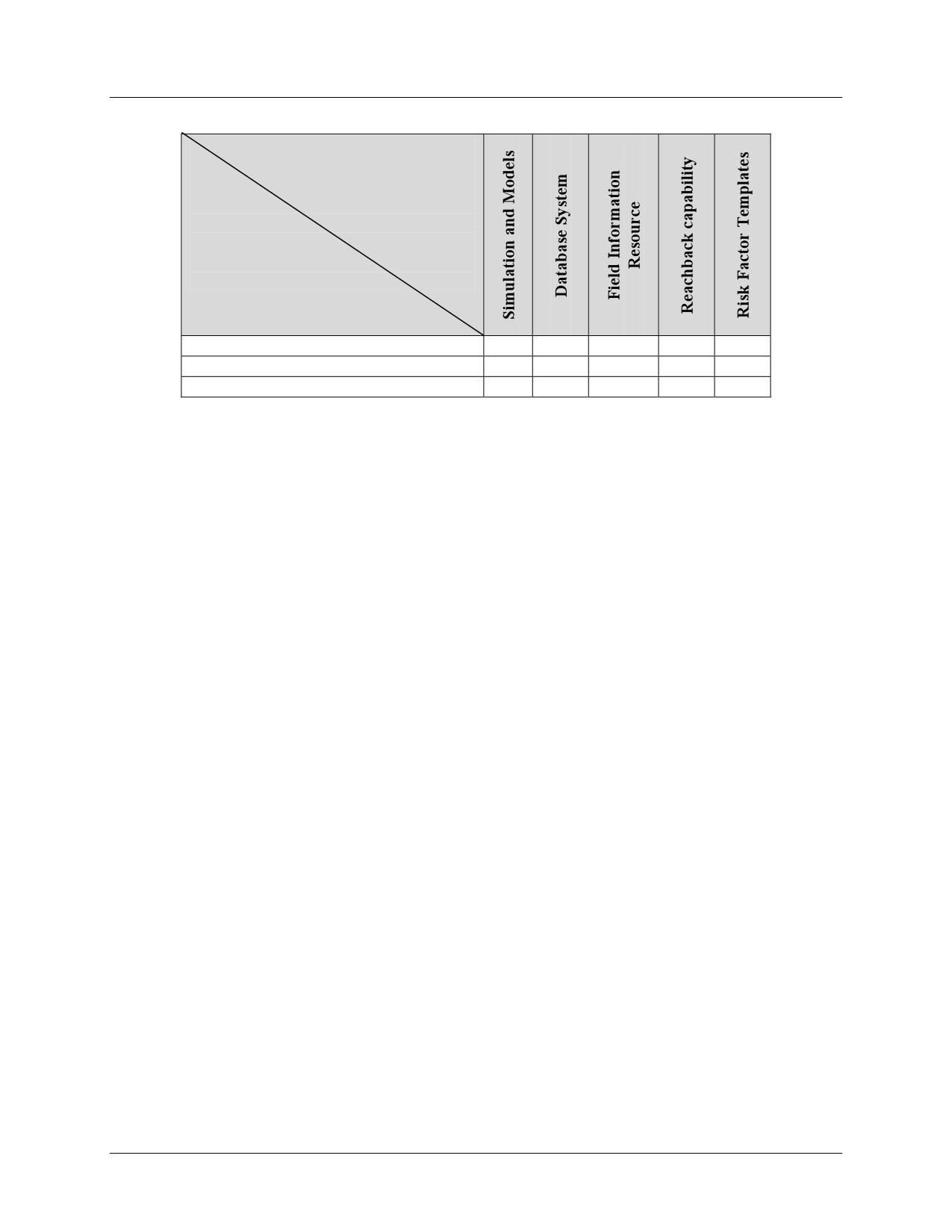
processes and tools for CBRND. Table 9.4-3 identifies which of the material approaches might
address specific materiel deficiencies identified in the DOTMLPF assessment.
31
For Official Use Only
For Official Use Only
CBRND Functional Needs Analysis/Functional Solution Analysis
Chapter 9. Tactical Shape Tasks
Table 9.4-2. TASHA 4: Materiel Approaches
Idea for Materiel Approach
Description
Simulation and models
Develop a system enabling operational commanders to
display current operational picture and to efficiently
execute “what if” scenarios and facilitate the evaluation of
plausible adversary and friendly COAs, CBRN
employment, and TIM ROTA.
Database system
Develop a system for obtaining information, archiving
data, accessing databases, performing information/data
queries, and exchanging data files in support of CBRN
functions and activities.
Field CBRN information resource
Develop a field resource system that will provide and
search archived information for CBRN/TIM agents,
effects, treatments, etc.
Reachback capability
Develop a system providing the ability to rapidly and
securely reachback and contact CBRN experts and obtain
CBRN information and lessons learned. If necessary,
develop plans and procedures.
Risk factor templates
Develop a system merging CBRN, intelligence, and
operational data and plans into standardized automated
formats for application to effectively and rapidly
accomplish CBRN/TIM functions and activities and threat
assessments.
32
For Official Use Only
For Official Use Only
CBRND Functional Needs Analysis/Functional Solution Analysis
Chapter 9. Tactical Shape Tasks
Table 9.4-3. TASHA 4: IMA Assessment
Ideas for Material
Approaches
(IMA)
Identified Gaps
Absence of refined automated processes
X
X
X
X
X
Lack of staff training programs
X
X
X
X
Inadequate recurring training
X
X
X
33
For Official Use Only
For Official Use Only
CBRND Functional Needs Analysis/Functional Solution Analysis
Chapter 9. Tactical Shape Tasks
9.5
Task TASHA 5: Conduct immediate or local battlespace vulnerability assessment
9.5.1
Functional Area Analysis
9.5.1.1
Definition
Local commanders perform vulnerability assessments based on adversary and threat profiles for
their respective area of operation. A vulnerability assessment is a continuous process
encompassing a local intelligence preparation of the battlespace; detailed threat assessment; and
determination of the capability to avoid or protect against contamination, sustain operations, and
restore full mission capability. Includes an evaluation of the causative impact of local adversary
COAs. Also includes identifying and assessing the impact on affected units, missions, and tasks.
Assessment results are used to plan and prepare future operations and correlate with other local
security and force protection means. Likely targets and attack means are identified via this task.
9.5.1.2
Derivation
UJTL (TA 5, TA 5.2.1, TA 6.5, TA 7, TA 7.1), Protection Joint Functional Concept, Military
Transformation: A Strategic Approach.
9.5.1.2.1
Supported Task: OPSHA 2
9.5.1.2.2
Lateral Task: N/A
9.5.1.2.3
Supporting Task: N/A
9.5.1.3
Condition
Perform this task under conditions of:
Physical. N/A
Military
1. Partial preexisting arrangements. (C2.1.1.2)
2. Limited modern military systems. (C2.2.5)
3. High interoperability. (C2.2.6)
4. Poor joint staff integration. (C2.3.1.1)
5. Marginal intelligence database. (C2.4.2)
6. Difficult theater intelligence access. (C2.4.4)
7. Moderate certitude of data. (C2.4.6)
Civil. N/A
34
For Official Use Only
For Official Use Only
CBRND Functional Needs Analysis/Functional Solution Analysis
Chapter 9. Tactical Shape Tasks
9.5.2
Functional Needs Analysis
9.5.2.1
Capability and Deficiency Assessment Summary
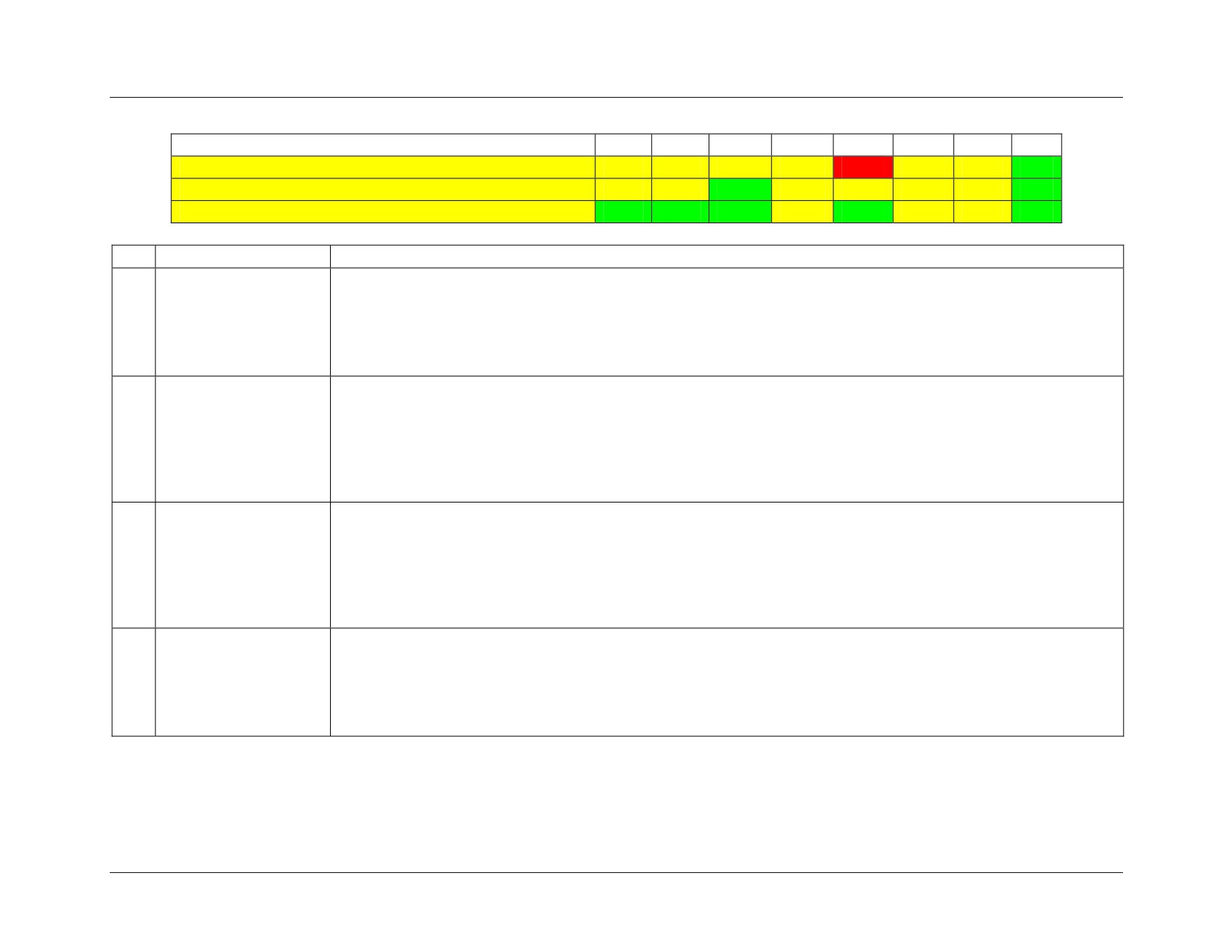
Table 9.5-1 discusses individual capabilities to perform this task to the designated standards.
Current (manual) capability includes commercial off-the-shelf (COTS) and government off-the-
shelf (GOTS) equipment with JOEF, on standard C4ISR equipment, as the future capability to
meet the identified standards. The overall capability for current, near/mid, and far term are rated
“yellow.” Although improvements between the periods occur for specific capabilities and are
reflected in the associated identified values, the improved capabilities are not sufficient to change
the overall assessed color ratings for this task.
Current Capability and Deficiency
Current processes are predominantly manual with limited automation. Process is labor- and time-
consuming, and dependent upon the training, experience, and availability of performing
personnel as well as the quality of the assessed data. The current capability is achieved using
Doctrine and locally devised checklists. The process is slow and prone to human error. Data may
not always be available for newly defined threats. Although limited simulation tools are
available, these are not generally in use by operating forces. Existing DoD communication
infrastructure systems and JWARN, where available, are used to disseminate CBRN intelligence
and warnings. Manual ATP-45 format messages are created when automated warning systems
are unavailable. There is insufficient visibility of CBRND in the COP. However, existing
communications systems are not fully interoperable and are dependent upon systems available to
elements of the JTF. Attentiveness is required to ensure the effectiveness of the intelligence and
operations centers in this mixed communications environment. Limited training is provided to
intelligence, operations, and CBRN cell specialists for the processing and conduct of CBRN
threat assessment. Consistent formal and refresher training on immediate or local battlefield
CBRN threat assessment is not regularly and routinely performed. Limited routine training is
provided and often is not focused until preparation for operations.
Projected Near/Mid-Term Capability and Deficiency
The mid-term initial fielding of JWARN (Increment 1 - IOC), JOEF, and JEM are envisioned as
providing forces with the tools to assess and simulate plausible adversary COAs and provides the
capability to refine cell specialist skills as part of local training and exercising/evaluations. Net-
centric operations and mandatory DISA standards address interoperability and the interchange of
information among elements. New DoD systems are expected to be in compliance with DISA
standards and net-centric capable, as appropriate during the current and near term for
interoperability and net-centric operations. Substantial upgrades to legacy systems are required to
include DISA standards and net-centric capabilities. However, interoperability may not exist
with coalition partner and host-nation systems. Further, the degree of interoperability between
JTF element systems is dependent upon the extent of DISA standard and net-centric capable
compliant replacement or modified legacy systems fielded by the Services in support of
operations. DOTLPF will need to continue to evolve as systems, tactics, and situations change.
35
For Official Use Only
For Official Use Only
CBRND Functional Needs Analysis/Functional Solution Analysis
Chapter 9. Tactical Shape Tasks
Projected Far-Term Capability and Deficiency
Joint developmental information systems, including JOEF, JEM, and JWARN programs, are
scheduled to field prior to the far term. All systems will be in compliance with the joint staff
mandated NR-KPP and will fully support DoD interoperability across the services.
36
For Official Use Only
For Official Use Only
CBRND Functional Needs Analysis/Functional Solution Analysis
Chapter 9. Tactical Shape Tasks
Table 9.5-1. TASHA 5: Capability and Deficiency Assessment
Capability: Processes for Assessing Vulnerability
M1
M2
M3
M4
M5
M6
M7
M8
Current Overall Capability
61
62
73
44
25
56
47
88
Near/Mid-Term Overall Capability
7
7
8
5
5
5
4
8
Far-Term Overall Capability
8
8
8
6
8
5
4
8
FAA Measure
Scale
M1
Vulnerability assessment
8-10: Vulnerability assessment utility is high and is based upon standardized automated system processing, analysis, and
is useful.
evaluation with trained staff review and involvement.
4-7: Vulnerability assessment utility exists but widely varies between units and staffs; depends on manual processes; and
relies on the experience, training, and availability of the performing staff and the quality of selected assessed information.
1-3: Vulnerability assessment utility is low and unable to support operations.
0: Vulnerability assessment utility is nonexistent and unable to support operations.
M2
Analytical tools are used
8-10: Automated systems substantially or fully perform analytical processing of CBRN/TIM threat intelligence to evaluate
to evaluate plausible
plausible adversary COAs, including adversary CBRN employment or TIM ROTA.
adversary COAs.
4-7: Analytical process for the evaluation of plausible adversary COAs (including CBRN employment) is performed
predominantly using manual means and is limited to available trained resources and the quality of selected assessed data.
1-3: Evaluation of plausible adversary COAs are performed using manual means and is limited to available trained
resources and the quality of the selected assessed data.
0: No capability to perform analytical processes for the evaluation of plausible adversary COAs.
M3
Vulnerability assessment
8-10: Time-sensitive or priority-actionable CBRN/TIM intelligence is exploited in the vulnerability assessment process, and
process exploits time-
the process provides for update and assessment as new intelligence is received.
sensitive or priority
4-7: Time-sensitive or priority-actionable CBRN/TIM intelligence is included in the initial vulnerability assessment
actionable CBRN/ TIM
process. Update and reassessment as new intelligence is received are inadequate.
intelligence.
1-3: Time-sensitive or priority-actionable CBRN/TIM intelligence is included in the vulnerability assessment process.
Update and reassessment as new intelligence is received are absent.
0: Time-sensitive or priority-actionable CBRN/TIM intelligence is not exploited in the vulnerability assessment process.
M4
Means available to
8-10: Electronic collaborative workspaces with automated tools exist and are predominantly applied for evaluation,
collaboratively perform
assessment, planning, and decisioning processes.
assessments.
4-7: Manual collaborative processes are predominantly applied for the evaluation, assessment, planning, and decisioning
processes.
1-3: Collaborative processes are inadequate for the conduct of evaluation, assessment, planning, and decisioning processes.
0: Collaborative processes do not exist for the conduct of evaluation, assessment, planning, and decisioning processes.
37
For Official Use Only
For Official Use Only
CBRND Functional Needs Analysis/Functional Solution Analysis
Chapter 9. Tactical Shape Tasks
M5
Means exist to visualize
8-10: Standardized modeling and simulation (M&S) capability exists to assess and visualize adversary COAs (both CBRN
the extent of Adversary
and TIM) and their effects, is applied by all operating forces and staffs, is integrated into the COP, and continuously
COAs on forces of
refreshes as new information is drawn from interoperable sources.
interest.
4-7: Operating force staffs possess M&S capability and resources to perform M&S visualization of adversary COAs
(CBRN or TIM) and their effects, is commonly applied by operating forces and staffs, is integrated into the COP, and
refreshes as new information is processed.
1-3: Visualization is inadequate of adversary COAs and their effects.
0: Visualization of adversary COAs and their effects are nonexistent.
M6
Operational and
8-10: All intelligence, operations, and CBRN staff personnel are formally trained and receive recurring refresher training on
analytical/planning staffs
the conduct of CBRN COA assessment.
have the training and
4-7: Limited training is provided, is inconsistent, and/or is administered in preparation for operations to intelligence,
experience to effectively
operations, and CBRN cell specialists for the processing and conduct of adversary CBRN COA assessment.
assess adversary CBRN
1-3: Adversary CBRN COA assessment training is inadequate to support operations.
COAs.
0: Adversary CBRN COA assessment training is nonexistent.
M7
There are sufficient
8-10: Doctrine, policies, procedures, and TTPs are adequate for effective vulnerability assessments and are actively revised
doctrine and TTPs for
to exploit current, emerging, and projected technologies and changes to tactics, systems, capabilities, and situations.
effective vulnerability
4-7: Doctrine, policies, procedures, and TTPs for vulnerability assessment exist but are predominantly manual and are
assessments.
periodically revised to exploit technologies and operational changes.
1-3: Doctrine, policies, procedures, and TTPs are inadequate for the conduct of vulnerability assessments
0: Doctrine, policies, procedures, and TTPs for vulnerability assessments are nonexistent.
M8
There is effective
8-10: DOTLPF exists and is adequate for this task. Task can be effectively performed with little or no direct impact upon
DOTLPF in place to
operations
conduct task.
4-7: Most critical aspects of DOTLPF for this task are addressed. Task can be performed with limitations requiring work-
arounds.
1-3: DOTLPF is inadequate for accomplishment of this task.
0: DOTLPF does not exist for this task.
1 Utility is dependent upon the experience, training, and availability of the necessary staff, as well as the quality and accessibility of information. Current capability is achieved
using doctrine and locally devised checklists. The process is predominantly manual and prone to errors and omissions. JOEF and JEM are envisioned as providing forces with the
tools to perform vulnerability assessments with higher levels of utility. These systems will be initially fielded in the mid term. The JOEF is projected to include analytical tools for
the evaluation of COAs and conduct of assessments. Refinement and development of additional analytical tools that draw information from diverse sources operating using GIG
Enterprise Services will further enhance the value and application of JOEF. Visualization through modeling and simulation is projected to be accomplished using JEM providing
rapid recognition and attainment of situational awareness. JOEF and JEM are programmed to link with the COP via GIG Enterprise Service. JOEF and JEM will require dedicated
automated resources. The efficiency and utility of JOEF and JEM will be influenced by emerging C4ISR systems and processes residing on and using GIG Enterprise Services.
Legacy systems will continue to require significant manual extraction, review, and reinput of information for application by JOEF and JEM. The continuing requirement for DoD
systems to become and be in compliance with DISA standards will gradually provide interoperability of the systems with JOEF and JEM with projected full interoperability of
systems in the far term.
2 Current processes are predominantly manual with limited automation. Process is labor- and time-consuming and dependent upon the training, experience, and availability of
performing personnel as well as the quality of the assessed data. The current capability is achieved using doctrine and locally devised checklists. The process is slow and prone to
human error and omissions. Data may not always be available for newly defined threats and possible countermeasures. TIM vulnerability assessment evaluation processes are
currently nonexistent for operational forces and data are limited to civilian HAZMAT and ITF-40 sources. Although limited simulation tools are available for CBRN, these are not
38
For Official Use Only
For Official Use Only
CBRND Functional Needs Analysis/Functional Solution Analysis
Chapter 9. Tactical Shape Tasks
generally in use by operating forces. JOEF and JEM are envisioned as providing forces with the tools to assess and simulate plausible adversary COAs. Additionally, they may be
also used to assess actual events and for training. JOEF and JEM will be initially fielded in the mid term with full fielding completed early in the far term. However, the extent to
which JOEF and JEM will address TIM (and the specific agents to be included) is not as yet determined. The JOEF is projected to include analytical tools for the evaluation of
COAs. Refinement and development of additional tools for COA that draw information from diverse sources operating using GIG Enterprise Services will further enhance the
value and application of JOEF. The efficiency and utility of JOEF and JEM will be influenced by emerging C4ISR systems and processes residing on and using GIG Enterprise
Services. Legacy systems will continue to require significant manual extraction, review, and reinput of information for application by JOEF and JEM. The continuing requirement
for DoD systems to become and be in compliance with DISA standards will gradually provide interoperability of the systems with JOEF and JEM with projected full
interoperability of systems in the far term. Visualization through modeling and simulation is projected to be accomplished using JEM. JOEF and JEM are programmed to link with
the COP via GIG Enterprise Service.
3 Effective exploitation of time-sensitive or priority-actionable CBRN/TIM intelligence in processing is currently dependent upon the training, experience, and availability of
performing personnel. Staff capabilities and performance will vary between units and levels of command from marginal to excellent. In all cases, exploitation in the process is
human dependent and therefore subject to errors, omissions, and subjective evaluation. JOEF is projected to include analytical tools for the evaluation of plausible adversary COAs
and the conduct of assessments. JOEF is programmed for initial fielding in the mid term with full fielding completed early in the far term. On-going collection of information and
adjustments are projected to be integral to the system. Refinement and development of additional analytical tools that draw information from diverse sources operating using GIG
Enterprise Services will further enhance the value and application of JOEF. JOEF is programmed to link with the COP via GIG Enterprise Service. The efficiency and utility of
JOEF and JEM will be influenced by emerging C4ISR systems and processes residing on and using GIG Enterprise Services. Legacy systems will continue to require significant
manual extraction, review, and reinput of information for application by JOEF. The continuing requirement for DoD systems to become and be in compliance with DISA standards
will gradually provide interoperability of the systems with JOEF and JEM with projected full interoperability of systems in the far term. The efficiency and utility of the system
will be influenced by emerging C4ISR systems and processes residing on and using the GIG Enterprise Service.
4 Assessments currently require collaboration using traditional means such as telephone calls, personal visits, mail routing, e-mail, and other similar means. There is an absence of
electronic collaborative workspaces within which differing functions and activities are able to cooperatively assist the evaluation, assessment, planning, and decisioning process
without time delay and the need for physical presence. Automated tools could effectively enhance and be enhanced by these electronic rooms. Collaborative workspaces support
net-centric operations. These workspaces are inevitable with the increasing utility of automation and information sharing.
5 Insufficient simulation capability in available automated assessment tools or completely unavailable for manual vulnerability assessment. Currently available modeling and
simulation tools are limited to HPAC- and VLSTRACK-based systems designed for graphics-enhanced systems. COTS M&S tools, such as ADASHI, provide limited capabilities
but are not DISA certified. Current M&S tools, additionally, are not interoperable and are not linked within the COP. They must be manually data entered and manipulated. JOEF
and JEM are envisioned as providing forces with the tools to assess and simulate plausible adversary COAs. Additionally, they may be also used to assess actual events and for
training. JOEF and JEM will be initially fielded in the mid term with full fielding completed early in the far term. However, the extent to which JOEF and JEM will address TIM
(and the specific agents to be included) is not as yet determined. JOEF is projected to include analytical tools for the evaluation of COAs and will draw information from diverse
sources operating using GIG Enterprise Services. The efficiency and utility of JOEF and JEM will be influenced by emerging C4ISR systems and processes residing on and using
GIG Enterprise Services. Legacy systems will continue to require significant manual extraction, review, and reinput of information for application by JOEF and JEM. The
continuing requirement for DoD systems to become and be in compliance with DISA standards will gradually provide interoperability of the systems with JOEF and JEM with
projected full interoperability of systems in the far term. Visualization through modeling and simulation is projected to be accomplished using JEM. JOEF and JEM are
programmed to link with the COP via GIG Enterprise Service.
6 Limited training is provided to intelligence, operations, and CBRN cell specialists for the processing and conduct of CBRN vulnerability assessment. Consistent formal and
refresher training on immediate or local battlefield CBRN vulnerability assessment is not regularly and routinely performed. Limited routine training is provided and often is not
focused until preparation for operations. The fielding of JEM and JOEF provide capability to refine cell specialist skills as part of local training and exercising/evaluations.
However, supporting and requiring DOTLPF is necessary to ensure attainment and maintenance of capability.
7 Doctrine, policies, procedures, and TTPs exist and are sufficient for the manual performance of effective vulnerability assessment. The same is not true for current, emerging, and
projected automated and simulated based assessment tools. Doctrine, policies, procedures, and TTPs must evolve to accommodate changes in tactics, systems, capabilities, and
situations.
8 Current DOTLPF adequately address the conduct of CBRN/TIM vulnerability assessment using existing largely manual processes and locally devised checklists for
accomplishment. DOTLPF will need to evolve as systems, tactics, and situations change.
39
For Official Use Only
For Official Use Only
CBRND Functional Needs Analysis/Functional Solution Analysis
Chapter 9. Tactical Shape Tasks
9.5.3
Functional Solution Analysis
9.5.3.1
DOTLPF Assessment Summary
This section addresses the deficiencies and suggests potential non-materiel solutions. If there are
no non-materiel solutions or they are only partial solutions, the remaining non-materiel need is
then stated. Materiel needs are assessed in the IMA section.
1.
Deficiency: Absence of interactive assessment tools that work within GIG Enterprise
Services.
Non-Materiel Solutions: None
2.
Deficiency: Current modeling and simulation do not rapidly predict CBRN and TIM
impacts to support operations and planning.
Non-Materiel Solutions: None
3.
Deficiency: Lack of CBRN automated assessment tools within an electronic
collaborative workspace in which automated assessment tools can be applied.
Non-Materiel Solutions: None
4.
Deficiency: Lack of a thorough simulation-based assessment tool.
Non-Materiel Solutions: None
5.
Deficiency: Too few experienced, highly skilled personnel are available for staffs.
Non-Materiel Solutions: Training: Consistent formal and recurring refresher training
programs to attain and maintain staff proficiency is required. Personnel: Priority needs to
be given to developing and assigning adequate numbers of experienced and skilled
personnel to the appropriate battle staffs.
6.
Deficiency: Absence of easy-to-use automated vulnerability assessment tools.
Non-Materiel Solutions: None
7.
Deficiency: Absence of doctrine and TTPs for emergent automated and simulation based
assessment tools.
Non-Materiel Solutions: Doctrine: Doctrine, policies, procedures, and TTPs must
maintain relevance and currency in the changing operational environment; exploit the full
range of technologies available, emerging, and projected through the doctrine revision
and life cycle; and provide for active and timely revisions to fully take advantage of
changes in tactics, systems, and situations.
9.5.3.2
IMA Assessment Summary
Table 9.5-4 is a list of ideas for material approaches and a corresponding description of each
idea. Approaches identified point to CBRND automated tools as well as interfacing to existing
and developmental C4ISR systems and providing for active collaboration between units,
commands, services and coalitions. Table 9.5-5 identifies which of the material approaches
might address specific materiel deficiencies identified in the DOTMLPF assessment.
40
For Official Use Only
For Official Use Only
CBRND Functional Needs Analysis/Functional Solution Analysis
Chapter 9. Tactical Shape Tasks
Table 9.5-4. TASHA 5: Materiel Approaches
Idea for Materiel Approach
Description
Simulations and models
Develop a system enabling operational commanders to
efficiently execute “what if” scenarios and facilitate the
evaluation of plausible adversary and friendly COAs,
CBRN employment, TIM ROTA impacts, and friendly
force vulnerabilities.
Database
Develop a system for obtaining information, archiving
data, accessing databases, performing information/data
queries, and exchanging data files in support of CBRN
functions and activities.
Reachback capability
Develop a system providing the ability to rapidly and
securely reachback and contact CBRN experts and obtain
CBRND plans, procedures, information, and lessons
learned.
Risk factor templates
Develop a system merging CBRN, intelligence, and
operational data and plans into standardized automated
formats for application to effectively and rapidly
accomplish CBRN/TIM functions and activities.
Link to GIS
Develop a system resident in standard C4ISR systems
with interface to GIS to provide input to the COP.
41
For Official Use Only
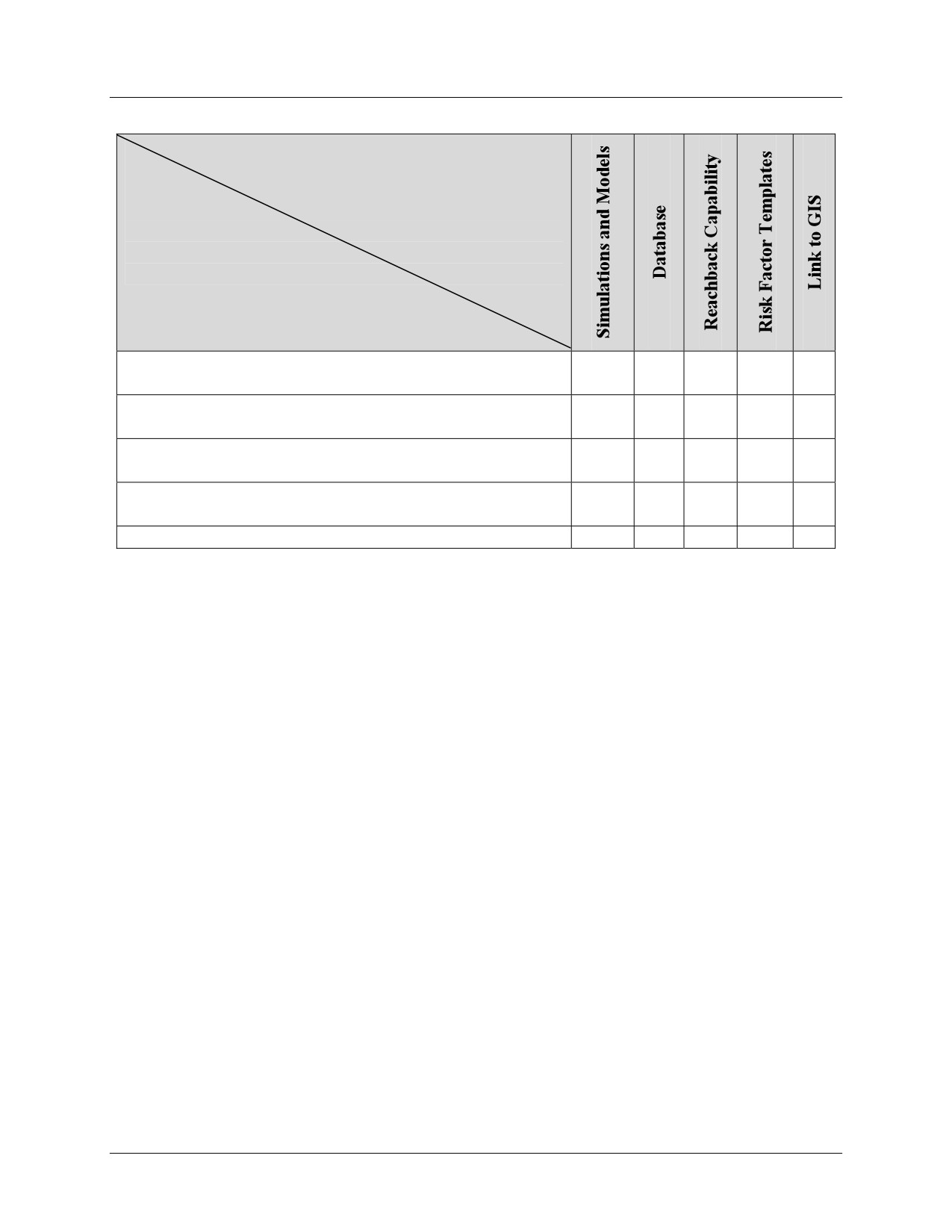
For Official Use Only
CBRND Functional Needs Analysis/Functional Solution Analysis
Chapter 9. Tactical Shape Tasks
Table 9.5-5. TASHA 5: IMA Assessment
Ideas for Material
Approaches
(IMA)
Identified Gaps
Absence of tools that work within GIG Enterprise
X
X
Services.
Absence of real-time assessment simulations to support
X
X
X
X
X
operations and planning
Lack of electronic collaborative workspace, in which
X
automated assessment tools can be applied.
Lack of thorough simulation based assessment tool that
X
X
X
X
X
interactively links with the COP.
Absence of easy-to-use automated assessment tools.
X
X
X
X
X
42
For Official Use Only
For Official Use Only
CBRND Functional Needs Analysis/Functional Solution Analysis
Chapter 9. Tactical Shape Tasks
9.6
Task TASHA 6: Conduct immediate or local battlespace risk assessment
9.6.1
Functional Area Analysis
9.6.1.1
Definition
Based on the vulnerability assessment of TASHA 5, plausible risks are assessed and prioritized.
Probability and likely time of occurrence, along with potential impact and persistency are salient
risk factors. This is a dynamic evaluation of the operational situation, which leads to a
determination of the potential risk to operational capabilities and mission accomplishment given
the potential CBRN/TIM threat. CBRN/TIM-based risks are correlated with all other operational
risks. Staffs at the relevant echelons assess the potential impact of the risk assessment on affected
JTF elements.
9.6.1.2
Derivation
UJTL (TA 5, TA 5.2.1, TA 7, TA 7.1), Protection Joint Functional Concept, Military
Transformation: A Strategic Approach.
9.6.1.2.1
Supported Task: OPSHA 2
9.6.1.2.2
Lateral Task: TASUST 24
9.6.1.2.3
Supporting Task: N/A
9.6.1.3
Condition
Perform this task under conditions of:
Physical. N/A
Military
1. Partial preexisting arrangements. (C2.1.1.2)
2. Limited modern military systems. (C2.2.5)
3. High interoperability. (C2.2.6)
4. Partial joint staff integration. (C2.3.1.1)
5. Marginal intelligence database. (C2.4.2)
6. Difficult theater intelligence access. (C2.4.4)
7. Moderate certitude of data. (C2.4.6)
43
For Official Use Only
For Official Use Only
CBRND Functional Needs Analysis/Functional Solution Analysis
Chapter 9. Tactical Shape Tasks
Civil. N/A
9.6.2
Functional Needs Analysis
9.6.2.1
Capability and Deficiency Assessment Summary
Table 9.6-1 discusses capabilities to perform this task to the designated standards. Current
(manual) capabilities to conduct battlespace risk assessment are limited to COTS and GOTS
equipment. JWARN, JEM and JOEF, when fielded, will improve the capability. The overall
capability for current, near/mid, and far term are rated “yellow.” Although improvements
between the periods occur for specific capabilities and are reflected in the associated identified
values, the improved capabilities are not sufficient to change the overall assessed color ratings
for this task.
Current Capability and Deficiency
Current processes are predominantly manual with limited automation. Process is labor- and time-
consuming, and dependent upon the training, experience, and availability of performing
personnel as well as the quality of the assessed data. The current capability is achieved using
doctrine and locally devised checklists. The process is slow and prone to human error. Data may
not always be available for newly defined threats. Although limited simulation tools are
available, these are not generally in use by operating forces. Existing DoD communication
infrastructure systems and JWARN, where available, are used to disseminate CBRN intelligence
and warnings. Manual ATP-45 format messages are created when automated warning systems
are unavailable. There is insufficient visibility of CBRND in the COP. However, existing
communications systems are not fully interoperable and are dependent upon systems available to
elements of the JTF. Attentiveness is required to ensure the effectiveness of the intelligence and
operations centers in this mixed communications environment. Limited training is provided to
intelligence, operations, and CBRN cell specialists for the processing and conduct of CBRN
threat assessment. Consistent formal and refresher training on immediate or local battlefield
CBRN threat assessment is not regularly and routinely performed. Limited routine training is
provided and often is not focused until preparation for operations.
Projected Near/Mid-Term Capability and Deficiency
The mid-term initial fielding of JWARN (Increment 1 - IOC), JOEF, and JEM are envisioned as
providing forces with the tools to assess and simulate plausible adversary COAs and risks to
friendly forces and operations and provide the capability to refine cell specialist skills as part of
local training and exercising/evaluations. Net-centric operations and mandatory DISA standards
address interoperability and the interchange of information among elements. New DoD systems
are expected to be in compliance with DISA standards and net-centric capable, as appropriate
during the current and near term for interoperability and net-centric operations. Substantial
upgrades to legacy systems are required to include DISA standards and net-centric capabilities.
However, interoperability may not exist with coalition partner and host-nation systems. Further,
the degree of interoperability between JTF element systems is dependent upon the extent of
DISA standard and net-centric capable compliant replacement or modified legacy systems
44
For Official Use Only
For Official Use Only
CBRND Functional Needs Analysis/Functional Solution Analysis
Chapter 9. Tactical Shape Tasks
fielded by the Services in support of operations. DOTLPF will need to continue to evolve as
systems, tactics, and situations change. Availability of trained and experienced personnel is
essential to effective CBRN/TIM operations.
Projected Far-Term Capability and Deficiency
Full fielding of JWARN, JOEF, and JEM is projected to be completed in the early far term.
Continued fielding of DISA standard and net-centric capable systems to operational units
enhances the capability to conduct CBRN/TIM threat information collection, dissemination, and
interchange. All legacy systems are projected to either be replaced by, or be in compliance with,
DISA standards and fully support net-centric operations in the far term.
45
For Official Use Only
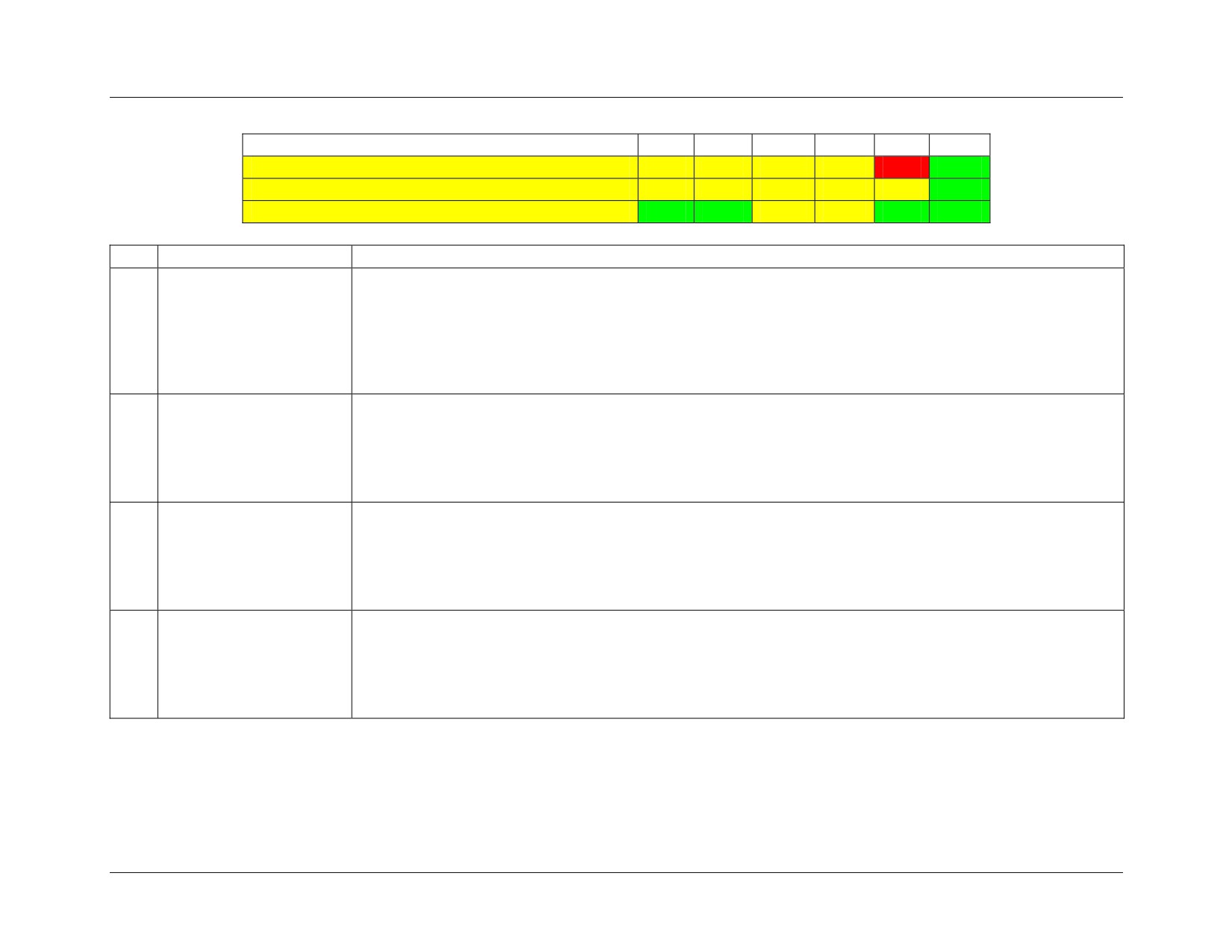
For Official Use Only
CBRND Functional Needs Analysis/Functional Solution Analysis
Chapter 9. Tactical Shape Tasks
Table 9.6-1. TASHA 6: Capability and Deficiency Assessment
Capability: Risk Assessment—COTS/GOTS
M1
M2
M3
M4
M5
M6
Current Overall Capability
61
62
53
44
25
86
Near/Mid-Term OverallCapability
7
7
5
4
5
8
Far-Term Overall Capability
8
8
5
4
8
8
FAA Measure
Scale
M1
Risk assessment is useful.
8-10: Risk assessment utility is high and is based upon standardized automated system processing, analysis, and
evaluation with trained staff review and involvement.
4-7: Risk assessment utility exists but widely varies between units and staffs and is dependent upon manual processes
dependent reliant upon the experience, training, and availability of the performing staff and the quality of selected
assessed information.
1-3: Risk assessment utility is low and unable to support operations.
0: Risk assessment utility is low or nonexistent and unable to support operations.
M2
Analytical tools are used to
8-10: Automated systems substantially or fully perform analytical processing for execution of risk assessment.
perform a risk assessment.
4-7: Analytical process for conduct of risk assessment is performed predominantly using manual means and is limited to
available trained resources and the quality of the selected assessed data.
1-3: Evaluation assessments of risks are performed using manual means and are limited to available trained resources
and the quality of the selected assessed data.
0: No capability to perform analytical processes for the performance of risk assessment.
M3
Operational and analytical/
8-10: All intelligence, operations, and CBRN staff personnel are formally trained and receive recurring refresher
planning staffs have the
training on the conduct of risk assessment associated with adversary CBRN COAs.
training and experience to
4-7: Limited training is provided, is inconsistent, and/or is administered in preparation for operations to intelligence,
effectively assess risk base
operations, and CBRN cell specialists for the conduct of risk assessment associated with adversary CBRN COAs.
on adversary CBRN COAs.
1-3: Adversary CBRN COA assessment training is inadequate to support operations.
0: Training on risk assessment for adversary CBRN COAs is nonexistent.
M4
There are sufficient doctrine
8-10: Doctrine, policies, procedures, and TTPs are adequate for effective risk assessments and is actively revised to
and TTPs for effective risk
exploit current, emerging, and projected technologies and changes to tactics, systems, capabilities, and situations.
assessments.
4-7: Doctrine, policies, procedures, and TTPs for risk assessment exist but are predominantly manual and are
periodically revised to exploit technologies and operational changes.
1-3: Doctrine, policies, procedures, and TTPs are inadequate for the conduct of risk assessments
0: Doctrine, policies, procedures, and TTPs for risk assessments are nonexistent.
46
For Official Use Only
For Official Use Only
CBRND Functional Needs Analysis/Functional Solution Analysis
Chapter 9. Tactical Shape Tasks
M5
Means exist to visualize the
8-10: Standardized M&S capability exists to assess and visualize adversary COAs (both CBRN and TIM) and their
extent of adversary COAs
effects, is applied by all operating forces and staffs, is integrated into the COP, and continuously refreshes as new
on forces of interest.
information is drawn from interoperable sources.
4-7: Operating force staffs possess M&S capability and resources to perform M&S visualization of adversary COAs
(CBRN or TIM) and their effects, is commonly applied by operating forces and staffs, is integrated into the COP, and
refreshes as new information is processed.
1-3: Visualization is inadequate of adversary COAs and their effects.
0: Visualization of adversary COAs and their effects are nonexistent.
M6
There is effective DOTLPF
8-10: DOTLPF exists and is adequate for this task. Task can be effectively performed with little or no direct impact
in place to conduct task.
upon operations
4-7: Most critical aspects of DOTLPF for this task are addressed. Task can be performed with limitations requiring
work-arounds.
1-3: DOTLPF is inadequate for accomplishment of this task.
0: DOTLPF does not exist for this task.
1 Utility is dependent upon the experience, training, and availability of the necessary staff, as well as the quality and accessibility of information. Current capability is achieved
using doctrine and locally devised checklists. The process is predominantly manual and prone to errors and omissions. JOEF and JEM are envisioned as providing forces with the
tools to perform risk assessments with higher levels of utility. These systems will be initially fielded in the mid term with full fielding completed early in the far term. JOEF is
projected to include analytical tools for the evaluation of COAs and conduct of assessments. Refinement and development of additional analytical tools that draw information from
diverse sources operating using GIG Enterprise Services will further enhance the value and application of JOEF. The efficiency and utility of JOEF and JEM will be influenced by
emerging C4ISR systems and processes residing on and using GIG Enterprise Services. Legacy systems will continue to require significant manual extraction, review, and reinput
of information for application by JOEF and JEM. The continuing requirement for DoD systems to become and be in compliance with DISA standards will gradually provide
interoperability of the systems with JOEF and JEM with projected full interoperability of systems in the far term. Visualization through modeling and simulation is projected to be
accomplished using JEM providing rapid recognition and attainment of situational awareness. JOEF and JEM are programmed to link with the COP via the GIG Enterprise
Service. The efficiency and utility of JOEF and JEM will be influenced by emerging C4ISR systems and processes residing on and using GIG Enterprise Services.
2 Current processes are predominantly manual with limited automation. Process is labor- and time-consuming, and dependent upon the training, experience, and availability of
performing personnel as well as the quality of the assessed data. The current capability is achieved using doctrine and locally devised checklists. The process is slow and prone to
human error and omissions. Data may not always be available for newly defined threats and possible countermeasures. TIM risk assessment evaluation processes are currently
nonexistent for operational forces and data are limited to civilian HAZMAT and ITF-40 sources. Although limited simulation tools are available for CBRN, these are not generally
in use by operating forces. JOEF and JEM are envisioned as providing forces with the tools to assess and simulate plausible adversary COAs. Additionally, they may be also used
to assess actual events and for training. JOEF and JEM will be initially fielded in the mid term with full fielding completed early in the far term. However, the extent to which
JOEF and JEM will address TIM (and the specific agents to be included) is not as yet determined. The JOEF is projected to include analytical tools for the evaluation of COAs.
Refinement and development of additional tools for COA that draw information from diverse sources operating using GIG Enterprise Services will further enhance the value and
application of JOEF. Visualization through modeling and simulation is projected to be accomplished using JEM. JOEF and JEM are programmed to link with the COP via the GIG
Enterprise Service. The efficiency and utility of JOEF and JEM will be influenced by emerging C4ISR systems and processes residing on and using GIG Enterprise Services.
Legacy systems will continue to require significant manual extraction, review, and reinput of information for application by JOEF and JEM. The continuing requirement for DoD
systems to become and be in compliance with DISA standards will gradually provide interoperability of the systems with JOEF and JEM with projected full interoperability of
systems in the far term.
3 Limited training is provided to intelligence, operations, and CBRN cell specialists for the processing and conduct of CBRN risk assessment. Consistent formal and refresher
training on immediate or local battlefield CBRN risk assessment is not regularly and routinely performed. Limited routine training is provided and often is not focused until
preparation for operations. The fielding of JEM and JOEF provide capability to refine cell specialist skills as part of local training and exercising/evaluations. However, supporting
and requiring DOTLPF is necessary to ensure attainment and maintenance of capability.
47
For Official Use Only
For Official Use Only
CBRND Functional Needs Analysis/Functional Solution Analysis
Chapter 9. Tactical Shape Tasks
4 Doctrine, policies, procedures, and TTPs exist are sufficient for the manual performance of effective risk assessment. This is not true for current, emerging, and projected
automated and simulated based assessment tools. Doctrine, policies, procedures, and TTPs must evolve to accommodate changes in tactics, systems, capabilities, and situations.
5 Insufficient simulation capability in available automated assessment tools or completely unavailable for manual risk assessment. Currently available modeling and simulation
tools are limited to HPAC- and VLSTRACK-based systems designed for graphics-enhanced systems. COTS M&S tools, such as ADASHI, provide limited capabilities but are not
DISA certified. Current M&S tools, additionally, are not interoperable and are not linked within the COP. They must be manually data entered and manipulated. JOEF and JEM
are envisioned as providing forces with the tools to assess and simulate plausible adversary COAs. Additionally, they may be also used to assess actual events and for training.
JOEF and JEM will be initially fielded in the mid term with full fielding completed early in the far term. However, the extent to which JOEF and JEM will address TIM (and the
specific agents to be included) is not as yet determined. The JOEF is projected to include analytical tools for the evaluation of COAs and will draw information from diverse
sources operating using GIG Enterprise Services. Visualization through modeling and simulation is projected to be accomplished using JEM. The efficiency and utility of JOEF
and JEM will be influenced by emerging C4ISR systems and processes residing on and using GIG Enterprise Services. Legacy systems will continue to require significant manual
extraction, review, and reinput of information for application by JOEF and JEM. The continuing requirement for DoD systems to become and be in compliance with DISA
standards will gradually provide interoperability of the systems with JOEF and JEM with projected full interoperability of systems in the far term. JOEF and JEM are programmed
to link with the COP via GIG Enterprise Service.
6 Current DOTLPF adequately address the conduct of CBRN/TIM vulnerability assessment using existing largely manual processes and locally devised checklists for
accomplishment. DOTLPF will need to evolve as systems, tactics, and situations change.
48
For Official Use Only
For Official Use Only
CBRND Functional Needs Analysis/Functional Solution Analysis
Chapter 9. Tactical Shape Tasks
9.6.3
Functional Solution Analysis
9.6.3.1
DOTLPF Assessment Summary
This section addresses the deficiencies and suggests potential non-materiel solutions. If there are
no non-materiel solutions or they are only partial solutions, the remaining non-materiel need is
then stated. Materiel needs are assessed in the IMA section.
1. Deficiency: Absence of tools that work within GIG Enterprise Services.
Non-Materiel Solutions: None
2. Deficiency: Too few experienced, highly skilled personnel are available for staffs.
Non-Materiel Solutions: Training: Consistent formal and recurring refresher training
programs to attain and maintain staff proficiency is required. Personnel: Give priority to
developing and assigning adequate numbers of experienced and skilled personnel to the
appropriate battle staffs.
3. Deficiency: Absence of automated assessment tools that interoperate with the C4I
infrastructure.
Non-Materiel Solutions: None
4. Deficiency: Lack of a thorough simulation-based assessment tool.
Non-Materiel Solutions: None
9.6.3.2
IMA Assessment Summary
Table 9.6-2 is a list of ideas for material approaches and a corresponding description of each
idea. Suggested approaches cover the additional automation and CBRND tools needed to
accomplish this task, interfaces to the GIG, and developing the necessary simulations to aid in
decision making. Table 9.6-3 identifies which of the material approaches might address specific
materiel deficiencies identified in the DOTMLPF assessment.
49
For Official Use Only
For Official Use Only
CBRND Functional Needs Analysis/Functional Solution Analysis
Chapter 9. Tactical Shape Tasks
Table 9.6-4. TASHA 6: Materiel Approaches
Idea for Materiel Approach
Description
Simulation and models
Develop a system that will enable operational commanders
to display current operational picture and to efficiently
execute “what if” scenarios and facilitate the evaluation of
risk assessments.
Databases
Develop a system for obtaining information, archiving
data, accessing databases, performing information/data
queries, and exchanging data files in support of CBRN
functions and activities.
Reachback capability
Develop a system providing the ability to rapidly and
securely reachback and contact CBRN experts and obtain
CBRND plans, procedures, information, support, and
lessons learned.
Risk factor templates
Develop a system merging CBRN, intelligence, and
operational data and plans into standardized automated
formats for application to effectively and rapidly
accomplish CBRN/TIM functions and activities.
50
For Official Use Only
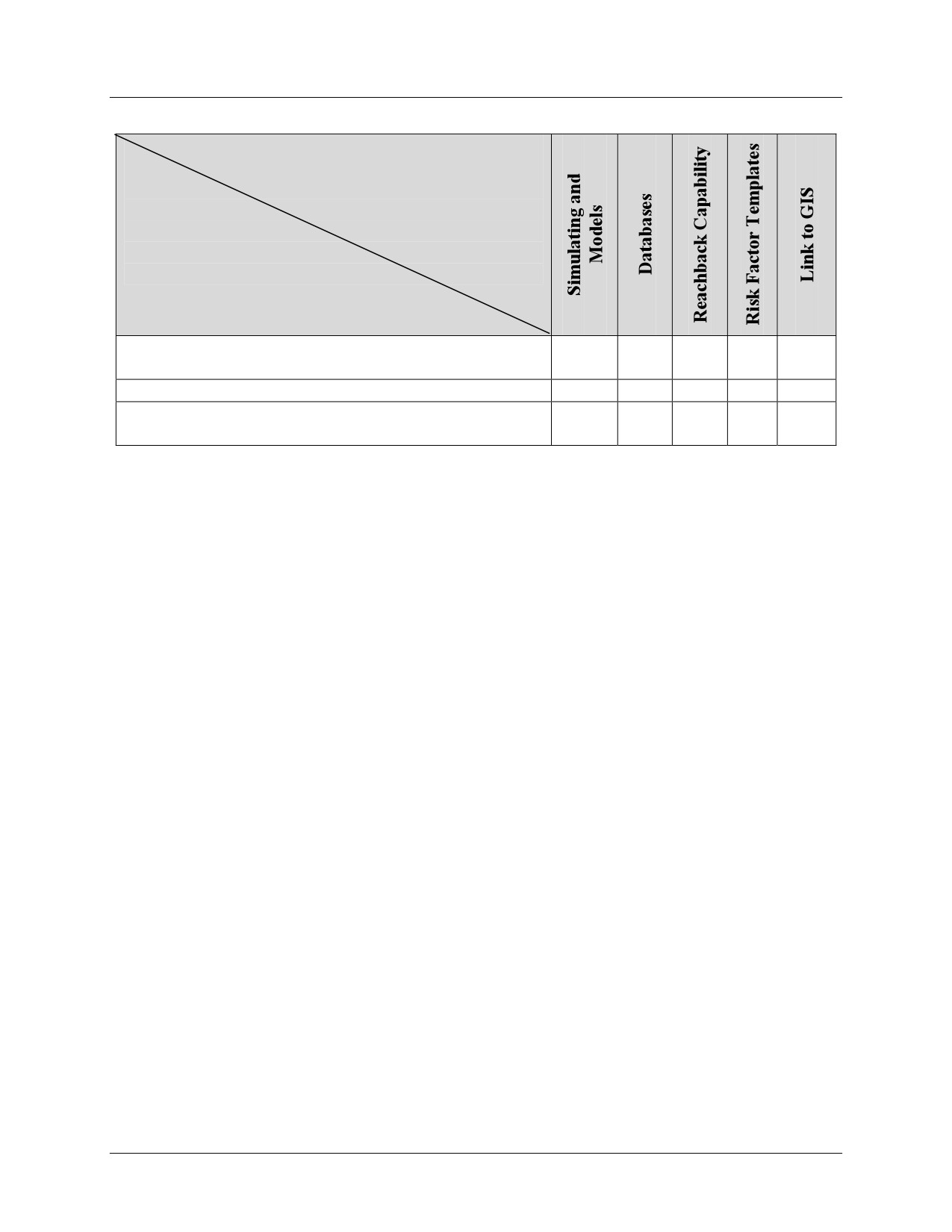
For Official Use Only
CBRND Functional Needs Analysis/Functional Solution Analysis
Chapter 9. Tactical Shape Tasks
Table 9.6-5. TASHA 6: IMA Assessment
Ideas for Material
Approaches
(IMA)
Identified Gaps
Absence of tools that work within GIG Enterprise
X
X
X
X
Services
Absence of easy-to-use automated assessment tools
X
X
X
X
Lack of thorough simulation based assessment tool that
X
X
X
X
interactively links with the COP
51
For Official Use Only
For Official Use Only
CBRND Functional Needs Analysis/Functional Solution Analysis
Chapter 9. Tactical Shape Tasks
9.7
Task TASHA 7: Conduct collaborative response and mitigation planning for a
CBRN attack or TIM release
9.7.1
Functional Area Analysis
9.7.1.1
Definition
Staff planners collaboratively plan for CBRND actions to ensure prepared and ready forces,
adequate CBRN force allocation, and timely response and mitigation. Includes access to
planning tools, data repositories, and automated resources necessary to perform planning
functions. Also includes collaboration among coalition and joint force elements at the
appropriate echelons. Force protection, operations, logistics, medical, intelligence, and personnel
considerations are critical in the planning process. Includes consideration of Shape, Sustain,
Sense, and Shield planning factors. Includes planning for far-term contingencies, future and
current operations, exercises and training. The operating premise is flexible response to ensure
the means for staff elements to collaboratively plan in a dynamic, operational environment
throughout the local or immediate battlespace. Plans are updated based on the operational
situation.
9.7.1.2
Derivation
UJTL (TA 2.4, TA 5, TA 5.2.1, TA 7, TA 7.1), Protection Joint Functional Concept, Military
Transformation: A Strategic Approach.
9.7.1.2.1
Supported Task: OPSHA 6
9.7.1.2.2
Lateral Task: TASUST 25
9.7.1.2.3
Supporting Task: N/A
9.7.1.3
Condition
Perform this task under conditions of:
Physical
1. Moderately developed land. (C1.1)
2. Precipitating and stormy weather. (C1.3.1.3)
Military
1. Minimal mission instructions. (C2.1.1)
2. Partial preexisting arrangements. (C2.1.1.2)
3. Partially completed mission preparation. (C2.1.3)
4. Some or no interoperability. (C2.2.6)
5. Partial joint staff integration. (C2.3.1.1)
6. Limited staff expertise. (C2.3.1.3)
52
For Official Use Only
For Official Use Only
CBRND Functional Needs Analysis/Functional Solution Analysis
Chapter 9. Tactical Shape Tasks
7. High information volume. (C2.3.1.9)
Civil. N/A
9.7.2
Functional Needs Analysis
9.7.2.1
Capability and Deficiency Assessment Summary
Table 9.7-1 discusses individual capabilities to perform this task to the designated standards.
Current planning capabilities are limited, and dependent on the skills of NBC specialists,
predominantly manual processes, and doctrine. Increased automation and enhanced doctrine will
improve this capability. The overall capability for current, near/mid, and far term are rated
“yellow.” Although improvements between the periods occur for specific capabilities and are
reflected in the associated identified values, the improved capabilities are not sufficient to change
the overall assessed color ratings for this task.
Current Capability and Deficiency
Doctrine, policies, procedures, and TTPs provide the capability to plan for, respond to, and
conduct mitigation of CBRN attacks and TIM releases. Though predominantly manual in nature,
they do provide the commander and staff with a reasonable ability to consider CBRND activities
and functions. Deficiencies include the need for the development of skilled and knowledgeable
staff planners and NBC specialists, the provision of mandatory formal and recurrent refresher
training of these personnel, the lack of automated tools and processes supporting planning and
operational activities/functions, and collaboration and integration/interoperability with coalition
partners and other authorized entities. Doctrine, policies, procedures, and TTPs must incorporate
changes in systems, tactics, and situations reflective of not only that of the current force but
considering both emerging and projected changes with potential to impact and enhance
operations.
Projected Near/Mid-Term Capability and Deficiency
No change is currently projected for this task.
Projected Far-Term Capability and Deficiency
No change is currently projected for this task.
53
For Official Use Only
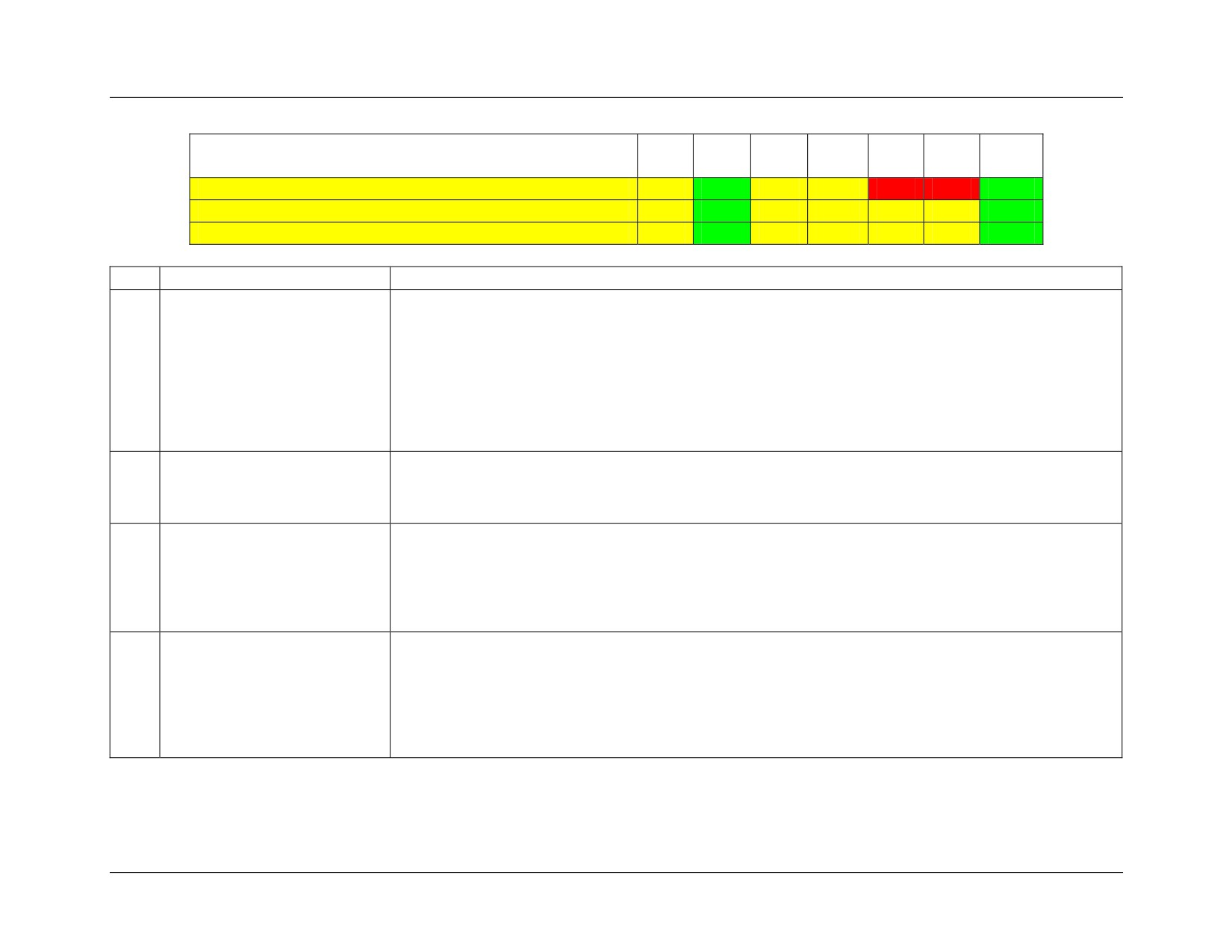
For Official Use Only
CBRND Functional Needs Analysis/Functional Solution Analysis
Chapter 9. Tactical Shape Tasks
Table 9.7-1. TASHA 7: Capability and Deficiency Assessment
Capability: Collaborative Response and Mitigation
M1
M2
M3
M4
M5
M6
M7
Planning for a CBRN Attack or TIM
Current Overall Capability
51
82
43
54
25
36
87
Near/Mid-Term Overall Capability
5
8
4
5
4
4
8
Far-Term Overall Capability
6
9
4
5
7
7
8
FAA Measure
Scale
M1
Plans address all pertinent Sense,
8-10: Automated processes, templates, and collaborative spaces ensure all relevant issues and needs are
Shape, Shield, and Sustain issues.
addressed. Planners and CBRN specialists are highly trained and knowledgeable and possess access to needed
reference material and impacting information.
4-7: Manual processes are predominantly applied to address pertinent CBRND issues and are dependent upon the
training, skill, experience, and knowledge of planning participants.
1-3: Manual processes are predominantly applied to address interest issues and are dependent upon the training,
skill, experience, and knowledge of planning participants and supporting staff.
0: Processes are inadequate or do not exist for the identification and planning of pertinent CBRND issues, and/or
planning participants do not possess adequate training, skill, experience, and knowledge to perform the task.
M2
Disseminated plans are effective.
8-10: Plan utility is high and based upon collected information, available data, and capabilities of the force.
4-7: Plan utility is limited and meets most needs of the force.
1-3: Plan utility is low and unable to support and/or direct operations.
0: Plan utility is low or nonexistent and unable to support and/or direct operations.
M3
Planning staffs have the training
8-10: All intelligence, operations, and CBRND staff personnel are formally trained, receive recurring refresher
and experience to effectively plan
training, and possess experience in planning for CBRND operations.
for CBRND operations.
4-7: Limited training is provided, is inconsistent, and/or is administered only as needed to prepare for operations
to intelligence, operations, and CBRN cell specialists in planning for CBRND operations.
1-3: CBRND operations planning training is inadequate to support operations.
0: CBRND operations planning training is nonexistent.
M4
Doctrine and TTPs are sufficient
8-10: Doctrine, policies, procedures, and TTPs are adequate for effective CBRND planning and is actively revised
for effective planning.
to exploit current, emerging, and projected technologies and changes to tactics, systems, capabilities, and
situations.
4-7: Doctrine, policies, procedures, and TTPs for CBRND planning exist but are predominantly manual and are
periodically revised to exploit technologies and operational changes.
1-3: Doctrine, policies, procedures, and TTPs are inadequate for the conduct of CBRND planning
0: Doctrine, policies, procedures, and TTPs for CBRND planning are nonexistent.
54
For Official Use Only
For Official Use Only
CBRND Functional Needs Analysis/Functional Solution Analysis
Chapter 9. Tactical Shape Tasks
M5
An interoperable, collaborative
8-10: Secure, interoperable, and interactive electronic processes and workspaces with automated tools exist and
planning process is in place for all
are predominantly applied by all relevant echelons of the joint force, coalition partners, and other authorized
relevant echelons within joint
entities.
force, coalition, and other
4-7: Collaborative and interoperable manual planning processes are predominantly applied by most planning
relevant organizations.
staffs of the joint force, coalition partners, and other authorized entities. Collaboration is performed via formal and
informal review and comments of drafted material, on-site representation, and/or voice discussions.
1-3: Collaborative planning processes are inadequate or are not collaborative or interoperable within or between
elements of the joint force, coalition partners, and other authorized entities.
0: Collaborative planning processes do not exist.
M6
Standing plans are adaptable to
8-10: Plans, processes, and systems facilitate the rapid ability to adjust plans and operations to dynamically
dynamically changing situations.
changing conditions and situations and to effectively disseminate the adjustments as needed to meet operational
requirements.
4-7: Plans are designed to provide a measure of flexibility to meet changing situations. Although they may be
manual in nature, processes facilitate the dissemination of information to operational elements for required
taskings. Although plan segments may be overcome by events and require subsequent corrective action, the
overall plan remains applicable and supportive of operations.
1-3: Developed plans are inadequate or unable to facilitate rapid adaptation to meet dynamically changing and
challenging operational circumstances. Preoperations plans are applied as guides providing overall intent and
goals. Plans may be overcome by events and operational guidance is reliant upon the experience and knowledge of
the staff and commander.
0: Developed plans are inadequate or unable to facilitate rapid adaptation to meet dynamically changing and
challenging operational circumstances and cannot be applied as guides providing overall intent and goals. Plans
are easily and rapidly overcome by events and operational guidance is fully reliant upon the experience and
knowledge of the staff and commander.
M7
There is effective DOTLPF in
8-10: DOTLPF exists and is adequate for this task. Task can be effectively performed with little or no direct
place to conduct task.
impact upon operations
4-7: Most critical aspects of DOTLPF for this task are addressed. Task can be performed with limitations
requiring work-arounds.
1-3: DOTLPF is inadequate for accomplishment of this task.
0: DOTLPF does not exist for this task.
1 Manual processes exist and are applied by staff planners and NBC specialist. However, the breadth and depth of planning for CBRND issues is dependent upon the knowledge,
skills, and experience of the participants in the planning process.
2 Plan utility is usually high and based upon the collective knowledge, skills, and experience of planning participants drawing upon data, information, and doctrine pertinent to the
anticipated operation.
3 Training is generally limited to when essential and required, or as necessary to prepare for operations.
4 Doctrine exists for the manual performance of CBRND planning and is revised periodically through change sheets to reflect necessary changes in operations, tactics, and
concepts.
5 Planning processes do not adequately support and address the collaborative and interoperable planning processes with coalition partners and other authorized entities. Such
partners and entities may lack necessary advanced C4ISR systems and capabilities. There frequently exists training differentials between U.S. and coalition partner forces further
complicating the development of effective and collaborative relationships.
55
For Official Use Only
For Official Use Only
CBRND Functional Needs Analysis/Functional Solution Analysis
Chapter 9. Tactical Shape Tasks
6 Plans are frequently developed in general terms to incorporate flexibility. Frequently, events and circumstances progress rapidly and demand the focused attention of the staff to
adjust operations. In these circumstances, formal plans are changed based upon the experience and knowledge of the staff and commander and are based upon the plan’s overall
intent and goals. Taskings are disseminated as determined to meet perceived needs based upon available and recognized information. However, these changes are often in reaction
to events and may not consider longer-term implications until tempo permits
7 Current DOTLPF adequately address the conduct of CBRN/TIM planning, response, and mitigation using existing largely manual processes and locally devised checklists for
accomplishment. DOTLPF will need to evolve as systems, tactics, and situations change.
56
For Official Use Only
For Official Use Only
CBRND Functional Needs Analysis/Functional Solution Analysis
Chapter 9. Tactical Shape Tasks
9.7.3
Functional Solution Analysis
9.7.3.1
DOTLPF Assessment Summary
This section addresses the deficiencies and suggests potential non-materiel solutions. If there are
no non-materiel solutions or they are only partial solutions, the remaining non-materiel need is
then stated. Materiel needs are assessed in the IMA section.
1.
Deficiency: Inadequate emphasis upon continued training and proficiency development.
Non-Materiel Solutions: Training: Continued formal and recurrent refresher training of
staffs and NBC specialists is required. Develop exercises and evaluations closely
simulating battlefield situations, circumstances, and tempo challenge and enhance
acquired skills. Leadership: Leaders must emphasize continued training of staffs and
NBC specialists are required.
2.
Deficiency: Insufficient access and availability to automated tools.
Partial Non-Materiel Solutions: Doctrine: Doctrine is required for automated processes.
3.
Deficiency: Insufficient training.
Non-Materiel Solutions: Training: Specialized formal and recurrent refresher training
program is required for staff. Leadership: Leaders must emphasize continued training of
staffs and NBC specialists required.
4.
Deficiency: Insufficient availability of experienced personnel.
Non-Materiel Solutions: Personnel: Special attention is required to ensure availability
of experienced and trained personnel to staffs.
5.
Deficiency: Insufficient doctrine and TTPs to ensure effective integrated, interoperable,
and collaborative planning in a Net Centric operational environment.
Non-Materiel Solutions: Doctrine: Doctrine, policies, procedures, and TTPs must
maintain relevance and currency in the changing operational environment; exploit the full
range of technologies available, emerging, and projected through the doctrine revision
and life cycle; and provide for active and timely revisions to fully take advantage of
changes in tactics, systems, and simulations.
6.
Deficiency: Inadequate enhancement and adjustment of the planning process.
Non-Materiel Solutions: Doctrine: Doctrine, the planning process, and enabling tools
must exploit the full range of technologies available, emerging, and projected so as to
enhance the effectiveness of plans and, concurrently, operations. Training: Staff training
must include collaborative response for response and mitigation activities.
7.
Deficiency: Lack of planning with coalition partners.
Non-Materiel Solutions: Doctrine: Doctrine, the planning process, and enabling tools
must exploit the full range of technologies available, emerging, and projected so as to
enhance the effectiveness of plans and, concurrently, operations. Processes and systems
57
For Official Use Only
For Official Use Only
CBRND Functional Needs Analysis/Functional Solution Analysis
Chapter 9. Tactical Shape Tasks
must support interoperability and collaboration with coalition partners and other relevant
entities.
9.7.3.2
IMA Assessment Summary
Table 9.7-4 is a list of ideas for material approaches and a corresponding description of each
idea. The approach focuses on automated CBRND tools, processes, and their linkages to enhance
operational capabilities, increase force effectiveness, and promote greater interoperability and
integration of elements.
58
For Official Use Only
For Official Use Only
CBRND Functional Needs Analysis/Functional Solution Analysis
Chapter 9. Tactical Shape Tasks
Table 9.7-4. TASHA 7: Materiel Approaches
Idea for Materiel
Identified Deficiency
Description
Approach
Insufficient access and
Simulations and
Develop a system enabling operational commanders to efficiently execute
availability to automated
models
“what if” scenarios to facilitate the evaluation and selection of response and
tools.
mitigation activities.
Databases
Develop a system for obtaining information, archiving data, accessing
databases, performing information/data queries, and exchanging data files in
support of CBRN functions and activities.
Reachback capability
Develop a system providing the ability to rapidly and securely reach back and
contact CBRN experts and obtain CBRND plans, procedures, information, and
lessons learned.
Risk factor templates
Develop a system merging CBRN, intelligence, and operational data and plans
into standardized automated formats for application to effectively and rapidly
accomplish CBRN/TIM functions and activities.
Link to GIS
Develop a system resident in standard C4ISR systems with interface with GIS
to provide input to the COP.
59
For Official Use Only
For Official Use Only
CBRND Functional Needs Analysis/Functional Solution Analysis
Chapter 9. Tactical Shape Tasks
9.8
Task TASHA 8: Conduct unit and individual CBRND training and rehearsal
9.8.1
Functional Area Analysis
9.8.1.1
Definition
Includes CBRND training and rehearsal for local or immediate actions to ensure readiness.
Encompasses special training rehearsals by CBRN response teams, units, and staff cells. Non-
CBRN personnel and units train to protect, avoid, and mitigate against attack effects. Tabletop
and simulated exercises are useful for gaming plausible actions in a contaminated environment.
Special attention is given to incorporating CBRND actions into local war games, evaluations,
rehearsals, and exercises for all units.
9.8.1.2
Derivation
UJTL (TA 2.4, TA 5, TA 5.2.1, TA 7, TA 7.1), Protection Joint Functional Concept, Military
Transformation: A Strategic Approach.
9.8.1.2.1
Supported Task: OPSHA 4
9.8.1.2.2
Lateral Task: N/A
9.8.1.2.3
Supporting Task: N/A
9.8.1.3
Condition
Perform this task under conditions of:
Physical. N/A
Military
1. Partially completed mission preparation. (C2.1.3)
2. Marginal forces assigned. (C2.2.1)
3. Partial personnel capability. (C2.2.4)
4. Limited personnel experience. (C2.2.4.5)
Civil. N/A
9.8.2
Functional Needs Analysis
9.8.2.1
Capability and Deficiency Assessment Summary
Table 9.8-1 discusses individual capabilities to perform this task to the designated standards.
Capabilities include CBRN staff cells and units, non-CBRND personnel and units trained and
rehearsed to operate in a CBRN environment through the application of challenging exercises
60
For Official Use Only
For Official Use Only
CBRND Functional Needs Analysis/Functional Solution Analysis
Chapter 9. Tactical Shape Tasks
and evaluations, realistic training tools, and comprehensive doctrine. The overall capability for
current, near/mid, and far term are rated “yellow.” Although improvements between the periods
occur for specific capabilities and are reflected in the associated identified values, the improved
capabilities are not sufficient to change the overall assessed color ratings for this task.
Current Capability and Deficiency
The ability to conduct realistic training is currently limited due to operations tempo and lack of
adequate resources. Training tools are predominantly manual in nature and are limited.
CBRN/TIM specialists are trained to perform their tasks and sufficient CBRND equipment and
material is available for the conduct of training and exercises. Current deficiencies include
limited available time for CBRND training due to other demands on the unit; lack of adequate
simulants, simulations, and models; and lack of accurate centralized CBRND data.
Projected Near/Mid-Term Capability and Deficiency
The application of the programmed JWARN (Increment 1 - IOC), JOEF, and JEM will provide
the ability to conduct simulated CBRN/TIM environment operations to a greater degree of
realism. The initial fielding of these systems is projected in the mid term. Projected deficiencies
continue to include limitations due to routine operations tempo, insufficient simulants, and
inadequate CBRND Staff resources. The lack of DOTLPF supporting automated CBRND
processes is a deficiency associated with the fielding of automated CBRND systems.
Projected Far-Term Capability and Deficiency
Full fielding of JWARN, JOEF, and JEM is projected to be completed in the early far term.
61
For Official Use Only
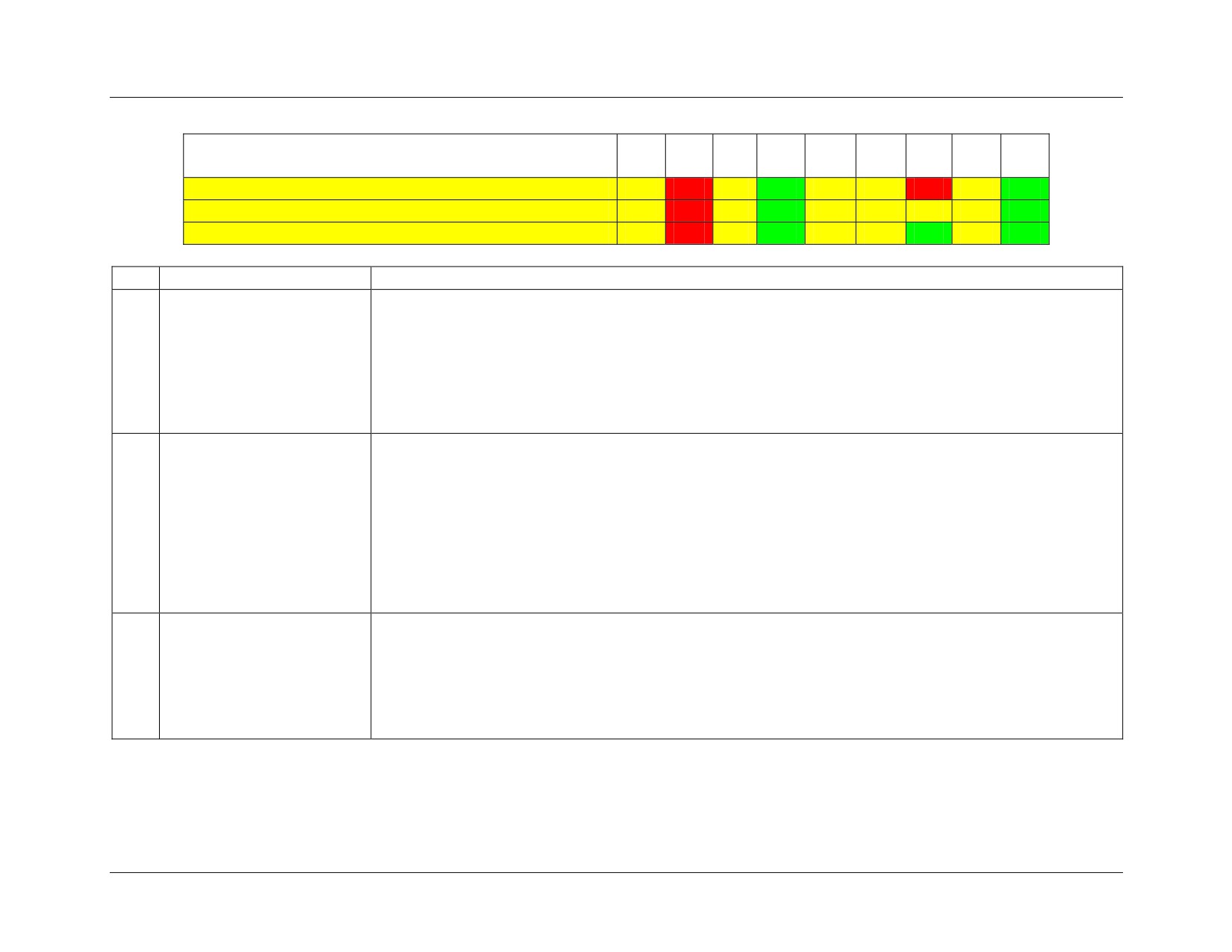
For Official Use Only
CBRND Functional Needs Analysis/Functional Solution Analysis
Chapter 9. Tactical Shape Tasks
Table 9.8-1. TASHA 8: Capability and Deficiency Assessment
Capability: CBRN Training and Rehearsal for
M1
M2
M3
M4
M5
M6
M7
M8
M9
Local or Immediate Actions to Ensure Readiness
Current Overall Capability
41
12
43
84
55
46
27
58
89
Near/Mid-Term Overall Capability
4
1
5
8
5
4
6
5
8
Far-Term Overall Capability
4
1
7
8
5
4
8
5
8
FAA Measure
Scale
M1
CBRN staff cell and units have
8-10: CBRN staff cell and units possess dedicated information technology resources and tools for the
access to dedicated
accomplishment and performance of their duties and responsibilities. These are used to support operational and
information technology to
training requirements.
support training.
4-7: CBRN staff cell and units are able to access shared information technology resources and tools for operational
requirements and training
1-3: CBRN staff cell and units possess limited access to shared information technology resources for operational
requirements and training
0: CBRN staff cell and units do not possess access to information technology to support operations and training.
M2
Unit exercises are conducted
8-10: Challenging, comprehensive, and recurring unit exercises are conducted under simulated CBRN/TIM
under simulated CBRN/TIM
conditions and all unit activities, functions, and personnel (civilian and military) fully participate and are evaluated.
conditions.
Sustained operations are emphasized.
4-7: Recurring unit exercises are conducted under simulated CBRN/TIM conditions and all unit military personnel
and activities, as well as critical civilian personnel and activities, fully participate and are evaluated. Sustained
operations are emphasized.
1-3: Recurring unit exercises are conducted under simulated CBRN/TIM conditions and most military personnel and
activities, and selected areas of critical functions manned by civilian personnel, participate and are evaluated.
Requirements of routine operations may not permit the participation of all unit military personnel and activities.
0: Recurring unit exercises are not conducted under simulated CBRN/TIM conditions
M3
Adequate training tools are
8-10: The full range of training tools are applied to CBRND training of all personnel as applicable to their tasks.
available.
Tools include simulations, virtual reality technologies, simulants, training aids, and other means to effectively
recreate a CBRN/TIM environment without the hazards.
4-7: Limited training tools are available for application to CBRND training of personnel. Applied tools partially
recreate a CBRN/TIM environment (without the hazards), but not to a substantial degree.
1-3: Training tools are inadequate for CBRND training of personnel
0: Training tools are not available for CBRND training of personnel.
62
For Official Use Only
For Official Use Only
CBRND Functional Needs Analysis/Functional Solution Analysis
Chapter 9. Tactical Shape Tasks
M4
CBRN/TIM specialists are
8-10: CBRN/TIM specialists are formally trained and receive recurrent training on the conduct of specific CBRND
trained to perform specific
tasks. Supporting augmentation personnel are fully trained and receive recurrent refresher training on the conduct of
CBRND tasks.
their assigned CBRND tasks and duties.
4-7: CBRN/TIM specialists are trained and prepared to conduct their assigned CBRND tasks and responsibilities.
Augmentation personnel are not fully trained on the conduct of their assigned CBRND tasks and duties.
1-3: CBRN/TIM specialists are trained and prepared to conduct their assigned CBRN tasks and responsibilities.
Augmentation personnel are not trained to conduct their assigned CBRND tasks and duties.
0: CBRN/TIM specialists are not trained and prepared to conduct their assigned CBRND tasks and responsibilities.
M5
CBRND staff cells conduct
8-10: Challenging, comprehensive, and recurring unit exercises are conducted under simulated CBRN/TIM
training and rehearsals.
conditions and CBRND staff cells fully participate and are evaluated. Sustained operations are emphasized.
4-7: Unit exercises are conducted under simulated CBRN/TIM conditions and CBRND staff cells generally
participate and may be evaluated.
1-3: Unit exercises are conducted under simulated CBRN/TIM conditions and CBRND staff cells generally
participate but are not evaluated.
0: Unit exercises do not incorporate simulated CBRN/TIM conditions and CBRND staff cells are not exercised.
M6
Basic CBRND training is
8-10: All unit personnel, civilian and military, receive mandatory introductory and recurrent refresher CBRND
routinely conducted for
training supporting survival and sustained operations in a CBRN/TIM environment.
individuals.
4-7: Recurrent training is required of all military personnel and critical civilian personnel to support survival and
sustained operations in a CBRN/TIM environment.
1-3: Recurrent training is performed of military personnel and selected civilian personnel as determined needed.
Requirements of routine operations may not permit the participation of all military and/or critical civilian personnel.
0: Recurrent training is not performed for survival and operations in a CBRN/TIM environment
M7
Hazards effects models and
8-10: Standardized M&S capability exists to assess and visualized adversary COAs (both CBRN and TIM) and their
tools are adequate and
effects, is applied by all operating forces and staffs, is integrated into the COP, continuously refreshes as new
available for training purposes.
information is drawn from interoperable sources, and is integrated into and supports training and exercising of
applicable personnel.
4-7: Operating force staffs possess M&S capability and resources to perform M&S visualization of adversary COAs
(CBRN or TIM) and their effects, is commonly applied by operating forces and staffs, is integrated into the COP,
refreshes as new information is processed, and supports the training and exercising of applicable personnel.
1-3: Visualization of adversary COAs and their effects are inadequate to support training and exercising of
personnel.
0: Visualization of adversary COAs and their effects are nonexistent
M8
Sufficient CBRN/TIM
8-10: The full range of training tools are applied to CBRND training of all personnel as applicable to their tasks.
protection, detection,
Tools include simulations, virtual reality technologies, simulants, training aids, and other means to effectively
identification and
recreate a CBRN/TIM environment without the hazards.
decontamination equipment is
4-7: Limited training tools are available for application to CBRND training of personnel. Applied tools partially
on hand or simulation
recreate a CBRN/TIM environment (without the hazards), but not to a substantial degree.
available.
1-3: Training tools are inadequate for CBRND training of personnel.
0: Training tools are not available for CBRND training of personnel.
63
For Official Use Only
For Official Use Only
CBRND Functional Needs Analysis/Functional Solution Analysis
Chapter 9. Tactical Shape Tasks
M9
There is effective DOTLPF in
8-10: DOTLPF exists and is adequate for this task. Task can be effectively performed with little or no direct impact
place to conduct task.
upon operations
4-7: Most critical aspects of DOTLPF for this task are addressed. Task can be performed with limitations requiring
work-arounds.
1-3: DOTLPF is inadequate for accomplishment of this task.
0: DOTLPF does not exist for this task.
1 CBRN staff cell personnel and unit personnel possess access to shared information technology resources and tools. CBRN personnel do not possess dedicated information
technology to perform training and operational requirements. Available resources are shared with other requiring activities and functions.
2 Recurring unit exercises do not generally include the conduct of CBRND under simulated conditions by all military and critical civilian personnel and activities. Sustained
operations in a CBRN/TIM environment are not emphasized and evaluated. The overall tendency is for inadequate CBRND training by regular units. The current threat situation
has increased attention within this area.
3 Limited training aids and tools are available to support CBRND training of personnel. Distance learning course availability and access is improving. Limited capability
repositories exist supporting field reachback for contact with CBRN experts and to access and apply plans, procedures, information, and lessons learned.
4 CBRN specialists are formally trained and receive recurrent training on their specialty. Augmentation personnel are trained by CBRN specialists to perform their assigned tasks.
5 Most unit exercises do not generally include the conduct of CBRND under simulated conditions. However, CBRND staff cells generally participate in unit exercises and may be
evaluated if the exercise includes CBRN/TIM criteria. CBRN/TIM exercises fully challenging the entire staff as a cooperative and integrated group are not generally the rule.
6 Recurring CBRND training is required of all military and critical civilians tasked to potentially operate within a CBRN/TIM environment. However, nondeployable personnel
and civilians within CONUS are trained as needed. Routine operations in non-HTA areas may impact scheduling of identified personnel
7 Standardized hazard effects models are not deployed and manual means are the predominant means of forecasting impacts. The current ATP-45 process provides manual, broad-
area assessments. The present system, however, is inadequate for complex terrain and not considered accurate. The JWARN, JOEF, and JEM suite provides hazard effects
modeling and assessment tools. The suite is projected to be initially fielded in the mid term with full fielding completed early in the far term.
8 Limited training aids and tools are available for the conduct of CBRND training of personnel. Generally, units and personnel train using their own equipment. Limited simulators
are available at training centers to facilitate training of personnel in selected specialties. For example: CBRN specialists may be trained using a FOX simulator at Fort Leonard-
Wood on CBRN reconnaissance.
9 Current DOTLPF adequately addresses the conduct of CBRND training for military units and personnel. DOTLPF will need to evolve as systems, tactics, and situations change.
64
For Official Use Only
For Official Use Only
CBRND Functional Needs Analysis/Functional Solution Analysis
Chapter 9. Tactical Shape Tasks
9.8.3
Functional Solution Analysis
9.8.3.1
DOTLPF Assessment Summary
This section addresses the deficiencies and suggests potential non-materiel solutions. If there are
no non-materiel solutions or they are only partial solutions, the remaining non-materiel need is
then stated. Materiel needs are assessed in the IMA section.
1.
Deficiency: Access to repositories and the quality of repositories is limited.
Partial Non-Material Solutions: Doctrine: Doctrine, policies, procedures, and TTPs are
required for use of repositories. Personnel: Repository staffing, including subject matter
expert (SME) support, is required. Facilities: Physical plant support is required for
repositories. Integrated and interoperable connectivity within GIG Enterprise Service needed
to support worldwide routine and operational needs.
2.
Deficiency: Absence of availability of simulants and simulations for training.
Partial Non-Material Solutions: Training: Refined training programs are required for
staffs, CBRN specialists, and general personnel.
3.
Deficiency: Inadequate scheduling opportunities for CBRND training, exercising, and
evaluation.
Non-Material Solutions: Doctrine: Doctrine, policies, procedures, and TTPs mandating and
establishing training, exercise, and evaluation criteria are required to ensure all applicable
personnel (military and civilian) are able to perform CBRND in a sustained CBRN/TIM
environment. Training: Conduct formal and recurrent training of all applicable personnel
(military and civilian) on CBRND actions, measures, and requirements. Conduct exercises
and evaluations to assess readiness and to identify areas requiring additional attention.
Leadership: Special attention is required ensuring adequate CBRND training, exercising, and
evaluation occurs.
4.
Deficiency: Lack of standardized automated Joint Hazard Effects Modeling Tool that
accurately reflects CBRN threats and provides flexibility for training, exercises, and
evaluations.
Non-Material Solutions: Doctrine: Doctrine, policies, procedures, TTPs, and criteria are
required for the application of hazard effects modeling for training, exercises, and
evaluations. Training: Conduct formal and recurrent training of all applicable personnel
(military and civilian) to effectively use and apply hazard effects modeling for training,
exercises, and evaluations. Integrate hazard effects modeling into exercise and evaluation
criteria and assessments.
5.
Deficiency: Coalition partner forces may be insufficiently trained or possess insufficient
experienced personnel to conduct joint operations within a CBRN environment.
Non-Materiel Solutions: Doctrine: Doctrine, policies, procedures, and TTPs addressing the
training of non-U.S. forces for CBRN operations and their integration into the force are
required. Organization: Ensure organizational structures, organization, and resources are
identified and available to train, if necessary, non-U.S. personnel and forces for CBRN
65
For Official Use Only
For Official Use Only
CBRND Functional Needs Analysis/Functional Solution Analysis
Chapter 9. Tactical Shape Tasks
operations. Training: Develop criteria, standards, and course material for training of non-
U.S. personnel and forces for CBRN operations. Ensure non-U.S. personnel and forces are
integrated into joint exercises and evaluations in preparation for CBRN operations.
Leadership: Ensure awareness of criticality of integration and survivability of non-U.S.
forces to joint operations success within a CBRN environment. Personnel: Trained and
knowledgeable personnel are required, fluent in partner language and certified to instruct
CBRND and CBRN operations to non-U.S. forces. Facilities: Supporting infrastructures
(e.g., facilities, systems, equipment, etc.) are required for training of non-U.S. forces for
operations within a CBRN environment and to support U.S. trainers.
9.8.3.2
IMA Assessment Summary
Table 9.8-4 is a list of ideas for material approaches and a corresponding description of each
idea. This task brings in the need for accessing remote data sources, as well as developing new
and better CBRN simulants and simulations (including accurate hazards effects models.)
Table 9.8-5 identifies which of the material approaches might address specific materiel
deficiencies identified in the DOTMLPF assessment.
66
For Official Use Only
For Official Use Only
CBRND Functional Needs Analysis/Functional Solution Analysis
Chapter 9. Tactical Shape Tasks
Table 9.8-4. TASHA 8: Materiel Approaches
Idea for Materiel Approach
Description
Lessons learned databases
Develop/consolidate databases for operational and training
lessons learned.
Reachback capability
Develop a system providing the ability to rapidly and securely
reach back and contact CBRN experts and obtain CBRND
plans, procedures, information, support, and lessons learned.
Management of databases
Develop a system to link and manage the accuracy, adequacy,
and availability of CBRND information databases. Includes
access management, content control, and the conduct of data
set management. Also includes process to identify database
actions such as consolidation of similar databases,
establishment of new databases, archiving of obsolete
databases, etc.
Modeling and simulation
Develop a DoD-approved and standardized model for CBRN
and TIM hazard prediction capabilities that incorporates
physics-based functionalities. The model acquires information
from databases (i.e., terrain, structures, environmental,
meteorological, intelligence, unit and population) to display
graphical output and map the hazard in near-real time.
Develop a system including embedded training capable of
simulating operational scenarios.
Simulants accurately
Develop a system that collects and analyzes stimulant data
depicting threat contaminants
and distinguishes it from real agents to be used in modeling
and simulation.
Automated CBRN training
Develop automated and interactive CBRN training system for
system
individual and unit training to include training and exercise
scenarios, evaluation and certification criteria, and automated
tools to assist and complement individual and unit CBRN
training.
67
For Official Use Only
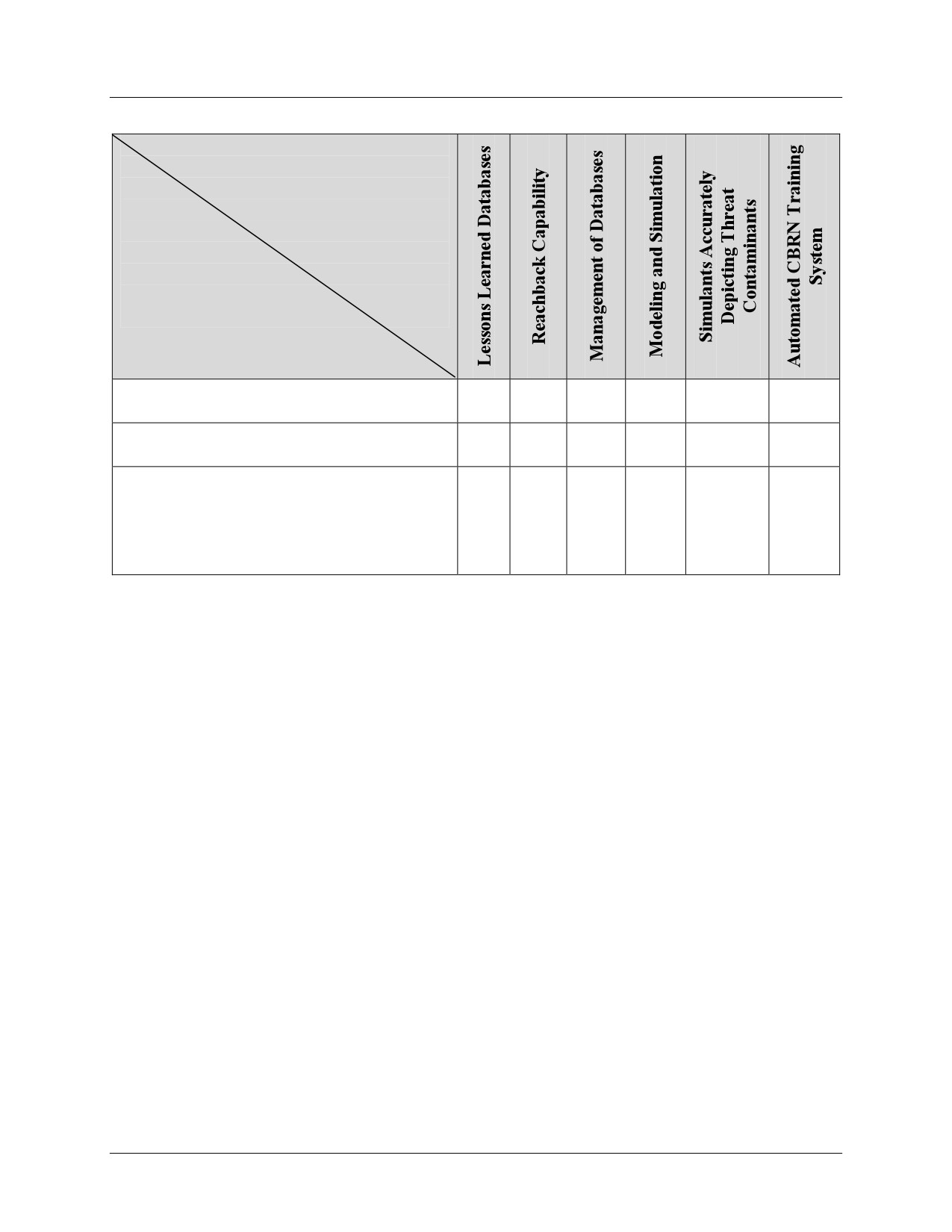
For Official Use Only
CBRND Functional Needs Analysis/Functional Solution Analysis
Chapter 9. Tactical Shape Tasks
Table 9.8-5. TASHA 8: IMA Assessment
Ideas for Material
Approaches
(IMA)
Identified Gaps
Access to repositories and the quality of
X
X
X
X
repositories is limited.
Absence of availability of simulants and
X
X
X
simulations for training.
Lack of standardized automated Joint
Hazard Effects Modeling Tool that
accurately reflects CBRN threats and
X
X
X
provides flexibility for training, exercises,
and evaluations.
68
For Official Use Only
For Official Use Only
CBRND Functional Needs Analysis/Functional Solution Analysis
Chapter 9. Tactical Shape Tasks
9.9
Task TASHA 9: Track the processing of CBRN/TIM casualties and exposed
personnel and MWA
9.9.1
Functional Area Analysis
9.9.1.1
Definition
This task encompasses the tracking of CBRN/TIM casualties and exposed personnel and MWAs
via fielded information management systems. Information from this task feeds the general
casualty tracking system and supports resourcing decisions at higher levels of command.
9.9.1.2
Derivation
UJTL (TA 5, TA 5.2.1, TA 7, TA 7.1), Protection Joint Functional Concept, Military
Transformation: A Strategic Approach.
9.9.1.2.1
Supported Task: OPSHA 8
9.9.1.2.2
Lateral Task: TASENS 14
9.9.1.2.3
Supporting Task: N/A
9.9.1.3
Condition
Perform this task under conditions of:
Physical. N/A
Military
1. No interoperability. (C2.2.6)
2. Partially completed mission preparation. (C2.1.3)
3. Limited staff expertise. (C2.3.1.3)
Civil. N/A
9.9.2
Functional Needs Analysis
9.9.2.1
Capability and Deficiency Assessment Summary
Table 9.9-1 discusses individual capabilities to perform this task to the designated standards.
Plans and procedures exist for treatment of known CBRN agents and a manual capability exists
for tracking exposed or affected personnel. The overall capability for current, near/mid, and far
term are assessed “yellow.”
69
For Official Use Only
For Official Use Only
CBRND Functional Needs Analysis/Functional Solution Analysis
Chapter 9. Tactical Shape Tasks
Current Capability and Deficiency
Tracking of CBRN/TIM casualties is not a specific feature of the general casualty system. All
casualties, however, are tracked. There are plans and procedures in place for the treatment of
known CBRN agents. Deficiencies include insufficient interface with other medical systems;
lack of a current integrated/automated system; and inability to specifically track within the
medical systems CBRN/TIM casualties and exposed personnel.
Projected Near/Mid-Term Capability and Deficiency
Tracking of CBRN/TIM casualties is not a specific feature of the general casualty system.
Projected deficiencies include inadequate integration of Theater Medical Information Program
(TMIP) and Defense Medical Surveillance System (DMSS) information with projected fielded
JOEF, inability to specifically track within the medical systems CBRN/TIM casualties and
exposed personnel, and the need for additional staff involvement necessary to track CBRN/TIM
casualties.
Projected Far-Term Capability and Deficiency
No change is projected for this task.
70
For Official Use Only
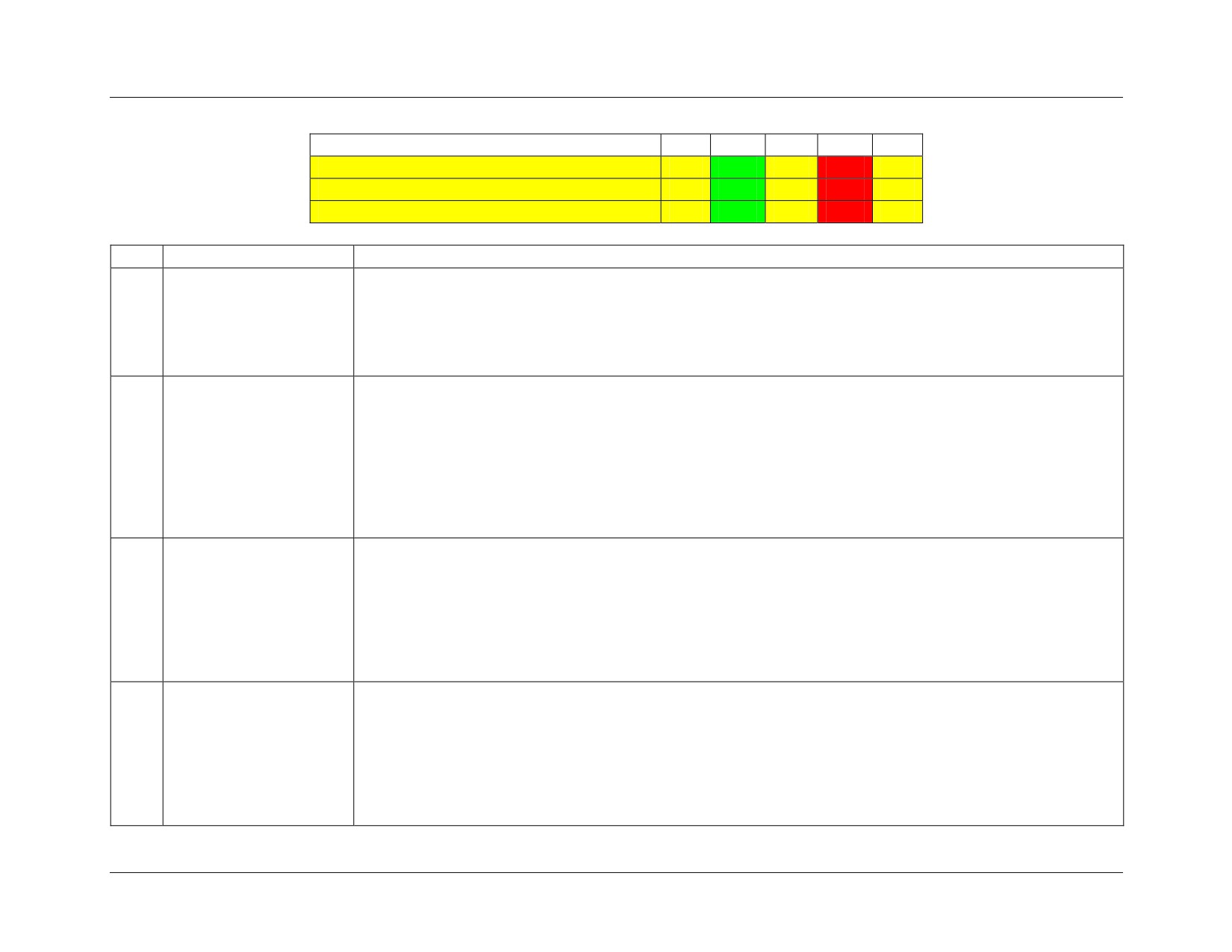
For Official Use Only
CBRND Functional Needs Analysis/Functional Solution Analysis
Chapter 9. Tactical Shape Tasks
Table 9.9-1. TASHA 9: Capability and Deficiency Assessment
Capability: CBRN Casualty Tracking
M1
M2
M3
M4
M5
Current Overall Capability
41
82
41
03
44
Near/Mid-Term Overall Capability
4
8
4
0
4
Far-Term Overall Capability
4
8
4
0
4
FAA Measure
Scale
M1
Tracking of CBRN/TIM
8-10: Tracking of CBRN/TIM casualties and exposed personnel individually and as a composite is accurate, current,
casualties is accurate.
and updated in near-real time from Medical Information Systems as information is entered.
4-7: Tracking of CBRN/TIM casualties and exposed personnel is performed manually on a periodic basis from
information provided by Medical Services and is accurate as of the last update.
1-3: Tracking of CBRN/TIM casualties and exposed personnel contains substantial errors.
0: Tracking of CBRN/TIM casualties and exposed personnel is nonexistent.
M2
Casualties are treated in
8-10: Medical Services doctrine, policies, procedures, and TTPs exist for the treatment of CBRN agents. Medical
accordance with medical
treatment plans are developed and disseminated by a central center of excellence for use by medical practitioners and
treatment plans for causation
personnel.
agent/material.
4-7: Medical Services doctrine, policies, procedures, and TTPs provide general guidance on the treatment of high-risk
CBRN agents. Medical treatment plans are developed by unit-level medical practitioners and personnel based upon
subject matter experts and research.
1-3: Medical treatment plans do not address causation agent/materials and/or are inadequate for the treatment of CBRN
casualties.
0: Medical treatment plans do not exist.
M3
Casualties restricted by
8-10: Tracking of CBRN/TIM casualties and exposed personnel restricted by medical isolation/quarantine individually
medical isolation/
and as a composite is accurate, current, and updated in near-real time from Medical Information Systems as information
quarantine are identified
is entered.
and tracked.
4-7: Tracking of CBRN/TIM casualties and exposed personnel restricted by medical isolation/quarantine is performed
manually on a periodic basis from information provided by Medical Services and is accurate as of the last update.
1-3: Tracking of CBRN/TIM casualties and exposed personnel restricted by medical isolation/quarantine contains
substantial errors
0: Tracking of CBRN/TIM casualties and exposed personnel restricted by medical isolation/quarantine is nonexistent.
M4
Exposed or affected
8-10: Medical Information systems incorporate automated tracking of personnel exposed to, affected by, and/or treated
personnel can be tracked
for CBRN/TIM exposure from system entry until release from service. Systems incorporate ability to identify potential
over the long term.
related issues and problems with medical treatment and care for tracked personnel.
4-7: Medical Information systems incorporate automated tracking of personnel exposed to, affected by, and/or treated
for CBRN/TIM exposure from system entry until release from service.
1-3: Medical Information systems manually track personnel exposed to, affected by, and/or treated for CBRN/TIM
exposure from system entry until release from service.
0: CBRN/TIM casualties and exposed personnel are not tracked through their career.
71
For Official Use Only
For Official Use Only
CBRND Functional Needs Analysis/Functional Solution Analysis
Chapter 9. Tactical Shape Tasks
M5
There is effective DOTLPF
8-10: DOTLPF exists and is adequate for this task. Task can be effectively performed with little or no direct impact
in place to conduct task.
upon operations
4-7: Most critical aspects of DOTLPF for this task are addressed. Task can be performed with limitations requiring
work-arounds.
1-3: DOTLPF is inadequate for accomplishment of this task.
0: DOTLPF does not exist for this task.
1 This should be, but is not, a feature of the general casualty tracking system. Tracking of CBRN/TIM casualties and exposed personnel, specifically, is performed manually and is
generally viewed as outpatient or inpatient treatment for the results (e.g., respiratory distress, neurological impairments, etc.) and the cause (e.g., low-dose exposure to blood agent,
treated exposure to GB, etc.) is usually considered informational and entered via text, if at all. Information is periodically updated and provided to the staff. The continued
development of the TMIP and DMSS as interoperable and integrated systems may provide the ability to track these personnel and to provide information through JOEF for
CBRND operations. JOEF is projected for initial fielding during the mid term with full fielding completed early in the far term. However, no indications currently exist for plans to
include CBRN/TIM tracking capability.
2 Medical Services doctrine, policies, procedures, and TTPs exist for the treatment of CBRN agents. Treatment plans are developed by SMEs at the Army Medical Department and
disseminated for application by medical personnel.
3 CBRN/TIM casualties and exposed personnel are not tracked in the Medical System throughout their careers. The integration and interoperability of the TMIP and DMSS
medical information systems provides a foundation for tracking these personnel through their careers. However, no indications currently exist for plans to include CBRN/TIM
tracking capability.
4 Current DOTLPF addresses most critical aspects for completion of this task. Limitations in medical information systems require work-arounds for task completion. DOTLPF
must evolve to meet current and future needs resulting from changes in systems, tactics, and situations.
72
For Official Use Only
For Official Use Only
CBRND Functional Needs Analysis/Functional Solution Analysis
Chapter 9. Tactical Shape Tasks
9.9.3
Functional Solution Analysis
9.9.3.1
DOTLPF Assessment Summary
This section addresses the deficiencies and suggests potential non-materiel solutions. If there are
no non-materiel solutions or they are only partial solutions, the remaining non-materiel need is
then stated. Materiel needs are assessed in the IMA section.
1. Deficiency: Insufficient interface with other medical systems. An integrated/automated
system does not yet exist to track CBRN patients from the inception of medical care through
the career of CBRN/TIM casualties and exposed personnel.
Non-Material solutions: None
9.9.3.2
IMA Assessment Summary
Table 9.9-4 is a list of ideas for material approaches and a corresponding description of each
idea. The approaches for this task include the need to provide real-time interfaces between the
tactical and medical information systems and continue the search for new vaccines and
treatments for CBRN/TIM agents.
73
For Official Use Only
For Official Use Only
CBRND Functional Needs Analysis/Functional Solution Analysis
Chapter 9. Tactical Shape Tasks
Table 9.9-4. TASHA 9: Materiel Approaches
Idea for Materiel
Identified Deficiency
Description
Approach
Insufficient interface with
Modifications to
Develop automated modifications to
other medical systems. An
medical
existing and developing medical
integrated/automated system
information
patient tracking systems (e.g., DMSS,
does not yet exist to track
systems
Medical Analysis Tool [MAT], TMIP,
CBRN patients from the
etc.) to specifically track the status and
inception of medical care
treatment of CBRN/TIM casualties and
through the career of
link this information to CBRND
CBRN/TIM casualties and
automated systems, particularly JOEF.
exposed personnel.
74
For Official Use Only
For Official Use Only
CBRND Functional Needs Analysis/Functional Solution Analysis
Chapter 9. Tactical Shape Tasks
9.10
Task TASHA 10: Manage CBRN personnel and unit resources to ensure effective
CBRND task accomplishment
9.10.1
Functional Area Analysis
9.10.1.1
Definition
Ensures mission ready personnel and units are available to effectively perform CBRND tasks.
Encompasses managing the availability of CBRN specialists and specialized CBRN units.
9.10.1.2
Derivation
UJTL (TA 5, TA 5.2.1, TA 6.5, TA 7, TA 7.1), Protection Joint Functional Concept, Military
Transformation: A Strategic Approach.
9.10.1.2.1
Supported Task: OPSHA 3
9.10.1.2.2
Lateral Task: TASUST 26
9.10.1.2.3
Supporting Task: N/A
9.10.1.3
Condition
Perform this task under conditions of:
Physical. N/A
Military
1. Partially completed mission preparation. (C2.1.3)
2. No interoperability. (C2.2.6)
3. Limited staff expertise. (C2.3.1.3)
Civil. N/A
9.10.2
Functional Needs Analysis
9.10.2.1
Capability and Deficiency Assessment Summary
Table 9.10-1 discusses individual capabilities to perform this task to the designated standards.
Services have the overall capability to manage CBRN personnel and units. The overall capability
for current, near/mid, and far term are assessed “yellow.”
Current Capability and Deficiency
The pool of trained CBRND personnel is generally adequate to meet respective Service needs.
The availability of CBRND units could be limited, particularly if substantial forces are employed
75
For Official Use Only
For Official Use Only
CBRND Functional Needs Analysis/Functional Solution Analysis
Chapter 9. Tactical Shape Tasks
in multiple regions involving CBRN threat. Individual and unit CBRN training is conducted.
Deficiencies include training and provisioning of trained specialists to units requires continued
attention, potential to overextend the existing units available due to the extensive operations
tempo, and the perishability of skills due to personnel turnover and availability for refresher
training.
Projected Near/Mid-Term Capability and Deficiency
No change is currently projected for this task.
Projected Far-Term Capability and Deficiency
No change is currently projected for this task.
76
For Official Use Only
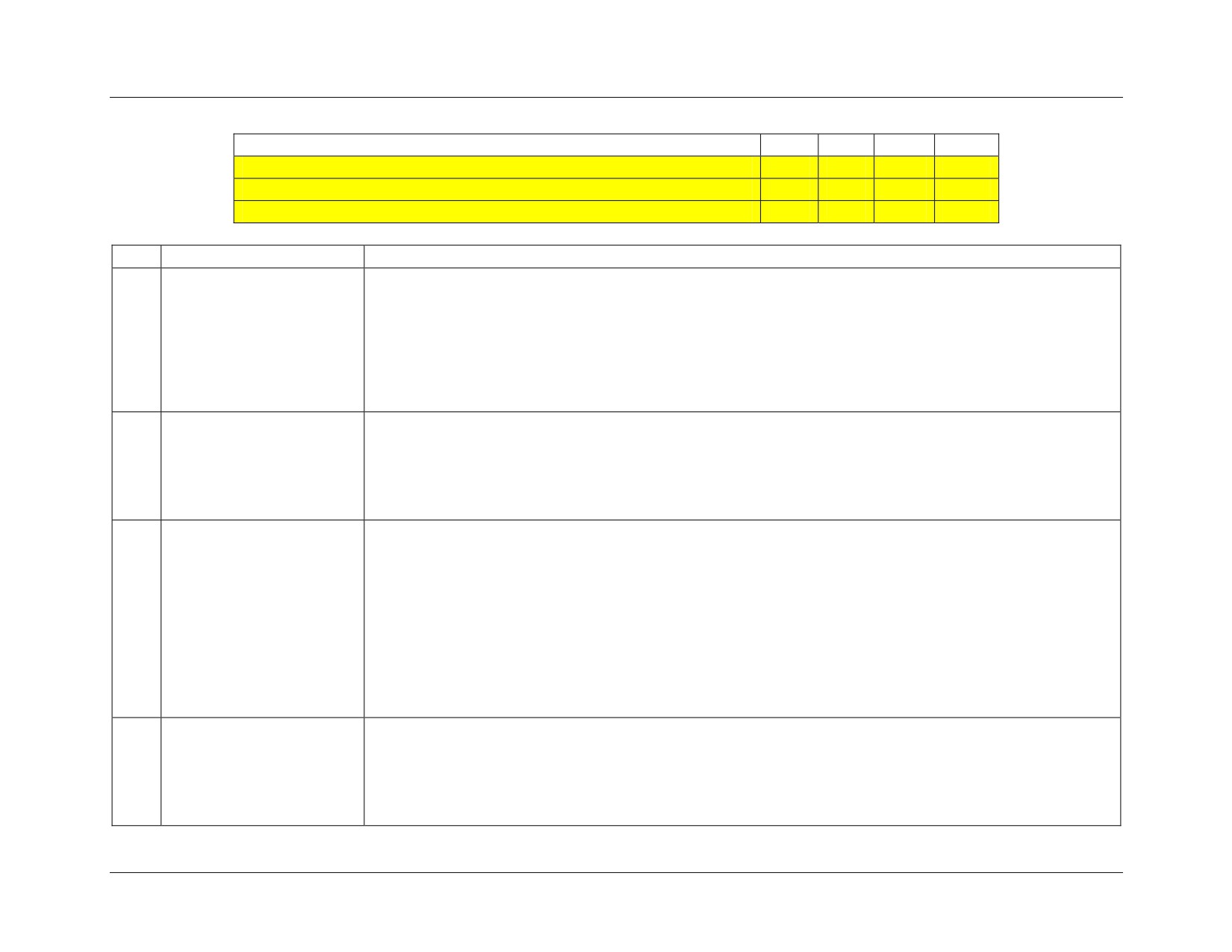
For Official Use Only
CBRND Functional Needs Analysis/Functional Solution Analysis
Chapter 9. Tactical Shape Tasks
Table 9.10-1. TASHA 10: Capability and Deficiency Assessment
Capability: CBRN Personnel and Unit Resource Management
M1
M2
M3
M4
Current Overall Capability
61
52
63
64
Near/Mid-Term Overall Capability
6
5
6
6
Far-Term Overall Capability
6
5
6
6
FAA Measure
Scale
M1
Allocation of CBRND
8-10: Adequate numbers of trained and experienced CBRND specialists are available and allocated to support
specialist is adequate.
concurrent multiple operations and routine requirements.
4-7: CBRND specialists are available to support a major operation and selected routine requirements. Experience will
vary from minimal to substantial. Allocations are likely to be at a reduced level with augmentation by nonprimary-
duty personnel.
1-3: CBRND specialist are available to support a major operation. Experience will vary from minimal to substantial.
Routine requirements are filled by nonprimary-duty personnel.
0: Quantity of CBRND specialists is insufficient to support operations.
M2
Availability of CBRND units
8-10: Sufficient numbers and types of trained, manned, and equipped CBRND units are available to support
to perform specific CBRND
concurrent operations and routine requirements.
tasks is adequate.
4-7: CBRND units are available to support a major operation and selected routine requirements. Training, manning,
and equipage will vary from unit to unit and dependent upon unit type.
1-3: Quantity and/or type of CBRND units are insufficient to support operations
0: Types of CBRND units necessary to support operations do not exist.
M3
Training and experience
8-10: All personnel performing CBRND tasks are fully trained and receive recurring refresher training on the conduct
enable successful
of their CBRND tasks. Exercises and evaluations are routinely conducted and fully challenge capabilities to maintain
performance of CBRND
and refine skills, knowledge, and capabilities. CBRND competencies and experience are high and enable the rapid,
tasks.
accurate, and successful completion of tasks.
4-7: Core CBRND personnel are fully trained and receive recurring refresher training on the conduct of their CBRND
tasks. Exercises and evaluations do not generally fully challenge capabilities. Limited training is provided, is
inconsistent, and/or is administered in preparation for operations to noncore CBRND personnel for the performance of
their assigned CBRND tasks. CBRND competencies and experience will vary, but sufficient capability exists to
successfully perform CBRND tasks.
1-3: Training is inadequate for the successful performance of CBRND tasks
0: Training is nonexistent for the performance of CBRND tasks.
M4
There is effective DOTLPF
8-10: DOTLPF exists and is adequate for this task. Task can be effectively performed with little or no direct impact
in place to conduct task.
upon operations
4-7: Most critical aspects of DOTLPF for this task are addressed. Task can be performed with limitations requiring
work-arounds.
1-3: DOTLPF is inadequate for accomplishment of this task.
0: DOTLPF does not exist for this task.
77
For Official Use Only
For Official Use Only
CBRND Functional Needs Analysis/Functional Solution Analysis
Chapter 9. Tactical Shape Tasks
1 Sufficient CBRND specialists are available to support a major operation and selected routine Service requirements. Augmentation is applied to support core CBRND specialists
where possible to reduce impact. Availability of trained and experienced CBRND specialists is low and strained when support is required for more than one large-scale operation
involving CBRN threat. Routine requirements support reduces as demand rises to support operations.
2 Sufficient CBRND units are available of the necessary types to support a major operation and selected routine Service requirements. Availability of trained, equipped, and
manned CBRND units is low and strained when support is required for more than one large-scale operation involving CBRN threat. Routine support capabilities reduce as demand
rises to support operations.
3 Primary-duty CBRND personnel are fully trained and receive recurring refresher training on the conduct of their CBRND tasks. Core augmentation personnel receive varying
degrees of training. Generally, limited training is provided, is inconsistent, and/or is administered in preparation for operations to noncore or augmentation CBRND personnel for
the performance of their assigned CBRND tasks. These skills are perishable and rely on traditional training methods and practices. However, sufficient resident capability exists to
successfully perform the required tasks.
4 Most critical aspects of DOTLPF for this task are addressed. Task can be performed with limitations requiring work-around. Currently, organization and personnel are able to
support a major operation and selected routine Service requirements but become strained with increased or additional demands. Augmentation is applied as a work-around to
CBRN specialist availability to support core CBRND specialists where possible. Availability of trained and experienced CBRND specialists is low and strained when support is
required for more than one large-scale operation involving CBRN threat. Routine requirements support reduces as demand rises to support operations. DOTLPF must continue to
evolve as systems, tactics, and situations change.
78
For Official Use Only
For Official Use Only
CBRND Functional Needs Analysis/Functional Solution Analysis
Chapter 9. Tactical Shape Tasks
9.10.3
Functional Solution Analysis
9.10.3.1
DOTLPF Assessment Summary
This section addresses the deficiencies and suggests potential non-materiel solutions. If there are
no non-materiel solutions or they are only partial solutions, the remaining non-materiel need is
then stated. Materiel needs are assessed in the IMA section.
1. Deficiency: Concern exists for potential to overextend existing available CBRN units and
personnel due to extensive operations tempo (OPTEMPO) and potential reach of threat or
required support of multiple concurrent operations with threat.
Non-Material Solutions: Doctrine: Unit readiness and deployment needs to be judiciously
managed. Organization: Establish CBRND units and personnel position allocations sufficient
to meet support requirements for defined operations and anticipated OPTEMPO
considerations. Personnel: Ensure acquisition, training, and retention of sufficient qualified
personnel to meet level supporting national multiple concurrent conflict capability
requirements.
2. Deficiency: Perishable skills require retraining and growth in skills.
Non-Material Solutions: Training: Continue and emphasize the importance of effective
CBRND training for individuals and units. Leadership: Ensure personnel are current and
prepared to perform CBRND tasks and responsibilities.
9.10.3.2
IMA Assessment Summary
N/A
79
For Official Use Only