CHEMICAL, BIOLOGICAL, RADIOLOGICAL, AND NUCLEAR DEFENSE (CBRND) FUNCTIONAL NEEDS ANALYSIS. FINAL REPORT (2005) - page 9
For Official Use Only
CBRN Functional Needs Analysis/Functional Solution Analysis
Chapter 8. Operational Shape Tasks
8.1
Task OPSHA 1: Characterize the JOA CBRN/TIM threat and situation
8.1.1
Functional Area Analysis
8.1.1.1
Definition
To characterize the CBRN/TIM threat and situation for the Joint Task Force (JTF) or JFC in the
JOA. Uses Sense data to move from situational awareness as well as shared awareness to shared
understanding. Informs personnel; provides actual and potential impacts of CBRN/TIM hazards;
and envisions critical Sense, Shield, and Sustain end states, including preparing for operations
and visualizing the sequence of events that moves the JTF or joint force from its current state to
those end states. Includes establishing collection priorities and coordination with intelligence
organizations to collect information on CBRN/TIM capabilities encompassing such things as
adversary intent and objectives, weapons availability and capacity, expected tactics, potential
targets, and willingness or historic propensity to employ CBRN/TIM weapons. Also includes
compiling and analyzing intelligence information and data provided by intelligence organizations
or resources satisfying the JTF or JFC’s CBRN/TIM threat intelligence collection plan. Provides
processed CBRN/TIM threat intelligence for development of regional vulnerability assessments
and for an understanding of the current and predicted CBRN/TIM situation. Provides the basis
for CBRND tasking of and warning to the JTFs or JFCs. Further encompasses JOA medical
intelligence to be collected in support of CBRND analysis.
8.1.1.2
Derivation
UJTL (OP 2.2, OP 2.2.1, OP 2.5, OP 2.4.1, OP 2.5.1, OP 2.4, OP 2.4.1.1, OP 2.4.2.1, OP 2.5,
OP 2.5.3, OP 5.1.1, OP 5.1.2, OP 5.2, OP 5.2.1, OP 5.3, OP 5.3.9, OP 5.4.2, OP 5.4.5, OP 5.7,
OP 5.7.6, OP 6.1.6, OP 6.2.10, OP 7), Protection Joint Functional Concept, Military
Transformation: A Strategic Approach, Transformation Planning Guidance.
8.1.1.2.1
Supported Task: STSHA 1
8.1.1.2.2
Lateral Tasks: OPSENS 1, OPSENS 2, OPSENS 3, OPSENS 4, OPSHA 2,
OPSUST 14
8.1.1.2.3
Supporting Tasks: TASHA 1, TASHA 2, TASHA 3, TASHA 4, TASHA 16
8.1.1.3
Condition
Perform this task under conditions of:
Physical
1. Immediate, delayed, or potential long-term atmospheric weapons effects. (C1.3.3)
Military
1. Restrictive mission instructions. (C2.1.1)
6
For Official Use Only
For Official Use Only
CBRN Functional Needs Analysis/Functional Solution Analysis
Chapter 8. Operational Shape Tasks
2. No preexisting arrangements. (C2.1.1.2)
3. No or outline mission preparation. (C2.1.3)
4. Few modern military systems. (C2.2.5)
5. Few modern military simulation systems. (C2.2.5.5)
6. Poor joint staff integration. (C2.3.1.1)
7. Poor multinational integration. (C2.3.1.2)
8. Limited staff expertise. (C2.3.1.3)
9. Highly restricted information exchange. (C2.3.1.8)
10. High information volume. (C2.3.1.9)
11. Negligible intelligence database. (C2.4.2)
12. Negligible theater intelligence access. (C2.4.4)
13. Little or no certitude of data. (C2.4.6)
14. Negligible deployed supplies. (C2.8.2)
Civil
1. Correct interdepartmental/interagency relationships. (C3.1.1.3)
2. Negative foreign government support. (C3.1.2.3)
3. Restrictive Presidential and/or Secretary of Defense decisions. (C3.1.3)
4. Uncertain international organization support. (C3.1.2.5)
5. Low internationalism. (C3.2.6.5)
6. High health risk. (C3.3.1.5)
7. Unspecified TIM present in the civilian sector. (C3.3.7.5)
8.1.2
Functional Needs Analysis
8.1.2.1
Capability and Deficiency Assessment Summary
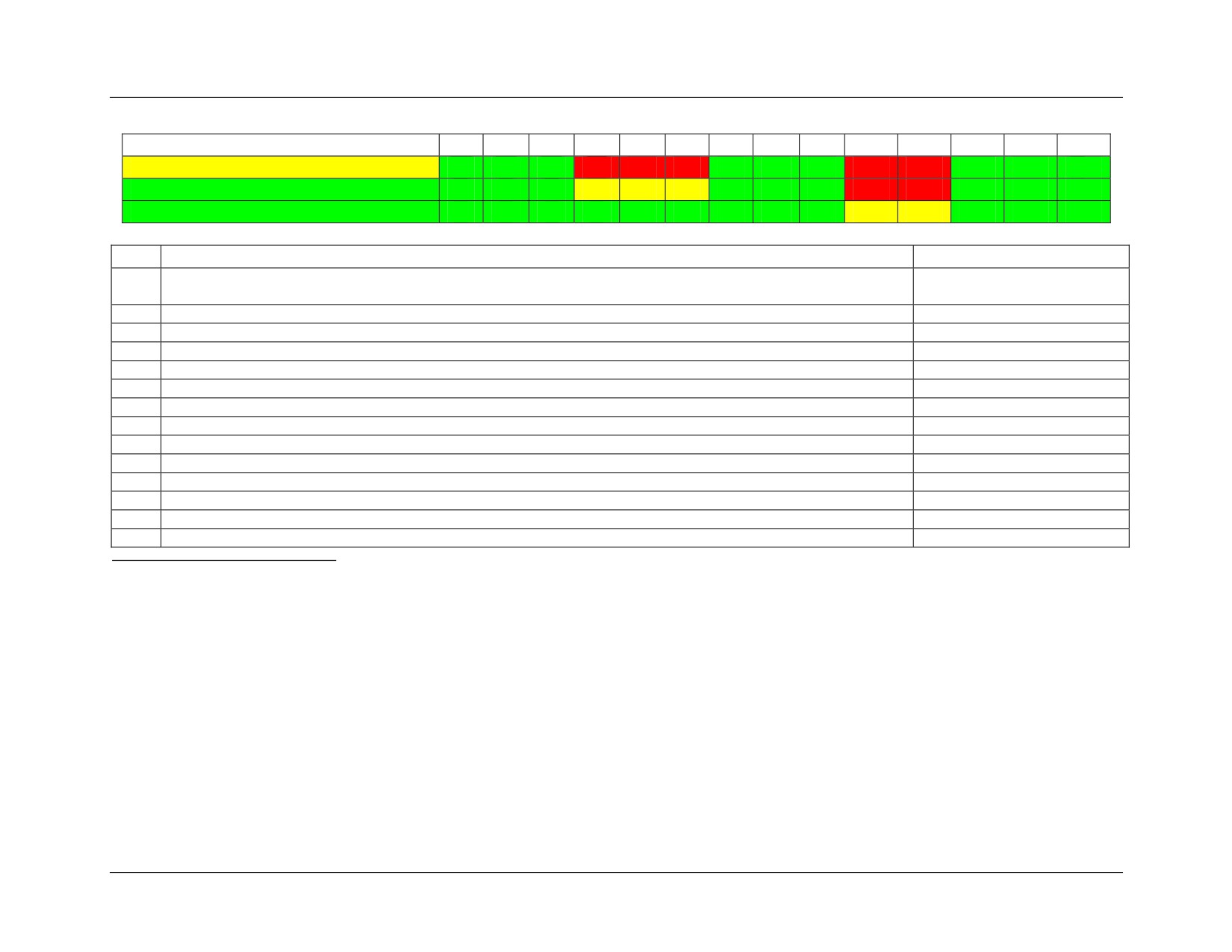
Table 8.1-1 discusses the capability that currently exists to perform the task to the designated
standards. There is only one capability that exists, and no other capability is projected that will
accomplish this task.
Current Capability and Deficiency
The organizational structure of a subordinate joint force’s intelligence element is determined by
the JFC based on the situation and mission. All subordinate joint force J-2s, however, will
require (at a minimum) a core element of analytical and administrative capabilities. Most
situations will require augmentation of joint force intelligence capabilities, through the
deployment and integration of theater intelligence elements into a joint intelligence support
element. Capabilities of the JISE include order-of-battle analysis; identification of adversary
COGs; analysis of adversary command, control, communications, and computers; targeting
support; collection management; and maintenance of a 24-hour watch. The current capability is
assessed as “yellow” primarily due to DOTMLPF deficiencies.
7
For Official Use Only
For Official Use Only
CBRN Functional Needs Analysis/Functional Solution Analysis
Chapter 8. Operational Shape Tasks
Projected Near/Mid-Term Capability and Deficiency
No other capability is currently projected for the near/mid term. Little capability improvement is
forecast for the near/mid term. Except that DOTLMPF should improve in all deficient areas as a
result of initiatives that use data resulting from focused experimentation
Projected Far-Term Capability and Deficiency
No other capability is currently projected for the far-term future. The far-term forecast should
improve to “green.” New acquisition means and methods will ensure currency of intelligence in
the far term. National-level intelligence accuracy will improve in the far term as a result of new
intelligence initiatives. Continued DOTLMPF enhancements will result from exercise and
wargame lessons learned.
8
For Official Use Only
For Official Use Only
CBRN Functional Needs Analysis/Functional Solution Analysis
Chapter 8. Operational Shape Tasks
Table 8.1-1. OPSHA 1: Capability and Deficiency Assessment
Capability: JISE
M1
M2
M3
M4
M5
M6
M7
M8
M9
M10
M11
M12
M13
M14
Current Overall Capability1
G2
G3
G4
R5
R6
R7
G8
G9
G10
R11
R12
G13
G14
G15
Near/Mid-Term Overall Capability16
G
G
G
Y17
Y18
Y19
G
G
G
R
R
G
G
G
Far-Term Overall Capability20
G
G
G
G
G21
G22
G
G
G
R23
R24
G
G
G
FAA Measure
Scale
M1
CBRND staff cells and units have access to dedicated information technology resources to perform tasks and
G - Yes, Y - Limited, R - No
responsibilities.
M2
Means exist to formulate the collection plans for the CBRN/TIM threat.
G - Yes, Y - Limited, R - No
M3
Means are available to collect operational intelligence on adversaries’ CBRN/TIM activities.
G - Yes, Y - Limited, R - No
M4
Means exist to collect intelligence on designated theater adversaries.
G - Yes, Y - Limited, R - No
M5
JOA CBRN/TIM threat intelligence is current.
G - Yes, Y - Limited, R - No
M6
JOA CBRN/TIM threat intelligence is reliable.
G - Yes, Y - Limited, R - No
M7
All CBRN/TIM threat priority intelligence requests are covered by a collection plan.
G - Yes, Y - Limited, R - No
M8
Adequate means are available for CBRN/TIM staff to influence JTF/joint force collection activities.
G - Yes, Y - Limited, R - No
M9
Multiple sources are integrated and deconflicted.
G - Yes, Y - Limited, R - No
M10
Medical intelligence guidance identifies information requirements and processes.
G - Yes, Y - Limited, R - No
M11
Medical CBRN/TIM intelligence criteria are established and defined.
G - Yes, Y - Limited, R - No
M12
Staff has sufficient training and experience to conduct the threat assessment.
G - Yes, Y - Limited, R - No
M13
CBRN/TIM threat intelligence is disseminated in near-real-time.
G - Yes, Y - Limited, R - No
M14
CBRN/TIM threat intelligence is available to all units in the JOA.
G - Yes, Y - Limited, R - No
1 Joint intelligence and CBRN publications do not adequately address this issue. The operational-level CBRN staff is not adequately staffed and organized to interface with the
JISE. The JISE staff is not adequately trained/educated in CBRN issues. CBRN staff officers are not adequately trained/educated in intelligence issues. Experimentation does not
provide feedback on accurate characterization of the threat for this task. JPME does not adequately cover the fusion of intelligence/CBRN issues.
2 Yes. The JISE has access to information technology resources that provide COP and access to national-level intelligence means.
3 Yes. The JISE has means to formulate CBRN/TIM collection plans.
4 Yes. Limited means are available to collect operational intelligence on adversaries’ CBRN/TIM activities and potential production/storage facilities, as well as international
trafficking in known precursor or dual-use materiel.
5 Although the JISE has means available to access collected intelligence on designated theater adversaries through national-level intelligence assets, recent operational experience
in S.W. Asia and congressional investigations have rendered the efficacy of national intelligence collection, particularly human intelligence (HUMINT), suspect at best.
6 The JISE has means to update the JOA CBRN/TIM threat intelligence picture. However, currency of intelligence is dependent on the acquisition means and methods. HUMINT,
in particular, is dependent on factors that may preclude timely and current information.
7 The JISE CBRN/TIM intelligence reliability depends on national-level intelligence accuracy. Any national means relying on HUMINT is dependent on factors that may preclude
obtaining reliable information
8 Yes. The JISE has means available to ensure that CBRN/TIM threat priority intelligence requests are covered by a collection plan.
9 Limited. The JISE has means available for CBRN/TIM staff to influence JTF/joint force collection activities, but these activities are subject to the commander’s priority list.
Normally, CBRN intelligence ranks very high on this list.
9
For Official Use Only
For Official Use Only
CBRN Functional Needs Analysis/Functional Solution Analysis
Chapter 8. Operational Shape Tasks
10 Yes. The JISE is in a constant state of integrating and deconflicting multiple-source information.
11 No. The AF C4 Medical Functional Area Working Group has just identified medical intelligence shortcomings, including the information requirements process, as major areas
of concern in preventing enhanced battlespace situational awareness.
12 No. The AF C4 Medical Functional Area Working Group has just identified medical intelligence shortcomings, including the establishment and definition of medical
CBRN/TIM intelligence criteria, as major areas of concern in preventing enhanced battlespace situational awareness.
13 Yes. The JISE staff function and mission is to conduct threat assessment.
14 Yes. The JISE has means available to disseminate in near-real-time the CBRN/TIM threat intelligence. This intelligence dissemination process is limited distribution.
15 Yes. This intelligence dissemination is made on a limited-distribution basis.
16 DOTMLPF should improve in all deficient areas as a result of initiatives that use data resulting from focused experimentation.
17 New national intelligence initiatives should provide enhanced means to collect intelligence on theater adversaries. Difficulties with HUMINT will continue to be a limiting
factor.
18 New national intelligence initiatives should provide enhanced means to ensure currency of intelligence. Difficulties with HUMINT will continue to be a limiting factor.
19 New national intelligence initiatives should provide enhanced means to ensure reliability of intelligence. Difficulties with HUMINT will continue to be a limiting factor.
20 Continued DOTMLPF enhancements will result from exercise and wargame lessons learned.
21 New acquisition means and methods will ensure currency of intelligence in the far term.
22 National-level intelligence accuracy will improve in the far term as a result of new intelligence initiatives.
23 Shortfalls identified by the AF C4 Medical Functional Area Working Group as “red” are not expected to improve to “yellow” until far term (2014-2019).
24 Shortfalls identified by the AF C4 Medical Functional Area Working Group as “red” are not expected to improve to “yellow” until far term (2014-2019).
10
For Official Use Only
For Official Use Only
CBRN Functional Needs Analysis/Functional Solution Analysis
Chapter 8. Operational Shape Tasks
8.1.3
Functional Solution Analysis
8.1.3.1
DOTLPF Assessment Summary
This section addresses the deficiencies and suggests potential non-materiel solutions. If there are
no non-materiel solutions, or they are only partial solutions, the remaining non-materiel need is
then stated. Materiel needs are assessed in the IMA section.
1.
Deficiency: Currency of intelligence is dependent on the acquisition means and methods.
Non-Materiel Solutions: Doctrine: Develop means and methods to ensure currency of
intelligence throughout the intelligence acquisition and collection community.
2.
Deficiency: Joint intelligence and CBRN publications do not adequately address this issue.
Non-Materiel Solutions: Doctrine: Joint intelligence and CBRN publications must be
enhanced to adequately address this issue and to interface with each other so that roles and
responsibilities are clearly delineated.
3.
Deficiency: Combatant command (COCOM) CBRND staff is not adequately staffed and
organized to meet its intelligence-related responsibilities.
Non-Materiel Solutions: Organization: Each operational-level CBRND staff should have a
section dedicated to resolving CBRN intelligence issues. Personnel: Each operational-level
CBRND staff should have adequate trained/experienced personnel assigned to man a section
dedicated to resolving CBRN intelligence issues.
4.
Deficiency: The J2 staff is not adequately trained/educated in CBRN issues.
Non-Materiel Solutions: Training: Develop training that will enable each JISE staff to
better understand its CBRN role and enhance its ability to obtain intelligence that is required
to support the Shape function of operational-level CBRND. Leadership: Develop an
education program that will enable each JISE staff to better understand its CBRN role and
enhance its ability to obtain intelligence that is required to support the Shape function of
operational-level CBRND.
5.
Deficiency: CBRN staff officers are not adequately trained/educated in intelligence issues.
Non-Materiel Solutions: Training: Develop training programs that allow CBRN staff
officers to better support the CBRN intelligence process. Leadership: Develop education
programs that allow CBRN staff officers to better understand the CBRN intelligence process
and their roles and responsibilities.
6.
Deficiency: Experimentation/red teaming does not provide feedback on accurate
characterization of the threat for this task.
Non-Materiel Solutions: Training: JRO CBRND must work with both the intelligence and
CBRN communities to integrate this task into both intelligence and CBRN experimentation
campaign plans.
7.
Deficiency: JPME does not adequately cover the fusion of intelligence/CBRN issues.
Non-Materiel Solutions: Leadership: Integrate intelligence/CBRN fusion issues into JPME.
11
For Official Use Only
For Official Use Only
CBRN Functional Needs Analysis/Functional Solution Analysis
Chapter 8. Operational Shape Tasks
8. Deficiency: The JISE does not have influence over the national-level intelligence accuracy.
Non-Materiel Solutions: Doctrine: Develop means and methods to ensure accuracy of
intelligence throughout the intelligence acquisition and collection community.
9. Deficiency: The medical intelligence community has identified fundamental problems in
their ability to contribute to CBRND battlespace awareness.
Non-Materiel Solutions: Doctrine: Change Air force and joint doctrine to put medical
intelligence on equal footing with line intelligence. Develop TTPs to define the medical role
in CBRND/intelligence fusion areas.
8.1.3.2
IMA Assessment Summary
N/A
12
For Official Use Only
For Official Use Only
CBRN Functional Needs Analysis/Functional Solution Analysis
Chapter 8. Operational Shape Tasks
8.2
Task OPSHA 2: Conduct JOA CBRN/TIM vulnerability analysis
8.2.1
Functional Area Analysis
8.2.1.1
Definition
To conduct JOA vulnerability assessments focused on potential adversaries’ COAs. This
operation-level assessment compares regional-based vulnerabilities and risks. Development of a
shared understanding of potential adversaries’ CBRN/TIM COAs and associated vulnerabilities
and risks enables timely and effective preparations for any potential adversary acts. Includes the
development of associated operational effects, impacts, and risk analyses and assessments.
8.2.1.2
Derivation
UJTL (OP 2.2, OP 2.2.1, OP 2.4.1.1, OP 2.4.1.2, OP 2.4, OP 2.4.2.1, OP 2.5, OP 5, OP 5.1.1,
OP 5.1.2, OP 5.2, OP 5.2.1, OP 5.2.2, OP 5.3.1, OP 5.3.4, OP 5.3.5, OP 5.3.6, OP 5.3.7, OP
5.4.5, OP 5.7, OP 5.7.3, OP 5.7.6, OP 7, OP 7.1, OP 7.2, OP 7.3), Protection Joint Functional
Concept, Military Transformation: A Strategic Approach, Transformation Planning Guidance.
8.2.1.2.1
Supported Task: STSHA 2
8.2.1.2.2
Lateral Tasks: OPSENS 2, OPSHA 1, OPSHA 3, OPSHA 4, OPSHA 6, OPSHA
10, OPSHA 12
8.2.1.2.3
Supporting Tasks: TASHA 4, TASHA 5, TASHA 6
8.2.1.3
Condition
Perform this task under conditions of:
Physical. N/A
Military
1. No or outline mission preparation. (C2.1.3)
2. Few modern military systems. (C2.2.5)
3. Few modern military simulation systems. (C2.2.5.5)
4. Some or no interoperability. (C2.2.6)
5. Negligible intelligence database. (C2.4.2)
6. Negligible theater intelligence access. (C2.4.4)
7. Little or no certitude of data. (C2.4.6)
Civil. N/A
13
For Official Use Only
For Official Use Only
CBRN Functional Needs Analysis/Functional Solution Analysis
Chapter 8. Operational Shape Tasks
8.2.2
Functional Needs Analysis
8.2.2.1
Capability and Deficiency Assessment Summary
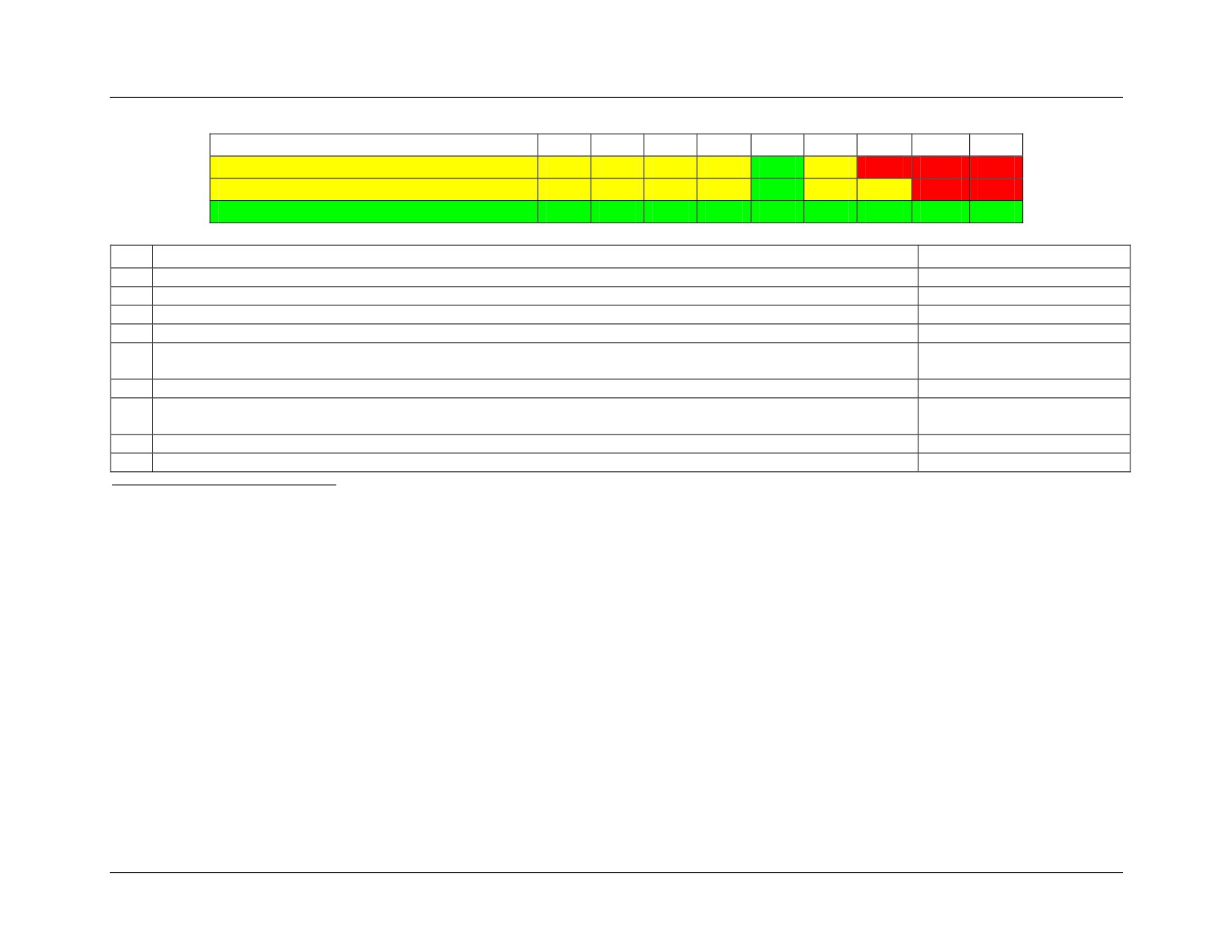
Table 8.2-1 discusses the capability that currently exists to perform the task to the designated
standards. There is only one capability that exists, and no other capability is projected that will
accomplish this task.
Current Capability and Deficiency
The organizational structure of a subordinate joint force’s intelligence element is determined by
the JFC based on the situation and mission. All subordinate joint force J-2s, however, will at a
minimum require a core element of analytical and administrative capabilities. Most situations
will require augmentation of joint force intelligence capabilities through the deployment and
integration of JOA intelligence elements into a joint intelligence support element. Capabilities of
the JISE include order-of-battle analysis; identification of adversary COGs; analysis of adversary
command, control, communications, and computers; targeting support; collection management;
and maintenance of a 24-hour per day watch. Several deficiencies, including lack of training and
experience in the staffs and ineffective DOTMLPF, result in a current assessment of “yellow.”
Projected Near/Mid-Term Capability and Deficiency
No other capability is currently projected for the near/mid term. Little capability improvement is
forecast for the near/mid term with the exception of DOTMLPF that should improve in all
deficient areas as a result of initiatives that use data resulting from focused experimentation.
Projected Far-Term Capability and Deficiency
No other capability is currently projected for the far-term future. In the far term, DOTMLPF
enhancements across the board made possible by focused experimentation and lessons learned
from exercises will improve all measures to a “green” rating.
14
For Official Use Only
For Official Use Only
CBRN Functional Needs Analysis/Functional Solution Analysis
Chapter 8. Operational Shape Tasks
Table 8.2-1. OPSHA 2: Capability and Deficiency Assessment
Capability: JISE
M1
M2
M3
M4
M5
M6
M7
M8
M9
Current Overall Capability1
Y2
Y3
Y4
Y5
G6
Y7
R8
R9
R10
Near/Mid-Term Overall Capability11
Y
Y
Y
Y
G
Y
Y
R
R
Far-Term Overall Capability12
G13
G
G
G
G
G
G
G
G
FAA Measure
Scale
M1
Guidelines for conducting JOA vulnerability analyses are established.
G - Yes, Y - Limited, R - No
M2
Guidelines for conducting JOA risk assessments are established.
G - Yes, Y - Limited, R - No
M3
Analytical tools used to evaluate plausible adversaries’ COAs are adequate.
G - Yes, Y - Limited, R - No
M4
Vulnerability assessment process exploits time-sensitive or priority-actionable CBRN/TIM intelligence.
G - Yes, Y - Limited, R - No
M5
Means are available to collaboratively perform assessments (to have immediate access to appropriate subject matter
G - Yes, Y - Limited, R - No
experts/analysts no matter where they are physically located).
M6
Means exist to visualize the impact of adversaries’ COAs on forces of interest.
G - Yes, Y - Limited, R - No
M7
Operational and analytical/planning staffs have the training and experience to effectively assess adversaries’
G - Yes, Y - Limited, R - No
CBRN/TIM COAs.
M8
Sufficient doctrine and TTPs for effective JOA vulnerability assessment are available.
G - Yes, Y - Limited, R - No
M9
Joint exercises/experimentation provide feedback on the efficacy of vulnerability assessment doctrine and TTPs.
G - Yes, Y - Limited, R - No
1 No. Extremely limited. TTPs for TIM and biological warfare agent vulnerability analysis are very limited.
2 Limited. The JISE either has been furnished or has developed vulnerability analysis guidelines. However, such guidelines may not adequately address a JOA-wide TIM concern.
3 Limited. The JISE and operational staff have guidelines for conducting risk assessments. However, joint exercises/experiments need to be broadened to review the adequacy.3
4 Limited. The JISE has analytical tools used to evaluate plausible COAs. However, adequacy of these tools depends on adequacy and accuracy of the adversary information
against which they are applied.
5 Limited. The JISE has the ability to exploit time-sensitive or priority-actionable intelligence activities. However, joint exercise/experiments and JPME do not adequately address
TIM considerations in the vulnerability assessment process.
6 Yes. The JISE has the means to collaboratively perform assessments, to include video teleconferences, phoneconferences, etc.
7 Limited. The JISE has means to visualize impact of adversary CBRN employment against forces of interest, but TIM hazards are not necessarily included in this visualization.
8 No. The JISE is the operational and analytical/planning augmentation staff to the J-2. By definition, this element has the training and experience to assess adversary COAs.
However, CBRN/TIM COA analysis is highly subjective, particularly with regard to enemy employment intent and capability in light of interdiction operations.
9 No. The JISE has doctrine and TTPs to conduct vulnerability assessments. However, assuming JOA TIM considerations are included in the vulnerability assessment, the JISE
must decide which safety standards apply. OSHA chemical permissible exposure guidelines are much more restrictive than those of other nations.
10 No. While joint exercises/experimentation can provide feedback on the vulnerability analysis process, TIM vulnerability analysis remains problematic.
11 DOTMLPF should improve in all deficient areas as a result of initiatives that use data resulting from focused experimentation.
12 Continued DOTMLPF enhancements will result from exercise and wargame lessons learned.
13 In the far term, DOTMLPF enhancements across the board made possible by focused experimentation and lessons learned from exercises will improve all measures to a “green”
rating.
15
For Official Use Only
For Official Use Only
CBRN Functional Needs Analysis/Functional Solution Analysis
Chapter 8. Operational Shape Tasks
8.2.3
Functional Solution Analysis
8.2.3.1
DOTLPF Assessment Summary
This section addresses the deficiencies and suggests potential non-materiel solutions. If there are
no non-materiel solutions, or they are only partial solutions, the remaining non-materiel need is
then stated. Materiel needs are assessed in the IMA section.
1.
Deficiency: Joint exercise/experiments and JPME have not adequately addressed JOA TIM
vulnerability analysis.
Non-Materiel Solutions: Training: Develop joint exercise/experiments, which across the
Global Information Grid (GIG) characterize the JOA TIM threat and situation. Leadership:
Develop JPME courses that address JISE functions and CBRN/TIM threat and vulnerability
analysis.
2.
Deficiency: Doctrine and TTPs for vulnerability assessments that include near and far term
CBRN/TIM hazard effects, mitigation, and remediation are not standardized or promulgated.
Non-Materiel Solutions: Doctrine: Develop doctrine and TTPs for vulnerability
assessments that include near- and far-term TIM hazard effects, mitigation, and remediation.
Training: Develop formalized courses which instruct intelligence and CBRN specialists in
TIM vulnerability assessment processes.
3.
Deficiency: Guidelines for JOA TIM vulnerability analysis are limited and lack
standardization.
Non-Materiel Solutions: Doctrine: Develop standardized DoD TIM vulnerability analysis
processes.
4.
Deficiency: Guidelines for conducting TIM risk assessments are not standardized.
Non-Materiel Solutions: Doctrine: Develop standardized DoD TIM risk assessment
processes.
5.
Deficiency: Analytical tools used to evaluate plausible adversary COAs in relation to TIM
considerations are inadequate.
Non-Materiel Solutions: Doctrine: Develop formal analytical processes to evaluate
adversary COAs in relation to TIM considerations.
6.
Deficiency: Joint exercise/experiments outside the continental United States and JPME do
not adequately address TIM hazards.
Non-Materiel Solutions: Training: Develop formal JPME courses which address TIM
hazards.
7.
Deficiency: TIM hazards are not necessarily included in the JISE visualization of adversary
COAs on forces of interest.
Non-Materiel Solutions: Doctrine: Develop formal TTPs which address TIM hazards and
their impact on friendly and adversary COAs. Training: Develop formal JPME courses
which address TIM hazards and their impact on friendly and adversary COAs.
16
For Official Use Only
For Official Use Only
CBRN Functional Needs Analysis/Functional Solution Analysis
Chapter 8. Operational Shape Tasks
8. Deficiency: CBRN/TIM COA analysis is highly subjective, particularly with regard to
enemy employment intent and capability in light of interdiction operations.
Non-Materiel Solutions: Doctrine: Standardize CBRN/TIM COA analysis process.
9. Deficiency: There is no joint doctrine for establishing or applying TIM exposure standards.
Non-Materiel Solution: Doctrine: Develop joint doctrine to guide operationally focused risk
management for determining TIM exposure limits for joint forces, including military
personnel and eligible civilians.
10. Deficiency: Joint exercises/experimentation need to capture data and lessons learned
concerning the efficacy of TIM vulnerability analysis doctrine and TTPs.
Non-Materiel Solutions: Doctrine: Exercise and capture lessons learned concerning the
efficacy of TIM vulnerability analysis processes.
11. Deficiency: Doctrine and TTPs for vulnerability assessments which include near-and far-
term TIM hazard effects, mitigation, and remediation are not promulgated beyond the
industrial hygiene community.
Non-Materiel Solutions: Doctrine: The Office of the Command Surgeon should promulgate
TIM health hazard effects, mitigation techniques, and remediation processes for use by U.S.
forces deployed abroad. Training: Develop courses which include OSHA and U.S.
Environmental Protection Agency standards in CBRN JPME.
8.2.3.2
IMA Assessment Summary
Table 8.2-2 shows possible material approaches that address the remaining materiel requirements
of the DOTMLPF assessment.
Table 8.2-2. OPSHA 2. IMA Assessment
Idea for Materiel Approach
Description
Analytical Tools
The anticipated initial operational capability (IOC) of the
Joint Effects Model (JEM) Block I is in FY2006, and the IOC
of the Joint Operational Effects Federation (JOEF) Block I,
Increment I is in FY2008. The JEM will provide a single,
validated capability to predict and track CBRN and TIM
events and effects. The JOEF will provide an operational
requirements modeling and simulation system which
accurately predicts CBRN effects on personnel, equipment,
and operations. Ensure that both consider pertinent aspects of
CBRN/TIM immediate and long-term health hazards and
permissible exposure limits.
17
For Official Use Only
For Official Use Only
CBRN Functional Needs Analysis/Functional Solution Analysis
Chapter 8. Operational Shape Tasks
8.3
Task OPSHA 3: Determine CBRND resources required to meet the JTF/JOA
CBRND situation
8.3.1
Functional Area Analysis
8.3.1.1
Definition
To determine the CBRND unit, personnel, equipment, and logistics resources required for a
specific JOA or JTF AOR. Determines the requirement for CBRND units and personnel
throughout the JOA, ensuring the availability of appropriate units as well as personnel in the
correct quantities and locations. Includes determination of required CBRND equipment, supplies
and consumables throughout the JOA, including prepositioning and stockpiling. Logistical
support of CBRND resources encompasses extended operations.
8.3.1.2
Derivation
UJTL (OP 2.2, OP 2.5, OP 5, OP 5.1.1, OP 5.2, OP 5.2.1, OP 5.3, OP 5.3.9, OP 5.4, OP 5.4.2,
OP 5.4.5, OP 5.5.1, OP 5.5.8, OP 5.7, OP 5.7.5, OP 5.7.6, OP 7.1, OP 7.2, OP 7.3, OP 7.4, OP
7.5), Protection Joint Functional Concept, Military Transformation: A Strategic Approach,
Transformation Planning Guidance, Sense and Respond CONOPs, Sense and Respond Logistics:
Co-evolution of an Adaptive Capability Document Concept.
8.3.1.2.1
Supported Task: STSHA 3
8.3.1.2.2
Lateral Tasks: OPSHA 2, OPSHA 6, OPSHA 7, OPSHA 8, OPSUST 8
8.3.1.2.3
Supporting Tasks: TASHA 10, TASHA 20
8.3.1.3
Condition
Perform this task under conditions of:
Physical
1. Immediate, delayed, or potential long-term atmospheric weapons effects. (C1.3.3)
Military
1. Limited military commitments from other nations. (C2.1.1.7)
2. No or outline mission preparation. (C2.1.3)
3. Marginal forces assigned. (C2.2.1)
4. Multiple competing apportionments. (C2.2.2)
5. Marginal forces allocated (distributed limited resources). (C2.2.3)
6. Low personnel capability. (C.2.2.4)
7. Low military systems reliability. (C2.2.5.3)
8. Limited staff expertise. (C2.3.1.3)
9. Highly restricted information exchange. (C2.3.1.8)
18
For Official Use Only
For Official Use Only
CBRN Functional Needs Analysis/Functional Solution Analysis
Chapter 8. Operational Shape Tasks
10. No or partial TPFDD availability. (C2.5.1.1)
11. Negligible deployed supplies. (C2.8.2)
12. Slow pipeline responsiveness. (C2.8.3.1)
Civil
1. Limited foreign government support. (C3.1.2.3)
2. Limited international organization support. (C3.1.2.5)
8.3.2
Functional Needs Analysis
8.3.2.1
Capability and Deficiency Assessment Summary
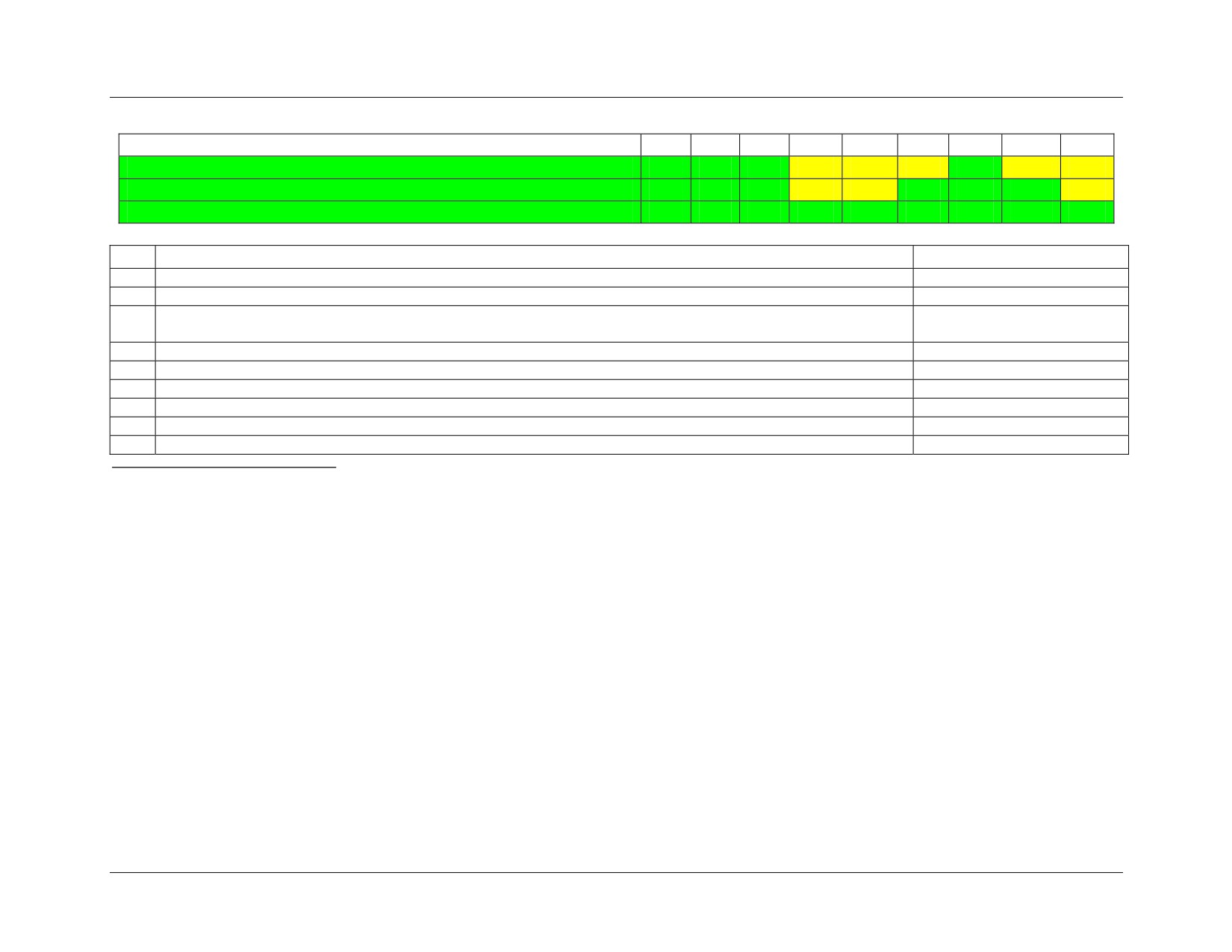
Table 8.3-1 discusses the standing JTF ability to determine CBRND resources required to meet
the JTF/JOA CBRN situation. This is only one capability that exists, and no other capability is
projected that will accomplish this task.
Current Capability and Deficiency
The current capability is assessed as “green.” The capability exists to perform this task with
some slight deficiencies. Management of CBRND-specific materiel, personnel, and units will
require a systematic, dedicated program to ensure that timely, focused, and sufficient assets are
on hand by the time they are required.
Projected Near/Mid-Term Capability and Deficiency
No other capability is currently projected for the near/mid term. No capability improvement is
forecast for the near/mid term.
Projected Far-Term Capability and Deficiency
No other capability is currently projected for the far-term future. The forecast should improve
and remain “green” in the far term. Processes available to manage CBRN personnel and units
will have real-time capability. JTTPs that specifically address management of joint CBRND
materiel resources will be developed. JTTPs that specifically address management of joint
CBRND materiel resources will be developed. DOTMLPF should improve in all deficient areas
as a result of initiatives that use data resulting from focused experimentation.
19
For Official Use Only
For Official Use Only
CBRN Functional Needs Analysis/Functional Solution Analysis
Chapter 8. Operational Shape Tasks
Table 8.3-1. OPSHA 3: Capability and Deficiency Assessment
Capability: Standing Joint Force Headquarters (Joint Force)
M1
M2
M3
M4
M5
M6
M7
M8
M9
Current Overall Capability1
G2
G3
G4
Y5
Y6
Y7
G8
Y9
Y10
Near/Mid-Term Overall Capability
G
G
G
Y
Y
G
G
G
Y
Far-Term Overall Capability11
G
G
G
G12
G13
G
G
G
G14
FAA Measure
Scale
M1
CBRND staff cells have the ability to influence the flow of resources to the JTF/JOA.
G - Yes, Y - Limited, R - No
M2
Means exist to adjust the flow of resources to the JTF/JOA based on CBRND considerations.
G - Yes, Y - Limited, R - No
M3
Planning staffs have the training and experience to determine required adjustments to resources based on CBRND
G - Yes, Y - Limited, R - No
considerations.
M4
Tools and processes are available to manage CBRND personnel and units.
G - Yes, Y - Limited, R - No
M5
Tools and processes are available to manage CBRND materiel resources.
G - Yes, Y - Limited, R - No
M6
CBRND logistics tracking system is sufficient.
G - Yes, Y - Limited, R - No
M7
Appropriate CBRND logistics management processes are in place.
G - Yes, Y - Limited, R - No
M8
Analytical tools are used to assess logistical demand.
G - Yes, Y - Limited, R - No
M9
All pertinent Sense, Shape, Shield, and Sustain factors are considered.
G - Yes, Y - Limited, R - No
1 Limited. Doctrine, TTPs, and organizational structures exist to manage materiel. CBRN-specific materiel and resources are not managed as a separate class of supply.
2 Yes. CBRND staff cells have the ability to influence the flow of resources to the JTF/JOA through multiple operations and logistics channels.
3 Yes. CBRN considerations can be applied to adjust the priority, sequencing, and flow of resources.
4 Yes. Operational and logistics planning staffs are trained to determine adjustments to resources based on a number of conditions. CBRN is just one of those conditions.
5 Limited. Processes are available to manage CBRN personnel and units, however not all tools have real-time capability.
6 Limited. Tools and processes to manage materiel resources exist. CBRN materiel and resources are not handled as a separate DoD class of supply. There are no JTTPs that
specifically address management of joint CBRND materiel resources.
7 Yes. Military Traffic Management Command Transportation Engineering Agency has developed the Intelligent Road and Rail Information Server to track the real-time and near-
real-time locations of any military shipments moving over land or water. The server is currently capable of accomplishing this anywhere in the world for all types of freight.
Inventory information will be limited from a joint perspective, until the Joint Total Asset Visibility (JTAV) program is fully functional.
8 Yes. Automated systems to manage requisition, location (depot to DLA), shipment, inventory management, and unit-level receipt are in place.
9 Limited. Demand data are tracked by Line Item Number and Unit Identifier Code and can be programmed to highlight critical command-supported items. Limited tools exist to
automatically determine CBRND resources needed based on a wide variety of scenarios and enemy COAs.
10 Limited. Aggressive application of active defensive, interdiction, and elimination measures could mitigate the requirement for a burgeoning surge demand and capability for
CBRND resources.
11 DOTMLPF should improve in all deficient areas as a result of initiatives that use data resulting from focused experimentation.
12 Processes available to manage CBRN personnel and units, will have real-time capability.
13 JTTPs that specifically address management of joint CBRND materiel resources will be developed.
14 Aggressive application of active defensive, interdiction, and elimination measures will mitigate the requirement for a burgeoning surge demand and capability for CBRND
resources.
20
For Official Use Only
For Official Use Only
CBRN Functional Needs Analysis/Functional Solution Analysis
Chapter 8. Operational Shape Tasks
8.3.3
Functional Solution Analysis
8.3.3.1
DOTLPF Assessment Summary
This section addresses the deficiencies and suggests potential non-materiel solutions. If there are
no non-materiel solutions, or they are only partial solutions, the remaining non-materiel need is
then stated. Materiel needs are assessed in the IMA section.
1.
Deficiency: No JTTPs specifically address joint CBRND resources required to meet the
JTF/JOA CBRN situation.
Non-Materiel Solutions: Doctrine: Develop JTTPs on determining joint CBRN resources
required to meet the JTF/JOA CBRN situation. Training: Develop joint training on
determining joint CBRN resources required to meet the JTF/JOA CBRN situation.
Leadership: Develop joint leadership education course(s) on determining joint CBRN
resources required to meet the JTF/JOA CBRN situation.
2.
Deficiency: No JTTPs exist for adjusting the flow of resources based specifically on CBRN
conditions. However, the means to adjust flow of all resources does exist through operations,
materiel, and personnel management sections.
Non-Materiel Solutions: Doctrine: Develop JTTPs that address adjusting the flow of
resources based specifically on CBRN conditions.
3.
Deficiency: No JTTPs specifically address when or how to make a determination to adjust
resources based on joint CBRND considerations.
Non-Materiel Solutions: Doctrine: Develop JTTPs that address when or how to make a
determination to adjust resources based on joint CBRND considerations.
4.
Deficiency: No JTTPs specifically address influencing the flow of joint CBRN resources.
Non-Materiel Solutions: Doctrine: Develop JTTPs that specifically address influencing the
flow of joint CBRN resources.
5.
Deficiency: No JTTPs specifically address a truly joint CBRND logistics management
process.
Non-Materiel Solutions: Doctrine: Develop JTTPs that address a truly joint CBRND
logistics management process.
6.
Deficiency: No JTTPs specifically address joint analytical tools to assess CBRND logistical
demands.
Non-Materiel Solutions: Doctrine: Develop JTTPs that address joint analytical tools to
assess CBRND logistical demands.
7.
Deficiency: Without active defense, interdiction, and elimination measures, mitigation, even
preclusion for the CBRND Shield and Sustain domains, could not occur.
Non-Materiel Solutions: Doctrine: Develop doctrine for active defense, interdiction, and
elimination measures.
21
For Official Use Only
For Official Use Only
CBRN Functional Needs Analysis/Functional Solution Analysis
Chapter 8. Operational Shape Tasks
8.3.3.2
IMA Assessment Summary
Table 8.3-2. OPSHA 3: IMA Assessment
Idea for Materiel Approach
Description
Automated analytical tools
With fewer personnel available to perform resource
determination, the JTF commander will rely increasingly on
automated tools to determine CBRND unit, personnel,
equipment, medical, and logistics resources.
22
For Official Use Only
For Official Use Only
CBRN Functional Needs Analysis/Functional Solution Analysis
Chapter 8. Operational Shape Tasks
8.4
Task OPSHA 4: Ensure JTF or joint force CBRND readiness
8.4.1
Functional Area Analysis
8.4.1.1
Definition
To ensure theater forces are prepared to accomplish assigned missions in a CBRN/TIM
environment. Joint CBRND training, exercises, and rehearsals are key components to ensure
force readiness for operations in a CBRN/TIM environment. Operational concepts and new
systems are evaluated in realistic exercises and multinational environments. Forces are evaluated
and assessed for effective CBRND task performance across the range of military operations and
in a variety of physical environments. CBRND systems are evaluated for operational
effectiveness and performance utility. Includes the effective documentation and management of
lessons learned information to provide a historical record for trend analysis and a repository for
the warfighting staffs to examine during development of training.
8.4.1.2
Derivation
UJTL (OP 1.3.1, OP 2.2, OP 2.2.1, OP 2.2.3, OP 2.2.3, OP 2.4.1.1, OP 2.4.1.2, OP 2.4.2.1, OP
5, OP 5.1.1, OP 5.1.2, OP 5.1.3, OP 5.1.6, OP 5.2, OP 5.2.1, OP 5.2.2, OP 5.3.1, OP 5.3.4, OP
5.3.5, OP 5.3.6, OP 5.3.7, OP 5. 3.8, OP 5.3.9, OP 5.4, OP 5.4.2, OP 5.4.4, OP 5.4.5, OP 5.4.6,
OP 5.7, OP 5.7.3, OP 5.7.6, OP 6.1.6, OP 6.2.1, OP 6.2.10, OP 7, OP 7.3, OP 7.4, OP 7.5),
Protection Joint Functional Concept, Military Transformation: A Strategic Approach,
Transformation Planning Guidance.
8.4.1.2.1
Supported Task: STSHA 4
8.4.1.2.2
Lateral Tasks: OPSHA 2, OPSHA 6, OPSHLD 4, OPSHLD 5, OPSHLD 6,
OPSHLD 7, OPSHLD 8, OPSHLD 10
8.4.1.2.3
Supporting Task: TASHA 8
8.4.1.3
Condition
Perform this task under conditions of:
Physical
1. Immediate, delayed, or potential long-term atmospheric weapons effects. (C1.3.3)
Military
1. No or outline mission preparation. (C2.1.3)
2. Marginal forces assigned. (C2.2.1)
3. Low personnel capability. (C2.2.4)
4. Negligible personnel experience. (C2.2.4.5)
5. Few modern military systems. (C2.2.5)
23
For Official Use Only
For Official Use Only
CBRN Functional Needs Analysis/Functional Solution Analysis
Chapter 8. Operational Shape Tasks
6. Few modern military simulation systems. (C2.2.5.5)
7. Poor joint staff integration. (C2.3.1.1)
8. Limited staff expertise. (C2.3.1.3)
9. Highly restricted information exchange. (C2.3.1.8)
10. High information volume. (C2.3.1.9)
11. Little or no intelligence dissemination and receipt. (C2.4.7)
Civil. N/A
8.4.2
Functional Needs Analysis
8.4.2.1
Capability and Deficiency Assessment Summary
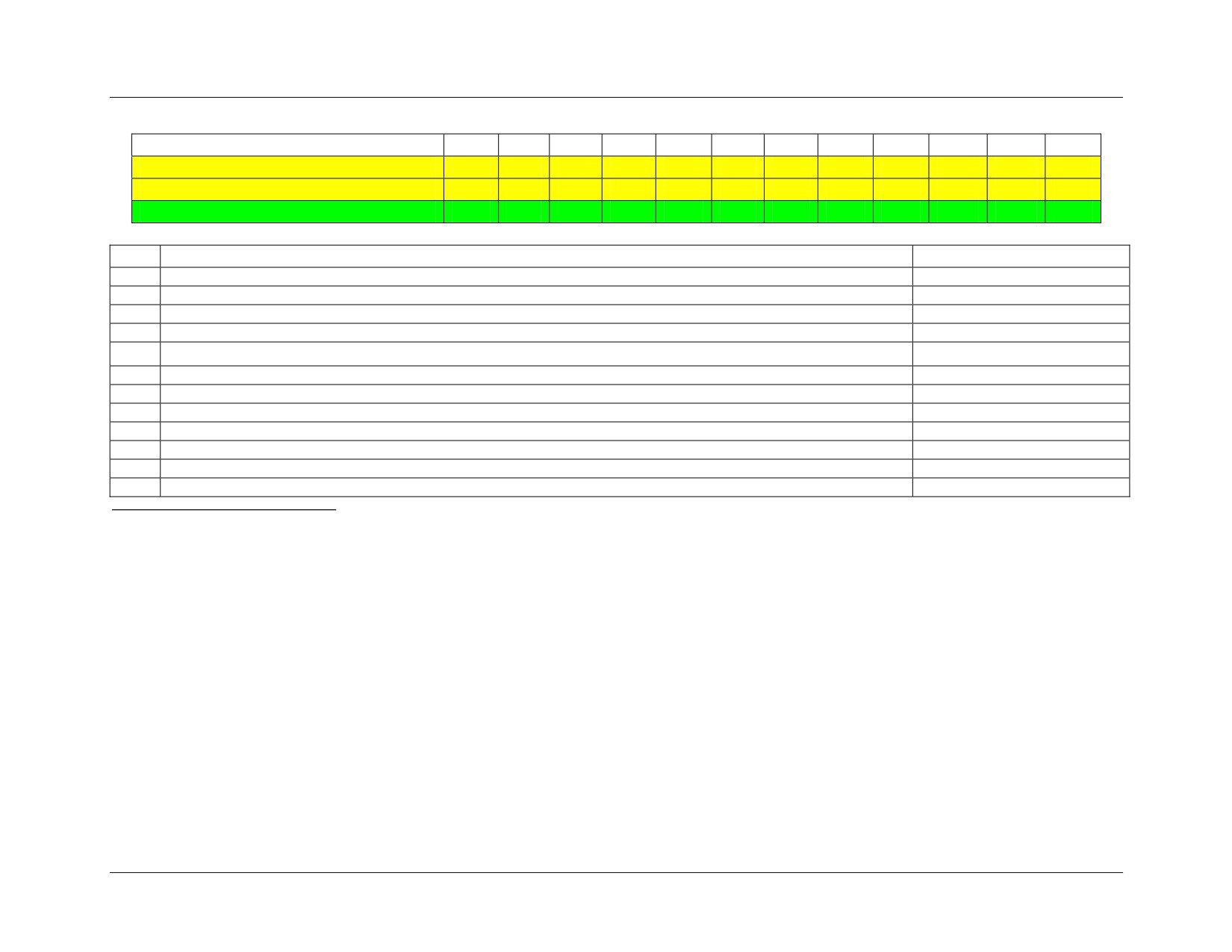
Table 8.4-1 discusses the only capability that currently exists to perform the task to the
designated standard. There is only one capability that exists, and no other capability is projected
that will accomplish this task.
Current Capability and Deficiency
Any JTF HQ has a team of operational planners and information command and control
specialists to include CBRND subject matter experts. This team of experts forms the backbone of
the joint task force command structure. The Standing Joint Force Headquarters (Joint Force) is
responsible for operational trouble spots, including CBRN issues and concerns. JTTPs and tools
to evaluate and assess CBRND staffs, capabilities, systems, and concepts within an AOR are
limited. Forces and staffs of other nations may or may not have training, equipment or
experience to effectively conduct CBRND operations. Therefore the current assessment is
“yellow.”
Projected Near/Mid-Term Capability and Deficiency
No other capability is currently projected for the near/mid term. No capability improvement is
forecast for the near/mid term.
Projected Far-Term Capability and Deficiency
No other capability is currently projected for the far-term future. In the far term, DOTMLPF
enhancements across the board made possible by focused experimentation and lessons learned
from exercises will improve all measures to a “green” rating.
24
For Official Use Only
For Official Use Only
CBRN Functional Needs Analysis/Functional Solution Analysis
Chapter 8. Operational Shape Tasks
Table 8.4-1. OPSHA 4: Capability and Deficiency Assessment
Capability: Joint Force
M1
M2
M3
M4
M5
M6
M7
M8
M9
M10
M11
M12
Current Overall Capability1
Y2
Y3
Y4
Y5
Y6
Y7
Y8
Y9
Y10
Y11
Y12
Y13
Near/Mid-Term Overall Capability
Y
Y
Y
Y
Y
Y
Y
Y
Y
Y
Y
Y
Far-Term Overall Capability
G14
G
G
G
G
G
G
G
G
G
G
G
FAA Measure
Scale
M1
Tools and processes are available to evaluate and assess CBRND capability in theater.
G - Yes, Y - Limited, R - No
M2
Units and HQ staffs are routinely evaluated and assessed in performing CBRND tasks.
G - Yes, Y - Limited, R - No
M3
CBRND systems and concepts, both current and projected, are assessed and evaluated under realistic conditions.
G - Yes, Y - Limited, R - No
M4
CBRND operations are exercised with coalition partners.
G - Yes, Y - Limited, R - No
M5
CBRND staff cells and units have access to dedicated information technology to support training.
G - Yes, Y - Limited, R - No
M6
HQ/unit exercises are conducted under simulated CBRN/TIM conditions.
G - Yes, Y - Limited, R - No
M7
Adequate training tools are available.
G - Yes, Y - Limited, R - No
M8
CBRND specialists/staffs are trained to perform required CBRND tasks.
G - Yes, Y - Limited, R - No
M9
Forces/staffs of other nations are trained in CBRND operations.
G - Yes, Y - Limited, R - No
M10
CBRND staff cells conduct training and rehearsals.
G - Yes, Y - Limited, R - No
M11
An accessible, digital information repository system is available.
G - Yes, Y - Limited, R - No
M12
Information repository is available to all operating forces.
G - Yes, Y - Limited, R - No
1 There are few training events that specifically address training forces/staffs of other nations for anticipated CBRND operations.
2 Limited. Staff has tools and processes to evaluate and assess CBRND capabilities in theater. However, the current system is Service-specific. There are no JTTPs that specifically
addresses tools and processes to evaluate and assess joint CBRND capability.
3 Limited. Any joint force staff can routinely evaluate and assess CBRND tasks, but the current system is Service-specific. There are no JTTPs and familiarization training that
specifically addresses evaluating and assessing joint CBRND tasks.
4 Limited. Any joint force staff can assess and evaluate systems under realistic conditions, but the current system is Service-specific. There are no JTTPs or familiarization training
that specifically address assessing joint CBRND systems and concepts, both current and projected, under realistic conditions.
5 Limited. Any joint force staff has the ability to exercise with coalition partners, but there are few exercises that specifically address CBRND operations with coalition partners.
6 Limited. Any joint force staff has access to information technology to support training, but the current system is Service-specific. There are no JTTPs or familiarization training
that specifically address CBRND staff cells and units having access to dedicated information technology to support training.
7 Limited. Any joint force staff has the ability to exercise under CBRN/TIM conditions, but there are few exercises that specifically address the full spectrum of CBRN/TIM
conditions.
8 Limited. Any joint force staff has the training, but the current system is Service-specific. There are no JTTPs or familiarization training that specifically address joint force
CBRND readiness.
9 Limited. Any joint force staff has CBRND specialists/staffs trained to perform CBRND tasks, but there are few JTTPs and familiarization training that specifically address the
CBRND specialists/staff task on joint force CBRND readiness.
10 Limited. Any joint force staff has the ability to train forces/staffs of other nations, but there are few training events that specifically address training forces/staffs of other nations
for anticipated CBRND operations. Political constraints inhibit training forces/staffs of other nations on CBRN operations.
25
For Official Use Only
For Official Use Only
CBRN Functional Needs Analysis/Functional Solution Analysis
Chapter 8. Operational Shape Tasks
11 Limited. Any joint force staff has the tools to conduct training and rehearsals, but there are limited JTTPs and familiarization training that specifically address joint force
CBRND readiness.
12 Limited. Any joint force staff has access to digital information repository, but the units must know how to access it, through the GIG. There are limited JTTPs and
familiarization training that specifically addresses accessing the digital information repository.
13 Limited. Any joint force staff has access to digital information repository, but the units must know how to access it, through the GIG. There are limited JTTPs and
familiarization training that specifically addresses accessing the digital information repository.
14 In the far term, DOTMLPF enhancements across the board made possible by focused experimentation and lessons learned from exercises will improve all measures to a “green”
rating.
26
For Official Use Only
For Official Use Only
CBRN Functional Needs Analysis/Functional Solution Analysis
Chapter 8. Operational Shape Tasks
8.4.3
Functional Solution Analysis
8.4.3.1
DOTLPF Assessment Summary
This section addresses the deficiencies and suggests potential non-materiel solutions. If there are
no non-materiel solutions, or they are only partial solutions, the remaining non-materiel need is
then stated. Materiel needs are assessed in the IMA section.
1. Deficiency: Limited JTTPs and familiarization training that specifically address joint
CBRND readiness
Non-Materiel Solutions: Doctrine: Develop JTTPs on joint CBRN readiness requirements
to meet the JTF/JOA CBRN situation. JTTPs must address processes to evaluate and assess
joint CBRND capability, tasks, systems and concepts, both current and projected, under
realistic conditions. JTTPs must also address CBRND staff cells and units having access to
dedicated information technology to support training. Develop techniques addressing
CBRND specialist/staff tasks for assessing joint force CBRND readiness and for accessing
the digital information repository for CBRND information. Training: Develop joint training
on joint CBRN readiness requirements to meet the JTF/JOA CBRN situation. Leadership:
Expand joint leadership education course(s) on the joint CBRN readiness requirements to
meet the JTF/JOA CBRN situation
2. Deficiency: There are few exercises that specifically address CBRND operations with
coalition partners or the full spectrum of CBRN/TIM conditions.
Non-Materiel Solutions: Training: Develop exercises that specifically address CBRND
operations with coalition partners and introduce the full spectrum of CBRN/TIM conditions.
8.4.3.2
IMA Assessment Summary
N/A
27
For Official Use Only
For Official Use Only
CBRN Functional Needs Analysis/Functional Solution Analysis
Chapter 8. Operational Shape Tasks
8.5
Task OPSHA 5: Coordinate JTF/JOA CBRND information systems and processes
8.5.1
Functional Area Analysis
8.5.1.1
Definition
To ensure that JTF/JOA CBRND information systems and processes allow joint forces to
effectively conduct operations in a CBRN/TIM environment. Provides hazard prediction and
effects modeling for situational awareness, response management, preparation, and planning
within the operating area. Operates an Integrated Detection Network (IDN) to enable
commanders to “detect to warn” and take effective countermeasures while on the move. Includes
determining that IDN capabilities provide complete coverage where required throughout the
JOA. Ensures the ability to monitor and identify a CBRN/TIM hazard prior to and after an attack
or release other than attack (ROTA) incident has occurred. Includes providing warning to
everyone who might be affected by the hazard, rapidly giving units time to assume protective
posture and initiate avoidance actions. Ensures the smooth integration and rapid dissemination of
CBRND information across the GIG within the JOA. Includes providing access to or availability
of the appropriate C4ISR and CBRND information systems throughout the JOA to include small
units on independent operations.
8.5.1.2
Derivation
UJTL (OP 2.2, OP 2.2.1, OP 2.2.3, OP 2.4.1.1, OP 2.4.1.2, OP 2.4.2.1, OP 2.5, OP 2.5.3, OP 5,
OP 5.1.1, OP 5.1.2, OP 5.1.3, OP 5.2, OP 5.2.1, OP 5.3.4, OP 5.3.5, OP 5.3.6, OP 5.3.7, OP
5.3.9, OP 5.4, OP 5.4.4, OP 5.4.5, OP 5.5.1, OP 5.5.2, OP 5.5.5, OP 5.5.7, OP 5.5.8, OP 5.7,
OP 5.7.3, OP 5.7.6, OP 6.1.5, OP 6.1.6, OP 7, OP 7.1, OP 7.2, OP 7.3, OP 7.4, OP 7.5),
Protection Joint Functional Concept, Military Transformation: A Strategic Approach,
Transformation Planning Guidance.
8.5.1.2.1
Supported Task: STSHA 5
8.5.1.2.2
Lateral Task: OPSUST 10
8.5.1.2.3
Supporting Tasks: TASHA 17, TASHA 28, TASHA 29, TASHA 30, TASHA
31
8.5.1.3
Condition
Perform this task under conditions of:
Physical
1. Immediate, delayed, or potential long-term atmospheric weapons effects. (C1.3.3)
Military
1. No preexisting arrangements. (C2.1.1.2)
28
For Official Use Only
For Official Use Only
CBRN Functional Needs Analysis/Functional Solution Analysis
Chapter 8. Operational Shape Tasks
2. Negligible personnel experience. (C2.2.4.5)
3. Low military systems reliability. (C2.2.5.3)
4. Few modern military simulation systems. (C2.2.5.5)
5. Some or no interoperability. (C2.2.6)
6. Partial joint staff integration. (C2.3.1.1)
7. Poor multinational integration. (C2.3.1.2)
8. Limited staff expertise. (C2.3.1.3)
9. Highly restricted information exchange. (C2.3.1.8)
10. High information volume. (C2.3.1.9)
11. Little or no intelligence dissemination and receipt. (C2.4.7)
Civil
1. Limited foreign government support. (C3.1.2.3)
2. Limited international organization support. (C3.1.2.5)
3. Poor information management. (C3.3.7.4)
8.5.2
Functional Needs Analysis
8.5.2.1
Capability and Deficiency Assessment Summary
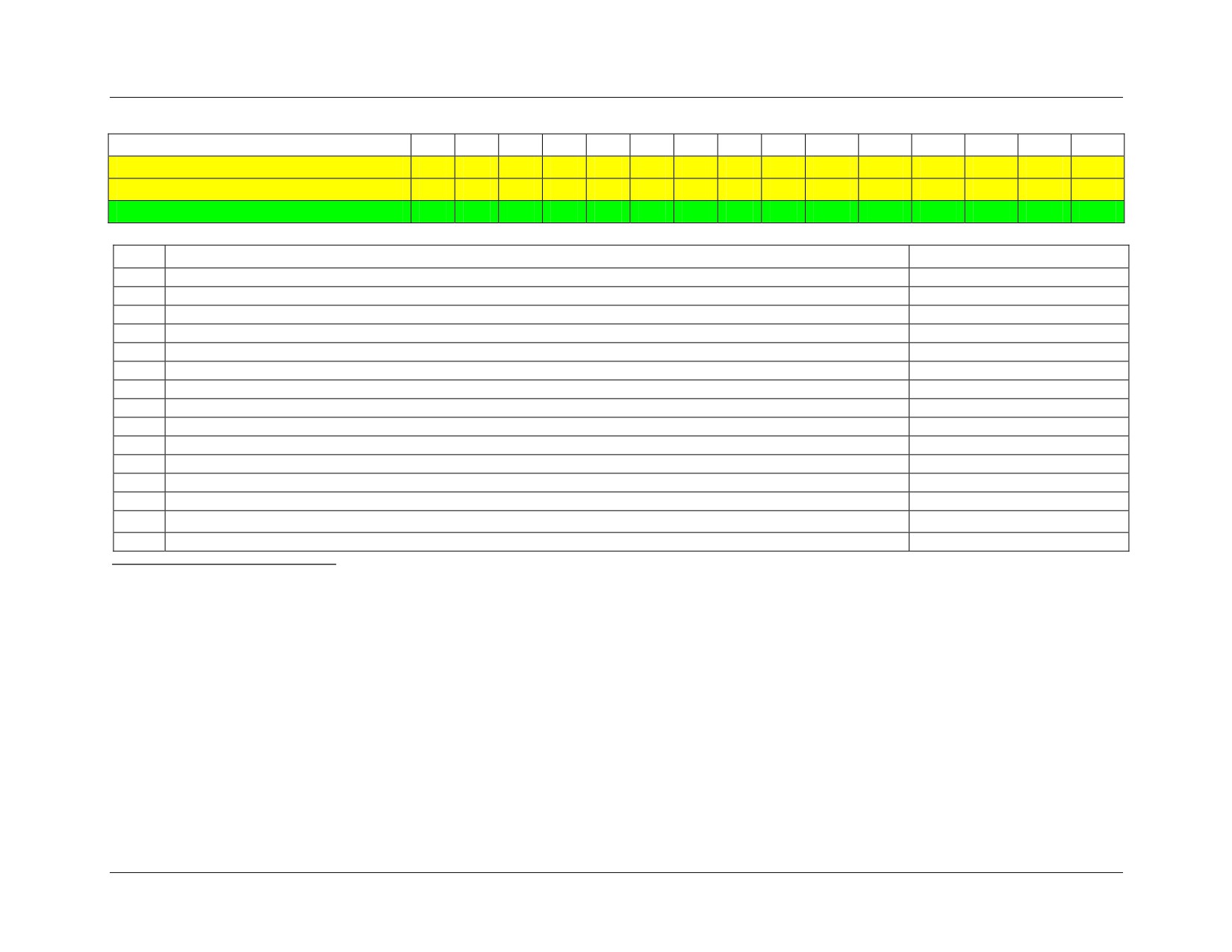
Table 8.5-1 discusses the only capability that currently exists to perform the task to the
designated standard. There is only one capability that exists, and no other capability is projected
that will accomplish this task.
Current Capability and Deficiency
The Standing Joint Task Force Headquarters was assessed in light of fielding Block I of
JWARN. Since JWARN full operational capability will not be met until FY2007/FY2008, all
standards were assessed as limited capability resulting in a current assessment of “yellow.”
Projected Near/Mid-Term Capability and Deficiency
No other capability is currently projected for the near/mid term. No capability improvement is
forecast for the near/mid term.
Projected Far-Term Capability and Deficiency
Projected CBRN specific information systems will continue to evolve to enhance warfighter
needs. The anticipated fielding of JOEF/JEM and capabilities they will provide are sufficient to
evaluate the far term “green.”
29
For Official Use Only
For Official Use Only
CBRN Functional Needs Analysis/Functional Solution Analysis
Chapter 8. Operational Shape Tasks
Table 8.5-1. OPSHA 5: Capability and Deficiency Assessment
Capability: Joint Force
M1
M2
M3
M4
M5
M6
M7
M8
M9
M10
M11
M12
M13
M14
M15
Current Overall Capability1
Y2
Y3
Y4
Y5
Y6
Y7
Y8
Y9
Y10
Y11
Y12
Y13
Y14
Y15
Y16
Near/Mid-Term Overall Capability
Y
Y
Y
Y
Y
Y
Y
Y
Y
Y
Y
Y
Y
Y
Y
Far-Term Overall Capability
G17
G
G
G
G
G
G
G
G
G
G
G
G
G
G
FAA Measure
Scale
M1
Hazards effects models and tools are adequate and available at all appropriate levels for assessment.
G - Yes, Y - Limited, R - No
M2
JOA is adequately covered by the IDN.
G - Yes, Y - Limited, R - No
M3
Sensors managed at all echelons are networked to the IDN.
G - Yes, Y - Limited, R - No
M4
Sufficient doctrine and TTPs exist for effective IDN operation.
G - Yes, Y - Limited, R - No
M5
Joint forces are adequately trained to effectively operate the IDN.
G - Yes, Y - Limited, R - No
M6
All operation centers are networked to IDN.
G - Yes, Y - Limited, R - No
M7
IDN successfully tracks and monitors the hazard.
G - Yes, Y - Limited, R - No
M8
Means exist to disseminate routine, essential and critical CBRN/TIM threat intelligence rapidly.
G - Yes, Y - Limited, R - No
M9
Means exist to compile and display information on CBRN/TIM events that occurs throughout the theater.
G - Yes, Y - Limited, R - No
M10
Means exist to present information on the operational impact of a CBRN/TIM event.
G - Yes, Y - Limited, R - No
M11
Coalition and joint CBRND IDNs provide automated warning and reporting.
G - Yes, Y - Limited, R - No
M12
CBRND information is easily disseminated onto the GIG.
G - Yes, Y - Limited, R - No
M13
CBRND data and information formats are interoperable across the coalition and interagency.
G - Yes, Y - Limited, R - No
M14
Required participants are able to exchange information through planning, assessment and management tools.
G - Yes, Y - Limited, R - No
M15
CBRND information is processed using existing C4ISR assets.
G - Yes, Y - Limited, R - No
1 Limited. JWARN doctrine (TTPs) and training are being developed as the different modules and blocks are being fielded.
2 Limited. JWARN is available within the JOA to make assessment and decision making based on the hazards effects.
3 Limited. JWARN is not yet able within the JOA to interface with the GCCS.
4 Limited. JWARN is not yet able within the JOA to interface with the GCCS.
5 Limited. JWARN doctrine and TTPs are being developed as the different modules and blocks are being fielded.
6 Limited. JWARN training is being conducted (new equipment training) and developed as the different modules and blocks are being fielded.
7 Limited. JWARN is not yet able within the JOA to interface with the GCCS.
8 Limited. JWARN is available within the JOA and can successfully track and monitor the hazard.
9 Limited. JWARN is available within the JOA and can disseminate routine, essential, and critical CBRN threat intelligence rapidly but is not yet integrated into GCCS.
10 Limited. JWARN is available within the JOA and can compile and display information on CBRN events that occurs throughout the theater.
11 Limited. JWARN is available within the JOA and to present information on the operational impact of a CBRN event.
12 Limited. JWARN is available within the JOA and can provide automated warning and reporting to the coalition and joint forces.
13 Limited. JWARN is available within the JOA but only interfaces with the GCCS, manually.
14 Limited. JWARN is available within the JOA and allows CBRND data and information formats to be interoperable across the coalition and interagency environment.
15 Limited. JWARN is available within the JOA and is able to exchange information through planning, assessment, and management tools.
16 Limited. JWARN is available within the JOA and CBRND information is manually processed using existing C4ISR assets.
30
For Official Use Only
For Official Use Only
CBRN Functional Needs Analysis/Functional Solution Analysis
Chapter 8. Operational Shape Tasks
17 In the far term, enhancements to and integration of JWARN into GCCS and DOTMLPF enhancements across the board made possible by focused experimentation and lessons
learned from exercises will improve all measures to a “green” rating.
31
For Official Use Only
For Official Use Only
CBRN Functional Needs Analysis/Functional Solution Analysis
Chapter 8. Operational Shape Tasks
8.5.3
Functional Solution Analysis
8.5.3.1
DOTLPF Assessment Summary
This section addresses the deficiencies and suggests potential non-materiel solutions. If there are
no non-materiel solutions, or they are only partial solutions, the remaining non-materiel need is
then stated. Materiel needs are assessed in the IMA section.
1. Deficiency: JWARN is available but is currently limited to manual input and retrieval.
Non-Materiel Solutions: Doctrine: JWARN doctrine (TTPs) will need to be developed and
updated as each module is fielded. Training: JWARN training will need to be developed and
updated as each module is fielded. Exercises and experiments could provide valuable insight
and feedback on JWARN capabilities. Leadership: JWARN leadership education will need
to be developed and updated as each module is fielded.
8.5.3.2
IMA Assessment Summary
N/A
32
For Official Use Only
For Official Use Only
CBRN Functional Needs Analysis/Functional Solution Analysis
Chapter 8. Operational Shape Tasks
8.6
Task OPSHA 6: Provide JTF/JOA CBRND plans and policy
8.6.1
Functional Area Analysis
8.6.1.1
Definition
To provide plans and command policy to all JTF/JOA forces. Includes formulating and providing
the JTF commander’s intent and CBRND planning guidance for operational planning. Considers
all Sense, Shape, Shield, and Sustain factors. Includes C4ISR, personnel, logistical, and medical
planning considerations. Staffs collaboratively plan for CBRND actions to ensure prepared and
ready forces, adequate CBRND force allocation, and timely response and mitigation. Includes
ensuring that planners and staffs possess the appropriate tools to plan, assess, and manage, as
well as access to automated workspace tools that are integrated and interoperable with existing
C4ISR systems. Includes development of plans for assigned restoration, interdiction, or
elimination operations.
8.6.1.2
Derivation
UJTL (OP 1.2.4.5, OP 1.2.4.7, OP 1.2.4.8, OP 1.3.1, OP 1.4.4, OP 2.2, OP 2.4.1.1, OP 2.4.1.2,
OP 2.4.2.1, OP 2.5, OP 3.2.5.3, OP 5, OP 5.1.1, OP 5.1.2, OP 5.2, OP 5.2.1, OP 5.2.2, OP 5.3,
OP 5.3.1, OP 5.3.2, OP 5.3.7, OP 5.3.9, OP 5.4.2, OP 5.4.4, OP 5.4.5, OP 5.5.1, OP 5.5.5, OP
5.5.8, OP 5.7, OP 7.1, OP 7.2, OP 7.3, OP 7.4, OP 7.5), Protection Joint Functional Concept,
Military Transformation: A Strategic Approach, Transformation Planning Guidance, An
Operational Concept for Biological Defense.
8.6.1.2.1
Supported Task: STSHA 6
8.6.1.2.2
Lateral Tasks: OPSHA 2, OPSHA 3, OPSHA 4, OPSHA 7, OPSHA 8, OPSHA
9, OPSHA 11, OPSHA 12, OPSHLD 1, OPSUST 5
8.6.1.2.3
Supporting Tasks: TASHA 7, TASHA 15, TASHA 21, TASHA 23, TASHA 32
8.6.1.3
Condition
1. Perform this task under conditions of:
Physical. N/A
Military
1. Restrictive mission instructions. (C2.1.1)
2. No preexisting arrangements. (C2.1.1.2)
3. Negligible personnel experience. (C2.2.4.5)
4. Some or no interoperability. (C2.2.6)
5. Poor joint staff integration. (C2.3.1.1)
6. Limited staff expertise. (C2.3.1.3)
7. Negligible theater intelligence access. (C2.4.4)
33
For Official Use Only
For Official Use Only
CBRN Functional Needs Analysis/Functional Solution Analysis
Chapter 8. Operational Shape Tasks
Civil. N/A
8.6.2
Functional Needs Analysis
8.6.2.1
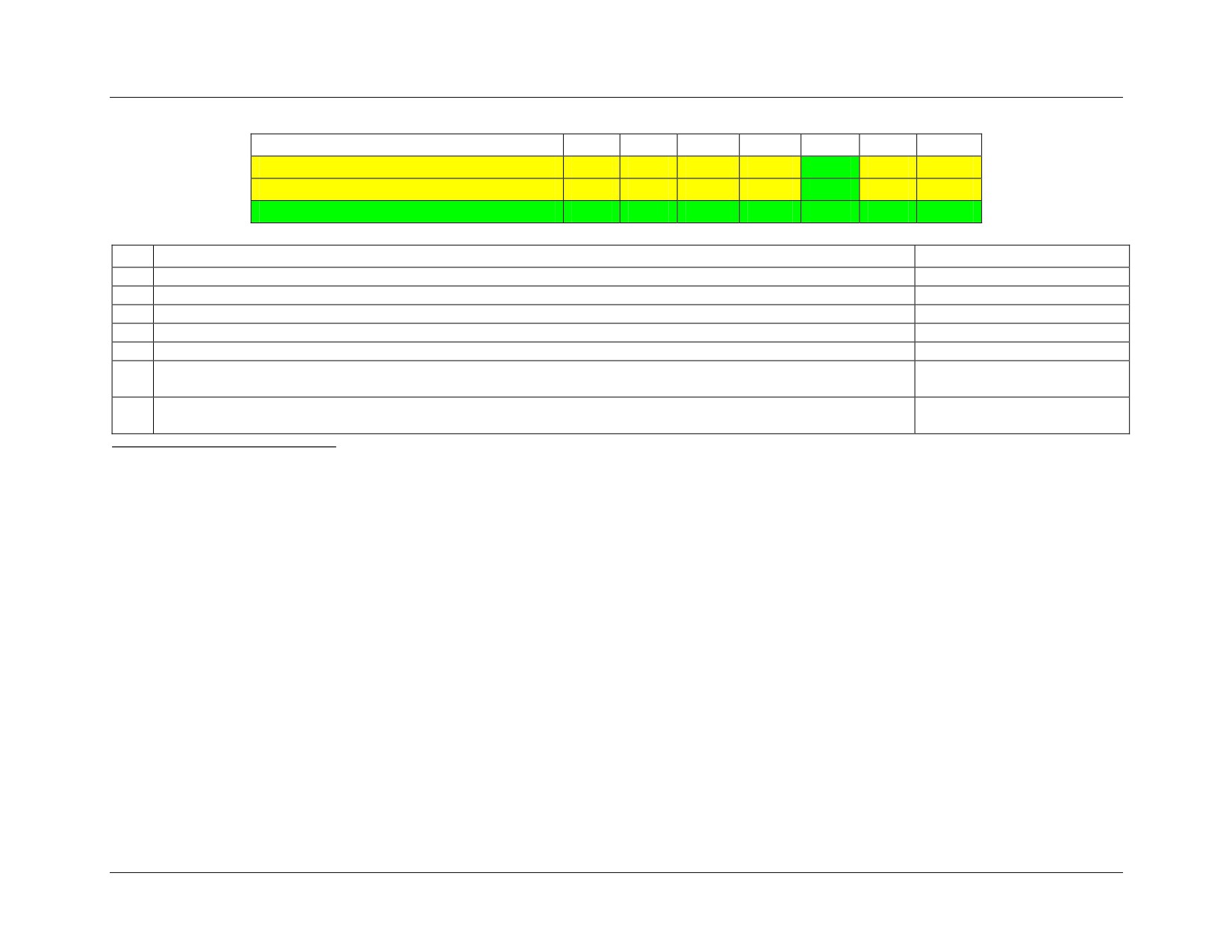
Capability and Deficiency Assessment Summary
Table 8.6-1 discusses the capability that currently exists to perform the task to the designated
standards. There is only one capability that exists, and no other capability is projected that will
accomplish this task.
Current Capability and Deficiency
Any JTF HQ has a team of operational planners and information command and control
specialists to include a CBRN staff cell. This team of experts forms the backbone of the joint
task force command structure. CBRN staff planners will support the joint planning process
concentrating across the five operational functions as defined by the Joint Operation Planning
and Execution System (Vol. I, threat identification and assessment, strategy determination,
course of action development, detailed planning, and implementation). Utilization of a common
information structure/tools will enable an adaptive/collaborative planning process during the
development of operational plans to include theater-level nuclear, chemical, biological, and
radiological plans. Restoration and elimination operations are concepts that planning staffs will
continue to mature, given specific threats within their respective AORs and therefore could not
be rated fully capable. The military decision-making process is a formal concept that is
universally accepted, and therefore plans and planning guidance should incorporate
considerations for all eventualities. However, as recent operations have shown, CBRND-specific
considerations had shortfalls. Therefore, the measures concerning CBRND plans and planning
guidance were rated as limited resulting in an overall current capability assessment of “yellow.”
Projected Near/Mid-Term Capability and Deficiency
No other capability is currently projected for the near/mid term. No capability improvement is
forecast for the near/mid term.
Projected Far-Term Capability and Deficiency
No other capability is currently projected for the far-term future. In the far term, DOTLMPF
enhancements across the board made possible by focused experimentation and lessons learned
from exercises will improve all measures to a “green” rating.
34
For Official Use Only
For Official Use Only
CBRN Functional Needs Analysis/Functional Solution Analysis
Chapter 8. Operational Shape Tasks
Table 8.6-1. OPSHA 6: Capability and Deficiency Assessment
Capability: Joint Force
M1
M2
M3
M4
M5
M6
M7
Current Overall Capability1
Y2
Y3
Y4
Y5
G6
Y7
Y8
Near/Mid-Term Overall Capability
Y
Y
Y
Y
G
Y
Y
Far-Term Overall Capability
G9
G
G
G
G
G
G
FAA Measure
Scale
M1
Process exists to formulate CBRND planning guidance.
G - Yes, Y - Limited, R - No
M2
Planning staffs have the training and experience to effectively plan for CBRND operations.
G - Yes, Y - Limited, R - No
M3
Plans address all pertinent Sense, Shape, Shield and Sustain issues.
G - Yes, Y - Limited, R - No
M4
Doctrine and TTPs are sufficient for effective CBRND planning.
G - Yes, Y - Limited, R - No
M5
Standing plans are adaptable to dynamically changing CBRND situations.
G - Yes, Y - Limited, R - No
M6
Operational and analytical/planning staffs have the training and experience to effectively plan for restoration
G - Yes, Y - Limited, R - No
operations.
M7
Operational and analytical/planning staffs have the training and experience to effectively plan for interdiction or
G - Yes, Y - Limited, R - No
elimination operations.
1 Limited. Institutional training for planning staffs is available. Institutional training that is focused on planning for restoration operations and CBRN consequence management is
limited.
2 Limited. Any joint force staff has the ability to formulate planning guidance, but there are few JTTPs and education and training that specifically address formulating CBRND
planning guidance.
3 Limited. Any joint force staff has the training and experience to plan operations, but there are few JTTPs and education and training that specifically address CBRND operations.
4 Limited. Any joint force staff has the ability to develop plans, but there are few JTTPs that specifically address the process to select all pertinent Sense, Shape, Shield, and
Sustain issues.
5 Limited. There is doctrine and JTTPs that specifically addresses JTF/JOA CBRND planning, but given the broad range of CBRN/TIM threats worldwide, each SFJHQ still needs
to develop its own TTPs for CBRN planning.
6 Yes. Standing plans are adaptable to dynamically changing CBRN situations.
7 Limited. Any joint force operational and analytical/planning staff has the training and experience to effectively plan, but there are few JTTPs and courses that specifically address
restoration operations.
8 Limited. Any joint force operational and analytical/planning staff has the training and experience to effectively plan, but there are few JTTPs and courses that specifically address
interdiction/elimination operations.
9 In the far term, DOTMLPF enhancements across the board made possible by focused experimentation and lessons learned from exercises will improve all measures to a “green”
rating.
35
For Official Use Only
For Official Use Only
CBRN Functional Needs Analysis/Functional Solution Analysis
Chapter 8. Operational Shape Tasks
8.6.3
Functional Solution Analysis
8.6.3.1
DOTLPF Assessment Summary
This section addresses the deficiencies and suggests potential non-materiel solutions. If there are
no non-materiel solutions, or they are only partial solutions, the remaining non-materiel need is
then stated. Materiel needs are assessed in the IMA section.
1.
Deficiency: Few JTTPs specifically address formulating CBRND planning guidance.
Non-Materiel Solutions: Doctrine: Develop joint doctrine on formulating CBRND planning
guidance for the JOA. Training: Expand joint training on formulating CBRND plans and
policy for the JOA.
2.
Deficiency: Few JTTPs specifically address CBRND operations.
Non-Materiel Solutions: Doctrine: Develop joint doctrine on planning CBRND restoration
and interdiction/elimination operations for the JOA. Training: Develop joint training on
planning CBRND restoration and interdiction/elimination operations for the JOA.
Leadership: Develop joint leader education course(s) on CBRND restoration and elimination
operations for the JOA.
3.
Deficiency: Few JTTPs specifically address the process to select all pertinent Sense, Shape,
Shield, and Sustain issues and incorporate them into plans.
Non-Materiel Solutions: Doctrine: Develop joint doctrine on the process to select and
incorporate into plans all pertinent Sense, Shape, Shield, and Sustain issues. Training:
Develop joint training on the process to select all pertinent Sense, Shape, Shield, and Sustain
issues. Leadership: Develop joint educations course(s) on the process to select all pertinent
Sense, Shape, Shield, and Sustain issues
4.
Deficiency: Given the broad range of CBRN/TIM threats worldwide, each standing force
joint headquarters (SFJHQ) still needs to develop its own TTPs for CBRN planning.
Non-Materiel Solutions: Doctrine: Each SFJHQ must develop procedures to incorporate
JOA-specific CBRN/TIM threats into plans and policy.
8.6.3.2
IMA Assessment Summary
Table 8.6-2. OPSHA 6. IMA Assessment
Idea for Materiel Approach
Description
Automated analytical tools
With fewer personnel available to perform resource
determination, the JTF commander will rely increasingly on
automated tools to develop CBRND plans.
36
For Official Use Only
For Official Use Only
CBRN Functional Needs Analysis/Functional Solution Analysis
Chapter 8. Operational Shape Tasks
8.7
Task OPSHA 7: Coordinate CBRND aspects of JOA medical operations
8.7.1
Functional Area Analysis
8.7.1.1
Definition
To coordinate CBRND aspects of JTF/JOA medical operations. Provides medical monitoring
and assessing of personnel and military working animals (MWAs) needed to ready JTF/JOA
elements for deployment and sustained operations. Manages the processing of CBRN/TIM
casualties throughout the JOA. Conducts medical tracking of CBRN/TIM exposed and affected
personnel and MWAs, monitoring and assessing of personnel and MWAs for exposure to
CBRN/TIM agents, and generation of medical COAs and TTPs, as well as event tracking. Also
includes providing and assessing medical COAs.
8.7.1.2
Derivation
UJTL (OP 1.6, OP 2.2, OP 2.2.1, OP 4.4.3, OP 5.1.1, OP 5.1.2, OP 5.2, OP 5.2.1, OP 5.2.2, OP
5.3, OP 5.3.2, OP 5.3.9, OP 5.4.2, OP 5.4.4, OP 5.4.5, OP 5.5.8, OP 6.2.10, OP 7, OP 7.2, OP
7.3, OP 7.4, OP 7.5), Protection Joint Functional Concept, Transformation Planning Guidance,
Military Transformation: A Strategic Approach.
8.7.1.2.1
Supported Task: STSHA 7
8.7.1.2.2
Lateral Tasks: OPSHA 3, OPSHA 6, OPSHA 12, OPSHLD 3, OPSHLD 13,
OPSHLD 14
8.7.1.2.3
Supporting Tasks: TASHA 12, TASHA 13, TASHA 14
8.7.1.3
Condition
Perform this task under conditions of:
Physical. N/A
Military
1. No preexisting arrangements. (C2.1.1.2)
2. No or outline mission preparation. (C2.1.3)
3. Low personnel capability. (C2.2.4)
4. Poor personnel nutrition and health. (C2.2.4.1)
5. Negligible personnel experience. (C2.2.4.5)
6. Limited staff expertise. (C2.3.1.3)
7. Highly restricted information exchange. (C2.3.1.8)
Civil
1. Uncooperative interdepartmental/interagency relationships. (C3.1.1.3)
37
For Official Use Only
For Official Use Only
CBRN Functional Needs Analysis/Functional Solution Analysis
Chapter 8. Operational Shape Tasks
2. Limited international organization support. (C3.1.2.5)
3. High health risk. (C3.3.1.5)
4. Insignificant science and technology. (C3.3.7)
8.7.2
Functional Needs Analysis
8.7.2.1
Capability and Deficiency Assessment Summary
Table 8.7-1 discusses the only capability to coordinate CBRND aspects of JOA medical
operations that enable the performance of the task to the designated standard.
Current Capability and Deficiency
Any operational-level headquarters has the capability to assess, train, and manage medical issues
in relation to medical operations in a CBRN environment. Medical screening is adequate and
appropriate for this capability. Automated disease outbreak tracking systems are generally
available at the strategic national level, and therefore the operational-level medical health care
providers need a reachback capability. However, there are some slight deficiencies in
establishing quarantine protocols across the joint force and in conducting risk assessments and
tracking of exposed personnel. The overall capability is currently “green.”
Projected Near/Mid-Term Capability and Deficiency
No foreseeable changes in capability in the near/mid term.
Projected Far-Term Capability and Deficiency
Improvements in DOTMLPF in the far term will raise the overall capability.
38
For Official Use Only
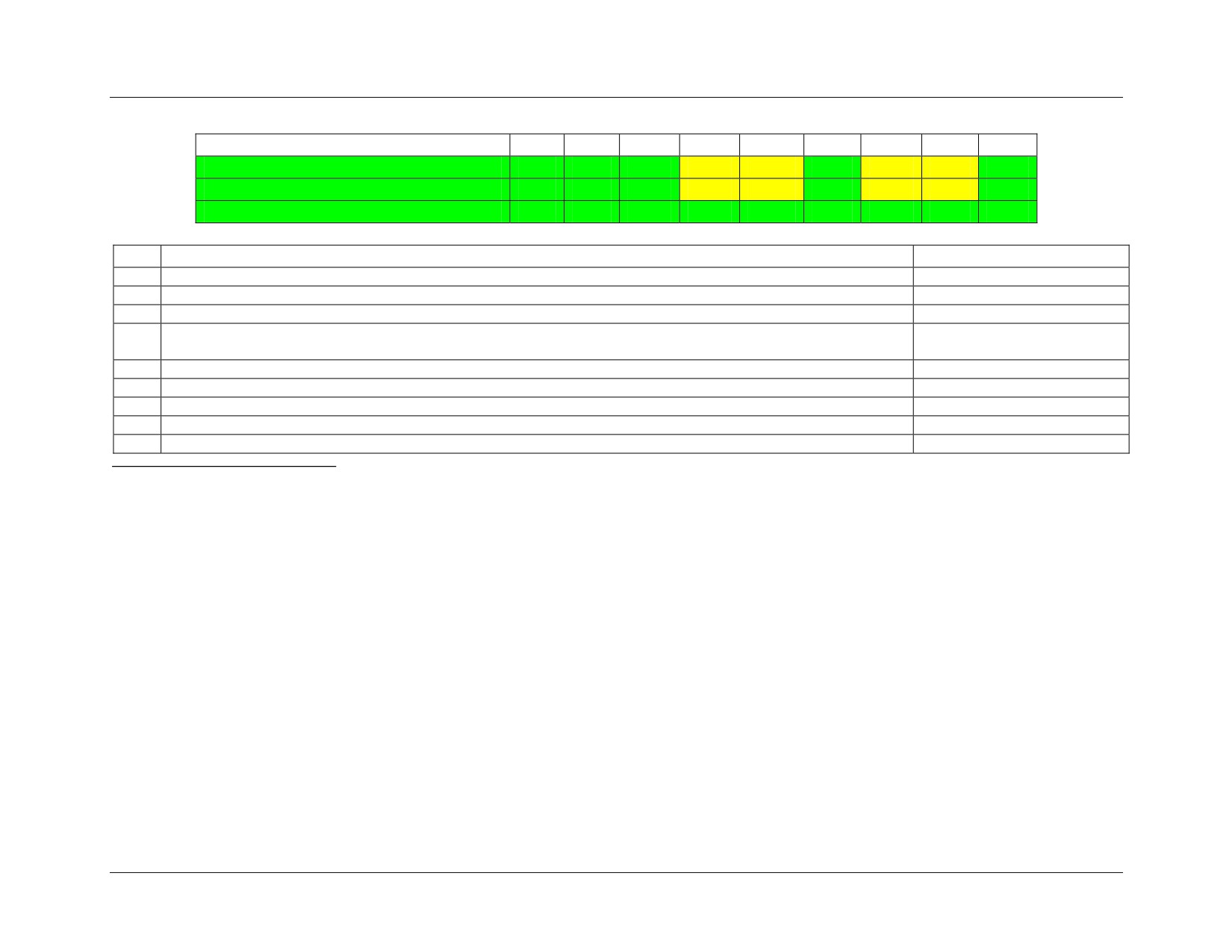
For Official Use Only
CBRN Functional Needs Analysis/Functional Solution Analysis
Chapter 8. Operational Shape Tasks
Table 8.7-1. OPSHA 7: Capability and Deficiency Assessment
Capability: Joint Force
M1
M2
M3
M4
M5
M6
M7
M8
M9
Current Overall Capability1
G2
G3
G4
Y5
Y6
G7
Y8
Y9
G10
Near/Mid-Term Overall Capability
G
G
G
Y
Y
G
Y
Y
G
Far-Term Overall Capability
G11
G
G
G
G12
G
G
G
G
FAA Measure
Scale
M1
Personnel are screened for deployment eligibility.
G - Yes, Y - Limited, R - No
M2
Medical records are assessed for medical indicators.
G - Yes, Y - Limited, R - No
M3
Standards for personnel health and fitness are effective for potential CBRN/TIM environments.
G - Yes, Y - Limited, R - No
Casualties (U.S., host nation, and third-country nationals), both human and MWA, restricted by medical/veterinary
G - Yes, Y - Limited, R - No
M4
isolation/quarantine are identified.
M5
System for tracking the status of CBRN medical information exists.
G - Yes, Y - Limited, R - No
M6
JOA medical threats are identified and appropriate counter-measures are instituted.
G - Yes, Y - Limited, R - No
M7
CBRND health risk assessment estimate is available.
G - Yes, Y - Limited, R - No
M8
Units potentially or actually exposed/contaminated by CBRN/TIM or ROTA events are identified and tracked.
G - Yes, Y - Limited, R - No
M9
Non-DoD sources are accessed for information.
G - Yes, Y - Limited, R - No
1 Limited. There are limited JTTPs to specifically address this task.
2 Yes. Personnel are screened before deployment.
3 Yes. Most joint force medical staffs can sufficiently assess records.
4 Yes. DoD-wide standards for general military personnel health and fitness are well documented and sustained, but medical linkage to health criteria for CBRN should be developed.
5 Limited. Most joint force medical/veterinary personnel are proficient at quarantine protocol. However, coordination across the joint services medical community (as well as host
nations/coalition partners) for identifying, screening, isolating, and quarantining infected personnel should be improved, including the use of automated disease outbreak tracking
systems. These systems should be fed into the J-2, CBRN, and preventive-medicine experts to provide population indicators of biological weapons use in AOR.
6 Limited. The capability to track chemical, biological, radiological, nuclear, and high-yield explosive medical information is only as good as the capability to track deployed
medical personnel information, which is a work in progress, but is far from being solved.
7 Yes. National medical assets can identify potential medical threats and institute limited medical countermeasures.
8 Limited. TIMs health risk assessment requires a broad analysis of chemical and toxic material production/storing capabilities in the area of operations. A database of global to
local TIM hazards does not currently exist. However, expertise can be made available to the joint force to conduct a health risk assessment based on regional hazards.
9 Limited. Most joint force staffs can track adequately those units actually or potentially exposed to CBRN/TIM. However, real-time/near-real-time understanding of the
geographical location of units on the battlefield, tied to automated plume prediction technology, is necessary.
10 Yes. Reachback capabilities exist for multiple medical need analyses.
11 In the far term, DOTMLPF enhancements across the board made possible by focused experimentation and lessons learned from exercises will improve all measures to a “green” rating.
12 When the Theater Medical Information Program and Common Hardware/Software II are deployed and other information systems are integrated with these systems, the “green” rating for
this measure will be justified.
39
For Official Use Only
For Official Use Only
CBRN Functional Needs Analysis/Functional Solution Analysis
Chapter 8. Operational Shape Tasks
8.7.3
Functional Solution Analysis
8.7.3.1
DOTLPF Assessment Summary
This section addresses the deficiencies and suggests potential non-materiel solutions. If there are
no non-materiel solutions, or they are only partial solutions, the remaining non-materiel need is
then stated. Materiel needs are assessed in the IMA section.
1. Deficiency: Coordination across the joint services medical community (as well as host
nations/coalition partners) for identifying, screening, isolating, and quarantining infected
personnel should be improved.
Non-Materiel Solutions: Doctrine: Doctrine and training on early identification for
nonstandard and novel chemical/biological threats needs to be implemented. Training:
Doctrine and training on early identification for nonstandard and novel chemical/biological
threats needs to be implemented.
2. Deficiency: A database of global to local TIM hazards does not currently exist.
Non-Materiel Solutions: None
3. Deficiency: Lack of real-time/near-real-time understanding of the geographical location of
units on the battlefield tied to automated plume prediction technology.
Non-Materiel Solutions: None
4. Deficiency: There is limited JTTPs to specifically address coordinating CBRND/TIM aspects
of JOA medical operations.
Non-Materiel Solutions: Doctrine: Improvement in environmental health and safety
training of deploying forces is needed. JTTPs for medical management of TIM casualties
needs to be improved, or some form of reachback capability needs to be implemented for
health care professionals to conduct adequate assessments, diagnoses, and treatment.
8.7.3.2
IMA Assessment Summary
Table 8.7-2. OPSHA 7: IMA Assessment
Idea for Materiel Approach
Description
Automated analytical tools
With fewer personnel available to perform casualty estimation
and COA generation and assessment, the JTF commander will
rely increasingly on automated tools.
Automated database
Development of an automated global database/software
program of CBRN/TIM hazards, or provide joint force
medical personnel reachback capability to national medical
and occupational safety and health databases.
Automated tool
Development of automated plume prediction technology tied
to real-time geospatial unit location is necessary.
40
For Official Use Only
For Official Use Only
CBRN Functional Needs Analysis/Functional Solution Analysis
Chapter 8. Operational Shape Tasks
8.8
Task OPSHA 8: Coordinate JTF/JOA CBRND operations
8.8.1
Functional Area Analysis
8.8.1.1
Definition
To provide overall coordination of JTF/JOA CBRND operations. Preparatory activities are
coordinated with affected joint forces, coalition partners, and appropriate nongovernmental and
indigenous organizations. JTF/JOA staffs collaboratively manage the preparation of joint and
coalition forces for CBRND operations within the battlespace. Data from assessments are used to
evaluate and determine CBRND requirements and status based on policy, plans, and
commander’s intent. Multiple CBRN/TIM events could occur in the same time frame throughout
the JOA. Rapid and effective response and mitigation coordination is required. CBRN/TIM event
information provided in the COP is used to formulate appropriate actions and taskings. Uses
planning and analysis tools to evaluate force responses to CBRN/TIM attacks against specific
sites, positions, maneuvers, and missions. Includes development of TTPs to ensure effective and
efficient execution of CBRND tasks. Provides sensor employment strategy. Includes
management of theater restoration and elimination operations.
8.8.1.2
Derivation
UJTL (OP 1.3.1, OP 1.6, OP 2.2.1, OP 2.2, OP 2.4.1.1, OP 2.4.1.2, OP 4.4.3, OP 4.4.5, OP 4.7,
OP 4.7.2, OP 4.7.8, OP 5.1.1, OP 5.1.2, OP 5.2, OP 5.2.1, OP 5.3, OP 5.3.2, OP-5.3.4, OP
5.3.6, OP-5.3.7, OP 5.3.9, OP 5.4, OP 5.4.2, OP 5.4.4, OP 5.4.5, OP 5.5.8, OP 5.7, OP 5.7.4,
OP 6.1.6, OP 6.2.1, OP 6.1.6, OP 6.2.10, OP 7, OP 7.1, OP 7.2, OP 7.3, OP 7.4), Joint Enabling
Concept for CBRN Operations, Protection Joint Functional Concept, Military Transformation: A
Strategic Approach, Transformation Planning Guidance.
8.8.1.2.1
Supported Task: STSHA 8
8.8.1.2.2
Lateral Tasks: OPSHA 3, OPSHA 6, OPSHLD 2, OPSUST 9, OPSUST 11,
OPSUST 12, OPSUST 13
8.8.1.2.3
Supporting Tasks: TASHA 9, TASHA 11, TASHA 18, TASHA 19, TASHA 24
8.8.1.3
Condition
Perform this task under conditions of:
Physical
1. Immediate, delayed, or potential long-term atmospheric weapons effects. (C1.3.3)
Military
1. No preexisting arrangements. (C2.1.1.2)
2. No or outline mission preparation. (C2.1.3)
41
For Official Use Only
For Official Use Only
CBRN Functional Needs Analysis/Functional Solution Analysis
Chapter 8. Operational Shape Tasks
3. Few modern military systems. (C2.2.5)
4. Few modern military simulation systems. (C2.2.5.5)
5. Poor joint staff integration. (C2.3.1.1)
6. Partial muntinational integration. (C2.3.1.2)
7. Limited staff expertise. (C2.3.1.3)
8. Negligible deployed supplies. (C2.8.2)
Civil
1. Uncooperative interdepartmental/interagency relationships. (C3.1.1.3)
2. Negative foreign government support. (C3.1.2.3)
3. Uncertain international organization support. (C3.1.2.5)
4. Restrictive Presidential and/or Secretary of Defense decisions. (C3.1.3)
8.8.2
Functional Needs Analysis
8.8.2.1
Capability and Deficiency Assessment Summary
Table 8.8-1 discusses the capability that currently exists to perform the task to the designated
standards. There is only one capability that exists, and no other capability is projected that will
accomplish this task.
Current Capability and Deficiency
Any joint force has the ability to determine the requirements of units and personnel to support
CBRND operations; source those requirements through time-phased force and deployment data
(TPFDD) adjustment; determine the requirement of CBRND systems and equipment to support
CBRND operations; coordinate CBRND operations, including transport, logistics,
communications, and CBRND unit employment considerations; and follow doctrine and TTPs.
There are deficiencies in all current measures that result in a capability rating of “yellow.”
Projected Near/Mid-Term Capability and Deficiency
No other capability is currently projected for the near/mid term. No capability improvement is
forecast for the near/mid term.
Projected Far-Term Capability and Deficiency
No other capability is currently projected for the far-term future. In the far term, DOTMLPF
enhancements across the board made possible by focused experimentation and lessons learned
from exercises will improve all measures to a “green” rating.
42
For Official Use Only
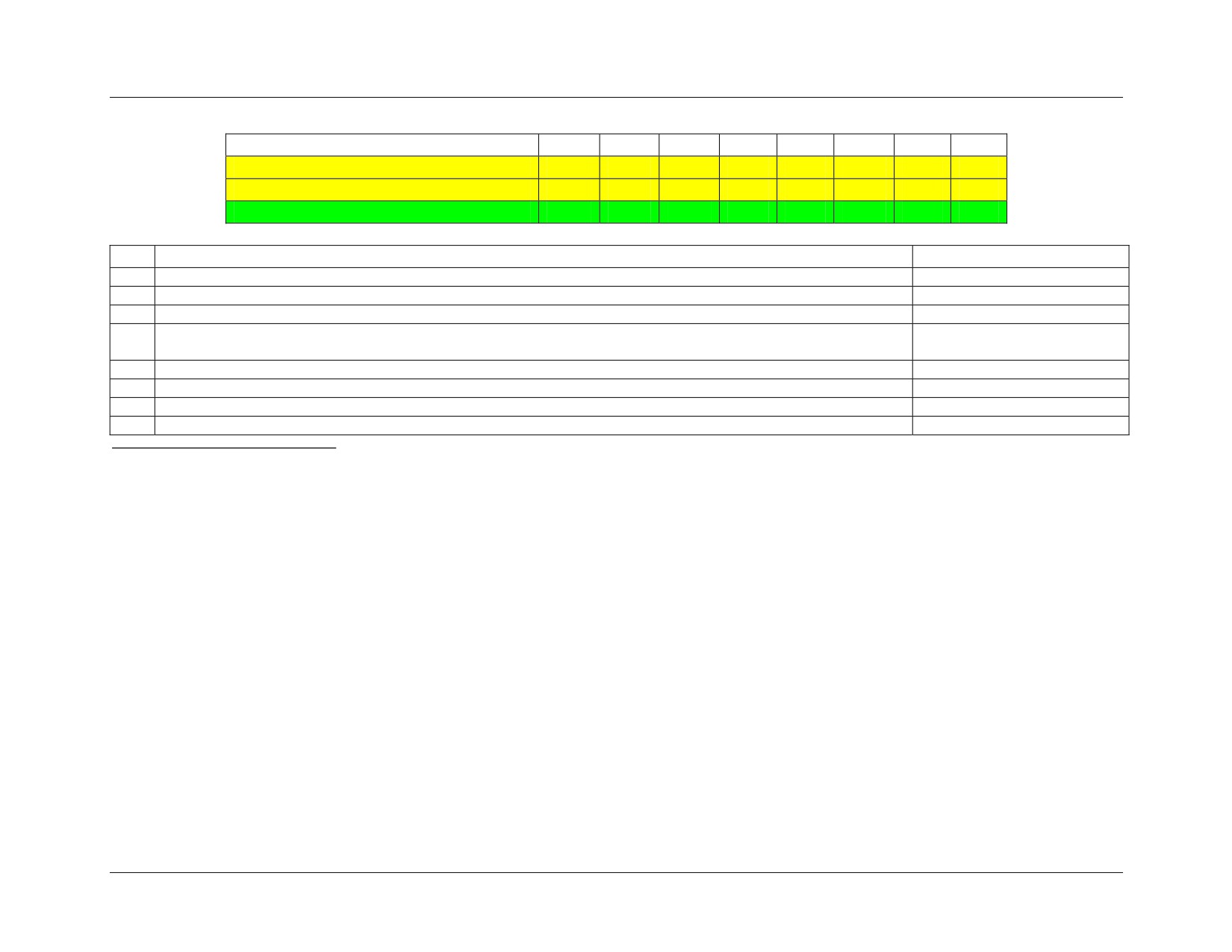
For Official Use Only
CBRN Functional Needs Analysis/Functional Solution Analysis
Chapter 8. Operational Shape Tasks
Table 8.8-1. OPSHA 8: Capability and Deficiency Assessment
Capability: Joint Force
M1
M2
M3
M4
M5
M6
M7
M8
Current Overall Capability1
Y2
Y3
Y4
Y5
Y6
Y7
Y8
Y9
Near/Mid-Term Overall Capability
Y
Y
Y
Y
Y
Y
Y
Y
Far-Term Overall Capability
G10
G
G
G
G
G
G
G
FAA Measure
Scale
M1
Required CBRND units and personnel are available.
G - Yes, Y - Limited, R - No
M2
Required CBRND systems and equipment are available.
G - Yes, Y - Limited, R - No
M3
All pertinent Sense, Shape, Shield, and Sustain information is considered.
G - Yes, Y - Limited, R - No
Coordination of CBRND operations includes transport, logistics, communications, and CBRND unit employment
G - Yes, Y - Limited, R - No
M4
considerations.
M5
Doctrine and TTPs for JOA CBRND coordination are available.
G - Yes, Y - Limited, R - No
M6
JTF/JOA staffs are adequately trained to effectively coordinate CBRND operations.
G - Yes, Y - Limited, R - No
M7
JTF/JOA exercises or experimentation provide feedback on efficacy of coordination of JOA CBRND operations.
G - Yes, Y - Limited, R - No
M8
Exercise comments are incorporated into coordinated doctrine and TTPs.
G - Yes, Y - Limited, R - No
1 Limited. Doctrine is based on theoretical rather than practical experience.
2 Limited. joint force has the ability to determine the requirements of units and personnel to support CBRN operations. Sourcing those requirements is a TPFDD issue and is
adjusted based on capability needs. The CBRN staff provides input, but does not develop the TPFDD.
3 Limited. joint force has the ability to determine the requirement of CBRN systems and equipment to support CBRN operations. Availability of required CBRND systems and
equipment is a logistics issue and must be tracked from depot to end user. This tracking is a materiel management issue requiring designation and highlighting reportable end
items, durable, and expendable items that are critical for sourcing a CBRND capability. Asset visibility within DoD normally is limited to end items and some durables. A system
to track all CBRND-specific materiel may be required.
4 Limited. joint force has the ability to address all pertinent Sense, Shape, Shield, and Sustain issues, but until UJTL 5.0 takes effect, the Sense, Shape, Shield, Sustain domains
may not be recognized by the joint force.
5 Limited. joint force has the ability to coordinate CBRND operations. This coordination includes transport, logistics, communications, and CBRND unit employment
considerations, but planning factors for logistics and transportation may not support real-world requirements following a CBRN event. Therefore, the three capabilities listed in
the capabilities statement are sequential.
6 Limited. joint force has the ability to follow doctrine and TTPs for JOA CBRND coordination. There are limited joint exercises/experiments that address CBRN coordination
within a JOA. Limited exercises produce few lessons learned. Few lessons learned result in incomplete or hypothetical doctrine and TTPs.
7 Limited. Staff who maintain CBRND specializations can assist in planning and executing CBRND operations. However, these specialists are limited in number and depth.
8 Limited. Joint exercises/ experiments are limited in number and scope. Feedback from these CBRND exercises/experiments are limited to the data have been captured. Without
an effective data capture instrument, efficacy of JOA CBRND operations coordination is questionable.
9 Limited. Comments incorporated into doctrine and TTPs are restricted to those which have been captured and entered into JULLS.
10 In the far term, DOTMLPF enhancements across the board made possible by focused experimentation and lessons learned from exercises will improve all measures to a
“green” rating.
43
For Official Use Only
For Official Use Only
CBRN Functional Needs Analysis/Functional Solution Analysis
Chapter 8. Operational Shape Tasks
8.8.3
Functional Solution Analysis
8.8.3.1
DOTLPF Assessment Summary
This section addresses the deficiencies and suggests potential non-materiel solutions. If there are
no non-materiel solutions, or they are only partial solutions, the remaining non-materiel need is
then stated. Materiel needs are assessed in the IMA section.
1.
Deficiency: The CBRN Staff provides input but does not develop the TPFDD.
Non-Materiel Solutions: Doctrine: Develop criteria for TPFDD planning considerations
that include CBRN requirements and needs.
2.
Deficiency: A system to track all CBRND systems and equipment may be required.
Non-Materiel Solutions: Doctrine: Develop a system or method to track all CBRND
systems equipment.
3.
Deficiency: Until UJTL 5.0 takes effect, the Sense, Shape, Shield, Sustain domains may not
be recognized by the joint force.
Non-Materiel Solutions: Doctrine: Develop CBRN doctrine, TTPs, and planning factors
resulting from lessons gleaned from joint exercises/experiment covering the action required
under the operational elements of Sense, Shape, Shield, and Sustain. Organization: Review
force structure. Within end strength constraints, consider adjusting force structure as a result
of lessons learned from joint exercises/experiments. Training: Develop training support
packages that incorporate lessons learned from joint exercises/experiments. Leadership:
Develop leadership education and JPME course(s) that incorporate lessons learned from joint
exercises/experiments.
4.
Deficiency: Planning factors for logistics and transportation may not support real-world
requirements following a CBRN event.
Non-Materiel Solutions: Doctrine: Review available data and lessons learned from
historical, wide-area events to validate logistical planning factors. Such events could include
natural disasters, large TIM releases, terrorist activity, and testing historically conducted by
the United States and the former Soviet Union.
5.
Deficiency: Limited exercises produce few lessons learned. Few lessons learned result in
incomplete or hypothetical doctrine and TTPs.
Non-Materiel Solutions: Doctrine: Develop a JMSEL for joint exercises/experiments that
address coordination of CBRND operations within a JOA. Training: Develop training for
joint exercises/experiments that address coordination of CBRND operations within a JOA.
6.
Deficiency: These specialists are limited in number, and depth.
Non-Materiel Solutions: Doctrine: Develop JMSEL for joint exercises/experiments that
address coordination of CBRND operations within a JOA. Training: Develop training for
joint exercises/experiments that address coordination of CBRND operations within a JOA.
44
For Official Use Only
For Official Use Only
CBRN Functional Needs Analysis/Functional Solution Analysis
Chapter 8. Operational Shape Tasks
7. Deficiency: Joint exercises/experiments are limited in number and scope. Feedback from
these CBRND exercises/experiments is limited to the data have been captured. Without an
effective data capture instrument, efficacy of JOA CBRND operations coordination is
questionable.
Non-Materiel Solutions: Doctrine: Develop guidance and JTTPs that address capture of
CBRND lessons learned from exercises. Training: Develop framework for capturing
CBRND lessons learned in exercises.
8. Deficiency: Doctrine for CBRND operations to the extent practical is based on actual
experience. However, much CBRND doctrine is predicated on theoretical modeling and
simulation.
Non-Materiel Solutions: Doctrine: Actively pursue a joint lessons learned program that
captures CBRND lessons from exercises/experiments and real-world events. Incorporate all
lessons into JULLS. Training: Actively pursue a joint lessons learned program that captures
CBRND lessons from exercises/experiments and real-world events. Incorporate all lessons
into JULLS.
8.8.3.2
IMA Assessment Summary
N/A
45
For Official Use Only
For Official Use Only
CBRN Functional Needs Analysis/Functional Solution Analysis
Chapter 8. Operational Shape Tasks
8.9
Task OPSHA 9: Provide Shape country assistance teams to support TEP
8.9.1
Functional Area Analysis
8.9.1.1
Definition
To provide Shape country assistance teams to support the Theater Engagement Plan (TEP) that
has been provided by the combatant commander. Many nations that would normally support U.S.
initiatives may feel threatened by hostile neighbors or nations that possess CBRN/TIM weapons.
The TEPs for Shape considerations are executed by special teams and units that demonstrate
Shape capability or provide Shape-related training to selected countries.
8.9.1.2
Derivation
UJTL (OP 7.3, OP 4.7.1, ST 8.1.2), CJCSM 3113.01a.
8.9.1.2.1
Supported Task: STSHA 9
8.9.1.2.2
Lateral Tasks: OPSENS 8, OPSHA 6, OPSUST 7
8.9.1.2.3
Supporting Task: N/A
8.9.1.3
Condition
Perform this task under conditions of:
Physical. NA
Military
1. No preexisting arrangements. (C2.1.1.2)
2. Negligible personnel expertise. (C2.2.4.5)
Civil
1. Mixed support for political policies. (C3.1)
2. Limited foreign government support. (C3.1.2.3)
8.9.2
Functional Needs Analysis
8.9.2.1
Capability and Deficiency Assessment Summary
Table 8.9-1 discusses the only capability that currently exists to perform the task to the
designated standard. There is only one capability that exists, and no other capability is projected
that will accomplish this task.
46
For Official Use Only
For Official Use Only
CBRN Functional Needs Analysis/Functional Solution Analysis
Chapter 8. Operational Shape Tasks
Current Capability and Deficiency
Any JTF HQ has a team of operational planners and information command and control
specialists. This team of experts has the skill to provide Shape country assistance teams to
support the TEP, but there are some deficiencies that negatively impact on their ability to do so,
resulting in a current capability assessment of “red.”
Projected Near/Mid-Term Capability and Deficiency
No other capability is currently projected for the near/mid term. Little capability improvement is
forecast for the near/mid term with the exception that DOTMLPF should improve in all deficient
areas as a result of initiatives that use data resulting from focused experimentation. The overall
capability will remain “red” in the near/mid term.
Projected Far-Term Capability and Deficiency
No other capability is currently projected for the far-term future. Several projected initiatives will
raise the far-term projection of the JTF capability to “green.” Steps will be taken to establish and
equip country assistance teams. JTTPs that addresses a Shape country assistance team support to
TEP will be developed. Restoration exercises and experiments focused on Shape country
assistance teams will be conducted. Continued DOTMLPF enhancements will result from
exercise and wargame lessons learned.
47
For Official Use Only

For Official Use Only
CBRN Functional Needs Analysis/Functional Solution Analysis
Chapter 8. Operational Shape Tasks
Table 8.9-1. OPSHA 9: Capability and Deficiency Assessment
Capability: Operational-Level HQ
M1
M2
M3
M4
Current Overall Capability1
R2
G3
R4
Y5
Near/Mid-Term Overall Capability6
R
G
R
Y
Far-Term Overall Capability7
G8
G
G9
G10
FAA Measure
Scale
M1
Shape country assistance teams are properly manned, trained, and
G - Yes, Y - Limited, R - No
equipped.
M2
Valid requests for Shape security assistance are met.
G - Yes, Y - Limited, R - No
M3
Procedures and checklists are developed to facilitate the ability to provide
G - Yes, Y - Limited, R - No
Shape country assistance teams to support TEPs.
M4
Joint exercises provide feedback on Shape country assistance teams.
G - Yes, Y - Limited, R - No
1 No specific doctrine has been developed.
The linkage of Shape and Shape country assistance teams is not integrated into leader education. This task is not a standard part
of training.
2 No. While any joint force staff can train and equip a country assistance team, none have ever been established. There has been
no training or equipment developed that specifically addresses the training and equipment requirements for a Shape country
assistance team.
3 Yes. Any joint force staff can process and honor requests for a country assistance team. There is currently no experience base,
however.
4 No. Any joint force staff can develop procedures and checklist for a country assistance team, but there are no TTPs that
addresses a Shape country assistance team support to TEPs.
5 Limited. Few if any restoration exercises or experiments focused on Shape country assistance teams have been conducted.
6 DOTMLPF should improve in all deficient areas as a result of initiatives that use data resulting from focused experimentation.
7 Continued DOTMLPF enhancements will result from exercise and wargame lessons learned.
8 Steps will be taken to establish and equip country assistance teams.
9 JTTPs that addresses a Shape country assistance team support to TEPs will be developed.
10 Restoration exercises and experiments focused on Shape country assistance teams will be conducted.
48
For Official Use Only
For Official Use Only
CBRN Functional Needs Analysis/Functional Solution Analysis
Chapter 8. Operational Shape Tasks
8.9.3
Functional Solution Analysis
8.9.3.1
DOTLPF Assessment Summary
This section addresses the deficiencies and suggests potential non-materiel solutions. If there are
no non-materiel solutions, or they are only partial solutions, the remaining non-materiel need is
then stated. Materiel needs are assessed in the IMA section.
1.
Deficiency: Shape country assistance teams requirements not defined.
Non-Materiel Solutions: Doctrine: No one has developed an operational concept for Shape
country assistance teams, and specific guidance (technical or procedural) on how to approach
this task has not been provided. Develop TTPs, organizational structure, training, leadership
education, and equipment for Shape country assistance teams to support TEPs.
2.
Deficiency: Prototype country assistance teams not organized.
Non-Materiel Solutions: Organization: Develop organizational table of distribution and
allowances for Shape country assistance teams to support TEPs.
3.
Deficiency: Training not adequate.
Non-Materiel Solutions: Training: Develop training for Shape country assistance teams to
support TEPs.
4.
Deficiency: Leader education inadequate.
Non-Materiel Solutions: Deficiency: Leadership: Develop JPME classes for Shape country
assistance teams to support TEPs.
5.
Deficiency: Joint exercises need to incorporate and provide feedback on Shape operation
country assistance teams.
Non-Materiel Solutions: Training: Develop and refine Shape exercises for a JTF that will
provide feedback on efficacy of Shape country assistance teams. Incorporate lessons learned
from into future exercises and TTPs.
8.9.3.2
IMA Assessment Summary
N/A
49
For Official Use Only
For Official Use Only
CBRN Functional Needs Analysis/Functional Solution Analysis
Chapter 8. Operational Shape Tasks
8.10 Task OPSHA 10: Provide JOA CBRN/TIM weapons information to the combatant
commander
8.10.1
Functional Area Analysis
8.10.1.1
Definition
To obtain information and data from all sources that provide information about the CBRN/TIM
weapons situation in the JOA. These data are provided to the combatant commander.
8.10.1.2
Derivation
UJTL (OP 7.5, OP 2.2.2).
8.10.1.2.1
Supported Task: STSHA 1
8.10.1.2.2
Lateral Tasks: OPSHA 2, OPSUST 1, OPSUST 2
8.10.1.2.3
Supporting Task: TASHA 25
8.10.1.3
Condition
Perform this task under conditions of:
Physical. N/A
Military
1. Negligible intelligence database. (C2.4.2)
2. Negligible theater intelligence access. (C2.4.2)
3. Conventional and terrorist threat form. (C2.9.2)
Civil
1. Negative foreign government support. (C3.1.2.3)
2. Aggressively opposed foreign public opinion. (C3.1.2.4)
8.10.2
Functional Needs Analysis
8.10.2.1
Capability and Deficiency Assessment Summary
Table 8.10-1 discusses a capability that currently exists to perform the task to the designated
standard. There is only one capability that exists, and no other capability is projected that will
accomplish this task.
50
For Official Use Only
For Official Use Only
CBRN Functional Needs Analysis/Functional Solution Analysis
Chapter 8. Operational Shape Tasks
Current Capability and Deficiency
The organizational structure of a subordinate joint force’s intelligence element is determined by
the JFC based on the situation and mission. All subordinate joint force J-2s, however, will at a
minimum require a core element of analytical and administrative capabilities. Most situations
will require augmentation of joint force intelligence capabilities through the deployment and
integration of theater intelligence elements into a joint intelligence support element with a
Terrorism/CBRN Analysis cell. Capabilities of the JISE include order-of-battle analysis;
identification of adversary CBRN weapons systems; analysis of adversary command, control,
communications, and computers; targeting support; collection management; and maintenance of
a 24-hour watch. The ability of the JISE to perform this task is dependent on the completeness
and accuracy of the Sense data that provide situational awareness of the CBRN/TIM weapons
situation in the JOA. The ability of the JISE to shape these data into JOA CBRN/TIM weapon
situational understanding for the combatant commander is hampered by this dependence on
Sense input and by lack of doctrine and TTPs, resulting in an overall current assessment of
“yellow.”
Projected Near/Mid-Term Capability and Deficiency
No other capability is currently projected for the near/mid term. Little capability improvement is
forecast for the near/mid term except that DOTLMPF should improve in all deficient areas as a
result of initiatives that use data resulting from focused experimentation.
Projected Far-Term Capability and Deficiency
No other capability is currently projected for the far-term future. In the far term, the success of
intelligence initiatives and DOTLMPF enhancements across the board made possible by focused
experimentation and lessons learned from exercises will improve all measures to a “green”
rating.
51
For Official Use Only

For Official Use Only
CBRN Functional Needs Analysis/Functional Solution Analysis
Chapter 8. Operational Shape Tasks
Table 8.10-1. OPSHA 10: Capability and Deficiency Assessment
Capability: JISE
M1
M2
M3
M4
Current Overall Capability1
Y2
Y3
Y4
Y5
Near/Mid-Term Overall Capability6
Y
Y
Y
Y
Far-Term Overall Capability
G7
G
G
G8
FAA Measure
Scale
M1
CBRN/TIM weapon capabilities in JOA are detected and identified.
G - Yes, Y - Limited, R - No
M2
Intelligence on enemy CBRN/TIM weapon systems is accurate.
G - Yes, Y - Limited, R - No
M3
CBRN/TIM weapons information is provided to the combatant
G - Yes, Y - Limited, R - No
commander.
M4
Fidelity of information on CBRN/TIM agents and delivery means is
G - Yes, Y - Limited, R - No
assured.
1 This task is not integrated into experimentation and exercises. Red teaming is not adequately employed to expose
methodologies and assessments to scrutiny and alternate analysis.
2 The JISE has a dedicated Terrorism/CBRN Analysis cell but is dependent on the completeness and thoroughness of the CBRN
and intelligence and exploitation data it receives.
3 The JISE has a dedicated Terrorism/CBRN Analysis cell but is dependent on the accuracy of the intelligence and exploitation
data it receives.
4 Nothing precludes providing CBRN weapons information to the combatant commander. Proper techniques for setting forth the
JISE’s findings in such a way as to make clear to the combatant commander what is certain knowledge and what is reasoned
judgment (and within the realm of the judgments what varying degrees of certitude lie behind each key assessment) are not
available.
5 In the event of terrorist possession of or use of CBRN, it may be difficult or impossible to have absolute assurance about
fidelity of information concerning weapons systems or the attack. In the case of a biological attack or attacks involving TIM, it
may be difficult to determine whether it is a natural disease outbreak or an accident. In the event of use not involving U.S.
forces or allies, it may be difficult to assess fidelity of required information due to information access constraints. Techniques
and procedures to facilitate this fidelity assurance process when it involves terrorists or non-U.S. allies and to detect or identify
attacks may not be adequate. Methods and procedures for accurately reporting CBRN attacks against U.S. forces are mature and
effective, but methods and procedures for accurately reporting third-party, terrorist, and TIM attacks may not be adequate.
6 DOTLMPF should improve in all deficient areas as a result of initiatives that use data resulting from focused experimentation.
7 In the far term, the success of intelligence initiatives and DOTLMPF enhancements across the board made possible by focused
experimentation and lessons learned from exercises will improve all measures to a “green” rating.
8 In the far term, the success of intelligence and international cooperation initiatives and DOTLMPF enhancements across the
board made possible by focused experimentation and lessons learned from operations/exercises should improve CBRN/TIM
agent and delivery means information fidelity assurance to a “green” rating.
52
For Official Use Only
For Official Use Only
CBRN Functional Needs Analysis/Functional Solution Analysis
Chapter 8. Operational Shape Tasks
8.10.3
Functional Solution Analysis
8.10.3.1
DOTLPF Assessment Summary
This section addresses the deficiencies and suggests potential non-materiel solutions. If there are
no non-materiel solutions, or they are only partial solutions, the remaining non-materiel need is
then stated. Materiel needs are assessed in the IMA section.
1.
Deficiency: The JISE Terrorism/CBRN Analysis cell is dependent on the completeness and
thoroughness of the CBRN intelligence and exploitation data it receives.
Non-Materiel Solutions: Organization: Ensure that intelligence and collection and
exploitation organizations are staffed and equipped to enable them to provide the most
complete and thorough CBRN/TIM weapon intelligence data possible.
2.
Deficiency: The JISE Terrorism/CBRN Analysis cell is dependent on the accuracy of the
intelligence and exploitation data it receives.
Non-Materiel Solutions: Organization: Ensure that intelligence and collection and
exploitation organizations are staffed and equipped to enable them to provide the most
accurate CBRN/TIM weapon intelligence data possible.
3.
Deficiency: Proper techniques for setting forth the JISE’s key CBRN/TIM weapons findings
in such a way as to make clear to the combatant commander what is certain knowledge and
what is reasoned judgment (and within the realm of the judgments what varying degrees of
certitude lie behind each key CBRN/TIM weapons assessment) are not available.
Non-Materiel Solutions: Doctrine: Develop comprehensive methodologies and techniques
for setting forth the JISE’s key CBRN/TIM weapons findings in such a way as to make clear
to the combatant commander what is certain knowledge and what is reasoned judgment (and
within the realm of the judgments what varying degrees of certitude lie behind each key
CBRN/TIM weapons assessment). Training: Ensure that rigorous training is developed to
test the techniques for setting forth the JISE’s key CBRN/TIM weapons findings.
4.
Deficiency: This task is not integrated into experimentation and exercises.
Non-Materiel Solutions: Training: Ensure that this task is incorporated into experimentation
so that concepts can be tested and improved. Integrate lessons learned into exercises and
TTPs.
5.
Deficiency: Red teaming is not adequately employed to expose methodologies and
assessments to scrutiny and alternate analysis.
Non-Materiel Solutions: Organization: Employ red teaming to test the Shape capabilities to
provide situational understanding about CBRN weapons systems to the combatant
commander.
6.
Deficiency: This task is not integrated into JPME
Non-Materiel Solutions: Leadership: Develop JPME courses that address JISE functions of
CBRN/TIM threat analysis and integrate into all intelligence and CBRN education systems.
53
For Official Use Only
For Official Use Only
CBRN Functional Needs Analysis/Functional Solution Analysis
Chapter 8. Operational Shape Tasks
8.10.3.2
IMA Assessment Summary
N/A
54
For Official Use Only
For Official Use Only
CBRN Functional Needs Analysis/Functional Solution Analysis
Chapter 8. Operational Shape Tasks
8.11 Task OPSHA 11: Establish JOA cooperative CBRN/TIM detection policies,
procedures, and networks
8.11.1
Functional Area Analysis
8.11.1.1
Definition
To link JOA active systems (e.g., Space and Air Defense Radar) with passive detectors (such as
BIDS) to produce a JOA cooperative CBRN/TIM detection network. Builds a seamless web
from the JTF capabilities down to individual tactical detectors within the JOA battlespace to
provide a means of detecting both delivery vehicles and agents.
8.11.1.2
Derivation
UJTL (OP 7.5, OP 2.2.2).
8.11.1.2.1
Supported Task: STSHA 10
8.11.1.2.2
Lateral Task: OPSHA 6
8.11.1.2.3
Supporting Tasks: TASHA 26, TASHA 27
8.11.1.3
Condition
Perform this task under conditions of:
Physical. N/A
Military
1. Partial preexisting arrangements. (C2.1.1.2)
Civil
1. Limited foreign government support. (C3.1.2.3)
2. Moderately opposed foreign public opinion. (C3.1.2.4)
8.11.2
Functional Needs Analysis
8.11.2.1
Capability and Deficiency Assessment Summary
Table 8.11-1 discusses the only capability that will be able to accomplish some of the standards
that are listed in the task. There is only one capability that exists, and no other capability is
projected that will accomplish this task.
55
For Official Use Only
For Official Use Only
CBRN Functional Needs Analysis/Functional Solution Analysis
Chapter 8. Operational Shape Tasks
Current Capability and Deficiency
While any operational-level staff can develop policies and procedures specific and unique to its
operational circumstances, this task asks much more. This task is not normally a function of an
operational commander, and we recommend that the word “network” be removed until actual
networked capabilities are fielded. This capability must be developed and facilitated by strategic
national assets and passed to the field commander as a vetted operational capability package. The
current assessment is “red” based on the fact that cooperative linkages between various systems
capabilities, although proposed, have not yet been coordinated.
Projected Near/Mid-Term Capability and Deficiency
No other capability is currently projected for the near/mid term. No capability improvement is
forecast for the near/mid term.
Projected Far-Term Capability and Deficiency
No other capability is currently projected for the far-term future. The far-term forecast is for
improvement to “yellow.” A joint force has the ability to establish CBRN/TIM detection policies
within the JOA. As cooperative linkages between various systems capabilities are coordinated
and established between various detection technologies (e.g., BIDS, phased-array radars,
standoff motion detectors, passive monitors, vehicular-embedded detectors with Global
Positioning System [GPS] linkages and automatic position reporting, individual detectors
networked to centralized data servers, etc.), JOA cooperative CBRN/TIM detection policies,
procedures, and networks will be established in limited fashion. All supporting and required
DOTMLPF enhancements will be initiated, but it will take years of experimentation and
exercises before full capability is realized.
56
For Official Use Only

For Official Use Only
CBRN Functional Needs Analysis/Functional Solution Analysis
Chapter 8. Operational Shape Tasks
Table 8.11-1. OPSHA 11: Capability and Deficiency Assessment
Capability: Joint Force
M1
M2
M3
M4
M5
M6
Current Overall Capability1
R2
R3
R4
R5
G6
R7
Near/Mid-Term Overall Capability
R
R
R
R
G
R
Far-Term Overall Capability
Y8
Y
Y
Y
G
Y
FAA Measure
Scale
M1
JOA cooperative CBRN/TIM detection policy is established.
G - Yes, Y - Limited, R - No
M2
JOA cooperative CBRN/TIM detection procedures are established.
G - Yes, Y - Limited, R - No
M3
JOA cooperative CBRN/TIM detection networks are established.
G - Yes, Y - Limited, R - No
M4
Policies and procedures have been established with component
G - Yes, Y - Limited, R - No
commands.
M5
Existing policies and procedures are updated regularly.
G - Yes, Y - Limited, R - No
M6
Joint exercises/experimentation provide feedback on efficacy of
G - Yes, Y - Limited, R - No
policies and procedures.
1 Limited. Conceivably, any joint force could incorporate cooperatively linked detection technologies; however, the capability
does not currently exist, therefore, effective DOTMLPF is irrelevant.
2 A joint force has the ability to establish CBRN/TIM detection policies within the JOA. However, cooperative linkages between
various systems capabilities, although proposed, have not yet been coordinated. Since no linkages currently exist between various
detection technologies (e.g., BIDS, phased-array radars, standoff motion detectors, passive monitors, vehicular-embedded
detectors with GPS linkages and automatic position reporting, individual detectors networked to centralized data servers, etc.), no
JOA cooperative CBRN/TIM detection policies are required.
3 Any joint force CBRN cell has the ability to establish CBRN/TIM detection procedures within the JOA. However, distributed,
cooperative CBRN/TIM detection capabilities do not currently exist, and JOA cooperative CBRN detection procedures are not
established.
4 Any joint force communications cell has the ability to establish networks within the JOA. However, cooperative linkages
between various system capabilities do not currently exist; therefore, cooperative CBRN/TIM detection networks need not be
established.
5 Any joint force has the ability to establish policies and procedures. However, cooperative linkages between various system
capabilities do not exist currently; therefore, policies and procedures need not be established.
6 Any joint force has the ability to update policies and procedures regularly.
7 Since the capability to establish cooperative linkages between various detection technologies does not currently exist, exercises
and experiments to provide feedback are not yet necessary.
8 A joint force has the ability to establish CBRN/TIM detection policies within the JOA. As cooperative linkages between various
systems capabilities are coordinated and established between various detection technologies (e.g., BIDS, phased-array radars,
standoff motion detectors, passive monitors, vehicular-embedded detectors with GPS linkages and automatic position reporting,
individual detectors networked to centralized data servers, etc.), JOA cooperative CBRN/TIM detection policies, procedures, and
networks will be established in limited fashion. All supporting and required DOTMLPF enhancements will be initiated, but it will
take years of experimentation and exercises before full capability is realized.
57
For Official Use Only
For Official Use Only
CBRN Functional Needs Analysis/Functional Solution Analysis
Chapter 8. Operational Shape Tasks
8.11.3
Functional Solution Analysis
8.11.3.1
DOTLPF Assessment Summary
This section addresses the deficiencies and suggests potential non-materiel solutions. If there are
no non-materiel solutions, or they are only partial solutions, the remaining non-materiel need is
then stated. Materiel needs are assessed in the IMA section.
1.
Deficiency: Lack of CBRN/TIM detection network capabilities.
Non-Materiel Solutions: None
2.
Deficiency: Since the capability to establish cooperative linkages between various detection
technologies does not currently exist, proposals and concepts must be tested in exercises and
experiments to provide feedback and test hypotheses.
Non-Materiel Solutions: Doctrine: Develop ideas, proposals, and concepts for
cooperatively linked detection technologies. Training: Before concepts for cooperatively
linked detection technologies can be fully developed and tested, exercises and experiments
will be necessary to refine and test concept hypotheses.
3.
Deficiency: The capability of cooperatively linked detection technologies does not currently
exist; therefore, effective DOTMLPF has not been established.
Non-Materiel Solutions: Doctrine: Before cooperatively linked detection technologies reach
IOC, effective doctrine and JTTPs should be developed. Organization: Before cooperatively
linked detection technologies reach IOC, organizational requirements and changes should be
developed and executed. Training: Before cooperatively linked detection technologies reach
IOC, effective training for operational-level staffs should be developed. Leadership: Before
cooperatively linked detection technologies reach IOC, leader education should be developed
and integrated into the Joint Forces Staff College. Personnel: Before cooperatively linked
detection technologies reach IOC, personnel requirements need to be identified. Facilities:
Before cooperatively linked detection technologies reach IOC, facility needs must be
identified.
8.11.3.2
IMA Assessment Summary
Table 8.11-2 shows possible materiel approaches that address the remaining materiel
requirements of the DOTMLPF assessment.
58
For Official Use Only
For Official Use Only
CBRN Functional Needs Analysis/Functional Solution Analysis
Chapter 8. Operational Shape Tasks
Table 8.11-2. OPSHA 11: IMA Assessment
Idea for Materiel Approach
Description
Networked detection system.
Development of cooperative linkages between various
proponent and service detection and sensing technologies is
required. Concepts must first be developed based on proposed
linkages that will provide effective, integrated CBRN/TIM
detection capabilities. These concepts must be explored
through experimentation and then cooperative linkages
established and tested. The entire package should be developed
as a system. As each Service develops detection or sensing
technologies, they should be analyzed for inclusion into the
CBRN/TIM cooperative detection network and modifications
(if required) be mandated for the Service systems.
59
For Official Use Only
For Official Use Only
CBRN Functional Needs Analysis/Functional Solution Analysis
Chapter 8. Operational Shape Tasks
8.12 Task OPSHA 12: Determine operational effects and impacts due to CBRN/TIM
hazards
8.12.1
Functional Area Analysis
8.12.1.1
Definition
To determine operational effects and impacts due to CBRN/TIM hazards on the JTF or any joint
forces in the JOA from a standpoint of operational implications. Uses shared awareness and
shared understanding of the characterized JOA CBRN/TIM threat and situation for determination
of operational effects and impacts. Provides for input into COA analysis. Allows military leaders
to develop a clear understanding of the current and predicted CBRN/TIM situation’s impact on
JOA operations in near-real time.
8.12.1.2
Derivation
UJTL (OP 2.2, OP 2.2.1, OP 2.5, OP 2.4.1, OP 2.5.1, OP 2.4, OP 2.4.1.1, OP 2.4.2.1, OP 2.5,
OP 2.5.3, OP 5.1.1, OP 5.1.2, OP 5.2, OP 5.2.1, OP 5.3, OP 5.3.9, OP 5.4.2, OP 5.4.5, OP 5.7,
OP 5.7.6, OP 6.1.6, OP 6.2.10, OP 7), Protection Joint Functional Concept, Military
Transformation: A Strategic Approach, Transformation Planning Guidance.
8.12.1.2.1
Supported Task: STSHA 8
8.12.1.2.2
Lateral Tasks: OPSHA 2, OPSHA 6, OPSHA 7, OPSUST 3, OPSUST 4
8.12.1.2.3
Supporting Task: TASHA 22
8.12.1.3
Condition
1. Perform this task under conditions of:
Physical
1. Immediate, delayed, or potential long-term atmospheric weapons effects. (C1.3.3)
Military
1. Restrictive mission instructions. (C2.1.1)
2. No preexisting arrangements. (C2.1.1.2)
3. No or outline mission preparation. (C2.1.3)
4. Few modern military systems. (C2.2.5)
5. Few modern military simulation systems. (C2.2.5.5)
6. Poor joint staff integration. (C2.3.1.1)
7. Poor multinational integration. (C2.3.1.2)
8. Limited staff expertise. (C2.3.1.3)
9. Highly restricted information exchange. (C2.3.1.8)
10. High information volume. (C2.3.1.9)
60
For Official Use Only
For Official Use Only
CBRN Functional Needs Analysis/Functional Solution Analysis
Chapter 8. Operational Shape Tasks
11. Negligible intelligence database. (C2.4.2)
12. Negligible theater intelligence access. (C2.4.4)
13. Little or no certitude of data. (C2.4.6)
14. Negligible deployed supplies. (C2.8.2)
Civil
1. Correct interdepartmental/interagency relationships. (C3.1.1.3)
2. Negative foreign government support. (C3.1.2.3)
3. Restrictive Presidential and/or Secretary of Defense decisions. (C3.1.3)
4. Uncertain international organization support. (C3.1.2.5)
5. Low internationalism. (C3.2.6.5)
6. High health risk. (C3.3.1.5)
7. Unspecified TIM present in the civilian sector. (C3.3.7.5)
8.12.2
Functional Needs Analysis
8.12.2.1
Capability and Deficiency Assessment Summary
Table 8.12-1 discusses the only capability that currently exists to perform the task to the
designated standard. There is only one capability that exists, and no other capability is projected
that will accomplish this task.
Current Capability and Deficiency
Any operational-level staff has a team of operational planners and command and control
specialists, and most have CBRN subject matter experts. This team of experts has the skill to
determine operational effects and impacts due to CBRN/TIM hazards, but there are some
deficiencies that negatively impact on their accuracy and the speed they will be able to operate,
resulting in a current assessment of “yellow.”
Projected Near/Mid-Term Capability and Deficiency
JEM will dramatically improve effects modeling by FY2006, and JOEF will provide and
interactive operational effects modeling capability/tool by FY2008. The overall assessment will
improve to “green.”
Projected Far-Term Capability and Deficiency
No other capability is currently projected for the far-term future. In the far term, DOTMLPF
enhancements across the board made possible by focused experimentation and lessons learned
from exercises will maintain all measures at a “green” rating.
61
For Official Use Only

For Official Use Only
CBRN Functional Needs Analysis/Functional Solution Analysis
Chapter 8. Operational Shape Tasks
Table 8.12-1. OPSHA 12: Capability and Deficiency Assessment
Capability: Operational-Level Unit Staff
M1
M2
M3
Current Overall Capability1
Y2
Y3
Y4
Near/Mid-Term Overall Capability5
G
G
G
Far-Term Overall Capability
G6
G
G
FAA Measure
Scale
M1
CBRND staff, cells, and units have access to dedicated information
G - Yes, Y - Limited, R - No
technology resources to determine/provide input on operational effects
and impacts due to CBRN/ TIM hazards.
M2
Operations staffs are able to use data developed by CBRND staffs or
G - Yes, Y - Limited, R - No
automated systems/tools to help them determine operational impacts due
to CBRN/TIM hazards.
M3
Means are available to provide determinations of operational effects and
G - Yes, Y - Limited, R - No
impacts due to CBRN/TIM hazards to COA assessments and planners.
1 No doctrine has been developed. The linkage of CBRN/TIM hazards and operational risk assessment is not integrated into
leader education. This task is not a standard part of exercises or training.
2 Any operational-level CBRN staff cell has access to information technology to help determine/provide input on operational
effects and impacts due to CBRN/TIM hazards. There is also a callback capability to DTRA. But there will be no specific tools
until JEM (FY2006) and JEOF (FY2010) are IOC.
3 Any operations staff can use data developed by the CBRN staff, but there will be no specific tools until JEM (FY2006) and
JEOF (FY2010) are IOC.
4 Any operational-level staff can develop means (procedures and checklists), but there are no TTPs that specifically and
comprehensively address the impact of CBRN/TIM hazards on operational objectives.
5 DOTMLPF should improve in all deficient areas as a result of initiatives that use data resulting from focused experimentation.
6 In the far term, DOTMLPF enhancements across the board made possible by focused experimentation and lessons learned from
exercises will continue to improve all measures.
62
For Official Use Only
For Official Use Only
CBRN Functional Needs Analysis/Functional Solution Analysis
Chapter 8. Operational Shape Tasks
8.12.3
Functional Solution Analysis
8.12.3.1
DOTLPF Assessment Summary
This section addresses the deficiencies and suggests potential non-materiel solutions. If there are
no non-materiel solutions, or they are only partial solutions, the remaining non-materiel need is
then stated. Materiel needs are assessed in the IMA section.
1. Deficiency: Automated systems/tools are lacking.
Non-Materiel Solutions: None
2. Deficiency: No TTPs specifically and comprehensively address the impact of CBRN/TIM
hazards on operational objectives.
Non-Materiel Solutions: Doctrine: Develop TTPs that specifically and comprehensively
address the impact of CBRN/TIM hazards on operational objectives.
3. Deficiency: No doctrine has been developed.
Non-Materiel Solutions: Doctrine: Develop doctrine that specifically and comprehensively
addresses the impact of CBRN/TIM hazards on operational objectives, outlines roles and
responsibilities, and provides guidance on how the staff should work together to address this
issue.
4. Deficiency: The linkage of CBRN/TIM hazards and operational risk assessment is not
integrated into leader education.
Non-Materiel Solutions: Leadership: Ensure that the linkage of CBRN/TIM hazards and
operational risk assessment is integrated into leader education.
5. Deficiency: This task is not a standard part of exercises or training
Non-Materiel Solutions: Training: Integrate the linkage of CBRN/TIM hazards and
operational risk assessment into training and exercises.
8.12.3.2
IMA Assessment Summary
N/A
63
For Official Use Only
For Official Use Only
CBRND Functional Needs Analysis/Functional Solution Analysis
Chapter 9. Tactical Shape Tasks
CHAPTER 9. TACTICAL SHAPE TASKS
For Official Use Only
For Official Use Only
CBRND Functional Needs Analysis/Functional Solution Analysis
Chapter 9. Tactical Shape Tasks
Table of Contents
List of Acronyms
iii
9.0
Tactical Shape
1
9.1
Task TASHA 1: Conduct intelligence operations among the indigenous
population in the local area
9
9.2
Task TASHA 2: Process local or immediate CBRN/TIM threat intelligence
information and data
14
9.3
Task TASHA 3: Disseminate CBRN threat intelligence for local or immediate
battlespace use
21
9.4
Task TASHA 4: Conduct immediate or local battlespace threat assessment
26
9.5
Task TASHA 5: Conduct immediate or local battlespace vulnerability assessment
34
9.6
Task TASHA 6: Conduct immediate or local battlespace risk assessment
43
9.7
Task TASHA 7: Conduct collaborative response and mitigation planning for a
CBRN attack or TIM release
52
9.8
Task TASHA 8: Conduct unit and individual CBRND training and rehearsal
60
9.9
Task TASHA 9: Track the processing of CBRN/TIM casualties and exposed
personnel and MWA
69
9.10
Task TASHA 10: Manage CBRN personnel and unit resources to ensure effective
CBRND task accomplishment
75
9.11
Task TASHA 11: Correlate observations of the indigenous population for
indicators of CBRN/TIM attack or release
80
9.12
Task TASHA 12: Conduct medical surveillance based on syndromic information
and data across the battlespace
87
9.13
Task TASHA 13: Conduct veterinary surveillance of MWA and indigenous
animal population throughout the battlespace
95
9.14
Task TASHA 14: Conduct surveillance of food and water supplies throughout the
battlespace
101
9.15
Task TASHA 15: Conduct CBRND preparations
108
9.16
Task TASHA 16: Conduct CBRN hazard prediction and effects modeling
117
9.17
Task TASHA 17: Operate an IDN to “detect to warn” and provide continuous
hazard status
127
9.18
Task TASHA 18: Provide CBRN tactical situational awareness throughout the
battlespace via the COP
135
9.19
Task TASHA 19: Provide CBRN warning, reporting, and alarming throughout the
local or immediate battlespace
143
i
For Official Use Only
For Official Use Only
CBRND Functional Needs Analysis/Functional Solution Analysis
Chapter 9. Tactical Shape Tasks
9.20
Task TASHA 20: Manage CBRN material resources to ensure effective CBRND
task accomplishment
152
9.21
Task TASHA 21: Conduct immediate or local battlespace CBRN/TIM incident
COA assessment for maneuvering forces
160
9.22
Task TASHA 22: Provide CBRN attack or TIM release impact assessment
throughout the local or immediate battlespace
168
9.23
Task TASHA 23: Conduct immediate or local battlespace CBRN/TIM incident
COA assessment for fixed and mobile sites
177
9.24
Task TASHA 24: Manage the CBRND response and mitigation efforts
184
9.25
Task TASHA 25: Provide tactical CBRN/TIM weapons information to the
combatant commander
195
9.26
Task TASHA 26: Establish battlespace CBRND information integration and
connectivity
203
9.27
Task TASHA 27: Ensure the means to collaboratively plan, assess, and manage
212
9.28
Task TASHA 28: Ensure CBRND information and data
220
9.29
Task TASHA 29: Coordinate the allocation and access to C4ISR assets to support
battlespace CBRND operating requirements
228
9.30
Task TASHA 30: Initiate CBRN/TIM event history archiving
234
9.31
Task TASHA 31: Provide CBRN lessons learned and attack/release information
240
9.32
Task TASHA 32: Prepare for the WMD elimination mission
249
ii
For Official Use Only
For Official Use Only
CBRND Functional Needs Analysis/Functional Solution Analysis
Chapter 9. Tactical Shape Tasks
9.0
Tactical Shape
9.0.1
Introduction
At the tactical (TA) level of war, battles and engagements are planned and executed to
accomplish military objectives assigned to tactical units or task forces. Activities at this level
focus on the ordered arrangement and maneuver of combat elements in relation to each other and
to the enemy to achieve combat objectives. Thirty-two tactical shape (SHA) tasks were identified
in the chemical, biological, radiological, and nuclear (CBRN) Functional Area Analysis (FAA).
Two tasks were combined during the FAA review process, and one task was moved into Tactical
Shape from Tactical Sense.
This chapter, detailing the Tactical Shape (TASHA) area, restates relevant information from the
CBRND Defense (CBRND) FAA, including a description of each of the 32 TASHA tasks,
derivation of the task, an indication of other linked tasks, and the pertinent conditions. The
Functional Needs Analysis (FNA) section addresses the capability and deficiency analysis, and a
brief description of potential near-term changes. Once all the capabilities are considered, the
assessment concludes with a separate, overarching look at the entire capability spectrum to
identify remaining gaps and/or synergies. The Functional Solutions Analysis (FSA) section
addresses possible solutions for the deficiencies identified in the FNA section. These are
categorized into materiel or non-materiel. The non-materiel solutions are addressed first and
reflect one or more of the six areas of DOTLPF: doctrine, organization, training, leadership and
education, personnel, and facilities. If there is no non-materiel solution to the deficiencies, or if
the non-materiel solutions do not fully correct the deficiencies, materiel solutions are considered.
These encompass broad approaches that are not system-specific. These potential materiel
approaches are addressed and evaluated in the Ideas for Materiel Approaches (IMA) section. The
IMAs provide a possible near- to far-term resolution to identified deficiencies within the
individual capabilities.
The TASHA tasks can best be summarized as “battlespace management.” Giving the on-site
commanders and staff the tools needed to perform their jobs with respect to CBRND is essential.
The need for speed in the areas of CBRN/ toxic industrial material (TIM) release sensing,
reporting, analyzing, and warning is paramount. Current doctrine and training include the tools
necessary to manage the CBRN aspects of the battlespace; however, these tools are slow,
awkward to use, and often inaccurate. One important shortfall identified by this analysis is the
lack of coordination and collaboration among the Services and other agencies and within each
Service.
Shape is composed predominantly of processes for the collection, processing, correlation,
compilation, analysis, decisioning, and dissemination of CBRND data and information. Materiel
provides the infrastructure for this progression, but in and of itself, does not replace the existing
processes—it enables or supplements. The current progression is predominantly manually
performed. Improvements with assistive automated structures and systems incorporate many of
these many processes, enabling decision makers and planners to achieve rapid situational
awareness for action. These automated systems permit the collection of greater breadth and depth
than achievable with strictly manual means. The integration of networked sensors and
1
For Official Use Only
For Official Use Only
CBRND Functional Needs Analysis/Functional Solution Analysis
Chapter 9. Tactical Shape Tasks
interoperable information management structures support the characterization and shared
awareness of the CBRN situation. The fusion of data coupled with visualization and decisioning
tools provide the commander and staff with the ability to assess possible COAs and impacts.
Decisions and information can be rapidly and accurately shared with relevant entities,
establishing shared awareness and shared understanding, and will inevitably increase speed of
command and mission effectiveness in a CBRN environment. Unlike the three other areas of
CBRND (Shield, Sustain, and Sense), Shape is the process and ability of changing raw
information and data into final action through shared awareness and understanding applying the
combination of information technology and the training, skills, experience, and knowledge of
commanders, staffs, and supporting entities.
9.0.2
FNA Summary
Table 9.0-1 summarizes the overall current and projected capability to perform the TASHA tasks
identified in the CBRND FAA. The overall capability to conduct these tasks in the current time
frame is assessed as “red.” This assessment is based on the almost total lack of automated tools
to analyze CBRND information and disseminate the resulting analysis to the proper command
elements to affect the outcome of conflicts. If funding for developmental joint programs
continues, specific capabilities in the TASHA area will increase, but overall capability is
projected to remain “yellow” during the mid and far term. Most, if not all of the identified
materiel shortcomings associated with TASHA tasks have previously been identified and are
being addressed in currently planned programs.
Metrics are applied to the identified measures within each task and are value scaled. Capabilities
are evaluated against the metric scale and assigned an appropriate value for the appropriate
defined time period. The value “0” is the lowest value of the scale and generally means the
measure is nonexistent or absent and is “red” on the color scale. “Inadequate” or “insufficient,”
depending upon the metric, is usually assigned a value ranging 1-3 for the measure and also is
“red.” “Partially capable,” as defined by the metric, is 4-7 and “yellow” on the scale; while fully
“capable” ranges 8-10 and is “green.” The values for each capability within the determined time
period (current, near/mid term, and far term) are averaged for the number of measures assessed.
The values are rounded off with half a point or higher rounded to the next higher number, and
less than half a point rounded down. Colors are then applied using “red” for 0-3, “yellow” for 4-
7, and “green” for 8-10. This process is reapplied for each task in the current and far term to
determine the overall task capability in the table below. The overall TASHA capability is
determined by assigning 0 to “red,” 1 to “yellow,” and 2 to “green” codes. The values for each of
the tasks, by time period, are summed and divided by the total number of tasks. The values are
rounded off with half a point or higher rounded to the next higher number and less than half a
point rounded down.
2
For Official Use Only
For Official Use Only
CBRND Functional Needs Analysis/Functional Solution Analysis
Chapter 9. Tactical Shape Tasks
Table 9.0-1. Tactical Shape Summary FNA Findings
CBRN
Capability
Tactical
CBRN Tactical Shape Task Title
Shape Task
Near/Mid
Far
Current
Number
Term
Term
Conduct intelligence operations among the
TASHA 1
indigenous population in the local area.
•
•
•
Process local or immediate CBRN/TIM threat
TASHA 2
intelligence information and data.
•
•
•
Disseminate CBRN threat intelligence for local
TASHA 3
or immediate battlespace use.
•
•
•
Conduct immediate or local battlefield threat
TASHA 4
assessment.
•
•
•
Conduct immediate or local battlespace
TASHA 5
vulnerability assessment.
•
•
•
Conduct immediate or local battlespace risk
TASHA 6
assessment.
•
•
•
Conduct collaborative response and mitigation
TASHA 7
planning for a CBRN attack or TIM release.
•
•
•
Conduct unit and individual CBRND training
TASHA 8
and rehearsal.
•
•
•
Track the processing of CBRN/TIM casualties
TASHA 9
and exposed personnel and MWA.
•
•
•
Manage CBRN personnel and unit resources to
TASHA 10
ensure effective CBRND task accomplishment.
•
•
•
Correlate observations of the indigenous
TASHA 11
population for indicators of CBRN/TIM attack or
•
•
•
release.
Conduct medical surveillance based on
TASHA 12
syndromic information and data across the
•
•
•
battlespace.
Conduct veterinary surveillance of MWA and
TASHA 13.
indigenous animal population throughout the
•
•
•
battlespace.
Conduct surveillance of food and water supplies
TASHA 14
throughout the battlespace.
•
•
•
TASHA 15
Conduct CBRND preparations.
•
•
•
Conduct CBRN hazard prediction and effects
TASHA 16
modeling.
•
•
•
Operate an IDN to “detect to warn” and provide
TASHA 17
continuous hazard status.
•
•
•
Provide CBRN tactical situational awareness
TASHA 18
throughout the battlespace via the COP.
•
•
•
3
For Official Use Only
For Official Use Only
CBRND Functional Needs Analysis/Functional Solution Analysis
Chapter 9. Tactical Shape Tasks
CBRN
Capability
Tactical
CBRN Tactical Shape Task Title
Shape Task
Near/Mid
Far
Current
Number
Term
Term
Provide CBRN tactical and CBRN warning,
TASHA 19
reporting, and alarming throughout the local or
•
•
•
immediate battlespace.
Manage CBRN resources to ensure effective
TASHA 20
CBRND task accomplishment.
•
•
•
Conduct immediate or local battlespace
TASHA 21
CBRN/TIM incident COA assessment for
•
•
•
maneuvering forces.
Provide CBRN attack or TIM release impact
TASHA 22
assessment throughout the local or immediate
•
•
•
battlespace.
Conduct immediate or local battlespace
TASHA 23
CBRN/TIM incident COA assessment for fixed
•
•
•
sites.
TASHA 24
Conduct CBRND response and mitigation.
•
•
•
Provide tactical CBRN/TIM weapons
TASHA 25
information to the combatant commander.
•
•
•
Establish battlespace CBRND information
TASHA 26
integration and connectivity.
•
•
•
Ensure the means to collaboratively plan, assess,
TASHA 27
and manage.
•
•
•
TASHA 28
Ensure CBRND information and data.
•
•
•
Coordinate the allocation and access to C4ISR
TASHA 29
assets to support battlespace CBRND operating
•
•
•
requirements.
TASHA 30
Initiate CBRN/TIM event history archiving.
•
•
•
Provide CBRN lessons learned and attack/release
TASHA 31
information.
•
•
•
TASHA 32
Prepare for the WMD elimination mission.
N/A
N/A
N/A
OVERALL
•
•
•
9.0.3
FSA Summary
The paragraphs below summarize the assessment of all potential DOTMLPF (non-materiel and
materiel) solutions for the capability gaps identified in the FNA section. The materiel approaches
address both current and non-developed technologies for possible material solutions.
4
For Official Use Only
For Official Use Only
CBRND Functional Needs Analysis/Functional Solution Analysis
Chapter 9. Tactical Shape Tasks
9.0.3.1
DOTMLPF
The main DOTLPF shortfalls identified in this chapter are centered on the perishable nature of
trained skills in the area of managing CBRND operations. Some of the deficiencies can be
partially solved with non-materiel solutions, while others require a materiel solution. Non-
materiel solutions include the need for personnel to be trained on the latest automated tools as
they become available. The capabilities of the medical and veterinary communities to help with
CBRND operations by identifying, predicting, and treating warfighters for CBRN/TIM exposure
needs to be fully integrated into tactics, techniques, and procedures (TTPs). Commanders (and
the services) must look at available resources and determine how they can be best used to meet
operational requirements. As the future battlespace develops, we will become more dependant on
automated/electronic tools, thus command staff elements will need better access to Command,
Control, Communications, Computers, Intelligence, Surveillance, and Reconnaissance (C4ISR)
assets to contribute to the Common Operating Picture (COP) to keep the commander informed
and ultimately affect the outcome. Existing doctrine needs to be implemented and updated where
applicable. Leaders need to train force elements on observation and reporting indicators to
include the training of staff to ensure information is relayed. Doctrine, policy, and, in turn, future
leaders need to be trained on assets and capabilities. Changes may impact on the structure of
military units (organizations) and personnel qualifications
9.0.3.2 IMA
Materiel solutions for TASHA include the development of automated processes (e.g., detection
and warning) and tools (e.g., accurate downwind-hazard prediction and archived technical
information) to aid the CBRN staff in providing the most accurate information to the commander
so he will be enabled to make the right decisions to better the outcome of the battle. Near- to
mid-term capabilities must provide the ability to support all CBRN operations outlined in the
joint and multi-Service publications with automated programs. Additional quantities of C4ISR
terminals/assets may be needed to address increased demand for hands-on time to use the new
automated tools to their fullest capabilities. The need for rapid access to experts and data was
also identified in the analysis.
Table 9.0-2 summarizes possible material approaches that address the remaining materiel
requirements of the doctrine, organization, training, materiel, leadership and education,
personnel, and facilities (DOTMLPF) assessment. These approaches are in various stages of
development; therefore, some are more readily applicable than others. The IMAs identified in
this analysis cover a wide array of concepts, but they can be organized into a system of systems
approach. Ultimately, all of the identified potential solutions must feed processed data
information into the C4ISR system to add to the COP so that commanders can make the best-
informed decisions based on the most current situation. There are 26 distinct IMAs in the
TASHA area. The analysis of TASHA tasks and measures often lead to the same or similar
IMAs for different measures. A number of the IMAs focus procurements and modifications to
current systems; this fact will impact program objective memorandum (POM) decisions and
require setting priorities as they relate to these programs and others.
5
For Official Use Only
For Official Use Only
CBRND Functional Needs Analysis/Functional Solution Analysis
Chapter 9. Tactical Shape Tasks
Table 9.0-2. Tactical Shape Ideas for Materiel Approaches
Materiel Approach
Description
Automated CBRN training
Develop automated and interactive CBRN training system for
system
individual and unit training, including training and exercise
scenarios, evaluation and certification criteria, and automated
tools to assist and complement individual and unit CBRN
training.
Automated field CBRN
Develop automated system for field application for the
intelligence system
collection, compilation, and correlation of CBRN intelligence
data.
Automated medical
Develop automated modifications to existing and developing
interface to COP
medical patient tracking systems to specifically track the status
and treatment of CBRN/TIM casualties and link this
information to CBRND automated systems and the COP.
CBRN staff cell C4ISR
Procure and field dedicate C4ISR equipment to CBRN staff
equipment
cells enabling connectivity with the COP and the performance
of their responsibilities and tasks.
CBRN staff collaboration
Develop automated system among and between CBRND
tools
specialists and other functions (e.g., operations, logistics) to
allow collaboration between these functional areas and link to
the COP.
Collect, exchange and
Develop a system that collects and analyzes CBRN information
disseminate information
and sensor input, generates, edits, and disseminates nuclear,
biological, and chemical (NBC) reports, including downwind-
hazard plots and overlays, and verify receipt of reports and
plots. Transmission of data uses existing communication nets.
Database
Develop a system for obtaining information, archiving data,
accessing databases, performing information/data queries, and
exchanging data files in support of CBRN functions and
activities.
Data fusion
Develop a capability to automatically perform data fusion.
“Data fusion” is combining automatically correlated
information with data that refines the information or presents it
in an intuitive format. Fused data in many cases will arrive later
than real- or near-real-time data.
Enhanced C4ISR systems
Expand existing and programmed C4ISR systems capabilities to
support increasing demands upon resources.
Event history archive
Develop a system that accepts manual and automatic CBRN/
TIM event data input, then modifies, retrieves, displays,
archives, and transfers data (e.g., intelligence, location of attack,
source and sensor information) to repositories.
Field CBRN information
Develop a field resource system that will provide and search
resource
archived information for CBRN/TIM agents, effects, treatments,
etc.
6
For Official Use Only
For Official Use Only
CBRND Functional Needs Analysis/Functional Solution Analysis
Chapter 9. Tactical Shape Tasks
Hazard prediction tool
Develop a U.S. Department of Defense (DoD)-approved model
for CBRN and TIM hazard-prediction capabilities,
incorporating physics-based functionalities. The model acquires
and integrates information from appropriate databases (i.e.,
terrain, structures, environmental, meteorological, intelligence,
unit, population, etc.) to accurately predict, map, and
graphically portray the hazard in near-real time.
Hazard status template
Develop a system that merges collected data and predictions of
agent travel to provide hazard status.
IDN interface for sensors
Ensure developmental CBRN sensors include ability to
interface with an Integrated Detection Network (IDN). Develop
adaptors to interface existing CBRN sensors to the IDN.
Information assurance
Develop a CBRND system that processes and transmits
information in accordance with information assurance defense
in depth standards, including certification and accreditation in
accordance with DoD and Chairman of the Joint Chiefs of Staff
(CJCS) guidance.
Lessons-learned databases
Develop/consolidate databases for operational and training
lessons learned.
Link to COP
Develop a CBRND information system resident in standard
C4ISR systems with interface with geographical information
system (GIS) to provide input to the COP.
Link to geographic
Develop a system resident in standard C4ISR systems with
information system
interface to GIS to provide input to the COP.
Link to logistics systems
Develop an automated interface that tracks CBRND supplies
and equipment and their status and condition through existing
DoD logistics systems.
Management of databases
Develop a system to link and manage the accuracy, adequacy,
and availability of CBRND information databases. Includes
access management, content control, and the conduct of data set
management. Also includes process to identify database actions
such as consolidation of similar databases, establishment of new
databases, archiving of obsolete databases, etc.
Medical prediction/
Develop automated tools to model the spread and persistency of
collaboration tools
communicable diseases that interface with the COP to provide
collaboration and accurate information for decision making.
Medical surveillance system
Develop automated modifications to existing and developing
enhancement—indigenous
medical surveillance systems for the collection, correlation,
population surveillance
processing, and reporting of CBRN event indicators within
indigenous populations.
7
For Official Use Only
For Official Use Only
CBRND Functional Needs Analysis/Functional Solution Analysis
Chapter 9. Tactical Shape Tasks
Modeling and simulation
Develop a DoD-approved and standardized model for CBRN
and TIM hazard-prediction capabilities that incorporates
physics-based functionalities. The model acquires information
from databases (i.e., terrain, structures, environmental,
meteorological, intelligence, unit and population) to display
graphical output and map the hazard in near-real time. Develop
a system including embedded training capable of simulating
operational scenarios.
Modifications to medical
Develop automated modifications to existing and developing
information systems
medical patient tracking systems (e.g., DMSS, MAT, TMIP,
etc.)to specifically track the status and treatment of CBRN/TIM
casualties and link this information to CBRND automated
systems.
Modifications to veterinary
Develop automated modifications to existing and developing
information system
veterinary tracking systems to collect and disseminate food- and
water-testing information, collect/collate and process veterinary
CBRN information, track the status of military working animal
(MWA) isolation and quarantine operations, and link this
information to medical automated systems and the COP.
Query sensor status
Develop a system capable of automatically requesting sensor
status (health) of networked sensors.
Reachback capability
Develop a system providing the ability to rapidly and securely
reach back and contact CBRN experts and obtain CBRND
plans, procedures, information, support, and lessons learned.
Risk factor template
Develop a system merging CBRN, intelligence, and operational
data and plans into standardized automated formats for
application to effectively and rapidly accomplish CBRN/TIM
functions and activities and threat assessments.
Simulants accurately
Develop a system that collects and analyzes simulant data and
depicting threat
distinguishes simulants from real agents to be used in modeling
contaminants
and simulation.
Simulation and models
Develop a system enabling operational commanders to display
current operational picture and to efficiently execute “what if”
scenarios and facilitate the evaluation of plausible adversary
and friendly courses of action (COAs), CBRN employment, and
TIM release other than attack (ROTA).
Veterinary automated tools
Develop automated tools that, on a systematic (routine) basis,
automatically trigger testing of food and water supplies.
8
For Official Use Only
For Official Use Only
CBRND Functional Needs Analysis/Functional Solution Analysis
Chapter 9. Tactical Shape Tasks
9.1
Task TASHA 1: Conduct intelligence operations among the indigenous population
in the local area
9.1.1
Functional Area Analysis
9.1.1.1
Definition
Encompasses conducting active collection of CBRN and TIM intelligence in the local area and
among the indigenous population. Elements of information are essential for exploitation
intelligence for elimination operations and intelligence preparation of the battlespace.
Intelligence, security, and CBRN specialist personnel, along with general warfighters who
perform the tasks. Includes liaison with indigenous civil and service organizations,
nongovernmental organizations (NGOs), and coalition forces. Also encompasses the
identification of CBRN weapons development, deployment, and use. Routine military activities
can identify indicators in the operating area and among indigenous populations. Key indicator
examples are rapidly changing health among animal and human populations, increased anxiety
among the population, and abandoned weapon storage or processing sites. Security patrols, civil
affairs convoys, etc., can make these observations. Specific searches and investigations can also
provide relevant information. This task also includes identifying TIM stockpiles or storage sites.
Bulk quantities can be located in industrial areas, rail yards, and storage areas. Sampling and
evidentiary processes must be considered. The focus is on identifying indicators for a pending or
in-process attack and exploiting these observations in support of elimination operations.
9.1.1.2
Derivation
UJTL (TA 2.4, TA 5, TA 5.2.1, TA 7, TA 7.1), Military Transformation: A Strategic Approach,
Protection Joint Functional Concept.
9.1.1.2.1
Supported Task: OPSHA 1
9.1.1.2.2
Lateral Tasks: TASENS 14, TASUST 30
9.1.1.2.3
Supporting Task: N/A
9.1.1.3
Condition
Perform this task under conditions of:
Physical. N/A
Military
1. Limited staff expertise. (C2.3.1.3)
2. Negligible intelligince database. (C2.4.2)
3. Difficult theater intelligence access. (C2.4.4)
9
For Official Use Only