CHEMICAL, BIOLOGICAL, RADIOLOGICAL, AND NUCLEAR DEFENSE (CBRND) FUNCTIONAL NEEDS ANALYSIS. FINAL REPORT (2005) - page 7
For Official Use Only
CBRND Functional Needs Analysis/Functional Solution Analysis
Chapter 6. Strategic National Shape Tasks
Determine joint CBRND capability to meet
SNSHA 5
the global CBRN/TIM situation.
•
•
•
SNSHA 6
Ensure joint CBRND readiness.
•
•
•
Coordinate global CBRN information
SNSHA 7
systems and processes.
•
•
•
Establish national CBRND strategy, plans,
SNSHA 8
and policy.
•
•
•
Coordinate CBRND aspects of global
SNSHA 9
medical operations.
•
•
•
SNSHA 10
Coordinate global CBRND operations.
•
•
•
Provide Shape “Global Family of
SNSHA 11
Engagement Plan” policies and guidelines to
•
•
•
combatant commanders.
Establish global cooperative CBRN/TIM-
SNSHA 12
detection policies, procedures, and
•
•
•
networks.
Coordinate internationally accepted
SNSHA 13
standards and procedures for determining
•
•
•
employment of CBRN/TIM weapons.
Sense the exportation of CBRN/TIM
SNSHA 14
weapons or components.
•
•
•
OVERALL
•
•
•
6.0.3
FSA Summary
The paragraphs below summarize the assessment of all potential DOTMLPF (non-materiel and
materiel) solutions for the capability gaps identified in the FNA section. The materiel approaches
focus primarily the need for automated tools to assist analysis and the need for an integrated
detection and information network for automated warning and reporting of the CBRN hazard.
6.0.3.1
DOTLPF
The DOTLPF solutions identified in this chapter are associated primarily with staff education
and training issues. It is recommended that changes be made to the CJCSI 1800.01B, Officer
Military Education Policy. The new CJCSI 1800.01B Officer Military Education Policy is not
directive enough to ensure that CBRND considerations are included in the cradle-to-grave
educational process of all military personnel. It also does not address education/training for DoD
civilians, many of whom staff strategic national-level positions. It is imperative that all non-
CBRND subject matter expert (SME) staffs of all agencies that play a role in CBRND Shape
issues have a fundamental understanding of key CBRND focus areas required in their functional
domains. As CBRND Shape enabling concepts are proposed, they must be developed with the
active participation of all DoD and Service staffs and agencies that will play a key role in their
3
For Official Use Only
For Official Use Only
CBRND Functional Needs Analysis/Functional Solution Analysis
Chapter 6. Strategic National Shape Tasks
evolution. Concepts must be tested and developed through comprehensive experimentation.
Subsequent strategic national-level exercises must include all relevant DoD and interagency
players so that Shape/functional and fusion areas are tested and lessons learned captured. As
appropriate, tasks identified in the FAA must be incorporated into national-level exercises so
expert observers can identify areas that require multi-staff/agency resolution.
6.0.3.2
IMA
This section summarizes possible material approaches that address the remaining materiel
requirements of the DOTMLPF assessment. Development of cooperative linkages between
various proponent and service CBRND and CBRN/TIM information, detection, and sensing
technologies is required. Concepts must first be developed based on proposed linkages that will
provide effective, integrated CBRND and CBRN/TIM detection, warning, and shared situational
understanding capabilities. These concepts must be explored through experimentation and then
cooperative linkages established and tested. The entire package should be developed as a system
and fully integrated into a multiagency Common Operating Picture (COP). As each Service
develops detection or sensing technologies, they should be analyzed for inclusion into the
CBRN/TIM cooperative detection network, and modifications (if required) should be mandated
for the Service systems. Continued work on analysis probability tools and models is required. No
automated tools exist for assisting in the conduct of global vulnerability assessments focusing on
potential adversary courses of action (COAs). Because of the wide range of options available to
potential adversaries, tools must be available that can take as input that which is known, and then
model and forecast all potential COAs. Development of automated tools is recommended to
more adequately manage CBRN personnel, unit, and materiel, ensuring that these scarce assets
are available and fully mission capable when needed.
4
For Official Use Only
For Official Use Only
CBRND Functional Needs Analysis/Functional Solution Analysis
Chapter 6. Strategic National Shape Tasks
6.1
Task SNSHA 1: Characterize the global CBRN/TIM threat and situation
6.1.1
Functional Area Analysis
6.1.1.1
Definition
To characterize the CBRN/TIM threat and situation for the Chairman of the Joint Chiefs of Staff
(CJCS), national defense decision makers, and combatant commanders. Uses Sense data to move
from situational awareness1 as well as shared awareness2 to shared understanding.3 Allows
military leadership to develop a clear understanding of the current and predicted CBRN/TIM
situation in near-real time to inform personnel; provide actual and potential impacts of
CBRN/TIM hazards; and envision critical Sense, Shield, and Sustain end states, including
preparing for operations and visualizing the sequence of events that moves the force from its
current state to those end states. Includes establishing collection priorities and coordination with
intelligence agencies to collect information on CBRN/TIM capabilities encompassing such
things as adversary intent and objectives, weapons availability and capacity, expected tactics,
potential targets, and willingness or historic propensity to employ CBRN/TIM weapons. Also
includes compiling and analyzing intelligence information and data provided by intelligence
agencies or resources satisfying the global CBRN/TIM threat intelligence collection plan.
Provides processed global CBRN/TIM threat intelligence for development of global vulnerability
assessments and for an understanding of the current and predicted CBRN/TIM situation.
Provides the basis for CBRND tasking of and warning to the combatant commanders and
Services. Appropriate collaboration occurs with interagency and international parties. Further
encompasses global medical intelligence to be collected in support of CBRN/TIM analysis.
6.1.1.2
Derivation
UJTL (SN 1.1.6, SN 2.2.1, SN 2.4, SN 2.4.1.2, SN 2.5.1, SN 3.3.6, SN 3.4.6, SN 5.1.1, SN 5.1.2,
SN 5.7.1, SN 7.5, SN 9, SN 9.1.3), Protection Joint Functional Concept.
6.1.1.2.1
Supported Task: N/A
6.1.1.2.2
Lateral Tasks: SNSENS 1, SNSENS 2, SNSENS 3, SNSENS 4, SNSENS 5,
SNSENS 6, SNSENS 7, SNSENS 8, SNSENS 9, SNSENS 10, SNSENS 11,
SNSENS 12, SNSENS 13, SNSENS 14, SNSENS 16, SNSENS 17, SNSHA 2
6.1.1.2.3
Supporting Task: STSHA 1
6.1.1.3
Condition
Perform this task under conditions of:
Physical. N/A
Military
1. Limited personnel expertise. (C2.2.4.5)
5
For Official Use Only
For Official Use Only
CBRND Functional Needs Analysis/Functional Solution Analysis
Chapter 6. Strategic National Shape Tasks
2. Limited modern military systems. (C2.2.5)
3. Marginal or negligible intelligence database. (C2.4.2)
4. Difficult theater intelligence access. (C2.4.4)
5. Little or no certitude of data. (C2.4.6)
Civil. N/A
6.1.2
Functional Needs Analysis
6.1.2.1
Capability and Deficiency Assessment Summary
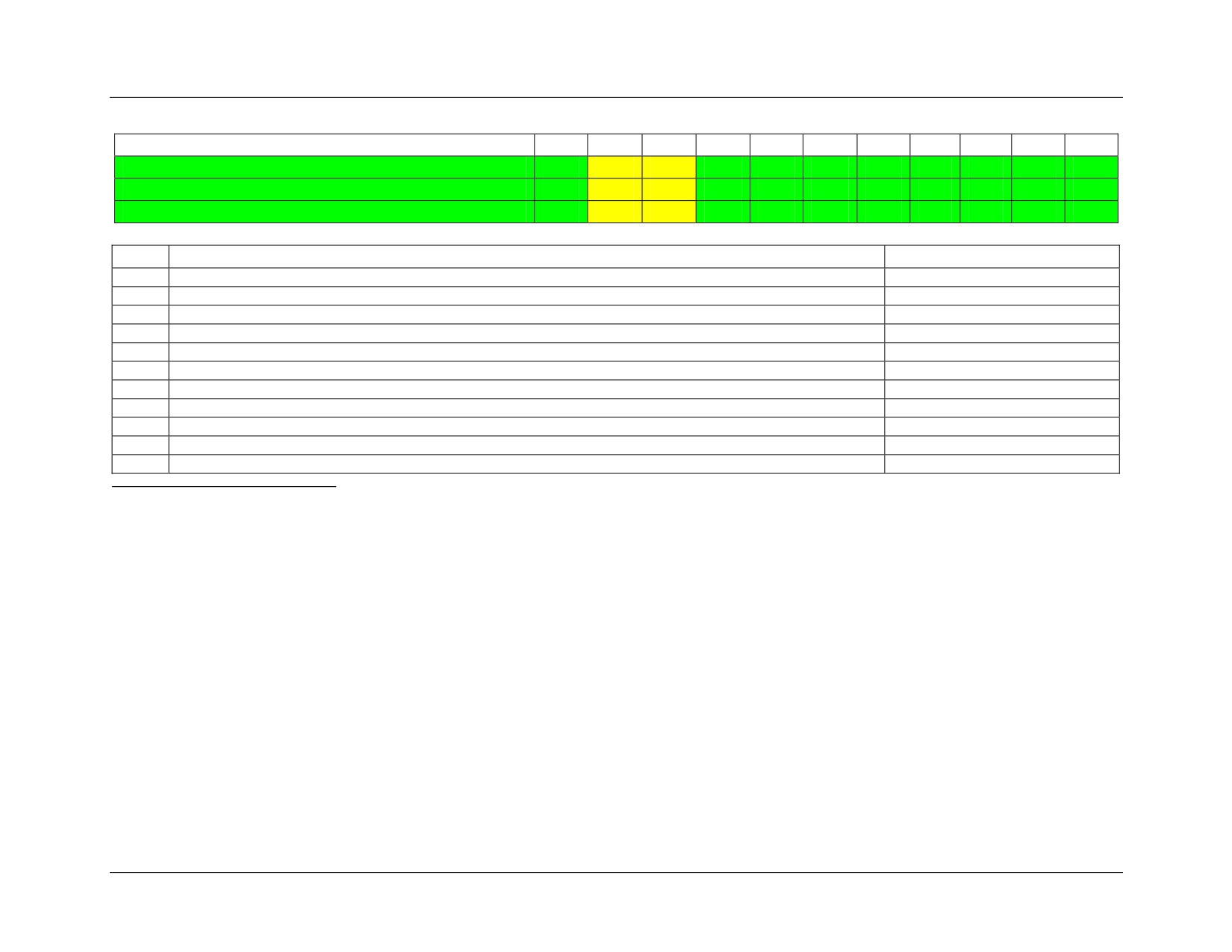
Table 6.1-1 discusses the capability that currently exists to perform the task “Characterize the
global CBRN/TIM threat and situation.” There is only one capability that exists, and no other
capability is projected that will accomplish this task.
Current Capability and Deficiency
NIST’s mission is to provide national-level, all-source intelligence support from throughout the
IC to deployed commanders during crisis or contingency operations. The Joint staff J-2 is the
NIST program’s executive agent and has delegated the NIST mission to the Deputy Directorate
for Crisis Operations (J-2O). The National Intelligence Support Division (J-2O-1) manages daily
operations and interagency coordination for all NISTs. The current ability is assessed as “green”
although there are some limitations and deficiencies.
Projected Near/Mid-Term Capability and Deficiency
No other capability is currently projected for the near/mid term. No near/mid-term initiatives are
expected to improve limitations or deficiencies.
Projected Far-Term Capability and Deficiency
No other capability is currently projected for the far-term future. DOTMLPF to support task
should improve if effective experimentation addresses organizational deficiencies and closes
knowledge gaps and training and education initiatives address deficiencies identified in this Joint
Capabilities Integration and Development System (JCIDS).
1 “Situational awareness is the ability to have accurate and real-time information of friendly, enemy, neutral, and noncombatant
locations; a common, relevant picture of the battlefield scaled to specific level of interest and special needs.” (Operational
Requirements Document for Joint Effects Model)
2 “Shared awareness is a state that exists in the cognitive domain when two or more entities are able to develop a similar
awareness of a situation. The degree of similarity required (or difference tolerable) will depend on the type and degree of
collaboration and synchronization needed.” (Understanding Information Age Warfare, p. 26)
3 Shared understanding is when two or more entities have similar and sufficient levels of knowledge to be able to draw inferences
about the possible consequences of the situation, as well as sufficient awareness of the situation to predict future patterns.
6
For Official Use Only
For Official Use Only
CBRND Functional Needs Analysis/Functional Solution Analysis
Chapter 6. Strategic National Shape Tasks
Table 6.1-1. SNSHA 1: Capability and Deficiency Assessment
Capability: National Intelligence Support Teams
M1
M2
M3
M4
M5
M6
M7
M8
M9
M10
M11
Current Overall Capability1
G2
Y3
Y4
G5
G6
G7
G8
G9
G10
G11
G12
Near/Mid-Term Overall Capability
G
Y
Y
G
G
G
G
G
G
G
G
Far-Term Overall Capability13
G
Y
Y
G
G
G
G
G
G
G
G
FAA Measure
Scale
M1
Means exist to collect intelligence on designated adversaries.
G - Yes, Y - Limited, R - No
M2
Adversary CBRN/TIM threat intelligence is current.
G - Yes, Y - Limited, R - No
M3
Adversary CBRN/TIM threat intelligence is reliable.
G - Yes, Y - Limited, R - No
M4
All CBRN/TIM threat priority intelligence requests are covered by a collection plan.
G - Yes, Y - Limited, R - No
M5
Adequate means are available for CBRND staff to influence global collection activities.
G - Yes, Y - Limited, R - No
M6
Multiple sources are integrated and deconflicted.
G - Yes, Y - Limited, R - No
M7
Medical intelligence guidance identifies information requirements and processes.
G - Yes, Y - Limited, R - No
M8
Medical CBRN/TIM intelligence criteria are established and defined.
G - Yes, Y - Limited, R - No
M9
Staff has sufficient training and experience to conduct the threat assessment.
G - Yes, Y - Limited, R - No
M10
CBRN/TIM threat intelligence is disseminated in near-real-time.
G - Yes, Y - Limited, R - No
M11
CBRN/TIM threat intelligence is available to the commands.
G - Yes, Y - Limited, R - No
1 Joint intelligence and CBRN/TIM publications do not adequately address this issue. The JRO-CBRND is not adequately staffed and organized to meet its intelligence-related
responsibilities. The NIST staff may not be adequately trained/educated in CBRN/TIM issues. CBRND staff officers are not adequately trained/educated in intelligence issues.
Experimentation does not provide feedback on intelligence indicators for this task. JPME does not adequately cover the fusion of intelligence/CBRN/TIM issues.
2 Yes. Multiple national means of collection exist.
3 Limited. CBRN/TIM threat intelligence depends on factors that may prevent timely and current information.
4 Limited. CBRN/TIM threat intelligence depends on factors that may prevent reliable information.
5 Yes. NIST can develop collection plans for CBRN/TIM threats.
6 Yes. NIST has the means to provide input for theater collection activities.
7 Yes. All-source intelligence analysis is the process where integration and deconfliction occur.
8 Yes. NIST can identify medical intelligence information requirements and processes.
9 Yes. NIST can establish and define medical CBRN/TIM intelligence criteria.
10 Yes. NIST does have the experience to sufficiently conduct CBRN/TIM threat assessment.
11 Yes. NIST Chief transmits data through the COLISEUM RFI management system.
12 Yes. NIST Chief transmits data through the COLISEUM RFI management system.
13 DOTMLPF to support task should improve if effective experimentation addresses organizational deficiencies and closes knowledge gaps and training and education initiatives
address deficiencies identified in this JCIDS.
7
For Official Use Only
For Official Use Only
CBRND Functional Needs Analysis/Functional Solution Analysis
Chapter 6. Strategic National Shape Tasks
6.1.3
Functional Solution Analysis
6.1.3.1
DOTLPF Assessment Summary.
This section addresses the deficiencies and suggests potential non-materiel solutions. If there are
no non-materiel solutions, or they are only partial solutions, the remaining non-materiel need is
then stated. Materiel needs are assessed in the IMA Summary.
1.
Deficiency: CBRN/TIM threat intelligence is dependent on factors that may prevent timely
and current information. At the time of this analysis, CBRN/TIM threat intelligence was
dependent on an IC organizational model determined to be flawed by both a congressional
investigation and a special presidential commission. Factors such as problems with
interagency coordination and planning, clear delineation of lines of authority and
responsibility, and organizational effectiveness contributed to the lack of timely and current
information.
Non-Materiel Solutions: Organization: The IC has been realigned and reorganized in
concert with recommendations from both the congressional investigation and the special
presidential commission. While it is believed that this reorganization will substantially or
totally correct the deficiency, it is vital that DoD document and verify the efficacy of the
recent changes through lessons learned from training and exercises as well as focused
concept experimentation covering all aspects of CBRND battlespace awareness at the
strategic level of war.
2.
Deficiency: CBRN/TIM threat intelligence is dependent on factors that may prevent reliable
information. At the time of this analysis, CBRN/TIM threat intelligence was dependent on an
IC organizational model determined to be flawed by both a congressional investigation and a
special presidential commission. Factors such as problems with interagency coordination and
planning, clear delineation of lines of authority and responsibility, and organizational
effectiveness contributed to the lack of reliable information.
Non-Materiel Solutions: Organization: The IC has been realigned and reorganized in
concert with recommendations from both the congressional investigation and the special
presidential commission. While it is believed that this reorganization will correct the
deficiency, it is vital that DoD document and verify the efficacy of the recent changes
through lessons learned from training and exercises as well as focused concept
experimentation covering all aspects of battlespace awareness at the strategic level of war.
3.
Deficiency: Joint intelligence and CBRN/TIM publications do not adequately address this
issue.
Non-Materiel Solutions: Doctrine: Joint intelligence and CBRN/TIM publications must be
enhanced to adequately address this issue and to interface with each other so that roles an
responsibilities are clearly delineated.
4.
Deficiency: The JRO-CBRND is not adequately staffed and organized to meet its
intelligence-related responsibilities.
Non-Materiel Solutions: Organization: JRO-CBRND should have a staff section dedicated
to resolving CBRN intelligence community issues. Personnel: JRO-CBRND should have
8
For Official Use Only
For Official Use Only
CBRND Functional Needs Analysis/Functional Solution Analysis
Chapter 6. Strategic National Shape Tasks
adequate trained/experienced personnel assigned to man a staff section dedicated to resolving
CBRN intelligence community issues.
5.
Deficiency: The NIST staff is not adequately trained/educated in CBRN/TIM issues.
Non-Materiel Solutions: Training: Develop training that will enable the NIST staff to better
understand their CBRN/TIM role and enhance their ability to obtain intelligence that is
required to support the Shape function of strategic national CBRND. Leadership: Develop an
education program that will enable the J-2 staff to better understand their CBRN/TIM role
and enhance their ability to obtain intelligence that is required to support the Shape function
of strategic national CBRND.
6.
Deficiency: CBRND staff officers are not adequately trained/educated in intelligence issues.
Non-Materiel Solutions: Training: Develop training programs that allow CBRN staff
officers to better support the CBRN intelligence process. Leadership: Develop education
programs that allow CBRN staff officers to better understand the CBRN intelligence process
and their roles and responsibilities.
7.
Deficiency: Experimentation/red teaming does not provide feedback on intelligence
indicators for this task.
Non-Materiel Solutions: Training: JRO-CBRND must work with NIST and/or national
intelligence organizations to integrate this task into both intelligence and CBRN
experimentation campaign plans.
8.
Deficiency: Joint Professional Military Education (JPME) does not adequately cover the
fusion of intelligence/CBRN/TIM issues.
Non-Materiel Solutions: Leadership: Integrate intelligence/CBRN fusion issues into JPME.
9.
Deficiency: DoD CBRN/TIM experts detailed to the national intelligence organizations and
the NIST do not receive adequate preparation, support, or briefing for DoD lessons learned.
Non-Material Solutions: Organization: Ensure that CBRN organizations that provide DoD
detailees to national intelligence organizations are proactive in ensuring their institutional
CBRN intelligence needs are both understood and met and that the detailees they provide are
prepared in every way. Ensure that CBRN SMEs assigned to the NIST are prepared in every
way. Leadership: Provide CBRN DoD detailees to national intelligence organizations or
those assigned to the NIST with formal educational preparation. Personnel: CBRN DoD
detailees to national intelligence organizations or those assigned to the NIST must possess
adequate skill and experience.
6.1.3.2
IMA Assessment Summary
N/A
9
For Official Use Only
For Official Use Only
CBRND Functional Needs Analysis/Functional Solution Analysis
Chapter 6. Strategic National Shape Tasks
6.2
Task SNSHA 2: Conduct global CBRN/TIM vulnerability analysis
6.2.1
Functional Area Analysis
6.2.1.1
Definition
To conduct continual global vulnerability assessments focusing on potential adversary’s COAs.
This global strategic assessment compares regional-based vulnerabilities and risks. Development
of a shared understanding of potential adversary’s CBRN/TIM COAs and the associated
vulnerabilities and risks enables timely and effective preparations for any potential adversary
acts. Includes the development of associated risk assessments.
6.2.1.2
Derivation
UJTL (SN 1.1.6, SN 2.2.1, SN 2.4.1.2, SN 2.5.1, SN 3.3.6, SN 4.3.3, SN 4.3.4, SN 5.1.1, SN 5.1.2,
SN 5.1.3, SN 7.5, SN 9, SN 9. 1.2, SN 9.1.3, SN 9.2, SN 9.2.1, SN 9.2.2), Protection Joint
Functional Concept, Military Transformation: A Strategic Approach.
6.2.1.2.1
Supported Task: N/A
6.2.1.2.2
Lateral Tasks: SNSHA 1, SNSHA 4, SNSHA 6, SNSHA 8, SNSHA 9, SNSHA
14
6.2.1.2.3
Supporting Task: STSHA 2
6.2.1.3
Condition
Perform this task under conditions of:
Physical. N/A
Military
1. Limited modern military systems. (C2.2.5)
2. Limited personnel expertise. (C2.2.4.5)
3. Some or no interoperability. (C2.2.6)
4. Marginal or negligible intelligence database. (C2.4.2)
5. Difficult global intelligence access. (C2.4.4)
6. Little or no certitude of data. (C2.4.6)
10
For Official Use Only
For Official Use Only
CBRND Functional Needs Analysis/Functional Solution Analysis
Chapter 6. Strategic National Shape Tasks
Civil. N/A
6.2.2
Functional Needs Analysis
6.2.2.1
Capability and Deficiency Assessment Summary
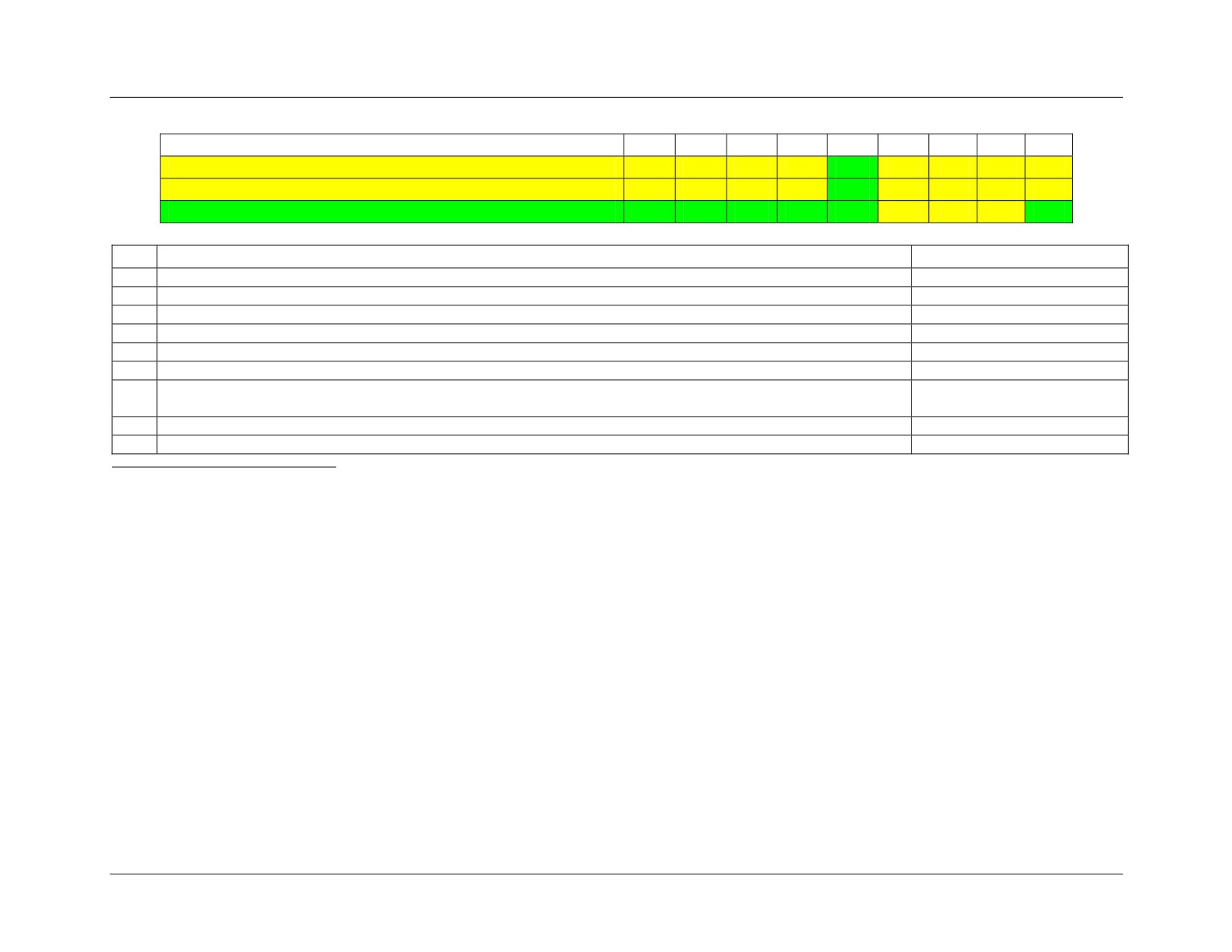
Table 6.2-1 discusses the capability that currently exists to perform the task “Conduct global
CBRN/TIM vulnerability analysis.” There is only one capability that exists, and no other
capability is projected that will accomplish this task.
Current Capability and Deficiency
NMJIC has the ability to conduct global vulnerability assessments focusing on potential
adversary COAs. The current capability is assessed as “yellow” as the result of numerous
DOTMLPF limitations.
Projected Near/Mid-Term Capability and Deficiency
No other capability is currently projected for the near/mid term. No improvements are expected
over the near/mid term.
Projected Far-Term Capability and Deficiency
No other capability is currently projected for the far-term future. For the far term,
experimentation leading to better coordination efforts, and DOTMLPF will raise the overall
capability to “green.” The inability to discern threat CBRN/TIM intent with reliability will
continue to be a problem.
11
For Official Use Only
For Official Use Only
CBRND Functional Needs Analysis/Functional Solution Analysis
Chapter 6. Strategic National Shape Tasks
Table 6.2-1. SNSHA 2: Capability and Deficiency Assessment
Capability: National Military Joint Intelligence Center
M1
M2
M3
M4
M5
M6
M7
M8
M9
Current Overall Capability1
Y2
Y3
Y4
Y5
G6
Y7
Y8
Y9
Y10
Near/Mid-Term Overall Capability
Y
Y
Y
Y
G
Y
Y
Y
Y
Far-Term Overall Capability
G11
G
G
G
G
Y
Y
Y
G
FAA Measure
Scale
M1
Policies and guidelines for conducting global vulnerability analysis are established.
G - Yes, Y - Limited, R - No
M2
Policies and guidelines for conducting global risk assessment are established.
G - Yes, Y - Limited, R - No
M3
Analytical tools used to evaluate plausible adversary COAs are adequate.
G - Yes, Y - Limited, R - No
M4
Vulnerability assessment process exploits time-sensitive or priority actionable CBRN intelligence.
G - Yes, Y - Limited, R - No
M5
Means are available to collaboratively perform assessments.
G - Yes, Y - Limited, R - No
M6
Means exist to visualize the impact of adversary COAs on forces of interest.
G - Yes, Y - Limited, R - No
M7
Operational and analytical/planning staffs have the training and experience to effectively assess adversary
G - Yes, Y - Limited, R - No
CBRN/TIM COAs.
M8
Sufficient doctrine and tactics, techniques, and procedures (TTPs) for effective vulnerability assessment are available.
G - Yes, Y - Limited, R - No
M9
Joint exercises/experimentation provides feedback on efficacy of vulnerability analysis doctrine and TTPs.
G - Yes, Y - Limited, R - No
1 Partial. As a DoD asset, NMJIC has little influence over the CBRN assessments made by other departments and activities. DOTMLPF for generic vulnerability analysis may be
adequate, but CBRND integration into the process is inadequate.
2 Limited. NMJIC has guidelines for conducting global vulnerability analyses; however, the global CBRN vulnerability analysis process is not solely within the purview of DoD.
3 Limited. NMJIC has guidelines for conducting risk assessments; however, global CBRN risk assessments are not solely within the purview of DoD.
4 Yes. NMJIC has analytical tools to evaluate plausible adversary COA. The standard military decision making process for evaluating COA’s has been considered adequate. But
CBRN/TIM integration of the analytical tools may not be adequate.
5 Partial. NMJIC has an ability to exploit time-sensitive or priority-actionable CBRN/TIM intelligence through netcentric means.
6 Yes. NMJIC has the means to perform assessments in collaboration with other agencies.
7 Limited. The accuracy with which NMJIC interprets adversary intent is dependent on intelligence covering many adversary capabilities, including CBRN employment doctrine,
release authority, resources, adversary forces, and rules of engagement.
8 Limited. The NMJIC has the trained operational and analytical/planning staff to effectively assess potential adversary CBRN/TIM COAs. However, the NMJIC may not be able
to interpret adversary intent with 100 percent accuracy.
9 Limited. NMJIC has TTPs for global CBRN/TIM situational awareness. Global CBRN vulnerability assessment tools are available although more extensive automation would be
desirable. There are still issues with determining threat CBRN/TIM intent.
10 Partial. The task of assessing the efficacy of global CBRN vulnerability analysis doctrine and TTPs is a multidisciplined, multinational matter that surpasses the authority of the
DoD NMJIC. This assessment activity may include feedback from joint exercises/experimentation, as well as encompass other activities such as: the Joint Interagency
Coordinating Group, other U.S. government departments and agencies, the selection of nongovernmental organizations, foreign military, intelligence and law enforcement assets.
11 For the far term, experimentation leading to better coordination efforts and DOTMLPF will raise our overall capability to “green.” The inability to discern threat CBRN/TIM
intent with reliability will continue to be a problem.
12
For Official Use Only
For Official Use Only
CBRND Functional Needs Analysis/Functional Solution Analysis
Chapter 6. Strategic National Shape Tasks
6.2.3
Functional Solution Analysis
6.2.3.1
DOTLPF Assessment Summary
This section addresses the deficiencies and suggests potential non-materiel solutions. If there are
no non-materiel solutions, or they are only partial solutions, the remaining non-materiel need is
then stated. Materiel needs are assessed in the IMA Summary.
1.
Deficiency: DoD’s global CBRN risk and vulnerability analysis processes are not fully
established.
Non-Materiel Solutions: Organization: Incorporate NMJIC input into overall IC activities.
2.
Deficiency: Cannot routinely validate or prioritize actionable CBRN intelligence in a timely
manner.
Non-Materiel Solutions: Training: Validity of raw intelligence is a continuing problem.
Training for CBRN issues needs to be reinforced.
3.
Deficiency: The accuracy with which NMJIC interprets adversary intent is dependent on
intelligence covering many adversary capabilities, including CBRN employment doctrine,
release authority, resources, adversary forces, and rules of engagement.
Non-Materiel Solutions: Training: Ability to interpret adversary intent is a continuing
problem. Continued work on analysis probability tools and models—and training—is
required. Leadership: Ability to interpret adversary intent is a continuing problem. Continued
work on analysis probability tools and models—and education—is required.
4.
Deficiency: The current compartmentalization of the intelligence community which results in
a lack of collaboration during assessments.
Non-Materiel Solutions: Organization: As a DoD asset, NMJIC previously had little
influence over assessments of other departments and activities of adversary CBRN capability
and intent. The recently completed federal review of intelligence capabilities provides a
multitude of recommendations and new initiatives that DoD must participate in to rectify this
problem.
5.
Deficiency: Lack of automated means to conduct global vulnerability assessments that focus
on potential adversary COAs.
Non-Materiel Solutions: None.
6.2.3.2
IMA Assessment Summary
Table 6.2-2 shows possible materiel approaches that address the remaining materiel requirements
of the DOTMLPF assessment.
13
For Official Use Only
For Official Use Only
CBRND Functional Needs Analysis/Functional Solution Analysis
Chapter 6. Strategic National Shape Tasks
Table 6.2-2. SNSHA 2. IMA Assessment
Idea for Materiel Approach
Description
Automated Tools
Continued work on analysis probability tools and models is
required. No automated tools exist for assisting in the
conduct of global vulnerability assessments that focus on
potential adversary COAs. Because of the wide range of
options available to potential adversaries, tools must be
available that can take in what is known and then model and
forecast all potential COAs.
14
For Official Use Only
For Official Use Only
CBRND Functional Needs Analysis/Functional Solution Analysis
Chapter 6. Strategic National Shape Tasks
6.3
Task SNSHA 3: Coordinate international CBRND protocols, standards, and
agreements
6.3.1
Functional Area Analysis
6.3.1.1
Definition
To negotiate and coordinate the military aspects of international protocols, standards, and
agreements for CBRND with representatives of other nations and regional/international
organizations. This task promotes interoperability and integration of CBRND capabilities,
including establishing, reviewing, and modifying existing protocols, standards, and agreements
when appropriate and necessary. Includes the establishment of interoperability and common
procedures and formats for CBRN/TIM hazard alarm, warning, and reporting. Also includes
establishment and maintenance of international standards and formats for plotting and predicting
CBRN/TIM hazards.
6.3.1.2
Derivation
UJTL (SN 1.1.6, SN 2.2.1, SN 2.4.1.2, SN 2.5.1, SN 3.3.6, SN4.3, SN 5.1.2, SN 5.1.3, SN 9, SN
9.1.3, SN 9.2.2), Protection Joint Functional Concept, Military Transformation: A Strategic
Approach, Transformation Planning Guidance.
6.3.1.2.1
Supported Task: N/A
6.3.1.2.2
Lateral Tasks: SNSHA 5, SNSHA 8, SNSHLD 1, SNSHLD 2, SNSHLD 3,
SNSHLD 4, SNSHLD 5, SNSHLD 6, SNSHLD 7, SNSHLD 8, SNSHLD 9,
SNSUST 1, SNSUST 2, SNSUST 4, SNSUST 5
6.3.1.2.3
Supporting Task: N/A
6.3.1.3
Condition
Perform this task under conditions of:
Physical. N/A
Military
1. Restrictive mission instructions. (C2.1.1)
2. No preexisting arrangements. (C2.1.1.2)
3. Limited personnel expertise. (C2.2.4.5)
4. Some or no interoperability. (C2.2.6)
5. Poor multinational integration. (C2.3.1.2)
6. Moderate staff expertise. (C2.3.1.3)
15
For Official Use Only
For Official Use Only
CBRND Functional Needs Analysis/Functional Solution Analysis
Chapter 6. Strategic National Shape Tasks
Civil
1. Limited foreign government support. (C3.1.2.3)
2. Uncertain international organization support. (C3.1.2.5)
6.3.2
Functional Needs Analysis
6.3.2.1
Capability and Deficiency Assessment Summary
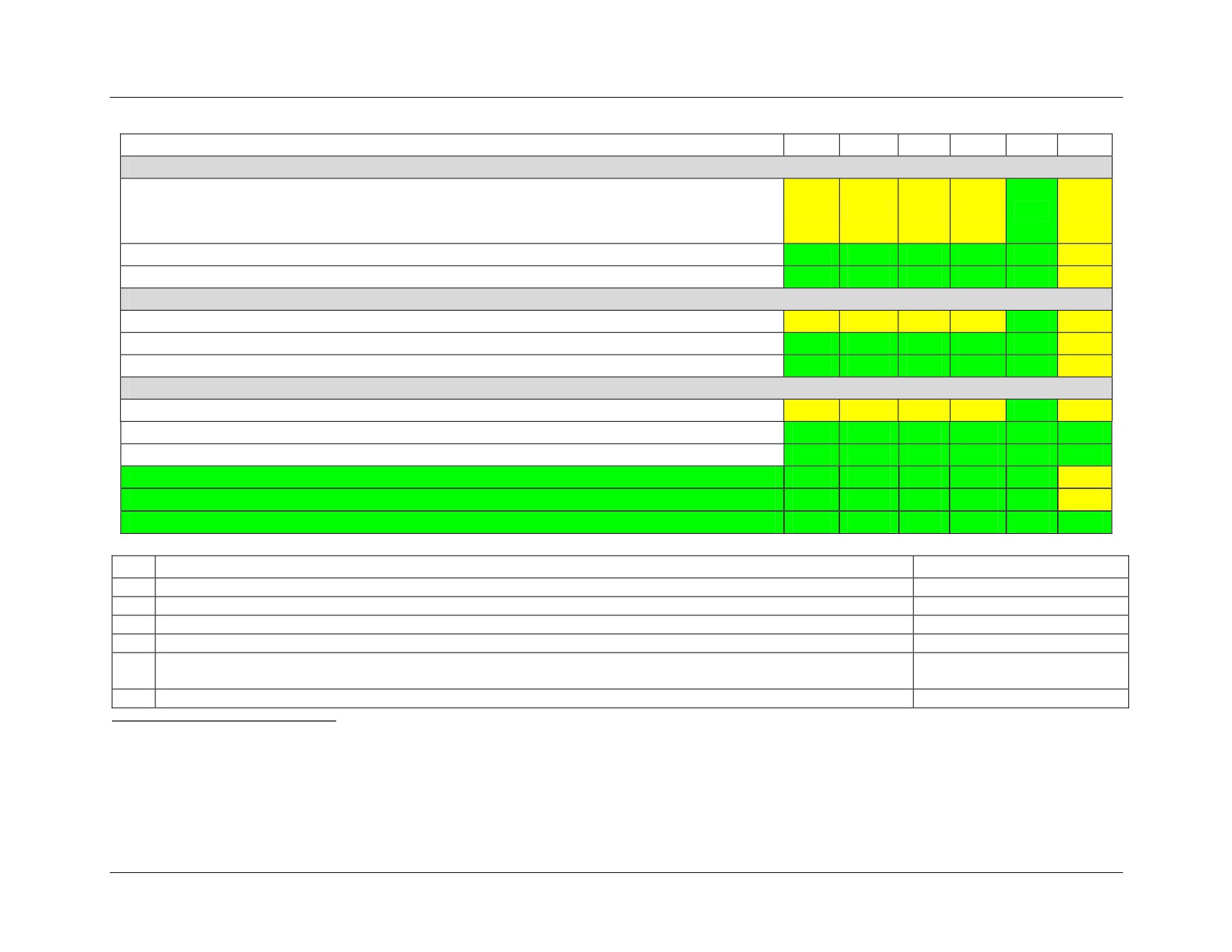
Table 6.3-1 discusses three capabilities that currently exist to coordinate international CBRND
protocols, standards, and agreements. These are the only capabilities that exist, and no other
capabilities are projected that will accomplish this task.
Current Capability and Deficiency
American, British, Canadian, and Australian Armies Program (ABCA) and North Atlantic Treaty
Organization (NATO) working groups have established mature and beneficial relationships that
allow CBRND protocols, standards, and agreements to be coordinated and reviewed. Problems
still exist with many of the nations of the world and the various international conventions that
have been established. The current assessment is “green” although there are a number of
limitations with existing international conventions.
Projected Near/Mid-Term Capability and Deficiency
No other capability is currently projected for the near/mid term. Limited changes/improvements
are expected in the international community at large in the near/mid term.
Projected Far-Term Capability and Deficiency
No other capability is currently projected for the far-term future. Limited changes/improvements
are expected in the international community at large in the far term. Continual improvements are
expected across the board as ABCA/NATO exercises/experimentation efforts provide valuable
lessons learned at appropriate levels. U.S. CBRND experimentation efforts at the SN level of
war will be applied to ABCA/NATO applications.
16
For Official Use Only
For Official Use Only
CBRND Functional Needs Analysis/Functional Solution Analysis
Chapter 6. Strategic National Shape Tasks
Table 6.3-1. SNSHA 3: Capability and Deficiency Assessment
Capability/Measure
M1
M2
M3
M4
M5
M6
Current
International Conventions Chemical Weapons Convention (CWC), Organisation for
the Prohibition of Chemical Weapons (OPCW), Biological and Toxin Weapons
Y1
Y2
Y3
Y4
G5
Y6
Convention (BTWC)
American, British, Canadian, and Australian Armies Program (QUADRIPARTITE)
G7
G8
G9
G10
G11
Y12
NATO Working Group
G13
G14
G15
G16
G17
Y18
Near/Mid
International Conventions CWC, OPCW, BTWC
Y19
Y
Y
Y
G
Y
American, British, Canadian, and Australian Armies Program (QUADRIPARTITE)
G20
G
G
G
G
Y
NATO Working Group
G21
G
G
G
G
Y
Far
International Conventions CWC, OPCW, BTWC
Y22
Y
Y
Y
G
Y
American, British, Canadian, and Australian Armies Program (QUADRIPARTITE)
G23
G
G
G
G
G24
NATO Working Group
G25
G
G
G
G
G26
Current Overall Capability
G
G
G
G
G
Y
Near/Mid-Term Overall Capability
G
G
G
G
G
Y
Far-Term Overall Capability
G
G
G
G
G
G
FAA Measure
Scale
M1
Required CBRND protocols, standards, and agreements are established.
G - Yes, Y - Limited, R - No
M2
International CBRND standards are current.
G - Yes, Y - Limited, R - No
M3
U.S. and international staffs and agencies are in compliance with existing protocols, standards, and agreements.
G - Yes, Y - Limited, R - No
M4
There is a recurring program to update or maintain currency of international practices, procedures, and formats.
G - Yes, Y - Limited, R - No
M5
CBRND staffs and organizations have the training to effectively assess warning and reporting and hazard prediction
G - Yes, Y - Limited, R - No
models.
M6
International exercises/experimentation provide feedback on efficacy of standards and agreements.
G - Yes, Y - Limited, R - No
1 Limited. A number of efforts have been undertaken by the BTWC/CWC parties to develop and implement universal agreements and policies.
2 Limited. A number of efforts have been undertaken by the BTWC/CWC parties to develop and implement international standards.
3 Limited. A number of countries are delaying compliance with protocols and agreements due to frequently changing internal political environment.
4 Limited. A number of countries are slow in updating and maintaining currency of international practices, procedures and formats due to frequently changing internal political
environment.
5 Yes. Current staff has the training and understanding of basic warning and reporting and hazard prediction modeling.
17
For Official Use Only
For Official Use Only
CBRND Functional Needs Analysis/Functional Solution Analysis
Chapter 6. Strategic National Shape Tasks
6 Limited. The participation in international exercises/experimentation is voluntary. The efficacy of the feedback is limited to “openness” of participating states.
7 Yes. CBRND protocols, standards and agreements are established as Quadripartite Standardization Agreements (QSTAGs).
8 Yes. There are Quadripartite Working Groups that meet every two years.
9 Yes. The ABCA has a senior officer on duty in Washington, D.C. who regularly reviews the work of the overall program.
10 Yes. The ABCA has a senior officer on duty in Washington, D.C. who regularly reviews the work of the overall program.
11 Yes. The CBRND staff has the training to assess warning and reporting and hazard prediction models as established by Standardization Agreements (STANAGs) and QSTAGs.
12 While there have been many ABCA exercises, an exercise focused exclusively on all aspects of CBRND has not been conducted.
13 Yes. CBRND protocols, standards and agreements are established as NATO STANAGs.
14 Yes. NATO working groups meet on a regular basis.
15 Yes. NATO ensures compliance with appropriate protocols, standards, and agreements.
16 Yes. NATO working groups meet on a regular basis.
17 Yes. The CBRND staff has the training to assess warning and reporting and hazard prediction models as established by STANAG.
18 While there have been many NATO exercises, an exercise focused exclusively on all aspects of CBRND has not been conducted.
19 Limited changes/improvements are expected in the near/mid term.
20 Limited changes/improvements are expected in the near/mid term.
21 Limited changes/improvements are expected in the near/mid term.
22 Limited changes/improvements are expected in the international community at large.
23 Continual improvements are expected across the board as ABCA exercises/experimentation efforts provide valuable lessons learned at appropriate levels.
24 U.S. CBRND experimentation efforts at the SN level of war will be applied to ABCA applications.
25 Continual improvements are expected across the board as NATO exercises/experimentation efforts provide valuable lessons learned at appropriate levels.
26 U.S. CBRND experimentation efforts at the SN level of war will be applied to NATO applications.
18
For Official Use Only
For Official Use Only
CBRND Functional Needs Analysis/Functional Solution Analysis
Chapter 6. Strategic National Shape Tasks
6.3.3
Functional Solution Analysis
6.3.3.1
DOTLPF Assessment Summary
This section addresses the deficiencies and suggests potential non-materiel solutions. If there are
no non-materiel solutions, or they are only partial solutions, the remaining non-materiel need is
then stated. Materiel needs are assessed in the IMA Summary.
1. Deficiency: International CBRND protocols, standards, and agreements that promote
interoperability are not in effect.
Non-Materiel Solutions: Doctrine: Differences still exist over “rolling text” and the
Chairman’s text. Outreach to all nonsignatory nations must take place to encourage
participation.
2. Deficiency: Efficacy of standards and feedback has not been determined through exercises
and experimentation in all CBRND areas and is limited to countries that are open to
participate.
Non-Materiel Solutions: Training: NATO and ABCA exercises and experimentation must
explore all aspects of CBRND. Nations outside of ABCA and NATO should be encouraged
to participate.
3. Deficiency: Additional policy and doctrine needs to be developed along with an effective
inspection regime to strengthen the BTWC/CWC.
Non-Materiel Solutions: Doctrine: The Quadripartite Group and NATO need to build a
QSTAG/STANAG for considering weapons of mass destruction (WMD)-related terrorism
as a causative action for establishing international procedures and mutual support agreements
for restoration operations.
6.3.3.2
IMA Assessment Summary
N/A
19
For Official Use Only
For Official Use Only
CBRND Functional Needs Analysis/Functional Solution Analysis
Chapter 6. Strategic National Shape Tasks
6.4
Task SNSHA 4: Coordinate CBRND within the interagency process
6.4.1
Functional Area Analysis
6.4.1.1
Definition
To work with representatives of the other Executive departments and agencies to resolve issues
and ensure that CBRND responsibilities are coordinated. Includes organizations within DoD, as
well as interagency capabilities. Organizations with appropriate resources are designated and
tasked, as necessary, to support and/or provide the identified CBRND capabilities. Includes
allocating and tasking resources in accordance with established agreements with other non-DoD
national agencies.
6.4.1.2
Derivation
UJTL (SN 1.1.6, SN 2.2.1, SN 5.1.1, SN 5.1.2, SN 5.1.3, SN 5.2.1, SN 5.2.3, SN 7.5, SN 9, SN 9.2,
SN 9.2.1, SN 9.2.2), Protection Joint Functional Concept, Military Transformation: A Strategic
Approach, Transformation Planning Guidance.
6.4.1.2.1
Supported Task: N/A
6.4.1.2.2
Lateral Tasks: SNSHA 2, SNSHA 8, SNSHA 9, SNSHA 10, SNSHA 13
6.4.1.2.3
Supporting Task: N/A
6.4.1.3
Condition
Perform this task under conditions of:
Physical. N/A
Military
1. Restrictive mission instructions. (C2.1.1)
2. Partial preexisting arrangements. (C2.1.1.2)
3. Negligible military commitments from other nations. (C2.1.1.7)
4. Marginal forces assigned. (C2.2.1)
5. Limited personnel expertise. (C2.2.4.5)
6. Some or no interoperability. (C2.2.6)
7. Partial Joint Staff integration. (C2.3.1.1)
8. Moderate staff expertise. (C2.3.1.3)
Civil
Uncooperative interdepartmental/interagency relationships. (C3.1.1.3)
20
For Official Use Only
For Official Use Only
CBRND Functional Needs Analysis/Functional Solution Analysis
Chapter 6. Strategic National Shape Tasks
6.4.2
Functional Needs Analysis
6.4.2.1
Capability and Deficiency Assessment Summary
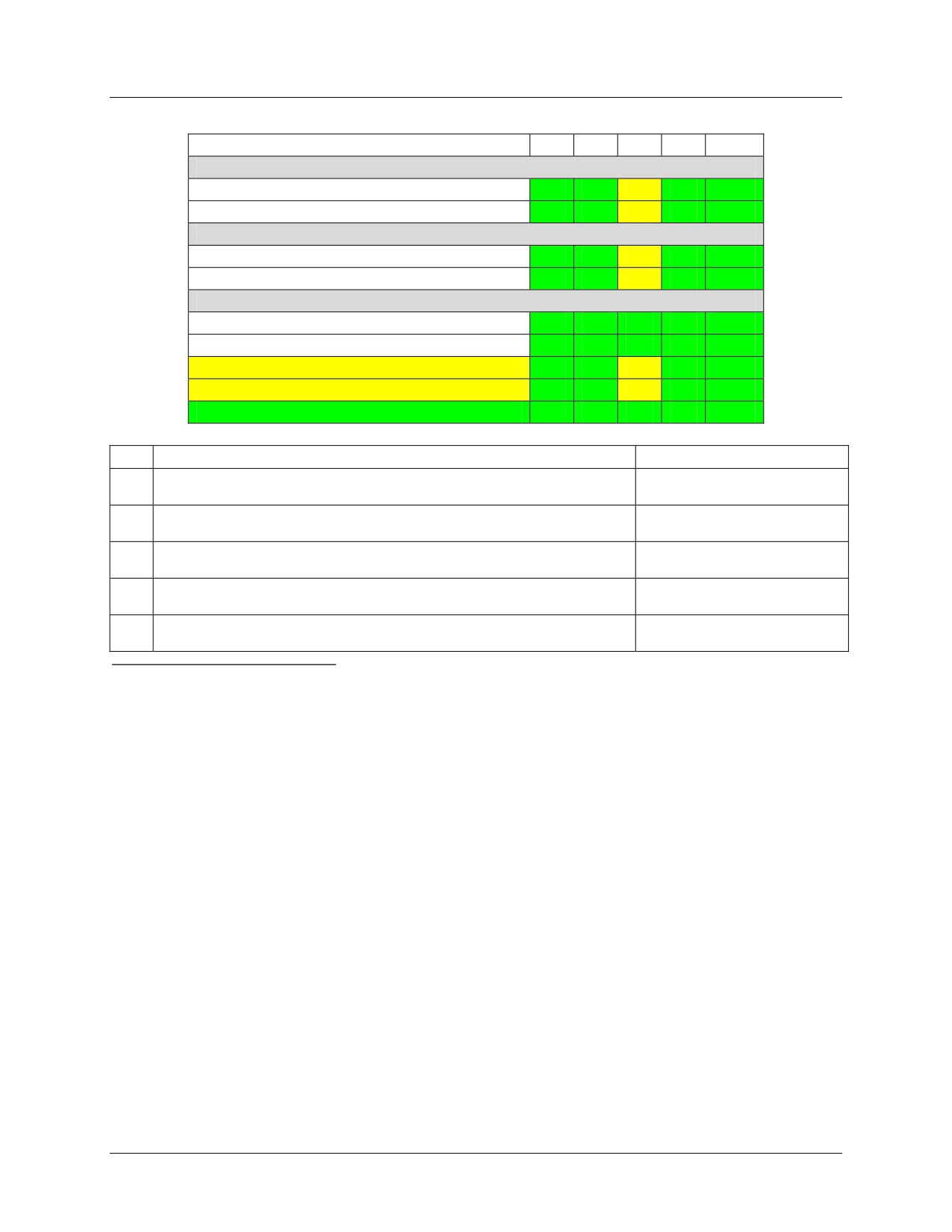
Table 6.4-1 discusses the capabilities that currently exist to perform the task to the designated
standard. These are the only capabilities that exist, and no other capabilities are projected that
will accomplish this task.
Current Capability and Deficiency
JDOMS serves as the action agent for the Secretary of Defense to coordinate and direct
execution of DoD assistance to civil authorities. In addition, JDOMS serves as the action agent
for consequence management operations and plans. The J-3 Operations Directorate is responsible
for synchronizing and monitoring worldwide military operations and activities, including
coordinating the joint CBRND requirements that are within the interagency process. The current
capability assessment is “yellow.”
Projected Near/Mid-Term Capability and Deficiency
No other capability is currently projected for the near/mid term. No near/mid-term capability
improvement is anticipated.
Projected Far-Term Capability and Deficiency
No other capability is currently projected for the far-term future. DOTMLPF should improve in
all deficient areas as a result of initiatives that use data resulting from focused interagency
experimentation. For the far term the assessment should become “green.”
21
For Official Use Only
For Official Use Only
CBRND Functional Needs Analysis/Functional Solution Analysis
Chapter 6. Strategic National Shape Tasks
Table 6.4-1. SNSHA 4: Capability and Deficiency Assessment
Capability/Measure
M1
M2
M3
M4
M5
Current
Joint Department of Military Support
G1
G2
Y3
G4
G5
Joint Staff Directorate for Operations, J-3
G6
G7
Y8
G9
G10
Near/Mid
Joint Department of Military Support
G
G
Y
G
G
Joint Staff Directorate for Operations, J-3
G
G
Y
G
G
Far
Joint Department of Military Support)
G
G
G11
G
G
Joint Staff Directorate for Operations, J-3
G
G
G12
G
G
Current Overall Capability
G
G
Y
G
G
Near/Mid-Term Overall Capability
G
G
Y
G
G
Far-Term Overall Capability
G
G
G
G
G
FAA Measure
Scale
M1
Current allocation of responsibility is adequate to satisfy current capability
G - Yes, Y - Limited, R - No
and operational requirements.
M2
Projected responsibilities can be determined based on changes in the
G - Yes, Y - Limited, R - No
global CBRN/TIM situation.
M3
Current CBRND requirements are satisfied through existing DoD
G - Yes, Y - Limited, R - No
resources.
M4
CBRND capabilities not available within DoD are provided through
G - Yes, Y - Limited, R - No
agreement with non-DoD agencies.
M5
Extent of mutual support available from other agencies or organizations
G - Yes, Y - Limited, R - No
meets requirements.
1 Current assignment of responsibility is adequate to satisfy current capability and operational requirements.
2 Able to determine projected responsibilities based on changes in the global CBRN situation.
3 Existing DoD resources cannot completely satisfy current CBRND requirements.
4 CBRND capabilities not available within DoD are provided through agreement with non-DoD agencies.
5 Extent of mutual support available from other agencies or organizations meets requirements.
6 Yes. Current assignment of responsibilities is able to satisfy current capability and operational requirements.
7 Yes. J-3 is able to determine projected responsibilities based on changes in the global CBRN situation.
8 Limited. The current DoD and interagency coordination resources to support CBRND and domestic response requirements are
limited in size and scope. For example, current resources cannot handle a large scale series of simultaneous, multiple CBRN
events.
9 Very limited. Many CBRND capabilities available within DoD can be provided to the interagency, but both DoD and non-DoD
equipment, TTPs, and standards may not be compatible nor compliant with other agency requirements.
10 Very limited. While some CBRN mutual support exists, DoD and non-DoD capabilities are often incompatible.
11 DOTMLPF should improve in all deficient areas as a result of initiatives that use data resulting from focused interagency
experimentation.
12 DOTMLPF should improve in all deficient areas as a result of initiatives that use data resulting from focused interagency
experimentation.
22
For Official Use Only
For Official Use Only
CBRND Functional Needs Analysis/Functional Solution Analysis
Chapter 6. Strategic National Shape Tasks
6.4.3
Functional Solution Analysis
6.4.3.1
DOTLPF Assessment Summary
This section addresses the deficiencies and suggests potential non-materiel solutions. If there are
no non-materiel solutions, or they are only partial solutions, the remaining non-materiel need is
then stated. Materiel needs are assessed in the IMA Summary.
1. Deficiency: The current capabilities can not handle a large scale series of simultaneous,
multiple CBRN events.
Non-Materiel Solutions: Doctrine: Develop TTPs for CBRND mutual capabilities support
between DoD and non-DoD executive agencies. Training: Develop experimentation for
interagency CBRND cooperation to provide lessons learned. Integrate lessons learned into
training and exercises for CBRND mutual capabilities support between DoD and non-DoD
executive agencies. Leadership: Develop JPME for CBRND mutual support capabilities
between DoD and non-DoD executive agencies.
2. Deficiency: DoD and non-DoD procedures and equipment may not be compatible.
Non-Materiel Solutions: Doctrine: Develop TTPs for CBRND mutual support capabilities
between DoD and non-DoD executive agencies. Training: Develop training and exercises to
enhance CBRND mutual support capabilities between DoD and non-DoD executive
agencies. Leadership: Develop JPME for CBRND mutual support capabilities between DoD
and non-DoD executive agencies.
3. Deficiency: DoD and non-DoD TTPs may not be compatible (e.g., personnel
decontamination, equipment decontamination, and facilities decontamination).
Non-Materiel Solutions: Doctrine: Develop TTPs for DoD elements that allow equivalent
CBRND procedures when a request for assistance is received.
6.4.3.2
IMA Assessment Summary
N/A
23
For Official Use Only
For Official Use Only
CBRND Functional Needs Analysis/Functional Solution Analysis
Chapter 6. Strategic National Shape Tasks
6.5
Task SNSHA 5: Determine joint CBRND capability to meet the global CBRN/TIM
situation
6.5.1
Functional Area Analysis
6.5.1.1
Definition
To determine joint CBRND capability requirements based on changes in the current and
projected global CBRN/TIM situation, including management of JCIDS. JCIDS defines
capability gaps, capability needs, and approaches to provide those capabilities within the
CBRND functional area. These capabilities derive from a common understanding of existing
joint force operations and DOTMLPF capabilities and deficiencies. The JCIDS analyses result in
DOTMLPF capabilities and provide the necessary information for the development of the Initial
Capabilities Document (ICD) if required. Also includes the procurement of appropriate CBRND
systems, equipment, and supplies.
6.5.1.2
Derivation
CJCSI 3170.01D, CJCSM 3170.01A, UJTL (SN 2.2.1, SN 3.3.6, SN 5.7.1, SN 7.5, SN 9.2.1),
Protection Joint Functional Concept, Joint Enabling Concept for CBRN Defense,
Transformation Planning Guidance.
6.5.1.2.1
Supported Task: N/A
6.5.1.2.2
Lateral Tasks: SNSHA 3, SNSHA 8, SNSHLD 10, SNSHLD 11, SNSHLD 12
6.5.1.2.3
Supporting Task: STSHA 3
6.5.1.3
Condition
Perform this task under conditions of:
Physical. N/A
Military
1. High military systems reliability. (C2.2.5.3)
2. Limited interoperability. (C2.2.6)
3. Limited personnel expertise. (C2.2.4.5)
4. Limited deployed supplies. (C2.8.2)
5. Adequate continental United States (CONUS) resupply. (C2.8.3)
6. Slow pipeline responsiveness (C2.8.3.1)
7. Negligible commercial procurement. (C2.8.6)
Civil
1. Uncooperative interdepartmental/interagency relationships. (C 3.1.1.3)
24
For Official Use Only
For Official Use Only
CBRND Functional Needs Analysis/Functional Solution Analysis
Chapter 6. Strategic National Shape Tasks
6.5.2
Functional Needs Analysis
6.5.2.1
Capability and Deficiency Assessment Summary
Table 6.5-1 discusses the capability that currently exists to perform the task to the designated
standards. There is only one capability that exists, and no other capability is projected that will
accomplish this task.
Current Capability and Deficiency
JRO-CBRND has the ability to determine joint CBRN capability to meet the global CBRN
situation. While JRO has the basic ability to perform the task, only a small amount of data at the
operational level and above has been gathered through lessons learned in exercises or through
experimentation. There are also a number of shortfalls in materials available to guide and train
CBRND observer/controllers and to assist exercise developers in the integration of CBRND
objectives in operational-level and above exercises. The current capability assessment is
“yellow.”
Projected Near/Mid-Term Capability and Deficiency
No other capability is currently projected for the near/mid term. No capability improvement is
forecast for the near/mid term.
Projected Far-Term Capability and Deficiency
No other capability is currently projected for the far-term future. Realistic modeling, simulation,
exercises and experimentation will make comprehensive analysis possible at all levels of war as
a result of current ongoing efforts. Capability assessments via operational experiments,
operational/developmental test and evaluation, and lessons learned will continue to mature and
will have enough depth to allow total analysis. The capstone DOTMLPF experimentation using
UNIFIED ENDEAVOR will not take place in FY2009/FY2010. DOTMLPF to support task
should improve if effective experimentation addresses organizational deficiencies and closes
knowledge gaps and doctrine and if training and education initiatives address deficiencies
identified in this JCIDS, raising the far-term assessment to “green.”
25
For Official Use Only

For Official Use Only
CBRND Functional Needs Analysis/Functional Solution Analysis
Chapter 6. Strategic National Shape Tasks
Table 6.5-1. SNSHA 5: Capability and Deficiency Assessment
Capability: Joint Requirements Office Chemical,
M1
M2
M3
M4
Biological, Radiological, and Nuclear Defense
Current Overall Capability1
Y2
G3
Y4
Y5
Near/Mid-Term Overall Capability
Y
G
G
Y
Far-Term Overall Capability6
G7
G
G
G8
FAA Measure
Scale
M1
JCIDS analyses reflect comprehensive capability requirements at all
G - Yes, Y - Limited, R - No
levels of war.
M2
Non-materiel (DOTLPF) requirements are addressed per CJCSI 3170D-
G - Yes, Y - Limited, R - No
and 3180-series procedures.
M3
All CBRND systems and logistical support are acquired in sufficient
G - Yes, Y - Limited, R - No
quantity and maintained to support global operations.
M4
Capability assessments via operational experiments,
G - Yes, Y - Limited, R - No
operational/developmental test and evaluation, and lessons learned are
available.
1 Limited. Doctrine and TTPs focusing on CBRND at the operational and strategic theater levels are very limited, even though JP
3-11 provides broad doctrinal guidance for CBRND and the new JP 3-40 provides broad doctrine for combating WMD. CBRND
staff positions and staffing positions at all levels are not consistently manned, making it difficult to apply CBRND subject matter
expertise to planning and evaluating exercises when required. CBRND staffs are not adequately trained/experienced on strategic
CBRND issues. JPME does not adequately address CBRND issues.
2 No. Limited CBRND systems and logistical support are acquired and maintained in quantities based on budgetary allocation
and the program objectives memorandum.
3 Yes. The JRO-CBRND will address non-materiel (DOTLPF) requirements per CJCSI 3180-series procedures.
4 Yes. CBRND systems and logistical support are acquired and maintained in quantities.
5 Limited. Capability assessments via operational experiments, operational/developmental test and evaluation, and lessons
learned are now becoming available but do not currently have enough depth to allow total analysis. The capstone DOTMLPF
experimentation using UNIFIED ENDEAVOR will not take place until FY2009/FY2010.
6 DOTMLPF to support task should improve if effective experimentation addresses organizational deficiencies/closes knowledge
gaps and doctrine, training and education initiatives address deficiencies identified in this JCIDS.
7Capability assessments via operational experiments, operational/developmental test and evaluation, and lessons learned will
continue to mature and will have enough depth to allow total analysis. The capstone DOTMLPF experimentation using UNIFIED
ENDEAVOR will not take place in FY2009/FY2010.
8 Capability assessments via operational experiments, operational/developmental test and evaluation, and lessons learned will
continue to mature and will have enough depth to allow total analysis. The capstone DOTMLPF experimentation using UNIFIED
ENDEAVOR will not take place in FY2009/FY2010.
26
For Official Use Only
For Official Use Only
CBRND Functional Needs Analysis/Functional Solution Analysis
Chapter 6. Strategic National Shape Tasks
6.5.3
Functional Solution Analysis
6.5.3.1
DOTLPF Assessment Summary
This section addresses the deficiencies and suggests potential non-materiel solutions. If there are
no non-materiel solutions, or they are only partial solutions, the remaining non-materiel need is
then stated. Materiel needs are assessed in the IMA Summary.
1.
Deficiency: An exercise including fully integrated objectives or focused on CBRND and
combating WMD for a strategic force has not been conducted.
Non-Materiel Solutions: Doctrine: Establish guidelines, checklists, and exercise planning
tools to integrate CBRND and combating WMD objectives into joint exercises. Training:
Facilitate the development of exercises that include fully integrated exercise objectives or are
totally focused on CBRND and combating WMD for joint strategic forces. Facilities:
Incorporate infrastructure and telemetric requirements into development of the Joint National
Training Center.
2.
Deficiency: Relevant and comprehensive operational/strategic-level issues are virtually
nonexistent.
Non-Materiel Solutions: Doctrine: Develop guides for observer/controllers so that they are
better able to capture relevant lessons learned from exercises. Integrate captured data into
future JCIDS analysis. Organization: Ensure that organizations that conduct joint exercises
likely to reveal relevant data are adequately staffed with CBRN subject matter experts or that
external observer/controller teams (provided by JRO) can be easily integrated into the
exercise control/data collection plan. Training: Provide assistance to joint exercise
developers on CBRND and combating WMD scenarios and objectives and develop CBRN-
centric training for observer/controllers. Leadership: Integrate techniques for developing
joint exercise CBRND and combating WMD training objectives into leader training.
Personnel: Ensure that personnel chosen to be observer/controllers have requisite
combination of technical expertise, operational/exercise experience, and CBRN-centric joint
exercise observer/controller training.
3.
Deficiency: There have been no experiments focusing on operational/strategic-level
warfighting restoration operations concepts and issues.
Non-Materiel Solutions: Training: Include CBRND and combating WMD tasks and
concepts in the JRO experimentation campaign plan for FY2009/FY2010 UNIFIED
ENDEAVOR and all work-ups.
4.
Deficiency: There is a limited capability to provide strategic-level CBRN investment
strategy.
Non-Materiel Solutions: Doctrine (partial): Develop methodology for how to
forecast/determine adequate CBRND and combating WMD capability or medical capability
for strategic forces.
5.
Deficiency: There are very few concepts, doctrine, and TTPs focusing on CBRND and
combating WMD requirements at the operational and strategic theater levels.
27
For Official Use Only
For Official Use Only
CBRND Functional Needs Analysis/Functional Solution Analysis
Chapter 6. Strategic National Shape Tasks
Non-Materiel Solutions: Doctrine: Develop robust concepts, doctrine and TTPs focusing
on CBRND and combating WMD requirements at the operational and strategic levels.
6. Deficiency: CBRND staffs are not adequately trained/experienced on strategic CBRND
issues.
Non-Materiel Solutions: Doctrine: Develop guides and TTPs focusing on CBRND staff
roles, responsibilities, and procedures for planning and conducting restoration operation at
the operational and strategic theater levels. Training: Analyze training received by CBRND
specialists assigned to joint staffs. Recommend training changes, enhancements, or
alternative fixes as required. Leadership: Analyze education received by CBRND specialists
assigned to joint staffs. Recommend education changes, enhancements, or alternative fixes
as required.
7. Deficiency: JPME does not currently address this issue.
Non-Materiel Solutions: Leadership: Commanders, staff directors, and leaders at all levels
require extensive education on CBRND issues. Without a complete understanding of how
CBRND issues can impact the warfight, they are unable to fully appreciate operational
implication of CBRND and therefore assess and record CBRND exercise lesson’s learned.
6.5.3.2
IMA Assessment Summary
Table 6.5-2 shows possible materiel approaches that address the remaining materiel requirements
of the DOTMLPF assessment.
Table 6.5-2. SNSHA 5: IMA Assessment
Idea for Materiel Approach
Description
Automated tools.
Develop automated tools that take the available data and
provide a means to forecast strategic force CBRND and
combating WMD requirements
28
For Official Use Only
For Official Use Only
CBRND Functional Needs Analysis/Functional Solution Analysis
Chapter 6. Strategic National Shape Tasks
6.6
Task SNSHA 6: Ensure joint CBRND readiness
6.6.1
Functional Area Analysis
6.6.1.1
Definition
To ensure the military forces of the United States are prepared to accomplish assigned missions
in a CBRN/TIM environment. Joint CBRND training, exercises, and rehearsals are key
components to ensure unit readiness for operations in a CBRN/TIM-contaminated environment.
Operational concepts and new systems are evaluated in realistic exercises and experimental
environments. Coalition partners, allies, and nonaligned nations achieve similar capability
readiness through military assistance or engagement programs, including developing policy and
standards for CBRND training, including what is necessary for eligible civilians. This task also
ensures the availability of appropriate units and personnel in the correct quantities and locations
to support national strategy and objectives. Encompasses the management of CBRND logistical
resources for global operations. Also encompasses availability of CBRND expertise to joint
forces operating worldwide.
6.6.1.2
Derivation
UJTL (SN 1.1.6, SN 2.2.1, SN 3.4.4, SN 3.4.6, SN 4, SN 4.2.2, SN 4.3.3, SN 5.1.1, SN 5.1.2, SN
5.2.3, SN 5.2.4.1.2, SN 6.1, SN 7.4, SN 7.5, SN 8, SN 8.1, SN 9, SN 9.1.2, SN 9.2.1, SN 9.2.2),
Transformation Planning Guidance, Military Transformation: A Strategic Approach, Protection
Joint Functional Concept, Training Transformation Implementation Plan.
6.6.1.2.1
Supported Task: N/A
6.6.1.2.2
Lateral Tasks: SNSHA 2, SNSUST 9, SNSUST 10
6.6.1.2.3
Supporting Task: STSHA 4
6.6.1.3
Condition
Perform this task under conditions of:
Physical. N/A
Military
1. Restrictive mission instructions. (C2.1.1)
2. Partially completed mission preparation. (C2.1.3)
3. Marginal forces assigned. (C2.2.1)
4. Multiple competing apportionments. (C2.2.2)
5. Marginal forces allocated. (C2.2.3)
6. Partial personnel capability. (C2.2.4)
7. Limited personnel experience. (C2.2.4.5)
8. Low military systems reliability. (C2.2.5.3)
29
For Official Use Only
For Official Use Only
CBRND Functional Needs Analysis/Functional Solution Analysis
Chapter 6. Strategic National Shape Tasks
9. Some or no interoperability. (C2.2.6)
10. Poor Joint Staff integration. (C2.3.1.1)
11. Poor multinational integration. (C2.3.1.2)
12. Limited staff expertise. (C2.3.1.3)
13. Limited to short deployed supplies. (C2.8.2)
14. Limited to negligible CONUS resupply. (C2.8.3)
15. Slow pipeline responsiveness. (C2.8.3.1)
16. Limited or no prepositioned materiel. (C2.8.4)
17. Limited commercial procurement. (C2.8.6)
Civil
1. Uncooperative interdepartmental/interagency relationships. (C3.1.1.3)
2. Limited foreign government support. (C3.1.2.3)
3. Poor information management. (C3.3.7.4)
6.6.2
Functional Needs Analysis
6.6.2.1
Capability and Deficiency Assessment Summary
Table 6.6-1 discusses a capability that currently exists to perform the task to the designated
standard. There is only one capability that exists, and no other capability is projected that will
accomplish this task.
Current Capability and Deficiency
The Joint Staff, J-3 Readiness, is the single office within DoD responsible for the planning,
coordination, and oversight of joint CBRN defense operational requirements. The current overall
assessment is “yellow” due to the facts that policies are not in place throughout the force
structure and those that are in place only pertain to immediate survivability. Scarce CBRN
experts are dispersed throughout the DoD force structure and are frequently only one or two deep
in any given organization. DOTMLPF does not adequately ensure Joint CBRN readiness.
Projected Near/Mid-Term Capability and Deficiency
No other capability is currently projected for the near/mid term. No improvements are forecast
for the near/mid term.
Projected Far-Term Capability and Deficiency
No other capability is currently projected for the far-term future. In the far-term the situation will
improve but remain “yellow.” Joint standards will be developed and enforced among the
services. JPME/OPME will stipulate CBRND learning areas but will take some time after these
actions to reach full capability in this area. As DOTMLPF enhancements are introduced, the
expertise of senior leaders will improve, mitigating the need for such extensive callback
capabilities. DOTMLPF should improve in all deficient areas as a result of initiatives that use
data resulting from focused experimentation.
30
For Official Use Only
For Official Use Only
CBRND Functional Needs Analysis/Functional Solution Analysis
Chapter 6. Strategic National Shape Tasks
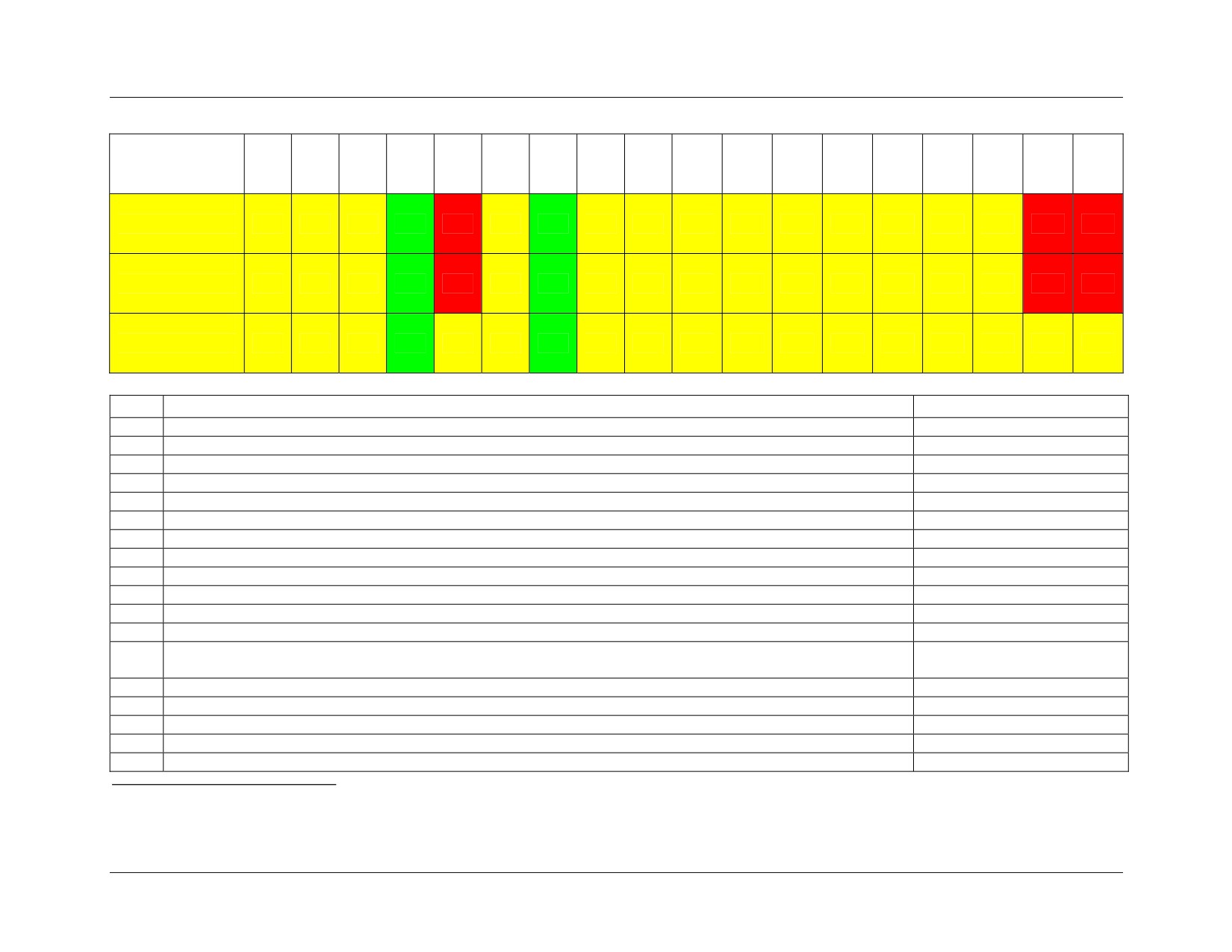
Table 6.6-1. SNSHA 6: Capability and Deficiency Assessment
Capability:
Joint Staff, J-3
M1
M2
M3
M4
M5
M6
M7
M8
M9
M10
M11
M12
M13
M14
M15
M16
M17
M18
Readiness
Current
Overall
Y2
Y3
Y4
G5
R6
Y7
G8
Y9
Y10
Y11
Y12
Y13
Y14
Y15
Y16
Y17
R18
R19
Capability1
Near/Mid-Term
Overall
Y
Y
Y
G
R
Y
G
Y
Y
Y
Y
Y
Y
Y
Y
Y
R
R
Capability
Far-Term
Overall
Y
Y
Y
G
Y21
Y
G
Y
Y
Y
Y
Y
Y
Y
Y
Y
Y22
Y23
Capability20
FAA Measure
Scale
M1
Doctrine and TTPs are adequate for operations envisioned over the next 5-10 years.
G - Yes, Y - Limited, R - No
M2
CBRN/TIM events and defense operations are incorporated in joint and Service exercises routinely.
G - Yes, Y - Limited, R - No
M3
National and joint exercises are held that focus on CBRND operations.
G - Yes, Y - Limited, R - No
M4
Joint- or Service-sponsored experiments focusing on CBRND operations occur annually.
G - Yes, Y - Limited, R - No
M5
Policies for training of joint forces are enforced.
G - Yes, Y - Limited, R - No
M6
Policies are in place to train those civilians not members of the joint force.
G - Yes, Y - Limited, R - No
M7
Standards are established for CBRND readiness.
G - Yes, Y - Limited, R - No
M8
A training program is established for potential evacuees.
G - Yes, Y - Limited, R - No
M9
Training of CBRND specialists is adequate.
G - Yes, Y - Limited, R - No
M10
Training of CBRND units is adequate.
G - Yes, Y - Limited, R - No
M11
Training of CBRND staff cells is adequate.
G - Yes, Y - Limited, R - No
M12
Training of joint force staffs is adequate.
G - Yes, Y - Limited, R - No
M13
Personnel assigned to diplomatic posts or employed in at-risk nations are effectively trained to respond to a
G - Yes, Y - Limited, R - No
CBRN/TIM event.
M14
Tools and processes are available to globally manage CBRND personnel and units.
G - Yes, Y - Limited, R - No
M15
Tools and processes are available to globally manage CBRND materiel resources.
G - Yes, Y - Limited, R - No
M16
CBRND logistics tracking system is sufficient.
G - Yes, Y - Limited, R - No
M17
CBRN expert access is readily available for all CBRND topics.
G - Yes, Y - Limited, R - No
M18
Sufficient experts are available to meet peak demand.
G - Yes, Y - Limited, R - No
1 Very limited. DOTMLPF does not adequately ensure Joint CBRN readiness.
31
For Official Use Only
For Official Use Only
CBRND Functional Needs Analysis/Functional Solution Analysis
Chapter 6. Strategic National Shape Tasks
2 Limited. As a result of the global war on terror, CBRN doctrine and TTPs are adequate for operations envisioned over the next 3-5 years, but not 7-10 years. Additional
emphasis must be placed on the full realm of threats envisioned in JV 2010 and JV 2020.
3 Very limited. CBRN events and defense operations are incorporated, but emphasis should be placed on the full spectrum of CBRND operations. This emphasis should include the
new JP 3-40, combating WMD, counterproliferation, and consequence management.
4 Limited. CBRN specific exercises need to occur more often and cover more topics. CBRN/TIM scenarios need to be integrated into every national and joint exercise because of
the recurring need to test capabilities in realistic CBRN/TIM scenarios, Two exercises that focus on CBRN operations are the TOPOFF exercises and the Determined Promise
exercises that are held on a recurring basis.
5 Advanced Technology Demonstrations and Advanced Technology Concept Demonstrations have been conducted on CBRND operations. Once it is initiated, the new JRO-
CBRND-sponsored CBRND Experimentation Campaign Plan will provide an excellent plan for experimentation.
6 No. Training enforcement is service-, situation-, and scenario-specific even though there is joint training involving two or more services. JPME is not specific enough for
CBRND requirements.
7 Limited. Policies are not in place throughout the force structure, and those that are in place only pertain to immediate survivability. Individual training requirements are
established for CONUS DoD civilians and contract support personnel.
8 Yes. IAW JSCAP and JP 1-03.
9 Limited. U.S. Forces Korea does this. However, this capability does not exist across the force structure.
10 Limited. This requirement is unique to each service. Tactical-level preparation is adequate with all services. Leader training and education for operational-level and above is
nonexistent except for elective courses. Multiservice institutional training occurs with the Army as the lead Service.
11 Limited. Training standards vary between Services. The number and type of exercises involving CBRND units varies. The amount of time available to Reserve Component units
restricts the level of their training to the most crucial collective tasks.
12 Limited. Training standards are different among services. The number and types of exercises involving CBRN staff cells differs.
13 Limited. Training standards differ. The number and types of exercises involving CBRN training events varies as does the depth and level of expertise within joint staffs. With
few exceptions, CBRN training events do not adequately portray the level and complexity of a real-world situation.
14 Limited. Training is limited to initial survival and evacuation scenarios.
15 Limited. CBRN personnel and units are managed in the same manner as other deployable personnel and units. However, due to the unique mission of CBRN personnel and
units, tools should be developed to intensively manage them.
16 Limited. CBRN materiel is managed in the same manner as other materiel (e.g., through various classes of supply). However, due to the unique character of CBRN materiel,
tools should be developed to intensively manage and track it.
17 Limited. Currently, CBRN logistics are tracked the same as other assets. However, given the probable heavy medical and logistical requirements that would occur in a CBRN
response, a separate CBRND logistics tracking systems should be developed.
18 Very limited. The Defense Threat Reduction Agency (DTRA) sponsors a call-back capability. Scarce CBRN experts are dispersed throughout the DoD force structure and are
frequently only one or two deep in any given organization.
19 Very limited. In most cases, CBRN experts are readily available (e.g., from DTRA, the Centers for Disease Control, the U.S. Army Medical Research Institute for Infectious
Diseases, etc.). However, experts embedded in units are frequently only one or two deep and may not be available to meet peak demand.
20 DOTMLPF should improve in all deficient areas as a result of initiatives that use data resulting from focused experimentation.
21 Joint standards will be developed and enforced among the services. JPME/Officer Professional Military Education will stipulate CBRND learning areas. It will take some time
after these actions to reach full capability in this area.
22 As DOTMLPF enhancements are introduced, the expertise of senior leaders will improve, mitigating the need for such extensive call-back capabilities. It will take some time
after these actions to reach full capability in this area.
23 As DOTMLPF enhancements are introduced, the expertise of senior leaders will improve, mitigating the need for such extensive call-back capabilities. It will take some time
after these actions to reach full capability in this area.
32
For Official Use Only
For Official Use Only
CBRND Functional Needs Analysis/Functional Solution Analysis
Chapter 6. Strategic National Shape Tasks
6.6.3
Functional Solution Analysis
6.6.3.1
DOTLPF Assessment Summary
This section addresses the deficiencies and suggests potential non-materiel solutions. If there are
no non-materiel solutions, or they are only partial solutions, the remaining non-materiel need is
then stated. Materiel needs are assessed in the IMA Summary.
1.
Deficiency: CBRN doctrine and TTPs are not adequate for operations envisioned over the
next 7-10 years.
Non-Materiel Solutions: Doctrine: Devise a system that allows for more frequent revision
and update to the CBRND doctrinal literature cycle.
2.
Deficiency: Emphasis is not placed on the full spectrum of CBRND operations and
considerations which range from counterproliferation to consequence management in joint
and service exercises.
Non-Materiel Solutions: Doctrine: Implement the full range of CBRN-related activities in
doctrine: deterrence; counterproliferation; nonproliferation; interdiction; elimination;
restoration. Training: Institute the full range of CBRN options in doctrine followed
immediately by courses in the joint and Service institutional base which reflect all
considerations from counterproliferation to consequence management.
3.
Deficiency: Training enforcement is specific to service, situation, and scenario. JPME lacks
specificity for WMD requirements.
Non-Materiel Solutions: Training: Develop JPME that mandates minimum standards of
proficiency in all CBRN institutional training.
4.
Deficiency: Policies are in place to train DoD civilians throughout the force structure but
only pertain to immediate survivability.
Non-Materiel Solutions: Doctrine: Develop policies to train DoD civilians throughout the
force structure beyond mere immediate survivability. Training: Develop training for DoD
civilians throughout the force structure beyond mere immediate survivability
5.
Deficiency: The capability to establish training programs for potential civilian evacuees does
not exist across the force structure.
Non-Materiel Solutions: Training: Establish standardized training programs for potential
civilian evacuees across the force structure.
6.
Deficiency: Sustainment training for CBRND specialists (once they reach their assigned
duty stations) is probably not adequate.
Non-Materiel Solutions: Training: Develop standards of proficiency for sustainment
training for CBRND specialists across the force structure.
7.
Deficiency: Training of CBRND units is not standardized. There is a lack of realism in
training which emphasizes CBRN. Sustainment training does not adequately reinforce
perishable collective technical CBRN-related skills.
33
For Official Use Only
For Official Use Only
CBRND Functional Needs Analysis/Functional Solution Analysis
Chapter 6. Strategic National Shape Tasks
Non-Materiel Solutions: Training: Across the force structure, develop one set of standards
of proficiency for all CBRND units and staffs.
8. Deficiency: Institutional training of CBRND staffs is not standardized. Sustainment training
does not adequately reinforce perishable collective technical CBRN-related skills.
Non-Materiel Solutions: Training: Develop standardized institutional training of CBRND
staffs across the force structure.
9. Deficiency: The number and type of exercises involving CBRN events differ widely. Few
involve the full spectrum of activities required in an actual CBRN event.
Non-Materiel Solutions: Training: Develop exercises that more completely include the full
spectrum of activities required in multiple, simultaneous actual CBRN events.
10. Deficiency: The depth and level of CBRN expertise within various joint staff sections varies.
Non-Materiel Solutions: Doctrine: Develop TTPs and exercises to ensure staff proficiency
in the full range of CBRN considerations from interdiction and elimination operations,
through humanitarian assistance, to restoration operations. Training: Develop TTPs and
exercises to ensure staff proficiency in the full range of CBRN considerations from
interdiction and elimination operations, through humanitarian assistance, to restoration
operations.
11. Deficiency: There are no tools that can intensively manage CBRN personnel and units.
Non-Materiel Solutions: Doctrine (partial): Develop TTPs that more adequately train
CBRN personnel and units to ensure these scarce assets are available, fully mission-capable,
and able to operate in a joint and combined environment. Training (partial): Develop TTPs
that more adequately train CBRN personnel and units to ensure these scarce assets are
available, fully mission-capable, and able to operate in a joint and combined environment.
12. Deficiency: CBRN expertise is scarce throughout the force structure.
Non-Materiel Solutions: Organization: Within end-strength constraints, consideration
should be given to increasing the capabilities of CBRND units and staffs. Personnel: Within
end-strength constraints, consideration should be given to increasing the capabilities of
CBRND units and staffs.
6.6.3.2
IMA Assessment Summary
Table 6.6-2 shows possible materiel approaches that address the remaining materiel requirements
of the DOTMLPF assessment.
34
For Official Use Only
For Official Use Only
CBRND Functional Needs Analysis/Functional Solution Analysis
Chapter 6. Strategic National Shape Tasks
Table 6.6-2. SNSHA 6: IMA Assessment
Idea for Materiel Approach
Description
Automated Tools
Develop automated tools that more adequately manage
CBRN personnel, unit, and materiel to ensure that these
scarce assets are available and fully mission-capable when
needed. All data should be available to/through the Joint
Operational Effects Federation. The personnel component of
the tool should include projected availability, education,
experience, and special skills. The unit component of the
tool should include unit capability description, required
training for unit, last date of required training, and training
required but not completed. The unit component should also
address equipment fill data, equipment readiness data, and
special logistical requirements. The materiel component
should list all required materiel, percentage of materiel on
hand/available and availability dates, and materiel condition
descriptions.
35
For Official Use Only
For Official Use Only
CBRND Functional Needs Analysis/Functional Solution Analysis
Chapter 6. Strategic National Shape Tasks
6.7
Task SNSHA 7: Coordinate global CBRN information systems and processes
6.7.1
Functional Area Analysis
6.7.1.1
Definition
To ensure that global CBRN/TIM information systems and processes allow joint forces to
effectively conduct operations in a CBRN/TIM environment. Establishes the standards, common
operating procedures, and formats for plotting and predicting CBRN/TIM hazards, along with
alarm, warning, and reporting of the hazards. Also includes standards and procedures for
displaying hazard information via the global COP. Ensures that interoperability procedures are
followed and adhered to for integration into the DoD classified and unclassified networks.
Includes maintaining worldwide shared awareness of the current and projected CBRN/TIM
threat and situation.
6.7.1.2
Derivation
UJTL (SN 1.1.6, SN 2.2.1, SN 2.4.1.2, SN 3.3.6, SN 4.3.3, SN 4.3.4, SN 5.1.1, SN 5.1.2, SN 5.1.3,
SN 5.1.3, SN 5.7.1, SN 7.5, SN 8.1.6, SN 9, SN 9.1.1, SN 9.1.2, SN 9.1.3, SN 9.2, SN 9.2.1, SN
9.2.2), Protection Joint Functional Concept, Military Transformation: A Strategic Approach,
Transformation Planning Guidance, An Operational Concept for Biological Defense, Joint
Enabling Concept for CBRN Operations.
6.7.1.2.1
Supported Task: N/A
6.7.1.2.2
Lateral Task: SNSUST 6
6.7.1.2.3
Supporting Task: STSHA 5
6.7.1.3
Condition
Perform this task under conditions of:
Physical. N/A
Military
1. Low military systems reliability. (C2.2.5.3)
2. Some or no interoperability. (C2.2.6)
3. Partial Joint Staff integration. (C2.3.1.1)
4. High information volume. (C2.3.1.9)
Civil
1. Poor information management. (C3.3.7.4)
36
For Official Use Only
For Official Use Only
CBRND Functional Needs Analysis/Functional Solution Analysis
Chapter 6. Strategic National Shape Tasks
6.7.2
Functional Needs Analysis
6.7.2.1
Capability and Deficiency Assessment Summary
Table 6.7-1 discusses the capabilities that currently exist to perform the task to the designated
standard.
Current Capability and Deficiency
All of the capabilities listed are directly responsible for their respective aspects of global CBRN
information systems and processes. The Joint Staff Directorate for Command, Control,
Communications, and Computer Systems, the J-6, leads the C4 community. It leads in
identifying and resolving military aspects of information-based issues of national importance, to
include CBRND issues. Because of documented training, education, and experience issues, J-6
personnel may not have a full grasp of the issues that need to be resolved. As the Chairman of
the Joint Chiefs of Staff’s single source of expertise in addressing CBRN defense issues
involving the warfight, the JRO-CBRND must proactively engage the J-6 to determine the
adequacy of current and projected global CBRN information systems and processes. For the
purposes of this analysis, current capabilities are listed and issues that need to be further assessed
and clarified are provided for JRO-CBRND/J-6 action. The current capability assessment is
“yellow.”
Projected Near/Mid-Term Capability and Deficiency
No other capability is currently projected for the near/mid term. No capability improvement is
expected in the near/mid term. Most near/mid-term measures will remain limited until the Joint
Warning and Reporting Network (JWARN) automatically interfaces with the Global Command
and Control System (GCCS).
Projected Far-Term Capability and Deficiency
No other capability is currently projected for the far-term future. DOTMLPF should improve in
some deficient areas as a result of international and interagency initiatives that use data resulting
from focused experimentation. Most far-term measures will remain limited until JWARN
automatically interfaces with GCCS.
37
For Official Use Only
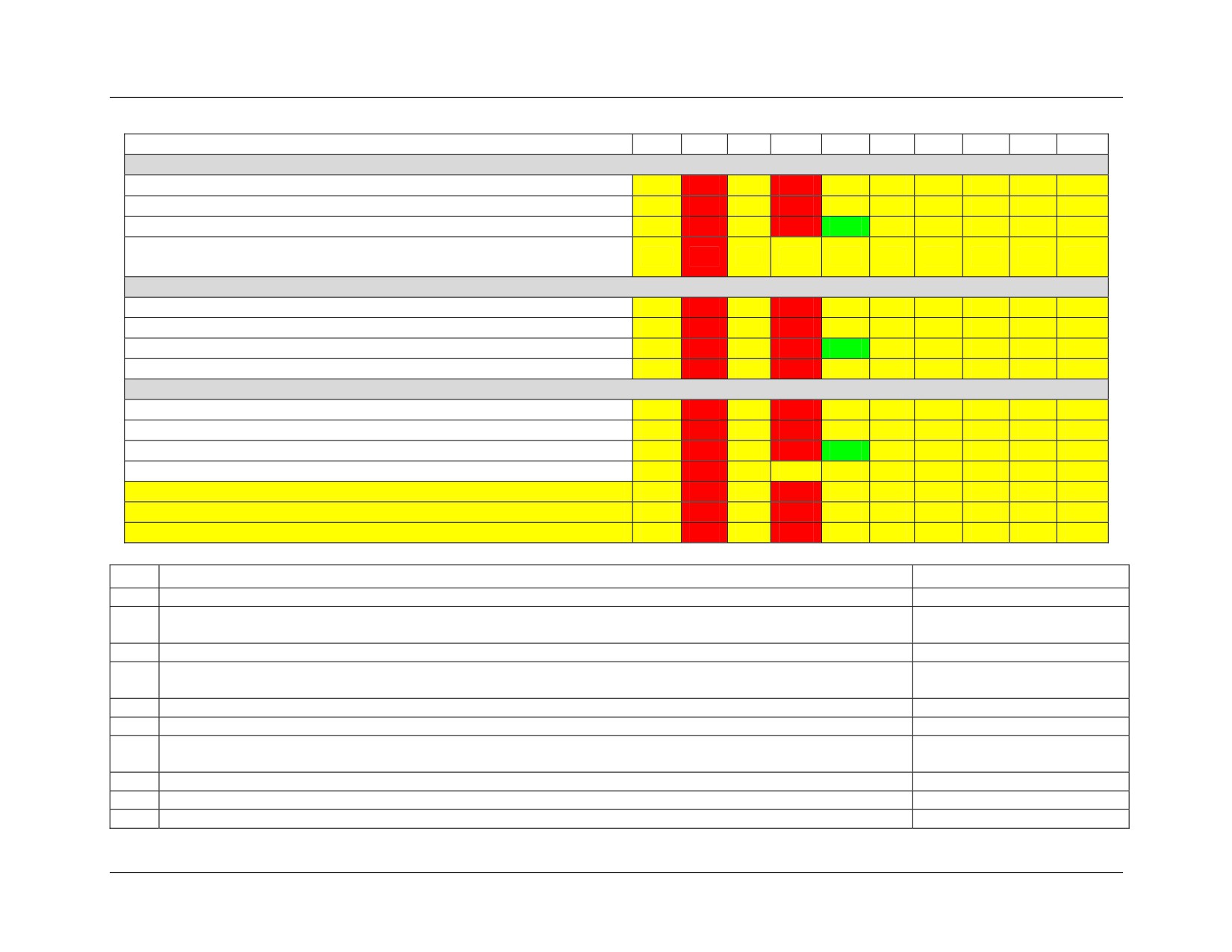
For Official Use Only
CBRND Functional Needs Analysis/Functional Solution Analysis
Chapter 6. Strategic National Shape Tasks
Table 6.7-1. SNSHA 7: Capability and Deficiency Assessment
Capability/Measure
M1
M2
M3
M4
M5
M6
M7
M8
M9
M10
Current
Defense Information Systems Agency
Y1
R2
Y3
R4
Y5
Y6
Y7
Y8
Y9
Y10
Defense Threat Reduction Information Analysis Center (DTRIAC)
Y11
R12
Y13
R14
Y15
Y16
Y17
Y18
Y19
Y20
Joint Global Command and Control System (GCCS-J)
Y21
R22
Y23
R24
G25
Y26
Y27
Y28
Y29
Y30
Joint Program Manager for Information Systems (JPM-IS) CBRN Data
Y31
R32
Y33
Y
Y34
Y35
Y36
Y37
Y38
Y39
Initiative
Near/Mid
Defense Information Systems Agency
Y
R
Y
R
Y
Y
Y
Y
Y
Y
Defense Threat Reduction Information Analysis Center
Y
R
Y
R
Y
Y
Y
Y
Y
Y
Joint Global Command and Control System
Y
R
Y
R
G
Y
Y
Y
Y
Y
Joint Program Manager for Information Systems CBRN Data Initiative
Y
R
Y
R40
Y
Y
Y
Y
Y
Y
Far
Defense Information Systems Agency
Y
R
Y
R
Y
Y
Y
Y
Y
Y
Defense Threat Reduction Information Analysis Center
Y
R
Y
R
Y
Y
Y
Y
Y
Y
Joint Global Command and Control System
Y
R
Y
R
G
Y
Y
Y
Y
Y
Joint Program Manager for Information Systems CBRN Data Initiative
Y
R
Y
Y
Y
Y
Y
Y
Y
Y
Current Overall Capability
Y
R
Y
R
Y
Y
Y
Y
Y
Y
Near/Mid-Term Overall Capability
Y
R
Y
R
Y
Y
Y
Y
Y
Y
Far-Term Overall Capability
Y
R
Y
R
Y
Y
Y
Y
Y
Y
FAA Measure
Scale
M1
NCES is used to effectively manage and provide CBRN/TIM information.
G - Yes, Y - Limited, R - No
M2
Standardized CBRN/TIM hazard alarm, warning, and reporting formats and procedures are interoperable with
G - Yes, Y - Limited, R - No
interagency partners.
M3
Sense data are integrated into the COP.
G - Yes, Y - Limited, R - No
M4
Distributed sensor arrays operating within the Integrated Detection Network (IDN) provide automated warning and
G - Yes, Y - Limited, R - No
reporting of the CBRN/TIM hazard.
M5
Nonnetworked detections and manual reports are processed into the network.
G - Yes, Y - Limited, R - No
M6
Standards for plotting and prediction of CBRN/TIM hazards are established.
G - Yes, Y - Limited, R - No
M7
CBRN/TIM situational information from all global sources is communicated to the DoD and Joint Staff, as
G - Yes, Y - Limited, R - No
appropriate.
M8
Mechanism exists to rapidly disseminate CBRN/TIM threat intelligence.
G - Yes, Y - Limited, R - No
M9
Information on the operational impact of CBRN/TIM events is integrated into the COP.
G - Yes, Y - Limited, R - No
M10
A CBRND operation reference information system is readily available.
G - Yes, Y - Limited, R - No
38
For Official Use Only
For Official Use Only
CBRND Functional Needs Analysis/Functional Solution Analysis
Chapter 6. Strategic National Shape Tasks
1 Limited. Net-Centric Enterprise Services (NCES) is dependent on subsystems, including JPM-IS’s Data Initiative. This mission will be achieved by developing a CBRN Data
Model and related CBRN extensible markup language (XML). Until all subordinate systems are fully operational, DISA’s NCES is less than fully mission-capable.
2 No. Interagency partners are not operating on a COP.
3 Limited. Interfacing software for SENSE data is not fully automated.
4 No. An integrated detection network does not currently exist for automated warning and reporting of the CBRN hazard.
5 Limited. Any operator can process reports into the network, but there are still problems with interoperability that continue to hinder the flow of CBRN information across the
analysis spectrum.
6 Limited. Standards for plotting and prediction of CBRN hazards are established. A single standard for automated plotting and prediction CBRN hazards does not yet exist.
7 Limited. CBRN situational information from all global sources is not fully communicated to the DoD and Joint Staff, as appropriate.
8 Limited. Any authorized operator can query DTRIAC or J-2 resources. However, the NCES is not fully implemented.
9 Limited. Any authorized operator can query DTRIAC for the COP. However, the NCES is not fully implemented.
10 Limited. Interagency partners do not access DTRIAC.
11 Limited. The NCES is not fully implemented. The NCES, consisting of hardware, software, policy, processes, and procedures, will eventually provide a way for DoD to
coordinate staff and allocate resources more efficiently.
12 No. Interagency partners are not operating on a COP.
13 Limited. Interfacing software for Sense data is not fully automated.
14 No. An integrated detection network does not currently exist for automated warning and reporting of the CBRN hazard.
15 Limited. Any operator can process reports into the network, but there are still problems with interoperability that continue to hinder the flow of CBRN information across the
analysis spectrum.
16 Limited. Standards for plotting and prediction of CBRN hazards are established. A single standard for automated plotting and prediction CBRN hazards does not yet exist.
17 Limited. CBRN situational information from all global sources is not fully communicated to the DoD and Joint Staff, as appropriate.
18 Limited. Any authorized operator can query DTRIAC or J-2 resources. However, the NCES is not fully implemented.
19 Limited. Any authorized operator can query DTRIAC for the COP. However, the NCES is not fully implemented.
20 Limited. Interagency partners do not access DTRIAC.
21 Limited. CBRND information must be manually inserted onto GCCS-J.
22 No. Interagency partners operate on different Command and Control systems.
23 Limited. Sense data are manually input into the COP.
24 No. An integrated detection network does not currently exist for automated warning and reporting of the CBRN hazard.
25 Yes. Any authorized operator can manually process reports into GCCS-J.
26 Limited. Standards for plotting and prediction of CBRN hazards are established through STANAG 2103 and ATP-45. But there is no single standard for automated plotting and
prediction CBRN hazards .
27 Limited. CBRN situational information from all global sources is not fully automated and communicated to the DoD and Joint Staff, as appropriate.
28 Limited. Any authorized operator can query GCCS-J. However, the NCES is not fully implemented.
29 Limited. Any authorized operator can query the COP. However, the NCES is not fully implemented.
30 Limited. Interagency partners do not access GCCS-J.
31 Limited. JPM-IS is working to eliminate interoperability problems across the joint CBRN information spectrum.
32 No. Interagency partners operate on different Command and Control systems.
33 Limited. Sense data can only be manually integrated into the COP. JPM-IS is working to eliminate interoperability problems across the joint CBRN information spectrum.
34 Limited. JPM-IS is working to eliminate interoperability problems across the joint CBRN information spectrum.
35 Limited. Current progress toward creating automation standards is encouraging but work still needs to be done. The programs within JPM have already benefited from the JPM-
IS data model and schema.
36 Limited. CBRN situational information from all global sources is not fully automated and communicated to the DoD and Joint Staff. There is still a problem with data-
interoperability, but the emerging NCES includes mandates to solve this problem.
39
For Official Use Only
For Official Use Only
CBRND Functional Needs Analysis/Functional Solution Analysis
Chapter 6. Strategic National Shape Tasks
37 Limited. Any authorized operator can query GCCS-J. However, the NCES and NCES are not fully implemented.
38 Limited. Any authorized operator can query the COP. However, the NCES and NCES are not fully implemented.
39 Limited. The JPM-IS Data Initiative is creating a structure for the CBRN community of operations and phenomena that will include CBRN-related terms and definitions that are
formatted relationally.
40 No. There is no integrated detection network to provide automated warning and reporting of the CBRN hazard. However, JPM-IS is working to create a common data schema to
facilitate automated reporting envisioned in JWARN, Joint Effects Model (JEM), and Joint Operational Effects Federation (JOEF).
40
For Official Use Only
For Official Use Only
CBRND Functional Needs Analysis/Functional Solution Analysis
Chapter 6. Strategic National Shape Tasks
6.7.3
Functional Solution Analysis
6.7.3.1
DOTLPF Assessment Summary
This section addresses the deficiencies and suggests potential non-materiel solutions. If there are
no non-materiel solutions, or they are only partial solutions, the remaining non-materiel need is
then stated. Materiel needs are assessed in the IMA Summary.
1.
Deficiency: Interagency partners operate on different Command and Control technical
architecture systems.
Non-Materiel Solutions: Doctrine: CJCS should coordinate with interagency partners to
craft a policy that compels partners to fully integrate CBRN information management
systems. Tasks for the interagency Universal Joint Task List (UJTL) must address these
issues. Interagency partners should fully participate in the JPM-IS initiative. Training: CJCS
should continue to encourage the development of training programs and future operational
capabilities that integrate CBRN information management systems using UJTL tasks to
develop interagency training. JPM-IS CBRN Data Initiative should continue as chartered.
2.
Deficiency: Interoperability problems with CBRN information systems continue to exist.
Non-Materiel Solutions: Doctrine: JPM-IS CBRN Data Initiative should continue as
chartered. JRO-CBRND and J-6 should work together through experimentation and exercises
to identify and solve interoperability problems.
3.
Deficiency: An integrated detection network does not currently exist for automated warning
and reporting of the CBRN hazard.
Non-Materiel Solutions: Doctrine: Develop ideas, proposals, and concepts for cooperatively
linked detection technologies. Training: Before concepts for cooperatively linked detection
technologies can be fully developed and tested, exercises and experiments will be necessary
to refine and test concept hypothesis.
4.
Deficiency: CBRN situational information from all global sources is not fully automated.
Non-Materiel Solutions: Doctrine: Automate CBRN situational information from all global
sources so that the COP portrays real-time shared situational understanding. JPM-IS CBRN
Data Initiative should continue as chartered.
5.
Deficiency: The NCES and JPM-IS CBRN Data Initiative are not fully implemented.
Non-Materiel Solutions: Doctrine: The Global Information Grid Enterprise Services and
JPM-IS CBRN Data Initiative should continue as chartered.
6.
Deficiency: Joint standards, common operating procedures, and formats for plotting and
predicting CBRN hazards, along with alarm, warning, and reporting of the hazards do not
exist.
Non-Materiel Solutions: Doctrine: JRO-CBRND should foster the development of truly
Joint (versus multi-Service) standards and formats for automated plotting and predicting
CBRN hazards and alarm and warning systems.
41
For Official Use Only
For Official Use Only
CBRND Functional Needs Analysis/Functional Solution Analysis
Chapter 6. Strategic National Shape Tasks
7. Deficiency: Interagency partners are not all sharing a COP.
Non-Materiel Solutions: Doctrine: CJCS should coordinate with interagency partners to
craft policy that compels partners to fully integrate CBRN information management systems
so that all U.S. agencies share the same CBRND COP. Tasks for the interagency UJTL must
address these issues. Interagency partners should fully participate in the JPM-IS initiative.
8. Deficiency: With the exception of STANAG 2103 and ATP-45, no standards for common
operating procedures, formats, plotting, and predicting CBRN hazards exist. Further, hazard
alarm, warning, and reporting are not standardized, automated, nor fully integrated into the
COP for use by interagency partners.
Non-Materiel Solutions: Doctrine: Standardize common operating procedures, and formats
for plotting and predicting CBRN hazards, along with alarm, warning, and reporting of the
hazards among interagency partners.
9. Deficiency: With the exception of STANAG 2103 and ATP-45 there are no joint (versus
multi-Service) standards for common operating procedures or for formats for plotting and
predicting CBRN hazards. Nor are alarm, warning, and reporting of the hazards standardized,
automated, and fully integrated into the COP.
Non-Materiel Solutions: Doctrine: Fully integrate and automate CBRND information,
detection, and sensing technologies into the COP.
10. Deficiency: Interagency partners do not access GCCS-J.
Non-Materiel Solutions: Doctrine: CJCS should coordinate with interagency partners to
craft policy that compels partners to fully integrate CBRN information management systems.
Tasks for the interagency UJTL must address these issues. Interagency partners should fully
participate in the JPM-IS initiative.
11. Deficiency: Several issues hinder the effectiveness of the J-6 and JRO-CBRND in their joint
responsibility for identifying and resolving issues involving global CBRN information
systems and processes with agencies outside of the joint staff.
Non-Materiel Solutions: Doctrine: Joint Command, Control, Communications, Computers,
Intelligence, Surveillance, and Reconnaissance (C4ISR) and CBRN publications must be
enhanced to adequately address this issue and to interface with each other so that roles and
responsibilities are clearly delineated. Organization: JRO-CBRND should have a staff
section dedicated to resolving C4ISR community issues. Ensure that CBRN organizations
that provide DoD detailees to national C4ISR organizations are proactive in ensuring their
institutional CBRN C4ISR needs are both understood and met and that the detailees they
provide are prepared in every way. Training: Develop training that will enable the J-6 staff to
better understand their CBRN role and enhance their ability to identify and resolve CBRND
C4 issues that are required to support the Shape function of strategic national CBRND.
Develop training programs that allow CBRN staff officers to better support the CBRN
C4ISR process. JRO-CBRND must work with J-6 and/or national C4ISR organizations to
integrate this task into both C4ISR and CBRN experimentation campaign plans. Leadership:
Develop an education program that will enable the J-6 staff to better understand their CBRN
role and enhance their ability to identify and resolve CBRND C4 issues that are required to
support the Shape function of strategic national CBRND. Develop education programs that
42
For Official Use Only
For Official Use Only
CBRND Functional Needs Analysis/Functional Solution Analysis
Chapter 6. Strategic National Shape Tasks
allow CBRN staff officers to better understand the CBRN C4ISR process and their roles and
responsibilities. Integrate C4ISR CBRN fusion issues into JPME. CBRN DoD detailees to
national C4ISR organizations must be provided with formal educational preparation.
Personnel: CBRN DoD detailees to national C4ISR organizations must possess adequate skill
and experience.
12. Deficiency: Lack of interoperable CBRN/TIM networked detection technologies.
Non-Materiel Solutions: Doctrine (partial): Develop ideas, proposals, and concepts for
cooperatively linked detection technologies. Training (partial): Before concepts for
cooperatively linked detection technologies can be fully developed and tested, exercises and
experiments will be necessary to refine and test concept hypothesis.
6.7.3.2
IMA Assessment Summary
Table 6.7-2 shows possible material approaches that address the remaining materiel requirements
of the DOTMLPF assessment.
Table 6.7-2. SNSHA 7. IMA Assessment
Idea for Materiel Approach
Description
Networked information,
There is a need to develop cooperative linkages between
detection, and sensing system
various proponent and service CBRND and CBRN/TIM
information, detection, and sensing technologies. Concepts
must first be developed based on proposed linkages that will
provide capabilities for effective, integrated CBRND and
CBRN/TIM detection, warning, and shared situational
understanding. These concepts must be explored through
experimentation and the cooperative linkages that result need
to be tested. The entire package should be developed as a
system and fully integrated into a multi-agency COP. As each
Service develops detection or sensing technologies, they
should be analyzed for inclusion into the CBRN/TIM
cooperative detection network and necessary modifications
should be mandated for the Service systems.
43
For Official Use Only
For Official Use Only
CBRND Functional Needs Analysis/Functional Solution Analysis
Chapter 6. Strategic National Shape Tasks
6.8
Task SNSHA 8: Establish national CBRND strategy, plans, and policy
6.8.1
Functional Area Analysis
6.8.1.1
Definition
To produce and disseminate national strategy, plans, and policy providing strategic goals and end
states for CBRND capabilities. Joint, multiagency, and international considerations are included.
This task is geared to enabling the national strategies. Includes providing strategic guidance for
restoration and elimination operations.
6.8.1.2
Derivation
UJTL (SN 1.1.6, SN 2.2.1, SN 2.4.1.2, SN 2.5.1, SN 3.4.4, SN 5.1.1, SN 5.1.2, SN 5.1.3, SN 5.2.3,
SN 7.5, SN 8.1.6, SN 9, SN 9.1.3, SN 9.2, SN 9.2.1, SN 9.2.2), Protection Joint Functional
Concept, Military Transformation: A Strategic Approach, Transformation Planning Guidance,
An Operational Concept for Biological Defense, Joint Enabling Concept for CBRN Operations.
6.8.1.2.1
Supported Task: N/A
6.8.1.2.2
Lateral Tasks: SNSENS 15, SNSHA 2, SNSHA 3, SNSHA 4, SNSHA 5,
SNSHA 9, SNSHA 10, SNSHA 11, SNSHA 12, SNSHA 13, SNSUST 3,
SNSUST 4
6.8.1.2.3
Supporting Task: STSHA 6
6.8.1.3
Condition
Perform this task under conditions of:
Physical. N/A
Military
1. Restrictive mission instructions. (C2.1.1)
2. Partial preexisting arrangements. (C2.1.1.2)
3. Partial Joint Staff integration. (C2.3.1.1)
Civil
1. Uncooperative interdepartmental/interagency relationships. (C3.1.1.3)
44
For Official Use Only
For Official Use Only
CBRND Functional Needs Analysis/Functional Solution Analysis
Chapter 6. Strategic National Shape Tasks
6.8.2
Functional Needs Analysis
6.8.2.1
Capability and Deficiency Assessment Summary
Table 6.8-1 discusses the Joint Staff, Directorate for Strategic Plans and Policy (J5) ability to
establish national CBRN strategy, plans, and policy. This is the only capability that exists, and
no other capability is projected that will accomplish this task.
Current Capability and Deficiency
The current capability assessment is “yellow.” Current plans do not adequately address global
restoration operations. However, JRO-CBRND, ICW J5 and J8 have developed a Joint
Integrating Concept (JIC) for CBRND. The JEC establishes a construct to support the National
Strategy to Combat Weapons of Mass Destruction wherein restoration operations are part of
consequence management. These two initiatives can serve as the foundation for future plan
development. Not all pertinent Sense, Shape, Shield, and Sustain information is currently
included in strategy, plans, and policy. However, once UJTL 5.0 is formally approved, all Sense,
Shape, Shield and Sustain domains must be considered and incorporated into strategy, plans, and
policy.
Projected Near/Mid-Term Capability and Deficiency
No other capability is currently projected for the near/mid term. No capability improvement is
expected over the near/mid term.
Projected Far-Term Capability and Deficiency
No other capability is currently projected for the far-term future. In the far term, the success of
initiatives recommended by this JCIDS and DOTMLPF enhancements across the board, made
possible by focused experimentation and lessons learned from exercises will improve all
measures to a “green” rating.
45
For Official Use Only
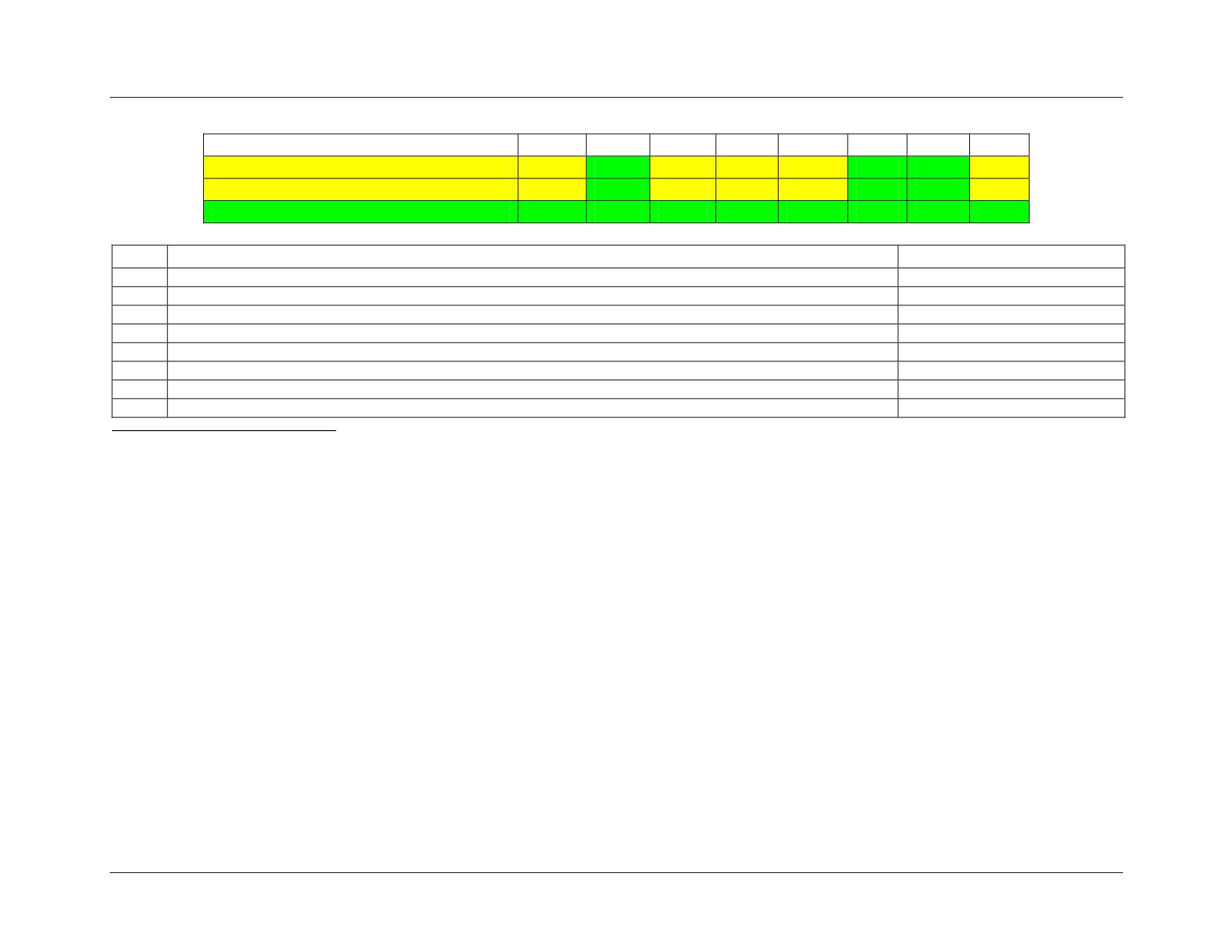
For Official Use Only
CBRND Functional Needs Analysis/Functional Solution Analysis
Chapter 6. Strategic National Shape Tasks
Table 6.8-1. SNSHA 8: Capability and Deficiency Assessment
Capability/Measure
M1
M2
M3
M4
M5
M6
M7
M8
Current Overall Capability1
Y2
G3
Y4
Y5
Y6
G7
G8
Y9
Near/Mid-Term Overall Capability
Y
G
Y
Y
Y
G
G
Y
Far-Term Overall Capability
G10
G
G
G
G
G
G
G
FAA Measure
Scale
M1
Plans are provided for global restoration operations.
G - Yes, Y - Limited, R - No
M2
Plans are provided for global elimination operations.
G - Yes, Y - Limited, R - No
M3
Plans are provided for global CBRND operations.
G - Yes, Y - Limited, R - No
M4
All pertinent Sense, Shape, Shield, and Sustain information is included in strategy, plans, and policy.
G - Yes, Y - Limited, R - No
M5
Strategic planning staffs have the training and experience to effectively plan for CBRND operations.
G - Yes, Y - Limited, R - No
M6
There are sufficient doctrine and TTPs for strategic planning.
G - Yes, Y - Limited, R - No
M7
Plans and policies are updated regularly.
G - Yes, Y - Limited, R - No
M8
National and joint exercises and experimentation provide feedback on efficacy of plans and policy.
G - Yes, Y - Limited, R - No
1 Limited. Presidential Decision Directives 17, 39, and 62 provide national-level policy and doctrine. Additionally, doctrine found in JP 3-11 series and JP 3-40, provide adequate
baseline doctrine and TTPs for national CBRND planning. However, TTPs needs to address more specific techniques. JPME does not adequately cover the art of strategic planning
for CBRN issues.
2 Limited. Current plans do not adequately address global restoration operations. However, JROCBRND, ICW J5 and J8 have developed a Joint Enabling Concept (JEC) for
CBRND. The JEC establishes a construct to support the National Strategy to Combat Weapons of Mass Destruction wherein restoration operations are part of consequence
management. These two initiatives can serve as the foundation for future plan development.
3 Yes. Current plans for global elimination operations do exist.
4 Limited. Current information does not adequately address plans for global CBRND operations. Most CBRND planning is done at the combatant command level.
5 Limited. All pertinent Sense, Shape, Shield, and Sustain information is not currently included in strategy, plans, and policy. However, once UJTL 5.0 is formally approved, all
Sense, Shape, Shield and Sustain domains must be considered and incorporated into strategy, plans and policy.
6 Limited. Strategic planning staffs are not adequately trained and educated in CBRN issues. CBRN staff officers are not adequately trained and educated in planning issues. JPME
does not adequately cover the fusion of planning. CBRN CJCSI 1800.01a does not require baseline CBRND instruction in JPME. Given the complex nature of planning for CBRN
defense operations at the strategic national level, these planning staffs must include multi-disciplined CBRND experienced senior planners.
7 Yes. The Joint Services Capability Plan, along with the JP 3-11 series and JP 3-40, provide adequate baseline doctrine and TTPs for strategic national CBRND planning.
8 Yes.
9 Limited. There are some Senior Service College tabletop exercises that provide feedback on efficacy of plans and policy. (e.g., Solo Challenge, Joint Land, Aerospace and Sea
Simulation [JLASS]).
10 In the far term, the success of initiatives recommended by this JCIDS and DOTMLPF enhancements across the board, made possible by focused experimentation and lessons
learned from exercises will improve all measures to a “green” rating.
46
For Official Use Only
For Official Use Only
CBRND Functional Needs Analysis/Functional Solution Analysis
Chapter 6. Strategic National Shape Tasks
6.8.3
Functional Solution Analysis
6.8.3.1
DOTLPF Assessment Summary
This section addresses the deficiencies and suggests potential non-materiel solutions. If there are
no non-materiel solutions, or they are only partial solutions, the remaining non-materiel need is
then stated. Materiel needs are assessed in the IMA Summary.
1.
Deficiency: Current plans do not adequately address global CBRN restoration operations.
Non-Materiel Solutions: Doctrine: Develop plans that adequately address global restoration
operations. Considerations must include operations, logistics, medical, economic,
infrastructure, the use of nongovernmental organizations, and displaced population
relocation.
2.
Deficiency: Not enough plans address global CBRND operations.
Non-Materiel Solutions: Doctrine: Develop plans that refine global CBRND and restoration
operations. Include TIM hazards, radiological hazards, novel and third-generation CB
hazards, protection, and decontamination.
3.
Deficiency: Not all pertinent Sense, Shape, Shield, and Sustain information is currently
included in strategy, plans, and policy.
Non-Materiel Solutions: Doctrine: Upon publication and approval of UJTL 5.0, review and
integrate the Sense, Shape, Shield, and Sustain domains into strategy, plans, and policy.
4.
Deficiency: Not all CBRN scenarios and contingencies can be envisioned in the planning
process.
Non-Materiel Solutions: Doctrine: Employ CBRN Red Teaming in the plan development
process.
5.
Deficiency: JPME does not adequately cover the art of strategic planning for CBRN issues.
Non-Materiel Solutions: Training: Develop JPME that more adequately covers the art of
strategic planning for CBRN issues.
6.
Deficiency: JRO-CBRND is not optimally placed within the Joint staff.
Non-Materiel Solutions: Organization: Given the unique JRO-CBRND charter for CBRN
defense, consider its optimal positioning within the Joint Staff. It is now imbedded within the
J-8 but has much broader responsibilities. Access is hampered by geographic positioning
outside of the Pentagon. Given the enormous military responsibilities (the Chairman of the
Joint Chiefs of Staff’s single source of expertise in addressing CBRN defense issues),
consider the resourcing of the office and rank-structure and staffing of personnel. There is no
cooperative linkage with the Defense Threat Reduction Agency (DTRA). Consider the
analogy of the J-2/DIA relationship. The Joint Staff Directorate for Intelligence, J-2, is a
unique organization, in that it is both a major component of the Defense Intelligence Agency
(DIA, a combat support agency) and a fully integrated element of the Joint Staff. Analysis of
establishing a similar arrangement with DTRA should be conducted. Consideration should be
47
For Official Use Only
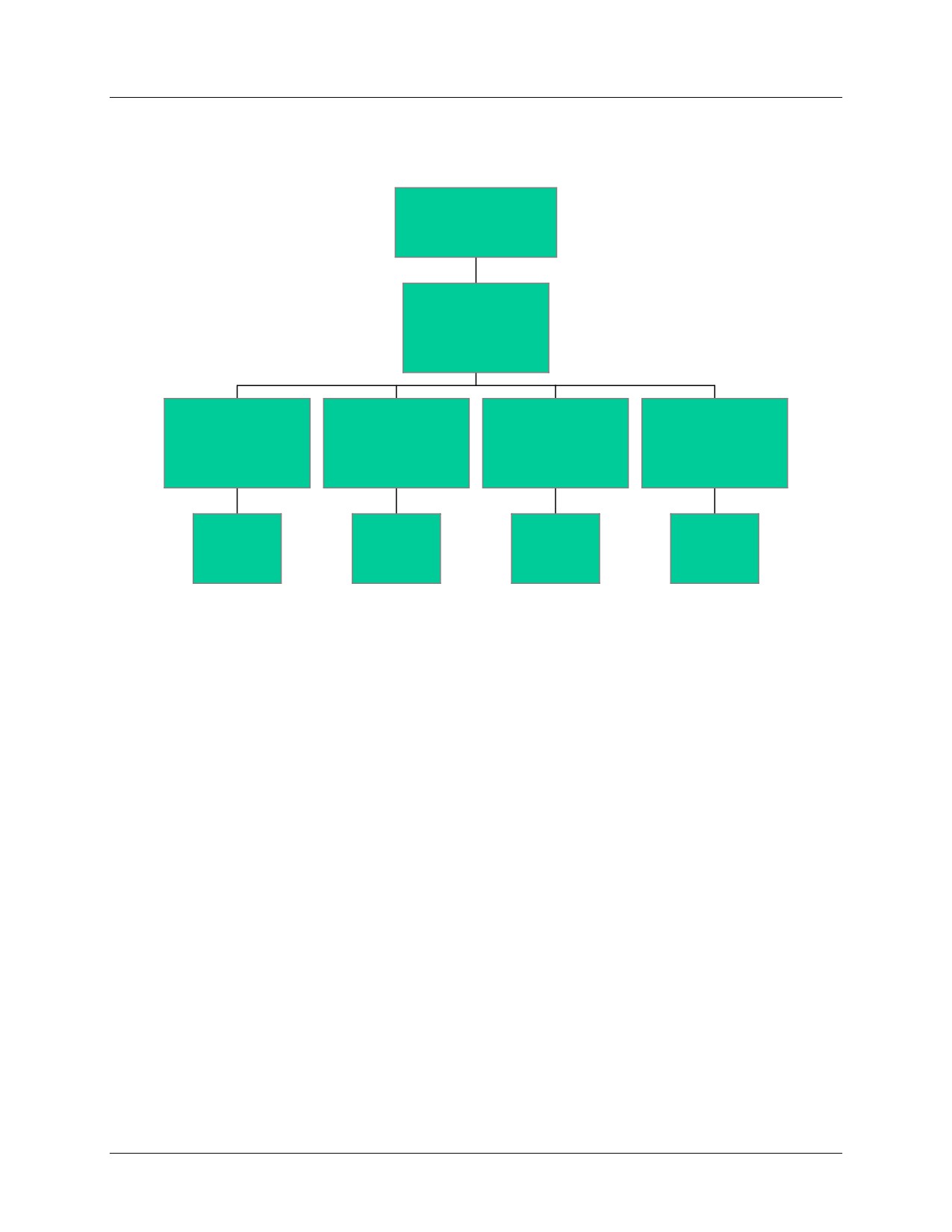
For Official Use Only
CBRND Functional Needs Analysis/Functional Solution Analysis
Chapter 6. Strategic National Shape Tasks
given to establishing JRO-CBRND as a numbered joint staff directorate. See Figure 6.8-1 for
a recommendation.
One-Star Flag Officer
Director, J-9
CBRN Defense
O-6 Officer
Vice-Director, J-9
CBRN Defense
15 Civilian
O-6 Officer
O-6 Officer
O-5 Officer
O-5 Officer
Deputy Director
Deputy Director
Deputy Director
Deputy Director
Joint CBRND
CBRND Education
CBRN Defense
Joint CBRN/TIM
Plans and Doctrine
Training, Exercises
Operations
Intelligence
10 Officer
12 Officer
5 Officer
5 Officer
10 Enlisted
13 Enlisted
5 Enlisted
5 enlisted
20 Civilian
30 Civilian
10 Civilian
10 Civilian
Breakdown by Service: 36 Army, 15 Navy, 15 Air Force
8 Marine, 2 Coast Guard, 85 Civilian
Figure 6.8-1 Proposed CJCS J-9 WMD Staff
6.8.3.2
IMA Assessment Summary
N/A
48
For Official Use Only
For Official Use Only
CBRND Functional Needs Analysis/Functional Solution Analysis
Chapter 6. Strategic National Shape Tasks
6.9
Task SNSHA 9: Coordinate CBRND aspects of global medical operations
6.9.1
Functional Area Analysis
6.9.1.1
Definition
To coordinate CBRND aspects of global medical operations. Sets standards for personnel health
and fitness required for potential exposure to CBRN/TIM conditions. Provides guidance for the
conduct of medical CBRN/TIM health assessments. Establishes threshold criteria for medical
CBRN/TIM health assessments, which determine deployment eligibilities for sustained
operations in a CBRN/TIM threat environment. Includes the coordination of medical
surveillance across the joint force for indications of CBRN/TIM attack or release.
6.9.1.2
Derivation
UJTL (SN 1.1.6, SN 2.2.1, SN 2.5.1, SN 3.3.6, SN 3.4.4, SN 4.3.3, SN 4.3.4, SN 5.1.1, SN 5.1.2,
SN 5.1.3, SN 7.5, SN 9, SN 9.1.3, SN 9.2, SN 9.2.1, SN 9.2.2), Transformation Planning
Guidance.
6.9.1.2.1
Supported Task: N/A
6.9.1.2.2
Lateral Tasks: SNSHA 2, SNSHA 4, SNSHA 8, SNSHA 10, SNSUST 7
6.9.1.2.3
Supporting Task: STSHA 7
6.9.1.3
Condition
Perform this task under conditions of:
Physical. N/A
Military
1. Restrictive mission instructions. (C2.1.1)
2. Fair personnel nutrition and health. (C2.2.4.1)
3. Limited personnel experience. (C2.2.4.5)
4. Limited staff experience. (C2.3.1.3)
Civil
1. Uncooperative interdepartmental/interagency relationships. (C3.1.1.3)
2. Uncertain international organization support. (C3.1.2.5)
49
For Official Use Only
For Official Use Only
CBRND Functional Needs Analysis/Functional Solution Analysis
Chapter 6. Strategic National Shape Tasks
6.9.2
Functional Needs Analysis
6.9.2.1
Capability and Deficiency Assessment Summary
Table 6.9-1 discusses the only capability that currently exists to perform the task to the
designated standard. There is only one capability that exists, and no other capability is projected
that will accomplish this task.
Current Capability and Deficiency
The Joint Staffs Logistics Directorate (J-4) is responsible for medical response to WMD and
nuclear, biological, and chemical warfare; consequence management; environmental health and
surveillance; interagency medical support; preventive medicine; medical information
management/information technology; and patient evacuation (DODD 6000.12).
Projected Near/Mid-Term Capability and Deficiency
No foreseeable changes in capability.
Projected Far-Term Capability and Deficiency
No foreseeable changes in capability.
50
For Official Use Only
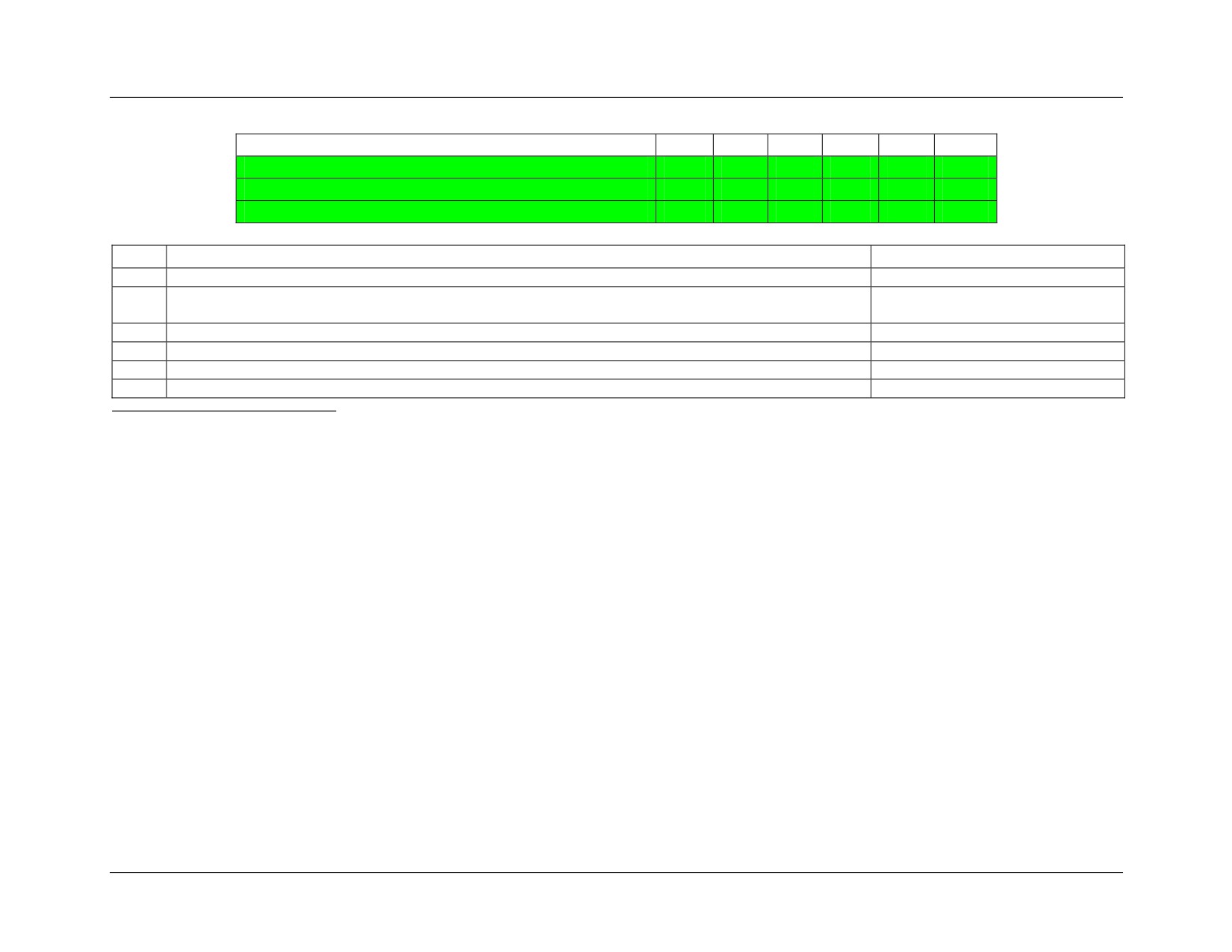
For Official Use Only
CBRND Functional Needs Analysis/Functional Solution Analysis
Chapter 6. Strategic National Shape Tasks
Table 6.9-1. SNSHA 9: Capability and Deficiency Assessment
Capability: Joint Staffs Logistics Directorate (J-4)
M1
M2
M3
M4
M5
M6
Current Overall Capability1
G2
G3
G4
G5
G6
G7
Near/Mid-Term Overall Capability
G
G
G
G
G
G
Far-Term Overall Capability
G
G
G
G
G
G
FAA Measure
Scale
M1
Standards for joint force health and fitness that contribute to CBRND are established.
G - Yes, Y - Limited, R - No
M2
Medical health assessment guidance adequately addresses personnel readiness for sustained CBRN
G - Yes, Y - Limited, R - No
operations.
M3
Medical surveillance and intelligence information are collected and analyzed.
G - Yes, Y - Limited, R - No
M4
Non-DoD sources are assessed for information.
G - Yes, Y - Limited, R - No
M5
A global system for tracking the status of CBRND medical information exists.
G - Yes, Y - Limited, R - No
M6
Global medical threats are identified and appropriate countermeasures are instituted.
G - Yes, Y - Limited, R - No
1 Yes. There is sufficient DOTLPF to accomplish this task.
2 Yes. DODD 6000.12 provides guidance for standards for joint force health and fitness.
3 Yes. DODD 6205 provides guidance for medical health assessment for personnel readiness.
4 Yes. DODD 6420.1 and JP 4-02 provide guidance for medical surveillance and intelligence collection and analysis.
5 Yes. JP 4-02 directs coordination with non-DoD medical sources.
6 Yes. DODD 6205 and DODD 6000.12 provide guidance for the tracking of CBRN medical information.
7 Yes. DODD 6420.1 and JP 4-02 provide procedures for the identification of global medical threats through surveillance and intelligence activities. Medical authority recommends
and institutes appropriate medical countermeasures based on identified threats.
51
For Official Use Only
For Official Use Only
CBRND Functional Needs Analysis/Functional Solution Analysis
Chapter 6. Strategic National Shape Tasks
6.9.3
Functional Solution Analysis
6.9.3.1
DOTLPF Assessment Summary
There are no capability gaps identified for this task.
6.9.3.2
IMA Assessment Summary
N/A
52
For Official Use Only
For Official Use Only
CBRND Functional Needs Analysis/Functional Solution Analysis
Chapter 6. Strategic National Shape Tasks
6.10 Task SNSHA 10: Coordinate global CBRND operations
6.10.1
Functional Area Analysis
6.10.1.1
Definition
To provide overall coordination of global CBRND operations. Multiple CBRN/TIM events could
occur in the same time frame around the globe. Rapid and effective response and mitigation
coordination is required. CBRN/TIM event information provided in the COP is used to formulate
appropriate actions and taskings. Includes the allocation and reallocation of CBRND resources to
the combatant commanders. Includes overall coordination of multitheater restoration and
elimination operations.
6.10.1.2
Derivation
UJTL (SN 1.1.6, SN 2.2.1, SN 2.4.1.2, SN 3.4.4, SN 3.4.6, SN 4, SN 5.1.1, SN 5.1.2, SN 5.1.3, SN
5.7.1, SN 6.1, SN 7.4, SN 7.5, SN 8.1.6, SN 9, SN 9.1.3, SN 9.2, SN 9.2.1, SN 9.2.2), Protection
Joint Functional Concept, Military Transformation: A Strategic Approach, Transformation
Planning Guidance, An Operational Concept for Biological Defense, Joint Enabling Concept for
CBRN Operations.
6.10.1.2.1
Supported Task: N/A
6.10.1.2.2
Lateral Tasks: SNSHA 4, SNSHA 8, SNSHA 9, SNSUST 8, SNSUST 12
6.10.1.2.3
Supporting Task: STSHA 8
6.10.1.3
Condition
Perform this task under conditions of:
Physical. N/A
Military
1. Restrictive mission instructions. (C2.1.1)
2. No or partial preexisting arrangements. (C2.1.1.2)
3. No mission preparation. (C2.1.3)
4. Poor or partial Joint Staff integration. (C2.3.1.1)
5. Poor multinational integration. (C2.3.1.2)
6. Limited staff experience. (C2.3.1.3)
Civil
1. Uncooperative interdepartmental/interagency relationships. (C3.1.1.3)
2. Indifferent international politics. (C3.1.2)
3. Restrictive to vague command decisions. (C3.1.3)
53
For Official Use Only
For Official Use Only
CBRND Functional Needs Analysis/Functional Solution Analysis
Chapter 6. Strategic National Shape Tasks
6.10.2
Functional Needs Analysis
6.10.2.1
Capability and Deficiency Assessment Summary
Table 6.10-1 discusses the capability that currently exists to perform the task to the established
standards. There is only one capability that exists, and no other capability is projected that will
accomplish this task.
Current Capability and Deficiency
The Joint Staff Operations Directorate (J3) has primary responsibility for this task. The primary
reasons why some standards were rated as deficient and limited in capability generally centered
on JPME and CBRN specialists. JPME does not mandate a core minimum set of CBRNE tasks
for mastery at the mid and Senior Service College levels. CBRN specialists do not receive
training as strategic planners. Also, allocation adequacy for CBRN units, personnel and CBRND
systems was considered less than fully capable. The overall current capability is assessed as
“yellow.”
Projected Near/Mid-Term Capability and Deficiency
No other capability is currently projected for the near/mid term. As UJTL 5.0 comes into
common usage and JRO initiatives to educate senior leaders becomes more widespread, Sense,
Shape, Shield, and Sustain considerations will start to be integrated into all areas. DOTMLPF
should begin to improve in all deficient areas as a result of initiatives that use data resulting from
focused experimentation.
Projected Far-Term Capability and Deficiency
No other capability is currently projected for the far-term future. In the far term, the success of
initiatives recommended by this JCIDS and DOTMLPF enhancements across the board, made
possible by focused experimentation and lessons learned from exercises, will improve all
measures to a “green” rating.
54
For Official Use Only
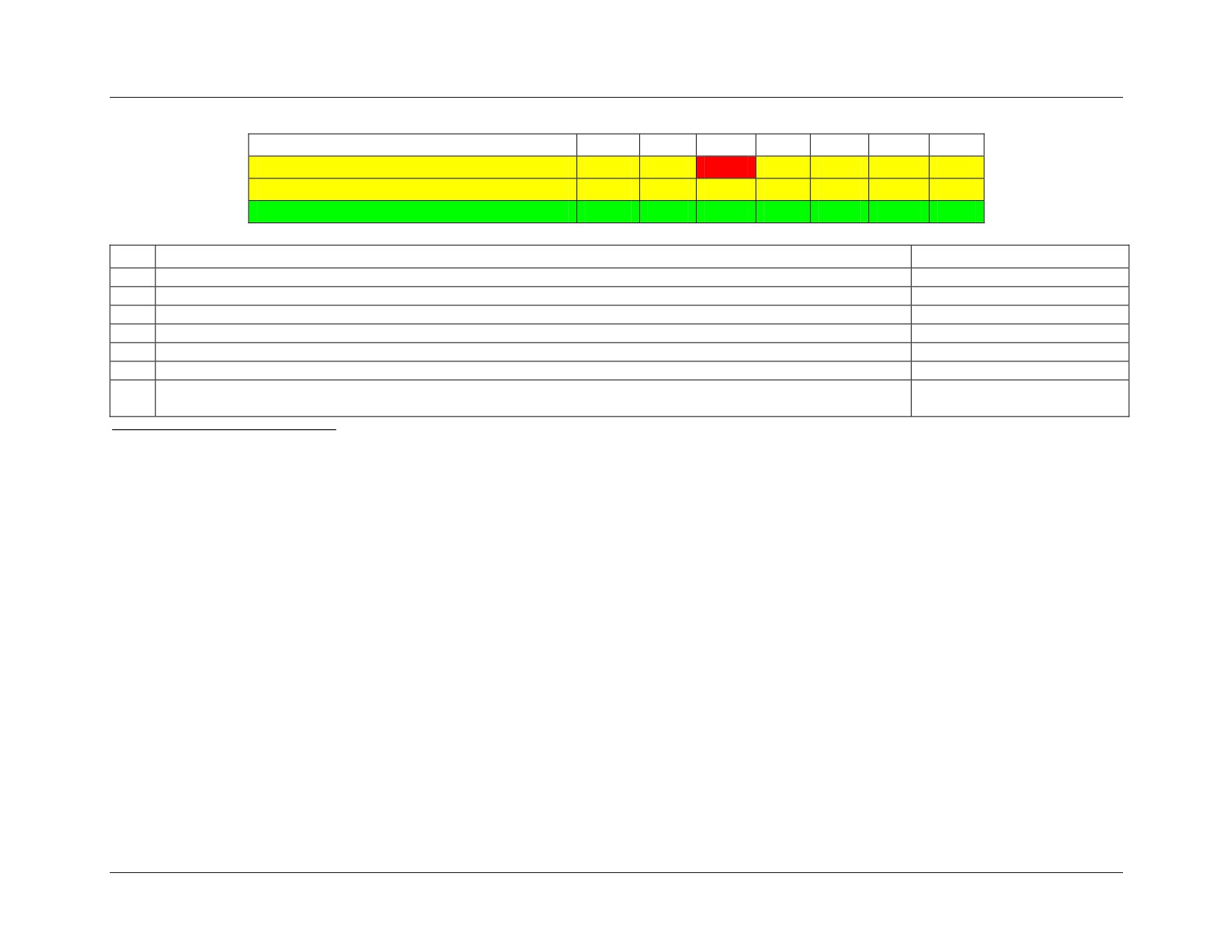
For Official Use Only
CBRND Functional Needs Analysis/Functional Solution Analysis
Chapter 6. Strategic National Shape Tasks
Table 6.10-1. SNSHA 10: Capability and Deficiency Assessment
Capability/Measure
M1
M2
M3
M4
M5
M6
M7
Current Overall Capability1
Y2
Y3
R4
Y5
Y6
Y7
Y8
Near/Mid-Term Overall Capability9
Y
Y
Y10
Y
Y
Y
Y
Far-Term Overall Capability
G11
G
G
G
G
G
G
FAA Measure
Scale
M1
CBRND units and personnel are adequately allocated.
G - Yes, Y - Limited, R - No
M2
CBRND systems and equipment are adequately allocated.
G - Yes, Y - Limited, R - No
M3
All pertinent Sense, Shape, Shield, and Sustain information is considered.
G - Yes, Y - Limited, R - No
M4
Coordination for CBRND operations includes transport, logistics, communications, and employment considerations.
G - Yes, Y - Limited, R - No
M5
Doctrine and TTPs for global CBRND coordination are available.
G - Yes, Y - Limited, R - No
M6
DoD and Joint Staffs are adequately trained to effectively coordinate CBRND operations.
G - Yes, Y - Limited, R - No
M7
International/joint exercises or experimentation provide feedback on efficacy of coordination of global CBRND
G - Yes, Y - Limited, R - No
operations.
1 No. JPME does not mandate a core minimum set of CBRNE tasks for mastery at the mid and Senior Service College levels. CBRN specialists do not receive training as strategic
planners.
2 Limited. CBRND units and personnel are insufficient for multitheater CBRN events and subsequent restoration operations in the event interdiction should fail against multiple
adversaries with CBRN capability. Otherwise, current allocation within the force structure constraints is appropriate.
3 Limited. Current CBRND end-item systems are scarce assets. CBRND resources, especially detection and force protection systems, must be focused on most critical assets.
4 No. All pertinent Sense, Shape, Shield, and Sustain information is not considered. UJTL 4.7 does not establish Sense, Shape, Shield, and Sustain as critical domains. However,.
UJTL 5.0 will establish them.
5 Limited. CJCS J-3 can establish coordination; however, given the fluid nature of current and future military engagement areas, precise and finite coordination must await
execution orders.
6 Limited. TIMs are not adequately addressed at the strategic national level. Joint Publication 3 Series (Operations) addresses CBRN coordination considerations.
7 Limited. The Joint Senior Leaders Course provides a limited orientation at the strategic theater and operational levels. However, JPME does not mandate a core minimum set of
CBRNE tasks for mastery at the mid and Senior Service College levels.
8 Limited. Coordination of global CBRN/TIM defense operations at the strategic national level is limited to national policy, deterrence, interdiction, and elimination. CBRN/TIM
defense operations occur at the strategic theater level and below.
9 DOTMLPF should improve in all deficient areas as a result of initiatives that use data resulting from focused experimentation.
10 As UJTL 5.0 comes into common usage, and JRO initiatives to educate senior leaders becomes more widespread, Sense, Shape, Shield, and Sustain considerations will start to
be integrated into all areas.
11 In the far term, the success of initiatives recommended by this JCIDS and DOTMLPF enhancements across the board, made possible by focused experimentation and lessons
learned from exercises will improve all measures to a “green” rating.
55
For Official Use Only
For Official Use Only
CBRND Functional Needs Analysis/Functional Solution Analysis
Chapter 6. Strategic National Shape Tasks
6.10.3
Functional Solution Analysis
6.10.3.1
DOTLPF Assessment Summary
This section addresses the deficiencies and suggests potential non-materiel solutions. If there are
no non-materiel solutions, or they are only partial solutions, the remaining non-materiel need is
then stated. Materiel needs are assessed in the IMA Summary.
1.
Deficiency: Given multiple CBRN capable adversaries, CBRND units and personnel are
insufficient for multitheater CBRN events and subsequent restoration operations.
Non-Materiel Solutions: Training: Given the intensive requirements for reconnaissance and
decontamination in a CBRN environment, reevaluate allocation rules for CBRND units.
Personnel: Given the intensive requirements for information management, reconnaissance
and decontamination in a CBRN environment, reevaluate allocation rules for CBRND
personnel or automated decision aides.
2.
Deficiency: All pertinent Sense, Shape, Shield, and Sustain information is not considered.
Non-Materiel Solutions: Doctrine: UJTL 5.0 should effectively drive consideration of
Sense, Shape, Shield, and Sustain domains.
3.
Deficiency: Given the fluid nature of current and future military engagement areas, precise
and finite CBRND logistical and operational coordination must await execution orders.
Non-Materiel Solutions: Doctrine: Develop staff planning guidance for predictive CBRND
operations and logistics.
4.
Deficiency: Global TIM considerations are not adequately addressed at the strategic national
level.
Non-Materiel Solutions: Doctrine: Develop a global TIM assessment tool that allows staff
planners predictive capability for TIM hazards.
5.
Deficiency: JPME does not mandate a core minimum set of CBRND tasks for mastery at the
mid and Senior Service College levels.
Non-Materiel Solutions: Training: Conduct front-end analysis and training needs analysis
to develop and implement appropriate instruction at the mid and Senior Service College
level. Once training analysis is complete, resource manpower and time to support resident
instruction and develop distributed training.
6.
Deficiency: Lack of automated CBRN/TIM hazard assessment capabilities.
Non-Materiel Solutions: None.
6.10.3.2
IMA Assessment Summary
Table 6.10-2 shows possible materiel approaches that address the remaining materiel
requirements of the DOTMLPF assessment.
56
For Official Use Only
For Official Use Only
CBRND Functional Needs Analysis/Functional Solution Analysis
Chapter 6. Strategic National Shape Tasks
Table 6.10-2. SNSHA 10. IMA Assessment
Idea for Materiel Approach
Description
Automated tools
Develop a global CBRN automated assessment tool that
allows staff planners predictive capability for CBRN hazards
57
For Official Use Only
For Official Use Only
CBRND Functional Needs Analysis/Functional Solution Analysis
Chapter 6. Strategic National Shape Tasks
6.11 Task SNSHA 11: Provide Shape “Global Family of Engagement Plan” policies and
guidelines to combatant commanders
6.11.1
Functional Area Analysis
6.11.1.1
Definition
To formulate policy for Shape “Global Family of Engagement Plans” and to provide this policy,
as well as specific guidelines, to combatant commanders for execution. In conjunction with
interagency partners, CJCS establishes and develops these policy and guidelines. Because the
threat of CBRN/TIM weapons is of concern to all nations and potential allies, offering assistance
in establishing a Shape operational capability through training or equipment can help forge new
friendships and cooperation. Provision of this assistance also will make Shape operational issues
easier to address in remote or austere areas if the host nation has a Shape capability.
6.11.1.2
Derivation
UJTL (SN 9.2.1, SN 8, SN 7.5, SN 5.4.3), CJCSM 3113.01a.
6.11.1.2.1
Supported Task: N/A
6.11.1.2.2
Lateral Tasks: SNSENS 15, SNSHA 8, SNSUST 11
6.11.1.2.3
Supporting Task: STSHA 9
6.11.1.3
Condition
Perform this task under conditions of:
Physical. N/A
Military
1. No preexisting arrangements. (C2.1.1.2)
2. Limited personnel expertise. (C2.2.4.5)
Civil. N/A
6.11.2
Functional Needs Analysis
6.11.2.1
Capability and Deficiency Assessment Summary
Table 6.11-1 discusses the only capability that currently exists to perform the task to the
designated standards. There is only one capability that exists, and no other capability is projected
that will accomplish this task.
58
For Official Use Only
For Official Use Only
CBRND Functional Needs Analysis/Functional Solution Analysis
Chapter 6. Strategic National Shape Tasks
Current Capability and Deficiency
The phrase “global family of engagement plan” is used in the Theater Engagement Planning
(TEP) Joint Manual1 to describe action to develop a process to globally integrate all military
engagement activities. This integration is mandated by Defense Planning Guidance FY 2002-
2007, 6 April 2000. The TEPs from each geographic combatant commander or designated
Executive Agent are integrated into the “Global Family of Engagement Plans.” They are
approved by the CJCS and forwarded to the Under Secretary of Defense for Policy for review.
This process and the review, and any guidance or support to aid the combatant command in the
initial development of the TEP, is a strategic national-level activity. TEP activities, particularly
those dealing with CBRND, should be coordinated and integrated with the Theater Security
Cooperation Plan where appropriate. Because of the requirement to Sense, Shape, Shield, and
Sustain, as embodied in the CBRND Enabling Concept, the process must be accomplished, at a
minimum, with the technical assistance and support of JRO-CBRND. The phrase “Shape Global
Family of Engagement Plans” denotes the integration of Shape CBRND Enabling Concept ideas
into any policies and guidelines that would have an impact on combatant command development
of TEPs. The overall current capability is assessed as “red.”
Projected Near/Mid-Term Capability and Deficiency
No other capability is currently projected for the near/mid term. Near/mid-term experimentation
results (as recommended in this JCIDS analysis) may lead to development of new capabilities. It
is projected that improvements due to coordination/DOTMLPF enhancements will dramatically
improve DoD’s ability to articulate and provide Shape Global Family of Engagement Plans and
to provide policy, as well as specific guidelines, to combatant commanders for execution. The
overall status should improve to “yellow” due to these initiatives but is not anticipated to
improve more than that due to the inherent difficulties posed by international relations.
Projected Far-Term Capability and Deficiency
No other capability is currently projected for the far-term future. The overall status is likely to
remain “yellow” due to the inherent difficulties posed by international relations.
1 CJCSM 3113.01a.
59
For Official Use Only

For Official Use Only
CBRND Functional Needs Analysis/Functional Solution Analysis
Chapter 6. Strategic National Shape Tasks
Table 6.11-1. SNSHA 11: Capability and Deficiency Assessment
Capability: CJCS
M1
M2
M3
Current Overall Capability1
R2
R3
R4
Near/Mid-Term Overall Capability
Y
Y
Y
Far-Term Overall Capability
Y5
Y
Y
FAA Measure
Scale
M1
“Shape” Global Family of Engagement Plan policies and guidelines and
G - Yes, Y - Limited, R - No
Theater Security Cooperation Plan are established.
M2
Existing policies and guidelines are updated regularly.
G - Yes, Y - Limited, R - No
M3
Joint exercises and experimentation provide feedback on the efficacy of
G - Yes, Y - Limited, R - No
strategic guidance development processes.
1 No doctrine, i.e., staff guidance or JTTPs, has been established specifically for Shape initiatives.
2 No. Although generic guidance exists in CJCSM 3113.01a , the “Global Family of Engagement Plans” does not include Shape
initiatives.
3 There are no polices or guidelines to update.
4 Joint exercises focused on restoration operations and the efficacy of Shape Global Family of Engagement Plan policies and
guidelines have not been conducted.
5 The overall status should improve to “yellow” due to a multitude of initiatives but is not anticipated to improve more than that
due to the inherent difficulties posed by international relations.
60
For Official Use Only
For Official Use Only
CBRND Functional Needs Analysis/Functional Solution Analysis
Chapter 6. Strategic National Shape Tasks
6.11.3
Functional Solution Analysis
6.11.3.1
DOTLPF Assessment Summary
This section addresses the deficiencies and suggests potential non-materiel solutions. If there are
no non-materiel solutions, or they are only partial solutions, the remaining non-materiel need is
then stated. Materiel needs are assessed in the IMA Summary.
1.
Deficiency: CBRND Shape considerations are not included in the “Global Family of
Engagement Plan.”
Non-Materiel Solutions: Doctrine: Ensure that “Global Family of Engagement Plan”
policies and guidelines include CBRND Shape considerations.
2.
Deficiency: No exercises focused on CBRND Shape considerations.
Non-Materiel Solutions: Doctrine: Establish working groups to establish policies and
guidelines that include CBRND Shape considerations into TEPs. Training: Develop
exercises that include CBRND Shape considerations and focus on gathering information of
the efficacy of global family of engagement planning. Personnel: Incorporate into Joint
National Training Capability.
3.
Deficiency: No doctrine (i.e., Staff guidance or Joint Tactics, Techniques, and Procedures
[JTTPs]) has been established.
Non-Materiel Solutions: Doctrine: Establish doctrine, i.e. staff guidance/policies (Chairman
of the Joint Chiefs of Staff Instruction; Chairman of the Joint Chiefs of Staff Manual; or
JTTPs). Such policies and guidelines should be included in documents like CJCSM
3113.01A Theater Engagement Planning, Defense Planning Guidance, the Joint Staff
Capabilities Plan, and any CBRN-specific publications might provide guidance on CBRND
integration into TEPs.
4.
Deficiency: No training provides feedback.
Non-Materiel Solutions: Training: Develop training on “Global Family of Engagement
Plan” CBRND Shape considerations so that lessons learned can be gathered.
5.
Deficiency: No JPME education on global family of engagement planning, including
CBRND Shape considerations.
Non-Materiel Solutions: Leadership: Develop JPME leader education on “Global Family
of Engagement Plan” CBRND Shape considerations. Provide materials to the Joint Forces
Staff College so it can use CBRND Shape considerations as a TEP example.
6.11.3.2
IMA Assessment Summary
N/A
61
For Official Use Only
For Official Use Only
CBRND Functional Needs Analysis/Functional Solution Analysis
Chapter 6. Strategic National Shape Tasks
6.12 Task SNSHA 12: Establish global cooperative CBRN/TIM-detection policies,
procedures, and networks
6.12.1
Functional Area Analysis
6.12.1.1
Definition
To link global active systems (such as satellite systems) with active and passive sensors
integration into satellite uplinks with an acceptable share-warn software/hardware protocol with
consideration to information classification. Builds a seamless web from the national capabilities
down to individual tactical detectors within the global battlespace to provide a means of
detecting both delivery vehicles and agents.
6.12.1.2
Derivation
UJTL (SN 9.1.3, SN 2.4.1.2, SN 2.4.2.1, SN 3.5.3.3, SN 3.5.3.5), JP (2-0, 2-02).
6.12.1.2.1
Supported Task: N/A
6.12.1.2.2
Lateral Tasks: SNSHA 8, SNSHA 14
6.12.1.2.3
Supporting Task: STSHA 10
6.12.1.3
Condition
Perform this task under conditions of:
Physical. N/A
Military
1. Partial preexisting arrangements. (C 2.1.1.2)
Civil
1. Limited foreign government support. (C3.1.2.3)
2. Moderately opposed foreign public opinion. (C3.1.2.4)
6.12.2
Functional Needs Analysis
6.12.2.1
Capability and Deficiency Assessment Summary
Table 6.12-1 discusses the capability that currently exists to perform the task “Establish global
cooperative CBRN/TIM-detection policies, procedures, and networks” to the designated
standard. There is only one capability that exists, and no other capability is projected that will
accomplish this task.
62
For Official Use Only
For Official Use Only
CBRND Functional Needs Analysis/Functional Solution Analysis
Chapter 6. Strategic National Shape Tasks
Current Capability and Deficiency
The current capability assessment is “yellow.” There currently are no cooperative linkages
between various global systems capabilities, even though such linkages have been proposed.
Global cooperative CBRN/TIM-detection policies, procedures and networks have not been
established with all nonadversary nations.
Projected Near/Mid-Term Capability and Deficiency
No other capability is currently projected for the near/mid term. No substantive improvement is
expected over the near/mid term.
Projected Far-Term Capability and Deficiency
No other capability is currently projected for the far-term future. The assessment should remain
at “yellow” in the far term. As cooperative linkages between various systems capabilities are
coordinated and established between various detection technologies (e.g., BIDS, phased-array
radars, standoff motion detectors, passive monitors, vehicular embedded detectors with GPS
linkages and automatic position reporting, individual detectors networked to centralized data
servers, etc.) global cooperative CBRN/TIM-detection policies, procedures and networks will be
established in limited fashion. All supporting and required DOTMLPF enhancements will be
initiated, but it will take years of experimentation, international policy debates, and exercises
before full capability is realized.
63
For Official Use Only
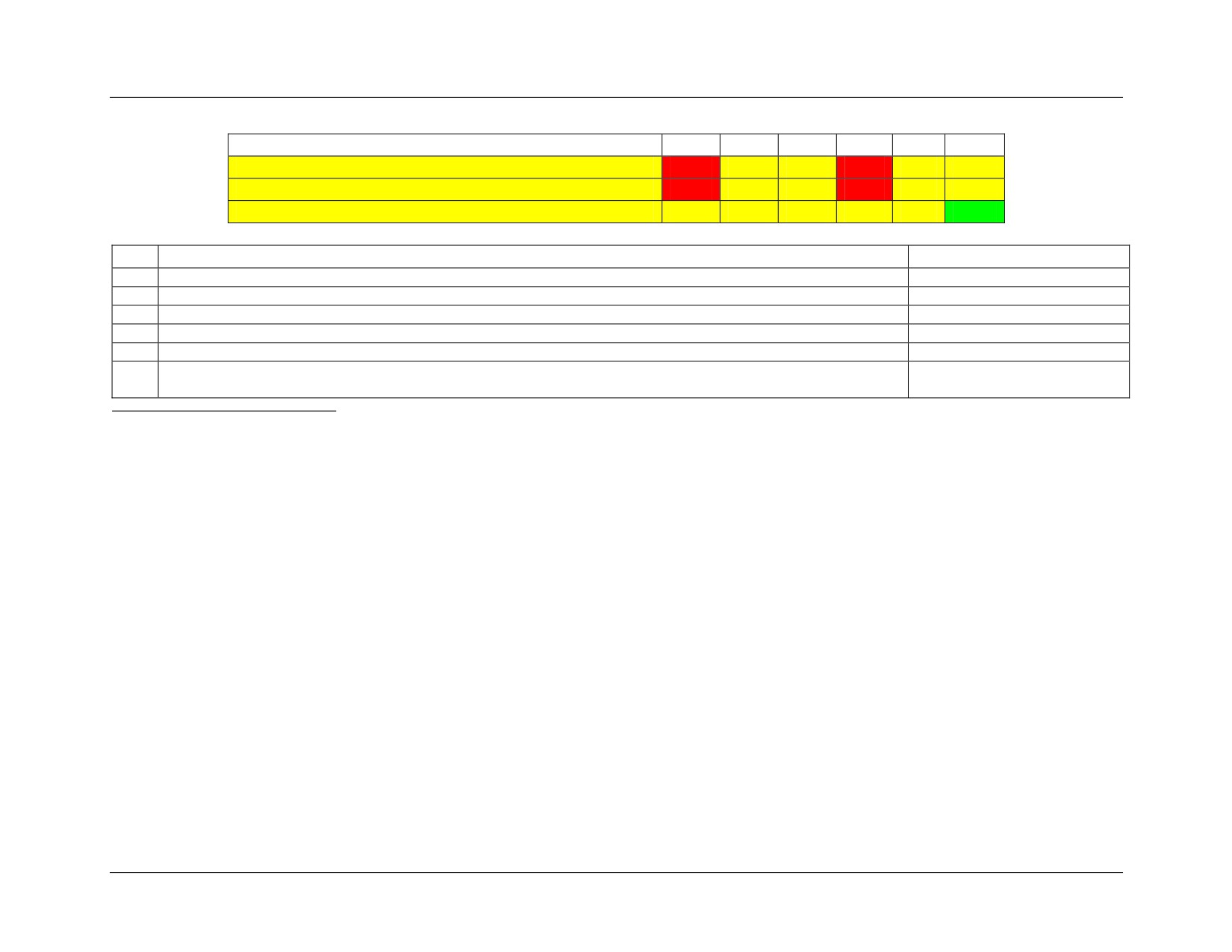
For Official Use Only
CBRND Functional Needs Analysis/Functional Solution Analysis
Chapter 6. Strategic National Shape Tasks
Table 6.12-1. SNSHA 12: Capability and Deficiency Assessment
Capability: Joint Requirements Office for CBRND
M1
M2
M3
M4
M5
M6
Current Overall Capability1
R2
Y3
Y4
R5
Y6
Y7
Near/Mid-Term Overall Capability
R
Y
Y
R
Y
Y
Far-Term Overall Capability8
Y9
Y
Y
Y
Y
G10
FAA Measure
Scale
M1
Global cooperative CBRN/TIM-detection policy is established.
G - Yes, Y - Limited, R - No
M2
Global cooperative CBRN/TIM-detection procedures are established.
G - Yes, Y - Limited, R - No
M3
Global cooperative CBRN/TIM-detection networks are established.
G - Yes, Y - Limited, R - No
M4
Policies and procedures have been established with all nonadversary nations.
G - Yes, Y - Limited, R - No
M5
Existing policies and procedures are updated regularly.
G - Yes, Y - Limited, R - No
M6
International/joint exercises or experimentation provide feedback on efficacy of coordination of global CBRN/TIM
G - Yes, Y - Limited, R - No
defense operations.
1 No. Effective organization, training, and doctrine cannot be established because some nonadversary nations are not parties to these proposals.
2 There currently are no cooperative linkages between various global systems capabilities, even though such linkages have been proposed. No cooperative CBRN/TIM-detection
policies are required because no linkages currently exist between various detection technologies (e.g., BIDS, phased-array radars, standoff motion detectors, passive monitors,
vehicular-embedded detectors with GPS linkages and automatic position reporting, individual detectors networked to centralized data servers, etc.).
3 Limited. Global cooperative detection procedures have been proposed.
4 Limited. Global cooperative CBRN/TIM-detection networks are proposed.
5 No. Global cooperative CBRN/TIM-detection policies, procedures and networks have not been established with all nonadversary nations.
6 Limited. There is no need to update policies and procedures at present because global cooperative CBRN/TIM-detection policies, procedures, and networks are only in the
proposal stages.
7 Limited. Some exercises (e.g., TOPOFF, Determined Promise) can provide feedback on efficacy of coordination of global CBRN/TIM defense operations. Only real-time
warning in the virtual environment is envisioned as a potential candidate for feedback in international and joint exercises because this task pertains to global cooperative
CBRN/TIM-detection policies, procedures, and networks.
8 DOTMLPF should improve in all deficient areas as a result of initiatives that use data resulting from focused experimentation.
9 As cooperative linkages between various systems capabilities are coordinated and established between various detection technologies (e.g., BIDS, phased-array radars, standoff
motion detectors, passive monitors, vehicular-embedded detectors with GPS linkages and automatic position reporting, individual detectors networked to centralized data servers,
etc.) global cooperative CBRN/TIM-detection policies, procedures and networks will be established in limited fashion. All supporting and required DOTMLPF enhancements will
be initiated, but it will take years of experimentation, international policy debates, and exercises before full capability is realized.
10 International and joint exercises will begin to yield effective lessons learned on global cooperative CBRN/TIM-detection policies, procedures, and networks.
64
For Official Use Only
For Official Use Only
CBRND Functional Needs Analysis/Functional Solution Analysis
Chapter 6. Strategic National Shape Tasks
6.12.3
Functional Solution Analysis
6.12.3.1
DOTLPF Assessment Summary
This section addresses the deficiencies and suggests potential non-materiel solutions. If there are
no non-materiel solutions, or they are only partial solutions, the remaining non-materiel need is
then stated. Materiel needs are assessed in the IMA Summary.
1.
Deficiency: The National Military Command Authority (NMCA) could receive an
inaccurate picture of the CBRN COP.
Non-Materiel Solutions: Doctrine: Establish JTTPs and international protocols for
cooperative CBRN/TIM detection.
2.
Deficiency: NMCA does not have a real-time view of the CBRN COP.
Non-Materiel Solutions: Doctrine: Establish JTTPs and international protocols for
cooperative CBRN/TIM-detection networks.
3.
Deficiency: Concepts have not been refined through experimentation.
Non-Materiel Solutions: Training: Concepts must first be developed based on proposed
linkages that will provide effective, integrated CBRN/TIM-detection capabilities. These
concepts must be explored and refined through experimentation and then cooperative
linkages established and tested.
4.
Deficiency: Global cooperative CBRN/TIM-detection policies, procedures, and networks
have not been established with all nonadversary nations.
Non-Materiel Solutions: Doctrine: Establish cooperative CBRN/TIM-detection policies and
procedures with nonadversary nations.
5.
Deficiency: Lack of global CBRN/TIM-detection network capabilities.
Non-Materiel Solutions: None.
6.12.3.2
IMA Assessment Summary
Table 6.12-2 shows possible materiel approaches that address the remaining materiel
requirements of the DOTMLPF assessment.
65
For Official Use Only
For Official Use Only
CBRND Functional Needs Analysis/Functional Solution Analysis
Chapter 6. Strategic National Shape Tasks
Table 6.12-2. SNSHA 12: IMA Assessment
Idea for Materiel Approach
Description
Networked detection system
There is a need to develop global cooperative linkages
between various global, proponent and service detection and
sensing technologies.. Concepts must first be developed
based on proposed linkages that will provide effective,
integrated CBRN/TIM-detection capabilities. These
concepts must be explored through experimentation and then
cooperative linkages established and tested. The entire
package should be developed as a system. As each Service
or allied country develops detection or sensing technologies,
they should be analyzed for inclusion into the global
CBRN/TIM cooperative detection network and
modifications (if required) should be mandated for the
Service systems.
66
For Official Use Only
For Official Use Only
CBRND Functional Needs Analysis/Functional Solution Analysis
Chapter 6. Strategic National Shape Tasks
6.13 Task SNSHA 13: Coordinate internationally accepted standards and procedures for
determining employment of CBRN/TIM weapons
6.13.1
Functional Area Analysis
6.13.1.1
Definition
To develop and secure approval of internationally accepted standards and procedures for
determining employment of CBRN/TIM weapons. Includes standards and procedures for
determining first use of CBRN/TIM weapons by a nation state or transnational organization and
the means by which verification of attack will be confirmed. Considers information
classification.
6.13.1.2
Derivation
UJTL (SN 9.1.3, SN 7.5, SN 8.1.12)
6.13.1.2.1
Supported Task: N/A
6.13.1.2.2
Lateral Tasks: SNSHA 4, SNSHA 8, SNSHA 14
6.13.1.2.3
Supporting Task: STSHA 11
6.13.1.3
Condition
Perform this task under conditions of:
Physical. N/A
Military
1. No preexisting arrangements. (C 2.1.1.2)
2. Limited personnel expertise. (C2.2.4.5)
3. Restricted information exchange. (C2.3.1.8)
4. Ambiguous threat. (C2.9.3)
Civil
1. Mixed support for political policies. (C3.1)
2. Limited foreign government support. (C3.1.2.3.)
67
For Official Use Only
For Official Use Only
CBRND Functional Needs Analysis/Functional Solution Analysis
Chapter 6. Strategic National Shape Tasks
6.13.2
Functional Needs Analysis
6.13.2.1
Capability and Deficiency Assessment Summary
Table 6.13-1 discusses the capabilities that currently exist to perform the task to the established
standards. These are the only capabilities that exist, and no other capabilities are projected that
will accomplish this task.
Current Capability and Deficiency
OSD and the CJCS are responsible for ensuring that military representatives are able to
coordinate with allies, allied military organizations, potential hosting nations, and coalition
partners for establishing internationally accepted standards and procedures for determining
employment of CBRN/TIM weapons. The capability to establish internationally accepted
standards and procedures for determining employment of CBRN/TIM weapons exists now
administratively. Mechanisms currently used are NATO working groups that develop
Standardization Agreements and Allied Joint Publications (AJPs) as well as ABCA Quadripartite
working groups. The current assessment is “yellow” because each nation in the international
community has its own verification protocol. Also, use of TIM poses special problems in trying
to determine whether it is an accident or an intentional attack. International recognition would
have to currently be sought on an ad hoc basis. International exercises, even with Quadripartite
and NATO partners, seldom use realistic CBRN/TIM scenarios or highlight verification exercise
objectives.
Projected Near/Mid-Term Capability and Deficiency
No other capability is currently projected for the near/mid term. No substantive improvement is
expected in the near/mid term.
Projected Far-Term Capability and Deficiency
No other capability is currently projected for the far-term future. In the far term, international
exercises/experiments, with NATO partners, will use realistic CBRN/TIM scenarios and
highlight verification exercise objectives and will result in some slight improvements. Only after
lessons are learned from these exercises/experiments can progress be made in other areas. The
far-term capability will improve to “green.”
68
For Official Use Only
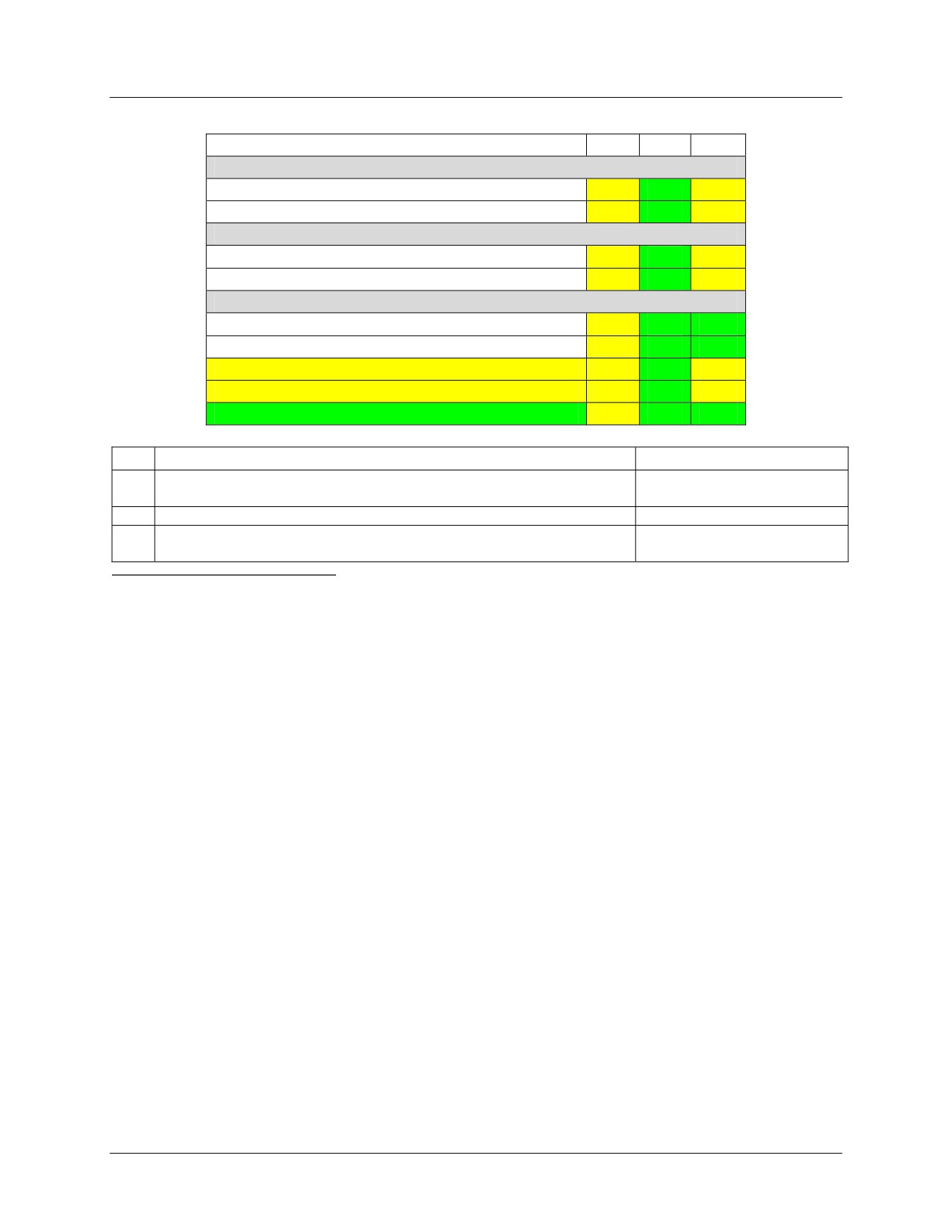
For Official Use Only
CBRND Functional Needs Analysis/Functional Solution Analysis
Chapter 6. Strategic National Shape Tasks
Table 6.13-1. SNSHA 13: Capability and Deficiency Assessment
Capability/Measure
M1
M2
M3
Current
ABCA Quadripartite Working Group
Y1
G2
Y3
NATO Working Groups
Y4
G5
Y6
Near/Mid
ABCA Quadripartite Working Group
Y
G
Y
NATO Working Groups
Y
G
Y
Far
ABCA Quadripartite Working Group
Y
G
G7
NATO Working Groups
Y
G
G8
Current Overall Capability
Y
G
Y
Near/Mid-Term Overall Capability
Y
G
Y
Far-Term Overall Capability
Y
G
G
FAA Measure
Scale
M1
Internationally accepted standards and policy for determining
G - Yes, Y - Limited, R - No
employment of CBRN/TIM weapons are established.
M2
Existing standards and policies are updated regularly.
G - Yes, Y - Limited, R - No
M3
International exercises/experimentation provide feedback on efficacy of
G - Yes, Y - Limited, R - No
standards and policy.
1 Within the Quadripartite, QSTAG 1999, the sampling and identification of biological and chemical agents (SIBCA), provides
an outline of what is to be accomplished—but each nation has its own national verification protocol. Also, use of TIM poses
special problems in trying to determine whether it is an accident or an intentional attack. International recognition would have to
currently be sought on an ad hoc basis.
2 Quadripartite groups meet on a regular basis.
3 International exercises, even with Quadripartite and NATO partners, seldom use realistic CBRN/TIM scenarios or highlight
verification exercise objectives.
4 Within NATO, STANAG 4359, the sampling and identification of biological and chemical agents and provides an outline of
what is to be accomplished, but each nation has its own national verification protocol. Also, use of TIM poses special problems in
trying to determine whether it is an accident or an intentional attack. International recognition would have to currently be sought
on an ad hoc basis.
5 NATO working groups meet on a regular basis.
6 International exercises, even with Quadripartite and NATO partners, seldom use realistic CBRN/TIM scenarios or highlight
verification exercise objectives.
7 International exercises, with Quadripartite partners, will use realistic CBRN/TIM scenarios and highlight verification exercise
objectives. Only after lessons are learned from these exercises can progress be made in other areas.
8 International exercises, with NATO partners, will use realistic CBRN/TIM scenarios and highlight verification exercise
objectives. Only after lessons are learned from these exercises can progress be made in other areas.
69
For Official Use Only
For Official Use Only
CBRND Functional Needs Analysis/Functional Solution Analysis
Chapter 6. Strategic National Shape Tasks
6.13.3
Functional Solution Analysis
6.13.3.1
DOTLPF Assessment Summary
This section addresses the deficiencies and suggests potential non-materiel solutions. If there are
no non-materiel solutions, or they are only partial solutions, the remaining non-materiel need is
then stated. Materiel needs are assessed in the IMA Summary.
1.
Deficiency: Each NATO/Quadripartite nation has its own national verification protocol.
Non-Materiel Solutions: Doctrine: Develop universally accepted and employed verification
protocols.
2.
Deficiency: Nations not part of NATO or the Quadripartite must agree to use sampling and
identification of biological and chemical agents (SIBCA) or some other arrangement.
Non-Materiel Solutions: Doctrine: Engage nations not part of NATO and the Quadripartite
to establish formal agreements to use sampling and identification of biological and chemical
agents.
3.
Deficiency: TIM poses special problems in trying to determine whether it is an accident or
an intentional attack.
Non-Materiel Solutions: Doctrine: Develop procedures and protocols for verification of
TIM attacks.
4.
Deficiency: International recognition would have to currently be sought on an ad hoc basis.
Non-Materiel Solutions: Doctrine: Establish international verification standards.
5.
Deficiency: Doctrine and TTPs need to be developed for collaborative verification
procedures.
Non-Materiel Solutions: Doctrine: Develop doctrine and TTPs for collaborative verification
procedures that work for the international community.
6.
Deficiency: There are no international exercises that provide feedback on the processes
employed for determining employment of CBRN weapons and verification procedures.
Non-Materiel Solutions: Training: Ensure development of and participate in international
exercises that will provide feedback on the processes employed for determining employment
of CBRN weapons.
6.13.3.2
IMA Assessment Summary
N/A
70
For Official Use Only
For Official Use Only
CBRND Functional Needs Analysis/Functional Solution Analysis
Chapter 6. Strategic National Shape Tasks
6.14 Task SNSHA 14: Sense the exportation of CBRN/TIM weapons or components
6.14.1
Functional Area Analysis
6.14.1.1
Definition
To obtain information and data from all sources that determine when a nation state or
transnational organization has initiated the exportation of CBRN/TIM weapons or components to
other countries or transnational organizations. Areas of interest include nation states/
organizations involved and types of CBRN/TIM weapons being exported.
6.14.1.2
Derivation
UJTL (SN 9.1.3, SN 2.4.1.2, SN 8.1.10), JP (2-0, 2-02).
6.14.1.2.1
Supported Task: N/A
6.14.1.2.2
Lateral Tasks: SNSHA 2, SNSHA 12, SNSHA 13
6.14.1.2.3
Supporting Task: STSHA 8
6.14.1.3
Condition
Perform this task under conditions of:
Physical. N/A
Military
1. Negligible intelligence database. (C2.4.2)
2. Negligible theater intelligence access. (C2.4.2)
3. Conventional and terrorist threat form. (C2.9.2)
4. Prehostilities state of conflict. (C2.10.1)
Civil
1. Negative foreign government support. (C3.1.2.3)
2. Aggressively opposed foreign public opinion. (C3.1.2.4)
6.14.2
Functional Needs Analysis
6.14.2.1
Capability and Deficiency Assessment Summary
Table 6.14-1 discusses the only capability that currently exists to perform the task to the
designated standard. There is only one capability that exists, and no other capability is projected
that will accomplish this task.
71
For Official Use Only
For Official Use Only
CBRND Functional Needs Analysis/Functional Solution Analysis
Chapter 6. Strategic National Shape Tasks
Current Capability and Deficiency
The Joint Staff Directorate for Intelligence, J-2, is responsible for working with national-level
organizations to obtain intelligence that is required to support joint operations. In the case of this
task, the lead federal agency for nonproliferation issues and the coordination of the associated
intelligence initiatives is the State Department. Per joint intelligence doctrine, the J-2 is
responsible for coordinating all intelligence-related CBRN functions pertaining to adversary
employment of CBRN weapons with the appropriate CBRN staff element, but because of
documented training, education, and experience issues, J-2 personnel may not have a full grasp
of what needs to be coordinated. As the Chairman of the Joint Chiefs of Staff’s single source of
expertise in addressing CBRN defense issues involving the warfight, JRO-CBRND must
proactively engage the J-2 to determine the adequacy of current and projected national-level
intelligence capabilities to sense the exportation of CBRN/TIM weapons or components. For the
purposes of this analysis, current capabilities are listed and issues that need to be further assessed
and clarified are provided for JRO-CBRND action. The current assessment is “yellow.”
Projected Near/Mid-Term Capability and Deficiency
No other capability is currently projected for the near/mid term. Near/mid-term experimentation
results (as recommended in this JCIDS analysis) may lead to development of new capabilities. It
is projected that improvements due to coordination/DOTMLPF enhancements will dramatically
improve DoD’s ability to articulate and assess Sense requirements, but the overall status will
remain “yellow” due to the inherent difficulty in gathering intelligence on CBRN/TIM
proliferation activities.
Projected Far-Term Capability and Deficiency
No other capability is currently projected for the far-term future. New organizational structures
or other capabilities resulting from near/mid-term experimentation results (as recommended in
this JCIDS analysis) may dramatically improve DoD’s ability to develop intelligence indicators
for sensing the exportation of CBRN/TIM weapons or components, but the overall status is
projected to remain “yellow” due to the inherent difficulty in gathering intelligence on
CBRN/TIM proliferation activities.
72
For Official Use Only