CHEMICAL, BIOLOGICAL, RADIOLOGICAL, AND NUCLEAR DEFENSE (CBRND) FUNCTIONAL NEEDS ANALYSIS. FINAL REPORT (2005) - page 6
For Official Use Only
CBRN Functional Needs Analysis/Functional Solution Analysis
Chapter 5. Tactical Sense Tasks
6 Not relevant to this task (N/A).
7 Immediately identifies all detected hazards (detection requires up to 15 minutes) and thus provides complete identify-to-treat capability.
8 Does not collect a sample for future analysis.
9 Requires samples to be confirmed off site in laboratory.
10 There is effective DOTLPF in place to conduct task, at least for bacillus bacteria (specifically anthrax). Procedures for other agents are probably similar.
11 Ostensibly all BWAs can be detected by ELISA. ELISA’s sensitivity is 105-106 CFU/mL (B. anthracis); 10-100 PFU/mL of Venezuelan Equine Encephalitis virus; and 625
pg/mL of Staphyloccoccal Enterotoxin B (aerosol) and greater than 5 ng/mL of ricin.
12 Some varieties of ELISA can absolutely quantify the antigen or antibody concentration.
13 Theoretically, any agent (i.e., antigen or antibody) for which an ELISA has been designed can be detected through this method; however, only one particular pathogen or toxin
antigen or antibody can be tested per ELISA model.
14 A particular TIB pathogen or toxin is identified if it is detected, since ELISA is highly specific and detects a particular agent.
15 Typically requires 1-2 hours (following sample collection and preparation) for detection, identification, and if applicable, quantification, primarily because of incubation time.
16 Not designed for sample collection for future analysis.
17 RAPID may be able to detect all pathogens; PCR does not detect toxins, though the toxic material may be contaminated with source genetic material (In this assessment, it is
assumed that this is not the case). Standard PCR has a sensitivity of 10-100 CFU/mL bacteria (B. anthracis); and 15 fg-1 pg or 100-1 million copies of the complementary DNA
for viruses.
18 RAPID, through RT-PCR, may provide generic quantification.
19 Theoretically, any TIB pathogen can be detected with appropriate reagents; toxins cannot be detected unless contaminated with source genetic material.
20 All detected TIBs are identified.
21 Detects and identifies within 30 minutes following sample preparation, but requires several hours for sample preparation.
22 Block I will detect Anthrax; Brucella; Ebola VHF virus; Marburg VHF virus; Viral Encephalitis viruses (VEE/WWW/EEE); Glanders; Meliodosis; Plague; Q Fever; Smallpox;
and Tularemia (and Typhus) as a threshold requirement; and Crimean-Congo hemorrhagic virus; Dengue fever; Hantaviruses; and Rift Valley Fever Virus (and Cholera,
Cryptosporidium; E. col; Influenza; Salmonella; and Shigella) as an objective; Block II will add toxins Botulinum, microcystins, ricin, SEB, and T-2 Mycotoxins.
23 Will identify all detected agents.
24 Will quantify the concentration in the sample.
25 Will not detect any TIBs.
26 Will detect and identify within 40 minutes (25-minute objective) for Blocks I and II following sample preparation.
27 Will immediately identify all detected hazards (detection will require 25-40 minutes) and thus will provide complete identify-to-treat capability.
28 Will provide physical sample collection capability for future analysis.
29 Will maintain integrity of physical sample.
30 Will require samples to be confirmed off site at laboratory.
31 Future system(s). Thus, DOTLPF is also future and cannot be evaluated.
32 Will detect all agents listed in DIA document “Threat Environment Projection: Chemical and Biological Warfare 2000-2025” (objective).
33 Will identify detected BWAs and TIBs.
34 Will absolutely quantify hazard.
35 Will detect all TIBs of interest as an objective.
36 Will detect within 10 minutes.
37 Will immediately identify all detected hazards (detection will require up to 10 minutes) and thus will provide complete identify-to-treat capability.
101
For Official Use Only
For Official Use Only
CBRN Functional Needs Analysis/Functional Solution Analysis
Chapter 5. Tactical Sense Tasks
5.8.3
Functional Solution Analysis
5.8.3.1
DOTLPF Assessment Summary
This section states the deficiencies and suggests potential non-materiel solutions. If there are no
solutions or there are only partial solutions for a particular deficiency, that deficiency is then
reassessed in the IMAs section.
1. Deficiency: Lack of TIB detection capability.
Non-Materiel Solutions: None
2. Deficiency: Lack of real-time or near-real time detection, identification, and quantification
capability for BWAs in water.
Non-Materiel Solutions: None
3. Deficiency: Lack of integrated sample collection, detection, identification, and quantification
capability for BWAs in water.
Non-Materiel Solutions: None
4. Deficiency: Lack of detector that can also take samples for future analysis capability.
Non-Materiel Solutions: None
5. Deficiency: Validation of findings requires laboratory testing.
Non-Materiel Solutions: Doctrine: Modify doctrine to permit validation by a reliable on-
site detection/identification capability (e.g., portable PCR) as confirmatory
detection/identification is ultimately dependent upon doctrine, not materiel capabilities.
Training (partial): Train personnel in analytical techniques to ensure accuracy.
5.8.3.2
IMA Assessment Summary
Table 5.8-2 identifies seven ideas for materiel approaches that, if developed, may reduce or
eliminate the deficiencies associated with detecting biological hazards in water. Advances in MS,
electromagnetic spectroscopy, Raman spectroscopy, or orthogonal technologies may be able to
address all identified deficiencies.
102
For Official Use Only
For Official Use Only
CBRN Functional Needs Analysis/Functional Solution Analysis
Chapter 5. Tactical Sense Tasks
Table 5.8-2. TASENS 8: IMA Assessment
TASENS 8: Sense water for biological hazards
Ideas for Materiel
Approaches
(IMA)
Identified Gaps
Lack of real-time or near-real-time detection, identification, and
X6
X
X7
X
X
quantification capability for sampled BWAs.5
Lack of current detection, identification, and quantification capability
X
X
X
X
X
X
for TIBs in water.8
Lack of integrated sample collection, detection, identification, and
X
X
X
X
X
X
X
quantification capability for BWAs in water.
Lack of detector that also takes samples for future analysis capability.
X
X
X
X
X
X
X
1 Includes GC/MS, LC/MS.
2 Includes Immunological/SAW technology
3 Includes PCR and RT-PCR amplification, DNA microchip technology, SAW technology
4 Includes nucleic acid/immunoassay technologies (e.g., PCR and immunological techniques), electrochemiluminescence/equilibrium immunoassay, Fluorescence correlation
spectroscopy/PCR.
5 Reducing the sample preparation (if applicable) and response time of JCBAWM and JBAIDS is a potential solution.
6 Possibly through rapid separation processes (e.g., capillary zone electrophoresis).
7 Near real-time detection, identification, and quantification of pathogens (and possibly toxins as well) is feasible. NATIBO, Biological Detection System Technologies Technology
and Industrial Base Study, February 2001, pp. 4-12 to 4-13; Harper, James, “Automated CANARY Testbed for Fast Bioaerosol Identification,” MIT Lincoln Laboratory, Presented
at 2004 Biological-Chemical Detection Symposium, Washington, D.C.
8 JCBAWM is expected to detect, identify, and quantify all TIBs in water and thus eliminate capability gap.
103
For Official Use Only
For Official Use Only
CBRN Functional Needs Analysis/Functional Solution Analysis
Chapter 5. Tactical Sense Tasks
5.9
Task TASENS 9: Sense water for radiological hazards
5.9.1
Functional Area Analysis
5.9.1.1
Definition
To sense the presence of radiological hazards in water (potable and nonpotable). Includes the
functions of detection, identification, and quantification of the hazard. Also includes collection
of samples for further analysis, along with early-warning surveillance of unforeseen radiological
releases and monitoring of known radiological locations, as well as the requirement to determine
the extent and physical properties of radiological contamination. Encompasses both “detect to
warn” and “detect to treat” situations to enable appropriate protective measures. Must occur in-
situ to assist with raw water site selection and identification of soldier contact hazards, in-line
post ROWPU and permanent water distribution systems, and on-demand to spot-check potable
water distribution sites and shower points.
5.9.1.2
Derivation
UJTL TA 7, UJTL TA 7.1, Protection Joint Functional Concept.
5.9.1.2.1
Supported Tasks: OPSENS 1, OPSENS 4, OPSENS 7
5.9.1.2.2
Lateral Task: TASHA 14
5.9.1.2.3
Supporting Task: N/A
5.9.1.3
Conditions
Perform this task under conditions of:
Physical
1. Inaccessible subsurface water. (C1.1.2.3)
2. High sea state. (C1.2.1.3)
3. High shipping presence. (C1.2.6)
4. Summer, winter seasons. (C1.3.1.1)
5. Stormy weather. (C1.3.1.3)
6. Hot, very cold air temperature. (C1.3.1.3.1)
7. Liquid, freezing, and frozen precipitation. (C1.3.1.3.6.1)
8. Heavy precipitation intensity. (C1.3.1.3.6.2)
9. Negligible light. (C1.3.2.1)
10. Moderate nuclear radiation hazards. (C1.3.3.1.2)
Military
1. Stressful mission. (C2.1)
2. Location—ashore, afloat, airborne. (C2.1.4.1)
104
For Official Use Only
For Official Use Only
CBRN Functional Needs Analysis/Functional Solution Analysis
Chapter 5. Tactical Sense Tasks
3. Minimal time available. (C2.1.5)
4. Low personnel capability. (C2.2.4),
5. Negligible personnel experience. (C2.2.4.5)
6. Ambiguous threat existence. (C2.9.3)
Civil
1. Limited or negative foreign government support. (C3.1.2.3)
2. Aggressively opposed foreign public opinion. (C3.1.2.4)
3. High mission priority. (C3.1.3.2)
4. TIR materials present in the civilian sector. (C3.3.7.5)
5.9.2
Functional Needs Analysis
5.9.2.1
Capability and Deficiency Assessment Summary
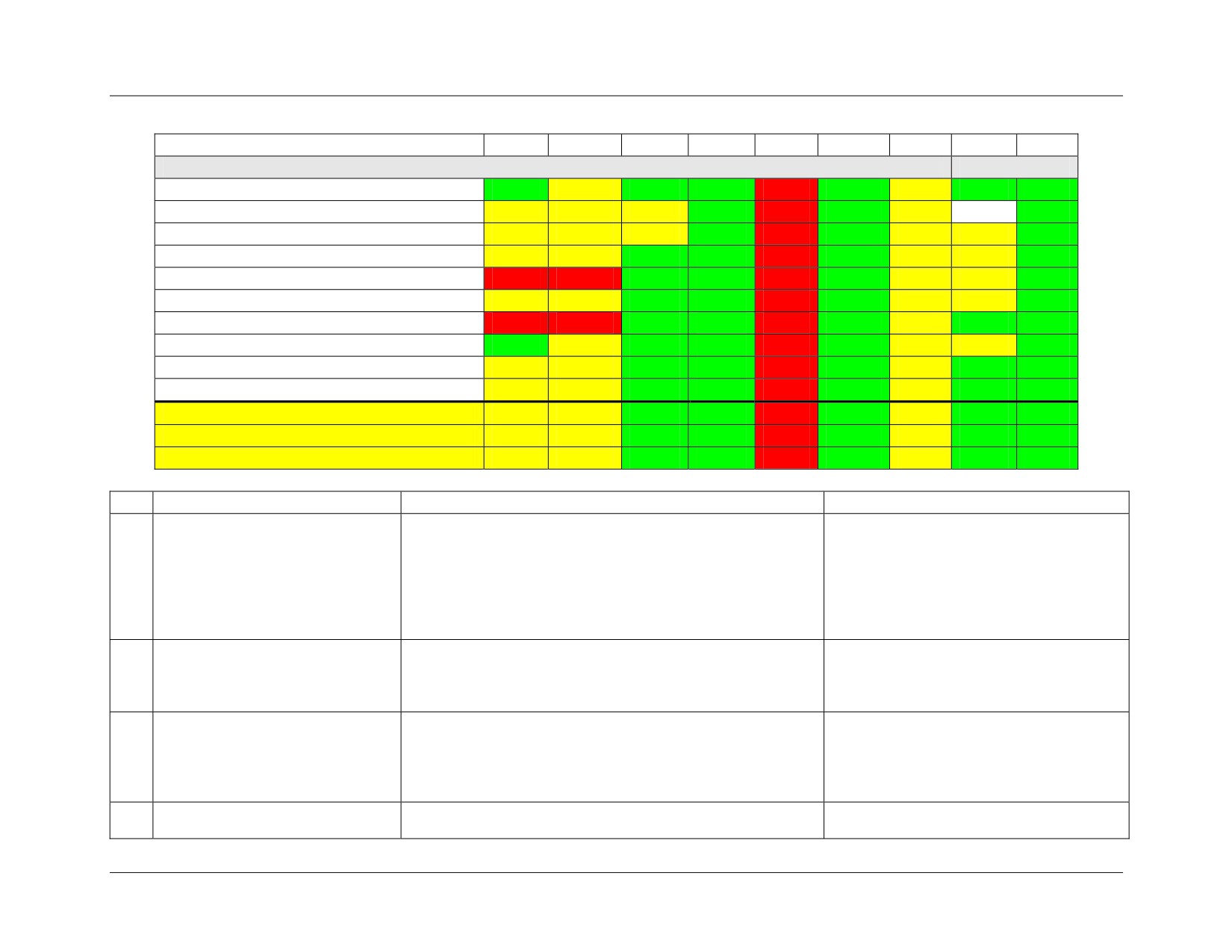
Table 5.9-1 presents individual and overall current, near/mid-term, and far-term capabilities to
perform the task to the designated standards. There are 10 current capabilities used to accomplish
this task. The capabilities include a range of portable RADIAC devices and dosimeters.
Current Capabilities and Deficiencies
The overall current capability is assessed as “yellow.” Most current RADIACs detect and
identify beta radiation and detect, identify, and quantify gamma radiation. All RADIACS
perform their functions in real time (though the level of confidence increases with increased
sampling time) and thus provide a complete detect-to-warn capability. Many also automatically
calculate the cumulative dose.
There is no single capability that can perform the task to all of the designated standards.
RADIACs detect and quantify only the radiation, not the isotope. Furthermore, all RADIACs and
dosimeters must be exposed to radiation to detect it. Current overall task deficiencies include the
lack of detection capability for low-level radiological contamination in water, detection
capability for alpha-emitting contaminants in water1, radioisotope identification capabilities,
monitors that can detect all radiation types, and detectors that take samples for future analysis2.
Projected Near/Mid-Term Capabilities and Deficiencies
No changes in capability are projected in the near/mid term for this task, so the overall projected
near/mid-term capability will remain “yellow.”
1 Water shields alpha radiation, and thus only alpha-emitting contaminants at the water surface are likely to be
detected.
2 Only the M34A1 sampling kit, which is not a detector, is capable of collecting and maintaining a radiological
sample.
105
For Official Use Only
For Official Use Only
CBRN Functional Needs Analysis/Functional Solution Analysis
Chapter 5. Tactical Sense Tasks
Projected Far-Term Capabilities and Deficiencies
No changes in capability are projected in the far term for this task, so the overall projected far-
term capability will remain “yellow.”
106
For Official Use Only
For Official Use Only
CBRN Functional Needs Analysis/Functional Solution Analysis
Chapter 5. Tactical Sense Tasks
Table 5.9-1. TASENS 9: Capability and Deficiency Assessment
System/Measure
M1
M2
M3
M4
M5
M6
M7
M8
M9
Current - Near/Mid - Far
ADM-300
81
52
103
104
05
106
57
108
109
AN/PDQ-1 MFR10
411
52
512
104
05
106
57
Unk
1013
AN/PDR-27
411
52
512
104
05
106
57
713
1013
AN/PDR-43
411
52
103
104
05
106
57
713
1013
AN/PDR-56
214
N/A15
103
104
05
1016
57
713
1013
AN/PDR-63
411
52
103
104
05
106
57
713
1013
AN/PDR-65
217
N/A15
103
104
05
1016
57
1018
1013
AN/PDR-77
819
52
103
104
05
106
57
713
1013
AN/UDR-13
420
52
103
104
05
106
57
1017
1013
AN/VDR-2
411
52
103
104
05
106
57
1017
1013
Current Overall Capability
5
5
9
10
0
10
5
8
10
Near/Mid-Term Overall Capability
5
5
9
10
0
10
5
8
10
Far-Term Overall Capability
5
5
9
10
0
10
5
8
10
FAA Measure
Elaboration
Scale
M1
All radiological hazards (including
Number of radiation types (i.e., alpha, beta, gamma, neutron,
10: All five types
TIR material) can be detected using
and x-radiation) detected. Note: Fielded technologies/equipment
8: Four types
fielded technologies/equipment?
detect radiological hazards by detecting the radiation emitted
6: Three types
from these hazards.
4: Two types
2: Single type
TIR material includes DU, a common battlefield hazard resulting
0: No radiological hazards detected
from certain types of ammunition and damaged armor.
M2
All radiological hazards (including
Ability to identify type of radiation detected or the radioisotope
10: Identifies radioisotope emitting radiation
TIR material) can be identified using
emitting the radiation. Note: Fielded technologies/equipment
5: Identifies type of radiation detected
fielded technologies/equipment?
that identify radioisotope also identify the type(s) of radiation
0: No identification capability
detected.
M3
All radiological hazards (including
Ability to quantify activity of radiological material (i.e., Cu or
10: Absolute quantification
TIR material) can be quantified
Bq), or the exposure (i.e., Roentgen or Coulomb/kg) or dose rate
5: Generic quantification (or absolute
using fielded
(rad, rem, Gy, or Sv) from emitted radiation.
quantification of one radiation type and no
technologies/equipment?
quantification of another type)
0: No quantification capability
M4
Time to detect radiological hazard?
Time period from exposure to radiation to analysis output.
10: Near-real time
0: Not near-real time
107
For Official Use Only
For Official Use Only
CBRN Functional Needs Analysis/Functional Solution Analysis
Chapter 5. Tactical Sense Tasks
FAA Measure
Elaboration
Scale
M5
Distance between radiological
This measure is not relevant to this task.
N/A
hazard and detector for accurate
detection?
M6
Radiological hazards are detected in
This measure is not relevant to this task.
N/A
time to warn forces and take
appropriate protective measures?
M7
Radiological hazards are identified
A complete capability requires both near-real-time identification
10: Complete capability (near-real-time
in time to treat forces?
of the emitted radiation type(s) and radioisotope. Identification
identification of radioisotope and emitted
of the emitted radiation type(s) enables appropriate medical
radiation type[s])
response to radiation exposure and identification of the
5: Partial capability (near-real-time
radioisotope determines to appropriate medical course of action
identification of emitted radiation type[s])
to radiological material internalization.
0: No capability (no identification capability)
M8
Cumulative dose can be determined
This measure is not relevant to this task.
N/A
and presented using data from
currently fielded sensors/equipment?
M9
There is effective DOTLPF in place
Refers to non-materiel elements associated with the execution of
10: DOTLPF exists and is adequate for the
to conduct task?
a task with the system.
task to be performed with this system without
limitations that cause significant impact upon
operations
5: Most critical aspects of DOTLPF for the
task to be performed with this system are
addressed
0: DOTLPF is inadequate or does not exist
for the task to be performed with this system
1 Detects most radiation types (alpha, beta, gamma, and x-radiation) emitted from radiological materials.
2 Identifies type of radiation, but not radioisotope.
3 Absolutely quantifies radiation level.
4 Real-time detection. Level of confidence increases with increased sampling time and radiation levels.
5 Requires exposure to emitted radiation to detect hazard.
6 Provides complete detect-to-warn capability since detects and identifies radiation in real time.
7 Provides partial identify-to-treat capability since immediately identifies detected radiation type, but not the radioisotope.
8 Automatically calculate cumulative dose since system capable of dose and dose rate alarms across entire measurement range; also predictive algorithm provides estimate of time
in field before alarm; unknown whether cumulative dose is directly outputted.
9 There is effective DOTLPF in place to conduct task with this system.
10 In combination with OA-9449/PDQ probe. The MFR alone detects gamma radiation; with the probe, it measures gamma radiation and detects beta radiation.
11 Detects beta/gamma radiation emitted from radiological materials.
12 Absolutely quantifies gamma radiation level; detects, but does not quantify, beta radiation.
13 Absolutely quantifies radiation level and provides monitoring capability, thus provides moderate capability to determine cumulative dose.
14 Detects alpha radiation emitted from radiological materials (particularly plutonium).
108
For Official Use Only
For Official Use Only
CBRN Functional Needs Analysis/Functional Solution Analysis
Chapter 5. Tactical Sense Tasks
15 Detects only one type of radiation, so identification capability is not applicable.
16 Provides complete detect-to-warn capability since detects one radiation type in real time.
17 Detects gamma radiation emitted from radiological materials (particularly plutonium).
18 System automatically calculates cumulative dose.
19 Detects alpha, beta, gamma, and x-radiation emitted from radiological materials.
20 Detects gamma/neutron radiation emitted from radiological materials.
109
For Official Use Only
For Official Use Only
CBRN Functional Needs Analysis/Functional Solution Analysis
Chapter 5. Tactical Sense Tasks
5.9.3
Functional Solution Analysis
5.9.3.1
DOTLPF Assessment Summary
This section states the deficiencies and suggests potential non-materiel solutions. If there are no
solutions or there are only partial solutions for a particular deficiency, that deficiency is then
reassessed in the IMAs section.
1. Deficiency: Lack of detection capability for low-level radiological contamination in water.
Non-Materiel Solutions: None
2. Deficiency: Lack of monitors that can detect most or all types of radiation.
Non-Materiel Solutions: Training (partial): Increase training of personnel on ADM-300.
3. Deficiency: Lack of detection capability for alpha-emitting contaminants in water.1
Non-Materiel Solutions: None
4. Deficiency: Lack of radioisotope identification capabilities.
Non-Materiel Solutions: None
5. Deficiency: Lack of detector that can also take samples for future analysis capability. 2
Non-Materiel Solutions: None
5.9.3.2
IMA Assessment Summary
Table 5.9-2 identifies three ideas for materiel approaches that, if developed, may reduce or
eliminate the deficiencies associated with detecting radiological hazards in water. Advances in
scintillation or semiconductor radiation detection technologies may be able to address all
identified deficiencies.
1 Water shields alpha radiation, and thus only alpha-emitting contaminants at the water surface are likely to be
detected.
2 Only the M34A1 sampling kit, which is not a detector, is capable of collecting and maintaining a radiological
sample.
110
For Official Use Only
For Official Use Only
CBRN Functional Needs Analysis/Functional Solution Analysis
Chapter 5. Tactical Sense Tasks
Table 5.9-2. TASENS 9: IMA Assessment
TASENS 9: Sense water for radiological hazards1
Ideas for Material
Approaches
(IMA)
Identified Gaps
Lack of detection capability for low-level radiological contamination in water.
X
X
X
Lack of detection capability for alpha-emitting contaminants in water.5
X
X
X
Lack of monitors that can detect all types of radiation.6
X
X
X
Lack of radioisotope identification capabilities.7
X
X
Lack of detector that also takes samples for future analysis.8
X
X
X
2 Includes Geiger-Mueller detectors, proportional gas detectors, and ionization chambers.
3 Includes ZnS(Ag), anthracene, trans-stilbene, para-terphenyl, phenyl oxazole, NaI(Tl), CsI(Tl), bismuth germinate (Bi4Ge3O12), barium fluoride (BaF2)-based detectors.
4 Includes germanium, silicon, cadmium telluride (CdTe), and mercuric iodide (HgI2)-based detectors.
5 Distributing more ADM-300 and AN/PDR-77 is a potential solution.
6 Distributing more ADM-300 is a potential solution.
7 Distributing gamma and/or alpha scintillation detectors with radioisotope identification capabilities is a potential solution.
8 All point detection IMAs could be designed to eliminate this capability gap. The collection equipment would be better maintained as an independent capability. The solution
could involve a module connected to the detector that notifies the operator to take samples or triggers an automated process to begin sampling.
111
For Official Use Only
For Official Use Only
CBRN Functional Needs Analysis/Functional Solution Analysis
Chapter 5. Tactical Sense Tasks
5.10
Task TASENS 10: Sense the presence of chemical hazards on humans, MWAs and
remains
5.10.1
Functional Area Analysis
5.10.1.1
Definition
To sense the presence or absence of chemical hazards (includes CWAs and TICs) on humans,
MWAs, and remains. Includes the external detection of contamination prior to the manifestation
of symptoms. Diagnosis of internal exposure is not part of this task as it is addressed in a
separate Sustain task. Includes the functions of detection, identification, and quantification of the
hazard. Also includes the requirement to determine the extent and physical properties of
contamination, monitoring of known hazard locations, and collection of samples for further
analysis. Encompasses “detect to warn” and “detect to treat” situations. The evaluation
encompasses all chemical hazards of military and medical importance.
5.10.1.2
Derivation
UJTL TA 7, UJTL TA 7.1, Protection Joint Functional Concept.
5.10.1.2.1
Supported Tasks: OPSENS 1, OPSENS 4, OPSENS 7
5.10.1.2.2
Lateral Tasks: TASHA 11, TASHA 13
5.10.1.2.3
Supporting Task: N/A
5.10.1.3
Condition
Perform this task under conditions of:
Physical
1. Tropical, arctic, and arid climates. (C1.3.1)
2. Summer, winter seasons. (C1.3.1.1)
3. Stormy weather. (C1.3.1.3)
4. Hot, very cold air temperature. (C1.3.1.3.1
5. Liquid, freezing, and frozen precipitation. (C1.3.1.3.6.1)
6. Heavy precipitation intensity. (C1.3.1.3.6.2)
7. Negligible light. (C1.3.2.1)
8. Chemical effects. (C1.3.3.2)
Military
1. Stressful mission. (C2.1)
2. Location—ashore, afloat, airborne. (C2.1.4.1)
3. Minimal time available. (C2.1.5)
4. Low personnel capability. (C2.2.4)
112
For Official Use Only
For Official Use Only
CBRN Functional Needs Analysis/Functional Solution Analysis
Chapter 5. Tactical Sense Tasks
5. Poor personnel morale. (C2.2.4.4)
6. Negligible personnel experience. (C2.2.4.5)
7. Poor multinational integration. (C2.3.1.2)
8. Limited or no host nation support. (C2.8.5)
9. Ambiguous threat existence. (C2.9.3)
Civil
High mission priority. (C3.1.3.2)
Negligible language translators. (C3.2.1.2)
Significant refugee care responsibility. (C3.3.2.3)
TICs present in the civilian sector. (C3.3.7.5)
5.10.2
Functional Needs Analysis
5.10.2.1
Capability and Deficiency Assessment Summary
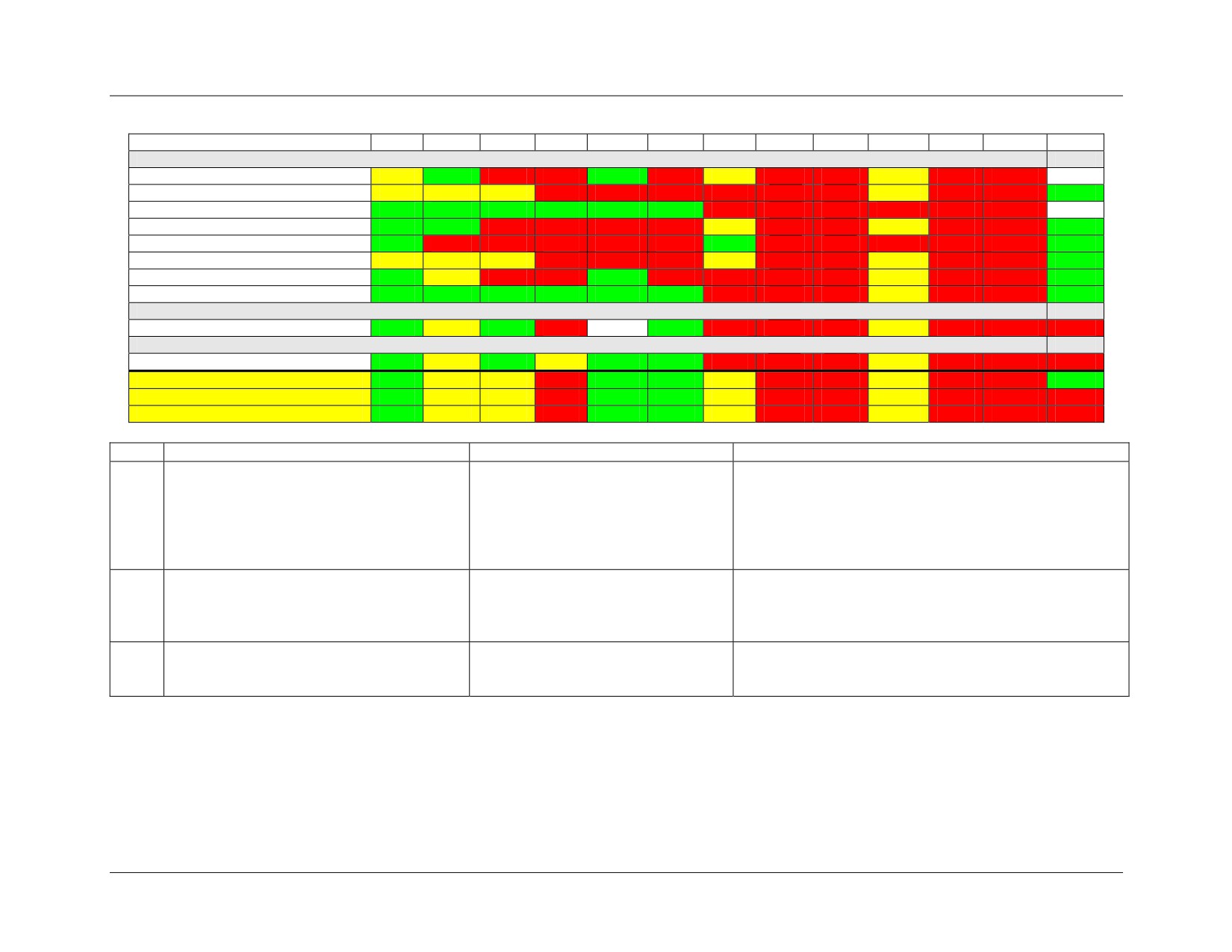
Table 5.10-1 presents individual and overall current, near/mid-term, and far-term capabilities to
perform the task to the designated standards. There are eight current capabilities used to
accomplish this task and two projected capabilities to be added in the future (one each in the
near/mid term and one in the far term). The individual capabilities include a range of
colorimetric paper and kits, IMS detectors, and MSs with differing capabilities to meet the
identified standards.
Current Capabilities and Deficiencies
The overall current capability is assessed as “yellow.” Most current detectors do not directly
detect chemical agents on personnel and MWAs, but rather detect vapors off-gassing from the
deposited agent. The APD2000, CAM/ICAM, HAPSITE with the headspace sampling system,
and M22 ACADA with XM279 probe all work through this method. Consequently, these
detectors’ capabilities for sensing chemical agents on surfaces are generally equivalent to their
capabilities for sensing chemical agents in the atmosphere, assuming that the agent is sufficiently
volatile for a detectable amount of chemical vapor to accumulate above the contaminated
personnel or MWA.
M8 and M9 papers are the primary current capabilities for directly detecting liquid chemical
warfare agents (i.e., nerve and blister agents) deposited on personnel. M8 paper indicates
exposure to liquid agent by changing its color from tan to yellow, red, and green for G-agents,
H-agents and Lewisite, and V-agents, respectively. M9 paper does not classify or identify
detected agents, but turns pink, red, reddish-brown, or red-purple when exposed to liquid G-
agents, H-agents, V-agents, and Lewisite.
There is no single capability that can perform the task to all of the designated standards. MSs
Viking SpectraTrak and HAPSITE are sophisticated current capabilities, but they do not detect
or identify in near-real time; consequently, they may be unable to identify-to-treat high
concentrations of fast-acting lethal agents. Current overall task deficiencies include the general
113
For Official Use Only
For Official Use Only
CBRN Functional Needs Analysis/Functional Solution Analysis
Chapter 5. Tactical Sense Tasks
inability to detect deposited low-volatility agents, dusty agents, and off-gassing nerve agents
(i.e., VX and, to a lesser extent, GD and GF) at or below IDLH levels; lack of real-time CWA
identification and TIC detection/identification capabilities; lack of agent quantification
capabilities; lack of a detector that also takes samples for future analysis; and detector
susceptibility to chemical interference.1
Projected Near/Mid-Term Capabilities and Deficiencies
The overall projected near/mid-term capability is assessed as “yellow.” In the near/mid-term
future, more detectors will quantify and classify, if not identify, agents. Nevertheless, MS units
and the JCSD will likely be the only detectors able to detect all CWAs. MS units Viking
Spectratrak and HAPSITE will remain the main capabilities to detect TICs. They will detect
many or all high-priority TICs.
The general inability to detect deposited low-volatility agents, dusty agents, and off-gassing
nerve agents (i.e., VX and, to a lesser extent, GD and GF) at or below IDLH levels; lack of real-
time CWA identification and TIC detection/identification capabilities; lack of agent
quantification capabilities; lack of a detector that also takes samples for future analysis; and
detector susceptibility to chemical interference are likely to remain deficiencies in the near-
future.
Projected Far-Term Capabilities and Deficiencies
The overall projected far-term capability is assessed as “yellow.” In the far-term future, many
fielded detectors will detect most, if not, all CWAs and some TICs. Many detectors will quantify
and classify, if not identify, agents. MS units will likely remain the main capabilities to detect
TICs. Many detectors will still not detect deposited low-volatility agents, dusty agents, and off-
gassing nerve agents at or below IDLH levels. Furthermore, there will still be a lack of a detector
that also takes samples for future analysis. Chemical interference will remain an issue.
1 Refer to the JRO Operational Impact Assessment of Non-Traditional Agents report, July 2003 (S/NF) for
information on nontraditional agent detection.
114
For Official Use Only
For Official Use Only
CBRN Functional Needs Analysis/Functional Solution Analysis
Chapter 5. Tactical Sense Tasks
Table 5.10-1. TASENS 10: Capability and Deficiency Assessment
System/Measure
M1
M2
M3
M4
M5
M6
M7
M8
M9
M10
M11
M12
M13
Current - Near/Mid - Far
APD2000
5 1
10 2
0 3
0 4
10 15
N/A 5
7 6
N/A 7
N/A 7
5 8
0 9
N/A 11
Unk10
CAM/ICAM
6 11
5 12
5 13
0 14
N/A 15
N/A 6
2 16
N/A 7
N/A 7
5 17
0 11
N/A 11
1018
HAPSITE (GC/MS) with HSS19
10 20
10 21
10 22
9 23
10 39
10 40
1 24
N/A 7
N/A 7
0 25
0 11
N/A 11
Unk11
M8 Paper
7 26
5 27
0 3
0 4
N/A 5
N/A 6
7 17
N/A 7
N/A 7
5 28
0 11
N/A 11
1019
M9 Paper
7 29
0 30
0 3
0 4
N/A 5
N/A 6
8 31
N/A 7
N/A 7
N/A 32
0 11
N/A 11
1019
M22 ACADA with XM279 probe33
6 34
7 35
5 36
0 4
N/A 5
N/A 6
7 17
N/A 7
N/A 7
5 37
0 11
N/A 11
1019
M256A1 Kit
9 38
7 39
0 3
1 40
10 41
N/A 6
1 42
N/A 7
N/A 7
5 43
0 11
N/A 11
1019
Viking SpectraTrak (GC/MS)
10 44
10 45
10 40
10 46
10 90
10 40
1 42
N/A 7
N/A 7
5 44
0 11
N/A 11
1019
Near/Mid - Far
JCAD with XM279 probe39
9 47
5 48
10 49
2 50
Unk
10 104
2 51
N/A 7
N/A 7
5 52
0 53
N/A 76
N/A54
Far
JMCBDS
9 55
5 103
10 104
4 56
10 57
10 104
1 58
N/A 7
N/A 7
5 59
0 76
N/A 76
N/A101
Current Overall Capability
8
7
4
3
10
10
4
N/A
N/A
4
0
N/A
10
Near/Mid-Term Overall Capability
8
7
4
2
10
10
4
N/A
N/A
4
0
N/A
N/A101
Far-Term Overall Capability
8
6
5
3
10
10
4
N/A
N/A
4
0
N/A
N/A101
FAA Measure
Elaboration
Scale
M1
All of a potential adversary’s weaponized
Percentage of following 12 agents as
Percentages standardized to 0-10 scale
CWAs can be detected using fielded
described in FM 3-9 that are detected:
technologies/equipment, regardless of agent
nerve agents (GA; GB; GD; GF; VX),
physical properties, states, and
vesicants (H/HD; HN-1,2,3; L; CX),
concentrations?
cyanides (AC; CK), pulmonary agent
(CG)
M2
All CWAs can be identified?
Ability to classify or identify detected
10: Identify detected CWAs
CWAs.
7: Identify some detected CWAs; classify others
5: Classify detected CWAs
0: Neither identify nor classify detected CWAs
M3
All of a potential adversary’s weaponized
Ability to provide snapshot
10: Absolute quantification
CWAs can be quantified using fielded
concentration of detected CWAs.
5: Generic quantification
technologies/equipment?
0: No quantification capability
115
For Official Use Only

For Official Use Only
CBRN Functional Needs Analysis/Functional Solution Analysis
Chapter 5. Tactical Sense Tasks
FAA Measure
Elaboration
Scale
M4
All TICs can be detected using fielded
Considering only TICs listed in
10: All TICs listed in ITF-40
technologies/equipment?
USACHPPM Report 47-EM-6154-03:
9: 90% of 33 high-priority critical acutely toxic airborne
ITF-40. (FOUO)
TICs according to ITF-40
8: 80% of 33 high-priority critical acutely toxic airborne
TICs according to ITF-40
2: 20% of 33 high-priority critical acutely toxic airborne
TICs according to ITF-40
1: 1%-20% of 33 high-priority critical acutely toxic
airborne TICs according to ITF-40
0: None of 33 high-priority critical acutely toxic airborne
TICs according to ITF-40
M5
All TICs can be identified using fielded
Ability to classify or identify detected
10: Identify all detected TICs
technologies/equipment?
TICs.
7: Identify some detected TICs; classify others
5: Classify detected TICs
0: Neither classify nor identify detected TICs
M6
All TICs can be quantified using fielded
Ability to provide snapshot
10: Absolute quantification
technologies/equipment?
concentration of detected TICs.
5: Generic quantification
0: No quantification capability
M7
Time to detect chemical hazards?
Time period from CWA/TIC sampling
10: 12 sec
to analysis output. Linear scale 1-10.
7: 30 sec
2: 60 sec
1: >60 sec
M8
Distance between chemical hazard and
This measure is not relevant to this
N/A
detector for accurate detection?
task.
M9
Chemical hazards are detected in time to warn
This measure is not relevant to this
N/A
forces and take appropriate protective
task.
measures?
M10
Chemical hazards are identified in time to
Based on capability and time required
10: Complete capability
treat forces?
to identify or classify hazards, as well
5: Partial capability
as rate-of-action of those hazards.
0: No capability
M11
Sampling collection procedures available for
Refers to physical sampling for future
10: Complete capability
all of a potential adversary’s weaponized
analysis.
5: Partial capability
CWAs and for all TICs using fielded
0: No capability
technologies/equipment?
M12
Procedures maintain integrity of sample?
Refers to a physical sample for future
10: Complete capability
analysis.
5: Partial capability
0: No capability
116
For Official Use Only
For Official Use Only
CBRN Functional Needs Analysis/Functional Solution Analysis
Chapter 5. Tactical Sense Tasks
FAA Measure
Elaboration
Scale
M13
There is effective DOTLPF in place to
Refers to non-materiel elements
10: DOTLPF exists and is adequate for the task to be
conduct task?
associated with the execution of a task
performed with this system without limitations that cause
with the system.
significant impact upon operations
5: Most critical aspects of DOTLPF for the task to be
performed with this system are addressed
0: DOTLPF is inadequate or does not exist for the task to be
performed with this system
1 Limited—Detects only GA, GB, GD (0.1 mg/m3 - IDLH level for GA/GB, 2X IDLH level for GD within 30 sec.); VX (0.04 mg/m3 - 4X IDLH level within 30 sec.); HD (2
mg/m3 - IDLH level within 15 sec.), and L (0.38 mg/m3 within 15 sec.). According to FM 3-11.9, incapacitating doses are 300 (GA for resting person), 75 (GB for resting person),
75-300 (GD), 50 (VX), 150 (inhaled HD), and <300 (L for eye) mg-min/m3. Does not detect concentrations which can cause low-level (e.g., ocular) effects; detects vapors only;
and is susceptible to chemical interference (false positives and negatives).
2 Identifies detected agents and TICs.
3 Does not quantify amount of detected agents or TICs.
4 Detects pepper spray and mace (but these are not included in the ITF-40 33 high-priority critical acutely toxic airborne toxic industrial chemicals.)
5 Does not quantify TIC concentrations because it does not detect any TICs.
6 Detects in less than 30 seconds.
7 Not relevant to this task (N/A).
8 Identifies hazards within 30 seconds.
9 Sampling collection for future analysis capability does not exist with this technology/equipment.
10 COTS detector. Unknown if sufficient DOTLPF in place.
11 Limited—Detects only GA, GB, GD, GF, VX, HD, and L (0.1 mg/m3 - IDLH level for GA/GB, 2X IDLH for GD/GF; 10X IDLH for VX; 1/20 IDLH for HD). According to
FM 3-11.9, incapacitating doses are 300 (GA for resting person), 75 (GB for resting person), 75-300 (GD), 50 (VX), 150 (inhaled HD), and <300 (L for eye) mg-min/m3. Does not
detect concentrations which can cause low-level (e.g., ocular) effects; detects vapors only; and is susceptible to chemical interference (false positives and negatives).
12 Classifies agents as being nerve or blister agents.
13 Provides relative hazard indication (relative quantification).
14 No TICs detected.
15 Does not identify or classify any TICs because it does not detect any TICs
16 Detects hazards in less than 1 minute. Note: Requires up to 8 hours to warm up after 30 days storage.
17 Classifies agents within one minute.
18 There is effective DOTLPF in place to conduct task with this system.
19 Headspace sampling system.
20 Presumably detects all 12 CWA of interest (claims low ppb to ppt detection limits; 1 ppb = 0.01 mg/m3 for VX - IDLH level; 0.006-0.007 mg/m3 for G-agents - ~1/10 IDLH
levels; 0.007 mg/m3 for HD - 1/285 IDLH level). According to FM 3-11.9, incapacitating doses are 300 (GA for resting person), 75 (GB for resting person), 75-300 (GD), 50
(VX), 150 (inhaled HD), <300 (L for eye), 7,000 (CK), and 1,6000 (CG) mg-min/m3. Detects vapors only.
21 Identifies detected agents and TICs (through MS).
22 Provides absolute quantification capability for all detected agents and TICs (specifically provides composition intensities, e.g., ppm).
23 Presumably detects most TICs in ITF-40. Detects vapors only.
24 Detects within 10 minutes.
25 Hazards are not identified in time to treat, especially if lethal fast-acting agents at high concentrations are involved.
26 Detects GA, GB, GD, GF, VX, HD, HN and L liquid (>0.02 mL) droplets.
27 Classifies as G-, H- (and L), and V- agents.
28 Classifies agents within 30 seconds.
117
For Official Use Only
For Official Use Only
CBRN Functional Needs Analysis/Functional Solution Analysis
Chapter 5. Tactical Sense Tasks
29 Detects GA, GB, GD, GF, VX, HD, HN and L liquid (>100 ȝL) droplets.
30 Does not identify or classify detected agents or TICs.
31 Detects within 20 seconds.
32 Does not identify or classify agents or TICs.
33 Assuming probe does not affect system performance.
34 Limited—Detects only GA, GB, GD, GF (0.1 mg/m3 - IDLH level for GA/GB, 2X IDLH for GD/GF within 30 sec.); VX (0.04 mg/m3 - 4X IDLH level within 90 sec.); HD,
and L (10 mg/m3 - 5X IDLH level for HD, unknown L). According to FM 3-11.9, incapacitating doses are 300 (GA for resting person), 75 (GB for resting person), 75-300 (GD),
50 (VX), 150 (inhaled HD), and <300 (L for eye) mg-min/m3. Does not detect concentrations which can cause low-level (e.g., ocular) effects; detects vapors only; and is
susceptible to chemical interference (false positives and negatives).
35 Classifies detected G and V agents as nerve agents; identifies detected H and L agents.
36 Relative hazard level provided through three different sensitivity levels.
37 Classifies or identifies agents within 30 seconds.
38 Detects GA, GB, GD, GF (0.005 mg/m3 - 1/20 IDLH for GA/GB, 1/10 IDLH for GD/GF), VX (0.02 mg/m3 - 2X IDLH level), HD (2mg/m3 - IDLH level), HN, L (9 mg/m3 ),
CX (3 mg/m3), AC (9 mg/m3 - below IDLH), and CK (8 mg/m3) in vapor form and is susceptible to chemical interference. According to FM 3-11.9, incapacitating doses are 300
(GA for resting person), 75 (GB for resting person), 75-300 (GD), 50 (VX), 150 (inhaled HD), <300 (L for eye), and 7,000 (CK) mg-min/m3.
39 Classifies G and V agents as nerve agents; identifies blood and blister agents.
40 Detects TICs AC and CK.
41 Identifies detected TICs.
42 Detects within 15 minutes.
43 Hazards are identified in time to treat when M8 paper is used for liquid detection. Hazards are not identified in time to treat when ampoules are used for vapor detection (delayed
response; 15-20 minutes).
44 Presumably detects all 12 agents of interest; detects all states (claims 5 ppb detection limit for air preconcentrator = 0.05 mg/m3 for VX - 5X IDLH level, 0.030-0.035 mg/m3 for
G-agents: 1/3-2/3 IDLH levels, 0.035 mg/m3 for HD - 1/57 IDLH level). According to FM 3-11.9, incapacitating doses are 300 (GA for resting person), 75 (GB for resting
person), 75-300 (GD), 50 (VX), 150 (inhaled HD), <300 (L for eye), 7,000 (CK), and 1,6000 (CG) mg-min/m3. Degraded performance: (P5, 9, 10) Not waterproof when
operating; (M5) Negligible personnel experience
45 Identifies sampled agents and TICs (through mass spectrometry)
46 Presumably detects all TICs in ITF-40; detects all states.
47 Will detect only GA, GB, GD, GF, and VX (0.1 mg/m3 - IDLH level for GA/GB, 2X IDLH level for GD/GF, 10X IDLH for VX, within 30 sec.); HD, HN3, and L (2.0 mg/m3 -
IDLH level - within 120 sec.), AC (22 mg/m3 - below IDLH level, within 60 sec.), CK (20 mg/m3 within 60 sec.), and CG vapors only, and will not detect concentrations which
can cause low-level (e.g., ocular) effects. According to FM 3-11.9, incapacitating doses are 300 (GA for resting person), 75 (GB for resting person), 75-300 (GD), 50 (VX), 150
(inhaled HD), <300 (L for eye), 7,000 (CK), and 1,6000 (CG) mg-min/m3.
48 Will classify agents as nerve, blister, blood, and choking agents.
49 Will provide absolute quantification capability for all detected agents and TICs.
50 Will detect Cl, HBr, HCl, AC, HF, HS, and CG as an objective.
51 Will detect hazards within 1 minute.
52 Will classify hazards within 1 minute.
53 This technology/equipment will not have sampling collection for future analysis capability.
54 Future system(s). Thus, DOTLPF is also future and cannot be evaluated.
55 Will detect only GA, GB, GD, GF (0.1 mg/m3 - IDLH level for GA/GB, 2X IDLH level for GD/GF within 30 sec.); VX (0.04 mg/m3 - 4X IDLH level within 90 sec.); HD,
HN3, L (2.0 mg/m3 - IDLH level within 120 sec.); AC (22 mg/m3 - below IDLH level within 60 sec.); CK (20 mg/m3 within 60 sec.); and CG in vapor and aerosol forms, and will
not detect concentrations which can cause low-level (e.g., ocular) effects. According to FM 3-11.9, incapacitating doses are 300 (GA for resting person), 75 (GB for resting
person), 75-300 (GD), 50 (VX), 150 (inhaled HD), <300 (L for eye), 7,000 (CK), and 1,6000 (CG) mg-min/m3.
56 Will detect ammonia, arsine, chlorine, diborane, fluorine, hydrogen bromide, hydrogen cyanide, hydrogen fluoride, nitric acid, phosgene, phosphorus trichloride, sulphur
dioxide, and sulphuric acid.
118
For Official Use Only
For Official Use Only
CBRN Functional Needs Analysis/Functional Solution Analysis
Chapter 5. Tactical Sense Tasks
57 Will identify all detected TICs as an objective.
58 Will detect hazards within 2 minutes.
59 Will classify or identify CWAs and TICs within 2 minutes.
119
For Official Use Only
For Official Use Only
CBRN Functional Needs Analysis/Functional Solution Analysis
Chapter 5. Tactical Sense Tasks
5.10.3
Functional Solution Analysis
5.10.3.1
DOTLPF Assessment Summary
This section states the deficiencies and suggests potential non-materiel solutions. If there are no
solutions or there are only partial solutions for a particular deficiency, that deficiency is then
reassessed in the IMAs section.
1.
Deficiency: Lack of real-time or near-real-time TIC detection and identification capabilities.
Non-Materiel Solutions: None
2.
Deficiency: General inability to detect deposited low-volatility agents and dusty agents.
Non-Materiel Solutions: None
3.
Deficiency: General inability to detect low-volatility CWAs (e.g., VX and, to a lesser extent,
HD) at or below IDLH levels.
Non-Materiel Solutions: Training (partial): Increase training of personnel on portable MS
units (e.g., Viking SpectraTrak and HAPSITE).
4.
Deficiency: Susceptibility to chemical interference.
Non-Materiel Solutions: Training (partial): Increase training of personnel on portable MS
units (e.g., Viking SpectraTrak and HAPSITE).
5.
Deficiency: Lack of real-time or near-real-time CWA identification capabilities.
Non-Materiel Solutions: None
6.
Deficiency: Lack of agent quantification capabilities.
Non-Materiel Solutions: Training (partial): Increase training of personnel on portable MS
units (e.g., Viking SpectraTrak and HAPSITE).
7.
Deficiency: Lack of detector that also takes physical samples for future analysis capability.
Non-Materiel Solutions: None
5.10.3.2
IMA Assessment Summary
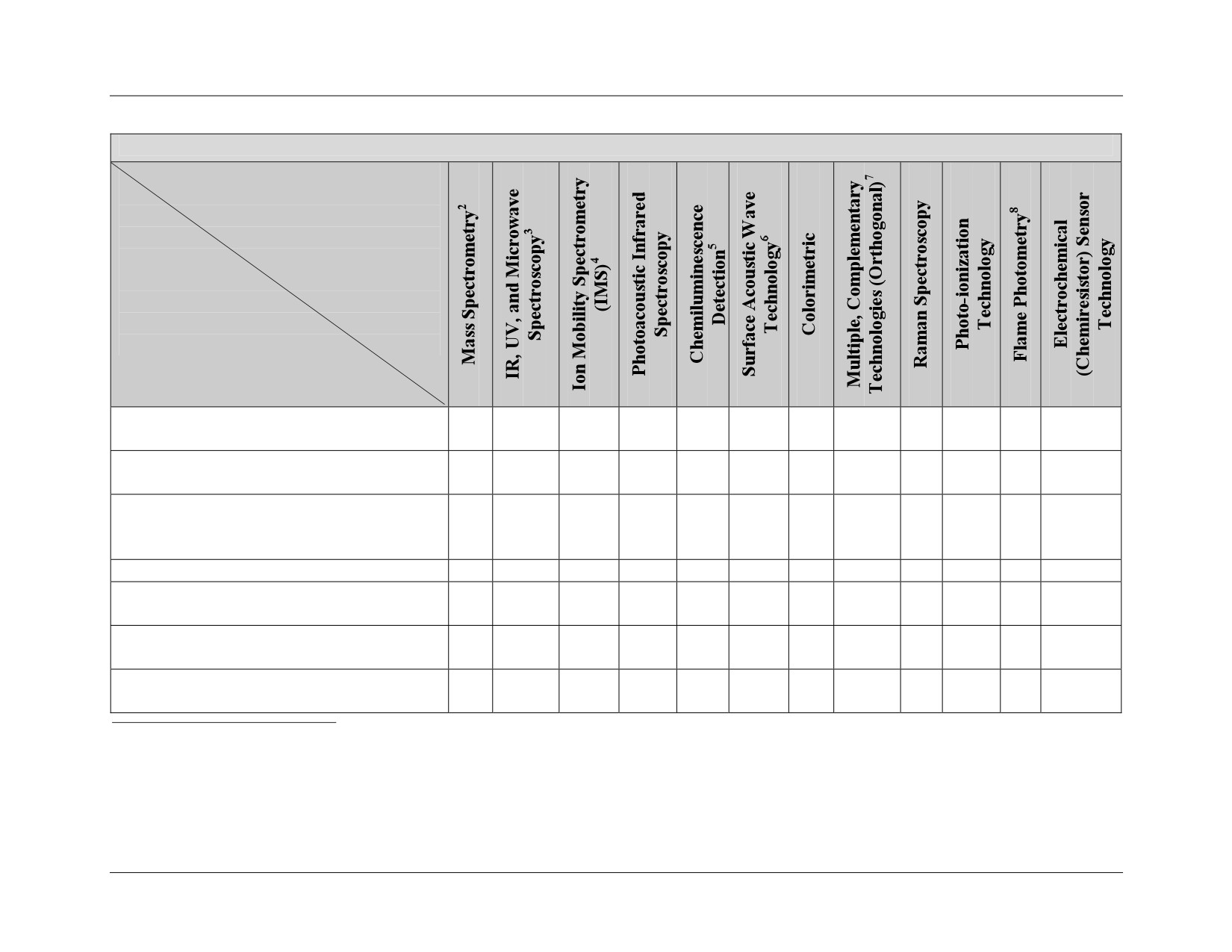
Table 5.10-2 identifies 12 ideas for materiel approaches that, if developed, may reduce or
eliminate the deficiencies associated with detecting chemical hazards in the atmosphere.
Advances in orthogonal technologies may be able to address all identified deficiencies.
120
For Official Use Only
For Official Use Only
CBRN Functional Needs Analysis/Functional Solution Analysis
Chapter 5. Tactical Sense Tasks
Table 5.10-2. TASENS 10. IMA Assessment
TASENS 10. Sense the presence of chemical hazards on humans, MWAs and remains1
Ideas for Material
Approaches
(IMA)
Identified Gaps
Lack of real-time or near-real-time TIC
X
X
X10
X
X
X
X
detection and identification capabilities.9
General inability to detect deposited low-
X
X
X
X
X
X
X
X
volatility agents and dusty agents.
General inability to detect low-volatility
CWAs (e.g., VX and, to a lesser extent,
X
X
X
X
X12
X
X
HD) at or below IDLH levels.11
Susceptibility to chemical interference.
X
X
General lack of agent quantification
X
X
X
X
X
X
capabilities.13
Lack of real-time or near-real-time CWA
X
X
X
X
X
identification capabilities.
Lack of detector that also takes samples
X
X
X
X
X
X
X
X
X
X
X
X
for future analysis capability.14
1 McKone, Thomas E., Beverly M. Huey, et al. (eds.) Strategies to Protect the Heath of Deployed U.S. Forces: Detecting, Characterizing and Documenting Exposures. National
Academy Press. 2000. http://books.nap.edu/books/0309068754/html/; Kosal, Margaret E. “The Basics of Chemical and Biological Detectors.” 24 November 2003.
http://cns.miis.edu/pubs/week/031124.htm; Detection and Measurement of Chemical Agents, http://books.nap.edu/html/terrorism/ch4.html; Conventional analytical methods for
chemical warfare agents, http://www.iupac.org/publications/pac/2002/pdf/7412x2281.pdf; National Institute of Justice. Guide for the Selection of Chemical Agent and Toxic
Industrial Material Detection Equipment for Emergency First Responders. 2000. http://www.ojp.usdoj.gov/nij/pubs-sum/184449.htm
2 Includes GC/MS, LC/MS, Matrix-Assisted Laser Desorption Ionization with Time-of-Flight Mass Spectrometry (MALDI-TOF MS)
121
For Official Use Only
For Official Use Only
CBRN Functional Needs Analysis/Functional Solution Analysis
Chapter 5. Tactical Sense Tasks
3 Examples include Thermal Infrared Spectroscopy, FTIR, long-wave IR (LWIR) Differential Scattering/Differential Absorption of Light (DISC)/Differential Absorption LIDAR
(DIAL), LWIR Polarization, mid-wave IR (MWIR) DISC/DIAL, MWIR Polarization, Near-IR Scattering, NIR Laser-Induced Breakdown Spectroscopy (LIBS) UV Fluorescence,
Multiband Brillouin Scattering, LWIR FTIR, LWIR Filtered Forward-Looking IR (FLIR), and Microwave (GHz and THz) Spectroscopy.
4 May be coupled with GC; External Second Gate, Fourier Transform Ion Mobility Spectrometry approach can improve sensitivity and selectivity.
5 For example, PCD.
6 May be coupled with GC.
7 Examples include SAW/IMS, IMC/SAW/Electrochemical/SCCell (S-CAD).
8 May be coupled with GC or reversed-phase liquid chromatography (RPLC).
9 Increasing the number of TICs identified by JCAD and/or JMCBDS is a potential solution.
10 Classifies, but generally does not identify, agents.
11 Distributing more HAPSITEs and Viking Spectratraks is a potential solution.
12 MS and IMS.
13 Distributing more HAPSITEs and Viking Spectratraks is a potential solution. JCAD and/or JMCBDS are expected to eliminate capability gap.
14 All IMAs could be designed to eliminate this capability gap. The collection equipment would be better maintained as an independent capability. The solution could involve a
module connected to the detector that notifies the operator to take samples or triggers an automated process to begin sampling.
122
For Official Use Only
For Official Use Only
CBRN Functional Needs Analysis/Functional Solution Analysis
Chapter 5. Tactical Sense Tasks
5.11
Task TASENS 11: Sense the presence of biological hazards on humans, MWAs, and
remains
5.11.1
Functional Area Analysis
5.11.1.1
Definition
To sense the presence or absence of biological hazards (includes biological warfare agents and
TIB material) on humans, MWAs, and remains. Includes external detection of contamination
prior to the manifestation of symptoms. Diagnosis of internal exposure is not part of this task as
it is addressed in a separate Sustain task. Includes the functions of detection, identification, and
quantification of the hazard. Also includes the requirement to determine the extent and physical
properties of contamination, monitoring of known hazard locations, and collection of samples for
further analysis. Encompasses “detect to warn” and “detect to treat” situations. The evaluation
encompasses all biological hazards of military and medical importance.
5.11.1.2
Derivation
UJTL TA 7, UJTL TA 7.1, Protection Joint Functional Concept.
5.11.1.2.1
Supported Tasks: OPSENS 1, OPSENS 4, OPSENS 7
5.11.1.2.2
Lateral Task: N/A
5.11.1.2.3
Supporting Task: N/A
5.11.1.3
Condition
Perform this task under conditions of:
Physical
1. Tropical, arctic, and arid climates. (C1.3.1)
2. Summer, winter seasons. (C1.3.1.1)
3. Stormy weather. (C1.3.1.3)
4. Hot, very cold air temperature. (C1.3.1.3.1
5. Liquid, freezing, and frozen precipitation. (C1.3.1.3.6.1)
6. Heavy precipitation intensity. (C1.3.1.3.6.2)
7. Negligible light. (C1.3.2.1)
8. Biological effects. (C1.3.3.3)
Military
1. Stressful mission. (C2.1)
2. Location—ashore, afloat, airborne. (C2.1.4.1)
3. Minimal time available. (C2.1.5)
4. Low personnel capability. (C2.2.4)
123
For Official Use Only
For Official Use Only
CBRN Functional Needs Analysis/Functional Solution Analysis
Chapter 5. Tactical Sense Tasks
5. Poor personnel morale. (C2.2.4.4)
6. Negligible personnel experience. (C2.2.4.5)
7. Poor multinational integration. (C2.3.1.2)
8. Deployment movement and maneuver—includes logistical requirements such as lift,
supply, and transportation. (C2.5)
9. Limited or no host nation support. (C2.8.5)
10. Ambiguous threat existence. (C2.9.3)
Civil
1. High mission priority. (C3.1.3.2)
2. Negligible language translators. (C3.2.1.2)
3. High health risk. (C3.3.1.5)
4. Significant refugee care responsibility. (C3.3.2.3)
5. TIB materials present in the civilian sector. (C3.3.7.5)
5.11.2
Functional Needs Analysis
5.11.2.1
Capability and Deficiency Assessment Summary
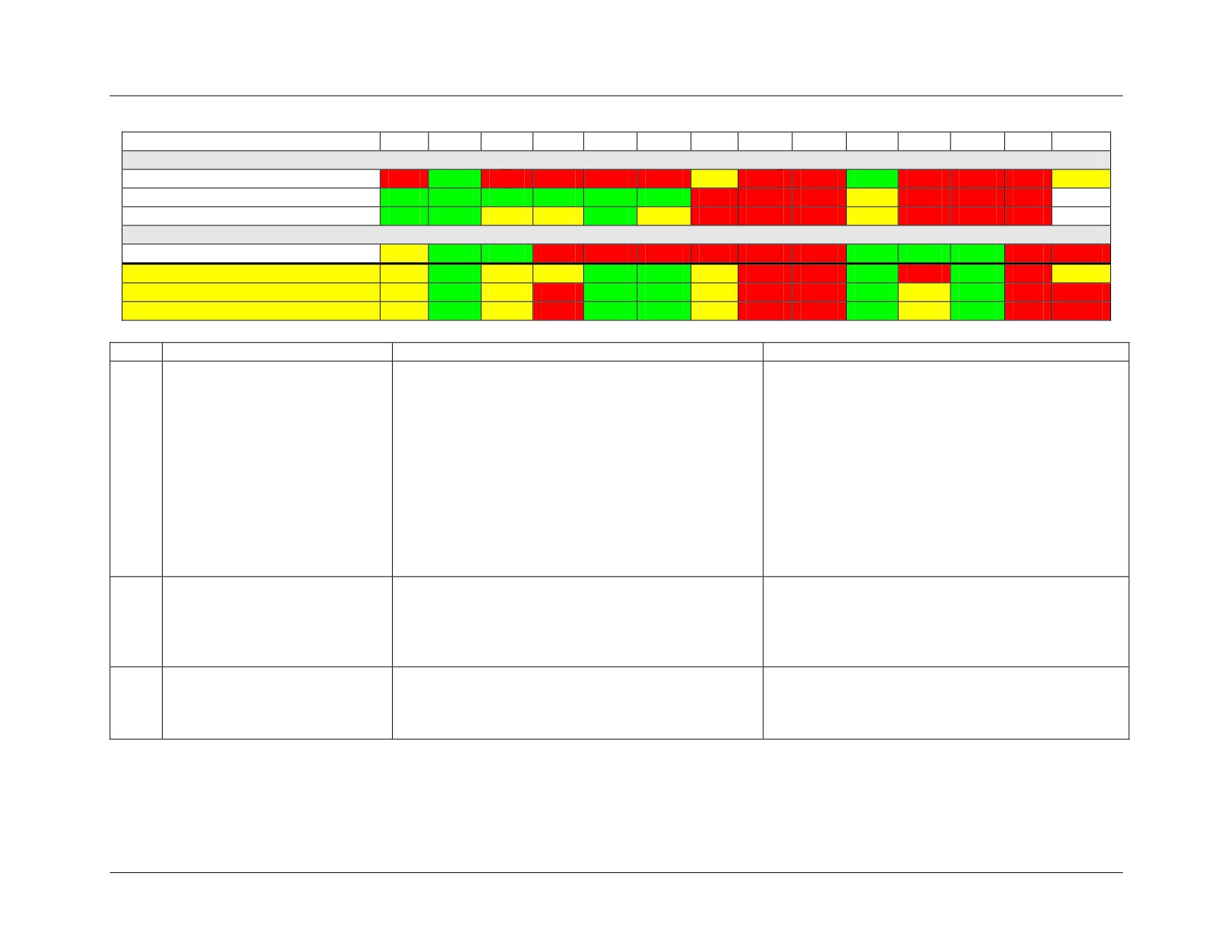
Table 5.11-1 presents individual and overall current, near/mid-term, and far-term capabilities to
perform the task to the designated standards. There are three current capabilities used to
accomplish this task and one projected capabilities to be added in the future (JBAIDS in the
near/mid term). The individual capabilities differ in their abilities to meet the identified
standards.
Overall Capability and Deficiency Summary
The overall current capability is assessed as “yellow.” Many, if not most, BWAs can be
presumptively detected and identified by collecting samples from personnel, MWAs, and
remains through physical sampling, followed by manual sample preparation and the following
laboratory and field-deployable analytical techniques: immunochromatographic HHAs, which
are part of the BSK; ELISA; and RT-PCR, as used by RAPID. Of the 25 BWAs described in the
Medical Management of Biological Casualties, a complete set of HHAs can detect and identify
all agents with the possible exception of the viral hemorrhagic fever agents; however, the BSK
contains eight different HHAs and thus detects only eight BWAs per kit. The eight agents in the
kit may be assembled to reflect the threat.1 A comprehensive set of ELISAs, which are
laboratory-based, can ostensibly detect and identify all 25 BWAs (as well as any TIB), assuming
that an antigen or antibody has been isolated for each agent. Like all PCR-based technologies,
RAPID can, with the appropriate reagents, detect and identify all BWA and TIB pathogens, but
none of the toxins (since the toxins, unless contaminated with the source organisms, do not
provide any genetic material). HHAs and RAPID can generically quantify detected agents
1 The collection of surface samples to use in HHA results in a sample for further analysis. Coolers/temperature-
controlled equipment to hold and maintain the sample needs to be available if the sample is not immediately
evacuated.
124
For Official Use Only
For Official Use Only
CBRN Functional Needs Analysis/Functional Solution Analysis
Chapter 5. Tactical Sense Tasks
(HHAs only through the aide of a reader), whereas some varieties of ELISAs provide absolute
quantification capabilities.
Overall current task deficiencies include the lack of integrated sample collection, detection,
identification, and quantification capability for BWAs on personnel, MWAs, and remains; real-
time or near-real-time detection, identification, and quantification capability for sampled BWAs;
field analysis verification capabilities; as well as TIB detection capabilities.
Projected Near/Mid-Term Capabilities and Deficiencies
The overall projected near/mid-term capability is assessed as “yellow.” Near/mid-term capability
JBAIDS Block I will detect 11 BWA pathogens (as a threshold requirement), whereas Block II
will detect the same 11 BWA pathogens plus the four toxins of interest (as a threshold
requirement). JBAIDS will also quantify agent concentrations in the analyzed sample. It will
require 25-40 minutes for analysis output following sample preparation, and will thus provide a
complete identify-to-treat capability.
All of the overall current task deficiencies are likely to remain deficiencies in the near/mid term.
Projected Far-Term Capabilities and Deficiencies
No changes in capability are projected in the far term for this task, so the overall projected far-
term capability will remain “yellow.”
125
For Official Use Only
For Official Use Only
CBRN Functional Needs Analysis/Functional Solution Analysis
Chapter 5. Tactical Sense Tasks
Table 5.11-1. TASENS 11: Capability and Deficiency Assessment
System/Measure
M1
M2
M3
M4
M5
M6
M7
M8
M9
M10
M11
M12
M13
M14
Current - Near/Mid - Far
BSK
31
102
03
04
N/A4
N/A4
65
N/A6
N/A7
107
08
N/A8
09
510
Physical Sampling/ELISA
10 11
102
1012
1013
1014
1014
115
N/A7
N/A7
515
016
N/A16
011
Unk
Physical Sampling/RAPID
8 17
102
518
519
1020
520
121
N/A7
N/A7
521
016
N/A16
010
Unk
Near/Mid - Far
JBAIDS Blocks I/II
4/622
1023
1024
025
N/A28
N/A28
026
N/A7
N/A7
1027
1028
1029
030
N/A31
Current Overall Capability
6
10
5
4
10
8
5
N/A
N/A
10
3
10
0
5
Near/Mid-Term Overall Capability
6
10
6
3
10
8
5
N/A
N/A
10
5
10
0
N/A101
Far-Term Overall Capability
6
10
6
3
10
8
5
N/A
N/A
10
5
10
0
N/A101
FAA Measure
Elaboration
Scale
M1
All of a potential adversary’s
Number of the 25 biological agents described in the
10: All 25 BWAs detected
weaponized BWAs can be
Medical Management of Biological Casualties that are
8: 20 BWAs detected
detected using fielded
detected. Fourteen of the 25 agents are as follows:
6: 15 BWAs detected
technologies/equipment,
Anthrax (Bacillus Anthracis); Brucellosis (Brucellae);
4: 10 BWAs detected
regardless of agent physical
Glanders (Burkholderia mallei); Meliodosis
2: 5 BWAs detected
properties, states, and
(Burkholderia pseudomallei); Q Fever (Coxiella
1: 1 BWA detected
concentrations?
burnetii); Plague (Yersinia pestis); Tularemia
0: No BWAs detected
(Francisella tularensis); Botulinum toxin; Ricin; SEB;
T-2 Mycotoxins; Smallpox (variola major and minor);
Viral Equine Encephalities (e.g., VEE, WEE, and EEE);
and Ebola and Marburg hemorrhagic fever viruses.
Linear from 2-10.
M2
All of a potential adversary’s
Ability to identify or classify (e.g., as bacteria, toxin, or
10: Identify detected BWAs
weaponized BWAs can be
virus) detected BWAs.
7: Identify some detected BWAs; classify others
identified using fielded
5: Classify detected BWAs
technologies/equipment?
3: Some detected BWAs are classified or identified
0: Neither identify nor classify detected BWAs
M3
All of a potential adversary’s
Ability to provide snapshot concentration of detected
10: Absolute quantification
weaponized BWAs can be
BWAs.
5: Generic quantification
quantified using fielded
0: No quantification capability
technologies/ equipment?
126
For Official Use Only
For Official Use Only
CBRN Functional Needs Analysis/Functional Solution Analysis
Chapter 5. Tactical Sense Tasks
FAA Measure
Elaboration
Scale
M4
All TIB material can be detected
TIB material includes medical waste, raw sewage, and
10: All pathogens and toxins within TIB material,
using fielded
vaccine-related biologics. Pathogens and toxins within
including medical waste, raw sewage, and vaccine-
technologies/equipment?
TIB material are what are generally detected.
related biologics can be detected
5: All TIB pathogens or toxins within one or more
categories (i.e., medical waste, raw sewage and
vaccine-related biologics) can be detected
3: Some TIB pathogens and toxins within one category
(i.e., medical waste, raw sewage and vaccine-related
biologics) can be detected
0: No TIB pathogens and toxins can be detected
M5
All TIB material can be identified
Ability to identify or classify (e.g., as bacteria, toxin, or
10: All pathogens and toxins within TIB material can
using fielded
virus) detected TIB material.
be identified
technologies/equipment?
7: Identify some TIB pathogens and toxins; classify
others
5: Classify detected TIB pathogens and toxins
3: Some detected TIB pathogens and toxins can be
classified or identified
0: Neither classify nor identify detected TICs
M6
All TIB material can be
Ability to provide snapshot concentration of detected
10: Absolute quantification
quantified using fielded
TIBs.
5: Generic quantification
technologies/equipment?
0: No quantification capability
M7
Time to detect biological
Time period from BWA/TIB sampling to analysis
10: 1 minute
hazards?
output. Linear scale 2-9. Applies to point detectors
9: 4 minutes
only.
8: 7 minutes
7: 10 minutes
4: 40 minutes
2: 60 minutes
1: >60 minutes
M8
Distance between biological
This measure is not relevant to this task.
N/A
hazard and detector for accurate
detection?
M9
Biological hazards are detected in
This measure is not relevant to this task.
N/A
time to warn forces and take
appropriate protective measures?
127
For Official Use Only
For Official Use Only
CBRN Functional Needs Analysis/Functional Solution Analysis
Chapter 5. Tactical Sense Tasks
FAA Measure
Elaboration
Scale
M10
Biological hazards are identified
Based on capability and time required to identify or
10: Complete capability (<1 hour)
in time to treat forces?
classify hazards, as well as rate-of-action of those
5: Partial capability
hazards. Of all considered BWAs, ricin may require the
0: No capability
most rapid response. Immunoglobulin therapy must be
administered within 1 hour of ricin exposure to be
effective.
M11
Sampling collection procedures
Refers to physical sampling for future analysis.
10: Complete capability
available for all of a potential
5: Partial capability
adversary’s weaponized BWAs
0: No capability
and for all TIB material using
fielded technologies/ equipment?
M12
Procedures maintain integrity of
Refers to a physical sample for future analysis.
10: Complete capability
sample?
5: Partial capability
0: No capability
M13
Time to validate the presence of
Refers to confirmatory identification.
10: Rapidly—validation performed expeditiously by
biological hazards in the
particular technology/equipment
atmosphere?
5: Moderately delayed—mobile analysis tools can
validate onsite
0: Delayed—off-site laboratory analysis required for
validation
M14
There is effective DOTLPF in
Refers to non-materiel elements associated with the
10: DOTLPF exists and is adequate for the task to be
place to conduct task?
execution of the task with the system.
performed with this system without limitations that
cause significant impact upon operations
5: Most critical aspects of DOTLPF for the task to be
performed with this system are addressed
0: DOTLPF is inadequate or does not exist for the task
to be performed with this system
1 Current and near-future HHAs detect all BWAs with the possible exception of the viral hemorrhagic fevers. The HHA sensitivity is 105-106 CFU/mL (B. anthracis) and 50-1200
ng/mL (Botulinum toxin A and Botulinum toxin F, respectively). Degraded performance: (C6) TIB material present in civilian sector. Susceptible to interference (false positives
and negatives); (M3) Minimal time available. Requires sample preparation prior to applying sample to assay.
2 All detected BWAs are identified.
3 Does not absolutely quantify agent. However, may provide relative indication of quantity, but only through the use of a reader. Soldiers will not likely have the reader.
4 According to specifications, does not detect any TIBs.
5 Detects within 15 minutes.
6 Not relevant to this task (N/A).
7 Immediately identifies all detected hazards (detection requires up to 15 minutes) and thus provides complete identify-to-treat capability.
8 Does not collect a sample for future analysis.
9 Requires samples to be confirmed off site in laboratory.
10 There is effective DOTLPF in place to conduct task, at least for bacillus bacteria (specifically anthrax). Procedures for other agents are probably similar.
128
For Official Use Only
For Official Use Only
CBRN Functional Needs Analysis/Functional Solution Analysis
Chapter 5. Tactical Sense Tasks
11 Ostensibly all BWAs can be detected by ELISA. ELISA’s sensitivity is 105-106 CFU/mL (B. anthracis); 10-100 PFU/mL of Venezuelan Equine Encephalitis virus; and 625
pg/mL of Staphyloccoccal Enterotoxin B (aerosol) and greater than 5 ng/mL of ricin.
12 Some varieties of ELISA can absolutely quantify the antigen or antibody concentration.
13 Theoretically, any agent (i.e., antigen or antibody) for which an ELISA has been designed can be detected through this method; however, only one particular pathogen or toxin
antigen or antibody can be tested per ELISA model.
14 A particular TIB pathogen or toxin is identified if it is detected, since ELISA is highly specific and detects a particular agent.
15 Typically requires 1-2 hours (following sample collection and preparation) for detection, identification, and if applicable, quantification, primarily because of incubation time.
16 Not designed for sample collection for future analysis.
17 RAPID may be able to detect all pathogens; PCR does not detect toxins, though the toxic material may be contaminated with source genetic material (In this assessment, it is
assumed that this is not the case). Standard PCR has a sensitivity of 10-100 CFU/mL bacteria (B. anthracis); and 15 fg-1 pg or 100-1 million copies of the complementary DNA
for viruses.
18 RAPID, through RT-PCR, may provide generic quantification.
19 Theoretically, any TIB pathogen can be detected with appropriate reagents; toxins cannot be detected unless contaminated with source genetic material.
20 All detected TIBs are identified.
21 Detects and identifies within 30 minutes following sample preparation, but sample preparation requires several hours.
22 Block I will detect Anthrax; Brucella; Ebola VHF virus; Marburg VHF virus; Viral Encephalitis viruses (VEE/WWW/EEE); Glanders; Meliodosis; Plague; Q Fever; Smallpox;
and Tularemia (and Typhus) as a threshold requirement; and Crimean-Congo hemorrhagic virus; Dengue fever; Hantaviruses; and Rift Valley Fever Virus (and Cholera,
Cryptosporidium; E. col; Influenza; Salmonella; and Shigella) as an objective; Block II will add toxins Botulinum, microcystins, ricin, SEB, and T-2 Mycotoxins.
23 Will identify all detected agents.
24 Will quantify the concentration in the sample.
25 Will not detect any TIBs.
26 Will detect and identify within 40 minutes (25-minute objective) for Blocks I and II following sample preparation.
27 Will immediately identify all detected hazards (detection will require 25-40 minutes) and thus will provide complete identify-to-treat capability.
28 Will provide physical sample collection capability for future analysis.
29 Will maintain integrity of physical sample.
30 Will require samples to be confirmed off site at laboratory.
31 Future system(s). Thus, DOTLPF is also future and cannot be evaluated.
129
For Official Use Only
For Official Use Only
CBRN Functional Needs Analysis/Functional Solution Analysis
Chapter 5. Tactical Sense Tasks
5.11.3
Functional Solution Analysis
5.11.3.1
DOTLPF Assessment Summary
This section states the deficiencies and suggests potential non-materiel solutions. If there are no
solutions or there are only partial solutions for a particular deficiency, that deficiency is then
reassessed in the IMAs section.
1. Deficiency: Lack of integrated detection, identification, and quantification capability for
BWAs on personnel and MWAs.
Non-Materiel Solutions: None
2. Deficiency: Lack of real-time or near-real-time detection, identification, and quantification
capability for BWAs on personnel and MWAs.
Non-Materiel Solutions: None
3. Deficiency: Validation of findings requires laboratory testing.
Non-Materiel Solutions: Doctrine: Modify doctrine to permit validation by a reliable on-
site detection/identification capability (e.g., portable PCR) as confirmatory
detection/identification is ultimately dependent upon doctrine, not materiel capabilities.
Training (partial): Train personnel in analytical techniques to ensure accuracy.
4. Deficiency: Lack of TIB detection capability.
Non-Materiel Solutions: None
5. Deficiency: Lack of detector that also takes samples for future analysis capability.
Non-Materiel Solutions: None
5.11.3.2
IMA Assessment Summary
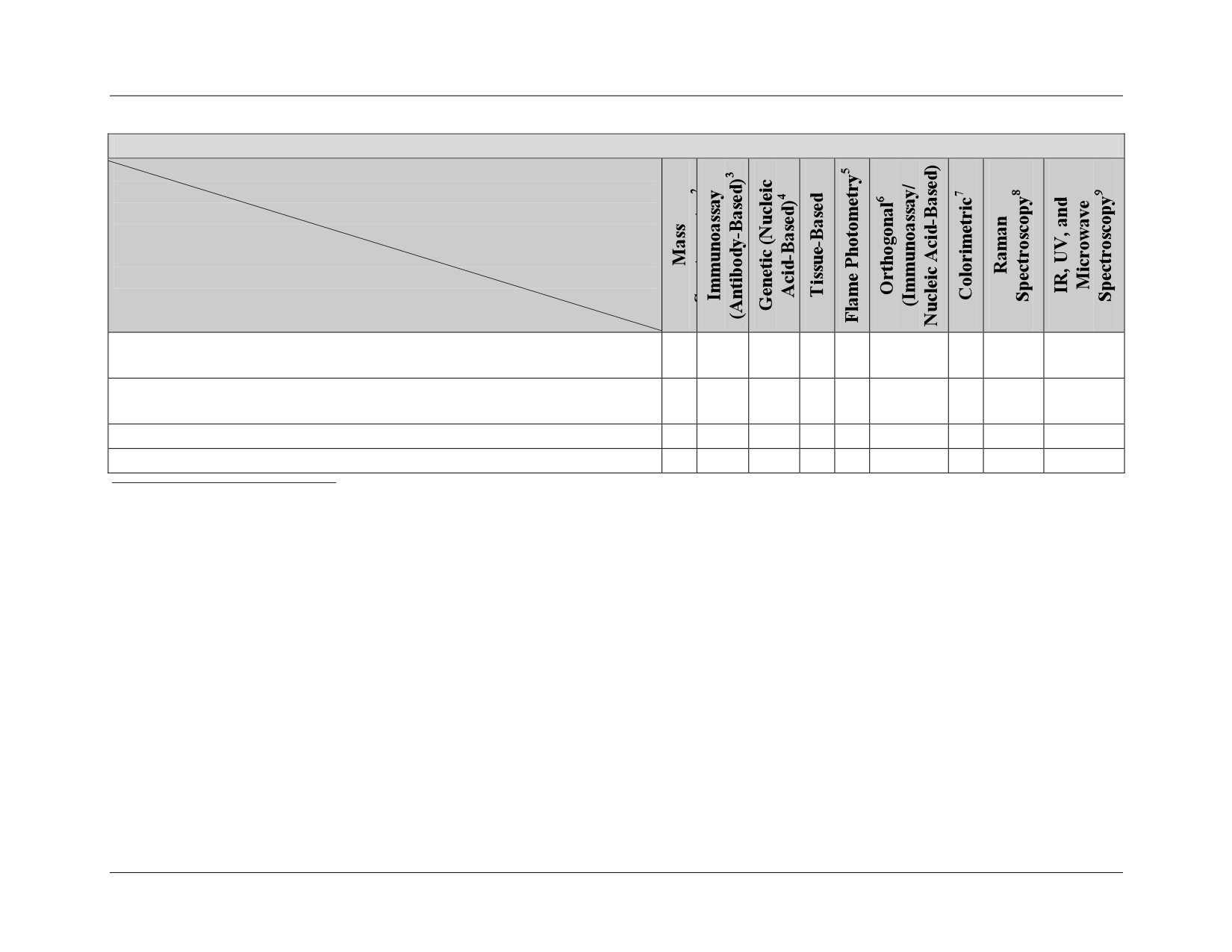
Table 5.11-2 identifies nine ideas for materiel approaches that, if developed, may reduce or
eliminate the deficiencies associated with detecting biological hazards on personnel and MWAs.
Advances in MS; immunoassays; flame photometry; tissue-based detection; Raman, IR, UV, or
microwave spectroscopy; or orthogonal technologies may be able to address all identified
deficiencies.
130
For Official Use Only
For Official Use Only
CBRN Functional Needs Analysis/Functional Solution Analysis
Chapter 5. Tactical Sense Tasks
Table 5.11-2. TASENS 11: IMA Assessment
TASENS 11: Sense personnel and MWAs for biological hazards1
Ideas for Material
Approaches
(IMA)
Identified Gaps
Lack of integrated detection, identification, and quantification capability
X
X
X
X
X
X
X
X
X
for BWAs on personnel and MWAs.10
Lack of real-time or near-real-time detection, identification, and
X
X
X
X
X
X
X
X
quantification capability for BWAs on personnel and MWAs.11
Lack of TIB detection capability.
X
X
X
X
X
X
X
X
X
Lack of detector that also takes samples for future analysis capability.12
X
X
X
X
X
X
X
X
X
1 McKone, Thomas E., Beverly M. Huey, et al. (eds.) Strategies to Protect the Heath of Deployed U.S. Forces: Detecting, Characterizing and Documenting Exposures. National
Academy Press. 2000. http://books.nap.edu/books/0309068754/html/; Kosal, Margaret E. “The Basics of Chemical and Biological Detectors.” 24 November 2003.
http://cns.miis.edu/pubs/week/031124.htm; Detection and Measurement of Biological Agents. http://books.nap.edu/html/terrorism/ch6.html; National Institute of Justice. An
Introduction to Biological Agent Detection Equipment for Emergency First Responders. 2001. http://www.ojp.usdoj.gov/nij/pubs-sum/190747.htm
2 Includes GC/MS, LC/MS, Gas Chromatography-Ion Trap Tandem Mass Spec (GC-MS-MS), Matrix-Assisted Laser Desorption Ionization (MALDI) MS.
3 Includes SAW technology.
4 Includes PCR and RT-PCR amplification, DNA microchip technology, SAW technology.
5 Philippe, Adam, Damien Descroix and Jean-Pierre Chiaroni. “Flame Photometry for Biological Detection.” Proceedings from the 6th CBW Protection Symposium. 1998.
6 Includes nucleic acid/immunoassay technologies (e.g., PCR and immunological techniques), electrochemiluminescence/equilibrium immunoassay, Fluorescence correlation
spectroscopy/PCR.
7 ChemSensing Colorimetric Sensor.
8 NIR Raman, Visible Light (VIS) Surface-Enhanced Raman, VIS Raman, UV Raman, Multiband Resonance-Enhanced Raman, Multiband Surface-Enhanced Raman.
9 Thermoluminescence/FTIR, long-wave IR Differential Scattering/Differential Absorption of Light (DISC)/Differential Absorption LIDAR (DIAL), LWIR Polarization, mid-
wave IR (MWIR) DISC/DIAL, MWIR Polarization, near-IR (NIR) Laser-Induced Breakdown Spectroscopy (LIBS) UV Fluorescence, Multiband Brillouin Scattering.
10 Sample collection, independent of the detector, is one of the main, if not the main, problem. Quantification cannot be achieved without efficient, standardized sample collection
and preparation (if needed). JBAIDS is expected to detect, identify, and quantify all BWAs on personnel and MWAs, and thus eliminate capability gap.
11 Reducing the sample preparation and response times for JBAIDS is a potential solution.
12 All IMAs could be designed to eliminate this capability gap. The collection equipment would be better maintained as an independent capability. The solution could involve a
module connected to the detector that notifies the operator to take samples or triggers an automated process to begin sampling.
131
For Official Use Only
For Official Use Only
CBRN Functional Needs Analysis/Functional Solution Analysis
Chapter 5. Tactical Sense Tasks
5.12
Task TASENS 12: Sense the presence of radiological hazards on humans, MWAs,
and remains
5.12.1
Functional Area Analysis
5.12.1.1
Definition
To sense the presence or absence of radiological substances on humans, MWAs, and remains.
Includes external detection of contamination prior to the manifestation of symptoms. Diagnosis
of internal exposure is not part of this task as it is addressed in a separate Sustain task. Includes
the functions of detection, identification, and quantification of the substance. Also includes the
requirement to determine the extent and physical properties of contamination, monitoring of
known radiological locations, and collection of samples for further analysis. Encompasses
“detect to warn” and “detect to treat” situations.
5.12.1.2
Derivation
UJTL TA 7, UJTL TA 7.1, Protection Joint Functional Concept.
5.12.1.2.1
Supported Tasks: OPSENS 1, OPSENS 4, OPSENS 7
5.12.1.2.2
Lateral Task: N/A
5.12.1.2.3
Supporting Task: N/A
5.12.1.3
Condition
Perform this task under conditions of:
Physical
1. Tropical, arctic, and arid climates. (C1.3.1)
2. Summer, winter seasons. (C1.3.1.1)
3. Stormy weather. (C1.3.1.3)
4. Hot, very cold air temperature. (C1.3.1.3.1
5. Liquid, freezing, and frozen precipitation. (C1.3.1.3.6.1)
6. Heavy precipitation intensity. (C1.3.1.3.6.2)
7. Negligible light. (C1.3.2.1)
8. Strong nuclear atmosphere weapons effects. (C1.3.3)
9. Moderate nuclear radiation effects. (C1.3.3.1.2)
Military
1. Stressful mission. (C2.1)
2. Location—ashore, afloat, airborne. (C2.1.4.1)
3. Minimal time available. (C2.1.5)
4. Low personnel capability. (C2.2.4)
132
For Official Use Only
For Official Use Only
CBRN Functional Needs Analysis/Functional Solution Analysis
Chapter 5. Tactical Sense Tasks
5. Poor personnel morale. (C2.2.4.4)
6. Negligible personnel experience. (C2.2.4.5)
7. Poor multinational integration. (C2.3.1.2)
8. Deployment movement and maneuver—includes logistical requirements such as lift,
supply, and transportation. (C2.5)
9. Limited or no host nation support. (C2.8.5)
10. Ambiguous threat existence. (C2.9.3)
Civil
1. High mission priority. (C3.1.3.2)
2. Negligible language translators. (C3.2.1.2)
3. Significant refugee care responsibility. (C3.3.2.3)
4. TIR materials present in the civilian sector. (C3.3.7.5)
5.12.2
Functional Needs Analysis
5.12.2.1
Capability and Deficiency Assessment Summary
Table 5.12-1 presents individual and overall current, near/mid-term, and far-term capabilities to
perform the task to the designated standards. There are 13 current capabilities used to accomplish
this task. The capabilities include a range of portable RADIAC devices and dosimeters.
Current Capabilities and Deficiencies
The overall current capability is assessed as “yellow.” Most current RADIACS detect and
identify beta radiation and detect, identify, and quantify gamma radiation. All RADIACs
perform their functions in real time (though the level of confidence increases with increased
sampling time) and thus provide a complete detect-to-warn capability. Many also automatically
calculate the cumulative dose. Dosimeters generally measure the total dose from gamma
radiation exposure. Most are not self-indicating and need to be placed within a reader to retrieve
the dose information.
There is no single capability that can perform the task to all of the designated standards.
ADM 300 detects alpha, beta, gamma, and x-radiation, but like all RADIACs, it detects,
identifies, and quantifies only the radiation, not the radioisotope. Furthermore, like all RADIACs
and dosimeters, the ADM-300, must be exposed to radiation to detect it. Overall task
deficiencies include the lack of radioisotope identification capabilities, reliable alpha detection
capabilities, monitors that can detect all types of radiation, and detectors that take sample for
future analysis.
Projected Near/Mid-Term Capabilities and Deficiencies
No changes in capability are projected in the near/mid term for this task, so the overall projected
near/mid-term capability will remain “yellow.”
133
For Official Use Only
For Official Use Only
CBRN Functional Needs Analysis/Functional Solution Analysis
Chapter 5. Tactical Sense Tasks
Projected Far-Term Capabilities and Deficiencies
No changes in capability are projected in the far term for this task, so the overall projected far-
term capability will remain “yellow.”
134
For Official Use Only
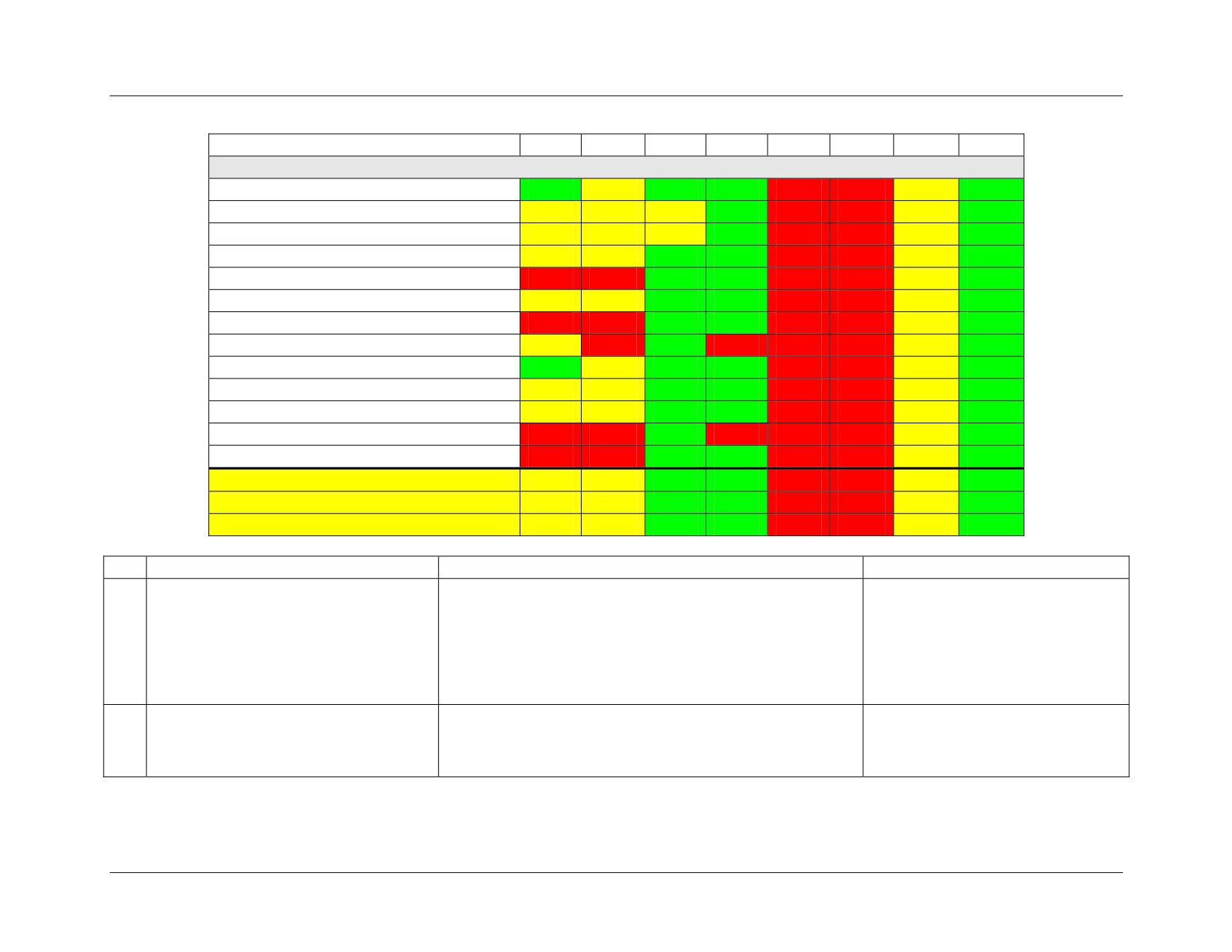
For Official Use Only
CBRN Functional Needs Analysis/Functional Solution Analysis
Chapter 5. Tactical Sense Tasks
Table 5.12-1. TASENS 12: Capability and Deficiency Assessment
System/Measure
M1
M2
M3
M4
M5
M6
M7
M8
Current - Near/Mid - Far
ADM-300
81
52
103
104
N/A5
N/A8
56
107
AN/PDQ-1 MFR8
49
52
510
104
N/A8
N/A8
56
107
AN/PDR-27
49
52
512
104
N/A8
N/A8
56
107
AN/PDR-43
49
52
103
104
N/A8
N/A8
56
107
AN/PDR-56
211
N/A12
103
104
N/A8
N/A8
56
107
AN/PDR-63
49
52
103
104
N/A8
N/A8
56
107
AN/PDR-65
213
N/A12
103
104
N/A8
N/A8
56
107
AN/PDR-75
414
015
1016
017
N/A8
N/A8
518
107
AN/PDR-77
819
52
103
104
N/A8
N/A8
56
107
AN/UDR-13
420
52
103
104
N/A8
N/A8
56
107
AN/VDR-2
49
52
103
104
N/A8
N/A8
56
107
CP-95/DT-60
221
N/A12
1022
021
N/A8
N/A8
523
107
IM-143/ IM-93
233
N/A12
1034
1024
N/A8
N/A8
535
107
Current Overall Capability
5
5
9
10
N/A8
N/A8
5
10
Near/Mid-Term Overall Capability
5
5
9
10
N/A8
N/A8
5
10
Far-Term Overall Capability
5
5
9
10
N/A8
N/A8
5
10
FAA Measure
Elaboration
Scale
M1
All radiological hazards (including TIR
Number of radiation types (i.e., alpha, beta, gamma, neutron, and
10: All five types
material) can be detected using fielded
x-radiation) detected. Note: Fielded technologies/equipment
8: Four types
technologies/equipment?
detect radiological hazards by detecting the radiation emitted
6: Three types
from these hazards.
4: Two types
2: Single type
TIR material includes DU, a common battlefield hazard resulting
0: No radiological hazards detected
from certain types of ammunition and damaged armor.
M2
All radiological hazards (including TIR
Ability to identify type of radiation detected or the radioisotope
10: Identifies radioisotope emitting
material) can be identified using fielded
emitting the radiation. Note: Fielded technologies/equipment that
radiation
technologies/ equipment?
identify radioisotope also identify the type(s) of radiation
5: Identifies type of radiation detected
detected.
0: No identification capability
135
For Official Use Only
For Official Use Only
CBRN Functional Needs Analysis/Functional Solution Analysis
Chapter 5. Tactical Sense Tasks
FAA Measure
Elaboration
Scale
M3
All radiological hazards (including TIR
Ability to quantify activity of radiological material (i.e., Cu or
10: Absolute quantification
material) can be quantified using fielded
Bq), or the exposure (i.e., Roentgen or Coulomb/kg) or dose rate
5: Generic quantification (or absolute
technologies/ equipment?
(rad, rem, Gy, or Sv) from emitted radiation.
quantification of one radiation type and
no quantification of another type)
0: No quantification capability
M4
Time to detect radiological hazard?
Time period from exposure to radiation to analysis output.
10: Near real time
0: Not near-real time
M5
Distance between radiological hazard and
This measure is not relevant to this task.
N/A
detector for accurate detection?
M6
Radiological hazards are detected in time to
This measure is not relevant to this task.
N/A
warn forces and take appropriate protective
measures?
M7
Radiological hazards are identified in time
A complete capability requires both near-real-time identification
10: Complete capability (near-real-time
to treat forces?
of the emitted radiation type(s) and radioisotope. Identification
identification of radioisotope and
of the emitted radiation type(s) enables appropriate medical
emitted radiation type[s])
response to radiation exposure and identification of the
5: Partial capability (Delayed
radioisotope determines to appropriate medical course of action
identification of emitted radiation
to radiological material internalization.
type[s])
0: No capability (no identification
capability)
M8
There is effective DOTLPF in place to
Refers to non-materiel elements associated with the execution of
10: DOTLPF exists and is adequate for
conduct task?
a task with the system.
the task to be performed with this
system without limitations that cause
significant impact upon operation
5: Most critical aspects of DOTLPF for
the task to be performed with this
system are addressed
0: DOTLPF is inadequate or does not
exist for the task to be performed with
this system
1 Detects alpha, beta, gamma, and x-radiation emitted from radiological materials.
2 Identifies type of radiation, but not radioisotope.
3 Absolutely quantifies radiation level.
4 Real-time detection. Level of confidence increases with increased sampling time and radiation levels.
5 Not relevant to this task (N/A)
6 Provides partial identify-to-treat capability since immediately identifies detected radiation type, but not the radioisotope.
7 There is effective DOTLPF in place to conduct task with this system.
8 In combination with OA-9449/PDQ probe. The MFR alone detects gamma radiation; with the probe, it measures gamma radiation and detects beta radiation.
9 Detects beta/gamma radiation emitted from radiological materials.
136
For Official Use Only
For Official Use Only
CBRN Functional Needs Analysis/Functional Solution Analysis
Chapter 5. Tactical Sense Tasks
10 Absolutely quantifies gamma radiation level; detects, but does not quantify, beta radiation.
11 Detects alpha radiation emitted from radiological materials (particularly plutonium).
12 Detects only one type of radiation, so identification capability is not applicable.
13 Detects gamma radiation emitted from radiological materials (particularly plutonium).
14 The DT-236 dosimeter records the total dose to gamma and neutron radiation. The CP-696 reader is required to retrieve the dose information.
15 Does not differentiate between dose received from gamma radiation and dose received from neutron radiation.
16 Absolutely quantifies total gamma and neutron dose absorbed by dosimeter.
17 Dose can be viewed only when dosimeter is placed within reader; therefore, radiation exposure cannot be detected in near-real time.
18 Through reader, displays total dose to penetrating (i.e., gamma and neutron) radiation, which allows for partial identify-to-treat capability.
19 Detects alpha, beta, gamma, and x-radiation emitted from radiological materials.
20 Detects gamma/neutron radiation emitted from radiological materials.
21 Dosimeter indicates total dose to gamma radiation only.
22 Absolutely quantifies total gamma radiation dose absorbed by dosimeter.
23 Provides partial identify-to-treat capability. As dosimeter only detects gamma radiation, an indication of a significant dose could suggest and help treat acute radiation syndrome,
e.g.
24 As a self-indicating pocket dosimeter, possibly allows for near-real-time detection of gamma radiation; however, dose rate must be high for increase in dose to be noticeable
during a short period.
137
For Official Use Only
For Official Use Only
CBRN Functional Needs Analysis/Functional Solution Analysis
Chapter 5. Tactical Sense Tasks
5.12.3
Functional Solution Analysis
5.12.3.1
DOTLPF Assessment Summary
This section states the deficiencies and suggests potential non-materiel solutions. If there are no
solutions or there are only partial solutions for a particular deficiency, that deficiency is then
reassessed in the IMAs section.
1. Deficiency: Lack of reliable alpha-detection capabilities.
Non-Materiel Solutions: Training (partial): Increase training of personnel on ADM-300,
AN/PDR-56, and AN/PDR-77.
2. Deficiency: Lack of monitors that can detect most or all types of radiation.
Non-Materiel Solutions: Training (partial): Increase training of personnel on ADM-300.
3. Deficiency: Lack of radioisotope identification capabilities.
Non-Materiel Solutions: None
4. Deficiency: Lack of detector that can also take samples for future analysis capability.
Non-Materiel Solutions: None
5.12.3.2
IMA Assessment Summary
Table 5.12-2 identifies three ideas for materiel approaches that, if developed, may reduce or
eliminate the deficiencies associated with detecting radiological hazards in the atmosphere.
Advances in scintillation or semiconductor radiation detection technologies may be able to
address all identified deficiencies.
138
For Official Use Only
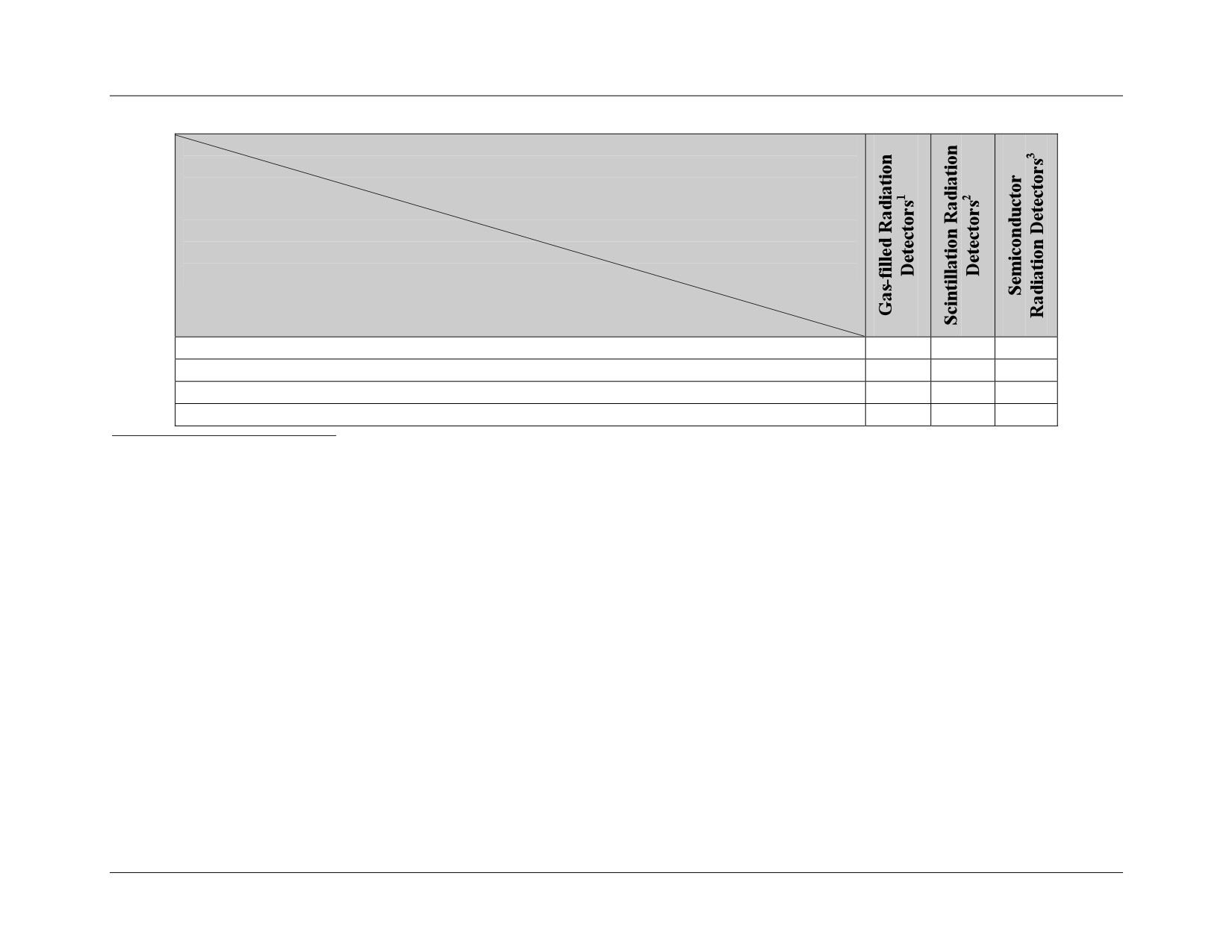
For Official Use Only
CBRN Functional Needs Analysis/Functional Solution Analysis
Chapter 5. Tactical Sense Tasks
Table 5.12-2. TASENS 12: IMA Assessment
Ideas for Material
Approaches
(IMA)
Identified Gaps
Lack of reliable alpha-detection capabilities.4
X
X
X
Lack of monitors that can detect all types of radiation.5
X
X
X
Lack of radioisotope identification capabilities.6
X
X
Lack of detector that collects contamination for low-level detection and future analysis.7
X
X
X
1 Includes Geiger-Mueller detectors, proportional gas detectors, and ionization chambers
2 Includes ZnS(Ag), anthracene, trans-stilbene, para-terphenyl, phenyl oxazole, NaI(Tl), CsI(Tl), bismuth germinate (Bi4Ge3O12), barium fluoride (BaF2)-based detectors.
3 Includes germanium, silicon, cadmium telluride (CdTe), and mercuric iodide (HgI2)-based detectors.
4 Distributing more ADM-300 and AN/PDR-77 is a potential solution.
5 Distributing more ADM-300 is a potential solution.
6 Distributing gamma and/or alpha scintillation detectors with radioisotope identification capabilities is a potential solution.
7 All point-detection IMAs could be designed to eliminate this capability gap. The collection equipment would be better maintained as an independent capability. The solution
could involve a module connected to the detector that notifies the operator to take samples or triggers an automated process to begin sampling.
139
For Official Use Only
For Official Use Only
CBRN Functional Needs Analysis/Functional Solution Analysis
Chapter 5. Tactical Sense Tasks
5.13
Task TASENS 13: Mark CBR contaminated air, surfaces, and water
5.13.1
Functional Area Analysis
5.13.1.1
Definition
To mark contaminated air, surfaces, and water includes exterior and interior atmospheres, food,
terrain, personnel, equipment, facilities, supplies, and bodies of water. Objective is to identify
hazards to allies while providing no advantage to enemy forces. Marking methods could include
visual, audible, and electronic indicators depending on the requirement.
5.13.1.2
Derivation
UJTL TA 7, UJTL TA 7.1, Protection Joint Functional Concept.
5.13.1.2.1
Supported Task: N/A
5.13.1.2.2
Lateral Task: TASHA 24
5.13.1.2.3
Supporting Task: N/A
5.13.1.3
Condition
Perform this task under conditions of:
Physical
1. Mountainous, desert, jungle, and arctic terrain. (C1.1.1)
2. Significant urbanization. (C1.1.3.1)
3. High sea state. (C1.2.1.3)
4. Stormy weather. (C1.3.1.3)
5. High surface-wind velocity. (C1.3.1.3.3)
6. Liquid, freezing, and frozen precipitation. (C1.3.1.3.6.1)
7. Heavy precipitation intensity. (C1.3.1.3.6.2)
8. Extreme turbulence and wind shear. (C1.3.1.3.8)
9. Very low visibility. (C1.3.2)
10. Negligible light. (C1.3.2.1)
11. Dense obscurants. (C1.3.2.2)
12. Severely degraded radio frequency spectrum. (C1.3.5)
Military
1. Minimal time available. (C2.1.5)
2. Some or no interoperability. (C2.2.6)
3. Highly restricted information exchange. (C2.3.1.8)
4. Extreme threat. (C2.9.1)
140
For Official Use Only
For Official Use Only
CBRN Functional Needs Analysis/Functional Solution Analysis
Chapter 5. Tactical Sense Tasks
Civil
1. Aggressively opposed foreign public opinion. (C3.1.2.4)
2. High mission priority. (C3.1.3.2)
3. TIMs present in the civilian sector. (C3.3.7.5)
5.13.2
Functional Needs Analysis
5.13.2.1
Capability and Deficiency Assessment Summary
Table 5.13-1 discusses the individual capability of the current M274 NBC Marking Kit to
perform the task to the designated standards. No near-future capabilities have been identified for
this task.
Current Capability and Deficiency
The overall current capability is assessed as “green.” Under ideal conditions, the M274 NBC
Marking Kit is able to perform the task to all of the designated standards. However, its
performance may be degraded under low light or if surrounded by obscurants since it does not
provide any audible or electronic indicators of contamination. Consequently, overall task
deficiencies include the lack of audible or electronic indicators of contamination. These
deficiencies are likely to remain in the near future.
Projected Near/Mid-Term Capability and Deficiency
No changes in capability are projected in the near/mid term for this task, so the overall projected
near/mid-term capability will remain “green.”
Projected Far-Term Capability and Deficiency
No changes in capability are projected in the far term for this task, so the overall projected far-
term capability will remain “green.”
141
For Official Use Only

For Official Use Only
CBRN Functional Needs Analysis/Functional Solution Analysis
Chapter 5. Tactical Sense Tasks
Table 5.13-1. TASENS 13: Capability and Deficiency Assessment
System/Measure
M1
M2
M3
M4
Current - Near/Mid - Far
M274 NBC Marking Set
10 1
5 2
5 3
104
Current Overall Capability
10
5
5
10
Near/Mid-Term Overall Capability
10
5
5
10
Far-Term Overall Capability
10
5
5
10
FAA Measure
Scale
M1
Markings are standardized among
10: Complete capability
coalition forces?
5: Partial capability
0: No capability
M2
Markings facilitate effective
10: Complete capability
contamination avoidance?
5: Partial capability
0: No capability
M3
Markings are monitored and
10: Complete capability
changed in near-real time to reflect
5: Partial capability
changes in hazards?
0: No capability
M4
There is effective DOTLPF in
10: DOTLPF exists and is adequate for the task to be performed with
place to conduct task?
this system without limitations that cause significant impact upon
operations
5: Most critical aspects of DOTLPF for the task to be performed with
this system are addressed
0: DOTLPF is inadequate or does not exist for the task to be
performed with this system
1 Markings are standardized among US and NATO forces.
2 M274 markings may not be visible under low light or if surrounded by obscurants.
3 Markings are unlikely to be monitored and changed in near-real time. Markings would likely be monitored and changed as time
permits.
4 There is effective DOTLPF in place to conduct task with this system.
142
For Official Use Only
For Official Use Only
CBRN Functional Needs Analysis/Functional Solution Analysis
Chapter 5. Tactical Sense Tasks
5.13.3
Functional Solution Analysis
5.13.3.1
DOTLPF Assessment Summary
This section states the deficiencies and suggests potential non-materiel solutions. If there are no
solutions or there are only partial solutions for a particular deficiency, that deficiency is then
reassessed in the IMAs section.
1. Deficiency: Lack of audible and electromagnetic indicators of contamination.
Non-Materiel Solutions: None
5.13.3.2
IMA Assessment Summary
The materiel solution to a lack of audible and electromagnetic indicators of contamination
involves developing beacons that audibly and/or electronically notifies forces of contamination.
This technology would be especially valuable in contaminated urban environments and on
contaminated airfields.
143
For Official Use Only
For Official Use Only
CBRN Functional Needs Analysis/Functional Solution Analysis
Chapter 5. Tactical Sense Tasks
5.14
Task TASENS 14: Observe the indigenous population for indicators of CBRN/TIM
attack
5.14.1
Functional Area Analysis
5.14.1.1
Definition
To collect data from indigenous population that may indicate potential CBRN/TIM attack.
Indigenous population includes individuals, animals, and plants. Includes indicators such as
human illness and environmental abnormalities such as an unexplained absence or elevated
illness of wildlife or plants. Methods include observations as well as data obtained from local
sources or organizations.
5.14.1.2
Derivation
UJTL (TA 7, TA 7.1), Protection Joint Functional Concept.
5.14.1.2.1
Supported Task: OPSENS 3
5.14.1.2.2
Lateral Tasks: TASHA 1, TASHA 9
5.14.1.2.3
Supporting Task: N/A
5.14.1.3
Condition
Perform this task under conditions of:
Physical
1. Significant urbanization. (C1.1.3.1)
2. Nuclear radiation effects. (C1.3.3.1.2)
3. Chemical effects. (C1.3.3.2)
4. Biological effects. (C1.3.3.3)
Military
1. Location—ashore, afloat, airborne. (C2.1.4.1)
2. Minimal time available. (C2.1.5)
3. Low personnel capability. (C2.2.4)
4. Negligible personnel experience. (C2.2.4.5)
5. Highly restricted information exchange. (2.3.1.8)
6. Negligible theater intelligence access. (C2.4.4)
7. Little or no intelligence dissemination and receipt. (C2.4.7)
8. Extreme threat. (C2.9.1)
144
For Official Use Only
For Official Use Only
CBRN Functional Needs Analysis/Functional Solution Analysis
Chapter 5. Tactical Sense Tasks
Civil
1. Limited or negative foreign government support. (C3.1.2.3)
2. High mission priority. (C3.1.3.2)
5.14.2
Functional Needs Analysis
5.14.2.1
Capability and Deficiency Assessment Summary
Medical units, in the course of routine medical procedure, conduct medical surveillance to
determine whether biological warfare attacks have taken place. The task includes employing
epidemiological methods for biological attack assessment. This process is accomplished now as
part of standard medical process. They also support all types of restoration operations by
tracking the biological reactions to substances in the environment whether endemic or induced.
Coordination of medical services promotes, improves, conserves, and restores the mental or
physical well-being and performance of individuals or groups, and is performed in support of all
Services (and other nations as required). This deployment process is accomplished now as part of
standard medical processes.
Current Capability and Deficiency
The overall current capability is assessed as “yellow.” While Chairman of the Joint Chiefs of
Staff Manual (CJCSM) 3113.01a provides guidance concerning general Theater Engagement
Plan (TEP) considerations that can be modified to include restoration operation considerations,
there is no definitive guidance for executing theater engagement restoration operation activities
at this level. Training of restoration operation country assistance teams is not conducted as part
of joint training. All Standing Joint Task Forces are proficient at restoration operation TEP.
Inclusion or restoration operation TEP is standard in all pertinent schools/courses.
Projected Near/Mid-Term Capability and Deficiency
Significant DOTLPF changes in capability are projected in the near/mid term for this task, so the
overall projected near/mid-term capability will improve to “green.”
Projected Far-Term Capability and Deficiency
No changes in capability are projected in the far term for this task, so the overall projected far-
term capability will remain “green.”
145
For Official Use Only

For Official Use Only
CBRN Functional Needs Analysis/Functional Solution Analysis
Chapter 5. Tactical Sense Tasks
Table 5.14-1. TASENS 14: Capability and Deficiency Assessment
Capability: Observation of Indigenous
M1
M2
M3
M4
Population for CBRN/TIM Attack Indicators
Current Overall Capability
51
52
103
54
Near/Mid-Term Overall Capability
5
10
10
10
Far-Term Overall Capability
5
10
10
10
FAA Measure
Scale
M1
Troops have been trained to recognize
10: Complete capability
abnormal events in the indigenous
5: Partial capability
population?
0: No capability
M2
Procedures exist to gather and monitor
10: Complete capability
available indigenous population
5: Partial capability
information from local sources and
0: No capability
organizations?
M3
Medical personnel have been trained to
10: Complete capability
recognize the early indicators of a
5: Partial capability
CBRN/TIM attack in the indigenous
0: No capability
population?
M4
There is effective DOTLPF in place to
10: DOTLPF exists and is adequate for this task. Task can be
conduct task?
effectively performed with minor limitations with little or no
direct impact upon operation
5: Most critical aspects of DOTLPF for this task are
addressed; task can be performed with limitations requiring
work-arounds
0: DOTLPF is inadequate or does not exist for this task; task
can not be effectively accomplished
1Nonmedical personnel (e.g., military patrols) have been trained to recognize abnormal events or indicators of abnormal activity
in the indigenous population. However, they typically have limited CBRN-awareness training. According to JP 3-40, locating,
characterizing, and tracking indicators and incidents of actual proliferation, employment, and/or use of WMD is required for joint
force counterproliferation operations, and this capability is required restoration operations as well. While CJCSM 3113.01a
provides guidance concerning general TEP considerations that can be modified to include restoration operation considerations,
there is no definitive guidance for executing theater engagement restoration operation activities at this level. Training of
restoration operation country assistance teams is not conducted as part of joint training. All Standing Joint Task Forces are
proficient at restoration operation TEP. Inclusion or restoration operation TEP is standard in all pertinent schools/courses.
2 Procedures do exist to gather and monitor available indigenous population information from local sources and organizations.
However, these liaisons must establish relationships with these organizations to solicit the appropriate information, which
requires an adequate communications infrastructure. This infrastructure does not exist in all cases.
3 In the course of routine medical procedure, medical units conduct medical surveillance to determine whether biological warfare
attacks have taken place. They also support all types of restoration operations by tracking the biological reactions to substances in
the environment whether endemic or induced. Medical personnel review medical intelligence data and report observations via
disease reports and after action reports.
4 Most critical aspects of DOTLPF for this task are addressed. There are deficiencies related to gathering, identifying,
interpreting and disseminating (reporting) medically relevant intelligence information.
146
For Official Use Only
For Official Use Only
CBRN Functional Needs Analysis/Functional Solution Analysis
Chapter 5. Tactical Sense Tasks
5.14.3
Functional Solution Analysis
5.14.3.1
DOTLPF Assessment Summary
This section states the deficiencies and suggests potential non-materiel solutions. If there are no
solutions or there are only partial solutions for a particular deficiency, that deficiency is then
reassessed in the IMAs section.
1. Deficiency: Nonmedical personnel have limited CBRN awareness training.
Non-Materiel Solutions: Leadership: Inclusion of Joint Professional Military Education
(JPME) leader-learning areas for biological warfare considerations of medical surveillance.
2. Deficiency: Lack of definitive guidance for executing theater engagement restoration
operation activities.
Non-Materiel Solutions: Training: Integration of tactics, techniques, and procedures (TTP)
for testing a Joint Task Force (JTF) Headquarters’ ability to correctly correlate medical and
BW information into training center plans as plans are made for the establishment of a Joint
National Training Center (Quadrennial Defense Review Report—September 2001).
5.14.3.2
IMA Assessment Summary
N/A
147
For Official Use Only
For Official Use Only
CBRN Functional Needs Analysis/Functional Solution Analysis
Chapter 5. Tactical Sense Tasks
5.15
Task TASENS 15: Sense the tactical deployment of CBRN weapons on the
battlefield
5.15.1
Functional Area Analysis
5.15.1.1
Definition
To obtain tactical information and data from all sources that determine when a threat force is
preparing to conduct or is conducting a tactical deployment of CBRN/TIM weapons. Includes
information on civil and military plans related to deployment, training conducted by military
forces and civilians, and the overall CBRN/TIM defensive preparedness of threat forces.
5.15.1.2
Derivation
UJTL TA 7, UJTL TA 7.1, Protection Joint Functional Concept.
5.15.1.2.1
Supported Task: OPSENS 2
5.15.1.2.2
Lateral Task: N/A
5.15.1.2.3
Supporting Task: N/A
5.15.1.3
Condition
Perform this task under conditions of:
Physical. NA
Military
1. Minimal time available (C2.1.5)
2. Negligible to marginal intelligence database (C2.4.2)
3. Negligible to difficult theater intelligence access (C2.4.4)
4. Little or no certitude of data (C2.4.6)
5. Nuclear, chemical, and biological threat form. (C2.9.2)
Civil
1. Negative foreign government support. (C3.1.2.3)
2. Aggressively opposed foreign public opinion. (C3.1.2.4)
3. No international organization support. (C3.1.2.5)
148
For Official Use Only
For Official Use Only
CBRN Functional Needs Analysis/Functional Solution Analysis
Chapter 5. Tactical Sense Tasks
5.15.2
Functional Needs Analysis
5.15.2.1
Capability and Deficiency Assessment Summary
Table 5.15-1 discusses the capability of intelligence gathering and specialized detection systems
to perform the task to the designated standards. There is no single capability that can
independently perform the task. Different intelligence-gathering methods (e.g., imagery
intelligence [IMINT] and communication intelligence [COMINT]) may be used in collaboration
with specialized detection systems (e.g., Swept Frequency Acoustic Interferometry detector) to
detect and identify tactical deployment of CBRN weapons on the battlefield.
Current Capability and Deficiency
The overall current capability is assessed as “yellow.” Currently, detection and identification of
deployment is typically presumptive (indicators suggest, but do not confirm, deployment) and
not in near-real time (analysis of intelligence is required and is frequently performed by
personnel).
Projected Near/Mid-Term Capability and Deficiency
The overall projected near/mid-term capability is assessed as “yellow.” The fielding of the Joint
Warning and Reporting Network (JWARN) should eliminate some deficiencies, such as the
current inability to provide CBRN weapons deployment warnings to forces in near-real time.
However, in the future, detection and identification of deployment will likely remain
presumptive, and it will not likely occur in near-real time (due to analysis time).
Projected Far-Term Capability and Deficiency
No changes in capability are projected in the far term for this task, so the overall projected far-
term capability will remain “yellow.”
149
For Official Use Only

For Official Use Only
CBRN Functional Needs Analysis/Functional Solution Analysis
Chapter 5. Tactical Sense Tasks
Table 5.15-1. TASENS 15: Capability and Deficiency Assessment
Intelligence Gathering and Specialized
M1
M2
M3
M4
M5
M6
M7
Detection Systems
Current Overall Capability
51
52
53
04
05
56
57
Near/Mid Term Overall Capability
5
58
5
0
09
1010
5
Far Term Overall Capability
5
5
5
0
0
1010
5
FAA Measure
Scale
M1
Detection: Deploying CBRN weapons/units on
10: Complete capability
the battlefield can be detected?
5: Partial capability
0: No capability
M2
Detection: Deploying CBRN weapons/units on
10: Complete capability
the battlefield is detected in near-real time?
5: Partial capability
0: No capability
M3
Identification: Deploying CBRN weapons/units
10: Complete capability
on the battlefield can be identified?
5: Partial capability
0: No capability
M4
Identification: Deploying CBRN weapons/units
10: Complete capability
on the battlefield is identified in near-real time?
5: Partial capability
0: No capability
M5
All data are correlated in near-real time?
10: Complete capability
5: Partial capability
0: No capability
M6
CBRN weapons deployment warning to forces is
10: Complete capability
provided in near-real time?
5: Partial capability
0: No capability
M7
There is effective DOTLPF in place to conduct
10: DOTLPF exists and is adequate for this task. Task
task?
can be effectively performed with minor limitations
with little or no direct impact upon operations
5: Most critical aspects of DOTLPF for this task are
addressed; task can be performed with limitations
requiring work-arounds
0: DOTLPF is inadequate or does not exist for this
task; task can not be effectively accomplished
1Detection of CBRN weapon/unit deployment is primarily based on the gathering and analysis of intelligence (signals
intelligence, IMINT, measurement and signature intelligence, and human intelligence) which suggests CBRN weapon/unit
deployment. Intelligence could be obtained through COMINT and/or IMINT. Imagery could be obtained through UAV
photography or IR imaging.
2 Since detection is primarily based on intelligence, it would not likely occur in near-real time. Indicators of deployment must be
detected, and compiled data must be analyzed before deployment can be concluded. Detection of CBRN weapon/unit deployment
generally takes hours, days, if not weeks. Nevertheless, it is possible that unequivocal evidence of deployment could be obtained
during deployment, which may lead to near-real time detection of deployment.
3Identification of deployed CBRN weapons/units is mainly based on visual recognition of the munitions, ancillary equipment
(e.g., decontamination teams), and/or individual protective equipment (IPE). Classification is actually more likely. Presumptive
identification of deployed chemical weapons can be achieved nonintrusively through the use of the Swept Frequency Acoustic
Interferometry (SFAI) detector (a handheld, nonintrusive instrument) that can rapidly (~20 seconds) identify CW agents within
proximal munitions, railcars, ton containers. Portable isotopic neutron spectroscopy (PINS) can also nonintrusively identify CW
agents; however, the equipment is much larger and identification takes ~1000 seconds. Biological weapon identification or
classification may be achieved through recognition of the munitions or munitions markings. Radiological and nuclear
weapons/units may be identified (and possibly confirmed) by radiation signature intelligence.
4 Identification is not likely to occur in near-real time. Ostensibly, presumptive identification can be achieved through IMINT
once weapons/units have been located and if the munitions can be immediately identified. Nevertheless, classification of
deployed weapons/units is more likely, though, it too will not likely occur in near-real time. Indicators of a deployed CBRN
weapon/unit through equipment and associated activities must be recognized and analyzed before identification or classification
can occur. Analysis may not even fall under tactical operations. Though the Swept Frequency Acoustic Interferometry detector
150
For Official Use Only
For Official Use Only
CBRN Functional Needs Analysis/Functional Solution Analysis
Chapter 5. Tactical Sense Tasks
can identify CW agents in near-real-time (~20 seconds), it must be positioned next to the container of interest. The time it takes
to position the detector must be considered.
5 Data is not typically correlated in near-real time. Though theoretically computer data correlation could occur in near-real time,
analysis depends on a variety of factors. Even after a sufficient amount of data has been collected, it must be processed, which
generally involves human analysis. Human analysis can take hours, days, even weeks.
6 Currently warnings are not usually provided to all forces in near-real time.
7 Additional training and personnel are required to conduct task.
8 Detection of CBRN weapon/unit deployment will still generally take hours, days, if not weeks.
9 In the near future computer data correlation might occur in near-real time. If data correlation includes human analysis, this will
take hours, days, even weeks.
10 JWARN will provide near-real-time dissemination of CBRN weapons deployment warnings to forces.
151
For Official Use Only
For Official Use Only
CBRN Functional Needs Analysis/Functional Solution Analysis
Chapter 5. Tactical Sense Tasks
5.15.3
Functional Solution Analysis
5.15.3.1
DOTLPF Assessment Summary
This section states the deficiencies and suggests potential non-materiel solutions. If there are no
solutions or there are only partial solutions for a particular deficiency, that deficiency is then
reassessed in the IMAs section.
1. Deficiency: Lack of near-real time, confirmatory detection of CBRN weapon deployment.
Non-Materiel Solutions: Training: Additional training of personnel in recognizing and
analyzing indicators of CBRN weapons may decrease detection time, though it will not likely
provide confirmatory detection. Personnel: Increasing the number of reconnaissance or
intelligence personnel may decrease detection time, though it will not likely provide
confirmatory detection
2. Deficiency: Lack of near-real-time confirmatory identification of deployed CBRN weapons.
Non-Materiel Solutions: Training: Additional training of personnel in classifying and
identifying CBRN weapons and their indicators may decrease identification time, though it
will not likely provide confirmatory identification. Personnel: Increasing the number of
reconnaissance or intelligence personnel may decrease identification time, though it will not
likely provide confirmatory identification.
5.15.3.2
IMA Assessment Summary
N/A
152
For Official Use Only
For Official Use Only
CBRN Functional Needs Analysis/Functional Solution Analysis
Chapter 5. Tactical Sense Tasks
5.16
Task TASENS 16: Sense the employment of tactical CBRN weapons on the
battlefield
5.16.1
Functional Area Analysis
5.16.1.1
Definition
To obtain information and data from all sources that determine when a military force or
transnational organization is preparing to or is employing CBRN/TIM weapons on the
battlefield. Areas of interest include when the weapons will be employed, joint operations area
targets selected, weapons systems involved, locations of weapons systems, and forces/personnel
involved in the employment. Extracts information from the medical, operational, intelligence,
and environmental communities to identify potential biological warfare activities.
5.16.1.2
Derivation
UJTL TA 7, UJTL TA 7.1, Protection Joint Functional Concept.
5.16.1.2.1
Supported Task: OPSENS 3
5.16.1.2.2
Lateral Task: N/A
5.16.1.2.3
Supporting Task: N/A
5.16.1.3
Condition
Perform this task under conditions of:
Physical
1. Atmospheric CBRN effects (C1.3.3)
Military
1. Stressful mission. (C2.1)
2. No mission preparation. (C2.1.3)
3. Negligible personnel experience. (C2.2.4.5)
4. Conventional and terrorist threat form. (C2.9.2)
Civil
1. Negative foreign government support. (C3.1.2.3)
5.16.2
Functional Needs Analysis
5.16.2.1
Capability and Deficiency Assessment Summary
153
For Official Use Only
For Official Use Only
CBRN Functional Needs Analysis/Functional Solution Analysis
Chapter 5. Tactical Sense Tasks
Table 5.16-1 discusses the capability of intelligence gathering systems to perform the task to the
designated standards. There is no single capability that can independently perform the task.
Different intelligence gathering methods (e.g., IMINT and COMINT) may be collaboratively
used to detect and identify tactical employment of CBRN weapons on the battlefield.
Current Capability and Deficiency
The overall current capability is assessed as “red.” Currently, detection and identification of
CBRN weapon employment depends on timely collection and analysis of pertinent information.
Findings are typically presumptive (indicators suggest, but do not confirm, deployment) and not
provided in near-real time (analysis of intelligence is required and is frequently performed by
personnel). In the near future, findings will likely remain presumptive and not be provided in
near-real time.
Projected Near/Mid-Term Capability and Deficiency
No changes in capability are projected in the near/mid term for this task, so the overall projected
near/mid-term capability will remain “red.”
Projected Far-Term Capability and Deficiency
No changes in capability are projected in the far term for this task, so the overall projected far-
term capability will remain “red.”
154
For Official Use Only

For Official Use Only
CBRN Functional Needs Analysis/Functional Solution Analysis
Chapter 5. Tactical Sense Tasks
Table 5.16-1. TASENS 16: Capability and Deficiency Assessment
Intelligence Gathering
M1
M2
M3
M4
M5
Current Overall Capability
51
02
03
04
55
Near/Mid-Term Overall Capability
5
0
0
0
5
Far-Term Overall Capability
5
0
0
0
5
FAA Measure
Scale
M1
CBRN attacks can be
10: Complete capability
detected.
5: Partial capability
0: No capability
M2
CBRN attacks can be
10: Complete capability
identified.
5: Partial capability
0: No capability
M3
Unambiguous attack
10: Complete capability
warning can be provided in
5: Partial capability
near-real time.
0: No capability
M4
Accurate attack
10: Complete capability
assessments can be
5: Partial capability
provided in near-real time.
0: No capability
M5
There is effective DOTLPF
10: DOTLPF exists and is adequate for this task. Task can be effectively
in place to conduct task.
performed with minor limitations with little or no direct impact upon
operations
5: Most critical aspects of DOTLPF for this task are addressed; task can be
performed with limitations requiring work-arounds
0: DOTLPF is inadequate or does not exist for this task; task cannot be
effectively accomplished
1 Detection of CBRN weapon/unit attacks is primarily based on the gathering and analysis of intelligence which suggests CBRN
weapon/unit employment. COMINT may intercept a command for a CBRN attack, or IMINT may identify final preparations
typically made before an attack. Pertinent and credible information must be collected and analyzed for detection to be achieved.
Data collection methods and analysis capabilities for tactical commands are limited.
2 Identification of a CBRN attack is more difficult than detecting it. For example, the presence of RADIACs may indicate that the
weapon is radiological or nuclear. IPE may indicate the type of attack, though the choice of IPE suggests only a particular type of
attack, as it may be simply improvised. Classification is more likely than identification. Classification and identification are
primarily based on the gathering and analysis of intelligence which suggests employment of a particular CBRN agent or class of
agents. Identifying the attack will likely require nontactical intelligence about the capabilities and intentions of the enemy. Like
detection, identification or classification requires the capability to collect and analyze pertinent information. This capability is
probably less developed than the detection capability.
3 Unambiguous attack warnings are unlikely to be provided in near-real time since data analysis by human(s) is typically
involved before issuance of a warning. Furthermore, these warnings would be presumptive, not confirmatory, since, in most
cases, they will be based on indicators which suggest a particular attack.
4 Attack assessments are based on the processing of gathered intelligence. The accuracy of the assessment is based on the
credibility of the gathered data and aptitude of the processor. Accurate attack assessments are unlikely to be provided in near-real
time since proper analysis typically requires a considerable amount of time.
5 Additional training and personnel are required to conduct task.
155
For Official Use Only
For Official Use Only
CBRN Functional Needs Analysis/Functional Solution Analysis
Chapter 5. Tactical Sense Tasks
5.16.3
Functional Solution Analysis
5.16.3.1
DOTLPF Assessment Summary
This section states the deficiencies and suggests potential non-materiel solutions. If there are no
solutions or there are only partial solutions for a particular deficiency, that deficiency is then
reassessed in the IMAs section.
1. Deficiency: Lack of near-real-time confirmatory detection of CBRN weapon employment.
Non-Materiel Solutions: Training: Additional training of personnel in recognizing and
analyzing indicators of CBRN weapons may decrease detection time, though it will not likely
provide confirmatory detection. Personnel: Increasing the number of reconnaissance or
intelligence personnel may decrease detection time, though it will not likely provide
confirmatory detection.
2. Deficiency: Lack of near-real-time confirmatory identification of employed CBRN weapons.
Non-Materiel Solutions: Training: Additional training of personnel in classifying and
identifying CBRN weapons and their indicators may decrease identification time, though it
will not likely provide confirmatory identification. Personnel: Increasing the number of
reconnaissance or intelligence personnel may decrease identification time, though it will not
likely provide confirmatory identification.
5.16.3.2
IMA Assessment Summary
Satellite imagery and area monitoring capabilities are in development and may prove useful in
determining whether a CBRN attack has taken place.
156
For Official Use Only
For Official Use Only
CBRN Functional Needs Analysis/Functional Solution Analysis
Chapter 5. Tactical Sense Tasks
5.17
Task TASENS 17: Verify completeness of decontamination operations
5.17.1
Functional Area Analysis
5.17.1.1
Definition
To confirm completeness of decontamination operations by sensing the presence or absence of
remaining CBRN/TIM hazards on humans, MWAs, and surfaces, as well as in water, following
decontamination. Involves sensing low-level CBRN/TIM hazards to ensure completion of
thorough decontamination operations.
5.17.1.2
Derivation
UJTL TA 7, UJTL TA 7.1, Protection Joint Functional Concept.
5.17.1.2.1
Supported Task: N/A
5.17.1.2.2
Lateral Tasks: TASHA 24, TASHA 31
5.17.1.2.3
Supporting Task: N/A
5.17.1.3
Condition
Perform this task under conditions of:
Physical
1. Mountainous, desert, jungle, and arctic terrain. (C1.1.1)
2. Significant urbanization. (C1.1.3.1)
3. Tropical, arctic, and arid climates. (C1.3.1)
4. Summer, winter seasons. (C1.3.1.1)
5. Stormy weather. (C1.3.1.3)
6. Hot, very cold air temperature. (C1.3.1.3.1)
7. High surface-wind velocity. (C1.3.1.3.3)
8. High/low relative humidity. (C1.3.1.3.5)
9. Liquid, freezing, and frozen precipitation. (C1.3.1.3.6.1)
10. Heavy precipitation intensity. (C1.3.1.3.6.2)
11. Extreme turbulence and wind shear. (C1.3.1.3.8)
12. Negligible light. (C1.3.2.1)
Military
1. Stressful mission. (C2.1)
2. Location—ashore, afloat, airborne. (C2.1.4.1)
3. Minimal time available. (C2.1.5)
4. Low personnel capability. (C2.2.4)
5. Poor personnel morale. (C2.2.4.4)
157
For Official Use Only
For Official Use Only
CBRN Functional Needs Analysis/Functional Solution Analysis
Chapter 5. Tactical Sense Tasks
6. Negligible personnel experience. (C2.2.4.5)
Civil
1. Limited or no host nation support. (C2.8.5)
2. Aggressively opposed foreign public opinion. (C3.1.2.4)
3. Ambiguous threat existence. (C2.9.3)
4. High mission priority. (C3.1.3.2)
5.17.2
Functional Needs Analysis
5.17.2.1
Capability and Deficiency Assessment Summary
Table 5.17-1 discusses the capability of detection, identification, and quantification systems to
verify completeness of decontamination operations. Though it is possible that a single capability
could be used to confirm decontamination thoroughness for each of chemical radiological/
nuclear contamination (sensitive mass spectrometers for chemical and a sensitive multiradiation
RADIAC for radiological/nuclear), there is no single capability for all biological contamination.
Furthermore, one or more separate detectors may be used to substantiate findings.
Current Capability and Deficiency
The overall current capability is assessed as “yellow.” Though there are capabilities to detect,
identify, and quantify CBRN agents on surfaces, personnel, MWAs, and in water, there are
multiple deficiencies. Most detectors, especially chemical and possibly biological as well, do not
detect low-level contamination. The lack of efficient and reliable sampling techniques
contributes to this deficiency. In addition, many detectors, particularly chemical detectors, are
susceptible to chemical interference, which may result in false positives and negatives. The
completeness of chemical and biological decontamination cannot be confirmed in near-real time.
Also, the inability to detect low-level residual contamination on and in airlift aircraft and their
cargo is a significant deficiency, due to global nature of airlift operations. Finally, there is little
or no doctrine on when thorough decontamination is complete.
Projected Near/Mid-Term Capability and Deficiency
The overall projected near/mid-term capability is assessed as “yellow.” The deployment of
JCBAWM and JBAIDS is expected to reduce deficiencies in low-level chemical and biological
contamination detection. Furthermore, the question “How clean is clean?” is expected to be
answered in a thorough study to be released in the near/mid term. However, in the near future,
reliable sampling techniques are still expected to be lacking, chemical detectors will remain
susceptible to interference, and verifying completeness of decontamination operations will still
not occur in near-real time.
158
For Official Use Only
For Official Use Only
CBRN Functional Needs Analysis/Functional Solution Analysis
Chapter 5. Tactical Sense Tasks
Projected Far-Term Capability and Deficiency
The overall projected far-term capability is assessed as “yellow.” The deployment of JMCBDS
may reduce deficiencies in low-level chemical and biological contamination detection. However,
in the far-term future, reliable sampling techniques are still expected to be lacking, chemical
detectors will remain susceptible to interference, and verifying completeness of decontamination
operations will still not occur in near-real time.
159
For Official Use Only
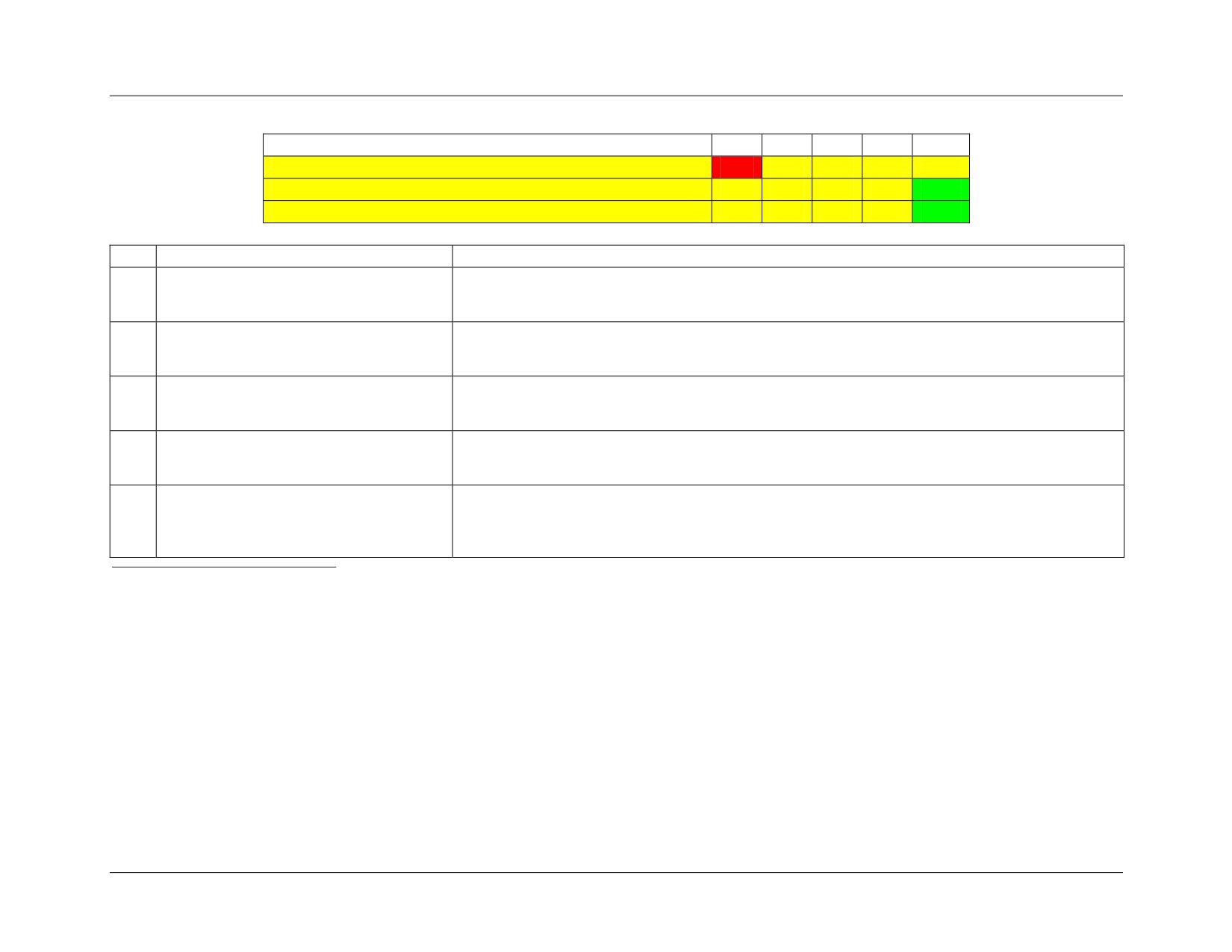
For Official Use Only
CBRN Functional Needs Analysis/Functional Solution Analysis
Chapter 5. Tactical Sense Tasks
Table 5.17-1. TASENS 17: Capability and Deficiency Assessment
Detection, Identification, and Quantification Systems
M1
M2
M3
M4
M5
Current Overall Capability
31
52
53
54
55
Near/Mid-Term Overall Capability
56
57
58
59
1010
Far-Term Overall Capability
511
512
513
514
10
FAA Measure
Scale
M1
Residual CBRN hazards can be detected at
10: Complete capability
low-effect levels?
5: Partial capability
0: No capability
M2
Residual CBRN hazards can be identified?
10: Complete capability
5: Partial capability
0: No capability
M3
Residual CBRN hazards can be quantified?
10: Complete capability
5: Partial capability
0: No capability
M4
Residual CBRN hazards can be detected,
10: Complete capability
identified, and/or quantified in near-real
5: Partial capability
time?
0: No capability
M5
There is effective DOTLPF in place to
10: DOTLPF exists and is adequate for this task. Task can be effectively performed with minor
conduct task?
limitations with little or no direct impact upon operations
5: Most critical aspects of DOTLPF for this task are addressed
0: DOTLPF is inadequate or does not exist for this task; task cannot be effectively accomplished
1 Chemical hazards: Most detectors cannot detect CWA at low levels (e.g., at Military air guideline, 1-14 days), which is required to verify thorough decontamination. MSs (e.g.,
Viking SpectraTrak, HAPSITE) can detect low levels, but efficient, reliable sampling is difficult. M8 and M9 paper can be used to detect liquid agent on surfaces. The M256A1 kit
is a sensitive detection system used before demasking and thus may be used to verify decontamination completeness. MSs and M272 kit can detect chemical hazards in water.
Adsorbed and absorbed chemical agents are extremely difficult to detect. Detection of agent vapor alone is insufficient in determining whether a surface is a potential contact
hazard. Most detectors are susceptible to interference (false positives and negatives).
Biological hazards: Biological agents are extremely potent and for decontamination to be verified there must be an ability to detect very small amounts of agent. HHAs can detect
most BWAs. There are not currently HHAs for all BWAs (particularly all viral-hemorrhagic fever agents), and there are few or no HHAs for TIBs. In addition, sampling is not
sufficiently efficient or reliable. Ostensibly, all BWAs and TIBs can be detected at low levels by ELISA if an antigen or antibody for that hazard has been identified and replicated.
PCR is even more sensitive than ELISA; however, it can detect nucleic acids only. Culturing and ELISA are typically the gold standards for pathogens and toxins, respectively.
Sampling is a problem for these capabilities as well.
Radiological and Nuclear hazards: RADIACs can be extremely sensitive, and for the most part, low-level contamination can be detected (with the exception of contamination in
water since water considerably attenuates the emitted radiation. Alpha-emitting contaminants are of primary concern since alpha particles have short ranges and are easily shielded.
Most RADIACs detect beta/gamma radiation, but not alpha radiation.
2Chemical hazards: Detected residual chemical hazards are typically classified by detectors, though mass spectrometers can identify the specific agent.
Biological hazards: Most detection systems are highly specific for a particular agent; therefore, identification can usually be achieved.
160
For Official Use Only
For Official Use Only
CBRN Functional Needs Analysis/Functional Solution Analysis
Chapter 5. Tactical Sense Tasks
Radiological and nuclear hazards: RADIACs identify the type of radiation detected, but not the specific radioisotope. For gamma emitters, a gamma spectroscopy system can
identify the radioisotope.
3 Chemical hazards: At low levels, only MSs are able to quantify agent (in ppm or ppb). Sampling is insufficiently efficient and reliable.
Biological hazards: HHAs provide only a generic indication of the hazard through the use of a reader. RT-PCR can provide a generic quantification capability as well. Some
varieties of ELISA can absolutely quantify the antigen or antibody concentration. Sampling is insufficiently efficient and reliable.
Radiological and nuclear hazards: RADIACs quantify the amount of radiation being emitted from the contamination, not the amount of radioactive material.
4 Chemical hazards: MSs take approximately 10 minutes to detect, identify, and quantify agent.
Biological hazards: HHAs take up to 15 minutes to detect, identify, and generically quantify agent. RAPID RT-PCR requires up to 30 minutes (following sample collection and
preparation) to detect, identify, and generically quantify agent. ELISA requires 1-2 hours (following sample collection and preparation) for detection, identification, and if
applicable, quantification, primarily because of incubation time.
Radiological and nuclear hazards: RADIACs and gamma spectrometers generally can detect, identify (if applicable), and quantify in near-real time.
5 Doctrine exists for when decontamination is required. It is typically based on the amount of contamination, which is expected to incapacitate a certain percentage of personnel
(FM 3-5); though, in some cases, it is an actual contamination density. There is little to no doctrine on when decontamination is complete. Currently it is operationally, not
scientifically driven, since the question “How clean is clean?” has not yet been answered.
6 Chemical hazards: JCBAWM will detect low-level hazards in water. MSs (e.g., Viking SpectraTrak, HAPSITE) will continue as capabilities to detect low levels, but efficient,
reliable sampling will continue to be an issue. Nevertheless, many detectors will not be able to detect CWA at low levels (e.g., at Military air guideline, 1-14 days), which is
required in order to verify thorough decontamination. Many detectors will detect few or no TICs at any level. Adsorbed and absorbed chemical agents will remain extremely
difficult to detect. Most detectors will still be susceptible to interference (false positives and negatives).
Biological hazards: JBAIDS is expected to detect all low-level BWA hazards in water, and on surfaces, personnel, and MWAs. JBAIDS is not expected to detect any TIBs. Some
TIBs may be detectable by particular HHAs. JCBAWM is expected to detect low-level biological hazards in water. Sampling will likely remain an issue.
Radiological and nuclear hazards: RADIACs will continue to be sensitive, and thus, for the most part, low-level contamination will be detected. More ADM-300s (which detect
most forms of radiation) are likely to be deployed. Alpha-emitting contaminants will remain a concern since alpha particles have short ranges and are easily shielded. Many
RADIACs will detect beta/gamma radiation, but not alpha radiation.
7 Chemical hazards: JCBAWM is expected to identify the chemical hazard. Mass spectrometers will continue to be hazard-identifying capabilities.
Biological hazards: JBAIDS is expected to identify all detected agents. Since HHAs, PCR, and ELISA are highly specific for a particular agent, they will continue to identify the
detected agent.
Radiological and nuclear hazards: RADIACs will continue to identify the type of radiation detected, but not the specific radioisotope. Thus, most detectors will not be able to
identify the radioisotope. For gamma emitters, gamma spectroscopy systems will remain radioisotope-identifying capabilities.
8 Chemical hazards: JCBAWM is expected to quantify low-level CWA/TIC hazards in water. Mass spectrometers will continue as capabilities to quantify CWA/TIC agent at ppm
and ppb levels. Sampling will likely remain an issue.
Biological hazards: JBAIDS and JCBAWM are expected to quantify all detected agents in a sample. Sampling will likely remain an issue.
Radiological and nuclear hazards: RADIACs will continue as capabilities to quantify radiation being emitted from the contamination. In general, the amount of radiation, not the
amount of radioactive material will be quantifiable.
9 Chemical hazards: JCBAWM is expected to detect, identify, and quantify chemical hazards within 10 minutes.
Biological hazards: JBAIDS is expected to detect, identify, and quantify BWA hazards within 25-40 minutes. JCBAWM is expected to detect, identify, and quantify biological
hazards within 10 minutes.
Radiological and nuclear hazards: RADIACs and gamma spectrometers are expected to generally detect, identify (if applicable), and quantify in near-real time.
10 The question “How clean is clean?” is expected to be answered in the near/mid term. Once answered, it is predicted that doctrine will change accordingly. Doctrine will then be
scientifically, not operationally, driven.
11 Chemical hazards: JCBAWM will detect low-level hazards in water. JMCBDS may be able to detect low-level hazards on surfaces, personnel, and MWAs.
MSs (e.g., Viking SpectraTrak, HAPSITE) will continue as capabilities to detect low levels, but efficient, reliable sampling will continue to be an issue. Nevertheless, many
detectors will not be able to detect CWA at low levels (e.g., at Military air guideline, 1-14 days), which is required to verify thorough decontamination. Many detectors will detect
few or no TICs at any level. Adsorbed and absorbed chemical agents will remain extremely difficult to detect. Most detectors will still be susceptible to interference (false positives
and negatives).
161
For Official Use Only
For Official Use Only
CBRN Functional Needs Analysis/Functional Solution Analysis
Chapter 5. Tactical Sense Tasks
Biological hazards: JBAIDS is expected to detect all low-level BWA hazards in water, and on surfaces, personnel, and MWAs. JBAIDS is not expected to detect any TIBs. Some
TIBs may be detectable by ELISA, PCR, and particular HHAs. JCBAWM is expected to detect low-level biological hazards in water. Sampling will likely remain an issue.
Radiological and nuclear hazards: RADIACs will continue to be sensitive, and thus, for the most part, low-level contamination will be detected. More ADM-300s (which detect
most forms of radiation) are likely to be deployed. Alpha-emitting contaminants will remain a concern since alpha particles have short ranges and are easily shielded. Many
RADIACs will detect beta/gamma radiation, but not alpha radiation.
12 Chemical hazards: JCBAWM and JMCBDS are expected to identify the chemical hazard. Mass spectrometers will continue to be hazard-identifying capabilities.
Biological hazards: JBAIDS is expected to identify all detected agents. Since HHAs, PCR, and ELISA are highly specific for a particular agent, they will remain capabilities to
identify detected agents.
Radiological and nuclear hazards: RADIACs will continue to identify the type of radiation detected, but not the specific radioisotope. Thus, most detectors will not be able to
identify the radioisotope. For gamma emitters, gamma spectroscopy systems will remain radioisotope-identifying capabilities.
13 Chemical hazards: JCBAWM is expected to quantify low-level CWA/TIC hazards in water. JMCBDS may be able to quantify low-level hazards on surfaces, personnel, and
MWAs. Mass spectrometers will continue as capabilities to quantify CWA/TIC agent at ppm and ppb levels. Sampling will likely remain an issue.
Biological hazards: JBAIDS and JCBAWM are expected to quantify all detected agent in a sample. Sampling will likely remain an issue.
Radiological and nuclear hazards: RADIACs will continue as capabilities to quantify radiation being emitted from the contamination. In general, the amount of radiation, not the
amount of radioactive material will be quantifiable.
14 Chemical hazards: JMCBDS is expected to detect, identify, and quantify chemical hazards within 2 minutes. JCBAWM is expected to detect, identify, and quantify chemical
hazards within 10 minutes.
Biological hazards: JBAIDS is expected to detect, identify, and quantify BWA hazards within 25-40 minutes. JCBAWM is expected to detect, identify, and quantify biological
hazards within 10 minutes.
Radiological and nuclear hazards: RADIACs and gamma spectrometers are expected to generally detect, identify (if applicable), and quantify in near-real time.
162
For Official Use Only
For Official Use Only
CBRN Functional Needs Analysis/Functional Solution Analysis
Chapter 5. Tactical Sense Tasks
5.17.3
Functional Solution Analysis
5.17.3.1
DOTLPF Assessment Summary
This section states the deficiencies and suggests potential non-materiel solutions. If there are no
solutions or there are only partial solutions for a particular deficiency, that deficiency is then
reassessed in the IMAs section.
1.
Deficiency: Inability of most chemical detectors to detect low-level contamination.
Non-Materiel Solutions: None
2.
Deficiency: Susceptibility of most chemical detectors to chemical interference.
Non-Materiel Solutions: None
3.
Deficiency: Inability to detect absorbed and adsorbed chemical agents.
Non-Materiel Solutions: None
4.
Deficiency: Efficiency and reliability of chemical sampling insufficient for absolute
quantification.
Non-Materiel Solutions: None
5.
Deficiency: Efficiency and reliability of biological sampling insufficient for absolute
quantification.
Non-Materiel Solutions: None
6.
Deficiency: Detection, identification, and quantification of chemical hazards not in real time
or near-real time.
Non-Materiel Solutions: None
7.
Deficiency: Detection, identification, and quantification of biological hazards not in real time
or near-real time.
Non-Materiel Solutions: None
8.
Deficiency: Limited ability to detect alpha-emitting radiological contamination.
Non-Materiel Solutions: None
9.
Deficiency: Inability of most RADIACs to detect alpha radiation.
Non-Materiel Solutions: None
10. Deficiency: Inability of most RADIACs to detect neutron radiation.
Non-Material Solutions: None
11. Deficiency: Lack of doctrine on when decontamination is complete.
Non-Materiel Solutions: Doctrine: Develop scientifically based decontamination standards
that account for low-level effects of contamination.
163
For Official Use Only
For Official Use Only
CBRN Functional Needs Analysis/Functional Solution Analysis
Chapter 5. Tactical Sense Tasks
5.17.3.2
IMA Assessment Summary
Table 5.17-2 identifies 14 ideas for materiel approaches that, if developed, may reduce or
eliminate the deficiencies associated with verifying completeness of decontamination operations.
Advances in a single technology cannot address all identified deficiencies.
164
For Official Use Only
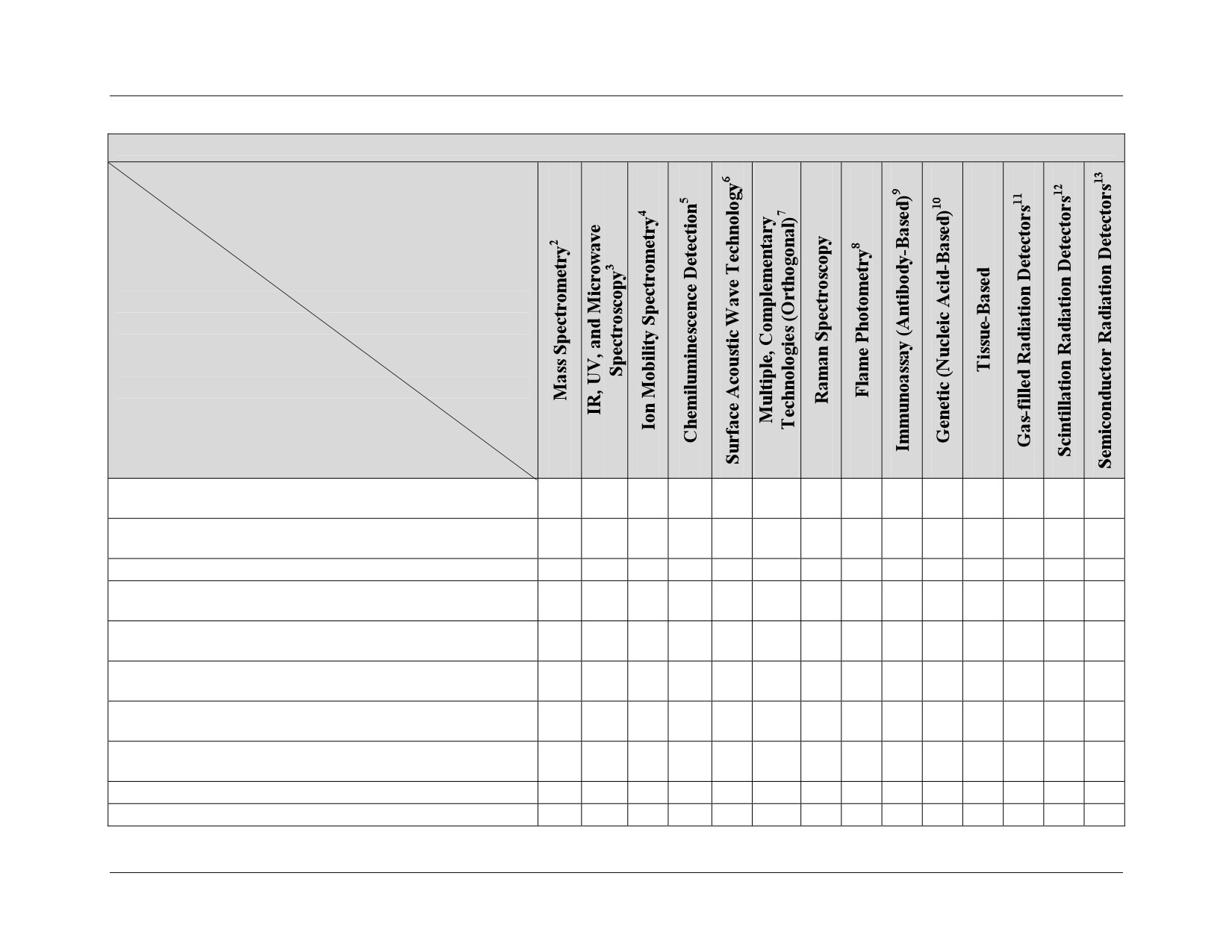
For Official Use Only
CBRN Functional Needs Analysis/Functional Solution Analysis
Chapter 5. Tactical Sense Tasks
Table 5.17-2. TASENS 17: IMA Assessment
TASENS 17. Verify completeness of decontamination operations1
Idea for Materiel
Approach
(IMA)
Identified Gap
Inability of most chemical detectors to detect low-level
X14
X
X
X
X
contamination.
Susceptibility of most chemical detectors to chemical
X
X
X
X
interference.
Inability to detect absorbed and adsorbed chemical agents.
Efficiency and reliability of chemical sampling insufficient
for absolute quantification.
Efficiency and reliability of biological sampling insufficient
for absolute quantification.
Detection, identification, and quantification of chemical
X
X
X
X15
X
X
X
hazards not in real time or near-real time.
Detection, identification, and quantification of biological
X
X
X
X
X
X
X
X
hazards not in real time or near-real time.
Limited ability to detect alpha-emitting radiological
contamination.
Inability of most RADIACs to detect alpha radiation.
X
X
X
X
Inability of most RADIACs to detect neutron radiation.
X
X
165
For Official Use Only
For Official Use Only
CBRN Functional Needs Analysis/Functional Solution Analysis
Chapter 5. Tactical Sense Tasks
1 McKone, Thomas E., Beverly M. Huey, et al. (eds.) Strategies to Protect the Heath of Deployed U.S. Forces: Detecting, Characterizing and Documenting Exposures. National
Academy Press. 2000. http://books.nap.edu/books/0309068754/html/; Kosal, Margaret E. “The Basics of Chemical and Biological Detectors.” 24 November 2003.
http://cns.miis.edu/pubs/week/031124.htm; Detection and Measurement of Chemical Agents, http://books.nap.edu/html/terrorism/ch4.html; Conventional analytical methods for
chemical warfare agents, http://www.iupac.org/publications/pac/2002/pdf/7412x2281.pdf; National Institute of Justice. Guide for the Selection of Chemical Agent and Toxic
Industrial Material Detection Equipment for Emergency First Responders. 2000. http://www.ojp.usdoj.gov/nij/pubs-sum/184449.htm; Loerop, William. Chemical Biological
Defense Science and Technology Chemical Standoff Briefing. Edgewood Chemical Biological Center. http://proceedings.ndia.org/dod_cb/Tuesday_PM/Zarzycki.pdf
2 Includes GC/MS, LC/MS, Matrix-Assisted Laser Desorption Ionization with Time-of-Flight Mass Spectrometry (MALDI-TOF MS).
3 Examples include CO2 long-wave IR (LWIR) Differential Scattering/Differential Absorption of Light (DISC)/Differential Absorption LIDAR (DIAL), CO2 conv mid-wave IR
(MWIR) DISC/DIAL, solid-state (SS) conv MWIR DISC/DIAL, FTIR, Hyperspectral LWIR, Passive MWIR, SS conv LWIR DISC/DIAL, SS conv short-wave IR (SWIR) -
LWIR, SS conv UV-LW IR, Active LWIR Polarization, Active MWIR Polarization, Passive LWIR Polarization, Filtered Forward-Looking IR (FLIR), UV Laser-Induced
Fluorescence (LIF)/FTIR, and Microwave (GHz and THz) Spectroscopy.
4 May be coupled with GC; External Second Gate, Fourier Transform Ion Mobility Spectrometry approach can improve sensitivity and selectivity.
5 For example, PCD.
6 May be coupled with GC.
7 Examples include SAW/IMS, IMC/SAW/Electrochemical/SCCell (S-CAD), GC/IMS.
8 May be coupled with GC or reversed-phase liquid chromatography (RPLC).
9 Includes SAW technology.
10 Includes PCR and RT-PCR amplification, DNA microchip technology, SAW technology, and DNA-recognition enzymes.
11 Includes Geiger-Mueller detectors, proportional gas detectors, and ionization chambers.
12 Includes ZnS(Ag), anthracene, trans-stilbene, para-terphenyl, phenyl oxazole, NaI(Tl), CsI(Tl), bismuth germinate (Bi4Ge3O12), barium fluoride (BaF2)-based detectors.
13 Includes germanium, silicon, cadmium telluride (CdTe), and mercuric iodide (HgI2)-based detectors.
14 Distributing more Viking SpectraTraks and HAPSITEs is a potential solution.
15 Classifies, but generally does not identify, agents.
166
For Official Use Only
For Official Use Only
CBRND Functional Needs Analysis/Functional Solution Analysis
Chapter 6. Strategic National Shape Tasks
CHAPTER 6. STRATEGIC NATIONAL SHAPE
TASKS
For Official Use Only
For Official Use Only
CBRND Functional Needs Analysis/Functional Solution Analysis
Chapter 6. Strategic National Shape Tasks
Table of Contents
List of Acronyms
ii
6.0
Strategic National Shape
1
6.1
Task SNSHA 1: Characterize the global CBRN/TIM threat and situation
5
6.2
Task SNSHA 2: Conduct global CBRN/TIM vulnerability analysis
10
6.3
Task SNSHA 3: Coordinate international CBRND protocols, standards, and agreements
15
6.4
Task SNSHA 4: Coordinate CBRND within the interagency process
20
6.5
Task SNSHA 5: Determine joint CBRND capability to meet the global CBRN/TIM
situation
24
6.6
Task SNSHA 6: Ensure joint CBRND readiness
29
6.7
Task SNSHA 7: Coordinate global CBRN information systems and processes
36
6.8
Task SNSHA 8: Establish national CBRND strategy, plans, and policy
44
6.9
Task SNSHA 9: Coordinate CBRND aspects of global medical operations
49
6.10
Task SNSHA 10: Coordinate global CBRND operations
53
6.11
Task SNSHA 11: Provide Shape “Global Family of Engagement Plan” policies and
guidelines to combatant commanders
58
6.12
Task SNSHA 12: Establish global cooperative CBRN/TIM-detection policies,
procedures, and networks
62
6.13
Task SNSHA 13: Coordinate internationally accepted standards and procedures for
determining employment of CBRN/TIM weapons
67
6.14
Task SNSHA 14: Sense the exportation of CBRN/TIM weapons or components
71
i
For Official Use Only
For Official Use Only
CBRND Functional Needs Analysis/Functional Solution Analysis
Chapter 6. Strategic National Shape Tasks
6.0
Strategic National Shape
6.0.1
Introduction
At the strategic level of war, a nation, often as a member of a group of nations, determines
national or multinational (alliance or coalition) security objectives and guidance, and develops
and uses national resources to accomplish these objectives. Activities at this level establish
national and multinational military objectives; sequence initiatives; define limits and assess risks
for the use of military and other instruments of national power; develop global plans or theater
war plans to achieve these objectives; and provide military forces and other capabilities in
accordance with strategic plans. The strategic national sublevel encompasses U.S. Department of
Defense (DoD), service, and interagency tasks. Fourteen Strategic National (SN) Shape (SHA)
tasks were identified in the chemical, biological, radiological, and nuclear (CBRN) Functional
Area Analysis (FAA).
This chapter, which details the strategic national Shape area, restates relevant information from
the CBRN FAA, including a description of each of the 14 SNSHA tasks, derivation of the task,
an indication of other linked-tasks, and the pertinent conditions. The Functional Needs Analysis
(FNA) section addresses the capability and deficiency analysis, and a brief description of
potential near-, mid-, and far-term changes. Once all the capabilities are considered, the
assessment concludes with a separate, overarching look at the entire capability spectrum to
identify remaining gaps and/or synergies. The Functional Solutions Analysis (FSA) section
addresses possible solutions for the deficiencies identified in the FNA and categorizes them into
materiel or non-materiel. The non-materiel solutions are addressed first and reflect one or more
of the six areas of DOTLPF: doctrine, organization, training, leadership, personnel, and facilities.
If there is no non-materiel solution to the deficiencies, then materiel solutions are considered.
These encompass broad approaches that are not system-specific. These potential materiel
approaches are addressed in the Ideas for Materiel Approaches (IMA) section. The IMAs provide
a possible near-, mid-, or far-term resolution to identified deficiencies within the individual
capabilities.
Most of the SNSHA tasks involve required capabilities of major staffs or staff sections within
DoD. In those areas where a DoD staff or agency needed to interact within the interagency, the
task focused on DoD capabilities required to facilitate the interaction.
6.0.2
FNA Summary
Table 6.0-1 below summarizes the overall current and projected capability to perform the
SNSHA tasks identified in the CBRN FAA. The overall capability to conduct SNSHA tasks in
the current time frame is assessed as “yellow.” The Joint Staff Directorate for Command,
Control, Communications, and Computer Systems, J-6, leads the C4 community and leads in
identifying and resolving military aspects of information-based issues of national importance, to
include CBRN Defense (CBRND) Shape issues. Because of documented training, education, and
experience issues, however, J-6 personnel may not have a full grasp of what needs to be
resolved. As the Chairman of the Joint Chiefs of Staff’s single source of expertise in addressing
CBRN defense issues involving the warfighter, the Joint Requirements Office for Chemical,
1
For Official Use Only
For Official Use Only
CBRND Functional Needs Analysis/Functional Solution Analysis
Chapter 6. Strategic National Shape Tasks
Biological, Radiological, and Nuclear Defense (JRO-CBRND) must proactively engage the J-6
to determine the adequacy of current and projected global CBRN information systems and
processes to allow joint forces to effectively conduct operations in a CBRN environment. There
are key deficiencies in DoD’s ability provide shared CBRN/toxic industrial material (TIM)
situational awareness and understanding to commanders at all levels. As an example, although a
National Intelligence Support Team’s (NIST) mission is to provide national-level, all-source
intelligence support from throughout the intelligence community (IC) to commanders during
crisis or contingency operations, there are deficiencies associated with NIST’S ability to
characterize the global CBRN/TIM threat and situation. At issue is the task of providing the
NIST with current and accurate CBRN/TIM threat intelligence. The recent realignment of the IC
under the National Intelligence Director, along with new intelligence analysis techniques that
neither overstate or understate adversary CBRN/TIM capabilities, will assist in the process of
correcting recently identified deficiencies which prevent timely, current, and reliable actionable
CBRN/TIM threat intelligence/information. Other deficient areas include the CBRN/TIM
education and experience of the NIST and CBRND experts who are assigned. The pattern of
deficiencies of CBRND education, experience, training, exercises, and experimentation holds
true for all of the capabilities selected for assessment. Whether the NIST, the National Military
Joint Intelligence Center (NMJIC), the CJCS J-3 Operations Directorate, or Joint Director of
Military Support (JDOMS), the fundamental capability of the organization/staff is not in
question; rather, their ability to fuse CBRND considerations with their basic mission is
inadequate. Cooperative linkages between various global systems capabilities, although
proposed, have not yet been coordinated. Since no linkages currently exist between various
detection technologies (e.g., Biological Integrated Detection System [BIDS], phased-array
radars, standoff motion detectors, passive monitors, vehicular-embedded detectors with Global
Positioning System [GPS] linkages and automatic position reporting, individual detectors
networked to centralized data servers, etc.), no cooperative CBRN/TIM-detection policies are
required. It is projected that improvements due to coordination/ doctrine, organization, training,
materiel, leadership and education, personnel, and facilities (DOTMLPF) enhancements will
dramatically improve DoD’s ability to articulate and assess Shape requirements, but the overall
status will remain “yellow” due to the long lead time required for training and education to be
matched by experience in CBRND issues and the current lack of detection networks.
Table 6.0-1. Strategic National Shape Summary FNA Findings
CBRN
Capability
Strategic
CBRN Strategic National Shape Task
Near/
National
Title
Current
Mid
Far
Shape Task
Number
Characterize the global CBRN/TIM threat
SNSHA 1
and situation.
•
•
•
Conduct global CBRN/TIM vulnerability
SNSHA 2
analysis.
•
•
•
Coordinate international CBRND protocols,
SNSHA 3.
standards, and agreements.
•
•
•
Coordinate CBRND within the interagency
SNSHA 4
process.
•
•
•
2
For Official Use Only