CHEMICAL, BIOLOGICAL, RADIOLOGICAL, AND NUCLEAR DEFENSE (CBRND) FUNCTIONAL NEEDS ANALYSIS. FINAL REPORT (2005) - page 4
For Official Use Only
CBRN Functional Needs Analysis/Functional Solution Analysis
Chapter 4. Operational Sense Tasks
8. Deficiency: Experimentation/red teaming does not provide feedback on intelligence
indicators for this task.
Non-Materiel Solutions: Training: JRO-CBRND must work with both the intelligence and
CBRN communities to integrate this task into both intelligence and CBRN experimentation
campaign plans.
9. Deficiency: Joint Professional Military Education (JPME) does not adequately cover the
fusion of intelligence/CBRN issues.
Non-Materiel Solutions: Leadership: Integrate intelligence/CBRN fusion issues into JPME.
Consider expanding JPME courses to include civilian courses.
4.1.3.2
IMA Assessment Summary
N/A
For Official Use Only
9
For Official Use Only
CBRN Functional Needs Analysis/Functional Solution Analysis
Chapter 4. Operational Sense Tasks
4.2
Task OPSENS 2: Sense the operational deployment of CBRN weapons in the JOA
4.2.1
Functional Area Analysis
4.2.1.1
Definition
To obtain information and data from all sources that determine when a military force or
transnational organization is preparing to conduct or is conducting an operational deployment of
CBRN/TIM weapons in the JOA. Includes information on civil and military plans related to
deployment, training conducted by military forces and civilians, and the overall CBRN/TIM
defensive preparedness of military forces.
4.2.1.2
Derivation
UJTL (OP 7.5, ST 2.2.2.
4.2.1.2.1
Supported Task: STSENS 2
4.2.1.2.2
Lateral Tasks: OPSHA 1, OPSHA 2
4.2.1.2.3
Supporting Task: TASENS 15
4.2.1.3
Condition
Perform this task under conditions of:
Physical. NA
Military
1. Transnational organization
a. Negligible intelligence database. (C2.4.2)
b. Negligible theater intelligence access. (C2.4.2)
2. Nation-states
a. Marginal intelligence database. (C2.4.2)
b. Difficult theater intelligence access. (C2.4.2)
3. Common Military Conditions
a. Conventional and terrorist threat form. (C2.9.2)
Civil
1. Negative foreign government support. (C3.1.2.3)
2. Aggressively opposed foreign public opinion. (C3.1.2.4)
For Official Use Only
10
For Official Use Only
CBRN Functional Needs Analysis/Functional Solution Analysis
Chapter 4. Operational Sense Tasks
4.2.2
Functional Needs Analysis
4.2.2.1
Capability and Deficiency Assessment Summary
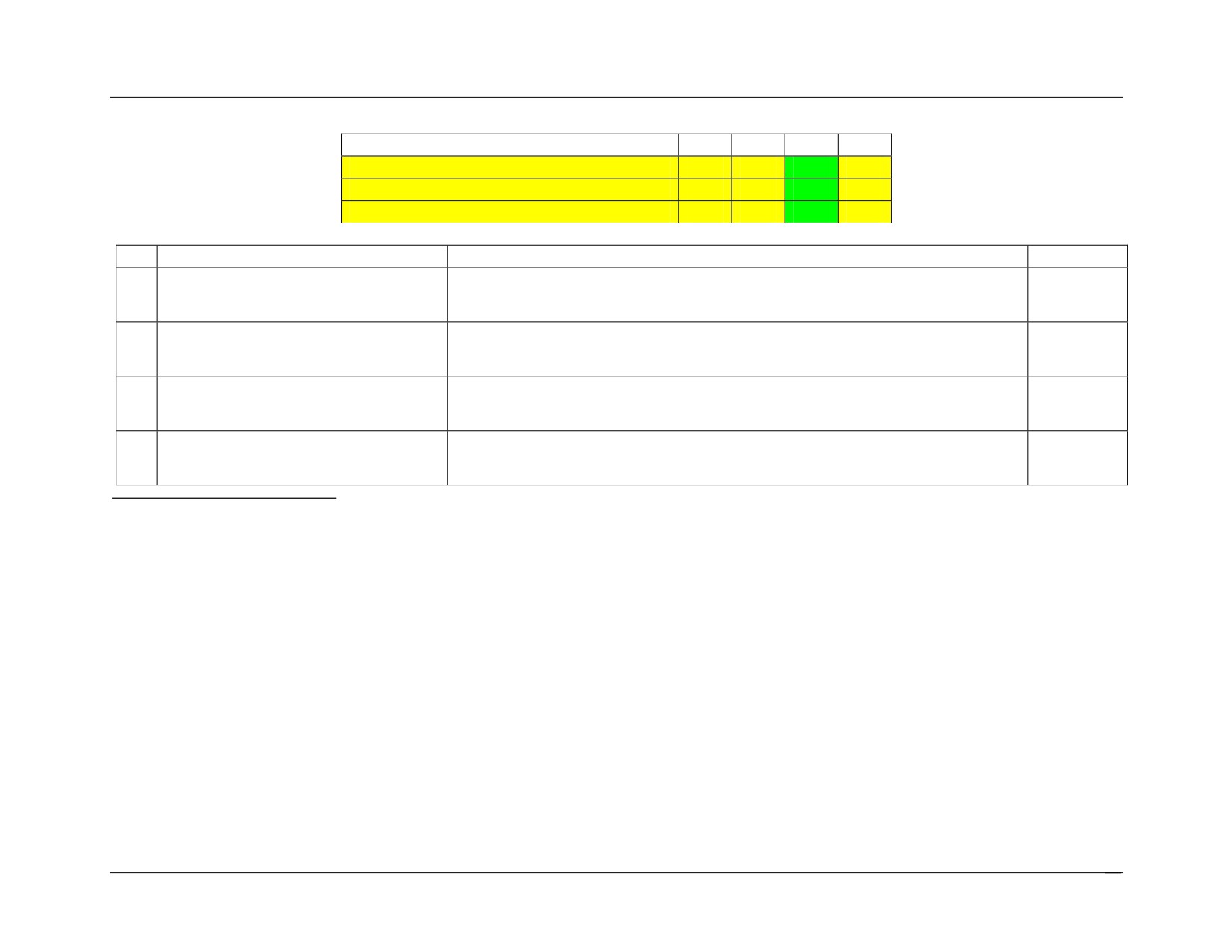
Table 4.2-1 discusses the only capability that currently exists to perform the task to the
designated standard. There is only one capability that exists, and no other capability is projected
that will accomplish this task.
Current Capability and Deficiency
The OP-level J-2 is responsible for working with theater-level and component command
intelligence organizations to obtain intelligence that is required to support JOA operations. Per
joint intelligence doctrine, the J-2 is responsible for coordinating all intelligence-related CBRN
functions pertaining to adversary deployment of CBRN weapons with the appropriate CBRN
staff element. But because of documented training, education, and experience issues, J-2
personnel may not have a full grasp of what needs to be coordinated. As the OP-level
commander’s main source of expertise in addressing CBRN defense issues involving the
warfighter, the OP-level CBRND staff must proactively engage the J-2 to determine the
adequacy of current and projected theater-level intelligence capabilities to sense the operational
deployment of CBRN weapons in the JOA. To be proactive, the OP-level CBRND staff must be
better prepared on intelligence/CBRND fusion issues. For the purposes of this analysis, current
capabilities are listed and issues that need to be further assessed and clarified are provided for
JRO-CBRND action.
Projected Near/Mid-Term Capability and Deficiency
No other capability is currently projected for the near/mid term. Near/mid-term experimentation
results (as recommended in this JCIDS analysis) may lead to development of new capabilities. It
is projected that improvements due to coordination/DOTLPF enhancements will dramatically
improve the ability of the OP-level staff to sense the operational deployment of CBRN weapons
in the JOA, but the overall status will remain “yellow” due to the inherent difficulty in gathering
intelligence on CBRN/TIM proliferation activities.
Projected Far-Term Capability and Deficiency
No other capability is currently projected for the far-term future. New organizational structures
or other capabilities resulting from near/mid-term experimentation results (as recommended in
this JCIDS analysis) may dramatically improve the ability of the OP-level staff to develop
intelligence indicators for sensing the storage locations of CBRN/TIM weapons or components
in the JOA, but the overall status is projected to remain “yellow” due to the inherent difficulty in
gathering intelligence on CBRN/TIM proliferation activities.
For Official Use Only
11
For Official Use Only
CBRN Functional Needs Analysis/Functional Solution Analysis
Chapter 4. Operational Sense Tasks
Table 4.2-1. OPSENS 2: Capability and Deficiency Assessment
Capability: Operational-Level Unit J-2
M1
M2
M3
M4
Current Overall Capability1
Y2
Y3
G4
Y5
Near/Mid-Term Overall Capability
Y
Y
G
Y
Far-Term Overall Capability6
Y7
Y
G
Y
FAA Measure
Elaboration
Scale
M1
Deploying CBRN weapons/units in the
Assesses techniques and procedures used by the OP-level J-2 to work with the J-3 and
G - Yes
JOA are detected and identified.
various OP-level organizations to detect and identify deploying CBRN weapons/units.
Y - Limited
R - No
M2
Intelligence on deploying CBRN
Assesses techniques and procedures used by the OP-level J-2 to work with intelligence
G - Yes
weapons/units is accurate.
organizations to ensure accuracy of intelligence on deploying CBRN weapons/units.
Y - Limited
R - No
M3
Deployment warning is provided to JOA
Assesses efficacy of warning capability once deployment is detected and identified.
G - Yes
forces.
Y - Limited
R - No
M4
Operational surprise does not occur.
Assesses whether adequate resources and means are applied to obviate operational
G - Yes
surprise.
Y - Limited
R - No
1 Joint intelligence and CBRN publications do not adequately address this issue. The OP-level CBRN staff is not adequately staffed and organized to meet its intelligence-related
responsibilities. The J-2 staff is not adequately trained/educated in CBRN issues. CBRN staff officers are not adequately trained/educated in intelligence issues. Experimentation
does not provide feedback on intelligence indicators for this task. JPME does not adequately cover the fusion of intelligence/CBRN issues.
2 The OP-level J-2 works with various theater-level and component command intelligence organizations to detect and identify deploying CBRN weapons/units in the JOA.
Techniques and procedures to facilitate this process and to provide useful indicators may not be adequate.
3 The OP-level J-2 works with various theater-level and component command intelligence organizations to ensure accuracy of intelligence detecting and identifying deploying
CBRN weapons/units in the JOA. Techniques and procedures to facilitate this process and to ensure accuracy may not be adequate.
4 Nothing precludes providing warning of operational deployment of CBRN weapons in the JOA to JOA forces once the deploying units are detected and identified.
5 The OP-level J-2 works with various theater-level and component command intelligence organizations to ensure that operational surprise does not occur. Adequate resources and
means may not be sufficiently applied in detecting and identifying deploying CBRN weapons/units in the JOA.
6 DOTLPF enhancements will be made possible as a result of experimentation designed to close intelligence fusion knowledge gaps.
7 DOTLPF enhancements will be made possible as a result of experimentation designed to close intelligence fusion knowledge gaps.
For Official Use Only
12
For Official Use Only
CBRN Functional Needs Analysis/Functional Solution Analysis
Chapter 4. Operational Sense Tasks
4.2.3
Functional Solution Analysis
4.2.3.1
DOTLPF Assessment Summary
This section addresses the deficiencies and suggests potential non-materiel solutions. If there are
no non-materiel solutions or they are only partial solutions, the remaining non-materiel need is
then stated. Materiel needs are assessed in the IMA section.
1.
Deficiency: Techniques and procedures to facilitate detecting and identifying the operational
deployment of CBRN weapons in the JOA may not be adequate.
Non-Materiel Solutions: Doctrine: JRO-CBRND must work with the various potential OP-
level J-2s and their typical alignment component command intelligence organizations to
develop effective JOA techniques and procedures for detecting and identifying the
operational deployment of CBRN weapons in the JOA and to provide useful indicators. Each
service organization that might form the foundation of a joint task force has a different
approach to both CBRN intelligence and their CBRN staffing. Indicators to be developed
must include the means to determine agent types, nuclear weapon types and yields, TIMS
being considered, means by which to release TIMS, delivery modes or systems, and unit
designations, locations, routes, and formations.
2.
Deficiency: Techniques and procedures to ensure accurate intelligence on the operational
deployment of CBRN weapons in the JOA may not be adequate.
Non-Materiel Solutions: Doctrine: JRO-CBRND must work with the various potential OP-
level J-2s and their typical alignment component command intelligence organizations to
develop effective techniques and procedures to ensure accurate JOA intelligence on countries
or transnational organizations deploying CBRN/TIM weapons/units/teams and to develop
metrics to measure accuracy.
3.
Deficiency: Adequate resources and means may not be sufficiently applied to ensure that a
nation-state or transnational organization preparing to operationally deploy CBRN weapons
in the JOA is detected.
Non-Materiel Solutions: Organization: Analyze the CBRN organization or staffing of the
various potential OP-level J-2s and their typical alignment component command intelligence
organizations from a CBRN standpoint to ensure that they can provide required CBRN
intelligence concerning CBRN hazards. These hazards need to be detected, identified, and
quantified for Shape to provide a clear understanding of the current and predicted CBRN
situation to the commander. Training: Conduct a small-scaled exercise where “to identify
resources needed to detect the operational deployment of CBRN/TIM weapons” is one of the
primary objectives. In addition, JRO-CBRND must work with the COCOM J2 and/or theater
intelligence organizations to develop effective training for analysts as well as those managing
all means of collection. The training must allow analysts and collection managers the means
by which to determine inadequacy of collection mechanisms and a means to make
recommendations for improvement. Leadership: JRO-CBRND must work with the various
potential OP-level J-2s and their typical alignment component command intelligence
organizations to develop an effective CBRN education program for analysts as well as those
managing all means of collection. The education process must provide analysts and
For Official Use Only
13
For Official Use Only
CBRN Functional Needs Analysis/Functional Solution Analysis
Chapter 4. Operational Sense Tasks
collection managers with the tools they need to assess the efficacy of their analysis and
collection efforts. Personnel: Personnel should not be assigned to intelligence analysis or
collection activities vital to CBRN areas without requisite CBRN education and/or
experience. Facilities: Analyze training requirements and developed/modify special training
facilities if required.
4.
Deficiency: Joint intelligence and CBRN publications do not adequately address this issue.
Non-Materiel Solutions: Doctrine: Enhance joint intelligence and CBRN publications to
adequately address this issue and to interface with each other so that roles and responsibilities
are clearly delineated. Incorporate information attained from the exercise into the doctrine
and joint intelligence and CBRN publications.
5.
Deficiency: COCOM CBRND staff is not adequately staffed and organized to meet its
intelligence-related responsibilities.
Non-Materiel Solutions: Organization: Each OP-level CBRND staff should have a section
dedicated to resolving CBRN intelligence issues. Personnel: Each OP-level CBRND staff
should have adequate trained/experienced personnel assigned to man a section dedicated to
resolving CBRN intelligence issues.
6.
Deficiency: The J-2 staff is not adequately trained/educated in CBRN issues.
Non-Materiel Solutions: Training: Develop training that will enable each JTF J-2 staff to
better understand their CBRN role and enhance their ability to obtain intelligence that is
required to support the Shape function of OP-level CBRND. Leadership: Develop an
education program that will enable each JTF J-2 staff to better understand their CBRN role
and enhance their ability to obtain intelligence that is required to support the Shape function
of OP-level CBRND.
7.
Deficiency: CBRN staff officers are not adequately trained/educated in intelligence issues.
Non-Materiel Solutions: Training: Develop training programs that allow CBRN staff
officers to better support the CBRN intelligence process. Leadership: Develop education
programs that allow CBRN staff officers to better understand the CBRN intelligence process
and their roles and responsibilities.
8.
Deficiency: Experimentation/red teaming does not provide feedback on intelligence
indicators for this task.
Non-Materiel Solutions: Training: JRO-CBRND must work with both the intelligence and
CBRN communities to integrate this task into both intelligence and CBRN experimentation
campaign plans.
9.
Deficiency: JPME does not adequately cover the fusion of intelligence/CBRN issues.
Non-Materiel Solutions: Leadership: Integrate intelligence/CBRN fusion issues into JPME.
4.2.3.2
IMA Assessment Summary
N/A
For Official Use Only
14
For Official Use Only
CBRN Functional Needs Analysis/Functional Solution Analysis
Chapter 4. Operational Sense Tasks
4.3
Task OPSENS 3: Sense the employment of CBRN weapons in the JOA
4.3.1
Functional Area Analysis
4.3.1.1
Definition
To obtain information and data from all sources that determine when a military force or
transnational organization is preparing to or is employing CBRN/TIM weapons in the JOA.
Areas of interest include when the weapons will be employed, JOA targets selected, weapons
systems involved, locations of weapons systems, and forces/personnel involved in the
employment. Extracts information from the medical, operational, intelligence, and environmental
communities to identify potential biological warfare activities. Includes intelligence assessment
of industrial sites, storage and transport means for toxic industrial chemical (TIC) threats,
hazards, and evidence of intentional or inadvertent release.
4.3.1.2
Derivation
UJTL (OP 7.5, OP 2.2.2).
4.3.1.2.1
Supported Task: STSENS 3
4.3.1.2.2
Lateral Task: OPSHA 1
4.3.1.2.3
Supporting Tasks: TASENS 14, TASENS 16
4.3.1.3
Condition
Perform this task under conditions of:
Physical
1. Atmospheric CBRN effects. (C1.3.3)
Military
1. Stressful mission. (C2.1)
2. No mission preparation. (C2.1.3)
3. Negligible personnel experience. (C2.2.4.5)
4. Conventional and terrorist threat form. (C2.9.2)
Civil
1. Limited foreign government support. (C3.1.2.3)
For Official Use Only
15
For Official Use Only
CBRN Functional Needs Analysis/Functional Solution Analysis
Chapter 4. Operational Sense Tasks
4.3.2
Functional Needs Analysis
4.3.2.1
Capability and Deficiency Assessment Summary
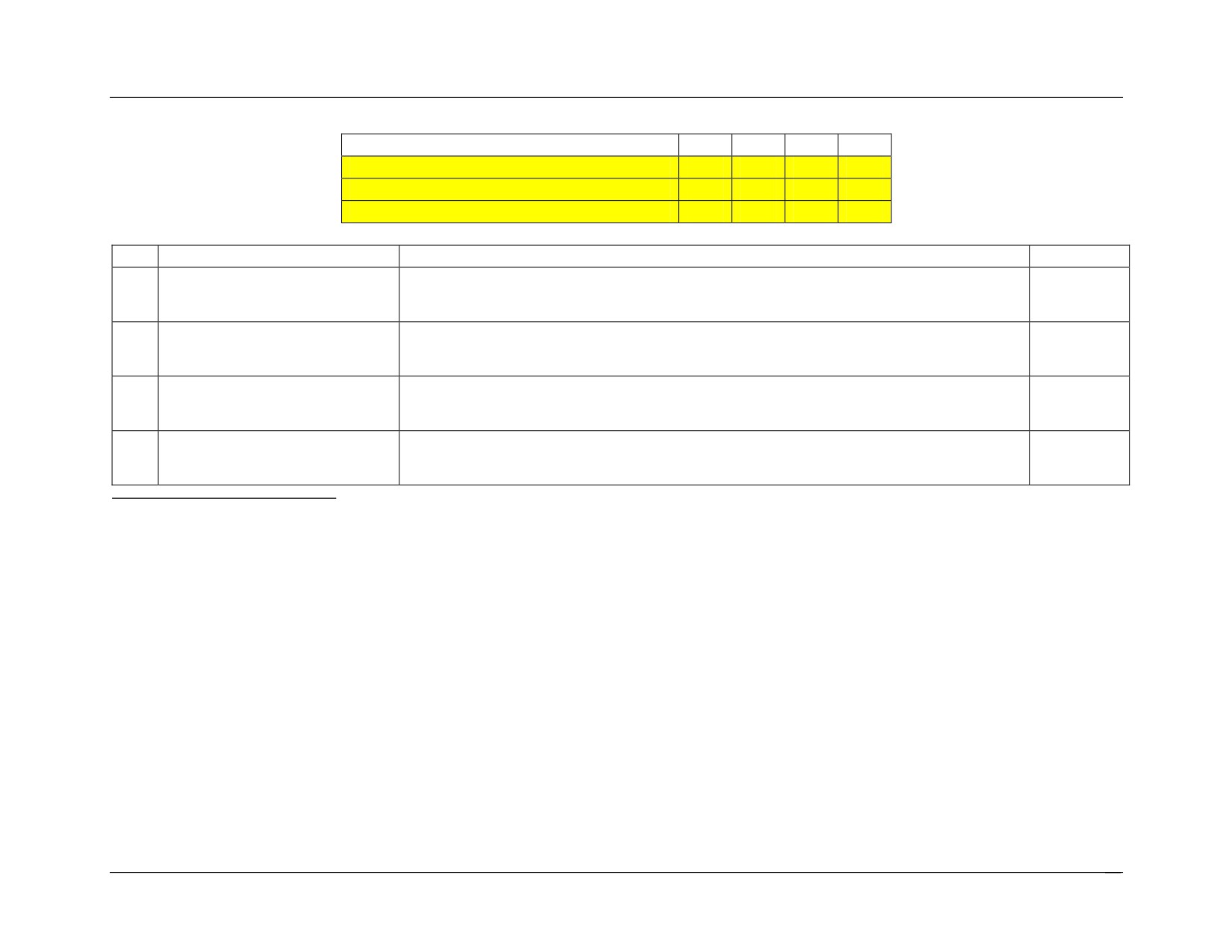
Table 4.3-1 discusses the only capability that currently exists to perform the task to the
designated standard. There is only one capability that exists, and no other capability is projected
that will accomplish this task.
Current Capability and Deficiency
The OP-level J-2 is responsible for working with theater-level organizations to obtain
intelligence that is required to support joint OP-level operations. Per joint intelligence doctrine,
the J-2 is responsible for coordinating all intelligence-related CBRN functions pertaining to
adversary employment of CBRN weapons with the appropriate CBRN staff element, but because
of documented training, education, and experience issues, J2 personnel may not have a full grasp
of what needs to be coordinated. As the OP-level commander’s main source of expertise in
addressing CBRND issues involving the warfight, the OP-level CBRND staff must proactively
engage the J2 to determine the adequacy of current and projected theater-level intelligence
capabilities to sense the employment of CBRN/TIM weapons in theater. To be proactive, the OP-
level CBRND staff must be better prepared on intelligence/CBRND fusion issues. For the
purposes of this analysis, current capabilities are listed and issues that need to be further assessed
and clarified are provided for JRO-CBRND action.
Projected Near/Mid-Term Capability and Deficiency
No other capability is currently projected for the near/mid term. Near/mid-term experimentation
results (as recommended in this JCIDS analysis) may lead to development of new capabilities. It
is projected that improvements due to coordination/DOTLPF enhancements will dramatically
improve the ability of the OP-level staff to sense the employment of CBRN weapons in the JOA,
but the overall status will remain “yellow” due to the inherent difficulty in gathering intelligence
on CBRN/TIM proliferation activities.
Projected Far-Term Capability and Deficiency
No other capability is currently projected for the far-term future. New organizational structures
or other capabilities resulting from near/mid-term experimentation results (as recommended in
this JCIDS analysis) may dramatically improve the ability of the OP-level staff to develop
intelligence indicators for sensing the employment of CBRN weapons in the JOA, but the overall
status is projected to remain “yellow” due to the inherent difficulty in gathering intelligence on
CBRN/TIM proliferation activities.
For Official Use Only
16
For Official Use Only
CBRN Functional Needs Analysis/Functional Solution Analysis
Chapter 4. Operational Sense Tasks
Table 4.3-1. OPSENS 3: Capability and Deficiency Assessment
Capability: Operational-Level Unit J-2
M1
M2
M3
M4
Current Overall Capability1
Y2
Y3
Y4
Y5
Near/Mid-Term Overall Capability
Y
Y
Y
Y
Far-Term Overall Capability6
Y
Y
Y
Y
FAA Measure
Elaboration
Scale
M1
CBRN/TIM attacks are detected
Assesses techniques and procedures used by the OP-level J-2 to work with the J-3 and also
G - Yes
and identified.
intelligence and OP-level organizations to detect and identify CBRN/TIM attacks
Y- Limited
R - No
M2
Reports on CBRN/TIM attacks are
Assesses techniques and procedures used by the OP-level J-2 to work with the J-3 and also
G - Yes
accurate.
intelligence and operational organizations to ensure accuracy of CBRN/TIM attack reports.
Y - Limited
R - No
M3
Unambiguous attack warning is
Assesses techniques and procedures used by the OP-level J-2 to work with the J-3 and various
G - Yes
provided.
theater-level organizations to provide unambiguous CBRN/TIM attack warning
Y - Limited
R - No
M4
Attack assessments are accurate.
Assesses techniques and procedures used by the OP-level J-2 to ensure accuracy of attack
G - Yes
assessments
Y - Limited
R - No
1 Joint intelligence and CBRN publications do not adequately address the issue of sensing the terrorist use of CBRN weapons, the use of TIM as a weapon, or third-party situations
where U.S. resources can not be brought to bear.
2 The OP-level J-2 works with the OP-level J-3 and various theater-level organizations to detect and identify CBTN/TIM attacks. In the case of a nation-state conducting a CBRN attack
against U.S. forces, the process is mature and effective. In the event of terrorist use of CBRN, it may be difficult or impossible to detect or identify the attack, and in the case of a biological
attack or attacks involving TIM, it may be difficult to determine whether it is a natural disease outbreak or an accident. In the event of use not involving U.S. forces or allies, it may be
difficult to gain required information. Techniques and procedures to facilitate this process when it involves terrorists or non-U.S. allies and to detect or identify attacks may not be adequate.
3 Methods and procedures for accurately reporting CBRN attacks against U.S. forces are mature and effective. Methods and procedures for accurately reporting third-party,
terrorist, and TIM attacks may not be adequate.
4 The OP-level J-2 works with the OP-level J-3 and various theater-level organizations to provide unambiguous CBRN/TIM attack warning. In the case of determining whether a
nation-state has conducted a CBRN attack against U.S. forces, the process is mature and effective. In the event of terrorist use of CBRN, it may be difficult or impossible to
attribute the attack, and in the case of a biological attack or attacks involving TIM, it may be difficult to determine whether it is a natural disease outbreak or an accident. In the
event of use not involving U.S. forces or allies, it may be difficult to gain required information. Techniques and procedures to facilitate this process when it involves terrorists or
non-U.S. allies and to provide unambiguous warning may not be adequate.
5 Methods and procedures for providing accurate attack assessments when CBRN is used against U.S. forces are mature and effective. Methods and procedures providing accurate
attack assessments in third-party, terrorist, and TIM attacks may not be adequate.
6 Joint intelligence and CBRN publications will adequately address the issue of sensing the terrorist use of CBRN weapons, the use of TIM as a weapon, and third-party situations
where U.S. resources cannot be brought to bear.
For Official Use Only
17
For Official Use Only
CBRN Functional Needs Analysis/Functional Solution Analysis
Chapter 4. Operational Sense Tasks
4.3.3
Functional Solution Analysis
4.3.3.1
DOTLPF Assessment Summary
This section addresses the deficiencies and suggests potential non-materiel solutions. If there are
no non-materiel solutions or they are only partial solutions, the remaining non-materiel need is
then stated. Materiel needs are assessed in the IMA section.
1.
Deficiency: Techniques and procedures involving sensing of terrorist CBRN attacks may not
be adequate.
Non-Materiel Solutions: Doctrine: Using the results of both experimentation and exercises,
develop TTPs that address all issues surrounding sensing the CBRN attacks of terrorists.
Issues to be resolved include detecting and identifying the attacks, providing unambiguous
warning of attacks or impending attacks, providing accurate reports and assessments, and
establishing verification techniques and procedures. Training: Develop an experimentation/
exercise campaign to address all issues surrounding the sensing of CBRN attacks of terrorists
at the operational level.
2.
Deficiency: Techniques and procedures involving sensing of small biological attacks may
not be adequate.
Non-Materiel Solutions: Doctrine: Using the results of both experimentation and exercises,
develop TTPs that address all issues surrounding sensing of small biological attacks. Issues
to be resolved include detecting and identifying the attacks, providing unambiguous warning
of attacks or impending attacks, providing accurate reports and assessments, and establishing
verification techniques and procedures. Training: Develop an experimentation/exercise
campaign to address all issues surrounding the sensing of small biological attacks at the
operational level.
3.
Deficiency: Techniques and procedures involving sensing of TIM attacks may not be
adequate.
Non-Materiel Solutions: Doctrine: Using the results of both experimentation and exercises,
develop TTPs that address all issues surrounding sensing of TIM attacks. Issues to be
resolved include detecting and identifying the attacks, providing unambiguous warning of
attacks or impending attacks, providing accurate reports and assessments, and establishing
verification techniques and procedures. Training: Develop an experimentation/exercise
campaign to address all issues surrounding the sensing of TIM attacks at the operational
level.
4.
Deficiency: Techniques and procedures involving sensing of third-party attacks may not be
adequate.
Non-Materiel Solutions: Doctrine: Using the results of both experimentation and exercises,
develop TTPs that address all issues surrounding sensing third-party CBRN attacks. Issues to
be resolved include detecting and identifying the attacks, providing unambiguous warning of
attacks or impending attacks, providing accurate reports and assessments and verification
techniques and procedures. Training: Develop an experimentation/exercise campaign to
address all issues surrounding the sensing of third-party CBRN attacks at the operational
level.
For Official Use Only
18
For Official Use Only
CBRN Functional Needs Analysis/Functional Solution Analysis
Chapter 4. Operational Sense Tasks
5. Deficiency: Joint intelligence and CBRN publications do not adequately address the issue of
sensing the terrorist use of CBRN weapons, the use of TIM as a weapon, or third-party
situations where U.S. resources can not be brought to bear.
Non-Materiel Solutions: Doctrine: Integrate all lessons learned and procedures into
appropriate joint publications.
4.3.3.2
IMA Assessment Summary
N/A
For Official Use Only
19
For Official Use Only
CBRN Functional Needs Analysis/Functional Solution Analysis
Chapter 4. Operational Sense Tasks
4.4
Task OPSENS 4: Sense JOA CBRN hazards due to employment or ROTA of
CBRN/TIM weapons or materials
4.4.1
Functional Area Analysis
4.4.1.1
Definition
To obtain information and data from all sources that determine the location and source of JOA
CBRN/TIM hazards due to employment or ROTA of CBRN/TIM weapons or materials. Areas of
interest include detecting, identifying, and quantifying those CBRN/TIM hazards in all physical
states (solid, liquid, gas located in the air, on the ground, or in water). Enables the continued
monitoring and identification of hazards in support of shaping, shielding, and sustaining.
4.4.1.2
Derivation
UJTL (OP 7.5, OP 2.2.2).
4.4.1.2.1
Supported Task: STSENS 4
4.4.1.2.2
Lateral Task: OPSHA 1
4.4.1.2.3
Supporting Tasks: TASENS 1, TASENS 2, TASENS 3, TASENS 4, TASENS
5, TASENS 6, TASENS 7, TASENS 8, TASENS 9, TASENS 10, TASENS 11,
TASENS 12
4.4.1.3
Condition
Perform this task under conditions of:
Physical
1. Atmospheric CBRN effects. (C1.3.3)
Military
1. Stressful mission. (C2.1)
2. No mission preparation. (C2.1.3)
3. Negligible personnel experience. (C2.2.4.5)
Civil
1. TIMs are present. (C3.3.7.5)
For Official Use Only
20
For Official Use Only
CBRN Functional Needs Analysis/Functional Solution Analysis
Chapter 4. Operational Sense Tasks
4.4.2
Functional Needs Analysis
4.4.2.1
Capability and Deficiency Assessment Summary
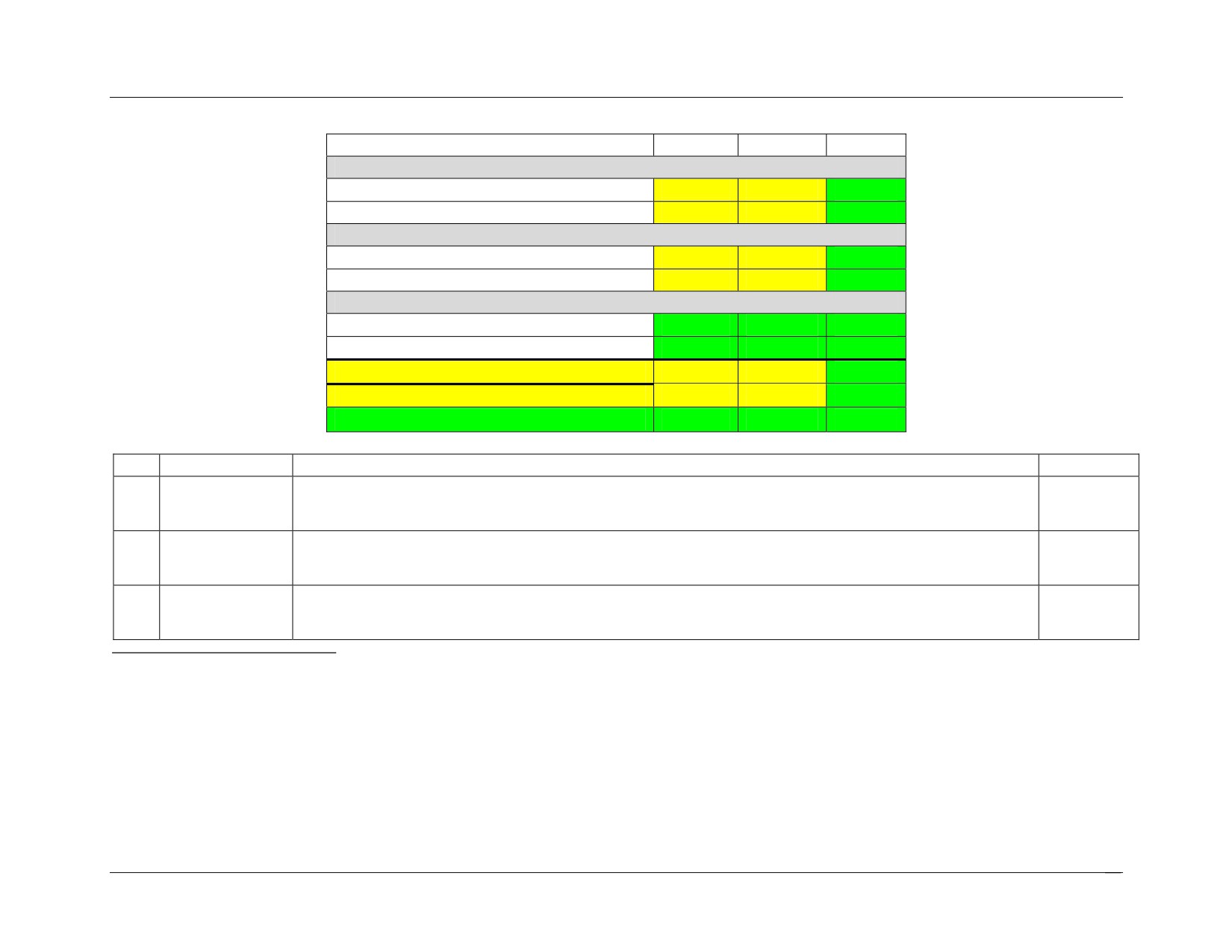
Table 4.4-1 discusses the capabilities that currently exist to perform the task to the designated
standard. There are two capabilities that exist, and no other capabilities are projected that will
accomplish this task.
Current Capability and Deficiency
The OP-level staffs for Intelligence and Operations are able under most circumstances to
effectively sense theater CBRN/TIM hazards due to employment or ROTA of CBRN/TIM
weapons or materials. The J-2 works with the J-3 and various OP-level organizations to detect
and identify CBRN/TIM hazards. In the case of a nation-state conducting a CBRN attack against
U.S. forces, the process is mature and effective. While it may not be possible to attribute
CBRN/TIM hazards as attacks, it will be possible to detect and identify hazards. In the event of
use not involving U.S. forces or allies, it may be difficult to gain required information.
Techniques and procedures to facilitate this process when it involves non-U.S. allies or countries
that restrict information and access may not be adequate. As the OP-level commander’s main
source of expertise in addressing CBRN defense issues involving the warfighter, the OP-level
CBRND staff must proactively engage the J-2 and J-3 to determine the adequacy of current and
projected JOA operational and intelligence capabilities to sense when JOA CBRN/TIM hazards
due to employment or ROTA of CBRN/TIM weapons or materials are present. For the purposes
of this analysis, current capabilities are listed and issues that need to be further assessed and
clarified are provided for JRO-CBRND action.
Projected Near/Mid-Term Capability and Deficiency
No other capabilities are currently projected for the near/mid term. Near/mid-term
experimentation results (as recommended in this JCIDS analysis) may lead to development of
new capabilities. It is projected that improvements due to coordination/DOTMLPF
enhancements will dramatically improve the ability of the OP-level staff to articulate and
improve Sense requirements. Continuing problems with information coordination and collection
in the event of use not involving U.S. forces or allies will continue to result in a capability
projection of “yellow.”
Projected Far-Term Capability and Deficiency
No other capabilities are currently projected for the far-term future. New organizational
structures or other capabilities resulting from near/mid-term experimentation results (as
recommended in this JCIDS analysis) may continue to improve the ability to sense theater
CBRN/TIM hazards due to employment or ROTA of CBRN/TIM weapons or materials. It is
anticipated that problems associated with information coordination and collection in the event of
use not involving U.S. forces or allies will be rectified as a result of experimentation and permit
a capability projection of “green.”
For Official Use Only
21
For Official Use Only
CBRN Functional Needs Analysis/Functional Solution Analysis
Chapter 4. Operational Sense Tasks
Table 4.4-1. OPSENS 4: Capability and Deficiency Assessment
Capability/Measure
M1
M2
M3
Current
Operational-Level J-2
Y1
Y2
G3
Operational-Level J-3
Y4
Y5
G6
Near/Mid
Operational-Level J-2
Y
Y
G
Operational-Level J-3
Y
Y
G
Far
Operational-Level J-2
G7
G
G
Operational-Level J-3
G8
G
G
Current Overall Capability
Y
Y
G
Near/Mid-Term Overall Capability
Y
Y
G
Far-Term Overall Capability
G
G
G
FAA Measure
Elaboration
Scale
M1
Hazards are
Assesses techniques and procedures used by the OP-level J-2/J-3 to work with various OP-level organizations to
G - Yes
detected and
detect and identify CBRN/TIM hazards. Recognizes inherent current delay in sensing most biological attacks and
Y - Limited
identified.
concentrates on processing of technically available data when they become available.
R - No
M2
Reports on
Assesses techniques and procedures used by the OP-level J-2/J-3 to work with intelligence and operational
G - Yes
hazards are
organizations to ensure accuracy of CBRN/TIM hazard reports. Recognizes inherent current difficulty in
Y - Limited
accurate.
immediately sensing most biological attacks and concentrates on accuracy of data when it becomes available.
R - No
M3
Hazard warning is
Assesses efficacy of warning capability once hazard is detected and identified.
G - Yes
provided.
Y- Limited
R- No
1 The J-2 works with the J-3 and various OP-level organizations to detect and identify CBRN/TIM hazards. In the case of a nation-state conducting a CBRN attack against U.S.
forces, the process is mature and effective. While it may not be possible to attribute CBRN/TIM hazards as attacks, it will be possible to detect and identify hazards. In the event of
use not involving U.S. forces or allies, it may be difficult to gain required information. Techniques and procedures to facilitate this process when it involves non-U.S. allies or
countries that restrict information and access may not be adequate.
2 Methods and procedures for accurately reporting hazards involving U.S. forces are mature and effective. Methods and procedures for accurately reporting hazards involving non-
U.S. allies or countries that restrict information and access may not be adequate.
3 Once a hazard or potential hazard is detected and identified, nothing precludes providing hazard warning to JOA forces and to the COCOM.
4 The J-3 is responsible for operations and command and control systems and ongoing current operations. The J-3 will coordinate all information and, in conjunction with the J-2,
deconflict and assess the hazard reports and send out taskings JOA-wide for further required detection, identification, or monitoring missions within the capabilities of operational
forces. Coordination will be required with the COCOM for detection and identification outside of JOA capabilities.
For Official Use Only
22
For Official Use Only
CBRN Functional Needs Analysis/Functional Solution Analysis
Chapter 4. Operational Sense Tasks
5 Nothing precludes accurate reports within the operational capabilities of the combatant command. The J-3 must coordinate with the COCOM for information or requirements
outside of JOA capabilities.
6 Once a hazard or potential hazard is detected and identified, nothing precludes providing hazard warning to JOA forces and to the COCOM.
7 It is anticipated that problems associated with information coordination and collection in the event of use not involving U.S. forces or allies will be rectified as a result of
experimentation and permit a capability projection of “green.”
8 It is anticipated that problems associated with information coordination and collection in the event of use not involving U.S. forces or allies will be rectified as a result of
experimentation and permit a capability projection of “green.”
For Official Use Only
23
For Official Use Only
CBRN Functional Needs Analysis/Functional Solution Analysis
Chapter 4. Operational Sense Tasks
4.4.3
Functional Solution Analysis
4.4.3.1
DOTLPF Assessment Summary
This section addresses the deficiencies and suggests potential non-materiel solutions. If there are
no non-materiel solutions or they are only partial solutions, the remaining non-materiel need is
then stated. Materiel needs are assessed in the IMA section.
1.
Deficiency: In the event of JOA CBRN/TIM hazards not involving U.S. forces or allies, it
may be difficult to detect or identify hazards and gain required information.
Non-Materiel Solutions: Doctrine: Using the results of both experimentation and exercises,
develop TTPs that address all issues surrounding sensing theater CBRN/TIM hazards due to
employment or ROTA of CBRN/TIM weapons or materials. Issues to be resolved include
detecting and identifying hazards when they affect non-U.S. allies or countries that restrict
information and access.
2.
Deficiency: In the event of JOA CBRN/TIM hazards involving non-U.S. allies or countries
that restrict information and access, it may be difficult to gain accurate required information.
Non-Materiel Solutions: Doctrine: Using the results of both experimentation and exercises,
develop TTPs that address all accuracy issues surrounding sensing theater CBRN/TIM
hazards due to employment or ROTA of CBRN/TIM weapons or materials. Issues to be
resolved include determining how to accurately gain information on hazards when they affect
non-U.S. allies or countries that restrict information and access.
3.
Deficiency: Joint intelligence and CBRN publications do not adequately address the issue of
sensing JOA hazards in third-party situations where U.S. resources cannot be brought to bear.
Non-Materiel Solutions: Doctrine: Integrate all information concerning actions to be taken
when hazards affect non-U.S. allies or countries that restrict information and access and
integrate lessons learned and procedures developed through experimentation into appropriate
joint publications.
4.
Deficiency: Experimentation and training may not be conducted as frequently and
extensively as required to identify capability gaps and required enhancements.
Non-Materiel Solutions: Training: Conduct experimentation and training as required to
identify capability gaps and required enhancements.
4.4.3.2
IMA Assessment Summary
N/A
For Official Use Only
24
For Official Use Only
CBRN Functional Needs Analysis/Functional Solution Analysis
Chapter 4. Operational Sense Tasks
4.5
Task OPSENS 5: Monitor combatant command designated activities within the
JOA for compliance with CBRN treaties or elimination requirements
4.5.1
Functional Area Analysis
4.5.1.1
Definition
To use JTF resources to monitor COCOM-designated activities within the JOA for compliance
with CBRN treaties or elimination requirements.
4.5.1.2
Derivation
UJTL (OP 7.5, OP 5.7.7, OP 3.3.2).
4.5.1.2.1
Supported Task: STSENS 5
4.5.1.2.2
Lateral Task: N/A
4.5.1.2.3
Supporting Task: N/A
4.5.1.3
Condition
Perform this task under conditions of:
Physical. N/A
Military
1. Cooperative nation
a. Partial preexisting arrangements (C2.1.1.2)
b. Limited military commitments from other nations (C2.1.1.7
b. Limited host nation support (C2.8.5)
2. Uncooperative nation
a. No preexisting arrangements (C2.1.1.2)
b. Negligible military commitments from other nations (C2.1.1.7)
c. No host nation support (C2.8.5)
Common Military Conditions
1. Limited personnel expertise. (C2.2.4.5)
Civil
1. Cooperative nation
a. Limited foreign government support. (C3.1.2.3)
2. Uncooperative nation
For Official Use Only
25
For Official Use Only
CBRN Functional Needs Analysis/Functional Solution Analysis
Chapter 4. Operational Sense Tasks
a. Negative foreign government support. (C3.1.2.3)
This task is analyzed in the WMD Interdiction and Elimination JCIDS Analysis.
For Official Use Only
26
For Official Use Only
CBRN Functional Needs Analysis/Functional Solution Analysis
Chapter 4. Operational Sense Tasks
4.6
Task OPSENS 6: Collect enemy weapons systems and new technologies for
exploitation of potential CBRN implications
4.6.1
Functional Area Analysis
4.6.1.1
Definition
To use JTF resources to exploit captured technical data on CBRN/TIM weapons and assess
enemy capabilities, intent, and probable courses of action (COAs).
4.6.1.2
Derivation
UJTL (OP 7.5, OP 2.3.1).
4.6.1.2.1
Supported Task: STSENS 6
4.6.1.2.2
Lateral Task: N/A
4.6.1.2.3
Supporting Task: N/A
4.6.1.3
Condition
Perform this task under conditions of:
Physical. N/A
Military
1. Stressful mission. (C2.1)
2. No mission preparation. (C2.1.3)
3. Negligible personnel experience. (C2.2.4.5)
Civil. N/A
4.6.2
Functional Needs Analysis
4.6.2.1
Capability and Deficiency Assessment Summary
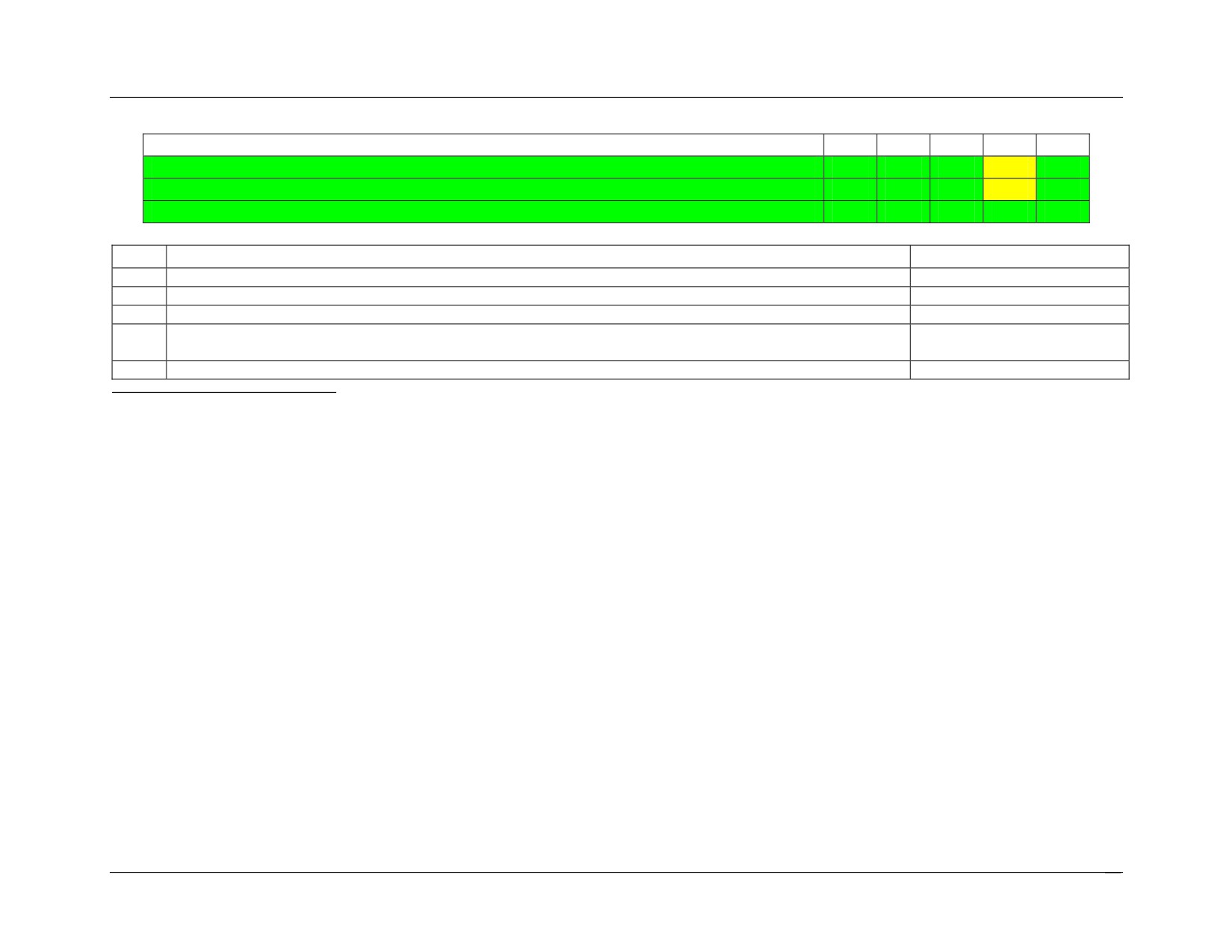
Table 4.6-1 discusses the capability that currently exists to perform the task to the designated
standard. There is only one capability that exists, and no other capability is projected that will
accomplish this task.
Current Capability and Deficiency
Each service component intelligence capability has captured material exploitation units that are
trained to find and exploit enemy equipment or supplies of CBRN intelligence value. This task
can be accomplished now with only minor deficiencies.
For Official Use Only
27
For Official Use Only
CBRN Functional Needs Analysis/Functional Solution Analysis
Chapter 4. Operational Sense Tasks
Projected Near/Mid-Term Capability and Deficiency
No other capability is currently projected for the near/mid term. Near/mid-term experimentation
results (as recommended in this JCIDS analysis) may lead to development of new capabilities. It
is projected that improvements due to coordination/doctrine, organization, training, materiel,
leadership and education, personnel, and facilities (DOTMLPF) enhancements will continue to
improve the ability of OP-level units to collect enemy weapons systems and new technologies
for exploitation of potential CBRN implications
Projected Far-Term Capability and Deficiency
No other capability is currently projected for the far-term future. New organizational structures
or other capabilities and cooperative ventures with theater partners resulting from near/mid-term
experimentation results (as recommended in this JCIDS analysis) should continue to improve the
ability of OP-level units to collect enemy weapons systems and new technologies for
exploitation of potential CBRN implications.
For Official Use Only
28
For Official Use Only
CBRN Functional Needs Analysis/Functional Solution Analysis
Chapter 4. Operational Sense Tasks
Table 4.6-1. OPSENS 6: Capability and Deficiency Assessment
Capability: Service Component Intelligence Captured Material Exploitation Units
M1
M2
M3
M4
M5
Current Overall Capability1
G2
G3
G4
Y5
G6
Near/Mid-Term Overall Capability
G
G
G
Y
G
Far-Term Overall Capability
G7
G
G
G8
G
FAA Measure
Scale
M1
Collected information and systems are processed in JOA.
G - Yes, Y - Limited, R - No
M2
Collected information and systems are processed within 24 hours.
G - Yes, Y - Limited, R - No
M3
Intelligence analysts are provided hard-copy formal report of information obtained in processing.
G - Yes, Y - Limited, R - No
M4
Procedures and checklists exist to help collect and evacuate enemy weapons systems and new technologies for
G - Yes, Y - Limited, R - No
exploitation of potential CBRN/TIM implications.
M5
Intelligence analysts are provided voice or electronic mail report of information of significance.
G - Yes, Y - Limited, R - No
1 CBRN specific training on exploitation is not integrated into all phases of service and joint intelligence training.
2 Nothing precludes processing collected information in the JOA.
3 Nothing precludes processing collected information within 24 hours.
4 Nothing precludes providing hard-copy formal reports of information obtained in processing to intelligence analysts if required.
5 While some procedures and checklists exist to help collect enemy weapons systems, all doctrine and TTPs in this area should be reviewed, updated, and consolidated into joint
TTPs.
6 Nothing precludes providing intelligence analysts with immediate reports of information of significance.
7 CBRN specific training on exploitation will be integrated into all phases of service and joint intelligence training.
8 Joint experimentation and consolidation of lessons learned will allow Joint TTPs to be developed for the collection of enemy weapons systems and new technologies for
exploitation of potential CBRN implications.
For Official Use Only
29
For Official Use Only
CBRN Functional Needs Analysis/Functional Solution Analysis
Chapter 4. Operational Sense Tasks
4.6.3
Functional Solution Analysis
4.6.3.1
DOTLPF Assessment Summary
This section addresses the deficiencies and suggests potential non-materiel solutions. If there are
no non-materiel solutions or they are only partial solutions, the remaining non-materiel need is
then stated. Materiel needs are assessed in the IMA section.
1. Deficiency: Doctrine and TTPs may not be adequate.
Non-Materiel Solutions: Doctrine: All doctrine and TTPs in this area should be reviewed,
updated, and consolidated into joint TTPs. Incorporate information attained from the exercise
into the doctrine and joint intelligence and CBRN publications. Training: Conduct training to
test, validate, and identify gaps and inconsistencies in current doctrine and TTPs.
2. Deficiency: CBRN specific training on exploitation is not integrated into all phases of
service and joint intelligence training.
Non-Materiel Solutions: Doctrine: Review Chairman of the Joint Chiefs of Staff Instruction
(CJCSI) for Officer Professional Military Education (OPME)/JPME and ensure that CBRN-
related intelligence learning areas are integrated appropriately. Review CBRN integration
into intelligence tasks of all Service and joint schools and courses.
4.6.3.2
IMA Assessment Summary
N/A
For Official Use Only
30
For Official Use Only
CBRN Functional Needs Analysis/Functional Solution Analysis
Chapter 4. Operational Sense Tasks
4.7
Task OPSENS 7: Collect data for determining employment of CBRN/TIM weapons
in the JOA
4.7.1
Functional Area Analysis
4.7.1.1
Definition
To follow theater policy, standards, and procedures for determining employment of CBRN/TIM
weapons. Includes sampling and procedures to be followed in verifying use of CBRN/TIM
weapons in the air, on the ground, or in water.
4.7.1.2
Derivation
UJTL OP 7.5.
4.7.1.2.1
Supported Task: STSENS 3
4.7.1.2.2
Lateral Task: N/A
4.7.1.2.3
Supporting Tasks: TASENS 1, TASENS 2, TASENS 3, TASENS 4, TASENS
5, TASENS 6, TASENS 7, TASENS 8, TASENS 9, TASENS 10, TASENS 11,
TASENS 12
4.7.1.3
Condition
Perform this task under conditions of:
Physical
1. Atmospheric CBRN effects. (C1.3.3)
Military
1. Stressful mission. (C2.1)
2. No mission preparation. (C2.1.3)
3. Negligible personnel experience. (C2.2.4.5)
Civil. N/A
4.7.2
Functional Needs Assessment
4.7.2.1
Capability and Deficiency Assessment Summary
Table 4.7-1 discusses the only capability that currently exists to perform the task to the
designated standard. There is only one capability that exists, and no other capability is projected
that will accomplish this task.
For Official Use Only
31
For Official Use Only
CBRN Functional Needs Analysis/Functional Solution Analysis
Chapter 4. Operational Sense Tasks
Current Capability and Deficiency
The J-3 manages the entire process of gathering data for determining employment of CBRN/TIM
weapons in the JOA. The process is mature and has been employed in the field.
Projected Near/Mid-Term Capability and Deficiency
No other capability is currently projected for the near/mid term. Near/mid-term experimentation
results (as recommended in this JCIDS analysis) may lead to development of new capabilities. It
is projected that improvements due to coordination/DOTMLPF enhancements will result in
improved doctrine and TTPs.
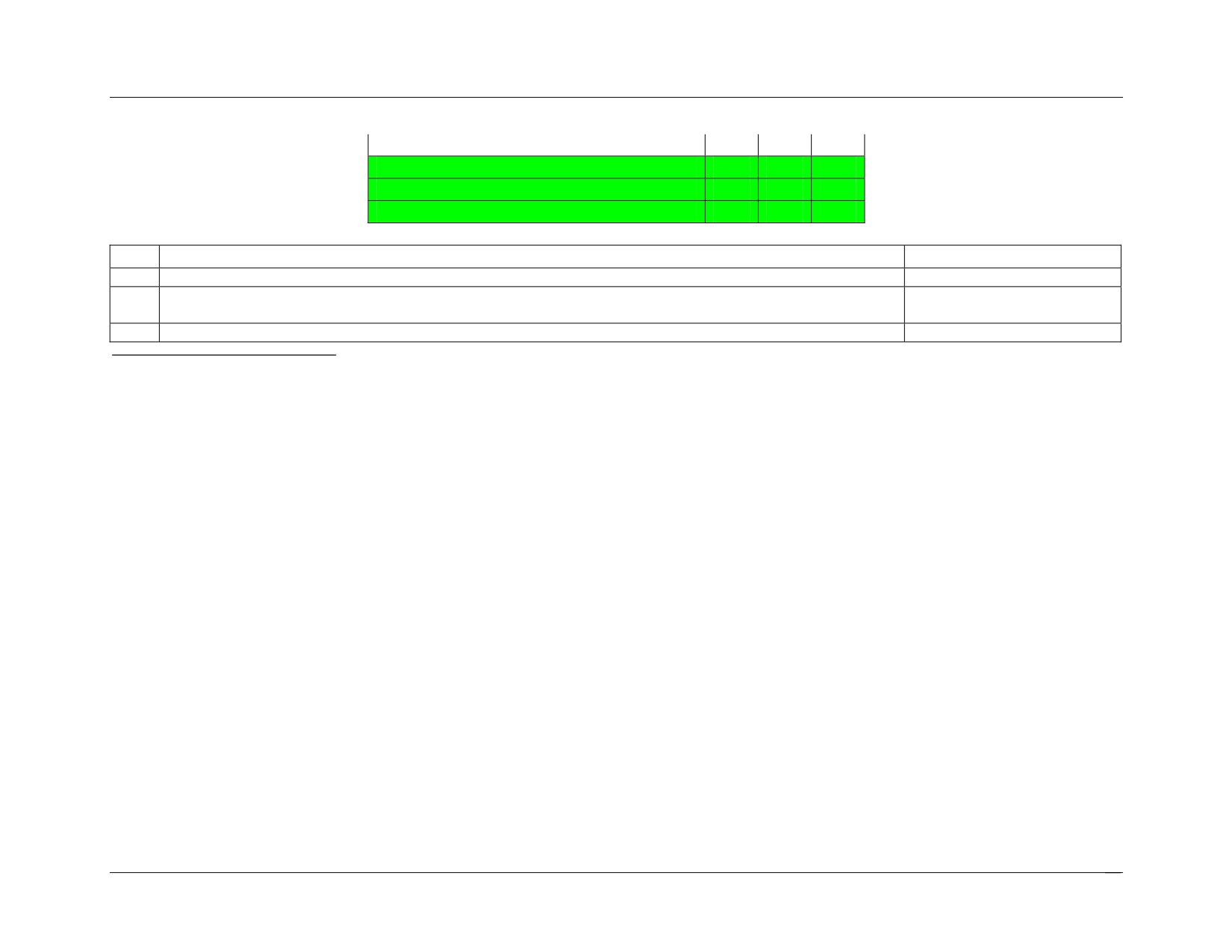
Projected Far-Term Capability and Deficiency
No other capability is currently projected for the far-term future. New organizational structures
or other capabilities and cooperative ventures with theater partners resulting from near/mid-term
experimentation results (as recommended in this JCIDS analysis) should continue to improve the
ability of OP-level units to collect data for determining employment of CBRN/TIM weapons in
the JOA through continuing improvements in TTPs.
For Official Use Only
32
For Official Use Only
CBRN Functional Needs Analysis/Functional Solution Analysis
Chapter 4. Operational Sense Tasks
Table 4.7-1. OPSENS 7: Capability and Deficiency Assessment
Capability: Operational-Level Unit J-3
M1
M2
M3
Current Overall Capability1
G2
G3
G4
Near/Mid-Term Overall Capability
G
G
G
Far-Term Overall Capability5
G
G
G
FAA Measure
Scale
M1
Samples are provided to lab to facilitate verification of CBRN/TIM weapon use.
G - Yes, Y - Limited, R - No
M2
Procedures and checklists are developed to facilitate the collection of data for determining employment of
G - Yes, Y - Limited, R - No
CBRN/TIM weapons in the JOA.
M3
There are no faulty sample-handling or chain-of-custody errors.
G - Yes, Y - Limited, R - No
1 There is little or no doctrine to help commanders understand their roles in verification of first use. TTPs have not been developed to help guide units not assigned this mission to
accomplish sample collection if required.
2 Nothing precludes providing samples to verification laboratories. The process is mature and refined.
3 Internal procedures and checklists have been developed by units that have sample collection as an assigned mission.
4 Chain of custody procedures are well-established for units that have sample collection as an assigned mission.
5 Doctrine will be developed to help commanders understand their roles in verification of first use. TTPs will be developed to help guide units not assigned this mission to
accomplish sample collection if required.
For Official Use Only
33
For Official Use Only
CBRN Functional Needs Analysis/Functional Solution Analysis
Chapter 4. Operational Sense Tasks
4.7.3
Functional Solution Analysis
4.7.3.1
DOTLPF Assessment Summary
This section addresses the deficiencies and suggests potential non-materiel solutions. If there are
no non-materiel solutions or they are only partial solutions, the remaining non-materiel need is
then stated. Materiel needs are assessed in the IMA section.
1. Deficiency: There is little or no doctrine to help commanders understand their roles in
verification of first use.
Non-Materiel Solutions: Doctrine: Develop doctrine to help commanders and senior leaders
at all levels to understand their roles in verification of first use. Incorporate information
attained from the exercise into the doctrine and joint intelligence and CBRN publications.
Training: Conduct training to test, validate, and identify gaps and inconsistencies in current
doctrine and TTPs.
2. Deficiency: TTPs have not been developed to help guide units not assigned this mission to
accomplish sample collection if required.
Non-Materiel Solutions: Doctrine: Develop TTPs have to help guide units not assigned this
mission to accomplish sample collection if required. Developed techniques and field
expedient techniques and equipment, if required, and describe for use.
4.7.3.2
IMA Assessment Summary
N/A
For Official Use Only
34
For Official Use Only
CBRN Functional Needs Analysis/Functional Solution Analysis
Chapter 4. Operational Sense Tasks
4.8
Task OPSENS 8: Provide Sense country assistance teams to support TEP
4.8.1
Functional Area Analysis
4.8.1.1
Definition
To provide Sense country assistance teams to support the Theater Engagement Plan (TEP) that
has been provided by the combatant commander. Many nations that would normally support U.S.
initiatives may feel threatened by hostile neighbors or nations that possess CBRN/TIM weapons.
The TEPs for Sense considerations are executed by special teams and units that demonstrate
Sense capability or provide Sense-related training to selected countries.
4.8.1.2
Derivation
UJTL (OP 7.5, OP 4.7.1), CJCSM 3113.01a.
4.8.1.2.1
Supported Task: STSENS 7
4.8.1.2.2
Lateral Task: OPSHA 9
4.8.1.2.3
Supporting Task: N/A
4.8.1.3
Condition
Perform this task under conditions of:
Physical. N/A
Military
1. No preexisting arrangements. (C2.1.1.2)
2. Limited personnel expertise. (C2.2.4.5)
Civil
1. Mixed support for political policies. (C3.1)
2. Limited foreign government support. (C3.1.2.3.)
4.8.2
Functional Needs Analysis
4.8.2.1
Capability and Deficiency Assessment Summary
Table 4.8-1 discusses the only capability that currently exists to perform the task to the
designated standard. There is only one capability that exists, and no other capability is projected
that will accomplish this task.
For Official Use Only
35
For Official Use Only
CBRN Functional Needs Analysis/Functional Solution Analysis
Chapter 4. Operational Sense Tasks
Current Capability and Deficiency
Any JTF HQ has a team of operational planners and information command and control
specialists. This team of experts has the skill to provide sense country assistance teams to support
the TEP, but there are some deficiencies that negatively impact their ability to do so. The overall
current capability is assessed as “green.”
Projected Near/Mid-Term Capability and Deficiency
No other capability is currently projected for the near/mid term. Near/mid-term experimentation
results (as recommended in this JCIDS analysis) may lead to development of new capabilities. It
is projected that improvements due to coordination/DOTMLPF enhancements will continue to
improve the ability of the JTF to provide Sense country assistance teams to support TEPs. The
overall capability will remain “green” in the near/mid term.
Projected Far-Term Capability and Deficiency
No other capability is currently projected for the far-term future. New organizational structures
or other capabilities and cooperative ventures with theater partners resulting from near/mid-term
experimentation results (as recommended in this JCIDS analysis) should continue to improve the
ability of OP-level units to provide Sense country assistance teams to support TEPs. Specific
doctrine will be developed. The linkage of restoration operations country assistance teams will
be integrated into leader education. This task will be integrated as a standard part of training.
Teams will be organized, equipped, trained, and educated. The overall capability will improve to
“green” in the far-term.
For Official Use Only
36
For Official Use Only
CBRN Functional Needs Analysis/Functional Solution Analysis
Chapter 4. Operational Sense Tasks
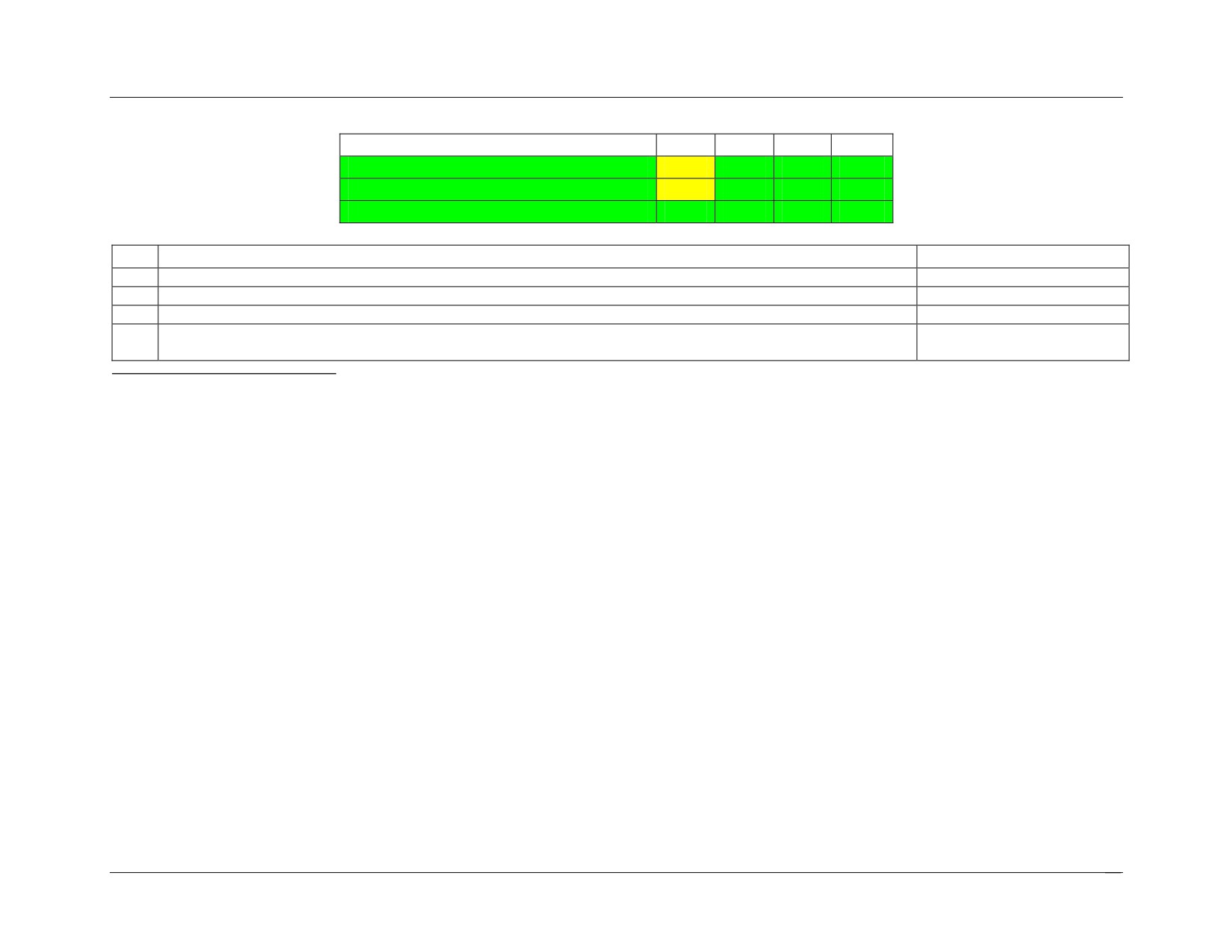
Table 4.8-1. OPSENS 8: Capability and Deficiency Assessment
Capability: Operational-Level HQ
M1
M2
M3
M4
Current Overall Capability1
Y2
G3
G4
G5
Near/Mid-Term Overall Capability
Y
G
G
G
Far-Term Overall Capability6
G7
G
G
G
FAA Measure
Scale
M1
Personnel from allied/friendly nations are enrolled in United States-provided military training.
G - Yes, Y - Limited, R - No
M2
Valid requests for Sense security assistance are met.
G - Yes, Y - Limited, R - No
M3
Quick response to requests for Sense security assistance.
G - Yes, Y - Limited, R - No
M4
Employ assistance team support to/from area of responsibility area of responsibility (AOR) nations (e.g., Cooperative
G - Yes, Y - Limited, R - No
Defense Initiative (CDI).
1 No specific doctrine has been developed. The linkage of restoration operations restoration operation country assistance teams is not integrated into leader education. This task is
not a standard part of training. Teams are not organized, equipped, trained, or educated.
2 Nothing prevents personnel from allied/friendly nations from enrolling in United States-provided military training. There is currently no United States-provided military training
on Sense-related topics.
3 Once Sense country assistance teams are able to provide sense-related security assistance, nothing precludes valid requests from being met.
4 Once Sense country assistance teams are able to provide sense-related security assistance, nothing precludes a quick response to requests.
5 Nothing precludes assistance team support to/from AOR nations (e.g., CDI) from being employed once organized, equipped, trained, and educated in/on Sense-related issues.
6 Specific doctrine will be developed. The linkage of restoration operations restoration operation country assistance teams will be integrated into leader education. This task will be
integrated as a standard part of training. Teams will be organized, equipped, trained, and educated.
7 United States-provided military training on Sense-related topics will be developed and be available for presentation to applicable nations.
For Official Use Only
37
For Official Use Only
CBRN Functional Needs Analysis/Functional Solution Analysis
Chapter 4. Operational Sense Tasks
4.8.3
Functional Solution Assessment
4.8.3.1
DOTLPF Assessment Summary
This section addresses the deficiencies and suggests potential non-materiel solutions. If there are
no non-materiel solutions or they are only partial solutions, the remaining non-materiel need is
then stated. Materiel needs are assessed in the IMA section.
1.
Deficiency: There are currently no United States-provided military TTPs or training on
Sense-related topics.
Non-Materiel Solutions: Doctrine: Develop Sense-related training for personnel from
allied/friendly nations to enroll in. Training: Develop specific doctrine to guide and suggest
Sense-related TEP opportunities.
2.
Deficiency: No specific doctrine has been developed.
Non-Materiel Solutions: Doctrine: The Chairman of the Joint Chiefs of Staff (CJCS) has
not developed an operational concept for Sense country assistance teams, and specific
guidance (technical or procedural) on how to approach this task has not been provided.
Develop TTPs, organizational structure, training, leadership education, and equipment for
Sense country assistance teams to support TEPs.
3.
Deficiency: The linkage of Sense country assistance teams to TEP is not integrated into
leader education.
Non-Materiel Solutions: Leadership: Develop JPME classes for Sense country assistance
teams to support TEPs.
4.
Deficiency: This task is not a standard part of training.
Non-Materiel Solutions: Training: Develop training for Sense country assistance teams to
support TEPs.
5.
Deficiency: Teams are not organized, equipped, trained, or educated.
Non-Materiel Solutions: Organization: Develop organizational table of distribution and
allowances (TDA) for Sense country assistance teams to support TEPs. Training: Develop
training for Sense country assistance teams to support TEPs Leadership: Develop leader
education for Sense country assistance teams to support TEPs.
4.8.3.2
IMA Assessment Summary
N/A
For Official Use Only
38
For Official Use Only
CBRN Functional Needs Analysis/Functional Solution Analysis
Chapter 4. Operational Sense Tasks
4.9
Task OPSENS 9: Provide JOA screening for endemic disease and/or hazardous
substances in the environment
4.9.1
Functional Area Analysis
4.9.1.1
Definition
To use JTF resources to provide JOA screening for endemic diseases and/or hazardous
substances in the environment. All JOA capabilities are employed to ensure that endemic
diseases and/or hazardous substances in the environment are detected, JOA military forces are
warned, and appropriate preventive action is taken.
4.9.1.2
Derivation
UJTL (ST 4.2.2.4, OP 2.2.1, OP 7.5).
4.9.1.2.1
Supported Task: STSENS 8
4.9.1.2.2
Lateral Task: N/A
4.9.1.2.3
Supporting Task: N/A
4.9.1.3
Conditions
Perform this task under the following conditions:
Physical. N/A
Military
1. Partial preexisting arrangements. (C2.1.1.2)
Civil
1. Limited foreign government support. (C3.1.2.3)
2. Moderately opposed foreign public opinion. (C3.1.2.4)
4.9.2
Functional Needs Analysis
4.9.2.1
Capability and Deficiency Assessment Summary
Table 4.9-1 discusses the only capability that exists to perform the task to the designated
standard, resident within the JTF staff.
For Official Use Only
39
For Official Use Only
CBRN Functional Needs Analysis/Functional Solution Analysis
Chapter 4. Operational Sense Tasks
Current Capability and Deficiency
Resources and DOTLPF exist to support JTF staff information and data collection, processing,
and correlation from a variety of sources (national, international, military, civilian, etc.) to
identify potential hazards and endemic diseases for evaluation and assessment of their probable
impact and the necessary protective measures. The DoD Global Emerging Infections
Surveillance and Response System (GEIS) and Armed Forces Medical Intelligence Center
(AFMIC) maintain active surveillance for infectious diseases that might affect military
personnel, readiness, and operations are resources for the JTF staff through reachback. COCOM
resources and information are also available using reachback capabilities. Information and data
within the JOA provided by coalition/partner forces, identified in JTF element reports, and
developed by medical surveillance processes—to name a few—provide the JTF staff with critical
indicators of potential and ongoing issues. Dissemination of warnings to JTF forces identifying
these potential hazards and diseases, and the associated protective measures are incorporated
within existing doctrine. Deficiencies are related to the level of automation of information and
data resources, their compatibility, and supporting reachback capabilities.
Projected Near/Mid-Term Capability and Deficiency
There are no foreseeable changes in the near/mid term.
Projected Far-Term Capability and Deficiency
There are no foreseeable changes in the far term.
For Official Use Only
40
For Official Use Only
CBRN Functional Needs Analysis/Functional Solution Analysis
Chapter 4. Operational Sense Tasks
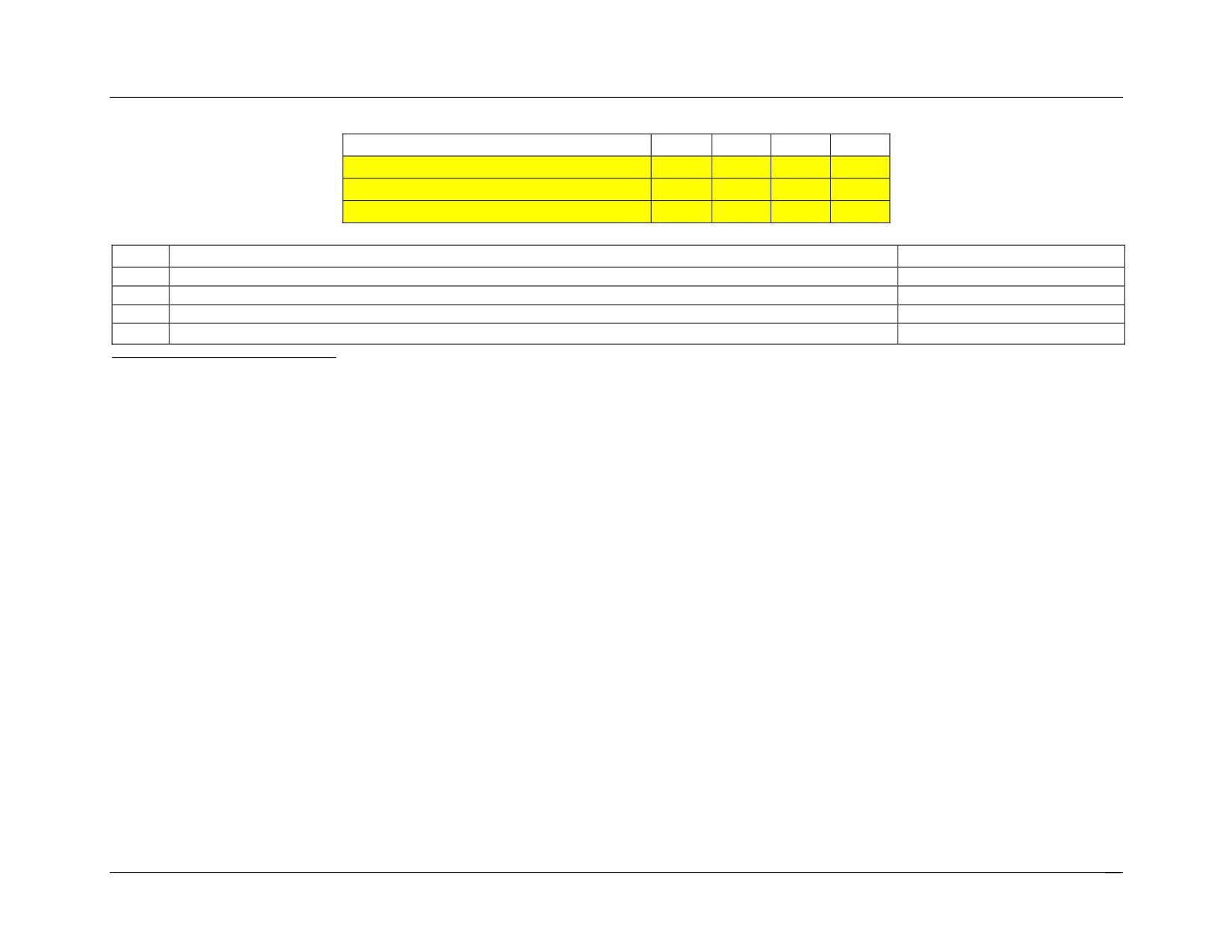
Table 4.9-1. OPSENS 9: Capability and Deficiency Assessment
Capability: JTF Staff
M1
M2
M3
M4
Current Overall Capability1
Y2
Y3
Y4
Y5
Near/Mid-Term Overall Capability
Y
Y
Y
Y
Far-Term Overall Capability
Y
Y
Y
Y
FAA Measure
Scale
M1
All diseases/hazards are identified.
G - Yes, Y - Limited, R - No
M2
Medical, operational, intelligence, and environmental data are correlated.
G - Yes, Y - Limited, R - No
M3
Diseases/hazards are identified in time to warn forces and take appropriate preventive measures.
G - Yes, Y - Limited, R - No
M4
Diseases/hazards are identified in time to treat forces.
G - Yes, Y - Limited, R - No
1 Adequate DOTLPF exists to conduct this task.
2 Limited. Pathogens of military importance are identified. AFMIC and GEIS are resources for information on infectious diseases posing a threat to personnel or reduce medical
readiness. Other types of hazards are reviewed for their impact upon military forces, depending upon type and scope. For example, ITF-40 assesses a number of industrial
chemicals for their potential impact. However, ITF-40 does not assess all the potential industrial chemicals possibly existing within an area of interest. The COCOM is an
informational and support resource for the JTF through reachback. Information must be collected, processed, and correlated from a variety of sources (e.g., coalition/ partner
forces, JTF force reports, medical surveillance, etc.) to identify potential hazards and endemic diseases for evaluation and assessment of their probable impact and the necessary
protective measures.
3 Limited. Resources such as AFMIC, COCOM, GEIS, and others are identified as reliable sources for data and information about most areas of interest. Additionally, information
observed and reported by coalition/partner forces and JTF elements is critical to identifying and assessing ongoing or potential issues. However, much of the information and data
must be collected, processed, correlated, evaluated, and assessed manually. Reachback resources provide the JTF staff with information sources and data essential to the
assessment process. However, automated reachback capabilities for expert advice, information gathering, and information transfer are not fully developed or available necessitating
manual processes. Many resource systems are not integrated or are not automated. Information systems within DoD, Service, theater, other government agencies, and JTF elements
are frequently stovepiped, and the information must be manually transferred from one system to another. Additionally, data structures and fields are not always compatible
between systems impacting application of data transfer utilities.
4 Limited. Diseases and hazards within an area of interest are not static. These change over time. JTF plan implementation processes incorporate requirements for ensuring
currency of information and decisioning parameters. Adjustments are made as necessary. Identification of endemic diseases and hazards of military importance are disseminated
and are accompanied with guidance on preventive measures. Changes to this information are disseminated throughout operations. However, the largely manual nature of the
current process is time-consuming, and the potential exists for exposure prior to receipt of warning.
5 Limited. Ability to identify disease in time to treat is dependent on type of disease and in-country/JOA intelligence. Some countries/areas may be reluctant to assist in identifying
disease outbreaks due to quarantine and economic concerns.
For Official Use Only
41
For Official Use Only
CBRN Functional Needs Analysis/Functional Solution Analysis
Chapter 4. Operational Sense Tasks
4.9.3
Functional Solution Analysis
4.9.3.1
DOTLPF Assessment Summary
This section addresses the deficiencies and suggests potential non-materiel solutions. If there are
no non-materiel solutions or they are only partial solutions, the remaining non-materiel need is
then stated. Materiel needs are assessed in the IMA section.
1.
Deficiency: Not all potential hazards have been assessed for their military importance. For
example, ITF-40 does not assess all the potential industrial chemicals possibly existing
within an area of interest.
Non-Materiel Solutions: Leadership: Ensure leadership awareness of potential gap in
existing information and potential sources for information and data.
2.
Deficiency: Automated reachback capabilities for expert advice, information gathering, and
information transfer are not fully developed or available necessitating manual processes.
Non-Materiel Solutions: Doctrine: Emphasize application of automated reachback
processes, enforce existing automated system/software standards, and identify resources—
both subject matter experts (SMEs) and information/data sources—supporting JTF planning
and operations; particularly expeditionary operations. Organization: Review existing and
adjust as necessary potential SME and information/data resource organizational structures
and responsibilities for support of JTF manual and automated reachback. Training: Develop
training, institutional and unit level, on conduct and application of manual and automated
reachback for SME and information/data interchange. Leadership: Ensure leadership
emphasis upon reachback support (manual and automated) and JTF organic operational
resourcing (e.g., data libraries, tools, etc.). Personnel: Identify and develop SME resources.
Facilities: Develop infrastructure enhancements and capabilities supporting JTF automated
reachback requirements.
3.
Deficiency: The largely manual nature of the current process is time-consuming, and the
potential exists for exposure prior to receipt of warning.
Non-Materiel Solutions: Leadership: Ensure leadership awareness of issues associated with
information collection and processing and need for force preparedness and prior knowledge
of hazards/diseases of military importance in area of interest.
4.9.3.2
IMA Assessment Summary
N/A
For Official Use Only
42
For Official Use Only
CBRN Functional Needs Analysis/Functional Solution Analysis
Chapter 4. Operational Sense Tasks
4.10
Task OPSENS 10: Develop JOA environmental background data including
climatology
4.10.1
Functional Area Analysis
4.10.1.1
Definition
To use JTF resources to obtain and assess JOA environmental background data (including
climatology) for potential CBRN/TIM implications.
4.10.1.2
Derivation
UJTL (OP 7.5, OP 2.2.3).
4.10.1.2.1
Supported Task: STSENS 9
4.10.1.2.2
Lateral Task: N/A
4.10.1.2.3
Supporting Task: N/A
4.10.1.3
Condition
Perform this task under conditions of:
Physical. N/A
Military
1. Partial preexisting arrangements. (C2.1.1.2)
4.10.2
Functional Needs Analysis
4.10.2.1
Capability and Deficiency Assessment Summary
Table 4.10-1 discusses the capability that currently exists to perform the task to the designated
standards within the theater. There is only one capability that exists, and no other capability is
projected that will accomplish this task.
Current Capability and Deficiency
The OP-level/JTF J-3 works with various service component assets, as well as the COCOM J-3,
which can access national DoD assets that operate a military environmental service system to
provide specialized JOA meteorological, space, environmental, and oceanographic analysis and
prediction services in support of military forces.
For Official Use Only
43
For Official Use Only
CBRN Functional Needs Analysis/Functional Solution Analysis
Chapter 4. Operational Sense Tasks
Projected Near/Mid-Term Capability and Deficiency
Capabilities will improve only as a result of improved CBRN experimentation and integration
into exercises.
Projected Far-Term Capability and Deficiency
Capabilities will improve only as a result of improved CBRN experimentation and integration
into exercises. This will ultimately result in effective enhancements to all DOTLPF. JOA CBRN
considerations will be integrated into environmental and climatology processes, TTPs, and
doctrine.
For Official Use Only
44
For Official Use Only
CBRN Functional Needs Analysis/Functional Solution Analysis
Chapter 4. Operational Sense Tasks
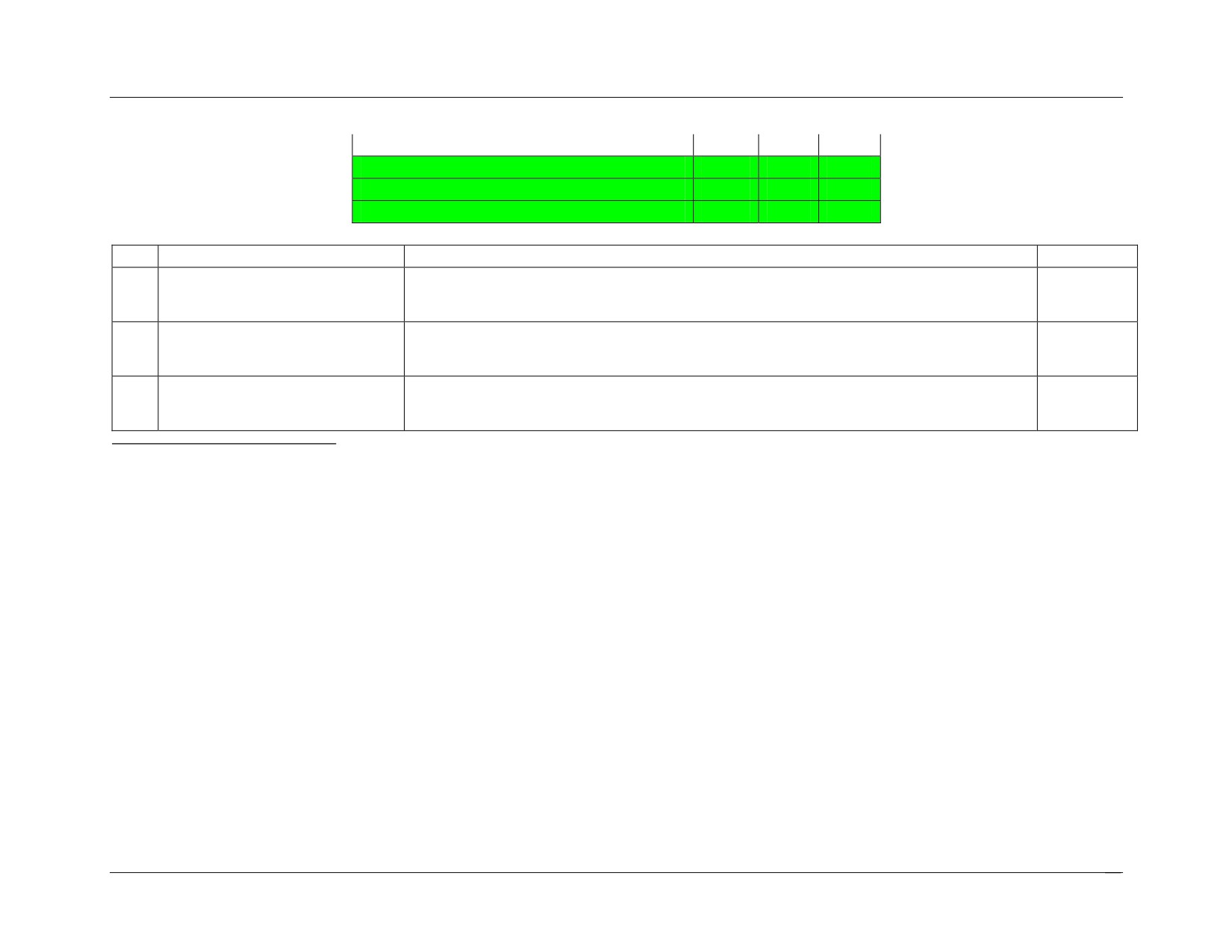
Table 4.10-1. OPSENS 10: Capability and Deficiency Assessment
Capability: Operational-Level/JTF J-3
M1
M2
M3
Current Overall Capability1
G2
G3
G4
Near/Mid-Term Overall Capability
G
G
G
Far-Term Overall Capability
G5
G
G
FAA Measure
Elaboration
Scale
M1
Environmental background data are
Assesses whether a means is available to gather environmental background data at any location.
G - Yes
available for essential JOA areas.
Does not take into account time/automation factors. If time/automation becomes a factor, a
Y - Limited
tactical-level materiel solution that speeds process may need to be considered.
R - No
M2
Climatology data are available for
Assesses whether a means is available to gather climatology data at any location. Does not take
G - Yes
essential JOA areas.
into account time/automation factors.
Y - Limited
R - No
M3
Available data can be accessed by
Assesses ability of JOA forces to access data once they are available. Ability to assess data for
G - Yes
JOA forces with requirements.
CBRN implications is not part of metric.
Y - Limited
R - No
1 JOA CBRN considerations are not integrated into environmental and climatology processes, TTPs, and doctrine.
2 Environmental background data are available or can be obtained for any area of the JOA.
3 Climatology data are available or can be obtained for any area of the JOA.
4 Total access is available through military command and control and communications systems.
5 JOA CBRN considerations will be integrated into environmental and climatology processes, TTPs, and doctrine.
For Official Use Only
45
For Official Use Only
CBRN Functional Needs Analysis/Functional Solution Analysis
Chapter 4. Operational Sense Tasks
4.10.3
Functional Solution Analysis
4.10.3.1
DOTLPF Assessment Summary
This section addresses the deficiencies and suggests potential non-materiel solutions. If there are
no non-materiel solutions or they are only partial solutions, the remaining non-materiel need is
then stated. Materiel needs are assessed in the IMA section.
1. Deficiency: JOA CBRN considerations are not integrated into environmental and
climatology processes, TTPs, and doctrine.
Non-Materiel Solutions: Doctrine: Integrate JOA CBRN considerations into environmental
and climatology processes, TTPs, and doctrine.
4.10.3.2
IMA Assessment Summary
N/A
For Official Use Only
46
For Official Use Only
CBRN Functional Needs Analysis/Functional Solution Analysis
Chapter 5. Tactical Sense Tasks
CHAPTER 5. TACTICAL SENSE TASKS
For Official Use Only
For Official Use Only
CBRN Functional Needs Analysis/Functional Solution Analysis
Chapter 5. Tactical Sense Tasks
Table of Contents
List of Acronyms
ii
5.0
Tactical Sense
1
5.1
Task TASENS 1: Sense the atmosphere for chemical hazards
24
5.2
Task TASENS 2: Sense the atmosphere for biological hazards
37
5.3
Task TASENS 3: Sense the atmosphere for radiological hazards
49
5.4
Task TASENS 4: Sense surfaces for chemical hazards
57
5.5
Task TASENS 5: Sense surfaces for biological hazards
68
5.6
Task TASENS 6: Sense surfaces for radiological hazards
78
5.7
Task TASENS 7: Sense water for chemical hazards
86
5.8
Task TASENS 8: Sense water for biological hazards
95
5.9
Task TASENS 9: Sense water for radiological hazards
104
5.10
Task TASENS 10: Sense the presence of chemical hazards on humans, MWAs
and remains
112
5.11
Task TASENS 11: Sense the presence of biological hazards on humans, MWAs,
and remains
123
5.12
Task TASENS 12: Sense the presence of radiological hazards on humans,
MWAs, and remains
132
5.13
Task TASENS 13: Mark CBR contaminated air, surfaces, and water
140
5.14
Task TASENS 14: Observe the indigenous population for indicators of
CBRN/TIM attack
144
5.15
Task TASENS 15: Sense the tactical deployment of CBRN weapons on the
battlefield
148
5.16
Task TASENS 16: Sense the employment of tactical CBRN weapons on the
battlefield
153
5.17
Task TASENS 17: Verify completeness of decontamination operations
157
i
For Official Use Only
For Official Use Only
CBRN Functional Needs Analysis/Functional Solution Analysis
Chapter 5. Tactical Sense Tasks
5.0
Tactical Sense
5.0.1
Introduction
At the tactical level of war, battles and engagements are planned and executed to accomplish
military objectives assigned to tactical units or task forces. Activities at this level focus on the
ordered arrangement and maneuver of combat elements in relation to each other and to the
enemy to achieve combat objectives. Seventeen tactical sense tasks were identified in the
chemical, biological, radiological, and nuclear (CBRN) Functional Area Analysis (FAA).
This chapter, detailing the Tactical Sense area, restates relevant information from the CBRND
FAA, including a description of each of the 17 Tactical Sense tasks, derivation of the task, an
indication of other linked tasks, and the pertinent conditions. The Functional Needs Analysis
(FNA) section addresses the capability and deficiency analysis and provides brief descriptions of
predicted near/mid-term and far-term changes. Once all the capabilities are considered, the
assessment concludes with a separate, overarching look at the entire capability spectrum to
identify remaining gaps and/or synergies. The Functional Solutions Analysis (FSA) section
addresses possible solutions for the deficiencies identified in the FNA section. These are
categorized into materiel and non-materiel solutions. The non-materiel solutions are addressed
first and reflect one or more of the six areas of DOTLPF: doctrine, organization, training,
leadership, personnel, and facilities. If there are no or only partial non-materiel solutions to the
deficiencies, then materiel solutions are considered. These encompass broad approaches that are
not system-specific. These potential materiel approaches are addressed and evaluated in the Ideas
for Materiel Approach (IMAs) section. The IMAs can potentially mitigate or resolve in the
near/mid- or far-term future.
Most of the Tactical Sense tasks involve detection of chemical, biological, and radiological
hazards in the atmosphere, in water, and on surfaces, personnel, and military working animals
(MWAs), specifically military working dogs (MWDs). The connectivity and interoperability of
detectors (i.e., the ability of detectors to report findings and system status via fully interoperable
and net-centric data links to current and programmed SHAPE systems) are key attributes that
were not considered during this analysis. The closely related ability of detectors and detection
systems to be remotely operated was also not considered. All programmed future Sense systems
include these capabilities (interoperability, connectivity, and remote operation) when practical or
required, while legacy systems and commercial off-the-shelf (COTS) items have limited or no
capability in these areas. Only detection capabilities that are currently fielded by one or more
units in the military or projected to be fielded by one or more military units in the future are
considered in this assessment. For each task, capabilities are categorized according to the time
period during which they are available or are projected to be available (e.g., a capability included
under a “near/mid-term” heading is not currently available but is predicted to be available
sometime during the near/mid-term future [i.e., FY2007-FY2011] and will remain available
through the far-term future [FY2012-FY2020]). Availability of individual capabilities is not
considered in task overall capability assessments. An overall capability for a task is determined
by simply calculating the arithmetic mean of all relevant individual capabilities.
1
For Official Use Only
For Official Use Only
CBRN Functional Needs Analysis/Functional Solution Analysis
Chapter 5. Tactical Sense Tasks
5.0.2
FNA Summary
The table below summarizes the overall current and projected capability to perform the Tactical
(TA)-level Sense (SENS) tasks identified in the CBRND FAA. The overall capability to conduct
TASENS tasks in the current time frame is assessed as “yellow.” In regards to chemical
detection, there are key deficiencies in the U.S. Department of Defense’s (DoD’s) ability to
detect low-level chemical hazards, toxic industrial chemicals (TICs) in general, and TICs and
chemical warfare agents (CWAs) in water. DoD also lacks adequate capabilities to detect toxic
industrial biologicals (TIBs) in general, biological warfare agents (BWAs) in time to warn, and
biological hazards in water. Currently, radiological hazards cannot easily be detected without
exposing the operator to potentially harmful radiation. Finally, DoD typically cannot quickly
identify deployed and employed CBRN weapons and units on the battlefield.
It is projected that the overall capability will improve, but remain “yellow,” at the end of the
FY2007-FY2011 program objective memorandum (POM) period as more advanced detectors
are fielded. Near/mid-term future fielding of the Joint Chemical Agent Detector (JCAD), Joint
Biological Agent Identification and Diagnostic System (JBAIDS), and Joint Service Lightweight
Standoff Chemical Agent Detector (JSLSCAD), among others, is expected to mitigate major
capability gaps in the detection of chemical hazards in the atmosphere and biological hazards in
environmental samples. The projected overall status is not “green” since key deficiencies are
likely to remain in areas including chemical aerosol detection, biological and chemical standoff
detection, TIC and TIB detection, low-level chemical and biological detection, sample collection
for future analysis, detector susceptibility to interference, authentic standoff radiological
detection, radioisotope identification, and sensing tactical deployment and employment of CBRN
weapons on the battlefield.
In the foreseeable far-term future (i.e., FY2012-FY2020), the overall capability will improve
slightly over the near/mid-term future and thus will remain “yellow.” Far-term fielding of the
Joint Chemical Biological Agent Water Monitor (JCBAWM), Joint Modular Chemical and
Biological Detection System (JMCBDS), and Joint Biological Standoff Detection System
(JBSDS), among others, is expected to mitigate major capability gaps in rapid detection of
chemical and biological hazards in the atmosphere and in water. Key deficiencies are likely to
remain in those areas discussed in the previous paragraph for the near/mid term.
Table 5-01. Tactical Sense Summary FNA Findings
CBRN Tactical
Capability
Sense Task
CBRN Tactical Sense Task Title
Near/Mid-
Far-
Current
Number
Term
Term
TASENS 1
Sense the atmosphere for chemical hazards.
Ɣ
Ɣ
Ɣ
TASENS 2
Sense the atmosphere for biological hazards.
Ɣ
Ɣ
Ɣ
TASENS 3.-
Sense the atmosphere for radiological hazards.
Ɣ
Ɣ
Ɣ
TASENS 4
Sense surfaces for chemical hazards.
Ɣ
Ɣ
Ɣ
2
For Official Use Only
For Official Use Only
CBRN Functional Needs Analysis/Functional Solution Analysis
Chapter 5. Tactical Sense Tasks
CBRN Tactical
Capability
Sense Task
CBRN Tactical Sense Task Title
Near/Mid-
Far-
Current
Number
Term
Term
TASENS 5
Sense surfaces for biological hazards.
Ɣ
Ɣ
Ɣ
TASENS 6
Sense surfaces for radiological hazards.
Ɣ
Ɣ
Ɣ
TASENS 7
Sense water for chemical hazards.
Ɣ
Ɣ
Ɣ
TASENS 8
Sense water for biological hazards.
Ɣ
Ɣ
Ɣ
TASENS 9
Sense water for radiological hazards.
Ɣ
Ɣ
Ɣ
Sense personnel and MWAs for chemical
TASENS 10
Ɣ
Ɣ
Ɣ
hazards.
Sense personnel and MWAs for biological
TASENS 11
Ɣ
Ɣ
Ɣ
hazards.
Sense personnel and MWAs for radiological
TASENS 12
Ɣ
Ɣ
Ɣ
hazards.
Mark CBR contaminated air, surfaces, and
TASENS 13
Ɣ
Ɣ
Ɣ
water.
Observe the indigenous population for
TASENS 14.
Ɣ
Ɣ
Ɣ
indications of CBRN/TIM attack
Sense the tactical deployment of CBRN
TASENS 15
Ɣ
Ɣ
Ɣ
weapons on the battlefield.
Sense the tactical employment of CBRN
TASENS 16
Ɣ
Ɣ
Ɣ
weapons on the battlefield.
Verify completeness of decontamination
TASENS 17
Ɣ
Ɣ
Ɣ
operations.
OVERALL
Ɣ
Ɣ
Ɣ
5.0.3
Individual Capability Descriptions
The following text briefly describes the 27 chemical, 13 biological, and 15 radiological
individual detection capabilities assessed in the FNA.
Individual Chemical Detection Capabilities
AN/KAS-1
The AN/KAS-1, a manual shipboard nerve agent standoff detector, detects vapors in the
atmosphere, does not detect concentrations which can cause low-level (e.g., ocular) effects
1 and
is susceptible to chemical interference (false positives and negatives). Its performance is highly
dependent on the skill level of the operator.2
3
For Official Use Only
For Official Use Only
CBRN Functional Needs Analysis/Functional Solution Analysis
Chapter 5. Tactical Sense Tasks
APD2000
The APD2000, an automatic point detector, detects vapors in the atmosphere and off-gassing
from surfaces, personnel, and MWAs; does not detect concentrations which can cause low-level
(e.g., ocular) effects; and is susceptible to chemical interference (false positives and negatives).3
ARTEMIS
The ARTEMIS, a far-term future automatic shipboard and fixed-site standoff detector, will
detect vapors and aerosols in the atmosphere; will not detect concentrations which can cause
low-level (e.g., ocular) effects; and will be susceptible to chemical interference (false positives
and negatives).4
Chemical Agent Monitor (CAM)/Improved Chemical Agent Monitor (ICAM)
The CAM/ICAM, a point detector, detects vapors in the atmosphere and off-gassing from
surfaces, personnel, and MWAs; does not detect concentrations which can cause low-level (e.g.,
ocular) effects; and is susceptible to chemical interference (false positives and negatives).5
Chemical Ag0065nt Point Detector System (CAPDS) MK21 Mod I
The CAPDS, a point detector, detects certain nerve agent vapors in the atmosphere; does not
detect concentrations which can cause low-level (e.g., ocular) effects; and is susceptible to
chemical interference (false positives and negatives).6
Chemical Biological Mass Spectrometer (CBMS)
The CBMS, an ion trap mass spectrometer, will detect all chemical and biological warfare
agents. It will detect and identify chemical agents within 15 seconds and biological agents within
3-4 minutes. It is expected to be deployed on the Nuclear, Biological, Chemical Reconnaissance
Vehicle (NBCRV) Stryker and Joint NBC Reconnaissance System (JNBCRS).7
Gas Toxic Draeger Kit
The Gas Toxic Draeger Kit, a manual TIC point detection kit, detects, identifies, and quantifies
vapors.8
HAPSITE Chemical Identification System
The HAPSITE Chemical Identification System, a portable gas chromatography/mass
spectrometer (GC/MS), provides laboratory-quality analysis for volatile organic chemicals
(VOCs) in the atmosphere. With the Headspace Sampling System, it can also detect VOCs off-
gassing from water, surfaces, personnel, and MWAs. It is battery-powered and weatherproof and
weighs about 35 lbs. It requires some personnel training to operate.9
HazMatID Chemical Identification System
The HazMatID is a portable (23 lb.) Fourier transform infrared (FTIR) spectrometer that can be
used for both quantitative and qualitative material analysis of solids, powders, pastes, and
liquids. The system can identify nerve and blister warfare agents, TICs, forensic drugs, white
powders, explosives, weapons of mass destruction (WMD) precursors, and common chemicals
within 20 seconds of sample submission.10
4
For Official Use Only
For Official Use Only
CBRN Functional Needs Analysis/Functional Solution Analysis
Chapter 5. Tactical Sense Tasks
Improved Chemical Agent Point Detection System (IPDS)
The IPDS, a fixed shipboard/shore-based point detector, detects certain nerve agent vapors, does
not detect concentrations which can cause low-level (e.g., ocular) effects, and is susceptible to
chemical interference (false positives and negatives).11
Joint Chemical Agent Detector
The JCAD, a near-future automatic point detector, detects vapors only (not aerosols), does not
detect concentrations which can cause low-level (e.g., ocular) effects, and is susceptible to
chemical interference (false positives and negatives). The JCAD will sense the atmosphere for
chemical hazards. With the XM279 probe attached, it will detect vapors off-gassing from
surfaces, personnel, MWAs, and remains.12
Joint Chemical and Biological Agent Water Monitor13
The JCBAWM, a near/mid-term future portable device, will detect, identify, and quantify
chemical and biological agents in water. Its sensitivity will meet tri-service long-term
consumption standards. As an objective, it will also detect, identify, and quantify all TICs,
agricultural chemicals, and biological pathogens harmful to personnel.14
Joint Chemical Surface Detector (JCSD)
The JCSD, a near-future automatic standoff detector, will use UV laser technology to provide
standoff, real-time detection and identification of chemical liquids deposited on the ground. The
JCDS will be employed on the Interim Armored Vehicle-NBC Reconnaissance Variant (IAV-
NBCRV), NBC Reconnaissance System (NBCRS Fox) and JNBCRS.15
Joint Modular Chemical and Biological Detection System16
The JMCBDS, a far-term, handheld, stationary and on-the-move point chemical and biological
(CB) detector, identifier and quantifier, detects vapors (and aerosols as an objective) and is
susceptible to chemical interference (false positives and negatives).17 It will sense the
atmosphere. It will sense chemical hazards off-gassing or resuspending from surfaces.
Joint Service Lightweight Standoff Chemical Agent Detector
The JSLSCAD, a near/mid-future automatic standoff detector, detects vapors only (not aerosols),
does not detect concentrations which can cause low-level (e.g., ocular) effects, and is susceptible
to chemical interference (false positives and negatives). It can operate while on the move.18
M18A2 Kit
The M18A2 Kit, a manual point detection kit, detects vapors in the atmosphere and off-gassing
from surfaces, personnel, and liquids on surfaces, personnel, and MWAs and is susceptible to
chemical interference (false positives and negatives). Vapor samples can also be collected in the
sample tubes and then taken to a laboratory for analysis.19
M8 Detection Paper
M8 Paper, colorimetric chemical detection paper contained within a booklet, detects liquid
(>0.02 mL) droplets on surfaces, personnel, and MWAs and is susceptible to chemical
interference (false positives).20
5
For Official Use Only
For Official Use Only
CBRN Functional Needs Analysis/Functional Solution Analysis
Chapter 5. Tactical Sense Tasks
M9 Detection Paper
M9 Paper, packaged as a single roll of expendable colorimetric chemical detection paper, detects
liquid (>100 ȝL) droplets on surfaces, personnel, and MWAs and is susceptible to chemical
interference (false positives).21
M21 Remote Sensing Chemical Agent Alarm (RSCAAL)
The M21, an automatic standoff detector available on tripod or the M93A1 Fox, detects vapors
only, does not detect concentrations which can cause low-level (e.g., ocular) effects, and is
susceptible to chemical interference (false positives and negatives). Its performance is degraded
under precipitation, fog, extreme turbulence, high humidity, and small temperature differentials
at dusk, dawn, and periods with lots of cloud cover (P5, 8, 9, 10, 11). The M21 requires 15
minutes to set up.22 It can be used to sense the atmosphere.
M22 Automatic Chemical Agent Detector Alarm (ACADA)
The M22 ACADA, a point detector, detects vapors in the atmosphere, does not detect
concentrations which can cause low-level (e.g., ocular) effects, and is susceptible to chemical
interference. 23 With the XM279 probe attached, it can detect vapors off-gassing from surfaces,
personnel, MWAs, and remains.
M256A1 Kit
The M256A1 Kit, a manual point detection kit, detects vapors at levels below ECt50 in the
atmosphere and off-gassing from surfaces, personnel, and MWAs and liquids at levels below
ED50 on surfaces, personnel, and MWAs and is susceptible to chemical interference (false
positives and negatives).24
M272 Kit
The M272 Kit, an Army portable, lightweight colorimetric kit, detects and identifies nerve,
mustard, L, and AC in treated and untreated water sources. It is susceptible to chemical
interference (false positives and negatives), it does not meet tri-service field drinking water
standards, and some of its reagents are very harmful to the human body. 25
M8A1 Automatic Chemical Agent Alarm System
The M8A1, a point detector, detects nerve agent vapors, does not detect concentrations which
can cause low-level (e.g., ocular) effects, and is susceptible to chemical interference (false
positives and negatives).26
M90-D-1C
The M90-D-1C, an automatic point detector, detects vapors only, does not detect concentrations
which can cause low-level (e.g., ocular) effects, and is susceptible to chemical interference (false
positives and negatives).27
Mobile Mass Spectrometer MM-1
The MM-1, a GC/MS equipped on the M93A1 Fox, detects 60 chemical compounds, including
common CW agents and some common precursor and chemical degradation products. It can
detect these compounds as vapors in the atmosphere or as liquids on the ground. It is better at
6
For Official Use Only
For Official Use Only
CBRN Functional Needs Analysis/Functional Solution Analysis
Chapter 5. Tactical Sense Tasks
detecting liquids than vapors, requires baselining in clean air, is susceptible to chemical
interference (false positives and negatives), and requires extensive personnel training.28
MultiRAE Plus
The MultiRAE Plus, a portable, automatic five-gas modifiable point detector, detects vapors in
the atmosphere. It can be configured to sample diffused or pumped gases and has a data-logging
feature. 29
Viking SpectraTrak
The Viking SpectraTrak, a portable GC/MS, provides laboratory-quality analysis for 62,000
chemicals in the atmosphere and water and deposited on surfaces, personnel, and MWAs. It can
operate in a continuous sampling mode or be used to analyze individual samples. It is not
waterproof when operating, and it requires extensive personnel training to operate. It is current
available to specialized units (e.g., technical escort units) only.30
Individual Biological Detection Capabilities
Dry Filter Unit (DFU)
The DFU, a stand-alone collector, can be used to collect internal and external ambient air
particulate samples for subsequent analysis using handheld assays (HHA) and polymerase chain
reaction (PCR) assays (e.g., Ruggedized Advanced Pathogen Identification Device [RAPID].
When combined with the aforementioned assays, a DFU enables detection of low concentrations
of biological agents.31
DoD Biological Sampling Kit (BSK)
The DoD BSK contains a panel of eight HHAs, a blue-capped tube containing a bottle of buffer
solution and cotton tipped swabs, and a basic instruction card. It provides a presumptive
identification for biological warfare agents in environmental samples.32
Enzyme-Linked Immunosorbent Assay (ELISA)
ELISA is a laboratory method used to detect biological agents by detecting their antigens (Ag) or
their corresponding antibodies (Ab) produced by the host. The sensitivity of ELISA is 106-107
bacterial organisms/mL; 10-100 PFU/mL of Venezuelan Equine Encephalitis virus; 625 pg/mL
of Staphyloccoccal Enterotoxin B (aerosol); and >5 ng/mL of ricin. ELISA typically requires 1-2
hours total in light of the processing, specimen and reagent application, and incubation times.33
Interim Biological Agent Detection System (IBADS)
The IBADS, a Navy afloat point detector, monitors, collects, detects, and identifies airborne
biological agents.34
Joint Biological Agent Identification and Diagnostic System
JBAIDS is a near-future portable, reusable, and modifiable biological agent point detection and
identification system for select environmental samples and clinical specimens (including swabs,
sera, sputum, bodily exudates, feces, aerosol diluents, autopsy tissues, and soil). It could be used
in mobile and fixed facilities, vehicles, aircraft, and ships. Block I JBAIDS will detect and
identify all BWA pathogens at concentrations of 1000 CFU/mL and 10,000 PFU/mL (100
7
For Official Use Only
For Official Use Only
CBRN Functional Needs Analysis/Functional Solution Analysis
Chapter 5. Tactical Sense Tasks
CFU/mL and 1,000 PFU/mL as an objective). Block II JBAIDS will detect and identify BWA
toxins as well at concentrations of 1 ȝg/mL (1 pg/mL as an objective).35 JBAIDS will require
extensive personnel training to operate.
Handheld Assays with Sample Preparation Materials
HHAs are simple, disposable, portable antibody-based devices that presumptively detect the
presence of a particular biological agent in environmental samples. With various
immunochromatography strips (e.g., Tetracore BioThreat Alert Test Strips, ANP Tech handheld
assay, Environmental Technologies Group SMART Detection tickets, and near-future
Battelle/Applied Biosystems PCR and antibody assays), all BWAs with possible exception of
VHF can be detected if present at concentrations within detection limits. One vial of buffer
solution and an instruction sheet are included with each handheld assay. Prepackaged sterile
swabs, small sealable plastic bags, and a timer or wristwatch are not included and must be
obtained separately.36
M31A2 Joint Biological Point Detection System (JBPDS)
The JBPDS, a joint point detector, monitors, collects, stores, detects, and identifies airborne
biological agents. It is compatible with multiple platforms (e.g., shipboard, portable, trailer-
mounted, shelter version, STRYKER, and NBC Recon version) and is the first point detection
capability for the Marines. It is anticipated to be used by the Air Force.37
Joint Biological Standoff Detection System38
The JBSDS detects airborne biological clouds by shooting infrared (IR) + ultraviolet (UV) laser
beams downrange to detect, track, and discriminate potential threats. The approach is based on
LIDAR, which stands for Light Detecting and Ranging. The system will be compatible with
multiple vehicle platforms. JBSDS will detect aerosol clouds consistent with a biological
warefare (BW) release at ranges up to 5 km with a detection probability of 90% during normal
night conditions and discriminate clouds with particles of biological origin from clouds with
particles of nonbiological origin up to 1 km with a probability of 90% during normal night
conditions and sufficient line of sight.39
Joint Chemical and Biological Agent Water Monitor
The JCBAWM, a far-term future portable device, will detect, identify, and quantify chemical and
biological agents in water. Its sensitivity will meet tri-service long-term consumption standards.
As an objective, it will also detect, identify, and quantify all TICs, agricultural chemicals, and
biological pathogens harmful to personnel.40
Joint Modular Chemical and Biological Detection System
JMCBDS is a near-future handheld, stationary and on-the-move point CB detector, identifier,
and quantifier (objective). It will be employable on many platforms (e.g., individuals, vehicles,
aircraft, unmanned aerial vehicles [UAVs], and ships). It will detect all biological agents listed in
the Joint Chiefs of Staff threat list, and it will identify and quantify detected agents as an
objective.41
8
For Official Use Only
For Official Use Only
CBRN Functional Needs Analysis/Functional Solution Analysis
Chapter 5. Tactical Sense Tasks
M31 Biological Integrated Detection System (BIDS)
The BIDS, a vehicle-portable biological point detector, is the Army’s first biological detection
capability. It monitors, collects, stores, detects, and identifies airborne biological agents.42
Portal Shield
Portal Shield is a network of a variable number of sensors for airborne biological agents mounted
around the perimeter of a fixed site, commanded and controlled by a centralized post computer.43
Ruggedized Advanced Pathogen Identification Device
The RAPID, a portable, field-hardened, rapid thermocycler with concurrent florescence
monitoring, detects and identifies biological agents in buffered samples through the use of real-
time polymerase chain reaction (RT-PCR) technology. The sensitivity of RT-PCR is 15 fg-1 pg
or 20-2 million plasmid copies for bacteria and 15 fg-1 pg or 100-1 million copies of the
complementary deoxyribose nucleic acid (DNA) for viruses. RAPID can test up to 32 prepared
test samples within 30 minutes.44 JBAIDS will be based on RAPID technology.
Individual Radiological Detection Capabilities
ADM-300
The ADM-300, an Air Force portable radiation detection, identification, and computation
(RADIAC) device, detects, identifies, and quantifies in real time alpha, beta, gamma, and x-
radiation emitted from radiological materials in the atmosphere and on surfaces. It measures
0.1 ȝR/hour-10,000 R/hour for gamma radiation and 10 ȝR/hour-5 R/hour for beta radiation.45
AN/PDQ-1 Multi-Function Radiation (MFR) Detector
The AN/PDQ-1, a Navy portable RADIAC device, detects and identifies in real time beta and
gamma radiation emitted from radiological materials in the atmosphere and on surfaces. It also
quantifies the detected gamma, but not beta, radiation.46
AN/PDR-27
The AN/PDR-27, a Navy portable RADIAC device, detects and identifies in real time beta and
gamma radiation emitted from radiological materials in the atmosphere and on surfaces. It also
quantifies the detected gamma radiation 0-500 mR/hour.47
AN/PDR-43
The AN/PDR-43, a Navy portable RADIAC device, detects and identifies in real time beta and
gamma radiation emitted from radiological materials in the atmosphere and on surfaces. It also
quantifies the detected gamma, but not beta, radiation 0-500 R/hour.48
AN/PDR-56
The AN/PDR-56, a Navy and Marine Corps portable RADIAC device, detects and quantifies in
real time alpha radiation emitted from radiological materials in the atmosphere and on surfaces.
It measures 0-1,000,000 cpm.49
9
For Official Use Only
For Official Use Only
CBRN Functional Needs Analysis/Functional Solution Analysis
Chapter 5. Tactical Sense Tasks
AN/PDR-63
The AN/PDR-63, a Marine Corps portable RADIAC device, detects, identifies, and quantifies in
real time beta and gamma radiation emitted from radiological materials in the atmosphere and on
surfaces. It measures 0-1 mrad/hour and 0-5000 rad/hour.50
AN/PDR-65
The AN/PDR-65, a Navy portable RADIAC device, detects and quantifies in real time gamma
radiation emitted from radiological materials in the atmosphere and on surfaces. Its range is 0-
10,000 R/hour.51
AN/PDR-75
The AN/PDR-75, an Army and Marine Corps dosimeter reader (CP-696/PRD-75), and its
associated wristwatch-like dosimeter (DT-236/PDR-75) provide the capability to monitor and
record the exposure of individual personnel to gamma and neutron radiation. It measures an
individual dosimeter’s total neutron and gamma dose 0-1000 cCy.52
AN/PDR-77
The AN/PDR-77, an Army portable RADIAC device, detects, identifies, and quantifies in real
time alpha, beta, gamma, and x-radiation emitted from radiological materials in the atmosphere
and on surfaces. It measures the count rate 1-999,000 cpm.53
AN/UDR-13
The AN/UDR-13, an Army portable RADIAC device, detects, identifies, and quantifies in real
time gamma and neutron radiation emitted from radiological materials in the atmosphere and on
surfaces. It measures the dose rate 0.1-999 cGy/hour and the total dose 0.1-999 cGy.54
AN/VDR-2
The AN/VDR-2, an Army and Marine Corps portable RADIAC device, measures and displays a
gamma dose rate from background to 99.9 Gy/hour. Additionally, the AN/VDR-2 measures,
stores, and displays accumulated dose from 0.01 ȝGy to 9.99 Gy. 55
Berkeley Nucleonics Corporation Surveillance & Measurement System 935
The Berkeley Nucleonics Corporation Surveillance and Measurement (SAM) System 935 is a
portable radioisotope identifier device. Its internal gamma detector enables multiple and
concurrent radionuclide identification within one second. The device measures and displays the
dose rate and dose in rem or seiverts. It has programmable audio and visual alarms. The
published minimum detectable limit for the device is 0.5 ȝR/hour. An external gamma detector
and internal neutron detector are optional.56
CP-95/DT-60
The CP-95, a Navy dosimeter reader and its associated dosimeter (DT-60), which is about the
size of a quarter, provides the capability to monitor and record the exposure of individual
personnel to gamma radiation. It measures an individual dosimeter’s total gamma dose 10-600
Roentgens.57
10
For Official Use Only
For Official Use Only
CBRN Functional Needs Analysis/Functional Solution Analysis
Chapter 5. Tactical Sense Tasks
IM-93 and IM-143
The IM-93 and IM-143 are Navy personal self-reading pocket dosimeters that indicate the total
gamma radiation dose 0-600 Roentgens. 58 The IM-143 is also used by the Marine Corps.
Siemens EPD® Mk2
Siemens EPD® Mk2 is an electronic personal dosimeter that is sensitive to beta, gamma, and x-
radiation. It provides a direct readout of deep/whole body and shallow/skin doses (0 ȝSv to
>16 Sv, which is 0 mrem to >1600 rem) and dose rates (0 ȝSv to >4 Sv, which is 0 mrem/hour to
>400 rem/hour). The dosimeter includes programmable deep/whole body and shallow/skin dose
and dose rate alarms.59
5.0.4
FSA Summary
The paragraphs below summarize the assessment of all potential DOTMLPF (non-materiel and
materiel) solutions for the capability gaps identified in the FNA section. The materiel approaches
address both current and nondeveloped technologies for possible material solutions.
5.0.4.1
DOTMLPF
Non-materiel (DOTLPF) and materiel (M) solutions have been identified. Non-materiel solution
assessments are guided by DOTLPF (doctrine, organization, training, leadership, personnel, and
facilities) in accordance with CJCS 3170 and include solutions such as increasing training (T) on
a detector due to its sophistication, increasing the number of reconnaissance personnel (P)
required to perform a given task, or to determining the threshold contamination level for low-
level health effects (D). If non-materiel solutions do not fully address a capability gap, then a
materiel solution is sought. A materiel solution under the auspices of Sense may include a
chemical detector with greater sensitivity, a standoff chemical detector with an extended range
and higher degree of probability, a real-time biological detector, or an increased capability to
detect TICs.
5.0.4.2
IMA
The Ideas for Materiel Approaches table below summarizes possible materiel approaches that
address the remaining materiel requirements of the doctrine, organization, training, materiel,
leadership and education, personnel, and facilities (DOTMLPF) assessment. These approaches
are in various stages of development. Therefore, some are more readily applicable than others.
Of the 18 IMAs, 12 are applicable to chemical detection, 10 are applicable to biological
detection, and 6 are applicable to radiological detection.
11
For Official Use Only
For Official Use Only
CBRN Functional Needs Analysis/Functional Solution Analysis
Chapter 5. Tactical Sense Tasks
Table 5-02. Detection/SENSE Ideas for Materiel Approaches
Idea for Materiel
Description
Approach
Mass spectrometry
Microanalytical approach that uses the difference in mass-to-charge
ratios of chemical molecules or biomolecules to separate them from
Sensing CWAs, TICs,
one another. It requires only a few nanograms of an analyte to obtain
BWAs, TIBs, (rad)
characteristic information on the analyte’s structure and molecular
weight. It requires that the sample be introduced in the gaseous phase,
Agent physical
and this can be achieved by GC, high-performance liquid
state(s): gases,
chromatography, ion chromatography, or capillary zone
aerosols, liquids
electrophoresis for chemical analytes or pyrolysis-gas
chromatography-ion mobility spectrometer, Matrix-Assisted Laser
Desorption Ionization-Time of Flight (MALDI-TOF), among others,
for biological analytes. Theoretically, all known chemical warfare
agents, TICs, bacteria, viruses, and toxins can be detected, identified,
and quantified by MS, though it is not currently possibly to achieve
this in near-real time for detect-to-warn.60 Mass spectrometry can also
be used to help identify the chemical composition of detected and
isolated radioactive materials.
12
For Official Use Only
For Official Use Only
CBRN Functional Needs Analysis/Functional Solution Analysis
Chapter 5. Tactical Sense Tasks
IR, UV, and
Based on the emission and absorption of IR, UV, and microwave
microwave
radiation by chemicals and biomolecules of interest. Since
spectroscopy61
characteristic vibrational wavelengths of most CW agents (and more
specifically the phosphorus-oxygen bond on nerve agents, for
Sensing CWAs, TICs,
example) occur in the IR region of the electromagnetic spectrum, IR
BWAs, TIBs, and
spectroscopy is typically used for chemical detection. UV laser and
possibly rad
laser-induced fluorescence (LIF) have been used to detect the
presence of biological aerosols. Through IR and UV spectroscopy
Agent physical
could be used for point detection, they are usually used for standoff
state(s): gases,
detection. They can currently detect, identify, and quantify the line
aerosols, liquids
concentrations of chemicals and detect and discriminate between
biological and nonbiological aerosols. Note that microwave
spectroscopy is currently in the research and development phase.
There are many variations of IR, UV, and microwave spectroscopy.
Photoacoustic infrared spectroscopy (PIRS) is one such variation,
which is presented as a separate IMA since it is frequently assessed
separately in technical literature.62
In terms of radiological detection, the Canadian CBRN Research &
Technology Initiative (CRTI) is developing a standoff radiation
detector. A laboratory prototype detector is capable of taking images
of a scene and analyzing the images for ionizing radiation signatures.
Alpha, beta, and gamma sources have been imaged under a variety of
conditions. Alpha sources of only a few millicuries have been imaged
at tens of meters with high signal-to-noise ratios.63 The underlying
technical approach for the detector has not been disclosed. The
detector may be detecting fluorescence of air molecules that are being
ionized by the radiation.
13
For Official Use Only
For Official Use Only
CBRN Functional Needs Analysis/Functional Solution Analysis
Chapter 5. Tactical Sense Tasks
Ionization/ion
Based on small differences in the velocity of ions along a cylindrical
mobility
tube across which a constant electric field is applied. An IMS detector
spectrometry (IMS)
typically operates by drawing air at atmospheric pressure into a
reaction region, where the sample constituents are ionized. The
Sensing CWAs, TICs
sample must be in the vapor or gas phase (though theoretically liquid
samples could first be volatilized). The ions travel through a charged
Agent physical
drift tube, where they collide with a detector plate, thus producing a
state(s): gases, vapors
current that can be registered. A plot of the current versus time
provides a characteristic ion mobility spectrum. The intensity of the
spectrum peaks corresponds to the agent concentration. The response
time ranges from several seconds to a few minutes.64
By adding an additional gate to the ion drift region, Fourier transform
ion mobility spectrometry can be achieved, thus increasing sensitivity,
specificity, and reducing false alarms. Discrimination between
different organophosphate molecules may be possible; however, the
approach still requires the agent be in the gaseous or vapor phase (no
aerosols).65
Photoacoustic
Like other infrared spectroscopy approaches, PIRS uses the selective
infrared spectroscopy
absorption of IR radiation by chemical agent vapors and gases to
identify and quantify the agent present. However, in contrast to
Sensing CWAs, TICs
traditional IR spectroscopy, PIRS typically uses a microphone to
detect acoustic waves that result from absorption of IR radiation by a
Agent physical
sample. It has been claimed that the gas-microphone method has been
state(s): gases, liquids
used for the characterization and analysis of solids and liquids in
addition to gases. It is anticipated that a large number of chemical
agents can be detected with this technology.66
Chemiluminescence
Based on quantitative measurement of the optical emission produced
by a chemical reaction of the analyte and a reagent. Since
Sensing CWAs, TICs
chemiluminescence can take place in either the liquid or gas phase, it
can be used for detecting chemicals in water. Phosphorus
Agent physical
chemiluminescence detectors can be used to detect many chemical
state(s): gases, liquids
agents and are frequently coupled with gas chromatography.67
14
For Official Use Only
For Official Use Only
CBRN Functional Needs Analysis/Functional Solution Analysis
Chapter 5. Tactical Sense Tasks
Surface acoustic
Based on piezoelectric materials (those that produce an electrical
wave (SAW)
current when subjected to pressure or mechanical stress) coated with
different absorbent polymers for chemical analytes or antibodies or
Sensing CWAs, TICs,
complementary nucleic acid sequences for biological analytes. The
BWAs, TIBs
chemical and biological analytes selectively absorb into or bind to the
coated piezoelectric materials. Most SAW detectors incorporate an
Agent physical
analytical preconcentrator (e.g., GC) to overcome absorption or
state(s): gases,
binding limitations.68 Sensitivities on the order of 105-106 cells have
aerosols
been reported for SAW biological detectors.
Regarding SAW chemical detectors, the used absorbent polymers are
susceptible to damage from certain highly reactive vapors (e.g.,
hydrofluoric acid). Furthermore, they are susceptible to interference
from absorption of water and consequently must be calibrated to
account for ambient relative humidity.
Colorimetric
Based on a visible color change resulting from a chemical reaction
that occurs when particular chemicals interact with various solutions
Sensing CWAs, TICs,
and substrates. In regards to current chemical detection capabilities,
BWAs, TIBs
the colorimetric approach is typically the fastest, cheapest, lightest,
and easiest to use. Color-change detectors can detect nerve, blister,
Agent physical
and blood agents with detection tubes, papers, or tickets that are
state(s): gases,
coated with a particular substrate or reagent solutions. Responses
(aerosols), liquids
range from immediate to several minutes. In addition, colorimetric
approaches can detect VOCs, including carboxylic acids, alcohols,
amines, ethers, thioethers, and thiols, generated by microorganisms
(i.e., bacteria). Since each species of microorganism (e.g., bacteria)
emits a distinct profile of enzymatic reaction products in the form of
VOCs, biological detection and identification is possible for those
microorganisms for which volatile metabolites are known. The
ChemSensing Colorimetric Sensor uses this technological approach.69
Currently, some colorimetric systems have semiquantitative
capabilities. Colorimetric detection tubes prove a semiquantitative
indication of the amount of agent present. Results are dependent on
the analyte being tested, its concentration, and the flow rate.
15
For Official Use Only
For Official Use Only
CBRN Functional Needs Analysis/Functional Solution Analysis
Chapter 5. Tactical Sense Tasks
Raman spectroscopy
Based on the scattering of incident electromagnetic radiation by
chemical species present in a (transparent) medium. Though similar in
Sensing CWAs, TICs,
application to IR spectroscopy, the mechanism in Raman scattering
BWAs, TIBs
differs from infrared absorption; for this reason, it is considered as a
separate IMA. Current applications of Raman spectroscopy include
Agent physical
nondestructive evaluation of CW agents in glass ampoules and bottles.
state(s): gases,
Since surface-enhanced Raman spectroscopy (SERS) has been
aerosols, liquids
demonstrated for the detection of trace levels of CWAs and bacteria
both in the vapor phase and in aqueous solution, an array of SERS
sensors may be able to rapidly analyze ambient air and drinking water
supplies. SERS requires no sample pretreatment and typically
provides a response within 30 seconds. Another technique, resonance
Raman spectroscopy using UV excitation, may be preferred over
SERS in detecting biological agents in light of its more intense
scattering and avoidance of background fluorescence.70
Raman Spectroscopy has been considered as a potential technological
basis for standoff detection (specifically biological
detection/identification).71
Photoionization
Based on the ionization of gaseous or vaporous chemicals through UV
detection
irradiation of a particular wavelength and detection of the ions.
Specifically, a photoionization detector (PID) operates by passing an
Sensing CWAs, TICs
air sample between two charged metal electrodes in a vacuum region
irradiated with UV radiation. A current, which corresponds to the
Agent physical
concentration of the ionized molecular species, is produced as
state(s): gases
positively charged ions collect at the negative electrode. The
specificity of the PID depends on the specificity of the excitation
radiation wavelength that ionizes the molecule of interest. PIDs can be
highly sensitive and quantitative when properly calibrated, though
they have limited specificity and are highly subject to false positives
in unknown or mixed environments.72
Flame photometry
Based on the emission spectrum obtained through incineration of the
sample in a hydrogen-oxygen flame. The emission spectrum allows
Sensing CWAs, TICs,
for quantitative reading of the amount of a certain element in the
BWAs, TIBs
sample. Sulfur and phosphorous flame photometry are often used to
detect mustard and nerve agents, respectively. Since flame
Agent physical
photometric detection requires separation technology for specificity, it
state(s): gases,
is commonly coupled with gas chromatography.73
aerosols
Though bacteria contain the same elements (e.g., Na, K, Ca, P, and S),
the ratios of two atomic elements in two different bacteria are
different. For this reason, flame photometry is predicted to be able to
detect and identify bacterial species.74
16
For Official Use Only
For Official Use Only
CBRN Functional Needs Analysis/Functional Solution Analysis
Chapter 5. Tactical Sense Tasks
Electrochemistry
Based on detection of the change of electrical potential due the
absorption of a chemical into a solution or thin film. For example, the
Sensing CWAs, TICs
most common basis for an electrochemical gas sensor uses a
conducting wire or filament that is coated with a reactive material that
Agent physical
oxidizes rapidly when it encounters a CWA. Though electrochemical
state(s): gases,
sensors are typically specific to a class of chemicals, arrays of
aerosols
different sensors may be able to provide coverage for multiple classes
of agents and/or identify specific agents. The response time of
electrochemical sensors is generally very fast (less than a minute,
often seconds). Nevertheless, they are usually less sensitive than IMS
and flame photometry approaches.75
Immunoassay
Based on the highly specific binding of antigens (immunologically
(antibody-based),
foreign substances) to their corresponding antibodies. The formation
including biochips
of an antigen-antibody complex can be monitored through different
mechanisms: directly through interferometry, surface plasmon
Sensing BWAs, TIBs
resonance, piezoelectric crystal microbalance, waveguide coupler, and
electrical capacitance or indirectly through fluorescent evanescent
Agent physical
biosensor surface, electrochemiluminescence, light-addressable
state(s): aerosols,
potentiometric sensor immunoassay, and latex particle
liquids
agglutination/light scattering. Antibodies (or analogous peptides or
combinatorially derived molecules) specific for any bacteria, virus, or
toxin can be made if the agent can be isolated and modeled. Detection,
identification, and even quantification are possible through this
technological approach. Technologies incorporating capillary
electrophoresis can result in fast analysis times, potentially in near-
real time.76
Nucleic acid
Based on the extreme selectivity of DNA and ribonucleic acid RNA
amplification/probing
recognition. This approach (and PCR in particular) utilizes nucleic
acid probes that bind specifically to strands of complementary nucleic
Sensing BWAs, TIBs
acids, in this case, from particular pathogens. These complementary
nucleic acid segments are amplified and detected typically through
Agent physical
luminescent tagging. The nucleic acid amplification approach is
state(s): aerosols,
highly sensitive and specific. Detection, identification, and
liquids
quantification of a pathogen of interest are possible. However, the
approach cannot detect toxins (since they do not contain nucleic acids)
and detection cannot be achieved in near-real time.77
Tissue-based sensing
Premised on the responsiveness of living cells and tissues to particular
biological, chemical, or physical stimuli. A system may use primary
Sensing BWAs, TIBs
or transformed cells from a variety of sources including neurons,
immune cells, endothelial cells, fibroblasts, etc. For example, one
Agent physical
system in the research and development stage uses B-cells engineered
state(s): aerosols,
with recombinant antibodies that are complementary to antigens of
liquids
specific bacteria and viruses. Detection is achieved through cellular
bioluminescence, resulting from activation of a reporter molecule.
Near-real-time (<3 min.) detection, identification, and quantification
of pathogens (and possibly toxins as well) is feasible.78
17
For Official Use Only
For Official Use Only
CBRN Functional Needs Analysis/Functional Solution Analysis
Chapter 5. Tactical Sense Tasks
Multiple technologies
The use of multiple, complementary technologies to broaden the
(orthogonal)
number of agents detected and increase the reliability of the response.
Examples include SAW/IMS, IMC/SAW/electrochemical/SCCell (S-
CAD), GC/IMS, IMS/MS, nucleic acid/immunoassay technologies
(e.g., PCR and immunological techniques),
electrochemiluminescence/equilibrium immunoassay, and
fluorescence correlation spectroscopy/PCR.
Gas-filled radiation
Based on detection of radiation-induced ionization of a gas contained
detectors
within a defined gas chamber. When ionizing radiation enters a gas-
filled detector, it may produce ions. These ions are detected as they
Sensing alpha, beta,
collide with energized negative and positive electrodes within the
gamma, and neutron
chamber. All three main types of gas-filled radiation detectors
radiation (possibly in
(Geiger-Mueller detectors, proportional gas detectors, and ionization
the same unit)
chambers) work through a variation of this mechanism.
Geiger-Mueller detectors can respond to gamma and neutron radiation
and, if equipped with a sufficiently thin chamber window, alpha and
beta radiation as well. Proportional gas detectors can be used to
distinguish between alpha and beta radiation. Finally, ionization
chambers are typically used for gamma radiation measurements.
Scintillation
Based on detection of light that is emitted by particular inorganic
Radiation Detectors
crystals or organic compounds when exposed to ionizing radiation.
Some of the scintillating materials include ZnS(Ag), anthracene,
Sensing alpha, beta,
trans-stilbene, para-terphenyl, phenyl oxazole, NaI(Tl), CsI(Tl),
gamma, and neutron
bismuth germinate (Bi4Ge3O12), and barium fluoride (BaF2).
radiation (though not
typically in a single
Scintillation detectors can be used to detect alpha, beta, gamma, and
unit)
neutron radiation depending on the scintillating material. Scintillation
detectors for alpha radiation frequently use zinc sulfide activated with
silver, ZnS(Ag), as the scintillating material. Scintillation detectors for
beta and gamma radiation often incorporate organic and inorganic,
e.g., NaI(Tl), scintillators, respectively. Some scintillation detectors,
such as modern liquid scintillation units, can identify alpha, beta,
gamma, or neutron-emitting radioisotopes in addition to detecting
them.
18
For Official Use Only
For Official Use Only
CBRN Functional Needs Analysis/Functional Solution Analysis
Chapter 5. Tactical Sense Tasks
Semiconductor
Based on detection of free electrons that are produced by certain
Radiation Detectors
semiconductors when they are exposed to ionizing radiation. The
electrons are detected as they are collected at the electrodes by the
Sensing alpha, beta,
applied voltage. The semiconductors that have been used for radiation
and gamma radiation
detection include germanium, silicon, cadmium telluride (CdTe), and
(though not likely in a
mercuric iodide (HgI2). Semiconductor neutron radiation detectors are
single unit)
currently in the research and development phase.
Some germanium detectors can also identify gamma-emitting
radioisotopes and they provide better energy resolution than the
NaI(Tl) scintillation detector. Some silicon detectors have been used
for alpha-emitting or beta-emitting radioisotope identification.
1 See Potential Military Chemical/Biological Agents and Compounds. Also know as FM 3-11.9, MCRP 3-37.1B,
NTRP 3-11.32, AFTTP(I) 3-2.55.
2 Chemical and Biological Defense Information Analysis Center. Worldwide Chemical Detection
Equipment Handbook. Gunpowder Br. APG, Md. October 1995. pp. 381-83.
5 Required Operational Capability (ROC) for the Chemical Agent Monitor (CAM), TRADOC
CAN 81298.
6 Chemical and Biological Defense Information Analysis Center. Worldwide Chemical Detection
Equipment Handbook. Gunpowder Br. APG, Md. October 1995. pp. 395-97.
7 http://www.jpeocbd.osd.mil/ca_cbms.htm;
8 http://www.dcfp.navy.mil/library/dcpubs/tabdce/TABDCESecT.pdf;
http://www.dcfp.navy.mil/library/dcpubs/tabdce/TABDCESecD.pdf;
9 California EPA, Evaluation Report for HAPSITE Portable Gas Chromatograph Mass
Spectrometer. March 2004.
10 http://www.sensir.com/Smiths/HazMatID/SD_HazMatIDMarch2005.pdf;
http://www.hazmatid.com/Referance%20Corner/SEN_HazmatID_Bro_071503.pdf;
11 OPERATIONAL REQUIREMENTS DOCUMENT (ORD) FOR IMPROVED (CHEMICAL
AGENT) POINT DETECTION SYSTEM (IPDS). 1 February 1994.
12 Joint Chemical Agent Detector (JCAD) Milestone III Operational Requirements Document.
13 DTO CB.37 Chemical/Biological Agent Water Monitor is developing system concepts and
technologies to meet the service requirement for a Joint Chemical/Biological Agent Water
Monitor (JCBAWM).
14 Joint Operational Requirements Document (JORD)USAF (CAF) 007-96 for a JOINT
CHEMICAL/ BIOLOGICAL AGENT WATER MONITOR ACAT LEVEL III. 27 March 1998.
16 DTO CB.50 Lightweight Integrated CB Detection is developing technology to meet the
requirements of the Joint Modular CB Detection (JMCBD) System.
17 OPERATIONAL REQUIREMENT DOCUMENT (ORD) FOR THE JOINT MODULAR CHEMICAL
BIOLOGICAL DETECTOR (JMCBDS) REVISED DRAFT. 8 January 2002.
19
For Official Use Only
For Official Use Only
CBRN Functional Needs Analysis/Functional Solution Analysis
Chapter 5. Tactical Sense Tasks
18 OPERATIONAL REQUIREMENTS DOCUMENT (ORD) FOR JOINT SERVICE
LIGHTWEIGHT STANDOFF CHEMICAL AGENT DETECTOR (JSLSCAD) MILESTONE
III REVISION(JTD J2-C002-III). 6 February 2001.
19 Chemical and Biological Defense Information Analysis Center. Worldwide Chemical
Detection Equipment Handbook. Gunpowder Br. APG, Md. October 1995. pp. 422-23;
20 Chemical and Biological Defense Information Analysis Center. Worldwide Chemical
Detection Equipment Handbook. Gunpowder Br. APG, Md. October 1995. pp. 408-09.
21 Chemical and Biological Defense Information Analysis Center. Worldwide Chemical
Detection Equipment Handbook. Gunpowder Br. APG, Md. October 1995. pp. 418-19.
22 Joint Service Operational Requirement (JSOR) for the Remote Sensing Chemical Agent Alarm
(RSCAAL). 28 June 1990; http://www.emedicine.com/emerg/topic924.htm
23 Joint Service Operational Requirement (JSOR) for the Automatic Chemical Agent Detector
Alarm (ACADA). 03 August 1990; http://www.edgewood.army.mil/ps/download/xm279.pdf;
24 Chemical and Biological Defense Information Analysis Center. Worldwide Chemical
Detection Equipment Handbook. Gunpowder Br. APG, Md. October 1995. pp. 430-31;
25 Chemical and Biological Defense Information Analysis Center. Worldwide Chemical
Detection Equipment Handbook. Gunpowder Br. APG, Md. October 1995. pp. 433-38.
26 Chemical and Biological Defense Information Analysis Center. Worldwide Chemical Detection Equipment
Handbook. Gunpowder Br. APG, Md. October 1995. pp. 411-15; www.acq.osd.mil/cp/nbc99/99annexa.pdf
27 http://www.chem-bio.com/resource/2000/md90_d1_detector.pdf;
28 http://www.gulflink.osd.mil/foxnbc/n05_s03.htm;
30 Chemical and Biological Defense Information Analysis Center. Worldwide Chemical
Detection Equipment Handbook. Gunpowder Br. APG, Md. October 1995. pp. 446-48.
31 CBRN Defense Program Annual Report (DRAFT) Annex A: Contamination Avoidance
Programs, A-4.
32 CBRN Defense Program Annual Report (DRAFT) Annex A: Contamination Avoidance
Programs, A-5.
33 Analytical Laboratory System Chemical and Biological Analytical Capability Market Survey
and Technology Report. October 2003. pp. 5-27, 5-28;
http://jcm.asm.org/cgi/content/full/36/5/1338/T3;
http://jcm.asm.org/cgi/content/full/36/5/1338/T3;
34 Mission Need Statement for Biological Detection. 7 August 1992.
35 Operational Requirements Document for JOINT BIOLOGICAL AGENT IDENTIFICATION
AND DIAGNOSTIC SYSTEM (JBAIDS) MS B ORD ACAT III, Rev. 2. 1 April 2003.
36 http://www-nehc.med.navy.mil/prevmed/epi/HHA2Nov01.doc;
20
For Official Use Only
For Official Use Only
CBRN Functional Needs Analysis/Functional Solution Analysis
Chapter 5. Tactical Sense Tasks
37 http://www.jpeocbd.osd.mil/ca_jbpds.htm; Operational Requirements Document for JOINT
BIOLOGICAL POINT DETECTION SYSTEM, ACAT II, Prepared for MILESTONE C Block I
and MILESTONE B Block II, Date 18 Jan 02 , (Stage I, JS/J-6 Interoperability Assessment
Resolution, 11 June 2002) (Stage II, JS/J-6 Interoperability Certification, 4 October 2002),
Approved 21 Jul 04, Joint Staff Memo J-8A 00251-03
38 DTO CB.35, Standoff Biological Aerosol Detection, is researching long-wave and mid-wave
infrared (LWIR and MWIR), Differential Scattering/Differential Absorption Lidar
(DISC/DIAL), and Passive LWIR spectroscopy. Technology developed under this effort is
intended to address operational requirements of the Joint Biological Standoff Detection System.
39 Joint Service Chemical and Biological Defense Program FY02-03 Overview; OPERATIONAL
REQUIREMENTS DOCUMENT (ORD) UNCLASSIFIED JOINT BIOLOGICAL STANDOFF
DETECTION SYSTEM (JBSDS) FOR Increment 1 ACAT: III, Prepared for Milestone (MS) C
Decision, Date 27 Mar 04, Approved 28 Jun 04, JROC Memo 110-04; Joint Service Chemical
and Biological Defense Program, FY 02-03 Overview
40 Joint Operational Requirements Document (JORD)USAF (CAF) 007-96 for a JOINT
CHEMICAL/BIOLOGICAL AGENT WATER MONITOR ACAT LEVEL III, 27 Mar 1998
41 OPERATIONAL REQUIREMENT DOCUMENT (ORD) FOR THE JOINT MODULAR
CHEMICAL BIOLOGICAL DETECTOR (JMCBDS) REVISED DRAFT 08 Jan 2002
43 http://www.nationaldefensemagazine.org/article.cfm?Id=700;
44 http://www.idahotech.com/rapid/; Analytical Laboratory System Chemical and Biological
Analytical Capability Market Survey and Technology Report. October 2003. pp. 5-9.
45http://www.canberra.com/pdf/Products/RPI_pdf/ADM-300.pdf;
46 CBRN Defense Program Annual Report (DRAFT) Annex A: Contamination Avoidance
Programs, A-20,21
47 http://www.orau.org/ptp/collection/radiac/PDR27.htm;
http://www.dcfp.navy.mil/mc/nkoppts/Dose/Dose19.htm;
48 http://www.dcfp.navy.mil/mc/nkoppts/Dose/Dose14.htm;
49 http://www.tpub.com/content/USMC/mcwp3372/css/mcwp3372_150.htm;
Bland_sci55.htm
51 http://www.dcfp.navy.mil/mc/nkoppts/Dose/Dose26.htm;
pdr-75.htm
53 http://www.fas.org/man/dod-101/sys/land/an-pdr-77.htm;
54 http://www.fas.org/man/dod-101/sys/land/an-udr-13.htm;
55 http://www.fas.org/man/dod-101/sys/land/an-vdr-2.htm;
21
For Official Use Only
For Official Use Only
CBRN Functional Needs Analysis/Functional Solution Analysis
Chapter 5. Tactical Sense Tasks
56 http://www.berkeleynucleonics.com/resources/935_brochure_4_pages.pdf;
58 http://www.tpub.com/content/USMC/mcwp3371cd/css/mcwp3371cd_144.htm;
60 National Institute of Justice, Guide for the Selection of Chemical Agent and Toxic Industrial
Material Detection Equipment for Emergency First Responders. 2000. pp. 22-25; National
Institute of Justice, An Introduction to Biological Agent Detection Equipment for Emergency
First Responders. 2001, pp 28-29; NATIBO, Biological Detection System Technologies
Technology and Industrial Base Study. February 2001. pp. 4-7 to 4-9.
61 DTO CB.53 Wide-Area Aerial Reconnaissance for Chemical Agents is developing a wide-area
aerial reconnaissance system that will allow rapid evaluation of large areas for CW
contamination, and provide detailed information as to the position of a CW agent cloud.
62 Kosal, Margaret E. “The Basics of Chemical and Biological Detectors,” 24 November 24
2003. http://cns.miis.edu/pubs/week/031124.htm; McKone, Thomas E., Beverly M. Huey, et al.
(eds.). Strategies to Protect the Heath of Deployed U.S. Forces: Detecting, Characterizing and
Documenting Exposures. National Academy Press. 2000.
63 CBRN Research and Technology Initiative. “CRTI 0203RD Standoff Detection of Radiation.”
64 Kosal, Margaret E. “The Basics of Chemical and Biological Detectors,” 24 November 2003,
of Chemical Agent and Toxic Industrial Material Detection Equipment for Emergency First
Responders. 2000; McKone, Thomas E., Beverly M. Huey, et al. (eds.) Strategies to Protect the
Heath of Deployed U.S. Forces: Detecting, Characterizing and Documenting Exposures.
National Academy Press. 2000. http://books.nap.edu/books/0309068754/html/
65 Tarver, Edward. “External Second Gate, Fourier Transform Ion Mobility Spectrometry: FT-
IMS Parametric Optimization for Detection of Weapons of Mass Destruction,” Sandia National
Laboratories, Presented at 2004 Biological-Chemical Detection Symposium, Washington, D.C.
66 SpectroscopyNow.com, Photoacoustic Infrared Spectroscopy description,
http://www.spectroscopynow.com/Spy/basehtml/SpyH/1,1181,3-5-3-0-1-book_detail-0-
822,00.html; McKone, Thomas E., Beverly M. Huey, et al. (eds.) Strategies to Protect the Heath
of Deployed U.S. Forces: Detecting, Characterizing and Documenting Exposures. National
Academy Press. 2000. http://books.nap.edu/books/0309068754/html/
67 McKone, Thomas E., Beverly M. Huey, et al. (eds.) Strategies to Protect the Heath of
Deployed U.S. Forces: Detecting, Characterizing and Documenting Exposures. National
Academy Press. 2000. pp. 96-97; http://books.nap.edu/books/0309068754/html/
68 Kosal, Margaret E. “The Basics of Chemical and Biological Detectors.” 24 November 2003.
69 Edgewood Chemical Biological Center. Market Survey: Biological Detectors Guide for
Selection of Detection Devices and Systems. April 2003; Kosal, Margaret E. “The Basics of
Chemical and Biological Detectors.” 24 November 2003.
70 Kosal, Margaret E. “The Basics of Chemical and Biological Detectors.” 24 November 2003.
http://cns.miis.edu/pubs/week/031124.htm; McKone, Thomas E., Beverly M. Huey, et al. (eds.)
22
For Official Use Only
For Official Use Only
CBRN Functional Needs Analysis/Functional Solution Analysis
Chapter 5. Tactical Sense Tasks
Strategies to Protect the Heath of Deployed U.S. Forces: Detecting, Characterizing and
Documenting Exposures. National Academy Press. 2000.
http://books.nap.edu/books/0309068754/html/; Detection and Measurement of Chemical Agents,
http://books.nap.edu/html/terrorism/ch4.html; Farquharson, Stuart, Alan Gift, Paul Maksymiuk,
et al. “Chemical agent detection by surface-enhanced Raman spectroscopy” (Abstract).
International Society for Optical Engineering,
http://bookstore.spie.org/index.cfm?fuseaction=DetailPaper&ProductId=511940&coden; Kawai,
Nancy T. and Kevin M. Spencer. “Raman Spectroscopy for Homeland Defense Applications.”
Raman Technology for Today’s Spectroscopists. June 2004, pp. 55-58.
71 Loerop, William. “Chemical Biological Defense Science and Technology Chemical Standoff
Briefing.” Edgewood Chemical Biological Center.
72 Kosal, Margaret E. “The Basics of Chemical and Biological Detectors.” 24 November 24
Selection of Chemical Agent and Toxic Industrial Material Detection Equipment for Emergency
First Responders. 2000. http://www.ojp.usdoj.gov/nij/pubs-sum/184449.htm; McKone, Thomas
E., Beverly M. Huey, et al. (eds.) Strategies to Protect the Heath of Deployed U.S. Forces:
Detecting, Characterizing and Documenting Exposures. National Academy Press. 2000.
73 Kosal, Margaret E. “The Basics of Chemical and Biological Detectors,” 24 November 2003,
of Chemical Agent and Toxic Industrial Material Detection Equipment for Emergency First
Responders. 2000. http://www.ojp.usdoj.gov/nij/pubs-sum/184449.htm; McKone, Thomas E.,
Beverly M. Huey, et al. (eds.). Strategies to Protect the Heath of Deployed U.S. Forces:
Detecting, Characterizing and Documenting Exposures. National Academy Press. 2000.
74 Philippe, Adam, Damien Descroix, and Jean-Pierre Chiaroni. “Flame Photometry for
Biological Detection.” Proceedings from the 6th CBW Protection Symposium. 1998.
75 Kosal, Margaret E. “The Basics of Chemical and Biological Detectors.” 24 November 2003.
of Chemical Agent and Toxic Industrial Material Detection Equipment for Emergency First
Responders. 2000. http://www.ojp.usdoj.gov/nij/pubs-sum/184449.htm; McKone, Thomas E.,
Beverly M. Huey, et al. (eds.) Strategies to Protect the Heath of Deployed U.S. Forces:
Detecting, Characterizing and Documenting Exposures. National Academy Press. 2000.
76 National Institute of Justice. An Introduction to Biological Agent Detection Equipment for Emergency First
Responders. 2001. pp. 29-32. http://www.ojp.usdoj.gov/nij/pubs-sum/190747.htm; NATIBO. Biological Detection
System Technologies Technology and Industrial Base Study. February 2001. pp. 4-9 to 4-12.
77 National Institute of Justice. An Introduction to Biological Agent Detection Equipment for Emergency First
Responders. 2001. p. 32. http://www.ojp.usdoj.gov/nij/pubs-sum/190747.htm; NATIBO. Biological Detection
System Technologies Technology and Industrial Base Study. February 2001. pp. 4-18 to 4-19.
78 NATIBO. Biological Detection System Technologies Technology and Industrial Base Study.
February 2001. pp. 4-12 to 4-13; Harper, James. “Automated CANARY Testbed for Fast
Bioaerosol Identification.” MIT Lincoln Laboratory. Presented at 2004 Biological-Chemical
Detection Symposium, Washington, D.C.
23
For Official Use Only
For Official Use Only
CBRN Functional Needs Analysis/Functional Solution Analysis
Chapter 5. Tactical Sense Tasks
5.1
Task TASENS 1: Sense the atmosphere for chemical hazards
5.1.1
Functional Area Analysis
5.1.1.1
Definition
To sense the atmosphere for the presence or absence of chemical hazards (encompasses chemical
warfare agents and TICs) using sensors. Includes the functions of detection, identification, and
quantification of the hazard. Also includes collection of samples for further analysis, along with
early-warning surveillance of unforeseen hazard releases and monitoring of known hazard
locations. Encompasses “detect to warn” and “detect to treat” situations. The evaluation
encompasses all chemical hazards of military and medical importance.
5.1.1.2
Derivation
UJTL TA 7, UJTL TA 7.1, Protection Joint Functional Concept.
5.1.1.2.1
Supported Tasks: OPSENS 1, OPSENS 4, OPSENS 7
5.1.1.2.2
Lateral Task: TASHA 16
5.1.1.2.3
Supporting Task: N/A
5.1.1.3
Condition
Perform this task under conditions of:
Physical
1. Mountainous, desert, jungle, and arctic terrain. (C1.1.1)
2. Significant urbanization. (C1.1.3.1)
3. Tropical, arctic, and arid climates. (C1.3.1)
4. Summer, winter seasons. (C1.3.1.1)
5. Stormy weather. (C1.3.1.3)
6. Hot, very cold air temperature. (C1.3.1.3.1)
7. High surface-wind velocity. (C1.3.1.3.3)
8. High/low relative humidity. (C1.3.1.3.5)
9. Liquid, freezing, and frozen precipitation. (C1.3.1.3.6.1)
10. Heavy precipitation intensity. (C1.3.1.3.6.2)
11. Extreme turbulence and wind shear. (C1.3.1.3.8)
12. Negligible light. (C1.3.2.1)
13. Chemical effects. (C1.3.3.2).
Military
1. Stressful mission. (C2.1)
2. Location—ashore, afloat, airborne. (C2.1.4.1)
24
For Official Use Only
For Official Use Only
CBRN Functional Needs Analysis/Functional Solution Analysis
Chapter 5. Tactical Sense Tasks
3. Minimal time available. (C2.1.5)
4. Low personnel capability. (C2.2.4)
5. Negligible personnel experience. (C2.2.4.5)
6. Ambiguous threat existence. (C2.9.3)
Civil
1. Limited or negative foreign government support. (C3.1.2.3)
2. Aggressively opposed foreign public opinion. (C3.1.2.4)
3. High mission priority. (C3.1.3.2)
4. TICs present in the civilian sector. (C3.3.7.5).
5.1.2
Functional Needs Analysis
5.1.2.1
Capability and Deficiency Assessment Summary
Table 5.1-1 presents individual and overall current, near/mid-term, and far-term capabilities to
perform the task to the designated standards. There are 16 current capabilities used to accomplish
this task and five projected capabilities to be added in the future (three in the near/mid-term and
two in the far-term). The individual capabilities include a range of point and standoff detectors
with differing capabilities to meet the identified standards.
Current Capabilities and Deficiencies
The overall current capability is assessed as “yellow.” Most current detectors detect the vapor of
multiple CWAs and no or few TICs. Detection is usually achieved within two minutes and
classification of the detected agent is typically provided. Though most detectors do not quantify
the agent concentration, some provide relative hazard indications and more sensitive detectors
(e.g., MS) provide absolute quantification capabilities. All but two current detectors are point
detectors (AN/KAS-1 and M21 RSCAAL are standoff detectors). Though some point detectors
can provide limited detect-to-warn capability, they are mainly used for detect-to-treat purposes.
There is no single capability that can perform the task to all of the designated standards. Mass
spectrometers such as the Viking SpectraTrak and HAPSITE appear to be the best overall current
capabilities, but they are costly, require substantial training to operate, and do not detect or
identify in near-real time; consequently, they do not detect-to-warn and may be unable to
identify-to-treat if high concentrations of fast-acting lethal agents are present. In addition,
HAPSITE, like most current detectors, does not detect aerosols. The M8A1 ACAA and Viking
Spectratrak are the only current detectors known to detect hazards in aerosol form. With few
exceptions, current detectors do not detect CWAs at ECt50 ocular levels (IAW: Potential
Military Chemical/ Biological Agents and Compounds. Also known as FM 3-11.9, MCRP 3-
37.1B, NTRP 3-11.32, AFTTP(I) 3-2.55). No current detector detects VX vapor below
immediately-dangerous-to-life-or-health (IDLH) levels, and most detectors detect soman (GD)
and cyclosarin (GF) at twice IDLH levels. Other deficiencies include the lack of real-time CWA
identification and TIC detection/identification capabilities, lack of agent quantification
25
For Official Use Only
For Official Use Only
CBRN Functional Needs Analysis/Functional Solution Analysis
Chapter 5. Tactical Sense Tasks
capabilities, lack of a detector that also takes samples for future analysis, and detector
susceptibility to chemical interference.1
Projected Near/Mid-Term Capabilities and Deficiencies
The overall projected near/mid-term capability is assessed as “yellow.” In the near/mid-term
future, the introduction of the JCAD, JSLSCAD, and integrated CBMS II will enhance the joint
forces’ ability to rapidly (i.e., within 90 seconds) detect, quantify, and identify CWAs for both
detect-to-warn and detect-to-treat purposes. JCAD and JSLSCAD will also improve the forces’
ability to determine cumulative doses of personnel exposed to CWAs and TICs. Nevertheless,
MS units (including CBMS II) will likely be the only detectors able to detect all CWAs. MS
units, gas toxic Draeger kits, JSLSCAD, and JCAD will be the main capabilities to detect TICs.
They will detect many or all high-priority TICs.
The general inability to detect aerosols and agent concentrations at or below IDLH levels, the
lack of a detector that also takes samples for future analysis, and detector susceptibility to
chemical interference are likely to remain deficiencies in the near-future.
Projected Far-Term Capabilities and Deficiencies
The overall projected far-term capability is assessed as “yellow.” In the far-term future, many
fielded detectors will detect most, if not, all CWAs and some TICs. Most detectors will quantify
and classify, if not identify, agents. MS units, gas toxic Draeger kits, JSLSCAD, and JCAD will
likely remain the main capabilities to detect TICs. The introduction of ARTEMIS will increase
the forces’ standoff detection capabilities. JMCBDS will provide an integrated chemical/
biological detection, identification, and quantification capability and is expected to rapidly and
reliably detect, identify, and quantify most CWAs and some TICs.
Many detectors will still not detect aerosols and agent concentrations that are expected to cause
low-level effects. Furthermore, there will still be a lack of a detector that also takes samples for
future analysis. The risk of chemical interference will remain, though it will be significantly
mitigated through more precise sensors, orthogonal technologies, and more advanced algorithms.
1 Refer to the JRO Operational Impact Assessment of Non-Traditional Agents report, July 2003
(S/NF) for information on nontraditional agent detection.
26
For Official Use Only
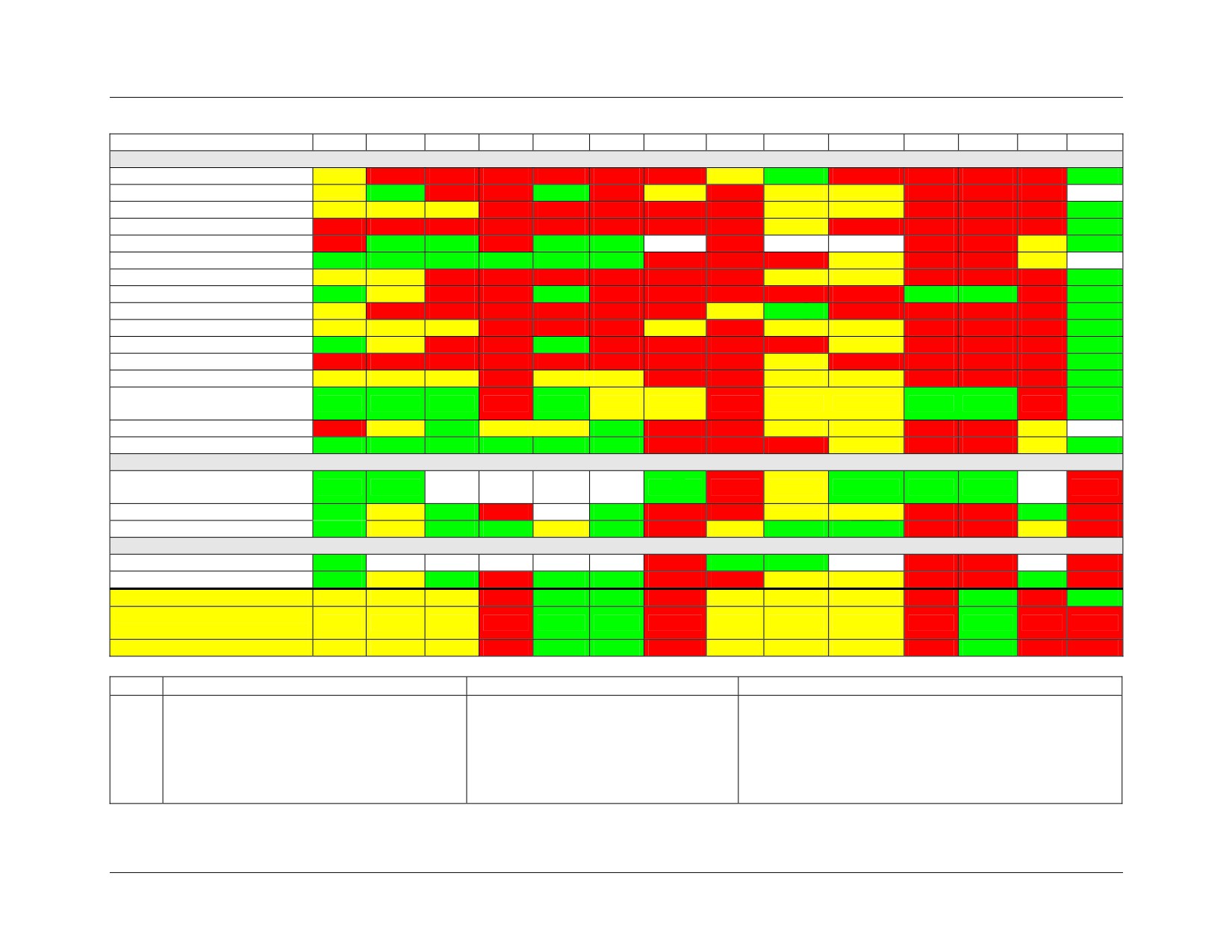
For Official Use Only
CBRN Functional Needs Analysis/Functional Solution Analysis
Chapter 5. Tactical Sense Tasks
Table 5.1-1. TASENS 1: Capability and Deficiency Assessment
System/Measure
M1
M2
M3
M4
M5
M6
M7
M8
M9
M10
M11
M12
M13
M14
Current - Near/Mid - Far
AN/KAS-1
4 1
0 2
0 3
0 4
N/A 5
N/A 6
N/A 7
5 8
10 9
N/A 10
0 11
N/A 11
0 12
1013
APD2000
5 14
10 15
0 3
0 16
10 15
0 3
7 17
N/A 18
5 19
5 20
0 11
N/A 11
0 12
Unk21
CAM/ICAM
6 22
5 23
5 24
0 4
N/A 5
N/A 6
2 25
N/A 18
5 26
5 27
0 11
N/A 11
0 12
1013
CAPDS MK21 Mod I
3 28
0 2
0 3
0 4
N/A 5
N/A 6
1 29
N/A 18
5 30
N/A 10
0 11
N/A 11
0 12
1013
Gas Toxic Draeger Kit
2 31
10 15
10 32
2 33
10 15
10 32
Varies34
N/A 18
Varies35
Varies 36
0 11
N/A 11
5 37
1013
HAPSITE (GC/MS)
10 38
10 39
10 40
9 41
10 39
10 40
1 42
N/A 18
0 43
5 44
0 11
N/A 11
5 37
Unk21
IPDS
5 45
5 23
0 3
0 4
N/A 5
N/A 6
2 46
N/A 18
5 26
5 27
0 11
N/A 11
0 12
1013
M18A2
8 47
7 48
0 3
1 49
10 50
0 3
1 42
N/A 18
0 43
0 51
10 52
10 53
0 12
1013
M21 RSCAAL
4 54
0 2
0 3
0 4
N/A 5
N/A 6
N/A 55
5 56
10 9
N/A 10
0 11
N/A 11
0 12
1013
M22 ACADA
6 57
7 58
5 59
0 4
N/A 5
N/A 6
7 17
N/A 18
5 60
5 61
0 11
N/A 11
0 12
1013
M256A1 Kit
9 62
7 63
0 3
1 64
10 50
0 3
1 65
N/A 18
0 43
5 66
0 11
N/A 11
0 12
1013
M8A1 ACAA
3 67
0 2
0 3
0 4
N/A 5
N/A 6
1 29
N/A 18
5 68
N/A 10
0 11
N/A 11
0 12
1013
M90-D-1C
6 69
5 70
5 71
1 72
5 70
5 71
1 29
N/A 18
5 30
5 73
0 11
N/A 11
0 12
1013
MM-1 (GC/MS) integrated into
10 74
10 15
5 75
1 76
10 15
5 75
4 77
N/A 18
5 78
5 79
10 80
10 53
0 12
1013
M93A1 Fox
MultiRAE Plus
1 81
5 82
10 83
5 84
7 85
10 86
2 46
N/A 18
5 26
5 87
0 11
N/A 11
7 88
Unk21
Viking SpectraTrak (GC/MS)
10 89
10 90
10 40
10 91
10 90
10 40
1 42
N/A 18
0 43
5 44
0 11
N/A 11
7 92
1013
Near/Mid - Far
CBMS II integrated into NBCRV
10 93
1094
Unk
Unk
Unk
Unk
9 95
N/A 96
5 97
1098
10 99
10 100
Unk
N/A101
Stryker or JNBCRS
JCAD
9 102
5 103
10 104
2 105
Unk
10 104
2 106
N/A 96
5 107
5 108
0 122
N/A 122
10 109
N/A101
JSLSCAD
8 110
5/10 111
10 112
9 113
5/10 111
10 112
N/A 114
5 /10115
10 116
10 117
0 122
N/A 122
5 118
N/A101
Far
ARTEMIS
10 119
Unk
Unk
Unk
Unk
Unk
N/A 120
10 121
10 116
Unk
0 122
N/A 122
Unk
N/A101
JMCBDS
9 123
5 103
10 104
4 124
10 125
10 104
1 120
N/A 96
5 126
5 127
0 122
N/A 122
10 109
N/A101
Current Overall Capability
6
5
4
2
8
8
2
5
4
5
1
10
1
10
Near/Mid-Term Overall
6
6
4
2
8
9
3
6
5
6
2
10
2
N/A101
Capability
Far-Term Overall Capability
7
6
5
2
9
9
2
7
5
6
1
10
2
N/A101
FAA Measure
Elaboration
Scale
M1
All of a potential adversary’s weaponized
Percentage of following 12 agents as
Percentages standardized to 0-10 scale
CWAs can be detected using fielded
described in FM 3-9 that are detected:
technologies/equipment, regardless of agent
Nerve agents (GA; GB; GD; GF; VX),
physical properties, states, and
vesicants (H/HD; HN-1,2,3; L; CX),
concentrations?
cyanides (AC; CK), pulmonary agent
(CG)
27
For Official Use Only
For Official Use Only
CBRN Functional Needs Analysis/Functional Solution Analysis
Chapter 5. Tactical Sense Tasks
FAA Measure
Elaboration
Scale
M2
All CWAs can be identified?
Ability to classify or identify detected
10: Identify detected CWAs
CWAs.
7: Identify some detected CWAs; classify others
5: Classify detected CWAs
0: Neither identify nor classify detected CWAs
M3
All of a potential adversary’s weaponized
Ability to provide snapshot
10: Absolute quantification
CWAs can be quantified using fielded
concentration of detected CWAs.
5: Generic quantification
technologies/ equipment?
0: No quantification capability
M4
All TICs can be detected using fielded
Percentage of the 33 high-priority
10: 100%
technologies/equipment?
critical acutely toxic airborne TICs
9: 90%
listed in USACHPPM Report 47-EM-
8: 80%
6154-03: ITF-40. (FOUO) that are
2: 20%
detected.
1: 1%-20%
0: 0%
M5
All TICs can be identified using fielded
Ability to classify or identify detected
10: Identify all detected TICs
technologies/equipment?
TICs.
7: Identify some detected TICs; classify others
5: Classify detected TICs
0: Neither classify nor identify detected TICs
M6
All TICs can be quantified using fielded
Ability to provide snapshot
10: Absolute quantification
technologies/equipment?
concentration of detected TICs.
5: Generic quantification
0: No quantification capability
M7
Time to detect chemical hazards?
Time period from CWA/TIC sampling
10: 12 sec
to analysis output. Linear scale 1-10.
7: 30 sec
Applies to point detectors only.
2: 60 sec
1: >60 sec
M8
Distance between chemical hazard and
Linear scale 1-9. Applies to standoff
10: >9 km
detector for accurate detection?
detection only.
9: 9 km
5: 5 km
2: 2 km
1: 1 km
M9
Chemical hazards are detected in time to
Factors include time to detect chemical
10: Complete capability
warn forces and take appropriate protective
hazards (M7), distance between
5: Partial capability
measures?
chemical hazard and detector for
0: No capability
accurate detection (M8), as well as rate-
of-action of those hazards.
M10
Chemical hazards are identified in time to
Based on capability and time required to
10: Complete capability
treat forces?
identify or classify hazards as well as
5: Partial capability
rate-of-action of those hazards.
0: No capability
28
For Official Use Only
For Official Use Only
CBRN Functional Needs Analysis/Functional Solution Analysis
Chapter 5. Tactical Sense Tasks
FAA Measure
Elaboration
Scale
M11
Sampling collection procedures available for
Refers to physical sampling for future
10: Complete capability
all of a potential adversary’s weaponized
analysis.
5: Partial capability
chemical warfare agents and for all TICs
0: No capability
using fielded technologies/equipment?
M12
Procedures maintain integrity of sample?
Refers to a physical sample for future
10: Complete capability
analysis.
5: Partial capability
0: No capability
M13
Cumulative dose can be determined and
Assuming constant and defined
10: Complete capability (automatically calculated)
presented using data from currently fielded
breathing rates and lung retention
7: Moderate capability (monitoring capability + absolute
sensors/equipment?
efficiencies.
quantification)
5: Minimal capability (absolute quantification)
0: Cumulative dose cannot be determined.
M14
There is effective DOTLPF in place to
Refers to non-materiel elements
10: DOTLPF exists and is adequate for the task to be
conduct task?
associated with the execution of a task
performed with this system without limitations that cause
with the system.
significant impact upon operations.
5: Most critical aspects of DOTLPF for the task to be
performed with this system are addressed.
0: DOTLPF is inadequate or does not exist for the task to
be performed with this system.
1 Limited—Detects only GA, GB, GD, GF, and VX. Does not detect concentrations which can cause low-level (e.g., ocular) effects; detects vapors only, and is susceptible to
chemical interference (false positives and negatives).
2 Does not identify or classify detected agents or TICs.
3 Does not quantify amount of detected agents or TICs.
4 No TICs detected.
5 Does not identify or classify any TICs because it does not detect any TICs
6 Does not quantify TIC concentrations because it does not detect any TICs.
7 Based on operator skill and experience.
8 5 km range.
9 Yes, as a standoff detector, it is assumed that range and response time are sufficient to detect-to-warn forces.
10 Does not identify or classify agents or TICs.
11 Sampling collection for future analysis capability does not exist with this technology/equipment.
12 Cumulative dose cannot be determined and presented with data from this technology/equipment (no absolute quantification capability).
13 There is effective DOTLPF in place to conduct task with this system.
14 Limited—Detects only GA, GB, GD (0.1 mg/m3 - IDLH level for GA/GB, 2X IDLH level for GD within 30 sec.); VX (0.04 mg/m3 - 4X IDLH level within 30 sec.); HD
(2 mg/m3 - IDLH level within 15 sec.), and L (0.38 mg/m3 within 15 sec.). According to FM 3-11.9, incapacitating doses are 300 (GA for resting person), 75 (GB for resting
person), 75-300 (GD), 50 (VX), 150 (inhaled HD), and <300 (L for eye) mg-min/m3. Does not detect concentrations which can cause low-level (e.g., ocular) effects; detects
vapors only; and is susceptible to chemical interference (false positives and negatives).
15 Identifies detected agents and TICs
16 Detects pepper spray and mace (but these are not included in the ITF-40 33 high-priority critical acutely toxic airborne toxic industrial chemicals.)
17 Detects in less than 30 seconds.
29
For Official Use Only
For Official Use Only
CBRN Functional Needs Analysis/Functional Solution Analysis
Chapter 5. Tactical Sense Tasks
18 Point detector, so no standoff distance.
19 Can detect within 30 seconds and thus provides some detect-to-warn capability.
20 Identifies hazards within 30 seconds.
21 Commercial off-the-shelf detector. Unknown if sufficient DOTLPF in place.
22 Limited—Detects only GA, GB, GD, GF, VX, HD, and L (0.1 mg/m3 - IDLH level for GA/GB, 2X IDLH for GD/GF; 10X IDLH for VX; 1/20 IDLH for HD). According to
FM 3-11.9, incapacitating doses are 300 (GA for resting person), 75 (GB for resting person), 75-300 (GD), 50 (VX), 150 (inhaled HD), and <300 (L for eye) mg-min/m3. Does not
detect concentrations which can cause low-level (e.g., ocular) effects; detects vapors only; and is susceptible to chemical interference (false positives and negatives).
23 Classifies agents as being nerve or blister agents.
24 Provides relative hazard indication (relative quantification).
25 Detects hazards in less than 1 minute. Note: Requires up to 8 hours to warm up after 30 days storage
26 Detects within 1 minute and thus provides some detect-to-warn capability.
27 Classifies agents within 1 minute.
28 Detects GB, GD, and VX only (0.3 mg/m3 - 3X IDLH for GB, 6X for GD, and 30X IDLH for VX, within 2 minutes). According to FM 3-11.9, incapacitating doses are 75 (GB
for resting person), 75-300 (GD), and 50 (VX) mg-min/m3. Does not detect concentrations which can cause low-level (e.g., ocular) effects; detects vapors only; and is susceptible
to chemical interference (false positives and negatives).
29 Detects hazards within 2 minutes.
30 Detects within 2 minutes and thus provides some detect-to-warn capability.
31 Detects AC (2.4 mg/m3 - 1/25 IDLH level) and CG (0.08 mg/m3) vapors only. According to FM 3-11.9, the incapacitating dose for CG is 1,600 mg-min/m3.
32 Provides absolute quantification capability for all detected agents and TICs.
33 Limited—Detects CO, ethylene oxide, HCN, HCl, HF, NO2, and CG.
34 Detects in <1 minute to 10 minutes (depending on compound and concentration).
35 Varies in detection time so detect-to-warn capability varies as well.
36 Possibly identifies detected hazards in time to treat but depends on compound and concentration.
37 Cumulative dose can be roughly estimated, but it cannot be precisely determined since this technology/equipment does not have a monitoring capability.
38 Presumably detects all 12 CWA of interest (claims low ppb to ppt detection limits; 1 ppb = 0.01 mg/m3 for VX - IDLH level; 0.006-0.007 mg/m3 for G-agents - ~1/10 IDLH
levels; 0.007 mg/m3 for HD - 1/285 IDLH level). According to FM 3-11.9, incapacitating doses are 300 (GA for resting person), 75 (GB for resting person), 75-300 (GD), 50
(VX), 150 (inhaled HD), <300 (L for eye), 7,000 (CK), and 1,6000 (CG) mg-min/m3. Detects vapors only.
39 Identifies detected agents and TICs (through mass spectrometry).
40 Provides absolute quantification capability for all detected agents and TICs (specifically provides composition intensities, e.g., ppm).
41 Presumably detects most TICs in ITF-40. Detects vapors only.
42 Detects within 10 minutes.
43 Does not provide any detect-to-warn capability.
44 Hazards are not identified in time to treat, especially if lethal fast-acting agents at high concentrations are involved.
45 Limited—Detects only GA, GB, GD, GF, VX (0.1 mg/m3 - IDLH for GA/GB, 2X IDLH for GD/GF, 10X IDLH for VX, within 60 sec.); and HD (10 mg/m3 - 5X IDLH level,
within 60 sec.). According to FM 3-11.9, incapacitating doses are 300 (GA for resting person), 75 (GB for resting person), 75-300 (GD), and 50 (VX) mg-min/m3. Does not detect
concentrations which can cause low-level (e.g., ocular) effects; detects vapors only; and is susceptible to chemical interference (false positives and negatives).
46 Detects hazards in less than 1 minute.
47 Detects GA, GB, GD, GF, VX (0.1 mg/m3 - IDLH level for GA/GB, 2X IDLH for GD/GF, 10X IDLH for VX within 4 min. for GB and VX), HD (0.5 mg/m3 - ¼ IDLH within
3 min.), L, CX, AC, and CK. According to FM 3-11.9, incapacitating doses are 300 (GA for resting person), 75 (GB for resting person), 75-300 (GD), and 50 (VX) mg-
min/m3.Detects vapors only and is susceptible to chemical interference (false positives and negatives).
48 Classifies G and V agents as nerve agents; identifies HD, L, AC, and CG.
49 Detects TICs AC and CG.
50 Identifies detected TICs.
51 May require up to 10 minutes to classify or identify, which is generally inadequate for identify-to-treat.
30
For Official Use Only