Military reference books and manuals (2009-2023, Volume 6) - page 17
FOR OFFICIAL USE ONLY
United States Air Force
Scientific Advisory Board
Report on
Operating Next-Generation
Remotely Piloted Aircraft
for Irregular Warfare
FOR OFFICIAL USE ONLY
FOR OFFICIAL USE ONLY
(This Page Intentionally Left Blank)
FOR OFFICIAL USE ONLY
ii
FOR OFFICIAL USE ONLY
Foreword
The United States Air Force has long envisioned a strategic role for remotely
piloted and autonomous aircraft. As early as May 1896, Samuel Pierpont Langley
developed an unpiloted heavier-than-air vehicle which flew over the Potomac River. On
V-J Day in August 1945, General Hap Arnold, US Army Air Forces, observed1:
We have just won a war with a lot of heroes flying around in planes. The next war
may be fought by airplanes with no men in them at all … Take everything you’ve
learned about aviation in war, throw it out of the window, and let’s go to work on
tomorrow’s aviation. It will be different from anything the world has ever seen.
Since these early days, extended range, persistence, precision, and stealth have
characterized remotely piloted aircraft (RPA) advancements. RPAs have been employed
in multiple combat roles and increasingly contested environments. This year, for the first
time in history, the President’s budget proposed a larger investment in RPAs than
manned aircraft. A seemingly insatiable operational appetite for RPAs, however, has led
to an Air Force manning bottleneck. This is exacerbated by a lack of common ground
stations, unsatisfactory integration with civilian and international airspace, and
vulnerabilities in communications and command and control links. Further complicating
efforts, yet essential in irregular warfare, are directives to minimize civilian casualties.
General David Petraeus sees this need as a direct way to support a key center of gravity:
…We must fight the insurgents, and will use the tools at our disposal to both defeat the
enemy and protect our forces. But we will not win based on the number of Taliban we
kill, but instead on our ability to separate insurgents from the center of gravity - the
people …2
Our Panel conducted an extensive set of visits and received numerous briefings
from a wide range of key stakeholders in government, industry, and academia. Taking a
human-centered, evidence-based approach, our study seeks to address operational
challenges as well as point to new opportunities for future RPAs. That RPAs will be a
foundational element of the Air Force’s force structure is no longer debatable. The real
question is how to maximize their current and future potential. Our intention is that this
study will help provide both vector and thrust in how to do so in the irregular warfare
context, as well as other applications.
1 Words on War: Military Quotes from Ancient Times to the Present, by Jay Shafritz, Prentice Hall, New
York, 1990, pg. 104
2 Tactical Directive. Headquarters ISAF
6 July
FOR OFFICIAL USE ONLY
iii
FOR OFFICIAL USE ONLY
The undersigned express our sincerest appreciation to all the talented and
dedicated study members and to the support of Lt Gen David Deptula and Lt Gen Phillip
Breedlove. We also acknowledge the support of Executive Officers and the Air Force
Scientific Advisory Board Secretariat for their excellent support to this effort.
Dr. Greg Zacharias
Dr. Mark Maybury
UIW Study Chair
UIW Study Vice Chair
FOR OFFICIAL USE ONLY
iv
FOR OFFICIAL USE ONLY
Executive Summary
Background
RPAs are revolutionary surveillance and weapons delivery systems - changing
the way the Air Force builds situation awareness and engages enemy forces - but their
full potential has yet to be realized. To begin to address this issue, the Air Force initiated
this study to review the state-of-the-art in RPA operations, focusing on control and
connectivity in an irregular warfare (IW) environment. The Panel was specifically tasked
to identify RPA architectures and operational concepts centered on human-systems
integration, distributed systems operations, and effective command and control - a cluster
of concepts and technologies we subsequently labeled as
“mission management”
enablers. The Panel was also tasked to recommend mid- to far-term S&T development
roadmaps for advancing these technologies to improve the flexibility and capability of
RPA operations. The study terms of reference (TOR) identified a number of core issues
which were further articulated by the Study Panel to include:
1.
Issue #1: Manning and personnel shortfalls are concerns in RPA deployment.
Exploiters represent the largest manning dependency (39 percent), exacerbated by
expected significant exploiter growth from new sensor suites (e.g., ARGUS-IS,
Gorgon Stare). Current sensors
(e.g., Constant Hawk and Angel Fire) and
expected sensors (e.g., ARGUS-IS) produce data at rates of 10 to over 1000 times
projected communications data transmission capacities, and will far exceed
human analytic capacity.
2.
Issue #2: Manually intensive airspace management and integration requiring
exclusion zones and Certificates of Authorization (COAs) make inefficient use of
national and international airspace, will not scale to accommodate future RPA
growth, hampers manned/unmanned integration, and presents special challenges
for small RPAs.
3.
Issue #3: Minimizing collateral damage (CD) and fratricide is not a requirement
unique to RPA strike operations. For manned and unmanned platforms, the lack
of positive ID (PID) and tactical patience are the most significant causes of
civilian casualties (CIVCAS) in current conflicts (8 percent CIVCAS compared
with
66 percent caused by insurgents). Persistence; up-close access; high-
resolution intelligence, surveillance, and reconnaissance
(ISR); improved
situation awareness; and improved mission management will permit RPAs to
minimize CD/fratricide. Small-focused lethality munitions and non-lethal options
for RPAs promise to further minimize CD and CIVCAS (e.g., as low as 5
percent).
4.
Issue #4: In spite of current low RPA losses, inexpensive physical threats (e.g.,
MANPADS, low-end SAMs, air-to-air missiles) and electronic threats
(e.g.,
acoustic detectors, low cost acquisition radars, jammers) threaten future
operations.
FOR OFFICIAL USE ONLY
v
FOR OFFICIAL USE ONLY
Findings
Following an extensive set of fact-finding meetings with operators, developers,
trainers, analysts, maintainers, and scientists and technologists, together with
data/evidence analysis where possible, the Panel distilled our findings into the following
top-level observations regarding RPA mission management in irregular warfare
environments:
1.
Key Finding
1: Current RPA automation implementations either under-
automate, over-automate, or fail to provide a flexible human-centric solution.
Insufficient and inflexible automation/sensor processing increases pilot workload,
increases incident rates, degrades mission performance and agility, and inhibits
distributed cross-platform collaboration.
2.
Key Finding 2: Poorly-designed Operator Control Stations
(OCSs) fail to
provide effective, robust, and safe RPA mission management because of a lack of
accepted systems engineering design practices, a lack of Human-System
Integration
(HSI) design and implementation, and closed and stovepiped
architectures that constrain “best of breed” component solutions.
3.
Key Finding 3: Limited communications systems result in communications
latency, link vulnerabilities, and lost-link events, which limits mission roles
assigned to RPAs, operational flexibility, and resiliency in the face of
unanticipated events.
4.
Key Finding 4: Successful transition of the Beta program to Undergraduate RPA
Training (URT) helps establish the RPA career field. This transition is a positive
step to address the manning shortfalls, but shortcomings in crew selection and
training continue to contribute to bottlenecks and compromise mission
effectiveness and safety.
5.
Key Finding 5: Concepts of RPA operation (CONOPS) and tactics, techniques,
and procedures
(TTPs) appear to be developed
“after the fact,” following
development and deployment rather than as a concurrent effort.
Recommendations
As a result of our findings and extensive deliberations, the Study Panel makes the
following key recommendations with associated offices of primary responsibility
(OPRs):
1. Recommendation 1: Develop flexible levels of automation to enable situation-
adaptive human interaction for improved mission effectiveness in the near term
for single-platform task-level automation (ASC), in the mid term for mission-
level automation (AFRL), and in the far term for multi-RPA collaboration and
autonomy (AFRL).
2. Recommendation 2: Improve the operator control stations in the near term by
applying human systems engineering practices to correct existing operator control
stations (AFMC, ACC), in the mid term by developing a family of networked,
interoperable systems (ESC, ASC), and in the far term by advancing human-
FOR OFFICIAL USE ONLY
vi
FOR OFFICIAL USE ONLY
automation interaction science and technology to enable adaptive, mixed
initiative, human-centric control (AFRL).
3.
Recommendation 3: Develop assured communications, appropriate security, and
a long term plan for a globally interoperable communications systems architecture
(AFMC/ESC). Reduce bandwidth requirements, latency impacts, and security
vulnerabilities by developing a unified communications architecture that in the
short term provides “good enough” sensor security with high C2 link reliability
and security (AFMC, AFRL/RB); in the mid term adopts increased platform
automation and latency compensation including platform forecasting and target
tracking (AFMC, AFRL/RB); and in the long term provides electronic warfare
countermeasures, addresses scale, and supports networked operations of
heterogeneous assets (AFMC/ASC, AFRL/RB, AF/A3/5).
4.
Recommendation 4: Understand fundamental capabilities and skillsets required
for each RPA specialty, select appropriately, and exploit current training and
simulation technologies to reduce manning pipeline delays and deal with
contested environments (AF/A3/5, ACC). In the near term, activities should be
directed at developing scientifically based RPA career path enhancements that
generate targeted selection procedures and accelerated training programs
(AF/A3/5, ACC). In the far term, focus on developing higher level skillsets,
including team coordination, communication, and mission planning.
5.
Recommendation 5: Develop RPA CONOPS and TTPs concurrently with
system development, considering all components that drive mission effectiveness
(ACC). In the near term define how the current SOC/WOC/AOC structures can
enable distributed global operations via
“brokering” among operators,
platforms/sensors, and “customers” (ACC). In the mid term, anticipate growth in
RPA operations, growth in sensor capabilities, transition to integrated
manned/unmanned operations, and more contested operating environments
(AF/A9). In the far term, co-evolve CONOPS/TTPs for new platforms and
missions as part of a focused acquisition process, leading systems development
and informing systems requirements choices (ACC).
6.
Recommendation 6: Transition the successful RPA prototypes to the acquisition
process, incorporating rigorous systems engineering practices including Human
Systems Integration (SAF/AQ). Continue successful use of the ACTD process to
develop game-changing technology solutions, while upgrading, developing, and
acquiring new RPA systems using accepted systems engineering practices (e.g.
2010 NDAA Section 804) to address operator-related issues via incorporation of
HSI as part of the systems engineering process, and follow recommendations of
two previous SAB studies3,4.
3 United States.
“Unmanned Aerial Vehicles in Perspective: Effects, Capabilities, and Technologies.
Volume 1: Summary (Public Released)” SAB-TR-03-01 September 2003.
4
United States. “Human-System Integration in Air Force Weapon Systems Development and Acquisition,”
Executive Summary and Annotated Brief, SAB-TR-04-04, July 2004.
FOR OFFICIAL USE ONLY
vii
FOR OFFICIAL USE ONLY
Report Structure
The report is structured as follows. Following a backg1round of and motivation for
the study, the Panel summarizes the key RPA mission management issues. The Panel
then details each of the key findings derived from a hypothesis-driven, evidence-based
analytic process. A subsequent recommendations section details specific actionable
recommendations designed to address the challenges uncovered in the findings section.
A section on the implications of under-investments follows. The report concludes by
summarizing the implications of our study. Report appendices detail assumptions,
hypotheses, and future data collection requirements, study members, briefings, visits,
acronyms, references, and report distribution.
FOR OFFICIAL USE ONLY
viii
FOR OFFICIAL USE ONLY
Table of Contents
Foreword……………………………………………………………………………………………………iii
Executive Summary
v
Background
v
Findings
vi
Recommendations
vi
Report Structure
viii
Table of Contents
ix
Table of Figures
xi
Chapter 1: Study Background
1
1.1 Background and Motivation
1
1.2 Scope of Study
3
1.3 Study Approach and Methodology
4
1.4 Challenges
6
Chapter 2: Mission Management Challenges
9
2.1 Issue 1: Manning Shortfalls and Personnel Selection/Training
9
2.2 Issue 2: Airspace Deconfliction and Management
14
2.3 Issue 3: Minimizing Collateral Damage/Fratricide
20
2.4 Issue 4: Operations in Contested Airspace
22
2.5 Summary of Issues
26
Chapter 3: Major Findings
27
3.1 Finding 1: Insufficient and Inflexible Platform Automation
27
3.2 Finding 2: Poorly Designed Operator Control Stations
29
3.3 Finding 3: Limited Communications Systems
31
3.4 Finding 4: Inadequate Selection Criteria and Training
35
3.5 Finding 5: Lagging CONOPS and TTPs
37
3.6 Summary of Findings
37
Chapter 4: Recommendations
39
4.1 Recommendation 1: Develop Flexible Levels of Automation
39
4.2 Recommendation 2: Enhance Operator Control Stations
41
4.3 Recommendation 3: Create Robust Communications
43
4.4 Recommendation 4: Develop Targeted Selection and Effective Training
46
4.5 Recommendation 5: Improve CONOPS and TTPs
47
4.6 Recommendation 6: Ensure Effective ACTD Transition
49
Chapter 5: Analysis and Summary of Recommendations
53
5.1 Impact Analysis of Recommendations
53
5.2 Summary of Recommendations
55
Chapter 6: Summary
59
Appendix A: Assumptions, Initial Hypotheses, and Data Requirements
61
A.1 Assumptions
61
A.2 Initial Hypotheses
62
A.3 Data Requirements
63
FOR OFFICIAL USE ONLY
ix
FOR OFFICIAL USE ONLY
Appendix B: Analysis of Impact of Findings and Recommendations
65
Appendix C: Study Members
79
Appendix D: Visits and Briefings
81
Appendix E: Acronyms
82
Appendix F: References
87
Appendix G: Initial Distribution
89
FOR OFFICIAL USE ONLY
x
FOR OFFICIAL USE ONLY
Table of Figures
Figure
1-1: RPAs have Revolutionized Air Warfare
2
Figure
1-1: RPA Groups
3
Figure
1-2: Irregular Warfare Constraints
4
Figure
1-3: Study Process
5
Figure
1-3: Study Structure
6
Figure
1-4: Problem Space
7
Figure
1-4: Today’s Reality vs Tomorrow’s Potential
7
Figure
2-1: Manning Growth
10
Figure
2-2: Effect of Wide Area Surveillance on Personnel Requirements
11
Figure
2-3: Unmanned and Manned Aircraft Comparison
12
Figure
2-4: Beta Class Performance
13
Figure
2-5: Airspace Management and Integration
14
Figure
2-6: Improved Situation Awareness to Support Airspace Reallocation
18
Figure
2-7: German RPA in a Near Miss with an Airliner over Kabul (view from RPA)
19
Figure
2-8: Collateral Damage
21
Figure
2-9: Contested Environment Operations
22
Figure
2-10: Summary of Operational Issues
26
Figure
3-1: Automation Findings
27
Figure
3-2: HSI Issues with Operator Control Stations for Predator/Reaper
30
Figure
3-3: Operator Control Stations Findings
31
Figure
3-4: Limited Communications Systems
31
Figure
3-5: Inadequate Selection Criteria and Training
36
Figure
3-6: Lagging CONOPS and TTPs
37
Figure
3-7: Summary of Findings
38
Figure
4-1: Improved Platform Automation
39
Figure
4-2: Enhanced Operator Control Stations
42
Figure
4-3: Create Robust Communications
44
Figure
4-4: Training and Selection Recommendations
46
Figure
4-5: Improved Operating Concepts, CONOPS, and TTPS
48
Figure
4-6: Effective ACTD Transitions for RPAs
50
Figure
4-7: CONOPS Technology Double Helix
51
Figure
5-1: Effect of Addressing Mission Management Gaps on Operational Issues
54
Figure
5-2: Technology, People, and Process Investments fill Mission Gaps
55
Figure
5-3: Manning and Selection Recommendations
56
FOR OFFICIAL USE ONLY
xi
FOR OFFICIAL USE ONLY
Figure 5-4: Airspace Management and Integration Recommendations
57
Figure 5-5: Contested Environments Recommendations
58
Figure 6-1: Summary
59
Figure B-1: Impact of Addressing Mission Management Gaps on Operational Issues
66
Figure B-2: Impact of Investing in Technology, People, and Processes on Solving Mission
Management Gaps
70
FOR OFFICIAL USE ONLY
xii
FOR OFFICIAL USE ONLY
Chapter 1: Study Background
1.1 Background and Motivation
Remotely piloted aircraft (RPAs) have been acquired to perform dull, dirty, and
dangerous missions for the Air Force. Dull missions include situation awareness
missions, especially those involving persistent surveillance of unmoving targets or
identifying the “normal” activities in an area so that unusual activities can be spotted.
Dirty missions include flights/missions into areas in which suspected chemical or
biological weapons or contamination are suspected. Dangerous missions include those in
which the potential for loss of the aircraft can be high, but for which there is a high
payoff for information that can bring weapons on targets.
As illustrated in Figure 1-1, RPAs have revolutionized operations in irregular
warfare. RPA operations have grown rapidly in both volume and application.
Approaching one half million annual flight hours across the services, RPAs have
provided persistent surveillance and engagement with adversaries. Through dedication,
ingenuity, and drive, the Air Force has overcome many obstacles to assure effective
support to our ground forces. Daily air operators are continuously innovating with new
missions and Tactics, Techniques, and Procedures (TTPs) to take advantage of RPAs.
Future visions include many new missions and roles, complementing and extending
manned operations.
The Air Force has introduced remote split operations to successfully reduce our
operational footprint in the battlespace, by locating the majority of personnel at CONUS
bases for mission command and control and the remainder at the operational airfields for
take-off and landing operations. Overall, remote split operations increases the number of
personnel involved in operating the aircraft while decreasing the risk of flight accidents
during take-offs and landing.
FOR OFFICIAL USE ONLY
1

FOR OFFICIAL USE ONLY
Persistent surveillance of areas, targets, and individuals in
OIF/OEF has paid off in finding and engaging the adversary
The growth in flight hours
450000
400000
speaks for itself
350000
Through dedication, ingenuity,
300000
250000
and drive, the USAF RPA team
200000
has overcome many obstacles
150000
to assure support to the
100000
50000
ground forces
0
New applications and TTPs
emerge each day
SOURCE: OSD
AIR FORCE ARMY NAVY & USMC
…and visions for the future
encompass a wide array of roles
complementing and extending
existing manned operations
Figure 1-1: USAF RPAs Have Revolutionized Air Warfare in the IW Arena.
The wide range of RPA Groups and platforms illustrated in Figure 1-2 provides
for a variety of capabilities to be used against a variety of targets, including surveillance,
reconnaissance, and engagement targets under conditions we control rather than those
controlled by adversaries. RPA payload and range is plotted on a log-log scale, showing
the wide variation in platforms from a few pounds to thousands of pounds, and from a
few miles range to thousands of miles. Although not plotted, altitude varies likewise,
from a few feet to many tens of thousands of feet. The Air Force operates RPAs in all
five Groups shown. Unfortunately this wide array of RPA vehicles, acquired under
individual agreements, and operated and maintained by separate units and personnel
further exacerbate the manpower demands to operate the aircraft in the field. Common
control stations, common training protocols and systems, and common maintenance
procedures could go a long way toward minimizing the number of personnel required to
maintain an effective battlespace presence of such aircraft.
FOR OFFICIAL USE ONLY
2

FOR OFFICIAL USE ONLY
10,000
Group 5
Global
Hawk
1,000
Group 4
Reaper
Firescout
Sky Warrior
Warrior-A
Predator
A-160 Hummingbird
Hunter A/B
Group 3
100
Shadow
Tier II/ STUAS
M2UAS
EUAS
Tiger Shark
Sentry
Group 2
Neptune/VCUAS
10
Scan Eagle
Silver Fox
Group 1
AECV
BUSTER
Raven
Aqua Puma
1
Aqua Wasp
Wasp III/ BATMAV
1
10
100
1,000
10,000
Max Radius (nm)
Figure 1.2: RPA Groups by Payload and Range.
1.2 Scope of Study
The Study Panel was tasked to review the state-of-the-art in RPA
operations,
focusing on control and connectivity in an irregular warfare (IW) environment. The
Panel was also asked to identify RPA architectures and operational concepts enabling low
probability of collateral damage/fratricide. The Panel was also asked to identify enabling
[mission management] technologies to include:
Human Systems Integration, and potential for reduced manning, enhanced
operator awareness, and multi-aircraft control (MAC)
Distributed System Operations, and potential for multi-aircraft collaboration
(manned and unmanned), and better airspace management and integration
Command and Control, and potential for more efficient bandwidth use, and
improved mission assurance in degraded or denied communications
environments
Finally, the Panel was tasked to recommend mid- to far-term S&T development
roadmaps for these technologies, with an emphasis on improving the flexibility and
capability of RPA operations.
As shown in Figure 1-3, Air Force Doctrine Document 2-3 (1 August 2007)
defines Irregular Warfare as “a violent struggle among state and nonstate actors for
legitimacy and influence over the relevant populations. IW favors indirect approaches,
though it may employ the full range of military and other capabilities to seek asymmetric
FOR OFFICIAL USE ONLY
3

FOR OFFICIAL USE ONLY
approaches to erode an adversary's power, influence, and will.”5 In addition, because
airpower roles in IW are almost as broad as they are in non-nuclear MCO6 and because
RPAs could conceivably be employed in most of those roles (given enough technological
and operational advancements), it follows that RPAs could conceivably be used to apply
a full range of (non-nuclear) airpower capabilities in an IW engagement. What this
means for this study, because of the broad potential for RPA employment and
engagement, is that collateral damage minimization is critical, because of the “struggle
for legitimacy” over relevant populations in an IW engagement. Finally, though present
IW operations enjoy uncontested airspace, we can expect contested airspace in the future,
although for the purposes of this study, denied airspace is considered out of scope.
IW’s objective and approach (AFDD 2-3):
“[A] struggle … for legitimacy and influence over the relevant
populations.”
“[IW] may employ the full range of military and other capabilities …to
erode an adversary's power, influence, and will.”
What does this mean for this study?
Airpower roles in IW are almost as broad
as they are in non-nuclear MCO (WP by
SECAF Donley and Gen Schwartz, 2009)
… and RPAs could conceivably be
employed in most of those roles
Collateral damage minimization is critical,
because of the “struggle for legitimacy”
Contested airspace can be expected in the
future. Denied airspace is out of scope.
Figure 1-3: Irregular Warfare Constraints.
1.3 Study Approach and Methodology
The study process is characterized in the model represented in Figure
1-4.
Focused by the bounds of the Terms of Reference (TOR), the Study Panel both reviewed
past studies and visited a number of industry, government, and academic facilities to
assess the current state of the art. The Panel brainstormed to generate hypotheses, but at
the same time attempted to explicitly capture underlying assumptions (Appendices A1
and A2). The Panel then collected data from a broad range of sources attempting to
confirm, deny, or refine its hypotheses, some of which became key operational issues to
be addressed (“Background” as shown in Figure 1-5), and some of which became
identified gaps in mission management associated with those issues (“Findings” in Figure
1-5). In a parallel and iterative fashion, we then turned our attention to generating
5 (AFDD 2-3)
6 Donley and Schwartz 2009
FOR OFFICIAL USE ONLY
4

FOR OFFICIAL USE ONLY
recommendations in terms of technology, people, and processes to address these mission
management gaps uncovered by our findings (“Recommendations” in Figure 1-5). A
final phase consisted of group assessment of findings and recommendations and
assignment of those to specific offices of primary responsibility
(OPRs). At the
beginning of the study, the study leadership met with key stakeholders to obtain clarity
on Air Force senior leadership priorities. The Panel then met again midcourse to perform
a vector check on the study’s progress. The study results were then reported to senior Air
Force leadership and key stakeholders.
Study Process
Review past studies
and state of art
Brainstorm to
Assess findings and
generate
recommendations
assumptions and
hypotheses
Collect data to
Generate
confirm/deny/refine
recommendations
hypotheses
Convert hypotheses
into findings
Figure 1-4: Study Process.
FOR OFFICIAL USE ONLY
5
FOR OFFICIAL USE ONLY
Study Structure
Background
Findings
Recommendations
Mission Management
Technology, People,
Operational Issues
Gaps
Processes
Figure 1-5: Study Structure.
1.4 Challenges
RPAs have provided the Air Force revolutionary capabilities such as persistence
for dull missions, and safe and stealthy access for dirty and dangerous missions.
However, there are challenges with current RPAs including:
Significant personnel footprint per RPA combat air patrol (CAP)
“Soda straw” sensors (i.e., narrow field of view) that serve up full motion
video (FMV) that requires manual exploitation
Human-intensive guidance and control (“in the loop” not “on the loop”),
based on low-level remote control technologies
Low operator situation awareness (SA)
Human-intensive airspace management and deconfliction procedures
RPAs acquired and operated as individual platforms
Manual management of collateral damage/fratricide risk
Heavy reliance on continuous long-haul (e.g. space-based) communications
Capabilities that generally rely on uncontested battle space
A more integrated view of these issues (and others not listed) and potential
capabilities, as they evolve over time, is given in Figure 1-6. Shown here are seven key
factors: increasing threats, increased aircraft density, airspace integration, operating in all
weather conditions, operating in multiple and increasingly challenging roles
(e.g.,
strategic strike, SEAD), multi-aircraft control (MAC), and increasing levels of autonomy.
FOR OFFICIAL USE ONLY
6

FOR OFFICIAL USE ONLY
Problem Space
contested
denied
Threatuncontested
Low
medium
high
Density
Full Integration
Procedural
Partial
Airspace
(manned/unmanned,
Separation
Integration
military/civilian)
Integration
Some weather
All weather
WeatherNo weather
Multirole
Long range strike,
Role
surveillance/strike
Unmanned fighter
Single
4 ship
N-ship
C2
Semi Automation
Fully Autonomous
Autonom
Human in loop
Human in/on loop
Human on loop
TODAY
MID TERM
LONG TERM
Figure 1-6: Problem Space.
Figure 1-7 illustrates some current limitations of RPAs and the promise for
advanced solutions in the future. The Study Team believes the primary solution for these
shortcomings is a unified mission management capability that integrates unmanned and
manned assets into a more focused operational mission capability that relies on
unmanned assets for the portions of the mission in which they are most capable. RPAs
can perform many missions, but it is important for weapon delivery to have a person at
the stage of weapon delivery making the trigger decision based on timely intelligence and
accurate situation awareness to ensure low collateral damage.
Today
Tomorrow
Significant personnel footprint per RPA
Progressive personnel reductions in pilots, sensor operators, exploiters,
combat air patrol (CAP)
and maintainers through multiple advances in all areas.
Soda straw imagers serving up full motion
Wide Area Airborne Surveillance (WAAS) with some/all processing,
video (FMV), manually exploited
exploitation, dissemination (PED) done onboard.
Human-intensive guidance and control
Human supervisory control (“on the loop”) enabled by architectural and
(“in the loop”), based on “remote control”
algorithmic advances providing for multi-vehicle management, and better
technologies
engineered HCIs.
Low operator situation awareness (SA)
Mission-specific SA enabled by fused sensors, health monitoring,…
Airspace management and deconfliction
Airspace management and deconfliction for manned/unmanned
is human intensive
operations done more autonomously (eg, onboard sense and avoid)
Operated as individual platforms
Operated collaboratively via multi-platform comms and coordination,
across manned and unmanned platforms.
Collateral damage/fratricide risk managed
Collateral damage/fratricide risk management supported by decision-
entirely manually
aiding at mission control and/or onboard automation
Heavy reliance on continuous long-haul
More intermittent comms enabled by more autonomy when unlinked
comms
Uncontested battlespace (mostly)
Operating in contested battlespace (from kinetic air/ground, EW, and
cyber threats) via stealth, defensive systems, secure comms,…
Limited-mission capable (ISR, shooters)
Multi-mission capable (EW, counterair missile trucks, ...) via modular
platforms, payloads, comms, and operator interfaces.
Figure 1-7: Today’s Reality vs Tomorrow’s Potential.
FOR OFFICIAL USE ONLY
7
FOR OFFICIAL USE ONLY
(This Page Intentionally Left Blank)
FOR OFFICIAL USE ONLY
8
FOR OFFICIAL USE ONLY
Chapter 2: Mission Management Challenges
A number of key challenges that hamper effective mission management of
remotely piloted aircraft (RPAs) were identified in the terms of reference and noted by
the Study Panel as key issues. In particular, the Study Panel focused on manning
shortfalls and personnel selection, airspace management and integration, minimizing
collateral damage and fratricide, and contested airspace. We consider each of these
issues in detail in the following sections.
2.1 Issue (1): Manning Shortfalls and Personnel
Selection/Training
RPA manning difficulties are a direct result of the increase in use of RPAs for
surveillance and interdiction missions. As Figure
2-1 illustrates, maintaining a
Predator/Reaper combat air patrol (CAP) (which represent the vast majority of Air Force
unmanned vehicle operations) for 24/7 coverage requires approximately 168 personnel7
and four aircraft. In terms of overall Predator/Reaper RPA operations, there are 4 basic
categories of personnel for a single CAP: exploiters
(31 percent), maintainers
(40
percent), pilots (6 percent), and sensor operators (6 percent), with the other 12 percent
representing other administrative and support personnel. This distribution is similar for
the Global Hawk, although the manning requirements are higher (approximately 300).
7 Deptula, David. Lt. Gen. “The Way Ahead: Remotely Piloted Aircraft in the United States Air Force,”
presented to the SAB, January 2010.
FOR OFFICIAL USE ONLY
9

FOR OFFICIAL USE ONLY
Planned growth in RPA deployment
Global Hawk
Predator
perceived to be limited by available
Pilots
6%
8%
5%
12%
6%
qualified personnel
17%
Sensor Operators
“Our #1 manning problem in the Air Force is
Maintainers
manning our unmanned platforms”
31%
36%
45%
34%
Exploiters
>70% exploiters and maintainers
Other
Exploiter growth accelerated by WAAS
3500
(Gorgon Stare, ARGUS)
Not an RPA-specific issue
3000
Maintainer problem improves with
MQ-9 only “spot”
2500
numbers with WAAS
experience & system maturity
2000
Pilots require longest & costliest
training investment; source of a
1500
MQ-1 and MQ-9
possible chokepoint
FMV “spot”
1000
numbers w/o WAAS
Recruitment low and retention poor
500
FY13 RPA total pilot requirement is 1250
FY13 Undergraduate RPA Training (URT)
0
production will be 168/yr
FY08
FY09
FY10
FY11
FY12
FY13
FY14
FY15
FY16
34
39
49
50
CAPs CAPs CAPs CAPs
Figure 2-1: Manning Growth.
Although the Air Force’s focus has been on dealing with RPA pilot shortfalls,
exploiters and maintenance personnel represent the largest manpower requirement.
Whereas recruitment and retention of these personnel may not be considered to be a
problem in the current climate, with systems like Gorgon Stare and ARGUS-IS coming
on line with 10 to 65 additional full motion video (FMV) feeds (“spots”) per platform, the
manpower to support a single CAP could grow significantly (if 65 people are needed for
a single video stream, 10 times 65 would be 650 people required for a Gorgon Stare feed
- See Figure 2-2). Without changes in how such images are processed (e.g., simply
delivering the imagery to ground forces versus exploiting them via reachback facilities),
the insertion of new wide area sensing technologies is likely to overwhelm this aspect of
operations, with the ultimate result that the majority of data will simply not be analyzed.
Unless this problem can be addressed, the effective use of these technologies appears to
be unrealistic.
FOR OFFICIAL USE ONLY
10

FOR OFFICIAL USE ONLY
3500
3520
3000
2750
2500
2250
2000
MQ-9 only
1750
“spot” numbers
WAAS Increment Two
with WAAS
1500
65 spots per MQ-9
1250
MQ-1 and MQ-9
FMV “spot”
1000
WAAS Increment One
numbers w/o
13 spots per MQ-9
WAAS
750
500
250
0
FY08
FY09
FY10
FY11
FY12
FY13
FY14
FY15
FY16
34
39
49
50
CAPs CAPs CAPs CAPs
Figure 2-2: Effect of Wide Area Surveillance on Personnel Requirements.
The reality is that the RPA manning issue is more affected by FMV processing,
exploitation, and dissemination (PED) than operation of the aircraft. A comparison of
RPAs flying a 24-hour surveillance mission with a manned aircraft (MC-12 Liberty)
flying a similar mission (Figure 2-3) shows that, in fact, operating the RPA requires
fewer pilots and fewer aircraft because of the longer time on target offered by
Predator/Reaper. The number of maintainers appears abnormally large for the Predator
aircraft, but could be expected to decline as these aircraft mature and maintainers become
more familiar with the aircraft.
FOR OFFICIAL USE ONLY
11

FOR OFFICIAL USE ONLY
Unmanned (Predator) vs. Manned (Liberty)
120
100
80
60
40
20
0
Sensor
Other (CC,
Exploiters
Maintainers
Pilots
Total
Operators
MC, OH)
Predator CONUS
66
8
7
7
21
109
Predator AOR
0
53
3
3
1
60
Liberty CONUS
35
12
0
0
6
53
Liberty AOR
0
27
20
20
41
108
Figure 2-3: Unmanned and Manned Aircraft Comparison8.
Because exploiters are the real chokepoint for intelligence, surveillance, and
reconnaissance (ISR) missions, the focus needs to be on training and improving the
efficiency of the exploiters and the quality of the products they provide for the warfighter
(targeting, time, and location stamping, friendly forces identification). A more urgent
effort needs to be placed on providing better technology for these personnel to identify
and date/time stamp targets of interest. Also, there is a need to provide better integration
of target identification, sensor data, and pilot observations into the situation awareness
data fed back to the warfighter (in the air and on the ground).
Currently, the Air Force is using on-the-job training to train exploiters in applying
their capabilities to providing data to the warfighter. The problem with on-the-job
training is that there is no way to introduce improved data integration in that environment
or to improve the efficiency with which the product is developed. Additionally, there is
no control over training material (e.g., anomalies, critical threats) when training occurs on
the job.
If one’s assumption is that training pilots (and non-pilots) to become RPA pilots
is a major personnel issue (this may not be a valid assumption for long-term operations,
as just discussed), there are two accession solutions: 1) train more pilots and/or 2)
increase the number of vehicles pilots can manage. In addition, recruitment/retention is
critical for keeping these personnel. Note that there is a feedback loop between the multi-
vehicle solution (see below) and the retention issue, such that if pilots have higher job
satisfaction and are not so bored and/or marginalized, retention will improve.
8 AF/A2, “CAP Comparisons - MQ1~MQ9~RQ4~MC12 (20 Apr 10), Presented to SAB, June 2010; Brig.
Gen. Blair Hansen, “Project Liberty ‘MC-12’,” Presented January 2010.
FOR OFFICIAL USE ONLY
12

FOR OFFICIAL USE ONLY
An analysis of costs per training hour9 reveals that transition (traditionally
trained) pilots cost approximately
$2100/hour at the end of RPA training, SUPT
(Specialized Undergraduate Pilot Training) pilots $500/hour, and Beta pilots10
$150/hour,
as shown in Figure 2-4. Thus, transition pilots cost more than an order of magnitude
more per training hour than do Betas. Of note is the fact that current grade sheet analysis
from the Predator schoolhouse (see Figure 2.4) shows that the transition pilots generally
lag the SUPT pilots in performance, and on some measures, perform similarly to Beta
pilots. So whereas transition pilots cost significantly more to train, they do not
outperform their counterparts as would be expected given their training investment.
MQ-1 Gradesheet Performance Across Common Training
Missions
Traditional
SUPT
Beta
3
Avg. $ cost per UAS
Common
2.75
Syllabus
training hour
Missions
2.5
1. Sim-1
2. Sim-2
TX
$2,108.66
2.25
3. Sim-3
4. S-ISR-1
5. S-ISR-2
2
6. ISR-1
SUPT
$498.59
7. ISR-2
1.75
8. ISR-3
9. S-BSA-1
Beta
$150.18
1.5
10. S-BSA-3
11. S-CAS-1
1.25
12. S-CAS-3
13. CO-1
1
14. S-EP-1
1
2
3
4
5
6
7
8
9
10
11
12
13
14
15
16
15. S-EP-2
Common Syllabus Missions
16. CO-3
Beta classes generally seen as a failure across the stakeholders we interviewed:
Screening tools required external review
On several measures, TX performances were similar to Beta. SUPTs were clearly better than TXs and Betas
Beta class “failures” required on average 20 extra hours of training (1.25 extra
sorties)per pilot class of 8)
An addition of 2.2% off training time which = an additional $3003.60 to the $135,162 total
Air Force Audit Agency proposes monetary benefits of ~1.5B with the introduction of
Beta class UAS pilots
Figure 2-4: Beta Class Performance.
Given that the training approach to generate more pilots can only partially address
the RPA manning problem, one other solution is to have pilots control more than one
vehicle simultaneously. Research has shown that one person can control anywhere from
two to twelve independent RPAs, depending upon autonomy level and fidelity of
decision support.11 Although this may appear to be a clear technical solution, more
9 Assuming that 18 weeks of UAS training = 900 hours for SUPT and Beta, and 693 for TX pilots, source:
Air Force Audit Agency Unmanned Aerial System Pilot Force Management Audit Report F2009-0005-
fd4000 17 December 2008.
10 The Beta program for training ab initio Remotely Piloted Aircraft (RPA) pilots was initiated to prove and
refine training concepts and to alleviate pressure on conventional pilot training assets by creating a new
pilot pipeline. A distinguishing characteristic of the Beta RPA pilot training track is reduced actual cockpit
hours (44 hours in flight, versus approximately 200 or more hours in flight for conventional students). This
results in reduced pipeline time and reduced expense, and helps evolve toward a professionally rewarding
stand-alone RPA pilot career track.
11
Cummings, M. L. et al. 2007. Automation Architecture for Single Operator-Multiple UAV Command
and Control. The International Command and Control Journal 1(2): 1-24.
FOR OFFICIAL USE ONLY
13
FOR OFFICIAL USE ONLY
research is needed on how concepts of Operations (CONOPS) would and could change
under this paradigm-shift, (i.e., should a pilot be on call for emergency events, are there
certain mission types that require a pilot [like CAS or transit of the National Airspace
(NAS)] while en route; can loiter missions be left to sensor operators with a pilot on
call?).
2.2 Issue (2): Airspace Deconfliction and Management
A second issue identified in the TOR and illustrated in Figure 2-5 is airspace
management and integration. The Federal Aviation Administration
(FAA) is the
governing agency responsible for establishing flight rules for the operation of air vehicles
in the NAS, and their primary responsibility is to facilitate the flow of air traffic, while
keeping the NAS safe for all operational users. The NAS is sub-divided into categories
of airspace with various operational flight restrictions published to control traffic and
mitigate risk. Operational rules such as flight under Visual Flight Rules (VFR) and
Instrument Flight Rules
(IFR), in concert with airspace categories and associated
restrictions, help to manage the flow of a diverse variety of aircraft while deconflicting
traffic and keeping the airspace safe for all users. These “rules of the road” were written
with pilot capabilities as well as aircraft technical capabilities in mind, and the majority
of the rules since their inception have been intended for manned vehicles.
RPA operations in National Airspace (NAS) limited by FAA policy and flight rules
designed for manned systems (eg, “see and avoid”)
Conservative risk management concepts
Lack of national standards for RPAs, and heavy reliance on (local) COAs
Low confidence in RPA response predictability under lost-link
RPA operational issues under ICAO rules are more
Military Controlled Airspace
restrictive than NAS
RPA operations in Military Controlled Airspace
(MCA) present additional opportunities and
challenges in IW environment
Some host nation flight restrictions may exist
Joint doctrine creates management flexibility, but
integration of manned/unmanned operations limited b
Ground
“ROZ”
Forces
Manually intensive processes
Controlled
Airspace
”Reference Grid”
Inefficient geographic/temporal separation
Figure 2-5: Airspace Management and Integration.
Managing the risks associated with flight in the NAS by a rapidly growing
population of diverse RPAs, using VFR and IFR rulesets dependent upon pilot cockpit
actions, presents challenging airspace management and integration issues for both the
FAA and prospective NAS operators. While the FAA continues to study the full
implications and risks associated with RPA flight in the NAS, unmanned flight risks are
FOR OFFICIAL USE ONLY
14
FOR OFFICIAL USE ONLY
currently mitigated and permitted on a case by case basis, based on the application and
approval of a formal FAA Certificate of Authorization (COA).
Approved COAs represent a “hand shake” between the Federal Government and
the unmanned aircraft operator, to operate a specific aircraft in a defined geographic area
under a set of flight rules for a specified period of time. COAs for governmental
operators are typically approved for a year, and can be updated annually. While the
COAs do permit flight in the NAS, and many are active today, most are very limited in
nature, restricted to sparsely populated areas, and tend to avoid all major flight airways.
COA approvals can take anywhere from months to years, which can seriously hamper
Small Unmanned Aerial Systems (SUAS) development and testing.
For RPAs to be able to effectively integrate with manned aircraft in the NAS, the
FAA continues to insist that the RPAs be capable of performing all of the flight rules
which have been codified for pilot occupied cockpits. Flight by RPAs under VFR flight
rules in Visual Meteorological Conditions (VMC) are fundamentally challenged by the
ruleset which requires the pilot/RPA to be able to “see and avoid” and comply with
published “right of way” maneuvers to avoid impending collisions. This requirement to
see and avoid has become a show stopper for most UAS operators attempting to procure
approved COA operations. As the RPA aircraft become larger, and the onboard systems
more robust, there are more potential solutions (Traffic Collision Avoidance System
[TCAS] with predictable avoidance maneuvers is one of these) which may provide the
risk mitigations and capabilities that the FAA mandates.
It should be noted that TCAS was considered for implementation on Global Hawk
and Predator Class vehicles; however, because of the bearing error data and low update
rate of TCAS, the FAA and the International Civil Aviation Organization (ICAO) have
stated that the TCAS display alone is not sufficient to provide the operator with enough
situation awareness to avoid the threat. The inability to perform visual acquisition means
that the traffic display information cannot be corroborated by the UAV operator, and
therefore the certification authorities are concerned about its use.
The results of a dynamic simulation study conducted for Global Hawk indicate
that a significant improvement in safety is provided by equipping the aircraft with TCAS
in addition to its currently installed Mode S transponder.12 Risk ratios from the TCAS-
equipped cases in which the aircraft is permitted to fly a preplanned avoidance route are
in the range of 0.003-0.079, compared to 0.004-0.058 for conventional aircraft; however,
multi-aircraft avoidance, which might be required in military controlled airspace (MCA),
was not considered. Also, if RPA pilots are required to disconnect the autopilot and fly
the aircraft by hand, response times can vary significantly (because of communications
latencies) and the risk increases accordingly. In addition, because TCAS operates by
interrogating transponders on equipped aircraft, non-cooperative traffic, or aircraft
without transponders, are not tracked by TCAS.
As illustrated earlier in Figure
1-2, RPAs are currently grouped into five
categories, based upon size, and thus technical capability. In the top category, Group 5,
12 Billingsley, 2nd Lt. Thomas B., “Safety Analysis of TCAS on Global Hawk using Airspace Encounter
Models”, USAF Academy and MIT/Lincoln Labs, June 2006.
FOR OFFICIAL USE ONLY
15
FOR OFFICIAL USE ONLY
the USAF Global Hawk is a full sized aircraft with typical systems such as would be
found in a manned aircraft. It includes all of the conventional instruments and navigation
capabilities, is pre-programmed to fly precise navigation routes, and is connected to
ground based operators thru the Ku Band Satellite infrastructure for real-time flight
maneuvering. Group 4 includes the Predator/Reaper family of RPAs, also manned
aircraft sized and very capable, comparable to the Global Hawk, and also flown thru the
Ku Band system. The Department of Homeland Security has been flying the Predator
Bin the NAS successfully on FAA COAs for more than five years. There are a very large
number and variety of SUAS in the three smaller, Groups 1-3, but these aircraft are all
subscale, with very limited technical capability in comparison those in Groups 4 and 5,
and these aircraft are going to have a very difficult time getting approval for unrestricted
flight in the NAS.
While the FAA works to adapt their legacy rulesets to accommodate RPA
operations in the NAS, they continue to hold users to a very high standard, one which is
unlikely to permit unfettered Group 1-3 RPA operation. Group 4-5 operation is a
different case. An illustrative example is the Department of Homeland Security’s (DHS)
Predator B operation. The Predator family of RPAs has more than a million operational
flight hours and has been in service for more than 15 years. It has all of the technical
equipment found on the most sophisticated manned platform, including electro-
optical/infrared
(EO/IR) and synthetic aperture radar (SAR) sensors, and all of the
necessary radios and navigation equipment to fly accurately and safely in the NAS. The
aircraft is virtually flown by FAA certified pilots thru a Ku Band Satellite Link, has IFF
(identification friend or foe) and TCAS (although the Air Force does not presently use
TCAS). The aircraft are only flown from Department of Defense (DOD) operating bases
on IFR Flight Plans, in the area of Positive Control
(PCA). These missions are
operational homeland security missions flown across the nation’s borders, and the flights
are under continual radar surveillance by local FAA and DOD radar sites that are actively
monitored by the Air and Marine Operation System in Riverside CA. This facility is
fully integrated with the FAA, with FAA controller presence and continual
communication with all FAA Air Traffic Control Centers. When the aircraft is linked to
the ground-based pilots, it can see and avoid on these missions better than a manned
aircraft (because of additional ground feeds not normally available in a manned cockpit),
but when link is lost, the aircraft navigates a pre-planned route, and it cannot see and
avoid when it descends out of the PCA and enters the airspace where VFR rules mandate
see and avoid capability.
In the last five years, DHS Predators have flown more than 6,000 operational
hours in the NAS, and during all of that time, the RPA lost link only .05 percent of the
time, with the longest lost-link period less than two minutes. The FAA considers lost-
link a serious issue, and lost-link combined with unexpected aircraft motions in altitude
control or navigation to be grounding errors.
Next Generation Air Traffic Control policies and technologies are being
developed, and it is anticipated that the NextGen system will depend on cooperative
onboard technologies to provide safe and effective airborne integration. The fact that the
FAA plans to move away from non-cooperative ground based radars in favor of new
onboard systems built on IFF, TCAS, and other emergent technologies does not bode
FOR OFFICIAL USE ONLY
16
FOR OFFICIAL USE ONLY
well for small payload SUAS (Groups 1-3), but the larger RPAs in Groups 4 and 5 may
be able to carry the new technology and meet future FAA rules for NAS flight.
In combat AORs, illustrated in Figure 2-6, the rulesets are defined by Military
Controlled Airspace
(MCA), and there is more flexibility in options for
unmanned/manned integration. Combat theaters previously had more tolerance for
collateral damage, gaining military advantage by easing flight rulesets. Today, the
increased concern over collateral casualties among the civilian population and the ability
to target individuals instead of areas, has led to a more stringently applied control and
deconfliction between manned and unmanned systems, as well as joint operations by
manned systems from various partner nations. In the combat theater there is more
uniformity of operators and vehicle systems in various altitude regimes, and spatial-
temporal exclusion zones provide the requisite degree of safety and separation necessary.
The operation of RPAs in these environments is perhaps the best use for small subscale
aircraft with high combat utility, but limited capability to meet FAA or ICAO rules for
flight in the NAS. Group 4 and 5 RPAs are very capable in the MCA, and have the
necessary potential for safe and unconstrained long range navigation in the NAS and in
ICAO airspace on overseas missions. As onboard Next Gen technologies emerge,
aircraft in this class that have the capacity to carry this new equipment should, with little
problem, be able to safely fly the NAS along with manned aircraft .
In Military Controlled Airspace (MCA), the combat area is typically cordoned off
into regions for flight of RPA Groups 1-3 at altitudes below 3,000 ft., which is controlled
by ground forces (as shown in Figure 2-6). Closely associated with the requirement for
enhanced situation awareness is the need to provide planners with the ability to rapidly
conduct airspace reallocation to support mission re-planning. Currently, MCAs specified
in the ACO remain in effect until the next ACO is published (normally every 24 hrs).
This leads to an inefficient utilization of the air environment, as MCAs may only be
required for a short time period. Even when an MCA is in use, it may be possible, with
the ability to track assets within airspaces through enhanced SA, to temporarily reallocate
potions of active airspaces to higher priority tasks. For example, if situation awareness
allowed airspace managers to know that an airborne tanker was in the north of its
designated orbit, they could temporarily reassign part the southern portion of the orbit to
facilitate the transit of a Combat Search and Rescue (CSAR) package.
FOR OFFICIAL USE ONLY
17

FOR OFFICIAL USE ONLY
Figure 2-6: Improved Situation Awareness to Support Airspace Reallocation13.
A long-standing problem in air warfare is the need to coordinate air and ground
operations with the aim of preventing potential blue-on-blue engagements, both from the
ground and from the air. This is a particularly relevant issue for the coordination of
aircraft with ground-based air defense (GBAD). Airspace managers require improved
situation awareness of air and ground operations, along with the current weapons control
status, to ensure that appropriate measures are put in place to prevent fratricide incidents.
This is especially germane in high-tempo operations in which both air and ground units
are moving rapidly over wide geographical areas.
One of the greatest challenges facing airspace managers is their current inability
to coordinate and deconflict the operation of RPAs. The unprecedented proliferation of
RPAs in recent years, specifically within tactical level ground units and sub-units, has
dramatically increased the risk to air operations. In Afghanistan, an Airbus 300B4
airliner with 100 personnel on board came within 170 feet of a German EMT Luna
tactical RPA,14 (see Figure 2-7) and in Iraq reports have indicated that helicopters have
been struck by RPAs.15
13 “RPA Airspace Integration,” Presentation to SAB by A3O, January 2010.
14 “Near Misses Between UAVs And Airliners Prompt NATO Low-Level Rules Review,” Flight
International, March 2006.
15 Erwin, Sandra I., “Controlling Iraq's Crowded Airspace No Easy Task,” by Sandra I. Erwin, National
Defense Magazine, November 2005.
FOR OFFICIAL USE ONLY
18

FOR OFFICIAL USE ONLY
Figure 2-7: German RPA in a Near Miss with an Airliner over Kabul (view
from RPA)16.
This deconfliction issue becomes more complex when considering the integration
of manned and unmanned vehicles in the same airspace. In this case, see and avoid
becomes much more important, along with predictable avoidance maneuvers coupled
with predictable lost-link maneuvers. Today’s RPAs have not always exhibited these
capabilities and thus we have reverted to assigned domains for each in segregated
airspace.
However, the ability to exhibit these three attributes (sense and avoid, predictable
avoidance maneuvers, and predictable lost-link maneuvers) are critical to both integrated
military airspace and for integration into the national and international airspaces in the
future. Thus, the Panel feels that working together with the FAA to determine reliable
attributes for any RPA that would fly the NAS will not only reduce constraints in future
CONUS operations, but will also move the Air Force ahead toward integrated air
missions in the future in military controlled airspace.
Finally, operating RPAs in combat theaters around the world will necessitate
compliance with International Civil Aviation Organization
(ICAO) rules for flight
operation in International Airspace. These rules, though similar in nature in terms of
their flight procedures and risk mitigations, may be even more restrictive than flights in
the NAS. Large RPAs in Group 4 and Group 5 with long range transit capabilities will
be particularly susceptible to these issues during flights between operational areas in
which the military are in control of airspace management and deconfliction.
16 Bundeswehr photo, 30 August 2004.
FOR OFFICIAL USE ONLY
19
FOR OFFICIAL USE ONLY
2.3 Issue (3): Minimizing Collateral Damage/Fratricide
A third issue identified by the Study Panel was collateral damage/fratricide (Figure
2-8). RPAs, originally developed for ISR operations, have become important weapons
platforms for tactical and special strike missions in IW. Their expanded use in CAS
missions in the future requires technology improvements for mission management to
minimize fratricide, collateral damage (CD), and civilian casualties (CIVCAS).
In IW, success requires winning the “hearts and minds” of the population in the
face of an adaptable and agile adversary hiding amongst them. A missile fired (e.g.
Hellfire missile) from a RPA is no different from a Hellfire missile fired from other
platforms like the AH-64 Apache. Causing collateral damage is not an issue unique to
RPAs. Data obtained from the Afghanistan AOR17 confirms that insurgents have caused
approximately two thirds of CIVCAS. The exact number of CIVCAS caused by US
forces was not reported, but an estimate from available data suggests the figure to be less
than 10 percent. Of these CIVCAS, approximately half were caused by air-to-ground
munitions, but the role of RPAs in these CIVCAS was also not reported. In the majority
of these CIVCAS, inadequate acquisition and maintenance of positive target
identification (PID) was the primary cause, and the ability to provide tactical patience
during operations would have improved mission success and minimized CIVCAS. In an
article by the Washington Post,18 it was reported that within a recent 15-month period, the
CIA conducted 70 RPA strikes using the low collateral damage focused lethality
Scorpion weapon, killing 400 terrorists and insurgents while causing 20 CIVCAS. This
CIVCAS figure was based on the use of RPAs to conduct pre-strike ISR and post-strike
battle damage assessments. Because of precision targeting and focused lethality,
CIVCAS is now primarily dependent on the human intelligence and situation awareness
upon which the targeting decision is based.
17 Joint Center for Operational Analysis, Civilian Casualties in Afghanistan, 2010.
18 Warrick, J., and Finn, P. “Amid outrage over civilian deaths in Pakistan, CIA turns to smaller missiles.”
Washington Post, April 26, 2010.
FOR OFFICIAL USE ONLY
20
FOR OFFICIAL USE ONLY
“…we will not win based on the number of Taliban we kill, but instead on our
ability to separate insurgents from the center of gravity - the people….”
General David Petraeus
Primary factors behind US - Afghanistan civilian casualties from all causes*
Inadequate acquisition/maintenance of positive target ID
Limited tactical patience
Scorpion
IW Rules of Engagement demand:
Low Collateral Damage/
Directed Lethality
Persistent, highly precise ISR
Precision strike/low collateral damage (LCD) munitions
Collateral damage is not an RPA-unique issue, but RPA capabilities in IW
can help minimize the problem
Persistent wide-area surveillance ˘ Improved situation awareness
Increased connectivity ˘ More “eyes on target” and more opportunities for data
fusion from available feeds
LCD capable
*SOURCE: Joint Center for Operational Analysis
Figure 2-8: Collateral Damage.
An advantage of the RPA is greater pre-strike surveillance capability that can
better prevent collateral damage. RPAs provide the ability to conduct ISR to gather
“pattern-of-life” information and thus allow their human operators to distinguish between
non-combatants and legitimate targets. Importantly, the use of future RPAs in IW may
well prove to be a solution to the CD dilemma, rather than an additional source of the
problem.
In current IW operations, the Rules of Engagement (ROEs) emphasizing low
collateral damage generate challenging requirements. To minimize targeting of non-
combatants, persistent and highly precise ISR must be available. To minimize blast
effects beyond the desired target, focused lethality strike weapons must be employed. An
increased RPA ISR persistence capability needs to enable continuous tracking to improve
target confidence via multi-sensor pods
(e.g., Gorgon Stare), efficient cross-cueing,
multi-INT fusion, and automated processing of FMV for event detection. To increase the
likelihood of positive target identification future RPAs should provide high definition EO
and IR FMV, and have the capability for high-definition (HD) single-frame photography.
In future RPA operations, networked distributed operations promise to minimize
CD by providing more “eyes on target” and thus better situation awareness and rapid
transfer of flight control and munitions delivery to specialized operators best prepared for
the dynamic tactical situation.
Future RPA missions in IW can benefit from the development of low collateral
damage munitions that are optimized for focused lethality and directional kinetic effect.
In IW, it can be more appropriate to capture rather than kill the enemy, so RPAs can be
valuable in allowing for the use of less-than-lethal force to neutralize a target. Options
for new non-lethal approaches (e.g., acoustic, directed energy) and expanding RPA
capacity for non-kinetic operations
(e.g., show of force, PSYOP, strategic
FOR OFFICIAL USE ONLY
21
FOR OFFICIAL USE ONLY
communication) hold promise to enable RPAs to be an effective weapons platform while
reducing the risk of collateral damage.
2.4 Issue (4): Operations in Contested Airspace
The nature of air warfare in irregular warfare is dramatically different from
operation in denied anti-access airspace protected by a sophisticated Integrated Air
Defense System (IADS). Today the Air Force employs theater-capable Group 4-5 RPA
platforms primarily for ISR, tactical ISR, counter insurgency, and time sensitive target
(TST) operations. The experiences in Iraq and Afghanistan in the absence of an IADS
are that counter-RPA action is more a
“pick up” collection of small arms, rocket
propelled grenades
(RPG), a few shoulder fired missiles, and some rudimentary
electronic warfare (EW) jamming devices.
As noted in Figure 2-9, the Study Panel is aware of only a few instances of enemy
fire destroying an RPA, all of that prior to 2006. In the midst of the challenges imposed
by providing additional support to the ground troops, previous and ongoing experience
makes preparations for operations in contested battlespace a low priority task. The
impact of this is apparent both in the limited use of technology to enhance survivability
(the notable exception is RQ-170), and in the limited development of TTPs and conduct
of warfighter training/exercises.
RPA losses due to enemy actions to date are minor
Planning for operations in contested battlespace is not a priority
RPA technology addressing survivability is limited (exception is RQ-170)
TTPs and warfighter training/exercises are limited at best
Mid- and far-term IW operations are likely to render assets and TTPs
less effective by increasingly capable adversaries
Target
Attack
Effect
Platforms
small IR MANPADS, directed
destroyed or disabled platforms
energy, small arms
Sensors
lasers, dazzlers, cyber attacks,
blinded/damaged sensors,
camouflage
deception, collateral damage
Communication Links
jamming, spoofing,
loss of ISR data, exploited data
eavesdropping, hijacking
links, loss of C2
Position, Navigation &
cyber attacks, GPS jamming &
manipulated/disrupted C2,
Timing
repeater attacks, spoofing
collateral damage
Figure 2-9: Contested Environment Operations.
Although the threat today is limited, one can expect that the defenses against
RPAs will improve in future IW scenarios, for two reasons: 1) as RPAs become more
effective against IW operations, adversaries will be driven to finding countermeasures
and 2) the simple diffusion of technology will provide the needed capability.
FOR OFFICIAL USE ONLY
22
FOR OFFICIAL USE ONLY
2.4.1 Threat to Platforms
The relatively large size of Group 4-5 platforms offers several opportunities for
defense:
In the future, relatively simple acoustic receivers capable of detecting and
localizing RPAs are quite possible and could have a simple processing capability
to classify the aircraft.
Low-cost air acquisition radars could be in the hands of combatants, though
probably effective only against the larger, faster RPAs. A rudimentary network,
perhaps as simple as voice “forward-tell” will enhance the Find/Fix capability, but
it unlikely that an IADS as we know it will appear in the short term.
The most likely area of improvement in the air defenses of adversaries against the
larger, faster, and higher RPAs in the IW of the future will be in the use of small
shoulder-fired surface-to-air missiles (MANPADS), some developed in the US
(Stinger) and Russia (SA-16/18), stolen or copied by these adversaries, but more
likely manufactured by countries sympathetic to their cause. Though the range is
limited to a few miles, improvements are likely, and such weapons are easily
smuggled between countries. The use of mobile SAMs such as the SA-6, SA-11,
and SA-17 that would be effective at the operating altitudes of the
Predator/Reaper is less likely in IW, but with cases of strong backing by major
military powers, they could appear.
There have been a few RPA shoot-downs by aircraft. These have involved RPAs
comparable to the Group 3 RPAs and have generally been attributed to IR
missiles fired from fighter aircraft. The IW environment is unlikely to include
such threats.
The 2006 AF SAB Summer Study, “Air Defense Against Unmanned Aerial
Vehicles,” addressed the actions the US could take to defend against UAV/RPA
attacks at home and abroad, and suggested near-term actions as well as both near-
and far-term technology development programs. Though focusing on what
systems the US could employ against enemy RPAs, it suggested several other
possibilities worth considering as future threats. A potential enemy could obtain,
at modest cost, small vehicle-mounted radar-directed high-rate guns already
developed and tested in the US. Netted material could be launched into the flight
paths of smaller RPAs flying at low altitudes. The Study Report is recommended
for further review of potential threats.
For the larger Group 4-5 RPAs, there is a case for making the aircraft more
survivable for the sophisticated defenses expected during Major Combat Operations
(MCO). A modern IADS would quickly decimate the current Predator/Reaper fleet and
be a serious threat against the high-flying Global Hawk. In the IW scenario, however, the
case for highly survivable RPAs is less compelling. As discussed, MANPADS
(particularly IR) are likely the greatest threat for these RPAs, so highly survivable
designs may not be necessary.
FOR OFFICIAL USE ONLY
23
FOR OFFICIAL USE ONLY
Self-protection equipment such as jammers, RF and IR flares, towed decoys, etc.
is not suggested for Group 1-3 RPAs, as the weight alone would require unacceptable
reductions in payload or fuel. Group 4-5 RPA development efforts that are more
advanced than Predator/Reaper (UCAV, UCAS, for example) have high price tags driven
largely by design, manufacturing, and maintenance costs associated with high
survivability requirements. Typically, active self protection techniques are additive and
are costly as well. A limited suite matched to the likely threats (IR flares against
MANPADS, etc.) that are fully automated should be considered for future IW
engagements. Given the smaller nature of the RPA signatures, a new class of expendable
decoys may be necessary.
The Panel feels that the costs of hardening a smaller RPA against even a modest
threat would quickly become prohibitive. A better approach for the smaller Group 1-3
RPAs should be to reduce unit costs to a level at which moderate losses would be
acceptable. Low cost, “expendable” RPAs will enable the extensive use of redundancy to
mitigate threats and improve resilience. The use of “swarms” to accomplish the tasks at
hand, coupled with multi-vehicle mission management concepts, including threat
avoidance (route planning, pseudo-random flight paths [jinking], low cost decoys, etc.),
and accepting the potential losses could be made cost effective.
Consideration should be given to manufacturing and deploying representative
RPAs without the expensive mission equipment to be used as expendable decoys,
drawing defensive fire and perhaps exhausting the adversary’s munitions. At a
minimum, the decoys, flown with well-thought-out tactics will expose the location of the
adversaries. These decoys (with visual, acoustic, and infrared signatures similar to those
of the mission-focused RPAs) could be operated within the swarm, perhaps at lower
altitudes to divert attention from the mission-focused RPAs. Critical to this concept is
lowering the cost of manufacture of the airframes, engines, and communications links.
2.4.2 Threat to Sensors
Effective ISR operations can be degraded by sensor attacks that may include a
number of methods. Examples include:
Adversaries can use lasers and dazzlers to blind or damage EO/IR sensors.
Widely available techniques for camouflaging can hide potential targets or can be
used for deception.
Cyber attacks for spoofing or distorting sensor downloads may lead to
inaccuracies that can result in increased collateral damage.
The cost of RPA systems is dominated by the cost of the mission package
(sensors, sensor processing, wideband data links, weapons, etc.). The hunger for higher-
resolution and larger images, and bigger weapons effects is expanding in an uncontrolled
fashion. Improved electronic manufacturing techniques coupled with higher production
quantities can provide some cost reduction, but RPA mission packages will remain high
cost items for the foreseeable future.
FOR OFFICIAL USE ONLY
24
FOR OFFICIAL USE ONLY
2.4.3 Threat to Communication Links
Current RPA operations depend on maintaining high reliability of communication
links; therefore they are a primary target of the adversary:
Jamming of commercial satellite communications (SATCOM) links is a widely
available technology. It can provide an effective tool for adversaries against data
links or as a way for command and control (C2) denial.
Operational needs may require the use of unencrypted data links to provide
broadcast services to ground troops without security clearances. Eavesdropping
on these links is a known exploit that is available to adversaries for extremely
low cost.
Spoofing or hijacking links can lead to damaging missions, or even to platform
loss.
Recognizing that there is a possibility that a determined adversary could employ
relatively simple jammer techniques to disrupt navigation and communications, there are
some actions that can be taken to reduce the effect of the jamming. Given that the
character of a jammer used by an adversary in IW will probably have limited effective
range, global position satellite (GPS) jamming can be mitigated by including a simple
flight management auto-pilot that can just adopt/maintain a heading to clear the jammer
(effecting a simple threat avoidance maneuver). As for communications jamming, a
number of modest-cost electronic counter countermeasure (ECCM) radios exist and are
in use for Group 4-5 (and perhaps Group 3) which, along with a communications
architecture that includes alternate control communications paths, can similarly escape
the jammed region. For the smaller Group 1-2 platforms, simple spread spectrum radios
may escape detection and would survive some jamming. Such spread spectrum radios
are already in use by model aircraft enthusiasts who want to avoid unintentional
frequency conflicts and jamming.
Jamming or exploitation of wideband sensor communications is more complex as
is the protection against such actions. NSA Type 1 encryption has been tested on Rover
5 radios used by forward personnel to receive RPA imagery and could be easily included
in the future. Some current wideband communications systems have ECCM features that
would likely survive the nature of countermeasures characteristic of IW forces.
2.4.4 Threat to Position, Navigation, and Guidance
There is a wide range of methods that a determined adversary can use for
attacking RPA guidance and navigation systems. The report mentions here only three
categories of threats without going into the details:
Small, simple GPS noise jammers can be easily constructed and employed by an
unsophisticated adversary and would be effective over a limited RPA operating
area.
FOR OFFICIAL USE ONLY
25

FOR OFFICIAL USE ONLY
GPS repeaters are also available for corrupting navigation capabilities of RPAs.
Cyber threats represent a major challenge for future RPA operations. Cyber
attacks can affect both on-board and ground systems, and exploits may range
from asymmetric CNO attacks to highly sophisticated electronic systems and
software attacks.
2.5 Summary of Issues
RPA mission effectiveness will not reach full potential, unless the Air Force deals
directly with four key operational issues including manning shortfalls and personnel
selection, airspace management and integration, collateral damage and fratricide, and
operations in contested environments (Figure 2-10). These issues will grow in severity
with time for a variety of reasons including RPA growth in numbers and density,
expansion of assigned operational roles, increasing importance of information operations
in IW, and movement from advantaged (or benign) operating environments to more
disadvantaged environments, stressed by weather conditions and/or adversary action.
Having identified the major issues, in the following section the Study Panel identifies the
key Mission Management gaps at the root of these issues.
Background
Four key operational issues are likely to limit RPA
mission effectiveness…
Operational Issues
…and the situation will get more complex with RPA
growth, expansion of roles, and more contested
Manning & Selection
operations
Airspace Deconfliction &
Management
Collateral Damage
Contested Environment
Operations
Figure 2-10: Summary of Operational Issues.
FOR OFFICIAL USE ONLY
26
FOR OFFICIAL USE ONLY
Chapter 3: Major Findings
Following a process of data collection, interaction with subject matter experts,
and Panel deliberation, the Study Panel identified several key findings that hamper the
effective mission management of RPAs. As detailed below, in terms of technical
findings, the Study Panel found insufficient and inflexible platform automation, poorly
designed operator control stations, and limited communications systems. In terms of
personnel and processes, the Study Panel found unsubstantiated selection criteria, costly,
sub-optimal training, and lagging Concepts of Operations
(CONOPS) and Tactics,
Techniques, and Procedures (TTPs). These findings are now considered in detail.
3.1 Finding (1): Insufficient and Inflexible Platform Automation
The Study Panel’s first finding was insufficient and inflexible automation.
Current RPA automation implementations contribute to poor operator situation awareness
(SA), increased workload, and reduced effectiveness (Figure 3-1).
Current RPA automation implementations either under-automate,
over-automate, or fail to provide a flexible human-centric solution
Under-automation in key capability areas
Auto-takeoff/landing (MQ-1/9), dynamic route replanning
Sense and avoid
Auto target cueing/tracking; sensor-slaved flight control
Transfer of RPA control between OCSs
Overly-automated tasks
Predator fully automated mission employment mode never used
Global Hawk automated mission execution resists response to ad hoc tasking
High levels of automation reduce human operator vigilance, skills
Inflexible human-automation interaction deficiencies
Difficult to adjust automation levels to best fit mission need
No fine-grained control of automation
Abrupt transitions between automation levels disrupt missions ops
Lack of automation transparency/feedback decreases operator SA, safety
Figure 3-1: Automation Findings.
There is a lack of RPA automation in several key capability areas including
airspace integration, contested airspace operations, and single/multi-vehicle control by a
single operator. Examples include flight management (e.g., dynamic mission replanning,
vehicle handoffs, sense and avoid, threat awareness/avoidance, terminal area operations)
and sensor management (e.g., change detection, object identification and tracking in
complex environments, event detection, cross sensor target cueing, sensor fusion)
FOR OFFICIAL USE ONLY
27
FOR OFFICIAL USE ONLY
functions. As a result, these functions often require a significant amount of time (e.g., 20
minutes to transfer vehicular control of Predators between ground stations) and manual
effort to accomplish (e.g., many individuals must simultaneously inspect full motion
video for targets). In some cases, required automation is absent (e.g., there is currently
no threat detection capability on AF RPAs and multi-aircraft control capability is very
limited).
Secondly, automation that does exist is often poorly designed for the variety of
missions experienced in dynamic real-world operations. Automation seems to have been
applied where it was most feasible rather than where it was most needed. Current
automation capability is narrowly focused and is often characterized by poor and
inflexible human-automation interaction. As an example, the Predator/Reaper can
theoretically perform entire missions in a fully automated manner, but this capability is
never employed because the automation cannot accurately sense or respond to dynamic
mission requirements. The Global Hawk is highly automated but requires significant
time to fully plan the mission before a flight, and this automation is very cumbersome to
override in flight in response to ad hoc tasking. In general, currently implemented
automation is not adjustable, so that the RPA operator cannot quickly customize a
response to a new situation by applying automation at a level (from no automation, to
semi-automated, to fully-automated) that provides the most effective performance for the
specific context at hand. In some cases, a fully automated response may be appropriate,
while in others the human operator may need to more directly interact with the system at
some level (e.g., information acquisition, situation assessment, decision making, action
implementation) to achieve the desired outcome. As a simple example, the Predator pilot
cannot control bank angle while in autopilot, resulting in suboptimal sensor standoff
range during loiter unless the pilot completely disengages the autopilot. Additionally,
operators are often not made aware of exactly what the automation is doing or planning
to do, and why (a lack of mode awareness, lack of shared situation awareness, etc.). Two
such examples involved Global Hawk altitude deviation incidents due in part to the
operator being unaware of how the automation was responding to the current situation.
This lack of automation transparency decreases operator SA and trust in the automation
and it increases the potential for decision-making errors that reduce mission effectiveness
or lead to unrecoverable events.
With exponentially increasing amounts of ISR data generated from current as well
as soon-to-be-fielded wide-area persistent sensors (e.g., Gorgon Stare, ARGUS-IS), the
need for sensor/image processing automation is greater than ever. If all this sensor
information could be transmitted for viewing
(itself a huge issue due to data link
transmission rates), the existing cadre of sensor operators and image analysts would be
impossibly overloaded. As a result, increased sensor and image processing automation
will be required to assist sensor operators and image analysts in rapidly collecting and
exploiting imagery to support upcoming IW missions. In addition, recognizing that
current and envisioned sensor hardware can/will produce data at rates of 10 to over 1000
times available communications data transmission rates, significant sensor/image
processing automation will likely need to be handled onboard the RPA. For example,
experience with manned platforms (e.g., Constant Hawk and Angel Fire), as well as with
ARGUS-IS components, provides evidence that automated change detection is a tool
which can be used to identify within frame motion, support image-driven tracking of
FOR OFFICIAL USE ONLY
28

FOR OFFICIAL USE ONLY
multiple objects, determine the need for increased/decreased frame transmission rates,
and determine the need for resolution adjustments in selected portions of the imaged
scene.
3.2 Finding (2): Poorly Designed Operator Control Stations
Current RPA OCSs do not promote effective, safe mission mgmnt
Not designed using accepted systems
engineering practices
Requirements/standards for Human-System
Integration (HSI), and usability processes for
RPAs nonexistent
Poor baseline for robust multi-aircraft
control (MAC) ops
Closed architectures fail to take advantage
of “best of breed” OCS component
solutions; and constrain options for training
simulation
Current OCS re-architecture efforts inadequately address:
Compliance with established HSI process
Human-automation interaction for future capabilities
Distributed mission ops, leveraging cross-platform commonalities
28
Figure 3-2: Operator Control Stations Findings.
The term “unmanned aerial vehicle (UAV)” is a misnomer, as illustrated by the
Air Force desire to emphasize the term “remotely piloted aircraft.” Although the crew is
no longer on board the platform, there clearly remains a critical need for human
involvement for RPAs to successfully perform missions today and well into the future.
This is especially true for complex, rapidly changing, and time-critical mission areas such
as tactical reconnaissance and close air support. Algorithms to enable autonomous RPA
operations in these mission areas do not exist due to a variety of reasons: many relevant
mission inputs are not digitized (and thus not available for input into these algorithms in
real-time); target/friendly/non-combatant identification is complex, uncertain and
variable; mission objectives vary constantly as does the ground situation; and decisions
often must take into account abstract considerations such as ethics and secondary/tertiary
effects of actions. Thus, even as automation matures, the human RPA operator will
remain a critical element of the system, with the sole link connecting the human mind to
the RPA being the operator control station (OCS).
However, for the three largest Air Force RPA systems (Predator, Reaper, Global
Hawk), these key subsystems remain largely unimproved from their initial engineering
prototype configurations developed under an ACTD 10-15 years earlier. As illustrated in
Figure 3-3, current operator interfaces are replete with interface deficiencies, including
inefficient and ineffective acquisition and processing of information, cumbersome control
FOR OFFICIAL USE ONLY
29
FOR OFFICIAL USE ONLY
implementations, poor situation awareness, high workload at inopportune times, lack of
automation mode awareness, and inadequate ergonomics.
As summarized in Figure 3-2, current OCSs are highly proprietary, platform-
specific designs that do not follow a standard-based open architecture. This limits the
potential for interoperability and plug-and-play modularity, while increasing personnel
training time and costs. These OCSs (and those for smaller RPAs as well) were not
designed using accepted systems engineering practices including Human System
Integration and usability processes. These deficiencies have contributed to several
mishaps as well as lower mission effectiveness.19 As RPAs become more capable,
mission sets expand, and network capabilities increase, the OCS will likely become a
primary limiting factor towards mission success and safety unless immediate steps are
taken to improve this critical component. As one example, a key vision of the AF RPA
Flight Plan (and one often advocated by CSAF at recent briefings) is the ability of single
crews to simultaneously control (i.e., supervise) multiple RPAs. Current OCS designs
are not readily extendable to these multi-aircraft control operations20, requiring
significant advances in mission management of critical information and aircraft control
systems.
Lengthy process to
Highly loaded visual channel
handoff vehicle control
Visualization is poor and
perpetuates mistakes
Add-on systems (i.e.,
Multiple screens require
Falconview) provide needed
significant mental
functionality but cannot
Lack of system
integration to obtain
interface directly with core GCS
feedback regarding
mission/battlespace
task completion
awareness
Varying methods to input
Too many inputs required
data
to implement commands
Narrow visual field of
(e.g., 22 key strokes to
view
turn on the auto pilot )
Limited alert cues to warnings
where messages can be
hidden
Extra workspace
Poor ergonomics
required
Multiple keyboard/input
Multiple separate
devices required
comm devices
No decision
Non-intuitive
aiding /support
Numerous
multilayered menus
technology
alphanumeric status
displays
Figure
3-3: Human System Integration
(HIS) Issues with Operator Control
Stations for Predator/Reaper.
19 Cooke, N. J., Pringle, H., Pedersen, H., and Connor, O.
(Eds.) (2006). Human Factors of Remotely
Operated Vehicles. Volume in Advances in Human Performance and Cognitive Engineering Research
Series, Elsevier.
20 ACC MAC Report.
FOR OFFICIAL USE ONLY
30
FOR OFFICIAL USE ONLY
Current acquisition efforts are now underway to improve the OCS of the three
largest AF RPAs (e.g., Predator/Reaper Block 50 Advanced Cockpit Program, and the
Global Hawk Ground Segment Re-Architecture Project). These efforts appear to be
implementing some human-computer interface improvements as well as a more modular
software architecture for the OCS. These efforts represent steps in the right direction, but
they still do not fully address the need for:
1) improved system automation
implementations with associated improvements to human-automation interaction;
2)
future capabilities such as multi-aircraft control and globally-distributed RPA control
(beyond designing for physical connectivity); 3) the potential for commonalities between
major AF RPA OCSs; and 4) the need to follow an established Human-System
Integration (HSI) process in acquiring systems that are fully matched to the knowledge,
skills, and abilities of the human operator.
3.3 Finding 3: Limited Communications Systems
The Study Panel also found that limitations in RPA communications and
networking impede distributed operations, hinder integration into the NAS, and
perpetuate vulnerabilities in contested environments (Figure 3-4). The Panel identified
issues with robustness, security, interoperability, and bandwidth.
Limitations in robustness, security, interoperability, and scalability of RPA
comms and networking impede distributed operations, hinder integration
into the NAS, and perpetuate vulnerabilities in contested environments
Robustness
Lost-link events are uncommon, but limit NAS integration
Latencies in satellite links inhibit real-time, emergency C2
Vulnerability and lack of alternative C2 uplinks (and PNT) risks loss of control
Security
Lack of encrypted downlinks has enabled simple and low-cost interception of
sensor data. But sensitivity varies by mission
Interoperability, Distributed Operations, and Scale
PED is distributed, but C2 is “stovepiped”˘ limited distributed ops capability
Critical dependence on limited (and vulnerable) SATCOM bandwidth
Lack of a systems-level communication architecture increases manpower
demands and fails to anticipate future platform and sensor bandwidth growth
Figure 3-4: Limited Communications Systems.
3.3.1 Security and Robustness
The Study Panel found limitations in security and robustness in terms of lost-link
events, communication latency, and limited encryption.
FOR OFFICIAL USE ONLY
31
FOR OFFICIAL USE ONLY
3.3.2 Lost-Link Events
Lost-link events are operationally uncommon,21 yet of primary concern for
operations in the NAS. Risk mitigation techniques include ground-based and air-based
sense and avoid
(GBSAA and ABSAA, respectively). GBSAA may require
augmentation of existing air surveillance radar with 3D position information, with an
estimated installation time of 2-3 years (in excess of $3M per site). A cooperative
ABSAA approach is better for lost-link events, as it only requires air-to-air
communications over relatively short distances. Current Traffic Collision Avoidance
System (TCAS) implementations are thought to be insufficient for ABSAA because of
limited accuracy and deployment, but Automatic Dependent Surveillance Broadcast
(ADS-B), required in all non-exempt aircraft by 2020, should suffice. Unfortunately,
ABSAA with uncooperative aircraft is estimated to be more than 12 years out. In 2012,
the World Radio Conference (WRC-12) will consider allocation of a reserved spectrum
for implementing high reliability UAS command and control (C2) links (agenda item
1.3). This offers the potential of reducing interference from other spectrum users.22
Lost-link, if persistent, can lead to loss of mission effectiveness while the aircraft diverts
to a holding pattern or returns home.
3.3.3 Latency
A geosynchronous satellite (GEO), used today in RPA Remote Split Operations,
imposes at least 250 milliseconds latency. Actual latencies may be twice these values or
more because of queuing, framing, error correction, and coding, assuming only a single
satellite hop is required; a multi-satellite hop could incur in excess of a second latency.
Because interactive human-in-the-loop control activities require no more than about 200
milliseconds latency, any fine-grain rapidly interacting control of the platform, such as
flight control during takeoff or landing must be accomplished in one of two ways:
automatically via an on-board flight controller, or manually, via an operator located in the
area of operations and linked to the platform by a line-of-sight (LOS) communications
link (in this case, C Band comms) Because the USAF has chosen not to automate these
flight critical functions (takeoff and landing), personnel need to be placed in or near the
Area of Responsibility
(AOR), operating OCSs near the airfield, connected to the
platform by LOS communications links, at least for the takeoff and landing portions of
the mission.
Even if some flight critical functions were to be automated, there could still be
advantages gained in reducing latencies associated with CONUS-based OCSs, for
example, in collision avoidance maneuvers in heavy traffic, or in jinking maneuvers to
evade threats. Alternative satellite technologies (Low Earth Orbit [LEO], Medium Earth
Orbit [MEO]) offer substantially decreased latencies (potentially under 50ms), but few
21
Sanitate,
Guy, AF/A30-AOZ,
(U)
“UAS Link Vulnerabilities and Mitigation,”
16 Nov 09.
22
Lacher, A., Zeitlin, A., Maroney, D., Markin, K., Ludwig, D., and Boyd, J. "Airspace Integration
Alternatives for Unmanned Aircraft", AUVSI Unmanned Systems Asia-Pacific Conference, Feb 2010.
FOR OFFICIAL USE ONLY
32
FOR OFFICIAL USE ONLY
such systems are readily available and they do not in general guarantee assured access.
Nonetheless, these could be used as alternative C2 channels for the full range of RPAs
(Iridium has been demonstrated on Global Hawk). Sensor data, if delay-tolerant, could
remain on GEO or use store-forward satellites since storage density has increased
dramatically in recent years. Additional autonomy and onboard processing/exploitation
could also relax the need to send sensor data (like full motion video [FMV]) with low
latency to a remote operator.
3.3.4 Encryption and Potential C2 Link Vulnerabilities
Historically, sensor/data downlinks for some RPAs have not been encrypted or
obfuscated. Unencrypted sensor data (e.g., FMV) is beneficial because the downlink is
used to feed ROVER systems used by Joint Terminal Attack Controllers (JTAC) and
other ground personnel, including uncleared coalition members and contractors. This is a
life-saving capability. Nevertheless, not protecting against interception of sensor data has
been criticized.
“Fixing” this security issue by mandating NSA Type 1 encryption is
likely to lead to an unacceptable key management burden because of the large number of
users of RPA data that have a wide variety of access rights. However, commercial-grade,
NSA-approved cryptography is available (“Suite B”). Commercial cryptography of this
kind does not require the same degree of rigor in handling key material and encryption
devices, and is not limited in operation to cleared personnel. There is relevant
Department of Defense (DOD) activity in this general area.23
Encryption has generally been used on C2 messages because the risks associated
with compromise are higher (loss of the vehicle), and there is a greatly reduced need for
sharing of the C2 data as compared with sensor data. However, crypto issues will likely
be exacerbated when doing coalition/joint swarming across platforms that require shared
C2 across security domains - a capability that is desired to fully exploit the potential of
networked RPA operations.
3.3.5 Interoperability, Distributed Operations, and Scale
The Study Panel found limitations in interoperability, distributed operations, and
scale as evidenced by stovepiped operations, insufficient satellite communications
(SATCOM) bandwidth, and the need for a long-term communication architecture.
And not just because of the press coverage of Iraqi insurgent downlink capture (e.g., “Insurgents Hack
U.S. Drones,” Wall Street Journal, 17 December 2009). Although debated, access to RPA sensor data and
accompanying meta-data can provide at least the following potentially sensitive information: detailed
imagery of wherever the RPA travels (including takeoff and landing sites), effectiveness of adversary
camouflage, behavior of weapon systems, TTPs in use, and “movies” of high-regret operations with
potentially significant IO implications.
23 see ASD/NII DTM-09-004 [April 2009]
FOR OFFICIAL USE ONLY
33
FOR OFFICIAL USE ONLY
3.3.6 Stovepiped Operations
Current RPA C2 systems tend to be stovepiped in the sense that they provide
limited options for interfacing current mission state with other distributed system
elements and, conversely, limited options for interfacing different types of OCSs with an
aircraft after the commencement of a mission. AF operators reported a 20-minute delay
is required to (manually) effect a “handoff” from one OCS to another. In addition, both
the communications and software architectures of several fielded RPA systems (e.g.,
Predator) are proprietary, and do not allow processing of C2 or sensor data feeds from
multiple, heterogeneous systems. The upshot of these deficiencies is that situation
awareness is reduced, and more personnel are required (than should be) to produce a set
of mission effects. If designs are less stovepiped, air assets, pilots, and analysts could be
treated as common resources across multiple RPAs and missions, leading to a form of
statistical multiplexing gain in operational efficiency.
3.3.7 SATCOM Bandwidth
Current Remote Split Operations are dependent on availability of satellite
communications, much of which is purchased from the commercial sector. Assuming no
radical departure from current practice is undertaken, future RPA-based sensor
technologies (e.g., Gorgon Stare, ARGUS-IS) will require bandwidth on the order of 100
times more than that needed by current RPA sensors. This presents a significant
challenge, as the current demand for SATCOM is already outpacing its availability.
Depending on the operating environment, there may be alternatives to SATCOM (e.g.,
airborne relays, laser communications). One of these includes Battlefield Airborne
Communications Node (BACN) as an airborne RPA communications relay, although this
would introduce yet another ground station to integrate and operate and another airborne
system to deconflict. In addition, sufficiently robust on-board sensor processing may
reduce the need for off-platform communications, thereby reducing the impact on
SATCOM demand.
3.3.8 Long-Term Communication Architecture
The current approach to RPA management has evolved based on an ACTD
process leading to the stovepiped systems the Air Force has today. Consequently, RPAs
and their corresponding OCSs are not easily interfaced with a broader distributed system.
This is most acute in the command, control, and tasking aspects of RPA management. At
present, sensor/intelligence products are managed in a somewhat distributed fashion (i.e.,
DCGS), yet C2 for one aircraft tends to be performed from a single OCS and handoff
between one OCS and another is a laborious process. Greater efficiencies can be
achieved if pilots, sensor operators, and aircraft could be dynamically tasked from one
operation/AOR to another. However, achieving this capability requires common message
sets, network interconnection, and resolution of potential security issues across multiple
domains, potentially including coalition members and possibly non-government agencies
(NGAs). In addition, intelligence analysts, pilots, and support personnel must be trained
FOR OFFICIAL USE ONLY
34
FOR OFFICIAL USE ONLY
in TTPs that provide for tasking and mission requirements that may arise from any point
on the network.
3.4 Finding (4): Inadequate Selection Criteria and Training
The identified gaps in crew selection and training relate directly to RPA manning
issues and ultimately to mission effectiveness and safety. Legacy selection and training
processes, established for manned flight positions have, until recently, created an RPA
manning bottleneck. For instance, with the exception of the recent Beta program, RPA
pilots have been experienced USAF fighter/bomber or airlift/tanker pilots on ALFA
tours.24 Training has been costly and inefficient given that the ALFA pilots have been
trained on other weapons systems first (Figure 3-5). In fact, the 2008 USAF Audit
Report estimates that these legacy procedures, if continued, would cost the USAF over
$1.3 billion dollars in the years from 2009-2014. This inefficiency is not only costly, but
contributes significantly to the manning bottleneck.
The recent USAF transitioning of the Beta program to formal Undergraduate RPA
Training (URT) establishes an RPA career field and is a positive step in addressing
training costs and the manning bottleneck. However, there are other shortcomings in
crew selection and training that continue to contribute to manning issues and compromise
mission effectiveness and safety. Current selection of qualified candidates for an RPA
path is not based on perceptual, cognitive, motor, and team capabilities required for each
RPA position. Likewise, training programs, simulation capabilities, and training
assessment methods are not guided by Mission Essential Competencies (MECs) and are
not exploiting currently available training technologies.25 MECs are
“higher-order
individual, team, and inter-team competencies that a fully prepared pilot, crew, or
command and control team, requires for successful mission completion under adverse
conditions and in a non-permissive environment.”26
ALFA is a Vietnam era acronym identifying the types of positions a pilot might fill on their tour, such as
Air Education and Training Command
(AETC) instructor, Lead-in Course instructor, Forward Air
Controller, or Air Liaison Officers.
24
Jensen, R. M. and Slater, J. W., Jr. 2008. Unmanned Aerial System Pilot Force Management, Air Force
Audit Agency Report F2009-0005-FD4000.
25
Gramm, Joshua and Pappan, Steven, “Insatiable Demand: ‘Manning’ the US Air Force’s Unmanned
Aircraft Systems with Capable Pilots,” Harvard Kennedy School of Government, March, 2009.
26
Alliger, G.M., Beard, R.M., Bennett, W., Jr., Colegrove, C.M. and Garrity, M. 2007. Understanding
mission essential competencies as a work analysis method. AFRL-HE-AZ-TR-2007- 0034). Mesa AZ: Air
Force Research Laboratory, Human Effectiveness Directorate, Warfighter Readiness Research Division.
FOR OFFICIAL USE ONLY
35
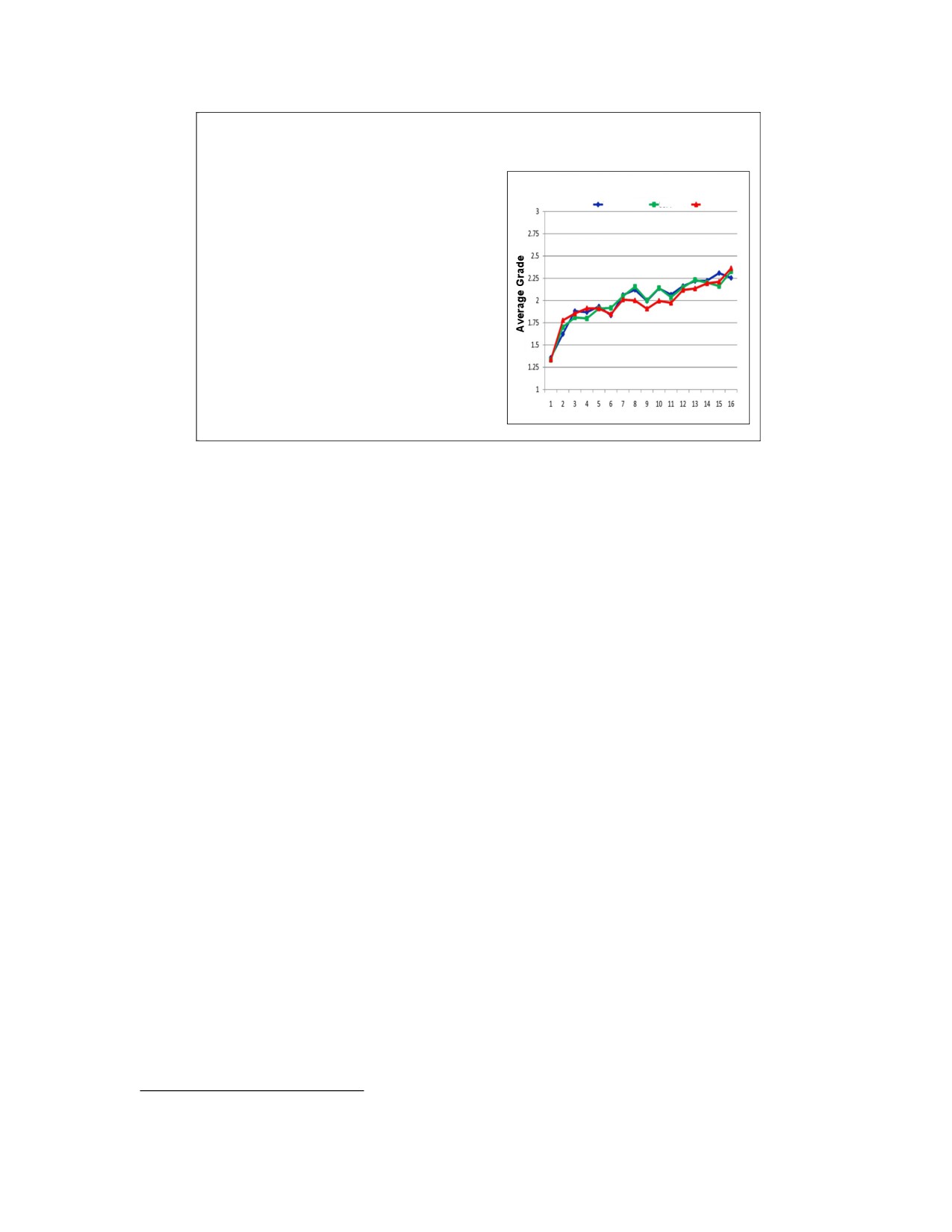
FOR OFFICIAL USE ONLY
Establishment of Undergraduate RPA Training (URT) - formerly Beta - and the
RPA career field is a positive step; but a limited scientific basis exists for crew
selection and training
MQ-1 Gradesheet Performance
Selection criteria not based on
Traditional
SUPT
URT (Beta)
capabilities associated with each RPA
position
Beta program evaluation ongoing
20% washout
Beta class FTU performance equivalent to
Traditional, SUPT trainees
But operational squadron instructors
critical of Beta’s combat readiness
Cause of discrepancy unclear
First Beta class operating unsupervised
Inadequate simulation facilities,
especially for sensor operator training
No structured continuation training for
mission management skills
Common Syllabus Missions
Figure 3-5: Inadequate Selection Criteria and Training.
Gaps in selection and training are evident in the ongoing assessment of the Beta
pilots. There were two classes of 10 and 11 with initial washout of 20 percent in each
class leaving 17 Beta pilots total. As seen in the graph in Figure 3-5, the Betas’ Formal
Training Unit (FTU) performance based on instructor grade sheet scores is statistically
equivalent to that of other trainees (Traditional and Specialized Undergraduate Pilot
Training [SUPT[). At the same time, operational squadron instructors are generally
critical of Beta pilots’ limited air sense and combat readiness, and as a result, the Beta
pilots went on for additional supervised training after Mission Qualification Training
(MQT).27 Although the precise cause for these discrepancies in assessment of the Beta
program are not known at this time, they point to: 1) the potential benefits of selection
that is targeted for known capabilities required of each position; 2) the need for a richer
set of assessment methods that meaningfully assess skills required; and 3) the need for
training that is customized for the MECs required of the RPA career path. These issues
are all tied to gaps in understanding the fundamental capabilities and skillsets of RPA
positions.
RPA training is also limited at the more advanced end of the training spectrum.
There is minimal exploitation of simulation training, Distributed Mission Operations
(DMO) exercises, or the use of Live, Virtual, Constructive (LVC) entities. Sensor
simulation fidelity is also low. Simulation for all RPA positions has been hindered by
delays in simulator development and limited access to proprietary vehicle and system
models and data. Additionally, there is no structured continuation training for RPA
operators. As a result of this training gap, acquisition of team communication and
coordination, advanced mission management skills, and other skills that could be
exercised in continuation training have been largely relegated to on the job training.
27 Although, at the time of this writing, currently eight Betas are flying unsupervised missions.
FOR OFFICIAL USE ONLY
36
FOR OFFICIAL USE ONLY
In sum, though the establishment of a formal RPA career path is a positive step,
selection and training for RPA operators has not kept pace with the state-of-the-art in
selection and training including the exploitation of MECs, simulation technologies, and
distributed mission operations. The potential consequences of such deficiencies in
operational environments are compromised mission effectiveness and safety.
3.5 Finding (5): Lagging CONOPS and TTPs
The Study Panel also found that late development of CONOPS and TTPS has
reduced the usefulness of RPAs (Figure 3-6). In the case of the Predator, initial delivery
resulted from an Advanced Concept Technology Demonstration
(ACTD) and the
CONOPS significantly lagged the physical delivery. As a result, the system’s operation
was very much on an ad hoc basis. Lack of sufficient logistic support reduced the
effectiveness of the system in its initial deployment to the Former Republic of
Yugoslavia (FRY), for example. The same pattern seems to have been repeated in the
deployment of the Reaper and, currently, with the Gorgon Stare sensor. There is also a
need for a CONOPS for distributed management to enable the same flexibility of
distributed operations currently enjoyed by exploiters given the distributed command
ground station (DCGS). The Panel strongly supports the concept of developing an initial
CONOPS well before deployment and using this CONOPS as the basis for equipage and
operation.
CONOPS/TTPs created after development have yielded systems
difficult to operate in the NAS, a challenge for full manned/
unmanned integration, and vulnerable in contested environments
Predator/Reaper acquisition did not transition to the more traditional
front-end requirements analysis and CONOPS development for full
integration into the force structure, resulting in
Continuing NAS integration issues, and lack of clear plan for manned/
unmanned integration in MCA
No vision for dealing pro-actively with what may become an increasingly
contested environment
Gorgon Stare appears to be on the same path, with CONOPS TBD by
ACC, after delivery
A lack of CONOPS exists for distributed mission management, which
will be another “technology push” response
Figure 3-6: Lagging CONOPS and TTPs.
3.6 Summary of Findings
RPAs have provided significant value to the Air Force; however, their full
potential is limited in several key mission gaps (Figure 3-7) including human-automation
interaction, OCS design, communications, selection and training, and CONOPS/TTPs.
Having identified and analyzed these limitations, the Panel next considers how to address
these shortfalls.
FOR OFFICIAL USE ONLY
37

FOR OFFICIAL USE ONLY
Background
Findings
RPA operational issues
Mission Management
can be traced to five
Operational Issues
Gaps
critical gaps in Mission
Management
Insufficient/Inflexible
Manning & Selection
Automation
capability…
Poorly-Designed
Operator Control
Fixing these will make
Stations (OCS)
more effective use of
Limited Communications
Systems
platforms, payloads,
comms, & crews, and
Contested Environment
Inadequate Selection &
Operations
Training
enable a broader and
Lagging CONOPS & TTPs
more robust mission
capability for the future
Figure 3-7: Summary of Findings.
FOR OFFICIAL USE ONLY
38
FOR OFFICIAL USE ONLY
Chapter 4: Recommendations
Having considered the implications of the above findings, the Study Panel
identified and prioritized a number of possible recommendations. The Panel focused on
eliminating mission management gaps through technology, people, and process
enhancements. In terms of technology, the recommendations focus on platform
automation/autonomy, enhanced Operator Control Stations
(OCSs), and robust
communications systems. In terms of people, the Study Panel recommends targeted
selection and more effective training. In terms of process improvements, the Study Panel
recommends enhanced operations through innovative Concepts of Operations (CONOPS)
and Tactics, Techniques, and Procedures (TTPs), and improved acquisition through
improved systems engineering and human systems integration.
4.1 Recommendation (1): Develop Flexible Levels of Automation
To fully achieve the capability envisioned in the Air Force RPA (Remotely
Piloted Aircraft) Flight Plan, flexible levels of automation must be developed in several
key areas involving both flight management and sensor management functions.
However, increased automation alone is not sufficient. Just as critically, new automation
functionality must be implemented in a user-centered, flexible manner to enable rapid,
situation-adaptive human-automation responses for improved mission effectiveness
across a wide range of conditions. Accordingly, the first recommendation of the Study
Panel is to enable flexible levels of automation as depicted in Figure 4-1.
Develop flexible levels of automation enabling situationally-adaptive
human interaction to improve single-platform, multi-platform, and
mission-level effectiveness
Near: Single-platform task-level automation [ASC]
Flight control/guidance
Monitor environment, threat, health/status
Auto target cueing
Visualizations and alert aids: automation transparency,
mode awareness
Mid: Single-platform mission-level automation [AFRL]
Cross-cueing, information fusion
Contingency management (eg, dynamic mission planning)
Environment and threat prediction; sense and avoid capability
Far: Multi-platform mission-level automation [AFRL]
Collaborative goal-based tasking to RPA teams
Assured autonomous behaviors (V&V)
Figure 4-1: Improved Platform Automation.
FOR OFFICIAL USE ONLY
39
FOR OFFICIAL USE ONLY
In the near term, focus should be centered on single-platform task-level
automation aiding (OPR: ASC). Rather than rely on the traditional “left-over” principle
(automate as much as possible and whatever is left over is handled by the human),
choices on what functions to automate should be based on that which most benefits the
combined human-automation RPA system in completing the mission. Examples of task-
level automation enhancements may include flight control/guidance
(e.g., auto
takeoff/landing, lost-link behavior), monitoring of health and status systems and the
environment including threats, sense-and-avoid capability (in-flight), and improved target
cueing/tracking technology. With regard to improved human-automation design,
automation status and mode alerts must be clearly conveyed to the human operator
through intuitive visualizations so that the operator is always aware of what the
automation is doing or planning to do, along with the associated rationale.
In the mid term, emphasis should be extended to single RPA mission-level
automation aids (OPR: AFRL). The human operator will generally assume a higher
supervisory role and the automation will support greater aspects of the RPA mission.
Examples of automation capability include enhanced contingency management (e.g.,
complex dynamic mission planning with alternative courses of action, vision-based
navigation), information fusion/management from disparate sources, multi-target
detection, tracking and identification, and transparent terminal area operations.
Environment and threat prediction capability can also be addressed in the mid-term.
Additionally, new RPA human-automation interaction methods need to be designed,
evaluated and matured (i.e., delegation interfaces, adaptive automation, mixed-initiative
interactions) to flexibly implement multi-level automation (optimized to function) across
each of the above functions. The human operator will need fine-grained control over the
initiation and application of supporting automation. Levels of automation and assigned
authority need to be thoroughly researched, along with its effects on operator
performance and trust, to determine the best methods of flexibly applying these systems
to a wide variety of situations under differing levels of automation fidelity.
Because current and envisioned sensor hardware produces data at rates of 10 to
over 1000 times the expected and available communications data transmission rates,
more research is needed underlying the development of algorithms to process sensor data
onboard to tag only a small portion of the recorded “scenes” for further immediate
transmission and human analysis. Examples of enabling technologies underlying these
future algorithms include pixel-velocity-based image stabilization, optimal
foreground/backg1round transmission rates for compression, moving-target indicators
incorporating stability/compression advances, geo-registration aided by enabling
techniques such as multi-scale geometric analysis, view interpolation and morphing
algorithms, and continuing advances in miniaturized on-board processors such as
graphics processing units. These investments will also lead to reductions in manpower
associated with sensor data interpretation. These investments could usefully cover a
range of efforts from signal processing techniques to implementation across a range of
current and developing systems. Depending on the specific deployment scenario and
environment
(including adequate communications links), the automated analysis of
sensor data from distributed sensors could in many cases provide improvement in signal-
to-noise
(e.g., through image comparison algorithms), reduction in convergence and
identification times, and better geo-registration accuracy.
FOR OFFICIAL USE ONLY
40
FOR OFFICIAL USE ONLY
Finally, in the far term, efforts should be placed on developing and implementing
multi-RPA mission-level automation
(OPR: AFRL). Collaborative automation is a
critical enabler at this stage, especially with regard to distributed manned-unmanned
teams. Effects-based tasking (as opposed to platform-based tasking) will become the
preferred method of RPA control, as RPA machine cognition (perception, intelligence,
etc) and associated autonomy increases. Humans operators will need to collaborate with
(and possibly negotiate with) increasingly intelligent automation associates in the
planning and conducting of complex, multi-asset mission tasking. Collaboration across
(both vertically and horizontally) the various command and control (C2) echelons will
also be enhanced, allowing real-time visibility, oversight, and coordination of RPA
operations across the battlespace. Swarming technologies should be explored for cheaper
RPA systems. The key to an integrated battlespace is shared situation awareness that can
be seamlessly handed from one platform/team to another as a situation changes. It will
also become critical to develop verification and validation methods for increasingly
complex RPA systems, which, on the one hand, will be engaging in increasingly
“emergent” behaviors to satisfy the developer’s goal for dealing with new situations in an
autonomous fashion, and which, on the other hand, need to assure the user of
“predictable” behaviors within some acceptable envelope of autonomy.
It is important to note that the themes associated with each category (near, mid,
far) are intentionally simplistic to convey an easily understood framework for the general
progression of automation capability. Certainly not all single-RPA automation issues
will be solved in the near term or even the mid term, nor will collaborative automation
development be entirely absent in the near term and mid term (for example, the task-level
automation enabling a micro RPA to navigate an urban landscape and land on a window
ledge at night while experiencing strong wind gusts during a thunderstorm is likely to
remain a very difficult challenge well into the long-term).
4.2 Recommendation (2): Enhance Operator Control Stations
The Study Panel recommends that Operator Control Stations (OCSs) be improved
by applying existing design methods and processes to design/develop new operator aids
to reduce manpower requirements, enable airspace integration as well as force
multiplication, increase interoperability, reduce potential for collateral damage, and
increase resilience in contested environments
(as detailed in Figure
4-2). This is
facilitated in the near term by providing immediate fixes to existing OCSs that address
critical operational needs, focusing on increasing the integrated presentation and
management of information, and streamlining control inputs
(OPR: SAF/AQC,
ACC/A8). Additionally the Program Offices must be properly manned
(and
appropriately trained) for developing and applying Human-System Integration (HSI)
processes to their respective programs.
FOR OFFICIAL USE ONLY
41

FOR OFFICIAL USE ONLY
Fix Human Computer Interfaces (HCIs) of existing systems, develop
new ones following established Human System Integration (HSI)
processes, and invest in advanced S&T for future systems
Near: Apply quick HCI fixes to
existing systems [SAF/AQC, ACC/A8]
Mid: Develop a family of networked,
interoperable, open architecture
OCSs incorporating HSI standards
[ASC, AFRL]
Far: Advance S&T in collaborative
aids, multi-platform heterogeneous
teaming, goal-based control, mixed-
initiative systems that adapt/learn,
natural language processing, 3D
visualizations [AFRL]
Figure 4-2: Enhanced Operator Control Stations.
In the mid term, employ a comprehensive HSI process and usability design/testing
to develop a family of networked, interoperable OCSs with new non-proprietary,
standards-based OCS architectures with plug-and-play components for a full range of
functions that facilitate interoperability and modularity (OPR: ASC, AFRL). This effort
should be aligned with direction provided by the Office of the Secretary of Defense
(OSD) Unmanned Control Segment Working Group and other similar Department of
Defense (DOD) activities. Human Computer Interfaces (HCIs) should be optimized to
the intended function of the OCS such as multi-aircraft control (MAC) for supervising
several RPAs during benign operations and transit, tactical operations
(for rapidly
evolving, uncertain, time critical, and collaborative combat operations), or sensor
operation (focused solely on sensor management tasks). Efforts should also concentrate
on improved information integration and presentation (including temporal displays) that
support rapid decision making, attention directing cues that highlight high priority tasks,
improved decision aids, and naturalistic multi-sensory interaction technologies, each
tailored to the intended operating environment of the OCS (man portable/wearable, fixed
facility, vehicle-based, etc). Future HCIs must also be designed to maximize human-
automation interaction through better operator awareness of automation state and
projected plans, and flexible intervention methods to intervene when automation does not
accurately support mission need.
Finally, in the far term, advanced science and technology (S&T) research is
needed in the areas of customized operator interfaces tailored to individual differences;
collaborative aids for multi-platform heterogeneous teaming; goal-based control methods;
advanced mixed-initiative systems that adapt/learn based on changes in the mission,
environment, or operator functional state; natural language processing; tools supporting
anticipatory decision making; and novel 3D visualizations of the battle space (OPR:
AFRL). Additionally, even in the far term, the key to success will be to identify and
FOR OFFICIAL USE ONLY
42
FOR OFFICIAL USE ONLY
apply the appropriate levels of human skill/attention to each mission task and provide
operators powerful and intuitive automation tools so that they can focus their full
attention at the mission execution level.
4.3 Recommendation (3): Create Robust Communications
The Study Panel recommends creating more robust communications supporting
RPA operations, focusing on assured communications, appropriate security, and a
globally interoperable communications architecture (Figure 4-3).
Focus on assured communications, appropriate security, and
globally-interoperable communications architecture
Near: Implement/accelerate short-term
fixes for security and improved
interoperability [ESC]
Mid: Increase communications diversity,
efficiency, and robustness [ESC]
Far: Develop a globally-interoperable
communications system architecture
which accommodates manned and
unmanned operations, growth in sensor
system capabilities, and movement to
networked operation of multiple,
heterogeneous coalition assets in a
contested environment [ESC, AFRL, AF/A6]
Figure 4-3: Create Robust Communications.
4.3.1 Near-Term Fixes for Security and Improved Interoperability
In the near term, the Study Panel recommends implementing/accelerating near-
term fixes for security and improved interoperability (OPR: ESC). This would include
appropriate cryptography, CONOPS/TTPs for communications alternatives such as
relayed operations, and standardized, documented, and accessible networked interfaces
for ground elements. More specifically, we recommend the following.
Cryptography: In April 2009, ASD/NII DTM-09-004 called for use of FIPS 140-
2 Security level 1 cryptography or better for unmanned aerial systems (UAS)
Groups 2-5. It also called for the establishment of a UAS Encryption Working
Group
(UASEWG) to coordinate implementation and make additional
recommendations. We recommend continuation of the UASEWG’s work, and
acceleration where possible. RPAs should in general be capable of operation
using stronger forms of cryptography if deemed necessary, based upon mission
objectives, though acknowledging that Type
1 cryptography may frustrate
coalition operations due to the additional protective measures required.
FOR OFFICIAL USE ONLY
43
FOR OFFICIAL USE ONLY
CONOPS/TTPs for Relayed Operations: There are numerous platforms that
offer the potential to provide communications alternatives for RPAs. For
example, the Battlefield Airborne Communications Node
(BACN) package
currently being fitted to Global Hawk Block 20 provides numerous capabilities
that could be used to provide C2 for RPAs with less-advantaged communications
(such as Predator/Reaper). Although the technical means for doing so appears to
be available, CONOPS and TTPs are needed to exploit this capability further.
Relaying provides (at least) two potential benefits: as an alternative to denied
satellite communications
(SATCOM), and as a potentially lower-latency
communication path that enhances the effectiveness of remote operator controls.
Standardized, Documented, and Accessible Networked Interfaces for
Ground Elements: There are numerous ground elements involved in RPA
operations including the primary control stations (e.g. MCE for Global Hawk or
OCS for Predator), landing and recovery elements (LRE), and various ground
terminals used primarily for viewing sensor data within a line-of-sight (LOS) area
(e.g., ROVER and OSRVT). In addition, there is at present an effort to design a
new generation of interoperable OCSs being pursued by the UAS Control
Segment Working Group
(UCS-WG). In the short-term, we recommend
retrofitting existing OCSs with a physical network port (e.g., 100Mb/s Ethernet)
capable of providing (or possibly consuming) essentially all sensor and mission
meta-data using documented message sets over a TCP/IP based transport. Such a
port needs to be “accessible” in the sense that appropriate accreditation must be
provided to allow these messages to be processed by other equipment. Note that
as a short-term recommendation, we do not require the application-layer messages
to conform to a particular standard, but rather that they be accessible and
documented.
4.3.2
Mid Term: Increase Communications Diversity, Efficiency, and
Robustness
In the mid term, the Study Panel recommends increasing communications
diversity, efficiency, and robustness (OPR: ESC). This would include evaluating the
utility of potential solutions, including gateways, additional C2 diversity, and disruption
tolerant communications, as well as the utility of state-of-the-art sensors incorporating
on-board processing/exploitation, and non-geostationary satellites for C2 and sensors.
Evaluate Gateways, Additional C2 Diversity, and Disruption Tolerant
Communications: At present, there are a variety of communication capabilities
available for each RPA type. For the less capable RPAs, SATCOM vulnerability
is a significant concern. To provide additional communication options, we
recommend evaluating a broad set of gateway packages, including BACN and the
Defense Advanced Research Projects Agency’s (DARPA) MAINGATE program,
in addition to equipping existing communications-limited RPAs with additional
link capabilities, including Common Data Link (CDL) and Link-16. Increasing
the set of link options improves resiliency in contested environments (e.g., via the
anti-jamming properties of Link-16) and reduces latency for other assets within
FOR OFFICIAL USE ONLY
44
FOR OFFICIAL USE ONLY
the LOS area that wish to interact with the RPA. Size, Weight, and Power
(SWAP) may be a concern with some of the additional radio systems, but modern
radios have addressed this concern (e.g., L-3’s “mini-CDL” 200 radio weighs
1.4lbs and uses 25-45W). Disruption Tolerant Networking (e.g., the DARPA
DTN and WNaN programs) uses storage within the network to help overcome
modest link or long-term link outages, especially for environments that do not
require precise latency bounds for effective operation.
State-of-the-Art Sensors with On-Board Processing/Exploitation: The Study
Panel recommends improving algorithms for compression and sensor exploitation
to limit off-platform bandwidth demands. In addition, on-board cross-sensor
processing can be used to enhance resilience to sensor attacks
(e.g.,
communications jamming or GPS spoofing) by performing a secondary or tertiary
check on the validity of navigational and platform health information. In general,
algorithms produce better results when provided higher-quality input (e.g., sensor)
data. Thus, although the highest-resolution sensors may overwhelm certain (e.g.,
SATCOM) communication links, such sensors can lead to better autonomy with a
higher degree of trust, thereby reducing the need for human operators to be shown
all sensor data. Large onboard storage can be used to house raw sensor data for
subsequent, on-the-ground, exploitation. For example, if it is assumed that
uncompressed HDTV-quality video requires a storage rate of
1Gb/s
(conservative), a 20-hour mission would require approximately 9 Tb of storage.
With single drives now capable of storing 2.5 Tb, a modest amount (4 drives or
fewer) of onboard storage would be required.
Non-GEO Satellites: The Study Panel recommends evaluating options for non-
geostationary satellites for RPA C2, as well as for low-data-rate sensor backhaul.
There are two potential benefits, including lower latency (potentially allowing for
more effective tactical control of the aircraft) and greater diversity/assuredness.
In particular, if conventional GEO-based SATCOM were compromised or made
unavailable, LEOs may provide a viable option, at least for C2. Unfortunately,
there are a limited number of LEO constellations available
(e.g., Iridium,
Globalstar, Orbcomm). Nonetheless, encouraging results, including latencies
below 100 milliseconds, have been observed (e.g., the National Aeronautics and
Space Administration
[NASA] “Flight Modem” work28). Note that Iridium
announced plans for its next-generation satellite constellation (Iridium NEXT) on
June 2, 2010.
4.3.3 Far Term: Develop RPA Communications Architecture
In the far term, the Study Panel recommends developing a globally interoperable
communications system architecture which accommodates manned and unmanned
28 Morgan et al., “Telemetry Tracking & Control (TT&C) - First TDRSS, then Commercial GEO & Big
LEO and Now Through LEO,” 2001 (Document ID 20010020063)
FOR OFFICIAL USE ONLY
45

FOR OFFICIAL USE ONLY
operations and anticipates growth in sensor system capabilities for networked operation
of multiple, heterogeneous coalition assets, operating in a contested environment (OPR:
ESC, AFRL, AF/A6). The Study Panel recommends that a comprehensive
communications architecture study be undertaken to determine what interfaces, TTPs,
and capabilities are required to produce a fully-distributed network of RPAs, pilots,
analysts, and maintainers. At present, there are a collection of stovepiped systems with
limited interoperability and proprietary formats, leading to consequent difficulty in
performing distributed control.
4.4 Recommendation (4): Develop Targeted Selection and
Effective Training
The Study Panel recommends developing targeted selection and effective training
(Figure 4-4). The Air Force should understand fundamental capabilities and skillsets
required for each RPA specialty, use this knowledge to become more effective at
selection, and exploit current training and simulation technologies to reduce manning
pipeline delays, better enable NAS/MCA integration, and deal with future contested
environments.
Understand fundamental capabilities and skill-sets required for each
RPA specialty, select appropriately, and exploit current training and
simulation technologies to reduce manning pipeline delays and deal
with future contested environments
Performance Measurement and
Live
Tracking of Live and Virtual
Near: Reduce manning
bottleneck by targeted
selection and accelerated
training [AF/A1, AETC, AFRL]
Mid: Develop and use
training simulators more
effectively [ASC, AETC, ACC]
Virtual
Far: Develop skills in
team coordination,
communication and mission
Integrated live and
planning/After-Action Review
virtual
Constructive
performance-
[AFRL]
based debrief
Figure 4-4: Training and Selection Recommendations.
Improving available training and selection technologies can result in tremendous
cost savings and improved efficiencies in RPA training, while at the same time
addressing the manning bottleneck and generating a future RPA force capable of dealing
with contested environments. It is necessary to understand fundamental capabilities and
skillsets required for each RPA specialty, train and select accordingly, and exploit current
training and simulation technologies.
FOR OFFICIAL USE ONLY
46
FOR OFFICIAL USE ONLY
Near-term activities should be directed at developing scientifically-based RPA
career path enhancements that generate targeted selection procedures and accelerated
training programs. The new Undergraduate RPA Training (URT) classes should be
appropriately selected, based on validated test methods and assessed in terms of training
and operational performance using objective state-of-the art performance metrics. In
addition, Mission Essential Competencies (MECs) should be used to optimize URT,
Mission Qualification Training (MQT), and continuation training and selection, with
independent paths developed for RPA pilots and sensor operators. (OPR: AF/A1, AETC)
Mid-term recommendations focus on the increased use of existing simulation
technologies, as well as the development and application of new technologies to increase
training effectiveness for non-LRE pilots and sensor operators. The use of flight
simulators, including part task trainers, should be optimized for all task levels (e.g.,
individual, team, multi-team). Sensor operator training should also be enhanced with
simulation, drawing from existing gaming technologies, Google Earth, and actual
operational video footage. It is important to recognize that the simulators must be
developed concurrently with an improved OCS. A simulator that replicates a poor
human-machine interface is a poor foundation for training. (OPR: ASC, AETC, ACC)
In the far term, RPA skills in team coordination, communication, and mission
planning/after action review (AAR) need to be developed. This can be accomplished via
the development and use of an advanced RPA training and simulation facility for
comprehensive continuation training and training research. In this context, simulation
training for RPAs should be advanced to the current state-of-the art in simulation for
fighter training, so that RPA operators can engage in multi-person, multi-vehicle
exercises on par with Distributed Mission Operations (DMO) exercises. Through the
advanced use of simulation, requisite skills can be trained for current and future RPA
operations to include: CONOPS in realistic manned/unmanned, joint, and contested
environments, team coordination, communication and mission planning, and after-action-
review skills.
(OPR: AFRL)
4.5 Recommendation (5): Improve CONOPS and TTPs
To more effectively drive mission effectiveness, the Study Panel recommends
development of RPA CONOPS and TTPs concurrently with system development,
considering all components including the payload, platform, communications, OCS,
Squadron Operation Center (SOC), Wing Operation Center (WOC), and Air and Space
Operations Center
(AOC) (Figure
4-5). To support this development, the Panel
recommends the use of modeling and simulation, operator-in-the-loop experimentation,
and performance evaluation. (OPR: ACC)
In the near-term, the Air Force should formalize the concept of distributed global
operations. The Air Force should define how current SOC/WOC/AOC structures can
enable distributed global operations via “brokering” among operators, platforms/sensors,
and
“customers.” This would enable increased efficiency and effectiveness if
“customers” could agree on a prioritization scheme which allowed for shifting assets to
the areas of greatest need.
FOR OFFICIAL USE ONLY
47
FOR OFFICIAL USE ONLY
In the mid-term, the Air Force should develop CONOPS/TTPs that anticipate
growth in RPA operations, sensor capabilities, integrated manned/unmanned operations,
and contested operating environments. Development of models and simulations should
be pursued so that conjectural (“what-if”) analysis can be performed. This is particularly
important as the Air Force considers ways to operate new platforms and payloads in
mixed manned/umanned and contested environments.
In the far-term, the Air Force should enforce the necessary acquisition and
development discipline to ensure that CONOPS and TTPs are co-evolved with new
systems. This should be done as part of a well-structured systems engineering process
which leads systems development and informs systems requirements, taking into
consideration not just performance but also many of the standard “ilities”, including:
reliability, maintainability, and affordability.
Develop RPA CONOPS and TTPs concurrently with system
development, considering all components (payload, platform,
comms, OCS, SOC, WOC, AOC…) to drive mission effectiveness.
Use M&S, operator-in-the-loop experimentation, and performance
evaluation [ACC]
Near: Define how current SOC/WOC/AOC
structures can enable distributed global
operations via “brokering” among operators,
platforms/sensors, “customers”
Mid: Develop CONOPS/TTPs that anticipate
growth in RPA operations, sensor capabilities,
integrated manned/unmanned operations, and
contested operating environments
Far: Co-evolve CONOPS/TTPs for new platforms
and missions as part of a focused acquisition
process, leading systems development and
informing systems requirements choices
Figure 4-5: Improved Operating Concepts, CONOPS, and TTPS.
FOR OFFICIAL USE ONLY
48
FOR OFFICIAL USE ONLY
4.6 Recommendation (6): Ensure Effective ACTD Transition
The Study Panel recommends the Air Force ensure effective transition of
successful RPA prototypes to the acquisition process (Figure 4-6), incorporating systems
engineering practices including HSI, in accordance with AFI 10-601 and 63-1201 (OPR:
SAF/AQ). The Air Force should continue successful use of the ACTD/JCTD (Advanced
Concept Technology Demonstration/Joint Capability Technology Demonstration) process
to develop game-changing solutions and transition them when appropriate. They should
upgrade, develop, and acquire RPA systems using accepted Systems Engineering
practices.
This includes employing Section
804 of the
2010 National Defense
Authorization Act which directs the Secretary of Defense to develop and implement a
new acquisition process that follows best practices to include “(a) early and continual
involvement of the user;
(b) multiple, rapidly executed increments or releases of
capability; (c) early, successive prototyping to support an evolutionary approach; and (d)
a modular, open-systems approach.”29 Starting with a clear vision of the CONOPS and
accounting for operations in contested environments are essential. It is also important
that the Air Force establish RPA-specific HSI requirements (OPR: A5R) and guidelines
(OPR: AFRL). Operator-related issues should be addressed via incorporation of HSI as
part of the systems engineering process (OPR: AFMC), following the recommendations
of two previous SAB studies.30,
31 The remainder of this section discusses this
recommendation in further detail.
29 Further details of the new acquisition approach can be found in the March 2009 Defense Science Board
Task Force on Department of Defense Policies and Procedures for the Acquisition of Information
Technology.
30 United States.
“Unmanned Aerial Vehicles in Perspective: Effects, Capabilities, and Technologies.
Volume 1: Summary (Public Released)” SAB-TR-03-01 September 2003.
31
United States.
“Human-System Integration in Air Force Weapon Systems Development and
Acquisition,” Executive Summary and Annotated Brief, SAB-TR-04-04, July 2004.
FOR OFFICIAL USE ONLY
49
FOR OFFICIAL USE ONLY
Transition successful RPA prototypes to the acquisition process,
incorporating Systems Engineering practices including HSI, in
accordance with AFI 10-601 & 63-1201 [SAF/AQ]
Continue successful use of ACTD/JCTD process
to develop game-changing solutions and
Experimentation
transition when appropriate
Upgrade, develop, and acquire RPA systems
using accepted Systems Engineering practices
(2010 NDAA Section 804)
CONOPS
Establish RPA HSI requirements [A5R] and
guidelines [AFRL]
Address operator-related issues via
incorporation of HSI as part of the Systems
Technology
Engineering process [AFMC]
Figure 4-6: Effective ACTD Transitions for RPAs.
The ACTD process was initiated to permit the early and inexpensive evaluation of
mature advanced technology to meet the needs of the warfighter. The evaluation is
accomplished by the warfighter to determine military utility before a commitment is
made to proceed with formal acquisition. ACTDs also allow the warfighter to develop
and refine operational concepts to take full advantage of the new capability. Upon
conclusion, a successful ACTD may leave behind a residual operational capability. The
capability can be replicated, if only a few are required, or can be transitioned into the
appropriate phase of formal acquisition.
The ACTD program is a pre-acquisition activity that allows warfighters to use and
assess leading-edge capabilities. ACTDs are an integral part of reforming and
revolutionizing the acquisition process. Success should be measured by the ability to
quickly meet the warfighter's critical needs and by the extent to which ACTDs provide a
vehicle for new concepts and technologies to be evaluated before acquisition decisions
are made. Figure 4-6 highlights ways to ensure effective transition for RPAs.
ACTDs continue to provide a valuable streamlined approach to demonstrate
feasibility and potential of emerging capabilities. They strike the right balance between
fidelity and affordability for the intended purpose. The ACTD process and approach
does not, however, apply well to the system engineering process required in complex
acquisition programs. These acquisition processes are iterative; they take process inputs
such as customer needs through exhaustive system design, requirements, and analysis
loops while balancing all these needs through an overarching system analysis and control.
The result is a decision database highlighting system configuration, and project baselines.
Nearly all current RPA procurements are the product of ACTD or ACTD-like
approaches that have never benefited from the rigor of the systems engineering process.
By simply continuing or extending the ACTD approach, the RPAs in use today
completely missed or received limited engagement in the areas of CONOPS development
FOR OFFICIAL USE ONLY
50

FOR OFFICIAL USE ONLY
and application, HSI, systems engineering, and sustainment. Understanding the user
environment and mission objectives has been limited by lack of upfront user CONOPS
input as exemplified in the DARPA Technology CONOPS Double Helix approach
depicted in Figure 4-7.
Understanding of 2nd and
Techniques, Tactics and
New CONOPS
3rd order effects
Procedures; Training
Methodology
Figure 4-7: CONOPS Technology Double Helix.
With the RPA fleet, CONOPS development significantly lagged behind
development, and resulted in mission performance deficiencies and inefficiencies.
Systems engineering across these multi-element systems did not conform to DOD 5000
standards and led, in the case of Predator/Reaper, to fielding a closed architecture that is
sole source
(due to lack of data rights), unresponsive to meeting new operational
requirements, and expensive to change. As a related issue, and as noted earlier,
significant HSI deficiencies continue to exacerbate the development of CONOPS.
ACTDs also typically do not focus on sustainment engineering and associated life cycle
cost trades. This situation delayed deployment and sub-optimized ongoing logistics and
support functions that continue to detract from mission effectiveness.
A more effective path is to use ACTDs for their intended purpose and cleanly
transition to DOD 5000.02 after the decision to transition the demonstrated capability
into a program of record is accomplished. ACTDs are not intended or structured to
deliver production capabilities and should not be expected to do so. Two excellent
examples of successful ACTD transitions are the Have Blue to F-117, and the
Lightweight Fighter (YF-16) to the F-16 program.
Importantly, ACTC/JCTDs are fertile ground for groundbreaking, game-changing
technologies. Without doubt, they are key sources of innovation; however, successful
RPA prototypes must be transitioned into the acquisition process, incorporating Systems
Engineering practices, including HSI in accordance with AFI 10-601/63-1201. To
achieve their full potential, RPA programs must start with a clear vision of use and
CONOPS, and anticipate operations in contested environments.
FOR OFFICIAL USE ONLY
51
FOR OFFICIAL USE ONLY
(This Page Intentionally Left Blank)
FOR OFFICIAL USE ONLY
52
FOR OFFICIAL USE ONLY
Chapter 5: Analysis and Summary of Recommendations
This report began with a number of identified RPA issues (Chapter 2) associated
with manning and selection, airspace deconfliction and management, collateral damage,
and contested environments. We then identified mission management gaps contributing
to these issues (Chapter 3), and put forth recommendations as to how these gaps might be
eliminated or reduced with appropriate investments in technology, people, and processes
(Chapter 4). We now present two sets of matrices, one showing the impact of mission
management gaps on the operational issues, and the second showing the impact of
technology investments on closing the mission management gaps. Although the impact
assessments are qualitative, the matrices clearly illustrate that dealing with the issues
requires a multi-pronged approach, across multiple dimensions.
This chapter concludes with a brief summary of how each of the issues can be
dealt with directly with a set of recommended actions, to provide a more compact
summary of the study’s overall findings and recommendations.
5.1 Impact Analysis of Recommendations
This section presents a qualitative assessment of the impact of the Study Panel’s
recommendations on identified gaps. Importantly, this analysis did not consider cost or
quantitative impacts of various recommendations, but rather reflects expert judgment by
the Panel based on individual and Panel expertise and experience. The assessments
reflect the collective best judgment given the short study time. Accordingly, the Panel
caveats its analysis as not being a formal life cycle cost/benefit analysis, which would
require further effort.
The Study Panel’s analytic method included considering the effects of closing the
identified mission management gaps discussed in Chapter 3, in terms of ameliorating the
operational issues articulated in Chapter
2
(i.e., manning and selection, airspace
deconfliction and management, collateral damage, and contested environments). Figure
5-1 depicts a matrix illustrating the benefits of addressing known mission management
gaps (rows) on the operational issues (columns). For example, investments in solving the
mission management gaps associated with automation, Operator Control Station (OCS)
design, communications, selection/training, and CONOPS/TTP
(Concepts of
Operations/Tactics, Techniques, and Procedures) will improve the identified operational
issues. Each cell in the matrix is numbered and colored as green (high impact), light
green
(medium impact), and white (little or no impact) to indicate the degree of
contribution an investment has in terms of correcting the operational issue. A
justification for each assessment is captured in Appendix B, indexed by the cell number
for ease of access. Rows indicate how improvements affect issues: thus cells 1 through 4
indicate how flexible levels of automation will contribute to the four operational issues.
FOR OFFICIAL USE ONLY
53

FOR OFFICIAL USE ONLY
For example, cell number 2 indicates how investments in automation will improve
airspace deconfliction and management.
█ High
Airspace
Contested
█ Med
Manning &
Collateral
Deconfliction &
Environment
Selection
Damage
█ None
Management
Operations
Flexible Levels of
1-H
2-H
3-H
4-H
Automation
Enhanced OCS
5-H
6-M
7-M
8-H
Robust
Communications
9-M
10-H
11-M
12-H
Systems
Targeted
Selection &
13-H
14-M
15-M
16-H
Training
Improved
17-M
18-M
19-M
20-H
CONOPS & TTPs
Figure 5-1: Effect of Addressing Mission Management Gaps on Operational
Issues.
Figure 5-2 depicts a matrix illustrating the benefits of investing in technology,
people, and processes (shown down columns) to fill known mission gaps (shown across
in rows). That is, investments in solving automation/processing, OCS, communications,
selection/training, CONOPS/TTPs, and Advanced Concept Technology Demonstration
(ACTD) transitions will address the identified mission gaps such as the need for flexible
automation. Each cell in the matrix is numbered and colored as green (high impact), light
green
(medium impact), and white (little or no impact) to indicate the degree of
contribution an investment has to correcting a mission gap. A justification for each
assessment is captured in Appendix B, indexed by the cell number for ease of access. For
example, cells 21 through 25 indicate that implementing the Study Panel’s mid-term
enhanced OCS recommendation will significantly improve all gap areas, from enabling
flexible automation to improving future CONOPS/TTPs. In particular, employing a
cohesive Human-System Integration
(HSI) process and usability design/testing to
develop a family of networked, interoperable OCSs with new non-proprietary, standards-
based OCS architectures with plug-and-play components for a full range of functions will
enable automation, facilitate interoperability and modularity, improve networked
communications, ease training, and support and foster novel CONOPS/TTPs. As is
evident, all the main diagonals between major columns and their respective mission
management gaps are equivalent (e.g., automation for automation), and are therefore left
out of the detailed analysis.
FOR OFFICIAL USE ONLY
54

FOR OFFICIAL USE ONLY
█ High
Technology, People and Processes
█ Med
Robust
Automation
Enhanced
Selection
CONOPS and
ACTD
█ None
Communicati
& Processing
OCSs
and Training
TTPs
Transition
ons
Flexible
Automation/
1-H
2-H
3-H
4-N
5-H
6-M
7-N
8-M
9-M
10-N
11-M
1
2-M
13-H
14-M
15-H
16-M
17-H
18-M
Processing
System Based
19-H
20-H
21-H
22-H
23-H
24-H
25-M
26-N
27-H
28-N
29-M
30-N
31-H
32-H
33-H
34-H
35-H
36-H
Design of OCS
Networked
37-M
38-H
39-H
40-N
41-H
42-N
43-M
44-M
45-H
46-N
47-N
48-N
49-H
50-H
51-M
52-M
53-H
54-M
Communicatio
nsSystems
Targeted
55-M
56-M
57-M
58-M
59-H
60-M
61-N
62-N
63-M
64-H
65-H
66-H
67=M
68-N
69-N
70-M
71-M
72-M
Selection &
Training
Future CONOPS
73-M
74-H
75-H
76-M
77-H
78-M
79-N
80-M
81-H
82-N
83-M
84-H
85-H
86-H
87-H
88-H
89-H
90-M
& TTPs
Figure 5-2: Technology, People, and Process Investments Fill Mission Gaps.
5.2 Summary of Recommendations
This chapter concludes with a brief summary of how each of the key issues can be
dealt with directly with a set of recommended actions.
5.2.1 Manning and Selection Recommendations
The Study Panel recommendations directly addressing manning and selection,
shown in Figure 5-3, are grouped in four main categories. First, the Air Force should
develop more automation and smoother transitions between hands-on and hands-off
operation. Ways to implement this would include, for example, enabling multi-aircraft
control
(MAC), especially during low activity and boring mission segments (a side
benefit would be the relief of operators from loss of vigilance caused by boredom).
Automation could also provide cross-cueing or tagging and tracking of targets, reducing
or eliminating manually intensive processing; or to make mission planning easier and
more rapid. Finally, automation can help implement automated landings, a cause for as
much as 20 percent of RPA loss. Second, the Air Force should develop better OCSs
which would simplify mission handoffs, enable multi-aircraft operations, improve overall
SA with better integrated displays and via automatic recognition of key targets, and
enable target hand-off between assets (manned or unmanned). Third, the Air Force
should have training address sensor operators, exploiters, and maintenance personnel, as
well as pilots. Training and training simulation need to incorporate both manned as well
as unmanned missions, as well as training for contested environments. Finally, the Study
Panel recommends continuing RPA career path development.
FOR OFFICIAL USE ONLY
55
FOR OFFICIAL USE ONLY
Manning: Recommendations
Develop more automation and smoother transitions between hands
on and hands off operation
Allow for multiple aircraft operation / Relieve the boring times
Make tag / track targets and mission planning easy/quick
Implement automated landings / remote landings
Develop OCS that simplify mission handoffs
Enable multi-aircraft operations
Include overall SA and automatic recognition of key targets
Enable target hand-off between assets (manned or unmanned)
Training must address sensor operators, exploiters and
maintenance personnel as well as pilots
Affects manned as well as unmanned missions
Train for contested environments
Continue RPA career path development
Figure 5-3: Manning and Selection Recommendations.
5.2.2 Airspace Deconfliction and Management Recommendations
The Study Panel recommendations directly addressing airspace deconfliction and
management, shown in Figure 5-4, are grouped in four main categories. First, in terms of
autonomy, the Air Force should focus on technology investments (“see and avoid”
technologies and others) which meet safety requirements for Group 4-5 RPA flight in the
National Airspace (NAS) (those vehicles that can carry the necessary payloads while
maintaining their mission utility) Second, in the area of robust sensing and
communications, the Air Force should focus future technology investments for Group 1-2
small RPAs towards enhancing communications and sensor technologies to enhance
combat mission capability in the Military Controlled Airspace
(MCA), where risk
management margins have greater flexibility. Third, in terms of policy and CONOPS,
the Air Force should accelerate DOD/DHS/FAA (Department of Defense/Department of
Homeland Security/Federal Aviation Administration) joint efforts in Executive
Committee to formalize national standards which mitigate risks of lost-link and see and
avoid in the NAS for Group 4-5 RPAs. Finally, in the area of acquisition, the Air Force
should pursue formal DOD acquisition programs, in place of the ACTD approach, for
next generation RPAs, to deliver an integrated system of systems type approach to ensure
unrestricted and integrated flight in the NAS, MCA, and in the International Civil
Aviation Organization
(ICAO) with manned aircraft
(although the Panel also
recommends that ACTD efforts still be pursued to explore and evaluate promising and
potentially game-changing technologies in the RPA “space”).
FOR OFFICIAL USE ONLY
56
FOR OFFICIAL USE ONLY
Airspace Management & Integration:
Recommendations
Enhance airspace management via:
Autonomy - Focus USAF technology investments (AFRL “see and avoid”
technologies and others) which meet safety requirements for RPA flight in
the NAS to those large aircraft in Group 4/5 that can carry these payloads
while maintaining their mission utility (AFRL)
Robust Sensing and Communications - Focus future USAF technology
investments for Group I/2 small RPA towards enhancing comm/sensor
technologies which enhance combat mission capability in MCA where risk
management margins have greater flexibility (AFRL)
Policy/CONOPS - Accelerate DOD/DHS/FAA joint efforts in Executive
Committee to formalize national standards which mitigate risks of “Lost
Link” and “See and Avoid” in NAS for Group 4/5 RPA (SAF/AQ)
Acquisition- Pursue formal DOD acquisition program vice ACTD
approach for Next Generation RPA which deliver integrated system of
systems type approach to ensure unrestricted and integrated flight in the
NAS, MCA, and in the ICAO with manned aircraft (SAF/AQ)
Figure 5-4: Airspace Management and Integration Recommendations.
5.2.3 Collateral Damage Recommendations
While the Study Panel found that collateral damage is not an RPA-unique issue,
RPA capabilities in IW can help minimize the problem. First, persistent wide-area
surveillance helps improve warfighter situation awareness. It also can enable tactical
patience, a key enabler in limiting civilian casualties. Increased connectivity of split
remote operations results in more “eyes on target” in the CONUS ground stations and
more opportunities for data fusion from available feeds. Increased sensor fidelity can
enhance positive identification, the lack of which is a key cause of civilian casualties.
Finally, the employment of low collateral damage/directed lethality munitions on RPAs
can help limit civilian casualties.
Contested Environments
The Study Panel recommendations directly addressing contested operating
environments, shown in Figure 5-5, are grouped in two main categories. The Air Force
can improve mission robustness in contested environments via increased platform
redundancy.
Enablers include low-cost design and airframe/engine/electronics
manufacturing (as envisioned by the DARPA META and META-2 programs), multi-
vehicle mission planning and management concepts, including pseudo-random auto-
jinking, swarming, short-range jam-resistant inter-platform communications, and cyber
intrusion protection exploiting redundancy-based methods. Second, for highly contested
environments, the Air Force should conduct comprehensive systems-level engineering
analyses to establish effective design tradeoffs that balance the cost of passive/active
protection measures verses the cost of platform or sensor loss. This could include low
FOR OFFICIAL USE ONLY
57
FOR OFFICIAL USE ONLY
observable (LO) measures (including acoustic, visual, and radar), on-board dynamic
mission planning/re-planning for threat avoidance, redundant links with electronic
protection (EP) waveforms to mitigate jamming of communications, automated self-
protect electronic warfare (EW) tactics, and alternative navigation techniques to reduce
effects of GPS loss.
Contested Environment Operations:
Recommendations
Improve mission robustness in contested environments via
increased platform redundancy. Enablers are:
Low-cost design and airframe/engine/electronics manufacturing (DARPA META
and META-2 programs)
Multi-vehicle mission planning and management concepts, including pseudo-
random auto-jinking, swarming
Short-range jam-resistant inter-platform communications
Cyber intrusion protection exploiting redundancy-based methods
For denied environments, conduct comprehensive systems-level
engineering analyses to establish proper design point between
passive/active protection measures, and against cost of loss
LO measures including acoustic, visual, and radar
Dynamic mission planning/re-planning for threat avoidance
Redundant links with ECCM waveforms to mitigate jamming of comms
Automated self-protect EW tactics
Alternative navigation techniques to reduce effects of GPS loss
Figure 5-5: Contested Environments Recommendations.
FOR OFFICIAL USE ONLY
58