FM 2-22.3 (FM 34-52) HUMAN INTELLIGENCE COLLECTOR OPERATIONS (September 2006) - page 6
FM 2-22.3 _________________________________________________________________________________
Matrices
12-18. Construction of a matrix is the easiest and simplest way to show the
relationships between a number of similar or dissimilar associated items.
The items can be anything that is important to a collection effort such as
people, places, organizations, automobile license plates, weapons, telephone
numbers, or locations. In analysis, matrices are often used to identify “who
knows whom,” or “who has been where or done what” in a clear concise
manner. There are two types of matrices used in human analysis: the
association matrix, used to determine existence of relationships between
individual human beings, and the activities matrix, used to determine
connectivity between individuals and any organization, event, address,
activity, or any other non-personal entity. The graphics involved in
constructing the two types of matrices differ slightly, but the principles are
identical.
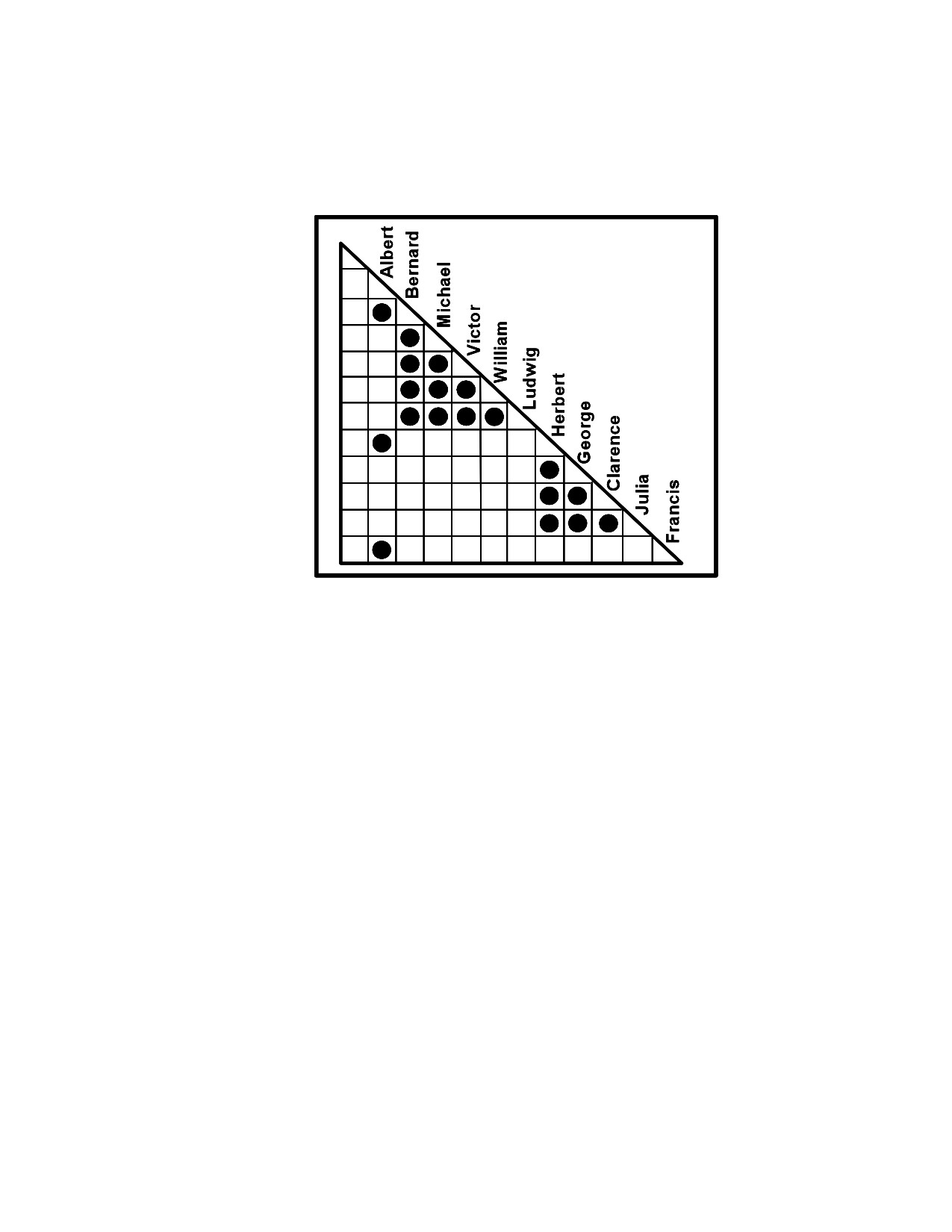
12-19. The association matrix (Figure 12-2) shows connections between key
individuals involved in any event or activity. It shows associations within a
group or associated activity. Normally, this type of matrix is constructed in
the form of an equilateral triangle having the same number of rows and
columns. Personalities must be listed in exactly the same order along both
the rows and columns to ensure that all possible associations are correctly
depicted. An alternate method is to list the names along the diagonal side of
the matrix. This type of matrix does not show the nature, degree, or duration
of a relationship, only that a relationship exists. The purpose of the matrix is
to show the analyst who knows whom and who are suspected to know whom.
In the event that a person of interest dies, a diamond is drawn next to his or
her name on the matrix.
12-20. The analyst uses a dot or closed (filled-in) circle to depict a strong or
known association. A known association is determined by direct contact
between one or more persons. Direct contact is determined by several factors.
Direct associations include--
• Face-to-face meetings.
• Telephonic conversations in which the analyst is sure who was
conversing with whom.
• Members of a cell or other group who are involved in the same
operations.
12-6
6 September 2006
________________________________________________________________________________ FM 2-22.3
1
2
3
4
START
1980
1980
OCT 81
1990
Rahman issued
Rahman advisor
President Sadat
Rahman leaves
FATWA against
to Farag, Karam,
assassinated by
Egypt for Sudan
President Sadat
and two others
Muslim B’Hood
5
6
7
8
9
JUL 90
1990
1990
JAN 91
MAR 91
Rahman in US
Rabbi Kahane
Rahman linked to
Rahman issues
Shalabi
control of NJ
shot in NYC by
4 bombings in
FATWA against
assassinated
Mosque
El Sayyid Nosair
Egypt
Mustafa Shalabi
in Brooklyn
10
11
12
13
14
1991 - 1992
26 FEB 93
4-5 MAR 93
7 MAY 93
23 MAY 93
Rahman preaches
WTC Bombing
Sallameh and
Initial planning for
Salem, Siddig, and
against Zionism
Elgabrowny
UN bombing
Hampton El include
and Capitalism
arrested
Fed Bldg and
tunnels in plan
15
16
17
18
19
27 MAY 93
29 MAY 93
19 JUN 93
22 JUN 93
24 JUN 93
Timing device
Recon offHolland
First batch of
Salem and Alvarez
FBI arrest Siddig,
tested
and Lincoln tunnels
ANFO mixed
attempt to buy guns
Sallah, Alvarez,
Kallafalla, and 5
Sundanese
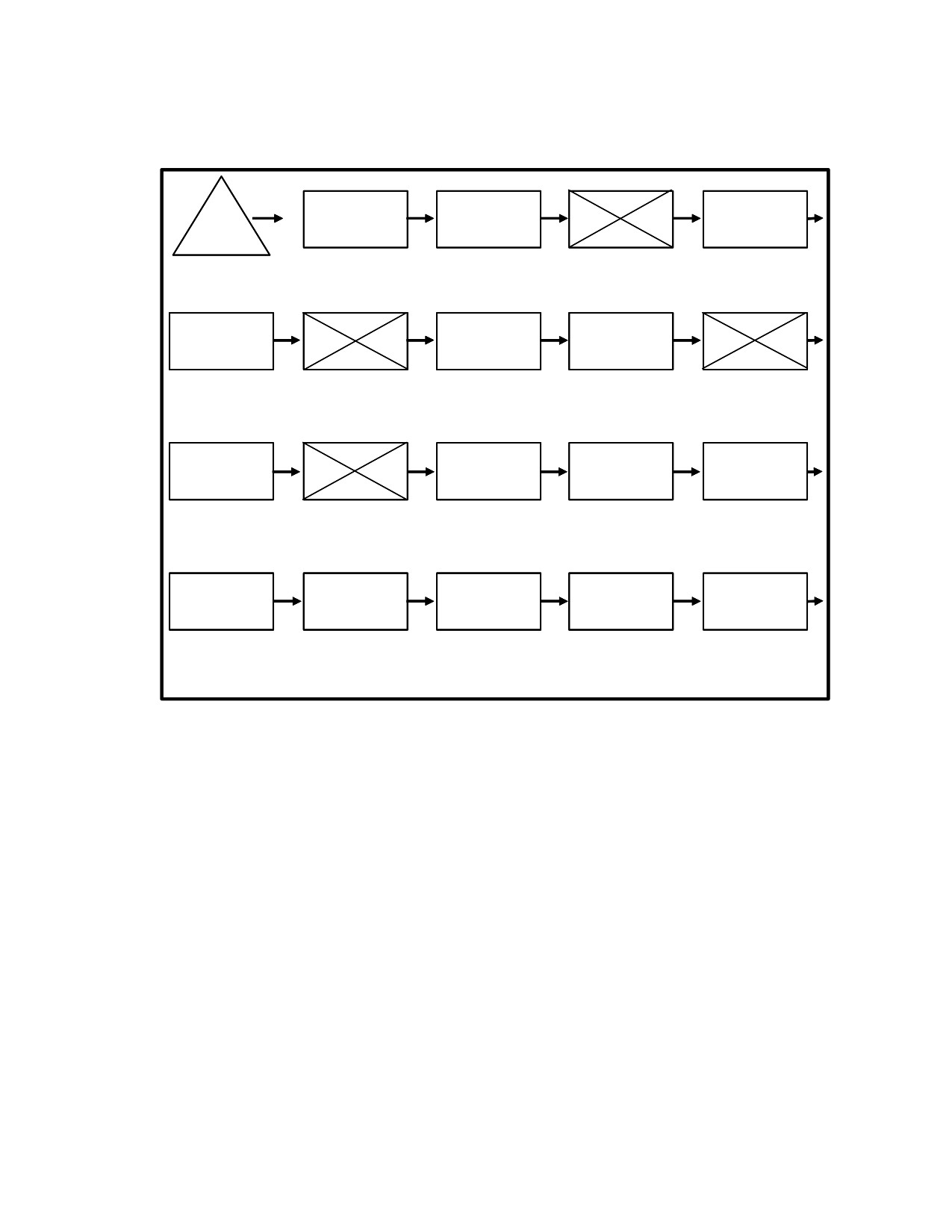
Figure 12-1. Example of a Time Event Chart.
12-21. Suspected or weak associations are those associations in which there
are indicators that individuals may have had associations but there is no way
to confirm that association; this is depicted with an open circle. Examples of
suspected associations are--
• A known party calling a known telephone number (the analyst knows
to whom the telephone number is listed) but it cannot be determined
with certainty who answered the call.
• A face-to-face meeting where one party can be identified, but the
other party can only be tentatively identified.
12-22. The rationale for depicting suspected associations is to get as close as
possible to an objective analytic solution while staying as close as possible to
known or confirmed facts. If a suspected association is later confirmed, the
appropriate adjustment may be made on the association matrix. A secondary
reason for depicting suspected associations is that it may give the analyst a
focus for tasking limited intelligence collections assets in order to confirm the
suspected association. An important point to remember about using the
association matrix is that it will, without modification, show only the
6 September 2006
12-7
FM 2-22.3 _________________________________________________________________________________
existence of relationships; not the nature, degree, or duration of those
relationships.
Figure 12-2. Example of an Association Matrix.
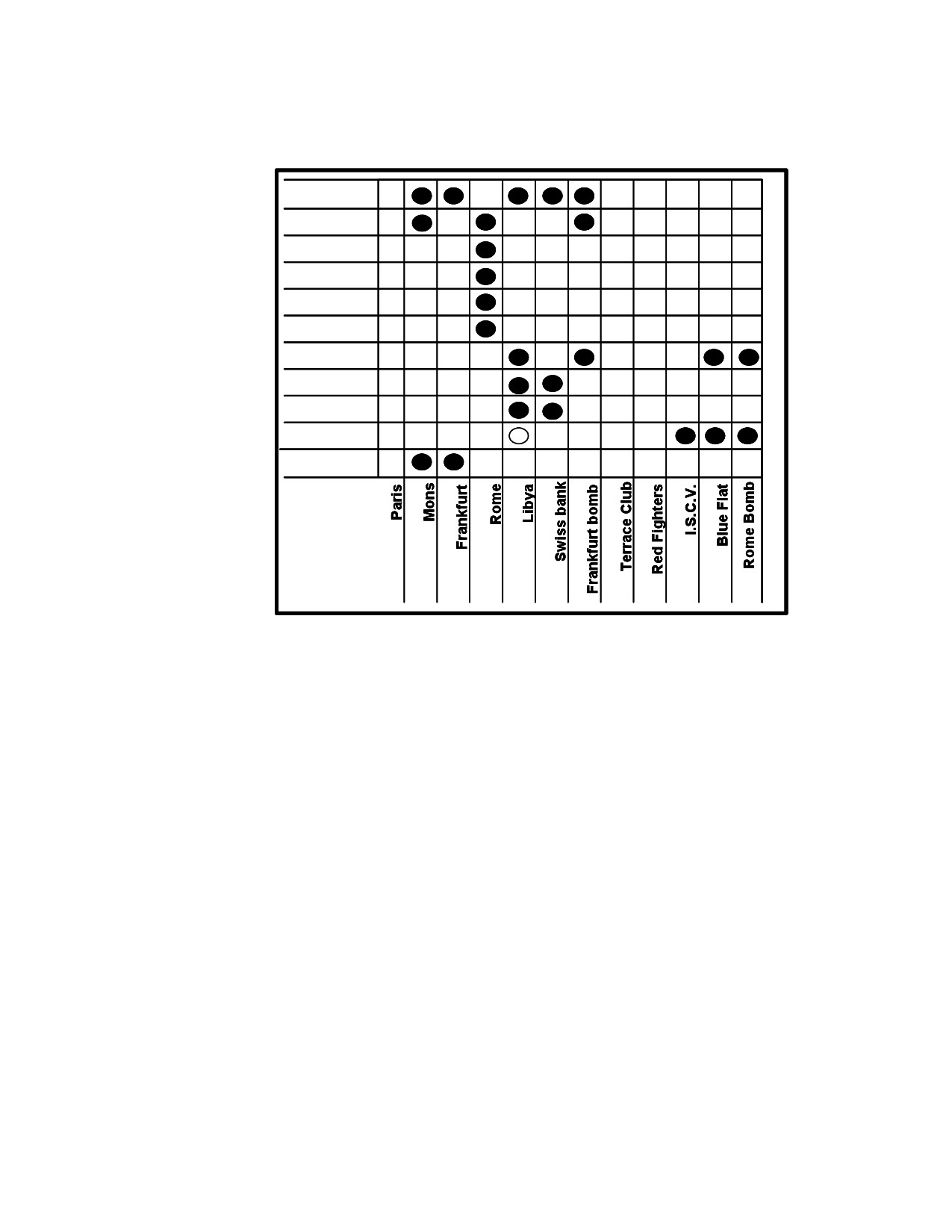
12-23. The activities matrix
(Figure
12-3) is a rectangular array of
personalities compared against activities, locations, events, or other
appropriate information. The kind and quality of data that is available to the
collector determines the number of rows and columns and their content. The
analyst may tailor the matrix to fit the needs of the problem at hand or he
may add to it as the problem expands in scope. This matrix normally is
constructed with personalities arranged in a vertical listing on the left side of
the matrix, and events, activities, organizations, addresses, or any other
common denominator arranged along the bottom of the matrix. This matrix
is critical for the study of a group’s internal and external activities, external
ties and linkages, and even modus operandi. As with the association matrix,
confirmed or “strong” associations between individuals and non-personal
entities are shown with a solid circle or dot, while suspected or “weak”
associations are illustrated by an open circle.
12-24. Using matrices, the analyst can pinpoint the optimal targets for
further intelligence collection, identify key personalities within an
organization, and considerably increase the analyst's understanding of an
organization and its structure. Matrices can be used to present briefings or to
store information in a concise and understandable manner within a database.
Matrices augment but cannot replace SOPs or standard database files. It is
possible, and sometimes productive, to use one matrix for all associations.
This is done routinely using the automated systems mentioned in paragraph
13-6.
12-8
6 September 2006
________________________________________________________________________________ FM 2-22.3
Albert
Bernard
Michael
Victor
William
Ludwig
Herbert
George
Clarence
Julia
Francis
Figure 12-3. Example of an Activities Matrix.
12-25. The link analysis diagram
(Figure
12-4) shows the connections
between people, groups, or activities. The difference between matrices and
link analysis is roughly the same as the difference between a mileage chart
and a road map. The mileage chart (matrix) shows the connections between
cities using numbers to represent travel distances. The map (link analysis
diagram) uses symbols that represent cities, locations, and roads to show how
two or more locations are linked to each other.
6 September 2006
12-9
FM 2-22.3 _________________________________________________________________________________
Assn MAR 91
Khalla-
Hampton
Zaid
Saleh
Falla
El
?
Shalabi
$
El
Alvarez
Siddig
Salem
Hassan
Ayyad
Abou-
Planned UN/FBI/Tunnel
Halima
$
Bombing - In Custody
German
Salameh
Bank
Elgabr
Shaik
WTC
Bomb
Owny
Rahman
FBI
?
4 Bomb Attacks in
Nossair
Egypt 1990
Kahane
Assassination
Karam
Unk
Yusef
$
Hezbollah
Tvl to Iraq
Iran
Mrs.
Fall 1992
$
Rahman
Farag
Unk
Egypt
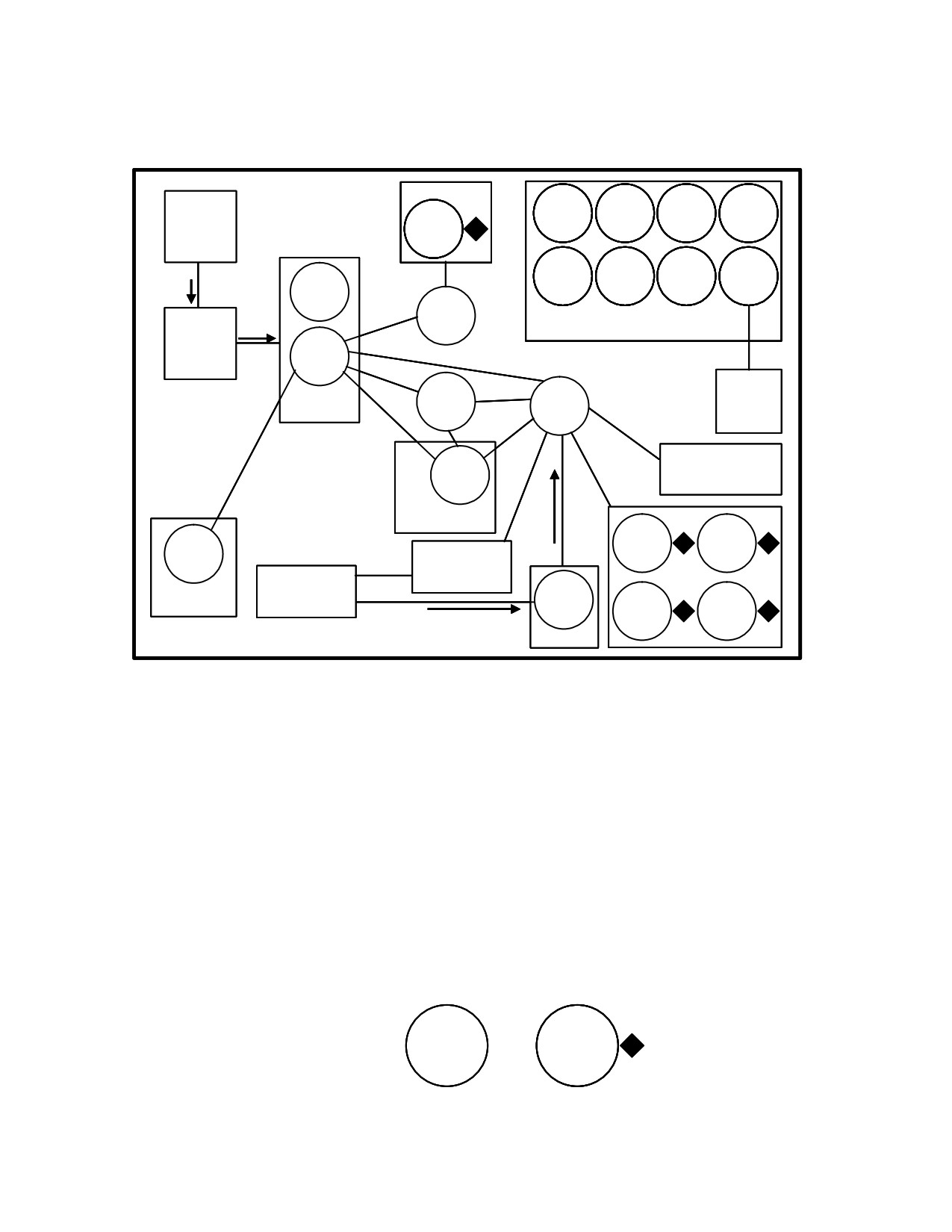
Figure 12-4. Example of a Link Analysis Diagram.
12-26. As with construction of association matrices, there are certain rules of
graphics, symbology, and construction that must be followed.
Standardization is critical to ensuring that everyone constructing, using, or
reading a link analysis diagram understands exactly what the diagram
depicts. Circles and lines are arranged so that no lines cross whenever
possible. Often, especially when dealing with large groups, it is very difficult
to construct a line diagram in which no lines cross. In these cases, every
effort should be made to keep the number of crossings at an absolute
minimum. The standard rules are as follows:
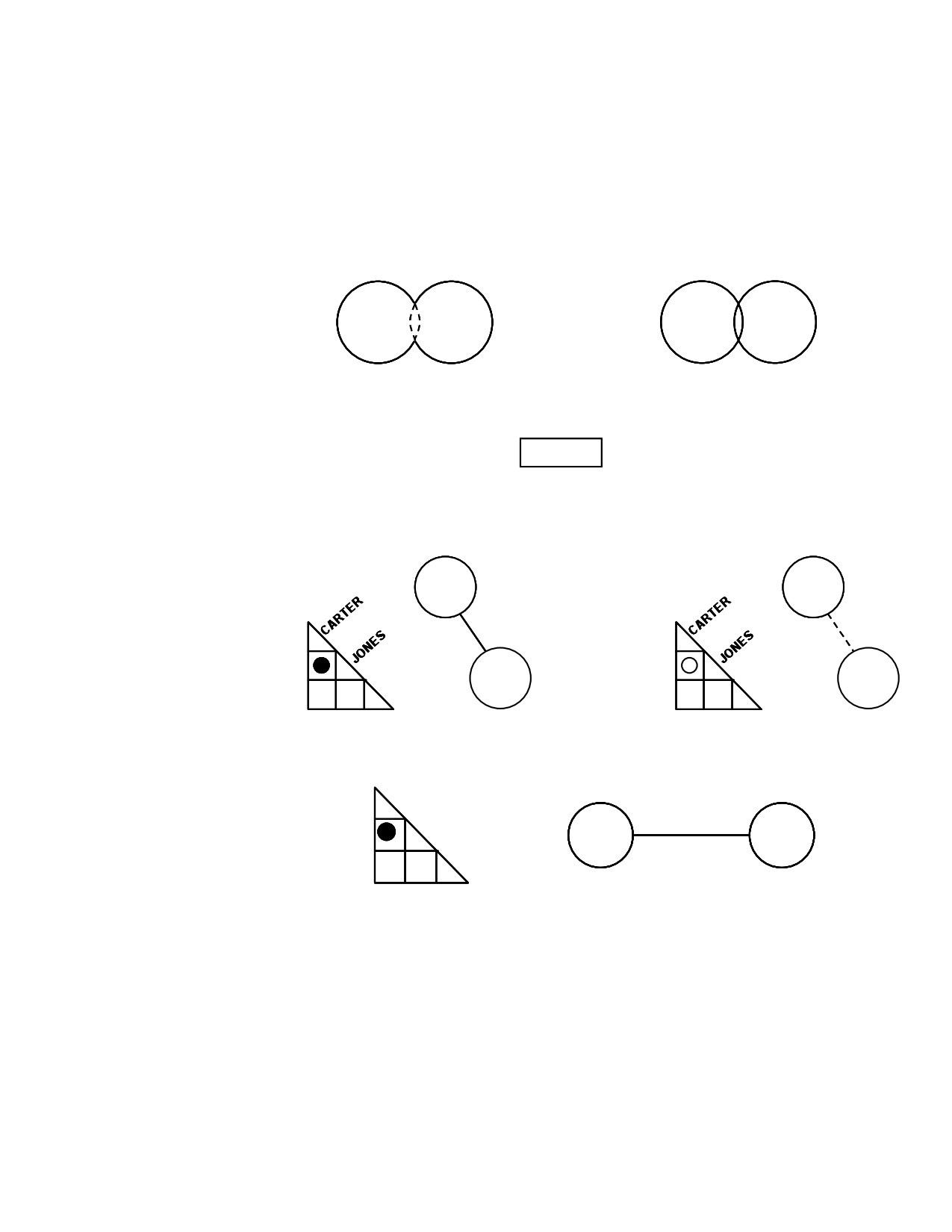
• Persons are shown as open circles with the name written inside the
circle. Deceased persons are depicted in either open circles, with a
diamond next to the circle representing that person
(as in
Figure 12-4) or as open diamonds with the name written inside the
diamond.
JONES
JONES
12-10
6 September 2006
________________________________________________________________________________ FM 2-22.3
• Persons known by more than one name (alias or AKA) are shown as
overlapping circles with names in each circle (as shown below) or
both names are simply listed in the same circle. If the alias is
suspected, a dotted line is used to depict the intersection. If the alias
is confirmed, the intersection is shown with a solid line.
BROWN GREEN
BROWN GREEN
• Non-personal entities (organizations, governments, events, locations)
are shown as appropriately labeled rectangles.
MOSQUE
• Solid lines denote confirmed linkages or associations and dotted lines
show suspected linkages and associations.
CARTER
CARTER
=
=
JONES
JONES
• Footnotes on the matrices can be shown as a brief legend on the
connectivity line.
CCNY ’88 – ‘91
=
CARTER
JONES
3
3. Attended CCNY ’88-’91
• Each person or non-personal entity is depicted only once in a link
analysis diagram.
6 September 2006
12-11
FM 2-22.3 _________________________________________________________________________________
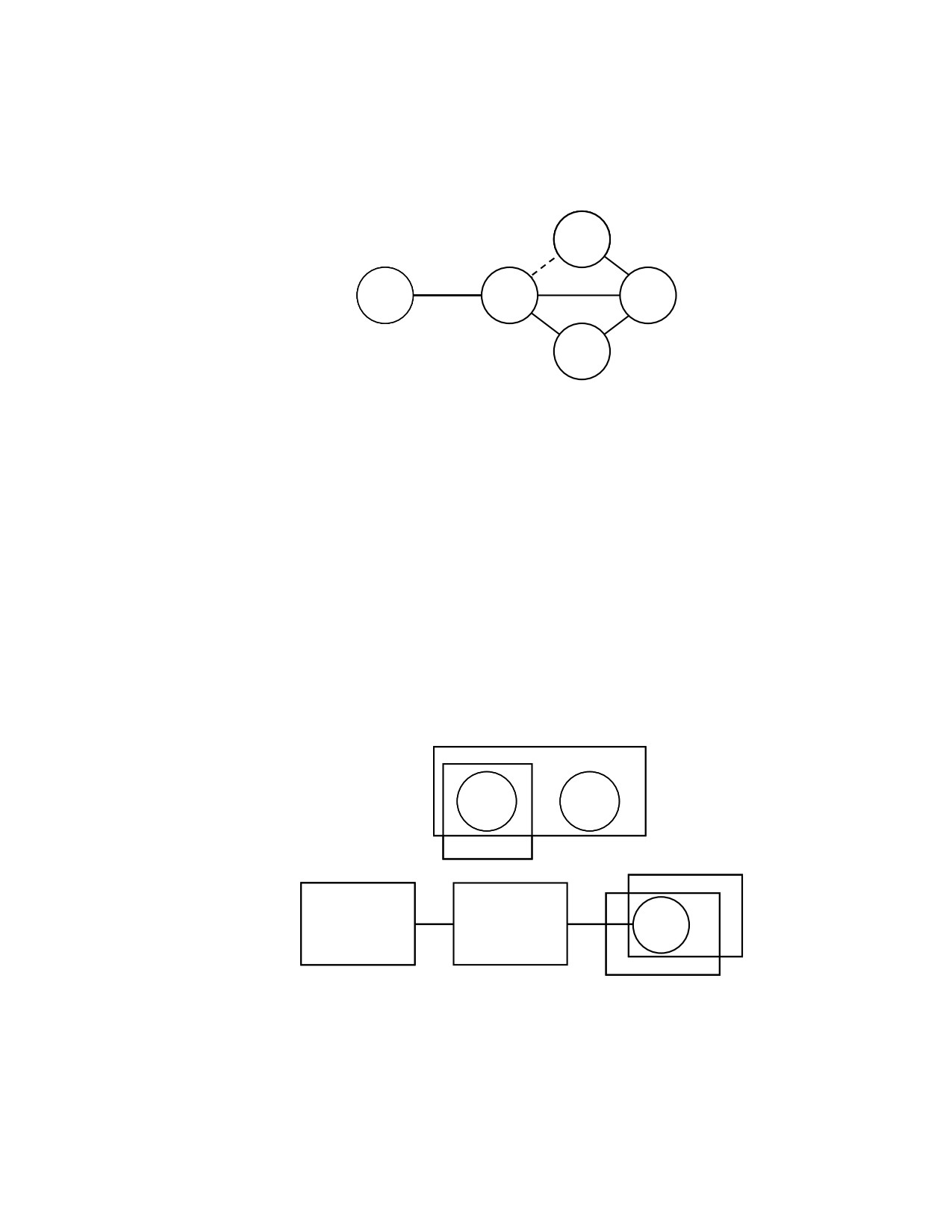
12-27. The following diagram shows only connectivity between persons:
E
A
B
C
D
12-28. The analyst can easily determine from the diagram that Alpha knows
Bravo, Bravo knows Charlie and Delta. Bravo is suspected of knowing Echo
and Charlie knows Delta, Bravo, and Echo. Although the same information
could be shown on a matrix, it is easier to understand when depicted on a
link analysis diagram. As situations or investigations become more complex,
the ease in understanding a link analysis diagram becomes more apparent.
In almost all cases, the available information is first depicted and analyzed
on both types of matrices, which are then used to construct a link analysis
diagram for further analysis.
12-29. Link analysis diagrams can show organizations, membership within
the organization, action teams or cells, or participants in an event. Since each
individual depicted on a link analysis diagram can be shown only once, and
some individuals may belong to more than one organization or take part in
more than one event, squares or rectangles representing non-personal
entities may have to overlap. The following illustration demonstrates that
Ralph and Fred are both members of the "Red Fighters," and that Fred also
is a member of the "Students for Peace." Further, since Ralph and Fred are
shown in the same “box,” it is a given that they are mutually associated.
Red Fighters
Fred
Ralph
S.F.P.
Bombing
Terrorist
Supporting
Training
Ahmed
Government
Camp
Terrorist Group
12-30. There is more to overlapping organizations than is immediately
obvious. At first glance, the overlap indicates only that an individual may
belong to more than one organization or has taken part in multiple activities.
Further study and analysis would reveal connections between organizations,
connections between events, or connections between organizations and
events, either directly or through persons. The above diagram reveals a more
12-12
6 September 2006

________________________________________________________________________________ FM 2-22.3
complex connection between organizations, personal connections, and
linkages.
12-31. The analysis diagram in paragraph 12-29 shows a connection between
organizations and events to which an individual belongs or is associated. In
this case, a national government runs a training camp for terrorists. Ahmed,
a member of the terrorist group, is associated with the training camp, and
participated in the bombing attack. From this diagram, one can link the
supporting government to the bombing through the camp and the
participant.
12-32. When, as is often the case, an organization or incident depicted in a
link analysis diagram contains the names of more than one individual, it is
not necessary to draw a solid line between those individuals to indicate
connectivity. It is assumed that individual members of the same cell or
participants in the same activity know each other, and the connection
between them is therefore implied. If the persons are not mutually
associated, they cannot be placed in the same “box.” Another solution must
be found to depict the situation; that is, show the persons as associated with
a subordinate or different organization or activity.
12-33. A final set of rules for link analysis diagrams concerns connectivity
between individuals who are not members of an organization or participants
in an activity, but who are somehow connected to that entity. Two
possibilities exist: First, the individual knows a member or members of the
organization but is not associated with the organization itself; or second, the
person is somehow connected with the organization or activity but cannot be
directly linked with any particular member of that entity.
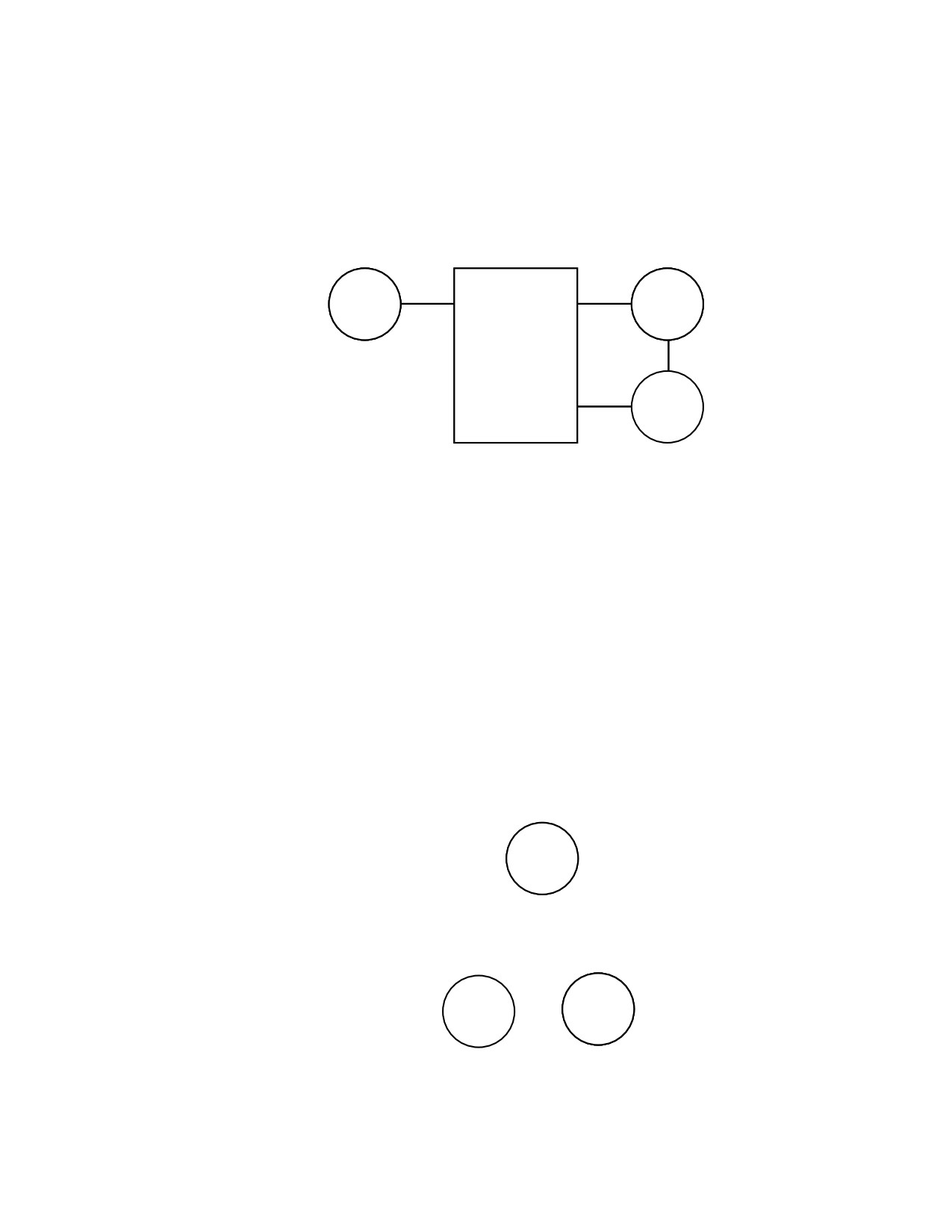
12-34. In the first case, the connectivity line is drawn only between the
persons concerned as depicted here:
SMITH
JONES
BROWN
CELL
6 September 2006
12-13
FM 2-22.3 _________________________________________________________________________________
12-35. In the second case, where Smith is associated with the entity, but not
the persons who are members of entity, the situation is shown as depicted
here:
SMITH
JONES
BROWN
CELL
12-36. The steps in constructing a link analysis diagram are as follows:
• Step 1. Raw data or fragments of information are organized into
logical order. Names of individuals, organizations, events, and
locations are compiled on appropriate lists. At this point, a time
event chart may be completed to assist in understanding the
information and to arrange events into chronological order.
• Step
2. Information is entered onto the appropriate matrices,
graphically displaying “who is associated with whom” and “who is
associated with what.”
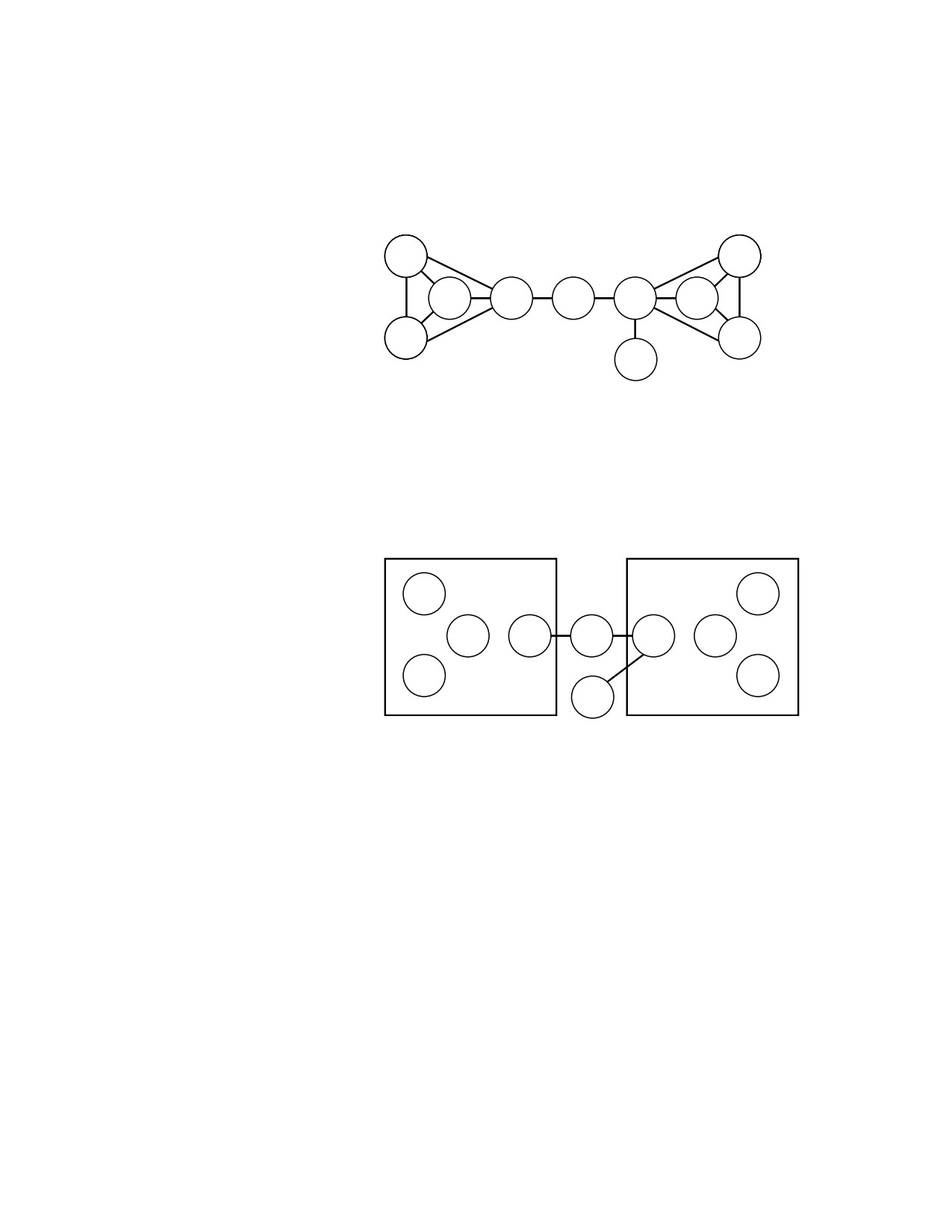
• Step 3. Drawing information from the database and intelligence
reports, and relationships from the matrices, the link analysis
diagram can be constructed. The best method to start the link
analysis diagram is to--
Start with the association matrix and determine which person has
the greatest number of personal associations. Depict that person in
the center of the page.
SMITH
Determine which person has the next highest number of personal
associations. Depict that person near the first person.
JONES
SMITH
12-14
6 September 2006
________________________________________________________________________________ FM 2-22.3
12-37. Use the association matrix and show all confirmed and suspected
personal associations.
D
H
E
A
C
B
I
F
J
G
• After all personal associations have been shown on the link analysis
diagram, the analyst uses the activities matrix to determine which
activities, organizations, or other non-personal entities need to be
depicted by appropriate rectangles. Having done so, the lines of
connectivity between persons within the rectangles may be removed
to prevent clutter.
(It is assumed that participants in the same
activity or members of the same cell are acquainted.)
D
H
E
A
C
B
I
F
J
G
CELL 1
CELL 2
12-38. As shown in Figure 12-4, the link analysis diagram depicts the
membership, organization, activities, and connections of the group that,
under the leadership of Sheik Omar Abdul Rahman, carried out the bombing
of the World Trade Center in New York City and planned other bombing
attacks. Together with the time event chart (Figure 12-1), one can gain a
basic understanding of the group and its activities, and develop working
hypotheses for additional collection and analysis efforts.
12-39. After completion of the matrices and the link analysis diagram, the
analyst makes recommendations about the group’s structure, and areas can
be identified for further collection. Collection assets are employed to verify
suspected connections, ID key personalities, and substantiate or refute the
conclusions and assessments drawn from the link analysis that has been
done. The link analysis diagram and thorough analysis of the information it
contains can reveal a great deal about an organization. It can identify the
group’s leadership, its strong and weak points, and operational patterns. The
analyst can use these to predict future activities.
6 September 2006
12-15
FM 2-22.3 _________________________________________________________________________________
OTHER ANALYSIS TOOLS
12-40. Pattern analysis is the process of deducing the doctrine and TTP that
threat forces prefer to employ by careful observation and evaluation of
patterns in its activities. This technique is based on the premise that threat
COAs reflect certain characteristic patterns that can be identified and
interpreted. Pattern analysis can be critically important when facing a threat
whose doctrine is unknown and it is necessary to create new threat model
and doctrinal templates. Three additional tools that can help the analyst to
determine operational patterns and create and update their threat model are
the coordinates register, pattern analysis plot sheet, and OB factors.
Coordinates Register
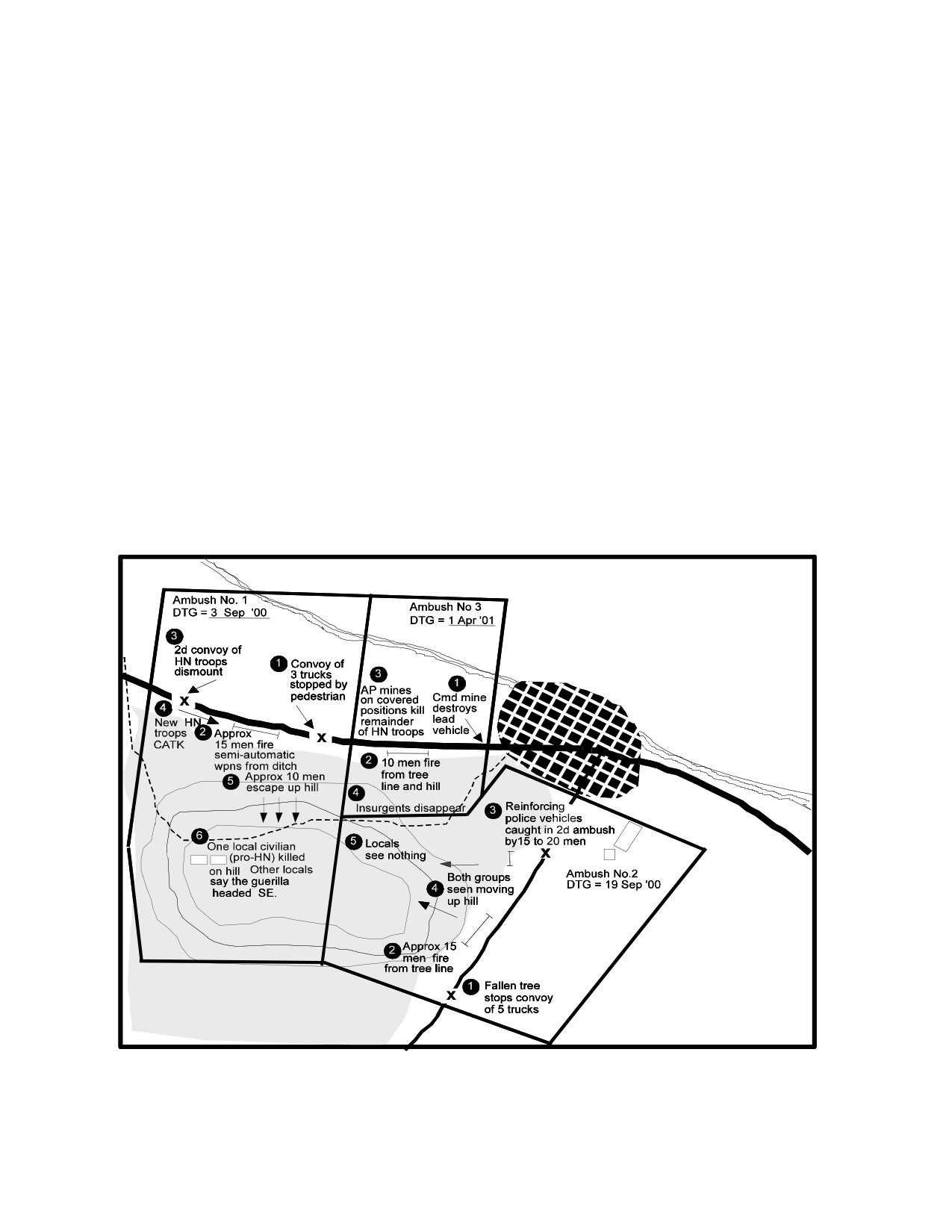
12-41. The coordinates register, or incident map, is one type of pattern
analysis tool
(Figure
12-5). It illustrates cumulative events that have
occurred within the AO and focuses on the “where” of an event. The analyst
may use multiple coordinates registers that focus on a different subject or
blend subjects. Normally, the coordinates register includes additional
information such as notes or graphics. The analyst should use the
coordinates register in conjunction with the pattern analysis plot sheet.
Town of Macomb
Figure 12-5. Coordinates Register.
12-16
6 September 2006
________________________________________________________________________________ FM 2-22.3
Pattern Analysis Plot Sheet
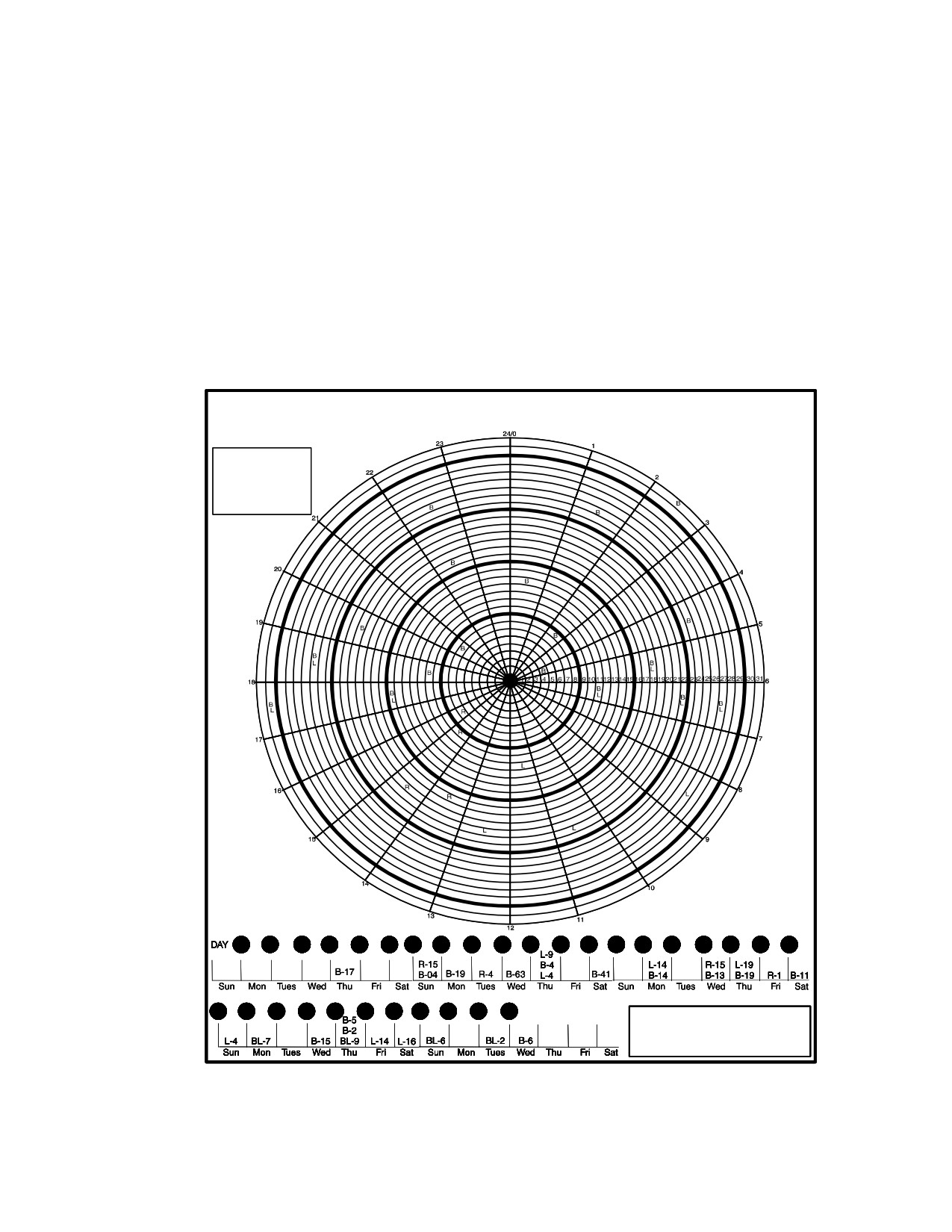
12-42. The analyst uses a pattern analysis plot sheet to focus on the time and
date of each serious incident that takes place within the AO (Figure 12-6)
The rings depict days of the month; the segments depict the hours of the day
As shown in the sheet’s legend, the event itself is identified by using an
alphanumeric designation and directly corresponds to the legend used on the
coordinates register. Another type of the pattern analysis plot sheet helps
distinguish patterns in activities that are tied to particular days, dates, or
times. When used in conjunction with the coordinates register and any
doctrinal templates, a pattern analysis plot sheet supplies the bulk of the
data needed to complete an event template.
ACTIVITY AND AREA: McDonough – Schuyler Province (Division AO)
KNOWN COVERAGE GAPS: Colchester, Quincy
MONTH and YEAR: 1 April 01
LEGEND:
R – Ambush
B – Miscellaneous
L – Raid
1
2
3
4
5
6
7
8
9
10
11
12
13
14
15
16
17
18
19
20
21
22
23
24
25
26
27
28
29
30
31
NOTE: Daily journal number is
listed on calendar (journal
cross-references each incident to
a coordinates register).
Figure 12-6. Pattern Analysis Plot Sheet.
6 September 2006
12-17

FM 2-22.3 _________________________________________________________________________________
OB Factors
12-43. A final analytical tool is OB. The OB does not predict enemy
intentions or probable COAs but is a means of cataloging intelligence data
that qualifies and quantifies certain aspects of threat units. The analyst uses
nine factors shown in Table 12-1 to focus the analysis. These help the analyst
determine threat capabilities, vulnerabilities, and COAs. Although the
situation may dictate that one or more of the factors are given a higher
priority, generally speaking, they are all of equal importance. The OB
framework, while initially developed to support force-on-force offensive and
defensive operations, is easily adapted to support stability and reconstruction
operations and to depict
“unconventional” forces or
even
civilian
organizations.
Table 12-1. Order of Battle Factors.
Factor
Component
Composition
•
Unit identification
•
Organization
Disposition
•
Geographical Location
•
Tactical Deployment
•
Movements
Strength
•
Personnel
•
Weapons and Equipment
•
Types of Units
Tactics
•
Tactical Doctrine
•
Special Operations
Training
•
Individual
•
Unit
•
Specialized
Logistics
•
Systems
•
Status
•
Funding
Combat Effectiveness
•
Combat Experience
•
Morale
•
Tactics
•
Logistics
Electronic Technical Data/Emitter Nomenclature
•
Emitter Type
•
Mode of Emission
•
Frequency Range
•
Location Accuracy for Direction Finding
•
Associated Use (Units or Weapons)
Miscellaneous
•
Personalities/Leadership
•
Unit History
•
Uniforms and Insignia
•
Code Names and Numbers
12-44. The OB is based on the premise that there are certain constants to
any group activity. All groups whether they are conventional military forces,
insurgent groups, or civilian organizations must have an organizational
structure (composition). This structure may not be easily discernable but it
will exist. Likewise, any organization has a location or locations in which it
operates, personnel and equipment numbers, a system for training, getting
supplies, judging efficiency and effectiveness of its operations, communi-
12-18
6 September 2006
________________________________________________________________________________ FM 2-22.3
cating, and taking care of other intangibles such as morale. The OB gives the
analyst a framework to organize information. The analyst adapts the topic
headings to match the particular environment.
HUMINT SOURCE SELECTION
12-45. HUMINT source selection involves identifying, researching, and
actively locating a specific group, organization, or individual for the purpose
of collecting information in response to intelligence requirements. The
HUMINT source selection process includes the C/J/G/S2X, the HOC, the
HAT, the OMT, and the HCT. The source selection process allows the
HUMINT team leader to identify the most likely source of information,
eliminating the uncertainty of the access and placement of sources. Source
selection also helps optimize the HUMINT collection effort. Any individual,
group, organization, or agency that can be approached for information
regarding intelligence requirements is a potential source. Sources are chosen
according to their reliability, level of cooperation, and placement and access.
Selection is particularly important in stability and reconstruction operations
where the HUMINT collectors have access to a large potential source pool.
Source selection establishes which current sources can best answer
requirements and establishes source profiles to support the screening and
selection of new sources.
ESTABLISH DATABASES AND TARGET FOLDERS
12-46. The establishment of local databases, target folders, and personality
files is normally the responsibility of the OMT. This is done in coordination
with the supporting ACE or analysis control team (ACT). Databases are
required to manage the information. By using databases one can identify
gaps in the information. The HCT and OMT access higher databases through
intelligence reach to share and deconflict locally maintained data with higher
level databases. Local databases can be created and used to help track source
production, knowledge, reliability, and accuracy, and they simplify cross-
reference data that is of primarily local interest. It is ideal to review and
update databases at least weekly.
12-47. A target folder provides the collector with up-to-date intelligence
information about details of the target. It includes anything of HUMINT
value including biographies, descriptions, photographs, and previous
information reports. The information can be gained from the ACE or ACT,
past reports, INTSUMs, and databases; it can then be organized into easily
accessible automated folders. Information on people is categorized and
recorded in a personality file. The file serves as reference material for
collectors. Information on key military and civilian figures can be of
significant value when establishing unit or group identification, tactics, and
combat effectiveness. The file should not only provide information on
cultural, religious, tribal, political, military, criminal, and governmental
background but also contain specific personalities for collectors to focus their
collection effort on. This allows the collectors to concentrate on mission
planning and to conduct their mission rather than to research information.
6 September 2006
12-19
FM 2-22.3 _________________________________________________________________________________
COMPARE SOURCE LIST WITH REQUIREMENTS
12-48. As target folders are compiled, a list of high-value sources will
emerge. It is a simple matter to compare the source list with the PIRs and/or
SIRs. This will lead to efficient and time-saving missions for the collectors.
Rather than spend time meeting with sources who may have information
concerning certain subjects, the HCT is able to tackle the collection process
with foresight. Upon receipt of the mission, the OMT conducts mission
analysis to determine the optimal way to meet mission requirements. Proper
mission analysis enables the collector to properly focus his assets (sources) to
gain the maximum amount of intelligence from those sources most likely to
possess the highest quality information.
12-49. The following products, which will focus the HCT’s collection efforts,
can be prepared in conjunction with the ACE and joint intelligence centers:
• Time event charts.
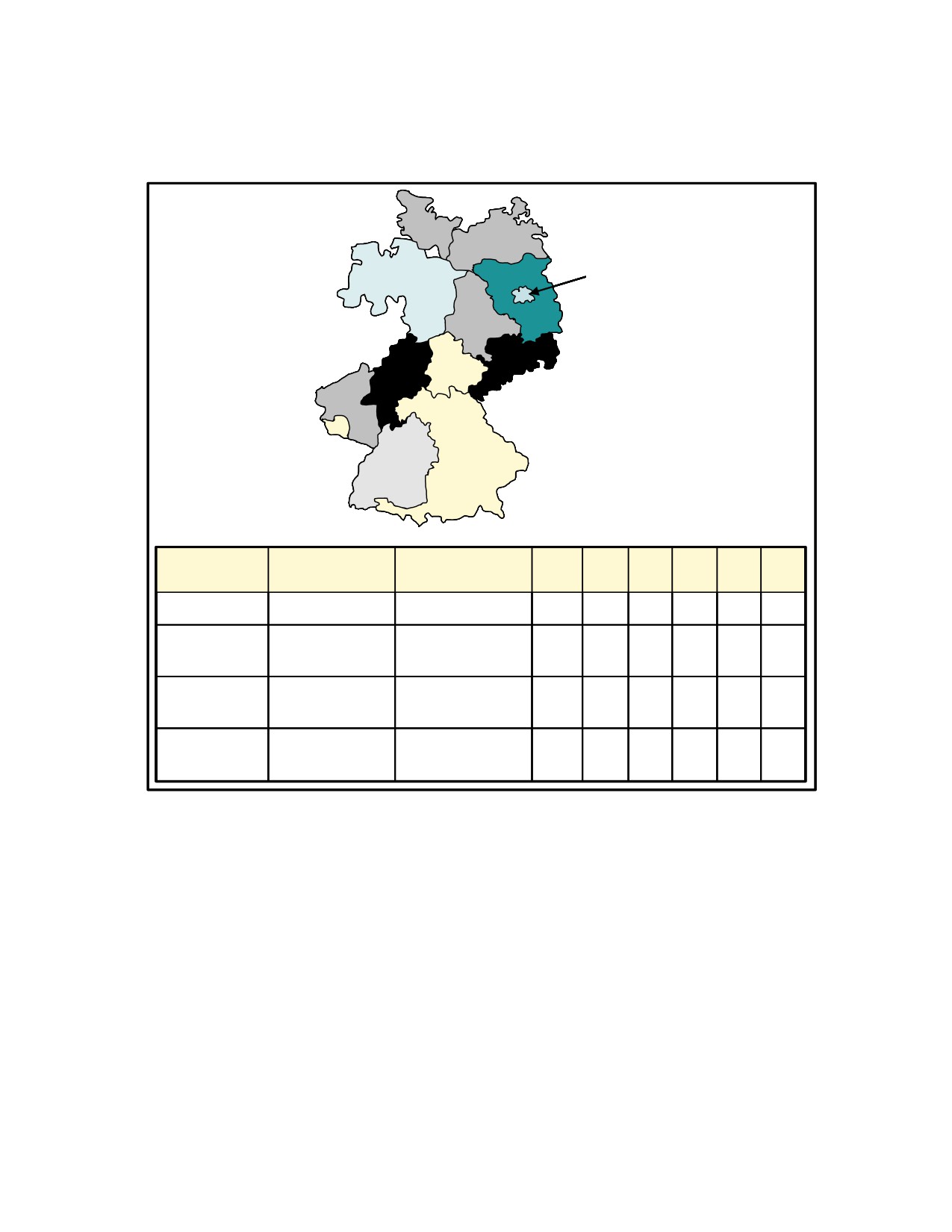
• Source coverage overlays or matrices (see Figure 12-7).
• Link analysis diagrams.
• HUMINT portions of OPORDs and situation reports.
12-50. The source coverage overlay or matrix helps tie in the source coverage
to the requirements. It also helps identify gaps in collection. A collection
matrix serves the same purpose. It supplies a quick reference when
answering intelligence requirements. The matrices must cover both the
geographical area and the placement and access of the source. A demographic
overlay helps to identify ethnic groups in an area and to track events and
patterns based on religious or ethnic differences. The overlay and matrix are
examples of how source coverage can be tied to intelligence requirements.
12-51. Source profiles are vital to screening sources for HUMINT collection
operations and to identifying personnel that might be of interest to other
agencies such as CI and TECHINT. As the situation changes, the HCT might
be tasked with new collection requirements that cannot be answered by the
current sources. The HCT is constantly looking for new and better sources.
When presented with new requirements, the OMT develops a source profile
of the type of individual that would most likely be able to provide the
information required. This profiling can include placement, access, age,
ethnic type, gender, location, occupation, and military specialty. The OMT
first searches through existing local databases to try to get a source match. If
not, it passes the profile to the HCTs along with the requirements to
facilitate their screening of potential sources.
12-20
6 September 2006
________________________________________________________________________________ FM 2-22.3
Source
Source
3
4
Source
Source
1
2
L
PIR
PIR
PIR
PIR
PIR
PIR
AREA
1
2
3
4
5
6
0001
Police
Village 1
X
0002
Municipal
Village 1 and
X
X
Government
National
0003
Political
City 1 and 2
X
X
Party 1
0004
Political
City 3 and 4
X
X
X
Party 2
Figure 12-7. Example of a Source Coverage Overlay or Matrix.
6 September 2006
12-21
This page intentionally left blank.
FM 2-22.3
Chapter 13
Automation and Communication
13-1. Modern automation and communications systems are vital to
HUMINT collection. Real-time collaboration, detailed operational planning
and ISR integration, as well as enhanced collection and source exploitation
tools, must support team efforts. Emerging technology continues to allow
the entire HUMINT collection system to operate more effectively.
Commanders must be prepared to supply their HUMINT collection assets
with the best possible technology not only to enhance collection but also to
optimize the survivability of the collectors. (See Appendix L.) Commanders
may not be able to rely solely on standard military equipment but must be
prepared to bridge the inevitable technological development gap through
the identification and adaptation of commercially available products and
technologies. For specific system components and capabilities, see ST 2-50.
AUTOMATION
13-2. HUMINT automation uses common hardware and software solutions
with a flexible interactive user interface to provide standardization of
equipment and processes across all operational environments and
conditions. HUMINT automation must be deployable and scalable to fit the
mission or force package. System components must be capable of
intelligence reach to support forward-deployed elements. HUMINT
automation allows integration and interaction with existing intelligence
operations, HUMINT operational systems, and databases. This integration
allows operations personnel and analysts to develop plans and levy
collection and operational requirements, as well as to manage, control,
analyze, and report the information collected. HUMINT automation—
• Provides connectivity and reach capability between all echelons of
HUMINT activity.
• Receives higher echelon requirements and transmits requests for
information.
• Converts HUMINT reporting into formats for JTF or coalition task
force (CTF), theater, or national consumption.
• Pushes requirements, requests, and plans for HUMINT operations in
theater as required.
• Maintains the central HUMINT database for the theater or AO.
• Leverages JTF or CTF, theater, and national level requirements and
products for strategic, operational, and tactical HUMINT assets in
theater.
6 September 2006
13-1
FM 2-22.3
________________________________________________________________________________
• Enables HUMINT to provide accurate and timely correlated
information to supported commanders through established reporting
channels.
• Provides automated analysis tools.
13-3. Systems such as Trusted Workstation (TWS) can convert HUMINT
reporting into formats for JTF or CTF, theater, or national consumption.
TWS can also connect between the SIPRNET and any lower level networks,
such as coalition, multinational, or NATO, or unclassified networks such as
NIPRNET or the Internet.
COLLECTION SUPPORT AUTOMATION REQUIREMENTS
BIOMETRICS
13-4. Biometrics is the study of measurable biological characteristics. In
HUMINT collection, biometric devices, usually computer based, enable the
HUMINT collector to use biological data to support the collection and
analysis effort. Biometrics can also be used in non-HUMINT efforts to
collect and maintain evidence for criminal prosecution. The two major types
of biometric data that are useful to the HUMINT collector are identification
data and data that indicate source truthfulness. Identification devices use
biological information such as fingerprints, voiceprints, facial scans, and
retinal scans to match an individual to a source database. They can verify
the identity of a specific individual from the target population during
screening.
13-5. HCTs may be equipped with portable equipment for collecting,
storing, analyzing, forwarding, and retrieving biometric information. The
BAT is able to identify personnel by using identifying characteristics of
their irises, fingerprints, or facial photograph. The structured query
language (SQL) server-based database links identifying characteristics
with all previous reports related to the person. Once a person’s identifying
characteristics are entered into the database, if that person is again
detained and scanned, the system has a probability of identifying them that
approaches 100 percent. This ability is especially useful for determining if
a source is providing the same information to multiple collectors; thereby
avoiding false confirmation of information. HUMINT collectors primarily
use BAT during screening operations at all echelons; from checkpoint
screening, to screening at a DCP, to screening at a JIDC. MPs use the
Detainee Reporting System
(DRS) during in-processing at internment
facilities. The DRS records data for detainee processing and tracking and is
intended to interact with the BAT system to avoid duplication of effort.
13-6. The hardware that makes up the system, which is given to MI teams,
consists of a commercial off-the-shelf
(COTS) semi-hardened laptop
computer running an operating system with a graphical user interface. It
has a camera and an iris scanner, each of which is portable and can be used
independent of the computer to collect and temporarily store information.
The system also includes a fingerprint scanner that conforms to FBI
requirements for admissible evidence. The fingerprint scanner must be
attached to the computer during use.
13-2
6 September 2006
_________________________________________________________________________________ FM 2-22.3
13-7. Biometric devices such as voice stress analyzer and polygraph support
the determination of the truthfulness of a source. The polygraph is of
limited usefulness in general HUMINT collection due to the level of
expertise needed to operate it and the lack of general availability of the
device to the field. As devices are developed that can remotely collect and
report information to the HUMINT collector on subtle changes in the
source’s respiration, heartbeat, perspiration, and eye movement that can be
indicators of deceit, they can be used to support HUMINT collection.
MACHINE TRANSLATION AND INTERPRETATION
13-8. Understanding oral and written communication in a foreign language
is often the center of effective HUMINT collection operations. The optimal
solution is to have an individual who is a trained collector of native
proficiency, totally versed in the local situation and US requirements, with
the requisite security clearance, who is capable of reporting accurately in
English. Commanders’ access to such individuals is usually problematic.
This requirement is met through a combination of MI linguists, contractors,
native speakers within the DOD system, and locally hired civilian
translators. Difficulties arise if the proficiency levels of MI linguists are not
up to mission requirements, or if the linguists do not possess the proper
language for the theater of operation. Using locally hired translators raises
security problems. In light of these conditions, an increasingly viable
solution for the commander is the use of machine translation devices to
meet some of these requirements.
13-9. Voice and text translation machines or software are critical in
augmenting available linguists. This includes natural language processing,
artificial intelligence, and optical character recognition (OCR) capabilities.
The basic application of machine translation, such as speech recognition
and OCRs, dramatically increases the speed of processing information.
Software programs are becoming widely available that allow a non-linguist
to determine the intelligence significance of a foreign document, aid
linguists with laborious tasks, and add consistency to human translation.
13-10. Machine interpretation is the use of a machine to interpret the
spoken word between the HUMINT collectors and another individual
speaking a foreign language. Linguists are in high demand during
operations and usually limited in number. As machine interpretation
devices that address this problem become available to the field, they will
improve the communication ability of non-linguists.
ANALYTICAL AUTOMATION REQUIREMENTS
13-11. The requirement for a robust HUMINT single-discipline analytical
capability extends through all echelons from national level to the OMTs.
Communication between HUMINT analysts at the operational level and
analysts at the staff level may best be accomplished through a web-based
communication capability. Web-based visual analytical tools allow maxi-
mum analyst participation in the development of products geared to
mission planning, targeting, and information analysis at all echelons.
6 September 2006
13-3
FM 2-22.3
________________________________________________________________________________
Analytical products must be responsive to the special needs of a specific
collection operation, project, or element.
13-12. HUMINT collectors run operations in terrain made up of persons,
organizations, and installations of interest. Intelligence analysis support
determines the specific terrain in each team area and how it differs from
one team’s named area of interest (NAI) to another. Specific products
include studies on nominated targets
(persons, organizations, and
installations) and trends based on HUMINT reporting, as appropriate, and
visual analysis products
(time event charts, matrices, link analysis
diagrams, and organizational diagrams).
AUTOMATED ANALYSIS TOOLS
13-13. Automation of HUMINT analytical tools such as time event charts,
association matrices, activity matrices, and link analysis diagrams
dramatically increase predictive analysis capability. Automation saves
time and permits access to more complete information thus producing a
more accurate, timely product. Automated analysis techniques, aided by
computerized virtual-viewing programs, allow the analyst better battlefield
visualization. Automated analysis, linked to data and databases, includes
artificial intelligence programs. These programs assist the analyst in
developing predictions and identifying information gaps to support
targeting and collection. Automation and web-based tools allow the analyst
to⎯
• Track and cross-cue HUMINT reports.
• Incorporate data extraction technology, retrieval, automated data
organization, content analysis, and visualization.
• Share analytical conclusions with HUMINT teams and other
analysts in real time.
• Apply multidimensional technologies, content analysis techniques,
and web-based collaborations.
• Display analytical results and view HUMINT operations in real time.
• Share resources such as models, queries, visualizations, map
overlays, geospatial images, and tool outputs through a common
interface.
• Apply clustering (a nonlinear search that compiles the results based
on search parameters) and rapid spatial graphical and geographic
visualization tools to determine the meaning of large informational
streams.
• Rapidly discover links, patterns, relationships, and trends in text to
use in predictive analysis.
• Capture analytical conclusions and automatically transfer to
intelligence databases and systems.
13-4
6 September 2006
_________________________________________________________________________________ FM 2-22.3
SEARCH ENGINES
13-14. Search engines provide access to previously collected or known
information facilitating the development of comprehensive analytical and
intelligence products and avoiding unnecessary collection tasking
redundancy. A tool set for data visualization, search, and discovery is
required, which is embedded with several software programs for
manipulating data from multiple databases. The types of modules in
visualization packages should include search engines and knowledge
discovery
(semantic clustering) for unformatted data, applications for
extracting and organizing formatted data, and data labeling. The package
should also include a model building tool to enable users to make their
archives more efficient with respect to search, retrieval, and compatibility
to other applications as well as archiving and maintenance tools to support
what will eventually become a large data warehouse. Search engines
should be⎯
• Multilingual and able to query multiple classified and unclassified
databases.
• Capable of developing, querying, and manipulating stored
information.
WEB-BASED REPORTING AND PORTALS
13-15. Web-based reporting employs current Internet portal technology. The
web-based portal is an efficient and effective means of developing a
repository of HUMINT information. It employs an interactive graphic
interface using client browser technology, search engines, hyperlinks, and
intelligent software agents for searching, finding, viewing, and maintaining
databases and supporting HUMINT work, data, and information flows. It
supports collaborative analysis at multiple echelons through connectivity
on the SIPRNET. The following pertains to web-based reporting:
• Web-based databases work with any computer hardware, operating
system, or software and can be made accessible through web portals.
• Firewalls and information access are controlled at each level with an
approving systems administrator at each level conducting quality
control through release authority procedures.
• Graphic user interface uses standard Army and DOD report formats.
• Graphic user interface walks the user through a critical task and is
able to identify Army and DOD reports as required. Reports must be
Army and DOD platform compatible and transferable through and to
their respective systems.
• Multimedia supports applications for attaching, associating, and
hyperlinking video, still photographs, voice, scanned objects,
graphics, and maps to records and files.
13-16. Web-based reporting and web pages developed for specific products
allow the user to⎯
• Leverage their effort and expertise against all requirements, not just
the ones that must be met immediately.
6 September 2006
13-5
FM 2-22.3
________________________________________________________________________________
• Identify timely intelligence gaps and the leads to fill those gaps.
• Ensure immediate analytical feedback on collector reports to—
Post questions directly to a web page to enable all HCTs to answer
or be cued to the specific request.
Identify or request clarification on questionable data for quality
control.
• Fuse HUMINT information and all-source information as required.
• Focus collection teams supporting maneuver commanders’
requirements more effectively.
• Immediately extract information for crisis reaction.
13-17. If HCTs use web portals to submit reports directly to theater level,
they must also send the reports through their OMT for submission to the
2X. Failure to do so may deny the 2X the ability to deconflict and cross-
reference reports. HUMINT collectors must ensure that they follow the
theater-specific methodology for access to the theater web portal.
DATABASES
13-18. Without databases, information is difficult or impossible to retrieve
quickly, especially under adverse conditions. Databases allow access to
data in a distributed environment and support many complex HUMINT
functions and requirements, including—
• Mission deconfliction.
• RM.
• RFIs.
• HUMINT analysis.
• Summary, report, and assessment preparation.
• Threat and friendly situation tracking.
• Targeting.
13-19. Databases interact with other tools to support predictive analysis,
prepare graphic analytical products, and provide situational understanding
down to the HCT. These databases⎯
• Support time event charts, association matrices, link analysis, and
other analysis tools.
• Require a designated systems administrator at each. To ensure a
high degree of integrity, discrepancies must be verified for accuracy.
• Allow operators, managers, and analysts to—
Compartment
(protect) source-sensitive operational database
segments, files, records, and fields.
Create, update, and maintain databases from locally generated
information.
Import complete or partial databases from larger or peer databases.
Export complete or partial databases to peer or larger databases.
13-6
6 September 2006
_________________________________________________________________________________ FM 2-22.3
Share data and databases between peers, subordinates, or higher
with appropriate access authorization.
• Provide systematic processing and automated parsing using
standardized forms in intelligence operations, which are
automatically parsed into appropriate databases for information
storing, sharing, retrieval, and analysis.
• Allow query functions for decisionmaking as well as operational and
analytical support.
• Provide analytical programs able to correlate data that facilitate
information retrieval from any data repository.
• Incorporate information retrieval functions such as browsing (that is,
point and click), key word searching, concepts, and similar functions.
• Support a suite of specialized decision support software (DSS)—a set
of tools which supports HUMINT source administration, analysis,
and risk management decisions. DSS tools should produce a set of
HUMINT reports specifically tailored to the HUMINT
decisionmaking, analysis, and assessment process.
13-20. HARMONY is the national intelligence database for foreign DOCEX
and translations management. HARMONY is the single, comprehensive
bibliographic reference for all available primary source foreign technical
and military documents and their translations. This single database
concept eliminates duplicate collection, translation, and reporting of
primary source foreign technical and military documents and greatly
streamlines the process of providing exploited documents to consumers.
The HARMONY database application uses the DOD Information
Infrastructure (DII) Common Operating Environment (COE) guidance. The
HARMONY database is web-enabled and can be readily accessed, easily
used, and responsive to the needs of analysts and other consumers within
the US Government community.
AUTOMATION SYSTEMS
13-21. The HUMINT collection automation systems are normally shared
systems used by both the HUMINT and CI communities. They must have
connectivity with lateral units as well as higher and subordinate elements.
C/J/G/S2X, HOC, AND HAT AUTOMATION REQUIREMENTS
13-22. The HUMINT staff elements need to receive input from the OMTs
and HCTs as well as input from higher and lateral echelons. They must be
able to conduct HUMINT planning, RM, and report dissemination. They
must transmit technical support information, interface with ACE and
automated analysis systems, manipulate HUMINT databases, conduct
reach, and have access to HUMINT analytical tools.
6 September 2006
13-7
FM 2-22.3
________________________________________________________________________________
OMT AND COLLECTION TEAM LEADER REQUIREMENTS
13-23. The OMT must be able to track teams and team members; receive
and transmit data including graphic data to and from higher, lateral, and
lower HUMINT elements; create, receive, edit, and transmit reports;
conduct single-discipline HUMINT analysis; receive and transmit technical
support information and tasking information; conduct reach; and conduct
mission planning.
INDIVIDUAL COLLECTOR AUTOMATION REQUIREMENTS
13-24. The key to effective HUMINT collection is unimpeded communication
between the collector and the source of information. Any technological
support to HUMINT collection must be as unobtrusive as possible to
minimize the intimidation factor when dealing with human sources. The
individual collector must be able to--
• Record (both video and voice) conversations with sources.
• Scan, translate, and transmit documents and photographs.
• Instantaneously locate themselves in both rural and urban
environments.
• Immediately access local, theater, and even national level databases.
• Communicate instantaneously with other team elements.
HUMINT AND CI WORKSTATION REQUIREMENTS
13-25. The CI and HUMINT teams have organic computer and data
processing equipment. These workstations provide HUMINT and CI teams
with both productivity and management and analysis tools. They also
provide SIPRNET connectivity and processing capability to identify
requirements and facilitate reporting into other DOD systems as required.
The HUMINT and CI workstation is able to use standard Army, DOD, and
HUMINT and CI reporting programs, standard symbols, programs to
produce map overlays, and map plotting software; all of which are included.
13-26. Teams use workstations to—
• Provide quality control and dissemination of reports from the
subordinate HCTs.
• Direct activities of subordinate HCTs and provide management to
them.
• Perform single-discipline HUMINT analysis for the supported
commander.
• Transmit intelligence and administrative reports in NRT to higher
headquarters.
• Receive tasking and administrative reports from higher headquarters
and distribute to HCTs as required.
• Consolidate local databases and provide database input to higher
headquarters.
• Receive database and digital information from higher headquarters
and pass to lower and vice versa.
13-8
6 September 2006
_________________________________________________________________________________ FM 2-22.3
COMMUNICATIONS
13-27. Successful HUMINT operations must be supported by multi-echelon
technical control and a communications system that provides internal team
communications, links HCTs to OMTs, and links OMTs to higher
headquarters, analytical elements, and theater and national agencies.
COMMUNICATION ARCHITECTURE
13-28. The HUMINT collection architecture requires operation on several
communications and processing nets. These nets provide the framework
needed to coordinate the tasking, reporting, C2, and service support of
HUMINT collection units spread across the width and depth of the
battlefield. Under most operational scenarios, HCTs are not stationary.
They are constantly moving throughout their supported command’s AO and
are able to communicate on the move. They cannot rely on fixed
communications nodes for support. Communications redundancy ensures
the loss of any one system does not severely disrupt HUMINT operations.
HCTs and OMTs normally operate at the collateral security level to ensure
the timely dissemination of combat information and targeting data to
organizations operating outside MI channels. The C/J/G/S2X normally
requires access to Top Secret (SCI) communications capabilities to maintain
coordination with national level agencies.
13-29. The HUMINT collection assets use three basic communications nets:
the operations and intelligence (O/I) net, a command net, and a HUMINT-
specific technical net. Dependent on their mission and battlefield location,
the HCTs may also need to monitor the fire support element (FSE),
aviation, or air defense artillery (ADA) communications nets.
• The O/I net links the collectors and producers of intelligence to the
consumers of the intelligence information. It is used to pass
information of immediate value to the affected unit and to analytical
elements at the supported unit.
• The command nets exist at every echelon of command. They link the
superior headquarters with its subordinate elements. Normally a
unit will operate on two command nets; the one that links that unit
to its higher headquarters and the one that links that unit to its
subordinate elements. HUMINT elements will also use their unit’s
command net to coordinate logistic and administrative support.
• The technical nets link the control team to all of their subordinate
collection teams and to the centers or organizations that provide the
databases and technical guidance necessary for single-discipline
collection and analysis. For example, the technical net would connect
HCTs through their control teams to the S2X and higher echelon
HUMINT analysis organizations.
6 September 2006
13-9
FM 2-22.3
________________________________________________________________________________
MOBILE COMMUNICATIONS REQUIREMENTS
13-30. HUMINT mobile communications requirements augment the
network connectivity that elements should have when at a base camp or
facility; they vary with each element’s mission and location as follows:
• Individual HUMINT collectors must maintain communications
capability with the other team members and the team leader while
dismounted. HUMINT collectors, especially when supporting offensive
and defensive operations, may be deployed as individuals. They need
to maintain contact with their team leader for technical and
operational support.
• The HCT may operate anywhere within the supported unit’s AO.
They may operate mounted or dismounted. If supporting airmobile,
airborne, amphibious, or other mobile operations, they may not have
access to their vehicle-mounted communications systems for the
critical early stages of these operations. They receive and report
operational and technical information, as well as report intelligence
information to the OMT using their unit’s command net. They
monitor their superior unit’s O/I net. If in DS to a maneuver
element, they also monitor the command net of the unit they are
supporting.
• OMTs normally operate on the superior unit O/I net, their unit C2
net, and the HUMINT technical net. If the OMT is in DS, it must
also operate on the C2 net of the supported unit.
• The C/J/G/S2X operates on the C2 net, monitors the O/I net, and
controls its echelon HUMINT technical net. The 2X needs secure
(SCI) communications capability to coordinate operations and pass
data between themselves and higher HUMINT organizations.
13-10
6 September 2006
____________________________________________________________________________________ FM 2-22.3
Appendix A
Geneva Conventions
SECTION I. GENEVA CONVENTIONS RELATIVE TO THE TREATMENT OF
PRISONERS OF WAR (THIRD GENEVA CONVENTION)
The articles in this section are extracted from the Geneva Convention Relative to the Treatment
of Prisoners of War, 12 August 1949.
PART I GENERAL PROVISIONS
ARTICLE 1
The High Contracting Parties undertake to respect and to ensure respect for the present
Convention in all circumstances.
ARTICLE 2
In addition to the provisions which shall be implemented in peace time, the present Convention
shall apply to all cases of declared war or of any other armed conflict which may arise between
two or more of the High Contracting Parties, even if the state of war is not recognized by one of
them.
The Convention shall also apply to all cases of partial or total occupation of the territory of a
High Contracting Party, even if the said occupation meets with no armed resistance.
Although one of the Powers in conflict may not be a party to the present Convention, the Powers
who are parties thereto shall remain bound by it in their mutual relations. They shall
furthermore be bound by the Convention in relation to the said Power, if the latter accepts and
applies the provisions thereof.
ARTICLE 3
In the case of armed conflict not of an international character occurring in the territory of one of
the High Contracting Parties, each party to the conflict shall be bound to apply, as a minimum,
the following provisions:
1. Persons taking no active part in the hostilities, including members of armed forces who
have laid down their arms and those placed hors de combat by sickness, wounds, detention, or
any other cause, shall in all circumstances be treated humanely, without any adverse
distinction founded on race, color, religion or faith, sex, birth or wealth, or any other similar
criteria. To this end the following acts are and shall remain prohibited at any time and in
any place whatsoever with respect to the above-mentioned persons:
6 September 2006
A-1
FM 2-22.3
____________________________________________________________________________________
(a) Violence to life and person, in particular murder of all kinds, mutilation, cruel
treatment and torture;
(b) Taking of hostages;
(c) Outrages upon personal dignity, in particular, humiliating and degrading treatment;
(d) The passing of sentences and the carrying out of executions without previous judgment
pronounced by a regularly constituted court affording all the judicial guarantees which are
recognized as indispensable by civilized peoples.
2. The wounded and sick shall be collected and cared for.
An impartial humanitarian body, such as the International Committee of the Red Cross, may
offer its services to the Parties to the conflict.
The Parties to the conflict should further endeavor to bring into force, by means of special
agreements, all or part of the other provisions of the present Convention.
The application of the preceding provisions shall not affect the legal status of the Parties to the
conflict.
ARTICLE 4
A. Prisoners of war, in the sense of the present Convention, are persons belonging to one of the
following categories, who have fallen into the power of the enemy:
1. Members of the armed forces of a Party to the conflict as well as members of militias or
volunteer corps forming part of such armed forces.
2. Members of other militias and members of other volunteer corps, including those of
organized resistance movements, belonging to a Party to the conflict and operating in or
outside their own territory, even if this territory is occupied, provided that such militias or
volunteer corps, including such organized resistance movements, fulfill the following
conditions:
(a) That of being commanded by a person responsible for his subordinates;
(b) That of having a fixed distinctive sign recognizable at a distance;
(c) That of carrying arms openly;
(d) That of conducting their operations in accordance with the laws and customs of war.
3. Members of regular armed forces who profess allegiance to a government or an authority
not recognized by the Detaining Power.
4. Persons who accompany the armed forces without actually being members thereof, such as
civilian members of military aircraft crews, war correspondents, supply contractors, members
of labor units or of services responsible for the welfare of the armed forces, provided that they
have received authorization from the armed forces which they accompany, who shall provide
them for that purpose with an identity card similar to the annexed model.
A-2
6 September 2006
____________________________________________________________________________________ FM 2-22.3
5. Members of crews, including masters, pilots and apprentices, of the merchant marine and
the crews of civil aircraft of the Parties to the conflict, who do not benefit by more favorable
treatment under any other provisions of international law.
6. Inhabitants of a non-occupied territory, who on the approach of the enemy spontaneously
take up arms to resist the invading forces, without having had time to form themselves into
regular armed units, provided they carry arms openly and respect the laws and customs of
war.
B. The following shall likewise be treated as prisoners of war under the present Convention:
1. Persons belonging, or having belonged, to the armed forces of the occupied country, if the
occupying Power considers it necessary by reason of such allegiance to intern them, even
though it has originally liberated them while hostilities were going on outside the territory it
occupies, in particular where such persons have made an unsuccessful attempt to rejoin the
armed forces to which they belong and which are engaged in combat, or where they fail to
comply with a summons made to them with a view to internment.
2. The persons belonging to one of the categories enumerated in the present Article, who have
been received by neutral or non-belligerent Powers on their territory and whom these Powers
are required to intern under international law, without prejudice to any more favorable
treatment which these Powers may choose to give and with the exception of Articles 8, 10, 15,
30, fifth paragraph, 58-67, 92, 126 and, where diplomatic relations exist between the Parties
to the conflict and the neutral or non-belligerent Power concerned, those Articles concerning
the Protecting Power. Where such diplomatic relations exist, the Parties to a conflict on whom
these persons depend shall be allowed to perform towards them the functions of a Protecting
Power as provided in the present Convention, without prejudice to the functions which these
Parties normally exercise in conformity with diplomatic and consular usage and treaties.
C. This Article shall in no way affect the status of medical personnel and chaplains as provided
for in Article 33 of the present Convention.
ARTICLE 5
The present Convention shall apply to the persons referred to in Article 4 from the time they fall
into the power of the enemy and until their final release and repatriation.
Should any doubt arise as to whether persons, having committed a belligerent act and having
fallen into the hands of the enemy, belong to any of the categories enumerated in Article 4, such
persons shall enjoy the protection of the present Convention until such time as their status has
been determined by a competent tribunal.
ARTICLE 6
In addition to the agreements expressly provided for in Articles 10, 23, 28, 33, 60, 65, 66, 67, 72,
73, 75, 109, 110, 118, 119, 122 and 132, the High Contracting Parties may conclude other special
agreements for all matters concerning which they may deem it suitable to make separate
provision. No special agreement shall adversely affect the situation of prisoners of war, as
defined by the present Convention, nor restrict the rights which it confers upon them.
6 September 2006
A-3
FM 2-22.3
____________________________________________________________________________________
Prisoners of war shall continue to have the benefit of such agreements as long as the Convention
is applicable to them, except where express provisions to the contrary are contained in the
aforesaid or in subsequent agreements, or where more favorable measures have been taken with
regard to them by one or other of the Parties to the conflict.
ARTICLE 7
Prisoners of war may in no circumstances renounce in part or in entirety the rights secured to
them by the present Convention, and by the special agreements referred to in the foregoing
Article, if such there be.
ARTICLE 8
The present Convention shall be applied with the cooperation and under the scrutiny of the
Protecting Powers whose duty it is to safeguard the interests of the Parties to the conflict. For
this purpose, the Protecting Powers may appoint, apart from their diplomatic or consular staff,
delegates from amongst their own nationals or the nationals of other neutral Powers. The said
delegates shall be subject to the approval of the Power with which they are to carry out their
duties.
The Parties to the conflict shall facilitate to the greatest extent possible the task of the
representatives or delegates of the Protecting Powers.
The representatives or delegates of the Protecting Powers shall not in any case exceed their
mission under the present Convention. They shall, in particular, take account of the imperative
necessities of security of the State wherein they carry out their duties.
ARTICLE 9
The provisions of the present Convention constitute no obstacle to the humanitarian activities
which the International Committee of the Red Cross or any other impartial humanitarian
organization may, subject to the consent of the Parties to the conflict concerned, undertake for
the protection of prisoners of war and for their relief.
ARTICLE 10
The High Contracting Parties may at any time agree to entrust to an organization which offers
all guarantees of impartiality and efficacy the duties incumbent on the Protecting Powers by
virtue of the present Convention.
When prisoners of war do not benefit or cease to benefit, no matter for what reason, by the
activities of a Protecting Power or of an organization provided for in the first paragraph above,
the Detaining Power shall request a neutral State, or such an organization, to undertake the
functions performed under the present Convention by a Protecting Power designated by the
Parties to a conflict.
If protection cannot be arranged accordingly, the Detaining Power shall request or shall accept,
subject to the provisions of this Article, the offer of the services of a humanitarian organization,
such as the International Committee of the Red Cross, to assume the humanitarian functions
performed by Protecting Powers under the present Convention.
A-4
6 September 2006
____________________________________________________________________________________ FM 2-22.3
Any neutral Power or any organization invited by the Power concerned or offering itself for these
purposes, shall be required to act with a sense of responsibility towards the Party to the conflict
on which persons protected by the present Convention depend, and shall be required to furnish
sufficient assurances that it is in a position to undertake the appropriate functions and to
discharge them impartially.
No derogation from the preceding provisions shall be made by special agreements between
Powers one of which is restricted, even temporarily, in its freedom to negotiate with the other
Power or its allies by reason of military events, more particularly where the whole, or a
substantial part, of the territory of the said Power is occupied.
Whenever in the present Convention mention is made of a Protecting Power, such mention
applies to substitute organizations in the sense of the present Article.
ARTICLE 11
In cases where they deem it advisable in the interest of protected persons, particularly in cases of
disagreement between the Parties to the conflict as to the application or interpretation of the
provisions of the present Convention, the Protecting Powers shall lend their good offices with a
view to settling the disagreement.
For this purpose, each propose to the Parties of the Protecting Powers may, either at the
invitation of one Party or on its own initiative, to the conflict a meeting of their representatives,
and in particular of the authorities responsible for prisoners of war, possibly on neutral territory
suitably chosen. The Parties to the conflict shall be bound to give effect to the proposals made to
them for this purpose. The Protecting Powers may, if necessary, propose for approval by the
Parties to the conflict a person belonging to a neutral Power, or delegated by the International
Committee of the Red Cross, who shall be invited to take part in such a meeting.
PART II GENERAL PROTECTION OF PRISONERS OF WAR
ARTICLE 12
Prisoners of war are in the hands of the enemy Power, but not of the individuals or military units
who have captured them. Irrespective of the individual responsibilities that may exist, the
Detaining Power is responsible for the treatment given them.
Prisoners of war may only be transferred by the Detaining Power to a Power which is a party to
the Convention and after the Detaining Power has satisfied itself of the willingness and ability of
such transferee Power to apply the Convention. When prisoners of war are transferred under
such circumstances, responsibility for the application of the Convention rests on the Power
accepting them while they are in its custody.
Nevertheless if that Power fails to carry out the provisions of the Convention in any important
respect, the Power by whom the prisoners of war were transferred shall, upon being notified by
the PROTECTING Power, take effective measures to correct the situation or shall request the
return of the prisoners of war. Such requests must be complied with.
6 September 2006
A-5
FM 2-22.3
____________________________________________________________________________________
ARTICLE 13
Prisoners of war must at all times be humanely treated. Any unlawful act or omission by the
Detaining Power causing death or seriously endangering the health of a prisoner of war in its
custody is prohibited, and will be regarded as a serious breach of the present Convention. In
particular, no prisoner of war may be subjected to physical mutilation or to medical or scientific
experiments of any kind which are not justified by the medical, dental or hospital treatment of
the prisoner concerned and carried out in his interest.
Likewise, prisoners of war must at all times be protected, particularly against acts of violence or
intimidation and against insults and public curiosity.
Measures of reprisal against prisoners of war are prohibited.
ARTICLE 14
Prisoners of war are entitled in all circumstances to respect for their persons and their honor.
Women shall be treated with all the regard due to their sex and shall in all cases benefit by
treatment as favorable as that granted to men. Prisoners of war shall retain the full civil
capacity which they enjoyed at the time of their capture. The Detaining Power may not restrict
the exercise, either within or without its own territory, of the rights such capacity confers except
in so far as the captivity requires.
ARTICLE 15
The Power detaining prisoners of war shall be bound to provide free of charge for their
maintenance and for the medical attention required by their state of health.
ARTICLE 16
Taking into consideration the provisions of the present Convention relating to rank and sex, and
subject to any privileged treatment which may be accorded to them by reason of their state of
health, age or professional qualifications, all prisoners of war shall be treated alike by the
Detaining Power, without any adverse distinction based on race, nationality, religious belief or
political opinions, or any other distinction founded on similar criteria.
PART III CAPTIVITY
SECTION I BEGINNING OF CAPTIVITY
ARTICLE 17
Every prisoner of war, when questioned on the subject, is bound to give only his surname, first
names and rank, date of birth, and army, regimental, personal or serial number, or failing this,
equivalent information. If he willfully infringes this rule, he may render himself liable to a
restriction of the privileges accorded to his rank or status.
Each Party to a conflict is required to furnish the persons under its jurisdiction who are liable to
become prisoners of war, with an identity card showing the owner's surname, first names, rank,
army, regimental, personal or serial number or equivalent information, and date of birth. The
A-6
6 September 2006
____________________________________________________________________________________ FM 2-22.3
identity card may, furthermore, bear the signature or the fingerprints, or both, of the owner, and
may bear, as well, any other information the Party to the conflict may wish to add concerning
persons belonging to its armed forces. As far as possible the card shall measure 6.5 x 10 cm. and
shall be issued in duplicate. The identity card shall be shown by the prisoner of war upon
demand, but may in no case be taken away from him.
No physical or mental torture, nor any other form of coercion, may be inflicted on prisoners of
war to secure from them information of any kind whatever. Prisoners of war who refuse to
answer may not be threatened, insulted, or exposed to any unpleasant or disadvantageous
treatment of any kind.
Prisoners of war who, owing to their physical or mental condition, are unable to state their
identity, shall be handed over to the medical service. The identity of such prisoners shall be
established by all possible means, subject to the provisions of the preceding paragraph.
The questioning of prisoners of war shall be carried out in a language which they understand.
ARTICLE 18
All effects and articles of personal use, except arms, horses, military equipment and military
documents shall remain in the possession of prisoners of war, likewise their metal helmets and
gas masks and like articles issued for personal protection. Effects and articles used for their
clothing or feeding shall likewise remain in their possession, even if such effects and articles
belong to their regulation military equipment.
At no time should prisoners of war be without identity documents. The Detaining Power shall
supply such documents to prisoners of war who possess none.
Badges of rank and nationality, decorations and articles having above all a personal or
sentimental value may not be taken from prisoners of war.
Sums of money carried by prisoners of war may not be taken away from them except by order of
an officer, and after the amount and particulars of the owner have been recorded in a special
register and an itemized receipt has been given, legibly inscribed with the name, rank and unit
of the person issuing the said receipt. Sums in the currency of the Detaining Power, or which are
changed into such currency at the prisoner's request, shall be placed to the credit of the
prisoner's account as provided in Article 64.
The Detaining Power may withdraw articles of value from prisoners of war only for reasons of
security; when such articles are withdrawn, the procedure laid down for sums of money
impounded shall apply.
Such objects, likewise the sums taken away in any currency other than that of the Detaining
Power and the conversion of which has not been asked for by the owners, shall be kept in the
custody of the Detaining Power and shall be returned in their initial shape to prisoners of war at
the end of their captivity.
ARTICLE 19
Prisoners of war shall be evacuated, as soon as possible after their capture, to camps situated in
an area far enough from the combat zone for them to be out of danger.
6 September 2006
A-7
FM 2-22.3
____________________________________________________________________________________
Only those prisoners of war who, owing to wounds or sickness, would run greater risks by being
evacuated than by remaining where they are, may be temporarily kept back in a danger zone.
Prisoners of war shall not be unnecessarily exposed to danger while awaiting evacuation from a
fighting zone.
ARTICLE 20
The evacuation of prisoners of war shall always be effected humanely and in conditions similar
to those for the forces of the Detaining Power in their changes of station.
The Detaining Power shall supply prisoners of war who are being evacuated with sufficient food
and potable water, and with the necessary clothing and medical attention. The Detaining Power
shall take all suitable precautions to ensure their safety during evacuation, and shall establish
as soon as possible a list of the prisoners of war who are evacuated.
If prisoners of war must, during evacuation, pass through transit camps, their stay in such
camps shall be as brief as possible.
SECTION II INTERNMENT OF PRISONERS OF WAR
CHAPTER I GENERAL OBSERVATIONS
ARTICLE 21
The Detaining Power may subject prisoners of war to internment. It may impose on them the
obligation of not leaving, beyond certain limits, the camp where they are interned, or if the said
camp is fenced in, of not going outside its perimeter. Subject to the provisions of the present
Convention relative to penal and disciplinary sanctions, prisoners of war may not be held in close
confinement except where necessary to safeguard their health and then only during the
continuation of the circumstances which make such confinement necessary.
Prisoners of war may be partially or wholly released on parole or promise, in so far as is allowed
by the laws of the Power on which they depend. Such measures shall be taken particularly in
cases where this may contribute to the improvement of their state of health. No prisoner of war
shall be compelled to accept liberty on parole or promise.
Upon the outbreak of hostilities, each Party to the conflict shall notify the adverse Party of the
laws and regulations allowing or forbidding its own nationals to accept liberty on parole or
promise. Prisoners of war who are paroled or who have given their promise in conformity with
the laws and regulations so notified, are bound on their personal honor scrupulously to fulfil,
both towards the Power on which they depend and towards the Power which has captured them,
the engagements of their paroles or promises. In such cases, the Power on which they depend is
bound neither to require nor to accept from them any service incompatible with the parole or
promise given.
A-8
6 September 2006
____________________________________________________________________________________ FM 2-22.3
ARTICLE 22
Prisoners of war may be interned only in premises located on land and affording every guarantee
of hygiene and healthfulness. Except in particular cases which are justified by the interest of the
prisoners themselves, they shall not be interned in penitentiaries.
Prisoners of war interned in unhealthy areas, or where the climate is injurious for them, shall be
removed as soon as possible to a more favorable climate.
The Detaining Power shall assemble prisoners of war in camps or camp compounds according to
their nationality, language and customs, provided that such prisoners shall not be separated
from prisoners of war belonging to the armed forces with which they were serving at the time of
their capture, except with their consent.
ARTICLE 23
No prisoner of war may at any time be sent to or detained in areas where he may be exposed to
the fire of the combat zone, nor may his presence be used to render certain points or areas
immune from military operations.
Prisoners of war shall have shelters against air bombardment and other hazards of war, to the
same extent as the local civilian population. With the exception of those engaged in the
protection of their quarters against the aforesaid hazards, they may enter such shelters as soon
as possible after the giving of the alarm. Any other protective measure taken in favor of the
population shall also apply to them.
Detaining Powers shall give the Powers concerned, through the intermediary of the Protecting
Powers, all useful information regarding the geographical location of prisoner of war camps.
Whenever military considerations permit, prisoner of war camps shall be indicated in the
daytime by the letters PW or PG, placed so as to be clearly visible from the air. The Powers
concerned may, however, agree upon any other system of marking. Only prisoner of war camps
shall be marked as such.
ARTICLE 24
Transit or screening camps of a permanent kind shall be fitted out under conditions similar to
those described in the present Section, and the prisoners therein shall have the same treatment
as in other camps.
CHAPTER II QUARTERS, FOOD AND CLOTHING OF PRISONERS OF
WAR
ARTICLE 25
Prisoners of war shall be quartered under conditions as favorable as those for the forces of the
Detaining Power who are billeted in the same area. The said conditions shall make allowance for
the habits and customs of the prisoners and shall in no case be prejudicial to their health.
6 September 2006
A-9
FM 2-22.3
____________________________________________________________________________________
The foregoing provisions shall apply in particular to the dormitories of prisoners of war as
regards both total surface and minimum cubic space, and the general installations, bedding and
blankets.
The premises provided for the use of prisoners of war individually or collectively, shall be
entirely protected from dampness and adequately heated and lighted, in particular between dusk
and lights out. All precautions must be taken against the danger of fire.
In any camps in which women prisoners of war, as well as men, are accommodated, separate
dormitories shall be provided for them.
ARTICLE 26
The basic daily food rations shall be sufficient in quantity, quality and variety to keep prisoners
of war in good health and to prevent loss of weight or the development of nutritional deficiencies.
Account shall also be taken of the habitual diet of the prisoners.
The Detaining Power shall supply prisoners of war who work with such additional rations as are
necessary for the labor on which they are employed.
Sufficient drinking water shall be supplied to prisoners of war. The use of tobacco shall be
permitted.
Prisoners of war shall, as far as possible, be associated with the preparation of their meals; they
may be employed for that purpose in the kitchens. Furthermore, they shall be given the means of
preparing, themselves, the additional food in their possession.
Adequate premises shall be provided for messing.
Collective disciplinary measures affecting food are prohibited.
ARTICLE 27
Clothing, underwear and footwear shall be supplied to prisoners of war in sufficient quantities
by the Detaining Power, which shall make allowance for the climate of the region where the
prisoners are detained. Uniforms of enemy armed forces captured by the Detaining Power
should, if suitable for the climate, be made available to clothe prisoners of war.
The regular replacement and repair of the above articles shall be assured by the Detaining
Power. In addition, prisoners of war who work shall receive appropriate clothing, wherever the
nature of the work demands.
ARTICLE 28
Canteens shall be installed in all camps, where prisoners of war may procure foodstuffs, soap
and tobacco and ordinary articles in daily use. The tariff shall never be in excess of local market
prices. The profits made by camp canteens shall be used for the benefit of the prisoners; a special
fund shall be created for this purpose. The prisoners' representative shall have the right to
collaborate in the management of the canteen and of this fund.
When a camp is closed down, the credit balance of the special fund shall be handed to an
international welfare organization, to be employed for the benefit of prisoners of war of the same
A-10
6 September 2006
____________________________________________________________________________________ FM 2-22.3
nationality as those who have contributed to the fund. In case of a general repatriation, such
profits shall be kept by the Detaining Power, subject to any agreement to the contrary between
the Powers concerned
CHAPTER III HYGIENE AND MEDICAL ATTENTION
ARTICLE 29
The Detaining Power shall be bound to take all sanitary measures necessary to ensure the
cleanliness and healthfulness of camps and to prevent epidemics.
Prisoners of war shall have for their use, day and night, conveniences which conform to the rules
of hygiene and are maintained in a constant state of cleanliness. In any camps in which women
prisoners of war are accommodated, separate conveniences shall be provided for them.
Also, apart from the baths and showers with which the camps shall be furnished, prisoners of
war shall be provided with sufficient water and soap for their personal toilet and for washing
their personal laundry; the necessary installations, facilities and time shall be granted them for
that purpose.
ARTICLE 30
Every camp shall have an adequate infirmary where prisoners of war may have the attention
they require, as well as appropriate diet. Isolation wards shall, if necessary, be set aside for cases
of contagious or mental disease.
Prisoners of war suffering from serious disease, or whose condition necessitates special
treatment, a surgical operation or hospital care, must be admitted to any military or civilian
medical unit where such treatment can be given, even if their repatriation is contemplated in the
near future. Special facilities shall be afforded for the care to be given to the disabled, in
particular to the blind, and for their rehabilitation, pending repatriation.
Prisoners of war shall have the attention, preferably, of medical personnel of the Power on which
they depend and, if possible, of their nationality.
Prisoners of war may not be prevented from presenting themselves to the medical authorities for
examination. The detaining authorities shall, upon request, issue to every prisoner who has
undergone treatment, an official certificate indicating the nature of his illness or injury, and the
duration and kind of treatment received. A duplicate of this certificate shall be forwarded to the
Central Prisoners of War Agency.
The costs of treatment, including those of any apparatus necessary for the maintenance of
prisoners of war in good health, particularly dentures and other artificial appliances, and
spectacles, shall be borne by the Detaining Power.
ARTICLE 31
Medical inspections of prisoners of war shall be held at least once a month. They shall include
the checking and the recording of the weight of each prisoner of war. Their purpose shall be, in
particular, to supervise the general state of health, nutrition and cleanliness of prisoners and to
detect contagious diseases, especially tuberculosis, malaria and venereal disease. For this
6 September 2006
A-11
FM 2-22.3
____________________________________________________________________________________
purpose the most efficient methods available shall be employed, e.g. periodic mass miniature
radiography for the early detection of tuberculosis.
ARTICLE 32
Prisoners of war who, though not attached to the medical service of their armed forces, are
physicians, surgeons, dentists, nurses or medical orderlies, may be required by the Detaining
Power to exercise their medical functions in the interests of prisoners of war dependent on the
same Power. In that case they shall continue to be prisoners of war, but shall receive the same
treatment as corresponding medical personnel retained by the Detaining Power. They shall be
exempted from any other work under Article 49.
Chapter IV Medical Personnel and Chaplains Retained To Assist Prisoners Of War
ARTICLE 33
Members of the medical personnel and chaplains while retained by the Detaining Power with a
view to assisting prisoners of war, shall not be considered as prisoners of war. They shall,
however, receive as a minimum the benefits and protection of the present Convention, and shall
also be granted all facilities necessary to provide for the medical care of, and religious
ministration to, prisoners of war.
They shall continue to exercise their medical and spiritual functions for the benefit of prisoners
of war, preferably those belonging to the armed forces upon which they depend, within the scope
of the military laws and regulations of the Detaining Power and under the control of its
competent services, in accordance with their professional etiquette. They shall also benefit by the
following facilities in the exercise of their medical or spiritual functions:
(a) They shall be authorized to visit periodically prisoners of war situated in working
detachments or in hospitals outside the camp. For this purpose, the Detaining Power shall
place at their disposal the necessary means of transport.
(b) The senior medical officer in each camp shall be responsible to the camp military
authorities for everything connected with the activities of retained medical personnel. For
this purpose, Parties to the conflict shall agree at the outbreak of hostilities on the subject of
the corresponding ranks of the medical personnel, including that of societies mentioned in
Article 26 of the Geneva Convention for the Amelioration of the Condition of the Wounded
and Sick in Armed Forces in the Field of August 12, 1949. This senior medical officer, as well
as chaplains, shall have the right to deal with the competent authorities of the camp on all
questions relating to their duties. Such authorities shall afford them all necessary facilities
for correspondence relating to these questions.
(c) Although they shall be subject to the internal discipline of the camp in which they are
retained, such personnel may not be compelled to carry out any work other than that
concerned with their medical or religious duties.
During hostilities, the Parties to the conflict shall agree concerning the possible relief of retained
personnel and shall settle the procedure to be followed.
None of the preceding provisions shall relieve the Detaining Power of its obligations with regard
to prisoners of war from the medical or spiritual point of view.
A-12
6 September 2006
____________________________________________________________________________________ FM 2-22.3
CHAPTER V RELIGIOUS, INTELLECTUAL AND PHYSICAL
ACTIVITIES
ARTICLE 34
Prisoners of war shall enjoy complete latitude in the exercise of their religious duties, including
attendance at the service of their faith, on condition that they comply with the disciplinary
routine prescribed by the military authorities.
Adequate premises shall be provided where religious services may be held.
ARTICLE 35
Chaplains who fall into the hands of the enemy Power and who remain or are retained with a
view to assisting prisoners of war, shall be allowed to minister to them and to exercise freely
their ministry amongst prisoners of war of the same religion, in accordance with their religious
conscience. They shall be allocated among the various camps and labor detachments containing
prisoners of war belonging to the same forces, speaking the same language or practicing the
same religion. They shall enjoy the necessary facilities, including the means of transport
provided for in Article 33, for visiting the prisoners of war outside their camp. They shall be free
to correspond, subject to censorship, on matters concerning their religious duties with the
ecclesiastical authorities in the country of detention and with international religious
organizations. Letters and cards which they may send for this purpose shall be in addition to the
quota provided for in Article 71.
ARTICLE 36
Prisoners of war who are ministers of religion, without having officiated as chaplains to their
own forces, shall be at liberty, whatever their denomination, to minister freely to the members of
their community. For this purpose, they shall receive the same treatment as the chaplains
retained by the Detaining Power. They shall not be obliged to do any other work.
ARTICLE 37
When prisoners of war have not the assistance of a retained chaplain or of a prisoner of war
minister of their faith, a minister belonging to the prisoners' or a similar denomination, or in his
absence a qualified layman, if such a course is feasible from a confessional point of view, shall be
appointed, at the request of the prisoners concerned, to fill this office. This appointment, subject
to the approval of the Detaining Power, shall take place with the agreement of the community of
prisoners concerned and, wherever necessary, with the approval of the local religious authorities
of the same faith. The person thus appointed shall comply with all regulations established by the
Detaining Power in the interests of discipline and military security.
ARTICLE 38
While respecting the individual preferences of every prisoner, the Detaining Power shall
encourage the practice of intellectual, educational, and recreational pursuits, sports and games
amongst prisoners, and shall take the measures necessary to ensure the exercise thereof by
providing them with adequate premises and necessary equipment.
6 September 2006
A-13
FM 2-22.3
____________________________________________________________________________________
Prisoners shall have opportunities for taking physical exercise, including sports and games, and
for being out of doors. Sufficient open spaces shall be provided for this purpose in all camps.
CHAPTER VI DISCIPLINE
ARTICLE 39
Every prisoner of war camp shall be put under the immediate authority of a responsible
commissioned officer belonging to the regular armed forces of the Detaining Power. Such officer
shall have in his possession a copy of the present Convention; he shall ensure that its provisions
are known to the camp staff and the guard and shall be responsible, under the direction of his
government, for its application.
Prisoners of war, with the exception of officers, must salute and show to all officers of the
Detaining Power the external marks of respect provided for by the regulations applying in their
own forces.
Officer prisoners of war are bound to salute only officers of a higher rank of the Detaining Power;
they must, however, salute the camp commander regardless of his rank.
ARTICLE 40
The wearing of badges of rank and nationality, as well as of decorations, shall be permitted.
ARTICLE 41
In every camp the text of the present Convention and its Annexes and the contents of any special
agreement provided for in Article 6, shall be posted, in the prisoners' own language, at places
where all may read them. Copies shall be supplied, on request, to the prisoners who cannot have
access to the copy which has been posted.
Regulations, orders, notices and publications of every kind relating to the conduct of prisoners of
war shall be issued to them in a language which they understand. Such regulations, orders and
publications shall be posted in the manner described above and copies shall be handed to the
prisoners' representative. Every order and command addressed to prisoners of war individually
must likewise be given in a language which they understand.
ARTICLE 42
The use of weapons against prisoners of war, especially against those who are escaping or
attempting to escape, shall constitute an extreme measure, which shall always be preceded by
warnings appropriate to the circumstances.
CHAPTER VII RANK OF PRISONERS OF WAR
ARTICLE 43
Upon the outbreak of hostilities, the Parties to the conflict shall communicate to one another the
titles and ranks of all the persons mentioned in Article 4 of the present Convention, in order to
ensure equality of treatment between prisoners of equivalent rank. Titles and ranks which are
subsequently created shall form the subject of similar communications.
A-14
6 September 2006