MULTISERVICE TACTICS, TECHNIQUES, AND PROCEDURES FOR NUCLEAR, BIOLOGICAL, AND CHEMICAL RECONNAISSANCE FM 3-11.19 (JULY 2004) - page 3
the POD to the CONUS receiving laboratory. The supporting theater laboratory reports
its findings to the field commander for use in the MDMP.
d. The preparation of a sample collection order requires detailed coordination and
careful execution. The most valuable and reliable intelligence data regarding
contaminated areas is obtained from well-planned, coordinated sampling operations. See
Figure VII-3, page VII-12, for factors that should be considered for inclusion in a
collection annex to an OPORD or OPLAN.
(1) Land, air, or maritime forces (i.e., corps, air wing, or group) may require
preparation of a sample collection OPORD. The OPORD may include provisions for—
•
Identifying missions for deploying NBC reconnaissance units,
sampling teams, TEUs, and theater area medical laboratories.
•
Coordinating sampling team, escort, and medical assets to support
sample evacuation.
•
Outlining options for the retrograde of sample evacuation packages
to CONUS for definitive identification and confirmation.
•
Providing required resources (e.g., CSS requirements) for sampling,
escort, transport, and medical procedures.
•
Coordinating sample evacuation plans with other commands (e.g.,
USAF and USN medical laboratory activities) to support in-theater
functions (such as laboratory analysis) and to ensure asset visibility
throughout the evacuation process.
•
Issuing directives (on order) for the evacuation of background and
presumptive-identified samples.
•
Establishing (in coordination with NBC reconnaissance and escort
units) the locations of potential sample transfer points and the
means (e.g., escort element and transport assets) by which sample
evacuation packages will move from sample transfer points to
intermediate points and to the final destination.
•
Identifying alternate escort assets if TEU assets are unavailable.
•
Directing NBC reconnaissance, escort, and medical laboratory assets
to establish and maintain communications for coordination of sample
pickup and delivery and for feedback (e.g., laboratory analysis
results).
•
Providing for the receipt of reports from the supporting theater area
medical laboratory or the OCONUS laboratory on the results of the
sample analysis.
•
Coordinating and tracking the forwarding of samples to supporting
medical laboratories outside the theater.
•
Requesting other national or theater strategic sampling assets (not
in the COCOM commander’s chain of command) to provide feedback
on the results of their efforts through applicable channels.
VII-11
ANNEX M (SAMPLE COLLECTION) TO OPORD _______
1.
SITUATION.
a.
Enemy Forces.
•
Identify enemy NBC and TIM capabilities that may require collection and analysis (e.g., agent
type).
•
Identify known and suspected locations that may require collection efforts.
•
Identify or project enemy activities that may require sampling.
b.
Friendly Forces.
•
Identify or request assigned assets that can provide collection, escort, and laboratory analysis
capabilities.
•
Identify the assets that are available at the next higher unit, including the higher leader’s intent
with regard to the use of the resources.
c.
Terrain and Weather.
•
Identify the impact of terrain and weather on the time required to collect or transport the sample.
•
Identify the potential impact of weather on sample viability.
2.
MISSION. Provide the mission(s) for NBC reconnaissance, escort, and medical laboratory assets that
identifies who, what, when, where, and why.
3.
EXECUTION.
a.
Concept.
•
Identify the concept for integrated use of sampling, escort, and laboratory assets.
•
Identify the requirement for additional assets to support the execution concept.
•
Establish the priorities for unit support tasks.
•
Clearly state the missions or tasks for each unit involved.
b.
Task Organization.
•
Identify the units that are available or required to conduct sampling, escort, and laboratory
operations (e.g., NBC reconnaissance, laboratories, PVNTMED, SOF, other national strategic
assets).
•
Identify the command or support relationships that should be established for supporting
collection, escort, and medical assets.
c.
Attachments and Detachments.
•
Identify or request attachments that can provide collection, escort, or laboratory analysis.
•
Identify the capabilities of other components, coalition forces, or the HN that may have to support
collection, escort, or laboratory analysis.
d.
Coordinating Operations.
•
Assess the time requirements to support the concept of operations (e.g., the time required to
analyze samples, transport samples, and conduct sampling).
•
Identify the supporting assets from other components, coalition forces, or the HN.
•
Identify the role of other strategic collection assets, if applicable.
•
Identify the means to receive information from national or theater strategic collection or
laboratory assets.
•
State the sampling-related CCIR.
Figure VII-3. Sample Collection OPORD Annex
VII-12
•
State the sampling RM control measures (e.g., protection guidance).
•
State the FP requirements (e.g., provide security for the sampling team).
•
Provide the movement plan (e.g., designate the sample transfer points, provide the means
[ground or air] to move samples inter- and intratheater, provide the schedule [if applicable])
•
Identify cross-border requirements for sample movement, if required (e.g., there may be a
prohibition against crossing international boundaries with samples).
4.
SERVICE SUPPORT.
•
Identify and provide support requirements for sampling, escort, or laboratory assets (e.g., life
support, transportation).
•
Identify and provide resources to support decontamination.
5.
COMMAND AND SIGNAL.
a.
Command.
•
Establish command and support relationships.
•
Identify detect-to-treat decisions on the decision support template.
•
Identify who directs sample evacuation to supporting laboratories.
b.
Signal.
•
Identify communications assets required to coordinate sampling, escort, and laboratory
reporting.
•
Identify the information required to support reporting and coordination.
•
Indicate whether information exchange is permitted with the HN or coalition forces.
Figure VII-3. Sample Collection OPORD Annex (Continued)
(2)
The OPORD may also address—
•
Deploying an advance party to coordinate sample evacuation
activities with the supported unit, escort elements, and theater area
medical laboratories.
•
Establishing (in coordination with supported and escort units)
sample transfer points and route and local security for the movement
of support crews to sample transfer points.
•
Coordinating for required support (e.g., FP, transportation,
communications, life support, personnel accountability) from the
supported unit.
•
Directing teams to rehearse sample evacuation procedures, including
transporting simulated packages to sample transfer points.
•
Directing the collection of background samples at selected intervals.
•
Using the sample evacuation OPORD of the supported unit to
prepare the supporting OPORD (e.g., sample transfer point locations
and escort, security, and identification requirements).
•
Forwarding FRAGORD directives for the evacuation of samples.
•
Receiving the results of supporting medical laboratory analysis.
•
Coordinating and specifying sample transfer points (most
appropriately the decontamination point for the reconnaissance
mission team), sample couriers, special packaging and handling
procedures, chain of custody, and diagnostic laboratory delivery
VII-13
points in SOPs and OPLANs. Otherwise, the NBC center will have to
coordinate and specify requirements between medical, intelligence,
reconnaissance escort, and decontamination units not previously
coordinated (along with any special requirements dictated by the
situation).
• Ensuring the priority transport of samples to supporting
laboratories.
• Maintaining a strict chain of custody. This allows samples to be
traced to their origin and provides tamperproof evidence.
• Ensuring that the receiving laboratory (e.g., theater area or CONUS
medical laboratory) knows the sample is coming.
(3) Operational considerations for locating and operating sample transfer
points include locating possible upwind locations, using remote areas (consistent with
local security conditions), and considering the distance and the time sensitivity
associated with the sample transfer. Other operational considerations include the
following:
•
The escort team—
n
Approaches the sampling team from an upwind direction for
sample transfer.
n
Establishes the sample transfer point outside the estimated
hazard area if possible.
n
Executes the sample transfer after the CB cloud has dissipated.
•
Unit leaders use MOPP analysis to determine the appropriate
protective measures for team personnel. As a minimum, the support
team conducts sample evacuation using appropriate respiratory and
skin protection measures. Protective measures that the team can use
include changing uniforms, showering, donning gloves, using
respiratory protection devices (such as an appropriate high-efficiency
particulate air filter respirator capable of providing protection
against a BW aerosol), wearing masks, wearing eye protection, and
conducting the sample transfer during daylight (e.g., ultraviolet
radiation destroys most bacterial BW agents).
•
Personnel maintain BW samples at 1° to 4°C and maintain an
unbroken chain of custody.
•
Sampling unit, escort, and medical elements conducting sample
evacuation establish and maintain communications throughout the
process.
•
Personnel provide a FRAGORD to the sampling team to ensure that
they are aware of sample transfer point location(s) and the route and
time of the sample transfer.
VII-14
6.
Sampling Teams
a.
Generally, NBC and PVNTMED personnel are tasked to take samples. In some
circumstances (e.g. clandestine use of a new agent in rear areas), the sampling team is
augmented with civilian sampling specialists or other personnel with appropriate
expertise. During sampling, intelligence or medical personnel may assist NBC personnel.
Such assistance should be incorporated into SOPs and OPLANs. Trained personnel
ensure uniformity, viability, safety, and accountability in sampling procedures. Only
trained medical personnel take biomedical samples. The standard sampling kit is the
M34-series NBC agent sampling kit. This kit contains the material necessary to obtain
small liquid and solid samples of CB agents or TIM. If the M34-series kit or a commercial
kit is unavailable, a field-expedient kit can be assembled from like materials with the
help of supporting medical units (see Appendix E). Many commercial sampling kits are
also used to support NBC agent collection. These kits are primarily used by specialists
who are assigned to units such as TEUs, WMD civil-support teams, and explosive
ordnance disposal (EOD) detachments. The composition of the commercially available
kits and the operating instructions are found in the operating manuals.
b. The size of a sampling team is two to four personnel. The primary objective of
sampling is to acquire sufficient agent and degradation products for laboratory
identification. Normally, an NBC reconnaissance team has already determined the
location of the agent. If sample surveys are required, the size of the sampling team is
increased to take into account the additional duties.
c.
Sampling teams are augmented with personnel who are experts in related
specialist areas, such as—
(1) A medical person who is familiar with medical and epidemiological effects
of CB agents and who knows epidemiological or forensic medicine.
(2) An EOD expert who is specialized in CB weapons.
d. Sampling teams are briefed on the following NBC reconnaissance matters
before they proceed to their mission:
• The area to be examined.
• Routine patrol instructions.
• Intelligence information that is pertinent to the mission, particularly
reports on recent NBC attacks.
• Meteorological data (including the wind speed and direction) for the area
to be sampled.
VII-15
Chapter VIII
REPORTING AND MARKING
1.
Background
a.
NBC reconnaissance reports contribute vital information to a common
operational picture (COP). This information supports the process of predicting, detecting,
identifying, warning of, and reporting NBC attacks. The reports inform units of clean
areas and possible contamination.
b.
Specific line items for NBC reports are shown in Appendix K. Some line items
of the NBC report must always be reported. Other line items are optional and should be
reported if known.
2.
Reporting
a.
Standardization Agreement (STANAG) 2103 specifies standardized NBC
report formats. The formats are based on a code letter system (line item letter) to shorten
the length of the message being passed. The standardized reports are—
•
NBC 1. Observer’s report that gives basic data.
•
NBC 2. Report for passing the evaluated data that is collected from NBC
1 reports.
•
NBC 3. Report for the immediate warning of predicted contamination and
hazard areas.
•
NBC 4. Report for forwarding detection data, such as monitoring, survey
or reconnaissance results. This report is used in two cases—if an attack is
not observed and the first indication of contamination is by detection and
to report measured contamination as a part of a survey or monitoring
team.
•
NBC 5. Report for passing information on areas of actual contamination.
This report can include areas of possible contamination, but only if actual
contamination coordinates are included in the report. The NBC 5 report
consists of a series of grid coordinates, and it is prepared from information
provided in the NBC 4 report. It is also used to transmit the decay rate of
fallout. The NBC 5 report may be sent before or after the NBC 4 report
has been received and may be revised and sent several times during the
period of interest.
•
NBC 6. Report for passing detailed information on NBC events.
Battalion-size or equivalent organizations prepare the NBC 6 report when
requested by higher headquarters to summarize information concerning
CB attacks. The report provides intelligence information that is used to
analyze future enemy intentions.
NOTE: The NBC 4, 5, and 6 reports would likely be used to support NBC
reconnaissance missions.
VIII-1
• SALUTE. Any unit may provide a SALUTE report that includes
information on contamination.
• System-specific. Sensor suites (i.e., joint-service, lightweight NBCRS;
NBCRV; and M93A1 Fox) provide reports containing component and
system level detection and identification results.
(1) To meet specific reporting requirements, units may preformat data
collection requirements. Information that may be reported could include data on
casualties; UXO; tactics employed by the enemy; NBC weapon indicators; and damage to
equipment, facilities, vehicles, aircraft, or roads. During postattack reconnaissance,
teams look for activated NBC detectors, M8/M9 detector paper results, operating or
spent munition delivery systems or spray tanks, aerosol generators, submunitions, and
bomblets. Teams should include the name, rank, unit, present location, and phone
number (or another contact method) of the team for further information. Operations or
control centers consolidate reports to provide a complete assessment report.
(2) NBC reconnaissance team members must relay the most precise
information possible to their controlling headquarters. This information is used for
detailed agent identification, MOPP analysis, persistency, and exposure control
calculations. They supplement the basic line items of NBC reports by adding information
in the applicable remarks section. Sample entries for the remarks section are as follows:
• CAM/improved CAM. Report the number of CAMs used at the
same location, the type (open-air or concentrated) and height of
monitoring, the type of agent, a description of the bar readings, and
the time spent with the CAM in the monitoring mode.
• M22 automatic, chemical-agent detector alarm. Report the
location of the M22 in relation to its environment and the type of
agent detected.
• M8 detector paper. Report the specific color change, the time of the
reading, and the percentage of paper covered by droplets.
• M256A1. Report the type (open-air or concentrated) and height of
monitoring and the specific color change or lack of color change for
each test spot.
• Physical observance of droplets. Describe observable droplets
located on nonporous surfaces, such as a vehicle windshield. For
example, a reconnaissance team might report, “We have amber-
colored droplets on a vehicle windshield.”
b.
NBC collection, reporting, and evaluation are crucial to the mission. Individual
and unit reconnaissance teams report postattack information through operations or
control centers by the fastest available means of communication. Each element that
receives a report has two responsibilities—
• To provide the information to the next level in the chain of command or a
designated agency.
• To provide the information to elements at risk within the unit or within
the area affected by the hazards.
VIII-2
c.
If normal communications fail, reports are submitted to the next higher level
in the chain of command. The operations or control center uses postattack information to
evaluate attacks, determine attack patterns and probable targets, and evaluate the
effectiveness of passive defense measures. The tactical situation, the equipment
available, and the unit mission also determine the method of transmitting reports.
(1) NBC reconnaissance reports are forwarded by the communications mode
(e.g., radio, telephone, local area network [LAN], intercom, digital) specified in the
applicable OPLAN, OPORD, or SOP. To reduce transmission time and make the
communications asset available for other information traffic, reports should be
preformatted, short, and concise.
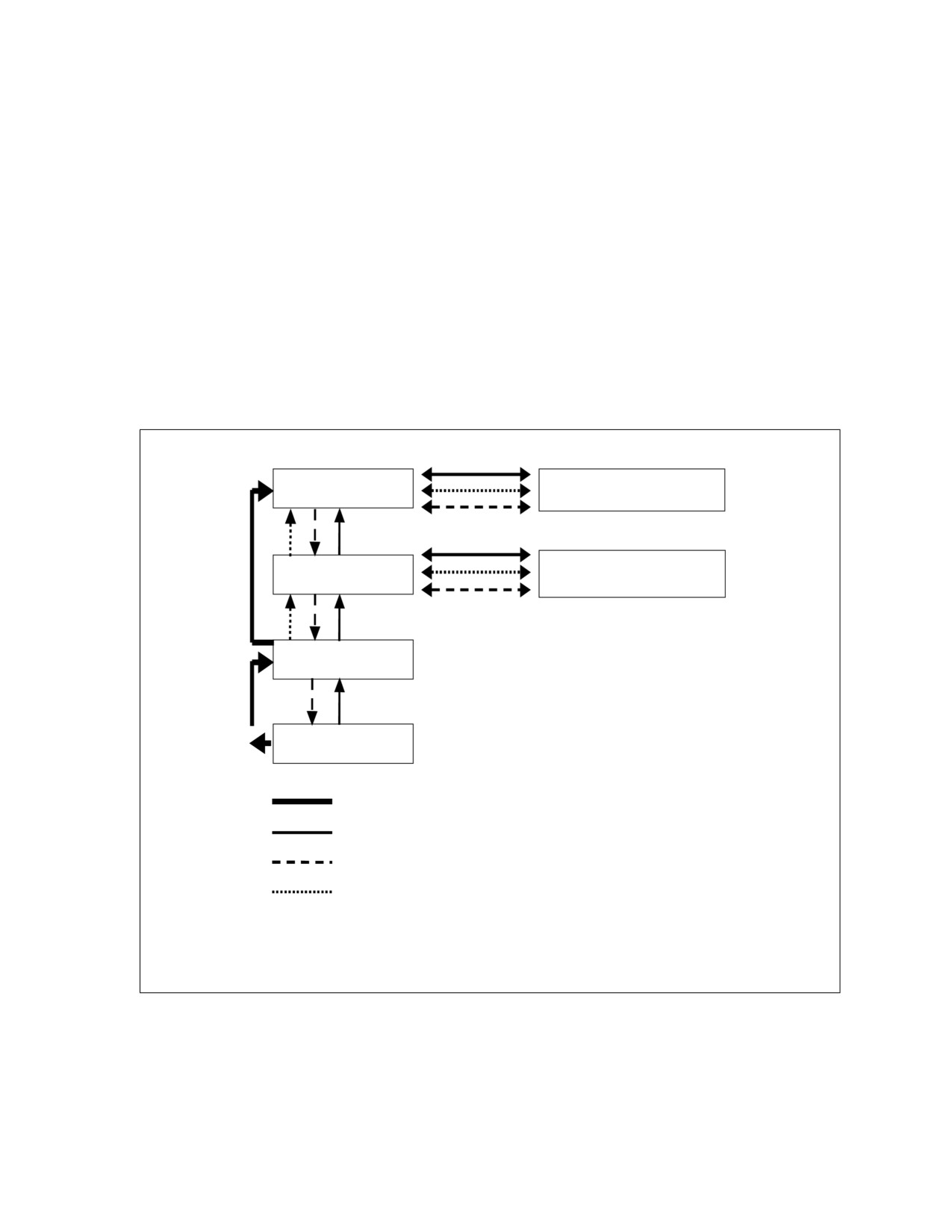
(2) When operating in NBC collection and control center AOs, support units
transmit NBC reports to the applicable operations center for that AO. Designated
nuclear observers’ reports are transmitted directly to the NBC control center from the
subcollection center, bypassing the NBC collection center (Figure VIII-1).
Attached and supporting
NBC control center
units
NBC collection
Attached and supporting
center
units
NBC subcollection
center
Source level/
observer
NBC 1 report
NBC 1 and 4 reports
NBC 2, 3, and 51 reports
NBC 62 report
1Best sent as an overlay.
2Sent only when requested.
Figure VIII-1. NBC Report Flow
VIII-3
3.
Marking
a. Introduction.
(1) Reconnaissance is used to detect contamination before direct movement
into or through designated areas when—
• Contamination is unknown and units must move into or through an
area or occupy it.
• Contamination is known and the boundaries must be identified.
• Uncontaminated route(s) through or around an area must be located
and identified.
(2) Once an area is searched and contamination is located, the area is
surveyed (if required) and marked and a report is submitted to the requesting
headquarters. Marking a contaminated area or equipment designates a hazard. A more
detailed survey determines the extent and intensity of the contamination. Markings
warn individuals and units visually, identify routes through or around contamination to
maximize operational maneuverability, and identify equipment that is hazardous to
operators and maintenance personnel.
b. Contamination Marking.
(1) The NBC contamination marking set (Figure VIII-2) used by US forces
contains all the material needed to mark contaminated areas. The marking set contains
the following:
• Flag containers (each container holds 60 [20 white, 20 blue, and 20
yellow] NBC contamination marking flags).
• Mounting stakes (48 each to make poles and attach marking ribbon).
• A ribbon container (contains thirteen 20-meter rolls of marking
ribbon for hanging flags between poles or other objects).
• Crayons for marking information on flags.
(2) Contamination marking signs are standardized in color, shape, and size
(Figure VIII-3, page VIII-6). The primary (background) color of the marking sign
indicates the general type of contamination. The secondary (foreground) color identifies
the specific hazard. Contamination marking signs are annotated with important
information that includes the following data fields:
• Chemical. Post the name of the agent, if known, and the date and
time of detection.
• Biological. Post the name of the agent, if known, and the date and
time of detection.
• Radiological. Post the dose rate, the date and time of the reading,
and the date and time of the burst, if known.
VIII-4
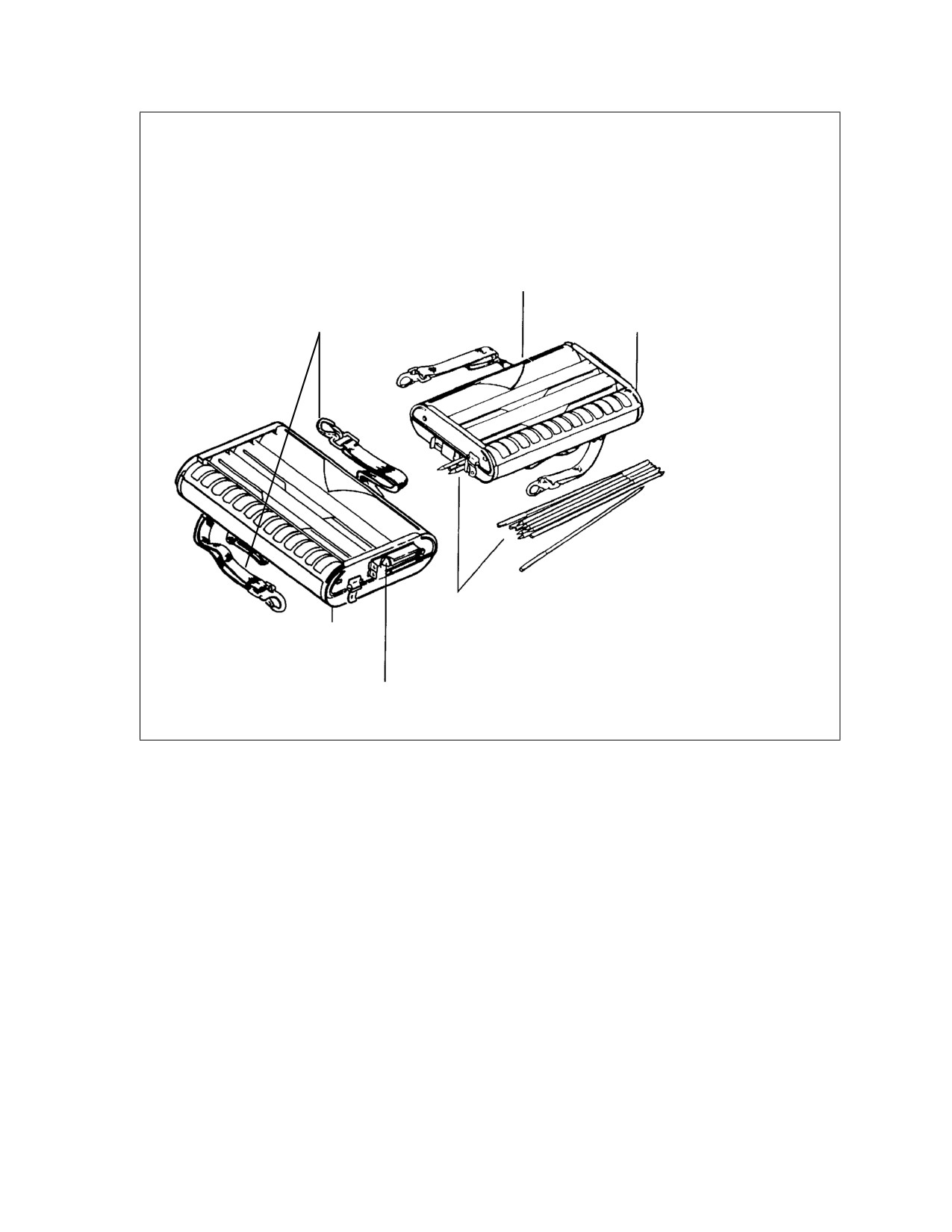
Flag Containers. Each flag
container holds 60 marking flags:
•
20 white flags for marking
nuclear contamination.
•
20 blue flags for marking
biological contamination.
Ribbon Container. This container
•
20 yellow flags for marking
holds 13 separate rolls of yellow
chemical contamination.
marking ribbon. The ribbon is
used for hanging flags between
Carrying Straps. The carrying
poles or other objects.
straps can be adjusted for front or
back wear.
Mounting Stakes. The 48
mounting stakes are stored in the
Carrying Container. The carrying
bottom of the carrying container.
container holds all the individual
The stakes are used to make
parts of the set.
poles for hanging flags and
Crayons. The red crayons are
attaching ribbon.
used to mark information on flags.
Figure VIII-2. NBC Contamination Marking Set
(3) Units follow major command (MACOM) or theater standards for marking
hazards. When those standards are not provided or when standard markers are
unavailable, units may use the expedient markers shown in Figure VIII-4, page VIII-7,
to mark NBC hazards. Personnel use any suitable material to construct the markers to
the approximate size and shape of the examples. Materials for expedient marking
include locally produced marking signs, decals, tape, chalk, and paint.
c.
NBC Contamination Marking Procedures.
(1) Place the contamination markers where they are most likely to be seen by
approaching individuals and units. Individuals who locate the contamination will place
markers at the point of detection. To prevent forces from missing posted markers and
inadvertently entering contaminated areas, place adjacent marking signs at intervals of
25 to 100 meters, depending on the terrain. If marking contamination in open terrain
(i.e., desert, plains, rolling hills), raise the markers to heights that permit approaching
forces to view them at distances up to 200 meters. (Figure VIII-5, page VIII-7, shows a
sample contamination bypass marker.)
VIII-5
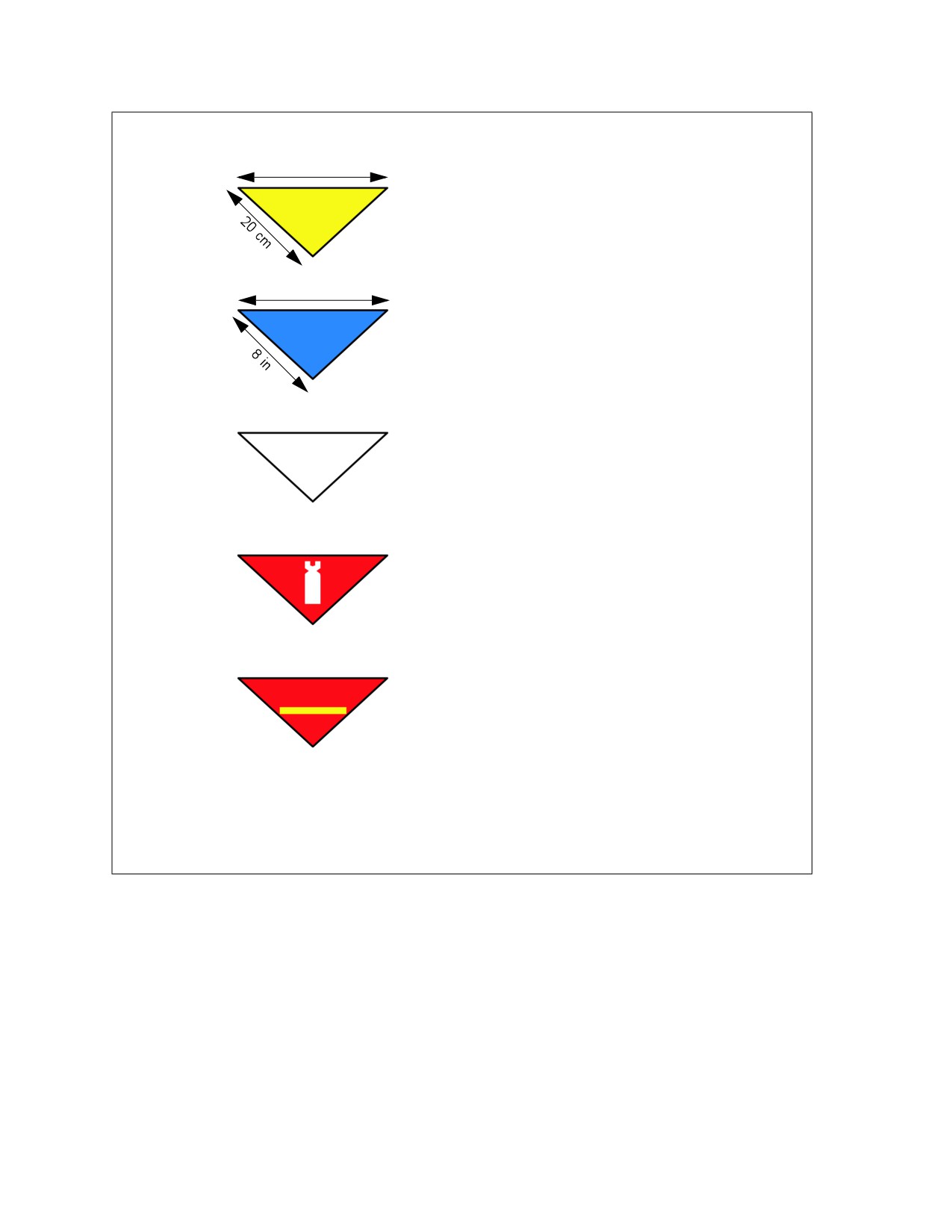
28 cm
Chemical
Yellow background with red lettering
GAS
•
Name of agent, if known
•
Date and time of detection
11.5 in
Biological
Blue background with red lettering
BIO
•
Name of agent, if known
•
Date and time of detection
Radiological
White background with black lettering
ATOM
•
Dose rate
•
Date and time of reading
•
Date and time of burst, if known
UXO
Red background with white lettering
•
Type and date found
•
Front surface of marker
•
Facing away from UXO
Chemical Minefield
Red background with yellow lettering and
GAS MINES
stripe
•
Chemical agent in mine
•
Date
•
Surface of marker facing away from
minefield
NOTE: The back surface of the marker faces the hazard.
Figure VIII-3. Standard NBC Hazard Markers
(2) Mark contamination on all sides in rear areas to warn follow-on and
support units of the hazard. These clear zones (safe lanes) provide greater freedom of
movement by rear area forces through or around contamination.
(3) Mark buildings and other facilities that may be contaminated at critical
points, such as entry points.
VIII-6
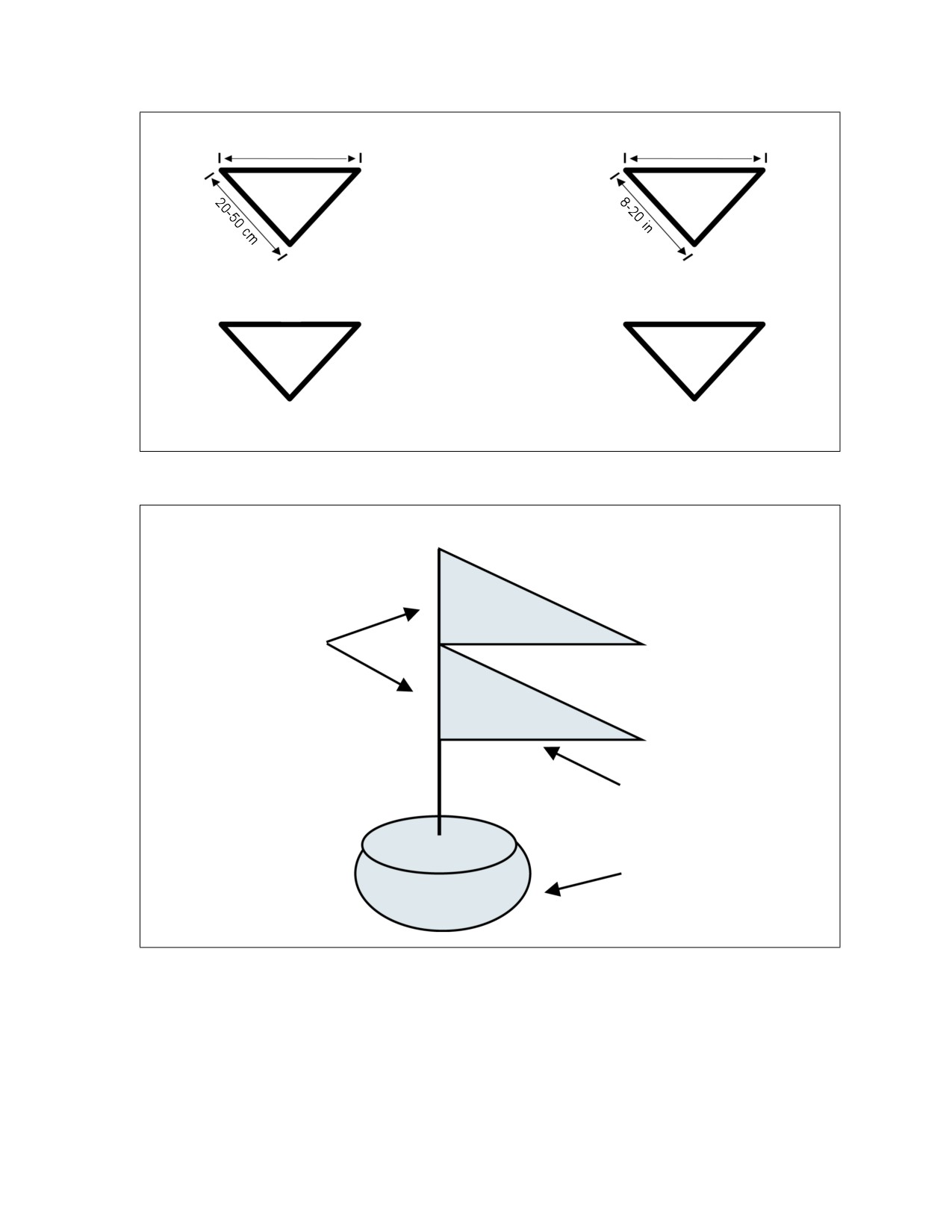
20-50 cm
8-20 in
•
Use expedient markers when
standard markers are
G
B
unavailable.
•
Use suitable material to
Chemical
construct expedient markers.
Biological
•
Construct expedient markers to
the approximate size and shape
shown.
A
U
•
Write the date and time of the
discovery and the hazard
information on the marker with
Radiological
UXO
an indelible marker.
Figure VIII-4. Expedient NBC Hazard Markers
Highly visible flags
(fluorescent orange)
NOTE: For low-light
Detachable flag (If only
operations, attach
one flag is present, it
chemical lights directly to
indicates the bypass of an
the pole.
engineer obstacle.)
Weighted base (made of
lead) to facilitate self-
righting
Figure VIII-5. Contamination Bypass Marker
VIII-7
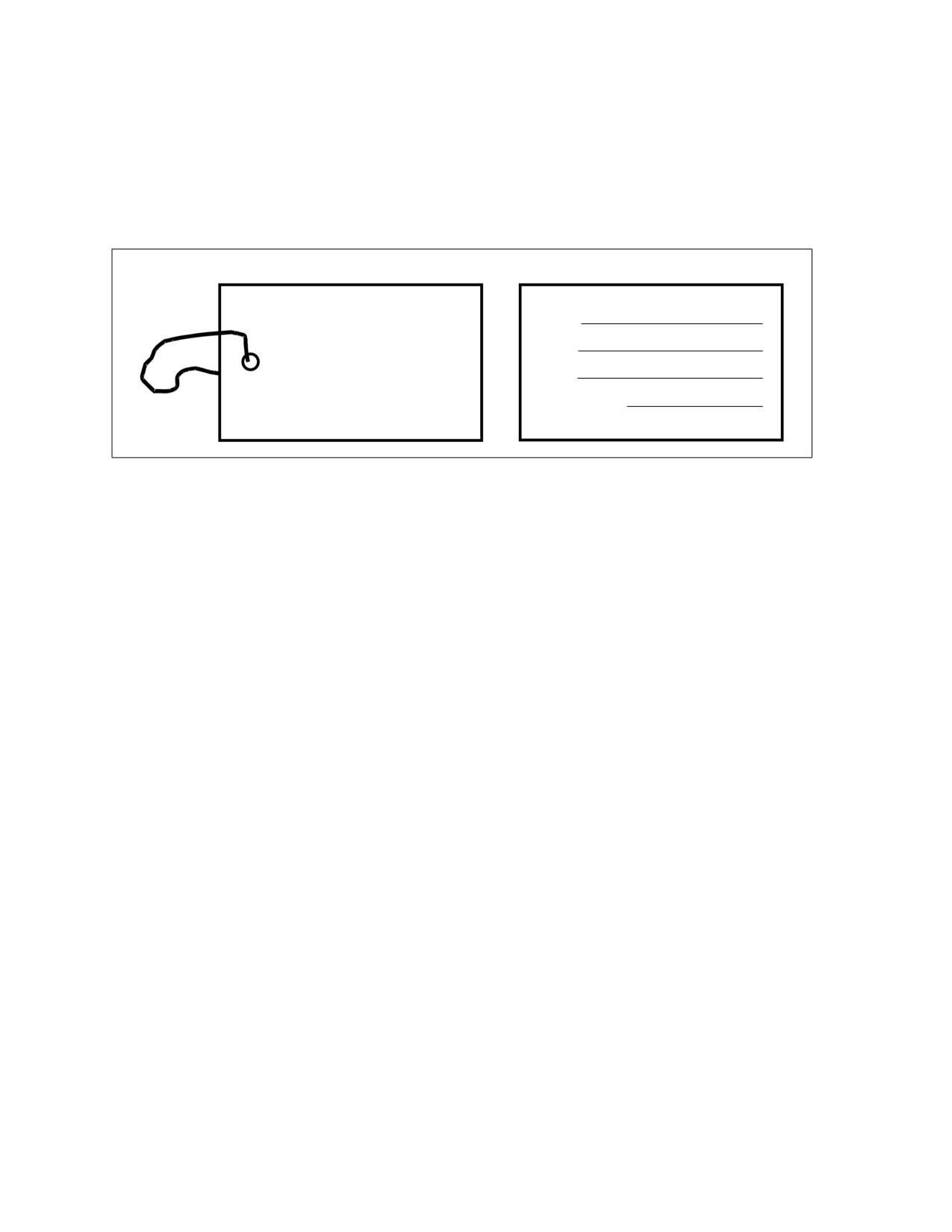
(4) Mark materiel to protect personnel from accidental contamination. Place
contamination markers on any unmarked equipment present in the NBC attack area.
Personnel using equipment after decontamination must take precautions against vapor,
particulate, and liquid contamination that may be trapped inside filters, assemblies, and
joints. The contamination could pose a hazard while equipment is being used or
maintained. (Figure VIII-6 shows a sample hazard warning tag.)
Decontaminant
Type:
Date:
GAS
Time:
Contaminant:
Figure VIII-6. NBC Hazard Warning Tag
VIII-8
Chapter IX
TOXIC INDUSTRIAL MATERIAL RECONNAISSANCE
1.
Background
a. This chapter provides an overview of TIM reconnaissance operations. The
procedures outlined in this chapter do not meet all peacetime HAZMAT safety and legal
requirements; however, mission criticality, resource limitations, and enemy actions may
make compliance with peacetime regulations impossible or impractical during military
operations. The procedures in this chapter provide a means to balance mission
accomplishment and team safety in a potentially hostile environment. These TTP do not
constitute an automatic waiver for units to deviate from standard HAZMAT practices
and regulations during military operations. Unit leadership (in coordination with NBC,
medical, and legal staff representatives) must assess each situation according to certain
factors, such as the controlling headquarters guidance, applicable laws and procedures,
and risk assessments.
b.
Due to the low toxicity and stability of TIM, incidental release from transport
vehicles is expected to affect an area considerably smaller than the area affected by CW
agent attacks. Releases from fixed facilities may be much larger and similar to CW agent
attacks in size and downwind magnitude. A ready reference for information on TIM
releases is the US Department of Transportation (DOT) Emergency Response Guidebook.
It contains extensive cross-reference tables of dangerous TIM and includes exposure
safety and contamination danger guidance.
2.
Nature of the Problem
a.
Sources. Virtually every nation in the world has some form of TIM production,
storage facility, or distribution capability. Most of these TIM are used for peaceful
purposes and are considered to be in one of the following categories:
• Agricultural (insecticides, herbicides, and fertilizers).
• Industrial (chemical and radiological materials used in manufacturing,
fuels, processes, and cleaning materials).
• Production and research (material used in research and pharmaceuticals
or produced in a facility).
• Radiological (material used in nuclear power plants or medical facilities
and laboratories).
b.
Prevalence. Given the prevalence of TIM throughout the world, specialized
NBC or medical teams (e.g., PVNTMED elements) may be required to detect, identify,
quantify, sample, mark, survey, and report TIM for deployed forces.
3.
Risk Analysis
a.
RM. Before deployment on a mission, leaders and the staff conduct risk
analysis (RA). The process identifies and assesses the threat, develops controls, makes
IX-1
risk decisions, implements controls, and follows up with supervision and continuance of
the RM process.
b.
Identification of the Threat. The IPB process provides information on the TIM
threat. The information collected provides various data, such as the types of TIM that
may be encountered, the possible TIM locations, and the types of industrial or research
facilities that may be encountered during mission execution. A HN liaison (government
official, factory worker, local citizen) may also be able to further characterize the nature
of the threat in question.
c.
Assessment of the Threat. The assessment determines the direct impact of
each TIM on the operation. Technical reach-back may be required to support the
assessment, and automated decision support tools also support the assessment process.
The unit staff (medical, intelligence, NBC SMEs) conducts coordination to prepare an
assessment that estimates the severity of the TIM threat and the probability of a TIM
event and determines the risk level and the overall risk to mission accomplishment.
d. Precautionary Measures. Standard measures are developed to eliminate or
reduce the risk. They include—
•
Avoiding the risk and taking precautionary measures, such as selecting
an alternate location for an operation and coordinating with fire service
and HAZMAT teams.
•
Delaying a COA to reduce the risk by delaying the task and waiting until
additional resources (e.g., specialized PVNTMED or NBC detection units)
become available.
•
Transferring the risk by taking appropriate actions, such as using
another unit that is better positioned or more survivable to accomplish
the mission.
•
Using physical or operational control (OPCON) measures, such as the use
of barriers, signs, and boundaries.
•
Developing a TIM hazard reconnaissance OPLAN.
•
Coordinating with theater medical elements (e.g., PVNTMED) for
assistance and follow-on technical support.
•
Coordinating with TEU elements for follow-on technical support.
•
Coordinating with structural engineer elements if the facility to be
reconnoitered was damaged or destroyed or the vulnerability analysis
indicates that it has been abandoned for a long time.
•
Coordinating with the in-theater supporting medical laboratory for the
delivery of samples collected during TIM reconnaissance operations.
•
Reporting findings through command channels.
e.
Implementation of Precautionary Measures. Assets are made available to
implement specific measures. Implementation provides applicable plans or orders that
may indicate various information, such as the TIM threat, operational measures (e.g.,
boundaries, AOs), or missions assigned to collection assets (e.g., medical or NBC
reconnaissance elements). When friendly units are required to operate in an area where
IX-2
a potential TIM hazard exists, the implementation of precautionary measures may also
involve—
• Coordinating ERTs with the HN. These teams may be formed from US,
coalition, or multinational assets.
• Identifying what and how much TIM material is present, the amount of
contamination present, and the extent of possible future contamination in
an accidental release of TIM materials
• Coordinating with higher headquarters and coalition, multinational, and
HN assets to identify the availability of chemical accident/incident
response and assistance teams (i.e., TEUs, PVNTMED units, or civilian
agencies).
• Revising an accident/incident response plan.
f.
Supervision and Review. Risks and precautionary measures are continuously
reevaluated to assess their effectiveness, based on several factors, such as a change of
mission.
4.
Safety
a. Precautions. The reconnaissance of an area or facility contaminated with NBC
agents or TIM requires the adherence to generally accepted safety precautions for
personnel protection while conducting the reconnaissance. However, some significant
differences to the procedures for conducting TIM reconnaissance include the following:
•
The degree of protection required may be greater. TIM may be caustic,
explosive, flammable, or radioactive. It may displace oxygen or be present
in very high concentrations.
•
Detection and identification may be more difficult. While detection and
identification equipment and methods are available for toxic industrial
chemicals (TICs), the number of possibilities makes knowing what type of
protection to use and when to don protection more difficult.
•
Leaders must pay greater attention to the potential for immediate and
long-term hazards when conducting TIM reconnaissance.
•
Military protective filters are optimized against CB warfare agents, but
not against TIC. The charcoal filters contained in military protective
equipment are designed to protect against field concentrations of toxic CB
warfare agents. Military protective masks do not provide adequate
protection against some organic vapors and should not be used in
atmospheres with an oxygen content of less than 19.5 percent by volume.
The use of a self-contained breathing apparatus is necessary, especially
when the identification of the HAZMAT or its concentration has not been
determined.
•
Reconnaissance personnel must be aware of the risks when moving about
in facilities where structural hazards or operating machinery are present.
In addition, they should avoid areas where explosive vapors are present or
where there is no oxygen.
IX-3

Conducting reconnaissance of TIM hazards can be safe, hazardous, or dangerous,
depending on the agent, its concentration and quantity, its condition, the level of
protection, available equipment, and unit procedures.
b.
Hazard Relationships.
(1) Table IX-1 lists some HAZMAT and concentrations that are considered
hazardous, yet safe, under controlled conditions or low concentrations. Note that for
some chemicals (e.g., chlorine, ammonia), the initial effects indicating their presence
(odor or irritation) will occur below the threshold limit value (TLV).
Table IX-1. Safe and Hazardous Concentrations of Selected Chemicals,
in Parts Per Million
Threshold Limit Value
Minimum Effects
Chemical
Time-Weighed
Short-Term
IDLH
LEL
(1-Hour Exposure)
Average
Exposure Limit
Chlorine
1
0.5
1
10
NA
Ammonia
25
25.0
35
300
150,000
NOTE: Wear Level A when there is a chance that liquids are present.
(2) Based on hazard relationships—
• Never try to identify TIM through the senses (i.e., smell, touch).
• Don respiratory protection or immediately evacuate the area at the
first sign of contamination (e.g., explosive concentration, flammable
atmosphere, odor, skin irritation, physical symptoms) until the type
and degree of the hazard are determined.
(3) For those chemicals that have an explosive hazard and a concentration
that is immediately dangerous to life or health (IDLH) far below the lower explosive limit
(LEL), leave the area immediately if the explosive meter limit reads anything other than
0.
c.
Visual Indications of Concentrations Above IDLH.
(1) The reconnaissance of an NAI with potential TIM hazards poses a
challenging situation. A team may not necessarily know that there is a hazard until it is
detected; but by the time the hazard is detected, the team may have been exposed to a
hazardous concentration. It is always safest to approach any potentially hazardous site
in Level A PPE (see Table IX-2).
(2) Other control measures depend on the RA. For example, a reconnaissance
team may use a combination of distance, shielding, and time (i.e., delay entry) as
potential control measures for a radiological hazard. A backup team in Level A, or at
least one level higher PPE than the entry team (with a self-contained breathing
apparatus), should be dressed and ready to rescue the entry team before they enter the
hot zone. Additionally, emergency decontamination should be available on site before the
team enters the hot zone. Once at the reconnaissance site, the team may be alerted to a
possible IDLH hazard and need to don Level A PPE. Some visual indications include—
• A vapor cloud.
• A large, damaged or leaking container or vessel.
IX-4

Table IX-2. Protection Levels
Level of
Equipment
Protection
Protection
Recommended
Optional
Provided
A
Pressure demand, full-facepiece,
Cooling unit
Level A provides the
self-contained breathing apparatus
highest available
Coveralls
or pressure demand, supplied-air
level of respiratory,
respirator with escape self-
Hard hat
skin, and eye
contained breathing apparatus
protection.
Disposable gloves and boot
Fully encapsulating chemical-
covers
resistant suit
Long, cotton underwear
Inner chemical-resistant gloves
Chemical-resistant safety boots/
shoes
Two-way radio communications
B
Pressure demand, full-facepiece,
Coveralls
Level B provides the
self-contained breathing apparatus
same level of
Disposable boot covers
or pressure demand, supplied-air
respiratory
respirator with escape self-
Face shield
protection as Level
contained breathing apparatus
A, but less skin
Long, cotton underwear
protection. It is the
Chemical-resistant clothing
minimum level
(overalls and long-sleeved jacket;
recommended for
hooded, one- or two-piece,
initial site entries
chemical splash suit; disposable,
until the hazards
one-piece, chemical-resistant suit)
have been further
Inner and outer chemical-resistant
identified.
gloves
Chemical-resistant safety boots/
shoes
Hard hat
Two-way radio communications
C
Full-facepiece, air-purifying,
Coveralls
Level C provides the
canister-equipped respirator
same level of skin
Disposable boot covers
protection as Level
Chemical-resistant clothing
Face shield
B, but a lower level
(overalls and long-sleeved jacket
of respiratory
or hooded, one- or two-piece,
Escape mask
protection.
chemical splash suit)
Long, cotton underwear
Inner and outer chemical-resistant
gloves
Chemical-resistant safety boots/
shoes
Hard hat
Two-way radio communications
D
Coveralls
Gloves
Level D provides no
respiratory
Safety boots/shoes
Escape mask
protection and
Safety glasses or chemical splash
Face shield
minimal skin
goggles
protection.
Hard hat
IX-5
• Strong or irritating odors.
• Victims.
• Dead plants or animals.
• Confined spaces (vapor buildup, oxygen deficiency).
• Highly toxic chemicals.
• Energetic or explosive materials.
NOTE: The required level of protection will be established by the commander.
(3)
General safety precautions include—
•
Having a plan.
•
Knowing the capabilities and limitations of the crew and measuring
equipment.
•
Being cautious; treating materials as hazardous until proven
otherwise; and approaching a site upwind, upgrade, and upstream.
•
Keeping a safe distance.
•
Not rushing to victims’ aid without PPE.
•
Not touching, eating, smelling, or tasting unknown material or
HAZMAT.
•
Not assuming that a vapor is harmless because it has no odor.
•
Not driving or walking through spills or clouds.
•
Not eating, drinking, or smoking in the reconnaissance area.
•
Eliminating all ignition sources (flames, sparks, catalytic
converters).
•
Preparing teams to dress out in Level A.
•
Dressing out the backup team in Level A PPE or at least one level
higher than the entry team.
•
Setting up on-site emergency decontamination.
•
Ensuring that properly functioning detection equipment (such as
radiac equipment) is available.
•
Using the buddy system.
•
Planning for decontamination.
•
Minimizing the presence in TIC/TIM environments.
IX-6
5.
Organization and Equipment
NOTE: The organization (personnel and equipment) of each team depends on
the unit missions and capabilities.
a.
Organization.
(1) Within each specialized team equipped to conduct TIM hazard
reconnaissance, personnel should be fully trained in HAZMAT operations. Their abilities
should include—
• Conducting dismounted operations in environments that are
potentially contaminated by TIM hazards.
• Selecting and using proper instrumentation to detect and identify
common TIM hazards.
• Wearing and maintaining the appropriate PPE, including a self-
contained breathing apparatus and a positive-pressure, fully
encapsulated, personal protective suit.
• Providing medical expertise in sampling and health hazard
protection guidance and assistance by augmenting NBC detection
teams with medical personnel.
(2) Dismounted reconnaissance elements should be organized into at least
two-person teams to ensure personnel safety using the buddy system. Both team
members will remain together throughout the dismounted reconnaissance operations.
b.
Equipment.
(1) Additional equipment must be provided for a team to safely detect,
identify, mark, report, and sample TIM hazards. The equipment includes chemical
detection tubes and an explosive/flammable/oxygen meter to detect, identify, and
possibly quantify TIC hazardous vapors. Additionally, the team must have an operating
radiac meter with them when approaching the reconnaissance area because radiation
cannot be detected with the senses.
(2) Team members are provided PPE specifically designed to protect them
from the effects of TIC hazards. Air-purifying respirators must not be worn when an
oxygen-deficient atmosphere is suspected or present.
(3) Reconnaissance teams are also provided with a soil, liquid, and
radiological sampling kit and sorbent tubes to sample TIM. The following specialized
equipment may be used when conducting TIM detection operations:
• PPE and support equipment. Level A protection must be
available when conducting specific reconnaissance operations. The
complete PPE for conducting TIM reconnaissance operations consists
of Level A protection.
• Communications equipment. Members of the team must be able
to communicate with each other and the safety monitor during
dismounted reconnaissance operations.
• Explosive/flammable/oxygen meter. Teams must avoid
explosive/flammable gases by using an instrument that detects their
IX-7
presence. The team should also mark and report areas that have low
concentrations of oxygen that would be hazardous.
•
Personal air sampler. Team members can wear an instrument on
the outside of their PPE to collect gas, vapor, and aerosol samples for
subsequent analysis by the theater area medical laboratory or other
medical/PVNTMED personnel.
•
HAZMAT kit. Team members must be able to detect and identify
TIM.
•
M34-series sampling kit. Team members can take soil, water,
vegetation, biological, and radiological samples using the M34-series
sampling kit. This kit can be augmented with pipettes to perform
liquid sampling.
•
Radiac set. The team should use a radiac set to detect alpha, X-ray,
beta, and gamma radiation.
•
Marking tape. The boundary of a TIM hazard can be shown with
colored banner tape, color-coded traffic cones, or color-coded light
sticks. The standard military NBC hazard marking system should
not be employed because it could be misconstrued to indicate that
the hazard is a CB warfare agent, against which specific safety
precautions must be taken.
•
TIM references. References such as the National Institute for
Occupational Safety and Health (NIOSH) Pocket Guide to Chemical
Hazards, DOT Emergency Response Guidebook, and Field Manual
(FM) 8-500 are used to identify the parameters and characteristics of
TIC, the PPE requirements, and the appropriate actions to take in
the event of encountering one of the listed TICs.
6.
Operations
a.
Tasks. Whether the NBC reconnaissance is in a combat environment to detect
the presence of chemical agents or in a peacetime environment to detect the presence of
TIM, the basic tasks remain the same. They are as follows:
• The presence of TIM must be detected so that potentially affected units
can be warned of its presence and avoid the area.
• The TIM must be identified so that the proper precautions can be taken if
contact is unavoidable.
• The area of the TIM must be marked to alert personnel and to define the
limits of the hazard for follow-on remediation.
• The existence and parameters of the TIM should be reported as quickly as
possible so that decisions about addressing the hazard can be made.
• The TIM samples should be taken so that laboratory analysis can be
made.
b.
Reconnaissance Missions. TIM reconnaissance missions include—
IX-8
• Route reconnaissance. Used to obtain information about a specific
transportation avenue or route of march.
• Area reconnaissance. Used to obtain information about a specific area,
terrain feature, or location.
• Zone reconnaissance. Used to obtain information within a specific zone
defined by boundaries.
• Search. Used to determine the presence of a hazard along a route or
within a specified area. After encountering HAZMAT, it should be
identified and its concentration (chemical) or intensity (radiological)
determined. The search technique may be used when conducting a route,
area, or zone reconnaissance.
• Survey. Used to characterize the hazard, including the limits of
contamination, the quantity of the contaminant, and the conditions of the
site.
• Sampling. Employed after a search has determined the presence of an
agent. Sampling takes place before, during, or after a survey has been
completed. Samples represent the contamination on the ground, in the
air, at a specific point, or in a liquid. They may also represent the
cumulative exposure of personnel to TIM.
c.
Reconnaissance Patterns. Search patterns locate contamination, and survey
patterns define the boundaries of contamination. See Chapter VI and Appendix I for
further information on searches.
d. Prereconnaissance Coordination. Before executing a TIM reconnaissance
operation, command guidance should include the—
• Boundary of the route, area, or zone to be reconnoitered. The boundaries
represent the limit of possible hazards to unprotected personnel and serve
as the point for donning PPE. Without a defined boundary, the mission to
search for TIM may become too large to execute.
• Levels of PPE required.
• Turn-back dose rate.
• Location of decontamination station.
• Location and nature of medical support available.
• C2 relationships.
• Communication protocols
e.
PPE.
(1) The decision tree shown in Figure IX-1, page IX-10, may be used to
determine the appropriate level of PPE as follows:
• No known hazard. When no known hazard is expected to exist,
PPE is not initially required; however, Levels A and C PPE will be
available in case a HAZMAT is encountered. (The determination
that no known hazard is expected to exist will be made by the NBC
element.)
IX-9
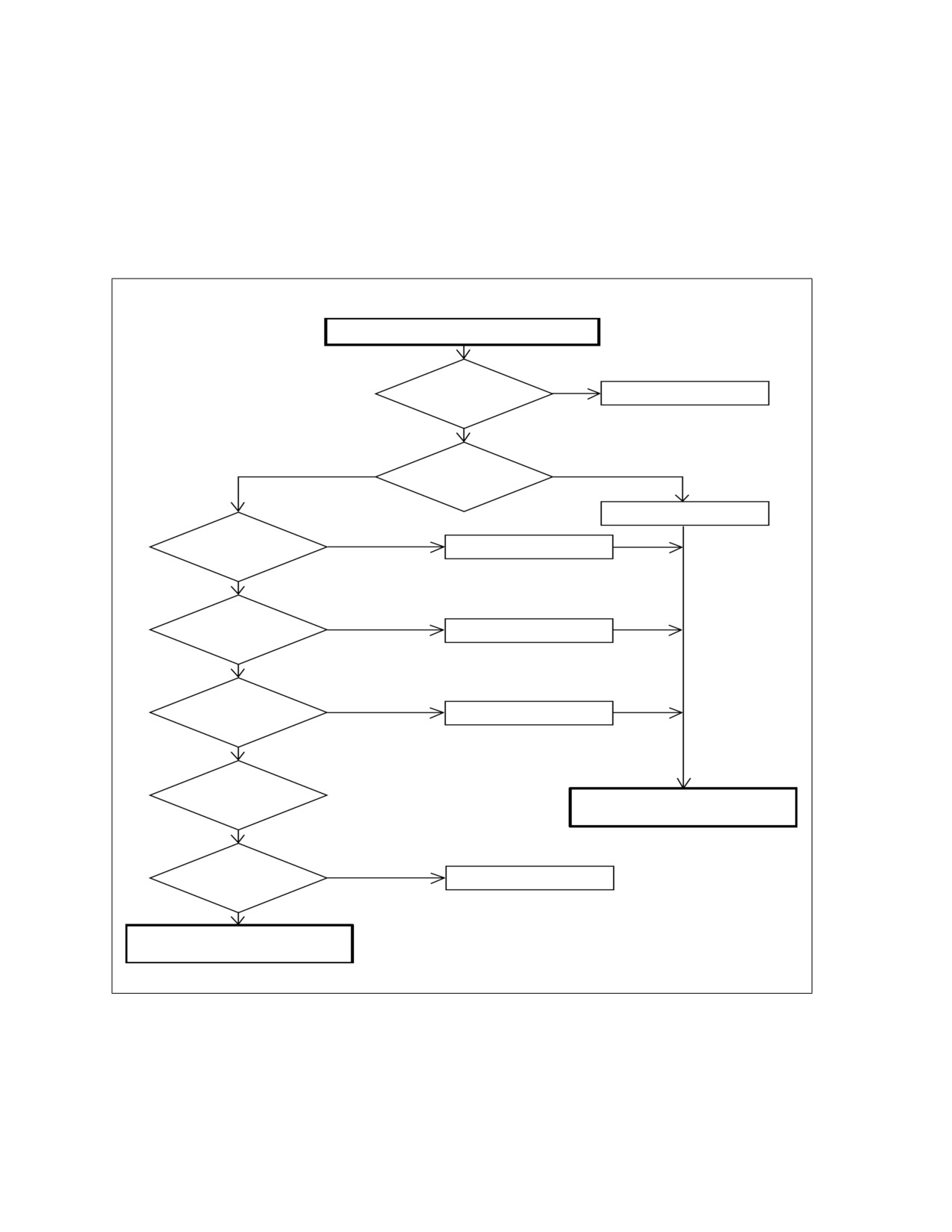
• Expected, unidentified hazard. When a hazard is expected to
exist, but further information is unknown, reconnaissance personnel
will wear Level A PPE.
• Expected, qualified hazard. When a hazard below the IDLH level
is expected to exist and there is sufficient information to qualify the
nature of the hazard, the commander must authorize the wear of
PPE lower than Level A.
Reconnaissance mission received
Hazard suspected
Level D required
Yes
No or unknown
Hazard qualified
Level A required
Vehicle
No or unknown
Level A or B required
protection
Mask
No or unknown
Level A or B required
protection
MOPP 4
No or unknown
Level A or B required
protection
IDLH exceeded
Dismounted reconnaissance
Level A or B required
Fire/explosive
Yes or unknown
Mission terminated
hazard
Mounted reconnaissance
MOPP 4 protection acceptable
Figure IX-1. Levels of PPE
IX-10

(2) If oxygen-deficient or explosive atmospheres, fire hazards, or high dose
rate radiation fields are encountered, personnel should report the information and
terminate the mission.
f.
Searches. A search will begin at the limit of the possible hazard provided by
the controlling headquarters and move in a pattern designated by the commander. When
a hazard is detected, personnel complete the search mission and report the TIM and its
location to the commander. During all searches, one surveyor continually monitors for
the presence of oxygen-deficient and explosive atmospheres. If either of these conditions
is present, the mission is terminated immediately. Additionally, one surveyor maintains
a record of the TIM concentration. If the concentration exceeds the IDLH level, the
search team exits the area immediately, dons Level A protection, and if necessary,
conducts further operations.
(1) Dismounted Operations.
(a) Dismounted NBC reconnaissance search operations require more
time and may be conducted downwind, upwind, or crosswind of the suspected area of
contamination using the guidance provided in Table IX-3.
Table IX-3. Approach Selection Criteria
Approach
Selection Criteria
Upwind
Level A protection is required for the expected contamination.
There is a large area of contamination.
The air supply is the primary concern.
Downwind
Level C protection is adequate for the expected contamination.
There is a small area of contamination.
The air supply is of no concern.
Crosswind
Level C protection is adequate for the expected contamination.
Less caution is required based on the expected concentration.
There is a moderately sized area of contamination.
The air supply is of no concern.
•
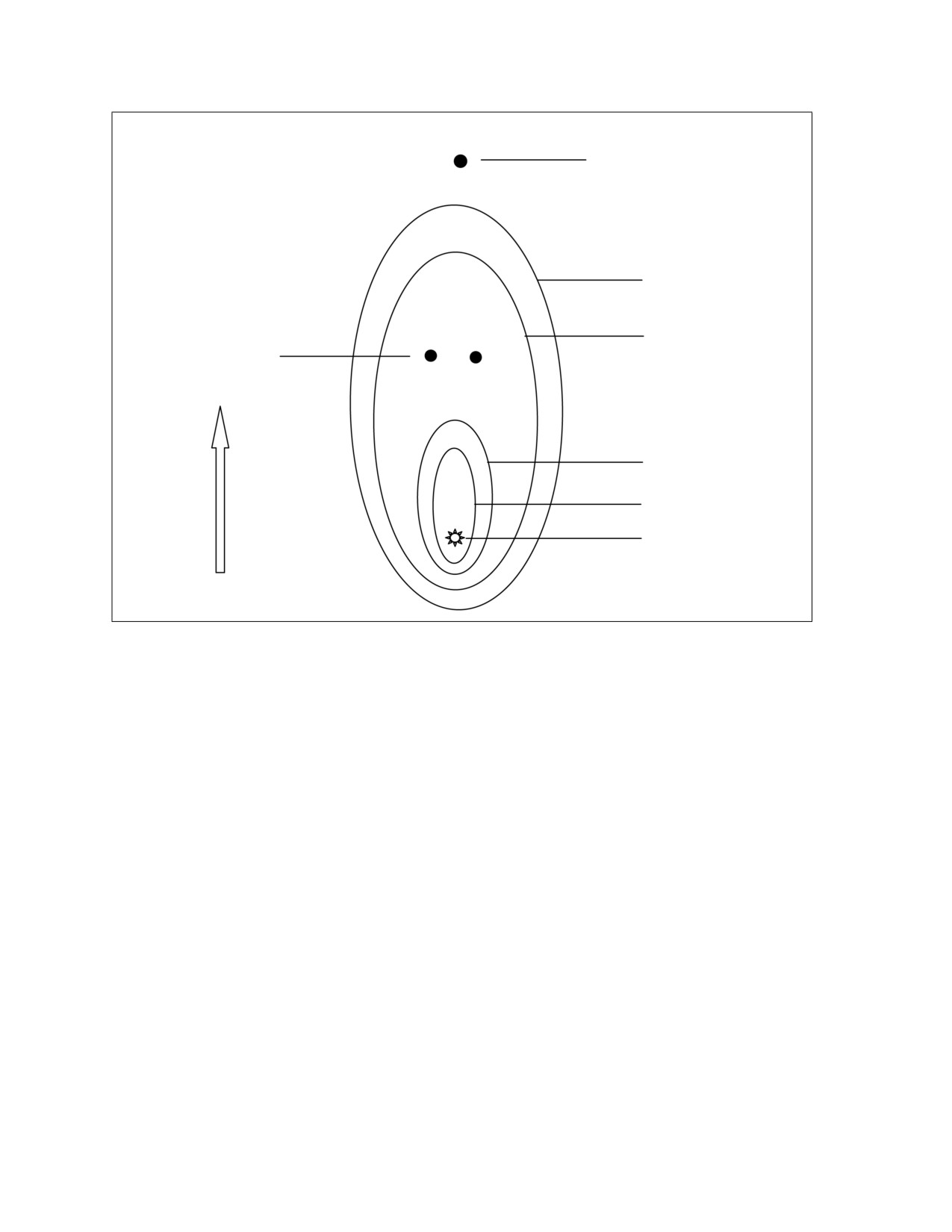
Downwind (Figure IX-2, page IX-12. The team remains
mounted, if applicable, until reaching a point 100 meters
downwind of the limit of the possible hazard (provided by the
NBC center). At that point, the surveyors dismount, don the
appropriate level of PPE, and initiate a search. An attempt to
detect TIM should be made at 100- to 200-meter intervals along
each leg of the search pattern. Using a downwind approach, the
surveyors expose themselves to the minimum concentration of
TIM before obtaining a qualitative detection of TIM. However, if
the downwind hazard area is large (more than 600 meters),
mobility restrictions imposed by the requirement to replace the
self-contained breathing apparatus after 30 to 35 minutes will
adversely affect the ability to perform a search of the entire
downwind area. The mission is terminated after detecting TIM
or upon reaching the location of the expected TIM release and
detecting nothing.
IX-11
Surveyor
Possible
contamination
limit
PEL
Surveyors
IDLH
LD50
Source of hazard
Wind direction
Figure IX-2. Downwind Search
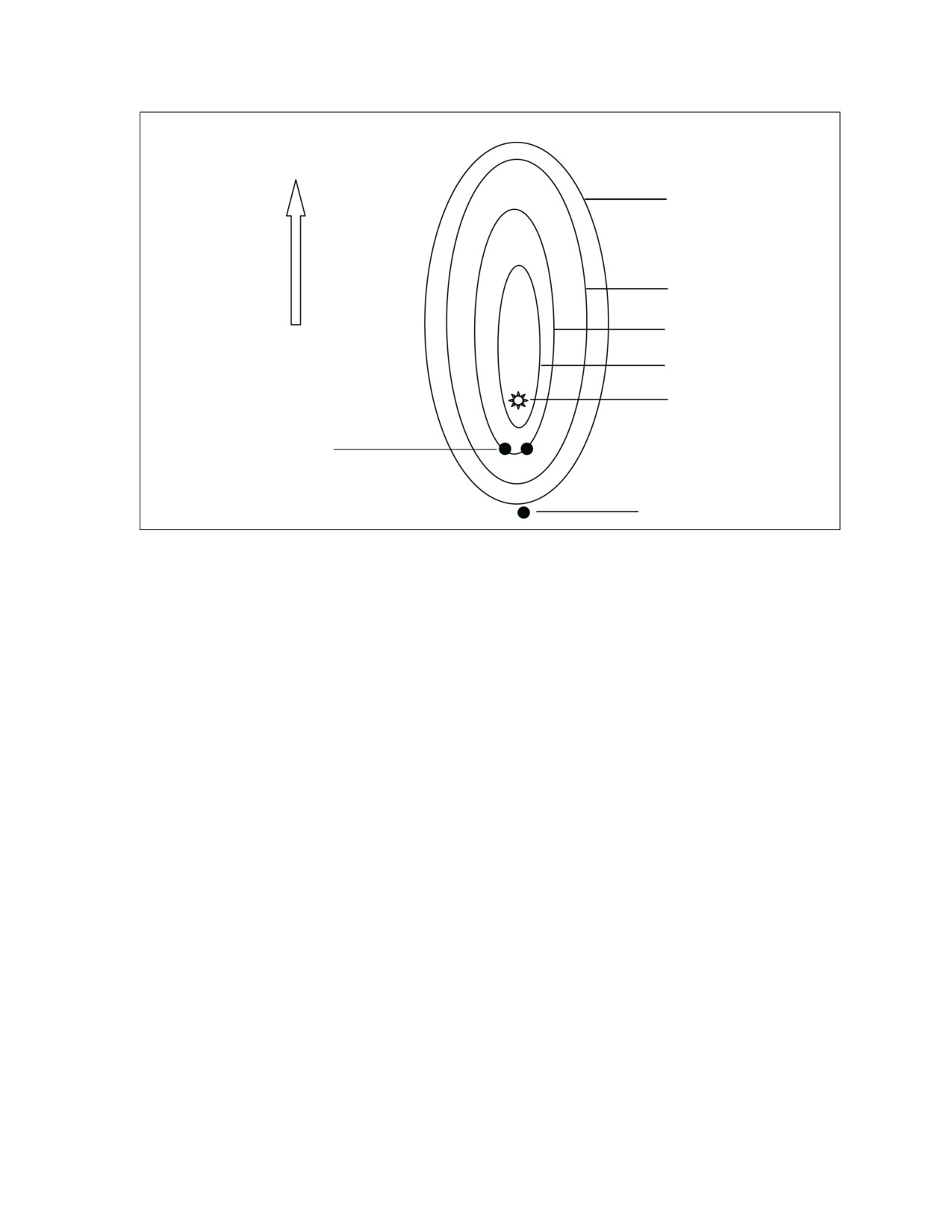
• Upwind (Figure IX-3). The team remains mounted, if
applicable, until reaching a point 100 meters upwind of the
limit of the possible hazard (provided by the NBC center). At
that point, the surveyors dismount, don the appropriate level of
PPE, and initiate a search. An attempt to detect TIM should be
made at 100- to 200-meter intervals along each leg of the search
pattern. Using an upwind approach, the surveyors will be
initially closer to the center of the expected point of release
(source) of the TIM. While they will be able to reach this point
more easily, they will be at risk for greater contamination and
exposure to the TIM, especially radiation. The mission is
terminated after detecting TIM or upon reaching the expected
source of the TIM and detecting nothing.
IX-12
Possible
contamination
limit
PEL
IDLH
Wind direction
LD50
Source of hazard
Surveyors
Surveyor
Figure IX-3. Upwind Search
• Crosswind (Figure IX-4, page IX-14). The team remains
mounted, if applicable, until reaching a point 100 meters from
the limit of the possible hazard (provided by the NBC center).
At that point, the surveyors dismount, don the appropriate level
of PPE, and initiate a search. An attempt to detect TIM should
be made at 100- to 200-meter intervals along each leg of the
search pattern. Using a crosswind approach, the surveyors will
be initially closer to the center of the expected point of release
(source) of the TIM and will be at greater risk of encountering
higher concentrations of the TIM. The mission is terminated
after detecting TIM or upon reaching the expected source of the
TIM and detecting nothing.
(b) Before conducting dismounted operations, a visual reconnaissance
(with binoculars, if available) of the area should be accomplished from a safe distance.
The area should be divided into sectors and the reconnaissance conducted in phases to
minimize the burden of carrying all detection and identification equipment at once. The
priority of effort should focus on conducting a visual inspection, performing an initial
atmospheric assessment, taking and analyzing vapor samples, and using sampling kits
to take liquid and solid samples as necessary.
IX-13
Possible
contamination
limit
Wind direction
PEL
Surveyors
IDLH
LD50
Source of hazard
Figure IX-4. Crosswind Search
(c) After the initial detection, surveyors attempt to detect TIM at 200-
meter intervals, proceeding in the direction of the expected source of contamination and
using personal air samplers. Air samplers can be analyzed at a later time in a laboratory
to determine if TIM may have been contacted. Radio communications and periodic
communication checks should also be maintained.
WARNING
If any surveyor encounters difficulty (breach of PPE,
malfunction of self-contained breathing apparatus),
all surveyors should exit the area upwind as rapidly
as possible.
(2) Mounted Operations.
(a) Mounted operations may be conducted when the presence of a TIM
has been qualified, when TIM does not penetrate the collective protection of a vehicle,
when TIM does not exceed the IDLH level, or when there is no indication that TIM is
present. Mounted reconnaissance procedures differ slightly from those employed during
combat operations.
(b) During mounted operations, the search begins 100 meters downwind
of the limit of the possible contamination (provided by the NBC center). Surveyors should
expect a very slow increase in contamination intensity (e.g., chemical and radiological) as
the vehicle approaches the suspected point of TIM release. The mission is terminated
upon contact with TIM.
IX-14
(c) If unexpected TIM or TIM that exceeds the IDLH level is detected
during a mounted search, the vehicle immediately exits the area via its entry route.
Further search operations are conducted in the dismounted mode under the guidelines of
searching for an expected, qualified or expected, unidentified hazard, depending on the
information available.
g.
Surveys. Surveyors move 100 meters downwind of the detection location and
begin marking the area, employing the pattern directed by the commander. Upon
completion, reports reflecting the boundary of the contamination (location of the
contamination markers) are forwarded to the next higher authority. Surveys may be
mounted or dismounted, based on the TIM identified and its concentration.
h. Samples. The team may be required to take air, soil, liquid, and wipe samples.
The mission statement should specify if samples are required from only one location or
from several locations within the contaminated area. All samples must be marked with
the date and time the sample was taken, the sampling method, where the sample was
taken, and the type of material contained in the sample.
7.
Dos and Don’ts
Adhere to the following dos and don’ts during TIM operations:
•
Dos.
n
ALWAYS prepare a plan before conducting a reconnaissance of a
potentially contaminated site.
n
ALWAYS ensure that all members of the reconnaissance team
understand the plan.
n
ALWAYS ensure that emergency support elements (medical support) are
ready to support the reconnaissance operation if needed.
n
ALWAYS know the capabilities and limitations of the crew and
equipment.
n
ALWAYS treat material as hazardous until proven otherwise.
n
ALWAYS have a safety monitor (in Level A PPE) available to assist the
two-person reconnaissance team in case of an emergency.
n
ALWAYS be alert for visual indications of possible safety hazards.
n
ALWAYS evaluate the amount of personal protection required. If unsure,
use Level A with self-contained breathing apparatus.
n
ALWAYS analyze all available information.
n
ALWAYS use a toxic gas detector when entering a potentially
contaminated area.
n
ALWAYS eliminate all ignition sources (e.g., flames, sparks, catalytic
converters) in areas potentially contaminated with TIC.
n
ALWAYS use the buddy system (have teams of two or more members).
n
ALWAYS plan for decontamination.
IX-15
• ALWAYS approach a potential radiological hazard with a properly
operating radiac meter, and be alert for changes in the meter readings.
• Don’ts.
n
NEVER rush to the aid of victims without donning adequate PPE.
n
NEVER enter a confined space (tank, basement, well, sewer, closed rail
car, or another area with inadequate ventilation) where the possibility of
toxic gas or insufficient oxygen exists.
n
NEVER touch, eat, smell, or taste unknown materials.
n
NEVER open a sealed or closed bulk container to see what is inside or to
take a sample.
n
NEVER drive or walk through unidentified spills or vapor clouds.
n
NEVER touch or attempt to move UXO.
n
NEVER conduct a TIM reconnaissance alone.
IX-16
Appendix A
OPERATIONS IN SPECIAL ENVIRONMENTS
1.
Background
Each of the following environments has a different influence on NBC
reconnaissance operations:
• Mountain.
• Jungle.
• Desert.
• Arctic.
• Urban.
• Littoral.
• Subterranean.
2.
Mountain Environment
a.
Excluding extremely high, alpine type mountains, most mountain systems are
characterized by—
• Heavy woods or jungle.
• Compartments and ridge systems.
• Limited LOCs, usually of poor quality.
• Highly variable weather conditions.
b.
NBC reconnaissance elements concentrate on low terrain for persistent
chemicals and on prominent terrain features for radiological hot spots produced by
fallout. NBC attacks could be delivered aerially by munitions or ballistic missiles.
Chemical agents are heavier than air and will settle in valleys and depressions. Subject
to a mountain breeze, agents will move down and within the valley. Due to the general
lack of cloud spreading, high dosages are difficult to obtain on crests and sides of ridges
and hills. However, crosswinds on mobility corridors could possibly carry CB agents into
an adjacent valley.
c.
The thermal radiation produced by a nuclear weapon can make up 40 percent
of the energy output of the weapon. This wave of heat can be affected by terrain and air
density, producing differential heating. The thermal pulse produces fires in leaves,
brush, and trees and creates avalanches and rock slides in appropriate areas.
Contamination from the weapon and ground debris swept up in the fireball produced by
a blast near or at the ground surface is strongly affected by local heating and sustained
weather patterns, including winds and precipitation.
A-1
3.
Jungle Environment
a.
Jungle canopy and vegetation help shield the soldier from the most immediate
danger from blast and thermal pulses. However, the same is not true for prompt
radiation or the activation products that develop in the dense air and foliage of the
jungle.
b.
Tropical climates require the highest degree of individual discipline and
conditioning to maintain effective NBC reconnaissance. Leaders must ensure that unit
NBC defense equipment is maintained in a usable condition. Rapid mildew, dry rot, and
rust can occur in jungle areas.
c.
High, constant temperatures; heavy rainfall; and very high humidity
dominate the climatic features of jungle areas. These features can increase the
survivability of biological agents. In a thick jungle, there is usually little or no wind and
the canopy blocks most of the sunlight from the ground, thus providing excellent
conditions for threat use of biological agents.
d. The same canopy that provides some shielding from radiation may also
enhance the blast effect by blowing down trees and creating projectiles. In addition, the
lack of penetrating wind results in decreased downwind hazards. Rains can wash
radiation into water collection areas and produce a hot spot.
e.
The jungle canopy creates good overhead cover from aircraft spray. Persistent
agents delivered by artillery or bombs that penetrate the canopy before being released
can create a hazard in the immediate area of impact.
f.
Due to hot, humid conditions prevalent in jungle environments, frequent work
breaks and MOPP level reduction is necessary. Unfortunately, the jungle environment
tends to make chemical agents more persistent and more effective in producing
casualties.
4.
Desert Environment
a.
Deserts are semiarid and arid regions that contain a variety of soils in varying
relief. They are characterized by—
• Extreme temperature ranges during a 24-hour period.
• Changing visibility conditions.
• Long periods of drought.
• Shortage of suitable groundwater.
• Large areas of excellent trafficability that are interspersed by ravines,
bogs, and sand seas.
• The absence of pronounced terrain features.
b.
Contamination found in a desert may become covered up and then suddenly
reappear because of shifting sands. Once an area has been contaminated, it should be
periodically monitored. Immediate radiation, blast, and thermal pulse in the desert
environment is rapid and unattenuated by natural barriers or dense, moist air. Uniform
heating of the environment produces a symmetrical pattern around the detonation point.
A-2
With weapons of lower output, weapon fragments and earth taken up in the fireball will
not fall far from the detonation zone.
c.
Extreme temperature ranges and soil compositions found in the desert
complicate reconnaissance operations. The high temperatures during the day inhibit
personnel movement in high MOPP levels and can cause malfunctions in equipment and
detectors being used outside their usual operating ranges. The relative lack of cover and
concealment in desert terrain makes security a problem during daylight operations. As a
consequence, night may become the usual time for NBC reconnaissance operations, even
though the lack of light complicates the reading of chemical detection paper and kits. Soil
composition can adversely affect detection capabilities of an NBCRS since liquid
contamination is absorbed by the soil. Further, the NBCRS must be operated with the
air conditioner on in hot temperatures to prevent damage to onboard equipment. The
system will operate effectively for 1 hour with the air conditioner turned off.
5.
Arctic Environment
a.
Arctic and subarctic regions comprise about 45 percent of North America and
65 percent of Europe. They are characterized by—
• Extreme cold and deep snow during the winter months.
• Spring breakup, which results in poor trafficability.
• Whiteout conditions, which effect depth perception and visibility and
make flying and driving hazardous.
• Ice fog, causing clouds of ice crystals to cover personnel, vehicles, bivouac
areas, and permanent facilities.
b. When temperatures fall below 0°C, reconnaissance elements may have
difficulty operating and maintaining their equipment. Furthermore, toxic chemicals
react differently at extremely low temperatures. For example, blister agents (such as
distilled mustard, phosgene oxime, and mustard-lewisite mixture) become solids well
above the freezing point of water. Persistent agents contained in munitions can become
more persistent at low temperatures.
c.
In cold weather, additional measures may be called for in applicable
equipment TMs and TOs. For example, chemical detection and identification kits cannot
detect solid agents. It may be necessary to take soil, snow, or vegetation samples from
suspicious areas and warm them to detect and identify chemical agents.
6.
Urban Environment
a.
Urban areas often contain confined spaces (such as sewers, storm drains,
subways, and basements) that present a hazard (i.e., an oxygen-deficient or explosive
atmosphere, heavier-than-air chemical agents or compounds). Chemical agents tend to
act differently in urban areas (collect in low areas, drift into buildings, and seep into
piles of rubble). The persistency of chemical agents can also increase after settling in
these areas. Monitoring and survey teams must thoroughly check areas before
attempting to occupy or traverse them.
b. The stable environment of an urban area may increase the persistency of
biological agents. Personal hygiene becomes very important. Leaders must establish and
A-3
consistently enforce sanitary and personal-hygiene measures, including immunizations.
Leaders must ensure that all personnel eat safe food, drink safe water, and never
assume that local food and water are safe.
c.
Although not a terrain feature, the population density of an urban area must
be considered. The potential exists of encountering a large number of contaminated,
panicked, and injured personnel.
d. Urban areas can be susceptible to threat use of TIM as a weapon, especially if
there is a sizable chemical industry, storage, or transportation (i.e., railroad switching
yard, truck terminal, waterway, or canal) facility associated with the area. Units should
be aware of this potential hazard and the types of TIM that they may encounter.
e.
Urban areas can make hazard predictions less accurate. Shifting winds might
contaminate buildings and the areas around them, but leave an adjacent area relatively
free of contamination. Units should check areas (such as basements) that they plan to
occupy, even if only for a short term.
f.
Nuclear or radiological hazards produce difficult choices for operations in
urban environments. Radiation may be masked or attenuated by barriers until a unit is
too close to be considered safe. Fast-moving operations through an area containing
radiological hazards often progress more quickly than some instruments can respond to
the presence of radiation. Building surfaces may allow radiological hazards to radiate in
place until they are moved by the wind or water. Buildings may also shield, scatter, or
reflect radiation. Surface streets will likely absorb the direct thermal energies of the
detonation, causing the streets to rupture and possibly igniting or sparking underground
utilities. Building materials will become activated and may remain so for a long time
following weapon detonation.
7.
Littoral Environment
a. During operations in littoral areas, multiple considerations can impact NBC
reconnaissance operations. For example, land and sea winds occur almost daily in
tropical and midlatitude regions on the coast of islands and continents. They occur
because the land cools and heats more rapidly than the adjacent water (i.e., winds blow
toward the water in the morning and toward the land in the evening). Therefore, the
commander must be concerned about an offshore vapor or aerosol point or line source
release and provide NBC reconnaissance support from the AA.
b. To support port operations, planners must be aware of the impact of
meteorological and fresh/salt water conditions on NBC reconnaissance assets that are
used by land and maritime components. They must also consider the potential impact of
interferents on NBC reconnaissance capabilities.
8.
Subterranean Environment
a.
Subterranean areas (such as caves) can present a hazard. Chemical agents
tend to act differently in caves, collecting in the low areas. The persistency of chemical
agents can also increase after settling in these areas. Monitoring and survey teams must
be thoroughly prepared before checking these areas.
A-4
b.
The stable environment of a subterranean area may also increase the
persistency of biological agents. Leaders must be aware of a possible oxygen-deficient or
explosive atmosphere, heavier-than-air chemical agents, or TIM.
A-5
Appendix B
STANDING OPERATING PROCEDURES
Figure B-1 shows a sample outline for an NBC reconnaissance unit NBC SOP.
1.
COMMAND AND CONTROL.
•
Teams organization and responsibilities.
•
Work-rest cycles (personnel scheduling rotations).
•
SRC operations.
•
NBC control center operations.
•
Unit control center operations.
•
Reports and reporting requirements.
•
CCA operations.
•
Hydration standards and feeding.
•
Safety.
•
Security.
•
Classified material protection.
•
Chain of custody.
•
Orders.
•
OEG.
2.
COMMUNICATIONS.
•
Security.
•
Equipment (phones, radios, sirens, public address systems with loud speakers, flags).
•
Procedures.
•
Alarm conditions.
•
Signals.
•
Call signs and procedures.
3.
LOGISTICS.
•
Security.
•
Safety.
•
Weapons.
•
Vehicles (load plans).
•
NBC equipment.
•
Resource dispersal and replenishment.
Figure B-1. SOP Outline
B-1
•
Shelters, bunkers, revetments, defensive fighting positions.
•
Road march.
•
HSS (e.g., medical evacuation).
•
Casualty collection points.
4.
SECURITY.
•
Operations.
•
Physical protection and FP.
•
Communications.
•
Duress codes.
•
Arming and weaponry.
•
Active and perimeter defense.
•
Base denial.
•
Intelligence.
•
RA.
•
Site surveys.
•
Hazards analysis.
•
Vulnerability analysis.
•
Preattack checklists.
5.
OPERATIONS.
•
Security.
•
Safety.
•
NBC survey.
•
NBC zone, route, and area reconnaissances.
•
Sampling operations.
•
Codes.
•
Active and passive indicators.
•
Contamination avoidance and control (i.e., cross or bypass a contaminated area).
•
Blackout procedures.
•
Reports.
•
UXO.
•
Casualties.
•
Contaminated area marking and identification.
•
MOPP levels.
•
First aid.
•
Movement through and around contamination.
•
Laws of armed conflict.
•
Precombat checks.
Figure B-1. SOP Outline (Continued)
B-2
•
Actions in assembly areas.
•
Medical support (deploy with essential medical prevention and protection measures [e.g.,
pretreatments, barrier creams, prophylaxis] as directed by competent medical authority).
•
Recovery operations.
•
Consolidation and reorganization checklist.
6.
APPENDIXES.
•
Organizational clothing and individual equipment.
•
Air defense.
•
Fire support and call for fire.
•
Safety.
•
Operational terms.
Figure B-1. SOP Outline (Continued)
B-3
Appendix C
UNIT CHECKLIST
Figure C-1 is a sample NBC reconnaissance unit checklist.
1. Determine the minimum amount of information required to conduct the reconnaissance mission. This
information can be extracted from the controlling headquarters OPORD.
r
Enemy situation.
r
Friendly situation.
r
Supported unit mission.
r
Supported commander's intent.
r
C2.
r
Mission.
r
Logistics support.
r
Signal.
r
Security support.
r
MOPP level, OEG, and correlation factor.
r
Support unit.
2.
Determine the type of reconnaissance missions or tasks to be conducted.
r
Route.
r
Zone.
r
Area (may require checking a specific point within the assigned area).
r
Survey.
r
Search.
r
Surveillance.
r
Sampling.
3.
Determine how many vehicles will be required for the mission.
Figure C-1. Sample Unit Checklist
C-1
4.
Determine the required actions at the contaminated area.
r
Identify or verify the presence of contamination.
r
Mark the contamination.
r
Report the contamination.
r
Locate bypass routes (which sides).
r
Find the shortest route across the area.
r
Continue to place markers at selected intervals.
r
Collect samples.
r
Continue the mission.
r
Remain and assist units in avoiding the contaminated area.
5.
Analyze the reconnaissance mission.
r
Type of search technique.
r
Intervals for samples and readings.
r
Mounted or dismounted.
6.
Determine the type of search or survey technique that is required.
7.
Assess the chain-of-custody requirements.
r
Identify the sample transfer point location.
r
Provide reports.
r
Request information on who assumes custody.
r
Request information on the coordination required with the supporting lab, if required.
8.
Determine the logistics requirements.
r
Decontamination point location.
r
Routes for contaminated or uncontaminated vehicles.
r
Signals to identify a vehicle as contaminated (e.g., lights on).
r
Source for CSS (e.g., supply, maintenance, services).
Figure C-1. Sample Unit Checklist (Continued)
C-2
Appendix D
INTELLIGENCE PREPARATION OF THE BATTLESPACE
1.
Background
This appendix provides planning considerations to support the integration of NBC
reconnaissance through the four steps of the IPB process.
2.
Define the Battlespace Environment
The battlespace environment is defined by—
• Identifying the limits of the command AO and battlespace. The AO is the
geographical area where the commander is assigned the responsibility
and authority to conduct military operations. The battlespace
environment can extend back to CONUS and could be impacted by
terrorist or nation state use of CBRN weapons.
• Identifying the limits of the AOI. The AOI is the geographical area from
which information and intelligence are required to permit planning or
successful conduct of the commander’s operation. Sources of information
may include other federal agencies (e.g., State Department, national level
intelligence agencies) operating within the AOI who may have
information that will help support the commander’s overall SA.
• Identifying the amount of detail required and the amount feasible within
the time available. The time available for completion of the IPB process
may not permit the luxury of conducting each step in detail. For example,
the NBC and medical staffs must realize the time sensitivity of critical
information, such as the time from the exposure of personnel to a
biological agent until the onset of symptoms.
3.
Describe the Battlespace Effects on Threat and Friendly Capabilities
This is accomplished by analyzing the battlespace environment. The information
supports the conduct of friendly vulnerability assessment (VA), and the evaluation
begins with an analysis of the existing and projected conditions of the battlespace
environment. During the evaluation, multiple considerations are evaluated. Planners
identify characteristics of the battlespace that could affect friendly target vulnerability,
influence the commander’s decisions, or affect the COA available to US forces.
a.
Terrain Analysis.
(1) The terrain analysis reduces the uncertainties regarding the effects of
natural and man-made features on friendly NBC operations. It focuses on the military
aspects of the terrain, including—
• Observation and fields of fire. Observation is the influence of
terrain on reconnaissance, surveillance, and target acquisition
D-1