MULTISERVICE TACTICS, TECHNIQUES, AND PROCEDURES FOR NUCLEAR, BIOLOGICAL, AND CHEMICAL RECONNAISSANCE FM 3-11.19 (JULY 2004) - page 1
*FM 3-11.19
MCWP 3-37.4
NTTP 3-11.29
AFTTP(I) 3-2.44
FM 3-11.19
US Army Training and Doctrine Command
Fort Monroe, Virginia
MWCP 3-37.4
Marine Corps Combat Development Command
Quantico, Virginia
NTTP 3-11.29
Navy Warfare Development Command
Newport, Rhode Island
AFTTP(I) 3-2.44
Headquarters, Air Force Doctrine Center
Maxwell Air Force Base, Alabama
30 July 2004
MULTISERVICE TACTICS, TECHNIQUES, AND PROCEDURES
FOR
NUCLEAR, BIOLOGICAL, AND CHEMICAL RECONNAISSANCE
TABLE OF CONTENTS
Page
EXECUTIVE SUMMARY
xiii
CHAPTER I
MISSIONS, CAPABILITIES, AND PRINCIPLES
I-1
Background
I-1
Mission
I-1
Capabilities
I-2
Principles
I-2
Situational Awareness
I-3
CHAPTER II
OPERATIONAL ENVIRONMENT
II-1
Background
II-1
Threat Environment
II-1
Land Environment
II-3
Maritime Environment
II-3
Air Environment
II-4
_______________
DISTRIBUTION RESTRICTION: Approved for public release; distribution is unlimited.
*This publication supersedes FM 3-19, 19 November 1993.
iv
Page
Space Environment
II-4
Civil/Infrastructure Environment
II-4
Weather Factors
II-5
CHAPTER III
SUPPORT TO MILITARY OPERATIONS
III-1
Background
III-1
Peacetime Preparedness
III-1
Transition to Operations
III-7
During Attack and Postattack
III-8
Sustained Combat Operations
III-10
Conflict Termination
III-22
CHAPTER IV
PLANNING
IV-1
Background
IV-1
Levels
IV-1
Concept
IV-1
Military Decision-Making Process
IV-1
CHAPTER V
CAPABILITIES
V-1
Background
V-1
Equipment Capabilities
V-1
United States Army
V-2
United States Marine Corps
V-3
United States Air Force
V-4
United States Navy
V-5
CHAPTER VI
TASKS
VI-1
Background
VI-1
Search
VI-1
Survey
VI-2
Surveillance
VI-3
Sampling
VI-4
Route Reconnaissance
VI-5
Zone Reconnaissance
VI-6
Area Reconnaissance
VI-7
CHAPTER VII
SAMPLING OPERATIONS
VII-1
Background
VII-1
Agent Indicators
VII-1
Sample Collection
VII-2
Responsibilities
VII-5
Execution
VII-9
Sampling Teams
VII-15
v
Page
CHAPTER VIII
REPORTING AND MARKING
VIII-1
Background
VIII-1
Reporting
VIII-1
Marking
VIII-4
CHAPTER IX
TOXIC INDUSTRIAL MATERIAL RECONNAISSANCE
IX-1
Background
IX-1
Nature of the Problem
IX-1
Risk Analysis
IX-1
Safety
IX-3
Organization and Equipment
IX-7
Operations
IX-8
Dos and Don’ts
IX-15
APPENDIX A
OPERATIONS IN SPECIAL ENVIRONMENTS
A-1
Background
A-1
Mountain Environment
A-1
Jungle Environment
A-2
Desert Environment
A-2
Arctic Environment
A-3
Urban Environment
A-3
Littoral Environment
A-4
Subterranean Environment
A-4
APPENDIX B
STANDING OPERATING PROCEDURES
B-1
APPENDIX C
UNIT CHECKLIST
C-1
APPENDIX D
INTELLIGENCE PREPARATION OF THE BATTLESPACE
D-1
Background
D-1
Define the Battlespace Environment
D-1
Describe the Battlespace Effects on Threat and
Friendly Capabilities
D-1
Evaluate the Adversary
D-3
Determine Adversary Courses of Action
D-9
APPENDIX E
SAMPLING
E-1
Background
E-1
Plan
E-1
Operations
E-2
Documentation
E-9
Identification and Control
E-13
Reporting and Shipping
E-22
Witness Interviews
E-24
Handling and Packaging Materials
E-27
Techniques and Procedures
E-31
Chemical and Biological Sampling (Environment)
E-32
Medical Specimens
E-36
Radiological-Agent Sampling
E-37
Background Samples
E-45
vi
Page
Transfer Operations
E-45
Labeling and Documentation
E-50
Packaging of Samples for Shipment
E-52
Transfer of Samples to a Laboratory or Lead Agency
E-58
APPENDIX F
ORGANIZATIONS AND EQUIPMENT
F-1
Background
F-1
United States Army Capabilities
F-1
United States Marine Corps Capabilities
F-11
United States Air Force Capabilities
F-12
United States Navy Capabilities
F-14
Unit Level Chemical and Radiological Detection Equipment
F-20
Chemical Detector Capabilities and Interferents
F-22
Special-Purpose Equipment
F-26
APPENDIX G
MOVEMENT FORMATIONS AND MOVEMENT, SURVEY, AND SEARCH
TECHNIQUES
G-1
Background
G-1
Movement Formations
G-1
Movement Techniques
G-6
Survey Techniques
G-7
Search Techniques
G-13
APPENDIX H
SURVEILLANCE TECHNIQUES
H-1
Background
H-1
Establishing an Automatic Chemical-Agent Alarm
Detector Network (Monitoring)
H-1
Observing Specified Areas (Named Areas of Interest)
H-5
Conducting Standoff Chemical-Agent, Line-of-Sight
Detection (Monitoring)
H-6
Establishing a Biological-Agent Detector Array (Monitoring)
H-6
Conducting Biological-Agent Surveillance (Standoff Detection)
H-8
Conducting Medical Surveillance
H-10
APPENDIX I
RADIOLOGICAL SEARCH AND SURVEY DETECTION METHODS ... I-1
Background
I-1
Area Monitoring
I-1
Monitoring Techniques
I-2
Correlation Factors
I-3
Recording
I-4
Radiological Surveys
I-4
Radiological Monitoring (Search)
I-10
APPENDIX J
UNITED STATES ARMY NUCLEAR, BIOLOGICAL, AND
CHEMICAL RECONNAISSANCE UNIT OPERATIONS
J-1
Background
J-1
Equipment
J-1
vii
Page
Functions and Responsibilities
J-3
Types of Reconnaissance Units
J-4
Planning
J-7
Search and Survey
J-10
Surveillance
J-12
Sampling
J-15
Unit Employment
J-16
APPENDIX K
MONITORING, RECONNAISSANCE, SURVEILLANCE, AND
SURVEY REPORTS
K-1
Background
K-1
Types of Reports
K-1
Integrated, Automated Warning and Reporting
K-7
Reporting
K-7
APPENDIX L
CHEMICAL SERVICES ORGANIZATIONS
L-1
Background
L-1
General
L-1
Support to Special Operations Principal Missions
L-2
Support to Special Operations Collateral Missions
L-3
Five-Man LB Team
L-4
Special Forces Chemical Reconnaissance Detachment
L-7
Communications
L-9
Command and Staff Relationships
L-9
Premission Activities
L-10
Mission Activities
L-13
Postmission Activities
L-16
APPENDIX M
ADVANCED STANDOFF CHEMICAL DETECTOR
M-1
Background
M-1
Concept of Operations
M-3
Air Base Fixed-Site Employment
M-8
Aerospace Configuration
M-10
Maritime Configuration
M-10
APPENDIX N
JOINT-SERVICE, LIGHTWEIGHT NUCLEAR, BIOLOGICAL,
AND CHEMICAL RECONNAISSANCE SYSTEM
AND STRYKER NUCLEAR, BIOLOGICAL, AND CHEMICAL
RECONNAISSANCE VEHICLE
N-1
Background
N-1
Description
N-1
Employment
N-2
Tasks
N-4
Task Organization
N-5
Communications
N-5
REFERENCES
References-1
GLOSSARY
Glossary-1
INDEX
Index-1
viii
Page
FIGURES
Figure I-1. NBC Reconnaissance Information Management
I-6
Figure III-1. Chemical-Agent Attack Over a Port Area
III-11
Figure III-2. Corps Movement to Contact With an ACR
Covering Force
III-13
Figure III-3. Division Movement to Contact With a Brigade
Advanced Guard
III-14
Figure III-4. Attack With Division as Corps Main Attack
III-15
Figure III-5. NBC Reconnaissance Squad Supporting a
Battalion TF
III-16
Figure III-6. NBC Reconnaissance Squad Supporting a
River Crossing Operation
III-17
Figure III-7. NBC Reconnaissance Units Supporting a
Defensive Operation
III-19
Figure III-8. NBC Reconnaissance Units Supporting Rear
Area Operations
III-20
Figure III-9. NBC Reconnaissance Operations in the Corps
Theater Rear Area
III-21
Figure IV-1. Concept of NBC Reconnaissance
IV-2
Figure IV-2. NBC Reconnaissance OPORD Annex
IV-5
Figure VI-1. NBC Survey
VI-2
Figure VI-2. NBC Surveillance
VI-4
Figure VI-3. NBC Route Reconnaissance
VI-5
Figure VI-4. NBC Zone Reconnaissance
VI-7
Figure VI-5. NBC Area Reconnaissance
VI-8
Figure VII-1. Sampling Process
VII-6
Figure VII-2. Suggested Operational Structure for a
Sampling Mission
VII-6
Figure VII-3. Sample Collection OPORD Annex
VII-12
Figure VIII-1. NBC Report Flow
VIII-3
Figure VIII-2. NBC Contamination Marking Set
VIII-5
Figure VIII-3. Standard NBC Hazard Markers
VIII-6
Figure VIII-4. Expedient NBC Hazard Markers
VIII-7
Figure VIII-5. Contamination Bypass Marker
VIII-7
Figure VIII-6. NBC Hazard Warning Tag
VIII-8
Figure IX-1. Levels of PPE
IX-10
Figure IX-2. Downwind Search
IX-12
Figure IX-3. Upwind Search
IX-13
Figure IX-4. Crosswind Search
IX-14
Figure B-1. SOP Outline
B-1
Figure C-1. Sample Unit Checklist
C-1
ix
Page
Figure D-1. Sample Contamination Footprint for a
Liquid-Agent Artillery Attack
D-6
Figure D-2. Airburst Warhead Deposition Time (Notional)
D-6
Figure E-1. Sample CW/BW Report
E-10
Figure E-2. Sample Chain-of-Custody Form
E-14
Figure E-3. Example of a Sample Identification Number
E-16
Figure E-4. Sample CB Incident Interview Form
E-25
Figure E-5. Sample Label
E-51
Figure E-6. Sample Seal
E-51
Figure E-7. Sample Evidence/Sample Log
E-53
Figure E-8. Sample Photographic Log
E-54
Figure E-9. Sample Diagram/Sketch Form
E-55
Figure E-10. Sample Administrative/Logistics Form
E-56
Figure E-11. Sample Recovery Log
E-57
Figure E-12. Sample Affidavit
E-59
Figure F-1. Chemical Company (Smoke/Decontamination/
Reconnaissance) (ACR)
F-1
Figure F-2. Chemical Company (Reconnaissance/
Decontamination) (ACR) (Light)
F-2
Figure F-3. Chemical Detachment (Reconnaissance)
F-3
Figure F-4. Chemical Company (Reconnaissance)
F-3
Figure F-5. Chemical Company (Reconnaissance/
Decontamination) (Force XXI Digitized Division)
F-4
Figure F-6. Chemical Company (Biological Detection)
F-5
Figure F-7. NBC Reconnaissance Platoon, SBCT
F-5
Figure F-8. Chemical Company (Heavy Division)
F-6
Figure F-9. TEU
F-7
Figure F-10. WMD Civil-Support Team
F-8
Figure F-11. CBRN Installation Support Team
F-10
Figure G-1. Staggered Column Formation
G-2
Figure G-2. Wedge Formation
G-3
Figure G-3. Column-of-Wedges Formation
G-3
Figure G-4. V Formation
G-4
Figure G-5. Split V Formation
G-4
Figure G-6. Echelon (Left and Right) Formations
G-5
Figure G-7. Herringbone Formation
G-6
Figure G-8. Coil Formation
G-6
Figure G-9. Nearside-Farside Survey Technique
G-8
Figure G-10. Contamination Area Extending Past the
Initial Right Limit of the Survey
G-8
Figure G-11. Box Survey Technique on Orientation A
G-10
Figure G-12. Box Survey Technique on Orientation B
G-10
Figure G-13. Box Survey Technique on Orientation C
G-11
Figure G-14. Box Survey Technique on Orientation D
G-11
Figure G-15. Star Survey Technique
G-12
Figure G-16. Star Survey Technique With Two Vehicles
G-12
Figure G-17. Bounce-and-Bypass Survey Technique
G-13
Figure G-18. Zigzag Search Technique
G-14
x
Page
Figure G-19. Multiple Sweeps Using the Zigzag Search
Technique
G-14
Figure G-20. Lane Search Technique
G-15
Figure G-21. Cloverleaf Search Technique
G-16
Figure H-1. Dice Five Pattern Detector Placement
H-2
Figure H-2. Fixed Emplacement of ACAAs
H-3
Figure I-1. Sample Survey Data (Monitoring or Point
Technique)
I-8
Figure I-2. Sample Survey Data (Route or Course Leg
Technique)
I-9
Figure I-3. Sample Mission Order Format
I-11
Figure K-1. Sample NBC 3 Report (Nuclear)
K-2
Figure K-2. Sample NBC 3 Report (CB)
K-3
Figure K-3. Sample NBC 3 Report (Release-Other-
Than-Attack)
K-4
Figure K-4. Sample NBC 4 Report (CB or Release-Other-
Than-Attack)
K-5
Figure K-5. Sample NBC 5 Report (Release-Other-
Than-Attack)
K-6
Figure K-6. Sample NBC 6 Report (Release-Other-
Than-Attack)
K-7
Figure L-1. LB Team
L-5
Figure L-2. CRD
L-8
Figure L-3. LB Team/CRD Scope of Employment Within the
Operational Environment
L-8
Figure M-1. Advanced Standoff Chemical Detector
Performance Parameters
M-2
Figure M-2. Single-System Detection Technique
M-5
Figure M-3. Multiple-System Detection Technique
M-5
Figure M-4. Positioning Detectors at Fixed-Site Locations
M-7
Figure M-5. Operator Display Unit Indicating Detection
of a Blister Agent
M-7
Figure N-1. Stryker NBCRV Main-Menu Sample Screen
N-4
TABLES
Table III-1. Suggested Equipment for a Two-Party
Survey Team
III-6
Table III-2. Common Team and Unit Actions
III-6
Table IX-1. Safe and Hazardous Concentrations of Selected
Chemicals, in Parts Per Million
IX-4
Table IX-2. Protection Levels
IX-5
Table IX-3. Approach Selection Criteria
IX-11
Table E-1. Selecting the Sampling Location
E-7
Table E-2. Country Codes
E-17
Table E-3. Container Selection
E-28
Table E-4. CB Sample Collection Equipment
E-29
Table E-5. Recommended Sizes of Samples
E-31
Table F-1. USAF Deployable Teams
F-15
xi
Page
Table F-2. Chemical Detector and Monitor Capabilities
F-23
Table F-3. Chemical Detector Limits and Miosis Levels
F-24
Table F-4. Interferents
F-25
Table F-5. Environmental Conditions
F-26
Table G-1. Movement Techniques
G-6
Table H-1. Number of Detectors Required
H-3
Table J-1. M93 Capabilities and Limitations
J-2
Table J-2. M93A1 Capabilities and Limitations
J-2
Table J-3. Comparison of the NBCRS and the NBCRV
J-3
Table J-4. MM1 Methods
J-10
Table J-5. Search and Survey Patterns
J-12
Table L-1. Representative CRD Equipment
L-10
Table L-2. Sample Mission Tasking and Planning Process
L-12
Table L-3. Outline for a Mission Back Brief
L-14
Table L-4. Checklist for Mission Considerations
L-15
xii
EXECUTIVE SUMMARY
Multiservice Tactics, Techniques, and Procedures
for
Nuclear, Biological, and Chemical Reconnaissance
Chapter I
Missions, Capabilities, and Principles
Chapter I introduces NBC reconnaissance and defines searches, surveys,
surveillance, monitoring, and sampling. It addresses the reconnaissance information
requirements (IR) of the commander. The principles of NBC reconnaissance and the
management of information resulting from NBC reconnaissance are discussed as they
relate to command decisions.
Chapter II
Operational Environment
Chapter II discusses NBC conditions and the effects on the operational
environment. It discusses the threat environment and NBC capabilities of adversary
states. It provides and discusses potential scenarios to assist in understanding the
threat. Chapter II also discusses the land, maritime, air, space, weather, and civil
infrastructure environments as they impact reconnaissance operations.
Chapter III
Support to Military Operations
Chapter III focuses on NBC reconnaissance support to military operations. It
addresses the need for peacetime preparedness and provides a checklist to assess the
readiness for NBC reconnaissance. It discusses the transition to operations and the
sustained combat operations planning for NBC reconnaissance. Chapter III addresses
preattack, during-attack, and postattack NBC reconnaissance. It also provides examples
of the employment of NBC reconnaissance assets and addresses the actions required
during conflict termination.
Chapter IV
Planning
Chapter IV discusses general planning considerations for NBC reconnaissance and
the MDMP, with emphasis on IPB and developing NBC priority intelligence
requirements (PIR) as part of the commander’s critical information requirements
(CCIR). It addresses the levels of NBC reconnaissance planning and the development of
the reconnaissance plan.
xiii
Chapter V
Capabilities
Chapter V focuses on NBC reconnaissance organizations that are available to
support military operations. It discusses NBC reconnaissance capabilities common to
components and provides descriptions of equipment common to the services. It addresses
service component capabilities and discusses specialized support elements.
Chapter VI
Tasks
Chapter VI provides information on the various types of NBC reconnaissance tasks
(search; survey; surveillance; sampling; and route, zone, and area reconnaissance) used
to support military operations.
Chapter VII
Sampling Operations
Chapter VII provides information on NBC sampling operations, teams,
responsibilities, planning considerations, types of units to sample, and staff actions.
Chapter VIII
Reporting and Marking
Chapter VIII discusses the NBC reporting system. It describes NBC reports, their
use, when they are to be prepared, and who is responsible for completing them. It focuses
on the importance of accurate reporting in NBC reconnaissance operations, discusses
NBC contamination marking, and provides marking procedures.
Chapter IX
Toxic Industrial Material Reconnaissance
Chapter IX provides a detailed overview of potential TIM and describes the hazards
that deployed forces may encounter. This chapter also discusses TIM planning and safety
considerations and provides information on the reconnaissance organization and
equipment requirements that are necessary for TIM operations. It discusses
reconnaissance techniques for use when encountering TIM and provides a safety
checklist for TIM operations, including personal protective equipment (PPE) selection.
xiv
PROGRAM PARTICIPANTS
The following commands and agencies participated in the development of this
publication:
Joint
Joint Chiefs of Staff, J5, Nuclear and Counterproliferation Division, The Pentagon, Room
2S938, Washington, DC 20318
Defense Threat Reduction Agency, 8725 John J. Kingman Road, Fort Belvoir, VA 22060
Army
United States Army Chemical School, 401 MANSCEN Loop, Suite 1029, Fort Leonard
Wood, MO 65473
United States Army Medical Department Center and School, 1400 E Grayson Street,
Fort Sam Houston, TX 78234
United States Army Soldier Biological Chemical Command, Aberdeen Proving Ground,
MD 21040
Marine Corps
United States Marine Corps NBC Defense School, 1273 Iowa Avenue, Fort Leonard
Wood, MO 65473
United States Marine Corps Combat Development Command, 3300 Russell Road, Suite
318A, Quantico, VA 22134-5021
Navy
United States Navy Warfare Development Command, 686 Cushing Road, Sims Hall,
Newport, RI 02841
United States Navy Surface Warfare Officer School Command, 446 Cushing Road,
Newport, RI 02841
United States Navy, Chief of Navy Operations N70 CP, 2812 Summerfield Road, Falls
Church, VA 22032
United States Navy Facilities Command, 1322 Patterson Avenue, Washington, DC
20374
United States Navy Surface Warfare Development Group, 2200 Amphibious Drive,
Norfolk, VA 23521
xv
Air Force
Air Combat Command, 129 Andrews Street, Suite 102, Langley AFB, VA 23655
United States Air Force Civil Engineer Support Activity, 14A Barnes Drive, Suite 1,
Tyndall AFB, FL 32403
United States Air Force Special Operations Command, 100 Bartley Street, Suite 153W,
Hurlburt Field, FL 32544
United States Air Force Doctrine Center, Detachment 1, 216 Sweeney Boulevard, Suite
109, Langley AFB, VA 23665
United States Air Force Counterproliferation Center, 325 Chennault Circle,
Montgomery, AL 36112
xvi
Chapter I
MISSIONS, CAPABILITIES, AND PRINCIPLES
1.
Background
NBC reconnaissance is a contamination avoidance measure that provides
commanders with information on NBC hazards in an area of operations (AO). NBC
reconnaissance elements perform five critical tasks—detection, identification, marking,
reporting, and sampling.
• Detection. Detection is required for the timely warning of units.
• Identification. Identification supports protection level selection, preventive
measures, and casualty treatment.
• Marking. Marking allows friendly forces to avoid the hazard.
• Reporting. Reporting allows resource status assessment and mission asset
assignment.
• Sampling. Sampling aids the identification process.
2.
Mission
NBC reconnaissance elements conduct searches, surveys, surveillance, sampling,
and reconnaissance (route, area, or zone) to confirm the presence or absence of NBC
hazards or attacks. NBC reconnaissance is conducted to obtain information via
observation, sensors, detectors, or other methods. It may include gathering information
on the enemy use of NBC weapons, associated hazards, or meteorological data for NBC
hazard prediction.
• Searches. Searches are conducted to find the contamination.
• Surveys. Surveys determine the location and size of the contamination.
• Surveillance. Surveillance is the systematic observation of aerospace, surface
and subsurface areas, persons, places, and things by visual, aural, electronic,
and other means. The surveillance process can also include medical
surveillance, which is the ongoing systematic collection of health data essential
to the evaluation, planning, and implementation of public health practices.
• Sampling. Sampling is the process of selecting, collecting, documenting, and
packaging specimens.
• Reconnaissance.
n
Route. Route reconnaissance focuses on obtaining information along a
specific line of communications (LOC) (route), such as a road, railway, or
cross-country mobility corridor. The route may be a single road or an axis
of advance.
n
Area. Area reconnaissance (sometimes referred to as point
reconnaissance) focuses on obtaining information within a prescribed
area. The area may be a town, installation, ridgeline, airhead, bridge, or
I-1
another feature that is critical to operations. Areas are normally smaller
than zones, and an area reconnaissance is usually quicker than a zone
reconnaissance.
n
Zone. Zone reconnaissance focuses on obtaining information within a
specific zone, such as all routes, obstacles, terrain, and enemy forces
within a zone defined by boundaries. A zone reconnaissance may include
several route or area reconnaissance missions assigned to subordinate
elements. It may be appropriate when previous knowledge of the area is
limited and there are indications or reports of NBC hazards.
NOTE: Route, area, and zone reconnaissance may include finding a bypass
(clear) route that allows forces to avoid contamination.
3.
Capabilities
Military operations require information to support the commander’s IR. NBC
reconnaissance must ensure timeliness, survivability, reliability, suitability, and
connectivity.
• Timeliness. Reconnaissance assets must be responsive to meet the needs of
the commander. The commander uses NBC reconnaissance assets to provide
information when and where needed.
• Survivability. Planners assess the survivability for NBC reconnaissance
system (NBCRS) platforms, sensors, and communications and data links.
Survivability is commensurate with the threats to which NBC reconnaissance
assets will be exposed during the course of operations. Careful mission
planning, intelligent tasking, effective employment tactics, and capability
overlap to ensure the survivability of specific capabilities and functions.
• Reliability. NBC reconnaissance assets must provide reliable information
concerning NBC agents and TIM.
• Suitability. Planning provides mission tasking that is based on asset
suitability within the context of the overall plan.
• Connectivity. NBC reconnaissance assets must transmit information
accurately and timely, taking into account connectivity and interoperability,
which are crucial to overall responsiveness.
4.
Principles
Reconnaissance capabilities provide information for the detection and identification
of NBC and TIM hazards. Reconnaissance produces information that allows friendly
forces to avoid contaminated areas and take required protective measures. NBC
reconnaissance is conducted throughout the battlespace from the combat forward area to
the theater rear area (continental United States [CONUS] and outside the continental
United States [OCONUS]). Reconnaissance is dedicated to the detection of NBC hazards
and generally adheres to the following principles:
• Maximizing the probability of detection. This is done by using IPB to
determine where and when to employ sensors.
I-2
•
Retaining freedom of action. By avoiding contaminated areas, the
commander maintains freedom of action. Knowing the location of
contaminated areas allows units to practice contamination avoidance. This
permits air base (AB), maritime, and ground forces to continue their operations
relatively unimpeded.
•
Orienting on the reconnaissance objective. The commander orients his
reconnaissance assets by identifying a reconnaissance objective within the AO.
The reconnaissance objective may be a terrain feature, geographical area, or
enemy activity about which the commander wants to obtain additional
information. The commander assigns reconnaissance objectives based on the
PIR that result from the IPB process.
•
Reporting information rapidly and accurately. This is important
because—
n
NBC reconnaissance is performed to support critical decisions, such as
warning, protection, and treatment decisions.
n
Critical information loses value quickly.
n
Negative reports tell as much as positive reports.
n
Accurate reporting provides information on the current NBC hazards in
the air, in water, on land, on personnel, on equipment, or in facilities. It
also provides the physical state of the hazard (gas, liquid, solid).
•
Developing the situation rapidly. Once contamination is encountered, the
unit providing the information must—
n
Determine the agent type, the intensity or concentration, and the
geographic area affected.
n
Select a course of action (COA) for the NBC reconnaissance unit.
n
Recommend a COA to the supported unit.
n
Implement the commander’s decision.
•
Ensuring continuous reconnaissance and maximizing the capabilities
of NBC reconnaissance units. The unit uses all available capabilities and
integrates them to increase the probability of detection.
5.
Situational Awareness
Decisions rely on information input to support situational awareness (SA).
Information sources that furnish warning, protection, treatment, verification,
confirmation, all clear, and surface contamination data support SA maintenance.
a.
Warning. Detection for warning (standoff detection) provides warning in
sufficient time to implement protective, preventive, and treatment measures before
exposure to agent contamination occurs. When there are insufficient automatic standoff
detectors for chemical and biological (CB) agents, it is necessary to rely on available
detectors, attack indicators, and preventive medicine (PVNTMED) sampling and
analysis.
I-3
(1) For attacks upwind of a unit, detection must occur at sufficient upwind
distances to provide a reasonable amount of time for processing and transmitting
information. Detecting the leading edge of the cloud is preferable because it allows more
warning time; however, this requires greater detector sensitivity because the agent is
less concentrated at the leading edge of the cloud than in the middle of the cloud.
(2) Warning of an upwind attack may come from a unit’s own upwind
detectors or from other assets monitoring the upwind area. Lacking the necessary point
or standoff detectors, commanders must decide when the possibility of attacks warrants
an increased protective posture based on intelligence indications. Reports from upwind
units can also provide warning of an attack, assuming that the units have the necessary
detectors, have observed enemy activities indicative of an attack, or have identified an
agent through detection by sampling and analysis.
(3) For direct attacks on a unit (e.g., submunitions released from a theater
ballistic missile [TBM]), rapid detection and warning of agents will be difficult, if not
impossible. It is preferable to don PPE in response to a general TBM attack warning
when a CB attack is possible.
b.
Protection and Treatment. Detection for protection and treatment focuses on
identifying the agent dispersed in an attack so that the best possible protection and
medical treatment can be rendered early. Since some aspects of treatment are agent-
specific, agent discrimination is extremely important.
(1) Agent sampling and analysis are the primary means of accomplishing
this. Sampling is a local action, while analysis can occur locally or at Department of
Defense (DOD)-designated reference laboratories. The PVNTMED staff shares
responsibility with the NBC staff for this type of detection. Medical personnel collect and
submit clinical samples from patients, and NBC and medical personnel perform
environmental sampling and detection functions.
(2) Medical surveillance is a key aspect of protection and treatment. The
systematic collection of health care data is essential to the surveillance process. For
example, establishing baseline health care data is an important contributor to biological
warfare (BW) defense SA.
c.
Verification and Confirmation. Detection for verification has implications at
the strategic, operational, and tactical levels.
• Strategic level. Definitive identification and confirmation at the
strategic level provide critical information to support decisions regarding
national strategic direction and integration. Using such information, the
President and the Secretary of Defense (SecDef) determine how best to
respond in a timely manner.
• Operational level. Field confirmation and identification from medical
laboratories provide critical information to support timely and effective
protection and treatment decisions for affected units and personnel.
• Tactical level. Presumptive identification from a detector array provides
important information to support warning decisions and actions, such as
avoiding contamination or taking protective measures.
d. All Clear. Detection for all clear (dewarning) determines when contamination
is reduced below detectable levels with available detectors; however, based on the
I-4
available information (e.g., detector capabilities and results, meteorological data, type of
agent), the commander conducts risk assessment before considering a decision to lower
the unit’s protective posture.
e.
Surface Contamination. Detection for surface contamination identifies
deposited contamination on surfaces to determine if decontamination is necessary. There
is a risk of cross contamination (e.g., transferring an agent from a contaminated surface
to the eyes, mouth, or broken skin). Checking for surface contamination also detects NBC
or TIM contamination in water.
(1) Commanders and staff conduct timely risk assessments and use
information from multiple sources (e.g., NBC warning and reporting systems). The
commander’s risk assessment also addresses the TIM hazard that may exist within an
AO.
(2) Units obtain relevant data (see Figure I-1, page I-6) from multiple sources
(e.g., sensors, detectors, and other reconnaissance and surveillance assets). The
appropriate data (e.g., type of agent, time of detection, weather data, location) is
processed, extracted, formatted, and forwarded. Commanders and their staffs evaluate
the information to assess its impact on operations. The risk assessment may lead to
directives and orders to help mitigate the impact of the assessed hazard. Commanders
may direct an integrated series of NBC defense (i.e., increased mission-oriented
protective posture [MOPP]) measures to decrease the level of risk (e.g., decrease
exposure opportunity). SA is an ongoing process, and the plan is revised as updated
information is received.
I-5
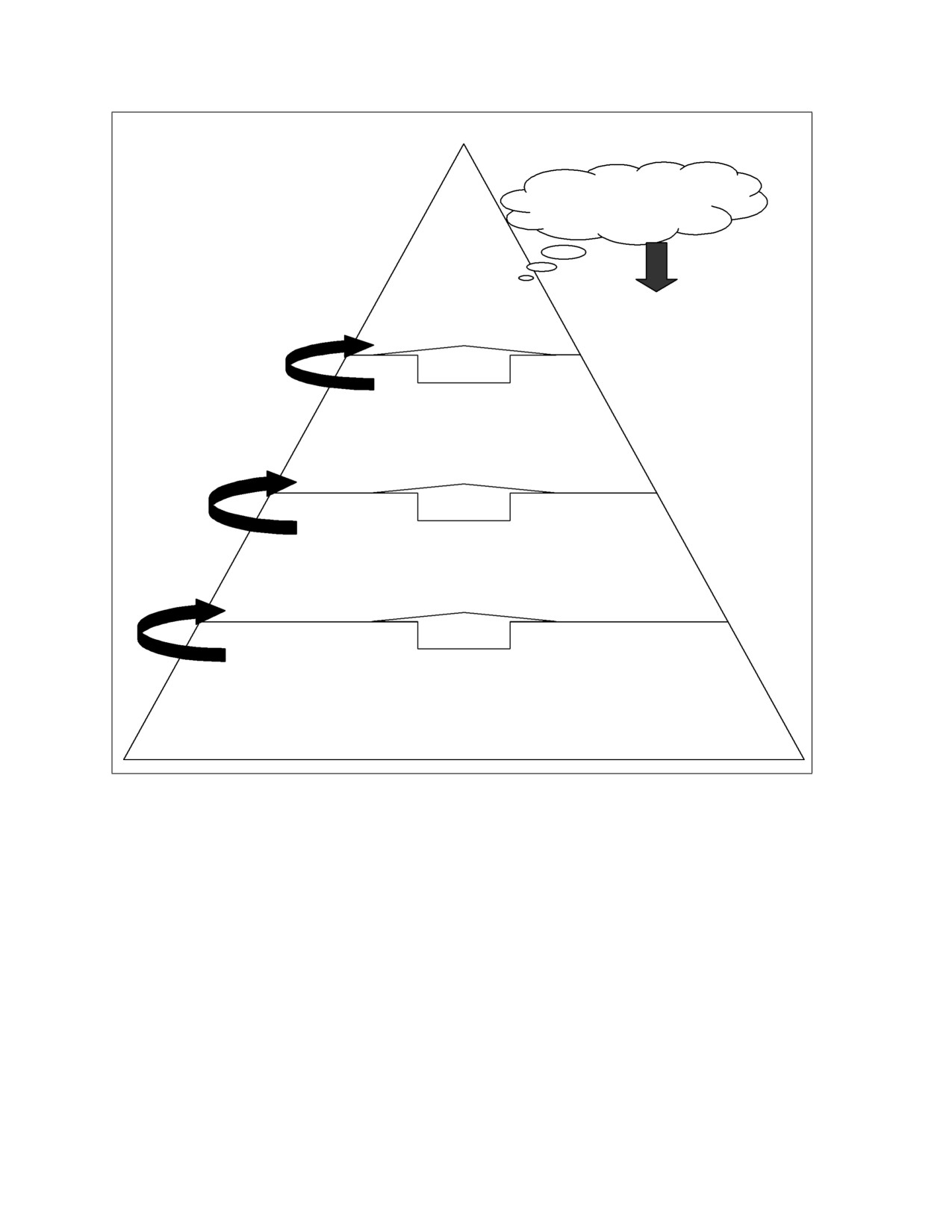
Man in the Loop
•
Validation
Common NBC SA
•
Feedback
•
False alarms
•
Technical reach-back for
anomalies
Understanding
•
Dewarning
•
Protective actions/
•
Detection for warning
risk control
•
Detection for protection
measures
and treatment
•
Detection for surface
Judgment
contamination
•
Detection for all clear
Knowledge
•
Detection for verification
•
Risk assessment: hazard
•
Prediction/COA analysis MOPP
guidance
Cognition
Information
•
NBC threat status
•
NBC reports
Processing
Data
•
Agent identified
•
Agent detected/intensity
•
Location of NBC or TIM contamination/
hazard
Figure I-1. NBC Reconnaissance Information Management
I-6
Chapter II
OPERATIONAL ENVIRONMENT
1.
Background
The operational environment for reconnaissance is affected by multiple factors,
including—
• Threat environment.
• Land environment.
• Maritime environment.
• Air environment.
• Space environment.
• Civil/infrastructure environment.
• Weather factors.
2.
Threat Environment
a. In the foreseeable future, the proliferation of NBC weapons and long-range
delivery systems will enable adversaries to threaten US forces at greater ranges with
increased lethality and precision. To operate successfully, the US armed forces will
prepare to conduct prompt, sustained, and decisive operations in NBC environments
according to Multiservice Tactics, Techniques, and Procedures for Nuclear, Biological,
and Chemical Defense Operations. The continuous IPB process accounts for confirmed—
as well as plausible, but unconfirmed—adversary capabilities, plans, and actions. The
IPB process addresses the capabilities and limitations of adversary NBC weapons and
delivery systems and the indicators of intent to employ NBC weapons. These factors
combined create a fundamental basis for determining the threat environment.
b.
Adversaries will also seek to shape conditions to their advantage by changing
the nature of the conflict or by using capabilities that they believe are difficult for US
forces to counter. Adversaries may use modernized intelligence, surveillance, and
reconnaissance (ISR) assets and NBC capabilities in attempts to conduct sophisticated
ambushes, destroy key operating systems, or inflict casualties within and outside the
theater of operations (TO).
c.
Because potential adversaries know that they cannot win a conventional war
against us, they are more likely to try asymmetric warfare—a method of warfare that
seeks to counter an adversary’s strengths by focusing on its weaknesses. Some states
may see such asymmetric strategies (such as the use of NBC weapons or TIM) as a
means of avoiding direct engagements with dominant US conventional forces. Thus, the
conventional military superiority of the US may create an incentive for adversary states
to acquire NBC weapons. Terrorist groups intent on inflicting a large number of
casualties or causing panic can also employ this strategy.
d. The threat of using chemical, biological, radiological, and nuclear (CBRN)
weapons occurs across the spectrum of military operations. The number of nations
II-1
capable of developing and possessing these weapons is steadily increasing. Developing
nations are receiving these weapons or the means to develop them through technological
transfer, overt or covert direct transfer, or support to belligerent groups or governments.
The use of these weapons can range from blackmail and acts of terrorism during
peacetime to escalation during conflict or war.
(1) NBC threats may include attacks by overt or covert means using air,
ground, missile, special operations forces (SOF), or terrorists. An adversary can employ
NBC weapons against multiple locations or single bases or as part of a terrorist attack.
The means of delivery varies and may include bursting or spray devices or the use of
improvised devices (e.g., explosives in proximity to solid radioactive material). Biological
agents may also be spread through an infected person, food, or water.
(2) The methods and conditions for delivering weapons to their targets are
affected by several factors, such as the type of delivery system available to an adversary,
meteorological conditions, and agent type. For example, the rate of action may be hours
to days for biological agents or minutes to hours for chemical agents.
(3) The tactics used by an adversary may include direct (on target) or indirect
(off target) weapon delivery. Direct delivery to a target can provide immediate effects.
Indirect delivery is generally upwind of the target area so that the resulting aerosol,
vapor cloud, or spray stream drifts to the target.
e.
It is increasingly likely that the US armed forces could encounter NBC
weapons and improvised devices at the operational and tactical levels in CONUS or
during a regional conflict. The use of these weapons at the operational level would be
effective against rear area targets (such as ABs, ports, or logistics support facilities)
since they are critical to US efforts. TBMs are especially serious threats to overseas
bases, many of which are within the effective range of one or more TBM systems and
potential adversaries. An adversary could also use delivery means to employ nuclear
weapons or radiological materials. Their residue creates radioactive particles that can be
disseminated over considerable distances.
f.
TIM hazards exist wherever US troops, allied troops, or local civilians are
located. TIM exists in every area of the world, and it plays a key role in virtually every
human activity. For example—
• Pesticides and fertilizers are prevalent in agricultural areas.
• Acids, bases, chlorine, insecticides, and compressed flammable gasses are
common in residential areas.
• Harsh chemicals and solvents are found in industrial areas.
• Fuel and fuel by-products are located by transportation hubs.
• A significant amount of low-level radioactive material is found in
hospitals and dental facilities.
• Virtually every chemical can be found in storage areas and shipping sites,
such as ports, airfields, and rail yards.
g.
Like chemical warfare (CW) agents, TIM can attack through inhalation, direct
skin contact, or ingestion. Unlike CW agents, most common TIM can pass through
protective masks. In certain circumstances, TIM may displace or consume the oxygen
II-2
needed to breathe, creating a deadly, indirect hazard that is not protected by protective
masks.
3.
Land Environment
The analysis of the land environment concentrates on terrain features, surface
materials, natural obstacles, and mobility characteristics. To judge appropriate defensive
measures, it is important to analyze the combined effects of wind, temperature,
humidity, sunlight, topography, and precipitation on NBC weapons. The military aspects
of the terrain are also analyzed to evaluate how the land environment could shape NBC
reconnaissance operations. Consider the following:
• Observation. Observation is the ability to see the adversary’s use of NBC
agents via NBC reconnaissance detection devices, such as observation posts
(OPs) or standoff detection devices. However, several factors can hinder
observation, including vegetation, buildings, relief features (hills, defiles),
sensor capabilities, precipitation, and cloud cover. The analysis of each
limiting factor can be combined into a single product, usually in the form of an
overlay that indicates the line of sight (LOS).
• Obstacles. Obstacles are obstructions that are designed or employed to
disrupt, fix, turn, or block movement. Obstacles can be man-made and may
include areas an adversary can contaminate with NBC agents. NBC
reconnaissance capabilities may be used to confirm or deny the presence of
contamination.
• Key terrain. Key terrain (such as an urban complex) can directly affect NBC
reconnaissance, and there is a higher possibility that TIM may be present. An
adversary may also contaminate water sources. Contingency planning
provides for detailed reconnaissance of a zone, which includes testing the
water and selecting the necessary countermeasures (decontamination,
purification).
• Avenues of approach (AAs). Planners analyze the military aspect of the
terrain (observation, key terrain features, obstacles, cover, concealment, and
AAs) to evaluate how the land environment could shape NBC reconnaissance
operations.
NOTE: See Appendix A for information on mountain, jungle, desert, arctic,
urban, littoral, and subterranean areas.
4.
Maritime Environment
The maritime environment is the sea and the littoral in which all Navy operations
(sea control, power projection, amphibious operations) take place. NBC reconnaissance
in the maritime environment is influenced by the sea, littorals, and adjacent land
masses. Key military aspects to consider include maneuver spaces, choke points, natural
harbors, anchorages, ports, airfields, and naval bases. Coastal terrain features are also
critical factors in planning and conducting NBC reconnaissance. Consider the following:
• Maneuver spaces and choke points. The closer a surface ship is to land, the
greater the potential threat. A ship operating in confined waters or choke
points near an adversary’s shore-based air or missile assets has decreased
II-3
warning time. This effect is magnified for task force (TF) operations since some
ship formations may be forced to close up in a confined water space.
• Natural harbors and anchorages. An integrated reconnaissance plan
should be prepared for all natural harbors and anchorages within the AO.
• Man-made infrastructures. All man-made infrastructures (ports, airfields,
and naval bases) capable of influencing Navy operations within an AO are
analyzed in preparing NBC reconnaissance plans.
5.
Air Environment
The battlespace air environment includes the operating medium for fixed- and
rotary-wing aircraft, air defense systems, unmanned aerial vehicles, cruise missiles, and
some TBM. Consider the following:
• Airfields and support infrastructures. Identify and analyze NBC
reconnaissance requirements for support of AB operations.
• AAs. Identify air AAs for standoff NBC monitoring and survey.
• NBC collateral effects. Atmospheric stability can play a key factor in
analyzing when an adversary may use NBC weapons. Production and storage
facilities for NBC weapons present special problems. For each known NBC
facility location, analyze the surrounding terrain and the forecasted weather
conditions and patterns to aid in modeling postattack effluent contamination.
To clarify the possible extent of collateral effects, draw potential dispersal
patterns downwind from each site.
• Standoff detection. Identify standoff detection capabilities, and use IPB to
determine how their use can support mission requirements.
6.
Space Environment
Forces with access to information from the space environment have additional
options to influence and enhance military monitoring capabilities. The United States
Strategic Command (USSTRATCOM) is responsible for monitoring foreign space
activity, performing all-source analysis of foreign space operations, and supporting
appropriate requests for information. For example, a combatant command (COCOM)
commander may request support from the USSTRATCOM for information to support
PIR. The strategic- or operational-level commander uses multiple sources of intelligence
within the affected AO, and space-based platforms can provide another key source of
information.
7.
Civil/Infrastructure Environment
Civil/infrastructure environments pose special problems for reconnaissance
planning. Consider the following:
• Environmental and health hazards. The presence of communicable
diseases (endemic diseases in man, animals, and plants); locations of
epidemics; methods of disease transmission; and the location, type, and extent
of environmental pollution (radiation, oil spills, contamination of drinking
II-4
water) affect NBC reconnaissance. Industrial activity can also increase the risk
of accidental or deliberate use of TIM.
• Infrastructure. Sources of potable water, transportation means and systems
(road and rail networks, canals, pipelines, waterways), communications nodes,
power production facilities and transmission grids, and TIM impact NBC
reconnaissance planning.
• Industry. Bulk fuel storage and transport systems, natural resources,
industrial centers, scientific and technological capabilities, and chemical and
nuclear facilities may affect the selection of areas of interest (AOIs) or PIR.
Industrial activity may also increase the risk of accidental or deliberate use of
TIM.
• Civil control. The ability and mobility of government and commercial entities
to secure and operate the infrastructure and industrial areas are key factors.
The effectiveness of local emergency response teams (ERTs), medical facilities,
and public health programs also impact the operational environment.
8.
Weather Factors
Weather is the state of the atmosphere, and atmospheric stability can be a key
factor in analyzing when an adversary may use NBC weapons. Weather factors that
impact NBC reconnaissance include—
• Visibility (fog, clouds).
• Wind velocity and direction.
• Precipitation and moisture.
• Temperature.
• Humidity.
• Barometric pressure.
NOTE: See Field Behavior of NBC Agents (Including Smoke and Incendiaries)
for more information on how weather influences NBC agents.
II-5
Chapter III
SUPPORT TO MILITARY OPERATIONS
1.
Background
This chapter focuses on NBC reconnaissance actions that could be taken during
peacetime preparedness, transition to operations, during attack, and postattack. The
considerations during sustained combat operations are also addressed.
2.
Peacetime Preparedness
The basic element for maintaining adequate preparedness is a clear understanding
of the threat and operational requirement, both overseas and in the US. To support these
requirements, commanders’ mission analyses must identify specific mission-essential
NBC reconnaissance tasks for individuals and organizations that facilitate operations in
NBC environments.
a.
Preparedness in the US. Commanders of forces and facilities in the US must
assess vulnerabilities that may compromise peacetime preparedness. The actions
commanders take to reduce vulnerabilities depend on their assigned missions and
supporting plans. Peacetime planning and supporting actions must include plans to use
NBC detection capabilities, which minimize the vulnerability to NBC attacks and
mitigate their effects. Commanders coordinate with civilian authorities and agencies to
prevent, mitigate, and manage the consequences of deliberate or accidental NBC
employment or similar TIM events in the US. Locations essential to deployment must
have timely access to equipment, personnel, and units specializing in detecting and
providing early warning of an NBC attack.
b.
Preparedness in TOs. Peacetime preparedness for operations in NBC
environments includes the measures taken by commanders in TO areas abroad, with
appropriate emphasis on—
• Aerial ports of embarkation (APOEs), seaports of embarkation (SPOEs),
aerial ports of debarkation (APODs), and seaports of debarkation
(SPODs).
• Vulnerable, foreign military support personnel.
• Deployed US forces and facilities.
• Littoral operations.
The commands also undertake cooperative actions in peacetime with governments
and armed forces of allies and potential coalition partners to sustain operations in NBC
environments.
c.
Peacetime Preparedness and Predeployment Actions. Actions include—
• Conducting NBC threat assessment.
• Evaluating force and unit status.
• Assessing training readiness.
III-1
• Ensuring coordinated planning.
• Conducting training.
• Taking medical protective measures.
• Verifying and exercising warning and reporting information networks.
• Planning and preparing NBC defense units, equipment, and supplies.
• Coordinating for host nation (HN) support as required.
• Verifying who is responsible for coordinating NBC defensive activities
within an AO (e.g., what unit provides the base cluster commander, who
is responsible for terrain management).
d. Peacetime Preparedness Actions.
(1) Assigning Responsibilities. Peacetime preparedness action includes
assigning responsibilities for those personnel training in NBC monitoring, survey, and
reconnaissance. These responsibilities include—
•
Operating and maintaining NBC equipment applicable to the task.
•
Recognizing attacks with NBC munitions and fully understanding
unit procedures for implementing warnings and providing
protection.
•
Detecting and identifying contamination during NBC monitoring
and survey operations.
•
Monitoring personnel, food, drinking water, air, the environment,
and equipment for NBC contamination and the effectiveness of
decontamination measures.
•
Collecting, packaging, and documenting samples of suspected
biological contamination, establishing the chain of custody, and
forwarding the samples as directed.
•
Collecting samples of liquid and solid chemical agents.
•
Marking NBC-contaminated areas, equipment, supplies, and stores
with standard marking signs.
•
Providing data for NBC reports.
•
Organizing and conducting NBC monitoring and survey operations.
•
Operating detection and survey equipment for recognizing and
detecting hazards from CBR attacks.
•
Checking for nonpotable water sources to assist in the selection of
decontamination points. (PVNTMED personnel designate water
sources for potable water.)
•
Performing disease surveillance on and off the installation to
identify a possible biological attack.
(2)
Assessing Readiness. Peacetime preparedness actions include assessing
readiness and reevaluating mission requirements. The following checklists provide an
III-2
NBC reconnaissance/detection guide that can be used during peacetime, sustained
operations, or conflict termination.
(a)
Determine the following NBC and TIM detection requirements:
r
What NBC and TIM detection capabilities and equipment are
currently on site?
r
Where are the NBC reconnaissance assets located?
r
Who has access to these assets, and how do you contact them?
r
What NBC and TIM detection equipment is projected to deploy
to the site?
r
What are the restrictions on bringing NBC detection assets into
the country?
r
Where are deploying NBC reconnaissance unit and detection
equipment assets coming from?
r
When are unit and equipment packages due in?
r
Will sufficient NBC reconnaissance units and detection
instruments be present to ensure total mission coverage (i.e.,
stationary sites, mobile reconnaissance teams, decontamination
teams, instruments for contamination control area [CCA] and
toxic-free area [TFA] operations, and instruments to place
between contaminated and clean areas)?
r
What is the readiness status of NBC reconnaissance assets?
(b)
Determine the following if HN support is available:
r
What are the NBC detection equipment capabilities and
limitations of the HN?
r
How does the HN plan to use assigned NBC detection
equipment assets?
r
What integration of HN and unit plans must be accomplished in
relation to stationary NBC detection equipment use to ensure
maximum coverage?
r
Does each decontamination team possess sufficient NBC
detection equipment?
r
How many people will be on each HN reconnaissance team?
r
What is the HN concept of operations (CONOPS) for
reconnaissance teams, and does it conflict with that of the US?
r
What is the readiness status of HN NBC reconnaissance assets?
r
What areas and routes will be accessible for US forces?
r
What support (e.g., training, equipment) will HN
reconnaissance assets require from US forces?
III-3
r
Do HN reconnaissance teams possess the types and amounts of
NBC detection equipment to effectively implement the
appropriate NBC reconnaissance CONOPS?
r
What level of classified information, if any, can be shared with
HN NBC personnel, and how will this affect combined
operations?
r
How can the HN be integrated into an NBC warning and
reporting system?
(c)
Determine the following based on communications capabilities:
r
How will NBC contamination be reported (i.e., positive,
negative, or by identification of specific agents, category, and
concentration level)?
r
How will reconnaissance teams be dispatched (automatically
upon declaration of designated alarms or only when notified by
command and control [C2])?
r
What maintenance and supply support exists for NBC detection
units and equipment?
r
Are sufficient quantities of batteries with battery chargers
available for NBC detection equipment?
r
What communications capabilities and interoperability exist,
and who will teams communicate with?
(d)
Determine the following if other service capabilities are available:
r
What other services have NBC specialists assigned?
r
What roles and missions do the other services have in the area?
r
Do the other services have assets available that you can use
(e.g., biological detection through the Biological Integrated
Detection System, enhanced chemical detection through the use
of the Fox NBCRSs)?
r
Do the other services possess sufficient personnel and
equipment to fulfill their mission requirements in relation to
how they directly impact your unit operations?
(3)
Establishing NBC Response Sectors. Peacetime preparedness at fixed-site
locations in CONUS or OCONUS (i.e., APOE, SPOE, APOD, or SPOD) includes
assessment of their site mission capabilities and response actions in an NBC
environment. Based on the large geographical area that many fixed sites occupy,
commanders may consider establishing NBC response sectors to aid NBC
reconnaissance actions. The value of NBC sectors can become particularly useful upon
receipt of postattack NBC reconnaissance reports. When attacks are imminent,
commanders should make the same initial alarm and MOPP declarations for the entire
installation and any related response sectors in the immediate proximity of the
installation.
(4) Determining Organization. Most military units can conduct NBC
reconnaissance to help determine the presence or absence of NBC agents. Unit NBC
III-4
reconnaissance teams (from organic or supporting assets) provide the commander with
critical information to support SA. Unit NBC reconnaissance teams are part of an
integrated network of unit NBC centers and specialized teams. Additionally, designated
unit personnel (i.e., shelter monitors) provide commanders with a rapid means of
locating contamination and identifying and marking hazards.
(a) NBC reconnaissance teams are normally directed through the unit
NBC center or unit control center. Before the attack, teams execute actions (such as pre-
positioning M8/M9 detector paper on unit assets) and disperse and maintain assets (such
as automatic chemical-agent alarms [ACAAs]).
(b) Subordinate unit NBC reconnaissance teams provide reports to the
NBC center, and teams mark hazards and contamination as they are discovered.
However, extensive marking can delay reconnaissance of the assigned area. Under these
circumstances, teams would likely conduct a search to identify major hazards. If
contamination is present, they complete an initial survey and report the results. Teams
then return and properly mark hazards and contamination. Personnel not conducting
mission-essential duties should remain protected until all hazards have been identified,
located, reported, and marked.
(c) Unit NBC reconnaissance teams are organized, trained, and
equipped by the unit to survey the postattack status of unit equipment, facilities,
personnel, and areas of responsibility (AORs). The minimum size of a team is two people.
One member maintains a constant watch for hazards, provides security, and calls for
assistance if accidents or injuries occur. There is no maximum number of team members;
however, team size should be kept to a minimum to reduce the number of people exposed
to postattack hazards and still accomplish the mission. The use of large teams depends
on the unit mission, weather, and need for additional security.
(d) NBC reconnaissance team equipment allowances vary depending on
unit authorizations and whether vehicles and communications equipment are designated
for team use. Leaders adjust actual team equipment needs to match the threat, area of
coverage, terrain, or mission. Reconnaissance team equipment may be dedicated and
stored in team kits, or teams may use equipment from shelter management or other unit
team kits. Table III-1, page III-6, is a list of suggested equipment for a two-party survey
team.
(5) Preparing an NBC Reconnaissance Team.
(a) Units prepare to provide reconnaissance for their specific areas.
Table III-2, page III-6, outlines common actions that can be rehearsed for reconnaissance
teams. Timely reporting allows the NBC center to assess the total status of mission
resources and assign recovery forces where they are most effective.
(b) NBC reconnaissance teams are prepared to begin operations
immediately after an attack or may delay operations to avoid or reduce exposure to NBC
contamination fallout or unexploded ordnance (UXO) hazards. Specialized NBC
reconnaissance teams may be directed to start operations immediately after the attack to
provide commanders with a quick assessment of the status and the overall postattack
situation. Commanders may also direct specialized teams to auto roll as soon as the
attack is over. Unit NBC reconnaissance teams and individuals generally do not begin
operations until directed by the NBC center. When preparing for postattack
reconnaissance, teams will exercise caution to avoid crossing through cordoned and
contaminated areas.
III-5

Table III-1. Suggested Equipment for a Two-Party Survey Team
Item
Quantity
Flashlight, high quality
2 each
Batteries, flashlight
Sufficient amount for 8 hours of use
Chemical light stick, white
10 each
Chemical light stick, red
10 each
NBC marking kit, signs
1 each
Survey tape, white
2 rolls
Communications device
1 each
M8 detector paper
5 booklets
M9 detector paper
2 rolls
Weapon
1 each (as required)
Hot-, cold-, wet-weather gear
2 sets
Magnifying glass
1 each
Radiac equipment, chemical detection device, DOD sampling kit
1 each
Handheld assay device
25 each
Table III-2. Common Team and Unit Actions
Preattack
Assemble and inspect equipment.
Identify and inspect first aid kits.
Survey AORs.
Identify blackout actions if applicable.
Identify primary and alternate routes.
Implement cover, concealment, and deception
actions.
Annotate map with key information.
Conduct operational checks for NBC detection
equipment, including radiac equipment.
Identify facility power, gas, and fuel cutoffs if
Check medical items.
applicable.
Pre-position M8/M9 detector paper.
Postattack
Survey predetermined routes.
Report enemy activity (SALUTE).
Find and report casualties, damage, and
Survey vehicles and equipment.
contamination.
Mark hazards as necessary.
Maintain contact with the NBC center.
Report NBC detector alarms.
Request assistance from the NBC center.
Post, check, and report on M8/M9 detector paper.
Advise the NBC center on the ability to conduct the
mission.
Transport injured personnel to casualty collection
Conduct an NBC threat assessment.
points.1
1Team only.
(c) Team preparation includes planning for site security when selecting
locations for NBC detectors and M8 detector paper. This reduces the possibility that
preselected and routinely checked sites could be mined or that teams could be targeted
for ambush during routine operations. As a general rule, do not locate detection sites
outside established perimeters unless they are coordinated with and approved by
security forces.
III-6
(d) Planning actions also ensures that personnel within facilities,
expedient bunkers, and defensive fighting positions pre-position M8/M9 detector paper
in locations where they can observe the paper without physically leaving their protected
positions. Place the M8 detector paper on a raised surface that is slightly canted toward
the observation point. Use binoculars or a spotting scope during daylight to observe M8/
M9 detector paper from the protected position or from beneath overhead cover. For
nighttime operations, attach a rope or string to the observation stand or pad and pull it
to an opening. Use only white light to read the M8/M9 detector paper. Do not use night
vision devices (NVDs) or night vision rifle scopes because they do not show color changes.
3.
Transition to Operations
There are multiple preparatory considerations that support the actions involved in
the transition to sustained operations.
a.
NBC reconnaissance preparatory considerations can include the following:
•
Intelligence. Commanders and the NBC staff use IPB to direct NBC
reconnaissance operations. They gain information that is critical to
making decisions in defined areas and specific locations (i.e., assigning
NBC reconnaissance elements to cover specific named areas of interest
[NAIs]).
•
Force organization and training. Units train and exercise NBC
reconnaissance capabilities as part of their integrated NBC warning and
reporting network. Leaders understand NBC reconnaissance capabilities,
and the staff prepares effective employment plans that maximize the
probability of detection. Unit leaders assess team and overall unit
performance and ensure the understanding of factors, such as the
environmental impact on detections.
•
Theater access maintenance. Contingency plans that integrate NBC
reconnaissance capabilities to help support unimpeded operations are
prepared and exercised. Contingency planning ensures that required
NBC reconnaissance assets are included on the time-phased force and
deployment list (TPFDL). The TPFDL is also evaluated to ensure
inclusion of technical escort and medical laboratory resources and NBC
unit resources (e.g., C2 elements, control centers) as appropriate.
•
Logistics support and sustainment. Commander and staff planning
sustains NBC reconnaissance capabilities, ranging from designating
decontamination points for NBC reconnaissance assets to ensuring
system level contracted logistics support (CLS).
•
Physical environment. Seasonal effects on terrain, weather, and sea
conditions are carefully assessed before and during operations to
determine the potential impact on NBC reconnaissance capabilities.
b.
Many of the actions undertaken during peacetime preparedness will continue
during the transition to operations. Detecting NBC agents is essential to maintaining
operational capability. NBC detection equipment should be operated so that it results in
timely automated warnings. NBC reconnaissance teams must be ready to begin
operations immediately after an attack. For example, reconnaissance teams traveling
III-7
over a predefined route may begin physically checking and reporting the status of each
detector on the installation. Other representative actions may include—
•
Inventorying NBC detection assets and integrating resources with the
host base, HN, and joint forces.
•
Continuing the assessment of manpower and support requirements.
•
Identifying shortages and overages to higher headquarters.
•
Developing mission tasks and work schedules for NBC personnel and
augmented support personnel.
•
Establishing and evaluating the NBC detection array and the NBCRS.
•
Activating the NBC detection, identification, and warning system(s) when
required.
•
Establishing primary and secondary C2 capabilities in the survival
recovery center (SRC) and the damage control center (DCC).
•
Identifying and training personnel for NBC reconnaissance teams.
(Define the AOR for each team, and ensure that communications and
verification procedures are established.)
•
Identifying and establishing CCAs for NBC-protected facilities.
•
Identifying potential CCAs and TFAs if collective protection is inadequate
or nonexistent.
•
Ensuring that all NBC reconnaissance team personnel have been issued
serviceable PPE and that reserve stocks are protected from loss, damage,
and possible contamination.
•
Assisting unit personnel by checking their equipment for serviceability
and ensuring that they inspect, maintain, and clean their assigned
equipment.
•
Evaluating installation contamination avoidance activities.
•
Evaluating installation passive defense activities (e.g., dispersal, cover,
concealment, deception).
4.
During Attack and Postattack
An accurate assessment of the situation must be made during attack and
postattack.
a.
Based on the mission, enemy, terrain and weather, troops available, and
civilian considerations (METT-TC), the following actions should be taken to accurately
and rapidly determine the degree of NBC contamination so that warnings can be
provided or forces can be allowed to reduce protection:
• Implement contamination avoidance measures, and take cover during
attacks. Maintain SA, and report key observations as needed.
• Perform attack damage and hazard assessment.
III-8
•
Survey the immediate area for casualties, UXO, damage, and indications
of chemical use or fallout.
•
Report findings and observations on weapon systems, munitions, and
tactics used in the attack to the NBC center.
•
Monitor the area to verify the presence, extent, and absence of NBC
agents.
•
Be alert for indications of biological-agent use (see Chapter 7).
•
Recommend a protective posture that applies to the threat, or recommend
further attack if contamination is absent. Conduct surveys to define and
mark contaminated areas if contamination is present.
•
Use the M291, M295, or another approved decontamination kit, as
required, to decontaminate surfaces (vehicle access handles, equipment
controls, bare metal, glass) before touching them.
•
Plot contaminated areas, advise the NBC center on the agent persistency,
and provide NBC reports and warnings (e.g., plot nuclear detonations and
fallout, predict downwind hazards).
•
Monitor for the arrival of fallout. If fallout arrives at the installation,
implement exposure and radiological contamination controls, predict
radiation intensities, and submit required reports.
•
Evaluate craters to determine if a ground-bursting chemical weapon,
conventional warhead, or airburst debris caused the crater.
•
Identify vapor concentrations along designated routes.
•
Collect, package, and mark soil, water, and vegetation samples that may
be contaminated.
•
Provide reconnaissance-related information to the NBC center. Report
the—
n
Physical state of the agent (powder, liquid).
n
Apparent viscosity (neat sample or thickened agent).
n
Size of droplets.
n
Effect on vegetation, animals, and personnel.
•
Check the placement of detectors and sector and area transition signs.
•
Reposition vapor detectors between contaminated and uncontaminated
areas or sectors as required, and replace the detectors if necessary.
•
Search for residual hazards.
•
Determine if designated open-air CCAs and TFAs are contaminated, and
locate uncontaminated CCAs and TFAs.
b.
Ensure that personnel know their individual postattack reconnaissance
responsibilities. Critical mission-essential activities continue during postattack
reconnaissance and non-mission-essential personnel use available protection (e.g.,
remain indoors) until hazards have been identified, located, and reported.
III-9
5.
Sustained Combat Operations
During sustained combat operations, NBC reconnaissance assets are integrated
into NBC reconnaissance efforts. NBC reconnaissance units are employed to confirm or
deny the contamination of areas. The method used to employ NBC reconnaissance assets
must be focused by IPB, CCIR, and IR.
a.
Air Component Operations.
(1) NBC attacks have the potential to degrade air component operations. The
lethality of NBC weapons and the operational tempo of air operations require timely and
effective NBC detection and warning.
(2) AB NBC detection capabilities include chemical-agent monitors (CAMs);
improved CAMs; ACAAs; M256-series kits; radiation detection, identification, and
computation equipment; DOD sampling kits; and M8/M9 detector paper dispersed
around flight line facilities, on equipment, and on personnel.
(3) To support NBC reconnaissance, the AB may divide into separate
response sectors to help facilitate efficient and effective postattack reconnaissance.
Specific measures are also taken to support NBC reconnaissance (preattack and
postattack).
b.
Navy Component Operations. An adversary may decide to employ NBC
weapons against a port facility, and NBC planning indicates that an adversary could use
a persistent chemical agent against a port facility (see Figure III-1). Based on that
information, multiple NBC reconnaissance options are considered.
(1) Detection and Alarm. Due to the short distance between the line of
dissemination and the docks and the confined, fixed-site nature of the port, even alarms
provided by deployed, operating detectors would allow little opportunity to avoid
contamination (e.g., the alarm would be raised at essentially the same time as the ships,
personnel, and staged material are being enveloped in the agent cloud). However, an
immediate alarm from NBC reconnaissance assets would—
• Preclude the possibility of other ships being unknowingly loaded
with contaminated material.
• Allow early identification of treatment for affected personnel.
• Permit early use of contamination control to prevent the spread of
the agent by vehicular and personnel traffic beyond port boundaries.
(2) Contamination Control. Determining and marking the contaminated zone
is a necessary, time-consuming task. Useful search and survey instruments, such as
CAM, will be used for marking the zone of contamination, estimating the downwind
hazard, and controlling the area.
(3) Hazard Area Estimates. Planners use automated decision support tools
(such as vapor, liquid, and solid tracking and the hazard prediction and assessment
capability model) to indicate the potential area where the aerosol cloud would result in
50 percent incapacitation (due to liquid and aerosol contamination) of the exposed
population. Weather data, the type of agent, and the length of the spray line are inputs
used in the decision support tool.
III-10
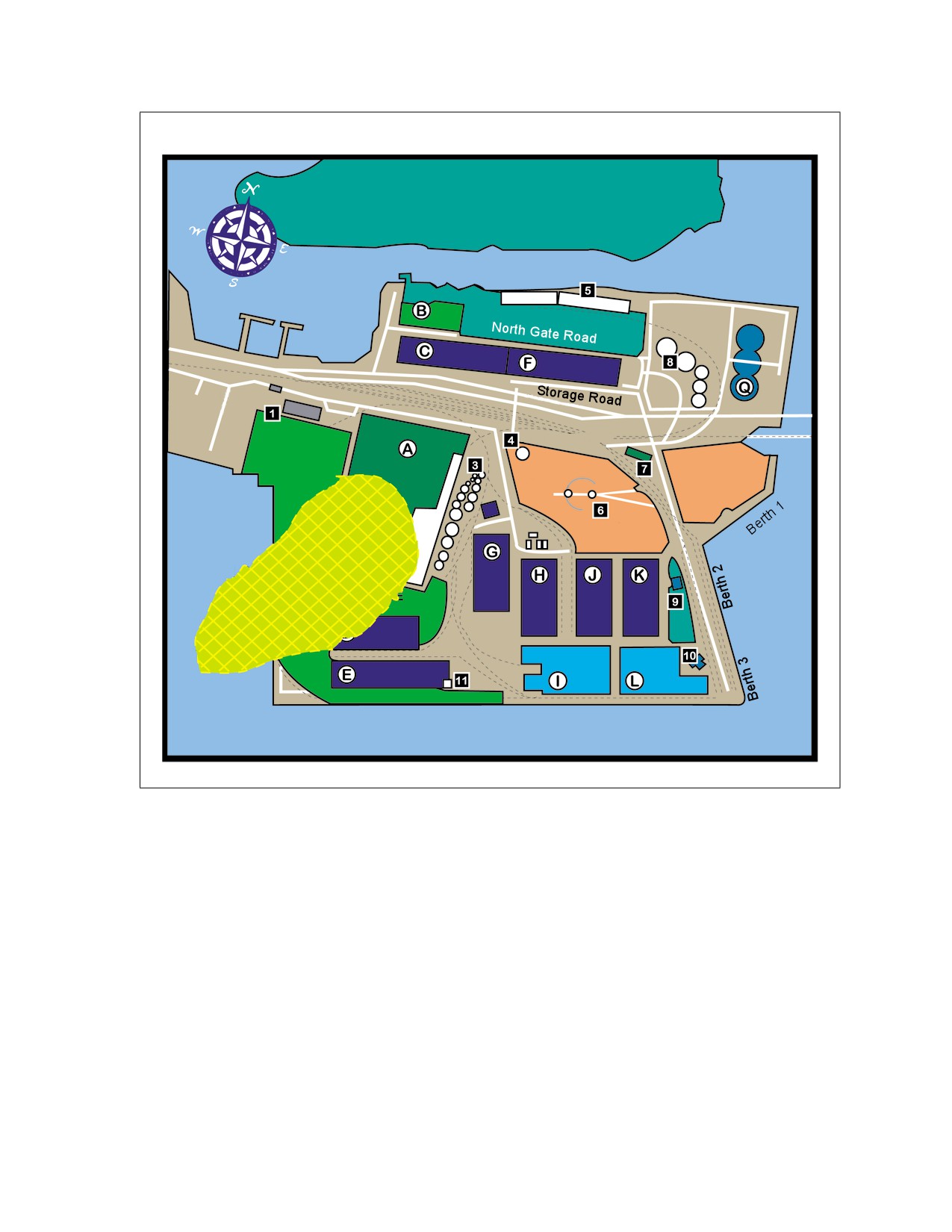
Marsh Island
Calico Creek
Yacht Basin
North
Gate
Main
Gate
Water tower
Truck
scales
USMC
Berth 7
Berth 6
Berth 5
Berth 4
Figure III-1. Chemical-Agent Attack Over a Port Area
(4) Response Options. Response planning considers multiple COAs and how
NBC reconnaissance information could support each COA. Once it has been determined
that the area may have been the target of a chemical-agent attack, the commander could
order a temporary halt in operations. Personnel would then take immediate action to
protect themselves and avoid additional contamination. The port could be sealed to entry
and exit to prevent contamination of additional personnel and equipment, and loading
operations would cease. NBC reconnaissance teams would begin the task of mapping and
cordoning off the contaminated area, and nonessential military and civilian personnel
would be evacuated to a holding area. Based on assessments, the planning team also
examines other COAs, such as using alternate port facilities or increasing dispersal of
assets at the port.
c.
Land Component, Offensive Operations. NBC reconnaissance operations
support various missions, such as movements to contact, hasty and deliberate attacks,
III-11
exploitation and pursuit operations, and river crossing operations. The offensive is the
commander’s primary means for gaining the initiative against an enemy force. Offensive
operations are characterized by momentum, the initiative of subordinate commanders,
and confirmation of the presence or absence of contamination.
(1) Confirmation or Denial of Contaminated Areas. When the IPB identifies
possible contaminated areas in the AO, NBC reconnaissance assets can confirm or deny
the presence of contamination. Templated areas of possible contamination that could
affect operations are designated as NAIs. These NAIs are included in the ISR plan.
Supporting NBC reconnaissance elements are tasked in the ISR plan to observe selected
NAIs. If NBC reconnaissance units conduct a physical survey of the NAI, the supporting
unit may have to provide security. Detailed coordination with other reconnaissance
assets is required to prevent fratricide and duplication of effort. However, if insufficient
time is available to conduct a physical reconnaissance, a map reconnaissance will have to
suffice.
(2) Confirmation of Contamination. To support land force combat operations,
NBC reconnaissance elements are integrated into combat formations. They move behind
or with the lead maneuver force. If the formation encounters contamination, the NBC
reconnaissance elements can deploy to find clear routes around it. As they attempt to
find a bypass route, the lead maneuver force provides security. Once the bypass route is
located, the NBC reconnaissance elements are integrated back into the formation in case
there are additional contaminated areas.
(3) Movements to Contact.
(a) Movement to contact is a type of offensive operation designed to
develop the situation and gain or reestablish enemy contact. Commanders organize
forces to provide all-around security, and contamination avoidance is critical to
maintaining flexibility. Once units enter contaminated areas, the commander’s freedom
of action is degraded. NBC reconnaissance units support the commander’s requirement
to retain freedom of maneuver.
(b) IPB will identify the areas of greatest threat from NBC
contamination, and the commander will task-organize supporting NBC reconnaissance
units to meet the identified threat. If the commander has no such units, the task of
conducting NBC reconnaissance falls to cavalry and scout units, in addition to their
primary missions. The following operational factors are considered:
• Plan NBC reconnaissance operations to provide flexibility for
the commander.
• Task-organize supporting NBC reconnaissance units based on
IPB and METT-TC.
• Identify known or suspected areas of contamination.
• Prioritize NBC reconnaissance support to lead maneuver forces.
• Ensure that the advance guard force is NBC reconnaissance
heavy.
• Coordinate for decontamination after the mission.
(c) In Figure III-2, an armored cavalry regiment (ACR) is performing a
movement to contact. Because the IPB has identified the possibility of contamination in
III-12
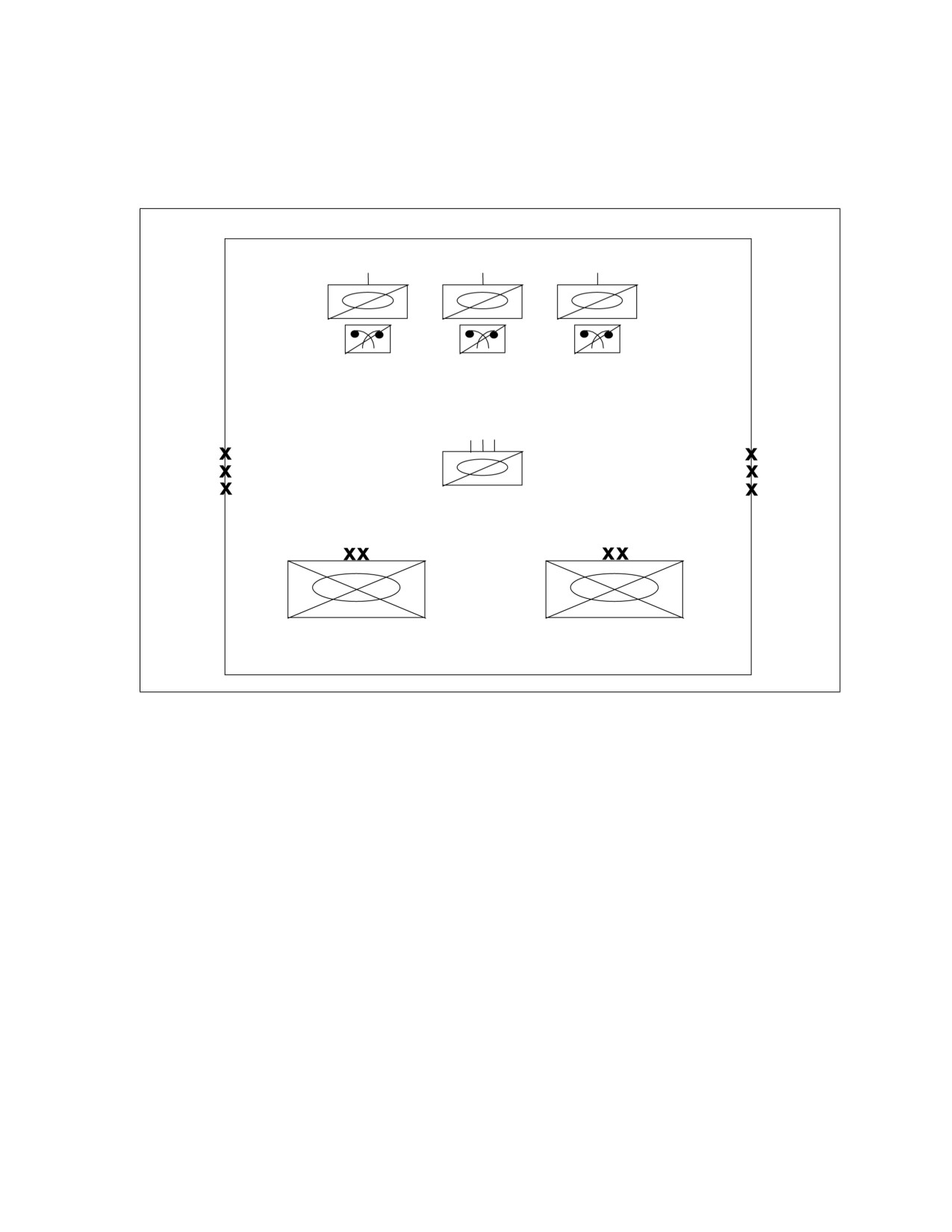
the combat zone, each squadron is supported by an NBC reconnaissance unit/element.
The squadron and regiment IPB indicates where the enemy may use persistent chemical
agents. The unit will react to any contamination located by ground and air scout
reconnaissance patrols.
Corps main
body
Figure III-2. Corps Movement to Contact With an ACR Covering Force
(d) Figure III-3, page III-14, shows a division movement to contact with
a brigade advance guard followed by two brigades. The lead brigade receives an entire
NBC reconnaissance platoon. By weighing the advance guard with NBC reconnaissance
assets, the division facilitates flexibility. When the advance guard encounters
contamination, bypass routes can be quickly identified and the division’s main body can
proceed forward at its planned speed. The platoon leader chooses to employ his unit in a
section organization. When the lead combat force encounters contamination, the section
can quickly locate a bypass route to facilitate the forward movement of the advance
guard. One team will remain behind to survey the contaminated area and aid follow-on
forces.
(4) Attacks.
(a) Attacks are offensive operations that destroy or defeat enemy forces,
seize and secure terrain, or both. NBC reconnaissance is employed to enhance maneuver
and agility of the attacking force. NBC reconnaissance units allow the force to avoid
contaminated areas. The following operational factors are considered:
• Use NBC reconnaissance operations to provide flexibility and
facilitate synchronization.
III-13
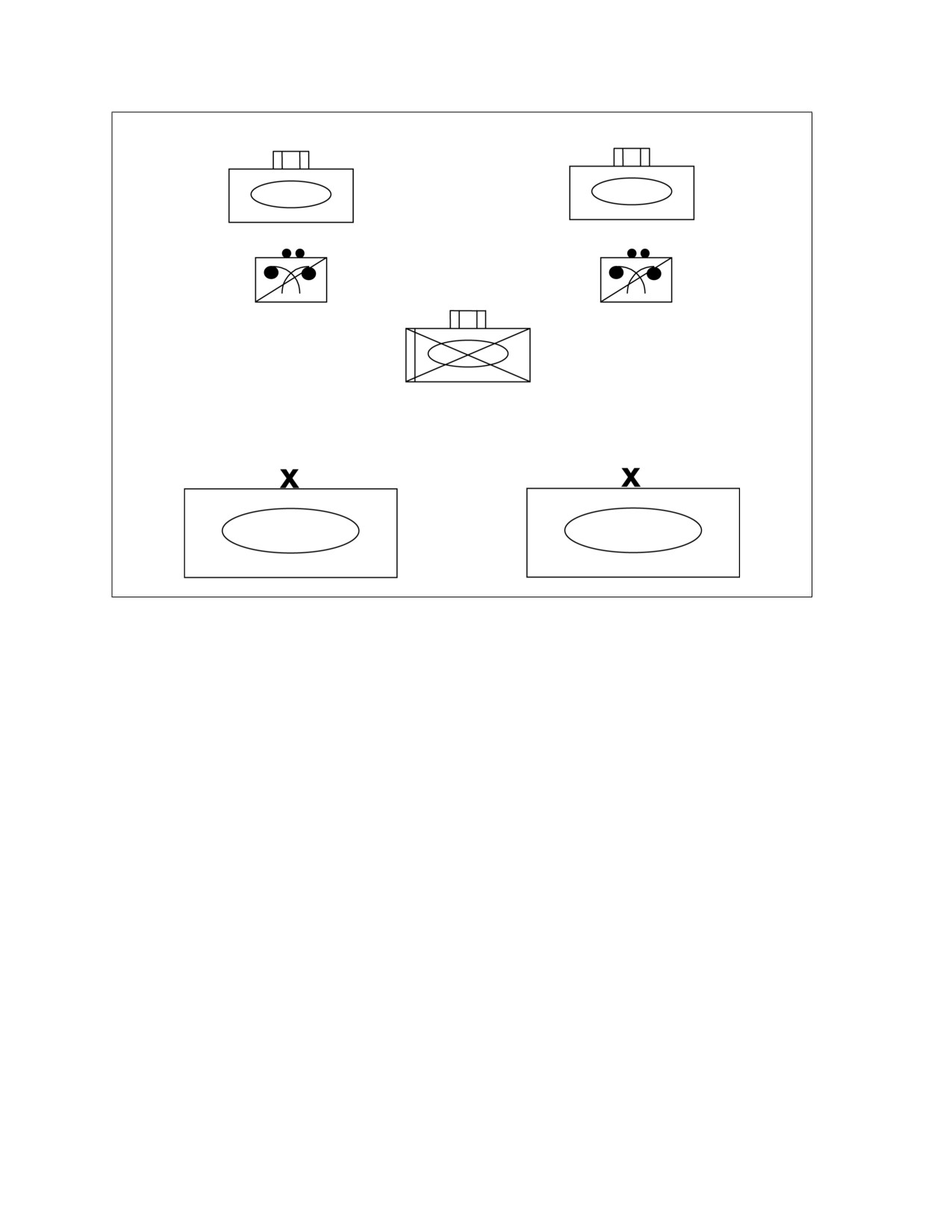
Figure III-3. Division Movement to Contact With a Brigade Advanced Guard
• Identify known or suspected areas of contamination.
• Focus NBC reconnaissance assets to retain freedom of
maneuver.
• Give priority of NBC reconnaissance support to lead maneuver
forces.
• Identify possible contaminated areas and possible bypass
routes.
(b) Figure III-4 shows a division conducting an attack. Elements of the
supporting NBC reconnaissance unit are normally employed behind the lead element
along the main axis of advance. This provides security for the unit and places it well
forward to react to any contamination encountered by the lead TF. If contamination is
encountered, the lead TF goes to MOPP 4 status and continues to attack and the NBC
reconnaissance platoon finds bypasses around the contamination for the follow-on forces.
A unit from the corps NBC company reinforces the division conducting the corps main
attack by providing support along routes of reinforcement and main supply routes
(MSRs). The corps NBC reconnaissance company employs its remaining assets in the
same manner, but in support of the corps. The NBC reconnaissance platoon in the ACR
responds to reports of contamination in its AO and in critical areas determined by the
commander.
III-14
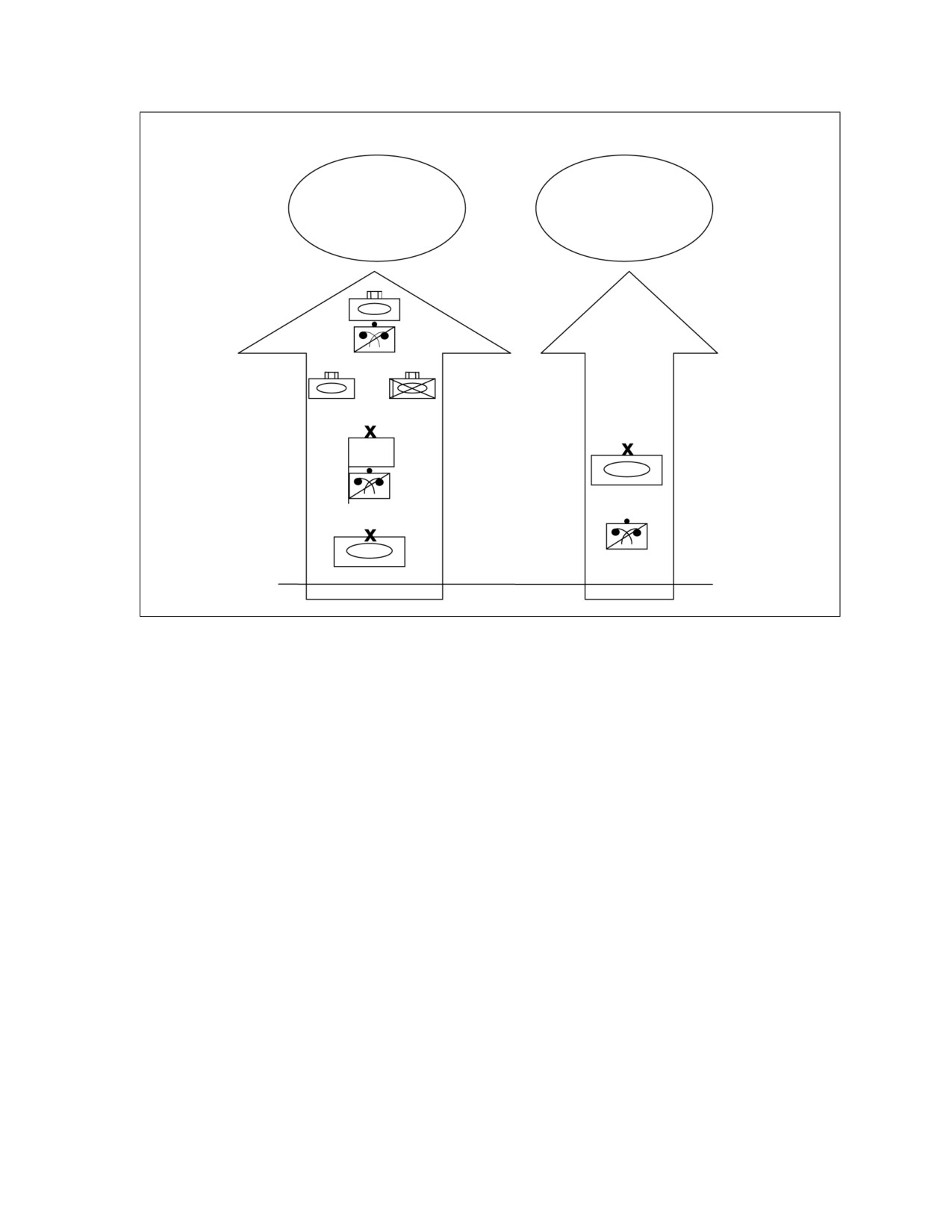
OBJ RED
OBJ BLUE
C2
node
LD
LD
Figure III-4. Attack With Division as Corps Main Attack
(c) Figure III-5, page III-16, shows a battalion TF supported by an NBC
reconnaissance squad that is attached to the TF scout platoon. The intelligence section
and the NBC officer have templated a possible persistent chemical attack that could
influence maneuver along the TF planned axis of advance. The NBC reconnaissance
squad will confirm or deny the presence of contamination at the NAI. The main body of
the scout platoon will cross the line of departure (LD) before the NBC reconnaissance
squad. An armor platoon will be on standby to assist the NBC reconnaissance squad if it
contacts enemy forces and cannot break contact. The scouts moving ahead of the NBC
reconnaissance squad provide security for it.
(5) Exploitation and Pursuit Operations.
(a) Exploitation and pursuit operations usually follow a successful
attack, and fleeing enemy forces may use chemical weapons more freely than an enemy
executing a well-prepared defense. This will require the use of NBC reconnaissance
units. The following operational factors are considered:
• Focus NBC reconnaissance operations to provide flexibility and
speed to the commander.
• Ensure that NBC reconnaissance support is agile and flexible.
• Mark and report all identified areas of contamination, and
control access to these areas.
III-15
///////////////////////////////////////