FM 4-20.198 Multiservice Helicopter Sling Load: Single-Point Load Rigging Procedures (February 2009) - page 9

Chapter 8
BOBCAT SKID-STEER LOADERS
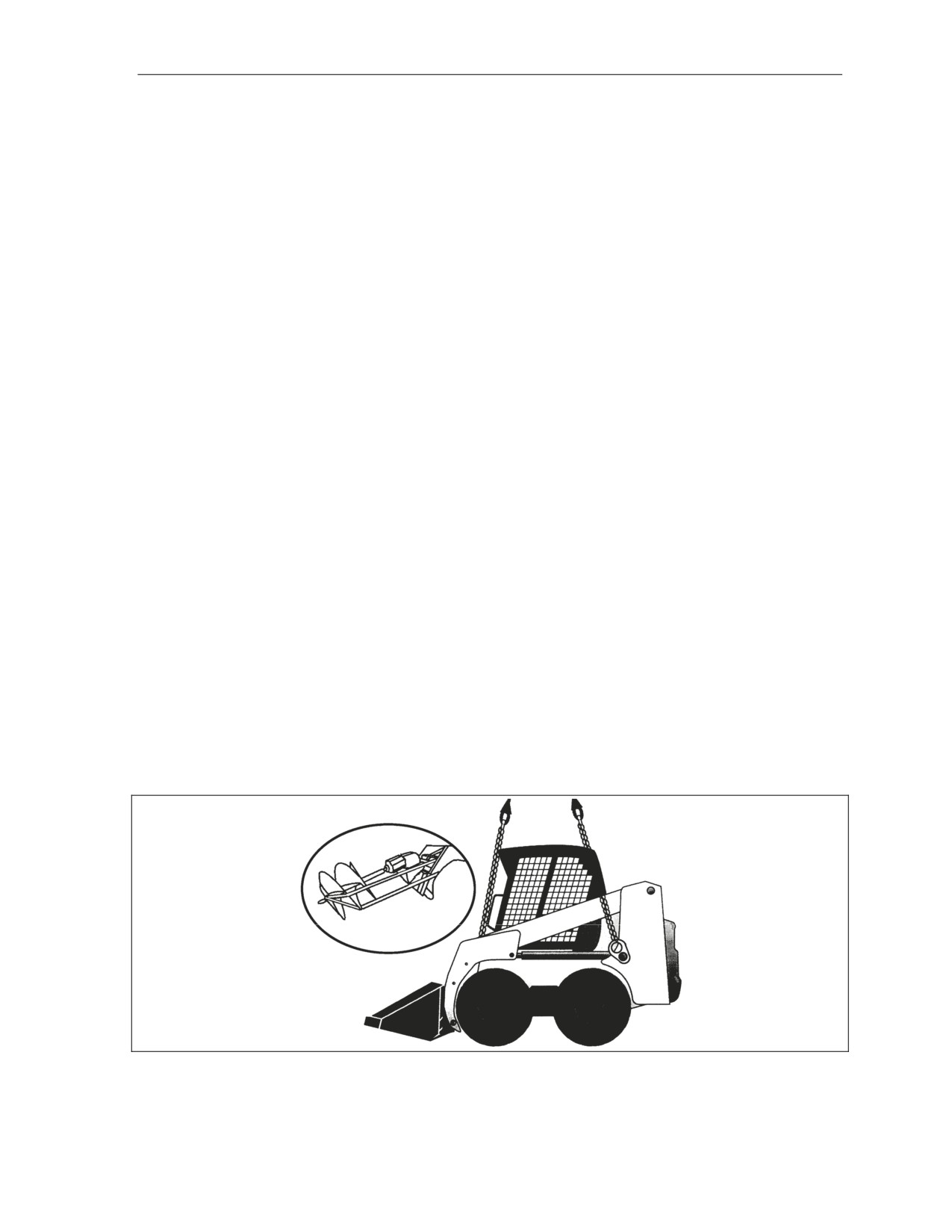
8-42. The Bobcat skid-steer loaders are rigged for single-point sling load using the following procedures:
z
Applicability. The following items in Table 8-41 are certified for all helicopters with suitable
lift capacity by the US Army Natick Soldier Center:
Table 8-41. Bobcat Skid-Steer Loaders
Nomenclature
Max
Sling
Link
Weight
Set
Count
(Pounds)
Front/Rear
Bobcat 863 Skid-Steer Loader with Construction and Industrial
6,870
25K
5/10
Bucket
Bobcat 863 Skid-Steer Loader with Construction and Industrial
7,720
25K
5/10
Bucket and Tracks
Bobcat 863 Skid-Steer Loader with Pallet Forks
7,235
25K
5/10
Bobcat 863 Skid-Steer Loader with Pallet Forks and Tracks
8,085
25K
5/10
Bobcat 863 Skid-Steer Loader with 36-inch Auger Bit
7,690
25K
5/10
Bobcat 863 Skid-Steer Loader with 36-inch Auger Bit and Tracks
8,540
25K
5/10
Bobcat 863 Skid-Steer Loader with Dozer Blade
7,770
25K
5/10
Bobcat 863 Skid-Steer Loader with Dozer Blade and Tracks
8,620
25K
5/10
Bobcat 863 Skid-Steer Loader with Angle Broom
7,910
25K
5/10
Bobcat 863 Skid-Steer Loader with Angle Broom and Tracks
8,760
25K
5/10
Bobcat 763 Skid-Steer Loader with no Attachments
4,840
10K
3/10
Bobcat 763 Skid-Steer Loader with Clamshell Bucket Attachment
5,660
10K
3/10
(NSN 3815-01-502-3528)
Bobcat 763 Skid-Steer Loader with Hydraulic Breaker Attachment
5,600
10K
3/10
(NSN 3820-01-502-3530)
Bobcat 763 Skid-Steer Loader with Auger Attachment
5,220
10K
3/10
(NSN 3830-01-502-5470)
Bobcat 763 Skid-Steer Loader with Pallet Lifting Fork Attachment
5,480
10K
3/10
(NSN 3940-01-502-5469)
Bobcat S150 Compact Skid-Steer Loader with no Attachments
5,530
10K
20/3
Bobcat S150 Compact Skid-Steer Loader with Clamshell Bucket
6,410
10K
25/3
Attachment (NSN 3815-01-502-3528)
Bobcat S150 Compact Skid-Steer Loader with Hydraulic Breaker
6,290
10K
25/3
Attachment (NSN 3820-01-502-3530)
Bobcat S150 Compact Skid-Steer Loader with Auger Attachment
5,910
10K
20/3
(NSN 3830-01-502-5470)
Bobcat S150 Compact Skid-Steer Loader with Pallet Lifting Fork
6,170
10K
20/3
Attachment (NSN 3940-01-502-5469)
z
Materials. The following materials are required to rig this load:
Sling set (10,000-pound capacity).
OR
Sling set (25,000-pound capacity).
Tape, adhesive, pressure-sensitive, 2-inch wide roll.
Cord, nylon, Type III, 550-pound breaking strength.
FM 4-20.198/MCRP 4-11.3E, VOL II/NTTP 3-04.12/
8-74
AFMAN 11-223 (I), VOL II/COMDTINST M13482.3B
20 February 2009
Certified Single-Point Rigging Procedures for Engineer Equipment
Webbing, cotton, 1/4-inch, 80-pound breaking strength.
Tiedown strap, cargo, CGU-1/B (as required).
z
Personnel. Two persons can prepare and rig each load in 15 minutes.
z
Procedures. The following procedures apply to this load:
Preparation. Prepare the load using the following steps:
─ Adjust the boom arm and attachment angles:
─ Tilt the construction and industrial bucket, pallet forks, dozer blade, or angle broom all
the way up and lower the boom all the way down.
─ Tilt the 36-inch auger all the way up and adjust the boom height so the auger point is 8-
12 inches off the ground.
─ Secure the 36-inch auger bit and angle broom with CGU-1/B cargo tiedown straps as
follows:
─ Swing the 36-inch auger bit all the way to the left and secure with a CGU-1/B cargo
tiedown strap. Route the strap around the point of the bit and around the boom arm
above the attachment connection. Tighten the strap (see insert Figure 8-41).
─ Route a CGU-1/B cargo tiedown strap around the left side of the angle broom and around
the boom arm above the attachment connection. Repeat the above procedures on the
right side. Tighten the straps.
─ Detach any attachment hydraulic hoses and cover the ends with tape.
─ Secure each control arm lever to the side of the roll over protection system (ROPS) with
Type III nylon cord.
─ Tie the rear lift provisions to the ROPS in the up position with Type III nylon cord.
─ Ensure the fuel tank is not over 3/4 full. Inspect the fuel tank cap for proper installation.
─ Tape all windows, lights and reflectors.
─ Tape the end of the exhaust pipe.
Rigging. Rig the load according to the steps in Figure 8-41.
Hookup. The hookup team stands on the rear of the load directly behind the ROPS. The
static wand person discharges the static electricity with the static wand. The hookup person
places the apex fitting onto the aircraft cargo hook. The hookup team then moves clear of the
load but remains close to the load as the helicopter removes slack from the sling legs. When
successful hookup is assured, the hookup team quickly exits the area underneath the helicopter
to the designated rendezvous point.
Derigging. Derigging is the reverse of the preparation and rigging procedures.
Figure 8-41. Bobcat Skid-Steer Loaders
20 February 2009
FM 4-20.198/MCRP 4-11.3E, VOL II/NTTP 3-04.12/
AFMAN 11-223 (I), VOL II/COMDTINST M13482.3B
8-75
Chapter 8
RIGGING STEPS
1. Position the apex fitting on top of the ROPS. Route outer sling legs 1 and 2 to the front of the
vehicle and inner sling legs 3 and 4 to the rear of the vehicle. Sling legs 1 and 3 must be on
the left side of the load.
2. Loop the chain end of sling leg 1 through the left front lift provision. Place the correct link
from Table 8-41 in the grab hook. Repeat with sling leg 2 and the right front lift provision.
3. Loop the chain end of sling leg 3 through the left rear lift provision. Place the correct link
from Table 8-41 in the grab hook. Repeat with sling leg 4 and the right rear lift provision.
Secure excess chain with Type III nylon cord.
4. Tie the grabhooks from the rear sling legs to the side of the ROPS with Type I, 1/4-inch
cotton webbing.
5. Cluster and tie (breakaway technique) all sling legs together on top of the vehicle to prevent
entanglement during hookup and lift-off.
Figure 8-41. Bobcat Skid-Steer Loaders (Continued)
277 MULTI-TERRAIN LOADER (MTL)
8-43. The 277 multi-terrain loader is rigged for single-point sling load using the following procedures:
z
Applicability. The following item in Table 8-42 is certified for all helicopters with suitable lift
capacity by the US Army Natick Soldier Center:
Table 8-42. 277-Multi-Terrain Loader
Nomenclature
Max
Sling Set
Link Count
Weight
Front/Rear
(Pounds)
277 Multi-Terrain Loader
10,900
25K
10/3
15K
20/3
z
Materials. The following materials are required to rig this load:
Sling set (25,000-pound capacity).
Tape, adhesive, pressure-sensitive, 2-inch wide roll.
Cord, nylon, Type III, 550-pound breaking strength.
Webbing, cotton, 1/4-inch, 80-pound breaking strength.
z
Personnel. Two persons can prepare and rig each load in 20 minutes.
z
Procedures. The following procedures apply to this load:
Preparation. Prepare the load using the following steps:
─ Lower the blade to the ground. Tape the key in the ignition.
─ Ensure the fuel tank is not over 3/4 full. Inspect the fuel tank cap, oil filter cap, and the
battery caps for proper installation.
─ Place the transmission in neutral and engage the parking brake.
─ Secure the seat cushion with Type III nylon cord.
─ Secure all latches, covers, and panels with tape or type III nylon cord.
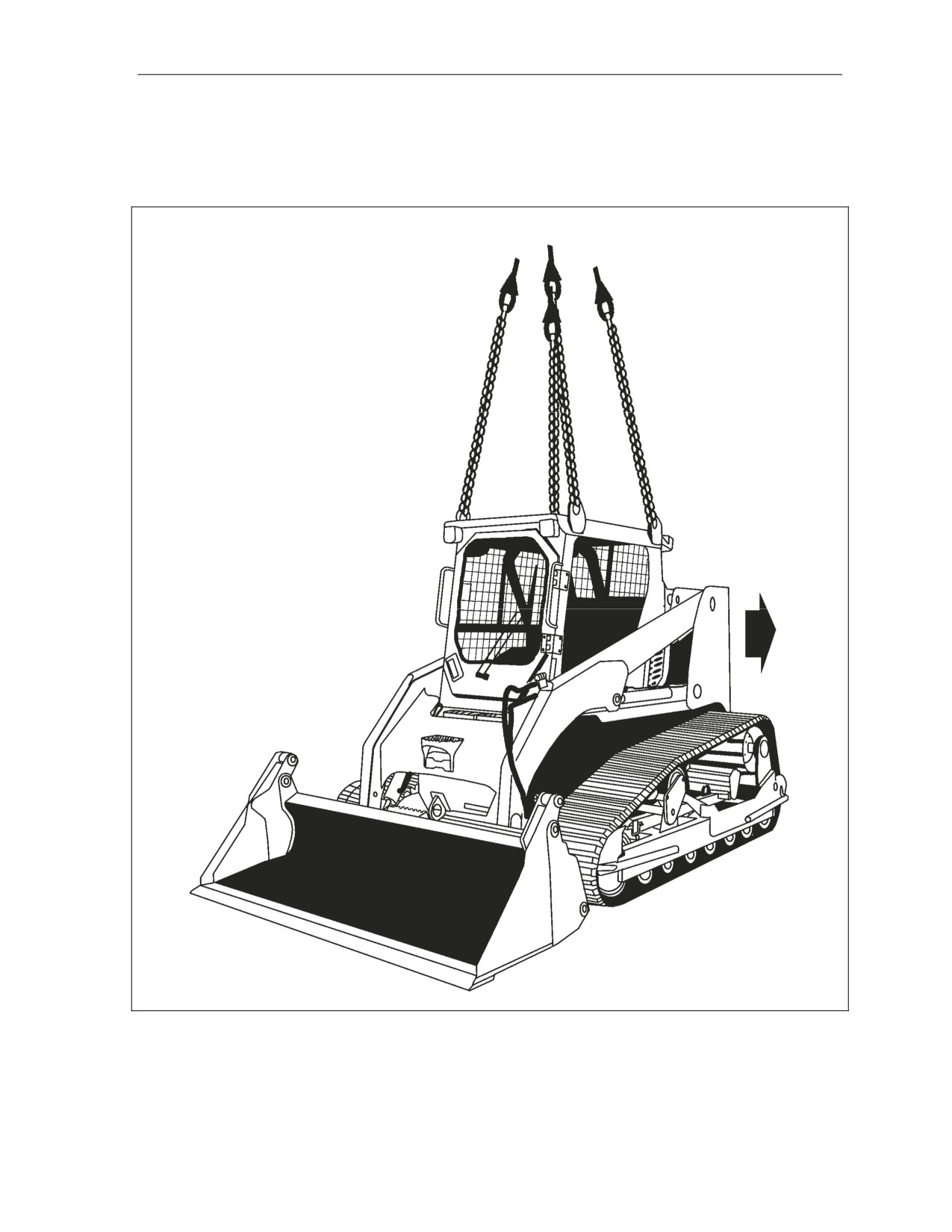
Rigging. Rig the load according to the steps in Figure 8-42.
Hookup. The hookup team stands on top of the MTL. The static wand person discharges
the static electricity with the static wand. The hookup person places the apex fitting onto the
aircraft cargo hook. The hookup team then moves clear of the load but remains close to the load
FM 4-20.198/MCRP 4-11.3E, VOL II/NTTP 3-04.12/
8-76
AFMAN 11-223 (I), VOL II/COMDTINST M13482.3B
20 February 2009
Certified Single-Point Rigging Procedures for Engineer Equipment
as the helicopter removes slack from the sling legs. When successful hookup is assured, the
hookup team quickly exits the area underneath the helicopter to the designated rendezvous
point.
Derigging. Derigging is the reverse of the preparation and rigging procedures.
Figure 8-42. 277-Multi-Terrain Loader
20 February 2009
FM 4-20.198/MCRP 4-11.3E, VOL II/NTTP 3-04.12/
AFMAN 11-223 (I), VOL II/COMDTINST M13482.3B
8-77
Chapter 8
RIGGING STEPS
1. Position the apex fitting on top of the roll-over protection system. Route outer sling legs 1
and 2 to the front of the load (bucket end). Route inner sling legs 3 and 4 to the rear of the
load. Sling legs 1 and 3 must be on the left side of the load.
2. Route the chain end of sling leg 1 through the left front lift provision located on top of the
ROPS. Place the correct link from Table 8-42 in the grab hook. Repeat with sling leg 2 and
the right front lift provision.
3. Route the chain end of sling leg 3 through the left rear lift provision located on top of the
ROPS. Place the correct link from Table 8-42 in the grab hook. Repeat with sling leg 4 on
the right rear lift provision. Secure the excess chain with Type III nylon cord.
4. Cluster and tie (breakaway technique) the sling legs together on top of the ROPS to prevent
entanglement during hookup and lift-off.
Figure 8-42. 277-Multi-Terrain Loader (Continued)
420-D BACKHOE LOADER
8-44. The 420-D backhoe loader is rigged for single-point sling load using the following procedures:
z
Applicability. The following item in Table 8-43 is certified for all helicopters with suitable lift
capacity by the US Army Natick Soldier Center:
Table 8-43. 420-D Backhoe Loader
Nomenclature
Max
Sling Set
Link Count
Weight
Front/Rear
(Pounds)
420-D Backhoe Loader
19,540
25K
20/3
40K
10/3
z
Materials. The following materials are required to rig this load:
Sling set (25,000-pound capacity).
─ Chain length, part number, 38850-00053-102, from a 25,000-pound capacity sling set
(4 each).
─ Coupling link, part number 664241, from a 25,000-pound capacity sling set (4 each).
OR
Sling set (40,000-pound capacity).
Tape, adhesive, pressure-sensitive, 2-inch wide roll.
Cord, nylon, Type III, 550-pound breaking strength.
Webbing, cotton, 1/4-inch, 80-pound breaking strength.
z
Personnel. Two persons can prepare and rig each load in 20 minutes.
z
Procedures. The following procedures apply to this load:
Preparation. Prepare the load using the following steps:
─ Secure all loose equipment in the cab with tape or Type III nylon cord.
─ Remove the exhaust stack and secure it on the floor of the cab.
─ Ensure the fuel tank is not over 3/4 full. Inspect the fuel tank cap, oil filter cap, and the
battery caps for proper installation.
─ Place the transmission in neutral and engage the parking brake.
─ Secure the seat cushion with Type III nylon cord.
FM 4-20.198/MCRP 4-11.3E, VOL II/NTTP 3-04.12/
8-78
AFMAN 11-223 (I), VOL II/COMDTINST M13482.3B
20 February 2009
Certified Single-Point Rigging Procedures for Engineer Equipment
─ Secure all latches, covers, and panels with tape or type III nylon cord.
─ Elevate the bucket halfway and tilt the bucket to the rear. Lower the bucket to the
surface. Ensure the front end loader assembly travel locks, located at the ends of both
front end loader boom cylinders are properly pinned in place.
─ Tie or tape the hydraulic lines and hoses in close proximity to the front lift provisions.
─ Connect one additional chain length to each chain of the sling set with the coupling link.
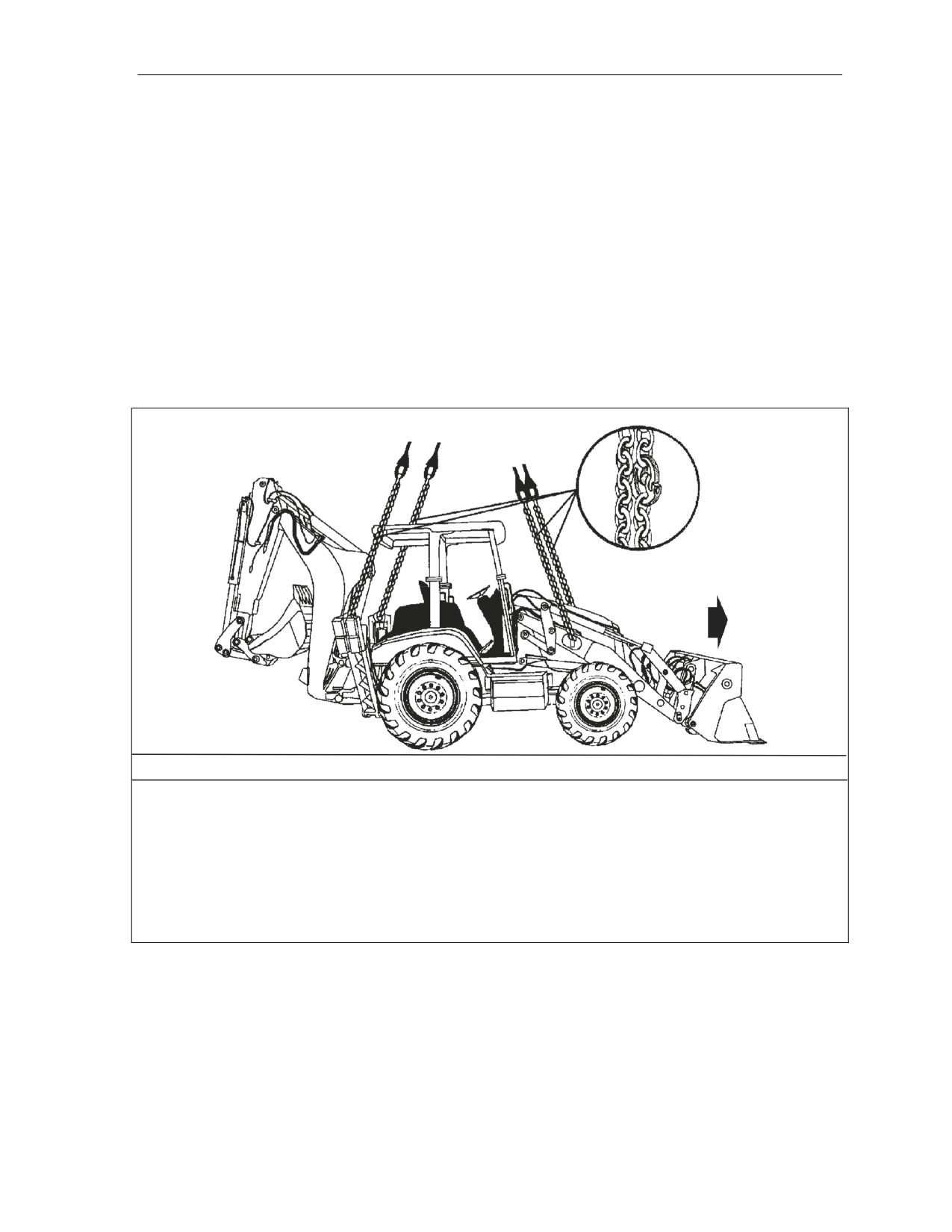
Rigging. Rig the load according to the steps in Figure 8-43.
Hookup. The hookup team stands on top of the load. The static wand person discharges
the static electricity with the static wand. The hookup person places the apex fitting onto the
aircraft cargo hook. The hookup team then moves clear of the load but remains close to the load
as the helicopter removes slack from the sling legs. When successful hookup is assured, the
hookup team quickly exits the area underneath the helicopter to the designated rendezvous
point.
Derigging. Derigging is the reverse of the preparation and rigging procedures.
RIGGING STEPS
1. Position the apex fitting on top of the roll-over protection system (ROPS). Route outer sling
legs 1 and 2 to the front of the load (bucket end). Route inner sling legs 3 and 4 to the rear of
the load. Sling legs 1 and 3 must be on the left side of the load.
2. Route the chain end of sling leg 1 through the left front lift provision that protrude from the
bucket arms. Place the correct link from Table 8-43 in the grab hook. Repeat with sling leg 2
and the right front lift provision. Secure the excess chain with Type III nylon cord.
Figure 8-43. 420-D Backhoe Loader
20 February 2009
FM 4-20.198/MCRP 4-11.3E, VOL II/NTTP 3-04.12/
AFMAN 11-223 (I), VOL II/COMDTINST M13482.3B
8-79
Chapter 8
RIGGING STEPS (Continued)
3. Route the chain end of sling leg 3 through the left rear lift provision located on the end of the
balance support arms. Place the correct link from Table 8-43 in the grab hook. Repeat with
sling leg 4 on the right rear lift provision.
4. Cluster and tie (breakaway technique) the sling legs together on top of the ROPS to prevent
entanglement during hookup and lift-off.
Figure 8-43. 420-D Backhoe Loader (Continued)
IC45 CRAWLER CARRIER
8-45. The IC45 crawler carrier is rigged for single-point sling load using the following procedures:
z
Applicability. The following item in Table 8-44 is certified for all helicopters with suitable lift
capacity by the US Army Natick Soldier Center:
Table 8-44. IC45 Crawler Carrier
Nomenclature
Max
Sling Set
Link Count
Weight
Front/Rear
(Pounds)
IC45 Crawler Carrier
16,540
25K
15/3
40K
15/3
z
Materials. The following materials are required to rig this load:
Sling set (25,000-pound capacity).
─ Chain length, part number, 38850-00053-102, from a 25,000-pound capacity sling set
(4 each).
─ Coupling link, part number 664241, from a 25,000-pound capacity sling set (4 each).
OR
Sling set (40,000-pound capacity).
Tape, adhesive, pressure-sensitive, 2-inch wide roll.
Cord, nylon, Type III, 550-pound breaking strength.
Webbing, cotton, 1/4-inch, 80-pound breaking strength.
z
Personnel. Two persons can prepare and rig each load in 20 minutes.
z
Procedures. The following procedures apply to this load:
Preparation. Prepare the load using the following steps:
─ Secure all loose equipment with tape or Type III nylon cord.
─ Ensure the fuel tank is not over 3/4 full. Inspect the fuel tank cap, oil filter cap, and the
battery caps for proper installation.
─ Place the transmission in neutral and engage the parking brake.
─ Secure all latches, covers, and panels with tape or type III nylon cord.
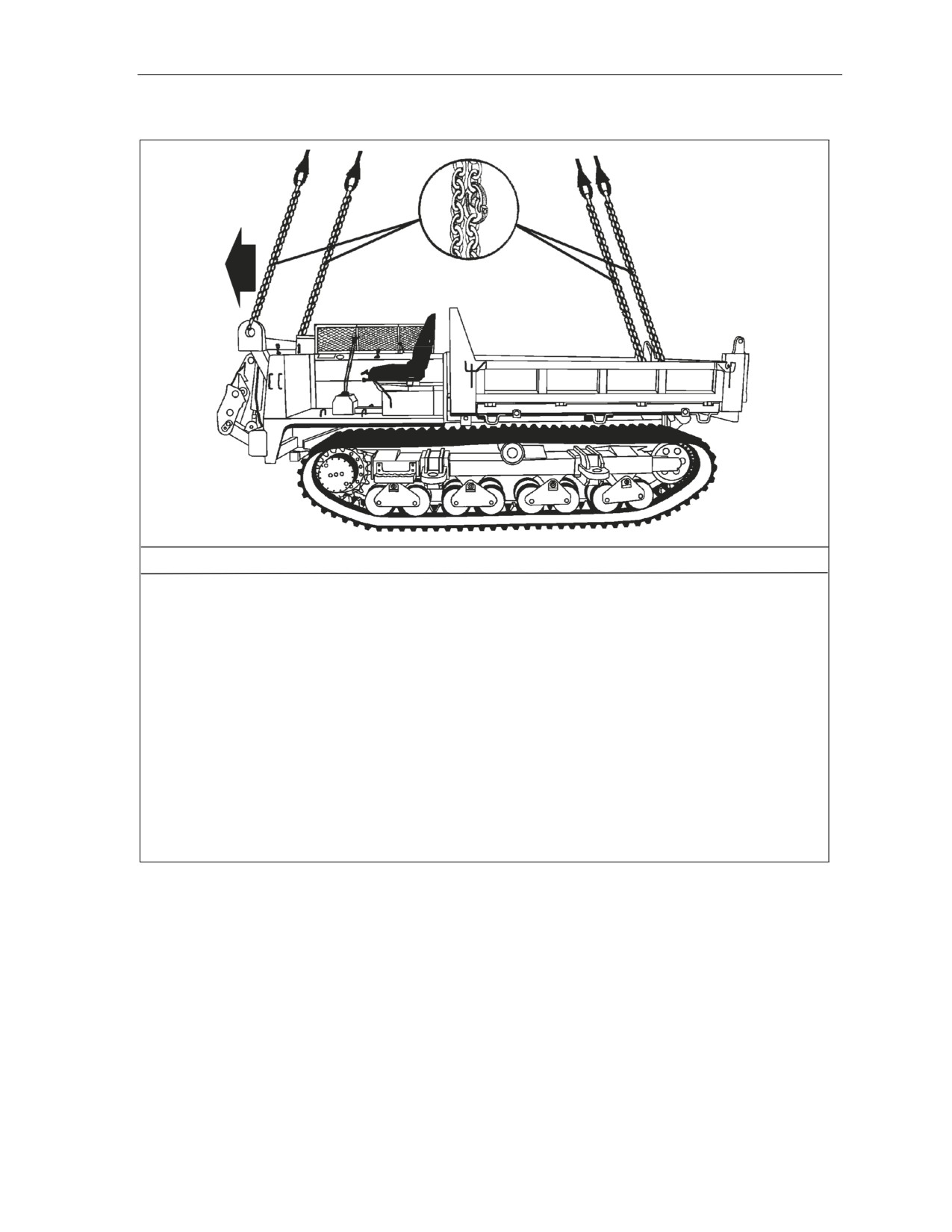
Rigging. Rig the load according to the steps in Figure 8-44.
Hookup. The hookup team stands on top of the load. The static wand person discharges
the static electricity with the static wand. The hookup person places the apex fitting onto the
aircraft cargo hook. The hookup team then moves clear of the load but remains close to the load
as the helicopter removes slack from the sling legs. When successful hookup is assured, the
hookup team quickly exits the area underneath the helicopter to the designated rendezvous
point.
Derigging. Derigging is the reverse of the preparation and rigging procedures.
FM 4-20.198/MCRP 4-11.3E, VOL II/NTTP 3-04.12/
8-80
AFMAN 11-223 (I), VOL II/COMDTINST M13482.3B
20 February 2009
Certified Single-Point Rigging Procedures for Engineer Equipment
RIGGING STEPS
1. Position the apex fitting on top of the load. Route outer sling legs 1 and 2 to the front of
the load (bucket end). Route inner sling legs 3 and 4 to the rear of the load. Sling legs 1
and 3 must be on the left side of the load.
2. Route the chain end of sling leg 1 through the left front lift provision located at the front of
the load. Place the correct link from Table 8-44 in the grab hook. Repeat with sling leg 2
and the right front lift provision. Secure the excess chain with Type III nylon cord.
3. Route the chain end of sling leg 3 through the left rear lift provision that protrude through
the IC45. Place the correct link from Table 8-44 in the grab hook. Repeat with sling leg
4 on the right rear lift provision.
4. Cluster and tie (breakaway technique) the sling legs together on top of the ROPS to
prevent entanglement during hookup and lift-off.
Figure 8-44. IC45 Crawler Carrier
ALL-PURPOSE REMOTE TRANSPORT SYSTEM (ARTS) VEHICLE
8-46. The all-purpose remote transport system vehicle is rigged for single-point sling load using the
following procedures:
z
Applicability. The following item in Table 8-45 is certified for all helicopters with suitable lift
capacity by the US Army Natick Soldier Center:
20 February 2009
FM 4-20.198/MCRP 4-11.3E, VOL II/NTTP 3-04.12/
AFMAN 11-223 (I), VOL II/COMDTINST M13482.3B
8-81
Chapter 8
Table 8-45. All-Purpose Remote Transport System Vehicle
Nomenclature
Max
Sling Set
Link Count
Weight
Front/Rear
(Pounds)
All-Purpose Remote Transport System Vehicle
9,200
10K
35/3
15K
50/3
z
Materials. The following materials are required to rig this load:
Sling set (10,000-pound capacity).
─ Chain length, part number, 38850-00053-101, from a 10,000-pound capacity sling set
(2 each).
─ Coupling link, part number 577-0415, from a 10,000-pound capacity sling set (2 each).
OR
Multileg sling set (15,000-pound capacity).
─ Chain length, part number, 34080-4, from a 15,000-pound capacity multileg sling set
(2 each).
─ Coupling link, part number 31611, from a 15,000-pound capacity multileg sling set
(2 each).
Tape, adhesive, pressure-sensitive, 2-inch wide roll.
Cord, nylon, Type III, 550-pound breaking strength.
Webbing, cotton, 1/4-inch, 80-pound breaking strength.
Felt sheet, cattle hair, Type IV, ½-inch, as required.
z
Personnel. Two persons can prepare and rig each load in 20 minutes.
z
Procedures. The following procedures apply to this load:
Preparation. Prepare the load using the following steps:
─ Secure all loose equipment with tape or Type III nylon cord.
─ Ensure the fuel tank is not over 3/4 full. Inspect the fuel tank cap, oil filter cap, and the
battery caps for proper installation.
─ Engage the parking brake.
─ Remove and store all antennae.
─ Pad all cameras on the ROPS with felt and secure with tape.
─ Pad and tape all vision blocks, mirrors, and lights.
─ Connect one additional chain length to each chain on the rear sling legs with the coupling
link.
Rigging. Rig the load according to the steps in Figure 8-45.
Hookup. The hookup team stands on top of the load. The static wand person discharges
the static electricity with the static wand. The hookup person places the apex fitting onto the
aircraft cargo hook. The hookup team then moves clear of the load but remains close to the load
as the helicopter removes slack from the sling legs. When successful hookup is assured, the
hookup team quickly exits the area underneath the helicopter to the designated rendezvous
point.
Derigging. Derigging is the reverse of the preparation and rigging procedures.
FM 4-20.198/MCRP 4-11.3E, VOL II/NTTP 3-04.12/
8-82
AFMAN 11-223 (I), VOL II/COMDTINST M13482.3B
20 February 2009
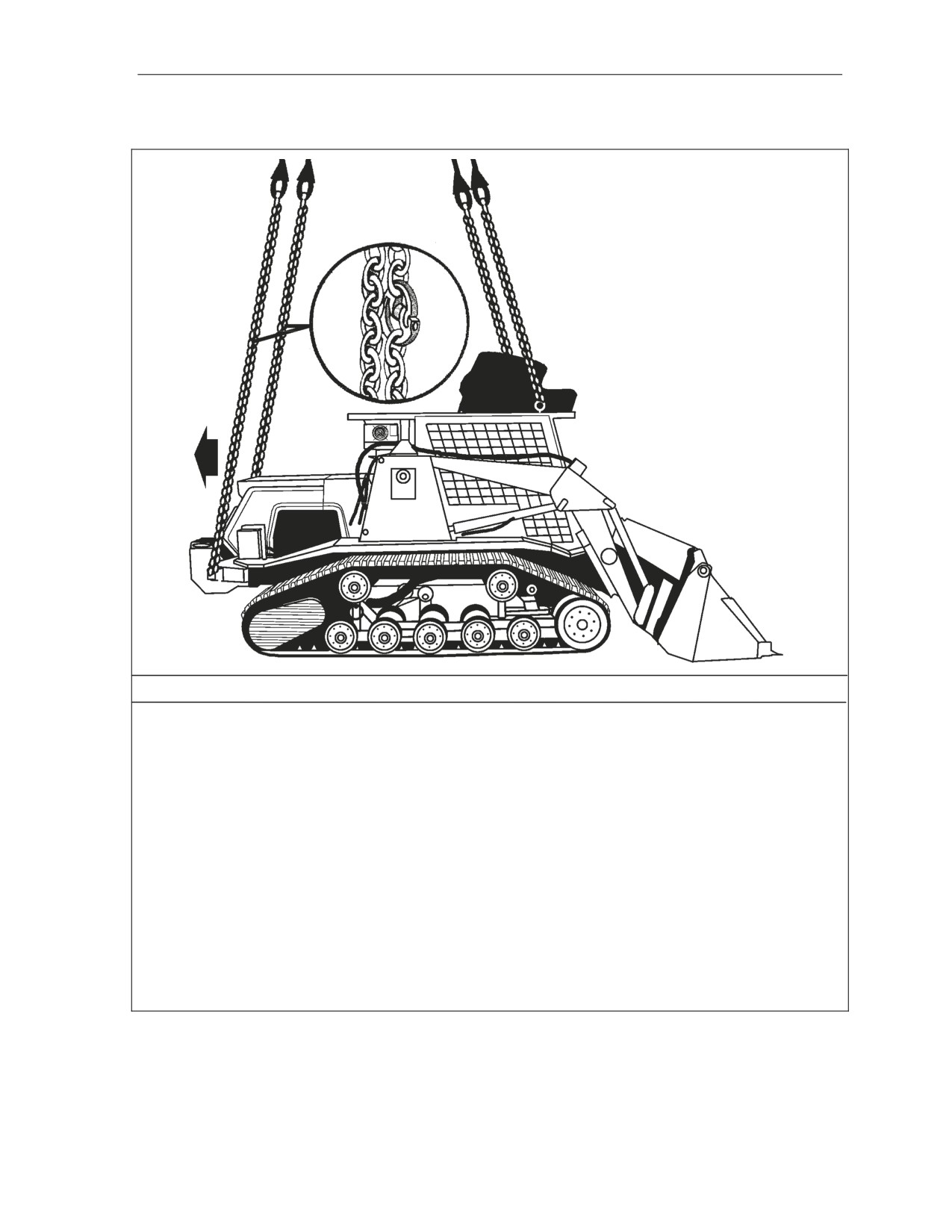
Certified Single-Point Rigging Procedures for Engineer Equipment
RIGGING STEPS
1. Position the apex fitting on top of the ROPS. Route outer sling legs 1 and 2 to the front of the
load (bucket end). Route inner sling legs 3 and 4 to the rear of the load. Sling legs 1 and 3
must be on the left side of the load.
2. Route the chain end of sling leg 1 through the left front lift provision located on top of the
ROPS. Place the correct link from Table 8-45 in the grab hook. Repeat with sling leg 2 and
the right front lift provision. Secure the excess chain with Type III nylon cord.
3. Route the chain end of sling leg 3 through the left rear lift provision located just forward of the
left track rear wheel. Place the correct link from Table 8-45 in the grab hook. Repeat with
sling leg 4 on the right rear lift provision. Tie the rear sling legs to the crew compartment with
a breakaway tie.
4. Cluster and tie (breakaway technique) the sling legs together on top of the ROPS to prevent
entanglement during hookup and lift-off.
Figure 8-45. All-Purpose Remote Transport System Vehicle
20 February 2009
FM 4-20.198/MCRP 4-11.3E, VOL II/NTTP 3-04.12/
AFMAN 11-223 (I), VOL II/COMDTINST M13482.3B
8-83
Chapter 8
M4 ROBOTIC MINE FLAIL
8-47. The M4 robotic mine flail is rigged for single-point sling load using the following procedures:
z
Applicability. The following item in Table 8-46 is certified for all helicopters with suitable lift
capacity by the US Army Natick Soldier Center:
Table 8-46. M4 Robotic Mine Flail
Nomenclature
Max
Sling Set
Link Count
Weight
Front/Rear
(Pounds)
M4 Robotic Mine Flail
12,440
25K
30/3
z
Materials. The following materials are required to rig this load:
Sling set (25,000-pound capacity).
Tape, adhesive, pressure-sensitive, 2-inch wide roll.
Cord, nylon, Type III, 550-pound breaking strength.
Webbing, cotton, 1/4-inch, 80-pound breaking strength.
z
Personnel. Two persons can prepare and rig each load in 15 minutes.
z
Procedures. The following procedures apply to this load:
Preparation. Prepare the load using the following steps:
─ Position the vehicle with the rear of the vehicle pointed into the wind.
─ Ensure the fuel tank is not over 3/4 full. Inspect the fuel tank cap, oil filter cap, and the
battery caps for proper installation.
─ Engage the parking brake and place the transmission in neutral.
─ Remove and store the fire extinguisher and all antennae inside or on top of the vehicle.
Secure with Type III nylon cord.
─ Pad the emergency control section with felt, or a suitable substitute material and secure
with tape. Tie the cover with Type III nylon cord.
Rigging. Rig the load according to the steps in Figure 8-46.
Hookup. The hookup team stands on top of the load. The static wand person discharges
the static electricity with the static wand. The hookup person places the apex fitting onto the
aircraft cargo hook. The hookup team then moves clear of the load but remains close to the load
as the helicopter removes slack from the sling legs. When successful hookup is assured, the
hookup team quickly exits the area underneath the helicopter to the designated rendezvous
point.
Derigging. Derigging is the reverse of the preparation and rigging procedures.
FM 4-20.198/MCRP 4-11.3E, VOL II/NTTP 3-04.12/
8-84
AFMAN 11-223 (I), VOL II/COMDTINST M13482.3B
20 February 2009
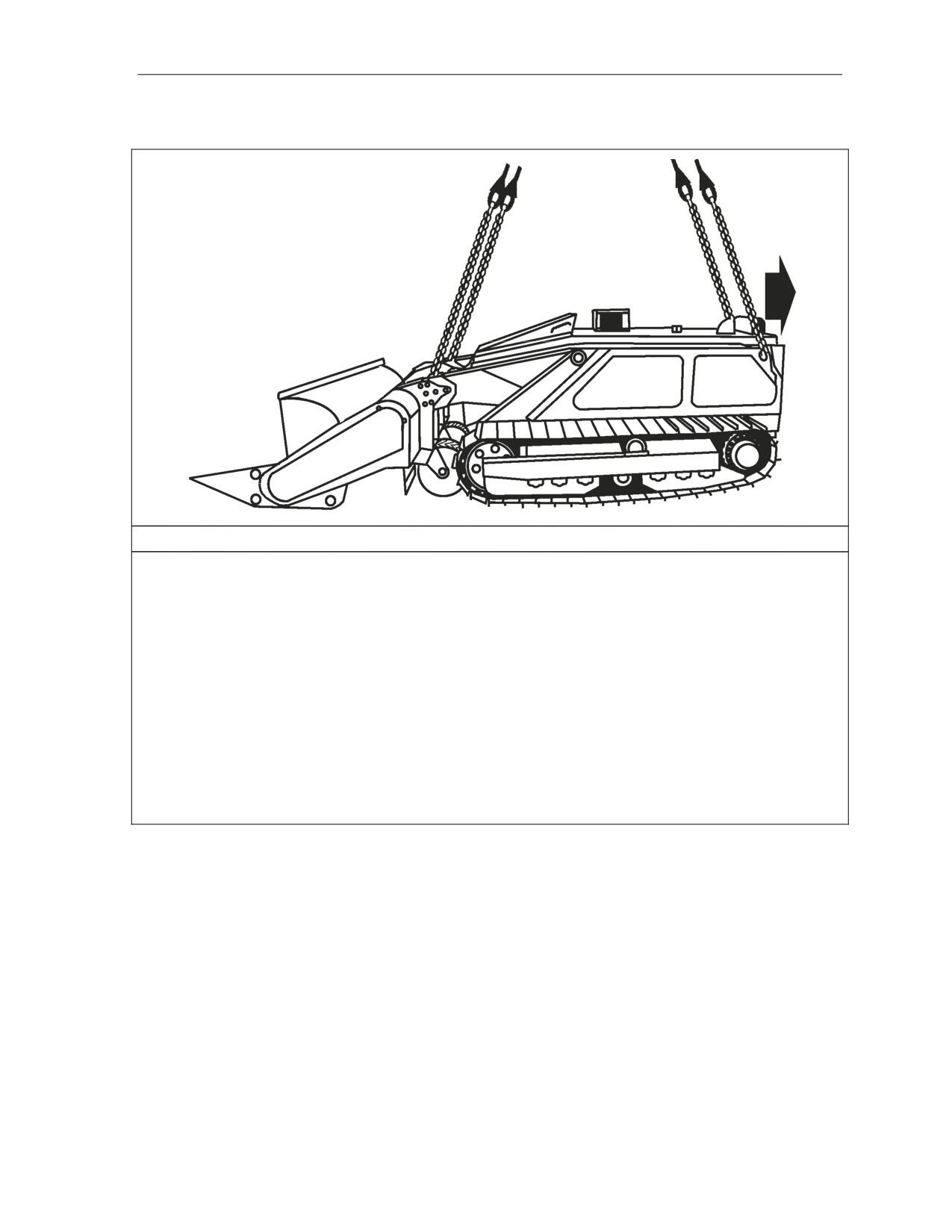
Certified Single-Point Rigging Procedures for Engineer Equipment
RIGGING STEPS
1. Position the apex fitting on top of the vehicle. Route outer sling legs 1 and 2 to the front of
the flail. Route inner sling legs 3 and 4 to the rear of the load. Sling legs 1 and 3 must be on
the left side of the load.
2. Route the chain end of sling leg 1 through the left front lift provision located inboard of the
bail lift arms. Place the correct link from Table 8-46 in the grab hook. Repeat with sling leg 2
and the right front lift provision. Secure the excess chain with Type III nylon cord.
3. Route the chain end of sling leg 3 through the left rear lift provision. Place the correct link
from Table 8-46 in the grab hook. Repeat with sling leg 4 on the right rear lift provision.
4. Cluster and tie (breakaway technique) the sling legs together on top of the vehicle to prevent
entanglement during hookup and lift-off.
Figure 8-46. M4 Robotic Mine Flail
20 February 2009
FM 4-20.198/MCRP 4-11.3E, VOL II/NTTP 3-04.12/
AFMAN 11-223 (I), VOL II/COMDTINST M13482.3B
8-85
This page intentionally left blank.
Chapter 9
Certified Single-Point Rigging Procedures for Liquid
Containers
INTRODUCTION
9-1. This chapter contains rigging procedures for single-point lift of liquid containers that have been
certified for sling load. Each rigging procedure is found in a paragraph that includes a description of the
load, materials required for rigging, and steps to complete the procedure. An applicability paragraph is
also a part of each paragraph and identifies the certified loads. The certified single-point rigging
procedures for liquid containers are in this section. Paragraphs 9-2 through 9-6 give detailed instructions
for rigging loads.
Note. Reach pendants may be used on all single point loads. A static discharge person is not
required when using a reach pendant.
LIGHTWEIGHT COLLAPSIBLE FABRIC TANK
9-2. The lightweight collapsible fabric tank is rigged for single-point sling load using the following
procedures:
z
Applicability. The following item in Table 9-1 is certified for all helicopters with suitable lift
capacity by the US Army Natick Soldier Center:
Table 9-1. Lightweight Collapsible Fabric Tank
Nomenclature
Max
Sling Set
Link Count
Weight
Front/Rear
(Pounds)
Tank, Fabric, Lightweight Collapsible, 160 Gallon
1,400
5000-Pound Capacity Net
N/A
z
Materials. The following materials are required to rig this load:
Net, cargo (5,000-pound capacity).
Tape, adhesive, pressure-sensitive, 2-inch wide roll.
Cord, nylon, Type III, 550-pound breaking strength.
Webbing, cotton, 1/4-inch, 80-pound breaking strength.
z
Personnel. Two persons can prepare and rig this load in 15 minutes.
z
Procedures. The following procedures apply to this load:
Preparation. Prepare the load using the following steps:
─ Inspect the net in accordance with the inspection procedures in FM 4-20.197.
─ Ensure all sharp edges on the tank are protected.
Rigging. Rig the load according to the steps in Figure 9-1.
Hookup. The hookup team stands alongside the load. The static wand person discharges
the static electricity with the static wand. The hookup person places the apex fitting onto the
aircraft cargo hook. The hookup team then moves clear of the load but remains close to the load
as the helicopter removes slack from the sling legs. When successful hookup is assured, the
hookup team quickly exits the area underneath the helicopter to the designated rendezvous
point.
20 February 2009
FM 4-20.198/MCRP 4-11.3E, VOL II/NTTP 3-04.12/
AFMAN 11-223 (I), VOL II/COMDTINST M13482.3B
9-1
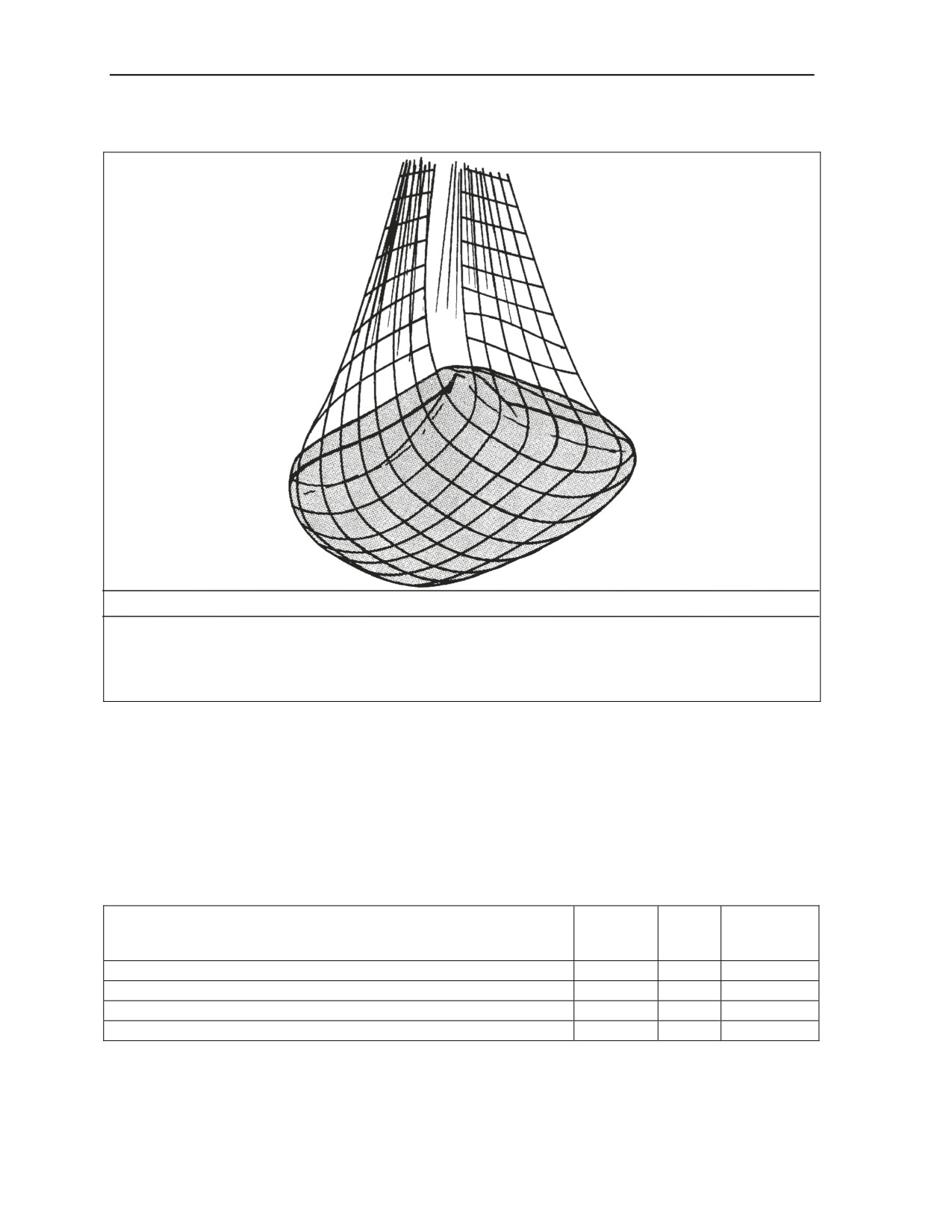
Chapter 9
Derigging. Derigging is the reverse of the preparation and rigging procedures.
RIGGING STEPS
1. Spread the cargo net and position the tank in the center of the net.
2. Rig and close the net in accordance with the procedures in FM 4-20.197.
Figure 9-1. Lightweight Collapsible Fabric Tank
ONE TO FOUR 500-GALLON FUEL DRUMS
9-3. One to four 500-gallon fuel drums are rigged for single-point sling load using the following
procedures:
z
Applicability. The following items in Table 9-2 are certified for all helicopters with suitable lift
capacity by the US Army Natick Soldier Center:
Table 9-2. One to Four 500-Gallon Fuel Drums
Nomenclature
Max
Sling
Link Count
Weight
Set
Front/Rear
(Pounds)
Drum, Fabric, Fuel, 500-Gallon (1 each)
4,200
10K
3/3
Drum, Fabric, Fuel, 500-Gallon (2 each)
8,400
10K
3/3
Drum, Fabric, Fuel, 500-Gallon (3 each)
12,600
25K
3/55
Drum, Fabric, Fuel, 500-Gallon (4 each)
16,800
25K
3/3
z
Materials. The following materials are required to rig this load:
Sling set (10,000 or 25,000-pound capacity).
Tape, adhesive, pressure-sensitive, 2-inch wide roll.
FM 4-20.198/MCRP 4-11.3E, VOL II/NTTP 3-04.12/
9-2
AFMAN 11-223 (I), VOL II/COMDTINST M13482.3B
20 February 2009
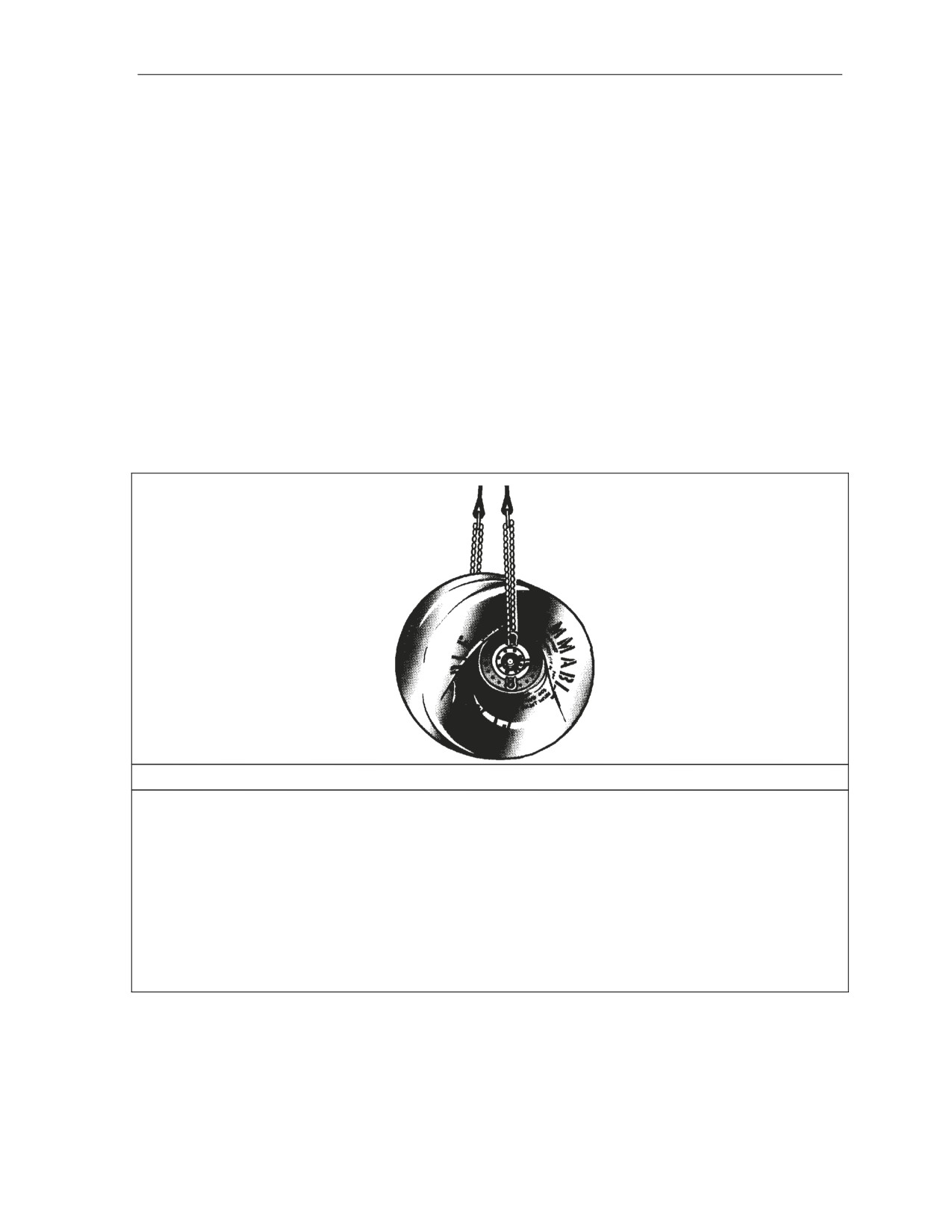
Certified Single-Point Rigging Procedures for Liquid Containers
Cord, nylon, Type III, 550-pound breaking strength.
Webbing, cotton, 1/4-inch, 80-pound breaking strength.
z
Personnel. Two persons can prepare and rig this load in 5 to 15 minutes.
z
Procedures. The following procedures apply to this load:
Preparation. Prepare the load using the following steps:
─ Align the drums side by side in a row.
─ Ensure the lifting clevises are serviceable.
─ Rotate the drum hub so a clevis is in the top position.
Rigging. Rig the load according to the steps in Figure 9-2.
Hookup. The hookup team stands alongside the load. The static wand person discharges
the static electricity with the static wand. The hookup person places the apex fitting onto the
aircraft cargo hook. The hookup team then moves clear of the load but remains close to the load
as the helicopter removes slack from the sling legs. When successful hookup is assured, the
hookup team quickly exits the area underneath the helicopter to the designated rendezvous
point.
Derigging. Derigging is the reverse of the preparation and rigging procedures.
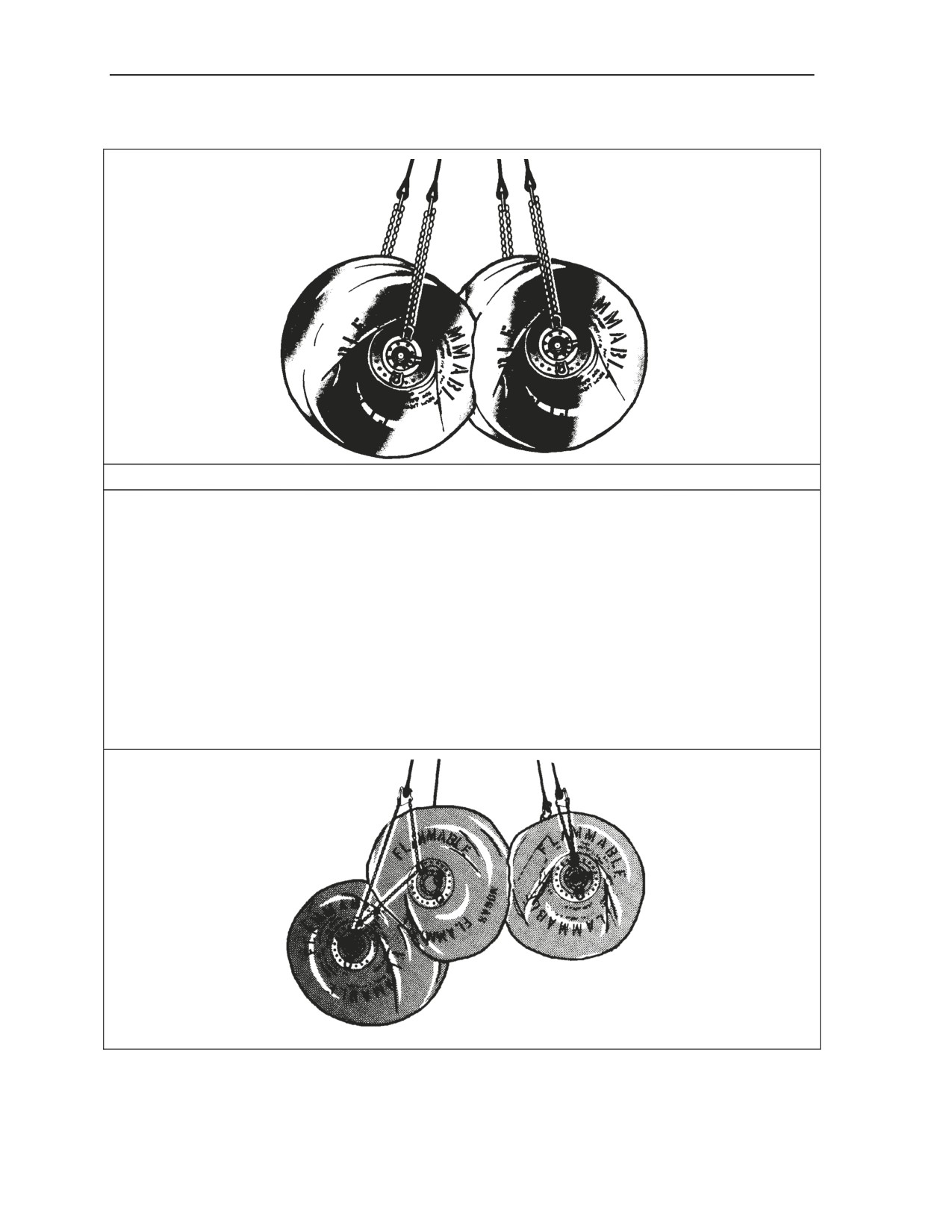
RIGGING STEPS (ONE DRUM)
1. Position apex fitting on top of the drum. Route one outer and one inner sling legs 1 and 3 to
the left side of the drum and the other two sling legs 2 and 4 to the right side.
2. Loop the chain end of sling legs 1 and 3 through the left clevis. Place the correct link from
Table 9-2 in the grab hook. Repeat with sling legs 2 and 4 through the right clevis.
Note. One drum can be rigged with a two-legged sling set using sling legs 1 and 2.
3. Cluster and tie (breakaway technique) all sling legs together to prevent entanglement during
hookup and lift-off.
Figure 9-2. One to Four 500-Gallon Fuel Drums
20 February 2009
FM 4-20.198/MCRP 4-11.3E, VOL II/NTTP 3-04.12/
AFMAN 11-223 (I), VOL II/COMDTINST M13482.3B
9-3
Chapter 9
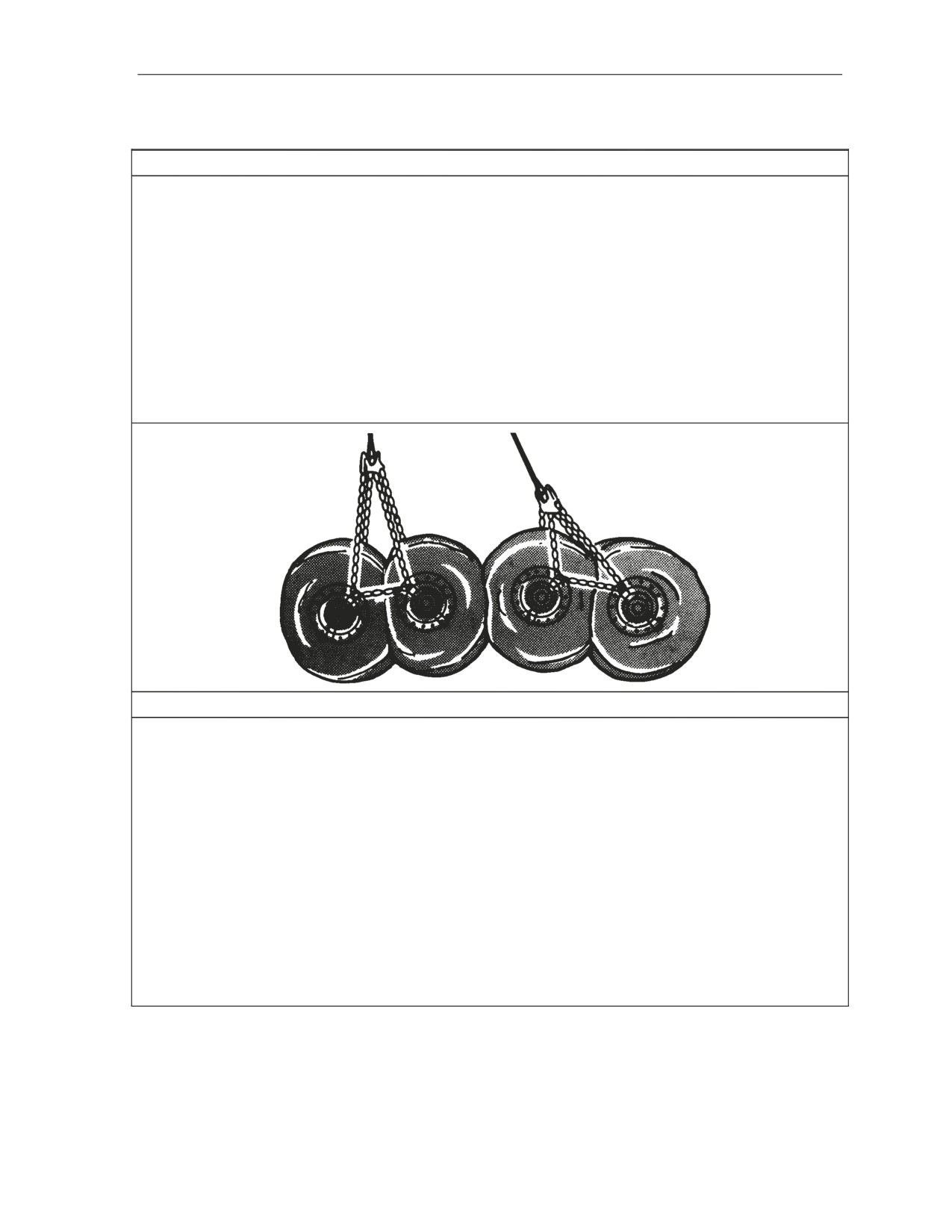
RIGGING STEPS (TWO DRUMS)
1. Position apex fitting on top of the two drums. Route outer sling legs 1 and 2 to one drum and
inner sling legs 3 and 4 to the other drum. Sling legs 1 and 3 should be on the same side of
the two drums.
2. Loop the chain end of sling leg 1 through the left clevis. Place the correct link from Table 9-2
in the grab hook. Repeat with sling leg 2 through the right clevis.
3. Loop the chain end of sling leg 3 through the left clevis of the other drum. Place the correct
link from Table 9-2 in the grab hook. Repeat with sling leg 4 through the right clevis.
4. Cluster and tie (breakaway technique) all sling legs together to prevent entanglement during
hookup and lift-off.
Figure 9-2. One to Four 500-Gallon Fuel Drums (Continued)
FM 4-20.198/MCRP 4-11.3E, VOL II/NTTP 3-04.12/
9-4
AFMAN 11-223 (I), VOL II/COMDTINST M13482.3B
20 February 2009
Certified Single-Point Rigging Procedures for Liquid Containers
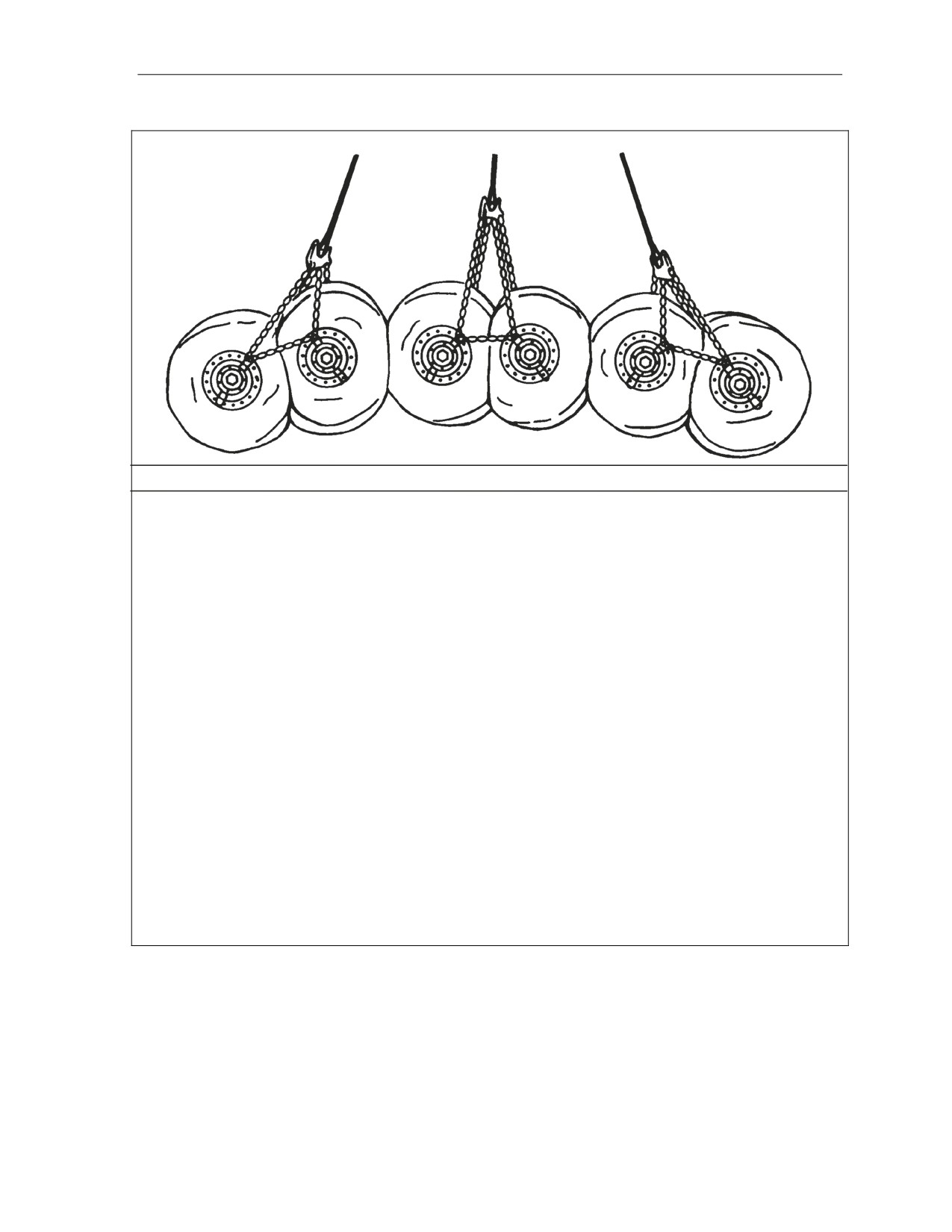
RIGGING STEPS (THREE DRUMS)
1. Position apex fitting on top of the two drums. Route outer sling legs 1 and 2 to one drum and
inner sling legs 3 and 4 to the other drum. Sling legs 1 and 3 should be on the same side of
the two drums.
2. Loop the chain end of sling leg 1 through the left clevis. Place the correct link from Table 9-2
in the grab hook. Repeat with sling leg 2 through the right clevis.
3. Loop the chain end of sling leg 3 through the left clevis of the other drum. Place the correct
link from Table 9-2 in the grab hook. Repeat with sling leg 4 through the right clevis.
4. Cluster and tie (breakaway technique) all sling legs together to prevent entanglement during
hookup and lift-off.
RIGGING STEPS (FOUR DRUMS)
1. Position the apex fitting on the top of the drums. Route outer sling legs 1 and 2 to two drums
and inner sling legs 3 and 4 to the other two drums. Sling legs 1 and 3 should be on the
same side of the load.
2. Loop the chain end of sling leg 1 through the clevis on the left hub of one drum, over and
through the clevis of the second drum. Place the correct link from Table 9-2 in the grab hook.
Repeat with sling leg 2 through the other side of the two drums.
3. Loop the chain end of sling leg 3 through the clevis on the left hub of one of the other drums,
over and through the clevis of the second drum. Place the correct link from Table 9-2 in the
grab hook. Repeat with sling leg 4 through the other side of the two drums.
4. Cluster and tie (breakaway technique) all sling legs together to prevent entanglement during
hookup and lift-off.
Figure 9-2. One to Four 500-Gallon Fuel Drums (Continued)
20 February 2009
FM 4-20.198/MCRP 4-11.3E, VOL II/NTTP 3-04.12/
AFMAN 11-223 (I), VOL II/COMDTINST M13482.3B
9-5
Chapter 9
SIX 500-GALLON FUEL DRUMS, EMPTY
9-4. Six
500-gallon empty fuel drums are rigged for single-point sling load using the following
procedures:
z
Applicability. The following items in Table 9-3 are certified for all helicopters with suitable lift
capacity by the US Army Natick Soldier Center:
CAUTION
One to five empty drums are not a stable load and are not certified for
sling loading. One to five empty fuel drums may cause damage to the
aircraft and endanger the aircrew due to violent oscillations and
inherent instability.
Table 9-3. Six 500-Gallon Fuel Drums, Empty
Nomenclature
Max
Sling
Link Count
Weight
Set
Front/Middle/Rear
(Pounds)
Drum, Fabric, Fuel, 500 Gallon, Empty (6 each)
4,500
10K
3/3/14
z
Materials. The following materials are required to rig this load:
Sling set (10,000-pound capacity), with two additional sling leg assemblies.
Tape, adhesive, pressure-sensitive, 2-inch wide roll.
Webbing, tubular, nylon, 1/2-inch.
Cord, nylon, Type III, 550-pound breaking strength.
Webbing, cotton, 1/4-inch, 80-pound breaking strength.
z
Personnel. Four persons can prepare and rig this load in 20 minutes.
z
Procedures. The following procedures apply to this load:
Preparation. Prepare the load using the following steps:
─ Align the drums side by side in a row.
─ Ensure the lifting clevises are serviceable and secure.
─ Rotate the drum hub so a clevis is in the top position.
─ Assemble a six-leg sling set in accordance with the procedures in FM 4-20.197.
Rigging. Rig the load according to the steps in Figure 9-3.
Hookup. The hookup team stands alongside the load. The static wand person discharges
the static electricity with the static wand. The hookup person places the apex fitting onto the
aircraft cargo hook. The hookup team then moves clear of the load but remains close to the load
as the helicopter removes slack from the sling legs. When successful hookup is assured, the
hookup team quickly exits the area underneath the helicopter to the designated rendezvous
point.
Derigging. Derigging is the reverse of the preparation and rigging procedures.
FM 4-20.198/MCRP 4-11.3E, VOL II/NTTP 3-04.12/
9-6
AFMAN 11-223 (I), VOL II/COMDTINST M13482.3B
20 February 2009
Certified Single-Point Rigging Procedures for Liquid Containers
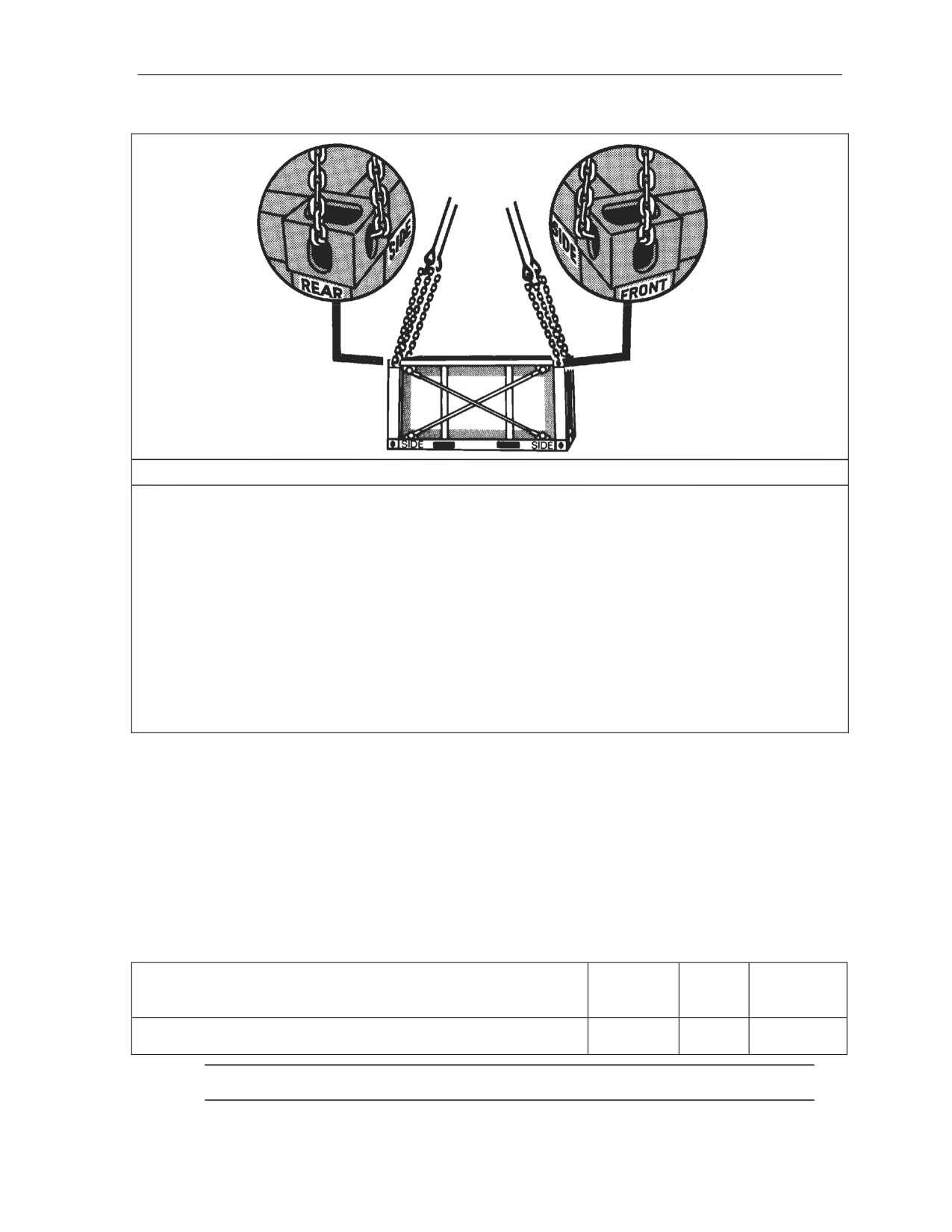
RIGGING STEPS
1. Route outer sling legs 1 and 2 to the forward outer drum, middle sling legs 3 and 4 to the
rearward outer drum, and inner sling legs 5 and 6 to the two center drums.
2. Loop the chain end of sling leg 1 through the left clevis on the outer drum and through the left
clevis of the next inner drum. Place the correct link from Table 9-3 in the grab hook. Repeat
with sling leg 2 on the right side of the two drums.
3. Loop the chain end of sling leg 3 through the left clevis on the other outer drum and through
the left clevis of the next inner drum. Place the correct link from Table 9-3 in the grab hook.
Repeat with sling leg 4 on the right side of the two drums.
4. Loop the chain end of sling leg 5 through the left clevis on the two center drums. Place the
correct link from Table 9-3 in the grab hook. Repeat with sling leg 6 on the right side of the
two center drums. Secure excess chain with wide tape or nylon cord.
5. Sling legs 1, 3, and 5 should be on the left side of the load.
Note. At this point, you have effectively rigged three individual, 2-leg sling loads under one apex
fitting. Now you must unite the three pairs of drums.
6. Loop a length of tubular nylon through the clevis assemblies on each side of the load.
Tighten as securely as possible.
7. Cluster and tie or tape (breakaway technique) all sling legs together to prevent entanglement
during hookup and lift-off.
Figure 9-3. Six 500-Gallon Fuel Drums, Empty
20 February 2009
FM 4-20.198/MCRP 4-11.3E, VOL II/NTTP 3-04.12/
AFMAN 11-223 (I), VOL II/COMDTINST M13482.3B
9-7
Chapter 9
STORAGE MODULE, FUEL/WATER, SIX COMPARTMENT
CONTAINER (SIXCON), INDIVIDUAL
9-5. The storage module, fuel/water, six compartment container (SIXCON), individual is rigged for
single-point sling load using the following procedures:
z
Applicability. The following item in Table 9-4 is certified for all helicopters with suitable lift
capacity by the US Army Natick Soldier Center:
Table 9-4. Storage Module, Fuel/Water, Six Compartment Container, Individual
Nomenclature
Max
Sling
Link Count
Weight
Set
Front/Rear
(Pounds)
Storage Module, Fuel/Water, Six Compartment Container, Individual
10,000
15K
3/3
Note. This load is certified at the FULL weight only.
z
Materials. The following materials are required to rig this load:
Sling set (15,000-pound capacity).
Tape, adhesive, pressure-sensitive, 2-inch wide roll.
Cord, nylon, Type III, 550-pound breaking strength.
Webbing, cotton, 1/4-inch, 80-pound breaking strength.
z
Personnel. Four persons can prepare and rig this load in 5 minutes.
z
Procedures. The following procedures apply to this load:
Preparation. Prepare the load using the following steps:
─ Ensure the storage tank is completely full.
─ Secure all hatches, hoses, valves, and loose equipment.
Rigging. Rig the load according to the steps in Figure 9-4.
Hookup. The hookup team stands on top of the SIXCON. The static wand person
discharges the static electricity with the static wand. The hookup person places the apex fitting
onto the aircraft cargo hook. The hookup team then moves clear of the load but remains close to
the load as the helicopter removes slack from the sling legs. When successful hookup is
assured, the hookup team quickly exits the area underneath the helicopter to the designated
rendezvous point.
Derigging. Derigging is the reverse of the preparation and rigging procedures.
FM 4-20.198/MCRP 4-11.3E, VOL II/NTTP 3-04.12/
9-8
AFMAN 11-223 (I), VOL II/COMDTINST M13482.3B
20 February 2009
Certified Single-Point Rigging Procedures for Liquid Containers
RIGGING STEPS
1. Position apex fitting on top of the SIXCON. Route outer sling legs 1 and 2 to one end of the SIXCON
and inner sling legs 3 and 4 to the other end. Sling legs 1 and 3 must be on the left side of the load.
2. Loop the chain end of sling leg 1 through the opening on the side of the left front corner international
organization of standardization (ISO) lift provision and out through the front opening. Place the correct
link from Table 9-4 in the grab hook. Repeat with sling leg 2 and the right front corner ISO lift provision.
3. Loop the chain end of sling leg 3 through the opening on the side of the left rear corner ISO lift provision
and out through the rear opening. Place the correct link from Table 9-4 in the grab hook. Repeat with
sling leg 4 and the right rear corner ISO lift provision.
4. Cluster and tie (breakaway technique) all sling legs together on top of the SIXCON to prevent
entanglement during hookup and lift-off.
Figure 9-4. Storage Module, Fuel/Water, Six Compartment Container, Individual
TWO STORAGE MODULES, FUEL/WATER, SIX COMPARTMENT
CONTAINER (SIXCON), STACKED
9-6. Two storage modules, fuel/water, six compartment container, stacked are rigged for single-point
sling load using the following procedures:
z
Applicability. The following items in Table 9-5 are certified for all helicopters with suitable lift
capacity by the US Army Natick Soldier Center:
Table 9-5. Two Storage Modules, Fuel/Water, Six Compartment Container, Stacked
Nomenclature
Max
Sling
Link Count
Weight
Set
Front/Rear
(Pounds)
Two Storage Modules, Fuel/Water, Six Compartment Container,
20,100
15K
3/3
Stacked
Note. This load is certified at the FULL weight only.
20 February 2009
FM 4-20.198/MCRP 4-11.3E, VOL II/NTTP 3-04.12/
AFMAN 11-223 (I), VOL II/COMDTINST M13482.3B
9-9
Chapter 9
z
Materials. The following materials are required to rig this load:
Sling set (40,000-pound capacity).
Tape, adhesive, pressure-sensitive, 2-inch wide roll.
Cord, nylon, Type III, 550-pound breaking strength.
Webbing, cotton, 1/4-inch, 80-pound breaking strength.
z
Personnel. Four persons can prepare and rig this load in 15 minutes.
z
Procedures. The following procedures apply to this load:
Preparation. Prepare the load using the following steps:
─ Position the two SIXCONs on top of each other. Ensure the ISO vertical corner
connectors are properly secured.
─ Tape the pins in the ISO vertical corner connectors.
─ Ensure the storage tanks are completely full.
─ Secure all hatches, hoses, valves, and loose gear.
Rigging. Rig the load according to the steps in Figure 9-5.
Hookup. The hookup team stands on top of the SIXCONs. The static wand person
discharges the static electricity with the static wand. The hookup person places the apex fitting
onto the aircraft cargo hook. The hookup team then moves clear of the load but remains close to
the load as the helicopter removes slack from the sling legs. When successful hookup is
assured, the hookup team quickly exits the area underneath the helicopter to the designated
rendezvous point.
Derigging. Derigging is the reverse of the preparation and rigging procedures.
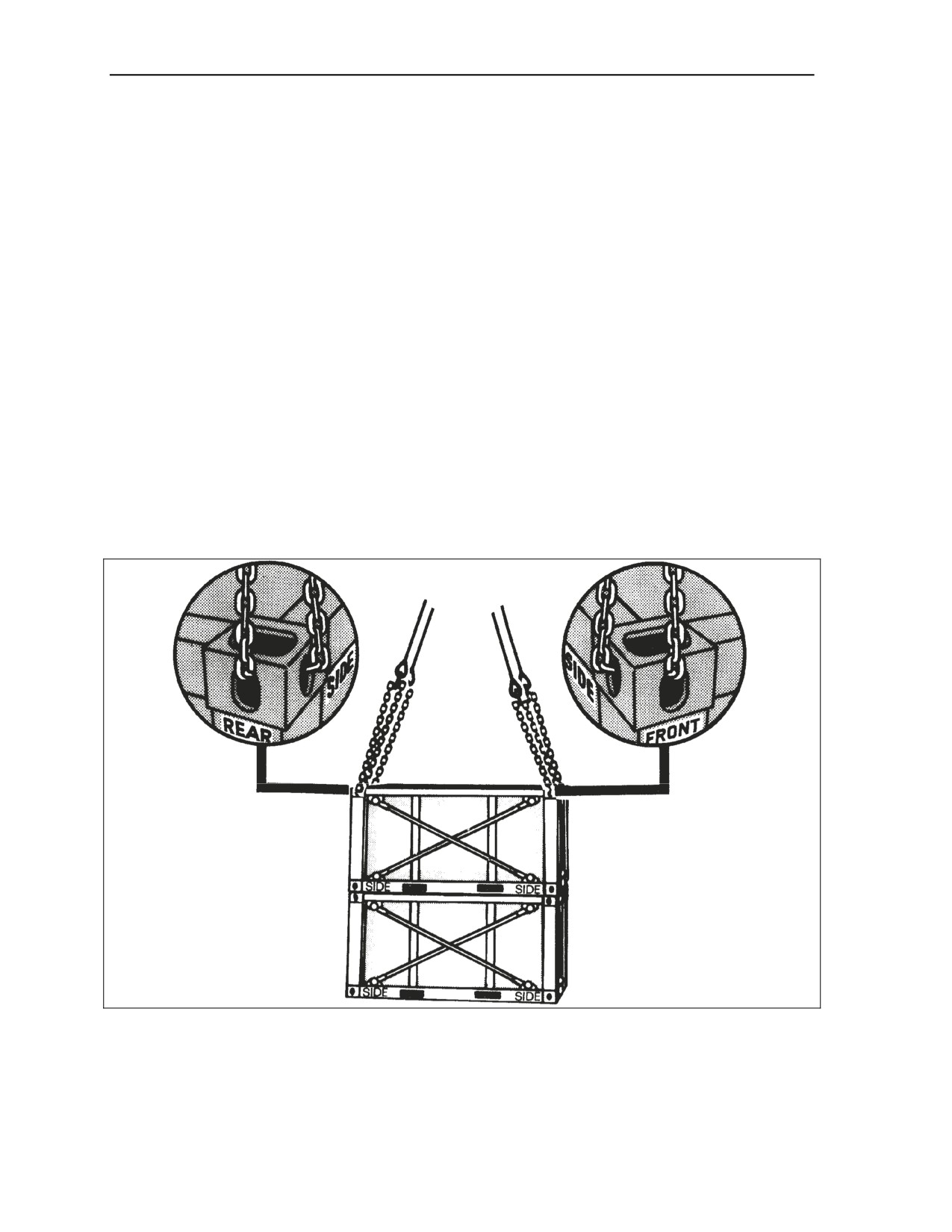
Figure 9-5. Two Storage Module, Fuel/Water, Six Compartment Container, Stacked
FM 4-20.198/MCRP 4-11.3E, VOL II/NTTP 3-04.12/
9-10
AFMAN 11-223 (I), VOL II/COMDTINST M13482.3B
20 February 2009
Certified Single-Point Rigging Procedures for Liquid Containers
RIGGING STEPS
1. Position apex fitting on top of the SIXCONS. Route outer sling legs 1 and 2 to one end of the
top SIXCON and inner sling legs 3 and 4 to the other end. Sling legs 1 and 3 must be on the
left side of the load.
2. Loop the chain end of sling leg 1 through the opening on the side of the left front ISO lift
provision and out through the front opening. Place the correct link from Table 9-5 in the grab
hook. Repeat with sling leg 4 and the right front ISO lift provision.
3. Loop the chain end of sling leg 3 through the opening on the side of the left rear corner ISO
lift provision and out through the rear opening. Place the correct link from Table 9-5 in the
grab hook. Repeat with sling leg 4 and the right rear corner ISO lift provision.
4. Cluster and tie (breakaway technique) all sling legs together on top of the SIXCON to prevent
entanglement during hookup and lift-off.
Figure 9-5. Two Storage Module, Fuel/Water, Six Compartment Container, Stacked
(Continued)
20 February 2009
FM 4-20.198/MCRP 4-11.3E, VOL II/NTTP 3-04.12/
AFMAN 11-223 (I), VOL II/COMDTINST M13482.3B
9-11
This page intentionally left blank.
Chapter 10
Certified Single-Point Rigging Procedures for Shelters
INTRODUCTION
10-1. This chapter contains rigging procedures for single-point lift of shelters that have been certified for
sling load. Each rigging procedure is found in a paragraph that includes a description of the load, materials
required for rigging, and steps to complete the procedure. An applicability paragraph is also a part of each
paragraph and identifies the certified loads. The certified single-point rigging procedures for shelters are in
this section. Paragraphs 10-2 through 10-15 give detailed instructions for rigging loads.
Note. Reach pendants may be used on all single point loads. A static discharge person is not
required when using a reach pendant.
AN/ASM-146 OR AN/MSM-108 ELECTRONIC SHOPS
10-2. The AN/ASM-146 or AN/MSM-108 electronic shops are rigged for single-point sling load using the
following procedures:
z
Applicability. The following items in Table 10-1 are certified for all helicopters with suitable
lift capacity by the US Army Natick Soldier Center:
Table 10-1. AN/ASM-146 OR AN/MSM-108 Electronic Shops
Nomenclature
Max
Sling
Link Count
Weight
Set
Front/Rear
(Pounds)
AN/ASM-146
3,940
10K
3/3
AN/MAM-108
3,940
10K
3/3
z
Materials. The following materials are required to rig this load:
Sling set (10,000-pound capacity).
Tape, adhesive, pressure-sensitive, 2-inch wide roll.
Cord, nylon, Type III, 550-pound breaking strength.
Webbing, cotton, 1/4-inch, 80-pound breaking strength.
z
Personnel. Two persons can prepare and rig this load in 20 minutes.
z
Procedures. The following procedures apply to this load:
Preparation. Prepare the load using the following steps:
─ Close and secure all doors, vents, caps, and engage the brakes.
─ Secure the tongue in the up position with the safety chains.
Rigging. Rig the load according to the steps in Figure 10-1.
Hookup. The hookup team stands on top of the shelter. The static wand person discharges
the static electricity with the static wand. The hookup person places the apex fitting onto the
aircraft cargo hook. The hookup team then moves clear of the load but remains close to the load
as the helicopter removes slack from the sling legs. When successful hookup is assured, the
hookup team quickly exits the area underneath the helicopter to the designated rendezvous
point.
Derigging. Derigging is the reverse of the preparation and rigging procedures.
20 February 2009
FM 4-20.198/MCRP 4-11.3E, VOL II/NTTP 3-04.12/
AFMAN 11-223 (I), VOL II/COMDTINST M13482.3B
10-1
Chapter 10
RIGGING STEPS
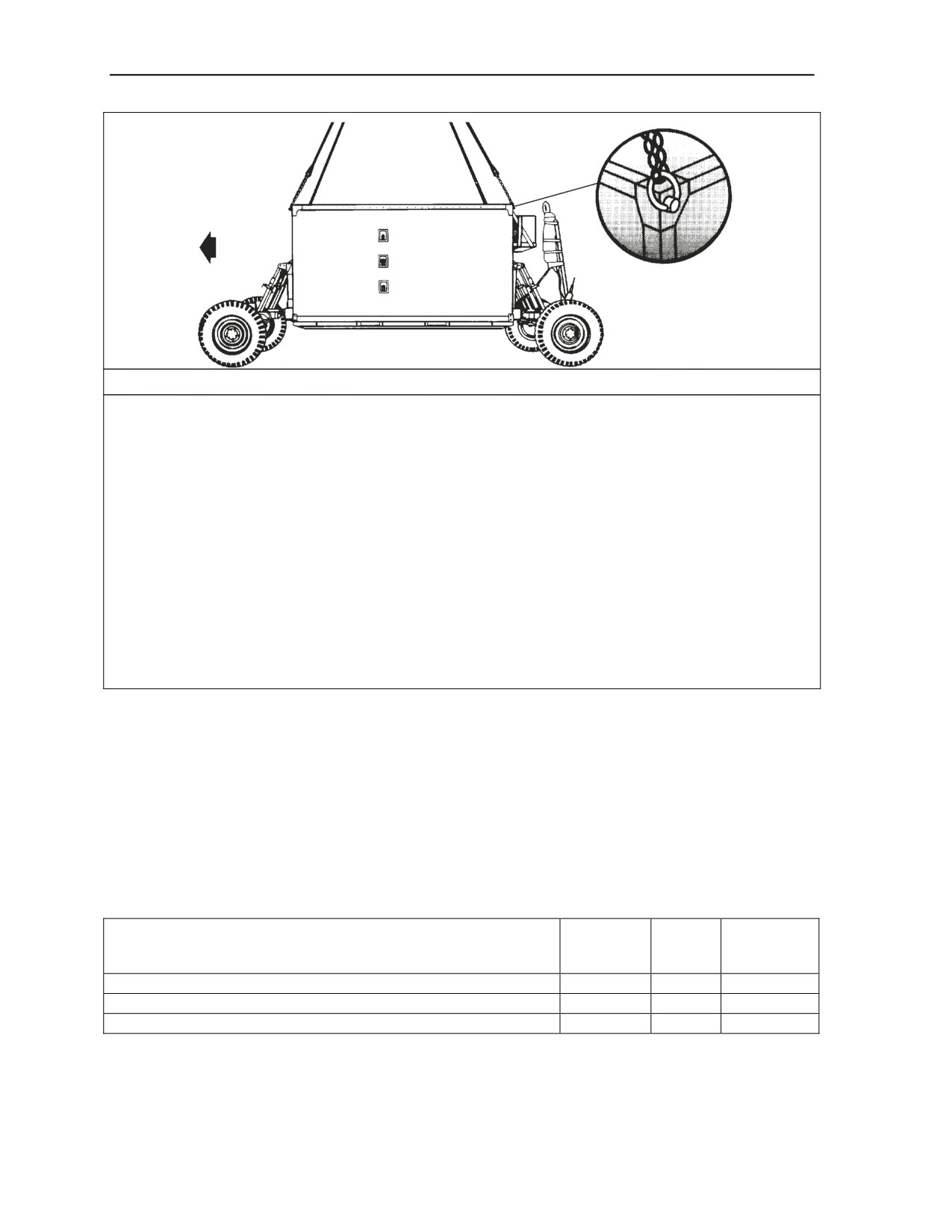
1. Position apex fitting on top of the shelter. Route outer sling legs 1 and 2 to the front of the
shelter (door end) and inner sling legs 3 and 4 to the rear. Sling legs 1 and 3 must be on the
left side of the load.
2. Loop the chain end of sling leg 1 through the left front lift provision at the top left corner of the
shelter. Place the correct link from Table 10-1 in the grab hook. Repeat with sling leg 4 on
the right front lift provision.
3. Loop the chain end of sling leg 3 through the left rear lift provision at the top left corner of the
shelter. Place the correct link from Table 10-1 in the grab hook. Repeat with sling leg 2 on
the right rear lift provision.
4. Cluster and tie (breakaway technique) all sling legs together on top of the shelter to prevent
entanglement during hookup and lift-off.
Figure 10-1. Electronic Shops
COMMUNICATIONS OR ELECTRONIC SYSTEMS HOUSED IN S-250
SHELTERS
10-3. The communications or electronic systems housed in S-250 shelters are rigged for single-point sling
load using the following procedures:
z
Applicability. The following items in Table 10-2 are certified for all helicopters with suitable
lift capacity by the US Army Natick Soldier Center:
Table 10-2. Communications or Electronic Systems Housed in S-250 Shelters
Nomenclature
Max
Sling
Link Count
Weight
Set
Front/Rear
(Pounds)
AN/TRC-93B (V)1 or (V)2
3,250
10K
33/3
AN/TRC-93B (Reconfiguration)
3,660
10K
33/3
AN/TSC-124, Single Channel Objective Tactical Terminal
2,100
10K
33/3
z
Materials. The following materials are required to rig this load:
Sling set (10,000-pound capacity).
Tape, adhesive, pressure-sensitive, 2-inch wide roll.
Cord, nylon, Type III, 550-pound breaking strength.
FM 4-20.198/MCRP 4-11.3E, VOL II/NTTP 3-04.12/
10-2
AFMAN 11-223 (I), VOL II/COMDTINST M13482.3B
20 February 2009
Certified Single-Point Rigging Procedures for Shelters
Webbing, cotton, 1/4-inch, 80-pound breaking strength.
z
Personnel. Two persons can prepare and rig this load in 15 minutes.
z
Procedures. The following procedures apply to this load:
Preparation. Prepare the load using the following steps:
─ Close and secure all doors, vents, and caps with tape or Type III nylon cord.
─ Secure all loose equipment (antennas, electrical lines, hoses, etc.) with tape or Type III
nylon cord.
─ Ensure all the bolts in the environmental control unit (ECU) mounting frame are present
and tight.
─ Secure the ECU cover with tape or Type III nylon cord.
Rigging. Rig the load according to the steps in Figure 10-2.
Hookup. The hookup team stands on top of the shelter. The static wand person discharges
the static electricity with the static wand. The hookup person places the apex fitting onto the
aircraft cargo hook. The hookup team then moves clear of the load but remains close to the load
as the helicopter removes slack from the sling legs. When successful hookup is assured, the
hookup team quickly exits the area underneath the helicopter to the designated rendezvous
point.
Derigging. Derigging is the reverse of the preparation and rigging procedures.
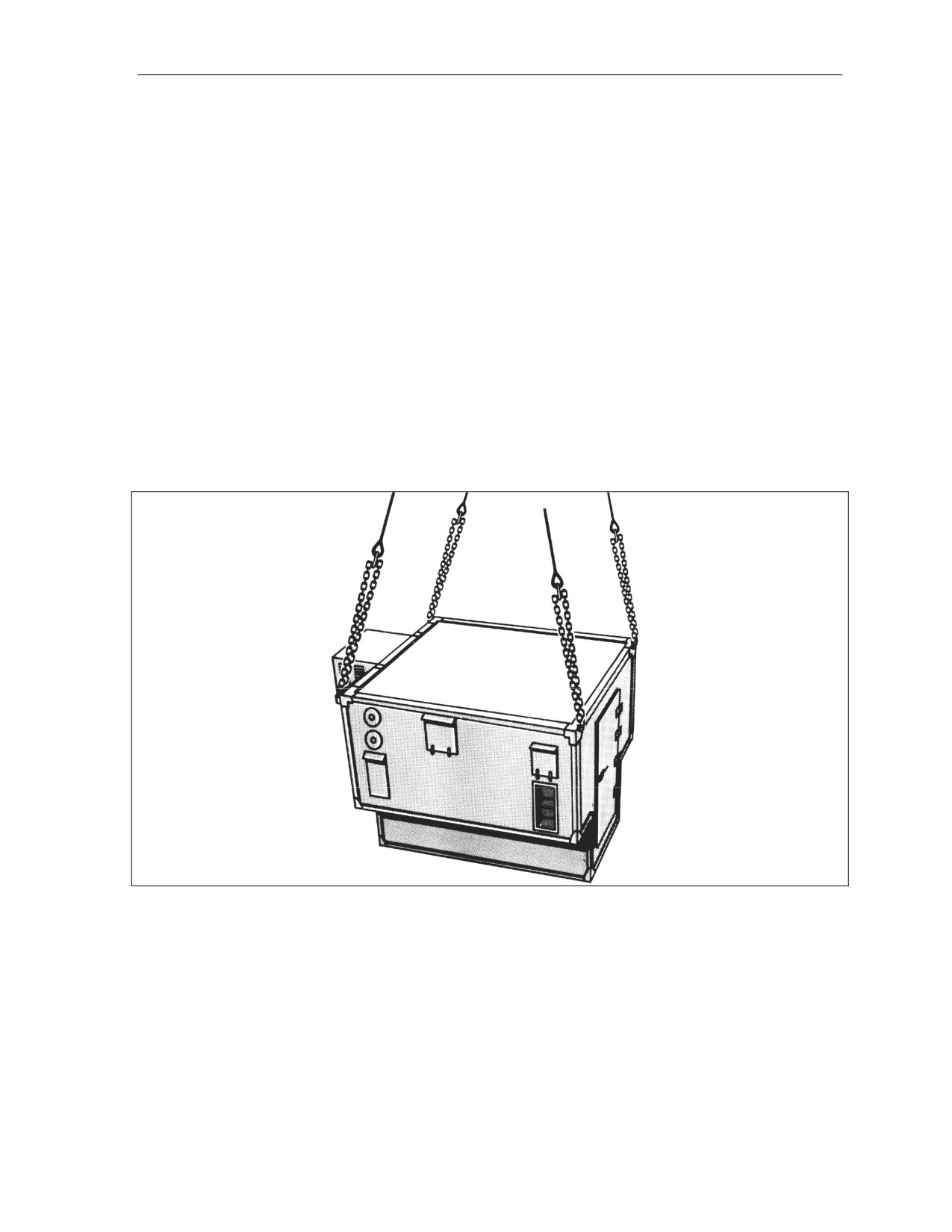
Figure 10-2. S-250 Shelters
20 February 2009
FM 4-20.198/MCRP 4-11.3E, VOL II/NTTP 3-04.12/
AFMAN 11-223 (I), VOL II/COMDTINST M13482.3B
10-3

Chapter 10
RIGGING STEPS
1. Position apex fitting on top of the shelter. Route outer sling legs 1 and 2 to the front of the
shelter and inner sling legs 3 and 4 to the rear (door end). Sling legs 1 and 3 must be on the
left side of the load.
2. Loop the chain end of sling leg 1 through the left front lift provision at the top left corner of the
shelter. Place the correct link from Table 10-2 in the grab hook. Repeat with sling leg 4 on
the right front lift provision. Secure the excess chain with tape or Type III nylon cord.
3. Loop the chain end of sling leg 3 through the left rear lift provision at the top left corner of the
shelter. Place the correct link from Table 10-2 in the grab hook. Repeat with sling leg 2 on
the right rear lift provision.
4. Cluster and tie (breakaway technique) all sling legs together on top of the shelter to prevent
entanglement during hookup and lift-off.
Figure 10-2. S-250 Shelters (Continued)
COMMUNICATIONS OR ELECTRONIC SYSTEMS HOUSED IN
LIGHTWEIGHT MULTIPURPOSE SHELTER (LMS)
10-4. The communications or electronic systems housed in lightweight multipurpose shelters are rigged for
single-point sling load using the following procedures:
z
Applicability. The following items in Table 10-3 are certified for all helicopters with suitable
lift capacity by the US Army Natick Soldier Center:
Table 10-3. Communications or Electronic Systems Housed in S-250 Shelters
Nomenclature
Max
Sling
Link Count
Weight
Set
Front/Rear
(Pounds)
Operations Central Shelter, Firefinder AN/TPQ-36 (V)8, S-788
2,869
10K
20/3
Biological Agent, Automatic: Integrated Detection System, S-788
3,300
10K
25/3
Downsized Direct Support Section, Standardized Integrated,
2,400
10K
10/20
Command Post Systems (SICPS)
Tactical Airspace Integration System (TAIS), AN/TSQ-221
3,965
10K
10/3
Meteorological Measuring System, Profiler Shelter (SICPS only)
z
Materials. The following materials are required to rig this load:
Sling set (10,000-pound capacity).
Tape, adhesive, pressure-sensitive, 2-inch wide roll.
Cord, nylon, Type III, 550-pound breaking strength.
Webbing, cotton, 1/4-inch, 80-pound breaking strength.
z
Personnel. Two persons can prepare and rig this load in 15 minutes.
z
Procedures. The following procedures apply to this load:
Preparation. Prepare the load using the following steps:
─ Remove all antennas. Disassemble and securely stow inside the shelter.
─ Close and secure all doors, vents, and caps with tape or Type III nylon cord.
─ Secure all loose equipment (antennas, electrical lines, hoses, etc.) with tape or Type III
nylon cord.
FM 4-20.198/MCRP 4-11.3E, VOL II/NTTP 3-04.12/
10-4
AFMAN 11-223 (I), VOL II/COMDTINST M13482.3B
20 February 2009
Certified Single-Point Rigging Procedures for Shelters
─ Ensure all the bolts in the environmental control unit (ECU) mounting frame are present
and tight.
─ Secure the ECU cover with tape or Type III nylon cord.
Rigging. Rig the load according to the steps in Figure 10-3.
Hookup. The hookup team stands on top of the shelter. The static wand person discharges
the static electricity with the static wand. The hookup person places the apex fitting onto the
aircraft cargo hook. The hookup team then moves clear of the load but remains close to the load
as the helicopter removes slack from the sling legs. When successful hookup is assured, the
hookup team quickly exits the area underneath the helicopter to the designated rendezvous
point.
Derigging. Derigging is the reverse of the preparation and rigging procedures.
RIGGING STEPS
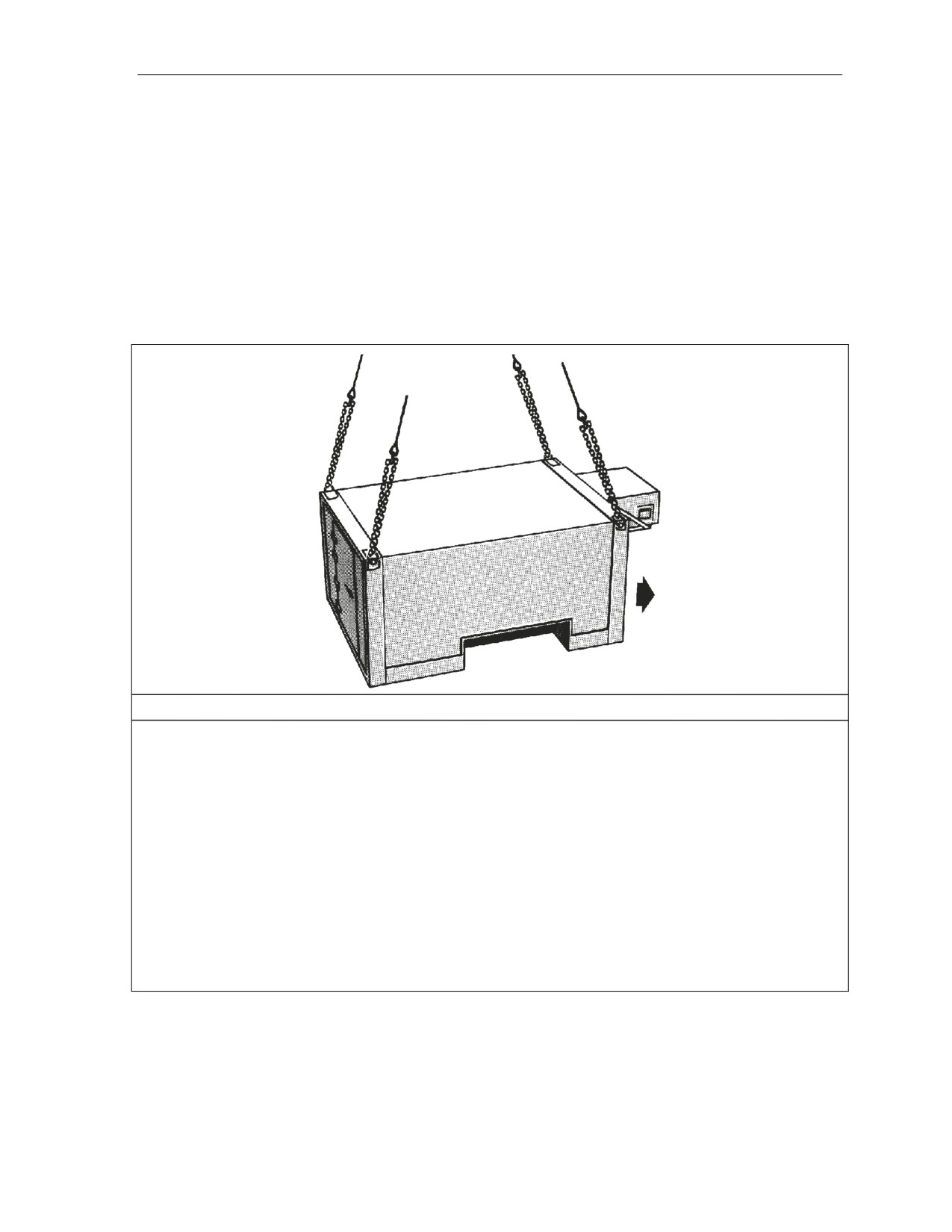
1. Position apex fitting on top of the shelter. Route outer sling legs 1 and 2 to the front of the
shelter and inner sling legs 3 and 4 to the rear (door end). Sling legs 1 and 3 must be on the
left side of the load.
2. Loop the chain end of sling leg 1 through the left front lift provision at the top left corner of the
shelter. Place the correct link from Table 10-3 in the grab hook. Repeat with sling leg 2 on
the right front lift provision. Secure the excess chain with tape or Type III nylon cord.
3. Loop the chain end of sling leg 3 through the left rear lift provision at the top left corner of the
shelter. Place the correct link from Table 10-3 in the grab hook. Repeat with sling leg 4 on
the right rear lift provision. Secure the excess chain with tape or Type III nylon cord.
4. Cluster and tie (breakaway technique) all sling legs together on top of the shelter to prevent
entanglement during hookup and lift-off.
Figure 10-3. Lightweight Multipurpose Shelter
20 February 2009
FM 4-20.198/MCRP 4-11.3E, VOL II/NTTP 3-04.12/
AFMAN 11-223 (I), VOL II/COMDTINST M13482.3B
10-5
Chapter 10
DIGITAL TECH CONTROLLER (DTC) HOUSED IN A MODIFIED
GITCHNER SHELTER
10-5. The digital tech controller housed in a modified Gitchner shelter is rigged for single-point sling load
using the following procedures:
z
Applicability. The following item in Table 10-4 is certified for all helicopters with suitable lift
capacity by the US Army Natick Soldier Center:
Table 10-4. Digital Tech Controller Housed in a Modified Gitchner Shelter
Nomenclature
Max
Sling
Link Count
Weight
Set
Front/Rear
(Pounds)
Digital Tech Controller Housed in a Modified Gitchner Shelter
9,100
15K
Door is Front
3/30
z
Materials. The following materials are required to rig this load:
Multileg sling set (15,000-pound capacity).
Tape, adhesive, pressure-sensitive, 2-inch wide roll.
Cord, nylon, Type III, 550-pound breaking strength.
Webbing, cotton, 1/4-inch, 80-pound breaking strength.
z
Personnel. Two persons can prepare and rig this load in 15 minutes.
z
Procedures. The following procedures apply to this load:
Preparation. Prepare the load using the following steps:
─ Inspect the inside and outside of the DTC for any sign of skin separation (delamination)
from the frame structure.
WARNING
Any separation of the skin from the structural members may
indicate a reduction in structural integrity and should not be
flown.
─ Remove all antennas. Disassemble and securely stow inside the shelter.
─ Close and secure all doors, vents, and caps with tape or Type III nylon cord.
─ Secure all loose equipment (antennas, electrical lines, hoses, etc.) inside the shelter with
tape or Type III nylon cord.
─ Ensure all the bolts in the environmental control unit (ECU) mounting frame are present
and tight.
─ Secure the ECU cover, if installed, with tape or Type III nylon cord.
─ Secure the lift rings in a vertical position with Type III nylon cord.
Rigging. Rig the load according to the steps in Figure 10-4.
Hookup. The hookup team stands on top of the shelter. The static wand person discharges
the static electricity with the static wand. The hookup person places the apex fitting onto the
aircraft cargo hook. The hookup team then moves clear of the load but remains close to the load
as the helicopter removes slack from the sling legs. When successful hookup is assured, the
hookup team quickly exits the area underneath the helicopter to the designated rendezvous
point.
Derigging. Derigging is the reverse of the preparation and rigging procedures.
FM 4-20.198/MCRP 4-11.3E, VOL II/NTTP 3-04.12/
10-6
AFMAN 11-223 (I), VOL II/COMDTINST M13482.3B
20 February 2009
Certified Single-Point Rigging Procedures for Shelters
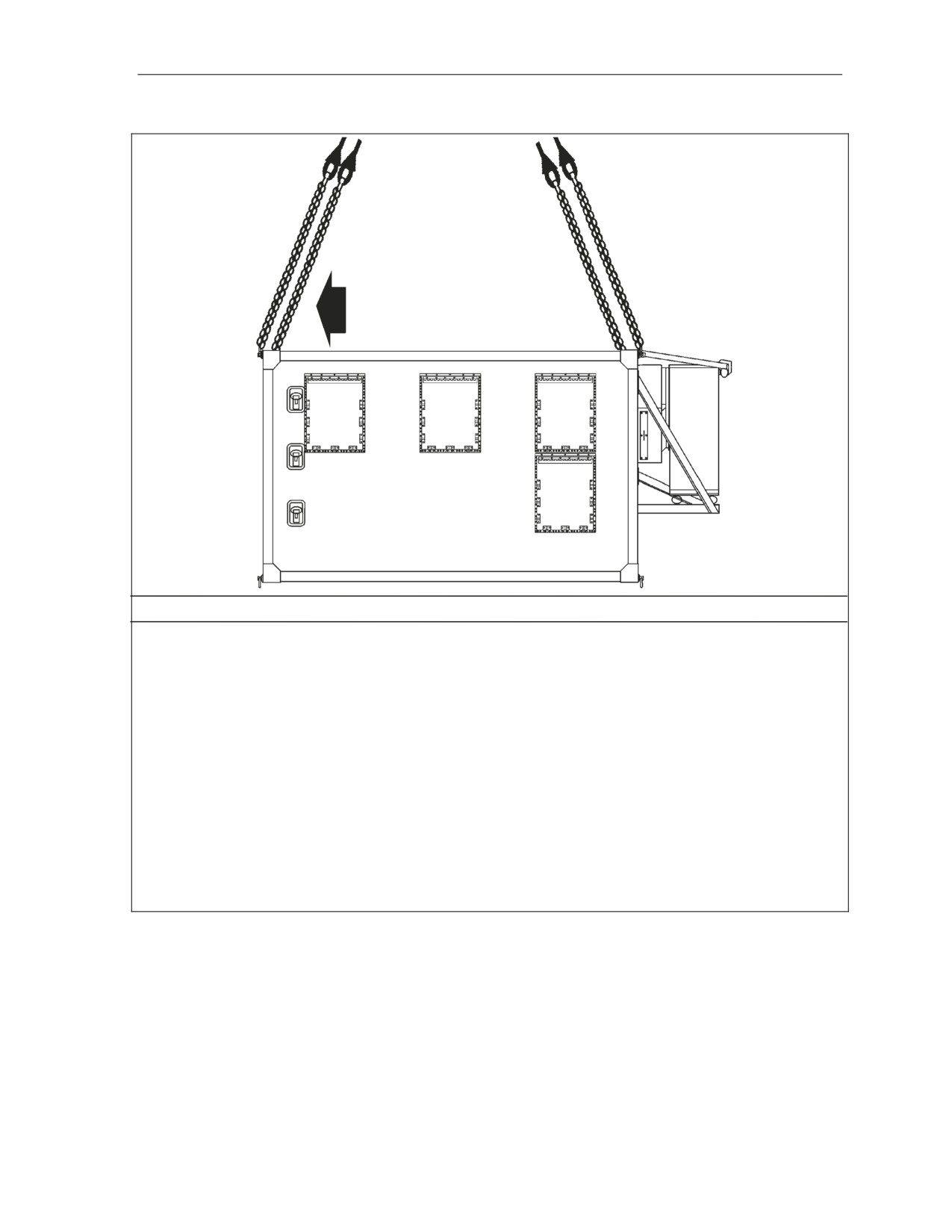
RIGGING STEPS
1. Position web ring on top of the shelter. Route outer sling legs 1 and 2 to the front of the
shelter (door end) and inner sling legs 3 and 4 to the rear. Sling legs 1 and 3 must be on the
left side of the load.
2. Loop the chain end of sling leg 1 through the left front lift provision at the top left corner of the
shelter. Place the correct link from Table 10-4 in the grab hook. Repeat with sling leg 2 on
the right front lift provision.
3. Loop the chain end of sling leg 3 through the left rear lift provision at the top left corner of the
shelter. Place the correct link from Table 10-4 in the grab hook. Repeat with sling leg 4 on
the right rear lift provision. Secure the excess chain with tape or Type III nylon cord.
4. Cluster and tie (breakaway technique) all sling legs together on top of the shelter to prevent
entanglement during hookup and lift-off.
Figure 10-4. Digital Tech Controller Housed in a Modified Gitchner Shelter
COMMUNICATIONS OR ELECTRONIC SYSTEMS HOUSED IN S-280
SHELTERS
10-6. The communications or electronic systems housed in S-280 shelters are rigged for single-point sling
load using the following procedures:
z
Applicability. The following items in Table 10-5 are certified for all helicopters with suitable
lift capacity by the US Army Natick Soldier Center:
20 February 2009
FM 4-20.198/MCRP 4-11.3E, VOL II/NTTP 3-04.12/
AFMAN 11-223 (I), VOL II/COMDTINST M13482.3B
10-7

Chapter 10
Table 10-5. Communications or Electronic Systems Housed in S-280 Shelters
Nomenclature
Max
Sling
Link Count
Weight
Set
Front/Rear
(Pounds)
Shelter, Battery Servicing, AN/TSM-133
5,240
10K
Door is Front
30/3
Facility, Improved Message, AN/TSC-58A
5,368
10K
Door is Front
37/3
Facility, Improved Message, AN/MSC-29A
5,368
10K
Door is Front
37/3
Station, System Master, Reporting, Position Location,
6,050
15K
ECU is Front
AN/TSQ-129
10/4
Station, Enhanced Position Location Reporting System
6,289
15K
ECU is Front
Net, ANTSQ-158
10/4
Terminal, Regency Net Force, AN/TRC-179 (V)1
8,200
10K
Door is Front
30/3
Communications Nodal Control Element, AN/TSQ-111
10,000
25K
Door is Front
3/24
Multiplexer Terminal Set, AN/TSQ-146(V)
6,190
10K
Door is Front
5/50
IFTE Base Shop Test Facility (BSTF), Basic, S-280C/G
7,806
10K
ECU is Front
Shelter, AN/TSM-191(V)3
3/3
IFTE BSTF, Hawk, S-280C/G Shelter, AN/TSM-191(V)2
7,748
10K
ECU is Front
3/3
IFTE 60 Hz Storage Shelter, S-280C/G Shelter, S-
6,365
10K
ECU is Front
744/TSM-191(V)
3/3
IFTE 400 Hz Storage Shelter, S-280C/G Shelter, S-
5,119
10K
ECU is Front
175/TSM-191(V)
3/3
Tactical Satellite Terminal, AN/TSC-85B
6,200
10K
ECU is Front
33/3
E1045 Bottle Cleaning and Charging Station
6,400
15K
Door is Front
3/15
E1022 Maintenance Facility Night Sight
6,400
15K
Door is Front
3/3
AN/TYA-16B, TAMCN A0294
3,325
15K
Door is Front
3/3
Airborne Reconnaissance Low-Imagery (ARL-I) and
8,500
10K
ECU is Front
Airborne Reconnaissance Low-Comint (ARL-C) Fly Away
3/10
Kit, Type A-1
ARL-I and ARL-C Fly Away Kit, Type B-1
8,500
10K
ECU is Front
3/10
ARL-I and ARL-C Fly Away Kit, Type C-1
8,500
10K
ECU is Front
3/10
Note. Do not allow the sling legs to become entangled with the rope lashing points located near
the lift points.
FM 4-20.198/MCRP 4-11.3E, VOL II/NTTP 3-04.12/
10-8
AFMAN 11-223 (I), VOL II/COMDTINST M13482.3B
20 February 2009
Certified Single-Point Rigging Procedures for Shelters
Note. The CH-47 is not recommended for single point sling loading of the Integrated Family of
Test Equipment Shelters.
z
Materials. The following materials are required to rig this load:
Sling set (as listed in Table 10-5).
Tape, adhesive, pressure-sensitive, 2-inch wide roll.
Cord, nylon, Type III, 550-pound breaking strength.
Webbing, cotton, 1/4-inch, 80-pound breaking strength.
z
Personnel. Two persons can prepare and rig this load in 15 minutes.
z
Procedures. The following procedures apply to this load:
Preparation. Prepare the load using the following steps:
─ Remove all antennas. Disassemble and securely stow inside the shelter.
─ Close and secure all doors, vents, and caps with tape or Type III nylon cord.
─ Secure all loose equipment (electrical lines, hoses, etc.) with tape or Type III nylon cord.
─ Ensure all the bolts in the Environmental Control Unit's (ECU) mounting frame are
present and tight.
─ Secure the ECU cover with tape or Type III nylon cord.
─ Secure the lift rings in the vertical position with Type III nylon cord.
Rigging. Rig the load according to the steps in Figure 10-5.
Hookup. The hookup team stands on top of the shelter. The static wand person discharges
the static electricity with the static wand. The hookup person places the apex fitting onto the
aircraft cargo hook. The hookup team then moves clear of the load but remains close to the load
as the helicopter removes slack from the sling legs. When successful hookup is assured, the
hookup team quickly exits the area underneath the helicopter to the designated rendezvous
point.
CAUTION
Brief the helicopter crew to relax the sling leg tension and hover to the
side of the load when releasing the apex fitting to prevent damage to
the roof of the shelter.
Derigging. Derigging is the reverse of the preparation and rigging procedures.
20 February 2009
FM 4-20.198/MCRP 4-11.3E, VOL II/NTTP 3-04.12/
AFMAN 11-223 (I), VOL II/COMDTINST M13482.3B
10-9
Chapter 10
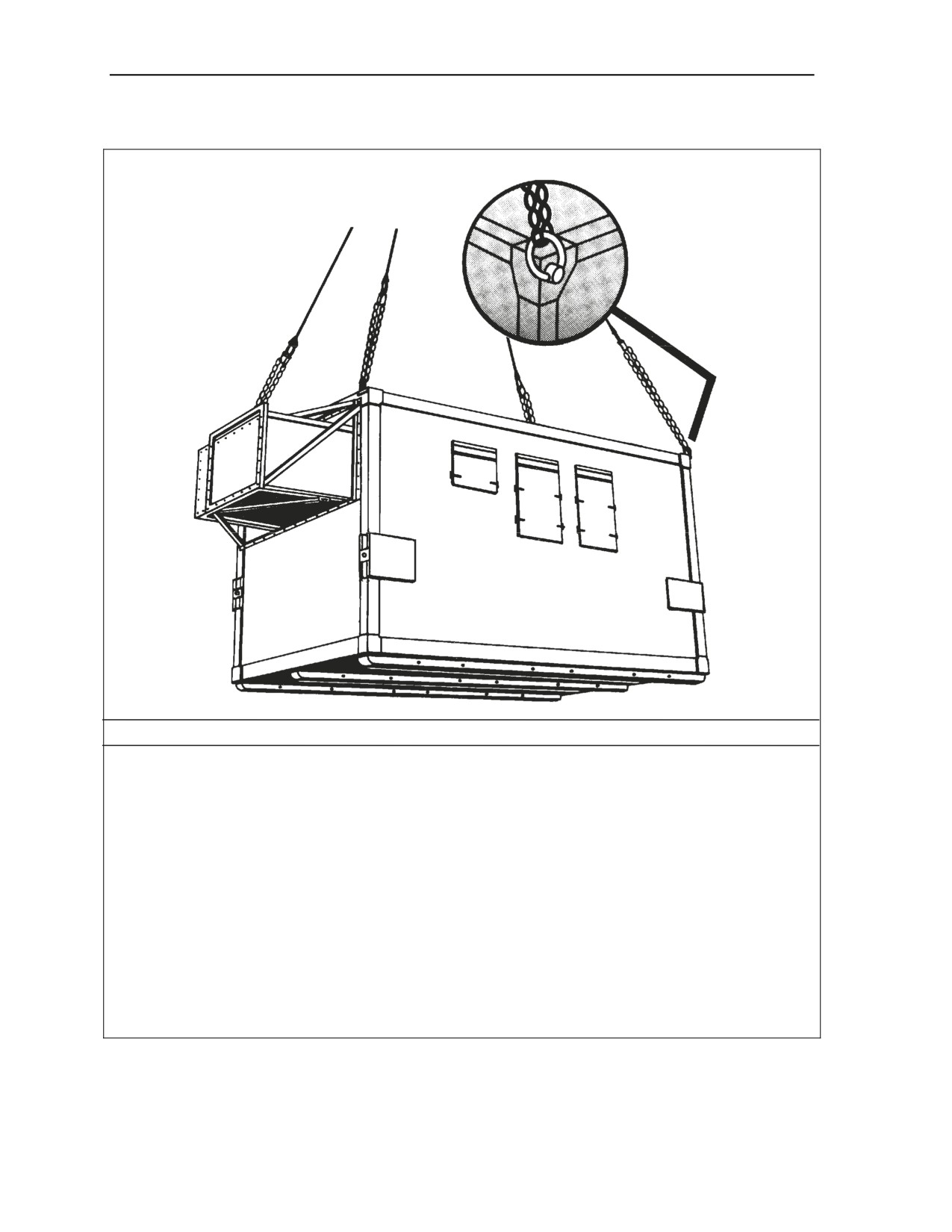
RIGGING STEPS
1. Position apex fitting on top of the shelter. Route outer sling legs 1 and 2 to the front of the
shelter and inner sling legs 3 and 4 to the rear. Sling legs 1 and 3 must be on the left side of
the load.
2. Loop the chain end of sling leg 1 through the left front lift provision at the top left corner of the
shelter. Place the correct link from Table 10-5 in the grab hook. Repeat with sling leg 2 on
the right front lift provision. Secure the excess chain with tape or Type III nylon cord.
3. Loop the chain end of sling leg 3 through the left rear lift provision at the top left corner of the
shelter. Place the correct link from Table 10-5 in the grab hook. Repeat with sling leg 4 on
the right rear lift provision. Secure the excess chain with tape or Type III nylon cord.
4. Cluster and tie (breakaway technique) all sling legs together on top of the shelter to prevent
entanglement during hookup and lift-off.
Figure 10-5. S-280 Shelters
FM 4-20.198/MCRP 4-11.3E, VOL II/NTTP 3-04.12/
10-10
AFMAN 11-223 (I), VOL II/COMDTINST M13482.3B
20 February 2009

Certified Single-Point Rigging Procedures for Shelters
8- X 8- X 10-FOOT SHELTER SYSTEMS
10-7. The 8- x 8- x 10-foot shelter systems are rigged for single-point sling load using the following
procedures:
z
Applicability. The following items in Table 10-6 are certified for all helicopters with suitable
lift capacity by the US Army Natick Soldier Center:
Table 10-6. 8- x 8- x 10-Foot Shelter Systems
Nomenclature
Max
Sling
Link Count
Weight
Set
Front/Rear
(Pounds)
Shelter, Electromechanical Induction (EMI), TAMCN
7,700
15K
Door is Front
C6110
5/5
S-715/T, Reproduction/Distribution Facility Shelter
4,826
15K
Door is Front
3/3
Electronic EMI HSOP Shelter
4,140
15K
Door is Front
3/3
Shelter, Radar Set, Precision Approach, AN/TPN-
7,200
15K
Door is Front
22, TAMCN Q2115
3/3
Shelter, Communications Central, AN/MSC-63A,
6,619
15K
Door is Aft
TAMCN A0258
5/5
Air Radar Shelter, AN/TPS-73
14,500
40K
Door is Front
5/8
Radar Shelter, AN/TPS-63B
7,360
15K
Door is Front
3/10
10-Foot Rigid EMD Communications Shelter
7,000
15K
Door is Front
(Minimum
3/3
Weight)
z
Materials. The following materials are required to rig this load:
Sling set (15,000 or 40,000-pound capacity).
Tape, adhesive, pressure-sensitive, 2-inch wide roll.
Cord, nylon, Type III, 550-pound breaking strength.
Webbing, cotton, 1/4-inch, 80-pound breaking strength.
z
Personnel. Two persons can prepare and rig this load in 15 minutes.
z
Procedures. The following procedures apply to this load:
Preparation. Prepare the load using the following steps:
─ Remove all antennas. Disassemble and securely stow inside the shelter.
─ Close and secure all doors, vents, and caps with tape or Type III nylon cord.
─ Secure all loose equipment (electrical lines, hoses, etc.) with tape or Type III nylon cord.
Rigging. Rig the load according to the steps in Figure 10-6.
Hookup. The hookup team stands on top of the shelter. The static wand person discharges
the static electricity with the static wand. The hookup person places the apex fitting onto the
aircraft cargo hook. The hookup team then moves clear of the load but remains close to the load
as the helicopter removes slack from the sling legs. When successful hookup is assured, the
hookup team quickly exits the area underneath the helicopter to the designated rendezvous
point.
Derigging. Derigging is the reverse of the preparation and rigging procedures.
20 February 2009
FM 4-20.198/MCRP 4-11.3E, VOL II/NTTP 3-04.12/
AFMAN 11-223 (I), VOL II/COMDTINST M13482.3B
10-11
Chapter 10
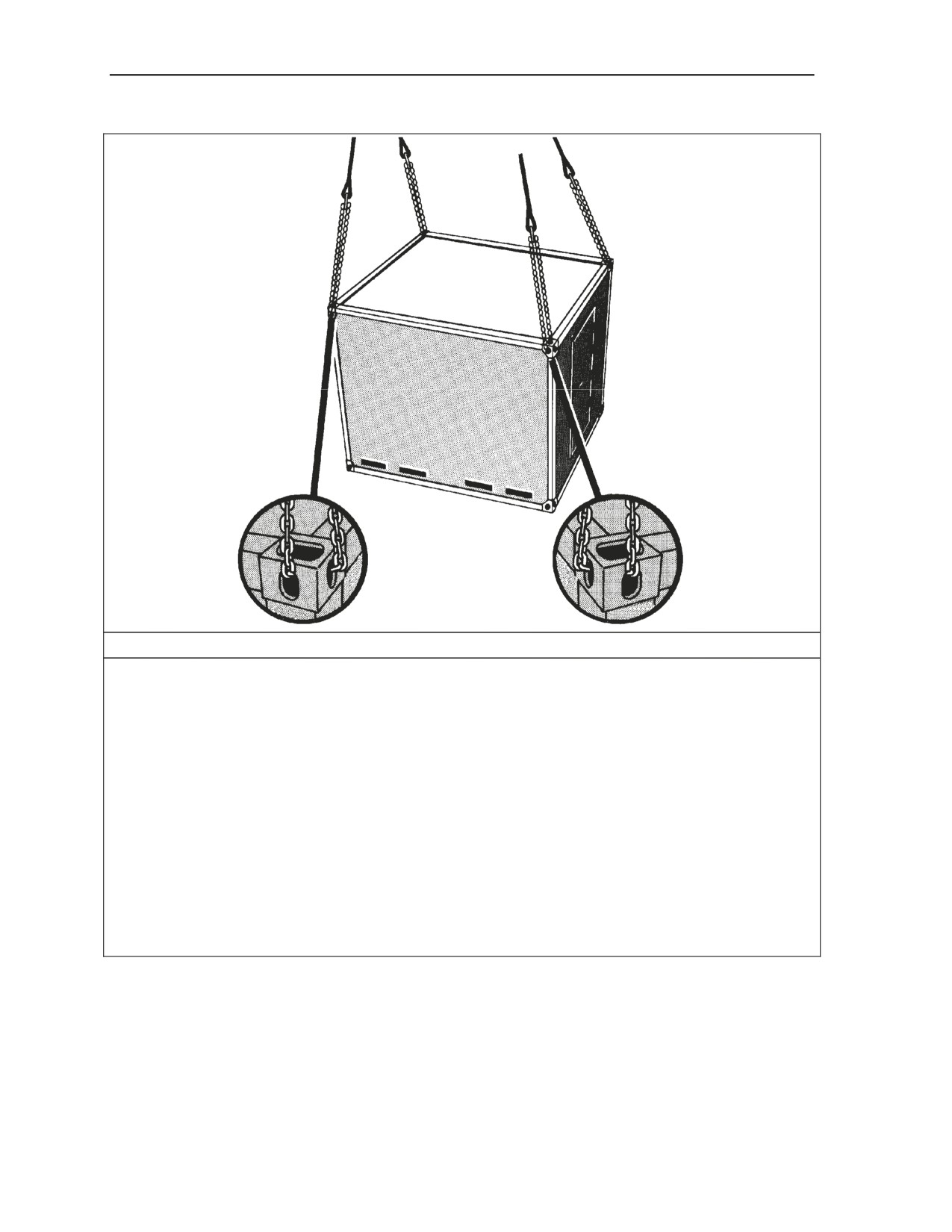
RIGGING STEPS
1. Position apex fitting on top of the shelter. Route outer sling legs 1 and 2 to the front of the
shelter and inner sling legs 3 and 4 to the rear. Sling legs 1 and 3 must be on the left side of
the load.
2. Loop the chain end of sling leg 1 through the opening in the side of the ISO lift provision at
the top left corner of the shelter and out through the front opening. Place the correct link from
Table 10-6 in the grab hook. Repeat with sling leg 2 on the right front lift provision.
3. Loop the chain end of sling leg 3 through the opening in the side of the ISO lift provision at
the top left corner of the shelter and out through the rear opening. Place the correct link from
Table 10-6 in the grab hook. Repeat with sling leg 4 on the right rear lift provision.
4. Cluster and tie (breakaway technique) all sling legs together on top of the shelter to prevent
entanglement during hookup and lift-off.
Figure 10-6. 8- x 8- x 10-Foot Shelter Systems
DOWNSIZED DIGITAL GROUP MULTIPLEXER (DDGM) SHELTER
ASSEMBLAGES
10-8. The downsized digital group multiplexer shelter assemblages are rigged for single-point sling load
using the following procedures:
FM 4-20.198/MCRP 4-11.3E, VOL II/NTTP 3-04.12/
10-12
AFMAN 11-223 (I), VOL II/COMDTINST M13482.3B
20 February 2009
Certified Single-Point Rigging Procedures for Shelters
z
Applicability. The following items in Table 10-7 are certified for all helicopters with suitable
lift capacity by the US Army Natick Soldier Center:
Table 10-7. Downsized Digital Group Multiplexer Shelter Assemblages
Nomenclature
Max
Sling Set
Link Count
Weight
Front/Rear
(Pounds)
AN/TRC-173A
3,500
10K
3/3
AN/TRC-174A
3,425
10K
3/3
AN/TRC-175A
3,350
10K
3/3
AN/TRC-138B
3,525
10K
3/3
AN/TRC-138C
3,430
10K
3/3
z
Materials. The following materials are required to rig this load:
Sling set (10,000-pound capacity).
Tape, adhesive, pressure-sensitive, 2-inch wide roll.
Cord, nylon, Type III, 550-pound breaking strength.
Webbing, cotton, 1/4-inch, 80-pound breaking strength.
z
Personnel. Two persons can prepare and rig this load in 20 minutes.
z
Procedures. The following procedures apply to this load:
Preparation. Prepare the load using the following steps:
─ Secure all drawers and internal equipment with tape or Type III nylon cord.
─ Close and secure all doors, vents, and caps with tape or Type III nylon cord.
─ Secure the air conditioner cover with Type III nylon cord.
Rigging. Rig the load according to the steps in Figure 10-7.
Hookup. The hookup team stands on top of the shelter. The static wand person discharges
the static electricity with the static wand. The hookup person places the apex fitting onto the
aircraft cargo hook. The hookup team then moves clear of the load but remains close to the load
as the helicopter removes slack from the sling legs. When successful hookup is assured, the
hookup team quickly exits the area underneath the helicopter to the designated rendezvous
point.
Derigging. Derigging is the reverse of the preparation and rigging procedures.
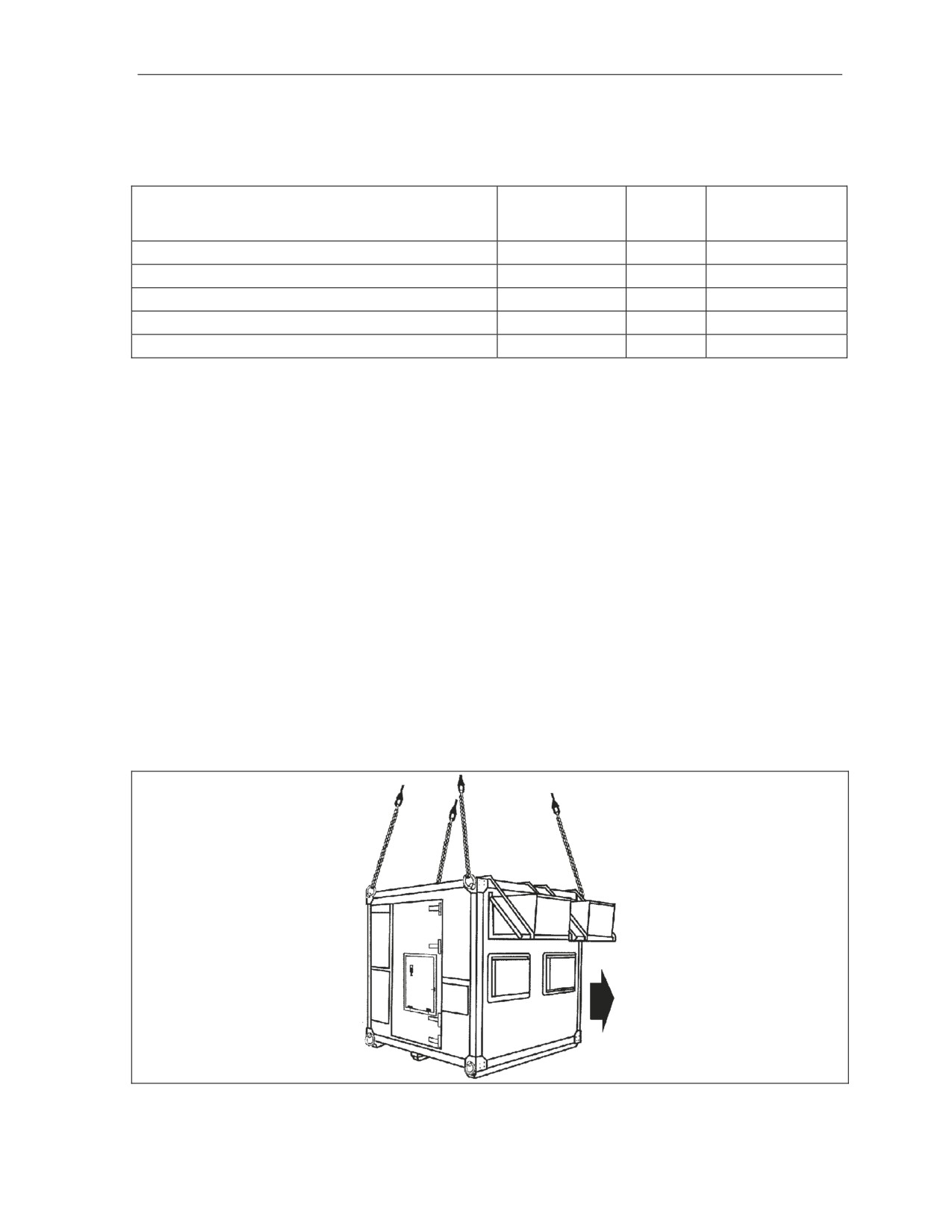
Figure 10-7. Downsized Digital Group Multiplexer Shelter Assemblages
20 February 2009
FM 4-20.198/MCRP 4-11.3E, VOL II/NTTP 3-04.12/
AFMAN 11-223 (I), VOL II/COMDTINST M13482.3B
10-13
Chapter 10
RIGGING STEPS
1. Position apex fitting on top of the shelter. Route outer sling legs 1 and 2 to the front of the
shelter (ECU end) and inner sling legs 3 and 4 to the rear. Sling legs 1 and 3 must be on the
left side of the load.
2. Loop the chain end of sling leg 1 through the left front lift provision. Place the correct link
from Table 10-7 in the grab hook. Repeat with sling leg 2 on the right front lift provision.
3. Loop the chain end of sling leg 3 through the left rear lift provision. Place the correct link
from Table 10-7 in the grab hook. Repeat with sling leg 4 on the right rear lift provision.
4. Cluster and tie (breakaway technique) all sling legs together on top of the shelter to prevent
entanglement during hookup and lift-off.
Figure 10-7. Downsized Digital Group Multiplexer Shelter Assemblages (Continued)
AN/TYC-5A DATA COMMUNICATIONS TERMINAL
10-9. The AN/TYC-5A data communications terminal is rigged for single-point sling load using the
following procedures:
z
Applicability. The following item in Table 10-8 is certified for all helicopters with suitable lift
capacity by the US Army Natick Soldier Center:
Table 10-8. AN/TYC-5A Data Communications Terminal
Nomenclature
Max
Sling Set
Link Count
Weight
Front/Rear
(Pounds)
AN/TYC-5A
7,451
15K
5/5
z
Materials. The following materials are required to rig this load:
Sling set (15,000-pound capacity).
Tape, adhesive, pressure-sensitive, 2-inch wide roll.
Cord, nylon, Type III, 550-pound breaking strength.
Webbing, cotton, 1/4-inch, 80-pound breaking strength.
z
Personnel. Two persons can prepare and rig this load in 15 minutes.
z
Procedures. The following procedures apply to this load:
Preparation. Prepare the load using the following steps:
─ Secure all internal equipment with tape or Type III nylon cord.
─ Close and secure all doors, vents, and caps with tape or Type III nylon cord.
─ Remove the transporter dolly lift sets if attached to the shelter.
Rigging. Rig the load according to the steps in Figure 10-8.
Hookup. The hookup team stands on top of the shelter. The static wand person discharges
the static electricity with the static wand. The hookup person places the apex fitting onto the
aircraft cargo hook. The hookup team then moves clear of the load but remains close to the load
as the helicopter removes slack from the sling legs. When successful hookup is assured, the
hookup team quickly exits the area underneath the helicopter to the designated rendezvous
point.
Derigging. Derigging is the reverse of the preparation and rigging procedures.
FM 4-20.198/MCRP 4-11.3E, VOL II/NTTP 3-04.12/
10-14
AFMAN 11-223 (I), VOL II/COMDTINST M13482.3B
20 February 2009
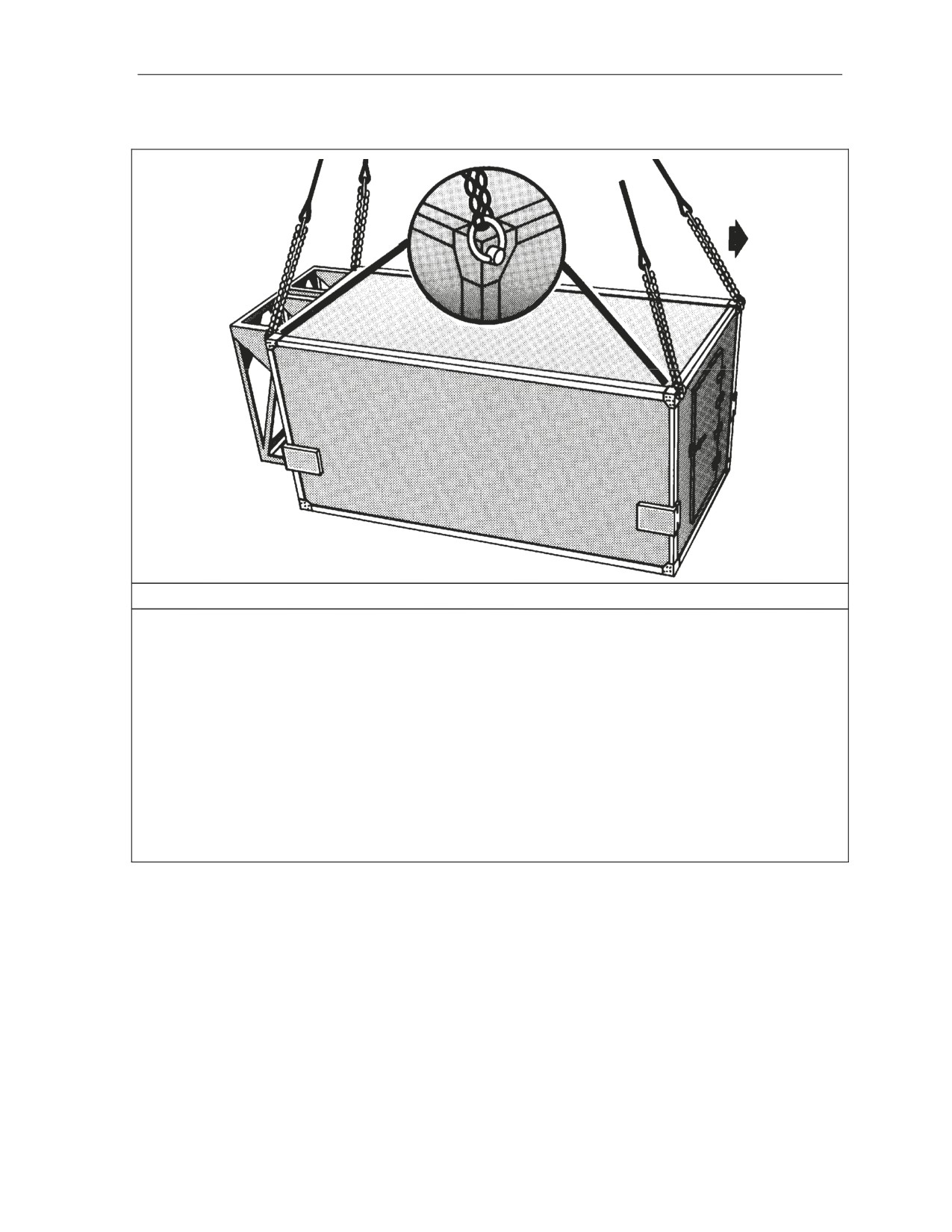
Certified Single-Point Rigging Procedures for Shelters
RIGGING STEPS
1. Position apex fitting on top of the shelter. Route outer sling legs 1 and 2 to the front of the
shelter (door end) and inner sling legs 3 and 4 to the rear. Sling legs 1 and 3 must be on the
left side of the load.
2. Loop the chain end of sling leg 1 through the left front lift provision. Place the correct link
from Table 10-8 in the grab hook. Repeat with sling leg 2 on the right front lift provision.
3. Loop the chain end of sling leg 3 through the left rear lift provision. Place the correct link
from Table 10-8 in the grab hook. Repeat with sling leg 4 on the right rear lift provision.
4. Cluster and tie (breakaway technique) all sling legs together on top of the shelter to prevent
entanglement during hookup and lift-off.
Figure 10-8. AN/TYC-5A Data Communications Terminal
AN/TRN-44 TACTICAL AIR NAVIGATION SHELTER
10-10. The AN/TRN-44 tactical air navigation shelter is rigged for single-point sling load using the
following procedures:
z
APPLICABILITY. The following item in Table 10-9 is certified for all helicopters with
suitable lift capacity by the US Army Natick Soldier Center:
20 February 2009
FM 4-20.198/MCRP 4-11.3E, VOL II/NTTP 3-04.12/
AFMAN 11-223 (I), VOL II/COMDTINST M13482.3B
10-15