FM 3-19.13 LAW ENFORCEMENT INVESTIGATIONS (JANUARY 2005) - page 4
FM 3-19.13
Dresser
3 x 1'7"
Face
3'10 3/4"
3'6 3/4"
1'8"
1'8 1/2"
up
J
G
F
I
1'7"
1'7 3/4"
9'4"
Table
2'5 1/2"
1'4"
10"
Bed
E
N
7' x 3'6"
H
1'6"
11"
Not to Scale
2'4" x 1'8"
3'11"
2'5"
3'2"
1'11"
1'2"
2'9"
3'4"
B
11"
C
D
6"
9"
2'2 1/2"
2' 1/2"
8"
A
X
1'4"
E/E
3"
Window
2'6"
5"
8'10"
Legend
Title Block
A. Hole
Case number: 0123-02-CID037
B. Red stain
Offense: Undetermined death
C. Glass fragments
Scene portrayed: Room #C-33, Bldg #3203,
D. Shell casing
troop barracks
E. Glass
Location: Fort Leonard Wood, MO 65473
F. Pistol
Victim: SGT Janet Williams
G. Bottle
Time & date began: 1115 2 Jan 02
H. Canister
Sketched by: SA William Mac
I. Cigarette
Verified by: SA John Friend
J. Neck injury
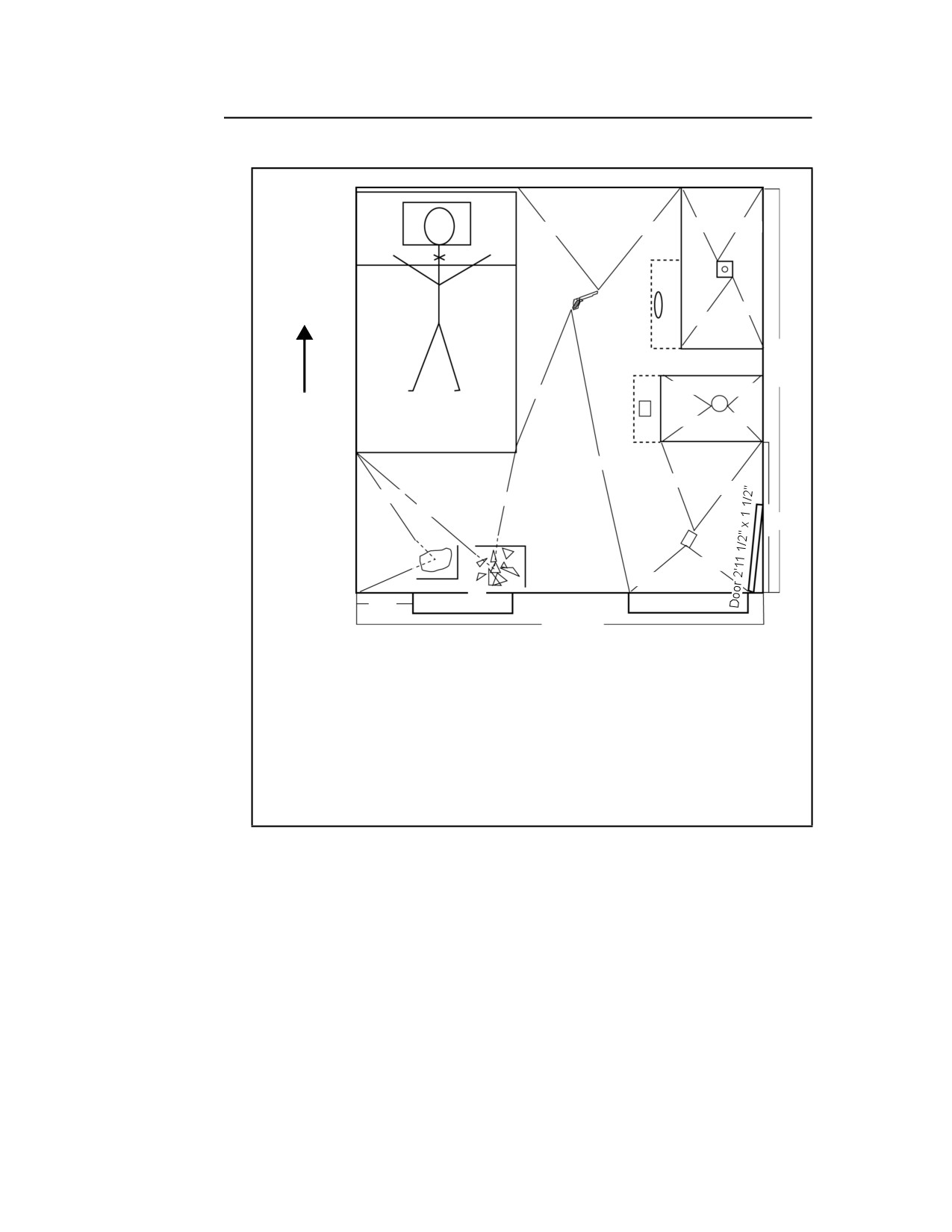
Figure 6-2. Example of a Rough Sketch Depicting Evidence, Measurements,
and Triangulation (Inside Surface)
z
Dimensions of the horizontal surface (length and width).
z
Entry and exit way (length and width).
z
Windows (length and width).
z
Distances between objects, persons, bodies, entrances, and exits.
z
Measurements showing the location of evidence.
z
Compass orientation, scale, caption, and legend.
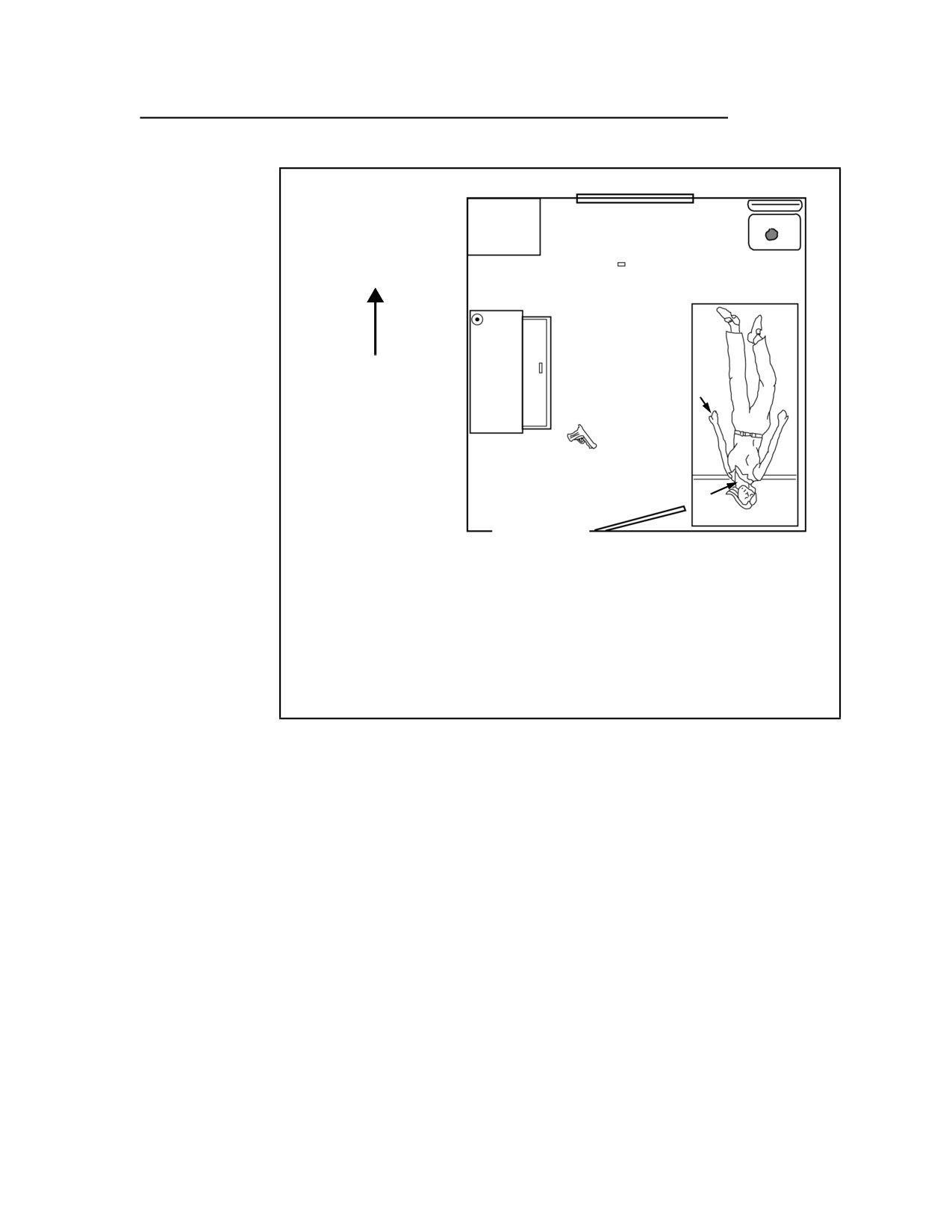
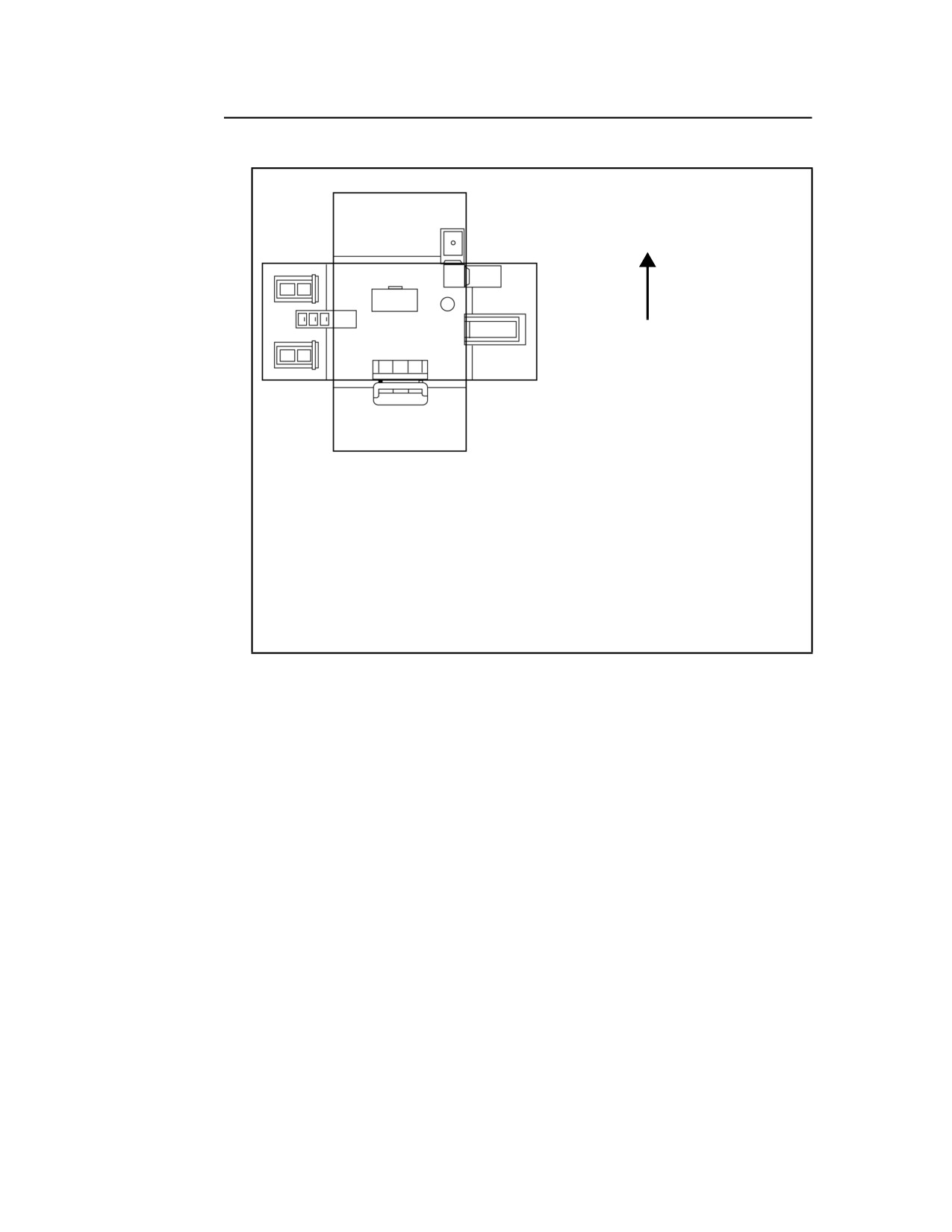
6-44. The information that is annotated for the legend and title block in a flat
projection rough sketch must also be annotated for a cross-projection sketch.
See Figure 6-4, page 6-16.
6-14 Notes, Photographs, and Sketches
FM 3-19.13
C
Window
Wall
locker
E
Chair
D
B
N
H
Scale: 15/32 inch = 1 foot
F
Dresser
A
G
Bed
Doorway
Legend
Title Block
A. Pistol
Case number: 063-02-4809
B. Bottle
Offense: Death investigation
C. Letters “BR”
Scene portrayed: Room #7, Bldg 5-3251-B,
D. Shell casing
troop billets
E. Red stain
Location: Fort Leonard Wood, MO
F. Fibers
Victim: SP4 Faye M. Miller
G. Gunshot wound
Time & date began: 1000 12 Jan 02
H. Cigarette inside opened drawer
Sketched by: SA Tim C. Winkler
Verified by: SGT Betty C. Goodwin
Figure 6-3. Example of a Finished Sketch Drawn to Scale
PREPARATION OF A ROUGH SKETCH
6-45. Any kind of paper may be used for a rough sketch. However, bond or
graph paper is best. It can be placed on a clipboard large enough to form a
smooth area for drawing. At a minimum, the following items are required to
prepare a rough sketch:
z
A soft lead pencil.
z
A 100-foot and a 25-foot steel tape.
z
A straightedge ruler.
z
Several thumbtacks to hold one end of the steel tape down when you
are working alone.
z
A magnetic compass.
z
Crime scene templates.
z
A clipboard.
6-46. Several items of information are considered essential in a crime scene
(flat-projection) sketch. The sketch should include the following:
Notes, Photographs, and Sketches
6-15
FM 3-19.13
x
A
N
Scale: 3/32 inch = 1 foot
Legend
Title Block
A. Crowbar
Case number: 1426-02-CID063
Offense: Burglary investigation
Scene portrayed: Room #7, Bldg 5-3251-B,
troop billets
Location: Fort Leonard Wood, MO
Victim: SP4 Betty M. Holmes
Time & date began: 1030 12 Jan 85
Sketched by: Mr. Frank L. Wright
Verified by: SA David L. Kelly
Figure 6-4. Example of a Cross-Projection Sketch
z
Weather and lighting conditions.
z
Dimensions of the rooms (length, width, and height); furniture (width,
height, and depth); doors (width, height, and thickness); and windows
(length and width).
z
Distances between objects, persons, bodies, entrances, and exits.
z
Measurements showing the location of evidence. Each object should be
located by two measurements from nonmovable items, such as doors
or walls.
z
Compass orientation, scale, and legend.
6-47. The major constraint on detail in sketching is that the result must be
completely understandable to a viewer without a detailed study. An
investigator must not include too much detail in a sketch or the major
advantage of a sketch over a photograph will be lost.
6-48. Each sketch should include the critical features of the crime scene and
the major, discernible items of physical evidence. Evidence sketches must
show accurate measurements of the crime scene. They must also show the
location of evidence established by using the triangulation method. A
photograph sketch must show camera positions and distances to focus points.
6-49. Each sketch should have a caption to identify the illustration. For
example, a caption might read: “flat-projection rough sketch showing camera
6-16 Notes, Photographs, and Sketches
FM 3-19.13
positions and distances.” Each sketch must have a legend. The legend
explains the symbols, numbers, and letters used to identify objects on the
sketch. Numbers are used to explain items of interest and letters are used to
explain items of evidence. Standard military symbols are used where
practical.
6-50. The sketch must show the compass direction north. Scaled drawings
must include a scale designation. If no scale is used, write: “not drawn to
scale.” Each sketch must have a sketch title block containing the following
entries:
z
Incident report number, such as an MPR, USACIDC sequence
number, or report of investigation (ROI) number.
z
Alleged offense.
z
Name and rank or title of the victim.
z
Scene portrayed, citing the room number, building number, and type
of building (such as the post exchange [PX], commissary, house, or
troop billets).
z
Location, citing the complete name of the installation, city, state, and
zip code.
z
Time and date the sketch was started.
z
Name and rank or title of the person who drew the sketch.
z
Name and rank or title of the person who verified the sketch.
6-51. The measurements shown on the sketch must be as accurate as possible
and should be made and recorded uniformly. Steel tapes are the best means of
taking accurate measurements. It is important to verify the measurement
with a tape measure or laser range finder. A measurement error on a sketch
can bring the entire crime scene search into doubt. If one aspect of a sketch is
inaccurate, such as the dimensions of a field in which a body was found and
the position of an object within the field is only roughly estimated, the
distortion introduced renders the sketch relatively useless. It is important
that the coordinate distances of an item in the sketch be measured in the
same manner. For example, one coordinate leg of the victim should not be
paced and the other measured with a tape measure. It is also a mistake to
pace off a distance and then show it on the sketch in terms of feet and inches.
This implies a far greater degree of accuracy than the measurement technique
could possibly produce. If the point arose in court, such imprecision could
greatly detract from the value of the sketch.
EVIDENCE LOCATION SHOWN ON A SKETCH
6-52. Various sketch methods may be used to show evidence location and
other important items at the scene. The simplest form of a sketch is a two-
dimensional presentation of a scene as viewed directly from above. Evidence
location is shown on this type of sketch by triangulation. Triangulation is used
for indoor and outdoor sketches having fixed reference points. Items are
located by creating a triangle of measurements from a single, specific,
identifiable point on an item to two fixed points all on the same plane at the
scene. If movable items are used as reference points, they must first be “fixed.”
Do not triangulate evidence to evidence. Do not triangulate under or through
evidence. Do not take a line of measurement through space. Measure the line
Notes, Photographs, and Sketches
6-17
FM 3-19.13
along a solid surface like a floor, wall, or tabletop. In the interest of clarity,
keep the angle of triangulation measurements between 45° and 90° on the
sketches. Ensure that the measurements in the notes and sketches do not
conflict. Although height measurements are taken and annotated in the notes,
they are not reflected on crime scene sketches.
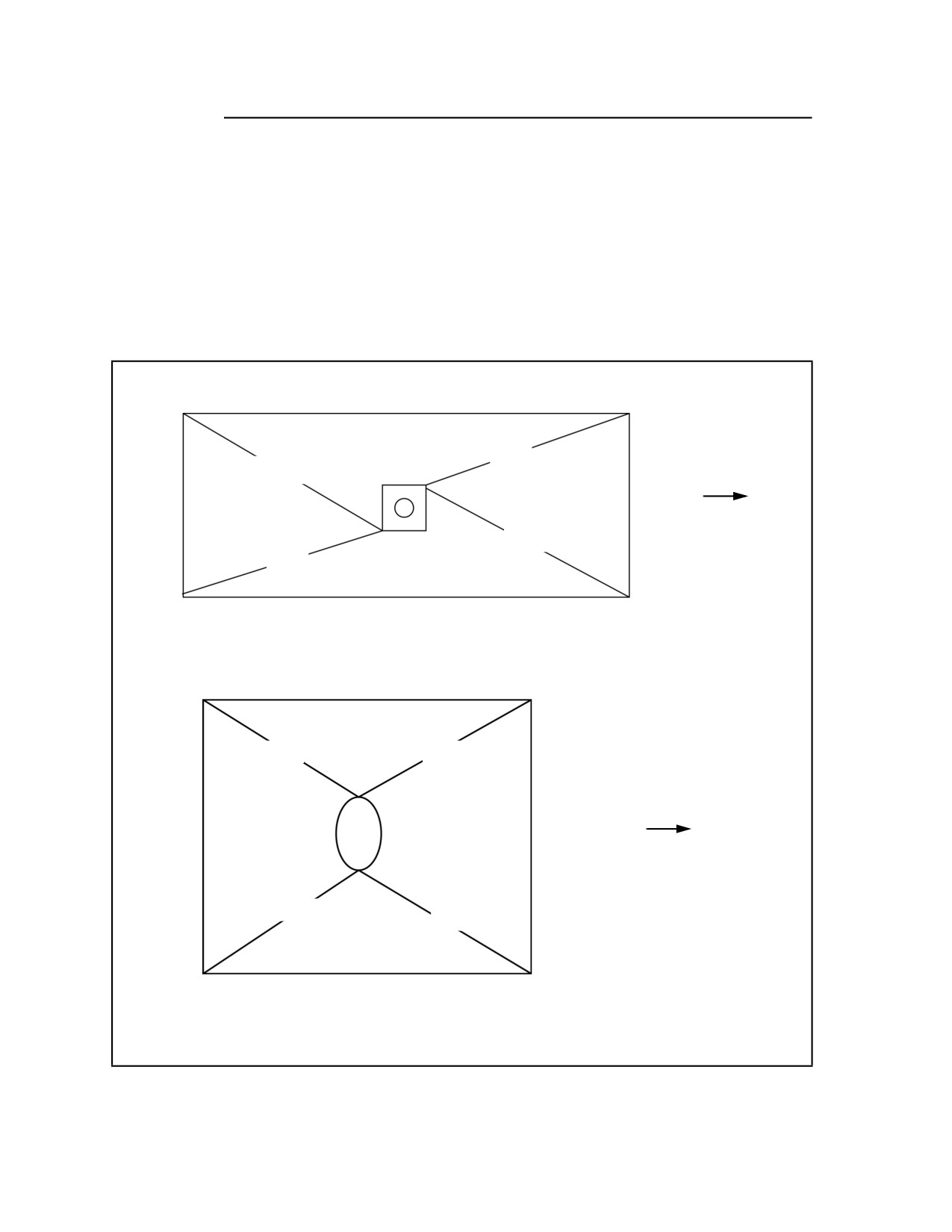
6-53. Regular-shaped items are fixed by creating two separate triangles of
measurements. Each originates at opposite points on the item and ends at two
fixed points on the same plane at the scene. This is commonly known as the 2-
V method of triangulation. See Figure 6-5.
1'8''
1'7 3/4''
N
1'8 1/2''
1'7''
Whiskey Bottle on Dresser Top
1'6''
1'4''
N
11''
10''
Glass on Table Top
Figure 6-5. 2-V Method of Triangulation
6-18 Notes, Photographs, and Sketches
FM 3-19.13
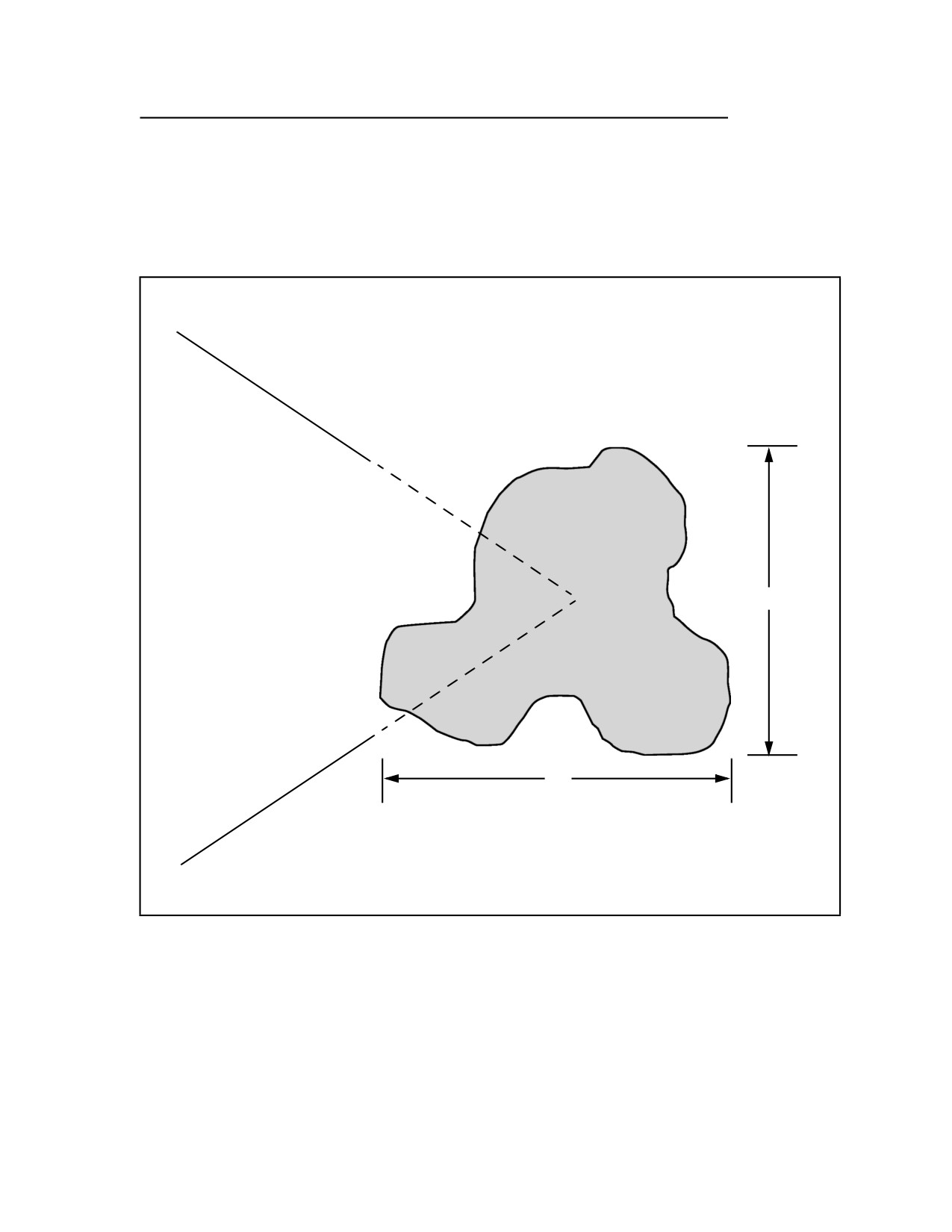
6-54. Irregular-shaped items are fixed by creating a single triangle of
measurements from the approximate center of mass of the item to two fixed
points on the same plane at the scene. The longest and widest dimensions of
the item are also measured. This is commonly known as the 1-V method of
triangulation. See Figure 6-6.
Take half of the pattern
size, and add it to your
measurement.
6''
In this example, add 4
inches
8''
From Approximate Center Mass
Figure 6-6. 1-V Method of Triangulation
6-55. Inhabited outdoor areas usually have easily defined, fixed reference
points such as buildings, edges of roads, and sidewalks. When these are
present, the triangulation method can be used to establish the location of
objects. Uninhabited or remote areas may not have easily defined, fixed points
within close range. Use a GPS or precision lightweight GPS receiver (PLGR)
to fix the points. If not available, use engineers to stake a reference point. See
FM 3-25.26 for application of this method. Situations may occur where no
logical point of reference exist. The investigator must then establish reference
Notes, Photographs, and Sketches
6-19
FM 3-19.13
points by creating them. Care must be exercised in describing the location of
these reference points so that accurate placement of the fixed item can be
accomplished upon reconstruction of the crime scene.
6-56. Upon completing a sketch, the investigator must recheck the crime
scene against his notes and sketch to verify that all items have been identified
and recorded. If new evidence is discovered, it must be described,
photographed, triangulated, and annotated on the appropriate sketch.
6-20 Notes, Photographs, and Sketches
0PART THREE
Investigations of Specific Criminal Offenses
Part Three addresses the most common types of crimes investigated by Army law
enforcement investigators. Each chapter describes the offense, provides legal
considerations and, where appropriate, describes the nationally recognized method of
investigation as established by the DOJ, FBI, BATF, and NAFI.
Chapter 7
Arson and Explosives Investigations
Similar investigative techniques are used to investigate arson and
explosive incidents. The investigator must determine the nature and cause
of the incident. Initially, he must distinguish between an accidental fire or
explosion and one produced intentionally or by criminal negligence.
Crimes involving fire and explosions present many difficulties, paramount
among which is the partial or total destruction of evidence. Although the
usual investigative steps are followed at the crime scene, great care must
be taken in handling items of evidence and interpreting the pattern
suggested by their location. Police intelligence gathered as a result of these
investigations is reported and shared with other federal, state, local, and
HN police agencies.
ARSON
7-1. Arson investigation is a difficult field for the investigator. Arson
frequently involves the use of an accelerant (a material used to spread or
increase the rate of burning). Typical accelerants include ignitable liquids,
such as gasoline, mineral spirits, kerosene, and similar materials. The
presence of such materials, if there is no legitimate reason for their presence,
may indicate arson.
7-2. During a fire involving an accelerant, the accelerant will undergo change.
The more volatile components will be lost to a much greater extent than the
components of lower volatility and those that remain may be absorbed into the
wood or carpeting of the structure. Laboratory analysis can determine if an
ignitable liquid is present in the sample. The volatility range and general
chemical composition can also be determined. There will be situations in
which one sample may disclose the presence of an ignitable liquid and another
will not, even though the samples were taken from areas quite close together.
Arson and Explosives Investigations 7-1
FM 3-19.13
FIRE CHEMISTRY AND BEHAVIOR
7-3. There are four types of fires: accidental, natural, incendiary, and
undetermined. Most fires are accidental. To determine if a fire was accidental
or incendiary, investigators must understand the basics of fire chemistry and
behavior. To prove it was incendiary, they must first prove it was not
accidental or natural.
Chemistry
7-4. Fire is a chemical reaction that takes place when fuel, heat, and oxygen
combine in an uninhibited chain reaction. Fire can only exist when all four of
these factors are present. Remove any one of the elements and the fire goes
out because the continuing chemical reaction has been stopped.
7-5. Because only gases burn, solid and liquid fuels must be heated until they
become vapor (gas) before they can burn. Heat chemically decomposes a fuel
into its gaseous elements. This decomposition is known as pyrolysis. For
example, when wood is heated, it pyrolyzes to form hydrogen, oxygen, ethane
and methane gases, and methyl alcohol. It is these highly flammable vapors
that burn. Fuel in vapor form in its normal state, like natural gas, does not
need to be pyrolyzed.
7-6. Most fuels are compounds of carbon, hydrogen, and oxygen along with
traces of mineral matter. When the fuels burn completely and freely in air, the
carbon reacts with the oxygen to form carbon dioxide and the hydrogen
combines with the oxygen to form water vapor. The mineral matter remains
behind as ash. As the oxygen in the fuel is used up, oxygen is drawn from the
air to continue the reaction. That is why drafts and air supplies directly affect
the behavior of a fire. A fire started in a completely enclosed space soon dies.
It uses up all of the available oxygen and generates noncombustible gases that
smother it. On the other hand, the rate of burning is greatly increased if a
chimney effect exists when the hot gases and flame contact combustible
material. Disastrous fires result in large buildings where elevator shafts or
stairways served as chimneys to direct the up-rushing flames and gases.
7-7. It takes heat to ignite the fuel and start the chemical reaction. Once
ignition has taken place, the reaction (fire) produces its own heat and becomes
self-generating as long as fuel and oxygen remain present.
7-8. It is understandable then, that fuels do not need to be touched by flame
to begin burning. They simply need to be heated above their ignition points. It
is for this reason that heat, not flame, is the greatest cause of fire spread.
7-2 Arson and Explosives Investigations
FM 3-19.13
Heat can be transferred from one place to another by convection, conduction,
or radiation.
z
Convection. Convection occurs when heat is transferred by a
circulating medium like air or water. Heat convected by circulating air
is the most common method of fire spread.
z
Conduction. Conduction transfers heat by contact. Often, heat from
a fire in one room is conducted throughout the structure by pipes or
electrical conduit. If combustible material in another room is in
contact with the pipe, it can become heated above its ignition point
and start a second fire. Metallic objects are the most frequent
conductors of heat. Sometimes, even brick walls can conduct enough
heat to cause a second fire.
z
Radiation. Radiation transfers heat in the form of energy waves
through space. Heat radiates through any transparent medium like
air, glass, or even water. No physical contact is needed. This is how
the heat of the sun is transferred through the vacuum of space to the
earth. Often, a fire in one building radiates enough heat to start a fire
in another building, even though a curtain of water is sprayed
between the buildings.
Behavior
7-9. Fires behave according to well-defined principles of burning. Fires
produce heat, flame, smoke, and gases. These combustion by-products may or
may not be readily seen. Flame includes both an open flame and a smoldering
glow. Smoke is composed of very fine solid particles and condensed vapors.
The composition of fire gases emitted by the burning materials depends on the
chemical makeup of the burning material, the amount of oxygen available
during burning, and the temperature of the fire. Most fire gases are highly
toxic. They are the biggest cause of fire deaths. The biggest single killer is
carbon monoxide, not because it is the most toxic, but because it is the most
abundant. When large quantities are breathed in, carbon monoxide causes
unconsciousness and eventually death. At less than lethal concentrations, it
causes disorientation and confusion, subjecting victims to other hazards
present in the fire. The second most dangerous gas produced by a fire is
carbon dioxide. While not toxic in itself, a 2 percent increase in carbon dioxide
in the air causes a 100 percent increase in a human's breathing rate. This
doubles a victim's intake of other toxic gases.
7-10. Fire burns up and out. It leaves a V-shaped char pattern on walls and
vertical structures. A fire that is hot and fast at the point of origin will leave a
sharp V pattern. A slow fire will produce a shallow V pattern. If fire meets an
obstruction, such as a ceiling, it will burn across the obstruction looking for a
place to go up.
7-11. Fire travels with air currents. It never travels into the wind unless the
entire fire load, the combustible material or fuel in an area, is on the
windward side of the fire. If this happens, the fire slowly eats into the fire load
as its tendency to follow the wind is overcome by its attraction for fuel.
7-12. Fire seeks oxygen. Because fire consumes great amounts of oxygen, it is
always drawn toward new sources of oxygen when burning occurs indoors. It
Arson and Explosives Investigations 7-3
FM 3-19.13
is not unusual to see a char pattern going up a wall to the ceiling and across
the ceiling toward an open window. It is also common to find deeper charring
and evidence of higher heat on window frames and doorways.
7-13. These principles of burning account for most of the fire and char
patterns seen during and after a fire. But sometimes there are unusual
patterns that are the result of a flashover or backdraft, natural conditions
which only occur during fires when conditions are right.
7-14. A flashover occurs when flames instantaneously erupt over the entire
surface of a room or confined area. Once a fire starts, it produces gases that
rise and form a superheated gas layer at the ceiling. As the volume of this gas
layer increases, it begins to move down to the floor, heating all objects in the
room regardless of their proximity to the flaming objects. In a typical
contained fire, the gas layer at the ceiling can rapidly reach temperatures in
excess of its autoignition point. If there is enough existing oxygen, a flashover
occurs and everything in the room becomes involved in an open flame all at
once. This sudden eruption into flames generates a tremendous amount of
heat, smoke, and pressure with enough force to push beyond the room of
origin through doors and windows. This combustion process will accelerate
more now because it has a greater amount of heat to move to objects.
7-15. Backdrafts occur when a structure burns with all doors and windows
closed and the fire uses up all of the available oxygen. It then turns into a slow
smoldering fire, generating huge amounts of superheated carbon monoxide
gas. The hot gases rise to the top of the room and stay there. Because carbon
monoxide is a flammable gas and is heated above its ignition point, it only
needs more oxygen to burst into flames. Oxygen entering around cracks in
doors and windows keeps the fire smoldering. This produces more and more
superheated carbon monoxide. Then, when a door is opened or a window melts
out, the in-rushing oxygen combines with the superheated carbon monoxide,
causing an explosive fire.
7-16. Windows will blow out, and the explosion may be strong enough to
damage the structure of the building. Damage caused by a backdraft may look
similar to that caused by a low explosive. A backdraft produces an unusual
char pattern. Most of the burn damage will be at the extreme top of the room.
There will also be a rather sharp line of demarcation at the bottom of the char
pattern on the wall. As with a flashover, accelerant residue may not be
present.
7-17. When wood burns, it chars a pattern of cracks that looks like the scales
on an alligator's back. The scales will be the smallest and the cracks the
deepest where the fire has been burning the longest or the hottest. Most wood
in structures chars at the rate of 1 inch in depth per 40 to 45 minutes of
burning at 1400° to 1600° Fahrenheit, which is the temperature of most house
fires. However, no specific time of burning can be determined based solely on
the depth of charring since most fires vary with intensity and fuel load. A
room fire chars only the upper one half to two thirds of the room. Ceiling
damage in a normal structural fire is usually at least five times the floor
damage. Sometimes a char pattern has a sharp line of demarcation on one
side. This indicates that the fire quit spreading in that direction when a draft
entered and blew it back.
7-4 Arson and Explosives Investigations
FM 3-19.13
7-18. When glass is exposed to fire, it begins to melt at about 1200°
Fahrenheit. It becomes runny at about 1600° Fahrenheit. A lot can be learned
about a fire from the glass at the scene. Remember, though, to examine all of
the glass and not jump to conclusions from the appearance of just one piece.
As a general rule, glass that contains many cracks indicates a rapid heat
buildup. Glass that is heavily stained indicates a slow, smoky fire.
7-19. Bright metals, like the chromium on toasters, turn colors when heated.
These colors may remain after the fire and indicate the temperature of the fire
at that location.
FIRE INVESTIGATION
7-20. Investigators arriving at a fire scene should observe and mentally note
the conditions and activities and, as soon as conditions permit, initiate
permanent documentation of the information (such as notes, voice recordings,
photographs, or videotapes). Investigators should document the following:
z
Presence, location, and condition of victims and witnesses.
z
Vehicles leaving the scene, bystanders, or unusual activities near the
scene.
z
Flame and smoke conditions (the volume of flames and smoke; the
color, height, and location of the flames; and the direction in which the
flames and smoke are moving).
z
Type of occupancy and the use of the structure (such as a residential
occupancy being used as a business).
z
Condition of the structure (lights turned on; fire through the roof;
walls standing; open, closed, or broken windows and doors).
z
Conditions surrounding the scene
(blocked driveways, debris, or
damage to other structures).
z
Weather conditions.
z
Any unusual characteristics of the scene (the presence of containers,
exterior burning or charring on the building, the absence of normal
contents, unusual odors, or fire trailers).
z
Fire suppression techniques used
(including ventilation, forcible
entry, and utility shutoff measures).
z
Status of fire alarms, security alarms, and sprinklers.
7-21. Before entering the scene, the investigator should identify and contact
the current incident commander (IC). He should request a briefing with the IC
to determine who has jurisdiction and authorization (legal right of entry) and
to identify others at the scene, such as law enforcement, firefighting, EOD,
emergency medical services (EMS), HAZMAT, and utility services personnel.
7-22. Information obtained from the IC and the first responders will help the
investigator determine the level of assistance required and whether additional
investigative personnel are needed. Before entering the scene, investigators
should determine initial scene safety by using observations and discussions
with first responders. Consider environmental as well as personnel safety
concerns, and assess changes in safety conditions resulting from suppression
efforts.
Arson and Explosives Investigations 7-5
FM 3-19.13
Define the Extent of the Scene
7-23. To provide for the safety and security of personnel and to protect the
evidence, the investigator should perform a preliminary scene assessment. He
should determine the area in which the site examination will be conducted
and establish or adjust the scene perimeter.
7-24. To determine the boundaries of the scene, the investigator should—
z
Make a preliminary scene assessment to identify areas that warrant
further examination, being careful not to disturb evidence. The
preliminary scene assessment is an overall tour of the fire scene to
determine the extent of the damage, proceeding from areas of least
damage to areas of greater damage.
z
Inspect and protect adjacent areas, even areas with little or no
damage, that may include nonfire evidence, such as bodies, blood
stains, latent prints, toolmarks, or additional fire-related evidence
(such as unsuccessful ignition sources, fuel containers, or ignitable
liquids).
z
Mark or reevaluate the perimeter and establish or reassess the
procedures for controlling access.
Identify and Interview Witnesses at the Scene
7-25. Persons with information about the scene, activities before the incident,
the incident, and its suppression are valuable witnesses. Determine the
identities and locations of witnesses and make arrangements to conduct
interviews.
7-26. To develop a witness list, the investigator should—
z
Contact the IC, identify first responders and first-in firefighters, and
arrange to document their observations either in writing or through
recorded interviews.
z
Determine who reported the incident, and secure a tape or transcript
of the report if available.
z
Identify the owner of the building or scene, any occupants, and the
person responsible for property management.
z
Identify who was last to leave the building or scene and what occurred
immediately before he left.
z
Identify and interview other witnesses (such as neighbors, bystanders,
people injured during the incident, or public agency personnel arriving
later) and record their statements.
Determine Scene Security at the Time of the Incident
7-27. The investigator should determine whether the building and/or the
vehicle was intact and/or secure. He should also determine if the intrusion
alarms and/or fire detection and suppression systems were operational at the
time of the fire. This information helps to establish factors, such as ventilation
conditions, possible fire development timelines and scenarios, and whether
vandalism of the property or systems occurred before the incident.
7-6 Arson and Explosives Investigations
FM 3-19.13
7-28. To determine the status of security at the time of the fire, the
investigator should—
z
Ask first responders where entry was made, what steps were taken to
gain entry, and whether any systems had been activated when they
arrived at the scene.
z
Observe and document the condition of doors, windows, and other
openings. Attempt to determine whether they were open, closed, or
compromised at the time of the incident.
z
Observe and document the position of timers, switches, valves, and
control units for utilities, detection systems, and suppression systems,
as well as any alterations to those positions by first responders.
z
Determine if the security or suppression systems were available and
contact the monitoring agencies to obtain information and available
documentation about the design and functioning of the systems.
Identify Resources
7-29. Except in the most obvious cases, the determination of the origin and
cause of a fire may be a complex and difficult undertaking that requires
specialized training and experience as well as knowledge of generally accepted
scientific methods of fire investigation. The investigator must either have the
appropriate expertise or call on the assistance of someone with that
knowledge. This is especially true in cases involving deaths, major injuries, or
large property losses.
7-30. Based on the preliminary scene assessment and analysis of fire patterns
and damage at the scene, the investigator should identify a distinct origin (the
location where the fire started) and an obvious, fire cause (an ignition source,
the first fuel ignited, and circumstances of the event that brought the two
together). If neither the origin nor the cause is immediately obvious, or if
there is clear evidence of an incendiary cause, the investigator should conduct
a scene examination according to recognized national guidelines, such as the
NAFI or National Fire Protection Association (NFPA). Investigative
guidelines can be found on NAFI, NFPA, and other official government Web
sites.
Obtain Equipment and Tools
7-31. Once arson is determined to be the cause of the incident, the
investigator will need to obtain specialized equipment to assist with the
investigation. These items should be kept on hand and available to the
investigator at all times to prevent a delay in the investigation. Specialized
equipment includes—
z
Barrier tape.
z
Clean, unused evidence containers (lined paint cans with friction lift
lids, glass jars, or nylon or polyester bags specifically made for fire
debris evidence).
z
Compass.
z
Decontamination equipment (buckets, pans, and detergent).
z
Evidence tags, labels, and tape.
Arson and Explosives Investigations 7-7
FM 3-19.13
z
Gloves (disposable gloves and work gloves).
z
Hand tools (hammers, screwdrivers, knives, crowbars, and shovels).
z
Lights (flashlights and spotlights).
z
Marker cones or flags.
z
PPE.
z
Photographic equipment.
z
Rakes, brooms, and spades.
z
Tape measure (100 feet).
Document the Scene
7-32. Written descriptions of the scene, along with accurate sketches and
measurements, are invaluable for focusing the investigation. Written scene
documentation recreates the scene for investigative, scientific analysis, and
judicial purposes and correlates with photographic evidence. Photographic
documentation creates a permanent record of the scene and supplements the
written incident reports, witness statements, or reports on the position of
evidence. The investigator should create and preserve an accurate visual
record of the scene and the evidence before disturbing the scene. Additional
photography or videotaping should occur as the investigation progresses.
Chapter 6 describes the procedures for notes, photographs, and sketches.
7-33. The scene should be photographed before the disturbance or removal of
any evidence and throughout the scene investigation. The investigator (or
other individual responsible for evidence) should—
z
Photograph and/or videotape the assembled crowd and the fire in
progress.
z
Remove all nonessential personnel from the background when
photographing the scene and evidence.
z
Photograph the exterior and interior of the fire scene (consider walls,
doors, windows, ceilings, and floors) in a systematic and consistent
manner. (Videotaping may serve as an additional record but not as a
replacement for still photography.)
z
Photograph any points or areas of origin, ignition sources, and first
material ignited.
z
Photograph any physical reconstruction of the scene.
z
Maintain photograph and video logs.
z
Determine whether additional photographic resources are necessary
(aerial photography, infrared photography, stereo photography).
7-34. Written documentation of the scene provides a permanent record of the
investigator's observations that may be used to refresh recollections, support
7-8 Arson and Explosives Investigations
FM 3-19.13
his opinions and conclusions, and support photographic documentation. The
investigator should—
z
Prepare a narrative, written descriptions and observations (to include
assessments of possible fire causes).
z
Sketch an accurate representation of the scene and its dimensions,
including significant features, such as the ceiling height, fuel
packages (combustible contents of the room), doors, windows, and any
areas of origin.
z
Prepare a detailed diagram using the scene sketches, preexisting
diagrams, drawings, floor plans, or architectural or engineering
drawings of the scene. This may be done at a later date.
Process Fire Scene Evidence
7-35. Collecting evidence at a fire scene requires attention to documenting
and maintaining the integrity of the evidence. The investigator should ensure
that evidence collectors identify and properly document, collect, and preserve
evidence for laboratory analyses, further investigations, and court
proceedings.
7-36. To optimize the recovery and evaluation of physical evidence, evidence
collectors should—
z
Take precautions to prevent contamination and cross contamination.
z
Document the location of evidence using written notes, sketches,
photographs, photograph and video logs, an evidence recovery log,
evidence tags, and container labels. When evidence is excavated,
additional photographs may be of value.
z
Take special care to collect evidence in any areas of origin (such as the
first fuel ignited and ignition source) in cases where the fire is not
accidental.
NOTE: In cases where the fire appears to be accidental, evidence
should not be needlessly disturbed, but the property owner or
insurer should be notified to avoid issues of spoliation.
z
Place evidence in labeled containers for transportation and
preservation. Evidence collected for laboratory identification of
ignitable liquids must be immediately placed in clean, unused vapor-
tight containers (clean, unused paint cans; glass jars; or laboratory-
approved nylon or polyester bags) and then sealed.
z
Label each container so that it is uniquely identified. Labeling may
include the name of the investigator, date and time of collection, case
number, sample number, description, and location of recovery.
z
Collect and preserve comparison samples. Comparison samples are
comprised of the same kind of materials or substances as the samples
that are taken from possible points of origin for ignitable liquid
analysis. These samples are not always available.
Arson and Explosives Investigations 7-9
FM 3-19.13
z
Package evidence according to the policies and procedures of the
laboratory.
z
Recognize the presence of other physical evidence, such as bloodstains,
shoe prints, latent prints, and trace evidence. Use proper preservation
and collection methods or seek qualified assistance.
Prevent Contamination
7-37. Preventing contamination during evidence collection protects the
integrity of the fire scene and evidence. The investigator should ensure that
access to the fire scene is controlled after fire suppression and that evidence is
collected, stored, and transported in a manner that will not contaminated it.
7-38. To prevent contamination, evidence collectors should—
z
Establish and maintain strict control of access to the scene.
z
Recognize that fuel-powered tools and equipment present potential
contamination sources and should be avoided. When it is necessary to
use these tools and equipment, the investigator should document their
use.
z
Wear clean, protective outer garments, including footwear.
z
Use clean disposable gloves for collecting items of evidence. (To avoid
cross-contamination, gloves should be changed between collection of
unrelated items of evidence or when visibly soiled.)
z
Use clean tools for collecting items of evidence from different locations
within a scene. (Disposable tools also can be used.)
z
Place evidence in clean, unused containers and seal immediately.
z
Store and ship fire debris containers of evidence that are collected
from different scenes in separate packages.
z
Package liquid samples to prevent leakage, and ship them separately
from other evidence.
z
Store and ship fire debris evidence separately from other evidence.
z
Follow any specific laboratory requests, such as submitting an unused
sample container or absorbent medium for detection of any
contaminants.
Package and Transport Evidence
7-39. Preventing changes in the condition of a sample after it has been
collected ensures the integrity of the evidence and requires controlled
packaging and transportation. The investigator should ensure that packaging,
transportation, and storage procedures are followed to prevent any
destructive changes in the condition of the samples.
7-40. To minimize changes in the condition of samples, the personnel
responsible for packaging and transport should—
z
Take precautions to prevent contamination.
z
Package fragile items carefully.
z
Freeze or immediately transport items containing soil to the
laboratory.
7-10 Arson and Explosives Investigations
FM 3-19.13
z
Transport all volatile samples to the laboratory in a timely manner.
z
Comply with the shipping regulations
SCENE INVESTIGATION COMPLETION
7-41. The investigator should ensure that the scene is not released until
reasonable efforts have been made to identify, collect, and remove all evidence
from the scene for further examination and all physical characteristics of the
scene have been documented. In addition, before releasing the scene to the
receiving party, associated legal, health, and safety issues must be articulated
and reported to public safety agencies, if necessary. Doing so minimizes the
risk of any further incident or injury and the potential liability of the
authority releasing the scene.
7-42. The investigator should complete the necessary tasks before releasing
the scene. He should—
z
Perform a final critical review.
Ensure that all evidence is inventoried and in custody.
Discuss preliminary scene findings with team members.
Discuss postscene issues, including forensic testing, insurance
inquiries, interview results, and criminal histories.
Assign postscene responsibilities to law enforcement personnel
and other investigators.
Address legal considerations.
z
Verify that all scene documentation has been completed. This can be
accomplished using an incident documentation checklist.
z
Address structural, environmental, health, and safety issues.
z
Remove all investigative equipment and material.
Recover and inventory equipment.
Decontaminate equipment and personnel.
z
Document the following information:
The time and date of release.
The receiving party.
The authority releasing the scene.
The condition of the scene at the time of release (structural,
environmental, health, and safety issues). The investigator may
want to consider photographing and/or videotaping the final
condition of the scene.
The cautions given to the receiving party on release
(safety
concerns, conditions, evidence, and legal issues).
7-43.
Detailed fire information is collected, integrated, and disseminated
through national and state databases. This data assists authorities in
identifying fire trends and developing innovative procedures and equipment.
The responsible agencies must file incident reports with the correct
authorities for input into the appropriate databases.
Arson and Explosives Investigations 7-11
FM 3-19.13
7-44. The investigator should collect enough information to facilitate entering
it into the following databases as appropriate:
z
Arson and Explosives National Repository (BATF).
z
Bomb Data Center (FBI).
z
National Fire Incident Reporting System
(NFIRS)
(US Fire
Administration [USFA]).
z
National Incident-Based Reporting System (NIBRS) (FBI).
z
State and local fire incident reporting systems.
EXPLOSIVES
7-45. Bomb threats (written or telephonic), bombings, and other explosive
incidents on military installations are immediately reported to local police,
fire, USACIDC, BATF, FBI, and other appropriate agencies. The examination
of an explosion scene is generally conducted in the same manner as an arson
investigation. In some cases, an explosion may lead to a subsequent fire. Like
arson scenes, it is extremely important that evidence or debris is not moved
before careful examination. The relationship between the various pieces may
be critical to reconstructing the cause of the explosion.
CHARACTERISTICS OF EXPLOSIVES
7-46. An explosive is a substance that, through chemical reaction, violently
changes into a gas, creating pressure and liberating heat. Explosives are
divided into the following two classes:
z
Low-order explosives. With low-order explosives, the rate of change
to a gaseous state is relatively slow and must be in a compressed or
enclosed state to explode. Low-order explosives tend to produce large
chunks of debris. Examples of low-order explosives are black powder,
smokeless powders, volatile flammable liquids, and flammable gases.
These explosives can also be called deflagration agents. A dust or
grain explosion can also be considered a low-order explosion.
z
High-order explosives. With high-order explosives, the rate of
change to the gaseous state is extremely rapid. They tend to pulverize
everything nearby. Compressing or enclosing the explosive is not
required. Such an explosion is said to detonate. High-order explosives
include dynamite, military explosives, trinitrololuene (TNT),
pentaerythrite tetranitrate (PETN), composition B (CB),
composition 4 (C4), and mixtures of ammonium nitrate and fuel oil.
7-47. The effects of the two classes of explosives are different. Low-order
explosions tend to “push” rather than shatter. Large chunks of debris can
usually be found. Twisting and tearing of objects tend to occur. High-order
explosives tend to shatter and fragment material near the center of
detonation, and there is much evidence of impact by small, high-velocity
missiles near the center of detonation. The resulting debris is in small
fragments. Scientific and technical information on explosives can be found on
official government Web sites.
7-12 Arson and Explosives Investigations
FM 3-19.13
EXPLOSIVES INVESTIGATIONS
7-48. Debris and soil close to the point of detonation are likely to bear residue
from the explosive. Evidence of components used in the explosion may be
found. Some examples are fragments of blasting caps, safety fuse fragments,
wire, matches, match folders, fuse lighters, batteries or other sources of
electric current, fragments of a timing device, delay mechanisms, or switches.
Information of these accessories assists in the investigation. Containers or
material foreign to the scene should be collected. The site should be checked
for—
z
Fingerprints.
z
Footprints.
z
Tire tracks.
z
Toolmarks.
z
Unusual odors.
7-49. The following procedures serve only as a guide. The ultimate
determination of how to handle an explosive incident must be made by the
investigating team responding to the scene. Availability of time, personnel,
and other resources greatly influences what course of action to choose.
z
The team leader—
Selects and assembles personnel and equipment and coordinates
with other jurisdictions.
Conducts a scene overview.
Determines and establishes scene integrity, security, and safety.
Establishes command post and media control.
Conducts a scene walk-through with the explosives technician and
forensic chemist.
Coordinates all personnel and search patterns.
Assigns immediate area search and investigative units.
Assigns the general area search and investigative units.
Manages, evaluates, and finalizes search and investigative
actions.
Conducts final scene evaluation conferences.
z
The photographer—
Selects and assembles equipment.
Photographs the immediate and general area including the
victims, crowd, and vehicles.
Photographs team operations.
Photographs the blast seat and damage showing the
measurements.
Photographs evidence as found
Photographs the immediate and general area from an aerial
perspective.
Takes scene reconstruction photographic series.
Photographs blueprints, maps, and previous photographs of the
scene, if necessary.
Arson and Explosives Investigations 7-13
FM 3-19.13
Photographs known or potential suspects.
Identifies additional photographic needs with all scene
investigators.
z
The evidence technician—
Selects, assembles, and distributes collection equipment to the
search team members.
Prepares an evidence control log, and sets up an evidence
collection point.
Coordinates and controls evidence collection techniques and
procedures.
Records the receipt of all properly marked and packaged evidence
from search teams on the evidence control log.
Categorizes collected evidence.
Maintains custody and control of collected evidence at the scene.
Coordinates with the team leader and other investigators.
Verifies collected evidence with the evidence control log before
departing the scene.
Documents the chain of custody and provides temporary storage.
Prepares laboratory analysis requests, and transmits evidence to
the laboratory.
z
The schematic sketch artist—
Selects and assembles equipment.
Diagrams the immediate blast area.
Diagrams the general area.
Identifies the evidence found by indicating the assigned evidence
numbers on the evidence control sketch showing the location
where the evidence was found.
Shows the necessary measurements of heights, lengths, and
widths.
Makes an artist’s conception of the scene before the blast with the
help of witnesses showing where furniture was arranged or how
the structure was before the explosion.
Prepares a legend on the diagrams.
Inventories collected evidence with the evidence technician and
ensures that all evidence is noted on the control sketch.
Marks and identifies the evidence control sketch and other
diagrams for proper court presentation.
Coordinates with the team leader and other investigators.
z
The immediate area investigative unit—
Selects and assembles investigative equipment.
Interviews local officers, firemen, and all possible witnesses at
scene.
Determines the owner of the property, the victim of the explosion,
and if any persons were injured in the blast.
Obtains names of any persons that are normally on the premises,
such as employees, watchmen, or janitors.
7-14 Arson and Explosives Investigations
FM 3-19.13
Provides the general area investigative unit with the names and
location of all persons or groups who should be interviewed.
Ensures that the list includes the injured persons who were taken
to a hospital or rescue workers who have departed from the scene.
Records the descriptions and times of the sounds, colors of the
smoke, and any odors noticed by witnesses.
Identifies all persons at the explosion scene, and coordinates with
the photographer to film the crowd and vehicles in the immediate
and general area.
Questions the witnesses, and records the facts pertaining to the
general activity at the scene before the explosion.
Questions the witnesses, and records the facts pertaining to
anything unusual about the activity or any facts concerning
unidentified packages, items, persons, or vehicles.
Reconstructs the immediate area activity, and coordinates with
the team leader and other investigators.
z
The immediate area search unit—
Selects and assembles equipment.
Stays alert for structural hazards, secondary devices, and
entrapment devices before and after entering the blast area.
Locates the seat of the explosion or the point of origin of the fire.
Coordinates with the schematic artist and photographer before
disturbing the crater or immediate blast area.
Measures and records the size, depth, and shape of the crater or
damage.
Collects samples from the blast seat, and retains the necessary
control samples.
Searches and sifts the seat of the explosion for device components.
Divides the immediate area into a search pattern, and makes a
methodical search. Searches from the seat of the explosion to an
expanded area that overlaps with the general area search unit.
Records and packages
(individually) the evidence found, and
follows routine procedures with the photographer, schematic
artist, and the evidence technician.
Reconstructs the immediate area scene, and coordinates with the
team leader and other investigators.
z
The general area search unit—
Selects and assembles equipment, and coordinates the search
pattern.
Stays alert for structural hazards, secondary devices, and
entrapment devices.
Checks all surrounding buildings, vehicles, and objects for damage
by missiles from the explosion, and marks them for the
photographer and the schematic artist
Searches the area of ingress and egress for associative evidence,
such as footprints, tire tracks, torn clothing, blood, hair,
fingerprints, or other evidence that may relate to a suspect.
Arson and Explosives Investigations 7-15
FM 3-19.13
Searches the area for evidence from the explosion.
Searches rooftops and trees or other high places that may have
caught debris from the explosion. Documents the blast effect and
glass breakage in the surrounding area.
Determines the extent of the outer perimeter of thrown missiles
and evidence. Indicates this finding to the schematic artist,
photographer, and explosives technician
Adjusts the outer perimeter of the search pattern as necessary.
Records and packages
(individually) the evidence found.
Coordinates with the evidence technician, schematic artist, and
photographer.
Reconstructs the general area scene, and coordinates with the
team leader and other investigators.
z
The general area investigative unit—
Selects and assembles investigative equipment.
Reviews the maps, evaluates the ingress and egress, and selects a
methodical pattern for canvassing the area.
Determines the possibility of deliverymen being in the area, and
makes a list of their names and addresses for follow-up interviews.
Canvasses the neighborhood for witnesses.
Canvasses business premises that may be related to ingress and
egress (such as all-night service stations, cafes, taverns, and toll
bridges).
Prepares a suspect list with necessary facts relating to the
investigation.
Records descriptions of suspects, suspect vehicles, and suspect
premises for future use.
Checks sources of device components and/or materials recovered
at the crime scene.
Follows team leader assignments as developed from the scene, and
makes an overall evaluation from the conferences.
Maintains communication with the team leader, and coordinates
with other investigators.
z
The forensic chemist—
Selects and assembles equipment.
Conducts a preliminary walk-through of the scene with the
explosives technician and team leader.
Assists the team leader in evaluating the situation and discusses
the method of approach.
Assists the general area search unit where appropriate.
Assists the immediate area search unit.
Coordinates with the state and/or local laboratory personnel, as
appropriate.
Acts as a technical advisor for all laboratory-oriented questions
arising at the scene.
Conducts field tests, where appropriate.
7-16 Arson and Explosives Investigations
FM 3-19.13
Assists the evidence technician and team leader in the evaluation
of collected evidence.
Assists the evidence technician with proper packaging for
submission to the laboratory.
z
The explosives technician—
Selects and assembles equipment.
Accompanies the team leader on a walk-through in order to
provide a technical evaluation and assessment of the fire or
explosion scene.
Establishes scene parameters
Identifies the seat of the explosion or point of origin of the fire.
Evaluates investigative information and recovered materials.
Determines whether the incident was incendiary or accidental.
Reconstructs the sequence of occurrence and physical evidence.
Provides technical briefings.
Prepares a statement regarding the technical determination.
Arson and Explosives Investigations 7-17
Chapter 8
Assault
Assault is among the most serious and feared criminal offenses because it
involves threatened or actual violence to the victim. This offense occurs
more frequently than either rape or homicide. Many assault victims suffer
serious injuries ranging from broken bones to life-threatening gunshot or
knife wounds.
DEFINITIONS AND LEGAL CONSIDERATIONS
8-1. The UCMJ, Article 128, identifies basic assaults. The UCMJ, Article 134,
encompasses assaults involving intent to commit certain crimes of a civil
nature.
ASSAULT
8-2. An assault is an attempt or offer with unlawful violence of force to do
bodily harm to another individual whether or not the attempt or offer is
accomplished (UCMJ, Article 128). An attempt type assault must contain an
overt act as required under UCMJ, Article 80. An offer type assault must
contain some overt act whereby a person is put in fear of bodily harm. To
constitute an assault, the act of violence must be unlawful.
BATTERY
8-3. Battery is an assault in which the threat to do bodily harm is achieved.
To constitute battery, it must be established that unlawful force or violence
caused bodily harm to a certain person as alleged.
AGGRAVATED ASSAULT
8-4. There are two types of aggravated assault. The first is an assault with a
dangerous weapon or another means of force likely to produce death or
grievous bodily harm. It is not necessary that death or grievous bodily harm
be actually inflicted. The second type of aggravated assault is that in which
grievous bodily harm is intentionally inflicted with or without the use of a
weapon. Grievous bodily harm does not include minor injuries, such as a black
eye or a bloody nose, but does include fractured or dislocated bones, deep cuts,
torn members of the body, serious damage to internal organs, and other
serious bodily injuries. When it is difficult to determine the actual degree of
assault (aggravated or simple), consult with the appropriate office of the SJA
for advice.
Assault 8-1
FM 3-19.13
ASSAULTS WITH THE INTENT TO COMMIT CERTAIN CRIMES
8-5. Assaults committed with the intent to commit certain other crimes are
usually investigated during the investigative process of the intended crime.
An assault with the intent to commit an offense is not necessarily the
equivalent of an attempt to commit the intended offense. Assaults under this
category are those perpetrated with the intent to commit murder, voluntary
manslaughter, rape, robbery, arson, burglary, or housebreaking.
MAIMING
8-6. Maiming is committed when someone with the intent to cause injury to
another inflicts injury that seriously disfigures, destroys, or disables any
member or organ or seriously diminishes the physical vigor of another.
According to the UCMJ, the following injuries are considered to be maiming:
z
Putting out an eye.
z
Cutting off a hand, foot, finger, or other appendage.
z
Knocking out a tooth.
z
Cutting off an ear.
z
Scaring a face with acid.
z
Causing other similar injuries that would destroy or disable any
members or organs mentioned above or cause serious disfigurement.
8-7. A disfigurement does not necessarily mean that an entire member is
mutilated; it may merely impair (perceptibly and materially) the victim’s
comeliness. Because maiming is a specific intent crime, it can only be
associated with assault type investigations; however, it only requires intent to
injure, not intent to maim. For example, if someone is seriously disfigured in a
traffic accident, where there was no intent to cause injury to another,
maiming cannot be associated with the incident. However, if two people
engage in a fistfight and, during the course of the altercation, one of the
parties bites off the ear or knocks out a tooth of the other party this would
constitute maiming.
ASSAULT INVESTIGATIONS
8-8. Aggravated assault or assault in connection with other crimes may
warrant the expertise of an investigator. When investigating an assault, the
investigator must also be aware of techniques involved in investigating other
crimes and offenses, such as robbery or murder. In cases of aggravated assault
in which the victim has been badly injured, the investigator will normally
follow many of the same techniques used to investigate a homicide. An assault
investigation normally requires actions that include:
z
Substantiating the allegation.
z
Questioning the victim.
z
Consulting with medical authorities to determine if the sustained
injuries could have been inflicted as reported by the victim.
z
Obtaining permission from the victim to photograph injuries.
z
Providing the victim with necessary victim assistance information.
(See Chapter 1.)
8-2 Assault
FM 3-19.13
z
Attempting to establish a motive for the assault.
z
Conducting a careful, detailed search of the crime scene.
(See
Chapter 5.)
z
Taking steps to trace weapons or other physical evidence, as
appropriate.
z
Seeking, locating, and questioning witnesses as soon as possible after
the assault.
z
Warning all suspects of their rights before questioning.
SUBSTANTIATING THE ALLEGATION
8-9. When an alleged assault has been reported, first establish that the
offense did occur. Normally, this can be established by questioning the victim,
an attending physician, and any available witnesses.
8-10. To investigate an assault—
z
Interview the victim to substantiate the allegation and determine who
the complainant was (if other than the victim).
z
Search the scene.
z
Interview witnesses, to include medical personnel, and suspects.
INTERVIEWING THE VICTIM
8-11. While interviewing the victim, make a determination as to whether or
not the elements of proof for assault are included in the victim's account of the
incident. For example, if the installation emergency room notifies the military
police station that it is treating an individual who was struck by a baseball
bat, this does not necessarily substantiate that an assault occurred. Upon
interviewing the victim, it may be determined that the individual was
accidentally struck with a bat during a friendly baseball game. Because there
was no intent to do bodily harm, there is no assault.
8-12. Make attempts to record, as chronologically as possible, the events that
took place. This allows the investigator to double check the victim's story.
Many victims lie during initial interviews. This does not indicate that they are
not victims; even individuals who are legitimate victims frequently lie about
some aspect of the incident. Feelings of guilt, embarrassment, or the attempt
to hide other facts from the investigator may cause a victim to lie.
Investigators who learn to appreciate what can cause victims to omit
information or lie to avoid embarrassment will likely gain greater cooperation
from victims than those who make conclusions about conflicting information.
8-13. In unknown subject cases or complex investigations, it is generally
advised that the victim be interviewed on at least two occasions. A victim may
recall more information as time is spent in reflection of the incident. This is
especially true when the victim has consumed excessive amounts of alcohol
before the assault. Information received in the initial interview may be hazy
and unclear. A second interview conducted a day or two later may produce
additional details that the victim did not initially recall. Refer to Chapter 4 for
a complete discussion on I&I.
Assault 8-3
FM 3-19.13
QUESTIONING AND PHOTOGRAPHING THE VICTIM
8-14. During initial questioning, obtain the victim's consent to take
photographs of visible injuries. Photography techniques are described in
Chapter 6. In general, use color film or color, digital photography during the
preliminary investigation, and take another set of photographs about three
days later to show the full extent of the injuries, because bruises may take up
to 72 hours to completely form.
8-15. To avoid lengthy initial questioning of the victim, the investigator
should prepare questions based on the information provided by military
police. This action assists in conducting a timely crime scene search and may
assist in the identification and capture of the assailant (if at large). If there is
a possibility that the injuries are life-threatening, an effort must be made to
obtain as much information and detail about the incident as possible.
Interviews of a dying victim must be conducted with the cooperation of
medical personnel. If the interview will likely result in a “dying declaration,”
it should be recorded via audio and video whenever possible. Such tapings
require informed consent of the person being interviewed. A dying declaration
consists of the utterances of a dying person and can be used in court as an
exception to the hearsay rules of evidence. Investigators should ask a victim of
an assault the following questions:
z
What were you doing before the assault?
z
What did you do after the assault?
z
Did you have a confrontation or meeting with the suspect before the
assault?
z
Who witnessed the assault?
8-16. If the assailant used a weapon, ask the victim to describe it. During the
initial interview, victims may be able to identify the assailant and provide
insight as to the motivation of the assailant. In cases where the assailant is
unknown to the victim, the investigator must obtain a composite sketch as
soon as possible. It is extremely rare that a victim cannot provide some insight
as to the motivation of the assailant, because most assaults result from an
emotional outburst during which the assailant frequently makes statements
to the victim as to why he is committing the assault.
8-17. Investigators must ask a victim other relevant questions to establish his
actions leading up to the assault. In later interviews with the victim,
information from previous interviews should be revisited.
8-18. If questioning a victim fails to identify the assailant, check the victim's
background, associates, and activities. Check police and personnel records to
see if the victim has been involved in previous incidents. Question relatives,
members of his military unit, neighbors, and so forth. An investigator may
find that the victim has a motive for withholding information, such as his
involvement in drug or other illicit activities, which may have spawned the
attack. However, telling the police about these activities would likely
incriminate the victim in other offenses. Information gleaned through this
process may aid the investigator in a reinterview of the victim to help reveal
additional details of the reported offense.
8-4 Assault
FM 3-19.13
DOCUMENTING THE VICTIM'S MEDICAL TREATMENT
8-19. When a victim receives medical treatment, the investigator obtains
copies of his treatment record where the attending physician recorded the
physical injuries and the victim’s accounts of how the injuries were sustained.
A written sworn statement from the attending physician can be of great
assistance to the investigation, but may not always be practical due to the
pace of the emergency room. An interview of the physician should be
conducted to record his observations, the treatment provided, the prognosis,
recommended follow-up treatment, and other information he may have
obtained during the treatment process.
8-20. The investigator should ask the physician the estimated age of all
injuries, which can be provided based on the coloration of bruising and the
healing stage of the wounds. The treating physician should be able to
determine if the injuries sustained were consistent with the accounts of the
sequence of events provided and be able to articulate how the injuries logically
occurred. This is especially important in suspected assaults on children where
the parent or guardian, who may have caused the injuries, provides the only
story as to how the injuries were sustained. The physician may also be able to
help identify the type of weapon that could have caused the injuries.
8-21. In cases where a victim has been substantially traumatized or injured,
use discretion. The investigator should assist the victim in seeking
professional counseling from a member of the clergy or social work services.
EXAMINING PHYSICAL ASSAULT VICTIMS
8-22. When investigating a physical assault, investigators should follow the
procedures described in CID Pamphlet 195-5. This pamphlet includes the
following:
z
Have the victim examined by a medical doctor.
z
Seize any evidence recovered during the examination.
z
Collect fingernail scrapings and the results of a head combing and
plucking from the victim.
z
Collect blood from the victim for comparison with blood at the scene or
on clothes.
z
Arrange for a change of clothing for the victim.
z
Collect clothing worn by the victim at the time of the attack.
z
Have the victim disrobe while standing on paper or a hospital sheet.
Place each item of clothing into separate paper bags and properly seal.
Be sure to collect the paper or sheet as evidence, taking care to fold it
up with the relevant surface on the inside.
z
Air-dry any bloodstained clothing at the office in an area separate
from the suspect's clothing. Do not use a fan or similar method of
speed-drying.
z
Take color photographs (with and without a ruler) of the injuries. Use
discretion. Have medical personnel or a medical photographer expose
any photographs of the genitals and/or the anal or breast area if these
areas are injured.
Assault 8-5
FM 3-19.13
z
Take photographs of individual injuries with the camera parallel to
the body surface.
z
Take all close-up photographs with and without a scale.
z
Photograph injuries over a period of several days.
z
Ask the doctor what type of weapon might have caused the injuries
and determine if the injuries are consistent with the victim's account
of the assault.
z
Obtain a copy of all the associated medical reports.
z
Consider attempting to develop latent fingerprint impressions on the
skin, if appropriate.
CRIME SCENE SEARCH
8-23. After questioning the victim, search the crime scene according to
Chapter 5 of this manual. Ascertain if the scene has been disturbed and
identify who has been in the scene before, during, and after the incident (to
include medical and law enforcement personnel). Photograph the scene before
the collection of evidence (see Chapter 6). Determine if the victim knows the
type of weapon used or other specific items touched or disturbed during the
commission of the crime. Attempt to locate these items. If the suspect took the
weapon when he departed, get a complete description of the weapon for later
searches. The investigator must place special emphasis on areas, such as a
bed, closet, or latrine when the victim describes that location as the place in
which the incident occurred.
8-24. The number of personnel in the crime scene must be kept to a minimum.
Only those personnel working the crime scene and providing medical care
should be allowed access. Witnesses and suspects should be removed from the
crime scene and secured in another location for later questioning. The
witnesses and suspects must be separated from one another so that they
cannot confer with each other.
8-25. If the victim is not present during the search, the investigator may want
to go to the scene with him after the initial search has been conducted. The
investigator should ask the victim to walk him through the incident, describe
the action, and show the location where the assault took place. This may give
the investigator a better understanding of how the assault happened. It could
also lead to additional evidence. It is good practice to return to the scene at the
same time of day and on the same day of the week as when the incident
occurred. This will allow investigators to make observations about lighting,
traffic, deliveries, trash collection, and so forth.
IDENTIFICATION OF WITNESSES AND SUSPECTS
8-26. Investigators must identify all potential witnesses and suspects in an
assault, either through the victim or other present witnesses. Additionally,
evidence, motive, and opportunity may lead to possible suspects.
8-6 Assault
FM 3-19.13
QUESTIONING WITNESSES
8-27. Investigators must locate (if necessary) and question the witnesses to an
assault as soon as possible. Witness interviews must be conducted separately
because each witness will see different aspects of the same event and will
report them differently. Other witness accounts can skew the true
observations of each individual. The investigator must—
z
Conduct each witness interview independently.
z
Allow each witness to describe what he saw. Ensure that the
information he provides is the result of his personal observations and
not what he was told by another witness.
z
Ask the same questions pertaining to events leading up to, during,
and after the assault to determine the credibility of the victim and/or
witnesses.
z
Determine what attracted the attention of the witnesses to the event,
which will aid in developing a chronological account of the assault
based on what people saw and when they began seeing it.
z
Explore any gaps or differences in the description of events in an
attempt to separate fact from speculation.
z
Conduct canvass and witness interviews as soon as possible after the
event, because human memory is volatile and will fade rapidly with
the passage of time.
z
Determine if any of the witnesses knew the parties involved and, if so,
the nature of their relationship.
z
Obtain full, physical descriptions of the persons the witnesses
observed in the event (to include other potential witnesses). This
includes the individuals' names (if known), what they were wearing,
scars, and other individualities.
z
Record all personal information of the witnesses (to include contact
numbers) for follow-up interviews, as necessary.
UNDERSTANDING WITNESS ACCOUNTS
8-28. In almost all instances, witness accounts will differ to some degree. This
does not necessarily indicate that any of the witnesses are lying, but that they
have seen different aspects of the same event. In some cases, witnesses who
have actually observed an attack will be reluctant to come forward out of fear;
whereas, others who were not present may come forward in support of a friend
or relative. Those who attempt to describe events differently than they
actually occurred will stand out with time and can be refuted through
supporting evidence. Those who did not actually observe the event, but
attempt to assert information will not be able to provide detailed information
about who was standing where, who said what to whom, where the other
witnesses were, and so forth. The lack of detailed information should always
alert investigators to use caution when trying to piece the incident together.
These reasons support the importance of obtaining detailed, chronological
statements from each witness.
Assault 8-7
FM 3-19.13
QUESTIONING SUSPECTS
8-29. After a suspect has been identified, he must be advised of his rights. If
the suspect has waived his rights, the investigator can begin interrogating
him. The investigator should base his questions on information and evidence
he developed throughout the investigation. Evidence considerations should be
for both testimonial and potential physical evidence. The investigator should
consider the following questions:
z
Did the suspect have a motive?
z
Did the suspect have the opportunity to commit the assault?
z
Was the suspect in the area at the time of the assault?
z
Did the suspect have access to the type of weapon used in the assault?
z
Can any evidence found at the scene be tied to the suspect?
z
Are the suspect's alibis supported?
PROCESSING SUSPECTS
8-30. Once an investigator has determined that a suspect is most likely the
assailant, he must process the suspect. He must get fingerprints,
photographs, and a written sworn statement when a suspect agrees to provide
a statement. The investigator must obtain any possible evidence from the
suspect, such as photographs of any cuts and abrasions, the weapon that was
used to commit the assault, and bloody clothing. When there is any
uncertainty to the involvement of a suspect in an assault, consideration
should be given to photographic, physical, and voice lineups of the suspects
with the witnesses and victims. To conduct these lineups (see Chapter 3), use
the suspect and five other persons (not suspected of having involvement in the
incident).
INSTRUCTING A VIEWER BEFORE THE LINEUP
8-31. Before the viewing process, the viewer should be instructed that the
person who committed the crime may or may not be in the lineup and that
there is no expectation for him to recognize anyone. He should view each
individual or photograph for several seconds or for as long as he feels
necessary to determine if he recognizes anyone. He should not make any
statements until he has viewed all of the parties in the lineup. Once he has
viewed all parties, he should tell the investigator if he recognizes any of the
participants and why he believes he recognizes that person. Emphasis must
again be made that the perpetrator may or may not be in the lineup, that the
viewer should not feel any pressure to make an identification, and that no
action will be taken solely on his ability or inability to identify an individual in
the lineup. Pressure on a viewer to make identification can result in the
identification of an individual who was not involved in the assault and must
be avoided. Voice lineups are conducted in the same basic fashion with each
individual reading words spoken during the crime.
PREPARING FOR A LINEUP
8-32. In photographic and physical lineups, all participants should meet the
same basic physical characteristics as the suspect; this includes approximate
8-8 Assault
FM 3-19.13
height and weight, the wearing of glasses, facial hair, hairstyle, and so forth.
In a physical lineup—
z
The suspect should be allowed to select his number (1 through 6).
z
Each participant will hold his number in front of his abdominal area
during the lineup.
z
All of the participants are directed to stand on a line in numerical
order.
z
A photograph of the lineup is taken with color film or digitally to
capture the composition of the lineup.
z
The victim views the lineup. This process is completed three times
regardless of the viewer's (victim or witness) reaction, such as a
positive identification of an individual or the inability to recognize any
of the parties.
8-33. Photographic lineups are conducted in the same manner. However, the
investigator should arrange the photographs under a template, which allows
all of the photographs to be aligned the same way exposing the same portion
of the lineup photographs. During a photographic lineup—
z
The investigator photocopies the lineup composition between each
viewing and has the viewer annotate his observations at the
completion of each viewing.
z
The viewer (victim or witness) is instructed to circle the photograph on
the photocopy when he recognizes an individual in the lineup and is
told to write in his own words how he believes this individual is
familiar to him.
z
The viewer annotates on the photocopy when he does not recognize
anyone.
EXAMINING A PHYSICAL ASSAULT SUSPECT
8-34. The need to examine the suspect will depend on the possibility of
finding incriminating evidence and the amount of needed corroborating
evidence. When an examination of a physical assault suspect is necessary, the
investigator should—
z
Obtain legal authorization, as necessary.
z
Look for any injuries on the suspect and any blood transferred from
the victim.
z
Recover the suspect's clothing, sealing each item into a separate paper
bag, and collect known samples, if appropriate.
z
Consider blood alcohol and drug tests.
z
Search for weapons used in the crime.
z
Search for other evidence that might link the suspect to the crime
scene.
z
Consider using an alternate light source.
Assault 8-9
Chapter 9
Black Marketing
Black marketing provides an opportunity for a seller to make money and a
buyer to possess an item that is restricted from his possession. By
definition, black marketing is the illegal business of buying or selling
goods in violation of restrictions or price controls. Black marketing is
punishable under the UCMJ, but because of its financial appeal, many
soldiers, their family members, US government employees, and other
personnel participate in its illegal activities. Those who are restricted from
possessing black marketing items buy them because of the enjoyment,
status, or sole desire of having the item. Both the seller and buyer are
aware of the legal consequences associated with participating in black
marketing activities.
DETECT BLACK MARKET ACTIVITY
9-1. Black marketing thrives when goods commonly available in developed
nations are imported into developing nations on a restricted basis. The
potential for black market activities exists whenever US forces are located in
a HN. US forces introduce, through supply and PX channels and by HN
allowances of tax-exempt mail and baggage, many items that are not available
to the HN populace through commercial markets. Many of these items have a
potential or an actual black market value.
9-2. The impact of black market activities on the economy of a HN can be
devastating. The cost to the United States of replacing military supplies and
equipment that have been diverted to the black market is expensive. Mission
performance can be greatly reduced when needed supplies and equipment are
not available to commanders.
9-3. Illegal trafficking of legally purchased PX items or issued supply items is
a constant problem. This type of trafficking can be harder to stop than cargo
diversions. Legal or authorized access to these items by host countries and
third-country nationals (TCN) makes it difficult to stop black marketing.
Cases involving negotiable-dollar instruments on the black market need
special attention because these instruments can cause a direct-dollar loss to
the US.
9-4. Black market activities contribute to the commission of other crimes.
Black marketing can promote fraud, the stealing and selling of government
property, counterfeiting, forgery, and drug offenses. It may also promote the
violation of foreign, currency exchange laws, import laws, tax laws, and
SOFAs.
9-5. Black market operations may be the result of an organized group or an
individual’s efforts. They are often the result of a combination of the two.
Black Marketing 9-1
FM 3-19.13
BLACK MARKET RING
9-6. One type of black market organization and operation is the black market
ring. While the type of contacts may change from one ring to another, the
basic organization and its operation stay much the same. The leader and
suppliers are the most essential members in a ring. The supplier discovers a
supply source, which may be an Army facility or activity that stores, handles,
or uses the item. The supplier gets the item through purchase or theft. He
may be a military person, a civilian employee, or an acquaintance of someone
who will get the item for him.
9-7. After the supplier gets the item, he takes it to the operator of a temporary
storage point or uses a transporter to deliver it. The transporter may or may
not be a regular member of the ring. The item is then passed, on demand, to
the retailer. Sometimes a wholesaler may act for the leader and have a
transporter get the item from the storage point and take it to the retailer, or
the retailer may get it directly from the warehouse. The retailer then sells the
item to the consumer.
9-8. The leader may have any number of suppliers, transporters,
warehousemen, wholesalers, and retailers. If he has more than one
wholesaler, each will normally handle only one type of item. Most often, the
only individuals in the ring who have direct contact with or know the leader
are the suppliers and the wholesalers.
BLACK MARKET RING BREAKUP
9-9. A means to breaking up a black market ring is to trace commodities
found on the black market. Examining these items may help an investigator
find the supply source. When an Army facility is among the supply sources, a
check of the facility records can show if items are being removed illegally.
Enlisting the aid of the commander of this facility will expedite this action.
Surveillance may be used to detect the supplier or the transporter. If either
one is seen, he may be placed under surveillance to find other members of the
ring. Investigators should also check on personnel or activities at the military
depot or warehouse to identify ring members or individuals being exploited as
suppliers.
9-10. Transporters may be spotted when items in bulk storage are being
removed. Investigators may buy information from transporters, especially if
they are not members of the ring. The pay for their work may be small, and
they may be willing to tell what they know for a small fee or other
consideration. Information may also be gained in the operation of the ring by
planting would-be transporters. Individuals like taxi drivers work well as
plants in black market areas. A retailer may approach a plant for a onetime
job. A retailer, wholesaler, or warehouse representative may be found in this
manner. Other ways of making contacts with retailers is by purchasing items
or stationing personnel in black marketing locations to watch for transactions.
When a retailer is spotted, maintaining surveillance may reveal other
members of the ring.
9-11. Large-scale diversions and inventory shortages are major signs of
organized rings of black marketers. Good security controls over black
marketable items in supply channels can reduce these rings. Screening
9-2 Black Marketing
FM 3-19.13
reports of supply shortages or thefts may yield important information. They
consist of police reports, reports of survey (ROSs), inventory adjustment
reports, and so forth. Because federal employment requires frequent
relocation of personnel, these reports must be screened promptly. Any leads
should be checked out as soon as possible. Experience will show which missing
supplies are likely to go on the black market.
OBTAIN INFORMATION
9-12. People working at commissaries and PXs may detect irregularities on
the part of fellow employees. They may spot the sale of black marketable
items to certain individuals. Merchants often know about commodities that
are being procured for the black market. The black market is competition for
the merchants’ businesses so they may provide the names of individuals who
have competing commodities for sale. Gate guards and taxi drivers are often
good sources for black marketing information. Gate guards can answer
questions regarding who is taking a lot of controlled items off an installation
and can identify the items in demand on the local black market. Taxi drivers,
by virtue of the nature of their work, often come in contact with many people.
They too, may know what items are in demand. Personnel assigned to a ration
control office can be good sources of information because they can provide
information in the line of duty (LOD).
9-13. Men who have acquired money illegally may keep or patronize
prostitutes. These women, by association with such men, may pick up
information. If prostitutes can be persuaded to talk, they may give tips on men
who have money in excess of normal amounts. They may also give tips on
actual black marketers and their operations.
9-14. Civil affairs personnel deal with the economy of a HN area. They may be
able to help trace black market transactions. For example, if the problem is
big enough to affect the country’s economy, they may be able to pinpoint
where this activity exists. Such pinpointing can help investigators concentrate
their efforts in these areas.
LOCATE A SUPPLY SOURCE
9-15. If an investigator suspects that an item on the black market is coming
from a certain source, other like items at that source may be marked for
future tracing. One of several inks or powders may be used for this. They are
invisible unless developed by specific reagents or exposed to infrared or
ultraviolet (UV) light. With commissary or PX items, you may mark the price
on the items in special ink or like substance.
9-16. With petroleum products, an identification reagent (an additive) can be
added at POL storage and supply facilities. The reagent can be detected by
chemical testing after the seizure of suspected petroleum products. This is
normally done under the supervision of USACIDC personnel. USACIDC is
responsible for local administration and control of operations where the
reagent will be added. They also set the type and quantity of fuel to be
identified. Normally, the additive is blended in with the POL products as the
storage tanks are being filled. The proper ratios for blending are discussed in
Black Marketing 9-3
FM 3-19.13
the appropriate Army materiel command technical bulletins. If the additive is
blended as prescribed, there should be no interference in the operation of a
motor. These approved additive reagents can be requested on an as-needed
basis. One field-expedient reagent is 2 2/3 ounces of phenolphthalein in one
pint of alcohol added per 1,000 gallons of gasoline. This should be coordinated
with POL technical personnel.
9-17. If there is reason to believe a certain place has black market items, an
investigator may wish to have it raided. Contact the office of the SJA to
ascertain what authorities have jurisdiction in a given location. Civilian police
may have to conduct the raid. Jurisdiction, for this purpose and with respect
to the apprehension and search of individuals found there, is affected by
applicable treaties, laws, or other directives.
IDENTIFY SUSPECTS
9-18. Certain acts or conditions may show black market involvement. A
person may be a suspect if he meets certain criteria. Such criteria includes—
z
Having more money than would normally be expected for someone of
that rank or position.
z
Spending more money than legally received or spending large
amounts of money on friends.
z
Purchasing unusually large quantities of items.
z
Purchasing items not normally used, such as a light smoker who buys
large quantities of cigarettes or a male soldier who frequently buys
quantities of perfume or lipstick.
z
Carrying a lot of goods off the compound on a regular basis.
9-19. Special consideration should be given to known narcotic addicts. They
may engage in black marketing for money in order to buy drugs or to obtain
drugs in exchange for their services.
9-20. Once enough information about a suspect is gathered, an investigation
should be initiated. If it is believed that a suspect has unusual amounts of
money, make inquiries with the post and finance offices. In response to an
official request, postal officials may provide information on the purchase of
money orders. The dollar amount purchased may show that a buyer had more
money than he or she might be expected to have. This information may
provide grounds for further investigation. The finance office may be able to
disclose information regarding military personnel who have exchanged large
amounts of money at its location. Travel agencies may also be a source of
information for potential black marketing activities. They keep records of the
trips they arrange for people, which may show frequency of travel and
consistency in the destination of individuals.
SUSPECT’S ASSOCIATES
9-21. Investigators must make contact with a suspect’s associates. The
contacts may provide pertinent information on the suspect and may disclose
other members of the group. An investigator should study a suspect’s habits
and customs to learn about his character. This may help determine whether
9-4 Black Marketing
FM 3-19.13
the person would or would not engage in unlawful activities. Other checks an
investigator must make of a suspect are—
z
His personnel records for anything of value.
z
His bank account. It may show if he has deposited more money than
he is known to have received legally. For military personnel, this
check should include the soldier’s deposits and other authorized
investments.
z
His private property. It may show income that exceeds what he is
known to have obtained legally.
AGENCY CHECKS
9-22. Agencies such as the FBI, US Citizenship and Immigration Services
(USCIS), and US Customs and Border Protection (CBP) may be checked in the
investigation of a suspect. Local agencies often keep records that may be of
value to the investigation. These records may show that a suspect had money
in excess of what he should have legally. Civilian police records may provide
information leading to a suspect, especially if he is a local civilian or has been
residing in the area for a while.
SUSPECT SURVEILLANCE
9-23. A suspect may be put under surveillance to complete the investigation.
The investigator may choose to use that suspect in gaining new information
by letting him lead the investigator to others engaged in black marketing. A
surveillant may be placed at banks, finance offices, or other places that
convert money instruments into dollars to watch for suspects who make
monetary transactions.
Black Marketing 9-5
Chapter 10
Burglary, Housebreaking, and Larceny Investigations
Property crimes are among the most common crimes reported and
investigated by the law enforcement community. However, many of these
crimes are never reported due to a lack of public interest or moral outrage.
OVERVIEW
10-1. Property crimes require extensive knowledge and expertise to solve
because quite often, there are no witnesses, victims cannot identify the stolen
property, or the property is never recovered. Physical evidence in property
crimes is often similar to that found in crimes against people including
fingerprints, foot and tire impressions, toolmarks, trace and serological
evidence, and objects left at the crime scene.
LEGAL DESCRIPTION OF BURGLARY
10-2. Burglary is the breaking and entering of a dwelling house of another
during the hours of darkness with the intent to commit a crime, whether the
intent is carried out or not. Burglary is primarily an offense against the
security of habitation. The break-in may be by physical force or by trickery,
such as posing as a utility worker. Entering by removing or opening any part
of a dwelling, such as a screen, window, or door meets the requirement of
“breaking.” Breaking and entering must occur between sunset and sunrise
when there is not enough light to discern an individual's face. It must be done
with the intent to commit murder, manslaughter, rape, sodomy, carnal
knowledge, larceny, wrongful appropriation, robbery, forgery, arson,
extortion, maiming, or assault (UCMJ, Articles 118 through 128, except
Article 123a). Any person (subject to the UCMJ) who, with the intent to
commit these offenses, breaks and enters the dwelling house of another in the
hours of darkness is guilty of burglary (UCMJ, Article 129). As soon as any
part of the body is inserted into the dwelling, the requirement of “entry” is
met. Inserting an object into the dwelling to extract property also qualifies as
“entry.” It is immaterial whether the intended offense at the time of breaking
and entering was committed or even attempted, but the intent to commit the
act is essential to the proof of burglary.
LEGAL DESCRIPTION OF HOUSEBREAKING
10-3. Housebreaking (UCMJ, Article 130) is like burglary in that the intruder
enters a structure unlawfully with the intent to commit a criminal offense
within the structure. However, the offense that the intruder intends to
commit does not need to be covered under UCMJ, Articles 118 through 128.
The intent need only be to commit some criminal offense. Housebreaking also
Burglary, Housebreaking, and Larceny Investigations 10-1
FM 3-19.13
differs from burglary in that the place entered does not need to be a dwelling,
does not need to be occupied, and does not require the opening of any part of a
dwelling. The intent to commit some criminal offense is an essential element
of housebreaking and must be alleged and proven in order to support a
conviction of this offense.
LEGAL DESCRIPTION OF UNLAWFUL ENTRY
10-4. Unlawful entry (UCMJ [Article 134]) is closely related to
housebreaking. It is an entry on land or into structures on that land, effected
peacefully without force, accomplished by means of fraud or some other willful
wrong. Unlike housebreaking, the intent to commit an offense within the
place entered is not necessary to constitute this offense. The element of proof
is that the entry was accomplished by means of fraud or some other willful
wrong.
LEGAL DESCRIPTION OF LARCENY AND WRONGFUL
APPROPRIATION
10-5. Larceny is when any person (subject to the UCMJ) wrongfully takes,
obtains, or withholds, by any means, from the possession of the owner or of
any other person any money, personal property, or article of value of any kind
with the intent to permanently deprive or defraud another person of the use
and benefit of the property or to appropriate the same to his own use or the
use of any person other than the owner and steals that property (UCMJ
[Article 121(a)(1)]). Wrongful appropriation is the same as larceny except that
the intent is to temporarily, rather than permanently, deprive or defraud the
owner or any other person of the property (UCMJ [Article 121(a)(2)]).
10-6. The crime of larceny includes common-law larceny, false pretenses
(fraud), and embezzlement. A wrongful acquisition, assumption, or exercise of
dominion over the property of another is what each of these crimes have in
common. Each contains the proof of intent of the accused to permanently
deprive the owner of the property.
z
Common-law larceny. This offense requires the taking
(by
trespassing) and felonious carrying away of property belonging to
another with the intent to deprive him of that property permanently.
This includes shoplifting and pilferage.
z
False pretenses (fraud). This offense contains all the elements of
larceny, but the property is obtained by a misrepresentation of an
existing fact or condition that the victim relied on.
z
Embezzlement. This offense occurs when an individual who lawfully
receives the property of another through a position of trust
intentionally and unlawfully withholds it. For example, if a bank
teller receives money to pay customers, retains part of the money, and
then alters his records to cover up the amount he has taken.
10-7. As previously stated, the crime of larceny often results from burglary or
housebreaking. However, other forms of larceny may include frauds against
soldiers, larcenies involving safes, larceny of motor vehicles, and shoplifting.
10-2 Burglary, Housebreaking, and Larceny Investigations