FM 3-11.3 MULTISERVICE TACTICS, TECHNIQUES, AND PROCEDURES FOR CHEMICAL, BIOLOGICAL, RADIOLOGICAL, AND NUCLEAR CONTAMINATION AVOIDANCE (FEBRUARY 2006) - page 3
b.
Low-Level Radiation (LLR). Unlike residual radiation deposited by a nuclear
detonation, LLR hazards may result from highly diverse materials and represent a wide
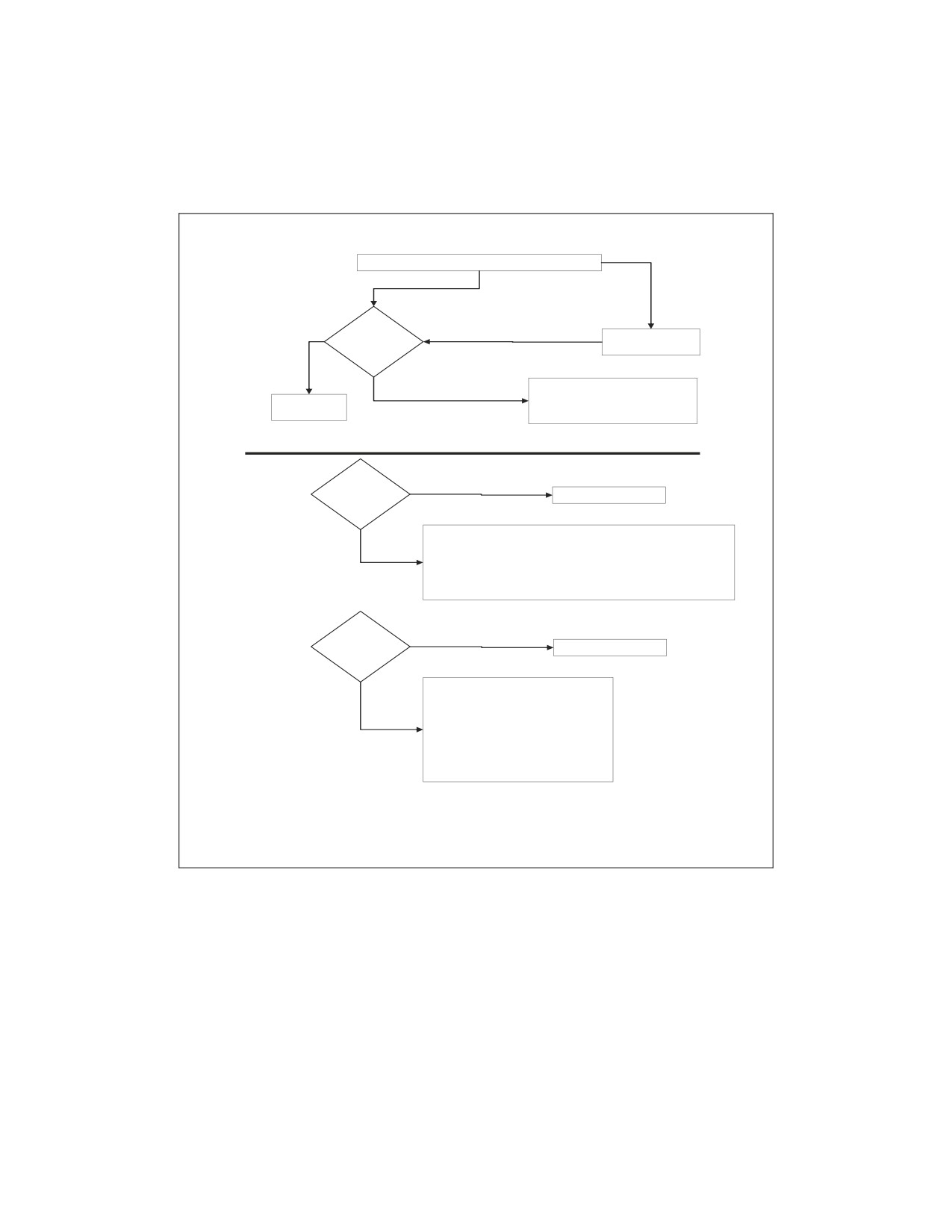
range of hazards. Figure C-1 provides flowcharts to conduct decision making for LLR.
Possible sources of LLR include the following:
Was the intelligence assessment of risk carried out?
Yes
No
Predeployment
Potential
Carry out the
LLR Risk
assessment
No
Develop an LLR contingency plan.
Yes
Review equipment availability.
Confirmation
Brief the staff.
In Theater
Conduct necessary training.
Hazard
No
Identified
Continued Awareness
Evacuate the area of release (1 km radius).
Yes
Report initial information.
Confirm the OEG.
Seek a specialist team.
Deployed
Make an initial plan.
Do an initial survey using the assets available.
Record the Initial personal dose for personnel in the affected area.
No
LLR
Continued Awareness
Exists
Redefine the hazard area.
Confirm the control dose.
Yes
Identify those involved.
Prepare the action control plan.
Consider other operational implications.
Report the information.
Request specialist help.
Control area access.
Monitor those involved.
Initiate personnel dose control.
Ref: STANAG 2473E1
Figure C-1. LLR Decision Making
(1)
Civil Nuclear Facilities. These facilities may include those for power
generation and research and those for processing, storing, and disposing of nuclear waste.
(2)
Industrial and Medical Facilities. Wide-scale uses of radioactive sources
include the testing of industrial products, medical or diagnostic treatment and equipment
sterilization, and food processing.
(3)
Radiological-Dispersal Weapons. These are devices designed to release
radioactive materials into the environment. This could be achieved by combining nuclear
materials with conventional explosives or combustion, to produce radioactive particles or
smoke.
2 February 2006 FM 3-11.3/MCWP 3-37.2A/NTTP 3-11.25/AFTTP(I) 3-2.56
C-3
(4)
Nuclear-Weapon Release. This is the spread of fallout or rainout, resulting
from the distant (outside the AO) or use (within the AO) of a nuclear weapon, which
produces LLR.
(5)
Military Commodities. Some military munitions (e.g., depleted uranium
[DU]) and equipment contain radiation, which may present a radiation hazard if disrupted.
c.
Medical Effects of LLR.
(1)
Late or delayed effects of a radiation exposure occur following a wide range
of doses and dose rates. Delayed effects may appear months to years after irradiation and
include a wide variety of effects involving almost all tissues and organs. Some of the
possible delayed consequences of radiation injury include the following:
•
Shorter life.
•
Carcinogenesis.
•
Cataract formation.
•
Chronic radiodermatitis.
•
Decreased fertility.
•
Genetic mutations.
The effect upon future generations is unclear. Data from Japan and Russia have not
demonstrated the significant genetic effects in humans.
(2)
Delivering the same gamma radiation dose at a much lower dose rate or in
fractions over a long period of time allows tissue repair to occur. There is a consequent
decrease in the total level of injury that would be expected from a single dose of the same
magnitude delivered over a short period of time. Neutron radiation damage does not
appear to be dose rate-dependent.
(3)
Chronic radiation syndrome (CRS) is defined as a complex clinical
syndrome occurring as a result of the long-term exposure to single or total radiation doses
that regularly exceed the permissible occupational dose. CRS is highly unlikely to affect
military personnel in operational settings. Prolonged deployments to heavily contaminated
areas or long-term ingestion of highly contaminated food or water would be required for
CRS. A near-ground weapon detonation, radiological dispersal device (RDD), major reactor
accident, or similar event that creates contamination with high dose rates, given prolonged
exposure, would permit development of CRS.
d.
Command Radiation Exposure Guidance. Commanders will require advice from
their medical officers concerning the radiation effects on their personnel. Medical advice
must be practical and be based upon the requirements of the mission and the diversity of
the human response to radiation. Overreaction to a contamination could make enemy use
of an RDD more tenable. The effects of radiation that exceeds the normal occupational
exposure levels must not be minimized or exaggerated. CBRN risks must be in their proper
places relative to the other hazards of combat. Widespread environmental radiological
contamination can never be so great as to preclude mandatory mission accomplishment.
Maintain dose records of those exposed to the LLR.
(1)
Commanders need to be aware of the individual dose histories when
planning future operations that are at risk of LLR exposure.
C-4
FM 3-11.3/MCWP 3-37.2A/NTTP 3-11.25/AFTTP(I) 3-2.56
2 February 2006
(2)
On completion of the military operation, long-term health monitoring may
be required for those personnel who have been exposed to radiation. This should be done
according to the national regulations. A postoperation assessment of the internal doses
may also be required.
e.
Personnel Evacuation From a Radiological Area. When evacuation personnel are
sent into a radiologically contaminated area, an OEG must be established. Prolonged
wearing of the IPE under MOPP conditions, the climate, workload, and fatigue combine to
limit personnel effectiveness and, consequently, hamper casualty evacuation. Based on
factors such as missions, priorities, and OEG, commanders decide which of the evacuation
assets will be sent into the contaminated area. As a general principle, to limit the
contamination of evacuation assets, patients should be decontaminated before the
evacuation.
f.
RDD. The severity of the psychological effects of an RDD will depend on the
nature of the RDD material itself and the method of deployment. A point source of
radiation produces physical injury only to the soldiers within its immediate vicinity. An
RDD that uses a conventional explosion as a dispersal method will cause psychological
injury from the physical effects of the blast in addition to the radiation and heavy-metal
hazard inherent in many radioactive materials. The misinterpretation of the explosion as a
nuclear detonation may induce psychological effects similar to those produced by a true
nuclear detonation. The number of casualties from the blast and a generally more frantic
situation will intensify the level of stress on soldiers.
(1)
The presence of an RDD within a civilian population center will produce
more detrimental psychological damage to the soldiers than it will to a military target.
Military units in a theater of operation during war often have limited contact with civilian
populations. However, during peacetime missions (such as operations other than war
[OOTW]), a closer relationship may exist between civilians and soldiers. The treatment of
civilian casualties, particularly children, from the exposure to an RDD could markedly
increase the psychological impact on soldiers.
(2)
Mass psychosomatic symptoms from the unrealistic fear of the effects of
radioactive material pervasive in many civilian populations could severely overload medical
support and operations.
4.
Radiological Exposure
Radiological exposure must be controlled to ensure the safety of all personnel.
Exposure levels have been developed to categorize and manage the risk posed to
warfighters who have been exposed to radiation.
a.
Radiation Exposure During War. Consult medical specialists for medical
assessments and recommendations. With exposures below 125 centigray (cGy), the overall
effectiveness of combat units will not be degraded. However, above this threshold,
commanders must be aware that their force’s capability to fight will be diminished. The
term “combat effective” is used for personnel who will be suffering radiation sickness signs
and symptoms to a limited degree and who will be able to maintain their performance at
least 75 percent of their preexposure performance level. Those individuals who are
predicted to be “performance degraded” would be operating at a performance level between
25 and 75 percent of their preexposure performance. Those predicted as “combat
ineffective” should be considered as capable of performing their tasks at 25 percent (at best)
2 February 2006 FM 3-11.3/MCWP 3-37.2A/NTTP 3-11.25/AFTTP(I) 3-2.56
C-5

of their preexposure performance level. Tables C-1 and C-2 provide examples of expected
radiation intensities and effects after a nuclear attack.
Table C-1. Projected Radiation Intensities After a Nuclear Attack (cGy per hour)
1 Hour
5 Hours
25 Hours
50 Hours
100 Hours
300 Hours
1,000
100
21
9
4
1
500
75
11
5
2
<1
250
37
5
6
1
<1
100
15
2
1
<1
<1
50
8
1
<1
<1
<1
10
2
<1
<1
<1
<1
NOTE: This chart shows a normal decay rate (1.2). The actual decay rate may be slower or faster.
Refer to ATP-45B for detailed information on decay rates and radiation prediction methods.
Table C-2. Effects by Nuclear Weapon Yield in Kilometers From GZ
Weapon Yield
1 kt
10 kt
100 kt
1 mt
Blast: Lethality
Threshold
30-50 psi
0.18
0.38
0.81
1.8
50%
50-75 psi
0.14
0.30
0.65
1.4
100% 75-115 psi
0.12
0.25
0.55
1.2
Blast: Lung Damage
Threshold
8-15 psi
0.34
0.74
1.60
3.4
Severe
20-30 psi
0.21
0.46
0.98
2.1
Blast: Eardrum Rupture
Threshold
5 psi
0.44
0.96
2.10
4.4
50%
14 psi
0.25
0.54
1.10
2.5
Thermal
50% First Degree Burns
1.20
3.40
8.30
17.0
50% Second Degree Burns
0.86
2.50
6.50
14.0
50% Third Degree Burns
0.71
2.10
5.60
12.0
Flash Blindness
3.70
9.00
18.00
31.0
Retinal Burns
33.00
49.00
66.00
84.0
C-6
FM 3-11.3/MCWP 3-37.2A/NTTP 3-11.25/AFTTP(I) 3-2.56
2 February 2006

Table C-2. Effects by Nuclear Weapon Yield in Kilometers From GZ (Continued)
Ionizing Radiation Effects
50 cGy
Threshold acute effects
1.10
1.60
2.20
3.1
100 cGy
<5% deaths
years
1.00
1.50
2.00
3.0
450 cGy
50% death
weeks
0.77
1.20
1.70
2.6
1,000 cGy
100% death
few days
0.65
1.00
1.60
2.4
10,000 cGy
100% death
<1 day
0.36
0.66
1.10
1.9
b.
RES.
(1)
The RES of a given unit is based on the operational exposure above normal
background radiation. It is designed to be an average, based on unit level dosimeters, and
is not useful for the individual casualty. The degree-of-risk concept helps the commander
establish an OEG for a single operation and minimize the number of radiation casualties.
By using the RES categories of subordinate units, the commander establishes an OEG
based on the acceptable degree of risk.
(2)
Medical officers may adjust a unit’s RES after careful evaluation of the
exact exposure status of individual members of the unit. When possible, the physical and
biological dosimetry should be used in this regard. The unit status should reflect the
arithmetic mode of the available radiation exposure history of all individual members. Any
unit member whose exposure status is more than one category greater than the mode
should be replaced (or designated as a subcategory in OOTW). A command health physicist
should be consulted whenever possible. When the exposure dose rate is known to be less
than 5 cGy per day, the repair of an injury is enhanced and the time for cellular repair us
reduced. In these circumstances, dosimetry should be available that would allow the RES
category to be reduced after 3 months at the normal background levels. When individual
dosimetry is unavailable, a period of 6 months (since the last radiation exposure above
background) is sufficient to upgrade a unit’s RES status one category or subcategory one
time only. Tables C-3 and C-4 (page C-9) provide RES categories and their respective
effects.
Table C-3. Radiation Injuries and Effects of Radiation Exposure to Personnel
RES
Total Dose1
Long-Term Health
Medical Note
Medical Actions
Effects
0
<0.05 cGy
Normal risk
US baseline 20% lifetime risk
Record in exposure record
of a fatal cancer
of normally monitored
personnel.
1
≤75 cGy
Up to 1% incidence of
LI3
1A
0.05 to 0.5
Up to 0.04% increased
None (0.1 cGy annual
Record individual dose
cGy
risk of a lifetime fatal
general population exposure
readings.
cancer
limit)
Initiate periodic monitoring
(including air and water).
1B
0.5 to 5 cGy
Occupational risk
Reassurance (5 cGy US
Record individual dose
0.04-0.4% increased
annual occupational limit)
readings.
risk of lifetime cancer
Continue monitoring.
Initiate a radiation survey.
Prioritize tasks.
Establish radiation control
measures.
2 February 2006 FM 3-11.3/MCWP 3-37.2A/NTTP 3-11.25/AFTTP(I) 3-2.56
C-7

Table C-3. Radiation Injuries and Effects of Radiation Exposure of Personnel (Continued)
RES
Total Dose4
Long-Term Health
Medical Note
Medical Actions
Effects
1C
5 to 10 cGy
0.4-0.8% increased
Counsel regarding increased
Record individual dose
risk of lifetime fatal
long-term risk
readings.
cancer
No live virus vaccines for 3
Continue monitoring.
months
Update the radiation survey.
Continue radiation control
measures.
Execute priority tasks2 only.
1D
10 to 25 cGy
0.8-2% increased risk
Potential for increased
Record individual dose
of lifetime fatal cancer
morbidity of other injuries or
readings.
incidental disease
Continue monitoring.
<2% increased lifetime risk of
Update the radiation survey.
fatal cancer
Continue radiation control
measures.
Execute critical tasks3 only.
1E
25 to 70 cGy
2-5.6% increased risk
Increased morbidity of other
Record individual dose
of lifetime fatal cancer
injuries or incidental disease
readings.
<6% increased lifetime risk of
Continue monitoring.
fatal cancer
Update radiation survey.
Continue radiation control
measures.
Execute critical tasks3 only.
2
>75 to 125
Up to 5% LI4
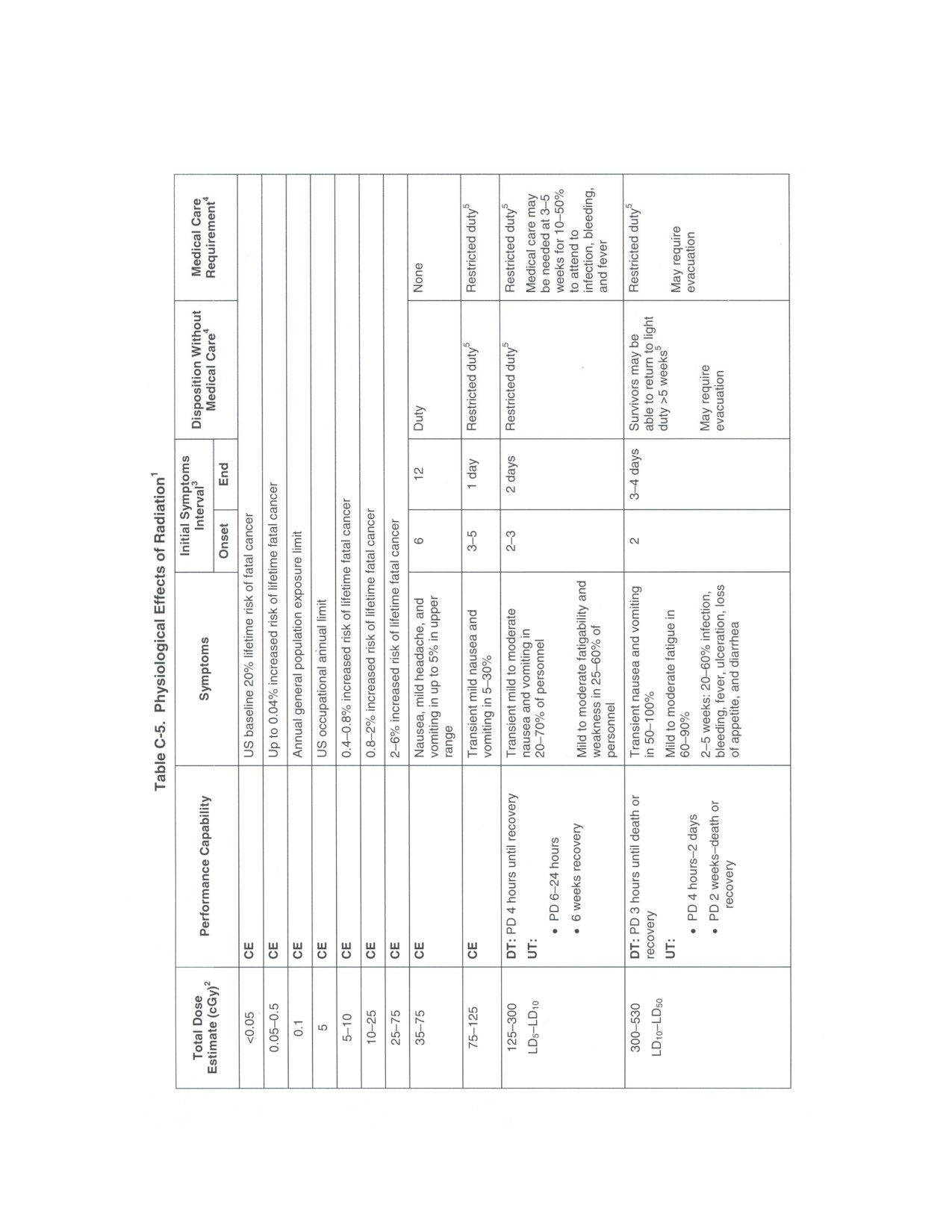
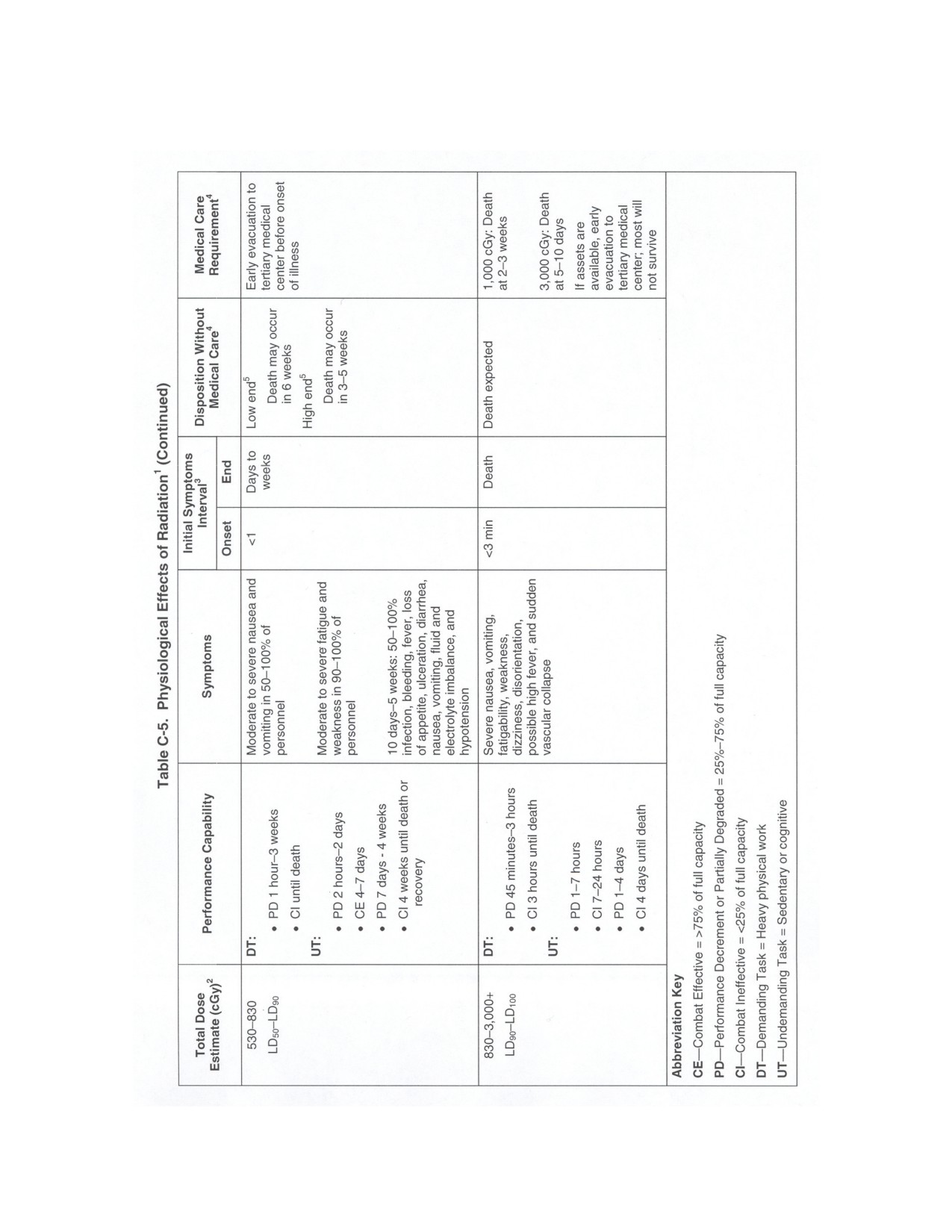
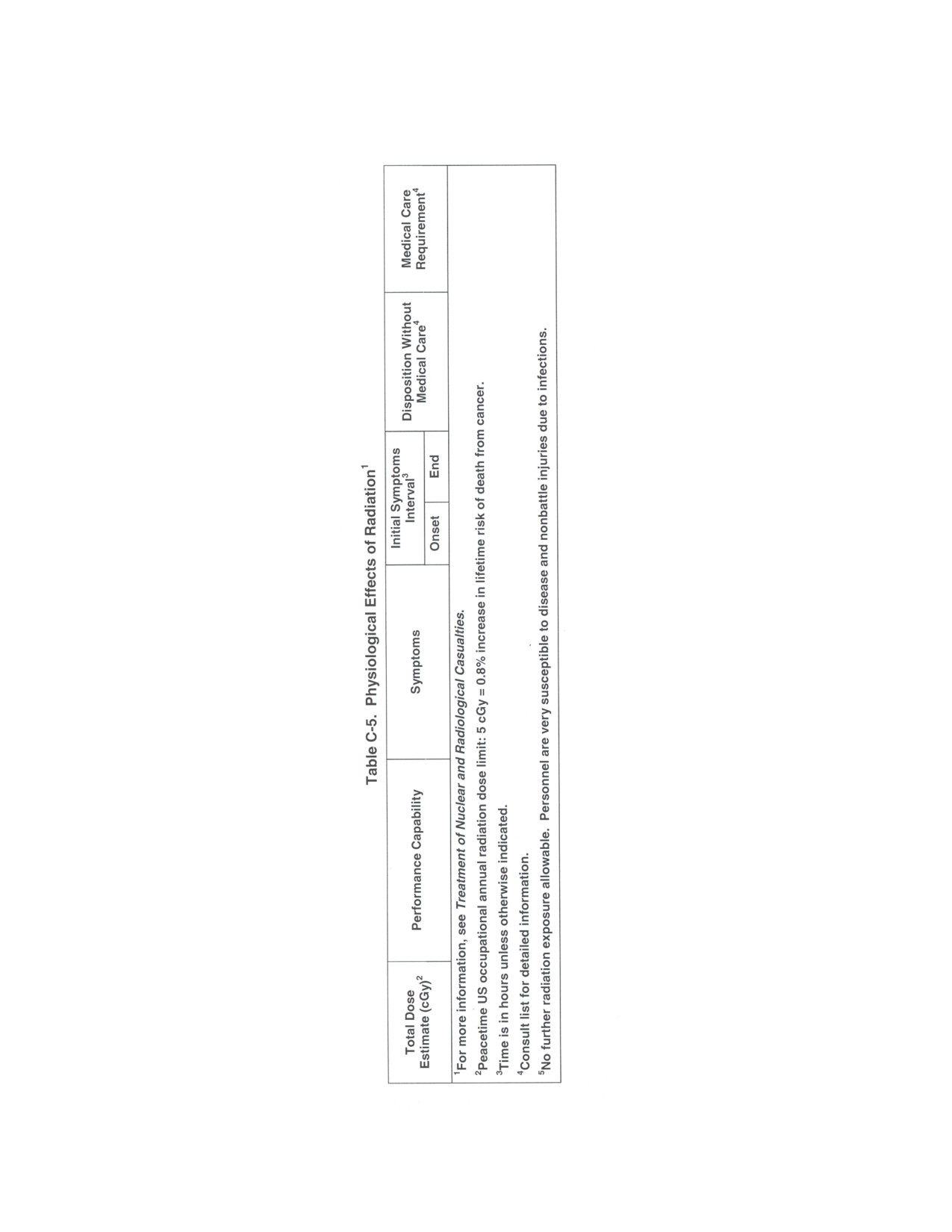
See Table C-5, page C-10
See Table C-5, page C-10
cGy
3
> 125 cGy
>5% LI
See Table C-5, page C-10
See Table C-5, page C-10
NOTES:
1Injury or exposure to CB agents may affect response to radiation.
2 Examples of critical tasks are those missions to save lives.
3 Examples of priority tasks are those missions to avert danger to persons or to prevent damage from
spreading.
4LI is the casualty criterion defined as the lowest dose at which performance is degraded (i.e., 25-75%
capable) within 3 hours and will remain so until death or recovery or become combat ineffective at any
time within 6 weeks.
c.
Nuclear Risk Criteria. There are three degrees of risk—negligible, moderate,
and emergency. Table C-4 provides the risks associated with each respective RES category.
Latent ineffectiveness (LI) is the casualty criterion defined as the lowest dose at which
performance is degraded (i.e., 25 to 75 percent capable) within 3 hours and will remain so
until death or recovery or become combat ineffective at any time within 6 weeks.
•
Negligible (1 percent LI). Negligible risk is acceptable when the mission requires
units to operate in a contaminated environment. However, it should not be exceeded
unless a significant advantage will be gained.
•
Moderate (2.5 percent LI). Moderate risk is usually acceptable in close support
operations. Moderate risk must not be exceeded if troops are expected to operate at full
efficiency.
•
Emergency (5 percent LI). The emergency risk dose is only acceptable in rare
situations termed disaster situations. Only the commander can decide when the risk of the
disaster situation outweighs the radiation emergency risk.
C-8
FM 3-11.3/MCWP 3-37.2A/NTTP 3-11.25/AFTTP(I) 3-2.56
2 February 2006

Table C-4. Nuclear Radiation cGy Exposure Status and Degree of Risk Exposure
Radiation Status Category (A)
Possible Exposure Criteria for a Single Operation not
Resulting in Exceeding the Dose Criteria for the
Degree of Risk (B)
RES-0 Units
Negligible:
≤75
(Previously unexposed)
Moderate:
≤100
Emergency:
≤25
RES-1 Units
Negligible:
A+B ≤75
(Previously exposed >0 to ≤ 75 cGy)
Moderate:
A+B ≤100
Emergency: A+B ≤125
RES-2 Units
Any further exposure will exceed negligible risk and could
(Previously exposed ≥75 to ≤ 125 cGy)
exceed moderate risk.
Negligible:
> 0
Moderate:
A+B ≤100
Emergency: A+B ≤125
RES-3 Units
Any further exposure will exceed emergency risk.
(Previously exposed >125 cGy)
NOTES:
1.
RES categories are based on previous exposure. Risk levels are graduated within each RES
category in order to provide more stringent criteria as the total radiation dose accumulated
becomes more serious.
2. Reclassification from one RES category to a less serious one is made by the commander upon
advice from medical personnel and after ample observation of the actual state of health of exposed
personnel.
3.
All exposures to radiation are considered total body and simply additive. No allowance is made
for body recovery from radiation injury.
4. Exposure criteria given for RES-1 and RES-2 units should be used only when the numerical
value of a unit’s total past cumulative dose is unknown.
5. Each of the degrees of risk can be applied to radiation hazards resulting from enemy or friendly
weapons or both and from initial nuclear radiation resulting from planned friendly supporting fire.
2 February 2006 FM 3-11.3/MCWP 3-37.2A/NTTP 3-11.25/AFTTP(I) 3-2.56
C-9
C-10
FM 3-11.3/MCWP 3-37.2A/NTTP 3-11.25/AFTTP(I) 3-2.56
2 February 2006
2 February 2006 FM 3-11.3/MCWP 3-37.2A/NTTP 3-11.25/AFTTP(I) 3-2.56
C-11
C-12
FM 3-11.3/MCWP 3-37.2A/NTTP 3-11.25/AFTTP(I) 3-2.56
2 February 2006
d.
Radiation Exposure During Military Support to Civil Authorities. The Health
Physics Society believes that the receipt of doses of ionizing radiation by responders to a
nuclear terrorism event is unavoidable and justifiable. For certain individuals, doses could
exceed levels normally encountered in the typical utilization of radiation (e.g., occupational
exposures, exposures to medical practitioners and patients). While regulatory limits of
exposure have been well-described for radiation doses from such routine utilization of
radioactivity and radiation, exposure limits for emergency workers are not well-described.
(1)
Occupational Versus Emergency Dose Limits. In the regulatory scheme for
occupational radiation exposure, a number of dose limits have been defined and described
for members of the public and occupationally exposed persons. The basic assumptions used
to derive these limits involve a balance of risk to the individual against the benefits to be
obtained by permitting such exposure (both to the individual and to society). In a terrorist
event, however, the assumptions used in the justification of limits would not likely apply,
thus the limits may not be appropriate to members of the public nor to personnel
responding to the event.
(2)
Dose Guidelines to Responders to a Terrorist Event. The use of
radioactivity or radiation as a means of a terrorist attack will result in dose rates
significantly higher than natural background. In a terrorist event, immediate response is
critical for the mitigation of effects, saving lives, protecting property, and the timely
restoration of the affected area, particularly where the affected area has significant
economic or iconic value to the area or country. Such compelling needs justify higher levels
of dose rates in the performance of these duties, much higher than would normally be
justified from routine life activities. Accordingly, higher dose limits can be justified (see
Table C-6, page C-14). The following dose guidelines apply during response to a terrorist
event:
•
The dose rate will not exceed 50 REM for the responders.
•
Provisions are in place for long-term MEDSURV of the responders that
exceed 25 REM.
•
The individuals most likely to be permitted these levels of exposures would
be professional responders (e.g., firefighters, police, emergency medical technicians [EMTs])
who, by sake of employment, have implicitly agreed to assume the significant risks in a
rescue operation.
•
The most likely effect at 50 REM would be some minor fluctuations in blood
count which are entirely reversible. In addition, the exposed persons might face a slightly
higher chance of incurring a fatal cancer.
•
These risk levels are comparable to other risk factors which are commonly
found in these types of activities (e.g., smoke inhalation, physical trauma, heavy physical
exertion).
•
The benefit of such individual exposure would be the mitigation of a
condition or situation that could result in dangerous levels of exposure to members of the
public or in some other way threaten the general public health and safety (e.g., the
mitigation of widespread fires or the protection of critical infrastructure that is needed for
organized evacuation or relocation of populations).
2 February 2006 FM 3-11.3/MCWP 3-37.2A/NTTP 3-11.25/AFTTP(I) 3-2.56
C-13

•
The dose rate will not exceed 5 REM during routine duties other than
lifesaving, firefighting, etc.
•
The dose rate for members the public will not exceed 0.1 REM.
Table C-6. First-Responder Exposure Limits
Locations
Exposure Limits
Restrictions
Outer Exclusion Zone
0.02 cGy/hr
This area is limited to designated response
personnel only. Members of the general public
are excluded.
Incident Command
0.10 cGy/hr
Command centers, staging areas, etc., may need
Centers, Staging Areas,
to be set up close to the event. Such areas
etc.
should be established in a location that is below
the listed dose rate.
Hot Zone
1.00 cGy/hr
Responders should enter the area only on an as-
needed basis in order to accomplish specific
tasks.
“Turn Around” Limit
100.00 cGy/hr
Dose rates in these areas represent levels of
radiation that require detailed planning to enter.
Entry is permitted only with special authorization
and to accomplish well-defined tasks.
Justifiable Rescue Limit
1,000.00 cGy/hr
At this dose rate, the likelihood of the successful
rescue of victims is outweighed by the dose
effects to the responders. This guideline
represents the level that rescue operations may
not be justified. Enter such areas only after it has
been determined that the likelihood of success
outweighs the potential harm to the rescuers.
5.
Radioactive Materials of Military Significance
A warfighter could potentially be exposed to various radioactive materials. Some are
more dangerous than others. Below is a listing of radioactive materials that are of
significance to the military.
a.
Americium.
(1)
Americium-241 (241Am) is a decay daughter of plutonium and is primarily
an alpha emitter and a very low energy gamma emitter. It is detectable with a standard
radiac, such as the field instrument for detection of low-energy radiation (FIDLER)
instrument, due to the emission of a 60-kEv gamma ray.
(2)
Americium is used in smoke detectors and other instruments, and it will be
found in fallout from a nuclear-weapon detonation. It is used as a sealed source in the
M43A1 chemical agent detector that is a component of the M8A1 alarm.
(3)
Americium is a heavy-metal poison but, in large quantities, can cause
whole-body irradiation. Seventy-five percent of an initial lung burden is absorbed, with 10
percent of the particles retained in the lung. Gastrointestinal absorption of americium is
minimal, but it may be absorbed rapidly through skin wounds. External exposure is not a
concern unless large amounts of the substance are located in one area and personnel are in
close contact for an extended period of time.
b.
Cesium.
(1)
Cesium-137 emits a beta particle as it decays to barium-137, which in turn
decays by emitting gamma rays. It emits gamma rays and beta radiation and can be
readily detected by gamma instruments.
C-14
FM 3-11.3/MCWP 3-37.2A/NTTP 3-11.25/AFTTP(I) 3-2.56
2 February 2006
(2)
Cesium-137 (137Ce) is found in medical radiotherapy devices and in soil
density and moisture testers. The mishandling of a medical radiotherapy device was
responsible for the worst radiation accident in the western hemisphere. It was used in the
Chechen RDD threat against Moscow.
(3)
Cesium is completely absorbed by the lungs, gastrointestinal tract, and
wounds. It is soluble in most forms and is treated by metabolism as a potassium analog.
Excretion is in urine. Primary toxicity is whole-body irradiation. Deaths due to acute
radiation syndrome have occurred.
c.
Cobalt.
(1)
Cobalt-60 (60Co) is used in medical radiotherapy devices and commercial
food irradiators. It will most likely be found after improper disposal or after the destruction
of a hospital or commercial facility. It generates high-energy gamma rays and 0.31 million
electron volts (MeV) of beta rays. It is easily detectable with a gamma detector.
(2)
Cobalt could be used as a contaminant in an improvised nuclear device to
make the fallout more radioactive.
(3)
Cobalt will be rapidly absorbed by the lung, but less than 5 percent will be
absorbed from the gastrointestinal tract. Nothing is known about absorption through
wounds. Primary toxicity will be from whole-body irradiation and acute radiation
syndrome.
d.
DU.
(1)
DU emits alpha, beta, and weak gamma radiation. Due to its high density,
much of the radiation never reaches the surface of the metal. It is, thus, self-shielding.
Also, intact DU rounds and armor are packaged to provide sufficient shielding that stops
beta and alpha radiations. Gamma radiation exposure is minimal. After several months of
continuous operations in an armored vehicle completely loaded with DU munitions, crew
exposures might exceed peacetime general-population exposure limits, but would not
exceed peacetime occupational exposure limits. Hence, DU is not a serious irradiation
threat. It is readily detectable with a typical end-window Geiger-Mueller™ counter.
(2)
Although DU is not a chemical or radiological hazard, it can present a
chemical toxicity hazard and, perhaps, a long-term radiological health risk under some
conditions when it is introduced internally to the body. Some risks associated with DU
munitions have been evaluated experimentally, some risks are still under study, and some
risks were identified from practical experience during Operation Desert Storm. DU
internalization via inhalation is the primary concern.
(3)
Inhaled DU compounds may be metabolized and result in urinary excretion.
The inhalation of DU oxides may occur during tank fires or by entering destroyed armored
vehicles without a protective mask. Absorption will be determined by the chemical state of
the DU. Soluble salts are readily absorbed; the metal is not. DU fragments in wounds
become encapsulated and are gradually metabolized, resulting in whole-body distribution,
particularly to bones and kidneys. In laboratory tests, DU does cross the placenta. No
renal toxicity has been documented to date.
e.
Iodine.
(1)
Iodine-131, -132, -134, and -135 will be found after a reactor accident and
following the destruction of a nuclear reactor. Radioactive iodine is a normal fission
2 February 2006 FM 3-11.3/MCWP 3-37.2A/NTTP 3-11.25/AFTTP(I) 3-2.56
C-15
product found in reactor fuel rods. It is released by rupturing the reactor core and its
containment vessel. Postdestruction winds will determine the fallout pattern. Most of the
radiation is beta rays, with some gamma.
(2)
Primary toxicity is to the thyroid gland. Thyroid uptake concentrates the
radioactive iodine and allows local irradiation similar to therapeutic thyroid ablation. A
high incidence of childhood thyroid carcinoma was documented following the Chernobyl
disaster.
f.
Nickel-63. Nickel-63 is a pure beta emitter with a radiological half-life of 92
years and is used in chemical-agent monitors (CAMs). The beta energy of nickel-63 is too
low to penetrate the dead layer of skin; however, efforts should be taken to prevent
internalization.
g.
Phosphorus.
(1)
Phosphorus-32 (32P) will generally be found in research laboratories and in
medical facilities where it is used as a tracer. It has a strong beta ray and can be detected
with the beta shield open on a beta-gamma detector.
(2)
Phosphorus is completely absorbed from all sites. It is deposited in the
bone marrow and other rapidly replicating cells. Local irradiation causes cell damage.
h.
Plutonium.
(1)
Plutonium-238 and -239 (238 and 239 Pu) are produced from uranium in
reactors. It is the primary fissionable material in nuclear weapons and is the predominant
radioactive contaminant in nuclear-weapon accidents. The primary radiation is in the form
of alpha particles, so plutonium does not present an external irradiation hazard. It is
always contaminated with americium, which does have a fairly easily detectable X-ray by
use of a thin-walled gamma probe.
(2)
Five-micron or smaller particles will remain in the lung and are
metabolized based on the salt solubility. The particles that remain will cause local
irradiation damage. Gastrointestinal absorption will depend on the chemical state of the
plutonium; the metal is not absorbed. Stool specimens will be positive after 24 hours, and
urine specimens will be positive after 2 weeks. Wound absorption is variable. Plutonium
may be washed from intact skin.
i.
Radium.
(1)
Radium-226 (226Ra) is not a federally regulated commodity and has no US
military use. It may be encountered in the former Soviet Union equipment as instrument
illumination, in industrial applications, and in older medical equipment. Primary radiation
is alpha particles, but daughter products emit beta and gamma rays and, in quantity, may
present a serious external irradiation hazard.
(2)
Most exposure is by ingestion, with 30 percent absorption. Little is known
about wound absorption, but radium will follow calcium to bone deposition. Long-term
exposure is associated with leukemia, aplastic anemia, and sarcomas.
NOTE: Former Soviet Union equipment is manufactured and used by militaries
throughout the world as a result of arms purchases and technology transfers.
C-16
FM 3-11.3/MCWP 3-37.2A/NTTP 3-11.25/AFTTP(I) 3-2.56
2 February 2006
j.
Strontium.
(1)
Strontium-90 (90Sr) is a direct fission product (daughter) of uranium. It and
its daughters emit beta and gamma rays and can be an external irradiation hazard if
present in quantity.
(2)
Strontium will follow calcium and is readily absorbed by respiratory and
gastrointestinal routes. Up to a 50 percent dose will be deposited in the bone.
k.
Thorium-232.
(1)
Thorium-232 is a naturally occurring radioisotope of thorium and is an
alpha emitter.
(2)
When thorium is heated in the air, it glows with a white light. For this
reason, one of the major uses of thorium has been the Welsback™ lantern mantle used in
portable gas lanterns. Thorium-232 is also used in radiac sets AN/VDR-2, AN/PDR-54, and
AN/PDR-77 for use as calibration check sources. Thorium-coated optics are found on many
night vision devices and thermal optic fire control systems. Also, heat-resistant thorium
alloys are used in the combustor liner for the Abrams tank turbine engine and on various
military aircraft engines.
(3) In general, Thorium-232 presents a minimal hazard, but care should be
taken to avoid internalization of any particles from damaged components or during metal
working activities.
l.
Tritium.
(1)
Tritium is the heaviest isotope of hydrogen and is a low-energy beta emitter
with a physical half-life of 12 years. Tritium gas rapidly diffuses into the atmosphere.
(2)
It is used in nuclear weapons and muzzle velocity detectors. Tritium is
generally used in devices requiring a light source, such as luminescent gun sights, watches,
compasses, and fire control devices for tanks, mortars, and howitzers.
(3)
Tritium is a beta emitter and is not a significant irradiation hazard.
However, the release of a large amount in a closed space can cause an exposure of clinical
importance. No adverse health effects have been reported from a single exposure.
m. Uranium.
(1)
Uranium-235, -238, and -239 (235, 238, and 239U) are found (in order of
increasing radioactivity) in DU, natural uranium, fuel rods, and weapons grade material.
Uranium and its daughters emit alpha, beta, and gamma radiation. DU and natural
uranium are not serious irradiation threats. Used fuel rods and weapons-grade (enriched)
uranium-containing fission products can emit significant levels of gamma. If enough
enriched uranium is placed together, a critical mass may form and emit lethal levels of
radiation. This could be encountered in a fuel-reprocessing plant or melted reactor core.
(2)
Inhaled uranium compounds may be metabolized and excreted in the urine.
Urinary levels of 100 micrograms per deciliter following acute exposure may cause renal
failure.
(3)
Absorption will be determined by the chemical state of the uranium.
Soluble salts are readily absorbed; the metal is not.
2 February 2006 FM 3-11.3/MCWP 3-37.2A/NTTP 3-11.25/AFTTP(I) 3-2.56
C-17

NOTE: Table C-7 provides the international system of units and their
conversions. This information, along with the radiation type and quality factors
provided in Table C-8, is used when measuring and qualifying different
radioactive materials.
Table C-7. International System of Units—Conversions
Old Unit
SI Unit
Old Unit
SI Unit
Curie
Becquerel
Rem
Sievert
1 pCi
37 mBq
0.1 mrem
1 µSv
27 pCi
1 Bq
1 mrem
0.01 mSv
1 µCi
37 kBq
1 mrem
10 µSv
27 µCi
1 MBq
100 mrem
1 mSv
1 Ci
37 GBq
500 mrem
5 mSv
27 Ci
1 TBq
1 rem
10 mSv
1 rem
1 cSv
100 rem
1 Sv
rad
gray
1 rad
10 mGy
1 rad
1 cGy
100 rad
1Gy
Symbol
Name
Multiplier
Value
p
pico
10-12
million millionth
n
nano
10-9
thousand millionth
µ
micro
10-6
millionth
m
milli
10-3
thousandth
c
centi
10-2
hundredth
k
kilo
103
thousand
M
mega
106
million
G
giga
109
billion (thousand million)
T
tera
1012
thousand billion
P
peta
1015
million billion
E
exa
1018
billion billion
1 rad = 100 ergs/gram
1 Gy = 1 joule/kilogram = 100 rads
Rem = QF x Rad
Sievert = QF x Gy
1 Sv = 1 joule/kilogram = 100 rem
Table C-8. Radiation Type/Quality Factor
Radiation Type
Quality Factor
X ray, gamma ray, beta ray
1
Alpha particles, fission fragments, and heavy nuclei
20
Neutrons
3-20*
*Values of quality factors for neutrons are dependent the energy of the neutron.
C-18
FM 3-11.3/MCWP 3-37.2A/NTTP 3-11.25/AFTTP(I) 3-2.56
2 February 2006
Appendix D
WEATHER EFFECTS ON NUCLEAR, BIOLOGICAL, AND CHEMICAL
AGENTS AND METEOROLOGICAL REPORTS
1.
Background
MET reports are used—
•
As the basis to assess weather data determining if environmental factors are
conducive to enemy employment of CBRN weapons.
•
In conjunction with plotting tools to predict downwind vapor hazard and fallout
patterns.
•
To assess the impact of seasonal climate on CBRN weapons effects.
a.
MET Operations.
(1)
MET operations identify the critical weather information needed to
determine the effects of weather on the use of CBRN weapons. MET operations also
analyze the seasonal or monthly normal variations in weather patterns that might affect
the use of CBRN weapons.
(2)
Intelligence ensures that EDMs and CDMs are passed to subordinate
commands, in coordination with the USAF staff weather officer (SWO).
(3)
The CBRN staff must have close coordination with intelligence and
meteorology personnel.
(4)
The CBRN staff is responsible for CBRN defense at every echelon of
command. It assesses whether environmental factors are conducive to the enemy use of
CBRN weapons.
(5)
The CBRN staff provides input on hazard predictions, increasing the
commander’s SA.
b.
USN. The Fleet Numerical Meteorology and Oceanography Center provides
wind field data and high-resolution MET data for DTRA CBRN dispersion modeling and
simulation. DTRA supports the DOD hazard assessment planning and contingency
operations. The Naval Oceanography Program will provide MET forecasts as required in
support of CBRN avoidance and consequence management to the USN and joint
commanders.
2.
Weather Effects on Chemical, Biological, Radiological, and Nuclear Agents
Weather can affect CBRN agents in various ways. In some instances, it can prolong
the presence of agents in the battlespace and, in other instances, it can shorten the time
agents pose a hazard to the warfighter.
a.
Nuclear. Any condition that significantly affects the visibility or the
transparency of the air affects the transmission of thermal radiation. Clouds, smoke
(including artificial), fog, snow, and rain absorb and scatter thermal energy. Depending on
the concentration, they can stop as much as 90 percent of the thermal energy. On the other
2 February 2006 FM 3-11.3/MCWP 3-37.2A/NTTP 3-11.25/AFTTP(I) 3-2.56
D-1
hand, clouds above the burst may reflect additional thermal radiation onto the target that
would have otherwise traveled harmlessly into the sky.
(1)
Rain.
(a) Rain on an area contaminated by a surface burst changes the pattern
of radioactive intensities by washing off higher elevations, buildings, equipment, and
vegetation. This reduces intensities in some areas and, possibly, increases intensities in
drainage systems, on low ground, and in flat or poorly drained areas.
(b) Rain and fog may lessen the blast wave because energy dissipates by
heating and evaporating the moisture in the atmosphere.
(c)
Clouds and air density have no significant effects on fallout patterns.
(d) Precipitation scavenging can cause the removal of radioactive
particles from the atmosphere; this is known as rainout. Because of the uncertainties
associated with weather predictions, the locations that could receive rainout cannot be
accurately predicted. Rainout may occur in the vicinity of GZ, or the contamination could
be carried aloft for tens of kilometers before deposition. The threat of rainout especially
exists from a surface or subsurface burst. Vast quantities of radioactive debris will be
carried aloft and deposited downwind. However, rainout may cause the fallout area to
increase or decrease and also cause hot spots within the fallout area.
(e) For airbursts, rainout can increase the residual contamination hazard.
Normally, the only residual hazard from an airburst is a small neutron-induced
contamination area around GZ. However, rainout will cause additional contaminated areas
in unexpected locations.
(f)
Yields of 10 kilotons (kt) or less present the greatest potential for
rainout, and yields of 60 kt or more offer the least. Additionally, yields between 10 kt and
60 kt may produce rainout if the nuclear clouds remain at or below rain cloud height.
(2)
Wind Speed and Direction.
(a) Wind speed and direction at various altitudes are two factors that
determine the shape, size, location, and intensity of the fallout pattern on the ground
because contaminated dirt and debris deposit downwind.
(b) Surface winds also play an important role in the final location of the
fallout particles. They pile fallout material in drifts, and winds cause localization in the
crevices and ditches and against curbs and ledges. This effect is not locally predictable, but
personnel must be aware of the probability of these highly intense accumulations of
radioactive material occurring and their natural locations.
(3)
Cold-Weather Operations.
(a) Weather conditions limit the number of passable roadways.
Radiological contamination on the roadways may further restrict resupply and troop
movement. Seasonal high winds in the arctic may present a problem in radiological
contamination predictions. These winds may reduce dose rates at GZ. At the same time,
they extend the area coverage and create a problem for survey and monitoring teams. Hot
spots or areas of concentrated accumulation of radiological contamination may also occur in
the areas of heavy snow and snow drifts.
D-2
FM 3-11.3/MCWP 3-37.2A/NTTP 3-11.25/AFTTP(I) 3-2.56
2 February 2006
(b) At subzero temperatures, the radius of damage to material targets can
increase as much as 20 percent. Blast effects can drastically interfere with troop movement
by breaking up ice covers and causing quick thaws. These effects can cause avalanches in
mountainous areas. In flat lands, the blast may disturb the permafrost to such an extent as
to restrict or disrupt movement.
(c)
The reflecting nature of the surface over which a weapon is detonated
can significantly influence the distance to which blast effects extend. Generally, reflecting
surfaces (such as thin layers of ice, snow, and water) increase the distance to which
overpressures extend.
(d) The high reflectivity of ice and snow may increase the minimum safe
distance (MSD) as much as 50 percent for unwarned troops and for warned, exposed troops.
Reflectivity may also increase the number of personnel whose vision is affected by the
brilliant flash or light dazzle especially at night.
(e) Cold temperatures also reduce thermal effects on materials. Snow,
ice, and frost coverings on combustible materials greatly reduce the tendency of the
materials to catch fire. However, thermal effects will dry out exposed tundra areas, and
grass fires may result.
(4)
Mountain Operations.
(a) The clear mountain air extends the range of casualty-producing
thermal effects. Within this range, however, the added clothing required by the cool
temperatures at high altitudes reduces casualties from these effects.
(b) In the mountains, the deposit of radiological contamination will be
very erratic because of the rapidly changing wind patterns. Hot spots may occur far from
the point of detonation, and low intensity areas may occur very near it. Limited mobility
makes radiological surveys on the ground difficult, and the difficulty of maintaining a
constant flight altitude makes air surveys highly inaccurate.
(5)
Desert Operations. Desert operations present many varying problems.
Desert daytime temperatures can vary between 90°F to 125°F (32°C to 52°C). These
temperatures create an unstable temperature gradient. However, with nightfall, the desert
cools rapidly and a stable temperature gradient results. The possibility of a night attack
must be considered in all planning. Blowing winds and sand make widespread radiological
survey patterns likely.
(6)
Jungle Operations. Radiation hazards may be reduced because some of the
falling particles are retained by the jungle canopy. Subsequent rains, however, will wash
these particles to the ground and concentrate them in water collection areas. Radiation hot
spots will result.
b.
Biological.
(1)
Air Stability. A stable atmosphere results in the greatest cloud
concentration and area coverage of biological agents. Under unstable and neutral stability
conditions, more atmospheric mixing occurs. This leads to a cloud of lower concentration,
but the concentration is sufficient enough to inflict significant casualties. The coverage
area under unstable stability conditions is also reduced. Table D-1, page D-4, provides a
snapshot of how weather effects the biological dissemination.
2 February 2006 FM 3-11.3/MCWP 3-37.2A/NTTP 3-11.25/AFTTP(I) 3-2.56
D-3

Table D-1. Weather Effects on Biological Dissemination
Weather Conditions
Cloud Performance
Operational Considerations
Favorable
Agent clouds travel downwind for long
Agent clouds tend to dissipate
distances before they spread laterally.
uniformly and remain cohesive as
Stable or Inversion
Conditions
High humidity and light rains generally
they travel downwind. Clouds lie low
favor wet agent dissemination.
to the ground and may not rise high
enough to cover the tops of tall
buildings or other tall objects.
Marginal
Agent clouds tend to dissipate quickly.
More agent is required for the same
Neutral Conditions
result as those achieved in stable
conditions. Desired results may not
be achieved.
Unfavorable
Agent clouds rise rapidly and do not
Agent clouds tend to break up and
Unstable or Lapse
travel downwind any appreciable
become diffused. There is little
Conditions
distance. Cold temperatures affect wet
operational benefit from off-target
agent dissemination.
dissemination.
(2)
Temperature. Air temperature in the surface boundary layer is related to
the amount of sunlight the ground has received. Normal atmospheric temperatures have
little direct effect on the microorganisms of a biological aerosol. Indirectly, however, an
increase in the evaporation rate of the aerosol droplets normally follows a temperature
increase. There is evidence that survival of most pathogens decreases sharply in the range
of minus 20°C to minus 40°C and above 49°C. High temperatures kill most bacteria and
most viral and rickettsial agents. However, these temperatures will seldom, if ever, be
encountered under natural conditions. Subfreezing temperatures tend to quick-freeze the
aerosol after its release, thus decreasing the rate of decay. Exposure to ultraviolet (UV)
light (one form of the sun’s radiation) increases the decay rate of microorganisms. UV light,
therefore, has a destructive effect upon biological aerosol. Most toxins are more stable than
pathogens and are less susceptible to the influence of temperature.
(3)
Relative Humidity. The relative humidity level favoring employment of a
biological agent aerosol depends on whether the aerosol is distributed wet or dry. For a wet
aerosol, a high relative humidity retards evaporation of the tiny droplets containing the
microorganisms. This decreases the decay rate of wet agents, as drying results in the death
of these microorganisms. On the other hand, a low relative humidity is favorable for the
employment of dry agents. When the humidity is high, the additional moisture in the air
may increase the decay rate of the microorganisms of the dry aerosol. This is because
moisture speeds up the life cycle of the microorganisms. Most toxins are more stable than
pathogens and are less susceptible to the influence of relative humidity.
(4)
Pollutants. Atmospheric pollutant gases can also affect the survival of
pathogens. Pollutant gases have been found to decrease the survival of many pathogens.
These gases include nitrogen dioxide, sulfur dioxide, ozone, and carbon monoxide. This
could be a significant factor in the battlefield where the air is often polluted.
(5)
Cloud Coverage. Cloud coverage in an area influences the amount of solar
radiation received by aerosol. Thus, clouds decrease the amount of destructive UV light
that the microorganisms receive. Cloud coverage also influences factors such as ground
temperature and relative humidity.
(6)
Precipitation. Precipitation may wash suspended particles from the air.
This washout may be significant in a heavy rainstorm but minimal at other times. High
relative humidity associated with mist, drizzle, or very light rain is also an important
D-4
FM 3-11.3/MCWP 3-37.2A/NTTP 3-11.25/AFTTP(I) 3-2.56
2 February 2006

factor. Humidity may be favorable or unfavorable, depending on the type of agent. The low
temperatures associated with ice, snow, and other winter precipitation prolong the life of
most biological agents.
c.
Chemical. Adversaries will seek to employ chemical agents under favorable
weather conditions, if possible, to increase their effectiveness. Table D-2 provides an
overview of how weather effects aerosolized chemical agents.
Table D-2. Weather Effects on Aerosol Chemical Agents
Wind Speed
Air
Factors
(kph)
Stability
Temperature (°C)
Humidity (percent)
Precipitation
Favorable
Steady <5
Stable
>21
>60
None
Moderate
Steady 5-13
Neutral
4-21
40-60
Light
Unfavorable
>13
Unstable
<4
<40
Any
(1)
Atmospheric Stability. One of the key factors in using chemical weapons is
the determination of the atmospheric stability condition that will exist at the time of attack.
This determination can be made from a MET report or by observing field conditions.
(a) Unstable conditions (such as many rising and falling air currents and
great turbulence) quickly disperse chemical agents. Unstable is the least favorable
condition for chemical agent use because it results in a lower concentration, thereby
reducing the area affected by the agent. Many more munitions are required to attain the
commander’s objectives under unstable conditions than under stable or neutral conditions.
(b) Stable conditions (such as low wind speeds and slight turbulence)
produce the highest concentrations. Chemical agents remain near the ground and may
travel for long distances before being dissipated. Stable conditions encourage the agent
cloud to remain intact, thus allowing it to cover extremely large areas without diffusion.
However, the direction and extent of cloud travel under stable conditions are not
predictable if there are no dependable local wind data. A very stable condition is the most
favorable for achieving a high concentration from a chemical cloud being dispersed.
(c)
Neutral conditions are moderately favorable. With low wind speed
and smooth terrain, large areas may be effectively covered. The neutral condition occurs at
dawn and sunset and generally is the most predictable. For this reason, a neutral
dispersion category is often best from a military standpoint.
(2)
Vapor Concentration and Diffusion.
(a) Agent concentration is governed by the volume of the agent cloud.
Since clouds continually expand, agent concentration levels decrease over time. Wind speed
determines the downwind growth of the cloud. Vertical and horizontal turbulence
determines the height and width of the cloud. The rate at which the downwind, vertical,
and horizontal components expand governs the cloud volume and the agent concentration.
(b) To be effective at a specific concentration level, the agent cloud must
remain in the target area for a definite period. Wind in the target area mixes the agent and
distributes it over the target after release. For ground targets, high concentrations and
good coverage can best be achieved with low turbulence and calm winds when the agent is
2 February 2006 FM 3-11.3/MCWP 3-37.2A/NTTP 3-11.25/AFTTP(I) 3-2.56
D-5
delivered directly on target. A steady, predictable wind drift over the target is best when
the agent is delivered on the upwind side of the target. Conditions other than these tend to
produce lower concentrations and poorer target coverage. However, unless the weather
conditions are known within the target area, the effects of the agent on the target will be
approximations.
(c)
The concentration and diffusion of a chemical-agent cloud are also
influenced by the following:
•
Hydrolysis is a process in which (chemical) compounds decompose and
split into other compounds by taking up the elements of water. Chemical agents with high
hydrolysis rates are less effective under high-humidity conditions.
•
Absorption is the process of the agent being taken into the vegetation,
skin, soil, or material. Adsorption is the adding of a thin layer of agent to vegetation or
other surfaces. This is important in dense vegetation. Absorption and adsorption of
chemical agents may kill vegetation, thus defoliating the area of employment.
•
Shifting air currents and horizontal turbulence blow a chemical cloud
from side to side. The side-to-side motion of the air is called meandering. While the agent
cloud meanders, it also spreads laterally. Lateral spreading is called lateral diffusion. In
unstable conditions, the lateral spread tends to be greater than in stable conditions.
•
Wind currents carry chemical clouds along the ground with a rolling
motion. This is caused by the differences in wind velocity. Wind speeds increase rapidly
from near zero at the ground to higher speeds at higher elevations aboveground. The drag
effect by the ground, together with the interference of vegetation and other ground objects,
causes the base of an agent cloud to be retarded as the cloud stretches out in length. When
clouds are released on the ground, the drag amounts to about 10 percent of the vertical
growth over distance traveled on grass, plowed land, or water. It amounts to about 20
percent over gently rolling terrain covered with bushes, growing crops, or small patches of
scattered timber. In heavy woods, the drag effect is greatly increased.
•
Wind speeds can vary at different heights. The wind direction can
also change with an increase in height; this is known as wind shear. Because of wind
shear, a puff (or chemical cloud) may become stretched in the downwind direction and may
travel in a direction different from that of the surface wind. Additionally, a chemical cloud
released in the air may be carried along faster than it can diffuse downward. As a result,
air near the ground on the forward edge of the cloud may be uncontaminated while the air a
few feet up may be heavily contaminated. This layering effect becomes more pronounced
and increases proportionately with the distance of the forward edge of the cloud from the
source.
•
The vertical rise of a chemical cloud depends on the weather variables
(such as temperature gradient, wind speed, and turbulence) and the difference between the
densities of the clouds and the surrounding air. As mentioned earlier, the temperature of
the cloud and the air influences their relative densities. Hotter gases are less dense and,
therefore, lighter than cooler gases and air. Therefore, they rise until they are mixed and
somewhat diluted and then attain the same temperature and approximately the same
density as the surrounding air.
D-6
FM 3-11.3/MCWP 3-37.2A/NTTP 3-11.25/AFTTP(I) 3-2.56
2 February 2006
•
The vapor cloud formed by an agent normally employed for a
persistent effect rises in a similar manner, but vapor concentrations build up more
gradually.
(3)
Wind.
(a) High wind speeds cause rapid dispersion of vapors or aerosols, thereby
decreasing the effective coverage of the target area and the time of exposure to the agent.
In high winds, larger quantities of munitions are required to ensure the effective
concentrations. Agent clouds are most effective when wind speeds are less than 4 knots
and steady in direction. The clouds move with the prevailing wind as altered by terrain
and vegetation. Steady, low wind (speeds of 3 to 7 knots) enhances the coverage area
unless an unstable condition exists. With high winds, chemical agents cannot be
economically employed to achieve casualties.
(b) The evaporation of liquid agents due to wind speed depends on the
amount of the liquid exposed to the wind (the surface of the liquid) and the rate that the air
passes over the agent. Therefore, the duration of effectiveness is longer at the places of
greater liquid-agent contamination and in places where the liquid agent is sheltered from
the wind.
(c)
The evaporation rate of agents employed for persistent effect in a
liquid state is proportional to the wind speed. If the speed increases, evaporation increases,
thus shortening the duration of the effective contamination. Increased evaporation, in
turn, creates a larger vapor cloud. The vapor cloud is dispersed by higher winds. The
creation and dispersion of the vapor is a continuous process, increasing or decreasing in
proportion to the wind speed.
(4)
Temperature. There will be increased vaporization with higher
temperatures. Also, the rate of evaporation of any remaining liquid agent from an
exploding munition can vary with the temperature.
(5)
Humidity. Humidity is the measure of the water vapor content in the air.
Hydrolysis is a process where compounds react to chemical change with water, resulting in
chemical agents with high hydrolysis. Rates are less effective under conditions of high
humidity. Humidity has little effect on most chemical-agent clouds. Some agents
(phosgene and lewisite) hydrolyze quite readily. Hydrolysis causes these chemical agents to
break down and change their chemical characteristics. If the relative humidity exceeds 70
percent, phosgene and lewisite cannot be employed effectively except for a surprise time-on-
target attack because of rapid hydrolysis. Lewisite hydrolysis by-products are not
dangerous to the skin; however, they are toxic if taken internally because of the arsenic
content. The riot control agent CS also hydrolyzes, although slowly, in high humidity.
High humidity combined with high temperatures may increase the effectiveness of some
agents because of body perspiration that will absorb the agents and allow for better
transfer.
(6)
Precipitation.
(a) The overall effect of precipitation is unfavorable because it is
extremely effective in washing chemical vapors and aerosols from the air, vegetation, and
material. Weather forecasts or observations indicating the presence of, or potential for,
precipitation present an unfavorable environment for the employment of chemical agents.
However, light rains distribute persistent agents more evenly over a large surface. Since
2 February 2006 FM 3-11.3/MCWP 3-37.2A/NTTP 3-11.25/AFTTP(I) 3-2.56
D-7
more liquid is then exposed to the air, the rate of evaporation may increase and cause
higher vapor concentrations. Precipitation also accelerates the hydrolysis effect. Heavy
rain or rain of a long duration tends to wash away liquid chemical agents. These agents
may then collect in areas previously uncontaminated (such as stream beds and depressions)
and present an unplanned contamination hazard.
(b) The evaporation rate of a liquid agent reduces when the agent is
covered with water, but returns to normal when the water is gone. Precipitation may bring
some persistent agents back to the surface as contact hazards that have previously lost
their contact effectiveness by soaking into the soil or other porous surfaces.
(c)
Snow acts as a blanket, covering the liquid contaminant. It lowers the
surface temperature and slows evaporation so that only very low vapor concentrations form.
When the snow melts, the danger of the contamination reappears; however, hydrolysis may
reduce its operational effectiveness.
3.
Overview of Meteorological Reports
Weather reporting must be thoroughly integrated into the CBRNWRS.
a.
BWR.
(1)
The BWR provides information on the wind conditions (i.e., wind direction
and wind speed) in a number of layers from the surface of the earth to 30,000 meters (m)
altitude. Each layer has a thickness of 2,000 m.
(2)
The NBC BWR is an ADP-formatted message used to accommodate the two
types of BWRs.
(a) The BWM provides wind directions and speeds at various elevations
for an initial 6-hour period based on actual weather data.
(b) The BWF provides wind directions and speeds for a subsequent 6-hour
period based on predicted data.
(3)
Within each of the two types of BWRs, the message always begins with
information on the wind conditions within the lowest layer first (from the surface to 2,000
m), then for the 2,000- to 4,000-m layer, etc. A numerical identifier is used for each of the
layers, beginning with 2 for the 0 m-2,000 m layer, 4 for the 2,000 m-4,000 m layer, etc.
b.
EDR.
(1)
The EDR is used to provide the effective downwind data needed to predict a
fallout area following a nuclear burst. Seven downwind speeds and downwind directions
(toward which the wind is blowing) are transmitted within each BDR, corresponding to
seven preselected weapon yield groups.
(2)
The NBC EDR is an ADP-formatted message used to accommodate two
types of EDRs.
(a) The EDM provides downwind speeds and directions for the selected
seven yield groups during an initial 6-hour period.
(b) The EDF provides wind directions and speeds for selected yield groups
for a subsequent 6-hour period.
D-8
FM 3-11.3/MCWP 3-37.2A/NTTP 3-11.25/AFTTP(I) 3-2.56
2 February 2006

(3)
Special Case. When the effective downwind speed is less than 8 kilometers
per hour (kph), the predicted fallout area will be circular and the radii of two concentric
circles around GZ will be equal to the Zone I downwind distance and the Zone II downwind
distance, respectively.
c.
CDR.
(1)
A CDR contains basic MET information for predicting biological aerosol or
chemical vapor hazard areas. These reports are also used for ROTA incidents where Type
T, TIM, Case 2, RDD, Case 3, biological bunker or production facility, or Case 4, chemical
stockpile or TIM transport/storage are involved.
(2)
The NBC CDR is an ADP-formatted message used to accommodate two
types of CDRs.
(a) The CDM provides required weather information during an initial
6-hour period.
(b) The CDF provides required weather information for a subsequent
6-hour period.
(3)
These reports are prepared by corps and division CBRN cells from
information obtained through the assigned weather support element (USAF Air Weather
Service (AWS), SWO, or Naval Oceanography Program representative).
(4)
The CDR is transmitted at least four times a day, and each message is valid
for a 6-hour period. Each 6-hour period is subdivided into three 2-hour subperiods.
d.
MET Report Fields. Tables D-3 and D-4 (page D-10) provide fields and lines
used in the different MET reports.
Table D-3. Common Message Headings for MET Reports
Field
BWR
EDR
CDR
EXER
O
O
O
OPER
C
C
C
MSGID
M
M
M
REF
O
O
O
DTG
M
M
M
ORGIDDFT
M
M
M
NBCEVENT
M
M
M
M = Mandatory
O = Optional
C = Conditional
2 February 2006 FM 3-11.3/MCWP 3-37.2A/NTTP 3-11.25/AFTTP(I) 3-2.56
D-9

Table D-4. NBC MET Reports
Field*
BWR
EDR
CDR
AREAM
M
M
M
ZULUM
M
M
M
UNITM
M
M
M
LAYERM
M
-
-
ALFAM
-
M
-
BRAVOM
-
O
-
CHARLIEM
-
O
-
DELTAM
-
O
-
FOXTROTM
-
O
-
GOLFM
-
O
-
WHISKEYM
-
-
M
XRAYM
-
-
O
YANKEEM
-
-
O
*The letter M is added behind the field to signify a meteorological message.
-
= Not used
M = Mandatory
O = Optional
e.
Common Report (ADP) Field Explanations.
•
EXER
Exercise identification
Example using EXER/VALIANTCOURAGE2004/-//
EXER/VALIANTCOURAGE2004/-//
Exercise nickname
1-56 letters and numbers
Mandatory if EXER is used
EXER/VALIANTCOURAGE2004/-//
Additional identifier
4-16 letters and blank spaces
Optional if EXER is used
•
OPER
Operation code word
Example using GRAND ACCOMPLISHMENT/-/-/-//
OPER/GRAND ACCOMPLISHMENT/-/-/-//
Operation code word
1-32 letters and blank spaces
Mandatory if OPER is used
D-10
FM 3-11.3/MCWP 3-37.2A/NTTP 3-11.25/AFTTP(I) 3-2.56
2 February 2006
OPER/GRAND ACCOMPLISHMENT/-/-/-//
Plan originator and number
5-36 letters and numbers
Optional if OPER is used
OPER/GRAND ACCOMPLISHMENT/-/-/-//
Nickname
1-23 letters and numbers
Optional if OPER is used
OPER/GRAND ACCOMPLISHMENT/-/-/-//
Secondary nickname
1-23 letters and numbers
Optional if OPER is used
•
MSGID
Message text identifier
Example using MSGID/CDR/AWS/382856/-/-/-//
MSGID/CDR/AWS/382856/-/-/-//
Message text format identifier
3-20 letters and numbers
Mandatory
MSGID/CDR/AWS/382856/-/-/-//
Originator
1-30 letters and numbers
Mandatory
MSGID/CDR/AWS/382856/-/-/-//
Message serial number
1-7 numbers
Mandatory
MSGID/CDR/AWS/382856/-/-/-//
Month name
3 letters
Optional
MSGID/CDR/AWS/382856/-/-/-//
Qualifier
3 letters
Optional
2 February 2006 FM 3-11.3/MCWP 3-37.2A/NTTP 3-11.25/AFTTP(I) 3-2.56
D-11
MSGID/CDR/AWS/382856/-/-/-//
Serial number of qualifier
1-3 numbers
Optional
•
REF
Reference
Example using REF/A/CMP/NBCACCUK/20040427/-/-/-//
REF/A/CMP/NBCACCUK/20040427/-/-/-//
Serial letter
1 letter
Mandatory
REF/A/CMP/NBCACCUK/20040427/-/-/-//
Communication type
3-20 letters and numbers
REF/A/CMP/NBCACCUK/20040427/-/-/-//
Originator
1-30 letters and numbers
REF/A/CMP/NBCACCUK/20040427/-/-/-//
DTG of Reference
6 numbers
DTG of Reference
7 letters or numbers
Verified DTG of Reference
8 letters or numbers
DTG and Month of Reference
10 letters or numbers
Verified DTG and Month of Reference
11 letters or numbers
DTG of Reference
14 letters or numbers
Verified DTG of Reference
15 letters or numbers
Date of Reference, Day-Alpha month-Year
9 letters or numbers
D-12
FM 3-11.3/MCWP 3-37.2A/NTTP 3-11.25/AFTTP(I) 3-2.56
2 February 2006
Date of Reference, Day-Month-Year
8 numbers
Date of Reference, Year-Month-Day
8 numbers
REF/A/CMP/NBCACCUK/20040427/-/-/-//
Reference serial number or
Document serial number
10 letters or numbers
Optional
REF/A/CMP/NBCACCUK/20040427/-/-/-//
Special notification
5 letters
Optional
REF/A/CMP/NBCACCUK/20040427/-/-/-//
Signal indicator code (SIC) or
File number
1-10 letters or numbers
Can be repeated 3 times
Optional
•
DTG
DTG
14 letters and numbers
Example using DTG/231100ZNOV2004//
DTG/231100ZNOV2004//
Day of the month
DTG/231100ZNOV2004//
Time in Zulu
DTG/231100ZNOV2004//
Month and Year
•
ORGIDDFT
Organization designator of drafter/releaser
Example using ORGIDDFT/UKRA/BAT/UK/AA/BB/CC/DD/AG/A/-//
ORGIDDFT/UKRA/BAT/UK/AA/BB/CC/DD/AG/A/-//
2 February 2006 FM 3-11.3/MCWP 3-37.2A/NTTP 3-11.25/AFTTP(I) 3-2.56
D-13
Unit designation name
1-15 letters, numbers, and special characters
Mandatory
ORGIDDFT/UKRA/BAT/UK/AA/BB/CC/DD/AG/A/-//
Unit size indicator
1-7 letters
Mandatory
ORGIDDFT/UKRA/BAT/UK/AA/BB/CC/DD/AG/A/-//
Geographical entity
2 letters
Mandatory
ORGIDDFT/UKRA/BAT/UK/AA/BB/CC/DD/AG/A/-//
Unit role indicator code “A”
2- letters
Mandatory
ORGIDDFT/UKRA/BAT/UK/AA/BB/CC/DD/AG/A/-//
Unit role indicator code “B”
2-6 letters
Mandatory
ORGIDDFT/UKRA/BAT/UK/AA/BB/CC/DD/AG/A/-//
Unit role indicator code “C”
2-6 letters
Mandatory
ORGIDDFT/UKRA/BAT/UK/AA/BB/CC/DD/AG/A/-//
Unit role indicator code “D”
2-6 letters
Mandatory
ORGIDDFT/UKRA/BAT/UK/AA/BB/CC/DD/AG/A/-//
Higher formation name
1-15 letters, numbers, or special characters
Mandatory
ORGIDDFT/UKRA/BAT/UK/AA/BB/CC/DD/AG/A/-//
Armed service (1 letter or number) or
Civilian agency code (2-8 letter and numbers)
D-14
FM 3-11.3/MCWP 3-37.2A/NTTP 3-11.25/AFTTP(I) 3-2.56
2 February 2006
Mandatory
ORGIDDFT/UKRA/BAT/UK/AA/BB/CC/DD/AG/A/-//
Unit identification code (UIC)
7-9 letters and numbers
Conditional
•
NBCEVENT
Type of NBC MET report
Example using NBCEVENT/CDM/-//
NBCEVENT/CDM/-//
Type of weather report
BWM
BWF
EDM
EDF
CDM
CDF
3 letters
NBCEVENT/CDM/-//
Validation code
1-10 letters and numbers
Used only with ADP systems
f.
MET Report (ADP) Field Explanations.
•
AREAM
Area affected; may be a map sheet number or an area such as I CORPS
2-20 letters and numbers
•
ZULUM
DTG for:
Observation time
Valid from
Valid to
Three sets of 14 letters and numbers
Example ZULUM
ZULUM/231100ZNOV2004/231200ZNOV2004/231800ZNOV2004//
2 February 2006 FM 3-11.3/MCWP 3-37.2A/NTTP 3-11.25/AFTTP(I) 3-2.56
D-15
Day of the month
ZULUM/231100ZNOV2004/231200ZNOV2004/231800ZNOV2004//
Time in Zulu
ZULUM/231100ZNOV2004/231200ZNOV2004/231800ZNOV2004//
Month and Year
•
UNITM
Units of measurement used in the message
Example using UNITM/-/DGT/KPH/-//
Length or height
1-2 letters
NOTE: Not used for BWR or CDR
-
Not used or unknown
KM
Kilometers
NM
Nautical Miles
FT
Feet
KF
Kilofeet (1,000 feet)
HM
Hectometers (100 meters)
YD
Yards
M
Meters
SM
Statute Miles
UNITM/-/DGT/KPH/-// (3 letters for degrees and 4 letters for mils; direction
from which the wind is blowing)
-
Not used or unknown
DGM
Degrees/Magnetic North
DGT
Degrees/True North
DGG
Degrees/Grid North (GN)
MLM
Mils/Magnetic North
MLT
Mils/True North
MLG
Mils/GN
UNITM/-/DGT/KPH/-// (3 letters - Speed)
-
Not used or unknown
KPH
Kilometers per Hour
MPS
Meters per Second
KTS
Knots
D-16
FM 3-11.3/MCWP 3-37.2A/NTTP 3-11.25/AFTTP(I) 3-2.56
2 February 2006
MPH
Miles per Hour
UNITM/-/DGT/KPH/-// (1 letter - Temperature)
NOTE: Not used for EDR or BWR
-
Not used or unknown
C
Celsius
F
Fahrenheit
•
LAYERM
Wind conditions at 2,000 m increments up to 30,000 m
Repeatable up to 15 times
Example using LAYERM/02/265/020//
LAYERM/02/265/020// (2 numbers, wind layer)
02
0-2,000 m
04
2,000 m-4,000 m
28
26,000 m-28,000 m
30
28,000 m-30,000 m
LAYERM/04/290/030// (3 numbers for degrees and 4 numbers for mils; wind
direction from which the wind is blowing)
LAYERM/26/025/020// (3 numbers, wind speed)
•
ALFAM
Effective downwind for 2 KT and less
Example yield group explanations ALFAM/-/310/015/-//
ALFAM/-/310/015/-// (yield group)
ALFAM
BRAVOM
CHARLIEM
DELTAM
ECHOM
FOXTROTM
GOLFM
ALFAM/-/310/015/-// (radius of Zone 1)
- Not used or unknown
3 numbers
NOTE: If used, then direction, wind speed, and the angle of expansion are not
used.
2 February 2006 FM 3-11.3/MCWP 3-37.2A/NTTP 3-11.25/AFTTP(I) 3-2.56
D-17
ALFAM/-/310/015/-// (direction the wind is heading towards)
3 numbers for degrees and 4 numbers for mils
ALFAM/-/310/015/-// (wind speed)
- Not used or unknown
3 numbers
ALFAM/-/310/015/-// (angle of expansion)
- Not used or unknown
1 number
4
40 degrees
5
50 degrees
6
60 degrees
7
70 degrees
8
80 degrees
9
90 degrees
0
100 degrees
1
110 degrees
2
120 degrees
3
more than 120 degrees
•
BRAVOM
Effective downwind for more than 2 KT to 5 KT yield group
Same as ALFAM
•
CHARLIEM
Effective downwind for 5 KT to 30 KT yield group
Same as ALFAM
•
DELTAM
Effective downwind for more than 30 KT to 100 KT yield group
Same as ALFAM
•
ECHOM
Effective downwind for 100 KT to 300 KT yield group
Same as ALFAM
•
FOXTROTM
Effective downwind for 300 KT to 1 MT yield group
Same as ALFAM
D-18
FM 3-11.3/MCWP 3-37.2A/NTTP 3-11.25/AFTTP(I) 3-2.56
2 February 2006
•
GOLFM
Effective downwind for more than 1 MT to 3 MT yield group
Same as ALFAM
•
WHISKEYM
Weather conditions for first of three consecutive 2-hour periods
NOTE: The optimal measuring height should be 10 m aboveground in open
terrain averaged over a period of 10 minutes.
Example using WHISKEYM/120/010/4/18/7/4/2//
WHISKEYM/120/010/4/18/7/4/2//
Downwind direction
3 numbers for degrees and 4 numbers for mils
WHISKEYM/120/010/4/18/7/4/2//
Wind speed
3 numbers
NOTE: The optimal measuring height should be 10 m aboveground in open
terrain averaged over a period of 10 minutes.
WHISKEYM/120/010/4/18/7/4/2//
Air stability
1 letter or number
Simplified
U Unstable
N Neutral
S
Stable
Detailed
1
Very Unstable
2
Unstable
3
Slightly Unstable
4
Neutral
5
Slightly Stable
6
Stable
7
Very Stable
WHISKEYM/120/010/4/18/7/4/2//
Temperature
1 special character and 2 numbers or 2 to 3 numbers
2 February 2006 FM 3-11.3/MCWP 3-37.2A/NTTP 3-11.25/AFTTP(I) 3-2.56
D-19
-20
Minus 20 degrees
-03
Minus 3 degrees
00
0 degrees
02
2 degrees
15
15 degrees
999
999 degrees
WHISKEYM/120/010/4/18/7/4/2//
Humidity shown in percentage
1 number
0
0-9%
1
10-19%
2
20-29%
3
30-39%
4
40-49%
5
50-59%
6
60-69%
7
70-79%
8
80-89%
9
90-100%
WHISKEYM/120/010/4/18/7/4/2//
Significant weather phenomena
1 letter or number
0
No significant weather phenomena
1
Sea breeze
2
Land breeze
3
Blowing snow or sand
4
Fog, ice fog, or thick haze
5
Drizzle
6
Rain
7
Light rain or snow
8
Showers of rain, snow, hail, or a mixture
9
Thunderstorm
A
Top of inversion layer lower than 800 m
D-20
FM 3-11.3/MCWP 3-37.2A/NTTP 3-11.25/AFTTP(I) 3-2.56
2 February 2006
B
Top of inversion layer lower than 400 m
C
Top of inversion layer lower than 200 m
WHISKEYM/120/010/4/18/7/4/2//
Cloud cover
1 number
0
Less than half-covered (scattered)
1
More than half-covered (broken)
2
Completely covered (overcast)
3
No clouds (clear conditions)
•
XRAYM
Surface weather conditions for first of three consecutive 2-hour periods
See WHISKEYM for details of message
•
YANKEEM
Surface weather conditions for first of three consecutive 2-hour periods
See WHISKEYM for details of message
4.
Basic Wind Reports (Details and Examples)
This paragraph details how to effectively create and use BWRs.
a.
BWRs. As described previously, the BWR is an ADP-formatted message used
to accommodate the two types of BWRs—the BWM based on actual weather data, and the
BWF based on predicted data. It provides wind conditions (direction and speed) in 2,000-
meter intervals from the surface of the earth to 30,000 meters.
b. Wind Vector Plot.
(1)
The information contained in the BWM is used for the construction of a
wind vector plot. The BWM is converted into downwind directions for each layer of height
by reversing the wind direction by 180 degrees.
(2)
The wind speed of each layer, as given in the BWM, is represented by a
vector, the length of which is extracted from the appropriate table. Tables D-5 through
D-10 (pages D-22 through D-24) give the vector length in centimeters for different scale
maps listed in kph and knots. Ensure that the correct map size and wind speed are
selected.
NOTE: Above 18,000 meters, altitude layers for plotting vector diagrams continue
at 2,000-meter intervals; however, since the map distance factors vary so little,
some of the columns in the following tables have been combined for convenience.
2 February 2006 FM 3-11.3/MCWP 3-37.2A/NTTP 3-11.25/AFTTP(I) 3-2.56
D-21

Table D-5. Map Distance for Wind Speed (Map Scale 1:50,000)
Altitude Layers (Thousands of Meters)
Wind
Speed
(kph)
0-2
2-4
4-6
6-8
8-10
10-12
12-14
14-16
16-18
18-22
22-30
>30
5
6.8
5.8
5.2
5.0
4.8
4.4
4.2
4.0
3.8
3.8
3.6
3.4
10
13.6
11.8
10.4
10.0
9.6
9.0
8.4
8.0
7.8
7.6
7.2
6.8
15
20.4
17.6
15.6
15.0
14.4
13.4
12.6
12.0
11.6
11.2
10.8
10.2
20
27.2
23.6
20.8
20.0
19.2
18.0
16.8
16.0
15.6
15.0
14.2
13.6
25
34.0
29.4
26.0
25.2
24.0
22.4
21.0
20.0
19.4
18.8
17.8
17.0
Table D-6. Map Distance for Wind Speed (Map Scale 1:100,000)
Altitude Layers (Thousands of Meters)
Wind
Speed
(kph)
0-2
2-4
4-6
6-8
8-10
10-12
12-14
14-16
16-18
18-22
22-30
>30
5
3.4
2.9
2.6
2.5
2.4
2.2
2.1
2.0
1.9
1.9
1.8
1.7
10
6.8
5.9
5.2
5.0
4.8
4.5
4.2
4.0
3.9
3.8
3.6
3.4
15
10.2
8.8
7.8
7.5
7.2
6.7
6.3
6.0
5.8
5.6
5.4
5.1
20
13.6
11.8
10.4
10.0
9.6
9.0
8.4
8.0
7.8
7.5
7.1
6.8
25
17.0
14.7
13.0
12.6
12.0
11.2
10.5
10.0
9.7
9.4
8.9
8.5
30
20.4
17.7
15.6
15.1
14.4
13.4
12.6
12.0
11.7
11.3
10.7
10.2
35
23.8
20.6
18.1
17.6
16.8
15.7
14.7
14.0
13.6
13.1
12.5
11.9
40
27.2
23.6
20.7
20.1
19.2
17.9
16.8
16.0
15.6
15.0
14.3
13.6
45
30.6
26.5
23.3
22.6
21.6
20.2
19.0
18.0
17.5
16.9
16.1
15.3
50
34.0
29.5
25.9
25.1
24.0
22.4
21.1
20.0
19.4
18.8
17.9
17.0
D-22
FM 3-11.3/MCWP 3-37.2A/NTTP 3-11.25/AFTTP(I) 3-2.56
2 February 2006

Table D-7. Map Distance for Wind Speed (Map Scale 1:250,000)
Altitude Layers (Thousands of Meters)
Wind
Speed
(kph)
0-2
2-4
4-6
6-8
8-10
10-12
12-14
14-16
16-18
18-22
22-30
>30
5
1.4
1.2
1.0
1.0
1.0
0.9
0.8
0.8
0.8
0.8
0.7
0.7
10
2.7
2.4
2.1
2.0
1.9
1.8
1.7
1.6
1.6
1.5
1.4
1.4
15
4.1
3.5
3.1
3.0
2.9
2.7
2.5
2.4
2.3
2.3
2.1
2.0
20
5.4
4.7
4.1
4.0
3.8
3.6
3.4
3.2
3.1
3.0
2.9
2.7
25
6.8
5.9
5.2
5.0
4.8
4.5
4.2
4.0
3.9
3.8
3.6
3.4
30
8.2
7.1
6.2
6.0
5.8
5.4
5.1
4.8
4.7
4.5
4.3
4.1
35
9.5
8.2
7.3
7.0
6.7
6.3
5.9
5.6
5.4
5.3
5.0
4.8
40
10.9
9.4
8.3
8.0
7.7
7.2
6.7
6.4
6.2
6.0
5.7
5.4
45
12.2
10.6
9.3
9.0
8.6
8.1
7.6
7.2
7.0
6.8
6.4
6.1
50
13.6
11.8
10.4
10.0
9.6
9.0
8.4
8.0
7.8
7.5
7.1
6.8
55
15.0
12.9
11.4
11.0
10.6
9.9
9.3
8.8
8.6
8.3
7.9
7.5
60
16.3
14.1
12.4
12.0
11.5
10.8
10.1
9.6
9.3
9.0
8.6
8.2
75
20.4
17.7
15.5
15.1
14.4
13.4
12.6
12.0
11.7
11.3
10.7
10.2
100
27.2
23.5
20.7
20.1
19.2
17.9
16.9
16.0
15.6
15.0
14.3
13.6
Table D-8. Map Distance for Wind Speed (Map Scale 1:50,000)
Altitude Layers (Thousands of Meters)
Wind
Speed
(Knots)
0-2
2-4
4-6
6-8
8-10
10-12
12-14
14-16
16-18
18-22
22-30
>30
5
12.6
11.0
9.6
9.4
9.0
8.4
7.8
7.4
7.2
7.0
6.6
6.4
10
25.2
21.8
19.2
18.6
17.8
16.6
15.6
14.8
14.4
14.0
13.2
12.6
15
37.8
32.8
28.8
28.0
26.8
25.0
23.4
22.2
21.6
20.8
19.6
19.0
20
50.4
43.6
38.4
37.2
35.6
33.2
31.2
29.6
28.8
27.8
26.2
25.2
25
63.0
54.6
48.0
46.6
44.6
41.2
39.0
37.0
36.0
34.8
32.8
31.6
30
65.6
65.4
57.6
55.8
53.4
49.8
46.8
44.4
43.2
41.8
39.4
37.8
2 February 2006 FM 3-11.3/MCWP 3-37.2A/NTTP 3-11.25/AFTTP(I) 3-2.56
D-23

Table D-9. Map Distance for Wind Speed (Map Scale 1:100,000)
Altitude Layers (Thousands of Meters)
Wind
Speed
(Knots)
0-2
2-4
4-6
6-8
8-10
10-12
12-14
14-16
16-18
18-22
22-30
>30
5
6.3
5.5
4.8
4.7
4.5
4.2
3.9
3.7
3.6
3.5
3.3
3.2
10
12.6
10.9
9.6
9.3
8.9
8.3
7.8
7.4
7.2
7.0
6.6
6.3
15
18.9
16.4
14.4
14.0
13.4
12.5
11.7
11.1
10.8
10.4
9.8
9.5
20
25.2
21.8
19.2
18.6
17.8
16.6
15.6
14.8
14.4
13.9
13.1
12.6
25
31.5
27.3
24.0
23.3
22.3
20.6
19.5
18.5
18.0
17.4
16.4
15.8
30
37.8
32.7
28.8
27.9
26.7
24.9
23.4
22.2
21.6
20.9
19.7
18.9
35
44.1
38.2
33.6
32.6
31.2
29.1
27.3
25.9
25.2
24.3
22.9
22.1
40
50.4
43.6
38.4
37.2
35.6
33.2
31.2
29.6
28.8
27.8
26.2
25.2
45
56.7
49.1
43.2
41.9
40.1
37.4
35.1
33.3
32.4
31.3
29.5
28.4
50
63.0
54.5
48.0
46.5
44.5
41.5
39.0
37.0
36.0
34.8
32.8
31.5
Table D-10. Map Distance for Wind Speed (Map Scale 1:250,000)
Altitude Layers (Thousands of Meters)
Wind
Speed
(Knots)
0-2
2-4
4-6
6-8
8-10
10-12
12-14
14-16
16-18
18-22
22-30
>30
5
2.5
2.2
1.9
1.9
1.8
1.7
1.6
1.5
1.4
1.4
1.3
1.3
10
5.0
4.4
3.8
3.7
3.6
3.3
3.1
3.0
2.9
2.8
2.6
2.5
15
7.6
6.5
5.8
5.6
5.3
5.0
4.7
4.4
4.3
4.2
3.9
3.8
20
10.1
8.7
7.7
7.4
7.1
6.6
6.2
5.9
5.8
5.6
5.2
5.0
25
12.6
10.9
9.6
9.3
8.9
8.3
7.8
7.4
7.2
7.0
6.6
6.3
30
15.1
13.1
11.5
11.2
10.7
10.0
9.4
8.9
8.6
8.3
7.9
7.6
35
17.6
15.3
13.4
13.0
12.5
11.6
10.9
10.4
10.1
9.7
9.2
8.8
40
20.2
17.4
15.4
14.9
14.2
13.3
12.5
11.8
11.5
11.1
10.5
10.1
45
22.7
19.6
17.3
16.7
16.0
14.9
14.0
13.3
13.0
12.5
11.8
11.3
50
25.2
21.8
19.2
18.6
17.8
16.6
15.6
14.8
14.4
13.9
13.1
12.6
55
27.7
24.0
21.1
20.5
19.6
18.3
17.2
16.3
15.8
15.3
14.4
13.9
60
30.2
26.2
23.0
22.3
21.4
19.9
18.7
17.8
17.3
16.7
15.7
15.1
75
37.8
32.7
28.8
27.9
26.7
24.9
23.4
22.2
21.6
20.9
19.7
18.9
100
50.4
43.6
38.4
37.2
35.6
33.2
31.2
29.6
28.8
27.8
26.2
25.2
(3)
From GZ, draw a vector in the downwind direction of the layer 0-2,000
meters. Label the downwind end of the vector with the label 2, and label the vector length
alongside the vector. The vector now represents the downwind direction and the downwind
speed within the height layer from the surface to 2,000 meters.
D-24
FM 3-11.3/MCWP 3-37.2A/NTTP 3-11.25/AFTTP(I) 3-2.56
2 February 2006