FM 3-11.3 MULTISERVICE TACTICS, TECHNIQUES, AND PROCEDURES FOR CHEMICAL, BIOLOGICAL, RADIOLOGICAL, AND NUCLEAR CONTAMINATION AVOIDANCE (FEBRUARY 2006) - page 2
•
Disseminate NBC reports and detector data over service tactical communication
networks.
•
Conduct planning, training and certifying of war fighters to help ensure that
deployed and/or fielded (developmental) CBRN detectors are interoperable with the
warning and reporting system. If integrated detectors are not used, ensure that personnel
are trained in manual report procedures.
•
Generate and display scalable hazard overlays (e.g., plots) resulting from CBRN
and TIM hazards.
•
Provide hazard prediction analysis capabilities, perform CBRN and TIM risk
assessments, and provide situation reports (SITREPs) in support of CBRN
reconnaissance/survey plans and decontamination plans.
•
Create CBRN annexes to operation plans (OPLANs), operation orders
(OPORDs), and fragmentary orders (FRAGORDs).
•
Store, modify, retrieve, display, archive, and transfer data on weather, terrain,
unit locations, intelligence, locations of attacks, sources (suspected and actual) of attacks,
and CBRN or TIM hazards. This archived data is needed for event reconstruction in the
postattack phase. Weather, terrain, unit location, etc., information is required for input to
the basic hazard prediction analysis capability.
•
Provide hazard estimated times of arrival and times of departure to units near a
hazard area.
•
Maintain information on the locations of assigned (remote, direct, and
networked) detectors.
•
Maintain unit CBRN information status, radiation exposure status (RES) for
reporting units, and operational status and expected changes for supporting CBRN units.
Monitoring CBRN unit status facilitates the decision process and risk assessment, and
provides current and expected unit status for the support of CBRN defense missions.
•
Provide recommendations on dewarning via manual voice or automatic means to
affected units within and outside the area of concern.
•
Provide input, as required, on detailed characteristics of CBRN agents, their
delivery means, their symptoms (e.g., human effects), and other data required for adequate
risk assessment.
•
Provide basic hazard predictions of CBRN agents and TIM to assist in the
preparation of vulnerability assessments.
•
Provide a man-in-the-loop filtering capability at the operator level to validate
CBRN detections, reduce the likelihood of being falsely warned, and reduce information
overload for single and multiple attacks.
•
Log and archive CBRN report, detector, and sensor inputs.
•
Receive and accept the input of intelligence data from tactical, operational, and
strategic sources; predicted intercepts of theater air and missile (TAM) data from air
defense radar systems and defense C2 systems; and other C4I and R&S inputs.
2 February 2006 FM 3-11.3/MCWP 3-37.2A/NTTP 3-11.25/AFTTP(I) 3-2.56
II-5
•
Receive and accept meteorology and oceanography data from tactical,
operational, and strategic sources.
5.
Common Operational Picture Management
Maintaining the COP ensures that US forces can make informed CBRN defense
decisions.
a.
Information Inputs. CBRN data feeds into the COP and can be automated or
manual. CBRN IM input may include the following:
(1)
Friendly CBRN air, maritime, and ground force tracks/locations within the
operational area.
(2)
Enemy air, maritime, and ground force CBRN capabilities within the
operational area.
(3)
CBRN operational overlays.
(4)
MET and terrain overlays.
(5)
CBRN-related nongovernmental organization products.
(6)
Any other information or graphic displays required.
b.
Standardization. CBRN information requirements are often predictable. The
staff can position information at its anticipated points of need to speed information flow and
reduce the demands on communications systems. One method is establishing a standard
reports matrix (Table II-1) to meet recurring information requirements. It provides a brief
description of the report, the sender, the receiver, and when and how to transmit the report.
The matrix should reflect the following information:
•
Report title: Report title or type of information provided.
•
Submitted by: The component or agency normally responsible for submitting the
report.
•
Submitted as of: Close-out time for recurring reports. This should be no more
than 1 hour before the arrive-not-later-than (NLT) time.
•
Arrive NLT: Time to post the report for joint task force review.
•
Transmission type: System used (e.g., e-mail or defense message system).
•
Precedence: The precedence to use when notifying the joint task force that the
report is available (not applicable to some notification methods).
•
Addressee: Who the report goes to.
•
Info to: Additional addresses.
II-6
FM 3-11.3/MCWP 3-37.2A/NTTP 3-11.25/AFTTP(I) 3-2.56
2 February 2006

Table II-1. Reports Matrix (Sample)
Submitted
Submitted
Arrive NLT
Transmission
Precedence
Addressee
Info to
Report Title
by
as of
Type
Personnel
Components
2000Z
2100Z
E-mail/home
Routine
J1/G1
Status Report
page
Intelligence
Components
As required
As required
Colliseum
Priority
J2/G2
RFI
Spot Report
Components
As required
As required
E-mail
Routine
J2/G2
SITREP
Components
2400Z
0100Z
DMS/home
Priority
J3/G3
Components
(Commander)
page
Orders
J3/G3/
As required
As required
DMS/home
Priority
All
Components
(FRAGORD,
Operations
page
WARNORD,
OPORD)
NBC1
Components
As required
As required
Voice, e-mail
Flash
CBRN cell
Components
NBC2
Components
NLT 2
As required
GCCS/e-mail
Immediate
CBRN cell
Components
hours after
“as of time”
NBC3
Components
As required
As required
GCCS/e-mail
Immediate
CBRN cell
Components
NBC4
Components
As required
As required
GCCS/e-mail
Immediate
CBRN cell
Components
NBC5
Components
After
As required
GCCS/e-mail
Immediate
CBRN cell
Components
survey
completed
NBC6
Components
When
When
GCCS/e-mail
Immediate
CBRN cell
Components
requested
requested
BWR
BWM
J2/G2
Contains
As
All
Immediate
All
Components
weather
required
information
for the
following 6
hours
BWF
J2/G2
Contains
As
All
Immediate
All
Components
weather
required
information
for the
subsequent
6-hour
period
2 February 2006 FM 3-11.3/MCWP 3-37.2A/NTTP 3-11.25/AFTTP(I) 3-2.56
II-7

Table II-1. Reports Matrix (Sample) (Continued)
Report Title
Submitted
Submitted
Arrive
Transmission
Precedence
Addressee
Info to
by
as of
NLT
Type
EDR
EDM
J2/G2
Contains
As
All
Immediate
All
Components
weather
required
information
for the
following
6 hours
EDF
Contains
weather
information
J2/G2
As
for the
All
Immediate
All
Components
required
subsequent
6-hour
period
CDR
CDM
Contains
weather
information
As
J2/G2
All
Immediate
All
Components
for the
required
following
6 hours
CDF
Contains
weather
information
J2/G2
As
for the
All
Immediate
All
Components
required
subsequent
6-hour
period
c.
CBRN Information Network Applications.
(1)
Networking technologies are expanding the options available for managing
the flow of CBRN-related information. A collaborative environment for sharing CBRN-
related information can be achieved using tools such as web pages, public folders, and e-
mail. An intranet infrastructure for HQ may differ from one HQ to another, but the
concepts are generally the same. A HQ intranet is a communications network in which
access to published information is restricted.
(a) Web sites and portals. A well-organized Web site assembles,
organizes, and presents vital CBRN information in a timely manner. The CBRN staff may
develop and maintain their own Web pages for the site. CBRN information on these Web
pages could include important updates, status reports, common staff products, and current
activities.
(b) E-mail. E-mail is a highly effective means to communicate CBRN
information, which would provide rapid dissemination of time-critical information within
the HQ. The CBRN staff should consider establishing functional versus individual
accounts to avoid an unnecessary e-mail overload. This helps prevent a message backlog
for personnel not on shift. Additionally, the use of a precedence system within an e-mail
identifies the messages requiring timely handling and review.
II-8
FM 3-11.3/MCWP 3-37.2A/NTTP 3-11.25/AFTTP(I) 3-2.56
2 February 2006

(c)
Shared disk drives and folders are other means that allow common
access to information. Shared drive folder names may be topical or use the same titles as
those shown in the file plan drive. See Table II-2 for a sample of shared message folders.
Table II-2. Shared Message Folders (Sample)
Personnel
Intelligence
Operations
Logistics
CBRN
Administrative
Action Items
Air Operations
Briefings
Administrative
Completed Taskers
Administrative
Airlift
General Information
Directories/Rosters
Daily News Briefs
JULLS
Fighters
RFI
Organization
Structure
Incoming Messages
MSG-Air
Army Aviation
Play Information
Briefing Slides
Information
MSG-BDA
Army Ground
Reports
Incoming Messages
Requests
NBC1/4/6
SITREPs
Outgoing Messages
MSG-FP
CMOC
Administrative
Outgoing NBC3/4
Personnel
MSG-Ground
Everybody Read
Civil Engineers
CBRN R&S
SITREPs
MSG-IIR/Collection
EWO
Comptroller
JULLS
Report
J1 Reports
MSG-INSUM
General Information
Contracting
Administrative
Personnel Status
MSG-Naval
Information
Director
Computer System
Requests
Operations
Support
Receipts
MSG-Political
JOC
Fuels
Current Operations
(Verification)
Policy Guidance
MSG-Refugees/Med
JULLS
LNO
OPLAN/OPORD/
FRAGORD Input
Postal
MSG-SITREPs
LNOs (J1, J2, J3, J4,
Medical
Future Operations
J5, J6)
Incoming
MSG-Targets
MSEL
Plans
Future Plans
Outgoing
MSG-Terrorist
Navy Operations
Services
Decontamination
Activity
Plans
Suspenses
MSG-WARNORD
Operations Plans
Supply
SITREP Inputs
Execute Order
WMD/CBRN/SCUDS
Operations Analysis
Suspenses
CBRN IPB
Weather
Orders
Taskers
Joint SYSCON
FRAGORDs
Transportation
JULLS
WARNORDs
Weapons
LNO
2 February 2006 FM 3-11.3/MCWP 3-37.2A/NTTP 3-11.25/AFTTP(I) 3-2.56
II-9
THIS PAGE IS INTENTIONALLY LEFT BLANK.
Chapter III
CHEMICAL, BIOLOGICAL, RADIOLOGICAL, AND NUCLEAR
WARNING AND REPORTING SYSTEM
1.
Background
The collection, evaluation, and exchange of information on CBRN incidents are
extremely important parts of avoidance. Chapter I provided a CBRN avoidance overview
and describe how it fits into the overall CBRN defense concept of operations. Chapter II
provided a CBRN COP and CBRN IM overview. The CBRNWRS is a CBRN avoidance
cornerstone. It provides the information transfer necessary to develop the CBRN COP and
IM. Commanders at all levels must be provided with timely, accurate, and evaluated
information on contamination from CBRN attacks and ROTA. These incidents can have a
significant effect on any military operations, plans, and decisions. The primary means of
warning units of an actual or predicted CBRN hazard is the CBRNWRS. The CBRNWRS
allows commanders and CBRN staffs to determine required protective measures and plan
operations accordingly. It is the responsibility of commanders at all levels to ensure that
plans, directives, and SOPs consider CBRN defense as a priority.
2.
Organization
The CBRNWRS provides a systematic organization of the CBRN COP information.
a.
CBRN Warning and Reporting Areas. In order to organize the reporting,
evaluating, and sharing of CBRN incident information, the following information areas and
zones will be established:
(1)
The CBRN area of observation is a geographical area consisting of several
CBRN zones of observation. When operating in areas where the CBRN area of observation
is not defined beforehand, the area must be defined and agreed to by the involved
commands. An example of an area of observation would be Central Command
(CENTCOM).
(2)
The CBRN zone of observation is a geographical area which defines the
responsibility for collecting and reporting information on enemy or unidentified nuclear
detonations, CB attacks, NBC ROTAs, and resulting contamination. CBRN zones of
observations must cover the entire geographical area defined by a CBRN area of
observation. An example of a zone of observation would be a USA division AO.
b.
CBRN Warning and Reporting Centers and Cells. These sections will be
responsible for processing and evaluating CBRN-related data, updating information
requirements, assisting with the development of the CBRN COP, and updating battlefield
intelligence. Refer to Appendix B for more information on the responsibilities and TTP on
CBRN center and cell operations.
3.
Information Management
Managing the CBRNWRS is crucial for the success of a command. To be useful,
CBRN information must be collected, reported, and evaluated. Once evaluated, it can be
used to update battlefield intelligence. Obtaining and converting CBRN information into
usable intelligence does not just happen. The volume of information that needs to be
2 February 2006 FM 3-11.3/MCWP 3-37.2A/NTTP 3-11.25/AFTTP(I) 3-2.56
III-1
collected and reported could easily disrupt communications and tactical operations if it is
not properly managed. This section describes what information is available and how that
information gets to the person or unit needing it.
a.
Gathering Information. The first step in managing the CBRNWRS is to
determine what information is available and who is available to collect it. Two types of
data must be collected. Observer data provides information that a CBRN attack has
occurred. Monitoring, survey, and reconnaissance data provide information on where the
hazard is located. Every unit is responsible for observing and recording enemy attacks, but
every unit does not automatically forward NBC1 reports. For example, many units may
observe a nuclear burst, but if every unit forwarded a report, nothing would get through.
For this reason, selected units that have the equipment to make the accurate
measurements will submit the NBC1 reports. These units are called designated observers.
The units that are required to forward NBC reports will be designated in the field SOP,
OPORD, or OPLAN. Additional units are selected during tactical operations, based on
their physical locations. These units may or may not be listed in the OPORD.
(1)
Designated Observers. All units have some information-gathering
responsibilities. Certain units, because of their capabilities and location, are chosen as
designated observers for attacks. Designated observers must be as accurate as possible
when providing data on enemy releases. Observers are selected to provide total coverage
over the entire area of interest (AOI). This requires ground and aerial observers. The
designated observer system provides the essential data to prepare the hazard location
predictions and the CBRN damage assessments. It provides raw observer data, using a
standard report format. The communications section of the OPORD will specify the
primary and alternate means of communication.
(a) Ground. Ground units are selected for the designated observer system
based on the following factors:
•
Battlefield location.
•
Available communication networks.
•
Mission (current and future).
•
Training and experience.
•
Availability of accurate measuring devices.
(b) Aerial. Aircraft provide excellent observer coverage for CBRN attacks.
The aviation unit commander selects the crews. Designated aircrews are instructed to
report data about the type of attack and when and where it occurred. If the aviators
measure the cloud parameters, they must also provide the location from which it was
measured. Aviators have the advantage of height. They are able to see and report actual
ground zero (GZ) locations. They also can see and estimate the crater width. Such data is
usually not obtainable from ground observer units.
(2)
Monitoring, Survey, and Reconnaissance Data. NBC1 reports are the first
step to predict where the CBRN hazards will be. These predictions (NBC3 reports) are only
an estimation of the hazard area. Feedback is needed from the reporting units to
determine exactly where the contamination is located.
III-2
FM 3-11.3/MCWP 3-37.2A/NTTP 3-11.25/AFTTP(I) 3-2.56
2 February 2006
(a) This feedback comes from monitoring, survey, and reconnaissance
(NBC4 reports). Monitoring and reconnaissance operations give the initial location of the
CBRN hazards. The initial monitoring and reconnaissance reports are forwarded through
the intelligence channels to the processing CBRN center or cell. This information may also
be sent via integrated C2 systems (i.e, the JWARN).
(b) The NBC4 reports are then plotted on the situation map. If more
information is needed, the CBRN staff will direct a unit (picked because of its location and
capability) to collect and forward the necessary data. Depending on the type of information
required, this unit may be an organic CBRN defense team or a CBRN reconnaissance unit.
(c)
The collection of CBRN information is a joint effort between tactical
units and the processing CBRN staff. The CBRN staff plans and directs the collection
effort. The field SOP, OPORD, or OPLAN will describe who collects and forwards the
information for an evaluation.
b.
Evaluating Information. After an attack has occurred and the data has been
collected, it will be forwarded to, and evaluated by, the CBRN center or cell. It will then be
used to update the battlefield intelligence. Units and intermediate HQ may use the raw
data that is being reported to develop their own intelligence until detailed results are made
available from the CBRN cell.
c.
Transmitting Information. Procedures used to transmit information to and from
the CBRN cell are an important part of the CBRNWRS. The signal or communications
section of the SOP, OPORD, or OPLAN will outline what information is to be sent to what
sections. Figure III-1, page III-4, shows the direction that various NBC reports will travel.
Usually, the flow of the CBRN data is through the normal chain of command; however,
there are some exceptions.
(1)
The CBRN center or cell may request information, such as R&S
information. The unit doing the survey shall be responsible and will report directly back to
the CBRN cell. This is especially true for aerial surveys. The surveying unit should also
send a copy back to its parent unit for archiving and recording of the CBRN exposure, if
necessary.
(2)
The designated observers will send the reports directly to the CBRN cell.
(3)
The attached units or operational control units may have no direct contact
with a parent unit. In these cases, their HQ will receive the information.
(4)
The units that operate independently in an area will report through the HQ
controlling that AO.
2 February 2006 FM 3-11.3/MCWP 3-37.2A/NTTP 3-11.25/AFTTP(I) 3-2.56
III-3
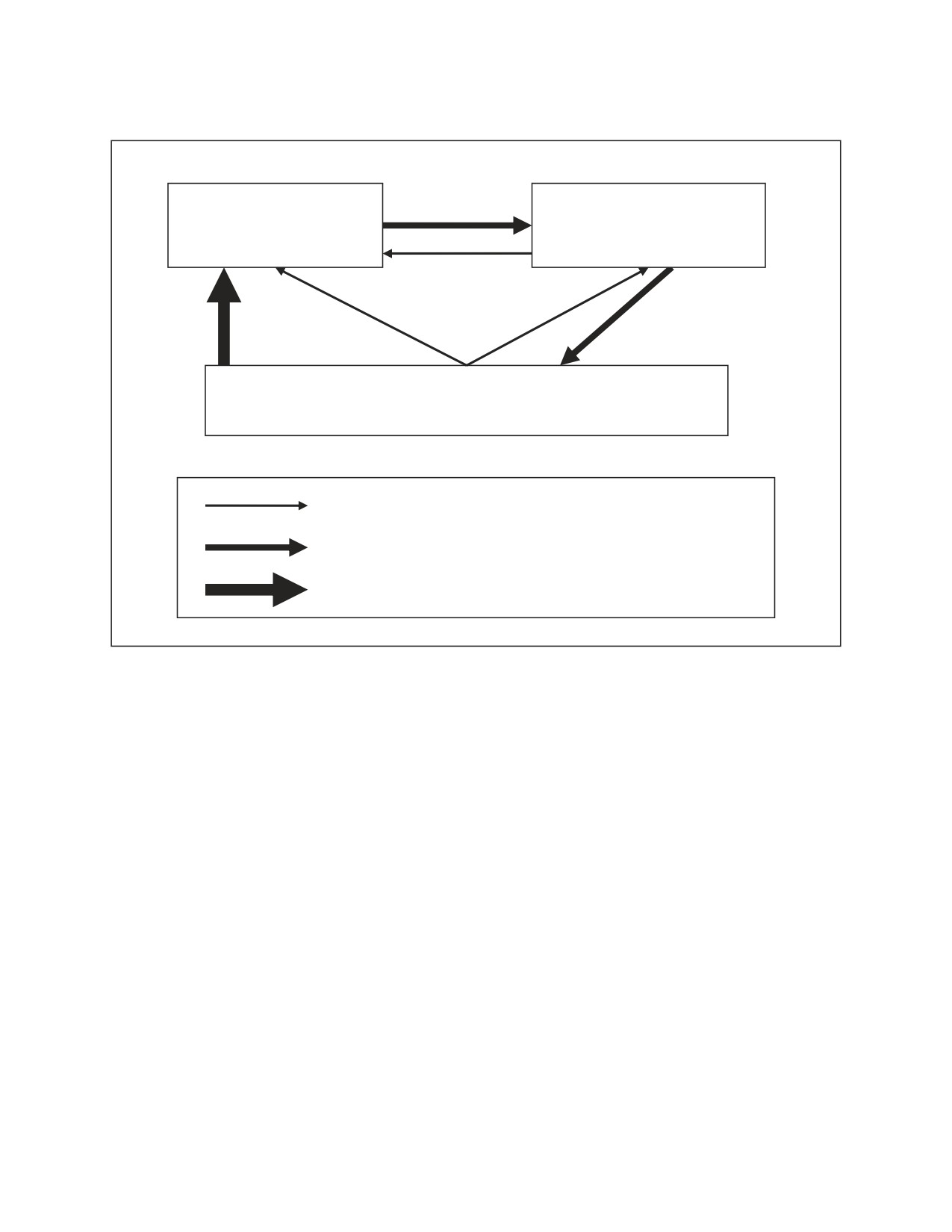
CBRN cell
Controlling unit HQ
Designated observer/reconnaissance, surveying, or monitoring unit
NBC1 or NBC4 reports
NBC2, NBC3, or NBC5 reports
NBC1 NUC (designated observer only)
Figure III-1. Flow of NBC Reports
(5)
The method of transmitting the information depends on the tactical
situation and mission of the unit. Methods will be specified in OPORDs, OPLANs, or unit
SOPs.
(6)
The NBC reports should be formatted ahead of time and be as short and
concise as possible. In this case, wire communications are best.
4.
Types of Reports
The CBRNWRS uses standardized reports to effectively organize and disseminate
CBRN COP information.
a.
Standard CBRN Reports. The CBRNWRS consists of six standard reports for
CBRN incidents. The STANAG and the US message text format (USMTF) standardize each
of the CBRN reports. The United States and its NATO allies use the same message
formats. This improves the accuracy, comprehension, and interoperability of the system. It
also increases the speed of dissemination and submission. The standard NBC reports are
as follows:
(1)
The NBC1 report is an observer’s report. This report gives the basic data of
the CBRN attack.
(2)
The NBC2 report is used to pass evaluated data from the collected NBC1
reports.
III-4
FM 3-11.3/MCWP 3-37.2A/NTTP 3-11.25/AFTTP(I) 3-2.56
2 February 2006
(3)
The NBC3 report is used to provide immediate warning of the predicted
contamination and hazard areas.
(4)
The NBC4 report is used to report detection data and pass monitoring and
survey results. This report is used if an attack is not observed and the first indication of
the contamination is by detection.
(5)
The NBC5 report is used to pass information of an actual contamination.
This report can also include areas of possible contamination, but only when the actual
contamination coordinates are also included in the report.
(6)
The NBC6 report is used to pass detailed information of the CBRN events.
(7)
The CBRN reports use a standard format and line items to shorten the
message (see Table III-1). The CBRNWRS is based on a code letter system. The meaning
of each letter used to transmit an NBC report is described in this MTTP. Each type of NBC
report is comprised of a sequence of lines and has a unique identifier. Letter formats for
the CBRNWRS and the meaning of the lines are described below in Table III-1 and in the
applicable appendix for the specific type of report. Each set contains a sequence of fields.
NBC reports start with a common message heading consisting of the NBC report number
(1-6), and the event. The format for the fields, allowable entries, and conditions are
explained later in this chapter and the applicable appendixes.
Table III-1. Standard Format and Line Items
Line:
MEANING:
ALFA
Strike serial number
BRAVO
Location of the observer and the direction of the attack or event
CHARLIE
DTG of the report or observation and end of the event
DELTA
DTG of attack or detonation and attack end
FOXTROT
Location of the attack or event
GOLF
Delivery and quantity information
HOTEL
Type of nuclear burst
INDIA
Release information on the CB agent attacks or ROTA events
JULIET
Flash-to-bang time (in seconds)
KILO
Crater description
LIMA
Nuclear burst angular cloud width at H+5 minutes
MIKE
Stabilized cloud measurement at H+10 minutes
MIKER
Description and status of ROTA event
NOVEMBER Estimated nuclear yield (in kilotons)
2 February 2006 FM 3-11.3/MCWP 3-37.2A/NTTP 3-11.25/AFTTP(I) 3-2.56
III-5
Table III-1. Standard Format and Line Items (Continued)
Line:
MEANING:
OSCAR
Reference DTG for the estimated contour lines
PAPAA
Predicted attack or release and hazard area
PAPAB
Detailed fallout hazard prediction parameters
PAPAC
Radar-determined external contour of the radioactive cloud
PAPAD
Radar-determined downwind direction of the radioactive cloud
PAPAX
Hazard area location for the weather period
QUEBEC
Location of the reading, sample, and detection and the type of reading,
sample, or
detection
ROMEO
Level of contamination, dose rate trend, and decay rate trend
SIERRA
DTG of the reading or initial detection of the contamination
TANGO
Terrain or topography and vegetation description
WHISKEY
Sensor information
XRAYA
Actual contour information
XRAYB
Predicted contour information
YANKEE
Downwind direction and downwind speed
ZULU
Actual weather conditions
GENTEXT
General text
b.
The Merchant Warning System (MERWARN). A simplified contamination
warning system has been established throughout NATO for broadcasting warnings of a
contamination dangerous to the merchant shipping. This system calls for the origination of
five types of messages by NATO naval authorities.
(1)
MERWARN NBC Effective Downwind Message (EDM). The MERWARN
NBC EDM is a prediction of the fallout that will result from a 1-megaton (mt) nuclear
surface explosion in a specified sea area at a specified time. It will give the master of a ship,
observing a nuclear explosion, an immediate indication of the area likely to be affected by
fallout.
(2)
MERWARN NBC3 Nuclear. This message will be issued after a nuclear
attack and gives fallout data for a specific nuclear explosion or series of explosions, which
will be identified in the message.
(3)
MERWARN NBC Chemical Downwind Message (CDM). This contains a
forecast of the MET data needed for the chemical hazard area prediction procedure.
(4)
MERWARN NBC3 Chemical. This message is issued to pass immediate
warning of a predicted chemical contamination and hazard area.
(5)
MERWARN Diversion Order. This is a general diversion order, based upon
the fallout threat, whereby merchant ships proceeding independently are passed evasive
routing instructions of a general nature.
III-6
FM 3-11.3/MCWP 3-37.2A/NTTP 3-11.25/AFTTP(I) 3-2.56
2 February 2006
NOTE: In some cases, it may be better to provide warning of a contamination by
means of general plain language messages rather than by the formats above. See
Appendix C for more information on CB MERWARN messages and Appendix G
for more information on nuclear MERWARN messages.
c.
Strike Warning (STRIKWARN). Friendly forces need to receive advanced
warning of a nuclear strike to ensure that they are not placed at unnecessary risk. Such
attacks are announced through a STRIKWARN message. This message applies to nuclear
strikes that may affect forces operating on land, over land, or at sea. STRIKWARN
messages typically use automatic data processing (ADP) messages, but can use alternate
means of communication to transmit warnings using the STRIKWARN format. Appendix I
of this manual covers STRIKWARN in more detail.
d.
MET and Weather Reports. Current MET data is a vital prerequisite for
radiological fallout and CB and ROTA downwind hazard prediction. MET data is
transmitted as a basic wind report (BWR). The effective downwind report (EDR) and the
chemical downwind report (CDR) are prepared at the CBRN control center and are
disseminated to all units served by the preparing CBRN control center.
(1)
BWR. A BWR is a basic wind message (BWM) or a basic wind forecast
(BWF). This message contains the basic MET data to be used for a fallout prediction (see
Appendix D). A BWR is an ADP-formatted message used to accommodate the BWM or the
BWF when transmitted.
(2)
EDR. An EDR is an EDM or an effective downwind forecast (EDF). This
message contains information on downwind speed and downwind direction for each of seven
preselected nuclear weapon yields (see Appendix I). An EDR is an ADP-formatted message
used to accommodate the EDM or the EDF message when transmitted.
(3)
CDR. A CDR is a CDM or a chemical downwind forecast (CDF). This
message contains basic MET information for predicting a biological aerosol (see Appendix
E) and chemical vapor hazard area (see Appendix F). A CDR is an ADP-formatted message
used to accommodate the NBC CDM or the NBC CDF message when transmitted.
5.
Mandatory Entries in Nuclear, Biological, and Chemical Reports
In order to process and evaluate the CBRN attack data quicker and with more
efficiency, ensure that the information is valid and assist in manually inputting the data
into the automated systems (each line has mandatory information that must be entered for
the NBC message to be properly formatted). Certain rules apply to all lines or messages
and are as follows (see Table III-2, page III-8, for information required by line):
a.
The field contents are described by one of the following: A = alphabetic, N =
numeric, S = special characters (e.g., &, *), B = blank, and X = any code. Combinations of
the codes exist in some fields.
b.
The fields must be filled with the number and the type of characters identified,
or a dash (-) may be inserted into a field when the information is not available. However,
some fields vary in length, which is indicated by giving a range for the number of
characters (e.g., 1-20X).
c.
When a line is repeatable, this is indicated by a preceding asterisk (e.g., *=3).
This indicates that data can be entered up to three times.
2 February 2006 FM 3-11.3/MCWP 3-37.2A/NTTP 3-11.25/AFTTP(I) 3-2.56
III-7
d.
If a repeatable line is used, then all fields within that line must be used each
time that line is repeated.
e.
In manual procedures, all information under one set is put into one sentence.
f.
In STRIKWARN messages, the units of measurement are default values and are,
therefore, excluded from the fields.
g.
All directional/angular measurements must be stated in degrees (3N) or mils
(4N) (i.e., 40 degrees = 040, 18 mils = 0018).
h.
Sets or fields are mandatory (M), operationally determined (O), or conditional
(C).
Table III-2. Required Information by Line
ALFA
Strike Serial Number
/-
/-
/-
/-
/-
//
|
|
|
|
(O) Grading of message/report, 1-3N
|
|
|
(M) Type of incident*, 1-2A
|
|
(M) Sequence number, 1-10X
|
(M) Code for originator, 1-6X
(M) Nationality, 2A or:
(M) Area control center code, 2-3AN
*N=Nuclear Attack, B=Biological Attack, C=Chemical Attack, RN=Nuclear ROTA, RB=Biological ROTA,
RC=Chemical ROTA, RU=Unidentified ROTA
BRAVO
Location of the Observer and Direction of the Attack or Event
/-
/-
//
|
(M) Direction of Attack or Event from Observer and Unit of Measurement
|
(see paragraph 5g), 6-7AN Location of Observer, one of the following:
(M) Geographic Place Name, 1-30 X, or(M) Geographic Position, LAT/LONG, Seconds, 15AN, or
(M) Geographic Position, UTM 10-Meter, 13AN, or
(M) Geographic Position, LAT/LONG, Minutes, 11AN, or
(M) Geographic Position, UTM 100-Meter, 11AN
CHARLIE
DTG of Report or Observation and End of Event
/-
/-
//
|
(O) DTG Event ended in Zulu Time, Month, and Year, 14AN
(M) DTG of Report or Observation in Zulu Time, Month, and Year, 14AN
DELTA
DTG of Attack or Detonation and Attack End
/-
/-
//
|
(O) DTG Attack ended in Zulu Time, Month, and Year, 14AN
(M) DTG of Attack or Detonation in Zulu Time, Month, and Year, 14AN
FOXTROT
Location of Attack or Event
/-*
/-
// (* = 6)
|
(M) Location Qualifier (AA=Actual Area, EA=Estimated Area), 2A
Attack or Event Location, one of the following:
(M) Geographic Place Name, 1-30X, or
(M) Geographic Position, LAT/LONG, Seconds, 15AN, or
(M) Geographic Position, UTM 10-Meter, 13AN, or
(M) Geographic Position, LAT/LONG, Minutes, 11AN, or
(M) Geographic Position, UTM 10-Meter, 11AN
Explanation of Repeatable Field
Line FOXTROT: Fields 1-2 are repeatable to accommodate up to 6 data entries in order to define a line or
area attack.
III-8
FM 3-11.3/MCWP 3-37.2A/NTTP 3-11.25/AFTTP(I) 3-2.56
2 February 2006
Table III-2. Required Information by Line (Continued)
GOLF
Delivery and Quantity Information
/- /-
/-
/-
/-
//
|
|
|
|
(M) Number of Agent Containers, 1-3N, or
|
|
|
|
(M) Size of Release*, 3A
|
|
|
(M) Type of Agent C Containers**, 3A
|
|
(M) Number of Delivery Systems, 1-3N
|
(M) Type of Delivery***, 3A
(M) Suspected/Observed Event (SUS=Suspected, OBS=Observed), 3A
*SML (Less than 200 Liters or 200 Kilograms), LRG, XLG (More than 1,500 Liters or Kilograms),
UNK=Unknown **BML=Bomblets, BOM=Bomb, BTL=Pressurized Gas Bottle, BUK=Bunker,
CON=Generic Storage Container, DRM=Nominal 55-gallon Storage Drum, GEN=Generator (Aerosol),
MSL=Missile, RCT=Reactor, RKT=Rocket, SHL=Shell, SPR=Spray (tank), STK=Stockpile, TNK=Storage
Tank, TOR=Torpedo, MNE=Mine (NBC-filled only), UNK=Unknown, WST=Waste
***AIR=Aircraft, BOM=Bomb (delivering bomblets only), CAN=Cannon, MLR=Multiple-Launched Rocket
System, MSL=Missile, MOR=Mortar, PLT=Plant, RLD=Railroad Car, SHP=Ship, TPT=Transport,
UNK=Unknown
HOTEL
Type of Nuclear Burst
/- //
(M) Type of Nuclear Burst (AIR, SUBS, SURF, UNK), 3-4A
INDIA
Release Information CB Agent Attacks or ROTA Events
/- /-
/-
/-*
// (* = 2)
|
|
|
(O) Type of Detection*, 3-5A
|
|
(O) Type of Persistency**, 1-3A
|
(O) Type of Agent (see Table III-3, page III-14), 1-4A or
|
(O) Agent Name (see Table III-4, page III-15), 1-4A or
|
(O) UN/NA Identification Number (see ERG), 4N
(M) Type of Agent-Release-Height (AIR, SUBS, SURF, UNK), 3-4A
Explanation of Repeatable fields.
Line INDIA: Field 4 is repeatable to accommodate up to 2 entries in order to provide information on
multiple types of detection.
*OTH=Other (use GENTEXT to specify), MPDS=Manned Point Detection System, UMPDS=Unmanned
Point Detection System, MSDS=Manned Standoff Detection System, UMSDS=Unmanned Standoff
Detection System, MSVY=Manned Survey, UMSVY=Unmanned Survey** P=Persistent, NP=Nonpersistent,
T=Thickened, UNK=Unknown
JULIET
Flash-to-Bang Time in Seconds
/- //
(M) Flash-to-Bang Time in Seconds, 1-3N
KILO
Crater Description
/- /-
//
|
(O) Crater Width and Unit of Measurement*, 2-7AN
(M) Crater Indicator (CRATER=Crater present, NONE=No crater present, UNK=Unknown), 3-6A
*KM=Kilometers, NM=Nautical Miles, FT=Feet, KF=Kilofeet (1,000 feet), HM=Hectometres (100
meters),YD=Yards, M=Meters, SM=Statute Miles
LIMA
Nuclear Burst Angular Cloud Width at H+5 Minutes
/-//
(M) Angular Cloud Width (at H + 5 Min) and Unit of Measurement (DEG or MIL), 6-7 AN
MIKE
Stabilized Cloud Measurement at H+10 Minutes
/-*
/-
/-
// (* = 2)
|
|
(M) Cloud Height and Unit of Measurement, 2-7AN
|
(M) Cloud Angle and Unit of Measurement (MIL or DEG), 6-7AN
(M) Cloud Section (TOP or BOT), 3A
Explanation of Repeatable Field
Line MIKE: Fields 1-3 are repeatable to accommodate up to 2 data entries in order to describe the cloud
height and/or the cloud angle for cloud top and/or for cloud bottom.
2 February 2006 FM 3-11.3/MCWP 3-37.2A/NTTP 3-11.25/AFTTP(I) 3-2.56
III-9

Table III-2. Required Information by Line (Continued)
MIKER
Description and Status of ROTA Event
/-/-
//
|
(M) Status of ROTA Event (PUFF=Single Release of a Cloud, CONT=Continuous)
|
SPRAY=Spraying) 4-5A
(M) Description of ROTA Event*, 4-6A
*CLOUD=Visible Cloud, FIRE=Burning Fire, POOL=Large Quantity of Still Liquid, LEAK=Continuous Flow
from Damaged Pipe or Container, SPILL=Small Quantity of Still Liquid, LIQUID=Liquid
NOVEMBER
Estimated Nuclear Yield in Kilotons
/-//
(M) Estimated Nuclear Yield in Kilotons, 1-6NS
OSCAR
Reference Date Time Group for Estimated Contour Lines
/-//
(M) Reference Date-Time Group for estimated contour lines in Zulu Time, Month, and Year, 14AN
PAPAA
Predicted Attack/Release and Hazard Area
/- /-
/-
/-
//
|
|
|
(M) Duration of Hazard in Hazard Area and Unit of Measurement*, 5-8ANS
|
|
(M) Hazard Area Distance (see Appendix E for CHEM or Appendix F for BIO)
|
|
and Unit of Measurement (M, KM, YD), 2-7 AN
|
(M) Duration of Hazard in Attack or Release Area and Unit of Measurement*, 5-8ANS
(M) Attack or Release Area Radius and Unit of Measurement (M, KM, FT), 2-7AN
*DAY=Days, HR=Hours, MIN=Minutes, SEC=Seconds, WK=Weeks, MON=Month
PAPAB
Detailed Fallout Hazard Prediction Parameters
/- /-
/-
/-
/-
//
|
|
|
|
(M) Right Radial Line and Unit of Measurement*, 6-7AN
|
|
|
(M) Left Radial Line and Unit of Measurement*, 6-7AN
|
|
(M) Cloud Radius and Unit of Measurement, 3-4AN
|
(M) Downwind Distance of Zone I and Unit of Measurement, 4-5AN
(M) Effective Wind Speed and Unit of Measurement (MPS=Meters per Second, KPH=Kilometers
per Hour, KTS=Knots, MPH=Miles per Hour), 6AN
*DGM=Degrees/Magnetic North, DGT=Degrees/True North, DGG=Degrees/GN, MLM=Mils/Magnetic North,
MLT=Mils/True North, MLG=Mils/GN
PAPAC
Radar Determined External Contour of Radioactive Cloud
/-*
// (* = 6)
External Contour of Radioactive Cloud, one of the following:
(M) Geographic Position, LAT/LONG, Seconds, 15AN, or
(M) Geographic Position, UTM 10-Meter, 13AN, or
(M) Geographic Position, LAT/LONG, Minutes, 11AN, or
(M) Geographic Position, UTM 100-Meter, 11AN
Explanation of Repeatable Fields
Set PAPAC: Field 1 is repeatable to accommodate up to 6 entries in order to describe the radioactive
cloud outline.
PAPAD
Radar Determined Downwind Direction of Radioactive Cloud
/- //
(M) Downwind Direction of Radioactive Cloud and Unit of Measurement*, 6-7 AN
*DGM=Degrees/Magnetic North, DGT=Degrees/True North, DGG=Degrees/GN, MLM=Mils/Magnetic
North, MLT=Mils/True North, MLG=Mils/GN
III-10
FM 3-11.3/MCWP 3-37.2A/NTTP 3-11.25/AFTTP(I) 3-2.56
2 February 2006
Table III-2. Required Information by Line (Continued)
PAPAX**
Hazard Area Location for Weather Period (**=3)
/- /-*
// (* = 20)
| Hazard Area Location, one of the following:
|
(M) Geographic Position, LAT/LONG, Seconds, 15AN, or
|
(M) Geographic Position, UTM 10-Meter, 13AN, or
|
(M) Geographic Position, LAT/LONG, Minutes, 11AN, or
|
(M) Geographic Position, UTM 100-Meter, 11AN
(M) Date-Time Group of Start of Meteorological Period in Zulu Time, Month, and Year, 14AN
PAPAX is repeatable up to 3 times in order to describe three possible hazard areas corresponding to the
time periods from the CDM. A hazard area for a following time period will always include the previous
hazard area.
Field 2 is repeatable up to 20 times in order to describe the hazard area outline.
NOTE: If the hazard area location has only one position, draw a circle with a radius of the (remaining)
hazard area distance from line PAPAA. If the hazard area location has only two positions, these are the
extreme ends of a linear attack. For each point, draw a circle with a radius of the (remaining) hazard area
distance from line PAPAA and connect the circles by two tangents.
QUEBEC*
Location of Reading/Sample/Detection and
Type of Sample/Detection (* = 20)
/-/-
/-
/-
//
|
|
|
((O) Height of Measurement Above Ground Level and Unit of Measurement, 2-7AN
|
|
(M) Type of Detection*, 3-5A
|
(M) Type of Sample**, 1-5A
Location of Reading/Sample/Detection, one of the following:
(M) Geographic Position, LAT/LONG, Seconds, 15AN, or
(M) Geographic Position, UTM 10-Meter, 13AN, or
(M) Geographic Position, LAT/LONG, Minutes, 11AN, or
(M) Geographic Position, UTM 100-Meter, 11AN
QUEBEC is repeatable up to 20 times in order to describe multiple detectors and monitoring or survey
points.
*OTH=Other (use GENTEXT to specify), MPDS=Manned Point Detection System, UMPDS=Unmanned
Point Detection System, MSDS=Manned Standoff Detection System, UMSDS=Unmanned Standoff
Detection System, MSVY=Manned Survey, UMSVY=Unmanned Survey
**LIQ=Liquid sample, VAP=Vapor, SOIL=Soil Sample, SOLID= Solid Sample, VEG=Vegetation Sample,
WATER=Water Sample
2 February 2006 FM 3-11.3/MCWP 3-37.2A/NTTP 3-11.25/AFTTP(I) 3-2.56
III-11
Table III-2. Required Information by Line (Continued)
ROMEO*
Level of Contamination, Dose Rate Trend, and
Decay Rate Trend. (* = 20)
/-/-
/-
//
|
|
(O) Relative Decay Rate (DN=Normal, DF=Fast, DS=Slow), 2A, or
|
|
(O) Actual Decay Rate, 3-4NS
|
(O) Dose Rate*, 4A
(M) Level of Dose Rate/Dosage and Unit of Measurement**4-12ANS, or
(M) Level of Dose and Unit of Measurement***, 4-12ANS, or
(M) Level of Contamination and Unit of Measurement***4-12ANS, or
(M) Miosis*****, 4-5A
Line is repeatable up to 20 times in order to describe multiple detection and monitoring or survey points.
*BACK=Background, DECR=Decreasing, INCR=Increasing, INIT=Initial, SAME=Same, PEAK=Peak
**CFU=Colony-Forming Units, CGH=Centigray Per Hour, CSH=Centisievert Per Hour, MSH=Millisievert
Per Hour, USH=Microsievert Per Hour, BQS=Becquerel, MM3=Milligram-Minutes Per Cubic Meter
***CGY=Centigray, CSV=Centisievert, MGY=Milligray , MSV=Millisievert, USV=Microsievert
****ACPL=Agent-Containing Particles per Liter, BQM2=Becquerel per Square Meter, BQM3=Becquerel
per Cubic Meter, MGM2=Milligrams per Square Meter, MGM3=Milligrams per Cubic Meter, PPM=Parts
per Million (106), PPB=Parts per Billion (109)
*****LDXX=Lethal Dose xx = LD1 to LD99, IDXX=Incapacitating Dose xx = ID1 to ID99,
ICTXX=Incapacitating Dosage xx = ICt1 to ICt99, LCTXX=Lethal Dosage xx = LCt1 to LCt99, MCTXX=Eye-
Affecting Dosage xx (Miosis) = MCt1 to MCt99
SIERRA*
DTG of Reading or Initial Detection of Contamination (* = 20)
/-//
(M) DTG, Contamination Detected in Zulu Time, Month, and Year, 14AN, or
(M) DTG of Reading in Zulu Time, Month, and Year, 14AN
SIERRA is repeatable up to 20 times in order to describe multiple detection and monitoring or survey
points.
TANGO*
Terrain/Topography and Vegetation Description (* = 20)
/- /-
//
|
(M) Vegetation Description*, 3-5A
(M) Terrain/Topography Description**, 3-6 A
TANGO is repeatable up to 20 times in order to describe multiple detection and monitoring or survey
points.
*BARE=Bare, SCRUB=Scrubby Vegetation, WOODS=Wooded Terrain, URBAN=Urban, UNK=Unknown
**FLAT=Flat, URBAN=Urban, HIL=Hill, SEA=Sea, VALLEY=Valley, UNK=Unknown
WHISKEY
Sensor information
/- /-
/-
/-
//
|
|
|
(O) Assurance Level of Results, (LOW, MED, HIGH), 3-4A
|
|
(O) Confirmatory Test (Y or N), 1A
|
(M) Nonspecific Potential Harmful Result (POS or NEG), 3A
(M) Generic Alarm Result (POS or NEG), 3A
WHISKEY format is prepared for future use. Procedures on how to use it will follow later.
III-12
FM 3-11.3/MCWP 3-37.2A/NTTP 3-11.25/AFTTP(I) 3-2.56
2 February 2006
Table III-2. Required Information by Line (Continued)
XRAYA**
Actual Contour Information (** = 50)
/- /-*
// (*=50)
|
Limit Contour Line or Area of Contamination, one of the following:
|
(M) Geographic Position, LAT/LONG, Seconds, 15AN, or
|
(M) Geographic Position, UTM 10-Meter, 13AN, or
|
(M) Geographic Position, LAT/LONG, Minutes, 11AN, or
|
(M) Geographic Position, UTM 100-Meter, 11AN
(M) Level of Dose Rate/Dosage and Unit of Measurement*, 4-12ANS, or
(M) Level of Dose and Unit of Measurement**, 4-12 ANS, or
(M) Level of Contamination and Unit of Measurement***, 4-12ANS, or
(M) Level of Hazard****, 4-5AN, or
(M) Miosis****, 4-5AN
Field 2 is repeatable to accommodate up to 50 data entries in order to describe respective contour lines.
XRAYA is repeatable up to 50 times to represent multiple contours.
*CFU=Colony-Forming Units, CGH=Centigray per Hour, CSH=Centisievert per Hour, MSH=Millisievert per
Hour, USH=Microsievert per Hour, BQS=Becquerel, MM3=Milligram-Minutes per Cubic Meter
**CGY=Centigray, CSV=Centisievert, MGY=Milligray , MSV=Millisievert, USV=Microsievert
****ACPL=Agent-Containing Particles per Liter, BQM2=Becquerel per Square Meter, BQM3=Becquerel per
Cubic Meter, MGM2=Milligrams per Square Meter, MGM3=Milligrams per Cubic Meter, PPM=Parts per
Million (106), PPB=Parts per Billion (109)
****LDXX=Lethal Dose xx = LD1 to LD99, IDXX=Incapacitating Dose xx = ID1 to ID99, ICTXX=Incapacitating
Dosage xx = ICt1 to ICt99, LCTXX=Lethal Dosage xx = LCt1 to LCt99, MCTXX=Eye-Affecting Dosage xx
(Miosis) = MCt1 to MCt99
XRAYB**
Predicted Contour Information (** = 50)
/- /-
/-*
// (*=50)
|
|
Limit Contour Line or Area of Contamination, one of the following:
|
|
(M) Geographic Position, LAT/LONG, Seconds, 15AN, or
|
|
(M) Geographic Position, UTM 10-Meter, 13AN, or
|
|
(M) Geographic Position, LAT/LONG, Minutes, 11AN, or
|
|
(M) Geographic Position, UTM 100-Meter, 11AN
|
(M) Level of Dose Rate/Dosage & Unit of Measurement*, 4-12ANS or
|
(M) Level of Dose and Unit of Measurement**, 4-12 ANS or
|
(M) Level of Contamination and Unit of Measurement***, 4-12ANS
|
(M) Level of Hazard****, 3-5AN, or
|
(M) Miosis****, 5A
(M) Type of Contour*****, 2N
Field 3 is repeatable to accommodate up to 50 data entries in order to describe respective contour lines.
XRAYB is repeatable up to 50 times to describe multiple contours or segments.
*CFU=Colony-Forming Units, CGH=Centigray per Hour, CSH=Centisievert per Hour, MSH=Millisievert per
Hour, USH=Microsievert per Hour, BQS=Becquerel, MM3=Milligram-minutes per Cubic Meter
**CGY=Centigray, CSV=Centisievert, MGY=Milligray , MSV=Millisievert, USV=Microsievert
**** ACPL=Agent-Containing Particles per Liter, BQM2=Becquerel per Square Meter, BQM3=Becquerel
per Cubic Meter, MGM2=Milligrams per Square Meter, MGM3=Milligrams per Cubic Meter, PPM=Parts per
Million (106), PPB=Parts per Billion (109)
****LDXX=Lethal Dose xx = LD1 to LD99, IDXX=Incapacitating Dose xx = ID1 to ID99, ICTXX=Incapacitating
Dosage xx = ICt1 to ICt99, LCTXX=Lethal Dosage xx = LCt1 to LCt99, MCTXX=Eye-Affecting Dosage xx
(Miosis) = MCt1 to MCt99
*****01 through 99=Probability in percent terms of exceeding value in Field 2 of Set XRAYB
2 February 2006 FM 3-11.3/MCWP 3-37.2A/NTTP 3-11.25/AFTTP(I) 3-2.56
III-13

Table III-2. Required Information by Line (Continued)
YANKEE*
Downwind Direction and Downwind Speed (* = 20)
/- /-
//
|
(M) Downwind Speed and Unit of Measurement, 4-6AN
(M) Downwind Direction and Unit of Measurement, 6-7AN
YANKEE is repeatable up to 20 times in order to describe multiple detection and monitoring or survey
points.
ZULU*
Actual Weather Conditions (* = 20)
/- /-
/-
/-
/-
//
|
|
|
|
(M) Cloud Coverage*, 1N
|
|
|
(M) Significant Weather Phenomena**, 1AN
|
|
(M) Relative Humidity Range***, 1N
|
(M) Surface Air Temperature and Unit of Measurement (-48F, 27C), 2-4ANS
(M) Detailed Air Stability Category****, 1N or
(M) Simplified Air Stability Category, (U=unstable, N=neutral, or S=stable), 1A
ZULU is repeatable up to 20 times in order to describe multiple detection and monitoring or survey points.
*0=Less than half covered (scattered), 1=More than half covered (broken), 2=Completely covered
(overcast), 3=No clouds (clear conditions)
**0=No Significant Weather Phenomena, 1=Sea Breeze, 2=Land Breeze, 3=Blowing Snow, Sand Storm,
Dust Storm, 4=Fog, Ice Fog, Thick Haze (visibility less than 4 km), 5=Drizzle, 6=Rain, 7=Snow, Rain, Snow
mixed (no shower), 8=Showers of Rain, Snow, Rain and Snow mixed, Hail, 9=Thunderstorm with or without
Precipitation, A=Top of inversion layer lower than 800 M, B=Top of inversion layer lower than 400 M,
C=Top of inversion layer lower than 200 M
***0=0-9 Percent, 1=10-19 Percent, 2=20-29 Percent, 3=30-39 Percent, 4=40-49 Percent, 5=50-59
Percent, 6=60-69 Percent, 7=70-79 Percent, 8=80-89 Percent, 9=90-100 Percent
****1=Very Unstable, 2=Unstable, 3=Slightly Unstable, 4=Neutral, 5=Slightly Stable, 6=Stable, 7=Very
Stable
GENTEXT
General Text (unlimited free text).
/- /-
//
|
(M) Free Text, Unlimited X
(M) Text Indicator, (NBC INFO or NBC SITREP), 1-61X
Table III-3. Types of Agents
Nuclear
Biological
Chemical
NIL
No agent
BIO
Biological
BL
Blister agent
detected (only
used in NBC4)
OTR
Other agent
NIL
No agent
BLOD
Blood agent
detected (only
used in NBC4)
RNP
ROTA nuclear
OTR
Other agent
CHOK
Choking agent
power plant
TIM
TIM
TIM
TIM
G
G agent
UNK
Unknown
TOX
Toxin
H
Mustard agent
UNK
Unknown
INCP
Incapaciting agent
BAC
Bacterial
IRT
Irritant
CLA
Chlamydia
NERV
Nerve agent
RIC
Rickettsiae
NIL
No agent detected (only
used in NBC4)
III-14
FM 3-11.3/MCWP 3-37.2A/NTTP 3-11.25/AFTTP(I) 3-2.56
2 February 2006

Table III-3. Types of Agents (Continued)
Nuclear
Biological
Chemical
VIR
Viral
OTR
Other agent
PENT
Penetrating agent
TIM
TIM
UNK
Unknown
V
V agent
VMT
Vomiting agent
Table III-4. Agent Name
Nuclear
Chemical
ALP
Alpha
AC
Hydrogen cyanide
BETA
Beta
BZ
Quinuclidinyl benzilate
GAM
Gamma
CG
Phosgene
NEU
Neutron
CK
Cyanogen chloride
COB
Cobalt-60
CX
Phosgene oxime
CES
Cesium-137
DP
Di-phosgene
FF
Fresh reactor fuel
GA
Tabun
FL
Nuclear weapon fallout
GB
Sarin
IO
Iodine
GD
Soman
OF
Spent reactor fuel
GF
Cyclo-Sarin
PU
Plutonium
HD
Mustard distilled
HL
Mustard-lewisite
HN
Nitrogen mustard
HT
Trimeric mustard
L
Lewisite
PS
Chloropicrin
SA
Arsin
TG
Tear gas
VX
VX
NOTE: If the biological agent identity is known, enter it in GENTEXT set.
6.
Classification and Precedence
The classification and precedence of the CBRN messages ensure that they are
disseminated in a timely and effective manner.
a.
Classification. Unless the NBC message contains specific operational
information (e.g., effects on troops), all such messages should be unclassified.
b.
Precedence. NBC1 messages reporting the first enemy use of CBRN weapons
(first use of nuclear weapons, first use of biological weapons and first use of chemical
weapons) or ROTA incidents must be given FLASH precedence. All other messages should
be given a precedence that reflects the operational value of the contents. Normally,
IMMEDIATE would be appropriate. Once a CBRN event occurs, the number of NBC
messages will be substantial. CBRN staffs must prepare their SOPs carefully in order to
avoid an unnecessary load on the communication systems.
7.
Decision Support Tools
Collecting, evaluating, processing, and relaying all the reports from the field can be an
extremely difficult and time-consuming task when done manually. In order to help reduce
the number of errors and expedite the process, the United States Government (USG) has
developed various modeling programs and systems to help commanders make more
informed decisions quicker and more accurately. There are a large number of models
2 February 2006 FM 3-11.3/MCWP 3-37.2A/NTTP 3-11.25/AFTTP(I) 3-2.56
III-15

available through various Department of Defense (DOD) and other federal agencies. Models
are volatile and dynamic; therefore, considerable expertise is required to avoid misuse or
misreading of the results. For additional information on models, refer to the Modeling and
8.
Technical Reach-Back Capabilities
The commander will require not only accurate and timely information but also
tremendous reach-back capabilities. Reach-back occurs when commanders access the
capabilities of remotely located informational resources through their C2 systems. Reach-
back is a process that employs communications assets to identify and bring to bear
resources that are not present at a CBRN site.
a.
General.
(1)
Technical reach-back is the ability to contact technical subject matter
experts (SMEs) when a technical issue exceeds the on-scene SME’s capability. Reach-back
should be conducted using established unit protocols. Many of the listed reach-back
resources have other primary missions and are not specifically resourced for reach-back.
Issues may include the following:
(a) Nonstandard Agent Identification of CBRN and TIM. If a TIM is used
or is suspected, CBRN personnel must obtain technical information. This information could
include persistency, medical effects, and decontamination or protection requirements.
(b) Modeling/Hazard Prediction. The spread of contamination must be
known to operational units. Technical experts can use modeling to provide a better
indication of where vapor, liquid, or aerosolized hazards may occur. Technical reach-back
should provide the ability for detailed analysis of the area to assist in determining
downwind hazard areas and locating staging areas, operation centers, decontamination
sites, etc.
(2)
Reach-back can be accomplished through various means, from the
telephone to broadband satellites.
b.
Technical Reach-Back Capabilities. The following technical reach-back
capability is available if technical issues exceed on-site, local SME capabilities (see
Table III-5). Reach-back should be conducted using established local protocols and SOPs.
Table III-5. Technical Reach-Back Points of Contact
DTRA
877-244-1187
AFRRI
301-295-0316/0530
Technical CB Assistance Hotline
877-269-4496
USAMRIID
888-872-7443
USAMRICD
800-424-8802
NEPMU
See paragraph 8b(6)
NMRC
301-319-7510
NEHC
See paragraph 8b(7)
AFCESA
850-283-6995, DSN 523-6995
NRC, Chemical Terrorism/CB Hotline
800-424-8802
III-16
FM 3-11.3/MCWP 3-37.2A/NTTP 3-11.25/AFTTP(I) 3-2.56
2 February 2006
(1)
Defense Threat Reduction Agency (DTRA). The DTRA can provide
technical reach-back information and services for on-scene personnel. The
focal/coordination point for support is through the DTRA emergency operations center
(EOC). The DTRA EOC enables first responders and warfighters to deal with CBRN
threats through on-line assistance and provides a wide-band infrastructure for user
support. As part of the Combat Support Directorate in DTRA, the EOC is manned 7 days a
week, 24 hours a day, and has the requisite communications links to act as the single point
of contact (POC) for on-line assistance and the dispatch of other agency resources, as
(2)
Armed Forces Radiobiology Research Institute (AFRRI). The AFRRI can
provide DOD technical support for nuclear/radiological incidents or accidents.
(3)
Technical CB Assistance Hotline. The USA Soldier and Biological
Chemical Command (SBCCOM) hotline provides technical assistance to emergency
responders. The hotline is manned and operated 7 days a week, 24 hours a day.
(4)
USA Medical Research Institute of Infectious Diseases (USAMRIID). The
USAMRIID provides medical and scientific SMEs and technical guidance to commanders
and senior leaders on the prevention and treatment of hazardous diseases and the medical
management of biological casualties. The USAMRIID serves as the DOD reference center
for the identification of biological agents from clinical specimens and other sources. The
USAMRIID can provide technical guidance for assessing and evaluating a biological
terrorist incident from initial communication of the threat through incident resolution.
(5)
USA Medical Research Institute for Chemical Defense (USAMRICD). The
USAMRICD provides medical and scientific SMEs and technical guidance to commanders
and senior leaders on the prevention and treatment of chemical casualties. The
USAMRICD can provide technical guidance for assessing and evaluating a chemical
terrorist incident from initial communications of the threat through incident resolution.
(6) Navy Environmental and Preventive Medicine Units (NEPMUs). Regional
NEPMUs have the mission to provide specialized consultation, advice, recommendations,
and technical support in matters of environmental health, preventive medicine, and
occupational safety to USN and USMC shore activities and units of the operational forces
within their designated areas of responsibility. An ashore or afloat command requesting
guidance related to suspect bioagent material can consult one of the following NEPMUs
within their area of responsibility. The units are available on-call 7 days a week, 24 hours
a day. The NEPMU staff can provide technical assistance and confirmatory laboratory
analysis for biological and chemical agents. They can also provide assistance on requests for
additional support teams (CB incident response force, technical escort unit, CB response
team, etc). Response teams are deployable within 48 hours upon notification. See OPNAV
N931/BUMED M3F for more information. Regional NEPMU locations and contact
information are listed below.
• NEPMU-2, Norfolk, VA
(DSN) 564-7671, (COMM) 757-444-7671
Email: <nepmu2@nepmu2.med.navy.mil>
Classified Message Traffic:
NAVENPVNTMEDU TWO NORFOLK VA
2 February 2006 FM 3-11.3/MCWP 3-37.2A/NTTP 3-11.25/AFTTP(I) 3-2.56
III-17
• NEPMU-5, San Diego, CA
(DSN) 526-7070, (COMM) 619-556-7070
Email: <nepmu5@nepmu5.med.navy.mil>
Classified Message Traffic:
NAVENPVNTMEDU FIVE SAN DIEGO CA
• NEPMU-6, Pearl Harbor, HI
(DSN) 473-0555, (COMM) 808-473-0555
Email: <nepmu6@nepmu6.med.navy.mil>
Classified Message Traffic:
NAVENPVNTMEDU SIX PEARL HARBOR HI
• NEPMU-7, Sigonella, Italy
(DSN) 314-624-9251, (COMM) +39-095-86-9251
Email: <nepmu7@nepmu7.med.navy.mil>
Classified Message Traffic:
NAVENPVNTMEDU SEVEN SIGONELLA IT
(7)
Navy Medical Research Center (NMRC). The NMRC conducts research and
development, test and evaluation, and disease surveillance to enhance the health, safety,
performance, and deployment medical readiness of the USN and USMC. Its Biological
Defense Research Directorate (BDRD) has a staff that is recognized as a leader in the rapid
and confirmatory diagnosis of infectious diseases. The BDRD explores basic and applied
microbiological, immunological, and related scientific research methodologies for the
development of medical diagnostics. The BDRD staff has designed, developed, and tested a
broad variety of methodologies that have allowed for swift and accurate diagnosis essential
for substantive medical protection and readiness of USN and USMC personnel. They have
been instrumental in the advancement and refinement of confirmatory diagnostic methods
utilizing polymerase chain reaction (PCR) methodologies in tandem with state-of-the-art
biosensor technologies. Additional information is available at the NMRC Web site
<bdrd1@nmrc.navy.mil> or <bdrd2@nmrc.navy.mil>. Subsequent Secret Internet Protocol
Router Network (SIPRNET) communications links will be established as requested.
(8)
Navy Environmental Health Center (NEHC). The mission of the NEHC is
to ensure USN and USMC readiness through leadership in the prevention of disease and
promotion of health. The command has specialists in environmental health, radiation
health, industrial hygiene, medical entomology, biochemistry, toxicology, and preventive
medicine. Chemical, biological, radiological, and environmental medical defense technical
support and consultative assistance is available within the Plans and Operations
Directorate. The SIPRNET e-mail address is <plansops@nehc.navy.smil.mil>. The
useful references and instructions.
(9)
Air Force Civil Engineer Support Agency (AFCESA). The Full-Spectrum
Threat Response (FSTR) Division plans, trains, equips, and conducts USAF FSTR
programs that include nuclear, biological, chemical, and conventional (NBCC) weapons of
mass destruction (WMDs), HAZMAT incidents, natural disasters, and major accidents. The
FSTR Integration Division also coordinates homeland security issues and is the lead US
representative for international NBCC defense standardization.
III-18
FM 3-11.3/MCWP 3-37.2A/NTTP 3-11.25/AFTTP(I) 3-2.56
2 February 2006
(10) The National Response Center (NRC) mans the hotline service and serves
as an emergency resource for first responders to request technical assistance during an
incident. The intended users include trained emergency personnel, such as emergency
operators and first responders. Other potential users may include the state EOCs and
hospitals that may treat victims of agent exposure.
(a) The United States Coast Guard (USCG) operates the NRC, and
trained operators staff the hotline
7 days a week, 24 hours a day.
Operators use extensive databases and reference material in addition to
having immediate access to the nation's top SMEs in the field of CBRN
agents. NRC duty officers take reports of actual or potential domestic
terrorism and link emergency calls with applicable SMEs (such as USA
SBCCOM, USAMRICD) for technical assistance and with the Federal
Bureau of Investigation (FBI) for federal-response actions. The NRC also
provides reports and notifications to other federal agencies, as necessary.
Specialty areas include the following:
• Detection equipment.
• Personal protective equipment.
• Decontamination systems and methods.
• Physical properties of CB agents.
• Toxicology information.
• Medical symptoms from exposure to CB agents.
• Treatment of exposure to CB agents.
• Hazard prediction models.
• Federal-response assets.
• Applicable laws and regulations.
(b) The CB hotline is a joint effort of the USCG, FBI, Federal
Emergency Management Agency (FEMA), Environmental Protection
Agency (EPA), Department of Health and Human Services (DHHS), and
DOD. The NRC is the entry point for the CB hotline. The NRC receives
basic incident information and links the caller to the DOD and FBI CB
and terrorism experts. These and other federal agencies can be accessed
within a few minutes to provide technical assistance during a potential
CB incident. If the situation warrants, a federal-response action may be
initiated.
(c) Use the local established policies and procedures for requesting
federal assistance before contacting the CB hotline. State and local
officials can access the hotline in emergency circumstances by calling 1-
800-424-8802.
9.
Avoidance Tools
Conducting CBRN avoidance operations is a complex process. Various tools and TTP
have been developed to systematically and accurately prepare for and conduct CBRN
avoidance operations.
2 February 2006 FM 3-11.3/MCWP 3-37.2A/NTTP 3-11.25/AFTTP(I) 3-2.56
III-19
a.
Many of the tools required to conduct CBRN avoidance operations are included
in this manual. They are:
CBRN checklists (Appendix A)
CBRN center/cell operations (Appendix B).
Guidance on the management of radiological hazards (Appendix C).
MET reports (Appendix D).
TTP for chemical contamination avoidance (Appendix E).
TTP for biological contamination avoidance (Appendix F).
TTP for nuclear contamination avoidance (Appendix G).
TTP for ROTA contamination avoidance (Appendix H).
Guidance on the use of the STRIKWARN message (Appendix I).
Required nomograms, tables, and graphs (Appendix J).
Calculations used in conducting CBRN avoidance operations (Appendix K).
Example forms used when conducting CBRN avoidance operations (Appendix L).
b.
Other TTP specifically designed to support CBRN avoidance operations are
found in Multiservice Tactics, Techniques, and Procedures for Nuclear, Biological, and
Chemical Reconnaissance; Multiservice Tactics, Techniques, and Procedures for Nuclear,
Biological, and Chemical Vulnerability Assessment; and Multiservice Tactics, Techniques,
and Procedures for Biological Surveillance.
III-20
FM 3-11.3/MCWP 3-37.2A/NTTP 3-11.25/AFTTP(I) 3-2.56
2 February 2006

Appendix A
SAMPLE CHEMICAL, BIOLOGICAL, RADIOLOGICAL, AND
NUCLEAR CONTAMINATION AVOIDANCE CHECKLISTS
1.
Background
This appendix provides a series of checklists that outline CBRN contamination
avoidance procedures. The various checklists are designed to assist commanders and
CBRN staff personnel. These checklists are not all-inclusive and may be adapted or
modified for local use. Checklist items are not necessarily in chronological order; actions
may occur simultaneously, and some may deviate based on the situation. All actions should
be considered.
NOTE: These statements are common tasks and actions for CBRN attacks. Use
the following checklists along with the specific CBRN tasks and actions in
Appendixes E, F, and G to create your unit-specific preattack, during attack, and
postattack and recovery checklists.
2.
Chemical, Biological, Radiological, and Nuclear Preattack Checklist
Sample preattack tasks and actions and the office(s) of primary responsibility (OPR)
are outlined in Table A-1.
Table A-1. Preattack Checklist for CBRN Attacks (Sample)
Item #
Task/Action
OPR
1.
Establish and activate the primary and alternate CBRN cells.
CBRN
2.
Recommend an alarm signal, CBRN threat, protection levels, and FPCON (e.g. Alarm
CBRN
[color], MOPP4, FPCON Delta, missiles inbound, estimated time of arrival 3 minutes).
3.
Verify the following with higher HQ:
CBRN/Operations
• Procedures and timelines on how to receive and disseminate attack warnings.
• Reporting procedures (e.g., CBRNWRS procedures and responsibilities,
including geographically separated units and joint service, allied, coalition, and
HN CBRN defense units).
• Establish preformatted or preaddressed CBRNWRS messages.
Verify that the base warning system is able to provide attack warning and notification to
the base population within 10 minutes. NOTE: Ensure that the operations section
has direct access to activate the installation-wide warning network.
4.
Conduct CBRN VA.
Intelligence/
CBRN
5.
Position the CBRN detectors and the ISR assets according to the VA.
CBRN
6.
Review the specific CA actions based on the alarm signal and the type of attack.
CBRN/Operations
NOTE: Adjust during-attack actions to conform to local policies and procedures.
7.
Reconfirm that communications with the CBRN defense teams are available for
Survival recovery
24-hour operations.
center
8.
Verify the availability of the MET forecast data.
CBRN/Operations
2 February 2006 FM 3-11.3/MCWP 3-37.2A/NTTP 3-11.25/AFTTP(I) 3-2.56
A-1

Table A-1. Preattack Checklist for CBRN Attacks (Sample) (Continued)
Item #
Task/Action
OPR
9.
Ensure that maps and overlays include—
Intelligence/
• Theater missile defense zones.
Operations/CBRN
• Friendly forces.
• Key facilities and shelters.
• CBRN detectors.
• CBRN templates.
• CBRN reconnaissance routes.
10.
Determine environmental and medical baselines.
Medical
11.
Provide current information to ensure that all personnel are trained for the CBRN
CBRN
avoidance measures (e.g., alarms, CBRN markers, reporting).
12.
Identify and direct the CBRN CA training of noncombatants at overseas locations
Operations/CBRN
according to the theater or Department of State directives.
13.
Review the MOA/MOU arrangements with local, state, federal, or HN authorities to
Legal/Operations/
ensure that the proper NBCWRS communications and the roles and responsibilities are
CBRN
mutually understood.
14.
Coordinate operations on the dispersal of critical assets.
Operations
15.
Direct priority items to be placed inside facilities, under cover, or double-wrapped with
Operations/CBRN
plastic sheeting. Shipboard: strike below all porous materials.
16.
Keep windows and doors closed whenever possible.
All
17.
Review during-attack, postattack, and recovery actions checklists, plans, and concepts.
All
A-2
FM 3-11.3/MCWP 3-37.2A/NTTP 3-11.25/AFTTP(I) 3-2.56
2 February 2006

3.
Chemical, Biological, Radiological, and Nuclear During-Attack Checklist
Sample during-attack tasks and actions and the OPRs are outlined in Table A-2.
Table A-2. During-Attack Checklist for CBRN Attacks (Sample)
Item #
Task/Action
OPR
1.
Declare the alarm signal, MOPP level, FPCON, and situation (e.g., Alarm [color],
Operations/CBRN
MOPP4, FPCON Delta, missiles inbound, estimated time of arrival 3 minutes).
2.
(Actions for personnel in open areas)
All
• Seek the best available protection (e.g., building, bunker).
• Move to a ditch, depression, or structure that provides protection from the
blast, fragments, and small arms fire if a building or bunker is not available.
• Drop to the ground, don the protective mask, crawl to the closest available
protection, and don the remaining IPE if no warning is received and an attack
begins.
• Use any available material to provide overhead cover (e.g., rain gear, poncho,
tarp, or plastic).
NOTE: Adjust actions to conform to the local policies and procedures.
3.
(Actions for vehicle/equipment operators and passengers)
All
• Drive to the best available protection within 1 minute, while passengers don
IPE.
• Move the vehicle or equipment into or under shelter if possible.
• Drive near a ditch, depression, or structure that provides protection from the
blast, fragments, and small arms fire if no shelter is available.
• Exit, take cover, and don IPE.
NOTES:
1. For missile attacks only, all personnel remain inside the vehicle or equipment
(window up and doors closed) and don IPE.
2. Adjust actions to conform to local policies and procedures.
4.
(Actions for aircrews operating aircraft)
All
• Taxi tactical aircraft into any available shelter.
• Notify passengers to don IPE, and request instructions from ground control if
operating large-frame aircraft or shelter is not available for smaller aircraft.
NOTE: Adjust actions to conform to the local policies and procedures.
5.
Perform buddy checks, ensuring that the IPE is worn correctly.
All
6.
Perform self-aid and buddy care while maintaining a low profile.
All
7.
Close the doors and windows and cover items with plastic if time allows.
All
Monitor and report attack indicators to the CBRN cell.
• CBRN detector response.
• Casualty data.
• Environmental data.
8.
Turn off the air handlers on the facilities not provided COLPRO.
Logistics
9.
Monitor the overpressure and filtration systems for proper operation.
Logistics
10.
Monitor the CBRNWRS for reports of CBRN attacks.
CBRN/Operations
11.
Monitor intelligence and airborne radar data.
Intelligence
2 February 2006 FM 3-11.3/MCWP 3-37.2A/NTTP 3-11.25/AFTTP(I) 3-2.56
A-3

4.
Chemical, Biological, Radiological, and Nuclear Postattack Checklist
Sample postattack tasks and actions and the OPRs are outlined in Table A-3.
Table A-3. Postattack Checklist for CBRN Attacks (Sample)
Task/Action
Item #
OPR
1.
Declare the alarm signal, MOPP level, FPCON, and situation (e.g., Alarm [color],
Operations/CBRN
MOPP4, FPCON Charlie, begin postattack reconnaissance).
2.
Remain in during-attack posture until directed otherwise.
All
3.
Initiate contamination control and decontamination measures.
All
4.
Seek overhead cover, and perform immediate personal decontamination if required.
All
5.
Evaluate the risk of a reattack.
Operations/
Intelligence/
CBRN
6.
Initiate a request for additional DOD resources.
Command
7.
Project follow-on attacks; assess other facilities as sources of assistance, burden, or
Intelligence/
hazard; and provide threat and target support to unit operations.
Operations
8.
Determine the attack location.
CBRN
9.
Report information on the status of automated CBRN detection devices (operational
CBRN
status, alarming or silent, and displays).
10.
Limit outside movement to teams involved in the identification of hazards and recovery.
Operations/CBRN
11.
Inspect shelters for damage, and report findings to operations/CBRN.
Logistics
12.
Verify the integrity of the filtration and over-pressurization systems.
Logistics
13.
Direct personnel to unmask if system operation remains normal (shelters with filtration
CBRN/Operations
systems only).
NOTE: Direct personnel to don their protective masks if agent effects are
observed.
14.
Periodically check the CCA or entrance to the facility for contamination, and
CBRN/Operations
decontaminate as necessary.
15.
Begin postattack reconnaissance operations at the direction of the CBRN cell, and
Postattack
report the following findings:
reconnaissance
• Contamination.
teams/CBRN
• UXO.
• Damage.
• Fires.
• Enemy activity/suspicious personnel, using the SALUTE format.
• Enemy casualties and abandoned weapons.
• Casualties.
16.
Track and plot reports of casualties, contamination, damage, etc.
CBRN/Operations
17.
Submit the appropriate NBC reports.
CBRN
18.
Warn friendly forces of dangers.
CBRN/Operations/
Intelligence
19.
Track the levels of the contamination, and forward the information to the survival
CBRN/
recovery center.
Reconnaissance
A-4
FM 3-11.3/MCWP 3-37.2A/NTTP 3-11.25/AFTTP(I) 3-2.56
2 February 2006

5.
Chemical, Biological, Radiological, and Nuclear Recovery Checklist
Sample recovery tasks and actions and the OPRs are outlined in Table A-4.
Table A-4. Recovery Checklist for CBRN Attacks (Sample)
Item #
Task/Action
OPR
1.
Determine the extent of contamination, develop a sampling plan, and conduct the
CBRN
required sampling.
2.
Relocate personnel/operations as required.
CBRN/Operations
3.
Identify the type and specifics of contamination.
CBRN/
Reconnaissance
4.
Determine the hazard persistency and the protective measures needed.
CBRN
5.
Reassess and change the MOPP level/alarm signal to the lowest possible level
CBRN/Operations
consistent with identified hazards. Recommend split MOPP levels, if appropriate, to
continue the mission.
6.
Make recommendations on the need for CCA/automatic chemical-agent alarm
CBRN/Medical
operations.
7.
Assess the ability of the installation/units to continue to support the primary unit
Operations
mission.
8.
Establish, prioritize, and direct recovery actions to restore mission capability and
Operations/CBRN/
protect personnel.
Logistics
9.
Verify the operation of automated CBRN detectors.
CBRN/
Reconnaissance
10.
Take contaminated waste to unit waste-disposal points.
All
11.
Ensure the control of contaminated areas, facilities, and equipment to prevent the
CBRN/Operations
spread of contamination.
12.
Track the status of all contaminated items/areas.
CBRN/Operations
13.
Perform operational decontamination on contaminated items as needed.
All
14.
Perform patient decontamination as needed.
CBRN/Medical
15.
Perform vehicle decontamination as needed.
CBRN
16.
Perform aircraft/aerospace ground equipment decontamination as needed.
CBRN
17.
Perform limited area decontamination as needed.
CBRN
18.
Control contaminated runoff from decontamination operations, and transfer it to
CBRN
installation waste collection sites.
19.
Obey all restrictions placed on previously contaminated items.
All
NOTE: Low levels of contamination may continue after decontamination and
present a hazard to personnel nearby.
20.
Ensure the control of contaminated areas, facilities, and equipment to prevent the
CBRN
spread of contamination.
21.
Document the agent exposure in medical records.
CBRN/Medical
22.
Brief personnel on the health hazards and protective measures, and monitor the
CBRN/Medical
exposures.
23.
Monitor the effectiveness of the decontamination.
CBRN/Medical
24.
Provide environmental protection and remediation advice.
CBRN/Logistics
25.
Advise mortuary affairs on the occupational and environmental concerns regarding the
CBRN/Operations
contaminated remains.
26.
Process the human remains using the mortuary processing stations or systems.
Logistics
27.
Review and track the status of the reported damage.
Logistics
2 February 2006 FM 3-11.3/MCWP 3-37.2A/NTTP 3-11.25/AFTTP(I) 3-2.56
A-5

Table A-4. Recovery Checklist for CBRN Attacks (Sample) (Continued)
Item #
Task/Action
OPR
28.
Support the local community according to the higher HQ direction, status of forces
Operations/Legal
agreement, or MOU. Inform the US Embassy.
29.
Consider the reconstitution issues for the contaminated items.
CBRN/Medical/
Logistics
30.
Prepare a written record that identifies the location of previously contaminated areas,
CBRN/Operations
unrecovered human remains, contaminated-waste burial sites, missile and bomb
craters, and unrecovered UXO.
A-6
FM 3-11.3/MCWP 3-37.2A/NTTP 3-11.25/AFTTP(I) 3-2.56
2 February 2006

Appendix B
CHEMICAL, BIOLOGICAL, RADIOLOGICAL, AND NUCLEAR
CENTER AND CELL OPERATIONS
1.
Background
The CBRN cell is the focal point for all data relating to a CBRN attack or a ROTA
event within the established AO. The organizations of the CBRN cells will be theater-,
mission- and service-dependent, which is meant to be flexible in size and composition.
2.
Responsibilities
The responsibilities of the CBRN staff will vary depending on the echelon where the
cell is established. All CBRN cells will have several of the same functions regardless of the
established echelon. These common functions include the following:
•
Advising the commander and staff on CBRN defense matters.
•
Monitoring the subordinate unit’s CBRN status.
•
Operating the CBRNWRS for the AO where established.
•
Assisting with vulnerability analysis.
•
Assisting the intelligence section with the identification of CBRN-related
intelligence requirements.
•
Assisting the intelligence section with the interpretation of CBRN-related
intelligence.
a.
Theater, Corps, Air Force, and Fleet Levels of Command. The CBRN cells must
have an appropriate number of personnel who are equipped, trained, and qualified to
perform tasks efficiently and rapidly (see Table B-1 for a sample structure). They must—
Table B-1. CBRN Cell at Theater, Corps, Air Force, or Fleet Level (Sample)
Duty Position
Shift
Senior CBRN staff officer
A and B
CBRN staff officer (one per shift)
A
Senior NCO/petty officer
A
Computer/plotters (two per shift)
A and B
Clerk typist (one per shift)
A and B
Operations NCO/petty officer
B
(1)
Assess the status and capability of friendly units operating in the CBRN
environment.
(a) The CBRN cell evaluates the impact of the CBRN contamination on
the tactical operations. The evaluation may include the following information:
•
The degree of contamination at selected points or areas.
2 February 2006 FM 3-11.3/MCWP 3-37.2A/NTTP 3-11.25/AFTTP(I) 3-2.56
B-1
•
The effects of contamination on tactical units.
•
The protection required by troops operating in designated
contaminated areas.
The CBRN cell must be prepared to recommend the length of time troops can safely operate
within the radiologically contaminated areas. In coordination with the surgeon’s staff, the
CBRN cell must be prepared to make recommendations about the psychological aspects of
prolonged operations in MOPP gear.
(b) The CBRN cell may then recommend the type and quantity of supplies
and equipment required to support the decontamination operations. The CBRN cell
balances these recommendations with the information received from the contaminated unit
and the logistics staff officer on the availability of the supplies and equipment.
(2)
Maintain the status and coordination of CBRN support (i.e.,
decontamination or reconnaissance units).
(a) When information in the AOI is inadequate, the CBRN cell, in
cooperation with appropriate support elements, recommends locations for conducting
surveys. The CBRN cell may coordinate and control a survey if transportation,
communications, and personnel assets are available. The CBRN cell briefs the survey
parties and designates the areas to be surveyed. The briefing includes the type, amount,
frequency, and means of reporting. For detailed procedures pertaining to monitoring and
surveying, see Multiservice Tactics, Techniques, and Procedures for Nuclear, Biological, and
Chemical Reconnaissance.
(b) The CBRN cells at this level may also be responsible for the
organization and implementation of the sampling, identification, and evacuation of the CB
agents. This information can be critical in treating patients and confirming an exposure. It
can also be used as evidence in a prosecution.
(3)
Transmit CBRN warnings (NBC3 report) to the adjacent HQ and to
military and civilian agencies when the predicted hazard areas extend beyond the area of
responsibility (AOR).
(4)
Organize and coordinate the CBRNWRS within the AOs.
(5)
Track information on enemy CBRN activities. CBRN personnel prepare an
overlay showing the locations, times, number, and extent of enemy CBRN attacks. This
overlay provides higher commands with data on the number of attacks or strikes reported
and the nuclear yields employed. It also gives a brief assessment of the significance of
these strikes.
(6)
Make final filtering and correlation of the CBRN incidents within the AO.
b.
Area and Maritime HQ. The area and maritime HQ must maintain direct
communication with the regional HQ and the appropriate units of the national civil defense
organizations concerned. Information and predictions of the land areas that will be affected
by the fallout should be passed to the area HQ or the relevant CBRN center. In the same
manner, the information on the CBRN and ROTA hazards should be exchanged between
the area and maritime HQ.
B-2
FM 3-11.3/MCWP 3-37.2A/NTTP 3-11.25/AFTTP(I) 3-2.56
2 February 2006
c.
Fixed-Site, Division, Regiment, Brigade, and Designated Shipboard and Wing
Levels of Command. The responsibilities at the designated fixed-site, division, regiment,
brigade, shipboard and wing levels of command have common duties and responsibilities for
a higher and lower echelon CBRN reporting agency. At this level, some of the main duties
include the following:
(1)
Receiving, consolidating, and evaluating reports of the following:
• CBRN attacks.
• ROTA.
• Resultant contamination within the AO (for the unit where the center is
established).
(2)
Performing computer modeling and simulations. This level has the
resources and techniques available to conduct the more involved and complicated
procedures. These techniques and procedures are based on the comparison of data from
many sources (much of the data used is not available to a single unit).
(3)
Executing tasks in the AO, which have influence on the unit’s or subunit’s
operations. The NBC reports generated or processed at this level will have a line ALPHA
(strike serial number).
(4)
Calculating detailed fallout predictions, including recalculations as a result
of significant weather changes and passing the appropriate warnings to the units likely to
be affected (NBC3 report).
(5)
Directing CBRN reconnaissance and survey efforts within the AO.
(6)
Analyzing the survey and monitoring results and passing the information
on the contaminated areas to the units likely to be affected (NBC4 and NBC5 reports).
(7)
Requesting and providing detailed information on the CBRN or ROTA
events, as directed (NBC6 report).
(8)
Exchanging CBRN information with the appropriate national, military, and
civilian authorities as outlined by directives and SOPs.
(9)
Providing information to merchant shipping on the predicted or actual
contamination via MERWARN.
(10) Maintaining the CBRN situation map. At this level, the CBRN cell plots
data from the NBC reports on the tactical situation maps and overlays. These maps and
overlays show the actual areas affected by the contamination at a selected time and for a
given AOI. The maps and overlays also show the predicted downwind hazard areas. CBRN
personnel recompute and adjust the prediction several times daily based on the changes,
decay rate, additional contamination, and tactical situation.
(11) Preparing and disseminating wind messages (see Appendix D).
(12) Providing technical assistance in the interrogation of prisoners of war. This
technical assistance is generally in the form of providing the interrogator with a list of
questions to ask the prisoner. The questions may involve employment tactics, CBRN
munitions, types of weapon systems available, and defense training status.
(13) Assisting the commander with the selection of designated observers.
2 February 2006 FM 3-11.3/MCWP 3-37.2A/NTTP 3-11.25/AFTTP(I) 3-2.56
B-3
d.
Unit Level of Command and Designated Observers. The unit level procedures
and designated observer’s primary concern is the collection of useful data for the CBRN cell
and not the detailed analysis or evaluation of the data. The processing and analysis
techniques at this level are designed for the rapid evaluation of data. These results are not
as accurate as those obtained by the CBRN cell, but are sufficient for planning until they
can be replaced. Designated observers are any unit tasked to report and forward
information to a CBRN cell, such as CBRN observation posts, survey and reconnaissance
teams, and preattack reconnaissance teams. Designated observers and unit level CBRN
sections are responsible for—
(1)
Reporting the initial enemy use of CBRN weapons by the most expeditious
means available in accordance with directives and SOPs (NBC1 report).
(2)
Immediately reporting any CBRN incident and subsequent data to the
respective CBRN center (NBC1 or NBC4 report).
(3)
Reporting detection data, monitoring, reconnaissance and survey results to
the respective CBRN cell (NBC4 report).
(4)
Plotting simplified hazard predictions (see Appendixes E, F, G, and H for
detailed instructions on how to complete them).
(5)
Submitting detailed information on CBRN and ROTA events as requested
(NBC6 report).
(6)
Monitoring for symptoms, radiation, and causalities.
(7)
Collecting and forwarding samples.
e.
Coordination. Coordination is essential for proper contingency planning at all
levels of the CBRN warning and reporting organization. This planning provides CBRN
information rapidly where it is required and reduces the duplication of reports.
Cooperation and coordination between the NATO CBRNWRS and the national military and
civilian systems are important strengthening factors to the common defense effort. The
details of information exchange depend upon national policy and the structure of the
national forces and civil defense organizations. Commanders must delegate authority to
the appropriate levels of command for negotiating agreements and arrangements with
corresponding national armed forces and civil defense authorities. Warning information
should be exchanged at the lowest level possible.
f.
Responsibilities. To achieve success on the modern battlefield, commanders and
CBRN staffs must create an effective and efficient C2 system for CBRN support efforts.
The CBRN staff must clearly understand its responsibilities and relationships with the
supported commanders and their staff elements.
(1)
The CBRN staff officer is the principal advisor to the force commander for
all CBRN matters. He is responsible for the following:
•
CBRN support to all elements of the force according to the decisions and
priorities of the force commander.
•
Staff planning and coordination for all CBRN subordinate units.
•
Staff supervision during the execution of the CBRN support operations.
B-4
FM 3-11.3/MCWP 3-37.2A/NTTP 3-11.25/AFTTP(I) 3-2.56
2 February 2006
(2)
The senior CBRN NCO’s or petty officer’s primary responsibilities include
the following:
•
Train enlisted personnel within the CBRN cell.
•
Assist the shift officer in charge (OIC) as a 12-hour shift noncommissioned
officer in charge (NCOIC).
•
Supervise the processing of the CBRN attack information,
•
Coordinate with the other staff sections in preparing and disseminating the
CDM and EDM messages and managing the CBRNWRS.
•
Ensure that all staff journals, files, and records are maintained.
•
Supervise the maintenance of the section’s vehicles.
•
Advise the senior CBRN officer on the distribution of chemical personnel
within the AO and advise on readiness issues.
(3)
The computer and plotter are responsible for the following:
•
Receive, process, and plot the CBRN attack information and determine
downwind hazard predictions of the enemy CB agent clouds and radioactive fallout.
•
Prepare the appropriate NBC reports and distribute them.
•
Maintain the visual displays and staff journals as required.
•
Maintain the CBRN situation map in the CBRN cell.
•
Gather CBRN information from the subordinate command’s SITREPs.
•
Use various DSTs to assist with the hazard prediction and sending and
receiving messages.
•
Transmit the detailed instructions to radiological survey parties and survey
operations.
•
Calculate the transmission factors (TFs) and correlation factors (CFs) from
the data provided by radiological monitoring or survey parties.
•
Prepare and disseminate the EDMs and CDMs.
•
Select the CFs for the radiological decay (from tables, graphs, or
nomograms).
•
Convert the radiological contamination data to the ground dose rates at a
reference time.
•
Maintain the radiation status reports of subordinate units.
(4)
The operations NCO’s or petty officer’s duties include the following:
•
Assist with the processing of CBRN attack information.
•
Coordinate with the other staff sections.
•
Prepare and disseminate CDMs and EDMs.
•
Manage the CBRNWRS.
2 February 2006 FM 3-11.3/MCWP 3-37.2A/NTTP 3-11.25/AFTTP(I) 3-2.56
B-5
•
Ensure that all staff journals, files, and records are maintained.
•
Assist the senior NCO or petty officer.
(5)
The clerk performs general administrative support functions for the CBRN
cell. The clerk’s duties include the following:
• Act as the radio-telephone operator.
• Prepare and dispatch messages and maintain the daily staff journal/message
file.
• Record and forward NBC messages to the plotters and prepare chemical and
radiological contamination overlays for transmission.
3.
Overlap and Duplication
For functional and operational reasons, the AOR of NATO, USA, USAF and USN
forces overlap. In addition, the AOR of the USA, civil defense, and forces not assigned to
the NATO may overlap or even be identical. NBC reports will inevitably be duplicated,
particularly in the case of a nuclear detonation. Therefore, commanders at all levels must
ensure that their plans are fully coordinated with all neighboring CBRN centers in order to
avoid duplication of reports and to ensure the rapid and efficient exchange of useful CBRN
information. CBRN warning and reporting plans must be available and must state the
requirement for the NBC reports to be submitted between units.
4.
Correlation of Nuclear, Biological, and Chemical Reports
a.
The purpose of this correlation is to show the relationship between NBC
messages and to help determine whether a CBRN incident is a stand-alone incident or
belongs with a multiple strike. Whenever new reports are received, they should be
correlated with the existing reports. Some specific lines or sets to pay particular attention
to include the following:
•
Set Bravo—location of the observer and direction of the attack.
•
Set Golf—delivery means and quantity.
•
Set India—release of information.
b.
Using the sets above, the CBRN defense specialist and officer can determine whether
the attacks occurred in the same proximity, whether the means of delivery and quantity were
identical or similar (fog of war), agent likeness, air or ground burst, and liquid or vapor.
B-6
FM 3-11.3/MCWP 3-37.2A/NTTP 3-11.25/AFTTP(I) 3-2.56
2 February 2006
Appendix C
MANAGEMENT OF EXPOSURE TO RADIOLOGICAL HAZARDS
1.
Background
The exposure of forces to a radiological and nuclear hazard can have an immediate
effect on personnel or affect their health or ability to survive subsequent exposures in the
longer term.
a.
Exposure Control. International recommendations and national regulations of
various force components cover the management of exposure to ionizing radiation. There
are also various regulations covering the exposure of personnel to other toxic industrial
hazards. However, these are yet to become as pervasive as the ionizing radiation
regulations. The joint force commander’s operational exposure guide (OEG) needs to be
prepared in the preevent phase.
(1)
US forces and subordinate commanders will avoid exposing personnel to
radiological hazards.
(2)
Where the avoidance of exposure is impractical because of other operational
priorities, exposure is to be as low as reasonably achievable (ALARA). The local
commander needs to balance the successful outcome of the mission with the maintenance of
the ALARA principle.
(3)
Exposure or suspected exposure to a radiological hazard needs to be
recorded to assist the short-term and possible long-term employment of personnel.
(4)
By waiting to enter a contaminated area, the contamination level will
usually be reduced and, with it, the chance of exposure. Exposure can also be accidental.
Personnel may not know that equipment is contaminated. Usually, this can be prevented
by always marking contaminated equipment, but there are places where contamination
hazards can accumulate (e.g., in air filters). All engines have air filters which trap
contaminants, and these contaminants accumulate. Even if the hazard area is small, it can
be deadly. Persons working around equipment should be aware of hidden hazards. Always
dispose of contaminated collectors, such as air filters, as contaminated waste.
(5)
All plans should include postattack procedures for limiting exposure to a
radiological hazard. The longer a person is exposed to the contamination, the greater the
chance of becoming a casualty. Only the personnel required to accomplish a mission should
be sent into a contaminated area.
b.
Data Recording. The exposure of personnel to hazards will be recorded. This is
so that, where practical, exposure levels can be made similar across the force and the
long-term health of the individuals can be managed.
c.
Rotation of Assets. If it is necessary for operational reasons, commanders and
staff need to plan to rotate other forces through the area. This is so that exposure to the
hazards is kept as even as possible throughout the force according to the ALARA principle.
Such rotations will require a considerable planning effort by the joint staff if forces in the
hazard area have been or become contaminated by the hazards. Movement control to limit
the spread of decontamination may also be needed.
2 February 2006 FM 3-11.3/MCWP 3-37.2A/NTTP 3-11.25/AFTTP(I) 3-2.56
C-1
2.
Information Management—Operational Exposure Guide
a.
The OEG concept requires that all units maintain radiation exposure records.
For example, USA records are based on platoon level data received daily, or after a mission
in a radiological contaminated area. The unit dose is an average of the doses to individuals
in the unit who have dosimeters, usually two per squad in the USA. Therefore, the USA
assumes that each soldier receives an individual dose equal to that of the average for the
platoon. The records are usually kept by the unit chemical officer at the battalion level.
When a soldier transfers out of an exposed unit, the RES for that platoon is noted in the
soldier’s personnel file. When possible, soldiers are reassigned to platoons with the same
RES category. Although this might create personnel strength management problems, it is
intended to prevent personnel from incapacitation due to radiation overexposure in future
operations. The other services have service-specific requirements to maintain radiation
dose records. The individual dosimetry should be requested if the situation warrants, since
individual dosimetry can greatly assist with the patient assessment and management.
b.
The credibility of leaders and the trust on which that credibility is based must be
maintained. Leaders must keep the troops informed on the possible mission exposures,
realistic risk estimates, unit dose information from radiac equipment, and any other
information that removes ambiguities and uncertainties in any given situation. Leaders
must address, not dismiss, real concerns. The leaders should know the OEG for their
mission, the RES of their unit, and the risks associated with their mission. They should
have an understanding of the acute radiation exposure hazards in comparison with the
immediate dangers of a conventional combat. They should also understand the potential
for long-term health risks when troops receive radiation exposures. Leaders should also be
knowledgeable on how to request assistance for interpreting the risks associated with
radiation exposures.
3.
Nuclear and Radiological Exposure Control
Nuclear and radiological exposure control ensures the safety of all personnel operating
in and near these environments.
a.
Radiation Exposure Control. Radiation exposure plans and the OEG need to be
prepared in the preevent phase. This will be based on the CBRN IPB and the results of
in-theater reconnaissance and survey of the local nuclear and radiological TIM facilities.
Commanders and staffs need to ensure that—
(1)
Exposure to radiation hazards is recorded by the issue and use of individual
and group reading dosimeters, to national force components as appropriate.
(2)
Exposure of groups to radiation is controlled by the calculation of nuclear
RES and control doses so that the radiation doses received by groups are evenly distributed
according to STANAG 2083.
(3)
Long-term medical records need to be maintained for all personnel after
any exposure to ionizing radiation above normal, local background radiation.
(4)
All plans should include postattack procedures for limiting exposure to
radiological hazards. The amount of an exposure is important. Every minute spent in a
radiologically contaminated environment increases a person’s total radiation dose. Only
personnel required to accomplish a mission are sent into a contaminated area.
C-2
FM 3-11.3/MCWP 3-37.2A/NTTP 3-11.25/AFTTP(I) 3-2.56
2 February 2006