FM 4-20.137 RIGGING FORWARD AREA REFUELING EQUIPMENT (FARE) AND ADVANCED AVIATION FORWARD AREA REFUELING SYSTEM (AAFARS, JUNE 2003) - page 7
FM 4-20.137/TO 13C7-1-19
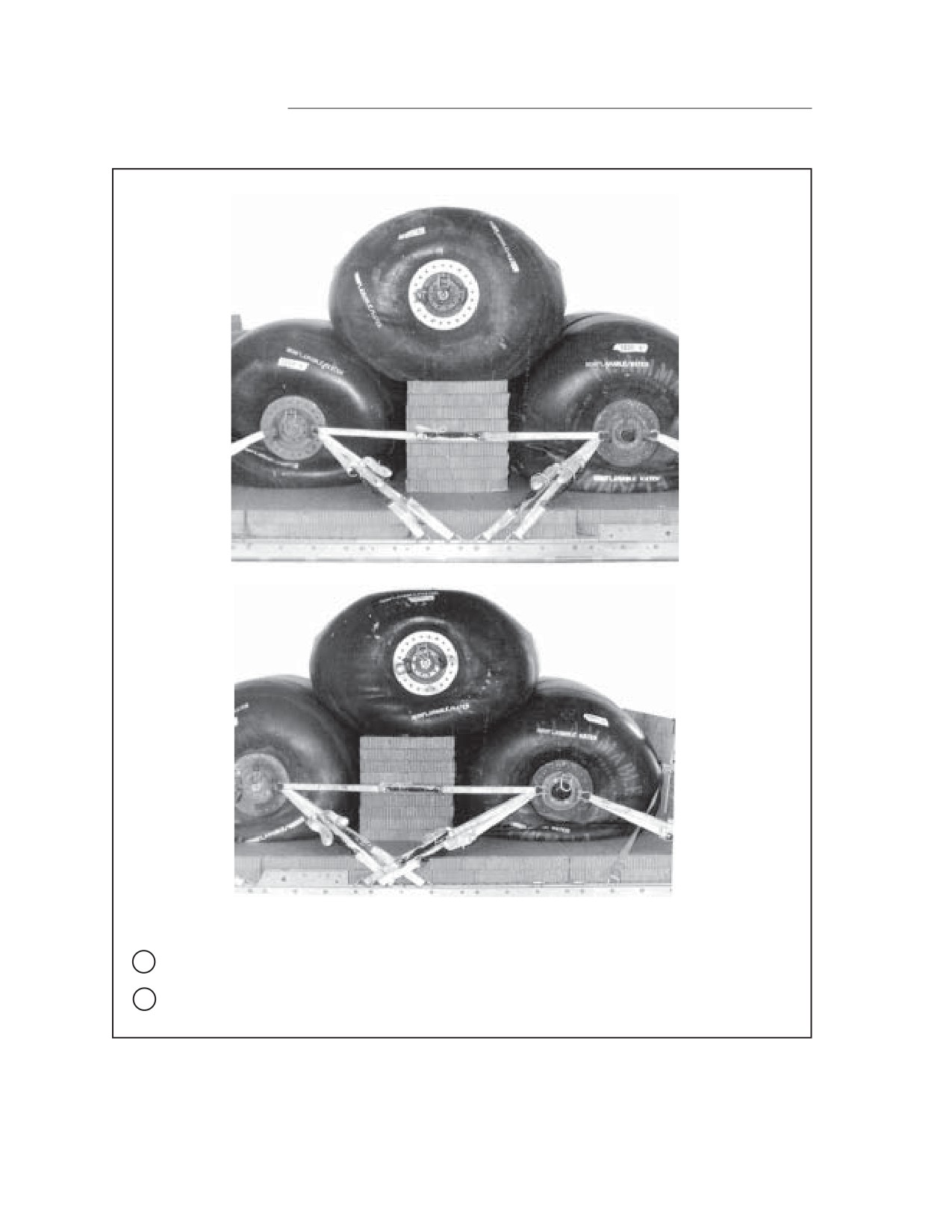
FIFTH DRUM
STACK 12
SIXTH DRUM
STACK 11
1
Position the fifth drum centered on top of stack 12.
2
Position the sixth drum centered on top of stack 11.
Figure 3-75. Drums Positioned on Platform
3-100
FM 4-20.137/TO 13C7-1-19
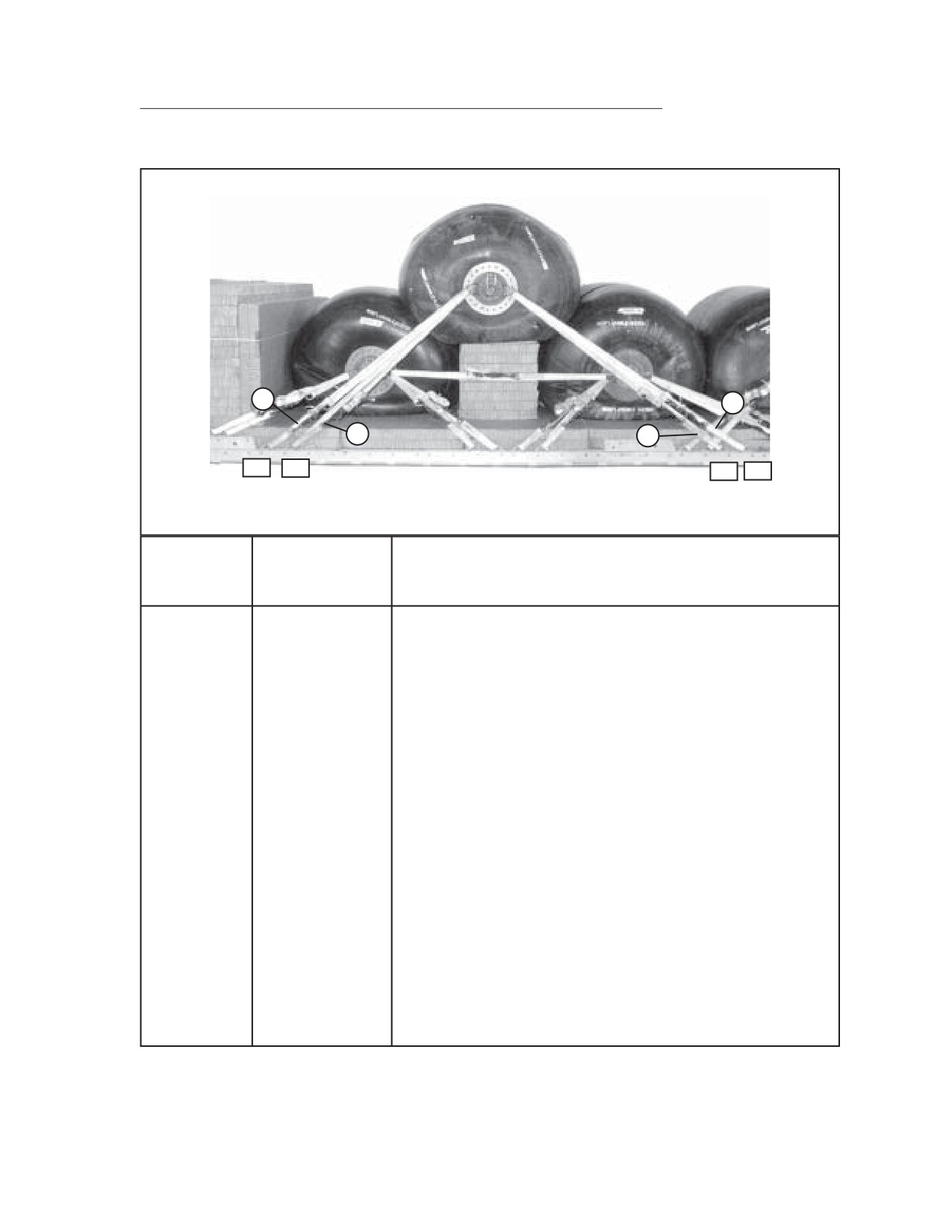
FIFTH DRUM
46
48
42
44
28
27
18
17
Tie-dow n
Lashing
Clevis
Instruction s
Number
Number
42
27
Route a lashing from clevis
27 to the right rear shackle of the
fifth drum
43
27A
Route a lashing from clevis
27A to the left rear shackle of the
fifth drum
44
18
Route a lashing from clevis
18 to the right front shackle of the
fifth drum
45
18A
Route a lashing from clevis
18A to the left front shackle of the
fifth drum
46
28
Route a lashing from clevis
28 to the right rear shackle of the
fifth drum
47
28A
Route a lashing from clevis
28A to the left rear shackle of the
fifth drum
48
17
Route a lashing from clevis
17 to the right front shackle of the
fifth drum
49
17A
Route a lashing from clevis
17A to the left front shackle of the
fifth drum
Figure 3-76. Lashings 42 Through 49 Installed
3-101
FM 4-20.137/TO 13C7-1-19
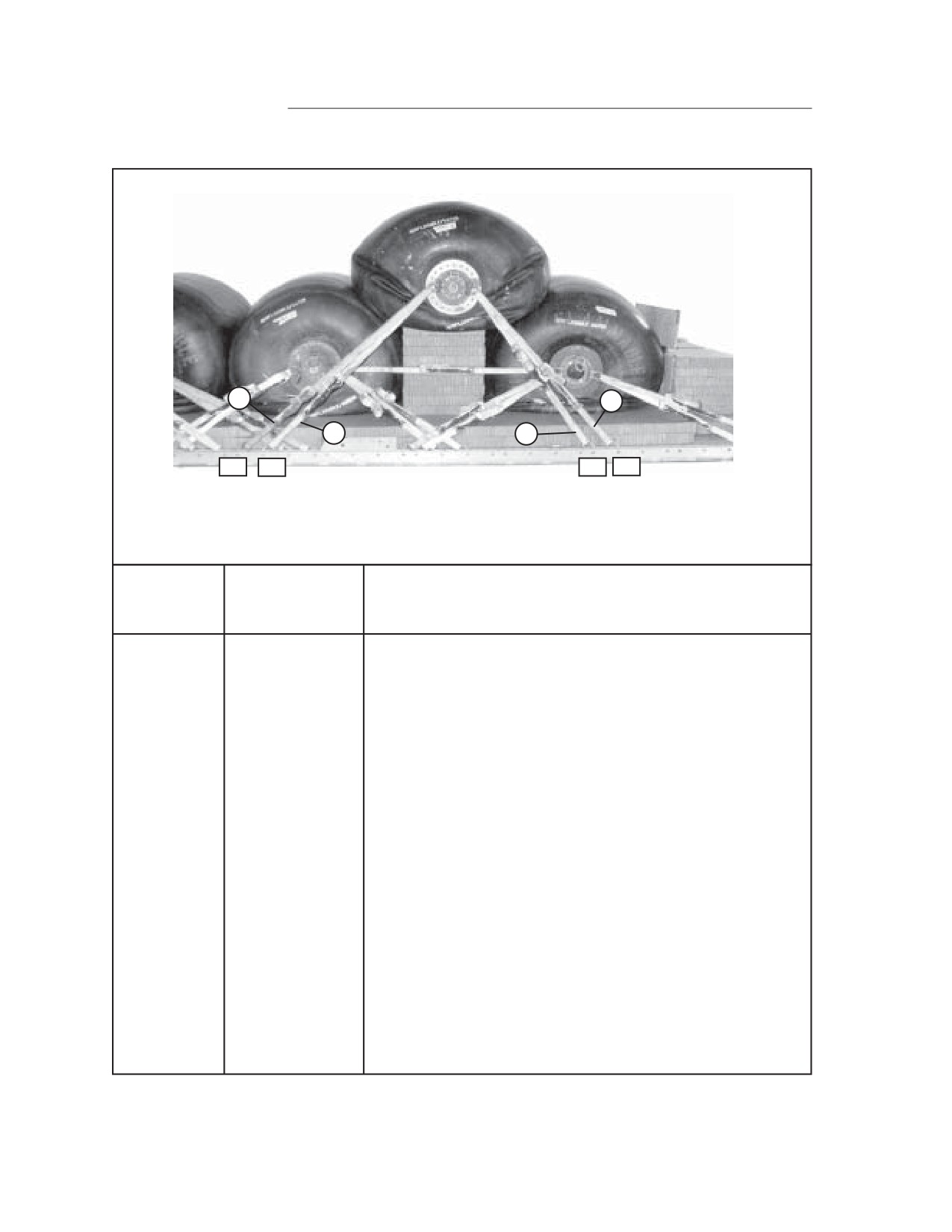
SIXTH DRUM
54
56
50
52
16
15
7
6
NOTE: Remove the temporary end board lashing on clevises 6 and 6A.
Tie-dow n
Lashing
Clevis
Instruction s
Number
Number
50
15
Route a lashing from clevis
15 to the right rear shackle of the
sixth drum
51
15A
Route a lashing from clevis
15A to the left rear shackle of the
sixth drum
52
7
Route a lashing from clevis
7 to the right front shackle of the
sixth drum
53
7A
Route a lashing from clevis
7A to the left front shackle of the
sixth drum
54
16
Route a lashing from clevis
16 to the right rear shackle of the
sixth drum
55
16A
Route a lashing from clevis
16A to the left rear shackle of the
sixth drum
56
6
Route a lashing from clevis
6 to the right front shackle of the
sixth drum
57
6A
Route a lashing from clevis
6A to the left front shackle of the
sixth drum
Figure 3-77. Lashings 50 Through 57 Installed
3-102
FM 4-20.137/TO 13C7-1-19
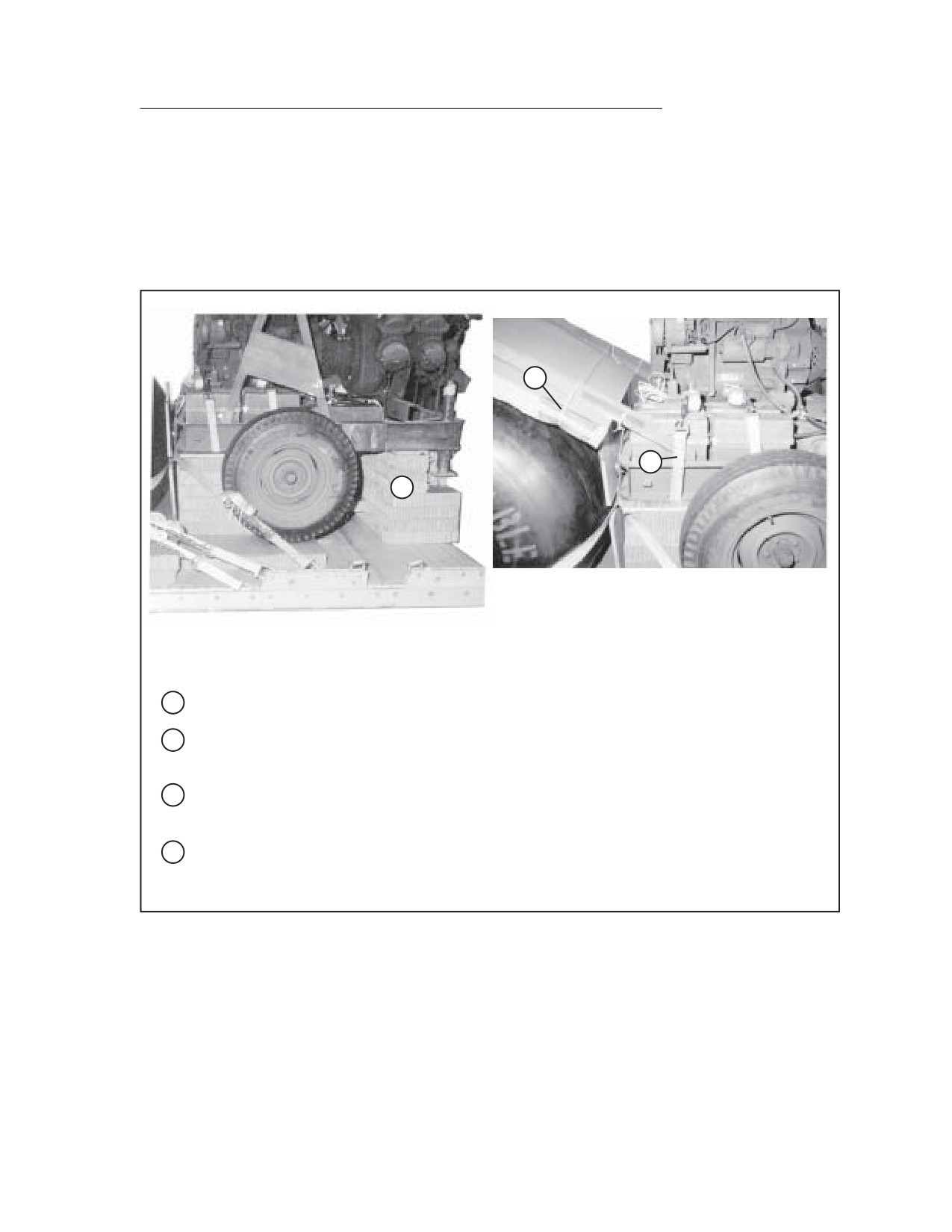
PREPARING AND POSITIONING THE PUMP
3-80. Prepare the pump as shown in Figure 2-8. Position the pump as shown in
Figure 3-78.
4
3
2
1
Preposition two lashings in each of the rear tie down points on the pump (not shown).
2
Position the pump on honeycomb stack 1 aligning the front frame edge with the front edge
of the platform.
3
Unbolt the lower arm of the pump lifting frame and secure it to the frame with type III
nylon cord and disconnect the lashing around the battery box.
4
Tape the edges of a 53-inch by 36-inch piece of honeycomb and secure it to the rear lifting
frame with type III nylon cord.
Figure 3-78. Pump Prepared and Positioned
3-103
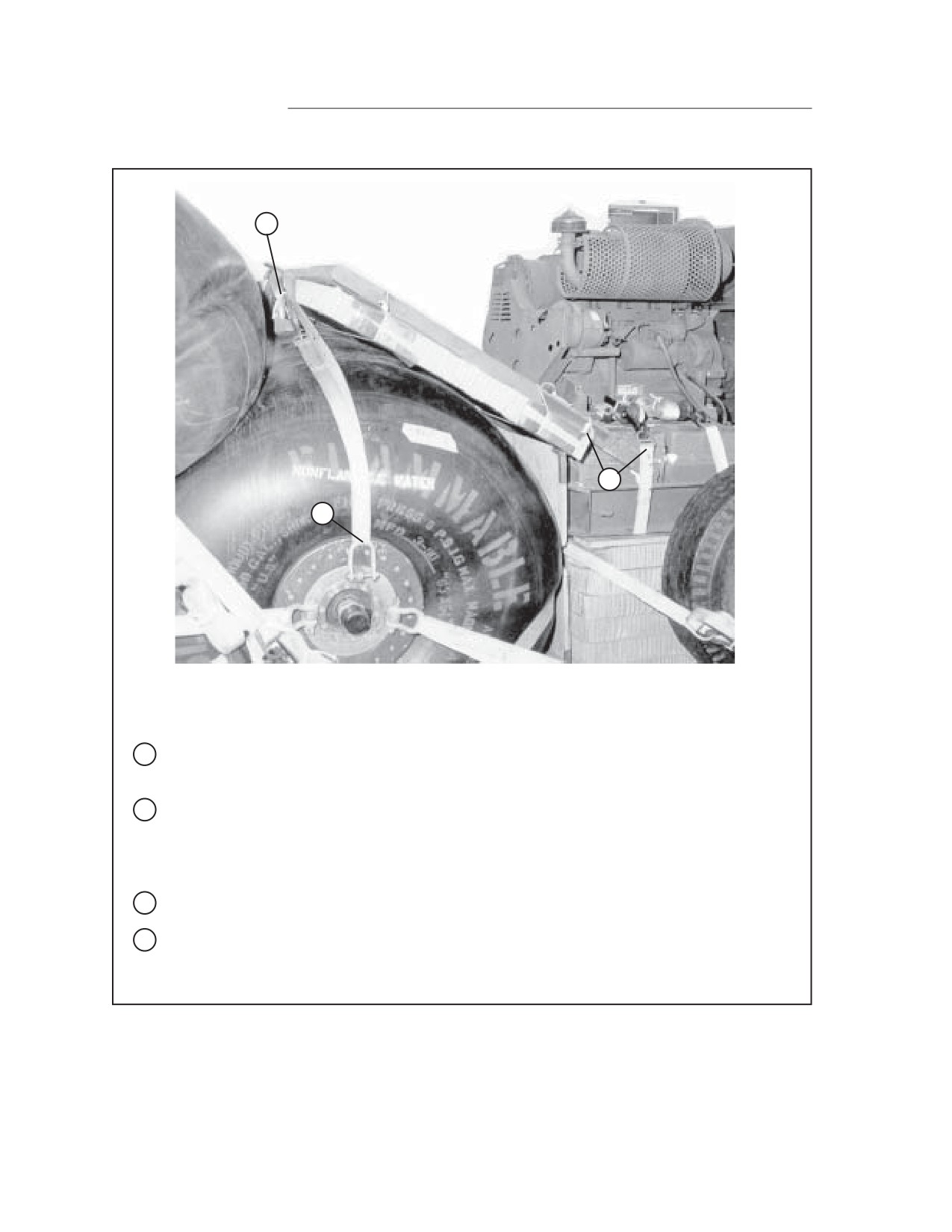
FM 4-20.137/TO 13C7-1-19
7
5
6
5
Position the lifting frame on the fourth drum and reconnect the lashing around the battery
box.
6
Route a lashing through the top right shackle on the fourth drum over and through the
lifting point on the frame. Continue to route the same lashing through the top left shackle
on the fourth drum back over and through the lifting point on the frame. Secure the load
binder and D-ring.
7
Secure a piece of felt on the lifting point with type III nylon cord.
8
Secure a canvas cover over the pump and secure with type III nylon cord (not shown).
Figure 3-78. Pump Prepared and Positioned (Continued)
3-104
FM 4-20.137/TO 13C7-1-19
LASHING PUMP TO PLATFORM
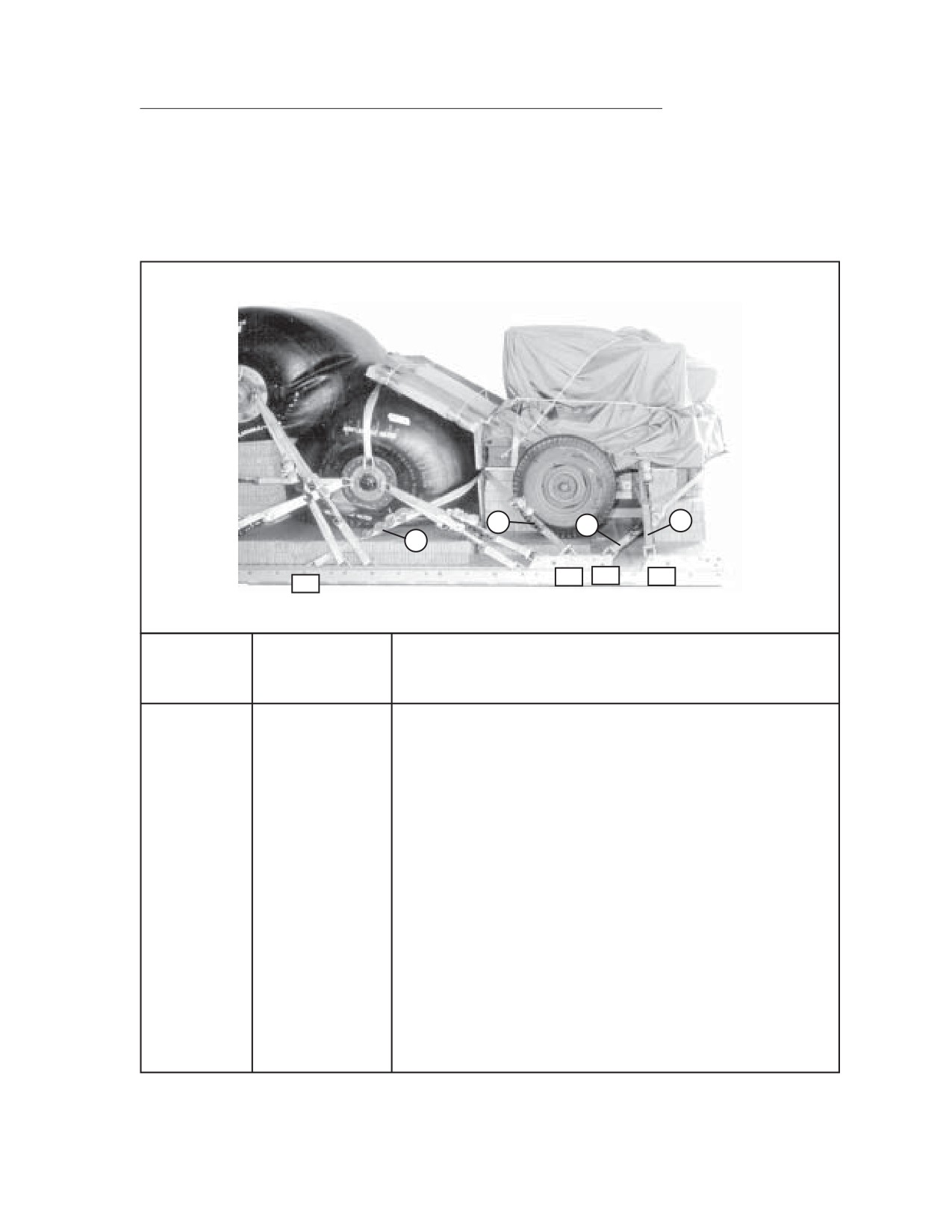
3-81. Lash the pump to the platform as shown in Figure 3-79.
60
62
64
58
3
2
1
8
Tie-dow n
Lashing
Clevis
Instructions
Number
Number
58
8
Route the prepositioned lashing from the right rear
t
point through the cutout in the endboard to clevis
8
59
8A
Route a prepositioned lashing from the left rear
t
through the cutout in the endboard to clevis 8A
60
3
Route a prepositioned lashing from the right rear
t
point to clevis
3
61
3A
Route a prepositioned lashing from the left rear
t
to clevis 3A
62
2
Route a lashing from clevis 2 to the right front
t
63
2A
Route a lashing from clevis 2A to the left front
t
64
1
Route a lashing from clevis 1 to the right side
f
65
1A
Route a lashing from clevis 1A to the left side
f
Figure 3-79. Lashings 58 Through 65 Installed
3-105
FM 4-20.137/TO 13C7-1-19
BUILDING, POSITIONING, AND LASHING THE SEPARATOR BOX TO
THE PLATFORM
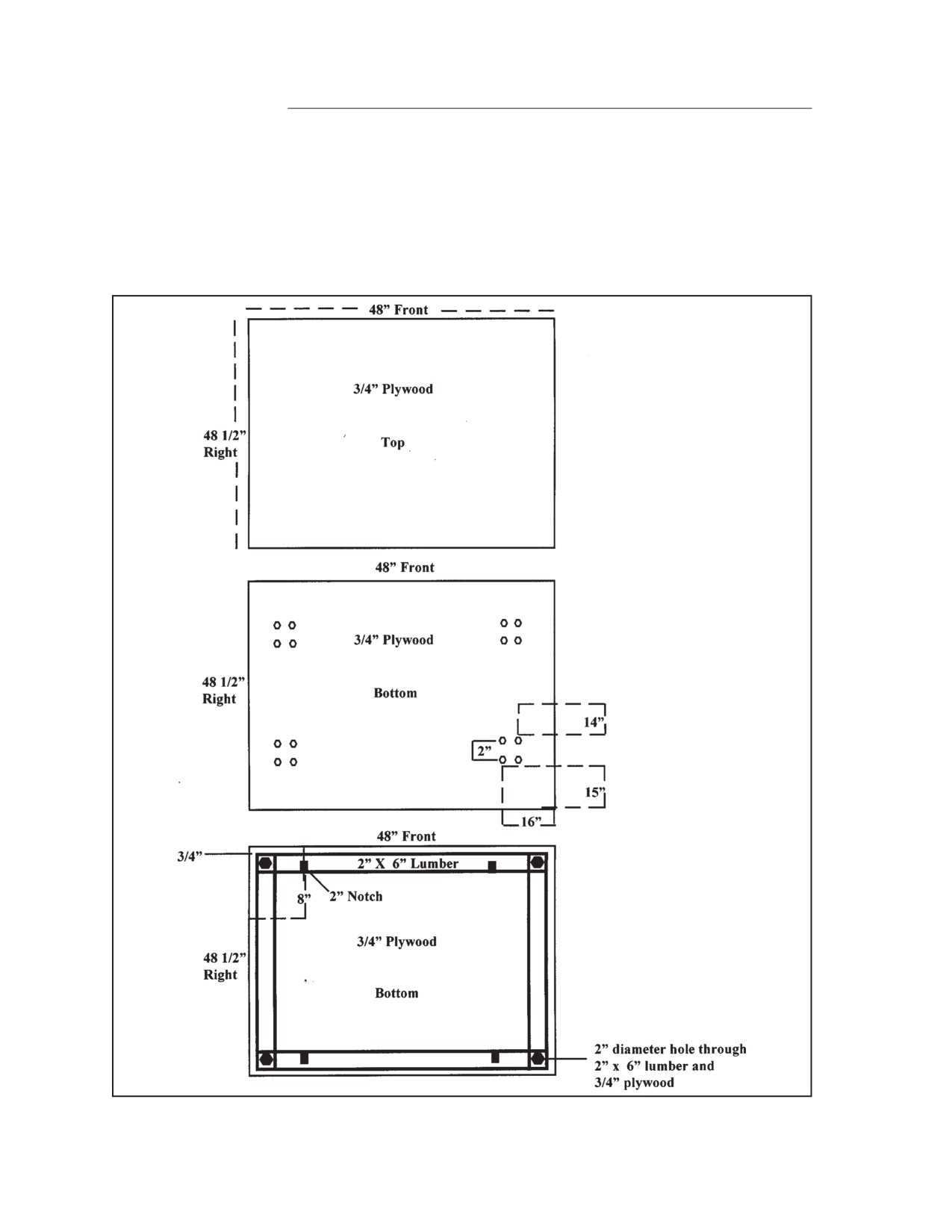
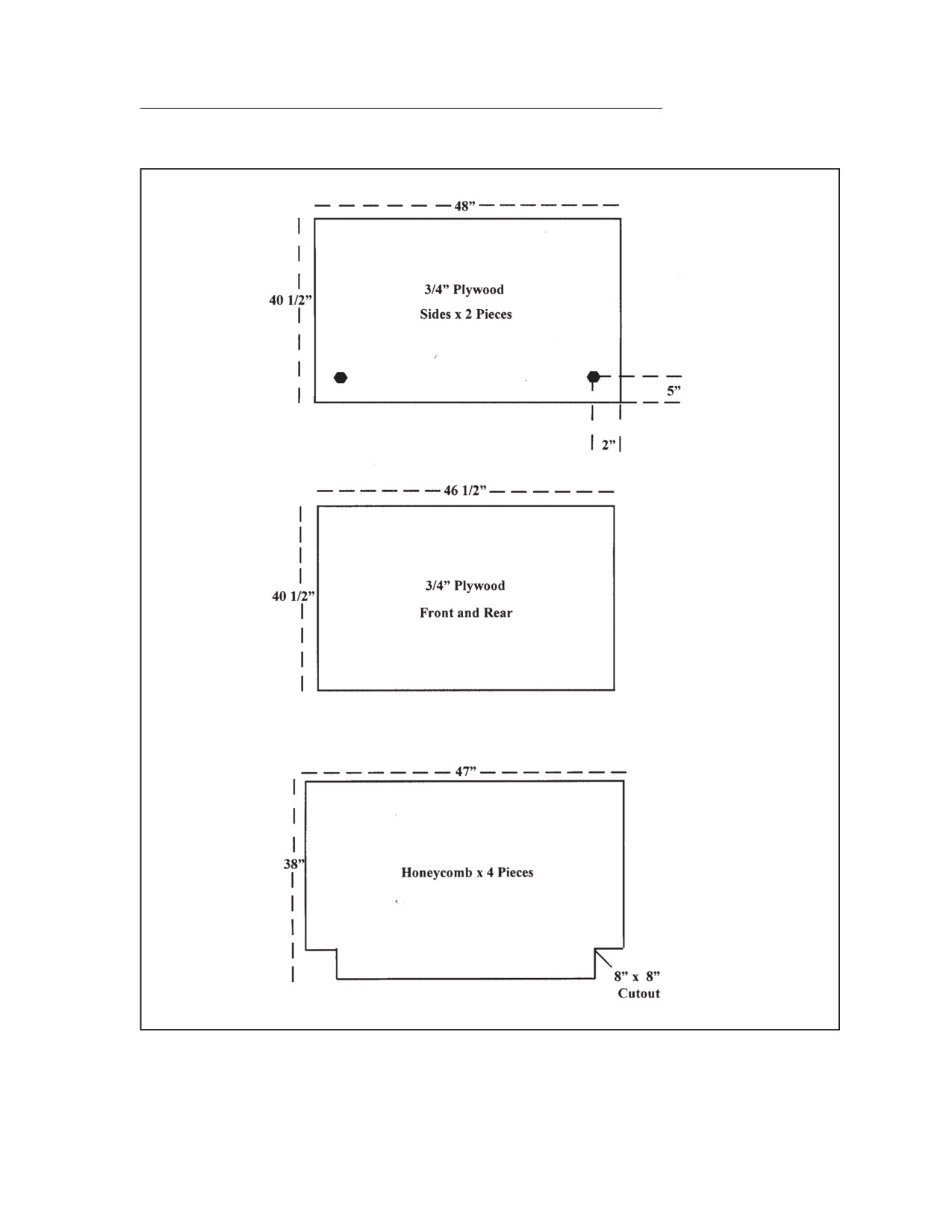
3-82. Build the separator box as shown in Figure 3-80. Place the separator in
the box as shown in Figure 3-81. Prepare, position, and lash the separator box
as shown in Figures 3-82 and 3-83.
Figure 3-80. Separator Box Built
3-106
FM 4-20.137/TO 13C7-1-19
Figure 3-80. Separator Box Built (Continued)
3-107
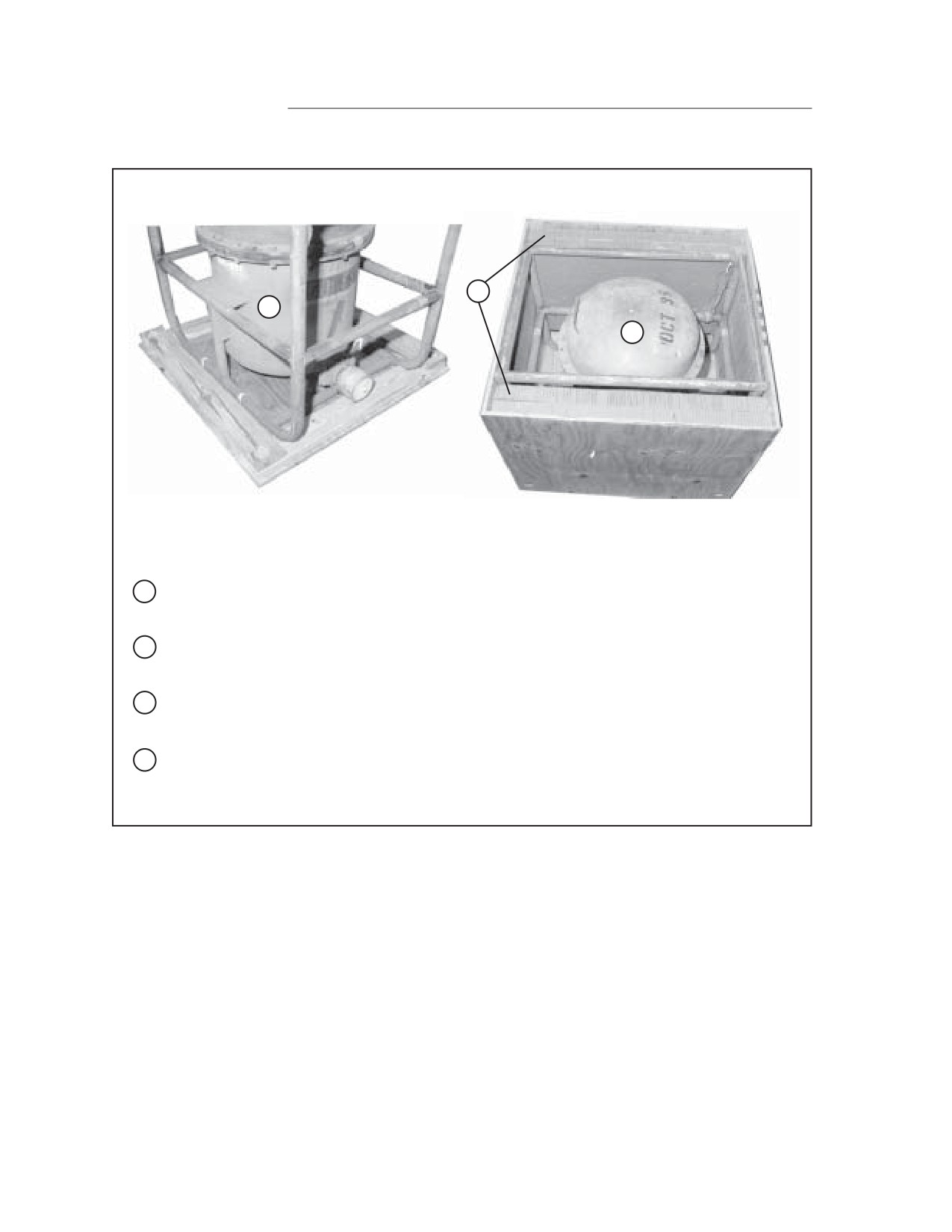
FM 4-20.137/TO 13C7-1-19
4
2
3
1
Place a piece of 1/2-inch tubular nylon webbing through the hole on the bottom piece of
the separator box (not shown).
2
Place the fuel separator in the box aligning the separator frame with the notched cutouts
in the 2-inch by 6-inch piece of lumber.
3
Secure the separator with 1/2-inch tubular nylon webbing through the holes in the bottom
piece.
4
Place four 47-inch by 38-inch pieces of honeycomb with notched corners (two per side), next
to the separator in the box.
Figure 3-81. Separator Placed In Box
3-108
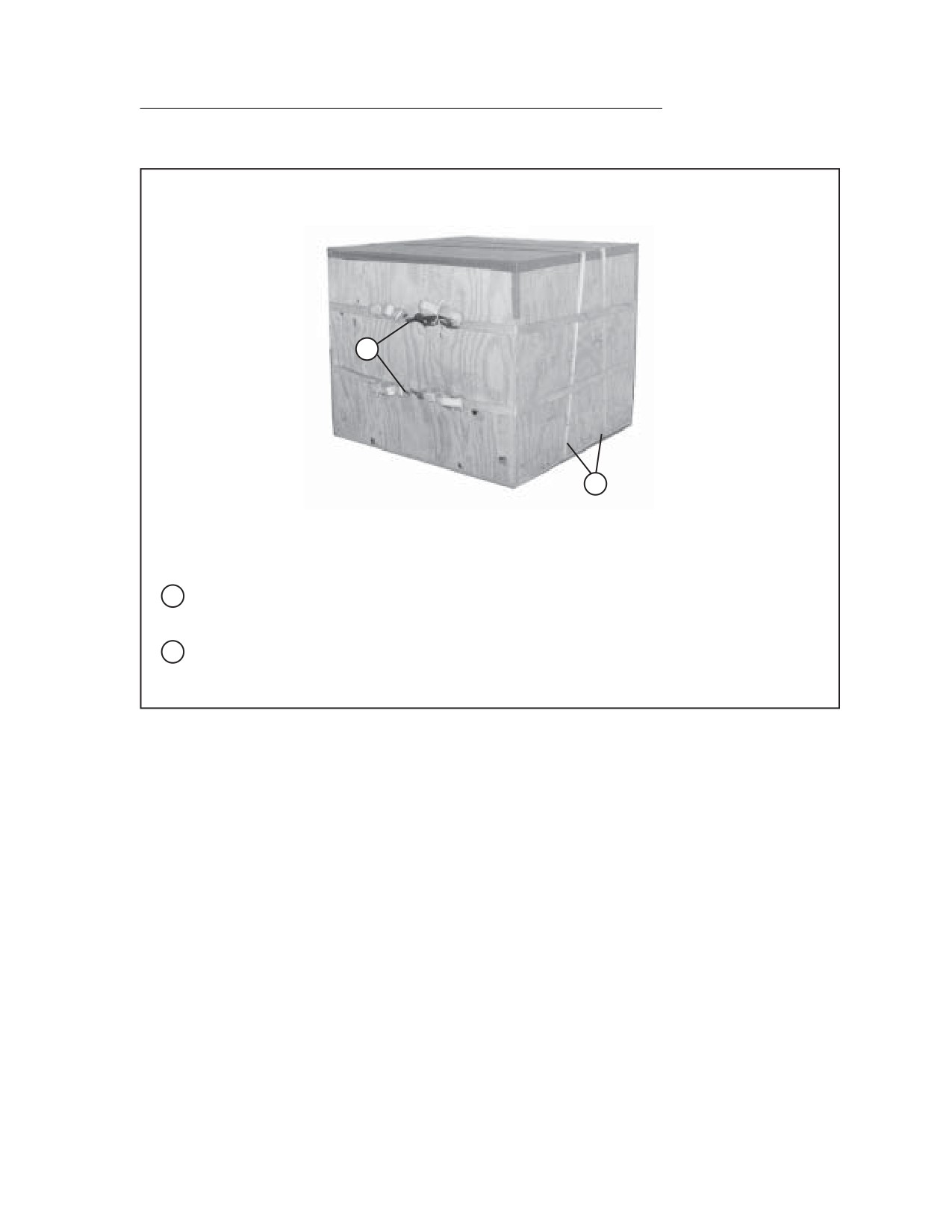
FM 4-20.137/TO 13C7-1-19
5
6
5
Use two lashings to secure the box. Place each lashing approximately 16 inches in from the
top and bottom of the box.
6
Use two lashings to secure the box from front to rear. Place each lashing approximately
16 inches in from each side of the box.
Figure 3-81. Separator Placed In Box (Continued)
3-109
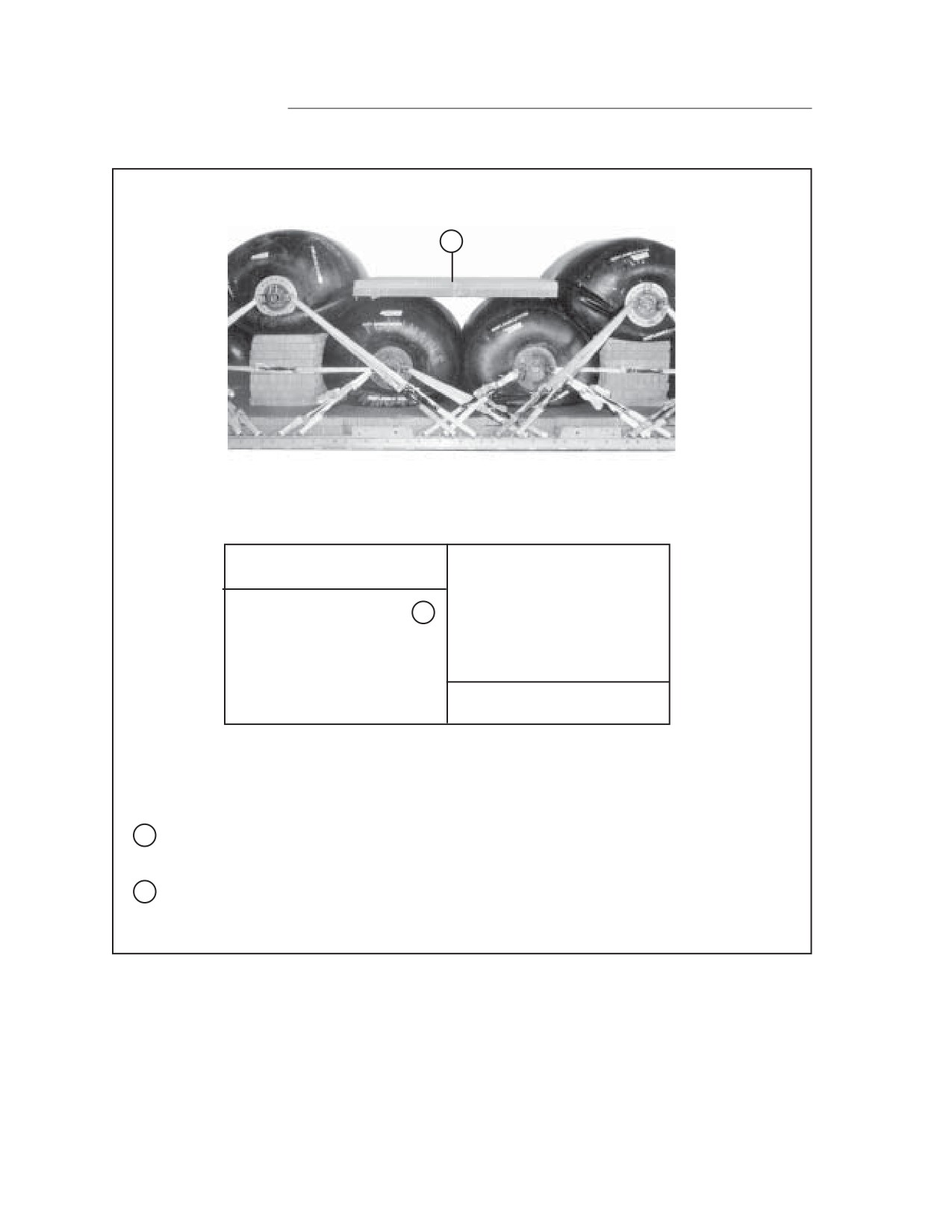
FM 4-20.137/TO 13C7-1-19
2
96”x 17”
HONEYCOMB
96”x 36”
1
HONEYCOMB
96”x 36”
HONEYCOMB
96”x 17”
HONEYCOMB
96”x 53” BASE
1
Alternate two pieces of 96-inch by 36-inch honeycomb and two pieces of 17-inch by 36-inch
honeycomb to make a two layer 96-inch by 53-inch base. Glue the layers together.
2
Cut the stack to fit tightly between the fifth and sixth drums.
Figure 3-82. Honeycomb Stack for Separator Box Prepared
3-110
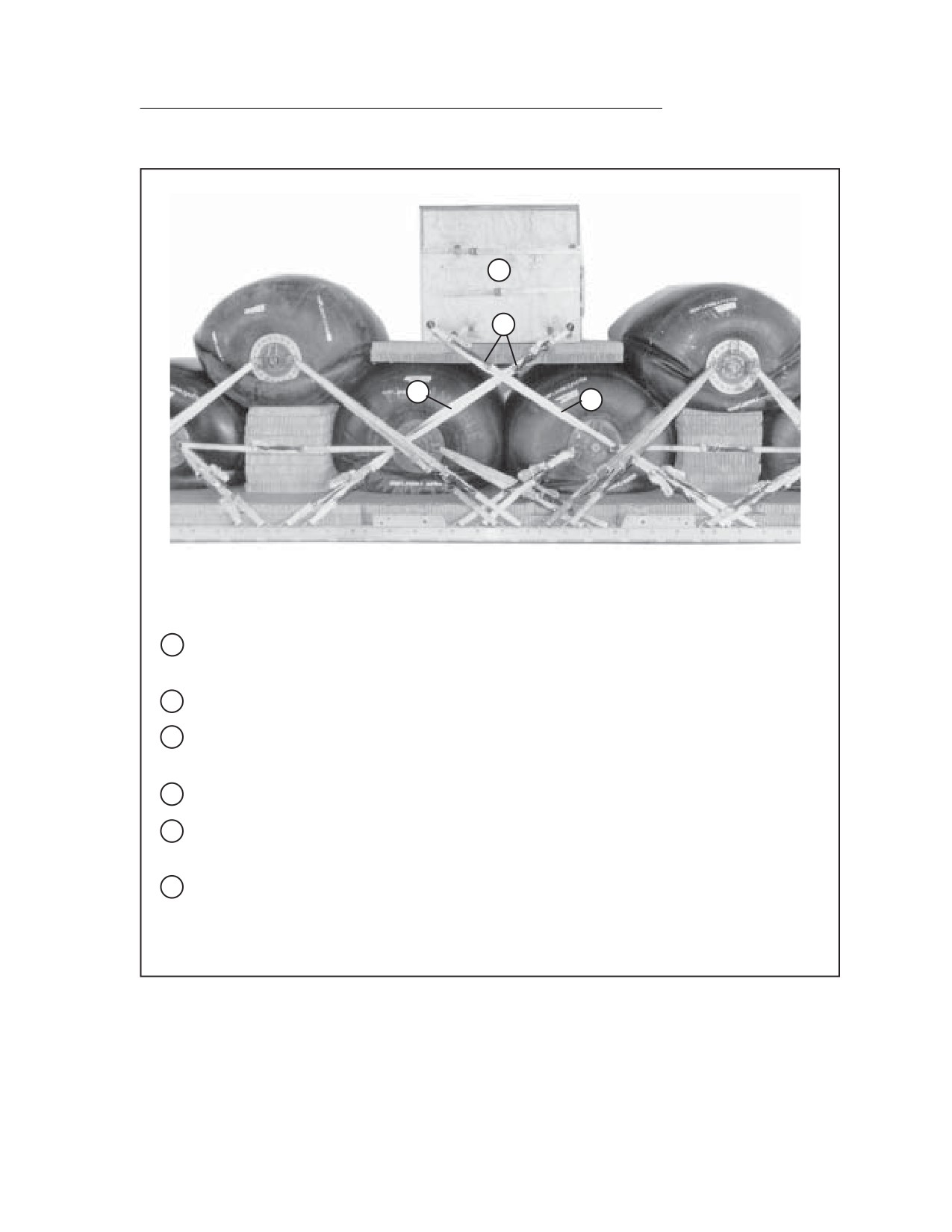
FM 4-20.137/TO 13C7-1-19
5
6
1
3
NOTE: The separator box must be suspended to complete the routing of the lashings.
1
Route a lashing from the right rear shackle of the second drum up through the bottom
right front hole and out the side right front hole of the box.
2
Repeat step 1 for the left side.
3
Route a lashing from the right front shackle of the third drum up through the bottom
right rear hole and out the side right rear hole of the box.
4
Repeat step 3 for the left side.
5
Lower and position the separator box centered on the honeycomb between the drums.
Remove lifting slings.
6
Secure separator box lashings and safety tie the lower hooks of the load binders to the lower
D-rings with a single length of type III nylon cord.
Figure 3-83. Separator Box Positioned and Secured to Load
3-111
FM 4-20.137/TO 13C7-1-19
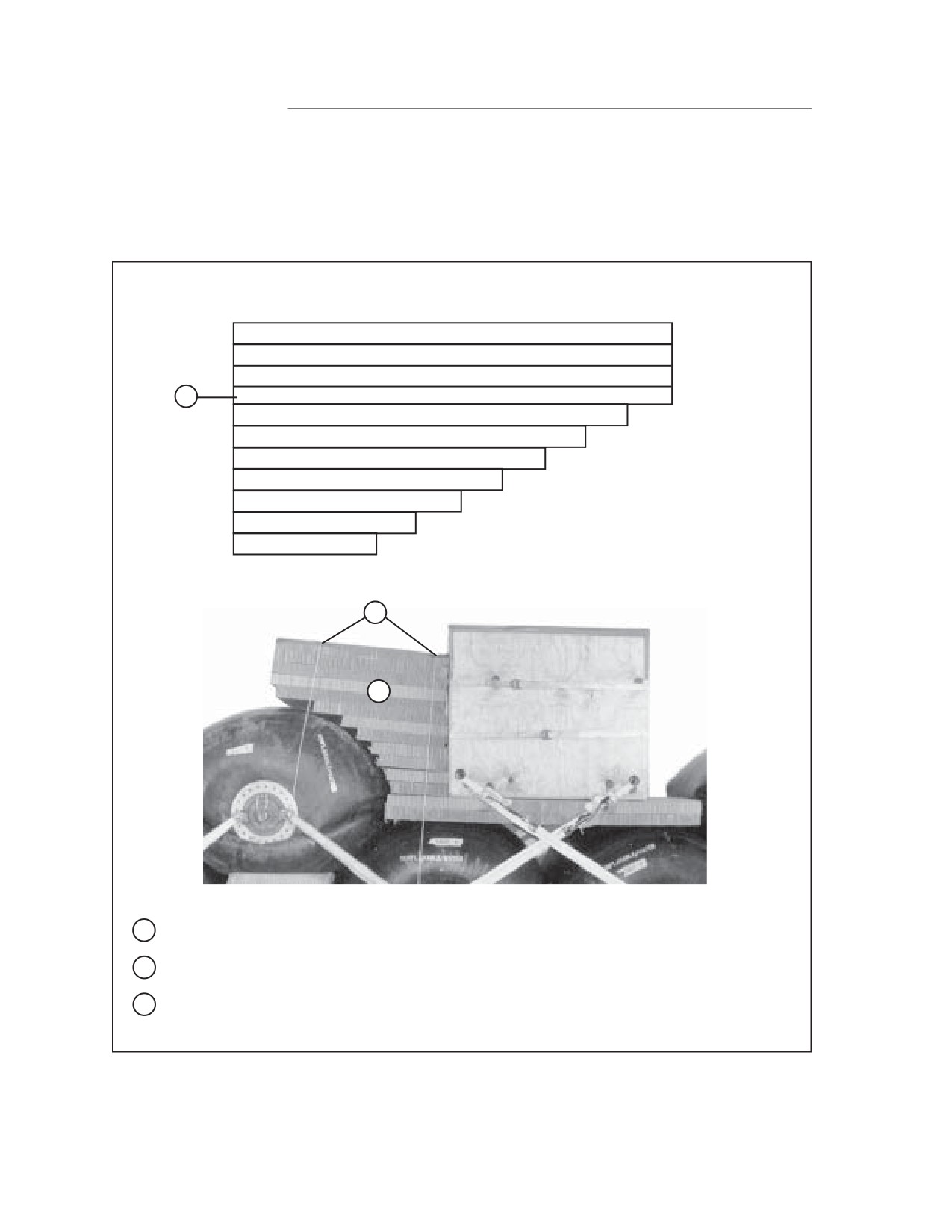
CONSTRUCTING AND POSITIONING THE RELEASE PLATFORM
3-83. Construct and position the release platform as shown in Figure 3-84.
RELEASE PLATFORM
44”x 36”
44”x 36”
44”x 36”
1
44”x 36”
35”x 36”
27”x 36”
22”x 36”
19”x 36”
17”x 36”
15”x 36”
14”x 36”
3
2
1
Construct and glue the release platform.
2
Position the release platform to the rear of the separator box and on top of the fifth drum.
3
Tape the top edges and secure with type III nylon cord to a convenient location on the load.
Figure 3-84. Release Platform Constructed and Positioned
3-112
FM 4-20.137/TO 13C7-1-19
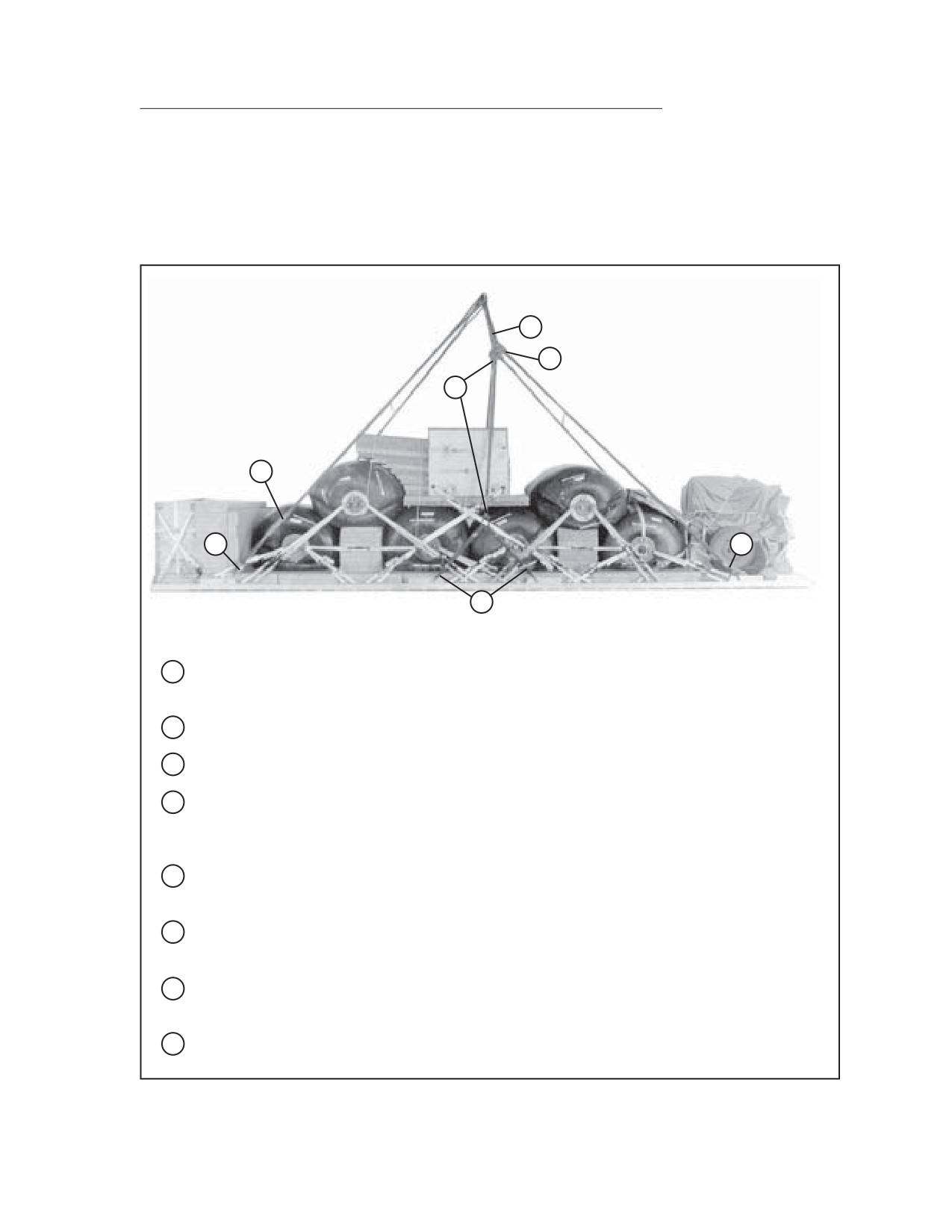
INSTALLING SUSPENSION SLINGS AND SAFETY TIES
3-84. Install suspension slings and safety ties as shown in Figure 3-85.
3
2
5
7
6
1
4
1
Place a large clevis to one end of a 16-foot (4-loop), type XXVI nylon suspension sling. Attach
the clevis to the front right suspension bracket.
2
Attach the running end of the 16-foot sling to a 3-point link.
3
Attach a 3-foot (4-loop), type XXVI nylon suspension sling to the 3-point link.
4
Attach one large clevis to each running end of two 3-foot (4-loop), type XXVI nylon suspen-
sion slings. Attach a large clevis to the running ends of each 3-foot sling and attach the
large clevises to the center right two suspension brackets.
5
Attach a 9-foot (4-loop), type XXVI nylon suspension sling to the 3-point link. Attach the
running end to the large clevis at the ends of the two 3-foot slings.
6
Place a large clevis in one end of a 3-foot (4-loop), type XXVI nylon suspension sling. Attach
the clevis to the right rear suspension bracket.
7
Attach a 5 1/2-inch 2-point link to the 3-foot sling and attach a 16-foot (4-loop), type XXVI
nylon suspension sling to the running end of the link.
8
Repeat steps 1 through 7 for the left side (not shown).
Figure 3-85. Suspension Slings and Safety Ties Installed
3-113
FM 4-20.137/TO 13C7-1-19
9
10
11
9
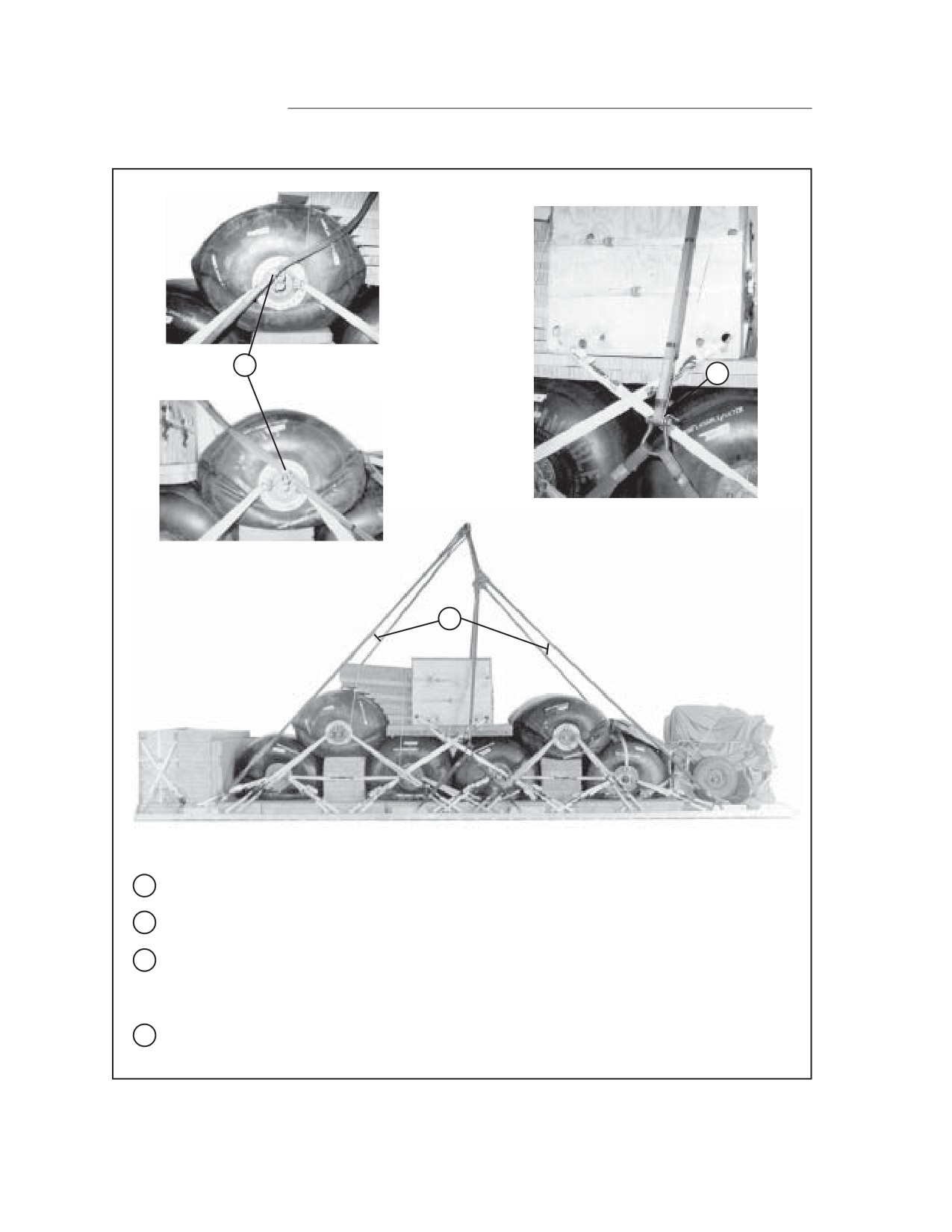
Safety the front and rear slings to the load with type I, 1/4-inch cotton webbing.
10
Secure the center slings with type III nylon cord.
11
Raise the suspension slings and install the suspension sling safety ties as shown in Appen-
dix A, to the front and rear suspension slings, six to eight inches above the highest point of
the load (not shown).
12
Pad and tape all link assemblies (not shown).
Figure 3-85. Suspension Slings and Safety Ties Installed (Continued)
3-114
FM 4-20.137/TO 13C7-1-19
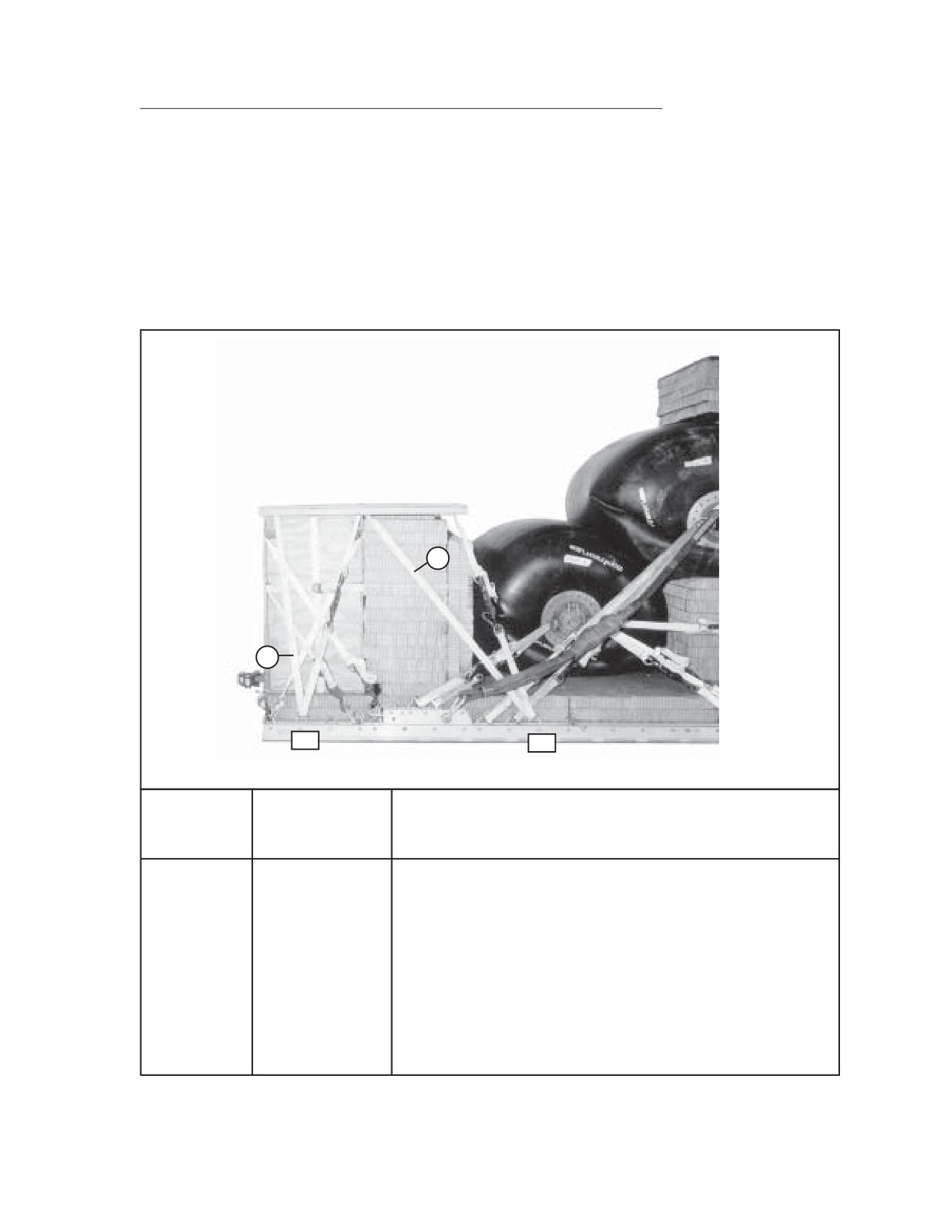
BUILDING AND POSITIONING PARACHUTE STOWAGE PLATFORM
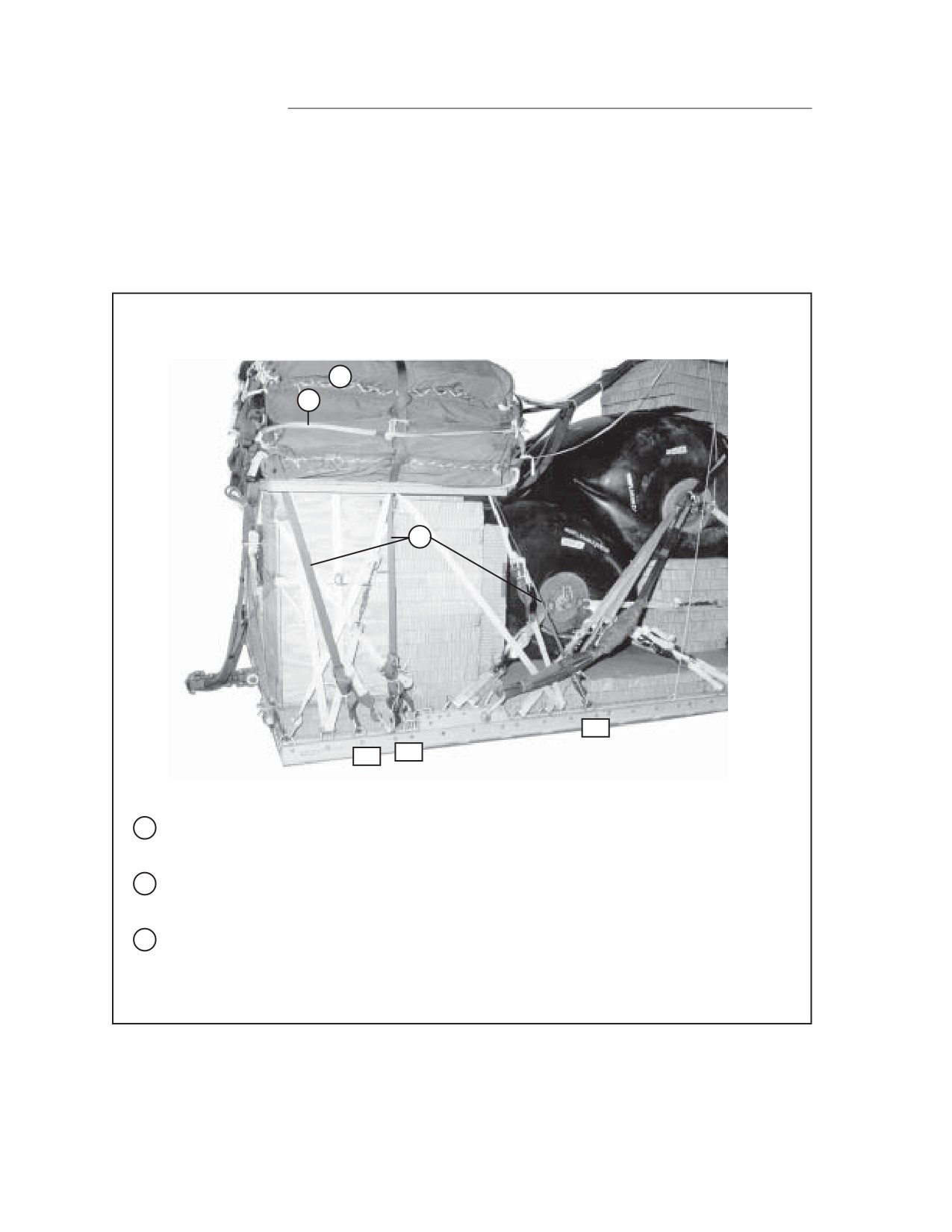
3-85. Build the parachute stowage platform as shown in Figure 3-18. Position a
85-inch by 17-inch piece of honeycomb on top of the parachute stack. Position
the stowage platform on top of the equipment hose box and parachute stack.
Lash the parachute stowage platform as shown in Figure 3-86.
68
66
36
26
Tie-dow n
Lashing
Clevis
Instruction s
Number
Number
66
36
Route a lashing from clevis 36 through the rear and center
right holes in the parachute stowage platform
67
36A
Route a lashing from clevis 36A through the rear and center
left holes in the parachute stowage platform
68
26
Route a lashing from clevis 26 through the center and front
right holes in the parachute stowage platform
69
26A
Route a lashing from clevis 26A through the center and front
left holes in the parachute stowage platform
Figure 3-86. Parachute Stowage Platform Built and Positioned
3-115
FM 4-20.137/TO 13C7-1-19
PREPARING AND STOWING CARGO PARACHUTES
3-86. Prepare and stow the cargo parachutes as shown in Figure 3-87.
1
3
2
25
33
35
1
Prepare and stow seven G-11 cargo parachutes according to FM 4-20.102/NAVSEA
SS400-AB-MMO-010/TO 13C7-1-5.
2
Restrain the parachutes according to FM 4-20.102/NAVSEA SS400-AB-MMO-010/TO 13C7-
1-5 using platform clevises 25, 25A, 33, 33A, 35 and 35A.
3
Install the multicut parachute release straps according to FM 4-20.102/NAVSEA SS400-AB-
MMO-010/TO 13C7-1-5.
Figure 3-87. Cargo Parachutes Prepared and Stowed
3-116
FM 4-20.137/TO 13C7-1-19
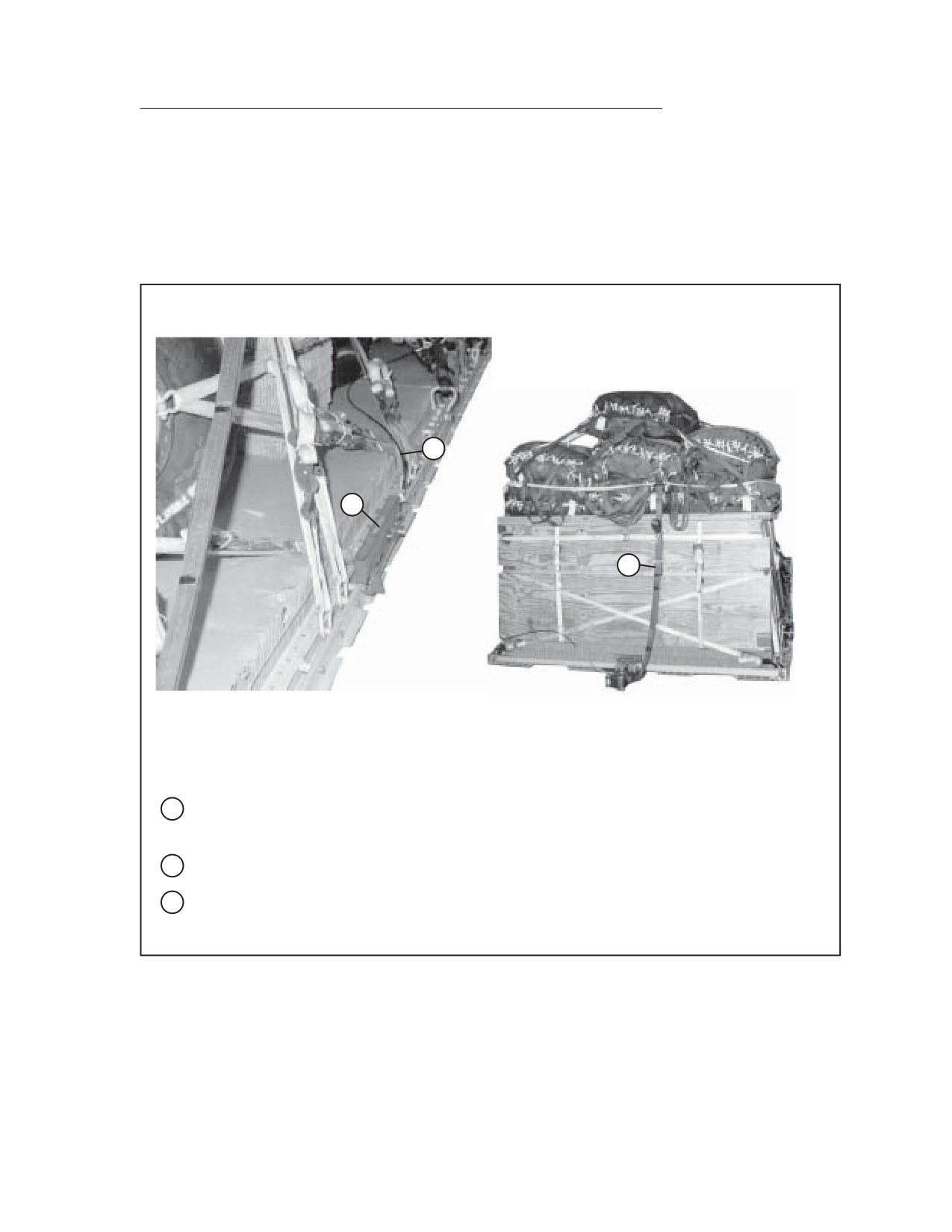
INSTALLING THE EXTRACTION SYSTEM
3-87. Install the extraction system as shown in Figure 3-88.
3
1
2
1
Using the rear holes, install the extraction force transfer coupling (EFTC) according to
FM 4-20.102/NASEA SS400-AB-MMO-010/TO 13C7-1-5.
2
Use a 9-foot (2-loop), type XXVI nylon webbing sling for use as a deployment line.
3
Using a 28-foot EFTC cable, safety the cable using one turn type I, 1/4-inch cotton webbing.
Figure 3-88. Extraction System Installed
3-117
FM 4-20.137/TO 13C7-1-19
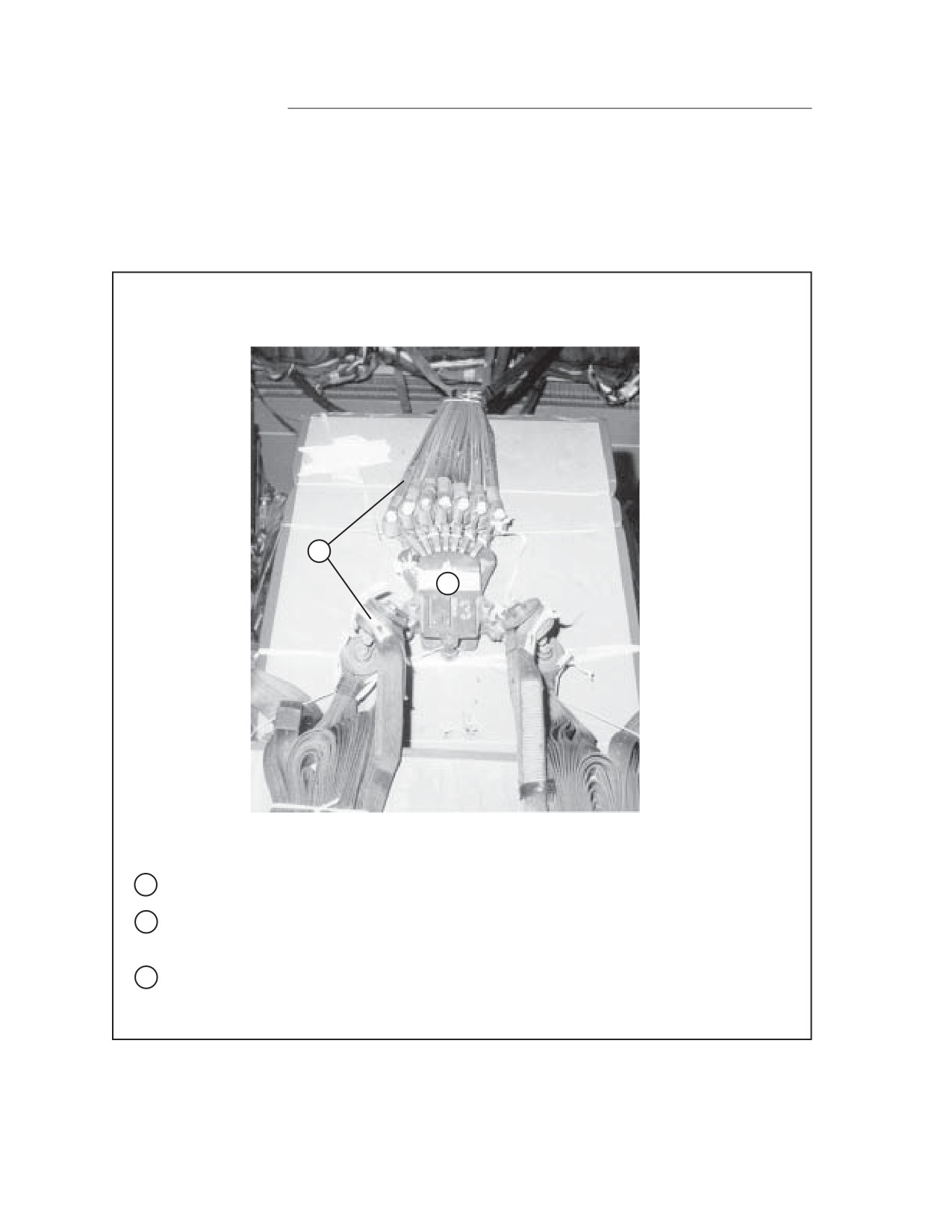
INSTALLING THE PARACHUTE RELEASE SYSTEM
3-88. Install the cargo parachute release as shown in Figure 3-89.
2
1
1
Position the M-2 release on the release platform.
2
Attach the suspension slings and the riser extensions to the M-2 release and secure release
according to FM 4-20.102/NAVSEA SS400-AB-MMO-010/TO 13C7-1-5.
3
S-fold and tie any slack in the suspension slings with one turn type I, 1/4-inch cotton
webbing (not shown).
Figure 3-89. Parachute Release Installed
3-118
FM 4-20.137/TO 13C7-1-19
PLACING EXTRACTION PARACHUTE
3-89. Select the extraction parachute and extraction line needed using the
extraction line requirements table in FM 4-20.102/NAVSEA SS400-AB-MMO-
010/TO 13C7-1-5. Rig the extraction line in an extraction line bag according to
TM 10-1670-286-20/TO 13C5-2-41. Place the extraction parachute and extrac-
tion line on the load for installation in the aircraft.
INSTALLING PROVISIONS FOR EMERGENCY RESTRAINTS
3-90. Select and install the provisions for emergency aft restraints according to
the emergency aft restraint requirements table in FM 4-20.102/NAVSEA SS400-
AB-MMO-010/TO 13C7-1-5.
MARKING RIGGED LOAD
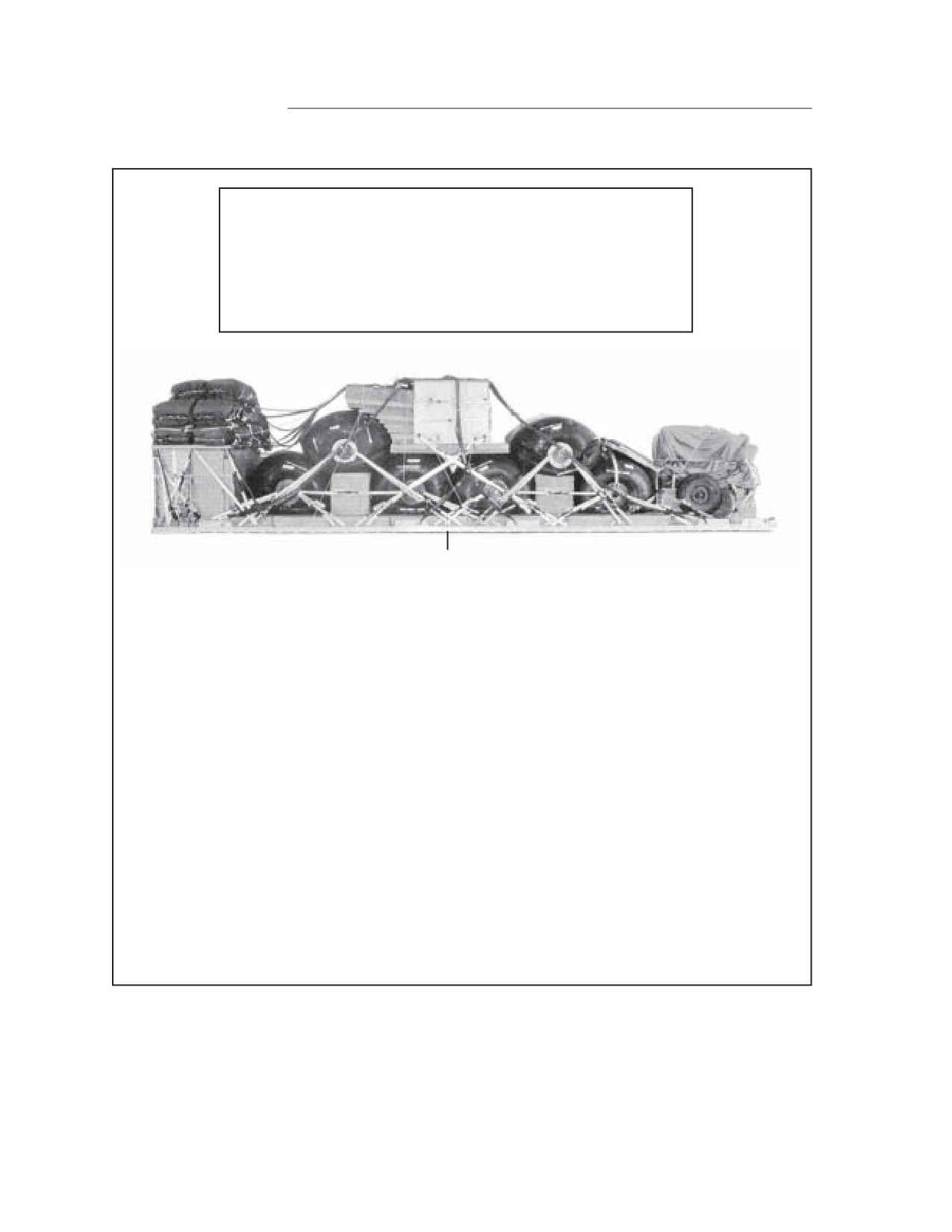
3-91. Mark the rigged load according to FM 4-20.102/NAVSEA SS400-AB-MMO-
010/TO 13C7-1-5 and as shown in Figure 3-90. Complete Shipper’s Declaration
for Dangerous Goods and affix to the load. If the load varies from the one shown,
the weight, height, CB, tipoff curve, and parachute requirements must be
recomputed.
EQUIPMENT REQUIRED
3-92. Use the equipment list in Table 3-4 to rig the load shown in Figure 3-90.
3-119
FM 4-20.137/TO 13C7-1-19
CAUTION
Make the final inspection required by FM 4-20.102/NAVSEA
SS400-AB-MMO-010/TO 13C7-1-5 before the load leaves
the rigging site.
CB
RIGGED LOAD DATA
Weight
32,730 pounds
Maximum Weight
35,000 pounds
Height
97 inches
Width
108 inches
Overall Length
411 inches
Overhang: Front (Tongue of pump)
9 inches
Rear (EFTC)
18 inches
Center of Balance (CB) (from the front edge of the platform)
201 inches
Figure 3-90. Six 500-Gallon Drums With Pump and Separator Rigged for Low-Velocity Airdrop
3-120
FM 4-20.137/TO 13C7-1-19
Table 3-4. Equipment Required for Rigging Six 500-Gallon Drums with Pump and Separator
National Stock
Item
Quantity
Number
8040-00-273-8713
Adhesive paste, 1-gal
As required
1670-01-035-6054
Bridle, extraction line bag (for DES
)
1
4030-00-090-5354
Clevis, large
13
4030-00-678-8562
Clevis, medium
4
8305-00-880-8155
Cloth coated, green, 60-inch
As required
4020-00-240-2146
Cord, nylon, type III, 550-lb
As required
1670-01-326-7309
Coupling, airdrop, extraction force transfer w/28-ft
1
1670-00-360-0328
Cover, clevis, large
7
8135-00-664-6958
Cushioning material, packaging, cellulose wadding
As required
1670-00-003-4391
Knife, parachute bag (for DES
)
2
1670-01-183-2678
Leaf, extraction line (line bag)(add 1 for DES
)
2
Line, drogue (for DES
)
1670-01-064-4452
60-foot (1-loop), type XXV I
1
Line, deployment:
1670-01-062-6304
9-foot (2-loop), type XXV I
1
Line, extraction
:
1670-01-064-4454
For C-130: 60-foot (6-loop), type XXV I
1
1670-01-468-9178
For C-17: 140-foot (6-loop), type XXV I
1
1670-01-062-6312
For C-141, C-5: 120-foot (6-loop), type XXV I
1
Link assembly:
Two-point:
5306-00-435-8994
Bolt, 1-in diam, 4-in long
4
5310-00-232-5165
Nut, 1-in, hexagonal
4
1670-00-003-1954
Plate, side, 5 1/2-in
4
5365-00-007-3414
Spacer, large
4
Two-point: (for DE
S)
5306-00-435-8994
Bolt, 1-in diam, 4-in long
2
5310-00-232-5165
Nut, 1-in, hexagonal
2
1670-00-003-1953
Plate, side, 3 3/4-in
2
5365-00-007-3414
Spacer, large
2
3-121
FM 4-20.137/TO 13C7-1-19
Table 3-4. Equipment Required for Rigging Six 500-Gallon Drums with Pump and Separator
(Continued)
National Stock
Item
Quantity
Number
1670-01-307-1055
Three-poin t
2
1670-00-006-2752
Four-poin t
2
1670-01-483-8259
Link,
t
1
Lumber:
5510-00-220-6146
2- by 4-in
As required
5510-00-220-6148
2- by 6-in
As required
5315-00-010-4659
Nail, steel wire, common, 8d
As required
1670-00-753-3928
Pad, energy dissipating, honeycomb, 3- by 36- by
96-in
45 sheets
Parachut
e:
1670-01-016-7841
Cargo, G-11C
7
1670-00-040-8135
Cargo, extraction, 28ft
2
1670-01-063-3715
Drogue, 15ft (for C-17)
1
Platform, airdrop, type
V
, 32-foot:
1670-01-353-8425
Bracket assembly, component, (EFTC
)
(1
)
1670-01-247-2389
Bracket, suspensio n
(8
)
1670-01-162-2372
Clevis assembly,
t
(88)
1670-01-353-8424
Extraction bracket assembly
(1
)
1670-01-162-2381
Link,
t
(2
)
5530-00-618-8073
Plywood, 3/4- by 48- by 96-in
4 sheets
1670-01-097-8817
Release, cargo parachute, M-2
1
Sling, cargo airdrop
For suspension:
1670-01-062-6306
3-ft (4-loop),
t
8
1670-01-062-6305
9-ft (4-loop),
t
2
1670-01-062-6308
16-ft (4-loop),
t
4
For riser extension:
1670-01-062-6311
120-ft (2-loop),
t
7
3-122
FM 4-20.137/TO 13C7-1-19
Table 3-4. Equipment Required for Rigging Six 500-Gallon Drums with Pump and Separator
(Continued)
National Stock
Item
Quantity
Number
7510-00-266-5016
T
ape, adhesive, 2-in
As required
7510-00-266-6710
T
ape, masking, 2-in
As required
1670-00-937-0271
Tie-down assembly, 15-ft
88
Webbing :
8305-00-268-2411
Cotton, 1/4-in, type I
As required
8305-00-082-5752
Nylon, tubular, 1/2-in
As required
8305-00-260-6890
T
ype X
As required
3-123
FM 4-20.137/TO 13C7-1-19
Chapter 4
Rigging AAFARS For Low-Velocity Airdrop On Type V
Platform
SECTION I- RIGGING AAFARS WITH THREE 500-GALLON FUEL DRUMS
DESCRIPTION OF LOAD
4-1. The Advanced Aviation Forward Area Refueling System (AAFARS) is rigged
on a 20-foot type V platform with four G-11 cargo parachutes. The AAFARS is
designed for forward area refueling of up to four aircraft at a time with a mini-
mum of 55 GPM. There are three collapsible fuel drums as an accompanying load.
Each drum is filled with 432 gallons of liquid. When empty, each drum weighs
250 pounds and is 62 inches long and 53 inches in diameter. The total rigged
overall length is 258 inches. Width is 108 inches. Height is 88 inches. Center of
balance is 121 inches.
Note: 1. For drums filled with liquid other than gasoline, use Table 1-1 to
recompute the weight.
2. If the load varies from the one shown, the weight, height, CB, tipoff
curve, and parachute requirements must be recomputed.
3. Do not pressurize drums with air.
PREPARING PLATFORM
4-2. Prepare a 20-foot type V airdrop platform using two tandem links, eight
suspension brackets and 54 tie-down clevises as shown in Figure 4-1.
Notes: 1. The nose bumper may or may not be installed.
2. Measurements given in this section are from the front edge of
the platform, NOT from the front edge of the nose bumper.
4-1
FM 4-20.137/TO 13C7-1-19
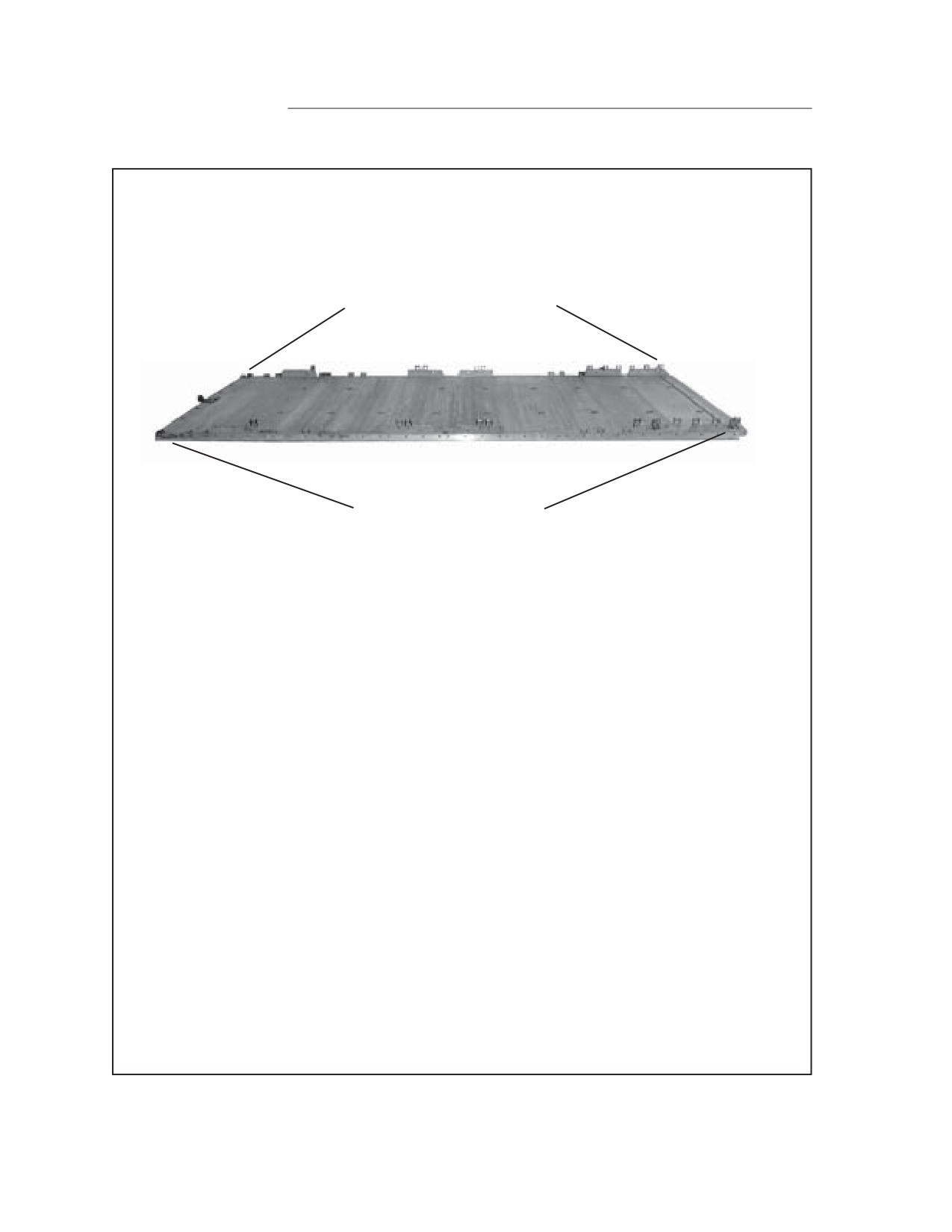
CLEVISES 27A THROUGH 1A
FRONT
REAR
CLEVISES 27 THROUGH 1
Steps:
1. Inspect, or assemble and inspect, the platform as outlined in TM 10-1670-268-
20&P/TO 13C7-52-22.
2. Install a tandem link on the front of each platform side rail using holes 1, 2, and 3.
3. Install a suspension bracket to each platform side rail using holes 5, 6, and 7.
4. Install a suspension bracket to each platform side rail using holes 17, 18, and 19.
5. Install a suspension bracket to each platform side rail using holes 22, 23, and 24.
6. Install a suspension bracket to each platform side rail using holes 34, 35, and 36.
7. Install a tie-down clevis to bushings 1 (doubled), 3, and 4 on each front tandem
link.
8. Install a tie-down clevis to bushings 1, 3 (doubled), and 4 on each of the first
suspension brackets.
9. Install a tie-down clevis to bushings 2 and 3 of each of the second suspension
brackets.
10. Install a tie-down clevis to bushings 2 and 3 of each of the third suspension
brackets.
11. Install a tie-down clevis to bushing 1 (doubled) of each of the fourth suspension
brackets.
12. Starting at the front of each platform side rail, install a tie-down clevis to the
bushings bolted to holes 8, 10, 11, 29, 30, 32, 33, 37 (doubled), 38 (doubled), and
40 (doubled).
13. Starting at the front of the platform, number the clevises bolted to the right side
from 1 through 27 and those bolted to the left side from 1A through 27A.
Figure 4-1. Platform Prepared
4-2
FM 4-20.137/TO 13C7-1-19
PREPARING HONEYCOMB
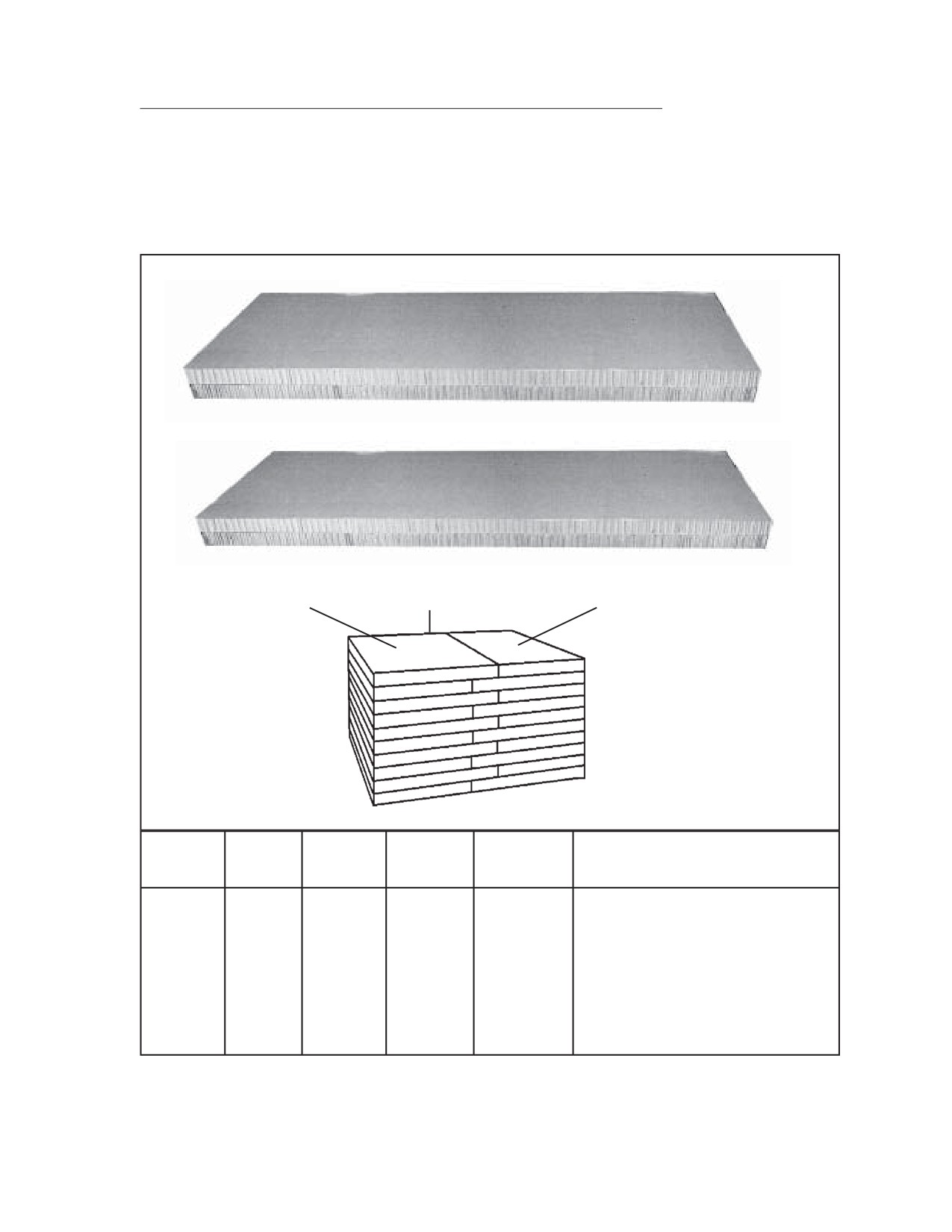
4-3. Build honeycomb stacks as shown in Figure 4-2.
STACKS 1 THROUGH 5 AND 7
36” X 96”
HONEYCOMB
STACK 6
24” X 96”
HONEYCOMB
36” X 46”
STACK 8
19” X 46”
HONEYCOMB
HONEYCOMB
STAC K
PIECE S
WIDTH
LENGTH
MATERIA L
INSTRUCTIONS
NUMBE R
(INCHES )
(INCHES )
-
2
36
96
Honeycom b
Do not glue together.
6
2
24
96
Honeycom b
Do not glue together.
7
2
36
96
Honeycom b
Do not glue together.
8
10
36
46
Honeycom b
Lay on floor beside a 19 x 46 piece
forming a 46 x 55 base. Alternate
the pieces and glue on top of the
base forming a stack of 10 layers.
10
19
46
Honeycom b
See above.
Figure 4-2. Honeycomb Stacks Prepared
4-3
FM 4-20.137/TO 13C7-1-19
POSITIONING HONEYCOMB STACKS
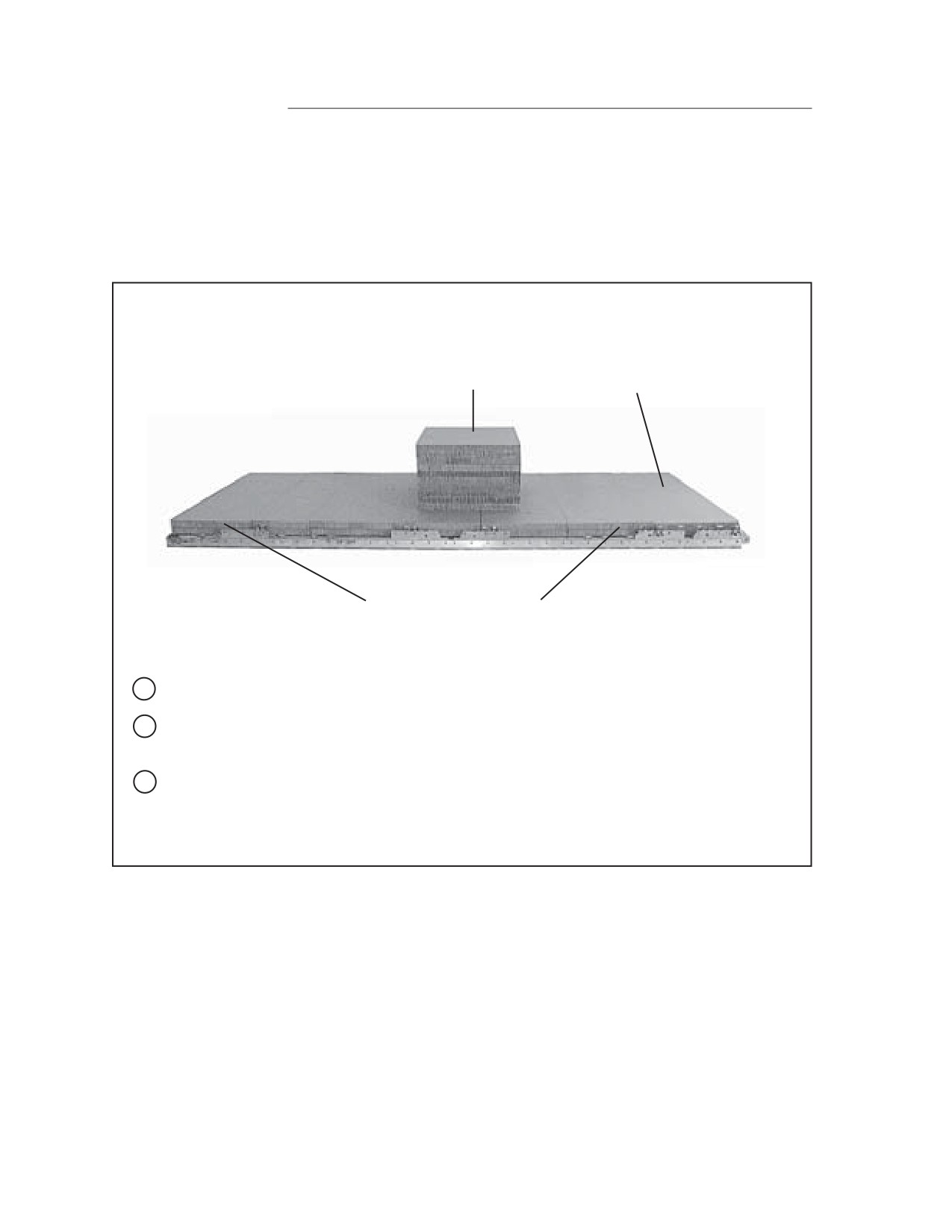
4-4. Position honeycomb stacks as shown in Figure 4-3.
STACK 8
STACK 1
REAR
FRONT
STACKS 2 THROUGH 7
1
Position stack 1 on the front edge of the platform and centered.
2
Position stacks 2 through 7 flush on the rear edge of stack 1. Place them flush with each
other.
3
Position stack 8 centered left to right and 90 inches from the front edge of the platform.
Ensure the 46 inch length is aligned with the side rails and the 55 inch length is across the
platform.
Figure 4-3. Honeycomb Stacks Positioned
4-4
FM 4-20.137/TO 13C7-1-19
BUILDING THE EQUIPMENT BOXES
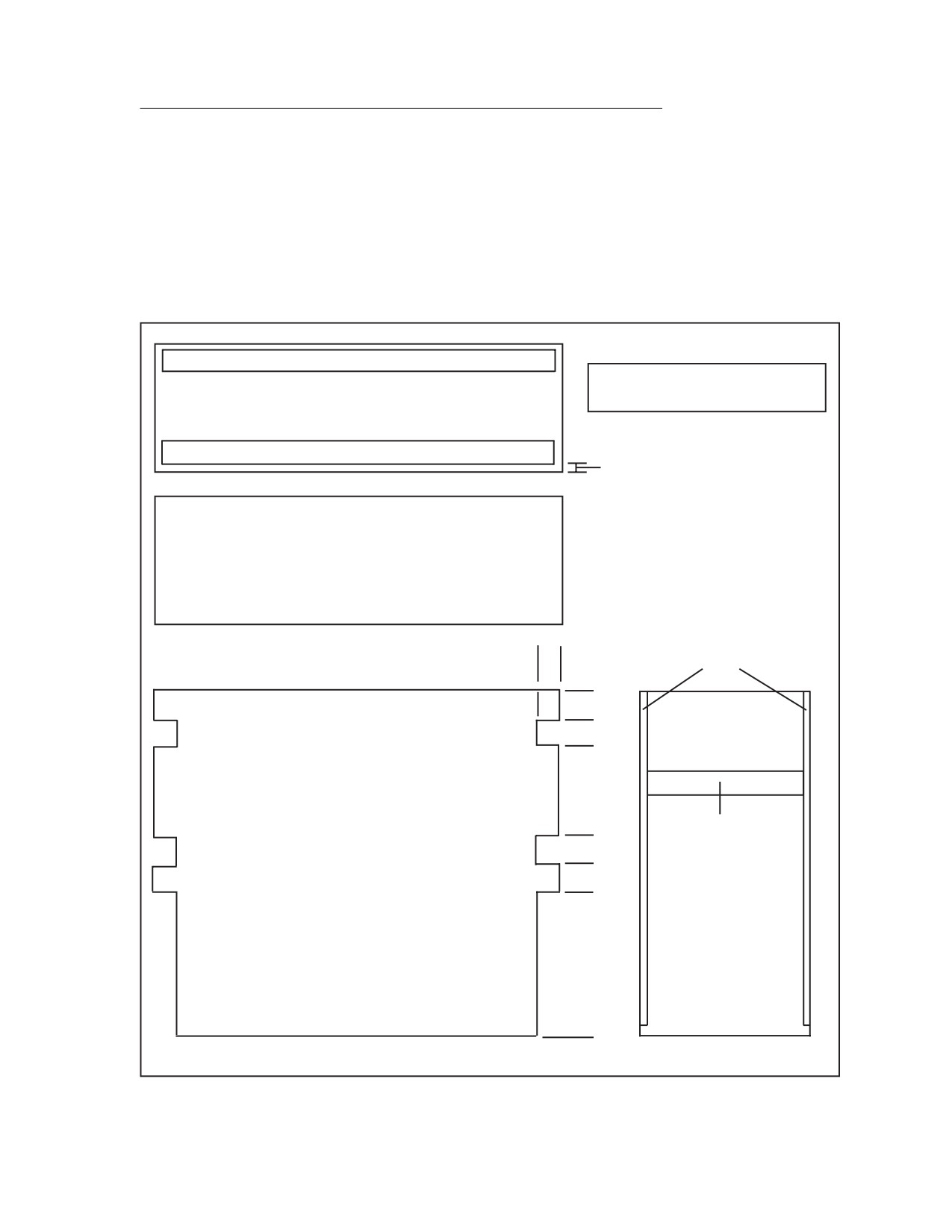
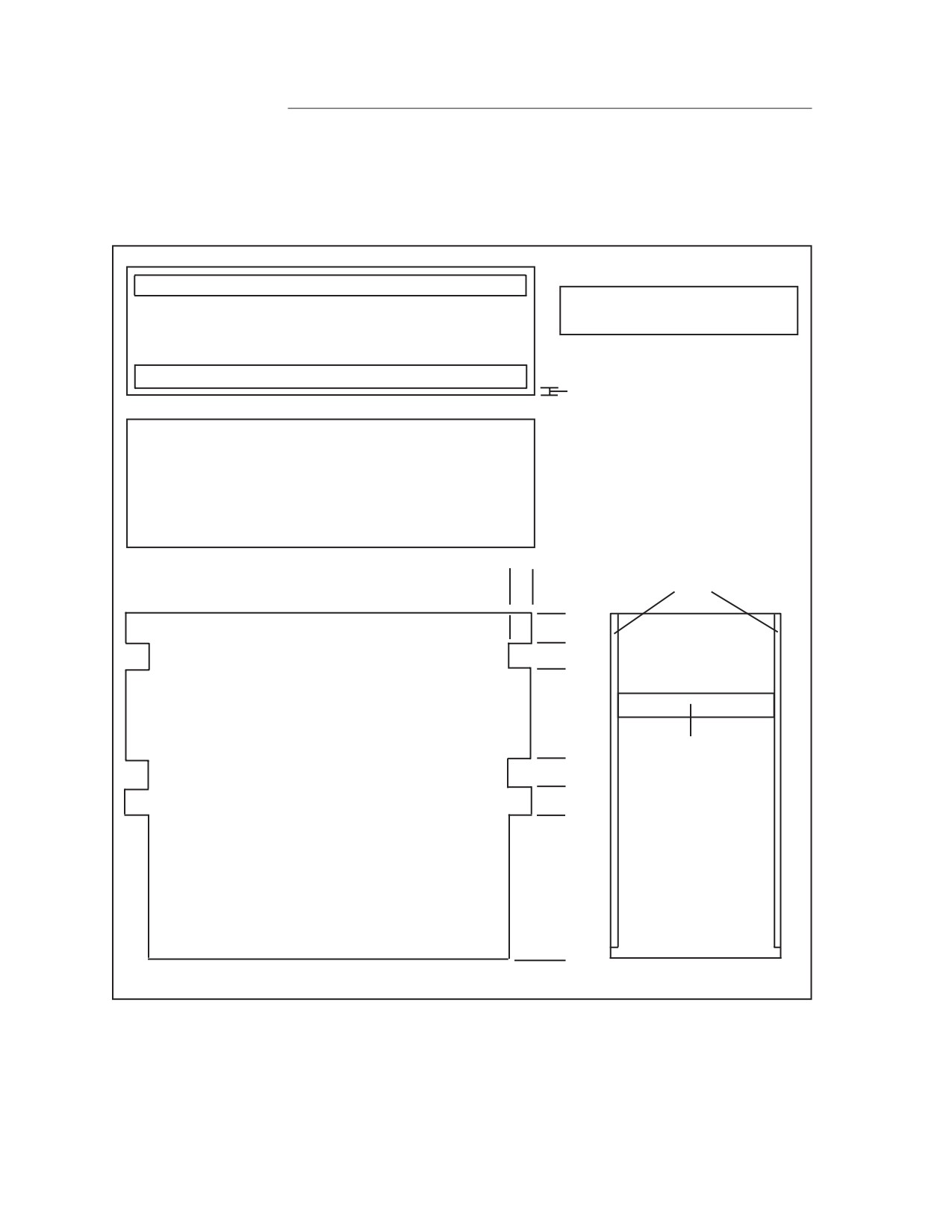
4-5. Build the front and rear equipment boxes as shown in Figures 4-4 and 4-5.
a. Build the front equipment box using 16d nails and as shown in Figure
4-4.
2” X 4” x 90” LUMBER NAILED FLAT
3/4” X 30” X 91 1/2”
NOTE: Drawings not to scale
PLYWOOD
BOTTOM (TOP VIEW)
2” X 4” x 90” LUMBER NAILED FLAT
3/4”
3/4” X 30” X 91 1/2”
PLYWOOD
TOP
2” X 4” X 46 1/2” LUMBER
NAILED STANDING ON EDGE
AND NAILED TO FRONT &
REAR BOARDS DURING
ASSEMBLY
2”
3”
3”
10”
3/4” X 48” X 96”
PLYWOOD
2” X 4” X 25 1/2”
FRONT & REAR
3”
LUMBER NAILED
FLAT 10 INCHES
3”
FROM TOP
26”
3/4” X 28 1/2” X 48”
PLYWOOD
SIDES
(INSIDE VIEW)
Figure 4-4. Front Equipment Box Built
4-5
FM 4-20.137/TO 13C7-1-19
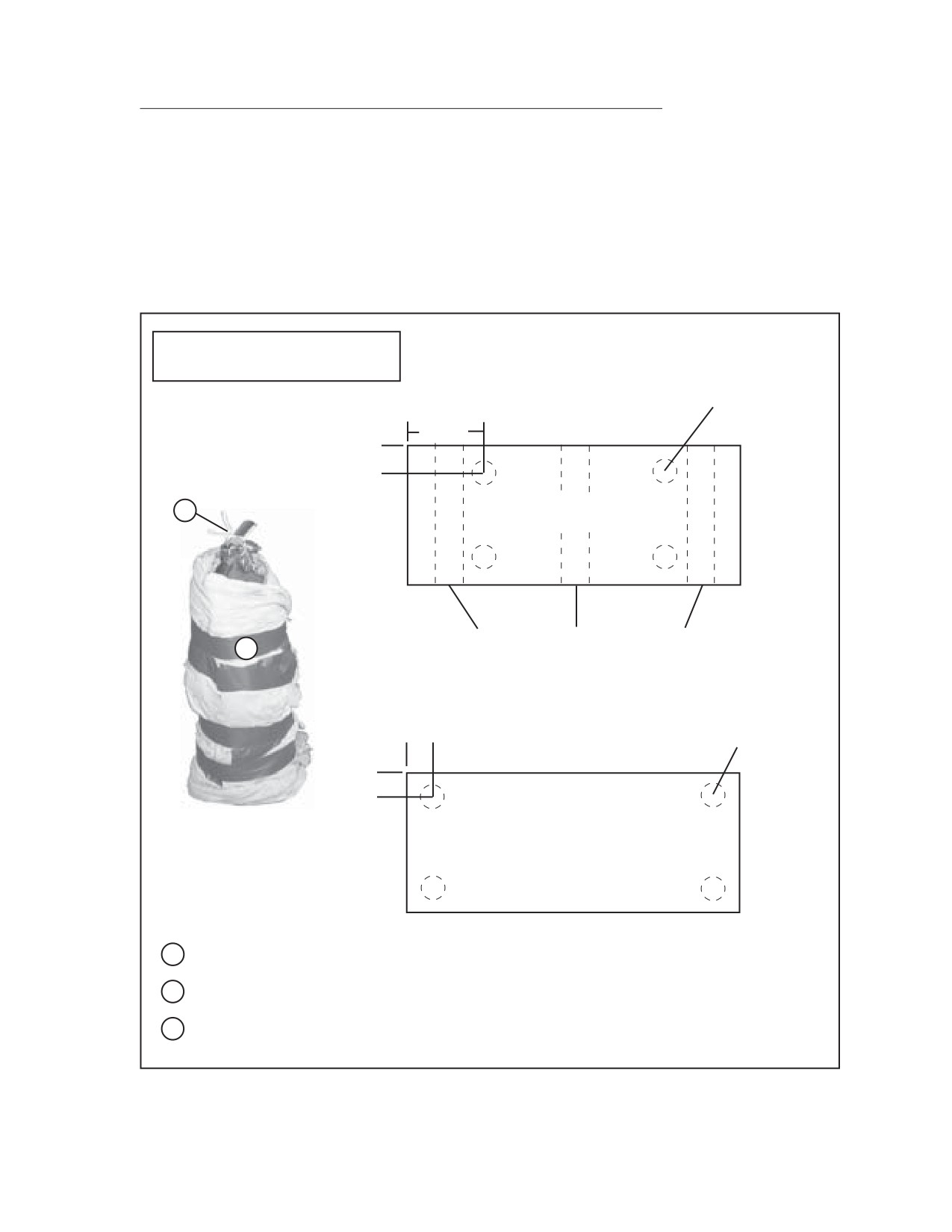
b. Build the rear equipment box using 16d nails and as shown in Figure
4-5.
2” X 4” x 90” LUMBER NAILED FLAT
3/4” X 42” X 91 1/2”
NOTE: Drawings not to scale
PLYWOOD
BOTTOM (TOP VIEW)
2” X 4” x 90” LUMBER NAILED FLAT
3/4”
3/4” X 42” X 91 1/2”
PLYWOOD
TOP
2” X 4” X 46 1/2” LUMBER
NAILED STANDING ON EDGE
AND NAILED TO FRONT &
REAR BOARDS DURING
ASSEMBLY
2”
3”
3”
10”
3/4” X 48” X 96”
PLYWOOD
2” X 4” X 37 1/2”
FRONT & REAR
3”
LUMBER NAILED
FLAT 10 INCHES
3”
FROM TOP
26”
3/4” X 40 1/2” X 48”
PLYWOOD
SIDES
(INSIDE VIEW)
Figure 4-5. Rear Equipment Box Built
4-6
FM 4-20.137/TO 13C7-1-19
PREPARING EQUIPMENT FOR EQUIPMENT BOXES
4-6. Prepare the equipment for the equipment boxes as shown in Figures 4-6
through 4-12.
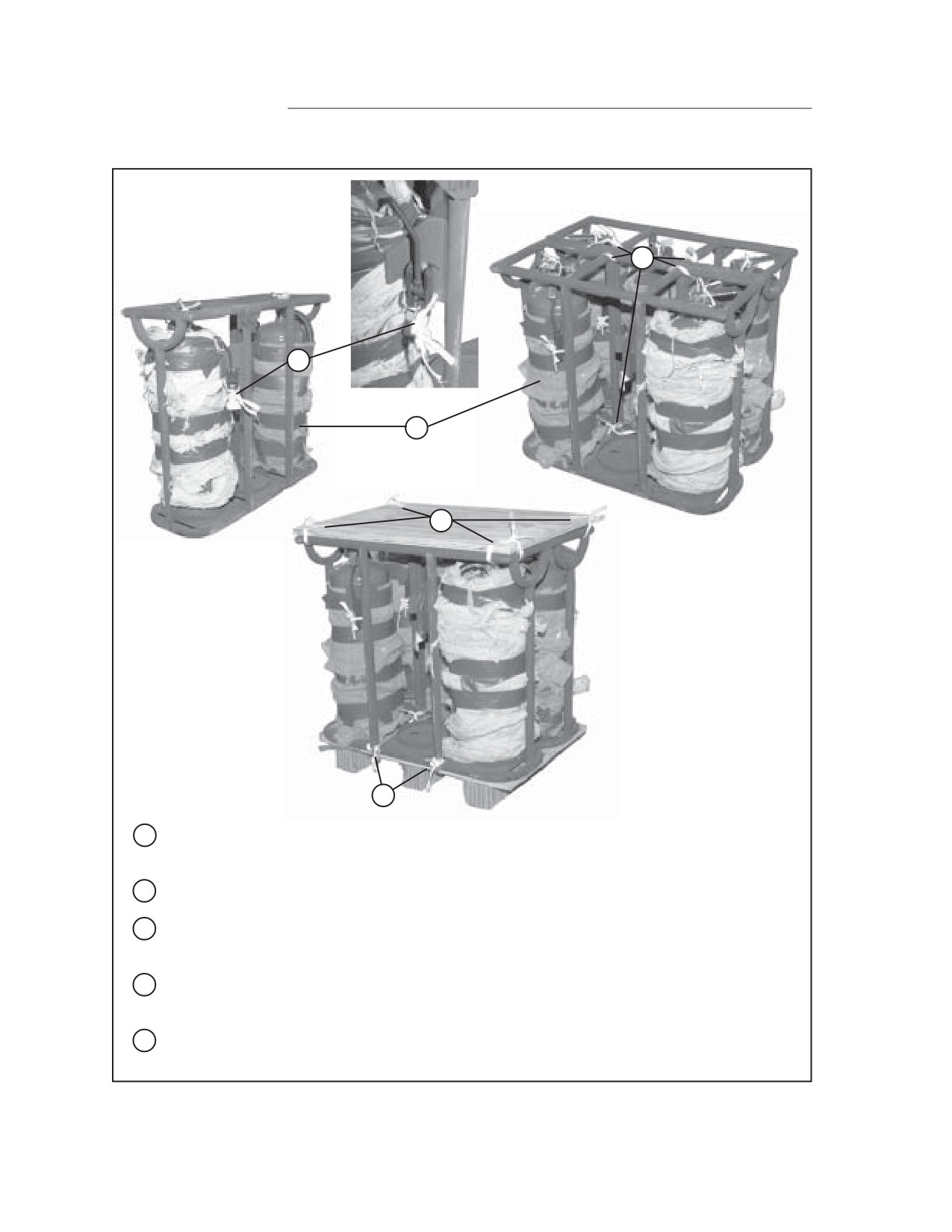
a. Prepare and secure five fire extinguishers as shown in Figure 4-6.
NOTE: Drawings not to scale
1” DIAMETER HOLES
9 1/2”
2”
3/4” X 19 1/4” X 28”
2
PLYWOOD BOTTOM
THREE PIECES 19 1/4” X 3”
1
HONEYCOMB GLUED UNDER
BOTTOM EVENLY SPACED
AND 3” FROM EACH END
1” DIAMETER HOLES
2”
2”
3/4” X 19 1/4” X 28”
PLYWOOD TOP
1
Wrap cellulose wadding around the five fire extinguishers and tape.
2
Secure the pull handles with 1/4-inch cotton webbing.
3
Cut the honeycomb and plywood for the fire extinguisher guard according to diagram above.
Figure 4-6. Fire Extinguishers Prepared
4-7
FM 4-20.137/TO 13C7-1-19
6
5
4
8
7
4
Place the five fire extinguishers in the racks. Place three in one rack and two in the other
rack.
5
Lock the safety latches and secure them with 1/2-inch tubular nylon webbing.
6
Tie the racks together at two points each with 1/2-inch tubular nylon webbing on the top
and bottom rails.
7
Position the racks on the bottom piece of plywood and honeycomb and secure them with 1/2-
inch tubular nylon webbing using the 1-inch holes and inside rails.
8
Place the top piece of plywood on the racks and secure it with 1/2-inch tubular nylon
webbing using the 1-inch hole and the outside rails.
Figure 4-6. Fire Extinguishers Prepared (Continued)
4-8
FM 4-20.137/TO 13C7-1-19
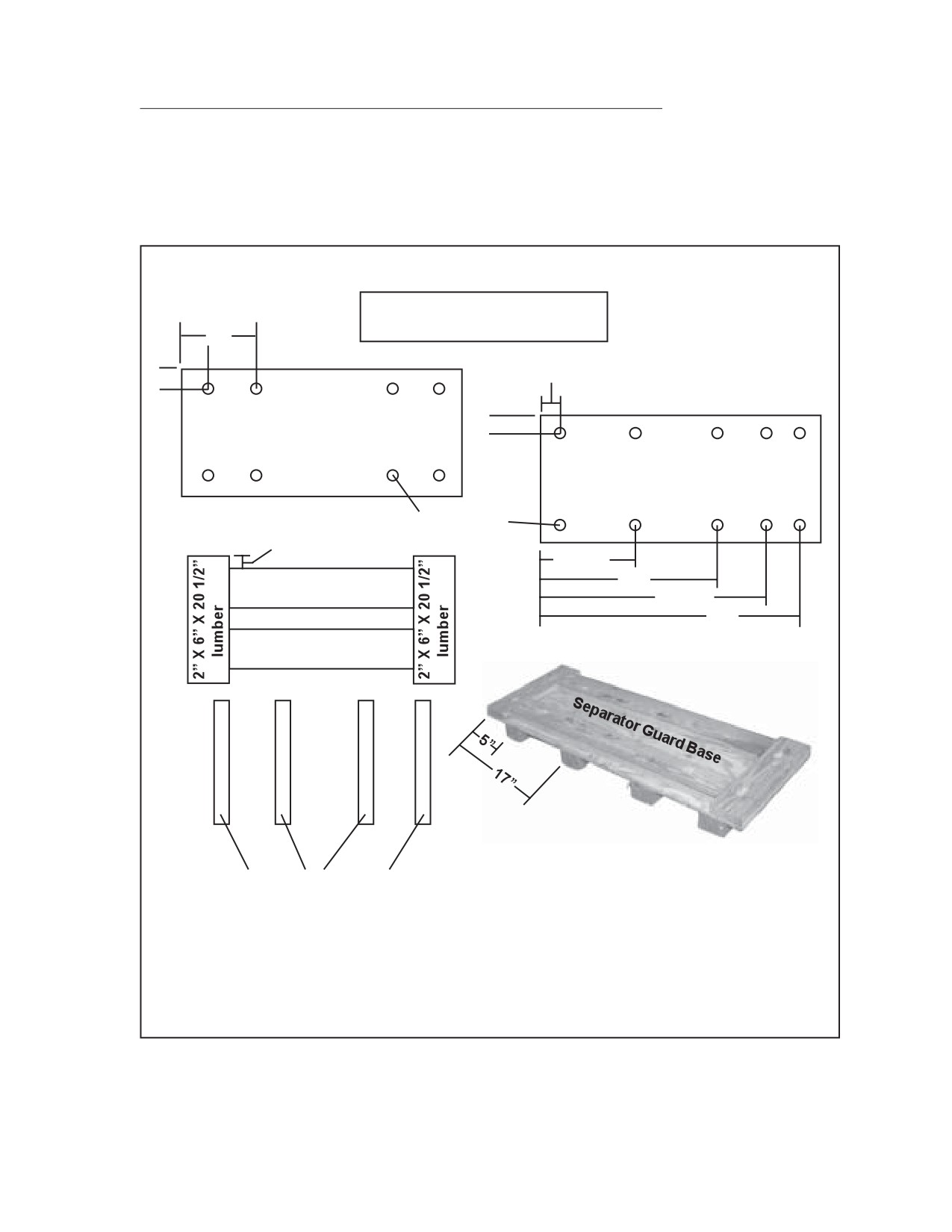
b. Prepare and secure the filter separator as shown in Figure 4-7.
NOTE: Drawings not to scale
12”
4”
3”
2 1/2”
3/4” X 20 1/2” X 57”
2 1/2”
PLYWOOD
BOTTOM
3/4” X 20 1/2” X 55”
PLYWOOD
TOP
1” DIAMETER HOLES
1 1/2”
18 1/2”
2” X 6” X 46”
37”
lumber
46 1/2”
52”
2” X 6” X 46”
lumber
Four pieces 4” X 20 1/2” honeycomb
glued under bottom 5” and 17” from edge
Nail the lumber assembly to the top of the plywood bottom using 16d nails.
Figure 4-7. Filter Separator Secured
4-9
FM 4-20.137/TO 13C7-1-19
4
1
2
3
5
1
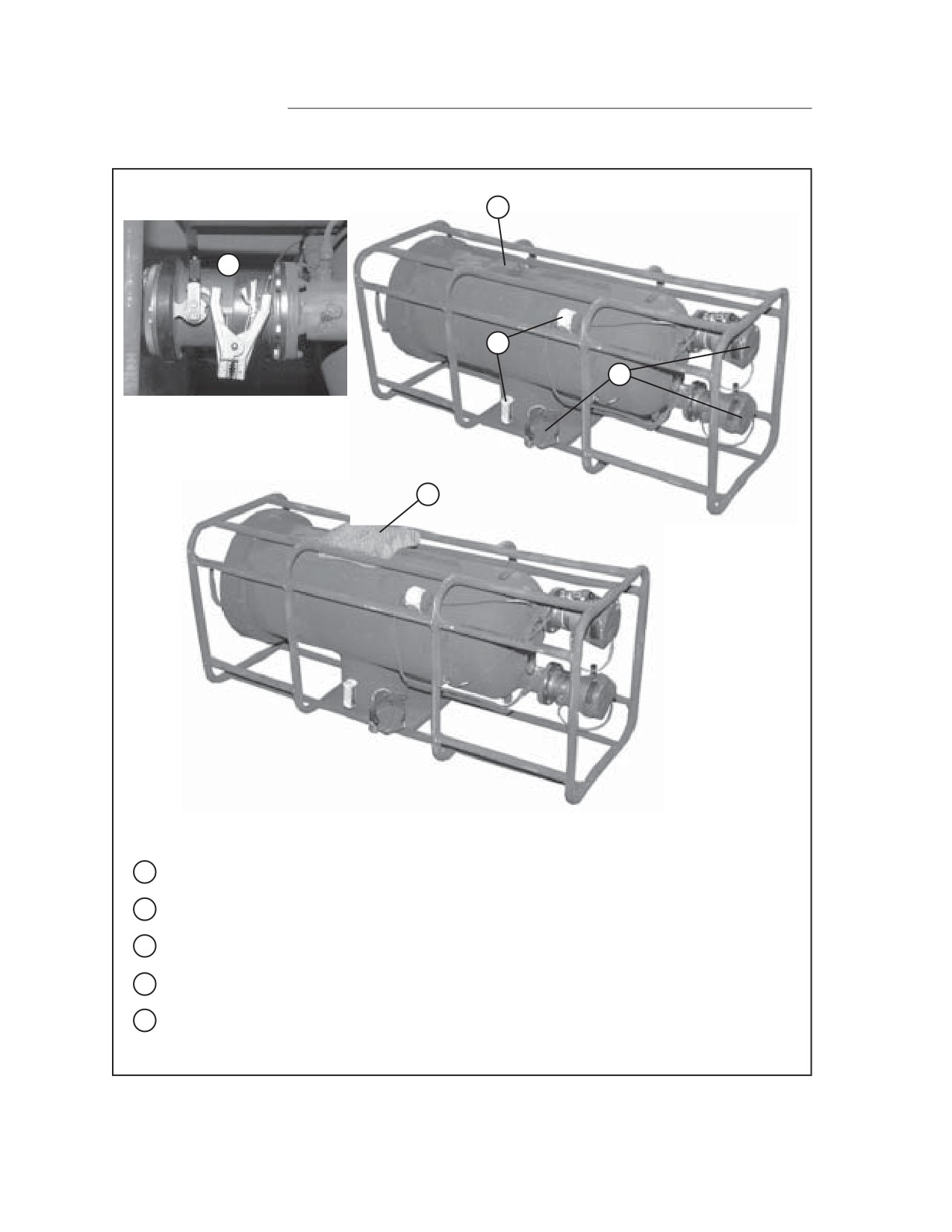
Wrap the ground wire around the outlet tube and secure with 1/4-inch cotton webbing.
2
Place masking tape over all gauges.
3
Place cloth-backed tape over all valve caps.
4
Place cloth-backed tape over relief valve.
5
Cut a 9-inch by 9-inch piece of honeycomb. Cut its thickness to 1 1/2 inches and place
over relief valve.
Figure 4-7. Filter Separator Secured (Continued)
4-10
FM 4-20.137/TO 13C7-1-19
6
8
7
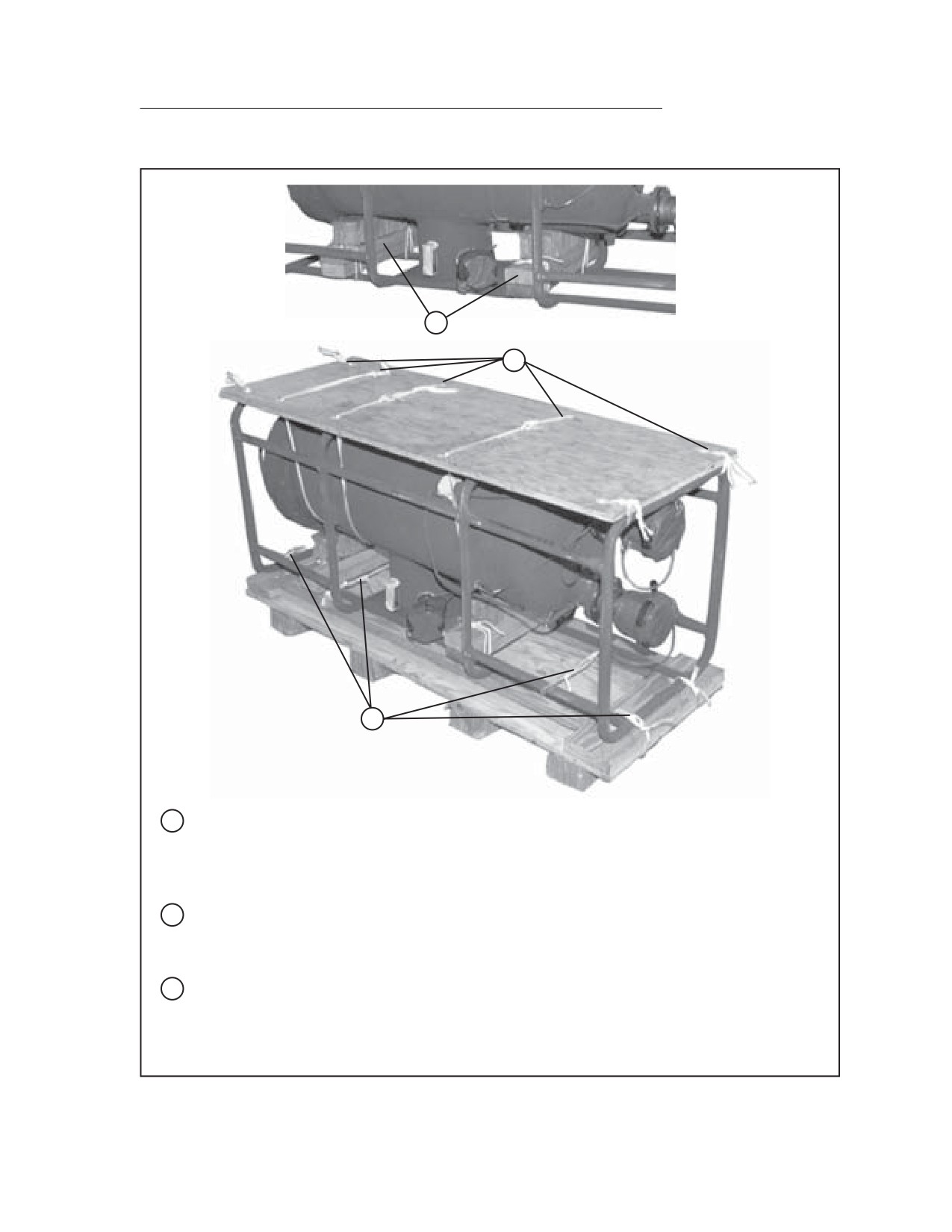
6
Cut four pieces of 2-inch by 4-inch by 17 1/4-inch lumber and two pieces of 3 1/2-inch by 12-
inch honeycomb. Nail two pieces of lumber together and glue one piece of honeycomb on top
forming a support for the separator. Repeat forming another support. Place them on the
rails and under the separator tank. Secure them with type III nylon cord.
7
Place the separator on the base and secure with 1/2-inch tubular nylon webbing. Route the
webbing over both rails using the inside 1 inch holes and around the rail using the outside
1 inch holes.
8
Place the top plywood on the separator and secure with 1/2-inch tubular nylon webbing.
Route the webbing around the tank using the inside 1 inch holes. Ensure routing is under
all tubes and around the rails using the outside 1 inch holes.
Figure 4-7. Filter Separator Secured (Continued)
4-11
FM 4-20.137/TO 13C7-1-19
c. Prepare and secure the explosion-proof motor as shown in Figure 4-8.
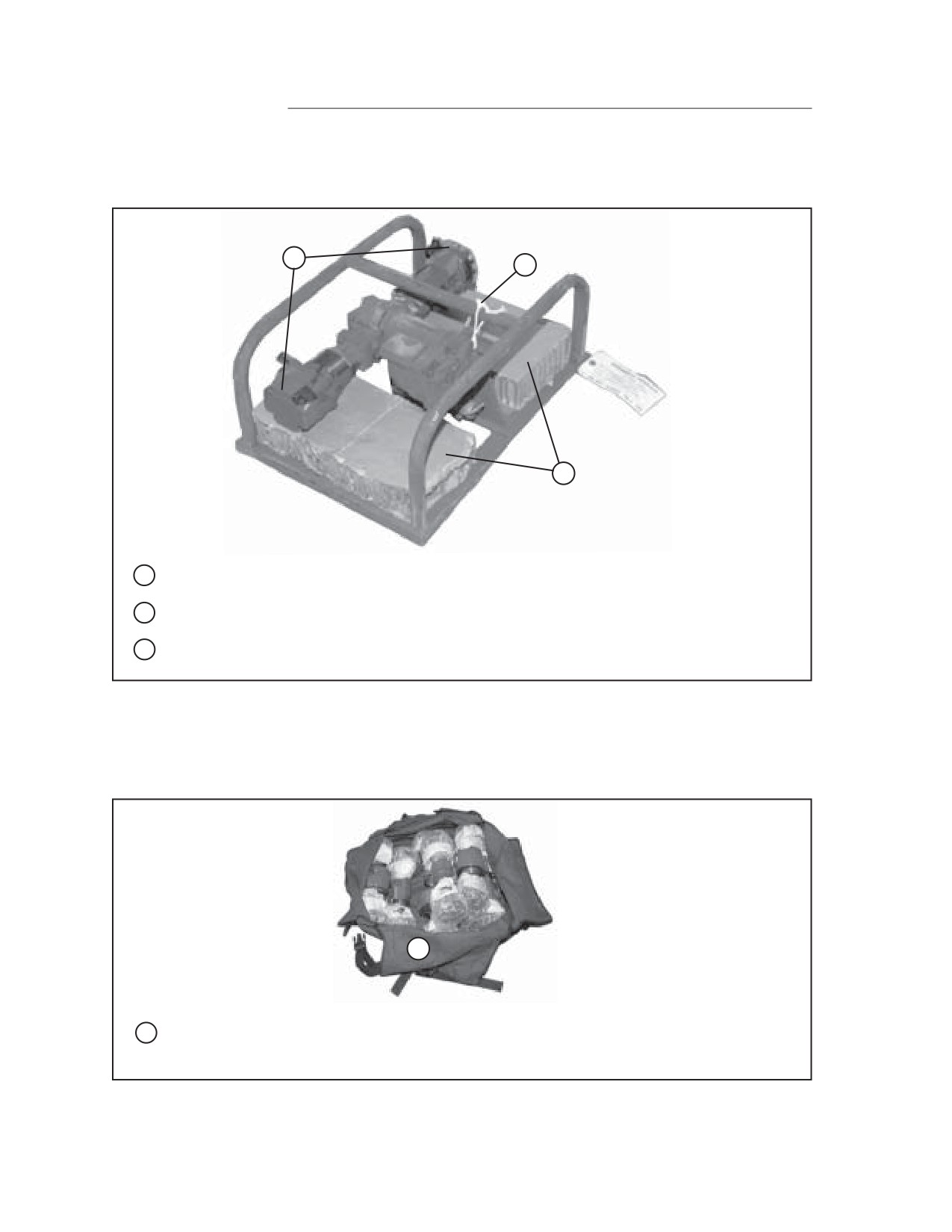
2
1
3
1
Secure the handle with type III nylon cord.
2
Place cloth-backed tape over valve motors.
3
Place an 8-inch by 14-inch piece of honeycomb under each valve.
Figure 4-8. Explosion-Proof Motor Secured
d. Prepare and secure the hose and equipment bags as shown in Figure 4-9.
1
1
Place hoses, adapters, rods, and nozzles in their bags according to bag content markings
(all bags not shown).
Figure 4-9. Equipment Bags Secured
4-12
FM 4-20.137/TO 13C7-1-19
e. Prepare and secure the pump as shown in Figure 4-10.
NOTE: Drawings not to scale
4” X 37” HONEYCOMB
1” DIAMETER
HOLES
3”
3”
8”
3/4” X 37” X 56”
PLYWOOD
3/4” X 3 1/4” X 7”
TOP & BOTTOM
PLYWOOD SHIMS
4 EACH
1
Cut the plywood for the pump guard as shown above.
2
Cut four pieces of honeycomb 4 inches by 37 inches and glue evenly spaced to underside of
bottom board only.
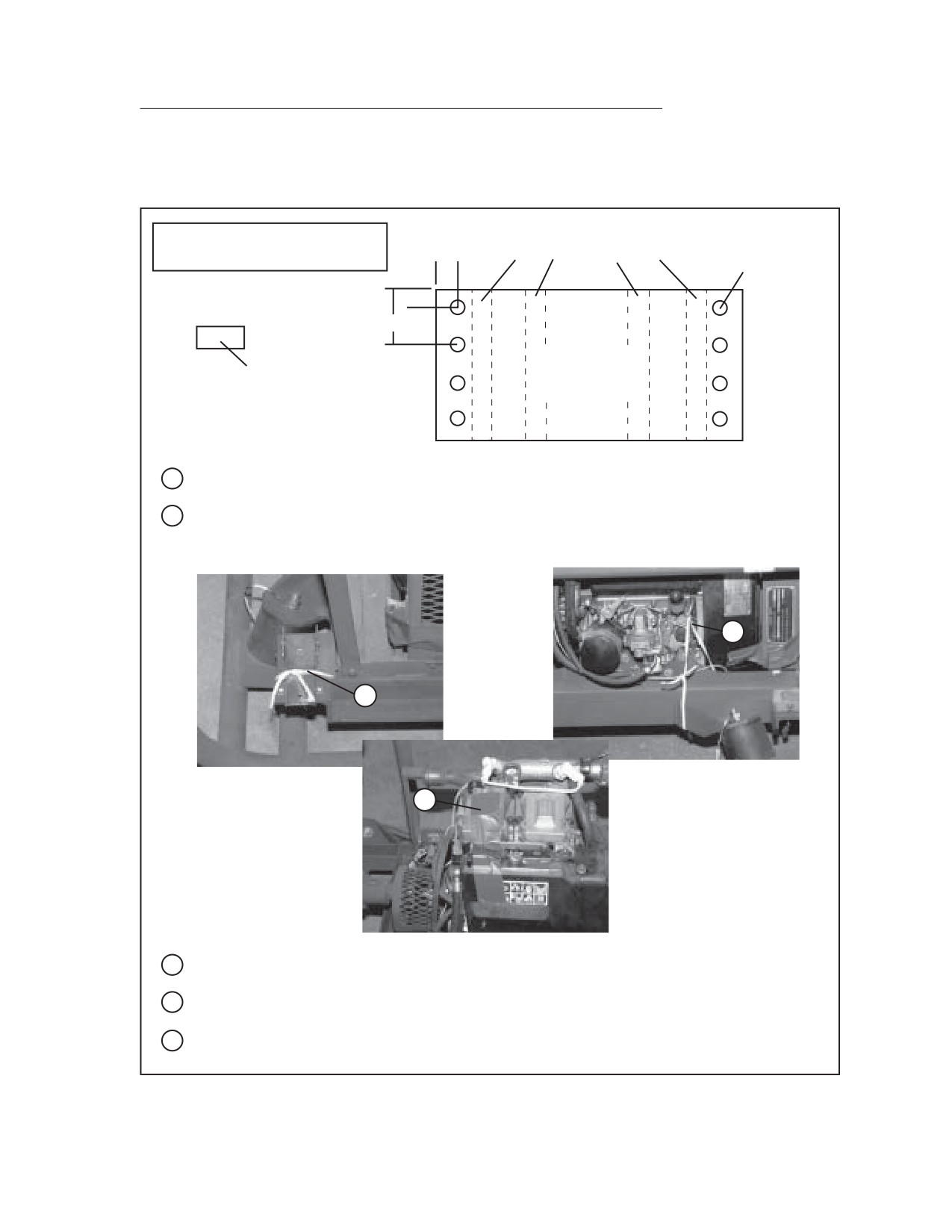
4
3
5
3
Secure all latches with tape or 1/4-inch cotton webbing.
4
Secure the dipstick with 1/4-inch cotton webbing.
5
Secure the flow control handle with tape.
Figure 4-10. Pump Secured
4-13
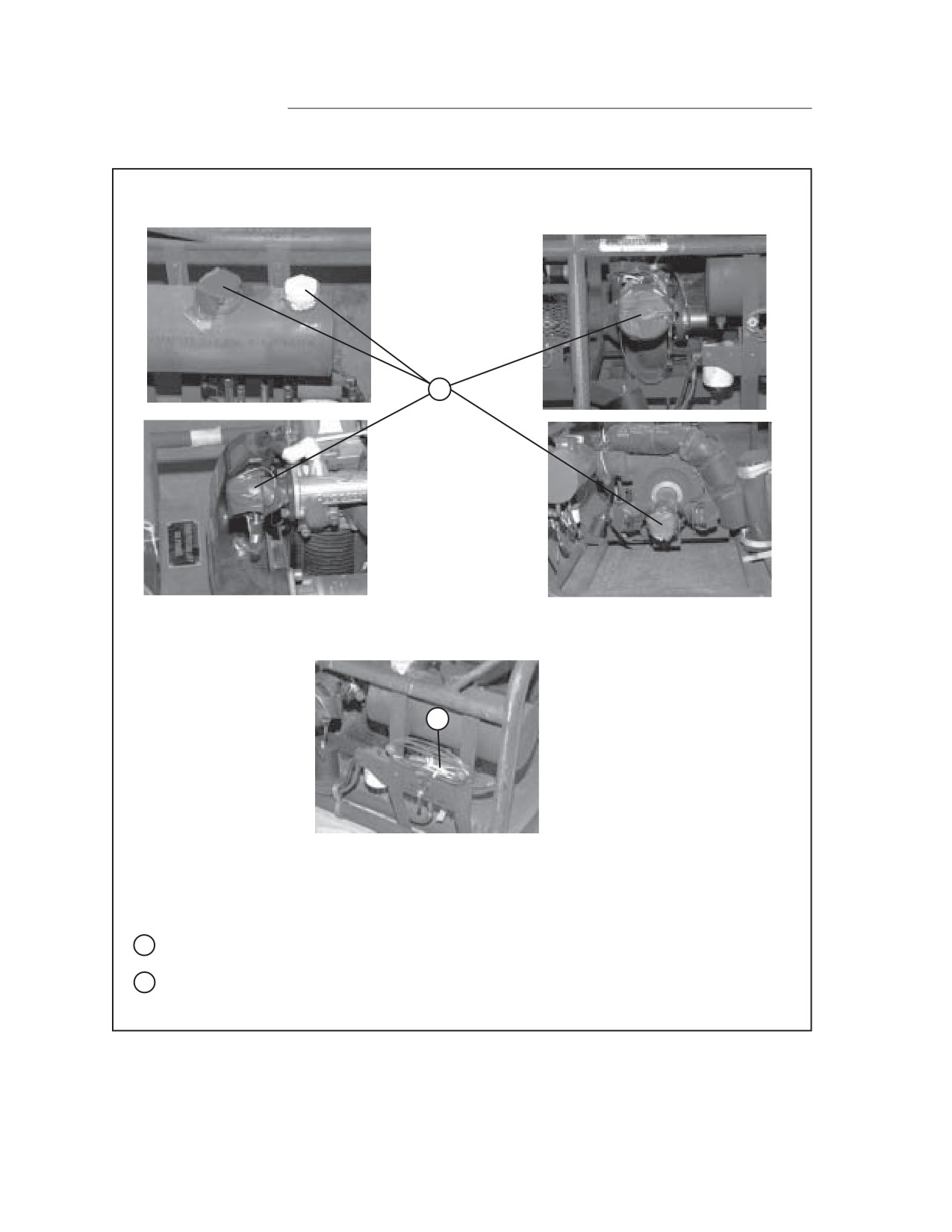
FM 4-20.137/TO 13C7-1-19
6
7
6
Place cloth-backed tape over all inlets, outlets, and valve caps.
7
Wrap the ground wire and secure with 1/4-inch cotton webbing.
Figure 4-10. Pump Secured (Continued)
4-14
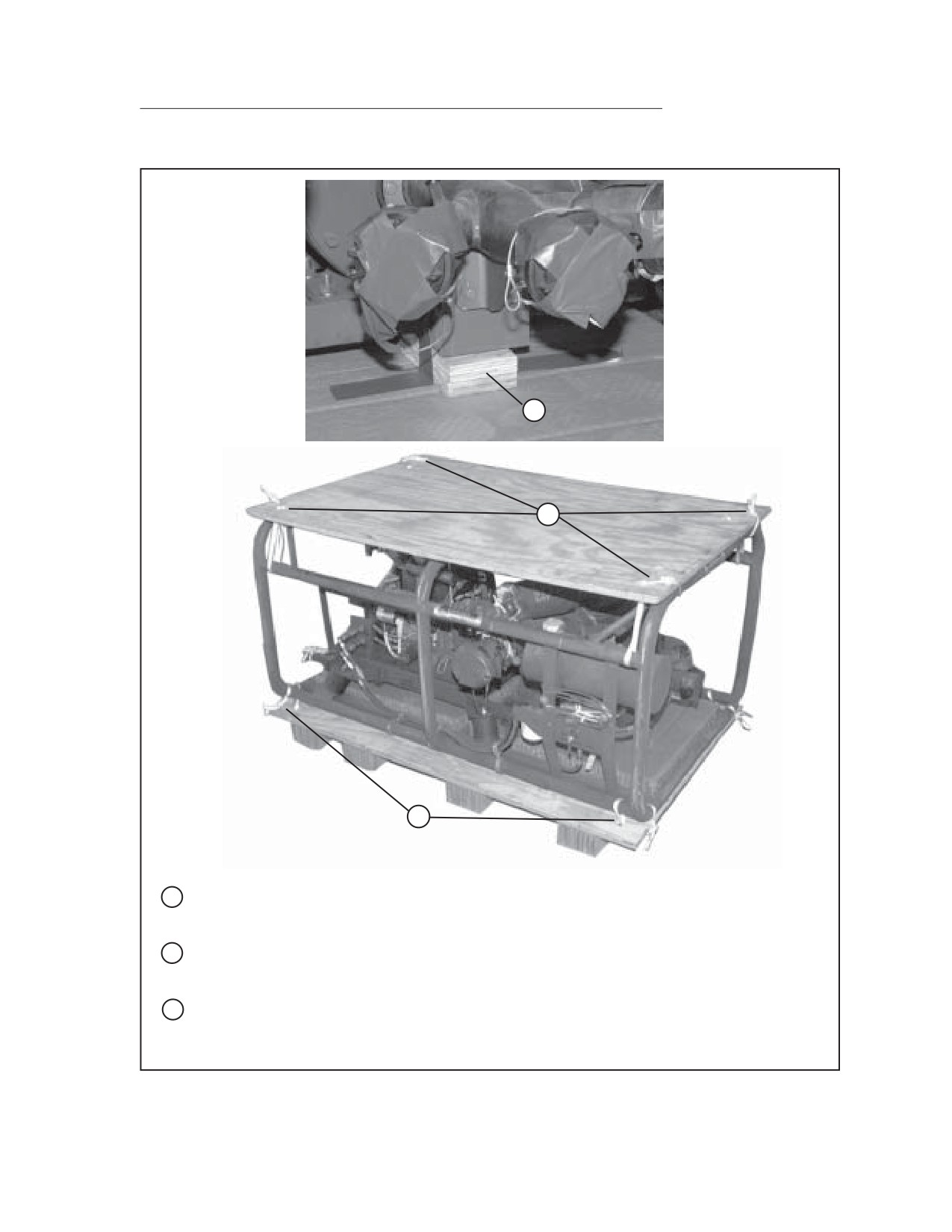
FM 4-20.137/TO 13C7-1-19
8
10
9
8
Cut two honeycomb pieces 22 1/2 inches by 26 inches and place inside the frame under the
pump. Place the shims under the pump body and tape them to the honeycomb.
9
Place the pump onto the base and secure with 1/2-inch tubular nylon webbing. Route the
webbing around both rails.
10
Place the top plywood on the pump and secure with 1/2-inch tubular nylon webbing. Route
the webbing around both rails.
Figure 4-10. Pump Secured (Continued)
4-15
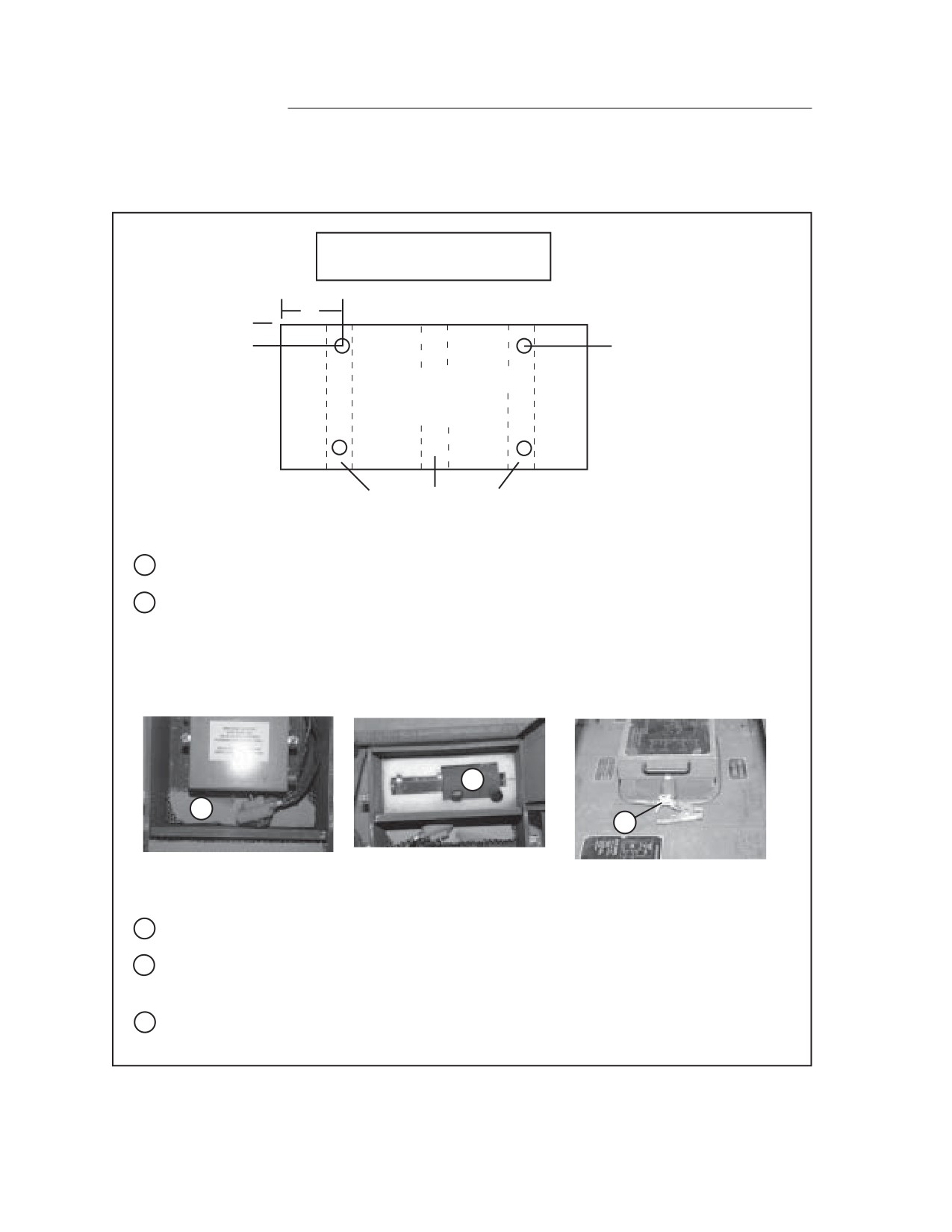
FM 4-20.137/TO 13C7-1-19
f. Prepare and secure the battery box as shown in Figure 4-11.
NOTE: Drawings not to scale
4”
1 1/2”
1” DIAMETER
HOLES
3/4” X 21 1/4” X 39 1/2”
PLYWOOD
TOP & BOTTOM
4” X 21 1/4” HONEYCOMB
1
Cut the plywood for the battery box as shown above.
2
Cut three pieces of honeycomb 4 inches x 21 1/4 inches and glue evenly spaced to underside
of bottom board only.
4
3
5
3
Place honeycomb filler against the battery to prevent movement.
4
Ensure the intake filter is in the Styrofoam. Place a piece of honeycomb on top of it to
prevent movement.
5
Wrap the grounding wire around the top of the box and secure with 1/4-inch cotton
webbing. Close all latches and secure them with tape (not shown).
Figure 4-11. Battery Box Secured
4-16