FM 3-21.75 The Warrior Ethos and Soldier Combat Skills (JANUARY 2008) - page 8
Appendix A
Checklists and Memory Aids
This appendix consolidates all of the checklists in this publication. Other definitions
Warrior Ethos, Soldier's Creed, Army Values, and more.
• Antipersonnel land mines, US national policy on
• Army Values
• Camouflage face paint, application to skin
• Code of Conduct
• Communication methods, comparison of
• Decontamination levels and techniques
• First aid
• IED Spot Report
• IED, vehicle, capacities and danger zones
• Illness in the field, rules for avoiding
• Individual fighting positions, characteristics of
• MOPP levels
• Nine-Line UXO Incident Report
• Personal predeployment checklist, example
• Potential indicators
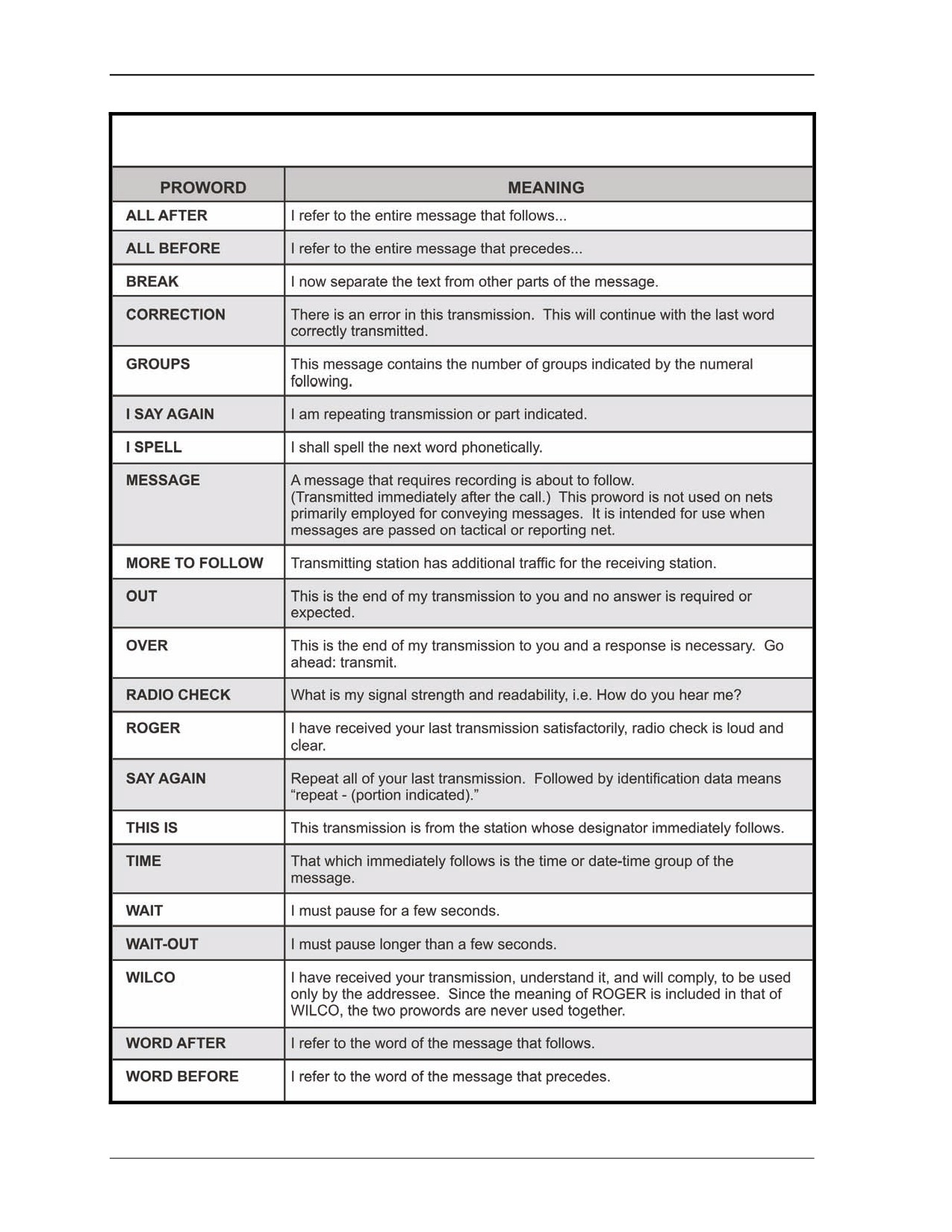
• Prowords
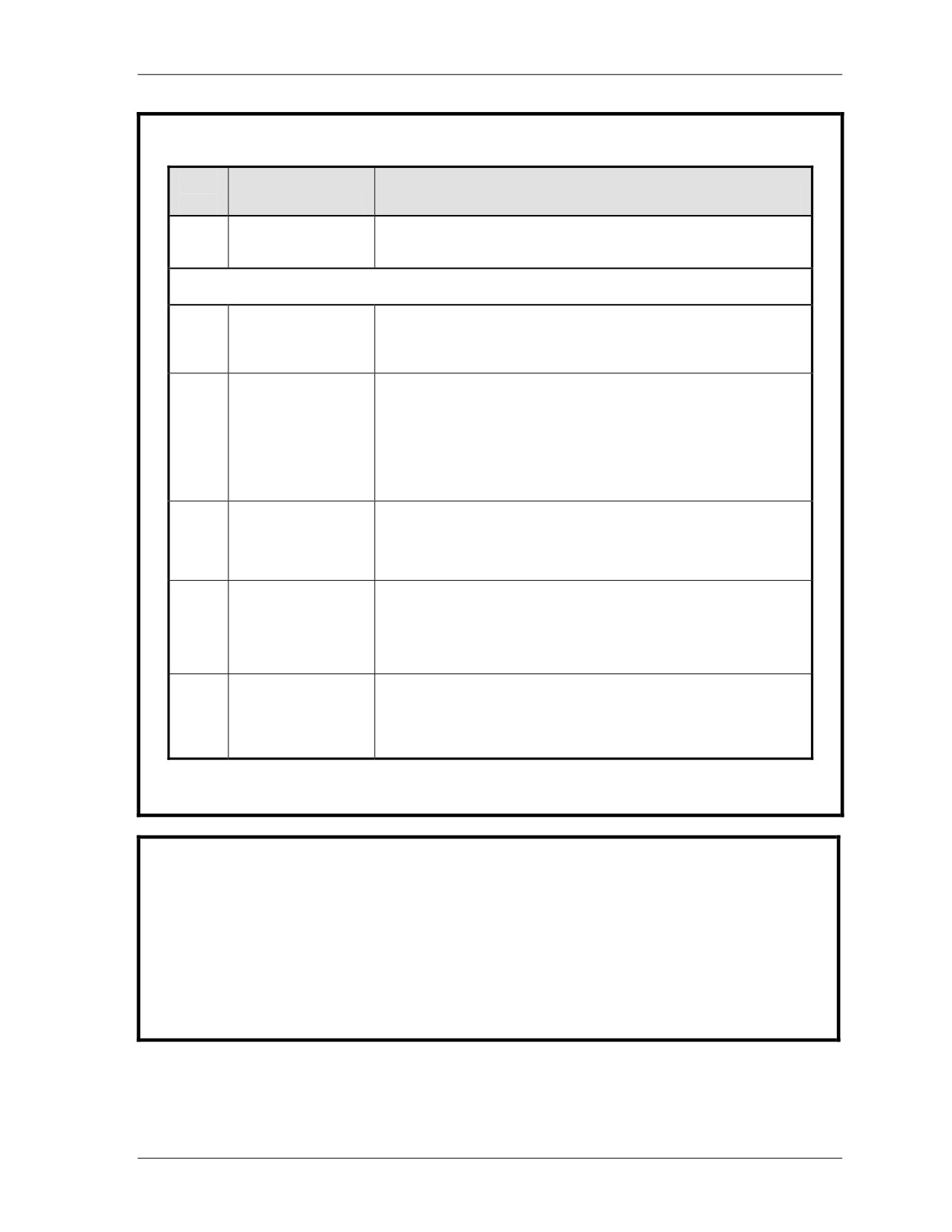
• SALUTE format line by line
• Shelter checklist
• Soldier's Creed
• Survival
• Warrior Ethos
28 January 2008
FM 3-21.12
A-1
Appendix A
ANTIPERSONNEL LAND MINES, US NATIONAL POLICY ON
On May 16, 1996, the President of the United States implemented a phased restriction and
elimination of antipersonnel land mines. Implementation began with non-self-destructing
mines, but will eventually include all types of antipersonnel mines. This policy applies to all
Infantry units either engaged in or training for operations worldwide. The use of
non-self-destructing antipersonnel land mines is restricted to specific areas:
•
Within internationally recognized national borders.
•
In established demilitarized zones such as to defend South Korea.
Mines approved for use must be emplaced in an area with clearly marked perimeters. They
must be monitored by military personnel and protected by adequate means to ensure the
exclusion of civilians.
US policy also forbids US forces from using standard or improvised explosive devices as
booby traps.
Except for South Korea-based units, and for units deploying to South Korea for training
exercises, this policy forbids training with and employing inert M14 and M16 mines. This
applies to units' home stations as well as at Combat Training Centers, except in the context of
countermine or mine removal training.
•
Training with live M14 mines is UNAUTHORIZED!
•
Training with live M16 mines is authorized only for Soldiers on South Korean soil.
Exceptions:
This policy does not apply to standard use of antivehicular mines. Nor does it apply to training
and using the M18 Claymore mine in the command-detonated mode.
When authorized by the appropriate commander, units may still use self-destructing
antipersonnel mines such as the ADAM.
Authorized units may continue to emplace mixed minefields containing self-destructing
antipersonnel land mines and antivehicular land mines such as MOPMS or Volcano.
The terms mine, antipersonnel obstacle, protective minefield, and minefield do not refer to an
obstacle that contains non-self-destructing antipersonnel land mines or booby traps.
Any references to antipersonnel mines and the employment of minefields should be
considered in the context of this policy.
A-2
FM 3-21.12
28 January 2008
Checklists and Memory Aids
ARMY VALUES
Loyalty
Bear true faith and allegiance to the Constitution,
the Army, your unit, and other Soldiers.
Duty
Fulfill your obligations.
Respect
Treat people with dignity as they should be
treated.
Selfless Service
Put the welfare of the nation, the Army,
and your subordinates before your own.
Honor
Live up to all the Army Values.
Integrity
Do what's right, legally and morally.
Personal Courage (Physical or Moral)
Face fear, danger, or adversity.
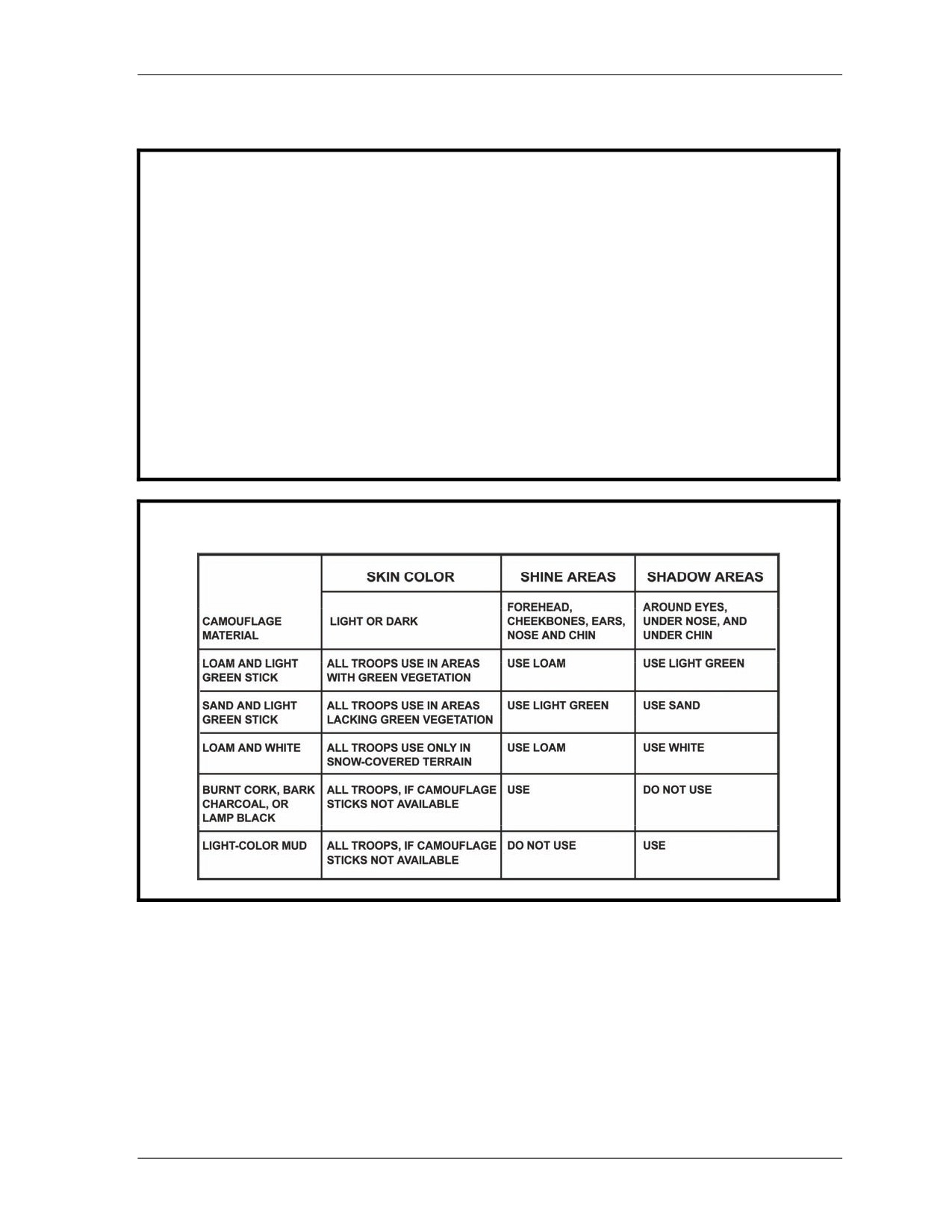
CAMOUFLAGE FACE PAINT, APPLICATION TO SKIN
28 January 2008
FM 3-21.12
A-3
Appendix A
CODE OF CONDUCT
I.
I am an American, fighting in the forces which guard my country and our way of life.
I am prepared to give my life in their defense.
II.
I will never surrender of my own free will. If in command, I will never surrender
the members of my command while they still have the means to resist.
III.
If I am captured, I will continue to resist by all means available. I will make every effort
to escape and aid others to escape. I will accept neither parole nor special favors from
the enemy.
IV. If I become a prisoner of war, I will keep faith with my fellow prisoners. I will give no
information or take part in any action which might be harmful to my comrades.
If I am senior, I will take command. If not, I will obey the lawful orders of those appointed
over me, and will back them up in every way.
V. When questioned, should I become a prisoner of war, I am required to give only name,
rank, service number, and date of birth. I will evade answering further questions
to the utmost of my ability. I will make no oral or written statements disloyal
to my country (and its allies) or harmful to their cause.
VI. I will never forget that I am an American, fighting for freedom, responsible for my actions,
and dedicated to the principles that made my country free. I will trust in my God
and in the United States of America.
A-4
FM 3-21.12
28 January 2008

Checklists and Memory Aids
COMMUNICATION METHODS, COMPARISON OF
Method
Advantages
Disadvantages
Messengers
•
Messengers are the most secure
•
Messengers are slow, especially if
means of communication.
traveling on foot for a long distance.
•
Messengers can hand carry large
•
Messengers might be unavailable,
maps with overlays.
depending on manpower
requirements (size of element
•
Messengers can deliver supplies
delivering message).
along with messages.
•
Messengers can be captured by
•
Messengers are flexible (can travel
enemy.
long/short distances by foot or
vehicle).
Wire
•
Wire reduces radio net traffic.
•
Wire has to be carried (lots of it).
•
Wire reduces electromagnetic
•
Wire must be guarded.
signature.
•
Wire is time consuming.
•
Wire is secure and direct.
•
Wire can be interfaced with a radio.
Visual Signals
•
Visual signals aid in identifying
•
Visual signals can be confusing.
friendly forces.
•
Visual signals are visible from far
•
Visual signals allow transmittal of
away.
prearranged messages.
•
The enemy might see them, too.
•
Visual signals are fast.
•
Visual signals provide immediate
feedback.
Sound
•
Sound can be used to attract
•
The enemy hears it also.
attention.
•
Sound gives away your position.
•
Sound can be used to transmit
prearranged messages.
•
Sound can be used to spread
alarms.
•
Everyone can hear it at once.
•
Sound provides immediate
feedback.
Radio
•
Radios are the most frequently used
•
Radio is the least secure means of
means of communication.
communication.
•
Radios are fast.
•
Radios require batteries.
•
Radios are light.
•
Radios must be guarded or
monitored.
•
Radios can be interfaced with
telephone wire.
28 January 2008
FM 3-21.12
A-5
Appendix A
DECONTAMINATION LEVELS AND TECHNIQUES
Levels
Techniques1
Purpose
Best Start Time
Performed By
Immediate
Skin
Saves lives
Before 1 minute
Individual
decontamination
Stops agent from
Within 15 minutes
Individual or buddy
Personal wipe
penetrating
Within 15 minutes
Individual or crew
down
Limits agent spread
Within 15 minutes
Individual or crew
Operator wipe
Limits agent spread
down Spot
decontamination
Operational
MOPP gear
Provides temporary
Within 6 hours
Unit
exchange2
relief from MOPP4
Within 1 hour
Battalion crew or
Limits agent spread
Vehicle wash down
(CARC) or within 6
decontamination
hours (nonCARC)
platoon
Thorough
DED and DAD
Provides probability
When mission allows
Decontamination
DTD
of long-term MOPP
reconstitution
platoon
reduction
Contaminated unit
Clearance
Unrestricted use of
METT-TC
When mission
Supporting strategic
resources
depending on the
permits
resources
type of equipment
contaminated
1 The techniques become less effective the longer they are delayed.
2 Performance degradation and risk assessment must be considered when exceeding 6 hours.
FIRST AID
1. Check for BREATHING.
2. Check for BLEEDING.
3. Check for SHOCK.
A-6
FM 3-21.12
28 January 2008

Checklists and Memory Aids
IED SPOT REPORT
LINE 1. DATE-TIME-GROUP: [State when the item was discovered.]
LINE 2. UNIT:
LINE 3. LOCATION OF IED: [Describe as specifically as possible.]
LINE 4. CONTACT METHOD: [Radio frequency, call sign, POC.]
LINE 5. IED STATUS: [Detonation or no detonation.]
LINE 6. IED TYPE: [Disguised static / Disguised moveable / Thrown / Placed
on TGT.]
LINE 7. NUMBER OF IEDs:
LINE 8. PERSONNEL STATUS:
LINE 6. EQUIPMENT STATUS:
LINE 7. COLLATERAL DAMAGE OR POTENTIAL FOR COLLATERAL DAMAGE:
LINE 8. TACTICAL SITUATION: [Briefly describe current tactical situation.]
LINE 9. REQUEST FOR: [QRF / EOD / MEDEVAC].
LINE 10. LOCATION OF L/U WITH REQUESTED FORCE (S):
28 January 2008
FM 3-21.12
A-7
Appendix A
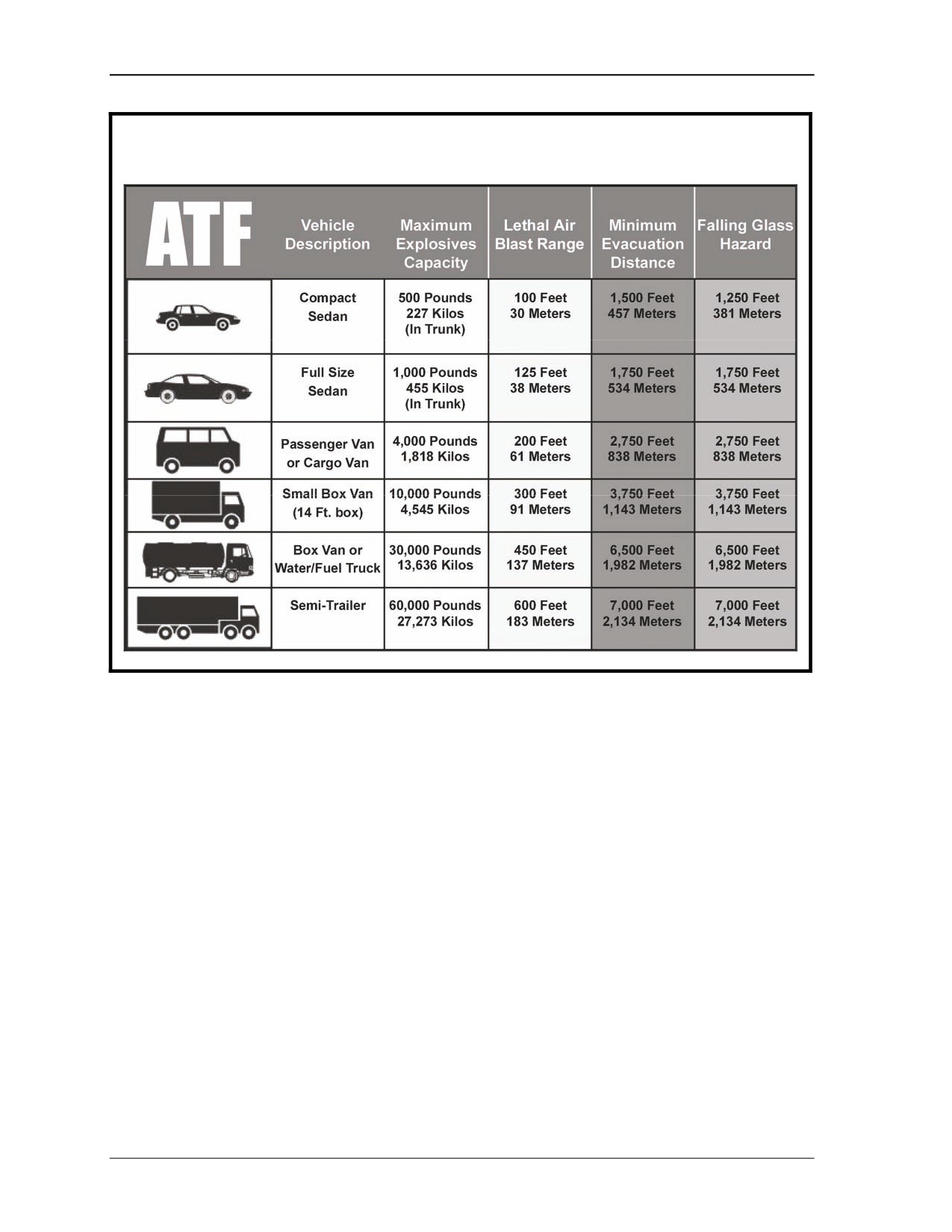
IED, VEHICLE, CAPACITIES AND DANGER ZONES
A-8
FM 3-21.12
28 January 2008
Checklists and Memory Aids
ILLNESS IN THE FIELD, RULES FOR AVOIDING
•
Never consume foods and beverages from unauthorized sources.
•
Never soil the ground with urine or feces. Use a latrine or "cat hole."
•
Keep your fingers and contaminated objects out of your mouth.
•
Wash your hands--
-- After any contamination.
-- Before eating or preparing food.
-- Before cleaning your mouth and teeth.
•
Wash all mess gear after each meal or use disposable plastic ware once.
•
Clean your mouth and teeth at least once each day.
•
Avoid insect bites by wearing proper clothing and using insect repellents.
•
Avoid getting wet or chilled unnecessarily.
•
Avoid sharing personal items with other Soldiers, for example--
-- Canteens.
-- Pipes.
-- Toothbrushes.
-- Washcloths.
-- Towels.
-- Shaving gear.
•
Avoid leaving food scraps lying around.
•
Sleep when possible.
•
Exercise regularly.
28 January 2008
FM 3-21.12
A-9
Appendix A
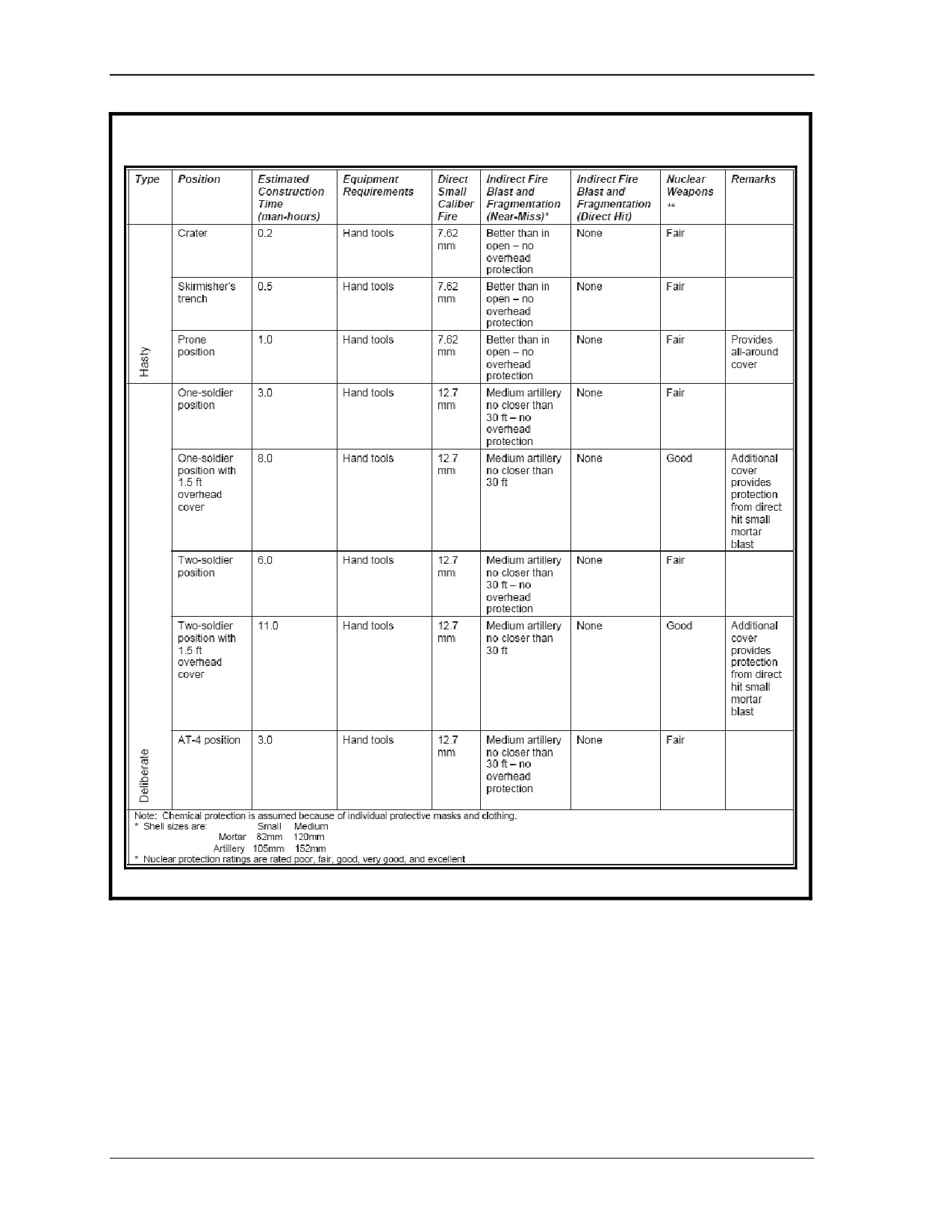
INDIVIDUAL FIGHTING POSITIONS, CHARACTERISTICS OF
A-10
FM 3-21.12
28 January 2008
Checklists and Memory Aids
MOPP LEVELS
MOPP
Mask
Equipment
Ready
MOPP0
MOPP1
MOPP2
MOPP3
MOPP4
Only
Mask
Carried
Carried
Carried
Carried
Worn
Worn
Worn***
JSLIST
Ready*
Avail**
Worn
Worn
Worn
Worn
Overboots
Ready*
Avail**
Avail**
Worn
Worn
Worn
Gloves
Ready*
Avail**
Avail**
Avail**
Avail**
Worn
Helmet
Ready*
Avail**
Avail**
Worn
Worn
Worn
Cover
* Item must be available to Soldier within two hours, with replacement available within six hours.
** Item must be positioned within arm's reach of the Soldier.
*** Soldier Never "mask only" if a nerve or blister agent has been used in the AO.
NINE-LINE UXO INCIDENT REPORT
1. DTG: Date and time UXO was discovered.
2. Reporting Unit or Activity, and UXO Location: Grid coordinates.
3. Contact Method: How EOD team can contact the reporting unit.
4. Discovering Unit POC: MSE, or DSN phone number, and unit frequency or call sign.
5. Type of UXO: Dropped, projected, thrown, or placed, and number of items discovered.
6. Hazards Caused by UXO: Report the nature of perceived threats such as a possible
chemical threat or a limitation of travel over key routes.
7. Resources Threatened: Report any equipment, facilities, or other assets threatened by the
UXO.
8. Impact on Mission: Your current situation and how the UXO affects your status.
9. Protective Measures: Describe what you have done to protect personnel and equipment
such as marking the area and informing local civilians.
28 January 2008
FM 3-21.12
A-11
Appendix A
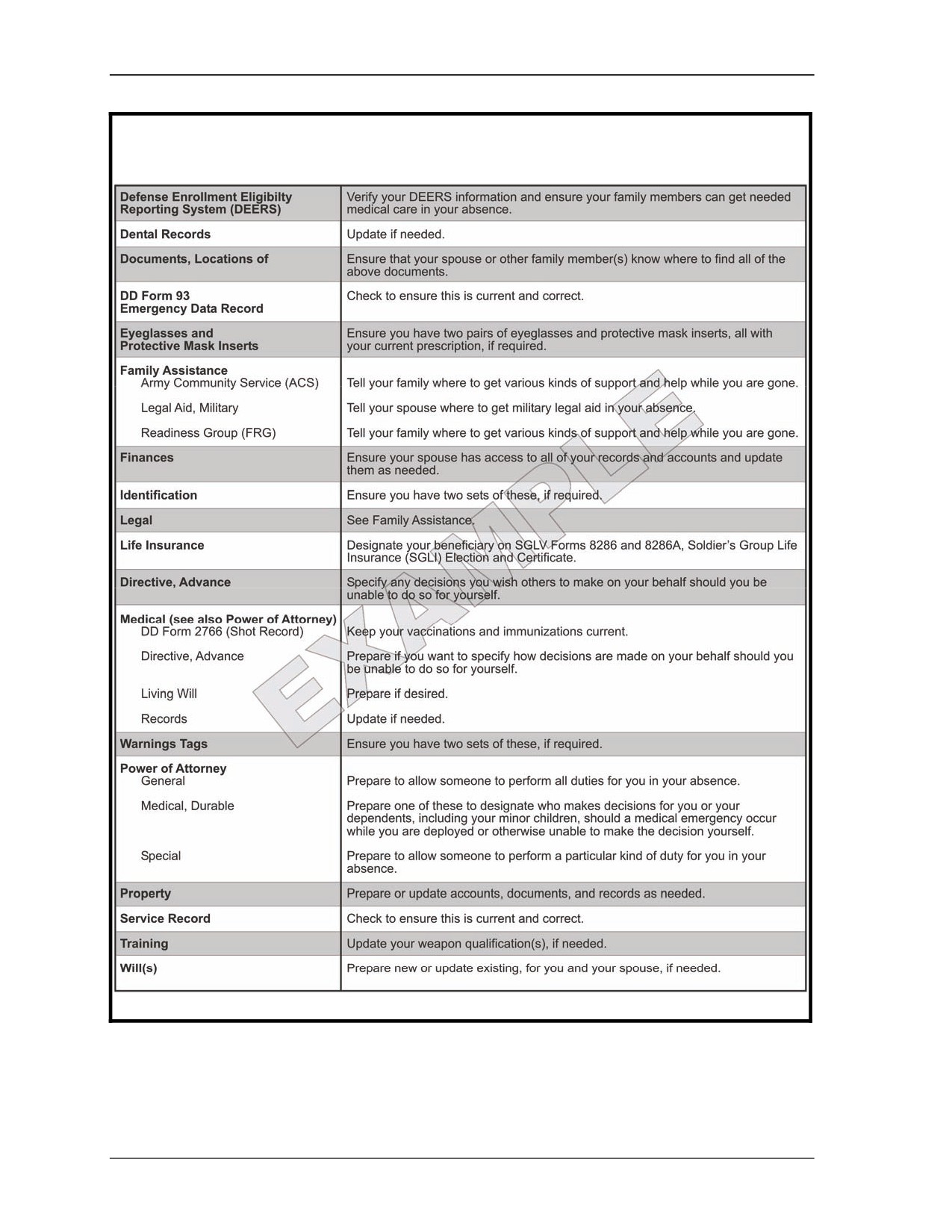
PERSONAL PREDEPLOYMENT CHECKLIST, EXAMPLE
A-12
FM 3-21.12
28 January 2008
Checklists and Memory Aids
POTENTIAL INDICATORS
SIGHT
SOUND
TOUCH
SMELL
Look for--
Listen for--
Feel for--
Smell for--
• Enemy personnel,
• Running engines
• Warm coals and
• Vehicle exhaust
vehicles, and aircraft
or track sounds
other materials
• Burning petroleum
in a fire
• Sudden or unusual
• Voices
products
movement
• Fresh tracks
• Metallic sounds
• Food cooking
• New local inhabitants
• Age of food or
• Gunfire, by
• Aged food in trash
trash
weapon type
• Smoke or dust
• Human waste
• Unusual calm or
• Unusual movement of
silence
farm or wild animals
• Dismounted
• Unusual activity--or lack
movement
of activity--by local
inhabitants, especially at
• Aircraft
times or places that are
normally inactive or active
OTHER CONSIDERATIONS
• Vehicle or personnel
Armed Elements
Locations of factional forces, mine fields, and
tracks
potential threats.
• Movement of local
Homes and Buildings Condition of roofs, doors, windows, lights,
inhabitants along
power lines, water, sanitation, roads, bridges,
uncleared routes, areas,
crops, and livestock.
or paths
Infrastructure
Functioning stores, service stations, and so
• Signs that the enemy has
on.
occupied the area
People
Numbers, gender, age, residence or DPRE
• Evidence of changing
status, apparent health, clothing, daily
trends in threats
activities, and leadership.
• Recently cut foliage
Contrast
Has anything changed? For example, are
• Muzzle flashes, lights,
there new locks on buildings? Are windows
boarded up or previously boarded up windows
fires, or reflections
now open, indicating a change in how a
• Unusual amount (too
building is expected to be used? Have
much or too little) of trash
buildings been defaced with graffiti?
28 January 2008
FM 3-21.12
A-13
Appendix A
PROWORDS
A-14
FM 3-21.12
28 January 2008
Checklists and Memory Aids
SALUTE
Line
No.
Type Info
Description
Expressed as a quantity and echelon or size. For example, report
1
Size / Who
"10 enemy Infantrymen" (not "a rifle squad").
If multiple units are involved in the activity you are reporting, you can make multiple entries.
Relate this line to the PIR being reported. Make it a concise bullet
2
Activity / What
statement. Report what you saw the enemy doing, for example,
"emplacing mines in the road."
This is generally a grid coordinate, and should include the
3
Location / Where
100,000-meter grid zone designator. The entry can also be an
address, if appropriate, but still should include an eight-digit grid
coordinate. If the reported activity involves movement, for example,
advance or withdrawal, then the entry for location will include
"from" and "to" entries. The route used goes under
"Equipment/How."
Identify who is performing the activity described in the
4
Unit / Who
"Activity/What" entry. Include the complete designation of a military
unit, and give the name and other identifying information or
features of civilians or insurgent groups.
For future events, give the DTG for when the activity will initiate.
5
Time / When
Report ongoing events as such.
Report the time you saw the enemy activity, not the time you report
it. Always report local or Zulu (Z) time.
Clarify, complete, and expand on previous entries. Include
6
Equipment / How
information about equipment involved, tactics used, and any other
essential elements of information (EEI) not already reported in the
previous lines.
SHELTER CHECKLIST
B Blend
L Low silhouette
I
Irregular shape
S
Small
S
Secluded location
28 January 2008
FM 3-21.12
A-15

Appendix A
SOLDIER'S CREED
I am an American Soldier.
I am a Warrior and a member of a team.
I serve the people of the United States and live the Army Values.
I will always place the mission first.
I will never accept defeat.
I will never quit.
I will never leave a fallen comrade.
I am disciplined, physically and mentally tough, trained, and proficient in my Warrior
tasks and drills.
I always maintain my arms, my equipment, and myself.
I am an expert, and I am a professional.
I stand ready to deploy, engage, and destroy the enemies of the United States of
America in close combat.
I am a guardian of freedom and the American way of life.
I am an American Soldier.
SURVIVAL
S
Size up the situation (surroundings, physical condition, equipment)
U
Use all your senses. Undue haste makes waste
R
Remember where you are
V
Vanquish fear and panic
I
Improvise
V
Value living
A
Act like the natives
L
Live by your wits, but for now Learn basic skills
WARRIOR ETHOS
I will always place the mission first.
I will never accept defeat.
I will never quit.
I will never leave a fallen comrade.
A-16
FM 3-21.12
28 January 2008
Glossary
Section I. ACRONYMS AND ABBREVIATIONS
1SG
first sergeant
CBRN
chemical, biological, radiological,
or nuclear
A
CCIR
commander’s critical information
requirements
AAR
after-action review
CCM
close combat missiles
AC
alternating current
ACADA
automatic chemical agent
CCO
close combat optic
decontaminating apparatus
CED
captured enemy document
ACH
advanced combat helmet
CEE
captured enemy equipment
ACS
Army community service
CLP
cleaner lubricant preservative
ACU
Army combat uniforms
CLU
command launch unit
AMAT
anti-materiel
COMSEC
communications security
ANCD
automated net control device
CPFC
chemical protective footwear cover
AO
area of operation
CPHC
chemical protective helmet cover
AP
antipersonnel
CS
confined space
APOBS
Antipersonnel Obstacle Breaching
CW
chemical warfare
System
CVC
combat vehicle crew
ARNG
Army National Guard
ARNGUS
Army National Guard of the
D
United States
DAP
decontamination apparatus
ASIP
advanced system improvement
portable
program
DED
detailed equipment
AT
antitank
decontamination
ATNAA
antidote treatment, nerve agent,
DEERS
Defense Enrollment Eligibility
auto injector
Reporting System
DEET
N-diethyl-m-toluamide
B
det
detonator
BDM
bunker defeat munition
DOD
Department of Defense
BDO
battle dress overgarment
DPRE
displaced persons, refugees, or
BIS
backup iron sight
evacuees
BLISS
blend, low, silhouette, irregular,
DTD
detailed troop decontamination
shape, small, secluded location
BVO
black vinyl overshoe
E
EEFI
essential elements of friendly
C
information
C
Celsius (degrees)
EEI
essential elements of information
CANA
convulsant antidote for nerve
EMP
electromagnetic pulse
agents
EOD
explosive ordnance disposal
C-A-T
combat application tourniquet
EPA
evasion plan of action
CB
chemical and biological
28 January 2008
FM 3-21.75
Glossary-1
Glossary
EPW
enemy prisoner of war
L
ES2
'Every Soldier is a Sensor' concept
LAW
light antiarmor weapon
lb
pound
F
LWTS
light weapon thermal sight
F
Fahrenheit (degrees)
FASCAM
family of scatterable mines
M
FOUO
for official use only
m
meter
FOV
field of view
max
maximum
FP
force protection
MBITR
multiband intrateam radio
FPL
final protective line
MDI
modernized demolition initiator
FSG
family support group
MEL
maximum engagement line
METT-TC
mission, enemy, terrain, troops,
G
and equipment, time available, and
G-2
assistant chief of staff for
civil considerations
intelligence
MHz
megahertz
GPFU
gas particulate filter unit
mm
millimeter
GVO
green vinyl overshoe
MOLLE
modular lightweight load- carrying
equipment
H
MOPMS
Modular Pack Mine System
HE
high explosive
MOPP
mission-oriented protective posture
HEAT
high explosive antitank
MOS
military occupational specialty
HEDP
high-explosive dual purpose
mph
miles per hour
HP
high penetration
MTF
medical treatment facility
HUMINT
human intelligence
MULO
multipurpose vinyl overshoe
HWTS
heavy weapon thermal sight
MWTS
medium weapon thermal sight
I
N
IAW
in accordance with
NAAK
nerve agent antidote kit
IBA
interceptor body armor
NATO
North Atlantic Treaty Organization
ICAM
improved chemical agent monitor
NBC
nuclear, biological, chemical
ID
identification
(obsolete; see CBRN)
IED
improvised explosive device
NCO
noncommissioned officer
IFAK
improved first-aid kit
NSN
national stock number
IHFR
improved high frequency radio
NVD
night vision device
IMT
individual movement technique
NVG
night vision goggles
IR
infrared
O
J
OD
olive drab
JSLIST
joint service lightweight integrated
OHC
overhead cover
suit technology
OOTW
operations other than war
OP
observation post
K
OPORD
operation order
kph
kilometer per hour
Glossary-2
FM 3-21.75
28 January 2008
Glossary
OPSEC
operations security
SIP
system improvement program
OTV
outer tactical vest
SLLS
stop, look, listen, smell
SLM
shoulder-launched munition
P
SMAW-D
shoulder-launched, multipurpose,
PATRIOT
phased array, tracking radar
assault- weapon disposable
intercept on target
SOI
signal operating instructions
PDF
principal direction of fire
SOP
standing operating procedures
PIR
priority intelligence requirement
SRTA
short-range training ammunition
POW
prisoner of war
T
R
TIB
toxic industrial biological
RCU
radio control unit
TIC
toxic industrial chemical
RDD
radiological dispersal device
TIM
toxic industrial material
RF
radio frequency
TIR
toxic industrial radiological
ROE
Rules of Engagement
TM
technical manual
RP
reference point
TOW
tube-launched, optically tracked,
RS
reduced sensitivity
wire-guided
RTU
receiver transmitter unit
TP
training practice
TRP
target reference point
S
TWS
thermal weapon sight
S-2
battalion/brigade intelligence
officer
U
SABA
self-aid/buddy-aid
US
United States
SALUTE
size, activity, location, uniform,
USAIS
United States Army Infantry
time, and equipment
School
SATCOM
single-channel tactical satellite
USAR
United States Army Reserve
communications
UXO
unexploded ordnance
SAW
squad automatic weapon
SCPE
simplified collective protection
W
equipment
WBD
warrior battle drill
SDS
Sorbent Decontamination System
WFOV
wide field of view
SERE
survival, evasion, resistance, and
WP
white phosphorous
escape
WRP
weapon reference point
SGLI
Soldier’s Group Life Insurance
SINCGARS
Single-Channel Ground and
Airborne Radio System
28 January 2008
FM 3-21.75
Glossary-3
Glossary
Section II. TERMS
A
P
arroyo
steep-walled, eroded valley;
parapet
enables Soldier to engage
same as 'wadi'
enemy within assigned sector
of fire while protecting the
C
soldier from direct fire
pie-ing
aiming a weapon beyond the
camouflage
protection from identification
corner of a building in the
concealment
protection from
direction of travel, without
observation only
allowing the weapon to extend
cover
protection from weapons fire,
beyond the corner, and then
explosions, fragments, flames,
side-stepping around the
CBRN effects, and
corner in a circular fashion
observation
with the muzzle of the weapon
as the pivot point
F
S
flag
to allow a weapon to extend
beyond the corner of a
sago palm
a tall palm with long leaves
building
that curved backward, inward,
or downward, and whose
G
porous trunk is ground and
used to thicken foods and
gebel
mountain or mountain range
stiffen textiles
savanna
a temperate grassland with
I
scattered trees
indicator
information, needed by the
skirmisher's trench
a shallow ditch used as a hasty
commander to make decisions,
fighting position
on the intention or capability
spoil
excavated earth
of a potential enemy
T
M
toxic industrial
(TIMs) includes toxic
mirage
an optical phenomenon caused
materials
industrial chemical, biological,
by the refraction of light
and radioactive materials; are
through heated air rising from
produced to prescribed
a sandy or stony surface
toxicity levels; are
administered through
N
inhalation (mostly), ingestion,
nipa palm
a creeping, semiaquatic palm
or absorption; may be stored
or used in any environment for
whose sap is a source of nipa
fruit and of sugar, whose
any tactical purpose--medical,
seeds are edible, and whose
industrial, commercial,
long, strong leaves are used in
military, or domestic. MOPP
thatching and basketry
gear may or may not protect
against TIMs.
O
W
overhead cover
protects Soldier from
indirect fire
wadi
steep-walled, eroded valley;
same as 'arroyo'
Glossary-4
FM 3-21.75
28 January 2008
Glossary
warrior ethos four items extracted from the
3. I will never quit
middle of the Soldier's Creed:
4. I will never leave a fallen
1. I will always place the
comrade.
mission first.
wind chill the effect of moving air on
2. I will never accept defeat
exposed flesh
28 January 2008
FM 3-21.75
Glossary-5
References
SOURCES USED/DOCUMENTS NEEDED
These are the sources quoted or paraphrased in this publication. All must be available to the intended
users of this publication.
ARMY REGULATION
AR 350-30
Code of Conduct/Survival, Evasion, Resistance and Escape (SERE)
Training. 10 December 1985.
FIELD MANUALS
FM 2-0
Intelligence. 17 May 2004.
FM 3-05.70
Survival. 17 May 2002.
FM 3-06.11
Combined Arms Operations in Urban Terrain. 28 February 2002.
FM 3-11.3
Multiservice Tactics, Techniques, and Procedures for Chemical, Biological,
Radiological,
and
Nuclear
Contamination
Avoidance.
2 February 2006.
FM 3-11.4
Multiservice Tactics, Techniques, and Procedures for Nuclear, Bioligical,
and Chemical (NBC) Protection. 2 June 2003.
FM 3-11.5
Multiservice Tactics, Techniques, and Procedures for Chemical, Biological,
Radiological, and Nuclear Decontamination. 4 April 2006.
FM 3-11.19
Multi-Service Tactics, Techniques, and Procedures for Nuclear, Biological,
and Chemical Reconnaissance. 30 July 2004.
FM 3-21.8
The Infantry Platoon and Squad, 28 March 2007.
FM 3-21.9
SBCT Infantry Rifle Platoon and Squad. 2 December 2002.
FM 3-22.9
Rifle Marksmanship M16A1, M16A2/3, M16A4, and M4 Carbine.
24 April 2003.
FM 3-22.27
MK 19, 40-mm Grenade Machine Gun, Mod 3. 28 November 2003.
FM 3-22.31
40-mm Grenade Launcher, M203. 13 February 2003.
FM 3-22.37
Javelin Medium Antiarmor Weapon System. 23 January 2003.
FM 3-22.65
Browning Machine Gun, Caliber .50 HB, M2. 3 March 2005.
FM 3-22.68
Crew Served Weapons. 21 July 2006.
FM 3-23.25
Shoulder-Launched Munitions. 31 January 2006.
FM 3-23.35
Combat Training with Pistols, M9, and M11. 25 June 2003.
FM 3-34.210
Explosive Hazards Operations. 27 March 2007.
FM 3-34.214
Explosives and Demolitions. 11 July 2007.
FM 4-02.2
Medical Evacuation. 8 May 2007.
FM 4-02.7
Health Service Support in a Nuclear, Biological, and Chemical
Environment Tactics, Techniques and Procedures. 1 October 2002.
FM 4-02.285
Multiservice Tactics, Techniques and Procedures for Treatment of
Chemical Agent Casualties and Conventional Military Chemical
Injuries. 18 September 2007.
FM 4-25.11
First Aid. 23 December 2002.
28 January 2008
FM 3-21.75
References-1
References
FM 4-30.51
Unexpended Ordnance (UXO) Procedures. 13 July 2006.
FM 6-22
Army Leadership. 12 October 2006.
FM 6-30
Tactics, Techniques, and Procedures for Observed Fire. 16 July 1991.
FM 7-21.13
The Soldier's Guide. 2 February 2004.
FM 8-10-6
Medical Evacuation in a Theater of Operations Tactics, Techniques, and
Procedures. 14 April 2000.
Note: FM 8-10-6 Chapters 1-7 and Appendixes A, B, D through F,
K, L, and N were superseded by FM 4-02.2, 8 May 2007.
FM 20-3
Camouflage, Concealment, and Decoys. 30 August 1999.
FM 27-10
The Law of Land Warfare. 18 July 1956.
FORMS
DA Form 2028
Recommend Changes to Publications and Blank Forms.
DA Form 5517-R
Standard Range Card (LRA).
DA Form 7425
Readiness and Deployment Checklist.
DD Form 93
Record of Emergency Data.
DD Form 2745
Enemy Prisoner of War (EPW) Capture Tag.
DD Form 2766
Adult Preventive and Chronic Care Flowsheet.
SGLV Form 8286
Servicemembers’ Group Life Insurance Election and Certificate.
SGLV Form 8286A
Family Coverage Election.
STUDENT HANDBOOK
SH 3-22.9
Sniper Data Book.
SOLDIER TRAINING PUBLICATIONS
STP 7-11B1-SM-TG
Soldier’s Manual and Trainer's Guide MOS 11B Infantry, Skill Level 1. 28
May 2004.
STP 21-1-SMCT
Soldier's Manual of Common Tasks, Skill Level 1. 14 December 2007.
TECHNICAL MANUALS
TM 9-1345-209-10
Operator's Manual for Modular Pack Mine System (MOPMS) Consisting of
Dispenser and Mine, Ground: M131
(NSN
1345-01-160-8909)
Control, Remote, Land Mine System: M71 (1290-01-161-3662) and
Dispenser and Mine, Ground, Training: M136 (6920-01-162-9380). 31
March 1992.
TM 9-1375-213-12
Operator’s and Unit Maintenance Manual (Including Repair Parts and
Special Tools List): Demolition Materials. 30 March 1973.
TM 9-1375-219-13&P
Operator's, Unit and Direct Support Maintenance Manual for Demolition
Kit, Breaching System, Anti-Personnel Obstacle (APOBS) (DODIC,
MN79)
(NSN
1375-01-426-1376) and Dummy Demolition Kit,
References-2
FM 3-21.75
28 January 2008
References
Breaching System, Anti-Personnel Obstacle (APOBS) (DODIC MN84)
(1375-01-467-1277). 4 June 2004.
TM 11-5855-301-12&P
Operator’s and Unit Maintenance Manual (Including Repair Parts and
Special Tools List) for Light, Aiming, Infrared AN/PAQ-4B (NSN 5855-
01-361-1362)
(EIC: N/A) AN/PAQ-4C
(5855-01-398-4315)
(EIC:
N/A). 15 May 2000.
TM 11-5855-308-12&P
Operator’s and Unit Maintenance Manual (Including Repair Parts and
Special Tools List) Target Pointer Illuminator/Aiming Light AN/PEQ-
2A (NSN 5855-01-447-8992) (EIC: N/A). 15 May 2000.
INTERNET WEB SITES
Some of the documents listed in these References may be downloaded from Army websites:
Air Force Pubs
http://afpubs.hq.af.mil/.
Army Forms
http://www.apd.army.mil/usapa_PUB_formrange_f.asp.
Army Knowledge Online
https://akocomm.us.army.mil/usapa/doctrine/index.html.
Army Publishing Directorate
NATO ISAs
http://www.nato.int/docu/standard.htm.
Reimer Digital Library
http://www.train.army.mil.
28 January 2008
FM 3-21.75
References-3
Index
10-meter boresight target,
ASIP. See Advanced System
call signs, 11-10 (illus)
10-25 (illus)
Improvement Program
camouflage, 5-5, 6-4. See also
assessment of casualty, 3-3
fighting positions
A
(illus)
continued improvement, 6-3
abdominal thrust, 3-10 (illus)
automated net control device
(illus)
advanced camouflage face
(ANCD), 11-9 (illus)
face paint, 5-10 (illus)
paint, 5-9 (illus)
automatic chemical agent
helmet, 5-8 (illus)
Advanced System
decontaminating apparatus
Soldiers, 5-7 (illus)
Improvement Program
(ACADA), M22, 13-5
captured document tag, 9-6
(ASIP), 11-14 (illus)
(illus)
(illus)
aerial flares, 7-8 (illus)
casing (material around the
B
aim point, 10-36
explosives), 15-13 (illus)
airway, 3-4 (illus)
backup iron sight, 10-25 (illus)
casualty assessment, 3-3
alternate fireman’s carry, 3-32
bandages, 3-15 through 3-16
(illus)
(illus)
(illus)
casualty evacuation
AN/PAQ-4, 9-14 (illus)
bandoleer, M7, 14-3 (illus)
(CASEVAC), 3-28
AN/PAS-13, V1 through V3,
band pulled tight, 3-22 (illus)
check for breathing, 3-6 (illus)
9-13 (illus)
bangalore torpedo, 14-18
chemical agent
AN/PEQ-2A, 9-14 (illus)
through 14-19 (illus)
detector kit, M256, 13-8
AN/PRC-119A-D, 11-13
basement windows, passing,
(illus)
(illus)
8-3 (illus)
detector paper, 13-6 thru
AN/PRC-119E Advanced
battlesight zero, 10-18
13-7 (illus)
System Improvement
biological weapons, 13-16
detectors, 13-6 through 13-8
Program (ASIP), 11-14
blasting caps, electric, 15-16
(illus)
(illus)
(illus)
chemical, biological,
AN/PRC-148 multiband
body armor, 5-3 (illus)
radiological, or nuclear
intrateam radio (MBITR),
booster assemblies, 14-9
(CBRN) weapons, 13-1
11-12 (illus)
borelight, 10-23 (illus)
chest thrust, 3-11 (illus)
AN/PVS-14, 9-12 (illus)
borelight zero, 10-21
classifications, 11-8
AN/PVS-7, 9-12 (illus)
boresight target and offset
clearing of room, 8-11
anti-materiel/antitank
symbols, 10-25 (illus)
close combat missile fighting
submunitions
breach and cross
positions, 6-24
(conventional), 15-5 (illus)
minefield, 14-14
antipersonnel/anti-materiel
wire obstacle, 14-18
clothing and sleeping gear,
submunitions
breaching procedures, 14-1
3-40
(conventional), 15-4 (illus)
breastbone depressed 1 1/2 to
Code of Conduct, 12-7 (illus)
antipersonnel, ball type
2 inches, 3-12 (illus)
colors, 5-6
submunitions, 15-3 (illus)
building
combat lifesaver, 3-1
antipersonnel mines, 14-2
entering, 8-6
combat marksmanship, 10-1
M18A1, 14-3 (illus)
moving within, 8-5
combat zero, 10-16
antitank grenades, 15-9 (illus)
built-down overhead cover,
common messages, 11-5
AN/UDR-13 radiac set, 13-21
6-18 (illus)
common objects as initiators,
(illus)
15-15 (illus)
AN/VDR-2 radiac set, 13-21
C
common prowords, 11-7 (illus)
(illus)
C4
communication methods, 11-2
appearance-of-objects method,
detonating cord, 14-11
(illus)
9-16 (illus)
(illus)
communications, 11-1
arctic environment, 4-8
L-shaped charge, 14-11
communications security, 11-8
area denial submunitions
(illus)
concealment, 5-4 (illus), 6-3.
(conventional), 15-3 (illus)
modernized demolition
See also fighting positions
Army Values, 1-3 (illus)
initiator, 14-10 (illus)
28 January 2008
FM 3-21.75
Index-1
Index
convulsant antidote for nerve
F
improved first-aid kit (IFAK),
agents (CANA), 13-2 (illus)
3-23 (illus)
face paint, 5-10 (illus)
corners, moving around, 8-4
improved M72 LAW, 10-11
feet, 3-40 (illus)
(illus)
(illus)
fighting positions, 6-1, 8-13
cover, 5-1, 6-2 (illus)
improvised explosive device
one-man, 6-20
along a wall, 6-1. See also
(IED), 15-10
final protective line (FPL),
fighting positions
actions on finding, 15-18
6-27 (illus)
natural, 5-1 (illus)
components, 15-14 (illus)
final shot group results, 10-20
cradle drop drag, 3-35 (illus)
emplaced, with initiator,
(illus)
crossed-finger method, 3-13
5-6 (illus)
fire and movement, 7-9
(illus)
transmitters and receivers,
fire control, 10-14
5-15 (illus)
fireman’s carry, 3-30 (illus)
D
individual
alternate, 3-32 (illus)
DA Form 7425, Readiness and
fighting position, 6-5 (illus),
fire team wedge, 7-5 (illus)
Deployment Checklist,
8-13 (illus)
firing platforms, 6-21 (illus)
2-1
movement techniques, 7-1
first aid, 3-2 (illus)
data section, 6-29 through 6-30
techniques, 5-8
foreign body, dislodging, 3-13
(illus)
initiators
(illus)
DD Form 2745, Enemy
command detonated, victim
forms. See form type
Prisoner of War (EPW)
activated, with timer,
fragmentation grenades, 15-9
Capture Tag, 9-7
15-13 (illus)
(illus)
decontamination, 13-12
common objects as, 15-15
levels and techniques, 13-13
G
(illus)
(illus)
modernized demolition
grenade sump, 6-14 (illus),
demolitions, 14-1, 14-9
initiator, 14-10 (illus)
6-22 (illus)
desert, 4-1
unexploded rounds as,
ground flares, 7-7 (illus)
dislodging of foreign body,
15-16
3-13 (illus)
(illus)
H
dispersion, 5-7
injured limb, elevation of, 3-18
handling and reporting of the
dressing, 3-17 through 3-19
(illus)
enemy, 9-6
(illus)
hasty and deliberate fighting
J
drills, 1-4
positions, 6-5
battle drills, 1-4
Javelin, 10-14 (illus)
hasty fighting position, 8-14
warrior drills, 1-5
fighting position, 6-25
head tilt/chin lift technique,
dropped ordnance, 15-1
(illus)
3-5 (illus)
jaw thrust technique, 3-5
helmet, 5-3 (illus)
E
(illus)
electric blasting caps, 15-16
jungle, 4-5
I
(illus)
IC-F43 portable UHF
K
elevation of injured limb, 3-18
transceiver, 11-13 (illus)
(illus)
knot toward mine, 14-16 (illus)
IED Spot Report, 15-18 (illus)
emergency bandage, 3-15
IFAK. See improved
(illus)
L
first-aid kit
emplacement of machine gun
lanes, 14-16 (illus)
illness, rules for avoiding, 3-39
in a doorway, 8-18 (illus)
Law of Land Warfare, 1-4
(illus)
entering a building, 8-6
legal assistance, 2-1
illumination grenade, 15-9
equipment decontamination
lifesaving measures (first aid),
(illus)
kit, M295, 13-15 (illus)
3-2
immediate action, 10-31
escape, 12-8
limited visibility observation,
while moving, 7-6
establishment of sectors and
9-9
impact area, 7-6 (illus)
building method, 6-9 (illus)
low and high crawl, 7-2 (illus)
improved chemical agent
evasion, 12-4
lower-level entry techniques,
monitor (ICAM), M22, 13-6
Every Soldier is a Sensor, 9-1
8-7 (illus)
(illus)
Index-2
FM 3-21.75
22 January 2008
Index
M
M4 carbine, 10-5 (illus)
MK 19 grenade machine gun,
battlesight zero, 10-19
Mod 3, 10-10 (illus)
M100 Sorbent
(illus)
MK7 antipersonnel
Decontamination System,
M68 close combat optic, 10-26
obstacle-breaching system
13-15 (illus)
(illus)
(APOBS), 14-20 (illus)
M-131 modular pack mine
M72 LAW, improved, 10-11
system (MOPMS), 14-6
modernized demolition
(illus)
initiator (MDI), 14-9 (illus)
(illus)
M7 bandoleer, 14-3 (illus)
M136 AT4, 10-12 (illus)
Modular Pack Mine System
M141 BDM, 10-13 (illus)
M81 fuse igniter
(MOPMS), 14-7 (illus)
M16A2/A3 rifle
with the M14 time fuse
movement, 5-5, 8-1. See also
battlesight zero, 10-18
delay, 14-12 (illus), 14-13
camouflage, individual, 7-1
(illus)
(illus)
on vehicles, 7-9
with the M9 holder, 14-13
multiband intrateam radio
rifle mechanical zero, 10-17
(illus)
illus)
(MBITR), AN/PRC-148,
M16A2 rifle, 10-4 (illus)
M8 chemical agent detector
11-12 (illus)
paper, 13-6 (illus)
M16A4 and M4 carbine rifle
mechanical zero, 10-17
M9
N
(illus)
chemical agent detector
natural cover, 5-1 (illus)
M16A4 rifle battlesight zero,
paper, 13-7 (illus)
neck drag, 3-34 (illus)
10-18 (illus)
pistol, 10-3 (illus)
nerve agent antidote kit
M18A1 antipersonnel mine,
machine gun
(NAAK), Mark I, 13-2
14-3 (illus), 14-4 (illus)
emplacement in doorway,
(illus)
8-18 (illus)
M2 .50 caliber machine gun
net, 11-8
with M3 tripod mount, 10-9
fighting position, 6-23
types of, 11-4
(illus)
(illus)
Nine-Line UXO Incident
M203 grenade launcher, 10-6
M240B, 10-8 (illus)
Report, 15-17 (illus)
(illus)
M2 .50 caliber, with M3
nuclear weapons, 13-20
M21 antitank mine and
tripod mount, 10-9 (illus)
components, 14-8 (illus)
MK 19 grenade, Mod 3,
O
10-10 (illus)
M22
observation, 9-8
automatic chemical agent
main charge (explosives),
limited visibility, 9-9
decontaminating
15-12 (illus)
obstacles, 14-14
apparatus (ACADA),
man-made cover, 5-2 (illus),
off-center viewing, 9-11 (illus)
13-5 (illus)
6-1 (illus)
offset symbols, 10-25 (illus)
improved chemical agent
Mark I nerve agent antidote kit
one-man
monitor (ICAM), 13-6
(NAAK), 13-2 (illus)
fighting position, 6-20
(illus)
maximum engagement line
lift technique, 8-8 (illus)
M240B machine gun, 10-8
(MEL), 6-34 (illus)
open areas, avoiding, 8-1
(illus)
MBITR. See multiband
operational environment, 1-2
M249 squad automatic weapon
intrateam radio
operation on a net, 11-8
(SAW), 10-7 (illus)
mechanical zero, 10-17 (illus)
operations security (OPSEC),
M256 chemical agent detector
mental health and morale, 3-41
9-8
kit, 13-8 (illus)
ordnance, dropped, 15-1
message format, 11-4
M291 skin decontaminating
messengers, 11-1
outlines and shadows, 5-5
kit, 13-15 (illus)
overhead cover, 6-17 (illus)
mil-relation formula, 9-17
M295 equipment
built down, 6-18 (illus)
(illus)
decontamination kit, 13-15
construction, 6-11 (illus)
mines, 14-1
(illus)
stringer placement, 6-12
marked, 14-17 (illus)
M3 tripod mount, 10-9 (illus)
(illus)
probe, 14-15 (illus)
M40A1/A2 protective mask,
13-10 (illus)
misfires, 14-14
P
procedures, 10-31
M42A2 CVC protective mask,
personal predeployment
13-10 (illus)
mission-oriented protective
checklist, 2-2 (illus)
M433 HEDP grenade, 8-10
posture (MOPP), 13-11
personal weapon, 2-3
(illus)
(illus)
22 January 2008
FM 3-21.75
Index-3
Index
pie-ing a corner, 8-4 (illus)
rules, 11-4
two-man
positions, 5-5. See also
rush, 7-3 (illus)
fighting position, 6-7 (illus)
camouflage
through 6-13
digging (side view), 6-12
S
fore and aft carry, 3-37
(illus)
(illus)
safety, 10-1
potential indicators, 9-2 (illus)
pull technique, 8-8 (illus)
SALUTE format, 9-5 (illus)
precedence of reports, 11-4
support carry, 3-36 (illus)
SAW. See M249 squad
predeployment, 2-1
automatic weapon
preparation of M81 fuse
U
scanning pattern, 9-11 (illus)
igniter, 14-12 (illus)
search, detailed, 9-9 (illus)
unexploded ordnance (UXO),
prepared fighting position,
sectors and fields of fire, 6-4.
15-1
8-16
See also fighting positions
actions, 15-17
pressure
SERE. See survival, evasion,
initiator, used as, 15-16
digital, 3-20 (illus)
resistance, and escape
(illus)
direct manual, 3-18 (illus)
shelter locations, 12-5 (illus)
nine-line report, 15-17
primary sector, 6-27 (illus)
shot group adjustment, 10-29
urban areas, 8-1
priming. See also C4
(illus)
bangalore torpedo, 14-19
V
shot groups, 10-20
(illus)
signal operating instructions
vehicle IED capacities and
principal direction of fire
(SOI), 11-9
danger zones, 15-11 (illus)
(PDF), 6-28 (illus)
skin decontaminating kit,
visual signals, 11-3
projected ordnance, 15-6
prone position (hasty), 6-6
M291, 13-15 (illus)
(illus)
smoke grenades, 15-9 (illus)
W
protective cover, 5-3 (illus)
soldier in arctic camouflage,
wall, crossing, 8-3 (illus)
protective masks, 13-10 (illus)
5-6 (illus)
warrior culture, 1-4
prowords, 11-5
Sorbent Decontamination
warrior drills, 1-5 (illus)
pulse, 3-8 (illus)
System, M100, 13-15 (illus)
weapon reference point, 6-35
squad automatic weapon, 10-7
(illus)
Q
(illus)
weapons, 10-2
questioning, forms of, 9-3
start point, 10-24 (illus)
windows, movement past, 8-2
storage compartments, 6-14
(illus)
R
(illus)
wire, 11-1
radiac sets, 13-21 (illus)
strike zone shot group
radiological weapons, 13-18
adjustment, 10-29 (illus)
Z
radios, 11-3, 11-12
stringer placement, overhead
zeroing mark, 10-22 (illus)
radiotelephone procedures,
cover, 6-12 (illus)
11-4
supporting carry, 3-33 (illus)
range
survival, evasion, resistance,
card, 6-26, 6-29 through
and escape (SERE), 12-1
6-31 (illus)
estimation, 9-15
T
rapid/slow scan pattern, 9-9
target reference points, 6-33
(illus)
(illus)
ready positions, 10-35 (illus)
telephone equipment, 11-14
reference points, 6-33 (illus),
thermal weapon sight zeroing
10-24 (illus)
adjustments, 10-28 (illus)
reflexive fire, 10-34
thrown ordnance (hand
report levels, 9-4
grenades), 15-8
rescue breathing, 3-7 (illus)
time periods, 11-11 (illus)
resistance, 12-6
revetments, 6-13 (illus)
tongue jaw lift, 3-13 (illus)
rifle battlesight zero, 10-18
tourniquet, 3-24 (illus)
(illus)
two-hand seat carry, 3-38
room-clearing techniques, 8-11
(illus)
Index-4
FM 3-21.75
22 January 2008