FM 3-97.61 MILITARY MOUNTAINEERING (AUGUST 2002) - page 2
FM 3-97.61
(1) Discard equipment. Equipment can injure or burden you; discarded equipment
will indicate your position to rescuers.
(2) Swim or roll to stay on tope of the snow. FIGHT FOR YOUR LIFE. Work toward
the edge of the avalanche. If you feel your feet touch the ground, give a hard push and try
to “pop out” onto the surface.
(3) If your head goes under the snow, shut your mouth, hold your breath, and position
your hands and arms to form an air pocket in front of your face. Many avalanche victims
suffocate by having their mouths and noses plugged with snow.
(4) When you sense the slowing of the avalanche, you must try your hardest to reach
the surface. Several victims have been found quickly because a hand or foot was sticking
above the surface.
(5) When the snow comes to rest it sets up like cement and even if you are only
partially buried, it may be impossible to dig yourself out. Don’t shout unless you hear
rescuers immediately above you; in snow, no one can hear you scream. Don’t struggle to
free yourself—you will only waste energy and oxygen.
(6) Try to relax. If you feel yourself about to pass out, do not fight it. The respiration
of an unconscious person is more shallow, their pulse rate declines, and the body
temperature is lowered, all of which reduce the amount of oxygen needed. (See Appendix
C for information on search and rescue techniques.)
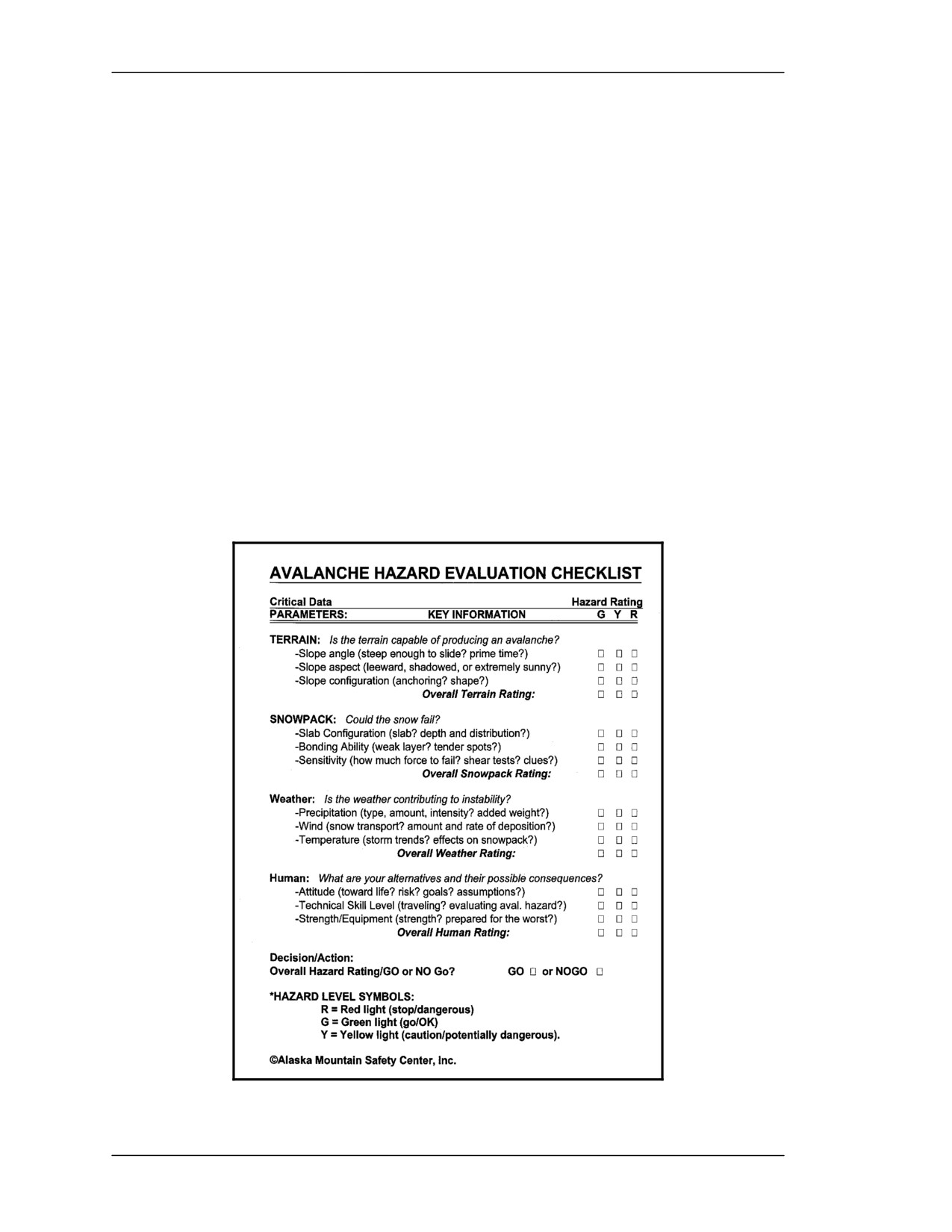
Table 1-2. Avalanche hazard evaluation checklist.
1-32
FM 3-97.61(TC 90-6-1)
CHAPTER 2
MOUNTAIN LIVING
Units deploying to high elevations must receive advanced training to survive
in the harsh mountain environment. Normal activities
(navigation,
communications, and movement) require specialized techniques. Training
should be conducted as realistically as possible, preferably under severe
conditions so the soldier gains confidence. Extended training exercises test
support facilities and expose the soldier to the isolation common to mountain
operations. Training should reflect the harsh mountain environment and
should consider the following:
• Temperature and altitude extremes.
• Hygiene and sanitation.
• Limited living space (difficulty of bivouac).
• Clothing requirements.
Section I. SURVIVAL
The soldier trained to fight and survive in a mountain environment will have increased
confidence in himself. Training should include: psychological preparation, locating water,
shelter considerations, fire building, health hazards, and techniques for obtaining food (see
FM 21-76).
2-1.
WATER SUPPLY
Mountain water should never be assumed safe for consumption. Training in water discipline
should be emphasized to ensure soldiers drink water only from approved sources. Fluids lost
through respiration, perspiration, and urination must be replaced if the soldier is to operate
efficiently.
a. Maintaining fluid balance is a major problem in mountain operations. The sense of
thirst may be dulled by high elevations despite the greater threat of dehydration.
Hyperventilation and the cool, dry atmosphere bring about a three- to four-fold increase in
water loss by evaporation through the lungs. Hard work and overheating increase the
perspiration rate. The soldier must make an effort to drink liquids even when he does not
feel thirsty. One quart of water, or the equivalent, should be drunk every four hours; more
should be drunk if the unit is conducting rigorous physical activity.
b. Three to six quarts of water each day should be consumed. About 75 percent of the
human body is liquid. All chemical activities in the body occur in water solution, which
assists in removing toxic wastes and in maintaining an even body temperature. A loss of two
quarts of body fluid (2.5 percent of body weight) decreases physical efficiency by 25
percent, and a loss of 12 quarts (15 percent of body weight) is usually fatal. Salt lost by
sweating should be replaced in meals to avoid a deficiency and subsequent cramping.
Consuming the usual military rations (three meals a day) provides sufficient sodium
replacement. Salt tablets are not necessary and may contribute to dehydration.
c. Even when water is plentiful, thirst should be satisfied in increments. Quickly
drinking a large volume of water may actually slow the soldier. If he is hot and the water is
cold, severe cramping may result. A basic rule is to drink small amounts often. Pure water
2-1
FM 3-97.61
should always be kept in reserve for first aid use. Emphasis must be placed on the three rules
of water discipline:
• Drink only treated water.
• Conserve water for drinking. Potable water in the mountains may be in short
supply.
• Do not contaminate or pollute water sources.
d. Snow, mountain streams, springs, rain, and lakes provide good sources of water
supply. Purification must be accomplished, however, no matter how clear the snow or water
appears. Fruits, juices, and powdered beverages may supplement and encourage water
intake (do not add these until the water has been treated since the purification tablets may
not work). Soldiers cannot adjust permanently to a decreased water intake. If the water
supply is insufficient, physical activity must be reduced. Any temporary deficiency should
be replaced to maintain maximum performance.
e. All water that is to be consumed must be potable. Drinking water must be taken only
from approved sources or purified to avoid disease or the possible use of polluted water.
Melting snow into water requires an increased amount of fuel and should be planned
accordingly. Nonpotable water must not be mistaken for drinking water. Water that is unfit
to drink, but otherwise not dangerous, may be used for other purposes such as bathing.
Soldiers must be trained to avoid wasting water. External cooling (pouring water over the
head and chest) is a waste of water and an inefficient means of cooling. Drinking water
often is the best way to maintain a cool and functioning body.
f. Water is scarce above the timberline. After setting up a perimeter (patrol base,
assembly area, defense), a watering party should be employed. After sundown, high
mountain areas freeze, and snow and ice may be available for melting to provide water. In
areas where water trickles off rocks, a shallow reservoir may be dug to collect water (after
the sediment settles). Water should be treated with purification tablets (iodine tablets or
calcium hypochlorite), or by boiling at least one to two minutes. Filtering with commercial
water purification pumps can also be conducted. Solar stills may be erected if time and
sunlight conditions permit (see FM 21-76). Water should be protected from freezing by
storing it next to a soldier or by placing it in a sleeping bag at night. Water should be
collected at midday when the sun thaw available.
2-2.
NUTRITION
Success in mountain operations depends on proper nutrition. Because higher altitudes affect
eating habits, precautions must be taken. If possible, at least one hot meal each day should
be eaten, which may require personnel to heat their individual rations.
a. The following elements are characteristic of nutritional acclimatization in mountain
operations:
• Weight loss during the first two to three days at high elevation.
• A loss of appetite with symptoms of mountain sickness.
• Loss of weight usually stops with acclimatization.
• At progressively higher elevations (greater than 14,000 feet), the tolerance of
fatty/high-protein foods rapidly decreases. A high carbohydrate diet may lessen
the symptoms of acute mountain sickness and is digested better than fat at high
altitudes.
2-2
FM 3-97.61
b. Increased fatigue may cause soldiers to become disinterested in eating properly.
Decreased consumption may result in malnutrition because of the unpleasant taste of cold
rations. Leaders should ensure that fuel tablets and squad stoves are available, or that natural
flammable materials are used if possible. Although there is no physiological need for hot
food, it does increase morale and a sense of well being. Loss of weight in the first few days
occurs because of dehydration, metabolic changes, and loss of appetite. Carbohydrate-
containing beverages, such as fruit juices and sports drinks, are an effective means of
increasing carbohydrates, energy, and liquid intake when the normal appetite response is
blunted at altitude.
c. Three major food components are required to maintain a well-functioning body:
proteins, fats, and carbohydrates. These food components provide energy, amino acids,
vitamins, fiber, and minerals. All three components must be provided in the correct
proportions to maintain a healthy body.
(1) Protein. Proteins consist of a large number of amino acid units that are linked
together to form the protein. The amino acids, resulting from digestion of protein, are
absorbed through the intestine into the blood, and are used to make or replace body proteins
(muscle and body tissue). Sources of readily useable animal proteins include eggs, milk,
cheese, poultry, fish, and meats. Other foods such as cereals, vegetables, and legumes also
provide amino acids. These proteins are not as balanced in essential amino acid composition
as meat, eggs, or milk proteins. The minimum daily protein requirement, regardless of
physical activity, is 8 ounces for a 154-pound man. Since amino acids are either oxidized for
energy or stored as fats, consuming excess protein is inefficient and may increase the water
intake needed for urea nitrogen excretion. Protein requires water for digestion and may
facilitate dehydration. Proteins provide the body about four kilocalories of energy per gram
and require the most energy for the body to digest.
(2) Fats. Fats are the most concentrated form of food energy. Of the total daily caloric
intake, 25 to 30 percent may be supplied as fats. Main sources of fats are meats, nuts, butter,
eggs, milk, and cheese. Fats require more water and oxygen, and are harder to digest at
higher altitudes. Fats are the body’s natural stored source of energy. Fats provide the body
around 9 kilocalories of energy per gram and require less energy for the body to digest than
protein but more than carbohydrates.
(3) Carbohydrates. Carbohydrates are an important source of calories. In the form of
glucose, carbohydrates are found in the most important energy-producing cycles in the
body’s cells. If carbohydrate intake exceeds energy needs, moderate amounts are stored in
the muscles and liver. Larger amounts are converted into fats and stored in that form.
Carbohydrates should compose up to
50 percent of the total daily caloric intake.
Nutritionally, the most useful sources of carbohydrates are foods such as unrefined grains,
vegetables, and fruit. Carbohydrates provide the body around four kilocalories of energy per
gram and are the easiest to digest.
(4) Vitamins. Vitamins are classified into two groups on the basis of their ability to
dissolve in fat or water. The fat-soluble vitamins include vitamins A, D, E, and K. The
water-soluble vitamins include the B vitamins and vitamin C, which are found in cereals,
vegetables, fruits, and meats. A well-balanced diet provides all of the required vitamins.
Since most water-soluble vitamins are not stored, a proper diet is necessary to ensure
adequate levels of these vitamins. If an improper and unbalanced diet is likely to occur
2-3
FM 3-97.61
during a deployment, vitamin supplements should be considered, especially if this period is
to exceed 10 days.
(5) Minerals. Mineral elements can be divided into two groups: those needed in the diet
in amounts of 100 milligrams or more a day such as calcium, phosphorous, and magnesium;
and trace elements needed in amounts of only a few milligrams a day such as iodine, iron,
and zinc. Required minerals are contained in a balanced diet (meats, vegetables, fruits).
d. Eating a balanced diet provides the energy needed to conduct daily activities and to
maintain the internal body processes. A balanced diet containing adequate amounts of
vitamins and minerals ensures an efficient metabolism. Since climbing is a strenuous
activity and demands high-energy use, a balanced diet is a necessity.
(1) The efficiency of the body to work above the basal metabolism varies from 20 to 40
percent, depending on the soldier. Over 50 percent of caloric intake is released as heat and is
not available when the soldier works. (About 4,500 calories are expended for strenuous
work and 3,500 calories for garrison activity.) Heat is a by-product of exertion. Exertion
causes excessive bodily heat loss through perspiration and increased radiation. During
inactivity in cold weather, the metabolism may not provide enough heat. The “internal
thermostat” initiates and causes the muscles to shiver, thus releasing heat. Shivering also
requires energy and burns up to 220 calories per hour (estimated for a 100-pound man).
(2) With an abrupt ascent to high altitudes, the soldier experiences physiological
acclimatization. The circulatory system labors to provide the needed oxygen to the body.
Large meals require the digestive system to work harder than usual to assimilate food. Large
meals may be accompanied by indigestion, shortness of breath, cramps, and illness.
Therefore, relatively light meals that are high in carbohydrates are best while acclimatizing
at higher elevations. Personnel should eat moderately and rest before strenuous physical
activity. Since fats and protein are harder to digest, less digestive disturbances may occur if
meals are eaten before resting. A diet high in carbohydrates is not as dense in energy and
may require eating more often. Carbohydrates, beginning in the morning and continuing
through mid-afternoon, are important in maintaining energy levels.
(3) Extra food should be carried in case resupply operations fail. Food should be
lightweight and easy to digest, and be eaten hot or cold. Meals-ready-to-eat (MREs) meet
these criteria and provide all of the basic food groups. Commanders may consider
supplementing MREs with breakfast bars, fruits, juices, candies, cereal bars, and chocolate.
Bouillon cubes can replace water and salt as well as warming cold bodies and stimulating
the appetite. Hot beverages of soup, juices, powdered milk, and cider should also be
considered. Since coffee, tea, and hot chocolate are diuretics, the consumption of these
beverages should not be relied upon for hydration.
(4) Warm meals should be provided when possible. When cooking, the heat source
must be kept away from equipment and ammunition. At higher elevations, the cooking time
may be doubled. To conserve fuel, stoves, fires, and fuel tablets should be protected from
the wind. Extra fuel should be stored in tightly sealed, marked, metal containers. Use stoves
and heat tabs for warming food and boiling water. Canteen cups and utensils should be
cleaned after use. All food items and garbage are carried with the unit. If possible, garbage
should be burned or deep buried. Caution must be taken to prevent animals from foraging
through rucksacks, ahkios, and burial sites. As all missions are tactical, no trace of a unit
should be detected.
2-4
FM 3-97.61
(5) Certain drugs, medications, alcohol, and smoking have adverse effects on the
circulation, perspiration, hydration, and judgment of soldiers. Therefore, they should be
avoided when operating in extremely cold conditions or at high altitudes.
2-3.
PERSONAL HYGIENE AND SANITATION
The principles of personal hygiene and sanitation that govern operations on low terrain also
apply in the mountains. Commanders must conduct frequent inspections to ensure that
personal habits of hygiene are not neglected. Standards must be maintained as a deterrent to
disease, and as reinforcement to discipline and morale.
a. Personal Hygiene. This is especially important in the high mountains, mainly
during periods of cold weather. In freezing weather, the soldier may neglect washing due to
the cold temperatures and scarcity of water. This can result in skin infections and vermin
infestation. If bathing is difficult for any extended period, the soldier should examine his
skin and clean it often. Snow baths in lieu of a water bath are recommended. This helps
reduce skin infections and aids the comfort of the soldier.
(1) Snow may be used instead of toilet paper. Soldiers should shave at rest periods in the
shelter so that oils stripped in shaving will be replenished. A beard may mask the presence
of frostbite or lice. Water-based creams and lotions should be avoided in cold environments
since this will further dehydrate tissues and induce frostbite by freezing. The
nonwater-based creams can be used for shaving in lieu of soap. Sunscreens and chap sticks
should be used on lips, nose, and eyelids. Topical steroid ointments should be carried for
rashes. The teeth must also be cleaned to avoid diseases of the teeth and gums. Underwear
should be changed when possible, but this should not be considered a substitute for bathing.
When operating in areas where resupply is not possible, each soldier should carry a
complete change of clothing. If laundering of clothing is difficult, clothes should be shaken
and air-dried. Sleeping bags must be regularly cleaned and aired.
(2) The principles of foot hygiene must be followed to protect the feet from cold
injuries. The causes of such injuries are present throughout the year in high mountains.
Boots should be laced tightly when climbing to provide needed support but not so tight as to
constrict circulation. Socks should be worn with no wrinkles since this causes blisters on the
feet. Feet should be washed daily, and kept as dry and clean as possible. If regular foot
washing is impossible, socks should be changed often (at halts and rest periods or at least
once a day) and feet massaged, dried, and sprinkled with foot powder. Talc or antifungal
powder should be used when massaging; excess powder is brushed off to avoid clumping,
which may cause blisters. Feet can be cleaned with snow, but must be quickly dried.
Whenever changing socks, soldiers should closely examine their feet for wrinkles, cracks,
blisters, and discoloration. Nails should be trimmed but not too short. Long nails wear out
socks; short nails do not provide proper support for the ends of the toes. Medical attention
should be sought for any possible problems.
(3) Feet should be sprayed two or three times a day with an aluminum chlorohydrate
antiperspirant for a week and then once a day for the rest of the winter. If fissures or cracks
occur in the feet, it is best to discontinue spraying until they are healed or to spray less often
to control sweating. This process stops about 70 percent of the sweating in the feet.
(4) During periods of extreme cold, there is a tendency for the soldier to become
constipated. This condition is brought about by the desire to avoid the inconvenience and
2-5
FM 3-97.61
discomfort of defecating. Adequate water intake plus a low protein, high roughage diet can
be helpful in preventing constipation.
b. Sanitation. In rocky or frozen ground, digging latrines is usually difficult. If latrines
are constructed, they should be located downwind from the position and buried after use. In
tactical situations, the soldier in a designated, downwind location away from water sources
may dig “cat holes.” Since waste freezes, it can be covered with snow and ice or pushed
down a crevasse. In rocky areas above the timberline, waste may be covered with stones.
Section II. ACCLIMATIZATION AND CONDITIONING
Terrestrial altitude can be classified into five categories. Low altitude is sea level to 5,000
feet. Here, arterial blood is 96 percent saturated with oxygen in most people. Moderate
altitude is from 5,000 to 8,000 feet. At these altitudes, arterial blood is greater than 92
percent saturated with oxygen, and effects of altitude are mild and temporary. High
altitude extends from 8,000 to 14,000 feet, where arterial blood oxygen saturation ranges
from 92 percent down to 80 percent. Altitude illness is common here. Very high altitude
is the region from 14,000 to 18,000 feet, where altitude illness is the rule. Areas above
18,000 feet are considered extreme altitudes.
Soldiers deployed to high mountainous elevations require a period of acclimatization
before undertaking extensive military operations. The expectation that freshly deployed,
unacclimatized troops can go immediately into action is unrealistic, and could be disastrous
if the opposing force is acclimatized. Even the physically fit soldier experiences
physiological and psychological degradation when thrust into high elevations. Time must be
allocated for acclimatization, conditioning, and training of soldiers. Training in mountains of
low or medium elevation (5,000 to 8,000 feet) does not require special conditioning and
acclimatization procedures. However, some soldiers will have some impairment of
operating efficiency at these low altitudes. Above
8,000 feet
(high elevation), most
unacclimatized soldiers may display some altitude effects. Training should be conducted at
progressively higher altitudes, starting at about
8,000 feet and ending at 14,000 feet.
Attempts to acclimatize beyond 17,000 feet results in a degradation of the body greater than
the benefits gained. The indigenous populations can out-perform even the most acclimatized
and physically fit soldier who is brought to this altitude; therefore, employment of the local
population may be advantageous.
2-4.
SYMPTOMS AND ADJUSTMENTS
A person is said to be acclimatized to high elevations when he can effectively perform
physically and mentally. The acclimatization process begins immediately upon arrival at the
higher elevation. If the change in elevation is large and abrupt, some soldiers can suffer from
acute mountain sickness (AMS), high-altitude pulmonary edema (HAPE), or high-altitude
cerebral edema (HACE). Disappearance of the symptoms of acute mountain sickness (from
four to seven days) does not indicate complete acclimatization. The process of adjustment
continues for weeks or months. The altitude at which complete acclimatization is possible is
not a set point but for most soldiers with proper ascent, nutrition and physical activity it is
about 14,000 feet.
a. Immediately upon arrival at high elevations, only minimal physical work can be
performed because of physiological changes. The incidence and severity of AMS
2-6
FM 3-97.61
symptoms vary with initial altitude, the rate of ascent, and the level of exertion and
individual susceptibility. Ten to twenty percent of soldiers who ascend rapidly (in less
than 24 hours) to altitudes up to 6,000 feet experience some mild symptoms. Rapid ascent
to
10,000 feet causes mild symptoms in 75 percent of personnel. Rapid ascent to
elevations of 12,000 to 14,000 feet will result in moderate symptoms in over 50 percent
of the soldiers and 12 to 18 percent may have severe symptoms. Rapid ascent to 17,500
feet causes severe, incapacitating symptoms in almost all individuals. Vigorous activity
during ascent or within the first 24 hours after ascent will increase both the incidence and
severity of symptoms. Some of the behavioral effects that will be encountered in
unacclimatized personnel include:
• Increased errors in performing simple mental tasks.
• Decreased ability for sustained concentration.
• Deterioration of memory.
• Decreased vigilance or lethargy.
• Increased irritability in some individuals.
• Impairment of night vision and some constriction in peripheral vision (up to 30
percent at 6,000 feet).
• Loss of appetite.
• Sleep disturbances.
• Irregular breathing.
• Slurred speech.
• Headache.
b. Judgment and self-evaluation are impaired the same as a person who is intoxicated.
During the first few days at a high altitude, leaders have extreme difficulty in maintaining a
coordinated, operational unit. The roughness of the terrain and the harshness and variability
of the weather add to the problems of unacclimatized personnel. Although strong motivation
may succeed in overcoming some of the physical handicaps imposed by the environment,
the total impact still results in errors of judgment. When a soldier cannot walk a straight line
and has a loss of balance, or he suffers from an incapacitating headache, he should be
evacuated to a lower altitude (a descent of at least 1,000 feet for at least 24 hours).
2-5.
PHYSICAL AND PSYCHOLOGICAL CONDITIONING
The commander must develop a conditioning/training program to bring his unit to a level
where it can operate successfully in mountain conditions. Priorities of training must be
established. As with all military operations, training is a major influence on the success of
mountain operations.
a. U.S. forces do not routinely train in mountainous terrain. Therefore, extensive
preparations are needed to ensure individual and unit effectiveness. Units must be physically
and psychologically conditioned and adjusted before undertaking rigorous mountain
operations. Units must be conditioned and trained as a team to cope with the terrain,
environment, and enemy situation. Certain factors must be considered:
• What are the climatic and terrain conditions of the area of operations?
• How much time is available for conditioning and training?
• Will the unit conduct operations with other U.S. or Allied forces? Are there
language barriers? What assistance will be required? Will training and
conditioning be required for attached personnel?
2-7
FM 3-97.61
• What additional personnel will accompany the unit? Will they be available for
training and conditioning?
• What is the current level of physical fitness of the unit?
• What is the current level of individual expertise in mountaineering?
• What type of operations can be expected?
• What is the composition of the advance party? Will they be available to assist in
training and acclimatization?
• What areas in the U.S. most closely resemble the area of operations?
• Are predeployment areas and ranges available?
• Does the unit have instructors qualified in mountain warfare?
• What type equipment will be required (to fit the season, mission, terrain)?
• Does the unit have enough of the required equipment? Do personnel know how
to use the equipment? Will the equipment go with the advance party, with the
unit, or follow after the unit’s arrival?
• Does equipment require modification?
• Do weapons and equipment require special maintenance?
b. When the unit arrives in the area of operations, all personnel require a period of
conditioning and acclimatization. The time schedule should allow for longer and more
frequent periods of rest. The rigors of establishing an assembly area exhaust most
unacclimatized personnel. Water, food, and rest must be considered as priorities, ensuring
sufficient amounts while individual metabolisms and bodies become accustomed to
functioning at higher elevations.
c. Since the acclimatization process cannot be shortened, and the absence of
acclimatization hampers the successful execution of operations, deployment to higher
elevations must consider the following:
(1) Above 8,000 feet, a unit should ascend at a rate of 1,000 to 2,000 feet per day. Units
can leapfrog, taking an extended rest period.
(2) Units should not resort to the use of pharmaceutical pretreatment with carbonic
anhydrase inhibitors such as acetazolamide (Diamox). These drugs have side effects that
mimic the signs and symptoms of AMS. Inexperienced medics may have difficulty
recognizing the differences between the side effects of the drug and a condition that could
possibly be life threatening. Additionally, these drugs are diuretics, which results in higher
hydration levels (at least 25 percent increase per man per day). These higher hydration
levels create a larger logistical demand on the unit by requiring more water, time to acquire
water, water purification supplies, and, if in a winter environment, fuels for melting snow
and ice for water.
(3) Carbonic anhydrase inhibitors such as acetazolamide are effective in the treatment of
mild and severe AMS. These drugs should accompany attached medical personnel because
they can treat the soldier suffering the symptoms of AMS and, although rest may be
required evacuation may not be needed.
(4) Do not move troops directly to high altitudes even if allowances can be made for
inactivity for the first three to five days before mission commitment. Moving troops directly
to high altitude can increase the probability of altitude sickness. Even if inactivity follows
deployment, the incidence of altitude sickness is more likely than with a gradual ascent.
d. Training on high-altitude effects can prevent psychological preconceptions. Soldiers
who have lived on flat terrain may have difficulty when learning to negotiate steep slopes or
2-8
FM 3-97.61
cliffs, developing a sense of insecurity and fear. They must be slowly introduced to the new
terrain and encouraged to develop the confidence required to negotiate obstacles with
assurance and ease. They must be taught the many climbing techniques and principles of
mountain movement. They overcome their fear of heights by becoming familiar with the
problem. The soldier cannot be forced to disregard this fear.
e. Regardless of previous training and the amount of flat cross-country movement
practice, the untrained soldier finds mountain movement hard and tiring. A different group
of muscles are used, which must be developed and hardened. A new technique of rhythmic
movement must be learned. Such conditioning is attained through frequent marches and
climbs, while carrying TOE and special equipment loads. This conditions the back and legs,
which results in increased ability and endurance. At the same time, the men acquire
confidence and ability to safely negotiate the terrain. The better the physical condition of the
soldier, the better the chance of avoiding exhaustion. Proper physical conditioning ensures
the soldier is an asset and not a liability. The body improves its capacity for exercise, the
metabolism becomes more efficient, and blood and oxygen flow quickly and effectively.
f. A physical fitness training program that gradually increases in difficulty should
include marches, climbing, and calisthenics. This increases the soldier’s endurance. Through
a sustained high level of muscular exertion, the soldier’s capacity for exertion is increased.
Physical conditioning should include long-distance running for aerobic conditioning;
calisthenics and weight training to strengthen the heart, lungs, abdomen, legs, back, arms,
and hands; a swimming program to increase lung efficiency; and road marches over
mountainous terrain with all combat equipment. Upon deploying to high elevations, caution
must be exercised by units that are in superior physical condition. The heart rate,
metabolism, and lungs must become accustomed to the elevation and thinner air. A
conditioning program must be set up on site and integrated in gradual stages where
acclimatization, conditioning, and mountaineering skills are realized.
g. Conditioning should begin with basic climbing. It is equally important to instill the
will to climb. Confidence goes hand in hand with physical conditioning and skill
development. Repetitive practice, to the point of instinctive reaction, is key to learning and
maintaining climbing proficiency and technical skills. There are no quick and easy methods
to becoming acclimatized and conditioned. Training should gradually challenge the soldier
over an extended period and reinforce learning skills.
Section III. MEDICAL CONSIDERATIONS
Improper acclimatization poses many problems for medical personnel. Facilities and
supplies may be inadequate to treat all victims. After acclimatization, personnel can still
become injured
(sprains, strains, fractures, frostbite, hypothermia, and trench foot).
Mountain sickness and other illnesses may also occur. Evacuation of the sick and wounded
is compounded by the terrain and weather.
2-6.
ILLNESS AND INJURY
Units operating in mountainous regions are exposed to varied types of injuries and illnesses
not associated with other areas. Medical considerations are like those for other
environments; however, there are some unique aspects of mountain operations to be
considered if effective support is to be provided. Most injuries in the mountain environment
2-9
FM 3-97.61
are soft tissue injuries. These include sprains, strains, abrasions, contusions and fractures. As
with any other injuries, the most life threatening are treated first with the emphasis on
airway control, breathing management, and circulatory support. Skills in basic first aid are
essential to the mountain leader and should be reinforced with regular sustainment training.
2-7.
TREATMENT AND EVACUATION
In harsh mountain weather, the most important course of action is to provide injured soldiers
with medical aid as soon as possible. Immediate first aid is given on site. Due to rough
terrain, medical units can seldom reach unit aid stations by vehicle to evacuate casualties.
Litter bearers are required to move casualties to the rear where they can be evacuated by
ground or air to clearing stations. The victim is protected from the weather and shock during
transportation. Rendezvous points are coordinated with medical units as far forward as
possible. Training must be accomplished with all litter bearers on evacuation techniques and
first aid. Lightly wounded personnel may need assistance to move over rough terrain.
2-8.
SOLAR INJURIES
Solar injuries can happen in warm weather or in cold weather. These types of injuries can be
just as incapacitating as most other injuries but usually are not fatal. The peak hours of
ultraviolet
(UV) radiation are between the hours of 1100 and 1500. Due to the long
wavelengths of ultraviolet light, cloudy days can be more dangerous than sunny days. On
sunny days the soldier takes more care due to the bright conditions. On cloudy days the
soldier tends not to wear sunglasses or sunscreen.
a. Sunburn. Sunburn is the burning of exposed skin surfaces by ultraviolet radiation.
(1) Contributing factors include fair skin, improper use of para-amino benzoic acid
(PABA)-based sunscreens, and exposure to intense ultraviolet rays for extended periods.
(2) Symptoms of sunburn are painful, burning, red or blistered skin with a slight
swelling. The skin may be warm to the touch. In severe cases chills, fever, and headaches
may occur.
(3) To treat sunburn, apply cool saline dressings to alleviate pain and swelling. Do not
pop blisters. If blisters do break, wash thoroughly, bandage, and seek medical attention. A
solution of vinegar (acetic) and water can be lightly applied with sterile gauze to alleviate
burning. The tannic acid in used tea bags can also be applied to alleviate burning.
Administer pain medication if needed.
(4) To prevent sunburn, skin should be covered with clothing or PABA-based
sunscreens (at least sun protection factor [SPF] 15) should be applied liberally to exposed
skin during the peak hours of UV exposure. The SPF means that you can stay exposed to the
suns UV rays that many times longer than without it. (For example, an SPF of 15 means that
skin can be exposed to UV rays 15 times longer than without sunscreen.) During sustained
activity, the sunscreen should be regularly reapplied to maintain the SPF.
b. Snowblindness. Snowblindness is sunburn of the cornea of the eye caused by
exposure to ultraviolet radiation.
(1) A contributing factor is the reflection of sunlight from all directions off the snow,
ice, and water. Ultraviolet rays can cause vision problems even on cloudy days. They are
less filtered at high altitudes than at low altitudes.
(2) Symptoms of snowblindness are painful, red, watery eyes; a gritty feeling; blurred
vision; and a headache.
2-10
FM 3-97.61
(3) To treat snowblindness, patch both eyes with cold compresses for 24 hours. Topical
anesthetics such as Tetracaine Ophthalmic can be used to relieve pain. Avoid rubbing the
eyes. If still painful, keep the victim’s eyes patched and administer oral pain medication.
Snowblindness will usually resolve in about 24 hours for mild to moderate cases. Victims
are rarely in need of evacuation unless the case is unusually severe.
(4) To prevent snow blindness, use quality sunglasses even on cloudy days in
snow-covered terrain. Proper sunglasses should provide
100 percent UVA and UVB
protection and have hoods on the sides to prevent reflected light from entering the eye.
(Currently, the U.S. Army does not have these types of “glacier” sunglasses in their
inventory and they must be acquired from nonmilitary sources.) In an emergency, improvise
slit glasses from materials such as cardboard or birch bark.
2-9.
COLD-WEATHER INJURIES
Cold-weather injuries can occur during any season of the year. Death has resulted in
temperatures as high as 10 degrees Celsius (50 degrees Fahrenheit). A loss of body heat
combined with shock produces devastating results. However, most of these accidents can be
prevented by proper planning to include: timely requisition and receipt of supplies and
proper clothing; thorough training of personnel with respect to the hazards of cold weather;
effective methods for the receipt, dissemination, and use of cold-weather data; periodic
inspections of clothing, personnel, and equipment; and personnel receiving a balance of
water, rest, and nutrition.
a. Soldiers must be prepared to survive, move, and fight in winter conditions. Intense
cold affects the mind as well as the body. Simple tasks take longer to perform, and they take
more effort than in a temperate climate. When weather conditions become extreme the
problems of survival become more significant. Warmth and comfort become the top
priorities. The effects of extreme cold and the probability of injury are magnified due to the
lack of proper diet and sleep. The most important measure in the prevention of cold-weather
injuries is the education of personnel and their leaders.
b. Cold injuries may be divided into two types: freezing and nonfreezing. The freezing
type is known as frostbite. The nonfreezing type includes hypothermia, dehydration, and
immersion foot. Cold injuries result from impaired circulation and the action of ice
formation and cold upon the tissues of the body. Temperature alone is not a reliable guide as
to whether a cold injury can occur. Low temperatures are needed for cold injuries to occur,
but freezing temperatures are not. Wind speed can accelerate body heat loss under both wet
and cold conditions. All commanders and subordinate leaders/instructors must be familiar
with and carry GTA 5-8-12, which includes a wind chill equivalent temperature chart
(Figure 2-1, page 2-12).
2-11

FM 3-97.61
WIND CHILL FACTOR CHART
COOLING POWER OF WIND EXPRESSED AS AN
EQUIVALENT CHILL TEMPERATURE (UNDER CALM CONDITIONS)
ESTIMATED
ACTUAL THERMOMETER READING (F)
WIND SPEED
50
40
30
20
10
0
-10
-20
-30
-40
-50
-60
(IN MPH)
EQUIVALENT TEMPERATURES (F)
Calm
50
40
30
20
10
0
-10
-20
-30
-40
-50
-60
5
48
37
27
16
6
-5
-15
-26
-36
-47
-57
-68
10
40
28
16
4
-9
-24
-33
-46
-58
-70
-83
-95
15
36
22
9
-5
-18
-32
-45
-58
-72
-85
-99
-112
20
32
18
4
-10
-25
-39
-53
-67
-82
-96
-110
-124
25
30
16
0
-15
-29
-44
-59
-74
-88
-104
-118
-133
30
28
13
-2
-18
-33
-48
-63
-79
-94
-109
-125
-140
35
27
11
-4
-21
-35
-51
-67
-82
-98
-113
-129
-145
40
26
10
-6
-21
-37
-53
-69
-85
-100
-116
-132
-148
Winds greater
LITTLE DANGER
INCREASING
GREAT DANGER
than 40 MPH
DANGER
have little
(For properly clothed
Danger from
additional effect.
person) Maximum
freezing of
danger of false sense
exposed flesh.
of security.
Trench foot and immersion foot may occur at any point on this chart.
Figure 2-1. Wind chill chart.
c.
Many other factors in various combinations determine if cold injuries will occur.
(1) Previous Cold Injuries. If a soldier has had a cold injury before, he is at higher risk
for subsequent cold injuries.
(2) Race. Blacks are more susceptible to cold-weather injuries than Caucasians.
(3) Geographic Origin. Personnel from warmer climates are more susceptible to cold
injury than those from colder climates.
(4) Ambient Temperature. The temperature of the air (or water) surrounding the body is
critical to heat regulation. For example, the body uses more heat to maintain the temperature
of the skin when the temperature of the surrounding air is 37 degrees Fahrenheit than when
it is 50 degrees Fahrenheit.
(5) Wind Chill Factor. The commander should know the wind chill factor. When the
forecast gives a figure that falls within the increased danger zone or beyond, caution must be
taken to minimize cold injury. The equivalent wind chill temperature is especially important
when the ambient temperature is 0 degrees Celsius (32 degrees Fahrenheit) or less. Tissue
can freeze if exposed for a prolonged period and if frequent warming is not practiced. The
lower the wind chill, the faster tissue freezing can occur. Wind chill is the rate of cooling.
Wind does not lower the ambient temperature. The ambient temperature alone determines
freezing or nonfreezing injuries. Frostbite Wind chill may cause faster cooling due to
increased convection, but not below the ambient temperature.
(6) Type of Mission. Combat action requiring prolonged immobility and long hours of
exposure to low temperatures, or not having an opportunity to warm up increases the
possibility of cold injuries.
(7) Terrain. Minimal cover and wet conditions increase the potential for cold injury.
2-12
FM 3-97.61
(8) Clothing. Clothing for cold weather should be worn with the acronym C.O.L.D. in
mind.
• C―Clothing should be clean since prolonged wear reduces its air-trapping
abilities and clogs air spaces with dirt and body oils.
• O―Overheating. Avoid overheating. Appropriate measures should be taken
when a change in weather or activity alters the amount of clothing needed to
prevent overheating and, therefore, accumulation of perspiration.
• L―Loose and in layers (to trap air and to conserve body heat). The uniform
should be worn completely and correctly to avoid injury to exposed body
surfaces. The cold-weather uniform is complete when worn with gloves and
inserts.
• D―Dry. Keep dry. Wet clothing loses insulation value.
(9) Moisture. Water conducts heat more rapidly than air (25 percent). When the skin or
clothing becomes damp or wet, the risk of cold injury is greatly increased.
(10)
Dehydration. The most overlooked factor causing cold injuries is dehydration.
Individuals must retain their body fluids. In cold weather the human body needs special
care, and the consumption of water is important to retain proper hydration.
(11)
Age. Within the usual age range of combat personnel, age is not a significant
factor.
(12)
Fatigue. Mental weariness may cause apathy leading to neglect of duties vital to
survival.
(13)
Concomitant Injury. Injuries resulting in shock or blood loss reduce blood flow
to extremities and may cause the injured individual to be susceptible to cold injury, which in
turn can accelerate shock.
(14)
Discipline, Training, and Experience. Well-trained and disciplined soldiers
suffer less than others from the cold.
(15)
Nutrition. Good nutrition is essential for providing the body with fuel to produce
heat in cold weather. The number of calories consumed normally increases as the
temperature becomes colder.
(16)
Excess Activity. Excess activity (overheating) results in loss of large amounts of
body heat by perspiration. This loss of body heat combined with the loss of insulation value
provided by the clothing (due to perspiration dampening the clothing) can subject a soldier
to cold injuries.
(17)
Radical Changes in the Weather. Weather conditions in mountainous terrain
are known to change considerably throughout the day. Weather can quickly change to
extremely cold and wet conditions, especially in higher elevations.
d. Commanders should ensure that the following measures are taken.
(1) Soldiers’ uniforms are kept as dry as possible and are protected from the elements.
(2) Soldiers are educated on proper use of clothing systems to avoid the effects of
overheating and perspiration (layer dressing and ventilate).
(3) The buddy system is used to watch for early signs of cold-weather injuries.
(4) All soldiers waterproof their equipment.
(5) The rate of movement should be slow, deliberate, and careful. Soldiers should not
move out at a force march pace and then be stationary after they have perspired heavily.
Soldiers should not wear excessive cold-weather clothing while moving.
2-13
FM 3-97.61
e. Medical procedures are needed when sickness and injuries occur. Leaders should―
• Assess the situation (tactical and environmental).
• Approach the victim safely (avoid rock or snow slide).
• Perform emergency first aid.
• Treat for shock (always assume that shock is present).
• Check for other injuries/cold injuries.
• Develop a course of action (decide on a means of evacuation).
• Execute the plan and monitor the victim’s condition.
f. Body heat may be lost through radiation, conduction, convection, or evaporation.
(1) Radiation. The direct heat loss from the body to its surrounding atmosphere is called
radiation heat loss. The head can radiate up to 80 percent of the total body heat output. On
cold days, personnel must keep all extremities covered to retain heat. This accounts for the
largest amount of heat lost from the body.
(2) Conduction. Conduction is the direct transfer of heat from one object in contact with
another (being rained on or sitting in snow).
(3) Convection. Convection is the loss of heat due to moving air or water in contact with
the skin. Wind chill is convection cooling. Clothing that ventilates, insulates, and protects
must control the layer of warm air next to the skin.
(4) Evaporation. The evaporation of perspiration causes heat loss. Wet clothing can
cause heat loss by conduction and evaporation. Dressing in layers allows soldiers to remove
or add clothing as needed.
g. Some of the most common cold-weather injuries are described in the following
paragraphs.
(1) Shock. Shock is the depressed state of vital organs due to the cardiovascular (heart)
system not providing enough blood. Although shock is not a cold-weather injury, it is a
symptom or a result of other injuries. Any illness or injury can produce shock, which
increases the instance and severity of a cold-weather injury. Shock should be assumed in all
injuries and treated accordingly. Even minor injuries can produce shock due to cold, pain,
fear, and loss of blood.
(a) Symptoms. Initial symptoms of shock include apprehension, shortness of breath,
sweating, cold skin, rapid and faint pulse, and excessive thirst. If the victim is not given
adequate first aid immediately, his condition may digress into incoherence, slower heart
beat, unconsciousness, and possibly death.
(b) Treatment. To treat shock, restore breathing and heart rate through artificial
respiration or cardiopulmonary resuscitation. Treat the injury and control hemorrhaging.
Make the victim as comfortable as possible and try to relieve the pain. Keep the victim
warm but do not overheat him. Elevate the back and head, or feet. If the victim is conscious
and has no abdominal injuries, administer water. The victim should receive proper medical
attention as soon as possible.
(2) Dehydration. Dehydration is the loss of body fluids to the point that normal body
functions are prevented or slowed. This is usually caused by overexertion and improper
water intake. Dehydration precedes all cold-weather injuries and is a major symptom in
acute mountain sickness. It contributes to poor performance in all physical activities―even
more so than lack of food. Cold weather requirements for water are no different than in the
desert. They may, in fact, exceed desert requirements because of the increased difficulty in
moving with extra clothing and through the snow. At high altitudes, the air is dry. Combined
2-14
FM 3-97.61
with a rapid rate of breathing, as much as two liters of liquid may be lost each day through
respiration. A soldier needs about three to six quarts of water each day to prevent
dehydration when living and performing physical labor in a cold or mountainous
environment. Coffee and tea are diuretics and cause excessive urination and should be
avoided. The adequacy of liquid intake can best be judged by the urine color and volume.
Dark amber colored urine instead of light yellow or the absence of a need to urinate upon
awakening from a night’s sleep are indicators of dehydration. Thirst is not a good indicator
of hydration.
(a) Contributing Factors. Factors that contribute to dehydration in cold weather are:
• The thirst mechanism does not function properly in cold weather.
• Water is often inconvenient to obtain and purify.
• The air in cold climates and at high altitudes lacks moisture.
• Cold causes frequent urination.
(b) Symptoms. Symptoms of dehydration include darkening urine, decreased amounts of
urine being produced, dry mouth, tiredness, mental sluggishness, lack of appetite, headache,
fainting, rapid heartbeat, dizziness, higher temperature, upset stomach, and unconsciousness.
The symptoms of dehydration are similar to those of hypothermia. To distinguish between
them, open the victim’s clothes and feel the stomach. If the stomach is cold, the victim is
probably hypothermic; if it is warm, he is probably dehydrated. However, this test is not
conclusive since cold-weather dehydrating can also lead to total body cooling. The cold
environment may act as a diuretic and impair the body’s ability to conserve fluid
(cold-induced diuresis and increased rate of urination).
(c) Treatment. Prevent dehydration by consuming three to six quarts of fluids each day
(forced drinking in the absence of thirst is mandatory) and avoid caffeine and alcohol, which
may chemically contribute to dehydration. Keep the victim warm and treat for shock. In
advanced cases, administer fluids by mouth if the victim is conscious. Do not let him eat
snow; eating snow uses body heat. Allow the victim to rest. If he fails to improve within one
hour or is unconscious, evacuate him to a medical facility immediately.
(3) Hypothermia. Hypothermia is the lowering of the body core temperature at a rate
faster than the body can produce heat. Hypothermia may be caused by exposure or by
sudden wetting of the body such as falling into a lake or being sprayed with fuel or other
liquid. Hypothermia can occur even on moderate days with temperatures of 40 to 50 degrees
Fahrenheit with little precipitation if heat loss exceeds heat gain and the condition of the
soldier is allowed to deteriorate. Hypothermia is classified as mild (core temperature above
90 degrees Fahrenheit or 32 degrees Celsius) or severe (core temperature below 90 degrees
Fahrenheit or
32 degrees Celsius). An individual is considered to be
“clinically
hypothermic” when the core temperature is less than or equal to 95 degrees Fahrenheit.
(a) Contributing Factors. Factors that contribute to hypothermia are:
• Dehydration.
• Poor nutrition.
• Diarrhea.
• Decreased physical activity.
• Accidental immersion in water.
• Change in weather.
• High winds.
• Inadequate types or amounts of clothing.
2-15
FM 3-97.61
(b) Symptoms The first symptom of hypothermia is when the body core (rectal)
temperature falls to about 96 degrees Fahrenheit. Other symptoms include:
• Shivering, which may progress to an uncontrollable point making it hard for an
individual to care for himself. Shivering begins after a drop in body temperature
of one to two degrees. This is followed by clumsiness (stumbling or falling),
slow reactions, mental confusion, and difficulty in speaking.
• Body temperature drop from 95 degrees Fahrenheit to 90 degrees Fahrenheit,
which can cause sluggish thinking, irrational thought, apathy, and a false sense
of warmth. The victim becomes cold and pale; cannot perform simple tasks;
experiences amnesia and hallucinations; develops blueness of skin and decreased
heart and respiratory rate with a weak pulse; pupils of the eyes dilate; speech
becomes slurred; and visual disturbance occurs.
• Body temperature drop from 90 degrees Fahrenheit to 85 degrees Fahrenheit,
which causes irrationality, incoherence, loss of contact with the environment,
muscular rigidity, disorientation, and exhaustion. The soldier might stop
shivering after his core temperature drops below 90 degrees Fahrenheit.
• Body temperature drop from 85 degrees Fahrenheit and below, which causes
muscle rigidity, unconsciousness, comatose state, and faint vital signs. The pulse
may be faint or impalpable, and breathing is too shallow to observe.
(c) Prevention. Prevent hypothermia by using the buddy system to watch each other for
symptoms; consume adequate amounts of liquids daily; rest; and eat properly.
(d) Avoidance. Hypothermia can be avoided by dressing in layers, which permits easy
additions or deletions to prevent overheating, becoming too cold, or getting wet or
windblown. If the soldier is in a situation that precludes staying warm and dry, he should
seek shelter. Sweets and physical activity help to produce body heat.
(e) Treatment. Treatment methods vary based on the severity of the hypothermia.
• Mild cases: If a soldier shows symptoms of hypothermia, prevent additional heat
loss by getting the victim into a shelter; removing wet clothing and replacing it
with dry, insulated clothing; insulating the victim from the ground; and sharing a
sleeping bag (cover head) to transfer body heat. Make a diagnosis (rectal
temperature). Rehydrate the victim with warm liquids, sweets, and food. If the
tactical situation allows, build a fire. Above all else, keep the victim conscious
until his vital signs are normal, and seek medical assistance. If possible, keep the
victim physically active to produce body heat.
• Severe cases: If the victim is unconscious or appears dead without any obvious
injury, prevent further heat loss. Rapid rewarming of an unconscious victim may
create problems and should not be attempted. It is best to evacuate as soon as
possible. At all times, the victim should be handled gently so as not to cause the
cold blood from the extremities to rush to the heart. Do not allow the victim to
perform ANY physical activity. Immediately transport the victim to the nearest
medical facility. Field reheating is not effective and may be hazardous. Provide
artificial respiration if breathing stops. If no pulse is detectable, be aware that in
hypothermia there is often effective circulation for the victim’s hypothermic
state. In such a case, cardiac compression (such as CPR) may be fatal. The
exception is acute hypothermia with near drowning.
2-16
FM 3-97.61
•
Breathing warm, moist air is the fastest way to warm the inside of the body. If
breathing steam is not possible, place tubing under the rescuer’s shirt so the
victim will still breathe warm, moist air. This process can be done while on
the move. In addition to breathing moist, warm air the victim must be
gradually rewarmed using external heat sources. Padded hot water bottles or
heated stones should be placed in the armpits.
•
If conscious, the victim can be given warm, sweet drinks.
•
The Hibler Pack is an improvised method of rewarming hypothermic victims
in the field. This is used to heat the body core first so the vital organs are
warmed and not the extremities. As the body warms up the warm blood will
eventually warm all parts of the body. First lay out a blanket or sleeping bag
and place a poncho or space blanket inside of it. The poncho or space blanket
should go from the base of the skull to the base of the butt. This keeps the
sleeping bag/blanket dry and acts like a vapor barrier. Lay the hypothermic
patient inside the sleeping bag/blanket. Using a stove, warm water until it is
hot to the touch (but not hot enough to burn the patient) and completely
dampen any absorbable materials (such as T-shirt, towel, BDU top, and so
on). Place the warm, wet items inside a plastic bag or directly in the armpits
and chest of the patient. After the warm, wet item has been placed on the
patient, wrap the patient tightly inside the poncho/space blanket and the
blanket/sleeping bag. Continually check the temperature of the wet material
and keep it warm.
•
All bodily systems in hypothermia are brittle so treat the victim gently. As these
attempts are being made, try to evacuate the victim. Severe complications may
arise as the body temperature rises, which may result in cardiac arrest even
though the victim seems to be doing well.
(4) Immersion or Trench Foot. This is damage to the circulatory and nervous systems
of
the
feet that occurs from prolonged exposure to cold and wet at above freezing
temperatures. This can happen wearing boots or not. A soldier may not feel uncomfortable
until the injury has already begun.
(a) Contributing Factors. Factors that contribute to immersion or trench foot are:
• Stepping into water over the boot tops.
• Not changing socks often enough.
• Improper hygiene.
• Prolonged exposure (three to five days).
(b) Symptoms. Symptoms of immersion or trench foot include the sensation of tingling,
numbness, and then pain. The toes are pale, and feel cold and stiff. The skin is wet and
soggy with the color turning from red to bright red, progressing to pale and mottled, and
then grayish blue. As symptoms progress and damage appears, the skin becomes red and
then bluish or black. Swelling may occur. Because the early stages of trench foot are not
painful, soldiers must be constantly aware to prevent it.
(c) Treatment. To prevent this condition, keep the feet dry and clean. Change socks
often, drying the insides of boots, massaging the feet, and using foot powder. Drying the feet
for 24 hours usually heals mild cases. Moderate cases usually heal within three to five days.
The feet should be handled gently―NOT rubbed or massaged. They should be cleaned with
soap and water, dried, elevated, and exposed to room temperature. The victim must stay off
2-17
FM 3-97.61
his feet and seek medical attention. Severe cases, when feet are not allowed to dry, are
evacuated as a litter casualty.
(5) Blisters. When first noticed and before the formation of a blister, cover a hotspot
with moleskin (over the area and beyond it). Use tincture benzoin to help the moleskin
adhere to and toughen the skin. Once a blister has formed, cover it with a dressing large
enough to fit over the blister, and then tape it. Never drain blisters unless they are
surrounded by redness, or draining pus indicates infection. If this occurs, drain the blister
from the side with a clean sterile needle. After cleaning with soap and water, gently press
out the fluid leaving the skin intact. Make a doughnut of moleskin to go around the blister
and apply to the skin. For toe blisters, wrap the entire toe with adhesive tape over the
moleskin. (Toenails should be trimmed straight across the top, leaving a 90-degree angle on
the sides. This provides an arch so that the corners do not irritate the skin.)
(6) Frostbite. Frostbite is the freezing or crystallization of living tissues due to heat
being lost faster than it can be replaced by blood circulation, or from direct exposure to
extreme cold or high winds. Exposure time can be minutes or instantaneous. The extremities
are usually the first to be affected. Damp hands and feet may freeze quickly since moisture
conducts heat away from the body and destroys the insulating value of clothing. Heat loss is
compounded with intense cold and inactivity. With proper clothing and equipment, properly
maintained and used, frostbite can be prevented. The extent of frostbite depends on
temperature and duration of exposure. Frostbite is one of the major nonfatal cold-weather
injuries encountered in military operations, but does not occur above an ambient
temperature of 32 degrees Fahrenheit.
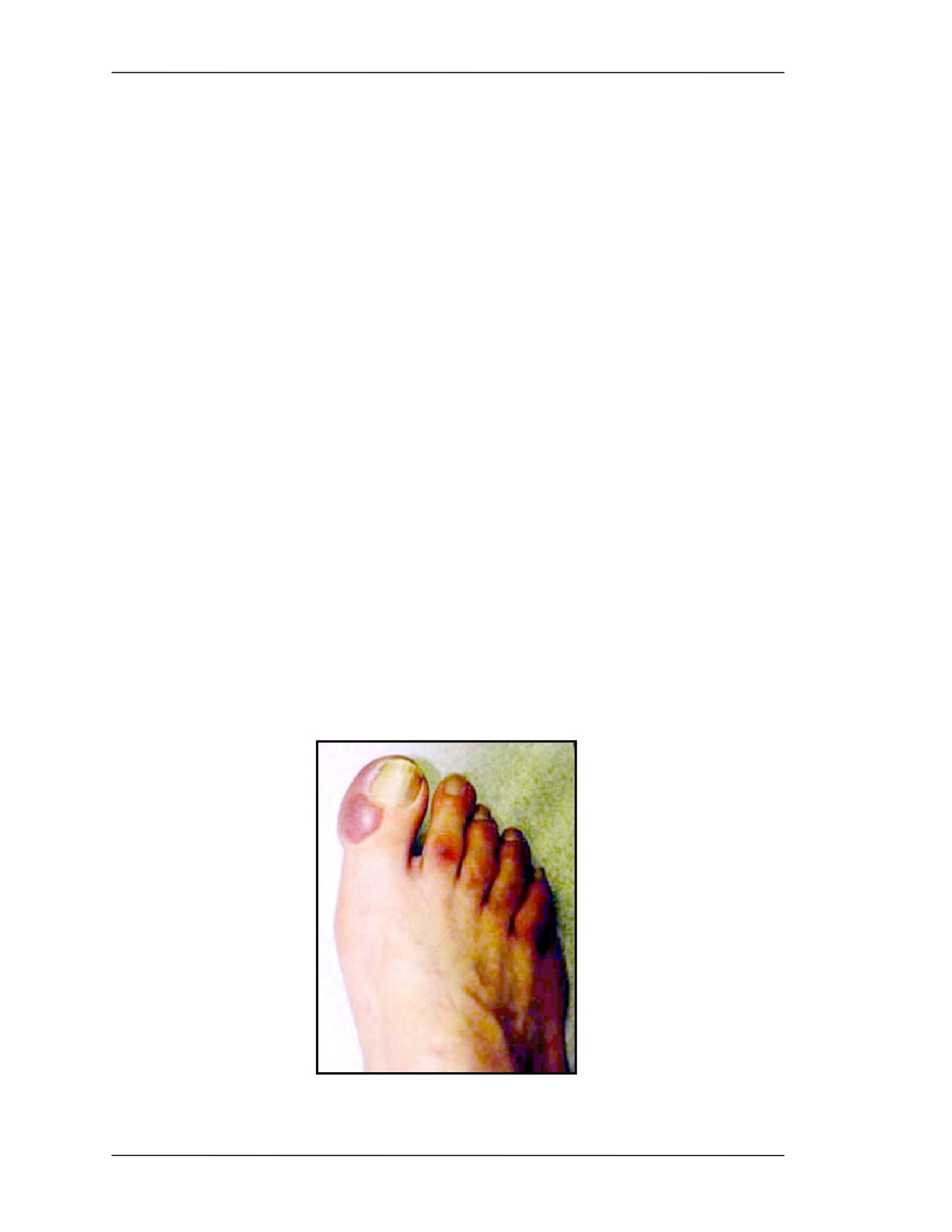
(a) Categories of Frostbite. Superficial (mild) frostbite involves only the skin (Figure
2-2). The layer immediately below usually appears white to grayish with the surface feeling
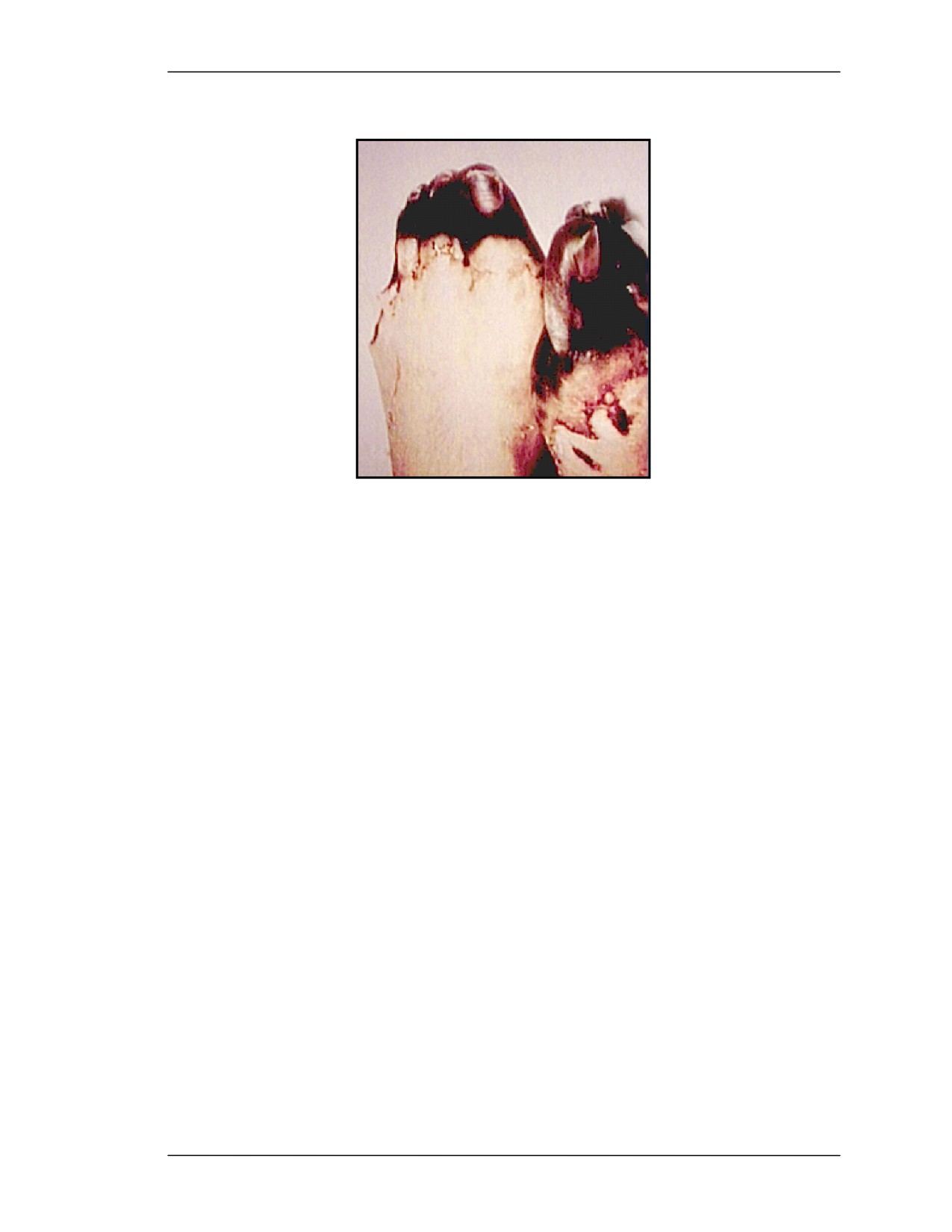
hard, but the underlying tissue is soft. Deep (severe) frostbite extends beyond the first layer
of skin and may include the bone (Figure 2-3). Discoloration continues from gray to black,
and the texture becomes hard as the tissue freezes deeper. This condition requires immediate
evacuation to a medical facility.
Figure 2-2. Superficial frostbite.
2-18
FM 3-97.61
Figure 2-3. Deep frostbite.
(b) Contributing Factors. Factors that contribute to frostbite are:
• Dehydration.
• Below-freezing temperatures.
• Skin contact with super cooled metals or liquids.
• Use of caffeine, tobacco, or alcohol.
• Neglect.
(c) Symptoms. Symptoms of frostbite vary and may include a cold feeling, pain,
burning, numbness, and, in the final stages, a false sense of warmth. The skin first turns red,
then pale. It may be bluish in color and then may appear frosty or waxy white. The skin may
feel hard, may not be movable over the joints and bony prominences, or may be frozen.
Identification of deep versus superficial frostbite is difficult to determine and often requires
three to seven days after rewarming for medical personnel to diagnose. Blisters, swelling,
and pain may occur after thawing.
(d) Treatment. Using the buddy system is one of the primary ways to prevent frostbite.
Buddies must watch each other for symptoms of frostbite and provide mutual aid if frostbite
occurs. Frostbite should be identified early with prompt first-aid care applied to prevent
further damage.
• Treat early signs of frostbite by rewarming with skin-to-skin contact or by
sheltering the body part under the clothing next to the body. Do this immediately.
If tissues have frozen, evacuate the victim before they thaw. If the feet are
involved, evacuate the victim as a litter patient.
• Thawing of a frostbitten victim is a hospital procedure. If the victim has frostbite
with frozen extremities, protect the frozen parts and evacuate as a litter patient.
• If frostbite is not recognized before it thaws, do not let the area refreeze since
this causes more damage. The most often-affected body parts are the hands,
fingers, toes, feet, ears, chin, and nose. If evacuation of the victim as a litter case
2-19
FM 3-97.61
is not possible and the body part has not yet thawed, have the victim walk out on
his own. Walking out on frozen feet is better than having them thaw and
refreeze. Self-evacuation may be tactically necessary. Walking on frozen feet
does less harm than walking on thawed feet.
• If reheating is inevitable, do not overheat the affected body parts near flame; the
warming temperature should not be greater than normal body temperature. Do
not rub the parts―the crystallized tissues may break internally and cause more
damage. Do not pop blisters; cover them with a dry, sterile dressing. Keep the
victim warm (apply loose, bulky bandages to separate toes and fingers.)
• Once a part is rewarmed it will become painful. Pain may be managed with
narcotic analgesics.
• Once the foot is rewarmed it will swell and putting the boot back on will not be
possible.
(7) Constipation. Constipation is the infrequent or difficult passage of stools.
(a) Contributing Factors. Factors that contribute to constipation are a lack of fluids,
improper nutrition, and not defecating when needed.
(b) Symptoms. Symptoms include headache, cramping, lack of bowel movement,
painful bowel movement, and loss of appetite.
(c) Treatment. Constipation is prevented by consuming adequate amounts and varieties
of food, drinking from four to six liters of liquid each day, and defecating regularly. If
allowed to progress beyond self-care stages, victims will need medical aid.
(8) Carbon Monoxide Poisoning. This is the replacement of oxygen in the blood with
carbon monoxide.
(a) Contributing Factor. A contributing factor is inhaling fumes from burning fuel, such
as fires, stoves, heaters, and running engines, without proper ventilation.
(b) Symptoms. Symptoms are similar to other common illnesses and include headaches,
fatigue, excessive yawning, nausea, dizziness, drowsiness, confusion, and unconsciousness.
Death may occur. The one visible symptom is bright red lips, mouth, and inside of the
eyelids.
(c) Treatment. Remove the victim from the source of contamination; administer oxygen,
if available; and evacuate to a medical facility. Severe complications may develop even in
casualties who appear to have recovered. If the victim is unconscious, administer rescue
breathing and CPR as needed.
2-10. HEAT INJURIES
Heat injuries, although associated with hot weather, can occur in cold-weather
environments. Most heat injuries can be avoided by planning, periodic inspections of
personnel clothing (ventilation) and equipment, a balance of water and food intake, and
rest.
a. Heat Cramps. Heat cramps are caused by an accumulation of lactic acid in the
muscles and a loss of salt through perspiration.
(1) Contributing Factor. Strenuous exertion causes the body to heat up and to produce
heavy perspiration.
(2) Symptoms. Symptoms of heat cramps include pain and cramping in the arms, legs,
back, and stomach. The victim sweats profusely and cannot quench his thirst.
2-20
FM 3-97.61
(3) Treatment. Have the victim rest in a cool, shady area, breath deeply, and stretch the
cramped muscle as soon as possible to obtain relief. Loosen the victim’s clothing and have
him drink cool water. Monitor his condition and seek medical attention if pain and cramps
continue.
b. Heat Exhaustion. Heat exhaustion may occur when a soldier exerts himself in any
environment and he overheats. The blood vessels in the skin become so dilated that the
blood flow to the brain and other organs is reduced.
(1) Contributing Factors. Factors that contribute to heat exhaustion are strenuous
activity in hot areas, unacclimatized troops, inappropriate diet, and not enough water or rest.
(2) Symptoms. Symptoms of heat exhaustion may be similar to fainting but may also
include weakness; dizziness; confusion; headache; cold, clammy skin; and nausea. The
victim may also have a rapid but weak pulse.
(3) Treatment. Move the victim to a cool, shady area and loosen his clothes and boots.
Have the victim drink water and, if possible, immerse him in water to aid in cooling. Elevate
the victim’s legs to help restore proper circulation. Monitor his condition and seek medical
attention if the symptoms persist.
c. Heat Stroke. Heat stroke is a life-threatening situation caused by overexposure to
the sun. The body is so depleted of liquids that its internal cooling mechanisms fail to
function.
(1) Contributing Factors. Factors that contribute to heat stroke are prolonged exposure
to direct sunlight, overexertion, dehydration, and depletion of electrolytes.
(2) Symptoms. Symptoms of heat stroke include hot, dry skin; dizziness; confusion and
incoherency; headache; nausea; seizures; breathing difficulty; a slow pulse; and loss of
consciousness.
(3) Treatment. Cool the victim at once, and restore breathing and circulation. If the
victim is conscious, administer water. If possible, submerge the victim in water to reduce his
temperature, treat for shock, and prepare for immediate evacuation.
2-11. ACUTE MOUNTAIN SICKNESS
Acute mountain sickness is a temporary illness that may affect both the beginner and
experienced climber. Soldiers are subject to this sickness in altitudes as low as 5,000 feet.
Incidence and severity increases with altitude, and when quickly transported to high
altitudes. Disability and ineffectiveness can occur in 50 to 80 percent of the troops who are
rapidly brought to altitudes above 10,000 feet. At lower altitudes, or where ascent to
altitudes is gradual, most personnel can complete assignments with moderate effectiveness
and little discomfort.
a. Personnel arriving at moderate elevations (5,000 to 8,000 feet) usually feel well for
the first few hours; a feeling of exhilaration or well-being is not unusual. There may be an
initial awareness of breathlessness upon exertion and a need for frequent pauses to rest.
Irregular breathing can occur, mainly during sleep; these changes may cause apprehension.
Severe symptoms may begin 4 to 12 hours after arrival at higher altitudes with symptoms of
nausea, sluggishness, fatigue, headache, dizziness, insomnia, depression, uncaring attitude,
rapid and labored breathing, weakness, and loss of appetite.
b. A headache is the most noticeable symptom and may be severe. Even when a
headache is not present, some loss of appetite and a decrease in tolerance for food occurs.
Nausea, even without food intake, occurs and leads to less food intake. Vomiting may occur
2-21
FM 3-97.61
and contribute to dehydration. Despite fatigue, personnel are unable to sleep. The symptoms
usually develop and increase to a peak by the second day. They gradually subside over the
next several days so that the total course of AMS may extend from five to seven days. In
some instances, the headache may become incapacitating and the soldier should be
evacuated to a lower elevation.
c. Treatment for AMS includes the following:
• Oral pain medications such as ibuprofen or aspirin.
• Rest.
• Frequent consumption of liquids and light foods in small amounts.
• Movement to lower altitudes (at least 1,000 feet) to alleviate symptoms, which
provides for a more gradual acclimatization.
• Realization of physical limitations and slow progression.
• Practice of deep-breathing exercises.
• Use of acetazolamide in the first 24 hours for mild to moderate cases.
d. AMS is nonfatal, although if left untreated or further ascent is attempted,
development of high-altitude pulmonary edema (HAPE) and or high-altitude cerebral edema
(HACE) can be seen. A severe persistence of symptoms may identify soldiers who
acclimatize poorly and, thus, are more prone to other types of mountain sickness.
2-12. CHRONIC MOUNTAIN SICKNESS
Although not commonly seen in mountaineers, chronic mountain sickness (CMS) (or
Monge’s disease) can been seen in people who live at sufficiently high altitudes (usually
at or above 10,000 feet) over a period of several years. CMS is a right-sided heart failure
characterized by chronic pulmonary edema that is caused by years of strain on the right
ventricle.
2-13. UNDERSTANDING HIGH-ALTITUDE ILLNESSES
As altitude increases, the overall atmospheric pressure decreases. Decreased pressure is
the underlying source of altitude illnesses. Whether at sea level or 20,000 feet the
surrounding atmosphere has the same percentage of oxygen. As pressure decreases the
body has a much more difficult time passing oxygen from the lungs to the red blood cells
and thus to the tissues of the body. This lower pressure means lower oxygen levels in the
blood and increased carbon dioxide levels. Increased carbon dioxide levels in the blood
cause a systemic vasodilatation, or expansion of blood vessels. This increased vascular
size stretches the vessel walls causing leakage of the fluid portions of the blood into the
interstitial spaces, which leads to cerebral edema or HACE. Unless treated, HACE will
continue to progress due to the decreased atmospheric pressure of oxygen. Further ascent
will hasten the progression of HACE and could possibly cause death.
While the body has an overall systemic vasodilatation, the lungs initially experience
pulmonary vasoconstriction. This constricting of the vessels in the lungs causes increased
workload on the right ventricle, the chamber of the heart that receives de-oxygenated
blood from the right atrium and pushes it to the lungs to be re-oxygenated. As the right
ventricle works harder to force blood to the lungs, its overall output is decreased thus
decreasing the overall pulmonary perfusion. Decreased pulmonary perfusion causes
decreased cellular respiration―the transfer of oxygen from the alveoli to the red blood
cells. The body is now experiencing increased carbon dioxide levels due to the decreased
2-22
FM 3-97.61
oxygen levels, which now causes pulmonary vasodilatation. Just as in HACE, this
expanding of the vascular structure causes leakage into interstitial space resulting in
pulmonary edema or HAPE. As the edema or fluid in the lungs increases, the capability
to pass oxygen to the red blood cells decreases thus creating a vicious cycle, which can
quickly become fatal if left untreated.
2-14. HIGH-ALTITUDE PULMONARY EDEMA
HAPE is a swelling and filling of the lungs with fluid, caused by rapid ascent. It occurs at
high altitudes and limits the oxygen supply to the body.
a. HAPE occurs under conditions of low oxygen pressure, is encountered at high
elevations (over 8,000 feet), and can occur in healthy soldiers. HAPE may be considered a
form of, or manifestation of, AMS since it occurs during the period of susceptibility to this
disorder.
b. HAPE can cause death. Incidence and severity increase with altitude. Except for
acclimatization to altitude, no known factors indicate resistance or immunity. Few cases
have been reported after 10 days at high altitudes. When remaining at the same altitude, the
incidence of HAPE is less frequent than that of AMS. No common indicator dictates how a
soldier will react from one exposure to another. Contributing factors are:
• A history of HAPE.
• A rapid or abrupt transition to high altitudes.
• Strenuous physical exertion.
• Exposure to cold.
• Anxiety.
c. Symptoms of AMS can mask early pulmonary difficulties. Symptoms of HAPE
include:
• Progressive dry coughing with frothy white or pink sputum (this is usually a later
sign) and then coughing up of blood.
• Cyanosis—a blue color to the face, hands, and feet.
• An increased ill feeling, labored breathing, dizziness, fainting, repeated clearing
of the throat, and development of a cough.
• Respiratory difficulty, which may be sudden, accompanied by choking and rapid
deterioration.
• Progressive shortness of breath, rapid heartbeat (pulse 120 to 160), and coughing
(out of contrast to others who arrived at the same time to that altitude).
• Crackling, cellophane-like noises (rales) in the lungs caused by fluid buildup (a
stethoscope is usually needed to hear them).
• Unconsciousness, if left untreated. Bubbles form in the nose and mouth, and
death results.
d. HAPE is prevented by good nutrition, hydration, and gradual ascent to altitude (no
more than 1,000 to 2,000 feet per day to an area of sleep). A rest day, with no gain in
altitude or heavy physical exertion, is planned for every 3,000 feet of altitude gained. If a
soldier develops symptoms despite precautions, immediate descent is mandatory where he
receives prompt treatment, rest, warmth, and oxygen. He is quickly evacuated to lower
altitudes as a litter patient. A descent of 300 meters may help; manual descent is not delayed
to await air evacuation. If untreated, HAPE may become irreversible and cause death. Cases
2-23
FM 3-97.61
that are recognized early and treated promptly may expect to recover with no aftereffects.
Soldiers who have had previous attacks of HAPE are prone to second attacks.
e. Treatment of HAPE includes:
• Immediate descent (2,000 to 3,000 feet minimum) if possible; if not, then
treatment in a monoplace hyperbaric chamber.
• Rest (litter evacuation)
• Supplemental oxygen if available.
• Morphine for the systemic vasodilatation and reduction of preload. This
should be carefully considered due to the respiratory depressive properties of
the drug.
• Furosemide (Lasix), which is a diuretic, given orally can also be effective.
• The use of mannitol should not be considered due to the fact that it crystallizes
at low temperatures. Since almost all high-altitude environments are cold,
using mannitol could be fatal.
• Nifidipine (Procardia), which inhibits calcium ion flux across cardiac and
smooth muscle cells, decreasing contractility and oxygen demand. It may also
dilate coronary arteries and arterioles.
• Diphenhydramine (Benadryl), which can help alleviate the histamine response
that increases mucosal secretions.
2-15. HIGH-ALTITUDE CEREBRAL EDEMA
HACE is the accumulation of fluid in the brain, which results in swelling and a depression
of brain function that may result in death. It is caused by a rapid ascent to altitude without
progressive acclimatization. Prevention of HACE is the same as for HAPE. HAPE and
HACE may occur in experienced, well-acclimated mountaineers without warning or
obvious predisposing conditions. They can be fatal; when the first symptoms occur,
immediate descent is mandatory.
a. Contributing factors include rapid ascent to heights over 8,000 feet and aggravation
by overexertion.
b. Symptoms of HACE include mild personality changes, paralysis, stupor,
convulsions, coma, inability to concentrate, headaches, vomiting, decrease in urination, and
lack of coordination. The main symptom of HACE is a severe headache. A headache
combined with any other physical or psychological disturbances should be assumed to be
manifestations of HACE. Headaches may be accompanied by a loss of coordination,
confusion, hallucinations, and unconsciousness. These may be combined with symptoms of
HAPE. The victim is often mistakenly left alone since others may think he is only irritable
or temperamental; no one should ever be ignored. The symptoms may rapidly progress to
death. Prompt descent to a lower altitude is vital.
c. Preventive measures include good eating habits, maintaining hydration, and using a
gradual ascent to altitude. Rest, warmth, and oxygen at lower elevations enhance recovery.
Left untreated, HACE can cause death.
d. Treatment for HACE includes:
• Dexamethasone injection immediately followed by oral dexamethasone.
• Supplemental oxygen.
• Rapid descent and medical attention.
• Use of a hyberbaric chamber if descent is delayed.
2-24
FM 3-97.61
2-16. HYDRATION IN HAPE AND HACE
HAPE and HACE cause increased proteins in the plasma, or the fluid portion of the
blood, which in turn increases blood viscosity. Increased viscosity increases vascular
pressure. Vascular leakage caused by stretching of the vessel walls is made worse
because of this increased vascular pressure. From this, edema, both cerebral and
pulmonary, occurs. Hydration simply decreases viscosity.
2-25
FM 3-97.61(TC 90-6-1)
CHAPTER 3
MOUNTAINEERING EQUIPMENT
Commanders at every level must understand the complexity of operations
in a mountainous environment where every aspect of combat operations
becomes more difficult. Leaders must understand that each individual has
a different metabolism and, therefore, cools down and heats up differently,
which requires soldiers to dress-up and dress-down at different intervals.
Provided all tactical concerns are met, the concept of uniformity is
outdated and only reduces the unit’s ability to fight and function at an
optimum level. The extreme cold weather clothing system (ECWCS) is
specifically designed to allow for rapid moisture transfer and optimum
heat retention while protecting the individual from the elements. Every
leader is responsible for ensuring that the ECWCS is worn in accordance
with the manufacturers’ recommendations. Commanders at all levels must
also understand that skills learned at an Army mountaineering school are
perishable and soldiers need constant practice to remain proficient. The
properly trained mountain soldier of today can live better, move faster,
and fight harder in an environment that is every bit as hostile as the
enemy.
Section I. EQUIPMENT DESCRIPTION AND MAINTENANCE
With mountainous terrain encompassing a large portion of the world’s land mass, the
proper use of mountaineering equipment will enhance a unit’s combat capability and
provide a combat multiplier. The equipment described in this chapter is produced by
many different manufacturers; however, each item is produced and tested to extremely
high standards to ensure safety when being used correctly. The weak link in the safety
chain is the user. Great care in performing preventative maintenance checks and services
and proper training in the use of the equipment is paramount to ensuring safe operations.
The manufacturers of each and every piece of equipment provide recommendations on
how to use and care for its product. It is imperative to follow these instructions explicitly.
3-1.
FOOTWEAR
Currently, CTA 50-900 provides adequate footwear for most operations in mountainous
terrain. In temperate climates a combination of footwear is most appropriate to
accomplish all tasks.
a. The hot weather boot provides an excellent all-round platform for movement and
climbing techniques and should be the boot of choice when the weather permits. The
intermediate cold weather boot provides an acceptable platform for operations when the
weather is less than ideal. These two types of boots issued together will provide the unit
with the footwear necessary to accomplish the majority of basic mountain missions.
b. Mountain operations are encumbered by extreme cold, and the extreme cold
weather boot (with vapor barrier) provides an adequate platform for many basic mountain
missions. However, plastic mountaineering boots should be incorporated into training as
3-1
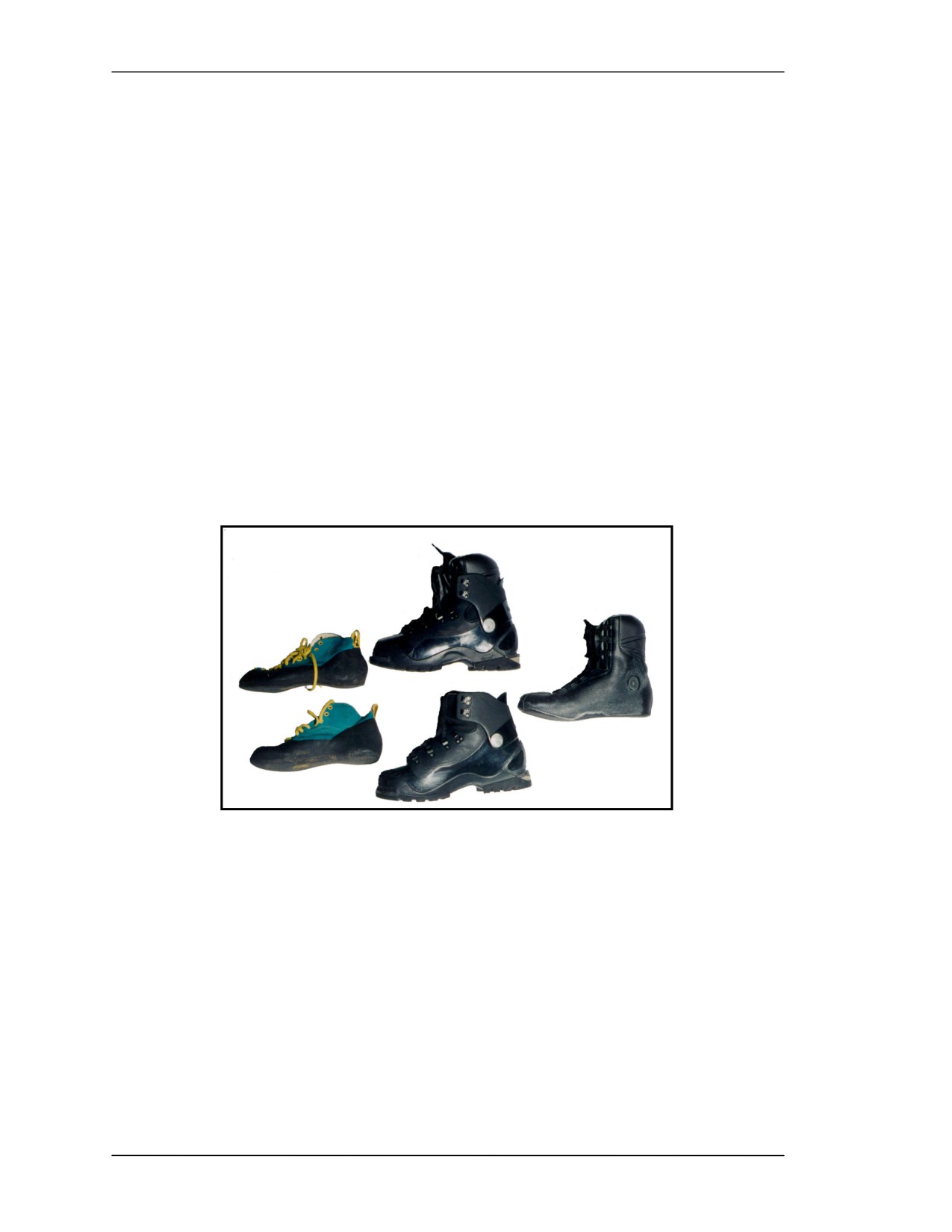
FM 3-97.61
soon as possible. These boots provide a more versatile platform for any condition that
would be encountered in the mountains, while keeping the foot dryer and warmer.
c. Level 2 and level 3 mountaineers will need mission-specific footwear that is not
currently available in the military supply system. The two types of footwear they will
need are climbing shoes and plastic mountaineering boots.
(1) Climbing shoes are made specifically for climbing vertical or near vertical rock
faces. These shoes are made with a soft leather upper, a lace-up configuration, and a
smooth “sticky rubber” sole (Figure 3-1). The smooth “sticky rubber” sole is the key to
the climbing shoe, providing greater friction on the surface of the rock, allowing the
climber access to more difficult terrain.
(2) The plastic mountaineering boot is a double boot system (Figure 3-1). The inner
boot provides support, as well as insulation against the cold. The inner boot may or may
not come with a breathable membrane. The outer boot is a molded plastic (usually with a
lace-up configuration) with a lug sole. The welt of the boot is molded in such a way that
crampons, ski bindings, and snowshoes are easily attached and detached.
Note: Maintenance of all types of footwear must closely follow the manufacturers’
recommendations.
Figure 3-1. Climbing shoes and plastic mountaineering boots.
3-2.
CLOTHING
Clothing is perhaps the most underestimated and misunderstood equipment in the
military inventory. The clothing system refers to every piece of clothing placed against
the skin, the insulation layers, and the outer most garments, which protect the soldier
from the elements. When clothing is worn properly, the soldier is better able to
accomplish his tasks. When worn improperly, he is, at best, uncomfortable and, at worst,
develops hypothermia or frostbite.
a. Socks. Socks are one of the most under-appreciated part of the entire clothing
system. Socks are extremely valuable in many respects, if worn correctly. As a system,
socks provide cushioning for the foot, remove excess moisture, and provide insulation
from cold temperatures. Improper wear and excess moisture are the biggest causes of hot
3-2
FM 3-97.61
spots and blisters. Regardless of climatic conditions, socks should always be worn
in layers.
(1) The first layer should be a hydrophobic material that moves moisture from the
foot surface to the outer sock.
(2) The outer sock should also be made of hydrophobic materials, but should be
complimented with materials that provide cushioning and abrasion resistance.
(3) A third layer can be added depending upon the climatic conditions.
(a) In severe wet conditions, a waterproof type sock can be added to reduce the
amount of water that would saturate the foot. This layer would be worn over the first two
layers if conditions were extremely wet.
(b) In extremely cold conditions a vapor barrier sock can be worn either over both of
the original pairs of socks or between the hydrophobic layer and the insulating layer. If
the user is wearing VB boots, the vapor barrier sock is not recommended.
b. Underwear. Underwear should also be made of materials that move moisture
from the body. Many civilian companies manufacture this type of underwear. The
primary material in this product is polyester, which moves moisture from the body to the
outer layers keeping the user drier and more comfortable in all climatic conditions. In
colder environments, several pairs of long underwear of different thickness should be
made available. A lightweight set coupled with a heavyweight set will provide a
multitude of layering combinations.
c. Insulating Layers. Insulating layers are those layers that are worn over the
underwear and under the outer layers of clothing. Insulating layers provide additional
warmth when the weather turns bad. For the most part, today’s insulating layers will
provide for easy moisture movement as well as trap air to increase the insulating factor.
The insulating layers that are presently available are referred to as pile or fleece. The
ECWCS (Figure 3-2, page 3-4) also incorporates the field jacket and field pants liner as
additional insulating layers. However, these two components do not move moisture as
effectively as the pile or fleece.
d. Outer Layers. The ECWCS provides a jacket and pants made of a durable
waterproof fabric. Both are constructed with a nylon shell with a laminated breathable
membrane attached. This membrane allows the garment to release moisture to the
environment while the nylon shell provides a degree of water resistance during rain and
snow. The nylon also acts as a barrier to wind, which helps the garment retain the warm
air trapped by the insulating layers. Leaders at all levels must understand the importance
of wearing the ECWCS correctly.
Note: Cotton layers must not be included in any layer during operations in a cold
environment.
3-3
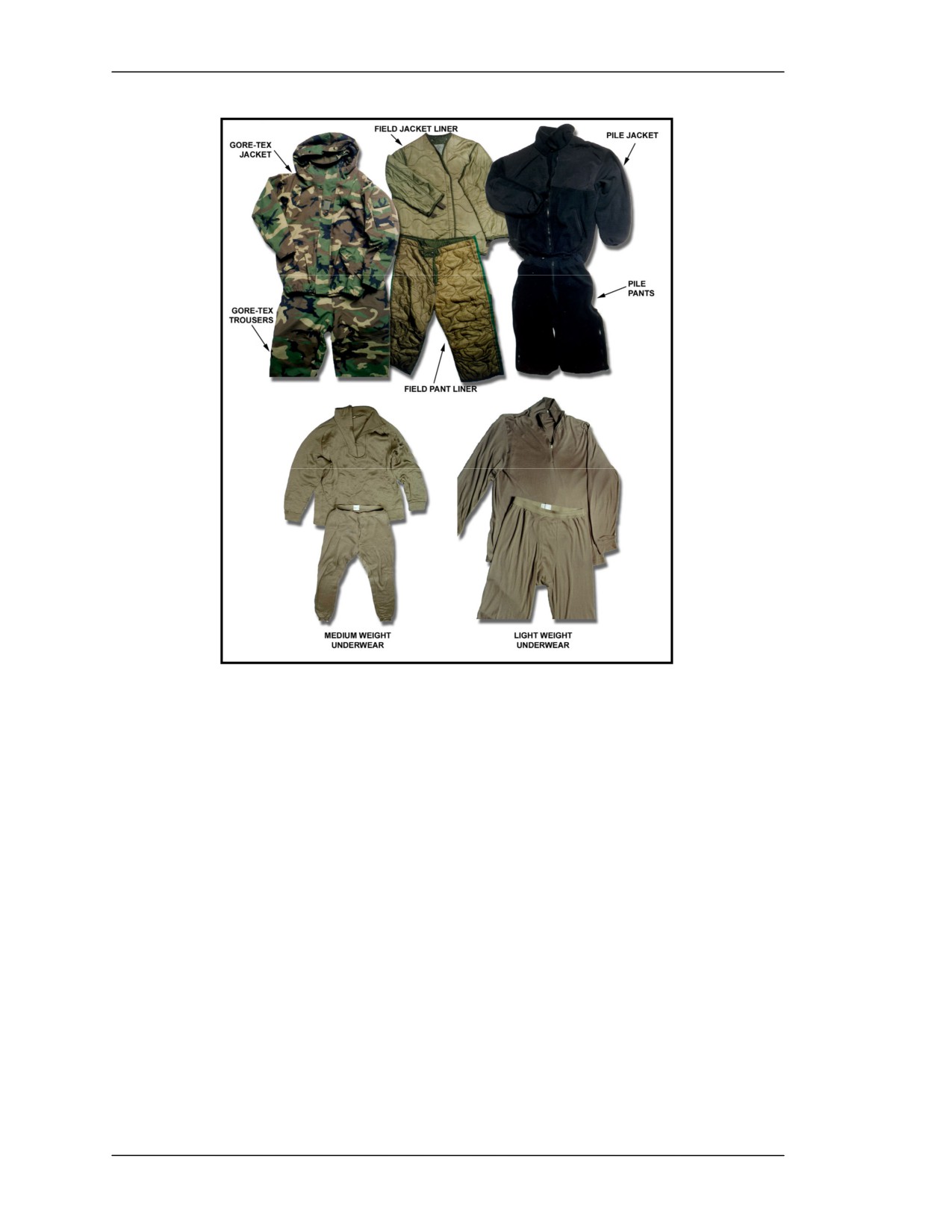
FM 3-97.61
Figure 3-2. Extreme cold weather clothing system.
e. Gaiters. Gaiters are used to protect the lower leg from snow and ice, as well as
mud, twigs, and stones. The use of waterproof fabrics or other breathable materials
laminated to the nylon makes the gaiter an integral component of the cold weather
clothing system. Gaiters are not presently fielded in the standard ECWCS and, in most
cases, will need to be locally purchased. Gaiters are available in three styles (Figure 3-3).
(1) The most common style of gaiter is the open-toed variety, which is a nylon shell
that may or may not have a breathable material laminated to it. The open front allows the
boot to slip easily into it and is closed with a combination of zipper, hook-pile tape, and
snaps. It will have an adjustable neoprene strap that goes under the boot to keep it snug to
the boot. The length should reach to just below the knee and will be kept snug with a
drawstring and cord lock.
(2) The second type of gaiter is referred to as a full or randed gaiter. This gaiter
completely covers the boot down to the welt. It can be laminated with a breathable
material and can also be insulated if necessary. This gaiter is used with plastic
mountaineering boots and should be glued in place and not removed.
(3) The third type of gaiter is specific to high-altitude mountaineering or extremely
cold temperatures and is referred to as an overboot. It is worn completely over the boot
and must be worn with crampons because it has no traction sole.
3-4
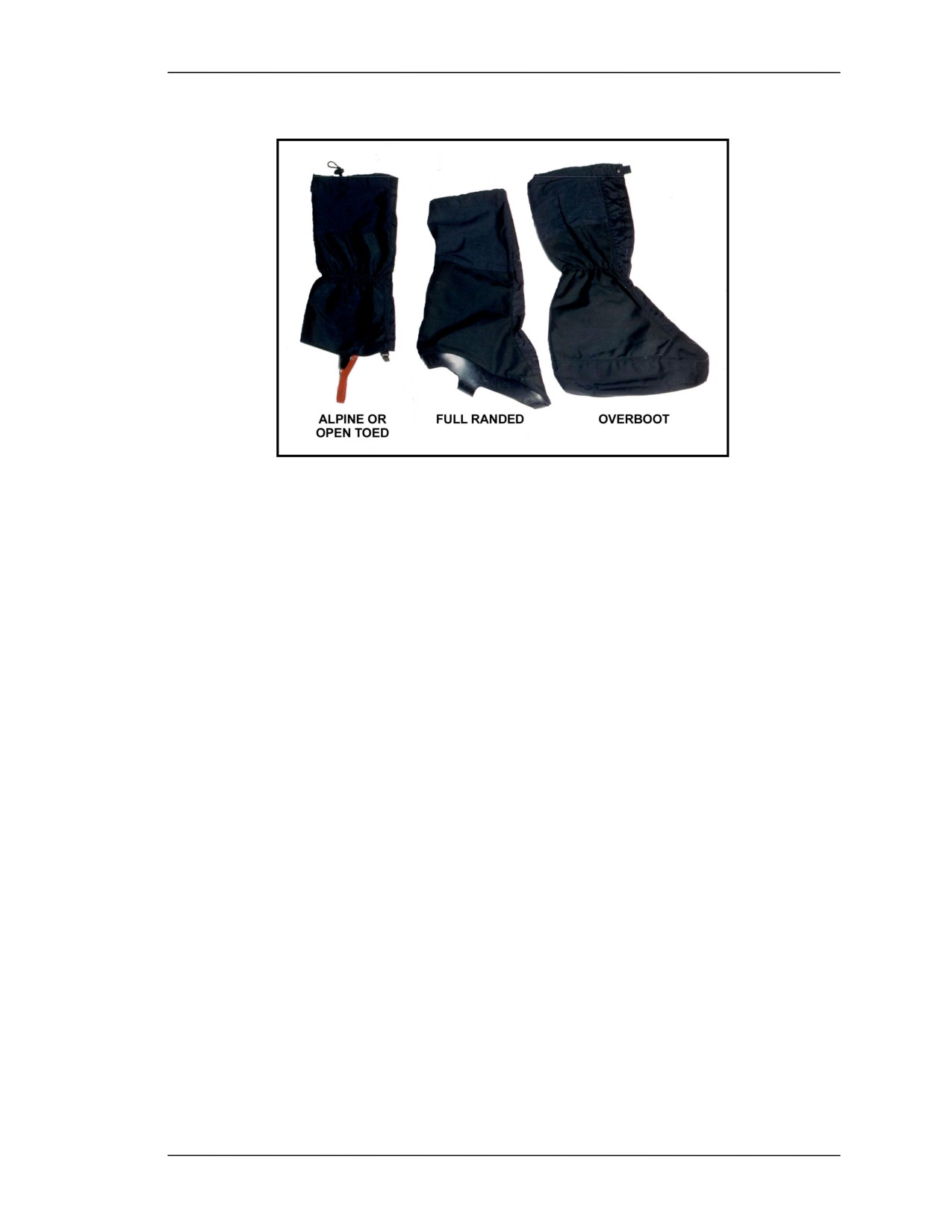
FM 3-97.61
Figure 3-3. Three types of gaiters.
f. Hand Wear. During operations in mountainous terrain the use of hand wear is
extremely important. Even during the best climatic conditions, temperatures in the
mountains will dip below the freezing point. While mittens are always warmer than
gloves, the finger dexterity needed to do most tasks makes gloves the primary cold
weather hand wear (Figure 3-4, page 3-6).
(1) The principals that apply to clothing also apply to gloves and mittens. They
should provide moisture transfer from the skin to the outer layers―the insulating layer
must insulate the hand from the cold and move moisture to the outer layer. The outer
layer must be weather resistant and breathable. Both gloves and mittens should be
required for all soldiers during mountain operations, as well as replacement liners for
both. This will provide enough flexibility to accomplish all tasks and keep the users’
hands warm and dry.
(2) Just as the clothing system is worn in layers, gloves and mittens work best using
the same principle. Retention cords that loop over the wrist work extremely well when
the wearer needs to remove the outer layer to accomplish a task that requires fine finger
dexterity. Leaving the glove or mitten dangling from the wrist ensures the wearer knows
where it is at all times.
3-5
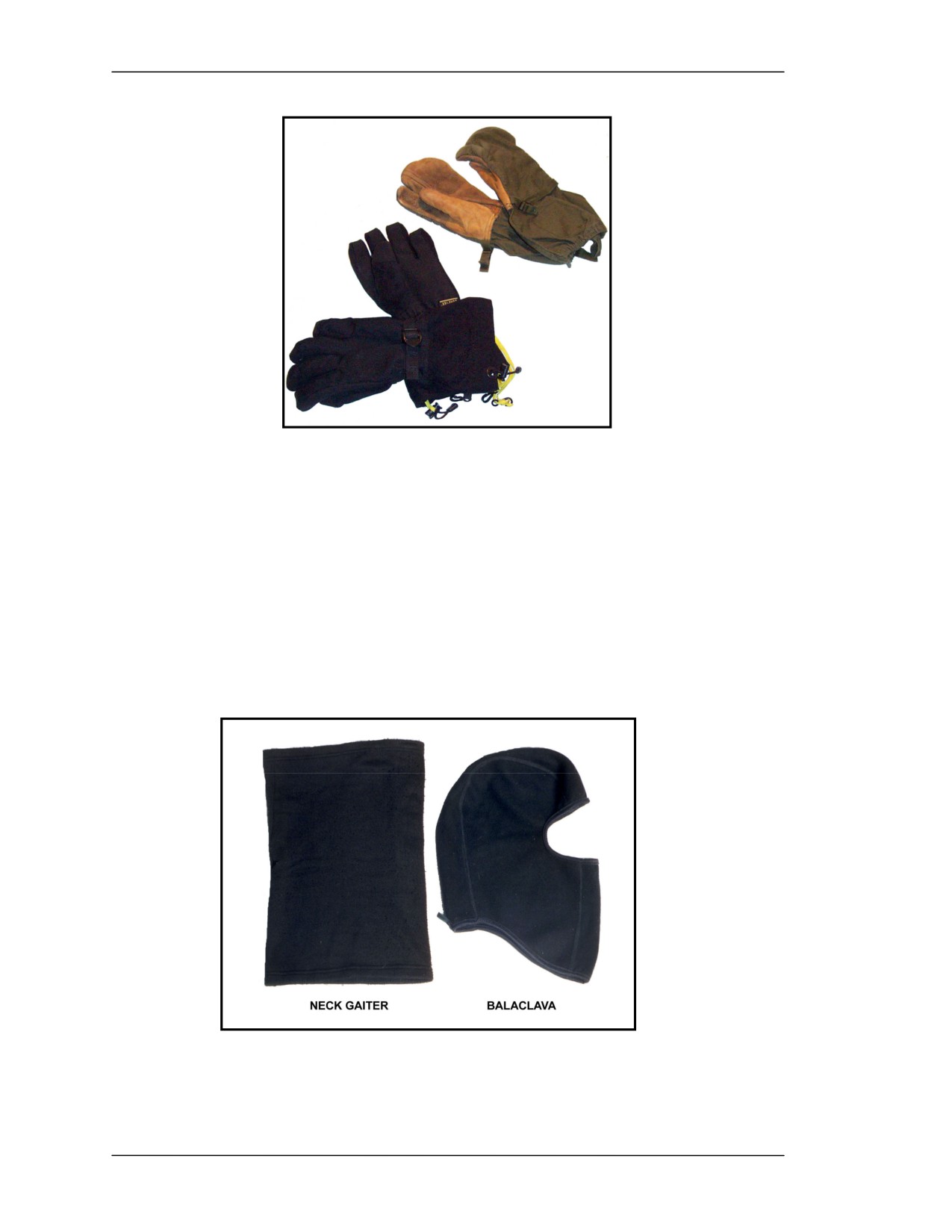
FM 3-97.61
Figure 3-4. Hand wear.
g. Headwear. A large majority of heat loss (25 percent) occurs through the head and
neck area. The most effective way to counter heat loss is to wear a hat. The best hat
available to the individual soldier through the military supply system is the black watch
cap. Natural fibers, predominately wool, are acceptable but can be bulky and difficult to
fit under a helmet. As with clothes and hand wear, man-made fibers are preferred. For
colder climates a neck gaiter can be added. The neck gaiter is a tube of man-made
material that fits around the neck and can reach up over the ears and nose (Figure 3-5).
For extreme cold, a balaclava can be added. This covers the head, neck, and face leaving
only a slot for the eyes (Figure 3-5). Worn together the combination is warm and
provides for moisture movement, keeping the wearer drier and warmer.
Figure 3-5. Neck gaiter and balaclava.
3-6
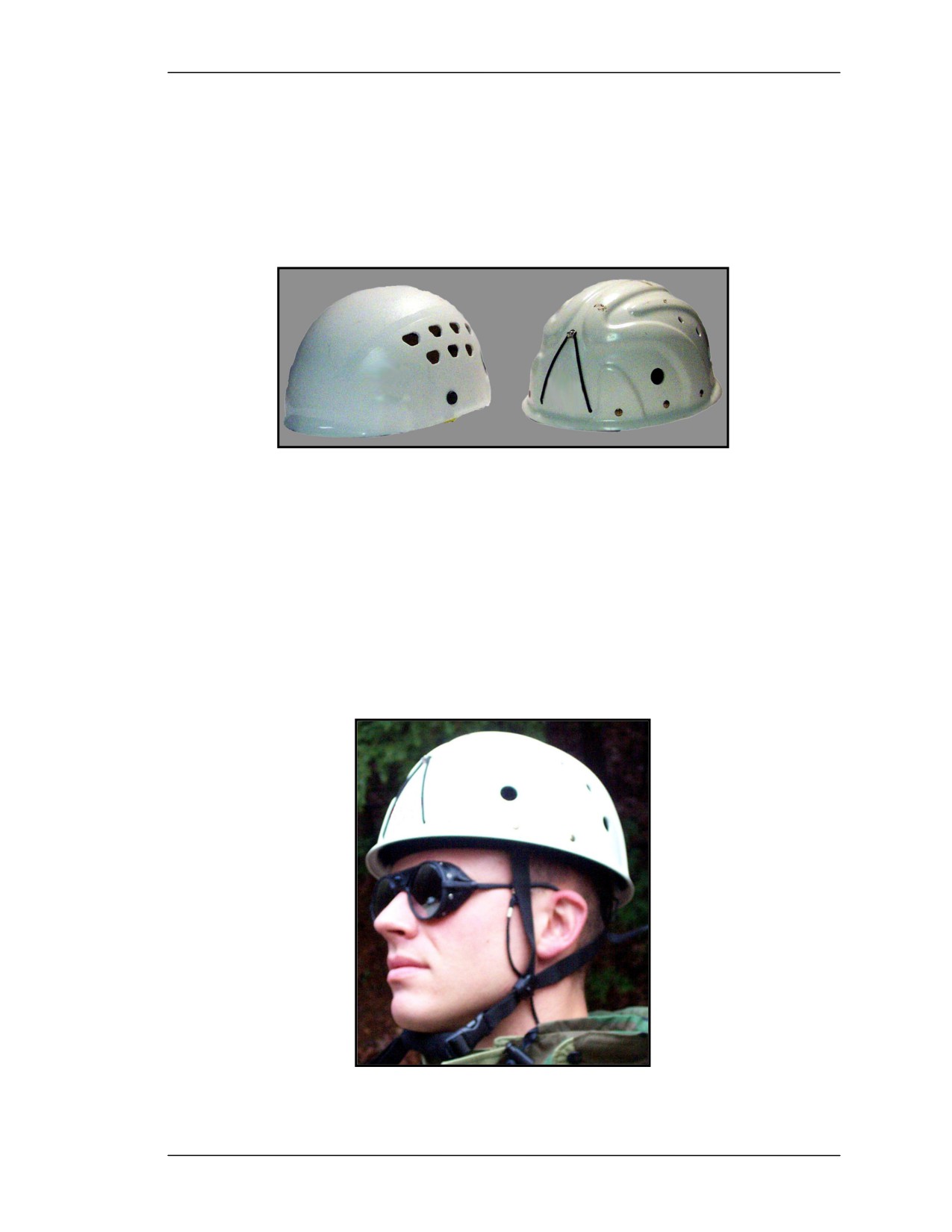
FM 3-97.61
h. Helmets. The Kevlar ballistic helmet can be used for most basic mountaineering
tasks. It must be fitted with parachute retention straps and the foam impact pad
(Figure 3-6). The level 2 and 3 mountaineer will need a lighter weight helmet for specific
climbing scenerios. Several civilian manufacturers produce an effective helmet.
Whichever helmet is selected, it should be designed specifically for mountaineering and
adjustable so the user can add a hat under it when needed.
Figure 3-6. Helmets.
i.
Eyewear. The military supply system does not currently provide adequate
eyewear for mountaineering. Eyewear is divided into two catagories: glacier glasses and
goggles (Figure 3-7). Glacier glasses are sunglasses that cover the entire eye socket.
Many operations in the mountains occur above the tree line or on ice and snow surfaces
where the harmful UV rays of the sun can bombard the eyes from every angle increasing
the likelihood of snowblindness. Goggles for mountain operations should be antifogging.
Double or triple lenses work best. UV rays penetrate clouds so the goggles should be UV
protected. Both glacier glasses and goggles are required equipment in the mountains. The
lack of either one can lead to severe eye injury or blindness.
Figure 3-7. Glacier glasses and goggles.
3-7
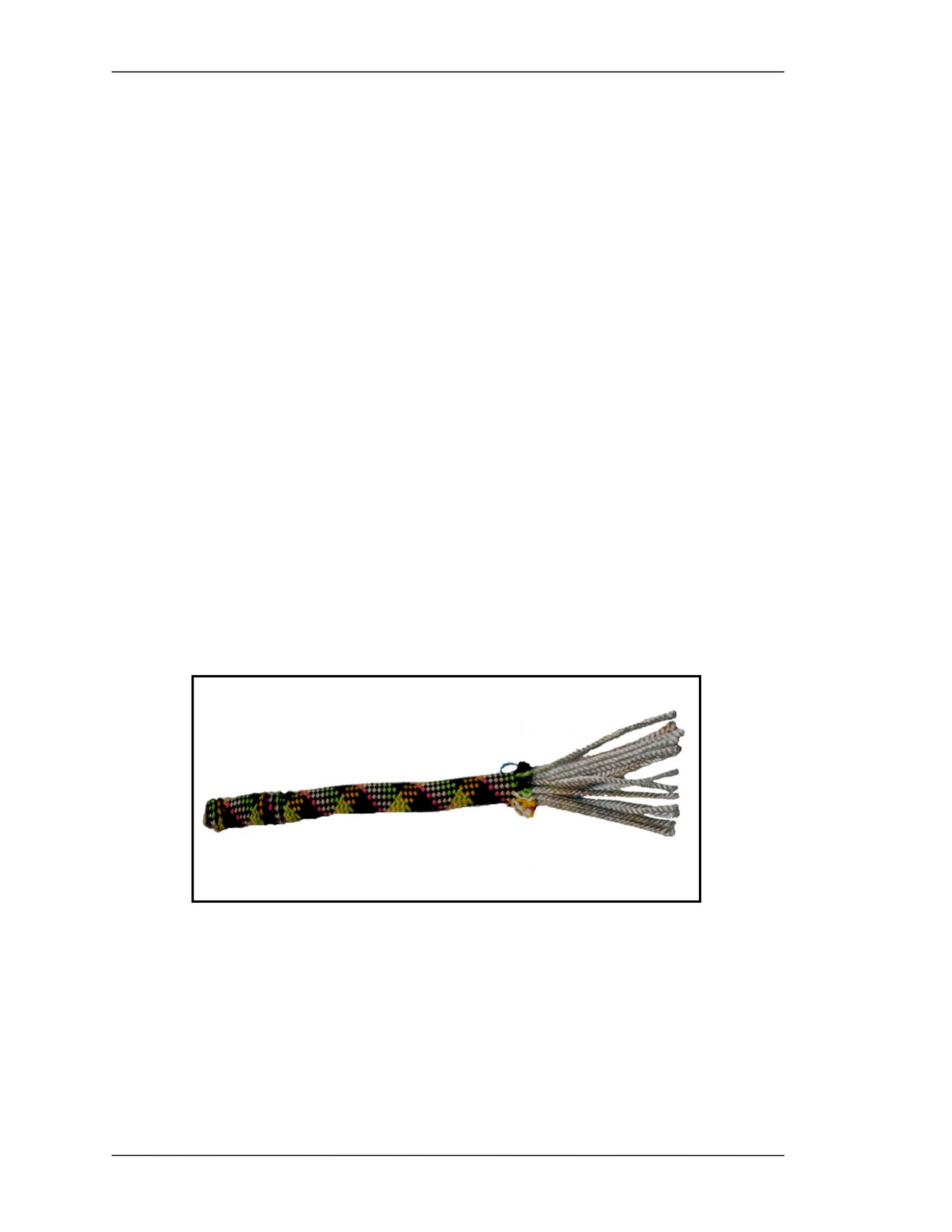
FM 3-97.61
j.
Maintenance of Clothing. Clothing and equipment manufacturers provide
specific instructions for proper care. Following these instructions is necessary to ensure
the equipment works as intended.
3-3.
CLIMBING SOFTWARE
Climbing software refers to rope, cord, webbing, and harnesses. All mountaineering
specific equipment, to include hardware (see paragraph 3-4), should only be used if it has
the UIAA certificate of safety. UIAA is the organization that oversees the testing of
mountaineering equipment. It is based in Paris, France, and comprises several
commissions. The safety commission has established standards for mountaineering and
climbing equipment that have become well recognized throughout the world. Their work
continues as new equipment develops and is brought into common use. Community
Europe (CE) recognizes UIAA testing standards and, as the broader-based testing facility
for the combined European economy, meets or exceeds the UIAA standards for all
climbing and mountaineering equipment produced in Europe. European norm (EN) and
CE have been combined to make combined European norm (CEN). While the United
States has no specific standards, American manufacturers have their equipment tested by
UIAA to ensure safe operating tolerances.
a. Ropes and Cord. Ropes and cords are the most important pieces of
mountaineering equipment and proper selection deserves careful thought. These items are
your lifeline in the mountains, so selecting the right type and size is of the utmost
importance. All ropes and cord used in mountaineering and climbing today are
constructed with the same basic configuration. The construction technique is referred to
as Kernmantle, which is, essentially, a core of nylon fibers protected by a woven sheath,
similar to parachute or 550 cord (Figure 3-8).
Figure 3-8. Kernmantle construction.
(1) Ropes come in two types: static and dynamic. This refers to their ability to stretch
under tension. A static rope has very little stretch, perhaps as little as one to two percent,
and is best used in rope installations. A dynamic rope is most useful for climbing and
general mountaineering. Its ability to stretch up to 1/3 of its overall length makes it the
right choice any time the user might take a fall. Dynamic and static ropes come in various
3-8
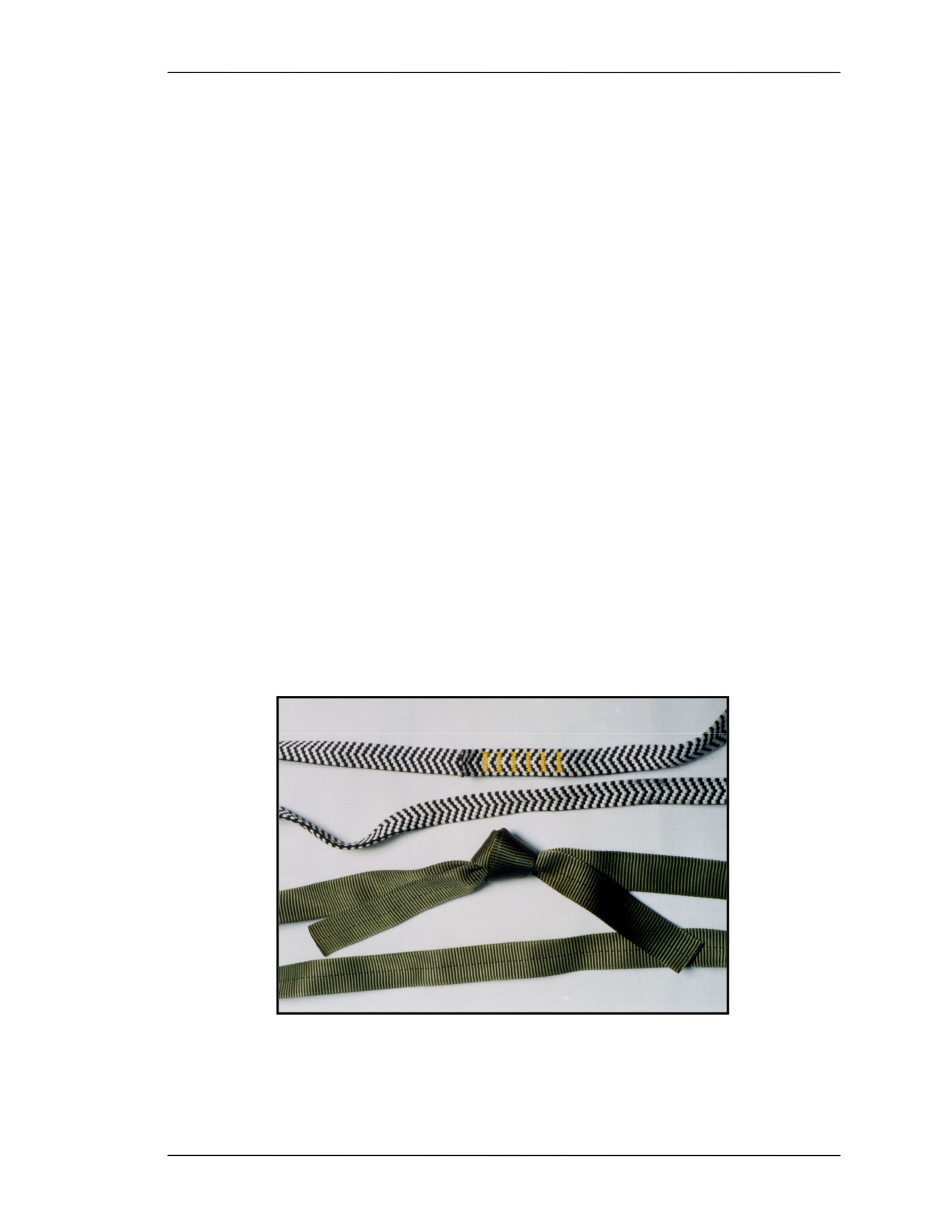
FM 3-97.61
diameters and lengths. For most military applications, a standard 10.5- or 11-millimeter
by 50-meter dynamic rope and 11-millimeter by 45-meter static rope will be sufficient.
(2) When choosing dynamic rope, factors affecting rope selection include intended
use, impact force, abrasion resistance, and elongation. Regardless of the rope chosen, it
should be UIAA certified.
(3) Cord or small diameter rope is indispensable to the mountaineer. Its many uses
make it a valuable piece of equipment. All cord is static and constructed in the same
manner as larger rope. If used for Prusik knots, the cord’s diameter should be 5 to 7
millimeters when used on an 11-mm rope.
b. Webbing and Slings. Loops of tubular webbing or cord, called slings or runners,
are the simplest pieces of equipment and some of the most useful. The uses for these
simple pieces are endless, and they are a critical link between the climber, the rope,
carabiners, and anchors. Runners are predominately made from either 9/16-inch or 1-inch
tubular webbing and are either tied or sewn by a manufacturer (Figure 3-9). Runners can
also be made from a high-performance fiber known as spectra, which is stronger, more
durable, and less susceptible to ultraviolet deterioration. Runners should be retired
regularly following the same considerations used to retire a rope. For most military
applications, a combination of different lengths of runners is adequate.
(1) Tied runners have certain advantages over sewn runners―they are inexpensive to
make, can be untied and threaded around natural anchors, and can be untied and retied to
other pieces of webbing to create extra long runners.
(2) Sewn runners have their own advantages―they tend to be stronger, are usually
lighter, and have less bulk than the tied version. They also eliminate a major concern with
the homemade knotted runner―the possibility of the knot untying. Sewn runners come in
four standard lengths: 2 inches, 4 inches, 12 inches, and 24 inches. They also come in
three standard widths: 9/16 inch, 11/16 inch, and 1 inch.
Figure 3-9. Tied or sewn runners.
3-9
FM 3-97.61
c. Harnesses. Years ago climbers secured themselves to the rope by wrapping the
rope around their bodies and tying a bowline-on-a-coil. While this technique is still a
viable way of attaching to a rope, the practice is no longer encouraged because of the
increased possibility of injury from a fall. The bowline-on-a-coil is best left for low-angle
climbing or an emergency situation where harness material is unavailable. Climbers
today can select from a wide range of manufactured harnesses. Fitted properly, the
harness should ride high on the hips and have snug leg loops to better distribute the force
of a fall to the entire pelvis. This type of harness, referred to as a seat harness, provides a
comfortable seat for rappelling (Figure 3-10).
(1) Any harness selected should have one very important feature―a double-passed
buckle. This is a safety standard that requires the waist belt to be passed over and back
through the main buckle a second time. At least 2 inches of the strap should remain after
double-passing the buckle.
(2) Another desirable feature on a harness is adjustable leg loops, which allows a
snug fit regardless of the number of layers of clothing worn. Adjustable leg loops allow
the soldier to make a latrine call without removing the harness or untying the rope.
(3) Equipment loops are desirable for carrying pieces of climbing equipment. For
safety purposes always follow the manufacturer’s directions for tying-in.
(4) A field-expedient version of the seat harness can be constructed by using 22 feet
of either
1-inch or
2-inch
(preferred) tubular webbing
(Figure
3-10). Two double-
overhand knots form the leg loops, leaving 4 to 5 feet of webbing coming from one of the
leg loops. The leg loops should just fit over the clothing. Wrap the remaining webbing
around the waist ensuring the first wrap is routed through the 6- to 10-inch long strap
between the double-overhand knots. Finish the waist wrap with a water knot tied as
tightly as possible. With the remaining webbing, tie a square knot without safeties over
the water knot ensuring a minimum of 4 inches remains from each strand of webbing.
(5) The full body harness incorporates a chest harness with a seat harness (Figure
3-10). This type of harness has a higher tie-in point and greatly reduces the chance of
flipping backward during a fall. This is the only type of harness that is approved by the
UIAA. While these harnesses are safer, they do present several disadvantages―they are
more expensive, are more restrictive, and increase the difficulty of adding or removing
clothing. Most mountaineers prefer to incorporate a separate chest harness with their seat
harness when warranted.
(6) A separate chest harness can be purchased from a manufacturer, or a
field-expedient version can be made from either two runners or a long piece of webbing.
Either chest harness is then attached to the seat harness with a carabiner and a length of
webbing or cord.
3-10
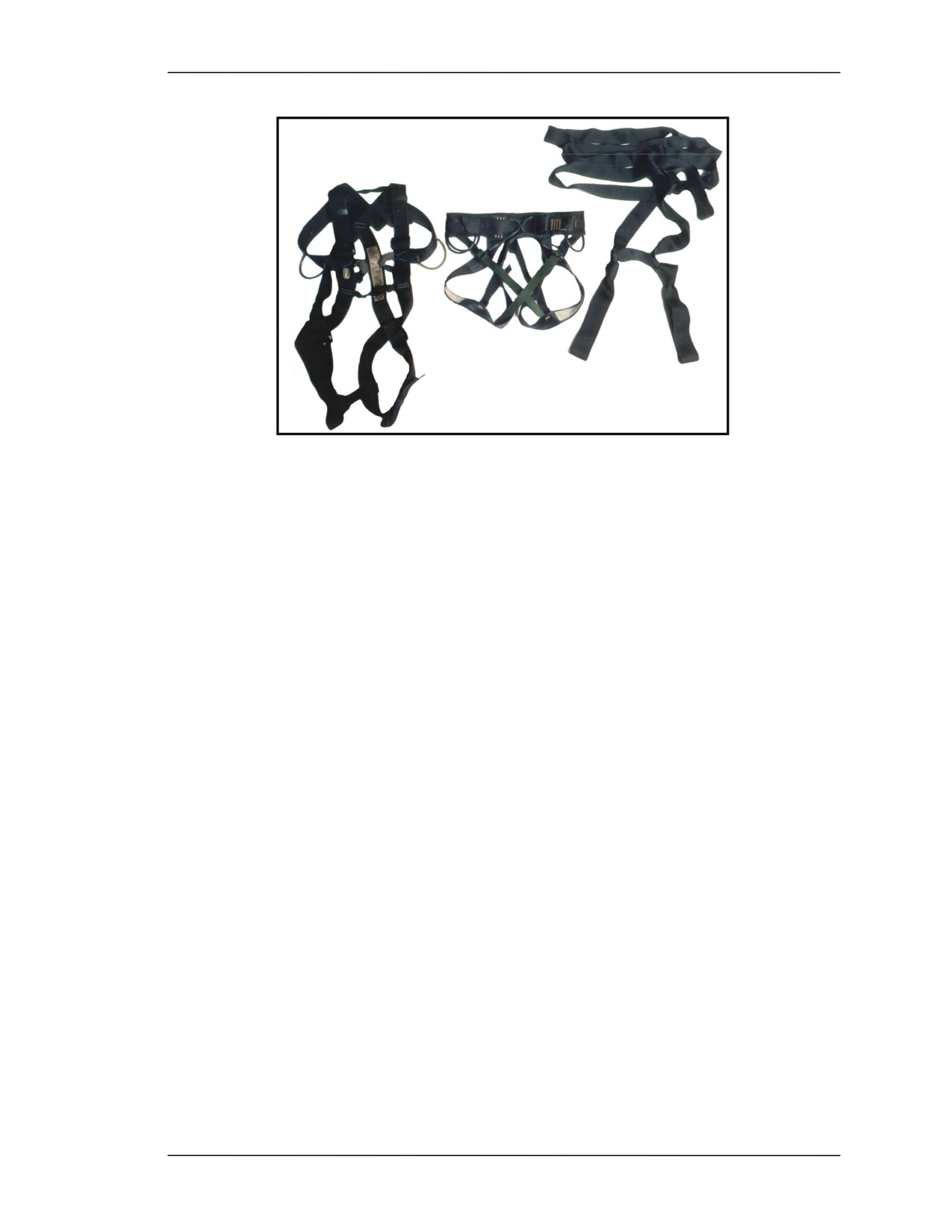
FM 3-97.61
Figure 3-10. Seat harness, field-expedient harness, and full body harness.
3-4.
CLIMBING HARDWARE
Climbing hardware refers to all the parts and pieces that allow the trained mountain
soldier to accomplish many tasks in the mountains. The importance of this gear to the
mountaineer is no less than that of the rifle to the infantryman.
a. Carabiners. One of the most versatile pieces of equipment available to the
mountaineer is the carabiner. This simple piece of gear is the critical connection between
the climber, his rope, and the protection attaching him to the mountain. Carabiners must
be strong enough to hold hard falls, yet light enough for the climber to easily carry a
quantity of them. Today’s high tech metal alloys allow carabiners to meet both of these
requirements. Steel is still widely used, but is not preferred for general mountaineering,
given other options. Basic carabiner construction affords the user several different
shapes. The oval, the D-shaped, and the pear-shaped carabiner are just some of the types
currently available. Most models can be made with or without a locking mechanism for
the gate opening
(Figure
3-11, page
3-12). If the carabiner does have a locking
mechanism, it is usually referred to as a locking carabiner. When using a carabiner, great
care should be taken to avoid loading the carabiner on its minor axis and to avoid three-
way loading (Figure 3-12, page 3-12).
Note: Great care should be used to ensure all carabiner gates are closed and locked
during use.
3-11
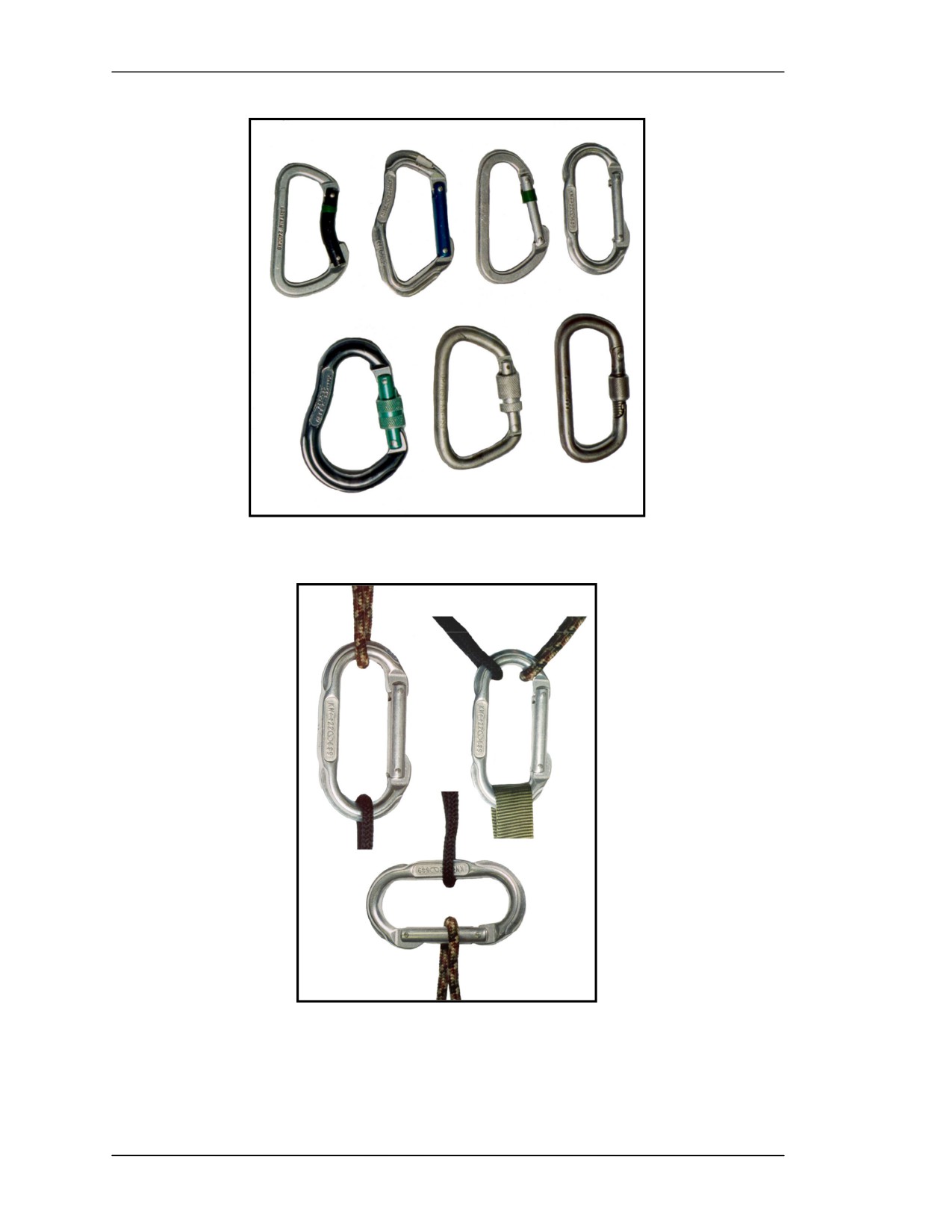
FM 3-97.61
Figure 3-11. Nonlocking and locking carabiners.
Figure 3-12. Major and minor axes and three-way loading.
(1) The major difference between the oval and the D-shaped carabiner is strength.
Because of the design of the D-shaped carabiner, the load is angled onto the spine of the
3-12
FM 3-97.61
carabiner thus keeping it off the gate. The down side is that racking any gear or
protection on the D-shaped carabiner is difficult because the angle of the carabiner forces
all the gear together making it impossible to separate quickly.
(2) The pear-shaped carabiner, specifically the locking version, is excellent for
clipping a descender or belay device to the harness. They work well with the munter hitch
belaying knot.
(3) Regardless of the type chosen, all carabiners should be UIAA tested. This testing
is extensive and tests the carabiner in three ways―along its major axis, along its minor
axis, and with the gate open.
b. Pitons. A piton is a metal pin that is hammered into a crack in the rock. They are
described by their thickness, design, and length (Figure 3-13, page 3-14). Pitons provide a
secure anchor for a rope attached by a carabiner. The many different kinds of pitons include:
vertical, horizontal, wafer, and angle. They are made of malleable steel, hardened steel, or
other alloys. The strength of the piton is determined by its placement rather than its rated
tensile strength. The two most common types of pitons are: blades, which hold when
wedged into tight-fitting cracks, and angles, which hold blade compression when wedged
into a crack.
(1) Vertical Pitons. On vertical pitons, the blade and eye are aligned. These pitons are
used in flush, vertical cracks.
(2) Horizontal Pitons. On horizontal pitons, the eye of the piton is at right angles to the
blade. These pitons are used in flush, horizontal cracks and in offset or open-book type
vertical or horizontal cracks. They are recommended for use in vertical cracks instead of
vertical pitons because the torque on the eye tends to wedge the piton into place. This
provides more holding power than the vertical piton under the same circumstances.
(3) Wafer Pitons. These pitons are used in shallow, flush cracks. They have little
holding power and their weakest points are in the rings provided for the carabiner.
(4) Knife Blade Pitons. These are used in direct-aid climbing. They are small and fit
into thin, shallow cracks. They have a tapered blade that is optimum for both strength and
holding power.
(5) Realized Ultimate Reality Pitons. Realized ultimate reality pitons (RURPs) are
hatchet-shaped pitons about 1-inch square. They are designed to bite into thin, shallow
cracks.
(6) Angle Pitons. These are used in wide cracks that are flush or offset. Maximum
strength is attained only when the legs of the piton are in contact with the opposite sides of
the crack.
(7) Bong Pitons. These are angle pitons that are more than 3.8 centimeters wide. Bongs
are commonly made of steel or aluminum alloy and usually contain holes to reduce weight
and accommodate carabiners. They have a high holding power and require less hammering
than other pitons.
(8) Skyhook (Cliffhangers). These are small hooks that cling to tiny rock protrusions,
ledges, or flakes. Skyhooks require constant tension and are used in a downward pull
direction. The curved end will not straighten under body weight. The base is designed to
prevent rotation and aid stability.
3-13
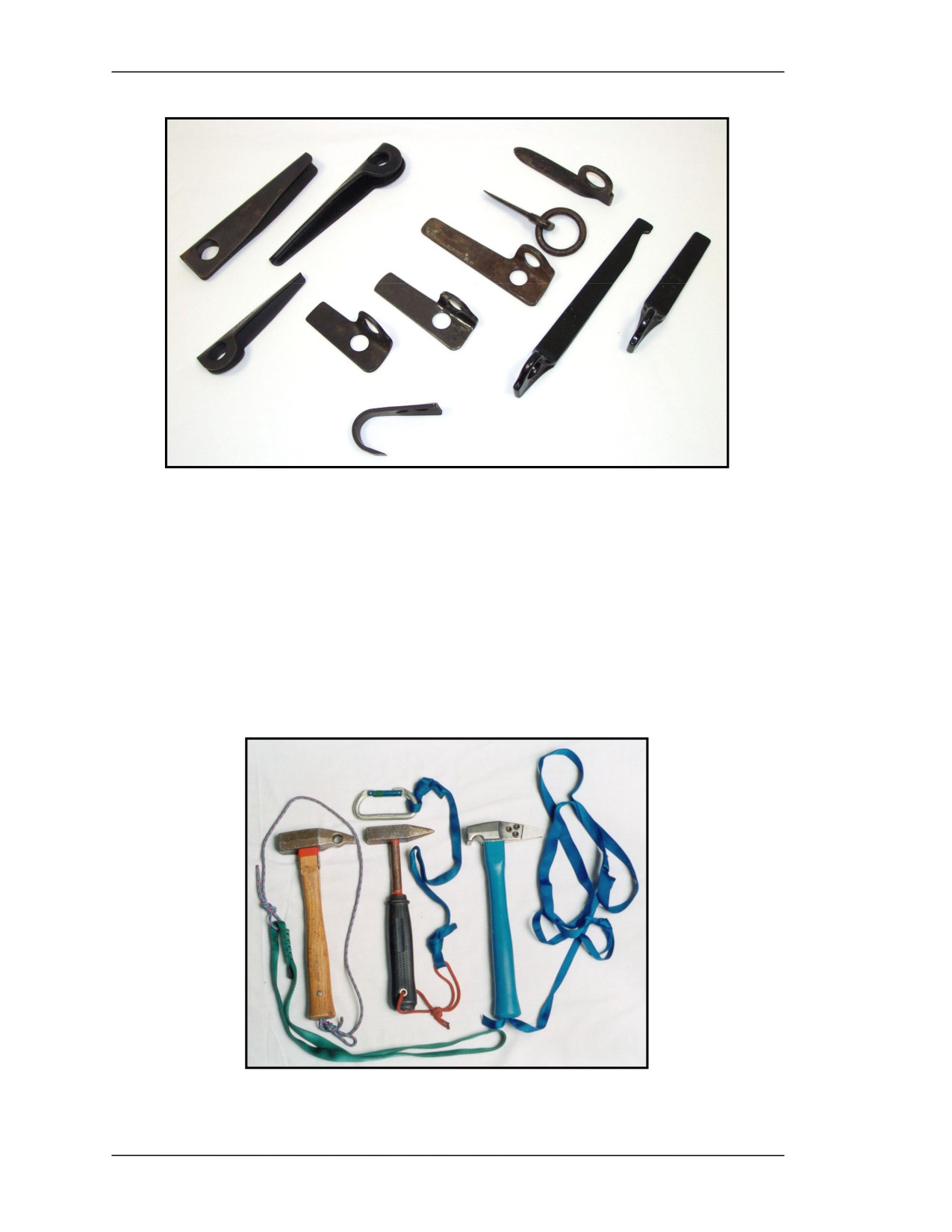
FM 3-97.61
Figure 3-13. Various pitons.
c. Piton Hammers. A piton hammer has a flat metal head; a handle made of wood,
metal, or fiberglass; and a blunt pick on the opposite side of the hammer (Figure 3-14). A
safety lanyard of nylon cord, webbing, or leather is used to attach it to the climber The
lanyard should be long enough to allow for full range of motion. Most hammers are
approximately 25.5 centimeters long and weigh 12 to 25 ounces. The primary use for a
piton hammer is to drive pitons, to be used as anchors, into the rock. The piton hammer
can also be used to assist in removing pitons, and in cleaning cracks and rock surfaces to
prepare for inserting the piton. The type selected should suit individual preference and the
intended use.
Figure 3-14. Piton hammer.
3-14