FM 5-472 Materials Testing (DEPARTMENT OF THE ARMY) December 2000 - page 2
FM 5-472/NAVFAC MO 330/AFJMAN 32-1221(I)
HASTY SURVEY
A hasty survey should be preceded by as careful a study of all available
sources of information as conditions permit. If aerial observation is possible, a
trained person may observe soil conditions in the proposed construction area.
This gives a better overall picture, which is often difficult to secure at ground
level because important features may be hidden in rough or wooded terrain.
Rapid ground observation along the proposed road location or at the proposed
airfield site also yields useful information. The soil profile may be observed
along a stream’s natural banks, eroded areas, bomb craters, and other exposed
places. As construction proceeds, additional soil studies will augment the
basic data gained through the hasty survey and will dictate necessary
modifications in location, design, and construction.
DELIBERATE SURVEY
A deliberate survey does not dismiss the fact that the time factor may be
important. Therefore, the scope of a deliberate survey may be limited in some
cases. A deliberate survey is often performed while topographical data is being
obtained so that the results of the soil survey may be integrated with other
pertinent information. The principal method of exploration used in soil
surveys for roads, airfields, and borrow areas is soil samples obtained either
by using hand augers or by digging a test pit. Other methods that may be used
are power-driven earth augers, sounding rods, or earthmoving equipment
under expedient conditions to permit a hasty approach to the underlying soil.
OBJECTIVE OF A SOIL SURVEY
The objective of a soil survey, whether hasty or deliberate, is to explore and
gather as much information of engineering significance as possible about the
subsurface conditions of a specified area. The explorations are conducted to
determine the—
• Location, nature, and classification of soil layers.
• Condition of soils in place.
• Drainage characteristics.
• Groundwater and bedrock.
LOCATION, NATURE, AND CLASSIFICATION OF SOIL LAYERS
Information regarding the location, nature, and classification of soil layers is
required for adequate and economical earthwork and foundation design of a
structure. By classifying the soils encountered, a prediction can be made as to
the extent of problems concerning drainage, frost action, settlement, stability,
and similar factors. An estimate of the soil characteristics may be obtained by
field observations, but samples of the major soil types and the less-extensive
deposits that may influence design should be obtained for laboratory testing.
CONDITION OF SOILS IN PLACE
Soil conditions, such as moisture content and density of a soil in its natural
state, play an important part in design and construction. The moisture
content may be so high in some soils in place that the selection of another site
should be considered for an airfield or other structure. If the natural soil is
Soils 2-27
FM 5-472/NAVFAC MO 330/AFJMAN 32-1221(I)
dense enough to meet the required specifications, no further compaction of the
subgrade is required. Very compact soils in cut sections may be difficult to
excavate with ordinary tractor-scraper units, so scarifying or rooting may be
needed before excavation.
DRAINAGE CHARACTERISTICS
Drainage characteristics in both surface and subsurface soils are controlled by
a combination of factors, such as the void ratio, soil structure and
stratification, the temperature of the soil, the depth to the water table, the
height of capillary rise, and the extent of local disturbances by roots and
worms. Remolding a soil also may change its drainage properties. Coarse-
grained soils have better internal drainage than fine-grained soils.
Observations of the soil should be made in both disturbed and undisturbed
conditions.
GROUNDWATER AND BEDROCK
All structures must be constructed at such an elevation that they will not be
adversely affected by the groundwater table. The grade line can be raised or
the groundwater table lowered when a structure may be adversely affected by
capillary rise or by the groundwater table itself. Bedrock within the
excavation depth tremendously increases the time and equipment required for
excavation. If the amount is very extensive, it may be necessary to change the
grade or even the site location.
SOURCES OF INFORMATION
There are many sources of information available to soils engineers, and they
should all be used to the fullest extent to eliminate as much detailed
investigation as possible. These sources can be used to locate small areas
within a large general area that are suitable for further investigation. Field
information requires general observation of road cuts, stream banks, eroded
slopes, earth cellars, mine shafts, and existing pits and quarries. A field party
must obtain reliable data rapidly, since final decisions on site selection are
based on field observations. These sources include—
• Intelligence reports.
• Local inhabitants.
• Maps.
• Aerial photographs.
INTELLIGENCE REPORTS
Intelligence reports that include maps and studies of soil conditions usually
are available for areas in which military operations have been planned.
Among the best and most comprehensive of these are the National
Intelligence Surveys and Engineer Intelligence Studies. These reports are a
source of information on geology, topography, terrain conditions, climate and
weather conditions, and sources of construction materials.
LOCAL INHABITANTS
Local inhabitants
(preferably trained observers), such as contractors,
engineers, and quarry workers, may provide information to supplement
2-28 Soils
FM 5-472/NAVFAC MO 330/AFJMAN 32-1221(I)
intelligence reports or provide information about areas for which intelligence
reports are unavailable. Data obtained from this source may include the
possible location of borrow material, sand and gravel deposits, and peat or
highly organic soils, as well as information on the area’s climate and
topography.
MAPS
Maps provide valuable information, especially when planning a soil survey.
Maps showing the suitability of terrain for various military purposes,
prepared by enemy or friendly foreign agencies, may be useful. Some of the
maps that provide different types of information about an area under
investigation are—
• Geological maps.
• Topographic maps.
• Agricultural soil maps.
Geological Maps
Geological maps and brief descriptions of regions and quadrangles are
available from the US Geological Survey, 1200 South Eads Street, Arlington,
Virginia 22202. Generally, the smallest rock unit mapped is a formation, and a
geological map indicates the extent of the formation by means of symbolic
letters, colors, or patterns. Letter symbols on the map also indicate the
locations of sand and gravel pits. The rear of the map sheet sometimes has a
brief discussion entitled "Mineral Resources" that describes the location of
construction materials.
Topographic Maps
Ordinary topographic maps may be helpful in estimating soil conditions, but
they give only a generalized view of the land surface, especially when the
contour interval is 20 feet or more. Therefore, they should be used with
geological maps. An inspection of the drainage pattern and slopes can provide
clues to the nature of rocks, the depth of weathering, soil characteristics, and
drainage. For example, sinkholes may indicate limestone or glacial
topography; hills and mountains with gently rounded slopes usually indicate
deeply weathered rocks; and parallel ridges are commonly related to steeply
folded, bedded rock with hard rock along the ridges. Features such as levees,
sand dunes, beach ridges, and alluvial fans can be recognized by their
characteristic shapes and geographic location.
Agricultural Soil Maps
Agricultural soil maps and reports are available for many of the developed
agricultural areas of the world. These studies are concerned primarily with
surface soils usually to a depth of 6 feet and are valuable as aids in the
engineering study of surface soils. For example, if the same soil occurs in two
different areas, it can be sampled and evaluated for engineering purposes in
one area, and the amount of sampling and testing can then be reduced in the
second area. Maps are based on field survey factors that include the careful
study of the soil horizons in test pits, highway and railway cuts, auger borings,
and other exposed places. Information on topography, drainage, vegetation,
Soils 2-29
FM 5-472/NAVFAC MO 330/AFJMAN 32-1221(I)
temperature, rainfall, water sources, and rock location may be found in an
agricultural report. Soil usually is classified according to its texture, color,
structure, chemical and physical compositions, and morphology.
AERIAL PHOTOGRAPHS
Aerial photographs may be used to predict subsurface conditions and previous
explorations for nearby construction projects. The photographs aid in
delineating and identifying soils based on the recognition of typical patterns
formed under similar conditions of soil profile and weathering. Principal
elements that can be identified on a photograph and that provide clues to the
identification of soils to a trained observer are—
• Landforms.
• Slopes.
• Drainage patterns.
• Erosion patterns.
• Soil color.
• Vegetation.
• Agricultural land use.
Landforms
The landform or land configuration in different types of deposits is
characteristic and can be identified on aerial photographs. For example,
glacial forms such as moraines, kames, eskers, and terraces are readily
identifiable. In desert areas, characteristic dune shapes indicate areas covered
by sands subject to movement by wind. In areas underlaid by flat-lying,
soluble limestone, the air photograph typically shows sinkholes.
Slopes
Prevailing ground slopes usually represent the soil’s texture. Steep slopes are
characteristic of granular materials, while relatively flat and smoothly
rounded slopes may indicate more plastic soils.
Drainage Patterns
A simple drainage pattern is frequently indicative of pervious soils. A highly
integrated drainage pattern frequently indicates impervious soils, which in
turn are plastic and lose strength when wet. Drainage patterns also reflect the
underlying rock structure. For example, alternately hard and soft layers of
rock cause major streams to flow in valleys cut in the softer rock.
Erosion Patterns
Erosion patterns provide information from the careful study of gullies. The
cross section or shape of a gully is controlled primarily by the soil’s
cohesiveness. Each abrupt change in grade, direction, or cross section
indicates a change in the soil profile or rock layers. Short, V-shaped gullies
with steep gradients are typical of cohesionless soils. U-shaped gullies with
steep gradients indicate deep, uniform silt deposits such as loess. Cohesive
soils generally develop round, saucer-shaped gullies.
2-30 Soils
FM 5-472/NAVFAC MO 330/AFJMAN 32-1221(I)
Soil Color
Soil color is shown on photographs by shades of gray, ranging from white to
black. Soft, light tones generally indicate pervious, well-drained soils. Large,
flat areas of sand are frequently marked by uniform, light-gray tones; a very
flat appearance; and no natural surface drainage. Clays and organic soils
often appear as dark-gray to black areas. In general, sharp changes in the
tone represent changes in soil texture. These interpretations should be used
with care.
Vegetation
Vegetation may reflect surface soil types, although its significance is difficult
to interpret because of the effects of climate and other factors. To interpreters
with local experience, both cultivated and natural vegetation cover may be
reliable indicators of soil type.
Agricultural Land Use
Agricultural land use also facilitates soil identification. For example, orchards
require well-drained soils, and the presence of an orchard on level ground
would imply a sandy soil. Wheat is frequently grown on loess-type soils. Rice
is usually found in poorly draining soils underlain by impervious soils, such as
clay. Tea grows in well-draining soils.
FIELD INVESTIGATIONS
A field investigation consists of the sampling operation in the field.
SAMPLING METHODS
The extent and methods of sampling used depend on the time available.
Military engineers obtain samples from—
• The surface.
• Excavations already in existence.
• Test pits.
• Auger borings or holes.
In a hasty survey, the number of test pits and test holes is kept to a minimum
by using existing excavations for sampling operations. In a deliberate survey,
where a more thorough sampling operation is conducted, auger borings or
holes are used extensively and are augmented by test pits, governed by the
engineer’s judgment. The following paragraphs describe this method of
sampling.
Test Pit
A test pit is an open excavation large enough for a person to enter and study
the soil in its undisturbed condition. This method provides the most
satisfactory results for observing the soil’s natural condition and collecting
undisturbed samples. The test pit usually is dug by hand. Power excavation by
dragline, clamshell, bulldozer, backhoe, or a power-driven earth auger can
expedite the digging, if the equipment is available. Excavations below the
groundwater table require pneumatic caissons or the lowering of the water
table. Load-bearing tests can also be performed on the soil in the bottom of the
Soils 2-31

FM 5-472/NAVFAC MO 330/AFJMAN 32-1221(I)
pit. Extra precaution must be taken while digging or working in a test pit to
minimize potentially fatal earth slides or cave-ins. The walls must be
supported or sloped to prevent collapse. A good rule of thumb for sloping the
pit sides is to use a 1:1 slope. For additional guidance on excavation, refer to
Engineering Manual (EM) 385-1-1, Section 23B.
Auger Boring
A hand auger is most commonly used for digging borings. It is best suited to
cohesive soils; however, it can be used on cohesionless soils above the water
table, provided the diameter of the individual aggregate particles is smaller
than the bit clearance of the auger. The auger borings are principally used at
shallow depths. By adding pipe extensions, the earth auger may be used to a
depth of about 30 feet in relatively soft soils. The sample is completely
disturbed but is satisfactory for determining the soil profile, classification,
moisture content, compaction capabilities, and similar soil properties.
Table 2-4 shows methods of underground exploration and sampling in a
condensed form.
Table 2-4. Methods of underground exploration and sampling
Materials in
Method of
Value for Foundation
Method
Sampling Method
Which Used
Advancing Hole
Purposes
Cohesive soils and
Augers rotated until
Samples recovered
Satisfactory for
cohesionless soils
filled with soil and
from materials
Auger boring
highway exploration at
above ground-
then removed to
brought up on
shallow depths
water elevation
surface
augers
Clay socket samples
Bailed sample of
are dry samples.
All soils, rock, and
Churn drilling with
Well drilling
churned material or
boulders
power machines
Bailed samples are of
clay socket
no value.
Rotating bits
Samples recovered
All soils, rock, and
operating in a
Samples are of no
Rotary drilling
from circulating
boulders
heavy, circulating
value.
liquid
liquid
All soils—lowering
Samples taken by
Materials can be
Hand digging or
Test pits
of groundwater
hand from original
inspected in natural
power excavation
may be necessary
position in ground
condition and place.
PREPARING SAMPLES
The location of auger holes or test pits depends on the particular situation. In
any case, the method described in the following paragraphs locates the
minimum number of holes. The completeness of the exploration depends on
the time available. A procedure is described for road, airfield, and borrow-area
investigations. Make soil tests on samples representing the major soil types in
the area.
First, develop a general picture of the subgrade conditions. Conduct a field
reconnaissance to study landforms and soil conditions in ditches and cuts.
Techniques using aerial photographs can delineate areas of similar soil
2-32 Soils
FM 5-472/NAVFAC MO 330/AFJMAN 32-1221(I)
conditions. Make full use of existing data in agricultural spill maps for
learning subsurface conditions.
Next, determine subgrade conditions in the area to be used for runway,
taxiway, and apron construction. This usually consists of preliminary borings
spaced at strategic points. Arbitrary spacing of these borings at regular
intervals does not give a true picture and is not recommended. Using these
procedures (especially the technique of identifying soil boundaries from aerial
photographs) permits strategic spacing of the preliminary borings to obtain
the most information with the least number of borings. In theater-of-
operations (TO) cut areas, extend all holes 4 feet below the final subgrade
elevation. In TO fill areas, extend all holes 4 feet below the natural ground
elevation. These holes usually result in borings below the depth of maximum
frost penetration
(or thaw in permafrost areas). Where the above
requirements do not achieve this result, extend the borings to the depth of
maximum frost (or thaw in permafrost areas).
Obtain soil samples in these preliminary borings. After classifying these
samples, develop soil profiles and select representative soils for detailed
testing. Make test pits (or large-diameter borings) to obtain the samples
needed for testing or to permit in-place tests. The types and number of
samples required depend on the characteristics of the subgrade soils. In
subsoil investigations in the areas of proposed pavement, include
measurements of the in-place water content, density, and strength. Use these
to determine the depth of compaction and the presence of any soft layers in
the subsoil.
In borrow areas, where material is to be borrowed from adjacent areas, make
holes and extend them 2 to 4 feet below the anticipated depth of borrow.
Classify and test samples for water content, density, and strength.
Select material and subbase from areas within the airfield site and within a
reasonable haul distance from the site. Exploration procedures for possible
sources of select material and subbase are similar to those described for
subgrades since the select material and subbase usually are natural materials
(unprocessed). Test pits or large borings put down with power augers are
needed in gravelly materials.
Base and pavement aggregates are materials that generally are crushed and
processed. Make a survey of existing producers plus other possible sources in
the general area. Significant savings can be made by developing possible
quarry sites near the airfield location. This is particularly important in
remote areas where no commercial producers are operating and in areas
where commercial production is limited.
RECORDING SAMPLES
The engineer in charge of the soil survey is responsible for properly surveying,
numbering, and recording each auger boring, test pit, or other investigation.
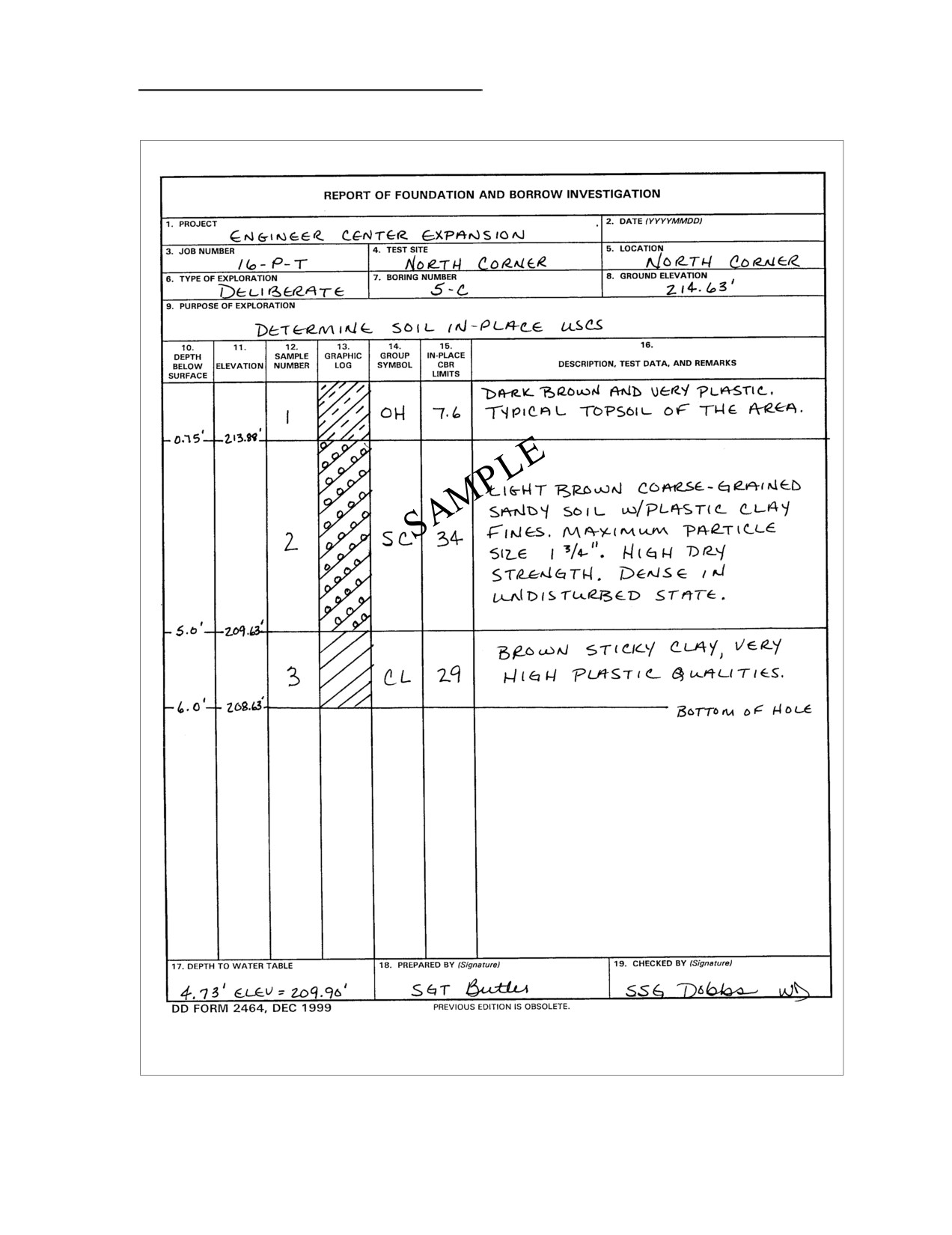
Keep a log of each boring, showing the elevation (or depth below the surface)
of the top and bottom of each soil layer, the field identification of each soil
encountered, and the number and type of each sample taken. Include other
information in the log that relates to the density of each soil, the changes in
moisture content, the depth to groundwater, and the depth to rock. A typical
Soils 2-33
FM 5-472/NAVFAC MO 330/AFJMAN 32-1221(I)
boring log (as recorded on Department of Defense [DD] Form 2464) is shown
in Figure 2-8.
OBTAINING REPRESENTATIVE SOIL SAMPLES
Planning the general layout determines the extent of the various soil types
(vertically and laterally) within the zone where earthwork may occur. Large
cuts and fills are the most important areas for detailed exploration. See
Chapter 4 for procedures on obtaining soil or aggregate samples from a
stockpile.
Place borings at high and low spots, in places where a soil change is expected,
and in transitions from cut to fill. There is no maximum or minimum spacing
requirement between holes; however, the number of holes must be sufficient to
give a complete and continuous picture of the soil layers throughout the area
of interest. As a general rule, the number of exploration borings required on a
flat terrain with uniform soil conditions is less than in a terrain where the soil
conditions change frequently.
Conduct exploration borings at the point of interest and locate them in a
manner to get the maximum value from each boring. This may require
exploration borings in the centerline as well as edges of runways or roads, but
no specific pattern should be employed except perhaps a staggered or offset
pattern to permit the greatest coverage. Exploration borings may be
conducted at the edge of existing pavements, unless these pavements have
failed completely. In this case, find the reason for the failure.
Purpose
Conduct exploration borings to—
• Obtain individual soil samples and a composite sample by
investigating a borehole/test pit to a minimum depth of 4 feet.
• Prepare soil and moisture-content samples of each soil layer
encountered for transportation.
• Record all information detailing the soils encountered, such as their
location in the pit and the pit location within the excavation site, in a
project log book.
Before beginning, ensure that digging is permitted at the testing site.
Steps
Perform the following steps to obtain a representative soil sample:
Step 1. Locate the boreholes or test pit. (The location of auger holes depends
on the particular situation.)
a. Draw a site sketch recording the borehole ’s location, elevation, azimuth,
and distance from a benchmark or reference point.
b. Determine and record a number for each borehole and record it on the
diagram.
Step 2. Dig the borehole or test pit.
a. Remove the overburden.
2-34 Soils
FM 5-472/NAVFAC MO 330/AFJMAN 32-1221(I)
Figure 2-8. Typical boring log
Soils 2-35
FM 5-472/NAVFAC MO 330/AFJMAN 32-1221(I)
b. Extend boreholes 4 feet below the final subgrade elevation in cut areas.
c. Extend boreholes 4 feet below the natural ground elevation in fill areas.
d. Make an effort to locate the groundwater table.
NOTE: The depth may be deeper depending on the depth of thaw
penetration.
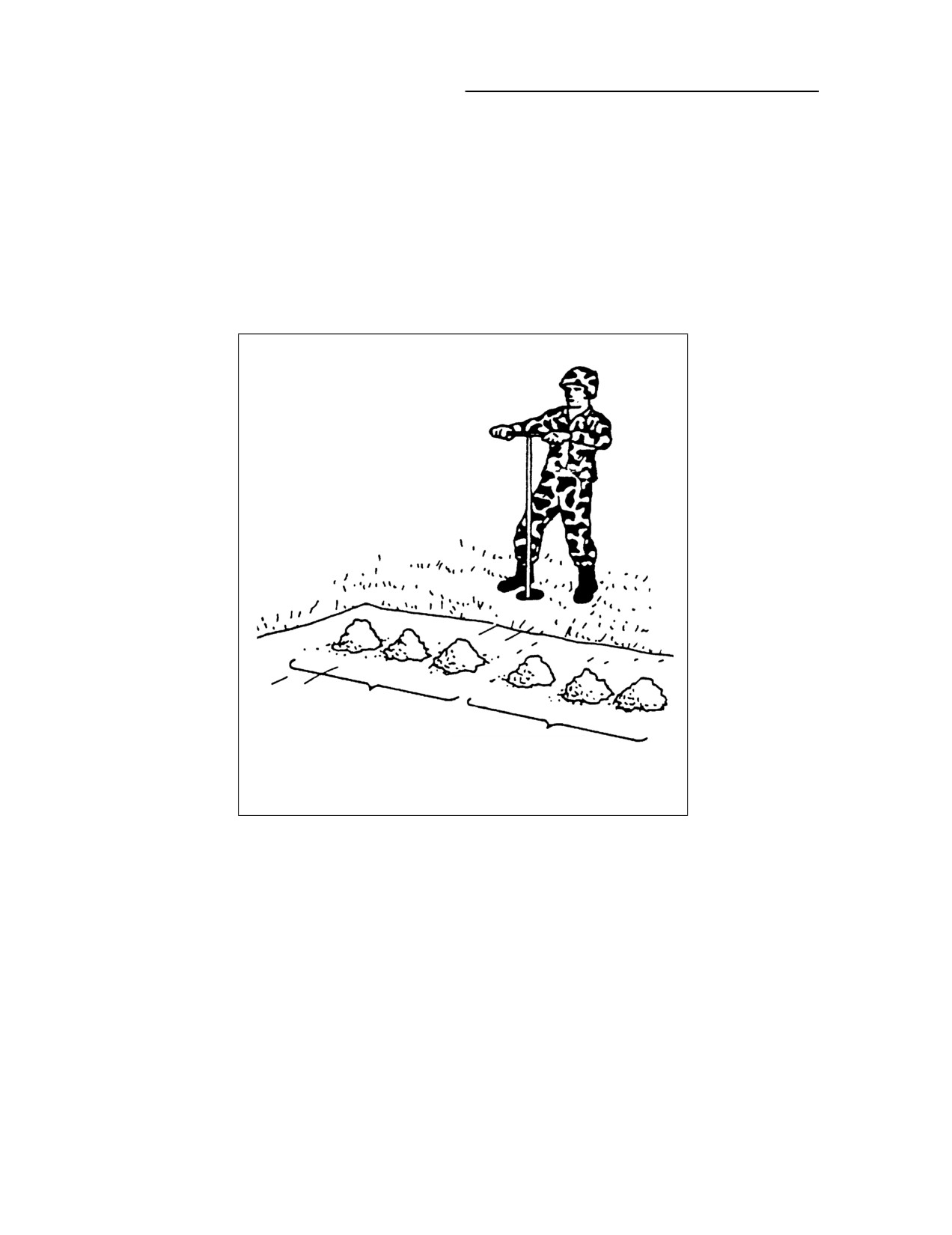
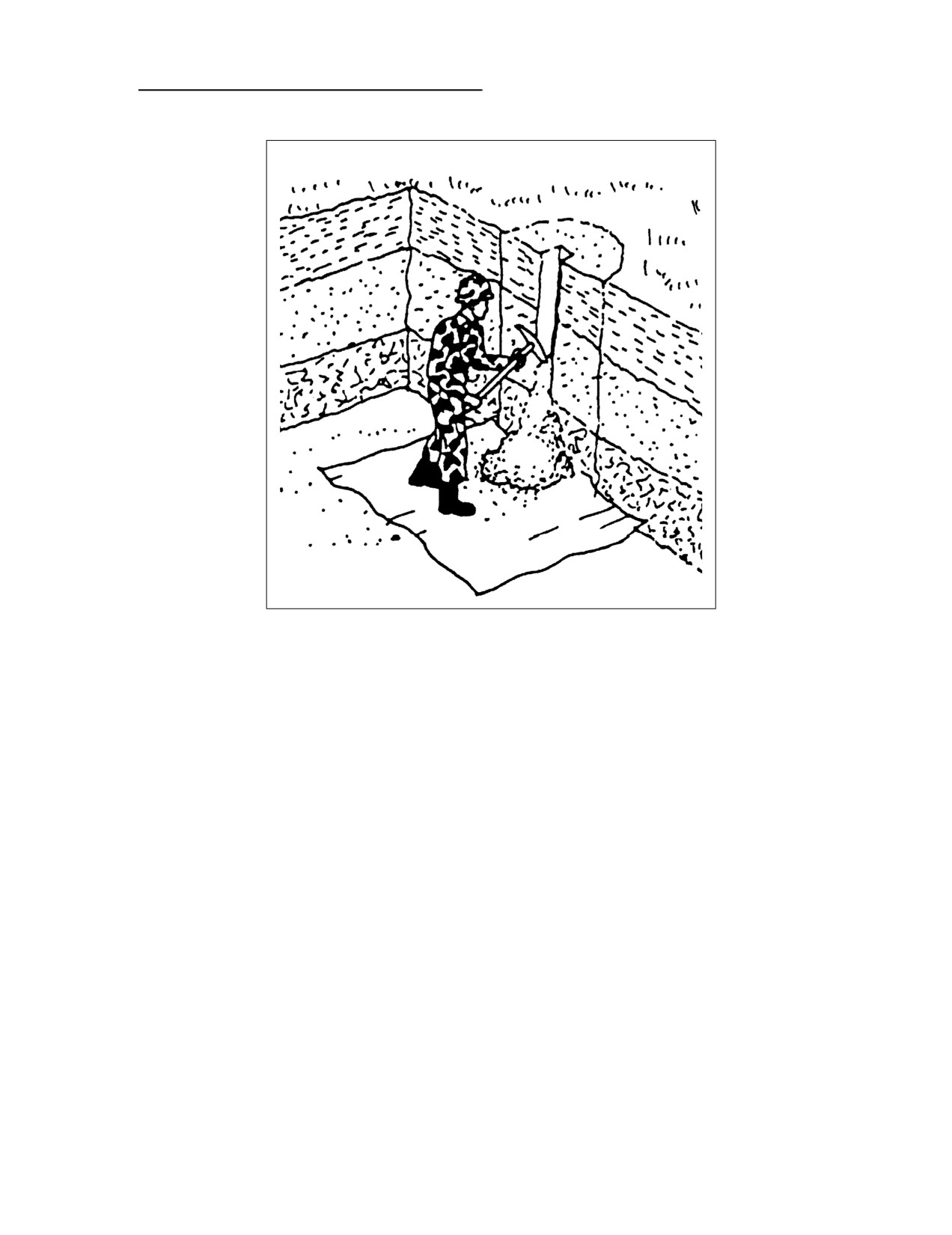
Step 3. Obtain an individual soil sample for each soil layer encountered (see
Figures 2-9 and 2-10.)
Sample No. 1 from here
Sample No. 2 from here
Figure 2-9. Obtaining individual bag samples
a. Place the soil from the borehole in a row in the order it was excavated,
keeping soil layers separated for borings. If in a test pit, obtain samples
from each layer encountered.
b. Obtain moisture-determination samples from each soil layer, ensuring
that the moisture-tare sample number corresponds with the soil-sample
bag number when labeled.
Step 4. Obtain data on the borehole and record the information.
a. Determine the elevation or depth below the surface of the top and
bottom of each soil layer encountered.
2-36 Soils
FM 5-472/NAVFAC MO 330/AFJMAN 32-1221(I)
Figure 2-10. Taking a composite sample with an exposed face
b. Record a description of the type of soil encountered.
c. Record the depth of the water table, if encountered.
d. Record the depth of bedrock, if encountered.
e. Record other pertinent facts such as borehole number, date,
noncommissioned officer in charge (NCOIC), project number, and project
location.
Step 5. Bag individual soil samples for transportation.
a. Place each soil layer encountered in separate bags. For a deliberate
survey, ensure that there is enough material to perform the testing
required (at a minimum, the sieve-analysis, LL, PL, and compaction
tests).
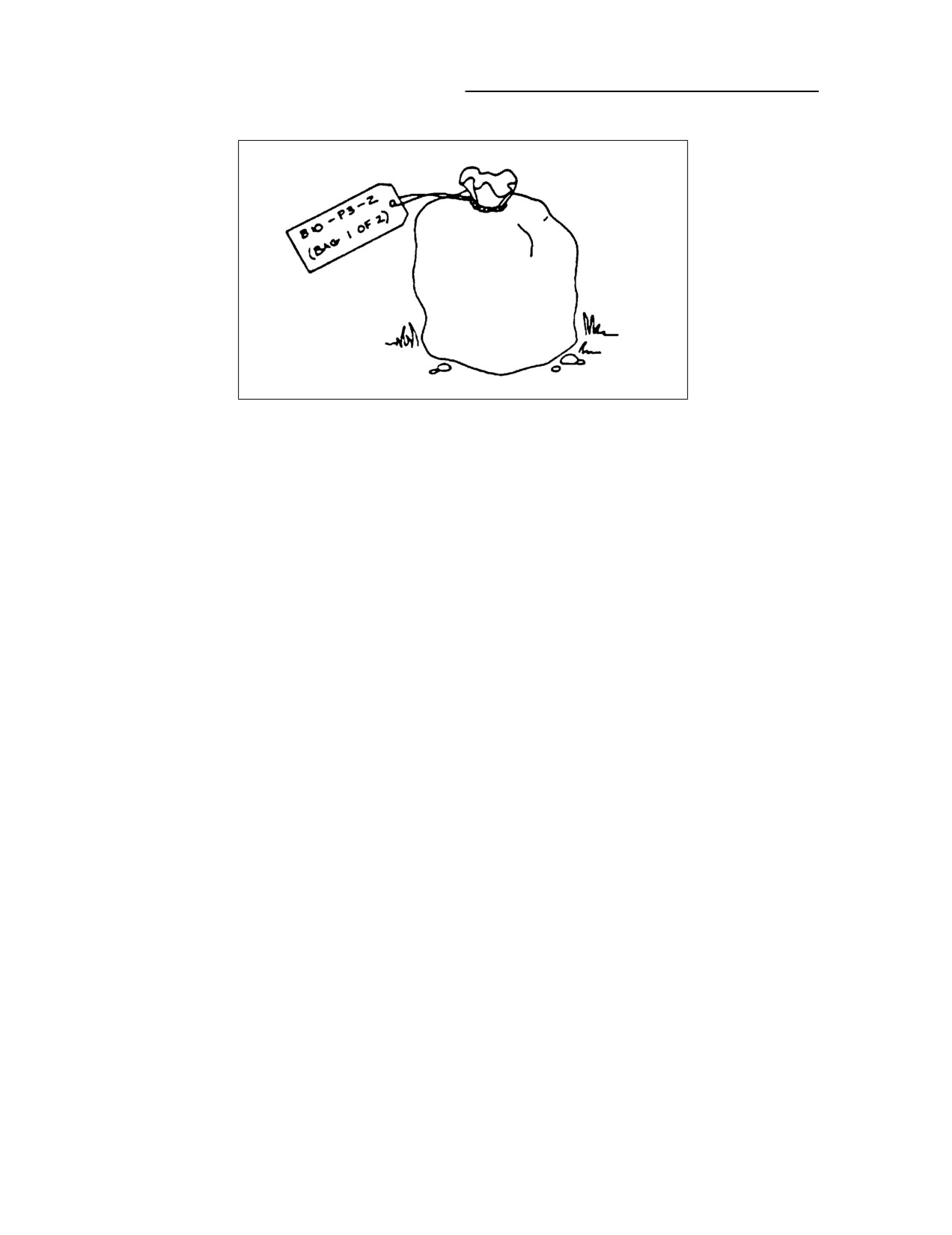
b. Label two shipping tags for each bag, indicating the project, borehole,
and sample numbers (indicating the order in which it was obtained) and
the total number of bags included in the sample.
c. Place one tag inside the bag and tie the other to the outside when the
bag is secured (see Figure 2-11, page 2-38).
Step 6. Take a composite sample.
a. Remove any overburden or surface soil that is to be wasted.
Soils 2-37
FM 5-472/NAVFAC MO 330/AFJMAN 32-1221(I)
Figure 2-11. Labeling bag samples
b. Shave off any loose or dried material to provide a fresh face.
c. Spread a quartering cloth or tarpaulin at the toe of the bank.
d. Cut a channel of uniform cross section from top to bottom and deposit
the soil on the canvas.
e. Bag all material that was removed to ensure that the sample contains
the appropriate proportions.
NOTE: It is important that sample numbering be recorded carefully
and accurately so that the diagram borehole number, sample bags,
and moisture tares all correspond.
MOISTURE-CONTENT SAMPLES
Soil’s natural moisture content is determined from samples taken in the field
and placed in a container that is sealed to prevent moisture loss by
evaporation. Natural moisture-content determinations are valuable in
interpreting information obtained from test borings or pits, in drawing the soil
profile, and in estimating the physical properties of soils encountered in the
field. Generally, 100 grams of soil are enough to determine the moisture
content of fine-grained soils. Larger samples are required for soils that
contain gravel. The soil test set contains three sizes of metal dishes that have
tight-fitting covers and do not require sealing if the test is made within one
day after the sample is taken. If a longer time interval elapses between
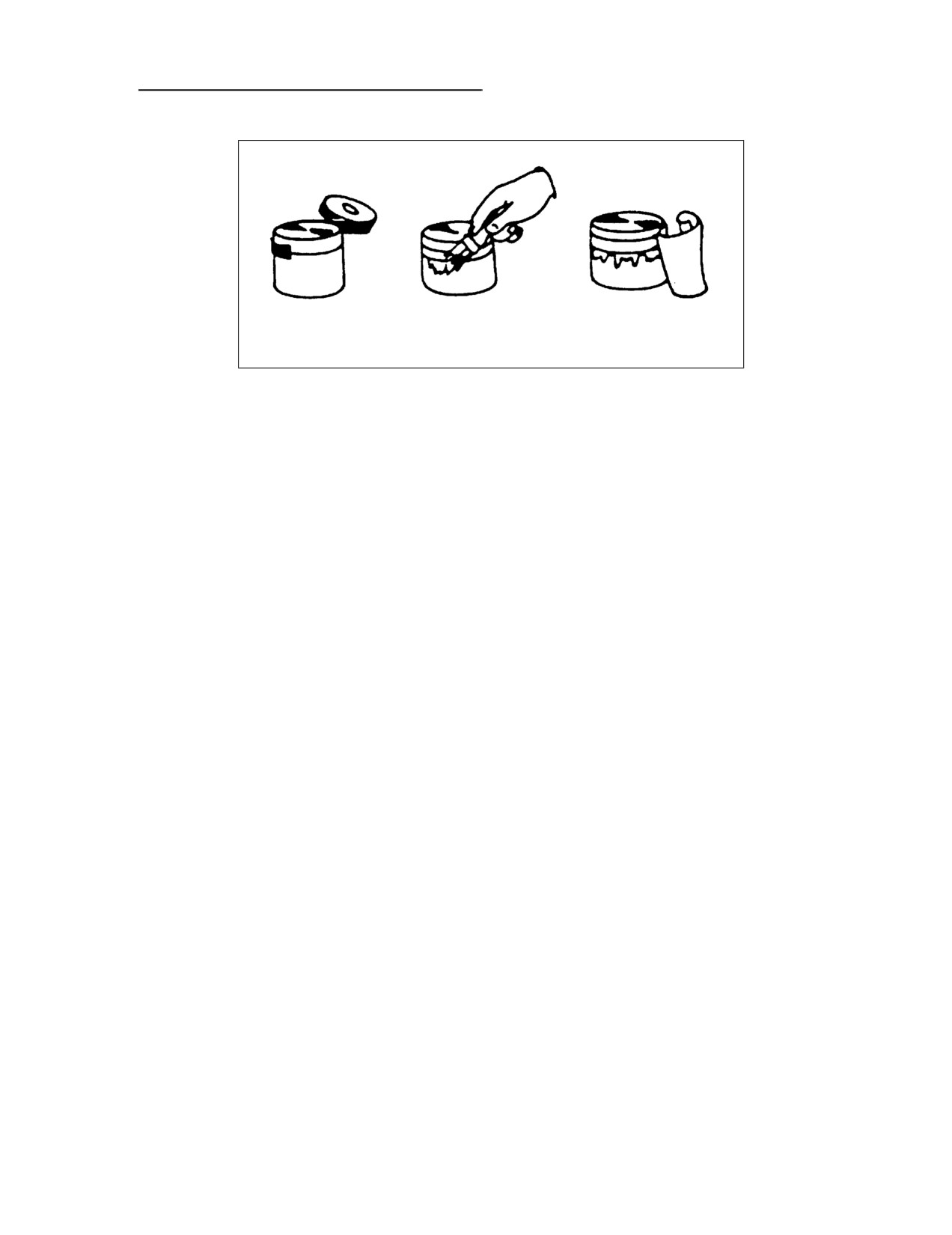
sampling and testing, the boxes may be sealed by the method shown in Figure
2-12. Other clean containers that can be sealed adequately may be used for
moisture-content samples.
UNDISTURBED SAMPLES
Undisturbed soil samples are those in which the natural structures, void ratio,
and moisture content are preserved as carefully as possible. They are cut,
removed, and packed with the least possible disturbance. Samples of this type
are used for determining the density (unit weight) of soil in the laboratory and
for investigating the strength of undisturbed soils in the laboratory by the
CBR or unconfined compression tests. These samples may be shipped to more
2-38 Soils
FM 5-472/NAVFAC MO 330/AFJMAN 32-1221(I)
Wrap with
Dip or paint
Wrap with paraffin-
friction tape.
with paraffin.
coated paper or cloth.
Figure 2-12. Sealing a container to retain a sample’s moisture content
completely equipped laboratories for shear, consolidation, or other strength
tests.
The types of undisturbed samples are—
• Chunk.
• Cylinder.
Choose the method of sampling based on the equipment available, the tests
required, and the type of soil. Handle all undisturbed samples with care. Keep
cohesionless soil samples in the container until ready for testing. Handle the
container without jarring or vibration. Some soils are too hard or contain too
many stones to permit sampling with the cylindrical samplers and can be
sampled only by cutting out chunks by hand. Taking undisturbed samples
frequently requires a great deal of ingenuity in adapting the sampling devices
to job conditions and in devising schemes for their use. Whatever method is
used, pack the sample in the container for shipment without allowing its
structure to change. Protect the sample against change in moisture content
during sampling and shipment.
CHUNK SAMPLES
Obtain the simplest type of undisturbed sample by cutting out a chunk of soil
the desired size; cover it to prevent loss of moisture and breakage. Use this
method only with soils that will not deform, break, or crumble while being
removed. Cut chunk samples by hand with a shovel and knife.
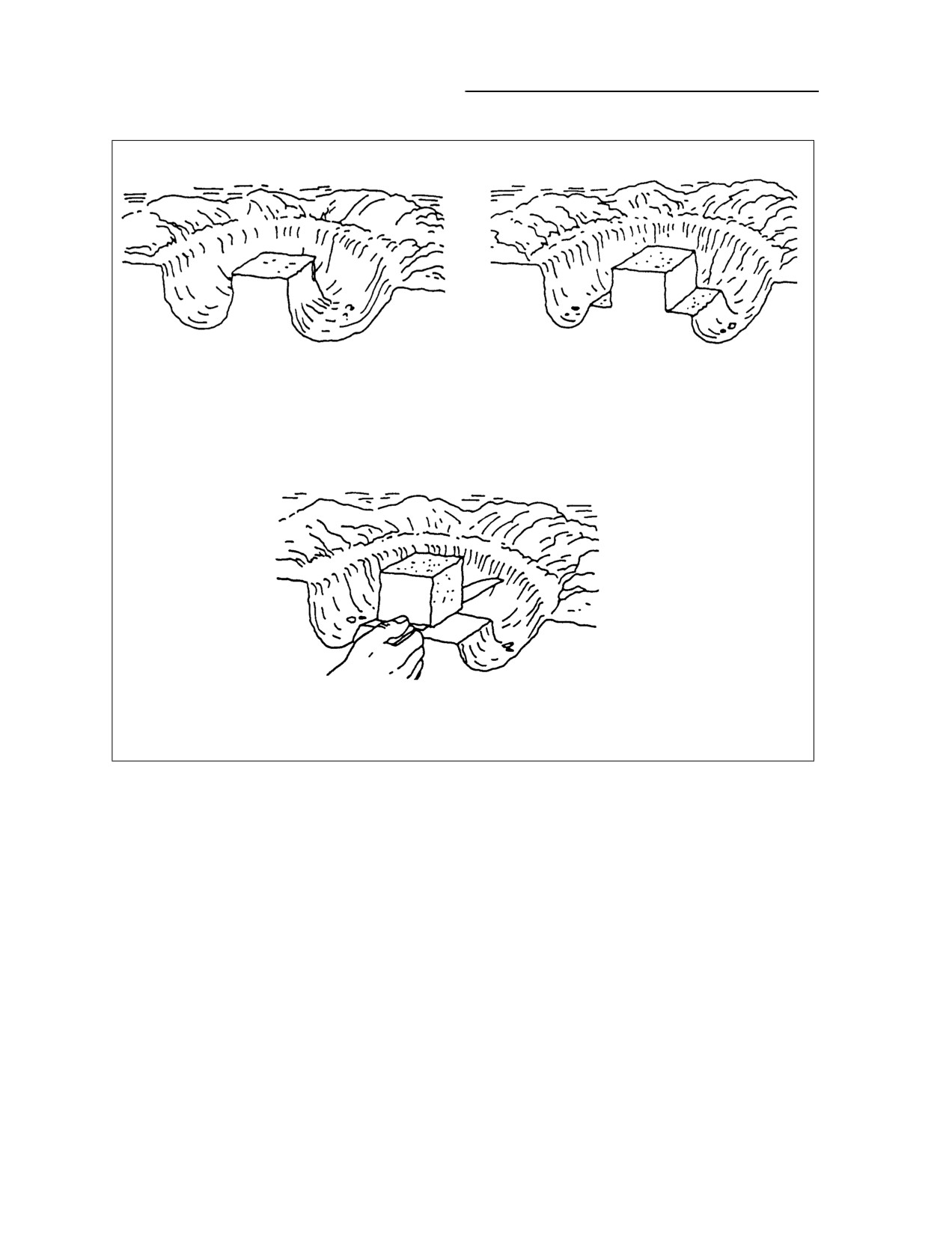
The process of obtaining a chunk sample from a subgrade or other level
surface, such as the bottom of a test pit, is shown in Figure 2-13, page 2-40.
The first step is to smooth the ground surface and mark the outline of the
chunk. Excavate a trench around the chunk (see Figure 2-13a), then deepen
the excavation and trim the sides of the chunk with a knife (see Figure 2-13b).
Cut off the chunk at the bottom with a knife, trowel, or hacksaw blade, and
carefully remove it from the hole (see Figure 2-13c).
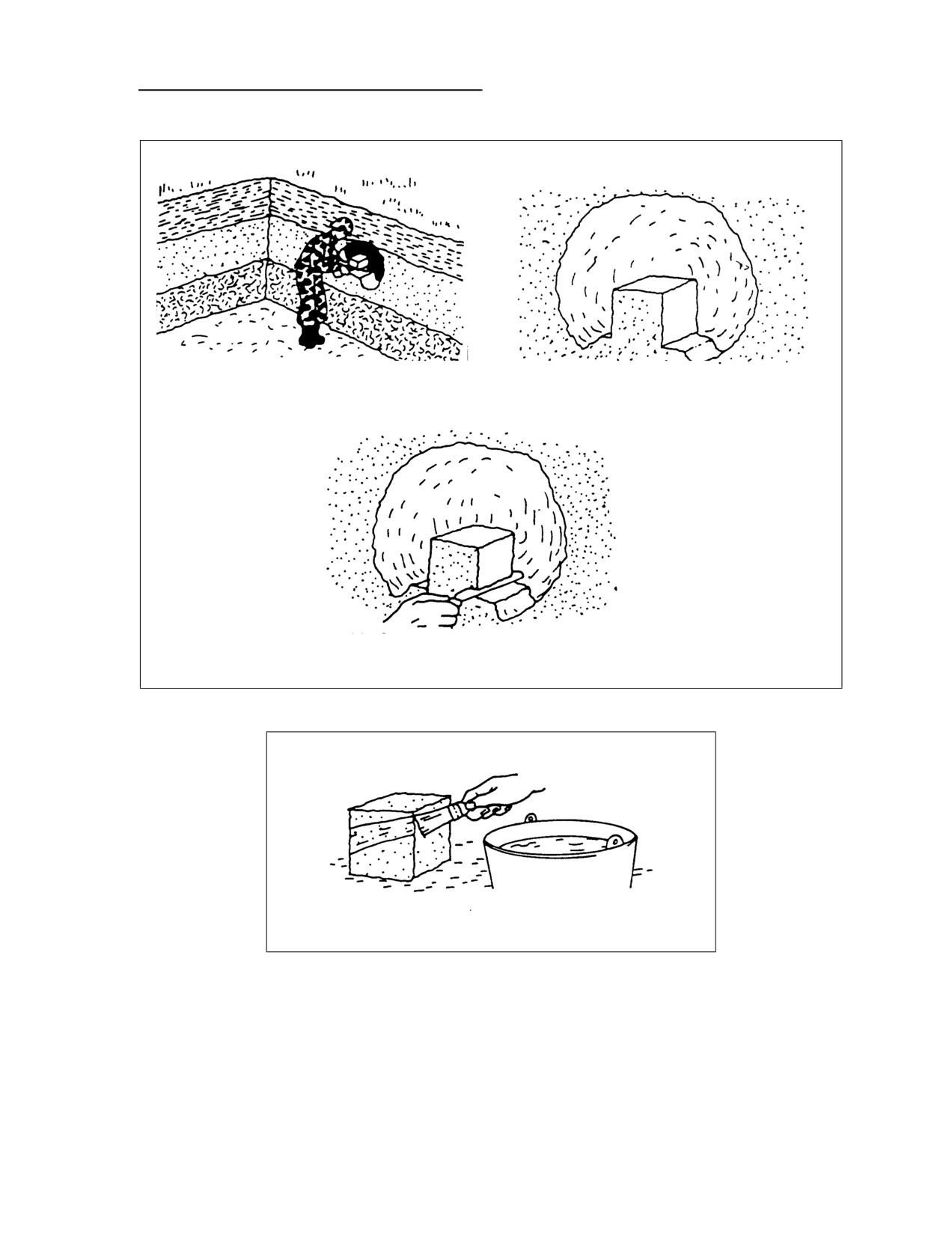
To obtain a chunk sample from the vertical face of a test pit or trench,
carefully smooth the surface of the face and mark the outline of the chunk (see
Figure 2-14, page 2-41). Excavate soil from the sides and back of the chunk
Soils 2-39
FM 5-472/NAVFAC MO 330/AFJMAN 32-1221(I)
a. Excavate trench.
b. Trim sample.
c. Cut off and remove.
Figure 2-13. Taking a chunk sample from a level surface
(see Figure 2-14a). Shape the chunk with a knife (see Figure 2-14b), then cut
off the chunk and carefully remove it from the hole (see Figure 2-14c).
Seal the chunk sample after removing it from the hole. One method is to apply
three coats of melted paraffin (see Figure 2-15). Allow each coat to cool and
become firm before applying the next coat. This gives adequate protection for
strong samples that are to be used within a few days. Samples that are weak
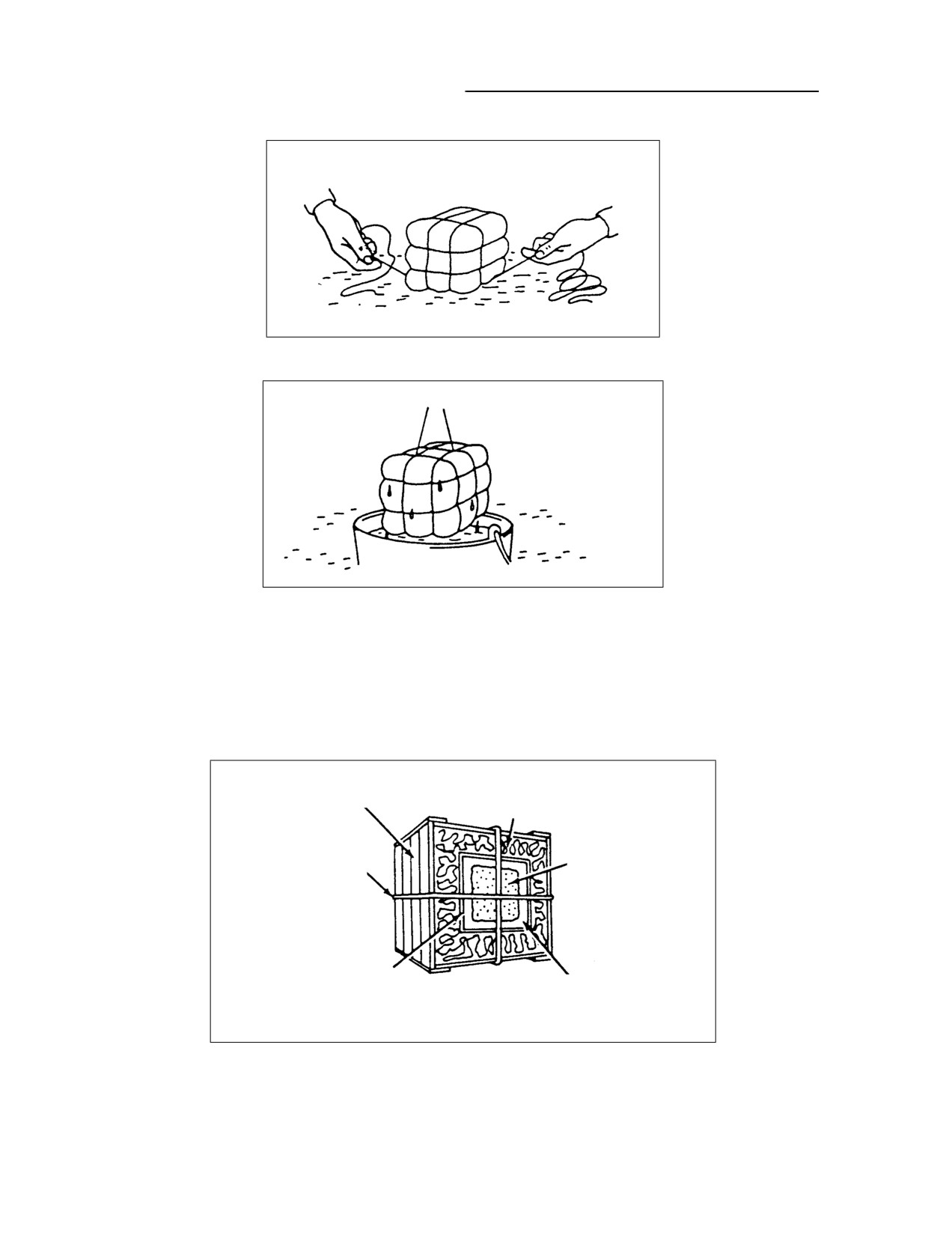
or that may not be used soon require additional protection. Wrap them with
cheesecloth or other soft cloth and seal them in paraffin (see Figure 2-16, page
2-42). If cloth is not available, reinforce the sample with several loops of
friction tape or twine, and apply three more coats of paraffin. Use extreme
care to prevent damaging the sample while performing these operations.
2-40 Soils
FM 5-472/NAVFAC MO 330/AFJMAN 32-1221(I)
a. Excavate pit and sample tunnel.
b. Trim sample.
c. Cut off and remove.
Figure 2-14. Taking a chunk sample from a vertical face
Figure 2-15. Applying paraffin to seal a chunk sample
An alternate method of sealing the chunk sample is to dip the entire sample in
melted paraffin after the first brush coat has been applied and the sample has
been wrapped (see Figure 2-17, page 2-42). This requires a large container and
Soils 2-41
FM 5-472/NAVFAC MO 330/AFJMAN 32-1221(I)
Figure 2-16. Wrapping a weak chunk sample before final sealing
Figure 2-17. Dipping a chunk sample into melted paraffin
more paraffin but gives a more uniform coating. Build up the layer of paraffin
to a minimum 1/8 inch thickness by dipping repeatedly. Provide additional
protection for samples that are to be shipped by placing the chunk in a small
box and packing (see Figure 2-18) or by applying many coats of cloth and
paraffin.
Slightly dampened excelsior,
Wood box
sawdust, or newspaper
Sample
Heavy
cord
Corrugated
1/8” minimum of paraffin
cardboard box
Figure 2-18. Packing a chunk sample for transportation or shipment to laboratory
2-42 Soils
FM 5-472/NAVFAC MO 330/AFJMAN 32-1221(I)
CYLINDER SAMPLES
Obtain cylinder samples by using a cylindrical sampler or the CBR mold
equipped with a sampling cutter. Expedient methods of obtaining cylinder
samples are also used.
Soil-Trafficability Sampler
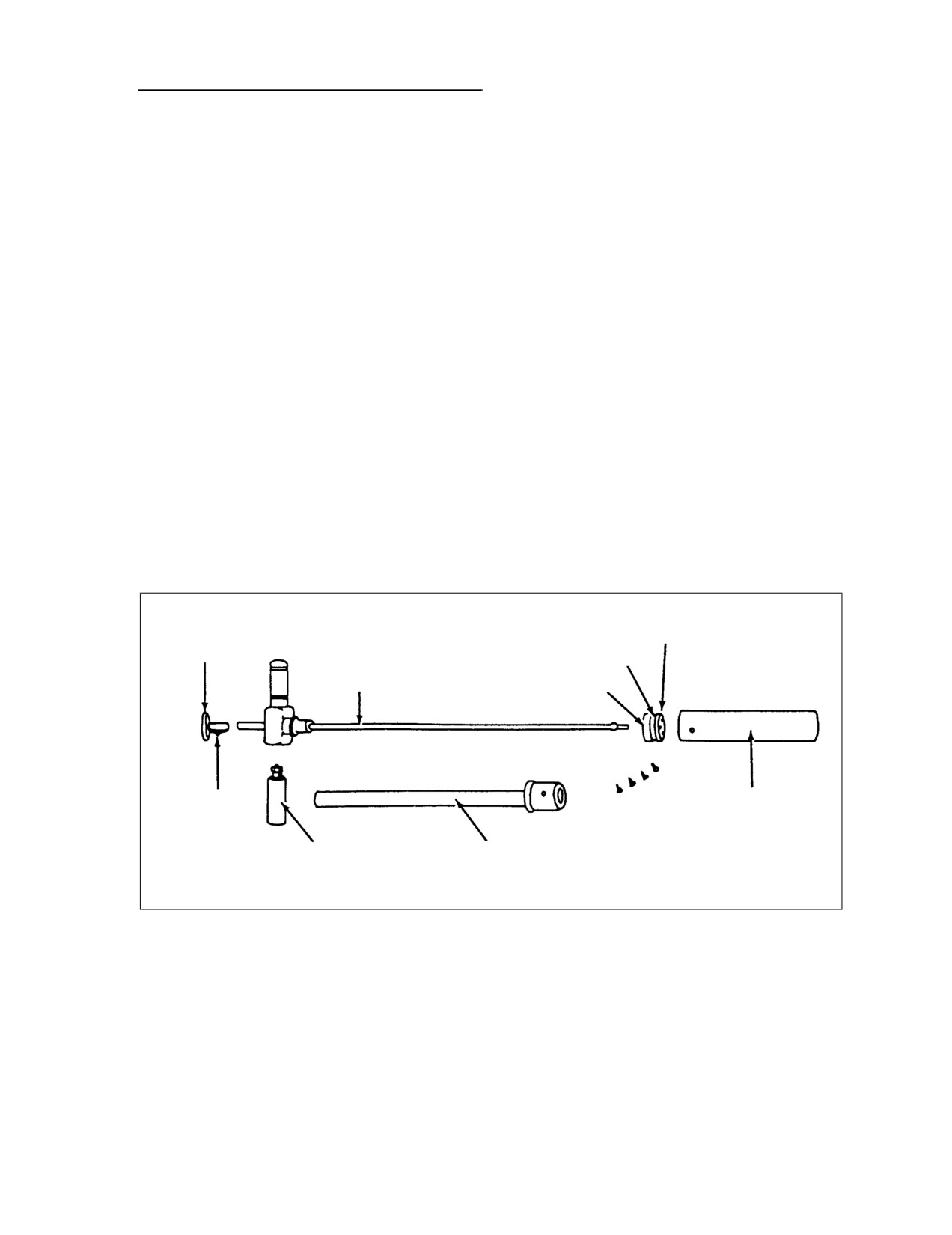
The soil-trafficability sampler consists of a cylindrical sample tube and an
assembly to force the tube into the soil (see Figure 2-19). It is forced by hand
pressure, not by blows from a hammer. A movable piston is fitted within the
cylinder and attached to a rod that extends through the center of the drive
tube and terminates in a flat dish or baseplate at the upper end. The outer
drive tube is attached to the sample cylinder at the bottom and has two
handles at the top. One of the handles is knurled and can be turned to lock the
inner rod when the piston is in position. A long and a short spacer bar are
bolted to the outer tube and used to establish the size of the sample core. The
sampler should not be used for other than extremely soft and yielding soils.
The walls of the cylinder are very thin and can be deformed if they come in
contact with a hard object. Even hard or dry soil can damage the sampler. Its
primary use is for samples to test the remolding characteristics in soils having
initially low or very low supporting value. Additional information on the soil-
trafficability sampler and soil-trafficability test set can be found in FM 5-430-
00-1.
Piston
Disc
Piston ring
Piston rod
Leather washer
Setscrew
Sampling tube
Locking (knurled) handle
Drive rod
Figure 2-19. Soil-trafficability sampler
Perform the following steps for taking cylinder samples using a soil-
trafficability sampler:
Step 1. Adjust the piston so it is flush with the sampler cylinder’s cutting edge.
Lock the knurled handle.
Step 2. Place the sampler firmly in contact with the soil to be sampled.
Soils 2-43
FM 5-472/NAVFAC MO 330/AFJMAN 32-1221(I)
Step 3. Hold the disk at the top to prevent vertical movement, unlock the
knurled handle, and force the sampler cylinder into the soil.
Step 4. Ensure that the cylinder is fully in the soil; then lock the knurled
handle to clamp the piston, and keep the soil sample from slipping out due to
the vacuum created.
Step 5. Rotate the entire sampler a half turn to shear the soil at the base of
the cylinder; then carefully withdraw it from the hole and invert it so that the
dish becomes a baseplate. There is a spud on the side of the sampler for
releasing the side friction and the vacuum caused by withdrawing the sampler
from the ground.
Step 6. Swing the longer spacer bar into position to act as a stop while the
piston ejects the sample.
Step 7. Release the knurled handle, and push the drive tube until the spacer
bar hits the baseplate and a portion of the sample is pushed up out of the
cylinder.
Step 8. Cut and discard the portion of the sample flush with the cutting edge
of the sampler. This amount of soil discard offsets any uneven shearing at the
bottom of the hole and gives the soil sample a true cylindrical shape.
Step 9. Swing the short spacer bar into position and move the long bar out of
the way.
Step 10. Eject the soil sample until the short bar stops the action. A portion of
the soil sample will still be in the cylinder.
Step 11. Cut off the soil sample flush with the sampler’s cutting edge into a
preformed plate made to fit around the cutter. Use the sample cutter (piano
wire) for this operation. The sample is now exactly 1.87 inches in diameter
and 3.45 inches long.
Step 12. Discard the remaining soil in the sampler.
This sampler can be used with a hand auger to obtain cores at depths up to 48
inches below the surface. The cores are sealed.
The soil-trafficability sampler requires proper maintenance and adjustment to
produce consistent results. Keep the inside of the sampling tube, the piston
tube, the piston ring, and the leather washer reasonably clean. After 5 to 25
samplings (depending on the type of soil), immerse the tube, first in water and
then in fuel oil, and work the piston up and down five or six times in each
liquid. After wiping off the excess fuel oil, squirt light machine oil into the
tube. If the instrument becomes stiff and hard to work, remove the tube,
disassemble and thoroughly clean the piston, and oil the leather washer. Take
care in removing the tube to prevent its slipping from the head suddenly and
bending the piston rod. The tube walls and cutting edges are relatively soft
and should be handled with care.
Adjust the effective piston-rod length to keep the face of the piston flush with
the tube ’s cutting edge when the piston-rod handle (disk) is fully depressed.
Do this by loosening the setscrew on the handle, screwing the handle up or
down to the correct position, and retightening the setscrew.
2-44 Soils
FM 5-472/NAVFAC MO 330/AFJMAN 32-1221(I)
CBR Mold
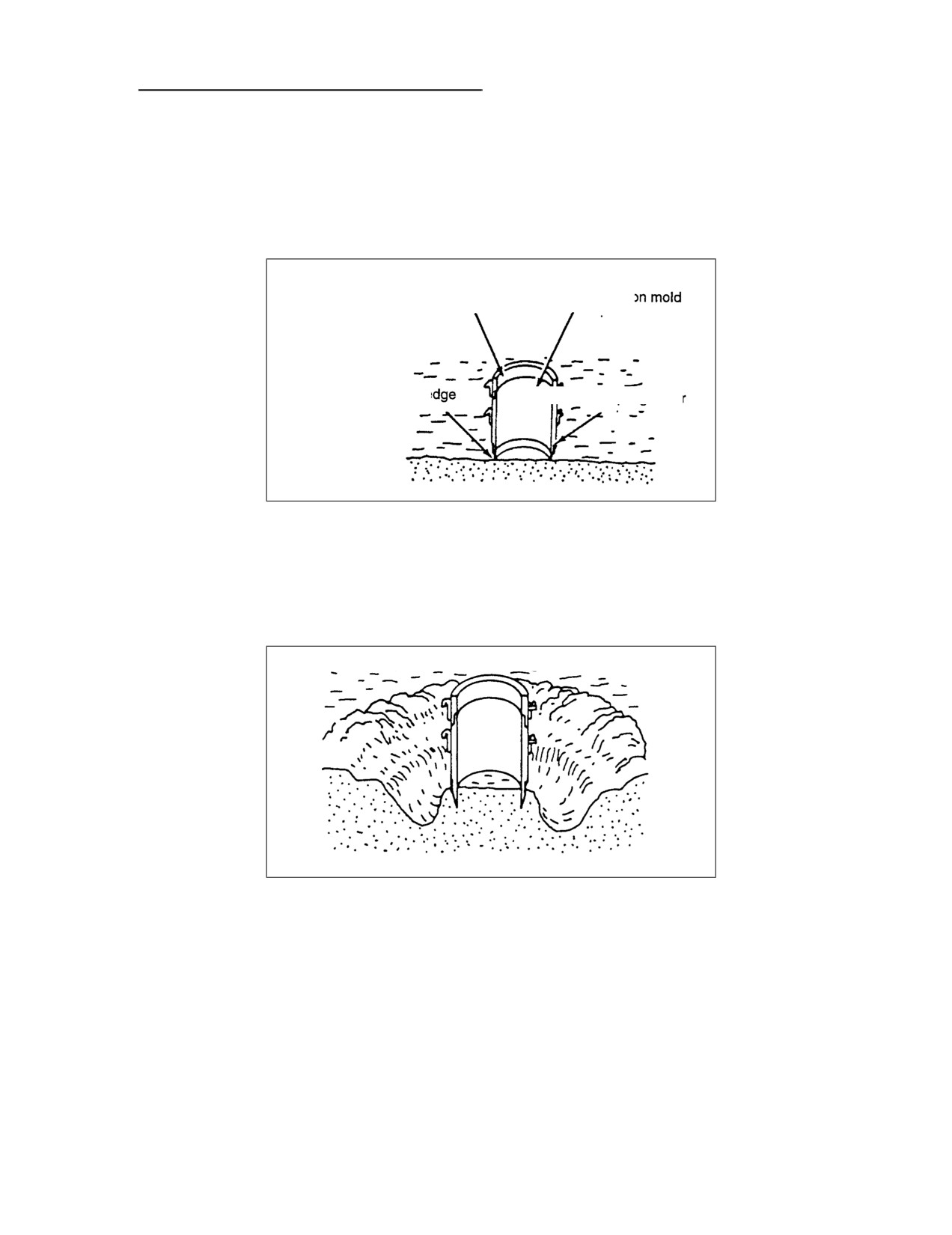
In soft, fine-grained soils, cylinder samples for undisturbed CBR or density
tests may be taken directly in the CBR compaction cylinder by using the
sampling collar (cutter) (see Figure 2-20). Perform the following steps using a
CBR mold:
Extension collar
CBR compaction mold
Cutting edge
Sampling collar
Figure 2-20. Section through CBR mold
Step 1. Smooth the surface of the ground and press the sampling collar and
mold into the soil with moderate pressure.
Step 2. Excavate a trench around the cylinder (see Figure 2-21).
Figure 2-21. Trench excavated around cylinder
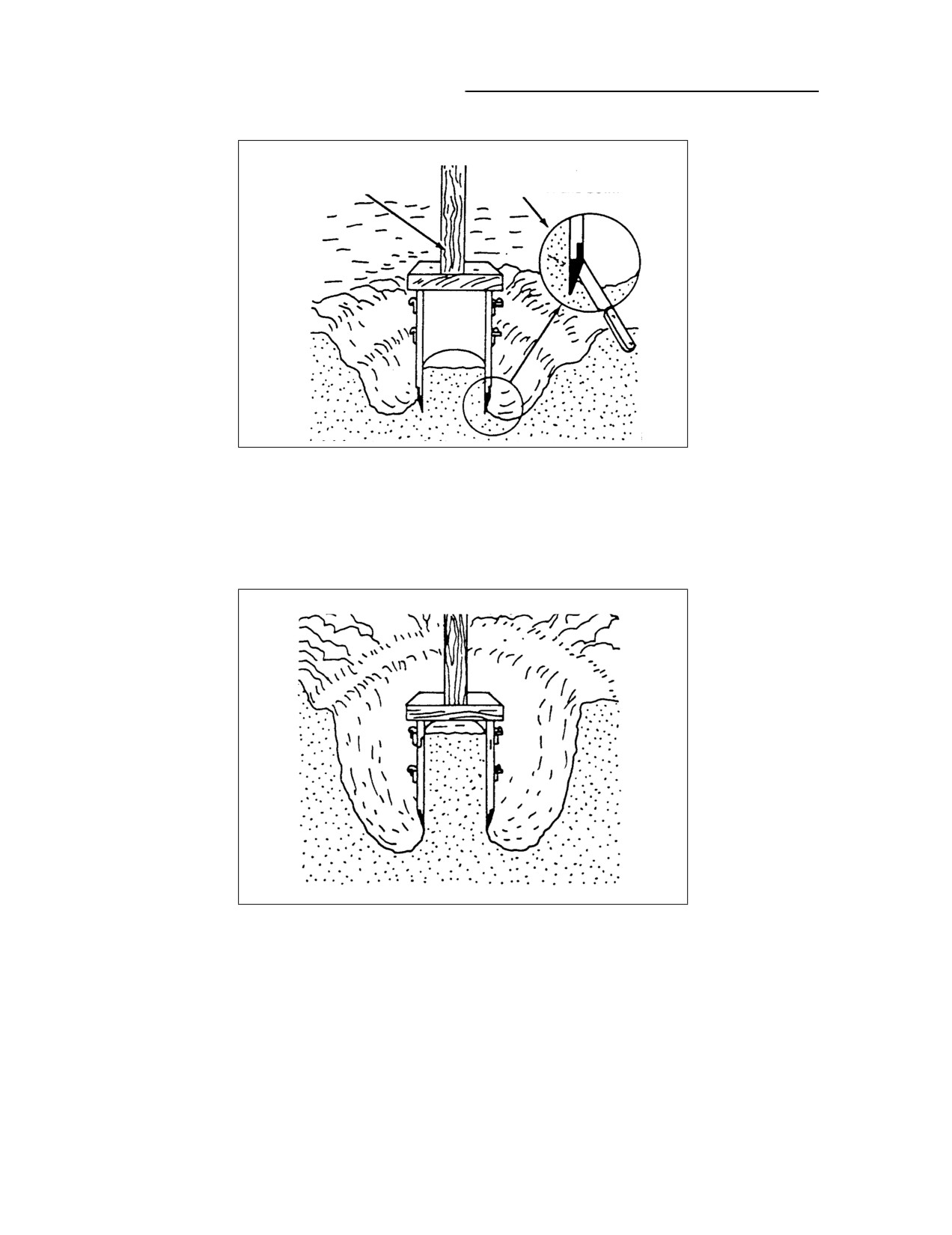
Step 3. Press the mold down firmly over the soil again, using the hand driver
or loading bar if necessary (see Figure 2-22, page 2-46). A loading bar may be
improvised from any piece of timber of suitable size.
Step 4. Trim the soil away from the sampling collar with a knife, cutting
downward and outward to avoid cutting into the sample. The actual cutting to
size is done with the sampling collar. The sampler may be forced down with
the truck jack, if available. In either case, do not force the sampler down
ahead of the trimming on the outside of the cylinder.
Soils 2-45
FM 5-472/NAVFAC MO 330/AFJMAN 32-1221(I)
Loading bar
Trim out and down
Figure 2-22. Using load bar to drive cylinder
Step 5. Excavate the trench deeper and repeat the process until the soil
penetrates well into the extension collar (see Figure 2-23). If stones interfere,
pick them out carefully and fill the space with soil. Record this fact in the log
of the sample where it is pertinent.
Figure 2-23. Cylinder in position before cutting sample
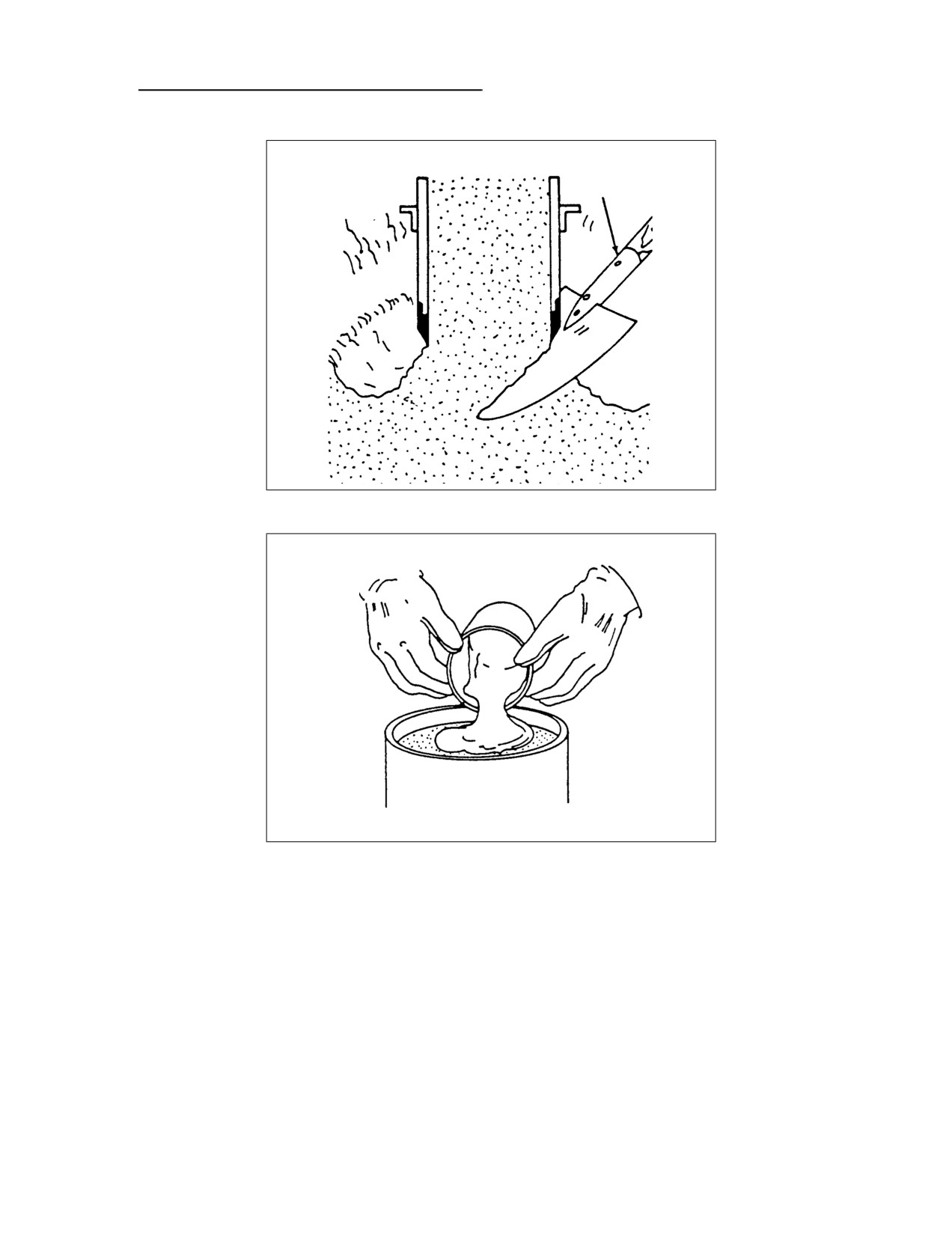
Step 6. Cut the sample off at the bottom of the mold using a shovel, knife, or
wire saw (see Figure 2-24).
Step 7. Remove the mold and sample from the hole.
Step 8. Remove the upper collar, and trim the top surface of the sample about
1/2 inch down into the mold. Fill this recess with paraffin to seal the end of the
sample (see Figure 2-25).
2-46 Soils
FM 5-472/NAVFAC MO 330/AFJMAN 32-1221(I)
Shovel
Figure 2-24. Cutting off cylindrical sample
Figure 2-25. Cylinder in position before cutting sample
Step 9. Turn the mold over and remove the cutting edge. Trim this end down
into the mold about 1/2 inch, as before, and fill the resulting space with
paraffin. If the sample is to be handled very much before testing, overfill the
ends with paraffin and then trim it exactly flush with a straightedge.
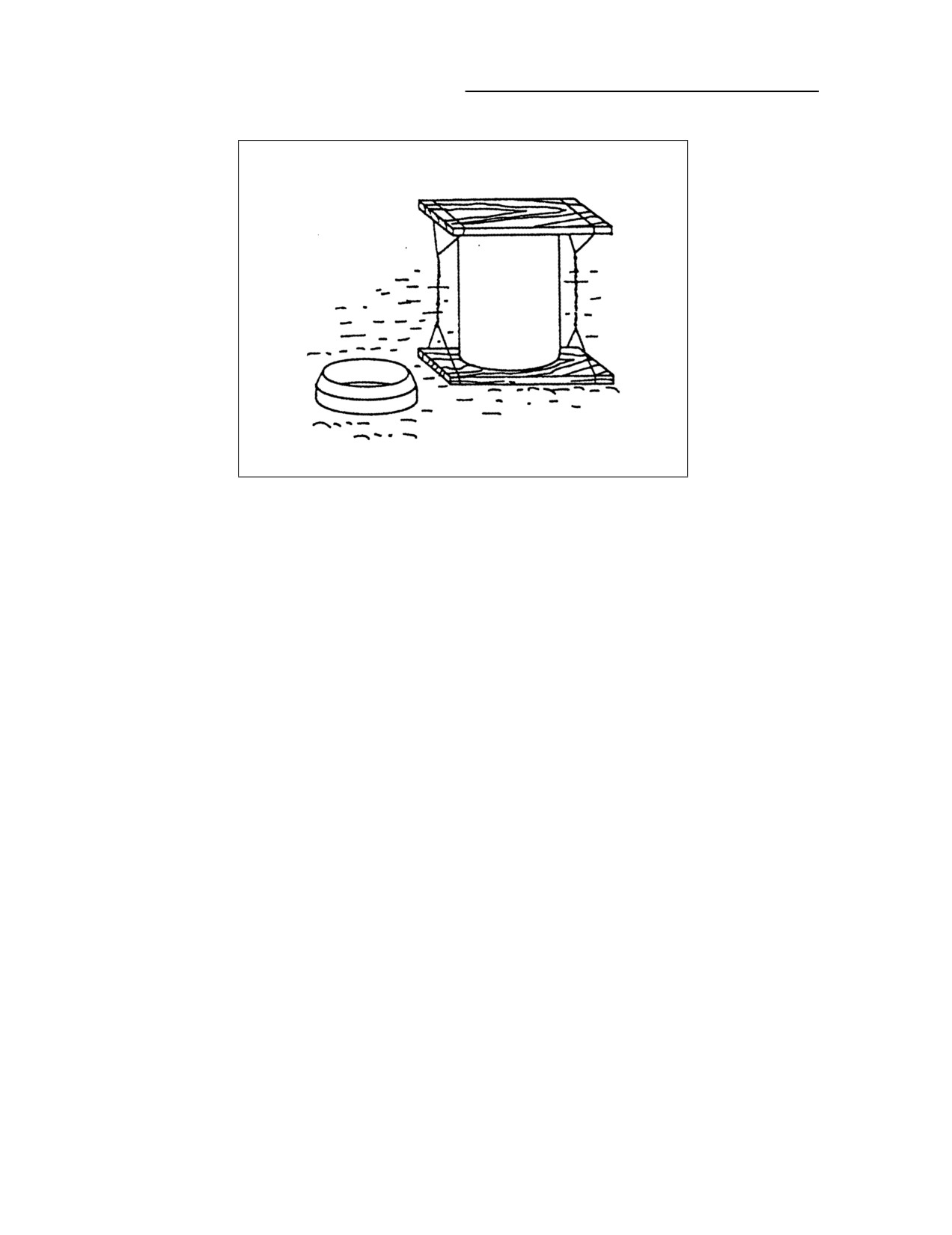
Step 10. Place boards over each end, and clamp them in place using bolts,
wire, or string (see Figure 2-26, page 2-48).
Step 11. Wrap the samples in cloth, and soak them in paraffin layers if they
must be transported some distance or if they have to be handled quite a bit
before testing.
Soils 2-47
FM 5-472/NAVFAC MO 330/AFJMAN 32-1221(I)
Figure 2-26. Protecting a sample in a CBR mold
QUARTERING SAMPLES
The process of reducing a representative sample to a convenient size, or of
dividing a sample into two or more smaller samples for testing, is called
quartering. The procedure to be used varies somewhat, depending on the size
of the sample.
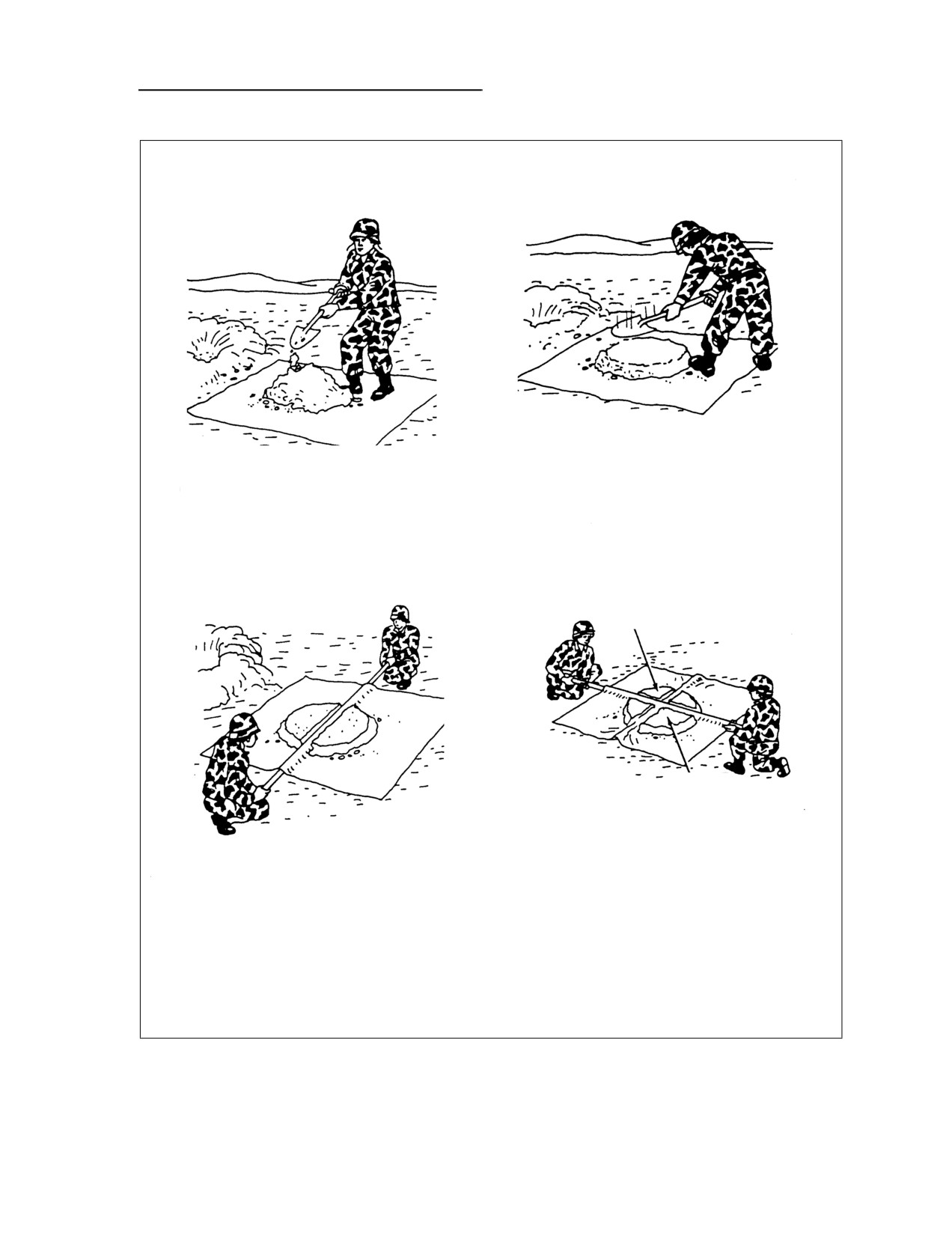
SAMPLES WEIGHING OVER 100 POUNDS
Quartering a sample in excess of 100 pounds is shown in Figure 2-27. First,
mix the sample and pile it on the quartering canvas (see Figure 2-27a).
Place each shovelful in the center of the cone so that the soil runs down evenly
in all directions to mix the sample. Flatten the cone with the shovel, spreading
the material to a circular layer of uniform thickness (see Figure 2-27b). Insert
a stick or pipe under the center of the pile (under the canvas) and lift both
ends of the stick, thus dividing the sample into two parts (see Figure 2-27c).
Remove the stick, leaving a fold in the canvas. Insert the stick under the pile
(this time at right angles to the first division) and lift again, dividing the
sample into four parts (see Figure 2-27d). Discard the two diagonally opposite
quarters and carefully clean the fines from the canvas. Remix the remaining
material by taking alternate shovelfuls from each quarter. Repeat the
quartering process as necessary to reduce the sample to the desired size.
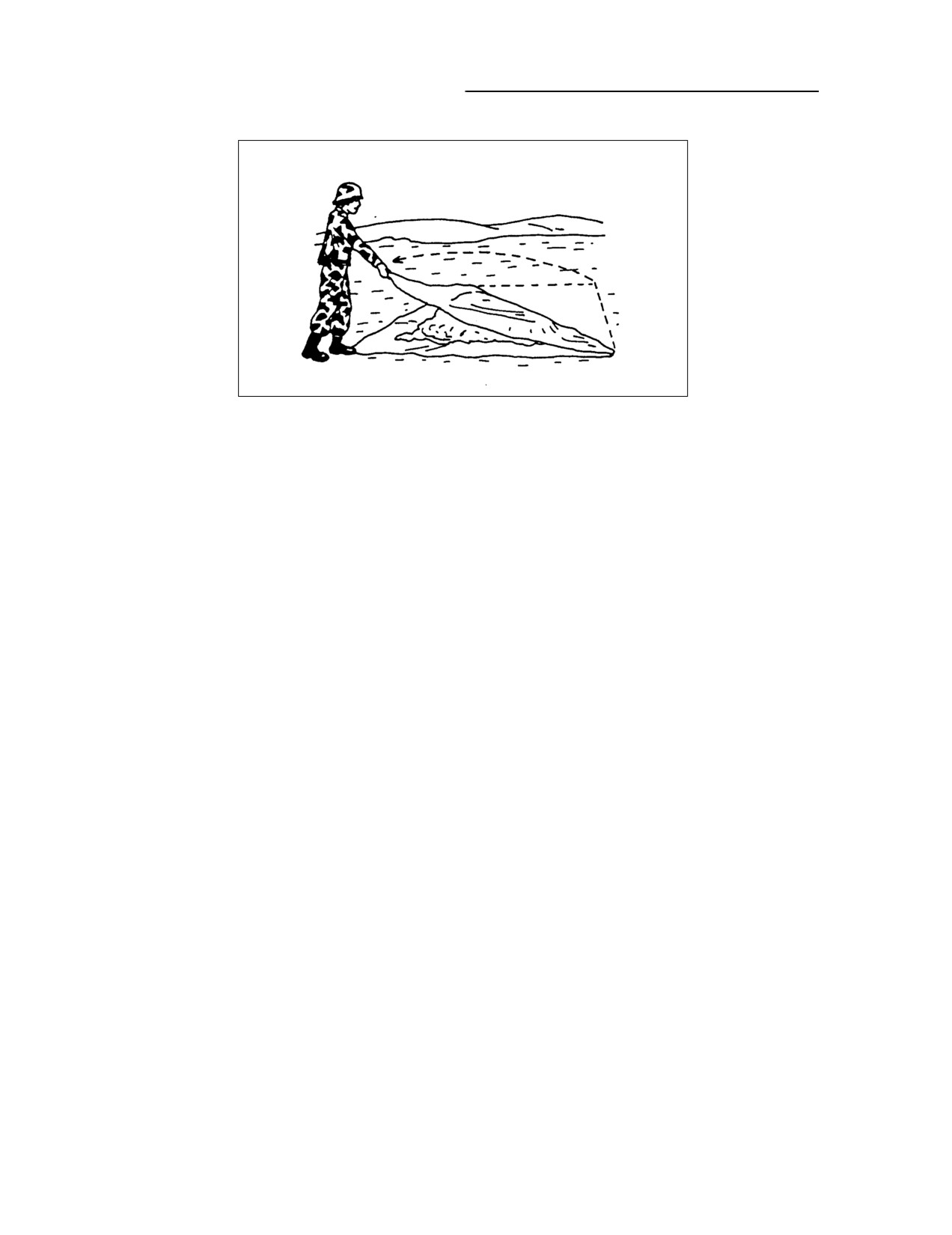
SAMPLES WEIGHING 25 TO 100 POUNDS
To quarter samples weighing 25 to 100 pounds, pile the soil on the canvas and
mix it by alternately lifting the corners of the canvas and pulling over the
samples as if preparing to fold the canvas diagonally, as illustrated in Figure
2-28, page 2-50. Then flatten and quarter the sample.
2-48 Soils
FM 5-472/NAVFAC MO 330/AFJMAN 32-1221(I)
b. Flattening sample to uniform thickness
a. Mixing and piling a sample weighing
more than 100 pounds
Discard
Discard
d. Quartering the sample
c. Halving the sample
Figure 2-27. Samples weighing more than 100 pounds
Soils 2-49
FM 5-472/NAVFAC MO 330/AFJMAN 32-1221(I)
Figure 2-28. Mixing a sample weighing 25 to 100 pounds
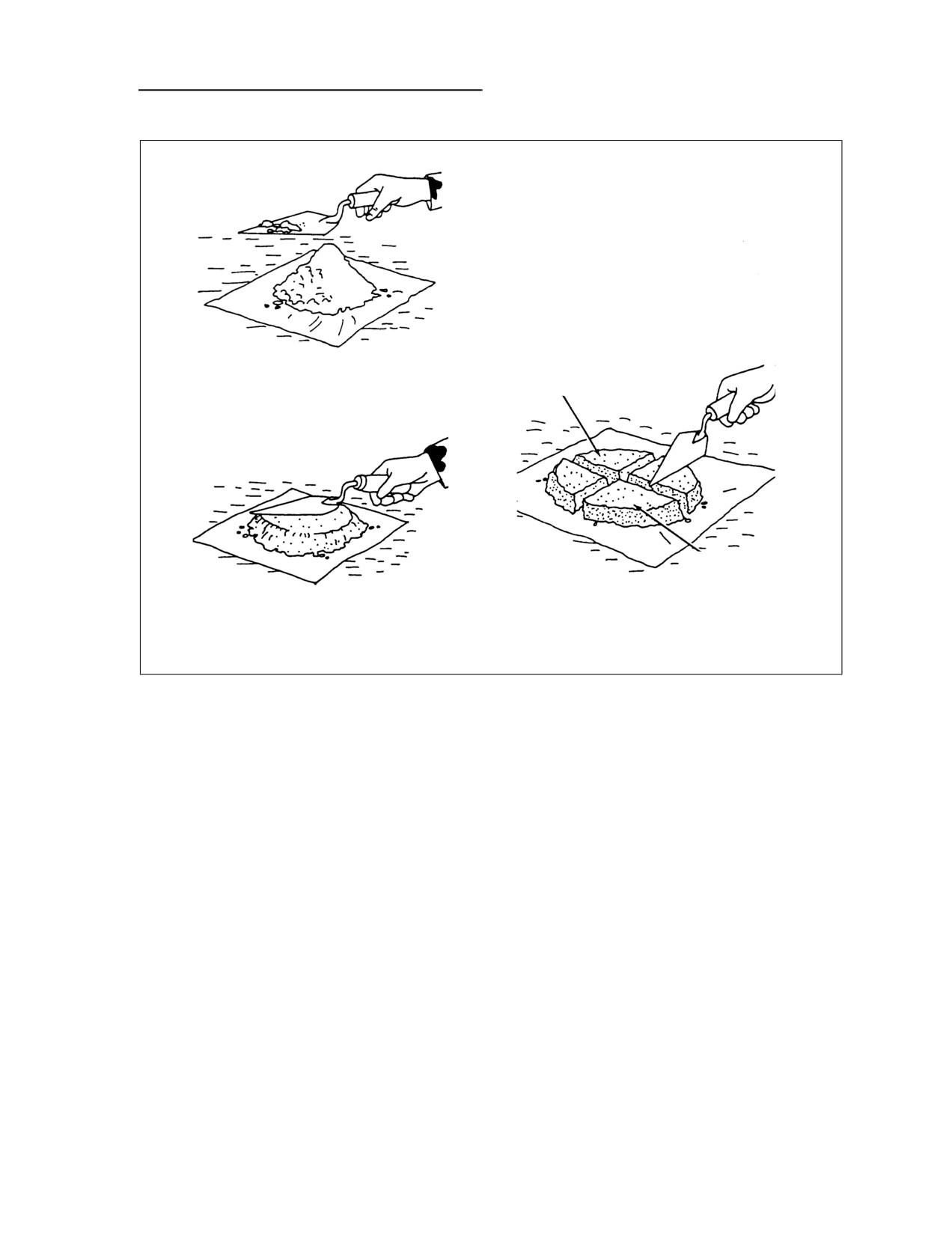
SAMPLES WEIGHING LESS THAN 25 POUNDS
The process of quartering samples less than 25 pounds is similar to the
process for 100 pounds and more. Place the sample on the canvas or a clean
sheet of paper. Mix it thoroughly with a trowel and form it into a conical pile
(see Figure 2-29a). Flatten the cone by pressing downward with the trowel
(see Figure 2-29b). Use the trowel to divide the sample into quarters. Discard
diagonally opposite quarters
(see Figure
2-29c). Repeat the process as
necessary to reduce the size of the sample for testing.
THE SOIL PROFILE
Keep a detailed field log of each auger boring or test pit made during the soil
survey. After completing the survey, consolidate the information contained in
the separate logs. In addition to the classification and depth of soil layers
recorded in each log, show the natural water contents of fine-grained soils
along the side of each log. Also note the elevation of the groundwater table.
Determine the elevation during the soil survey by observing the level at which
free water stands in the borings. To get an accurate determination, cover holes
and inspect them 24 hours after being dug. This allows the water to reach its
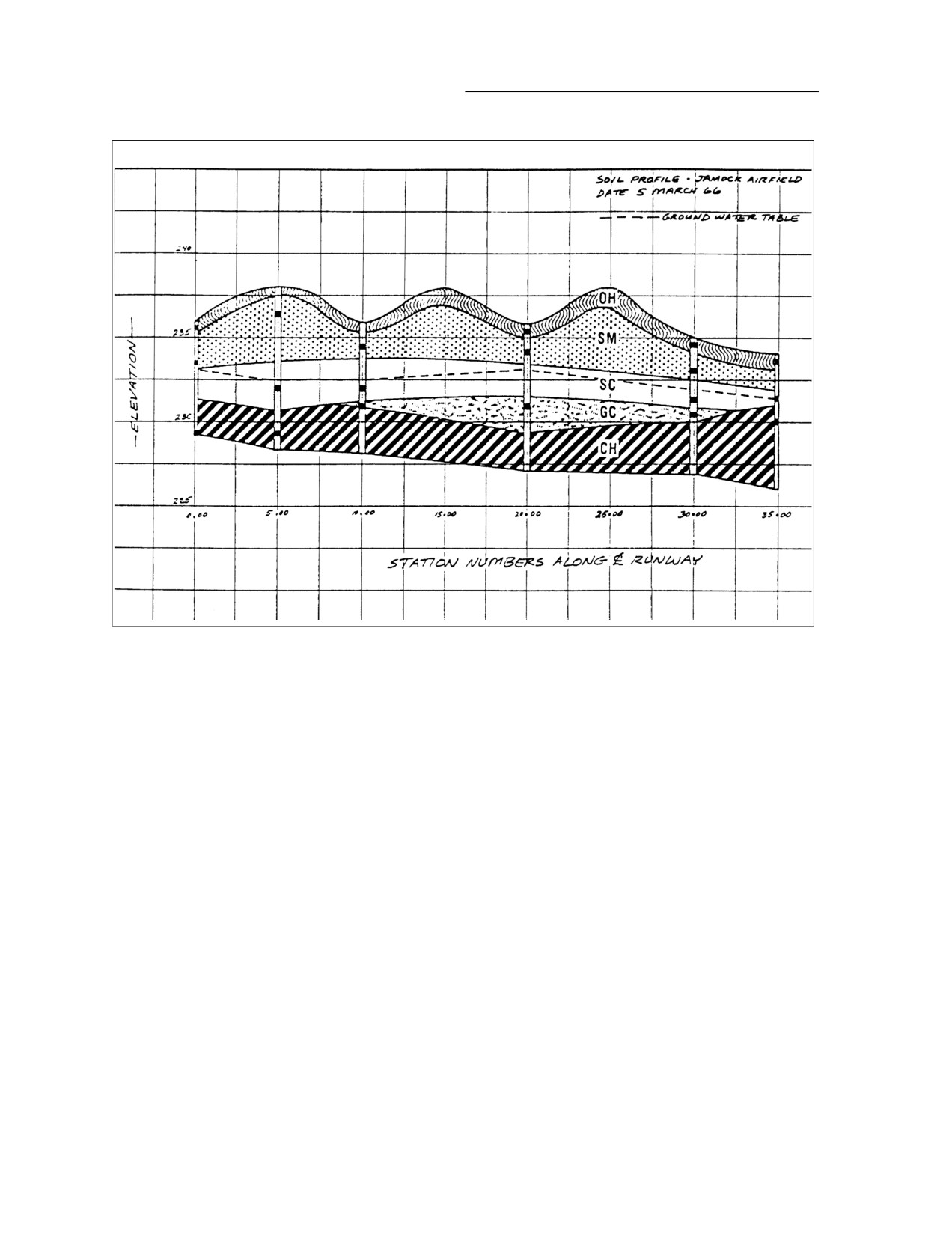
maximum level. The soil profile is a graph of a vertical cross section of the soil
layers from the surface of the earth downward (see Figure 2-30, page 2-52).
PURPOSE
The soil profile has many practical uses in locating, designing, and
constructing roads, airfields, and structures. It has a great influence in the
location of the grade line, which should be placed to take full advantage of the
best soils available at the site. The profile shows whether soils to be excavated
are suitable for use in embankments or if borrow soils are required. It may
show the existence of undesirable conditions, such as peat or organic matter or
bedrock close to the surface, which will require special construction measures.
It aids in planning drainage facilities to take advantage of the presence of
well-draining soils. It may indicate that special drainage installations will be
needed with soils that are difficult to drain, particularly in areas where the
2-50 Soils
FM 5-472/NAVFAC MO 330/AFJMAN 32-1221(I)
a. Piling a small sample
Discard
Discard
b. Flattening a small sample
c. Quartering the sample
Figure 2-29. Mixing a sample weighing less than 25 pounds
water table is high. Considerations for capillary and frost action may be
particularly important when frost-susceptible soils are shown on the profile.
The soil profile, including the legend, will show each soil layer, water table,
and the relative elevation to within ± 1 foot. Locate the holes horizontally to
within one half of the smallest dimension of the scale used. The boreholes will
be sketched in with appropriate soil symbol hatchings for each layer.
EQUIPMENT
Use the following items in a laboratory environment to obtain a soil profile:
• Boring logs.
• Graph paper.
• Pencils.
• A straightedge.
• FM 5-430-00-1.
Soils 2-51
FM 5-472/NAVFAC MO 330/AFJMAN 32-1221(I)
Figure 2-30. Typical soil profile
STEPS
Perform the following steps to obtain a soil profile:
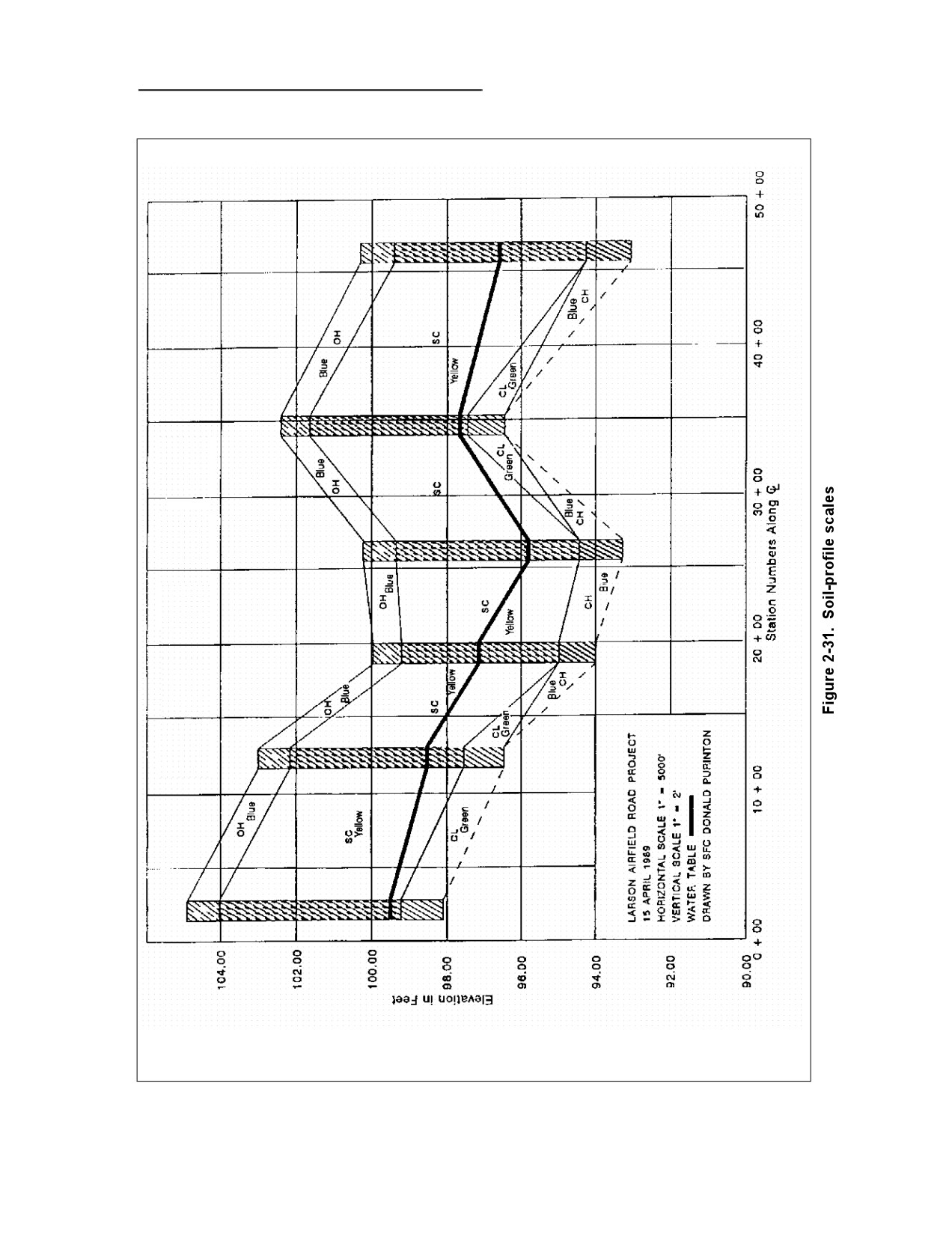
Step 1. Determine the scales to be used (see Figure 2-31).
a. Determine and label (along the left side of the graph paper) the vertical
scale representing the highest and lowest elevations found in the bore
logs.
b. Determine and label
(along the bottom of the graph paper) the
horizontal scale representing the stations that cover the area where
borings have been made.
Step 2. Plot the boreholes and mark the depth for each soil layer of each
borehole.
Step 3. Draw the representing soil hatching symbol for each soil layer. The
symbols taken from bore logs are located in FM 5-430-00-1.
Step 4. Connect the soil layers from borehole to borehole with a solid line.
Connect the bottoms of the boreholes with a dashed line.
Step 5. Label each soil layer with a soil-group symbol in the USCS and a color
(use the symbols from Table B-2, pages B-6 and B-7, or Table B-3, pages B-16
and B-17).
2-52 Soils
FM 5-472/NAVFAC MO 330/AFJMAN 32-1221(I)
Soils 2-53
FM 5-472/NAVFAC MO 330/AFJMAN 32-1221(I)
Step 6. Plot the depth of water at each borehole and connect the points (with a
solid, heavy line) together showing the water-table profile.
Step 7. Place the legend in a corner of the graph paper, including the
following:
a. The horizontal and vertical scales.
b. The line symbol for the water table.
c. The project title and location.
d. The name of the preparer and the date prepared.
SECTION III. MOISTURE-CONTENT DETERMINATION
The soil’s moisture content (also referred to as water content) is an indicator of
the amount of water present in a soil. By definition, moisture content is the
ratio of the weight of water in a sample to the weight of solids (oven-dried) in
the sample, expressed as a percentage (w).
WW
w
= -------- × 100
W
S
where—
w = moisture content of the soil (expressed as a percentage)
Ww = weight of water in the soil sample
Ws = weight of oven-dried-soil solids in the sample
With many soils, close control of moisture content during field compaction by
rolling is necessary to develop a required density and strength in the soil
mass. The amount of compaction effort that must be exerted to obtain a
specified density depends on having the moisture content at or very close to
optimum. Because the specified density is in terms of dry unit weight, the
moisture content must be determined with the wet unit weight to determine
whether moisture must be added or removed from the in-place soil to achieve
the optimum moisture content (OMC). This is a necessary field procedure in
constructing embankments and compacting highway subgrades, since
moisture-content adjustments are known promptly and oven-drying time is
not always afforded.
There are several methods of determining the moisture content of soils,
including the-
• Oven-dry method (ASTM D 2216-90).
• Microwave-oven method (ASTM D 4643-87).
• Calcium-carbide-gas pressure method (American Association of State
Highway and Transportation Officials [AASHTO] T 217-1986).
• Nuclear-moisture-and-density-gauge method (ASTM D 2922-96 and
ASTM D 3017-96).
2-54 Soils
FM 5-472/NAVFAC MO 330/AFJMAN 32-1221(I)
OVEN-DRY METHOD (ASTM D 2216-90)
The most accurate method of determining moisture content is the oven-dry
method. This method uses an oven with a temperature or thermostatic
control. For expedient determinations, soils are sometimes dried in a frying
pan or container heated by an external source, either a stove or an exhaust
manifold. However, heating most soils to excessive temperatures results in
chemical changes that may lead to errors in moisture-content results. Hence,
drying soils by an uncontrolled heat source is usually less accurate than
drying them in a thermostatically controlled oven.
PURPOSE
Perform this test to determine the moisture content of a soil sample to within
a desired percentage.
EQUIPMENT
The following items are necessary for this test method:
• A laboratory oven.
• Heat-resistant gloves.
• A calculator.
• Moisture-determination tares.
• A grease pencil.
• A balance scale sensitive to 0.01 gram.
• DD Form 1205.
• A pencil.
STEPS
Perform the following steps to determine the moisture content:
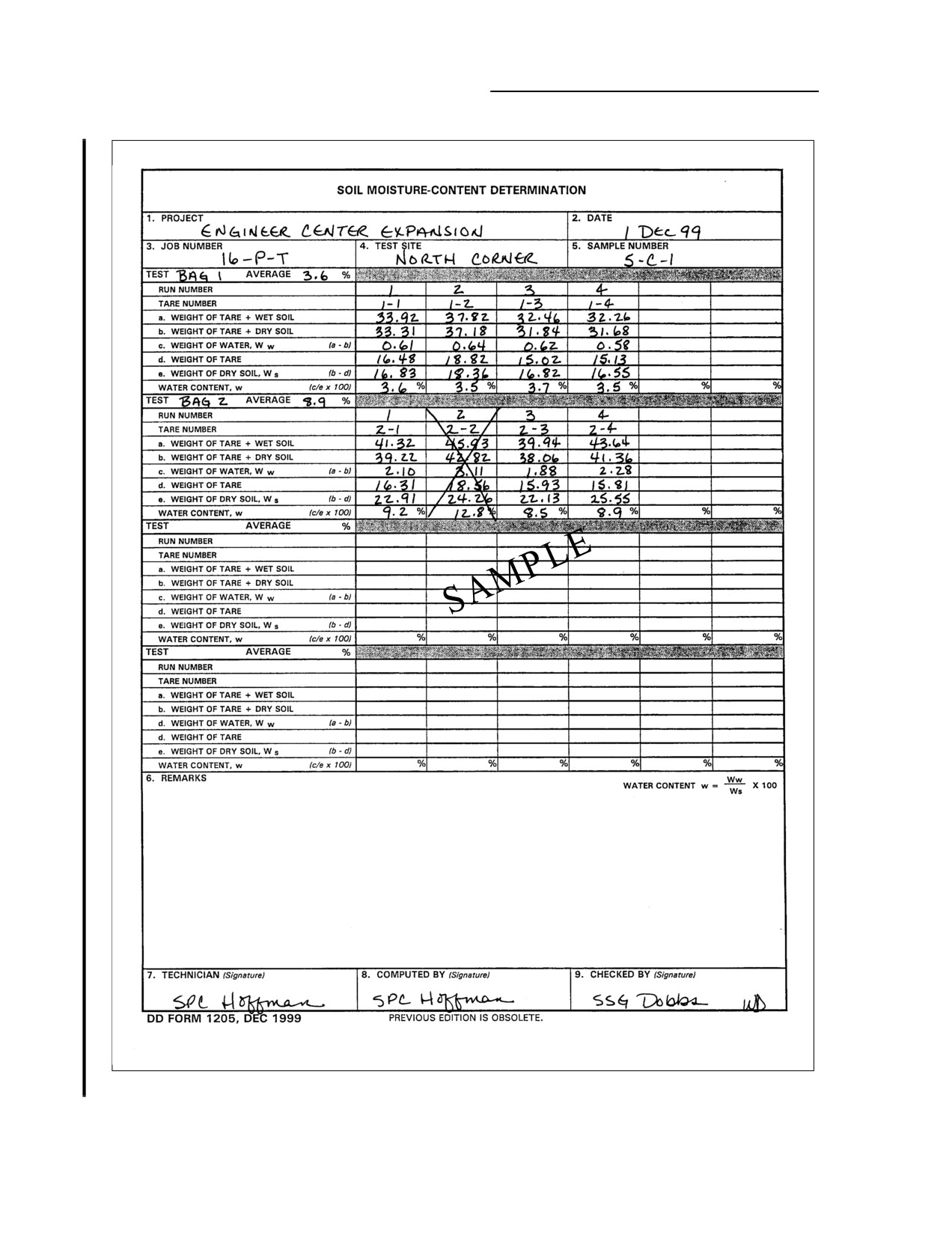
Step 1. Record all identifying information of the sample in blocks 1 through 5
of DD Form 1205 (see Figure 2-32, page 2-56).
Step 2. Label and weigh the clean, dry moisture-determination tares, and
record the weights on the form as the weight of the tare (line D).
Step 3. Obtain the required soil sample. Place it in the tare and cover it with
the lid.
• When conducting this test as part of another test method, use the
specimen mass stated in that test method.
• When conducting this test with no minimum specimen mass provided,
use the values provided in Table 2-5, page 2-57, depending on the
degree of accuracy of the reported water content.
Step 4. Weigh the soil sample and the tare to the nearest 0.01 gram. Record
the weight on the form as the weight of the tare and the wet soil (line A).
Step
5. Oven-dry the sample, with the moisture-determination tare lid
removed, at 110°C ± 5° until the sample weight becomes constant. Oven-drying
Soils 2-55
C2, FM 5-472/NAVFAC MO 330/AFJMAN 32-1221(I)
Figure 2-32. Sample DD Form 1205
2-56 Soils
C2, FM 5-472/NAVFAC MO 330/AFJMAN 32-1221(I)
Table 2-5. Recommended minimum test specimen for reporting water content
Maximum Particle Size
Minimum Moist Mass
Minimum Moist Mass
Standard Sieve Size
(100% Passing)
for Reporting to ± 0.1%
for Reporting to ± 1%
2.0 mm or less
No. 10
20.0 g
20 g*
4.75 mm
No. 4
100.0 g
20 g*
9.50 mm
3/8 in
500.0 g
50 g
19.00 mm
3/4 in
2.5 kg
250 g
37.50 mm
1 1/2 in
10.0 kg
1 kg
75.00 mm
3 in
50.0 kg
5 kg
* To be representative, not less than 20 grams shall be used.
time will vary depending on the type of soil, the size of the sample, and other
factors. For routine water-content determination, oven-dry a sample consisting
of clean sands and gravel for a minimum of 4 hours. For most other soils, a
minimum drying time of 16 hours is adequate.
Step
6. Remove the sample from the oven and replace the moisture-
determination tare lid. Allow the sample to cool until the tare can be handled
comfortably with bare hands.
Step 7. Weigh the dried soil sample and the tare. Record the weight as the
weight of the tare and dry soil (line B).
Step 8. Determine the weight of the water (Ww) by subtracting the weight of
the tare and dry soil (line B) from the weight of the tare and wet soil (line a).
Record the weight on the form (line C).
Step 9. Determine the weight of the dry soil (Ws) by subtracting the weight of
the tare (line D) from the weight of the tare and dry soil (line B). Record the
weight on the form (line E).
Step 10. Determine the water content (w), in percent, and record it using the
following formula:
WW
w
= -------- × 100
W
S
When determining the average water content, the individual tests must be
within ± 1 percent. Any individual tests that do not meet this requirement
will not be used (see Figure 2-32). If none of the individual tests meet this
requirement, then additional testing is required.
CALCIUM-CARBIDE-GAS PRESSURE METHOD (AASHTO T 217-1986)
CAUTION
The chemical reaction of calcium carbide with water produces acetylene gas which is extremely
flammable. Exercise extreme caution to avoid open flame when releasing the gas from the
speedy moisture tester. Perform the test in a well-ventilated area, as asphyxiation could occur if
performed in a confined area.
Soils 2-57
C2, FM 5-472/NAVFAC MO 330/AFJMAN 32-1221(I)
Use the calcium-carbide-gas pressure method to determine the moisture
content of a soil sample using the 26-gram speedy moisture tester to within
± 0.5 percent. If another tester is to be used, consult the user’s manual for
the tester before conducting the moisture-content determination.
PURPOSE
Perform this test to determine the moisture content of a soil sample to within
± 0.5 percent.
EQUIPMENT
Use the following items for the calcium-carbide-gas pressure test:
• A calcium-carbide-pressure (speedy) moisture tester to hold a 26-gram
soil specimen.
• A balance (readable to 0.1 gram).
• Two 1 1/4-inch steel balls.
• A cleaning brush and cloth.
• A scoop (for measuring calcium-carbide reagent).
• Calcium-carbide reagent.
STEPS
Perform the following steps to determine the soil’s moisture content:
Step 1. Weigh the soil sample to be tested, ensuring that it weighs exactly 26
grams. Place the soil sample in the tester’s body and add the two 1 1/4-inch
steel balls.
Step 2. Place three scoops (about 24 grams) of calcium carbide into the cap of
the tester and, with the pressure vessel in a horizontal position, insert the cap
into the pressure vessel. Seal the unit by tightening the clamp, taking care
that no carbide comes in contact with the soil until a complete seal is achieved.
Step 3. Raise the moisture tester to a vertical position so that the reagent in
the cap will fall into the pressure vessel.
Step 4. Shake the instrument vigorously in a rotating motion so that all lumps
are broken up to permit the calcium carbide to react with all available free
moisture. Shake the instrument in a rotating motion so that the steel balls
will not damage the instrument or cause soil particles to become embedded in
the orifice leading to the pressure diaphragm. Continue shaking at least 1
minute for granular soils and up to 3 minutes for other soils to permit
complete reaction between the calcium carbide and the free moisture. Allow
time for the dissipation of the heat generated by the chemical reaction.
Step 5. Hold the instrument in a horizontal position at eye level. Read the dial
when the needle stops moving. Record the dial reading as the percent of
moisture by wet mass.
Step 6. Point the cap of the instrument away from the operator and release the
gas pressure slowly. Empty the pressure vessel and examine the material for
lumps. If the sample is not completely pulverized, repeat the test using a new
2-58 Soils
FM 5-472/NAVFAC MO 330/AFJMAN 32-1221(I)
sample. Clean the cap thoroughly of all carbide and soil before running
another test.
The limit of the tester is 12 percent moisture for aggregate or 20 percent
moisture for soil. If the limit is exceeded, then the test must be run again using
a half-sized sample (13 grams) and the dial reading must be multiplied by 2.
CALCULATIONS
Determine the percentage of moisture by dry mass of the soil from the
calibration curve (see Figure 2-33, page 2-60) or from the conversion chart
(see Figure 2-34, page 2-61) as explained below. The calibration curves,
moisture-content determination by the calcium-carbide-gas pressure
method, are used for materials that need the pulverizing steel balls (see
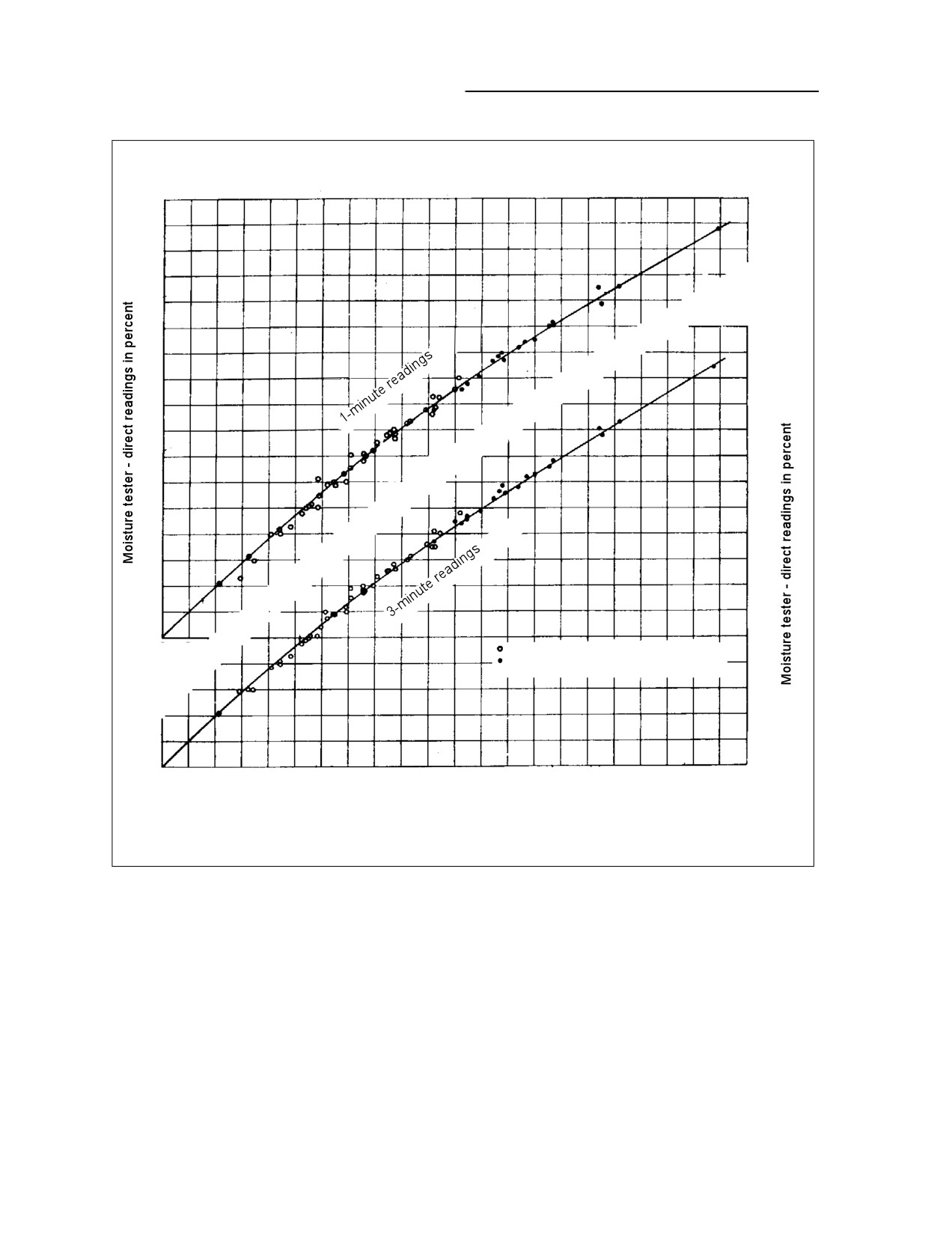
Figure 2-33). Using the highest reading obtained during the test (direct
reading), read over to the curve and then down to the oven-dry moisture
percentage. The curve to be used will depend on the test time.
Use the conversion chart (see Figure 2-34) to determine oven-dry moisture
contents of materials that do not need the steel balls. If direct readings are not
on the conversion chart, interpolate the difference between the two known
direct readings.
EXAMPLE
A speedy test is performed on a sand. The highest reading obtained is 3.5
percent (wet weight). The difference between 3.0 percent (which has a known
dry weight of 3.2 percent) and 4.0 percent (which has a known dry weight of
4.3 percent) must be interpolated for 3.5 percent.
Using Figure 2-34, the values in Table 2-6 are known. To find the value of x,
place the differences in the table values into a ratio. The ratio of differences
is—
3.5
- 3.0
x - 3.2
0.5
x - 3.2
----------------------
= ----------------------
or
--------
= ----------------
4.0
- 3.0
4.3
- 3.2
1.0
1.1
then—
cross multiplied, x - 3.2 = 0.55;
therefore, leaving x = 3.2 + 0.55 = 3.75.
So, at 3.5 percent wet weight, x = 3.2 + 0.55 = 3.75 percent comparable oven-
dry weight.
Table 2-6. Determining the soil’s moisture content
Percent Wet Weight
Percent Dry Weight
3.0
3.2
3.5
x
4.0
4.3
Soils 2-59
FM 5-472/NAVFAC MO 330/AFJMAN 32-1221(I)
34
32
30
28
26
24
34
22
32
20
30
18
28
16
26
14
24
12
22
10
20
8
18
6
16
4
14
2
12
0
10
0
2
26-gm moisture tester sample
13-gm moisture tester sample
8
6
4
2
0
0
2
4
6
8
10
12
14
16
18
20
22
24
26
28
30
32
34
36
38
40
42
44
Figure 2-33. Speedy-moisture tester calibration chart, for use with
the 1 1/4-inch steel balls
The curves and charts are usually supplied with the moisture tester.
However, check each moisture tester for the accuracy of its gauge and the
accuracy of the conversion curve. Check the accuracy of the tester gauge by
using a calibration kit (obtained from the tester’s manufacturer) equipped
with a standard gauge. In case of discrepancy, adjust the gauge on the tester
to conform with the standard gauge. For checking the accuracy of the
conversion curve, make a calibration for meter readings versus oven-dry
moisture contents using local soils. Also, additional testing may be necessary
2-60 Soils

FM 5-472/NAVFAC MO 330/AFJMAN 32-1221(I)
Speedy
Speedy
Speedy
Reading
Reading
Reading
Wet
Dry
Wet
Dry
Wet
Dry
Weight %
Weight %
Weight %
Weight %
Weight %
Weight %
1.0
1.0
20.5
25.8
35.5
55.0
2.0
2.1
21.0
26.5
36.0
56.2
3.0
3.2
21.5
27.4
36.5
57.4
4.0
4.3
22.0
28.2
37.0
58.7
5.0
5.4
22.5
29.0
37.5
60.0
6.0
6.5
23.0
29.8
38.0
61.2
7.0
7.6
23.5
30.7
38.5
62.6
8.0
8.7
24.0
31.5
39.0
63.9
9.0
9.8
24.5
32.4
39.5
65.2
10.0
11.0
25.0
33.3
40.0
66.6
10.5
11.7
25.5
34.2
40.5
68.0
11.0
12.3
26.0
35.3
41.0
69.4
11.5
13.0
26.5
36.0
41.5
70.9
12.0
13.6
27.0
36.9
42.0
72.4
12.5
14.2
27.5
37.9
42.5
73.8
13.0
14.9
28.0
38.8
43.0
75.4
13.5
15.6
28.5
39.8
43.5
76.9
14.0
16.3
29.0
40.8
44.0
78.5
14.5
16.9
29.5
41.8
44.5
80.1
15.0
17.6
30.0
42.8
45.0
81.8
15.5
18.3
30.5
43.9
45.5
83.4
16.0
19.0
31.0
44.9
46.0
85.1
16.5
19.7
31.5
45.9
46.5
86.9
17.0
20.4
32.0
47.0
47.0
88.6
17.5
21.2
32.5
48.1
47.5
90.6
18.0
21.9
33.0
49.2
48.0
92.3
18.5
22.7
33.5
50.3
48.5
94.1
19.0
23.4
34.0
51.5
49.0
96.0
19.5
24.2
34.5
52.6
49.5
98.0
20.0
25.0
35.0
53.8
50.0
100.0
Figure 2-34.
Speedy-moisture tester conversion chart, for use when not using the
1 1/4-inch steel balls
to extend the conversion curve beyond 44 percent moisture content
(see
Figure 2-33).
It may be more convenient for field use of the equipment to prepare a table of
moisture-tester readings versus oven-dry moisture content.
Soils 2-61
FM 5-472/NAVFAC MO 330/AFJMAN 32-1221(I)
SECTION IV. SPECIFIC-GRAVITY-OF-SOLIDS DETERMINATION
(ASTM D
854-92)
The specific gravity of a solid substance is the ratio of the weight of a given
volume of material to the weight of an equal volume of water (at 20°C). In
effect, it tells how much heavier (or lighter) the material is than water. For
exact analysis, the specifications require distilled or demineralized water and
all measurements of water and solids should be made at stated temperatures.
In dealing with soils testing, the value of specific gravity is necessary to
compute the soil’s void ratio and for determining the grain-size distribution in
hydrometer analysis.
SPECIFIC GRAVITY OF SOIL OR SOLIDS
The term specific gravity of soil actually refers to the specific gravity of the
solid matter of the soil, which is designated Gs. The specific gravity of solids is
normally only applied to that fraction of a soil that passes the No. 4 sieve.
Generally, geotechnical engineers need the soil’s specific gravity to perform
additional testing of that soil. In these cases there may be a different soil
fraction used when performing this test. For example, the resulting specific-
gravity value of soil from this test using a -10 sample is applicable to
hydrometer analysis while the determination of the zero-air-voids curve in
laboratory soils-compaction testing uses the specific gravity from the
-4
sample.
A soil’s specific gravity largely depends on the density of the minerals making
up the individual soil particles. However, as a general guide, some typical
values for specific soil types are as follows:
• The specific gravity of the solid substance of most inorganic soils
varies between 2.60 and 2.80.
• Tropical iron-rich laterite, as well as some lateritic soils, usually have
a specific gravity of between 2.75 and 3.0 but could be higher.
• Sand particles composed of quartz have a specific gravity ranging from
2.65 to 2.67.
• Inorganic clays generally range from 2.70 to 2.80.
• Soils with large amounts of organic matter or porous particles (such as
diatomaceous earth) have specific gravities below 2.60. Some range as
low as 2.00.
SPECIFIC-GRAVITY TEST
Take particular care to obtain representative samples for a specific-gravity
test. It is easier to begin the test with an oven-dried sample. However, some
soils, particularly those with a high organic content, are difficult to rewet.
Test these at their natural water content and determine the oven-dried weight
at the end of the test.
2-62 Soils
FM 5-472/NAVFAC MO 330/AFJMAN 32-1221(I)
PURPOSE
Perform this test to determine the specific gravity of solids (which will be used
to assist in the hydrometer-analysis test) and to calculate the zero-air-voids
curve for compaction results.
EQUIPMENT
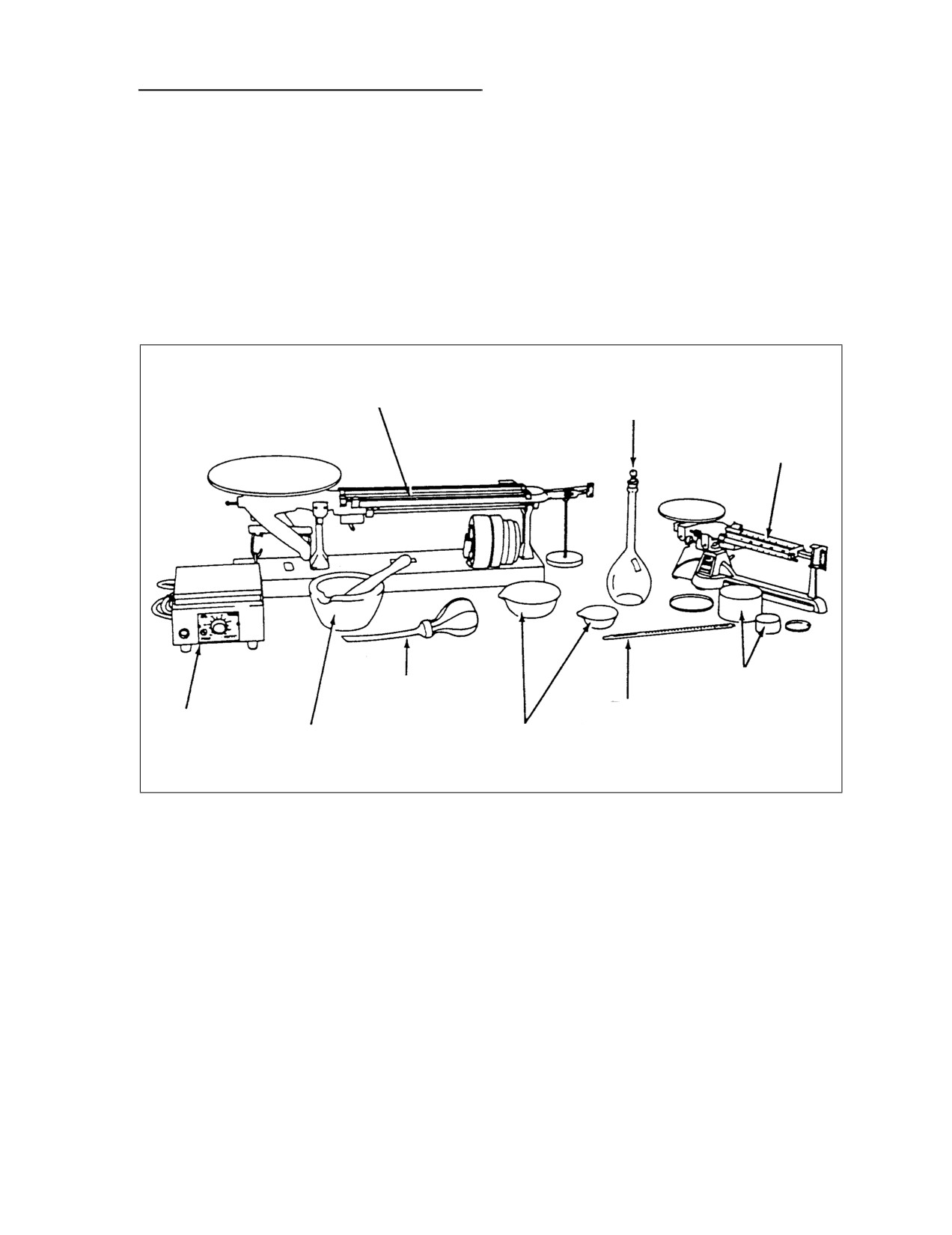
Perform the specific-gravity test in a laboratory environment, using the
following items (see Figure 2-35):
Scale, bench, 21,100 g
Flask, volumetric 500 ml
Scale, bench, 2,610 g
Boxes, moisture, w/covers
Filler, battery
Thermometer
Hot plate
Mortar and pestle
Dishes, evaporating
Figure 2-35. Apparatus for determining specific gravity of soils
• A pycnometer; volumetric flask (500-milliliter capacity).
• A laboratory oven.
• Heat-resistant gloves.
• Balance scales sensitive to 0.01 gram.
• Pudding pans.
• A waterbath.
• A thermometer.
• A battery-filler syringe.
• ANo.4sieve(forgeneralspecific-gravityresults).
Soils 2-63
FM 5-472/NAVFAC MO 330/AFJMAN 32-1221(I)
• A No. 10 sieve (when results are used for hydrometer analysis).
• Graph paper.
• A pencil.
• A french curve.
• Cloth towels.
• Paper towels.
• A hot plate.
• DD Form 1208.
• A spatula.
• An evaporating dish.
• Distilled water.
• A calculator.
• A pail.
STEPS
Perform the following steps to determine the soil’s specific gravity:
Step 1. Calibrate the pycnometer (volumetric flask). If a calibration graph
has already been prepared for this pycnometer and will be used for the
determination procedures, go to step 2.
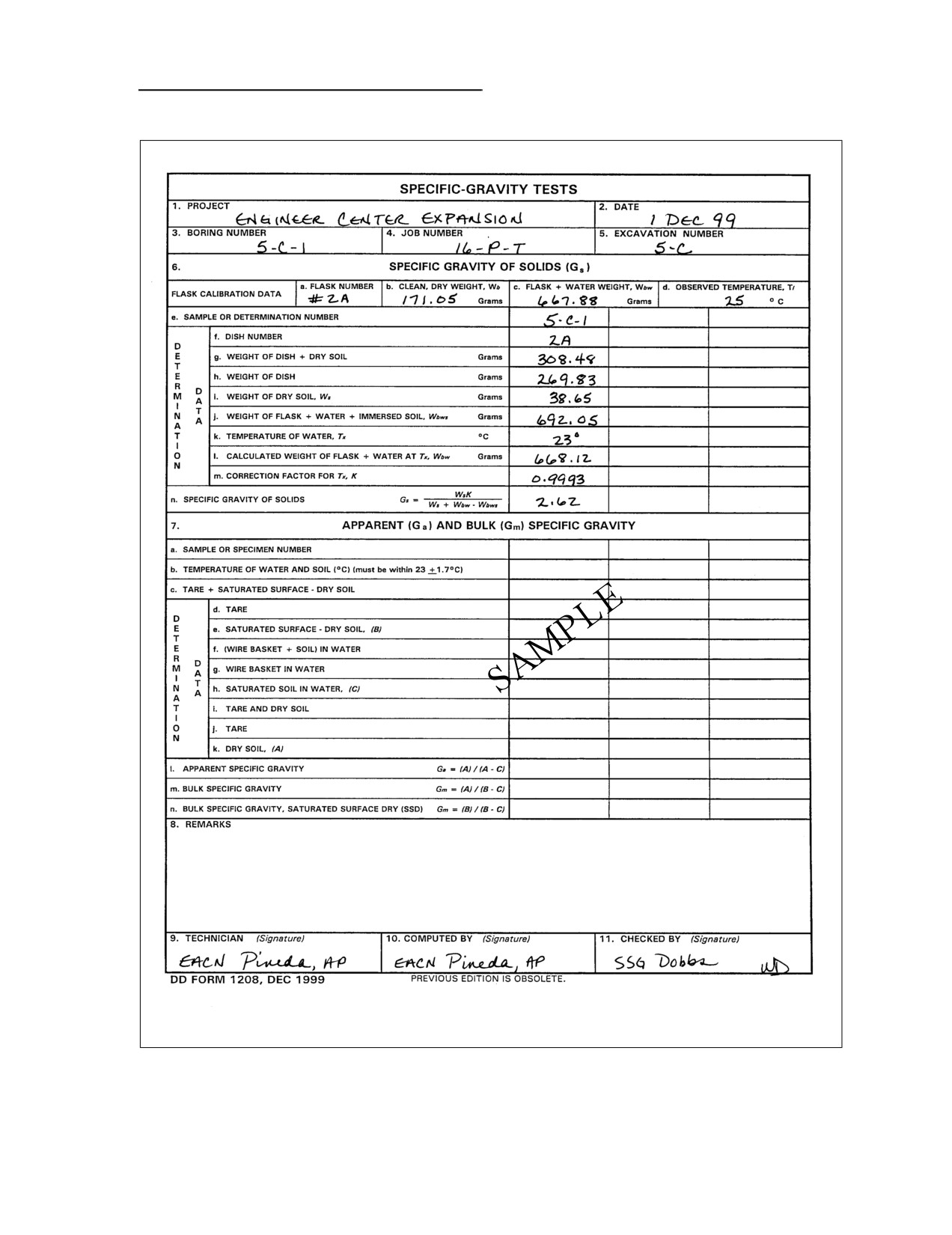
a. Weigh a clean, dry pycnometer to the nearest 0.01 gram. Record this
information, Wb, on DD Form 1208 (see Figure 2-36). Additionally, record
the basic information concerning the specimens being tested and the
pycnometer/flask number.
b. Fill the pycnometer with room-temperature distilled water. Ensure
that the bottom of the meniscus is even with the calibration mark.
c. Weigh the pycnometer plus water. Record this information, Wbw, on the
form.
d. Use the thermometer to determine the water temperature to the
nearest whole degree, Ti. Record the temperature on the form.
e. Create a graph or table for the pycnometer being used (if additional
specific-gravity determinations are to be made).
NOTE: This graph helps in determining values of Wbw for any desired
water temperatures and eliminates the need to calibrate the
pycnometer for each test. The graph can be developed by using the
following equation for various temperatures, plotting the
temperatures against the weight of the pycnometer and water, and
drawing a smooth curve through the plotted points:
2-64 Soils
FM 5-472/NAVFAC MO 330/AFJMAN 32-1221(I)
Figure 2-36. Sample DD Form 1208
Soils 2-65
C1, FM 5-472/NAVFAC MO 330/AFJMAN 32-1221(I)
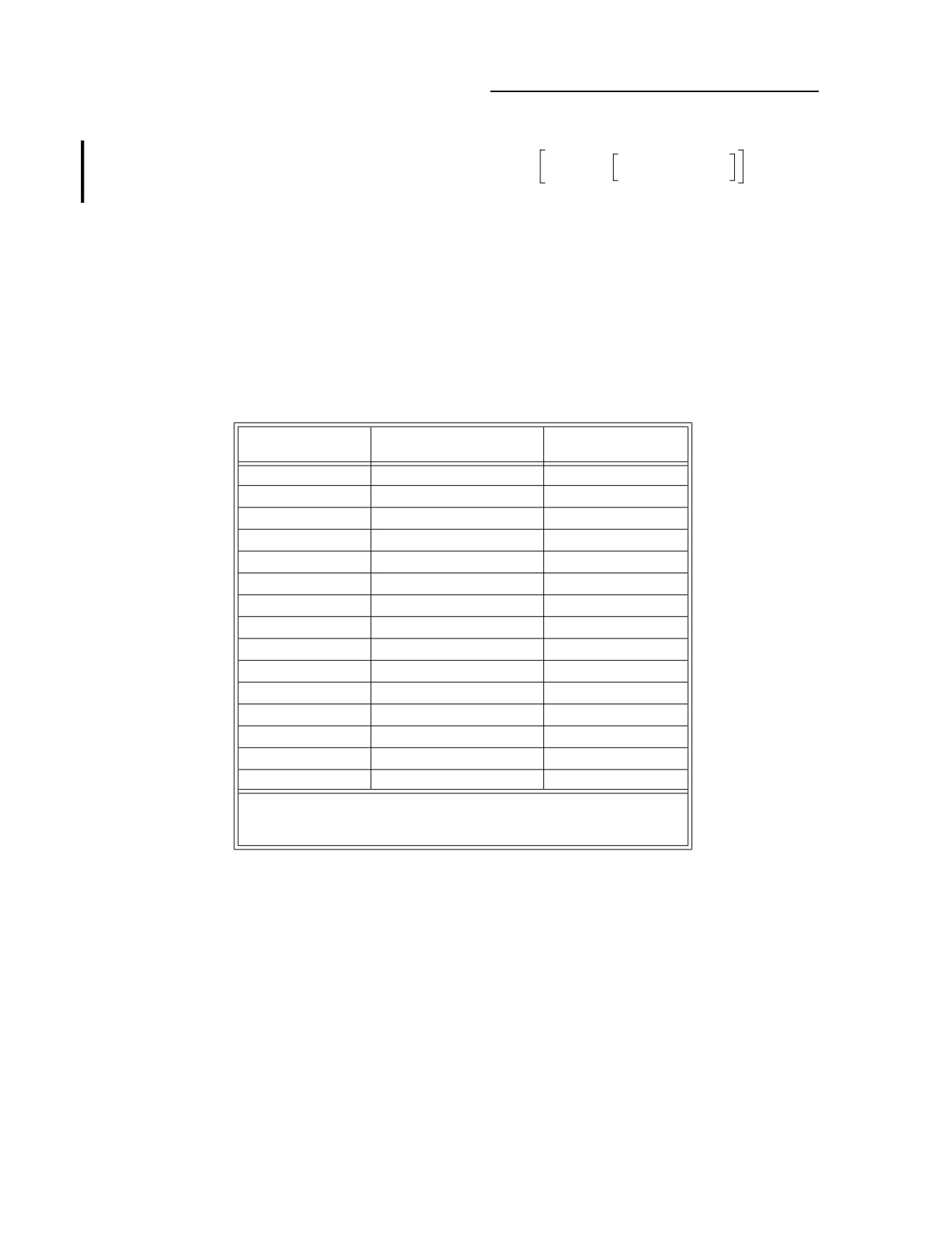
ρw(Tx)
Wbw (for specified temperature,Tx )
=
-----------------
×
(
Wbw at Ti
)– Wb
+
Wb
ρ
w(Ti)
where—
ρw (Tx)= density of water identified by temperature (Tx) (see Table 2-7)
ρw (Ti) = density of water identified by temperature (Ti) (see Table 2-7)
Wbw
= weight of pycnometer and water, in grams
Wb
= weight of pycnometer, in grams
= observed/recorded temperature of water, in °C
Ti
Tx
= any other desired temperature, in °C
Table 2-7.
Relative density of water and correction factor (K) at various temperatures
Temp
Relative
Correction Factor
°C
Density
(K)
18.0
0.99862
1.0004
19.0
0.99843
1.0002
20.0
0.99823
1.0000
21.0
0.99802
0.9998
22.0
0.99780
0.9996
23.0
0.99757
0.9993
24.0
0.99733
0.9991
25.0
0.99708
0.9988
26.0
0.99682
0.9986
27.0
0.99655
0.9983
28.0
0.99627
0.9980
29.0
0.99598
0.9977
30.0
0.99568
0.9974
31.0
0.99537
0.9971
32.0
0.99505
0.9968
NOTE: Data obtained from ASTM. Correction factor, K, is found
by dividing the relative density of water at the test temperature by
the relative density of water at 20°C.
A completed graph using the above formula for the following data
can be seen in Figure 2-37.
Calibration data:
Wbw = 656.43
Wb
= 158.68
= 24°C
Ti
2-66 Soils