FM 3-04.240 Instrument Flight for Army Aviators (April 2007) - page 2
Chapter 2
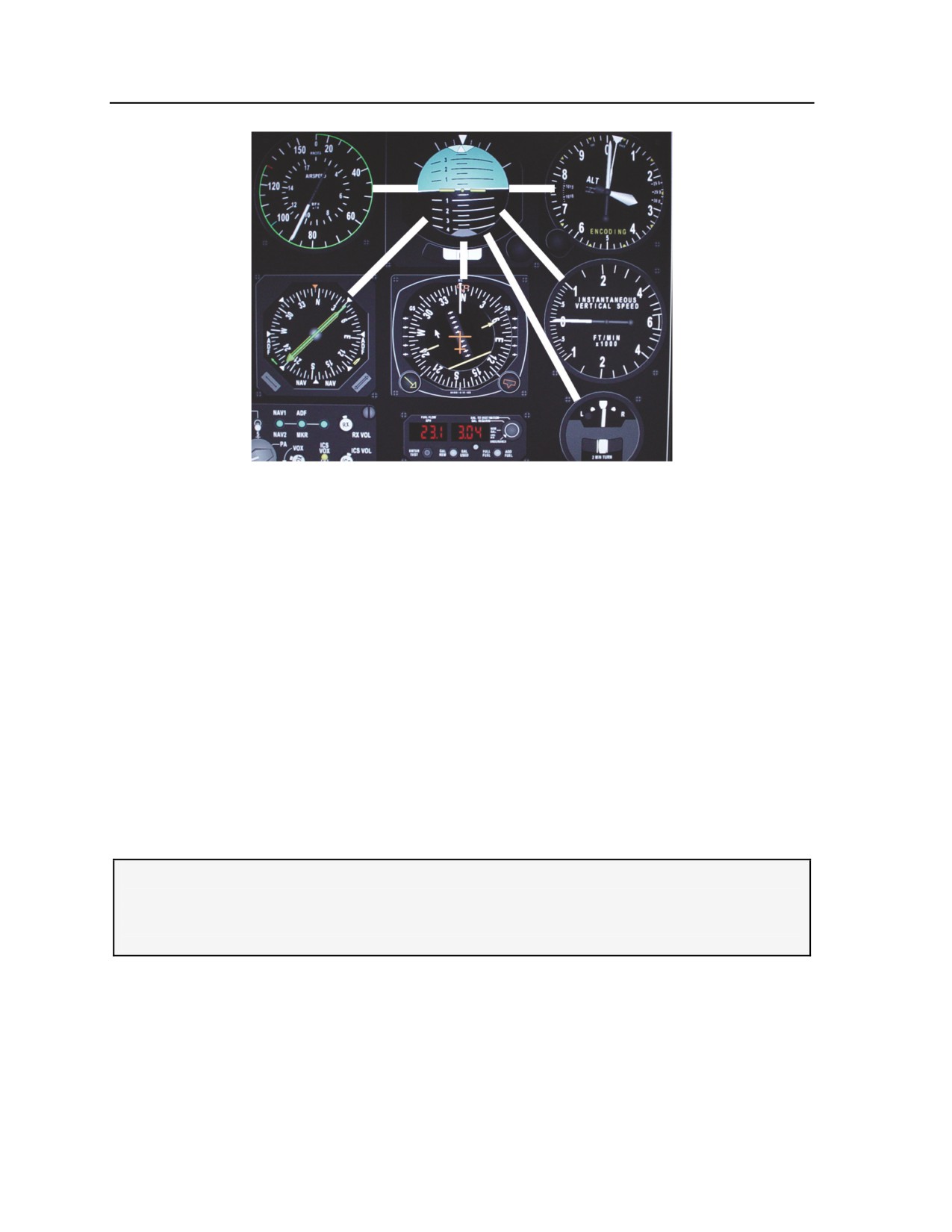
Figure 2-6. Cross-check pattern
COMMON ERRORS
2-14. New aviators will typically perform cross-checks by rapidly looking at each instrument without
knowing exactly what to look for. With increasing experience and familiarity in basic instrument
maneuvers and the indications associated with them, aviators learn what to look for, when to look, and
what response to make. As proficiency increases, cross-checking occurs primarily from habit, with the
aviator suiting scanning rate and sequence to the flight situation demands. If an aviator fails to maintain
basic instrument proficiency through practice, many of the following common scanning errors are
expected. An aid to remembering cross-check errors is the acronym FOE: fixation, omission, and
emphasis.
Fixation
2-15. Fixation, staring at a single instrument, usually occurs for a good reason but has poor results. For
instance, an aviator staring at an altimeter reading 200 feet below the assigned altitude may wonder how
the needle came to rest there. While the aviator is gazing at the instrument, perhaps with increasing tension
on the controls, a heading change occurs unnoticed and more errors accumulate. The following example
describes how fixation can occur.
Example of Fixation
An aviator may establish a shallow bank for a 90º turn and stare at the heading indicator throughout the turn
instead of maintaining a cross-check of other pertinent instruments. Although the aircraft is turning and the
aviator does not need to recheck the heading indicator for about 25 seconds after turn entry, his eyes are
fixated on the instrument.
2-16. This problem may not be entirely due to cross-check error but may relate to difficulties with the
uncertainty of reading the heading indicator
(interpretation) or inconsistency in rolling out of turns
(control).
2-6
FM 3-04.240
30 April 2007
Rotary Wing Instrument Flight Maneuvers
Omission
2-17. Omission of an instrument from a cross-check is caused by failure to anticipate significant
instrument indications following attitude changes. The following example illustrates how this situation
could occur.
Example of Omission
During a roll-out from a 180º steep turn, the aviator may establish straight-and-level flight with reference to the
attitude indicator alone, neglecting to check the heading indicator for constant heading information.
2-18. Because of precession error, the attitude indicator temporarily shows a slight error, correctable by
quick reference to the other flight instruments.
Emphasis
2-19. Emphasis on a single instrument, instead of all instruments necessary for attitude information, is an
understandable fault during initial stages of training. An individual naturally tends to rely on the instrument
most readily understood, even when that instrument provides erroneous or inadequate information.
Reliance on a single instrument is poor technique. An aviator can maintain reasonably close altitude
control with the attitude indicator but cannot hold altitude with precision without including the altimeter in
the cross-check.
INSTRUMENT INTERPRETATION
2-20. Instrument interpretation requires aviators to learn and understand the purpose and use of all flight
instruments. They must also understand the performance capabilities of the aircraft. The aviator’s
knowledge and the use of a cross-check enable him to perform maneuvers and apply techniques applicable
to that aircraft across different flight conditions.
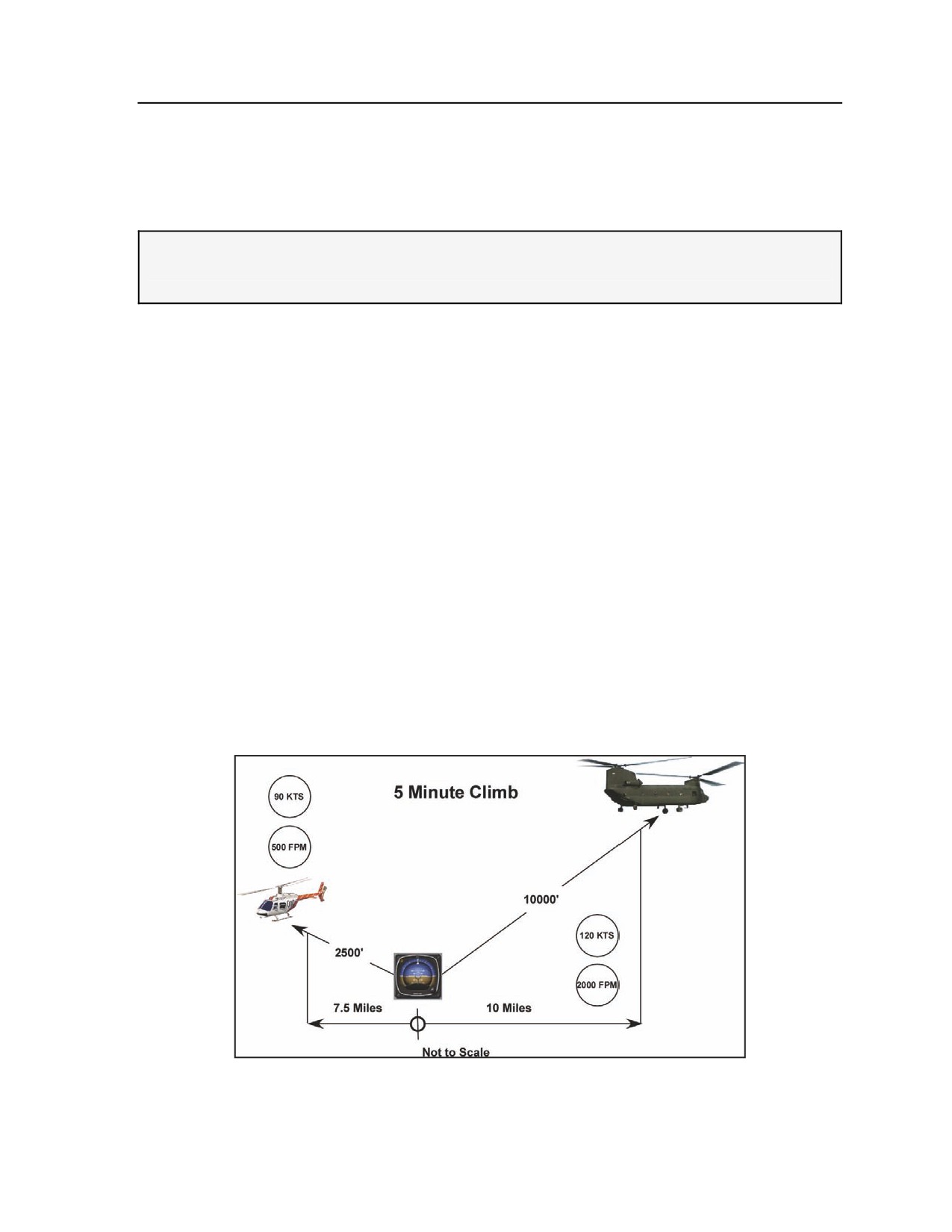
2-21. Figure 2-7 illustrates the difference between two different aircraft, both performing a five-minute
climb, with the same attitude indicator setting and the same power setting. The TH-67 is climbing at 500
FPM, as shown on the VSI, and 90 knots, while the CH-47 is climbing at 2,000 FPM and 120 knots. The
CH-47 is able to climb higher and faster and fly further in five minutes because it has better performance
than the TH-67.
Figure 2-7. Instrument interpretation comparison
30 April 2007
FM 3-04.240
2-7
Chapter 2
2-22. Aircraft attitude is the key to instrument interpretation as aviators learn the performance capabilities
of the aircraft. When the aviator determines pitch attitude, the airspeed indicator, altimeter, VSI, and
attitude indicator provide necessary information. When the aviator determines bank attitude, the heading
indicator, turn-and-slip indicator, and attitude indicator are interpreted. For each maneuver, learn the
performance expectations and the combination of instruments to be interpreted to control aircraft attitude.
AIRCRAFT CONTROL
2-23. Helicopter control is the result of accurately interpreting and translating flight instrument readings
into correct control responses. Aircraft control involves adjustments to pitch, bank, power, and trim to
achieve a desired flight path.
PITCH
2-24. Pitch attitude control is controlling movement of the helicopter about its lateral axis. After
interpreting pitch attitude by reference to the pitch instruments (attitude indicator, altimeter, airspeed
indicator, and vertical speed indicator), cyclic control adjustments are made to affect the desired pitch
attitude.
BANK
2-25. Bank attitude control is controlling the angle made by the lateral tilt of the rotor and natural horizon,
or movement of the helicopter about its longitudinal axis. Cyclic control adjustments are made to attain the
desired attitude based on proper interpretation of bank instruments (attitude indicator, heading indicator,
and turn indicator). Use a bank angle that approximates the degree to turn up to a standard rate turn (try not
to exceed 30 degrees).
POWER
2-26. Power control is the application of collective pitch. In straight-and-level flight, changes of collective
pitch are made to correct for altitude deviations if the error is more than 100 feet or the airspeed deviates
by more than 10 knots. If the error is less than that amount, use a slight cyclic climb or descent. To fly a
helicopter by instrument reference, knowledge of the approximate power settings is required for that
particular helicopter in various load configurations and flight conditions.
TRIM
2-27. Trim refers to the use of the cyclic centering button, if the helicopter is so equipped, to relieve
possible cyclic pressures. Trim also refers to the use of pedal adjustment to center the ball of the turn
indicator. Pedal trim is required during all power changes.
FRICTION
2-28. Proper adjustment of collective pitch and cyclic friction assists an aviator in relaxing during
instrument flight. Friction is adjusted to minimize overcontrolling and to prevent creeping but not applied
to such a degree that control movement is limited. Many helicopters equipped for instrument flight contain
stability augmentation systems or an autopilot to help relieve aviator workload.
SECTION III - INSTRUMENT TAKEOFF
2-29. Instrument takeoff
(ITO) is accomplished by referring to outside visual references and flight
instruments. The amount of attention given to each reference varies with the individual, aircraft type, and
existing weather conditions. ITO is a composite visual and instrument takeoff when conditions permit and
is not be confused with a hooded takeoff. ITO procedures and techniques are invaluable aids during
takeoffs at night, toward and over water or desert areas and during reduced visibility. Immediate transition
2-8
FM 3-04.240
30 April 2007
Rotary Wing Instrument Flight Maneuvers
to instrument references is necessary any time that disorientation occurs or when outside visual references
become unreliable. Procedures and techniques described here are modified, as necessary, to conform to the
appropriate aircrew training manual (ATM).
PREPARING
2-30. Before performing an ITO, an aviator performs a before-takeoff check of flight and navigation
instruments as well as flight publications. Select appropriate navigational aids (NAVAIDs) to be used for
the departure, and set navigation instruments and switches as required; ATC clearance and departure
procedures (DPs) must be thoroughly understood. Review of an emergency return approach should include
frequencies; final approach course; DA/DH or MDA and minimum safe, sector, or emergency safe
altitudes; and specific duties briefed to all crew members.
2-31. Adjust the attitude indicator, as appropriate. After aligning the helicopter with the runway or takeoff
pad, prevent forward movement by setting the parking brake, if the aircraft is equipped with a wheel-type
landing gear. Apply sufficient friction to the collective pitch control to minimize overcontrolling and
prevent creeping. Avoid excessive friction because it limits collective pitch movement.
PERFORMING FROM HOVER/GROUND
2-32. An ITO may be accomplished from a hover or the ground as visibility restrictions permit. A
composite takeoff is accomplished using normal visual meteorological conditions (VMC) procedures while
combining reference to flight instruments with outside visual references, providing the aviator with a
smooth transition to instrument meteorological conditions
(IMC) flight. ITOs may be accomplished
entirely on instruments because of visibility restrictions induced by rotor downwash on dust, sand, or
snow. Helicopters often operate from unprepared or remote locations in the presence of loose dirt or snow;
this debris within the downwash can affect pitot-static instrumentation. Aircrew manuals warn that
airspeed indications should be considered unreliable when forward airspeed is less than 25 to 40 knots
depending upon aircraft size and weight. In addition, altimeters and VSIs actually indicate a loss of altitude
as power is applied for takeoff.
TAKEOFF
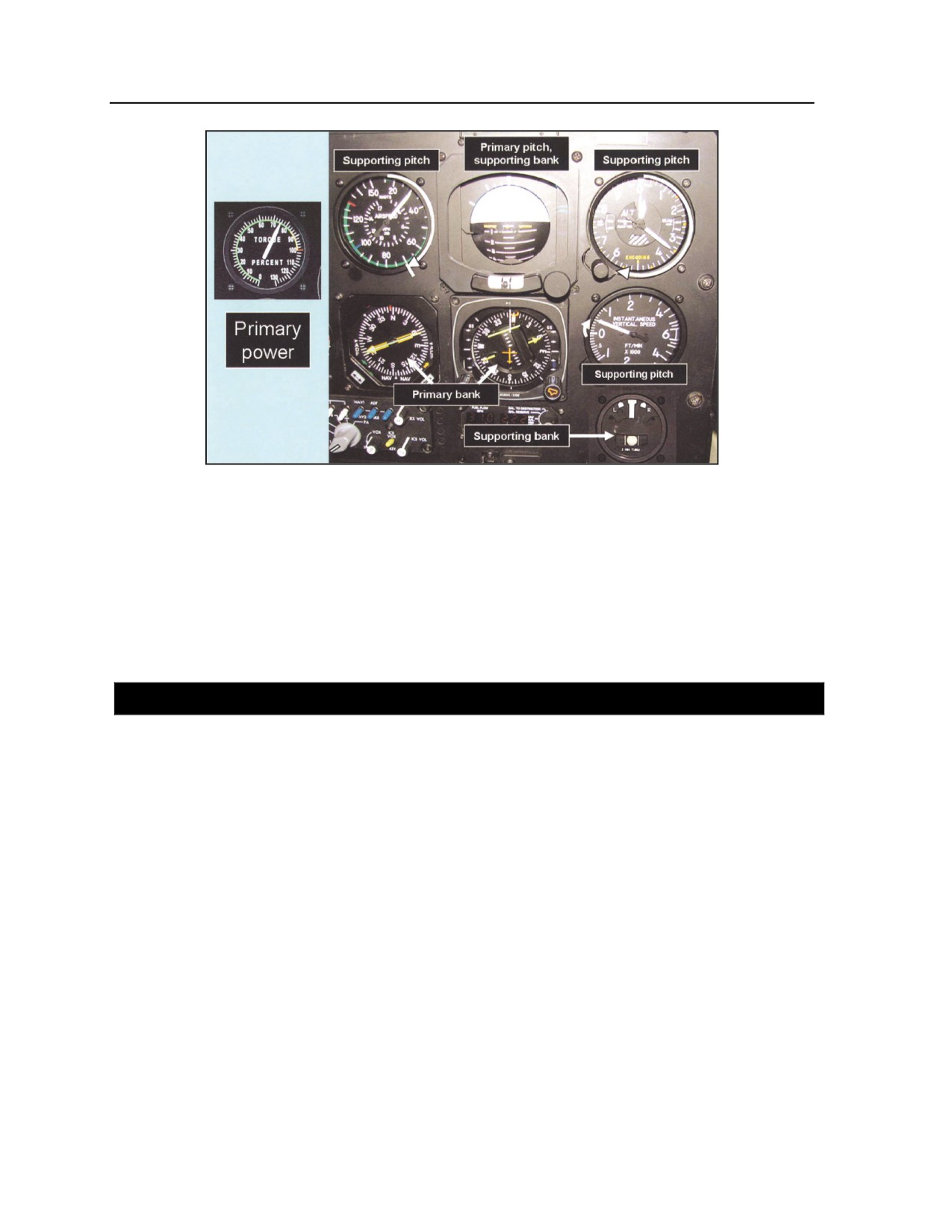
2-33. After rechecking instruments for proper operation, commence takeoff (Figure 2-8, page 2-10) by
applying collective pitch of a predetermined power setting. Add power smoothly and steadily to gain
airspeed and altitude simultaneously and prevent settling to the ground. Helicopters with wheel-type
landing gear may elect to make running takeoffs if operating from smooth surfaces. As power is applied
and the helicopter becomes airborne, maintain desired heading with the pedals and use cyclic to maintain
desired ITO pitch attitude. When obtaining a positive climb indication, adjust the pitch attitude as specified
in the ATM. When takeoff attitude is established, cross-check the VSI and altimeter to ensure that the
helicopter is still climbing. While the aircraft is below airspeeds required for accurate altitude or VSI
readings, predetermined power settings and pitch attitudes provide the most reliable source of climb
information. A cross-check is started at the time that the aircraft leaves the ground and should include all
available instruments to provide a smooth transition to coordinated flight.
30 April 2007
FM 3-04.240
2-9
Chapter 2
Figure 2-8. Instrument takeoff indications
COMMON ERRORS
2-34. Common errors during ITOs include the following:
Failure to maintain heading.
Overcontrolling pedals.
Failure to use required power.
Failure to adjust pitch attitude as climbing airspeed is reached.
SECTION IV - STRAIGHT-AND-LEVEL FLIGHT
2-35. Straight-and-level flight consists of maintaining the desired altitude, heading, airspeed, and pedal
trim. Use pitch attitude to maintain or adjust airspeed, bank control to maintain or adjust heading, and
power control to maintain or adjust altitude.
PITCH ATTITUDE CONTROL
2-36. Pitch attitude is the angular relation of the helicopter’s longitudinal axis and natural horizon. If
available, the attitude indicator establishes desired pitch attitude. In level flight, pitch attitude varies with
airspeed and center of gravity. At a constant altitude and stabilized airspeed, pitch attitude is approximately
level (Figure 2-4, page 2-4).
ATTITUDE INDICATOR
2-37. The attitude indicator provides a direct indication of the helicopter’s pitch attitude. In visual flight,
the cyclic is used to raise and lower the nose of the helicopter in relation to the natural horizon to attain
desired pitch attitude. During instrument flight, follow the same procedure in raising or lowering the
miniature aircraft in relation to the horizon bar.
2-38. The attitude indicator may show small misrepresentations of pitch attitude during maneuvers
involving acceleration, deceleration, or turns. These misrepresentations are caused by delays following
flight control inputs, known as control lag, and delays in instrument readings, known as instrument lag.
Precession errors can be detected quickly by cross-checking other pitch instruments.
2-10
FM 3-04.240
30 April 2007
Rotary Wing Instrument Flight Maneuvers
2-39. The miniature aircraft, properly adjusted on the attitude indicator while on the ground, does not
generally require readjustment in flight. If the miniature aircraft is not located on the horizon bar after
leveling off at cruising airspeed, adjust the miniature aircraft while maintaining level flight with other pitch
instruments. Once the miniature aircraft is properly adjusted, the aviator is now provided with an accurate
pitch attitude. When making initial pitch attitude corrections to maintain altitude, changes are small and
smoothly applied. The initial movement of the horizon bar should not exceed one bar width high or low. If
further change is required, an additional correction of one-half bar normally corrects any deviation from
desired altitude. This one-and-one-half bar correction is normally the maximum pitch attitude correction
from level flight attitude. Cross-check other pitch-related instruments to determine whether a correction to
the pitch attitude is sufficient. If more correction is required or if the airspeed varies more than 10 knots
from that desired, the pilot must make the appropriate power setting.
ALTIMETER
2-40. The altimeter indirectly indicates pitch attitude in straight-and-level flight. Because the altitude
should remain constant, deviation from the desired altitude shows a need for a change in pitch attitude and,
if necessary, power. When losing altitude, raise the pitch attitude and, if necessary, add power; conversely,
when gaining altitude, lower the pitch attitude and, if necessary, reduce power.
2-41. The rate at which the altimeter moves helps in determining pitch attitude. A very slow movement
indicates a small deviation from the desired pitch attitude, while fast movement indicates a large deviation.
Make corrective action promptly with small control changes. Movement of the altimeter is always
corrected by two distinct changes: a change of attitude to stop the altimeter and then a change of attitude to
return smoothly to the desired altitude. If the altitude and airspeed are 100 feet and 10 knots below that
desired, respectively, apply power along with an increase of pitch attitude. If the altitude and airspeed are
100 feet and 10 knots above that desired, reduce power and lower the pitch attitude. A small lag in the
movement of the altimeter is customary; however, for practical purposes, consider the altimeter as
providing an immediate indication of a change or a need for change in pitch attitude.
VERTICAL SPEED INDICATOR
2-42. The initial movement of the vertical speed needle is nearly instantaneous and indicates vertical
movement of the helicopter. Use the VSI with the altimeter to maintain level flight. If a movement on the
VSI is detected, use corrective measures to return to a zero indication. If corrections are made promptly,
there is usually little or no change in altitude. If the pilot does not zero the needle of the VSI immediately,
results on the altimeter reflect as a gain or loss of altitude. Reduce overcontrolling by neutralizing the
controls to allow the pitch attitude to stabilize; readjust the pitch attitude by noting indications of other
pitch instruments such as the attitude indicator.
2-43. Occasionally, the VSI may be slightly out of calibration, erroneously indicating a slight climb or
descent when the helicopter is actually in level flight. The aviator should compensate for this error when
the VSI for pitch control has not been properly adjusted by maintenance personnel such as in the following
example: if the VSI shows a descent of 100 FPM when the helicopter is in level flight, use that indication
as level flight; any deviation from that reading indicates a change in attitude.
AIRSPEED INDICATOR
2-44. In addition to indicating airspeed, the airspeed indicator indirectly indicates helicopter pitch attitude.
With a given power setting and pitch attitude, airspeed remains constant. If airspeed increases, the nose is
too low and should be raised; if airspeed decreases, the nose is too high and should be lowered. A rapid
airspeed change indicates a large change in pitch attitude; a slow airspeed change indicates a small change
in pitch attitude. Little lag accompanies indications of the airspeed indicator. If, while the aviator is making
attitude changes, some lag exists between control application and change of airspeed, this most likely
occurs because of cyclic control lag. Departure from desired airspeed because of an inadvertent pitch
attitude change also results in altitude change. An airspeed increase because of a low pitch attitude results
in a decrease in altitude. Correction in pitch attitude regains airspeed and altitude.
30 April 2007
FM 3-04.240
2-11
Chapter 2
BANK CONTROL
2-45. A helicopter’s bank attitude is the angular relation of its lateral axis and natural horizon. To maintain
a straight course in visual flight, keep the helicopter’s lateral axis level with the natural horizon. Assuming
that the helicopter is in coordinated flight, any deviation from a laterally level attitude produces a turn
(Figure 2-5, page 2-4).
ATTITUDE INDICATOR
2-46. The attitude indicator directly indicates the helicopter’s bank attitude. For instrument flight, the
miniature aircraft and horizon bar of the attitude indicator are substituted for the actual helicopter and
natural horizon. Any change in the helicopter’s bank attitude is indicated instantly by the miniature aircraft.
If the helicopter is properly trimmed and the rotor tilts, a turn begins. The turn can be stopped by leveling
the miniature aircraft with the horizon bar. The ball in the turn-and-slip indicator is always kept centered
through proper pedal trim.
2-47. Bank angle is indicated by the pointer on the banking scale at the top of the instrument. Small bank
angles, which may not be seen by observing the miniature aircraft, can easily be determined by referring to
the banking scale pointer. Pitch-and-bank attitudes can be determined simultaneously on the attitude
indicator. Even if the miniature aircraft is not level with the horizon bar, pitch attitude can be established
by observing the relative position of the miniature aircraft and horizon bar.
2-48. The attitude indicator may show small misrepresentations of bank attitude during maneuvers
involving turns. This precession error can be immediately detected by closely cross-checking other bank
instruments. The aviator normally notices precession when the aircraft rolls out of a turn. If, on the
completion of a turn, the miniature aircraft is level and helicopter is still turning, make a small change of
bank attitude to center the turn needle and stop movement of the heading indicator.
HEADING INDICATOR
2-49. In coordinated flight, the heading indicator indirectly indicates the helicopter’s bank attitude. A
banked helicopter turns; however, when the lateral axis of the helicopter is level, the helicopter flies
straight. Therefore, in coordinated flight, the heading indicator shows a constant heading when the
helicopter is level laterally. A deviation from desired heading indicates a bank in the direction of the turn.
A small bank angle is indicated by a slow change of heading; a large bank angle is indicated by a rapid
change. When noticing a turn, apply opposite cyclic until the heading indicator indicates the desired
heading while maintaining trim. When making correction to the desired heading, do not use a bank angle
greater than that required to achieve a standard rate turn. In addition, if the number of degrees of change is
small, limit the bank angle to the number of degrees to be turned. Bank angles greater than a standard rate
turn require more skill and precision. During straight-and-level flight, the heading indicator is the primary
reference for bank control.
TURN INDICATOR
2-50. During coordinated flight, the needle of the turn-and-slip indicator indirectly indicates helicopter
bank attitude. When the needle is displaced from the vertical position, the helicopter is turning in the
direction of displacement. Thus, if the needle is displaced to the left, the helicopter is turning left; bringing
the needle back to vertical position with the cyclic produces straight flight. Close observation of the needle
is necessary to accurately interpret small deviations from the desired position.
2-51. Cross-check the ball of the turn-and-slip indicator to determine if the helicopter is in coordinated
flight. If the rotor is laterally level and torque is properly compensated for by pedal pressure, the ball
remains in the center. To center the ball, level the helicopter laterally by reference to other bank
instruments and then center the ball with pedal trim. Torque correction pressures vary as power changes
are made. Always check the ball following such changes.
2-12
FM 3-04.240
30 April 2007
Rotary Wing Instrument Flight Maneuvers
POWER CONTROL
2-52. Establishing specific power settings is accomplished through collective pitch adjustments and
throttle control, where necessary. For turbine-powered helicopters, power is observed on the torque gauge.
At a given airspeed, a specific power setting determines whether the helicopter is in level flight, a climb, or
a descent (for example, cruising airspeed maintained with cruising power results in level flight). By
increasing the power setting and holding airspeed constant, the helicopter climbs. Conversely, by
decreasing power and holding airspeed constant, the helicopter descends. A turbine-powered helicopter
requires a 10 to 15 percent change in torque to establish climbs or descents if airspeed and attitude remain
the same.
2-53. When the aviator increases power in a helicopter with a counterclockwise main rotor blade rotation,
the added power causes the nose to pitch up and yaw to the right. When power is reduced, the nose pitches
down and yaws to the left. The yawing effect is most pronounced in single-rotor helicopters and is absent
in counterrotating helicopters. The aviator applies pedal trim during power changes to compensate for
unwanted yaw.
2-54. To maintain constant altitude and airspeed in level flight, coordinate pitch attitude and power
control. The relationship between altitude and airspeed determines the need for a change in power/pitch
attitude. If altitude is constant and airspeed is high or low, change power to obtain the desired airspeed.
During changes in power, make an accurate interpretation of the altimeter and counteract deviation from
the desired altitude by an appropriate change of pitch attitude. If altitude is low and airspeed is high, or
vice versa, a change in pitch attitude alone may return the helicopter to proper altitude and airspeed. If
airspeed and altitude are both low or high, a change in both power and pitch attitude is necessary.
2-55. Changes in airspeed can easily be made if the approximate power settings are known for various
airspeeds flown. When airspeed changes any appreciable amount, adjust torque about 5 percent over or
under the setting necessary to maintain the new airspeed. Include the torque meter in the cross-check to
determine when proper adjustments have been accomplished. As the airspeed changes, adjust pitch attitude
to sustain a constant altitude while maintaining a constant heading throughout the change. As desired
airspeed is approached, adjust power to the new cruising power setting and further adjust pitch attitude to
maintain altitude. Torque adjustments of about 5 percent result in a change of airspeed at a moderate rate,
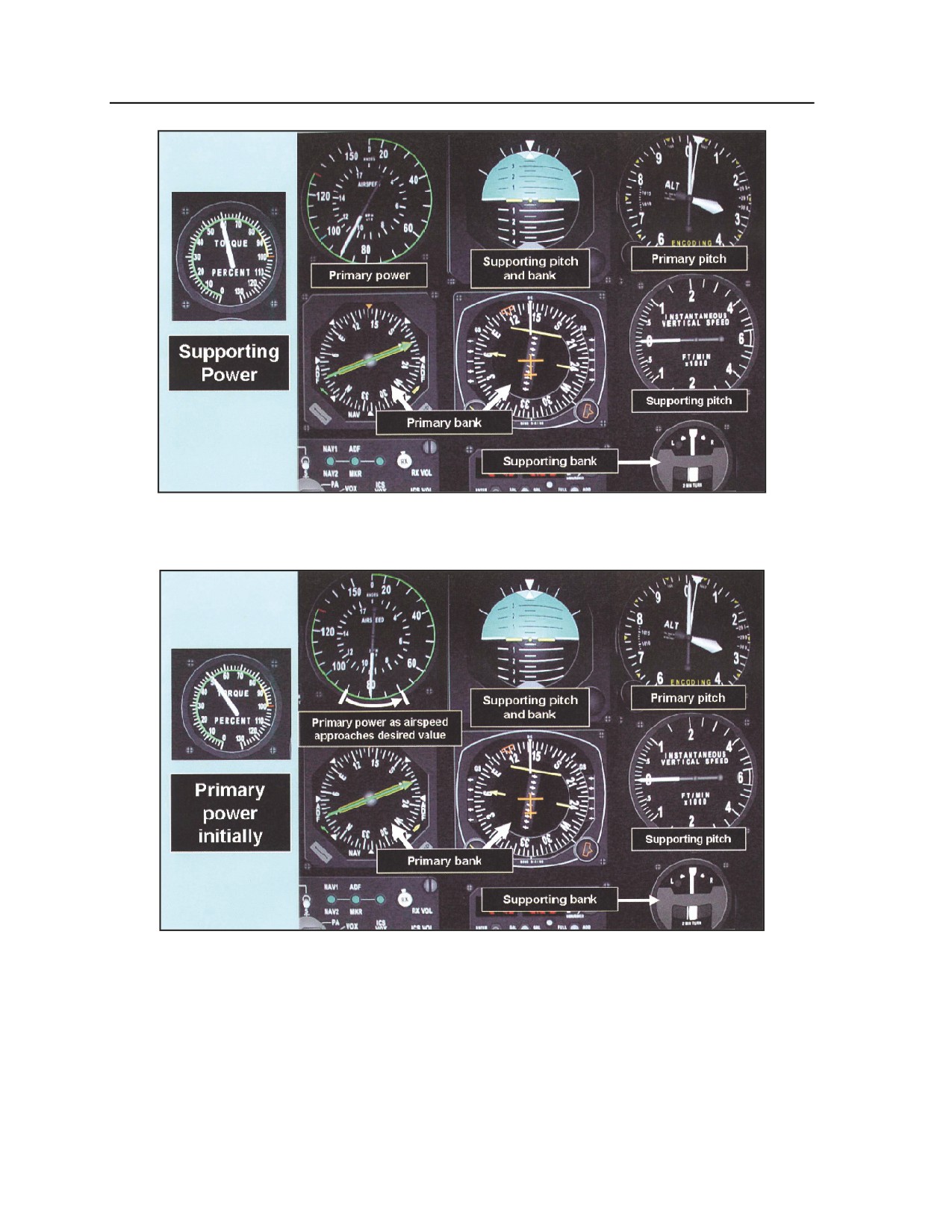
which allows time to adjust pitch and bank smoothly. Figures 2-9 and 2-10, page 2-14, illustrate instrument
indications for straight-and-level flight at normal cruise and during the transition from normal cruise to
slow cruise. After the aviator stabilizes airspeed at slow cruise, the attitude indicator shows an approximate
level pitch attitude.
30 April 2007
FM 3-04.240
2-13
Chapter 2
Figure 2-9. Straight-and-level flight at normal cruise speed
Figure 2-10. Straight-and-level flight with airspeed deceasing
2-56. The altimeter is the primary pitch instrument during level flight, whether the aircraft is flying at a
constant airspeed or during a change in airspeed. Altitude should not change during airspeed transitions.
The heading indicator remains the primary bank instrument. When airspeed changes any appreciable
amount, the torque meter is momentarily the primary instrument for power control; when the aircraft
approaches the desired airspeed, the airspeed indicator again becomes the primary instrument for power
control.
2-14
FM 3-04.240
30 April 2007
Rotary Wing Instrument Flight Maneuvers
2-57. Straight-and-level flight relies on a cross-check of pitch-and-bank instruments and power control
instruments. With a constant power setting, a normal cross-check should be satisfactory. When changing
power, increase the rate of the cross-check to cover pitch-and-bank instruments to counteract deviations.
COMMON ERRORS
2-58. Common errors made during straight-and-level flight include the following:
Failure to maintain altitude.
Failure to maintain heading.
Overcontrolling pitch and bank during corrections.
Improper use of power.
Failure to maintain proper pedal trim.
Failure to cross-check all available instruments.
SECTION V - STRAIGHT CLIMBS AND DESCENTS
2-59. Any power setting and load condition has only one airspeed that provides the most efficient rate of
climb. Consult climb data for the helicopter to determine this setting. The technique varies according to
airspeed on entry and whether the maneuver will be a constant-airspeed or constant-rate climb.
CLIMBS
ENTRY
2-60. To enter a constant-airspeed climb from cruise airspeed when climb speed is lower than cruise speed,
simultaneously increase power to the climb power setting and adjust pitch attitude to the approximate
climb attitude. An increase in power causes the helicopter to start climbing, and only slight back cyclic
pressure is required to change from level to climb attitude. Use the attitude indicator to accomplish pitch
change. If transition from level flight to a climb is smooth, the VSI shows an immediate upward trend and
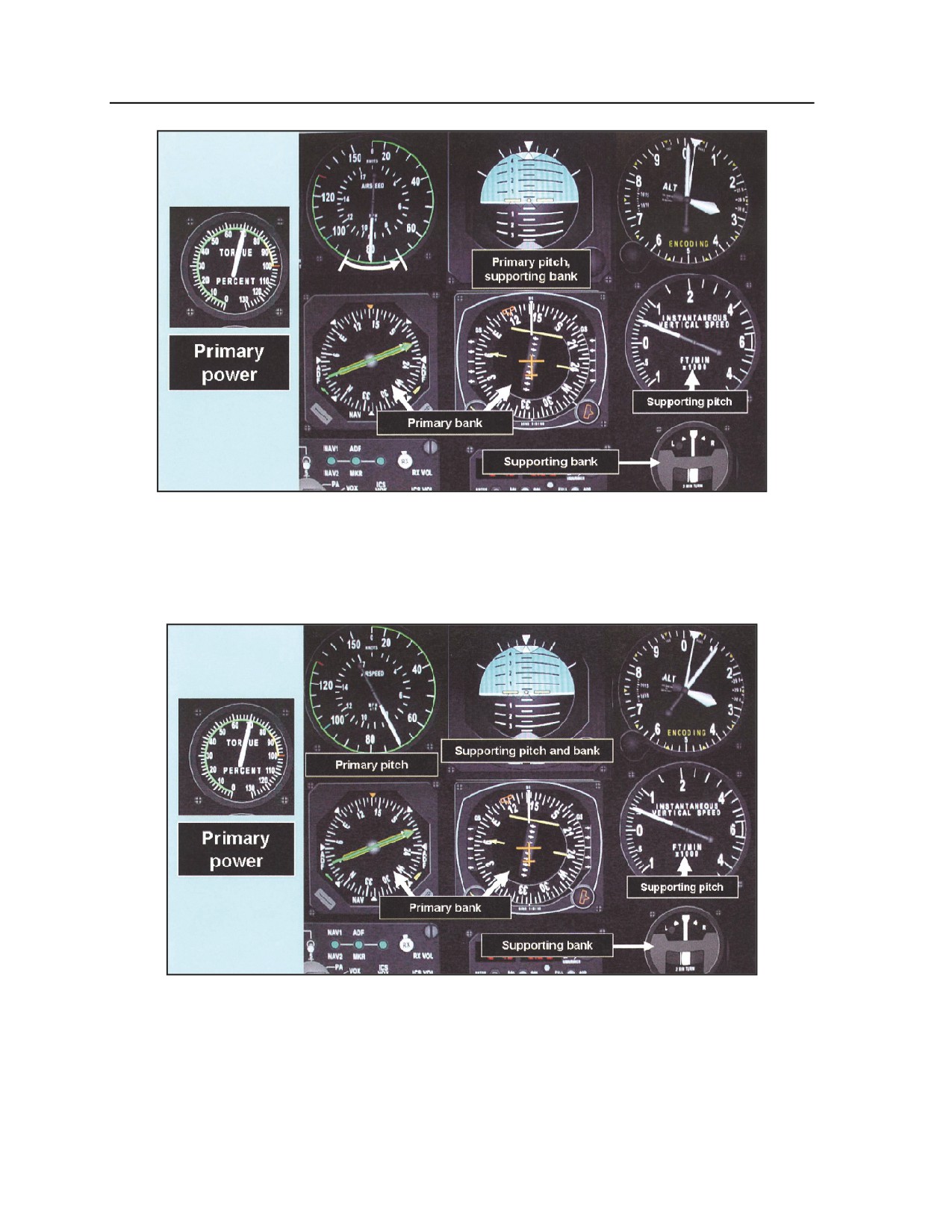
stops at a rate appropriate to the stabilized airspeed and attitude (Figure 2-11, page 2-16).
30 April 2007
FM 3-04.240
2-15
Chapter 2
Figure 2-11. Climb entry
2-61. When the helicopter stabilizes on a constant airspeed and attitude, the airspeed indicator becomes
primary for pitch. The torque meter continues to be primary for power and is monitored closely to
determine if the proper climb power setting is being maintained (Figure 2-12).
Figure 2-12. Stabilized constant airspeed climb
2-62. The technique and procedures for entering a constant-rate climb are similar to a constant-airspeed
climb. For training purposes, a constant-rate climb is entered from climb airspeed. In helicopters with low
climb rates, 500 FPM is appropriate; in helicopters capable of high climb rates, use a rate of 1,000 FPM.
2-16
FM 3-04.240
30 April 2007
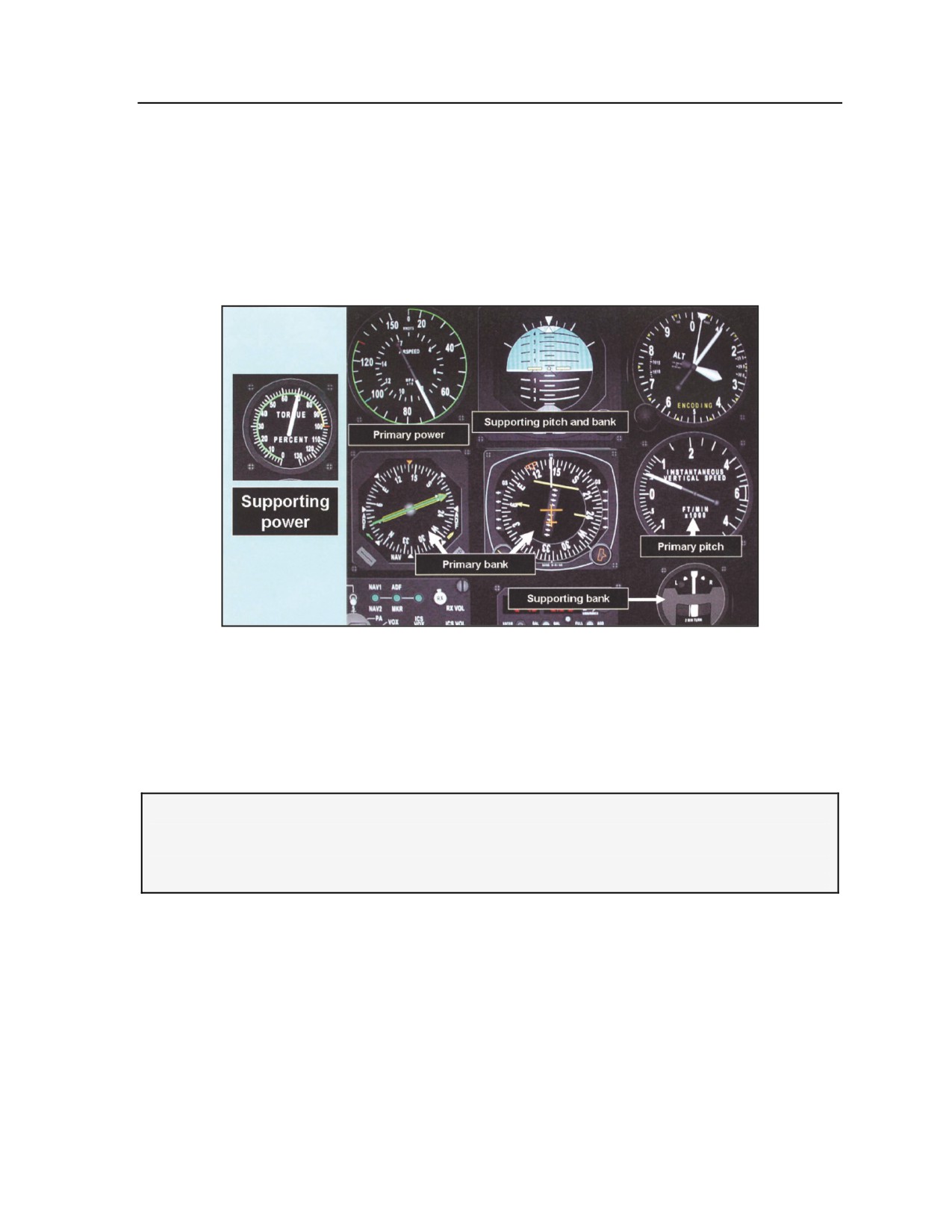
Rotary Wing Instrument Flight Maneuvers
2-63. Entering a constant-rate climb means increasing power to the approximate setting for the desired
rate. As power is applied, the airspeed indicator is primary for pitch until vertical speed approaches the
desired rate. The VSI then becomes primary for pitch. Change pitch attitude accordingly with the attitude
indicator to maintain the desired vertical speed. When the VSI becomes primary for pitch, the airspeed
indicator becomes primary for power (Figure 2-13). Adjust power to maintain desired airspeed. Closely
coordinate pitch attitude and power corrections. If vertical speed is correct but airspeed is low, add power.
As power increases, lowering the pitch attitude slightly may become necessary to avoid increasing the
vertical rate. Adjust pitch attitude smoothly to avoid overcontrolling. Small power corrections are usually
sufficient to return airspeed to the desired indication.
Figure 2-13. Stabilized constant-rate climb
LEVEL-OFF
2-64. Level-off from a constant-airspeed climb is started before reaching the desired altitude. Although the
amount of lead varies with the helicopter being flown and piloting technique, the most important factor is
vertical speed. Use 10 percent of vertical velocity as the lead point as in the following example.
Example of Using Lead to Level Off
If the climb rate is 500 FPM, initiate level-off at about 50 feet before the aircraft reaches the desired altitude.
When proper lead altitude is reached, the altimeter becomes primary for pitch. Adjust pitch attitude to level
flight attitude for that airspeed, and cross-check the altimeter and vertical speed indicator to determine when
level flight has been attained at the desired altitude.
2-65. To level-off at cruise airspeed if this speed is higher than climb airspeed, leave power at the climb
power setting until airspeed approaches cruise airspeed and then reduce to cruise power setting. Level-off
from a constant-rate climb is accomplished in the same manner as level-off from a constant-airspeed climb.
DESCENTS
ENTRY
2-66. If airspeed is higher than descending airspeed and a constant-airspeed descent at the descending
airspeed is required, reduce power to the descending power setting and maintain a constant altitude using
30 April 2007
FM 3-04.240
2-17
Chapter 2
cyclic pitch control. When the aircraft is approaching the descending airspeed, the airspeed indicator
becomes primary for pitch and the torque meter is primary for power. As airspeed is held constant, the
helicopter begins to descend. For a constant-rate descent, reduce power to the approximate setting for the
desired rate. If descent begins at the descending airspeed, the airspeed indicator is primary for pitch until
the VSI approaches the desired rate. At this time, the VSI becomes primary for pitch and the airspeed
indicator becomes primary for power. Coordinate power and pitch attitude control as for constant-rate
climbs.
LEVEL-OFF
2-67. Level-off from a constant-airspeed descent may be made at descending airspeed or cruise airspeed (if
this is higher than descending airspeed). As in a climb level-off, the amount of lead depends on descent
rate and control technique. For a level-off at descending airspeed, lead should be about 10 percent of
vertical speed. At lead altitude, increase power to the setting necessary to maintain descending airspeed in
level flight. At this point, the altimeter becomes primary for pitch and the airspeed indicator becomes
primary for power.
2-68. To level-off at a higher airspeed than descending airspeed, increase power about 100 to 150 feet
before reaching the desired altitude. The power setting should be what is necessary to maintain desired
airspeed in level flight. Hold vertical speed constant until about 50 feet above desired altitude. At this
point, the altimeter becomes primary for pitch and the airspeed indicator becomes primary for power.
Level-off from a constant-rate descent should be accomplished in the same manner as level-off from a
constant-airspeed descent.
COMMON ERRORS
2-69. Common errors made during straight climbs and descents include the following:
Failure to maintain heading.
Improper use of power.
Poor control of pitch attitude.
Failure to maintain proper pedal trim.
Failure to level-off on desired altitude.
SECTION VI - TURNS
2-70. Pitch, bank, and power principles related to straight-and-level flight apply while performing level
turns. This maneuver requires an understanding of how to enter; maintain bank, altitude, and airspeed
during; and recover from the turn. Turns are classified as normal (standard rate or less) or steep. Most
aviators practice steep turns using 30 degrees of bank, which is the maximum bank angle recommended
under instrument conditions.
2-71. Helicopters normally operate under instrument conditions between
80 and
120 knots. TAS
determines the bank angle necessary to maintain a standard-rate turn. To determine the approximate bank
angle, divide airspeed by 10 and add one-half of the result as shown in the following example.
Example of Determining Bank Angle
At 80 knots (kt), about 12 degrees of bank is required (80 ÷ 10 = 8 + 4 = 12); at 120 kt, about 18 degrees of
bank is required.
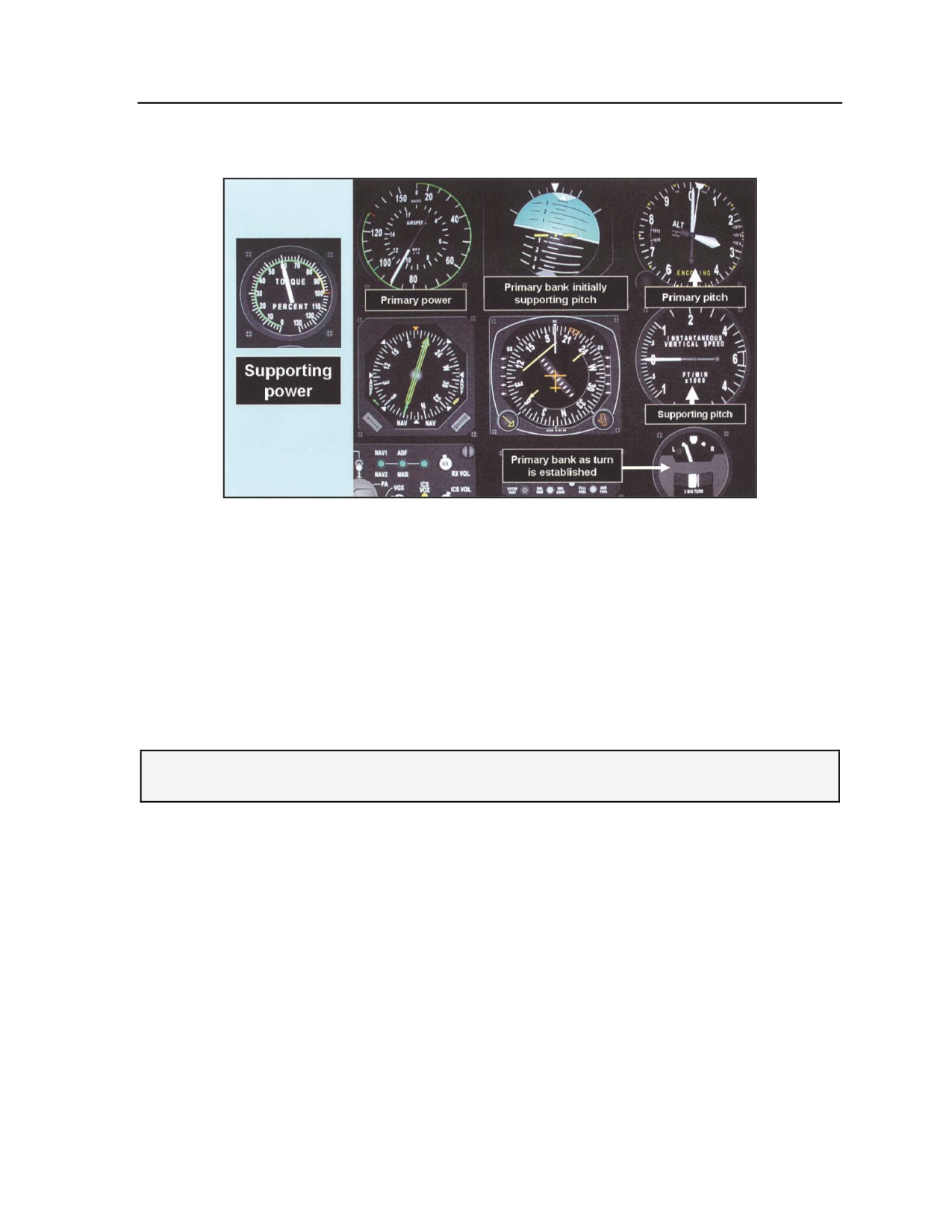
2-72. Enter a turn by applying lateral cyclic in the desired turn direction. Enter using the attitude indicator
to establish approximate bank angle. When the turn indicator indicates a standard-rate turn, the turn
indicator becomes primary for bank. The attitude indicator is now a supporting instrument. During level
turns, the altimeter is primary for pitch and the airspeed indicator is primary for power (Figure 2-14, page
2-19). If an increase in power is required to maintain airspeed, slight forward cyclic pressure may be
2-18
FM 3-04.240
30 April 2007
Rotary Wing Instrument Flight Maneuvers
required because the helicopter tends to pitch up as collective pitch angle is increased. Apply pedal trim, as
required, to keep the ball centered.
Figure 2-14. Standard rate turn to the left
2-73. Return to straight-and-level flight by applying cyclic in the direction opposite the turn. The rate of
rollout is the same used when rolling into the turn. The attitude indicator becomes the primary reference for
bank during turn recovery. When the helicopter is about level, the heading indicator is primary for bank as
in straight-and-level flight. Cross-check the airspeed indicator and ball to sustain airspeed and pedal trim.
PREDETERMINED HEADING
2-74. A helicopter turns as long as its lateral axis is tilted; therefore, recovery starts before the desired
heading is reached. The amount of lead varies with the turn rate and piloting technique. As a guide, when
making a standard rate turn, use a lead of one-half the bank angle as shown in the following example.
Example of Using Lead Point
If using a 12º bank angle, use half, or 6º, as the lead point for rolling out on the desired heading.
2-75. The bank angle should never exceed the number of degrees to be turned. As in any standard rate
turn, the recovery rate should be the same as the rate for entry. During turns to predetermined headings,
cross-check primary and supporting pitch, bank, and power instruments closely.
TIMED
2-76. A timed turn is when the clock and turn-and-slip indicator are used to change a heading a definite
number of degrees in a given time. Using a standard-rate turn, a helicopter turns 45 degrees in 15 seconds.
Using a half-standard-rate turn, a helicopter turns 45 degrees in 30 seconds. Timed turns can be used if the
heading indicator becomes inoperative.
2-77. Before performing timed turns, the turn coordinator must be calibrated to determine the accuracy of
its indications. To accomplish calibration, establish a standard-rate turn by referring to the turn-and-slip
indicator. As the sweep second hand of the clock passes a cardinal point (12, 3, 6, or 9), check the heading
on the heading indicator. While holding the indicated rate of turn constant, note heading changes at
10-second intervals. If the helicopter turns more or less than 30 degrees in that interval, a smaller or larger
deflection of the needle is necessary to produce a standard-rate turn. When calibrating the turn-and-slip
30 April 2007
FM 3-04.240
2-19
Chapter 2
indicator during turns in each direction, note corrected deflections. If any deflections are noted, apply them
during all timed turns.
2-78. The same cross-check and control technique used to make turns to a predetermined heading is used
in making timed turns, except substitute the clock for the heading indicator. The needle of the turn-and-slip
indicator is primary for bank control, the altimeter is primary for pitch control, and the airspeed indicator is
primary for power control. Begin the roll in when the clock’s second hand passes a cardinal point, hold the
turn at the calibrated standard-rate indication (or half standard rate for small changes in heading), and
begin roll-out when the computed number of seconds has elapsed. If roll-in and rollout rates are the same,
the time taken during entry and recovery need not be considered in the time computation. Check the
heading indicator for the accuracy of turns when practicing timed turns with a full instrument panel. Use
the magnetic compass at the completion of the turn to check accuracy, taking compass deviation errors into
consideration when executing turns without the heading indicator.
CHANGING AIRSPEED
2-79. Changing airspeed in turns is an effective maneuver for increasing proficiency in all three basic
instrument skills. Because the maneuver involves simultaneous changes in all components of control,
proper execution requires a rapid cross-check and interpretation as well as smooth control. Proficiency also
contributes to confidence in instruments during attitude and power changes involved in more complex
maneuvers.
2-80. Pitch and power control techniques are the same as those used during airspeed changes in
straight-and-level flight. As discussed previously, the bank angle necessary for a given turn rate is
proportional to the TAS. Turns are executed at standard rate; therefore, the bank angle must be varied in
direct proportion to airspeed change to maintain a constant turn rate. During a reduction of airspeed,
decrease the bank angle and increase the pitch attitude to maintain altitude and a standard-rate turn.
2-81. The altimeter and needle on the turn indicator should remain constant throughout the turn. The
altimeter is primary for pitch control, and the turn needle is primary for bank control. The torque meter is
primary for power control while airspeed is changing. As airspeed approaches the new indication, the
airspeed indicator becomes primary for power control.
2-82. Methods of changing airspeed in turns include changing airspeed after the turn is established and
initiating an airspeed change simultaneously with turn entry. Regardless of the method, the rate of
cross-check must be increased as power is reduced. As the helicopter decelerates, check the altimeter and
VSI for pitch changes and bank instruments for bank changes. If the needle of the turn-and-slip indicator
shows a deviation from the desired deflection, change the bank. Adjust the pitch attitude to maintain
altitude. When approaching the desired airspeed, the airspeed indicator becomes primary for power control.
Adjust the torque meter to maintain desired airspeed. Use pedal trim to ensure the maneuver is coordinated.
Until the control technique is smooth, frequently cross-check the attitude indicator to keep from
overcontrolling and provide approximate bank angles appropriate for changing airspeeds.
COMPASS
2-83. Use of gyroscopic heading indicators makes heading control easy; however, if the heading indicator
fails, use the magnetic compass for heading reference. When making compass-only turns, adjust for lead or
lag created by acceleration and deceleration errors (refer to Chapter 1) so that rollout occurs on the desired
heading. When the aviator turns to a heading of north, lead for the rollout must include the number of
degrees of latitude plus the lead normally used in turn recovery as described in the following example.
Example of Using the Magnetic Compass During Turn to the North
When turning from an easterly direction to north, where the latitude is 30 degrees, start rollout when the
compass reads 037 degrees (30 degrees plus 1/2 the 15 degrees bank angle, or an amount appropriate for
the rollout rate).
2-20
FM 3-04.240
30 April 2007
Rotary Wing Instrument Flight Maneuvers
2-84. During a turn to a south heading, maintain the turn until the compass passes south the number of
degrees of latitude minus normal rollout lead. This procedure is described in the following example.
Example of Using the Magnetic Compass During Turn to the South
When turning from an easterly direction to the south, start rollout when the magnetic compass reads 203º (180
degrees plus 30 degrees minus 1/2 of the 15 degrees bank angle). When making similar turns from a westerly
direction, begin rollout at 323 degrees for a turn north and 157 degrees for a turn south.
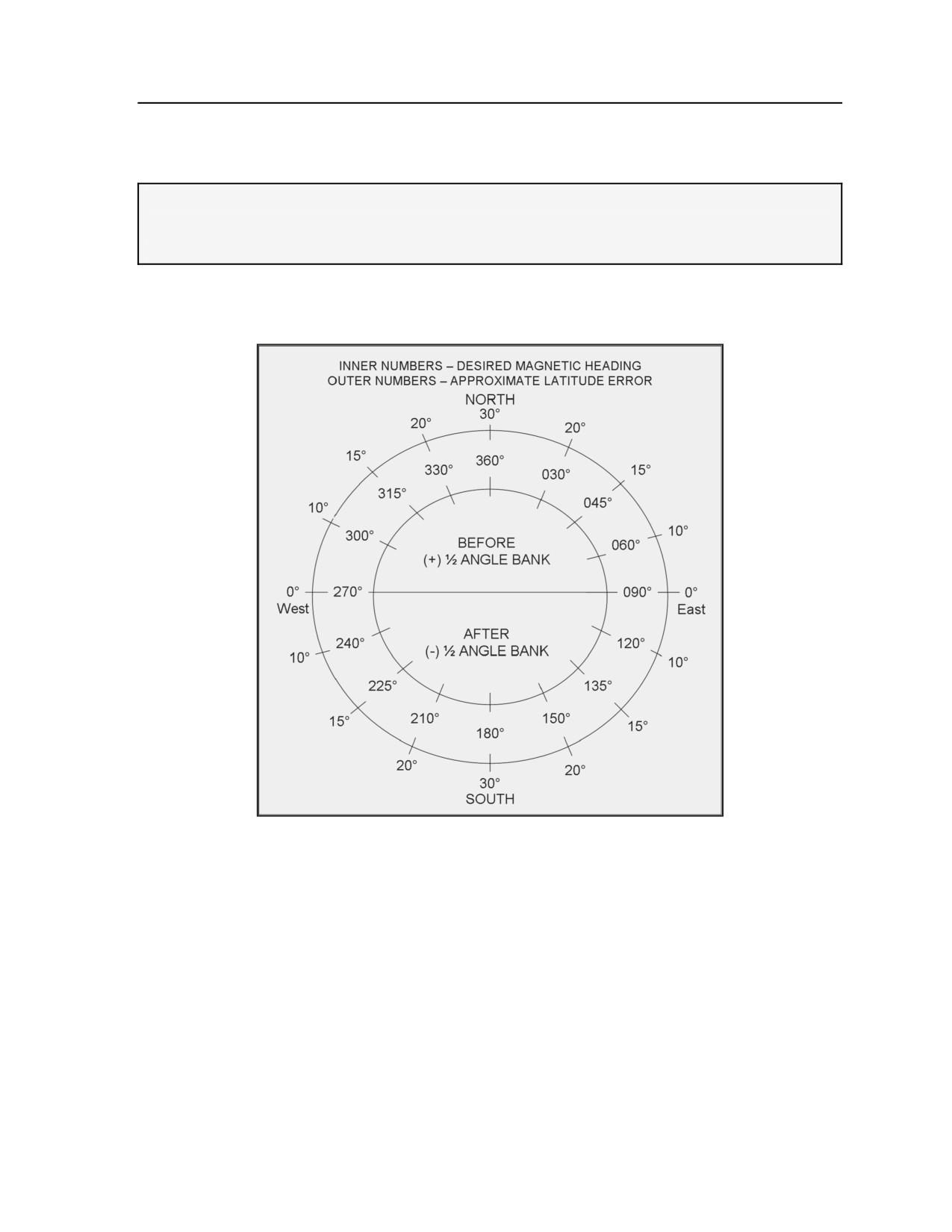
2-85. A quick reference diagram is provided to help visualize the correction Figure 2-15 is a compass turn
correction diagram.
Figure 2-15. Compass turn correction diagram
2-86. A simple method of calculating compass turns is to use timed turns. Take the difference between
current heading and desired heading, and divide by three (standard rate turn of 3 degrees per second). The
product is the number of seconds to enter into a standard-rate turn to arrive at the desired heading (table
2-2, page 2-22). This procedure works in any hemisphere/latitude, regardless of turning direction, and
eliminates the need to memorize a chart or more complicated mathematical formula partly based on
latitude. This procedure also limits distraction caused by direct and frequent viewing of the magnetic
compass in the turn.
30 April 2007
FM 3-04.240
2-21
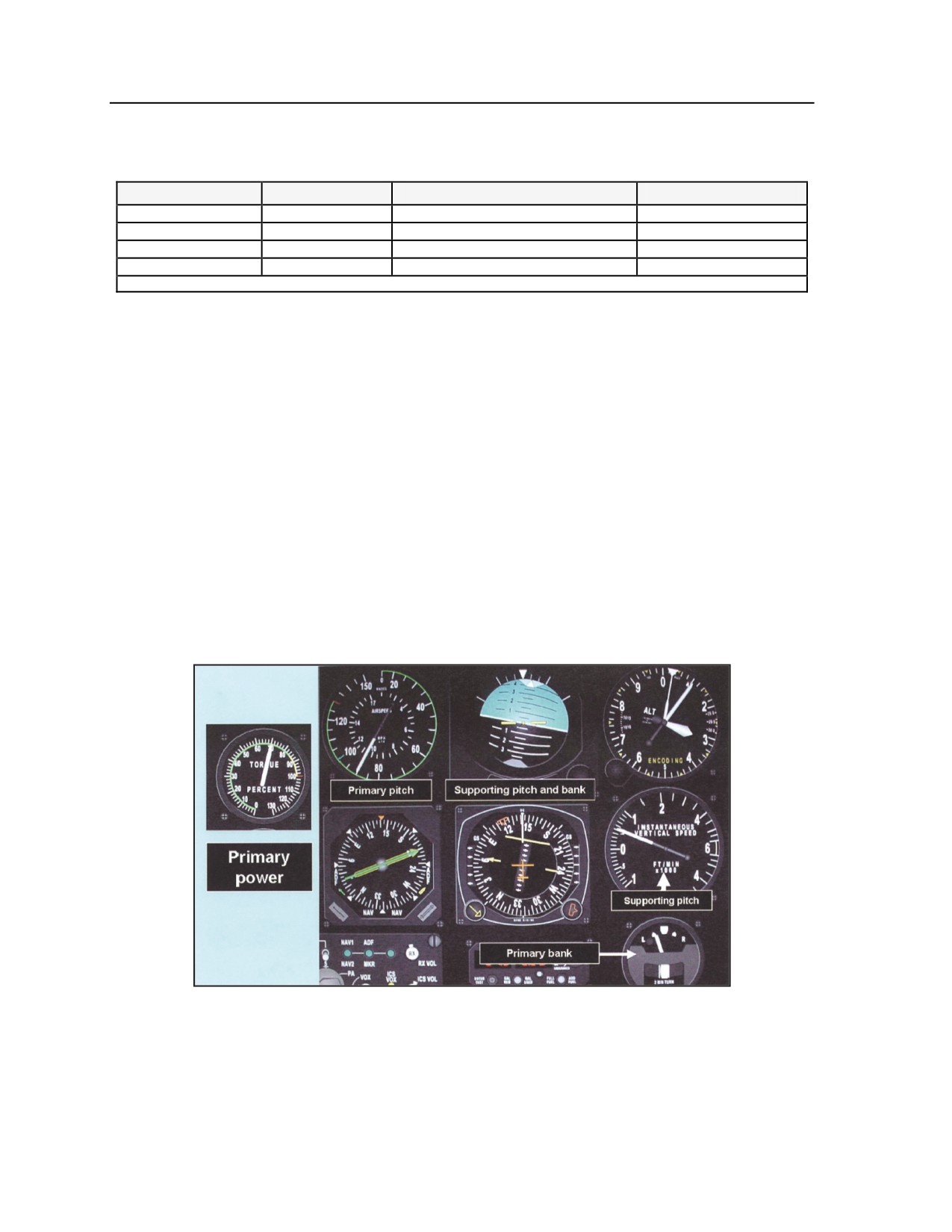
Chapter 2
Table 2-2. Compass turn computation
Current heading
Desired heading
Headings difference divided by 3
Seconds in turn
120°
030°
90° ÷ 3
30
180°
280°
100° ÷ 3
33
320°
020°
60° ÷ 3
20
225°
140°
85° ÷ 3
28
Enter standard rate turn for the computed seconds, stop the turn, and arrive at the desired heading.
THIRTY-DEGREE BANK
2-87. A 30-degree bank turn is seldom necessary, or advisable, in IMC and is considered a steep turn in a
helicopter. Although entry and recovery techniques are the same as for other turns, it is more difficult in a
30-degree bank turn to control pitch because of the decrease in vertical lift as bank increases. Because of
this decrease, there is a tendency to lose altitude/airspeed; therefore, to maintain a constant altitude and
airspeed, additional power is required. The altimeter and VSI will indicate necessary corrections. Check the
indications on the attitude indicator, and make necessary adjustments. Recheck the altimeter and VSI to
determine whether the correction was adequate.
CLIMBING AND DESCENDING
2-88. The climbing and descending turn techniques for straight climbs and descents and those for
standard-rate turns are combined. Start the climb or descent and turn simultaneously. The primary and
supporting instruments for a stabilized constant airspeed left climbing turn are illustrated in Figure 2-16.
Leveling-off from a climbing or descending turn is the same as leveling-off from a straight climb or
descent. Returning to straight-and-level flight can occur by stopping the turn and leveling-off, leveling-off
and stopping the turn, or simultaneously leveling-off and stopping the turn. During climbing and
descending turns, keep the ball of the turn indicator centered with pedal trim.
Figure 2-16. Stabilized left climbing turn, constant airspeed
2-22
FM 3-04.240
30 April 2007
Rotary Wing Instrument Flight Maneuvers
COMMON ERRORS
2-89. Common errors made during turns include the following:
Failure to maintain desired turn rate and airspeed.
Failure to maintain altitude in level turns.
Variation in the rate of entry and recovery.
Failure to use proper lead in turns to a heading.
Failure to properly compute time during timed turns.
Failure to use proper leads and lags during compass turns.
Improper use of power.
Failure to use proper pedal trim.
SECTION VII - OTHER MANEUVERS
UNUSUAL ATTITUDES
2-90. Any maneuver not required for normal helicopter instrument flight is an unusual attitude and may be
caused by any one or a combination of factors such as turbulence, disorientation, instrument failure,
confusion, preoccupation with cockpit duties, carelessness in cross-checking, errors in instrument
interpretation, or lack of proficiency in aircraft control. Because of the instability characteristics of the
helicopter, unusual attitudes can be extremely critical. When experiencing an unusual attitude, make quick
attitude corrections to straight-and-level flight then return to desired airspeed and altitude as soon as
possible.
2-91. To recover from an unusual attitude, correct bank-and-pitch attitude and adjust power as necessary.
All components are changed almost simultaneously with little lead of one over the other. Aviators must
perform this task with and without the attitude indicator. If the helicopter is in a climbing or descending
turn, correct bank, pitch, and power. The bank attitude is corrected by referring to the turn-and-slip
indicator and attitude indicator. Pitch attitude is corrected by reference to the altimeter, airspeed indicator,
VSI, and attitude indicator. Adjust power by referring to the airspeed indicator and torque meter. Because
displacement of the controls used in recoveries from unusual attitudes may be greater than those for normal
flight, make careful adjustments as straight-and-level flight is approached. Cross-check other instruments
closely to avoid overcontrolling.
COMMON ERRORS
2-92. Common errors made during unusual attitude recoveries include the following:
Failure to make proper pitch, bank, and power corrections.
Overcontrolling pitch/bank attitude and power.
Excessive loss of altitude.
AUTOROTATIONS
2-93. A straight-ahead or turning autorotation is practiced by reference to instruments ensuring that an
aviator can take prompt corrective action to maintain positive aircraft control in case of engine failure. To
enter autorotation, reduce collective pitch, smoothly maintaining safe rotor revolutions per minute (RPM),
and apply pedal trim to keep the ball of the turn-and-slip indicator centered. The pitch attitude of the
helicopter should be approximately level as shown by the attitude indicator. The airspeed indicator is the
primary pitch instrument and is adjusted to recommended autorotation speed. The heading indicator is
primary for bank in a straight-ahead autorotation. In a turning autorotation, a standard-rate turn is
maintained by reference to the needle of the turn-and-slip indicator.
30 April 2007
FM 3-04.240
2-23
Chapter 2
COMMON ERRORS
2-94. Common errors made during autorotation include the following:
Uncoordinated entry because of improper pedal trim.
Poor airspeed control because of improper pitch attitude.
Poor heading control in straight-ahead autorotation.
Failure to maintain proper rotor RPM and a standard-rate turn during turning autorotation.
2-24
FM 3-04.240
30 April 2007
Chapter 3
Fixed Wing Instrument Flight Maneuvers
Instrument flying techniques differ according to aircraft type, class, performance
capability, and instrumentation. Therefore, this chapter augments Chapter
2 and
covers only the differences for fixed wing aircraft. Recommended procedures,
performance data, operating limitations, and flight characteristics of a particular
aircraft are available in the appropriate operator’s manual and ATM.
SECTION I - INSTRUMENT TAKEOFF
3-1. Aviator competency in ITO will provide the
proficiency and confidence necessary for use of
Contents
flight
instruments during departures under
conditions of low visibility, rain, low ceilings, or
Section I - Instrument Takeoff
3-1
disorientation at night. A sudden rapid transition
Section II - Straight-and-Level Flight
3-2
from visual to instrument flight can result in serious
Section III - Straight Climbs and
disorientation and control problems. ITO techniques
Descents
3-12
vary with different types of airplanes, but the
Section IV - Turns
3-19
following method applies to most and should be
Section V - Other Maneuvers
3-24
accomplished according to the appropriate ATM
and operator’s manual.
TAKEOFF
3-2. Align the airplane with the centerline of the runway with the nose wheel straight. Lock or hold the
brakes firmly to avoid creeping while preparing for takeoff. Slight changes in heading can be detected by
setting the heading indicator with the nose index on the mark nearest the published runway heading. Make
certain that the instrument is uncaged (if a caging feature is available) by rotating the knob after uncaging,
and check for constant heading indication. Advance the power levers to an RPM that provides partial
rudder control. Release the brakes, advancing the power smoothly to takeoff setting.
3-3. During the takeoff roll, hold the heading constant on the heading indicator by using the rudder.
Multiengine propeller-driven airplanes also use differential power to maintain direction. The use of brakes
to control heading usually results in overcontrolling and extending the takeoff roll and should be avoided.
Any deviation in heading should be quickly corrected.
3-4. Heading and airspeed indicators must be cross-checked rapidly as the aircraft accelerates. The
attitude indicator may falsely indicate a slight nose-up attitude. As flying speed is approached (about 15 to
25 knots below takeoff speed), smoothly apply elevator control for the desired takeoff attitude on the
attitude indicator (about a two-bar-width climb indication for most airplanes). Continue with a quick
cross-check of the heading indicator and attitude indicator as the airplane leaves the ground. Do not pull
the aircraft off; fly the aircraft off while holding the attitude constant. Maintain pitch-and-bank control by
referencing the attitude indicator, and make coordinated corrections in heading when indicated on the
heading indicator. Cross-check the altimeter and VSI for a positive rate of climb (steady clockwise rotation
of the altimeter needle at a rate that can be interpreted with experience and the VSI showing an appropriate
stable rate of climb).
30 April 2007
FM 3-04.240
3-1
Chapter 3
3-5. Raise the landing gear and flaps when the altimeter shows a safe altitude
(about
100 feet),
maintaining attitude by referencing the attitude indicator. Because of control pressure changes during gear
and flap operation, overcontrolling is likely unless the aviator notes pitch indications accurately and
quickly. Trim off control pressures necessary to hold the stable climb attitude. Check the altimeter, VSI,
and airspeed for a smooth acceleration to the predetermined climb speed (altimeter and airspeed increasing,
vertical speed stable). At climb speed, reduce power to the climb setting if required. Throughout the ITO,
perform rapid cross-check and interpretation, along with positive and smooth control. During liftoff, the
changing control reactions of gear and flap retraction and power reduction demand rapid cross-check,
adjustment of control pressures, and accurate trim changes.
COMMON TAKEOFF ERRORS AND RESOLUTIONS
3-6. Common takeoff errors and resolutions include the following:
Failure to perform an adequate cockpit check before takeoff; do not attempt instrument takeoffs
with inoperative airspeed indicators (pitot tube obstructed), gyros caged, or controls locked.
Improper alignment on the runway. Improper brake application may allow the airplane to creep
after alignment; alignment with the nose wheel or tail wheel cocked may cause improper
alignment on the runway.
Improper application of power. Abrupt application of power complicates directional control; add
power with a smooth, uninterrupted motion.
Improper use of brakes. Incorrect seat or rudder pedal adjustment, with feet in an uncomfortable
position, often causes inadvertent application of brakes and excessive heading changes.
Overcontrolling rudder pedals. This fault may be due to late recognition of heading changes,
tension on the controls, misinterpretation of the heading indicator (and correcting in the wrong
direction), and failure to appreciate changing effectiveness of rudder control as the aircraft
accelerates; heading changes observed and corrected instantly with small movement of the
rudder pedals reduce swerving tendencies.
Failure to maintain attitude after becoming airborne. If the aviator is reacting to proprioceptive
sensations when the airplane lifts off, pitch control is guesswork; do not allow excessive pitch or
apply excessive forward-elevator pressure, depending on reaction to trim changes.
Inadequate cross-check. Fixations are likely during trim changes, attitude changes, gear and flap
retractions, and power changes; after checking an instrument or applying a control, continue the
cross-check and note the effect of the control during the next cross-check sequence.
Inadequate interpretation of instruments; failure to immediately understand instrument
indications indicates that further study of the maneuver is necessary.
SECTION II - STRAIGHT-AND-LEVEL FLIGHT
PITCH CONTROL
3-7. The pitch attitude of an airplane is the angle between the longitudinal axis of the airplane and the
actual horizon. In level flight, the pitch attitude varies with airspeed and load. For training purposes, the
latter factor can normally be disregarded. At a constant airspeed, there is only one specific pitch attitude for
level flight. At slow cruise speeds, the level-flight attitude is nose-high; at fast cruise speeds, the level-
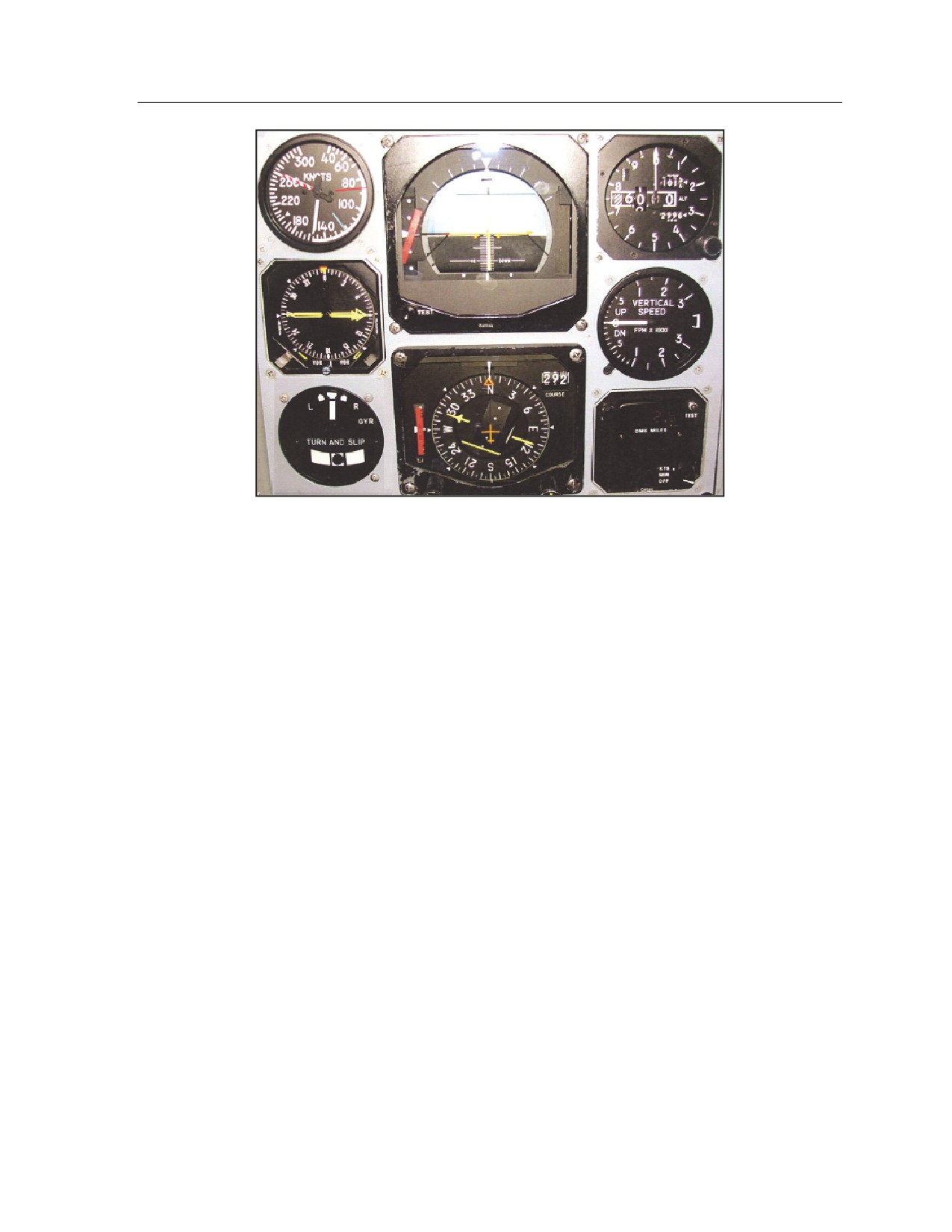
flight attitude is nose-low. Figure 3-1, page 3-3 shows the attitude at normal cruise speeds. The pitch
instruments are the attitude indicator, altimeter, VSI, and airspeed indicator.
3-2
FM 3-04.240
30 April 2007
Fixed Wing Instrument Flight Maneuvers
Figure 3-1. Pitch attitude and airspeed in level flight
ATTITUDE INDICATOR
3-8. The attitude indicator is the same as in a helicopter. Desired pitch attitude is obtained by using the
elevator control (control wheel, not cyclic) to raise or lower the miniature aircraft in relation to the horizon
bar. Properly adjusting the miniature aircraft on the attitude indicator on the ground before takeoff should
indicate approximately level flight at normal cruise speed after the aviator completes level-off from a
climb. If further adjustment of the miniature aircraft is necessary, the other pitch instruments must be used
to maintain level flight while the adjustment is made.
3-9. In practicing pitch control for level flight using only the attitude indicator, restrict the displacement
of the horizon bar initially to a bar width up or down, then a half-bar width, and finally, a one and-one-half
bar width.
3-10. Pitch attitude changes for corrections to level flight by reference to instruments are much smaller
than those commonly used for visual flight. When the airplane is correctly trimmed for level flight, the
elevator displacement and the control pressures necessary to effect these standard pitch changes are usually
very slight. The following hints help determine how much elevator control pressure is required:
Relax, and learn to control using the senses rather than muscle; considerable conscious effort is
needed to perfect this technique during the early stages of instrument training. A tight grip on
the controls makes feeling control pressure changes difficult.
Make smooth and small pitch changes with a positive pressure; practice these small corrections
until becoming proficient in making pitch corrections up or down, freezing (holding constant)
the one-half, full, and one-and-one-half bar widths on the attitude indicator.
Avoid unnecessary inputs to the flight controls. With the airplane properly trimmed for level
flight, momentarily release all pressure on the elevator control; the airplane should remain stable
and will maintain level flight if left alone when properly trimmed. Some aviators may find it
difficult to resist the impulse to move the controls even when their eyes provide data that no
control change is called for.
30 April 2007
FM 3-04.240
3-3
Chapter 3
ALTIMETER
3-11. At constant power, any deviation from level flight (except in turbulent air) must be the result of a
pitch change. Therefore, the altimeter indirectly indicates the pitch attitude in level flight (assuming
constant power). Because the altitude should remain constant when the airplane is in level flight, any
deviation from the desired altitude signals the need for a pitch change. When the aircraft gains the desired
altitude, the nose must be adjusted accordingly.
3-12. The rate of movement of the altimeter needle is as important as its direction of movement for
maintaining level flight without the use of the attitude indicator. An excessive pitch deviation from level
flight results in a relatively rapid change of altitude; a slight pitch deviation causes a slow change. Thus, if
the altimeter needle moves rapidly clockwise, assume a considerable nose-high deviation from level-flight
attitude. Conversely, if the needle moves slowly counterclockwise to indicate a slightly nose-low attitude,
assume the pitch correction necessary to regain the desired altitude is small. The addition of the altimeter to
the attitude indicator in cross-check assists in recognizing rate of movement of the altimeter needle.
3-13. When a pitch error is detected, corrective action should be taken promptly but with light control
pressures and two distinct changes of attitude: a change of attitude to stop the needle movement and a
change of attitude to return to the desired altitude.
3-14. Apply just enough elevator pressure to slow down the rate of needle movement when the needle
movement indicates an altitude deviation. If needle movement slows down abruptly, ease off some of the
pressure until the needle continues to move, but slowly. Slow needle movement means airplane attitude is
close to level flight. Add a little more corrective pressure to stop the direction of needle movement. At this
point, level flight has been attained; a reversal of needle movement means that the aircraft has passed
through level flight. Relax the control pressures carefully, continuing to cross-check, because changing
airspeed will cause changes in the effectiveness of a given control pressure. Adjust the pitch attitude with
elevator pressure for the rate of change of altimeter needle movement that has been correlated with normal
pitch corrections, and return to the desired altitude. For errors of less than 100 feet, use a half-bar-width
correction. For errors in excess of 100 feet, use an initial full-bar-width correction.
VERTICAL SPEED INDICATOR
3-15. The VSI indirectly indicates pitch attitude and is both a trend and a rate instrument. As a trend
instrument, the initial vertical movement of the airplane is shown immediately that, disregarding
turbulence, can be considered a reflection of pitch change. To maintain level flight, use the VSI with the
altimeter and attitude indicator. Note any up or down trend of the needle from zero and apply a very light
corrective elevator pressure. As the needle returns to zero, relax the corrective pressure. If control
pressures have been smooth and light, the needle reacts immediately and deliberately and the altimeter
shows little or no change of altitude.
3-16. Lag refers to the delay involved before the needle attains a stable indication following a pitch
change. Used as a rate instrument, lag characteristics of the VSI must be considered. Lag is directly
proportional to the speed and magnitude of a pitch change. If a slow, smooth pitch change is initiated, the
needle moves with minimum lag to a point of deflection corresponding to the extent of the pitch change
and then stabilizes as the aerodynamic forces are balanced in the climb or descent. A large and abrupt pitch
change produces erratic needle movement and a reverse indication and introduces greater time delay before
the needle stabilizes. Aviators should not chase the needle when flight through turbulent conditions
produces erratic needle movements.
3-17. When using the VSI as a rate instrument and cross-checking with the altimeter and attitude indicator
to maintain level flight, keep in mind that the amount that the altimeter has moved from the desired altitude
governs the rate necessary to return to that altitude. Make an attitude change resulting in a vertical-speed
rate approximately double the error in altitude. If the altitude is off by 100 feet, for example, the rate of
return should be about 200 FPM.
3-4
FM 3-04.240
30 April 2007
Fixed Wing Instrument Flight Maneuvers
3-18. If altitude is off by more than 100 feet, the correction should be correspondingly greater but should
never exceed the optimum rate of climb or descent for the airplane at a given airspeed and configuration. A
deviation of more than 200 FPM from the desired rate of return is considered overcontrolling as described
in the following example.
Example of How to Avoid Overcontrolling
If a pilot is attempting to return to an altitude at a rate of 300 FPM, he should avoid overcontrolling by not
exceeding a rate of 500 FPM.
3-19. The VSI is the primary pitch instrument that the aviator uses to reestablish altitude. Occasionally, the
VSI is slightly out of calibration and may indicate a climb or descent when the airplane is in level flight. If
the instrument cannot be adjusted, consider the error when using the VSI for pitch control; for example, if
the needle indicates a descent of 200 FPM while in level flight, use this indication as the zero position.
Therefore, a 300 FPM rate of descent would be indicated on the VSI as a 500 FPM rate of descent.
AIRSPEED INDICATOR
3-20. The airspeed indicator presents an indirect indication of the pitch attitude. At a constant power
setting and pitch attitude, airspeed remains constant. As the pitch attitude lowers, airspeed increases, and
the nose should be raised. As the pitch attitude rises, airspeed decreases and the nose should be lowered. A
rapid change in airspeed indicates a large pitch change, and a slow change of airspeed indicates a small
pitch change.
3-21. The apparent lag in airspeed indications with pitch changes varies greatly among different airplanes
and is due to the time required for the airplane to accelerate or decelerate when the pitch attitude is
changed. There is no appreciable lag because of the construction or operation of the instrument. Small
pitch changes, smoothly executed, result in an immediate change of airspeed.
3-22. Pitch control in level flight is a question of cross-check and interpretation of the instrument panel for
the instrument information that will enable visualization and control of pitch attitude. Regardless of
individual differences in cross-check technique, all aviators should use the instruments giving the best
information for controlling the airplane in any given maneuver. Aviators should also check other
instruments to aid in maintaining the important, or primary, instruments at the desired indication.
3-23. The primary instrument is one that gives the most pertinent information for a particular maneuver
and is usually held at a constant indication. Which instrument is primary for a particular maneuver should
be considered in the context of the specific airplane, weather conditions, aviator experience, operational
conditions, and other factors. Attitude changes must be detected and interpreted instantly for immediate
control action in high-performance airplanes. On the other hand, a reasonably proficient instrument aviator
in a slower aircraft may rely more on the altimeter for primary pitch information, especially if the aviator
determines that too much reliance on the attitude indicator fails to provide necessary precise attitude
information. Whether the aviator decides to regard the altimeter or the attitude indicator as primary
depends on which approach will best help control the attitude. In this manual, the altimeter is normally
considered as the primary pitch instrument during level flight.
COMMON PITCH ERRORS AND RESOLUTIONS
3-24. Pitch errors and their resolutions include the following:
Improper adjustment of the attitude indicator’s miniature aircraft to the wings-level attitude;
following initial level-off from a climb, check the attitude indicator and make any necessary
adjustment in the miniature aircraft for level flight indication at normal cruise airspeed.
Insufficient cross-check and interpretation of pitch instruments; for example, the airspeed
indication is low. Believing that the aircraft is in a nose-high attitude, the aviator reacts with
forward pressure without noting that a low power setting is the cause of the airspeed
discrepancy; increase cross-check speed to include all relevant instrument indications before
making a control response.
30 April 2007
FM 3-04.240
3-5
Chapter 3
Uncage the attitude indicator when the airplane is not in level flight. The altimeter and heading
indicator must be stabilized with airspeed indication at normal cruise when the aviator pulls out
the caging knob; this adjustment will cause the instrument to read straight-and-level at normal
cruise airspeed.
Failure to interpret the attitude indicator in terms of existing airspeed.
Late pitch corrections. When the altimeter shows a 20-foot error, there is a reluctance to correct
such an error, perhaps because of fear of overcontrolling. If overcontrolling is the error, the
more that an aviator practices small corrections and determines the cause of overcontrolling, the
closer the aviator is to holding the altitude. By tolerating a deviation, errors increase.
Chasing the vertical-speed indications; this tendency can be corrected by proper cross-check of
other pitch instruments as well as by increasing the understanding of the instrument
characteristics.
Using excessive pitch corrections for the altimeter evaluation; rushing a pitch correction by
making a large pitch change usually compounds the existing error.
Failure to maintain established pitch corrections. This is a common error associated with cross
check and trim errors; for example, having established a pitch change to correct an altitude error,
an aviator tends to slow down the cross-check, waiting for the airplane to stabilize in the new
pitch attitude. To maintain the attitude, continue to cross-check and trim off the pressures being
held.
Fixations during cross-check. After initiating a heading correction, aviators tend to become
preoccupied with bank control and fail to notice a pitch error; likewise, during an airspeed
change, unnecessary gazing at the power instrument is common. A small error in power setting
is of less consequence than large altitude and heading errors.
BANK CONTROL
3-25. The bank attitude of an airplane is the angle between the lateral axis of the airplane and the natural
horizon. To maintain a straight-and-level flight path, keep the wings of the airplane level with the horizon
(assuming that the airplane is in coordinated flight). Any deviation from straight flight resulting from bank
error should be corrected by coordinated aileron and rudder pressure.
3-26. The instruments used for bank control are the attitude indicator, heading indicator, and turn
coordinator/turn-and-slip indicator. Control inputs affect each control instrument differently.
ATTITUDE INDICATOR
3-27. The attitude indicator is the same as the attitude indicator in a helicopter, but the desired bank is set
by the aileron control (control wheel, not cyclic).
HEADING INDICATOR
3-28. The bank attitude of an aircraft in coordinated flight is shown on the heading indicator. A rapid
movement of the heading indicator needle (or azimuth card in a directional gyro) indicates a large angle of
bank, whereas a slow movement of the needle or card reflects a small angle of bank. By noting the rate of
movement of the heading indicator and comparing that movement to the attitude indicator’s degrees of
bank, aviators will learn to look for important bank information on the heading indicator. This experience
is especially useful when the attitude indicator’s precession error makes a precise check of heading
information necessary to maintain straight flight.
3-29. Make a correction to the desired heading using a bank angle no greater than the number of degrees to
be turned when noting deviations from straight flight on the heading indicator. Limit bank corrections to a
bank angle no greater than that required for a standard-rate turn. Use of larger bank angles, which normally
results in overcontrolling and erratic bank control, requires a very high level of proficiency.
3-6
FM 3-04.240
30 April 2007
Fixed Wing Instrument Flight Maneuvers
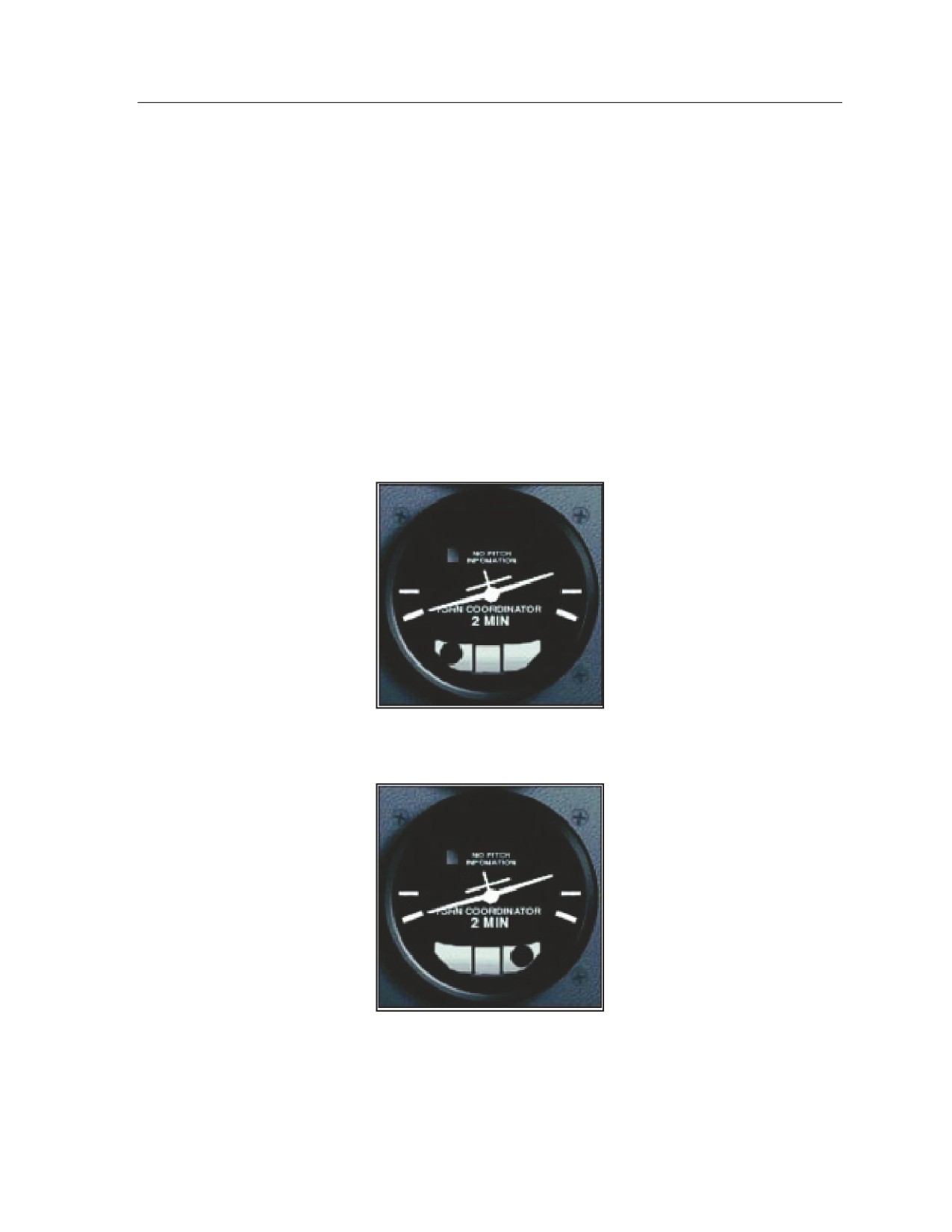
TURN COORDINATOR
3-30. A turn coordinator is not installed in most Army aircraft. However, this instrument is used in the
single-engine phase of fixed wing qualification.
3-31. The miniature aircraft on the turn coordinator indirectly indicates bank attitude. When the miniature
aircraft is level, the airplane is in straight flight. If the ball is centered, a left deflection of the miniature
aircraft means that the left wing is low and the airplane is in a left turn. Thus, when the miniature aircraft is
in a stabilized deflection, the airplane is turning in the direction indicated. Return to straight flight is
accomplished by coordinated aileron and rudder pressure to level the miniature aircraft. Include the
miniature aircraft in the cross-check, and correct for even the smallest deviations from the desired position.
When used to maintain straight flight, control pressures must be applied very lightly and smoothly.
3-32. The ball of the turn coordinator is a separate instrument located under the miniature aircraft because
the two instruments are used together. The ball instrument indicates the quality of the turn. If the ball is off
center, the airplane is slipping or skidding and the miniature aircraft under these conditions shows an error
in bank attitude. Instrument indications are shown in Figure 3-2 (slips) and Figure 3-3 (skids). If the wings
are level and the airplane is properly trimmed, the ball will remain in the center and the airplane will be in
straight flight. If the ball is not centered, the airplane is improperly trimmed (or the aviator is holding
rudder pressure against proper trim).
Figure 3-2. Slip indication
Figure 3-3. Skid indication
3-33. To maintain straight-and-level flight with proper trim, note the direction of ball displacement. If the
ball is to the left of center and the left wing is low, apply left rudder pressure (or release right rudder
30 April 2007
FM 3-04.240
3-7
Chapter 3
pressure) to center the ball and correct the slip. At the same time, apply right aileron pressure, as necessary,
to level the wings, cross-checking the heading indicator and attitude indicator when centering the ball. If
the wings are level and the ball is displaced from the center, the airplane is skidding. Note the direction of
ball displacement, and use the same corrective technique as for an indicated slip. Center the ball (left
ball/left rudder, right ball/right rudder), use aileron as necessary for bank control, and retrim.
3-34. To trim the airplane using only the turn coordinator, use aileron pressure to level the miniature
aircraft and rudder pressure to center the ball. Hold these indications with control pressures, gradually
releasing them when applying rudder trim sufficient to relieve all rudder pressure. Apply aileron trim, if
available, to relieve aileron pressure. With a full instrument panel, maintain a wings-level attitude by
reference to all available instruments while trimming the airplane.
COMMON HEADING ERRORS
3-35. Heading errors usually result from the following:
Failure to cross-check the heading indicator, especially during changes in power or pitch
attitude.
Misinterpreting changes in heading with resulting corrections in the wrong direction.
Failure to note and remember a preselected heading.
Failure to observe the rate of heading change and its relation to bank attitude.
Overcontrolling in response to heading changes especially during changes in power settings.
Anticipating heading changes with premature application of rudder control.
Failure to correct small heading deviations. Unless zero error in heading is the goal, an aviator
will find himself tolerating larger deviations; correction of a 1-degree error takes less time than a
20-degree error.
Correcting with improper bank attitude. By correcting a
10-degree heading error with a
20-degree bank correction, an aviator can roll past the desired heading before having bank
established, which requires another correction in the opposite direction; do not multiply existing
errors with errors in corrective technique.
Failure to note the cause of a previous heading error and, thus, repeating the same error; for
example, the airplane is out of trim with a left wing low tendency. An aviator repeatedly corrects
for a slight left turn yet does nothing about trim.
Failure to set the heading indicator properly or failure to uncage.
POWER CONTROL
3-36. Power produces thrust, which with the appropriate angle of attack of the wing, overcomes the forces
of gravity, drag, and inertia to determine airplane performance. Power control must be related to its effect
on altitude and airspeed because any change in power setting results in a change in the airspeed or the
altitude of the airplane. At any given airspeed, the power setting determines whether the airplane is in level
flight, a climb, or a descent. An increase in power while holding airspeed constant during straight-and-level
flight causes the aircraft to climb. A decrease in power, while the aviator holds airspeed constant during
straight-and-level flight, causes the aircraft to descend. When altitude is held constant, the power applied
will determine airspeed.
3-37. The relationship between altitude and airspeed determines the need for a change in pitch or power. If
the airspeed is off the desired value, always check the altimeter before deciding that a power change is
necessary. Aviators can think of altitude and airspeed as interchangeable. Therefore, aviators can trade
altitude for airspeed by lowering the nose or convert airspeed to altitude by raising the nose. If the altitude
is higher than desired and airspeed is low (or vice versa), a change in pitch alone may return the airplane to
the desired altitude and airspeed. If both airspeed and altitude are high or if both are low, then a change in
both pitch and power is necessary to return to the desired airspeed and altitude.
3-8
FM 3-04.240
30 April 2007
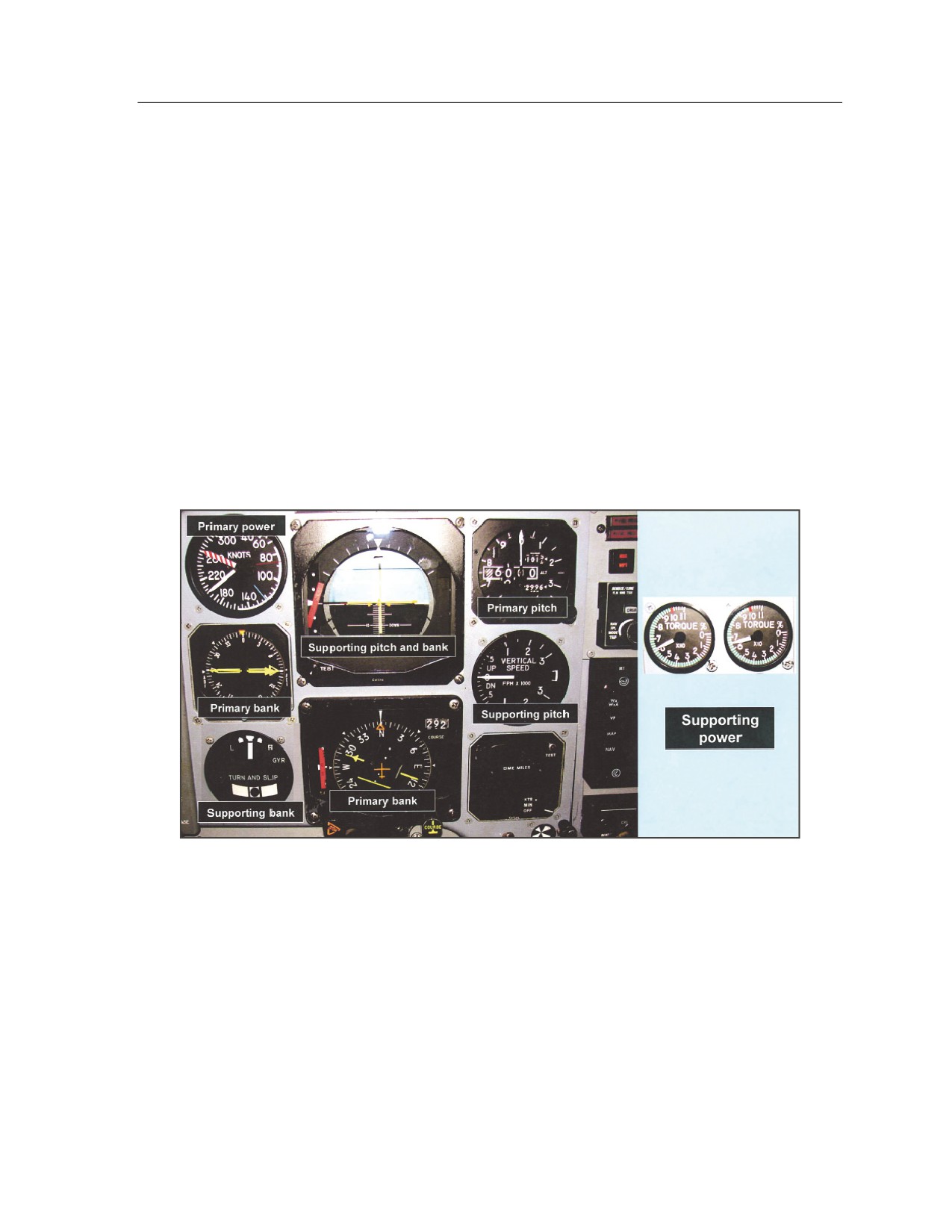
Fixed Wing Instrument Flight Maneuvers
3-38. For changes in airspeed in straight-and-level flight, pitch, bank, and power must be coordinated to
maintain a constant altitude and heading. When power is changed to vary airspeed in straight-and-level
flight, a single-engine, propeller-driven airplane tends to change attitude around all axes of movement.
Therefore, to maintain constant altitude and heading, apply various control pressures in proportion to the
changes in power. When the aviator adds power to increase airspeed, the pitch instruments will show a
climb unless forward-elevator control pressure is applied as the airspeed changes. When the aviator
increases power, the airplane tends to yaw and roll to the left unless counteracting aileron and rudder
pressures are applied. Keeping ahead of these changes requires an increase in cross-check speed, which
varies with the type of airplane and its torque characteristics, the extent of power and speed change
involved, and the technique used in making the power change.
POWER SETTINGS
3-39. Power control and airspeed changes are much easier when the aviator already knows the
approximate power settings necessary to maintain various airspeeds in straight-and-level flight. However,
to change airspeed any appreciable amount, the common procedure is to underpower or overpower on
initial power changes to accelerate the rate of airspeed change. (For small speed changes or in airplanes
that decelerate or accelerate rapidly, overpowering or underpowering is not necessary.)
3-40. Figures 3-4, 3-5, and 3-6 illustrate a method to reduce airspeed from 200 knots to 160 knots while
the aviator maintains straight-and-level flight.
Figure 3-4. Straight-and-level flight
3-41. Instrument indications, prior to the power reduction, are shown in Figure 3-4. The basic attitude is
established and maintained on the attitude indicator, and the specific pitch, bank, and power control
requirements are detected on these primary instruments:
Altimeter—primary pitch.
HSI, RMI, or compass—primary bank.
Airspeed indicator—primary power.
3-42. Supporting pitch-and-bank instruments are shown in the illustrations. The supporting power
instrument is the torque gauge. The torque gauge becomes the primary power instrument when the aviator
makes a smooth power reduction (underpower) (Figure 3-5, page 3-10). With practice, an aviator will be
able to change a power setting, with only a brief glance at the power instrument, by sensing the movement
of the power levers, the change in sound, and the changes in the feel of control pressures.
30 April 2007
FM 3-04.240
3-9
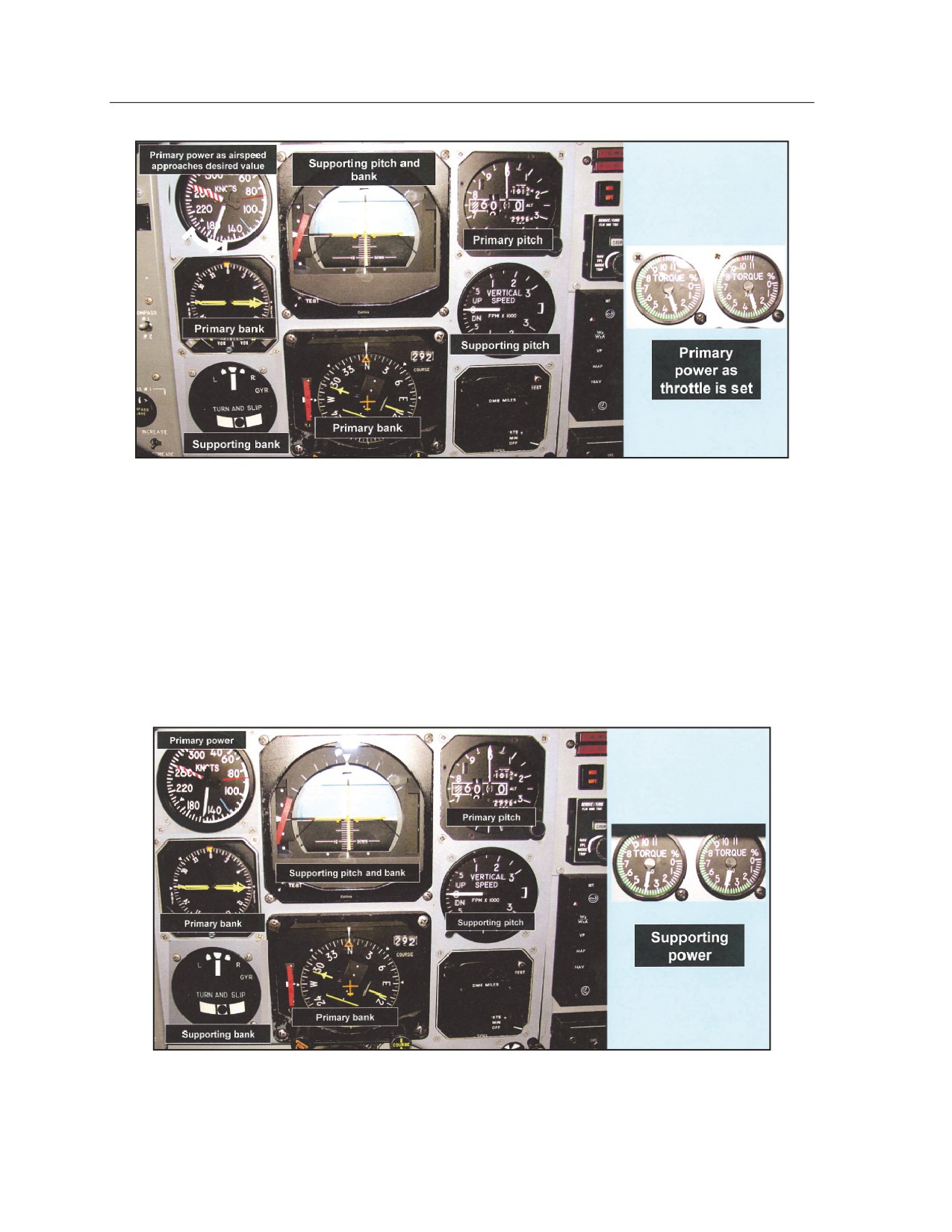
Chapter 3
Figure 3-5. Airspeed deceasing
3-43. As the thrust decreases, increase the speed of the cross-check and be ready to apply left rudder,
back-elevator, and aileron control pressure the instant that the pitch-and-bank instruments show a deviation
from altitude and heading. When proficient, an aviator will cross-check, interpret, and control the changes
with no deviation of heading and altitude. Assuming smooth air and ideal control technique, as airspeed
decreases, a proportionate increase in airplane pitch attitude is required to maintain altitude. Similarly,
effective torque control means counteracting yaw with rudder pressure.
3-44. As power is reduced, the altimeter is primary for pitch, the heading indicator is primary for bank, and
the torque gauge is temporarily primary for power. Control pressures should be trimmed off as the airplane
decelerates. As airspeed approaches 160 knots (the desired airspeed), torque is adjusted and becomes the
supporting power instrument. The airspeed indicator again becomes primary for power (Figure 3-6).
Figure 3-6. Reduced airspeed stabilized
3-10
FM 3-04.240
30 April 2007
Fixed Wing Instrument Flight Maneuvers
AIRSPEED CHANGES
3-45. Practice of airspeed changes in straight-and-level flight provides an excellent means of developing
increased proficiency in all three basic instrument skills and brings out some common errors to be expected
during training. Having learned to control the airplane in a clean configuration (minimum drag conditions),
aviators can increase proficiency in cross-check and control by practicing speed changes while extending
or retracting the flaps and landing gear. While practicing, be sure to comply with the airspeed limitations
specified in the appropriate aircraft operator’s manual for gear and flap operation.
3-46. Sudden and exaggerated attitude changes may be necessary to maintain straight-and-level flight as
the landing gear is extended and the flaps are lowered in some airplanes. The nose tends to pitch down
with gear extension, and when flaps are lowered, lift increases momentarily (at partial flap settings),
followed by a marked increase in drag as the flaps near maximum extension.
3-47. Control technique varies according to the lift and drag characteristics of each airplane. Accordingly,
knowledge of the power settings and trim changes associated with different combinations of airspeed, gear,
and flap configurations, such as in the following example, will reduce instrument cross-check and
interpretation problems.
Example of Control Technique
Assume that in straight-and-level flight an airplane indicates 145 knots with power at 95 percent torque,
gear and flaps up. After reduction in airspeed, with gear and flaps fully extended, straight-and-level flight
at the same altitude requires 98 percent torque. Maximum gear extension speed is 125 knots; maximum
flap extension speed is 105 knots.
3-48. Airspeed reduction to 95 knots, gear and flaps down, can be made in the following manner:
Increase RPM to high, because a high power setting will be used in full drag configuration.
Reduce torque to 50 percent; as the airspeed decreases, increase cross-check speed.
Make trim adjustments for an increased angle of attack and decrease in torque.
3-49. By lowering the gear at 125 knots, the nose may tend to pitch down while the rate of deceleration
increases. Increase pitch attitude to maintain constant altitude, and trim off some of the back-elevator
pressures. By lowering full flaps at this point, cross-check, interpretation, and control must be very quick.
A less difficult technique is to stabilize the airspeed and attitude with gear down before lowering the flaps.
3-50. Because 75 percent torque will hold level flight at 95 knots with the gear down, increase power
smoothly to that setting as the airspeed indicator shows about 100 knots and retrim. The attitude indicator
now shows about two-and-a-half bar width nose-high in straight-and-level flight. Actuate the flap control
and simultaneously increase power to the predetermined setting (98 percent) for the desired airspeed, and
trim off the pressures necessary to hold constant altitude and heading. The attitude indicator now shows a
bar-width nose low in straight-and-level flight at 95 knots. A high level of proficiency in the basic skills
involved in straight-and-level flight is developed when an aviator can consistently maintain constant
altitude and heading with smooth pitch, bank, power, and trim control during these pronounced changes in
trim.
COMMON POWER ERRORS
3-51. Power errors usually result from the following:
Failure to know the power settings and pitch attitudes appropriate to various airspeeds and
airplane configurations.
Abrupt use of power levers.
Failure to lead the airspeed during power changes. For example, during airspeed reduction in
level flight, especially with gear and flaps extended, adjust the power levers to maintain the
slower speed before reaching the desired airspeed; otherwise, the airplane will decelerate to a
30 April 2007
FM 3-04.240
3-11
Chapter 3
speed lower than desired, resulting in further power adjustments. How much to lead the airspeed
depends upon how fast the airplane responds to power changes.
Fixation on airspeed or torque instruments during airspeed changes, resulting in erratic control
of both airspeed and power.
TRIM TECHNIQUE
3-52. Proper trim technique is essential for smooth and precise aircraft control during all phases of flight.
By relieving all control pressures, holding a given attitude constant is mush easier and an aviator can
devote more attention to other cockpit duties.
3-53. An aircraft is trimmed by applying control pressures to establish a desired attitude and then adjusting
the trim so that the aircraft will maintain that attitude when flight controls are released. Trim the aircraft for
coordinated flight by centering the ball of the turn-and-slip indicator. Center the ball of the turn-and-slip
indicator by using rudder trim in the direction that the ball is displaced from the center. Differential power
control on multiengine aircraft is an additional factor affecting coordinated flight. Use balanced power or
thrust, when possible, to aid in maintaining coordinated flight.
3-54. Changes in attitude, power, or configuration require a trim adjustment in most cases. Using trim
alone to establish a change in aircraft attitude invariably leads to erratic aircraft control. Smooth and
precise attitude changes are attained by a combination of control pressures and trim adjustments.
Therefore, when used correctly, trim adjustment is an aid to smooth aircraft control.
3-55. Some aircraft have a yaw damper system. The yaw damper may have to be turned off while
trimming the aircraft.
3-56. Common trim errors usually result from the following:
Improper adjustment of seat or rudder pedals for comfort; tension in the legs and ankles makes
relaxing rudder pressure difficult.
Confusion as to the operation of trim devices, which differ among various airplane types. Some
trim wheels are aligned appropriately with the airplane’s axes; others are not; some rotate in a
direction contrary to what is expected.
Faulty sequence in trim technique. Trim should be used, not as a substitute for control with the
wheel (stick) and rudders, but to relieve pressures already held to stabilize attitude; by gaining
proficiency, an aviator becomes familiar with trim settings—just as with power settings—and
will be able, with little conscious effort, to trim off pressures continually as they occur.
Excessive trim control. Excessive trim control induces control pressures that must be held until
retrim is properly completed; use trim frequently and in small amounts.
Failure to understand the cause of trim changes; by not understanding the basic aerodynamics
related to the basic instrument skills, an aviator will continually lag behind the airplane.
SECTION III - STRAIGHT CLIMBS AND DESCENTS
CLIMBS
3-57. For a given power setting and load condition, there is only one attitude that will give the most
efficient rate of climb. The airspeed and the climb power setting that will determine this climb attitude are
given in the performance data found in the appropriate aircraft operator’s manual. Details of the technique
for entering a climb vary according to airspeed on entry and the type of climb (constant airspeed or
constant rate) desired. (Heading and trim control are maintained as discussed under straight-and-level
flight.)
3-12
FM 3-04.240
30 April 2007
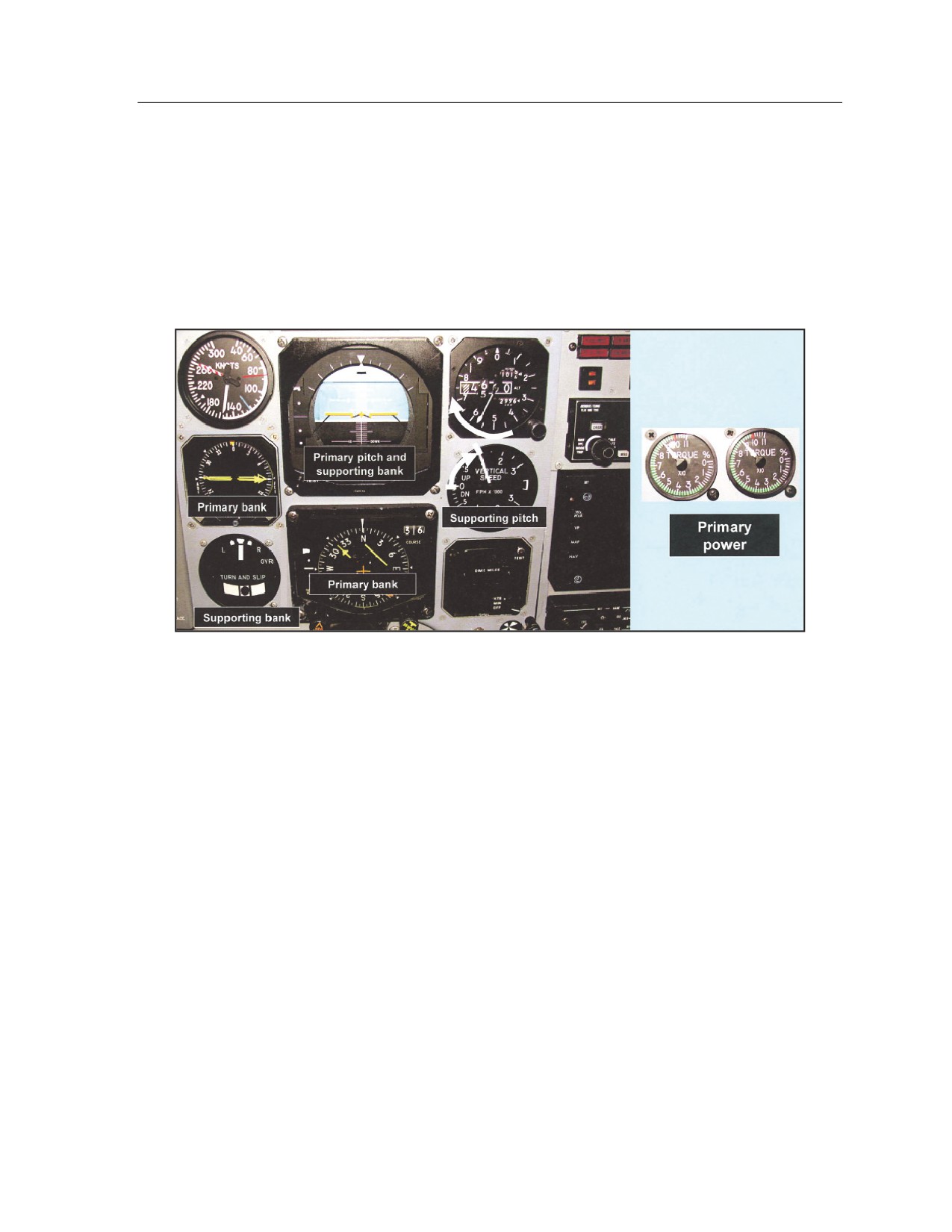
Fixed Wing Instrument Flight Maneuvers
CONSTANT-AIRSPEED CLIMB
3-58. To enter a constant-airspeed climb from cruising airspeed, raise the miniature aircraft to the
approximate nose-high indication for the predetermined climb speed. The attitude will vary according to
the type of airplane flown. Apply light back-elevator pressure to initiate and maintain the climb attitude.
The pressures will vary as the airplane decelerates. Power may be advanced to the climb power setting
simultaneously with the pitch change or after the pitch change is established and the airspeed approaches
climb speed. If the transition from level flight to climb is smooth, the VSI will show an immediate upward
trend. Continue to move slowly, and then stop at a rate appropriate to the stabilized airspeed and attitude.
Primary and supporting instruments for the climb entry are shown in Figure 3-7.
Figure 3-7. Climb entry
3-59. Once the airplane stabilizes at a constant airspeed and attitude, the airspeed indicator is primary for
pitch and the heading indicator remains primary for bank (Figure 3-8, page 3-14). Monitor the torque
gauge as the primary power instrument to ensure the proper climb power setting is being maintained. If the
climb attitude is correct for the power setting selected, the airspeed will stabilize at the desired speed. If the
airspeed is low or high, make an appropriate small pitch correction.
30 April 2007
FM 3-04.240
3-13
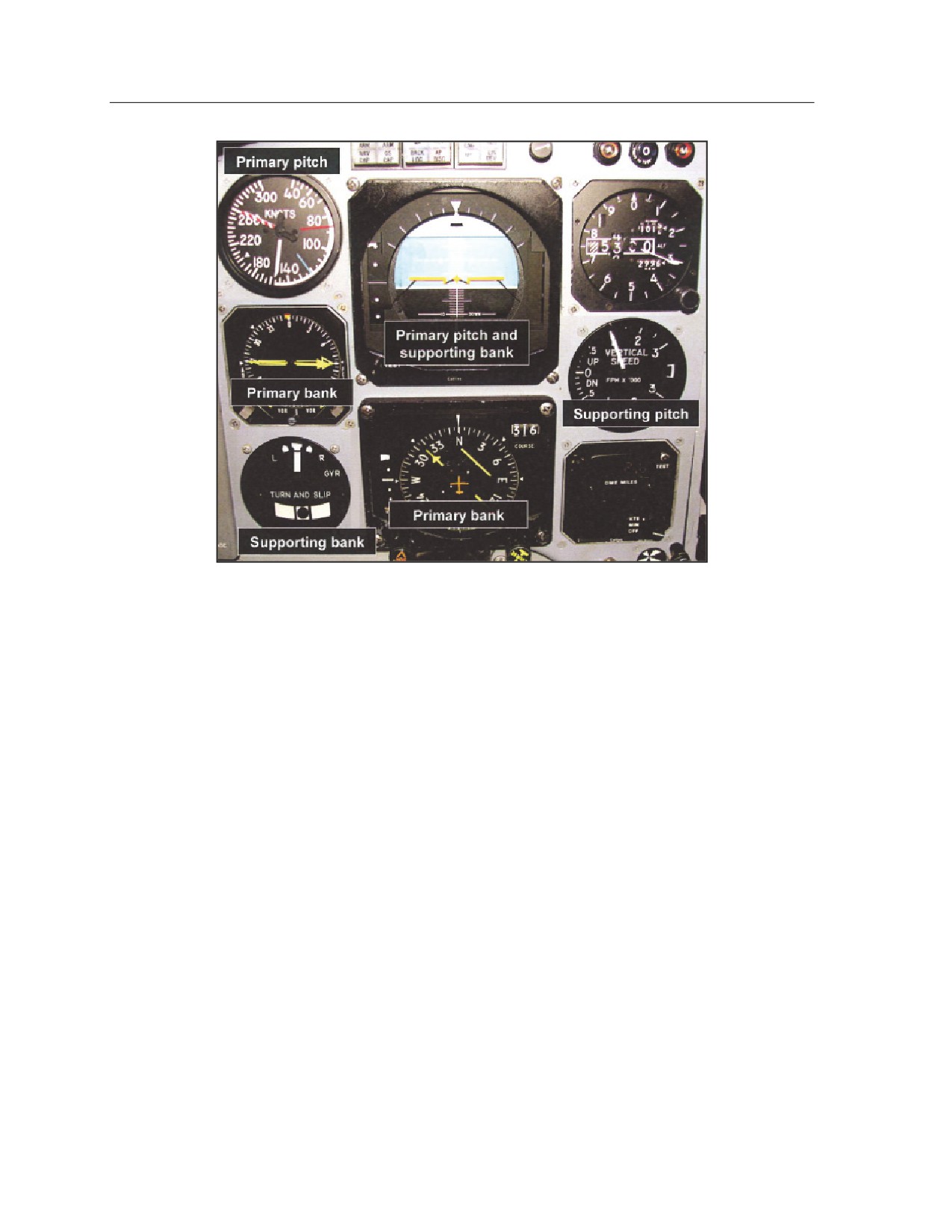
Chapter 3
Figure 3-8. Stabilized constant airspeed climb
CONSTANT-RATE CLIMB
3-60. The technique for entering a constant-rate climb is very similar to that used for entry to a
constant-airspeed climb from climb airspeed. As the power is increased to the approximate setting for the
desired rate, simultaneously raise the miniature aircraft to the climbing attitude for the desired airspeed and
rate of climb. As the power is increased, the airspeed indicator is primary for pitch control until the vertical
speed approaches the desired value. As the vertical-speed needle stabilizes, the vertical speed becomes
primary for pitch control and the airspeed indicator becomes primary for power control (Figure 3-9, page
3-15).
3-14
FM 3-04.240
30 April 2007
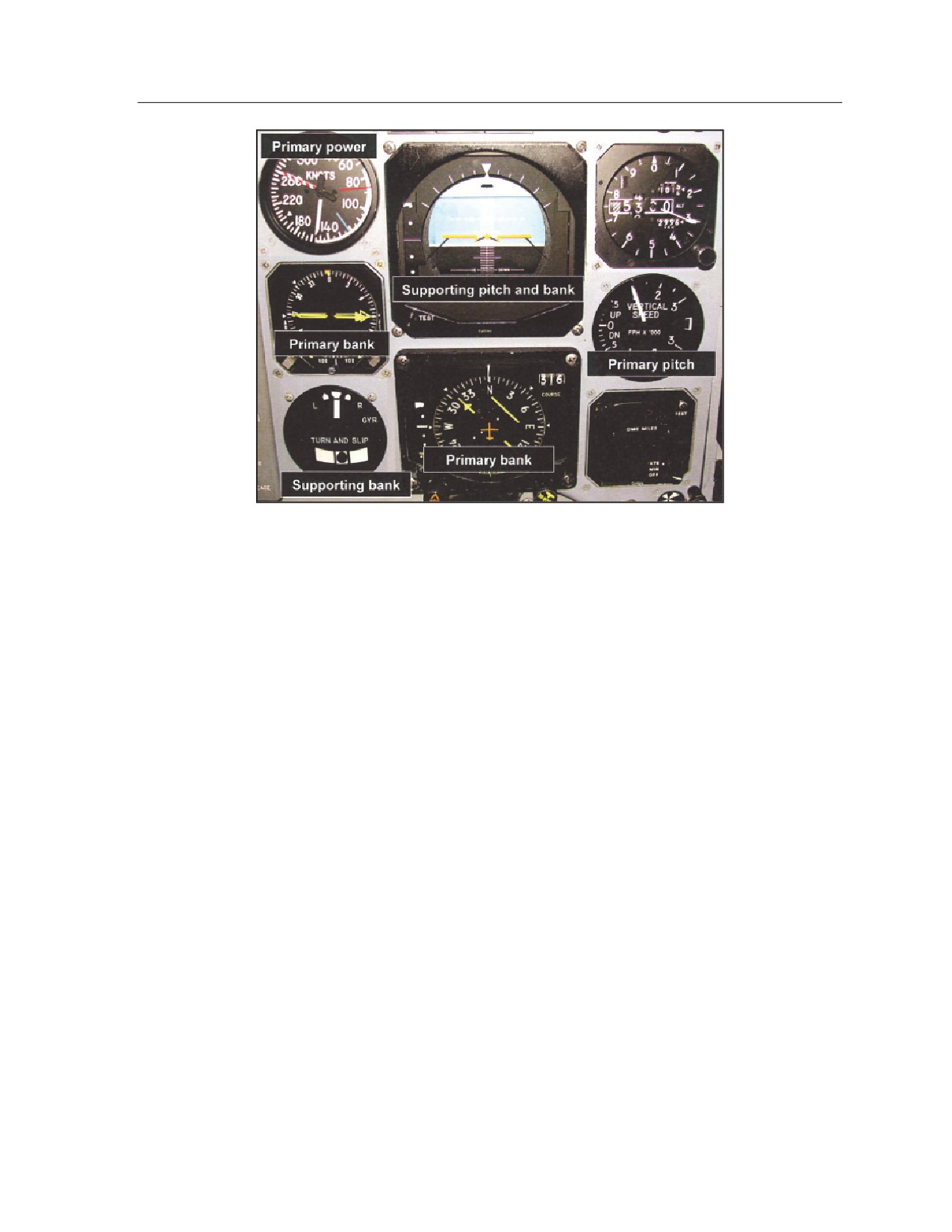
Fixed Wing Instrument Flight Maneuvers
Figure 3-9. Stabilized constant rate climb
3-61. Pitch and power corrections must be prompt and closely coordinated. For example, if vertical speed
is correct but airspeed is low, add power. As power is increased, the miniature aircraft must be lowered
slightly to maintain constant vertical speed. If vertical speed is high and airspeed is low, lower the
miniature aircraft slightly and note the increase in airspeed to determine whether a power change is
necessary. Familiarity with power settings helps to keep pitch and power corrections at a minimum.
LEVEL-OFF
3-62. To level-off from a climb and maintain an altitude, start the level-off before reaching the desired
altitude. The amount of lead varies with rate of climb and aviator technique. If the airplane is climbing at
1,000 FPM, the airplane will continue to climb at a decreasing rate throughout the transition to level flight.
An effective practice is to lead the altitude by 10 percent of the vertical speed shown (500 FPM/50-foot
lead, 1,000 FPM/100-foot lead).
3-63. To level-off at cruising airspeed, apply smooth, steady forward-elevator pressure toward level-flight
attitude for the speed desired. As the attitude indicator shows the pitch change, the vertical-speed needle
will move slowly toward zero, the altimeter needle will move more slowly, and the airspeed will show
acceleration (Figure 3-10, page 3-16). Constant changes in pitch and torque control will have to be made as
the airspeed increases when the altimeter, attitude indicator, and VSI show level flight. As the airspeed
approaches cruising speed, reduce power to the cruise setting. The amount of lead depends on the rate of
acceleration of the airplane.
3-64. To level-off at climbing airspeed, lower the nose to the pitch attitude appropriate to that airspeed in
level flight. Power is simultaneously reduced to the setting for that airspeed as the pitch attitude is lowered.
If the power reduction is at a rate proportionate to the pitch change, airspeed will remain constant.
30 April 2007
FM 3-04.240
3-15
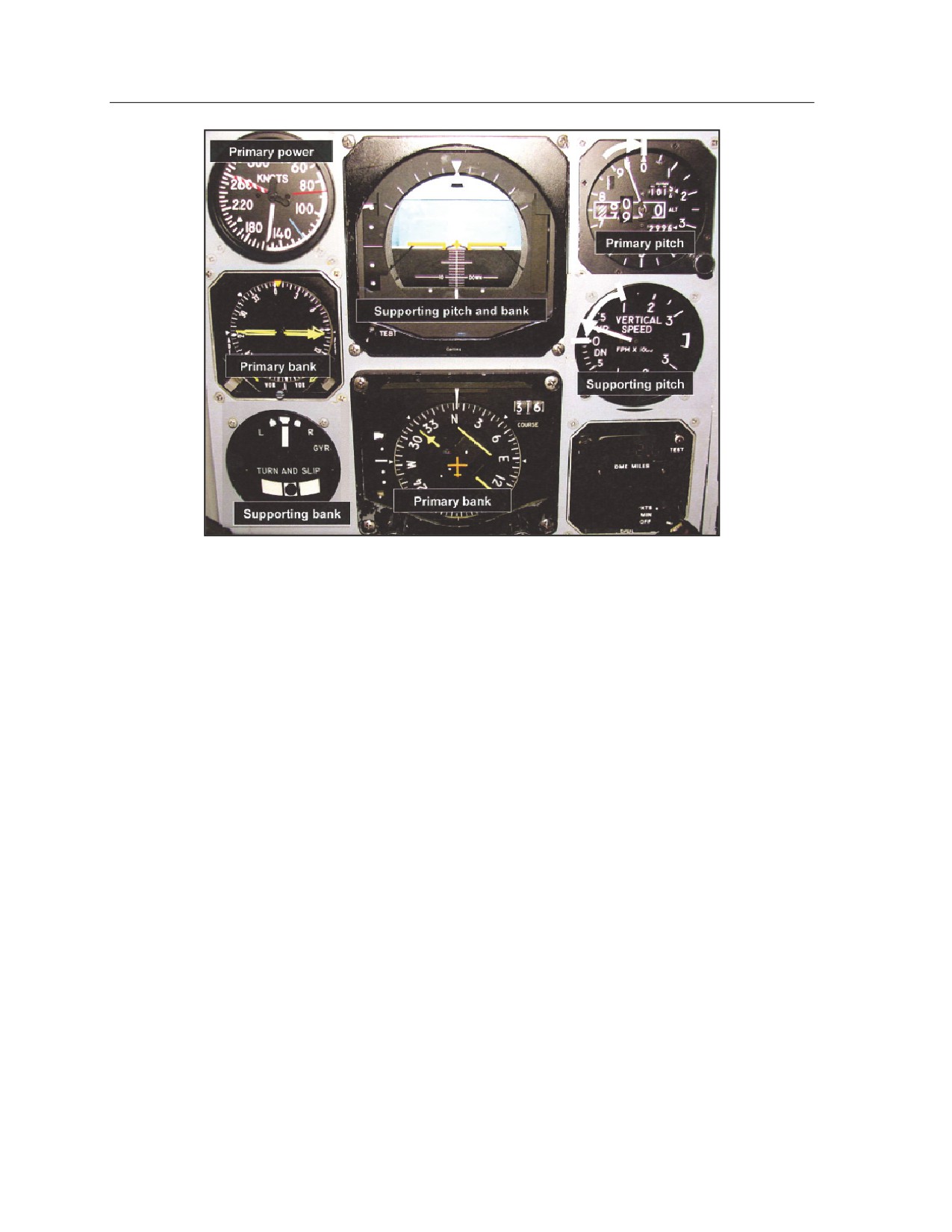
Chapter 3
Figure 3-10. Level-off
DESCENTS
3-65. A descent can be made at a variety of airspeeds and attitudes by reducing power, adding drag, and
lowering the nose to a predetermined attitude. Sooner or later, the airspeed will stabilize at a constant
value. Meanwhile, the only flight instrument providing a positive attitude reference, by itself, is the attitude
indicator. Without the attitude indicator (such as during a partial-panel descent), the airspeed indicator, the
altimeter, and the VSI will show varying rates of change until the airplane decelerates to a constant
airspeed at a constant attitude. Maintain cruise airspeed during descent by reducing power and decreasing
pitch. Adjust pitch for rate of descent and power to maintain correct airspeed. During the transition,
changes in control pressure and trim, as well as cross-check and interpretation, must be very accurate to
maintain positive control.
AIRSPEED DESCENT
3-66. The following method for entering descents is effective either with or without an attitude indicator.
First, reduce airspeed to the selected descent airspeed while maintaining straight-and-level flight, and then
make a further reduction in power (to a predetermined setting). As the power is adjusted, simultaneously
lower the nose to maintain constant airspeed and trim off control pressures.
3-67. During a constant-airspeed descent, any deviation from the desired airspeed calls for a pitch
adjustment. For a constant-rate descent, the entry is the same but the vertical-speed indicator is primary for
pitch control (after the aircraft stabilizes near the desired rate) and the airspeed indicator is primary for
power control. Pitch and power must be closely coordinated when the aviator makes corrections (Figure
3-11, page 3-17).
3-16
FM 3-04.240
30 April 2007
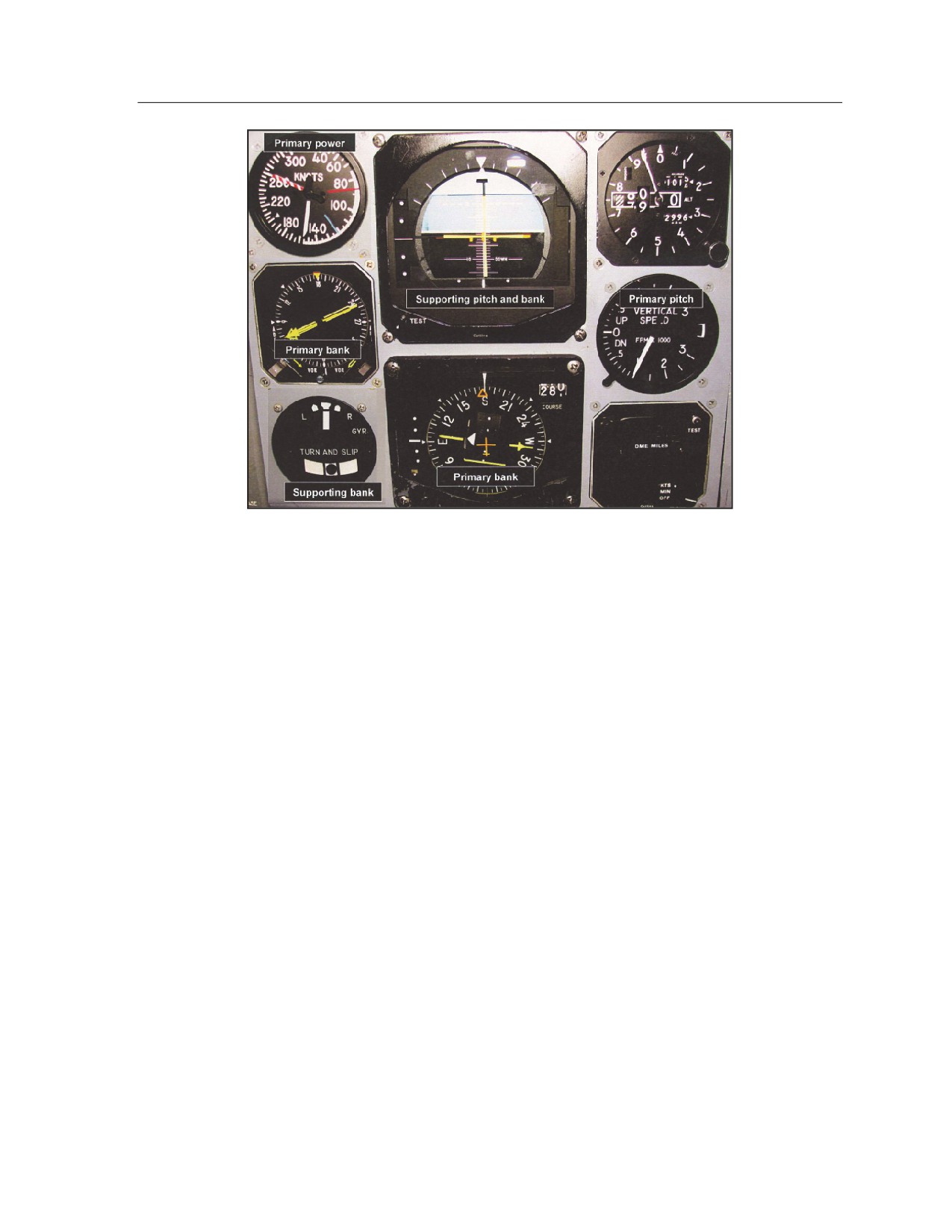
Fixed Wing Instrument Flight Maneuvers
Figure 3-11. Constant airspeed descent, airspeed high—reduce power
LEVEL-OFF
3-68. Level-off from a descent must be started before reaching the desired altitude. The amount of lead
depends on the descent rate and control technique. With too little lead, an aviator tends to overshoot the
selected altitude unless the technique is quick. Lead the altitude by 100 to 150 feet for a level-off at
airspeed higher than descending speed (assuming a 500-FPM rate of descent). At the lead point, add power
to the appropriate level-flight cruise setting (Figure 3-12). Because the nose tends to rise as airspeed
increases, hold forward-elevator pressure to maintain vertical speed at the descending rate until about 50
feet above altitude and smoothly adjust the pitch attitude to the level-flight attitude for the airspeed
selected.
3-69. To level-off from a descent at descent airspeed, lead the desired altitude by about
50 feet,
simultaneously adjusting the pitch attitude to level flight and adding power to a setting that will hold the
airspeed constant (Figure 3-12, page 3-18). Trim off the control pressures and continue with the normal
straight-and-level flight cross-check.
30 April 2007
FM 3-04.240
3-17
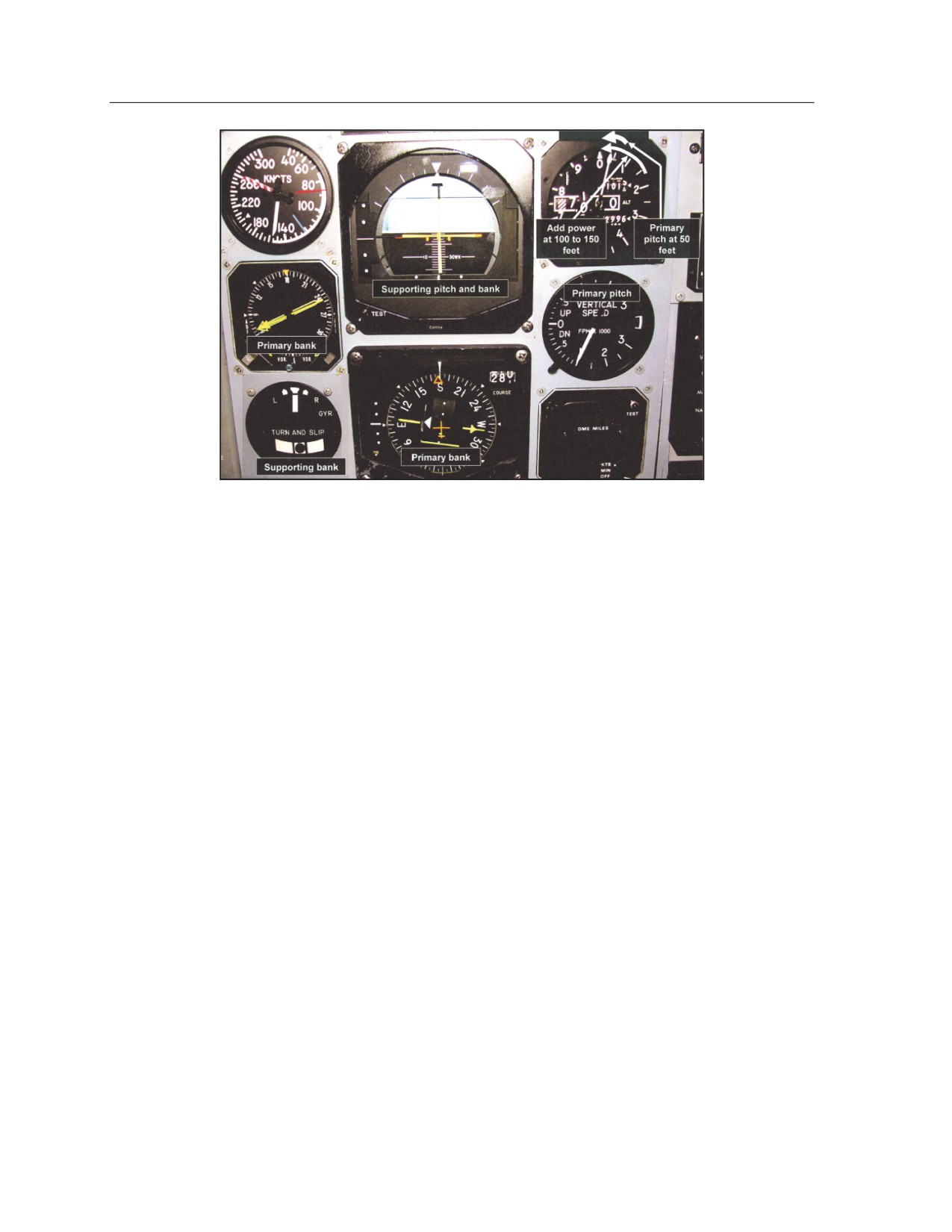
Chapter 3
Figure 3-12. Level-off at descent airspeed
COMMON CLIMB AND DESCENT ERRORS AND RESOLUTIONS
3-70. Common errors and their resolutions include the following:
Overcontrolling pitch on climb entry. An inexperienced aviator has a tendency to make larger
than necessary pitch adjustments; overcome the inclination to make large control movements by
applying small control pressures smoothly. Cross-check quickly for results of the change, and
continue with the pressures as the instruments show the desired results at a rate that can be
interpreted; small pitch changes are more easily controlled, stopped, and corrected.
Failure to vary the rate of cross-check during speed, power, or attitude changes for climb and
descent entries.
Failure to maintain a new pitch attitude. For example, an aviator raises the nose to the correct
climb attitude; as airspeed decreases, the aviator may continue to lead the input, which can cause
overcontrol, further increasing the pitch attitude. Another error is if the aviator does not
maintain the proper pitch attitude, which could allow the nose to lower; this undercontrol may
not provide the desired climb rate. Control pressures change with airspeed changes; therefore,
the aviator must increase cross-checks and readjust control pressures as necessary for desired
pitch attitude.
Failure to trim off pressures; unless the aviator trims, there will be difficulty in determining
whether control pressure changes are induced by aerodynamic changes or aviator movements.
Failure to learn and use proper power settings.
Failure to cross-check airspeed and vertical speed before making pitch or power adjustments.
Improper pitch and power coordination on slow-speed level-offs because of slow cross-check of
airspeed and altimeter indications.
Failure to cross-check the VSI against other pitch control instruments.
Failure to note the rate of climb or descent to determine the lead for level-offs.
Failure to maintain descending attitude with forward-elevator pressure as power is increased to
level flight cruise setting causes ballooning (allowing the nose to pitch up).
Failure to recognize the approaching straight-and-level flight indications when leveling-off.
3-18
FM 3-04.240
30 April 2007
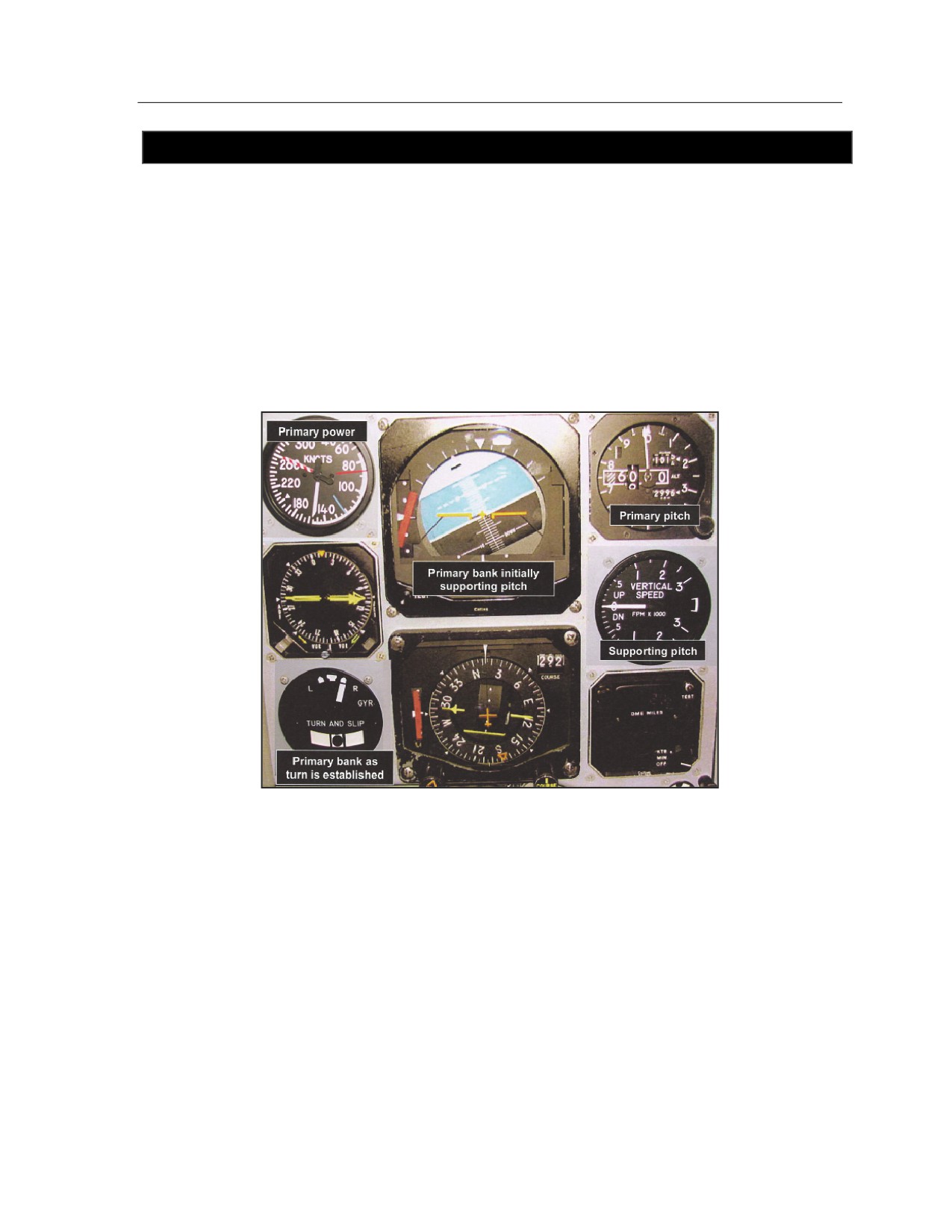
Fixed Wing Instrument Flight Maneuvers
SECTION IV - TURNS
STANDARD-RATE TURNS
3-71. To enter a standard-rate level turn, apply coordinated aileron and rudder pressures in the desired
direction of turn. Aviators commonly roll into turns at a much too rapid rate. During initial training in
turns, base control pressures on the rate of cross-check and interpretation. There is nothing to be gained by
maneuvering an airplane faster than the capacity to keep up with the changes in instrument indications.
3-72. On the roll in, use the attitude indicator to establish the approximate angle of bank and then check
the turn coordinator’s miniature aircraft for a standard-rate turn indication. Maintain the bank for this rate
of turn, using the turn coordinator’s miniature aircraft as the primary bank reference and the attitude
indicator as the supporting bank instrument (Figure 3-13). Note the exact angle of bank shown on the
banking scale of the attitude indicator when the turn coordinator indicates a standard-rate turn.
Figure 3-13. Standard rate turn
3-73. During roll-in, check the altimeter, VSI, and attitude indicator for the necessary pitch adjustments as
the vertical lift component decreases with an increase in bank. If constant airspeed is to be maintained, the
airspeed indicator becomes primary for power and the power levers must be adjusted as drag increases. As
the bank is established, trim off the pressures applied during pitch and power changes.
3-74. To recover to straight-and-level flight, apply coordinated aileron and rudder pressures opposite the
direction of turn. If an aviator strives for the same rate of roll-out used to roll into the turn, he will
encounter fewer problems in estimating the lead necessary for roll-out on exact headings, especially on
partial-panel maneuvers. The attitude indicator becomes the primary bank instrument when the aviator
initiates the turn recovery. When the airplane is approximately level, the heading indicator is the primary
bank instrument. Pitch, power, and trim adjustments are made as changes in vertical lift component and
airspeed occur. The ball should be checked throughout the turn, especially if control pressures are held
rather than trimmed off.
3-75. Some airplanes are very stable during turns, and slight trim adjustments permit hands-off flight while
the airplane remains in the established attitude. Other airplanes require constant, quick cross-check and
30 April 2007
FM 3-04.240
3-19
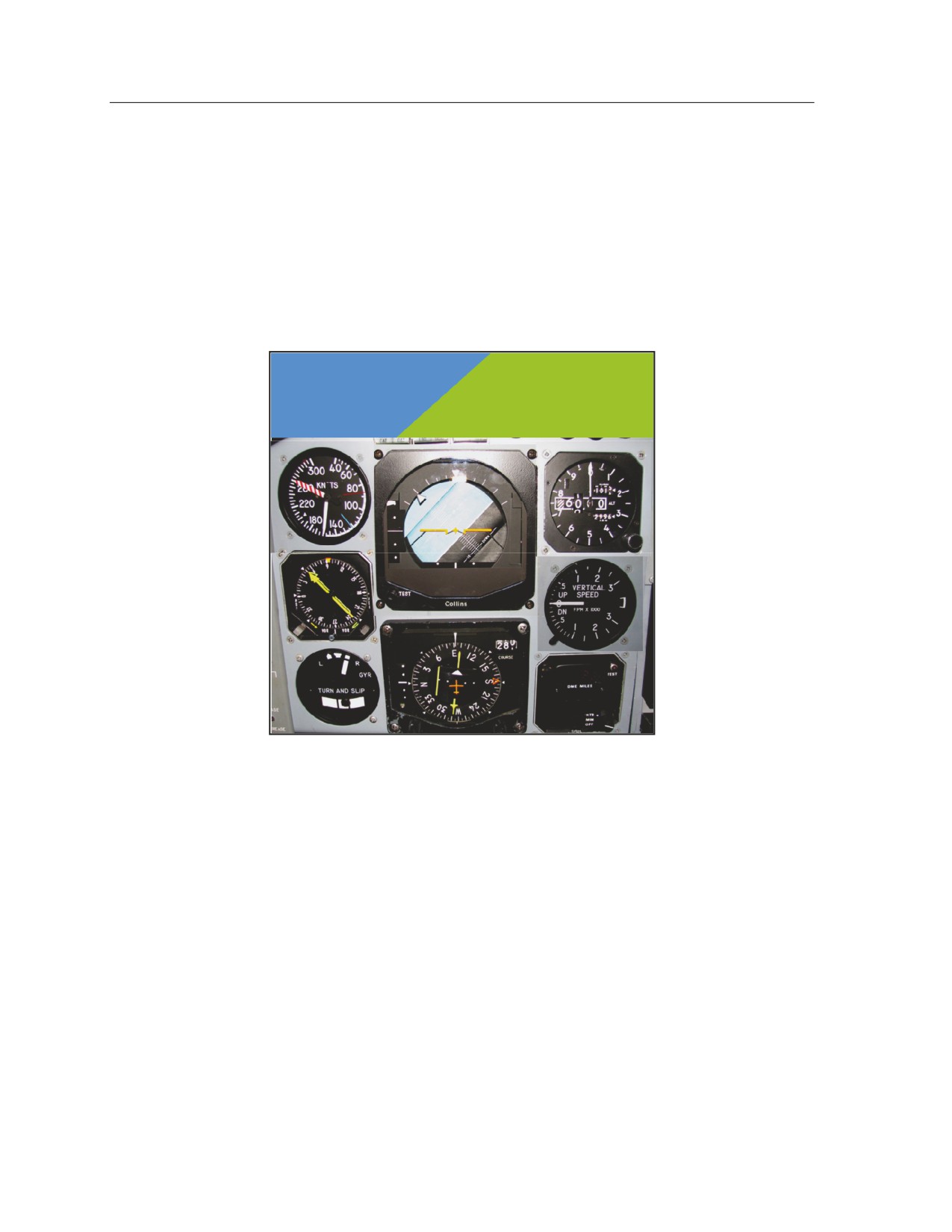
Chapter 3
control during turns to correct overbanking tendencies. Because of the interrelationship of pitch, bank, and
airspeed deviations during turns, the cross-check must be fast to prevent an accumulation of errors.
STEEP TURNS
3-76. For purposes of instrument flight training in conventional aircraft, any turn with a 45-to 60-degree
bank angle or greater is considered steep (Figure 3-14). The exact angle of bank at which a normal turn
becomes steep is unimportant. What is important is to learn to control the airplane with bank attitudes in
excess of those normally used on instruments. Practice in steep turns will not only increase proficiency in
basic instrument flying skills but also enable smooth, quick, and confident reaction to unexpected abnormal
flight attitudes under instrument flight conditions.
Figure 3-14. Steep right turn
3-77. Aerodynamic forces inhibit aircraft control at progressively steeper bank attitudes. Skill in
cross-check, interpretation, and control is increasingly necessary in proportion to the amount of these
changes. The techniques for entering, maintaining, and recovering from the turn are the same in principle
for steep turns as for shallow turns.
3-78. Enter a steep turn exactly as a shallow turn, but prepare to cross-check quickly as the turn becomes
steeper. Because of the reduced vertical lift component, pitch control is usually the most difficult aspect of
this maneuver. Unless immediately noted and corrected with a pitch increase, the loss of vertical lift results
in rapid movement of the altimeter, vertical speed, and airspeed needles. The faster the rate of bank change,
the more suddenly the lift changes occur. If the cross-check is fast enough to note the immediate need for
pitch changes, smooth, steady back-elevator pressure will maintain constant altitude. However, if an
aviator overbanks to excessively steep angles without adjusting pitch as bank changes occur, pitch
corrections require increasingly stronger elevator pressure. The loss of vertical lift and increase in wing
loading finally reach a point where further application of back-elevator pressure tightens the turn without
raising the nose.
3-79. Despite the application of back-elevator pressure, the aircraft is in a diving spiral when the aviator
observes a rapid downward movement of the altimeter needle or vertical-speed needle, along with an
increase in airspeed. Immediately shallow the bank with smooth and coordinated aileron and rudder
3-20
FM 3-04.240
30 April 2007
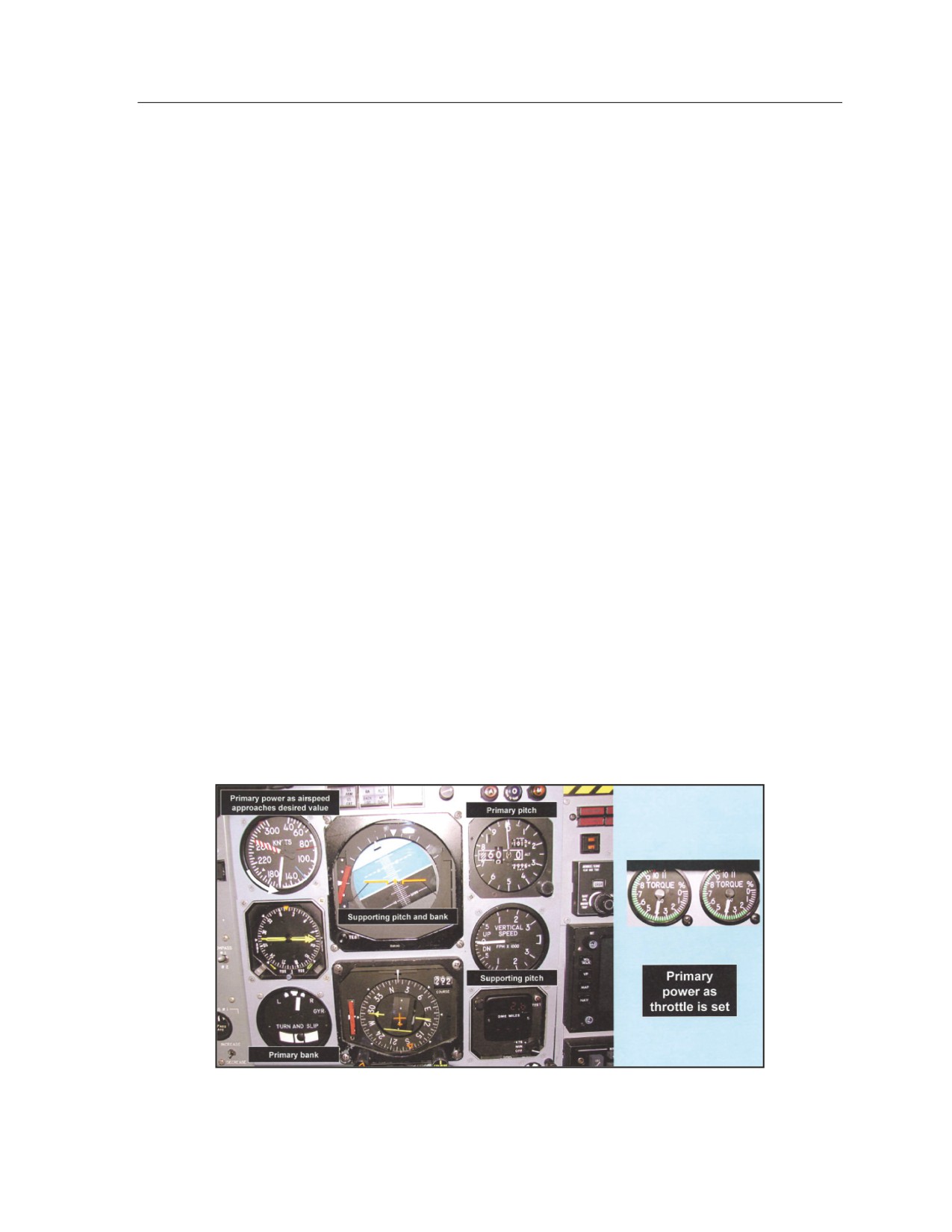
Fixed Wing Instrument Flight Maneuvers
pressures, hold or slightly relax elevator pressure, and increase the cross-check of the attitude indicator,
altimeter, and VSI. Reduce power if the airspeed increase is rapid. The altimeter needle moves slower as
the vertical lift increases and the vertical speed trends upward. When noting the elevator is effective in
raising the nose, hold the bank attitude shown on the attitude indicator and adjust elevator control pressures
smoothly for the nose-high attitude appropriate to the bank maintained. If pitch control is consistently late
on entries to steep turns, roll-out immediately to straight-and-level flight and analyze any errors. Practice
shallower turns until able to keep up with the attitude changes and control responses required, and then
proceed to steeper banks as quicker and more accurate control techniques are developed.
3-80. The power necessary to maintain a constant airspeed increases as the bank and drag increase. With
practice, an aviator quickly learns the power settings appropriate to specific bank attitudes and can make
adjustments without undue attention to airspeed and power instruments. When the aviator keeps the pitch
attitude relatively constant, there is more time to cross-check, interpret, and control for accurate airspeed
and bank control.
3-81. During recovery from steep turns to straight-and-level flight, elevator and power control must be
coordinated with bank control in proportion to the changes in aerodynamic forces. Back-elevator pressures
must be released and power decreased. Errors are more exaggerated and more difficult to correct and
analyze unless the rates of entry and recovery are consistent with the level of proficiency in the basic
instrument flying skills.
CLIMBING AND DESCENDING TURNS
3-82. To execute climbing and descending turns, combine the technique used in straight climbs and
descents with various turn techniques. The aerodynamic factors affecting lift and power control must be
considered in determining power settings, and the rate of cross-check and interpretation must be increased
to enable an aviator to control bank as well as pitch changes.
CHANGE OF AIRSPEED DURING TURNS
3-83. Changing airspeed during turns (Figure 3-15) is an effective maneuver for increasing proficiency in
all three basic instrument skills. Because the maneuver involves simultaneous changes in all components of
control, proper execution requires a quick cross-check and interpretation as well as smooth control.
Proficiency in the maneuver will also contribute to aviator confidence in the instruments during attitude
and power changes involved in more complex maneuvers. Pitch and power control techniques are the same
as those used during changes in airspeed during straight-and-level flight.
Figure 3-15.Change of airspeed in turn
30 April 2007
FM 3-04.240
3-21