FM 7-22 ARMY PHYSICAL READINESS TRAINING (OCTOBER 2012) - page 2
Chapter 4
“More PRT does not equal better PRT. Training quality is more important than the number of
repetitions performed.”
William R. Rieger, National Strength and Conditioning Association
Certified Strength and Conditioning Specialist
ADVANCED INDIVIDUAL TRAINING
4-3. Advanced individual training focuses on technical and MOS-oriented (military occupational specialty)
subjects; therefore, PRT should continue to prepare these Soldiers to meet the physical requirements of their
first unit of assignment. It is recommended that commanders should continue conducting toughening phase
activities until Soldiers meet Army standards before transitioning to sustaining phase activities. See Chapter 5
for AIT planning considerations.
ONE STATION UNIT TRAINING
4-4. Physical readiness training in OSUT brings Soldiers through the toughening phase and prepares them for
the rigors of their first unit of assignment. New Soldiers follow the same progression as BCT during the
red/white/blue phases of OSUT.
4-5. Commanders should continue conducting toughening phase activities until Soldiers meet Army standards.
Soldiers can then transition to sustaining phase activities during the black/gold phases of OSUT. These
activities are more difficult and complex and prepare Soldiers to perform the physical requirements of their duty
assignments as their units prepare for full spectrum operations. See Chapter
5 for OSUT planning
considerations.
WARRANT OFFICER CANDIDATE SCHOOL
4-6. Physical readiness training in warrant officer candidate school employs sustaining phase exercises, drills,
and activities to prepare Soldiers for the rigors of warrant officer candidate school and their first unit of
assignment.
BASIC OFFICER LEADER COURSES
4-7. The training program in BOLC A brings Soldiers up to a level of physical readiness that prepares them
for the rigors of BOLC B. Cadets and officer candidates report to BOLC A at various levels of physical
readiness and ability. During the first weeks of training, the focus is on progressive training of the whole body.
It is recommended that Soldiers in BOLC A perform toughening phase activities during PRT sessions. Soldiers
in BOLC B transition to performing sustaining phase activities during PRT sessions. To minimize the risk of
injury, Soldiers perform exercises precisely and the intensity progresses gradually. Commanders should
evaluate each new Soldier who falls below the BOLC A standard and give special assistance to improve
deficiencies. Again, more PRT is not necessarily better. Instructors emphasize quality of the training, not
quantity of exercises performed. Commanders and PRT leaders need to realize that it takes at least six to eight
weeks to begin positive changes in physical fitness levels; therefore, some Soldiers may require additional time
to make the improvements required to meet Army standards.
ACTIVE AND RESERVE COMPONENTS
4-8. This section covers PRT programs for the active and reserve component (RC) forces. It also provides an
overview of the Army training management process and its relationship to the development of individual and
unit PRT programs.
ACTIVE
4-9. Active component PRT includes unit, individual, reconditioning, and special conditioning programs.
4-2
FM 7-22
26 October 2012
Types of Programs
UNIT
4-10. The goal of Army PRT is to improve each Soldier’s physical ability to survive and win in any operational
environment. Physical readiness includes all aspects of physical performance and requires training well above
that of simple preparation for the APFT. Commanders are responsible for the training, performance, and
readiness of their Soldiers. Physical readiness training is a commander’s program; therefore, commanders
should employ the Army training management process specified in FM 7-0. The Army training management
process provides a systematic way to manage time and resources to meet training objectives through purposeful
training activities. Commanders use this process to identify training requirements and to subsequently plan,
prepare, execute, and assess all training.
Mission-Essential Task List
4-11. The Army’s training management model provides the framework for commanders to achieve proficiency
in their unit’s mission-essential task list (METL). The unit METL drives training. Key to the success of this
process is the inclusion of bottom-up feedback. This approach applies mission command to the training process.
With this approach, senior leaders provide training focus, direction, and resources. Subordinate leaders develop
objectives and training requirements specific to the unit and provide feedback on training proficiency. They also
identify unit needs and train to standard according to the unit training schedule or the event training plan. Senior
leaders provide guidance based on mission and priorities, requiring subordinate leaders to conduct analysis to
identify both collective and individual tasks that support the higher headquarters mission-essential tasks. This is
the top-down approach to training. Input provided by subordinate leaders identifies critical training needs in
order to achieve task proficiency. This is the bottom-up approach to training. This process, when combined,
creates the top-down/bottom-up approach to training. This ensures effective communication of the requirements
and of the planning, preparing, executing, and assessing of training. This process is essential to ensure proper
conduct and execution of the unit PRT program.
Operating Tempo
4-12. Well-planned PRT maximizes physical performance in the completion of critical Soldier and leader tasks
that support the unit’s mission and C- and/or D-METL. It must reflect the commander’s training objectives and
goals and must reflect the principles of precision, progression, and integration. With ever changing operating
tempo (OPTEMPO), units and Soldiers must continue to train to improve/sustain METL performance. Training
priorities dictate how often and how rigorously PRT occurs.
Army Force Generation
4-13. Army Force Generation is the driving force behind training management. The Army provides campaign
capable expeditionary forces through ARFORGEN. Army Force Generation applies to both regular Army and
RC (Army National Guard and U.S. Army Reserve) units. Unit commanders and PRT leaders can plan PRT
based on the specific requirements addressed in each of the ARFORGEN phases. Chapter
5 provides
commanders and PRT leaders with example training schedules based on the three phases of ARFORGEN. Each
phase has a specific focus.
Reset
4-14. The reset phase focuses on individual and collective training tasks that support their C- and/or D-METL.
Train/Ready
4-15. The train/ready phase focuses on higher level collective tasks associated specifically with deployment.
Available
4-16. The available phase continues focus on higher-level collective tasks. The unit achieves trained status and
becomes available for immediate alert and deployment.
26 October 2012
FM 7-22
4-3
Chapter 4
Top Down/Bottom Up
4-17. Units not involved in ARFORGEN should still follow the Army training management process. The unit’s
mission and METL still drive training. The top-down/bottom-up approach to training mentioned previously
ensures effective communication of the requirements and of the planning, preparing, executing, and assessing of
training. Senior leaders continue to provide training focus, direction, and resources. Subordinate leaders
continue to develop objectives and training requirements specific to the unit and provide feedback on training
proficiency. They also identify unit needs and train to standard according to the unit training schedule or event
training plan. Senior leaders provide guidance based on mission and priorities, requiring subordinate leaders to
conduct analysis to identify both collective and individual tasks that support the higher headquarters mission-
essential tasks. Well-planned PRT maximizes physical performance in the completion of critical Soldier and
leader tasks that support the unit’s mission and METL. It must reflect the commander’s training objective and
goals and be based on the principles of precision, progression, and integration. With ever changing OPTEMPO,
units and Soldiers must continue to train to improve or sustain METL performance. Training priorities dictate
how often and how rigorously PRT occurs. Professional development schools, hospitals, military police,
communication centers, and Department of the Army staff have various challenges in planning and conducting
PRT. Leaders should make every effort to conduct phased unit or individual PRT five times a week. See
Chapter 5 for unit PRT schedules.
INDIVIDUAL
4-18. Commanders that authorize the use of individual training programs for their Soldiers should follow the
same training management principles outlined in the previous paragraphs. Army Force Generation is the driving
force behind training management. The Army provides campaign-capable expeditionary forces through
ARFORGEN. Army Force Generation also applies to RC (Army National Guard and U.S. Army Reserve) units;
therefore, leaders and individual Soldiers need to use the PRT system outlined in this FM to help them achieve
and sustain high levels of physical readiness required in the conduct of duty position or full spectrum
operations. Individual PRT programs must be designed to improve the individual’s contribution to the unit’s
physical readiness. Conditioning, CLs, and GDs, foot marching, and running activities employed in unit PRT
can be performed individually or with a partner. Individual and small group PRT should develop and maintain a
level of physical readiness equivalent to that required for success in performance of the unit mission and C-
METL or D-METL. Chapter 5, Planning Considerations, provides commanders and PRT leaders with examples
of collective and individual training schedules based on the three phases of ARFORGEN.
4-19. All Soldiers must understand that it is their personal responsibility to achieve and sustain a high level of
physical readiness and resilience. Individual physical readiness includes all aspects of physical performance and
requires training well above that of simple preparation for the APFT. Many Soldiers are assigned to duty
positions that restrict participation in collective unit PRT programs. Examples include Army staff, hospitals,
service-school staff and faculty, recruiting, Reserve Officer Training Corps, Reserve and National Guard units.
In such units, commanders must develop leadership environments that encourage and motivate Soldiers to
accept individual responsibility for their own physical readiness. Physical readiness and resilience requirements
are the same for these personnel as for others.
RECONDITIONING PROGRAM
4-20. As mentioned in Chapter 2, System, the objective of the reconditioning program is to restore physical
fitness levels of Soldiers on medical profile that enable them to re-enter the toughening or sustaining phase.
Commanders and health care personnel provide special aid to Soldiers assigned to reconditioning PRT for one
or more of the following medical conditions: injury, illness, or surgery. Chapter 6, Special Conditioning
Programs, provides more information on reconditioning.
PREGNANCY AND POSTPARTUM TRAINING
4-21. The U.S. Army Medical Command has responsibility for the Army Pregnancy Postpartum Physical
Training (PPPT) Program. The Army PPPT Program is designed to maintain health and fitness levels of
pregnant Soldiers and to assist them in returning to pre-pregnancy fitness levels after the end of their pregnancy.
The goal is to integrate the Soldier into her unit PRT program with an emphasis on meeting the standards for the
4-4
FM 7-22
26 October 2012
Types of Programs
Army Weight Control Program (AWCP) and APFT. Pregnancy postpartum physical training program
standards, policies, procedures, and responsibilities are set forth in the United States Army Public Health
Command (USAPHC), Technical Guide Series 255A-E, U.S. Army Pregnancy Post Partum Physical Training
Program. The USAPHC is responsible to ensure that the Technical Guide Series 255A-E manuals are updated
periodically and made available in a web-based format. USAPHC is responsible for training PPPT instructor
trainers and health care experts who provide training for the PPPT program as specified in the Technical Guide
Series 255A-E.
Senior Commanders
4-22. Senior commanders have responsibility for PPPT program execution and will ensure the following:
z
All eligible Soldiers will participate in the installation level PPPT program.
z
Soldiers maintain health and fitness levels throughout their pregnancy and return to pre-pregnancy
fitness levels.
z
Soldiers will safely reintegrate into their unit’s PRT program.
z
Soldiers meet AWCP and APFT standards.
z
Medical consultation and support are provided.
z
Healthcare instruction is available for the local PPPT program.
z
Facilities and equipment are available for conducting the PPPT.
z
Personnel are designated to conduct the PT portion of the PPPT program.
Publications
4-23. Adhere to the content, standards, policies, procedures, and responsibilities in the guide series and
regulation.
z
AR 350-1, Army Training and Leader Development.
z
USAPHC Technical Guide Series 255A-E, U.S. Army Pregnancy/Postpartum Physical Training
Program. The USAPHC provides and updates this series of guides, which provides the standards,
policies, procedures, and responsibilities that Medical Command must follow in administering the
PPPT program.
Reserve Component and Remotely Located Soldiers
4-24. Reserve component Soldiers, geographically remote Soldiers, and those assigned to installations with a
small population of pregnant Soldiers may use the materials designed for an individualized PPPT program.
These are available from USAPHC.
Eligibility
4-25. Soldiers diagnosed as pregnant or who are recovering from childbirth are exempt from regular unit
physical training and APFT for the duration of the pregnancy and 180 days past the end of their pregnancy.
These Soldiers are required to enroll in the Army PPPT Program. Before they may participate in the physical
training portions of the PPPT program, they must receive clearance to do so from their health care provider.
Before they start convalescent leave, postpartum Soldiers receive a postpartum profile. This 45-day temporary
profile starts the day of the birth or end of the pregnancy. It specifies that the Soldier may engage in physical
training at her own pace. Soldiers are encouraged to use the at-home component of the Army PPPT Program
while on convalescent leave. Postpartum Soldiers may return to regular unit physical training before 180 days
after the end of their pregnancy, but must receive health care provider clearance to do so.
FAILURE TO PERFORM TO STANDARD
4-26. Most units are diverse in physical readiness levels due to injuries, illnesses, deployments, and new
Soldiers. This diversity may affect the number of APFT and unit physical readiness standard failures. Over
time, a solid PRT program allows Soldiers to achieve the Army and unit standards. Performing high-quality
training once per day is a better approach than conducting additional high-volume training that could lead to
overuse injuries. Additional reinforcement training, if determined appropriate by the commander, should focus
26 October 2012
FM 7-22
4-5
Chapter 4
on identified weaknesses and sustain strengths. Do not use supplemental training to punish a Soldier for the
inability to perform well.
NEW SOLDIERS ENTERING UNITS
4-27. The new Soldier’s threshold level of physical performance may fall below the minimum for his gaining
unit. He may be considered a borderline APFT performer or be borderline overweight. He may be fresh out of
BCT, AIT, or OSUT, or may have just completed a permanent change of station move or returned from an
extended deployment. These Soldiers are facing new conditions relating to physical performance
(acclimatization to altitude, temperature, and humidity), which may take them up to four weeks to adapt.
Although Soldiers leave IMT prepared to transition to the sustaining phase, they may de-train due to leave,
transit, and in-processing at their new duty assignments just like Soldiers in operational units. New Soldiers
need to train in the unit for 90 days before PRT leaders or AIs assess the Soldiers' fitness levels. This timeframe
allows them to acclimatize, assimilate into a unit PRT program, and adapt physiologically and psychologically.
WEIGHT CONTROL
4-28. Overweight Soldiers need not perform PRT with a special group. Instead, they should participate in unit
PRT and continue to train with their units; however, they may require supplemental PRT, plus education on diet
and exercise (Chapter 6 and AR 600-9). The supplemental PRT session focus for overweight Soldiers who
perform unit PRT is on low-impact activities and resistance training to achieve caloric expenditure, build lean
muscle mass, and promote optimal fat loss. Aim for 20 to 60 minutes of exercise by either walking or splitting
the session between machines (15 minutes each on the bike, stepper, and rower). Leaders synchronize additional
resistance training activities with strength and mobility sessions conducted during unit PRT. These additional
training sessions should focus on total body strength development.
4-29. Overweight Soldiers not performing unit PRT should follow the activities on the unit schedule and
supplement with further aerobic exercise. Resistance training for overweight Soldiers should be initially limited
to normal PRT activities such as CDs and CLs. Resistance exercise can stimulate muscle growth and aid fat
loss. The more lean mass is present, the more calories are needed to sustain it. Weight loss may not occur if lean
mass is added through resistance training. In this case, Soldiers will have a lower body fat percentage, but not a
lower weight. Because AR 600-9 specifies that satisfactory progress for this program is measured in pounds, not
body fat, reassessment of the Soldier’s progress should include both weigh-ins and circumference
measurements.
RESERVE
4-30. Today’s Soldier understands the critical importance of individual physical readiness. This is especially
true for RC Soldiers whose collective training periods are spread throughout the training year. Reserve
component units must meet the challenge of physical readiness for mission performance often with less
collective training time than regular Army units; therefore, it is critical for RC commanders to apply the Army
training management process. Using this process, the commander can systematically manage time and resources
to meet training objectives through purposeful training activities. He also uses the process to identify training
requirements and subsequently plan, prepare, execute, and assess all training. The Army’s training management
model provides the framework for commanders to achieve proficiency in their unit’s mission-essential task list
(METL). The unit METL drives training.
UNIT
4-31. Army Force Generation is the driving force behind training management. The Army provides campaign
capable, expeditionary forces through ARFORGEN. Army Force Generation also applies to Army National
Guard and U.S. Army Reserve units. Army Force Generation is based on a three-phase readiness cycle. The
three phases of ARFORGEN are:
z
Reset.
z
Train/Ready.
z
Available.
4-6
FM 7-22
26 October 2012
Types of Programs
4-32. Each phase has a specific focus. The reset phase focuses on individual and collective training tasks that
support their C- and/or D-METL. The train/ready phase focuses on higher level collective tasks associated
specifically with deployment. The available phase continues focus on higher level collective tasks as the unit is
considered trained and available for immediate alert and deployment to a specified contingency. Unit
commanders and PRT leaders can plan PRT based on the specific requirements addressed in each of the
ARFORGEN phases. Chapter 5 provides commanders and PRT leaders with training schedules based on the
three phases of ARFORGEN.
4-33. Unit PRT activities should be incorporated into individual duty for training (IDT) periods. Commanders
must determine how much emphasis to place on PRT activities and allocate time and resources accordingly. At
a minimum, one hour of PRT activities should be incorporated into every sixteen hours of unit training during
IDT periods. During annual training (AT) periods, units should try to conduct PRT five times per week.
4-34. Valuable RC collective PRT time should not be focused on preparing Soldiers to take the APFT; nor
should the focus of PRT during IDT periods be on achieving a training effect. The focus should be on precisely
teaching and leading the activities in this FM. On some occasions, Soldiers might have to perform at near-
maximal effort during training, such as in the conduct of a unit foot march or other training activities. This
should be the exception, not the norm. A training program in which Soldiers are expected to perform at near-
maximal effort once a month will not achieve the desired physiological changes, no matter how intense. This
type of program probably causes more harm than good and typically violates the commander’s CRM.
INDIVIDUAL
4-35. An ideal unit PRT program strives to give Soldiers the knowledge they need to conduct their own quality
PRT sessions between unit assemblies. The program should increase Soldier motivation so they habitually train
on their own. Incorporating the PRT activities in this FM into IDT periods is one way to effect motivation with
the added benefit of providing commanders a physical readiness snapshot. Most of the exercises, drills, and
activities in this FM support the type of RC unit PRT program described in this section. For example, Soldiers
would collectively learn CD 1 during the unit assembly—then train on their own between unit assemblies—
raising their proficiency and readiness level at the same time. Soldiers are then prepared for PRT sessions
conducted during subsequent IDT and AT periods. Few of the exercises, drills, and activities in this FM require
expensive or hard-to-obtain equipment so they can easily be performed individually.
SCHEDULING TRAINING
4-36. Use USAR troop program unit and Army National Guard mobilization day Soldiers who have civilian
health and fitness experience to assist in conducting the program, especially the reconditioning program
(Chapter 6). All NCOs should learn and be able to teach the exercises, drills, and activities in this FM.
4-37. Chapter 5, Planning Considerations, covers how PRT activities can be integrated into an example RC
yearly training cycle. The focus of collective PRT during unit AT should be on increasing the unit physical
readiness level. For this to be effective, PRT activities on the example unit AT schedule must be introduced
during IDT periods and trained individually before AT. Chapter 5 also provides 5-day PRT schedules that can
be used during AT periods or by RC Soldiers for individual training sessions.
COMMAND RESPONSIBILITIES
4-38. Effective leadership is critical to the success of a PRT program. History has taught us that often Soldiers
and units may not be afforded the time to develop an appropriate level of physical readiness and resilience
during mobilization. Commanders can reduce this risk by applying the following strategies to meet individual
and unit goals and objectives.
GUIDANCE
4-39. Clearly explaining the objectives and benefits of the program ensures that the time allotted for PRT is
used effectively; therefore, leaders must constantly emphasize the value of PRT and commanders must provide
resources to support a program that will improve each Soldier’s level of physical readiness. Mandatory
participation is essential. All individuals, regardless of rank, age or gender benefit from regular exercise. In
26 October 2012
FM 7-22
4-7
Chapter 4
some instances, leaders will need to make special efforts to overcome recurring problems that interfere with
regular training. To foster a positive attitude, unit and PRT leaders must be knowledgeable, understanding, and
fair, but demanding. A high level of physical readiness and resilience cannot be attained by simply going
through the motions. Smart, realistic, and challenging training to standard is essential. Leaders should not
punish Soldiers who fail to perform to standard, because this often does more harm than good. They must
recognize individual differences and motivate Soldiers to put forth their best efforts. The application of
reconditioning PRT will progressively return Soldiers with medical profiles to the unit. It also allows them to
train with the unit whenever possible, within the limits of their profiles.
LEADERSHIP BY EXAMPLE
4-40. Leaders must understand and practice Army physical readiness doctrine. Their example will emphasize
the importance of PRT and highlight it as a key element of the unit’s training mission. Command presence and
participation at PRT formations and assessments will set a positive example for subordinates.
Leadership Training
4-41. Commanders must ensure that leaders are trained to supervise and conduct PRT. The doctrinal concepts
and unit program models presented in this FM are starting points for commanders and PRT leaders to optimize
unit PRT and assessment.
Evaluation And Standards
4-42. Commanders must use the unit’s mission and C- or D-METL as criteria for evaluating PRT program
effectiveness.
DISCIPLINE
4-43. Highly disciplined and physically fit Soldiers make for a corps spirit that inspires organizations to dare
because of their ability to do. PRT programs must therefore develop every Soldier’s physical potential to the
fullest. When PRT is executed precisely, Soldiers develop discipline; disciplined Soldiers perform all duties
with greater confidence and success. Well-run programs also enhance physical resilience.
“Such discipline may therefore be defined as the voluntary, intelligent, and cheerful
subordination of every individual in an equal degree with every other individual of the mass
to which he belongs, and of which he is an interdependent and not independent unit, through
which the object of the mass can alone be attained.”
LTC Herman J. Koehler
SAFETY
4-44. Safety is a major consideration when planning and evaluating PRT programs. Commanders should use
the CRM process for all PRT activities to ensure they do not place their Soldiers at undue risk for injury or
accident. The commander should address:
z
Environmental conditions.
z
Emergency procedures.
z
Facilities.
z
Differences in age.
z
Gender.
z
Level of conditioning of each Soldier in the unit.
“The best form of welfare for the troops is first-class training.”
B. H. Liddell Hart, British Military Tactician
4-8
FM 7-22
26 October 2012
Types of Programs
Summary
PRT is the commander’s program. It must reflect his training goals and be based on the
principles of precision, progression, and integration. The purpose of the PRT program is
to develop and maintain a high level of unit physical readiness appropriate to duty
position and for the conduct of full spectrum operations. The goal is to improve each
Soldier’s physical ability to survive, be resilient and win on the battlefield. Well-planned
PRT optimizes physical performance in the completion of the critical Soldier and leader
tasks that support the unit’s mission, C-METL and/or D-METL. The unit METL drives
training. Army Force Generation is the driving force behind training management. The
Army provides campaign capable, expeditionary forces through ARFORGEN. Army
Force Generation applies to both regular Army and RS (Army National Guard and U.S.
Army Reserve) units.
26 October 2012
FM 7-22
4-9
This page intentionally left blank.
Chapter 5
Planning Considerations
“Physical fitness is the basis for all other forms of excellence.”
John Fitzgerald Kennedy
This chapter provides commanders and PRT leaders a template for efficiently
implementing Army PRT doctrine into the unit training plan. Specifically, it provides
training guidance for the toughening and sustaining phases.
GOAL
5-1. The overall goal of the Army Physical Fitness Training Program is to develop Soldiers who are
physically capable, ready to perform their duty assignments or combat roles and to promote good health,
resiliency and physical readiness through exercise. To best plan PRT to achieve this goal, leaders must know
the PRT system. Chapter 2 explains the Army PRT goal. Adherence to the exercise principles of precision,
progression, and integration are key to program effectiveness and injury control. These principles of exercise
should be used in developing all PRT schedules.
PRECISION
5-2. This is strict adherence to the best execution standards for PRT activities. Precision assumes that the
quality of movement is just as important as the amount of weight lifted, number of repetitions performed or
distance run. For example, when a Soldier can no longer maintain the PRT leader’s push-up cadence speed or
the correct form while performing push-ups, he will get into the six-point stance and continue his push-ups.
This allows precision and completion of the specified number of repetitions.
5-3. Precision is essential in resistance training to develop strength and mobility whether the Soldier is
performing CDs, CLs, the strength training circuit, or using strength training machines (STMs). Precision also
depends on the use of stable body positions, appropriate range of motion, proper speed, and proper breathing.
Too little stability, too much weight, exceeding the appropriate range of motion, improper speed, and improper
breathing technique reinforce faulty motor patterns. Over time, these practices could lead to injury. Chapter 9,
Strength and Mobility, provides safe and effective resistance training techniques. When a Soldier fails to
maintain proper running form or speed during speed running, he should slow down to regain proper running
form. Typically, Soldiers perform the first two repetitions of speed running intervals (30:60s and 60:120s) or the
300-yard SR too quickly. When this happens, it causes form to break down and affects the ability to maintain
speed for the specified number of repetitions. Soldiers should be instructed to pay attention to their speed in
order to maintain precision.
PROGRESSION
5-4. This is the systematic increase in the intensity or duration of PRT activities. Proper progression allows the
body to positively adapt to the stresses of training. When intensity or duration is increased too rapidly, the
Soldier cannot adapt to the demands of training, and is unable to recover, leading to overtraining and possible
injury. The following are gradually increased to produce the desired physiological effect:
z
Intensity (resistance and pace).
z
Exercise volume (number of sets and repetitions).
z
Duration (time).
5-5. In the toughening phase, the duration of the ability group runs (AGRs) progress from 10 minutes to 30
minutes gradually over the training cycle. The pace of individual Soldiers or the group also gradually increases
26 October 2012
FM 7-22
5-1

Chapter 5
over time. For example, in the sustaining phase during the conduct of CLs and speed running, Soldiers progress
from wearing the individual physical fitness uniform (IPFU) to Army combat uniforms (ACUs), boots,
advanced combat helmet (ACH), and improved outer tactical vest (IOTV). Progression in strength is achieved
by increasing one or more of the following for each exercise when using strength training equipment.
z
Resistance (weight).
z
Number of sets.
z
Number of repetitions.
5-6. Adhering to the scheduled intensity and duration prevents the Soldier from progressing too fast. How fast
the Soldier should progress also depends on how regularly he performs challenging activities and how much
rest and recovery time he gets. PRT time is a valuable resource, especially during the toughening phase. Every
PRT session develops strength, endurance, and mobility. To ensure improvement, PRT sessions in IMT occur 5
or 6 times a week and last 45 to 60 minutes. PRT sessions in the sustaining phase last 60 minutes or more and
occur 4 to 5 times a week. If PRT cannot be conducted first thing in the morning, it should be conducted at
some other time during the duty day. Training sessions should be sequenced to ensure adequate recovery.
5-7. Commanders and PRT leaders must avoid overtraining syndrome during the planning and conduct of the
PRT program. Overtraining significantly impacts Soldier resiliency through the degradation of physical
performance, as well as, behavioral and emotional well-being. Through a proper ramp of progression (intensity,
duration, and type of exercise), PRT exercises, drills, and activities provide a demanding physical challenge that
leads to improvements in affective, cognitive, and psychomotor Soldier performance.
Overtraining
5-8. Overtraining occurs when training involves excessive frequency, intensity and/or duration of training that
may result in extreme fatigue, illness or injury. This may occur within a short period of time (days) or
cumulatively (weeks/months) over the length of the training cycle and beyond. Overtraining often results from a
lack of adequate recovery, rest or in some cases, a lack of nutrient intake. Thus, too much training, too little
recovery, and/or poor nutrient intake (fueling) may elicit both the physical and psychological symptoms
associated with overtraining syndrome. Refer to Table 5-1 for the symptoms associated with overtraining
syndrome.
Table 5-1. Symptoms of overtraining
SYMPTOMS OF OVERTRAINING SYNDROME
Performance Issues
Physiological Symptoms
Psychological Symptoms
• Early Fatigue
• Persistent Fatigue
• Irritation or Anger
• Increased Heart Rate
• On-going Muscle Soreness
• Depression
w/less Effort
• Loss of Appetite
• Difficulty in Concentration
• Decreased Strength,
• Excessive Weight Loss
• Increased Sensitivity to
Endurance, Speed,
• Excessive Loss of Body Fat
Emotional Stress
and Coordination
• Irregular Menses
• Loss of Competitive Drive
• Increased Resting Heart Rate
• Loss of Enthusiasm
• Decreased Aerobic
Capacity
• Chronic Muscle Soreness
• Increase in Overuse Injuries
• Delayed Recovery
• Difficulty Sleeping
• Frequent Colds or Infections
Overreaching
5-9. The term “overreaching” refers to the earliest phase of overtraining. Overreaching consists of extreme
muscle soreness that occurs as a result of excessive training with inadequate rest/recovery between hard training
sessions. This process of overreaching occurs quickly after several consecutive days of hard training.
Overreaching has both positive and negative results. When planned as part of the periodized training program,
5-2
FM 7-22
26 October 2012
Planning Considerations
overreaching allows for the suppression of performance while developing tolerance. For highly conditioned
Soldiers, overreaching is a planned component of their training for peak performance. Their higher fitness
levels allows for a tolerance to this more intense training with proper rest/recovery and nutrient intake. Short-
term overreaching followed by an appropriate tapering period can elicit significant strength and power gains.
Muscle soreness and general fatigue are normal outcomes following a series of intense workouts; however, if
these outcomes are never completely resolved and performance continues to decline, these may be the first
indicators of overtraining syndrome. Commanders and PRT leaders need to recognize these symptoms,
especially in IMT and need to adjust training and recovery for these Soldiers. Performance indicators and
physiological symptoms of overtraining are listed in Table 5-1.
5-10. Continued overreaching will lead to overtraining and elicit negative results. In many instances, Soldiers
that experience a degradation of performance (a loss of strength or speed) feel the need to train even harder.
Contrary to their belief, pushing harder not only decreases the chance of improved performance, but increases
the risk of injury. Recovery, rest, and proper nutrient intake will elicit more improvement than training harder.
When the volume and intensity of exercise exceeds Soldiers’ capacity to recover, they cease making progress
and may even lose strength and endurance. Overtraining is a common problem in both resistance training and
running activities. Improvements in strength and endurance occur only during the rest period following hard
training. This process, referred to as supercompensation, takes 12 to 24 hours for the body to completely
rebuild. If sufficient rest is not available, then complete recovery cannot occur. Overreaching as a training
practice is not appropriate, nor is it recommended for Soldiers in IMT, especially for those who have low fitness
levels, high foot time, and high training OPTEMPO. Overreaching may lead to overtraining syndrome and
overuse injuries when hard training continues beyond a reasonable period of time.
Overuse
5-11. Continued overreaching without adequate rest/recovery and nutrient intake leads to overtraining and
eventually overuse injuries. The effects of overtraining syndrome may last weeks or months, inhibiting Soldier
performance and possibly causing acute or chronic injuries that may limit or end a Soldier’s term of service.
Specific examples include rhabdomyolysis, pubic ramus stress fractures, compartment syndrome, and femoral
neck stress fractures. Commanders and PRT leaders must be cognizant of overtraining symptoms listed in
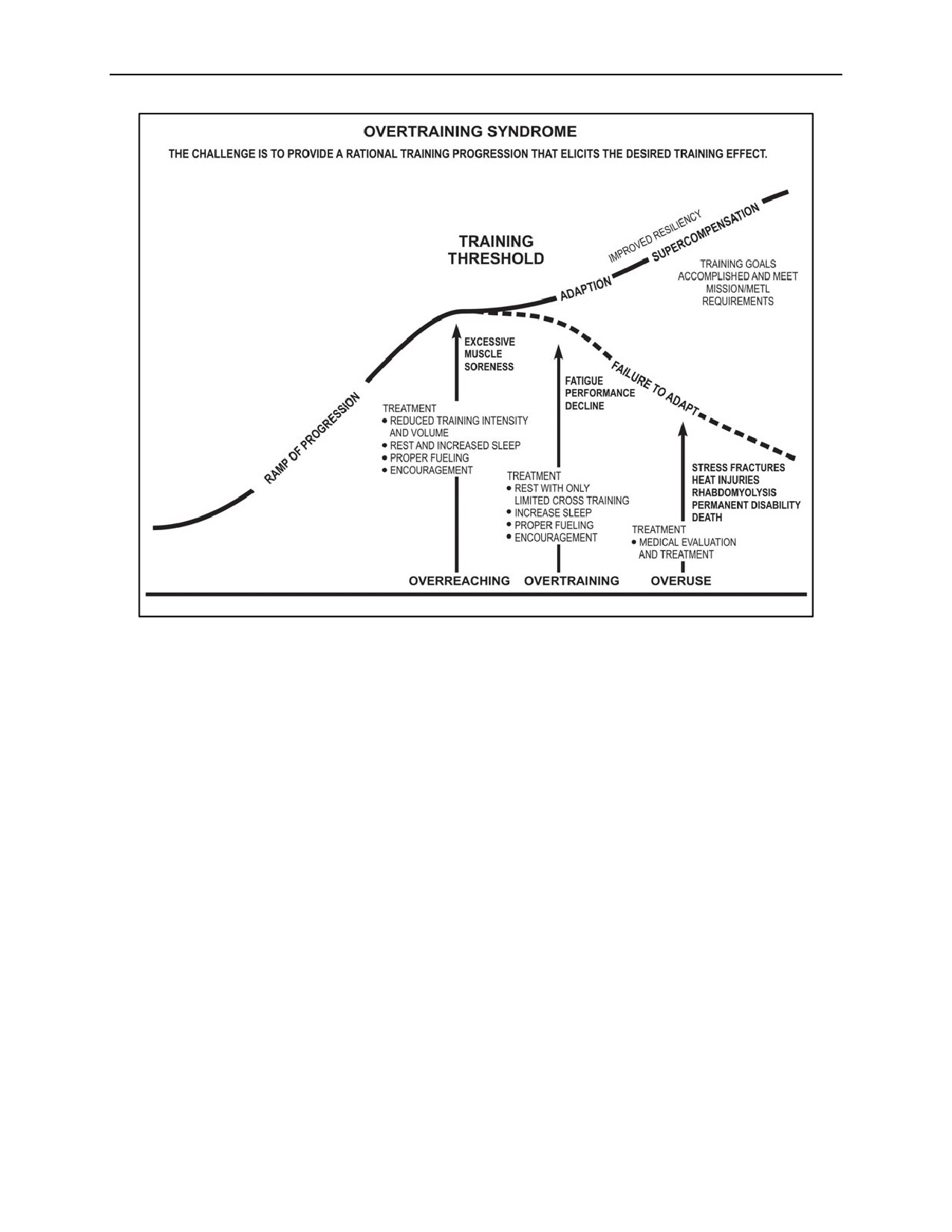
Table 5-1. Figure 5-1 is a graphic description of Soldier response/adaptation to overreaching, overtraining, and
overuse.
26 October 2012
FM 7-22
5-3
Chapter 5
Figure 5-1. Soldier response/adaptation to overreaching, overtraining, and overuse
Causes Of Overtraining Syndrome And Overuse Injuries
5-12. Safe progression for performance improvement is complex, involving many variables that impact success
(entry fitness level, ramp of progression, total volume of activity, rest/recovery, and nutrient intake). Many of
these variables can be controlled following the principles of precision, progression, and integration, as well as,
monitoring Soldiers in training and making training adjustments as required. Common mistakes to compensate
for low performance and rate of improvement are the conduct of multiple training sessions, high intensity
“smoke sessions,” and/or excessive corrective action using exercise. All of these are detrimental to performance
improvement and lead to overuse injury.
Multiple Training Sessions
5-13. Multiple training sessions per day have both positive and negative effects as they relate to performance
improvement and injury control. Highly conditioned Soldiers may respond well to an additional daily training
session that challenges them differently than the one conducted earlier that same day. For example, on strength
and mobility days, the morning PRT session may consist of CD and CL exercises, while the second PRT
session may target specific muscle groups using resistance training equipment. On endurance and mobility days,
speed training may be conducted during the morning PRT session and during activities such as aquatics. Use of
endurance training machines (ETM) and agility exercises may be conducted in the afternoon. Soldiers with
lower fitness levels, such as those entering IMT, recovering from injury, and those returning from extended
deployment (RESET), are better served with a second training session of lower intensity that targets specific
needs for improvement, but does not lead to overtraining. For example, Soldiers in BCT and OSUT (red, white,
and blue phases [R/W/B]) typically perform a challenging PRT session in the early morning. If a second session
is conducted in the afternoon, it should consist of activities that address specific needs and/or technique and
mobility improvement, but not be so intense that they cause undue fatigue that may lead to overtraining. For
example, a second PRT session should consist of activities that promote stability, mobility, and proper body
5-4
FM 7-22
26 October 2012
Planning Considerations
mechanics, such as, 4 for the core (4C), hip stability drill (HSD), and RD. Commanders and PRT leaders should
understand that “more is not better” and additional recovery time (rest) may elicit higher performance than the
conduct of additional PRT sessions. In IMT, PRT two-a-days are highly discouraged and should be treated as
the exception rather than the rule.
High Intensity/Volume Training Sessions
5-14. Soldiers commonly refer to these training sessions as “smoke sessions.” Many times in these types of
sessions, the difficulty, intensity, and volume of exercise is too high and the purpose may be to punish Soldiers
by bringing them to the point of exhaustion. This type of training is a dangerous practice that inhibits building
resiliency because performance is degraded, motivation is lowered, and risk of injury is high. Thus, training
sessions for the sole purpose of “smoking” Soldiers have no place in the PRT system. Many times, these
sessions produce life-threatening conditions for Soldiers, such as, heat fatalities, debilitating overuse injuries,
and rhabdomyolysis and may lead to permanent disability or death.
Corrective Action
5-15. When exercise is used for corrective action, it is often performed incorrectly, promoting overtraining
syndrome, and overuse injuries. Often corrective action mimics “smoke sessions,” punishing Soldiers with little
or no corrective value. Consideration must be given to the number of times per day exercises are used for
corrective action for individual Soldiers and groups of Soldiers to avoid the cumulative effect and limit the
potential for overtraining syndrome. The following guidelines should be followed when employing exercise as
corrective action.
z
Only the following exercises should be selected for performance of corrective action.
Rower.
Squat bender.
Windmill.
Prone row.
Push-up.
V-up.
Leg tuck and twist.
Supine bicycle.
Swimmer.
8-count push-up.
z
Only one of the above exercises may be selected for each corrective action.
z
The number of repetitions should not exceed FIVE for any one of the exercises listed above.
INTEGRATION
5-16. Integration is the use of multiple training activities to achieve balance in the PRT program and enhance
appropriate recovery between PRT activities. Because most WTBDs require a blend of strength, endurance, and
mobility, PRT activity schedules are designed to progress Soldiers in their physical activity in an integrated
manner. Several different exercises and activities are employed to develop all three components. Leaders should
balance the PRT schedule with other training to avoid conflicts with physically demanding events that can lead
to overtraining. For example, if the CFOC course is the day’s main physical training event, leaders should not
schedule strength training for PRT, unless it is conducted later in the training day. If conflicts cannot be
resolved, PRT should be performed after a physically demanding event (later in the duty day), rather than
before the event (in the morning). The PRT schedule provides a well-rounded program that develops all of the
components of physical readiness equally. PRT drills and activities include exercises that condition all major
muscle groups for a total body workout. Failure to adhere to the training schedule as written will result in an
emphasis on one component at the expense of another. The activities in PRT schedules should allow Soldiers to
improve their overall physical fitness, combat readiness, and achieve the standard of the APFT.
5-17. Commanders and PRT leaders schedule PRT sessions based on the number of days available for each
week of training. For example, if only three PRT days are available in the toughening phase, then the
26 October 2012
FM 7-22
5-5
Chapter 5
toughening phase schedule is followed, and those days where PRT is not conducted are omitted. Omitted
training days are missed and should not be made up. The same principle applies to training schedules in the
sustaining phase.
SESSION ELEMENTS
5-18. PRT sessions consist of the elements of preparation, activities, and recovery. Each element includes the
exercises needed to conduct performance-oriented PRT sessions that effectively address physical readiness
components.
PREPARATION
5-19. The preparation drill (PD) is a dynamic warm-up consisting of ten exercises that appropriately prepare
Soldiers for more intense PRT activities. Conduct the PD before all PRT activities.
ACTIVITIES
5-20. Activities address specific PRT goals in the areas of strength, endurance, and mobility. They take most of
the training time (30 to 60 minutes). Conduct at least two strength and mobility days and two endurance and
mobility days each week, with one endurance and mobility training session consisting of speed running. Follow
the guidelines listed below:
z
Conduct strength and mobility training every other day.
z
Conduct endurance and mobility training (running) every other day. This also applies to foot marches
more than 5 km in the toughening phase.
z
Avoid conducting foot marches and endurance and mobility training on the same or consecutive
days.
z
Perform speed running once per week, preferably in the middle of the week. In the sustaining phase,
speed running may be conducted twice per week for well-conditioned Soldiers.
z
A typical five-day training week will include two or three strength and mobility days that alternate
with two or three endurance and mobility days.
z
Conduct the PD before the APFT. If required, Soldiers may perform push-ups in CD 1 on their
knees. After the conclusion of the AFPT, the RD is conducted.
z
Schedule APFTs so Soldiers have advance notice. Preferably, the APFT should be scheduled on
Monday to allow for recovery provided by the weekend. If the APFT is not conducted on a Monday,
no strenuous PRT should be conducted on the day before the APFT. The conduct of the PD, 4C,
HSD, and RD provide an active recovery day before the APFT (refer to Table 5-3, Session 2-5).
RECOVERY
5-21. This includes walking (after running activities) and the performance of the RD at the end of all PRT
sessions. Recovery gradually and safely tapers off activities to bring the body back to its pre-exercise state. The
element of recovery carries over until the next exercise session is performed. Restoring adequate hydration and
energy balance through proper nutrition and ensuring adequate sleep allows the body to refuel and rest. This
results in a positive adaptation to the stress of training, improves Soldier resiliency, and optimizes gains in
strength, endurance, and mobility while controlling injuries.
TOUGHENING PHASE PRT
5-22. As described in Chapter 2, the purpose of the toughening phase is to develop foundational fitness and
fundamental skills. Soldiers in BCT, one station unit training (R/W/B phases), and BOLC A are in the
toughening phase. The following PRT drills and activities are scheduled during the toughening phase:
z
Preparation drill (PD).
z
4 for the core (4C).
z
Hip stability drill (HSD).
z
Conditioning drills 1 and 2 (CD 1 and CD 2).
5-6
FM 7-22
26 October 2012
Planning Considerations
z
Climbing drill 1 (CL 1).
z
Strength training circuit (STC).
z
Push-up and sit-up drill (PSD).
z
Military movement drill 1 (MMD1).
z
30:60s.
z
60:120s.
z
300-yard shuttle run (SR).
z
Ability group run (AGR).
z
Release run (RR).
z
Foot march with fighting load (FM-fl).
z
Conditioning obstacle course (CDOC).
z
Confidence obstacle course (CFOC).
z
Combatives (CB).
z
Recovery drill (RD).
TOUGHENING PHASE PRT SCHEDULE
5-23. The toughening phase PRT schedule is used in BCT and OSUT (R/W/B phases). The BOLC A leaders
can use this schedule as a guide for developing PRT in their course program of instruction (POI). Physical
readiness training should be conducted five to six days per week depending on the POI and course training
schedule. When following this schedule, all PRT sessions occur in order, regardless of the off day(s). Each
day’s PRT activities also occur in the order listed. Not every toughening phase activity is listed in this schedule.
To achieve optimal progression while controlling injuries, toughening phase PRT activities are specifically
ordered and sessions sequenced according to the system described in Chapter 2. The activities and sessions
should therefore be performed in the order listed on the schedule. Refer to Table 5-2, Toughening Phase PRT
Daily Session Overview, for an example of activity sequencing and session purpose. Higher level activities such
as the CDOC, confidence obstacle course, and combatives are most appropriate when performed in the
sustaining phase; however, Soldiers are introduced to these activities while still in the toughening phase. Thus,
PRT leaders must focus their instruction of these activities on proper technique and lead-up skills to ensure
safety and successful execution. Table 5-3, Toughening Phase PRT Schedules (BCT and OSUT-R/W/B phases)
describe the ordered sequence of training to be used for PRT in BCT and OSUT-R/W/B phases.
26 October 2012
FM 7-22
5-7

Chapter 5
Table 5-2. Toughening phase PRT daily session overview (BCT and OSUT-R/W/B phases)
Saturday
Monday
Tuesday
Wednesday
Thursday
Friday
Preparation: PD
Preparation: PD
Preparation: PD
Preparation: PD
Preparation: PD
Preparation: PD
Activities: HSD,
Activities: 4C,
Activities: HSD,
Activities:
4C,
Activities: HSD,
Activities: 4C,
MMD 1, AGR
CD1, CL1, PSD
MMD 1, 30:60s
CD1,CL1, PSD
MMD 1, AGR
CD1, CL1, PSD
Recovery: RD
Recovery: RD
Recovery: RD
Recovery: RD
Recovery: RD
Recovery: RD
Monday
Preparation: PD
The purpose of this session is to improve the endurance and mobility needed for the successful performance
Activities: HSD,
of WTBDs. Preparation and The Hip Stability Drill ready the body for a variety of activities that develop body
MMD 1, AGR
management competencies. The Military Movement Drill 1 helps improve running form while preparing the
Recovery: RD
Soldier for sustained running. The AGR improves aerobic endurance through sustained running at an
appropriate pace. Recovery safely returns Soldiers to a pre-exercise state while improving mobility.
Tuesday
Preparation: PD
The purpose of this session is to improve the strength and mobility needed for the successful performance of
Activities: 4C,
WTBDs. Preparation and Four for the Core ready the body for a variety of activities that develop body
CD1, CL1, PSD
management competencies. Conditioning Drill 1 improves total body muscular strength, endurance, and
Recovery: RD
mobility. Climbing Drill 1 increases upper body strength, trunk strength, and creates muscle balance. The
Push-up and Sit-up Drill improves APFT performance. Recovery safely returns Soldiers to a pre-exercise
state while improving mobility.
Wednesday
Preparation: PD
The purpose of this session is to improve the conditioning required to successfully perform critical WTBDs
Activities: HSD,
such as Individual Movement Techniques and move under direct and indirect fire. Preparation and The Hip
MMD 1, 30:60s,
Stability Drill ready and condition the body for a variety of body management competencies. Military
300-yd SR
Movement Drill 1 helps improve running form while preparing the Soldier for speed running. 30:60s enhance
Recovery: RD
anaerobic power through sustained repeats of high intensity running with intermittent periods of recovery.
The 300-yard Shuttle Run develops speed, agility, and anaerobic power. Recovery safely returns Soldiers to
a pre-exercise state while improving mobility.
Thursday
Preparation: PD
The purpose of this session is to improve the strength and mobility needed for the successful performance of
Activities: 4C,
WTBDs. Preparation and Four for the Core ready the body for a variety of activities that develop body
CD1, CL1, PSD
management competencies. Conditioning Drill 1 improves total body muscular strength, endurance, and
Recovery: RD
mobility. Climbing Drill 1 increases upper body strength, trunk strength, and creates muscle balance. The
Push-up and Sit-up Drill improves APFT performance. Recovery safely returns Soldiers to a pre-exercise
state while improving mobility.
Friday
Preparation: PD
The purpose of this session is to improve the endurance and mobility needed for the successful performance
Activities: HSD,
of WTBDs. Preparation and the Hip Stability Drill ready the body for a variety of activities that develop body
MMD 1, AGR
management competencies. Military Movement Drill 1 helps improve running form while preparing the
Recovery: RD
Soldier for sustained running. The AGR improves aerobic endurance through sustained running at an
appropriate pace. Recovery safely returns Soldiers to a pre-exercise state while improving mobility.
Saturday
Preparation: PD
The purpose of this session is to improve the strength and mobility needed for the successful performance of
Activities: 4C,
WTBDs. Preparation and Four for the Core ready the body for a variety of activities that develop body
CD1, CL1, PSD
management competencies. Conditioning Drill 1 improves total body muscular strength, endurance, and
Recovery: RD
mobility. Climbing Drill 1 increases upper body strength, trunk strength, and creates muscle balance. The
Push-up and Sit-up Drill improves APFT performance. Recovery safely returns Soldiers to a pre-exercise
state while improving mobility.
PD - Preparation Drill
4C - Four for the Core
HSD - Hip Stability Drill
RD - Recovery Drill
CD - Conditioning Drill
CL - Climbing Drill
Abbreviations
PSD - PU/SU Drill
SR - Shuttle Run
AGR - Ability Group Run
FM - Foot March
RR - Release Run
TR - Terrain Run
STC - Strength Training Circuit
5-8
FM 7-22
26 October 2012

Planning Considerations
Table 5-3. Toughening phase PRT schedule (BCT and OSUT-R/W/B phases)
Session
Week 1 Schedule
1-1
Preparation: PD (INSTRUCTION)
Preparation: PD (5 reps)
1-2
Activities: HSD and MMD 1 (INSTRUCTION) and 1-mile run Assessment (ability group placement)
Recovery: RD (INSTRUCTION)
Preparation: PD (5 reps)
1-3
Activities: 4C and CD1 (INSTRUCTION)
Recovery: RD (20 seconds)
Preparation: PD (5 reps)
1-4
Activities: HSD (5 reps), MMD 1 (1 rep) and 30:60s x 6 reps (INSTRUCTION)
Recovery: RD (20 seconds)
Preparation: PD (5 reps)
1-5
Activities: 4C (60 seconds), CD 1 (5 reps) and CD 2 (INSTRUCTION)
Recovery: RD (20 seconds)
Preparation: PD (5 reps)
Activities: HSD (5 reps), MMD 1 (1 rep), AGR (A 15 min @ 7:30; B 15 min @ 9:00; C 10 min @
1-6
10:30; D 10 min @ 12:00)
Recovery: RD (20 seconds)
Session
Week 2 Schedule
Preparation: PD (5 reps)
Activities: HSD (5 reps), MMD 1 (1 rep), AGR (A 15 min @ 7:15; B 15 min @ 8:30; C 12 min @
2-1
10:00; D 12 min @ 11:00)
Recovery: RD (20 seconds)
Preparation: PD (5 reps)
2-2
Activities: 4C (60 seconds), CD 1 (5 reps) and CL 1 (INSTRUCTION)
Recovery: RD (20 seconds)
Preparation: PD (5 reps)
2-3
Activities: HSD (5 reps), MMD 1 (1 rep) and 30:60s (6 reps)
Recovery: RD (20 seconds)
Preparation: PD (5 reps)
2-4
Activities: 4C (60 seconds), CD 1 (5 reps), CD 2 (5 reps) and CL 1 (5 reps)
Recovery: RD (20 seconds)
Preparation: PD (5 reps)
2-5
Activities: HSD (5 reps) and 4C (60 seconds)
Recovery: RD (20 seconds)
Preparation: PD (5 reps)
2-6
Activity: Practice APFT
Recovery: RD (20 seconds)
PD - Preparation Drill
4C - Four for the Core
HSD - Hip Stability Drill
CD - Conditioning Drill
CL - Climbing Drill
AbbreviationsRD - Recovery Drill
PSD - PU/SU Drill
SR - Shuttle Run
AGR - Ability Group Run
FM - Foot March
RR - Release Run
STC - Strength Training Circuit
26 October 2012
FM 7-22
5-9

Chapter 5
Table 5-3. Toughening phase PRT schedule (BCT and OSUT-R/W/B phases) continued
Session
Week 3 Schedule
Preparation: PD (5 reps)
Activities: HSD (5 reps) MMD 1 (1 rep), AGR (A 20 min @ 7:15; B 20 min @ 8:30; C 14 min @
3-1
9:30; D 14 min @ 10:30)
Recovery: RD (20 seconds)
Preparation: PD (5 reps)
3-2
Activities: 4C (60 seconds), CD 1 (5 reps), CD 2 (5 reps), CL 1 (5 reps) and PSD (INSTRUCTION)
Recovery: RD (20 seconds)
Preparation: PD (5 reps)
3-3
Activities: HSD (5 reps), MMD 1 (1 rep), 30:60s (8 reps) and 300-yd SR (INSTRUCTION)
Recovery: RD (20 seconds)
Preparation: PD (5 reps)
3-4
Activities: 4C (60 seconds), CD 1 (5 reps), CD 2 (5 reps), CL 1 (5 reps) and PSD (2 x 30 seconds)
Recovery: RD (20 seconds)
Preparation: PD (5 reps)
Activities: HSD (5 reps), MMD 1 (1 rep), AGR (A 20 min @ 7:15; B 20 min @ 8:30; C 14 min @
3-5
9:30; D 14 min @ 10:30)
Recovery: RD (20 seconds)
Preparation: PD (5 reps)
3-6
Activities: 4C (60 seconds), CD 1 (5 reps), CD 2 (5 reps), CL 1 (5 reps) and PSD (2 x 30 seconds)
Recovery: RD (20 seconds)
Session
Week 4 Schedule
Preparation: PD (5 reps)
Activities: HSD (5 reps), MMD 1 (1 rep), AGR (A 25 min @ 7:15; B 25 min @ 8:15; C 16 min @
4-1
9:30; D 16 min @ 10:00)
Recovery: RD (20 seconds)
Preparation: PD (5 reps)
Activities: 4C (60 seconds), CD 1 (5 reps), CD 2 (5 reps), CL 1 (5 reps) and PSD (2 x 45 seconds)
4-2
or STC (INSTRUCTION)
Recovery: RD (20 seconds)
Preparation: PD (5 reps)
4-3
Activities: HSD (5 reps), MMD 1 (1 rep), 60:120s x 6 reps (INSTRUCTION) and 300-YD SR (1 rep)
Recovery: RD (20 seconds)
Preparation: PD (5 reps)
Activities: 4C (60 seconds), CD 1 (5 reps), CD 2 (5 reps), CL 1 (5 reps) and PSD (2 x 45 seconds)
4-4
or STC (2 rotations x 60 seconds @ each exercise-includes movement)
Recovery: RD (20 seconds)
Preparation: PD (5 reps)
Activities: HSD (5 reps), MMD 1 (1 rep), AGR (A 25 min @ 7:15; B 25 min @ 8:15; C 16 min @
4-5
9:30; D 16 min @ 10:00)
Recovery: RD (20 seconds)
Preparation: PD (5 reps)
Activities: 4C (60 seconds), CD 1 (5 reps), CD 2 (5 reps), CL 1 (5 reps) and PSD (2 x 45 seconds)
4-6
or STC (2 rotations x 60 seconds @ each exercise-includes movement)
Recovery: RD (20 seconds)
PD - Preparation Drill
4C - Four for the Core
HSD - Hip Stability Drill
Abbreviations RD - Recovery Drill
CD - Conditioning Drill
CL - Climbing Drill
PSD - PU/SU Drill
SR - Shuttle Run
AGR - Ability Group Run
FM - Foot March
RR - Release Run
STC - Strength Training Circuit
5-10
FM 7-22
26 October 2012

Planning Considerations
Table 5-3. Toughening phase PRT schedule (BCT and OSUT-R/W/B phases) continued
Session
Week 5 Schedule
Preparation: PD (5 reps)
Activities: HSD (5 reps), MMD 1 (1 rep), AGR (A 30 min @ 7:30; B 25 min @ 8:00; C 18 min @
5-1
9:00; D 18 min @ 10:00)
Recovery: RD (20 seconds)
Preparation: PD (5 reps)
Activities: 4C (60 seconds), CD 1 (5 reps), CD 2 (5 reps), CL 1 (5 reps) and PSD (2 x 60 seconds)
5-2
or STC (2 rotations x 60 seconds @ each exercise-includes movement)
Recovery: RD (20 seconds)
Preparation: PD (5 reps)
5-3
Activities: HSD (5 reps), MMD 1 (1 rep), 60:120s (8 reps) and 300-yd SR (1 rep)
Recovery: RD (20 seconds)
Preparation: PD (5 reps)
Activities: 4C (60 seconds), CD 1 (5 reps), CD 2 (5 reps), CL 1 (5 reps) and PSD (2 x 60 seconds)
5-4
or STC (2 rotations x 60 seconds @ each exercise-includes movement)
Recovery: RD (20 seconds)
Preparation: PD (5 reps)
5-5
Activities: HSD (5 reps) and 4C (60 seconds)
Recovery: RD (20 seconds)
Preparation: PD (5 reps)
5-6
Activity: Practice APFT
Recovery: RD (20 seconds)
Session
Week 6 Schedule
Preparation: PD (5 reps)
Activities: HSD (5 reps), MMD 1 (1 rep), AGR (A 30 min @ 7:30; B 30 min @ 8:00; C 20 min @
6-1
8:30; D 20 min @ 9:30) or RR (20 minutes)
Recovery: RD (20 seconds)
Preparation: PD (5 reps)
Activities: 4C (60 seconds), CD 1 (5 reps), CD 2 (5 reps), CL 1 (5 reps) and PSD (2 x 60 seconds)
6-2
or STC (3 rotations x 60 seconds @ each exercise-includes movement)
Recovery: RD (20 seconds)
Preparation: PD (5 reps)
6-3
Activities: HSD (5 reps), MMD 1 (1 rep), 60: 120s (8 reps) and 300-yd SR (1 rep)
Recovery: RD (20 seconds)
Preparation: PD (5 reps)
Activities: 4C (60 seconds), CD 1 (5 reps), CD 2 (5 reps), CL 1 (5 reps) and PSD (2 x 60 seconds)
6-4
or STC (2 rotations x 60 seconds @ each exercise-includes movement)
Recovery: RD (20 seconds)
Preparation: PD (5 reps)
Activities: HSD (5 reps), MMD 1 (1 rep), AGR (A 30 min @ 7:30; B 30 min @ 8:00; C 20 min @
6-5
8:30; D 20 min @ 9:30)
Recovery: RD (20 seconds)
Preparation: PD (5 reps)
Activities: 4C (60 seconds), CD 1 (5 reps), CD 2 (5 reps), CL 1 (5 reps) and PSD (2 x 60 seconds)
6-6
or STC (2 rotations x 60 seconds @ each exercise-includes movement)
Recovery: RD (20 seconds)
PD - Preparation Drill
4C - Four for the Core
HSD - Hip Stability Drill
Abbreviations
RD - Recovery Drill
CD - Conditioning Drill
CL - Climbing Drill
PSD - PU/SU Drill
SR - Shuttle Run
AGR - Ability Group Run
FM - Foot March
RR - Release Run
STC - Strength Training Circuit
26 October 2012
FM 7-22
5-11

Chapter 5
Table 5-3. Toughening phase PRT schedule (BCT and OSUT-R/W/B phases) continued
Session
Week 7 Schedule
Preparation: PD (5 reps)
Activities: HSD (5 reps), MMD 1 (1 rep), AGR (A 30 min @ 7:15; B 30 min @ 7:45; C 20 min @
7-1
8:15; D 20 min @ 9:30) or RR (20 minutes)
Recovery: RD (20 seconds)
Preparation: PD (5 reps)
Activities: 4C (60 seconds), CD 1 (5 reps), CD 2 (5 reps), CL 1 (5 reps) and PSD (2 x 60
7-2
seconds) or STC (3 rotations x 60 seconds @ each exercise-includes movement)
Recovery: RD
(20 seconds)
Preparation: PD (5 reps)
7-3
Activities: HSD (5 reps), MMD 1 (1 rep) and 60:120s (10 reps)
Recovery: RD (20 seconds)
Preparation: PD (5 reps)
Activities: 4C (60 seconds), CD 1 (5 reps), CD 2 (5 reps), CL 1 (5 reps) and PSD (2 x 60
7-4
seconds) or STC (3 rotations x 60 seconds @ each exercise-includes movement)
Recovery: RD (20 seconds)
Preparation: PD (5 reps)
7-5
Activities: 4C (60 seconds) and HSD (5 reps)
Recovery: RD (20 seconds)
Preparation: PD (5 reps)
7-6
Activity: Record APFT
Recovery: RD (20 seconds)
Session
Week 8 Schedule
Preparation: PD (5 reps)
Activities: HSD (5 reps), MMD 1 (1 rep), AGR (A 30 min @ 7:15; B 30 min @ 7:45; C 20 min @
8-1
8:15; D 20 min @ 9:30) or RR (20 minutes)
Recovery: RD (20 seconds)
Preparation: PD (5 reps)
Activities: 4C (60 seconds), CD 1 (5 reps), CD 2 (5 reps), CL 1 (5 reps) and PSD (2 x 60
8-2
seconds) or STC (3 rotations x 60 seconds @ each exercise-includes movement)
Recovery: RD (20 seconds)
Preparation: PD (5 reps)
8-3
Activities: HSD (5 reps), MMD 1 (1 rep) and 60:120s (10 reps)
Recovery: RD (20 seconds)
Preparation: PD (5 reps)
Activities: 4C (60 seconds), CD 1 (5 reps), CD 2 (5 reps), CL 1 (5 reps) and PSD (2 x 60
8-4
seconds) or STC (3 rotations x 60 seconds @ each exercise-includes movement)
Recovery: RD (20 seconds)
Preparation: PD (5 reps)
Activities: HSD (5 reps), MMD 1 (1 rep) AGR (A 30 min @ 7:15; B 30 min @ 7:45; C 20 min @
8-5
8:15; D 20 min @ 9:30) or RR (20 minutes)
Recovery: RD (20 seconds)
Preparation: PD (5 reps)
Activities: 4C (60 seconds), CD 1 (5 reps), CD 2 (5 reps), CL 1 (5 reps) and PSD (2 x 60
8-6
seconds) or STC (3 rotations x 60 seconds @ each exercise-includes movement)
Recovery: RD (20 seconds)
PD - Preparation Drill
4C - Four for the Core
HSD - Hip Stability Drill
Abbreviations
RD - Recovery Drill
CD - Conditioning Drill
CL - Climbing Drill
PSD - PU/SU Drill
SR - Shuttle Run
AGR - Ability Group Run
FM - Foot March
RR - Release Run
STC - Strength Training Circuit
5-12
FM 7-22
26 October 2012

Planning Considerations
Table 5-3. Toughening phase PRT schedule (BCT and OSUT-R/W/B phases) continued
Session
Week 9 Schedule
Preparation: PD (5 reps)
Activities: HSD (5 reps), MMD 1 (1 rep), AGR (A 30 min @ 7:15; B 30 min @ 7:45; C 20 min @
9-1
8:15; D 20 min @ 9:30) or RR (20 minutes)
Recovery: RD (20 seconds)
Preparation: PD (5 reps)
Activities: 4C (60 seconds), CD 1 (5 reps), CD 2 (5 reps), CL 1 (5 reps) and PSD (2 x 60
9-2
seconds) or STC (3 rotations x 60 seconds @ each exercise-includes movement)
Recovery: RD
(20 seconds)
Preparation: PD (5 reps)
9-3
Activities: HSD (5 reps), MMD 1 (1 rep), 60:120s (10 reps) and 300-yd SR (1 rep)
Recovery: RD (20 seconds)
Preparation: PD (5 reps)
Activities: 4C (60 seconds), CD 1 (5 reps), CD 2 (5 reps), CL 1 (5 reps) and PSD (2 x 60
9-4
seconds) or STC (3 rotations x 60 seconds @ each exercise-includes movement)
Recovery: RD (20 seconds)
Preparation: PD (5 reps)
Activities: HSD (5 reps), MMD (1 rep), AGR (A 30 min @ 7:15; B 30 min @ 7:45; C 20 min @
9-5
8:15; D 20 min @ 9:30) or RR (20 minutes)
Recovery: RD (20 seconds)
Preparation: PD (5 reps)
Activity: 4C (60 seconds), CD 1 (5 reps), CD 2 (5 reps), CL 1 (5 reps) and PSD (2 x 60
9-6
seconds) or STC (3 rotations x 60 seconds @ each exercise-includes movement)
Recovery: RD (20 seconds)
Session
Week 10 Schedule
Preparation: PD (5 reps)
Activities: HSD (5 reps), MMD 1 (1 rep), AGR (A 30 min @ 7:15; B 30 min @ 7:45; C 20 min @
10-1
8:15; D 20 min @ 9:30) or RR (20 minutes)
Recovery: RD (20 seconds)
Preparation: PD (5 reps)
Activity: 4C (60 seconds), CD 1 (5 reps), CD 2 (5 reps), CL 1 (5 reps) and PSD (2 x 60
10-2
seconds) or STC (3 rotations x 60 seconds @ each exercise-includes movement)
Recovery: RD (20 seconds)
Preparation: PD (5 reps)
10-3
Activities: HSD (5 reps), MMD 1 (1 rep), 60:120s (10 reps) and 300-yd SR (1 rep)
Recovery: RD (20 seconds)
10-4
GRADUATION
PD - Preparation Drill
4C - Four for the Core
HSD - Hip Stability Drill
Abbreviations
RD - Recovery Drill
CD - Conditioning Drill
CL - Climbing Drill
PSD - PU/SU Drill
SR - Shuttle Run
AGR - Ability Group Run
FM - Foot March
RR - Release Run
STC - Strength Training Circuit
CONDENSED TIME
5-24. When scheduled training requirements in the training POI conflict with the designated time available for
PRT, commanders, and PRT leaders may choose to perform one of the two sessions shown in Table 5-4.
Table 5-4. Condensed sessions (toughening phase)
Session
Toughening Phase
Preparation: PD (5 reps)
Strength and Mobility
Activities: CD 1&2 (5 reps ea) and PSD 2x30 sec
Recovery: RD (20 seconds)
Preparation: PD (5 reps)
Endurance and Mobility
Activities: MMD1 (1 rep) and 30:60s (8-10 reps)
Recovery: RD (20 seconds)
26 October 2012
FM 7-22
5-13
Chapter 5
FIELD TRAINING
5-25. Toughening phase PRT should be conducted whenever possible within the constraints of the
environment, whether on a range or during a field training exercise (FTX). The example schedule shown in
Table 5-5 may be conducted anywhere and is not resource intensive.
Table 5-5. Field training sessions (toughening phase)
Session
Schedule
Preparation: PD (5 reps)
Endurance and Mobility
Activities: MMD1 (2 reps) and 300-yd SR (2 reps)
Recovery: RD (20 seconds)
Preparation: PD (5 reps)
Strength and Mobility
Activities: CD 1&2 (5 reps ea) and PSD (4x30 sec)
Recovery: RD (20 seconds)
SUSTAINING PHASE PRT
5-26. As described in Chapter 2, the purpose of the sustaining phase is to develop a high level of physical
readiness in Soldiers. Training results enable Soldiers to perform WTBDs and those physical tasks associated
with the performance of their duty positions and operational missions. Soldiers in AIT, one station unit training
(black and gold phases [B/G]), BOLC B, and Soldiers assigned to operational units are in the sustaining phase.
The following PRT drills and activities are scheduled during the sustaining phase.
z
Preparation drill (PD).
z
4 for the core (4C).
z
Hip stability drill (HSD).
z
Conditioning drills 1, 2, and 3 (CD 1, CD 2, and CD 3).
z
Climbing drills 1 and 2 (CL 1 and CL 2).
z
Guerrilla drill (GD).
z
Push-up and sit-up drill (PSD).
z
Strength training circuit (STC).
z
Military movement drills 1 and 2 (MMD 1 and 2).
z
30:60s.
z
60:120s.
z
Ability group run (AGR).
z
Release runs (RR).
z
Foot march with fighting load (FM-fl).
z
Foot march with approach march load (FM-aml).
z
Foot march with emergency approach march load (FM-eaml).
z
Terrain running (TR).
z
Hill repeats (HR).
z
300-yard shuttle run (SR).
z
Conditioning obstacle course (CDOC).
z
Confidence obstacle courses (CFOC).
z
Combatives (CB).
z
Recovery drill (RD).
INITIAL MILITARY TRAINING SUSTAINING PHASE PRT SCHEDULES
5-27. Sustaining phase PRT activities should be used in AIT, OSUT (B/G phases), and BOLC B.
5-14
FM 7-22
26 October 2012
Planning Considerations
ADVANCED INDIVIDUAL TRAINING
5-28. Training schedule development in AIT is a complex process. Several variables impact the ability to apply
one training schedule across all of AIT. These variables include: how units fill, length of the training cycle,
student to leader ratio, training conducted by shift, availability of PRT training areas, MOS specific training
requirements, equipment, and facilities; therefore, commanders and PRT leaders should apply the following
doctrinal guidelines when developing their unit PRT schedules:
z
PRT sessions should be scheduled for four-to-five days per week, depending on the POI and course
training schedule.
z
Alternate strength and mobility emphasis weeks with endurance and mobility emphasis weeks on
five-day per week training schedules throughout the length of the training cycle. A strength and
mobility emphasis week contains three strength and mobility training days and two endurance and
mobility training days. An endurance and mobility emphasis week contains three endurance and
mobility training days and two strength and mobility training days.
z
During four-day per week training schedules, alternate strength and mobility days with endurance
and mobility days.
z
Utilize exercises, drills, and activities listed in paragraph 5-26 when developing AIT PRT schedules.
See Chapters
9, Strength and Mobility Activities, and Chapter
10, Endurance and Mobility
Activities, for a detailed description of strength and mobility and endurance and mobility drills and
activities.
z
Supplemental PRT exercises, drills, and activities found on the USAPFS website may be integrated
into sustaining phase PRT schedules. Commanders and PRT leaders are responsible for ensuring
Soldiers have achieved the appropriate level of fitness and motor skill development before
conducting these more complex activities.
z
Strength and mobility exercise progression is accomplished by progressing from 5 repetitions of each
exercise to a maximum of 10 repetitions per exercise. If more than 10 repetitions per exercise are
desired, repeat the drill in its entirety. Examples of a rational progression include the following
ranges of repetitions performed: PD (5-10 reps), CDs 1, 2, and 3 (5-10 reps), CLs 1 and 2 (5-10
reps), and the GD (1-3 reps).
z
For those strength and mobility exercises and drills that use time, a rational progression involves
increasing the amount of time allocated for each exercise. Examples of a rational progression
include: PSD (2-4 sets @ 30-60 seconds) and the strength training circuit (2-3 rotations @ 60
seconds).
z
The initial assessment for new fills is the 1-mile run assessment. This assessment is used to assign
Soldiers to the appropriate running ability groups.
z
Sustaining phase ability group run (AGR) times are different from toughening phase AGR times.
Refer to Chapter 10, Endurance and Mobility Activities, Tables 10-3 and 10-4 for placing Soldiers
into AGR groups, pacing, and split times.
z
Speed running is the most important endurance and mobility activity; therefore, speed running is
scheduled at least one time per week. If there is only one endurance and mobility activity session
scheduled per week, it will be speed running. Speed running includes the following activities: 30:60s,
60:120s, and the 300-yd SR. Speed running progression for 30:60s and 60:120s ranges from 6 to 10
repetitions. The 300-yd SR progresses from 1 to 3 repetitions.
z
Release runs and HR are a combination of sustained and speed running; however, these activities will
not replace 30:60s, 60:120s, and/or the 300-yd SR. Release run progression should not exceed 30
minutes total running time. The progression for HR is running up or down gentle slopes progressing
to steeper hills, distances of 40 to 60 yards, and increasing from 5 to 10 repetitions.
z
Foot marching is a movement component of maneuver and is a critical Soldier physical requirement.
Regular foot marching helps to avoid the cumulative effects of lower-body injury trauma and
prepares Soldiers to successfully move under load. Refer to FM 21-18, Foot Marching, for specific
guidance on foot marching variables such as: terrain, frequency, load, rate of march, distance,
visibility, halts, and rest. Length of the training cycle, MOS requirements, and POI will determine
how these variables are applied to the PRT schedule.
26 October 2012
FM 7-22
5-15
Chapter 5
z
If combatives training is conducted as a PRT session, it should be conducted only one time per week.
Preferably, combatives should only replace a sustained running or foot march session during an
endurance emphasis week and one of the three strength training sessions during a strength emphasis
week.
z
Army Physical Fitness Tests will be conducted according to Appendix A of this FM and the course
POI. Preferably, the APFT should be scheduled on Monday. If the APFT is not conducted on a
Monday, then no PRT is scheduled on the day before the APFT.
5-29. AR 350-1 acknowledges that specified units and schools have separate physical fitness standards. Within
AIT, examples include diving, parachute, and parachute rigger military occupational specialties
(MOSs).
Commanders that train MOSs that have separate PRT and testing requirements will request approval from the
DCG-IMT to implement PRT exercises, drills, and activities to meet these higher physical fitness standards.
The USAPFS can assist commanders with the development of PRT programs identified as having separate PRT
and testing requirements.
5-30. Refer to Table 5-6, Sustaining Phase PRT Daily Session Overview, for an example of activity sequencing
and session purpose. These activities increase in difficulty, complexity, intensity, and/or duration.
5-16
FM 7-22
26 October 2012

Planning Considerations
Table 5-6. Sustaining phase PRT daily session overview (AIT and OSUT-B/G phases)
Monday
Tuesday
Wednesday
Thursday
Friday
Preparation: PD
Preparation: PD
Preparation: PD
Preparation: PD
Preparation: PD
Activities: MMD 1&2,
Activities: GD, CD 1&2,
Activities: MMD 1&2,
Activities: GD, CD 3, CL
Activities: MMD 1&2, Hill
AGR or Release Run
CL 1, PSD or STC and
60:120s, 300 yd SR
2, PSD or STC and PSD
Repeats or Terrain Run
Recovery: RD
PSD
Recovery: RD
Recovery: RD
or 10K FM w/fl
Recovery: RD
Recovery: RD
Monday
The purpose of this session is to improve the endurance and mobility needed for the successful
Preparation: PD
performance of WTBDs. Preparation readies and conditions the body for a variety of body
Activities: MMD 1&2, AGR
management competencies. Military Movement Drills 1 and 2 help improve running form while
or Release Run
preparing the Soldier for sustained running. The Ability Group Run or Release Run improves aerobic
Recovery: RD
endurance and speed through sustained running. Recovery safely returns Soldiers to a pre-exercise
state while improving mobility.
Tuesday
The purpose of this session is to improve the strength and mobility needed for the successful
performance of WTBDs. Preparation readies and conditions the body for a variety of body
Preparation: PD
management competencies. The Guerrilla Drill develops functional mobility for the performance of
Activities: GD, CD 1&2,
combatives and the ability to carry another Soldier. Conditioning Drills 1 and 2 consist of calisthenics
CL 1, PSD or STC and
that are designed to functionally train upper body and trunk muscular strength and endurance needed
PSD
to successfully perform WTBDs. Climbing Drill 1 improves the upper body and trunk strength needed
Recovery: RD
for manipulating body weight. The Push-up and Sit-up Drill provide upper-body strength and APFT
improvement. The Strength Training Circuit develops total body strength and movement proficiency.
Recovery safely returns Soldiers to a pre-exercise state while improving mobility.
Wednesday
The purpose of this session is to improve the conditioning required to successfully perform WTBDs
such as IMT and move under direct and indirect fire. Preparation readies and conditions the body for
Preparation: PD
a variety of body management competencies. The Military Movement Drills 1 and 2 help improve
Activities: MMD 1&2,
running form while preparing the Soldier for speed running. 60:120s enhance speed and anaerobic
60:120s and 300 YD SR
power through sustained repeats of high intensity running with intermittent periods of recovery. The
Recovery: RD
300-yd Shuttle Run develops anaerobic endurance and functional mobility. Recovery safely returns
Soldiers to a pre-exercise state while improving mobility.
Thursday
The purpose of this session is to improve the functional strength and mobility needed for the
successful performance of WTBDs. Soldiers perform these drills wearing ACUs, boots, and ACH.
Preparation readies and conditions the body for a variety of body management competencies. The
Preparation: PD
Guerrilla Drill develops functional mobility for the performance of combatives and the ability to carry
Activities: GD, CD 3, CL 2,
another Soldier. Conditioning Drill 3 consists of advanced calisthenics that improve power,
PSD or STC and PSD
coordination and agility. Climbing Drill 2 improves the upper body and trunk strength needed for
Recovery: RD
manipulating body weight under load. The Push-up and Sit-up Drill provide upper-body strength and
APFT improvement. The Strength Training Circuit develops total body strength and movement
proficiency. Recovery safely returns Soldiers to a pre-exercise state while improving mobility.
Friday
The purpose of this session is to improve the strength, endurance, and mobility needed for the
Preparation: PD
successful performance of foot marching and running over various terrains. Preparation readies and
Activities: MMD 1&2, Hill
conditions the body for a variety of body management competencies. The foot march improves the
Repeats or Terrain Run or
muscular and aerobic endurance needed for foot marching. Hill Repeats and Terrain Running improve
10K FM (aml)
the Soldier’s ability to move quickly with agility over various terrains with or without a load. Recovery
Recovery: RD
safely returns Soldiers to a pre-exercise state while improving mobility.
PD - Preparation Drill
4C - Four for the Core
HSD - Hip Stability Drill
RD - Recovery Drill
CD - Conditioning Drill
CL - Climbing Drill
Abbreviations
PSD - PU/SU Drill
SR - Shuttle Run
AGR-Ability Group Run
FM - Foot March
RR - Release Run
TR - Terrain Run
STC - Strength Training Circuit
FM-aml (foot march-approach march load)
26 October 2012
FM 7-22
5-17
Chapter 5
OSUT
5-31. Physical readiness training in OSUT consists of a combination of toughening and sustaining phase
exercises, drills, and activities. Commanders and PRT leaders should follow the toughening phase PRT
schedule during the R/W/B phases of OSUT. Refer to Table 5-2 for the BCT and OSUT-R/W/B phase daily
overview and for the toughening phase BCT and OSUT-R/W/B phase PRT schedule. During the B/G phases of
OSUT, PRT schedules will be developed using sustaining phase exercises, drills, and activities found in
paragraph 5-26. Refer to paragraph 5-28 and Table 5-6 for doctrinal guidelines when developing OSUT (B/G
phase) PRT schedules.
BOLC B
5-32. The PRT schedule development for BOLC B is based upon adapting the conduct of sustaining phase
exercises, drills, and activities to the course POIs and training schedules. Refer to paragraph 5-26 for PRT drills
and activities selection, paragraph 5-28 for PRT scheduling guidelines, and Table 5-6 for a daily session
overview. An example of a weekly PRT schedule and the purpose behind each session can be found in Table
5-6 also.
CONDENSED TIME
5-33. When scheduled training requirements in the training POI conflict with the designated time available for
PRT, commanders and PRT leaders may choose to perform one of the two sessions shown in Table 5-7.
Table 5-7. Condensed sessions (sustaining phase)
Session
Sustaining Phase
Preparation: PD (5-10 reps)
Strength and Mobility
Activities: GD (1 rep), CD 1&2 (5-10 reps ea)
Recovery: RD (20 seconds)
Preparation: PD (5-10 reps)
Endurance and Mobility
Activities: MMD2 (1 rep) and 60:120s (8-10 reps)
Recovery: RD (20 seconds)
FIELD TRAINING
5-34. Sustaining phase PRT should be conducted whenever possible within the constraints of the environment,
whether on a range or during an FTX. The example schedule shown in Table 5-8 may be conducted anywhere
and is not resource intensive.
Table 5-8. Field training sessions (sustaining phase)
Session
Schedule
Preparation: PD (5 reps)
Endurance and Mobility
Activities: MMD1 (2 reps) and 300-yd SR (2 reps)
Recovery: RD (20 seconds)
Preparation: PD (5 reps)
Strength and Mobility
Activities: CD 1&2 (5 reps ea) and PSD (4x30 sec)
Recovery: RD (20 seconds)
PRT IN OPERATIONAL UNITS
5-35. Sustaining phase PRT supports ARFORGEN. See AR
350-1 for a detailed description of the
ARFORGEN model.
5-18
FM 7-22
26 October 2012
Planning Considerations
ARMY FORCE GENERATION
5-36. Army Force Generation uses a structured progression of increased unit readiness over time. This results
in recurring periods of availability of trained, ready, and cohesive units prepared for operational deployment as
specified in the Army Campaign Plan. The recurring structured progression of increasing unit readiness focuses
on reset, train/ready, and available phases according to operational readiness cycles. With the potential to have
shortened ARFORGEN cycles, commanders need to stay vigilant in planning and programming PRT that
supports full spectrum operations.
Reset Phase
5-37. Units returning from deployment are placed in the reset phase. Units usually remain in the reset phase for
up to 180 days (6 months) for active component units and up to 365 days (12 months) for RC units. The goal is
to achieve readiness status level of C1 as soon as possible. Typically, Soldiers in these units experience
detraining or injury and may return less fit than before deployment. Special consideration must be given to this
when planning PRT. Once the unit has stabilized and recovered, commanders and PRT leaders should conduct
PRT assessments using foot marches, APFT, or unit readiness standards. This suggests an appropriate start
point for regular PRT. For example, exercise sessions should first be conducted at a lower intensity, duration,
and exercise volume. Sessions should increase progressively as Soldiers improve and regain their previous
fitness levels. Initial PRT sessions should be no longer than 60 minutes in duration and progress to 90 minutes.
See the sample reset schedule in this chapter for appropriate progression; sets and repetitions for strength and
mobility activities; and sets, repetitions, pace, recovery, and total time in endurance and mobility activities.
Train/Ready Phase
5-38. Once units complete the reset phase, PRT leaders should continue to conduct strength and mobility
activities and endurance and mobility activities two to three times per week each. The leaders select activities
and drills under sustaining phase activities or supplemental PRT exercises, drills, and activities from the
USAPFS website. Commanders and PRT leaders should continue to schedule PRT sessions that specifically
enhance mission and C- or D-METL task performance. For example, emphasis should be placed on activities
that involve wearing ACUs, boots, IOTV, ACH, and individual weapons. These activities include military
movement drills 1 and 2, speed running, GD, CL 2, foot marching, combatives, and obstacle course negotiation.
See the sample train/ready phase schedule in this chapter. Units identified within the train/ready phase have no
set duration.
Available Phase
5-39. Units in the available phase should focus on activities and drills that support operational missions
according to their C-METL or D-METL. See the sample available phase schedule in this chapter. This schedule
can be repeated throughout the available phase until units are deployed. Once deployed to the theater of
operations, units should continue to conduct PRT activities that are safe and appropriate to the operating
environment. Commanders and PRT leaders may select activities and drills to ensure a balanced, progressive,
integrated program that can be conducted safely within the constraints of the operating environment. Refer to
paragraph 5-26 for a list of sustaining phase PRT exercises, drills, and activities.
Deployment
5-40. Deployment to the theatre of operations may present limitations and constraints on the conduct of PRT.
For this reason, special considerations must be taken when planning and conducting individual and collective
PRT sessions. Typically, endurance and mobility activities such as sustained running are more negatively
impacted than the conduct of strength and mobility activities. In areas where sustained running cannot be
conducted, military movement drills, 30:60s, 60:120s, and 300-yd SR should be employed to maintain physical
readiness. Commanders can also recommend the use of endurance training equipment (treadmills, elliptical
trainers, steppers, and cycle ergometers) for individual and small unit training. Strength and mobility may be
trained individually or collectively using the strength and mobility activities specified in Chapter 9. When
training individually or in small groups, much benefit is gained by using strength STMs and equipment such as
free weights. See the sample individual and collective deployment PRT schedule listed later in this chapter.
26 October 2012
FM 7-22
5-19
Chapter 5
SUSTAINING PHASE PRT SCHEDULES
5-41. The following paragraphs discuss sustaining phase PRT schedules as they apply to operational units.
SCHEDULE OVERVIEW
5-42. PRT should be conducted four to five days per week according to AR 350-1. Unlike the toughening phase
schedule, activities will vary from week to week in order to train more PRT activities and specifically train for
the physical requirements in support of C- and/or D-METL performance. Not all sustaining phase activities are
listed on the sample Sustaining Phase PRT Daily Session Overview (Table 5-9). This table is an example of
activity sequencing and session purpose. Tables 5-10 through 5-14 describe the ordered sequence of training to
be used for unit PRT during phases of ARFORGEN. The following special considerations apply to the
sustaining phase schedules:
z
PRT sessions should be 60 to 90 minutes to allow adequate conditioning for all components.
z
Foot marching under fighting or approach march load may be substituted for sustained running.
z
Speed running should be conducted at least one time per week. If conducted only once, preferably, it
should be scheduled in the middle of the training week.
z
The APFT is best conducted on Monday to ensure adequate recovery and performance.
z
Post-deployment, a 1-mile unit run reveals detraining and allows reassignment by ability group.
z
During FTXs, the FTX or deployment PRT schedules are used.
z
Chapter 6 gives sample training schedules for Soldiers who fail standards or are on medical profile.
Fail AWCP standards.
Fail APFT standards or unit goals.
Temporary or permanent physical profile.
5-20
FM 7-22
26 October 2012

Planning Considerations
Table 5-9. Sustaining phase PRT daily session overview (ARFORGEN)
Monday
Tuesday
Wednesday
Thursday
Friday
Preparation: PD
Preparation: PD
Preparation: PD
Preparation: PD
Preparation: PD
Activities: MMD 1&2, AGR o
Activities: MMD 1&2,
Activities: GD, CD 1&2,
Activities: MMD 1&2,
Activities: GD, CD 3 and
RR or HR or TR or 10K FM
AGR or RR or HR or TR
CL 1 and PSD or STC
60:120s and 300 yd SR
CL 1&2 or STC and PSD
w/aml
Recovery: RD
Recovery: RD
Recovery: RD
Recovery: RD
Recovery: RD
Monday
The purpose of this session is to improve the endurance and mobility needed for the successful
Preparation: PD
performance of WTBDs. Preparation readies and conditions the body for a variety of body
Activities: MMD 1&2,
management competencies. The Military Movement Drills 1 and 2 help improve running form while
AGR or RR or HR or TR
preparing the Soldier for sustained and speed running. Ability Group, Release and Terrain Runs
Recovery: RD
along with Hill Repeats improve aerobic and anaerobic endurance through sustained running.
Recovery safely returns Soldiers to a pre-exercise state while improving mobility.
Tuesday
The purpose of this session is to improve the strength and mobility needed for the successful
performance of WTBDs. Preparation readies and conditions the body for a variety of body
management competencies. The Guerrilla Drill develops functional mobility for the performance of
Preparation: PD
combatives and the ability to carry another Soldier. Conditioning Drills 1& 2 consist of intermediate
Activities: GD, CD 1&2
and advanced exercises that are designed to functionally train upper body and trunk muscular
CL 1 and PSD or STC
strength, and endurance needed to successfully perform WTBDs. Climbing Drill 1 improves upper
Recovery: RD
body and trunk strength needed for manipulating body weight. The Push-up and Sit-up Drill improves
APFT performance. The Strength Training Circuit develops total body strength and movement
proficiency. Recovery safely returns Soldiers to a pre-exercise state while improving mobility.
Wednesday
The purpose of this session is to improve the conditioning required for successful performance
WTBDs, such as individual movement techniques and move under direct and indirect fire. Preparation
Preparation: PD
readies and conditions the body for a variety of body management competencies. Military Movement
Activities: MMD 1&2,
Drills 1 & 2 help improve running form while preparing the Soldier for speed running. 60:120s
60:120s and 300 yd SR
enhance speed and anaerobic power through sustained repeats of high intensity running with
Recovery: RD
intermittent periods of recovery. The 300-yd Shuttle Run develops anaerobic endurance and
functional mobility. Recovery safely returns Soldiers to a pre-exercise state while improving mobility.
Thursday
The purpose of this session is to improve the strength and mobility needed for the successful
performance of WTBDs. Preparation readies and conditions the body for a variety of body
management competencies. The Guerrilla Drill develops functional mobility for the performance of
Preparation: PD
combatives and the ability to carry another Soldier. Conditioning Drill 3 consists of advanced
Activities: GD, CD 3 and
exercises that are designed to functionally train upper body and trunk muscular strength and
CL 1&2 or STC and PSD
endurance needed to successfully perform WTBDs. Climbing Drills 1&2 improve upper body and
Recovery: RD
trunk strength needed for manipulating body weight with and without load. The Strength Training
Circuit develops total body strength and movement proficiency. The Push-up and Sit-up Drill improves
APFT performance. Recovery safely returns Soldiers to a pre-exercise state while improving mobility.
Friday
The purpose of this session is to improve the endurance and mobility needed for the successful
performance of WTBDs. Preparation readies and conditions the body for a variety of body
Preparation: PD
management competencies. The Military Movement Drills 1&2 help improve running form while
Activities: MMD 1&2, AGR
preparing the Soldier for sustained and speed running. Ability Group, Release, and Terrain Runs
or RR or HR or TR or 10K
along with Hill Repeats improve aerobic and anaerobic endurance through sustained running and
FM w/aml
improves the Soldier’s ability to move quickly with agility over various terrains. The foot march
Recovery: RD
improves the muscular and aerobic endurance needed for foot marching under load. Recovery safely
returns Soldiers to a pre-exercise state while improving mobility.
PD - Preparation Drill
4C - Four for the Core
HSD - Hip Stability Drill
RD - Recovery Drill
CD - Conditioning Drill
CL - Climbing Drill
Abbreviations
PSD - PU/SU Drill
SR - Shuttle Run
AGR - Ability Group Run
FM - Foot March
RR - Release Run
TR - Terrain Run
STC - Strength Training Circuit
FM-aml (foot march approach march load)
26 October 2012
FM 7-22
5-21

Chapter 5
Table 5-10. Unit PRT reset schedule, Month 1
OCTOBER (RESET MONTH 1)
Monday
Tuesday
Wednesday
Thursday
Friday
1
2
3
4
5
Preparation: PD (5
Preparation: PD (5
Preparation: PD (5
Preparation: PD (5
reps)
reps)
reps)
reps)
COLUMBUS DAY
Activities: 1-mile run
Activities: 4C (60
Activities: HSD (5
Activities: 4C (60
TRAINING
assessment
sec).
reps),
sec).
HOLIDAY
Recovery: RD
(30
CD 1 & 2 (5 reps ea),
MMD 1 (1 rep),
CD 1 & 2 (5 reps
sec)
CL1 (5 reps)
ea), CL1 (5 reps)
30:60s (6 reps),
Recovery: RD
(30
Recovery: RD
(30
300-yd SR (1 rep)
sec)
sec)
Recovery: RD
(30
sec)
8
9
10
11
12
Preparation: PD (5
Preparation: PD (5
Preparation: PD (5
Preparation: PD (5
COLUMBUS DAY
reps)
reps)
reps)
reps)
TRAINING
Activities: HSD (5
Activities: 4C (60
Activities: HSD (5
Activities: 4C (60 sec).
reps),
sec).
reps),
CD 1 & 2 (5 reps ea),
HOLIDAY
MMD 1 (2 reps),
CD 1 & 2 (5 reps
MMD 1 (1 rep),
CL1 (5 reps)
30:60s (7 reps),
ea), CL1 (5 reps)
AGR (20 min)
Recovery: RD (30 sec)
300-yd SR (1 rep)
Recovery: RD
(30
Recovery: RD
(30
sec)
sec)
Recovery: RD
(30
sec)
15
16
17
18
19
Preparation: PD (5
Preparation: PD (5
Preparation: PD (5
Preparation: PD (5
Preparation: PD (5
reps)
reps)
reps)
reps)
reps)
Activities: HSD (5
Activities: 4C (60
Activities: HSD (5
Activities: 4C (60
Activities: HSD (5
reps),
sec).
reps),
sec).
reps),
MMD 1 (1 rep),
CD 1 & 2 (5 reps ea),
MMD 1 (2 reps),
CD 1 & 2 (5 reps ea),
MMD 1 (1 rep),
AGR (20 min)
CL1 (5 reps)
30:60s (7 reps),
CL1 (5 reps)
AGR (20 min)
Recovery: RD
(30
Recovery: RD
(30
300-yd SR (1 rep)
Recovery: RD
(30
Or
sec)
sec)
sec)
Recovery: RD
(30
FM w/fl
sec)
Recovery: RD (30 sec)
22
23
24
25
26
Preparation: PD (5
Preparation: PD (5
Preparation: PD (5
Preparation: PD (5
Preparation: PD (5
reps)
reps)
reps)
reps)
reps)
Activities: 4C (60
Activities: HSD (5
Activities: 4C (60
Activities: HSD (5
Activities: 4C (60 sec).
sec).
reps),
sec).
reps),
CD 1 & 2 (5 reps ea),
CD 1 & 2 (5 reps ea),
MMD 1 (2 reps),
CD 1 & 2 (5 reps ea),
MMD 1 (1 rep),
CL1 (5 reps)
CL1 (5 reps)
30:60s (9 reps),
CL1 (5 reps)
AGR (20 min)
Recovery: RD (30 sec)
Recovery: RD
(30
300-yd SR (1 rep)
Recovery: RD
(30
Recovery: RD
(30
sec)
sec)
sec)
Recovery: RD
(30
sec)
29
30
31
Preparation: PD (5
Preparation: PD (5
Preparation: PD (5
reps)
reps)
reps)
Activities: HSD (5
Activities: 4C (60
Activities: HSD (5
reps),
sec).
reps),
MMD 1 (1 rep),
CD 1 & 2 (5 reps ea),
MMD 1 (2 reps),
AGR (20 min)
CL1 (5 reps)
30:60s (9 reps),
Recovery: RD
(30
Recovery: RD
(30
300-yd SR (1 rep)
sec)
sec)
Recovery: RD
(30
sec)
5-22
FM 7-22
26 October 2012

Planning Considerations
Table 5-10. Unit PRT reset schedule, Month 2 (continued)
NOVEMBER (RESET MONTH 2)
Monday
Tuesday
Wednesday
Thursday
Friday
1
2
Preparation: PD (5
Preparation: PD (5
reps)
reps)
Activities: 4C (60
Activities: HSD (5
sec), CD 1 (5 reps ),
reps),
CL 1 (5 reps), PSD
MMD 1 (1 rep),
(2 x 30 sec)
AGR (20 min) or
Recovery: RD
(30
FM w/fl (<10 k)
sec)
Recovery: RD (30 sec)
5
6
7
8
9
Preparation: PD (10
Preparation: PD (10
Preparation: PD (10
Preparation: PD (10
reps)
reps)
reps)
reps)
VETERAN’S DAY
Activities: 4C (60
Activities: HSD (10
Activities: 4C (60
Activities: HSD (10
TRAINING
sec), CD 2 (2 x 5
reps),
sec), CD 2 (2 x 5
reps), MMD 1 (1
HOLIDAY
reps ), CL 1 (2 x 5
MMD 1 (1 rep),
reps ), CL 1 (2 x 5
rep),
reps), PSD (2 x 45
reps), PSD (2 x 45
AGR (25 min)
30:60s (8 reps), 300-
sec)
sec)
yd SR (1 rep)
Recovery: RD
(30
Recovery: RD
(30
Recovery: RD
(30
sec)
Recovery: RD
(30
sec)
sec)
sec)
12
13
14
15
16
Preparation: PD (10
Preparation: PD (10
Preparation: PD (10
Preparation: PD (10
VETERAN’S DAY
reps)
reps)
reps)
reps)
TRAINING
Activities: 4C (60
Activities: HSD (10
Activities: 4C (60
Activities: HSD (10
sec), CD 2 (2 x 5
reps),
sec), CD 2 (2 x 5
reps),
HOLIDAY
reps ), CL 1 (2 x 5
MMD 1 (1 rep),
reps ), CL 1 (2 x 5
MMD 1 (1 rep),
reps), PSD (2 x 45
reps), PSD (2 x 45
30:60s (8 reps), 300-
AGR (25 min) or
sec)
sec)
yd SR (1 rep)
FM w/fl (<10 k)
Recovery: RD
(30
Recovery: RD
(30
Recovery: RD
(30
Recovery: RD (30 sec)
sec)
sec)
sec)
19
20
21
22
23
Preparation: PD (10
Preparation: PD (10
Preparation: PD (10
reps)
reps)
reps)
THANKSGIVING
THANKSGIVING
Activities: 4C (60
Activities: HSD (10
Activities: 4C (60
TRAINING
TRAINING
sec), CD1 (2 x 5 reps
reps),
sec),
HOLIDAY
HOLIDAY
), CL 1 (2 x 5 reps),
MMD 1 (1 rep),
CD1 (2 x 5 reps),
PSD (2 x 45 sec)
30:60s (10 reps),
CL 1 (2 x 5 reps),
Recovery: RD
(30
300-yd SR (1 rep)
PSD (2 x 45 sec)
sec)
Recovery: RD
(30
Recovery: RD
(30
sec)
sec)
26
27
28
29
30
Preparation: PD (10
Preparation: PD (10
Preparation: PD (10
Preparation: PD (10
Preparation: PD (10
reps)
reps)
reps)
reps)
reps)
Activities: HSD (10
Activities: 4C (60
Activities: HSD (10
Activities: 4C (60
Activities: HSD (10
reps), MMD 1&2 (1
sec), CD1 & 2 (5
reps),
sec), CD1 & 2 (5
reps),
rep ea),
reps ea ), CL 1 (2 x
MMD 1&2 (1 rep ea),
reps ea ), CL 1 (2 x
MMD 1&2 (1 rep ea.),
AGR (25 min) or RR
5-10 reps), PSD (2 x
5-10 reps), PSD (2 x
60:120s (6 reps),
AGR (25 min) or
(25 min)
45 sec)
45 sec)
300-yd SR (1 rep)
FM w/fl (<10 k)
Recovery: RD (30
Recovery: RD (30
Recovery: RD (30
Recovery: RD (30
Recovery: RD (30 sec)
sec)
sec)
sec)
sec)
26 October 2012
FM 7-22
5-23

Chapter 5
Table 5-10. Unit PRT reset schedule, Month 3 (continued)
DECEMBER (RESET MONTH 3)
Monday
Tuesday
Wednesday
Thursday
Friday
3
4
5
6
7
Preparation: PD (10
Preparation: PD (10
Preparation: PD (10
Preparation: PD (10
Preparation: PD (10
reps)
reps)
reps)
reps)
reps)
Activities: 4C (60
Activities: HSD (10
Activities: 4C (60
Activities: HSD (10
Activities: 4C (60
sec), CD1 (10 reps),
reps), MMD 1&2 (1
sec), CD1 (10 reps),
reps),
sec), CD1 (10 reps),
CL 1 (10 reps),
rep ea),
CL 1 (10 reps), PSD
CL 1 (10 reps), PSD
MMD 1&2 (1 rep ea),
PSD (2 x 60 sec)
AGR (25 min) or RR
(2 x 60 sec)
(2 x 60 sec)
60:120s (8 reps)
Recovery: RD
(30
(25 min)
Recovery: RD
(30
Recovery: RD (30
Recovery: RD (30
sec)
Recovery: RD (30
sec)
sec)
sec)
sec)
10
11
12
13
14
Preparation: : PD (10
Preparation: PD (10
Preparation: PD (10
Preparation: PD (10
Preparation: PD (10
reps)
reps)
reps)
reps)
reps)
Activities:
Activities: 4C (60
Activities:
Activities: 4C (60
Activities: HSD (10
APFT
sec), CD2 (10 reps),
ACUs/Boots,
sec), CD2 (10 reps),
reps),
CL 1 (10 reps),
HSD (10 reps),
CL 1 (10 reps),
MMD 1&2 (1 rep ea),
Recovery: RD (30
sec)
PSD (2 x 60 sec)
MMD 1&2 (1 rep ea)
PSD (2 x 60 sec)
AGR (30 min) or
Recovery: RD
(30
300-yd SR (1 rep),
Recovery: RD
(30
FM w/fl (<10 k)
sec)
sec)
30:60s (10 reps)
Recovery: RD (30
Recovery: RD (30
sec)
sec)
17
18
19
20
21
Preparation: PD (10
Preparation: PD (10
Preparation: PD (10
Preparation: PD (10
Preparation: PD (10
reps)
reps)
reps)
reps)
reps)
Activities: 4C (60
Activities:
Activities: 4C (60
Activities: HSD (10
Activities: 4C (60
sec), CD1 (10 reps),
ACUs/Boots,
sec), CD2 (10 reps),
reps), MMD 1&2 (1
sec), CD1 (10 reps),
CL 1 (10 reps), PSD
HSD (10 reps),
CL 1 (10 reps), PSD
rep ea),
CL 1 (10 reps), PSD
(2 x 60 sec) or STC
(2 x 60 sec) or STC
AGR (25 min) or
(2 x 60 sec) or STC
MMD 1&2 (1 rep ea),
(3 rotations x 60 sec)
(3 rotations x 60 sec)
(3 rotations x 60 sec)
300-yd SR (1 rep),
RR (25 min)
or STM1 (3 rotations
or STM1 (3 rotations
or STM1 (3 rotations
60:120s (8 reps)
Recovery: RD (30
x 60 sec)
x 60 sec)
x 60 sec)
sec)
Recovery: RD
(30
Recovery: RD (30
Recovery: RD (30
Recovery: RD (30
sec)
sec)
sec)
sec)
24
25
26
27
28
CHRISTMAS
CHRISTMAS
BLOCK LEAVE
BLOCK LEAVE
BLOCK LEAVE
TRAINING
TRAINING
HOLIDAY
HOLIDAY
31
NEW YEARS
TRAINING
HOLIDAY
5-24
FM 7-22
26 October 2012

Planning Considerations
Table 5-10. Unit PRT reset schedule, Month 4 (continued)
JANUARY (RESET MONTH 4)
Monday
Tuesday
Wednesday
Thursday
Friday
1
2
3
4
NEW YEAR’S DAY
BLOCK LEAVE
BLOCK LEAVE
BLOCK LEAVE
TRAINING
HOLIDAY
7
8
9
10
11
Preparation: PD (10
Preparation: PD (10
Preparation: PD (10
Preparation: PD (10
reps)
reps)
reps)
reps)
MLK
Activities: HSD (10
Activities: 4C (60 sec),
Activities:
Activities: 4C (60 sec),
TRAINING
reps), MMD 1&2 (1
CD1 (10 reps), CL 1
ACUs/Boots,
CD2 (10 reps), CL 1
HOLIDAY
rep ea),
(10 reps), PSD (2 x 60
HSD (10 reps), MMD
(10 reps), PSD (2 x 60
AGR (25 min) or RR
sec) or STC (3
1&2 (1 rep ea),
sec) or STC (3
(25 min)
rotations x 60 sec) or
rotations x 60 sec) or
300-yd SR (1 rep),
STM1 (3 rotations x 60
STM1 (3 rotations x 60
Recovery: RD (30 sec)
30:60s (10 reps)
sec)
sec)
Recovery: RD (30 sec)
Recovery: RD (30 sec)
Recovery: RD (30 sec)
14
15
16
17
18
Preparation: PD (10
Preparation: PD (10
Preparation: PD (10
Preparation: PD (10
MLK
reps)
reps)
reps)
reps)
TRAINING
Activities: HSD (10
Activities: 4C (60 sec),
Activities:
Activities: 4C (60 sec),
reps), MMD 1&2 (1
CD1 (10 reps), CL 1
ACUs/Boots,
CD2 (10 reps), CL 1
HOLIDAY
rep ea),
(10 reps), PSD (2 x 60
HSD (10 reps), MMD
(10 reps), PSD (2 x 60
AGR (30 min) or RR
sec) or STC (3
1&2 (1 rep ea),
sec) or STC (3
(30 min)
rotations x 60 sec) or
rotations x 60 sec) or
300-yd SR (1 rep),
STM1 (3 rotations x 60
STM1 (3 rotations x 60
Recovery: RD (30 sec)
30:60s (10 reps)
sec)
sec)
Recovery: RD (30 sec)
Recovery: RD (30 sec)
Recovery: RD (30 sec)
21
22
23
24
25
Preparation: PD (10
Preparation: PD (10
Preparation: PD (10
Preparation: PD (10
Preparation: PD (10
reps)
reps)
reps)
reps)
reps)
Activities: HSD (10
Activities: 4C (60 sec),
Activities: HSD (10
Activities: 4C (60 sec),
Activities: HSD (10
reps), MMD 1&2 (1
CD1 (10 reps), CL 1
reps), MMD 1&2 (1
CD2 (10 reps), CL 1
reps),
rep ea),
(10 reps), PSD (2 x 60
rep ea), 60:120s (10
(10 reps), PSD (2 x 60
MMD 1&2 (1 rep ea),
AGR (30 min) or RR
sec) or STC (3
reps)
sec) or STC (3
AGR (30 min) or
(30 min)
rotations x 60 sec) or
Recovery: RD (30 sec)
rotations x 60 sec) or
FM w/fl (<10 k)
STM1 (3 rotations x 60
STM1 (3 rotations x 60
Recovery: RD (30 sec)
sec)
sec)
Recovery: RD (30 sec)
Recovery: RD (30 sec)
Recovery: RD (30 sec)
28
29
30
31
Preparation: PD (10
Preparation: PD (10
Preparation: PD (10
Preparation: PD (10
reps)
reps)
reps)
reps)
Activities: 4C (60 sec),
Activities: HSD (10
Activities: 4C (60 sec),
Activities: HSD (10
CD2 (10 reps), CL 1
reps), MMD 1&2 (1
CD2 (10 reps), CL 1
reps), MMD 1&2 (1
(10 reps), PSD (2 x 60
rep ea), 60:120s (10
(10 reps), PSD (2 x 60
rep ea),
sec) or STC (3
reps)
sec) or STC (3
AGR (30 min) or RR
rotations x 60 sec) or
Recovery: RD (30 sec)
rotations x 60 sec) or
(30 min)
STM1 (3 rotations x 60
STM1 (3 rotations x 60
Recovery: RD (30 sec)
sec)
sec)
Recovery: RD (30 sec)
Recovery: RD (30 sec)
26 October 2012
FM 7-22
5-25

Chapter 5
Table 5-10. Unit PRT reset schedule, Month 5 (continued)
FEBRUARY (RESET MONTH 5)
Monday
Tuesday
Wednesday
Thursday
Friday
1
Preparation: PD (10
reps)
Activities: 4C (60 sec),
CD2 (10 reps), CL 1
(10 reps), PSD (2 x 60
sec) or STC (3
rotations x 60 sec) or
STM1 (3 rotations x 60
sec)
Recovery: RD (30 sec)
4
5
6
7
8
Preparation: PD (10
Preparation: PD (10
Preparation: PD (10
Preparation: PD (10 reps)
Preparation: PD (10
reps)
reps)
reps)
Activities: ACUs/Boots, 4C
reps)
Activities: HSD (10
Activities: ACUs/Boots,
Activities: HSD (10
(60 sec), GD (1 rep), CD
Activities: HSD (10
reps), MMD 1&2 (1
4C (60 sec), GD (1
reps) MMD 1&2 (1
1&2 (10 reps ea), CL 2
reps),
rep ea),
rep), CD 1&2 (10 reps
rep ea) 60:120s (10
(2x5 reps), PSD (2 x 60
MMD 1&2 (1 rep ea),
AGR (30 min) or RR
ea), CL 2 (2x5 reps),
reps) or300 yd-SR (2
sec) or STC (3 rotations x
AGR (30 min) or
(30 min)
PSD (2 x 60 sec) or
reps) &
60 sec) or STM1 (3
FM w/fl (TBD)
Recovery: RD (30
STC (3 rotations x 60
Hill Repeats (6-8
rotations x 60 sec)
Recovery: RD (30 sec)
sec)
sec) or STM1 (3
reps)
Recovery: RD (30 sec)
rotations x 60 sec)
Recovery: RD (30
Recovery: RD (30 sec)
sec)
11
12
13
14
15
Preparation: PD (10
Preparation: PD (10
Preparation: PD (10
Preparation: PD (10 reps)
reps)
reps)
reps)
Activities: ACUs/Boots,
Activities: 4C (60
Activities: ACUs/Boots,
Activities: 4C (60
HSD (10 reps) MMD 1&2
PRESIDENT’S DAY
sec), CD 1&2 (10
HSD (10 reps), MMD
sec), CD 3 (5-10)
(1 rep ea), 30:60s (6-8
TRAINING
reps ea), CL 1 (2x5
1&2 (1 rep ea), TR (20
reps), CL 1 (2x5
reps) or
reps), PSD (2 x 60
HOLIDAY
min)
reps), PSD (2 x 60
300 yd-SR (2 reps) & Hill
sec) or STC (3
Recovery: RD (30 sec)
sec) or STC (3
Repeats (6-8 reps)
rotations x 60 sec) or
rotations x 60 sec) or
Recovery: RD (30 sec)
STM1 (3 rotations x
STM1 (3 rotations x
60 sec)
60 sec)
Recovery: RD (30
Recovery: RD (30
sec)
sec)
18
19
20
21
22
Preparation: PD (10
Preparation: PD (10
Preparation: PD (10 reps)
Preparation: PD (10
PRESIDENT’S DAY
reps)
reps)
Activities: ACUs/Boots, 4C
reps)
Activities: ACUs/Boots,
Activities: HSD (10
(60 sec), GD (1 rep), CD 3
Activities: HSD (10
TRAINING
4C (60 sec), GD (1
reps), MMD 1&2 (1
(5 reps), CL 2 (2x5 reps),
reps),
HOLIDAY
rep), CD 3 (5 reps), CL
rep ea), 60:120s (10
PSD (2 x 60 sec) or STC
MMD 1&2 (1 rep ea),
2 (2x5 reps), PSD (2 x
reps) or 300 yd-SR
(3 rotations x 60 sec) or
AGR (30 min) or
60 sec) or STC (3
(2 reps) & Hill
STM1 (3 rotations x 60
FM w/fl (TBD)
rotations x 60 sec) or
Repeats (6-8 reps)
sec).
Recovery: RD (30 sec)
STM1 (3 rotations x 60
Recovery: RD (30
Recovery: RD (30 sec)
sec)
sec)
Recovery: RD (30 sec)
25
26
27
28
29
Preparation: PD (10
Preparation: PD (10
Preparation: PD (10
Preparation: PD (10 reps)
Preparation: PD (10
reps)
reps)
reps)
Activities: HSD (10 reps)
reps)
Activities: 4C (60
Activities: HSD (10
Activities: 4C (60
MMD 1&2 (1 rep ea)
Activities: 4C (60 sec),
sec), CD 3 (5-10)
reps), MMD 1&2 (1 rep
sec), CD 1&2 (10
60:120s (10 reps) or
CD 1&2 (10 reps ea),
reps), CL 1 (2x5
ea),
reps ea), CL 1 (2x5
300 yd-SR (2 reps) & Hill
CL 1 (2x5 reps), PSD
reps), PSD (2 x 60
AGR (30 min) or RR
reps), PSD (2 x 60
Repeats (6-8 reps)
(2 x 60 sec) or STC (3
sec) or STC (3
(30 min)
sec) or STC (3
Recovery: RD (30 sec)
rotations x 60 sec) or
rotations x 60 sec) or
Recovery: RD (30 sec)
rotations x 60 sec) or
STM1 (3 rotations x 60
STM1 (3 rotations x
STM1 (3 rotations x
sec)
60 sec)
60 sec)
Recovery: RD (30 sec)
Recovery: RD (30
Recovery: RD (30
sec)
sec)
5-26
FM 7-22
26 October 2012

Planning Considerations
Table 5-10. Unit PRT reset schedule, Month 6 (continued)
MONTH MARCH (RESET MONTH 6)
Monday
Tuesday
Wednesday
Thursday
Friday
3
4
5
6
7
Preparation: PD (10
Preparation: PD (10
Preparation: PD (10
Preparation: PD (10
Preparation: PD (10
reps)
reps)
reps)
reps)
reps)
Activities: MMD 1 (1
Activities: ACUs/Boots,
Activities: MMD 1&2 (1
Activities: ACUs/Boots,
Activities: MMD 1&2 (1
rep), 1-mile run
GD (1 rep), CD 3 (5-10
rep ea) 60:120s (10
GD (1 rep), CD 3 (5-10
rep ea),
assessment
reps), CL 2 (2x5 reps),
reps) or
reps), CL 2 (2x5 reps),
AGR (30 min) or
Recovery: RD (30 sec)
PSD (2 x 60 sec) or
300 yd-SR (2 reps) &
PSD (2 x 60 sec) or
FM w/fl or aml (TBD)
STC (3 rotations x 60
Hill Repeats (6-8 reps)
STC (3 rotations x 60
Recovery: RD (30 sec)
sec) or other strength
Recovery: RD (30 sec)
sec) or other strength
training modalities
training modalities
Recovery: RD (30 sec)
Recovery: RD (30 sec)
10
11
12
13
14
Preparation: PD (10
Preparation: PD (10
Preparation: PD (10
Preparation: PD (10
Preparation: PD (10
reps)
reps)
reps)
reps)
reps)
Activities: CD 1&2 (10
Activities: ACUs/Boots,
Activities: CD 1&2 (10
Activities: ACUs/Boots,
Activities: CD 1&2 (10
reps ea), CL 1 (2x5
MMD 1&2 (1 rep ea),
reps ea), CL 1 (2x5
MMD 1&2 (1 rep ea),
reps ea), CL 1 (2x5
reps), PSD (2 x 60 sec)
TR (20 min)
reps), PSD (2 x 60 sec)
30:60s (10 reps) or
reps), PSD (2 x 60 sec)
or STC (3 rotations x
Recovery: RD (30 sec)
or STC (3 rotations x
300 yd-SR (2 reps) &
or STC (3 rotations x
60 sec) or other
60 sec) or other
Hill Repeats (8-10
60 sec) or other
strength training
strength training
reps)
strength training
modalities
modalities
Recovery: RD (30 sec)
modalities
Recovery: RD (30 sec)
Recovery: RD (30 sec)
Recovery: RD (30 sec)
17
18
19
20
21
Preparation: PD (10
Preparation: PD (10
Preparation: PD (10
Preparation: PD (10
Preparation: PD (10
reps)
reps)
reps)
reps)
reps)
Activities: MMD 1&2 (1
Activities: ACUs/Boots,
Activities: MMD 1&2 (1
Activities: ACUs/Boots,
Activities: MMD 1&2 (1
rep ea),
GD (1 rep), CD 3 (5-10
rep ea) 60:120s (10
GD (1 rep), CD 3 (5-10
rep ea),
AGR (30 min) or RR
reps), CL 2 (2x5 reps),
reps) or
reps), CL 2 (2x5 reps),
AGR (30 min) or
(30 min)
PSD (2 x 60 sec) or
300 yd-SR (2 reps) &
PSD (2 x 60 sec) or
FM w/fl or aml (TBD)
Recovery: RD (30 sec)
STC (3 rotations x 60
Hill Repeats (6-8 reps)
STC (3 rotations x 60
Recovery: RD (30 sec)
sec) or other strength
Recovery: RD (30 sec)
sec) or other strength
training modalities
training modalities
Recovery: RD (30 sec)
Recovery: RD (30 sec)
24
25
26
27
28
Preparation: PD (10
Preparation: PD (10
Preparation: PD (10
Preparation: PD (10
Preparation: PD (10
reps)
reps)
reps)
reps)
reps)
Activities: ACUs/Boots,
Activities: MMD 1&2 (1
Activities: ACUs/Boots,
Activities: MMD 1&2 (1
Activities: ACUs/Boots,
GD (1 rep), CD 3 (5-10
rep ea), 60:120s (10
GD (1 rep), CD 3 (5-10
rep ea),
GD (1 rep), CD 3 (5-10
reps), CL 2 (2x5 reps),
reps) or
reps), CL 2 (2x5 reps),
AGR (30 min) or RR
reps), CL 2 (2x5 reps),
PSD (2 x 60 sec) or
300 yd-SR (2 reps) &
PSD (2 x 60 sec) or
(30 min)
PSD (2 x 60 sec) or
STC (3 rotations x 60
Hill Repeats (8-10
STC (3 rotations x 60
Recovery: RD (30 sec)
STC (3 rotations x 60
sec) or other strength
reps)
sec) or other strength
sec) or other strength
training modalities
Recovery: RD (30 sec)
training modalities
training modalities
Recovery: RD (30 sec)
Recovery: RD (30 sec)
Recovery: RD (30 sec)
31
Preparation: PD (10
reps)
Activities:
APFT
Recovery: RD (30 sec)
26 October 2012
FM 7-22
5-27

Chapter 5
Table 5-11. Unit PRT train/ready schedule, Month 1
APRIL (TRAIN/READY MONTH 1)
Monday
Tuesday
Wednesday
Thursday
Friday
1
2
3
4
Preparation: PD (10
Preparation: PD (10
Preparation: PD (10
Preparation: PD (10
reps)
reps)
reps)
reps)
Activities: MMD 1&2 (1
Activities: CD 1&2 (10
Activities: MMD 1&2 (1
Activities: CD 1&2 (10
rep ea),
reps ea), CL 1 (10
rep ea), 60:120s (10
reps ea), CL 1 (10
AGR (30 min) or RR
reps), PSD (2 x 60
reps) or
reps), PSD (2 x 60
(30 min)
sec) or STC (3
300 yd-SR (2 reps) &
sec) or STC (3
Recovery: RD (30 sec)
rotations x 60 sec) or
Hill Repeats (8-10
rotations x 60 sec) or
other strength training
reps)
other strength training
modalities
modalities
Recovery: RD (30 sec)
Recovery: RD (30 sec)
Recovery: RD (30 sec)
7
8
9
10
11
Preparation: PD (10
Preparation: PD (10
Preparation: PD (10
Preparation: PD (10
Preparation: PD (10
reps)
reps)
reps)
reps)
reps)
Activities: CD 1&2 (10
Activities: MMD 1&2 (1
Activities: ACUs/Boots,
Activities: MMD 1&2 (1
Activities: CD 1&2 (10
reps ea), CL 1 (10
rep ea), 30:60s (15
GD (1 rep), CD 3 (5-10
rep ea), 30:60s (10
reps ea), CL 1 (10
reps), PSD (2 x 60
reps) or
reps), CL 2 (2x5 reps),
reps) &
reps), PSD (2 x 60
sec) or STC (3
300 yd-SR (3 reps) or
PSD (2 x 60 sec) or
300 yd-SR (1 rep) or
sec) or STC (3
rotations x 60 sec) or
Hill Repeats (10 reps)
STC (3 rotations x 60
Hill Repeats (10 reps)
rotations x 60 sec) or
other strength training
sec) or other strength
other strength training
Recovery: RD (30 sec)
Recovery: RD (30 sec)
modalities
training modalities
modalities
Recovery: RD (30 sec)
Recovery: RD (30 sec)
Recovery: RD (30 sec)
14
15
16
17
18
Preparation: PD (10
Preparation: PD (10
Preparation: PD (10
Preparation: PD (10
Preparation: PD (10
reps)
reps)
reps)
reps)
reps)
Activities: MMD 1&2 (1
Activities: ACUs/Boots,
Activities: MMD 1&2 (1
Activities: ACUs/Boots,
Activities: MMD 1&2 (1
rep ea),
GD (1 rep), CD 3 (5-10
rep ea), 30:60s (15
GD (1 rep), CD 3 (5-10
rep ea),
AGR (30 min) or RR
reps), CL 2 (2x5 reps),
reps) or
reps), CL 2 (2x5 reps),
AGR (30 min) or Unit
(30 min) or APFT
PSD (2 x 60 sec) or
300 yd-SR (3 reps) or
PSD (2 x 60 sec) or
Run (30 min) or FM
STC (3 rotations x 60
Hill Repeats (10 reps)
STC (3 rotations x 60
w/fl or aml (TBD)
Recovery: RD (30 sec)
sec) or other strength
sec) or other strength
Recovery: RD (30 sec)
Recovery: RD (30 sec)
training modalities
training modalities
Recovery: RD (30 sec)
Recovery: RD (30 sec)
21
22
23
24
25
Preparation: PD (10
Preparation: PD (10
Preparation: PD (10
Preparation: PD (10
Preparation: PD (10
reps)
reps)
reps)
reps)
reps)
Activities: CD 1&2 (10
Activities: MMD 1&2 (1
Activities: CD 1&2 (10
Activities: MMD 1&2 (1
Activities: CD 1&2 (10
reps ea), CL 1 (10
rep ea), 60:120s (10
reps ea), CL 1 (10
rep ea),
reps ea), CL 1 (10
reps), PSD (2 x 60
reps) or
reps), PSD (2 x 60
AGR (30 min) or RR
reps), PSD (2 x 60
sec) or STC (3
300 yd-SR (2 reps) &
sec) or STC (3
(30 min)
sec) or STC (3
rotations x 60 sec) or
Hill Repeats (8-10
rotations x 60 sec) or
Recovery: RD (30 sec)
rotations x 60 sec) or
other strength training
reps)
other strength training
other strength training
modalities
modalities
Recovery: RD (30 sec)
modalities
Recovery: RD (30 sec)
Recovery: RD (30 sec)
Recovery: RD (30 sec)
28
29
30
Preparation: PD (10
Preparation: PD (10
Preparation: PD (10
reps)
reps)
reps)
Activities: ACUs/Boots,
Activities: CD 1&2 (10
Activities: ACUs/Boots,
MMD 1&2 (1 rep ea),
reps ea), CL 1 (10
MMD 1&2 (1 rep ea),
TR (20 min)
reps), PSD (2 x 60
30:60s (10-15 reps) or
Recovery: RD (30 sec)
sec) or STC (3
300 yd-SR (2 reps) &
rotations x 60 sec) or
Hill Repeats (8-10
other strength training
reps)
modalities
Recovery: RD (30 sec)
Recovery: RD (30 sec)
5-28
FM 7-22
26 October 2012

Planning Considerations
Table 5-11. Unit PRT train/ready schedule, Months 2 through 6 (continued)
MAY-SEPTEMBER (TRAIN/READY MONTHS 2-6)
Monday
Tuesday
Wednesday
Thursday
Friday
1
2
Preparation: PD (10
Preparation: PD (10
reps)
reps)
Activities: CD 3 (10
Activities: MMD 1&2 (1
reps), CL 1 (10 reps),
rep ea),
PSD (2 x 60 sec) or
AGR (30 min) or Unit
STC (3 rotations x 60
Run (30 min) or FM
sec) or other strength
w/fl or aml (TBD)
training modalities
Recovery: RD (30 sec)
Recovery: RD (30 sec)
5
6
7
8
9
Preparation: PD (10
Preparation: PD (10
Preparation: PD (10
Preparation: PD (10
Preparation: PD (10
reps)
reps)
reps)
reps)
reps)
Activities: CD 1&2 (10
Activities: MMD 1&2 (1
Activities: CD 1&2 (10
Activities: MMD 1&2 (1
Activities: CD 1&2 (10
reps ea), CL 1 (10
rep ea), 60:120s (10
reps ea), CL 1 (10
rep ea), 30:60s (10-15
reps ea), CL 1 (10
reps), PSD (2 x 60
reps) or
reps), PSD (2 x 60
reps) or
reps), PSD (2 x 60
sec) or STC (3
300 yd-SR (2 reps) &
sec) or STC (3
300 yd-SR (2 reps) &
sec) or STC (3
rotations x 60 sec) or
Hill Repeats (8-10
rotations x 60 sec) or
Hill Repeats (8-10
rotations x 60 sec) or
other strength training
reps)
other strength training
reps)
other strength training
modalities
Recovery: RD (30 sec)
modalities
Recovery: RD (30 sec)
modalities
Recovery: RD (30 sec)
Recovery: RD (30 sec)
Recovery: RD (30 sec)
12
13
14
15
16
Preparation: PD (10
Preparation: PD (10
Preparation: PD (10
Preparation: PD (10
Preparation: PD (10
reps)
reps)
reps)
reps)
reps)
Activities: ACUs/Boots,
Activities: CD 1&2 (10
Activities: ACUs/Boots,
Activities: CD 1&2 (10
Activities: MMD 1&2 (1
MMD 1&2 (1 rep ea),
reps ea), CL 1 (10
MMD 1&2 (1 rep ea),
reps ea), CL 1 (10
rep ea),
TR (20 min)
reps), PSD (2 x 60
30:60s (10-15 reps) or
reps), PSD (2 x 60
AGR (30 min) or Unit
Recovery: RD (30 sec)
sec) or STC (3
300 yd-SR (2 reps) &
sec) or STC (3
Run (30 min) or FM
rotations x 60 sec) or
Hill Repeats (8-10
rotations x 60 sec) or
w/fl or aml (TBD)
other strength training
reps)
other strength training
Recovery: RD (30 sec)
modalities
Recovery: RD (30 sec)
modalities
Recovery: RD (30 sec)
Recovery: RD (30 sec)
19
20
21
22
23
Preparation: PD (10
Preparation: PD (10
Preparation: PD (10
Preparation: PD (10
Preparation: PD (10
reps)
reps)
reps)
reps)
reps)
Activities: CD 1&2 (10
Activities: MMD 1&2 (1
Activities: CD 1&2 (10
Activities: MMD 1&2 (1
Activities: CD 1&2 (10
reps ea), CL 1 (10
rep ea), 60:120s (10
reps ea), CL 1 (10
rep ea), 30:60s (10-15
reps ea), CL 1 (10
reps), PSD (2 x 60
reps) or
reps), PSD (2 x 60
reps) or
reps), PSD (2 x 60
sec) or STC (3
300 yd-SR (2 reps) &
sec) or STC (3
300 yd-SR (2 reps) &
sec) or STC (3
rotations x 60 sec) or
Hill Repeats (8-10
rotations x 60 sec) or
Hill Repeats (8-10
rotations x 60 sec) or
other strength training
reps)
other strength training
reps)
other strength training
modalities.
Recovery: RD (30 sec)
modalities
Recovery: RD (30 sec)
modalities
Recovery: RD (30 sec)
Recovery: RD (30 sec)
Recovery: RD (30 sec)
26
27
28
29
30
Preparation: PD (10
Preparation: PD (10
Preparation: PD (10
Preparation: PD (10
Preparation: PD (10
reps)
reps)
reps)
reps)
reps)
Activities: ACUs/Boots,
Activities: CD 1&2 (10
Activities: ACUs/Boots,
Activities: CD 1&2 (10
Activities: MMD 1&2 (1
MMD 1&2 (1 rep ea),
reps ea), CL 1 (10
MMD 1&2 (1 rep ea),
reps ea), CL 1 (10
rep ea),
TR (20 min)
reps), PSD (2 x 60
30:60s (10-15 reps) or
reps), PSD (2 x 60
AGR (30 min) or Unit
Recovery: RD (30 sec)
sec) or STC (3
300 yd-SR (2 reps) &
sec) or STC (3
Run (30 min) or FM
rotations x 60 sec) or
Hill Repeats (8-10
rotations x 60 sec) or
w/fl or aml (TBD)
other strength training
reps)
other strength training
Recovery: RD (30 sec)
modalities
Recovery: RD (30 sec)
modalities
Recovery: RD (30 sec)
Recovery: RD (30 sec)
26 October 2012
FM 7-22
5-29

Chapter 5
Table 5-12. Unit PRT, available schedule
OCTOBER or until DEPLOYED (AVAILABLE)
Monday
Tuesday
Wednesday
Thursday
Friday
1
2
3
Preparation: PD (10
Preparation: PD (10
Preparation: PD (10
reps)
reps)
reps)
Activities: CD 1&2 (10
Activities: MMD 1&2 (1
Activities: CD 1&2 (10
reps ea), CL 1 (10
rep ea), 60:120s (10
reps ea), CL 1 (10
reps), PSD (2 x 60
reps) or
reps), PSD (2 x 60
sec) or STC (3
300 yd-SR (2 reps) &
sec) or STC (3
rotations x 60 sec) or
Hill Repeats (8-10
rotations x 60 sec) or
other strength training
reps)
other strength training
modalities
Recovery: RD (30 sec)
modalities
Recovery: RD (30 sec)
Recovery: RD (30 sec)
6
7
8
9
10
Preparation: PD (10
Preparation: PD (10
Preparation: PD (10
Preparation: PD (10
Preparation: PD (10
reps)
reps)
reps)
reps)
reps)
Activities: ACUs/Boots,
Activities: CD 3 (10
Activities: ACUs/Boots,
Activities: CD 3 (10
Activities: MMD 1&2 (1
MMD 1&2 (1 rep ea),
reps), CL 1 (10 reps),
MMD 1&2 (1 rep ea),
reps), CL 1 (10 reps),
rep ea),
TR (30 min)
PSD (2 x 60 sec) or
30:60s (10-15 reps) or
PSD (2 x 60 sec) or
AGR (30 min) or Unit
Recovery: RD (30 sec)
STC (3 rotations x 60
300 yd-SR (2 reps) &
STC (3 rotations x 60
Run (30 min) or FM
sec) or other strength
Hill Repeats (8-10
sec) or other strength
w/fl or aml (TBD)
training modalities
reps) Recovery: RD
training modalities
Recovery: RD (30 sec)
Recovery: RD (30 sec)
(30 sec)
Recovery: RD (30 sec)
13
14
15
16
17
Preparation: PD (10
Preparation: PD (10
Preparation: PD (10
Preparation: PD (10
Preparation: PD (10
reps)
reps)
reps)
reps)
reps)
Activities: ACUs/Boots,
Activities: MMD 1&2 (1
Activities: ACUs/Boots,
Activities: MMD 1&2 (1
Activities: ACUs/Boots,
GD (1 rep), CD 1&2
rep ea), 60:120s (10
GD (1 rep), CD 3 (5-10
rep ea),
GD (1 rep), CD 1&2
(10 reps ea), CL 2 (2x5
reps) or
reps), CL 2 (2x5 reps),
AGR (30 min) or RR
(10 reps ea), CL 2 (2x5
reps), PSD (2 x 60
300 yd-SR (2 reps) &
PSD (2 x 60 sec) or
(30 min)
reps), PSD (2 x 60
sec) or STC (3
Hill Repeats (8-10
STC (3 rotations x 60
sec) or STC (3
Recovery: RD (30 sec)
rotations x 60 sec) or
reps)
sec) or other strength
rotations x 60 sec) or
other strength training
training modalities
other strength training
Recovery: RD (30 sec)
modalities
Recovery: RD (30 sec)
modalities
Recovery: RD (30 sec)
Recovery: RD (30 sec)
20
21
22
23
24
Preparation: PD (10
Preparation: PD (10
Preparation: PD (10
Preparation: PD (10
Preparation: PD (10
reps)
reps)
reps)
reps)
reps)
Activities: MMD 1&2 (1
Activities: ACUs/Boots,
Activities: MMD 1&2 (1
Activities: ACUs/Boots,
Activities: MMD 1&2 (1
rep ea),
GD (1 rep), CD 3 (5-10
rep ea), 60:120s (10
GD (1 rep), CD 3 (5-10
rep ea),
AGR (30 min) or RR
reps), CL 2 (2x5 reps),
reps) or
reps), CL 2 (2x5 reps),
AGR (30 min) or Unit
(30 min)
PSD (2 x 60 sec) or
300 yd-SR (2 reps) &
PSD (2 x 60 sec) or
Run (30 min) or FM
Recovery: RD (30 sec)
STC (3 rotations x 60
Hill Repeats (8-10
STC (3 rotations x 60
w/fl or aml (TBD)
reps)
sec) or other strength
Recovery: RD (30 sec)
sec) or other strength
training modalities
Recovery: RD (30 sec)
training modalities
Recovery: RD (30 sec)
Recovery: RD (30 sec)
27
28
29
30
31
Preparation: PD (10
Preparation: PD (10
Preparation: PD (10
Preparation: PD (10
Preparation: PD (10
reps)
reps)
reps)
reps)
reps)
Activities:
Activities: CD 1 (10
Activities: MMD 1&2 (1
Activities: CD 2 (10
Activities: MMD 1&2 (1
APFT
reps), CL 1 (10 reps),
rep ea), 60:120s (10
reps), CL 1 (10 reps),
rep ea),
Recovery: RD (30 sec)
PSD (2 x 60 sec) or
reps) or
PSD (2 x 60 sec) or
AGR (30 min) or RR
STC (3 rotations x 60
300 yd-SR (2 reps) &
STC (3 rotations x 60
(30 min)
sec) or other strength
Hill Repeats (8-10
sec) or other strength
Recovery: RD (30 sec)
training modalities
reps)
training modalities
Recovery: RD (30 sec)
Recovery: RD (30 sec)
Recovery: RD (30 sec)
5-30
FM 7-22
26 October 2012

Planning Considerations
Table 5-13. Deployed PRT, collective schedule
DEPLOYED PRT-COLLECTIVE
Monday
Tuesday
Wednesday
Thursday
Friday
Preparation: PD (10
Preparation: PD (10
Preparation: PD (10
Preparation: PD (10
Preparation: PD (10
reps)
reps)
reps)
reps)
reps)
Activities: (ACUs,
Activities: (ACUs,
Activities: (ACUs,
Activities: (ACUs,
Activities: (ACUs,
Boots, IOTV)
Boots, IOTV)
Boots, IOTV)
Boots, IOTV)
Boots, IOTV)
MMD 1&2 (1 rep ea)
GD (1 rep)
MMD 1&2 (1 rep ea)
GD (1 rep)
MMD 1&2 (1 rep ea)
300-yd SR (3 reps)
CD 1&2 (10 reps ea)
30:60s (10 reps)
CD 1&2 (10 reps ea)
300-yd SR (3 reps)
Recovery: RD (30
CL 1 (10 reps) or
Recovery: RD (30
CL 1 (10reps) or
Recovery: RD (30
sec)
other strength
sec)
other strength
sec)
training modalities
training modalities
Recovery: RD (30
Recovery: RD
(30
sec)
sec)
Preparation: PD (10
Preparation: PD (10
Preparation: PD (10
Preparation: PD (10
Preparation: PD (10
reps)
reps)
reps)
reps)
reps)
Activities: (ACUs,
Activities: (ACUs,
Activities: (ACUs,
Activities: (ACUs,
Activities: (ACUs,
Boots, IOTV)
Boots, IOTV)
Boots, IOTV)
Boots, IOTV)
Boots, IOTV)
GD (1 rep)
MMD 1&2 (1 rep ea)
GD (1 rep)
MMD 1&2 (1 rep ea)
GD (1 rep)
CD 3 (10 reps),
300-yd SR (3 reps)
CD 1&2 (10 reps ea)
30:60s (10 reps)
CD 3 (10 reps)
PSD (4 x 30 sec)
Recovery: RD (30
CL 1 (10 reps) or
Recovery: RD (30
PSD (4 x 30 sec)
CL 2 (5-10 reps) or
sec)
other strength
sec)
CL 2 (5-10 reps) or
other strength
training modalities
other strength
training modalities
Recovery: RD (30
training modalities
Recovery: RD (30
sec)
Recovery: RD (30
sec)
sec)
Table 5-14. Deployed PRT, individual schedule
DEPLOYED PRT-INDIVIDUAL
Monday
Tuesday
Wednesday
Thursday
Friday
Preparation: PD (10
Preparation: PD (10
Preparation: PD (10
Preparation: PD (10
Preparation: PD (10
reps)
reps)
reps)
reps)
reps)
Activities: (ACUs,
Activities: (ACUs,
Activities: (ACUs,
Activities: (ACUs,
Activities: (ACUs,
Boots, IOTV)
Boots, IOTV)
Boots, IOTV)
Boots, IOTV)
Boots, IOTV)
MMD 1&2 (1 rep
CD 1&2 (10 reps ea),
MMD 1&2 (1 rep ea),
STM (3 sets x 10
MMD 1&2 (1 rep ea),
ea),
PSD (4 x 30 sec),
300-yd SR (1 rep),
reps) or other
300-yd SR (3 reps),
300-yd SR (3 reps)
strength training
CL 1 (5 reps)
30:60s (10 reps)
or ETM (30 min)
modalities
Recovery: RD (30
or other strength
Recovery: RD (30
Recovery: RD (30
sec)
Recovery: RD
(30
training modalities
sec)
sec)
sec)
Recovery: RD (30
sec)
Preparation: PD (10
Preparation: PD (10
Preparation: PD (10
Preparation: PD (10
Preparation: PD (10
reps)
reps)
reps)
reps)
reps)
Activities: (ACUs,
Activities: (ACUs,
Activities: (ACUs,
Activities: (ACUs,
Activities: (ACUs,
Boots, IOTV)
Boots, IOTV)
Boots, IOTV)
Boots, IOTV)
Boots, IOTV)
CD 1&2 (10 reps
MMD 1&2 (1 rep ea),
CD 3 (10 reps),
MMD 1&2 (1 rep ea),
STM Drill 2
ea),
300-yd SR (3 reps)
PSD (4 x 60 sec),
300-yd SR (1 rep),
(3 x 10 reps)
PSD (2 x 60 sec),
Recovery: RD (30
CL 1 (5 reps)
30:60s (10 reps)
or other strength
CL 1 (5 reps)
sec)
or other strength
Recovery: RD (30
training modalities
or other strength
training modalities
sec)
Recovery: RD (30
training modalities
Recovery: RD (30
sec)
Recovery: RD (30
sec)
sec)
26 October 2012
FM 7-22
5-31