FM 3-11.9 POTENTIAL MILITARY CHEMICAL/BIOLOGICAL AGENTS AND COMPOUNDS (JANUARY 2005) - page 3

Table II-36. HL
Alternate Designations: Distilled mustard gas and lewisite mixture
Chemical Name: HD: Bis-(2-chloroethyl) sulfide; L: Dichloro-(2-chlorovinly)arsine
Synonyms: N/A
CAS Registry Number: HD: 505-60-2; L: 541-25-3
RTECS Number: HD: WQ0900000; L: CH2975000
Physical and Chemical Properties
Structural Formula:
37 wt% HD: Cl-CH2-CH2-S-CH2-CH2-Cl
Cl
63 wt% L: CICH
HC-As
Cl
Molecular Formula: HD: C4H8Cl2S; L: C2H2AsCl3
Molecular Weight: HD: 159.07; L: 207.32; Average: 186.39 (based on 37:63 wt %)
Physical State
Liquid 1
Odor
Garlic-like (HD) 2
Boiling Point
200°C (extrapolated) 3,4
FP/MP
Munitions grade: -42°C (FP); pure: -25.4°C (FP) 4
Liquid Density (g/mL)
1.6383 @ 20°C (calculated) (based on 67 wt% L) 1
Vapor Density (relative to air)
6.4 (calculated)
Vapor Pressure (torr)
3.63 x 10⁻¹ @ 25°C; 4.93 x 10⁻² @ 0°C; (calculated based on Raoult’s law; actual
values are assumed to be somewhat lower than calculated values.) 3,4
Volatility (mg/m3)
3.64 x 10³ @ 25°C, 5.39 x 10² @ 0°C (calculated based on Raoult’s law; actual
values are assumed to be somewhat lower than calculated values.) 3,4
Latent Heat of Vaporization
12.8 @ 25°C; 13.1 @ 0°C (calculated from vapor pressure) 3,4
(kcal/mol)
Flash Point
Data not available for the mixture; HD flashes @ 105°C 5
Viscosity (cP)
Data not available
Viscosity of Vapor (cP)
Data not available
Surface Tension (dynes/cm)
Data not available
Decomposition Temperature
Above 100°C; based on data which shows that HD decomposes @ 180°C 6 and that
L starts to decompose @ 150°C; 7 this might suggest that HL also decomposes in
this temperature range
Solubility
Both HD and L are soluble in most organic solvents but only slightly soluble in water,
suggesting that HL has a similar degree of solubility towards organic solvents and
water.8
Rate of Hydrolysis
HD t1/2 = 5 min @ 25°C;9 HD on or under water undergoes hydrolysis only if
dissolved. The rate of HD hydrolysis is controlled by the rate of mass transfer and is
very slow. 10 Lewisite on contact with water or moist surfaces immediately
hydrolyzes to form lewisite oxide (solid), which dissolves very slowly in water. 11,12
Hydrolysis Products
Hydrogen chloride, thiodiglycol, sulfonium aggregates, (CVAA), and lewisite oxide-
based on HD and L 13,14
Stability in Storage
Stable in lacquered steel containers for approximately 3 months @ 65°C, 6 months
@ 50°C, and for a year or more @ ambient temperature when using a 50:50 mixture
of HD and L. Less stable in uncoated steel containers @ temperatures above 50°C.
Stable in glass @ 65°C. 15
Action on Metals or Other Materials
Little or none if dry 8
Other Data
Skin and eye toxicity
Equal to L in vesication action;16 both H and L are irritating to the eyes.
Inhalation toxicity
Most toxic route of exposure 16
Rate of action
Prompt stinging; blistering delayed approximately 12 hours 17
Means of detection
CAM/ICAM, M256A1 CADK, M18A2 CADK,18 MM1
Protection required
MOPP4 whenever liquid or vapor is present 19
II-54

Table II-36. HL (Continued)
Decontamination
Liquid on eyes and skin requires immediate decontamination. 19 HTH or household
bleach is effective on equipment. Water, soaps, detergents, steam, and absorbents
(earth, sawdust, ashes, and rags) are effective for physical removal. STB does not
effectively decontaminate mustard if it has solidified at low temperatures. 20
Use
Delayed-action casualty agent
NOTES
¹Mumford, S.A. and Parry, G.A., Report on Physical Properties of Mixtures of H and Lewisite I, PR-1342, USA Chemical
Research and Development Laboratories, Army Chemical Center, MD, March 1935, UNCLASSIFIED Report.
²TM 3-215/AFM 355-7, Military Chemistry and Chemical Agents, Washington DC, December 1963, UNCLASSIFIED
Technical Manual (ADA292141).
³Abercrombie, P., ECBC Notebook # NB 98-0079, p. 29 (U).
4Macy, R, Freezing Point and Volatilities of Mustard and Lewisite Mixtures, TCIR 512, USA Chemical Research and
Development Laboratories, Army Chemical Center, MD, March 1935, UNCLASSIFIED Report (ADB9670444).
5Buckles, M.F., CW Vesicants: Selected Values for the Physical Properties of H, T, and Q (U), Special Report CRLR 542,
Chemical Corps Chemical and Radiological Laboratories, Army Chemical Center, MD, May 1956, UNCLASSIFIED Report
(AD108272).
6Williams, A.H., “The Thermal Decomposition of 2:2’-Dichlorodiethyl Sulphide,” J. Chem. Soc., p. 318, 1947.
7Brooks, M. E. and Parker, G.A., Incineration/Pyrolysis of Several Agents and Related Chemical Materials Contained in
Identification Sets, ARCSL-TR-79040, October 1979, UNCLASSIFIED Report (ADB042888).
8Properties of War Gases Volume IV: Vesicants (U), ETF 100-41/Vol-4, Chemical Corps Board, Army Chemical Center, MD,
December 1956, CONFIDENTIAL Report (AD108459).
9Bartlett, P.D., and Swain, C.G., “Kinetics of Hydrolyisis and Displacement Reactions of β,β’-[Dichlorodiethyl Sulfide
(Mustard Gas)] and of β-Chloro- β’-hyroxidediethyl Sulfide (Mustard Chlorohydrin),” J. Chem. Soc., Vol. 71, p. 1406, 1949.
10Yang, Y., et al.,
“Decontamination of Chemical Warfare Agents,” Chem. Rev., Vol. 92, p. 1729, 1992.
11W.R. Kirner, Summary Technical Report of Division 9, NDRC Volume 1, Chemical Warfare Agents, and Related Chemical
Problems, Part I-II, Office of Scientific Research and Development, Washington, D.C., 1946, UNCLASSIFIED Report
(AD234270).
12Buswell, A.M., et al., The Chemistry of Certain Arsenical Chemical Warfare Agents as Water Contaminants, OSRD 4193,
Division 9 National Defense Research Committee of the Office of Scientific Research and Development, June 1944,
UNCLASSIFIED Report.
13Yang, Y., et al., “Characterization of HD Heels and the Degradation of HD in Ton Containers,” In Proceedings of the 1996
ERDEC Scientific Conference on Chemical and Biological Defense Research 19-22 November 1996, UNCLASSFIED Paper
(ADE487543), ERDEC-SP-048, pp 353-360, USA Edgewood Research, Development and Engineering Center, Aberdeen
Proving Ground, MD, October 1997, UNCLASSFIED Report (ADA334105).
14Bossle, P.C., et al., Determination of Lewisite Contamination in Environmental Waters by High Performance Liquid
Chromatography, CRDEC-TR-042, USA Chemical Research Development and Engineering Center, Aberdeen Proving
Ground, MD, January 1989, UNCLASSIFIED Report (ADA206000).
15Harris, B.L. and Macy, R., Memorandum Report Storage Stability of HL, Mixtures of Mustard and Lewisite, Technical
Division Memorandum Report 1302, USA Chemical Research and Development Laboratories, Army Chemical Center, MD,
February 1947, UNCLASSIFIED Report (ADB96498).
16Sharon Reutter, et al., Review and Recommendations for Human Toxicity Estimates for FM 3-11.9, ECBC-TR-349,
September 2003.
17NIOSH-DOD-OSHA Sponsored Chemical and Biological Respiratory Protection Workshop Report, February 2000.
18DOD Chemical and Biological Defense Program Annual Report to Congress, Volume I, April 2003.
19FM 8-285/NAVMED P-5041/AFJMAN 44-149/FMFM 11-11, Treatment of Chemical Agent Casualties and Conventional
Military Chemical Injuries, 22 December 1995.
20FM 3-5/MCWP 3-37.3, NBC Decontamination, 28 July 2000.
II-55

Table II-37. HL Toxicity Estimates10
Endpoint
Toxicity
MV (L)
Exposure
ROE
Probit
TLE
ROD
DOC
(mg-min/m3)
Duration
Slope
Lethality
LD50: 1400 mg a
N/A
N/A; 70-kg
Percutaneous
Unknown
N/A
Unknown
Low
(Provisional)
man
Liquid b
LCt50:
1000 a
15
2-360 min
Inhalation/
Unknown
1 c,d
Unknown
Low
(Provisional)
Ocular
LCt50:
10,000 a,e
N/A
30-360 min
Percutaneous
Unknown
1 c,d
Unknown
Low
(Provisional)
Vapor f
LCt50:
5000 a,g
N/A
30-360 min
Percutaneous
Unknown
1 c,d
Unknown
Low
(Provisional)
Vapor f
Severe effects
ED50: 600 mg a
N/A
N/A; 70-kg
Percutaneous
Unknown
N/A
Unknown
Low
(vesication)
(Provisional)
man
Liquid b
ECt50: 500 a,e
N/A
30-360 min
Percutaneous
Unknown
1 c,d
Unknown
Low
(Provisional)
Vapor f
ECt50: 200 a,g
N/A
30-360 min
Percutaneous
Unknown
1 c,d
Unknown
Low
(Provisional)
Vapor f
Severe effect
ECt50: 75 a
N/A
2-360 min
Ocular
Unknown
1 c,d
Unknown
Low
(eyes)
(Provisional)
Mild effects
ECt50: 50 a,e
N/A
30-360 min
Percutaneous
Unknown
1 c,d
Unknown
Low
(erythema,
(Provisional)
Vapor f
itching, pain)
ECt50: 25 a,g
N/A
30-360 min
Percutaneous
Unknown
1 c,d
Unknown
Low
(Provisional)
Vapor f
Mild effects
ECt50: 25 a
N/A
2-360 min
Ocular
Unknown
1 c,d
Unknown
Low
(eyes)
(Provisional)
Odor
EC50: 2 mg/m3 h
N/A
Few
Inhalation
N/A
N/A
N/A
Low
Detection
Seconds
NOTES
aBased on recommendations for H/HD.
bBare skin.
cThe TLE value is assumed to be 1 because the Ct profile is unknown.
dSee Appendix H for supporting toxicity profile estimates.
eModerate temperatures (65-85°F).
fAssumes personnel are masked with eye protection.
gHot temperatures (greater than 85°F).
hBased on TM 3-215 (1952).
(3)
Phenyldichloroarsine (PD) (see Table II-38). PD is an odorless and colorless
to yellow liquid.13 PD does have marked vesicant and sternutatory properties, but the
primary action is lung injury. Although PD is somewhat less vesicant than H and L by the
percutaneous liquid route of exposure, it is a fairly potent vesicant.10 See Table II-39 (page
II-58) for toxicity estimates.
II-56
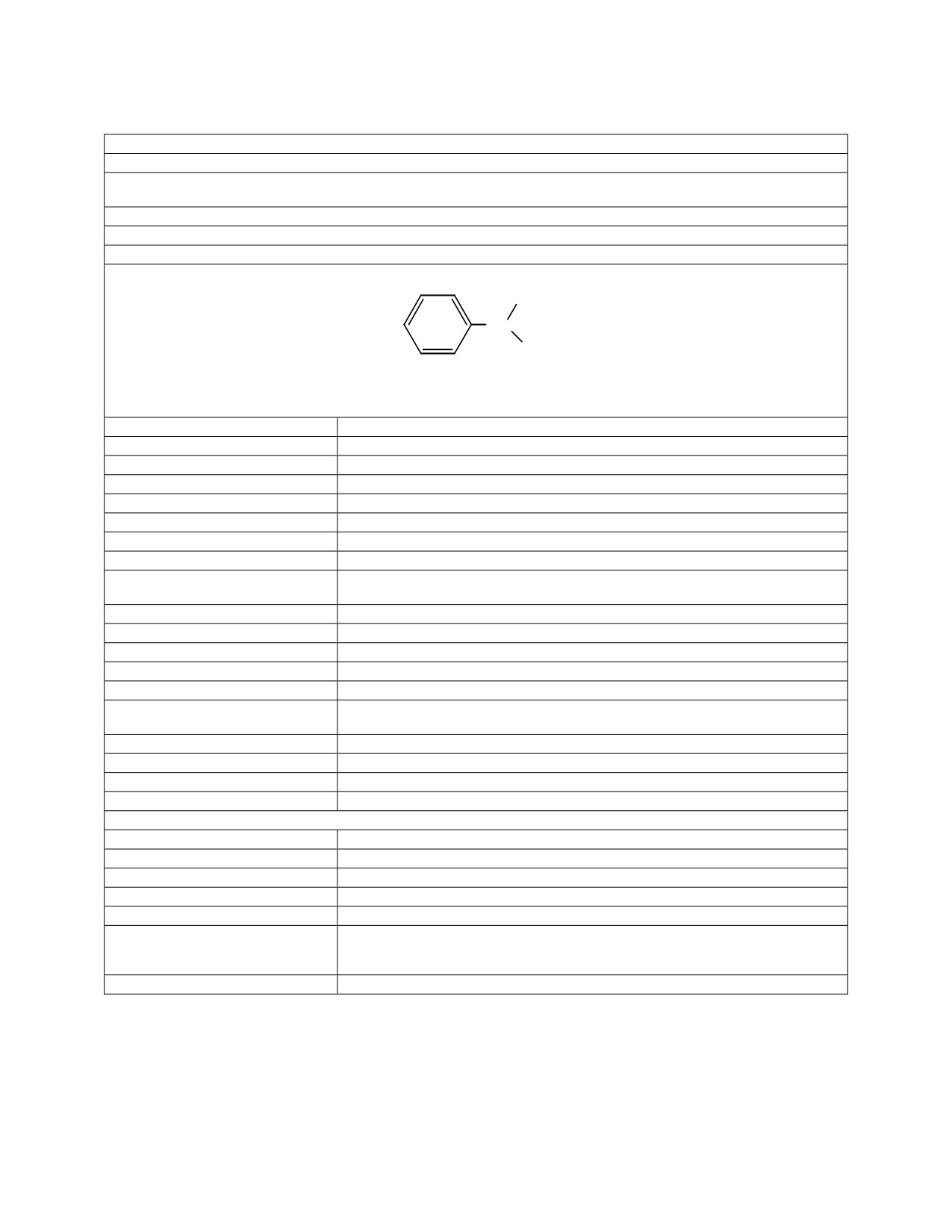
Table II-38. PD
Alternate Designations: Pfiffikus; DJ; Sternite, M.A., TL 69; FDA
Chemical Name: Phenyldichloroarsine
Synonyms: Arsine, dichlorophenyl-; Arsonous dichloride, phenyl-; Dichlorophenylarsine; Phenylarsonous dichloride;
Phenylarsinedichloride; Dichlor-fenylarsin (Czech); Fenildicloroarsina (Italian); Fenyldichlorarsin (Czech)
CAS Registry Number: 696-28-6
RTECS Number: CH5425000
Physical and Chemical Properties
Structural Formula:
Cl
As
Cl
Molecular Formula: C6H5AsCl2
Molecular Weight: 222.93
Physical State
Colorless to yellow liquid 1
Odor
None 2
Boiling Point
233°C (extrapolated) 3
FP/MP
-22.5°C (FP) 3
Liquid Density (g/mL)
1.645 @ 25°C; 1.677@ 0°C 3
Vapor Density (relative to air)
7.7 (calculated)
Vapor Pressure (torr)
2.2 x 10⁻² @ 25°C; 2.1 x 10⁻³ @ 0°C (both values are extrapolated) 3
Volatility (mg/m3)
2.64 x 10² @ 25°C; 2.3 x 101 @ 0°C (calculated from vapor pressure) 3
Latent Heat of Vaporization
15.1 (calculated from Clausius Clapeyron equation which assumes constant heat of
(kcal/mol)
vaporization as a function of temperature) 3
Viscosity (cP)
Data not available
Viscosity of Vapor (cP)
Data not available
Surface Tension (dynes/cm)
Data not available
Flash Point
Data not available
Decomposition Temperature
Stable to the normal boiling point 3
Solubility
Immediately hydrolyzes in the presence of water,4 miscible with alcohol, benzene,
ether, acetone,5,6 kerosene, petroleum, and olive oil 6
Rate of Hydrolysis
Very rapid 4
Hydrolysis Products
Hydrochloric acid and phenylarsine oxide which are also highly toxic 4
Stability in Storage
Data not available
Action on Metals or Other Materials
No serious effects on mild steel and cast iron. 7
Other Data
Skin and eye toxicity
Fairly potent vesicant 8
Inhalation toxicity
Toxic lung injurant 8
Rate of action
Immediate effect on eyes; effects on skin are delayed approximately 1 hour 9
Means of detection
M18A2 CADK, MM1, M18A3 CADK 10
Protection required
MOPP4 whenever liquid or vapor is present 11
Decontamination
Liquid on eyes and skin requires immediate decontamination. 11 Household bleach
is effective on equipment. Water, soaps, detergents, steam, and absorbents (earth,
sawdust, ashes, and rags) are effective for physical removal. 12
Use
Delayed-action casualty agent
II-57

Table II-38. PD (Continued)
NOTES
1Lewis, R.J., Sax’s Dangerous Properties of Industrial Materials, 10th ed., Volume 3, p. 1215, John Wiley & Sons, Inc., New
York, NY, 2001.
2 TM 3-215/AFM 355-7, Military Chemistry and Chemical Agents, December 1963, UNCLASSIFIED Technical Manual
(ADA292141).
3Owens, R., Diphenylcyanoarsine: Part V - The Physical Properties of M.A., D.A. T.A., and D.C., SO/R 492, Sutton Oak,
England, December 1940, UNCLASSIFIED Report.
4Buswell, A.M., et al., The Chemistry of Certain Arsenical Chemical Warfare Agents as Water Contaminants, OSRD 4193,
Division 9 National Defense Research Committee of the Office of Scientific Research and Development, June 1944,
UNCLASSIFIED Report.
5Lide, D.R., CRC Handbook of Chemistry and Physics, 82nd ed., p. 3-15, CRC Press, Washington, DC, 2001.
6Chemical Agent Data Sheets Volume I, Edgewood Arsenal Special Report EO-SR-74001, Edgewood Arsenal, Aberdeen
Proving Ground, MD December 1974, UNCLASSIFIED Report (ADB028222).
7Owens, R., Diphenylcyanoarsine Part III - The Pope-Turner Process, SO/R 488, Sutton Oak, England, December 1940,
UNCLASSIFIED Report.
8Sharon Reutter, et al., Review and Recommendations for Human Toxicity Estimates for FM 3-11.9, ECBC-TR-349,
September 2003.
9NIOSH-DOD-OSHA Sponsored Chemical and Biological Respiratory Protection Workshop Report, February 2000.
10DOD Chemical and Biological Defense Program Annual Report to Congress, Volume I, April 2003.
11FM 8-285/NAVMED P-5041/AFJMAN 44-149/FMFM 11-11, Treatment of Chemical Agent Casualties and Conventional
Military Chemical Injuries, 22 December 1995.
12FM 3-5/MCWP 3-37.3, NBC Decontamination, 28 July 2000.
(4)
PD Toxicity Estimates (Table II-39). No toxicity estimates are
recommended for lethal percutaneous, liquid, or vapor exposures or sever percutaneous
liquid exposure. The existing estimates are not supported by available data.
Table II-39. PD Toxicity Estimates10
Endpoint
Toxicity
MV (L)
Exposure
ROE
Probit
TLE
ROD
DOC
(mg-min/m3)
Duration
Slope
Lethality
LD50: NR
N/A
N/A
Percutaneous
Unknown
Unknown
Unknown
N/A
Liquid
LCt50:
2600 a
15
2-360 min
Inhalation/Ocular
Unknown
1 b.c
Unknown
Low
(Provisional)
LCt50: NR
N/A
N/A
Percutaneous
Unknown
Unknown
Unknown
N/A
Vapor d
Severe
ED50: NR
N/A
N/A
Percutaneous
Unknown
Unknown
Unknown
N/A
effects
Liquid
(vesication)
ECt50: 200-500 e
15
30-50 min
Percutaneous
Unknown
1 b,c
Unknown
Low
(Provisional)
Vapor d
Intolerable
ECt50: 16 f
15
1 - 2 min
Inhalation/Ocular
Unknown
Unknown
Unknown
Low
Threshold
ECt50: 1 f
N/A
1 min
Inhalation/Ocular
Unknown
Unknown
N/A
Low
(odor
detection)
NOTES
aBased on existing estimates.
bThe TLE value is assumed to be 1 because the Ct profile is unknown.
cSee Appendix H for supporting toxicity profile estimates.
dAssumes personnel are masked with eye protection.
eBased on currently accepted estimates for H/HD.
fBased on secondary human data.
(5)
Ethyldichloroarsine (ED) (see Table II-40). ED is a colorless liquid with a
fruity but biting and irritating odor.13 Although ED is a fairly powerful sternutator and
vesicant, it is primarily a toxic lung injurant. ED is a more powerful irritant than L and
produces sneezing and lacrimation.10 See Table II-41 (page II-60) for toxicity estimates.
II-58

Table II-40. ED
Alternate Designations: DICK (German); TL 214; Green Cross 3; Yellow Cross 1
Chemical Name: Ethyldichloroarsine
Synonyms: Dichloroethylarsine; Arsine, dichloroethyl-; Arsenic dichloroethane; Ethylarsonous dichloride; Arsonous
dichloride, ethyl-
CAS Registry Number: 598-14-1
RTECS Number: CH3500000
Physical and Chemical Properties
Structural Formula:
Cl
CH3CH2
As
Cl
Molecular Formula: C2H5AsCl2
Molecular Weight: 174.89
Physical State
Colorless liquid 1
Odor
Fruity, biting, and irritating 1
Boiling Point
156°C; 2 decomposes 3
FP/MP
Below -65°C (MP) 2
Liquid Density (g/mL)
1.742 @ 14°C 2
Vapor Density (relative to air)
6.0 (calculated)
Vapor Pressure (torr)
2.29 @ 21.5°C 2
Volatility (mg/m3)
2.19 x 10⁴ @ 20°C 2
Latent Heat of Vaporization
9.18 3
(kcal/mol)
Viscosity (cP)
Data not available
Viscosity of Vapor (cP)
Data not available
Surface Tension (dynes/cm)
Data not available
Flash Point
Data not available
Decomposition Temperature
Stable to boiling point 3
Solubility
Immediately hydrolyzes in the presence of water.4 Soluble in ethyl chloride, alcohol,
ether, benzene, acetone, kerosene and cyclohexane.3
Rate of Hydrolysis
Very rapid 4
Hydrolysis Products
Hydrochloric acid and ethylarsine oxide, which are also highly toxic 4
Stability in Storage
Stable 3
Action on Metals or Other Materials
None on steel when pure,2 noncorrosive towards iron @ temperatures up to 50°C,
when ED is dry.5 Attacks brass @ 50°C and is destructive to rubber and plastics 3
Other Data
Skin and eye toxicity
Fairly potent vesicant and lacrimator 6
Inhalation toxicity
Primarily a lung injurant 6
Rate of action
Immediate irritation; delayed blistering 7
Means of detection
M18 A3 CADK,8 M18A2 CADK, MM1
Protection required
MOPP4 whenever liquid or vapor is present 9
Decontamination
Liquid on eyes and skin requires immediate decontamination. 9 Household bleach is
effective on equipment. Water, soaps, detergents, steam, and absorbents (earth,
sawdust, ashes, and rags) are effective for physical removal. 10
Use
Delayed-action casualty agent
II-59

Table II-40. ED (Continued)
NOTES
¹Sax, N.I., Dangerous Properties of Industrial Materials, 3rd ed., p. 741, Reinhold Book Corporation, Albany, NY, 1968.
²Dawson, T.P., Ethyldichloroarsine (ED): Preliminary Investigation (1939), EATR 325, Chemical Warfare Service, Edgewood
Arsenal, MD, November 1941, UNCLASSIFIED Report (ADB957078).
³TM 3-215/AFM 355-7, Military Chemistry and Chemical Agents, December 1963, UNCLASSIFIED Technical Manual
(ADA292141).
4Buswell, A.M., et al., The Chemistry of Certain Arsenical Chemical Warfare Agents as Water Contaminants, OSRD 4193,
Division 9 National Defense Research Committee of the Office of Scientific Research and Development, June 1944,
UNCLASSIFIED Report.
5Kibler, A.L, Data on Chemical Warfare, TDMR 456, Chemical Warfare Center, Edgewood Arsenal, MD, November 1942,
UNCLASSIFIED Report (ADB969725).
6Sharon Reutter, et al., Review and Recommendations for Human Toxicity Estimates for FM 3-11.9, ECBC-TR-349,
September 2003.
7NIOSH-DOD-OSHA Sponsored Chemical and Biological Respiratory Protection Workshop Report, February 2000.
8DOD Chemical and Biological Defense Program Annual Report to Congress, Volume I, April 2003.
9FM 8-285/NAVMED P-5041/AFJMAN 44-149/FMFM 11-11, Treatment of Chemical Agent Casualties and Conventional
Military Chemical Injuries, 22 December 1995.
10FM 3-5/MCWP 3-37.3, NBC Decontamination, 28 July 2000.
(6)
ED Toxicity Estimates (Table II-41). No toxicity estimates are
recommended for lethal exposure. The existing estimates are not supported by the
available data.
Table II-41. ED Toxicity Estimates10
Endpoint
Toxicity
MV
Exposure
ROE
Probit
TLE
ROD
DOC
(mg-min/m3)
(L)
Duration
Slope
Lethality
LCt50: NR
N/A
N/A
Inhalation/
Unknown
Unknown
Unknown
N/A
Ocular
LCt50: NR
N/A
N/A
Percutaneous
Unknown
Unknown
Unknown
N/A
Vapor
Severe effects
ECt50:
5 -10 a
N/A
1 min
Inhalation/
Unknown
N/A
Unknown
Low
(temporary
Ocular
incapacitation)
Odor detection
EC50: 1 mg/m3 b
N/A
1 min
Inhalation/
Unknown
N/A
Unknown
Low
Ocular
NOTES
aBased on secondary human data and TM 3-215 (1952).
bBased on existing estimate.
(7)
Methyldichloroarsine (MD) (see Table II-42). MD is a colorless and odorless
liquid when pure.13 It has been described as a vesicant, toxic lung injurant, and respiratory
irritant. Inhalation causes a severe irritation in the nose, which produces sneezing and
finally extends to the chest where it gives rise to pain.10 See Table II-43 (page II-62) for
toxicity estimates.
Table II-42. MD
Alternate Designations: TL 294; Methyl-dick; Medikus
Chemical Name: Methyldichloroarsine
Synonyms: Arsine, dichloromethyl-; Arsonous dichloride, methyl-; Dichloromethylarsine; Methylarsine dichloride;
Methylarsonous dichloride
CAS Registry Number: 593-89-5
RTECS Number: CH4375000
II-60

Table II-42. MD (Continued)
Physical and Chemical Properties
Structural Formula:
Cl
CH3
As
Cl
Molecular Formula: CH3AsCl2
Molecular Weight: 160.86
Physical State
Colorless Liquid 1
Odor
Extremely irritating; none when pure 1
Boiling Point
132.6°C 2
FP/MP
-54.8°C (FP) 3
Liquid Density (g/mL)
1.839 @ 20°C; 1.875 @ 0°C 4
Vapor Density (relative to air)
5.5 (calculated)
Vapor Pressure (torr)
7.593 @ 20°C; 2.063 @ 0°C 2
Volatility (mg/m3)
6.68 x 10⁴ @ 20°C; 1.95 x 10⁴ @ 0°C (calculated from vapor pressure) 2
Latent Heat of Vaporization
10.5 @ 20°C; 10.2 @ 0°C (calculated from vapor pressure) 2
(kcal/mol)
Viscosity (cP)
Data not available
Viscosity of Vapor (cP)
Data not available
Surface Tension (dynes/cm)
Data not available
Flash Point
Data not available
Decomposition Temperature
Stable up to the boiling point 2
Solubility
Immediately hydrolyzes in the presence of water. 5 Soluble in common organic
solvents @ ambient temperatures.1
Rate of Hydrolysis
Very rapid, 5 complete in less than 2 min @ 25°C in dilute solution 6
Hydrolysis Products
Hydrogen chloride and methylarsenic oxide 5
Stability in Storage
Stable in steel containers @ 60°C for a period of at least 15 weeks and for at least 1
year @ ambient temperatures 7
Action on Metals or Other Materials
No appreciable amount of corrosion on steel when MD is pure and acid-free. 8
Satisfactory with steel for at least 1 year @ ambient temperature, but @ elevated
temperatures (60°C) crude pitting occurs within 15 weeks. 7
Other Data
Skin and eye toxicity
Blistering action less than that of HD and L; eye and skin irritant 9
Inhalation toxicity
Toxic lung injurant and respiratory irritant 9
Rate of action
Immediate irritation; delayed blistering 10
Means of detection
M18A3 CADK,11 M18A2 CADK, MM1
Protection required
MOPP4 whenever liquid or vapor is present 12
Decontamination
Liquid on eyes and skin requires immediate decontamination. 12 Household bleach
is effective on equipment. Water, soaps, detergents, steam, and absorbents (earth,
sawdust, ashes, and rags) are effective for physical removal. 13
Use
Delayed-action casualty agent
II-61

Table II-42. MD (Continued)
NOTES
1Macintire, B.G., et al., Methyldichloroarsine and Methyldifluoroarsine Field Tests, EACD 410, Chemical Warfare Service,
Edgewood Arsenal, MD, March 1931, UNCLASSIFIED Report (ADB955243).
2Watson, P.D., Determination of the Vapor Pressure of Methyldichloroarsine, EACD 176, Chemical Warfare Service,
Edgewood Arsenal, Edgewood, MD, May 1922, UNCLASSIFIED Report (ADB959625).
3Mead, W.P. Freezing Points of Mixtures of Methyldichloroarsine and Mustard Gas and of Lewisite and Mustard Gas, EACD
170, Chemical Warfare Service, Edgewood Arsenal, Edgewood, MD, May 1922, UNCLASSIFIED Report (ADB95011).
4Klosky, S., and Stricker, P.F., The Physico Chemical Properties of Methyldichloroarsine and Arsenic Trichloride, EACD 63,
Chemical Warfare Service, Edgewood Arsenal, Edgewood, MD, August 1921, UNCLASSIFIED Report (ADB955049).
5Buswell, A.M., et al., The Chemistry of Certain Arsenical Chemical Warfare Agents as Water Contaminants, OSRD 4193,
Division 9 National Defense Research Committee of the Office of Scientific Research and Development, June 1944,
UNCLASSIFIED Report.
6Beebe, C.H, Important Constants of Fourteen Common Chemical Warfare Agents, EACD 328, Chemical Warfare Service,
Edgewood Arsenal, Edgewood, MD, December 1924, UNCLASSIFIED Report (ADB958296).
7Henley, F.M., Surveillance Tests on 75 mm Steel Gas Shell Extending Over a Period of One Year, EACD 11, Chemical
Warfare Service, Edgewood Arsenal, MD, June 1920, UNCLASSIFIED Report (ADB959731).
8Siegel, M., The Corrosive Effect of War Gases on Metals and Materials, EACD 113, Chemical Warfare Service, Edgewood
Arsenal, MD, December 1921, UNCLASSIFIED Report (ADB955153).
9Sharon Reutter, et al., Review and Recommendations for Human Toxicity Estimates for FM 3-11.9, ECBC-TR-349,
September 2003.
10NIOSH-DOD-OSHA Sponsored Chemical and Biological Respiratory Protection Workshop Report, February 2000.
11DOD Chemical and Biological Defense Program Annual Report to Congress, Volume I, April 2003.
12FM 8-285/NAVMED P-5041/AFJMAN 44-149/FMFM 11-11, Treatment of Chemical Agent Casualties and Conventional
Military Chemical Injuries, 22 December 1995.
13FM 3-5/MCWP 3-37.3, NBC Decontamination, 28 July 2000.
(8)
MD Toxicity Estimates (Table II-43). No toxicity estimates are
recommended for lethal exposure. The existing estimates are not supported by the
available data.
Table II-43. MD Toxicity Estimates10
Endpoint
Toxicity
MV (L)
Exposure
ROE
Probit
TLE
ROD
DOC
(mg-min/m3)
Duration
Slope
Lethality
LCt50: NR
N/A
N/A
Inhalation/
Unknown
Unknown
Unknown
N/A
Ocular
Severe effects,
ECt50: 25 a
N/A
1 min
Inhalation/
Unknown
N/A
Unknown
Low
(temporary
(Provisional)
Ocular
incapacitation)
Odor Detection
EC50: less than 1
N/A
1 min
Inhalation/
Unknown
N/A
Unknown
Low
mg/m3 a
Ocular
NOTES
aBased on secondary human data and TM 3-215 (1952).
c.
Urticants. Urticants are not true vesicants because, unlike mustard and L, they
do not produce fluid-filled blisters; rather, they produce solid lesions resembling urticaria.21
CX is the primary urticant of military interest (see Table II-44). It can penetrate garments
and rubber much more quickly than other agents.21 It affects the skin, eyes, and lungs. No
other chemical agent produces such an immediately painful onset that is followed by rapid
tissue necrosis. The skin lesions, in particular, are similar to those caused by a strong acid.
The rapid skin damage renders the skin more susceptible to a second type of agent.21
Droplets on the skin are potentially lethal. CX has also been classified as a lung poison.10
See Table II-45 (page II-64) and Appendix H for toxicity estimates.
II-62

Table II-44. CX
Alternate Designations: Fosgen Oksim; Phosgen-oxime
Chemical Name: Dichloroformoxime
Synonyms: 1,2-Dichloroformoxime; Dichloroformaldoxime; Dichloroximinomethane; Dichlorformaldehyd-oxime;
Kohlensaure-dichlorid-oxime; Dichlormethylen-hydroxylamine; Carbonyl chloride oxime
CAS Registry No: 1794-86-1
RTECS Number: Data not available
Physical and Chemical Properties
Structural Formula:
Cl
C NOH
Cl
Molecular Formula: CHCl2NO
Molecular Weight: 113.93
Physical State
Colorless, crystalline, deliquescent-solid when pure 1
Odor
Unpleasant and irritating; 1 resembles new-mown hay at low concentrations 2
Boiling Point
129oC 3 (with decomposition unless highly pure)
FP/MP
39oC (MP) 3
Liquid Density (g/mL)
Data not available
Vapor Density (relative to air)
3.9 (calculated)
Vapor Pressure (torr)
2.43 x 101 @ 50oC 3
Volatility (mg/m3)
1.37 x 10⁵ @ 50oC (calculated from vapor pressure) 3
Latent Heat of Vaporization
11.2 @ 50oC (calculated from vapor pressure) 3
(kcal/mol)
Viscosity (cP)
Data not available
Viscosity of Vapor (cP)
Data not available
Surface Tension (dynes/cm)
Data not available
Flash Point
Data not available
Decomposition Temperature
Below 129oC 4
Solubility
Very soluble in both water and common organic solvents 5
Rate of Hydrolysis
Slow in water @ ambient temperature and pH 7; hydrolyzes 5% within six days @
ambient temperature; dilute acids slow down the hydrolysis rate even further,
whereas basic solutions react very violently with CX 2
Hydrolysis Products
Carbon dioxide, hydrogen chloride, and hydroxylamine 2
Stability in Storage
Pure, unstabilized CX decomposes on storage @ ambient temperature. If stored @
-20oC it can be kept indefinitely. 1 CX is extremely unstable in the presence of
impurities such as metals; even trace amounts of iron chloride may cause explosive
decomposition. 2
Action on Metals or Other Materials
Metals, especially iron, cause rapid decomposition of CX; trace amounts of iron
chloride may cause explosive decomposition. 2 Also attacks rubber, especially upon
heating. 5
Other Data
Skin and eye toxicity
Causes pain, irritation, and severe tissue damage on skin. CX causes pain,
conjunctivitis, and inflammation of the cornea of the eye. 6
Inhalation toxicity
Can cause pulmonary edema 6
Rate of action
Almost instantaneous 6
Means of detection
M256A1 CADK, M18A3 CADK, M18A2 CADK, MM1 7
Protection required
MOPP4 8
II-63

Table II-44. CX (Continued)
Decontamination
Because of the rapid reaction of CX with the skin, decontamination will not be
entirely effective after pain occurs; nevertheless, decontaminate as rapidly as
possible with M291 SDK. If the M291 kit is not available, flush the area with large
amounts of water to remove any agent that has not reacted with the skin. 8
Household bleach is effective on equipment. Water, soaps, detergents, steam, and
absorbents (earth, sawdust, ashes, and rags) are effective for physical removal. 9
Use
Rapid-acting casualty agent
NOTES
1Witten, B., The Search for Toxic Chemical Agents (U), EATR 4210, Edgewood Arsenal Research Laboratories, MD,
November 1969, UNCLASSIFIED Report (AD507852).
2Petersen, T.G., Agent CX (Phosgene Oxime) Summary Report (U), CRDL Special Publication 7, USA Chemical Research
and Development Laboratories, Edgewood Arsenal, MD, October 1965, CONFIDENTIAL Report (AD367890).
3Penski, E.C., Vapor Pressure Data Analysis of Dichloroformoxime, ERDEC-TR-042, USA Chemical and Biological Defense
Agency, Aberdeen Proving Ground, MD, March 1993, UNCLASSIFIED Report (ADA265873).
4Properties of War Gases Volume II: Blood and Nettle Gases (U), ETF 100-41/Vol-2, Chemical Corps Board, Army Chemical
Center, MD, December 1956, CONFIDENTIAL Report (AD108457).
5Prandtl, W. and Sennewald, K., “Trichloronitrosomethane, Dichloroformoxime (Phosgene Oxime) and Their Derivatives,”
Chemische Berichte, Vol. 62, p. 1766, 1929.
6BG Russ Zajtchuk et al. (eds), Textbook of Military Medicine: Medical Aspects of Chemical and Biological Warfare, Office
of the Surgeon General, 1997, Chap. 7, “Vesicants.”
7DOD Chemical and Biological Defense Program Annual Report to Congress, Volume I, April 2003.
8FM 8-285/NAVMED P-5041/AFJMAN 44-149/FMFM 11-11, Treatment of Chemical Agent Casualties and Conventional
Military Chemical Injuries, 22 December 1995.
9FM 3-5/MCWP 3-37.3, NBC Decontamination, 28 July 2000.
Table II-45. CX Toxicity Estimates10
Endpoint
Toxicity
MV (L)
Exposure
ROE
Probit
TLE
ROD
DOC
(mg-min/m3)
Duration
Slope
Lethality
LCt50:
3200 a
15
10 min
Inhalation/
Unknown
1 b,c
Unknown
Low
(Provisional)
Ocular
Incapacitation/
ECt50: 3 d
15
1 min
Inhalation/
Unknown
Unknown
Unknown
Low
intolerable
(Provisional)
Ocular
Threshold
ECt50: 1 d
15
10 min
Inhalation/
Unknown
Unknown
Unknown
Low
(odor
(Provisional)
Ocular
detection)
NOTES
aBased on animal data and existing estimate.
bThe TLE value is assumed to be 1 because the concentration-time profile is unknown.
cSee Appendix H for supporting toxicity profile estimates.
dBased on secondary human data.
8.
Incapacitating Agents
Used in a military context, incapacitation is understood to mean inability to perform
one’s military mission. Since missions vary, for the purpose of this manual, incapacitation
means the inability to perform any military task effectively and implies that the condition
was achieved via the deliberate use of a nonlethal weapon.22 Incapacitating agents differ
from other CW agents in that the lethal dose is theoretically many times greater than the
incapacitating dose. Thus, they do not seriously endanger life except in cases exceeding
many times the effective dose, and they produce no permanent injury.1 Virtually all drugs
whose most prominent effects are psychological or behavioral can be classified into four
fairly discrete categories: deliriants, stimulants, depressants, and psychedelics. They
interfere with the higher functions of the brain such as attention, orientation, perception,
memory, motivation, conceptual thinking, planning, and judgment. 22
a.
Deliriants.22 These are drugs that produce delirium, which is an incapacitating
syndrome involving confusion, hallucinosis, and disorganized speech and behavior. Many
II-64
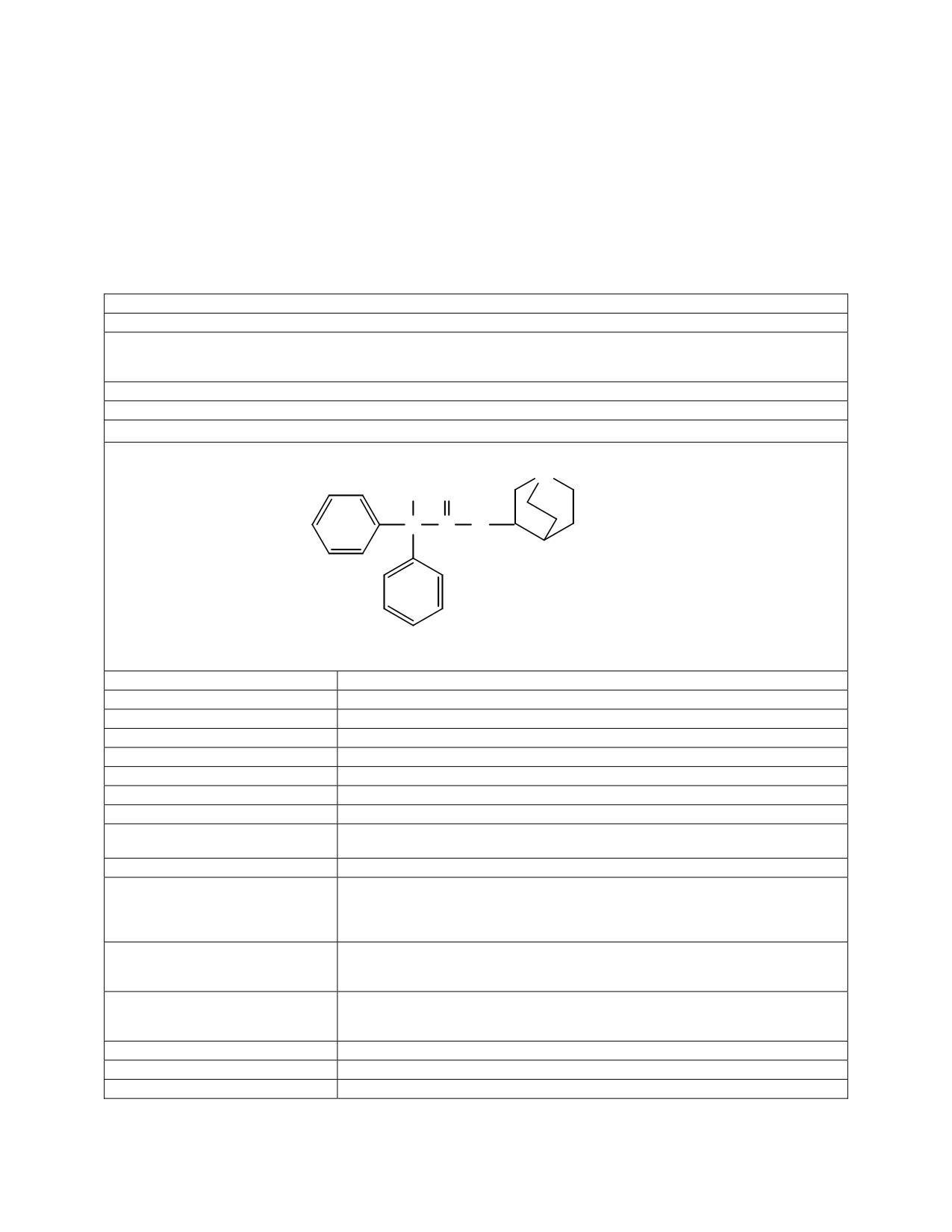
drugs can produce delirium; however, the chemicals in the subgroup anticholinergics are
regarded as most likely to be used as military incapacitating agents. Of these drugs, 3-
Quinuclidinyl benzilate (BZ) is considered the most likely candidate for military use (see
Table II-46). BZ is capable of producing delirium at a very low dosage with a high safety
margin. Skin absorption is possible with proper solvents. See Table II-47 (page II-66) for
toxicity estimates. See Table II-48 (page II-68) for symptoms. BZ intoxication requires from
two to three days to reach full recovery.
Table II-46. BZ
Alternate Designation: EA 2277; CS 4030; Oksilidin; QNB
Chemical Name: 3-Quinuclidinyl benzilate
Synonym: Benzilic acid, 3-quinuclidinyl ester; 1-Azabicyclo (2.2.2) octan-3-ol, benzilate; Benzeneacetic acid, alpha-
hydroxy-alpha-phenyl-,1-azabicyclo (2.2.2)oct-3-yl ester; 3-Chinuclidylbenzilate; 3-(2,2-Diphenyl-2-hydroxyethanoyloxy)-
quinuclidine; 3-Quinuclidinol benzilate; 3-Quinuclidyl benzilate
CAS Registry Number: 6581-06-2
RTECS Number: DD4638000
Physical and Chemical Properties
Structural Formula:
N
OH O
C C O
Molecular Formula: C21H23NO3
Molecular Weight: 337.42
Physical State
White crystalline solid 1
Odor
None 2
FP/MP
167.5°C 3 (MP)
Boiling Point
412°C (extrapolated) 4
Solid Density (g/cm3)
Bulk: 0.51;2 Crystal: 1.33 2
Vapor Density
11.6 (calculated)
Vapor Pressure (torr)
1.43 x 10⁻¹⁰ @ 25°C (extrapolated); 4.74 x 10⁻¹³ @ 0°C (extrapolated)4
Volatility (mg/m3)
2.60 x 10⁻⁶ @ 25°C;9.0 x 10⁻⁹ @ 0°C (calculated from vapor pressure)4
Latent Heat of Vaporization
21.2 (calculated from Clausius Clapeyron equation which assumes constant heat of
(kcal/mol)
vaporization as a function of temperature) 4
Flash Point
Pure: 246°C;2 Munitions grade: 220°C 2
Decomposition Temperature
Stable up to the melting point. During prolonged heating at temperatures
approximately 170°C, BZ begins to decompose, producing carbon dioxide,
benzophenone, benzhydrol, and other products. The rate of decomposition is both
temperature- and purity-dependent. 1
Solubility
Solubility in water is approximately 1.18 g/L5; slightly soluble in water; soluble in
dilute acids and common organic solvents such as alcohol and chloroform; insoluble
in aqueous alkali. 1
Rate of Hydrolysis
t1/2 = 6.7 hrs @ 25°C and pH 9.8;6 t1/2 = 1.8 min @ 25°C and pH 13;6 t1/2 = 3 to 4 wks
@ 25°C in moist air and pH 7.6 t½ = 12 min @ 34° and pH 12;5 t½ = 1.4 hr @ 50°C
and pH 8.5;5 t½ = 9.5 hr @ 100°C and pH 0.5
Hydrolysis Products
3-Quinuclidinol and benzylic acid 6
Stability in Storage
Stable in aluminum and stainless steel @ 71°C for at least 2 years 5
Action on Metals or Other Materials
Slight pitting of aluminum and stainless steel occurs after 2 years @ 71°C7
II-65

Table II-46. BZ (Continued)
Other Data
Skin and eye toxicity
Can cause blurred vision and dilation of pupils 8
Inhalation toxicity
Primary route of exposure 9
Rate of action
Delayed action; 1 to 4 hours depending on exposure 10
Means of detection in field
MM1
Protection required
MOPP4 11
Decontamination
Decontaminate skin with soap and water or use M291 kit if soap and water are not
available 12
Use
Delayed-action incapacitating agent
NOTES
¹Witten, B., The Search for Toxic Chemical Agents (U), EATR 4210, Edgewood Arsenal Research Laboratories, MD,
November 1969, UNCLASSIFIED Report (AD507852).
²Chemical Agent Data Sheets Volume I, Edgewood Arsenal Special Report EO-SR-74001, Edgewood Arsenal, Aberdeen
Proving Ground, MD December 1974, UNCLASSIFIED Report (ADB028222).
³Lochboehler, C.M., The Physical Properties of the Glycolates (U), EASP-100-61; USA Munitions Command, Chemical
Research Laboratory; Edgewood Arsenal, MD, 1970, CONFIDENTIAL Report (AD508308).
4Cogliano, J.A. and Braude, G.L., Corrosion,Compatibility, and other Physiocochemical Studies (U), Final Report-Task II,
DA18-108-CML-6602, W.R. Grace and Company, Washington Research Center, Clarksville, MD, 1963, UNCLASSIFIED
Report (AD359603).
5Rosenblatt, D.H., et al., Problem Definition Studies on Potential Environmental Pollutants VIII: Chemistry and Toxicology of
BZ (3-Quinuclidinyl Benzilate), USAMBRDL-TR 7710, USA Medical Bioengineering Research and Development Laboratory,
Fort Detrick, MD, 1977, UNCLASSIFIED Report (ADB030349).
EA 2277 (U): A Summary Report as of 15 March 1961, CRDL-SP-4-28, USA Chemical Research and Development
Laboratories, Army Chemical Center, MD, March 1961, CONFIDENTAL Report.
6Sass, S. and Master, I., Basic Esters of Glycolic Acids (U): Part III Analysis and Chemical Properties of Microgram and
Larger Quantities of EA 2277 and Related Compounds, CRDLR 3088, USA Chemical Research and Development
Laboratories, Army Chemical Center, MD, August 1961, UNCLASSIFIED Report (AD325351).
7Brooks, M.E., et al., Corrosion, Compatibility and Other Physicochemical Studies (U), DA18-108-CML-6602 (A), Final
Report - Task I, W.R. Grace and Company, Washington Research Center, Clarksville, MD, May 1964, UNCLASSIFIED
Report (AD350755).
8BG Russ Zajtchuk et al. (eds), Textbook of Military Medicine: Medical Aspects of Chemical and Biological Warfare, Office
of the Surgeon General, 1997, Chap. 11, “Incapacitating Agents.”
9Sharon Reutter, et al., Review and Recommendations for Human Toxicity Estimates for FM 3-11.9, ECBC-TR-349,
September 2003.
10NIOSH-DOD-OSHA Sponsored Chemical and Biological Respiratory Protection Workshop Report, February 2000.
11FM 8-9/NAVMED P-5059/AFJMAN 44-151, NATO Handbook on the Medical Aspects of NBC Defense Operations
AMEDP-6(B), 1 February 1996.
12FM 8-285/NAVMED P-5041/AFJMAN 44-149/FMFM 11-11, Treatment of Chemical Agent Casualties and Conventional
Military Chemical Injuries, 22 December 1995.
b.
BZ Toxicity Estimates (Table II-47). No toxicity estimates are recommended for
lethal or threshold effects. The existing estimates are not supported by the available data.
Table II-47. BZ Toxicity Estimates10
Endpoint
Toxicity
MV (L)
Exposure
ROE
Probit
TLE
ROD
DOC
(mg-min/m3)
Duration
Slope
Lethality
LCt50: NR
N/A
N/A
Inhalation/
Unknown
Unknown
Unknown
N/A
Ocular
Severe effects
ECt50: 100 a
15
Less than
Inhalation/
Unknown
N/A
Unknown
Low
(temporary
(Provisional)
5 min
Ocular
incapacitation)
Threshold effects
ECt50: NR
N/A
N/A
Inhalation/
Unknown
N/A
Unknown
N/A
(odor detection)
Ocular
NOTES
aBased on human data and “official” estimate (HEC, 1967).
c.
Stimulants. Stimulants are drugs that produce a temporary increase of the
functional activity or efficiency of an organism or any of its parts.3 They include
amphetamines, cocaine, caffeine, nicotine, and epileptogenic substances such as strychnine
II-66
and Metrazole. None of the conventional stimulants appears to have sufficient potency to
be usable as an airborne incapacitating agent, and low doses could even prove
counterproductive, since moderate stimulation might easily lead to a soldier’s more
energetic and aggressive performance.22
d.
Depressants. Depressants are drugs that reduce a bodily functional activity or
an instinctive desire.3 They include drugs such as barbiturates, morphine and other
opioids, and tranquilizers. The lethal dose for morphine and other opioids is only 10 to 20
fold greater than the incapacitating dose. Major tranquilizers often produce relatively little
sedation, although they reduce hyperactivity.22
(1)
Cannabinols. Cannabinols are another a group of potential incapacitating
agents that seem to act basically as CNS depressants. Primary effects of these agents,
however, are sedation and destruction of motivation rather than disruption of the ability to
think.1
(2)
Phenothiazine-like compounds have a very high safety index and would not
likely involve any special medical care. The onset of action for phenothiazines is about 5
minutes and often lasts about 1 hour.
(3)
Fentanyls. On 27 October 2002, Russia used a derivative of fentanyl in a
Moscow theatre where Chechen rebels held 800 hostages.23 Fentanyls are opiates with
actions similar to those of morphine; in particular, the capacity to relieve pain. Short-term
and long-term effects of the fentanyls are indistinguishable from those of heroin, but they
are hundreds of times more potent.24 Fentanyls depress respiration and heart rate and
cause lethargy, sedation, and immobilization.22 As a potential class of agents, they have a
rapid onset of action. Decontamination would involve washing with soap and water.1
e.
Psychedelics. Psychedelics are drugs capable of producing abnormal
psychological effects and sometimes psychological states resembling mental illness.3 They
include D-lysergic acid diethylamide (LSD), MDMA (popularly known as ecstasy),
phencyclidine (PCP), and indoles. Psychedelic drugs have been found unsuitable for
military use. Affected individuals usually cannot carry out a series of instructions or
concentrate on a complex task, but might be capable of isolated, impulsive actions such as
firing a weapon accurately enough to be dangerous.22
f.
Symptoms. Symptoms and possible agent families are shown in Table II-48
(page II-68). See documents such as FM 8-285 for diagnosis and treatment for
incapacitating agents.
II-67

Table II-48. Correlation of Symptoms and Incapacitating Agent Family 1,22
Signs and Symptoms
Possible Agent Family
Restless, dizziness, or giddiness; failure to obey orders, confusion,
Anticholinergics (BZ), indoles, cannabinoids,
erratic behavior; stumbling or staggering; vomiting
anxiety reaction, other intoxications (e.g.,
alcohol, bromides, barbiturates, lead)
Dryness of mouth, tachycardia at rest, elevated temperature, flushed
Anticholinergics (BZ)
face, blurred vision, papillary dilation, slurred or nonsensical speech,
hallucinatory behavorior, stupor, coma
Inappropriate smiling or laughing; irrational fear; destructibility;
Indoles (schizophrenic psychosis may mimic
difficulty in expressing self; perceptual distortions; labile increase in
in some respects)
pupil size, heart rate, and blood pressure; stomach cramps and
vomiting
Euphoric, relaxed, unconcerned daydreaming attitude; easy
Cannabinols
laughter; low blood pressure and dizziness on sudden standing
Tremor, clinging or pleading; crying; decrease in disturbance with
Anxiety reaction
reassurance; history of nervousness or immaturity
Respiratory depression; slow pulse; lethargy; sedation;
Fentanyls
immobilization
9.
Chemical Warfare Agent Precursors10
These materials are not CW agents; they are binary agent components and are
relatively nontoxic—at least when compared with the CW agents.
a.
Methyl Phosphonic Acid (DF) (see Table II-49). DF is an organophosphorous
compound that is an intermediate component of binary GB. The Human Estimates
Committee of what is now Edgewood Chemical and Biological Center (ECBC) stated that
many alkyl organophosphorous compounds produce neurotoxicity in various animal species.
The toxic syndrome includes weakness and paralysis, with death resulting from a central
action. Deaths that occur within a few hours of exposure, before the appearance of lung
damage, are perhaps due to central respiratory failure. Deaths occurring after 24 hours
postexposure are thought to result from lung damage, central respiratory failure, or a
combination of the two. See Table II-50 (page II-70) for toxicity estimates.
II-68

Table II-49. DF
Alternate Designations: Difluoro; EA 1251
Chemical Name: Methylphosphonic difluoride
Synonyms: Phosphonic difluoride, methyl-; Difluoromethyl phosphonate; Difluoromethylphosphine oxide; Methyl
difluorophosphite; Methylphosphonyldifluoride; Phosphonodifluoridic acid, methyl-
CAS Registry Number: 676-99-3
RTECS Number: TA1840700
Physical and Chemical Properties
Structural Formula:
O
CH3
P
F
F
Molecular Formula: CH3F2PO
Molecular Weight: 100.00
Physical State
Liquid 1
Odor
Pungent, acid like1
Boiling Point
99.7°C 2
FP/MP
-36.9°C (FP) 3
Liquid Density (g/mL)
1.3595 @ 25°C; 1.4060 @ 0°C (extrapolated) 2
Vapor Density (relative to air)
3.4 (calculated)
Vapor Pressure (torr)
3.6 x 10¹ @ 25°C; 8.5 @ 0°C (extrapolated) 2
Volatility (mg/m3)
1.9 x 10⁵ @ 25°C; 5.0 x 10⁴ @ 0°C (calculated from vapor pressure) 2
Latent Heat of Vaporization
9.2 @ 25°C; 9.5 @ 0°C (calculated from vapor pressure) 2
(kcal/mol)
Flash Point
Nonflammable 4
Decomposition Temperature
Data not available
Solubility
Immediately decomposes with the addition of water 5
Rate of Hydrolysis
Virtually instantaneous to produce methylphosphonofluoridic acid (MF) and
hydrogen fluoride (HF) which are also toxic. Further hydrolysis is a slow reaction
that produces methylphosphonic acid (MPA); MF t1/2 = 162 days @ pH 7, t1/2 = 90
days @ pH 4, and t1/2 = 47 days @ pH 3. 5
Hydrolysis Products
Hydrolyzes to give toxic products, MF and HF. Further hydrolysis of MF results in
MPA and a second mole of HF. 5
Stability in Storage
Remains stable for at least 20 years, when stored in high-density polyethylene
containers enclosed in steel. 6 Avoid contact with water mist or sprays, metals,
alkaline materials, and some organics. 1 Never store DF with alcohols; DF will react
with alcohols to form a lethal chemical, such as crude GB. 7
Action on Metals or Other Materials
Incompatible with water, glass, concrete, 8 most metals, natural rubber, 9 and
organic materials like glycols, which is mainly due to the acidic corrosive nature of
the hydrolysis products. 1,10-12 HF may react with some metals, to give off hydrogen
gas, a potential fire and explosive hazard. 10,13
II-69

Table II-49. DF (Continued)
NOTES
¹Buchi, K.M., Environmental Overview of Intermediates, By-Products, and Products in the Production of QL, DC, and DF,
CRDEC-TR-076, USA Chemical Research Development and Engineering Center, Aberdeen Proving Ground, MD, May
1991, UNCLASSIFIED Report (ADB155651).
²Zeffert, B.M. et al., “Properties, Interaction and Esterification of Methylphosphonic Dihalides,” J. Am. Chem. Soc., Vol. 82,
p. 3843, 1960.
³Furukawa, G.T., et al., ‘Thermodynamic Properties of Some Methylphosphonyl Dihalides From 15 to 335°K,” J. Rsch. NBS
Phy. & Chem., Vol. 68A, No. 4, p. 367, 1964.
4Allan, C.R., The Relationship Between Oxygen Index and the Flashing Propensity of Explosively Disseminated Liquids,
ARCSL-TR-77061, USA Armament Research and Development Command, Chemical Systems Laboratory, Aberdeen
Proving Ground, MD, October 1977, UNCLASSIFIED Report (ADA045976).
5Dahl, A.R., et al., Acute Toxicity of Methylphosphonic Difluoride (DF) Methylphosphonic Dichloride (DC) and their
Hydrolysis Products by Inhalation and other Routes in Mice, Rats and Guinea Pigs, CRDEC-CR-86049, USA Chemical
Research Development and Engineering Center, Aberdeen Proving Ground, MD, June 1986, UNCLASSIFIED Report
(ADB105158).
6Jackson, A.M., and Semiatin, W.J., Long-Term Storability of the M20 DF Canister Used in the M687 Binary Projectile,
CRDC-TR-84104, USA Chemical Research Development and Engineering Center, Aberdeen Proving Ground, MD, January
1985, UNCLASSIFIED Report (ADB092563).
7Hyttinen, L.J., et al., Mixed Binary Agents New Approach Toward Meeting Expanded Chemical Munitions Effectiveness
Requirements, ARCSL-TR-83080, USA Armament Research and Development Command, APG, MD, June 1983,
CONFIDENTIAL Report (ADC033576).
8Ellzy, M., et al., Difluor (DF) - Flooring Compatibility Studies, CRDEC-TR-229, USA Chemical Research Development and
Engineering Center, Aberdeen Proving Ground, MD, May 1991, UNCLASSIFIED Report (ADB154752).
9Schweitzer, P.A., Corrosion Resistance Tables: Metals, Plastics, Nonmetallics, and Rubbers, 2nd ed., pp. 572- 573, Ed.,
Marcel Dekker, INC., Chester, NJ, 1986.
10Buchi, K.M., Environmental Overview of Common Industrial Chemicals with Potential Application in the Binary Munitions
Program, CRDEC-TR-87041, USA Chemical Research Development and Engineering Center, Aberdeen Proving Ground,
MD, July 1987, UNCLASSIFIED Report (ADA186083).
¹¹Thomas, M.T., Research and Development for Candidate Materials for Use as a DF Containment Vessel, CRDC-CR-
85058, USA Chemical Research Development and Engineering Center, Aberdeen Proving Ground, MD, September 1985,
UNCLASSIFIED Report (ADB096058).
¹²Kay Lau, Tony Man, Glass or Polymer Etching Due to the Reaction of Methylphosphonic Difluoride (DF) with Water (U),
CRDEC-TR-86074, USA Chemical Research Development and Engineering Center, Aberdeen Proving Ground, MD, August
1986, CONFIDENTIAL Report (ADC039896).
¹³Tarantino, P.A., Electrochemical Corrosion Study of Miscellaneous Metals/Alloys with Methylphosphonic Difluoride,
CRDEC-TR-88032, USA Chemical Research Development and Engineering Center, Aberdeen Proving Ground, MD,
November 1987, UNCLASSIFIED Report (ADB117574).
Table II-50. DF Toxicity Estimates10
Endpoint
Toxicity a
MV (L)
Exposure
ROE
Probit
TLE
ROD
DOC
(mg/eye)
Duration
Slope
Permanent Corneal
ED50: 10
N/A
N/A
Liquid in
Unknown
Unknown
Unknown
Moderate
Damage
eye
Temporary Corneal
ED50: 0.2
N/A
N/A
Liquid in
Unknown
Unknown
Unknown
Moderate
Damage
eye
NOTES
aBased on “official” existing human toxicity estimate.
b.
O-(2 Diisopropylaminoethyl)-O’Ethyl Methyl Phosphonite (QL) (see Table II-51).
The only human data for QL are from occupational exposures for which the dosage is
unknown. No toxic signs have been observed in workers who have handled large quantities
of QL or who have become highly contaminated with it. See Table II-52 (page II-72) for
toxicity estimates.
II-70

Table II-51. QL
Alternate Designations: EA 1724; EDMP
Chemical Name: O-(2-Diisopropylaminoethyl) O’-ethyl methylphosphonite
Synonyms: O-Ethyl-O’-(2-diisopropylaminoethyl) methylphosphonite; Phosphonous acid, methyl-, 2-[bis(1-
methylethyl)amino]ethyl ethyl ester
CAS Registry Number: 57856-11-8
RTECS Number: Data not available
Physical and Chemical Properties
Structural Formula:
CH3
P O CH2CH2N[CH(CH3)2]2
CH3CH2O
Molecular Formula: C11H26NO2P
Molecular Weight: 235.31
Physical State
Liquid 1
Odor
Strong, fishy 1
Boiling Point
244.8°C (extrapolated) 2
FP/MP
Data not available
Liquid Density (g/mL)
0.9080 @ 25°C; 0.9307 @ 0°C 2
Vapor Density (relative to air)
8.1 (calculated)
Vapor Pressure (torr)
1.8 x 10⁻² @ 25°C; 7.1 x 10⁻⁴ @ 0°C (extrapolated) 2
Volatility (mg/m3)
2.3 x 10² @ 25°C; 9.8 @ 0°C (calculated from vapor pressure) 2
Latent Heat of Vaporization
19.4 @ 25°C; 22.3 @ 0°C (calculated from vapor pressure) 2
(kcal/mol)
Flash Point
89°C (closed cup). 3 In addition, QL has an autoignition temperature of 129°C. 2 A
hydrolysis product, O,O’-diethylmethylphosphonite (TR), has a flash point of 28°C 4
and an autoignition temperature of 40°C. 1
Decomposition Temperature
Data not available
Solubility
Slightly soluble in water. Soluble in methanol, 2-propanol, acetone, and benzene. 5
Rate of Hydrolysis
Rapid. QL can be completely hydrolyzed within 5 hrs. 6
Hydrolysis Products
With excess of water by weight, QL primarily forms O-ethyl methylphosphonic acid
(YL) and 2-diisopropylaminoethanol (KB), but also forms O-(2-
diisopropylaminoethyl) methylphosphonic acid (QA) and ethanol (ZS) as secondary
products. With traces of water or other proton donors, QL will produce O,O’-diethyl
methylphosphonite (TR) and O,O’-bis-(2-diisopropylaminoethyl) methylphosphonite
(LT). 1 TR has a boiling point of 120°C, 4 a vapor pressure of 10 mm Hg @ 20°C, 1
and is flammable. 4
Stability in Storage
Stable in aluminum, steel, and stainless steel containers for at least 6 months @
71°C, if kept dry and pure. 5 Always store QL away from heat or ignition sources
and sulfur compounds because of the potential to form highly toxic V-agents. 7
Action on Metals or Other Materials
Satisfactory against aluminum, steel, and stainless steel, but not glass unless a
stabilizer is used. 5 Reacts with sulfur and sulfur compounds to produce highly toxic
VX or VX-like compounds. 7 It is incompatible with HTH, many chlorinated
hydrocarbons, selenium, selenium compounds, moisture, oxidants, and carbon
tetrachloride. 1
II-71

Table II-51. QL (Continued)
NOTES
¹Buchi, K.M., Environmental Overview of Intermediates, By-Products, and Products in the Production of QL, DC, and DF,
CRDEC-TR-076, USA Chemical Research Development and Engineering Center, Aberdeen Proving Ground, MD, May
1991, UNCLASSIFIED Report (ADB155651).
²Samuel, J.B., et al., Physical Properties of Standard Agents, Candidate Agents, and Related Compounds at Several
Temperatures, ARCSL-SP-83015, June 1983, USA Armament Research and Development Command, Aberdeen Proving
Ground, MD, UNCLASSIFIED Report (ADC033491).
³Butrow, A., Chemical Research and Development Center Notebook #NB 83-0155, p. 45 (U).
4Kinkead, E.R. Evaluation of the Acute Toxicity of Four Compounds Associated with the Manufacture of O-Ethyl-O’- (2-
Diisopropyaminoethyl) Methylphosphonite, CRDEC-CR-87077, USA Chemical Research, Development & Engineering
Center, Aberdeen Proving Ground, MD, June 1987, UNCLASSIFIED Report (ADB113969).
5Brooks, M.E. et al, Final Report - Task VII, Contract DA18-108-CML-6602 (A), Corrosion, Compatibility and Other
Physicochemical Studies (U), Final Report - Task VII RES-64-86, W. R. Grace & Co., Washington Research Center,
Clarksville, Maryland, June 1964, UNCLASSSIFIED Report (AD352753).
6Rohrbaugh, D.K., Detection and Identification of QL Impurities by Electron and Chemical Ionization Gas Chromatography/
Mass Spectrometry, USA Chemical Research, Development, & Engineering Center, Aberdeen Proving Ground, MD, July
1989, UNCLASSIFIED Report (ADB136428).
7Nowlin, T.E., et al., A New Binary VX Reaction-Two-Liquid System (U), EATR 4700, USA Munitions Command, Edgewood
Arsenal, MD, November 1972, UNCLASSIFIED Report (AD524088).
Table II-52. QL Toxicity Estimates10
Endpoint
Toxicity
MV (L)
Exposure
ROE
Probit
TLE
ROD
DOC
(mg-min/m3)
Duration
Slope
N/A
No toxicity estimates are
N/A
N/A
N/A
N/A
N/A
Unknown
N/A
recommended at this
time due to lack of data
c.
Isopropylamine and Isopropyl Alcohol (OPA) (see Table II-53). OPA has an
inflammatory and corrosive action when in contact with mucous membranes, tissues, or
skin. Death could occur from severe local tissue injury, with secondary complications such
as toxemia, shock, perforation, infection, hemorrhage, and obstruction. These effects are
the results of the concentration of the material, rather than the total quantity applied.
OPA is most likely to be encountered in liquid form. See Table II-54 for toxicity estimates.
Table II-53. OPA
Alternate Designations: N/A
Chemical Name: 2-Propanol (isopropyl alcohol) and Isopropyl amine mixture
Synonyms: N/A
CAS Registry Number: 2-Propanol: 67-63-0; Isopropyl amine: 75-31-0
RTECS Number: 2-Propanol: NT8050000; Isopropyl amine: NT8400000
Physical and Chemical Properties
Structural Formula:
CH3
CH3
OH CH
+
CH NH2
CH3
CH3
72 wt% 2-Propanol
28 wt% Isopropylamine
Molecular Formula: C3H8O and C3H9N
Molecular Weight: 2-Propanol: 60.10; Isopropyl amine: 59.11; Average: 59.81 (based on 72:28 wt. %)
II-72

Table II-53. OPA (Continued)
Physical State
Colorless liquid 1
Odor
Alcohol and ammonia (based on the two components) 2
Boiling Point
60.8°C (based on Raoult’s law calculation) 3
FP/MP
Less than -88°C (FP) 1
Liquid Density (g/mL)
0.7520 @ 25°C 1,4 0.7759 @ 0°C (extrapolated) 4
Vapor Density (relative to air)
2.1 (calculated)
Vapor Pressure (torr)
1.955 x 10² @ 25°C; 6.128 x 10¹ @ 0°C (based on Raoult’s law calculation) 3
Volatility (mg/m3)
6.288 x 10⁵ @ 25°C; 2.152 x 10⁵ @ 0°C (calculated from vapor pressure) 3
Latent Heat of Vaporization
7.51 (calculated from Clausius Clapeyron equation which assumes constant heat of
(kcal/mol)
vaporization as a function of temperature)3
Flash Point
Less than 0°C 5
Decomposition Temperature
Data not available
Solubility
Both 2-propanol and isopropyl amine are miscible in water, alcohol, and ether, and
soluble in acetone, benzene, and chloroform—suggesting that OPA has a similar
degree of solubility. 2,6
Rate of Hydrolysis
Data not available
Hydrolysis Products
Data not available
Stability in Storage
Relatively stable for at least 5 years at temperatures between ambient and 71°C, if
stored in carbon steel containers lined with an ethylenebutylene copolymer. 7 Store
OPA away from heat, open flame, and DF because they react to form highly toxic
compounds such as crude GB. 1
Action on Metals or Other Materials
Reacts readily with oxidizing materials and organophosphorus halides, such as DF.
Contact with DF can produce extremely toxic compounds such as crude GB. 1
NOTES
¹Hyttinen, L.J., et al., Mixed Binary Agents New Approach Toward Meeting Expanded Chemical Munitions Effectiveness
Requirements, ARCSL-TR-83080, USA Armament Research and Development Command, APG, MD, June 1983,
CONFIDENTIAL Report (ADC033576).
²The Merck Index: An Encyclopedia of Chemicals, Drugs, and Biologicals, 13th ed., p. 5225, Merck & Company, Inc.,
Whitehouse Station, NJ, 2001.
³Abercrombie, P., ECBC Notebook #NB 98-0079, p. 45 (U).
4Fielder, D., Chemical Systems Laboratories Notebook #NB-CSL-82-0213, p. 13 (U).
5Allan, C.R., The Relationship Between Oxygen Index and the Flashing Propensity of Explosively Disseminated Liquids,
ARCSL-TR-77061, USA Armament Research and Development Command, Chemical Systems Laboratory, Aberdeen
Proving Ground, MD, October 1977, UNCLASSIFIED Report (ADA045976).
6Weast, R.C., CRC Handbook of Chemistry and Physics, 50th ed., pp. C-453 and C-440, CRC, Cleveland, OH, 1969.
7Sze, J.M., and Simak, R.S., Binary GB: A Compilation of Relevant Data, ARCSL-TR-82019, USA Armament Research and
Development Command, APG, MD, March 1983, CONFIDENTIAL Report (ADC030931).
Table II-54. OPA Toxicity Estimates10
Endpoint
Toxicity
MV (L)
Exposure
ROE
Probit
TLE
ROD
DOC
(mg-min/m3)
Duration
Slope
N/A
No toxicity estimates are
N/A
N/A
N/A
N/A
N/A
Unknown
N/A
recommended at this time
due to lack of data
d.
Sulfur with a Small Amount of Silica Gel (NE) (see Table II-55 [page II-74]). NE
is a component of binary VX. It has very low toxicity and may irritate skin, eyes, nose and
throat. See Table II-56 (page II-75) for toxicity estimates.
II-73

Table II-55. NE
Alternate Designation: Brimstone
Chemical Name: Sulfur (with small amount of silica aerogel)
Synonyms: Alpha sulfur; Beta sulfur; Atomic sulfur; Bensulfoid; Brimstone; Colloidal sulfur; Collokit; Colsul; Cosan; Crystex;
Elemental sulfur; Flowers of sulfur; Flour sulfur; Ground vocle sulphur; Hexasul; Kocide; Kolofog; Kolospray; Kumulus;
Microflotox; Orthorhombic sulfur; Precipitated sulfur; Rhombic sulfur; Sofril; Sperlox-s; Spersul; Spersul thiovit; Sublimed
sulfur; Sulfidal; Sulforon; Sulfur flower; Sulkol; Super cosan; Sulphur; Sulsol; Sulfur atom; Sulfur ointment; Sulfur vapor;
Tesuloii; Thiolux; Thiovit
CAS Registry Number: Sulfur: 7704-34-9 and 10544-50-0
RTECS Number: Data not available
Physical and Chemical Properties
Structural Formula:
S S
S
S
S
S
S S
Molecular Formula: S8
Molecular Weight: 256.48
Physical State
Rhombic, yellow crystals 1
Odor
Odorless when pure 2, but many sulfur compounds tend to be vile-smelling
Boiling Point
444.6°C 1
FP/MP
The rhombic form of sulfur transforms into the monoclinic form @ 95.3°C; the MP of
monoclinic sulfur is 115.21°C 1
Solid Density (g/cc)
2.07 @ 20°C 2
Vapor Density (relative to air)
8.8 (calculated)
Vapor Pressure (torr)
1 @ 183.8°C 3
Volatility (mg/m3)
9.0 x 10³ @ 184°C (calculated from vapor pressure) 3
Latent Heat of Vaporization
2.21 4
(kcal/mol)
Flash Point
207°C (closed cup) 3
Decomposition Temperature
Data not available
Solubility
Insoluble in water; slightly soluble in alcohol, ether; soluble in carbon disulfide,
benzene 1,2 toluene, liquid NH3, acetone, methylene iodide, and chloroform1
Rate of Hydrolysis
Data not available
Stability in Storage
Always store NE away from heat or ignition sources and QL because of the potential
to form highly toxic VX 5
Action on Metals or Other Materials
Reacts with QL to produce extremely toxic VX 5
NOTES
¹The Merck Index: An Encyclopedia of Chemicals, Drugs, and Biologicals, 13th ed., p. 1599, Merck & Company, Inc.,
Whitehouse Station, NJ, 2001.
²Lide, D.R., CRC Handbook of Chemistry and Physics, 82nd ed., CRC Press, Washington, DC, 2001.
³Lewis, R.J., Sax’s Dangerous Properties of Industrial Materials, 10th ed., Vol. 3, p. 3328, John Wiley & Sons, Inc., New
York, NY, 2001.
4Buchi, K.M., Environmental Overview of Common Industrial Chemicals with Potential Application in the Binary Munitions
Program, CRDEC-TR-87041, USA Chemical Research Development and Engineering Center, Aberdeen Proving Ground,
MD, July 1987, UNCLASSIFIED Report (ADA186083).
5Nowlin, T.E., et al., A New Binary VX Reaction-Two-Liquid System (U), EATR 4700, USA Munitions Command, Edgewood
Arsenal, MD, November 1972, UNCLASSIFIED Report (AD524088).
II-74

Table II-56. NE Toxicity Estimates10
Endpoint
Toxicity
MV (L)
Exposure
ROE
Probit
TLE
ROD
DOC
(mg-min/m3)
Duration
Slope
N/A
No toxicity estimates are
N/A
N/A
N/A
N/A
N/A
Unknown
N/A
recommended at this
time due to lack of data
e. Dimethylpolysulfide (NM) (see Table II-57). NM is a binary intermediate; as such,
it is most likely to be encountered in an occupational setting. No estimates of human
toxicity of NM have been derived. Very high vapor concentrations are required to produce
toxic effects. The Department of Transportation (DOT) shipping classification is not a class
B poison. See Table II-58 (page II-76) for toxicity estimates.
Table II-57. NM (Containing Elemental Sulfur)
Alternate Designation: NM5
Chemical Name: Dimethyl polysulfide mixture [powdered sulfur + dimethyl disulfide (DMDS)]
Synonyms: Dimethyl disulfide: 2,3-Dithiabutane; Methyl disulfide; (Methyldithio) methane; Disulfide, dimethyl
CAS Registry Number: Dimethyl disulfide: 624-92-0
RTECS Number: Data not available
Physical and Chemical Properties
Structural Formula: 1
CH3
S S S S S CH3
Molecular Formula: C2H6S5
Molecular Weight: 190.37
Physical State
Liquid 1
Odor
Very noxious 2
Boiling Point
117°C 3
FP/MP
< -40°C (FP), 1 DMDS: -84.72°C (FP) 4
Liquid Density (g/mL)
1.3895 @ 25°C 1
Vapor Density (relative to air)
6.6 (calculated)
Vapor Pressure (torr)
DMDS: 2.864 x 10¹ @ 25°C, 4 generally vapor pressure decreases with increasing
molecular weight, 5 thus, NM will probably have a lower vapor pressure than DMDS
since its molecular weight will generally be higher.
Volatility (mg/m3)
DMDS: 1.45 x 10⁵ @ 25°C (calculated from vapor pressure) 4
Latent Heat of Vaporization
DMDS: 9.21 @ 25°C, 4 generally latent heat of vaporization increases with
(kcal/mol)
molecular weight of similar compounds; 5 thus, the latent heat of vaporization for NM
will probably be above 9.21 kcal/mol based on DMDS
Flash Point
105 to 108°C 6
Decomposition Temperature
Data not available
Solubility
Dimethyl disulfide is soluble in alcohols, but insoluble in water 7,8
Rate of Hydrolysis
Data not available
Hydrolysis Products
Data not available
Stability in Storage
Satisfactory in storage for at least 1 year at temperatures between -40 to 71°C. 1
Always store NM away from heat or ignition sources and QL because of the
potential to form highly toxic VX. 6
Action on Metals or Other Materials
Stains the surface of steel and various metal-plated steels when stored in glass
vessels for 4 months @ 71°C. 3 Reacts with QL to produce extremely toxic VX. 6
II-75

Table II-57. NM (Containing Elemental Sulfur) (Continued)
NOTES
¹Brown, H.A., Jr., et al., Modified NM: An Improved Liquid Binary VX Reactant (U), EC-TR-76075, USA Armament
Command, Edgewood Arsenal, Aberdeen Proving Ground, MD, November 1976, UNCLASSIFIED Report (ADC008561).
²Riordan, M.B., Pilot-Scale Operations of Process for Manufacture of VX Binary Intermediate NM (U), EM-TR-76055, USA
Armament Command, Edgewood Arsenal, Aberdeen Proving Ground, MD, November 1976, CONFIDENTIAL Report
(ADC008383).
³Grula, R.J., et al., Compatibility Studies with Candidate Binary VX2 Components, EC-TM-76009, USA Armament
Command, Edgewood Arsenal, Aberdeen Proving Ground, MD, February 1976, UNCLASSIFIED Report (ADE470951).
4Scott, D.W., et al., “2,3-Dithiabutane: Low Temperature Heat Capacity, Heat of Fusion, Heat of Vaporization, Vapor
Pressure, Entropy and Thermodynamic Functions,” J. Amer. Chem. Soc., Vol. 72, p. 2424, 1950.
5Properties of War Gases Volume IV: Vesicants (U), ETF 100-41/Vol-4, Chemical Corps Board, Army Chemical Center, MD,
December 1956, CLASSIFIED Report (AD108459).
6Nowlin, T.E., A New Binary VX Reaction-Two-Liquid System (U), EATR 4700, USA Munitions Command, Edgewood
Arsenal, MD, November 1972, UNCLASSIFIED Report (AD524088).
7Buchi, K.M., Environmental Overview of Common Industrial Chemicals with Potential Application in the Binary Munitions
Program, CRDEC-TR-87041, USA Chemical Research Development and Engineering Center, Aberdeen Proving Ground,
MD, July 1987, UNCLASSIFIED Report (ADA186083).
8Lide, D.R., CRC Handbook of Chemistry and Physics, 82nd ed., CRC Press, Washington, DC, 2001.
Table II-58. NM Toxicity Estimates10
Endpoint
Toxicity
MV (L)
Exposure
ROE
Probit
TLE
ROD
DOC
(mg-min/m3)
Duration
Slope
N/A
No toxicity estimates are
N/A
N/A
N/A
N/A
N/A
Unknown
N/A
recommended at this
time due to lack of data
10. Other Chemical Warfare Agents
In the past, other compounds were studied and evaluated to determine their potential
as CW agents. Most compounds were found unlikely to be used for various reasons (e.g.,
unstable in storage). Some CW agents studied but not commonly known are listed in Table
II-59.
Table II-59. Other CW Agents
Classification
CW Agent
Choking Agents
Chloropicrin (PS)
Nerve Agents
Ethyl Sarin (GE), VE, Amiton (VG), VS
Blister Agents
Sesqui mustard (Q)
II-76
NOTES
1FM 8-285/NAVMED P-5041/AFJMAN 44-149/FMFM 11-11, Treatment of Chemical Agent
Casualties and Conventional Military Chemical Injuries, 22 December 1995.
2Henry F. Holtzclaw, Jr., et al., General Chemistry with Qualitative Analysis, 9th ed., D.C.
Heath and Company, Lexington, MA, 1991.
3Stedman’s Medical Dictionary, 25th Edition, Williams &Wilkins, Baltimore, MD, 1990.
4Holzclaw, Jr. H.F. and Robinson, W.R., College Chemistry with Qualitative Analysis, 8th
ed., D.C. Heath and Company, Lexington, MA, 1988.
5American Society for Testing and Materials (ASTM) Method D 167, Standard Test Method
for Apparent and True Specific Gravity and Porosity of Lump Coke.
6Matt T. Roberts and Don Etherington, “Vapor Density,” Bookbinding and the Conservation
of Books: A Dictionary of Descriptive Terminology, 7 January 2002,
7Richard J. Lewis, Sr., Hawley’s Condensed Chemical Dictionary, 13th ed., John Wiley &
Sons, Inc., New York, NY, 1997.
8Penski, E.C., Vapor Pressure Data Analysis Methodology, Statistics, and Applications, CR
DEC-TR-386, Chemical Research, Development, and Engineering Center, Aberdeen
Proving Ground, MD, 1992, UNCLASSIFIED Report (AD-A255090).
9McGraw Hill Dictionary of Scientific and Technical Terms, 6th ed., McGraw Hill
Companies, Inc., New York, 2003.
10Sharon Reutter, et al., SBCCOM Report Review and Recommendations for Human
Toxicity Estimates for FM 3-11.9, Draft.
11USACHPPM TG 204, Glossary of Terms for Nuclear, Biological, and Chemical Agents and
Defense Equipment, December 2001.
12FM 8-9/NAVMED P-5059/AFJMAN 44-151, NATO Handbook on the Medical Aspects of
NBC Defense Operations AMEDP-6(B), 1 February 1996.
13 Patrice L. Abercrombie, Physical Property Data Review of Selected Chemical Agents and
Related Compounds, Draft.
14BG Russ Zajtchuk, et al. (eds), Textbook of Military Medicine: Medical Aspects of
Chemical and Biological Warfare, Office of the Surgeon General, 1997, Chap. 9, “Toxic
Inhalational Injury.”
15BG Russ Zajtchuk et al. (eds), Textbook of Military Medicine: Medical Aspects of Chemical
and Biological Warfare, Office of the Surgeon General, 1997, Chap. 5, “Nerve Agents.”
16Satu M. Somani and James A. Romano, Jr. (eds), Chemical Warfare Agents: Toxicity at
Low Levels,” CRC Press, 2001.
17BG Russ Zajtchuk et al. (eds), Textbook of Military Medicine: Medical Aspects of Chemical
and Biological Warfare, Office of the Surgeon General, 1997, Chap. 6, “Pretreatment for
Nerve Agent Exposure.”
II-77
18BG Russ Zajtchuk et al. (eds), Textbook of Military Medicine: Medical Aspects of Chemical
and Biological Warfare, Office of the Surgeon General, 1997, Chap. 10, “Cyanide
Poisoning.”
19L. Fishbein and S. Czerczak, “Concise International Chemical Assessment Document 47:
Arsine: Human Health Aspects,” WHO, 2002.
20W.R. Kirner, Summary Technical Report of Division 9, NDRC Volume 1, Chemical
Warfare Agents, and Related Chemical Problems Part I-II, Office of Scientific Research and
Development, Washington, DC, 1946, UNCLASSIFIED Report (AD234270).
21BG Russ Zajtchuk et al. (eds), Textbook of Military Medicine: Medical Aspects of Chemical
and Biological Warfare, Office of the Surgeon General, 1997, Chap. 7, “Vesicants.”
22BG Russ Zajtchuk et al. (eds), Textbook of Military Medicine: Medical Aspects of Chemical
and Biological Warfare, Office of the Surgeon General, 1997, Chap. 11, “Incapacitating
Agents.”
23CNN.com./World, “Russia names Moscow siege gas,” 30 October 2002,
24Scientific Section (Laboratory), Policy Development and Analysis Branch, Division for
Operations and Analysis, United Nations Office on Drugs and Crime, Terminology and
Information on Drugs: Part I, “Opioids: Fentanyls,” October 1998,
II-78

Chapter III
MILITARY CHEMICAL COMPOUNDS AND THEIR PROPERTIES
1.
Background
This chapter addresses military chemical compounds including RCAs, respiratory
irritants, smoke, obscurants, and incendiaries. See Table III-1 for a list of the selected
military chemical compounds discussed.
Table III-1. List of Selected Military Chemical Compounds
Classification
Military Chemical Compounds
RCAs
O-Chlorobenzylidene Malononitrile (CS), CS1, CS2, CSX, Dibenz(b,f)-1:4-oxazepine (CR),
Capsaicin (OC)
Respiratory irritants
Adamsite (DM), Diphenylchloroarsine (DA), Diphenylcyanoarsine (DC), Chlorine (Cl2)
Smoke and obscurants
Hexachloroethane (HC), Phosphorous, Titanium Tetrachloride (FM Smoke), Tantalum (Ta),
Synthetic Graphite, Brass, Fog Oil [Smoke Generator Fuels (SGF-2)], DF-1, DF-2, JP-8, Signaling
Smoke
Incendiaries
Magnesium Incendiaries, Thermite and Thermate Incendiaries, Oil and metal Incendiary Mixtures
2.
Riot Control Agents (Tear-Producing Compounds)
The RCAs are chemicals that rapidly produce sensory irritation or disabling physical
effects that disappear within a short time following termination of exposure.1 The standard
tear-producing agents currently in the US inventory for RCAs are o-chlorobenzylidene (CS),
other agents in the same family (CS1, CS2, CSX), and dibenz (b,f)-1:4-oxazepine (CR).2
Generally, they produce a rapid onset of effects (seconds to several minutes) and they have
a relatively brief duration of effects (15 to 30 minutes) once the victim has escaped the
contaminated atmosphere and has removed the contamination from clothing.3 Because tear
compounds produce only transient casualties, they are widely used for training, riot control,
and situations where long-term incapacitation is unacceptable. When used against poorly
equipped forces, these compounds have proven extremely effective. When released indoors,
they cause serious illness or death.2
NOTE: Bleach reacts with RCAs to form a strong irritant.3 Do not decontaminate
RCAs with any form of bleach.2
a.
Symptoms.3 Symptoms include an initial burning feeling or irritation to the eyes
that progresses to pain accompanied by blepharospasm and lacrimation. The mucous
membranes of the mouth have a sensation of discomfort or burning, with excess salivation.
Rhinorrhea is accompanied by pain inside the nose. When inhaled, these compounds cause
a burning sensation or a feeling of tightness in the chest, with coughing, sneezing, and
increased secretions. On unprotected skin, especially if the air is warm and moist, these
agents cause tingling or burning.
b.
Protection. The protective mask and ordinary field clothing secured at the neck,
wrists, and ankles provide protection against field concentrations of RCAs.4 When handling
and loading bulk CS, personnel should wear protective clothing, masks, hoods, and gloves.2
III-1
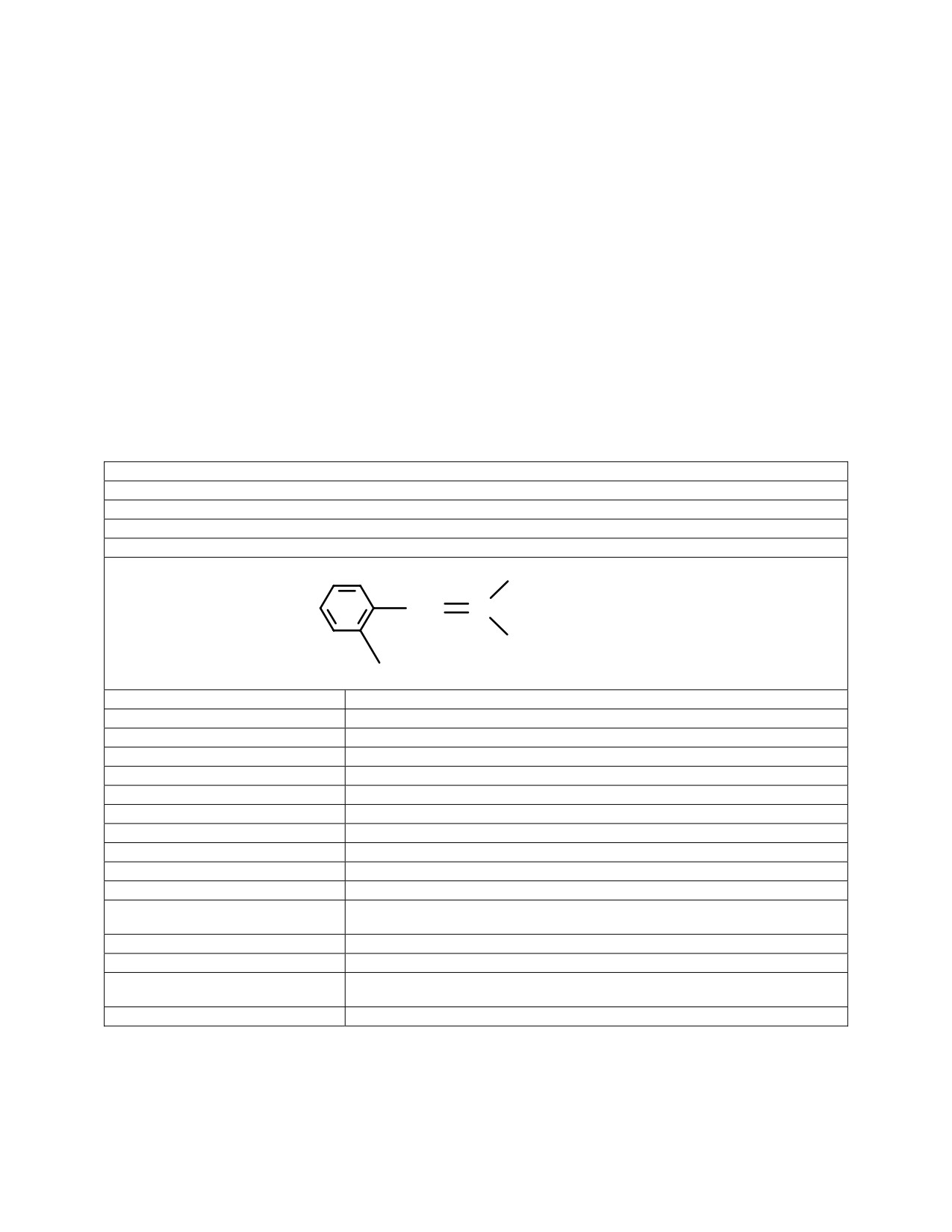
c.
Toxicity. There are a number of different formulations and methods of
dispersion for the RCAs, and the different systems/formulations impact the potency of the
materials. The estimates recommended by the former Human Estimates Committee at
what is now ECBC were often based upon the most potent formulation.5
d.
O-Chlorobenzylidene Malononitrile (CS) (see Table III-2). In 1959, the USA
adopted CS for combat training and riot control purposes.2 CS produces an intense burning
and irritation of the eyes, with mild to severe conjunctivitis. It also produces a burning
sensation in the nose and mucous membranes of the respiratory tract, followed by draining
of the nasal sinuses. The chest feels constricted, with a sensation of choking and being
unable to breathe. CS is also a primary skin irritant, and can produce erythema, edema,
and vesication.5 CS exists as a family of four forms: CS, CS1, CS2, and CSX. Different
forms of CS have different persistence characteristics because of their formulation,
dissemination, and rate of hydrolysis.2 CS has been found to persist in snow for as long as
30 days but its persistency in soil varies, depending on the condition of the soil.6
See Table
III-3 for CS toxicity estimates.
Table III-2. CS
Chemical name: O-Chlorobenzylidene Malononitrile 1
Synonym: 2-Chlorbenzalmalonitrile, CS, OCBM 1
CAS registry number: 2698-41-1 1
RTECS number: OO3675000 1
Physical and Chemical Properties
Structural formula: 2
CN
CH C
CN
Molecular formula: C10H5ClN2
Molecular weight: 188.6 1
Cl
Physical state
White crystalline solid 1
Odor
Pepper-like 1
Boiling point
310°C to 315°C (590-599°F)1
FP/MP
95°C to 96° C (203-205°F) (MP) 1
Solid density (g/mL)
Bulk: 0.24-0.26; Crystal: 1.04 2
Vapor density (relative to air)
6.5 (calculated)
Vapor pressure (torr)
0.00034 @ 20°C 2
Volatility (mg/m³)
0.71 @ 25°C 2
Latent heat of vaporization (kcal/mol)
Data not available
Flash point
Data not available
Decomposition temperature
Data not available
Solubility
Insoluble in water; 1,2 moderate in alcohol; and good in acetone, chloroform,
methylene dichloride, ethylacetate, and benzene 3
Rate of hydrolysis
Data not available
Hydrolysis products
Data not available
Stability in storage
Combustible material; may burn but does not ignite readily. Containers may
explode when heated;4 incompatible with strong oxiders.1
Action on metals or other materials
Contact with metals may evolve flammable hydrogen gas 4
III-2

Table III-2. CS (Continued)
Other Data
Skin and eye toxicity
Burning and irritation to eyes; primary skin irritant 5
Inhalation toxicity
Causes sensation of choking 5
Rate of action
Instantaneous 6
Protection required
A protective mask and dry field clothing secured at neck, wrists, and ankles.
Personnel handling and loading bulk CS should wear protective clothing, masks,
and gloves. 7
Decontamination
Move to fresh air. Flush eyes and skin with water. Do not rub eyes. Do not use
oil-based lotions. Do not use any form of bleach. Use soap and water on
equipment contaminated with CS, CS1, or CS2.7
Use
Training and RCA 7
NOTES
¹NIOSH Pocket Guide to Chemical Hazards, “o-Chlorobenzylidene malononitrile,” CAS 2698-41-1.
²BG Russ Zajtchuk et al. (eds), Textbook of Military Medicine: Medical Aspects of Chemical and Biological Warfare, Office
of the Surgeon General, 1997, Chap. 12, “Riot Control Agents.”
³FM 8-9/NAVMED P-3059/AFJMAN 49-151, NATO Handbook on the Medical Aspects of NBC Defense Operations AMEDP-
6(B), 1 February 1996.
42000 Emergency Response Guidebook, Guide 153, Substances-Toxic and/or Corrosive (Combustible).
5Sharon Reutter, et al., Review and Recommendations for Human Toxicity Estimates for FM 3-11.9, ECBC-TR-349,
September 2003.
6NIOSH-DOD-OSHA Sponsored Chemical and Biological Respiratory Protection Workshop Report, February 2000.
7FM 3-11.11/MCRP 3-3.7.2, Flame, Riot Control Agents and Herbicide Operations, 19 August 1996 (Renumbered from FM
3-11).
Table III-3. CS Toxicity Estimates5
Toxicity
Exposure
Probit
Endpoint
MV (L)
ROE
TLE
ROD
DOC
(mg min/m3)
Duration
Slope
Lethality
LCt50:
52,000-
15
5-90 min
Inhalation/
Unknown
More than 1
Some
Low
61,000 a
Ocular
(Provisional)
Intolerable
ECt50 : 7 b
15
1 min
Inhalation/
Unknown
Unknown
Unknown
Moderate
Ocular
NOTES
aBased on existing human estimates.
bBased on “official” estimates (HEC, 1969).
(1)
CS1 has been especially formulated to prolong persistency and increase
effectiveness. Unlike CS, CS1 is a free-flowing agent powder consisting of 95 percent
crystalline CS blended with 5 percent silica aerogel. This formulation reduces
agglomeration, increases fluidity, and achieves the desired respiratory effects when
dispersed as a solid aerosol. When disturbed, CS1 reaerosolizes and can cause respiratory
and eye effects. 2
(2)
CS2 is a siliconized, microencapsulated form of CS1.3 This treatment
improves the physical characteristics of CS by reducing agglomeration and hydrolysis. This
form of CS prolongs the effectiveness for both immediate and surface contamination
effects.2
(3)
CSX is a form of CS developed for dissemination as a liquid rather than a
powder. One gram of powdered CS is dissolved in 99 grams of trioctyl phosphite (TOF). As
with CS, CSX stings and irritates the eyes, skin, nose, throat, and lungs of exposed
personnel.2
e.
Dibenz (b,f)-1:4-oxazepine (CR) (see Table III-4 [page III-4]). In 1974, the USA
approved the use of CR in riot control situations.2 CR is more potent and less toxic than
III-3
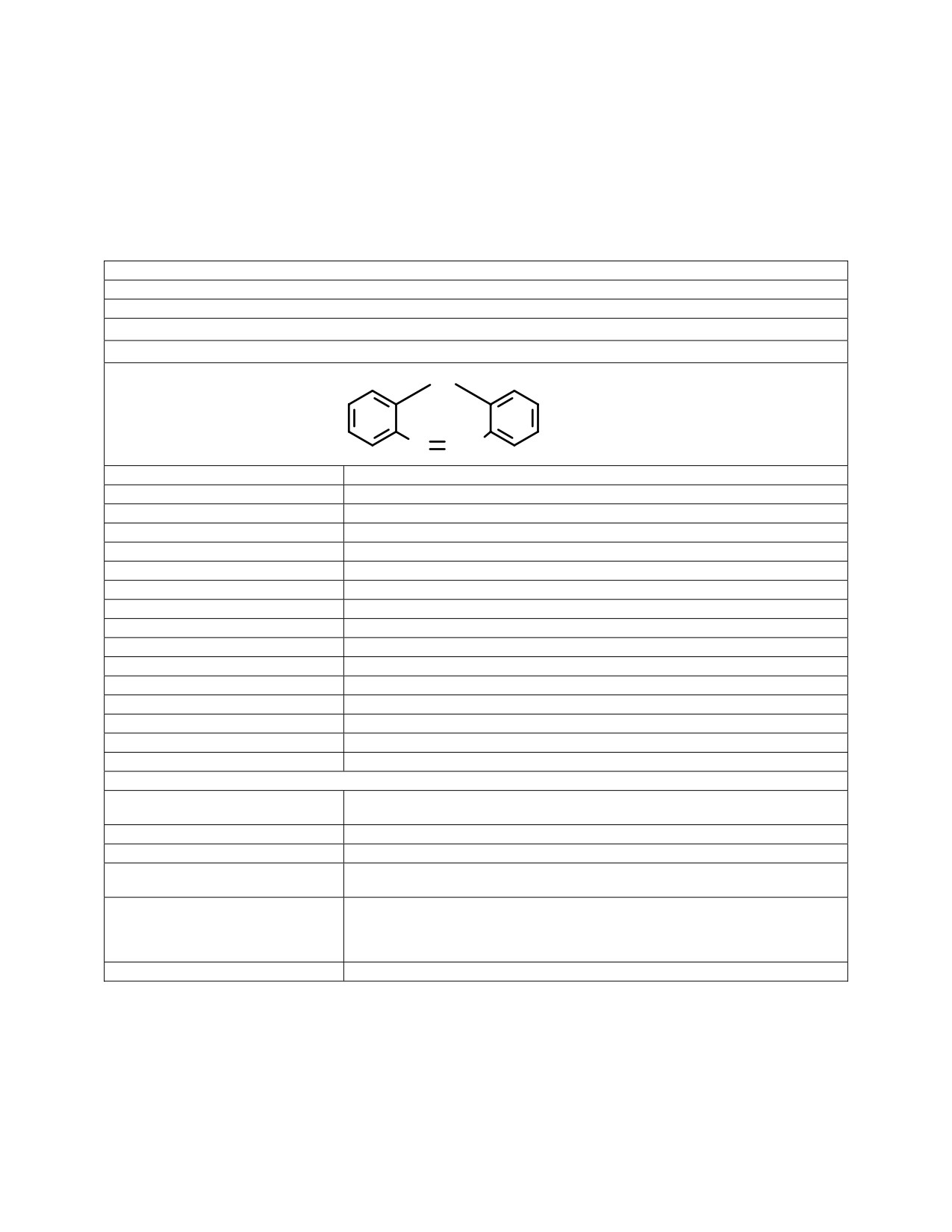
CS.3 CR is not used in its pure form but is dissolved in a solution of 80 parts of propylene
glycol and 20 parts of water to form a 0.1 percent CR solution. The severity of symptoms
increases with the CR solution concentration and in any environment of high temperature
and humidity. CR does not degrade in water, and it is quite persistent in the environment.
Under suitable conditions, CR can persist on certain surfaces (especially porous) for up to
60 days.2 (See Table III-5) for CR toxicity estimates
Table III-4. CR
Chemical name: Dibenz(b,f)-1:4-oxazepine 1
Synonym: Dibenzoxazepine, CR 2
CAS registry number: 257-07-8
RTECS Number: HQ395000
Physical and Chemical Properties
Structural formula: 1
O
Molecular formula: C13H9NO
Molecular weight: 195.22
N CH
Physical state
Pale yellow crystalline solid 3
Odor
Pepper-like 3
Boiling point
Data not available
FP/MP
73°C (163°F) (MP) 3
Solid density (g/mL)
Data not available
Vapor density (relative to air)
6.7 (calculated)
Vapor pressure (torr)
Data not available
Volatility (mg/m3)
Data not available
Latent heat of vaporization (kcal/mol)
Data not available
Flash point
Data not available
Decomposition temperature
Data not available
Solubility
Sparingly soluble 1
Rate of hydrolysis
Not hydrolyzed in aqueous solutions 3
Hydrolysis products
Data not available
Stability in storage
Stable in organic solutions 3
Action on metals or other materials
Data not available
Other Data
Skin and eye toxicity
Irritant; however, CR does not induce inflammatory cell infiltration, vesication, or
contact sensitization 1
Inhalation toxicity
Causes almost no effects in the lower airways and lungs1
Rate of action
Instantaneous 4
Protection required
Personnel exposed to CR should wear protective clothing (secured at neck, wrists,
and ankles), masks, hoods, and gloves. 5
Decontamination
Move to fresh air. Flush eyes with copious amounts of cold water. Do not rub your
eyes. Do not use any form of bleach. Soap and water can be used on skin. To
decontaminate equipment or surfaces, remove by using towels, rags, absorbent
paper, or any other method such as scraping, shoveling, or sweeping.5
Use
RCA 5
III-4

Table III-4. CR (Continued)
NOTES
¹BG Russ Zajtchuk, et al. (eds), Textbook of Military Medicine: Medical Aspects of Chemical and Biological Warfare, Office
of the Surgeon General, 1997, Chap. 12, “Riot Control Agents.”
2FM 8-9/NAVMED P-5059/AFJMAN 44-151, NATO Handbook on the Medical Aspects of NBC Defense Operations AMEDP-
6(B), 1 February 1996.
3FM 8-285/NAVMED P-5041/AFJMAN 44-149/FMFM 11-11, Treatment of Chemical Agent Casualties and Conventional
Military Chemical Injuries, 22 December 1995.
4NIOSH-DOD-OSHA Sponsored Chemical and Biological Respiratory Protection Workshop Report, February 2000.
5FM 3-11.11/MCRP 3-3.7.2, Flame, Riot Control Agents and Herbicide Operations, 19 August 1996 (Renumbered from FM
3-11).
Table III-5. CR Toxicity Estimates5
Toxicity
Exposure
Probit
Endpoint
MV (L)
ROE
TLE
ROD
DOC
(mg min/m3)
Duration
Slope
Lethality
LCt50: N/A
N/A
N/A
Inhalation/Ocular
N/A
N/A
N/A
N/A
Severe
ECt50 : 0.15a
15
1 min
Inhalation/Ocular
Unknown
N/A
Apparently
Moderate
effects;
Rapid
intolerable
Threshold
ECt50 : 0.002-
N/A
1 min
Inhalation/Ocular
Unknown
N/A
Apparently
Moderate
effects; just
0.004b
Rapid
discernable
respiratory
tract/ocular
symptoms
NOTES
aBased on “official” estimates (HEC, 1967).
bBased on human data.
f.
Capsaicin (OC) (see Table III-6). Capsaicin, also called oleoresin capsicum, is
derived from cayenne peppers. OC stimulates sensory nerve endings, causing reflex
changes in blood pressure and respiration. It causes pain, edema, and erythema of the
tissues with which it makes contact. It also produces bronchoconstriction and edema of the
airway mucosa. Contact with the eyes is extremely painful. OC is a powerful irritant and
lacrimator. Although it may not have been the proximal cause of death, it has been
associated with deaths in humans.5 See Table III-7 (page III-7) for toxicity estimates.
Table III-6. OC
Alternate Designations:* DC; Pepper Spray.
Chemical Name: Trans-8-methyl-N-vanillyl-6-nonenamide
Synonym: Vanillyl decenamide; 8-Methyl non-6-enoyl vanillylamide; 8 Methyl nonen-6-oxyl-vanillyl amide; N-(4-Hydroxy-3-
methoxybenzyl)-8-methylnon-trans-6-enamide; (E)-N-[(4-Hydroxy-3-methoxyphenyl)methyl]-8-methyl-6-nonenamide; Trans-
8-methyl-N-vanillyl-6-nonenamide; 6-Nonenamide, N-((4-Hydroxyl-3-methoxyphenyl)methyl)-8-methyl-, (E)-; 6-Nonenamide,
8-methyl-N-vanillyl-, (E)
CAS Registry Number: 404-86-4
RTECS Number: RA8530000
Physical and Chemical Properties
Structural Formula:
CH3O
O
CH
3
HO
CH2NHC(CH2)4CH
CHCHCH3
Molecular Formula: C18H27NO3
Molecular Weight: 305.42
III-5

Table III-6. OC (Continued)
Physical state
Colorless monoclinic plates 1, 2
Odor
Pungent, irritating 1
Boiling point
340.4oC (extrapolated) 3
FP/MP
65oC (FP) 2,4
Liquid density (g/mL)
Data not available
Vapor density (relative to air)
10.5 (calculated)
Vapor pressure (torr)
1.5 x 10⁻⁷ @ 65oC (extrapolated) 3
Volatility (mg/m3)
2.2 x 10⁻³ @ 65oC (calculated from vapor pressure) 3
Latent heat of vaporization (kcal/mol)
33.4 (calculated from Clausius Clapeyron equation which assumes constant heat
of vaporization of a function of temperature) 3
Flash point
Capsaicin in the form of pepper spray may be flammable or nonflammable
depending on the type of delivery (carrier) system used. 5
Decomposition temperature
Above 150oC 3
Solubility
Solubility in water is 0.090 g/L @ 37oC; 6 soluble in alcohol, ether, chloroform,
carbon disulfide, concentrated HCl, aromatic solvents, hydrocarbons, ketones, and
aqueous alkali 1, 2, 7
Rate of hydrolysis
Data not available
Hydrolysis products
Alkaline hydrolysis yields vanillylamine and isomeric decenoic acid 7
Stability in storage
Data not available
Action on metals or other materials
Data not available
Other Data
Skin and eye toxicity
Powerful irritant and lacrimator 8
Inhalation toxicity
Causes bronchoconstriction and edema 8
Rate of action
Almost immediate 9
Protection required
A protective mask and ordinary field clothing secured at the neck, wrist, and ankles
9
Decontamination
Move to fresh air. Flush face with cool water; if burning persists, use ice pack. Do
not rub area. Decontaminate required areas with soap and water. 9
Use
Most often used by the MP for incapacitating violent or threatening subjects, also
has applications for SF and stability and support operations. 9
NOTES
*Capsaicin is the principal capsaicinoid compound present in oleoresin capsicum (OC). OC is commonly known as pepper
spray. When pepper spray is combined with various carrier systems (i.e., isopropyl alcohol, methylene chloride, water, etc.),
it has the potential of being an effective riot control agent.
1Sherrill, M.L., Investigation of the Synthesis of Capsaicin and Related Compounds, EACD 307, USA Chemical Research
Laboratories, Edgewood Arsenal, MD, April 1924, UNCLASSIFIED Report (ADB955292).
2Steadman, A., Isolation of Capsaicin from Capsicum, EACD 188, USA Chemical Research Laboratories, Edgewood
Arsenal, MD, June 1922, UNCLASSIFIED Report (ADB955131).
3Watson, P.D., Determination of the Vapor Pressure of D.C., EACD 79, Chemical Warfare Service, Edgewood Arsenal, MD,
December 1921, UNCLASSIFIED Report (ADB959611).
4Nelson, E.K., and Dawson, L.E., “The Constitution of Capsaicin, The Pungent Principle of Capsicum. III,” J. Am. Chem.
Soc., Vol. 45, 1923.
5Daroff, P.M., et al., Oleoresin Capsicum: An Effective Less-Than Lethal Riot Control Agent, DPG/JCP-097-002, Chemical
Biological Defense, USA Dugway Proving Ground, UT, January 1997, UNCLASSIFIED Report (ADB225032).
6Carter, R.H., and Knight, H.C., Fundamental Study of Toxicity: Solubility of Certain Toxics in Water and in Olive Oil, EACD
445, Chemical Warfare Service, Edgewood Arsenal, MD, May 1928, (ADB955216).
7Rosenberg, H.R., and Sharp, S.S., Evaluation and Synthesis of Chemical Compounds Vol. II, DA-18-108-CML-6673 (A),
Final Comprehensive Report November 1961 - February 1965, USA Chemical Research Laboratories, Edgewood Arsenal,
MD, February 1965, UNCLASSIFIED Report (ADB253543).
8Sharon Reutter, et al., Review and Recommendations for Human Toxicity Estimates for FM 3-11.9, ECBC-TR-349,
September 2003.
9FM 3-11.11/MCRP 3-3.7.2, Flame, Riot Control Agents and Herbicide Operations, 19 August 1996 (Renumbered from FM
3-11).
III-6
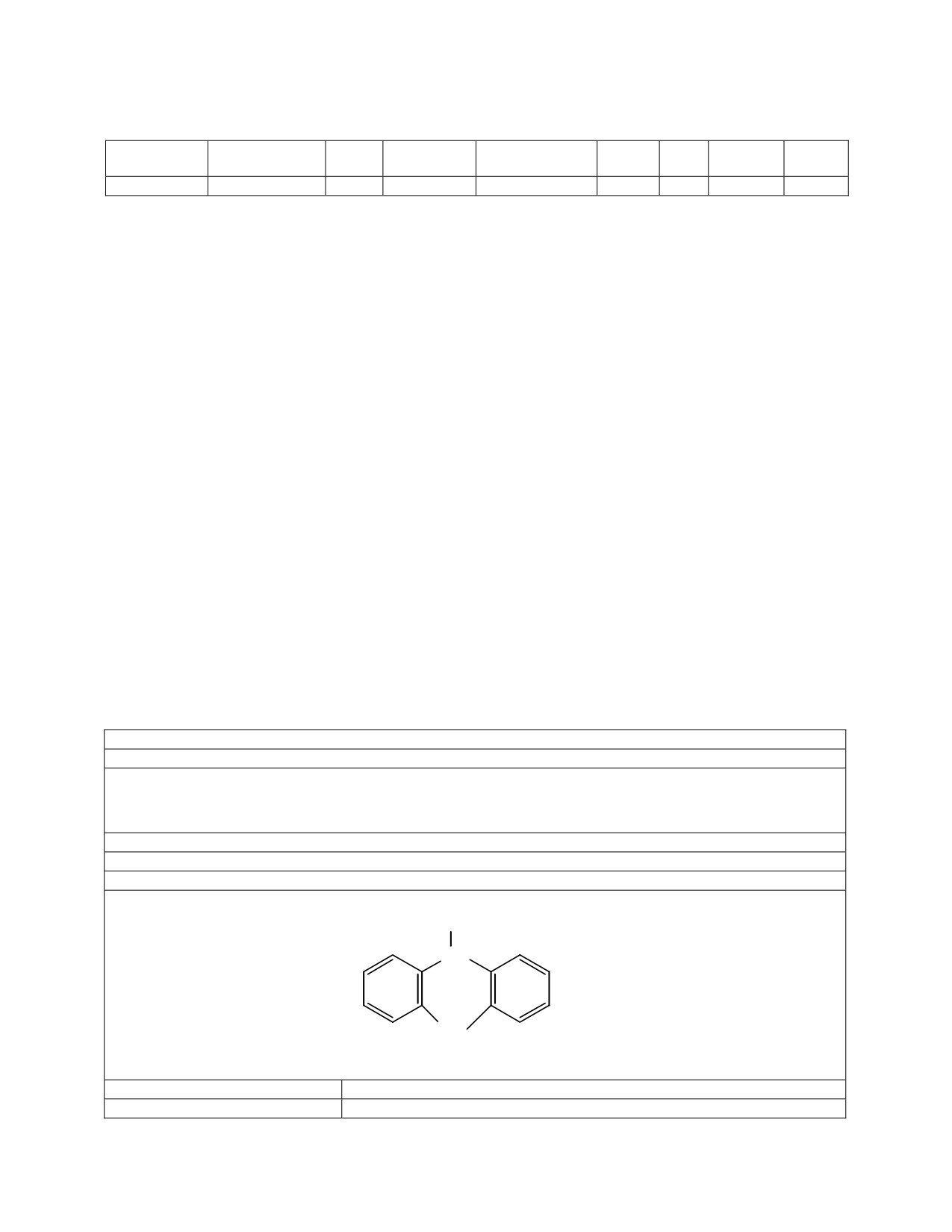
Table III-7. OC Toxicity Estimates5
Toxicity
Exposure
Probit
ROE
TLE
ROD
DOC
Endpoint
(mg min/m3)
MV (L)
Duration
Slope
Lethality
LCt50: N/A
N/A
N/A
Inhalation/Ocular
N/A
N/A
N/A
N/A
3.
Respiratory Irritants
The principal respiratory irritants are diphenylaminochloroarsine (DM) (Adamsite),
diphenylchloroarsine (DA), diphenylcyanoarsine (DC) and chlorine (Cl2). DM, DA, and DC
were previously called vomiting agents; however, their primary action is irritation of the
respiratory tract. They were originally designed as “mask breakers” during WWI. Their
intended purpose was to penetrate the canister, forcing troops to remove their masks and
be exposed to more toxic materials.5 Two characteristics make these compounds different
than RCAs. The first characteristic is that the effects do not appear immediately on
exposure or seconds afterwards, but several minutes later. In the absence of symptoms,
personnel will not mask immediately; by the time they mask, a significant amount of the
compound will have been absorbed. The effects may then cause an individual to unmask.
The second characteristic of these compounds is that there may be more prolonged systemic
effects—such as headache, mental depression, chills, nausea, abdominal cramps, vomiting,
and diarrhea—which last for several hours after exposure.3 They are dispersed as aerosols,
and they produce their effects by inhalation or by direct action on the eyes. When released
indoors, they can cause serious illness or death.4 The protective mask gives adequate
protection against field concentrations. No protective clothing is required.4
a.
DM (see Table III-8). Symptoms are decidedly more marked after an exposure
than during it. The degree of severity and the duration of effects vary directly with the
concentration used. After exposure, there is burning and tightening across the chest with a
persistent rasping cough, burning in the nose and throat, and acute general depression.
DM has caused a few human deaths.5 See Table III-9 (page III-9) for DM toxicity
estimates.
Table III-8. DM
Alternate Designations: Azine; Rl5
Chemical Name: 10-Chloro-5,10-dihydrophenarsazine
Synonyms: Diphenylamine chloroarsine; Diphenylamine arsenious chloride; Phenarsazine chloride; 1-Chloro-1,6-
dihydrophenarsazine; 10-Chlorophenarsazine; 6-Chlorophenarsazine, Phenarsazine, 10-chloro-5,10-dihydro-; 5-Aza-10-
arsenaanthracene chloride; 10-Chloro-5,10-dihydroarsacridine; Diphenylaminechlorarsine; Fenarsazinchlorid (Czech);
Phenazsarine chloride; 10-chloro-9,10-dihydro-phenarsazine
CAS Registry Number: 578-94-9
RTECS Number: SG0680000
Physical and Chemical Properties
Structural Formula:
Cl
As
NH
Molecular Formula: C12H9AsClN
Molecular Weight: 277.58
Physical state
Light yellow to green crystals 1
Odor
No pronounced odor, but irritating 2
III-7

Table III-8. DM (Continued)
Boiling point
410oC (extrapolated) decomposes 3
FP/MP
195oC (MP) with slight decomposition 3
Solid density (g/mL)
1.648 @ 20oC; 1.672 @ 0oC 4
Vapor density (relative to air)
9.6 (calculated)
Vapor pressure (torr)
Negligible @ ambient temperature 5, 6
Volatility (mg/m3)
Negligible @ ambient temperature 5, 6
Latent heat of vaporization (kcal/mol)
14.2 @ 410oC (calculated from vapor pressure) 5
Flash point
Nonflammable 2
Decomposition temperatures
Slight decomposition @ 195oC; 3 0.02% per min. @ 200oC; and 0.15% per min @
250oC 5
Solubility
Solubility in water is 0.044 g/L @ 37oC. 7 Slightly soluble in benzene xylene, carbon
tetrachloride, 8, 9 acetone, alcohols, tetrachorethane9
Rate of hydrolysis
When solid DM is covered with water, it slowly hydrolyzes and a protective oxide
coating forms that hinders further hydrolysis. Finely divided DM hydrolyzes rapidly.
4 Acidic solutions prevent hydrolysis.
0.5% HCl @ room temperature and 0.8% at
temperatures between 70-80oC. 4
Hydrolysis products
Diphenylaminearsenious oxide and hydrochloric acid 4
Stability in storage
At room temperature, DM is stable for at least 1 year when pure and 6 months with
plant grade material. 10 Stable in aluminum and stainless steel for at least 2 years
@ 71oC when pure, but the containers are severely pitted. 10
Action on metals or other material
After 3 months, causes extensive corrosion on aluminum and stainless steel @
71oC. 10 Also corrodes iron, bronze and brass. 8
Other Data
Skin and eye toxicity
Causes eye irritation and burning 11
Inhalation toxicity
Primary action on upper respiratory tract 11
Rate of action
Rapid 12
Protection required
Protective mask 13
Decontamination
If symptoms persist, the eyes, mouth, and skin may be washed with water. Do not
swallow water. 14
Use
Previously used as an RCA and “mask breaker” 11
III-8

Table III-8. DM (Continued)
NOTES
¹Lewis, R.J., Sax’s Dangerous Properties of Industrial Materials, 10th ed., Vol. 3, p. 2875, John Wiley & Sons, Inc., New
York, NY, 2001.
²Lau, T.M.K., Brief Evaluation of the Possibilities of Using Arsenicals as Incapacitating Agents, CRDEC-TR-87061, USA
Chemical Research Development and Engineering Center, Aberdeen Proving Ground, MD, July 1987, UNCLASSIFIED
Report (ADB114319).
³Klosky, S. and Stricker, P.F., Physico Chemical Constants of Diphenylaminochlorarsine, EATR 58, Chemical Warfare
Service Edgewood Arsenal, MD, July 1921, UNCLASSIFIED Report (ADB955024).
4Macy, R., Constants and Physiological Action of Chemical Warfare Agents, EATR 78, Chemical Warfare Service
Edgewood Arsenal, MD, July 1932, UNCLASSIFIED Report (ADB956574).
5Parker, D.H., Vapor Pressure of D.M. (Diphenylaminechloroarsine), EATR 46, Chemical Warfare Service Edgewood
Arsenal, MD, June 1921, UNCLASSIFIED Report (ADB955053).
6Properties of War Gases Volume III: Vomiting & Choking Gases & Lacrimators (U), ETF 100-41/Vol-3, Chemical Corps
Board, Army Chemical Center, MD, December 1944, UNCLASSIFIED Report (AD108458).
7Carter, R.H., and Knight, H.C., Fundamental Study of Toxicity: Solubility of Certain Toxics in Water and in Olive Oil, EACD
445, Chemical Warfare Service, Edgewood Arsenal, MD, May 1928, UNCLASSIFIED Report (ADB955216).
8The Merck Index: An Encyclopedia of Chemicals, Drugs, and Biologicals, 13th ed., p. 5225, Merck & Company, Inc.,
Whitehouse Station, NJ, 2001.
9Kibler, A.L., Fundamental Study of Toxicity Miscellaneous Data, EACD459, Chemical Warfare Service, Edgewood Arsenal,
MD, 1928 UNCLASSIFIED Report (ADB955210).
10Brooks, M.E., et al., Corrosion, Compatibility and Other Physicochemical Studies (U), DA18-108-CML-6602 (A), Final
Report - Task I, W.R. Grace and Company, Washington Research Center, Clarksville, MD, May 1964, UNCLASSIFIED
Report (AD350755).
11BG Russ Zajtchuk, et al. (eds), Textbook of Military Medicine: Medical Aspects of Chemical and Biological Warfare, Office
of the Surgeon General, 1997, Chap. 12, “Riot Control Agents.”
12NIOSH-DOD-OSHA Sponsored Chemical and Biological Respiratory Protection Workshop Report, February 2000.
13FM 8-285/NAVMED P-5041/AFJMAN 44-149/FMFM 11-11, Treatment of Chemical Agent Casualties and Conventional
Military Chemical Injuries, 22 December 1995.
14FM 8-9/NAVMED P-3059/AFJMAN 49-151, NATO Handbook on the Medical Aspects of NBC Defense Operations
AMEDP-6(B), 1 February 1996.
Table III-9. DM Toxicity Estimates5
Toxicity
Exposure
Probit
Endpoint
MV (L)
ROE
TLE
ROD
DOC
(mg min/m3)
Duration
Slope
Lethality
LCt50: 11,000a
15
2-240 min
Inhalation/Ocular
Unknown
1b,c
Unknown
Low
(Provisional)
Intolerable
ECt50 : 22 -
15
1 min
Inhalation/Ocular
Unknown
Unknown
Unknown
Low
150d
(Provisional)
Threshold
ECt50 : less
15
1 min
Inhalation/Ocular
Unknown
Unknown
Unknown
Low
effects, throat
than 1e
irritation
NOTES
aBased on existing “official” estimates.
bThe TLE value is assumed to be 1 because the Ct profile is unknown.
cSee Appendix H for detailed toxicity profile estimates.
dBased on human data.
eBased on secondary data.
b.
DA (see Table III-10 [page III-10]). DA causes severe irritation of the mucous
membranes, coughing, salivation, and nasal discharge. It may lead to serious disturbances
of the nervous system from absorption. DA has also been classified as a sternulator.5 See
Table III-11 (page III-11) for toxicity estimates.
III-9
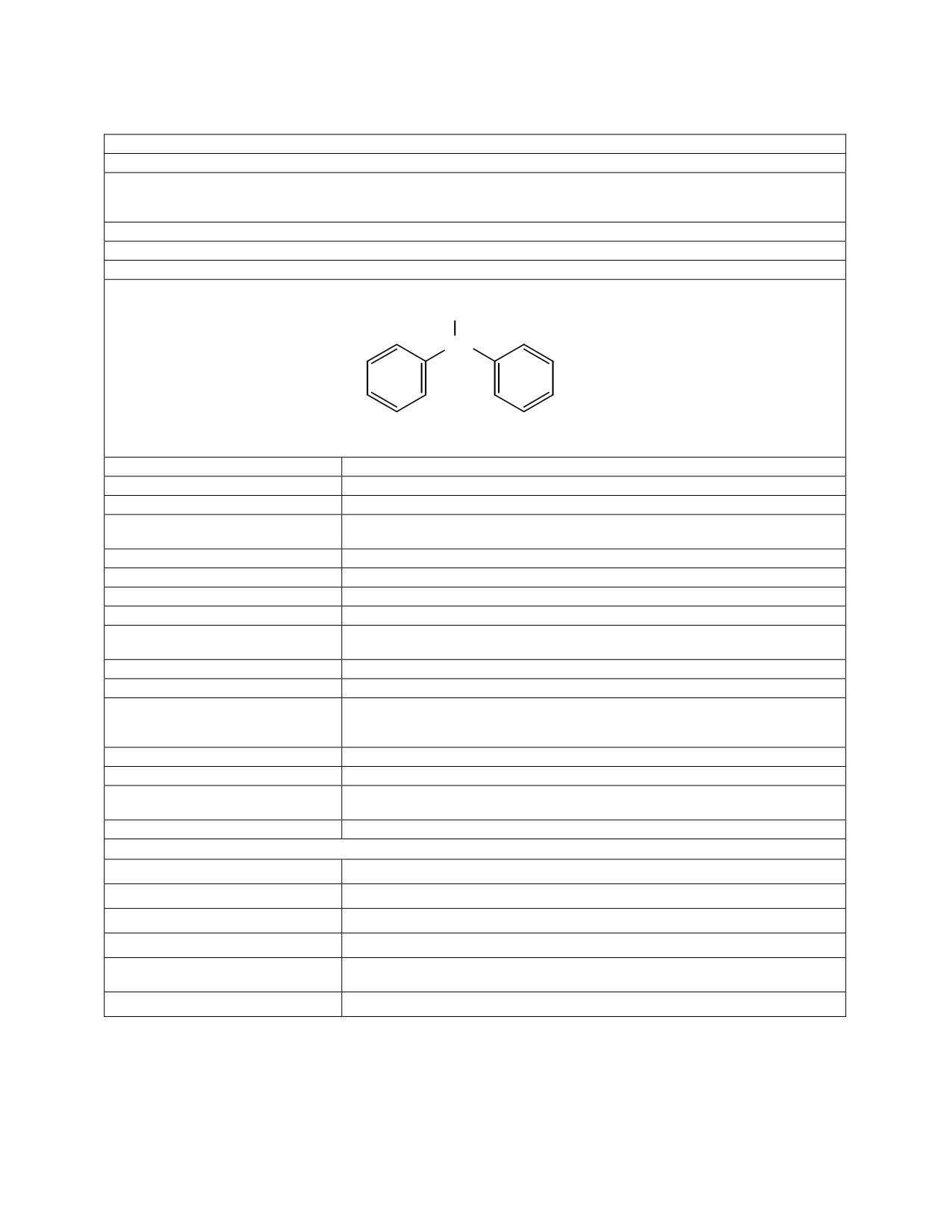
Table III-10. DA
Alternate Designations: Clark I (German); Blue Cross (German); Sternite (French); Sneezing gas; DIK
Chemical Name: Diphenylchloroarsine
Synonyms: Arsine, chloro, diphenyl; Chlorodiphenylarsine; Diphenylarsenious chloride; Chlorodiphenylarsine; Arsinous
chloride, diphenyl-; Diphenyl arsenic chloride; Chlor-difenylarsin (Czech); Chlorodiphenylarsine; Difenylchlorarsin (Czech);
Diphenylarsinous chloride; Diphenylchloorarsine (Dutch)
CAS Registry Number: 712-48-1
RTECS Number: CG9900000
Physical and Chemical Properties
Structural Formula:
Cl
As
Molecular Formula: C12H10AsCl
Molecular Weight: 264.59
Physical state
Colorless crystalline solid when pure 1
Odor
None 1
Boiling point
383°C (extrapolated) decomposes 2
FP/MP
37.3°C 3; 39 to 44°C (MP) 2 DA also exists in an unstable modification which melts
between 18.2 to 18.4°C 3
Liquid density (g/mL)
1.3875 @ 50°C 3
Vapor density (relative to air)
9.1(calculated)
Vapor pressure (torr)
1.79 x 10⁻² @ 50°C (extrapolated) 3
Volatility (mg/m3)
2.36 x 10² @ 50°C (calculated from vapor pressure) 3
Latent heat vaporization (kcal/mol)
15.1 (calculated from Clausius Clapeyron equation which assumes constant heat
of vaporization as a function of temperature) 3
Flash point
350°C 1
Decomposition temperature
300 to 350°C 2
Solubility
Solubility in water is 0.078 g/L @ 37°C; 4 soluble in acetone, ether, 5 ethanol,
benzene, carbon tetrachloride, ethylene chloride, chloroform, and dichloroethylene
2, 5
Rate of hydrolysis
Slow in bulk but rapid when finely divided 2
Hydrolysis products
Diphenylarsenious oxide and hydrogen chloride 2
Stability in storage
Stable when pure. Stable in steel shells for almost 4 months @ 60°C and for 1
year @ room temperature. 2
Action on metals or other materials
None when dry 2
Other Data
Skin and eye toxicity
Irritant 6
Inhalation toxicity
Irritant 6
Rate of action
Rapid 7
Protection required
Protective mask 8
Decontamination
If symptoms persist, the eyes, mouth, and skin may be washed with water. Do not
swallow water. 9
Use
Previously used as “mask breaker” 6
III-10

Table III-10. DA (Continued)
NOTES
¹Lau, T.M.K., Brief Evaluation of the Possibilities of Using Arsenicals as Incapacitating Agents, CRDEC-TR-87061, USA
Chemical Research, Development and Engineering Center, Aberdeen Proving Ground, MD, July 1987, UNCLASSIFIED
Report (ADB114319).
2Macy, R., Constants and Physiological Action of Chemical Warfare Agents, EATR 78, Chemical Warfare Service
Edgewood Arsenal, MD, July 1932, UNCLASSIFIED Report (ADB956574).
³Owens, R., Diphenylcyanoarsine: Part V - The Physical Properties of M.A., D.A. T.A., and D.C., SO/R 492, Sutton Oak,
England, December 1940, UNCLASSIFIED Report.
4Carter, R.H., and Knight, H.C., Fundamental Study of Toxicity: Solubility of Certain Toxics in Water and in Olive Oil, EACD
445, Chemical Warfare Service, Edgewood Arsenal, MD, May 1928, UNCLASSIFIED Report (ADB955216).
5Lide, D.R, CRC Handbook of Chemistry and Physics, 82nd, ed., p. 3-15, CRC Press, Washington, DC 2001.
6Sharon Reutter, et al., Review and Recommendations for Human Toxicity Estimates for FM 3-11.9, ECBC-TR-349,
September 2003.
7NIOSH-DOD-OSHA Sponsored Chemical and Biological Respiratory Protection Workshop Report, February 2000.
8FM 8-285/NAVMED P-5041/AFJMAN 44-149/FMFM 11-11, Treatment of Chemical Agent Casualties and Conventional
Military Chemical Injuries, 22 December 1995.
9FM 8-9/NAVMED P-3059/AFJMAN 49-151, NATO Handbook on the Medical Aspects of NBC Defense Operations
AMEDP-6(B), 1 February 1996.
c.
DA Toxicity Estimates (Table III-11). No toxicity estimates are recommended for
lethal exposure. The existing estimates could not be substantiated.
Table III-11. DA Toxicity Estimates5
Toxicity
Exposure
Probit
Endpoint
MV (L)
ROE
TLE
ROD
DOC
(mg min/m3)
Duration
Slope
Lethality
LCt50: NR
N/A
N/A
Inhalation/Ocular
Unknown
Unknown
Unknown
N/A
Intolerable
ECt50 : 12a
15
2 min
Inhalation/Ocular
Unknown
Unknown
Unknown
Low
NOTES
aBased on secondary human data.
d.
DC (see Table III-12 [page III-12]). The Germans introduced DC in 1918 as an
improvement over DA, which is readily hydrolyzed by water. DC causes irritation of the
nose and throat, salivation, and profuse secretion from the eyes and nose. There is a feeling
of suffocation and headache. Symptoms last for 30 minutes to 1 hour, except the headache
may last for several hours.5 See Table III-13 (page III-13) for DC toxicity estimates.
III-11
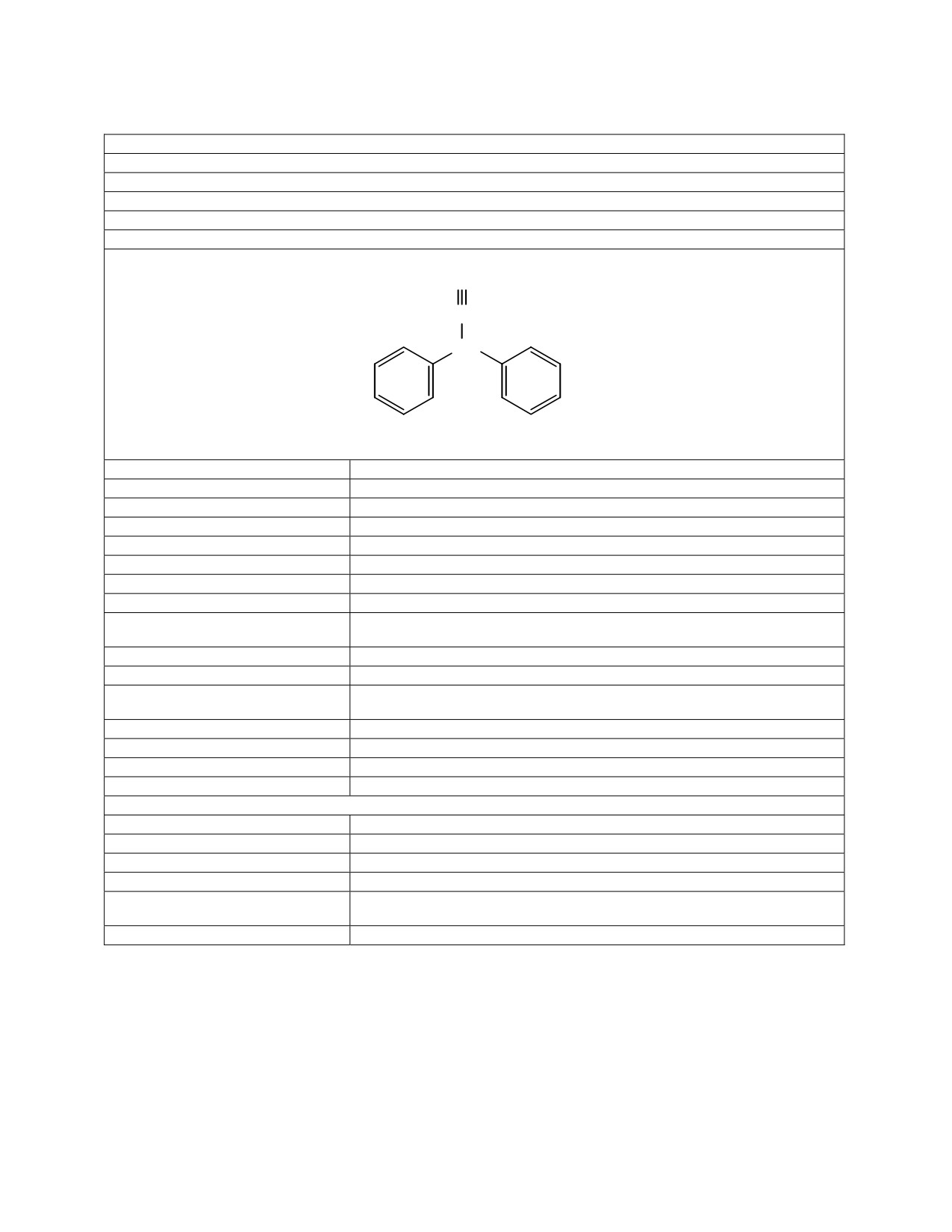
Table III-12. DC
Alternate Designations: CLARK II (German); Clark 2 (German); Blue Cross (German), Sternite (French)
Chemical Name: Diphenylcyanoarsine
Synonyms: Diphenylarsinous cyanide; Diphenylarsinecarbonitrile; Arsinous cyanide, diphenyl-; Arsinecarbonitrle, diphenyl-
CAS Registry Number: 23525-22-6
RTECS Number: Data not available
Physical and Chemical Properties
Structural Formula:
N
C
As
Molecular Formula: C13H10AsN
Molecular Weight: 255.15
Physical state
Colorless crystalline solid 1
Odor
Similar to garlic and bitter almonds 1
Boiling point
341°C (extrapolated) decomposes 2
FP/MP
31.2°C (FP) 2
Liquid density (g/mL)
1.3338 @ 35°C 2
Vapor density (relative to air)
8.8 (calculated)
Vapor pressure (torr)
7.2 x 10⁻⁴ @ 35°C (extrapolated) 2
Volatility (mg/m3)
9.56 @ 35°C (calculated from vapor pressure) 2
Latent heat of vaporization (kcal/mol)
17.1 (calculated from Clausius Clapeyron equation which assumes constant heat
of vaporization as a function of temperature) 2
Flash point
Low 1
Decomposition temperatures
Above 240°C 2
Solubility
Solubility in water is 0.021 mg/L @ 37°C; 3 soluble in chloroform and other
organic solvents4
Rate of hydrolysis
Very slow 1
Hydrolysis products
Hydrogen cyanide and diphenylarsenious oxide 1
Stability in storage
Stable at all ordinary temperatures 1
Action on metals or other material
None on metals 4
Other Data
Skin and eye toxicity
Irritant 5
Inhalation toxicity
Irritant 5
Rate of action
Rapid 6
Protection required
Protective mask 7
Decontamination
If symptoms persist, the eyes, mouth and skin may be washed with water. Do
not swallow water. 8
Use
Previously used as “mask breaker” 5
III-12

Table III-12. DC (Continued)
NOTES
1Lau, T.M.K., Brief Evaluation of the Possibilities of Using Arsenicals as Incapacitating Agents, CRDEC-TR-87061, USA
Chemical Research Development and Engineering Center, Aberdeen Proving Ground, MD, July 1987, UNCLASSIFIED
Report (ADB114319).
2Owens, R., Diphenylcyanoarsine: Part V - The Physical Properties of M.A., D.A. T.A., and D.C., SO/R 492, Sutton Oak,
England, December 1940, UNCLASSIFIED Report.
3Carter, R.H., and Knight, H.C., Fundamental Study of Toxicity: Solubility of Certain Toxics in Water and in Olive Oil, EACD
445, Chemical Warfare Service, Edgewood Arsenal, MD, May 1928, UNCLASSIFIED Report (ADB955216).
4Franke, S., Manual of Military Chemistry Volume I- Chemistry of Chemical Warfare Agents, ACSI-J-3890, Chemie der
Kampfstoffe, East Berlin, April 1968, UNCLASSIFIED Technical Manual (AD849866).
5Sharon Reutter, et al., Review and Recommendations for Human Toxicity Estimates for FM 3-11.9, ECBC-TR-349,
September 2003.
6NIOSH-DOD-OSHA Sponsored Chemical and Biological Respiratory Protection Workshop Report, February 2000.
7FM 8-285/NAVMED P-5041/AFJMAN 44-149/FMFM 11-11, Treatment of Chemical Agent Casualties and Conventional
Military Chemical Injuries, 22 December 1995.
8FM 8-9/NAVMED P-3059/AFJMAN 49-151, NATO Handbook on the Medical Aspects of NBC Defense Operations
AMEDP-6(B), 1 February 1996.
Table III-13. DC Toxicity Estimates5
Toxicity
Exposure
Probit
Endpoint
MV (L)
ROE
TLE
ROD
DOC
(mg min/m3)
Duration
Slope
Lethality
LCT50: NR
N/A
N/A
Inhalation/
Unknown
Unknown
Unknown
N/A
Ocular
Severe effects;
ECt50 : NR
N/A
N/A
Inhalation/
Unknown
Unknown
Unknown
N/A
incapacitation
Ocular
e.
Chlorine (Cl₂) (see Table III-14). Chlorine causes spasm of the larynx muscles;
burning of the eyes, nose, and throat;, bronchitis; and asphyxiation.5 Rapid evaporation of
the liquid may cause frostbite.7 Chlorine has been classified as a lung injurant,5 as a
choking agent,4 and as a TIC.8 See Table III-15 (page III-14) for toxicity estimates.
Table III-14. Cl2
Alternate Designations: Bertholite
Chemical Name: Chlorine
Synonyms: Chloor (Dutch); Chlor (German); Chlore (French); Chlorine mol.; Cloro (Italian); Molecular chlorine
CAS Registry Number: 7782-50-5
RTECS Number: FO2100000
Physical and Chemical Properties
Structural Formula:
Cl Cl
Molecular Formula: Cl2
Molecular Weight: 70.91
Physical state
Greenish-yellow diatomic gas 1
Odor
Disagreeable and suffocating; irritating to the nose and throat 2
Boiling point
-34.7oC 3, 4
MP/FP
-101.6oC (FP) 5
Liquid density (g/mL)
Liquefied chlorine: 1.393 @ 25oC; 1.468 @ 0oC 4
Vapor density (relative to air)
2.4 (calculated)
Vapor pressure (torr)
5.75 x 10³ @ 25oC; 2.73 x 10³ @ 0oC 3, 4
Volatility (mg/m3)
2.19 x 10⁷ @ 25oC; 1.14 x 10⁷ @ 0oC (calculated from vapor pressure) 3, 4
Latent heat of vaporization (kcal/mol)
4.86 @ 25oC; 4.80 @ 0oC (calculated from vapor pressure) 3, 4
Flash point
Nonflammable 2
Decomposition temperature
Above 600oC 5
III-13

Table III-14. Cl2 (Continued)
Solubility
Solubility in water is 0.63 g/100 g water @ 25oC; solubility in carbon tetrachloride is
3.5% @ ambient temperature 5
Rate of hydrolysis
Slow 6
Hydrolysis products
HCl and HOCl 5
Stability in storage
Stable when dry 5
Action on metals or other materials
None if chlorine is dry. Vigorous action with metals when chlorine is moist due to
the presence of hypochlorous acid. 5
Other Data
Skin and eye toxicity
Irritant 7
Inhalation toxicity
Can cause pulmonary edema 7
Rate of action
Like choking agents, pulmonary edema does not manifest until hours have passed
and are aggravated by physical effort 7
Protection required
Protective mask 8
Decontamination
Inhalation - fresh air and rest. Eyes and skin - rinse with plenty of water. 7
Use
Not authorized for military use
NOTES
¹The Merck Index: An Encyclopedia of Chemicals, Drugs, and Biologicals, 13th ed., p. 5225, Merck & Company, Inc.,
Whitehouse Station, NJ, 2001.
²Yaws, C.L., Matheson Gas Data Book, 7th ed., p. 162, McGraw-Hill Companies, New York, NY, 2001.
³Abercrombie, P., ECBC Notebook # NB 98-0079, p. 32 (U).
4Beebe, C.H, Important Constants of Fourteen Common Chemical Warfare Agents, EACD 328, Chemical Warfare Service,
Edgewood Arsenal, Edgewood, MD, December 1924, UNCLASSIFIED Report (ADB958296).
5Macy, R., Constants and Physiological Action of Chemical Warfare Agents, EATR 78, Chemical Warfare Service,
Edgewood Arsenal, MD July 1932, UNCLASSIFIED Report (ADB956574).
6 TM 3-215/AFM 355-7, Military Chemistry and Chemical Agents, December 1963, UNCLASSIFIED Technical Manual
(ADA292141).
7ICSC 0126, “Chlorine (Cl2).”
8FM 8-285/NAVMED P-5041/AFJMAN 44-149/FMFM 11-11, Treatment of Chemical Agent Casualties and Conventional
Military Chemical Injuries, 22 December 1995.
f.
Cl2 Toxicity Estimates. Toxicity estimates for lethal and severe effects are
recommended. Existing estimates could not be substantiated.
Table III-15. Cl2 Toxicity Estimates5
Toxicity
MV (L)
Exposure
Probit
Endpoint
ROE
TLE
ROD
DOC
(mg min/m3)
Duration
Slope
Lethality
LCt50: NR
N/A
N/A
Inhalation/Ocular
Unknown
Unknown
Unknown
N/A
Severe effects,
ECt50 : NR
N/A
N/A
Inhalation/Ocular
Unknown
Unknown
Unknown
N/A
incapacitation
Threshold
ECt50 : 10a
N/A
Seconds
Inhalation/Ocular
Unknown
N/A
Unknown
Low
effects, odor
NOTES
aBased on human secondary data and TM 3-215 (1952).
4. Obsolete Riot Control Agents
The following RCAs are considered obsolete for military employment. The following is
primarily of academic and historical interest.
a.
Chloroacetophenone (CN) (see Table III-16). The symbol CN identifies the RCA
popularly known as tear gas or mace. The USA replaced CN with CS in 1959.3 Inhalation
of CN causes a burning sensation, cough, sore throat, nausea, and shortness of breath.
Exposure to skin causes redness and pain. Eye exposure causes redness, pain, and blurred
vision. CN can cause pulmonary edema.9 High concentrations can cause blisters to form,
and CN is a potent skin sensitizer. The indiscriminate use of large amounts of CN in
confined spaces has caused injuries requiring medical attention and death.3
III-14

Table III-16. CN
Chemical name: 2-Chloracetophenone 1
Synonyms: alpha-Chloroacetophenone, 2-Chloro-1-pheylethanone, Chloromethyl phenyl ketone, Mace®, Phenacyl
chloride, Phenyl chloromethyl ketone, Tear Gas 2
CAS Registry Number: 532-27-4 1
RTECS Number: AM6300000 1
Physical and Chemical Properties
Molecular formula
C8H7ClO 1
Molecular weight
154.6 1
Physical state
Colorless to gray crystalline solid 3
Odor
Sharp, irritating odor 3
Boiling point
244°C (472°F) 3
FP/MP
57°C (134°F) (MP) 3
Density (g/mL)
1.3 1
Vapor density (relative to air)
5.3 (calculated)
Vapor pressure (torr)
0.005 @ 20°C (68°F) 3
Volatility (mg/m3)
Data not available
Latent heat of vaporization (kcal/mol)
Data not available
Flash point
118°C (244°F) 3
Decomposition temperature
Data not available
Solubility
1.64 g/100 mL @ 25°C, 1 soluble in carbon disulfide, ether, and benzene 2
Rate of hydrolysis
Slow 2
Hydrolysis products
HCl 2
Stability in storage
Sensitive to moisture; incompatible with bases, amines, alcohols, water, and steam
2
Action on metals and other materials
Reacts slowly with metals, causing mild corrosions 2
Other Data
Skin and eye toxicity
Irritant 1
Inhalation toxicity
Irritant 1
Rate of action
Instantaneous 4
Protection required
Protective mask and ordinary field clothing secured at the neck, wrists, and ankles
5
Decontamination
Move to fresh air. If necessary, wash with water.6 Skin decontaminants containing
bleach should not be used. 7
Use
Previous RCA still in use by police in some countries 6
NOTES
1ISCS 0128, “2-Chloroacetophenone.”
2National Toxicity Program, “NTP Chemical Repository: Chloroacetophenone.”
3NIOSH Pocket Guide to Chemical Hazards, “a-Chloroacetophenone,” CAS 532-27-4.
4NIOSH-DOD-OSHA Sponsored Chemical and Biological Respiratory Protection Workshop Report, February 2000.
5FM 8-285/NAVMED P-5041/AFJMAN 44-149/FMFM 11-11, Treatment of Chemical Agent Casualties and Conventional
Military Chemical Injuries, 22 December 1995.
6FM 8-9/NAVMED P-5059/AFJMAN 44-151, NATO Handbook on the Medical Aspects of NBC Defense Operations AMEDP-
6(B), 1 February 1996.
7BG Russ Zajtchuk, et al. (eds), Textbook of Military Medicine: Medical Aspects of Chemical and Biological Warfare, Office
of the Surgeon General, 1997, Chap. 12, “Riot Control Agents.”
b.
Chloroacetophenone Mixtures. Different CN mixtures were produced to include
CN in chloroform (CNC), CN in benzene and carbon tetrachloride (CNB), and CN with PS
III-15