FM 4-20.105 AIRDROP OF SUPPLIES AND EQUIPMENT: DUAL ROW AIRDROP SYSTEMS (SEPTEMBER 2003) - page 4
FM 4-20.105/TO 13C7-1-51
Table 4-1. Equipment required for rigging M998/M1038/M1097 cargo/troop carriers for dual row
airdrop (continued).
National Stock
Item
Quantity
Numbe r
1670-01-162-2372
Clevis assembly
36
1670-01-097-8816
Release, cargo parachute, M-1
1
Sling, cargo airdrop
For suspension:
1670-01-062-6310
11-ft (4-loop), type XXVI nylon webbing
4
1670-01-062-6306
3-ft (4-loop), type XXVI nylon webbin g
8
For deployment:
1670-01-062-6306
3-ft (4-loop), type XXVI nylon webbin g
1
For riser extention
:
1670-01-062-6313
60-ft (3-loop), type XXVI nylon webbing
3
For AC
S
:
1670-01-063-7761
16-ft (2-loop), type XXVI nylon webbing
1
For lifting
:
1670-01-062-6304
9-ft (2-loop), type XXVI nylon webbin g
2
1670-01-062-6303
12-ft (2-loop), type XXVI nylon webbing
2
1670-00-040-8219
Strap, parachute release, multicu t
2
1670-00-937-0271
Knife release,cargo (guillotine
)
2
1670-01-487-5464
Outrigger assembly
2
7510-00-266-5016
Tape, adhesive, 2-in
As required
1670-00-937-0271
Tie-down assembly, 15-ft
45
1670-00-725-1437
Tie-down, cargo, aircraft, (CGU-1B
)
3
Webbing:
8305-00-268-2411
Cotton, 1/4-in, type I
As required
Nylon:
8305-00-082-5752
Tubular, 1/2-in
As required
8305-00-263-3591
Type VIII
As required
4-41
C1, FM 4-20.105/TO 13C7-1-51
Chapter 5
RIGGING DUAL ROW AIRDROP SYSTEM (DRAS) M1025/
M1121/M1114 ARMAMENT/ TOW CARRIER HMMWV
SECTION I - RIGGING DUAL ROW AIRDROP SYSTEM (DRAS) M1025 / M1121 /
ARMAMENT/ TOW CARRIER HMMWV
IDESCRIPTION OF LOAD
5-1. The HMMWV truck is rigged on a DRAS platform for DRAS airdrop. An
accompanying load weighing a minimum of 800 pounds and a maximum of
2,000 pounds must be rigged in the truck. The load is rigged with three
G-11D cargo parachutes.
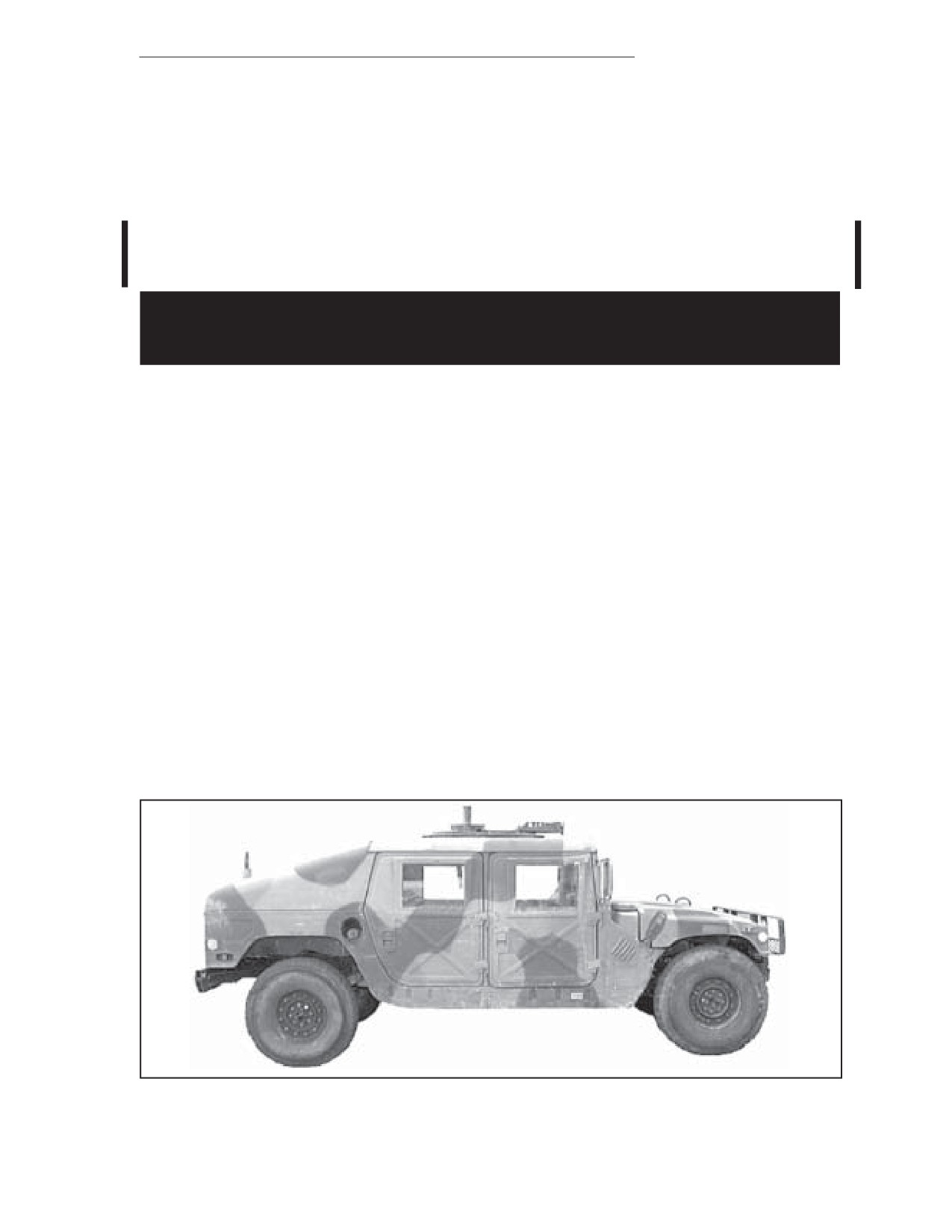
a. The M1025 Armanment Carrier (Figure 5-1) weighs 5,960 pounds.
It is 180 inches long, 85 inches wide and is 74 inches high.
b. The M1025A1 Armament Carrier weighs 6,140 pounds. It is 180
inches long, 85 inches wide and is 74 inches high.
c. The M1025A2 Armament Carrier weighs 6,780 pounds. It is 180
inches long, 85 inches wide and is 74 inches high.
d. The M1121 TOW Carrier weighs 7,900 pounds. It is 180 inches long,
85 inches wide, and 74 inches high.
Figure 5-1. M1025/ M1121 Armament/TOW Carrier HMMWV
5-1
C1, FM 4-20.105/TO 13C7-1-51
PREPARING PLATFORM
5-2. Inspect, or assemble and inspect, a DRAS platform with outrigger assem-
blies, outrigger platform support weldments, and link assemblies according to
TM 10-1670-268-20&P/TO 13C7-52-22, and as shown in Figure 4-2.
BUILDING AND PLACING HONEYCOMB STACK
5-3. Prepare the honeycomb stacks for the trucks as shown in Figure 4-3.
Position the honeycomb stacks as shown in Figure 4-4.
INSTALLING OPTIONAL DRIVE- OFF AID ON PLATFORM
5-4. Install the drive-off aid as shown in Figure 3-5.
PREPARING M1025/M1121 TRUCK
5-5. Prepare the M1025/M1121 truck as described below.
a. Prepare the fuel tank as shown in Figures 4-5 and 4-6.
NOTE: Certain units may be authorized a waiver allowing 95% fuel. One way
to verify the tank is 95% full is to fill the tank and withdraw 1 1/4 gallons with
a hand pump.
CAUTION
A full tank does not allow for expansion,
and is a danger to aircraft and air crew.
b. Make sure the batteries and battery compartment comply
with AFMAN(I) 24-204/TM 38-250.
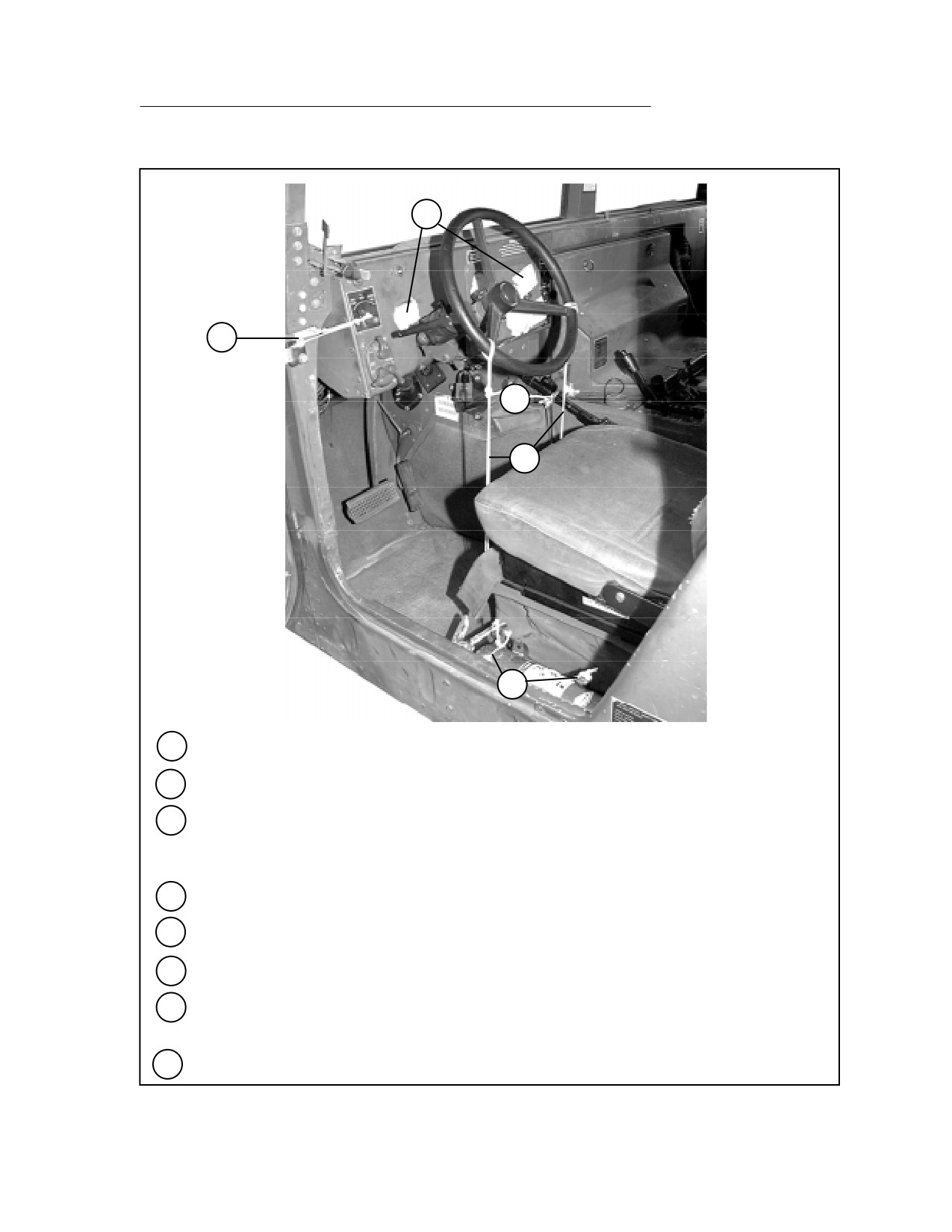
c. Prepare the cab of the truck as shown in Figure 5-2.
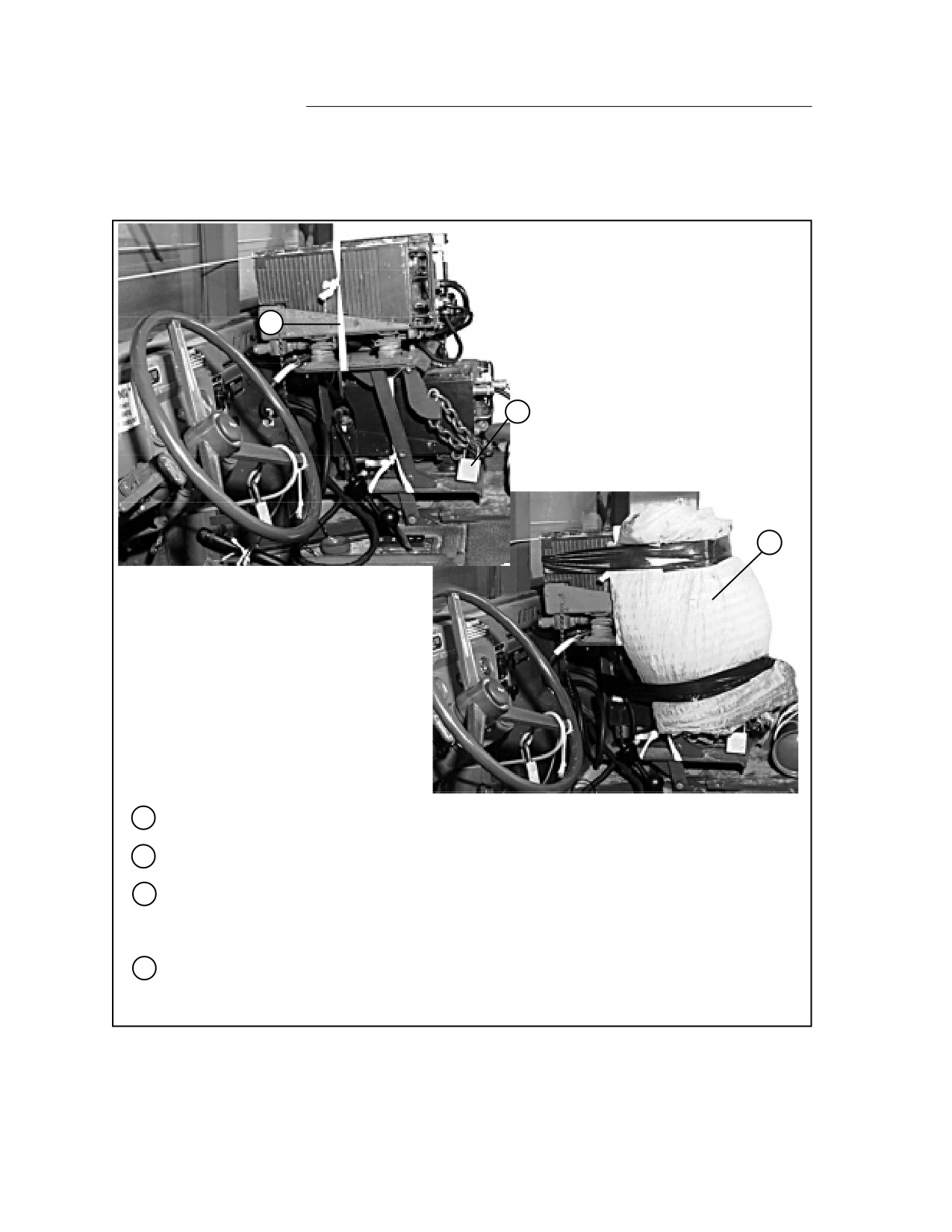
d. Secure and pad radio equipment in the cab section as shown
in Figure 5-3.
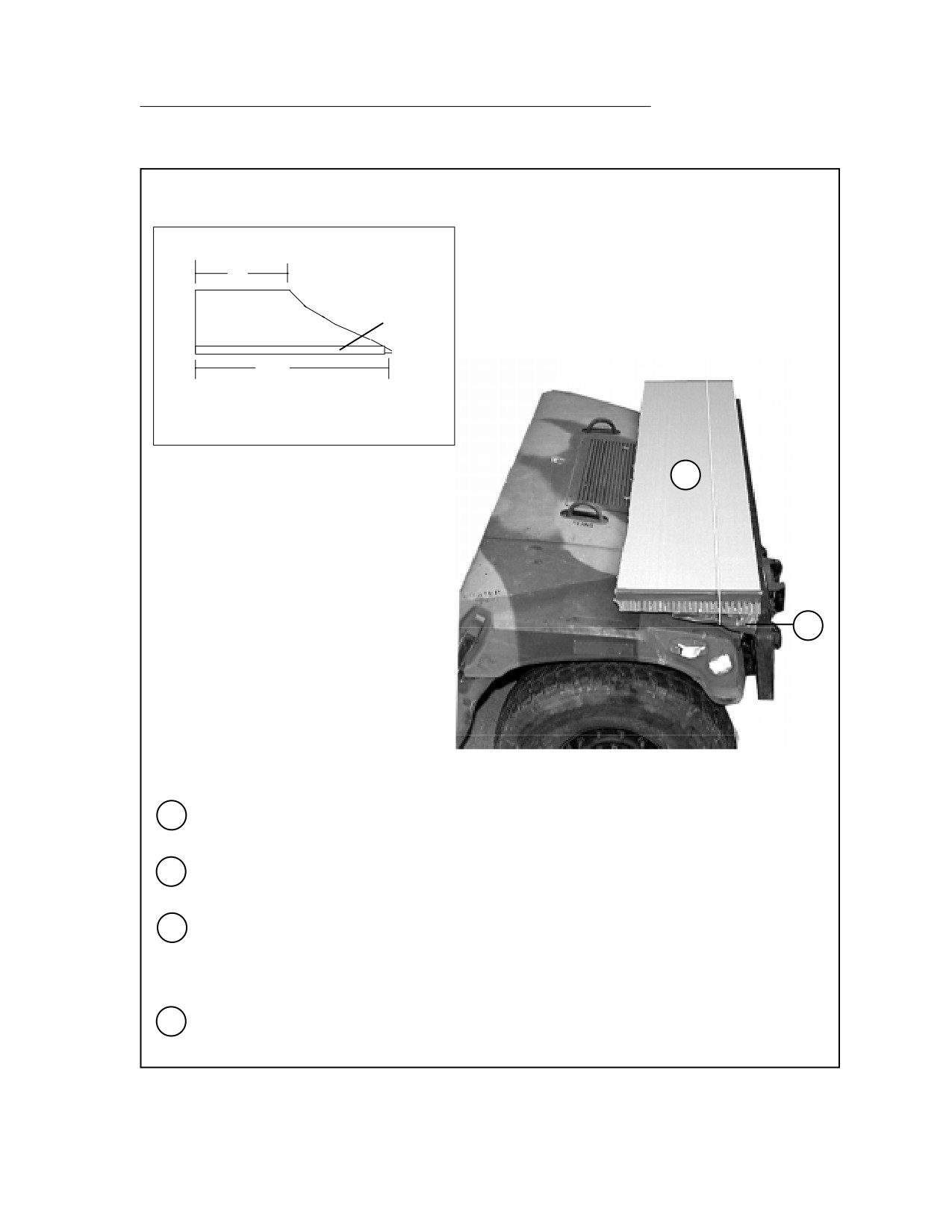
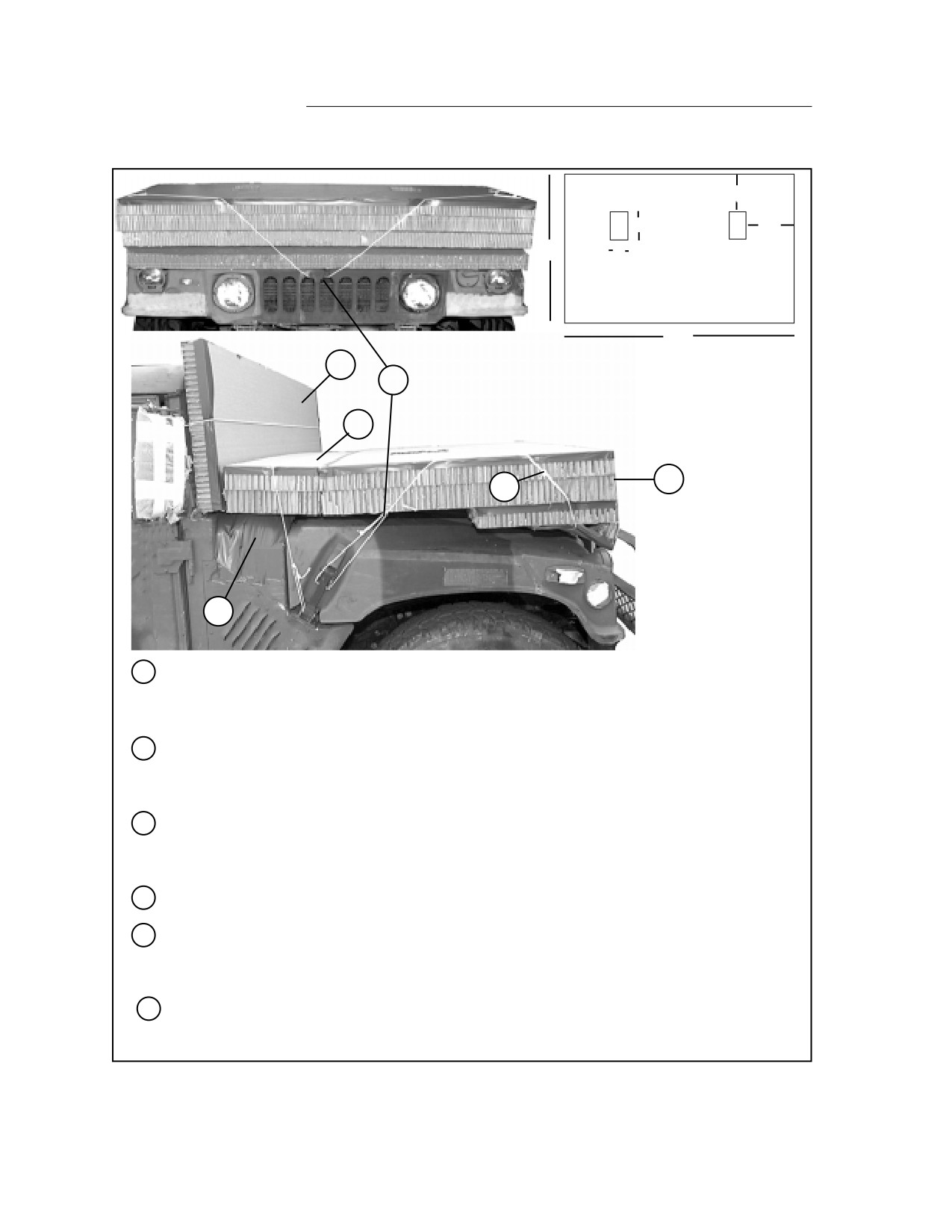
e. Prepare the front of the trucks as shown in Figure 5-4.
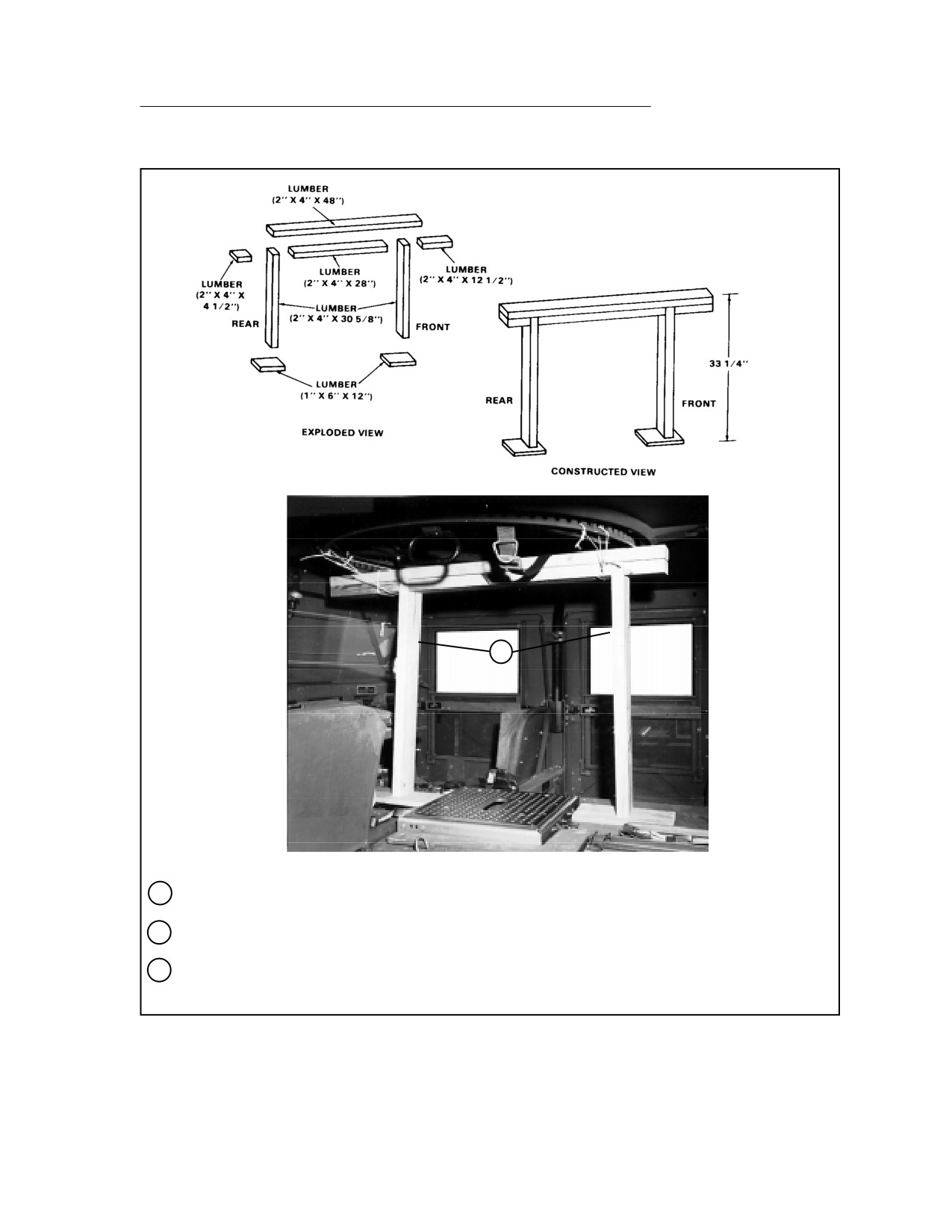
f. Prepare the turret housing as shown in Figure 5-5.
g. Prepare and secure the pioneer tool kit according to TM 9-2320-280-10/
TO 36A12-1A-2091-1/ TM 2320-10/6 and as shown in Figure 4-10.
h. Prepare the underside of the truck as shown in Figure 4-11.
5-2
FM 4-20.105/TO 13C7-1-51
8
2
4
3
7
1
Pad the mirrors with cellulose wadding and tape (not shown).
2
Tie the engine start switch in the engine stop position with Type I, 1/4-inch cotton webbing.
3
Tie the steering wheel to the seat frame in two places with Type III nylon cord, or use the
retractable steering wheel locking cable. If the locking cable is used, secure it to the steering
wheel with Type III nylon cord, not a padlock.
4
Tie the emergency brake handle in the off position with Type III nylon cord.
5
Place the transmission and four-wheel drive levers in the neutral position.
6
Tie the seat cushions to the seat frames with Type III nylon cord (not shown).
7
Tie the fire extinguisher and decontamination apparatus in place in its designated rack with
two lengths of Type III nylon cord.
8
Tape all lights, reflectors, windshield and instrument panel gauges.
Figure 5-2. Cab Prepared
5-3
FM 4-20.105/TO 13C7-1-51
2
1
3
1
Secure communications equipment in its mount with chains and padlocks.
2
Tie the equipment to its mount with 1-inch tubular nylon webbing.
3
Pad the front of the equipment generously with cellulose wadding taped in place. Pad the
radio handset with cellulose wadding and tie the handset to the mount with Type III nylon
cord.
4
Remove antennas and pad the antenna mounts with cellulose wadding taped in place.
Figure 5-3. Communications Equipment Secured and Padded
5-4
FM 4-20.105/TO 13C7-1-51
10-inch by 80-inch Honeycomb
5
SIDE VIEW
TAPE
1234567890123456789012345678901212345
10
DIAGRAM 1
NOTES: 1. Drawing is not to scale.
3
2. All dimensions are given in inches.
2
1
Cut a 10-inch by 80-inch piece of honeycomb. Taper crush 5 inches of the width along the
entire length of the honeycomb. Tape the 10-inch width of the honeycomb (See diagram 1).
2
Place the honeycomb flush on the front end of the hood with the tapered side up and to the rear
of the truck.
3
Cut an 18-inch by 80-inch piece of honeycomb. Position on top of and flush with the front of
the 10-inch by 80-inch piece of honeycomb. Tie the two pieces of honeycomb together with
Type III nylon cord around the 80 inch length. Tape the top piece of honeycomb where the Type
III nylon cord will come in contact.
4
Secure the winch hook with Type III nylon cord (not shown).
Figure 5-4. Front of Truck Prepared
5-5
FM 4-20.105/TO 13C7-1-51
8”
9”
20”
36”
6”
83
NOTES: 1. Drawing is not to scale.
10
2. All dimensions are given in inches.
6
9
5
7
8
5
Place two 36-inch by 83-inch pieces of honeycomb, with cutouts as shown, on top of the
previously positioned honeycomb and flush with the front. Tape the 36-inch sides on the top
piece of honeycomb.
6
Secure the 36-inch by 83-inch honeycomb pieces with a length of Type III nylon cord. Tie the
Type III nylon cord to the left hood latch. Pass the cord over the honeycomb, through the center
of the grille, and over to the right side of the honeycomb. Tie the cord to the right hood latch.
7
Run a length of Type III nylon cord through the securing tie on the bottom two layers of
honeycomb and through the securing tie on the top two layers of honeycomb on each side of
the load.
8
Cover the breather cap with one layer of felt and tape in place with cloth backed tape.
9
Cut two 12-inch by 83-inch pieces of honeycomb and position behind the honeycomb installed
in step 5. Tape the top outside edges. Secure the honeycomb to the hood latches with Type III
nylon cord. Tape the hood latches.
10
Cut a 21-inch by 83-inch piece of honeycomb. Position the honeycomb on the windshield.
Tape the outside edges and secure with Type III nylon around the windshield.
Figure 5-4. Front of Truck Prepared (Continued)
5-6
FM 4-20.105/TO 13C7-1-51
NOTES 1. These drawings are not drawn to scale.
2. All dimension are given in inches.
3
1
Build the turret housing support as shown. Nail the lumber together with 8d nails.
2
Close the turret cover and secure it with the fasteners provided (not shown).
3
Center the support under the turret housing with the front end of the support toward the front
end of the truck. Tie the support in place with two lengths of 1/2-inch tubular nylon webbing.
Figure 5-5. Turret Support Built and Placed
5-7
FM 4-20.105/TO 13C7-1-51
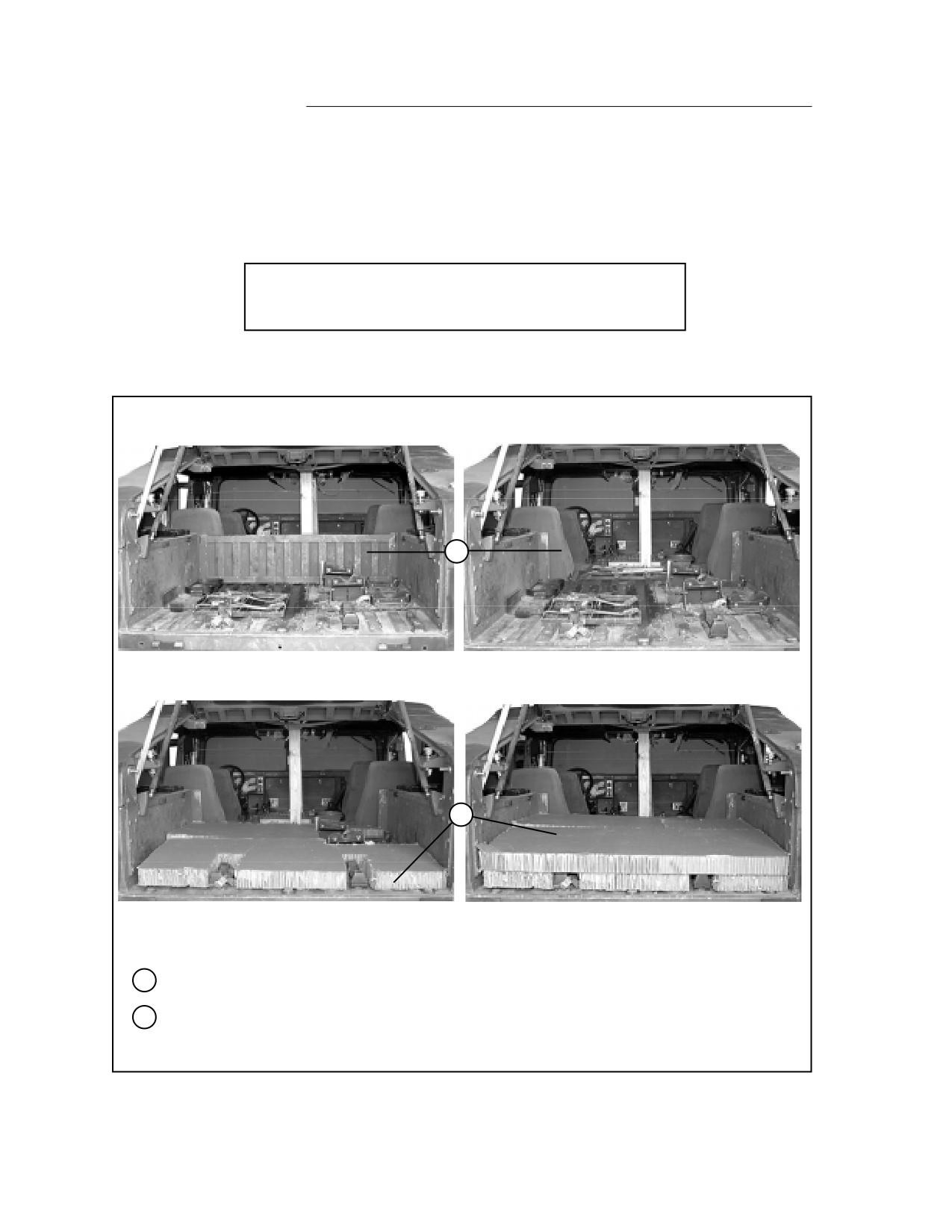
STOWING ACCOMPANYING LOAD ON M1025 ARMAMENT CARRIER
5-6. Use the procedures shown in Figure 5-6 to stow ten 105-millimeter ammu-
nition boxes and truck equipment.
CAUTION
Load weight limits of 800-2,000 pounds and CB requirements
given in Chapter 1 must be strictly observed.
NOTE: The accompanying load rigging procedures for the M1121 TOW Carrier
differ from those for the M1025 procedures and are given in paragraph 5-7.
1
2
1
Remove the panel behind the rear seats and set it aside.
2
Cut and position two layers of honeycomb in the bed of the vehicle. Make cutouts in the
bottom layer to accomodate the fixtures on the truck floor. Do not cover the front and rear
tiedown rings.
Figure 5-6. M1025 Accompanying Load Stowed
5-8
FM 4-20.105/TO 13C7-1-51
3
5
4
3
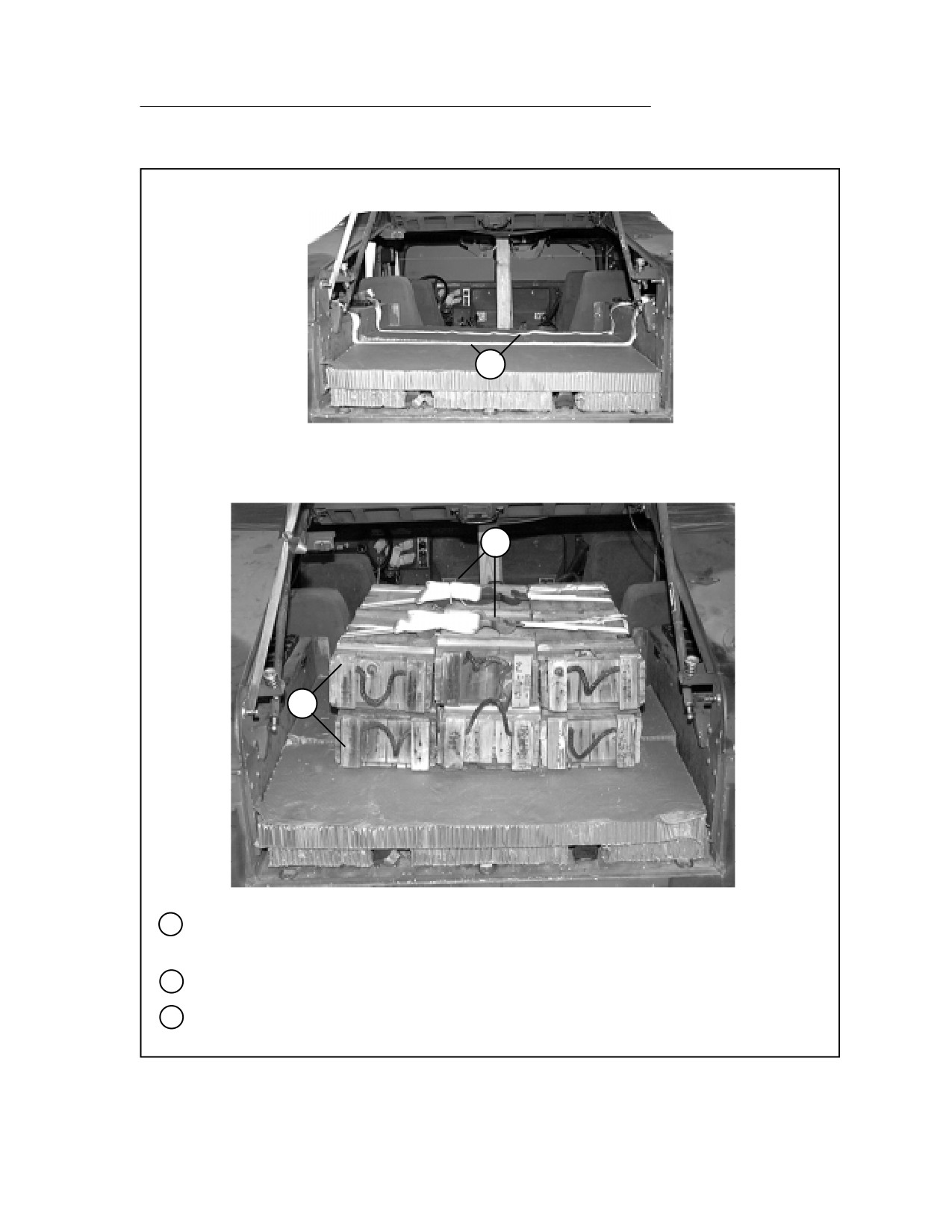
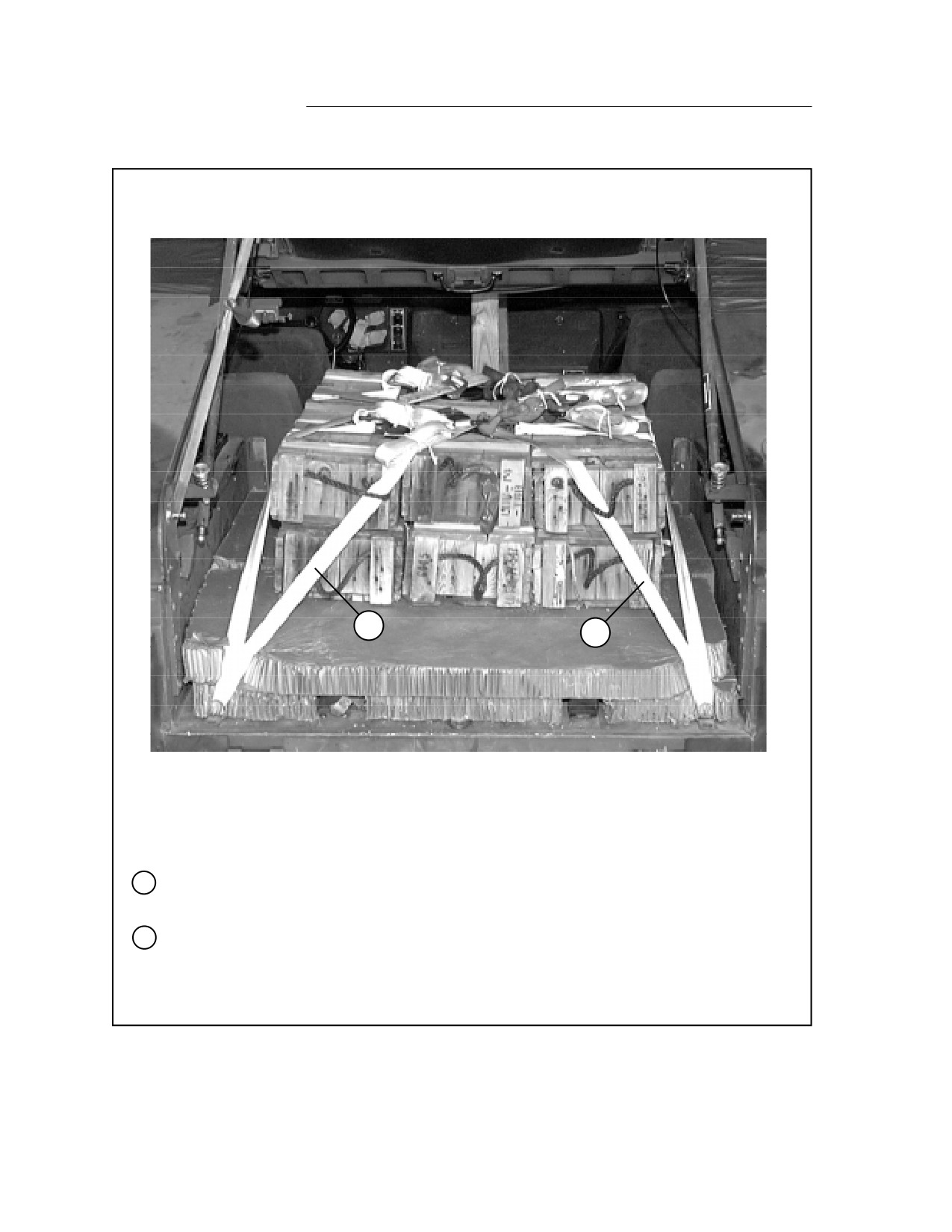
Position two lashings across the bed of the vehicle at 21-inches and 38-inches from the rear
edge of the honeycomb.
4
Center two layers of three ammuniton boxes on the lashings in step 3.
5
Secure the lashings placed in step 3 with D-rings and load binders.
Figure 5-6. M1025 Accompanying Load Stowed (continued)
5-9
FM 4-20.105/TO 13C7-1-51
7
6
6
Route a 30-foot lashing through the right rear tiedown, over the ammunition boxes, and through
the left front tiedown. Close the lashing with D-rings and a load binder on top of the boxes.
7
Route a 30-foot lashing through the left rear tiedown, over the ammunition boxes, and through
the right front tiedown. Close the lashing with D-rings and a load binder on top of the boxes.
Figure 5-6. M1025 Accompanying Load Stowed (continued)
5-10
FM 4-20.105/TO 13C7-1-51
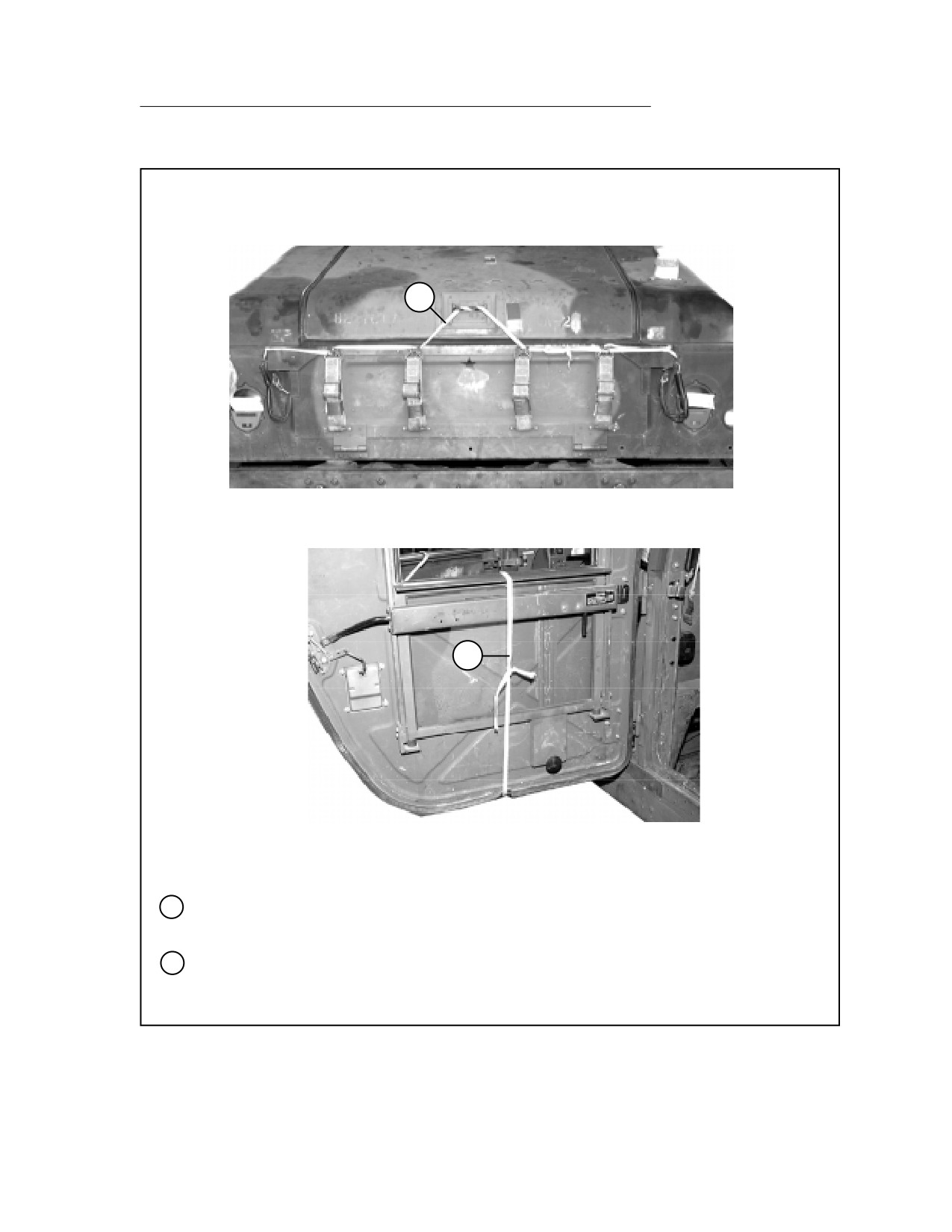
8
9
8
Close the tailgate and hatch. Secure the tailgate and hatch with a doubled length of 1/2-
inch tubular nylon webbing.
9
Lower all windows. Secure all windows in the lowered position with a length of 1/2-inch
tubular nylon webbing.
Figure 5-6. M1025 Accompanying Load Stowed (continued)
5-11
FM 4-20.105/TO 13C7-1-51
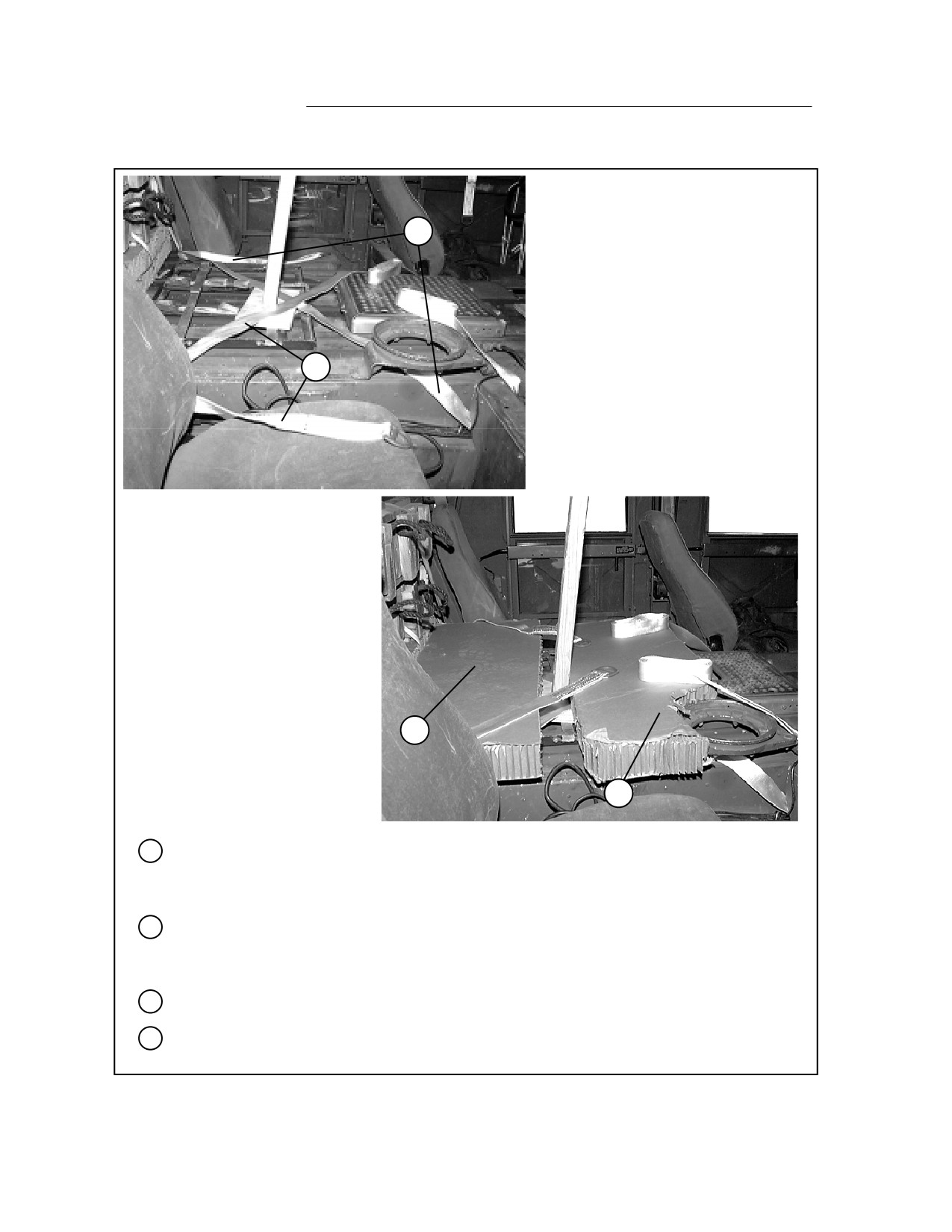
11
10
12
13
10
Run a 30-foot lashing through the tie-down ring behind the right passenger seat. Rest the short
end of the lashing on the right passenger seat. Run the long end of the lashing over the base of
the turret support, and pass it around the cross bar behind the driver’s seat.
11
Run a 30-foot lashing through the tie-down ring behind the left passenger seat. Rest the short
end of the lashing on the left passenger seat. Run the long end of the lashing over the base of
the turret support, and pass it around the cross bar behind the right front seat.
12
Center a 14- by 38-inch piece of honeycomb between the rear passenger seats.
13
Center a 14- by 38-inch piece of honeycomb ahead of the turret support leg. Make a cutout to
allow for the traversing unit stowage pedestal.
Figure 5-6. M1025 Accompanying Load Stowed (continued)
5-12
FM 4-20.105/TO 13C7-1-51
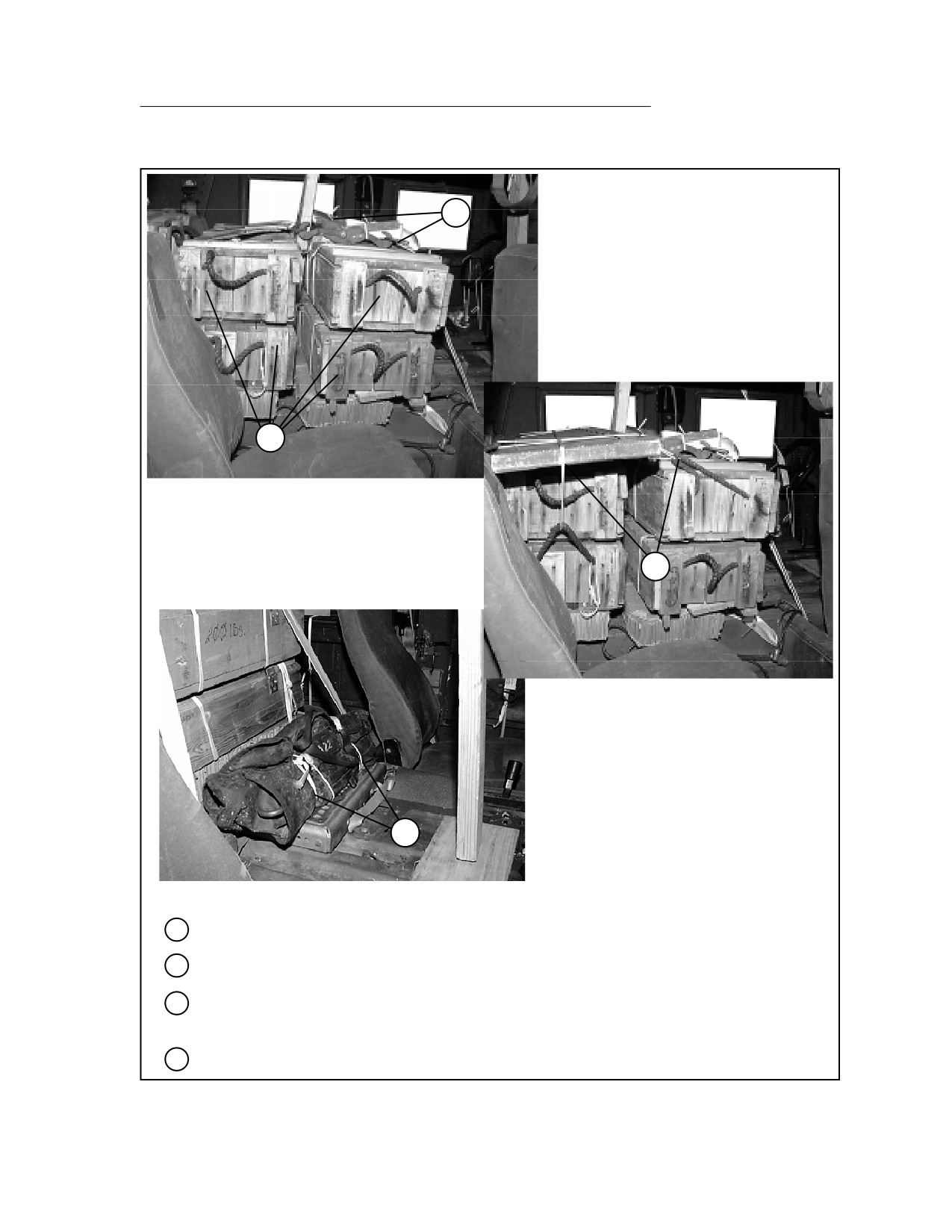
15
14
16
17
14
Center two ammunition boxes over each of the honeycomb pieces placed in steps 12 and 13.
15
Secure the lashings placed in steps 10 and 11 over the ammunition boxes.
16
Tie the panel removed in step 1 over the ammunition boxes with 1/2-inch tubular nylon webbing
tied to the box carrying handles.
17
Secure the jack to the gunner’s platform with 1/2-inch tubular nylon webbing.
Figure 5-6. M1025 Accompanying Load Stowed (continued)
5-13
FM 4-20.105/TO 13C7-1-51
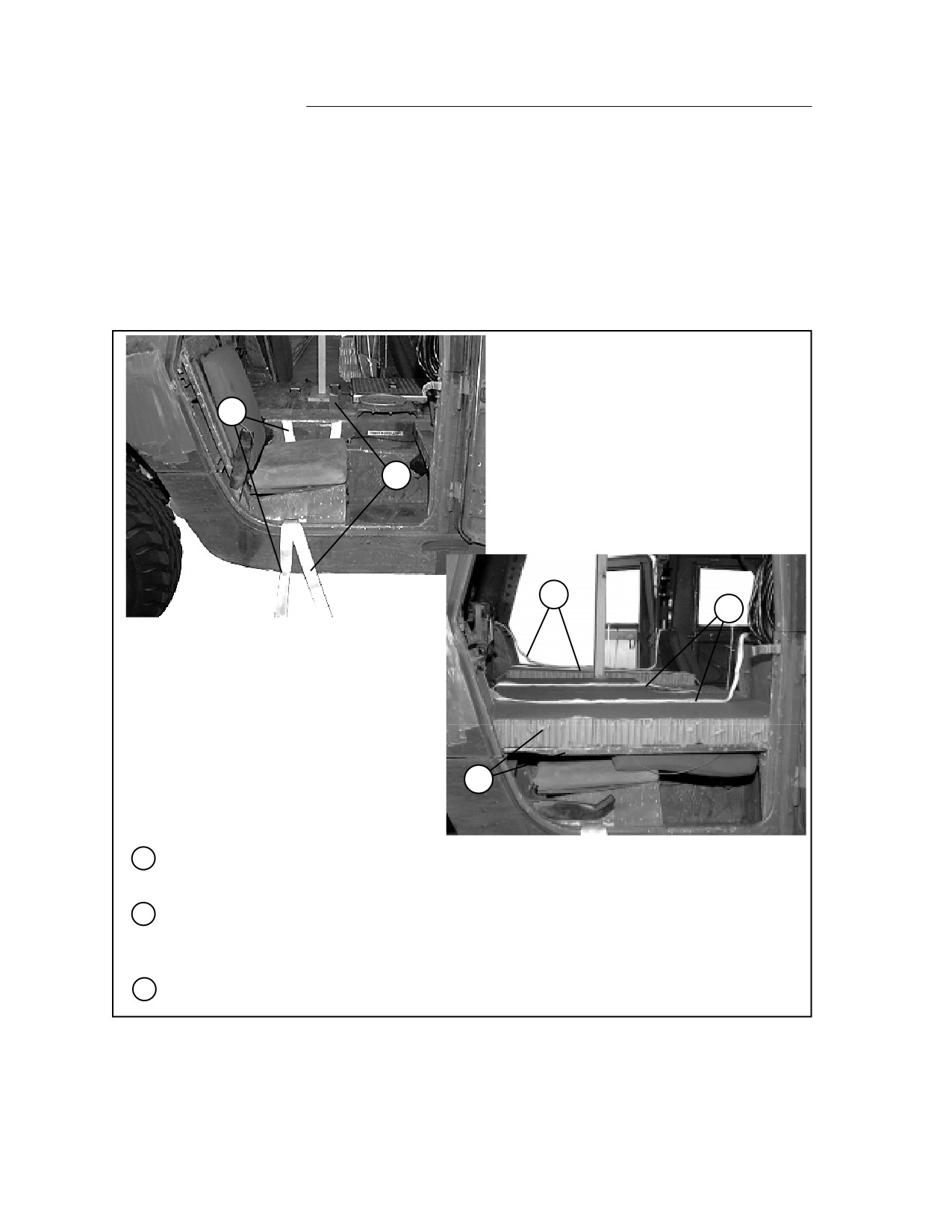
STOWING ACCOMPANYING LOAD IN M1121 TOW CARRIER
5-7. Use the procedures shown in Figure 5-7 to stow mission and truck equip-
ment weighing 800-2000 pounds. An 800-pound load is shown here.
NOTE: The accompanying load rigging procedures for the M1025 Armament
Carrier are different from the M1121 procedures and are given in paragraph
5-6.
1
1
3
3
2
1
Center two 30-foot lashings between the rear seats about 12 inches apart. Bring the free ends
of the lashings through the cutouts under the seat cushions on each side.
2
Fold the seat backs forward over the footwells. Cover the rear seating area with two pieces of
honeycomb cut to fit between the front seat backs and the rear seat backs, on either side of
the turret support.
3
Evenly space two 15-foot lashings lengthwise on each piece of honeycomb placed in step 2.
Figure 5-7. Accompanying Load Stowed in M1121 TOW Carrier
5-14
FM 4-20.105/TO 13C7-1-51
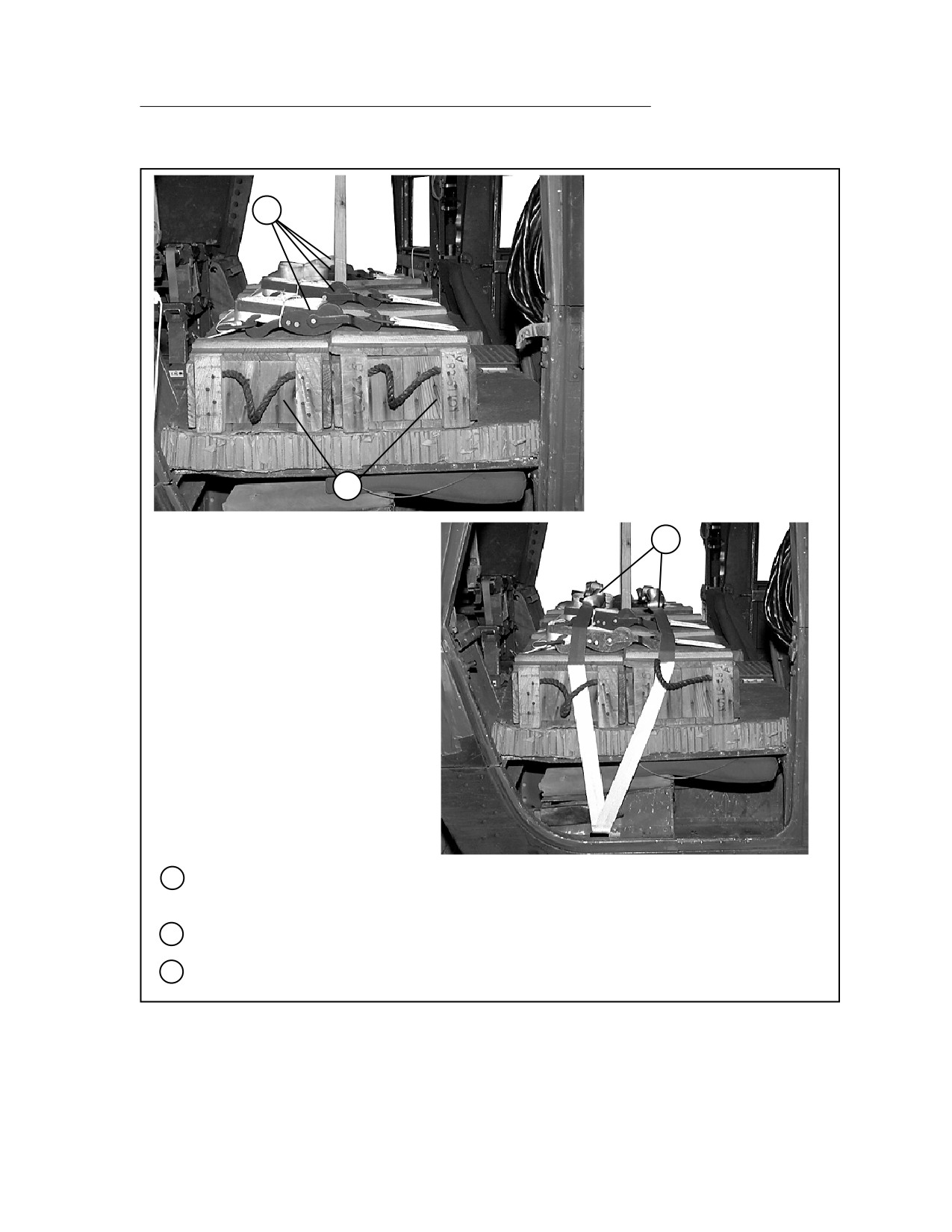
5
4
6
4
Center two ammunition boxes across the width of each of the pieces of honeycomb placed in
step 2.
5
Secure each of the four lashings placed in step 3 over the ammunition boxes.
6
Secure the lashings placed in step 1 to each other on top of the ammunition boxes.
Figure 5-7. Accompanying Load Stowed in M1121 TOW Carrier (continued)
5-15
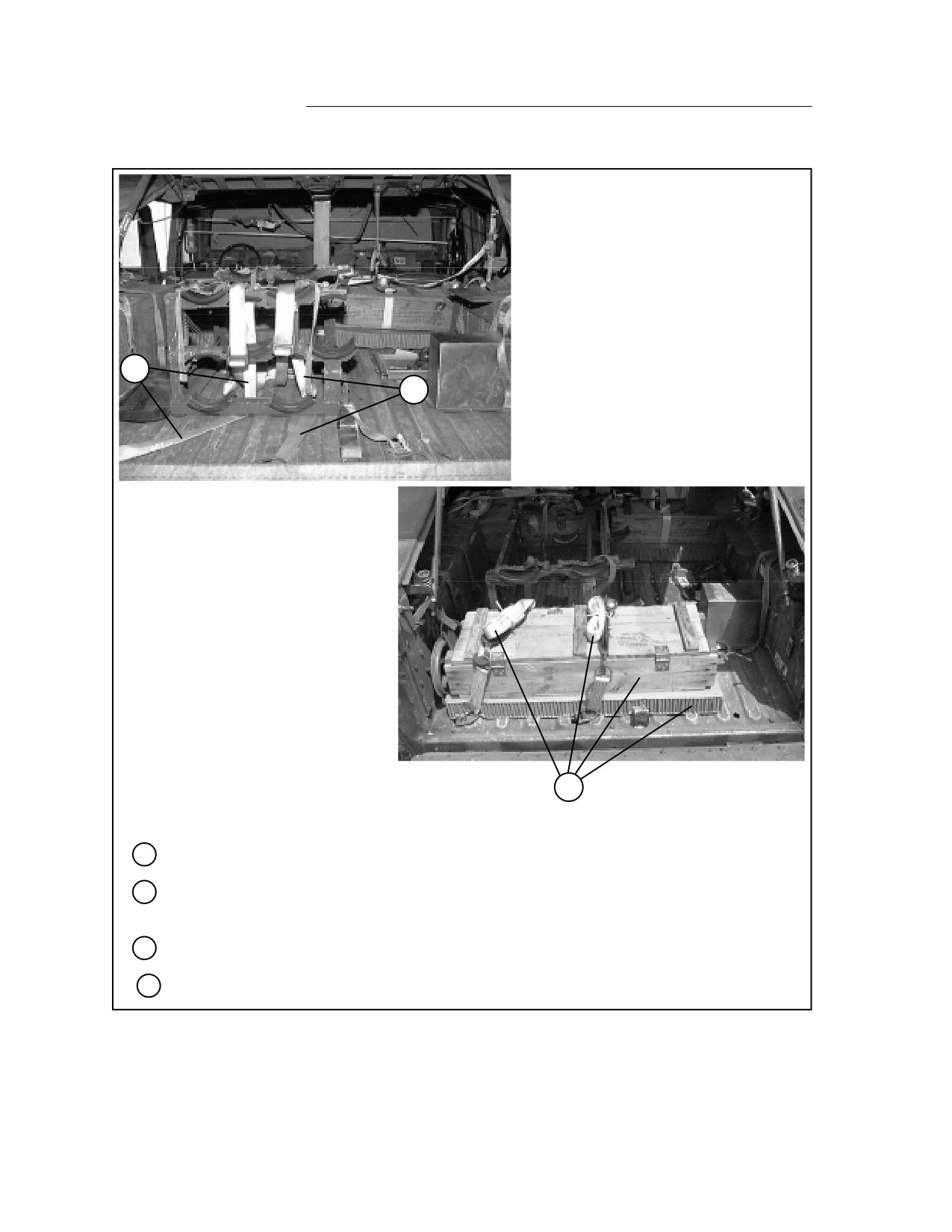
FM 4-20.105/TO 13C7-1-51
7
7
8
7
Run two lashings through the two left rear cargo bed rings and under the TOW racks.
8
Place a piece of honeycomb cut to fit and one ammunition box over the lashings. Secure the
lashings on top of the box.
9
Tie all windows open as shown in Figure 5-6, step 9.
10
Close and secure the tailgate as shown in Figure 5-6, step 8.
Figure 5-7. Accompanying Load Stowed in M1121 TOW Carrier (continued)
5-16
FM 4-20.105/TO 13C7-1-51
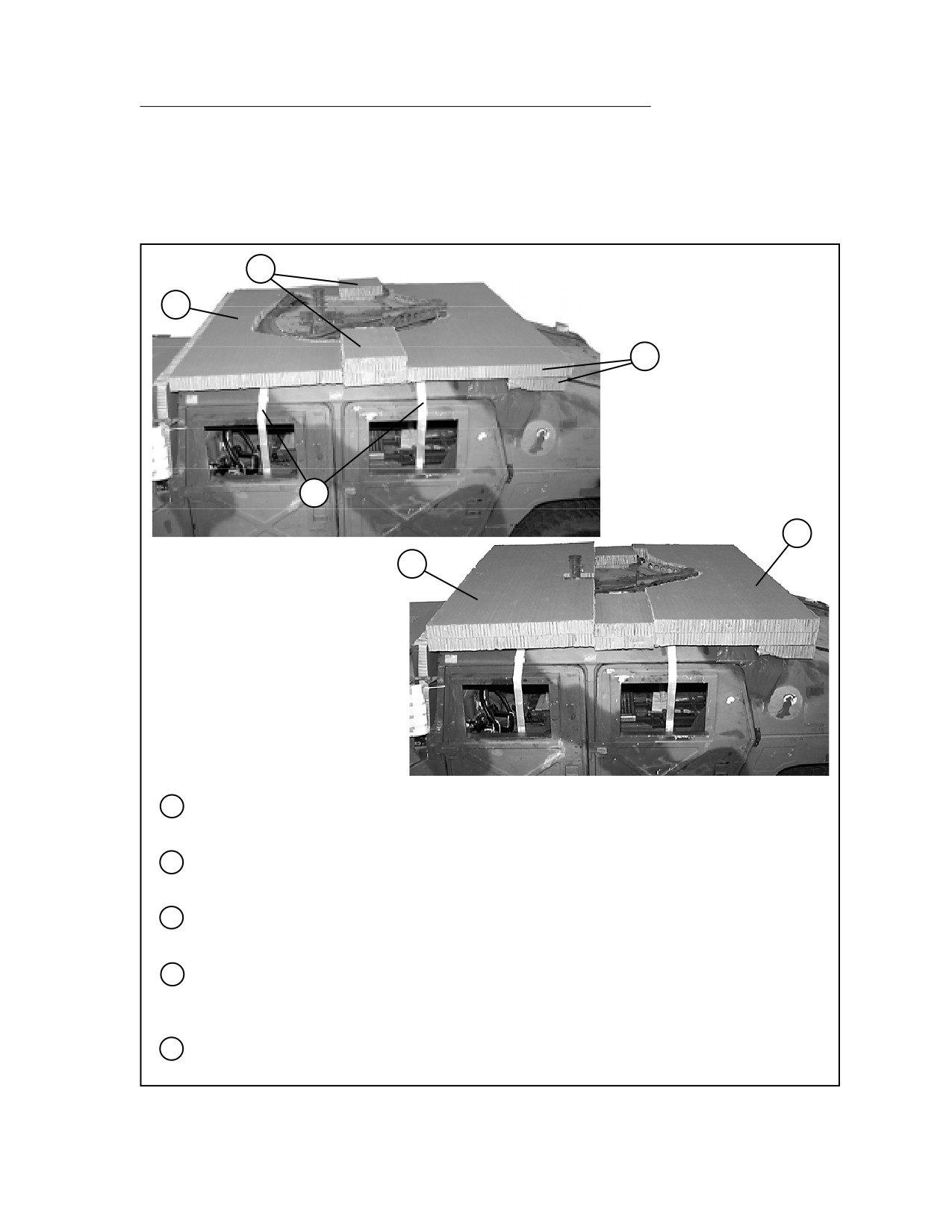
PREPARING ROOF OF TOW CARRIERS
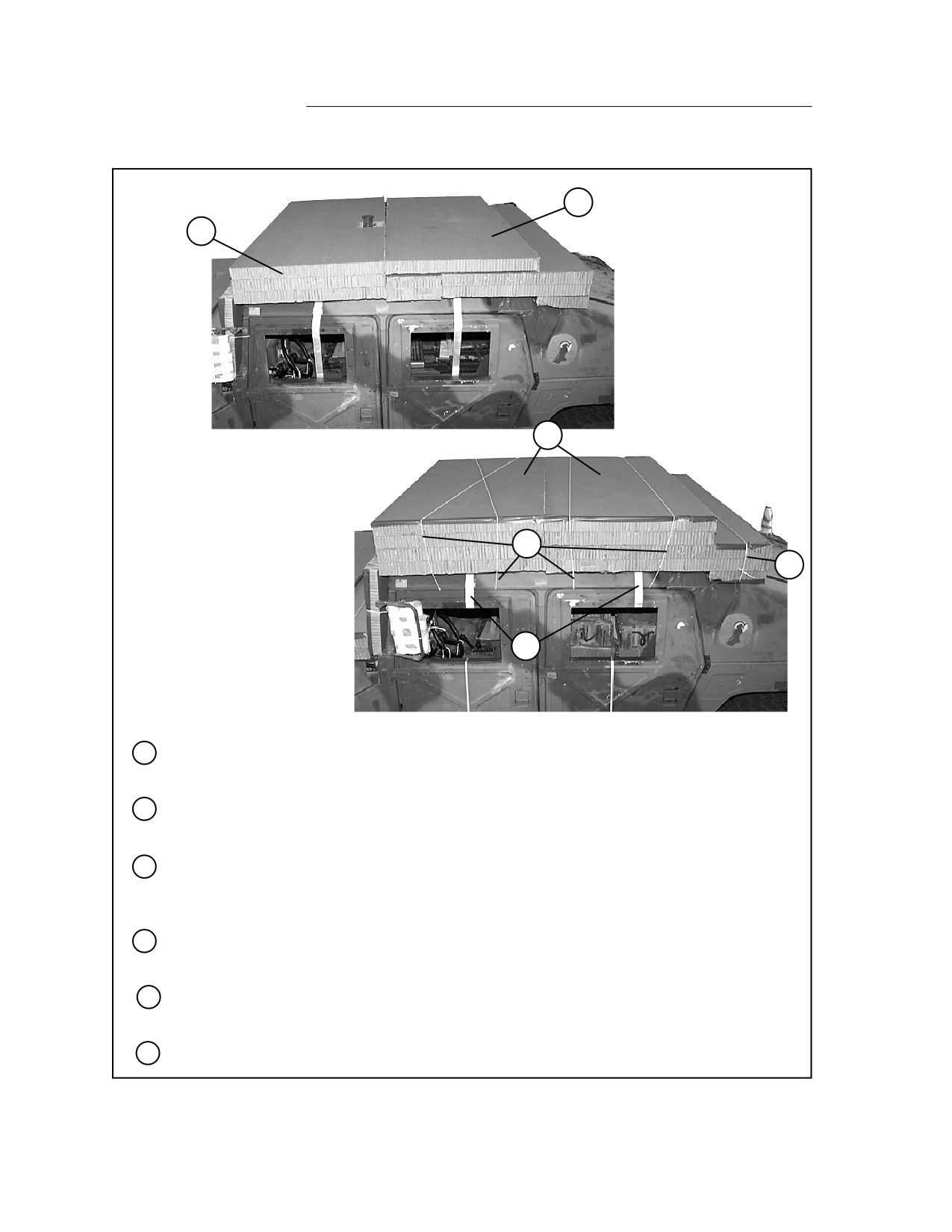
5-8. Prepare the roof of the M1025 and M1121 TOW carriers as shown
in Figure 5-8.
3
2
4
1
5
5
1
Place two lashings over the roof, centered on the front and rear window openings. Place the
lashings so that the D-rings and running ends will be accessible from outside the truck.
2
Place a 36- by 81-inch piece of honeycomb even with the front edge of the windshield. Cut this
honeycomb to allow for the turret fixtures on the roof.
3
Place two pieces of honeycomb 12 inches wide and cut to fit, to the rear of and flush with the
edges of the honeycomb placed in step 2.
4
Place a 36- by 81-inch piece of honeycomb to the rear of the honeycomb placed in step 3. Cut
this piece to allow for the roof turret fixtures. Crush a 12- by 81-inch piece of honeycomb to
place under the wider piece so that the wider piece is level.
5
Place two additional 36- by 81-inch pieces of honeycomb flush with the pieces placed in steps
2 and 4. Cut these pieces to allow for the turret fixtures on the roof.
Figure 5-8. TOW Carrier Roof Prepared
5-17
FM 4-20.105/TO 13C7-1-51
7
6
8
9
10
11
6
Place a 36- by 81-inch piece of honeycomb flush with the pieces placed in steps 2 and 5. Cut
this piece to allow for the roof turret fixtures.
7
Place a 36- by 81-inch piece of honeycomb aligned with the piece placed in step 6. A 12-inch
ledge should result at the rear.
8
Place two 36- by 81-inch pieces of honeycomb flush with the pieces placed in steps 6 and 7.
Crush this honeycomb, if necessary, to allow for the roof turret fixtures. Tape the upper outside
edges of these pieces of honeycomb.
9
Open the truck doors and tie all four layers of honeycomb together through the door
openings with Type III nylon cord
10
Tape the lower outside edges of the 12-inch wedge piece of honeycomb placed in step 4. Tie
this piece to the two layers above it with Type III nylon cord.
11
Close the doors, and secure them shut with the lashings placed in step 1.
Figure 5-8. TOW Carrier Roof Prepared (continued)
5-18
FM 4-20.105/TO 13C7-1-51
LIFTING AND POSITIONING TRUCK AND INSTALLING OPTIONAL DRIVE-OFF
AIDS
5-9. Install the lifting slings and position the truck on the honeycomb stacks
as shown in Figure 4-13. Attach the optional drive-off aids to the wheels of
the truck as shown in Chapter 3 of this manual. Position the truck on the
platform as shown in Figure 5-9.
LASHING TRUCK
5-10. Lash the truck to the platform as shown in Figures 5-10 and 5-11.
INSTALLING SUSPENSION SLINGS AND ATTITUDE CONTROL
SYSTEM
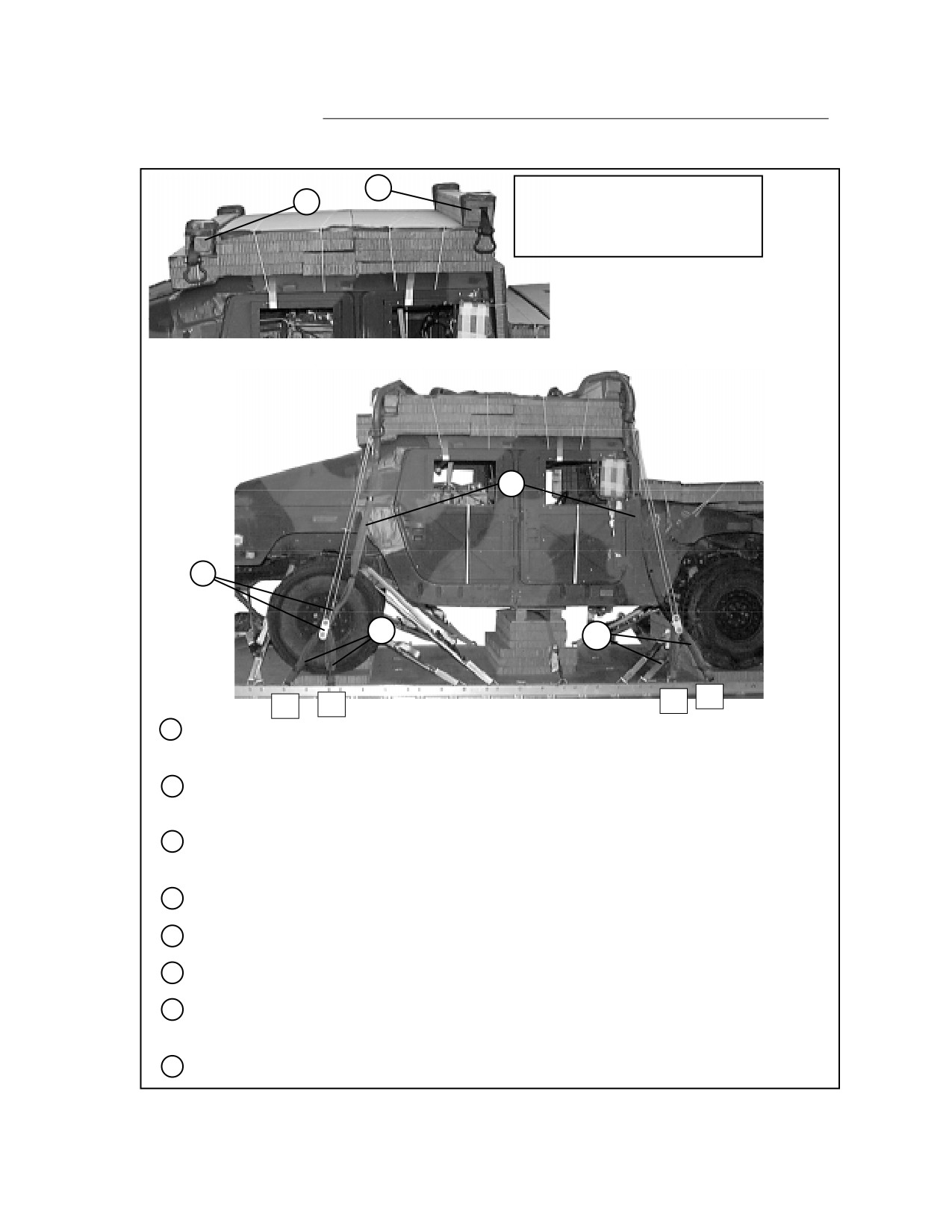
5-11. Construct and inspect the Attitude Control System (ACS) according to
Chapter 3. Position the ACS and suspension slings as shown in Figure 5-12.
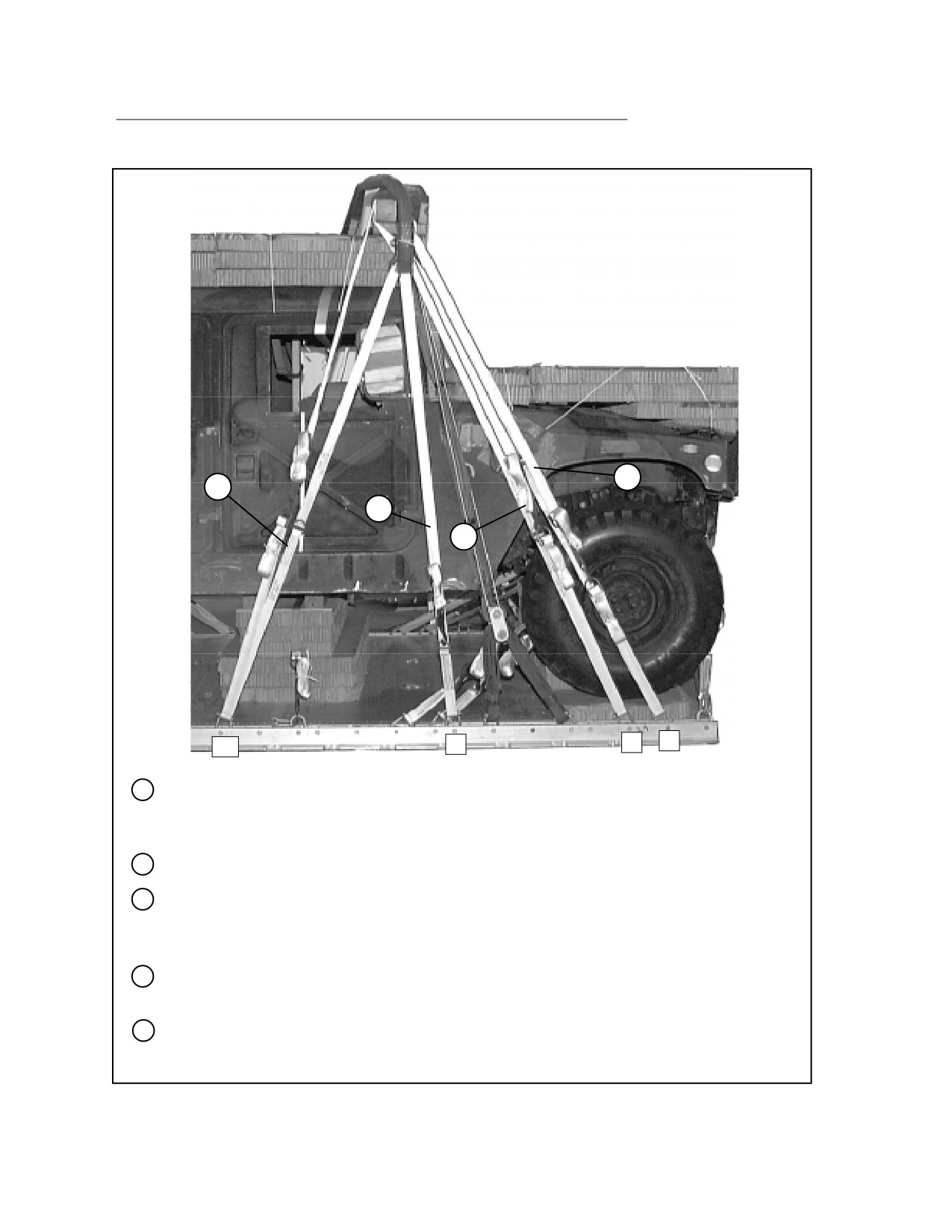
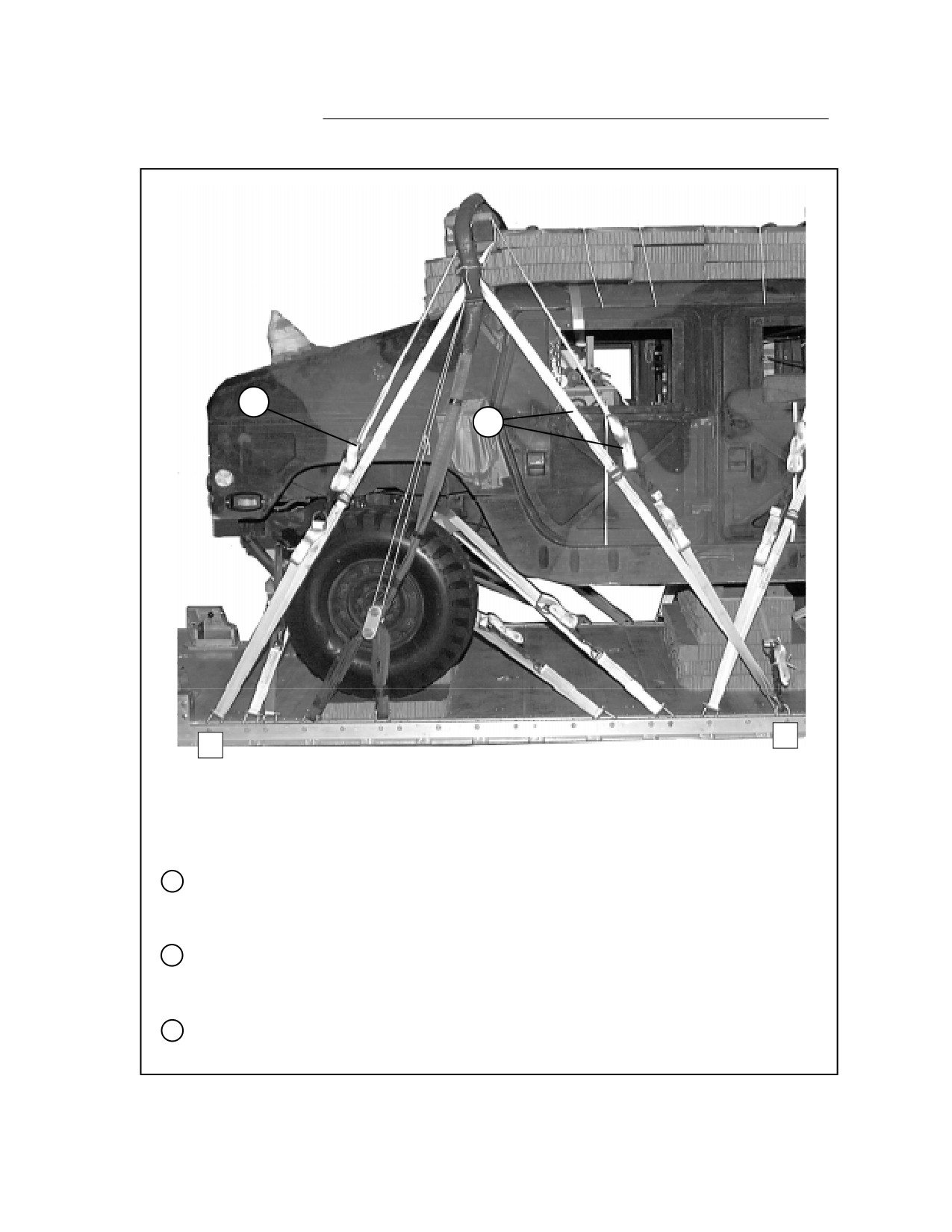
Secure the ACS according to Chapter 3 and as shown in Figures 5-13 and 5-
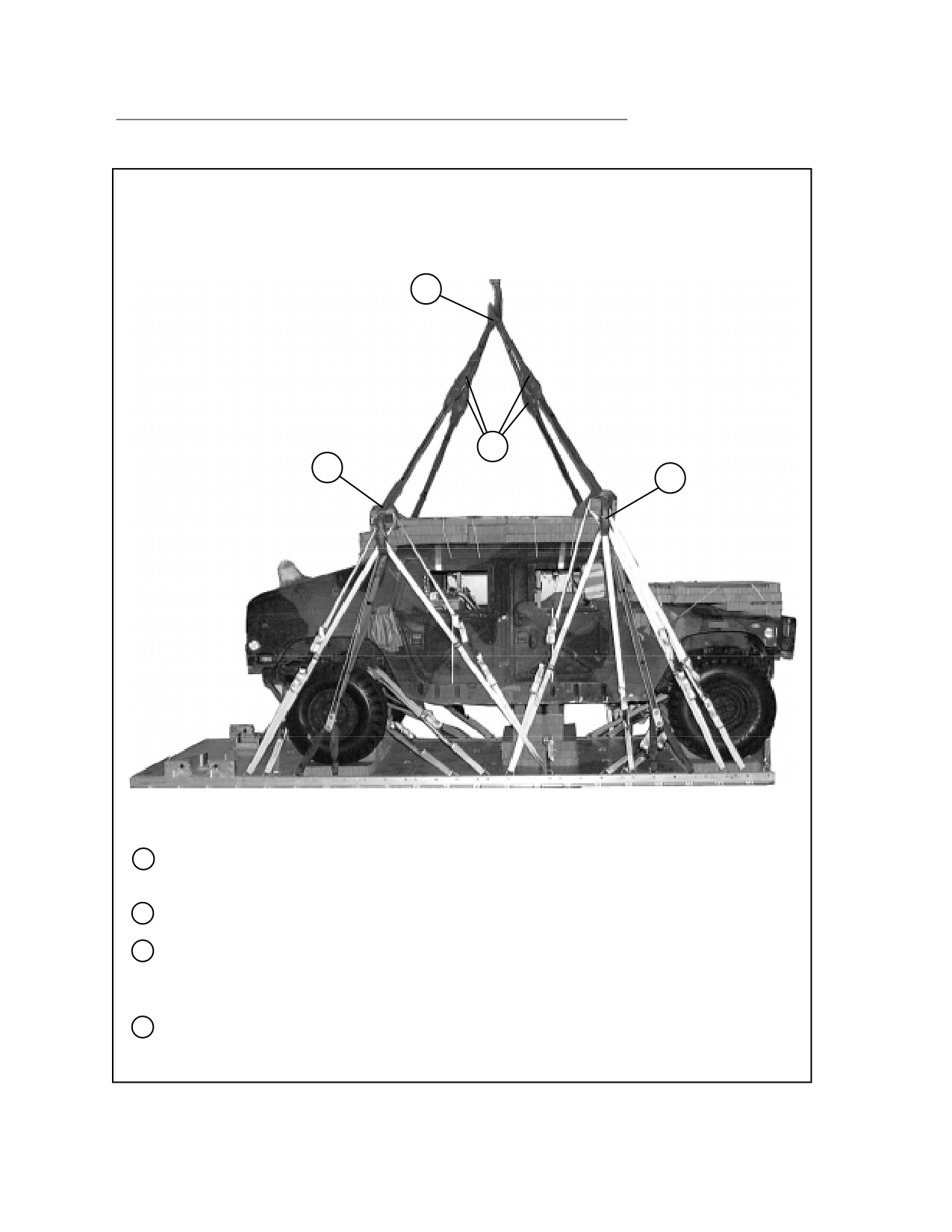
14. Complete the suspension slings, pad the links, and safety tie the slings as
shown in Figure 5-15.
1
2
1
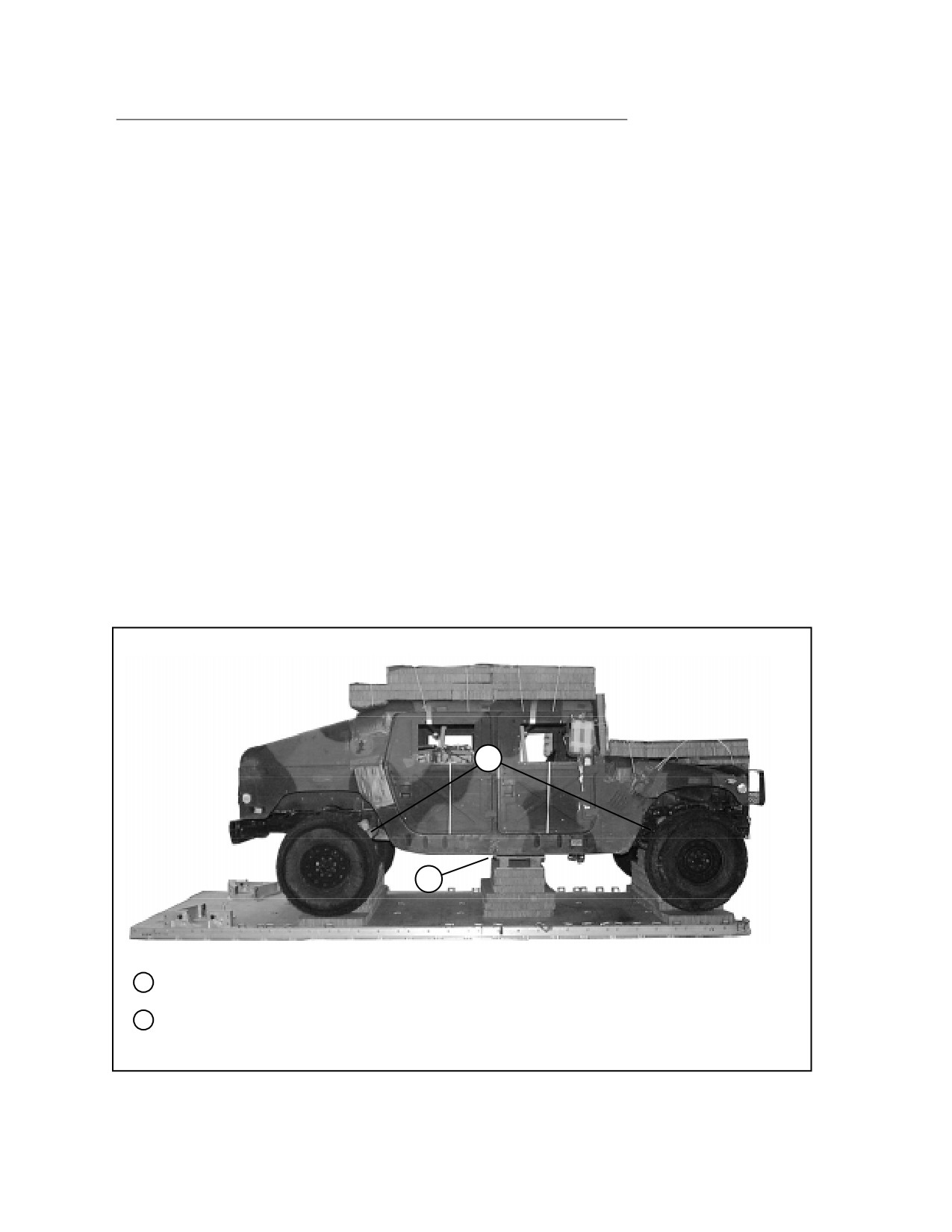
Be sure that the suspension cross members of the truck rest squarely on stacks 1 and 3.
2
Be sure that the frame cross member rests squarely on the 6-inch part of the honeycomb at
the front of stack 2.
Figure 5-9. M1025 Armament Carrier Positioned on Platform
5-19
FM 4-20.105/TO 13C7-1-51
4
3
2A
1A
2
1
2
1
9
7
5
10
9
8
Tie-down
Lashing
Clevis
Number
Number
Instructions
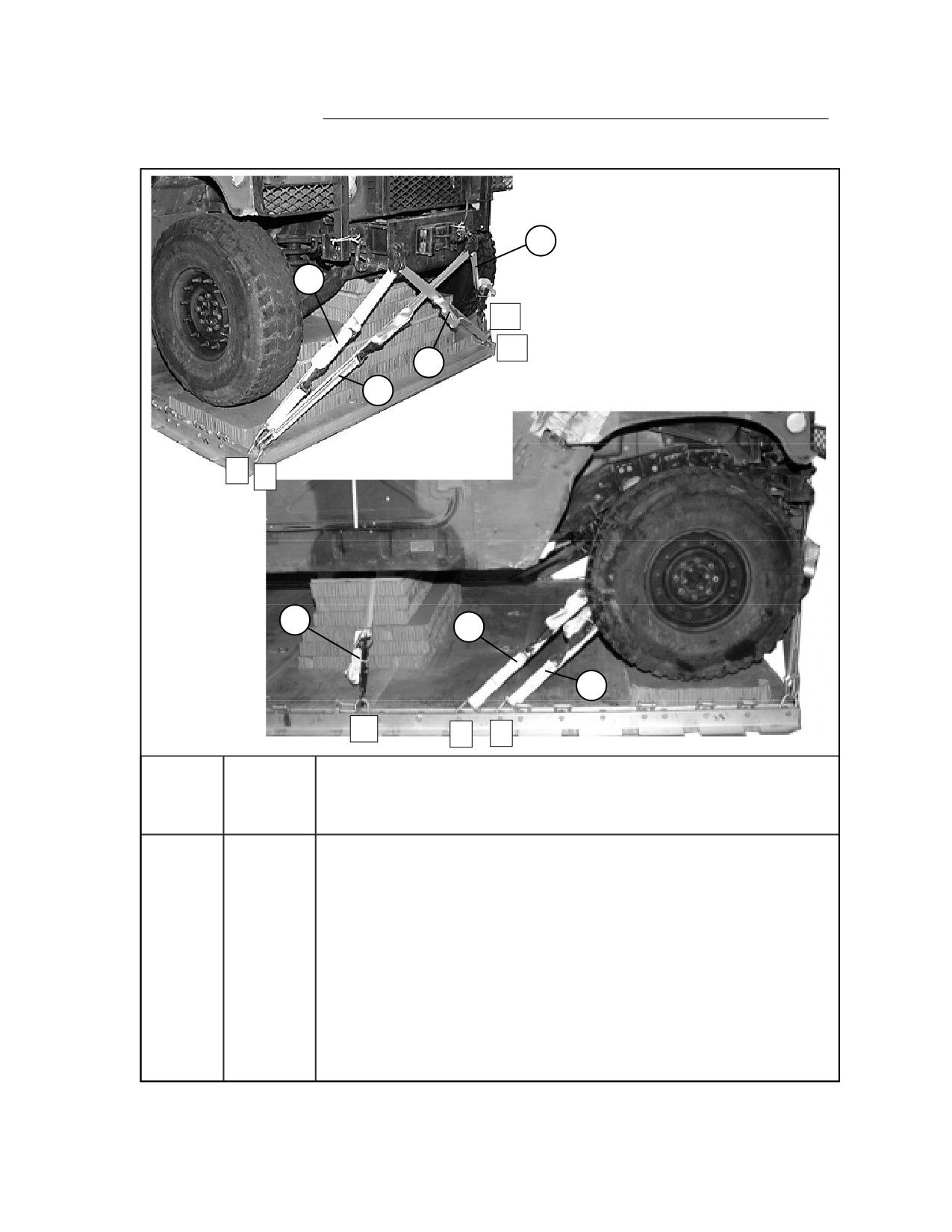
Pass lashing :
1
1
Through left front tie-down provision
2
1A
Through right front tie-down provision
3
2
Through right front tie-down provision
4
2A
Through left front tie-down provision
5
8
Around right front lower control arm
6
8A
Around left front lower control arm
7
9
Through tie-down bracket behind right front coil spring.
8
9A
Through tie-down bracket behind left front coil spring.
9
10 and
Pass a 15-foot lashing through clevis 10A and through its own D-ring .
10A
Pass the lashing through the hole in stack 2. Attach the lashing to clevis
10 with a load binder.
Figure 5-10. Lashings 1 Through 9 Installed
5-20
FM 4-20.105/TO 13C7-1-51
17
16
15
14
18
17
10
12
14
13
Tie-down
Lashing
Clevis
Number
Number
Instructions
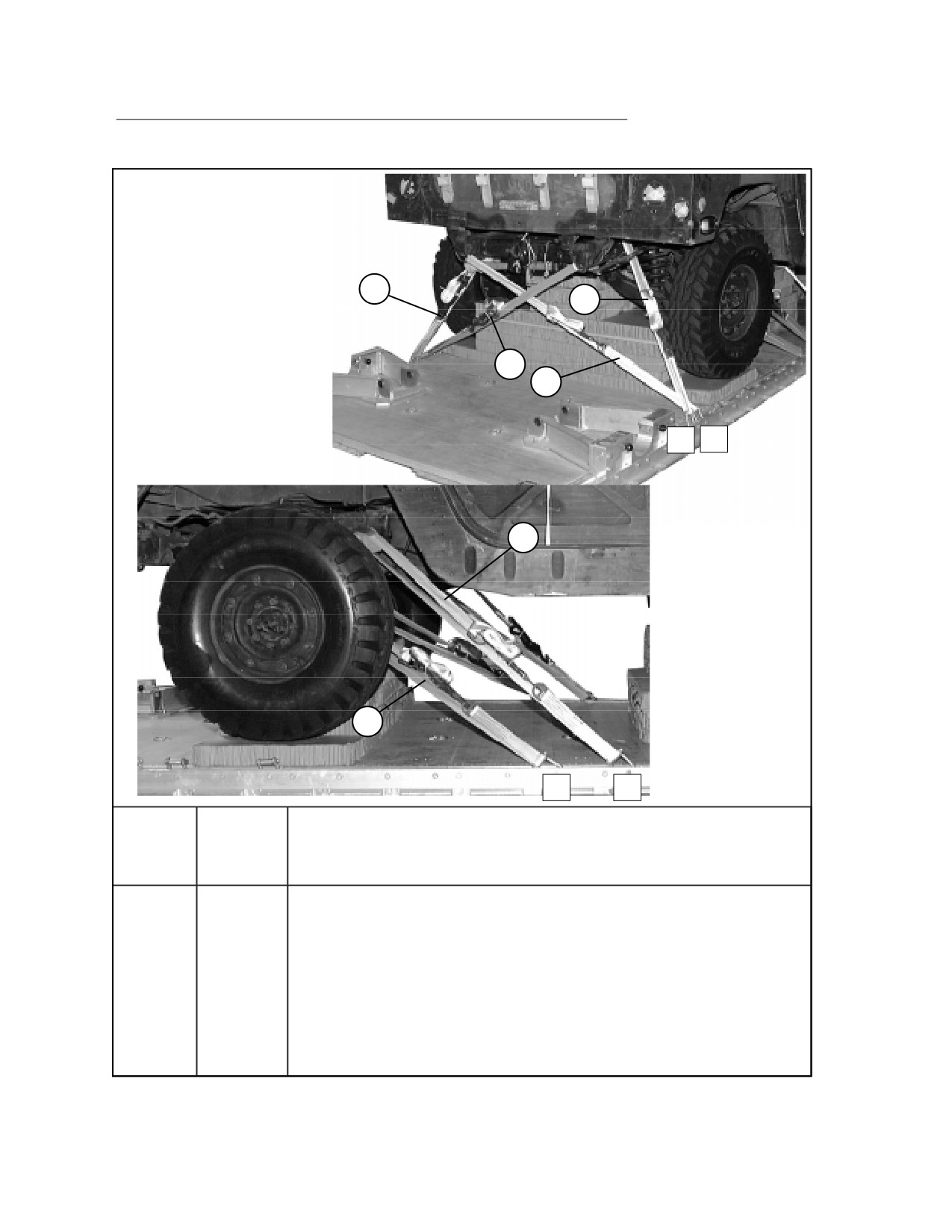
Pass lashing :
10
13
Through tie-down bracket in front of right rear coil spring
11
13A
Through tie-down bracket in front of left rear coil spring
12
14
Around right rear lower control arm
13
14A
Around left rear lower control arm
14
17
Through left rear tie-down provision.
15
17A
Through right rear tie-down provision.
16
18
Through right rear tie-down provision behind the coil spring.
17
18A
Through left rear tie-down provision behind the coil spring.
Figure 5-11. Lashings 10 Through 17 Installed
5-21
FM 4-20.105/TO 13C7-1-51
1
CAUTION
2
Center the ACS assemblies
widthwise on the load.
7
3
5
4
5
15
6
16
1
Center the front ACS on the roof protection honeycomb with the 4- by 4-inch piece of lumber
facing the rear.
2
Center the rear ACS as far forward as possible on the ledge in the roof protection honeycomb.
Face the 4- by 4-inch piece of lumber to the front.
3
Attach a 3 3/4-inch two-point link to an 11-foot (4-loop), Type XXVI nylon sling. Pass a 3-foot
(4-loop) Type XXVI nylon sling through the two point link. Repeat this procedure three times.
4
Attach the ends of a 3-foot sling placed in step 3 to clevises 5 and 6.
5
Attach the ends of another of the 3-foot slings placed in step 3 to clevises 15 and 16.
6
Repeat steps 4 and 5 for clevises 5A and 6A, and for 15A and 16A (not shown).
7
Pad the 11-foot slings with felt and tape 6 inches below the ACS clevis and extending to 6
inches above the top of the ACS. Pass each suspension sling through the closest ACS clevis.
8
Safety tie the two-point links to the ACS clevises with loops of Type III nylon cord.
Figure 5-12. Front and Rear ACS Installed, and Suspension Slings Installed
5-22
FM 4-20.105/TO 13C7-1-51
2
3
4
1
4
3
12
7
1
Run a 30-foot lashing from clevis 4, through the ACS clevis from outside to inside, rear to
front, around the 4- by 4-inch piece of lumber, and back to clevis 4. Loosely secure the
lashing. Repeat on the left side.
2
Repeat step 1 using clevises 3 and 3A.
3
Run a 30-foot lashing from clevis 12, through the ACS clevis from outside to inside, front to
rear, around the 4- by 4-inch piece of lumber, and back to clevis 12. Loosely secure the
lashing. Repeat on the left side.
4
Run a lashing from clevis 7, through the ACS clevis, and back to clevis 7. Loosely secure the
lashing. Repeat on the left side.
5
Make sure the ACS is centered on the load, and tighten the load binders on the left and right
at the same time. Tighten the lashings in the following order: 4 and 4A, 3 and 3A, 12 and 12A,
7 and 7A.
Figure 5-13. Front ACS Secured
5-23
FM 4-20.105/TO 13C7-1-51
2
1
11
19
1
Run a 30-foot lashing from clevis 11, through the ACS clevis from outside to inside, rear to
front, around the 4- by 4-inch piece of lumber, and back to clevis 11. Loosely secure the
lashing. Repeat on the left side.
2
Run a 30-foot lashing from clevis 19, through the ACS clevis from outside to inside, front to
rear, around the 4- by 4-inch piece of lumber, and back to clevis 19. Loosely secure the
lashing. Repeat on the left side.
3
Make sure the ACS is centered on the load, and tighten the load binders on the left and right
at the same time. Tighten the lashings in the following order: 11 and 11A, 19 and 19A.
Figure 5-14. Rear ACS Secured
5-24
FM 4-20.105/TO 13C7-1-51
2
1
3
4
1
Attach a 3-foot (4-loop), Type XXVI nylon sling to the free end of each 11-foot sling with a 3 3/
4-inch two-point link. Pad each link with felt taped in place.
2
Extend the slings upward, place them in the crane hook, and pull them taut.
3
Tie a length of Type III nylon cord around and behind the suspension sling, and around each
ACS sling. See Figure 4-19 for a detailed view. Repeat for the remaining three suspension
slings.
4
Tie a length of Type III nylon cord around the suspension sling, behind all lashings, and
around the 4- by 4-inch piece of lumber of the ACS. See Figure 4-19 for a detailed view.
Repeat for the remaining three suspension slings.
Figure 5-15. Suspension Slings Completed, Raised, Padded, and Secured
5-25
FM 4-20.105/TO 13C7-1-51
INSTALLING OUTRIGGER ASSEMBLIES
5-12. Assemble, install, and safety tie the mast and foot assemblies on the DRAS
platform as shown in Chapter 3, Figures 3-33 through 3-36, steps 1 through 3.
STOWING CARGO PARACHUTES
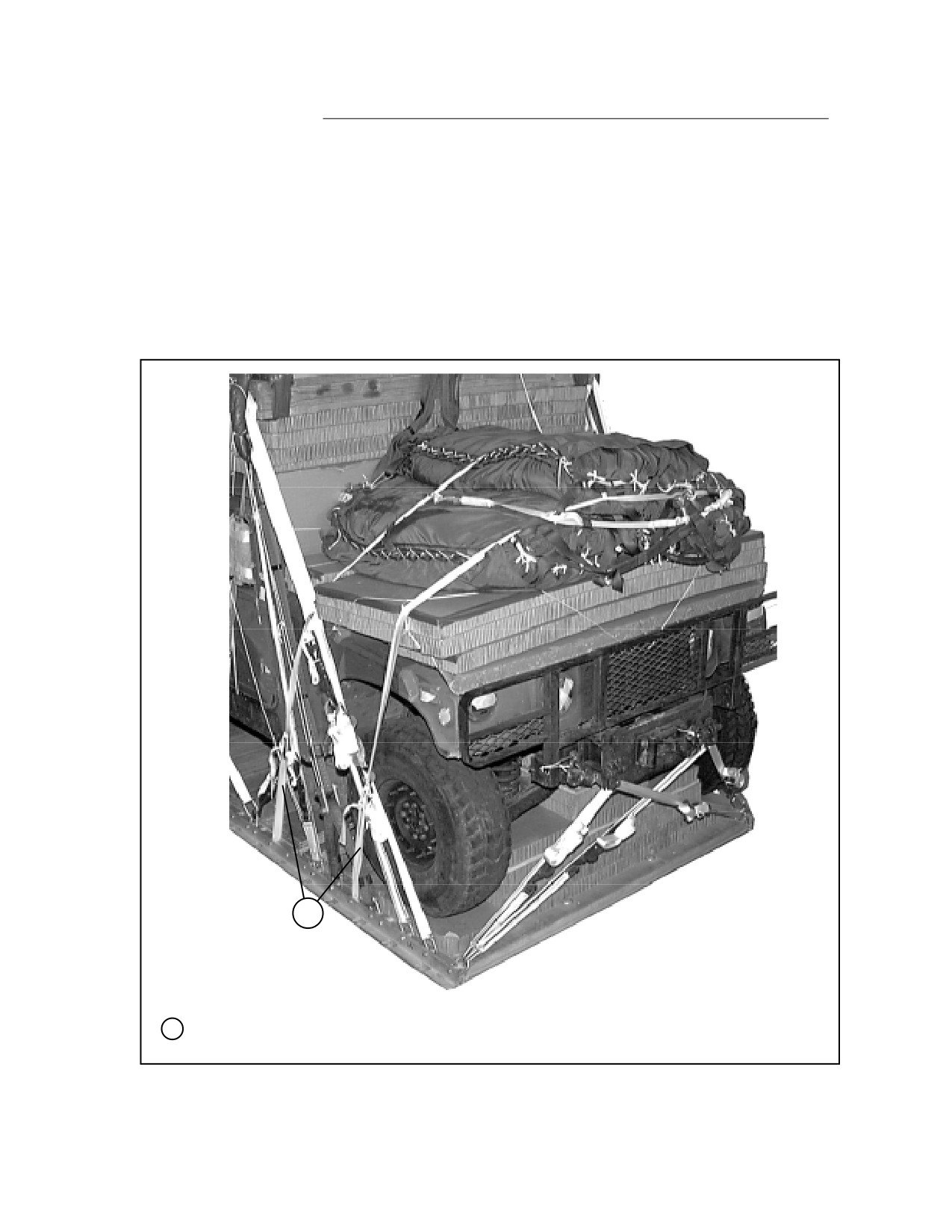
5-13. Prepare, stow, and restrain three G-11D cargo parachutes on the hood of the
truck as shown in Chapter 3, and in Figure 5-16.
1
1
Restrain the parachutes with Type VIII nylon webbing to bushings 6 and 6A, and to 11 and
11A.
Figure 5-16. Cargo Parachutes Installed
5-26
FM 4-20.105/TO 13C7-1-51
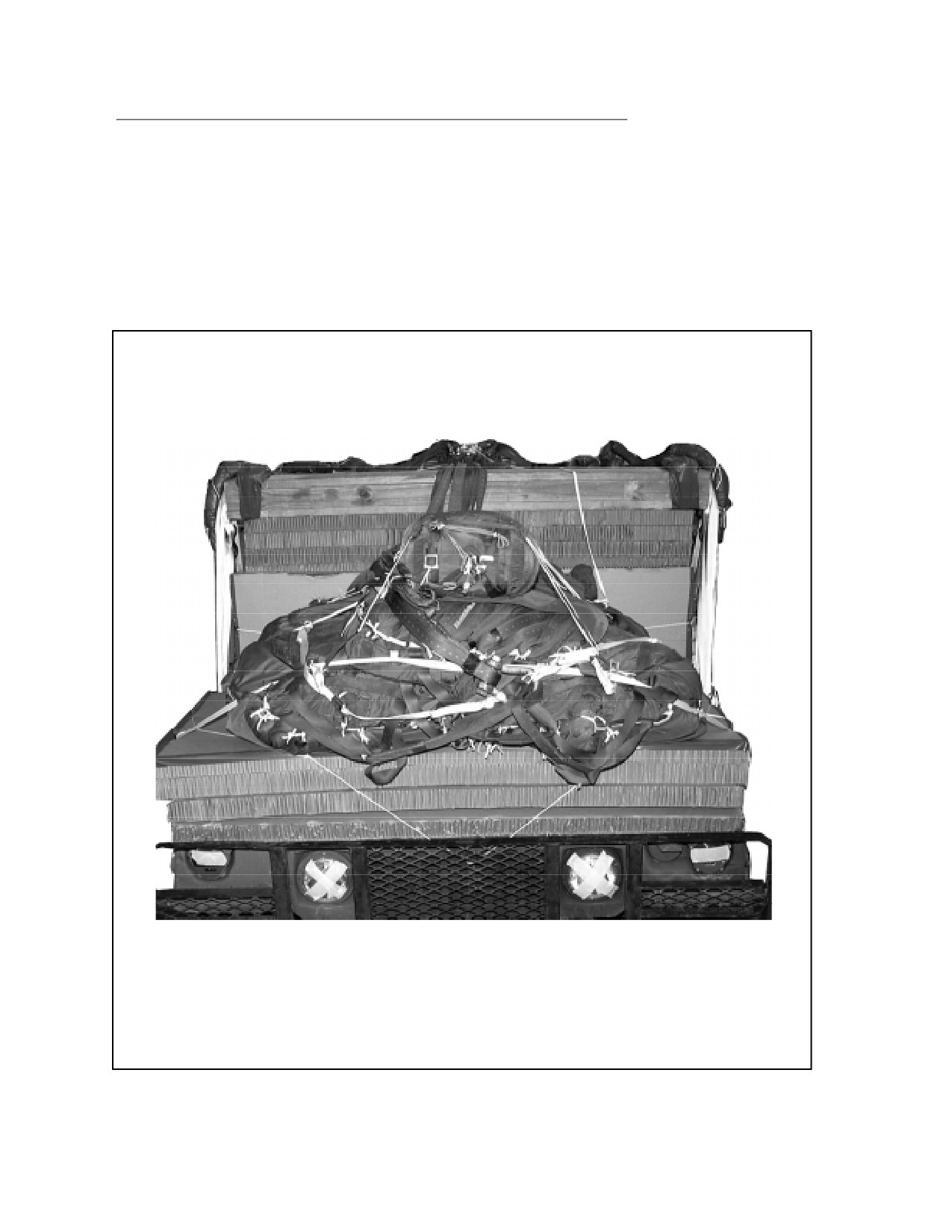
STOWING DEPLOYMENT PARACHUTE
5-14. Prepare, stow, and install the deployment parachute according to Chapter 3,
Section IV, and as shown in Figure 5-17.
Figure 5-17. Deployment Parachutes Installed
5-27
FM 4-20.105/TO 13C7-1-51
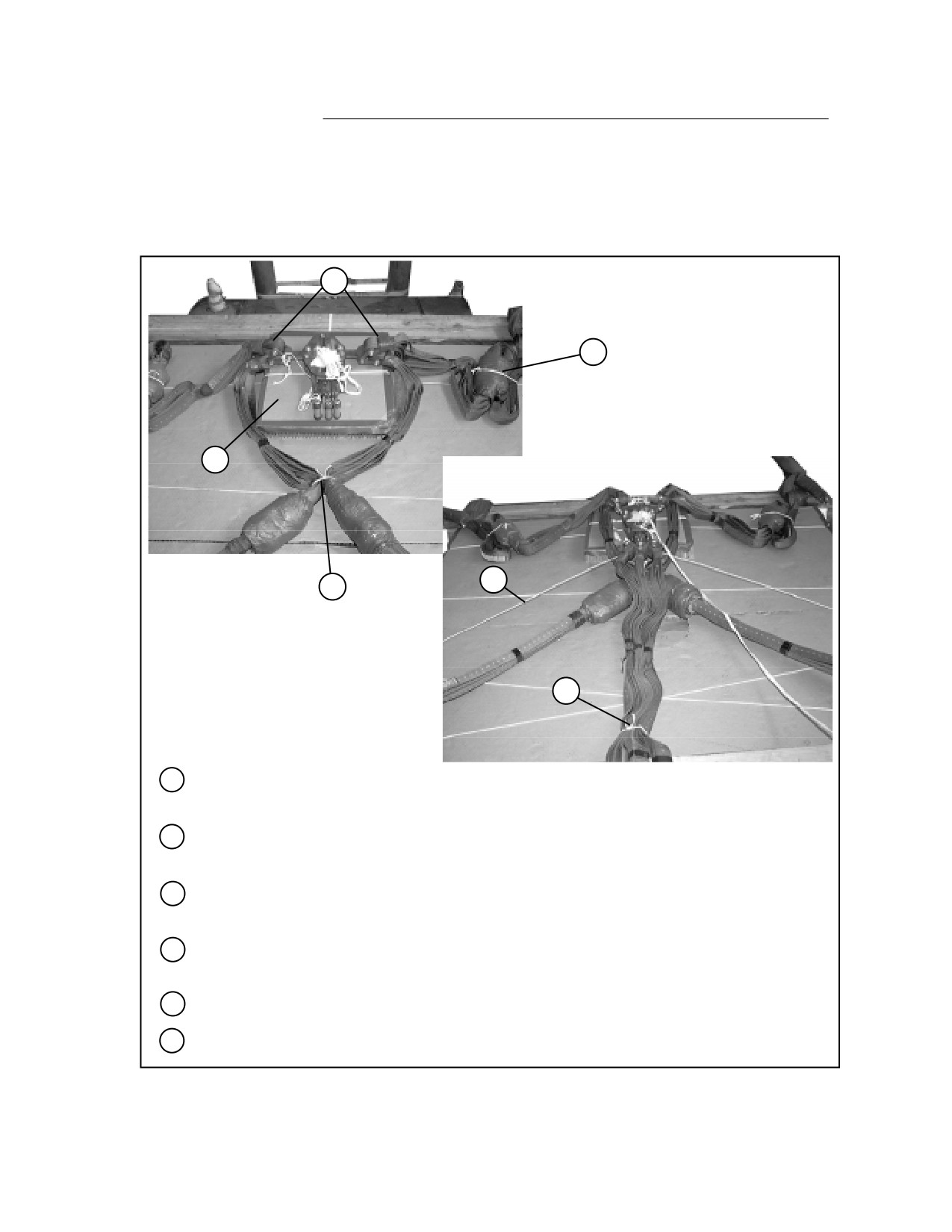
INSTALLING M-1 RELEASE SYSTEM
5-15. Prepare and install the M-1 parachute release system according to Chapter 3,
and as shown in Figure 5-18.
2
4
1
6
3
5
1
Tape the upper edges of a 20-inch square piece of honeycomb, and center it along the rear
ACS.
2
Remove the cotton buffers from the ends of the suspension slings and attach them to the
release routed as shown.
3
Secure the front suspensions slings together above the 3 3/4-inch, two-point links with one
turn of Type I, 1/4-inch cotton webbing.
4
S-fold the slack in the rear suspension slings and tie them around the links with Type I, 1/4-
inch cotton webbing.
5
Attach the riser extensions. Tie them in three places with Type I, 1/4-inch cotton webbing.
6
Secure the release to convenient points on the load with Type III nylon cord.
Figure 5-18. M-1 Cargo Parachute Release Installed
5-28
FM 4-20.105/TO 13C7-1-51
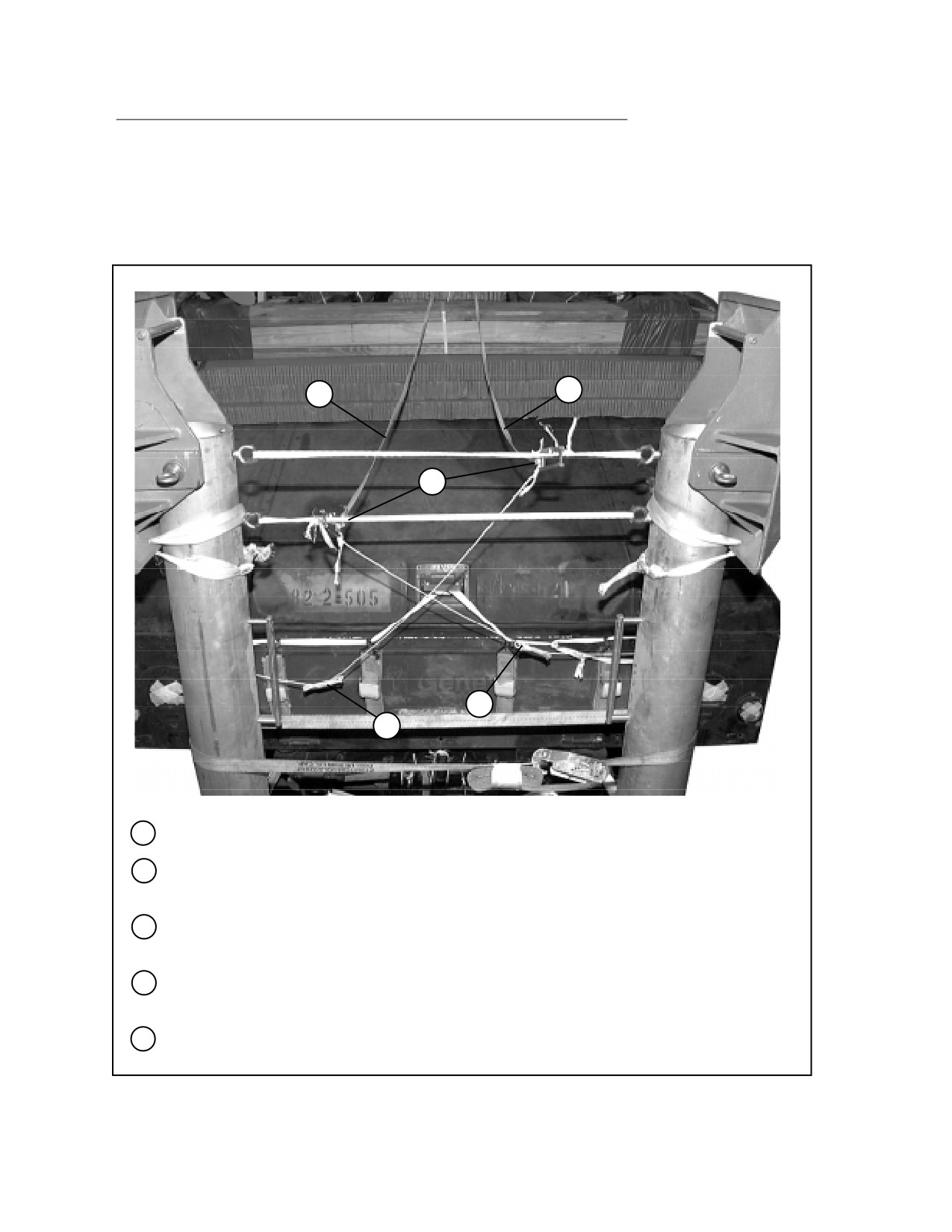
INSTALLING MAST RELEASE KNIVES
5-16. Install the mast release knives according to Chapter 3, Figure 3-36, steps 4
through 10 and as shown in Figure 5-19.
2
3
1
5
4
1
Install and safety tie a guillotine knife around each outrigger vertical restraint tie.
2
Tie the upper knife to the right lower suspension link of the release with a 78-inch length of
1/2-inch tubular nylon webbing.
3
Tie the lower knife to the left lower suspension link of the release with a 78-inch length of 1/2-
inch tubular nylon webbing.
4
Tie the upper knife to the left tailgate sling guide with a 69-inch length of Type III nylon cord.
Fold the slack in the cord and tape the folds with paper masking tape.
5
Tie the lower knife to the right tailgate sling guide with a 69-inch length of Type III nylon cord.
Fold the slack in the cord and tape the folds with paper masking tape.
Figure 5-19. Mast Release Knives Installed
5-29
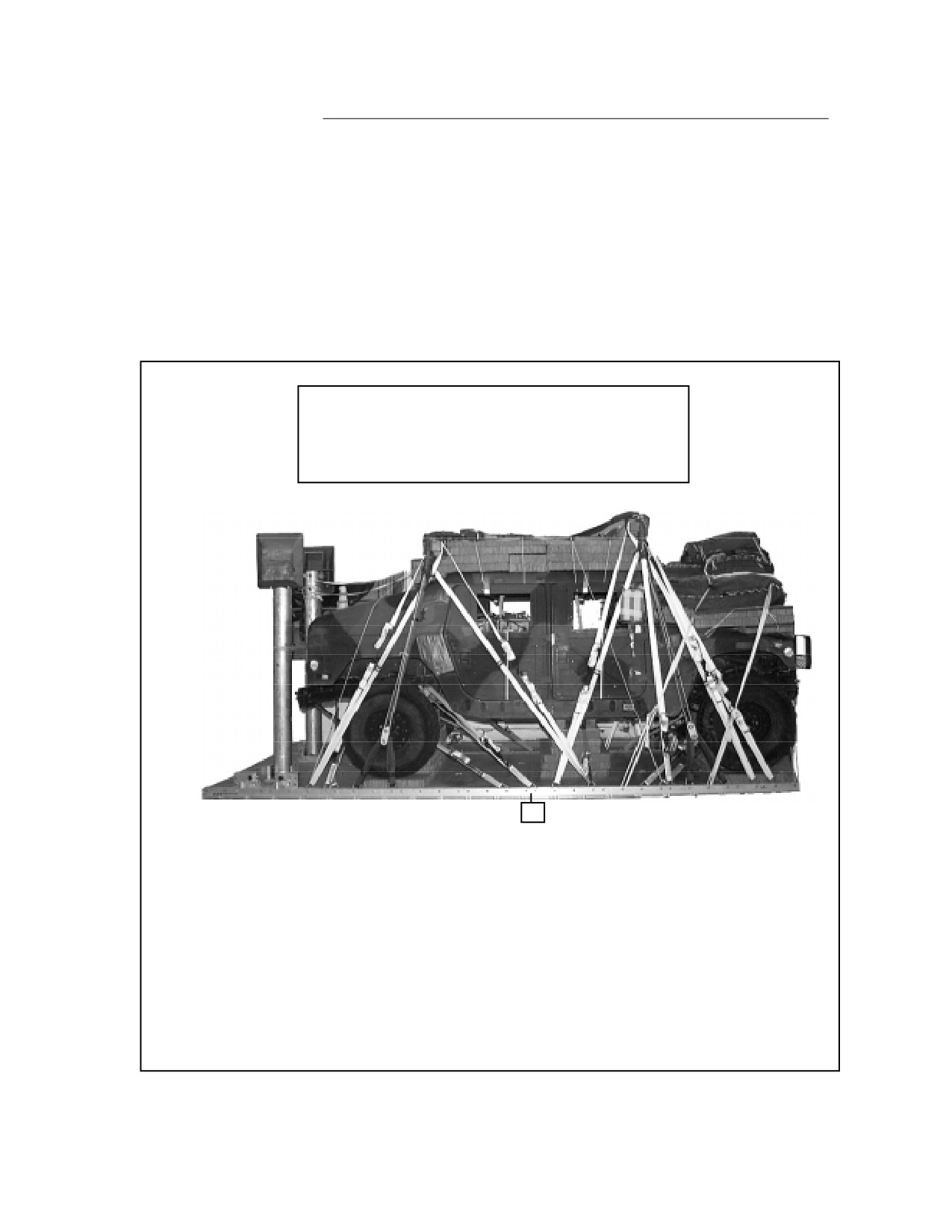
FM 4-20.105/TO 13C7-1-51
MARKING RIGGED LOAD
5-17. Mark the rigged load according to Chapter 3 and as shown in
Figures 5-20 and 5-21.
EQUIPMENT REQUIRED
5-18. The equipment required to rig this load is given in Table 5-1.
CAUTION
Make the final rigger inspection required by Chapter 3
of this manual before the load leaves the rigging site.
CB
RIGGED LOAD DATA, M1025
Weight: Load shown
12,637 pounds
Maximum load allowed
12,637 pounds
Height (with three G-11D parachutes)
98 inches
Width
94 inches
Length (overall)
229 inches
Overhang: Front
13 inches
Rear
0 inches
CB (from front edge of platform)
94 inches
Figure 5-20. M1025 Armament Carrier Rigged for Dual Row Airdrop
5-30
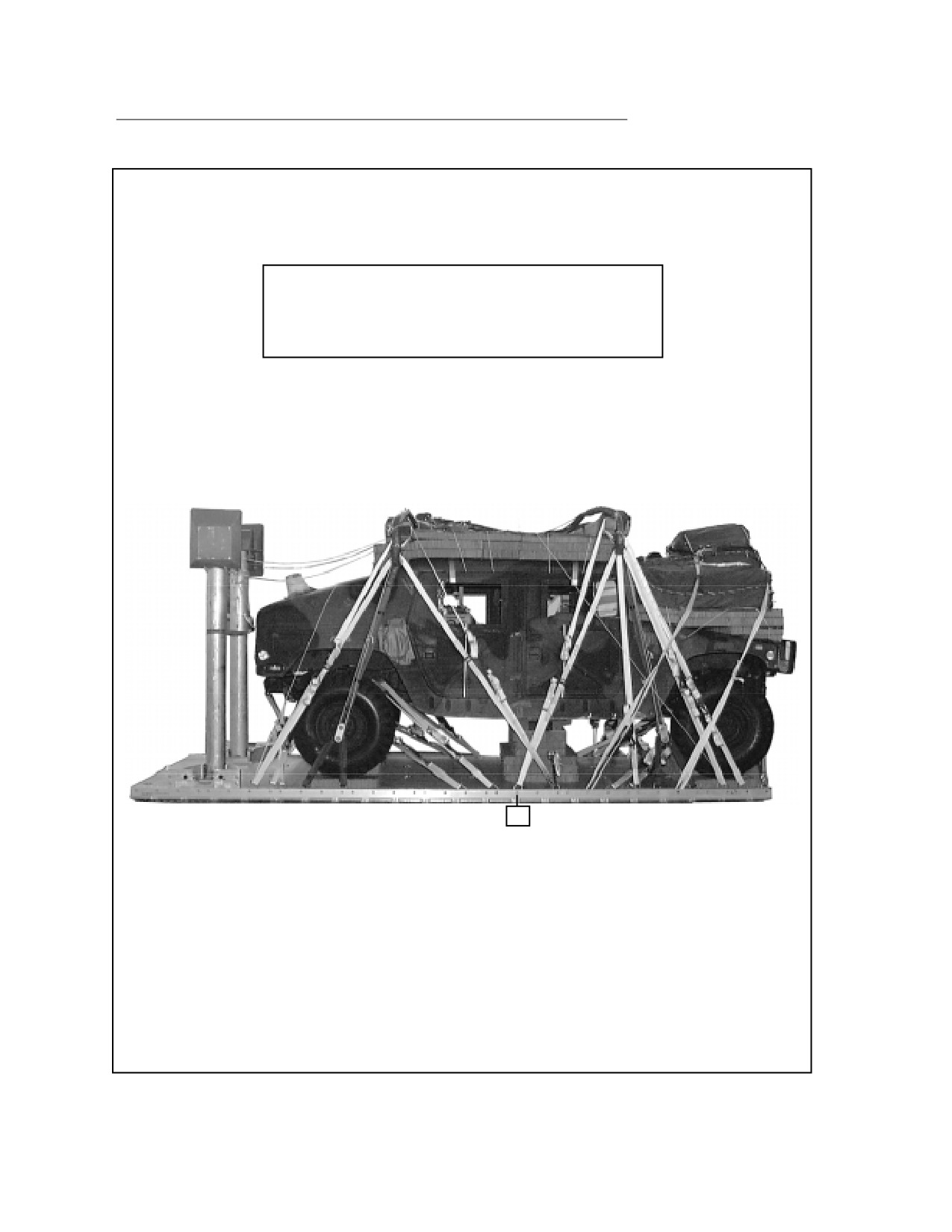
FM 4-20.105/TO 13C7-1-51
CAUTION
Make the final rigger inspection required by Chapter 3
of this manual before the load leaves the rigging site.
CB
RIGGED LOAD DATA, M1121
Weight: Load shown
10,455 pounds
Maximum load allowed
12,637 pounds
Height (with three G-11D parachutes)
98 inches
Width
94 inches
Length (overall)
224 inches
Overhang: Front
8 inches
Rear
0 inches
CB (from front edge of platform)
86 inches
Figure 5-21. M1121 TOW Carrier Rigged for Dual Row Airdrop
5-31
FM 4-20.105/TO 13C7-1-51
Table 5-1. Rigging M1025 Armament Carrier and M1121 TOW Carrier on a Dual Row Platform
for Dual Row Airdrop
National Stock
Item
Quantity
Number
8040-00-273-8713
Adhesive paste, 1-gal
As required
4020-00-240-2146
Cord, nylon, type III, 550-lb
As required
4030-00-090-5354
Clevis, large
1
4030-00-678-8562
Clevis, medium
4
Link assembly:
T
wo-point, 3 3/4-in (for C-17
)
9
5306-00-435-8994
Bolt, 1-in diam, 4-in long
18
5310-00-232-5165
Nut, 1-in, hexagonal
18
1670-00-003-1953
Plate, side, 3 3/4-in
18
5365-00-007-3414
Spacer, large
18
Lumber:
5510-00-220-6146
2- by 4-in
As required
5510-00-220-6148
2- by 6-in
As required
5510-00-220-6274
4- by 4-in
As required
5530-00-618-8073
Plywood, 3/4-in
5 sheets
Nail, steel wire, common,
5315-00-010-4659
8d
As required
5315-00-010-4662
12d
As required
1670-00-753-3928
Pad, energy dissipating, honeycomb, 3- by
36- by
96-in
16 sheets
000-00-000-0000
Static line assembly release awa y
1
Parachute:
Cargo:
1670-01-016-7481
G-11 D
3
Cargo extraction:
1670-00-040-8135
28-foot
1
Platform, Dual Row, 18-foot
1
1670-01-485-1656
Panel assembly, main
1
1670-01-485-1654
Rail, DRA S
2
1670-01-486-1342
Roller Pad, DRA S
2
1670-01-162-2372
Clevis assembly
38
1670-01-097-8816
Release, cargo parachute, M-1
1
5-32
C1, FM 4-20.105/TO 13C7-1-51
National Stock
Item
Quantity
Number
Sling, cargo airdrop
For suspension:
1670-01-062-6310
11-ft (4-loop), type XXVI nylon webbing
4
1670-01-062-6306
3-ft (4-loop), type XXVI nylon webbing
8
For deployment:
1670-01-062-6306
3-ft (4-loop), type XXVI nylon webbing
1
For riser extention:
1670-01-062-6313
60-ft (3-loop), type XXVI nylon webbing
2
For ACS :
1670-01-063-7761
16-ft (2-loop), type XXVI nylon webbing
2
For lifting
:
1670-01-062-6304
9-ft (2-loop), type XXVI nylon webbing
2
1670-01-062-6303
12-ft (2-loop), type XXVI nylon webbing
2
1670-00-040-8219
Strap, parachute release, multicut
2
1670-00-937-0271
Knife release,cargo (guillotine)
2
1670-01-487-5464
Outrigger assembly
2
7510-00-266-5016
T
ape, adhesive, 2-in
As required
1670-00-937-0271
Tie-down assembly, 15-ft
51
1670-00-725-1437
Tie-down, Cargo, Aircraft, (CGU-1B
)
5
Webbing:
8305-00-268-2411
Cotton, 1/4-in, type I
As required
Nylon:
8305-00-082-5752
Tubular, 1/2-in
As required
8305-00-263-3591
T
ype VIII
8yds
5-33
C1, FM 4-20.105/TO 13C7-1-51
SECTION II - RIGGING M1114 UP-ARMORED ARMAMENT CARRIER FOR
DRAS
DESCRIPTION OF LOAD
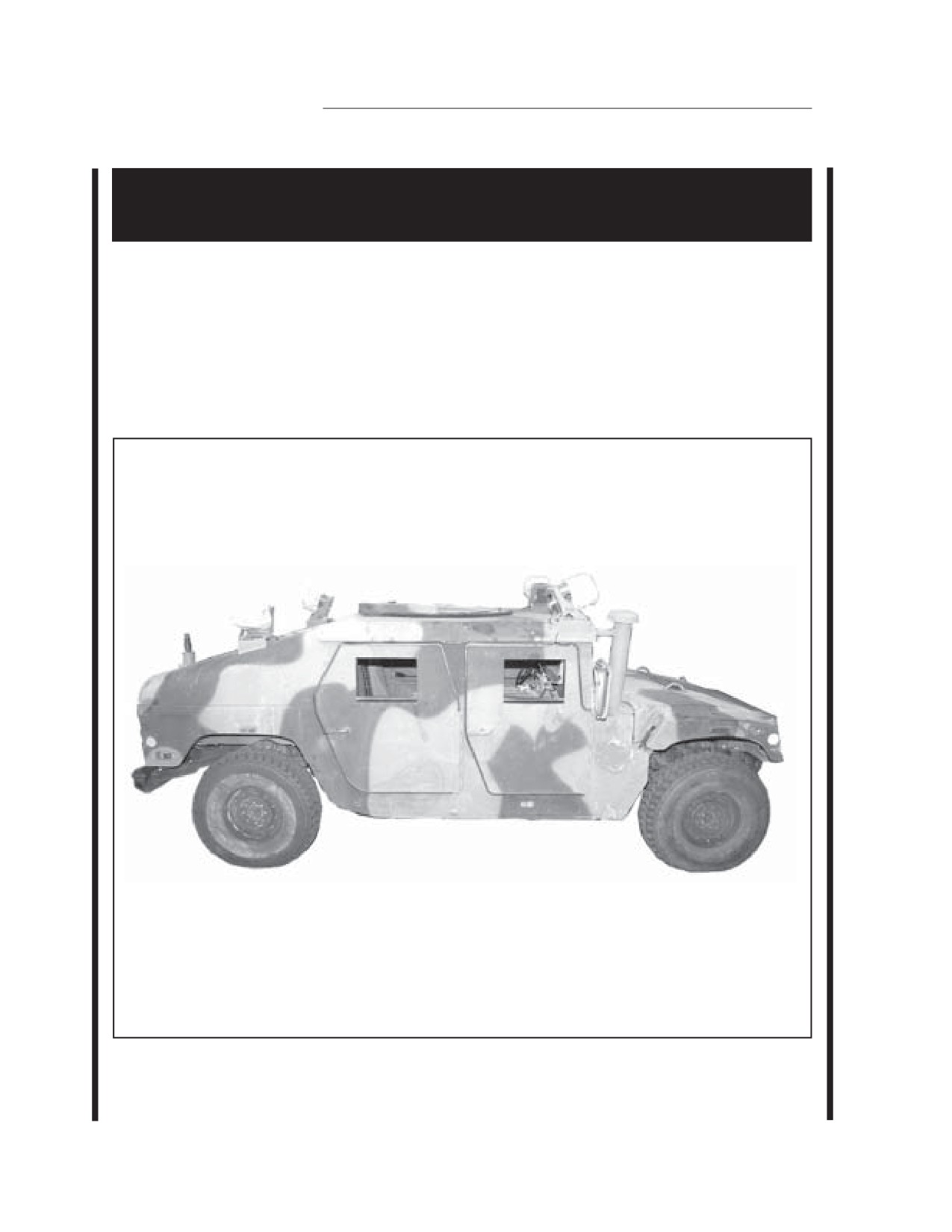
5-19. The M1114 HMMWV- series truck has a heavy-duty suspension and
additional armor in the sides, door and floor. The truck is rigged on a
Dual Row Airdrop System (DRAS) platform with four G-11D parachutes.
The vehicle weighs 9,800 pounds and is 197 inches long. The M1114 is 86
inches wide and the reduced height is 74 inches.
Figure 5-22. M1114 Up-Armored Armament Carrier
5-34
C1, FM 4-20.105/TO 13C7-1-51
PREPARING PLATFORM
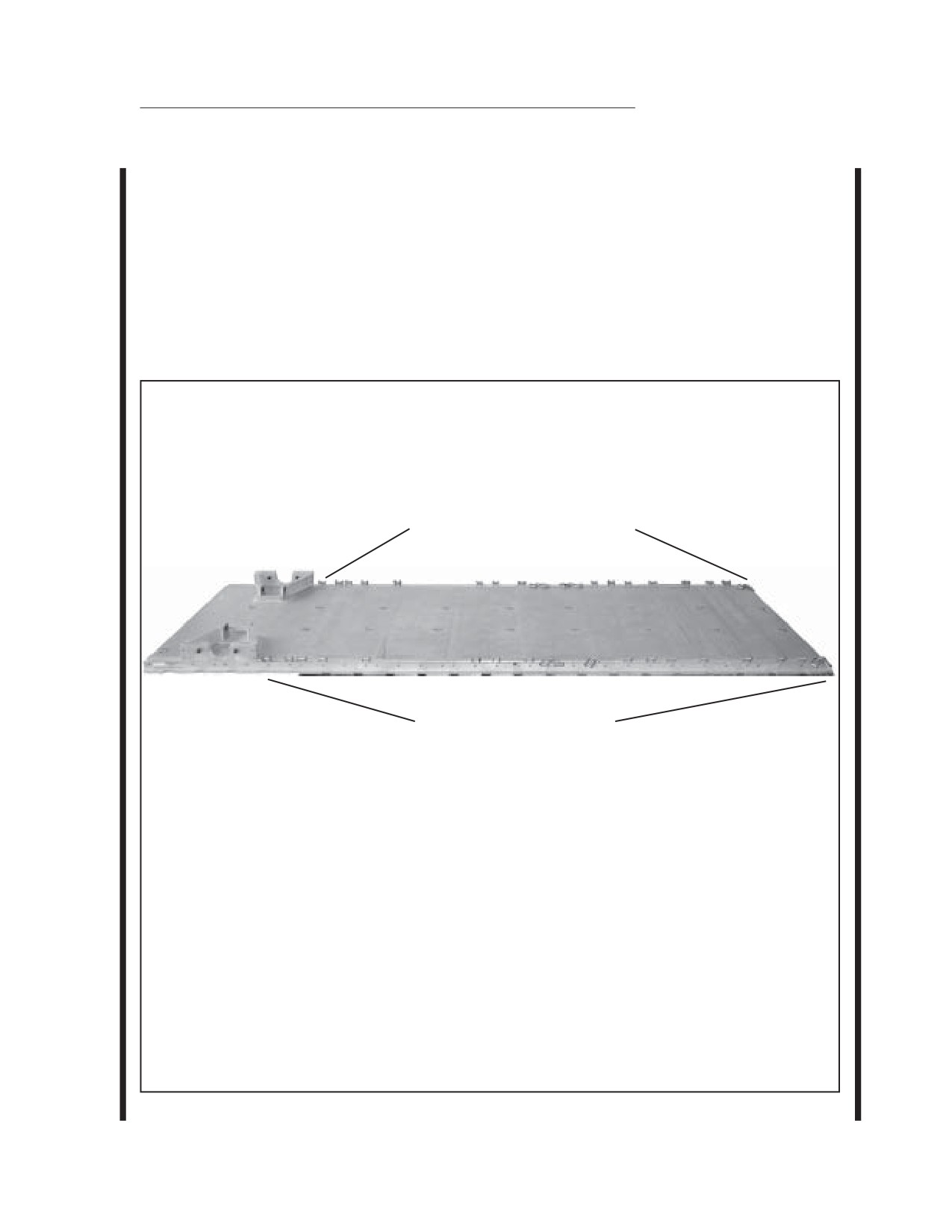
5-20. Inspect, or assemble and inspect, a DRAS platform with outrigger
assemblies, outrigger platform support weldments, and link assemblies
according to TM 10-1670-268-20&P/TO 13C7-52-22, FM 4-20.105/
TO 13C7-1-51 Chapter 3 and as shown in Figure 5-23.
CLEVISES 21A THROUGH 1A
REAR
FRONT
CLEVISES 21 THROUGH 1
Steps:
1. Starting at the front of each platform side rail, install clevises on the bushings
bolted to holes 1 (tripled), 2, 3, 5, 7, 9, 10, 11, 13 (doubled), 15 (tripled), 16, 18,
19, 25, 27, 28, 29, and 30.
2. Starting at the front of the platform side rail, number the clevises 1 through 21
on the right side and from 1A through 21A on the left side.
3. Label the panel tie-down rings A and B from right to left. Number the panel
tiedown rings starting with the first panel from front to rear beginning with 1.
Figure 5-23. Platform Prepared
5-35
C1, FM 4-20.105/TO 13C7-1-51
BUILDING AND PLACING HONEYCOMB STACKS
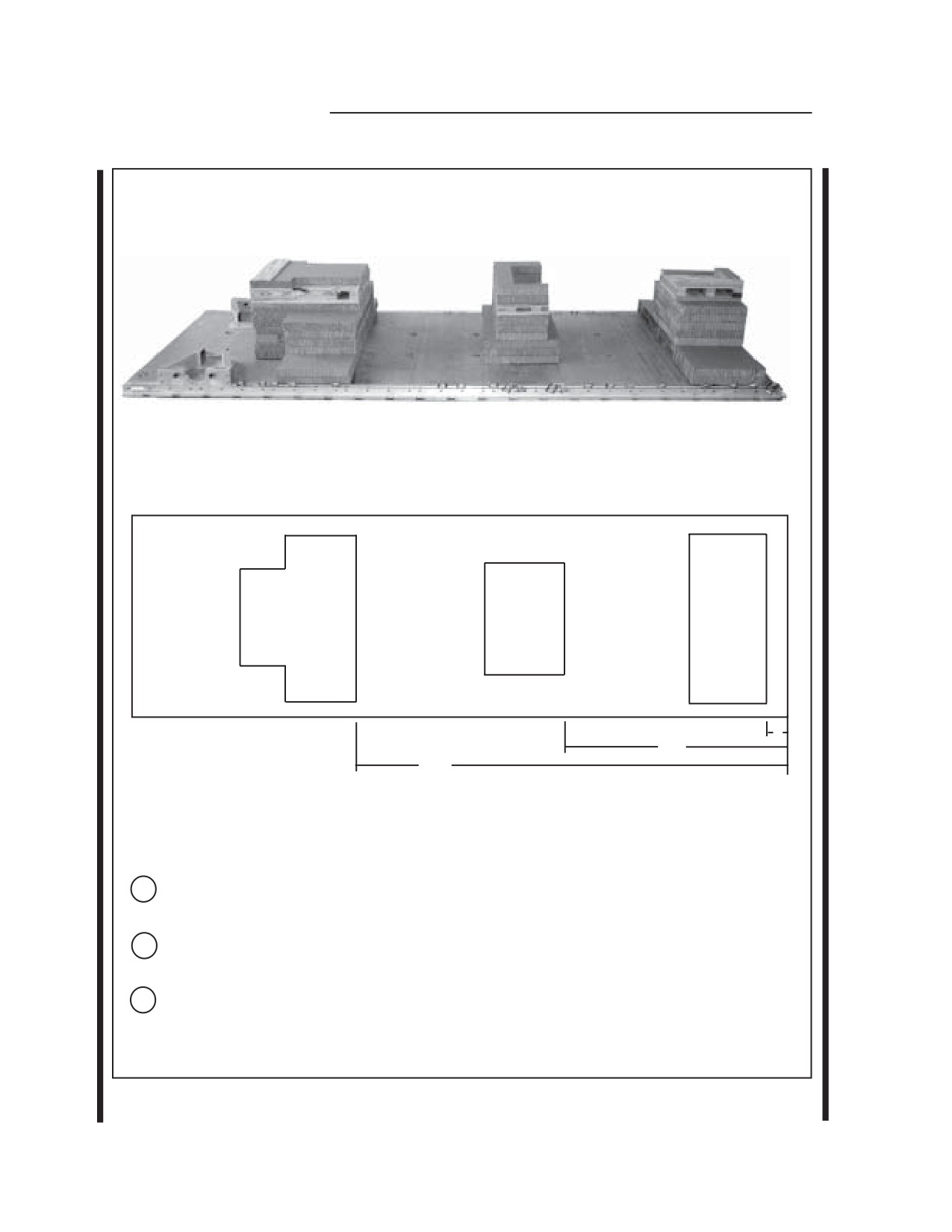
5-21. Build the honeycomb stacks as described in Figure 5-24 through 5-26.
Position the stacks as shown in Figure 5-27.
9
8
9
5
7
7
8
12345678
6
12345678
5
12345678
6
4
REAR
3
2
REAR
1
Notes: 1. These drawings are not drawn to scale.
2. All dimensions are in inches.
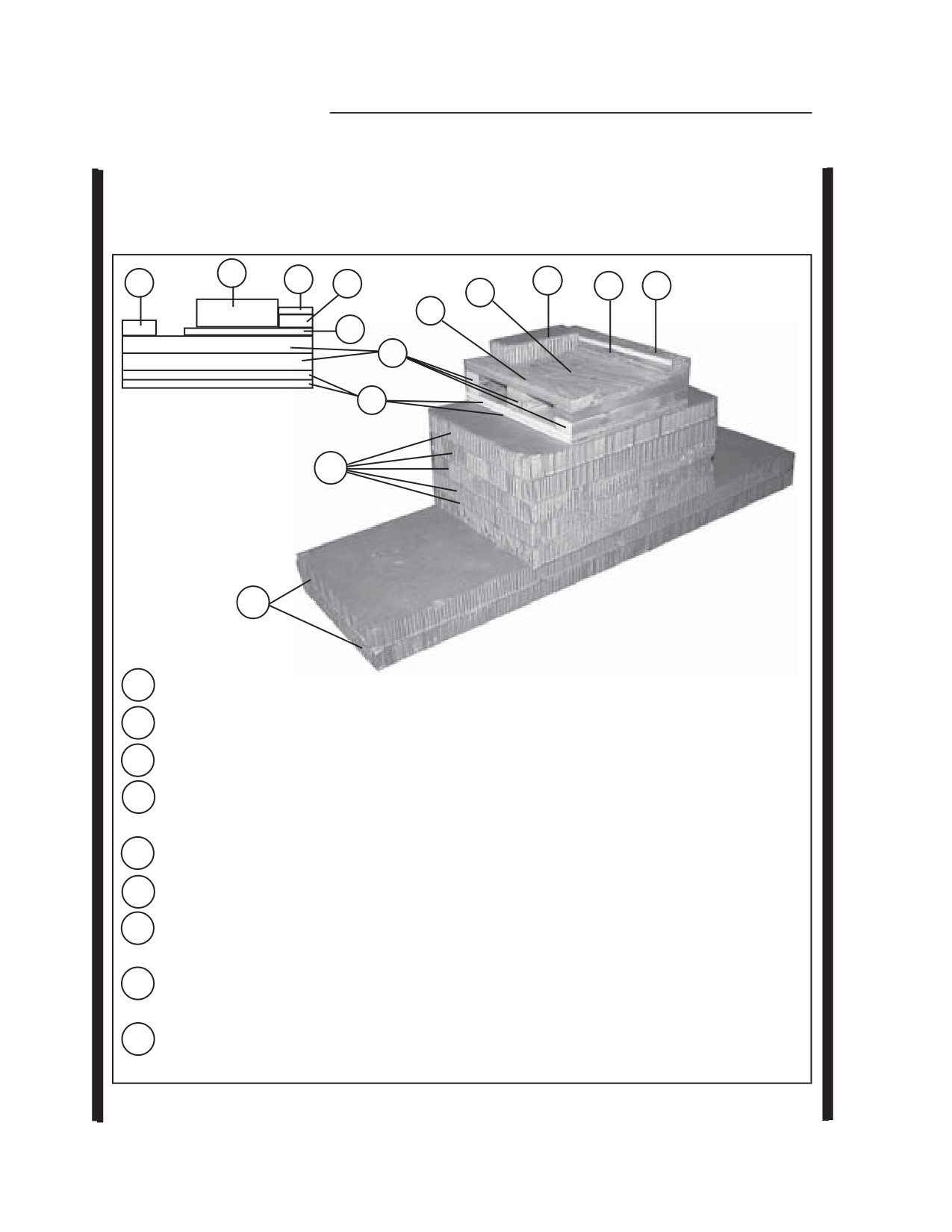
1
Glue two 80- by 24-inch pieces of honeycomb to form a base.
2
Center and glue five 35- by 24-inch pieces of honeycomb on top of the base.
3
Glue two 21- by 24-inch pieces of 3/4-inch plywood to each other.
4
Position and nail six pieces of 2- by 4- by 21-inch lumber in stacks of two on the plywood
from step 3. Position one stack flush along the front center and rear edges.
5
Nail a piece of 2- by 4- by 24-inch lumber flush along the left side.
6
Nail a 17- inch by 24- inch piece of 3/4-inch plywood flush with the right side.
7
Nail a piece of 2- by 4- by 24-inch lumber flush with the right edge of the plywood placed
in step 6 above.
8
Nail a 3 1/2- by 24-inch piece of 3/4-inch plywood flush over the lumber placed in step 7
above. Glue and center wood stack section on top of honeycomb base in step 2.
9
Glue a 13- by 5-inch piece of honeycomb along the front edge of the plywood flush against
the plywood and lumber placed in steps 7 and 8 above.
Figure 5 -24. Honeycomb Stack 1 Prepared
5-36
C1, FM 4-20.105/TO 13C7-1-51
39
Notes: 1. These drawings are not drawn to scale.
2. All dimensions are in inches.
27
18
12
43
4
8
5
16
18
3 1/2
5
6
8 1/2
Front
4
3
2
Front
1
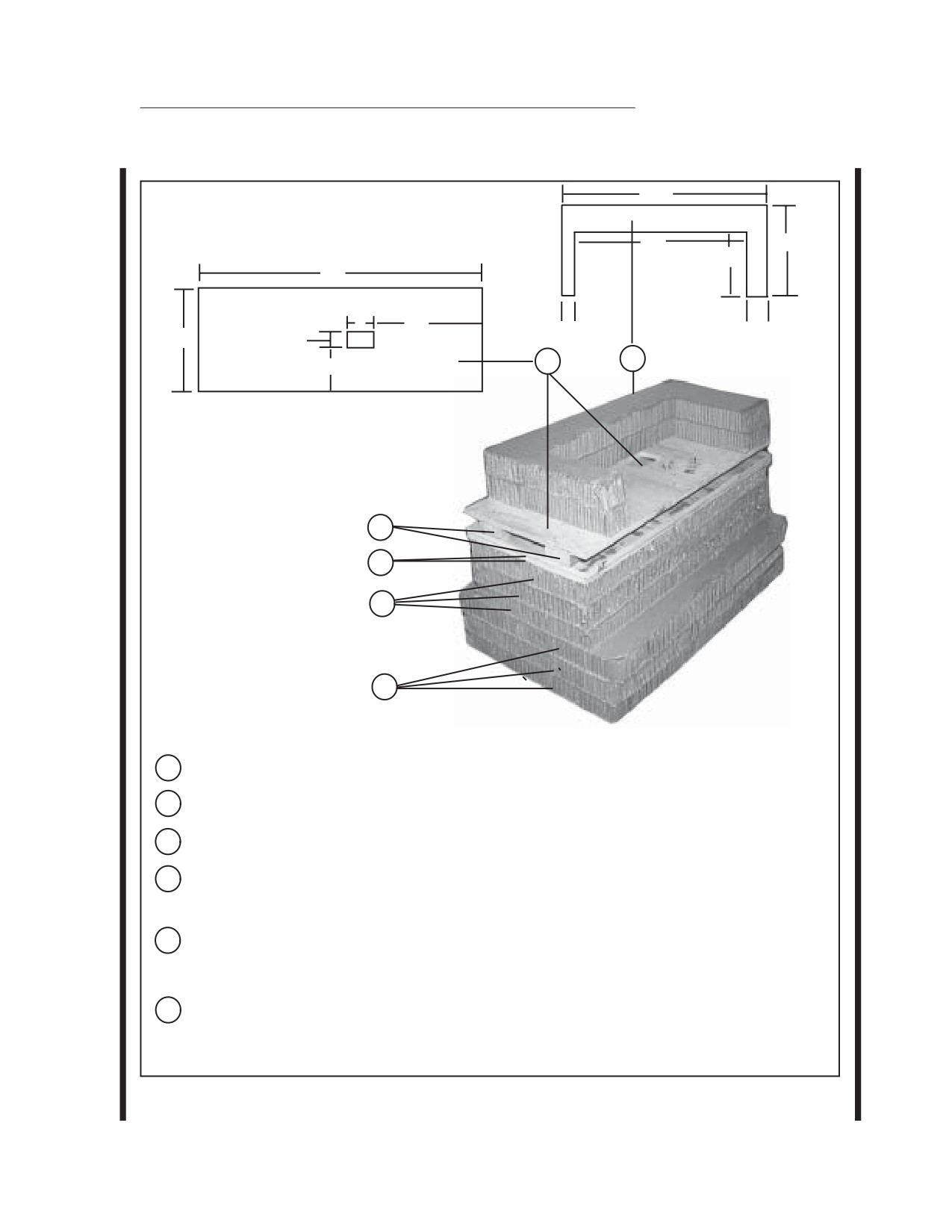
1
Glue three 43- by 26-inch pieces of honeycomb together to form a base.
2
Center and glue three 43- by 18-inch pieces of honeycomb on the base.
3
Nail two 43- by 18-inch pieces of 3/4-inch plywood flush together.
4
Nail a piece of 2- by 4- by 43-inch lumber, parallel to each long side, and 3 inches from each
long edge of the plywood.
Make a 3 1/2- by 5-inch cutout, as shown, in a 18- by 43- by 3/4-inch piece of plywood.
5
Nail the plywood to the lumber and flush with the bottom layers of plywood. Glue the wood
section of the stack flush on the honeycomb placed in step 2 above.
6
Make the cutout as shown in two 39- by 18-inch pieces of honeycomb. Glue and center the
honeycomb flush with the left edge of the plywood, with the cutout facing the front of the
stack.
Figure 5-25. Honeycomb Stack 2 Prepared
5-37
C1, FM 4-20.105/TO 13C7-1-51
Notes: 1. These drawings are not drawn to scale.
2. All dimensions are in inches.
7
6
5
REAR
4
3
2
1
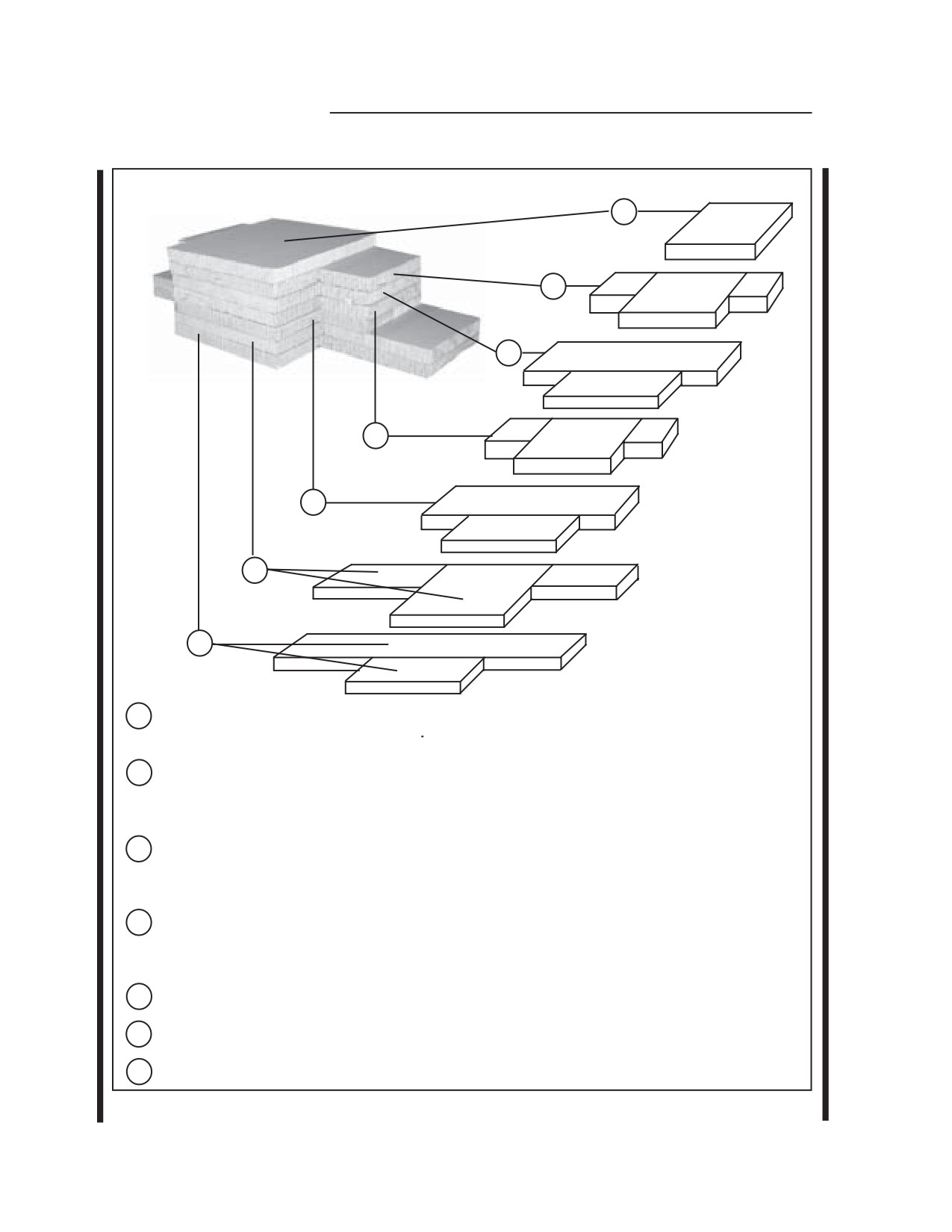
1
Center a 30- by 14-inch piece of honeycomb along the rear edge of an 80- by 24-
inch piece of honeycomb to form a base.
2
Center a 30- by 38-inch piece of honeycomb flush with the front and rear edge of the first
honeycomb layer in step 1. Place a 25- by 24-inch piece of honeycomb along each side of the
30- by 38-inch piece of honeycomb flush with the front edge.
3
Center a 54- by 24-inch piece of honeycomb flush with the front edge of the second
honeycomb layer in step 2 and place a 30-inch by 14-inch piece of honeycomb along the rear
edge.
4
Center a 30- by 38-inch piece of honeycomb flush with the rear edge of the third honeycomb
layer in step 3. Place a 12- by 24-inch piece of honeycomb along each side of the 30- by 38-
inch piece of honeycomb. Align with the rear edge of this layer.
5
Make this layer as shown in step 3 above and center it over the fourth honeycomb layer.
6
Make this layer as shown in step 4 above and center it over the fifth honeycomb layer.
7
Center a 30- by 38-inch piece of honeycomb over the sixth honeycomb layer.
Figure 5-26. Honeycomb Stack 3 Prepared
5-38
C1, FM 4-20.105/TO 13C7-1-51
Notes: 1. These drawings are not drawn to scale.
2. All dimensions are in inches.
14
13
12
11
FRONT
TOP
10
REAR
REAR
9
FRONT
BOTTOM
8
REAR
8
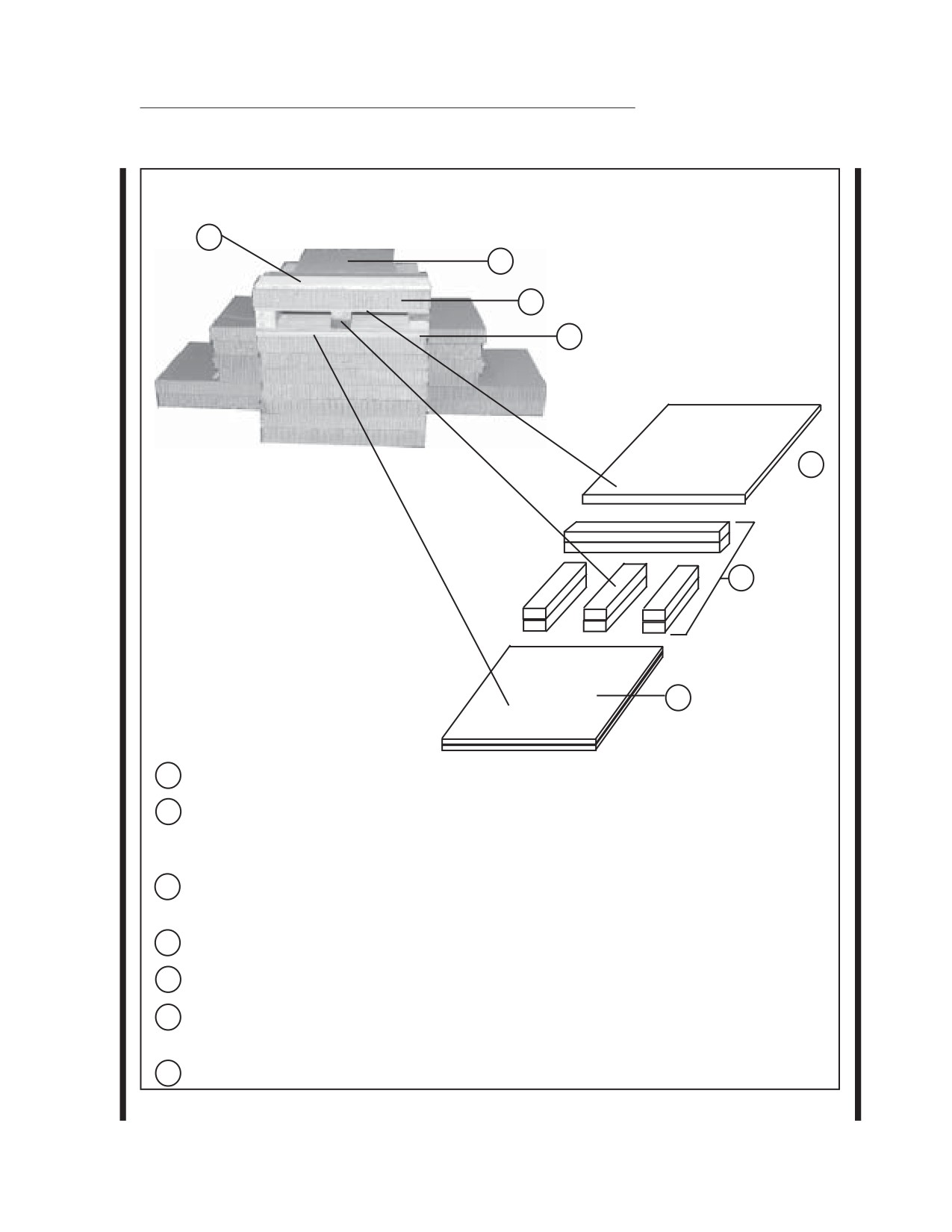
Glue two pieces of 30- by 38- by 3/4-inch plywood to form a base for the wood stack.
9
Position and nail eight pieces of 2- by 4- by 30-inch lumber in pairs on top of the plywood in
step 8. Place one pair flush with left side, one pair flush with right side and one pair in the
center. Place the fourth pair flush with the rear and sides.
10
Place a 30- by 38- by 3/4-inch piece of plywood on top of the 2- by 4-inch stacks of lumber in
step 9 and nail to the wood stack.
11
Glue and center wood stack from steps 8, 9, and 10 on the seventh layer of honeycomb.
12
Glue a 30- by 14-inch piece of honeycomb flush along the rear edge as shown.
13
Center the 20 inch side of a 20- by 24-inch piece of honeycomb along the front edge of the
piece of honeycomb placed in step 10.
Glue a 20- by 6- by 3/4-inch piece of plywood 1 inch from the rear edge of the stack.
14
Figure 5-26. Honeycomb Stack 3 Prepared (Continued)
5-39
C1, FM 4-20.105/TO 13C7-1-51
REAR
FRONT
REAR
FRONT
5
64
131
Notes: 1. These drawings are not drawn to scale.
2. All dimensions are in inches.
1
Position the front edge of stack one 5 inches from the front edge of the platform and
centered.
2
Position the front edge of stack two 64 inches from the front edge of the platform
and centered.
3
Position the front edge of stack three 131 inches from the front edge of the platform
and centered.
Figure 5-27. Honeycomb Positioned on Platform
5-40