FM 4-20.105 AIRDROP OF SUPPLIES AND EQUIPMENT: DUAL ROW AIRDROP SYSTEMS (SEPTEMBER 2003) - page 5
C1, FM 4-20.105/TO 13C7-1-51
PREPARING THE TRUCK
5-22. Prepare the truck as described below.
a. Prepare the fuel tank and hazardous equipment in accordance with
AFMAN 24-204(I)/TM 38-250, and paragraphs 4-5 a and b, and
Figures 4-5 and 4-6.
CAUTION
A full fuel tank does not allow for expansion and is a
danger to aircrew and aircraft
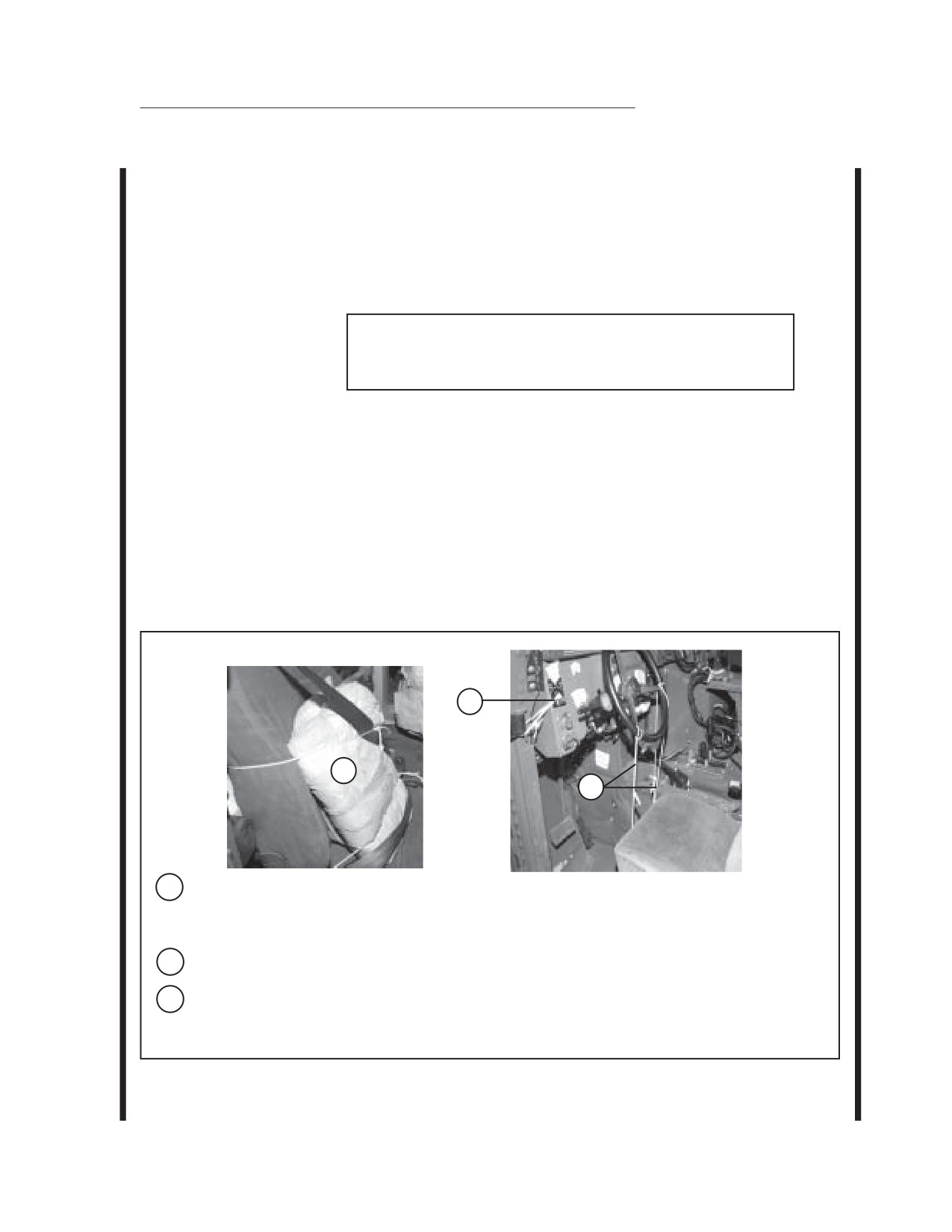
b. Prepare the inside of the cab as described in Figure 5-28.
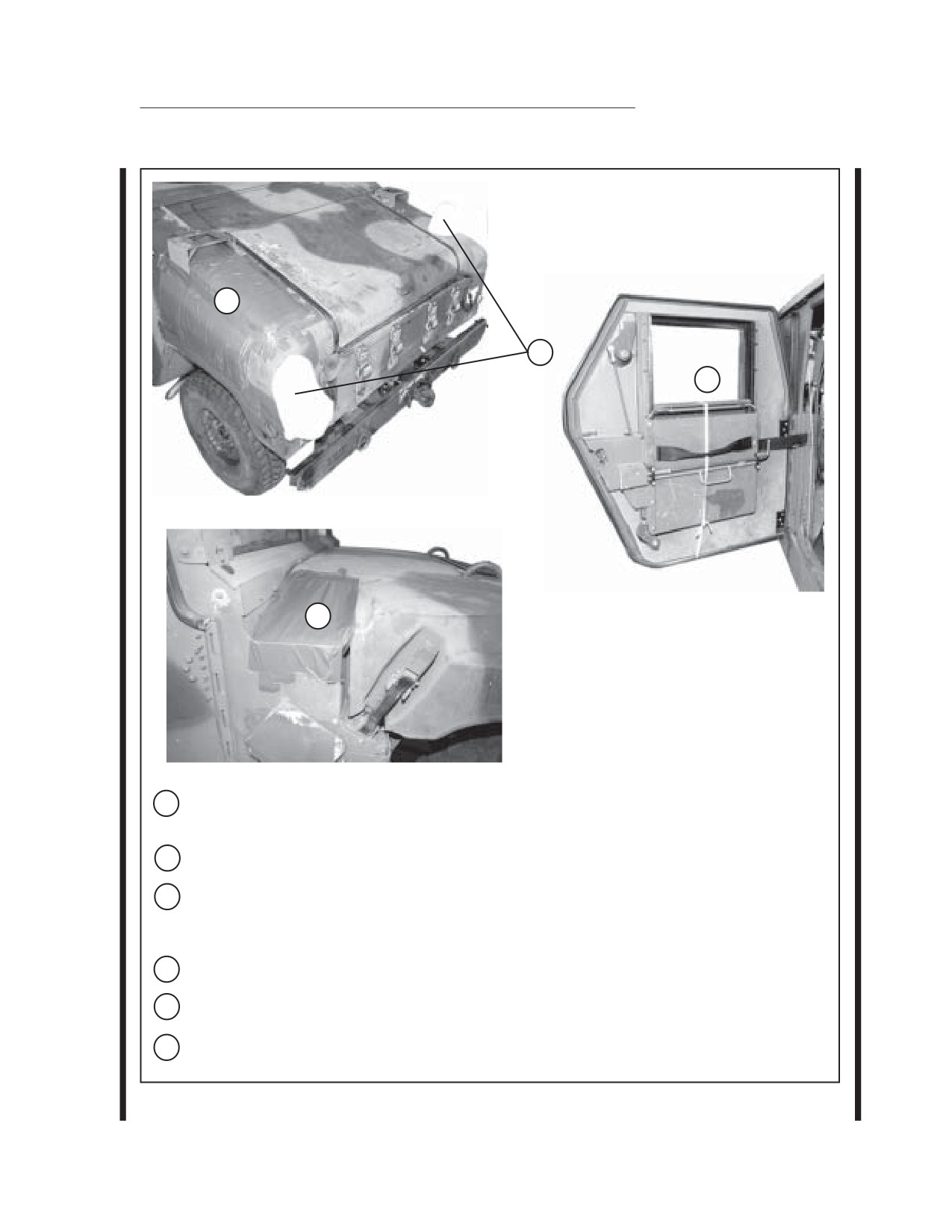
c. Prepare the body of the truck as described in Figure 5-29.
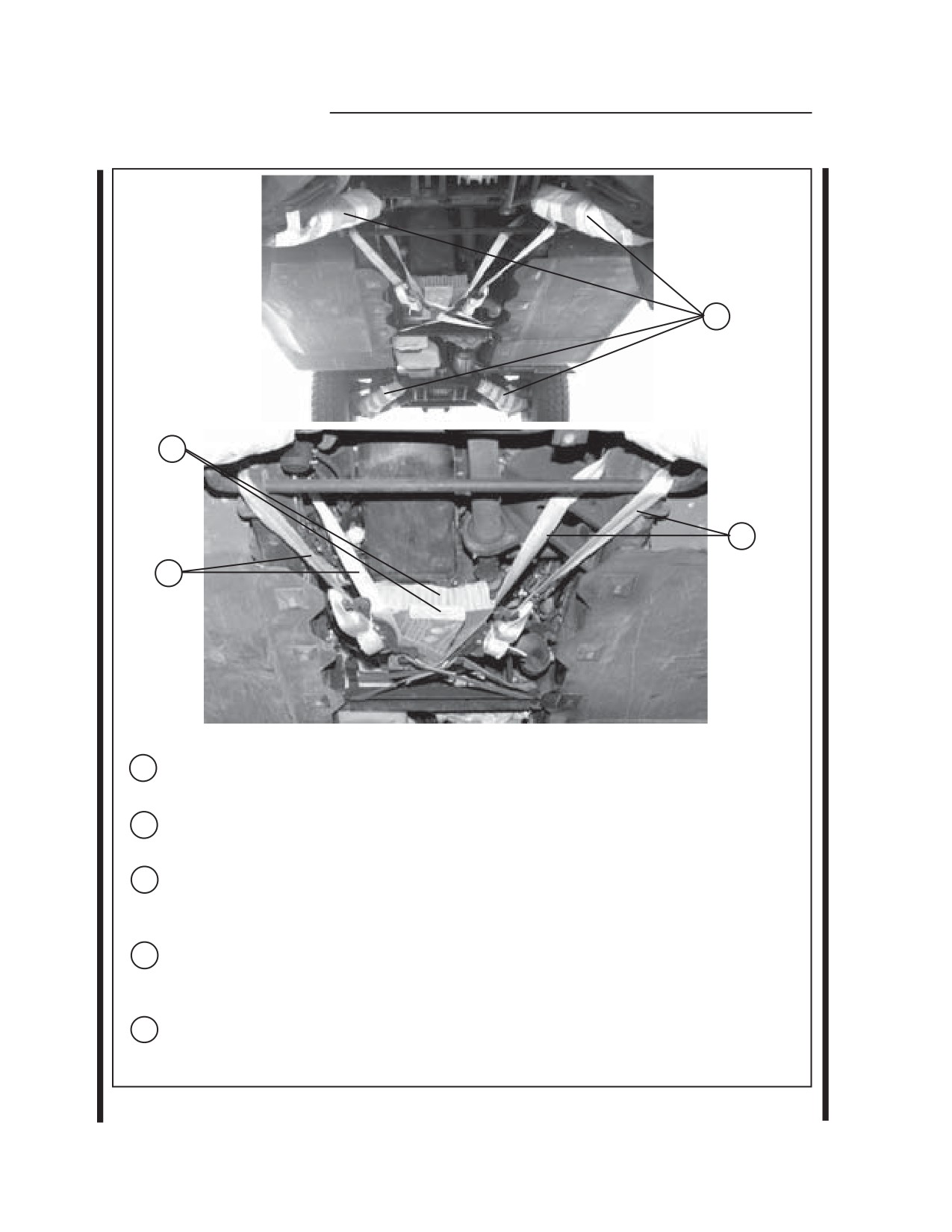
d. Prepare the underside of the truck as described in Figure 5-30.
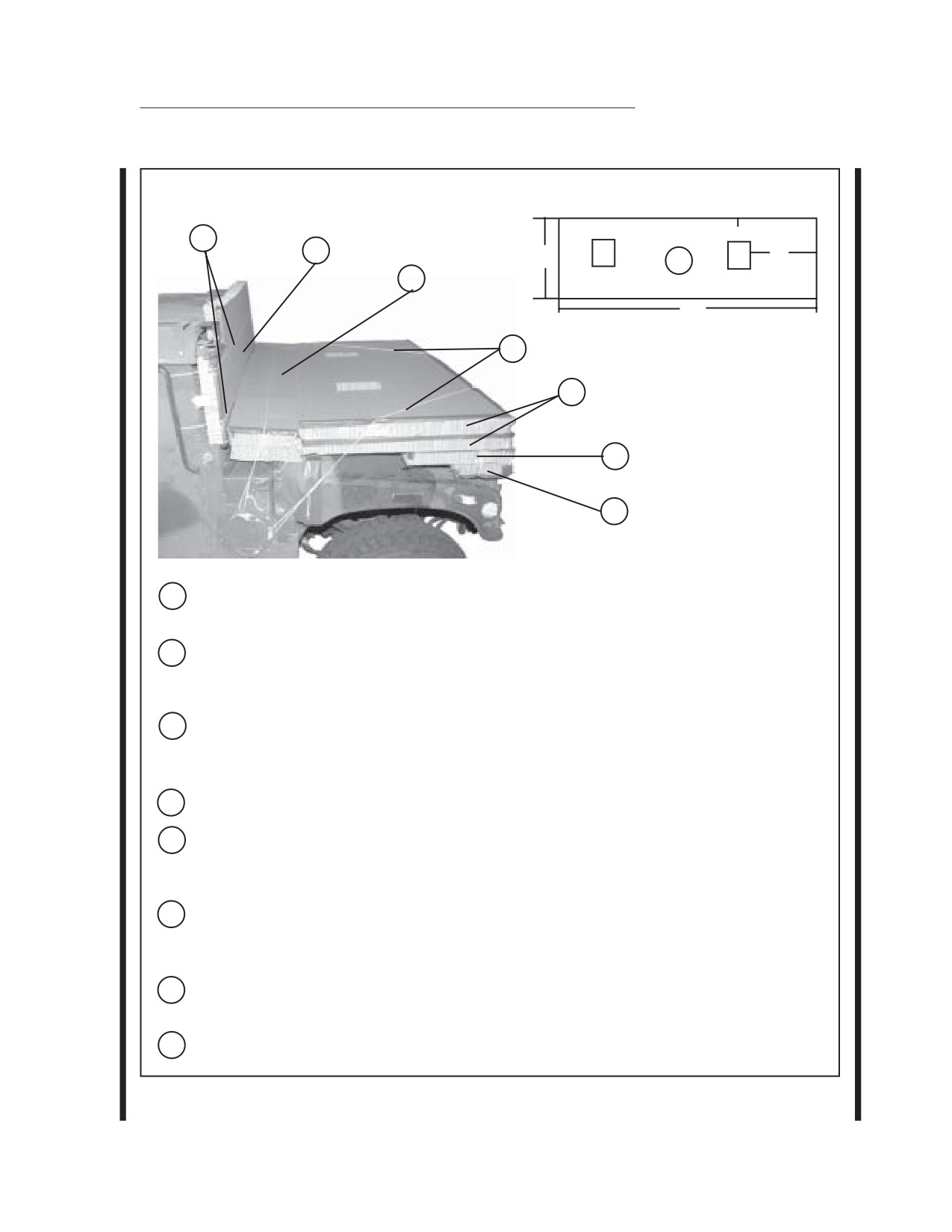
e. Prepare the hood and windshield of the truck as described in
Figure 5-31.
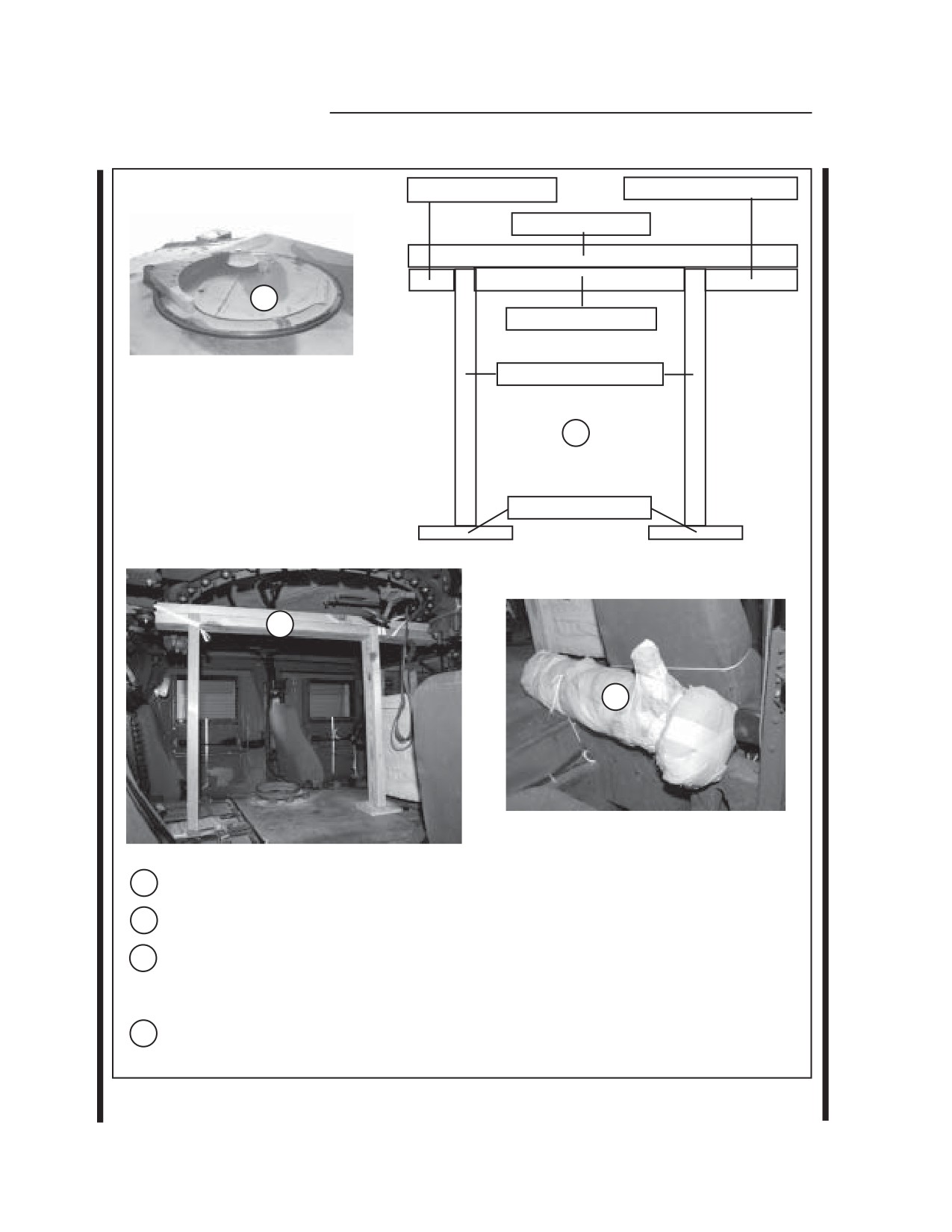
f. Prepare the passenger compartment as described in
Figure 5-32.
2
1
3
1
Remove the side view mirrors and wrap with cellulose wadding and tape. Secure them to
the front passenger seat with type III nylon cord. Fasten the seat belt around the padded
mirrors.
2
Tie the engine start switch in the engine stop position with type I, 1/4-inch cotton webbing.
3
Tie the steering wheel to two places in the seat frame with two lengths of type III nylon
cord.
Figure 5-28. Inside of Cab Prepared
5-41
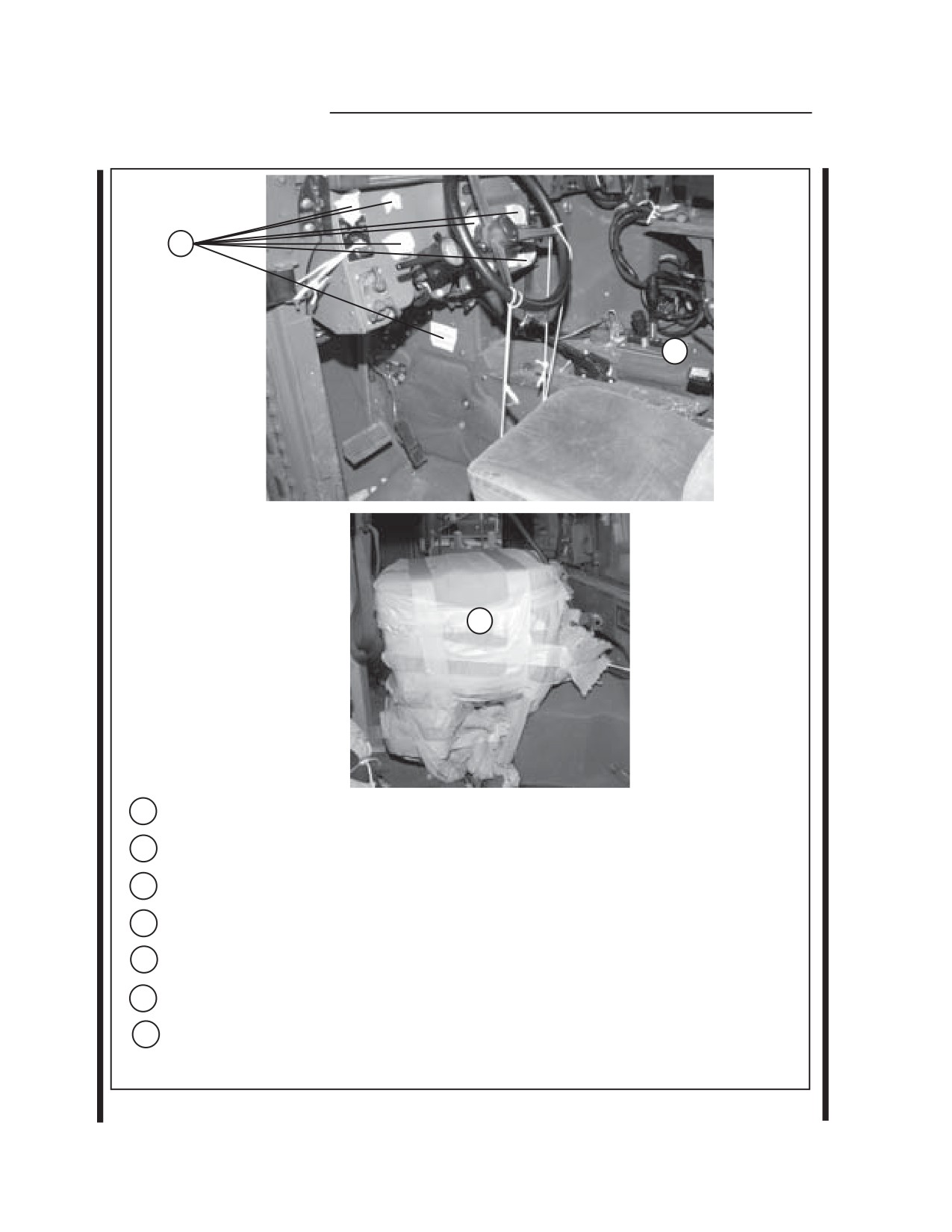
C1, FM 4-20.105/TO 13C7-1-51
7
5
10
4
Tie the emergency brake, in the off position, with type III nylon cord. (not shown)
5
Place the transmission and transfer case shift levers in the neutral position.
6
Tie the fire extinguisher in place with type III nylon cord. (not shown)
7
Tape all lights, reflectors and gauges with 2-inch masking tape.
8
Secure the communications equipment in its mounts with chains and padlocks. (not shown)
9
Tie any other equipment to its mount with 1 inch tubular nylon. (not shown)
10
Pad the front of the radio equipment with cellulose wadding and tape in place. Pad the
radio handset with cellulose wadding and tie the handset to its mount with type III
nylon cord. (not shown)
Figure 5-28. Inside of Cab Prepared (Continued)
5-42
C1, FM 4-20.105/TO 13C7-1-51
2
1
5
6
1
Remove the antennae and pad the antenna mounts with cellulose wadding and tape in
place. Secure the antennae in a convenient place inside the vehicle. (not shown)
2
Pad the air vents with felt and tape in place.
3
Remove the four Light Vehicle Obscuration Smoke System (LVOSS) units from the roof
corners. Pad the brackets with felt and cellulose wadding (not shown). Set the LVOSS
units aside for later stowage procedures.
4
Tape all lights and reflectors. (not shown)
5
Lower all windows. Tie them in the lowered position with 1/2-inch tubular nylon.
Remove the breather cap and fording stack and set aside for later stowage procedures. Place
6
a layer of felt over the intake hole and tape the felt in place.
Figure 5-29. Body of Truck Prepared
5-43
C1, FM 4-20.105/TO 13C7-1-51
1
5
4
3
1
Pad the lower control arms at the front and rear of the truck with cellulose wadding. Tape
in place.
2
Cut a 12- by 12-inch piece of honeycomb and a 16 inch length of 2- by 6- inch lumber. (not
shown)
3
Route a 15-foot lashing around the right side frame member and to the front side of the
stabilizer bar. Route the free end of the lashing around the radius rod on the left side of
the cross member in front of the fuel tank. Do not tighten lashing at this time.
4
Route a second 15-foot lashing around the left side frame member to the front side of the
stabilizer bar. Route the free end of the lashing around the radius rod on the
right side of the cross member in front of the fuel tank. Do not tighten lashing at this time.
5
Place the honeycomb and lumber cut in step 2 under the oil pan. Tighten and secure both
lashings over the honeycomb and lumber. Separate the load binders so they do not interfere
with each other.
Figure 5-30. Underside of Truck Prepared
5-44
C1, FM 4-20.105/TO 13C7-1-51
NOTES
1. Drawing is not drawn to scale.
2. All dimensions are given in inches.
8
7
6
9
20
36
4
6
5
83
4
3
2
1
1
Cut a 10- by 80-inch piece of honeycomb. Tape the 10 inch side on the bottom of both ends.
Place the honeycomb flush on the front end of the hood.
2
Cut an 18- by 80-inch piece of honeycomb. Position on top of and flush with the 10- by 80-
inch piece of honeycomb. Tape the top of the 18 inch sides. Tie the two pieces of honeycomb
together with a length of type III nylon cord around the 80 inch length.
3
Place two 36- by 83-inch pieces of honeycomb, with the cutouts as shown, on top of the
previously positioned honeycomb and flush with the front. Tape the 36 inch sides on the top
piece of honeycomb.
4
Secure the 36- by 83-inch pieces of honeycomb with type III nylon cord.
5
Cut two 12- by 83-inch pieces of honeycomb and position them behind the honeycomb
positioned in step 5. Tape the top outside edges. Secure the honeycomb to the left and right
vent protector.
6
Cut a 21- by 83-inch piece of honeycomb. Make a 6- by 12-inch cut out on the right front
top of the honeycomb for the breather cap and fording stack brace. Tape the outside edges
and position the honeycomb in front of the windshield.
7
Secure the honeycomb with two lengths of type III nylon cord around the honeycomb and
inside the cab.
8
Tape the hood latches with 2-inch adhesive tape. (not shown)
Figure 5-31. Hood and Windshield Prepared
5-45
C1, FM 4-20.105/TO 13C7-1-51
2-by 4-by-4 1/2-inch
2- by 4- by-12 1/2-inch
2-by 4-by-48-inch
1
REAR
FRONT
2- by 4- by-28-inch
2-by 4-by 30 5/8-inch
2
NOTES 1. Drawing is not drawn to scale.
2. All dimensions are given in inches.
3/4-by 6-by-12-inch
3
4
1
Secure the turret cover with the fasteners provided.
2
Build the turret housing support as shown with 8d nails.
3
Center the support under the turret housing with the front end of the support toward the
front end of the truck. Tie the supports to the vehicle in place with two lengths of 1/2- inch
tubular nylon webbing.
4
Pad the breather cap and fording stack with cellulose wadding. Tape and secure to the
rear of the front passenger seat with type III nylon cord.
Figure 5-32. Passenger Compartment Prepared
5-46
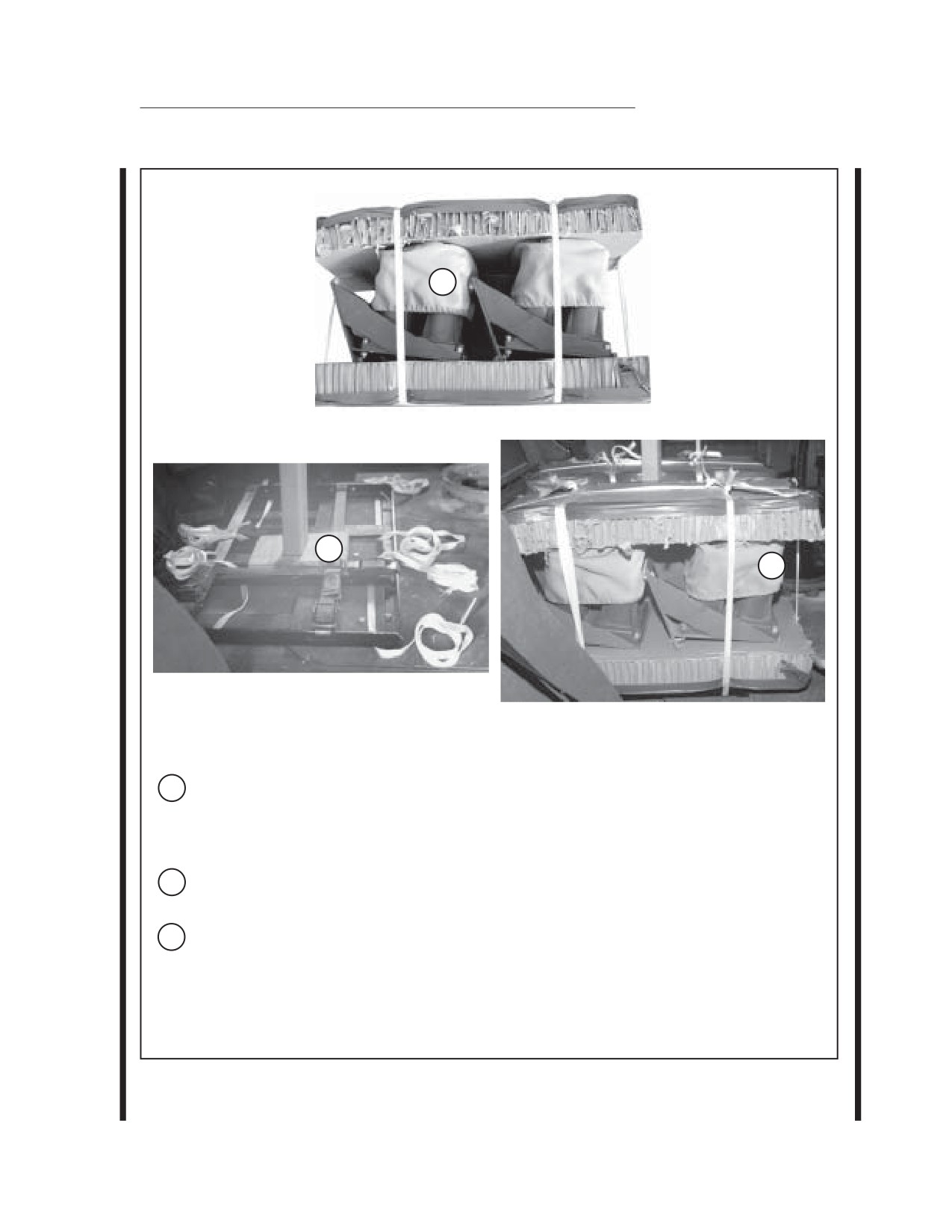
C1, FM 4-20.105/TO 13C7-1-51
5
6
7
5
Cut four 12- by 26- inch pieces of honeycomb. Place two LVOSS units on top of one piece of
the 12- by 26- inch honeycomb. Place the second piece of 12- by 26-inch honeycomb on top
of the LVOSS units. Tape the edges of the honeycomb. Secure with three lengths of 1/2-
inch tubular nylon. Repeat this step for the other two LVOSS units.
6
Preposition two 6 foot lengths of 1/2- inch tubular nylon webbing under each ammunition
rack on each side of the turret support from side to side.
7
Place the LVOSS units prepared on each side of the turrent support frame. Secure the
units to the ammunition racks with the pre-positioned lengths of 1/2- inch tubular nylon.
Figure 5-32. Passenger Compartment Prepared (Continued)
5-47
C1, FM 4-20.105/TO 13C7-1-51
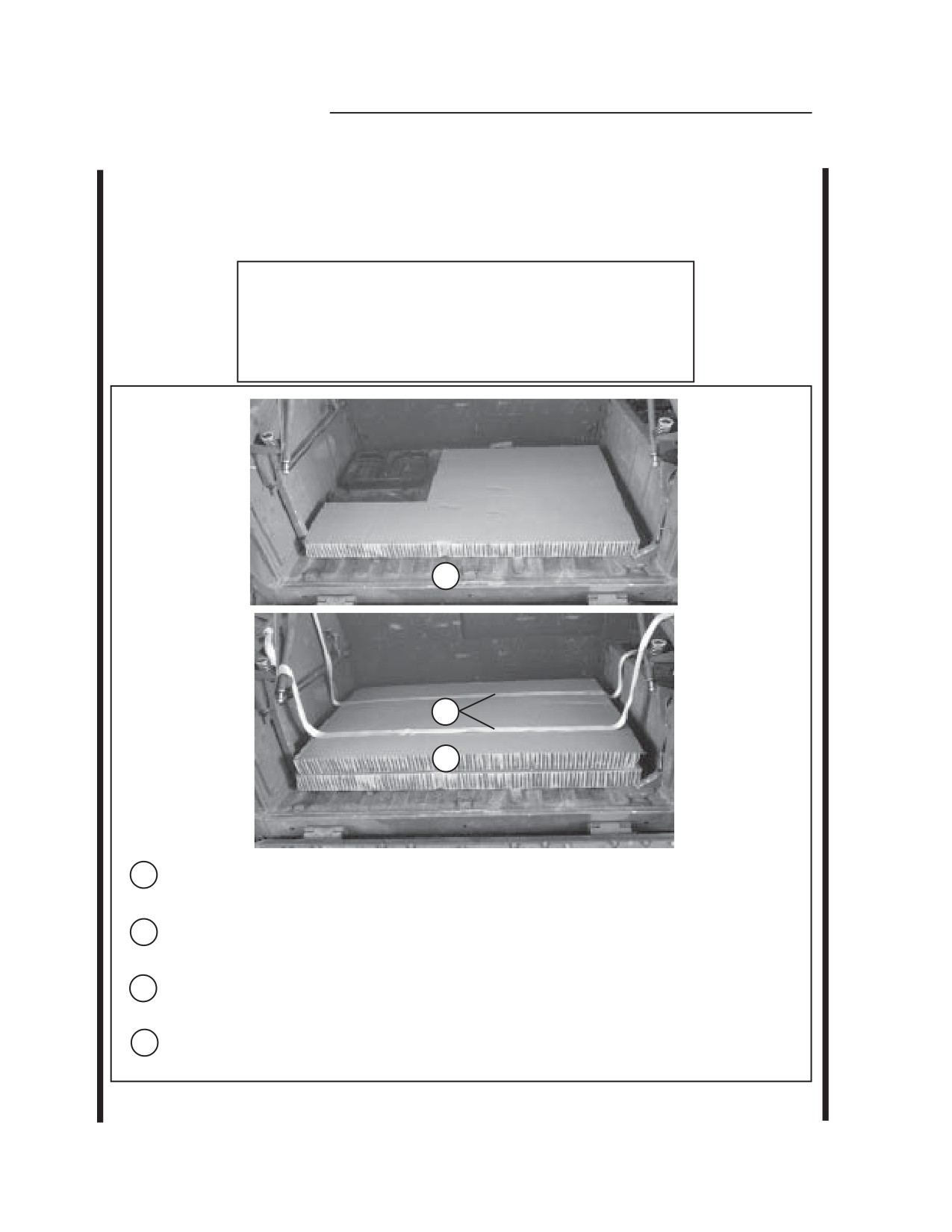
STOWING THE ACCOMPANYING LOAD IN M1114
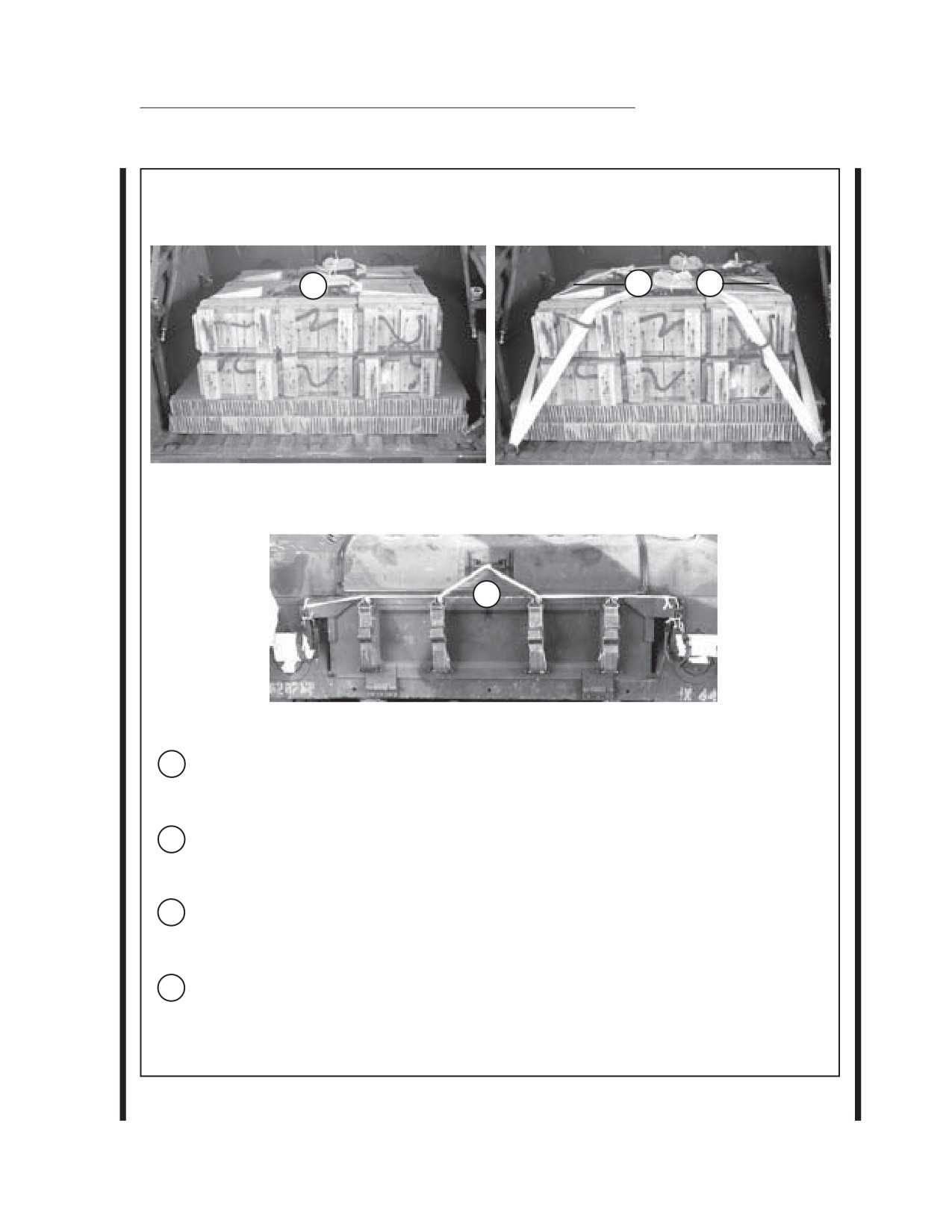
5-23. Stow the accompanying load as shown in Figure 5-33.
CAUTION
Only ammunition listed in FM 10-500-53/MCRP 4-3.81/TO
13C7-18-41 maybe airdropped. Package, label and mark hazard-
ous material according to AFMAN (I) 24-204/TM 38-250.
2
4
3
1
Tighten all straps in the rear cargo compartment and secure with 2-inch adhesive tape.
(not shown)
2
Cut a 36- by 47-inch piece of honeycomb. Make a 16- by 22-inch cut out to accommodate
the fuel water can rack. Place it on the floor of the compartment.
3
Cut and place a 36- by 47-inch piece of honeycomb, and place it on top of the previously
positioned piece of honeycomb in step 2.
4
Preposition two 15 foot lashings on top of the honeycomb in step 3. Place the first lashing 8
inches from the rear edge and the second lashing 25 inches from the rear of the honeycomb.
Figure 5-33. Accompanying Load Stowed
5-48
C1, FM 4-20.105/TO 13C7-1-51
5
6
7
8
5
Position two layers of three ammunition boxes on the pre-positioned lashings. The boxes
must weigh between 500 and 600 pounds. Secure the lashings on top with D-rings and load
binders.
6
Route a 15-foot lashing through the cargo compartment left rear tie-down ring. Route the
lashing over the ammunition boxes, through the compartment right front tie-down ring and
back over the ammunition boxes. Secure the lashings with a D-ring and load binder.
7
Route a 15-foot lashing through the cargo compartment right rear tie-down ring. Route the
lashing over the ammunition boxes, through the compartment left front tie-down ring and
back over the ammunition boxes. Secure the lashings with a D-ring and load binder.
8
Close the tailgate and hatch. Secure the tailgate and hatch with doubled length of 1/2 inch
tubular nylon webbing.
Figure 5-33. Accompanying Load Stowed (Continued)
5-49
C1, FM 4-20.105/TO 13C7-1-51
PREPARING ROOF OF M1114
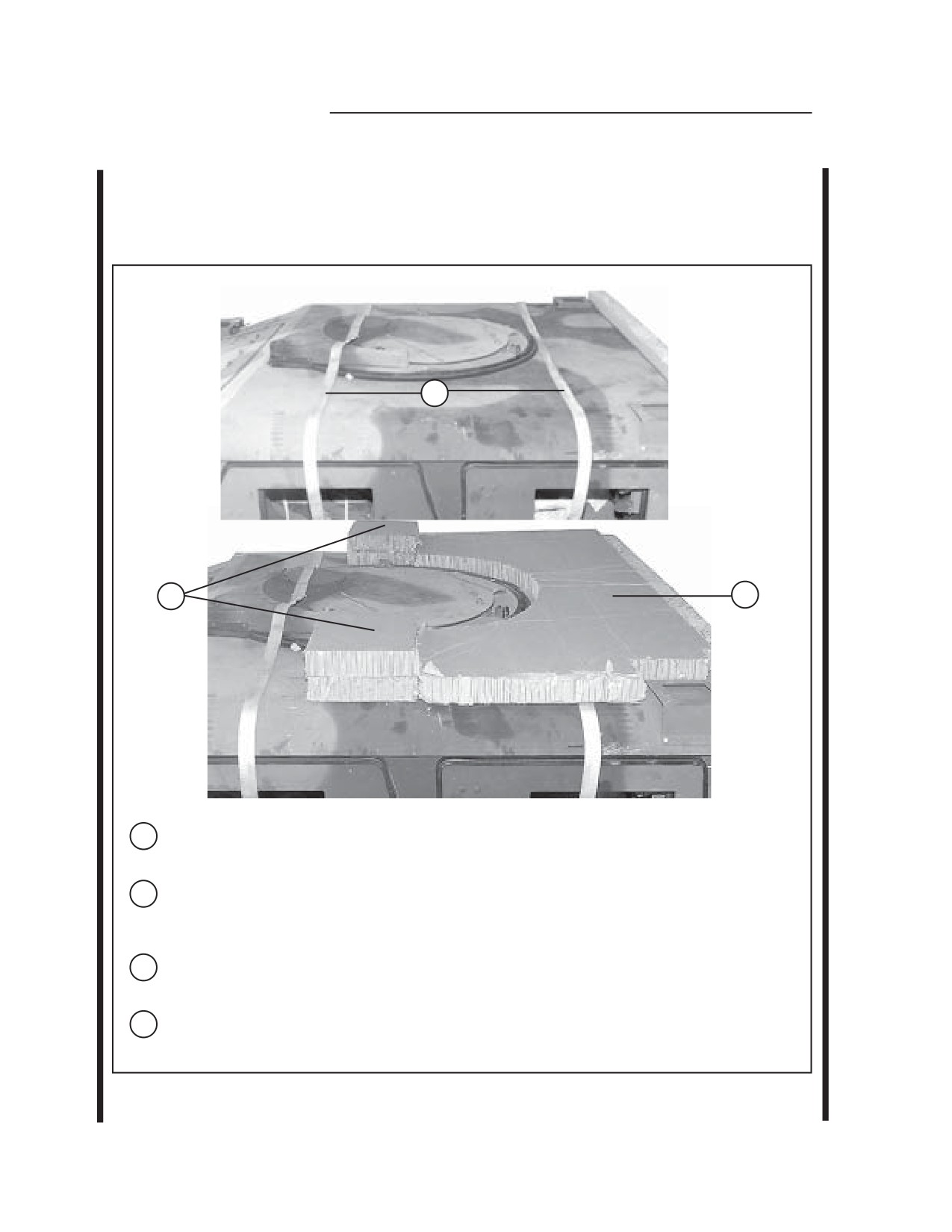
5-24. Prepare the roof of the M1114 shown in Figure 5-34.
2
FRONT
REAR
4
3
1
Secure all the LVOSS cables to the LVOSS brackets or to the inside of the cab with type I,
1/4-inch cotton webbing or adhesive tape. (not shown)
2
Place two 15-foot lashings over the roof. Center the lashings on the front and rear door
window openings. Place the lashings so that the D-rings and running ends will be
accessible from outside the truck.
3
Place a 36- by 81-inch piece of honeycomb on the front top of the truck. Make a cutout in
the honeycomb for the turret ring and the LVOSS brackets.
4
Place two pieces of honeycomb 12 inches long and cut to fit wide on each side of the turret
fixture to the rear of the honeycomb placed in step 3.
Figure 5-34. Roof of M1114 Prepared
5-50
C1, FM 4-20.105/TO 13C7-1-51
8
7
FRONT
REAR
5
6
10
9
5
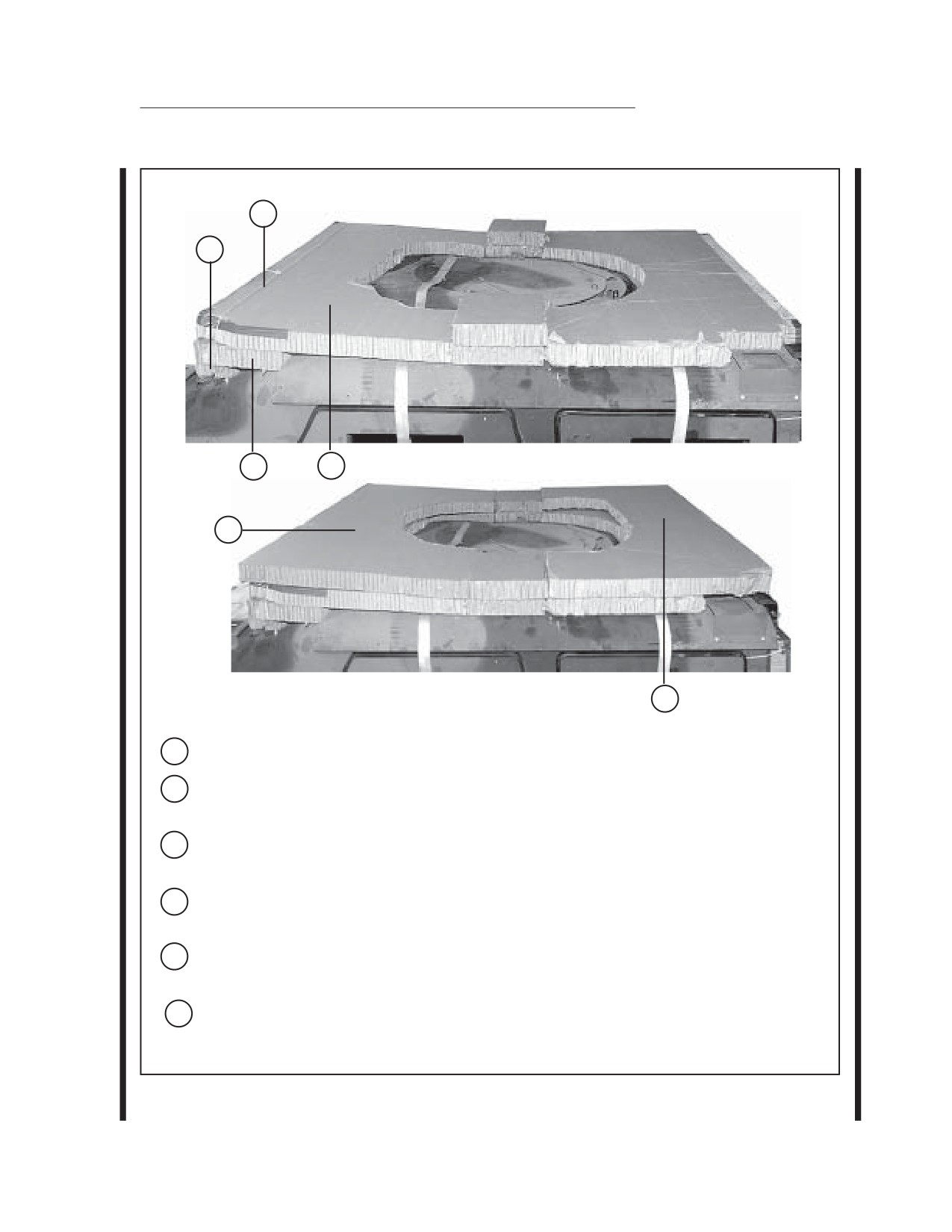
Cut a 12- by 81-inch piece of honeycomb and place it on the top part of the hatch.
6
Place a 36- by 81-inch piece of honeycomb behind the pieces in step 4. Make a cutout for
the turret.
7
Cut an additional piece of 8- by 81-inch honeycomb and place it under the 12- by 81-inch
piece to make it level.
8
Secure the honeycomb in steps 5, 6 and 7 together with type III nylon cord. Tape
the edges where the type III nylon cord comes into contact with the honeycomb.
9
Place a second layer of 36- by 81-inch piece of honeycomb on top of the front piece of
honeycomb. Make a cutout for the turret ring.
10
Place a second layer of 36- by 81- inch piece of honeycomb on top of the rear piece of
honeycomb and flush against the piece of honeycomb placed in step 5. Make a cutout for
the turret ring.
Figure 5-34. Roof of M1114 Prepared (continued)
5-51
C1, FM 4-20.105/TO 13C7-1-51
12
11
REAR
FRONT
14
13
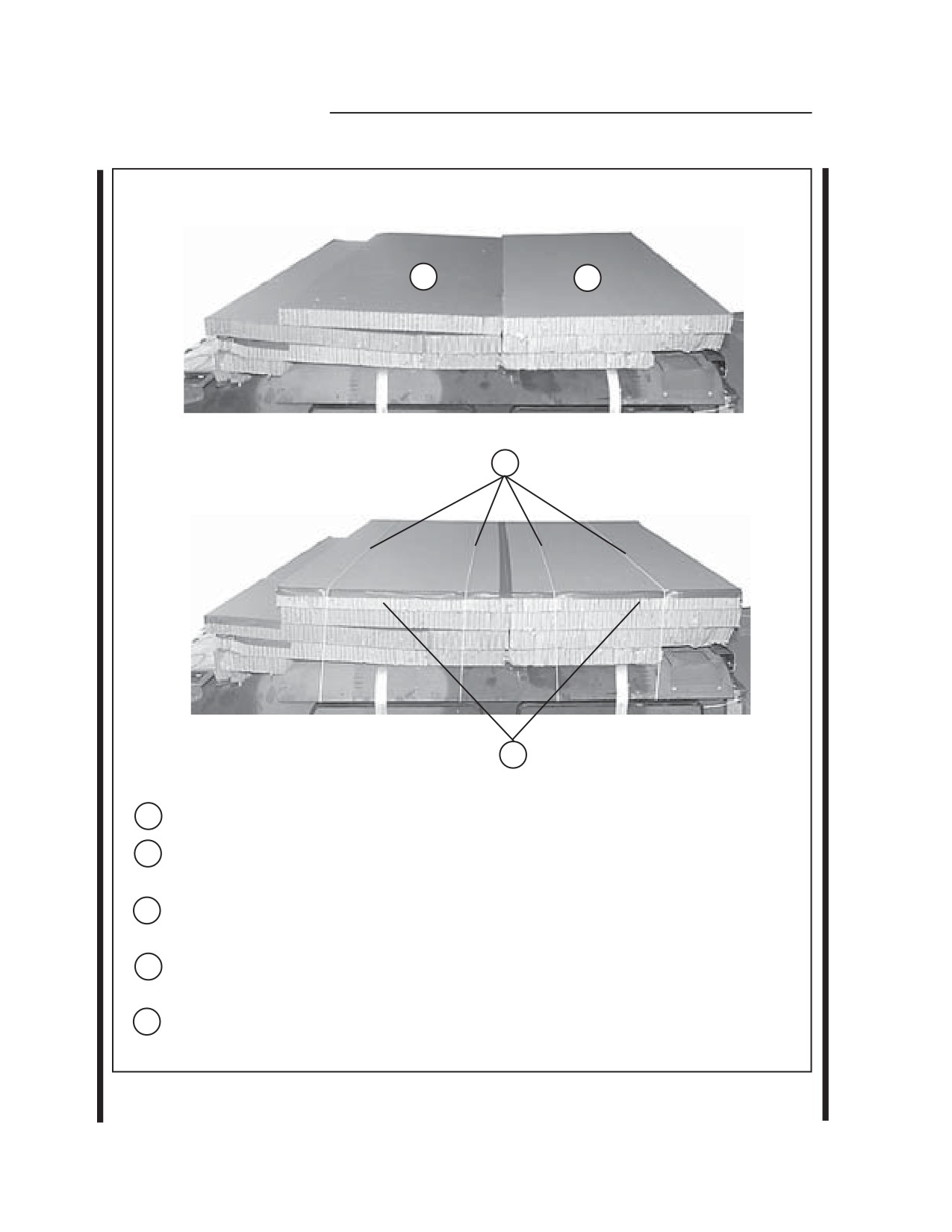
11 Place a 36- by 81-inch piece of honeycomb on top of the front pieces of honeycomb.
12 Place a 36- by 81-inch piece of honeycomb on top of the rear pieces of honeycomb and flush
against the piece placed in step 11.
13 Place two 36- by 81-inch pieces of honeycomb on top of the honeycomb placed in steps 11
and 12.
14 Secure the pieces of honeycomb with four lengths of type III nylon cord over the top and
inside the cab. Tape the edges of the honeycomb where the type III nylon cord contacts it.
15 Close the doors and secure them shut with the lashings provided in step 2. (not shown)
Figure 5-34. Roof of M1114 Prepared (Continued)
5-52
C1, FM 4-20.105/TO 13C7-1-51
LIFTING AND POSITIONING TRUCK AND INSTALLING OPTIONAL
DRIVE-OFF AIDS
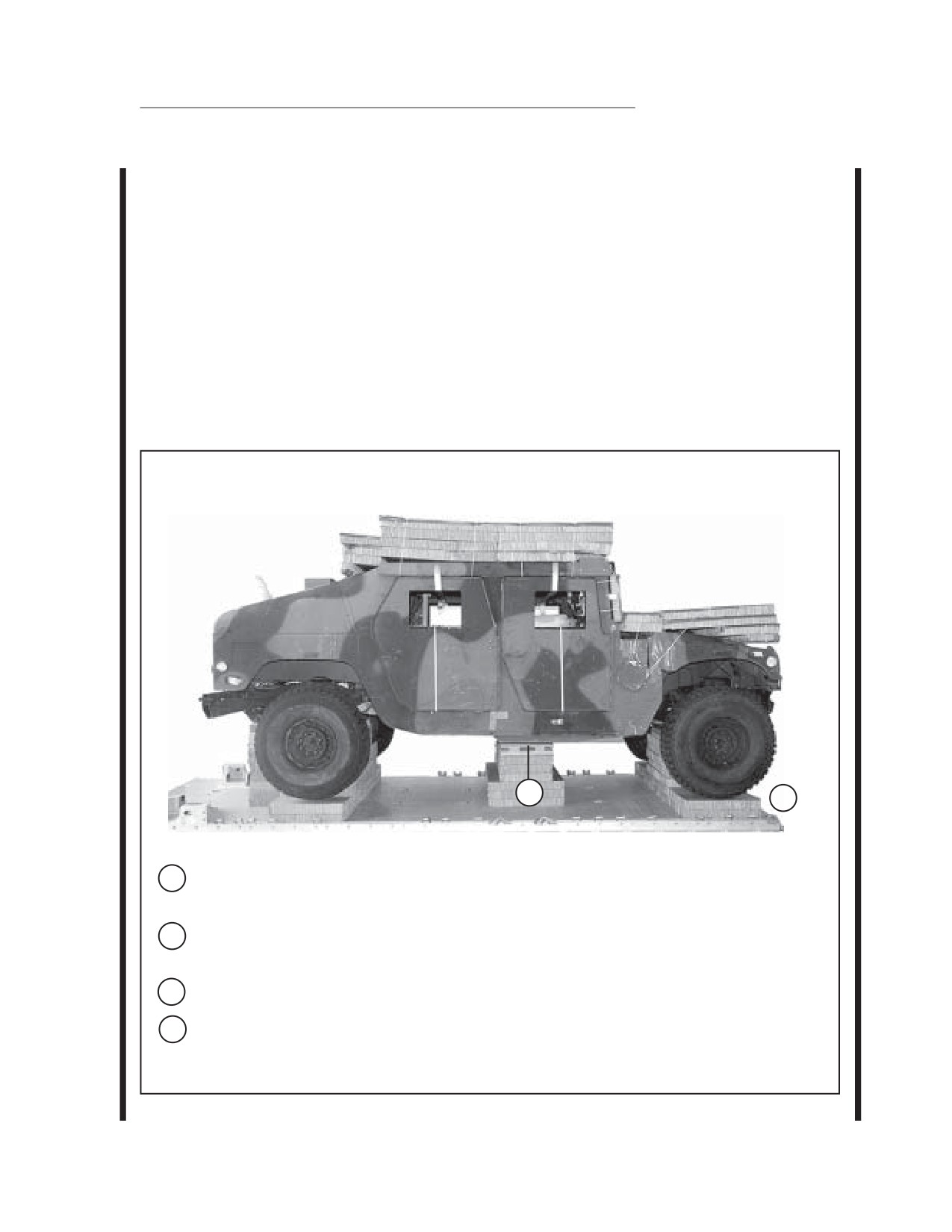
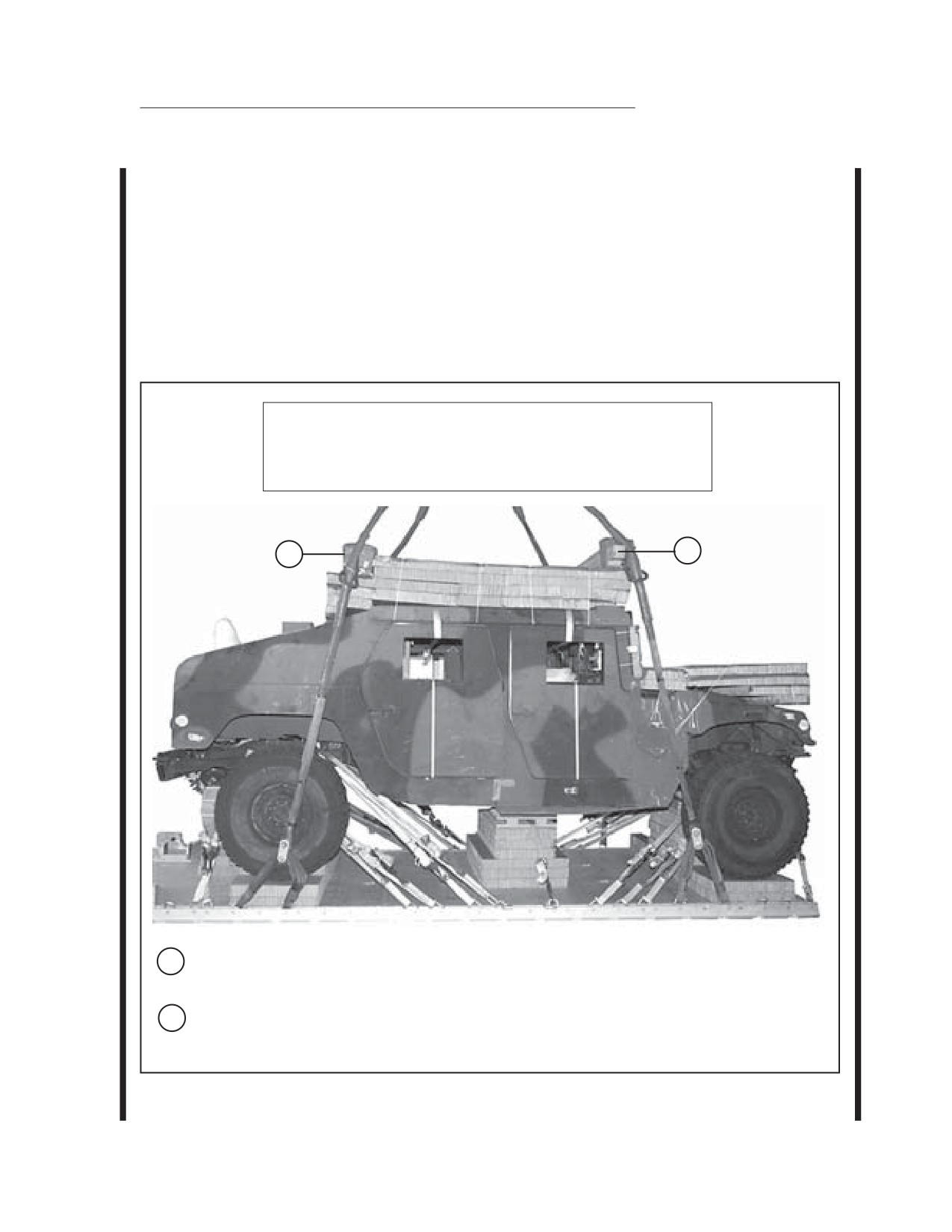
5-25. Install the lifting slings as shown in Figure 4-13. Attach the optional
drive-off aids to the wheels of the truck as shown in Chapter 3 of this manual.
Position the truck on the platform as shown in Figure 5-35.
LASHING TRUCK
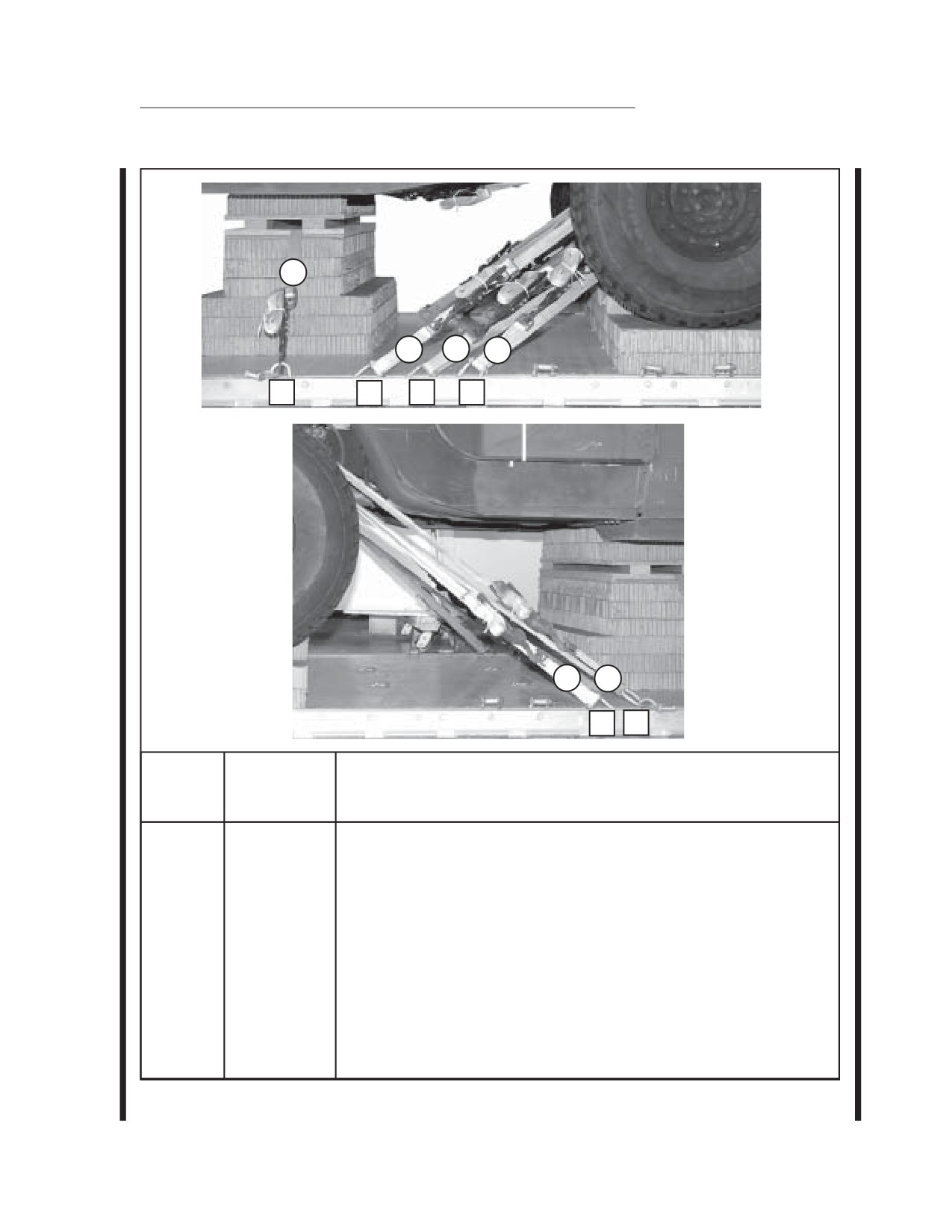
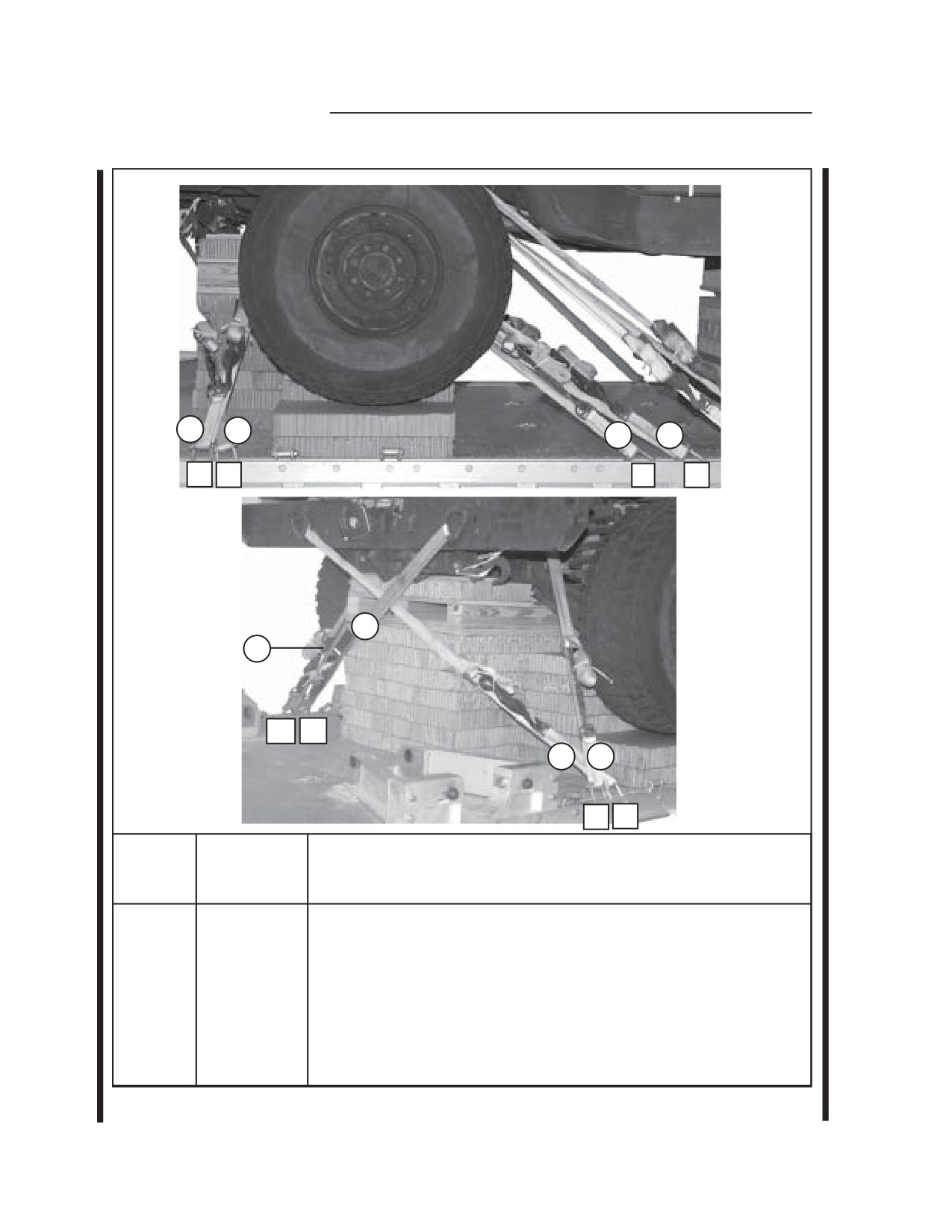
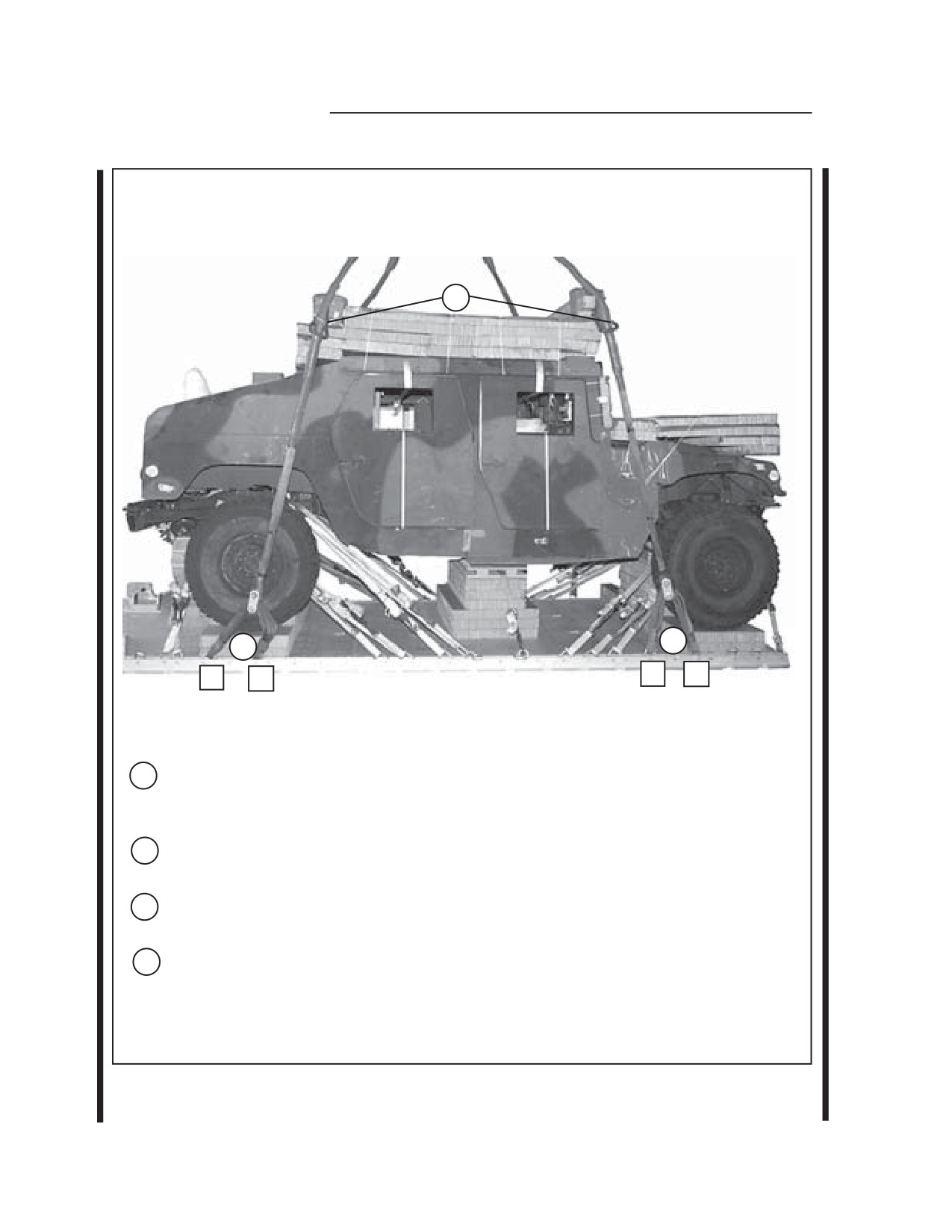
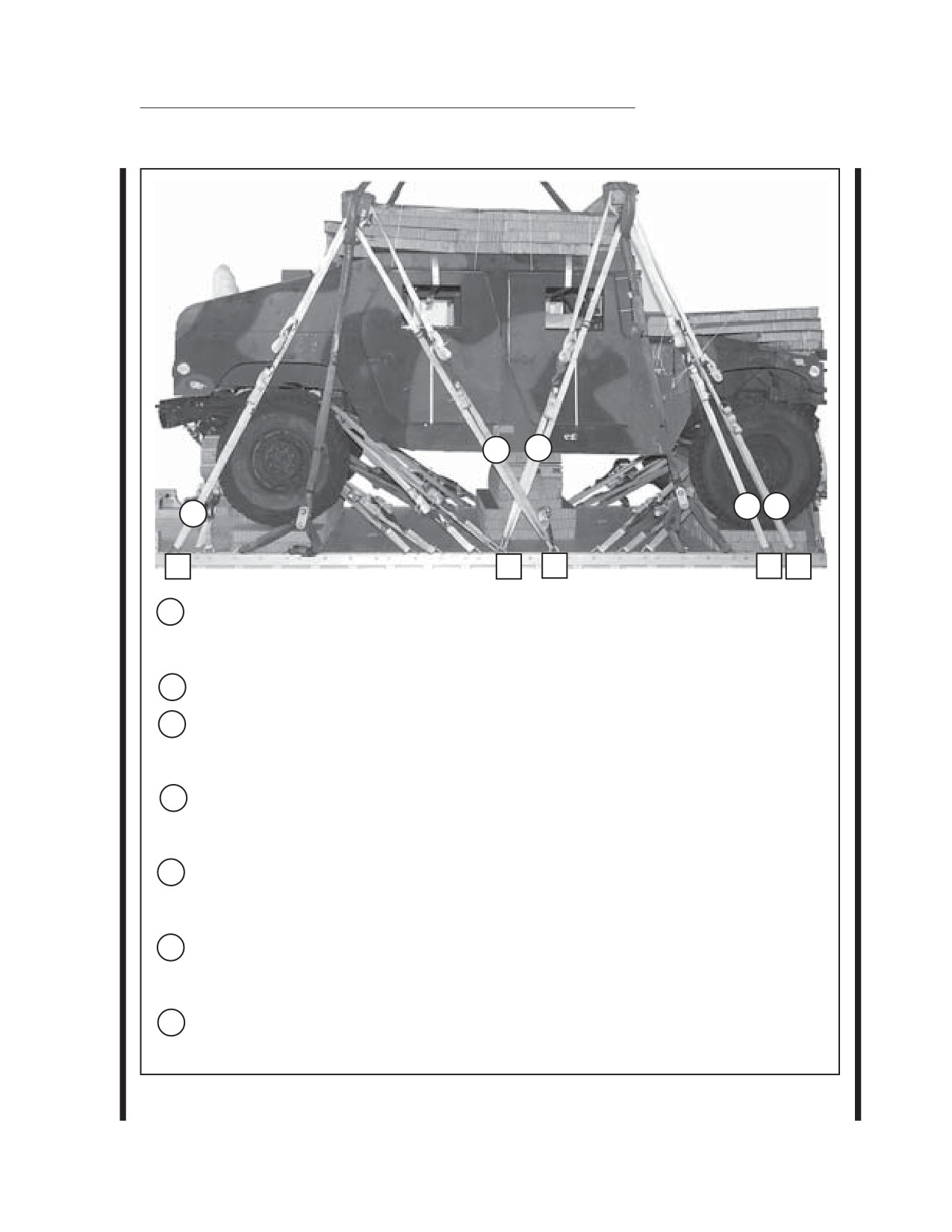
5-26. Lash the truck to the platform as shown in Figures 5-36 through 5-38.
2
1
1
Position the truck so the front bumper has 6 1/2 inches of overhang from the front edge of
the platform.
2
Ensure the center frame cross member rests squarely on the 6 inch part of honeycomb
stack 2.
3
Install optional drive off aids if needed. (not shown)
4
Remove the lift kit. (not shown)
Figure 5-35. M1114 Up Armored HMMWV Positioned on Platform
5-53
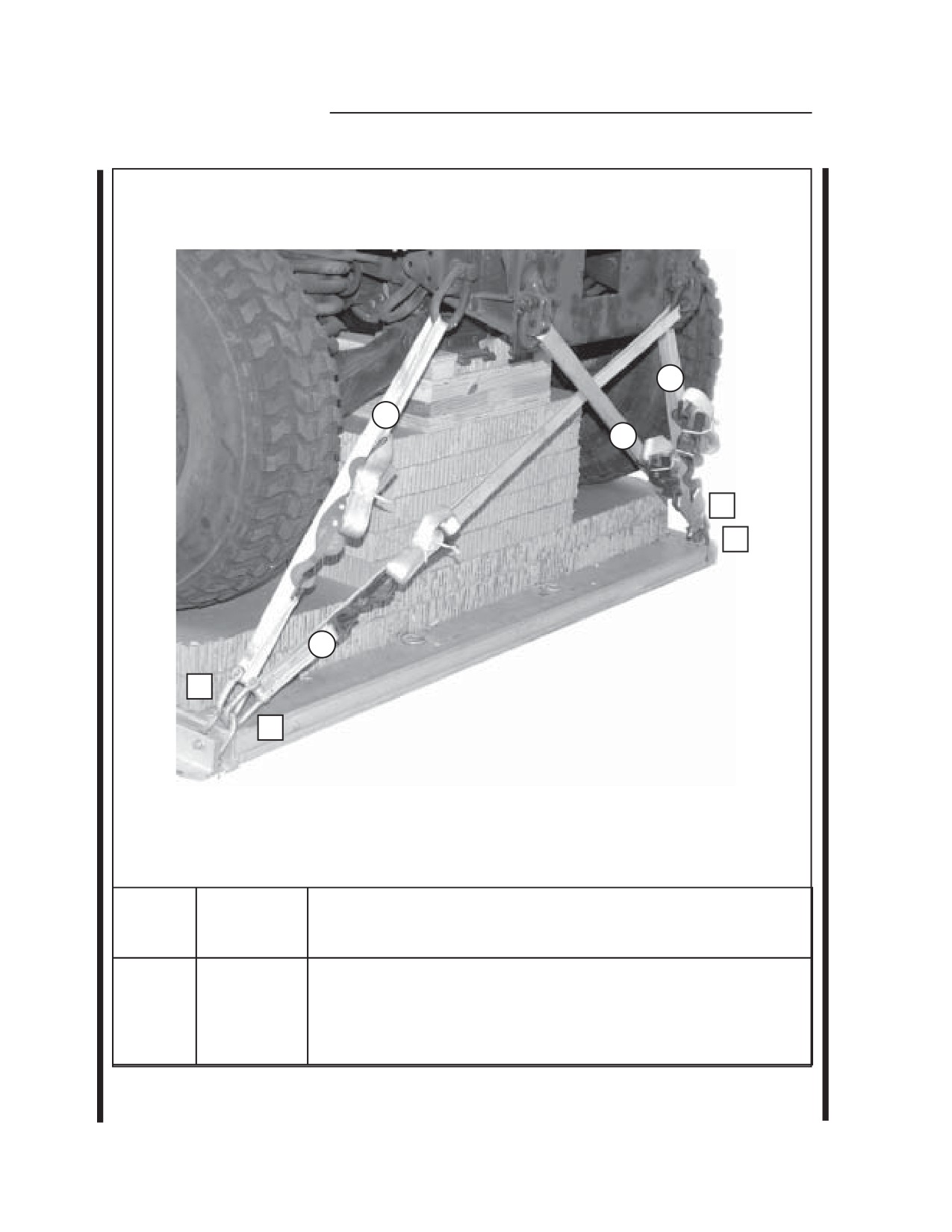
C1, FM 4-20.105/TO 13C7-1-51
4
3
2
2A
1A
1
2
1
Tiedow n
Lashin g
Clevis
Number
Instruction s
Number
Pass lashing:
1
1
Through front left lifting shackle
2
1A
Through front right lifting shackle.
3
2
Through front right tie-down shackle.
4
2A
Through front left tie-down shackle.
Figure 5-36. Lashings 1 through 4 Installed
5-54
C1, FM 4-20.105/TO 13C7-1-51
11
9
7
5
10
9
8
7
12
14
14
13
Tiedow n
Lashin g
Clevis
Instruction s
Number
Number
Pass lashing:
5
7
Around front right lower control arm
6
7A
Around front left lower control arm
7
8
Around front right lower control arm
8
8A
Around front left lower control arm
9
9
Through tie-down bracket behind the front right coil spring.
10
9A
Through tie-down bracket behind the front left coil spring
11
10 and 10A
Through it's own D-ring around clevis 10A, through the strong back on
stack 2, and attach it with a D-ring and load binder to clevis 10.
12
14
Through tie-down bracket in front of the right rear coil spring.
13
14A
Through tie-down bracket in front of the left rear coil spring
14
13
Through tie-down bracket in front of the right rear coil spring.
15
13A
Through tie-down bracket in front of the left rear coil spring.
Figure 5-37. Lashings 5 through 15 Installed
5-55
C1, FM 4-20.105/TO 13C7-1-51
22
20
16
18
20
19
16
15
21
23
20A
19A
20
22
20
19
Tiedow n
Lashin g
Clevis
Instruction s
Number
Number
Pass lashing:
16
16
Around rear right control arm
17
16A
Around rear left control arm
18
15
Around rear right control arm
19
15A
Around rear left control arm
20
19
Through rear left lifting shackle ring
21
19A
Through rear right lifting shackle ring
22
20
Through rear right tie-down ring.
23
20A
Through rear left tie-down ring.
Figure 5-38. Lashings 16 through 23 Installed
5-56
C1, FM 4-20.105/TO 13C7-1-51
INSTALLING ATTITUDE CONTROL SYSTEM AND SUSPENSION
SLINGS
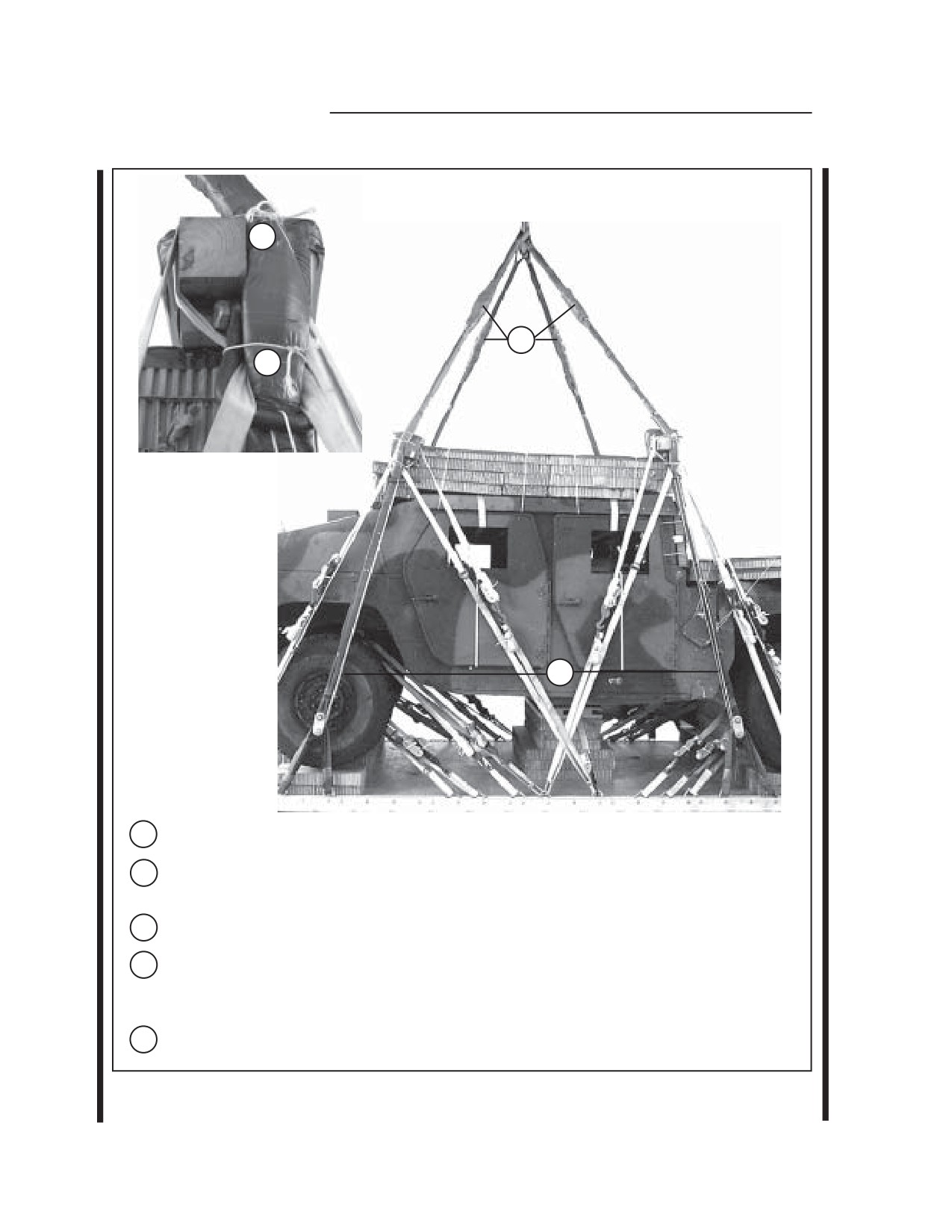
5-27. Construct and inspect the Attitude Control System (ACS) according to
Chapter 3, Figure 3-32. Install the ACS as shown in Figure 5-39. Install the
suspension slings as shown in Figure 5-40. Secure the ACS according to
Chapter 3 and as shown in Figure 5-41. Complete the installation of the
suspension slings, pad the two point links and safety tie and secure the slings
as shown in Figure 5-42.
CAUTION
Center the ACS assemblies widthwise on the load.
2
1
1
Center the front ACS on the roof protection honeycomb. Place the 4- by 4-inch piece of
lumber facing the rear.
2
Center the rear ACS as far forward as possible on the ledge on the roof protection
honeycomb. Place the 4- by 4-inch piece of lumber to the front.
Figure 5-39. ACS Installed
5-57
C1, FM 4-20.105/TO 13C7-1-51
4
2
3
6
5
18
17
1
Attach a 3 3/4-inch, two-point link to an 11-foot (4-loop), type XXVI nylon sling. Pass a
3-foot (4-loop), type XXVI nylon sling through the two-point link. Repeat this procedure
three times for the other three suspension slings. (not shown)
2
Attach the ends of a 3-foot sling from step 1 to clevises 5 and 6 and repeat for clevises
5A and 6A.
3
Attach the ends of a 3-foot sling from step 1 to clevises 17 and 18 and repeat for
clevises 17A and 18A.
4
Pad the 11-foot slings with felt and tape approximately 6 to 12 inches below the ACS clevis,
extending to 6 to 12 inches above the top of the ACS. Pass each suspension sling through
the closest ACS clevis.
Figure 5-40. Suspension Slings Installed
5-58
C1, FM 4-20.105/TO 13C7-1-51
5
3
1
2
6
21
12
11
4
3
1
Run a 30-foot lashing from clevis 4, through the ACS clevis from the outside to inside, rear
to front, around the 4- by 4-inch piece of lumber, and back to clevis 4. Loosely secure the
lashing. Repeat on the left side using clevis 4A.
2
Repeat step 1 using clevises 3 and 3 A
3
Run a 30-foot lashing from clevis 12, through the ACS clevis from outside to inside, front to
rear, around the 4- by 4-inch piece of lumber, and back to clevis 12. Loosely secure the
lashing and repeat on the left side using clevis 12A.
4
Make sure the ACS is centered on the load, and tighten all the lashings on the left and right
at the same time. Tighten the lashings in the following order; 4 and 4A, 3 and 3A, and 12
and 12A.
5
Run a 30-foot lashing from clevis 11, through the ACS clevis from outside to inside, rear to
front, around the 4- by 4-inch piece of lumber, and back to clevis 11. Loosely secure the
lashing and repeat on the left side using clevis 11A.
6
Run a 30-foot lashing from clevis 21, through the ACS clevis from outside to inside, rear to
front, around the 4- by 4-inch piece of lumber, and back to clevis 11. Loosely secure the
lashing and repeat on the left side using clevis 21A.
7
Make sure the ACS is centered on the load, and tighten all the lashings on the left and right
at the same time. Tighten the lashings in the following order; 11 and 11A, 21 and 21A.
Figure 5-41. ACS Secured
5-59
C1, FM 4-20.105/TO 13C7-1-51
5
2
4
1
1
Safety tie the two-point links to the ACS clevises with a loop of type III nylon cord.
2
Attach a 3-foot (4-loop), type XXVI nylon sling to the free end of each 11-foot, 4-loop with a
3 3/4-inch, two-point link. Pad each link with felt and tape in place.
3
Extend the slings upward with a lifting device until they are taut.
4
Tie a length of type III nylon cord around and behind the suspension sling, and around
each ACS sling. See Figure 4-19 for a detailed view. Repeat for the remaining three
suspension slings.
5
Tie a length of type III nylon cord around the suspension sling, behind all lashings and
around the 4- by 4-inch piece of lumber of the ACS. Repeat for all suspension slings.
Figure 5-42. Two Point Links and Suspension Slings Secured
5-60
C1, FM 4-20.105/TO 13C7-1-51
INSTALLING OUTRIGGER ASSEMBLIES
5-28. Assemble, install, and safety tie the mast and foot assemblies on the
DRAS platform as shown in Chapter 3, Figures 3-33 through 3-36, steps 1
through 3.
STOWING CARGO PARACHUTES
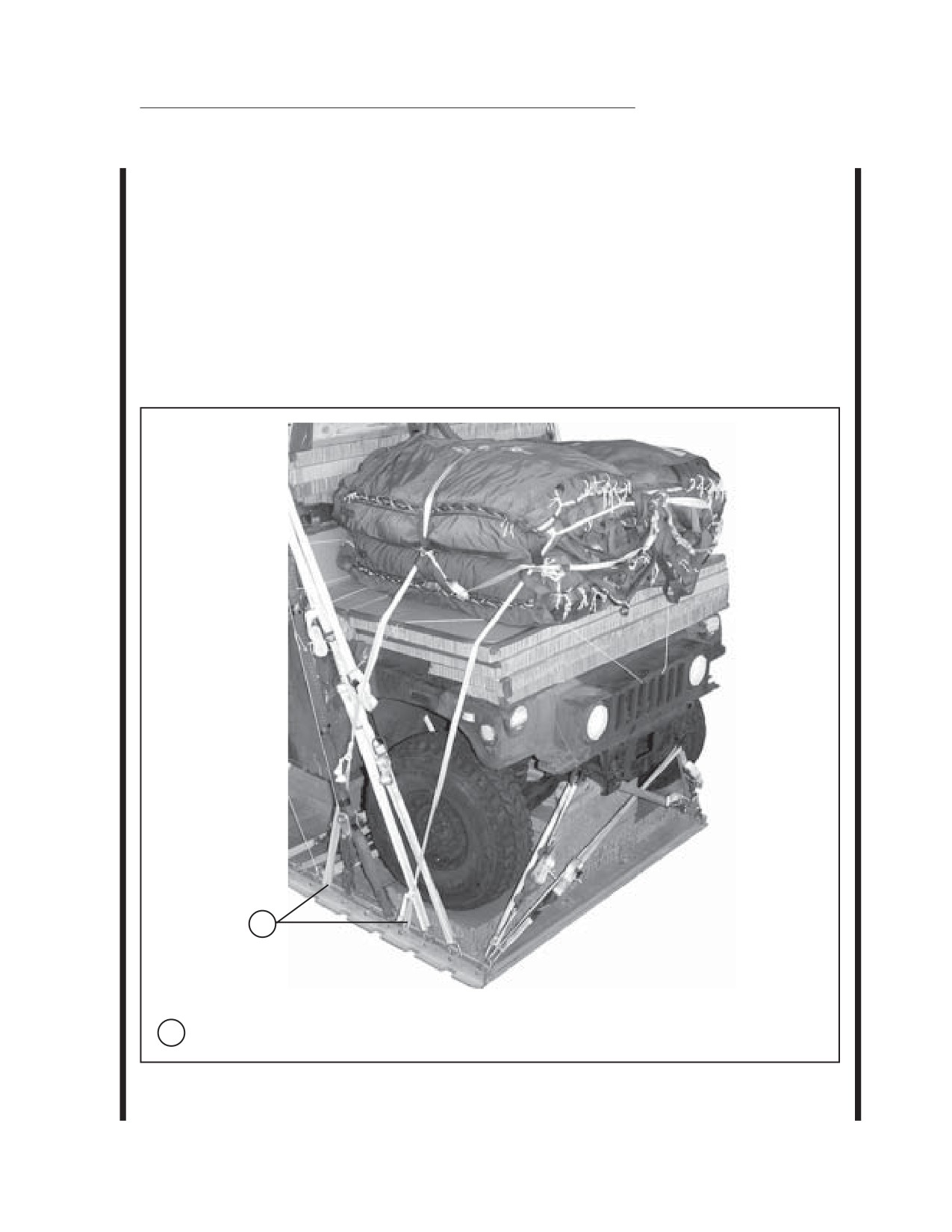
5-29. Prepare, stow and restrain four G-11D cargo parachutes on the hood of
the truck as shown in Chapter 3 and Figure 5-43.
1
1
Restrain the parachutes with type VIII nylon webbing to bushings 4, and 4A and 8 and 8A.
Figure 5-43. Cargo Parachutes Installed and Restrained
5-61
C1, FM 4-20.105/TO 13C7-1-51
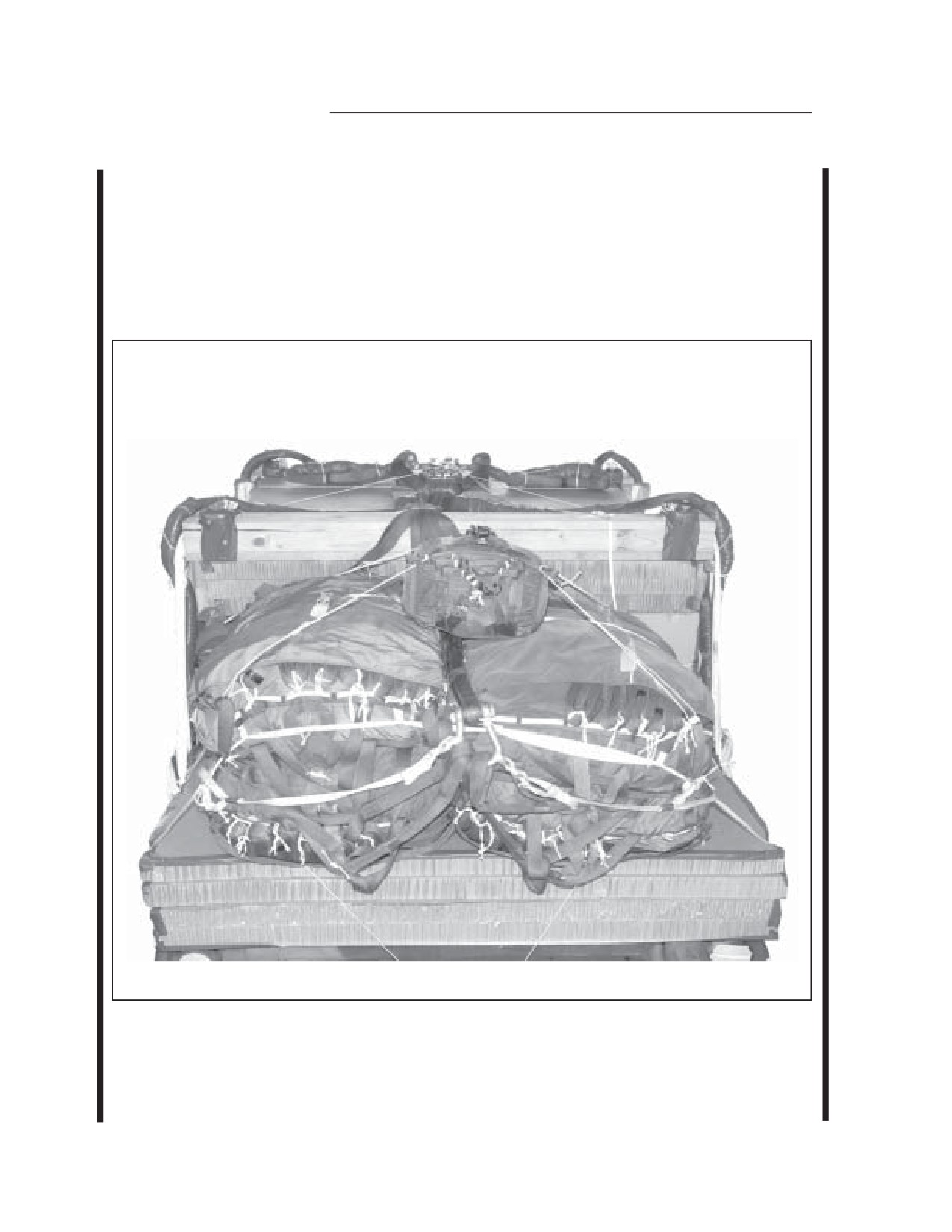
STOWING DEPLOYMENT PARACHUTE
5-30. Prepare, stow and install the deployment parachute according to
Chapter 3, Figures 3-23 and 3-24 and Figure 5-44.
Figure 5-44. Deployment Parachute Installed
5-62
C1, FM 4-20.105/TO 13C7-1-51
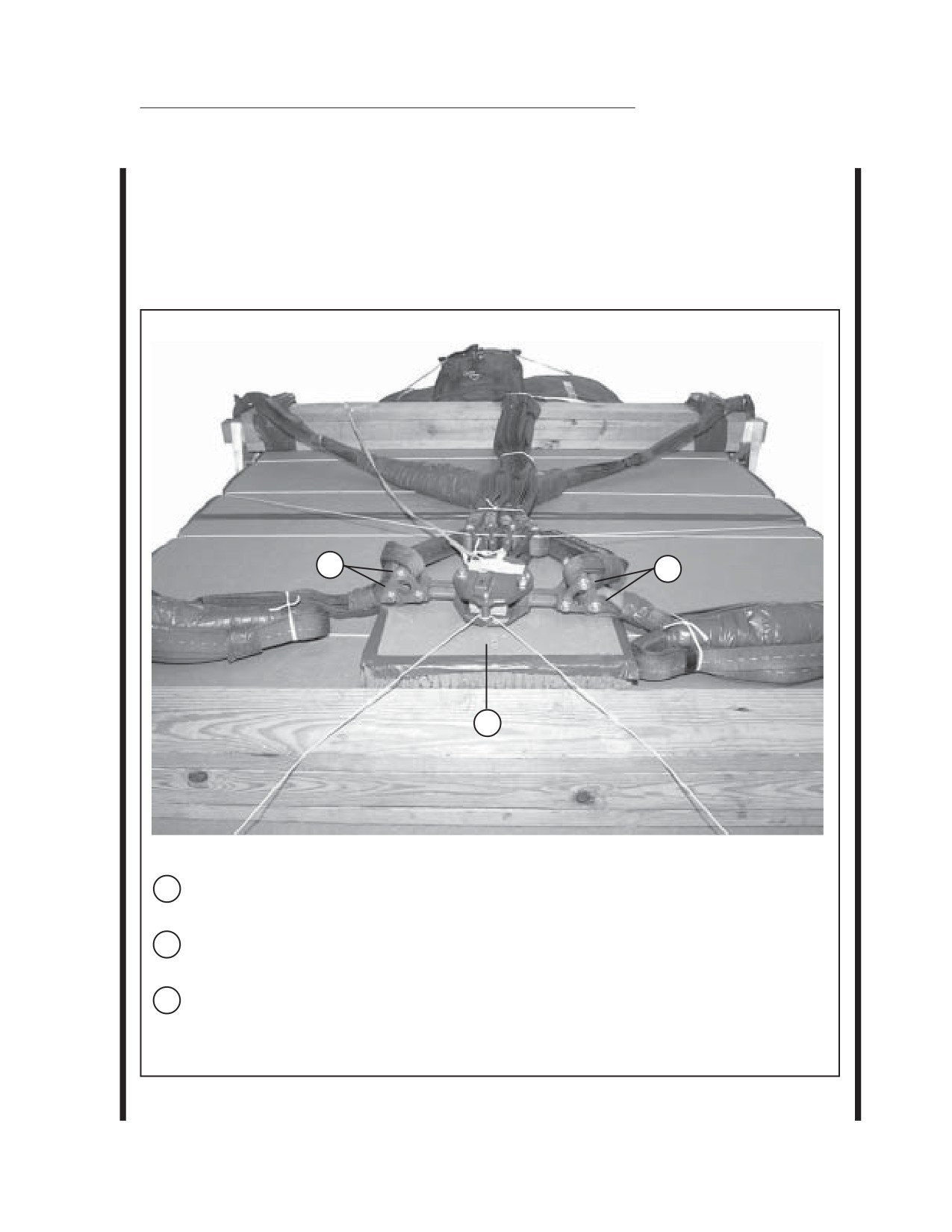
INSTALLING M-1 PARACHUTE RELEASE SYSTEM
5-31. Prepare and install the M-1 parachute release system according to
Chapter 3 and Figure 5-45.
2
2
1
1
Cut and position a 20- by 20-inch piece of honeycomb. Center the honeycomb along the rear
ACS. Tape the outside edges of the honeycomb.
2
Remove the cotton buffers from the free ends of the suspension slings. Attach them to the
release as shown.
3
Secure the front suspension slings together above the 3 3/4-inch, two-point links with one
turn of 1/4-inch cotton webbing. (not shown)
Figure 5-45. M-1 Cargo Parachute Release Installed
5-63
C1, FM 4-20.105/TO 13C7-1-51
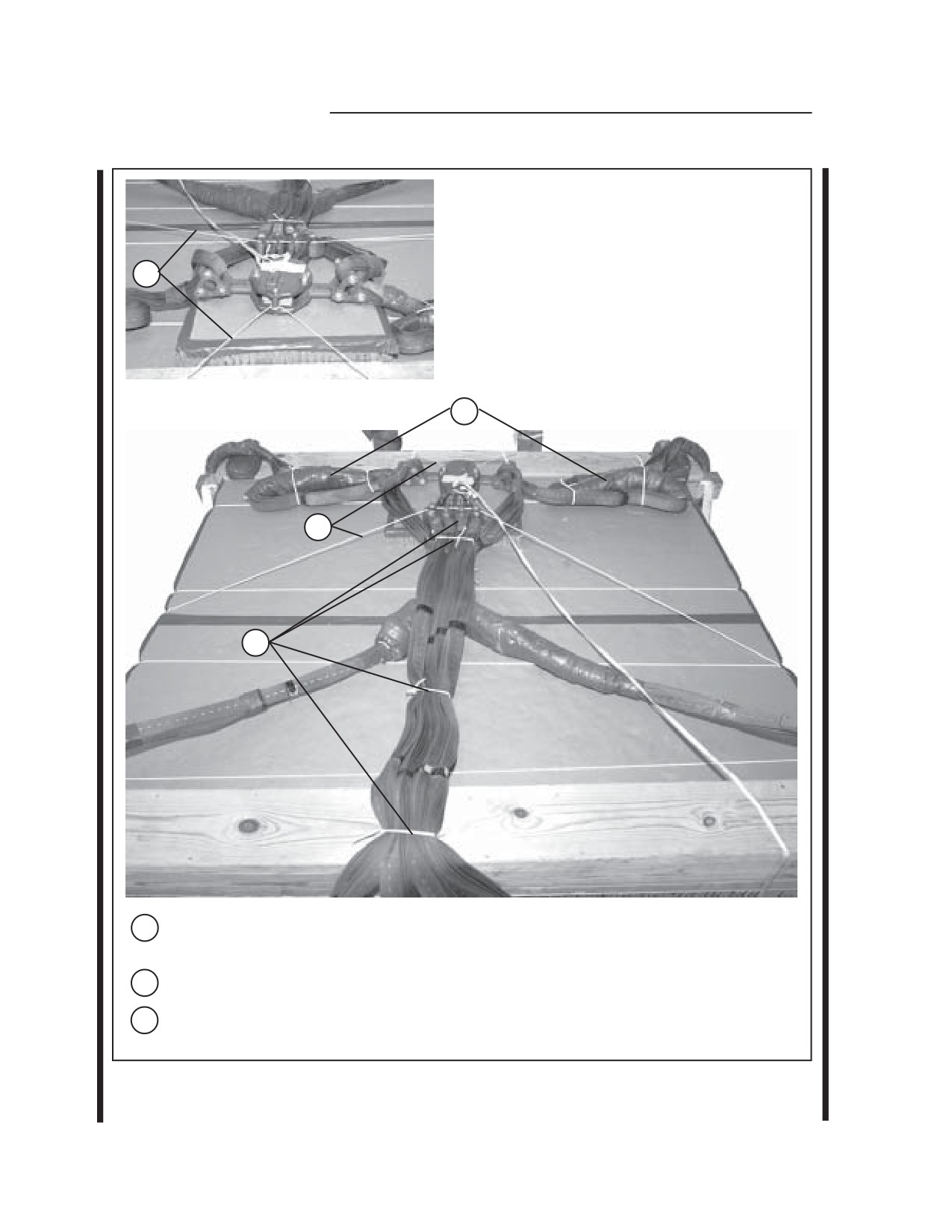
6
4
6
5
4
S-fold the slack in the rear suspension slings and tie them around the two point links with
1/4-inch cotton webbing.
5
Attach the riser extensions. Tie them in three places with type I, 1/4-inch cotton webbing.
6
Secure the release to a convenient place on the load with type III nylon cord.
Figure 5-45. M-1 Cargo Parachute Release Installed (Continued)
5-64
C1, FM 4-20.105/TO 13C7-1-51
INSTALLING MAST RELEASE KNIVES
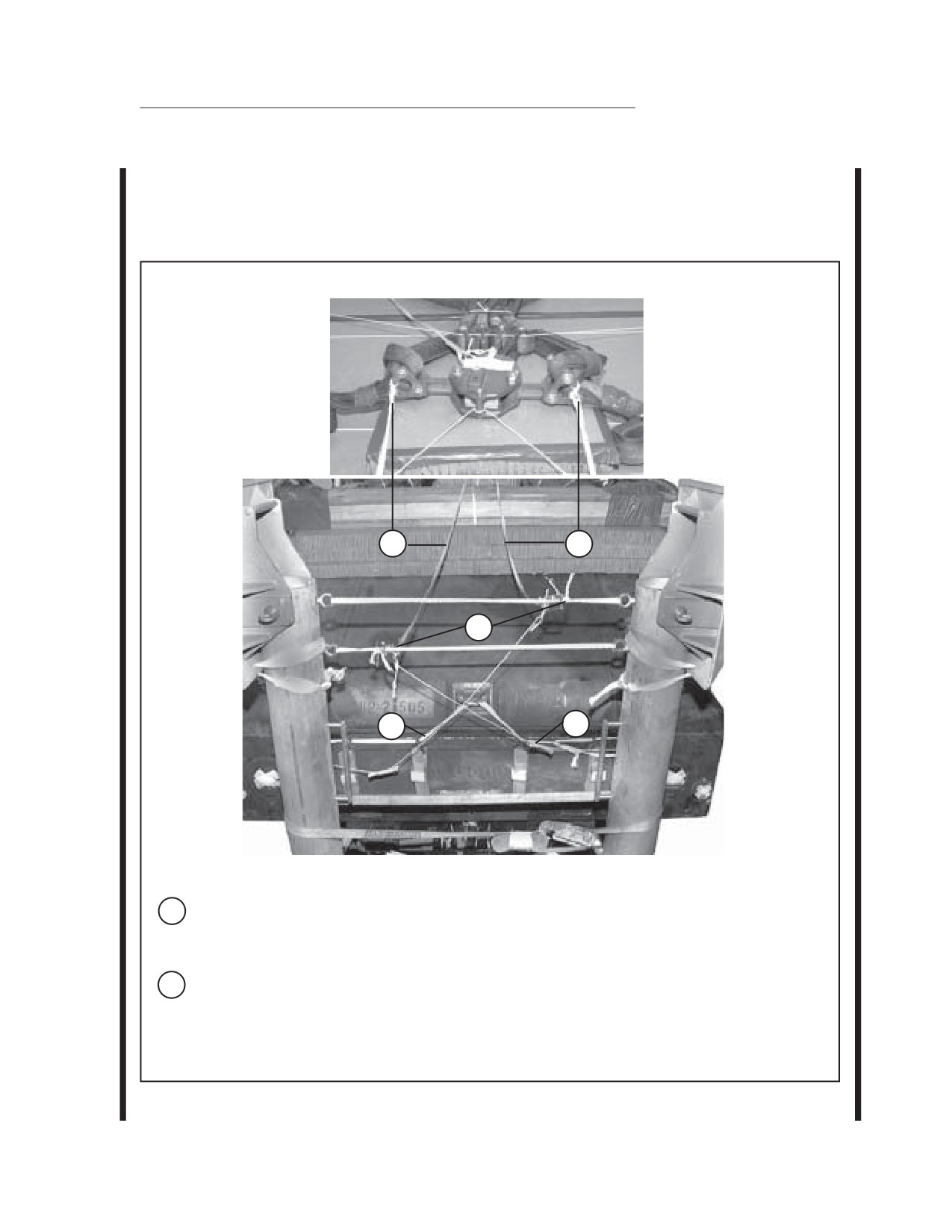
5-32. Install the mast release knives as shown in Chapter 3 Figure 3-36 steps
4 through 10 and as shown in Figure 5-46.
3
2
1
4
5
1
The length of the left and right 1/2-inch tubular nylon webbing from the base of the
guillotine knives to the lower suspension links of the release is 78 inches as shown in
steps 5 and 6 of Figure 3-36.
2
Tie a length of type III nylon cord through the left tailgate sling guide and to the body of
the right top guillotine knife that measures 69 inches from tailgate sling guide to the base
of the guillotine knife. Repeat for right tailgate sling guide and left lower guillotine knife
(shown in steps 9 and 10 of Figure 3-36).
Figure 5-46. Mast Release Knives Installed
5-65
C1, FM 4-20.105/TO 13C7-1-51
MARKING RIGGED LOAD
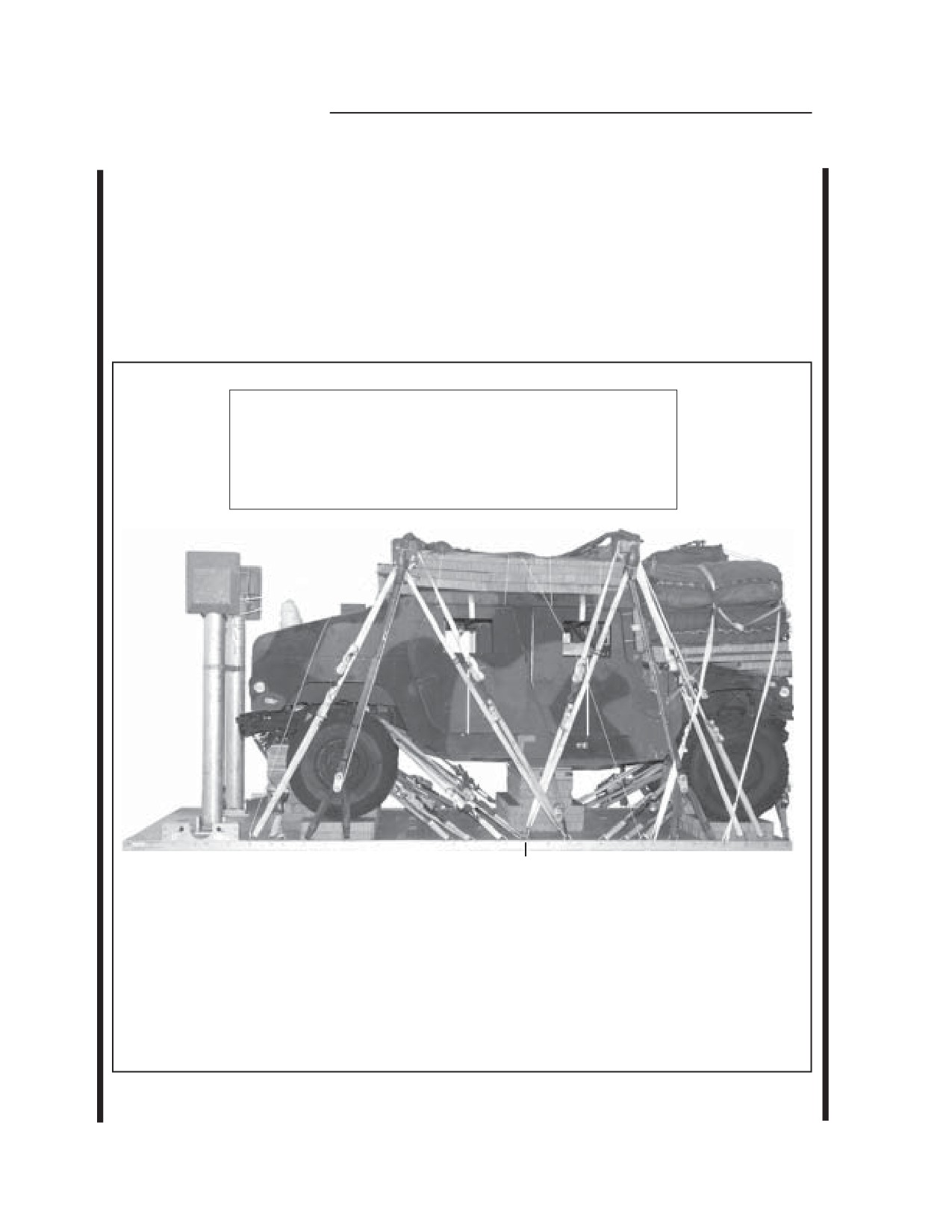
5-33. Mark the rigged load according to Chapter 3 and as shown in Figure
5-47.
EQUIPMENT REQUIRED
5-34. The equipment required to rig this load is given in Table 5-2.
CAUTION
Make the final rigger inspection required by Chapter 3
of this manual before the load leaves the rigging site.
C/B
RIGGED LOAD DATA, M1114
Weight: Load shown
14,400 pounds
Maximum load allowed
14,500 pounds
Height (with four G-11D parachutes)
106 inches
Width
94 inches
Length (overall)
216 inches
Overhang: Front (Bumper)
6 1/2 inches
Rear
0 inches
CB (from front edge of platform)
94 inches
Figure 5-47. M1114 Up-Armored HMMWV Rigged for Dual Row Airdrop
5-66
C1, FM 4-20.105/TO 13C7-1-51
Table 5-2. Equipment required for rigging M1114 Up-Armored HMMWV on a Dual Row Platform
for Dual Row Airdrop
National Stock
Item
Quantity
Number
1670-01-487-5461
Assembly, release away static line
1
8040-00-273-8713
Adhesive paste, 1-gal
As required
4020-00-240-2146
Cord, nylon, type III, 550-lb
As required
4030-00-090-5354
Clevis, large
5
8305 00 958 3615
Felt, 1/2 inch
As required
Link assembly small:
1670-01493-6419
T
wo-point, 3 3/4-in
9
Lumber:
5510-00-220-6146
2- by 4-in
As required
5510-00-220-6148
2- by 6-in
As required
5510-00-220-6274
4- by 4-in
As required
5530-00-618-8073
Plywood, 3/4-in
3
sheets
Nail, steel wire, common,
5315-00-010-4659
8d
As required
5315-00-010-4662
12d
As required
5315-00-753-3885
16d
As required
1670-00-753-3928
Pad, energy dissipating, honeycomb,
3- by 36- by 96-in
21 sheets
Parachute:
Cargo:
1670-01-016-7481
G-11D
4
Cargo extraction (deployment parachute)
1670-00-040-8135
28-foot
1
Platform, Dual Row , 18-foot
1
1670-01-485-1656
Panel assembly, main
9
1670-01-485-1654
Rail, DRA S
2
1670-01-486-1342
Roller Pad, DRA S
4
1670-01-162-2372
Clevis assembly
46
1670-01-097-8816
Release, cargo parachute, M-1
1
5-67
C1, FM 4-20.105/TO 13C7-1-51
Table 5-2. Equipment required for rigging M1114 Up-Armored HMMWV on a Dual Row Platform
for Dual Row Airdrop (Continued)
National Stock
Item
Quantity
Number
Sling, cargo airdrop
For suspension:
1670-01-062-6310
11-ft (4-loop), type XXVI nylon webbing
4
1670-01-062-6306
3-ft (4-loop), type XXVI nylon webbing
8
For deployment:
1670-01-062-6306
3-ft (4-loop), type XXVI nylon webbing
1
For riser extention:
1670-01-062-6313
60-ft (3-loop), type XXVI nylon webbing
4
For ACS :
1670-01-063-7761
16-ft (2-loop), type XXVI nylon webbing
2
For lifting
:
1670-01-062-6304
9-ft (2-loop), type XXVI nylon webbing
2
1670-01-062-6303
12-ft (2-loop), type XXVI nylon webbing
2
1670-00-040-8219
Strap, parachute release, multicut
2
1670-00-937-0271
Knife release,cargo (guillotine)
2
1670-01-487-5464
Outrigger assembly
2
7510-00-266-5016
T
ape, adhesive, 2-in
As required
1670-00-937-0271
Tie-down assembly, 15-ft
48
1670-00-725-1437
Tie-down, Cargo, Aircraft, (CGU-1B
)
5
Webbing:
8305-00-268-2411
Cotton, 1/4-in, type I
As required
Nylon:
8305-00-082-5752
Tubular, 1/2-in
As required
8305-00-263-3591
T
ype VIII
8yds
5-68
C1, FM 4-20.105/TO 13C7-1-51
CHAPTER 6
RIGGING DUAL ROW AIRDROP SYSTEM (DRAS)
M119 105-MILLIMETER HOWITZER AND ACCOMPANYING
LOAD
DESCRIPTION OF LOAD
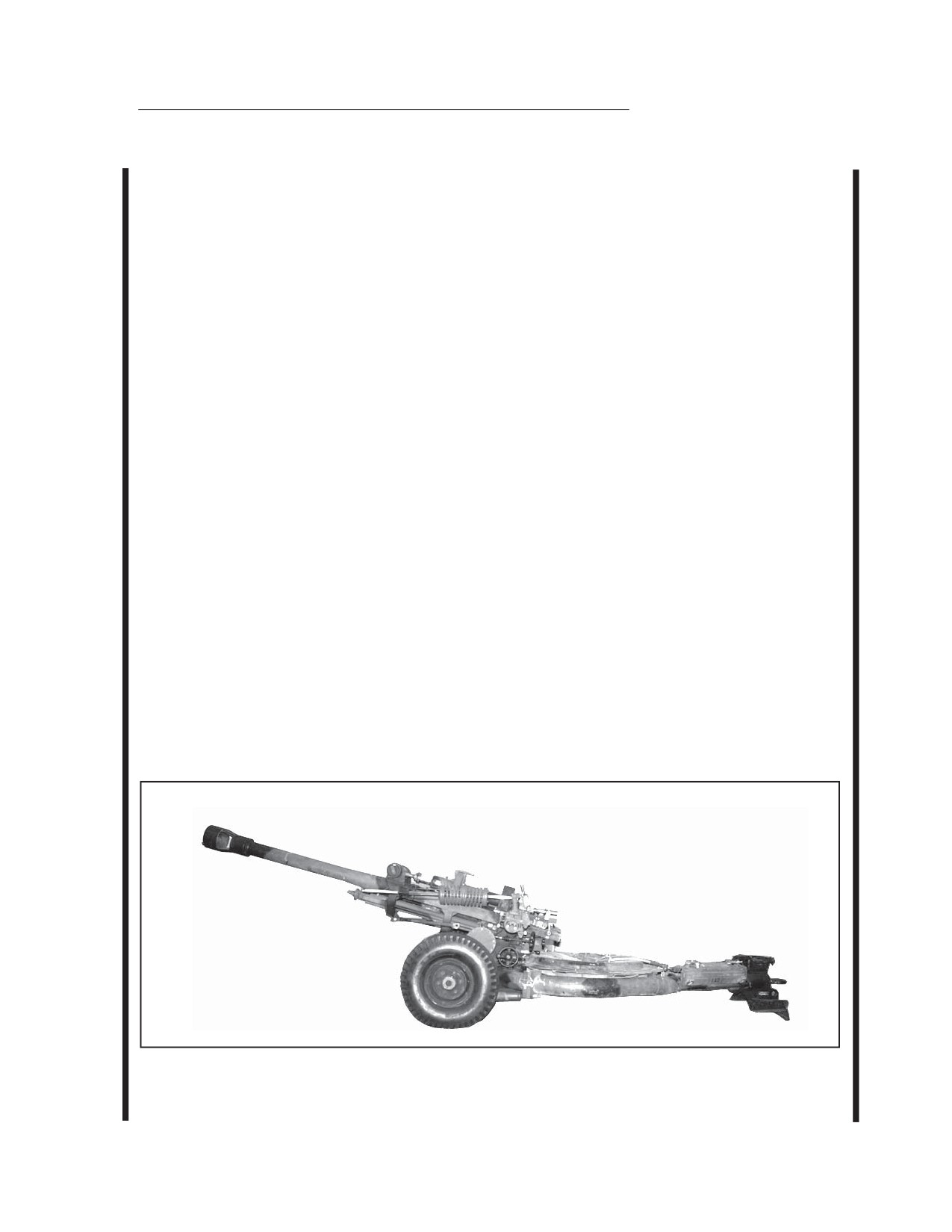
6-1. The M119, 105-mm howitzer (Figure 6-1) weighs 4,190 pounds. The length
is 240 inches, reducible to 192 inches. It is 70 inches wide. Its height is 94
inches reducible to 54 inches.
The howitzer is rigged with 36 boxes of 105 mm ammunition and 6 boxes of
fuses on a DRAS platform for DRAS airdrop. The load is rigged with three
G-11D cargo parachutes.
PREPARING PLATFORM
6-2. Inspect, or assemble and inspect, a DRAS platform with outrigger assem-
blies and outrigger platform support weldments according to TM 10-1670-268-
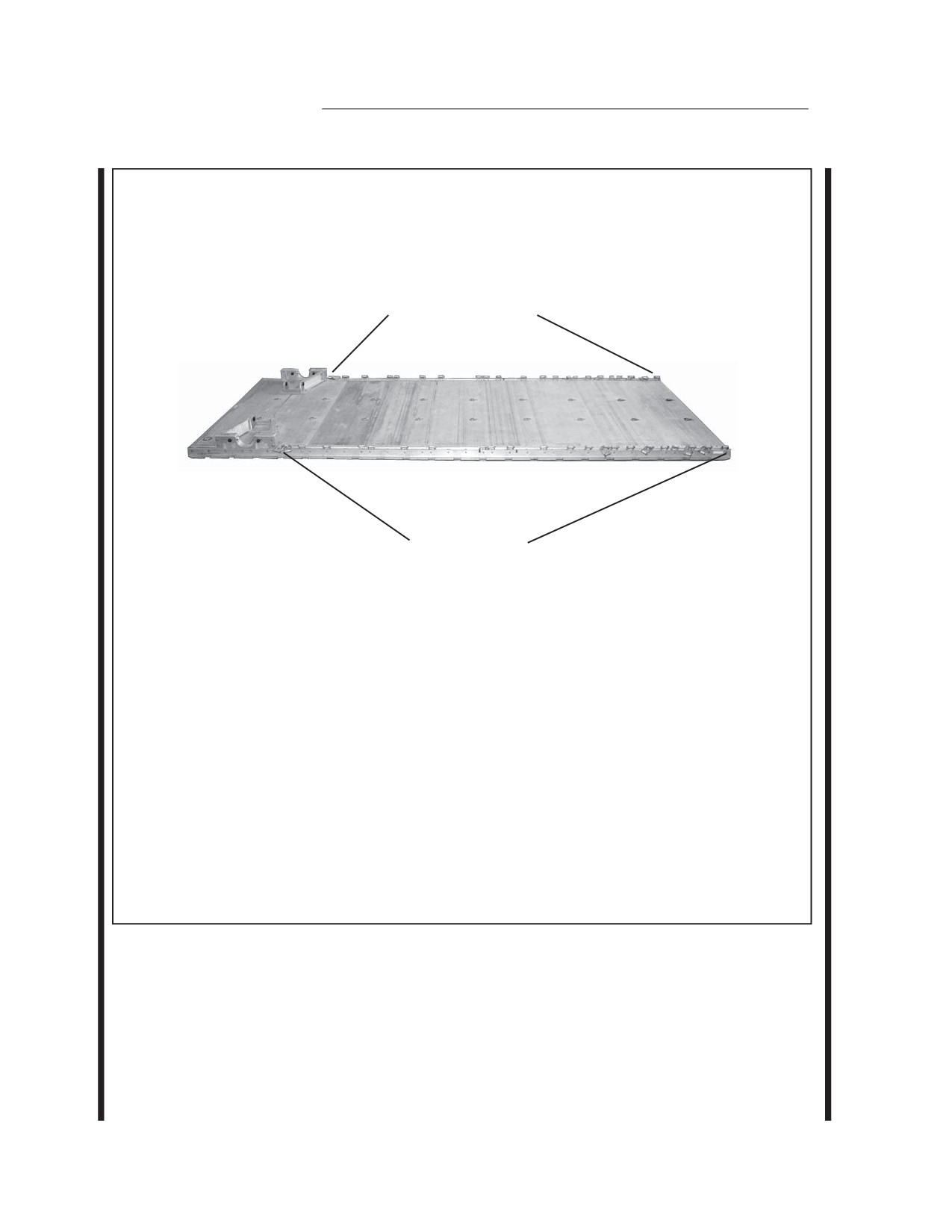
20&P/TO 13C7-52-22 and as shown in Figure 6-2.
Figure 6-1. M119 105-Millimeter Howitzer
6-1
C1, FM 4-20.105/TO 13C7-1-51
CLEVISES
27A THROUGH 1A
LEFT
FRONT
REAR
RIGHT
CLEVISES
27 THROUGH 1
Step:
1. Starting at the front of each platform side rail, install clevises on the bushings bolted on holes 1, 2
(double), 3 (double), 4, 5, 6 (double), 7, 8, 9 (double), 10, 11, 13, 15, 16, 17, 20, 22, 24, 25, 27, 29, and 30
(triple).
2.
Starting at the front of the platform, number the clevises bolted to the right side from 1 through 27 and
those bolted to the left side from 1A through 27A.
3.
Label the tiedown rings according to Chapter 3 of this manual.
Figure 6-2. Platform Prepared
6-2
C1, FM 4-20.105/TO 13C7-1-51
STOWING ACCOMPANYING LOAD
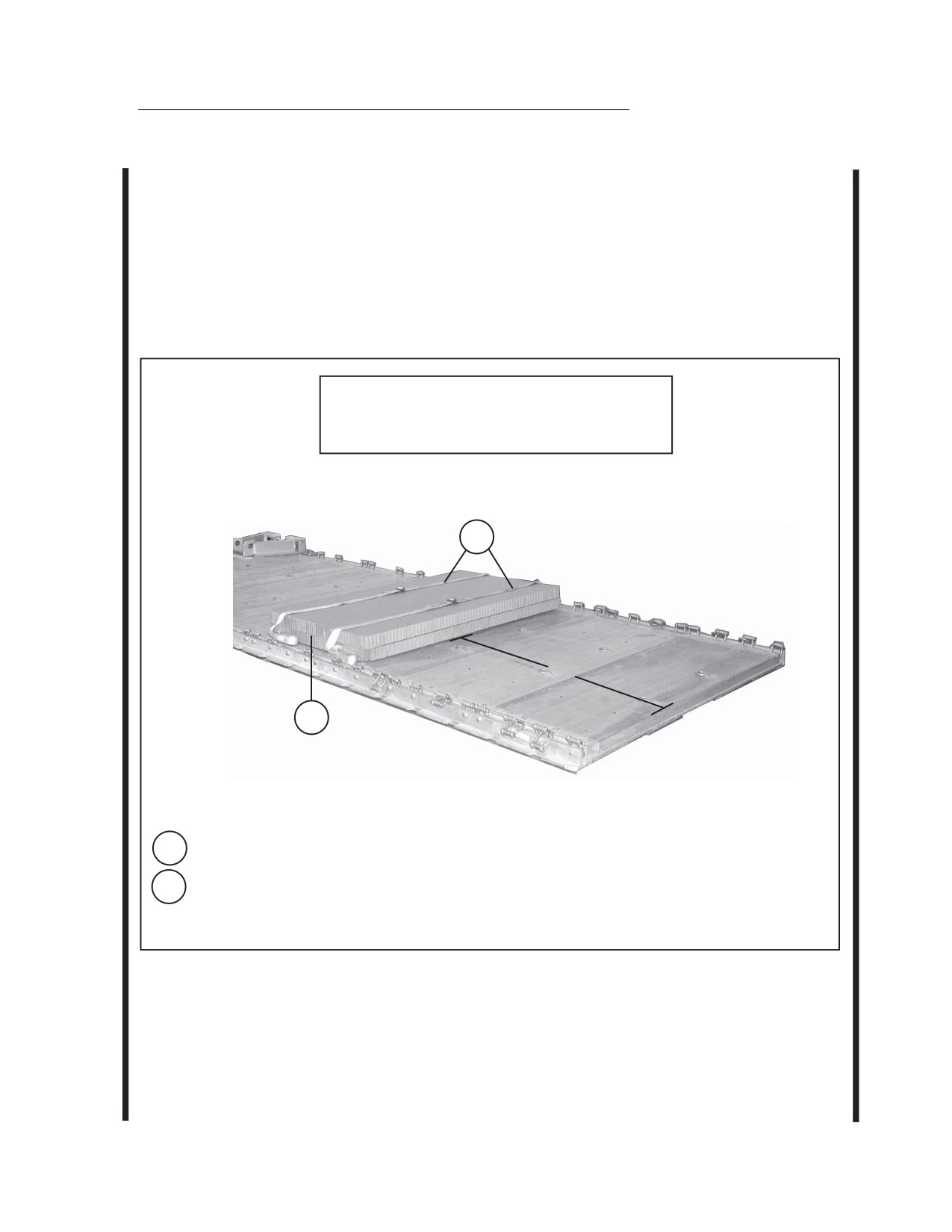
6-3. Stow the accompanying load of 36 boxes of 105-mm ammunition as shown
in Figures 6-3 through 6-5. Six boxes of fuses will be stowed after the gun is
lashed to the platform. When hazardous materials are rigged as part of the load,
they must be packaged, marked, and labeled according to AFMAN(I) 24-204/TM
38-250.
CAUTION
Only ammunition listed in FM 10-500-53/
MCRP 4-3.8/TO 13C7-18-41 may be airdropped.
2
60”
1
FRONT
1
Center two 36- by 73-inch pieces of honeycomb 60 inches from the front edge of the platform.
2
Form two 30-foot lashings according to Chapter 3 of this manual and lay them side to side
on the honeycomb.
Figure 6-3. First Stack of Honeycomb Positioned with Lashings
6-3
C1, FM 4-20.105/TO 13C7-1-51
2
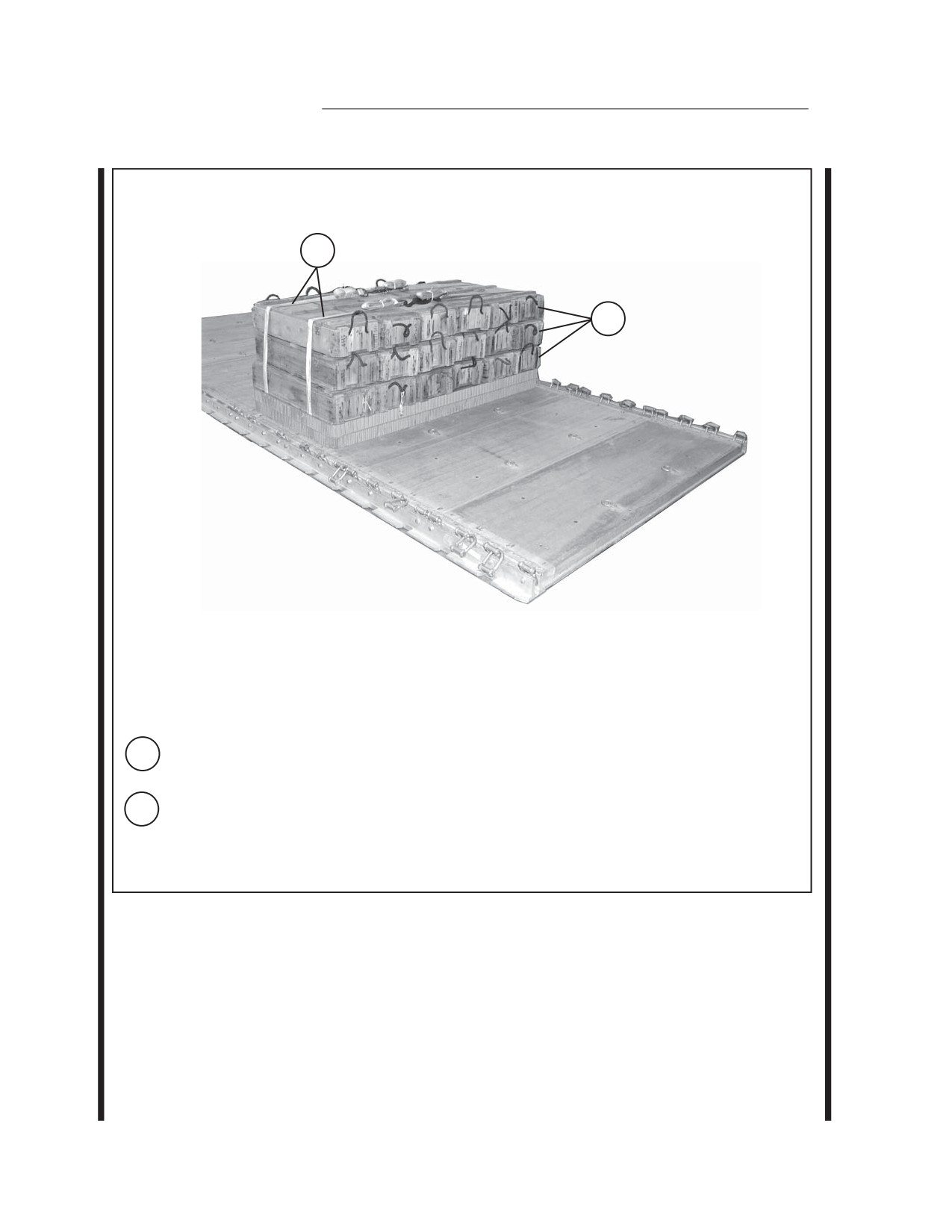
1
FRONT
1
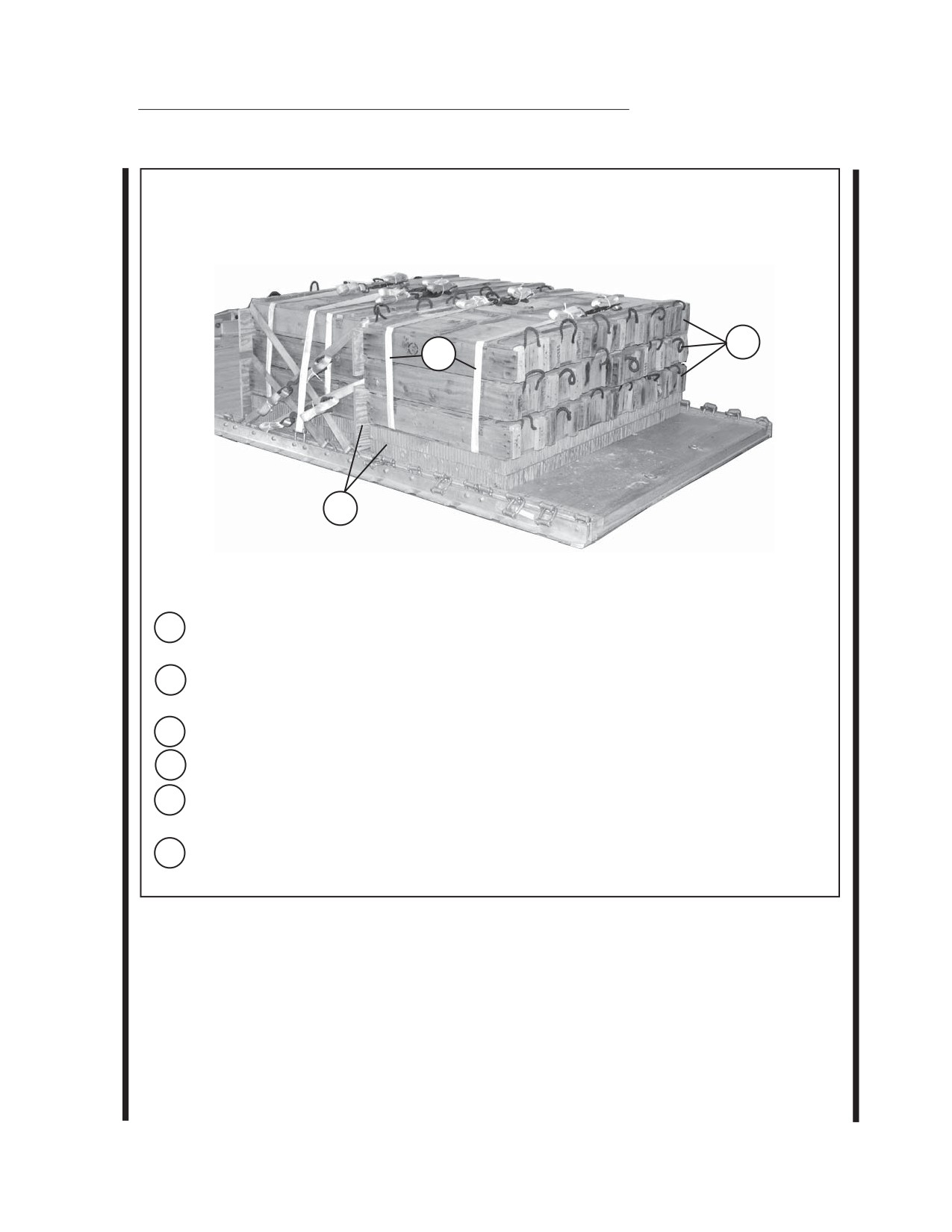
Place 18 boxes of 105-mm ammunition centered on the honeycomb. Position boxes three
high and six across.
2
Secure the 30-foot lashings with D-rings and load binders.
Figure 6-4. First Stack of Ammunition Lashed
6-4
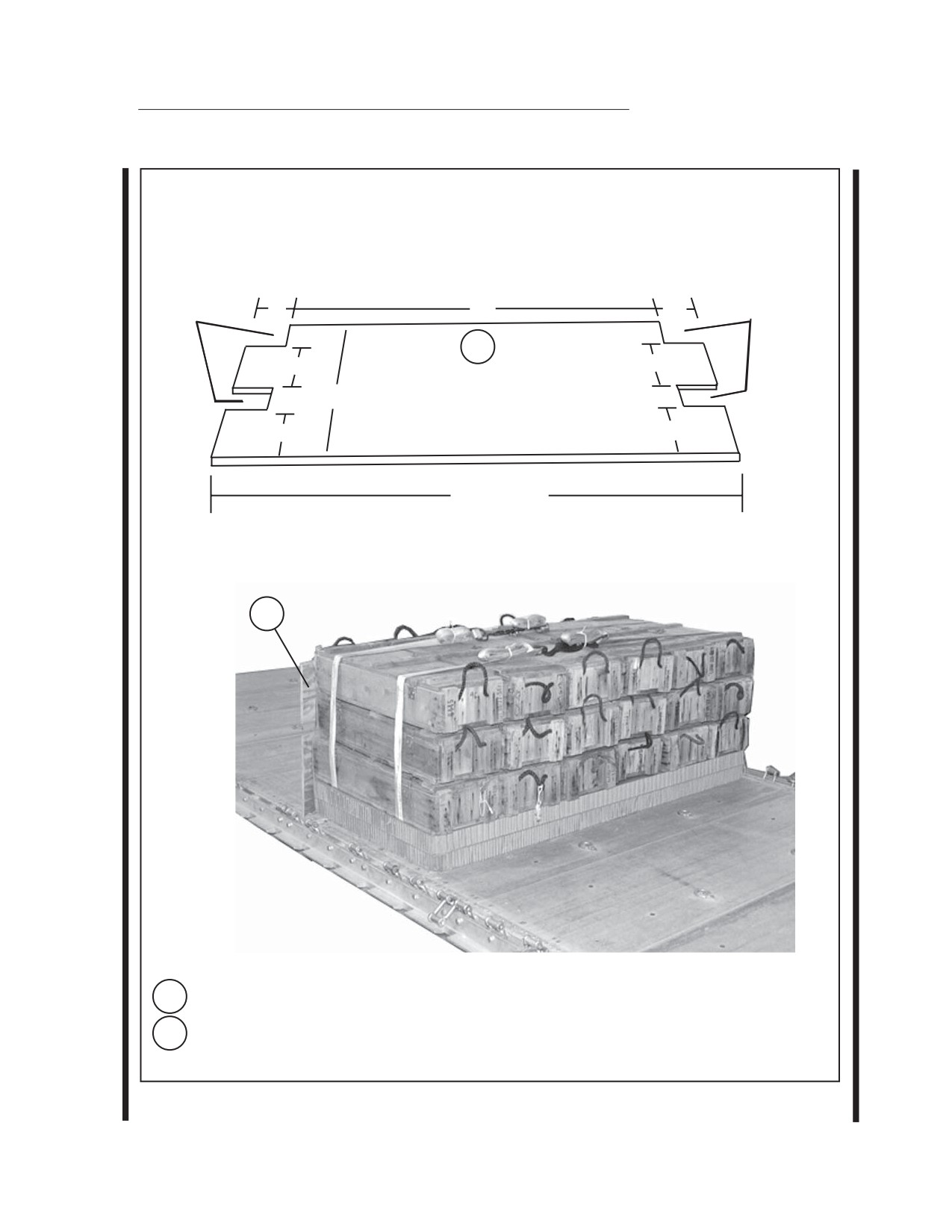
C1, FM 4-20.105/TO 13C7-1-51
Notes: 1. All measurements are given in inches.
2. This drawing is not drawn to scale.
TOP
2 X 4-INCH
2 X 4-INCH
CUTOUTS
4
69
4
CUTOUTS
2
2
3
10
10
PLYWOOD
28
2
2
3/4 X 28 X 77
14
14
77
BOTTOM
4
FRONT
3
Cut four endboards as shown using 3/4- by 28- by 77-inch pieces of plywood.
4
Place one endboard against the rear of the stack of boxes.
Figure 6-4. First Stack of Ammunition Lashed (Continued)
6-5
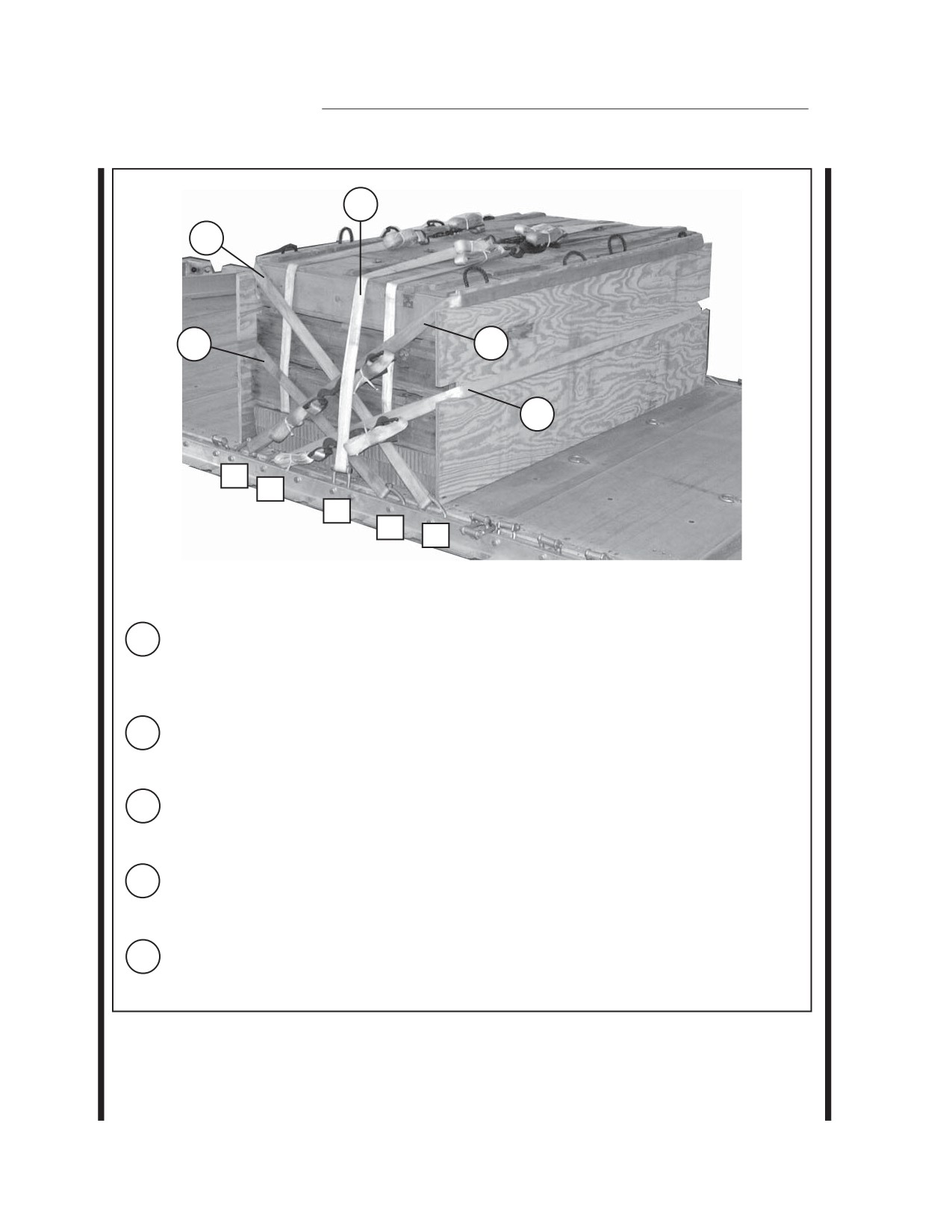
C1, FM 4-20.105/TO 13C7-1-51
9
5
6
8
7
18
FRONT
17
16
15
14
5
Form seven 30-foot lashings according to Chapter 3 of this manual. Pass the ends of a 30-
foot lashing through clevises 14 and 14A and through the upper cutouts in the
rear endboard. Secure the lashing in the center of the end board with two D-rings and a
load binder.
6
Pass the ends of a 30-foot lashing through clevises 15 and 15A and through the lower
cutouts in the rear endboard. Secure the lashing in the center of the end board with two D-
rings and a load binder.
7
Place an endboard against the front of the stack of boxes. Pass the ends of a 30-foot lashing
through clevises 17 and 17A and through the lower cutouts in the front endboard. Secure
the lashing at the side of the load with two D-rings and a load binder.
8
Pass the ends of a 30-foot lashing through clevises 18 and 18A and through the upper slots
in the front endboard. Secure the lashing at the side of the load with two D-rings and a load
binder.
9
Pass the ends of a 30-foot lashing through clevises 16 and 16A and over the top of the stack
of boxes. Secure the lashing in the center of the boxes with two D-rings and a load binder.
Figure 6-4. First Stack of Ammunition Lashed (Continued)
6-6
C1, FM 4-20.105/TO 13C7-1-51
5
6
FRONT
1
1
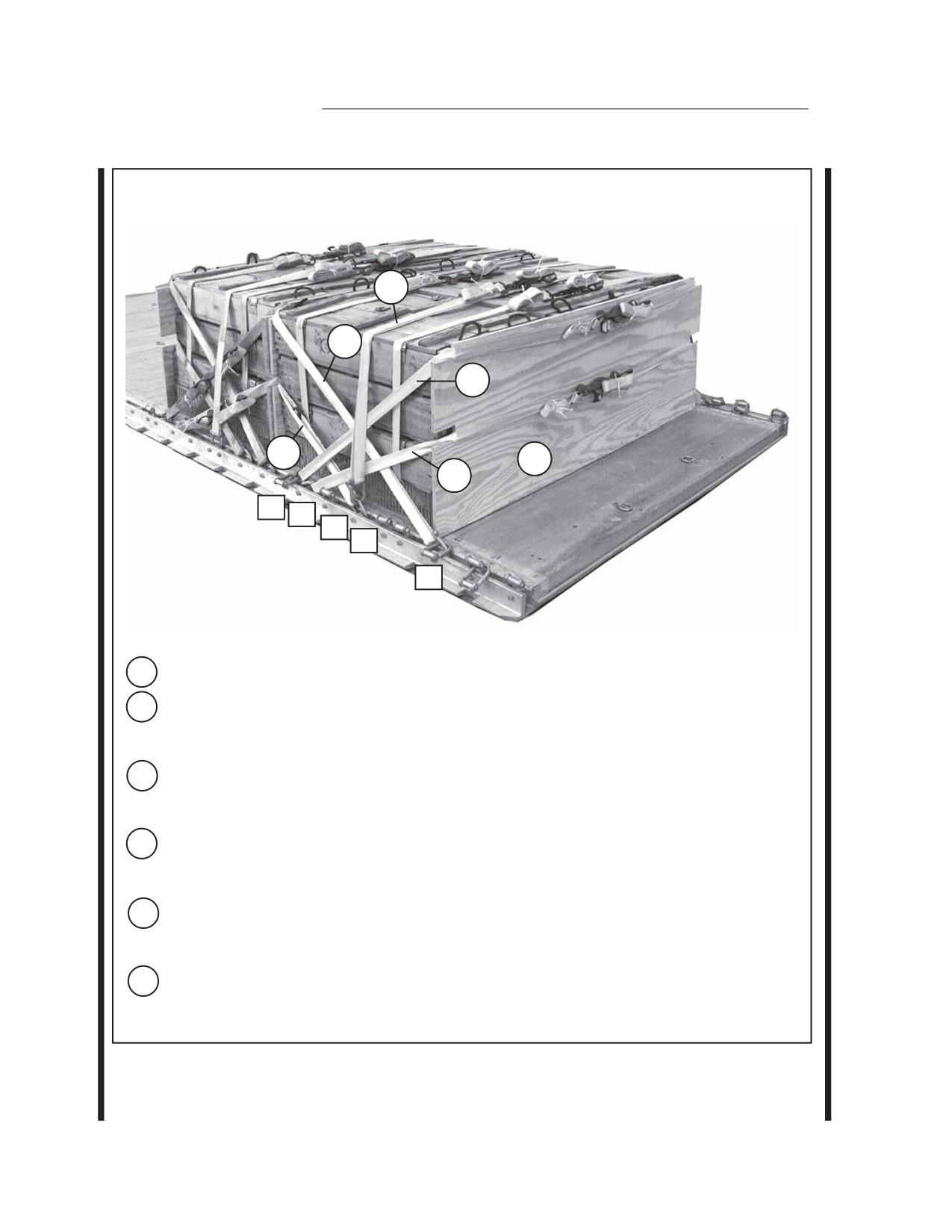
Set a third endboard against the front of the stack. Center two 36- by 73-inch pieces of
honeycomb flush against the endboard.
2
Form two 30-foot lashings according to Chapter 3 of this manual and lay them side to side
on the honeycomb. Refer to Figure 6-3, step 2.
3
Pre-position a 30-foot lashing through clevis 4A and through the upper cutouts (not shown).
4
Pre-position a 30-foot lashing through clevis 8A and through the lower cutouts (not shown).
5
Place 18 boxes of 105-mm ammunition centered on the honeycomb. Position boxes three
high and six across.
6
Secure the 30-foot lashings with D-rings and load binders.
Figure 6-5. Second Stack of Ammunition Lashed
6-7
C1, FM 4-20.105/TO 13C7-1-51
12
10
8
11
7
9
12
11
9
FRONT
8
4
7
Set a fourth endboard against the front of the front stack of boxes.
8
Pass the ends of a 30-foot lashing through clevises 12 and 12A and through the top cutout
in the front endboard. Secure the lashing in the center of the endboard with two D-rings
and a load binder.
9
Pass the ends of a 30-foot lashing through clevises 11 and 11A and through the lower
cutouts in the front endboard. Secure the lashing in the center of the endboard with two D-
rings and a load binder.
10
Pass the ends of the pre-positioned 30-foot lashing through clevis 4 and through
the upper cutouts in the rear endboard. Secure the lashing at the side of the load with two
D-rings and a load binder.
11
Pass the ends of the pre-positioned 30-foot lashing through clevis 8 and through
the upper cutouts in the endboard. Secure the lashing at the side of the load with two D-
rings and a load binder.
12
Pass the ends of a 30-foot lashing through clevises 9 and 9A and over the top of the stack
of boxes. Secure the lashing in the center of the boxes with two D-rings and a load binder.
Figure 6-5. Second Stack of Ammunition Lashed (Continued)
6-8
C1, FM 4-20.105/TO 13C7-1-51
BUILDING AND PLACING HONEYCOMB STACKS
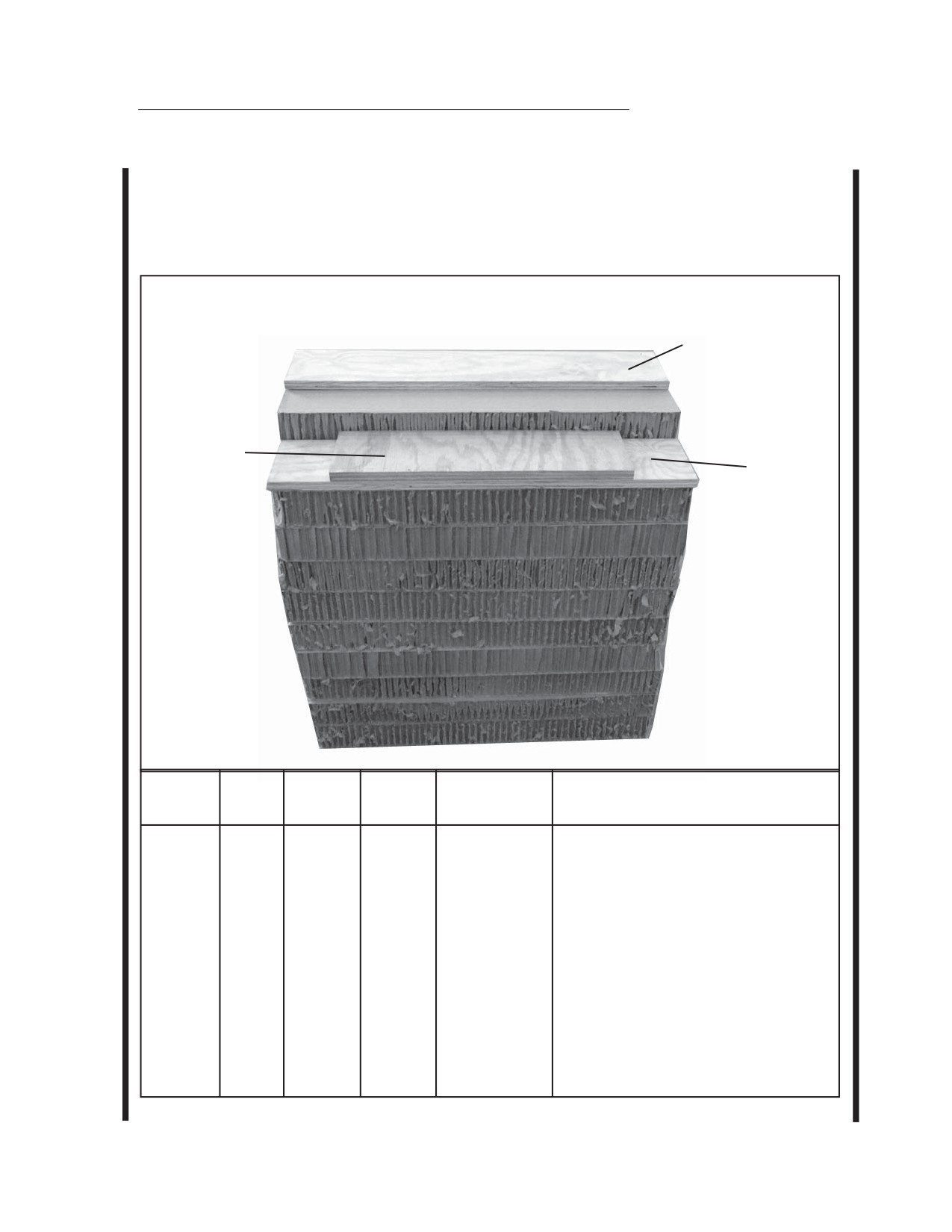
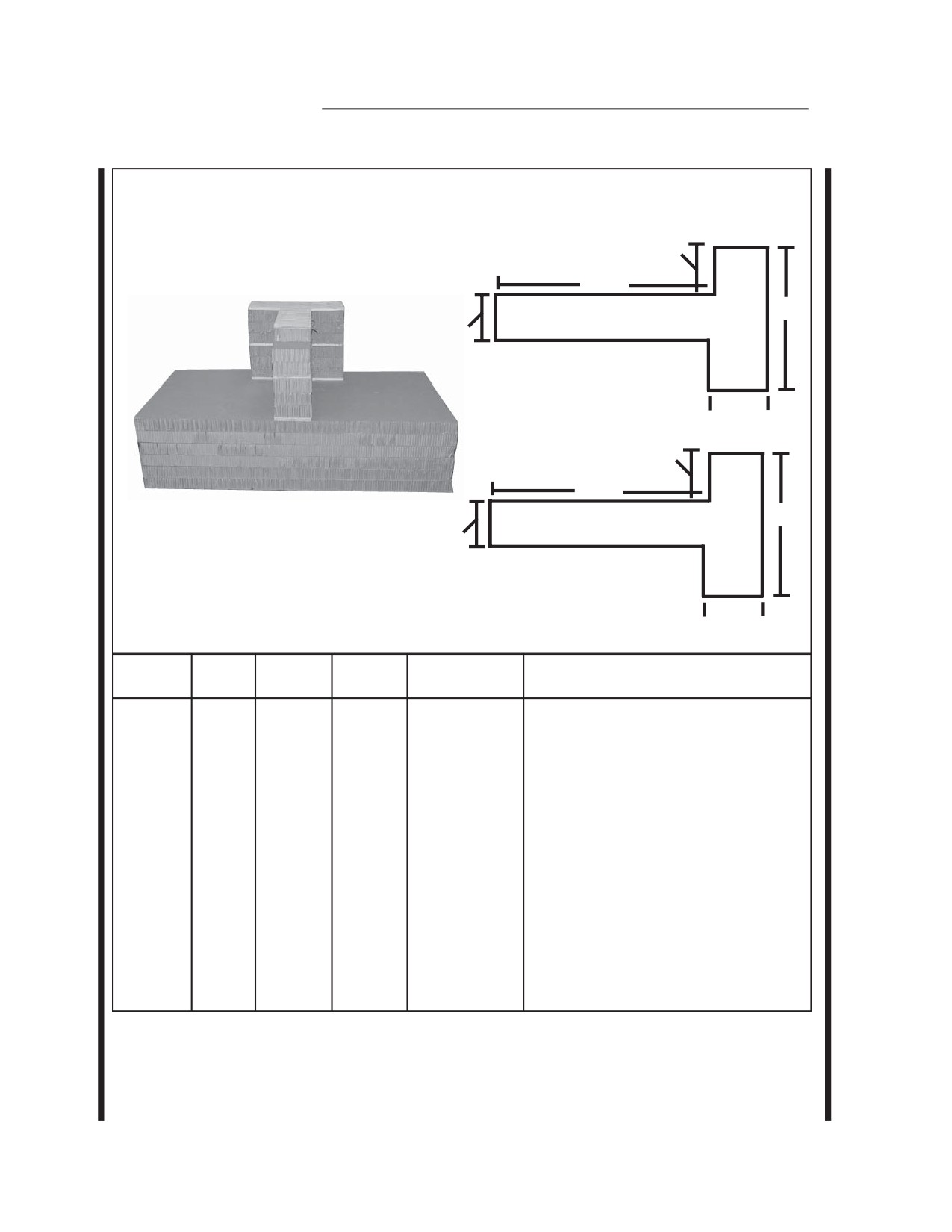
6-4. Build the honeycomb stacks as shown in Figures 6-6 through 6-8. Place
them on the platform as shown in Figure 6-9.
Note: All measurements are given in inches.
PLYWOOD
REAR
3/4 X 30 X 6
PLYWOOD
3/4 X 21 X 6
PLYWOOD
3/4 X 30 X 6
FRONT
Stac k
Width
Length
Number
Pieces
(Inches )
(Inches )
Material
Instructions
1
9
30
16
Honeycomb
Glue together to form a stack.
1
30
10
Honeycomb
Glue honeycomb even with rear edge
of base.
1
30
6
3/4-inch
Glue plywood even with front edge of
plywood
honeycomb.
1
30
6
3/4-inch
Glue plywood flush on rear edge of
plywood
stack.
3/4-inch
Center and glue plywood on the front
1
21
6
plywood
piece of plywood.
Figure 6-6. Honeycomb Stack 1 Prepared
6-9
C1, FM 4-20.105/TO 13C7-1-51
Notes: 1. All measurements are given in inches.
2. This drawing is not drawn to scale.
8 1/2
FRONT
27 1/2
25
8
7 TH THROUGH 12 TH LAYERS
OF HONEYCOMB AND PLYWOOD
8 1/2
8 1/2
21 1/2
REAR
25
8
TOP LAYERS
8 1/2
Stack
W
i
t
Length
Number
Pieces
(Inches)
(Inches)
Material
Instructions
2
6
72
36
Honeycomb
Glue together to
f
Make cutouts as shown, and glue
f
3/4-inch
1
25
36
with the front and centered on
t
plywood
honeycomb.
Make cutouts as shown, and glue
f
3
25
36
Honeycomb
on
t
3/4-inch
Make cutouts as shown, and glue
f
1
25
36
plywood
on
t
Make cutouts as shown and place
2
25
36
Honeycomb
flush on
t
1
25
30
Honeycomb
Make cutouts as shown for the
t
layer, and place flush on
t
Make cutouts as shown for
t
1
25
30
3/4-inch
layer, and place flush on
t
plywood
Figure 6-7. Honeycomb Stack 2 Prepared
6-10
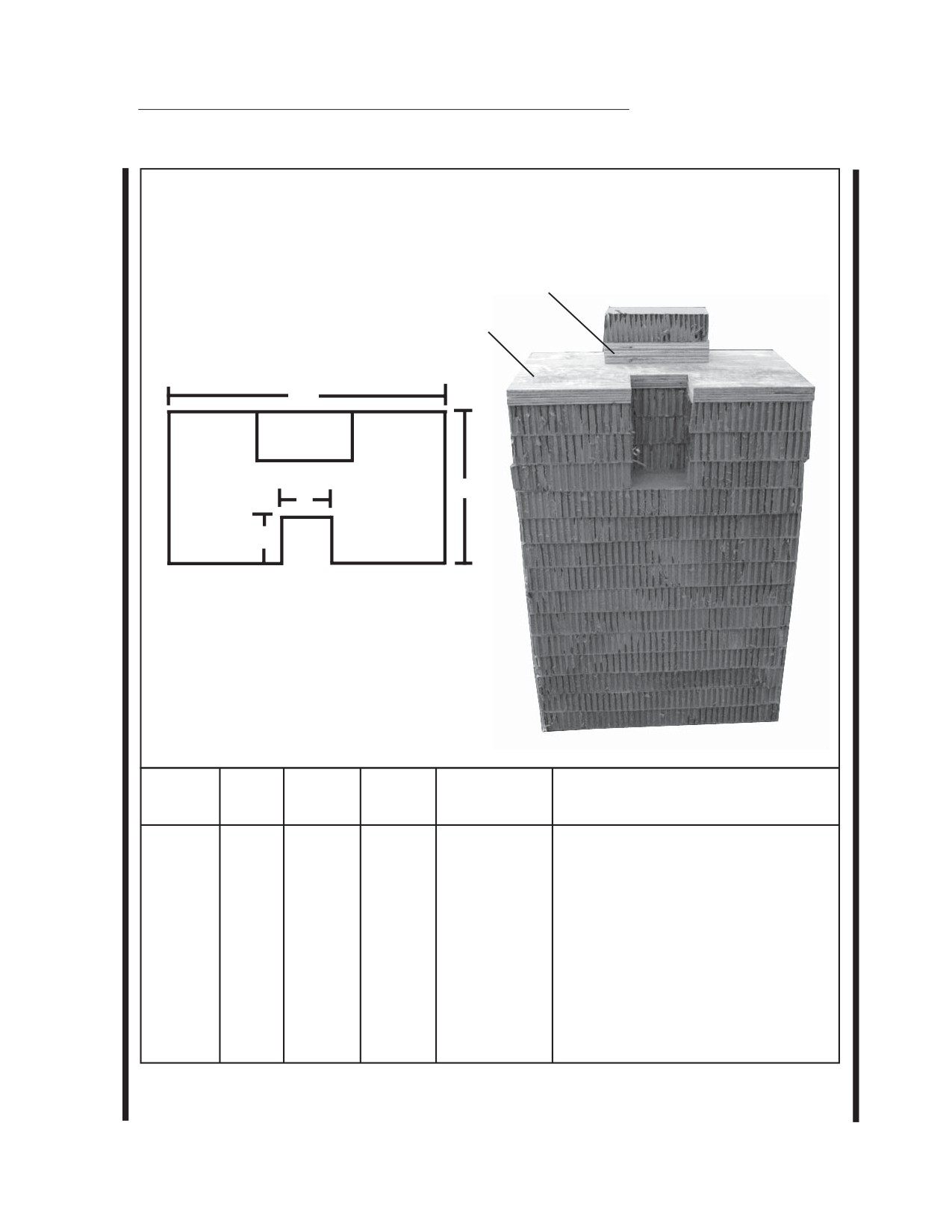
C1, FM 4-20.105/TO 13C7-1-51
Notes: 1. All measurements are given in inches.
2. This drawing is not drawn to scale.
PLYWOOD
3/4 X 12 X 8
PLYWOOD
3/4 X 30 X 20
30
TOP VIEW
20
6
6
FRONT
FRONT
Stack
W
i
t
Length
Number
Pieces
(Inches)
(Inches)
Material
Instructions
3
11
30
20
Honeycomb
Form a stack.
3
30
20
Honeycomb
Center a cut 6-inches wide and 6 -
inches deep in a 30-inch side. Place
these pieces flush on
t
the cutouts to the
f
2
30
20
3/4-inch
Make same cuts as previously show n
plywood
and glue on honeycomb.
3
12
8
3/4-inch
Glue the 12-inch sides
f
plywood
rear edge and centered.
1
12
8
Honeycomb
Glue flush over
t
previously.
Figure 6-8. Honeycomb Stack 3 Prepared
6-11
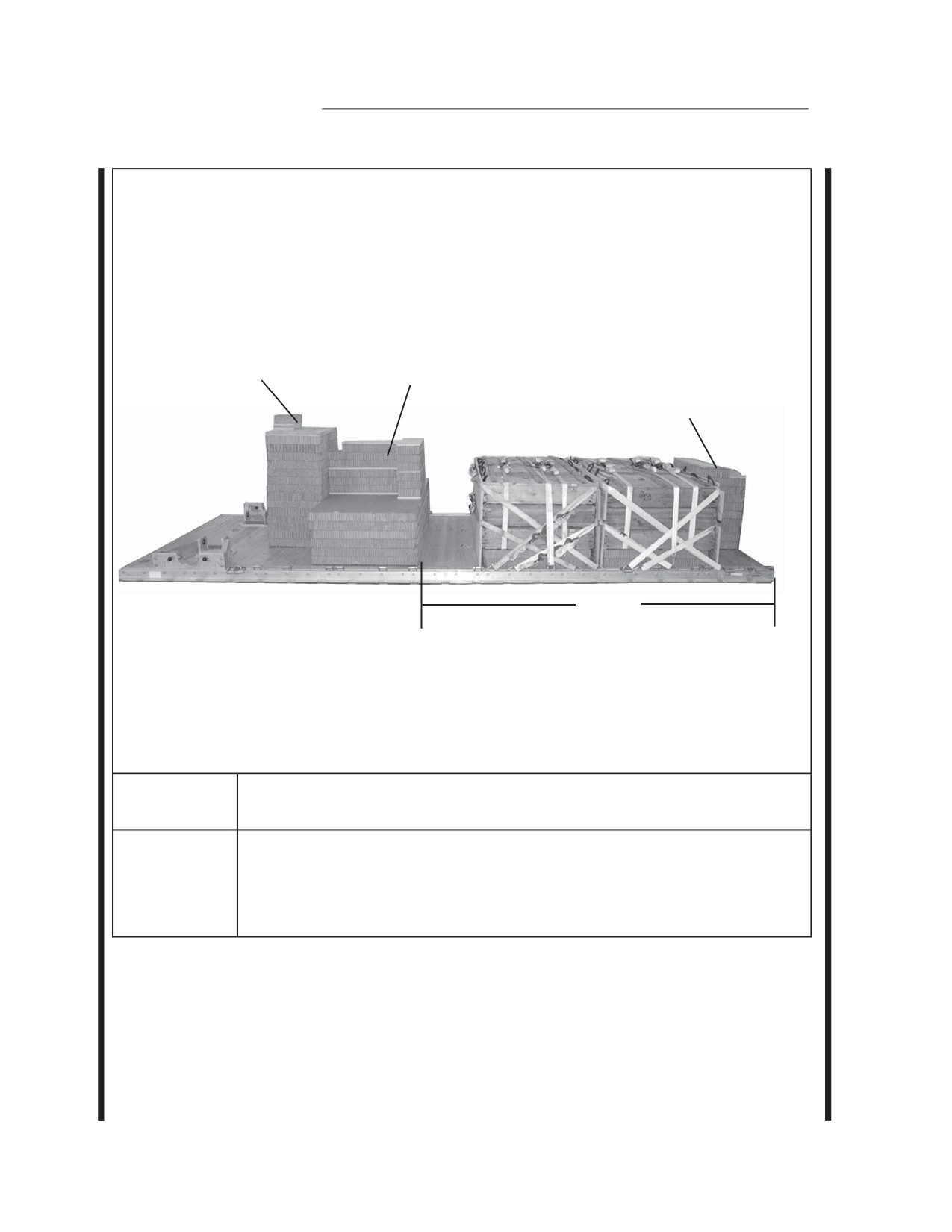
C1, FM 4-20.105/TO 13C7-1-51
Notes: 1. All measurements are given in inches.
2. This drawing is not drawn to scale.
STACK 3
STACK 2
STACK 1
REAR
FRONT
117 1/2
Stac k
Position of Stack on Platform
Number
Place stack:
1
Centered flush with the front edge of the platform
2
Centered 117 1/2 inches from the front edge of the platform
3
Centered flush against stack
2
Figure 6-9. Honeycomb Stacks Placed on Platform
6-12
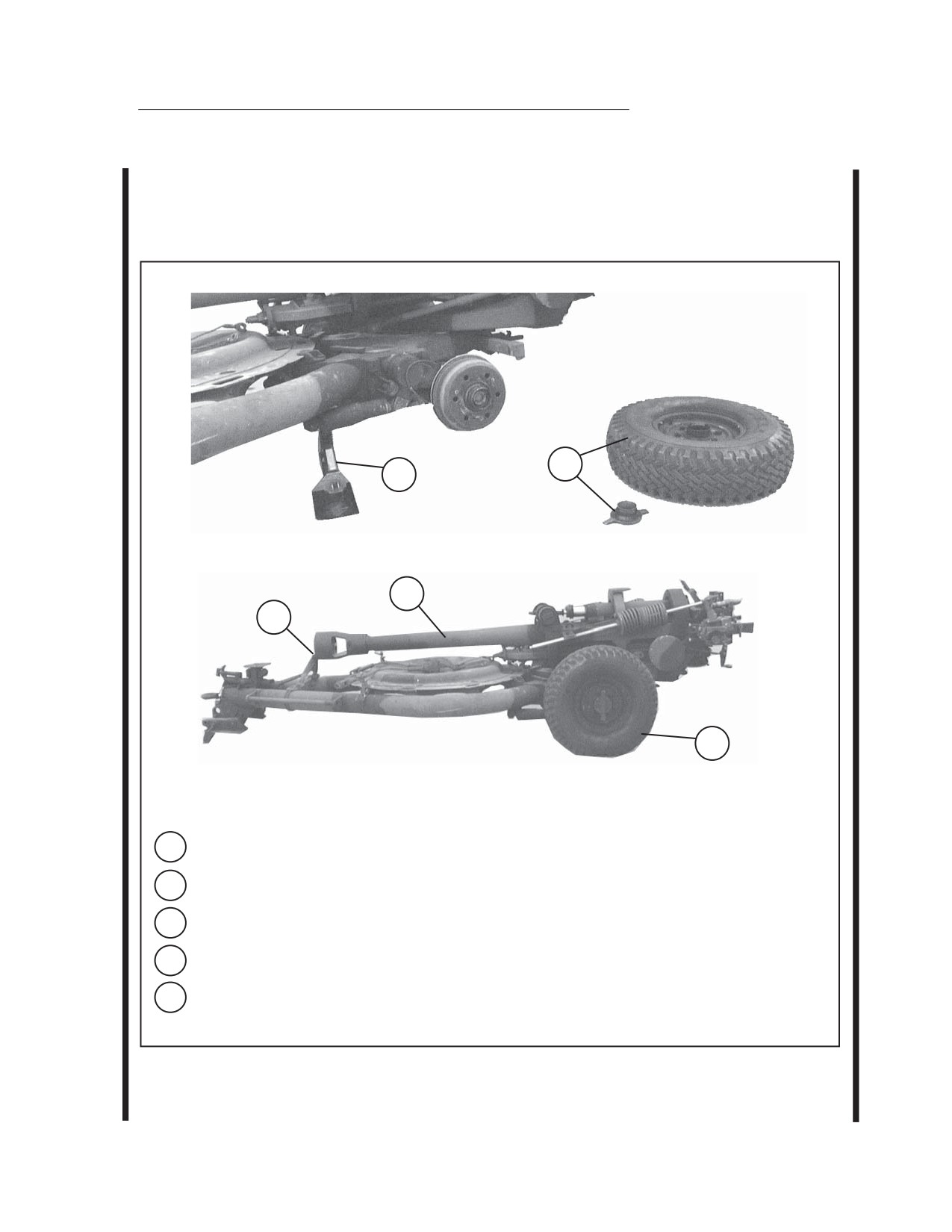
C1, FM 4-20.105/TO 13C7-1-51
PREPARING HOWITZER
6-5. Prepare the howitzer as shown in Figures 6-10 through 6-19.
2
1
4
3
5
1
Install the jack.
2
Use the mallet to remove the wheel hub and the right front wheel.
3
Place the traveling stay in its locking bracket.
4
Traverse the barrel to the rear until it is centered between the trails.
5
Replace the wheel and hub. Stow the jack and mallet in their bracket on the left side of the
gun.
Figure 6-10. Howitzer Placed in Travel Position
6-13