FM 101-5 STAFF ORGANIZATION AND OPERATIONS (May 1997) - page 4
Appendix F
TASK ORGANIZATION
FUNDAMENTAL
• Specific unit capabilities, limitations, strengths,
and weaknesses.
CONSIDERATIONS
• The risks inherent to the plan.
Task organization is the process of allocating available
assets to subordinate commanders and establishing their
• Subordinate commanders’ abilities, especially the
command and support relationships. Some assets are re-
ability to apply combined arms doctrine.
tained under the commander’s immediate control to retain
The commander uses the war game to identify what
flexibility to exploit opportunities. Staff estimates and
combat power he needs, and where, when, and how fre-
course of action analysis provide information that helps
quently he will need it. He approves or modifies the
the commander determine the best task organization to—
staff’s task organization recommendation based on his
• Retain flexibility within the concept of operations.
evaluation of the factors listed above and information
from estimates and COA analysis.
• Adapt to conditions imposed by factors of
METT-T.
Formal task organization, and the change from ge-
neric to specific units, begins after COA analysis, when
• Create effective combined arms teams.
the commander assigns missions to subordinate com-
• Provide mutual support between units.
manders. He assigns tasks to subordinate headquarters
and determines if subordinate headquarters have suffi-
• Ensure flexibility to meet unforeseen events and
cient combat power, reallocating combat power as nec-
support future operations.
essary. He then defines command and support relations
• Allocate resources with minimum restrictions on
for subordinate units and decides the priorities of sup-
their employment.
port. The commander allocates maneuver units two lev-
els down to commanders one level down. There may be
• Facilitate the commander’s intent, concept, scheme
exceptions for CS units (for example, at corps level, en-
of maneuver, and guidance.
gineer or MP companies may be allocated to augment
• Weight the main effort.
divisions). The commander allocates CSS units, regard-
less of size, as needed.
• Ensure unity of command and synchronization of
effort through the proper use of command and support
In allocating assets, the commander and staff must
relationships.
consider—
• Offset limitations and maximize the potential of all
• The existing task organization established in an on-
forces available.
going operation.
• Exploit enemy vulnerabilities.
• The potential adverse effect of breaking up cohe-
sive teams by changing the task organization.
• Make the best use of terrain and weather.
• The time necessary to realign the organization after
Successful task organization requires understanding —
receipt of the task organization.
• The mission, including the higher commander’s in-
• The control they have over supporting units that
tent and concept of operations.
higher headquarters provides is provisional.
• Army doctrinal tenets and tactics.
In its OPORD or OPLAN, a unit must state specifi-
• The battlefield framework.
cally defined command and support relationships that
place it under a commanding headquarters. Definitions
• The roles and interrelations of operating systems.
of support or command relationships do not always
• The status of available forces, including morale,
cover every situation; for example, in an armored battal-
training, and capabilities of equipment.
ion that is in direct support or is under operational
F-1

FM 101-5
control (OPCON) to a light brigade, the sustainment
units. Support relationships are established routinely as
functions for the armored force exceed the ability of the
general support
(GS), general support-reinforcing
light brigade. Specific support tasks must be listed
(GSR), reinforcing (R), and direct support (DS). FM
above the accepted doctrinal definition of a command or
101-5-1 defines each of these support relationships.
support relationship.
Figure F-1 graphically portrays the inherent responsi-
bilities of each support relationships.
COMMAND AND SUPPORT
As the commander establishes a command relation-
ship for a subordinate unit, he must also determine if the
RELATIONSHIPS
command relationship includes administrative control
Command relationships establish the degree of con-
(ADCON) of the unit. Administrative control includes
trol and responsibility a commander has for forces oper-
personnel management, control of resources and equip-
ating under his control. Command relationships can be
ment, discipline, and other matters not included in op-
attached, operational control (OPCON), or tactical con-
erational missions. Administrative control is defined in
trol (TACON). FM 101-5-1 defines each command re-
FM 101-5-1. During attachment of a unit, orders nor-
lationship. Figure F-1, graphically portrays the inherent
mally state whether the parent unit retains administra-
responsibilities of each command relationship. Com-
tive control of the unit. If not, the attachment orders
mand responsibilities, responsibilities for service sup-
must specifically state that the gaining unit has adminis-
port, and authority to organize or reassign component
trative control. For OPCON and TACON, the parent
elements of a supporting force remain with the higher
unit will retain administrative control of the unit.
headquarters or parent unit unless the authorizing com-
ADCON is synonymous with administration and
mander specifies otherwise.
support responsibilities identified in Title 10 United
Support relationships establish specific relationships
States Code (USC). This is the authority necessary to
and responsibilities between supporting and supported
fulfill military department statutory responsibilities for
INHERENT RESPONSIBILITIES
Has Command
May Be Task
Receives
Is Positioned
Provides Liaison:
Establishes/
Has Priorities
Gaining Unit Can
RELATIONSHIPS
Relationship
Organized By:
Logistic
By:
Maintains
Established By:
Further Impose
With:
Support From:
Communications
Command
With:
Relationships Of:
Attached
Gaining Unit
Gaining Unit
Gaining Unit
Gaining Unit
As Required By
Unit to Which
Gaining Unit
Attached, OPCON,
Unit to Which
Attached
TACON, GS,
Attached
GSR, R, DS
C
OPCON
Gaining Unit
Gaining Unit
Parent Unit
Gaining Unit
As Required By
Parent Unit and
Gaining Unit
OPCON, TACON,
O
(Except When
Unit to Which
Unit to Which
GS, GSR, R,
M
Involving Multi-
OPCON
OPCON
DS
M
national Forces
A
in NATO, Then
N
Parent Unit
D
Parent Unit and
TACON
Gaining Unit
Parent Unit
Parent Unit
Gaining Unit
As Required By
Gaining Unit
GS, GSR, R, DS
Unit Having
(Maneuver)
Unit Having
TACON
TACON
GS
Parent Unit
Parent Unit
Parent Unit
Parent Unit
As Required
Parent Unit
Parent Unit
NA
By Parent Unit
GSR
Parent Unit
Parent Unit
Parent Unit
Parent Unit
As Required
Parent Unit and
1. Parent Unit
S
By Parent Unit
Reinforced Unit
2. Reinforced
U
NA
and Reinforced
Unit
P
Unit
P
O
R
1. Reinforced
R
Parent Unit
Parent Unit
Parent Unit
Reinforced
Reinforced Unit
Parent Unit and
Unit
NA
T
Unit
Reinforced Unit
2. Parent Unit
DS
Parent Unit
Parent Unit
Parent Unit
Supported
Supported Unit
Parent Unit and
Supported Unit
NA
Unit
Supported Unit
Figure F-1.
Command and support relationships and inherent responsibilities
F-2
FM 101-5
administration and support. Administrative control of
2. Indent subordinate units two spaces under the
an Army unit cannot be transferred to a unit of another
C2 headquarters to indicate that they are organic, as-
service. ADCON of an Army unit must remain in Army
signed, or attached. Qualify relationships other than at-
channels.
tached by using parenthetical terms
(for example,
(OPCON), (GS), (DS), (GSR:__, (R:__), and so forth).
If possible, show all command and support relationships
FORMATTING TASK
in the task organization. Place DS units below the ma-
ORGANIZATION
neuver units they support. A command or support rela-
tionship is not a mission assignment; mission
There are two methods for formatting task organi-
assignments go in paragraph 3b or 3c of the basic
zation—the outline method and the matrix method
OPORD or OPLAN under organization for combat. For
(Figure F-2, page F-4 and Figure F-3, page F-5). The
clarity, list subsequent command or support relation-
sequence in which units are listed is the same for both
ships in the task organization in parentheses following
methods (shown in Figure F-4, page F-6). The CofS
the affected unit (for example, “...on order, OPCON to
(XO) selects the method the staff will use for a given
2d Brigade” is written as (o/o OPCON 2d Bde)).
plan or order.
3. When the effective attachment time of a nonor-
ganic unit to another unit differs from the effective time
The Outline Method
of the OPLAN or OPORD, enclose the effective attach-
ment time in parentheses after the attached unit (for ex-
The outline method of task organization is a detailed
ample, OPCON 2d Bde Ph II). List this information in
listing in the basic order or plan of the allocation of
either the task organization (preferred) or in paragraph
available resources to ground maneuver units. Long or
1c, but not both.
complex task organizations go in Annex A. The outline
4. Give the numerical designations of units in
method has five steps:
Arabic numerals (such as 10th Corps, 1st AF, 3d
1. List major subordinate control headquarters in
Corps, 23d Armd Div). To distinguish national forces
the correct sequence. If applicable, list task organization
of two or more nations, insert distinguishing letters
by the phases of the operation.
for the country between the numeric designation and
the unit name (for example, 3d (GE) Corps). Use ab-
a. Units are grouped by command and
control headquarters. Major subordinate maneuver
breviated designations for organic units in plans and
units (for example, 1st Bde) are listed first in alpha-
orders; however, to avoid confusion, use the full des-
betical or numerical order (task forces that are a
ignation for nonorganic units (2-607 (155, SP) FA
major subordinate command precede brigade list-
(Corps) rather than 2-607 FA). Designate task forces
ings), followed by division artillery (DIVARTY),
by using the last name of the commander of the task
division troops, and division support command
force
(TF WILLIAMS), a code name
(TF
(DISCOM).
WARRIOR), or a number (TF 47 or TF 1-77).
b. The order of listing units under the ma-
5. Group units other than major subordinate com-
jor subordinate headquarters is as follows:
mands and units that are attached to or support major subor-
dinate commands under a single heading which reflects that
(1) Maneuver
units
(task
forces
they are under the command and control of the force head-
(teams), infantry, light infantry, mechanized, motorized,
quarters (for example, division control, tactical combat force
air assault, airborne, armor, aviation, cavalry: armored
(TCF), DIVARTY, DISCOM). (See Figure F-2.)
and air). Then in numerical order:
When using the outline method, subordinate com-
(2) Artillery
units
(firing
batteries:
manders name the communications zone (COMMZ) ei-
tube (self-propelled), tube (towed), rockets, and target
ther geographically or numerically. They designate CSS
acquisition).
installations as follows:
(3) CS units by size of command
Supply points (SUPPTs) by number, class (cl) or
echelon, then numerically, and then alphabetically.
classes of supply, and organization or area supported
(4) CSS units by size of command
(for example, SUPPT 913, CL V, 10th Corps). Do not
echelon, then numerically, and then alphabetically.
designate two supply points by the same number.
F-3
FM 101-5
(Classification)
(No change from oral orders)
Copy no 4 of 25 copies
54th Mech Div
FRANKFURT (MA7551), GERMANY
251700A Jul 1996
XA 33
Operation Order 20
Reference: Map, series USACGSC 50-229, EUROPE, sheet
1
(FRIEDBERG—FRANKFURT),
edition 1974, 1:50,000
Time Zone Used Throughout the Order: ALPHA
Task Organization:
3d Bde
Div Trp
1st Bde
TF 3-82
1054 ROC
TF 3-3
3-82 Mech (-) 3
TF 3-5
3-3 Armor (-) 1
C/3-3 Armor
3-5 Armor (-) 4
C/3-82 Mech
3-78 Mech 4
C/3-81 Mech
3-77 Mech 1
3-80 Mech 5
TF 3-81
3-2 Armor 2
3-42 FA (DS)
3-81 Mech (-)
3-4 Armor 3
29th Engr Bn (DS)
C/3-5 Armor
3-40 FA (DS)
3/54 MP Co (DS)
3-441 ADA (-)
53d Engr Bn (DS)
543 FSB
54th Avn (-)
1/54 MP Co (DS)
3/54th Cml Co
54th Engr (-)
541 FSB
3/A/54th MI (DS)
C/550th Engr
1/54th Cml Co
5 GSR Tm(s)
Cbt Bn (Hv) (-)
1/A/54th MI (DS)
3/C/55 CA Bn
54th MI
10 GSR Tm(s)
54th Sig
1/4/C/55 CA Bn
201st ACR
54th Cml Co ()
C/54th Avn (OPCON)
Co C, 55th CA Tac Spt Bn (-)
3-23 Cav
54th MP Co (-)
2d Bde
61st FA Bde
288th PSYOP Co
3-79 Mech 2
2d Bn (155, SP), 618th FA
3-25 Armor 5
2d Bn (155, SP), 619th FA
Discom
3-41 FA (DS)
2d Bn, 631st FA (MLRS)
544 MSB
17th Engr Bn (DS)
2d Bn, 632d FA (MLRS)
545 Avn Spt Bn
2/54 MP Co (DS)
A/3-441 ADA
54th MMC
542 FSB
TF SMITH
4/C/55 CA Bn
2/54th Cml Co
201st Engr Co
2/A/54th MI (DS)
4/54 MP Co (DS)
6 GSR Tm(s)
2/C/55 CA Bn
Div Arty
3-43 FA
54th Tgt Acq Btry
Figure F-2. The outline method of task organization
F-4

FM 101-5
ANNEX A (TASK ORGANIZATION) TO OPERATION ORDER
1st Bde
2d Bde
3d Bde
201 ACR
DIVARTY
DIV TRP
DISCOM
TCF
MVR
C/3-82 Mech
C/3-3 Armor
D/3-23 Cav
1054 ROC
TF 3-5
TF 3-81
AVN
C/54 Avn
(OPCON)
3-42
3-40 FA (DS)
ARTY
3-41 FA (DS)
FA
61st FA Bde
3-43 FA (R)
(DS)
ADA
A/3-441 ADA
1/54
2/54
3/54
CML
Cml Co
Cml Co
Cml Co
53rd
17th
29th
201st
54th Engr Bde
ENGR
Engr Bn
Engr Bn
Engr Bn
Engr Co
(DS)
(DS)
(DS)
1/A/54
2/A/54
3/A/54
MI (DS)
MI (DS)
MI (DS)
MI
10 GSR
6 GSR
5 GSR
Tms
Tms
Tms
MP
1/54 MP Co (DS)
2/54 MP Co (DS)
3/54 MP Co (DS)
4/54 MP Co (DS)
54th MP Co (-)
SIG
54th Sig
CSS
541 FSB
542 FSB
543 FSB
544 MSB
545 MSB
54th MMC
1 Plt, Co C
2/C/55
3/C/55
288th
4/C/55
55th CA
CA
CA
PSYOP Co
CA TAC
SOF
TACSpt Bn
TAC Spt Bn
TAC Spt Bn
SOCCE
Spt Bn
190
Figure F-3. The matrix method of task organization
The Matrix Method
• Normally, the user would not list a division’s bri-
gades in the maneuver space on corps orders; however,
The matrix method of task organization is especially
on division orders list attached maneuver battalions un-
convenient at brigade and below. Commanders and staffs
der their brigades.
must be fully aware that matrix formats are not standard-
ized, and that the United States has not made agreements
• List maneuver units in the maneuver space under
with alliance members governing their use. Therefore,
the gaining headquarters if they are cross-attached.
headquarters involved in joint or multinational operations
• List in the maneuver space under the gaining com-
must not use matrix formats for distribution outside their
mand the “slice” of support that comes with a task force
headquarters. The matrix method has several advantages:
if it is to be attached.
• It displays, at a glance, command and support rela-
• Array CS units along their respective space in the
tionships for subordinate units and the force as a whole.
columns of the appropriate headquarters.
• It shows the organization for combat for CS and
• Specify command relationship or a support re-
CSS elements.
lationship on units not inherently implied as
• It makes accounting for each unit easier.
attached.
• It conserves time and eliminates redundancy by not
When task-organizing brigades and battalions—
listing organic units of a parent organization.
• List major subordinate maneuver commands or
When using the matrix method to task-organize corps
TF designations along the top of the matrix. List bri-
and divisions—
gade control or battalion control in the last space on
the right.
• List major subordinate maneuver commands along
the top of the matrix. List corps or division troops in the
• On brigade orders, list maneuver battalions
last space on the right.
separately down the left column in lieu of the normal
F-5

FM 101-5
maneuver label. On battalion orders, similarly list
• Array CS units along their respective space in col-
maneuver companies.
umns of the appropriate headquarters.
• If no cross-attachment occurs, leave the space
NOTE: Attachment is implied unless the commander
blank.
specifies another command relationship or a support
relationship.
• If maneuver units or elements (companies or pla-
toons) are cross-attached, list them along the line under
the appropriate headquarters.
LEVELS
Corps
Division
Brigade
Battalion
Company
Divisions (note 1)
Task forces of brigade size
Task forces of battalion size
Company teams of company size
Organic platoons
Infantry
Named task forces (in alpha-
Named task forces (in alpha-
Named teams (in alphabetical
Attached platoons
betical order)
betical order)
order)
Light infantry
Company troops
Numbered task forces (in al-
Numbered task forces (in al-
Numbered teams (in alphanu-
Mechanized infantry
phanumeric order)
Mortars
phanumeric order)
meric order)
Motorized infantry
Brigades in alphanumeric order)
Air defense
Battalions
Companies
Air assault
Aviation brigade
Military intelligence
Infantry
Infantry
Airborne
Task force of battalion size
Company trains (refer to note 4)
Light Infantry
Light infantry
Armored
Named task forces (in alpha-
betical order)
Mechanized infantry
Mechanized infantry
Separate ground maneuver bri-
Numbered task forces (in al-
Air assault
Air assault
gades or battalions or both
(note 2)
phanumeric order)
Airborne
Airborne
Aviation brigades
Cavalry squadron (note 5)
Armored
Armored
Armored cavalry regiment
Division artillery
Separate ground maneuver bat-
Antitank
Engineer brigade or battalion
talions or companies or both
Corps artillery
Aviation company
(note 8)
(refer to note 2)
Corps troops (note 3)
Cavalry troop
Division troops (refer to note 3)
Named teams (in alphabetical
Air defense artillery
order)
Artillery battery
Air defense artillery
Chemical
Numbered teams (in alphanu-
Battalion troops
Chemical
meric order)
Engineer brigade or group
Scout platoon
Military police (note 7)
Long-range surveillance com-
Aviation battalions (companies)
Mortar platoon
Signal corps
pany (LRSC)
Cavalry squadron (troops)
Division support command
Air defense artillery
Military intelligence
Artillery brigade or battalion
(note 4)
Chemical
Military police
Engineer battalion or company
Engineer company
(note 9)
Signal corps (SC)
Military intelligence
Brigade troops
Corps support command (note 4)
Battalion trains (refer to note 4)
Air defense artillery
Chemical
Military intelligence
Militry police
Signal corps
Support battalion (note 4)
NOTES:
1. Indenting one unit under another means the indented unit is subordinate to the other unit. That is, the com-
mand relationship is either organic, assigned, or attached. If the command relationship is not organic, assigned, or at-
tached, then the modifier will be in parentheses immediately following the affected unit, such as when a unit is OPCON to
another. All indentations will be two spaces (characters) for either the outline or the matrix methods. For example—
1st Bde
1st AH Co (DS)
2. List separate ground maneuver brigades, battalions, and companies in the same order as divisions are listed
in the corps structure.
3. List CS units by the size of command echelon, then list them again numerically; and then alphabetically; for ex-
ample, list largest units before smallest units (of the same type).
Figure F-4. Task organization sequence for OPLAN or OPORD
F-6
FM 101-5
4. List CSS units by size of command echelon, then list them again numerically, and then alphabetically.
5. List the cavalry squadron separately when it is operating under division control.
6.
Attach the bank to the military police or HCC for tactical operations center security (at the main CP).
7.
Reinforced or detached (a force modifier) indicates the addition (+) of a next subordinate element or detach-
ment (-) of the next subordinate element. The use of these symbols is limited to units of similar function having a com-
mand relationship to the higher headquarters. Symbols are always shown in parenthesis. Their use alerts commanders
and staffs of significant changes to a unit’s force structure. As such, they are not precise and require additional informa-
tion to determine the unit’s exact subelement composition. Use the symbols when adding or deleting one or more sube-
lements of similar functions from the parent unit. For example, if C company loses one platoon to B company, designate
it as C Co (-). When two units swap one or more subelements (net gain is null), they would not receive a symbol. (Do not
use the (+) and (-) together. When units are swapped, a special indicator is used, as FM 101-5-1 prescribes). Another
example: If the 53d Mech Div received an additional maneuver brigade (in addition to its normally associated maneuver
brigades), it would be shown as 53d Mech Div (+). However, it would not show a (+) if it received an additional FA brigade
(different function). In the last case, the 53d DIVARTY would show the (+)
8. List engineer battalion under division troops for light divisions with only one engineer battalion.
9. List engineer company under brigade troops when only one engineer company is task-organized to the bri-
gade (as is done in light divisions).
10. List engineer platoon under battalion when only one engineer platoon is task-organized to the battalion (as
done in light units).
Figure F-4. Task organization sequence for OPLAN or OPORD (continued)
F-7
Appendix G
REHEARSALS
A rehearsal is the act or process of practicing an
REHEARSAL TYPES
action in preparation for the actual performance of that
The five types of rehearsals are the confirmation
action. Rehearsing key combat actions allows partici-
brief, backbrief, combined arms rehearsal, support re-
pants to become familiar with the operation and to trans-
hearsal, and battle drill or SOP rehearsal. Each of the
late the relatively dry recitation of the tactical plan into
five types achieves a specific result and has a specific
visual impression. This visual impression helps them
place in the MDMP time line.
orient themselves to both their environment and to other
units during the execution of the operation. Moreover,
Confirmation Brief
the repetition of combat tasks during the rehearsal leaves
a lasting mental picture of the sequence of key actions
The confirmation brief is routinely performed by a
within the operation.
subordinate leader immediately after receiving any in-
structions, such as an OPORD, a FRAGO, and so forth.
Rehearsals allow subordinate units and leaders to ana-
Subordinate leaders brief the higher commander on their
lyze the tactical plan to ascertain its feasibility, its com-
understanding of his intent, their specific task and pur-
mon sense, and the adequacy of its C2 measures before it is
pose, and the relationship between their unit’s missions
too late. For units to be effectively and efficiently em-
and the other units in the operation.
ployed in combat, rehearsals need to become habitual in
training. All units at every level should routinely train and
Backbrief
practice a variety of rehearsal types and techniques. Local
SOPs should identify appropriate rehearsal types and tech-
The backbrief is normally performed throughout the
niques and standards for their execution.
MDMP. This rehearsal allows the commander to clarify
his intent early in the subordinates’ tactical estimate pro-
Time is the key to conducting rehearsals, and time is
cedure. It allows the higher commander to—
probably the most precious resource available to com-
manders and units. The time required for rehearsal var-
• Identify problems in his concept of operations.
ies with the complexity of the task to be rehearsed, the
• Identify problems in a subordinate unit com-
type and technique of rehearsal, and the level of partici-
mander’s concept.
pation. Therefore, the emphasis on rehearsals should be
at the lowest level possible, using the most thorough
• Learn how subordinates intend to accomplish their
technique possible given the time available (Figure G-1,
mission.
page G-3). When time is at a premium, the staff con-
ducts reduced rehearsals, focusing only on critical
Combined Arms Rehearsal
events, using the backward planning cycle.
The combined arms rehearsal is normally conducted
During offensive operations, the staff should focus
by a maneuver unit headquarters and performed after
on the following actions in order: the assault and action
subordinate units have issued their OPORD. This re-
on the objective, breaching operations, passage of lines,
hearsal ensures that—
movement to the objective, then other phases of the op-
• The subordinate units’ plans are synchronized with
eration as needed. During defensive operations, the staff
those of the other units in the organization.
should focus on security, battle handover, commitment
of counterattack forces on the striking force, then other
• All subordinate commanders’ plans will properly
phases of the operation as needed. Each unit will have
achieve the intent of the higher commander.
different critical events based on its training status and
the unit commander’s evaluation of training needs.
Support Rehearsal
This appendix describes rehearsal types, techniques,
Support rehearsals are normally performed within the
and responsibilities. Further it provides guidelines for
framework of a single or limited number of operating
conducting rehearsals.
systems. They are referred to by the primary operating
G-1
FM 101-5
system being rehearsed, for example, the fire support
• OPSEC. Ease of the enemy to gather intelligence
(FS) rehearsal or the CSS rehearsal. Support rehearsals
from the rehearsal.
are performed throughout the MDMP time line. Al-
• Terrain. Terrain management considerations.
though these rehearsals differ slightly by operating sys-
tem, they achieve the same result:
Full Dress Rehearsal
• Ensure the proponents of a particular operating sys-
The full dress rehearsal produces the most detailed
tem that they can support the higher commander’s plan
understanding of the mission. It involves every soldier
and accomplish all missions assigned to them.
and system participating in the operation. If possible,
• Ensure that the particular operating system support
units should conduct full dress rehearsal under the same
plan is synchronized with the maneuver plan.
conditions—weather, time of day, terrain, use of live
ammunition—that the force will encounter during the
actual operation. The full dress rehearsal is the most dif-
Battle Drill or SOP Rehearsals
ficult to accomplish at higher command levels. A sec-
A battle drill or SOP rehearsal ensures that all partici-
ond rehearsal plan must be developed that mirrors the
pants understand a technique or a specific set of proce-
actual plan but fits the terrain the rehearsal is on.
dures. These rehearsals are used by all echelons, but
Full dress rehearsal considerations are—
most extensively at platoon, squad, and section levels.
• Time. Full dress rehearsals are the most time-
They are performed throughout the MDMP time line.
consuming of all the rehearsal techniques. The com-
This type of rehearsal is not limited to published battle
mander must not encroach on subordinate units’ timeta-
drills. It could be the rehearsal of a tactical operations
bles by scheduling a full dress rehearsal at his
center (TOC) shift change, an obstacle breach lane-
convenience. For smaller units, company and below,
marking SOP, or the actions a petroleum, oils, and lubri-
the full dress rehearsal is the most effective technique
cants (POL) section takes at a refuel on the move (ROM)
for ensuring everyone in the operation understands his
site or in the defense of the brigade support area (BSA).
part of the mission being performed.
• Multiechelon. A subordinate unit can perform a
REHEARSAL
full dress rehearsal as part of a larger unit’s reduced
TECHNIQUES
force rehearsal.
Techniques for performing rehearsals are limited
• OPSEC. The movement of a large body of the
force will attract attention from the enemy. Units must
only by the resourcefulness of the unit. Generally, six
develop a plan to protect the rehearsal from the eyes of
techniques are used: full dress, reduced force, terrain
the enemy. One method is to develop a second plan to
model, sketch map, map, and radio. These six tech-
include graphics and radio frequencies. This must be
niques range from requiring extensive preparation time
done carefully to avoid confusing subordinates or giv-
and resources to minimal requirements. As the tech-
ing the plan away if the enemy observes the rehearsal.
niques are listed, each successive technique takes a de-
creasing amount of time and resources to prepare and
• Terrain. Terrain management for the full dress
conduct. Each rehearsal technique provides different
technique can be difficult if it is not planned into the ini-
degrees of understanding to participants. Each has dif-
tial array of forces. The rehearsal area must be identi-
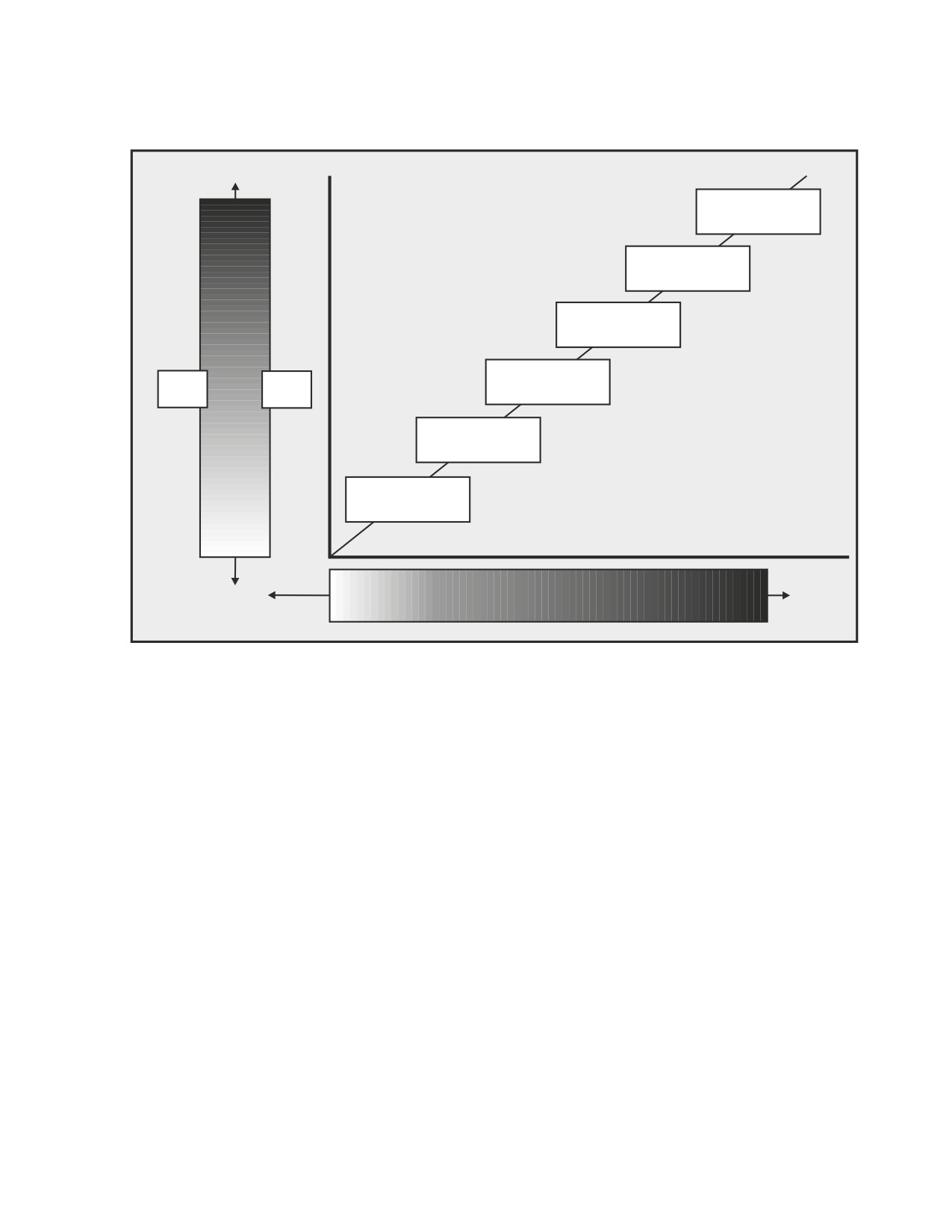
ferent security risks. Figure G-1 shows the rehearsal
fied, secured, cleared, and maintained throughout the
techniques relative to time, resourcing, operational se-
rehearsal process.
curity (OPSEC), participation, and understanding.
Reduced Force Rehearsal
The discussion of the techniques that follows
addresses these considerations:
The reduced force rehearsal normally takes less re-
sources than a full dress rehearsal because it involves only
• Time. Amount required from planning to
the unit’s and subordinate units’ key leaders. Terrain re-
execution.
quirements can be the same as for a full dress rehearsal,
• Multiechelon. Number of echelons that can partici-
but there are fewer participants. The commander first de-
pate in the rehearsal.
cides the level of leader involvement he desires. His
G-2
FM 101-5
Maximum
Full Dress
P
Rehearsal
R
E
P
Reduced Force
A
Rehearsal
R
A
T
Terrain Model
I
Rehearsal
O
N
Sketch Map
Time
OPSEC
and
Rehearsal
Used
Risk
R
E
Map
S
Rehearsal
O
U
R
Radio
C
Rehearsal
E
S
Leader Participation
Minimum
Maximum
Detailed Understanding Gained
Figure G-1. Rehearsal techniques relative to time, resourcing, OPSEC, participation,
and understanding
selected leaders then rehearse the plan while traversing the
the unit is smaller, but the number of radio transmissions
actual or like terrain. Commanders often use this rehearsal
stays the same as the full dress rehearsal’s and remains a
to rehearse the fire control measures in an engagement
consideration.
area during defensive operations. The reduced force
• Terrain. Terrain management for the reduced force
rehearsal allows the leadership to rehearse the mission
rehearsal can be just as difficult as for the full dress re-
before moving to the full dress rehearsal. A second re-
hearsal. The rehearsal area must be identified, secured,
hearsal plan must be developed that mirrors the actual plan
cleared, and maintained throughout the rehearsal
but fits the terrain the rehearsal is on.
process.
Reduced force rehearsal considerations are—
Terrain Model Rehearsal
• Time. The reduced force rehearsal normally requires
less time than the full dress technique. Again, the com-
The terrain model rehearsal takes less time and
mander must not encroach on the timetables of subordi-
fewer resources than the reduced force, or key leader,
nate units by scheduling the rehearsal at his convenience.
rehearsal, and is the most popular technique. An ac-
curately constructed terrain model can help subordi-
• Multiechelon. A small subordinate unit can per-
nate leaders visualize the battle in accordance with
form a full dress rehearsal as part of a larger unit’s re-
their commander’s intentions. When possible, the
duced force rehearsal.
commander should place the terrain model where it
• OPSEC. This rehearsal is less likely to become an
overlooks the actual terrain of the area of operations.
OPSEC problem than the full dress rehearsal because
However, if the situation requires more security, he
G-3
FM 101-5
places the terrain model on the reverse slope of a van-
commanders and their vehicles can bring attention from
tage point within walking distance of a point over-
the enemy.
looking the area of operations. The model’s
• Terrain. The optimum location is overlooking the
orientation should coincide with the actual orienta-
terrain on which the mission will be performed.
tion of the terrain to help participants orient to the ac-
tual area of operations. The size of the terrain model
Map Rehearsal
can vary from the use of icons to represent units to a
large model on which the participants can walk. A
The map rehearsal procedures are similar to the
large model helps reinforce the participants’ percep-
sketch map rehearsal, except the commander uses a map
and operation overlay of the same scale as he used to
tion of unit positions on the actual terrain.
plan and control the operation.
Terrain model considerations are—
Map rehearsal considerations are—
• Time. The most time-consuming part of the tech-
• Time. The most time-consuming part is the re-
nique can be the terrain model’s construction. Units
hearsal itself. The setup for this rehearsal is normally
must have a clear SOP stating how it will be built to en-
the easiest because it requires only maps and the current
sure the model is accurate, large enough, and in suffi-
operational graphics.
cient detail to rehearse the mission. The SOP must also
state who is to build it, and when.
• OPSEC. This technique can become an OPSEC
problem if it is performed outside and the area around
• Multiechelon. Because the terrain model rehearsal
the rehearsal site is not secured. Another concern is that
takes less time than the real operation, multiechelon re-
the collection of commanders and their vehicles can
hearsals are difficult.
bring attention from the enemy.
• OPSEC. This rehearsal can become an OPSEC
• Terrain. The optimum location is overlooking the
problem if the area around the rehearsal site is not se-
terrain on which the mission will be performed.
cured. The collection of commanders and their vehicles
can draw the enemy’s attention. On completion of the
rehearsal, the terrain model must be sanitized.
Radio Rehearsal
• Terrain. Terrain management is less difficult
The commander and his staff conduct radio re-
than with the previous techniques. The location of the
hearsals by interactively and verbally executing criti-
site must be easy to find for the friendly commanders,
cal portions of the operation over established
yet invisible to the enemy. The optimum location is
communications networks. This is accomplished in a
overlooking the terrain on which the mission will be
general sequence of events which the commander es-
performed.
tablishes. Because of the obvious dangers involved
with using this rehearsal, only the essential, most-
critical portions of the operation are rehearsed. When
Sketch Map Rehearsal
used, these rehearsals include all communications fa-
cilities and equipment necessary to conduct that por-
Units can use the sketch map technique almost any-
tion of the operation. To be effective, all participants
where, day or night. The procedures are the same as for
must have working communications equipment and a
a terrain model rehearsal, except the commander uses a
copy of the OPORD and overlays. The TOC can re-
sketch in place of a model. Sketches must be large
hearse tracking the battle simultaneously.
enough for all participants to see as each subordinate
“walks” through the interactive verbal execution of the
Radio rehearsal considerations are—
operation. Units move symbols to represent their ma-
• Time. This technique can be very time-consuming
neuver and location on the sketch.
if the unit does not have a clear SOP for performing it,
Sketch map considerations are—
and if all units have working communications and are up
on the net.
• OPSEC. This rehearsal, like the terrain model
rehearsal, can become an OPSEC problem if it is per-
• OPSEC. This rehearsal can become an OPSEC
formed outside and the area around the rehearsal site is
problem because of the volume of the radio transmis-
not secured. Another concern is that the collection of
sions and potential compromise of information
G-4
FM 101-5
through enemy radio monitoring. Different frequen-
• Allocates time for the events being rehearsed.
cies should be used to protect the ones to be used for
• Conducts personal preparation, to include reviews of—
the operation. The use of wire systems is an option
but does not exercise the radio systems, which is the
— Completeness of task organization.
strong point of the radio rehearsal.
— Readiness of personnel and material.
— Unit level of preparation for the assigned
REHEARSAL
mission.
RESPONSIBILITIES
The CofS (XO), through war gaming, and coordina-
This discussion of rehearsal responsibilities addresses
tion with the commander—
planning, preparation, and execution. The discussion is
• Coordinates and allocates time for the key events
developed around the combined arms rehearsal. The re-
requiring rehearsal.
sponsibilities do not change for support rehearsals, only
the position titles; for example, the G3 (S3) becomes the
• Establishes rehearsal time limits according to the
security, plans, and operations officer (SPO).
commander’s guidance and METT-T.
• Verifies rehearsal site preparation. A separate
Planning
rehearsal site may be required for key rehearsal
The commander provides the following information
events such as an enlarged objective area or a possi-
as part of the commander’s guidance during the initial
ble obstacle site. The rehearsal site must be accurate
mission analysis and re-evaluates it once he has selected
and complete with—
a course of action:
— Appropriate markings and associated training
• The type of rehearsal.
aids.
• The rehearsal technique.
— Parking areas.
• The place.
— Local security.
• The attendees.
• Determines the method for controlling the re-
hearsal and ensuring its logical flow. Using a script to
• The enemy COA to be portrayed.
control the rehearsal is discussed on page G-6.
The CofS (XO) ensures that all rehearsals are imbed-
Subordinate leaders complete their planning pro-
ded in the unit’s time management system. He is re-
sponsible for—
cess, to include—
• Publishing the rehearsal time and location in the
• Complete unit order and plans.
OPORD or in a warning order.
• Identify issues derived from the parent unit
• Completing any rehearsals with the staff.
order.
• Determining rehearsal products based on type,
• Provide copy of their unit order with graphics to the
technique, and METT-T.
parent unit.
• Coordinating LNO attendance from adjacent
• Conduct personal preparation similar to that of the
units.
senior commander.
Higher headquarters—
Preparation
• Must deconflict all subordinate unit graphics.
The commander, ideally, prepares to rehearse the
These composite overlays are the first step for leaders to
mission with events phased in proper order from start to
visualize the whole unit’s plan.
finish. When time is short, this is not always possible.
The commander—
• Publish composite overlays at the rehearsal, to in-
clude, at a minimum—
• Identifies and prioritizes key events to be
rehearsed.
— Maneuver.
G-5
FM 101-5
— Fire Support.
• Discipline leader movements, enforce brevity, and
ensure completeness at the rehearsal. The OPORD, de-
— Mobility and survivability (M/S).
cision support template (DST), and synchronization ma-
— CSS.
trix are his tools.
• Keep within established time constraints.
Execution
• Ensure that selected events receive appropriate
The commander must command the rehearsal, just as
attention.
he will command the fight. He must maintain the focus
• Ensure that absentees and flank units receive
and level of intensity, allowing absolutely no potential
changes. Changes must be transmitted by courier or
for subordinate confusion. Although the staff refined the
radio immediately.
plan, it belongs to the commander; he must use it to
fight. The rehearsal cannot become his brief to subordi-
The G3 (S3) assists the commander in the fight for-
nate commanders. The rehearsal’s purpose is to validate
ward and should rehearse that task. He—
synchronization—what, when, and where—of subordi-
• Portrays his actions during the fight.
nate units’ tasks to execute the commander’s intent.
• Ensures compliance with the plan.
The CofS (XO) should direct the rehearsal. If the G3
The G2 (S2) bases his execution actions on the en-
(S3) is the director, the CofS (XO) will not sense the in-
emy COA the commander selected during the planning
tricacies necessary to synchronize the combined arms
process. The G2 (S2) must—
team. The TOC then becomes a mere site for situation
maps, not the proactive agent that molds the force’s ef-
• Portray his best assessment of the enemy COA.
fects to achieve the commander’s vision for success. The
• Communicate the enemy commander’s presumed con-
CofS (XO) must—
cept of operation, desired effects, and intended end state.
• Conduct a formal roll call and ensure that everyone
Subordinate unit leaders, using an established
brings the necessary equipment, to include unit graphics
format—
and previously issued orders, to help adjust to the
• Effectively articulate their units’ actions and
rehearsal plan.
responsibilities.
• Validate task organization for the mission.
Linkups must be complete or on schedule and required
• Record changes on their copies of the graphics or
material and personnel, on hand. The importance of this
OPORD.
simple check cannot be overemphasized.
The recorder, after the rehearsal is complete—
• Rehearse the synchronization of combat power
• Restates any changes, coordination, or clarifica-
from flank, higher, and his own units, which are often
tions directed by the commander.
beyond communications’ reach of the commander and
the G3 (S3).
• Estimates the time that a written FRAGO codifying
the changes will follow.
• Synchronize the timing and contribution of each
operating system by ensuring the rehearsal of the deci-
The staff updates the OPORD, the DST, and the
sive points, by time or event, that are connected to a
synchronization matrix.
decision. What are the conditions required to—
If the rehearsal is executed properly, leader par-
— Commit the reserve?
ticipation should validate each leader’s role as part of
the whole force—what is done, when relative to time
— Move a unit?
and event, and where to achieve desired effects. The
— Close or emplace an obstacle?
rehearsal ensures that commanders have a common
visualization of the enemy, their own forces, and the
— Fire a specific target?
terrain, and the relationship between them. It identi-
— Move a medical station, change a supply route,
fies specific actions requiring immediate staff resolu-
alert specific observation post (OP), and so on?
tion and informs the higher commander on critical
G-6
FM 101-5
issues or locations he or his CofS (XO) or G2 (S3)
must personally oversee.
In the predetermined sequence the players,
using an established format, verbalize and
act out their unit’s actions at that point in
REHEARSAL SCRIPT
time. If no action is taken then the “unit”
An effective technique for controlling the rehears-
states,
“No change,” meaning the unit’s
als is to use a script. It keeps the rehearsal on track
status has not changed since the previous
and is a checklist to ensure all operating systems and
event. This
“acting out” continues in se-
outstanding issues are addressed during the rehearsal.
quence until all the players must pay atten-
The script has four major parts:
tion. When one player finishes, the next
player immediately begins without being
• The agenda.
prompted. This facilitates a focused, timely
• The response sequence.
rehearsal.
• Actions checklist (friendly and enemy).
• Sequence of events.
products depend on the rehearsal type. The response
sequence must be determined up front and posted to
The Agenda
keep the rehearsal moving.
Units must rehearse using the tools they will use
Step 1. Ground Rules
when fighting the battle: the OPORD, the synchroniza-
• Call roll, start on time.
tion matrix, and the DST. These can both drive and fo-
cus the rehearsal. During fire support or CSS rehearsals,
• Quickly review your SOP if you have new players
the fire support execution matrix and the logistics syn-
at the rehearsal.
chronization matrix can be used. The two products are
• Ensure a recorder is ready.
tied directly to the corresponding level synchronization
matrix and DST.
• Provide an orientation to the rehearsal product and
important graphic control measures.
Response Sequence
• Designate the rehearsal start time in relation to the
operation. One event prior to the first event being re-
The players must respond in a logical sequence. The
hearsed allows for proper deployment of forces.
sequence might be by operating system, or by unit as the
organization is deployed from front to rear. The se-
• Ensure everyone understands the parts of the plans
quence must be determined before the rehearsal and
to be rehearsed.
posted at the rehearsal site.
• Update both friendly and enemy activities if neces-
sary. Some units may already be executing.
Actions Checklist
• Finish on time.
The enemy force must be portrayed effectively and
quickly without distracting from the rehearsal. A tech-
Step 2. Deployment of the Enemy
nique is to establish a sequence much like that of the
Deploy the enemy on the rehearsal product as they
friendly units, but from the enemy perspective.
would look just prior to the first rehearsal event. Re-
stating the enemy equipment may be a waste of time
Sequence of Events
by this point.
The following paragraphs provide a generic se-
Step 3. Deployment of the Friendly
quence of events for a rehearsal. Although developed
for a combined arms rehearsal, with a few modifica-
Deploy the friendly forces, including adjacent units,
tions, this sequence can be used for FS and CSS re-
to the point in time the rehearsal will start. As friendly
hearsals.
This example fits brigade, task
units are initially posted to the rehearsal product, they
force/battalion, company/team level rehearsals and
should state their task and purpose, task organization,
will support any rehearsal technique. The agenda’s
and strength.
G-7
FM 101-5
Other special units may brief their subordinate unit
withdrawal of the enemy and casualty evacuation are
positions at the start time, as well as at any particular
complete.
points of emphasis, to include forward arming and refu-
Step 7. Recock
eling points (FARPs), ROM, or communications check-
points (CCPs). Restating the commander’s intent may
After the initial phase, “recock” to the situation at the
not be necessary at this point.
first decision point. State the criteria for a decision to
change the plan. Assume these criteria have been met
Step 4. Advancement of the Enemy
and then refight the fight from that point forward, all the
Begin to advance the force that has the initiative and
way until the desired end state is attained. Complete any
continue in accordance with the war-gaming sequence
coordination to ensure understanding and requirements
of action, reaction, and counteraction (see page 5-22).
are met. Record any changes. Go to the next decision
In Step 2 the enemy was deployed up to the point the re-
point and assume that the criteria have been met. Repeat
hearsal will start; the enemy continues to maneuver from
the previous steps until all decision points and branches
there. Depiction must be definitive, tying enemy actions
have been rehearsed.
to specific terrain or friendly units’ actions. An accurate
portrayal of the situation template developed for the
Other Considerations
staff war-gaming process must be communicated. The
enemy is uncooperative, but not invincible.
Small issues that arise during the rehearsal are not
normally addressed immediately; instead they are re-
Step 5. Decision Point
corded. This ensures the rehearsal’s flow is not inter-
On completion of the enemy action, assess conditions
rupted. If the issue still stands at the end of the rehearsal,
to determine if a decision point has been reached. These
it must be resolved. However, if the issue can wait until
are the decision points taken directly from the DST.
the end of the rehearsal, it may not have been an issue af-
ter all. If the issue is a war stopper, the staff must stop
Not at a Decision Point. If the unit is not at a deci-
and accomplish the coordination immediately. This co-
sion point, and not at the end state, the unit continues by
ordination is one of the key points of the rehearsals. If it
stating the next event on the synchronization matrix and,
is not done immediately, it will be difficult to get the
using the predetermined sequence, continues to act out
word to all the players later.
and verbalize the actions. This is represented by the right
side of the synchronization matrix.
Key CS and CSS items need to be part of the re-
hearsal, including plans for casualty evacuation, routes,
At a Decision Point. If the unit has reached a deci-
ambulance exchange point locations, ROM, Class IV
sion point, the commander, having seen the conditions
and V resupply points, logistics release points, displace-
being established, states his decision to continue on the
ment times and locations for the BSA, EPW collection
current course or to select a branch. If the commander
points, aviation support, and military police actions.
selects to stay the current course of action, the next event
These items should be injected into the rehearsal at the
from the matrix is stated and the friendly units are ad-
appropriate times by the coordinating staff officer. Sum-
vanced. If a branch is selected, the commander states
marizing these actions at the end of the rehearsal lessens
why he has selected that branch, the first event of that
the value of the rehearsal as a coordination tool.
branch is stated, and the rehearsal continues from that
point until all events of that branch are rehearsed. As de-
The staff updates the decision support matrix and
cisive points are reached, the XO states the conditions
provides it to each leader prior to departure. An option is
for success.
to provide it prior to the rehearsal and rely on individual
pen and ink changes for each update. This is the final
Step 6. Branch End State Reached
opportunity for subordinates to identify and resolve dan-
Terminate the initial phase of the rehearsal after the
gling issues. The staff must ensure all coordination done
desired end state of the branch is achieved. In an attack,
at the rehearsal is clearly understood by all players and
this will usually be on the objective after consolidation
captured by the recorder. All changes to the published
and casualty evacuation are complete. In the defense,
order are in effect verbal FRAGOs. As soon as possible,
this will usually be after the decisive action, such as the
the staff should collect the verbal FRAGOs into a writ-
commitment of the reserve, and the final destruction or
ten change to the order.
G-8
FM 101-5
ensures that all participants understand safety precau-
CONDUCTING
tions and enforces their use. Last, he emphasizes results
A REHEARSAL
and what standards of task execution he expects.
Participants can use the following sequential guide-
At this time, subordinate leaders relate any results of
lines during rehearsals:
tactical planning or rehearsals they may have already
conducted. If the subordinate unit recommends a
1. Orient participants to the training aid and the
change to the existing plan, the commander, CofS (XO),
terrain.
or G3 (S3) acts on the recommendation before the re-
2. Define the standard (what the commander will
hearsal begins if possible. If not, the recommendation
accept as satisfactory performance for the rehearsal).
will always be resolved by a decision before the
rehearsal ends.
3. Visualize and synchronize the concept of
operations. Verbally walk through the concept of
operations. Subordinate commanders should inter-
Orientation
actively verbalize their units’ actions, entering or
The rehearsal leader gives an orientation to familiar-
leaving the discussion at the time they would ex-
ize participants with the terrain or scale model in use. He
pect to begin or end their tasks or activities on the
also issues supplemental materials, if appropriate. He
battlefield. This will help the commander assess
identifies magnetic north on the terrain model or scaled
the adequacy of synchronization.
terrain and points out objects and features representing
4. Focus on the key events and the synchroniza-
actual terrain features. He also explains any graphic
tion required to achieve the desired effect on the enemy.
control symbols, obstacles, or fire support targets. The
rehearsal leader always concludes the orientation with a
5. Consider the enemy’s courses of action (using
call for questions.
the possibilities derived from the war game during COA
analysis).
During the Rehearsal
6. Address any points in the operation where the
execution of branches or sequels is likely to occur.
After the briefing, the rehearsal begins according to
the rehearsal plan. Before the rehearsal occurs, the staff
7. If the standard is not met and time permits, re-
should develop the plan or order with at least the basic
hearse again.
five paragraphs and necessary overlays. At this time, all
8. For feedback, make the necessary changes to
annexes may not yet be published; however, the details
the decision support template (such as positions, syn-
should be developed. Commanders must remember that
chronization, or decision point locations).
the rehearsal is not a substitute for the war game.
The commander, CofS (XO), or G3 (S3) observes
Before the Rehearsal
and critiques all portions of the rehearsal. Critiques cen-
ter on meeting the commander’s intent and coordination
Once participants assemble at the rehearsal site, the
between units. The internal execution of tasks within
rehearsal leader briefs them. The briefing must include
the rehearsal is almost always left to the subordinate unit
an introduction and overview as well as an orientation.
commander’s judgment and discretion. Leaders at all
Introduction and Overview
levels conduct periodic after-action reviews. This en-
sures that units rehearse tasks to acceptable levels of
The commander, CofS (XO), or G3 (S3) introduces
competence and that substandard performance is not
himself and all other participants as appropriate. He
reinforced.
then gives an overview of the briefing topics, the re-
hearsal subjects and sequence, and the time line (speci-
After-action reports also provide an opportunity to
fying the no later than (NLT) ending time). He explains
incorporate lessons learned into the existing plan or into
participation in after-action reviews, how and when they
subsequent rehearsals. The rehearsal leader must em-
will occur, and how he will incorporate changes into the
phasize integration of fire support, events which trigger
existing order. He explains, in detail, restrictions im-
different branch actions, and actions on contact. If units
posed on the force, such as the use of pyrotechnics, light
in reserve participate, they should rehearse all of their
discipline, weapons firing, or radio transmissions. He
most likely branches.
G-9
FM 101-5
Rehearsals continue until units are competent or until
maximum time available expires.
(Before the com-
(LIGHT
mander adjusts rehearsal times, he must consider how
TIME
DATA)
ACTION
his decision will impact a subordinate commander’s
1810
EENT
1830
time plan.) Subsequent rehearsals may employ addi-
IR X-O
tional complexity and realism as time and the com-
1900
TF scouts cross LD.
0400
Conducts intel update
mander permit.
60%
on ops and intel
ILLUM
FM radio net.
The commander leads the rehearsal; his staff runs it.
The director of the rehearsal is the CofS (XO). As such,
he rehearses his role during the operation. He ensures
0600
FA prep start (5-min prep).
tasks are accomplished by the right unit at the right time
BMNT
0615
TF 1-3 and TF 1-2 cross LD.
and cues the commander to upcoming decisions. The
0620
TF 1-2 and TF 1-3 receive ENY FA fires.
SR
CofS’s (XO’s) script is the synchronization matrix and
0640
TF 1-2 encounters ENY at CP 3.
0705
TF 1-2 attacks to seize OBJ GEORGE.
the decision support template. These are the founda-
0720
TF 1-2 attacks to seize OBJ FRED.
tions for the OPORD and are recorded in chronological
0730
ENY commits platoon-size tank reserve
order. A terrain model rehearsal takes a proficient bri-
against TF 1-2. Atks w/FA (deep ops).
gade from one to two hours to execute to standard. The
0735
ENY conducts NBC attack
(FA-delivered) against TF 1-3.
following steps outline the process for conducting a
0746
ENY reserve engages TF 1-2.
rehearsal:
...and so on.
1. Start at the appointed time and conduct a for-
NOTE: EENT--end evening nautical twilight: IR X-O--infared light
mal roll call. Ensure everyone brings binoculars, maps,
cross-over: BMNT-- begin morning nautical twilight; SR--sun rise.
and necessary equipment.
2. Ensure that the CofS (XO) or the G3 (S3) ori-
ents the terrain model to the actual ground, the opera-
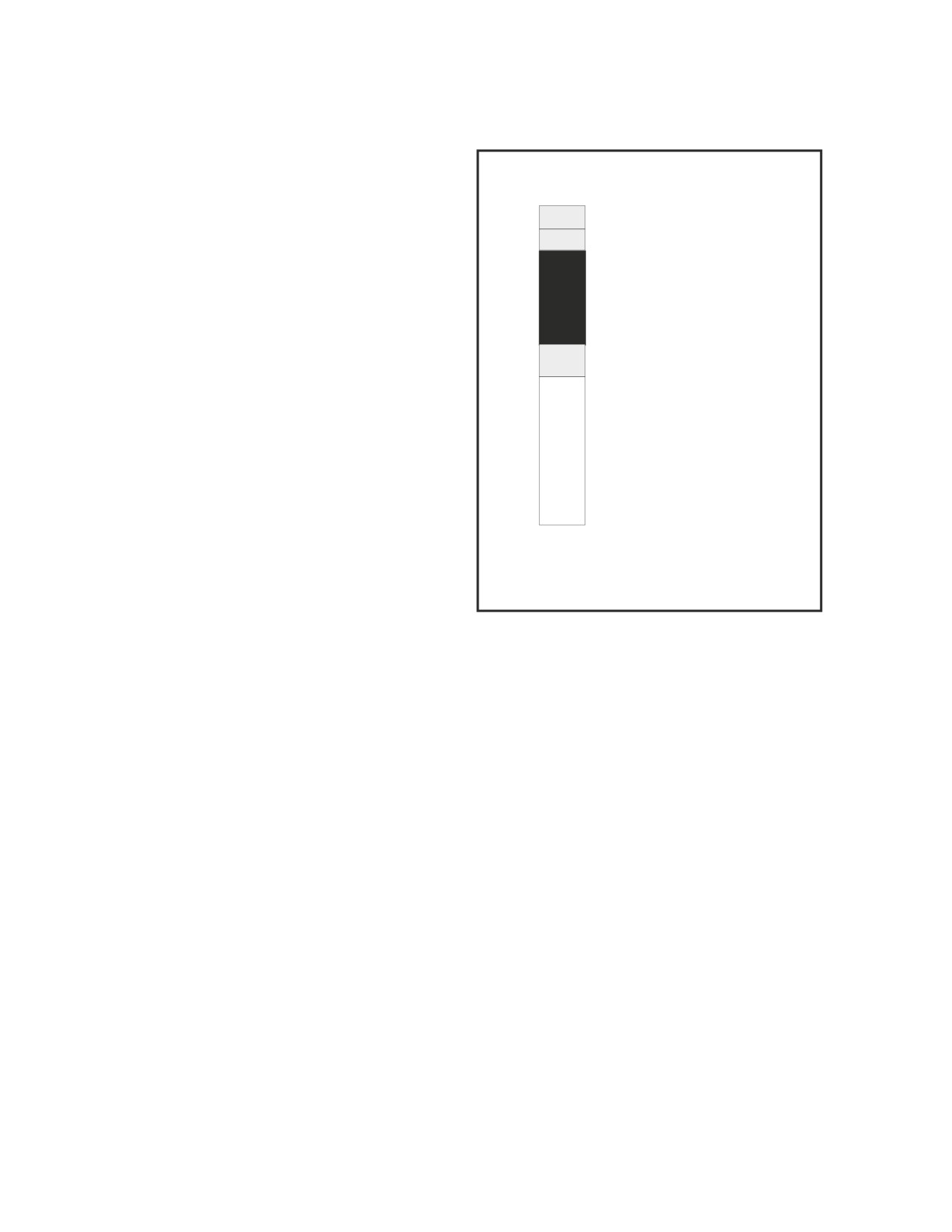
Figure G-2. Vertical time-line rehearsal
tions overlay, and the map. Describe and point out the
technique
overall area of operations and explain the markers used
on the terrain model.
6. The G2
(S2) briefs the current enemy
situation. He then briefs the most likely enemy
3. Brief the time line. The CofS (XO), or the G3
(S3) in lieu of the CofS, should do this. Designate the re-
course of action.
(The enemy situation should al-
hearsal start time. For example, have the rehearsal begin
ready be set up on the terrain model.) The G2 (S2)
by depicting the anticipated situation one hour before
also briefs the status of the reconnaissance and sur-
departure. Set the time interval to be used to begin and
veillance plan (for example, citing any patrols still
track the rehearsal. For example, specify a 10-minute
out or any observation post positions or combat out-
interval to equate to 1 hour of real time during the opera-
posts).
tion (Figure G-2).
7. The G3
(S3) briefs friendly maneuver unit
4. Designate the recorder. This should be the G3
dispositions at the rehearsal start time, including secu-
(S3), or his designated representative from the opera-
rity forces. Other staff officers brief their subordinate
tions cell. Highlight the ground rules and incorporate
unit positions at the start time, as well as at any particular
ground rules into an SOP. The ground rules include who
points of emphasis. For example, the chemical officer
controls the rehearsal, who actually walks the terrain
briefs the MOPP level, and the fire support officer de-
board, and when special staff officers will brief the
tails the range of friendly and enemy artillery.
commander. Special staff officers should brief by ex-
8. The
commander
gives
appropriate
ception when a friendly or enemy event occurs within
commands. Fire support officers and FSCOORDs tell
their operating system.
when they initiate fires, who is firing, from where, the
5. The G3 (S3) reads the mission statement, the
ammunition, and the desired target effect. Commanders
commander reads his commander’s intent, and the G3
tell when they initiate fire in accordance with their fire
(S3) lays out the friendly situation as it currently exists,
support plans. The CofS (XO) talks for any staff section
using the terrain model.
not present and ensures all actions on the
G-10
FM 101-5
synchronization matrix or decision support template are
attain the desired end state. They complete coordination
addressed at the proper time or event. Everyone should
to ensure the plan is understood and requirements are
avoid rewar-gaming except as absolutely necessary to
met, and record any changes.
ensure subordinate unit commanders understand the
13. Participants then go to the next decision point
plan. If the staff has developed an order that addresses
and ensure that the criteria for that action have been met.
contingencies, they do not war-game the operation at the
They then repeat step 12.
rehearsal site.
14. The staff repeats step 13 until they have re-
9. The G2 (S2) section portrays the enemy and
hearsed all decision points.
walks the enemy through the most likely course of ac-
tion
(situation template), stressing reconnaissance
15. The staff briefs key CS and CSS actions.
routes, objectives, security force composition and loca-
These items should be integrated into the rehearsal at
tions, initial contact, initial fires (artillery, air, attack
the appropriate times. Summarizing these actions at the
helicopters), probable main force objectives or engage-
end of the rehearsal adds to the value of the rehearsal as a
ment areas, likely chemical attack times and locations,
coordination tool.
and likely commitment of reserves. The G2 (S2) section
must be specific, tying enemy actions to specific terrain
16. After the rehearsal is complete, the recorder
or friendly unit actions. The walk-through should be an
restates any changes, coordination, or clarifications
accurate portrayal of the event template.
the commander directs, and the recorder estimates
how long it will take to codify changes in a written
10. Terminate the first phase of the rehearsal af-
FRAGO.
ter achieving the desired end state (from the comman-
der’s intent). In the offense, this is usually on the
17. The commander should stress any points need-
objective after consolidation. In the defense, this is
ing additional emphasis. He should consider reiterating
usually after the decisive action, such as the commit-
his intent (purpose, method, end state).
ment of the reserve and the final destruction or with-
drawal of the enemy.
After the Rehearsal
11. When it becomes obvious that the operation re-
quires additional coordination to ensure success, the force
After the rehearsal, the commander reassembles par-
must immediately try to accomplish it. This coordination
ticipants to conduct an after-action review. The com-
is one of the key points of the rehearsal. The commander
mander reviews lessons learned and makes only the
and staff must ensure that coordination is understood by
absolute minimum-required modifications to the exist-
all participants and captured by the recorder, and that all
ing plan. (Normally, these changes are effected by issu-
changes to the published OPORD are in effect. However,
ing a FRAGO.) This meeting also allows the
this is not the time to make major changes. Changes are
commander to issue any last minute instructions or re-
kept to only those that are vital. As soon as possible, the
minders and to reiterate his intent.
G3 (S3) should collect the verbal FRAGOs into a written
Subordinate commanders incorporate any changes
change to the OPORD.
the commander makes to the existing plan into their
12. After the initial walk-through of the base
units’ orders and plans. Such changes are also briefed to
order, participants need to backstep to the situation at the
any key leader or unit that did not participate in the re-
initial decision point. The commander should state the
hearsal. Changes to the plan should be refinements to
criteria for a decision to change the plan. The partici-
that plan; they should not be radical or significant.
pants should assume these criteria have been met and
Changes not critical to the operation’s execution can
then refight the fight from that point forward until they
confuse subordinates and desynchronize the plan.
G-11
Appendix H
PLANS AND ORDERS
This appendix explains how to construct plans and
synchronization necessary to accomplish the
orders from battalion to corps levels. General informa-
command's assigned tasks.
tion on the content and construction of plans and orders
All operation plans and orders—
is followed by examples. For guidance on the prepara-
tion of orders and plans at echelons above corps, refer to
• Have five paragraphs.
JP 3-0, JP 5-03.1, and FM 100-7.
• Provide task organization and the scheme of
Plans and orders are the means by which the com-
maneuver.
mander expresses to his subordinates his battlefield
• Provide a clear, concise mission statement, based
visualization, intent, and decisions, focusing on the re-
on the mission assigned by the higher headquarters, that
sults the commander expects to achieve—his vision of
includes execution time and date.
the end state of an operation. This gives subordinates
• Convey the commander's intent and concept of
the maximum operational and tactical freedom to ac-
operations.
complish the mission while providing only the mini-
mum restrictions and details necessary for
• Usually include an overlay.
synchronization and coordination. Plans and orders
Included in this Appendix is a verbatim transcript of
should provide the what rather than the how to encour-
an order issued by VII Corps in World War II. It repre-
age initiative. Plans and orders are the method the com-
sents a typical order seen during the continuing opera-
mander uses to synchronize military actions. They also
tions of US Army forces in WWII. The brevity and
help the staff synchronize the commander's decisions
simplicity of this basic order is remarkable considering
and concepts. Plans and orders—
that the operation involved six divisions under a corps
• Permit subordinate commanders to prepare sup-
headquarters. This simplicity and brevity was possible
porting plans and orders.
because of several factors. VII corps and its subordinate
divisions were well trained, with detailed and practiced
• Implement operations derived from a higher com-
SOPs. They were combat-tested with experienced and
mander's plan or order.
cohesive staffs. Finally, there was trust up and down the
• Focus a subordinate's activities.
chain of command. Today's units can strive for emula-
tion of these conditions that can lead to simple and con-
• Provide tasks and activities, constraints, and coor-
cise operation plans and orders.
dinating instructions necessary for the successful com-
pletion of missions.
NOTE: Figure H-1, page H-11, is a list of the figures in
this Appendix. The figures, beginning on page H-12,
• Do not inhibit agility, speed, and initiative in carry-
contain examples and procedures for completing plans,
ing out missions.
orders, and annexes.
• Are communications conveying instructions in a
standard, recognizable, clear, and simple format.
PLANS
The amount of detail the commander provides in a
plan or an order depends on the experience and compe-
A plan is a proposal for executing a command deci-
tence of subordinate commanders, the cohesion and tac-
sion or project. It represents the command's preparation
tical experience of subordinate units, and the complexity
for future or anticipated operations. Because plans con-
of the operation. The commander balances these factors
cern future operations and help the staff make assump-
with his guidance and intent and determines the type of
tions about the nature of the situation at the time of
plan or order to issue. To maintain clarity and simplic-
execution, they cannot remain static. As the commander
ity, plans and orders include annexes only when neces-
and staff change or adjust their estimates to reflect the
sary and only when they pertain to the entire command.
current analysis of the situation, they must also change
The annexes describe the additional support and
the plans.
H-1
FM 101-5
The operation plan (OPLAN) is a plan a command
orders, and fragmentary orders. This appendix is lim-
uses to conduct military operations. Commanders may
ited to combat orders.
initiate preparation of possible operations by first issu-
Operation orders (OPORDs) are directives a com-
ing an OPLAN. (See Figure H-2, page H-12, and Figure
mander issues to subordinate commanders to coordinate
H-3, page H-14.) The OPLAN—
the execution of an operation. They always specify an
• States critical assumptions that form the basis of
execution time and date. (See Figures H-2 and H-3.)
the plan (in paragraph 1d of the OPLAN). Assumptions
The service support order (SSORD) provides the
must be revalidated prior to execution of the plan.
plan for service support of operations, including admin-
• Becomes an OPORD when the conditions of exe-
istrative movements (Figure H-4). It provides informa-
cution occur and an execution time is determined.
tion to supported elements and serves as a basis for the
orders of supporting commanders to their units.
A service support plan
(SSPLAN) provides infor-
SSORDs may be issued either with an OPORD, or sepa-
mation and instructions covering an operation's service
rately when the commander expects the CSS situation to
support. Estimates of the command's operational re-
apply to more than one operation plan or order. At divi-
quirements are the bases for the service support plan.
sion and corps levels of command, the SSORD may re-
The SSPLAN becomes the service support order when
place an OPORD's service support annex. If that
the conditions of execution occur.
(See Figure H-4,
happens, the staff refers to the existence of the SSORD
page H-20.)
in paragraph 4 of the OPORD. Staffs at brigade and
lower levels of command may cover all necessary infor-
Other plans are—
mation in paragraph 4 of the OPORD without annexes or
• The supporting plan, which complements another
a separate SSORD. The SSORD follows the same for-
plan.
mat as the OPORD. It is usually in writing and may in-
clude overlays, traces, and other annexes.
• The contingency plan, which provides for accom-
plishing different, anticipated major events before, dur-
The G4 (S4) has primary coordinating responsibility
ing, and after an operation.
for preparing, publishing, and distributing the SSORD.
Other staff officers, both coordinating and special, pro-
• The concept plan (CONPLAN), which the corps
vide those parts of the order concerning their responsi-
uses when augmented to become a joint task force. It is
bilities. Their input may be a single sentence or a
an abbreviated plan, or outline, for an operation that re-
complete annex.
quires considerable expansion or alteration to convert it
into an OPLAN or OPORD. A CONPLAN states im-
The movement order is a stand-alone order that fa-
portant features or principles of a course of action before
cilitates an uncommitted unit's movement (Figure H-5,
detailed planning begins. It provides information to
page H-25). The movements are typically administra-
higher headquarters and seeks approval and allocation
tive, and troops and vehicles are arranged to expedite
of resources.
their movement and to conserve time and energy when
no enemy interference (except by air) is anticipated.
ORDERS
Normally, these movements occur in the communica-
tions zone. The G4 (S4) has primary coordinating staff
An order is a written or an oral communication
responsibility for planning and coordinating move-
directing actions. Orders are based on plans or the re-
ments. However, he receives assistance from other coor-
ceipt of a new mission. There are two general categories
dinating and special staff officers (such as the G3 (S3),
of orders—administrative and combat. Administrative
PM, MP, transportation officers, and movement-control
orders cover normal administrative operations in garri-
personnel). The G4 (S4) is also responsible for prepar-
son or in the field. They include general, specific, and
ing, publishing, and distributing the movement order.
memorandum orders; courts-martial orders; and bulle-
However, when conducting ground movement in rear
tins, circulars, and other memoranda.
(For details, see
areas of the combat zone where enemy interference is
AR 25-30 and AR 600-8-105.) Combat orders pertain
expected, the movement order may become a highway
to strategic, operational, or tactical operations and their
regulation annex (in NATO, this is referred to as the
service support. Combat orders include operation or-
movement annex) to an OPORD or SSORD. The G3
ders, service support orders, movement orders, warning
(S3) plans and coordinates these tactical movements.
H-2
FM 101-5
The warning order (WARNO) is a preliminary no-
FRAGOs in their name. A FRAGO is either oral or writ-
tice of an order or action that is to follow (Figure H-6).
ten and addresses only those parts of the original
Warning orders help subordinate units and their staffs
OPORD that have changed. The sequence of the
prepare for new missions. Warning orders maximize
OPORD is used and all five-paragraph headings must
subordinates' planning time, provide essential details of
be used. After each heading, state either “No Change”
the impending operation, and detail major time-line
or the new information. This ensures that recipients
events that accompany mission execution. The amount
know they have received the entire FRAGO (especially
of detail a warning order includes depends on the infor-
if the FRAGO is sent over the radio). (See Figure H-7,
mation and time available when the order is issued and
page H-29.)
the information subordinate commanders need for
The FRAGO differs from an OPORD only in the de-
proper planning and preparation.
The words
gree of detail provided. It refers to previous orders and
WARNING ORDER precede the message text. With
provides brief and specific instructions. The higher
the commander's (or Cof S's (XO's)) approval, a coordi-
headquarters issues a new OPORD when there is a com-
nating or special staff officer may issue a warning order.
plete change of the tactical situation or when many
The warning order clearly informs the recipient of
changes make the current order ineffective.
what tasks he must do now as well as informs him of
possible future tasks. However, a WARNO does not
CHARACTERISTICS OF
authorize execution other than planning unless specifi-
cally stated. The WARNO follows the five-paragraph
OPLANS AND OPORDS
field order format and may include the following
Characteristics of good OPLANs or OPORDs
information:
include—
• Required maps
(if changed from the current
• Addressing of critical facts and assumptions. The
OPORD).
commander and staff evaluate all facts and assumptions.
• The enemy situation and significant intelligence
They retain for future reassessment only those facts and
events.
assumptions that directly affect an operation’s success
or failure. OPORDs do not state assumptions.
• The higher headquarters' mission.
• Authoritative expression. The plan or order
• Mission or tasks of the issuing headquarters.
reflects the commander’s intention and will. Therefore,
• The commander's intent statement (when avail-
its language must be direct. It must unmistakably state
able).
what the commander wants subordinate commands
to do.
• Orders for preliminary action, including reconnais-
sance and surveillance.
• Positive expression.
State plans and orders
affirmatively.
“The trains will remain in the assembly
• Coordinating instructions (estimated time lines, or-
area” instead of “The trains will not accompany the
ders group meeting, time to issue order).
unit.”
• Service support instructions, any special equip-
• Avoiding of unqualified directives. Do not use
ment necessary, regrouping of transport, or preliminary
meaningless expressions like as soon as possible. Inde-
movement of units.
cisive, vague, and ambiguous language leads to uncer-
Every warning order involving movement should
tainty and lack of confidence. For example, do not use
state a time before which there is no movement. This
“try to retain”; instead say “retain until.” Avoid using
means that a further order must be issued before that
phrases like “violently attacks” or “delays while main-
time giving actual movement time tables, or extending
taining enemy contact.” Use “attacks” or “delays.”
the period before which there will be no movement.
Army doctrine already requires attacking violently and
maintaining enemy contact during delays.
The fragmentary order (FRAGO) provides timely
changes of existing orders to subordinate and supporting
• Balance. Provide a balance between centralization
commanders while providing notification to higher and
and decentralization. The commander determines the
adjacent commands. Commanders may authorize mem-
appropriate balance for a given operation by using
bers of their staff to change existing orders by issuing
METT-T. During the chaos of battle, it is essential to
H-3
FM 101-5
decentralize decision authority to the lowest practical
plan or order. The commander’s control over subordi-
level. Over-centralization slows action and contributes
nate commanders enhances synchronization and mini-
to loss of initiative. However, decentralization can cause
mizes exposure to fratricide.
loss of precision. The commander must constantly bal-
• Decentralized execution. The commander dele-
ance competing risks while recognizing that loss of pre-
gates authority to subordinate and supporting command-
cision is usually preferable to inaction.
ers to execute the plan by telling them what he wants
• Simplicity. Reduce all essential elements to their
done, not how to do it. He expects subordinates to seize
simplest form, eliminating elements not essential to mis-
and retain the initiative by aggressively and creatively
sion success. Simplicity reduces possibilities for
executing his plan. In turn, subordinate and supporting
misunderstanding.
commanders ensure their plans and orders provide for
• Brevity. Be concise, clear and to the point, and in-
decentralized execution at the next lower echelon, al-
lowing their subordinates to seize opportunities while
clude only necessary details using short words, sen-
tences, and paragraphs. Orders and plans, and their
the higher commander reviews courses of action to ex-
annexes, appendixes, tabs, and enclosures, do not in-
ploit success.
clude matters covered in SOPs. However, where appro-
• Use of existing resources for decisive action. Use
priate, they should refer to the SOP.
all resources organic to the organization and available
• Clarity. Eliminate every opportunity for misunder-
from higher headquarters. Provide subordinates with
standing the commander’s exact, intended meaning.
sufficient resources to accomplish their missions. Pro-
Everyone using the plan or order must readily under-
vide for adequate resources (personnel, material, C2, li-
stand it. Do not use jargon, although acronyms may be
aison, and so on) for the expected duration of the
used when they do not reduce clarity. Keep the plan or
contemplated operation.
order simple, using doctrinal terms and graphics.
• Timeliness. Send plans and orders to subordinates
• Completeness. Portray the commander’s will and
in time to allow them to adequately plan and prepare
provide the necessary information required for execu-
their own actions. When time is short, accept less than
tion. Provide control measures that are complete and un-
optimum products in the interest of timeliness. General
derstandable, and that maximize the subordinate
George S. Patton, Jr., said, “A good plan violently exe-
commander’s initiative. Provide adequate control
cuted now is better than a perfect plan next week.”
means (headquarters and communications), clearly es-
tablish command and support relationships, and fix re-
TECHNIQUES FOR ISSUING
sponsibilities to carry out the plan according to the
commander’s intent.
ORDERS
• Coordination. Provide for direct contact among
There are several techniques for issuing orders. They
subordinates; fit together all combat power elements
can be oral, written, or electronically produced, using
for synchronized, decisive action; impose only neces-
matrixes or overlays. Five-paragraph written orders are
sary and doctrinally correct control measures; and
the standard format for issuing combat orders. Orders
help identify and provide for mutual support require-
may be generated and disseminated via electronic
ments while minimizing the force’s exposure to
means to reduce the amount of time necessary to gather
fratricide.
and brief the orders group. When available preparation
time or resources are constrained, the commander may
• Flexibility. Leave room for adjustments that unex-
use the matrix method of issuing an order.
pected operating conditions might cause. The best plan
provides for the most flexibility.
The overlay order combines the five-paragraph order
with the operation overlay. The commander may issue
• Clear, concise mission and intent statements and
the overlay order when planning preparation time is se-
essential tasks to subordinates.
verely constrained and he must get the order to subordi-
• Centralized planning. The commander’s mission,
nate commanders by the most expeditious means. He
intent, and concept of operations underlie all plans and
may issue the overlay order by any suitable graphic
orders. Subordinate and supporting commanders de-
method. The overlay order may consist of more than
velop plans and orders that support their commander’s
one overlay. A separate overlay or written annex can
H-4
FM 101-5
contain the service support coordination and organiza-
General Information
tions.
(See Figure H-8, page H-30.)
Show all paragraph headings on written orders.
Oral orders are used when operating in an extremely
There is no need to place an entry under each heading,
time-constrained environment. They offer the advan-
except for, Mission, paragraph 2, and Commander's In-
tage of orders being passed quickly to subordinates but
tent, paragraph 3. A paragraph heading with no text will
at the risk of critical information being overlooked or
state:
“None,” “See Annex ___,” or “See Overlay.”
misunderstood in the haste of circumstances. Oral orders
Conventions such as the bold font and changes in the
font size appearing in the headings of annotated formats
are most often used for FRAGOs.
are solely for emphasis within this manual. They are not
Plans and orders generally include both text and
intended to be followed in actual plans or orders.
graphics. Graphics convey information and instructions
through military symbols.
(See FM 101-5-1.) They
Abbreviations
complement the written portion of a plan or an order and
promote clarity, accuracy, and brevity. The Army pre-
Use abbreviations to save time and space if they will
fers depicting information and instructions graphically
not cause confusion. Do not sacrifice clarity for brevity.
when possible. However, the mission statement and the
Keep abbreviations consistent throughout any order and
commander's intent must be in writing.
its annexes. Avoid using abbreviations in any joint or
combined communications, except those contained in
An overlay graphically portrays the location, size,
international agreements.
and activity (past, current, or planned) of depicted units
NOTE: FM 101-5-1 and AR 310-50 contain guidance
more consistently and accurately than can text alone.
for using operational abbreviations.
An overlay enhances a viewer's ability to analyze the re-
lationships of units and terrain. A trained viewer can at-
tain a vision of a situation, as well as insight into the
Place and Direction Designations
identification of implied tasks, relationships, and coor-
Describe locations or points on the ground by—
dination requirements, that the written plan or order may
not list or readily explain. Overlay graphics may be used
• Referring to military grid reference system
coordinates.
on stand-alone overlays or overprinted maps in annexes,
appendixes, tabs, and enclosures. The issuing headquar-
• Referring to longitude and latitude (if the maps
ters is responsible for the location accuracy of coordinat-
available do not have the military grid reference system
ing points, boundaries, and other control measures,
(MGRS)).
transposing graphics to and from the map scale used by
• Giving the distance and direction from a simple ref-
subordinate headquarters. (See Figure H-8.)
erence point
(for example, crossroads
1,000 meters
southwest of church tower of NAPEIRVILLE LB6448).
ADMINISTRATIVE
Designate directions in one of three ways:
INSTRUCTIONS FOR
• By using two locations or places (for example, di-
PREPARING PLANS
rection ECKENTAL PV6690—PEGNITZ PA6851).
AND ORDERS
• As a point of the compass (for example, north or
northeast).
The following information pertains to all plans and
orders. Unless otherwise stated, the term order is used
• As a magnetic, grid, or true bearing, stating the unit
to mean both plans and orders during the discussion.
of measure (for example, a magnetic bearing of 85
Figures H-2 and H-3 show annotated formats for or-
degrees).
ders having prescribed formats. Figure H-9, page
When a place or feature on a map is mentioned for the
H-34, is a sequential list of annexes and appendixes.
first time in an order, print the name in capital letters ex-
Figure H-10, page H-36, shows a common annotated
actly as spelled on the map and show its grid coordinates
annex format. The remaining figures show annotated
in parenthesis after it. When a control measure such as a
formats for annexes, appendixes, and tabs having
contact point or supply point is used for the first time in
prescribed formats.
an order, print the name or designation of the point
H-5
FM 101-5
followed by its grid coordinates in parenthesis. Use
ensure operations security, avoid assigning names that
four-, six-, or eight-digit MGRS coordinates (as neces-
could reveal unit identities, such as the commander's
sary to precisely locate the place, feature, or point) pre-
name or the unit's home station. Do not name sequential
ceded by the 100-kilometer square designation (for
phase lines and objectives in alphabetical order. For
example, LB6448). Thereafter, use names, planning
memory aids, use sets of names designated by the type of
names, or codes and repeat the coordinates only for
control measure or subordinate unit. For example, the
clarity.
division might use colors for objective names and min-
erals for phase line names.
Describe areas by naming the northernmost
(12
o’clock) point first and the remaining points in clock-
Classification Markings and Procedures
wise order. Describe positions from left to right and
from front to rear, facing the enemy. To avoid confu-
Army Regulation 380-5 contains a detailed descrip-
sion, use compass points to describe flanks, rather than
tion of marking, transmitting procedures, and other clas-
right or left of the friendly force.
sification instructions. Place classification markings at
the top and bottom of each page. All paragraphs must
Always add compass points for clarity when describ-
have the appropriate classification marking immediately
ing a route if the possibility of confusion exists (for ex-
following the numbered designation of the paragraph
ample,
“The route is northwest along the road
(preceding the first word if the paragraph is not num-
LAPRAIRIE-DELSON”). If a particular route already
bered). Mark unclassified instructional or training mate-
has a planning name (such as MSR LAME DOG), refer
rial representing orders “
for Training,
to the route using only that designator.
Otherwise Unclassified,” with the exercise classifica-
Designate trails, roads, and railroads by the names of
tion level in the blank. If the entire plan or order is un-
the places near their locations. If you do not use place
classified, no classification markings are required.
names, use grid coordinates. Precede place names with
When the issuing headquarters sends classified plans
trail,
road, or railroad
(for example, road
or annexes separately, it assigns copy numbers to each
GRANT—CODY. To be consistent with planned
and keeps a record of the specific copy or copies sent to
movement, designate the route by naming a sequence of
each addressee (to facilitate security control).
grid coordinates along the direction of movement.
When there is no movement, name the sequence of
Annotating Unnamed Dates and Times
points from left to right or front to rear, facing the
enemy.
In OPLANs or OPORDs, use one of six letters to des-
Describe river banks using the cardinal points of the
ignate unnamed dates:
compass or as either near or far in crossing operations.
• C-day. The day when a deployment operation be-
Describe boundaries and phase lines by easily distin-
gins. The deployment may be of troops, cargo, and/or
guishable terrain features (from the ground or air or on a
weapons systems, using any type of transport.
map). When designating boundaries between units,
• D-day. The day when an operation begins.
state specifically which unit has responsibility and
authority for the place, feature, or location to which the
• E-day. The day when a NATO exercise begins.
description refers. State each location along a boundary
• K-day. The day when a convoy system on a par-
as either inclusive or exclusive to a unit (for example, 1st
ticular convoy lane begins.
Bde, exclusive crossroad LB621352). List boundaries
and phase lines in the order from left to right or front to
• M-day. The day when full mobilization begins.
rear, facing the enemy.
• S-day. The day (if it is not M-day) when the first
mobilization manpower action occurs.
Naming Conventions
The specific hour on D-day at which a particular op-
Planners must decide on a method to name control
eration will begin is H-hour. The highest headquarters
measures, routes, assembly areas, and so on. Unit SOPs
planning an operation specifies the exact meaning of
normally designate naming conventions. For the sake of
D-day and H-hour. If a single plan mentions more than
clarity avoid using multiword names, such as Junction
one such event, key the secondary event to the primary
City. Simple names are better than complex ones. To
event by adding or subtracting days. Refer to days
H-6
FM 101-5
preceding or following D-day by using a plus or minus
the month and year to the DTG when necessary to avoid
sign and an Arabic number following the letter (for ex-
confusion. For example, a complete DTG would appear
ample, D-3 is three days before D-day; D+7 is seven
as 060140Z August 19XX.
days after D-day). When using a time element other
than days, spell it out (for example, D+3 months). Refer
Identification of Succeeding Pages
to hours preceding or following H-hour by a plus or mi-
of the Plan or Order
nus sign and an Arabic number following the letter (for
On pages following the first page, use a short title
example, H-3 is three hours before H-hour; H+7 is seven
identification heading. Include the number (or letter)
hours after H-hour). When using a time element other
designation and headquarters (for example, OPLAN
than hours, spell it out (for example, H+30 minutes).
7—23d Armd Div or ANX B (INTEL) to OPLAN
Retain the letter designation used in the original order
15—23d Armd Div).
in translations of OPORDs. Use J only when translating
documents to and from French. Use only A, B, N, S, W,
Page Numbering
and X if other letters are needed; all other letters have
multinational meanings.
Number pages consecutively beginning on the first
page. Number second and succeeding pages with Arabic
Where it is necessary to identify a particular opera-
numbers. Use letters and Roman numerals alternately to
tion or exercise, place a nickname, or code words if ap-
further identify annexes, appendixes, tabs, enclosures,
plicable, before the letter; for example, BALD EAGLE
and additions, in order. Use dashes to separate the alpha-
(E-day) or ANVIL EXPRESS (M-day).
betical and Roman numeral groups that precede the Ara-
bic page numbers of annexes, appendixes, and so forth.
Annotating Time
For example, the designation of the third page of enclo-
sure 7 to tab B to appendix 2 to annex A is A-II-B-VII-3.
The effective time for implementing the plan or order
is the same as the date-time group (DTG). If the effec-
Annexes, Appendixes, Tabs, Enclosures
tive time of any portion of the order differs from that of
the order, explicitly identify this variance at the begin-
Annexes provide details not readily incorporated into
ning of the coordination instructions (“Effective only for
the basic order and help keep the order's basic text short.
planning on receipt” or “Task organization effective
They should increase the clarity and usefulness of the
DTG.”)
basic order by providing combat support, combat ser-
vice support, and administrative details and instructions
Include the time zone suffix in the heading data and
that amplify the basic order. They are a component to an
in the mission statement. The time zone remains the
order but not required if deemed unnecessary; each an-
same throughout the order. If local time is chosen, select
nex relates to a specific aspect of the operation. The
the appropriate time zone suffix which adjusts for the
number and type of annexes depend on the commander,
difference from ZULU time. Many temperate regions
level of command, and needs of the particular operation.
practice daylight savings time. For example, Central
Make every effort to minimize their number. They are
Standard Time in CONUS uses SIERRA suffix for local
referenced in the body of the order and listed under the
time. When daylight savings time is in effect, the local
heading “annexes” at the end of the order. The sequence
time is ROMEO suffix. The relationship of local time to
for the most common annexes are shown in Figure H-9,
ZULU, not the geographical location, determines the
page H-34. This sequence is required for all OPORDs
appropriate time zone suffix.
and OPLANs. Units that do not require a particular an-
Express dates in the sequence day, month, and year
nex indicate this by stating “Annex __ omitted.” Addi-
(6 August 19XX). When using inclusive dates, express
tional annexes needed for local command requirements
them by stating both dates separated by a dash (6-9
will use the next letter, W, continuing through X, Y, Z,
August 19XX or 6 August-6 September 19XX). Express
AA, AB, AC, and so forth, as needed.
times in the 24-hour clock system by means of four-digit
When an annex that is integral to the basic order has
Arabic numbers. Include the time zone suffix.
the same distribution as the order, identify it by its title
Express the date and time as a six-digit date-time
and headquarters (for example, Annex B (Intelligence)
group. The first two digits indicate the day of the month;
to Operation Order 10—52d Mech Div). If an annex has
the last four digits indicate the time. Add the month or
wider distribution than the basic order, or when issuing
H-7
FM 101-5
an annex separately, give it a heading and title and in-
headquarters' published procedures, the commander's
clude all final entries (acknowledgment instructions, the
guidance, and techniques and procedures developed
commander's signature, and so on).
through experience. The SOP must be as complete as
possible so that new arrivals or newly attached units can
Appendixes contain information necessary to expand
quickly become familiar with the unit's normal routine.
an annex, tabs expand appendixes, and enclosures ex-
In general, SOP apply until commanders change them to
pand tabs. An annex, an appendix, a tab, or an enclosure
meet altered conditions or practices. The benefits of
may be a written text, a matrix, a trace, an overlay, an
SOP include—
overprinted map, a sketch, a plan, a graph, or a table.
Where appropriate, use the five-paragraph field order
• Simplified, brief combat orders.
format for these documents. The staff officer with re-
• Enhanced understanding and teamwork among
sponsibility for the activity or service covered in the an-
commanders, staffs, and troops.
nex, appendix, tab, or enclosure prepares the document.
• Established synchronized staff drills.
Annexes, appendixes, tabs, and enclosures are desig-
nated sequentially within their parent document, either al-
• Established abbreviated or accelerated decision-
phabetically or numerically. They include a title in
making techniques.
parenthesis and always reference the parent document to
The operations officer is responsible for preparing,
which they belong. Annexes are designated by capital let-
coordinating, authenticating, publishing, and distribut-
ters (Annex H (Signal) to Operation Order 6—52 Mech
Div), appendixes with Arabic numbers
(Appendix 5
ing the command's tactical and administrative SOP, with
(Messenger Service) to Annex H (Signal) to Operation
input from other staff sections.
Order 6—52d Mech Div), tabs with capital letters (Tab A
(Ground Messenger Service) to Appendix 5 (Messenger
MATRIXES AND
Service) to Annex H (Signal) to Operation Order 6—52d
TEMPLATES
Mech Div), and enclosures with Arabic numbers (Enclo-
sure 1 (Route Map) to Tab A (Ground Messenger Service)
A number of staff tools exist to support the com-
to Appendix 5 (Messenger Service) to Annex H (Signal)
mander and his staff in the decision-making process and
to Operation Order 6—52d Mech Div).
the development of the order. Tools include the decision
Identify additions necessary for expanding enclosures
support template (DST), synchronization matrix, and
by repeating the procedures for tabs and enclosures. Use
execution matrix. However, matrixes and templates are
double letters (AA) or hyphenated double numbers (1-1)
only tools; they are not orders.
(for example, Enclosure 1-1 (***) to Tab AA (***) to En-
The decision support template is created by the com-
closure 1 (Route Map) to Tab A (Ground Messenger
mander and staff during the decision-making process. A
Service) to Appendix 5 (Messenger Service) to Annex H
DST graphically represents the projected situation, iden-
(Signal) to Operation Order 6—52d Mech Div).
tifying where a decision must be made to initiate a spe-
Refer to annexes, appendixes, tabs, and enclosures in
cific activity or event. It does not dictate decisions; it
the body of the parent document by letter or number and
indicates when and where the need for a decision is most
title. Also list them at the bottom of the parent document
likely to occur.
under the appropriate heading.
The staff uses the operations map as the base. Before
the war gaming, the staff graphically portrays enemy
STANDING OPERATING
COAs on the situation templates. After the war game,
PROCEDURES
the staff combines projected enemy and friendly situa-
tions (developed during war gaming) with options (such
Standing operating procedures
(SOP) detail how
as branch plans) that the commander might employ onto
forces will execute unit-specific techniques and proce-
a DST. The DST is also keyed to the synchronization
dures that commanders standardize to enhance effec-
matrix (developed during war gaming). It graphically
tiveness and flexibility. Commanders use SOP to
integrates—
standardize routine or recurring actions not needing
their personal involvement. They develop SOP from
• Time-phased lines
(TPLs) and enemy events,
doctrinal sources, applicable portions of the higher
activities, and targets.
H-8
FM 101-5
• Friendly events, activities, scheme of maneuver,
calculate movement times between NAIs and limits con-
and control measures from the synchronization matrix
fusion about the avenue or corridor involved.
and operation overlay.
Time-phased lines help track enemy movements.
• Commander's critical information requirements
They provide a graphic means of comparing the enemy's
(CCIR).
rate of movement along different avenues of approach
and mobility corridors. Time-phased lines can be com-
• Time estimates (calculations of the times required
puted for all types of enemy movement and opera-
to implement decisions).
tions—air assault, deliberate attack, dismounted
NOTE: FM 34-1 and FM 34-130 contain discussions
infiltration, and so forth. Both friendly and enemy
on the elements of the DST.
movement rates should be adjusted to compensate for
the effects of weather, terrain, and obstacles. During ac-
The DST supports decisions that are closely linked to
tual operations, the G2 (S2) adjusts TPLs to conform to
other events. These decisions can involve specific tar-
the enemy's actual rates of movement.
gets or other actions that support the commander's con-
cept of operations. Based on the action, reaction,
Decision points must be supported by NAIs (where
counteraction drill used during war gaming, a DST lists
an asset can detect the enemy). The commander can de-
options that should help the unit accomplish the mission.
cide to execute a planned decision based on enemy ac-
For example, a DST can provide the options for friendly
tions at a DP. If the commander does not make a
maneuver and fires to counteract enemy reactions to the
decision before the enemy force passes the DP, that op-
friendly unit's actions. Additionally, it can support CS-
tion is negated. Factors affecting DP placement include
and CSS-related decisions. Examples include the
the time required—
following:
• For the G2 (S2) to receive the information from the
• When the enemy arrives at a certain point, the com-
intelligence collection or reconnaissance and surveil-
mander may decide to shift unit positions and displace
lance asset.
the division support area.
• To process or analyze the information.
• When a friendly unit reaches a certain point on the
• To advise the commander of the activity.
battlefield, the commander may decide to move support-
ing artillery.
• To disseminate orders or instructions to the proper
maneuver, FS, CS, or CSS unit or asset.
A DST equates time to specific points, areas, or lines
in the area of operations. Time is expressed in minutes,
• For the unit or asset to execute the orders or
hours, or days in relationship to the start of the mission
instructions.
or as a sequence of critical events or activities. The time
A TAI is an area or a point along a mobility corridor
to accomplish certain actions for both friendly and en-
or an engagement area where the commander wants to
emy units is estimated based on set planning factors.
mass combat power through maneuver, fires, obstacles,
A DST uses NAIs and TPLs to depict specific infor-
and or EW. The G3 (S3) develops TAIs based on the
mation requirements. Decision points (DPs) integrate
commander's intent and in coordination with the G2
NAIs and CCIR by placing a DP on the projected enemy
(S2), FSCOORD or FSO, and the electronic warfare of-
location where the commander expects to review
ficer. DPs often trigger maneuver, fires, or EW on a
planned options and make a decision. The TAIs depict
TAI. For some TAIs, the commander specifies one defi-
engagement points or areas where interdiction of an en-
nite attack option, thus one DP. However, several DPs,
emy force will reduce or eliminate particular enemy ca-
called a DP cluster, can be designated to address several
pabilities or cause him to abandon, modify, or adopt
options for one TAI. Regardless of location, DPs and
another course of action.
TAIs must be under surveillance.
The NAI is a point or area where enemy activity (or
The synchronization matrix provides a highly visi-
inactivity) confirms or denies a particular enemy course
ble, clear method for ensuring that planners address all
of action. It can be a specific point on the ground, a por-
operating systems when they are developing courses of
tion of a route, or a larger area. When possible, NAIs are
action and recording the results of war gaming. The ma-
placed in numbered sequences along an avenue of ap-
trix clearly shows the relationships between activities,
proach or a mobility corridor. This technique helps
units, support functions, and key events.
The
H-9
FM 101-5
synchronization matrix supports the staff in adjusting
DST and synchronization matrix to assist in writing
activities based on the commander's guidance and intent
the OPLAN or OPORD. Because missions and deci-
and the enemy's most likely course of action. The syn-
sions are laid out in a logical and orderly fashion, this
chronization matrix is not a formal part of plans and or-
is also a good way to ensure nothing is left out of the
ders. It serves as a planning tool, an internal staff
OPLAN or OPORD.
product, which normally is not distributed formally to
The staff can write an annex to the OPLAN or
subordinate and higher headquarters.
(See Figure 5-9,
OPORD as an execution matrix. An execution matrix
page 5-20.)
depicts when and where specific supporting actions
When used together, the synchronization matrix
must occur.
and the DST form a powerful graphic C2 tool. Once a
decision is made on the COA, the staff can use the
H-10
FM 101-5
EXAMPLES AND PROCEDURES FOR COMPLETING
PLANS, ORDERS, AND ANNEXES
All plans, orders, annexes, and appendixes use the five-paragraph field order format as in Figure H-2, page H-12.
Use the annotated annex format as the base guide, and refer to individual annex examples for functional-area specifics.
Appendixes to annexes further supplement or explain specific requirements or detail.
In the examples that follow, bold-face paragraph numbers, letters, and titles denote normal paragraph headings. Bul-
let lists (using • format) indicate suggestions of the kinds of items that may go in subparagraphs. Figure H-1 is a list of
the figures used to explain or validate the construction of plans, orders, and annexes.
Page
Figure H-1.
List of figures
H-11
Figure H-2.
OPLAN or OPORD outline format
H-12
Figure H-3.
Annotated OPLAN or OPORD format
H-14
Figure H-4.
Annotated service support plan (order) format
H-20
Figure H-5.
Movement order format
H-25
Figure H-6.
Warning order (WARNO) format
H-27
Figure H-7.
Fragmentary order (FRAGO) format
H-29
Figure H-8.
Overlay order format
H-30
Figure H-9.
Sequence of annexes and appendixes to OPLANs or OPORDs
H-34
Figure H-10.
Annex and appendix format (general)
H-35
Figure H-11.
Annex A (Task Organization) instructions and format
H-38
Figure H-12.
Annex B (Intelligence) instructions and format
H-39
Figure H-13.
Annex C (Operation Overlay) instructions and format
H-41
Figure H-14.
Annex D (Fire Support) instructions and format
H-42
Figure H-15.
Annex E (Rules of Engagement) instructions and format
H-45
Figure H-16.
Annex F (Engineer) instructions and format
H-46
Figure H-17.
Annex G (Air Defense) instructions and format
H-49
Figure H-18.
Annex H (Signal) instructions and format
H-51
Figure H-19.
Annex I (Service Support) instructions and format
H-53
Figure H-20.
Annex J (Nuclear, Biological and Chemical (NBC) Operations) instructions
and format
H-56
Figure H-21.
Annex K (Provost Marshal) instructions and format
H-58
Figure H-22.
Annex L (Reconnaissance and Surveillance) instructions and format
H-60
Figure H-23.
Annex M (Deep Operations) instructions and format
H-61
Figure H-24.
Annex N (Rear Operations) instructions and format
H-62
Figure H-25.
Annex O (Airspace Command and Control) instructions and format
H-63
Figure H-26.
Annex P (Command and Control Warfare) instructions and format
H-64
Figure H-27.
Annex Q (Operations Security (OPSEC)) instructions and format
H-66
Figure H-28.
Annex R (Psychological Operations (PSYOP)) instructions and format . .
H-67
Figure H-29.
Annex S (Deception) instructions and format
H-69
Figure H-30.
Annex T (Electronic Warfare) instructions and format
H-70
Figure H-31.
Annex U (Civil-Military Operations) instructions and format
H-71
Figure H-32.
Annex V (Public Affairs) instructions and format
H-72
Figure H-33.
VII Corps Operation Order (WWII)
H-74
Figure H-1. List of figures
H-11
FM 101-5
_____________
(Classification)
(Change from oral orders, if any)
Copy ____ of ____ copies
Issuing headquarters
Place of issue
Date-time group of signature
Message reference number
OPERATION PLAN (ORDER)_____________ (code name)
(number)
References:
Time Zone Used Throughout the Plan (Order):
Task Organization:
1.
SITUATION
a.
Enemy forces.
b.
Friendly forces.
c.
Attachments and detachments.
d.
Assumptions (OPLAN only).
2.
MISSION
3.
EXECUTION
Intent:
a.
Concept of operations.
(1) Maneuver
(2) Fires
(3) Reconnaissance and Surveillance
(4) Intelligence
(5) Engineer
(6) Air Defense
(7) Information Operations
b. Tasks to maneuver units.
c.
Tasks to combat support units.
(1) Intelligence
(2) Engineer
(3) Fire Support
(4) Air Defense
(5) Signal
(6) NBC
(7) Provost Marshal
(8) PSYOP
(9) Civil military
(10) As required
Figure H-2. OPLAN or OPORD outline format
H-12
FM 101-5
d. Coordinating instructions.
(1) Time or condition when a plan or order becomes effective
(2) CCIR
(3) Risk reduction control measures
(4) Rules of engagement
(5) Environmental considerations
(6) Force protection
(7) As required
4. SERVICE SUPPORT
a.
Support concept.
b.
Materiel and services.
c.
Medical evacuation and hospitalization.
d.
Personnel.
e.
Civil military.
f.
As required.
5.
COMMAND AND SIGNAL
a.
Command.
b.
Signal.
ACKNOWLEDGE:
NAME (Commander's last name)
RANK (Commander's rank)
OFFICIAL:
Name and position
ANNEXES:
_____________
(Classification)
Figure H-2. OPLAN or OPORD outline format (continued)
H-13
FM 101-5
_____________
(Classification)
Place the classification at the top and bottom of every page of the OPLAN or OPORD.
(Change from oral orders, if any)
This statement is applicable only if an oral order is issued by the commander. The phrases “No change
from oral orders” or “No change from oral orders except paragraph _” are necessary.
Copy __ of __ copies
Issuing headquarters
Place of issue (coordinates)
Date-time group of signature
Show the place of issue (location of issuing headquarters) on each copy. Show the name of the town or
place in capital letters, coordinates in parentheses, and the country in capital letters. You may encode both.
The effective time for implementing the plan or order is the same as the date-time group (DTG) unless co-
ordinating instructions state otherwise. Use time zone ZULU (Z) unless the order states otherwise. When
orders apply to units in different time zones, use ZULU time zone. In operation and service support plans
and orders, list the time zone applicable to the operation in the heading of the order following the references.
When an order or plan does not specify the actual date and hour for beginning an operation, apply the proper
reference designations.
Message reference number
Message reference numbers are internal control numbers that the unit signal officer issues and assigns
to all plans and orders. The unit's SOP normally describes the number's allocation and use. Using the
number allows an addressee to acknowledge receiving the message in the clear.
OPERATION PLAN (ORDER) __________ (code name)
(number)
Plans and orders normally contain a code name and are numbered consecutively within a calendar year.
References: The heading of the plan or order includes a list of maps, charts, datum, or other related docu-
ments the unit will need to understand the plan or order. The user does not need to reference the SOP, but
may refer to it in the body of the plan or order. The user references a map using the map series number (and
country or geographic area, if required), sheet number and name, edition, and scale, if required. Datum is
the mathematical model of the earth used to calculate the coordinate on any map. Different nations use dif-
ferent datums for printing coordinates on their maps. The datum is usually referenced in the marginal infor-
mation of each map.
Time Zone Used Throughout the Plan (Order): The time zone used throughout the order (including an-
nexes and appendixes) is the time zone applicable to the operation. Operations across several time zones
use ZULU time.
Task Organization: Describe the allocation of forces to support the commander's concept. Task organiza-
tion may be shown in one of two places: preceding paragraph one, or in an annex, if the task organization is
long and complicated.
(See Appendix F for a complete discussion of task organization.)
Figure H-3. Annotated OPLAN or OPORD format
H-14
FM 101-5
OPLAN or OPORD ________ - ___________________
(Number)
(issuing headquarters)
(Place this information at the top of the second and any subsequent pages of the OPLAN or OPORD.)
1. SITUATION
a.
Enemy forces. Express this information in terms of two enemy echelons below yours (for in-
stance, corps address brigades; battalions address platoons). Describe the enemy's most likely and most
dangerous course of action. When possible, provide a sketch of the enemy course of action in lieu of verbi-
age (Appendix __ (sketch) to Annex B (Intelligence)). Include an assessment of terrorist activities directed
against US government interests in the area of operations. Refer to Annex B (Intelligence) or the current in-
telligence estimate or intelligence summary (INTSUM). If you need to reference more sources, use the final
subparagraph to refer the reader to the documentation.
b. Friendly forces. Include the mission, the commander's intent, and concept of operations for head-
quarters one and two levels up. Subparagraphs state the missions of flank units and other units whose ac-
tions would have a significant bearing on the issuing headquarters.
c.
Attachments and detachments. Do not repeat information already listed under Task Organiza-
tion or in Annex A (Task Organization). Try to put all information in the Task Organization or in Annex A and
state, “See Task Organization” or “See Annex A.” However, when not in the Task Organization, list units that
are attached or detached to the headquarters that issues the order. State when attachment or detachment is
to be effective if different from when the OPORD or OPLAN is effective (such as on order, on commitment of
the reserve). Use the term “remains attached” when units will be or have been attached for some time.
d. Assumptions (OPLAN only). List all assumptions.
2. MISSION. State the mission derived during the planning process. There are no subparagraphs in a mis-
sion statement. The mission statement will cover on-order missions. (NOTE: See Chapter 5 for discussion
of mission statement.)
3. EXECUTION
Intent: State the commander's intent derived during the planning process.
(NOTE: See Chapter 5 for de-
tailed discussion on the commander's intent.)
a.
Concept of operations. The concept of operations may be a single paragraph, may be divided
into two or more subparagraphs or, if unusually lengthy, may be prepared as a separate annex. The concept
of operations should be based on the COA statement from the decision-making process and, at a minimum,
will address close, deep, rear, security, and reserve operations as well as describe the type or form of oper-
tion and designate the main effort. The commander uses this subparagraph when he feels he must supply
sufficient detail to ensure appropriate action by subordinates in the absence of additional communications or
further instructions. The concept statement should be concise and understandable.
The concept describes—
• The employment of major maneuver elements in a scheme of maneuver.
• A plan of fire support or “scheme of fires” supporting the maneuver with fires.
• The integration of other major elements or systems within the operation. These include reconnais-
sance and security elements, intelligence assets, engineer assets, and air defense.
Figure H-3. Annotated OPLAN or OPORD format (continued)
H-15
FM 101-5
• Any other aspects of the operation the commander considers appropriate to clarify the concept and to
ensure unity of effort. If the integration and coordination are too lengthy for this paragraph, that integration
and coordination are addressed in the appropriate annexes.
• Any be-prepared missions.
When an operation involves two or more clearly distinct and separate phases, the concept of operations
may be prepared in subparagraphs describing each phase. Designate phases as “Phase” followed by the
appropriate Roman numeral, for example, Phase I.
If the operation overlay is the only annex referenced, show it after “a. Concept of operations.” Place the
commander's intent and concept of operations statement on the overlay if the overlay does not accompany
the OPORD or OPLAN.
NOTE: Depending on what the commander considers appropriate, the level of command, and the complex-
ity of any given operation, the following subparagraphs are examples of what may be required within the
concept of operations.
(1) Maneuver. State the scheme of maneuver derived during the planning process. Be sure this
paragraph is consistent with the operation overlay. It must address the close, deep, and rear battles as well
as security and reserve operations. This paragraph and the operation overlay should be complementary
adding to the clarity of, rather than duplicating, each other. Do not duplicate information to be incorporated
into unit subparagraphs or coordinating instructions.
(2) Fires. Clarify scheme of fires to support the overall concept. This paragraph should state
which maneuver unit is the main effort and has priority of fires, to include stating purpose of, priorities for, al-
location of, and restrictions for fire support. Refer to Annex D (Fire Support) if required. If the fire support an-
nex is the only one referenced, show it after “(2) Fire Support.” Refer to appropriate annexes as required.
When referencing other annexes, identify them within the subparagraph where appropriate.
(3) Reconnaissance and Surveillance. This paragraph should specify the reconnaissance and
surveillance plan and how it ties in with the basic concept of operations. It should address how these assets
are operating in relation to the rest of the force. Refer to Annex L (Reconnaissance and Surveillance) if
required.
(4) Intelligence. State the intelligence system concept supporting the scheme of maneuver. De-
scribe the priority of effort among situation development, targeting, and battle damage assessment (BDA).
Describe the priority of support to maneuver units and the priority of counterintelligence (CI) effort. Refer to
Annex B (Intelligence) if required.
(5) Engineer. Clarify the scheme of engineer support to the maneuver plan paying particular at-
tention to the integration of engineer assets, and obstacles. Indicate priority of effort and provide priority of
mobility and survivability aspects as appropriate. Delegate or withhold authority to emplace obstacles.
Refer to Annex F (Engineer) and other appropriate annexes as required.
(6) Air Defense. State overall concept of air defense in support of the scheme of maneuver, if nec-
essary. Include considerations of potential Air Force counterair support as well as the actual contribution of
dedicated AD units. Establish priority of air defense for GS units and provide AD weapons status and warn-
ing status. Refer to Annex G (Air Defense) and other appropriate annexes as required.
(7) Information Operations. State overall concept of information operations in support of the
scheme of maneuver. Establish priority of support and refer to appropriate annexes as required.
NOTE: Units required to accomplish specific tasks for Information Operations, and Reconnaissance and
Surveillance ((3) above) are specified in the appropriate subparagraphs of 3a, b, c, or paragraph 4.
Figure H-3. Annotated OPLAN or OPORD format (continued)
H-16
FM 101-5
b. Tasks to maneuver units. Clearly state the missions or tasks for each maneuver unit that reports
directly to the headquarters issuing the order. List units in the same sequence as in the task organization, in-
cluding reserves. Use a separate subparagraph for each maneuver unit. Only state tasks that are neces-
sary for comprehension, clarity, and emphasis. Place tactical tasks that affect two or more units in
subparagraph 3d.
c.
Tasks to combat support units. Use these subparagraphs only as necessary. List CS units in
subparagraphs in the same order as they appear in the task organization. Use CS subparagraphs to list only
those specific tasks that CS units must accomplish and that are not specified or implied elsewhere. Include
organization for combat, if not clear from task organization.
(1) Intelligence. Annex B (Intelligence). Address the function or support roles of organic or at-
tached combat C2W or MI units, if not clear in the task organization. Designate any special use of unmanned
aerial vehicles (UAVs). Designate the placement of remote video terminals.
(2) Engineer. Annex F (Engineer). List organization for combat, if not in the task organization. As-
sign priorities of effort and support. Address functions or support roles of organic or attached engineer units
if it is not clear in task organization. Establish priorities of work if not addressed in unit SOPs.
(a) Engineer units, priorities of work.
(b) Environmental considerations.
(3) Fire Support. Annex D (Fire Support). A fire support annex is usually published at division and
corps levels. At brigade and lower, include fire support information here rather than in an annex.
(a) Air support. State allocation of CAS sorties, AI sorties (corps), and nominations (division).
Show tactical air reconnaissance sorties here or in the intelligence annex. Include nuclear weapons target
nominations (corps and echelons above corps (EAC) only).
(b) Field artillery support. Cover priorities such as counterfires or interdiction. State organiza-
tion for combat, to include command and support relationships only if they are not clear in task organization.
Ensure that allocation of fires supports the commander's concept. At brigade and lower, most of the fire sup-
port information is contained in a matrix format in the fire support annex.
(c) Naval gunfire support.
(d) Fire support coordinating measures.
(4) Air Defense. Annex G (Air Defense). Address the following for organic and attached AD units
if not addressed in unit SOPs:
(a) Organization for combat.
(b) Missions.
(c) Priorities for protection.
(5) Signal. Annex H (Signal). List organization for combat, if not in the task organization. Assign
priorities of effort and support. Address functions or support roles of organic or attached signal units if it is not
clear in task organization. Establish priorities of work if not addressed in unit SOPs.
(6) NBC. Annex J (NBC). List organization for combat, if not in the task organization. Assign pri-
orities of effort and support. Address functions or support roles of organic or attached chemical and smoke
units if it is not clear in task organization. Establish priorities of work if not addressed in unit SOPs.
Figure H-3. Annotated OPLAN or OPORD format (continued)
H-17
FM 101-5
(7) Provost Marshall. Annex K (PM). List organization for combat, if not in the task organization.
Assign priorities of effort and support. Address functions or support roles of organic or attached MP units if it
is not clear in task organization. Establish priorities of support to EPW operations, circulation control plan,
and rear area security if not addressed in unit SOPs.
(8) Psychological Operations (PSYOP). Refer to Annex R if used.
(9) Civil-Military Operations. Refer to Annex U if used.
d. Coordinating instructions. List only instructions applicable to two or more units and not rou-
tinely covered in unit SOPs. This is always the last subparagraph in paragraph 3. Complex instructions
should be referred to in an annex. Subparagraphs d(1)-d(5) below are mandatory.
(1) Time or condition when a plan or an order becomes effective.
(2) Commander's critical information requirements (CCIR). List once only here. Do not list in
Annex B (Intelligence).
(a) Priority intelligence requirements (PIR).
(b) Essential elements of friendly information (EEFI).
(c) Friendly force information requirements (FFIR).
(3) Risk reduction control measures. These are measures unique to this operation and not in-
cluded in unit SOPs and can include mission-oriented protective posture, operational exposure guidance,
troop-safety criteria (corps only), vehicle recognition signals, and fratricide prevention measures.
(4) Rules of engagement (ROE). (NOTE: ROE can be addressed within its Annex.)
(5) Environmental considerations.
(6) Force protection.
(7) Any additional coordinating instructions.
4. SERVICE SUPPORT. Address service support in the areas shown below as needed to clarify the
service support concept. Refer to annexes, if required. Subparagraphs can include:
a.
Support concept. State the concept of logistics support to provide non-CSS commanders and
their staffs a visualization of how the operation will be logistically supported. This could include—
• A brief synopsis of the support command mission.
• Support command headquarters or support area locations, including locations of the next higher logis-
tic bases if not clearly conveyed in the CSS overlay.
• The next higher level's support priorities and where the unit fits into those priorities.
• The commander's priorities of support.
• Units in the next higher CSS organization supporting the unit.
• The use of host nation support.
• Significant or unusual CSS issues that might impact the overall operation.
• Any significant sustainment risks.
Figure H-3. Annotated OPLAN or OPORD format (continued)
H-18
FM 101-5
• Unique support requirements in the functional areas of manning, arming, fueling, fixing, moving, and
sustaining the soldier and his systems.
• The support concept organized into a framework based on operational phasing, or presented as be-
fore, during, and after operations format.
b. Materiel and services.
c.
Medical evacuation and hospitalization.
d. Personnel support.
5. COMMAND AND SIGNAL
a.
Command. State the map coordinates for the CP locations and at least one future location for each
command post. Identify the chain of command if not addressed in unit SOPs.
b. Signal. List signal instructions not specified in unit SOPs; identify the specific signal operating in-
structions (SOI) addition in effect, required reports and formats, and times the reports are submitted.
ACKNOWLEDGE: Include instructions for the acknowledgement of the plan or order by addressees. The
word acknowledge may suffice or you may refer to the message reference number. Acknowledgement of a
plan or order means that it has been received and understood.
NAME (Commander's last name)
RANK (Commander's rank)
The commander or authorized representative signs the original copy. If the representative signs the original,
add the phrase “For the Commander.” The signed copy is the historical copy and remains in headquarters
files.
OFFICIAL:
(Authentication) Use only when applicable. If the commander signs the original, no further authentication is
required. If the commander doesn't sign, authentication is required by the signature of the preparing staff of-
ficer and only the last name and rank of the commander appear in the signature block.
ANNEXES: List annexes by letter and title in the sequence shown in Figure H-9, page H-34. If a particular
annex is not used, place a “not used” beside that annex letter.
DISTRIBUTION: Furnish distribution copies either for action or for information. List in detail those who are
to receive the plan or order. If necessary, also refer to an annex containing the distribution list or to a stan-
dard distribution list or SOP. When referring to a standard distribution list, also show distribution to reinforc-
ing, supporting, and adjacent units, since that list does not normally include these units. When distribution
includes a unit from another nation or from a NATO command, cite the distribution list in full.
_____________
(Classification)
Place the required classification at the top and bottom of every page of the OPLAN or OPORD.
Figure H-3. Annotated OPLAN or OPORD format (continued)
H-19