FM 101-5 STAFF ORGANIZATION AND OPERATIONS (May 1997) - page 2

FM 101-5
support command levels or wherever there is a general
G1
CofS
G3
AG
HQ Cmdt
ADCOORD
officer with a staff. Besides his common staff responsi-
CPO
SGS
ALO
bilities, the SGS’s specific responsibilities are as
Dental Surgeon
RM
ANGLICO Cdr
follows:
EOA
AVCOORD
Finance
CHEMO
• Plans and supervises conferences chaired by the
Surgeon
Deception Officer
G4
Veterinarian
EWO
commander, deputy or assistant commanders, or the
Trans Off
ENCOORD
CofS.
NOTE:
EOD
Chaplain
FSCOORD
• Directs preparation of, and monitors execution of,
IG
Historian
PAO
G5
LNO
itineraries for distinguished visitors to the headquarters.
SJA
PM
PSYOP
• Monitors preparation and execution of all official
Safety
social events and ceremonies involving the commander,
SOCOORD
G2
deputy or assistant commanders, and the CofS.
G6
TALO
SWO
• Acts as the informal point of contact for LNOs.
Note: The Chaplain, IG, PAO, and SJA are personal staff officers
Resource Manager/Comptroller. The resource man-
who coordinate (if necessary) through the G1 (S1) when
performing special staff functions.
ager/comptroller is the special staff officer responsible
for budget preparation and resource management (RM)
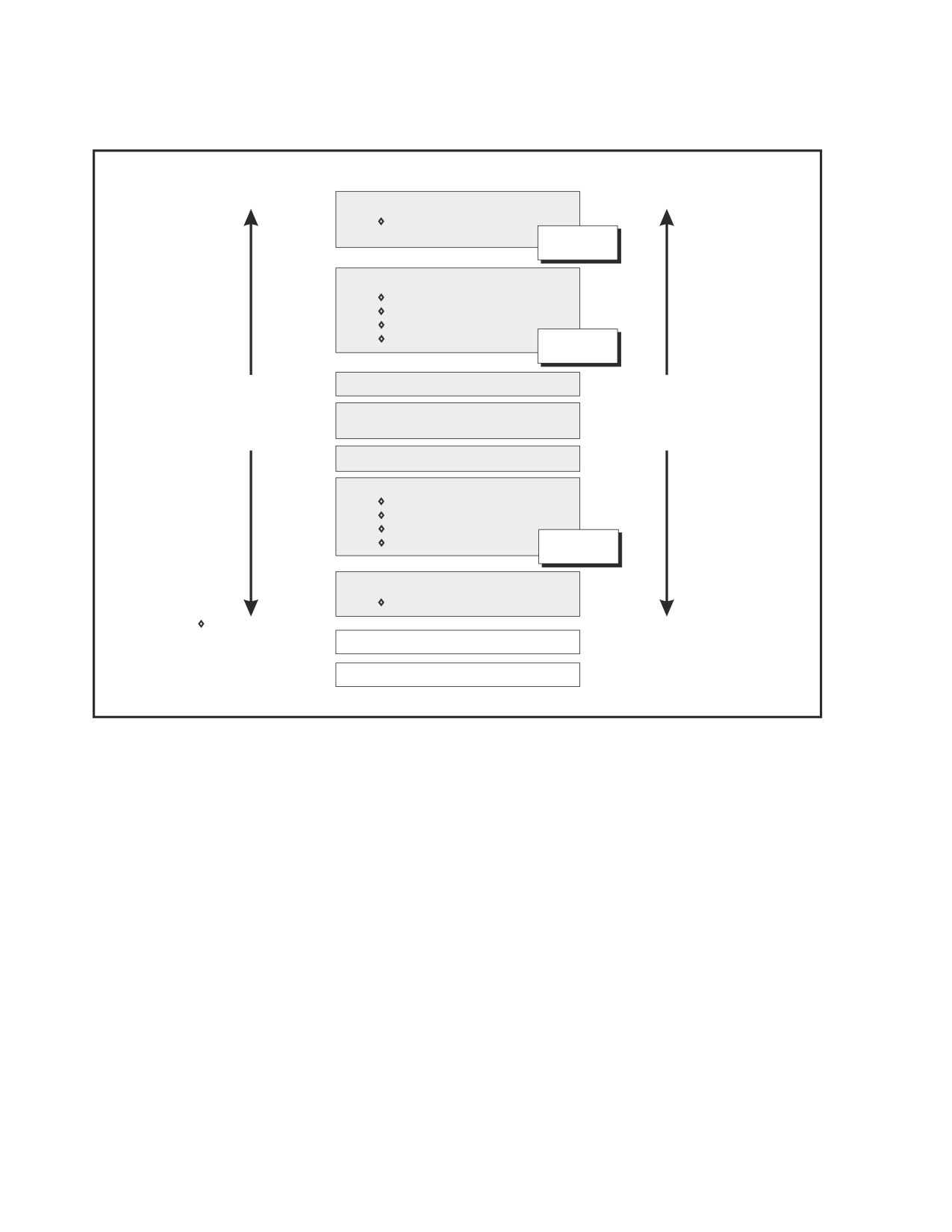
Figure 4-2. Coordinating staff responsibilities
analysis and implementation for the command. Re-
for special staff
source managers/comptrollers are normally located at
corps and division levels. During combat operations,
Headquarters Commandant. The headquarters com-
comptroller functions within a theater of operations are
mandant is the special staff officer responsible for
normally transferred to theater Army or higher levels.
OPCON over soldiers assigned to the specific headquar-
However, specific comptroller functions may occur at
ters who are not assigned or attached to subordinate
corps or division levels. Besides his common staff re-
commands. A headquarters commandant is located at
sponsibilities, the resource manager’s/comptroller’s
corps, division, and major support command levels. Be-
specific responsibilities are as follows:
sides his common staff responsibilities, the headquarters
• Supervises the development, including the training
commandant is responsible for these areas and
resource synchronization, evaluation, revision, defense,
activities:
and execution, of the command budget estimate and the
• Local headquarters security, to include construc-
program objective memorandum (POM).
tion of defensive positions.
• Establishes plans, policies, and procedures for de-
• Arrangement and movement of the headquarters.
veloping and implementing the command’s budget.
• Training and morale activities for headquarters
• Provides assistance to the staff on budget methods
personnel.
and formats; techniques of preparation, resource syn-
chronization, presentation, and analysis; and develop-
• Food service, quartering, medical support, field
ment of workload information, expense (cost) factors,
sanitation, and supply for headquarters personnel.
cost capturing, and statistics.
• Reception and accommodation of visitors and
• Provides financial planning and assistance during
augmentees.
the transition to war and throughout the conflict, includ-
• Motor transportation organic to or allocated for use
ing redeployment and mobilization.
by the headquarters.
• Provides fund ceilings to subordinate units.
• Maintenance of equipment organic to or allocated
• Monitors execution of funded programs.
for use by headquarters.
• Coordinates required program budget activity
Secretary of the General Staff (SGS). The secretary of
meetings.
the general staff is the special staff officer who acts as
executive officer for the chief of staff. There is a secre-
• Identifies funding sources for operations; ac-
tary of the general staff at corps, division, and major
quires, reprograms, controls, and distributes funding
4-18
FM 101-5
authority to subordinate resource management
• Develops a zero-based budget using HQDA cost
officers and to ordering officers.
factors for operational tempo (OPTEMPO).
• Oversees cost capturing for operations to support
• Develops annual non-OPTEMPO requirements.
requests for funding authority for operations and re-
G1 (S1)
quests to replace funds shifted from other programs
(mission training) to support an operation.
The following special staff officers are the coordinat-
ing staff responsibility of the ACofS, G1 (S1).
• Provides resource stewardship, primary linkage to
logistics financial system for fiscal constraints, and in-
Adjutant General (AG). The adjutant general is the spe-
terface with the contracting authorities.
cial staff officer responsible for coordinating personnel
and administrative services assets and operations. The
• Assists in contracting HN support during contin-
AG is the senior adjutant general officer in the force. The
gency operations and in logistics-based development as
corps AG also serves as the personnel group commander.
part of the contracting implementation team.
An adjutant general is located at corps and division levels.
• Develops policies, procedures, and techniques to
Besides his common staff responsibilities, the adjutant
ensure the most cost-advantageous and -effective meth-
general’s specific responsibilities are as follows:
ods of purchasing commercial products and services,
• Helps the G1 prepare and maintain the current per-
within fiscal and regulatory constraints.
sonnel estimate of the situation.
• Monitors administrative controls for accounting
• Assesses current and projected strength data to
and reporting receipt and disbursement of public funds,
maintain the readiness posture of units.
including special contingency funds.
• In accordance with priorities established by the
• Develops and maintains effective financial and
commander, allocates replacements to major subordi-
management controls, procedures, and systems for the
nate commands.
best use of resources.
• Performs casualty operations.
• Develops policies, procedures, and techniques for
governing the establishment, maintenance, and opera-
• Maintains a personnel information data base.
tion of the command’s budget accounting system.
• Coordinates the awards program.
• Implements resource control procedures and serves
• Manages line-of-duty investigations, congres-
as the primary fund certifying officer.
sional and family inquiries, and special correspondence.
• Conducts audits of certain nonappropriated funds.
Civilian Personnel Officer (CPO). The civilian person-
• Performs chief financial officer training and re-
nel officer is the special staff officer responsible for the
views, and audit compliance services.
management and administration of the civilian employee
personnel management program. The CPO is a civilian
• Supervises the implementation of RM policies.
employee and has a permanent position on the staff at divi-
• Performs real-time audits of command systems,
sion and corps levels. Besides his common staff responsi-
procedures, and internal controls to ensure their proper
bilities, the CPO’s specific responsibilities are as follows:
implementation and effective operation.
• Advises the commander and staff and supervises
• Develops and implements an internal review pro-
within the command the management and administration
gram to safeguard, account for, properly use, and care
of the civilian employee personnel management program.
for resources available for accomplishing the com-
mand’s mission.
• Has special staff and operational responsibilities
for administering laws and regulations about civilian
• Provides integrated and independent progress and
personnel management.
statistical reports and analyses of command programs.
Examples are qualitative evaluations of progress made
• Develops, with other staff officers, plans and
in meeting programmed objectives and the effective use
standby directives for procurement, use, and administra-
of resources to support rather than detract from the com-
tion of the civilian labor force and for use of local labor
mand’s missions.
in foreign areas in an emergency.
4-19
FM 101-5
• Participates, when appropriate, in negotiations
• Recommends remedies and develops affirmative
with host countries on labor agreements.
action and EO plans and policies to reduce or prevent
discrimination and sexual harassment.
NOTE: See the AR 690-series for in-depth coverage of
CPO functions.
• Monitors affirmative action and EO plans and
policies.
Dental Surgeon. The dental surgeon is the special staff
officer responsible for coordinating dental activities
• Collects, organizes, and interprets demographic
within the command. A dental surgeon is located at
data concerning all aspects of EO climate assessment.
corps and division echelons. Besides his common staff
• Manages or conducts all EO education and training
responsibilities, the dental surgeon’s specific responsi-
programs within the command.
bilities are as follows:
• Receives and helps process complaints; the EOA
• Coordinates dental activities with the command
may also conduct inquiries, in accordance with com-
surgeon.
mander’s guidance.
• Exercises staff supervision and provides technical
• Helps plan and conduct ethnic observances.
assistance to dental activities.
NOTE: Further information on the duties and responsi-
• Plans and supervises the dental functions that
bilities of the EOA can be found in AR 600-20.
follow:
Finance Officer. The finance officer is the special staff
— The command’s preventive dentistry program.
officer responsible for coordinating and providing fi-
— The maintenance of the command’s oral health
nance services to the command. The finance officer also
and readiness.
is the finance unit commander. Besides his common
staff responsibilities, the finance officer’s specific re-
— The maintenance of professional standards and
sponsibilities are as follows:
levels of dental care and treatment.
• Provides finance policy and technical guidance.
— The management of the panoramic X-ray
(PANORAX) identification program.
• Supervises disbursement of funds.
— The establishment of priorities for dental care
• Provides US and non-US pay functions involving
and treatment.
military, Department of Defense (DOD) civilian, for-
eign nation, host nation, civilian internees, EPW, and
— The professional training of dental personnel.
travel and miscellaneous pay.
• Develops a program for dental support of humani-
• Advises the commander and staff on the current eco-
tarian and civilian-action operations.
nomic situation, including the economic impact of expendi-
• Provides advice and technical assistance in con-
tures on the local economy, the availability and status of
structing, rehabilitating, and using dental facilities.
banking facilities in the command’s area of concern, and the
command’s currency control program.
Equal Opportunity Advisor (EOA). The equal op-
portunity advisor is the special staff officer responsible
• Performs limited funds and nonappropriated funds
for coordinating matters concerning equal opportunity
accounting, as determined by theater policy.
for service members and their families. An EOA is lo-
• Provides banking and currency support.
cated at every echelon of command. Besides his com-
mon staff responsibilities, the EOA’s specific
• Coordinates financial support of battlefield pro-
responsibilities are as follows:
curement and contracting.
• Advises and assists the commander and staff on all
• Coordinates local procurement support with the G1
equal opportunity (EO) matters, to include sexual har-
(S1) for personnel and with the G4 (S4) for materials and
assment, discrimination, and affirmative action.
services.
• Recognizes and assesses indicators on institu-
• Stations subordinate finance units with their sup-
tional and individual discrimination and sexual
porting operating systems to support battlefield procure-
harassment.
ment and pay operations.
4-20
FM 101-5
• Monitors commercial accounts, which involves
and for use in postwar-combat and material-
payment for supplies, equipment, and services procured
development studies.
to support the battlefield logistics system.
• Advises on command health services and health
• Provides family support at home station.
matters that concern the occupied or friendly territory
within the commander’s area of operations.
• Makes solatium and other claims payment in coor-
• Recommending IR to the G2 through the G1.
dination with SJA.
• Formulates the combat health support (CHS) plan.
• Supports bounty programs such as weapons for
cash.
• Coordinates with the G2 (S2) to obtain national
medical intelligence reports and summaries.
Surgeon. The surgeon is the special staff officer re-
sponsible for coordinating health assets and operations
• Assists in coordinating the support of the area
within the command. A surgeon is authorized on all
medical laboratory in the receipt of biomedical samples
staffs from battalion through corps levels. The surgeon
and initial identification of biological warfare (BW)
may or may not be a medical unit commander. Besides
agents.
his common staff responsibilities, the surgeon’s specific
• Advises on the effects of the medical threat (includ-
responsibilities are as follows:
ing environmental, endemic and epidemic diseases,
• Plans and supervises—
NBC weapons, and directed-energy devices) toward
personnel, rations, and water.
— Health education and combat lifesaver training
for the command.
• Recommends use of nondedicated transportation
assets for evacuation if required.
— Casualty evacuation.
• Submits recommendations to higher headquarters
— Combat stress control program.
on professional medical problems that require research.
— Mass casualty plan.
• Advises on how operations impact on the public
— Medical care of EPWs and civilians within the
health of personnel and the indigenous populations.
command’s area of operations.
• Examines and recommends use or processing of
— Treatment and hospitalization of sick, injured,
captured medical supplies.
or wounded soldiers.
• Advises the command and coordinates with the G5
— Patient evacuation, including use of both Army
on public health issues involving military operations.
dedicated medical evacuation (MEDEVAC) platforms
Veterinary Officer. The veterinary officer is the spe-
(air and ground) and Air Force evacuation aircraft.
cial staff officer responsible for coordinating assets and
— Veterinary food inspection, animal care, and
activities concerning veterinary service within the com-
veterinary preventive medicine activities of the com-
mand. The veterinary officer is a veterinary corps offi-
mand, as required and in coordination with the veteri-
cer. A veterinary corps officer is authorized at corps
nary officer.
level. Besides his common staff responsibilities, the
veterinary officer’s specific responsibilities are as
— Preventive medicine services.
follows:
— Medical laboratory service.
• Plans and supervises—
— Combat health logistics, including blood
— Food inspection.
management.
— Food handling and storage facilities and
— Medical support of humanitarian assistance and
equipment.
disaster relief operations.
— Procurement and management of veterinary
— Supervision and preparation of health-related
equipment and facilities, including housing of animals.
reports and battlefield statistics.
— Participation of veterinary personnel and units
— Collection and analyses of operational data for
in civil-military operations.
on-the-spot adjustments in the medical support structure
4-21
FM 101-5
— Use of medical laboratory services by veteri-
employment of air defense artillery (ADA) systems, as-
nary personnel.
sets, and operations. The ADCOORD is the senior air
defense artillery officer in the command. He is also the
• Coordinates veterinary activities with the surgeon.
commander of an ADA unit supporting the command.
• Determines the requirements for veterinary sup-
An ADCOORD is at corps and division levels. Besides
plies and equipment.
his common staff responsibilities, the ADCOORD’s
• Prepares reports on command veterinary activities.
specific responsibilities are as follows:
G2 (S2)
• Provides early warning to the supported command.
Staff Weather Officer. The SWO is the coordinating
• Disseminates air tasking order (ATO) and airspace
staff responsibility of the ACofS, G2 (S2). The staff
control order (ACO) information to ADA units.
weather officer is the special staff officer responsible for
• Requests immediate airspace control measures to
coordinating operational weather support to tactical
support air defense (AD) operations.
commanders and weather service matters. The SWO is
an Air Force officer, provided on request by the Air
• Based on enemy air and missile capability assess-
Force, normally at division and corps levels. Besides
ment, recommends offensive counterair, defensive coun-
his common staff responsibilities, the staff weather offi-
terair, and theater missile defense targets and priorities.
cer’s specific responsibilities are as follows:
• Coordinates with the G2 (S2) to ensure that surveil-
• Advises the Army commander on Air Force
lance and intelligence units locate enemy air support
weather capabilities, support limitations, and the ways
assets.
weather information can enhance combat operations.
• Coordinates AD sensor management.
• Evaluates and disseminates weather data, including
• Participates in targeting meetings.
forecasts, warnings, advisories, and miscellaneous
weather and meteorological data.
• Recommends active and passive AD measures.
• Monitors the overall weather support mission for
• Recommends IR to the G2 through the G3.
the commander and acts as the commander’s agent to
• Determines requirements and recommends use of
identify and resolve weather support responsibilities.
assets to support AD efforts.
• Determines weather support data requirements.
• Provides AD input to the airspace command and
• Advises the Air Force on the operational weather
control plan.
support requirements of the supported Army
• Plans and coordinates airspace with the aviation li-
command.
aison officer
(AVLO); air liaison officer
(ALO);
• Participates in targeting meetings.
FSCOORD; G3 (S3) air officer; and other airspace us-
ers.
(ADCOORD representatives from organic ADA
• Prepares climatological studies and analyzes them
units may also serve as members of the AC2 cell.)
in support of planned exercises, operations, and
commitments.
• Advises the commander and staff on the impact of
early warning on AD operations; plans and supervises
• Coordinates weather support provided to subordi-
defense early warning operations within air defense.
nate units.
• Helps develop and review joint counterair rules and
• Assists Army aircraft accident investigation
procedures.
boards.
Air Liaison Officer (ALO). The air liaison officer is the
G3 (S3)
special staff officer responsible for coordinating tactical
The following special staff officers are the coordinat-
air assets and operations such as close air support (CAS),
ing staff responsibility of the ACofS, G3 (S3).
air interdiction, joint suppression of enemy air defense
Air Defense Coordinator (ADCOORD). The air de-
(SEAD), reconnaissance, and airlift. The ALO is the sen-
fense coordinator is the special staff officer responsible
ior Air Force officer with each tactical air control party
for coordinating matters concerning the planning and
(TACP). An ALO is authorized at corps, division, and
4-22
FM 101-5
brigade levels. Besides his common staff responsibilities,
• Provides support teams to maneuver elements
the ALO’s specific responsibilities are as follows:
when Navy ships have a direct support
(DS)
mission.
• Advises the commander and staff on the employ-
ment of tactical air (TACAIR).
• Helps the company FSO adjust naval gunfire in the
absence of a spotter.
• Operates and maintains Air Force TACAIR direc-
tion radio net and air request net.
• Provides control and liaison associated with the
ground elements of a landing force in the control and
• Transmits requests for immediate close air and re-
connaissance support.
employment of naval gunfire and Navy and Marine
close air support in the amphibious assault or in other
• Transmits advance notification of impending im-
types of operations when such support is provided.
mediate airlift requirements.
• Advises on the capabilities, limitations, and em-
• Coordinates tactical air support missions with
ployment of naval gunfire and Navy or Marine air
the fire support element and the appropriate AC2
support.
element.
• Participates in targeting meetings.
• Recommends IR to the G2 through the G3.
Aviation Coordinator (AVCOORD). The aviation co-
• Acts as liaison between AD units and air control
ordinator is the special staff officer responsible for coor-
units.
dinating Army aviation assets and operations. The
• Helps plan the simultaneous employment of air and
AVCOORD is the senior aviation officer in the force.
surface fires.
He is also the commander of an aviation unit supporting
• Supervises forward air controllers (FACs) and the
the command. The assistant or deputy AVCOORD is a
TACP.
permanent position on the staff representing the
AVCOORD in his absence. An AVCOORD is
• Integrates air support sorties with the Army unit
authorized at corps and division levels. Besides his
scheme of maneuver.
common staff responsibilities, the AVCOORD’s spe-
• Participates in targeting meetings.
cific responsibilities are as follows:
• Serves as a member of the targeting cell.
• Exercises staff supervision and training over Army
aviation operations.
• Helps the fire support officer
(FSO) direct air
strikes in the absence of a FAC.
• Monitors the aviation flying-hour, standardization,
and safety program.
• Provides Air Force input into the AC2.
• Helps plan and supervise Army aviation
Air/Naval Gunfire Liaison Company (ANGLICO)
operations.
Commander. The air and naval gunfire liaison com-
pany commander in the role of a special staff officer
• Recommends IR to the G2 through the G3.
is responsible for coordinating naval gunfire or ma-
• Provides technical advice and assistance on the use
rine close air support assets and operations. The
of Army aviation for evacuation (medical or other).
ANGLICO commander is a naval (Navy or Marine)
officer. Representatives from the Navy or Marine
• Participates in targeting meetings.
Corps augment a US unit, multinational unit, or coali-
Chemical Officer (CHEMO). The chemical officer is
tion partner unit when that unit is supported by naval
the special staff officer responsible for the use of or re-
gunfire or marine close air support. The ANGLICO
quirement for chemical assets and NBC defense and
is designed to operate at division level and below.
smoke operations. A chemical officer is at every eche-
Besides his common staff responsibilities, the
lon of command. Besides his common staff responsi-
ANGLICO commander in the role of a special staff
bilities, the chemical officer’s specific responsibilities
officer—
are as follows:
• Processes requests for naval air gunfire.
• Recommends COAs to minimize friendly and
• Operates the naval gunfire ground support net.
civilian vulnerability.
4-23
FM 101-5
• Provides technical advice and recommendations on
• Estimates effect of a unit’s radiation exposure state
mission-oriented protective posture
(MOPP), troop-
on mission assignments.
safety criteria, operational exposure guidance, NBC
• Participates in the nuclear target nomination pro-
reconnaissance, smoke operations, biological warfare
cess (corps only).
defense measures, and mitigating techniques.
• Estimates consumption rates of NBC defense
• Plans and initiates, in conjunction with the surgeon,
equipment and supplies.
procedures to verify and report enemy first use of NBC
• Operates the NBC warning and reporting system.
agents.
• Coordinates with the G4 (S4) on logistics as it re-
• Assesses probability and impact of NBC-related
lates to chemical defense equipment and supplies, main-
casualties.
tenance of chemical equipment, and transportation of
• Coordinates across the entire staff while assessing
chemical assets.
the impact of enemy NBC-related attacks and hazards
• Coordinates NBC reconnaissance assets into the
on current and future operations.
reconnaissance and surveillance plan.
• Coordinates with the surgeon on health support
• Oversees construction of NBC shelters.
requirements for NBC operations.
• Plans and recommends integration of smoke and
• Conducts NBC IPB vulnerability analysis and
obscurants into tactical operations.
recommends IR to the G2 through the G3.
• Conducts smoke target development.
• Plans, supervises, and coordinates NBC decon-
tamination (except patient decontamination) operations.
• Plans and recommends use of flame-field expedi-
ents to supplement unit defense and existing minefields
• Supervises the nuclear and chemical accident and
and barriers.
incident response assistance program.
• Advises the commander, in conjunction with the sur-
• Assesses weather and terrain data to determine if
geon, on possible hazards and effects of low-level hazards,
environmental factors are conducive to enemy employ-
such as low-level radiation and toxic industrial material.
ment of weapons of mass destruction (WMD) or, at
corps level, to the friendly employment of nuclear
• Advises the commander, in conjunction with the
weapons.
ADCOORD, on passive defense measures to assist in
protecting and warning the force against missile attack.
• Predicts downwind vapor hazard and fallout pat-
• Advises the commander on the use of riot control
terns and their probable effects on operations.
agents.
• Predicts fallout from friendly employment of nu-
Deception Officer. The deception officer is the special
clear weapons and disseminates nuclear strike warning
staff officer for coordinating deception assets and opera-
(STRIKWARN) messages when required.
tions for the command. A deception officer is located at
• Plans, coordinates, and manages chemical and ra-
corps and division levels. The deception officer comes
diological survey and monitoring operations.
from the MI battalion or MI brigade, but is not normally
the commander of the supported unit. Besides his com-
• Collates, evaluates, and distributes NBC attack and
mon staff responsibilities, the deception officer’s spe-
contamination data.
cific responsibilities are as follows:
• Prepares, manages, and distributes NBC messages.
• Exercises staff supervision over deception
• Prepares NBC situation reports (SITREPs).
activities.
• Plans, coordinates, and manages NBC reconnais-
• Determines, with the G2, requirements or opportu-
sance operations.
nities for deception operations.
• Maintains and reports radiation exposure and dose
• Recommends to the G3 the deception target, objec-
status and coordinates with surgeon.
tive, and deception story.
• Participates in targeting meetings.
• Integrates use of deception assets.
4-24
FM 101-5
• Monitors execution of the deception plan.
• Advises the commander on the use of organic and
nonorganic engineer assets.
• Recommends IR to the G2 through the G3.
• Advises the commander on the employment and
Electronic Warfare Officer (EWO). The electronic
reduction of obstacles.
warfare officer is the special staff officer responsible for
coordinating electronic warfare assets and operations
• Advises the commander on environmental issues,
for the command. An electronic warfare officer is lo-
coordinates with other staff officers to determine the im-
cated at corps and division levels. Besides his common
pact of operations on the environment, and helps the
staff responsibilities, the electronic warfare officer’s
commander integrate environmental considerations into
specific responsibilities are as follows:
the decision-making process.
• Assists in coordinating C2-attack and C2-protect
• Provides a terrain-visualization mission folder to
concepts to support the commander’s concept of the
determine the terrain’s effect on both friendly and
operation.
enemy operations.
• Coordinates, prepares and maintains the electronic
• Produces maps and terrain products (coordinates
warfare target list, electronic attack taskings, and elec-
with the G2 for planning and distribution).
tronic attack requests.
• Plans and supervises construction, maintenance,
• Coordinates with the G6 to deconflict frequencies
and repair of camps and facilities for friendly forces,
and the joint restricted frequency list with EW targets.
EPWs, and civilian internees.
• Coordinates with the TCAE to identify opportuni-
• Plans and coordinates with the FSCOORD the use
ties for effective targeting using jamming, deception,
of family of scatterable mines (FASCAM).
and PSYOP.
• Plans and coordinates environmental protection,
• Participates in targeting meeting.
critical areas, and protection levels.
Engineer Coordinator (ENCOORD). The engineer
• Assists the G2 (S2) in IPB preparation, to include
coordinator is the special staff officer for coordinating
preparing the engineer battlefield assessment (EBA).
engineer assets and operations for the command. The
ENCOORD is usually the senior engineer officer in the
• Participates in the targeting meeting.
force. He is the commander of an engineer unit support-
• Provides information on the status of engineer
ing the command. The assistant or deputy ENCOORD
assets on hand.
is a permanent staff officer representing the ENCOORD
in his absence. An ENCOORD is located at corps and
• Recommends to the G4 MSRs and logistics areas
division levels and one is normally task-organized to
based on technical information.
maneuver brigades and battalions. Besides his common
• Recommends IR to the G2 through the G3.
staff responsibilities, the ENCOORD’s specific respon-
sibilities are as follows:
• Plans the reorganization of engineers to fight as in-
fantry combat units when the commander deems their
• Plans and controls these engineer battlefield
emergency employment necessary.
functions:
Explosive Ordnance Disposal (EOD) Officer. The
— Mobility.
explosive ordnance disposal officer is the special staff
— Countermobility (CM).
officer for coordinating the dectection, identification,
recovery, evaluation, render safe, and final disposal of
— Survivability.
explosive ordnance. An EOD officer is authorized at
— General engineering.
corps and division levels and will normally be dual-
hatted as the EOD group, battalion, or company com-
— Topographic engineering.
mander. Besides his common staff responsibilities, the
• Recommends engineer organization for combat.
EOD officer’s specific responsibilities are as follows:
• Plans and coordinates with the G3 (FSCOORD) on
• Establishes and operates an EOD-incident report-
the integration of obstacles and fires.
ing system.
4-25
FM 101-5
• Establishes, operates, and supervises technical
• Participates in the targeting meeting and produces
intelligence reporting procedures.
targeting products, such as target selection standards
(TSS), and high-payoff target list (HPTL).
• Coordinates requirements for EOD support with
requesting units, other Army commands, sister services,
• Plans and coordinates, through the G3 (S3), with
federal agencies, and multinational or coalition partners.
the G2 (S2), signal officer, and EWO, the use of elec-
This coordination may include arranging for administra-
tronic warfare support and electronic protection as part
of fire support.
tive and logistics support for subordinate EOD units, as
required.
• Provides information on the status of fire support
systems, target acquisition assets, and field artillery am-
• Monitors the supply status of, and expedites re-
munition on hand.
quests for, special EOD tools, equipment, and demoli-
tion materials.
• Recommends IR to the G2 through the G3.
NOTE: For more details on the duties and responsibili-
• Plans and coordinates with the ENCOORD for the
ties of the EOD officer, see AR 75-15.
use of air- and artillery-delivered FASCAM.
Fire Support Coordinator (FSCOORD). The fire sup-
• Recommends to the G3 (S3) the field artillery am-
port coordinator is the special staff officer for coordinating
munition required supply rate.
fire support and field artillery assets and operations in the
• Provides an estimate of the adequacy of the field ar-
command. The FSCOORD is the senior field artillery of-
tillery ammunition controlled supply rate.
ficer in the force. He is the commander of a field artillery
• Recommends internal reallocation of the con-
unit supporting the force. The assistant or deputy
trolled supply rate for subordinate commands to match
FSCOORD is a permanent staff officer on the staff repre-
priorities for support.
senting the FSCOORD in his absence. There is a
FSCOORD with the maneuver force at every echelon of
• Establishes and disseminates appropriate fire sup-
command from battalion through corps. At brigade, regi-
port coordination measures in support of current and
ment, and below, the FSCOORD’s representative is the
future operations.
FSO. Besides his common staff responsibilities, the
• Establishes priorities and focus for counterfire
FSCOORD’s specific responsibilities are as follows:
radar employment.
• Develops, with the G3 (S3), a concept of fires to
• Coordinates for shooter to sensor for target
support the operation.
engagement.
• Plans and coordinates fire support tasks for—
• Coordinates the field artillery survey within the
— Supporting forces in contact.
command and with higher and adjacent commands.
— Supporting the commander’s battle plan.
• Recommends FA organization for combat.
— Synchronizing the fire support system.
• Coordinates positioning of fire support assets in
specific area of operations.
— Sustaining the fire support system.
• Nominates nuclear targets (at corps level only).
— Conducting deep fires.
• Coordinates and synchronizes joint fire support
— Conducting counterfires to destroy, neutralize,
platforms.
or suppress the enemy’s indirect fire systems.
Historian. The historian is the special staff officer
— Conducting SEAD fires.
responsible for coordinating the documentation of
— Conducting offensive counterair fires.
the historical activities of the command. The histo-
rian is normally a DA civilian. A historian is at corps
— Conducting close fires.
and division levels. Besides the common staff re-
— Integrating nonlethal fires into the overall
sponsibilities, the historian’s specific responsibilities
scheme of fires.
are as follows:
— Conducting rear fires.
• Prepares the unit’s history.
4-26
FM 101-5
• Supervises the command’s historical activities.
— Internment and resettlement operations, to in-
clude collection, detention and internment, protection,
• Injects historical perspective and institutional
sustainment, and evacuation of EPW and civilian in-
memory into unit activities.
ternees, dislocated civilians, and US military prisoners.
• Collects and maintains (as soon as possible) rec-
— Law and order operations, to include law en-
ords such as staff journals, plans and orders, and after-
forcement, criminal investigations, US military prisoner
action reports.
confinement, and counterterrorism and antiterrorism
activities.
• Prepares special studies or reports based on assem-
bled historical material.
— Police intelligence operations, to include activi-
ties relative to the collection, integration, and dissemina-
• Maintains a command historical research collec-
tion of police information and intelligence.
tion adequate to support the historical mission.
— Security aspects of foreign internal defense
• Establishes and maintains liaison with other histo-
(FID) operations, in coordination with the G2 (S2).
rians, as required.
— Support to civil authorities during domestic dis-
Liaison Officer (LNO). The liaison officer is a special
turbances and disasters when authorized and legally per-
staff officer responsible for representing the commander
mitted, in coordination with the G5 (S5) and the staff
at the headquarters of another unit for effecting coordi-
judge advocate.
nation and promoting cooperation between the two
• Coordinates customs and counterdrug activities.
units. The coordinating staff responsibility for the LNO
is that of the ACofS, G3, unless designated differently
• Provides physical security guidance for command-
by the chief of staff.
ers, assistance in area damage control, and NBC detec-
tion and reporting.
NOTE: A complete discussion of the duties and respon-
sibilities of the LNO is in Appendix L.
• Performs liaison with local civilian law enforce-
ment authorities.
Provost Marshal (PM). The provost marshal is the
special staff officer responsible for coordinating mili-
• Assists the G1 in the administration of discipline,
and law and order, including AWOL; desertion; court-
tary police (MP) combat, combat support, and combat
martial offenses; requests for transfer of internees, de-
service support assets and operations. The PM is the
tainees, and prisoners; rewards and punishments; and
senior military police officer in the command. He is also
disposition of stragglers.
the commander of the MP unit supporting the force. The
PM augments the staff with an officer to represent him
• Provides statistical data on AWOL, desertion, and
on the staff in his absence. A PM is located at corps and
so on, to the G1 through the G3.
division levels. Besides his common staff responsibili-
• Recommends IR to the G2 through the G3.
ties, the provost marshal’s specific responsibilities are as
• Coordinates with the G4 for all logistics require-
follows:
ments relative to EPW and civilian internees, US mili-
• Plans and supervises—
tary prisoners, and dislocated civilians.
— Maneuver and mobility support operations, to
• Coordinates with the finance officer and RM on
include route reconnaissance, surveillance, circulation
pay support for EPWs and civilian internees, and on fi-
control, dislocated civilian and straggler control, infor-
nancial aspects of weapons bounty programs.
mation dissemination, and tactical and criminal intelli-
Psychological Operations (PSYOP) Officer. The
gence collection and reporting.
psychological operations officer is the special staff offi-
— Components of area security operations, to in-
cer responsible for coordinating PSYOP assets and op-
clude activities associated with force protection, zone
erations in the command. A PSYOP officer is located at
and area reconnaissance, and C2-protect (access control;
corps and division levels. If no PSYOP officer is as-
physical security of critical assets, nodes, and sensitive
signed to the command, the PSYOP support element
materials; counterreconnaissance; and security of desig-
commander of an attached PSYOP support element may
nated key personnel).
assume the duties and responsibilities of the PSYOP
4-27
FM 101-5
special staff officer. Besides his common staff responsi-
• Coordinates with the G3 and G4 on safety meas-
bilities, the PSYOP officer’s specific responsibilities are
ures in transportation and storage of arms, ammunition,
as follows:
explosives, petroleum products, and other hazardous
material.
• Exercises staff planning and coordination over
PSYOP activities.
• Assists the commander and staff in integrating risk
management into the planning, coordinating, and devel-
• Evaluates, with the G2 and G5, enemy PSYOP ef-
opment of plans and orders to protect the force from
forts and the effectiveness of friendly PSYOP on target
accidental loss.
groups.
• Assists the commander in developing, implement-
• Coordinates with the G5 (S5) for the impact of
ing, and monitoring air and ground programs to prevent
PSYOP.
accidental loss.
• Coordinates audience pretesting and post testing
• Collects and analyzes accidental loss data for trend
for propaganda and counterpropaganda products.
analysis and dissemination leading to the development
• Coordinates with the G5 (S5) for the planning of
of risk reduction control measures as well as prevention
and assistance with the execution of dislocated civilian
programs.
operations.
• Prepares risk assessments and recommends appro-
• Evaluates the effectiveness of the PSYOP
priate risk reduction control measures for all operations.
campaign on the target audience.
• Assists the commander’s staff, the staff of higher
• Evaluates the psychological impact of military op-
and lower commands, joint forces, and host nations in
erations on the enemy and the civilian populace.
risk management for their functional areas.
• Recommends IR to the G2 through the G3.
• Assesses unit risk management performance dur-
• Coordinates with the PAO and G5 to ensure infor-
ing planning and execution; recommends changes to
mational messages being disseminated are consistent.
risk reduction control measures as needed.
Safety Officer. The safety officer is the special staff of-
Special Operations Coordinator (SOCOORD). The
ficer responsible for coordinating safety activities
special operations coordinator is the special staff officer
throughout the command. A safety officer is located at
responsible for coordinating and integrating Special
every echelon of command from battalion to corps. Be-
Forces (SF), Ranger, and Special Operations Aviation
sides his common staff responsibilities, the safety offi-
assets and activities. A SOCOORD is normally located
cer’s specific responsibilities are as follows:
only on the corps staff. However, whenever a special
operations unit is attached or under OPCON of the force,
• Develops, supervises, and monitors—
someone either from the staff or the attached unit will
— Command safety and occupational health
perform the duties of a SOCOORD. Below the corps
program.
echelon, a unit normally receives a special operations
LNO team to perform SOCOORD duties. Besides his
— Risk management program for all operations
common staff responsibilities, the SOCOORD’s respon-
and activities in the command.
sibilities are as follows:
— Accident prevention program.
• Advises the commander on SF, Ranger, and Spe-
• Coordinates the staff risk management for each ex-
cial Operations Aviation capabilities and limitations.
ercise and makes recommendations to the G3.
• Provides coordination between the corps and the
• Coordinates with the inspector general and provost
special operations command and control element
marshal on unsafe trends collected during inspections.
(SOCCE) that may be located with the unit’s main tacti-
• Provides input to the G1 on projected accidental
cal operations center (TOC).
losses.
• Coordinates specific requirements for and con-
• Provides safety training to the local civilian labor
ducts liaison with the theater special operations com-
force.
mand
(SOC), Army special operations task force
4-28
FM 101-5
(ARSOTF), and the joint special operations task force
responsibilities, the transportation officer’s specific re-
(JSOTF).
sponsibilities are as follows:
• Coordinates with the conventional force’s long-
• Plans and supervises—
range surveillance units to deconflict operations (routes,
— Administrative movement, including on-
air routes, targets for surveillance, and target handover).
ward movement from port of debarkation (POD),
• Recommends IR to G2 through the G3.
CSS movements, and other movement as directed by
the G3 (S3).
• Coordinates SF, Ranger, and Special Operations
Aviation support requirements with other staff sections.
— Movement scheduling and regulation of MSRs.
• Helps plan and coordinate linkup between the
— Mode operations (truck, rail, air, and water).
corps and Army special operations forces (ARSOF).
— Movement of material and personnel.
• Provides staff expertise to other staff sections on
• Monitors movements on routes two echelons
SF, Ranger, and Special Operations Aviation employ-
down.
ment, doctrine, tactics, techniques, and procedures.
• Coordinates transportation from higher echelons if
Theater Airlift Liaison Officer (TALO). The thea-
requirements exceed available resources.
ter airlift liaison officer is the special staff officer re-
sponsible for advising the commander on the best use
Personal Staff
of airlift resources and coordinating the use of airlift
resources. The TALO is an AF-rated officer. TALOs
Some staffs have personal staff officers who work
are normally located at corps, division, regiment, and
under the immediate control of the commander and
separate brigades. Besides his common staff respon-
therefore have direct access to the commander. The
sibilities, the TALO’s specific responsibilities are as
commander establishes guidelines or gives specific
follows:
guidance when the personal staff officer should inform,
or coordinate with, the chief of staff or other members of
• Advises the ground commander on the capabilities,
the staff on issues.
limitations, and utilization of AF fixed-wing theater and
strategic airlift assets.
Most personal staff officers also perform duties as
special staff officers, working with a coordinating staff
• Assists the ground commander in planning and co-
officer. This is done case by case, depending on the
ordinating preplanned, immediate, and emergency thea-
guidance of the commander or the nature of the task.
ter and strategic airlift support of ground operations.
Personal staff officers also may work indirectly under
• Operates and maintains airlift advance notifica-
the supervision of the XO or CofS.
tion/coordination net.
Listed below are the members who normally make up
• Ensures the TALO and any augmenting TALOs are
the commander’s personal staff. Either by law or regu-
manifested for Army movements in conjunction with
lation, these staff members have a unique relationship
exercises or contingencies.
with the commander. Although there are other members
in the commander’s personal staff, this manual dis-
• Performs drop zone surveys, drop zone control,
cusses only the staff officers, with the exception of the
and landing zone safety officer duties when combat
command sergeant major. Following are the personal
control teams or Army drop zone support teams are
staff officers discussed in this section:
unavailable.
• Command sergeant major (CSM).
G4 (S4)
• Aide-de-camp.
Transportation Officer (TO). The TO is the coordinat-
ing staff responsibility of the ACofS, G4 (S4). The TO is
• Chaplain.
the special staff officer responsible for coordinating the
• Inspector general (IG).
transportation assets and operations in the command.
There is a transportation officer at corps (CTO) and divi-
• Public affairs officer (PAO).
sion
(DTO) levels. Besides his common staff
• Staff judge advocate (SJA).
4-29
FM 101-5
Command Sergeant Major (CSM) (No Coordinating
aide-de-camp depends on the rank of the general officer.
Staff Responsibility)
An aide-de-camp’s specific responsibilities are as
The command sergeant major is a member of the
follows:
commander’s personal staff by virtue of his being the
• Provides for the general officer’s personal well-
senior noncommissioned officer of the command. The
being and security and relieves him of routine and time-
CSM is responsible for providing the commander with
consuming duties.
personal, professional, and technical advice on enlisted
soldier matters and the noncommissioned officer (NCO)
• Helps prepare and organize schedules, activities,
corps as a whole. A command sergeant major is located
and calendars.
at every echelon of command from battalion through
• Prepares and executes trip itineraries.
corps. The CSM’s duties and responsibilities vary ac-
cording to the commander’s specific desires and the
• Meets and hosts the general officer’s visitors at his
unit’s type, size, and mission. The command sergeant
headquarters or quarters.
major’s normal specific duties are as follows:
• Coordinates protocol activities.
• Provides advice and recommendations to the com-
• Acts as an executive assistant.
mander and staff in matters pertaining to enlisted
personnel.
• Supervises other personal staff members (secretar-
ies, assistant aides, enlisted aides, drivers).
• Executes established policies and standards con-
cerning enlisted personnel’s performance, training,
• Performs varied duties, according to the general
appearance, and conduct.
officer’s desires.
• Maintains communications with subordinate unit
Chaplain (Coordinating Staff Responsibility, ACofS,
NCOs and other enlisted personnel through NCO
G1 (S1), when required)
channels.
The chaplain is a personal staff officer responsible
• Monitors unit and enlisted personnel training and
for coordinating the religious assets and operations
makes corrections as necessary.
within the command. The chaplain is a confidential ad-
• Administers and monitors the unit noncommis-
visor to the commander for religious matters. A chap-
sioned officer development program (NCODP) and ser-
lain is located at every echelon of command from
geant’s time training (STT).
battalion through corps. Besides his common staff re-
• Provides counsel and guidance to NCOs and other
sponsibilities, the chaplain’s specific responsibilities are
enlisted personnel.
as follows:
• Develops the unit METL with the commander.
• Advises the commander on the issues of religion,
ethics, and morale (as affected by religion), including
• Administers and chairs unit selection and soldier
the religious needs of all assigned personnel.
boards for enlisted personnel.
• Provides commanders with pastoral care, personal
• Performs other duties the commander prescribes,
counseling, advice, and the privilege of confidentiality
including receiving and orienting newly assigned en-
and sacred confidence.
listed personnel and helping inspect command activities
and facilities.
• Develops and implements the commander’s reli-
gious support program.
• Monitors and recommends actions as necessary on
the morale and discipline of the unit.
• Exercises staff supervision and technical control
over religious support throughout the command.
• Coordinates unit security operations, to include
fighting positions and local security.
• Provides moral and spiritual leadership to the com-
mand and community.
Aide-De-Camp (No Coordinating Staff Responsibility)
• Coordinates religious support with unit minis-
The aide-de-camp serves as a personal assistant to a
try teams of higher and adjacent headquarters,
general officer. An aide-de-camp is authorized for gen-
other services, and multinational forces or coali-
eral officers in designated positions. The rank of the
tion partners.
4-30
FM 101-5
• Translates operational plans into battlefield minis-
• Provides the commander with a continuous, objec-
try priorities for religious support.
tive, and impartial assessment of the command’s opera-
tional and administrative effectiveness.
• Helps the commander ensure that all soldiers have
the opportunity to exercise their religion.
• Identifies and assists in the resolution of systemic
issues.
• Advises the commander and staff, with the G5
(S5), of the impact of the faith and practices of indige-
NOTE: The IG serves on the commander’s personal
nous religious groups in an area of operations.
staff in accordance with AR 20-1. For additional duties
and responsibilities of the IG, see AR 20-1.
• Performs or provides religious rites, sacraments,
ordinances, services, and pastoral care and counseling to
Public Affairs Officer (PAO) (Coordinating Staff
nurture the living, care for casualties, and honor the
Responsibility, ACofS, G1 (S1), when required)
dead.
The public affairs officer is a personal staff officer
• Provides religious support to the command and
responsible for understanding and fulfilling the infor-
community to include confined or hospitalized person-
mation needs of soldiers, the Army community, and
nel, EPWs, civilian detainees, and refugees.
the public. A public affairs officer is located at corps,
division, and major support command levels. Be-
• Provides liaison to indigenous religious leaders in
sides his common staff responsibilities, the public af-
close coordination with the G5 (S5).
fairs officer’s specific responsibilities are as follows:
• Trains, equips, and supports the subordinate chap-
• Plans and supervises a command public affairs
lain and the chaplain assistant.
program.
• Advises and informs the commander of the public
Inspector General (IG) (Coordinating Staff Respon-
sibility, ACofS, G1/S1, when required)
affairs impact and implications of planned or imple-
mented operations.
The inspector general is a personal staff officer re-
sponsible for advising the commander on the overall
• Serves as the command’s spokesman for all com-
welfare and state of discipline of the command. The IG
munication with external media.
is a confidential advisor to the commander. An IG is lo-
• Assesses the information requirements and expec-
cated with general officers in command and with se-
tation of the Army and the public, monitors the media
lected installation commanders. Besides his common
and public opinion, and evaluates the effectiveness of
staff responsibilities, the inspector general’s specific re-
public affairs plans and operations.
sponsibilities are as follows:
• Facilitates media efforts to cover operations by
• Integrates the commander’s organizational inspec-
expediting the flow of complete, accurate, and timely
tion program.
information.
• Conducts inspections, surveys, and studies as the
• Coordinates logistics and administrative support of ci-
commander requires and monitors corrective actions.
vilian journalists under administrative control of the unit.
• Receives allegations and conducts investigations
and inquiries.
• Conducts liaison with media representatives to pro-
vide accreditation, mess, billet, transport, and escort as
• Monitors and informs the commander of trends,
authorized and appropriate.
both positive and negative, in all activities.
• Develops, disseminates, educates, and trains the
• Consults staff sections, as appropriate, to obtain
command on policies and procedures for protecting
items for the special attention of inspectors and to ar-
against the release of information detrimental to the mis-
range for technical assistance.
sion, national security, and personal privacy.
• Determines the command’s discipline, efficiency,
• Informs soldiers, family members, and DOD civil-
economy, morale, training, and readiness.
ians of their rights under the Privacy Act, their responsi-
• Assists soldiers, DA civilians, family members, re-
bilities for OPSEC, and their roles as implied
tirees, and other members of the force who seek help
representatives of the command when interacting with
with Army-related problems.
news media.
4-31
FM 101-5
• Coordinates with G3 (PSYOP) and G5 to ensure in-
— Foreign law, status-of-forces agreements, and
formation being disseminated is not contradictory.
international law.
• Assesses and recommends news, entertainment,
— The Law of Armed Conflict (Geneva and
and other information needs of soldiers and home station
Hague Conventions).
audiences.
— Rules of engagement (ROE).
• Works closely with the G5 (S5) and other agencies
— Environmental laws and treaties.
to integrate strategy and unify efforts to communicate
the Army’s perspective and to support the mission’s tac-
— Warfare treaties.
tical and operational objectives.
— Treatment of EPWs and civilian internees.
• Advises the commander and staff on Privacy Act
• Provides legal services in administrative law,
and Freedom of Information Act matters.
claims, contract law, criminal law, international law, le-
NOTE: The PAO serves on the commander’s personal
gal assistance, environmental law, and operational law.
staff in accordance with AR 360-5. For additional infor-
• Supervises the administration of military justice.
mation on the duties and responsibilities of the PAO, see
AR 360-5.
• Communicates directly with the commander con-
cerning the administration of military justice.
Staff Judge Advocate (SJA) (Coordinating Staff Re-
sponsibility, ACofS, G1 (S1), when required)
• Ensures that throughout the command criminal law
matters are handled in a manner that ensures the rights of
The staff judge advocate is the commander’s personal
individuals are protected and the interests of justice are
legal advisor on all matters affecting the morale, good or-
served.
der, and discipline of the command. As a special staff offi-
cer, the SJA provides legal support to the members of the
• Coordinates with the G4 on the legal aspects of
command and community. An SJA is located at corps, di-
contracting policies, and drafts requisition forms and
vision, and major support command levels. A legal sup-
nonstandard local contracts.
port element, including at least a judge advocate, deploys
• Coordinates with representatives of the Army trial
in direct support of each brigade-level task force. Besides
defense service to provide trial defense counsel to repre-
his common staff responsibilities, the staff judge advo-
sent soldiers.
cate’s specific responsibilities are as follows:
• Coordinates with representatives of the Army trial
• Provides legal advice to the commander on—
judiciary to provide military judges for general and spe-
— Military law (DOD directives, DA regulations,
cial courts-martial.
and command regulations).
NOTE: The SJA serves on the commander’s personal
— Domestic law (US statutes, federal regulations,
staff in accordance with AR 27-1. For additional infor-
and state and local laws).
mation and duties of the SJA, see AR 27-1.
4-32
Chapter 5
The Military Decision-Making Process
Decision making is knowing if to decide, then when
The MDMP relies on doctrine, especially the terms
and what to decide. It includes understanding the conse-
and symbols (graphics) found in FM 101-5-1. The use
quence of decisions. Decisions are the means by which
of approved terms and symbols facilitates the rapid and
the commander translates his vision of the end state into
consistent assessment of the situation and creation and
action.
implementation of plans and orders by minimizing con-
fusion over the meanings of terms and symbols used in
Decision making is both science and art. Many as-
the process.
pects of military operations—movement rates, fuel con-
The advantages of using the complete MDMP in-
sumption, weapons effects—are quantifiable and,
stead of abbreviating the process are that—
therefore, part of the science of war. Other aspects—the
impact of leadership, complexity of operations, and un-
• It analyzes and compares multiple friendly and en-
certainty regarding enemy intentions—belong to the art
emy COAs in an attempt to identify the best possible
of war.
friendly COA.
The military decision-making process (MDMP) is a
• It produces the greatest integration, coordination,
single, established, and proven analytical process. (See
and synchronization for an operation and minimizes the
Figure 5-1, page 5-2.) The MDMP is an adaptation of
risk of overlooking a critical aspect of the operation.
the Army’s analytical approach to problem solving. The
• It results in a detailed operation order or operation
MDMP is a tool that assists the commander and staff in
plan.
developing estimates and a plan. While the formal
The disadvantage of using the complete MDMP is that it
problem-solving process described in this chapter may
is a time-consuming process.
start with the receipt of a mission, and has as its goal the
production of an order, the analytical aspects of the
MDMP continue at all levels during operations.
ROLES OF THE COMMANDER
The MDMP helps the commander and his staff exam-
AND STAFF
ine a battlefield situation and reach logical decisions.
The commander is in charge of the military
The process helps them apply thoroughness, clarity,
decision-making process and decides what procedures
sound judgment, logic, and professional knowledge to
to use in each situation. The planning process hinges on
reach a decision. The full MDMP is a detailed, deliber-
a clear articulation of his battlefield visualization. He is
ate, sequential, and time-consuming process used when
personally responsible for planning, preparing for, and
adequate planning time and sufficient staff support are
executing operations. From start to finish, the com-
available to thoroughly examine numerous friendly and
mander’s personal role is central: his participation in the
enemy courses of action (COAs). This typically occurs
process provides focus and guidance to the staff. How-
when developing the commander’s estimate and opera-
ever, there are responsibilities and decisions that are the
tion plans (OPLANs), when planning for an entirely
commander’s alone (Figure 5-1). The amount of his di-
new mission, during extended operations, and during
rect involvement is driven by the time available, his per-
staff training designed specifically to teach the MDMP.
sonal preferences, and the experience and accessibility
of the staff. The less time available, the less experienced
The MDMP is the foundation on which planning in a
the staff, and the less accessible the staff, generally the
time-constrained environment is based. The products
greater the commander involvement. Examples for dis-
created during the full MDMP can and should be used
cussion of increased commander involvement are found
during subsequent planning sessions when time may not
in Decision Making in a Time-Constrained Environ-
be available for a thorough relook, but where existing
ment, page 5-27.
METT-T factors have not changed substantially.
(See
page 5-27 for a discussion of decision making in a time-
The commander uses the entire staff during the
constrained environment.)
MDMP to explore the full range of probable and likely
5-1
FM 101-5
NOTE 1: Commander may
conduct phases independently
NOTE 2: Staff coordination
or in conjunction with staff.
is continual up and down.
RECEIPT OF MISSION
Issue cdr’s initial
guidance
WARNING
ORDER
MISSION ANALYSIS
Approve restated mission
State commander’s intent
Issue cdr’s guidance
Approve CCIR
WARNING
ORDER
COA DEVELOPMENT
Commander’s
Staff
Estimate
COA ANALYSIS
Estimates
(continual process)
(War Game)
(continual process)
COA COMPARISON
COA APPROVAL
Approve COA
Refine commander’s intent
Specify type of rehearsal
Specify type of order
WARNING
ORDER
ORDERS PRODUCTION
Approve order
Commander’s
Responsibility
REHEARSAL
NOTE 3: For a discussion
NOTE 4: At any time during
of rehearsals, execution,
EXECUTION & ASSESSMENT
execution and assessment,
and assessment, see
situation may require the
Chapter 6 and Appendix G.
process to start again.
Figure 5-1.
The military decision-making process
enemy and friendly COAs, and to analyze and compare
guide the staff through the decision-making
process.
his own organization’s capabilities with the enemy’s.
Such interaction helps the staff resolve questions and in-
This staff effort has one objective—to collectively inte-
volves the entire staff in the total process. The selected
grate information with sound doctrine and technical
course of action and its implementing operation order
competence to assist the commander in his decisions,
are directly linked to how well both the commander and
leading ultimately to effective plans.
staff accomplish each phase of the MDMP.
The CofS (XO) manages, coordinates, and disci-
plines the staff’s work and provides quality control. He
THE ROLE OF
must understand the commander’s guidance because he
RECONNAISSANCE DURING
supervises the entire process. He ensures the staff has
THE PLANNING PROCESS
the information, guidance, and facilities it needs. He
provides time lines to the staff, establishes briefback
The commander and staff deploy reconnaissance assets
times and locations, and provides any unique
early in the planning process to facilitate early collection.
instructions.
However, reconnaissance assets should not be launched
By issuing guidance and participating in formal and
without using, as a minimum, the reconnaissance planning
informal briefings, the commander and CofS
(XO)
factors found in step 9 of mission analysis (page 5-8). The
5-2
FM 101-5
commander and staff analyze the information collected
steps.
(See Figure 5-3, page 5-4.) Errors committed
and incorporate it into the planning process. They ensure
early in the process will impact on later steps.
reconnaissance is continuous during the planning of,
Estimates go on continuously to provide important
preparation for, and execution of, the mission. Informa-
inputs for the MDMP. The commander and each staff
tion collected during reconnaissance may result in initial
section do estimates.
(See Appendix C.) Estimates are
plans or COAs having to be modified or even discarded.
revised when important new information is received or
The earlier the need for modifications can be identified,
when the situation changes significantly. They are con-
the easier they can be incorporated and synchronized into
ducted not only to support the planning process but also
the plan. Further, when the plan changes, the commander
during mission execution.
must modify his reconnaissance objective to support the
new plan.
Receipt of Mission
An effective leader’s or staff reconnaissance can as-
sist significantly in developing COAs. Conducted early
NOTE: References to higher headquarters in this chap-
in the planning process, it can help confirm or deny the
ter mean the headquarters one echelon up, unless the ref-
commander’s and staff’s initial assessments. It may also
erence specifically states two echelons up.
allow them to immediately focus on a specific COA, or
The decision-making process begins with the receipt
eliminate COAs that the reconnaissance shows to be in-
or anticipation of a new mission. This can either come
feasible. This reconnaissance may be a map reconnais-
from an order issued by higher headquarters, or derive
sance or a physical reconnaissance of the terrain.
from an ongoing operation. For example, the com-
When conducting a reconnaissance with the staff, the
mander determines that he has the opportunity to accom-
commander must determine if the benefits outweigh the
plish his higher commander’s intent significantly
risks. During defensive operations, the reconnaissance
different from the original course of action because of a
can be conducted with little risk. During offensive op-
change in enemy disposition. This may cause him to
erations, personal reconnaissance involves more risk
plan for a significantly different course of action.
and may not be practical. Then the commander and staff
As soon as a new mission is received, the unit’s op-
may have to rely on the command’s reconnaissance
erations section issues a warning order to the staff
assets.
alerting them of the pending planning process. Unit
SOPs identify who is to attend, who the alternates are,
THE MILITARY
and where they should assemble. Providing support-
ing and attached units copies of the unit SOP ensures
DECISION-MAKING PROCESS
they will understand what is expected of them during
MODEL
the process.
The military decision-making process has seven
The staff prepares for the mission analysis immedi-
steps (Figure 5-2). Each step of the process begins with
ately on receipt of a warning order by gathering the tools
certain input that builds upon the previous steps. Each
needed to do mission analysis. These include—
step, in turn, has its own output that drives subsequent
• Higher headquarters’ order or plan, with graphics.
(When possible, each staff officer receives a copy of the
order or plan to assist in fully understanding mission
requirements.)
Step 1. Receipt of Mission.
Step 2. Mission Analysis.
• Maps of the area of operations.
Step 3. Course of Action Development.
• Both own and higher headquarters’ SOPs.
Step 4. Course of Action Analysis.
• Appropriate FMs (especially FM 101-5-1).
Step 5. Course of Actin Comparison.
• Any existing staff estimates.
Step 6. Course of Action Approval.
Step 7. Orders Production.
Staff officers should develop a generic list of require-
ments for particular types of missions to help them pre-
pare for the mission analysis process. See Appendix A
Figure 5-2. The steps in the MDMP
for examples.
5-3

FM 101-5
INPUT
OUTPUT
!
Mission received from higher
7
Cdr’s initial guidance
HQ or deduced by the
!
Warning order 1
RECEIPT OF MISSION
commander/staff
!
Higher HQ order/plan/IPB
!
Initial IPB products
!
Staff estimates
7
Restated mission
!
Facts & assumptions
7
Cdr’s intent
7
Cdr’s guidance
MISSION ANALYSIS
!
Warning order 2
!
Staff products
!
Battlefield framework
!
Preliminary movement
!
Restated mission
!
COA stmts and sketches
!
Cdr’s guidance
!
Cdr’s intent
COA DEVELOPMENT
!
Staff estimates & products
!
Enemy COAs
!
Enemy COA
!
War-game results
!
COA stmts and sketches
COA ANALYSIS
!
Task organization
!
Staff COA
!
Mission to subordinate units
(War Game)
!
CCIR
!
War-game results
!
Decision matrix
!
Establish criteria
COA COMPARISON
7
Approved COA
!
Decision matrix
7
Refined cdr’s intent
COA APPROVAL
7
Specified type of order
7
Specified type of rehearsal
7
High pay-off target list
! Approved COA
7
OPLAN/OPORD
ORDERS PRODUCTION
NOTE 1: denotes commander’s responsibility
NOTE 2: Underlying the entire process are continuing
commander’s and staff estimates.
Figure 5-3. Staff inputs and outputs
Staff officers must constantly update their staff esti-
• Determines the time needed to plan, prepare for,
mates and other critical information. This information
and execute the mission for own and subordinate units.
allows them to develop assumptions that are necessary
• Determines the intelligence preparation of the
to the planning process. Staff officers must be aggres-
battlefield (IPB).
sive in obtaining this information.
• Determines the staff estimates already available to
Reporting of this information must be a push sys-
assist planning.
tem versus a pull system. Subordinate units must rap-
Additional factors to consider are—
idly update their reports as the situation changes.
Good reporting SOPs must be developed, practiced,
• Ambient light requirements for planning, rehears-
and enforced.
als, and movement.
Once the new mission is received, the commander and
• The staff’s experience, cohesiveness, and level of
the staff must do a quick initial assessment. It is designed
rest or stress.
to optimize the commander’s use of time while preserving
The critical product of this assessment is an initial al-
time for subordinate commanders to plan and complete
location of available time. The commander and the staff
combat preparations. This assessment—
must balance the desire for detailed planning against the
• Determines the time available from mission receipt
need for immediate action. The commander must pro-
to mission execution.
vide guidance to subordinate units as early as possible to
5-4
FM 101-5
allow subordinates the maximum time for their own
feasible solutions. It consists of 17 steps, not neces-
planning and preparation for operations. This, in turn,
sarily sequential, and results in the staff formally
requires aggressive coordination, deconfliction, integra-
briefing the commander. (See Figure 5-4.) In addi-
tion, and assessment of plans at all levels, both vertically
tion to the staff ’s mission analysis, the commander
and horizontally.
conducts his own mission analysis so that he has a
frame of reference to assess the staff’s work. During
As a general rule, the commander allocates a mini-
mission analysis, estimates continue. Anticipation,
mum of two-thirds of available time for subordinate
prior preparation, and a trained staff are the keys to a
units to conduct their planning and preparation. This
timely mission analysis.
leaves one-third of the time for the commander and his
staff to do their planning. They use the other two-thirds
Step 1. Analyze the Higher Headquarters’ Order
for their own preparation.
The commander and his staff thoroughly analyze the
Time, more than any other factor, determines the de-
higher headquarters’ order to establish horizontal and
tail with which the staff can plan. Once time allocation
vertical nesting, not just for maneuver, but also for all
is made, the commander must determine whether or not
combat support and combat service support. This step is
to do the full MDMP, or to abbreviate the process.
to ensure they completely understand—
The commander then issues his initial guidance (not
• The higher headquarters’—
to be confused with commander’s guidance, Step 15,
— Commander’s intent.
mission analysis). Although brief, it includes—
— Mission, including tasks, constraints, risk,
• How to abbreviate the MDMP, if required (page
available assets, and area of operations.
5-27).
— Concept of the operation, including the decep-
• Initial time allocation.
tion plan.
• Liaison officers to dispatch.
• Initial reconnaissance to begin.
Step 1.
Analyze the higher headquarters' order.
• Authorized movement.
Step 2.
Conduct initial intelligence preparation of
the battlefield (IPB).
• Additional tasks the commander wants the staff to
Step 3.
Determine specified, implied, and
accomplish.
essential tasks.
The last step in the mission receipt phase is to issue a
Step 4.
Review available assets.
warning order to subordinate and supporting units. This
Step 5.
Determine constraints.
order must include as a minimum the type of operation,
Step 6.
Identify critical facts and assumptions.
the general location of the operation, the initial time line,
Step 7.
Conduct risk assessment.
and any movement or reconnaissance to initiate.
(See
Step 8.
Determine initial commander's critical
Figure H-6, page H-27.) Warning orders facilitate paral-
information requirements (CCIR).
lel planning. Parallel planning means that several eche-
Step 9.
Determine the initial reconnaissance
lons will be working on their MDMP concurrently. This
annex.
is essential to speed up the process for subordinate units
Step 10.
Plan use of available time.
and allow subordinates the maximum time to conduct
their own planning. Parallel planning relies on accurate
Step 11.
Write the restated mission.
and timely warning orders and a full sharing of informa-
Step 12.
Conduct a mission analysis briefing
tion between echelons as it becomes available. Parallel
Step 13.
Approve the restated mission.
planning is a routine procedure for the MDMP.
Step 14.
Develop the initial commander's intent.
Step 15.
Issue the commander's guidance.
Mission Analysis
Step 16.
Issue a warning order.
Mission analysis is crucial to the MDMP. It allows
Step 17.
Review facts and assumptions.
the commander to begin his battlefield visualization.
The result of mission analysis is defining the tactical
problem and beginning the process of determining
Figure 5-4. The steps in the mission analysis
5-5
FM 101-5
— Time line for mission execution.
help determine the area of interest (AI), and to identify
gaps in current intelligence.
• The missions of adjacent (to include front and rear)
units and their relation to higher headquarters’ plan.
• Describes the battlefield’s effects, including the
evaluation of all aspects of the environment with which
• The assigned area of operations.
both sides must contend, to include terrain and weather
Staffs periodically misinterpret the higher headquar-
and any infrastructure and demographics in the area of
ters’ mission, intent, and guidance, resulting in wasted
operations.
time. If confused by the higher headquarters’ order or
guidance, the staff must seek clarification immediately.
• Evaluates the threat by analyzing current intelli-
Liaison officers
(LNOs) who are familiar with the
gence to determine how the threat normally organizes
higher headquarters’ plan can assist by attending and
for combat and conducts operations under similar cir-
participating in the planning process.
cumstances. This step results in a doctrinal template that
depicts how the threat operates when unconstrained by
Step 2. Conduct Initial Intelligence Preparation of
the effects of the environment.
the Battlefield (IPB)
• Using the results of the previous steps, and the ef-
The IPB is a systematic, continuous process of ana-
fects of the specific environment in which the enemy
lyzing the threat and the effects of the environment on
currently operates, determines the threat’s possible
the unit. It identifies facts and assumptions that deter-
COAs and arranges them in probable order of adoption.
mine likely threat COAs. The IPB supports the com-
They are expressed as SITTEMPs, which include all
mander and staff and is essential to estimates and
combat multipliers the enemy will use. SITTEMPs
decision making. It provides the basis for intelligence
must be done prior to the mission analysis briefing; they
collection and synchronization to support COA devel-
are used to brief the commander on likely enemy COAs.
opment and analysis. It is a dynamic staff process,
The G2 (S2) develops and war-games these threat
driven by the commander, that continually integrates
COAs during COA analysis.
new information into the process.
The G2 (S2), with staff assistance, continues the IPB,
To facilitate parallel planning, the G2 (S2) of the
developing event templates from SITTEMPs. The event
higher headquarters must provide all intelligence
template is not required for the mission analysis brief-
products to subordinate units as soon as they are us-
ing. However, it should be done prior to the staff’s COA
able, even if only partially complete. The higher
development as it will help them identify where specific
headquarters G2 (S2) should have most intelligence
enemy activities may occur.
products near completion prior to the orders briefing.
The results of the initial IPB are the modified com-
The G2 (S2) should not wait until after the orders
bined obstacle overlay and enemy SITTEMPs. Once
briefing to release these products. If parallel planning is
completed, the products of the IPB are updated and used
to occur, and the planning process is to be IPB-driven,
throughout the operation. The initial IPB should also re-
this is the only way it can be conducted in a timely fash-
sult in an initial intelligence-collection plan and may re-
ion. Again, an experienced LNO can contribute signifi-
sult in the launching of available reconnaissance assets
cantly by providing warning orders to the unit and
to help fill in gaps in the intelligence picture. (However,
passing all intelligence products as soon as they become
this follows the process in Step 9 of mission analysis.)
available.
NOTE: See FM 34-130 for detailed information on IPB.
The IPB is the commander’s and each staff officer’s
responsibility; the G2 (S2) does not do the entire IPB
himself. Staff officers must assist the G2 (S2) in devel-
Step 3. Determine Specified, Implied, and Essential
Tasks
oping the situation template (SITTEMP) within their
own areas of expertise.
Specified tasks are those specifically assigned to a
unit by its higher headquarters. Paragraphs 2 and 3 of
The intelligence preparation of the battlefield—
the higher headquarters’ order or plan state specified
• Defines the battlefield or operational environment
tasks. Specified tasks are also found in annexes and
in order to identify the characteristics of the environ-
overlays. CS and CSS units may find them in para-
ment that influence friendly and threat operations, to
graphs 4 and 5 also.
5-6
FM 101-5
Implied tasks are those that must be performed to ac-
including enemy and friendly dispositions, available
complish a specified task, but which are not stated in the
troops, unit strengths, and material readiness.
higher headquarters’ order. Implied tasks are derived
Assumptions are suppositions about the current or fu-
from a detailed analysis of the higher headquarters’ or-
ture situation that are assumed to be true in the absence
der, the enemy situation and courses of action, and the
of facts. They take the place of necessary, but unavail-
terrain. Analysis of the unit’s current location in relation
able, facts and fill the gaps in what the commander and
to its future area of operations provides insights into im-
staff know about a situation. An assumption is appropri-
plied tasks that may be required to perform specified
ate if it meets the tests of validity and necessity. Validity
tasks. Additionally, an analysis of the doctrinal require-
means the assumption is likely to be true.
“Assuming
ments for each specified task may provide implied tasks.
away” potential problems, such as weather or likely en-
Only those implied tasks that require allocation of re-
emy options, would result in an invalid assumption. Ne-
sources should be retained.
cessity is whether or not the assumption is essential for
Once staff officers have a list of specified and im-
planning. If planning can continue without the assump-
plied tasks, they ensure they understand each task’s spe-
tion, it is not necessary and should be discarded. When
cific requirements. After analyzing specified and
possible, assumptions are cleared with the higher head-
implied tasks, they present to the commander for his ap-
quarters to ensure they are consistent with higher head-
proval a tentative list of tasks that must be executed to
quarters’ plan. Assumptions are replaced with facts as
accomplish the mission. These tasks are the essential
soon as possible.
tasks.
To determine assumptions, planners should—
• List all appropriate assumptions received from
Step 4. Review Available Assets
higher headquarters.
The commander and staff examine additions to and
• State expected conditions over which the com-
deletions from the current task organization, support re-
mander has no control but which are relevant to the plan.
lationships, and status (current capabilities and limita-
tions) of all units. They consider the relationship
• List conditions that would invalidate the plan or its
between specified and implied tasks and available as-
concept of operations.
sets. From this they determine if they have the assets to
perform all specified and implied tasks. If there are
Step 7. Conduct Risk Assessment
shortages, they identify additional resources needed for
mission success. The staff needs to pay particular atten-
The commander and staff identify accident risk haz-
tion to deviations from what the commander considers
ards and make an initial assessment of the risk level for
his normal task organization.
each hazard. The commander also makes an initial
assessment of where he might take tactical risk.
(See
Appendix J.)
Step 5. Determine Constraints
A higher commander normally places some con-
Step 8. Determine Initial Commander’s Critical In-
straints on his subordinate commanders that restrict their
formation Requirements (CCIR)
freedom of action. Constraints can take the form of a re-
The CCIR identify information needed by the com-
quirement to do something (for example, maintain a re-
mander to support his battlefield visualization and to
serve of one company) or a prohibition on action (for
make critical decisions, especially to determine or vali-
example, no reconnaissance forward of a line before
date courses of action. They help the commander filter
H-hour). The commander and his staff must identify
information available to him by defining what is impor-
and understand these constraints. They are normally
tant to mission accomplishment. They also help focus
found in the scheme of maneuver, the concept of opera-
the efforts of his subordinates and staff, assist in the allo-
tions, and coordinating instructions.
cation of resources, and assist staff officers in making
recommendations. The CCIR should be limited to 10 or
Step 6. Identify Critical Facts and Assumptions
less to enhance comprehension. The CCIR directly af-
The staff gathers two categories of information con-
fect the success or failure of the mission and they are
cerning assigned task—facts and assumptions. Facts
time-sensitive in that they drive decisions at decision
are statements of known data concerning the situation,
points. The key question is, “What does the commander
5-7
FM 101-5
need to know in a specific situation to make a particular
assets collect information, and other intelligence sources
decision in a timely manner?”
fill in gaps, the taskings to reconnaissance assets must be
updated to reflect new CCIR.
The commander alone decides what information is
critical, based on his experience, the mission, the higher
commander’s intent, and input from the staff. The staff
Step 10. Plan Use of Available Time
nominates information requirements (IR) to become
The commander and his staff refine their initial plan
CCIR. CCIR are situation-dependent and specified by
for the use of available time. They compare the time
the commander for each operation. He must continu-
needed to accomplish essential tasks to the higher head-
ously review the CCIR during the planning process and
quarters’ time line to ensure mission accomplishment is
adjust them as situations change. During the MDMP,
possible in the allotted time. They also compare the time
CCIR most often arise from the IPB and war gaming.
line to the enemy time line developed during the IPB.
From this they determine windows of opportunity for
The CCIR are normally expressed as priority intelli-
exploitation or times when the unit will be at risk from
gence requirements (PIR)—information about the en-
enemy activity.
emy; essential elements of friendly information
(EEFI)—information needed to protect friendly forces
The commander and staff specify when and where
from the enemy’s information-gathering systems; and
they will conduct the briefings that result from the plan-
friendly forces information requirements (FFIR)—in-
ning process and when, where, and in what form they
formation about the capabilities of his or adjacent units.
will conduct rehearsals. The commander can maximize
available planning time for his own and subordinate
Step 9. Determine the Initial Reconnaissance Annex
units by sending additional warning orders as detailed
Based on the initial IPB and CCIR, the staff, primar-
planning develops. This allows parallel planning by
ily the G2 (S2), identifies gaps in the intelligence avail-
subordinate units. The commander also uses LNOs to
able and determines an initial reconnaissance and
stay abreast of changes at higher headquarters.
surveillance plan to acquire information based on avail-
able reconnaissance assets. The G3 (S3) turns this into
Step 11. Write the Restated Mission
an initial reconnaissance annex to launch reconnais-
The CofS (XO) or G3 (S3) prepares a restated mis-
sance assets as soon as possible to begin their collection
sion for the unit based on the mission analysis. The re-
effort. This initial reconnaissance annex should contain,
stated mission must contain all elements of a mission
as a minimum:
statement:
• The area of operations for reconnaissance.
• Who (what types of forces) will execute the action?
• Mission statement.
• What type of action (for example, attack, defend) is
• Task organization.
contemplated?
• Reconnaissance objective.
• When will the action begin?
• PIR and IR.
• Where will the action occur (area of operations and
objectives)?
• Line of departure (LD)/line of contact (LC) time.
• How will the commander employ available assets?
• Initial named areas of interest (NAIs).
• Why (for what purpose) will each force conduct its
• Routes to AO and passage of lines instructions.
part of the operation?
• Communications and logistics support.
The element of what states the essential tasks. The
• Fire support measures.
restated mission will include on-order missions; be-
prepared missions will be in the concept of operations.
• Medical evacuation.
This annex sets reconnaissance in motion. As more
Step 12. Conduct a Mission Analysis Briefing
information becomes available, it is incorporated into a
complete reconnaissance annex to the operation order
Time permitting, the staff briefs the commander on
(OPORD).
(See Figure H-22, page H-60.) As these
its mission analysis using the following outline:
5-8
FM 101-5
• Mission and commander’s intent of the headquar-
The commander’s intent is a clear, concise statement
ters two levels up.
of what the force must do to succeed with respect to the
enemy and the terrain and to the desired end state. It pro-
• Mission, commander’s intent, concept of the op-
vides the link between the mission and the concept of
eration, and deception plan or objective of the head-
operations by stating the key tasks that, along with the
quarters one level up.
mission, are the basis for subordinates to exercise initia-
• Review of commander’s initial guidance.
tive when unanticipated opportunities arise or when the
original concept of operations no longer applies. If the
• Initial IPB products.
commander wishes to explain a broader purpose beyond
• Specified, implied, and essential tasks.
that of the mission statement, he may do so. Intent is
normally expressed in four or five sentences and is man-
• Constraints on the operation.
datory for all orders. The mission and the commander’s
• Forces available.
intent must be understood two echelons down.
• Hazards and their risk.
Key tasks are those that must be performed by the
• Recommended initial CCIR.
force, or conditions that must be met, to achieve the
stated purpose of the operation (paragraph 2 of the
• Recommended time lines.
OPORD or OPLAN). Key tasks are not tied to a specific
• Recommended restated mission.
course of action, rather they identify that which is funda-
mental to the force’s success. In changed circum-
The mission analysis briefing should not be a unit
stances, when significant opportunities present
readiness briefing. Staff officers must know the status
themselves or the course of action no longer applies,
of subordinate and supporting units and brief relevant
subordinates use these tasks to keep their efforts sup-
information as it applies to the situation. The staff
porting the commander’s intent. The operations’s
should develop standardized charts to monitor and con-
tempo, duration, and effect on the enemy, and terrain
solidate this type of data to assist the commander in ob-
that must be controlled, are examples of key tasks.
taining a quick snapshot of his unit.
The commander’s intent does not include the
The mission analysis briefing is given to both the
“method” by which the force will get from its current
commander and the staff. This is often the only time the
state to the end state. The method is the concept of op-
entire staff is present, and the only opportunity to ensure
erations. Nor does the intent contain “acceptable risk.”
that all staff members are starting from a common refer-
Risk is stated in the commander’s guidance and is ad-
ence point. Mission analysis is critical to ensure thor-
dressed in all courses of action. If purpose is addressed
ough understanding of the task and subsequent planning.
in the intent statement, it does not restate the “why”
The briefing focuses on relevant conclusions reached
(purpose) of the mission statement. Rather, it is a
as a result of the mission analysis. This helps the com-
broader purpose that looks beyond the why of the imme-
mander and staff develop a shared vision of the require-
diate operation to the broader operational context of the
ments for the upcoming operation.
mission.
Step 13. Approve the Restated Mission
The commander personally prepares his intent state-
ment. When possible he delivers it, along with the order,
Immediately after the mission analysis briefing, the
personally. Face-to-face delivery ensures mutual under-
commander approves a restated mission. This can be the
standing of what the issuing commander wants by al-
staff’s recommended restated mission, a modified ver-
lowing immediate clarification of specific points.
sion of the staff’s recommendation, or one that the com-
mander has developed himself. Once approved, the
Commanders from company level up prepare an intent
restated mission becomes the unit’s mission.
statement for each OPORD or OPLAN. The intent state-
ment at any level must support the intent of the next higher
Step 14. Develop the Initial Commander’s Intent
commander. For any OPORD or OPLAN, there is only
During the mission analysis, the commander devel-
one commander’s intent—that of the commander. An-
ops his initial intent for the operation. After reviewing
nexes (and their subordinate appendixes, tabs, and enclo-
the mission analysis briefing and the restated mission,
sures) to the OPORD or OPLAN do not contain an intent
he modifies his intent statement if necessary.
statement; they contain a concept of support. For
5-9
FM 101-5
example, the Fire Support Annex to an OPORD will con-
maximum combat power to be applied, leading to mis-
tain a concept of support, but not an intent statement.
sion accomplishment. This point can be a location on
However, the OPORD issued to an artillery battalion sup-
the ground, a time, or an event. It is not an end state, but
porting a maneuver brigade contains the intent statement
a point where decisive results can be achieved. The
of the artillery battalion commander.
commander can describe it verbally, with a sketch, or on
a map. It should explain how he visualizes the array of
The intent statement in an OPORD or OPLAN is af-
forces at the decisive point, what effects he sees it hav-
ter the heading for paragraph 3, Operations, and before
ing on the enemy, and how these effects will lead to mis-
paragraph 3a, Concept of Operations. The intent state-
ments of the next two higher echelon commanders are
sion accomplishment.
contained in paragraph 1b of the OPORD or OPLAN to
As a minimum, the commander’s guidance should
ensure that the staff and supporting commanders under-
address—
stand the intent two echelons up. At battalion level and
higher, the order, containing the intent, is also written.
• Specific courses of action to consider or not to con-
This decreases the chances of misunderstanding.
sider, both friendly and enemy, and the priority for ad-
dressing them.
Step 15. Issue the Commander’s Guidance
• The CCIR.
After the commander approves the restated mission
• The reconnaissance guidance.
and states his intent, he provides the staff with enough
• Risk guidance.
additional guidance (preliminary decisions) to focus
staff activities in planning the operation. This guidance
• Deception guidance.
is essential for timely COA development and analysis.
• Fire support guidance.
By stating the planning options he does or does not want
them to consider, he can save staff members time and ef-
• Mobility and countermobility guidance.
fort by allowing them to concentrate on developing
• Security measures to be implemented.
COAs that meet the commander’s intent. The comman-
der’s guidance may be written or oral.
• Additional specific priorities for combat support
and combat service support.
The commander’s guidance must focus on the essen-
tial tasks supporting mission accomplishment. The
• Any other information the commander wants the
guidance emphasizes in broad terms when, where, and
staff to consider.
how he intends to mass his combat power to accomplish
• The time plan.
the mission according to his higher commander’s intent.
Commander’s guidance should include priorities for all
• The type of order to issue.
combat, CS, and CSS elements and how he envisions
• The type of rehearsal to conduct.
their support of his concept. The amount of detail in the
guidance depends on the time available, the staff’s level
of proficiency, and the flexibility the next higher com-
Step 16. Issue a Warning Order
mander provides. Guidance that is broad and general in
Immediately after the commander gives his guid-
nature provides the staff maximum latitude, allowing a
ance, the staff sends subordinate and supporting units a
proficient staff to develop flexible and effective options.
warning order that contains, as a minimum—
As time becomes more constrained, the commander’s
guidance must become more specific and directive. The
• The restated mission.
more detailed the guidance, the more quickly the staff
• The commander’s intent.
can complete the plan. However, this increases the risk
of overlooking or insufficiently examining things that
• The unit’s AO (a sketch, an overlay, or some other
might affect mission execution. See Appendix B for in-
description).
formation that can be included in detailed guidance.
• The CCIR.
If, during the estimate process, the commander has
• Risk guidance.
identified one or more decisive points, or an action he
considers decisive, he should convey this to the staff.
• Reconnaissance to be initiated by subordinate
This should be a point where an enemy weakness allows
units.
5-10
FM 101-5
• Security measures.
day or night operations, or a different scheme of maneu-
ver. This criteria is also largely subjective.
• Deception guidance.
• Completeness. It must be a complete mission
• Mobility and countermobility guidance.
statement. (See page 5-8.)
• Specific priorities.
A good COA positions the force for future operations
• The time plan.
and provides flexibility to meet unforeseen events dur-
ing execution. It also provides the maximum latitude for
• Guidance on rehearsals.
initiative by subordinates.
Step 17. Review Facts and Assumptions
The order from higher headquarters normally pro-
vides the what, when, and why for the force as a whole.
During the rest of the decision-making process, the
The who in the COA does not specify the designation of
commander and staff periodically review all available
units; it arrays units by type (for example, generic ar-
facts and assumptions. New facts may alter require-
mored battalion or mechanized battalion). Designation
ments and analysis of the mission. Assumptions may
of specific units comes later.
have become facts or may have become invalid. When-
ever the facts or assumptions change, the commander
During COA development, the commander and staff
and staff must assess the impact of these changes on the
continue the risk management process, focusing on
plan and make the necessary adjustments.
Steps 1 through 3. (See Appendix J.)
Course of Action Development
Guidelines and Steps to Develop COAs
After receiving guidance, the staff develops COAs
There are normally six steps in COA development:
for analysis and comparison. The commander must in-
1. Analyze relative combat power.
volve the entire staff in their development. His guidance
and intent focus the staff’s creativity to produce a com-
2. Generate options.
prehensive, flexible plan within the time constraints.
3. Array initial forces.
His direct participation helps the staff get quick, accu-
rate answers to questions that occur during the process.
4. Develop the scheme of maneuver.
COA development is a deliberate attempt to design un-
5. Assign headquarters.
predictable COAs (difficult for the enemy to deduce).
6. Prepare COA statements and sketches.
Qualities of COAs
The following paragraphs describe each step in detail.
Each COA considered must meet the criteria of—
Step 1. Analyze Relative Combat Power. Combat
• Suitability. It must accomplish the mission and
power is the effect created by combining the elements of
comply with the commander’s guidance. However, the
maneuver, firepower, protection, and leadership in com-
commander may modify his guidance at any time.
bat against the enemy. The commander integrates and
When the guidance changes, the staff records and coor-
applies the effects of these elements with other potential
dinates the new guidance and reevaluates each COA to
combat multipliers (combat support (CS), combat ser-
ensure it complies with the change.
vice support (CSS), and available assets of other ser-
vices) against the enemy. His goal is to generate over-
• Feasibility. The unit must have the capability to
whelming combat power to accomplish the mission at
accomplish the mission in terms of available time,
minimal cost.
space, and resources.
By analyzing force ratios and determining and com-
• Acceptability. The tactical or operational advan-
paring each force’s strengths and weaknesses as a func-
tage gained by executing the COA must justify the cost
tion of combat power, planners can gain some insight
in resources, especially casualties. This assessment is
into—
largely subjective.
• What friendly capabilities pertain to the operation.
• Distinguishability. Each COA must differ signifi-
cantly from any others. Significant differences may re-
• What type operations may be possible from both
sult from use of reserves, different task organizations,
friendly and enemy perspectives.
5-11
FM 101-5
• How and where the enemy may be vulnerable.
Brainstorming is the preferred technique for gen-
erating options. It requires time, imagination, and
• What additional resources may be required to exe-
creativity, but it produces the widest range of options.
cute the mission.
The staff must be unbiased and open-minded in
• How to allocate existing resources.
evaluating proposed options. Staff members can
quickly identify COAs obviously not feasible in their
Planners initially make a rough estimate of force ra-
particular areas of expertise. They can also quickly
tios. At corps and division levels, relative combat power
decide if they can modify a COA to accomplish the
is an evaluation of rough ratios of combat units two lev-
requirement or eliminate it immediately. If one staff
els down. For example, at division level, planners com-
member identifies information that might affect an-
pare all types of combat battalions; at corps level, they
other’s analysis, he shares it immediately. This elimi-
compare friendly brigades versus enemy regiments. At
nates wasted time and effort.
brigade and battalion levels, they may study, in detail,
the personnel or weapons on either side.
In developing COAs, staff members must deter-
mine the doctrinal requirements for each type of op-
Planners must not develop and recommend COAs
eration they are considering, to include doctrinal
based solely on mathematical analyses of force ratios.
tasks to be assigned to subordinate units. For exam-
Although some numerical relationships are used in this
ple, a deliberate breach requires a breach force, a sup-
process, the estimate is largely subjective. It requires as-
port force, and an assault force. In addition, COA
sessing both tangible and intangible factors, such as fric-
development must look at possibilities created by at-
tion or enemy will and intentions. Numerical force
tachments (a light infantry brigade attached to an ar-
ratios do not include the human factors of warfare that,
mored division opens up the possibility of an air
many times, are more important than the number of
assault), options not feasible because of detachments,
tanks or tubes of artillery. The staff must carefully con-
assets available for deep operations, and assets
sider and integrate the intangible factors into their
needed to support deception operations.
comparisons.
The staff first determines the decisive point, if not
Planners can compare friendly strengths against en-
already determined by the commander. This is where
emy weaknesses, and vice versa, for each element of
the unit will mass the effects of overwhelming com-
combat power. From these comparisons, they may de-
bat power to achieve a result with respect to terrain,
duce particular vulnerabilities for each force that may be
enemy, and time that will accomplish the unit’s pur-
exploitable or may need to be protected. These compari-
pose. This will be the main effort. Next, the staff de-
sons may provide planners insights into effective force
termines supporting efforts—those tasks other than
employment.
the main effort that must be accomplished to allow
By using historical minimum-planning ratios for vari-
the main effort to succeed. The staff then determines
ous combat missions and carefully considering terrain and
the purposes of the main and supporting efforts. The
enemy templating assumptions, the planner can generally
main effort’s purpose is directly related to the mis-
conclude what types of operations can be conducted suc-
sion of the unit; the supporting effort’s purpose re-
cessfully. This step provides the planners with what might
lates directly to the main effort. The staff then
determines the essential tasks for the main and sup-
be possible, not a specific course of action.
porting efforts to achieve these purposes.
NOTE: FM 34-130 contains planning factors and data
for estimating force ratios.
Once staff members have explored each COA’s pos-
sibilities, they can examine each (changing, adding, or
Step 2. Generate Options. Based on the commander’s
eliminating COAs as appropriate) to determine if it sat-
guidance and the results of Step 1, the staff generates op-
isfies COA-selection criteria. The staff must avoid the
tions for COA development. A good COA should be ca-
common pitfall of presenting one good COA among
pable of defeating all feasible enemy COAs. In a totally
several “throwaway” COAs. Often the commander will
unconstrained environment, the goal is to develop sev-
find he can combine COAs or move desirable elements
eral such COAs. Since there is rarely enough time to do
from one to another.
this, the commander usually limits the options with his
commander’s guidance. The options should focus on
Step 3. Array Initial Forces. To determine the forces
enemy COAs arranged in order of probable adoption.
necessary to accomplish the mission and to provide a
5-12
FM 101-5
basis for the scheme of maneuver, planners must
The initial array identifies the total number of units
consider—
needed, develops a base of knowledge to make decisions,
and identifies possible methods of dealing with the enemy
• The unit’s restated mission and the higher com-
during scheme-of-maneuver development. If the number
mander’s intent and guidance.
arrayed is less than the number available, the additional
• The air and ground avenues of approach (both en-
units are placed in a pool for use during scheme-of-
emy and friendly).
maneuver development. If the number arrayed is greater
• As many possible enemy COAs as time permits,
than the number available, the shortfall is identified as a
starting with the most likely and including the worst case
possible requirement for additional resources.
(most dangerous).
Step 4. Develop the Scheme of Maneuver. The
Planners then determine the ratio of friendly to
scheme of maneuver describes how arrayed forces will
enemy units required for each task, starting with
accomplish the commander’s intent. It is the central ex-
the main effort and continuing through all support-
pression of the commander’s concept for operations and
ing efforts.
(They consider the entire battlefield
governs the design of supporting plans or annexes.
framework, including close, deep, rear, reserve,
Planners develop a scheme of maneuver by refining the
reconnaissance, and security operations.) Such
initial array of forces and using graphic control mea-
ratios are planning tools for developing COAs only
sures to coordinate the operation and to show the rela-
and not for actual combat.
(FM 34-130 contains
tionship of friendly forces to one another, the enemy,
preferred minimum planning ratios to array
and the terrain. During this step, units are converted
forces.) Some operations, such as pursuit, exploi-
from generic to specific types of units, such as armor,
tation, and movement to contact, require no par-
light infantry, and mechanized infantry. The scheme of
ticular ratio; however, planners can use a ratio of
maneuver includes—
1:1. This ratio considers terrain and mission but
• The purpose of the operation.
not weather, initiative, surprise, logistics, or intan-
gibles such as leadership, training, and morale.
• A statement of where the commander will accept
The ratio is a starting point only; planners can ad-
tactical risk.
just the ratio as they develop the COA.
• Identification of critical friendly events and phases
Planners next determine a proposed forward edge of
of the operation (if phased).
the battle area (FEBA) for a defense or an LD/LC for an
• Designation of the main effort, along with its task
offense. The G2’s (S2’s) initial terrain analysis should
and purpose.
validate the selection, or determine a recommended
change, which must then be resolved with higher
• Designation of supporting efforts, along with their
headquarters.
tasks and purposes, linked to how they support the main
effort.
Planners then consider the deception story. Because
aspects of the story may influence unit positioning, plan-
• Designation of reserve, to include location, compo-
ners must consider the story’s major elements before de-
sition, task, and purpose.
veloping any courses of action.
• Deep, close, and rear operations.
Planners next make the initial array of friendly
• Reconnaissance and security operations.
forces, starting with the main effort at the decisive point
and continuing through supporting efforts. Planners
• An outline of the movements of the force.
normally array ground forces two levels down. The ini-
• Identification of maneuver options that may de-
tial array focuses on generic ground maneuver units
velop during an operation.
without regard to specific type or task organization, and
then considers all combat multipliers, as appropriate.
• Location of engagement areas or attack objectives
For example, at corps level, planners array two levels
and counterattack objectives.
down using generic brigades consisting of three battal-
• Responsibilities for area of operations (AO).
ions. During this step, planners do not assign missions
to arrayed units; they merely consider what forces they
• Concept of fires.
must allocate to accomplish the mission.
• C2-attack priorities.
5-13
FM 101-5
• Prescribed formations or dispositions when
Step 6. Prepare COA Statements and Sketches. The
necessary.
G3 (S3) prepares a COA statement and supporting
sketch for each COA developed. The COA statement
• Priorities for each CS and CSS element in support
must clearly portray how the unit will accomplish the
of the operation.
mission and explain the scheme of maneuver. It should
• Integration of obstacle effects with maneuver and
include the mission and end state and address the battle-
field framework. The sketch provides a picture of the
fires.
maneuver aspects of the COA. Together, the statement
• Considerations of the effects of enemy weapons of
and sketch cover who (generic task organization), what
mass destruction (WMD) on the force.
(tasks), when, where, how, and why (purpose) for each
subordinate unit, and any significant risks and where
Planners select control measures (graphics) to control
they occur for the force as a whole.
(See example of
subordinate units during the operation. Planners base
COA statement and sketch at Figure 5-5.)
control measures on the array of forces and the scheme
of maneuver to defeat probable enemy courses of action.
As a minimum, the sketch should include the array of
Control measures clarify responsibilities and synchro-
generic forces, and control measures such as—
nize combat power at decisive points while minimizing
• Planning unit and subordinate unit boundaries that
the command’s risk of fratricide. All control measures
establish the AO.
impose some constraints on subordinate commanders.
• Unit movement formations (does not specify for-
Control measures used should be the minimum required
mations of subordinate units).
to exercise necessary control over the operation while
still allowing as much freedom of action as possible to
• The FEBA or LD/LC and subsequent phase lines.
subordinate commanders.
• Reconnaissance and security (R&S) graphics.
Control measures should not split avenues of ap-
• Ground and air axes of advance.
proach or key terrain between two units. Planners
• Assembly areas, battle positions, strongpoints, en-
should provide space on the flanks of each avenue of ap-
gagement areas, and objectives.
proach to allow for maneuver and fires. The area of op-
erations the planner designates as the main effort may be
• Obstacle control measures and tactical mission
narrower than others to add weight to that AO. Planners
graphics.
should also develop phase lines to implement expected
• Fire support coordination measures.
branches and sequels.
• Designation of the main and supporting efforts.
When developing the scheme of maneuver, planners
• Location of command posts.
should use any forces remaining from the initial array to
provide depth to the battle, provide additional reconnais-
• Enemy known or templated locations.
sance or security, or act as a reserve.
Planners can enhance the sketch with identifying fea-
tures (cities, rivers, roads) to help orient users. The
Step 5. Assign Headquarters. Planners next assign
sketch may be on any media—what it portrays is more
headquarters to groupings of forces, creating a task or-
important than its form.
ganization. This assignment should consider the types
of units to be assigned to a headquarters and its span of
control. Planners should not exceed the allocated head-
quarters’ span of control. Generally, a headquarters
COURSE OF ACTION CRITERIA
controls at least two subordinate maneuver units, but not
• Suitability
more than five. If planners need additional headquar-
ters, they note the shortage and resolve it later. Task or-
• Feasibility
ganization takes into account the entire battlefield
• Acceptability
framework. It also accounts for the special command
• Distinguishability
and control (C2) requirements of operations that have
special requirements, such as passage of lines, river
• Completeness
crossings, or air assaults.
5-14
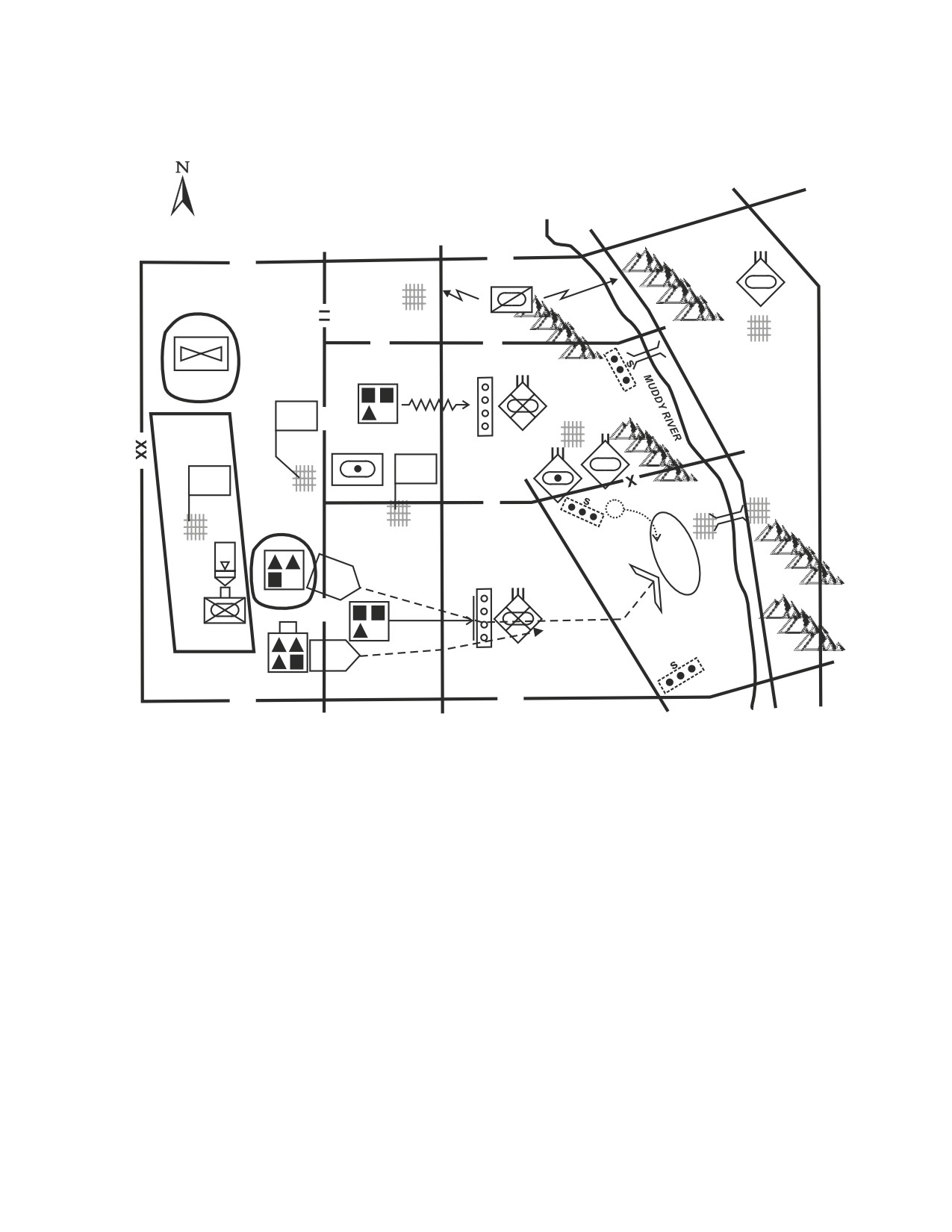
FM 101-5
PL RED
(FSCL)
PL BLUE
PL AMBER (LD)
PL ORANGE
NORTHERN
XX
MTNS
XX
II
(-)
NORTH
s
s
TOWN
EAST
X
TOWN
I I
I I
X
AA EAGLE
XX
(-)
WEST
X
TOWN
MAIN
X
XX
XX
(-)
RIVER
DSA
PL GREEN
BIG
(-)
TOWN
TOWN
TAC
SOUTHERN
REAR
X
CENTRAL
MTNS
CITY
METRO
X
OBJ
CITY
SLAM
I
AA TANK
X
X
(-)
TCF
I I
XX
XX
PL
PL RED
PL ORANGE
PL AMBER (LD)
PL GREEN
BLUE
(FSCL)
At 130400 Aug XX, a mechanized division attacks to seize OBJ SLAM to protect the northern flank of the corps main
effort. A mechanized brigade attacks in the north, as an economy of force, to fix enemy forces in zone denying them the
ability to interfere with the main effort’s attack in the south. A mechanized brigade in the south attacks to penetrate enemy
forces vicinity PL AMBER to create sufficient maneuver space to allow the main effort to pass to the east without
interference from the defending enemy infantry regiment (-). A tank-heavy brigade, the main effort, passes through the
southern mechanized brigade and attacks to seize the terrain vicinity of OBJ SLAM denying the enemy access to the
terrain south and west of RIVER TOWN. The division reserve, a tank task force, initially follows the southern
mechanized brigade prepared to contain enemy forces capable of threatening the main effort’s passage, then, if not
committed west of PL GREEN, follows the main effort prepared to block enemy forces capable of threatening its
movement west, ensuring the seizure of OBJ SLAM. The divisional cavalry squadron screens the division’s northern
flank to provide early warning of any enemy force capable of threatening the division’s northern mechanized brigade.
Division deep operations will:
1. Initially attrit enemy artillery capable of ranging the point of penetration to prevent it
from massing fires against the two southern brigades; 2. then interdict the enemy tank battalion (-) south of WEST
TOWN to prevent its movement south and west towards the main effort. 3. Interdict the enemy tank regiment (-) north of
EAST TOWN to prevent its movement west of the PL BLUE allowing the main effort sufficient time to seize OBJ SLAM.
Division fires will:
1. Isolate the point of penetration allowing the southern mechanized brigade to conduct a
penetration.
2. Prevent enemy artillery from massing fires against the two southern brigades.
3. Support deep
operations to prevent uncommitted enemy forces from interfering with the initial penetration or the seizure of OBJ SLAM.
A mechanized infantry team acts as the division TCF with priority of responding to any Level III threat to the division’s
Class III supply point vicinity METRO CITY to ensure the uninterrupted flow of Class III.
Figure 5-5. Example of course of action statement and sketch (division offense)
5-15
FM 101-5
COA Briefing (Optional)
• Focus IPB on enemy strengths, weakneses, center
of gravity, desired end state, and decisive points.
After the COAs have been developed, they are
briefed to the commander for review. The COA briefing
• Identify the coordination requirements to produce
includes—
synchronized results.
• Updated intelligence preparation of the battlefield
• Determine the most flexible course of action.
(IPB).
The War-Gaming Process
• Possible enemy COAs (event templates).
Course of action analysis is conducted using war
• The restated mission.
gaming. The war game is a disciplined process, with
rules and steps, that attempts to visualize the flow of a
• The commander’s and the higher commanders’ in-
battle. The process considers friendly dispositions,
tent (two echelons above).
strengths, and weaknesses; enemy assets and probable
• The COA statement and sketch.
COAs; and characteristics of the area of operations. It
relies heavily on a doctrinal foundation, tactical judg-
• The rationale for each COA, including—
ment, and experience. It focuses the staff’s attention on
— Considerations that might affect enemy COAs.
each phase of the operation in a logical sequence. It is an
iterative process of action, reaction, and counteraction.
— Deductions resulting from a relative combat
War gaming stimulates ideas and provides insights that
power analysis.
might not otherwise be discovered. It highlights critical
— Reason units are arrayed as shown on the
tasks and provides familiarity with tactical possibilities
sketch.
otherwise difficult to achieve. War gaming is the most
valuable step during COA analysis and comparison and
— Reason the staff used the selected control
should be allocated more time than any other step. How-
measures.
ever, the commander or CofS (XO) must determine at
— Updated facts and assumptions.
this point how much time he can commit to the war-
gaming process, and ensure this time line is followed.
After the briefings, the commander gives any addi-
tional guidance. If he rejects all COAs, the staff begins
During the war game, the staff takes a COA and be-
again. If he accepts one or more of the COAs, staff
gins to develop a detailed plan, while determining the
members begin the war-gaming process.
strengths or weaknesses of each COA. War gaming
tests a COA or improves a developed COA. The com-
mander and his staff may change an existing COA or de-
Course of Action Analysis (War Game)
velop a new COA after identifying unforeseen critical
events, tasks, requirements, or problems.
The COA analysis identifies which COA accom-
plishes the mission with minimum casualties while best
The General Rules of War Gaming
positioning the force to retain the initiative for future op-
War gamers need to—
erations. It helps the commander and his staff to—
• Remain objective, not allowing personality or their
• Determine how to maximize combat power against
sensing of “what the commander wants” to influence
the enemy while protecting the friendly forces and mini-
them. They must avoid defending a COA just because
mizing collateral damage.
they personally developed it.
• Have as near an identical vision of the battle as
• Accurately record advantages and disadvantages of
possible.
each COA as they become evident.
• Anticipate battlefield events.
• Continually assess feasibility, acceptability, and
• Determine conditions and resources required for
suitability of the COA. If a COA fails any of these tests
success.
during the war game, they must reject it.
• Determine when and where to apply the force’s
• Avoid drawing premature conclusions and gather-
capabilities.
ing facts to support such conclusions.
5-16
FM 101-5
• Avoid comparing one COA with another during the
Special staff officers help the coordinating staff by
war game. This must wait until the comparison phase.
analyzing the COAs in their own areas of expertise, indi-
cating how they could best support the mission. Every
War-Gaming Responsibilities
staff member must determine the force requirements for
external support, the risks, and each COA’s strengths
The CofS (XO) is responsible for coordinating ac-
and weaknesses.
tions of the staff during the war game.
The G1 (S1) analyzes COAs to project potential per-
War-Gaming Steps
sonnel battle losses and determine how CSS provides
The staff follows eight steps during the war-gaming
personnel support during operations.
process:
The G2 (S2) role-plays the enemy commander. He
1. Gather the tools.
develops critical enemy decision points in relation to the
friendly COA, projects enemy reactions to friendly ac-
2. List all friendly forces.
tions, and projects enemy losses. He captures the results
3. List assumptions.
of each enemy action and counteraction and correspond-
ing friendly enemy strengths and vulnerabilities. By try-
4. List known critical events and decision points.
ing to win the war game for the enemy, he ensures that
5. Determine evaluation criteria.
the staff fully addresses friendly responses for each en-
emy COA. For the friendly force, he—
6. Select the war-game method.
• Identifies information requirements and refines the
7. Select a method to record and display results.
event template to include NAIs that support decision
8. War-game the battle and assess the results.
points and refines the event matrix with corresponding
DPs, target areas of interest (TAIs), and high-value tar-
Step 1. Gather the Tools. The CofS (XO) directs the
gets (HVTs).
staff to gather the necessary tools, materials, and data for
the war game. Units need to war-game on maps, sand ta-
• Refines situation templates.
bles, or other tools that accurately reflect the nature of
• Participates in the targeting conference and identi-
the terrain. The staff then posts the COA on a map dis-
fies high-value targets as determined by IPB.
playing the operations area. Tools required include, but
are not limited to—
The G3 (S3) normally selects the techniques and
methods that the staff will use for war gaming. He en-
• Current coordinating staff estimates.
sures the war game of the COA covers every operational
• Event template.
aspect of the mission, records each event’s strengths and
weaknesses, and annotates the rationale. This is used
• Recording method.
later to compare COAs.
• Completed COAs, to include maneuver and R&S
The G4 (S4) analyzes each COA to assess its sustain-
graphics.
ment feasibility. He determines critical requirements for
• Means to post enemy and friendly unit symbols.
each sustainment function by analyzing each COA to
identify potential problems and deficiencies. He as-
• Map of AO.
sesses the status of all sustainment functions required to
Step 2. List all Friendly Forces. The commander and
support the COA and compares this to available assets.
staff consider all available combat, CS, and CSS units
He identifies potential shortfalls and recommends ac-
that can be committed to the battle, paying special atten-
tions to eliminate or reduce their effect for that COA.
tion to support relationships and constraints. The
While improvisation can contribute to responsiveness,
friendly force list remains constant for all COAs the staff
only accurate prediction of requirements for each sus-
analyzes.
tainment function can ensure the continuous sustain-
ment of the force. In addition, the G4 (S4) ensures that
Step 3. List Assumptions. The commander and staff
available movement times and assets will support the
review previous assumptions for continued validity and
course of action.
necessity.
5-17
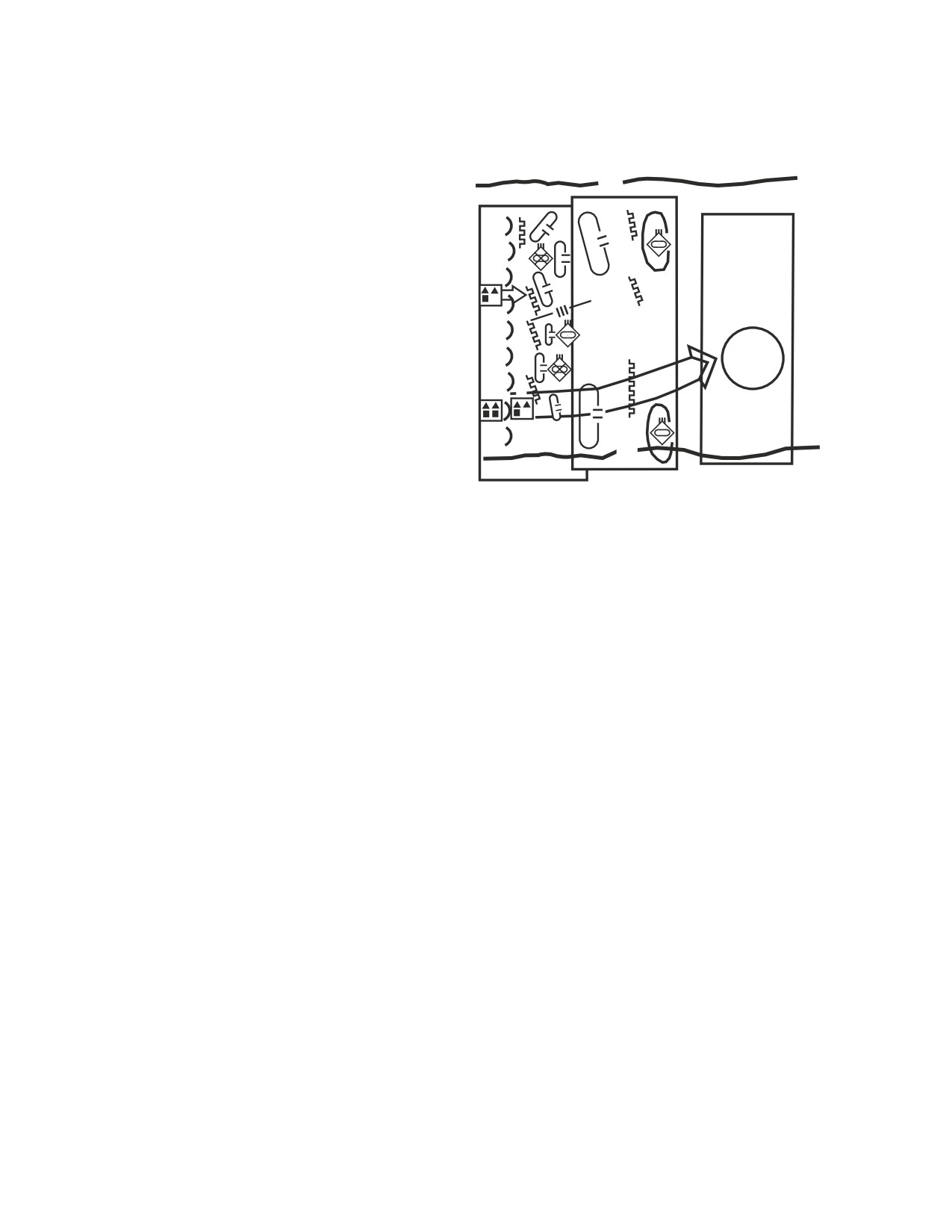
FM 101-5
Step 4. List Known Critical Events and Decision
BELT 1
BELT 2
Points. Critical events are those that directly influ-
BELT 3
XX
ence mission accomplishment. They include events
that trigger significant actions or decisions (commit-
ment of an enemy reserve), complicated actions re-
quiring detailed study
(a passage of lines), and
essential tasks identified during mission analysis.
X
The list of critical events includes major events from
the unit’s current position to the accomplishment of
the mission. Decision points are events or locations
on the battlefield where tactical decisions are re-
OBJ
quired during mission execution. Decision points do
not dictate what the decision is, only that one must be
X
X
made, and when and where it should be made, to have
the maximum impact on friendly or enemy COAs.
Therefore, critical events and decision points must be
XX
listed for each enemy COA war-gamed against. Deci-
sion points relate to identified critical events and are
linked to NAIs and TAIs. The staff must keep the list
of critical events and decision points manageable.
Figure 5-6. Belt war-gaming technique
The more time available for planning, the longer the
list. When time is short, the staff must reduce the list
to only essential critical events and decision points.
technique is most effective when terrain is divided into
Step 5. Determine Evaluation Criteria. Evaluation
well-defined cross-compartments; during phased opera-
criteria are those factors the staff uses to measure the
tions (such as river crossing, air assault, or airborne op-
relative effectiveness and efficiency of one COA rela-
erations), or when the enemy is deployed in clearly
tive to other COAs following the war game. Evaluation
defined belts or echelons. Belts can be adjacent to or
criteria change from mission to mission. Evaluation cri-
even overlap each other. At a minimum, belts should in-
teria may include anything the commander desires. Ex-
clude the area of—
amples include—
• Initial contact either along the FLOT or LD/LC, or
• The principles of war.
in the covering force area (CFA).
• Doctrinal fundamentals for the kind of operations
• Initial penetration or initial contact along the
being conducted.
FEBA.
• The commander’s guidance and intent.
• Passage of the reserve or commitment of a
• The level of residual risk for accident hazards in the
counterattack.
course of action.
• The objective (offense) or defeat of the enemy
The criteria should look not only at what will create suc-
(defense).
cess, but also at what will cause failure.
This technique is based on sequential analysis of
Step 6. Select the War-Game Method. There are three
events in each belt. It is preferred because it focuses si-
recommended techniques—the belt, the avenue-in-
multaneously on all forces affecting a particular event.
depth, and the box. Each one considers the area of inter-
A belt might include more than one critical event.
est and all enemy forces affecting the outcome of the op-
When time is short, the commander can use a modi-
erations. The techniques can be used separately or in
fied belt technique. The modified technique divides the
combination, or the staff can devise one of its own.
battlefield into not more than three sequential belts.
The belt technique divides the battlefield into belts
These belts are not necessarily adjacent or overlapping,
(areas) running the width of the AO (Figure 5-6). The
but focus on the critical actions throughout the depth of
shape of the belt is based on battlefield analysis. The belt
the area of operations.
5-18
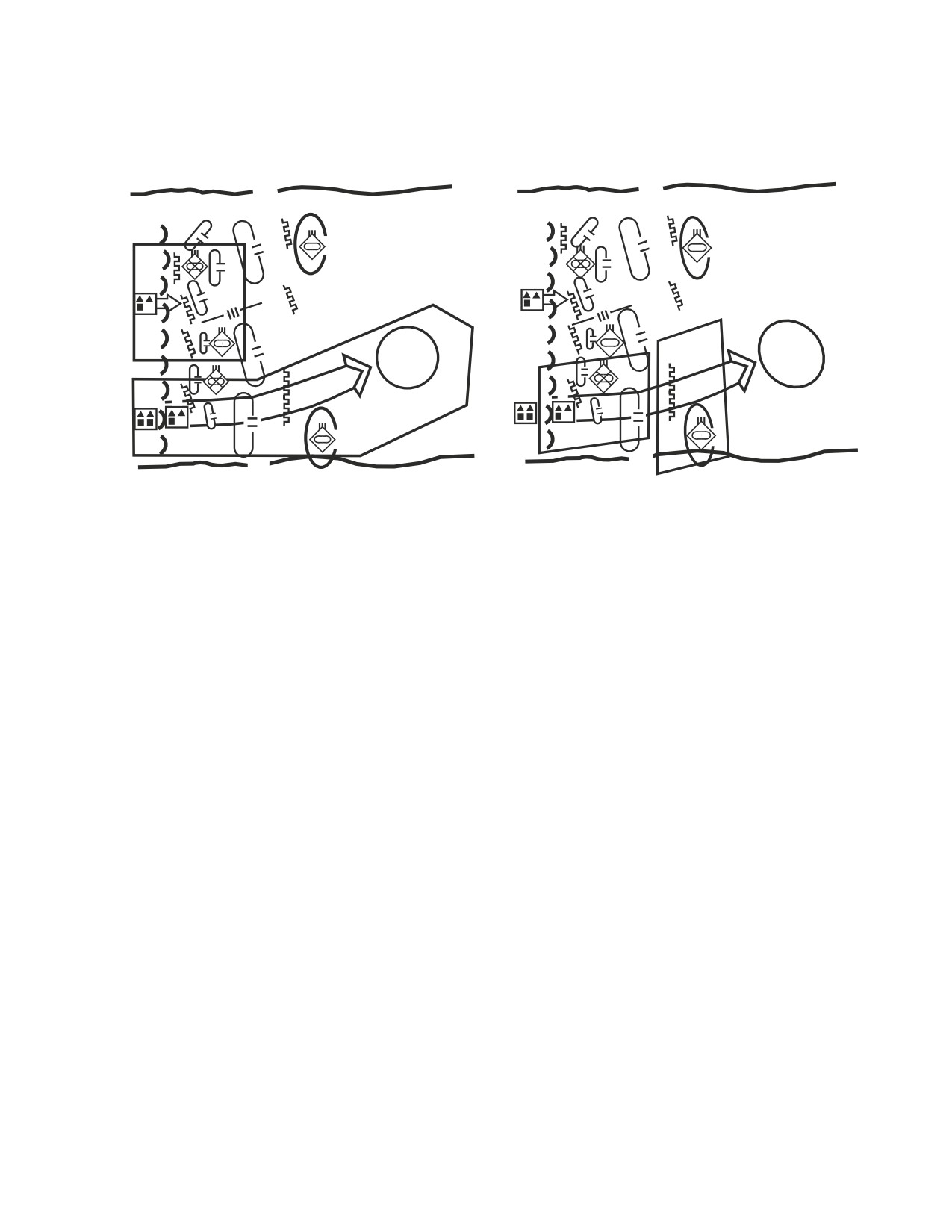
FM 101-5
BELT 2
BELT 1
BELT 2
BELT 3
BELT 1
BELT 3
XX
XX
X
X
OBJ
OBJ
X
X
X
X
XX
XX
Figure 5-7. Avenue-in-depth war-gaming
Figure 5-8. Box war-gaming
technique
technique
The avenue-in-depth technique focuses on one ave-
The synchronization matrix method allows the
nue of approach at a time, beginning with the main effort
staff to synchronize the COA across time and space in
(Figure 5-7). This technique is good for offensive COAs
relation to the enemy COA. An advantage of this
or in the defense when canalizing terrain inhibits mutual
method is that it can be readily translated into a
support.
graphic decision-making product, such as a decision
The box technique is a detailed analysis of a criti-
support template, at the war game’s conclusion. The
cal area, such as an engagement area (EA), a river-
first entry is time or phases of the operation. The sec-
crossing site, or a landing zone ( LZ).
(See Figure
ond entry is the most likely enemy action as deter-
5-8.) It is most useful when time is limited, as in a
mined by the G2 (S2). The third entry is the decision
hasty attack. When using this technique, the staff iso-
points for the friendly COA. The remainder of the
lates the area and focuses on critical events in it. Staff
matrix is developed around selected functional areas
members assume that friendly units can handle most
or the major subordinate commands of the unit con-
of the situations on the battlefield and focus their at-
ducting the war game. Other operations, functions,
tention on essential tasks.
and units that are to be integrated, or the use of which
Step 7. Select a Method to Record and Display Re-
the staff wants to highlight, can be incorporated into
sults. Recording the war game’s results gives the staff a
the matrix.
record from which to build task organizations, synchro-
However, the passage of time between the creation of
nize activity, develop decision support templates (DSTs),
the synchronization matrix and the execution of opera-
confirm and refine event templates, prepare plans or or-
tions may result in changes to the initial conditions with
ders, and analyze COAs based on identified strengths and
respect to the enemy, status of friendly forces, and even
weaknesses. Two methods are used to portray the ac-
weather. Once execution begins, the predictability of
tion—the synchronization matrix (Figure 5-9, page 5-20)
enemy actions at any point on the synchronization ma-
and the sketch note. In both, staff members record any re-
marks regarding the strengths and weaknesses they dis-
trix decreases the further away those actions are on the
cover. The amount of detail depends on the time
time line. This decreases the likelhood that the synchro-
available. Details and methods of recording and display-
nization matrix will be correct and increases the likeli-
ing war-game results are best addressed in unit SOPs.
hood that adjustment to the plan will have to be made.
5-19
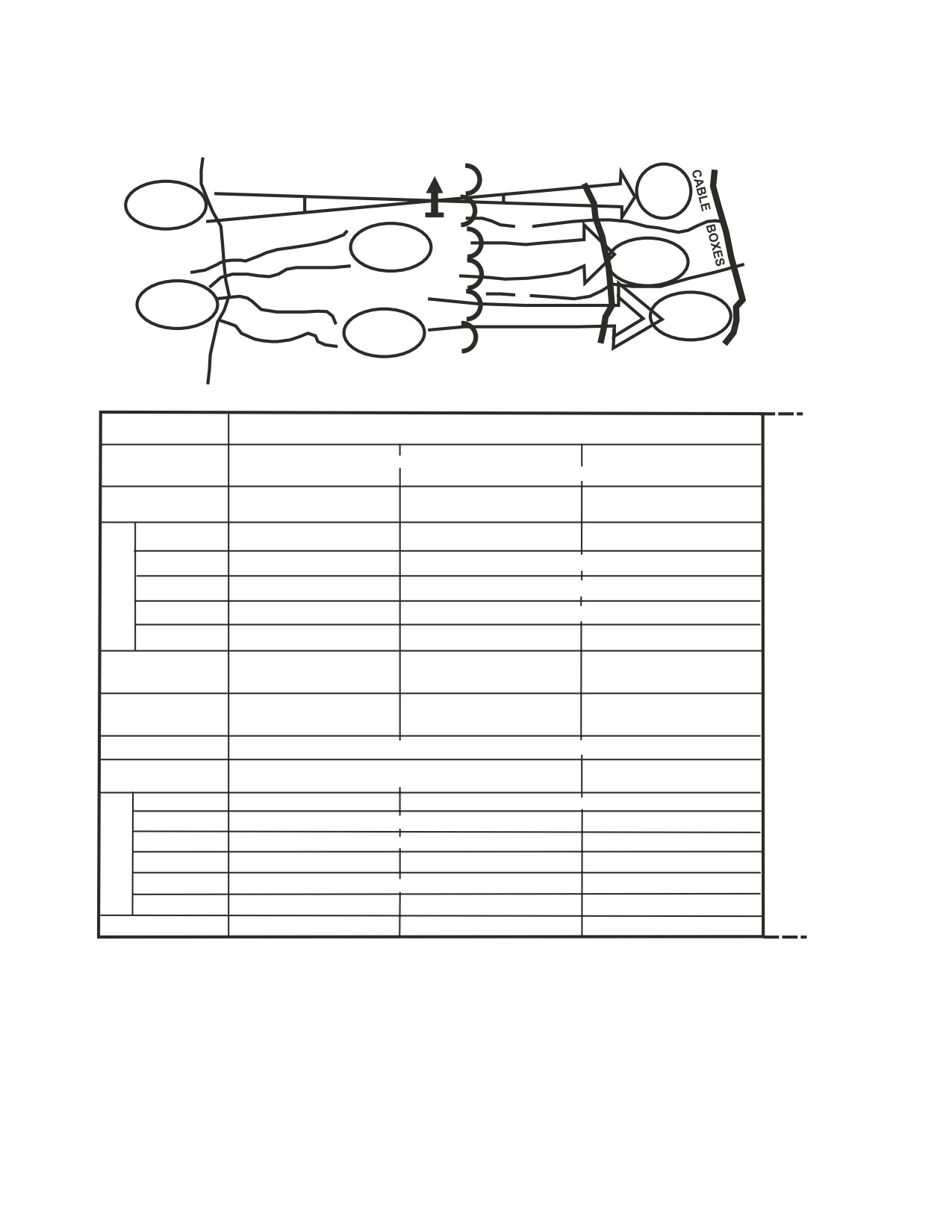
FM 101-5
PL BOB
PL TOM
PL BILL
EA
ACE
PLUM
BLUE
X
1
ATK 1
2
OBJ
WHITE
LARRY
3
X
ROSE
OBJ
BLACK
4
PAUL
ATK 2
TIME
-18hr
-14hr
-12hr
ENEMY
Enemy monitors movements
ACTION
Continue deep preparation
DECISION
Initiate movement
POINTS
AA ROSE
M
DEEP
A
N
SECURITY
Recon secures routes
Cav prepares to screen north flank
E
U
CLOSE
I Bde moves on routes 1 & 2
V
E
RESERVE
3 Bde moves on routes 1 & 2
R
REAR
AIR
Weapons HOLD
Weapons TIGHT
DEFENSE
FIRE
SUPPORT
IEW
Confirm second belt and RAG position
Confirm reserve position
ENGINEER
Route maintenance
MAN
Replacements held at division
ARM
Cache artillery ammunition
C
S
FIX
Cannibalization authorized at DS level
Establish div main CP
S
FUEL
MOVE
Initiate movement from AA ROSE
SUSTAIN
Finance service suspended
C2
TAC CP with lead bde
NOTE: The first column is representative only and can be
modified to fit individual needs such as including information operations.
Figure 5-9. Example of synchronization matrix
5-20
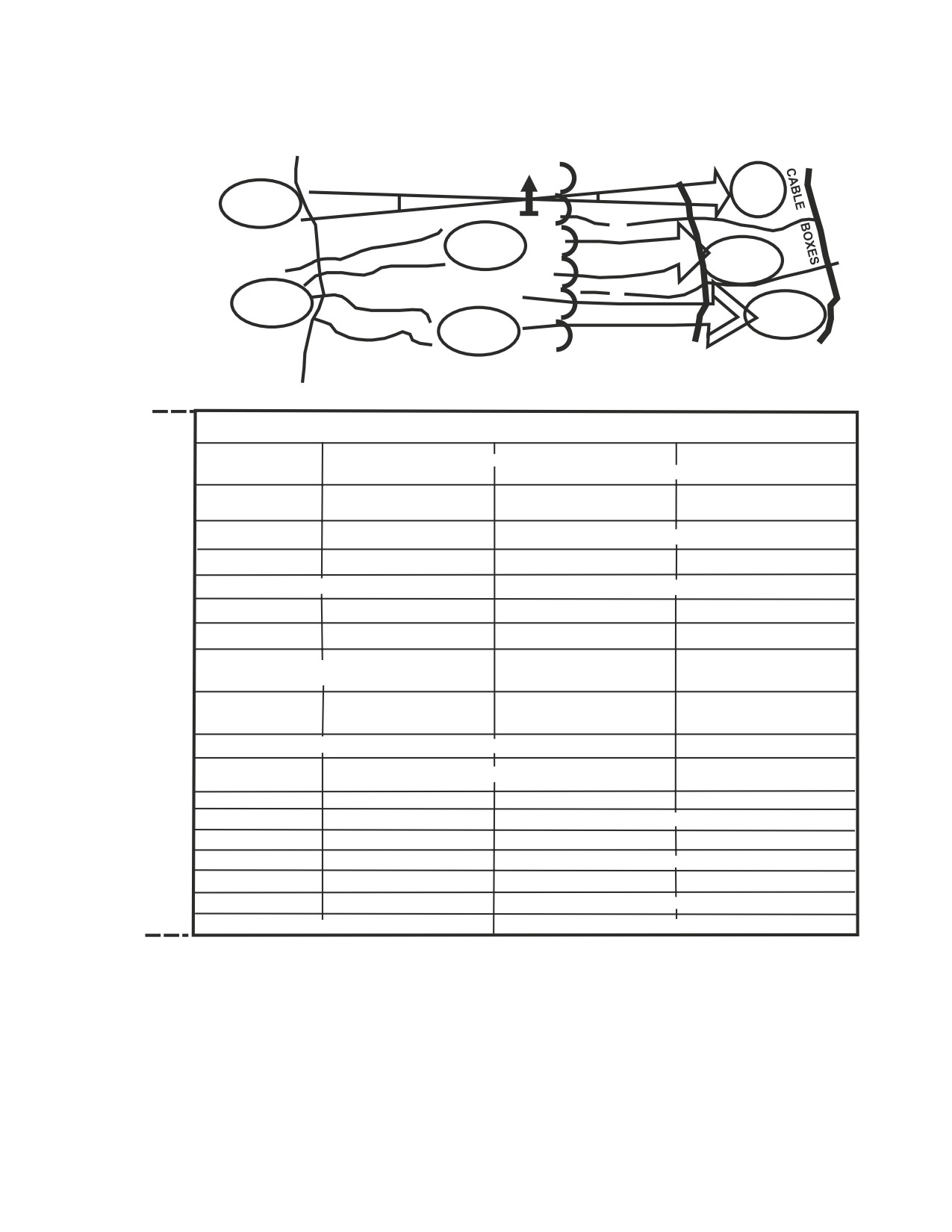
FM 101-5
PL BOB
PL TOM
PL BILL
EA
ACE
PLUM
BLUE
X
1
ATK 1
2
OBJ
WHITE
LARRY
3
X
ROSE
OBJ
BLACK
4
PAUL
ATK 2
- 8hr
H-hr
+ 6hr
+ 10 hr
Fights from first belt position
Defend from second belt position
Launch deep attack
Avn bde attacks reserve in EA ACE
Cav screen north flank
2 Bde moves
Bdes cross LD/LC
I Bde seizes OBJ LARRY
on routes 3 & 4
TCF moves on
route 3
Protect lead bde
Weapons FREE
Weapons TIGHT
Prepare fire
Provide DS/GS
Fire SEAD
Conduct nonlethal fires
Confirm reserve movement
Prepare forward log sites
Establish forward cl V point
Refuel bdes
Establish forward cl I I I point
Move stocks forward
Establish AXP M1
Establish AXP M2
Finance service reinstated
Div rear boundary moves east of PL BOB
Main CP prepares to move
Figure 5-9. Example of synchronization matrix (continued)
5-21

FM 101-5
CRITICAL EVENT
Sequence
Action
Reaction
Counter-
Assets
Time
Decision
CCIR
Control
Remarks
Number
action
Point
Measures
Figure 5-10. War-game work sheet
The sketch note method uses brief notes concerning
counteraction. The staff analyzes each selected event by
critical locations or tasks. These notes reference specific
identifying the tasks the force must accomplish one
locations on the map or relate to general considerations
echelon down, using assets two echelons down. Identi-
covering broad areas. The commander and staff note lo-
fying the COAs’ strengths and weaknesses allows the
cations on the map and on a separate war-game work
staff to make adjustments as necessary.
sheet (Figure 5-10). Staff members use sequence num-
The war game follows an action-reaction-
bers to reference the notes to the corresponding loca-
counteraction cycle. Actions are those events initiated
tions on the map or overlay, using the same numbers on
by the side with the initiative (normally the force on the
the war-game work sheet for easy reference. Staff mem-
offensive). Reactions are the other side’s actions in re-
bers also identify actions by grouping them into sequen-
sponse. Counteractions are the first side’s responses to
tial action groups, giving each subtask a separate
reactions.
This sequence of action-reaction-
number. They use the war-game work sheet to identify
counteraction is continued until the critical event is com-
all pertinent data for a critical event. They assign the
pleted or until the commander determines that he must
event a number and a title and use the columns on the
use some other COA to accomplish the mission.
work sheet to identify and list in sequence—
The staff considers all possible forces, including tem-
• Tasks and assets (allocated forces).
plated enemy forces outside the AO, that could conduct
a counterattack. The staff evaluates each friendly move
• Expected enemy actions and reactions.
to determine the assets and actions required to defeat the
• Friendly counteractions and assets.
enemy at each turn. The staff should continually evalu-
ate the need for branches to the plan that promote suc-
• Total assets needed for the task.
cess against likely enemy moves in response to the
• Estimated time to accomplish the task.
friendly COA.
• Decision points when the commander must decide
The staff lists assets used in the appropriate columns
to execute the task.
of the worksheet and lists the totals in the assets column
(not considering any assets lower than two command
• CCIR.
levels down).
• Control measures.
The commander and staff look at many areas in detail
Step 8. War-Game the Battle and Assess the Results.
during the war game, including movement considera-
During war gaming, the commander and staff try to fore-
tions, closure rates, lengths of columns, depths of forma-
see the dynamics of a battle’s action, reaction, and
tions, ranges and capabilities of weapons systems, and
5-22
FM 101-5
desired effects of fires. They look at setting the condi-
• Refining task organization, to include forces re-
tions for success, protecting the force, and shaping the
tained in general support (GS) of the command.
battlefield. Experience, historical data, SOPs, and doc-
• Identifying tasks the unit must retain and tasks to be
trinal literature provide much of the necessary informa-
assigned to subordinate commanders.
tion. During the war game, staff officers conduct risk
management for each COA (Appendix J).
• Allocating combat, CS, and CSS assets to subordi-
nate commanders to accomplish their missions.
The staff continually assesses the risk to friendly
forces from weapons of mass destruction strikes, seek-
• Developing a synchronization matrix and decision
ing a balance between mass and dispersion. When as-
support template.
sessing WMD risk to friendly forces, the planners view
• Estimating the duration of each critical event as
the target the force presents through the eyes of an en-
well as of the entire operation.
emy target analyst. They must consider ways to reduce
vulnerability and determine the mission-oriented pro-
• Projecting the percentage of total enemy forces de-
tective posture (MOPP) level needed for protection con-
feated in each critical event, and overall.
sistent with mission accomplishment. They must also
• Identifying likely times and areas for enemy use of
consider deployment of nuclear, biological, and chemi-
WMD and friendly NBC defense requirements.
cal (NBC) decontamination units.
• Identifying the location and commitment of the
The staff identifies the CS and CSS assets required to
reserve.
support the scheme of maneuver and the synchroniza-
tion of the support and sustainment effort. If require-
• Identifying the most dangerous enemy COA.
ments exceed available assets, the staff recommends to
• Identifying the location of the commander and unit
the commander the priority for use based on the com-
command posts (CPs).
mander’s guidance and intent and on the situation. To
maintain flexibility, the commander may decide to hold
• Identifying additional critical events.
back some assets for unforeseen tasks or opportunities.
• Identifying additional requirements for CS and
He uses this analysis to determine his priorities of
CSS support.
support.
• Determining requirements for deception and
During the war game, the commander can modify the
surprise.
COA based on how things develop. When modifying
the course of action, the commander should validate the
• Refining C2 requirements, to include control mea-
composition and location of main and supporting efforts
sures and updated operational graphics.
and reserve forces, based on METT-T, and adjust con-
trol measures as necessary. The commander may also
• Finalizing CCIR and IR with the last time informa-
identify combat situations or opportunities or additional
tion is of value (LTIOV).
critical events that require more analysis. This should be
• Finalizing the reconnaissance and surveillance
conducted expeditiously and incorporated into the final
plan and graphics for the basis for the collection plan.
results of the war game.
• Refining CCIR and incorporating them into the re-
The war game should result in the commander and
connaissance and surveillance plan and graphics.
staff—
• Developing fire support, engineer, air defense,
• Refining or modifying the COA, to include identi-
information operations
(IO), and CSS plans and
fying branches and sequels that become on-order or be-
graphics.
prepared missions.
• Identifying or confirming the locations of decision
• Refining location and timing of the decisive point.
points, NAIs, and TAIs, and the information needed to
• Identifying key or decisive terrain and determining
support the decision points.
how to use it.
• Determining the timing of force concentration and
• Refining the enemy event template and matrix.
initiation of the attack or counterattack.
5-23
FM 101-5
• Developing the intelligence collection and dis-
staff then outlines each COA, highlighting its advan-
semination plan.
tages and disadvantages. Comparing the strengths and
weaknesses of the COAs identifies their advantages and
• Determining movement times and tables.
disadvantages with respect to each other.
• Identifying, analyzing, and evaluating strengths
The staff compares feasible courses of action to
and weaknesses of the COA.
identify the one that has the highest probability of
• Integrating the targeting process, to include identi-
success against the most likely enemy COA and the
fying or confirming high-payoff targets and determining
most dangerous enemy COA. The selected COA
attack guidance.
should also—
• Synchronizing smoke operations.
• Pose the minimum risk to soldiers, equipment, and
mission accomplishment.
• Identifying additional hazards, assessing their risk,
developing control measures to reduce risk from all
• Best position the force for future operations.
identified hazards, and determining residual risk.
• Provide the best flexibility to meet “unknowns”
during execution.
War-Game Briefing (Optional)
• Provide maximum latitude for initiative by
Time permitting, a war-game briefing is con-
subordinates.
ducted to ensure the staff comprehends fully the re-
sults of the war game. This briefing is not given to the
The actual comparison of COAs is critical. The
commander, but is the staff’s means to review the war
staff may use any technique that facilitates the staff
games to ensure that the decision briefing to the com-
reaching the best recommendation and the com-
mander covers all relevant points. It is normally
mander making the best decision. The most common
given to the CofS (XO) or the deputy or assistant
technique is the decision matrix, which uses evalua-
commander. The format is—
tion criteria to assess the effectiveness and efficiency
• Higher headquarters’ mission, commander’s in-
of each COA.
(See Figure 5-11, and Figure 5-12,
tent, and deception plan.
page 5-26.) Each staff officer may use his own ma-
trix, using the same evaluative criteria, for compari-
• Updated IPB.
son in his own field of interest. Decision matrixes
• Enemy COAs that were war-gamed.
alone cannot provide decision solutions. Their great-
est value is to provide analysts a method to compare
• Friendly COAs that were war-gamed.
several competing COAs against criteria which,
• Assumptions.
when met, will produce battlefield success. The ma-
trix should use the evaluation criteria developed ear-
• War-gaming technique used.
lier. The CofS (XO) normally determines the weight
• For each COA war-gamed—
of each criterion based on its relative importance.
The staff officer responsible for a functional area
— Critical events that were war-gamed.
scores each COA using that criteria. Multiplying the
— Possible enemy actions and reactions.
score by the weight yields the criterion’s value. The
staff officer then totals all values. However, he must
— Modifications to the COA.
be cautious in portraying subjective conclusions as
— Strengths and weaknesses.
being the objective results of quantifiable analysis.
Comparing COAs by category is more accurate than
— Results of the war game.
attempting to aggregate a total score for each COA.
Course of Action Comparison
Commander’s Decision Briefing
The COA comparison starts with each staff officer
analyzing and evaluating the advantages and disadvan-
After completing its analysis and comparison, the
tages of each COA from his perspective. Each staff
staff identifies its preferred COA and makes a recom-
member presents his findings for the others’ considera-
mendation. If the staff cannot reach a decision, the CofS
tion. Using the evaluation criteria developed earlier, the
(XO) decides which COA to recommend at the
5-24

FM 101-5
CRITERIA
WT
COA
COA
COA
(note 1)
(note 2)
1
2
3
(note 3)
(note 3)
(note 3)
Maneuver
3
2
3
1
(6)
(9)
(3)
Simplicity
3
3
1
2
(9)
(3)
(6)
Fires
4
2
1
3
(8)
(4)
(12)
Intelligence
1
3
2
1
(3)
(2)
(1)
ADA
1
1
3
2
(1)
(3)
(2)
Mobility/
1
3
2
1
Survivability
(3)
(2)
(1)
CSS
1
2
1
3
(2)
(1)
(3)
2
C
1
1
2
3
(1)
(2)
(3)
Residual
2
1
2
3
Risk
(2)
(4)
(6)
C2W
1
2
1
3
(2)
(1)
(3)
TOTAL
20
18
22
Weighted TOTAL
(37)
(31)
(40)
NOTES:
1. Criteria are those assigned in Step 5 of the war-gaming process.
2. Should the CofS/XO desire to emphasize one as more important than another, he assigns weights to each
criterion based on relative importance.
3. Courses of action are those selected for war gaming.
Procedure:
The staff assigns numerical values for each criterion after war-gaming the COA. Values reflect the
relative advantages or disadvantages of each criterion for each COA action. The lowest number is best. The initially
assigned score in each column is multiplied by the weight and the product put in parenthesis in the column. When using
weighted value, the lower value assigned indicates the best option. The numbers are totaled to provide a subjective
evaluation of the best COA without weighing one criterion over another. The scores are then totaled to provide “best” (lowest
number value) COA based on weights the commander assigns. Although the lowest value denotes the best solution, the
best solution may be more subjective than the objective numbers indicate. The matrix must be examined for sensitivity.
Although COA
2 is the “best” COA, it may not be supportable from a CSS standpoint. The decision maker must either
determine if he can acquire additional support or if he must alter or delete the COA.
Figure 5-11. Sample decision matrix: numerical analysis
commander’s decision briefing. The staff then briefs the
• Own COAs, including—
commander. The decision-briefing format includes—
— Assumptions used in planning.
• The intent of the higher headquarters (higher and
— Results of staff estimates.
next higher commanders).
— Advantages and disadvantages (including risk)
• The restated mission.
of each COA (with decision matrix or table showing
• The status of own forces.
COA comparison).
• An updated IPB.
• The recommended COA.
5-25