FM 3-31.1 AMCI ARMY AND MARINE CORPS INTEGRATION IN JOINT OPERATIONS (NOVEMBER 2001) - page 2
Chapter III
INTELLIGENCE
1. Background
At the operational level of war, the joint intelligence system: supports the
commander; assists the JFC and his staff to visualize the battlespace assessing the
adversary capabilities and will; identifies the adversary’s center of gravity; and
discerns the adversary’s probable intent. At both the operational and tactical levels,
intelligence provides the basis for planning, synchronizing, and conducting joint
force operations.
2. Terminology
JPs 1-02 and 2.0, Doctrine for Intelligence Support to Joint Operations, define the
key terms and concepts that serve as the foundation for discussion throughout this
text. Marine Corps Warfighting Publication (MCWP) 2-12 and FM 2-01.3 (34-130),
Intelligence Preparation of the Battlefield, further delineate Army and Marine Corps
intelligence integration. Key terms and concepts include intelligence operations,
intelligence system, and intelligence preparation of battlespace (IPB).
3. Intelligence Responsibilities
The following highlights intelligence responsibilities for the respective intelli-
gence organizations of the joint force:
a. Senior Intelligence Organization. The senior intelligence organization
provides support to the commander and subordinate commands by developing and
maintaining data bases that support planning, conduct of IPB, and perform battle
damage assessment (BDA) from higher, lower and adjacent sources. The following
are primary intelligence responsibilities (this list is not all inclusive).
(1) Establishes plans, policies, and overall requirements for the intelligence
activities of the force.
(2) Ensures interoperability and responsiveness of intelligence structure.
(3) Articulates, reviews, and monitors intelligence priorities.
(4) Provides subordinate commands with a single, coordinated intelligence
picture by fusing available intelligence into all-source estimates and assessments.
(5) Coordinates the intelligence plans and operations of subordinate
commanders.
(6) Conducts IPB, monitors situation development, indications and warning,
and supports the commander.
III-1
(7) Coordinates the collection, production, and dissemination plans and
employment of theater and national collection assets.
(8) Identifies/requests external assistance for intelligence resource shortfalls
critical to accomplishing assigned missions.
(9) Establishes and supervises intelligence liaison, coordination, and commu-
nications requirements with subordinate, lateral, higher, and national intelligence
organizations as appropriate.
(10) Prescribes intelligence security requirements for the entire force.
(11) Counterintelligence (CI). Coordinates and plans CI and force protection.
b. Subordinate Command Intelligence Organizations. The responsibilities of
the subordinate command intelligence organizations are to plan, decide, collect,
process, produce, and disseminate intelligence to support respective commanders in
the employment of their forces to accomplish assigned missions. Within assigned
area of interest, subordinate command intelligence organizations:
(1) Assess threat capabilities and provide intelligence estimates.
(2) Develop supporting intelligence plans.
(3) Support target development and weaponeering.
(4) Task organic collection assets with special focus on reconnaissance and
surveillance operations.
(5) Perform BDA.
(6) Recommend force protection and counterintelligence measures.
4. Notional Army Brigade Intelligence
Notional army brigade intelligence operations provide the tactical intelligence
needed to successfully plan and execute combat operations. The commander uses
priority intelligence requirements (PIR) to focus the brigade intelligence effort and
leverage higher echelons to support decisionmaking and facilitate targeting. Intelli-
gence operations assist the commander to understand the battlefield, support
decisionmaking, and effectively execute combat operations by:
a. Providing indications and warning.
b. Performing IPB.
c. Situation development.
d. Performing target development and supporting targeting.
III-2
e. Supporting force protection.
f. Performing BDA.
See FM 2-0, Intelligence (FM 34-1, Intelligence and Electronic Warfare Operations),
for detailed discussion of Army intelligence principles, tasks, and doctrine.
5. Notional Army Brigade Intelligence Organizations
The notional army brigade is supported by a variety of intelligence assets. These
assets include Observation Helicopters (OH)-58Ds, long-range surveillance detach-
ments (LRSD), forward observers, EW assets, unmanned aerial vehicles (UAVs),
scouts, combat observation and lasing team (COLT), military police (MP),
counterbattery radar, observation posts, ground surveillance radar (GSR), convoys,
and any other assets capable of providing combat information. Notional army
brigade MI assets consist of a S2 section and a DS MI company from the divisional
MI battalion. Additional tactically tailored intelligence assets from division, corps,
and theater Army MI units can augment the brigade to support split-based intelli-
gence operations, provide additional capabilities such as ground-based EW, or sup-
port other mission requirements.
a. Commander. The commander focuses the intelligence effort by identifying,
clearly articulating, and prioritizing intelligence and targeting requirements using
PIRs. The commander must be responsive to intelligence requirements of
subordinate commanders and, when necessary, broker those requirements with
higher echelons. The commander must integrate intelligence support into the total
combined arms effort to effectively accomplish the mission and exploit the full
potential of the intelligence system.
b. Notional Army Brigade S2. The S2 is the commander’s senior intelligence
officer and principal advisor on the enemy, terrain, and weather. The S2’s first and
most important responsibility is to provide the intelligence the commander needs for
sound and timely decisions. The S2 takes full advantage of intelligence and
targeting information available from direct broadcast systems, special purpose
intelligence communications, and automated processing systems to meet the
commander’s requirements. With the staff ’s support, the S2 integrates new orders
and request for intelligence with the command’s own requirements, prioritizes the
entire set of requirements, and refines them into specific information requirements
(SIRs) and his staff further refines the SIRs into specific orders and request (SORs).
These SORs are sent to unit commanders for execution. To synchronize intelligence
support with the operation and satisfy staff requirements for intelligence, the S2
works closely with other staff elements and supporting MI units. To supply the
commander with intelligence and targeting information, the S2 develops and
manages the execution of the reconnaissance and surveillance (R&S) plan. The S2
also reviews subordinate battalion R&S plans, integrates subordinate plans into the
notional army brigade plan, and forwards the consolidated R&S plan to the next
higher echelon. The S2 maintains status of all notional army brigade intelligence
assets, processes incoming intelligence reports, and disseminates information to
subordinate elements.
III-3
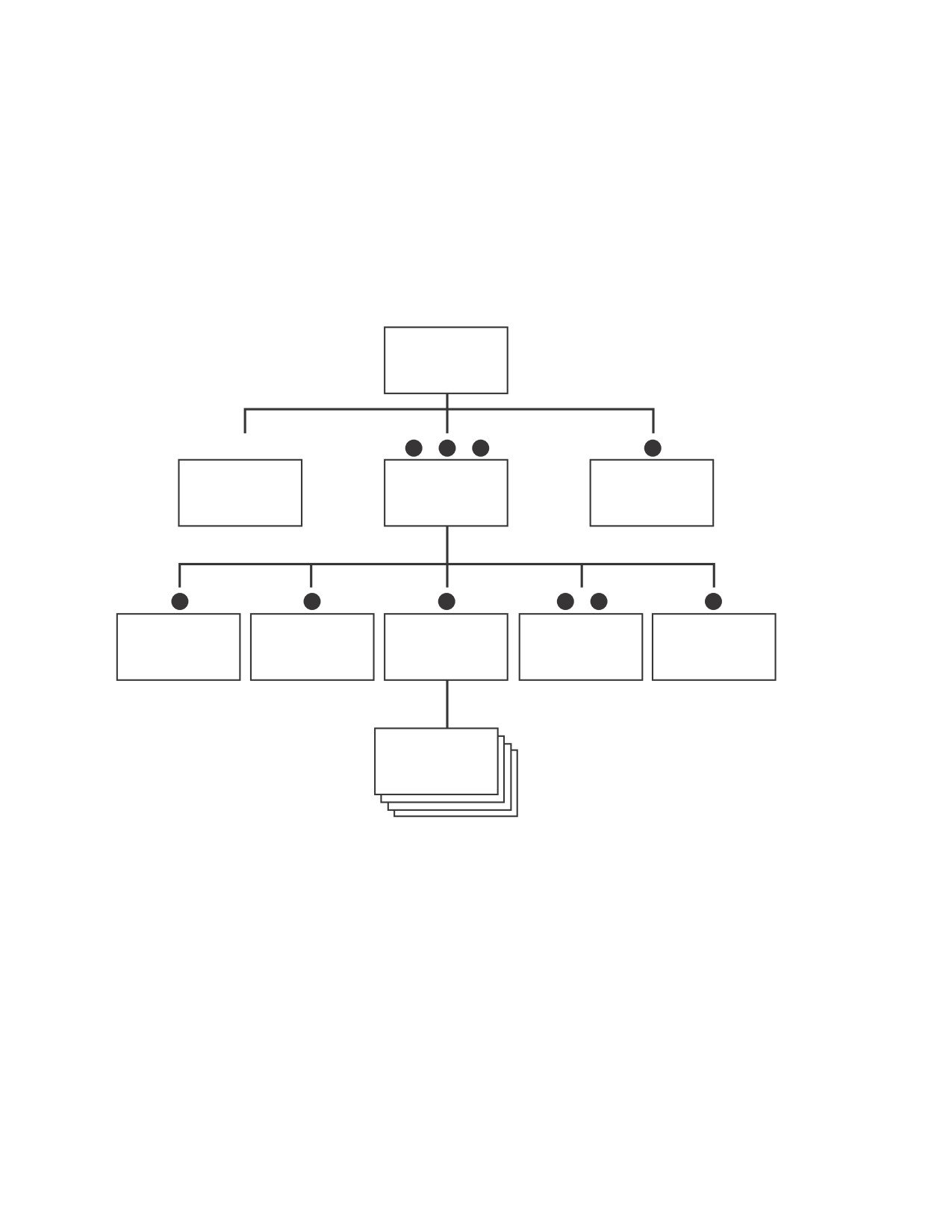
c. DS MI Company. The DS MI company maintains a habitual training and
operational relationship with the notional army brigade. The company provides
organic automated intelligence processing and GSR support. Future capabilities
will include UAV control and access through the Common Ground Station to the
Joint Surveillance Target Attack Radar System (J-STARS). The company does not
possess organic signals intelligence/electronic warfare systems. It relies on higher
echelons for this support. The company consists of a headquarters element, an
analysis and control team (ACT), and an operations platoon as depicted in Figure
III-1.
Figure III-1. Notional Army Brigade Direct Support Military Intelligence (MI) Company
The functions of the ACT and operations platoon are:
(1) ACT. The ACT provides the S2 automated intelligence processing,
analysis, and dissemination capabilities. Using its ASAS workstation, the ACT
provides access to sensitive compartmented information (SCI) databases, reports,
graphics, and other intelligence products from higher echelon intelligence
organizations such as the division’s Analysis and Control Element. When
augmented with the TROJAN Special Purpose Integrated Remote Intelligence
Terminal (SPIRIT), the ACT, with augmentation, can support limited split-based
intelligence operations when supported by the Army Forces (ARFOR), analysis
III-4

control element, or the Joint Intelligence Center (JIC) analysis control element
located at the ARFOR or the JIC.
(2) Operations Platoon. The operations platoon provides support and
conducts asset management of the company’s GSR squad. The platoon will possess a
UAV section and an imagery processing section when supporting systems are
fielded. Table III-1 summarizes the capabilities of the operations platoon.
Table III-1. Notional Army Brigade Operations Platoon Capabilities
Unit
Capability
GSR Squad
Surveillance of enemy routes of attack and order of
battle support.
UAV Section
UAV control, video display, and tactical identification.
(future capability, not yet fielded).
Imagery Processing Section
Analysis and dissemination of J-STARS radar imagery
(future capability, not yet fielded).
d. Intelligence Support Base. The division’s G-2 and MI battalion form the
intelligence support base for the notional army brigade. The support base is the
principal organization in a split-based intelligence operation from which the
deployed notional army brigade commander pulls intelligence. It is located in the
division garrison or another location outside the AO. The intelligence support base
allows the notional army brigade to pull intelligence from its normal intelligence
source prior to deployment and during operational stages of a force projection
operation. This reduces the possibility of intelligence shortfalls that could arise
during the deployment phase from reliance on evolving intelligence organizations or
relationships. The notional army brigade can continue to receive support from the
division analysis control element in addition to support from intelligence
organizations within the theater. Intelligence support from the analysis control
element includes production of tailored intelligence products; maintaining accessible
intelligence databases needed by the notional army brigade; and other intelligence
operations that support the notional army brigade. The intelligence support base
may also provide the follow-on intelligence assets and the deployable intelligence
support element if the operation involves follow-on Army forces. The intelligence
support base complements JTF or theater intelligence structures; it is not intended
to circumvent theater or joint force tasking and reporting channels established by
the higher echelon’s J-2 or G-2.
6. MAGTF Intelligence Organizations
The MAGTF G-2 section serves as the focal point for intelligence, CI, and recon-
naissance operations. The G-2 section, supported by task-organized detachments
III-5
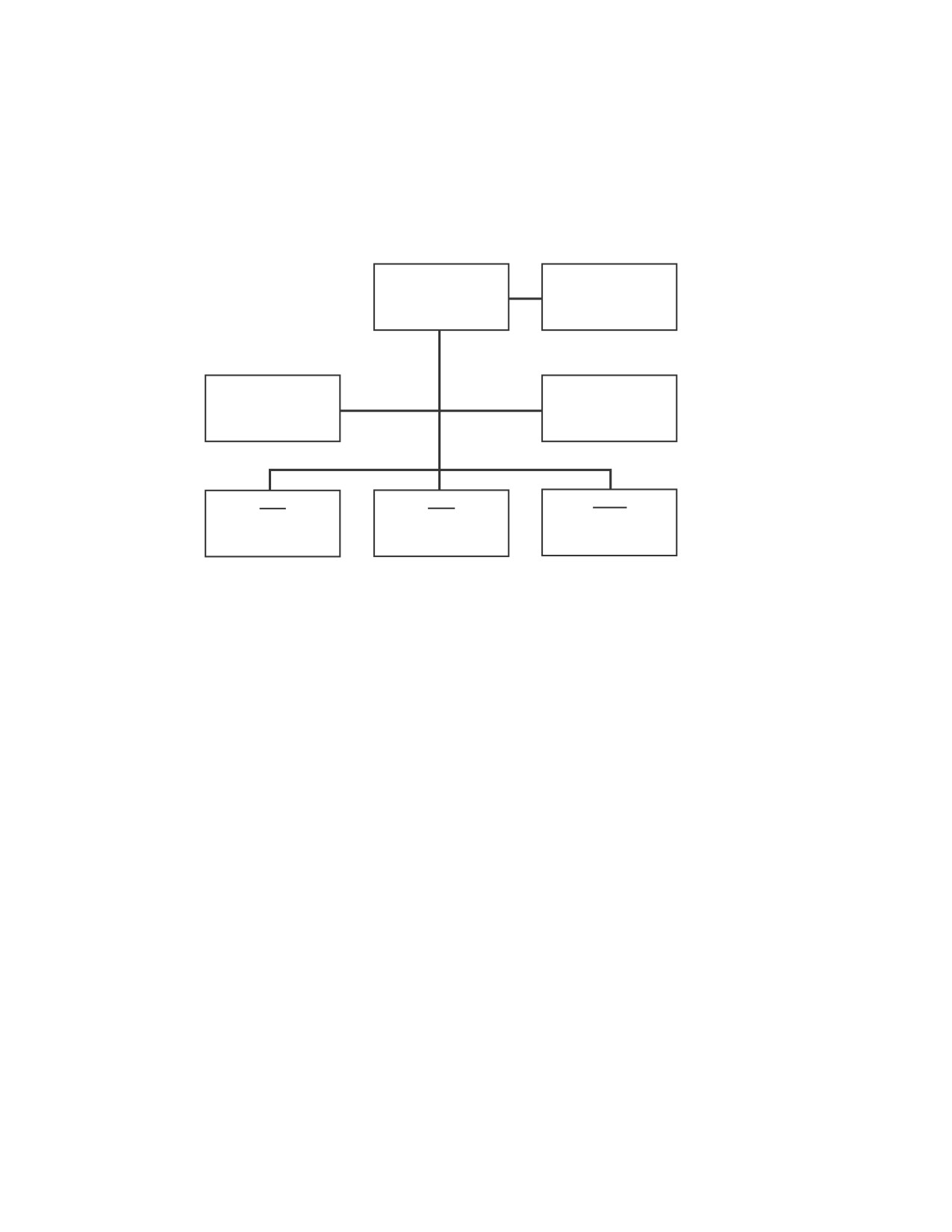
from the Intelligence Battalion, Radio Battalion, UAV squadron, and Force Recon-
naissance Company, provides all-source intelligence support to the MAGTF com-
mander and the major subordinate elements. In addition, the GCE, ACE, and CSSE
all have organic intelligence sections and assets to satisfy their unique intelligence
requirements as reflected in Figure III-2.
Figure III-2. Intelligence and Reconnaissance Units/Assets
a. MAGTF G-2 Section. The MAGTF G-2 section plans, coordinates, and
integrates intelligence operations. It provides centralized planning, direction,
collection, production, and dissemination capabilities for the CE and subordinate
elements. In addition, it provides connectivity to national, joint, and supporting
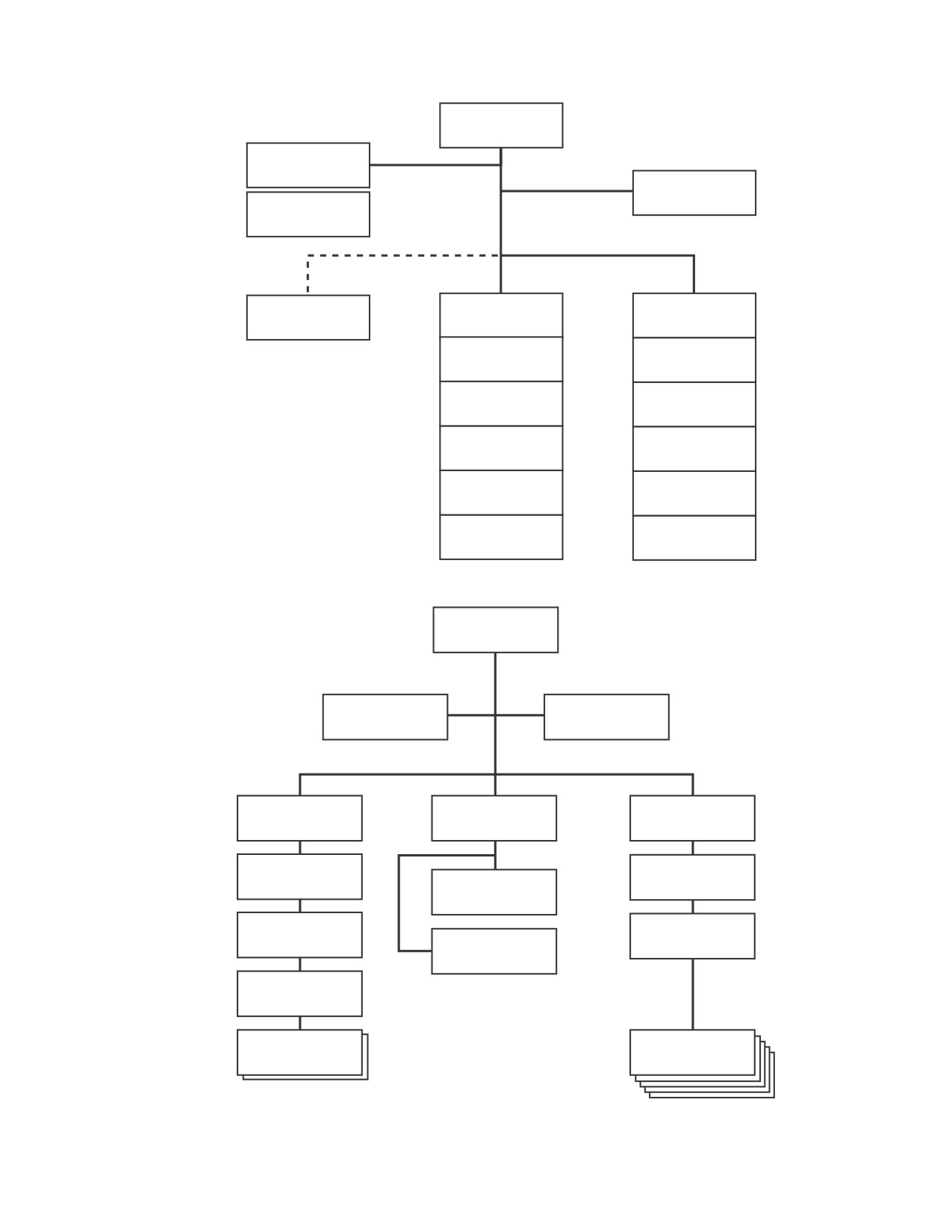
force intelligence and reconnaissance assets. Figure III-3 depicts the organization of
the MEF G-2.
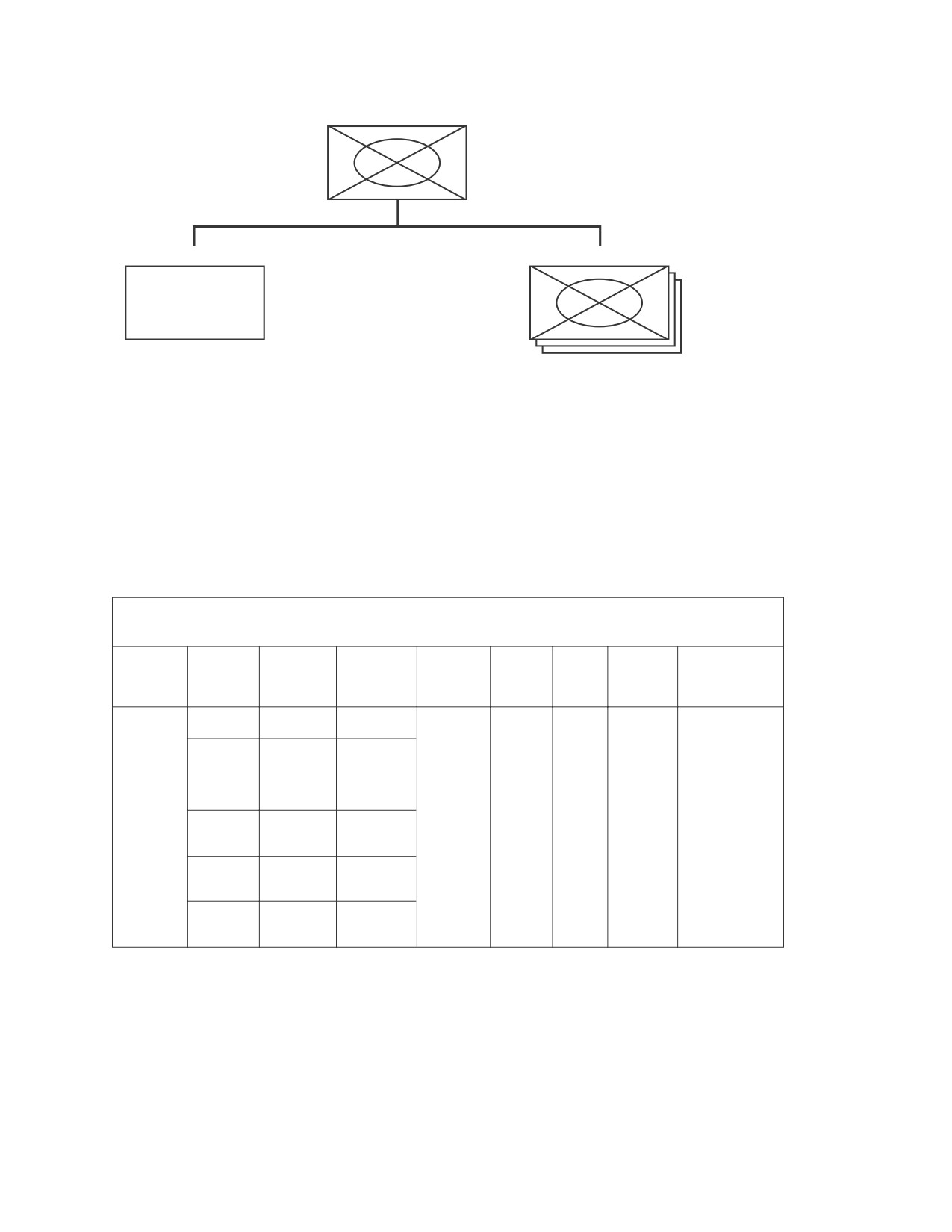
b. Intelligence Battalion. The Intelligence Battalion, depicted in Figure III-4, is
organic to a MEF. The Intelligence Battalion of the parent MEF provides a task-
organized detachment to a MEB. The intelligence assets from the intelligence
battalion detachment consist of some or all of the elements depicted in Table III-2.
III-6
AC/S
G-2
DEPUTY AC/S
G-2
G-2
ADMIN
SSO
SECTION
INTEL SUPPORT
OPS
PLANS/POLICY
COORDINATOR
BRANCH
BRANCH
CURRENT
PLANNING
OPS
FUTURE
IMAGERY &
OPS
MAPPING
TARGET
CI/
INTEL
HUMINT
RED
SIGINT/
CELL
EW
LIAISON
WEATHER
SECTION
Figure III-3. MEF G-2 Section
COMMANDING
OFFICER
MEU (SOC)
EXECUTIVE
SPT TEAMS
OFFICER
PRODUCTION &
HEADQUARTERS
CI/HUMINT CO
ANALYSIS CO
CO
ALL SOURCE
CI
FUSION PLT
GROUND SENSORS
PLT
PLT
IMAGERY &
INTERROGATOR
INTEL PLT
TRANSLATOR PLT
SYSTEMS
SUPPORT PIT
TOPOGRAPHIC
PLT
DIRECT SUPPORT
HUMINT SPT
TEAMS
TEAMS
Figure III-4. Intelligence Battalion
III-7

Table III-2. Intelligence Battalion Capabilities
Unit
Intelligence Capabilities
Imagery Interpretation Plt
Imagery Interpretation and Production
CI Plt or HUMINT Support Team
CI and HUMINT operations
IT Plt or HUMINT Support Team
Interrogation of Enemy Prisioners of War (EPW)
and Document Exploitation
Ground Sensor Plt
Remote Ground Sensor operations
Topographic Plt
Geographic intelligence products
J-STARS ground sensor team
Target movement indicators, SAR
c. GCE. GCE intelligence efforts focus on the planning and execution of ground
operations, with particular emphasis on locating, identifying, targeting, and
attacking targets of interest to the commander. Organic reconnaissance,
surveillance, and target acquisition assets assist this effort. These assets include:
(1) Light armored reconnaissance battalion.
(2) Reconnaissance battalion.
(3) Scout/sniper platoons.
(4) Counterbattery radar platoons.
(5) Forward Air Controller (FAC) and forward observers.
d. ACE. ACE intelligence operations facilitate friendly air operations and
counter enemy air and air defense capabilities. The Aviation Combat Element
contributes long-range reconnaissance and surveillance capabilities such as fixed
and rotary wing aircraft (visual and imagery), UAV systems (imagery and video),
EA-6B (communications and electronic intelligence), and air surveillance radar
systems (electronic).
e. CSSE. CSSE intelligence operations focus on intelligence requirements
concerning the terrain, infrastructure, medical threat, and rear-area threat. CSSE
subordinate elements provide valuable information on terrain, the transportation
network, key facilities, and the indigenous population in the AO.
7. AMCI Intelligence Operations
MEF and Corps intelligence requirements must support and be sensitive to
needs of subordinate commands. For example, to support the notional army brigade
mission, the MEF commander may need additional information on the enemy’s
antiarmor capability against M1A2 Abrams tanks. Similarly, the Corps commander
may ask for more intelligence on the enemy’s air defense threat to Marine AV-8
Harrier aircraft supporting the MEB.
III-8

a. Additional intelligence planning considerations include:
(1) Planning for intelligence communications transition that facilitates
execution of branches or sequels to the plan or to accommodate shifting of the main
effort from one force to another force.
(2) Identifying and establishing procedures and protocols for information that
exchange between processors (databases, text, secondary, imagery, voice, and video).
(3) Identifying databases that each service possesses or has access to; deter-
mining which database(s) will support the operations, and if necessary, merging
them into a single database and ensuring access by the entire force.
(4) Considering balancing availability of service-unique systems or capabili-
ties. This may require the provision of additional resources by each service. Ulti-
mate responsibility for allocating resources rests with the senior commander. Re-
sources and capabilities are distributed based on the needs of the total force. For
example, the bulk of Marine radio battalion assets may be committed to support the
notional army brigade when the notional army brigade is designated the main effort.
Conversely, it may be appropriate to employ the notional army brigade’s only J-
STARS ground station module (GSM) in support of the MEF during a particular
phase of the operation.
Tables III-3 and III-4 portray the collection capabilities for both the notional army
brigade and the MEB.
Table III-3. Notional Army Brigade Collection/Electronic Warfare (EW) Capabilities
Resource
Nominal Range
10km
20km
30km
40km
50km
60km
100km
Ground Reconnaissance
Scouts/FIST
OH-58D*
Radars and Sensors
Q36 Radar
Q37 Radar*
EH-60*
* If deployed with
notional army brigade
Joint Force Support
J-STARS (GSM)
Aerial Reconnaissance
III-9

Table III-4. MEB Collection/EW Capabilities
Resource
Nominal Range
10km
20km
30km
40km
50km
60km
100km
Ground Reconnaissance
(100km)
Force Recon
(100km)
LAR
Division Recon
Aerial Visual Reconnaissance
(300km)
Manned Aircraft
(100km)
UAV
SIGINT/EW
VMAQ
Radio Battalion
Radars and Sensors
CB Radars
Tactical Remote
Sensor System
b. Processing requirements must address interoperability between the Army,
Marine Corps, theater, and national intelligence processing systems such as the
Army ASAS, Marine Corps Intelligence Analysis System, Joint World Wide
Intelligence Communications System (JWICS), and Joint Deployable Intelligence
Support System (JDISS).
III-10
Chapter IV
MANEUVER
“Commanders with a poor understanding of the essence of maneuver; i.e., the union of
efforts, prefer, most of all, to divide the area of their maneuver uniformly among their
subordinates and demand the same results from all. It is a misfortune to be subordinated to
such a ‘corridor’ commander. A completely opposite picture obtains with a good, efficient
leadership
”
Mikhail Tukhachevsky
1. Background
Maneuver provides the opportunity to capitalize on the synergistic effects of a
joint force. Specifically, joint maneuver forces the enemy to divide combat power
against multiple directions and dimensions; permits the rapid shifting of forces to
multiple locations as required by the tactical situation; and provides flexible, lethal
options to shape and fight the battle to achieve joint objectives. Seizing, retaining,
and exploiting the initiative through maneuver in either offensive or defensive
settings interrupts the enemy’s operational maneuver; spoils the timing of tactical
operations by forcing an early culmination or diversion of resources; and ultimately
creates opportunities for decisive defeat.
2. Notional Army Brigade Ground Maneuver Organizations
A notional army brigade’s ground maneuver organization may consist of a
combination of a mechanized infantry battalion and two tank battalions grouped
under the command of the brigade headquarters as described in Chapter II. The
brigade’s maneuver elements fight the battle by destroying or disrupting enemy
forces and seizing and holding terrain. Based on the estimate of the situation and
METT-T/METT-TC, the notional army brigade commander task organizes the
battalions into mechanized heavy, tank heavy, or balanced task forces (TF) tailored
to accomplish specific missions. As a rule, the commander cross-attaches units at
the battalion level. This is the lowest level provided with the necessary
communications, logistics, and other support to ensure proper C2 of tailored
combined arms formations.
a. Mechanized Infantry Battalion. The mechanized battalion consists of a HHC
and three rifle companies as depicted in Figure IV-1. All battalion combat vehicles
have cross-country mobility and armor protection. Once the battalion is configured
as a TF, the TF commander may further task-organize companies into company
teams for combat operations.
IV-1
II
I
I
HHC
M2: 2
M2: 14 EA (BN TOTAL: 44)
SCOUT HMMWV: 10
DRAGON: 9 EA (BN TOTAL: 28 PHASING OUT
120 mm: 6
DISCOUNTED INFANTRY: 69 (BN TOTAL: 207)
Figure IV-1. Notional Army Brigade Mechanized Infantry Battalion
(1) Rifle Companies. Each of the battalion’s three rifle companies consists of a
company headquarters with two M2 Bradley fighting vehicles (BFVs) and three rifle
platoons of four M2s each. The M2 Bradley tube-launched optically tracked wire-
guided (TOW) system and 25mm chain gun combine to provide a significant
antiarmor capability. (See Table IV-1.)
Table IV-1. M2 Bradley Fighting Vehicle Characteristics
#Per Unit
Weapons
Maximum
Ammunition
Fuel Use
Capacity
Range
Maximum
Overcomes
Effective
on Board
(Gal/Hour)
(Gallons)
(Miles)
Speed
Obstacles
Range (M)
TOW
3750
7
Idle: 8.4
Highway
Vertical Step 3’
(HWY) 41
14 per
25mm
APDS: 1700
225
Cross-
175
300
XCTRY 30
Mechanized
Chain Gun
HEI-T: 3000
675
country
(XCTRY):
18.0
Infantry
7.62 mm
900
2340
Company
coax MG
Trench Crossing
Smoke
30
16
Secondary
Width 8’4’’
Grenade
Roads: 8.6
Passive
2000+
Water 4.5
Sight
(2) HHC. The HHC contains the staff sections, scouts, heavy mortars, and
CSS elements.
(a) Scouts. The scout platoon features ten high-mobility multipurpose
wheeled vehicles (HMMWVs) organized into a C2 section and four scout sections
consisting of two vehicles each. Equipped with electro-optics that enhance
reconnaissance and surveillance capabilities, the scouts serve as the TF
IV-2
commander’s eyes for situation development and awareness. They perform route,
zone, area reconnaissance, and screening missions. They also assist movement of
battalion units and facilitate TF C2 on the battlefield.
(b) Heavy Mortars. The battalion’s six 120mm mortars are in the heavy
mortar platoon. The platoon consists of a platoon headquarters, two M577 command
post-mounted fire direction centers, and two sections of 120mm mortars of three
tubes each. The platoon’s ability to conduct split-platoon operations greatly enhances
the options available to the TF commander in providing immediately responsive
indirect fires in support of committed companies/teams. (See Table IV-2.)
Table IV-2. M1064A3 (120mm) Mortar Characteristics
#Per Unit
Weapons
Maximum
Ammunition
Fuel Use
Capacity
Range
Maximum
Overcomes
Effective
on Board
(Gal/Hour)
(Gallons)
(Miles)
Speed
Obstacles
Range (M)
HE: 7200
48
Idle:
Vertical
6
69
1.0
95
300
40
2’
per
120mm
Illumination
14
XCTRY
Trench
HHC
Mortar
(ILL): 7100
6.2
5’6"
Mortar
Platoon
WP: 7200
7
Secondary
8.9
.50 cal
1200-1600
2000
b. Tank Battalion. The tank battalion consists of a HHC and three tank
companies as depicted in Figure IV-2. Like the mechanized battalion, once
configured as a TF, the commander may elect to task organize at the company level.
II
I
I
HHC
M1: 2
M1: 14 EA (BN TOTAL: 44)
SCOUT HMMWV: 10
(NOTIONAL ARMY BRIGADE: 88)
120 mm: 6
Figure IV-2. Notional Army Brigade Tank Battalion
IV-3

(1) Tank Company. Each of the battalion’s three tank companies consists of a
company headquarters with two M1A2 Abrams tanks and three tank platoons with
four M1s each, for a total of 14 tanks per company. The M1A2 provides the notional
army brigade with the optimal antiarmor capability (See Table IV-3).
Table IV-3. M1A1 Abrams Tank Characteristics
#Per Unit
Weapons
Maximum
Ammunition
Fuel Use
Capacity
Range
Maximum
Overcomes
Effective
on Board
(Gal/Hour)
(Gallons)
(Miles)
Speed
Obstacles
Range (M)
120mm
3500
40
Idle: 8.5
HWY 41.5
Vertical Step
3’6”
14 per
.50 cal
1200-1600
900
504.4
298
41.5
Tank
XCTRY
Company
XCTRY
7.62mm
900
11,400
56.6
30
Trench
coax MG
Crossing
Width
Smoke
30
24
Secondary
9’
Grenade
Roads
44.8
Thermals
2000+
c. Other Supporting Organizations. Although not ground maneuver
organizations, the notional army brigade’s attached MP and chemical platoons
support brigade operations.
(1) MP Platoon. MP support for the notional army brigade resides in the MP
platoon attached to the HHC. The platoon’s four squads perform the wide-range of
MP missions. One squad provides security at the notional army brigade main CP;
another squad operates the enemy prisoner of war (EPW) collection point; and the
remaining two squads conduct battlefield circulation control and area security
operations throughout the notional army brigade’s rear area. All squads contribute
to law and order operations.
(2) Chemical Platoon. The notional army brigade’s attached chemical platoon
provides the brigade with chemical reconnaissance support, a smoke generation
capability, and the capacity to conduct limited, hasty, and deliberate
decontamination operations.
3. Maneuver of the Notional Army Brigade
The notional army brigade can execute the range of offensive and defensive
operations. The notional army brigade fights by task organizing its ground
maneuver battalions into combined arms TF that prosecute the close fight. TF
operate according to the notional army brigade commander’s intent and concept of
operation. Although focused primarily on the close fight, the notional army brigade
can C2 deep operations when given aviation and CS assets. As discussed in Chapter
III, the MEF must provide in-depth intelligence about the enemy so the notional
army brigade can exploit enemy weaknesses and maintain the initiative. The
notional army brigade performs security operations by assigning tasks to its TF and
by using available augmentation assets such as Army aviation. TF employ organic
IV-4

scouts and attached resources for reconnaissance and security missions in support of
the TF and brigade commanders. Notional army brigade rear operations consist of
protecting units behind committed TF, ensuring continuous CS and CSS,
maintaining freedom of movement for uncommitted forces, and securing CPs and
support areas.
a. Tactical Maneuver.
(1) IPB. IPB focuses on the notional army brigade’s close battle and objective
area. IPB must extend beyond notional army brigade boundaries and areas of
interest, given the probability the notional army brigade will revert to reserve or be
directed into an adjacent sector during an operation. IPB must detail lateral routes
and cross-country avenues of movement that connect primary approaches. Avenues
that parallel main axes also merit consideration for use during meeting
engagements and in bypassing enemy defenses.
(2) Maneuver Techniques. Within the zone, the notional army brigade
commander concentrates attacks against enemy weaknesses along an avenue that
offers rapid access to the objective area. The notional army brigade will not normally
clear its zone unless specifically directed. When in contact with an enemy force
requiring attack by more than one TF, the notional army brigade employs the TF as
maneuver and support by fire elements. TF and uncommitted units remain within
supporting distances of each other in brigade formations. Although such mutual
support does not require mutual observation, it does mean that the notional army
brigade commander must retain the ability to concentrate TF when and where
required. Committed TF maneuver in zones wide enough to allow them some
freedom of action and far enough apart to give the brigade multiple routes of
advance. TF should be able to mass fires in a single terrain compartment when
attacking, acting as the notional army brigade base of fire, or when defending.
Uncommitted TF normally follow the main attack closely to support within 30
minutes. (See Table IV-4.)
Table IV-4. Notional Army Brigade Maneuver Space Requirements
Unit
Offense (km)
Defense (km)
(Zone Width)
(Sector Width)
Notional Army Brigade (Main Effort)
5-15
3-15
Notional Army Brigade (Supporting Effort)
5-25
5-25
Task Force (Main Effort)
4-8
4-8
Task Force (Supporting)
4-8
4-8
Brigade Support Area
7 km (Open)
5 km (Restrictive)
Brigade Depth
25-50
(3) Zone Considerations. The notional army brigade requires a zone of at
least two TF size corridors. The zone should contain terrain that allows the TF
commander to maneuver their company teams and, at the same time, permit the
notional army brigade commander to mass those TF abreast when required. Ideally,
IV-5

the zones contain at least one good quality road to support rapid movement of
uncommitted units behind lead units and the main supply route. Table IV-5 provides
some rules of thumb for planning terrain allocation and unopposed movement rates.
METT-T/METT-TC will dictate actual employment options.
Table IV-5. Unopposed Movement Rates
Type Terrain
Dismounted Infantry
Armored/Mechanized
Unrestricted
4 kmph (day)
24 kmph (day)
3.2 kmph (night)
24 kmph (night with lights /
passive)
Restricted
2.4 kmph (day)
16 kmph (day)
1.6 kmph (night)
8 kmph (night, blacked out)
Severely Restricted
1.0 kmph (day)
1.0 kmph (day)
0.1 to 0.5 kmph (night)
0.1 to 0.5 kmph (night)
(4) Control Measures. The notional army brigade uses measures assigned by
the MEF to control its operations. Graphical control measures extend beyond
objectives and to the flanks to facilitate execution and transition to subsequent
missions. The notional army brigade augments assigned graphics with TF assembly
areas, attack positions, zones, sectors, objectives, axes, battle positions, fire support
coordination measures, phase lines, and other control measures as necessary to
execute the notional army brigade commander’s intent and concept of operation. The
notional army brigade also employs checkpoints, target reference points, and on-
order positions, axes, and objectives to facilitate flexibility in the maneuver plan
during operational execution.
4. MEB Maneuver Organizations
A notional MEB GCE is structured around a Marine infantry regiment. The
infantry mission is to locate, close with, and destroy the enemy by fire and
maneuver. The regiment consists of a headquarters company and three rifle
battalions as shown in Figure IV-3. Major supporting elements include an artillery
battalion, a tank battalion, a light armored reconnaissance company, and an AAV
company.
IV-6
III
I
II
HEADQUARTERS
COMPANY
I
I
I
HEADQUARTERS
WEAPONS
AND SERVICE
COMPANY
COMPANY
UNIT
USMC OFF
USMC ENL
USN OFF
USN ENL
TOTAL
INFANTRY REGIMENT
174
3451
11
205
3841
REGIMENT HQ CO
24
298
2
7
331
INFANTRY BATTALION (X3)
44
859
3
66
972
HQ AND SERVICE CO
21
182
3
66
272
WEAPONS COMPANY
5
149
154
RIFLE COMPANY (X3)
6
176
182
Figure IV-3. Marine Infantry Regiment
a. Artillery Battalion. The MEB artillery battalion provides indirect fires for
supported units of the regiment. See Chapter V for detailed discussion.
b. Tank Battalion. The tank battalion supports the MEB by destroying enemy
forces, fortifications, material, and by providing antimechanized fires in support of
committed units. Marine and Army armor and mechanized infantry doctrine are
similar; however, in some cases, Marine armor units are task organized below the
company level. Since the Marine Corps has few tank battalions, it rarely employs
them tank pure; rather, they are typically task organized to reinforce infantry units.
Thus, in contrast to the Army’s concept of employment that generally attempts to
IV-7
achieve mass by task-organizing tank units no lower than company level, Marine
commanders may employ tanks individually to support committed infantry units
when required. The MEB’s supporting tank battalion consists of 58 M1A1s organized
with a headquarters (two tanks) and four companies of fourteen tanks each.
c. Light Armored Reconnaissance (LAR) Company. LAR units conduct
reconnaissance, security, and economy of force missions. LAR units avoid sustained
combat as their value is derived from a high degree of mobility. This mobility
enables them to operate on extended frontages at considerable distances from the
main force and to strike sudden blows at enemy weak points. LAR’s firepower,
combined with mobility, make it an effective means of conducting delaying actions
over considerable fronts and depths. Figure IV-4 portrays the LAR Company.
LIGHT ARMORED
RECONNAISSANCE
COMPANY
LIGHT ARMORED
COMPANY
ANTITANK
RECONNAISSANCE
HEADQUARTERS
SECTION
PLATOON
Figure IV-4. Light Armored Reconnaissance Company
d. AAV Company. AAVs transport the surface assault elements of the landing
force from amphibious shipping to inland objectives in a single lift during the
amphibious assault, provide support to mechanized operations ashore, and provide
CS for other operations requirements. During operations ashore, AAV units are used
principally to improve the tactical mobility of infantry and engineer units.
Additionally, AAVs provide the supported unit with limited firepower and limited
armor protection.
5. Maneuver of the MEB
The Marine style of C2 is to make every effort to speed the tempo of planning
and execution. With this background in mind, the following paragraphs describe the
MEB approach to maneuver.
Marine Corps Doctrinal Publication (MCDP) 1, Warfighting, states—“The
traditional understanding of maneuver is a spatial one; that is, we maneuver in
space to gain a positional advantage. However, in order to maximize the usefulness of
maneuver, we must consider maneuver in time as well; that is, we generate a faster
operational tempo than the enemy to gain a temporal advantage. It is through
IV-8

maneuver in both dimensions that an inferior force can achieve decisive superiority in
the necessary time and place.”
a. Tactical Maneuver. The AAVs, combined with other assets available within
MEB, enable the commander to configure tailored mechanized forces as discussed
below:
(1) Organization. A mechanized force is organized around a nucleus unit. The
force is constructed as tank heavy, infantry heavy, or balanced. A tank heavy unit is
employed when the shock action of armor is called for by the enemy situation and
facilitated by more open terrain. An infantry heavy unit is employed when the shock
action of armor is less important or when the operation is conducted in more
restricted terrain such as mountainous or built-up areas. When the enemy situation
is unclear and maximum flexibility is desired, a balanced force of generally equal
proportions is employed.
(2) Elements of a Mechanized Force. A Marine mechanized infantry force
consists of infantry units mounted in AAVs. AAVs are not armored personnel
carriers; therefore, infantry will normally not fight mounted. Tanks are normally
attached or placed OPCON of the mechanized unit, or the mechanized unit is
attached or placed OPCON of the tank unit. This allows the commander to task-
organize forces per METT-T/METT-TC. The mechanized or tank force is supported
by artillery and air and reinforced with LAR, engineer, and air defense units as
appropriate, per METT-T/METT-TC.
b. Tactical Mobility. Tactical mobility is used to describe the mobility available
to a unit via its organic transportation assets and abilities. Mechanized assets in
the Marine Corps are limited in number and transportation capability; therefore, the
GCE commander will seldom mechanize the entire force. As a result, a mechanized
force requires a major portion of the MEB’s mobility assets. Marine infantry mobility
is limited during dismounted operations. Infantry unit mobility is enhanced during
mechanized or helicopterborne operations with the use of AAVs or MEB aviation
assets. Organic to the GCE for support of movement and maneuver are artillery and
combat engineer units that also possess surface mobility assets. Mobility assets are
not specifically dedicated to any one element of the MEB; rather assets are allocated
by the MEB/GCE commander based on operational requirements. Table IV-6
illustrates MEB mobility assets and capabilities.
Table IV-6. MEB Mobility Assets
Mobility Asset
Maximum Number
# Personnel
Available
CH53
16
30
CH46
24
15
LVTP (AAVs)
109
20
Mxxx (Trucks)
TBP
TBP
KC-130*
12
92
* Normally used for refueling operations
IV-9

c. Helicopterborne Operations. Helicopterborne operations are an integral part
of MEB operations and provide the joint force with significant capabilities regarding
both tactical movement and maneuver. Assault helicopters provide mobility to
achieve tactical surprise and to move forces regardless of terrain, obstacles, or
barriers. This mobility allows forces to rapidly maneuver to achieve positional
advantage over the enemy and quickly apply combat power where and when needed.
The inherent speed, maneuverability, and firepower of attack helicopters further
enhance the commander’s ability to quickly mass combat power to destroy enemy
forces. Chapter VII discusses helicopterborne operations in further detail.
6. Integrated Maneuver and Complementary Capabilities
Chapter I detailed the capabilities and limitations of the notional army brigade
and MEB at the macro level. Tables IV-7 through IV-12 describe the complementary
operational capabilities of the MEB and Army notional army brigade across a range
of combat operations. In addition to providing a menu of employment options, the
tables further underscore the recurring theme that the capabilities of one force
counterbalance the limitations of the other.
Table IV-7. AMCI Operations Complementary Capabilities
Operation
MEB
Notional Army Brigade
Amphibious
Conduct amphibious assaults,
Support amphibious operations
Operations
raids, demonstrations, and
(except assault phase) as mobile
withdrawals.
defensive, counterattack, or
breakout force.
Conduct air operations in
Transition to follow-on offensive
support of forcible entry and
operations.
follow-on combat operations.
Transition to follow-on offensive
operations.
Passage of
Assist in C2 of passage.
Assist in C2 of passage.
Lines
Clear obstacles from attack
Clear obstacles from attack
positions through passage
positions through passage
lanes/mark mines.
lanes/mark mines.
Overwatch passage.
Overwatch passage.
Infiltrate to tactical depth.
Act as MEF multifunctional
reserve.
Transition rapidly to exploit
successful passage.
IV-10

Table IV-8. AMCI Operations Complementary Capabilities
Operation
MEB
Notional Army Brigade
Movement to
Conduct air reconnaissance,
Conduct reconnaissance in
Contact
offensive air cover, antiair, and
force
EW operations
Conduct covering force
Conduct covering force
operations
operations
Conduct security operations
Conduct security operations
Fight meeting engagement
Fight meeting engagement
Seize assigned objectives
Seize assigned objectives
Quickly transition to attack or
Quickly transition to attack or
defense
defense
Execute vertical assault to
Fix/defeat enemy mounted and
seize objectives
dismounted forces (consider
Clear and secure restricted terrain
dismounted infantry numbers)
Fix/defeat enemy dismounted
Act as multifunctional reserve
forces
Table IV-9. AMCI Operations Complementary Capabilities
Operation
MEB
Notional Army Brigade
Attack
Conduct dismounted hasty or
Conduct mounted hasty or
deliberate attack as main/supporting
deliberate attack as
effort
main/supporting effort
Perform economy of force operations
Perform economy of force
operations
Fix/defeat bypassed enemy forces
Fix/defeat bypassed enemy forces
Conduct offensive air operations
Conduct MOUT (consider
dismounted infantry numbers)
Conduct dismounted attacks over
Conduct deep air maneuver
restrictive terrain
operations with Army aviation
augmentation
Seize objectives through vertical
Act as multifunctional combined
envelopment/assault
arms reserve
Conduct military operations on
Rapidly concentrate combat power
urbanized terrain (MOUT)
to exploit enemy weaknesses
Support deception
Attack to linkup with friendly forces
Isolate objectives
Defeat enemy mobile reserves
Support deception
IV-11

Table IV-10 AMCI Operations Complementary Capabilities
Operation
MEB
Notional Army Brigade
Breaching
Secure the near side
Secure the near side
Operations
Pre-breach/breach obstacles
Pre-breach/breach obstacles
Support breaching and assault
Provide support, breaching, and/or
forces with over-watching
assault forces
suppressive fires
Prepare/mark lanes
Prepare/mark lanes
Infiltrate enemy defenses
Conduct in-stride or deliberate
breaching operations
Clear enemy defending obstacles
Clear enemy defending obstacles
(consider dismounted infantry
numbers)
Conduct/support deception operations
Conduct/support deception operations
Conduct in-stride or deliberate
Conduct in-stride or deliberate
breaching
breaching
River
Secure the near side
Secure the near side
Crossing
Conduct far side reconnaissance
Operations
Provide over-watching fires
Provide over-watching fires
Execute waterborne assault crossing
Conduct crossing with engineer
to secure the far side
augmentation
Execute vertical assault to seize
objectives/secure the far side
Conduct/support deception operations
Conduct/support deception operations
C2 crossing operation
C2 crossing operation
IV-12

Table IV-11. AMCI Operations Complementary Capabilities
Operation
MEB
Notional Army Brigade
Defend
Execute covering force mission
Execute covering force mission
Conduct counter-reconnaissance
Conduct counter-reconnaissance
operations
operations
Conduct security operations
Conduct range of defensive air
Conduct security operations
operations
Conduct raids, ambushes, or
Conduct limited deep operations
spoiling attacks
(consider mix of aviation and
artillery assets)
Block dismounted enemy avenues
Conduct raids, ambushes, or
of approach; block mounted routes
spoiling attacks
in restricted terrain
Execute vertical assault to seize
Block enemy avenues of approach
key objectives
Conduct positional defense
Conduct mobile or area defenses
Occupy positions in depth, including
Defend in depth
strong points
Respond to rear area threats
Respond to rear area threats
Conduct MOUT
Act as multifunctional reserve
Perform economy-of-force role
Conduct MOUT (consider
dismounted infantry numbers)
Assist in deception
Perform economy-of-force role
Assist in deception
IV-13

Table IV-12. AMCI Operations Complementary Capabilities
Operation
MEB
Notional Army Brigade
Retrograde
Delay along likely enemy dismounted
Execute delay in depth
avenues of approach
Assist disengagement using air assets
Assist disengagement using air
assets if augmented with aviation
Conduct limited counterattacks to
Counterattack to assist
assist disengagement
disengagement
Block/reinforce subsequent delay
Block/reinforce subsequent delay
positions
positions
Cut enemy LOCs; attack enemy
Maneuver rapidly to prevent enemy
CS and CSS units/assets
envelopment
Assist with execution of obstacles
Cut enemy LOCs; attack enemy CS
planned in depth
and CSS units/assets
Secure critical nodes
Perform rear guard function; protect
withdrawal of main body
Conduct MOUT
Act as multifunctional reserve
Assist with execution of obstacles
planned in depth
Secure critical nodes
Conduct MOUT (consider
dismounted infantry numbers)
d. Planning Considerations. Commanders and their staffs must recognize the
differences inherent in the ground maneuver elements. These differences fall in
primarily into three areas: mobility differential, survivability differential, and
firepower differential. Operations planning should accommodate these differences
accordingly.
(1) Mobility Differential. The notional army brigade can move much faster (in
short bursts and for sustained periods) than the MEF’s GCE. This differential stems
from cross-country capabilities/speed of notional army brigade’s organic vehicles.
The GCE, in mounted operations, uses AAVs and trucks to carry infantry; artillery
units use trucks to tow organic howitzers. Rapid movement is achieved during
helicopterborne operations. AAVs are not designed for sustained rapid overland
movement. Table IV-13 shows planning movement rates for various type units.
(Units cannot sustain these rates for 24 hours. These rates are reduced by one-half
at night.)
IV-14

Table IV-13. Opposed Rates of Movement in Km/h
Degree of
Resistance
Prepared Defense
Hasty Defense/Delay
Attacker to
Defender
Unrestricted
Restricted
Severely
Unrestricted
Restricted
Severely
Ratio
Terrain
Terrain
Restricted
Terrain
Terrain
Restricted
Terrain
Terrain
Armor/
Inf
Armor/
Inf
Armor/
Inf
Armor/
Inf
Armor/
Inf
Armor/
Inf
Mech
Mech
Mech
Mech
Mech
Mech
Intense
Resistance
.6
.5
.5
.3
.16
.1
1.0
.8
.8
.5
.4
.2
1:1
Very Heavy
.9
.6
.6
.4
.3
.2
1.5
1.0
1.0
.7
.6
.3
2:1
Heavy
1.2
.7
.75
.5
.5
.3
2.0
1.2
1.3
.9
.8
.5
3:1
Medium
1.4
.8
1.0
.6
.6
.5
2.4
1.4
1.75
1.1
.9
.8
4:1
Light
1.5
.9
1.1
.7
.7
.6
2.6
1.6
2.0
1.2
1.0
.9
5:1
Negligible
1.7+
1.0+
1.3+
.8+
.8+
.6+
3.0+
1.7+
2.3+
1.3+
1.1
1.0
6+: 1
(2) Survivability Differential. Because of its vast number of armored assets,
the notional army brigade has greater overall armored protection than the GCE.
Except for the M1A1s (and LAVs to some extent), Marine vehicles (including the
lightly armored AAVs) are methods of transportation and normally not used for
mounted combat. Towed artillery is also more vulnerable to counterfire than self-
propelled (SP) artillery.
(3) Firepower Differential. Marines rely upon organic air assets much more
than the Army does. The notional army brigade relies primarily upon direct fire
weapons, mortars, artillery, and, when attached, attack helicopters.
e. Maneuver Employment Options. The following employment options maximize
the complementary capabilities of the MEB and notional army brigade through the
execution of integrated operations.
(1) Notional Army Brigade and the MEF. The notional army brigade is
effective either as the main or supporting effort in both offensive and defensive
situations. It is particularly well suited to perform reserve roles because its mobility
and firepower allow it to strike the enemy at the critical time and place to seize or
regain the initiative through the destruction of the enemy force. Also, the notional
army brigade can stop penetrations or incursions into the MEF rear area.
IV-15
(2) MEB and the Corps. The MEB presents the Army Corps with a wide array
of employment options and provides significant capabilities not available within the
corps. When employed as a MAGTF, the MEB gives the commander the flexibility of
an “enabling force” to create opportunities for corps mechanized assets to exploit.
The MEB is highly effective when conducting amphibious operations in littoral
contingency areas. The MEB is also capable of conducting sustained operations
ashore by attacking enemy light forces in all types of terrain, seizing key terrain,
and defending against mechanized enemy forces in close terrain. The MEB provides
the Army commander with a formidable force during periods of darkness or limited
visibility and in restrictive terrain. It is also well suited for conducting special
purpose operations including reconnaissance, ambushes, raids, feints,
demonstrations, and counter-reconnaissance.
f. Weapons Systems. Table IV-14 reflects the types and quantities of weapons
systems typically found in the MEB and notional army brigade. The table does not
include secondary weapon systems (i.e., machine guns on tanks, etc.). The exact
number and type of systems depend on the actual force package provided for a
particular contingency. The table further underscores the complementary nature of
Army and Marine Corps forces and the accompanying benefits derived from
integrated operations.
IV-16

Table IV-14. Major Weapons and Aircraft Summary
Weapon System
Notional Army
Brigade
Tanks (Abrams)
58
88
BFVs
-
44
AAVs
109
-
LAVs
24
-
MLRS
-
6
155mm Howitzers
18-30
18
120mm Mortars
-
18
81mm Mortars
24
-
60mm Mortars
36
-
MK-19 40mm Grenade Launchers
114
30
TOW Launchers (not including LAV or BFV mounted)
72
-
Dragon Launchers
phasing out
27
(phasing out)
Javelin
24
81
Avenger Missile Teams
60
12
Stinger Missile Teams
45
5
AV-8Bs
20
-
F/A-18A/Cs
24
-
F/A-18Ds
12
-
EA-6Bs
6
-
CH-53E
28
-
AH-64 (when notional army brigade is augmented)
-
24
AH-1W
12
-
CH-46E
48
-
UH-60 (when notional army brigade is augmented)
-
8
UH-1
12
-
OH-58D (when notional army brigade is augmented)
-
8
KC-130
6
-
IV-17

Chapter V
FIRE SUPPORT
1. Background
This chapter focuses on the force multiplier of fire support. It defines fire support
and related terms to establish a common point of reference for subsequent
discussions. It also offers fire support TTPs to support integrated combat operations.
2. Fire Support Coordinating Measures (FSCMs)
The Army and Marine Corps recognize and use a common set of FSCMs. They
are used to expedite target attack, protect the force, safeguard noncombatants and
sites of religious or cultural significance, preserve infrastructure, and set the stage
for future operations.
3. Notional Army Brigade Fire Support Operations
a. Field Artillery (FA) Command Structure. Field artillery is organized at corps,
division, and brigade levels with a specific command and control structure that
enables the field artillery commander to accomplish dual responsibilities as a
FSCOORD (the USMC uses FSC) and an artillery commander. There is a field
artillery headquarters and headquarters battery (HHB) in each corps artillery,
division artillery, field artillery brigade, and each close support field artillery
battalion such as the notional army brigade’s supporting artillery battalion. At each
level, the HHB provides both a CP for the command and control of field artillery
units and the nucleus of a FSE that operates as part of the supported maneuver CP.
Both are supervised on a full-time basis by the field artillery commander’s
designated representatives. Operations officers normally run the artillery CPs. At
the corps and division levels, the deputy fire support coordinator (DFSCOORD)
supervises FSEs, while the fire support officers (FSOs) supervise FSEs at the
brigade level and below. Table V-1 depicts Army fire support coordination
organizations and FSCOORDs from corps down to company levels.
Table V-1. Army Fire Support Coordination Organizations and Coordinators
Echelon
Fire Support
Organization
FSCOORD
Corps
FSE
Corps Artillery Commander
Division
FSE
Division Artillery Commander
Brigade
FSE
FA Battalion Commander
Battalion
FSE
Fire Support Officer
Company
Fire Support Team (FIST)
FIST Team Chief
V-1
b. Notional Army Brigade Fire Support Coordination Organizations and
Coordinators. The commander of the DS artillery battalion also functions as the
notional army brigade FSCOORD. This individual establishes a fire support section
comprised of an FSO, fire support noncommissioned officer (NCO), and several fire
support specialists that operate from an M577 CP vehicle as part of the notional
army brigade’s main CP. The fire support section serves as the nucleus of the FSE.
Additional members of the FSE may include an ALO, an engineer representative, a
chemical officer, and the S3 air. Each maneuver battalion tactical operations center
features a similarly configured FSE. The Fire Support Team (FIST) coordinates fire
support at the company level. A FIST headquarters supports each company of a
tank battalion. The FIST for the mechanized infantry battalion consists of a FIST
headquarters (FIST chief serves as company FSO) and three FOs parties per
company. Although FSEs and FISTs are organic to artillery organizations, once
deployed they remain with supported maneuver units regardless of the tactical
missions assigned to their parent artillery units. FISTs operate from the M981 fire
support team vehicle (FIST-V) equipped with the ground/vehicular laser locator
designator (G/VLLD); forward observers (FO) parties operate with and are
transported by their supported maneuver platoons. Figure V-1 illustrates the
notional army brigade’s supporting fire support coordination organizational
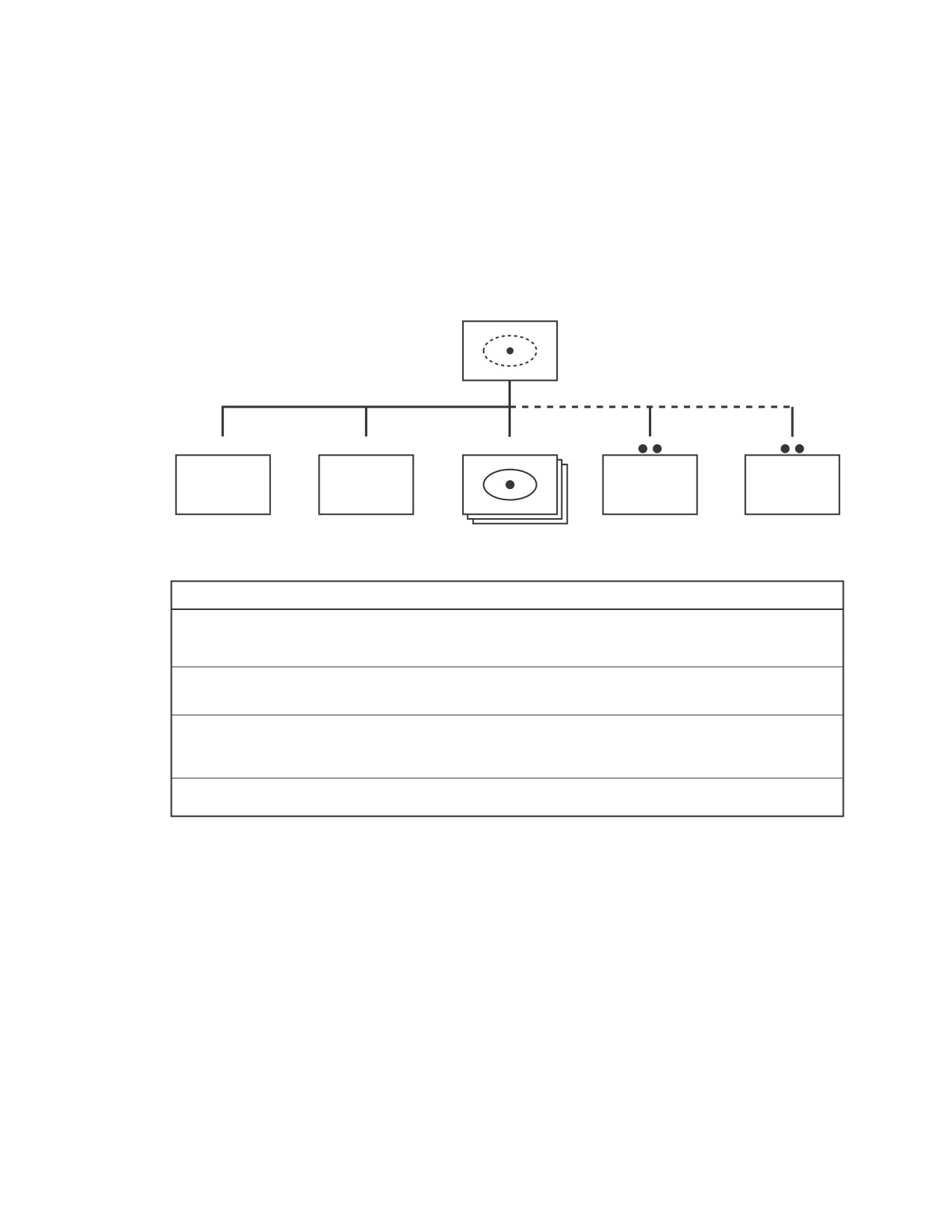
structure. Also depicted are three COLTs. COLTs do not serve a specific fire support
coordination function; however, because they are valuable assets designed to
maximize employment of smart munitions, C2 of the COLTs is normally retained at
the notional army brigade.
X
FSCOORD
FSE
COLT
II
II
II
FSE
FSE
FSE
I
I
I
FIST
FIST
FIST
Figure V-1. Notional Army Brigade Fire Support Coordination Organizations
V-2
c. Notional Army Brigade Fire Support Attack Assets.
(1) Field Artillery. Each committed maneuver brigade in the Army has a
habitually associated field artillery battalion in DS. Although the notional army
brigade currently receives its DS artillery fires from an M109A6 “Paladin” howitzer,
the MLRS battery (if attached as assumed for the purposes of this publication)
provides reinforcing fires. Figure V-2 depicts the notional army brigade’s supporting
field artillery organization.
II
I
I
I
Q36
Q37
HHB
SERVICE
RADAR
RADAR
NOTES
1. HHB provides the personnel and equipment to perform fire support coordination for
the notional army brigade (4 FSEs, 12 FISTVs, 3 COLTs) and to C2 the battalion’s
attached, organic, and reinforcing units.
2. Service Battery provides all classes of supply (less Class VIII) and services to support
organic and attached units.
3. Firing Batteries have 6 howitzers (M109A3/A6s), 8 Field Artillery Ammunition Supply
Vehicles (M992 FAASVs) and 2 Fire Direction Centers (FDCs) (M577s) organized in two
platoons capable of semi-autonomous operation. (Total of 18 howitzers in battalion.
4. Battalion tactical operations center commands and controls attached radars.
Figure V-2. Notional Army Brigade Field Artillery Organization
(a) M109A6 “Paladin” Howitzer. An automatic fire control system includes
position navigation and a ballistic computer that does on-board technical fire
direction enabling it to respond to calls for fire in less than two minutes. Its range
advantage over the M109A3 is 4.6km for unassisted projectiles and 6.5km for rocket
assisted projectiles. Because the Paladin can rapidly occupy a firing position, shoot,
and displace, its vulnerability to counterfire is significantly reduced.
(b) MLRS. MLRS provides the commander with a significant capability
for executing counterfire, interdiction, and assisting in SEAD. The MLRS is well
suited for attacking large area targets; recommended target sets include personnel,
self-propelled artillery, air defense systems, infrastructure and lightly protected
V-3

combat, CS, and CSS systems. To support deep operations, the Army Tactical
Missile System (ATACMS) capable MLRS battery can attack high payoff targets at
ranges from 25 to 300 km. (ATACMS ammunition comes in missle pods similiar to
normal MLRS missiles, but they must be ordered separately as ammunition since
they do not automatically come with a MLRS unit.) The system can also assist in
SEAD to support air interdiction and/or deep operations.
• Firepower. MLSR provides significantly increased attack potential
over the 155mm howitzer. Table V-2 presents a firepower comparison between MLSR
and the 155mm howitzer.
Table V-2. Firepower Comparison of MLRS and 155mm Howitzer
MLRS
M109A3 (155mm)
Range*
32 km
18.5 km
Submunition
644 per rocket
88 per round
Equivalent
1 rocket
7.32 rounds
Equivalent
1 launcher load (12 rockets)
3.6 battalion volleys
(88 rounds)
Equivalent
1 battery (9 launchers, 108 rockets)
33 battalion volleys (792 rounds)
* For Dual Purpose Improved Conventional Munitions
• Interoperability. The MLRS interfaces with many types of C2
systems. The fire direction center (FDC) at platoon, battery, and battalion levels can
interface directly with the Interim Fire Support Automation System (IFSAS), digital
message devices, other FDCs, Cannon Battery Computer System (CBCS), AFATDS,
Airborne Target Handover System (ATHS) on the OH-58D, and the CGS—the
ground link to J-STARS.
• System Characteristics. MLRS features an on-board, self-location,
directional control, ballistic computation, and digital communications system in one
piece of equipment. The system consists of M270 launchers; launcher pods;
ammunition resupply vehicles and trailers; and C3 system. Each launcher has the
on-board capability to receive a fire mission, self-locate, compute firing data, orient
on the target, and deliver up to 12 rockets. All 12 rockets can be fired in less than 60
seconds at single or multiple aim points. Rockets can be fired individually or a
designated number can be fired at specified intervals. To improve response time and
facilitate target engagement, the MLRS interfaces directly with target acquisition
assets.
• Ammunition Resupply. Ammunition resupply of the battery’s nine
launchers occurs with the 12 M985 heavy expanded mobility tactical trucks
(HEMTTs) and 12 M989A1 heavy expanded mobility ammunition trailers (HEMATs)
assigned to the battery’s ammunition platoon. Each HEMTT/HEMAT combination
can carry 48 rockets (8 pods).
• Organization. Figure V-3 depicts the organizational structure of the
notional army brigade’s supporting MLRS battery.
V-4
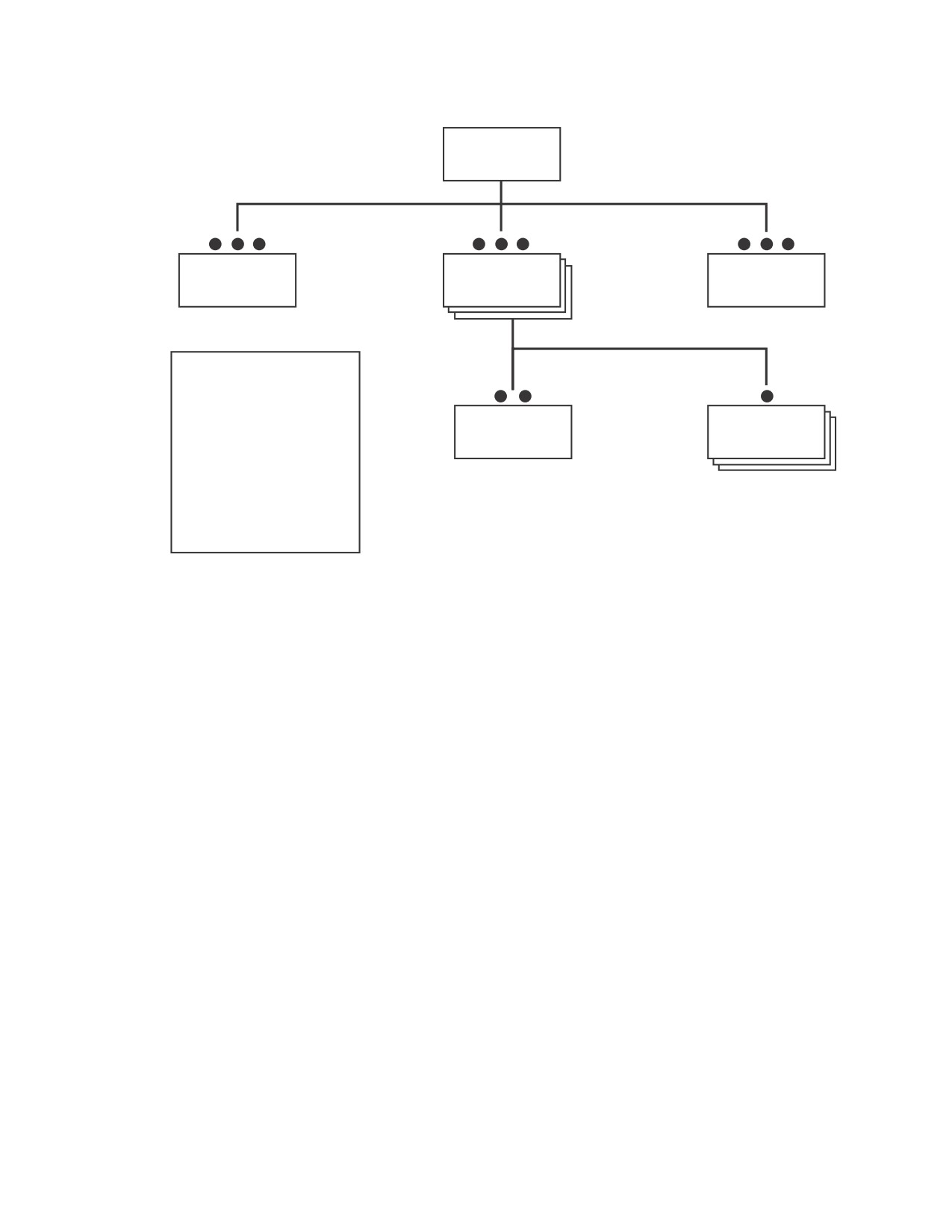
I
MLRS
BATTERY
HQ
FIRING
AMMUNITION
PLATOON
BATTERY
PLATOON
MAJOR EQUIPMENT
9 - M270 LAUNCHER
4 - M57 CARRIER, CP
M270
HQ
1 - M88A1 RECOVERY VEH
LAUNCHER
12 - M985 HEMTT
2 - M978 TANKER
8 - M35A2 2.5 TON
2 - M923 5 TON
26 - HMMWV
Figure V-3. Multiple Launch Rocket System (MLRS) Battery
(2) Mortars. Each of the notional army brigade’s three ground maneuver
battalions features a company of six 120mm mortars. The company provides
dedicated, immediately responsive fires in support of battalion/task force operations.
(3) EW Assets. Chapter III described notional army brigade EW systems and
assets capabilities.
(4) USAF Air Support. USAF fixed-wing air support is coordinated through
the brigade and battalion ALOs/S3 air and corresponding tactical air control parties
(TACPs). See Chapter VII for additional discussion.
d. Notional Army Brigade Target Acquisition Assets. The notional army brigade
features a variety of target acquisition assets ranging in scope from the FISTs to
national-level collection assets. As shown in Figure V-1, the notional army brigade
has a full complement of FISTs attached to the maneuver companies and three
COLTs available for employment at brigade level. An AN/TPQ-36 weapons-locating
radar may support the artillery battalion’s operations; target acquisition range more
than doubles (from 24 to 50 km) if the AN/TPQ-37 weapons-locating radar is
available for support. The notional army brigade may also have aerial assets (OH-
58D helicopters) from supporting Army aviation units. Finally, the brigade has a
direct link to targeting intelligence developed by higher headquarters through the
intelligence architecture described in Chapter III.
V-5
4. Army Aviation
The notional army brigade may be augmented by Army aviation assets as
described in Chapters I and VII. Attack helicopters are most effective when employed
in mass (battalions or companies) in an air maneuver role against enemy armor or
artillery formations or against other high payoff combat, CS, or CSS target sets. The
division’s aviation brigade’s primary mission is to engage and destroy threat
armored and mechanized forces. When necessary, Army aviation can support by fire
other maneuver units, coordinate and adjust indirect fires, conduct joint air attack
team operations, and C2 deep operations.
5. MEB Fire Support Operations
a. MEB fire support coordination agencies include the FSCC at the MEB CE and
FSCCs at the regiment and each battalion. All agencies are staffed with
representatives of the various supporting arms. A FSC directs the operations of the
FSCC. Once established, FSCCs coordinate directly with FSCCs of adjacent and
higher units.
(1) MEB FSCC. The MEB commander task organizes the FSCC with the
personnel, equipment, and communications required to support operational
requirements. The MEB FSCC plans fires to support deep operations, participates
in planning joint deep operations, and coordinates those operations with GCE close
operations through the GCE FSCC. The GCE FSCC identifies and submits
additional fire support requirements in the form of targets and requests for
reinforcing fires to the MEB FSCC. The MEB FSCC receives the GCE’s target
nominations and coordinates the GCE’s requests for fire support from external
agencies (e.g., coordinating Army MLRS mission support for the GCE). The MEB
FSCC also coordinates ACE and CSSE fire support requirements, including SEAD
and fire support for rear operations respectively.
(2) GCE FSCC. The GCE FSCC plans fires, conducts targeting, and integrates
deep supporting fires with maneuver. Close supporting fires require detailed
integration and coordination and are primarily the concern of lower echelons. To
enable the efficient employment and coordination of Marine aviation with ground
operations, the direct air support center (DASC) is typically collocated, either
physically or electronically, with the GCE’s senior FSCC. If the DASC/FSCC
collocation is not possible, the DASC may establish an air support liaison team
(ASLT) at the FSCC to facilitate coordination. The tactical linkage between the GCE
and ACE is maintained through the Tactical Air Control Party (TACPs) organic to GCE
units. The GCE directly interfaces with other elements of the MEB as required.
b. MEB Fire Support Assets.
(1) Artillery. The MEB normally deploys with a supporting artillery battalion
comprised of a headquarters battery, three to five six-gun M198 howitzer batteries,
and attached meteorological and radar support. The headquarters battery includes
the battalion headquarters and the administrative and logistical elements required
to support battalion operations. Figure V-4 depicts a notional MEB artillery
battalion.
V-6
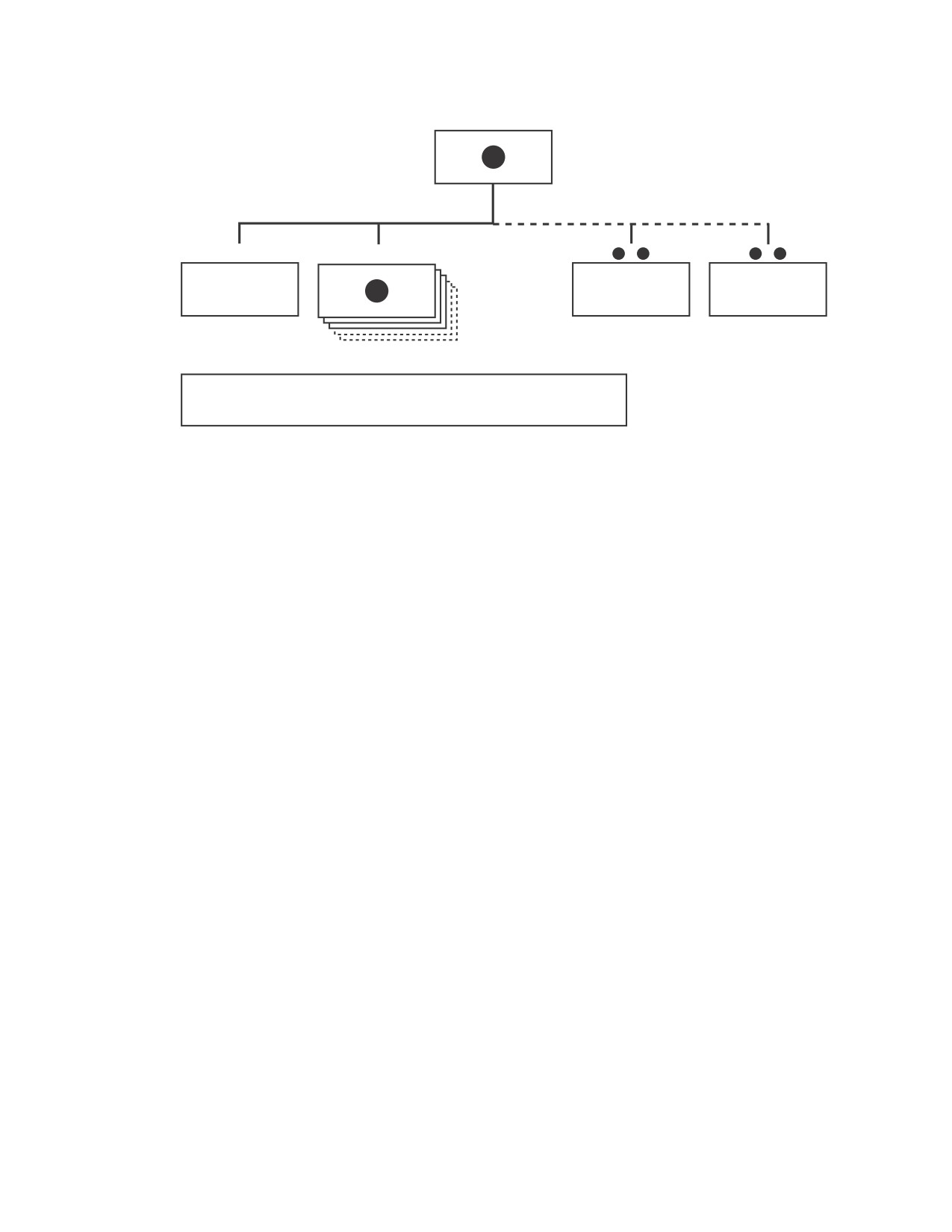
II
I
I
Q36
HQ
METEOROLOGY
RADAR
NOTE:
1.
6 X M198 HOWITZERS PER BATTERY
2. MPSRON HAS 30 X M198 ALLOWING REINFORCEMENT
Figure V-4. Notional MEB Artillery Battalion
(2) Mortars. Each of the MEB’s three rifle battalions (and the LAR battalion)
has eight 81mm mortars in its weapons company. There are three 60mm mortars in
the weapons platoon of each rifle company.
c. Naval Surface Fire Support. When naval fire support is available and the
general tactical situation permits its use, naval firepower can provide large volumes
of devastating, immediately available, and responsive fire support to combat forces
operating near coastal waters. Naval gunfire (NGF) ships may be assigned one of
two missions: DS or GS.
(1) DS. DS makes ship fires responsive to the needs of a battalion or regiment
size ground force. Destroyers equipped with 5-inch guns usually execute this
mission. A ship assigned a DS mission delivers planned and on-call (targets of
opportunity) fires in support of the ground force. A supporting arms observer, a
member of a shore fire control party (SFCP) organic to Marine units, requests and
adjusts on-call fires.
(2) GS. Aerial observers or designated battalion spotters generally request
and control the fires of GS ships. GS ships also execute planned fires IAW schedules
of fires.
d. Marine Aviation. Marine aviation, operating as part of the concerted air-
ground effort, provides the MEB a significant capability to destroy, deceive, or
disrupt the enemy. The MEB uses the Marine Air Command and Control System
(MACCS) to control aircraft and missiles. The MEB FSCC is linked to the ACE
MACCS through the TACC. Paramount to the employment of the MACCS is the
requirement for the MEB FSCC to have connectivity with the ACE TACC and the
GCE FSCCs to be collocated or electronically connected with a MACCS agency. Such
connectivity promotes the integration of MEB air and ground assets into a combined
arms effort. Figure V-5 depicts MACCS/FSCC relationships.
V-7
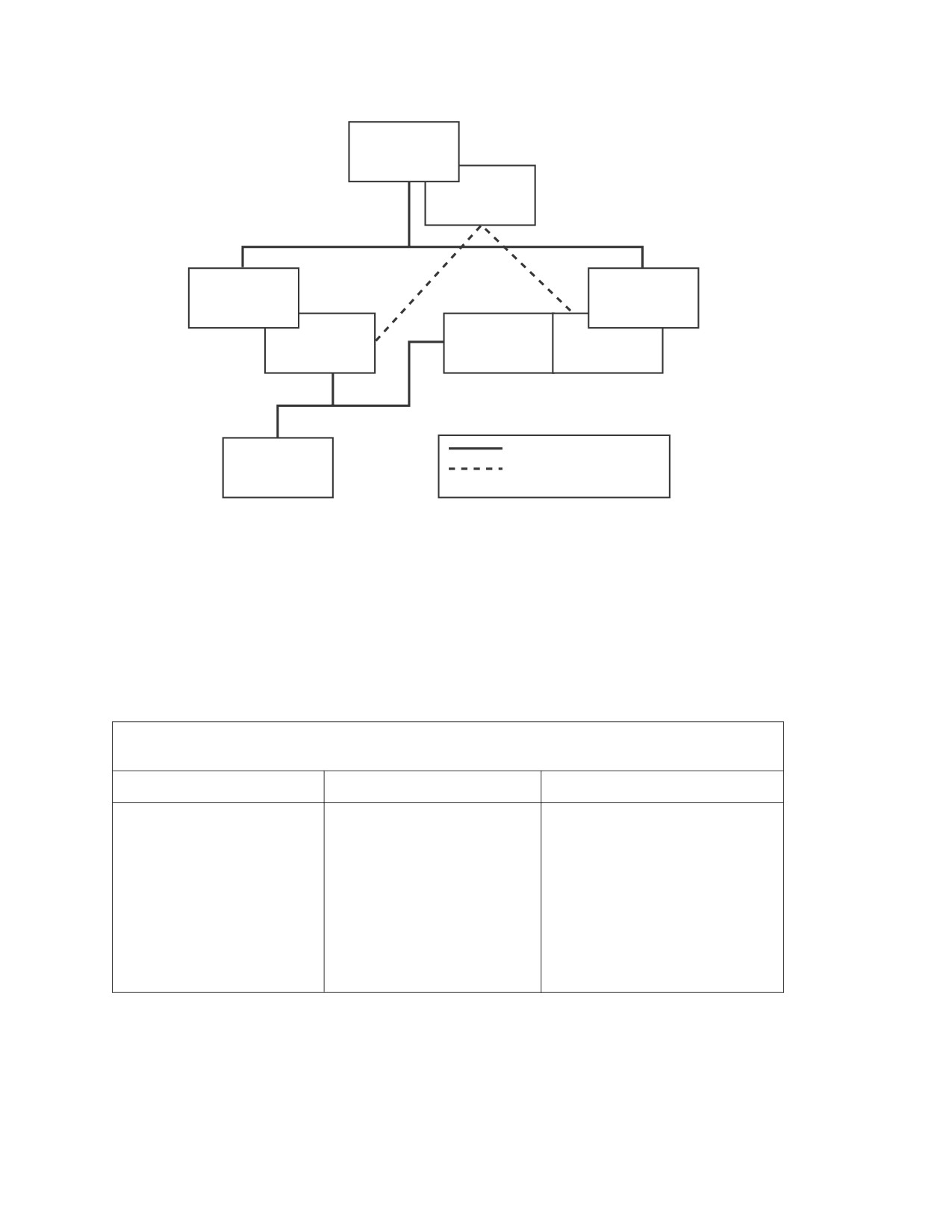
MAGTF CE
FFCC
ACE
GCE
TACC
DASC
FSCC
COMMAND
TAOC
CONTROL/DIRECTION/
COORDINATION
Figure V-5. Marine Air Command and Control System (MACCS)/Force Fires
Coordination Center (FFCC) /Fire Support Coordination Center (FSCC) Relationships
e. MEB Target Collection Assets. The MEB CE determines and coordinates the
employment of information and intelligence collection assets such as reconnaissance
assets, UAVs, and other target acquisition assets within the MEB. Table V-3 defines
MEB target acquisition assets.
Table V-3. MEB Target Acquisition Assets
CE
GCE
ACE
UAVs
FOs
Forward air controller (airborne)
Deep reconnaissance units
FACs
(FAC(A))
SIGINT
NGF spotters
Aerial Observers
Photographic and satellite
Ground intelligence sensors
Other aircraft (including
sources
Weapons locating radar
reconnaissance and EW)
HUMINT
Combat troops
Adjacent units
Reconnaissance units
External sources
6. Integrated Fire Support Operations
a. Task Organizing Artillery Assets. Successful fire support planning and
execution in part hinges on the JFC’s ability to task organize available fire support
assets. The following paragraphs highlight the fundamentals of organizing fire
V-8
support assets for combat, describe the process of artillery organization for combat,
and define the seven inherent responsibilities in executing artillery tactical
missions.
(1) Fire Support Fundamentals—
(a) Provide adequate fire support to committed maneuver units.
(b) Weight the main effort.
(c) Provide the commander with immediately available fire support.
(d) Retain maximum feasible centralized control.
(e) Provide fire support for future operations.
(2) Artillery Organization for Combat. Artillery organization for combat
consists of the two-step process of establishing command relationships and assigning
tactical missions.
(a) Step 1. The appropriate commander establishes a command
relationship for supporting artillery units of either attached, OPCON, or TACON.
(b) Step 2. On the recommendation from the FSC, the maneuver
commander assigns tactical missions of DS, reinforcing, general support
reinforcing (GSR), or GS to artillery units.
• DS. DS is the most decentralized tactical mission wherein an
artillery unit provides close and continuous fire support to a specific maneuver unit.
• Reinforcing (R). An artillery unit with a reinforcing mission
augments the fires of another artillery unit with a DS mission. This mission weights
an effort and provides additional responsive fires to the supported maneuver
commander. An artillery unit can reinforce only one other artillery unit at a time.
• GSR. An artillery unit with a GSR mission furnishes fires for the
entire force within its range and reinforces the fires of another artillery unit as a
second priority.
• GS. GS, the most centralized mission, retains artillery to support the
force as a whole and provides the commander with immediately available firepower
to influence the battle.
(3) Inherent Responsibilities. Table V-4 describes the seven inherent
responsibilities of field artillery tactical missions that guide the planning and
operational employment of artillery assets during integrated operations.
V-9

Table V-4. Inherent Responsibilities of Artillery Standard Tactical Missions
An Artillery
Direct
Reinforcing
General
General
Unit With A
Support
Support
Support
Mission Of—
Reinforcing
Answers calls for
1. Supported unit
1. Reinforced
1. Force artillery
1. Force artillery
HQ
artillery
HQ
2. Own
fire in priority
2. Own observers
2. Own
observers
from—
3. Includes all target
observers
2. Reinforced
target acquisitions
unit
means
3. Force artillery
3. Own
not deployed with
HQ
observers
supported unit
(e.g. radar, aerial
observers)
4. Force artillery HQ
Has as its zone
Zone of action of
Zone of
Zone of action of
Zone of action of
of fire—
supported unit
reinforced
supported unit
supported unit
artillery
the include zone
of fire of
reinforced
artillery unit
Furnishes FOs/
Maneuver
No requirement
No requirement
No requirement
FISTs and fire
companies of
support sections
supported unit.
(*FSSs) to USA .
Provides temporary
replacements for
casualties
Establishes
Supported unit (to
To reinforced
To reinforced
No requirement
liaison with—
Bn level)
artillery unit HQ
artillery unit HQ
Establishes
FSOs/FSCs and
Reinforced
Reinforced
No requirement
communications
supported maneuver
artillery unit HQ
artillery unit HQ
with—
unit HQ
Is positioned
DS artillery unit
Reinforced
Force artillery HQ
Force artillery HQ
by—
commander or as
artillery unit or
or reinforced
ordered by force
as ordered by
artillery unit if
artillery HQ
force artillery
approved by
HQ
force artillery HQ
Has its fires
Develops own fire
Reinforced
Force artillery
Force artillery HQ
planned by—
plan
artillery unit HQ
HQ
* An FSS for each maneuver brigade/battalion and FIST for each maneuver company are trained
and deployed by the FA unit. The FIST for the mechanized infantry consists of an FIST
headquarters and three forward observer parties per company. The FIST for the armor company
consists of an FIST headquarters only. Once deployed, FISTs and FSSs remain with the supported
maneuver unit throughout the conflict.
V-10

b. Characteristics of MEB and Notional Army Brigade Artillery. Table V-5
provides commanders and staffs with a ready reference that delineates the
characteristics of artillery weapons systems available to the MEB and notional army
brigade.
Table V-5. Characteristics of MEB and Notional Army Brigade Artillery
Unit
Weapon
# Weapons
Range (M)
Ammo Types
Fuses
MEB
M198
18-30/BN
22,400*
HE, RAP, ILL,
CP, PD, VT,
155mm
(6/Battery)
30,000
ICM, DPICM,
MTSQ, MT
Towed
(RAP)
ADAM, RAAM,
Howitzer
High Concentrate
(HC),WP,
COPPERHEAD
Notional Army
M109A3
18/BN
18,100*
HE, RAP, ILLUM,
CP, PD, MT,
Brigade
155mm SP
(6/Battery)
23,500
ICM, DPICM,
MTSQ, VT
Howitzer
(RAP)
ADAM, RAAM, HC,
WP, COPPERHEAD
Notional Army
M109A6
18/BN
24,000*
HE, RAP, ILLUM,
CP, PD, MT,
Brigade
155mm SP
(6/Battery)
30,000
ICM, DPICM, ADAM,
MTSQ, VT
Howitzer
(RAP)
RAAM, HC, WP,
(Paladin)
COPPERHEAD
Notional Army
MLRS
18/BN
32,000
DPICM (M77)
Electronic
Brigade
(6/Battery)
Time
Notional Army
ATACMS
(Same as
165 km
APAM (M74)
Electronic
Brigade
above)
Time
* The ranges are for HE with M203 propellant. Maximum ranges differ by propellants used.
c. Counterfire Operations. Given the vulnerability of our forces—particularly
our combat and CSS units—to enemy artillery, commanders and staffs must devote
special attention to providing effective counterfire against artillery. Unless
augmented by army MLRS and Q-37 systems, the MEB will rely on organic weapons
systems to provide counterfire against enemy indirect fire; the Q-36 radar, M198
howitzers, and attack fixed-winged and rotary-wing aviation. The most effective
counterfire system will often be the MLRS. To maximize the capabilities of the
MLRS battery, direct “sensor-to-shooter” linkage may be established from specific
sensors to the MLRS battery. Linking the battery with a Q-36 or (preferably) a Q-37
provides the commander with a responsive counterfire capability to locate and
attack firing enemy indirect fire systems. When the MEB must rely on Marine
aviation for long-range counterfire, “sensor-to-shooter” linkage can be established
with a quick-fire channel connecting an air officer in the target processing center
directly to a FAC(A). A proactive counterfire strategy links sensors (such as a USMC
UAV) with the MLRS or other attack means in order to locate, attack, and eliminate
enemy artillery before it enters the fight.
V-11
d. MLRS Support of USMC Operations. MLRS units provide a significantly
enhanced indirect fire capability to conduct counterfire operations. The discussion
below addresses C2 of MLRS units under MEF control, describes required
communications linkages, and highlights planning considerations for MLRS
employment.
(1) C2. When operating under USMC control, MLRS units should be placed
within the artillery organization and should be tasked to support the MEF as a
whole. The senior artillery headquarters assigns the MLRS unit GS, GSR missions,
or nonstandard missions.
(2) Communications. The MLRS unit operates on the following artillery nets
when supporting USMC operations:
(a) Regimental Command Net (HF).
(b) Regimental Tactical Net (VHF).
(c) Regimental Fire Direction Net (VHF).
(d) Radar Telling Net (VHF), as required.
(e) Regimental Survey/Met Net (VHF), as required.
(f) Regimental Communication Coordination Net (HF/VHF).
(3) Employment Considerations. The employment of the MLRS unit will be
similar to the employment of a Marine artillery battalion with a GS mission. MLRS
operations are characterized by rapid emplacement, engagement, and displacement
of widely dispersed launchers. Specific planning considerations include:
(a) Sustained Operations/Launcher Response Time. Schedules of fire must
be coordinated so the battery can manage launcher posture and/or response time.
Because of maintenance, personnel, and other factors, the “rule of thumb” is to plan
fires for no more than four launchers at one time. If a surge condition arises, the
unit can be tasked to provide a higher number. If all available launchers fire on a
schedule, temporary loss of the asset (20 to 45 minutes) can be expected while the
launchers move to reload points, reload, and return to firing points.
(b) Launcher Response Posture. On the basis of METT-T/METT-TC, the
force commander’s guidance, ammunition resupply, and launcher maintenance
status, the commander determines how unit launchers are postured. A launcher
response posture is its readiness to respond to fire missions. The terms hot, cool,
and cold indicate launcher response posture.
• Hot status indicates the launcher is fully capable of firing. Status is
based on the launcher’s electrical and mechanical systems, not on its location or
ammunition load.
V-12
• Cool status indicates a launcher is capable of firing but only after a
warm-up period of about eight minutes.
• Cold status indicates the launcher is not mission-capable for
maintenance reasons or that one or more essential systems are shut down for
maintenance, preventive maintenance checks and services (PMCS), crew rest, and so
forth. If a cold launcher is mission-capable, it may take 30 minutes or more for it to
respond.
(c) Tactical Posturing. The battery directs the platoons to maintain a
specific number of launchers in a hot status. This is based on guidance from the
controlling FA headquarters, METT-T/METT-TC, total launchers available,
ammunition available, crew rest, and fatigue. The platoons usually rotate their
launchers through hot status, changing individual launchers and maintaining the
total number of required hot launchers.
(d) Fire Planning. The MLRS uses two basic types of fire missions in
support of close operations: planned (scheduled) and targets of opportunity
(unscheduled). Given the different platoon positions described above, at least 30
minutes may be required for the entire MLRS battery to execute a fire plan. In
scheduling MLRS fires, each launcher is given a separate line on the scheduling
worksheet.
(e) Positioning. MLRS fights as close to the FLOT as possible in order to
maximize its 32 km range and offset the range advantage enjoyed by some enemy
indirect fire systems. METT-T/METT-TC availability of ground maneuver units to
protect MLRS, the scheme of maneuver, and a degree of risk acceptable to the
commander dictate employment and positioning decisions.
(f) Increased Target Processing Requirements. Because of the additional
target production from radars accompanying attached MLRS, the Marine target
processing center may require augmentation by target processing sections to
efficiently process targets.
(g) Ammunition Expenditure. MLRS ammunition consumption requires
intense management by planners, operations personnel, and logisticians.
Requirements for current and projected operations are balanced against the
controlled supply rate; MLRS support and appropriate controls are established
accordingly. The missile profile, the measure of effort expected of a system under
various levels of combat intensity, provides one methodology for determining the
anticipated consumption rates for MLRS units. (See Table V-6.) These levels of
intensity are described below.
V-13