FM 3-11.86 MULTISERVICE TACTICS, TECHNIQUES, AND PROCEDURES FOR BIOLOGICAL SURVEILLANCE (OCTOBER 2004) - page 2

Table III-1. Identifying Risk Reduction Measures
Identify the enemy
Assess the BW
Implement risk
Receive and
Propose risk
Reassess the
BW hazard and
hazard and friendly
reduction
Execute the
analyze the
reduction
BW risk (high/
friendly BW defense
situation (high/
measures in the
OPLAN/OPORD
mission
measures
medium/low)
capabilities
medium/low)
OPLAN/OPORD
How (How many
Identify threat delivery
Assess the impact of
Provide a
Assess the
Implement a
Supervise, provide
agents were used?)
TTP; identify friendly
BW use.
biological-
probability of
biological-
feedback, and revise
(How will US forces
BW detection
surveillance
detection.
surveillance plan
as required.
•
Point release.
detect threat use of
capabilities.
employment/
(critical-node or area
•
Line release.
BW agents?)
medical-
array).
•
Outside or
surveillance plan.
inside.
What (What agents
Identify threat BW
Assess the impact of
Provide BW
Assess whether
Deploy and
Supervise, provide
may be used?)
agents.
BW agents.
detection
capability gaps
synchronize the
feedback, and revise
capability.
exist.
required capability.
as required.
•
Detection
capability.
•
Provide lab
•
Treatment
capability.
capability.
•
Provide
courier
capability.
When (When may
Identify threat
Assess the time
Provide warning
Assess the
Implement the
Supervise, provide
an threat use BW
windows of
required to implement
and reporting and
timeliness and
sample evacuation
feedback, and revise
agents?)
opportunity.
risk reduction
establish trigger
accuracy of the
plan and staff WG.
as required.
measures.
points and decision
C4I system.
points.
How (How will threat
Confirm threat use of
Assess confidence in
Ensure coordinated
Assess the
Implement the
Supervise, provide
use of BW be
BW.
reported result.
medical/NBC/
quality and
warning-and-
feedback, and revise
confirmed?)
intelligence
timeliness of
reporting network.
as required.
information
reports.
management.
Implement the
sample-evacuation
plan.
Where (Where is the
Identify areas of
Assess the impact of
Provide periodic
Wargame
Implement the
Supervise, provide
AO?)
possible BW
the AO on BW agents
weather forecast
options for threat
weather forecasting
feedback, and revise
employment.
and US biological-
and analysis.
BW use.
capability and
as required.
detection capability.
Provide
conduct a routine
Assess
background
assessment of
•
Weather.
background
monitoring and
background data.
•
Terrain.
data.
analysis.
•
Background.

Table III-2. Biological-Surveillance Planning—Situation
Situation
Factor
Operational Implications
Threat Forces
Identify threat list of BW agents.
The list of AOR specific threat agents can
affect requirements for different types of
•
Detector/handheld-assay
detectors and the specific handheld assays
tailoring.
used. Also, the type of threat agent can drive
•
Depth of array.
the depth of the array used. It should be noted
that all common surveillance reagents may be
initially used and all attacks may be surprise
attacks.
Identify dissemination method.
The type of delivery systems the threat has
available can affect how the biological-
•
Munitions.
detector array is positioned (critical node
•
Dispersal systems.
versus area array).
•
Terrorist-type attack (food/
water).
•
Direct contact with vector or
contagious person.
Surprise.
Surprise attacks by the threat can never be
fully planned for. Yet, they can potentially be
the most effective. Flexibility, effective C2, and
a robust detection array are keys to providing
full-spectrum biological-surveillance
operations that can potentially provide
coverage against surprise attacks.
Identify potential biological-
Planning, coordination, and liaison determine
surveillance assets within the AOR.
what HN or other government organizations
and NGOs can provide for support of
biological surveillance. The commander and
his staff must “think outside the box” about
ways they can augment unit biological-
surveillance capabilities.
Friendly forces
Identify biological-surveillance
The command and staff analyze the task
assets.
organization. The review determines what
capabilities are available to support biological-
detection, medical-lab, and escort operations.
Review for other units or assets that
The command and staff determine what other
may possess a BW agent detection
military assets are available within the AOR.
capability.
Some of these assets may include HN and
allied military assets.
Attachments and
Review task organization for
The established command and/or support
detachments
biological-surveillance assets, C2
relationship must be understood. This will
units (for example, a chemical
impact factors such as reporting and logistics.
brigade), and technical escort,
theater Army medical laboratory.
Identify assets available for
Identify any required capabilities that are not
biological-surveillance operations, to
available.
include medical lab support and
technical escort assets.
Identify requests for assets to fill
shortfalls.
III-5

Table III-3. Biological-Surveillance Planning—Mission
Mission
Factor
Operational Implications
Assess the mission statement to
The mission statement contains the five
determine specified and implied
elements associated with every operation—
tasks. Use this information for
•
Who will execute the biological-
mission analysis.
surveillance operations?
•
What are the essential biological-
surveillance tasks?
•
When will the biological-surveillance
operation begin?
•
Where will the biological-surveillance
operations occur (AO, objectives, grid
coordinates)?
•
Why (for what purpose) will the force
conduct biological-surveillance
operations?
Table III-4. Biological-Surveillance Planning—Execution
Execution
Factor
Operational Implications
Maneuver
Timeline
The biological-surveillance plan must emphasize time as a
critical factor of effective biological surveillance. biological-
surveillance data and samples are time-sensitive. The window of
opportunity to protect the force through warning and protective
measures is very small. Samples sent to supporting laboratories
for confirmatory identification can deteriorate over time.
Decision tree
A decision tree can be established identifying the types of
decisions that need to be made at different levels of threat.
•
High threat
These decision trees should never provide rubber-stamp actions
•
Medium threat
for each threat level. They should instead identify when a
•
Low threat
decision is needed and possibly a tentative set of options that
have been developed during the wargaming process.
Risk
The amount of risk the command is willing to assume will impact
the monitoring methodology (for example, all systems operational
•
Plan ahead
or sampling interval).
•
Redundant
systems in place
•
FP depth
Confidence in results
The confidence in a detection of a biological attack is affected by
how it has been detected.
•
Lab
•
Detector
Detection by one biological detector has a lower confidence level
(medium) than if two biological detectors have made the
detection (high).
Confirmatory identification from a supporting lab confirms and
bolsters medium-confidence detections and further reinforces
high-confidence detections.
Confidence in a biological detection will affect how a commander
and his staff implement reduction measures.
III-6

Table III-4. Biological-Surveillance Planning—Execution (Continued)
Execution
Factor
Operational Implications
Maneuver
Post attack
After an attack has been identified (through presumptive and
confirmatory identification) the unit must affect reduction
(continued)
•
Reduction
measures. These measures may come in the form of
•
Sampling/
prophylaxis, heightened protective postures, and warning and
detector
reporting.
operations
Post attack sampling and detector operations must be addressed
(for example, increased or decreased sampling).
Controlling HQ
The HQ command and staff that control the biological-
command and staff
surveillance operations have the responsibility to—
•
Receive
•
Be the central node for the receipt of any information that
•
Analyze
may have an impact on biological-surveillance operations.
•
Recommend
This includes actual detection data and intelligence,
•
Decide
meteorological, and medical information.
•
Disseminate
•
Analyze and synthesize all pertinent biological
•
Execute C2
surveillance-related information into reliable action sets.
•
Recommend COAs in response to biological attacks.
•
Decide on a COA in response to a biological attack.
•
Disseminate information and guidance about COAs in
response to a biological attack.
•
Provide C2 of operations conducted in response to a
biological attack.
Preplan
The importance of preplanning cannot be overestimated. An
effective and well-thought-out plan will save lives.
•
What
•
When
The cost and value of the employment of biological-surveillance
•
Value
assets must always be considered. The costs of an effective
•
Cost
biological-surveillance program are weighed against the
catastrophic effects of a successful biological attack.
Operational implication
The plan should include the operational impact of biological
surveillance on the force. It provides a clear and concise direct
relation between benefits and/or losses and effective and/or
ineffective biological-surveillance operations.
III-7

Table III-4. Biological-Surveillance Planning—Execution (Continued)
Execution
Factor
Operational Implications
ISR
Point detection
Provide critical nodes to be protected.
Standoff detection
Provide guidance on the use of standoff detectors (when
available).
Minimum protocols
Provide standard protocols to be used during biological-
surveillance operations. These protocols should provide the
minimum expected standards of conducting biological
Sampling intervals
surveillance, such as minimum sampling intervals, spacing
between detectors, packaging of samples, and the time to
execute a sample evacuation.
Consistency/
Any standard set should be logistically supportable. For example,
standardization
if the dry filter units are set with sampling intervals of 24 hours a
day at 6 hour intervals, then each dry filter unit will be using, as a
minimum, 4 handheld assays a day. The use rate of
Logistically supportable
consumables (in this case handheld assays) will need to be
considered when establishing these standards.
Employment Plan
To support the higher command OPLAN, the unit prepares a
monitoring plan to indicate how biological detectors will be
•
Where to assign
employed.
assets
•
Spacing
Fixed site (critical node). To support fixed-site requirements, the
commander will likely allocate Joint Portal Shield, dry filter unit, or
- Lateral
JBPDS (trailer-mounted and man-portable) assets (see Chapter
- Depth
II).
•
Number of
Maneuver force (area array). To support maneuver force
assets
requirements, the commander will likely allocate JSLNBCRS or
- Prioritize
BIDS assets (see Chapter II).
- Allocate
This monitoring plan should assign assets to specific critical
nodes or into area arrays.
Spacing guidance should be provided not only for the distance
between detectors laterally, but also in depth.
Guidance should be provided on what the priority of effort is and
how the command will allocate biological-surveillance assets to
provide coverage in that priority.
Fixed sites, ports, and
Provide a scheme of maneuver that addresses how biological-
airfields
detection assets will best provide coverage against the threat.
Maneuver land forces
As part of the process array, placement, with regard to NAI
or maritime forces
location, is critical for successful probability of detection. The
array type used is affected by the size of the area of operation.
Mission duration is impacted by factors such as weather.
Air and missile
Air defense warning
Other systems within the battlespace can impact how biological
defense
surveillance occurs. The air and missile defense warning system
can affect how biological surveillance is conducted. For example,
upon warning of a missile attack, biological-surveillance assets
may be directed to switch from periodic to continuous monitoring.
III-8

Table III-4. Biological-Surveillance Planning—Execution (Continued)
Execution
Factor
Operational Implications
Information
OPSEC/Handheld-
Codes have been assigned to the various biological agents that
operations
Assay Agent Codes
handheld assays detect. The codes on the agent decode list are
classified SECRET.
The classification of these codes helps to maintain control of how
a force reacts to a biological attack. The HQ that controls the
biological-detection assets maintains the codes and thus controls
the release of detection data.
Automated Decision
Automated decision support tools can assist the commander and
Support Tools
his staff in determining the impact of a biological attack. These
decision support tools can provide estimates of how far
downwind the biological cloud will travel as well as an estimated
footprint of the biological attack.
Select decision support tools also have the ability to transmit this
data to subordinate, higher, and adjacent units.
Tasks to other
Determine the tasks for
Specific tasks should be provided to biological-surveillance
CS units
biological-surveillance
assets to include supporting units. These tasks could include
assets and priorities of
specific locations to conduct detection operations, directions for
effort
technical escort assets on where to set up sample transfer
points, instructions for medical assets on the storage and
location of prophylaxis (for example, the forward positioning of
antibiotics).
CCIRs
Identify locations in
PIRs and CCIRs provide a focus for making the decisions on
space and time for
where to position biological-detection assets.
NAIs/PIR
Risk reduction
VA outputs
During the planning process, the staff planner must conduct a
control
biological VA of the organization. The results of this VA are a set
measures
of vulnerability reduction measures meant to lessen the risk and
impact of a biological attack. The VA can influence how and
where biological-surveillance assets are deployed.
Environmental
Meteorological data
There are various sources of meteorological data. The staff
considerations
meteorological officer must be consulted to determine which of
these sources are appropriate for use with any dispersion
predictions (see also Chapter V). Once identified, these sources
should also be disseminated to biological-detection assets.
Effect on detection
The background environmental conditions can also have various
effects on biological-detection operations. (For example, an area
with a high pollen count may cause false alerts in some field
detectors).
Harsh weather can cause difficulties in conducting biological-
surveillance operations. Sandstorms, freezing rain, snow, ice,
heat, and high humidity can affect air monitoring, sampling, and
sample transport.
III-9

Table III-4. Biological-Surveillance Planning—Execution (Continued)
Execution
Factor
Operational Implications
Environmental
Terrain
Terrain will also affect how and where detectors should be
considerations
placed. Terrain can create both direct and indirect effects on
•
Detector
biological-agent dispersion and downwind travel.
(continued)
locations
•
Field behavior
International borders can affect how suspected biological
•
Borders
samples are transported. They may also affect resupply
operations for biological assets.
- Samples
- Resupply
Background
Assess the impact of background environmental conditions on
detection capabilities (for example, background conditions will
vary by season and time of day).
Determine whether background levels may require the use of
alternate procedures for biological detectors (for example, a
release may not register due to high background and relatively
low concentrations or a highly variable background).
FP
FP Conditions
FP conditions are other tools that influence biological-
surveillance operations. The higher the FP condition, the higher
the threat. The planner can directly correlate his biological
detection modes of operations (continuous versus periodic) as
well as sampling intervals to current FP condition levels.
FP
Biological surveillance and detection can be an integral part of
force protection operations. Biological surveillance provides the
tools required to protect the force from a biological attack.
Survivability
Inversely, the planner must ensure that biological-surveillance
assets are provided the tools and ability to effectively survive.
Biological-surveillance assets are unique within the battlespace.
Their capabilities cannot be easily duplicated or reproduced.
Thus, survivability is of key importance when planning biological
surveillance.
Any additional
Sample evacuation
Sample evacuation is a key element of biological surveillance. It
coordinating
architecture
must be thoroughly planned and executed to be successful. Key
instructions
components of this plan include escort elements, routes,
communications, control and visibility, and designated lab
facilities.
TPFDL
A high priority should be given to planning the flow of biological-
surveillance assets into the AOR. As forces build up, so must the
network of biological-surveillance assets, to conduct health-risk
assessment and FP.
This network of biological-surveillance assets not only includes
biological detectors and samplers, but also the mechanisms
needed to affect biological surveillance (such as escort, labs, and
CLS).
III-10

Table III-5. Biological-Surveillance Planning—Service Support
Service Support
Factor
Operational Implications
Support concept
HNS
HNS must be considered when planning
biological-surveillance operations. The HN can
provide invaluable assistance in characterizing
the AOR (developing baseline biological-
background data). It could possibly provide
valuable lab support as well as hospital access
for mass-casualty events.
CLS
The service support section of the OPLAN/
OPORD should indicate key information that
includes—
•
The CLS arrival time.
•
CLS operating locations.
•
The CLS support concept.
•
The life-support concept for CLS (for
example, who provides CSS support?).
•
Any restrictions on the use of CLS
within the AOR.
Retrograde instructions for CLS line
replacement units or supplies.
Standard military support
Wherever possible, the use of standard military
support is encouraged. Many biological-
surveillance assets use unique items not
normally found using standard military logistics
channels. Many such systems are supported
by CLS. The planner must be aware that even
though a biological-detection asset may have
CLS available for its unique supply and
maintenance requirements, they also require
standard military support for all classes of
supply as well as maintenance on common
service items.
III-11

Table III-5.
Biological-Surveillance Planning—Service Support (Continued)
Service Support
Factor
Operational Implications
Transportation
Transport for BW surveillance
Transportation for biological assets must be
assets
planned well enough in advance to not hinder
operations.
Transport of samples
Transportation of samples occurs—
•
From the detection site to the sample
transfer point or directly to the
supporting theater lab.
•
From a sample transfer point to a
supporting theater lab or back to
CONUS.
•
From a supporting theater lab back to
CONUS.
The plan must address what assets will be
required to make the transport happen. Time
plays a critical factor in transporting samples.
Samples can be perishable and will lose their
efficacy over time. Also, the longer it takes to
accurately identify the biological agent, the
more casualties should be expected.
Transport of CLS
Movement of biological-surveillance assets
may be complicated by the requirement for
their maintenance and support sections (often
times CLS) to move parts and personnel within
the AOR and back to CONUS.
Materiel services
Quality management, QA, and
The effectiveness of biological-surveillance
QC
operations greatly rests on how QA and QC
checks are accomplished.
Tracking sample information
Establishing a chain-of-custody from the
Coordination
theater of operation (TO) sample takers to the
CSS shelf life
sample evaluators and to the archives requires
a comprehensive understanding of the end-to-
PMCS
end sample flow, including all intermediate
Safety
custodians and their ability to execute their
portion of the chain without compromising
sample integrity.
QA and QC must be maintained in the tracking
of sensitive limited shelf life items such as
handheld assays.
The quality of the maintenance and storage of
certain items affects the quality and
effectiveness of biological-surveillance
operations.
Safety must be addressed during all aspects of
biological surveillance. The collection,
transport, and analysis of potentially dangerous
BW agents must always be conducted with the
utmost care. Deliberate planning and precise
execution of developed plans should provide
the framework for safe and effective
operations.
III-12

Table III-5.
Biological-Surveillance Planning—Service Support (Continued)
Service Support
Factor
Operational Implications
Materiel services
Cost of consumables
The cost of consumables must always be
deliberately planned. Heightened threat levels
(continued)
will cause a higher rate of consumption of
resources. For example, sampling intervals
during these higher threat levels can impact on
national/wholesale supply systems.
Medical evacuation
Lab support
Lab support for biological surveillance must be
and hospitalization
identified and defined in the plan.
Understanding the capabilities of the
supporting theater laboratories is of key
importance. The planner must understand the
number of samples expected to be produced
and sent to the lab, the surge capabilities of the
lab, and the expected turnaround time for
confirmatory identification of suspected
biological samples. If the supporting lab cannot
process the expected volume of samples, an
alternate COA must be developed quickly to
ensure timely confirmatory identification. These
alternate COAs could include the use of HN
labs, requests for and augmentation of lab
capabilities, or prioritization of samples.
Lab considerations need to be made for both
clinical and environmental samples.
Personnel service
Assign personnel
Many biological detectors do not specifically
support
come with dedicated operators. As such,
operators must be identified. These operators
can be regularly assigned personnel,
augmentation personnel, or contracted
personnel.
Train personnel
The planner must ensure that personnel
identified to operate any biological detectors
are properly trained not only on the operation of
their systems, but on other tasks such as
packaging samples, reporting, and supply and
maintenance procedures.
III-13

Table III-6.
Biological-Surveillance Planning—Command and Signal
Command and Signal
Factor
Operational Implications
Command
Who makes decisions regarding—
The plan must identify the person that will
make decisions concerning prophylaxis,
•
Prophylaxis.
protection, and warning. The plan must be
•
Protection.
clear and concise and leave no doubt which
•
Warning.
level of command will make each specific
decision. When this decision-making is
delegated to subordinate commanders, a
clear understanding of the process of
reporting any changes in prophylaxis,
protection, and warning must exist.
Signal
Communications support
The plan must include a communications
architecture
support architecture. This architecture will
include how communications will occur
among—
•
The biological-surveillance asset.
•
Supporting laboratories.
•
Sample escort assets.
•
C2.
Reach back
Reach back assets should be provided in
the plan, as well as information on how to
communicate with reach back assets.
Reports
Required biological-surveillance reports
should be identified, along with instructions
on how and when they are to be submitted.
5.
Integration
Planning biological-surveillance operations includes the integration of METT-TC
considerations and biological-surveillance assets. This integration provides the
commander with the ability to protect the force while efficiently executing his assigned
missions.
a.
Figure III-1, illustrates the integration of METT-TC factors in the preparation
of a biological-surveillance employment plan. Employment planning considers the
following factors.
(1) Mission. The JTF NBC staff receives mission guidance to provide
maneuver forces and critical fixed-site assets with biological-surveillance support. The
commander’s priorities include supporting the first and second brigade and two critical
fixed sites (for example, the JTF HQ and the USAF bare base within the AO) with
biological-surveillance support.
(2) Enemy. The IPB indicates that the threat has line and point source
delivery capabilities with BW agents (bacterial agents and toxins).
(3) Terrain and weather. The terrain is relatively flat and dusty (an arid
environment), and the wind speed and direction favor threat use of agents.
(4) Time. Based on the time required for field confirmatory identification,
postattack medical prophylaxis is a viable option for the protection of US forces.
III-14
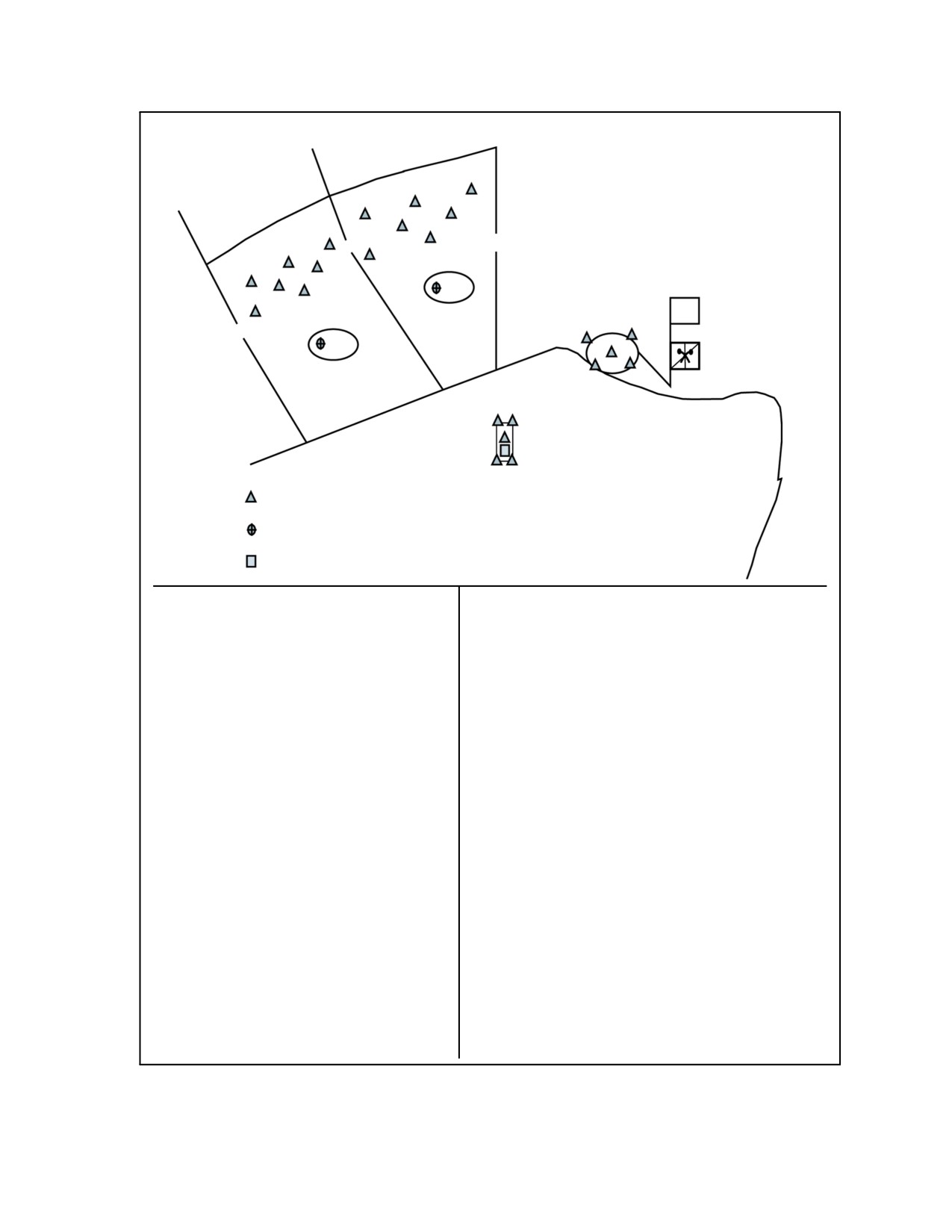
2d BDE
2d BDE X
X
IB/
1st BDE
BSA
FLOT
JTF
X 1st BDE
BSA
B
USAF
bare base
Detector site
Forward fixing point/sample
transfer point
CLS main
The Setting
Biological-Surveillance Plan
(Selected Elements)
Location: Southwest Asia environment
Employment. The friendly COE used USA BIDS
Resources available: 1 USA Chemical
assets to provide area array coverage for USA
company (biological detection) (two
maneuver forces (1st and 2nd Bde). The COE used
platoons-7 BIDS per platoon); CLS; Joint
JPS and the JBPDS to provide critical-node support.
Portal Shield network assets support the
JTF HQ; and JBPDS (trailer-mounted and
CLS. CLS main was established at the USAF bare
man-portable versions) support the USAF
base with a forward fixing point for resupply and
bare base.
exchange of JBPDS line replacement units in the 1st
and 2nd Bde BSAs.
Mission: Provide biological-surveillance
support for the JTF.
Sample evacuation. BIDS support teams evacuated
samples to STPs. Escort teams were met at sample
Assessed threat: Ground and air point or
transfer points. Escort teams delivered samples to the
line release of BW agents.
theater Army medical laboratory.
Tasks: Provide USA 1st and 2nd Bde. with
Reporting. Centralized reporting was provided from
area array biological-surveillance support;
the BIDS platoon HQ to the BIDS company HQ that
provide critical fixed sites (JTF HQ and
was collocated with the JTF. The theater Army medical
USAF bare base) with critical-node
laboratory reported results to JTF. Decentralized
biological surveillance.
reporting was conducted at the two critical fixed sites.
In turn, the base operations centers reported to the
JTF HQ.
Weather/background. Background samples were
analyzed by theater Army medical laboratory.
Figure III-1. Biological-Surveillance Operations
III-15
(5) Troops available. JTF assets include one USA chemical company
(biological detection) with two BIDS platoons (7 systems per platoon; 14 systems total),
and Joint Portal Shield network (available at the JTF HQ) and JBPDS assets (available
at the USAF bare base).
b.
The JTF integrates the biological-detection assets into the command overall
reconnaissance and surveillance plan to support the command maneuver forces and fixed
sites.
(1) Maneuver force support (area array). Based on a threat line source
capability, USA BIDS platoon assets provide the maneuver force with area array
support. The biological-detection unit leader applies METT-TC factors and uses the tools
in Appendix E to estimate separation distances between systems and how far downwind
from an estimated BW agent release point (RP) to place the array. The biological-
detection unit leader balances the actual siting of the systems with FP guidance. The
modified dice five employment tactic is used in the brigades to provide coverage in depth.
(2) Fixed-site support (critical node). Based on an threat point source
capability, Joint Portal Shield network and JBPDS (trailer-mounted and man-portable)
are used in critical-node arrays at the JTF HQ and USAF bare base. The planning
process applies METT-TC and uses the tools in Appendix E tools to provide guidance on
estimated separation distances for the systems. A dice five employment tactic is used at
the fixed sites to provide biological-surveillance support.
III-16
Chapter IV
BIOLOGICAL-SAMPLE EVACUATION
1.
Background
Biological sampling is the process or technique of selecting, packaging, and
documenting the collection of biological material. Correct techniques for collecting,
packaging, handling, and transporting suspected biological agents are critical for
accuracy in the analysis of environmental samples and clinical specimens. The quality of
any analytical evaluation is directly related to the quality of the sample or specimen and
the degree of postcollection degradation that occurs prior to testing. HSS personnel
collect and submit specimens for suspect biological hazards and/or agents involving
humans and animals. PVNTMED and veterinary personnel collect and submit water,
ice, food (for example, fruits and vegetables), environmental samples (including soil), as
well as specimens from animals for suspect biological hazards and/or agents. Collected
specimens and samples that are suspected of being exposed to or containing a biological
agent are forwarded to the field confirmatory lab designated by the applicable combatant
commander, and in turn, to the CONUS reference lab for definitive identification
directed in current OPLANs and operation tasks (OPTASKs). The command surgeon will
recommend priorities of effort and what labs should receive samples for confirmatory
and/or definitive identification. See Appendix G.
2.
Sample Evacuation Requirements
There are specific requirements to effectively evacuate a sample to the appropriate
agency. Some of these requirements are as follows:
z
Maintain sample integrity through packaging the sample properly,
maintaining the sample at 1-4°C, and ensuring an uninterrupted chain-of-
custody and timely exfiltration.
z
Obtain effective transportation and shipment coordination and clearances.
z
Prioritize the process for the transport and analysis of samples.
z
Provide appropriately trained personnel or units to transport samples.
z
Coordinate with appropriate command and staff transportation authorities to
help ensure that the transport and transfer of a sample is uninterrupted across
international borders or to another government agency. The intent is
unimpeded and controlled sample flow.
z
Evacuate background samples for lab analysis to characterize the background
environment within the AO.
z
Maintain sample tracking and visibility.
z
Identify the sample destination (for example, the theater lab or CONUS lab).
The theater surgeon or medical officer coordinates this action.
z
Identify HN lab capabilities in coordination with the CA staff.
IV-1
3.
Supported Unit Sample Evacuation Plan
Detailed planning and coordination are critical for successful sample evacuation.
There are two key levels of command in the sample evacuation and planning process—
the supported unit and the biological detection unit. Once planning and coordination
have been accomplished, the OPLAN and/or OPORD provides the who, what, where,
when, and why to ensure successful sample evacuation.
a.
The planning and coordination process begins at the supported unit. The
allocation of time is a critical factor, and the commander must provide guidance to
subordinate units as early as possible.
b.
The supporting unit should ensure that the following topics are covered in the
OPLAN and/or OPORD. See Appendix G.
(1) Assets. List the assets needed to execute the sample and specimen
evacuation mission. As a minimum, biological detection assets, courier assets, and
medical and environmental lab assets are required. If medical lab support is not
available in-theater, samples will be forwarded to alternate locations (CONUS).
Identification of the lab location and point of contact (POC) is also required.
(2) Priorities. The OPLAN and/or OPORD sample evacuation annex may
direct that selected samples (such as the first reported use of BW in the AOR by
presumptive identification) be evacuated to designated sample transfer points within a
specific time frame. For example, the Army medical laboratory mission statement
indicates that the BIDS sample should be completed within 12 hours of the reported
attack. It can take the Army medical laboratory approximately 6 to 8 hours for field
confirmatory analysis and days for a definitive analysis. Therefore, it is important that
the sample evacuation process be completed as soon as possible.
(3) Reporting. The higher HQ should direct any reporting requirements, such
as how many samples have been evacuated.
(4) Coordination. The annex should indicate specific instructions on topics
such as locations for supporting assets such as the sample courier, the supporting
medical lab, or security elements and/or provide supporting communications
information.
c.
The supported unit (higher HQ) should conduct actions to support the overall
sample evacuation process (for example, providing resources, establishing priorities,
conducting coordination, and providing and requesting reports); however, the issuing of
FRAGORDs to initiate the sample evacuation process will likely occur at the detection
unit command.
4.
Biological Detection Asset Sample Evacuation Plan
The biological detection unit sample evacuation plan should complement the
supported unit sample evacuation plan and describe what will be accomplished. It should
be coordinated with higher HQ, the NBC officer, the intelligence officer, the courier
element, and the supporting Army medical laboratory. The plan should include the
following elements:
z
The designation of primary and alternate sample transfer points for the
biological detection asset and TEU or designated unit for linkup. The sample
transfer points should be as close as possible to the biological detection asset.
IV-2
z
The provision of frequencies for communications between all elements involved
in the sample evacuation process. This allows two-way communications (as
required) between the detection asset, technical escort, and lab.
z
The designation of what unit (if any) has been tasked to provide security for
support teams and/or technical escort.
z
The designation of primary and alternate evacuation routes.
z
The designation of sample transfer point reporting requirements. The sample
transfer teams should notify their controlling HQ with information such as
sample transfer point arrival and departure times and/or the time the sample
was transferred to a technical escort.
z
The sample identification (confirmatory or definitive) will be reported from the
supporting lab to the theater surgeon or medical officer. He will recommend
further dissemination if required. The supported commander will determine
the distribution of the results within the AO.
z
Coordination with the supporting unit and the tasked sample courier unit to
ensure that all sample numbers, supporting documentation, and sample
preparation is correct to ensure that a viable sample is delivered to the
supporting medical lab.
5.
Biological-Detection Asset Sample Evacuation Planning and Operational
Considerations
a.
The unit or command with biological detection assets must publish an OPLAN
and/or OPORD before any operation. The commander or leader ensures that the unit
OPLAN and/or OPORD reflects the higher commander’s intent.
b. The biological detection asset plays a critical role in the sample evacuation
process. It must supply a sample evacuation plan and ensure that the following concerns
are taken into consideration:
z
Higher HQ, on an exception basis, may manage individual sample
evacuation (for example, the first reported BW event in the combatant
commander’s AOR).
z
Samples that support presumptive identification should be evacuated.
z
Sample evacuation should occur as soon as the operational situation
permits.
z
The technical escort, theater medical and/or environmental laboratories,
and biological detection assets coordinate directly unless otherwise
directed.
z
Sample evacuation is a time-sensitive process due to multiple factors
including legal implications, the verification of first use, and agent
viability.
z
Priorities should be established for sample evacuation based on factors
associated with BW event tracking.
IV-3
6.
Sample Evacuation Execution
a.
In preparing for the execution of a sample evacuation, the commander
prioritizes the samples that should be evacuated. The commander considers the
following when determining the priority of samples:
z
What is the time sensitivity for a specific sample evacuation package?
z
Where was the sample collected (the proximity of transportation or
courier assets for sample transport)?
z
What is the role of the sample in the overall process of the operation (is it
being used to support “detect to treat” or “verification of agent or release
decisions”)?
z
How many resources (consumables) are needed to support analysis and
testing?
b.
All samples will be evacuated to confirmatory laboratories for analysis.
Laboratories will prioritize sample analyses based on critical background information
(for example time sensitivity and role of the sample). The lab commander will determine
the number and types of samples to be analyzed.
c.
Sample evacuation execution relies on an effective means to evacuate the
sample. TEU assets may be available; however, if TEU assets are not available, other
courier personnel can be trained to perform escort responsibilities.
d. Sample evacuation packages from biological detection units require field
confirmatory identification support. The applicable service component or special
operations forces (SOF) element prepares the sample and an escort element transports
the sample. The supporting medical and/or environmental lab destination for field
confirmatory testing could range from sending the package to a ship-based lab (see
Figure IV-1), an USAF lab, or to an Army medical laboratory.
e.
The personnel packaging, transporting, and storing samples must ensure the
integrity of the sample from the time it is first taken until it is delivered to the
supporting lab. The temperature at which the sample is stored and transported is crucial
to its viability. Samples should be transported and stored at 1-4°C. The sample courier
should be able to periodically check the temperature within the sample transfer case to
ensure continued sample viability.
f.
Samples can also be evacuated to CONUS definitive laboratories for further
analysis. The decision to return a sample to CONUS will be made by the confirmatory
lab, theater medical officer, theater commander, or CONUS higher commands.
Figure IV-2 (page IV-6), provides a depiction of sample flow from sample collection to
CONUS definitive lab analysis and reporting.
7.
Chain-of-Custody
a.
A strict chain-of-custody must be maintained for every sample or specimen
collected. The chain-of-custody document must accompany the sample or specimen
during transport from the point of collection to the receiving medical lab to the final
disposition of the sample. Each time the sample or specimen is transferred to another
individual, the receiving person must sign the document to show that he received the
IV-4
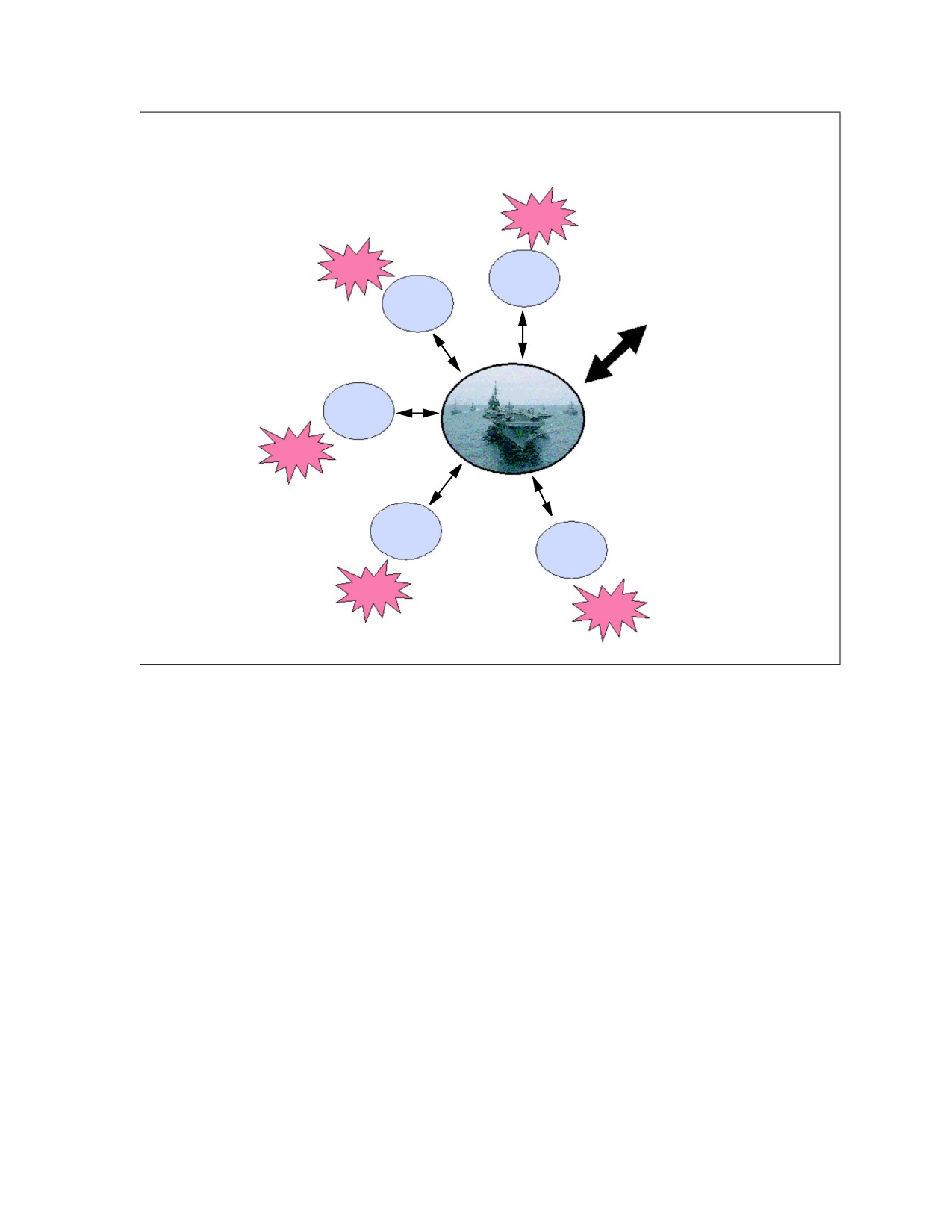
BW detection and testing
BW
BW
SOF
CONUS/in theater
USA
lab assets
USAF
BW
USMC
OGA
BW
BW
Figure IV-1. Field Confirmatory Lab Support From USN Capability
sample or specimen and state what happened to it while in his custody. The document
will provide answers to the following questions about the sample or specimen.
z
When was it collected?
z
Who has maintained custody of it?
z
What has been done with it at each change of custody?
b. The samples or specimens must be appropriately packaged, labeled, and
evacuated to the designated medical and/or environmental lab for confirmation of a
biological attack. The standard chain-of-custody for the evacuation could be as follows.
z
Sampling unit.
z
Sample courier or other command-designated courier personnel.
z
In-theater supporting lab.
z
Designated CONUS lab.
IV-5
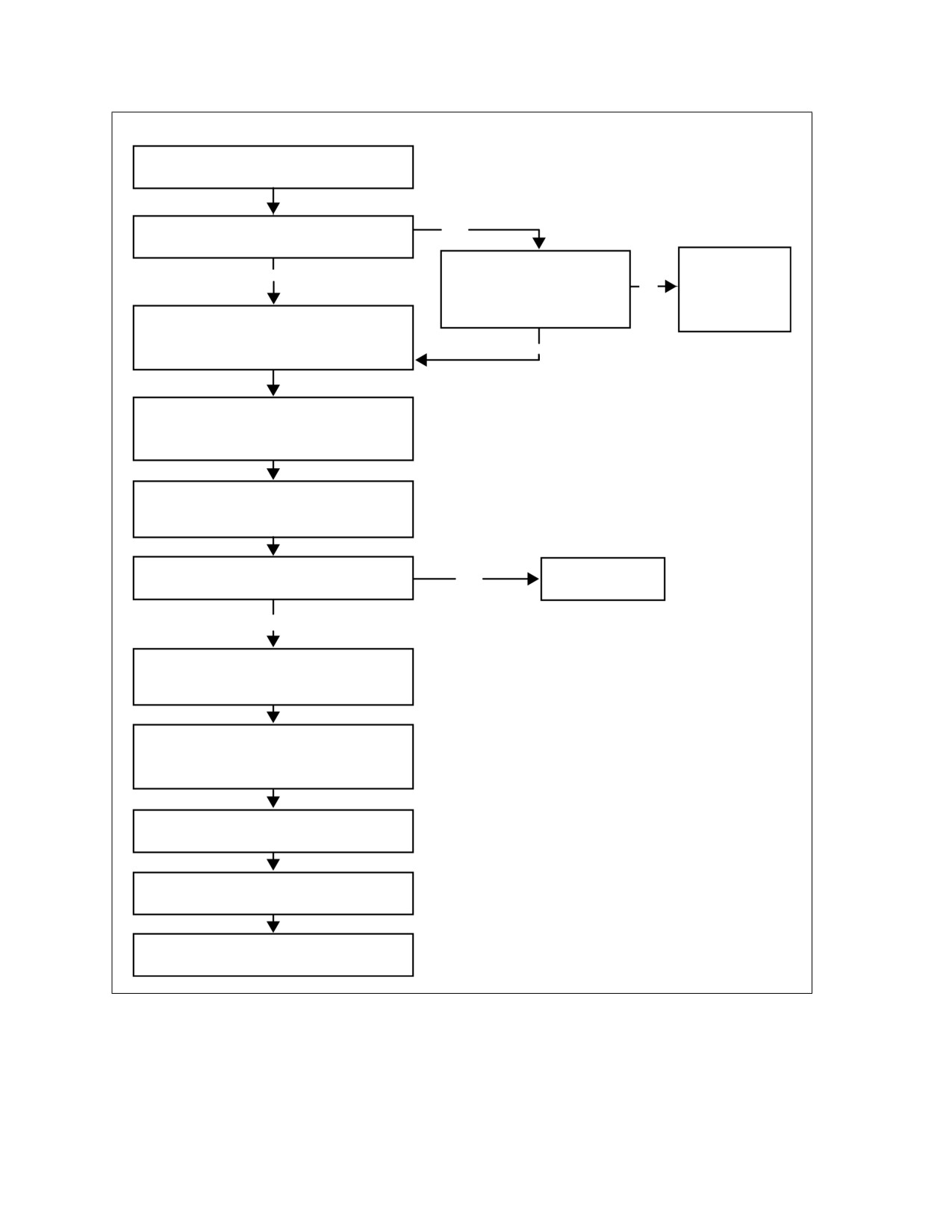
Collect the sample
No
Receive the presumptive identification
Report results and
Report,
Yes
perform risk assessment
No
archive, and
to determine if field
dispose of
confirmation is necessary
the sample
Report results and coordinate transport
to the confirmatory lab
Yes
Prepare for transport: sample
preparation and chain-of-custody
Transport the sample to the
confirmatory lab
Verify confirmatory identification
No
Report results
Yes
Report results and coordinate
transport to the definitive lab
Prepare for transport: sample
preparation and chain-of-custody
Transport the sample to the definitive lab
Receive the definitive identification
Report results
Figure IV-2. Sample Collection Flow
IV-6
Chapter V
INFORMATION MANAGEMENT
1.
Background
The collection, analysis, and integration of biological- and medical-surveillance
information support the identification of the agent that was used, provide the exposed
location, and aid medical assets in determining the proper treatment. This information
management integration process will likely occur at operational-level HQ (JTF,
component command) and/or at fixed-site, port, or airfield operations centers (OPCENs).
The objectives of timely BW information management focus on early warning and saving
lives. These objectives support SA, reducing the decision cycle and decreasing the
detection time. The time gained by decreasing the detection time can support the early
initiation of medical-intervention measures and save lives.
2.
Information Management
a.
Commanders require accurate and timely information as they prepare for
operations in a biological-threat environment. The NBC staff monitors and tracks
biological-surveillance information and the command surgeon monitors and tracks
medical surveillance data. Ongoing coordination between the NBC staff, medical staff,
and the intelligence section supports decisions that rely on SA and an understanding of
the significance of the gathered data. The commander and staff apply the information
from intelligence, medical, and surveillance systems to support—
z
Aerosol tracking (BW event).
z
Hazard predictions.
z
Warning, reporting, and notification.
z
Casualty prevention.
z
Prophylaxis and treatment plan execution.
z
Sample evacuation operations.
z
Casualty management.
b.
Units obtain relevant data from multiple sources (such as sensors, detectors,
and medical staffs). The applicable report data (for example, lab results, the time of
detection, BW sensor result from BIDS [see Appendix I], weather data, and the location)
is processed, extracted, formatted, and forwarded. Commanders and their staff evaluate
the information to assess any impact on operations. Risk assessment is part of the
decision-making process and may result in directives and/or orders to help reduce the
impact of the assessed biological hazard. Commanders may direct an integrated series of
protective measures (for example, the administration of prophylaxis) to decrease the
level of risk (decrease exposure opportunities) or reduce the effects of exposure. Because
SA is an ongoing process, the plan is revised as updated information is received.
c.
HSS personnel establish an exposure record documenting exposure levels and
risk assessment information for each affected person.
V-1
3.
Priority Information Requirements
a.
The commander and staff determine priority information requirements and
IRs to support biological and medical surveillance.The commander and his staff preplan
to determine critical data requirements. The relevant choices are prioritized as priority
information requirements and a data collection plan is prepared. The overall data
collection effort shares the following common characteristics:
z
Connectivity from lower-to-higher and higher-to-lower levels of command
with adjacent and supporting units and state/HN agencies (for example,
communications with supporting medical laboratories and BW sensors).
z
The ability to forward relevant data to multiple echelons of command
simultaneously.
z
The ability to conduct technical reach back to obtain access to national-
level medical, intelligence, operational, logistics, or technical information
to provide information for operational assessments. Reach back provides
the additional capability to improve the effective use of modeling and
simulation to conduct region-specific, expert evaluation of potential
biological-weapons effects as well as toxic industrial biological releases.
z
The ability to receive, process, and evaluate data. Data received may be
incomplete; therefore, it is assessed and evaluated in light of available
information sources.
z
The ability to focus data collection on the commander’s IRs (for example,
has a threat BW attack occurred?).
b.
Multiple risks impact BW defense planning. It is impractical to require units to
don individual protective equipment (IPE) for prolonged periods. It is critical to be able to
determine if a BW attack has occurred before agent symptoms begin appearing, if
possible. Initiating prophylaxis before the onset of symptoms will reduce the number of
casualties. Before implementing critical decisions, the command and staff assess
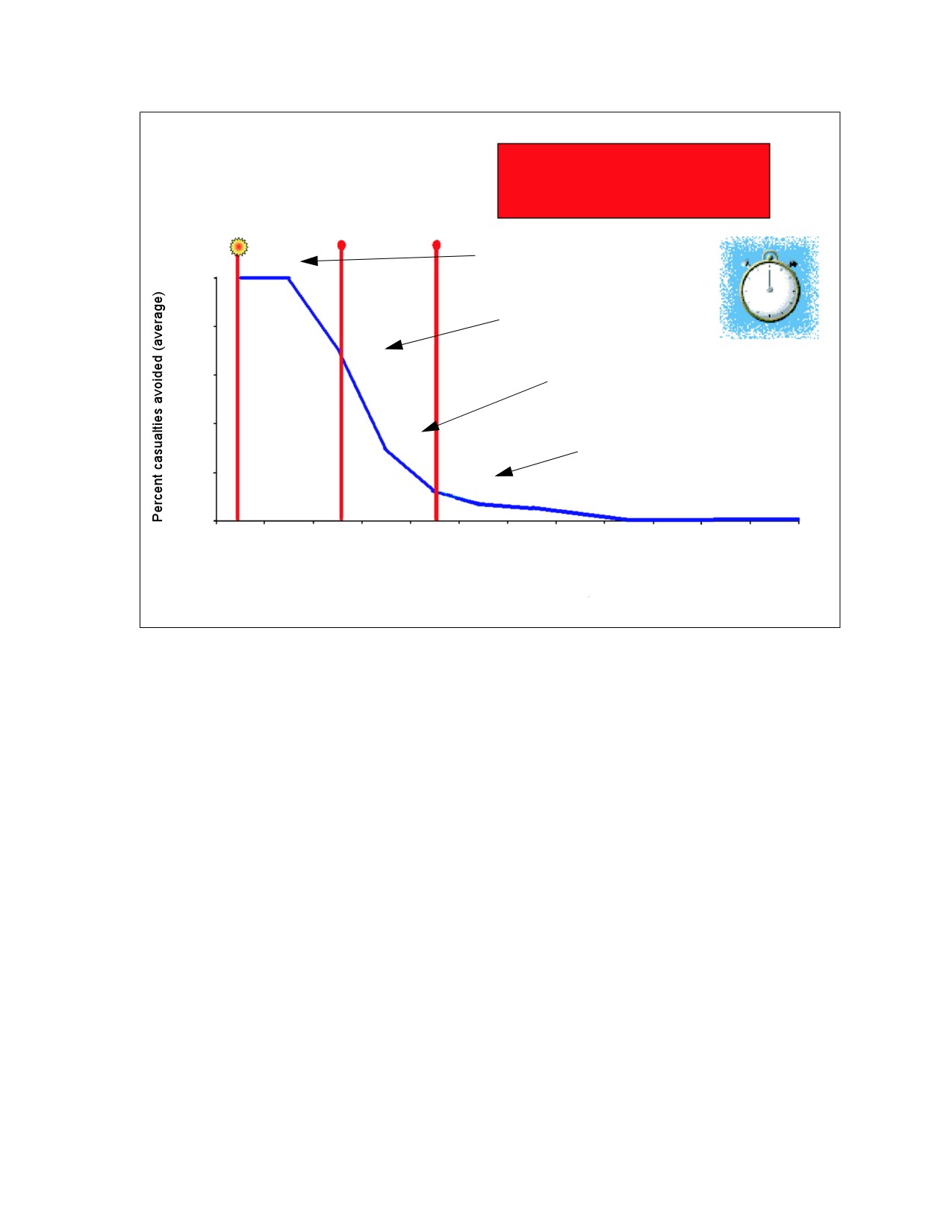
confidences in the information that is provided. Figure V-1 provides an approximate
average for the percentage of casualties avoided if antibiotics are issued promptly after
exposure. The averages are based on the initiation of prophylaxis for traditional BW
bacterial agents.
4.
Reporting
If properly executed, biological reporting provides commanders with time and
information (as much as possible) to react to biological events. Commanders direct the
actions needed to minimize the impact of attacks. Quick and accurate reporting provides
the necessary information for command decisions and responses.
a.
Reporting is the link between successful battlespace awareness, decision-
making, and effective operations in a biologically contaminated environment. To be
useful, biological-surveillance report information (such as medical surveillance and BW
sensor results) must be collected, distributed, and quickly analyzed. Once analyzed, this
information is used as battlefield intelligence. During a biological event, the volume of
information received by C2 elements could become overwhelming and slow information
analysis. Programs such as the Joint Warning-and-Reporting Network and the Force
V-2
TRIGGER/DECISION POINTS
Rapid identification and
treatment key
Medical
surveillance
Clinical
Exposure
alert
diagnosis
Issue antibiotics day 0, exposure
100%
avoid casualties
100%
Day 3, medium surveillance alerts
80%
avoid 71% of casualties
71%
60%
Day 4, avoid 29% of casualties
40%
29%
Day 5, clinical diagnosis confirmed
avoid 12% of casualties
20%
12%
0%
D0
D1
D2
D3
D4
D5
D6
D7
D9
D12
D14
D18
D21
Day antibiotics initiated
Source: Naval Medical Research Center, Biological Defense Research Directorate Briefing
Figure V-1. Maintaining Mission Readiness: “Detect to Treat”
XXI Battle Command Brigade and Below (FBCB2) help automate the reporting process
and organize biological-detection data.
b.
Maintaining SA is critical. Timelines of reporting are critical to ensure that
time-sensitive decisions are made within other critical timelines (such as before the
onset of BW agent symptoms). For example, a biological-detection asset (such as a USA
BIDS unit) could be required to support the USAF component of a JTF. The USA
biological-detection element complies with a direct reporting requirement through the
AF component. However, the JTF OPORD requires that the biological-detection unit HQ
also provide voice and/or digital reporting to the JTF NBC control center (see Figure V-2
[page V-4]). The prompt, accurate reporting of biological-surveillance information is
critical, and the operational-level commander (for example, a JTF) uses this information
to support time-sensitive decisions.
c.
NBC control centers receive reports from subordinate NBC control centers
and/or supporting biological-detection units. Many of the reports will be preformatted
NBC Warning-and-Reporting System reports according to service doctrine manuals such
as Chemical and Biological Contamination Avoidance. For example, an NBC-1
(biological [BIO]) report should be reported from a biological-surveillance unit HQ. For
example, an NBC-1 (BIO) report should be reported from a biological-surveillance unit
HQ to the supported NBC control center. The NBC control center also coordinates with
the medical and intelligence staff to receive key information from assets such as the
V-3
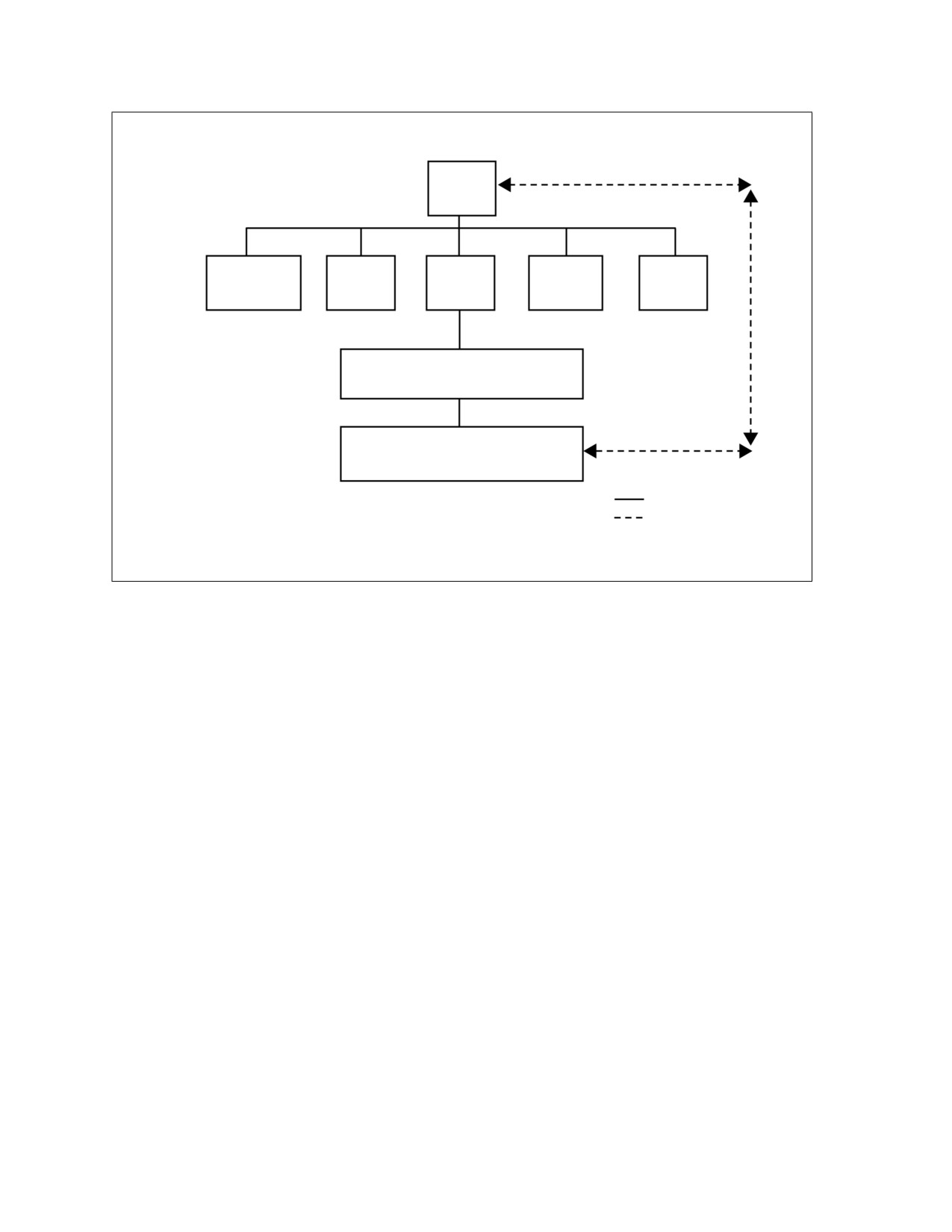
JTF
State/HN
USA
USAF
USMC
USN
Component command
USA biodetection unit HQ
Controlling HQs
Report flow
Figure V-2. Possible Biological-Detection Network with Centralized Warning
medical and/or environmental laboratories. This information will most likely be in the
form of unformatted free text messages. The NBC control center is responsible for the
following:
z
Correlating and validating all NBC reports from subordinate commands
and reporting activities (for example, fixed-site detection or collection
assets; LRBSDS; JSLNBCRS; and BIDS units).
z
Assigning a temporary strike serial number to all validated attacks. The
combatant command (command authority) (COCOM) NBC center assigns
the permanent strike serial number.
z
Preparing formatted NBC reports and overlays for the Global Command
and Control System (GCCS), FBCB2, Joint Warning-and-Reporting
System, and NBC Warning-and-Reporting System.
z
Ensuring that subordinate reporting activities use standard reporting
formats.
z
Reporting any issues regarding interoperability within the reporting
network.
5.
Information Collection and Operational Level Assessments
Information collection should generally follow a pattern and can be tracked during
preattack, attack, and postattack operations (see Figure V-3 [page V-6]). The unit or staff
V-4
may use an integrated information collection tool (such as a matrix) to record and assess
the input from different sources (see Figure V-4 [page V-7]). The biological-event-
tracking tool can be used to monitor medical surveillance results, preattack data (current
BW risk assessment, weather conditions, and the impact of background conditions),
attack data (alert, detection, and identification), postattack data (lab results), and
remarks data (such as local activity). Tracking key information can support decisions to
warn, protect, or treat. The decisions are based on input from the NBC, medical, and
intelligence staffs. They are products of the IPB and include consideration of risk.
z
Warn. The decision to warn is based on the assumption that there is a threat
of an upwind aerosol cloud moving toward the warned forces. It also can be a
notification that exposure may have already occurred. A warning should be
accompanied by treatment and/or protection guidance to ensure a consistent,
effective response.
z
Protect. The decision to assume a protective posture must take force
capabilities and vulnerabilities into account. Implemented control measures
could include using available protective equipment, conducting detection and
identification of biological agents, and assessing unit vulnerability to a
suspected agent (vaccinated or unvaccinated forces).
z
Treat. The decision to administer postexposure prophylaxis or treatment is
made after there is evidence of likely exposure to a BW agent. The commander
makes the decision with advice from the surgeon and supporting input from
the NBC officer and intelligence staff. The senior medical officer will
recommend the appropriate prophylaxis or treatment regimen.
a.
Medical Surveillance. The collection, analysis, and dissemination of
surveillance information may be the first and only indicator of BW use. The direct and
clear flow of information to the controlling HQ commander, medical officer (primary
recipient), and NBC defense officer facilitates the rapid dissemination of protection,
prophylaxis, and warning guidance.
b.
Preattack Information. Preattack information recorded will include the
current BW risk assessment, weather conditions, and the impact of background
conditions on system operations.
c.
Attack Information. The evaluated BW report results from BW attacks provide
alert, detection (if applicable), and presumptive identification with an associated
confidence level (low, medium, or high).
V-5
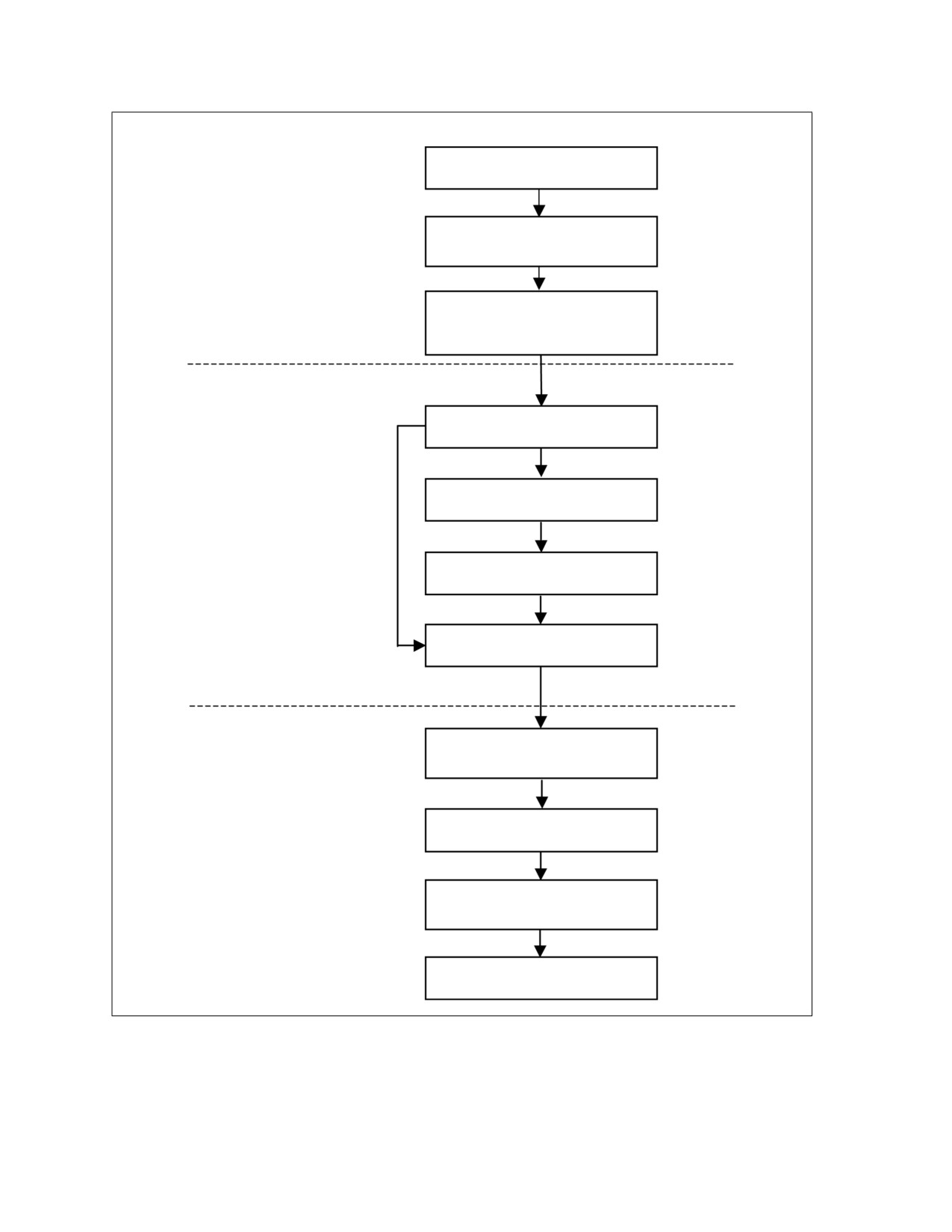
Monitor the current BW risk
assessment (high/medium/low)
Preattack
Monitor weather conditions
(favorable/marginal/unfavorable)
Monitor the impact of
background conditions on
system operations (yes/no)
Attack
Record and report the alert time
Consolidate data from multiple
sources
Record and report the detection
result, if applicable
Record and report the
presumptive identification result
Postattack
Forward the sample
Receive the field confirmatory
lab result
Forward the sample
Receive the definitive lab
Figure V-3. Tracking BW Data
V-6
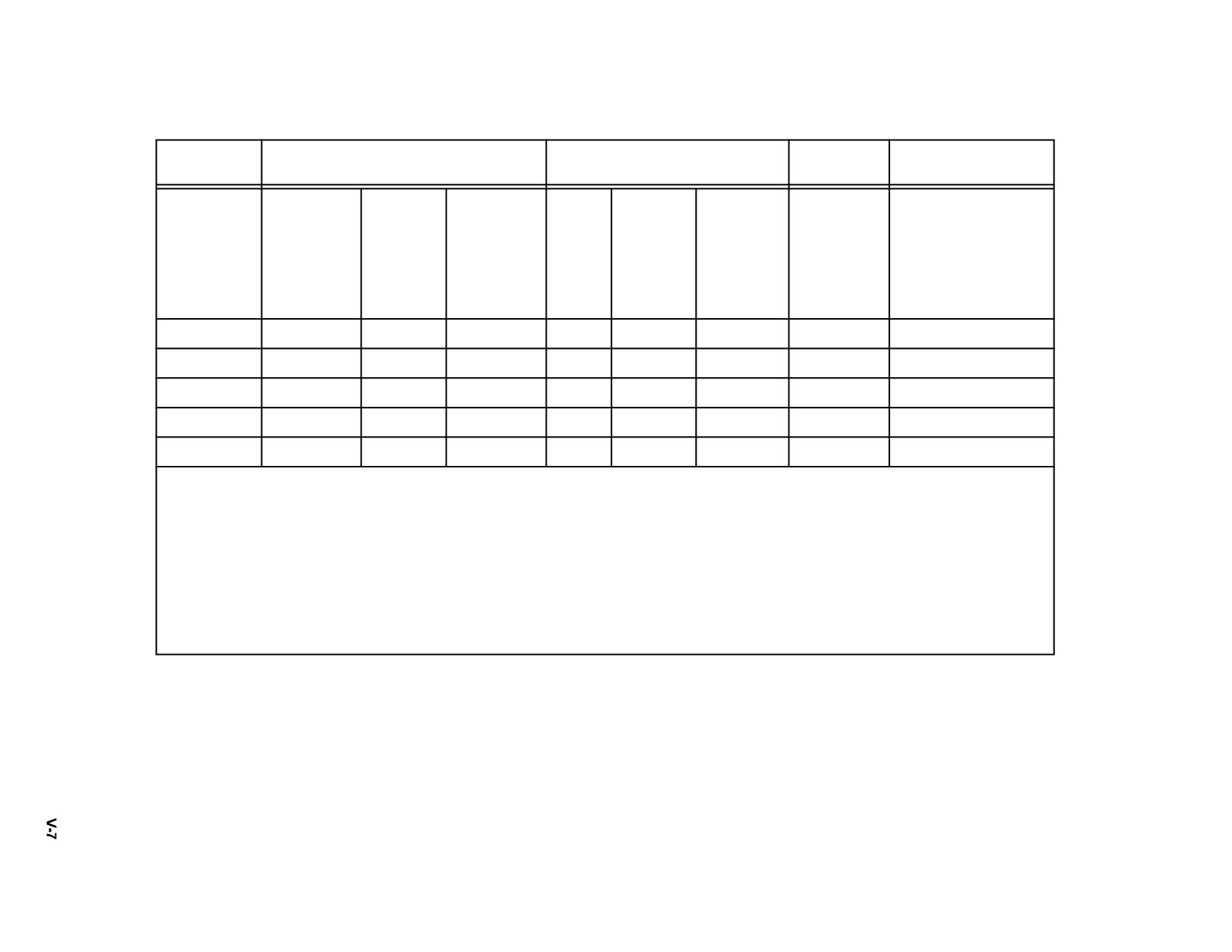
Medical
Preattack
Attack*
Postattack
Remarks
Surveillance
BW Used
Current BW
Weather
Impact of
Alert
Detection
ID Result
ID Result
Record information
Risk
Conditions
Background
Time
Result
(PI)/Time/
(FC/DI/Time)
such as other
Yes/No/
Assessment
Conditions
available intelligence,
Unknown
(Time)
C/S/T
Confidence
on System
local activity, and the
H/Med/L
F/M/U
Level
Operations
type of biological-
detection system
Yes/No
used.
*Attack results are recorded following the receipt, analysis, and evaluation of reports to help ensure consistency and correlation of
data.
Legend:
Unk - Unknown
C - Cells
H - High
S - Spores
Med - Medium
T - Toxin
L - Low
PI - Presumptive identification
F - Favorable
FC - Field confirmatory
M - Marginal
DI - Definitive identification
U - Unfavorable
ID - Identification
Figure V-4. Biological-Event-Tracking Tool
(1) At the operational or tactical level (for example, a JTF HQ or a fixed-site
OPCEN, respectively), an aggregate picture is available from the information generated
by a biological detector array. From these results, aerosol-tracking hazard predictions
and reports are prepared.
(2) Other key information that the NBC staff may track includes consistency
among the NBC-1 (BIO) reports received, the type of biological-detection system that
reported the information, the confidence level associated with the report, and any other
related analysis (such as consistency and correlation in the reported results).
d. Postattack. The result of the identification from the supporting lab will be
recorded.
e.
Remarks. Other information (such as available intelligence) will be provided in
the remarks section of the BW event-tracking tool.
6.
Unit Incident Reporting
a. The biological-detection unit HQ or system-level operator should report the
following to the designated HQ (for example, a NBC control center or unit OPCEN:
z
Presumptive positive BW identification results.
z
Status reports as required.
z
Other reports as required by the mission, threat, background,
meteorological conditions, or location characteristics.
b.
All report information from the biological-surveillance assets are recorded
manually or electronically. For example, JBPDS data is recorded and saved
electronically. Following a BW event (for example, alert and/or identification data), the
information is saved to provide a record. At end of the shift or the end of mission, the
information is saved for follow-on use and analysis, as required. Background data is also
saved as a baseline for future use.
c.
The operator uses the incident report (see Figure V-5) to record and report
alert and/or sampling interval and identification information obtained during biological-
detection operations. It reports both background and actual alert and/or sampling
intervals and identification information. The biological-detection or -collection system
operators maintain the information for each background collection and identification
result. For the biological-detection system incident report, there are two fundamental
fields of data that are compiled and reported for a BW event. These are the alert and/or
collection and identification fields of data. Alert and/or collection data includes alert and/
or sampling interval times and meteorological data. The identification data provides
positive (an agent code) or negative results. The remarks section is used to record the
associated confidence result, external conditions and/or activities, and the system-
operating mode, if applicable. The remarks section of the sampling incident report will
include weather information (as of the time of the sample collection) to include
environmental conditions (such as a sandstorm).
d. biological-surveillance information reporting can be set up for three levels of
warning. Table V-1 provides a summary of the warning levels.
V-8

Alert/
Meteorological Data
Identification
Collection
1. Alert Time
2. Meteorological data:
System 1:
System 2:
System 3:
(DTG):
a. Wind speed (kph/mph):
a. Location/ID:
a. Location/ID:
a. Location/ID:
___________
________________
______________
_____________
_____________
b. DTG:
b. DTG:
b. DTG:
2. Collection
b. Wind direction (degree):
______________
_____________
_____________
interval:
c. Agent code:
c. Agent code:
c. Agent code:
___________
________________
______________
_____________
_____________
or
or
or
Negative
Negative
Negative
Team ID:
Team leader signature:
Sample identification number:
Remarks:
Confidence level:
External conditions:
Operating mode:
Figure V-5.
Incident Report (Sample)
Table V-1. Warning Level Applicability
Applicable to
Applicable to
Applicable to
Automated
Manual
Warning Level
the Supporting
Detection
Sampling
Lab
Assets
Assets
Level 1 - Detection Notice
X
N/A
N/A
•
Applicable only to automated detection
assets (Joint Portal Shield/JBPDS)
because of their system detection
capability.
•
Not applicable to manual sampling assets
(dry filter units). They do not have an
alerting capability.
Level 2 - biological-Presumptive Identification
X
X
N/A
Based on a presumptive identification from a
biological-detection system or handheld-assay
testing.
Level 3 - Field Confirmatory Identification
N/A
N/A
X
Applicable to the receipt of results from a
supporting lab.
V-9

NOTE: The incident report format may be adapted to meet theater
requirements; however, the basic data fields must be used. Additionally, some
system specific reporting requirements may require additional data (for
example, the M31A1 BIDS incident report provides detection data).
(1) Level 1: Detection Notice.
z
This indicates that the detector has alerted to the presence of
biological particles in the air. Level 1 capability is not applicable to
manual sampler operations.
z
Upon a detection notice, the system will automatically collect an
aerosol sample and analyze it using automated assays to determine
if a BW agent is present. A Level 2 warning occurs if the handheld-
assay result is positive. If the assay result is negative, the Level 1
warning will be cleared.
(2) Level 2: Biological-Presumptive Identification.
z
This indicates that the system has read one or more of the assays as
being positive or a single handheld assay has shown positive results
from a collection asset (such as a dry filter unit).
z
Upon receipt of positive presumptive identification, the operator will
prepare a collected sample (liquid or dry) for evacuation.
(3) Level 3: Validated Biological-Confirmatory Identification.
z
This indicates that a medical lab provided a positive field
confirmatory result.
z
Communication and coordination is maintained with the command
surgeon and the NBC control center.
e.
The analysis of the results from multiple BW detectors or collectors consists of
assessing the results from subordinate units and consolidating and evaluating the data
to ensure that the information is usable and complete. The objective of BW event
tracking is to assess the probability that a BW attack has been detected. Based on BW
event tracking, the results provide an associated confidence level (Table V-2). During the
planning process, the confidence level is assigned to a BW event and may serve as a
trigger to support a commander’s decision points (such as protection or treatment). A
single-system presumptive identification provides a medium level of confidence. A
medium level of confidence indicates the potential presence of a BW agent; however,
other information sources (such as medical surveillance, other biological-detector results,
or intelligence) must be reviewed to determine if there is other confirming data. Multiple
confirming, consistent indicators of a BW attack (for example, two or more biological
detectors with consistent, presumptive identification results) provide a high confidence
level.
Table V-2. System Confidence Levels
Number of Systems Reporting Presumptive
Level of Confidence
Identification Results
Medium
High
Single-system presumptive identification
X
Multiple-system presumptive identification
X
V-10
f.
The biological-detection unit HQ should report the following to the higher HQ
NBC center:
z
Positive BW identification results.
z
Other reports required by the mission, threat, background, meteorological
conditions, or location characteristics. This information may include
reports on system and/or component operational readiness or significant
local activities (such as an unusual weather phenomena).
z
Status reports as required.
g.
All report information is recorded manually or electronically. Following a BW
event (for example, alert and/or identification data), the information is saved to provide a
record. At the end of a mission, the information is saved for further follow-on use and
analysis as required. Background data is also saved as a baseline for future use. This
information will be retained for a minimum of 3 years following the end of the operation
unless otherwise instructed by individual service regulation or Department of Defense
(DOD) policy. This background information is especially important for after action
reviews (AARs) and follow-on health surveillance as required.
h. Incident reports are used to record and report alert and identification
information obtained during biological-detection operations to the NBC center. The NBC
center generates the appropriate NBC report (for example, an NBC-1) from the incident
reports. It is used to report both background and actual detection and identification
information. For the incident report, there are two fundamental fields of data that are
routinely compiled and reported for a BW event. These are the alert and identification
fields of data and detection data (if applicable). Alert data includes the alert time and
meteorological data. Identification data contains the agent identification code (or
negative if none is identified) and the mode of operation of the system during the event.
The incident report also includes environmental conditions (for example, a sandstorm)
and the presumptive identification result.
i.
Field confirmatory lab results may take hours and definitive results could take
days. The definitive results provide a more sensitive result; however, the commander
may assess that in-theater field confirmatory results provide a sufficient basis for
approving prophylaxis and other treatment recommendations.
j.
The reporting of supporting information is important for a BW attack
assessment. The supporting information can be used to help corroborate that a BW
occurred.
(1) Intelligence. Intelligence represents a valuable and significant source of
information. The confidence placed in detection and identification increases with the
certainty that the threat is assessed to have a particular agent. For example, if a group of
detectors are indicating anthrax and it is known that the threat has anthrax in its
arsenal, then higher confidence may be placed in the detector response. Other
intelligence considerations may include the following:
z
Any indication of intent or instances of past use of BW agents by the
threat.
z
Past employment techniques may determine a threat pattern of
agent use.
V-11
z
IPB also plays a key role in the assessment of results from medical
surveillance and BW sensors. Assessing where the threat is most
likely to originate a biological attack in advance, and then actually
detecting a biological attack downwind from that source can increase
confidence that this might be an actual attack. Determining where
these potential dissemination points are depends on intelligence
information, such as what agents the threat is known to possess and
what dissemination equipment they have (for example, point source
or line source weapons).
(2) Weather. Weather has an important influence on whether a threat can
disseminate a biological agent effectively or not. For BW, meteorological data at ground
level and up to 100 meters or more over a large area is important. Among the
considerations are—
z
Wind direction. The wind direction should be towards friendly
forces.
z
Wind speed. Wind speed should be conducive to effective agent
dissemination, while minimizing agent dilution through turbulence
and dispersion. Biological agents can be employed effectively at most
wind speeds.
z
Atmospheric stability. A combination of wind speed, cloud cover,
and solar angle (time of day) can be represented as stability factors 1
(very unstable) through 7 (very stable). A large-scale biological
attack would most likely be effective under somewhat stable
atmospheric conditions. Unstable conditions involve a large degree of
vertical dispersion, resulting in decreased downwind travel. Further
information on how atmospheric stability can affect biological
attacks can be found in service publications such as Field Behavior of
NBC Agents (Including Smoke and Incendiaries).
z
Precipitation. Generally, precipitation does not have much of an
impact on biological-aerosol cloud “washout” unless the rain is
unusually heavy for an extended time.
z
Effect of terrain on meteorology. Surface contours and the
overall roughness of the surface, influence the direction and speed of
agent flow. Higher concentrations can be expected in valleys and
depressions, which also tend to direct the flow of the aerosol cloud.
Rough ground (vegetation, forests, and rocks) tends to retard agent
flow and increase vertical dispersion of the agent resulting in
decreased downwind travel and concentration.
z
Agents. Not all agents can be effectively dispersed in the
atmosphere.
k.
The systematic collection of information over time supports SA. Figure V-6
provides a sample BW event tracking tool that used the following information input to
track BW-related activity from preattack through postattack.
V-12

Medical
Preattack
Attack*
Postattack
Remarks
Surveillance
BW Used
Current
Weather
Impact of Background
Alert
Detection
ID Result
ID Result
Record information such as
BW RA
Conditions
Conditions on System
Time
Result
(PI)/Time/
(FC/DI/Time)
other available intelligence,
Yes/No/
F/M/U
Operations
local activity, and the type of
Unknown
H/Med/L
(Time)
C/S/T
Confidence
biological-detection system
Yes/No
Level
used.
Unk
Med
M
No
220100L
N/A
Positive for
FC positive
JBPDS ID @ APOD; no unusual
agent
for agent
outside activity
XXXX
XXXX@
220700L
22012 High
*Attack results are recorded following the receipt, analysis, and evaluation of reports to help ensure consistency and correlation of data.
Legend:
Unk - Unknown
C - Cells
H - High
S - Spores
Med - Medium
T - Toxin
L - Low
PI - Presumptive identification
F - Favorable
FC - Field confirmatory
M - Marginal
DI - Definitive identification
U - Unfavorable
ID - Identification
Figure V-6. Biological-Event-Tracking Tool (Sample)
(1) Preattack information collection.
z
Current BW risk assessment was assessed as medium based on
threat activity.
z
Weather conditions were assessed as marginal within the AO.
z
Reports from the biological-detection unit HQ indicated that
background conditions were having no impact on system-level
results.
(2) Attack information collection.
z
Collated and evaluated incoming reports from a JBPDS-equipped
BIDS unit that indicated an alert time at 220100L May 03.
z
Follow-up reports indicated a presumptive identification at 220120L
May 03, confidence level high.
(3) Postattack information collection. Lab feedback provided positive field
confirmatory results at 220700L May 03.
(4) Remarks information collection. No unusual outside activity was noted on
any of the incoming reports.
7.
Communications Architecture
a.
The communications architecture uses standard, existing protocols. For
example, the NBC Warning-and-Reporting System is used as the basis for forwarding of
NBC reports. The standard communication guidelines that are used for command or
supporting relationships also apply. For example, supporting biological detection or
medical laboratories provide report results to those supported HQ that are designated in
OPORDs and/or OPLANs.
b. The communications architecture identified in the controlling HQ OPLAN,
OPORD, and/or SOI identifies the key linkages. These communications linkages include
a requirement for the exchange of information between the supporting laboratories and
the command surgeon or between the biological-surveillance resources and the
supporting confirmatory lab (for example, advance notification to the lab that a sample is
enroute).
V-14
Appendix A
MEDICAL COUNTERMEASURES AND PROTECTION
1.
Background
Medical countermeasures can include PVNTMED, immunization, diagnosis,
prophylaxis, treating mass casualties, and supporting psychological casualties. Medical
countermeasures focus on the prevention of BW agent casualties. The unit surgeon
provides recommendations to the commander on medical countermeasures that are
implemented through applicable directives and OPLANs and/or OPORDs.
2.
Medical Countermeasures
a.
PVNTMED. Specially trained medical personnel and units assist in
maintaining the health of the command with the goal of preventing diseases before they
occur. Recent conflicts have demonstrated that PVNTMED practices, such as good field
sanitation and hygiene, can significantly reduce natural occurrences of infectious
diseases. Many of these principles can be applied as countermeasures against BW
agents.
b.
Immunization. Making an individual immune is one of the most effective
defenses against BW agents. Immunity is produced when an individual is vaccinated
with a vaccine or toxoid. Vaccine lead time will have a major impact on operations,
particularly during the critical phase of deployment. Time impacts must be considered in
force projection and requirements for early intelligence assessment and predeployment
planning.
c.
Epidemiological Analysis.
(1) Any unusual occurrence of simultaneous cases of illness with similar
presenting symptoms, especially in regions with a higher likelihood of biological attack,
should prompt the medical staff to consider biological agents as a cause. Epidemiological
analysis can only be effective if the system responds quickly and decisively to medical
trends. Although it may be too late for medical countermeasures to help individuals who
already show symptoms, the trend can alert the medical system to initiate protective
measures such as vaccines or antibiotics for those who are exposed but not yet sick.
(2) With a covert biological agent attack, the most likely first indicator of an
event would be an increased number of patients who present clinical features caused by
the disseminated disease agent. Therefore, health care providers must use epidemiology
to detect and respond rapidly to a biological agent attack.
(3) A sound epidemiologic investigation of a disease outbreak, whether
natural or human engineered, will assist medical personnel to identify the pathogen and
institute the appropriate medical interventions. Documenting the affected population,
possible routes of exposure, and signs and symptoms of disease—along with rapid lab
identification of the causative agents—will greatly increase the ability to institute an
appropriate medical and public health response. Good epidemiologic information can
guide the appropriate follow-up of those potentially exposed, as well as assist in risk
communication and responses to the media.
A-1
(4) Many diseases caused by weaponized biological agents present
nonspecific clinical features that could be difficult to diagnose and recognize as a
biological attack. The disease pattern that develops is an important factor in
differentiating between a naturally occurring event and a terrorist or warfare attack. It
is important to remember that naturally occurring epidemics can have one or more of
these characteristics and a biological attack may have none.
(5) Once a biological attack or any outbreak of disease is suspected, the
epidemiologic investigation should begin. Whether the outbreak is intentional or not, the
conduct of the investigation will not differ significantly. The first step is to confirm that a
disease outbreak has occurred. A case definition should be constructed to determine the
number of cases and the attack rate. The case definition allows investigators who are
separated geographically to use the same criteria when evaluating the outbreak. The use
of objective criteria in the development of a case definition is very important in
determining an accurate case number, as additional cases may be found and some cases
may be excluded, especially with the potential for mass hysteria to be confused with
actual disease. The estimated rate of illness should be compared with rates during
previous years to determine if the rate constitutes a deviation from the norm.
d. Prophylaxis and Treatment. Prophylaxis is preventive action taken before
infection. Treatment is the care of personnel after they have been exposed to a biological
agent. For some BW agents, there is a window of opportunity between infection and the
onset of symptoms where medical treatments are particularly effective. Medical
treatments that are initiated outside the window of opportunity are less effective.
Therefore it is critical to ascertain which agents were used in the attack and when the
attack occurred. See Field Hygiene and Sanitation.
e.
Mass Casualties and Quarantine. Providing medical support for large numbers
of biological casualties with strain the medical system. If large numbers of casualties
occur, the unit commander will be responsible for some primary care with organic assets
and limited medical augmentation. The provision of this care will need to be a
coordinated effort. Units attacked with contagious BW agents may have to be
quarantined. The US force commander may need to request and obtain additional
support to handle mass casualties.
f.
Psychological Effects. The use of biological weapons will cause some personnel
to seek medical treatment although they have not been infected with a biological agent.
Combat stress control and mental health detachments or teams will be needed to provide
counseling for these personnel. Trained and disciplined units will be less susceptible to
the psychological effects of BW.
3.
Vaccines
Currently, the only Food and Drug Administration (FDA) approved vaccines are for
the following BW agents: anthrax, Venezuelan equine encephalitis, and smallpox. While
vaccination before exposure provides a high level of protection from the specific biological
agent, vaccination after exposure can be an effective medical alternative for some agents.
The anthrax vaccine is effective if administered according to guidelines and can reduce
the impact of an attack with anthrax spores. If all military personnel in the affected area
are immunized against anthrax, the effect and impact on medical resources will be
reduced.
A-2
4.
Medical Intervention
a.
When available, vaccinations can reduce the susceptibility of target
populations to attacks by specific biological agents. Vaccines for some agents are more
effective than for others, though most will reduce the vulnerability of the immunized
population.
b.
Treatments after a BW attack are available for many agents. Treatments
administered after exposure, but before symptoms, are referred to as postexposure
prophylaxis or preventive treatment. Vaccinations are available for some agents, but in
most cases they must be applied before the onset of symptoms. In most cases, preventive
treatments will only be initiated if the attack is detected before the onset of symptoms.
This is problematic in a threat environment where covert attacks are possible. Attacks
using toxins are more difficult to address because, in general, toxins act more quickly
than pathogens, leaving less time for detection, identification, and evaluation before
large segments of the population fall ill.
c.
A BW attack could quickly overwhelm any local medical system. To be
prepared, prestaged equipment and medications and a robust program to train medical
personnel and exercise procedures are required. Medical treatment facilities (MTFs)
must be prepared to issue medical countermeasures, decontaminate, and treat expected
biological casualties. Nonmedical personnel may be required to assist with basic
maintenance tasks and quarantine. Additionally, MTFs should anticipate the need for,
and incorporate the resources of, the surrounding medical community into their
biological detection response plans. MTFs must provide the installation commander with
timely and accurate assessments of capabilities and limitations. These assessments must
take into account any coordination that may have occurred for local medical support.
d. Even if an attack is detected in time to implement medical countermeasures,
organization, infrastructure, and equipment must be in place in advance for the response
to be effective. Contingency plans should designate facilities for holding large numbers of
casualties (for example, gymnasiums, schools, and churches) while providing care based
on triage reports. This may also require planning for vehicles (such as buses and vans) to
transport the mass casualties to the designated facilities. Public information
countermeasures can also help limit the problem. Additionally, the quarantine of
potentially exposed personnel and isolation of patients are required to prevent the
spread of disease. The mission impacts of the implementation of the restriction of
movement and the transportation of personnel, patients, and supplies need to be
considered for movement within, into, and out of the theater.
5.
Restriction of Movement
a.
The terms quarantine and isolation are often used in the context of preventing
contact between healthy populations and those either infected or suspected of being
infected with an infectious disease. Quarantine involves the detention of an individual or
group suspected of having been exposed to an infectious disease, until it is deemed that
they have escaped infection (usually once the incubation period has lapsed). Isolation is
the separation of an infected individual from a healthy population (usually refers to
patients in an MTF). During military operations where personnel have contracted or are
suspected of having been exposed to an infectious disease, the commander conducts
mission assessments to consider quarantine or isolation. Restriction of movement, the
A-3
more universal term, is used to prevent contact with or detain persons suspected of
having been exposed or are known to have been exposed to an infectious agent.
b.
Restriction of movement is a tool for maintaining operational effectiveness in
the face of an infectious disease, whether natural or artificial (such as a BW attack). The
goal is to control the spread of the disease by restricting contact between healthy groups
of personnel and those who have, or are suspected of having, contracted it. Personnel
covered by restriction of movement do not necessarily need to be removed from
operations. Wherever possible, restriction of movement should be implemented to allow
them to continue their mission. It may also be necessary to reduce the risk of
transferring an infectious disease back to the home base.
c.
If restriction of movement is contemplated at any stage during an operation,
coordination should be conducted with assets such as HN forces. This coordination must
be with the full knowledge that the impact on operational effectiveness is likely to be
significant. The unit surgeon, with assistance from other staff elements (for example, the
legal and CA staff), will support the commander in the unit operational assessment. The
only stage of an operation when restriction of movement is unlikely to play a significant
deleterious role is during the close of an operation when personnel are being returned
home. Here, restriction of movement would be aimed not at preserving the fighting
integrity of the force, but rather reducing the risk of introducing infectious disease into
the CONUS base.
d. Restriction of movement implementation will restrict the ability of the
commander to use affected force elements. In practice, the operational impact of disease
control measures will need to be balanced against the potential consequences of the
spread of an infectious disease. Operational pressures may dictate a policy that accepts
the limited spread of an infectious disease because the implementation of restriction of
movement would result in the loss of the military objective.
A-4
Appendix B
FIELD LAB SUPPORT
1.
Background
Field lab support includes labs with various capabilities for analyzing clinical and
environmental samples that may contain BW agents. Depending on which labs are
deployed and available, one or more may be designated to confirm a presumptive
identification of a BW agent sample that was analyzed at another site or by another
method. This confirmatory identification enhances the COCOM ability to make timely
and accurate decisions. Field confirmatory identification may require definitive
identification by a CONUS lab.
2.
Types of Labs
Analysis of biological threat agents generally requires labs with capabilities
different from those possessed by routine hospital or clinical labs. Because of the risk of
shutting down an entire hospital lab (and therefore the functionality of the hospital) if
the lab becomes contaminated with a BW agent from an environmental source (such as
powders), it is inadvisable or even prohibited to take many types of environmental
samples into a hospital lab. Clinical specimens containing BW agents do not pose the
same degree of risk for contaminating the lab, so processing routine clinical specimens
that contain BW agents is acceptable in a hospital lab. Even if associated with or
collocated with hospitals, the following labs possess the special capabilities necessary for
field confirmatory identification of biological threat agents.
a. Air Force. The biological augmentation team is a flexible, rapidly deployable
lab team assigned to the deployed MTF. The biological augmentation team expands
theater force health protection (FHP) by introducing the most advanced microbiological
testing capabilities available, such as the Joint Biological Agent Identification and
Diagnostic System (JBAIDS). The biological augmentation team analytical tools can
identify both naturally occurring and induced pathogens in clinical and environmental
samples. The biological augmentation team provides a preventive capability through
analytical test data to support early warning of pathogen exposures as well as the
assessment of the extent and type of microbial contamination in other various
substances (food, air, water, or soil).
b.
United States Army.
(1) An Army medical laboratory is the specialized lab in a theater AO that
provides medical and chemical lab support. The Army medical laboratory provides in-
theater field confirmatory identification of NBC threat agents in various samples and
specimens. Using sophisticated equipment and methods, the Army medical laboratory
has the capability to analyze and identify NBC agents in a variety of specimens or
samples such as air, soil, water, animal tissue, vegetation, or food, as well as human
blood, sputum, and feces. Direct support from CONUS-based labs aids the Army medical
laboratory in identifying NBC agents. Command decisions on the use of protective and/or
preventive measures and patient care may be based on the Army medical laboratory
B-1
findings. However, further CONUS-based testing must be undertaken for definitive
identification of NBC agents and for forensic analysis purposes.
(2) The clinical lab of the combat support hospital (CSH) will have
microbiology culture and identification capability when augmented with the
microbiology augmentation set (M403). This may be accomplished either by directly
augmenting the hospital lab or by augmenting with a medical team (infectious disease).
When the JBAIDS instrument is used in the microbiology augmentation set, this lab will
have the capability of providing detection and field confirmatory identification testing for
BW agents in clinical specimens that are collected for patient diagnosis.
c.
United States Navy and Untied States Marine Corps.
(1) Support ashore.
(a) The Navy environmental preventive medicine unit has the mission
to provide specialized consultation, advice, recommendations, and technical support in
matters of environmental health. PVNTMED, and occupational safety support to USN
and USMC shore activities and units of the operational forces within their designated
AOR. This lab is on call to provide technical assistance and field confirmatory analysis
for biological and chemical agents. A Navy environmental and preventive medicine unit
expands theater FHP by employing the best available advanced microbiological testing
capabilities such as JBAIDS.
(b) Forward-deployable preventive medicine units enhance FHP by
identifying and evaluating environmental health hazards (including CBR and physical
agents), assessing the risk of adverse health outcomes, monitoring the health of deployed
forces, advising the operational commander concerning significant risks, and
recommending countermeasures and interventions needed to protect the health of the
force. A designated forward-deployable preventive medicine unit will deploy to provide
short duration, specialized PVNTMED support. The Forward-deployable preventive
medicine unit provides technical assistance and field confirmatory analysis for biological
and chemical agents.
(2) Support afloat. Medical departments on aircraft carriers (CV); aircraft
carriers, nuclear (CVNs); large deck amphibious assault ships (general purpose) (LHA);
hospital ships (T-AHs); and command ships are equipped to provide confirmatory testing
capability for environmental samples from other ships assigned to a carrier strike group
and expeditionary strike group. They can receive, sample, test, report, package, and
transport suspected BW samples.
3.
Confidence Levels of Lab Analysis Results
There is no set parameter that determines levels of confidence in lab results.
Confidence in lab results is based on a combination of the scientific quality and accuracy
of the test methodology, the number and type of biomarkers detected, the technical
expertise of the testing personnel, and the environmental conditions in which the lab is
operating.
a.
Biomarker. A biomarker refers to the characteristics of a biological agent
(microorganism or toxin) that are specific or unique to that agent. Some biomarkers are
more useful or accurate in identifying the biological agent than others. Likewise, some
B-2
types of scientific devices and/or methodologies are more sensitive and accurate in
detecting certain types of biomarkers.
(1) The types of biomarkers include specific—
z
Nucleic acid sequences unique to the bacteria or viruses identified by
a technique such as polymerase chain reaction.
z
Antigens associated with the bacteria, viruses, or toxins identified by
techniques such as enzyme-linked immunosorbent assay,
electrochemiluminescence assay, or handheld immunological assay.
z
Enzymatic or growth properties as demonstrated on biochemical
tests or selective media, such as characteristic colony morphology on
culture and phage inhibition.
z
Microscopic characteristics, such as those identified using Gram
stain, fluorescent antibody stain, immunohistochemical stain, or
cytopathic effects.
(2) Confirmatory and definitive testing requires positive results of two or
more independent biomarkers. Independent biomarkers are significantly different from
each other biologically, such as with uniquely different gene sequences or antigens.
Different methodologies test for biomarkers in technologically different manners, such as
polymerase chain reaction versus electrochemiluminescence, or handheld assay versus
polymerase chain reaction. Analyzing a sample twice using handheld assays is only
employing one methodology. However, the level of confidence is increased if a particular
methodology is employed to test for two different biomarkers (for example, polymerase
chain reaction testing for two or more gene sequences).
b.
Sensitivity. The sensitivity of a test is its ability to detect the presence of a
biological agent. This is the proportion of samples with positive test results out of all
samples that truly contain the biological agent (regardless of whether the biological
agent is detected or not).
(1) Sensitivity is the percentage of true positives divided by the total of true
positive and false negative results. The more false negatives a test allows, the less
sensitive it is.
(2) A false negative test result is negative although the biological agent is
actually present. It may occur because of a concentration of a biological agent below the
detection level of the test methodology and/or instrument, binders or inhibitors that may
be present in the sample, temperature deviations from the test protocol, bad reagents,
and/or equipment malfunctions.
c.
Specificity. The specificity of a test is its ability to correctly indicate that a
biological agent is not present in the sample when, in fact, the sample is devoid of that
agent. Specificity is the proportion of samples with true negative test results divided by
the total of true negative and false positive results. The more false-positives a test
allows, the less specific it is. A false positive test result is one that indicates that a
biological agent is present when that agent is actually not present. Common causes for
false positive results are cross-reactions with various substances in the sample or
reagents.
B-3
d. Predictive Value of Test Results.
(1) Screening tests are often designed to be very sensitive so that they do not
miss a true biological agent (detecting all true positives and a few false positives).
However, an increase of false positives results in decreased specificity, so a positive
screening test is only a presumptive positive.
(2) The positive predictive value of a positive test result from a single
screening test is the ability of the test to correctly predict the actual presence of a
biological agent. Prevalence of infection is very useful when evaluating a stable
population or infection rates for epidemiologic studies. However, prevalence is very
difficult to accurately assess when the likelihood of the biological agent being present is
extremely low (such as in BW scenarios). Repeating a positive screening test does not
add clarity or accuracy. Tests may react positively or negatively from one sample to
another when the concentration of the biological agent is near the threshold limits of
detection for the test methodology.
(3) The challenges of predictive values and specificity associated with
screening tests are largely alleviated by confirmatory tests. Confirmatory tests have
been designed to be highly specific in identifying biological agents. However, this design
may result in an increase of false negative results, thus leading to decreased sensitivity,
so it would not be ideal as a screening test. To increase the accuracy and specificity of
confirmatory tests, testing is conducted for more than one biomarker, by the same or
different methodologies.
4.
Employment of Labs
The determination of which labs are deployed depends on the anticipated nature of
samples to be processed. The following illustration indicates the possible employment of
labs to perform presumptive and confirmatory testing. Labs employing JBAIDS
(see Figure B-1) are employing field confirmatory testing. However, positive results are
checked by the Army medical laboratory or other designated higher-level confirmatory
lab. The JBAIDS helps to serve as a quality screening system to reduce the workload on
the Army medical laboratory (or other designated confirmatory lab).
5.
Laboratory Response Network for Biological Terrorism
The Laboratory Response Network is a multilevel system (see Figure B-2) in
CONUS that is designed to link front-line hospital and state public health microbiology
labs with federal and military reference labs supporting advanced capabilities in testing
human, veterinary, food, and environmental samples. Labs participating in the
Laboratory Response Network employ common SOPs and reagents to process and
identify potential BW threat agents. Upon obtaining a presumptive identification, lower-
level labs (Level A) send the samples and/or microorganisms to higher-level labs
(Level C) for confirmatory identification. Upon confirmation of the identification at
Levels B/C labs, other appropriate labs are employed for forensic testing.
B-4