FM 3-11.86 MULTISERVICE TACTICS, TECHNIQUES, AND PROCEDURES FOR BIOLOGICAL SURVEILLANCE (OCTOBER 2004) - page 1
*FM 3-11.86
MCWP 3-37.1C
NTTP 3-11.31
AFTTP(I) 3-2.52
FM 3-11.86
US Army Training and Doctrine Command
Fort Monroe, Virginia
MCWP 3-37.1C
Marine Corps Combat Development Command
Quantico, Virginia
NTTP 3-11.31
Navy Warfare Development Command
Newport, Rhode Island
AFTTP(I) 3-2.52
Headquarters Air Force Doctrine Center
Maxwell Air Force Base, Alabama
4 October 2004
MULTISERVICE TACTICS, TECHNIQUES, AND PROCEDURES
FOR
BIOLOGICAL SURVEILLANCE
TABLE OF CONTENTS
Page
EXECUTIVE SUMMARY
xii
Chapter I
BIOLOGICAL SURVEILLANCE PRINCIPLES, CONCEPTS, AND
THREATS
I-1
Background
I-1
Surveillance Principles
I-2
Biological - and Medical -Surveillance Concepts
I-3
Execution of Operational Concepts of Biological and Medical
Surveillance
I-8
Biological -Warfare Threat Triggers
I-9
Application of Principles of Biological Surveillance
I-10
Commander’s Information Requirements—Sample Results
and Medical Surveillance
I-12
DISTRIBUTION RESTRICTION: Approved for public release; distribution is unlimited.
*This publication supersedes FM 3-101-4, 9 June 1997 and FM 3-101-6, 25 March 1999.
Page
CHAPTER II
BIOLOGICAL-SURVEILLANCE FUNCTIONS, RESPONSIBILITIES,
AND CAPABILITIES
II-1
Background
II-1
Responsibilities
II-2
Capabilities
II-7
Applying Biological-Detection Capabilities
II-14
CHAPTER III
BIOLOGICAL-SURVEILLANCE PLANNING
III-1
Background
III-1
Integrated Biological-Surveillance Operations
III-1
Tactical, Operational, and Strategic Planning
III-2
Planning Process
III-2
Integration
III-14
CHAPTER IV
BIOLOGICAL-SAMPLE EVACUATION
IV-1
Background
IV-1
Sample Evacuation Requirements
IV-1
Supported Unit Sample Evacuation Plan
IV-2
Biological Detection Asset Sample Evacuation Plan
IV-2
Biological-Detection Asset Sample Evacuation Planning
and Operational Considerations
IV-3
Sample Evacuation Execution
IV-4
Chain-of-Custody
IV-4
CHAPTER V
INFORMATION MANAGEMENT
V-1
Background
V-1
Information Management
V-1
Priority Information Requirements
V-2
Reporting
V-2
Information Collection and Operational Level Assessments
V-4
Unit Incident Reporting
V-8
Communications Architecture
V-14
APPENDIX A
MEDICAL COUNTERMEASURES AND PROTECTION
A-1
Background
A-1
Medical Countermeasures
A-1
Vaccines
A-2
Medical Intervention
A-3
Restriction of Movement
A-3
APPENDIX B
FIELD LAB SUPPORT
B-1
Background
B-1
Types of Labs
B-1
Confidence Levels of Lab Analysis Results
B-2
Employment of Labs
B-4
Laboratory Response Network for Biological Terrorism
B-4
v
Page
APPENDIX C
BIOLOGICAL-COLLECTION AND -DETECTION CAPABILITIES
AND LIMITATIONS
C-1
Background
C-1
Joint Portal Shield
C-1
Biological Integrated Detection System
C-2
Joint Biological Point Detection System, Fixed-Site or
Trailer-Mounted Version
C-4
Long-Range Biological Standoff Detection System
C-4
Maritime Biological Agent Detection Capabilities
C-4
Dry Filter Unit
C-5
Department of Defense Biological Sampling Kit
C-6
Common Limitation
C-7
APPENDIX D
BIOLOGICAL-DETECTION CONTRACTED LOGISTICS
SUPPORT
D-1
Background
D-1
Principles
D-1
Contracted Logistics Support Planning Considerations
D-2
Employment
D-3
Responsibilities
D-3
Contracted Logistics Support Capabilities and Constraints
D-8
Contracted Logistics Support Team Assessment
D-8
Contracted Logistics Support Control
D-8
Contracted Logistics Support Concept
D-9
APPENDIX E
BIOLOGICAL-COLLECTION AND -DETECTION SYSTEM
EMPLOYMENT
E-1
Background
E-1
Mission
E-1
Concept of Operations
E-1
Employment Considerations
E-5
Biological-Warfare Threat Analysis (Intelligence Preparation
of the Battlespace)
E-6
Duration and Modes of Operation for Biological Detection
E-7
Biological-Detection and/or -Collector Employment Tactics
E-10
Preparing a Biological-Surveillance Plan
E-13
Maritime Biological -Detection and -Collection
Employment Tactics
E-18
Common Detection Site Selection Criteria for
Biological-Detection Systems
E-19
Indoor Site Selection for Biological Detectors or Collectors
E-22
APPENDIX F
BIOLOGICAL-WARFARE ATTACK WARNING
F-1
Background
F-1
Warning Without a Biological-Detection and -Identification
Capability
F-1
Warning With a Biological-Detection and -Identification
Capability
F-2
Centralized Versus Decentralized Warning
F-2
vi
Page
APPENDIX G
BIOLOGICAL-WARFARE SAMPLE EVACUATION PLANNING,
HANDLING, AND CHAIN-OF-CUSTODY
G-1
Background
G-1
Sample Evacuation Planning and Execution
G-1
Sample Evacuation Logistics Requirements
G-4
Chain-of-Custody Document Preparation
G-4
Biological Sample Packaging
G-8
Sample Identification Number Assignment
G-9
Supporting Documentation Packaging
G-10
Completed Evacuation Package
G-10
Sample Evacuation Planning Considerations
G-11
Background Sample Evacuation
G-11
APPENDIX H
LONG-RANGE BIOLOGICAL STANDOFF DETECTION SYSTEM
OPERATIONS
H-1
Background
H-1
Mission
H-1
Capabilities
H-1
Organization
H-2
Employment Planning
H-4
Long-Range Biological Standoff Detection System
Employment
H-6
Long-Range Biological Standoff Detection System
Mission Profiles
H-8
Mission Planning
H-9
Long-Range Biological Standoff Detection System
Mission Phases
H-16
APPENDIX I
BIOLOGICAL INTEGRATED DETECTION SYSTEM UNIT
OPERATIONS (M3IA1 AND M31A2)
I-1
Background
I-1
Preplanned Product Improved Biological Integrated
Detection System
I-1
Joint Biological Point Detection System (M31A2-Biological
Integrated Detection System) Operations
I-13
Biological Integrated Detection System Unit Information
Management and Reports
I-18
Biological Integrated Detection System Unit Communication
I-24
REFERENCES
References-1
GLOSSARY
Glossary-1
INDEX
Index-1
vii
Page
FIGURES
Figure I-1. METT-TC Factors That Impact Biological
Surveillance
I-4
Figure I-2. Preparing BW Risk Reduction Measures
I-5
Figure II-1. JBPDS and Dry Filter Unit Coverage of
an APOD
II-10
Figure II-2. BIDS Platoon Emplacement to Provide
Coverage for JTF (Corps Size) Maneuver Forces
for a Long Line Source Attack
II-11
Figure II-3. Employment of Multiple Biological-Detection
Collection Systems (System of Systems)
II-12
Figure III-1. Biological-Surveillance Operations
III-15
Figure IV-1. Field Confirmatory Lab Support From
USN Capability
IV-5
Figure IV-2. Sample Collection Flow
IV-6
Figure V-1. Maintaining Mission Readiness:
“Detect to Treat”
V-3
Figure V-2. Possible Biological-Detection Network
with Centralized Warning
V-4
Figure V-3. Tracking BW Data
V-6
Figure V-4. Biological-Event-Tracking Tool
V-7
Figure V-5. Incident Report (Sample)
V-9
Figure V-6. Biological-Event-Tracking Tool (Sample)
V-13
Figure B-1. Field Confirmatory Testing
B-5
Figure B-2. Laboratory Response Network Structure
B-5
Figure E-1. Biological-Surveillance Mission
Planning—Preattack
E-2
Figure E-2. Biological-Surveillance Mission
Planning—Attack and Postattack
E-4
Figure E-3. Conducting BW-Threat Analysis (IPB)
E-8
Figure E-4. Dice Five Array
E-12
Figure E-5. Circle Employment
E-12
Figure E-6. Picket Line Employment
E-12
Figure E-7. Semicircle Employment
E-13
Figure E-8. Dense Picket Employment
E-13
Figure E-9. Critical-Node Array
E-14
Figure E-10. Area Array Support
E-17
Figure E-11. BIDS Deployment Areas
E-20
Figure G-1. Sample Chain-of-Custody Form
G-5
Figure H-1. LRBSDS Employment Concept
H-4
Figure H-2. Sample LRBSDS Mission
H-8
Figure H-3. Flight Profile Examples for LRBSDS
Missions
H-11
Figure H-4. Sample Air Mission Briefing Guide
H-19
Figure H-5. Optimal Altitude for Air Release
H-22
Figure H-6. Optimal Altitude for Ground Release
H-23
Figure H-7. Difference in Helicopter Altitude and
NAI Elevation
H-23
viii
Page
Figure H-8. Low-Altitude Flight Profile
Considerations
H-24
Figure H-9. Two LRBSDSs Scanning an Entire NAI
H-24
Figure H-10. An LRBSDS Scanning a Checkerboard
Pattern Into an NAI
H-25
Figure H-11. An LRBSDS Scanning the Front and
Rear Edges of an NAI
H-25
Figure H-12. Optimal Data Collection Altitude
H-26
Figure H-13. Minimum Single-Pass Altitude
H-27
Figure H-14. Minimum Multipass Altitude
H-27
Figure H-15. Departure Report
H-29
Figure H-16. Course Leg Commencement Request
H-30
Figure H-17. Course Leg Commencement SITREP
H-30
Figure H-18. Initial LAZER Detection Report
H-31
Figure H-19. Follow-Up Detection Report
H-32
Figure H-20. Cloud Loss Detection Report
H-32
Figure I-1. Sample BIDS SITREP
I-20
Figure I-2. Sample Event-Tracking Form
I-22
Figure I-3. Sample BIDS Incident Report for
Event Tracking
I-23
Figure I-4. Sample Biological-Detection Platoon
Sector Sketch
I-24
Figure I-5. HF Network
I-28
Figure I-6. MSE Network
I-29
Figure I-7. VHF Network for M31, M31A1, and M31A2
and FBCB2 for M31A2 Only
I-29
Figure I-8. Sample FBCB2 Free Message Text for
Biological-Incident Reports
I-30
TABLES
Table I-1. Biological-Surveillance Principles
I-11
Table II-1. Command Staff Biological-Defense
Responsibilities
II-2
Table II-2. Biological-Detection and -Collection
Assets—Operational Envelope
II-8
Table II-3. Biological-Sample Courier Tasks
II-13
Table III-1. Identifying Risk Reduction Measures
III-4
Table III-2. Biological-Surveillance Planning—Situation ... III-5
Table III-3. Biological-Surveillance Planning—Mission
III-6
Table III-4. Biological-Surveillance Planning—Execution .. III-6
Table III-5. Biological-Surveillance Planning—Service
Support
III-11
Table III-6. Biological-Surveillance Planning—Command
and Signal
III-14
Table V-1. Warning Level Applicability
V-9
Table V-2. System Confidence Levels
V-10
Table C-1. BIDS Comparison
C-3
ix
Page
Table C-2. Dry Filter Unit 2000 Functions
C-5
Table C-3. Dry Filter Unit 2000 Biological-Detection
Process
C-6
Table E-1. Favorable, Marginal, or Unfavorable
Meteorological Conditions for BW Line
Source Release
E-9
Table E-2. Sample Duration Intervals for Biological
Detection System or Collector Operations
E-9
Table F-1. Pros and Cons of the Centralized Warning
System
F-3
Table F-2. Pros and Cons of Decentralized Warning
System
F-3
Table G-1. Sample Identification Numbers
G-7
Table G-2. Preparing a Dry Filter Unit Filter for
Shipment
G-9
Table G-3. Packaging Supporting Documents for
Evacuation
G-10
Table H-1. LRBSDS Employment Options
H-7
Table H-2. Example of an LRBSDS Staff Planning
Checklist
H-9
Table H-3. Helicopter NOE Altitude (150 to 1,000 Feet
AGL)
H-13
Table H-4. Helicopter NOE Altitude (1,001 to 5,000 Feet
AGL)
H-13
Table H-5. LRBSDS Mission Planning Checklist
H-15
Table H-6. LRBSDS Mission Preparation Checklist
H-18
Table H-7. LRBSDS Biological-Detection Process
H-20
Table H-8. LRBSDS Biological-Surveillance Mission
Execution Checklist (Sample)
H-21
Table H-9. Data Items for LRBSDS Detection Report
H-33
Table H-10. LRBSDS Postoperations Checklist
H-35
Table I-1. P3I BIDS (M31A1) System Functions
I-1
Table I-2. Preparing the Wet Collector for Evacuation
I-4
Table I-3. Preparing an Alternate Sample Container
for Shipment
I-5
Table I-4. Packing Supporting Documents for
Evacuation
I-6
Table I-5. Comparison of the UVAPS, CBMS, and
Mini-FCM
I-7
Table I-6. UVAPS, CBMS, and Mini-FCM Capabilities
I-8
Table I-7. Possible Impact of the Environment on
BIDS Component Results
I-9
Table I-8. P3I BIDS Background Data
I-9
Table I-9. P3I BIDS Event Data
I-10
Table I-10. P3I BIDS System-Level Process
I-11
Table I-11. P3I BIDS System-Level Response Profile
I-12
Table I-12. Factors That Could Influence Medium or
Low Confidence Levels
I-13
x
Page
Table I-13. JBPDS (M31A2-BIDS) System Functions
I-13
Table I-14. Packaging Supporting Documents for
Evacuation (JBPDS [M31A2-BIDS])
I-15
Table I-15. Background Characteristics
I-17
Table I-16. JBPDS (M31A2-BIDS) Background Data
I-18
Table I-17. JBPDS (M31A2-BIDS) Event Data
I-18
xi
EXECUTIVE SUMMARY
Multiservice Tactics, Techniques, and Procedures
for
Biological Surveillance
Biological-Surveillance Principles, Concepts, and Threats
Chapter I provides the principles and concepts of biological and medical
surveillance. It discusses the execution of biological and medical surveillance and
provides information on assessing the BW threat.
Biological-Surveillance Functions, Responsibilities, and Capabilities
Chapter II provides an overview of the functions of biological surveillance. It
continues to define responsibilities of the staff in conducting biological-surveillance
operations. It also provides the capabilities required to execute biological-surveillance
operations.
Biological-Surveillance Planning
Chapter III discusses the planning of biological-surveillance operations. It discusses
integrated biological-surveillance operations. It provides guidance for planning biological
surveillance at the tactical, operational, and strategic levels. The chapter culminates
with a discussion on the biological-surveillance process and the integration of biological-
surveillance assets. The chapter provides a discussion on the biological-surveillance
annex to an operation order (OPORD).
Biological-Sample Evacuation
Chapter IV provides guidelines for conducting biological-sampling operations. It
discusses sample evacuation requirements, coordination, planning, and execution. It
provides guidance on maintaining the sample chain of custody and conducting sample
transfers. It also discusses the sample evacuation plan and subsequent sample analysis.
Information Management
Chapter V provides an overview of biological-detection information management. It
discusses the elements of BW attack determination and decision making to include
priority information requirements, reports, communications, operational-level
assessments, and decisions.
xii
PROGRAM PARTICIPANTS
The following commands and agencies participated in the development of this
publication:
Army
United States Army Chemical School, 401 MANSCEN Loop, Suite 1029, Fort Leonard
Wood, MO 65473.
United States Army Medical Department Center and School, 1400 E. Grayson Street,
Fort Sam Houston, TX 78234.
United States Army Soldier Biological Chemical Command, Aberdeen Proving Ground,
MD 21040.
Marine Corps
United States Marine Corps Combat Development Command, 3300 Russell Road, Suite
318A, Quantico, VA 22134-5021.
Navy
United States Navy Warfare Development Command, 686 Cushing Road, Sims Hall,
Newport, RI 02841.
Air Force
United States Air Force Civil Engineer Support Activity, 14A Barnes Drive, Suite 1,
Tyndall AFB, FL 32403.
United States Air Force Doctrine Center, 155 North Twining Street, Maxwell AFB, AL
36112-6112.
xiii
Chapter I
BIOLOGICAL-SURVEILLANCE PRINCIPLES, CONCEPTS, AND
THREATS
1.
Background
Biological- and medical-surveillance operations are mutually supportive and critical
in support of FP. Biological detection and medical surveillance could be the first line of
defense against a biological attack. These operations can support identifying whether or
not a BW attack occurred prior to the onset of symptoms among the force.
a.
Biological Surveillance. Surveillance is the systematic observation of
aerospace, surface, or subsurface areas, places, persons, or things by visual, aural,
electronic, or other means. Specifically, biological surveillance is the observation of
specific areas of an area of operations (AO) for biological hazards. This includes the use of
biological-detection or -collection assets (such as conducting background monitoring and
biological-detection operations) and all source intelligences capable of providing
information that a biological attack has occurred. It “paints the picture” of the status of
the biological threat for the commander. It also includes the analysis and dissemination
of the data collected.
b.
Medical Surveillance.
(1) Medical surveillance is the ongoing, systematic collection of health data
essential to the evaluation, planning, and implementation of public health practice. It is
closely integrated with timely dissemination of data as required by a higher authority. A
medical-surveillance system includes a functional capacity for the collection, analysis,
and dissemination of data linked to public health programs. The foundation of a medical-
surveillance program is the determination of unit-specific rates of illness and injuries of
public health significance (see Appendix A). Medical surveillance is closely integrated
with the timely dissemination of this data to those responsible for the prevention and
control of disease and nonbattle injuries (DNBIs) and biological-defense planning. The
establishment of uniform, standardized health surveillance and readiness procedures for
all deployments is listed in Chairman of the Joint Chiefs of Staff (CJCS) Memorandum
Military Classification Manual (MCM)-0006-02, Department of Defense Directive
(DODD) 6490.2, and Department of Defense Instruction (DODI) 6490.3.
(2) Medical surveillance may provide the first indicator that a biological
attack has occurred. If an attack is not detected directly, the first indication may be an
increase of illness among the affected population. Most BW agents induce symptoms
after an incubation period. An influx of patients reporting similar symptoms may
indicate that an attack has occurred. Although it may be too late for medical
countermeasures to help individuals who already show symptoms (see Appendix A), the
trend can alert the medical system to initiate protective measures such as vaccines or
antibiotics for those who have been exposed but are not yet sick.
I-1
2.
Surveillance Principles
Biological and medical surveillance are used to support early detection and
identification of a biological-agent attack. Early identification of a BW attack is critical to
support measures such as postattack medical prophylaxis and treatment. The principles
of biological and medical surveillance directly support the NBC defense principles of
Joint Publication (JP) 3-11 and Multiservice Tactics, Techniques, and Procedures for
Nuclear, Biological, and Chemical Defense Operations. Biological and medical
surveillance support measures such as BW agent contamination detection and
identification or the initiation of postattack medical prophylaxis. The common features of
biological and medical surveillance support identifying whether a threat BW attack
occurred. The principles below support the surveillance process of detecting and
identifying BW attacks.
a. Maximize the Probability of Detection.
(1) Thorough intelligence preparation of the battlespace (IPB) allows
commanders to optimally position detection and medical resources and establish
strategies to increase the probability of detection and identification.
(2) The information collected and reported is directly applicable to the
commander’s critical information requirements (CCIR) developed during IPB, the
prevention of DNBI, and the ongoing identification of the biological threat in the AO. For
example, the supporting information from a lab conducting field confirmatory or
definitive identification (see Appendix B) directly supports a commander’s priority
information requirements (IRs) (such as identifying that a threat BW attack has
occurred).
b.
Orient on the Threat.
(1) The threat BW situation is assessed before commencing operations. The
IPB process assesses where, when, how, and why the threat may employ biological
weapons. IPB assists in focusing the surveillance efforts at the critical places and times.
For example, biological-detection and medical assets are assigned areas of responsibility
(AORs) based on the IPB. The IPB process evaluates the weather and terrain of the AOR
to assess the impact of the environment on BW agent employment.
(2) The surveillance process also focuses on background conditions such as
the development of a profile of disease occurrence in the AO. This allows the staff
planners to identify and differentiate background disease occurrence from actual BW
attacks.
c.
Report All Information Promptly and Accurately.
(1) Biological and medical surveillance are performed to obtain information.
Higher commanders merge this information with other intelligence indicators to confirm
biological attacks and make decisions. The information source will generally have a
confidence level associated with it. The source of the information can be an important
element in the decision-making process.
(2) Transmission of the collected information is uniform in method and
schedule. Reports of the interpreted information are clear, predictable, and coordinated
with operation plans (OPLANs) and OPORDs.
I-2
d. Develop the Situation Rapidly.
(1) Once the unit or activity performing the biological- or medical-
surveillance mission detects or identifies a BW agent, the information is forwarded
rapidly through the reporting chain. The information is time sensitive and must be
evaluated along with other intelligence indicators to update the commander’s situational
awareness (SA).
(2) The surveillance plan uses the communications and network capabilities
of the theater and the sustaining base to rapidly disseminate surveillance results
throughout the command (such as intelligence, NBC, and command channels) and
within the combat health support system.
e.
Optimize the Use of Biological-Surveillance Capabilities. When selecting
biological- (see Appendix C) and medical-surveillance assets to perform a task, the
commander considers the capabilities of the available assets. Based on the assigned
mission, threat IPB, and system capabilities, the NBC and medical staff prepare their
surveillance plans.
3.
Biological- and Medical-Surveillance Concepts
The operational concept for biological surveillance is impacted by multiple factors
such as mission, enemy, terrain and weather, time, troops available, and civilian
(METT-TC) considerations. These factors are interrelated (terrain and weather impact
BW agent employment and the location of a biological-detector array). The biological-
surveillance planner considers these factors and analyzes the tradeoffs that exist
between these different considerations (such as the tradeoff between mission
requirements and troops and support available). Achieving the tradeoff between these
factors results in an overlap that should maximize the probability of detection
(see Figure I-1 [page I-4]). The siting of biological-surveillance systems will be impacted
by the following factors:
z
Mission—What are the commander’s IRs and priorities of effort?
z
Enemy—What agent and delivery systems may be used by the threat?
z
Terrain and weather—What terrain is available to position available assets?
How will weather and terrain impact BW aerosol releases?
z
Troops available—How does the plan allocate a limited number of surveillance
assets? How does the plan apportion sustainment resources? (See Appendix D.)
z
Time available and civilian considerations—How much time is available before
the onset of BW agent symptoms? What is the estimated time for evacuation
and lab analysis of samples? What is the estimated time to conduct postattack
medical prophylaxis?
The operational concept integrates the METT-TC conditions into practical terms
that drive an effective probability of detection and support the development of viable
courses of action (COAs) that are operationally and logistically supportable. Defining the
operational concept in terms of a workable process leads to the development of risk
reduction measures. Before the process of defining risk reduction measures begins, the
command and staff ensure that they understand the assigned mission and the higher
commander’s intent, guidance, risk assessment, constraints, and priorities of effort. An
I-3
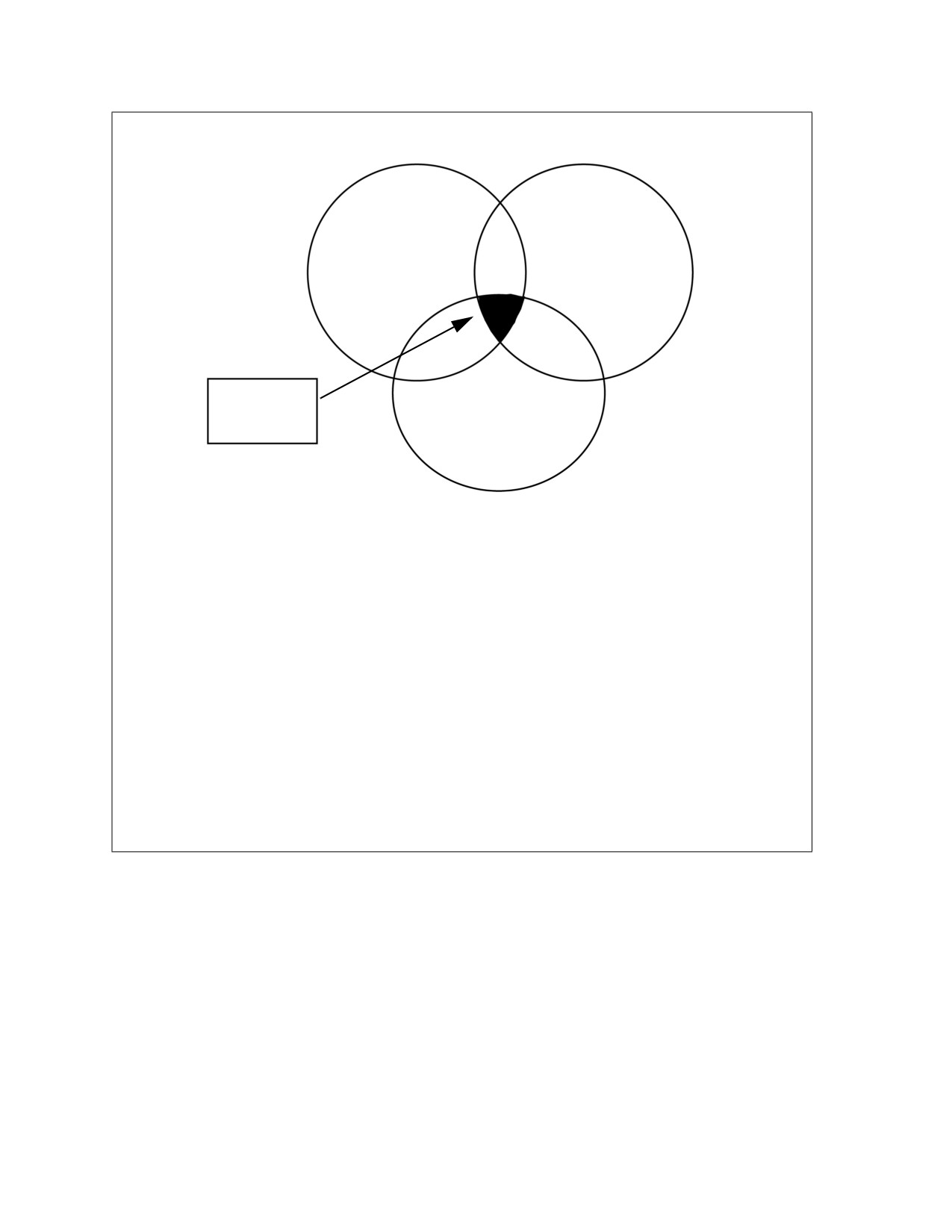
Mission and enemy
Troops available and
civilian considerations
Maximize the
probability of
Terrain and weather
detection
and time available
Mission
Time available
•
Risk assessment.
•
Time to the onset of symptoms for
•
Priorities of effort.
treatment and threat analysis.
•
Commander’s guidance.
•
Time for the movement of samples to
•
Commander’s intent.
confirmatory or definitive lab.
Enemy
•
Decision time requirements (varies by
•
Agent and delivery systems.
type and trigger event).
•
Delivery techniques.
Troops available and civilian considerations
•
Threat to systems.
•
CLS availability.
•
Uncertainty.
•
Types and numbers of systems available.
Terrain and weather
•
System capabilities (such as an
•
Wind direction and speed.
operational envelope).
•
Stability conditions.
•
FP for biological-detection assets.
•
Impact of the terrain on the BW
•
Availability of HN resources.
agent.
•
Movement of resources and biological
•
Impact of the background on
samples across IBs.
systems.
•
Vaccination rate-consideration of military
•
Size of assigned AO.
support to civil authorities.
Figure I-1. METT-TC Factors That Impact Biological Surveillance
understanding of the mission provides the link between the mission and the concept of
operations (CONOPS). To implement an operational concept that recommends effective
risk reduction measures (see Figure I-2), the command and staff can use the following
steps: detect and/or identify the BW hazard, assess the BW hazard, develop risk
reduction measures and make risk decisions, implement risk reduction measures, and
supervise and evaluate.
a.
Detecting and/or Identifying the BW Hazard. Risk decisions should be based
on SA of the threat. The threat of a BW attack can be found in nearly all operational
I-4
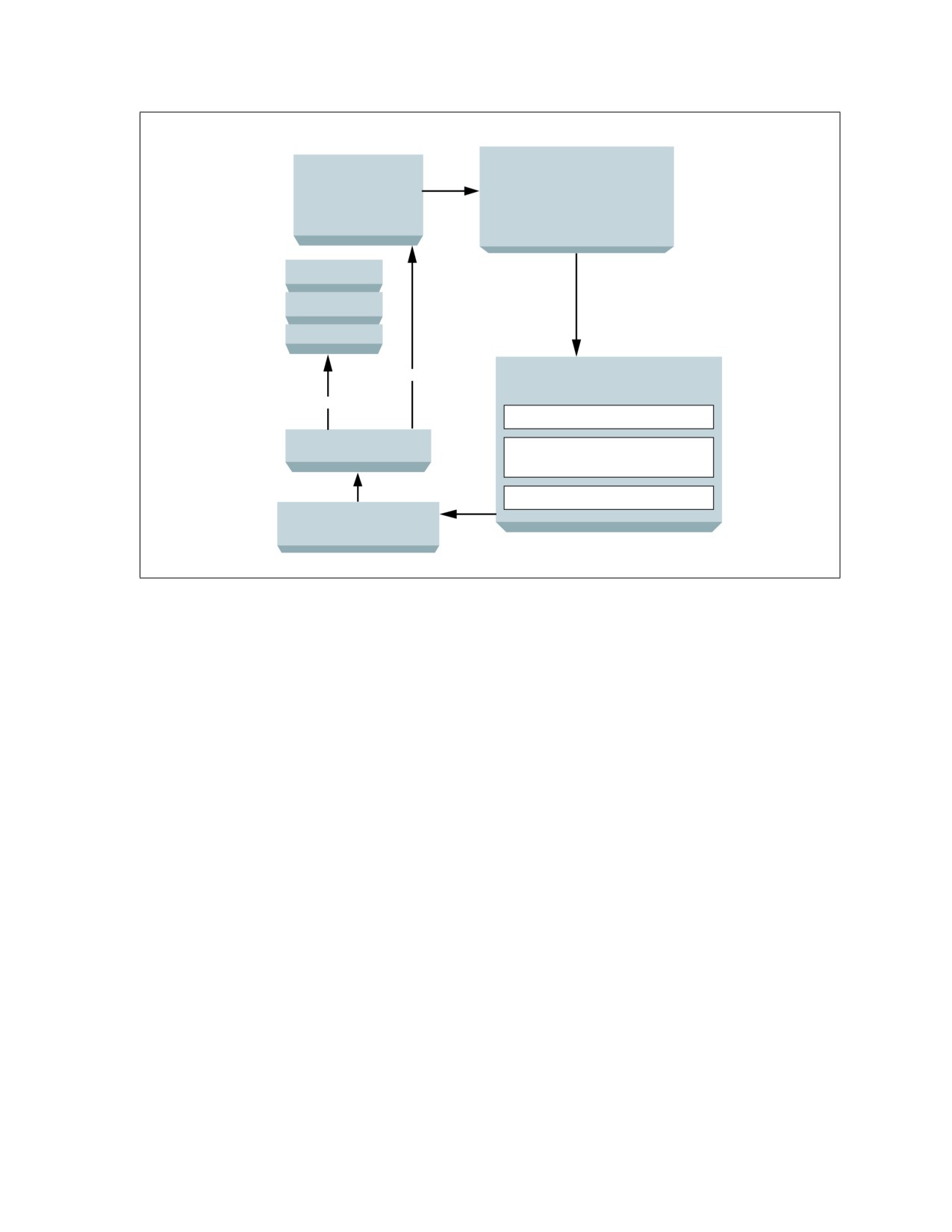
Step 1
Step 2
Detect and/or
Assess BW hazard
identify BW
hazard
Mission
Mission
Mission
Step 3
New hazards
Develop risk reduction measures
and make risk decisions
Lesson learned
Develop controls
Step 5
Supervise/evaluate
Determine the risk for each
hazard and overall mission
Make decisions
Step 4
Implement risk
reduction measures
Figure I-2. Preparing BW Risk Reduction Measures
environments, and the ability of unit leaders and staff to detect and/or identify the
hazard is essential. The command and staff consider the following threats—
z
BW agent capabilities.
z
Available delivery systems.
z
Delivery techniques.
z
The likelihood of the use of a BW agent.
z
The threat capability to attack and destroy US biological-detection assets.
(1) Identifying the threat BW agent capability is critical. Ensuring that
biological- and medical-surveillance resources are prepared to support force health
protection is vital.
(2) Identifying the BW hazard examines how and where a threat may use a
BW agent (such as inside a building or outside with a line or point source). This is a
challenging process with the unpredictability of BW agent use.
b.
Assessing the BW Hazard. The command and staff assess the probability and
severity of BW attacks to determine the potential risk to the mission and personnel. The
end result is an estimate of risk and an assessment of the overall risk to the mission. The
risk assessment is directly related to the BW hazard identification and method of BW
employment. BW hazard identification is key to determining protective measures,
casualty estimates, and the time before the onset of symptoms. Methods of employment
include aerial sprayers, infected persons or vectors, or contaminated food or water. When
I-5
sprayers and explosive devices are used, factors that will impact the risk assessment
include terrain and weather. BW hazard identification and the method of employment
are interlinked and are used to support BW risk assessments. See Appendix E.
(1) Terrain and weather impact the assessment of the BW hazard. Specific
factors that are part of the assessment include—
z
The wind direction and speed.
z
Atmospheric stability conditions (stable, neutral, or unstable).
z
The impact of terrain (natural and man-made) on BW agent cloud
behavior.
z
The impact of background conditions (environmental or man-made)
on biological-detection capabilities.
z
The size of the AO.
z
The impact of weather phenomena on biological-detection
capabilities.
(2)
The time available is impacted by the time—
z
To the onset of symptoms following exposure to a BW agent.
z
For the movement of samples and for lab analysis.
z
For support of the decision-making process.
(3)
The protective posture of the personnel in the affected area is impacted by
the—
z
Immediate availability of respiratory protection.
z
Vaccination rate.
z
Immediate availability of collective protection.
c.
Developing Risk Reduction Measures and Making Risk Decisions.
(1) After assessing the BW threat and the potential hazard of a BW attack,
the command and staff develop risk reduction measures that should reduce the risk to
the force. To be effective, each risk reduction measure developed must meet the following
criteria:
z
Suitability. It must reduce the hazard.
z
Feasibility. The unit must have the capability to implement the
risk reduction measure.
(2) Examples of risk reduction measures include the following critical
measures:
z
Preparing an employment plan that optimizes the use of available
biological-detection resources (see Appendix E).
z
Establishing centralized or decentralized warning and reporting
(see Appendix F).
I-6
z
Preparing a sample collection plan that integrates the use of
laboratories, sample courier assets, and biological-detection assets
(see Appendix G).
z
Providing the required reports through the established
communications architecture to support the commander’s SA.
z
Preparing a logistics plan that integrates the use of contracted
logistics support (CLS) and standard military support.
z
Preparing a plan for medical prophylaxis and treatment.
z
Ensuring that command and control (C2) and support relationships
are specified.
z
Preparing a plan for minimizing the spread of the contamination,
whether from the agent itself or contagious personnel.
z
Implementing quality management practices.
z
Providing quality management practices for the FP of surveillance
resources.
z
Establishing a plan for the use of standoff detection systems
(see Appendix H).
z
Preparing a restriction of movement plan to limit the possible
transmission of a contagious BW agent.
(3)
The development of risk reduction measures hinges on suitability and
feasibility considerations. Factors that impact the risk reduction measure selected
include the—
z
Number of biological systems available.
z
Capability of the systems available (for example, what is the
operational envelope for the systems, individually or collectively).
(See Appendixes C and I.)
z
Availability of CLS to support at one or more locations.
z
Availability and location of supporting confirmatory and/or definitive
laboratories and sample couriers.
z
Availability of security resources to provide FP for low-density
biological-detection assets.
z
Availability of host nation (HN) resources to support biological
surveillance.
z
Mobility to move the required resources (such as samples and
logistics) intratheater, intertheater, and between theaters.
z
Capability to communicate the required information and obtain the
required technical reach-back capability.
z
Number of people exposed to the BW agent.
I-7
(4) The development of risk reduction measures is directly linked to variables
associated with BW hazard identification and assessment. Further, the risk associated
with each control measure is assessed along with the overall risk to the force.
d. Implementing Risk Reduction Measures. The command and staff ensure that
controls are integrated into standing operating procedures (SOPs), written and verbal
orders, mission briefings, and staff estimates. The critical check for this step is to ensure
that controls are converted into clear, simple execution orders that are understood at all
levels.
e.
Supervising and Evaluating. During mission preparation and execution,
leaders complete the risk assessment process through supervision and evaluation. The
continuous evaluation and assessment of risk levels may yield lessons learned and/or the
identification of new hazards. Supervision and evaluation is a basic form of quality
managment.
4.
Execution of Operational Concepts of Biological and Medical Surveillance
a.
Biological Surveillance. Biological-detection and -collection assets are
employed based on the mission, the risk assessment, and an evaluation of the threat
force capability to use BW agents. The commander will prioritize the use of available
assets and establish an employment plan that integrates the use of fixed-site and
maneuver or maritime biological-detection and -collection assets. The operational
settings for employing biological-detection and -collection elements include fixed sites,
ports, or airfield FP (critical node) and maneuver or maritime FP (area array).
(1) Fixed sites, ports, or airfield force protection. This operational setting can
occur when biological-detection and/or -collection assets are placed on or near a site to
provide biological surveillance. They can be used to detect off-site or on-site attacks and
can be employed to protect early-entry sites and C2 sites such as an installation, aerial
port of debarkation (APOD), seaport of debarkation (SPOD), or specific buildings. A
METT-TC analysis will determine the number of systems required as point detectors or
samplers for critical target areas such as logistics bases, C2 locations, major airfields,
airbases (ABs), naval bases, or ports. In joint operations, biological-detection and -
collection systems can also be placed inside critical buildings. Guidance on site selection,
placement, and spacing can found in Appendix E.
(a) Fixed-site biological surveillance provides for a redundant biological-
detection and -collection capability. This capability may address the need for surveillance
of the outside ambient air and internal building air.
(b) Monitoring the outside ambient air provides a capability to detect an
external release of a biological agent from an overt or covert release. Additionally, critical
buildings may be provided with biological-detection or -collection capabilities internal to
the heating, ventilation, and air conditioning (HVAC) systems of the structure. These
systems are used to detect possible covert or overt use of biological agents.
(2) Maneuver or maritime force protection. In this operational setting, the
biological-detection and/or -collection elements are employed in an array designed to
optimize the probability of detection consistent with FP security requirements. Maritime
or land force assets will be placed based on METT-TC considerations. The size of the
I-8
force to be protected also has a direct impact on system placement. The biological-
detection assets should ideally be placed in depth throughout the AO to detect a
biological-agent cloud that may have been disseminated as a large-area-coverage or line
source attack from a ground, maritime, or aerial platform. Guidance for employing assets
can be found in Appendix E.
b.
Medical Surveillance. Executing medical surveillance is a responsibility that is
shared by the individual, unit leaders, senior commanders, and the health service
support (HSS) system.
(1) Individuals support medical surveillance by—
z
Reporting outbreaks of sickness or illness in the ranks.
z
Complying with preventive-medicine (PVNTMED) guidance.
(2) In executing medical surveillance, unit leaders—
z
Inform personnel of illness, injury, and disease threats; the risks
associated with those threats; and the countermeasures in place (or
to be used) to minimize those risks while deployed.
z
Ensure that individuals comply with PVNTMED guidance.
z
Promote PVNTMED programs and policies.
z
Ensure the completion of predeployment and postdeployment health
assessment forms.
z
Ensure that environmental-health assessments are documented to
record any exposures.
(3) Senior commanders support the execution of their medical-surveillance
responsibilities through—
z
Supporting medical surveillance within their units with appropriate
planning, resources, policy, enforcement, education, and training.
z
Using medical-surveillance information as the basis for unit health
reporting and in all phases of planning.
z
Reporting unit DNBI rates and health readiness according to joint
guidance, service policy, OPORDs, and OPLANs.
z
Providing unit personnel status reports.
z
Consolidating medical-surveillance report information to determine
health status and medical threat.
z
Ensuring that personnel complete predeployment and
postdeployment health assessment forms (Department of Defense
[DD] Form 2795 [Pre-Deployment Health Assessment] and DD Form
2796 [Post-Deployment Health Assessment] and other requirements
according to joint guidance (see DODD 6490.2).
5.
Biological-Warfare Threat Triggers
From an operational standpoint, the command and staff IPB assesses the threat
BW capability (when, where, and how a threat may employ BW agents). However, the
I-9
command and staff retain a pragmatic view that threat use of BW could be
unpredictable. In response to a BW threat with unknown factors, the applicable OPLAN
and/or OPORD outlines the priorities of effort and trigger events (decision points) that
will result in a response that includes biological-defense countermeasures.
Understanding different trigger events is important because trigger events help
determine how far into a BW attack the response to the event begins. This helps shape
the ability of the force to respond. The closer the response to an actual BW event (detect
to treat), the less severe the damage to operations will be (fewer number of casualties).
BW attacks could occur against small- (fixed sites such as ports or airfields) or large-area
(such as maneuver or maritime forces) targets. A threat could use point or line source
BW weapons (overt or covert) against small or large targets to achieve surprise and
unpredictability as to the time and place of attack. Several key indicators that might
signal a BW attack are medical surveillance, detector triggers, intelligence triggers, and
weapons event triggers.
a.
Medical surveillance may be the first detection of a BW event; casualties may
be the first indication of a biological attack. A postattack analysis of the event will
influence operational decisions—decisions likely to be complicated by uncertainties
regarding the nature and scope of the attack. For example, use of an infectious agent
could lead to quarantine or restriction of movement for US or HN assets.
b. Detector trigger events refer to the discovery, via a detection device signal that
a biological agent may be present in the environment. Detectors may or may not indicate
the presence of all BW agents due to the sensitivity of the devices and the possibility of
false positives and false negatives. Detectors are limited to those BW agents for which
they are designed to find. They may not detect BW agents in certain media (food, water,
or soil). Networked aerosol detectors, positive presumptive test results, and supporting
field confirmatory lab results help determine if a biological event occurred and is
identified before the onset of casualties.
c.
Intelligence triggers occur when a commander receives an intelligence report
indicating that a threat possesses an offensive biological capability, that there is unusual
threat activity consistent with the logistics and operational use of a biological agent, or
that a fixed site may be attacked with a biological agent. Information and intelligence
from multiple sources (the general public, military intelligence, or national intelligence
institutions in the HN) can provide advance warning of a biological attack. Intelligence
warning is the most likely, and perhaps the only, trigger event that allows a commander
the opportunity to take preattack actions.
d. Weapons event triggers refer to an overt attack by weapon systems, such as
theater ballistic missiles (TBMs), submunitions, or artillery that might be armed with a
BW. If intelligence has assessed a biological-weapon capability, a weapons event in high-
threat areas will likely be initially treated as an unknown agent. Detection, observation,
or other notices of attack prior to casualties trigger during-attack actions. These actions
initially focus on immediate actions to preserve human life. Detection of an attack in
progress may result from an upwind attack warning, a detector alarm, or observable
weapons events and should determine if a chemical or biological agent was used.
6.
Application of Principles of Biological Surveillance
a.
Applying the principles of biological surveillance helps ensure that the
supported commander receives the required capabilities. Table I-1 provides a sample of
I-10

the biological-surveillance principles and example capabilities that could be required to
support a joint-force commander (JFC). In this example, a JFC is moving elements of a
USA corps and light infantry division into an APOD (a main operations base [MOB]) and
a maritime force is supporting operations from offshore.
Table I-1. Biological-Surveillance Principles
Biological-Surveillance Principles
Capability
Maximize probability of detection
Provide the JFC with biological- and medical-
surveillance assets to support mission-essential APOD
and maritime operations.
Orient on the threat
Conduct IPB to ensure understanding of the operational
environment (such as background conditions) and
threat intent and capabilities.
Report information rapidly and accurately
Establish a warning-and-reporting network between
service components and the JFC.
Develop the situation rapidly
Provide for the evacuation of presumptively identified
BW samples to the supporting confirmatory or definitive
lab.
Optimize biological-surveillance capabilities
Provide the JFC with biological surveillance, lab, and
sample courier assets.
(1) Maximize the probability of detection. JFC biological-surveillance
capabilities are supported by the MOB Joint Portal Shield network and dry filter unit
detection and collection capabilities. USA biological-detection assets also support
operations from detector sites around the APOD. Shipboard biological-surveillance
capabilities include the Interim Biological Agent Detector System (IBADS), Joint
Biological Point Detection System (JBPDS) dry filter units, and handheld assays.
Confirmatory lab support can be provided by an Air Force biological augmentation team,
an Army medical laboratory, and Navy forward deployable preventive medicine units
and is available on aircraft carriers and large deck amphibious ships. A Navy
environmental and preventive medicine unit can provide a reach-back capability.
(2) Orient on the threat. The command and staff conduct IPB to understand
the operational environment (the impact of background conditions on biological
detection) and the threat intent and capabilities.
(3) Report all information rapidly and accurately. The JFC’s warning-and-
reporting system facilitates the prompt reporting and tracking of BW event information.
(4) Develop the situation rapidly. The movement of presumptively identified
samples to confirmatory laboratories within 6 hours provides critical information to
support decision points for the commander.
(5) Optimize biological-surveillance capabilities. A networked team composed
of medical and biological surveillance and sample couriers provides the resources needed
for the support of biological-attack surveillance.
b.
Implementing effective biological and medical surveillance should include
quality-management practices that provide a group or series of measures and actions
that are employed to ensure that a system, process, or analytical test is functioning
properly. Omission of any aspect of the quality-management program decreases the
I-11
overall quality of the analytical result. Elements of a quality-management program can
include ensuring—
z
That proper operator training and certification is performed to maintain
knowledgeable, skilled operators and technicians to perform the analysis.
Documentation of both initial and continuing training for all operators of
the system or process must be maintained.
z
The proficiency of each operator is maintained through the periodic
analysis of unknown samples (such as proficiency tests). The results must
be verified and documented by a supervisor or designated observer who
attests to the accuracy of the analysis and adherence to the proper
analytical process.
z
The preventive maintenance checks and services (PMCS) on all
equipment and instruments are conducted on a routine basis as
recommended by the equipment operating manual. Documentation of the
performance of PMCS and the problems corrected must be maintained.
z
That critical reagents and controls are transported and stored in the
proper environment as directed by the manufacturer.
z
That positive and negative controls are performed and the results are
obtained and documented.
z
That management and supervisory personnel maintain awareness of
potential errors and problems with the system or process, evaluate
personnel and process, document errors or problems, and take corrective
action to eliminate or minimize such errors or problems.
7.
Commander’s Information Requirements—Sample Results and Medical
Surveillance
a.
The analysis and identification of a BW sample will support a commander’s
IRs. The analysis of a sample can range from presumptive, to confirmatory, to definitive
identification. The three levels of identification and their associated sample analysis
definitions are addressed below.
(1) Biological-warfare agent field presumptive identification. Presumptive
identification is provided by the positive results from a device such as a handheld assay.
This process provides for the identification of a suspect BW agent by means of devices,
materials, or technologies that detect biological markers (biomarkers) using a single
methodology (see Appendix B). Agent identification to species level or differentiation
among a family of similar agents, may not be possible. This is equivalent to the
Laboratory Response Network for bioterrorism Level A and the USA Biological
Integrated Detection System (BIDS).
(2) Biological-warfare agent field confirmatory identification. This process
provides for the identification of a suspect BW agent by means of devices, materials, or
technologies that detect biomarkers using two or more independent biomarker results.
The field confirmation identification process can be accomplished in a matter of hours
(6 to 8 hours). Examples might include the findings of the presumptive biomarker
identification with the addition of a positive polymerase chain reaction, enzyme-linked
immunosorbent assay, or electrochemiluminescence results, using specific target nucleic
I-12
acid sequences for the organism and antibody recognition of agent specific antigen sites,
respectively. This is equivalent to field sample or specimen identification conducted by
forward-deployed or forward-positioned laboratories such as the USAF biological
augmentation team, the Army medical laboratory, forward-deployed preventive medicine
unit (USN), or homeland security Laboratory Response Network Level B or C asset (USA
community hospitals or medical centers). BW-agent field confirmation identification is
also available aboard selected aircraft carriers and amphibious ships and at selected
medical facilities. These laboratories also have a reach-back capability with a definitive
lab for consultation.
(3) Biological-warfare agent definitive identification. This process provides
for the specific identification of a suspect biological agent as to genus and species,
serological type, or toxin. This level of identification is by means of devices, materials, or
technologies that detect based on two or more independent biomarker results using
different methodologies. The definitive identification process can be accomplished in
several hours to a couple of days, depending on the number of tests required. This level of
identification is performed in a reference lab with a broader variety of methodologies
available and highly skilled testing personnel, thus providing the highest levels of
accuracy. Final sample or specimen identification is accomplished at one of the
nationally recognized continental US (CONUS) reference laboratories such as the United
States Army Medical Research Institute of Infectious Diseases (USAMRIID), the Navy
Medical Research Center, or the Centers for Disease Control and Prevention (CDC).
b.
Sample analysis from the BW-agent identification process can provide the
commander with critical information. However, the first obvious indicator of a BW attack
may be an increase of illness among the affected population (medical surveillance).
c.
The commander uses multiple information sources (sample analysis results
and medical surveillance). This information supports the commander’s SA and is critical
input for critical decisions (detect to treat).
I-13
Chapter II
BIOLOGICAL-SURVEILLANCE FUNCTIONS, RESPONSIBILITIES,
AND CAPABILITIES
1.
Background
The commander will use all available assets (intelligence and medical and biological
surveillance) to detect and reduce the effects of biological attacks. Resulting detection
information will feed directly into the US force warning-and-reporting network.
Intelligence and medical and biological surveillance are used to assess whether the
threat has used BW agents. For example, signals intelligence (SIGINT) may intercept
threat employment orders for a BW attack. Human intelligence (HUMINT) may also
provide information on future threat intentions and BW manufacturing capabilities and
locations. Medical surveillance assesses the incidence of illness to determine whether a
biological attack may have occurred. Biological surveillance serves as another critical
component of awareness. Biological-surveillance capabilities include the following:
a. Monitoring. When a biological-detection asset such as a Joint Portal Shield
network or the JBPDS is operational, it is continuously monitoring the air for an
increase in the number of aerosol particles within a certain size range that would
indicate a BW attack. In addition, this may include the random or routine monitoring of
food and water sources for contamination by HSS personnel.
b.
Alerting. Alerts provide the initial determination that a biological attack may
be occurring. Alerting devices determine if any change in the particulate background at
the sensor may indicate a possible presence of biological agents. Selected alerting devices
are also capable of determining whether biological mass is present in the ambient air.
c.
Sampling. Sampling of the biological agent is a crucial part of the identification
system. The sampling process collects possible BW samples for subsequent use in the
identification process. It is important to note that the chain-of-custody must be initiated
by the person who takes the sample.
d. Detecting. Once a sample has been collected and concentrated, the detection
process in selected biological systems determines if the particulates are biological or
inorganic in origin. To accomplish this, the sample passes to a generic detection
component that analyzes the aerosol particles to determine if they are biological in
origin. This component may also classify the suspect aerosol by broad category (for
example, a spore, bacterium, or toxin).
e.
Identifying. The identification process provides a presumptive identification of
the biological agent collected at the system level. Identification is generally limited to a
preselected set of agents and cannot identify agents outside of this set without the
addition of new identifier chemistry, equipment, or preprogramming. Antibody-based
assays are used for the presumptive identification of all fielded BW detection systems.
f.
Reporting. The results from the biological-surveillance process are reported
through the established reporting architecture. The controlling headquarters (HQ) NBC
control center analyzes these biological reports to determine and assess whether a BW
II-1

attack occurred. Normally, this can be a joint task force (JTF), corps, numbered air force
(NAF), or other operational level HQ.
g.
Evacuating a sample and maintaining the chain-of-custody. Presumptively
identified and background (environmental) samples are evacuated. Samples are
collected, packaged, sealed, and documented. The chain-of-custody begins with the
person taking the samples. A complete history of the circumstances about the acquisition
of each sample is provided. The purpose of the sample may be for support of treatment or
attribution (evidentiary) or both. It is critical that the sample be maintained at
1-4°Celsius (C) during storage and transport. Samples are evacuated to preselected
sample transfer points, sample management facilities, or directly to supporting
laboratories. The chain-of-custody is maintained throughout the transfer process.
Sampling and evacuation procedures are discussed in detail in Appendix G.
2.
Responsibilities
The NBC officer, medical officer, and intelligence staff work closely to manage
biological-surveillance operations. They ensure that biological-and medical-surveillance
considerations are integrated in the decision-making process. Command and staff
responsibilities for biological defense are outlined in Table II-1. Biological-defense
responsibilities define command and staff responsibilities relative to biological planning
and operations.
Table II-1. Command Staff Biological-Defense Responsibilities
BW Detection Planning and Execution Responsibilities
JTF/operational-
Allocates BW defense resources based upon METT-TC considerations. Determines
level commander
protection required including immunizations.
COS
Reviews recommendations for priority IRs, priority target listing, and protective posture.
Intelligence
Assists in developing the biological-surveillance plan in support of the R&S plan.
Coordinates BW intelligence reports and potential threat BW activities with the operations
and NBC staffs and FSEs.
Operations
Integrates BW defense training into unit combat mission training requirements. Develops
risk assessment for operations in BW environments and assesses the OPTEMPO impact.
Recommends targeting of BW-related activities. Rehearses/practices biological-sample
evacuation plans.
NBC officer/NCO
Develops the biological-surveillance annex in support of the R&S plan. Acts as the
primary battle staff advisor on NBC defense. Ensures that BW defense considerations
are part of the IPB process. Recommends biological-detection and -collection
requirements and plans.
Logistics
Provides for supply and maintenance requirements.
Medical
Advises and assists the commander and his staff on health and human safety in a BW
environment (including health effects, PVNTMED, treatment, and patient evacuation).
Recommends vaccinations, a pretreatment regime, and a treatment plan. Conducts
liaison with field confirmatory laboratories and medical facilities. Conducts health risk
assessments and provides commanders with health risk information for operational
decision making. Provides a health risk assessment to the commander.
The following list of responsibilities and roles for operational-level or tactical
commanders and staffs during biological-defense operations is not all-inclusive, but
II-2
rather a general guide. The AF roles and responsibilities vary slightly from the guidance
below and are outlined in AF Manual (AFMAN)-10-2602.
a.
Commander.
z
Prepares forces to defend, including training and equipping, against
possible BW attacks.
z
Orders preemptive strikes on threat BW capabilities.
z
Directs the appropriate BW protective measures.
z
Allocates biological-defense resources.
z
Directs biological surveillance based on threat and intelligence indicators.
z
Determines protection and warning criteria and the dissemination of a
BW attack warning.
b.
Chief of Staff (COS) and/or Executive Officer (XO).
z
Ensures that staff estimates are coordinated and the staff integrates
biological-defense considerations into the tactical decision-making
process.
z
Ensures that BW threat information is included when developing
potential CCIR recommendations for the commander.
z
Ensures that BW surveillance is synchronized with other intelligence
collection efforts and the mission.
z
Reviews staff recommendations for the employment of biological-detection
assets and warning the force.
z
Ensures that critical BW information is presented to the commander.
z
Reviews recommendations for priority IRs, priority target listing, and
protective posture.
c.
Operations.
z
Coordinates the staff BW risk assessment and recommends appropriate
risk reduction measures to conserve combat power and protect the force.
z
Recommends troop listing for BW defense assets based on the BW threat
and mission.
z
Integrates BW defense training into unit combat mission training that
orients toward the conditions and standards of combat.
z
Implements FP measures for reaction to threat BW operations.
z
Considers the employment of biological-detection assets in planning
future operations.
z
Recommends the nomination of threat BW targets and related activities
with the fire support coordinator (FSCOORD), intelligence, civil affairs
(CA), and the NBC defense officer.
z
Allocates biological-detection assets to current operations according to
guidance.
II-3
z
Ensures that the biological-detection asset employment is synchronized
with current (close, deep, and rear) operations.
z
Assesses the impact of operations in a BW environment on operating
tempo (OPTEMPO).
z
Integrates the biological-detection asset employment with the branches
developed to support current operations.
z
Directs aviation and long-range biological-detection assets to execute
long-range BW surveillance according to the commander’s guidance and
priorities.
z
Coordinates a rehearsal of the sample evacuation plan.
d.
Intelligence.
z
Applies IPB products to support the targeting of BW-related activities
with fire support and tactical air assets.
z
Disseminates weather reports and products from the staff weather officer
and assesses implications in a BW threat environment.
z
Analyzes BW attack information to develop intelligence to predict future
BW employment.
z
Creates the reconnaissance and surveillance (R&S) plan. This plan, which
can be embedded in existing war plans, should include the biological-
surveillance plan as an annex. The NBC defense officer will complete the
biological-surveillance annex, with input from the medical and
intelligence officer, ensuring synchronization with the overall unit R&S
plan.
e.
Fire Support.
z
Uses the fire support target acquisition battery radar and sound/flash
ranging equipment to identify the locations of threat indirect firing points
used to conduct BW attacks.
z
Destroys possible threat BW attack indirect fire systems using
counterbattery fire.
z
Provides an alternate means of determining local weather.
z
Provides data to NBC defense personnel so that collateral damage
estimates can be made regarding the release of BW agents that may occur
as a result of the attack on threat systems.
f.
Logistics.
z
Coordinates biological-detection system CLS, as required.
z
Coordinates with the HN through CA for any available biological-
detection supplies unique to the biological-detection unit through foreign-
nation support (FNS) channels.
z
Coordinates biological-detection asset recovery and evacuation operations
as necessary.
II-4
z
Recommends the allocation of transportation capabilities to support the
rapid displacement of biological-detection assets.
z
Forecasts resource requirements to support BW defense logistics
requirements.
g.
Personnel.
z
Advise the commander and NBC defense officer on matters concerning
biological-detection asset personnel replacements.
z
Request and allocate biological-detection personnel replacements as
required.
h.
Civil Affairs.
z
Coordinates use of HN medical facilities to treat BW casualties, if
necessary.
z
Determines the availability of biological-detection supplies unique to the
supported biological-detection asset from the local civil sector.
z
Provides information (in the chief military observer [CMO] estimate) on
likely civilian actions reactions to a BW attack.
i.
Nuclear, Biological, and Chemical Defense Officer.
z
Advises the commander and staff on operations in a BW environment.
z
Ensures BW-related activities are part of the IPB process.
z
Recommends actions to minimize friendly and civilian vulnerability to
BW attacks.
z
Conducts BW vulnerability analysis in conjunction with the appropriate
staff elements (such as a staff threat working group).
z
Participates in the target nomination process for threat BW-related
targets.
z
Recommends tasking biological-detection assets to support the scheme of
maneuver and incorporates these assets into plans and orders.
z
Coordinates biological-detection asset requirements with subordinate
commands.
z
Recommends surveillance missions based on BW indicators and technical
knowledge of BW dissemination methods, agents, and favorable
conditions.
z
Plans, coordinates, and evaluates BW defense training in cooperation
with the operations.
z
Coordinates with the surgeon and medical staff in developing priorities of
effort for BW surveillance assets.
z
Provides the biological-surveillance annex for the R&S plan to the
intelligence officer. The annex will include a sample evacuation appendix
that is coordinated with the surgeon or medical officer, staff intelligence
and transportation officer or NCO, and sample courier unit.
II-5
j.
Surgeon or Medical Officer.
(1) DODI 6490.3 provides the following guidance for medical surveillance:
during a deployment, the surgeon and the JTF surgeon will—
“Deploy technically specialized units with capability and expertise in the
conduct of surveillance for occupational and environmental illnesses,
injuries, and diseases, health hazard assessments, and advanced
diagnostic testing
These specialized units may be deployed to meet
the requirements of the deployed force through surveillance for
occupational and environmental illnesses, injuries, and diseases,
application of preventive medicine, use of advanced diagnostic testing,
and coordination with combat stress control personnel. These units shall
conduct health assessments of potential exposure to biological, chemical,
or physical agents that threaten the health and safety of the command.”
(2)
The surgeon, medical officer, or medical NBC defense officer also—
z
Advises and assists the commander and staff on health and human
safety issues, including health effects, PVNTMED, treatment, and
patient evacuation, in a BW environment.
z
Evaluates national medical intelligence in developing the BW
vulnerability analysis and analyzes information on endemic
diseases.
z
Identifies and coordinates the training and education of medical
personnel on the medical management of personnel exposed to BW
agents.
z
Coordinates with designated supporting medical lab to plan for the
receipt and confirmatory analysis of suspected BW samples.
z
Identifies HN and other lab support that may be available, including
integration with local and regional US and HN civilian medical-
surveillance assets.
k.
Staff Weather Officer.
(1) Advises and assists the operations, intelligence, and NBC defense officers
with weather support capabilities and limitations in support of operations in a BW
threat environment (for example, provides data used by the NBC staff in predicting the
plume).
(2) Prepares climatological studies and analyses in support of operations in a
BW threat environment.
(3) Evaluates and disseminates weather data, including forecasts, in support
of operations in a BW threat environment.
(4) Responds to requests for information (for example, analyzes weather
effects on BW).
l.
Staff Judge Advocate (SJA).
(1) Provides legal advice regarding the law of armed conflict (LOAC) and
attack of facilities suspected of being related to BW activities.
II-6
(2) Reviews chain-of-custody procedures.
(3) Provides guidance on issues that may occur if quarantine, restriction of
movement, and mass-vaccination operations are considered.
3.
Capabilities
The commanders establish requirements for biological-surveillance capabilities and
synchronize their use to complement other supporting capabilities (such as medical
surveillance and intelligence). The integrated use of biological-detection assets,
communication resources, sample courier and transportation assets, and lab resources is
required to support an effective risk reduction strategy.
a.
Biological-detection and -collection assets. The concept of employment (COE)
for biological-detectors and -collection systems helps define where and how these assets
will be used. Execution of biological-detection operations supports fixed-site ports,
airfields, and/or maneuver force operations. Individual systems can be employed
collectively or as a system of systems (integrating the use of different systems). The COE
for biological-detection and -collection systems lends itself to employment at fixed sites
(critical-node array) or to support of maneuver or maritime forces (area array). However,
the COE for selected systems only lends itself one setting (fixed sites). See Table II-2
(page II-8) for information on the operational envelope for biological-detection and
-collection assets. Table II-2 outlines the operational envelope for multiple biological-
detection and -collection assets.
(1) COE for fixed sites, ports, and airfields and maneuver land or maritime
forces. The COEs for multiple detectors and collectors lend themselves to fixed-site
operations and land and maritime forces.
(a) Without the BIDS and Joint Service Light NBC Reconnaissance
System (JSLNBCRS), these point detectors do not have authorized mobility assets or
organic assigned operators. The fixed-site commander provides the operators that are
required to move these assets. Systems employed at fixed sites, ports, and airfields
include—
z
Joint Portal Shield.
z
M31A1 or M31A2 BIDS.
z
Fixed-site and/or trailer-mounted JBPDS and man-portable
JBPDS.
z
Dry filter units.
z
JSLNBCRS.
(b) Maneuver land or maritime forces. These systems are still point
detectors, but have assigned, organic ground transportation (except the shipboard
JBPDS or IBADS). These systems include—
z
M31A1- and/or M31A2-BIDS.
z
JSLNBCRS.
z
Shipboard JBPDS/IBADS (maritime only).
z
Shipboard dry filter units.
II-7

Table II-2. Biological-Detection and -Collection Assets—Operational Envelope
System/
COE
Capability
Point or
CLS
Produce
Prime
Power Source
Limitation
Organic
Kit
Standoff
Required
Sample for
Mover
Available
Communications
Detection
Evacuation
Available
(i.e., generator)
Capability
Joint
Fixed
Point
Yes
Yes
No
Yes
None
Portal
sites,
No detection
Shield
ports,
capability to
airfields
complement
M31A2-
Land
Point
Yes
Yes
Yes
Yes
AM/FM
the alert and
BIDS
maneuver
presumptive
force,
identification
fixed sites,
capability
ports,
airfields
M31A1-
Land
Monitors,
Point
Yes
Yes
Yes
Yes
AM/FM
BIDS
maneuver
alerts,
force,
collects,
fixed sites,
and
ports,
identifies
airfields
(outside
ambient air)
Approximately
Fixed-
Fixed
Point
Yes
Yes
No
Yes
None
25 minutes
Site/
sites,
required from
Trailer-
ports,
alert to
Mounted
airfields
presumptive
JBPDS
identification
Man-
Fixed
Point
Yes
Yes
No
Yes
None
Portable
sites,
JBPDS
ports,
airfields
Shipboard
Maritime
Point
Yes
Yes
N/A
Yes
None
JBPDS
force

Table II-2. Biological-Detection and -Collection Assets—Operational Envelope (Continued)
Point or
Produce
Prime
Power Source
Organic
System/
CLS
COE
Capability
Standoff
Sample for
Mover
Available
Limitation
Communications
Kit
Required
Detection
Evacuation
Available
(i.e., generator)
Capability
Dry Filter
Fixed sites,
Collects and
Point
Yes
Yes
No
No (AC required)
No alerting
None
Unit 1000
ports,
identifies
capability
airfields
(internal building
air)
Dry Filter
Shipboard
Collects and
Point
No
Yes
No
No (AC required)
No alerting
None
Unit 1000
Operations
identifies
capability
(outside ambient
air and internal
air)
Dry Filter
Fixed sites,
Collects and
Point
Yes
Yes
No
No (AC required)
No alerting
None
Unit 2000
ports,
identifies
capability
airfields
(outside ambient
air or internal
building air)
JSLNBCR
Fixed sites,
Monitors, alerts,
Point
Yes
Yes
Yes
Yes
N/A
FM
S
ports,
collects, and
airfields,
identifies
land
(outside ambient
maneuver
air)
force
DOD
Maneuver
Samples and
Point
No
Yes
N/A
N/A
No alerting
None
Biological
land force,
identifies
capability
Sampling
maritime
(surface
Kit
force, fixed
contamination)
sites, ports,
airfields
LRBSDS
Maneuver
Detects (outside
Standoff
Yes
No
Yes
N/A
No
None
land force,
ambient air)
presumptive
maritime
identification
force
capability
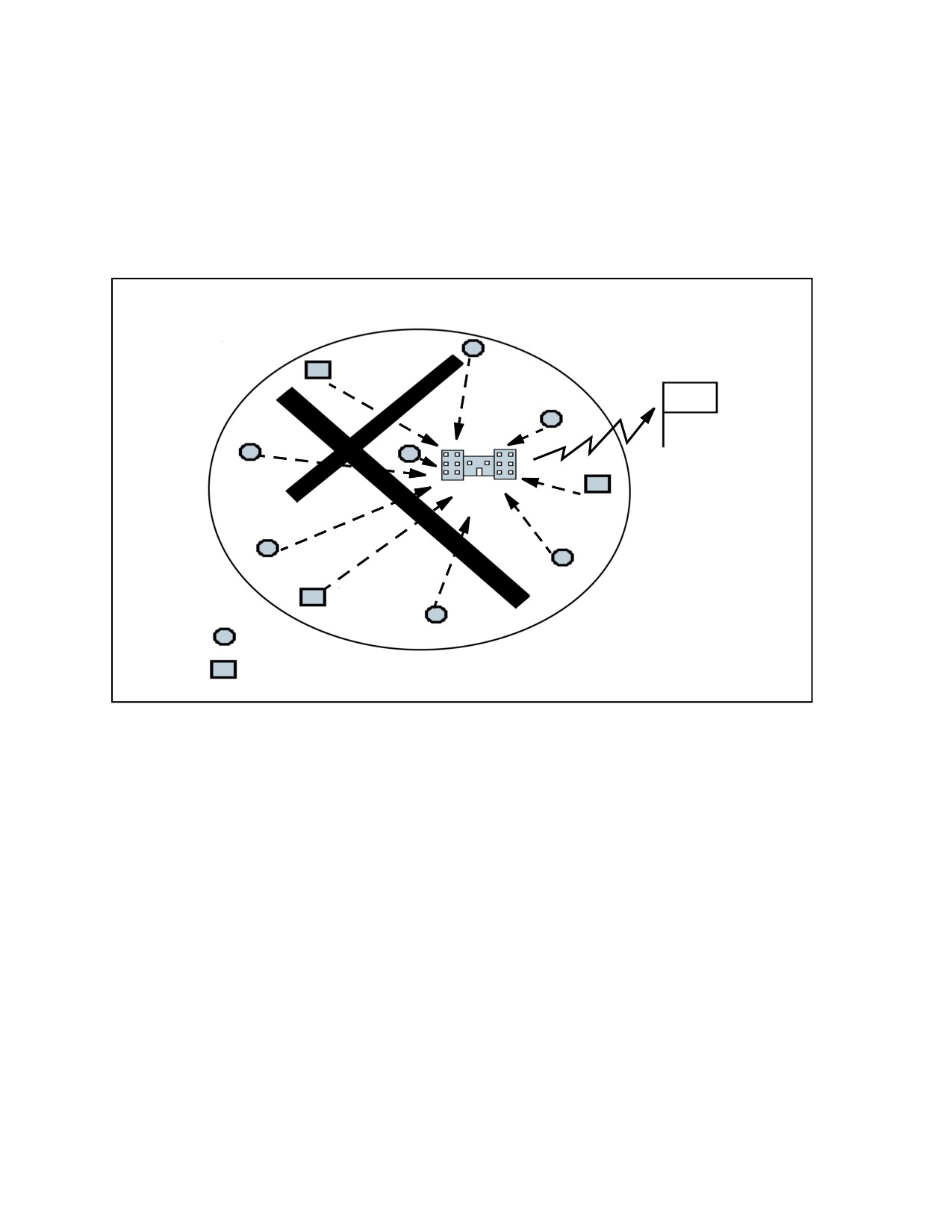
(2) Applying the COE for fixed sites, ports, and airfields (critical-node array)
and maneuver land and maritime forces (area array).
(a) Fixed Sites, ports, and airfield biological surveillance. Figure II-1
shows how the JBPDS and dry filter unit can provide biological-surveillance coverage of
an APOD. This same employment can be used for other fixed sites, ports, and airfields.
The biological-detection assets provide decentralized reporting to the fixed site, port, or
airfield NBC center.
APOD
JTF
AF
NBCCC
Dry filter unit
JBPDS
Figure II-1. JBPDS and Dry Filter Unit Coverage of an APOD
(b) Maneuver forces biological surveillance. Figure II-2 shows a
biological-detection platoon providing surveillance for JTF maneuver forces (corps size)
against a long line source attack. Concurrently, surveillance support is still provided at
the APOD. The USA biological-detection platoon provides centralized reporting directly
to the JTF.
(c) Use of multiple systems to support biological surveillance (such as a
system-of-systems concept). See Figure II-3 (page II-12) for an illustration that indicates
use of dry filter units and JBPDS (trailer-mounted and man-portable) and a USA
biological-detection unit. The dry filter unit and JBPDS are located within the APOD
perimeter using a dice five employment tactic (see Appendix E). The BIDS unit is using a
circular employment tactic within a US AO that is secure. The biological-detection unit
HQ provides decentralized reporting to the AB NBC center.
b.
Communications. Communications are important during biological-
surveillance operations. Biological-surveillance assets must be capable of the timely
reporting of biological-surveillance data to include personnel and logistics status. Units
with biological-surveillance assets must be capable of effective warning and reporting to
subordinate and adjacent units, as well as higher commands.
II-10
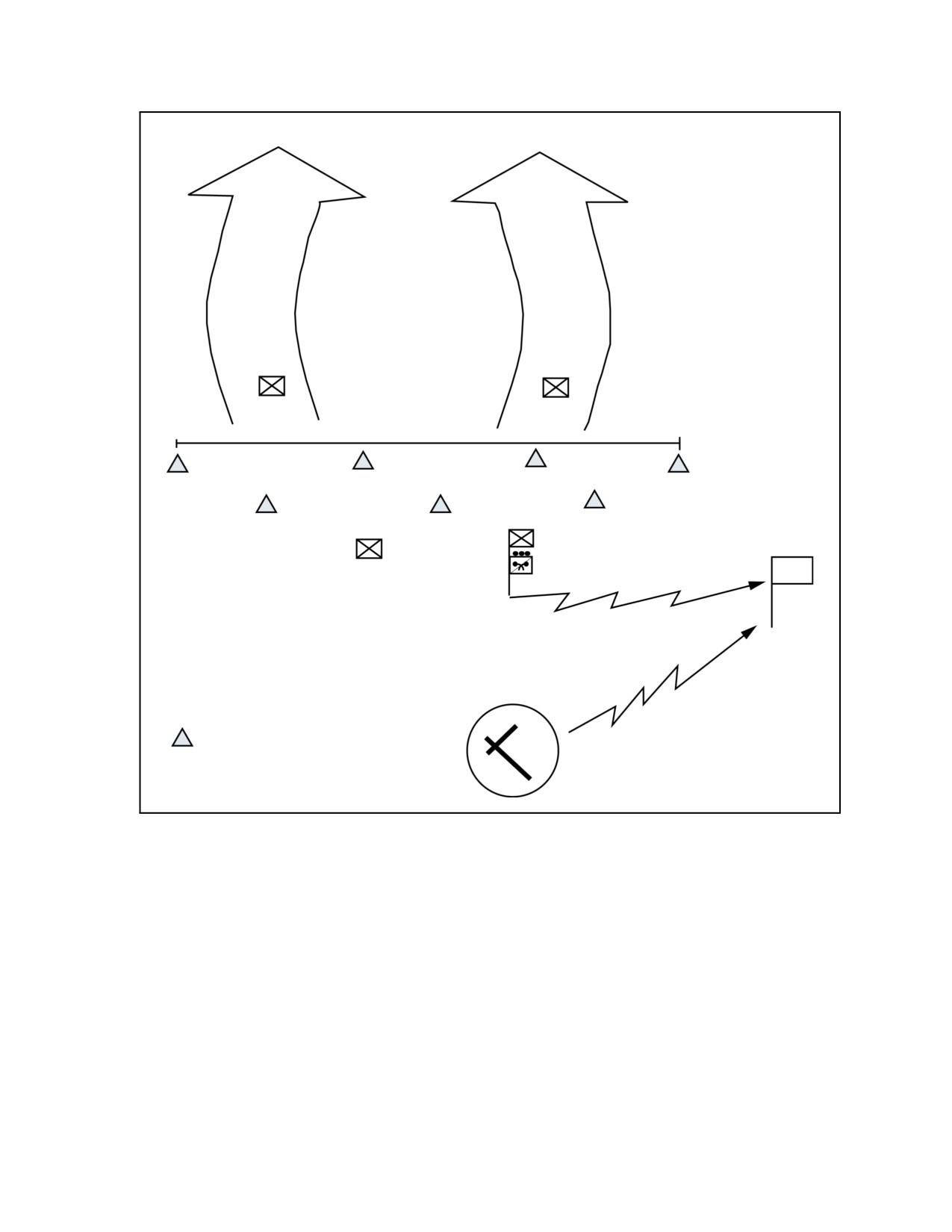
X
X
60 km
DS3P
DS5P
DS1P
DS7P
DS2P
DS4P
XX
DS6P
X
XXX
JTF
APOD
BIDS
Figure II-2. BIDS Platoon Emplacement to Provide Coverage for JTF (Corps Size)
Maneuver Forces for a Long Line Source Attack
c.
Lab Support. The commander has a number of critical decisions to make in a
BW environment that require information that can only be provided by a supporting
medical lab. A designated supporting lab will perform the field confirmatory
identification of a BW attack. Service and in theater lab support include the Navy
environmental and preventive medicine units, forward deployable preventive medicine
units, Navy large deck platforms, the AF biological augmentation team, a theater Army
medical laboratory, and other forward fixed-site laboratories (theater medical
surveillance teams).
d. Sample Courier.
II-11
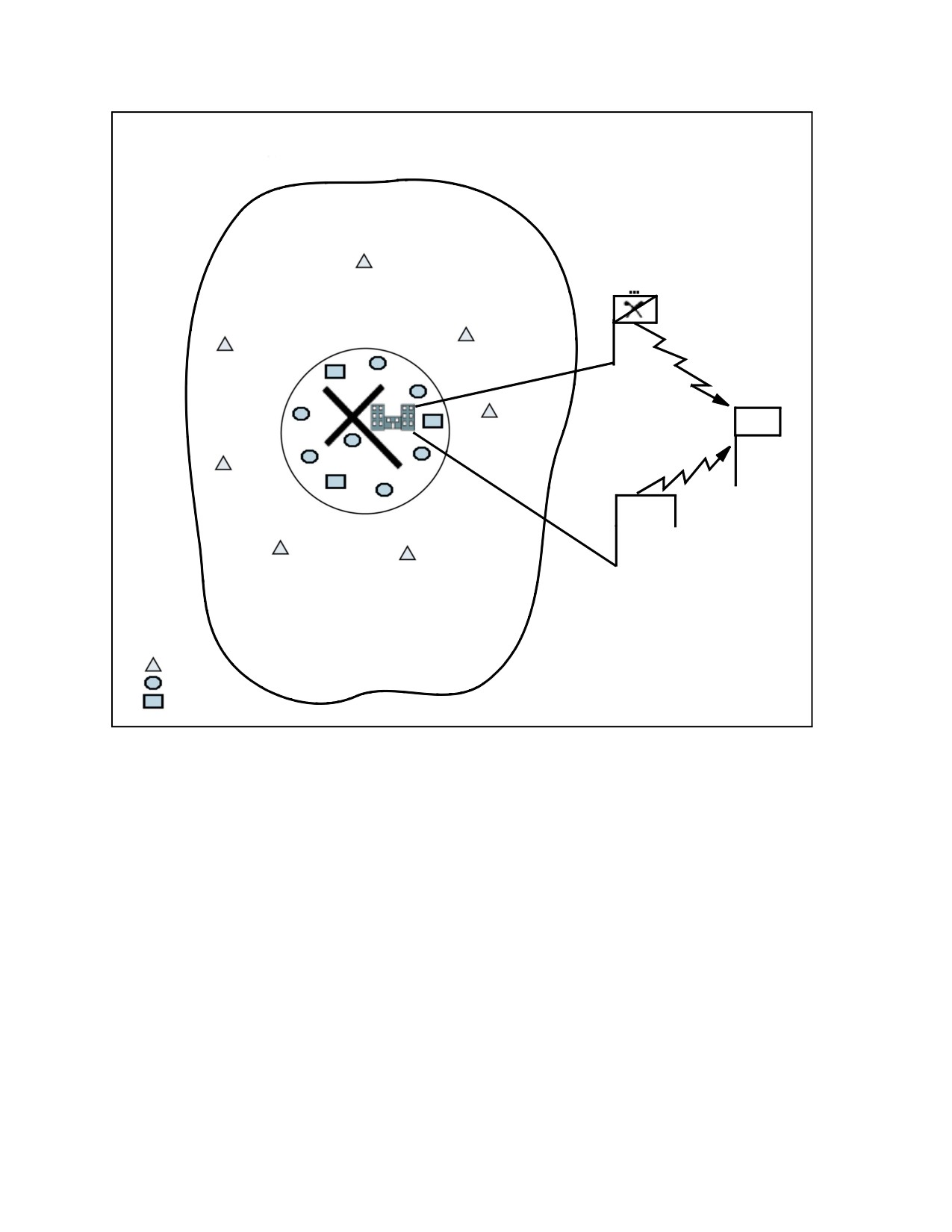
DS1P
APOD
DS2P
DS7P
JTF
DS3P
DS6P
AF
NBCCC
DS5P
DS4P
BIDS
Dry filter unit
JBPDS
Figure II-3. Employment of Multiple Biological-Detection Collection Systems (System of
Systems)
(1) The ability to courier suspected biological samples from biological-
detection assets to supporting laboratories while maintaining chain-of-custody is of
significant importance. Under normal circumstances the biological-detection asset is
responsible for the evacuation of their samples to a designated sample transfer point.
However, depending on the proximity of the supporting lab, the biological-detection asset
may be required to evacuate the sample directly to the lab.
(2) The command must ensure it has an executable plan to get the samples to
the supporting laboratories. In some cases, dedicated technical escort unit (TEU) assets
are used to escort samples. The priority for dedicated TEU assets will likely go to
escorting samples from the theater back to the CONUS-based national laboratories for
definitive analysis and identification.
(3) The combatant commander’s sample evacuation plan must include the
escort of samples within his AOR with and without a TEU. This may require using other
available assets besides a TEU. A set of basic tasks that can be used to train in-theater
couriers to transport biological samples is provided in Table II-3. At all times, the chain-
II-12

of-custody must be maintained to ensure legal and accurate reporting of biological attack
surveillance results. Safety and security for the courier and the sample package are
important.
Table II-3. Biological-Sample Courier Tasks
Action
Task
Battle
Avoidance
Protection
Decontamination
Management
Conduct
Obtain DOD
Obtain appropriate
Obtain approved
Establish a linkup
coordination
sampling kits.
respiratory
decontaminant
point with the
protection and
solution.
biological-sample
gloves.
generation asset.
Ensure that
immunizations are
up to date.
Begin prophylaxis
if required.
Link up
N/A
Don respiratory
N/A
Report the linkup to
protection and
higher HQ.
gloves prior to the
linkup.
Ensure package
Use a DOD
Place in an
Conduct a surface
N/A
integrity
biological sampling
additional transport
wipe-down of the
kit to determine if
bag/container as
package.
the outside of the
appropriate.
Conduct self-
package is
Once the package
decontamination if
contaminated.
integrity is verified,
required.
Ensure that the
respiratory
package is packed
protection is no
according to
longer required.
applicable
guidance (for
example, IATA,
CFR).
Transfer the
Transfer sample
N/A
N/A
Report the transfer
sample (chain-of-
package using the
of custody to
custody)
appropriate chain-
higher HQ.
of-custody forms
and procedures.
Coordinate
N/A
N/A
N/A
Report the
movement
departure and start
of movement to
higher HQ.
Coordinate with the
applicable
operations
elements as
required (for
example,
movement through
unit sectors.)
II-13

Table II-3. Biological-Sample Courier Tasks (Continued)
Action
Task
Battle
Avoidance
Protection
Decontamination
Management
Safeguard and
Be prepared to
Ensure IPE is on-
Conduct
Report a package
transport the
conduct immediate
hand during
decontamination of
breach if required.
sample
action in the event
movement.
the package if
of package breach.
required.
Maintain the
sample at 1-4°C.
Seal and
repackage if
required.
Transfer sample
Transfer the
N/A
N/A
N/A
sample package
using the
appropriate chain-
of-custody forms
and procedures.
(4) The transportation and storage of suspected biological samples is time-
sensitive, and the commander needs timely feedback so he can affect or initiate the
appropriate countermeasures or prophylaxis. The samples must be properly packaged,
sealed, and labeled. To support effective sample transport, the sample evacuation plan
must allocate and task for the means to transport the sample.
4.
Applying Biological-Detection Capabilities
a.
The actual “on-the-ground” biological-surveillance requirements for an
operation will be METT-TC dependent. The planning process described in Chapter III
provides an understanding of how to determine resource requirements for biological-
surveillance operations. The operational-level commander’s subordinate commanders
may have available surveillance capabilities. The operational-level commander task-
organizes and synchronizes the use of all available capabilities to meet mission
requirements.
b.
A commander must be aware of all the resources available (See Appendix C) to
provide him with a robust and integrated biological-detection plan of action. Not only
must he know what his organic capabilities are, but he must also be aware of other HN
assets that might be available.
c.
The commander integrates the use of all available assets to include combat
service support (CSS) (CLS—See Appendix D) to meet FP requirements. The commander
integrates the use of maritime and land force biological-surveillance assets.
(1) The maritime component provides surveillance support from the seaward
side with ship-based IBADS, JBPDS, and dry filter units. Additionally, the land force
commander uses USA biological-detection assets to provide critical-node support at the
APOD.
(2) The JFC NBC control center receives and integrates the input from both
sources to maintain the required SA and uses the information to support required
decisions.
II-14
Chapter III
BIOLOGICAL-SURVEILLANCE PLANNING
1.
Background
Biological-surveillance planning supports the commander’s CONOPS. The
commander’s clear, concise statement of where, when, and how he intends to concentrate
combat power to accomplish the mission uses biological surveillance to maintain the
required SA. The commander’s concept broadly outlines considerations necessary for
developing viable biological surveillance. Biological surveillance is conducted from
peacetime to war. The nature of the threat and the technical complexity of conducting
and maintaining adequate detection, identification, and warning against a biological
attack necessitates BW defense preparedness and the facilitation of appropriate and
prompt medical actions. Biological-detection planning occurs at all levels of operations,
from the strategic to the tactical levels, and across the spectrum of military operations.
Planning for biological detection provides the opportunity for leaders to limit the impact
threat BW agents have on operations.
2.
Integrated Biological-Surveillance Operations
Biological-detection resources are integrated into the unit intelligence, surveillance,
and reconnaissance (ISR) plan. Biological-detection assets are employed based on an
assessment of the threat force capability to use BW agents. The commander will
prioritize the use of available assets and establish a plan that integrates the use of all
available capabilities. The combatant commander’s biological-surveillance plan
integrates the use of land force, fixed-site, and maritime assets. See Appendix E.
a. Land-force biological-detection assets are employed in arrays designed to
optimize the probability of detection consistent with the security requirements. Assets
will be located based on METT-TC factors and the size of the critical asset to be
protected. Ideally, the biological-detection assets will be placed upwind of the target area
to detect a biological-agent cloud that has been primarily disseminated as a point or line
source from a ground or aerial platform.
b.
Fixed-site biological-detection assets are placed on or upwind of a site to
provide BW detection. Fixed-site biological-detection operations focus on a specific target
such as a port, APOD, or SPOD. Biological-detection assets are placed anywhere upwind
or within the site to confirm or deny the presence of a biological agent. METT-TC
analysis will determine the number of systems required as point detectors for critical
target areas such as logistics bases or major airfields and/or ABs, naval bases, or ports.
In joint operations (for example, the protection of critical port facilities) biological-
detection systems can also be placed on ships for improved operational dispersion.
Detectors and collection devices can also be placed inside critical facilities to monitor for
BW agents.
NOTE: Detectors may have to be moved throughout the year as there are
seasonal wind patterns that would change the physical location of “upwind of a
site.”
III-1
c.
Maritime assets use biological-protection assets to support increased FP.
Biological detectors are used to support monitoring operations while ships are underway,
in port, or operating close to landmasses.
3.
Tactical, Operational, and Strategic Planning
Tactical, operational, and strategic planning are interrelated. The actions taken at
the tactical level have implications at the operational and strategic levels of war. For
example, the liquid sample of a biological agent collected at the tactical level could be
evacuated to the field confirmatory lab (operational level of war asset), and/or the
definitive lab (strategic level of war asset).
a.
Tactical. The tactical planning for biological surveillance focuses on ensuring
that biological-detection and -collection operational requirements are met. The specific
planning factors that are considered include ensuring that—
z
Biological-detection requirements are resourced (for example, operators
are trained and tasked to operate biological-detection systems).
z
Sample collection techniques and procedures are rehearsed and
understood.
z
A NBC warning-and-reporting system is established and provides the
required reports to higher and adjacent commands (see Appendix F).
z
The sample evacuation process is rehearsed and understood.
z
Biological-detection resources are integrated into FP plans.
b. Operational. Operational planning focuses on biological-detection,
-identification, and -warning capabilities to support air, maritime, and ground
operations. IPB evaluates threat capabilities and assesses what biological-surveillance
and -detection assets may be required to reduce identified vulnerabilities or capabilities.
For example, adjustment of the time-phased force and deployment list (TPFDL) may be
needed to add TEUs, Army medical laboratory capabilities, and biological-detection units
such as the BIDS or Long-Range Biological Standoff Detection System (LRBSDS) (see
Appendix H).
c.
Strategic. Strategic planning prioritizes and provides required assets to
support missions within the CONUS and outside CONUS (OCONUS). These assets
include biological-detection units, supporting labs, and biological-detection equipment.
Applicable strategic-level intelligence information is also furnished to provide timely and
effective IPB. The following may be included:
z
Priority intelligence requirements (PIRs) to the commander.
z
Named areas of interest (NAIs) for biological-surveillance operations.
z
Biological-detection unit taskings for the R&S plan.
4.
Planning Process
a.
The commander implements the CONOPS (see Chapter I) for biological
surveillance through planning and implementing risk reduction measures. The
command and staff use their SA (battlespace visualization) to identify the risk reduction
measures that will be implemented in supporting OPLANs and/or OPORDs. Methods
III-2
that can be used to examine, assess, and implement the risk reduction measures are
included in Table III-1 (page III-4).
b.
As a continuous process, this is an iterative method. The different factors
interrelate (for example, the linkage between biological-detection system presumptive
and field lab confirmatory identification), support a time-sensitive process, and focus on
maximizing the probability of detection.
c.
Preparation of a biological-surveillance plan entails completing mission
analysis, assessing COAs, preparing staff estimates, and developing the OPLAN and/or
OPORD or annex. Critical operations considerations must be assessed during the
decision-making process; Table III-1 outlines many of the operational implications that
must be considered and used during the planning process.
d. The operational-level commander develops an OPLAN and/or OPORD as a
directive to issue to supporting or subordinate units that have biological-surveillance
responsibilities. Situation, mission, execution, service support, and command and control
are the key data elements in the command OPORD that the supporting or subordinate
unit used to prepare OPORDs or fragmentary orders (FRAGORDs) to support the higher
supported commander’s intent.
(1) Situation. The situation paragraph of the biological-surveillance plan
(Table III-2 [page III-5]) is used to provide the most likely and most dangerous COAs of
the threat. It provides the mission, commander’s intent, and CONOPS for the HQ one
and two levels up. The situation paragraph also provides actions that other units (such
as flank units) may take that can have significant effects on biological-surveillance
operations.
(2) Mission. The mission statement in the biological-surveillance plan
(Table III-3 [page III-6]) is based on the mission analysis.
(3) Execution. The execution paragraph of the biological-surveillance plan
(Table III-4 [page III-6]) describes how the commander sees the actions of the
subordinate biological-surveillance assets fitting together to accomplish the biological-
surveillance mission. It states the missions or tasks assigned to each subordinate
biological-surveillance asset to include any combat and combat support (CS) units that
support biological-surveillance operations.
(4)
Service Support. The service support paragraph of the biological-
surveillance plan (Table III-5 [page III-11]) clarifies the concepts of support, materiel
services, medical support, and personnel support.
(5) Command and Signal. This paragraph of the biological-surveillance plan
(Table III-6 [page III-14) identifies the chain of command and its location and provides
signal operating instructions (SOI), required reports and formats, and times the reports
are to be submitted.
III-3
///////////////////////////////////////